
Funky 10
23 Публикации

Funky 10
Отправить жалобу
Заблокировать пользователя
2 подписок(и/а)
10 подписчиков(а)
18 понравилось
Посты
·
--
Рост
🚨 $BTC is at $61K. Everyone is scared. Is this the bottom? 🤔
Bitcoin was once worth $126K. Now it's about $61K. That's almost half the price! 📉
😨 How is the market feeling?
The "Fear Meter" says 11 out of 100. That means people are very, very scared. A month ago it said 51, so people were calm then.
Sometimes when everyone is scared, prices stop falling and start going up. But not always. So let's be careful.
📉 What's happening?
#bitcoin tried to go up to $87K but couldn't stay there. It fell back down.
Around $58K–$60K, Bitcoin has stopped falling a few times this year. It's like a floor. Will the floor hold? 🧱
Big money is also leaving Bitcoin funds, and one big Bitcoin buyer (Strategy) is losing money right now.
🟢 If you BUY and HOLD (Spot)
Think of it like buying toys on sale. 🛒 Don't buy all at once. Buy a little at a time:
A little at $60K
A little at $57.5K
A little at $55K
Rule: if the price falls below $52K, stop and think again.
Where to take profit: $69K, then $73K–$75K.
⚡ If you do quick trades (Futures)
🔴 Bet the price goes DOWN: If Bitcoin goes up to $64K–$66K and can't go higher, you could bet it falls. Get out if it goes above $67K. Aim for $60K, then $56K.
🟢 Bet the price goes UP: If Bitcoin closes the day above $64.6K, it may keep climbing. Get out if it falls below $62K. Aim for $69K, then $73K.
🟡 Bounce bet: If Bitcoin dips to $55K–$57K and jumps back up fast, you could bet it goes up. Get out if it falls below $53.5K.
If Bitcoin closes the day below $60K, be extra careful. More falling could come.
🎯 Easy cheat sheet
🧱 Floors (support): $60K, $55K, $52K
🚪 Ceilings (resistance): $64.6K, $69K, $73K–$75K
🛡️ Safety tip: Use small amounts. Always set your "get out" price (stop-loss). Money you can't afford to lose should never go in a trade.
💬 What would you do? Buy now at $60K, or wait for $55K? Tell me below! 👇
#CryptoTrading #BinanceSquare #BTCUSDT
⚠️ This is not financial advice. Always do your own research. Trading can lose money.
{spot}(BTCUSDT)
🚨 $BTC is at $61K. Everyone is scared. Is this the bottom? 🤔
Bitcoin was once worth $126K. Now it's about $61K. That's almost half the price! 📉
😨 How is the market feeling?
The "Fear Meter" says 11 out of 100. That means people are very, very scared. A month ago it said 51, so people were calm then.
Sometimes when everyone is scared, prices stop falling and start going up. But not always. So let's be careful.
📉 What's happening?
#bitcoin tried to go up to $87K but couldn't stay there. It fell back down.
Around $58K–$60K, Bitcoin has stopped falling a few times this year. It's like a floor. Will the floor hold? 🧱
Big money is also leaving Bitcoin funds, and one big Bitcoin buyer (Strategy) is losing money right now.
🟢 If you BUY and HOLD (Spot)
Think of it like buying toys on sale. 🛒 Don't buy all at once. Buy a little at a time:
A little at $60K
A little at $57.5K
A little at $55K
Rule: if the price falls below $52K, stop and think again.
Where to take profit: $69K, then $73K–$75K.
⚡ If you do quick trades (Futures)
🔴 Bet the price goes DOWN: If Bitcoin goes up to $64K–$66K and can't go higher, you could bet it falls. Get out if it goes above $67K. Aim for $60K, then $56K.
🟢 Bet the price goes UP: If Bitcoin closes the day above $64.6K, it may keep climbing. Get out if it falls below $62K. Aim for $69K, then $73K.
🟡 Bounce bet: If Bitcoin dips to $55K–$57K and jumps back up fast, you could bet it goes up. Get out if it falls below $53.5K.
If Bitcoin closes the day below $60K, be extra careful. More falling could come.
🎯 Easy cheat sheet
🧱 Floors (support): $60K, $55K, $52K
🚪 Ceilings (resistance): $64.6K, $69K, $73K–$75K
🛡️ Safety tip: Use small amounts. Always set your "get out" price (stop-loss). Money you can't afford to lose should never go in a trade.
💬 What would you do? Buy now at $60K, or wait for $55K? Tell me below! 👇
#CryptoTrading #BinanceSquare #BTCUSDT
⚠️ This is not financial advice. Always do your own research. Trading can lose money.
256
·
--
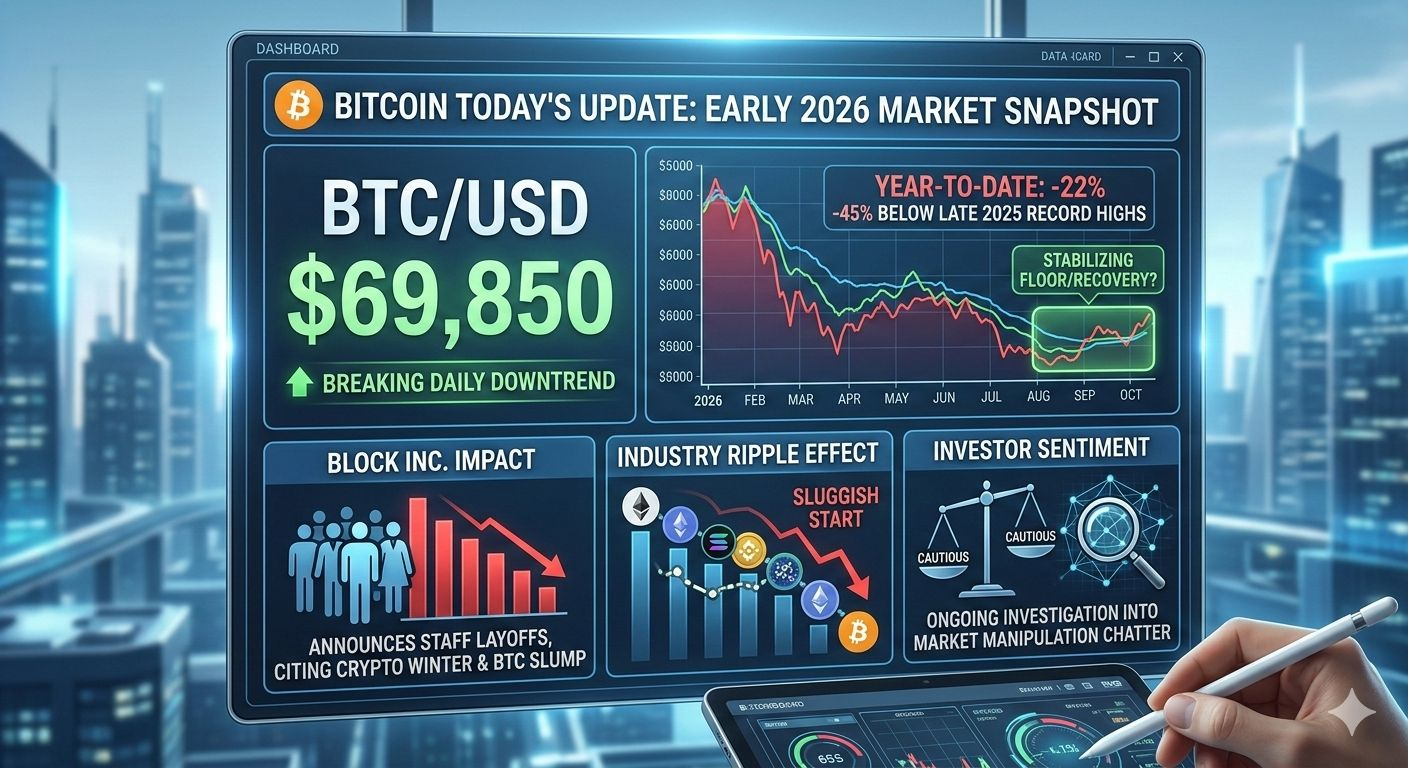
Here is your update on Bitcoin $BTC for today:
Current Price & Trend
* Price Level: Bitcoin is currently hovering just below the $70,000 mark.
* Recent Movement: While BTC has seen a slight uptick in the last 24 hours—breaking a recent daily downtrend—it is still recovering from a rough start to 2026. It is currently down roughly 22% year-to-date and sits about 45% below its record highs from late 2025.
What's Driving the News Today
* Signs of Stabilization: Technical analysts are noting that Bitcoin has finally broken its short-term daily price downtrend, giving some traders hope that the asset is finding a floor.
* Industry Ripple Effects: The broader crypto market's sluggish start to the year is having real-world impacts. For example, Jack Dorsey's payment company, Block (which holds a significant amount of BTC), recently announced major staff layoffs. Analysts are attributing this partly to the recent "crypto winter" and Bitcoin's dip in value.
* Market Sentiment: Investor sentiment remains cautious, with ongoing chatter and financial news articles exploring whether recent market manipulation contributed to the sudden crypto crashes earlier in the year.
Would you like me to look into any specific Bitcoin market metrics or check the status of any other cryptocurrencies for you?
{spot}(BTCUSDT)
Here is your update on Bitcoin $BTC for today:
Current Price & Trend
* Price Level: Bitcoin is currently hovering just below the $70,000 mark.
* Recent Movement: While BTC has seen a slight uptick in the last 24 hours—breaking a recent daily downtrend—it is still recovering from a rough start to 2026. It is currently down roughly 22% year-to-date and sits about 45% below its record highs from late 2025.
What's Driving the News Today
* Signs of Stabilization: Technical analysts are noting that Bitcoin has finally broken its short-term daily price downtrend, giving some traders hope that the asset is finding a floor.
* Industry Ripple Effects: The broader crypto market's sluggish start to the year is having real-world impacts. For example, Jack Dorsey's payment company, Block (which holds a significant amount of BTC), recently announced major staff layoffs. Analysts are attributing this partly to the recent "crypto winter" and Bitcoin's dip in value.
* Market Sentiment: Investor sentiment remains cautious, with ongoing chatter and financial news articles exploring whether recent market manipulation contributed to the sudden crypto crashes earlier in the year.
Would you like me to look into any specific Bitcoin market metrics or check the status of any other cryptocurrencies for you?
3
111
·
--
ETHEREUM🌐 Ethereum $ETH
Market Update: Volatility, Whales, and the Rebound
The crypto market has been on a wild ride over the past few days. If you are looking for a quick snapshot of where Ethereum stands right now, here is the current situation:
The Macro Picture
* Current Price: ETH is currently trading in the $1,930 - $1,950 range.
* The Shakeout: Over the weekend, severe geopolitical shocks sent "extreme fear" through the market. ETH took a sharp hit, briefly dropping into the $1,700–$1,800 zone as a massive flush of leveraged positions triggered hundreds of millions in cross-market liquidations.
* The Recovery: We are now seeing a technical bounce. As leveraged longs were cleared out, on-chain data shows that long-term holders and whale wallets have been quietly accumulating the dip while retail sentiment remains fearful.
Ecosystem & Token Impact
* Liquidity Rotation: While Bitcoin is defending the $66K–$67K level, there is a visible shift of smart money moving toward Ethereum-based DeFi and high-performance utility protocols.
* Infrastructure Assets: During these macro swings, it is crucial to monitor how infrastructure and connectivity assets, like WalletConnect Token (WCT), react to the market. Their performance and utility are tightly coupled to Ethereum's network activity and gas fee dynamics during these periods of heavy consolidation.
The Long-Term Outlook
* Institutional Demand: Despite the short-term panic, the underlying fundamentals remain highly bullish. Ethereum-based funds just saw their highest weekly inflows since mid-January, driven heavily by the ongoing push for Real-World Asset (RWA) tokenization and Layer-2 expansion.
Would you like me to run a technical trade analysis on the current support and resistance levels to see where ETH might be heading next?
{spot}(ETHUSDT)
ETHEREUM
🌐 Ethereum $ETH
Market Update: Volatility, Whales, and the Rebound
The crypto market has been on a wild ride over the past few days. If you are looking for a quick snapshot of where Ethereum stands right now, here is the current situation:
The Macro Picture
* Current Price: ETH is currently trading in the $1,930 - $1,950 range.
* The Shakeout: Over the weekend, severe geopolitical shocks sent "extreme fear" through the market. ETH took a sharp hit, briefly dropping into the $1,700–$1,800 zone as a massive flush of leveraged positions triggered hundreds of millions in cross-market liquidations.
* The Recovery: We are now seeing a technical bounce. As leveraged longs were cleared out, on-chain data shows that long-term holders and whale wallets have been quietly accumulating the dip while retail sentiment remains fearful.
Ecosystem & Token Impact
* Liquidity Rotation: While Bitcoin is defending the $66K–$67K level, there is a visible shift of smart money moving toward Ethereum-based DeFi and high-performance utility protocols.
* Infrastructure Assets: During these macro swings, it is crucial to monitor how infrastructure and connectivity assets, like WalletConnect Token (WCT), react to the market. Their performance and utility are tightly coupled to Ethereum's network activity and gas fee dynamics during these periods of heavy consolidation.
The Long-Term Outlook
* Institutional Demand: Despite the short-term panic, the underlying fundamentals remain highly bullish. Ethereum-based funds just saw their highest weekly inflows since mid-January, driven heavily by the ongoing push for Real-World Asset (RWA) tokenization and Layer-2 expansion.
Would you like me to run a technical trade analysis on the current support and resistance levels to see where ETH might be heading next?
1
·
--
Статья
This long-term analysis of Ethereum $ETH$ETH
{spot}(ETHUSDT)
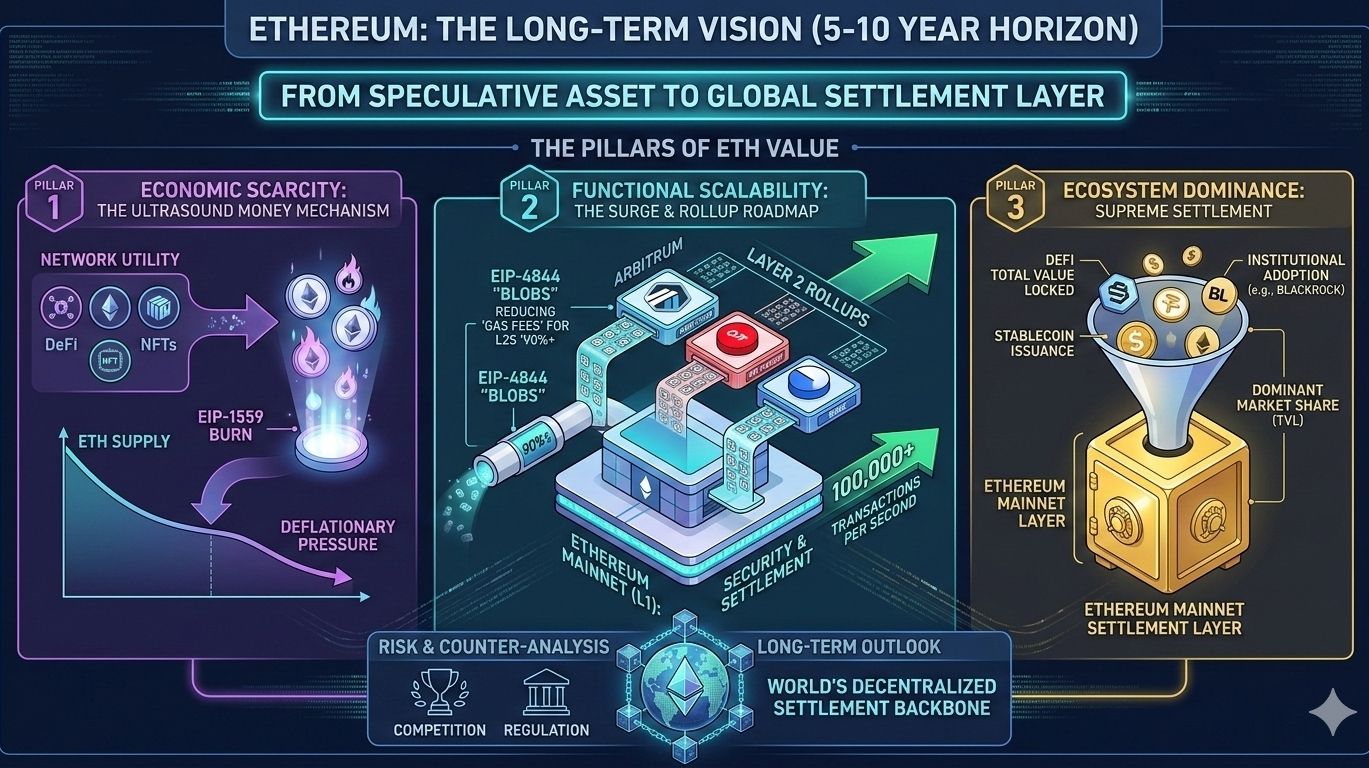
This long-term analysis of Ethereum (ETH) is a fundamental and ecosystem assessment designed for a 5-to-10-year horizon. It does not constitute financial advice.
The core thesis of this analysis is that Ethereum is transitioning from a speculative asset into the foundational utility layer and supreme settlement backbone of the decentralized global economy.
This transition is supported by three distinct "Pillars of Proof" that distinguish ETH from its competitors.
The Three Pillars of Proof
To analyze Ethereum’s long-term value, we must examine the specific technological and economic mechanisms that provide its "proof" of utility, security, and scarcity.
Pillar 1: Proof of Economic Scarcity (The "Ultrasound Money" Mechanism)
Ethereum has a unique, reflexive economic model that transforms mainnet network utility directly into token scarcity.
* The Proof: EIP-1559 and PoS Issuance. The EIP-1559 upgrade (implemented in 2021) introduced a mechanism where the base fee of every transaction is burned (permanently removed from circulation). Simultaneously, the merge to Proof-of-Stake dramatically reduced new ETH issuance.
* The Long-Term Analysis: When the Ethereum mainnet is busy (high utility), the burn rate exceeds the rate of new ETH issuance (given to stakers). This makes ETH systemically deflationary.
* Significance: While other chains have persistent supply inflation (diluting holders), long-term ETH stakers and holders benefit directly from ecosystem growth through mechanical scarcity and organic yield.
Pillar 2: Proof of Functional Scalability (The Rollup-Centric Roadmap)
Ethereum is not trying to process every micro-transaction in the world on its main base layer (L1). Instead, it has adopted a Rollup-Centric Roadmap.
* The Proof: EIP-4844 and Layer 2 Ecosystem. The mainnet serves as a hyper-secure settlement layer, while Layer 2 (L2) networks (like Arbitrum, Optimism, Base) handle the execution of everyday transactions. The EIP-4844 upgrade ("Proto-Danksharding") introduced "blobs," which reduced L2 transaction fees by over 90%.
* The Long-Term Analysis: Ethereum has essentially solved the blockchain trilemma (securing decentralization and security on L1 while achieving scalability via L2s).
* Significance: This architecture makes Ethereum future-proof. L2 fees are low enough (fractions of a cent) to enable mainstream adoption (gaming, social media, micro-payments), while mainnet ETH remains the mandatory asset required to secure all that activity at the settlement layer.
Pillar 3: Proof of Ecosystem Dominance (Supreme Settlement)
Despite "Ethereum Killers" with theoretical speed advantages, the network retains a dominant share of actual value settled on-chain.
* The Proof: DeFi TVL and Stablecoin Settlement. The Ethereum ecosystem continues to command the vast majority of Total Value Locked (TVL) in Decentralized Finance (DeFi). Crucially, the world’s most significant decentralized asset class—stablecoins (USDT, USDC)—primarily settle on the Ethereum ecosystem (L1 and L2 combined).
* The Long-Term Analysis: Money has inertia. Institutional finance (such as BlackRock developing its BUIDL tokenized fund on Ethereum) prefers the network with the deepest liquidity, strongest track record, and most decentralized security.
* Significance: Ethereum has established "network effects" that are nearly impossible to displace. It is the default operating system for high-value decentralized finance and asset tokenization.
This long-term analysis of Ethereum $ETH
$ETH
This long-term analysis of Ethereum (ETH) is a fundamental and ecosystem assessment designed for a 5-to-10-year horizon. It does not constitute financial advice.
The core thesis of this analysis is that Ethereum is transitioning from a speculative asset into the foundational utility layer and supreme settlement backbone of the decentralized global economy.
This transition is supported by three distinct "Pillars of Proof" that distinguish ETH from its competitors.
The Three Pillars of Proof
To analyze Ethereum’s long-term value, we must examine the specific technological and economic mechanisms that provide its "proof" of utility, security, and scarcity.
Pillar 1: Proof of Economic Scarcity (The "Ultrasound Money" Mechanism)
Ethereum has a unique, reflexive economic model that transforms mainnet network utility directly into token scarcity.
* The Proof: EIP-1559 and PoS Issuance. The EIP-1559 upgrade (implemented in 2021) introduced a mechanism where the base fee of every transaction is burned (permanently removed from circulation). Simultaneously, the merge to Proof-of-Stake dramatically reduced new ETH issuance.
* The Long-Term Analysis: When the Ethereum mainnet is busy (high utility), the burn rate exceeds the rate of new ETH issuance (given to stakers). This makes ETH systemically deflationary.
* Significance: While other chains have persistent supply inflation (diluting holders), long-term ETH stakers and holders benefit directly from ecosystem growth through mechanical scarcity and organic yield.
Pillar 2: Proof of Functional Scalability (The Rollup-Centric Roadmap)
Ethereum is not trying to process every micro-transaction in the world on its main base layer (L1). Instead, it has adopted a Rollup-Centric Roadmap.
* The Proof: EIP-4844 and Layer 2 Ecosystem. The mainnet serves as a hyper-secure settlement layer, while Layer 2 (L2) networks (like Arbitrum, Optimism, Base) handle the execution of everyday transactions. The EIP-4844 upgrade ("Proto-Danksharding") introduced "blobs," which reduced L2 transaction fees by over 90%.
* The Long-Term Analysis: Ethereum has essentially solved the blockchain trilemma (securing decentralization and security on L1 while achieving scalability via L2s).
* Significance: This architecture makes Ethereum future-proof. L2 fees are low enough (fractions of a cent) to enable mainstream adoption (gaming, social media, micro-payments), while mainnet ETH remains the mandatory asset required to secure all that activity at the settlement layer.
Pillar 3: Proof of Ecosystem Dominance (Supreme Settlement)
Despite "Ethereum Killers" with theoretical speed advantages, the network retains a dominant share of actual value settled on-chain.
* The Proof: DeFi TVL and Stablecoin Settlement. The Ethereum ecosystem continues to command the vast majority of Total Value Locked (TVL) in Decentralized Finance (DeFi). Crucially, the world’s most significant decentralized asset class—stablecoins (USDT, USDC)—primarily settle on the Ethereum ecosystem (L1 and L2 combined).
* The Long-Term Analysis: Money has inertia. Institutional finance (such as BlackRock developing its BUIDL tokenized fund on Ethereum) prefers the network with the deepest liquidity, strongest track record, and most decentralized security.
* Significance: Ethereum has established "network effects" that are nearly impossible to displace. It is the default operating system for high-value decentralized finance and asset tokenization.
70
·
--
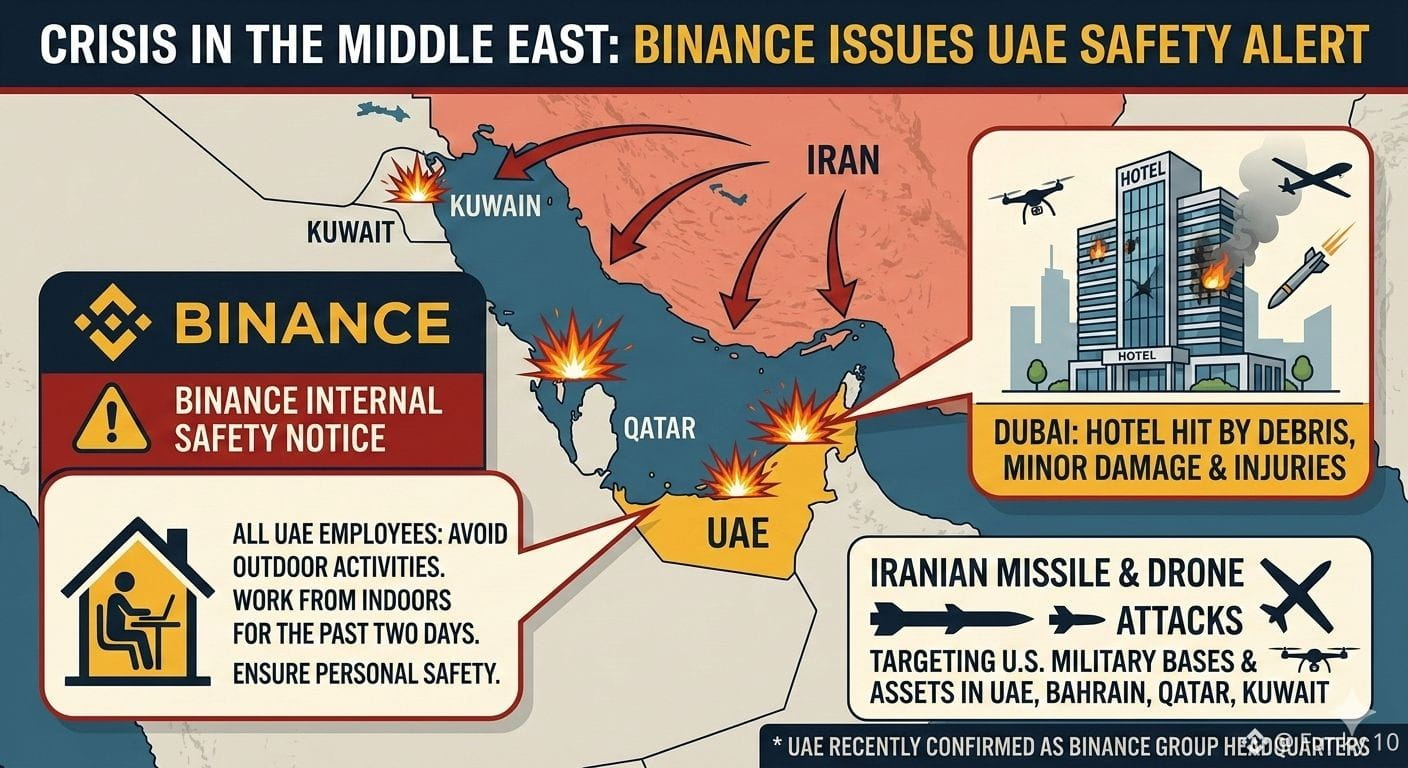
👀 Binance has instructed all employees in the UAE to avoid outdoor activities and work from indoors for the past two days to ensure their safety. The UAE is the latest country announced as Binance's group headquarters. Today, Iran launched missiles and drones at U.S. military bases in the UAE and other Middle Eastern countries, with a hotel in Dubai being hit.
$BNB
{spot}(BNBUSDT)
👀 Binance has instructed all employees in the UAE to avoid outdoor activities and work from indoors for the past two days to ensure their safety. The UAE is the latest country announced as Binance's group headquarters. Today, Iran launched missiles and drones at U.S. military bases in the UAE and other Middle Eastern countries, with a hotel in Dubai being hit.
$BNB
$BNB
69
·
--
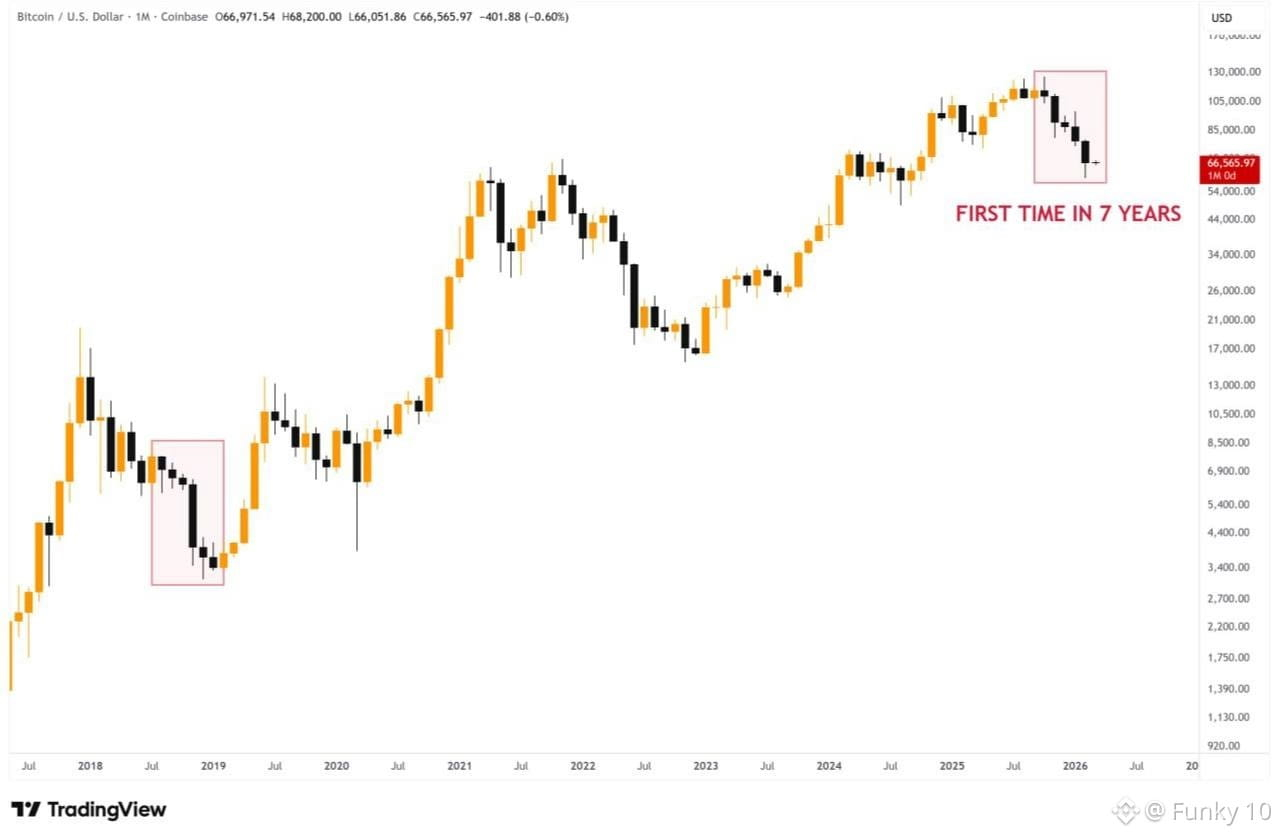
📉 For the first time since 2019 there are 5 bearish (red) monthly candles in a row on $BTC
chart!
Last time it happened 7 years ago when Bitcoin fell down for 6 months straight.
hint: look what happened afterwards
{spot}(BTCUSDT)
📉 For the first time since 2019 there are 5 bearish (red) monthly candles in a row on $BTC
chart!
Last time it happened 7 years ago when Bitcoin fell down for 6 months straight.
hint: look what happened afterwards
chart!
Last time it happened 7 years ago when Bitcoin fell down for 6 months straight.
hint: look what happened afterwards
1
16
·
--
Статья
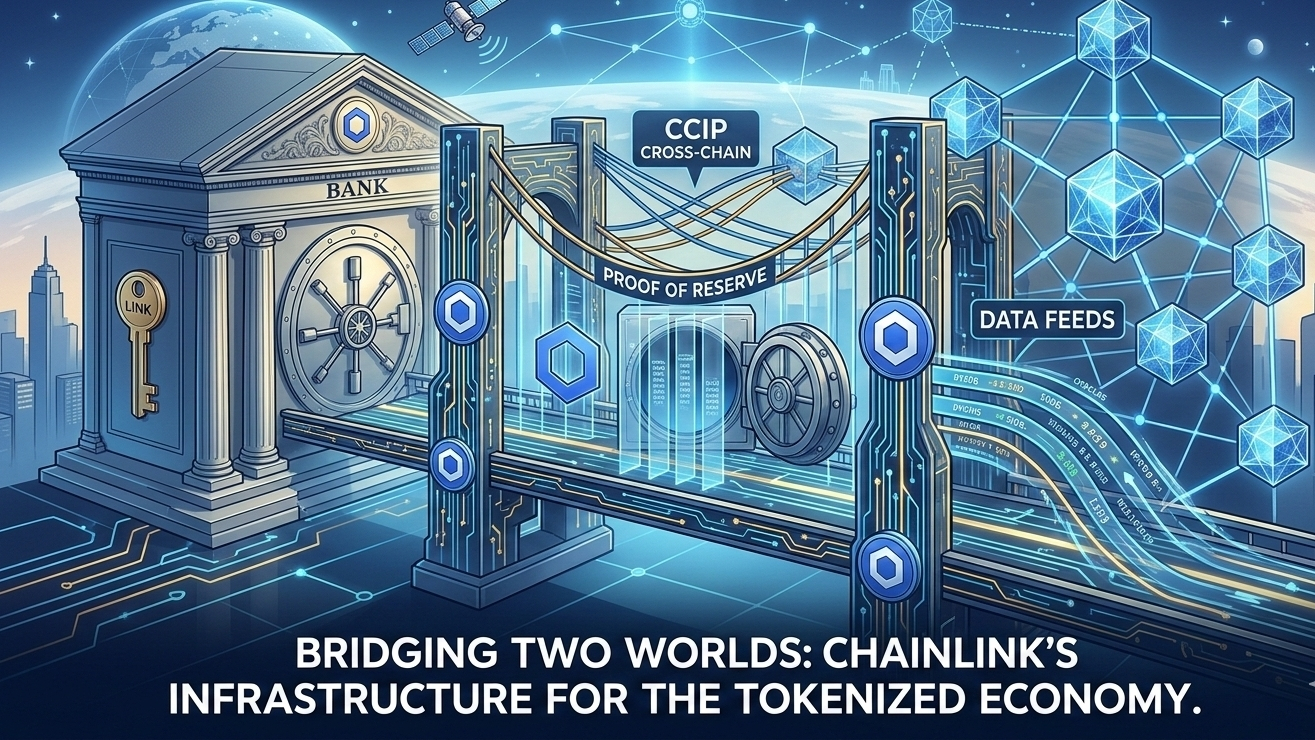
The Bridge Between Blockchains and the Real World: An Inside Look at Chainlink (LINK)If blockchains are highly secure, digital vaults, smart contracts are the automated rules governing what happens inside them. However, there is a fundamental flaw in this design: blockchains are intentionally isolated. They cannot natively connect to the outside world to check the price of a stock, verify a shipping manifest, or confirm if a flight was delayed.
This isolation is known as the Oracle Problem, and Chainlink ($LINK ) was built entirely to solve it. Today, Chainlink is not just a cryptocurrency; it is the industry-standard decentralized oracle network functioning as the foundational infrastructure for the entire tokenized economy.
Solving the Oracle Problem
To execute a contract based on real-world events, blockchains need external data. If a blockchain relies on a single, centralized data source (like a single stock exchange API), it creates a single point of failure, defeating the entire purpose of a decentralized network.
Chainlink solves this by using a decentralized network of independent node operators. These nodes fetch data from multiple sources, aggregate it, verify its accuracy, and securely deliver it on-chain. This ensures that smart contracts can trigger based on real-world events without sacrificing security or relying on a middleman.
Beyond Price Feeds: Chainlink's Core Technology
While Chainlink started by providing the price feeds that made Decentralized Finance (DeFi) possible, its technology stack has expanded significantly. In 2026, the network is built on a few critical pillars:
* Data Feeds & Streams: Chainlink provides high-frequency, tamper-proof market data. This has recently expanded heavily into traditional finance (TradFi), offering 24/5 equities streams to bring global stock market data natively on-chain.
* CCIP (Cross-Chain Interoperability Protocol): Often described as the TCP/IP of blockchains, CCIP is a highly secure messaging system that allows different blockchains to communicate. It enables developers to build applications that span multiple networks and allows assets to move seamlessly without relying on vulnerable cross-chain bridges.
* Proof of Reserve (PoR): As the market for tokenized assets grows, investors need to know that digital tokens are actually backed by real assets. Chainlink’s PoR provides automated, near real-time verification of the off-chain reserves backing stablecoins, tokenized gold, and digital treasuries.
The 2026 Landscape: Institutional Adoption and RWAs
Chainlink has transitioned from a tool primarily used by crypto-native developers to an essential piece of infrastructure for Global Systemically Important Banks (GSIBs). The defining narrative for Chainlink in 2026 is the tokenization of Real-World Assets (RWAs).
* The Canton Network Integration: In early 2026, Chainlink deployed its data standard across the Canton blockchain ecosystem. This massive integration brings regulatory-grade oracle infrastructure to a network that processes hundreds of billions in daily U.S. Treasury repo transactions, cementing Chainlink’s role in institutional finance.
* Mainstream Financial Vehicles: The launch of the Bitwise Chainlink ETF (CLNK) in January 2026 marked a watershed moment, allowing regulated institutional capital to flow directly into the LINK ecosystem.
* Global Bank Partnerships: Chainlink’s ongoing infrastructure work with Swift—the backbone of the global financial system connecting over 11,000 banks—has moved from pilot phases toward production, bridging traditional banking systems with blockchain networks.
The Role of the LINK Token
The LINK token is the economic engine that powers this entire network. It serves two primary functions:
* Payment Unit: Developers and financial institutions must pay Chainlink node operators in LINK to retrieve data, generate verifiable randomness, or utilize CCIP for cross-chain transfers.
* Network Security: Node operators are required to stake LINK tokens as collateral. If a node acts maliciously or provides inaccurate data, its staked LINK can be slashed (penalized). This economic incentive ensures that the network remains honest and highly secure.
{spot}(LINKUSDT)
The Bridge Between Blockchains and the Real World: An Inside Look at Chainlink (LINK)
If blockchains are highly secure, digital vaults, smart contracts are the automated rules governing what happens inside them. However, there is a fundamental flaw in this design: blockchains are intentionally isolated. They cannot natively connect to the outside world to check the price of a stock, verify a shipping manifest, or confirm if a flight was delayed.
This isolation is known as the Oracle Problem, and Chainlink ($LINK ) was built entirely to solve it. Today, Chainlink is not just a cryptocurrency; it is the industry-standard decentralized oracle network functioning as the foundational infrastructure for the entire tokenized economy.
Solving the Oracle Problem
To execute a contract based on real-world events, blockchains need external data. If a blockchain relies on a single, centralized data source (like a single stock exchange API), it creates a single point of failure, defeating the entire purpose of a decentralized network.
Chainlink solves this by using a decentralized network of independent node operators. These nodes fetch data from multiple sources, aggregate it, verify its accuracy, and securely deliver it on-chain. This ensures that smart contracts can trigger based on real-world events without sacrificing security or relying on a middleman.
Beyond Price Feeds: Chainlink's Core Technology
While Chainlink started by providing the price feeds that made Decentralized Finance (DeFi) possible, its technology stack has expanded significantly. In 2026, the network is built on a few critical pillars:
* Data Feeds & Streams: Chainlink provides high-frequency, tamper-proof market data. This has recently expanded heavily into traditional finance (TradFi), offering 24/5 equities streams to bring global stock market data natively on-chain.
* CCIP (Cross-Chain Interoperability Protocol): Often described as the TCP/IP of blockchains, CCIP is a highly secure messaging system that allows different blockchains to communicate. It enables developers to build applications that span multiple networks and allows assets to move seamlessly without relying on vulnerable cross-chain bridges.
* Proof of Reserve (PoR): As the market for tokenized assets grows, investors need to know that digital tokens are actually backed by real assets. Chainlink’s PoR provides automated, near real-time verification of the off-chain reserves backing stablecoins, tokenized gold, and digital treasuries.
The 2026 Landscape: Institutional Adoption and RWAs
Chainlink has transitioned from a tool primarily used by crypto-native developers to an essential piece of infrastructure for Global Systemically Important Banks (GSIBs). The defining narrative for Chainlink in 2026 is the tokenization of Real-World Assets (RWAs).
* The Canton Network Integration: In early 2026, Chainlink deployed its data standard across the Canton blockchain ecosystem. This massive integration brings regulatory-grade oracle infrastructure to a network that processes hundreds of billions in daily U.S. Treasury repo transactions, cementing Chainlink’s role in institutional finance.
* Mainstream Financial Vehicles: The launch of the Bitwise Chainlink ETF (CLNK) in January 2026 marked a watershed moment, allowing regulated institutional capital to flow directly into the LINK ecosystem.
* Global Bank Partnerships: Chainlink’s ongoing infrastructure work with Swift—the backbone of the global financial system connecting over 11,000 banks—has moved from pilot phases toward production, bridging traditional banking systems with blockchain networks.
The Role of the LINK Token
The LINK token is the economic engine that powers this entire network. It serves two primary functions:
* Payment Unit: Developers and financial institutions must pay Chainlink node operators in LINK to retrieve data, generate verifiable randomness, or utilize CCIP for cross-chain transfers.
* Network Security: Node operators are required to stake LINK tokens as collateral. If a node acts maliciously or provides inaccurate data, its staked LINK can be slashed (penalized). This economic incentive ensures that the network remains honest and highly secure.
4
162
·
--
$BTC
{spot}(BTCUSDT)
sudden surge—or "pump"—back to the $67,000 to $68,000 range is primarily a rapid recovery bounce following a major geopolitical shock wave over the weekend.
Here is a breakdown of the market dynamics driving the current price action:
Geopolitical Shock and Recovery
Initially, Bitcoin plunged to roughly $63,000 following reports of US-Israeli airstrikes in Iran and the confirmed death of Ayatollah Ali Khamenei. Crypto reacted initially as a standard risk-off asset, dropping sharply amid global uncertainty. However, the price rapidly reversed course and recovered its losses as traders began pricing in the possibility of a contained conflict rather than an immediate, broader global escalation.
Massive Market Liquidations
The abrupt drop shook out a massive amount of leverage in the crypto derivatives market, which ultimately fueled the rebound.
* Wiped Positions: Over 157,000 leveraged traders were liquidated over the past 24 hours.
* Total Liquidations: Approximately $657 million across both long and short positions was cleared out.
When heavily leveraged positions are wiped out during a flash crash, the immediate selling pressure is exhausted quickly. Once that liquidation cascade stops, it clears the path for a sharp, "V-shaped" buying rebound.
Thin Weekend Liquidity
This entire movement—the drop to $63,000 and the subsequent pump back above $67,000—occurred during the weekend. Sunday trading traditionally suffers from thin market liquidity, meaning there is less active volume to absorb large trades. In low-liquidity environments, major news events can cause exaggerated, outsized price swings, which significantly accelerated the speed of this current pump.
Would you like a deeper breakdown of how macroeconomic events typically impact the broader crypto market, or an analysis of the current support and resistance levels?
#IranConfirmsKhameneiIsDead #USIsraelStrikeIran #AnthropicUSGovClash
$BTC
sudden surge—or "pump"—back to the $67,000 to $68,000 range is primarily a rapid recovery bounce following a major geopolitical shock wave over the weekend.
Here is a breakdown of the market dynamics driving the current price action:
Geopolitical Shock and Recovery
Initially, Bitcoin plunged to roughly $63,000 following reports of US-Israeli airstrikes in Iran and the confirmed death of Ayatollah Ali Khamenei. Crypto reacted initially as a standard risk-off asset, dropping sharply amid global uncertainty. However, the price rapidly reversed course and recovered its losses as traders began pricing in the possibility of a contained conflict rather than an immediate, broader global escalation.
Massive Market Liquidations
The abrupt drop shook out a massive amount of leverage in the crypto derivatives market, which ultimately fueled the rebound.
* Wiped Positions: Over 157,000 leveraged traders were liquidated over the past 24 hours.
* Total Liquidations: Approximately $657 million across both long and short positions was cleared out.
When heavily leveraged positions are wiped out during a flash crash, the immediate selling pressure is exhausted quickly. Once that liquidation cascade stops, it clears the path for a sharp, "V-shaped" buying rebound.
Thin Weekend Liquidity
This entire movement—the drop to $63,000 and the subsequent pump back above $67,000—occurred during the weekend. Sunday trading traditionally suffers from thin market liquidity, meaning there is less active volume to absorb large trades. In low-liquidity environments, major news events can cause exaggerated, outsized price swings, which significantly accelerated the speed of this current pump.
Would you like a deeper breakdown of how macroeconomic events typically impact the broader crypto market, or an analysis of the current support and resistance levels?
#IranConfirmsKhameneiIsDead #USIsraelStrikeIran #AnthropicUSGovClash
79
·
--
#robo $ROBO
{future}(ROBOUSDT)
When searching for "Robo Coin," you are likely looking at one of two completely different cryptocurrencies:
* Fabric Protocol ($ROBO): An AI and Web3 utility token. It is designed to act as the digital fuel for automated ecosystems, smart contracts, and machine-to-machine transactions. This asset fits into the growing trend of AI-integrated decentralized technology.
* ROBOCOIN (First Bitcoin ATM): A speculative memecoin on the Solana blockchain. It was created to pay homage to the world’s first physical Bitcoin ATM launched in 2013, and it trades primarily on community sentiment rather than utility.
Key Takeaways:
* High Risk & Volatility: Both are lower-market-cap assets, meaning they are prone to massive and sudden price swings.
* Verify the Asset: Always double-check the smart contract address before buying to ensure you are trading the correct "Robo" coin, as the name is frequently used.
Would you like me to pull up the current price action and trading volume for either of these coins?
@FabricFND
#robo $ROBO
When searching for "Robo Coin," you are likely looking at one of two completely different cryptocurrencies:
* Fabric Protocol ($ROBO ): An AI and Web3 utility token. It is designed to act as the digital fuel for automated ecosystems, smart contracts, and machine-to-machine transactions. This asset fits into the growing trend of AI-integrated decentralized technology.
* ROBOCOIN (First Bitcoin ATM): A speculative memecoin on the Solana blockchain. It was created to pay homage to the world’s first physical Bitcoin ATM launched in 2013, and it trades primarily on community sentiment rather than utility.
Key Takeaways:
* High Risk & Volatility: Both are lower-market-cap assets, meaning they are prone to massive and sudden price swings.
* Verify the Asset: Always double-check the smart contract address before buying to ensure you are trading the correct "Robo" coin, as the name is frequently used.
Would you like me to pull up the current price action and trading volume for either of these coins?
@Fabric Foundation
7
·
--
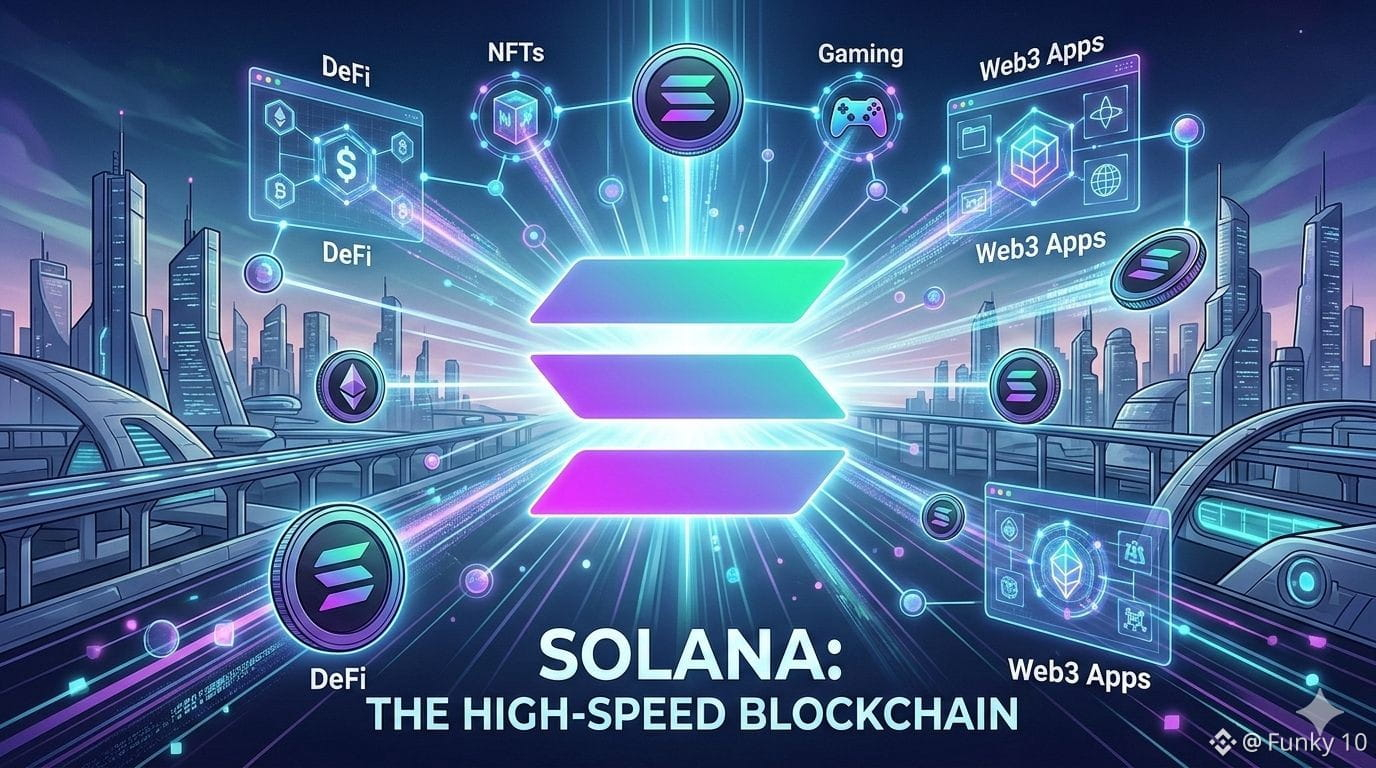
Solana: The High-Speed Blockchain for the Future
$SOL has emerged as a major player in the cryptocurrency world, offering a high-performance blockchain platform designed for decentralized applications (dApps) and crypto-currencies. Known for its incredible speed and low transaction costs, Solana is positioning itself as a foundation for the next generation of the internet (Web3).
Key Features of Solana:
Lightning-Fast Transactions: Solana can process thousands of transactions per second, making it one of the fastest blockchains in existence.
Low Transaction Fees: Transactions on Solana cost a fraction of a cent, making it highly accessible for users and developers.
Growing Ecosystem: Solana hosts a vibrant and rapidly expanding ecosystem of projects spanning decentralized finance (DeFi), non-fungible tokens (NFTs), gaming, and more.
Proof of History (PoH): A unique consensus mechanism that helps Solana achieve its high speed and efficiency.
Whether you're a developer looking to build scalable dApps or an investor interested in the future of blockchain technology, Solana is an ecosystem worth watching. Check out the illustration below for a visual representation of its fast-growing network!
Here is a picture summarizing the Solana ecosystem and its high-speed nature.
#USIsraelStrikeIran #AnthropicUSGovClash #BlockAILayoffs
{spot}(SOLUSDT)
Solana: The High-Speed Blockchain for the Future
$SOL has emerged as a major player in the cryptocurrency world, offering a high-performance blockchain platform designed for decentralized applications (dApps) and crypto-currencies. Known for its incredible speed and low transaction costs, Solana is positioning itself as a foundation for the next generation of the internet (Web3).
Key Features of Solana:
Lightning-Fast Transactions: Solana can process thousands of transactions per second, making it one of the fastest blockchains in existence.
Low Transaction Fees: Transactions on Solana cost a fraction of a cent, making it highly accessible for users and developers.
Growing Ecosystem: Solana hosts a vibrant and rapidly expanding ecosystem of projects spanning decentralized finance (DeFi), non-fungible tokens (NFTs), gaming, and more.
Proof of History (PoH): A unique consensus mechanism that helps Solana achieve its high speed and efficiency.
Whether you're a developer looking to build scalable dApps or an investor interested in the future of blockchain technology, Solana is an ecosystem worth watching. Check out the illustration below for a visual representation of its fast-growing network!
Here is a picture summarizing the Solana ecosystem and its high-speed nature.
#USIsraelStrikeIran #AnthropicUSGovClash #BlockAILayoffs
27
·
--
Рост
$BTC -ETFs:
NetFlow: +1,163 BTC ($137M) 🟢
Blackrock inflows 1,249 BTC ($147.13M) and currently holds 739,261 BTC ($87.08B);
$ETH -ETFs:
NetFlow: +20,290 ETH ($76.62M) 🟢
Blackrock inflows 34,799 ETH ($131.4M) and currently holds 2,959,462 ETH ($11.17B).
$BTC -ETFs:
NetFlow: +1,163 BTC ($137M) 🟢
Blackrock inflows 1,249 BTC ($147.13M) and currently holds 739,261 BTC ($87.08B);
$ETH -ETFs:
NetFlow: +20,290 ETH ($76.62M) 🟢
Blackrock inflows 34,799 ETH ($131.4M) and currently holds 2,959,462 ETH ($11.17B).
NetFlow: +1,163 BTC ($137M) 🟢
Blackrock inflows 1,249 BTC ($147.13M) and currently holds 739,261 BTC ($87.08B);
$ETH -ETFs:
NetFlow: +20,290 ETH ($76.62M) 🟢
Blackrock inflows 34,799 ETH ($131.4M) and currently holds 2,959,462 ETH ($11.17B).
1
1
·
--
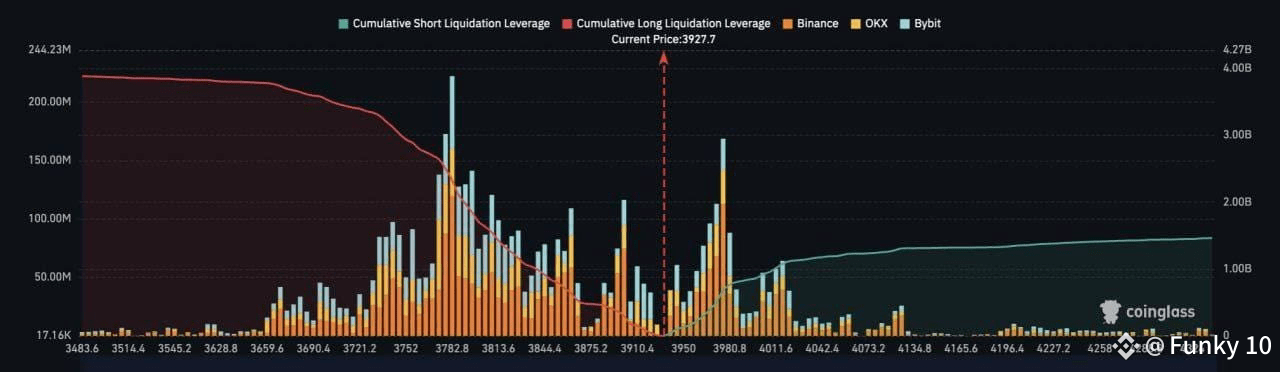
If $ETH hits $4,000, almost $1B in short positions will be liquidated, according to coinglass.
If $ETH hits $4,000, almost $1B in short positions will be liquidated, according to coinglass.
1
·
--
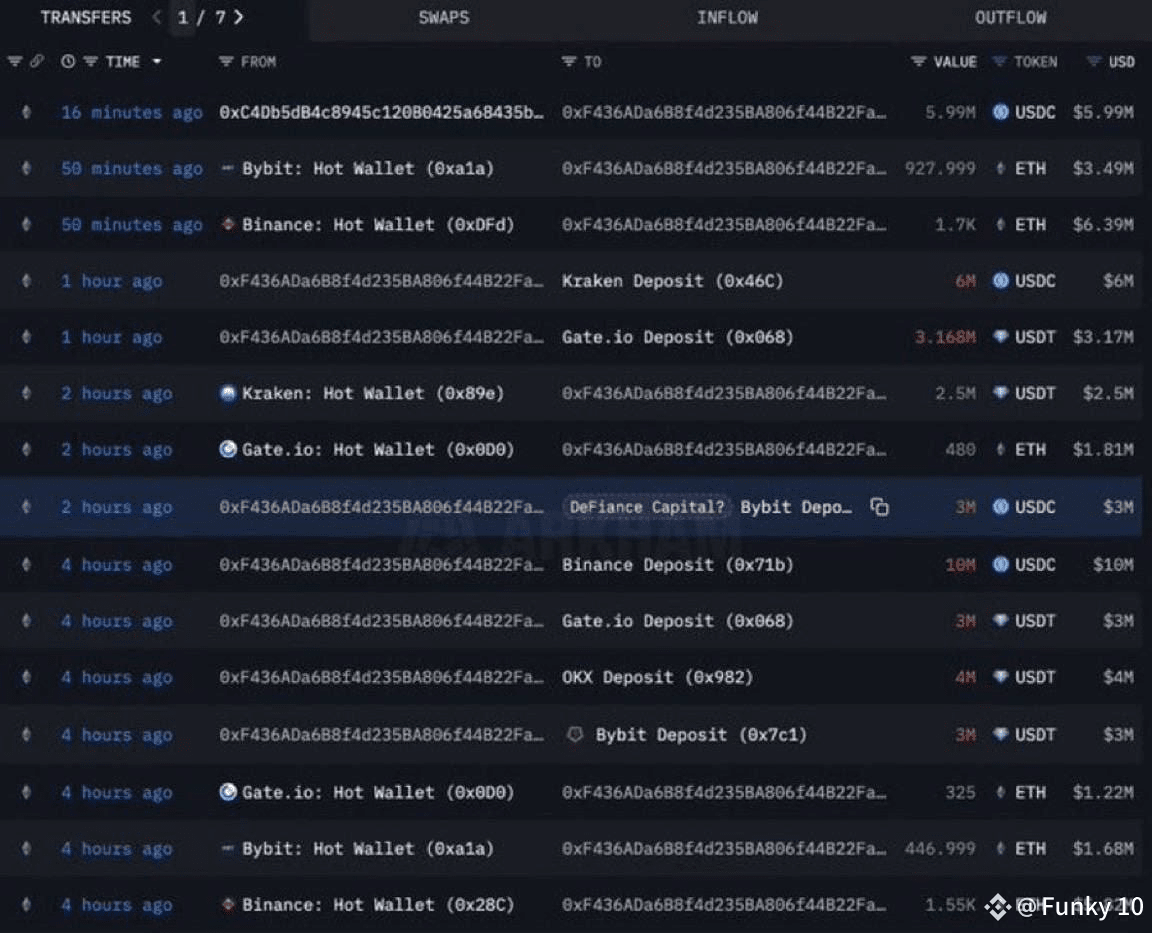
📌 A Whale just bought 30,366 $ETH worth $114M.
{spot}(ETHUSDT)
📌 A Whale just bought 30,366 $ETH worth $114M.
3
·
--
Рост
$ETH ALL TIME HIGHS COMING - Buy NOW. Get rich if you missed out!
{spot}(ETHUSDT)
$ETH ALL TIME HIGHS COMING - Buy NOW. Get rich if you missed out!
18
·
--
Рост
According to report, Blackrock currently earns over $187 million a year from bitcoin ETF fees.
The market will go higher.
We about to see a massive wealth change this week.
WAKE UP!$ETH
{spot}(ETHUSDT)
According to report, Blackrock currently earns over $187 million a year from bitcoin ETF fees.
The market will go higher.
We about to see a massive wealth change this week.
WAKE UP!$ETH
The market will go higher.
We about to see a massive wealth change this week.
WAKE UP!$ETH
8
Войдите, чтобы посмотреть больше материала
Присоединяйтесь к пользователям криптовалют по всему миру на Binance Square
⚡️ Получайте новейшую и полезную информацию о криптоактивах.
💬 Нам доверяет крупнейшая в мире криптобиржа.
👍 Получите достоверные аналитические данные от верифицированных создателей контента.
Эл. почта/номер телефона
В тренде
NVIDIAReinstatesJensenHuangasCEO
Просмотров: 100,890
911 обсуждают
TradFi News | Nvidia Board Unanimously Reinstates Jensen Huang as CEO; Shares Jump 30% Premarket
Binance News
·Лайков: 40
·Просмотров: 41.4k
WillMarketsStageAThanksgivingReliefRally?
Просмотров: 208,676
1,903 обсуждают
WillOctCorePCEShiftFedHikeExpectations?
Просмотров: 73,950
813 обсуждают