
Sir Bilyuzz
10 Публикации

Sir Bilyuzz
Отправить жалобу
Заблокировать пользователя
BlockChain & Web3 Evengelist, Onchain and Technical Analyst. Founder of @Gow BlockChain and Web3 Hub!
18 подписок(и/а)
61 подписчиков(а)
98 понравилось
Посты
Все
Цитирования
·
--
Bitcoin's Secret Cheat Code 🧠
Why $BTC BTC pumps to the moon 📈 then crashes hard , and how YOU can see it coming.
4-year cycle that repeats like clockwork.
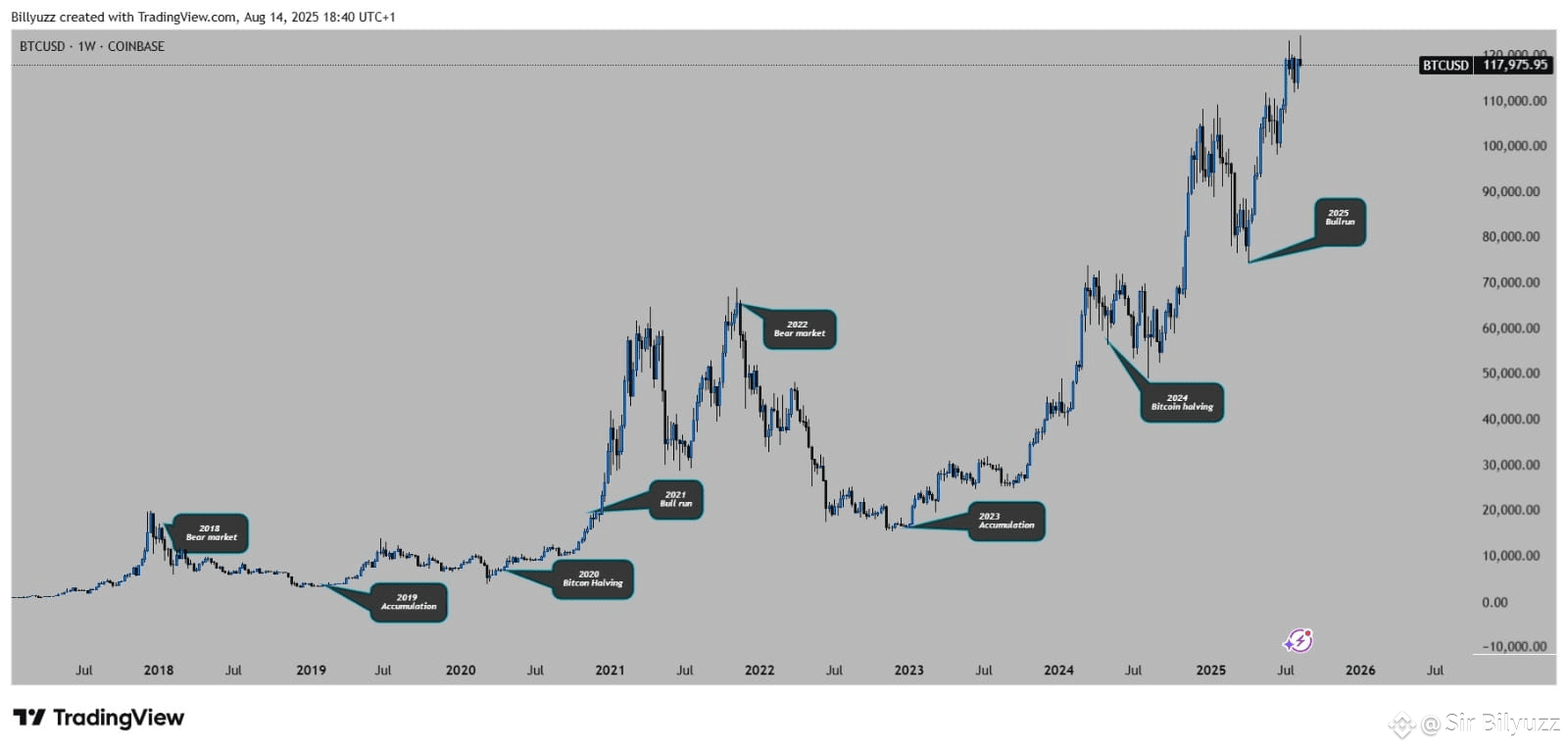
I have marked this chart to highlight two major Bitcoin bull runs from 2018 to the current year 2025.
A Thread 🧵
1.Bear Market Phase: Following the peak and correction of a bull market, the market enters a bear market phase. Prices start declining and investor sentiment becomes pessimistic. The bear market can last for an extended period usually lasting for several months to a year or more.
2.Accumulation Phase: After the end of the previous bear market, $BTC enters an accumulation phase, where prices are relatively low and investor interest is limited. Savvy investors & institutions started accumulating during this period as they believed prices would rise again.
3.Bitcoin Halving Cycle: The halving cycle is a key part of the four year crypto market cycle. It happens every 4 years, reducing the block reward for miners. The event often precedes a bull market phase, with reduced supply driving increased demand and price growth.
4.Bull Market Phase: As the accumulation phase progresses, positive news, increased adoption, and growing interest drive demand for cryptocurrencies. This results in a significant upward trend in prices, leading to a bull market.
The cycle then repeats itself, with the market moving from the bear phase to the accumulation phase and then back to a bull market. It's important to note that while i observed historically pattern, past performance does not guarante future outcomes.
#DYOR* 🤞🍷$ETH
Bitcoin's Secret Cheat Code 🧠
Why $BTC BTC pumps to the moon 📈 then crashes hard , and how YOU can see it coming.
4-year cycle that repeats like clockwork.
I have marked this chart to highlight two major Bitcoin bull runs from 2018 to the current year 2025.
A Thread 🧵
1.Bear Market Phase: Following the peak and correction of a bull market, the market enters a bear market phase. Prices start declining and investor sentiment becomes pessimistic. The bear market can last for an extended period usually lasting for several months to a year or more.
2.Accumulation Phase: After the end of the previous bear market, $BTC enters an accumulation phase, where prices are relatively low and investor interest is limited. Savvy investors & institutions started accumulating during this period as they believed prices would rise again.
3.Bitcoin Halving Cycle: The halving cycle is a key part of the four year crypto market cycle. It happens every 4 years, reducing the block reward for miners. The event often precedes a bull market phase, with reduced supply driving increased demand and price growth.
4.Bull Market Phase: As the accumulation phase progresses, positive news, increased adoption, and growing interest drive demand for cryptocurrencies. This results in a significant upward trend in prices, leading to a bull market.
The cycle then repeats itself, with the market moving from the bear phase to the accumulation phase and then back to a bull market. It's important to note that while i observed historically pattern, past performance does not guarante future outcomes.
#DYOR* 🤞🍷$ETH
Why $BTC BTC pumps to the moon 📈 then crashes hard , and how YOU can see it coming.
4-year cycle that repeats like clockwork.
I have marked this chart to highlight two major Bitcoin bull runs from 2018 to the current year 2025.
A Thread 🧵
1.Bear Market Phase: Following the peak and correction of a bull market, the market enters a bear market phase. Prices start declining and investor sentiment becomes pessimistic. The bear market can last for an extended period usually lasting for several months to a year or more.
2.Accumulation Phase: After the end of the previous bear market, $BTC enters an accumulation phase, where prices are relatively low and investor interest is limited. Savvy investors & institutions started accumulating during this period as they believed prices would rise again.
3.Bitcoin Halving Cycle: The halving cycle is a key part of the four year crypto market cycle. It happens every 4 years, reducing the block reward for miners. The event often precedes a bull market phase, with reduced supply driving increased demand and price growth.
4.Bull Market Phase: As the accumulation phase progresses, positive news, increased adoption, and growing interest drive demand for cryptocurrencies. This results in a significant upward trend in prices, leading to a bull market.
The cycle then repeats itself, with the market moving from the bear phase to the accumulation phase and then back to a bull market. It's important to note that while i observed historically pattern, past performance does not guarante future outcomes.
#DYOR* 🤞🍷$ETH
158
·
--

Статья
Can Blockchain Change the world?You’ve probably heard people in crypto say things like “This project could change how governments work” or “Blockchain will fix the world’s problems.” It sounds dramatic, but let’s look at real examples to see what’s possible.
Take elections. In Nigeria, a well-known lawyer named Deji Adeyanju recently said something interesting. He argued that unless Nigeria’s opposition finds a way to stop cheating in elections, the current president might rig the 2027 vote. Now, we’re not here to agree or disagree with him. But his l point makes you wonder: Why are we still using systems that can be easily manipulated? This is where blockchain comes in. Imagine if every vote in an election was recorded on a public digital ledger l that nobody can tamper with. No more mysterious “lost” ballot boxes. No more delays in announcing results. The technology already exists to let people vote securely from their phones, with each vote being anonymous but still verifiable. Best of all, it’s cheap. Countries spend millions on paper ballots, security, and staff for elections. Blockchain could slash those costs while making voting accessible to everyone. Here’s the kicker: blockchain isn’t some m futuristic idea. It’s ready today. By 2025, there’s no technical reason why any country couldn’t use it for elections. Yet most governments ignore it. Why?
This brings us to the bigger picture. Many call blockchain the most important invention of this century—even bigger than AI. That’s not because AI isn’t useful (it clearly is), but because blockchain solves a different problem: trust. AI helps analyze data or create content, but blockchain creates systems where you don’t need to trust politicians, banks, or officials to be honest. The rules are baked into the technology.
Let’s talk about corruption—a problem every country faces. Governments often claim to fight corruption, but here’s the reality: when public money gets spent, citizens rarely see where it actually goes. Ministries might say they built a school or a hospital, but the l funds often vanish. Blockchain could change this overnight. If m every government transaction taxes, contracts, budgets—was recorded on a public ledger, anyone could track the money. You’d see exactly when funds left the treasury, where they went, and how they were used. No more secret deals. In Nigeria, leaders love to shout “anti-corruption!” Yet they avoid blockchain like it’s a threat. This isn’t a coincidence. Blockchain doesn’t just make systems better—it makes them transparent. And transparency is a problem for anyone who benefits from the status quo. So here’s what blockchain can actually do:
▪︎ Replace expensive, fraud-prone elections with secure, low-cost voting anyone can verify
▪︎ Create permanent records of government spending that even officials can’t m alter
▪︎ Remove the need to “trust” leaders or institutions by letting people check facts themselves.The technology isn’t the issue. It works. The real question is why governments and powerful groups resist it. Maybe because blockchain doesn’t just improve old systems—it makes them obsolete.
So now; Can crypto change the world? The answer depends less on the tech and more on who’s willing to use it. But one thing’s clear: for problems like rigged elections and missing public funds, the solution isn’t a mystery. It’s already here.
#Blockchain #VoteToListOnBinance #WhaleMovements #BinanceAlphaAlert
Can Blockchain Change the world?
You’ve probably heard people in crypto say things like “This project could change how governments work” or “Blockchain will fix the world’s problems.” It sounds dramatic, but let’s look at real examples to see what’s possible.
Take elections. In Nigeria, a well-known lawyer named Deji Adeyanju recently said something interesting. He argued that unless Nigeria’s opposition finds a way to stop cheating in elections, the current president might rig the 2027 vote. Now, we’re not here to agree or disagree with him. But his l point makes you wonder: Why are we still using systems that can be easily manipulated? This is where blockchain comes in. Imagine if every vote in an election was recorded on a public digital ledger l that nobody can tamper with. No more mysterious “lost” ballot boxes. No more delays in announcing results. The technology already exists to let people vote securely from their phones, with each vote being anonymous but still verifiable. Best of all, it’s cheap. Countries spend millions on paper ballots, security, and staff for elections. Blockchain could slash those costs while making voting accessible to everyone. Here’s the kicker: blockchain isn’t some m futuristic idea. It’s ready today. By 2025, there’s no technical reason why any country couldn’t use it for elections. Yet most governments ignore it. Why?
This brings us to the bigger picture. Many call blockchain the most important invention of this century—even bigger than AI. That’s not because AI isn’t useful (it clearly is), but because blockchain solves a different problem: trust. AI helps analyze data or create content, but blockchain creates systems where you don’t need to trust politicians, banks, or officials to be honest. The rules are baked into the technology.
Let’s talk about corruption—a problem every country faces. Governments often claim to fight corruption, but here’s the reality: when public money gets spent, citizens rarely see where it actually goes. Ministries might say they built a school or a hospital, but the l funds often vanish. Blockchain could change this overnight. If m every government transaction taxes, contracts, budgets—was recorded on a public ledger, anyone could track the money. You’d see exactly when funds left the treasury, where they went, and how they were used. No more secret deals. In Nigeria, leaders love to shout “anti-corruption!” Yet they avoid blockchain like it’s a threat. This isn’t a coincidence. Blockchain doesn’t just make systems better—it makes them transparent. And transparency is a problem for anyone who benefits from the status quo. So here’s what blockchain can actually do:
▪︎ Replace expensive, fraud-prone elections with secure, low-cost voting anyone can verify
▪︎ Create permanent records of government spending that even officials can’t m alter
▪︎ Remove the need to “trust” leaders or institutions by letting people check facts themselves.The technology isn’t the issue. It works. The real question is why governments and powerful groups resist it. Maybe because blockchain doesn’t just improve old systems—it makes them obsolete.
So now; Can crypto change the world? The answer depends less on the tech and more on who’s willing to use it. But one thing’s clear: for problems like rigged elections and missing public funds, the solution isn’t a mystery. It’s already here.
#Blockchain #VoteToListOnBinance #WhaleMovements #BinanceAlphaAlert
Take elections. In Nigeria, a well-known lawyer named Deji Adeyanju recently said something interesting. He argued that unless Nigeria’s opposition finds a way to stop cheating in elections, the current president might rig the 2027 vote. Now, we’re not here to agree or disagree with him. But his l point makes you wonder: Why are we still using systems that can be easily manipulated? This is where blockchain comes in. Imagine if every vote in an election was recorded on a public digital ledger l that nobody can tamper with. No more mysterious “lost” ballot boxes. No more delays in announcing results. The technology already exists to let people vote securely from their phones, with each vote being anonymous but still verifiable. Best of all, it’s cheap. Countries spend millions on paper ballots, security, and staff for elections. Blockchain could slash those costs while making voting accessible to everyone. Here’s the kicker: blockchain isn’t some m futuristic idea. It’s ready today. By 2025, there’s no technical reason why any country couldn’t use it for elections. Yet most governments ignore it. Why?
This brings us to the bigger picture. Many call blockchain the most important invention of this century—even bigger than AI. That’s not because AI isn’t useful (it clearly is), but because blockchain solves a different problem: trust. AI helps analyze data or create content, but blockchain creates systems where you don’t need to trust politicians, banks, or officials to be honest. The rules are baked into the technology.
Let’s talk about corruption—a problem every country faces. Governments often claim to fight corruption, but here’s the reality: when public money gets spent, citizens rarely see where it actually goes. Ministries might say they built a school or a hospital, but the l funds often vanish. Blockchain could change this overnight. If m every government transaction taxes, contracts, budgets—was recorded on a public ledger, anyone could track the money. You’d see exactly when funds left the treasury, where they went, and how they were used. No more secret deals. In Nigeria, leaders love to shout “anti-corruption!” Yet they avoid blockchain like it’s a threat. This isn’t a coincidence. Blockchain doesn’t just make systems better—it makes them transparent. And transparency is a problem for anyone who benefits from the status quo. So here’s what blockchain can actually do:
▪︎ Replace expensive, fraud-prone elections with secure, low-cost voting anyone can verify
▪︎ Create permanent records of government spending that even officials can’t m alter
▪︎ Remove the need to “trust” leaders or institutions by letting people check facts themselves.The technology isn’t the issue. It works. The real question is why governments and powerful groups resist it. Maybe because blockchain doesn’t just improve old systems—it makes them obsolete.
So now; Can crypto change the world? The answer depends less on the tech and more on who’s willing to use it. But one thing’s clear: for problems like rigged elections and missing public funds, the solution isn’t a mystery. It’s already here.
#Blockchain #VoteToListOnBinance #WhaleMovements #BinanceAlphaAlert
202
·
--
Статья
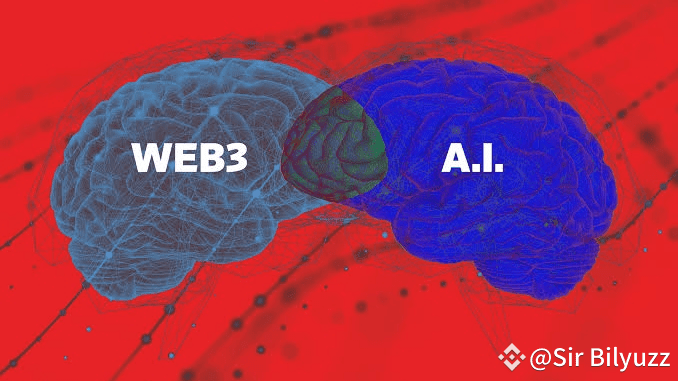
AI and Web3: In the Future. For the Future.The integration of Artificial Intelligence (AI) and Web3 represents a transformative shift in the digital landscape, promising a future where technology is more transparent, decentralized, and user-centric. AI, which enables machines to learn from data and make intelligent decisions, is already a cornerstone of modern technology, powering everything from personalized recommendations to advanced automation. Web3, on the other hand, is the next evolution of the internet, built on blockchain technology to decentralize control and return ownership of data and digital assets to users. Together, these technologies address each other’s limitations: AI brings efficiency and adaptability to Web3’s often clunky systems, while Web3 provides transparency and accountability to AI’s opaque decision-making processes.
One of the most compelling aspects of this synergy is how Web3 can enhance the trustworthiness of AI.
The “black box” problem—where AI decisions are made without clear explanations—has long been a challenge, particularly in critical fields like healthcare and finance. Web3’s blockchain technology offers a solution by creating immutable, transparent records of AI processes, ensuring accountability and building public trust. Conversely, AI can optimize Web3’s infrastructure, which is often criticized for being slow and energy intensive. By leveraging AI to predict network congestion, streamline transactions, and reduce energy consumption, blockchain systems can become faster, more scalable, and environmentally sustainable. Real-world applications of this partnership are already emerging. Decentralized AI marketplaces, such as SingularityNET, allow developers to create and monetize AI services in an open, collaborative environment, reducing reliance on centralized tech giants. Smart contracts, ahallmark of Web3, are being enhanced with AI to create dynamic agreements that adapt in real time—for example, insurance policies that adjust premiums based on user behavior. Additionally, Web3 empowers individuals to own and control their data, enabling them to share it with AI systems on their own terms, potentially even monetizing it.
This shift not only enhances privacy but also creates a more equitable data economy. However, the integration of AI and Web3 is not without challenges. Scalability remains a significant hurdle, as both technologies demand substantial computational resources. Energy consumption is another concern, given the high power requirements of blockchain networks and AI training processes. Regulatory uncertainty further complicates matters, as governments struggle to keep pace with the rapid evolution of decentralized systems and AI advancements. Despite these obstacles, the potential benefits—such as more transparent AI systems, democratized access to technology, and user-controlled data—are too significant to ignore.
AI and Web3: In the Future. For the Future.
The integration of Artificial Intelligence (AI) and Web3 represents a transformative shift in the digital landscape, promising a future where technology is more transparent, decentralized, and user-centric. AI, which enables machines to learn from data and make intelligent decisions, is already a cornerstone of modern technology, powering everything from personalized recommendations to advanced automation. Web3, on the other hand, is the next evolution of the internet, built on blockchain technology to decentralize control and return ownership of data and digital assets to users. Together, these technologies address each other’s limitations: AI brings efficiency and adaptability to Web3’s often clunky systems, while Web3 provides transparency and accountability to AI’s opaque decision-making processes.
One of the most compelling aspects of this synergy is how Web3 can enhance the trustworthiness of AI.
The “black box” problem—where AI decisions are made without clear explanations—has long been a challenge, particularly in critical fields like healthcare and finance. Web3’s blockchain technology offers a solution by creating immutable, transparent records of AI processes, ensuring accountability and building public trust. Conversely, AI can optimize Web3’s infrastructure, which is often criticized for being slow and energy intensive. By leveraging AI to predict network congestion, streamline transactions, and reduce energy consumption, blockchain systems can become faster, more scalable, and environmentally sustainable. Real-world applications of this partnership are already emerging. Decentralized AI marketplaces, such as SingularityNET, allow developers to create and monetize AI services in an open, collaborative environment, reducing reliance on centralized tech giants. Smart contracts, ahallmark of Web3, are being enhanced with AI to create dynamic agreements that adapt in real time—for example, insurance policies that adjust premiums based on user behavior. Additionally, Web3 empowers individuals to own and control their data, enabling them to share it with AI systems on their own terms, potentially even monetizing it.
This shift not only enhances privacy but also creates a more equitable data economy. However, the integration of AI and Web3 is not without challenges. Scalability remains a significant hurdle, as both technologies demand substantial computational resources. Energy consumption is another concern, given the high power requirements of blockchain networks and AI training processes. Regulatory uncertainty further complicates matters, as governments struggle to keep pace with the rapid evolution of decentralized systems and AI advancements. Despite these obstacles, the potential benefits—such as more transparent AI systems, democratized access to technology, and user-controlled data—are too significant to ignore.
One of the most compelling aspects of this synergy is how Web3 can enhance the trustworthiness of AI.
The “black box” problem—where AI decisions are made without clear explanations—has long been a challenge, particularly in critical fields like healthcare and finance. Web3’s blockchain technology offers a solution by creating immutable, transparent records of AI processes, ensuring accountability and building public trust. Conversely, AI can optimize Web3’s infrastructure, which is often criticized for being slow and energy intensive. By leveraging AI to predict network congestion, streamline transactions, and reduce energy consumption, blockchain systems can become faster, more scalable, and environmentally sustainable. Real-world applications of this partnership are already emerging. Decentralized AI marketplaces, such as SingularityNET, allow developers to create and monetize AI services in an open, collaborative environment, reducing reliance on centralized tech giants. Smart contracts, ahallmark of Web3, are being enhanced with AI to create dynamic agreements that adapt in real time—for example, insurance policies that adjust premiums based on user behavior. Additionally, Web3 empowers individuals to own and control their data, enabling them to share it with AI systems on their own terms, potentially even monetizing it.
This shift not only enhances privacy but also creates a more equitable data economy. However, the integration of AI and Web3 is not without challenges. Scalability remains a significant hurdle, as both technologies demand substantial computational resources. Energy consumption is another concern, given the high power requirements of blockchain networks and AI training processes. Regulatory uncertainty further complicates matters, as governments struggle to keep pace with the rapid evolution of decentralized systems and AI advancements. Despite these obstacles, the potential benefits—such as more transparent AI systems, democratized access to technology, and user-controlled data—are too significant to ignore.
9
·
--

Статья
Crypto Market Today!The cryptocurrency market is currently in a state of flux, presenting a mix of promising fundamentals and cautious sentiment. On the positive side, Bitcoin’s nearing supply cap, Ethereum’s ongoing technological advancements, and increasing institutional adoption— highlighted by initiatives like the U.S. strategic crypto reserve—point toward a potential bull run. However, market sentiment tells a different story, with indicators like the Crypto Fear and Greed Index reflecting "extreme fear" among investors. This is further compounded by recent volatility, price retractions, and mixed technical signals, such as bearish MACD divergence and overbought RSI levels.
When fundamentals and sentiment diverge this significantly, it often signals a transitional phase rather than a clear trend. In such cases, it’s wise to adopt a cautious approach, monitoring developments closely before making any decisive moves. Let’s keep a close watch on the market and reassess as conditions evolve.
So, what to do? Adopt a wait and see attitude. Don’t go selling your bags, but you should be running into the market either.
Current Crypto Market Situation: Fundamental and Sentiment Analysis
Introduction As of March 4, 2025, the cryptocurrency market is experiencing notable volatility influenced by policy announcements and shifting investor sentiment. This analysis explores both fundamental and sentiment aspects of the market, highlighting the key positive and negative factors at play.
Fundamental Analysis
Market Capitalization and Trading Volume The global cryptocurrency market capitalization stands at $3.14 trillion, reflecting an 11.37% increase over the last day. The total trading volume in the past 24 hours is $164.43 billion, marking a 101.45% increase. While these figures indicate significant growth, the recent fluctuations suggest ongoing uncertainty.
Bitcoin Halving Events Bitcoin halving events, occurring approximately every four years, have historically driven bullish cycles by reducing the supply of new Bitcoin. Past halving events have led to significant price increases, with the next one expected to continue this trend. However, market behavior suggests that additional factors, such as regulatory developments and macroeconomic conditions, are playing a role in shaping market sentiment.
Tokenomics and Supply Dynamics Bitcoin's supply is nearing its cap of 21 million coins, with almost 20 million already mined. This scarcity contributes to its valuation. Meanwhile, Ethereum's transition to a proof-of-stake model has introduced a mechanism to burn transaction fees, reducing its supply and potentially increasing its value. These dynamics strengthen the long -term fundamentals of both assets.Institutional Adoption and Regulatory Developments Recent policy initiatives aim to position the United States as a leader in the cryptocurrency industry. While initial announcements led to price surges, the gains were short-lived, highlighting the market’s sensitivity to short-term developments. Additionally, the election of a pro-crypto U.S. president has raised expectations for favorable regulations, potentially accelerating institutional adoption. Analysts predict that Bitcoin could reach $225,000 by the end of the year based on historical price cycles and regulatory support.
Sentiment Analysis
Current Market Sentiment Market sentiment, as measured by tools like the Crypto Fear and Greed Index, currently reflects "extreme fear." This shift from earlier optimism suggests heightened uncertainty due to recent volatility and price corrections. Social Media and News Sentiment Discussions on social media platforms indicate a mix of optimism and caution. While some investors remain confident in long-term growth, others express concern over short-term price movements. News sentiment is similarly divided, with institutional adoption being a positive driver but regulatory uncertainties contributing to caution. Whale Activity Entities holding large amounts of cryptocurrency, known as whales, play a crucial role in market dynamics. Recent activity suggests a mix of accumulation and profittaking, further contributing to market volatility.
Key Market Indicators
Total Value Locked (TVL): High TVL in decentralized finance (DeFi) signals increased trust and participation in crypto projects.
Community Engagement: The rise of crypto-related investment products and platforms has expanded the user base, indicating strong institutional and retail interest.
Network Growth and Adoption: The growing adoption of Bitcoin ETFs and Ethereum staking solutions suggests increasing mainstream acceptance.
Positive Aspects
Institutional Interest
The announcement of a U.S. strategic reserve of cryptocurrencies, including Bitcoin, Ethereum, XRP, Solana, and Cardano, aims to position the United States as a leader in the cryptocurrency industry. This has initially led to a surge in cryptocurrency prices, indicating strong institutional interest.
Technological Advancements
Ethereum's transition to a proof-of-stake model and the introduction of fee-burning mechanisms are positive developments that could enhance its value and utility. Bitcoin's nearing supply cap also adds to its scarcity and potential value.
Regulatory Support
The election of a pro-crypto U.S. president has led to expectations of favorable regulations, potentially accelerating institutional adoption and mainstream acceptance of cryptocurrencies.
Negative Aspects
Market Volatility
Despite the initial surge in prices following the U.S. strategic reserve announcement, the gains were short-lived, with prices retracting shortly after. This volatility indicates market uncertainty and caution among investors.
Sentiment Shift The shift from 'panic' to 'extreme panic' among investors reflects heightened uncertainty and a lack of confidence in the market's short-term direction. This sentiment can lead to reactive decisions and increased selling pressure.
Technical Indicators Bitcoin's technical indicators present a mixed outlook. The Moving Average Convergence Divergence (MACD) shows a bearish divergence, suggesting weakening momentum. The Relative Strength Index (RSI) is above 80, indicating overbought conditions that often precede short-term corrections. The On-Balance Volume (OBV) divergence suggests that recent price increases may not be supported by strong buying volume.
Conclusion: Bullish or Bearish? While some indicators, such as market capitalization and institutional adoption, align with a bull market, recent volatility and sentiment analysis suggest caution. The current environment may represent a transitional phase rather than a definitive bull or bear market. A balanced approach, considering both fundamental strength and market sentiment, is essential for navigating the evolving cryptocurrency landscape.
Crypto Market Today!
The cryptocurrency market is currently in a state of flux, presenting a mix of promising fundamentals and cautious sentiment. On the positive side, Bitcoin’s nearing supply cap, Ethereum’s ongoing technological advancements, and increasing institutional adoption— highlighted by initiatives like the U.S. strategic crypto reserve—point toward a potential bull run. However, market sentiment tells a different story, with indicators like the Crypto Fear and Greed Index reflecting "extreme fear" among investors. This is further compounded by recent volatility, price retractions, and mixed technical signals, such as bearish MACD divergence and overbought RSI levels.
When fundamentals and sentiment diverge this significantly, it often signals a transitional phase rather than a clear trend. In such cases, it’s wise to adopt a cautious approach, monitoring developments closely before making any decisive moves. Let’s keep a close watch on the market and reassess as conditions evolve.
So, what to do? Adopt a wait and see attitude. Don’t go selling your bags, but you should be running into the market either.
Current Crypto Market Situation: Fundamental and Sentiment Analysis
Introduction As of March 4, 2025, the cryptocurrency market is experiencing notable volatility influenced by policy announcements and shifting investor sentiment. This analysis explores both fundamental and sentiment aspects of the market, highlighting the key positive and negative factors at play.
Fundamental Analysis
Market Capitalization and Trading Volume The global cryptocurrency market capitalization stands at $3.14 trillion, reflecting an 11.37% increase over the last day. The total trading volume in the past 24 hours is $164.43 billion, marking a 101.45% increase. While these figures indicate significant growth, the recent fluctuations suggest ongoing uncertainty.
Bitcoin Halving Events Bitcoin halving events, occurring approximately every four years, have historically driven bullish cycles by reducing the supply of new Bitcoin. Past halving events have led to significant price increases, with the next one expected to continue this trend. However, market behavior suggests that additional factors, such as regulatory developments and macroeconomic conditions, are playing a role in shaping market sentiment.
Tokenomics and Supply Dynamics Bitcoin's supply is nearing its cap of 21 million coins, with almost 20 million already mined. This scarcity contributes to its valuation. Meanwhile, Ethereum's transition to a proof-of-stake model has introduced a mechanism to burn transaction fees, reducing its supply and potentially increasing its value. These dynamics strengthen the long -term fundamentals of both assets.Institutional Adoption and Regulatory Developments Recent policy initiatives aim to position the United States as a leader in the cryptocurrency industry. While initial announcements led to price surges, the gains were short-lived, highlighting the market’s sensitivity to short-term developments. Additionally, the election of a pro-crypto U.S. president has raised expectations for favorable regulations, potentially accelerating institutional adoption. Analysts predict that Bitcoin could reach $225,000 by the end of the year based on historical price cycles and regulatory support.
Sentiment Analysis
Current Market Sentiment Market sentiment, as measured by tools like the Crypto Fear and Greed Index, currently reflects "extreme fear." This shift from earlier optimism suggests heightened uncertainty due to recent volatility and price corrections. Social Media and News Sentiment Discussions on social media platforms indicate a mix of optimism and caution. While some investors remain confident in long-term growth, others express concern over short-term price movements. News sentiment is similarly divided, with institutional adoption being a positive driver but regulatory uncertainties contributing to caution. Whale Activity Entities holding large amounts of cryptocurrency, known as whales, play a crucial role in market dynamics. Recent activity suggests a mix of accumulation and profittaking, further contributing to market volatility.
Key Market Indicators
Total Value Locked (TVL): High TVL in decentralized finance (DeFi) signals increased trust and participation in crypto projects.
Community Engagement: The rise of crypto-related investment products and platforms has expanded the user base, indicating strong institutional and retail interest.
Network Growth and Adoption: The growing adoption of Bitcoin ETFs and Ethereum staking solutions suggests increasing mainstream acceptance.
Positive Aspects
Institutional Interest
The announcement of a U.S. strategic reserve of cryptocurrencies, including Bitcoin, Ethereum, XRP, Solana, and Cardano, aims to position the United States as a leader in the cryptocurrency industry. This has initially led to a surge in cryptocurrency prices, indicating strong institutional interest.
Technological Advancements
Ethereum's transition to a proof-of-stake model and the introduction of fee-burning mechanisms are positive developments that could enhance its value and utility. Bitcoin's nearing supply cap also adds to its scarcity and potential value.
Regulatory Support
The election of a pro-crypto U.S. president has led to expectations of favorable regulations, potentially accelerating institutional adoption and mainstream acceptance of cryptocurrencies.
Negative Aspects
Market Volatility
Despite the initial surge in prices following the U.S. strategic reserve announcement, the gains were short-lived, with prices retracting shortly after. This volatility indicates market uncertainty and caution among investors.
Sentiment Shift The shift from 'panic' to 'extreme panic' among investors reflects heightened uncertainty and a lack of confidence in the market's short-term direction. This sentiment can lead to reactive decisions and increased selling pressure.
Technical Indicators Bitcoin's technical indicators present a mixed outlook. The Moving Average Convergence Divergence (MACD) shows a bearish divergence, suggesting weakening momentum. The Relative Strength Index (RSI) is above 80, indicating overbought conditions that often precede short-term corrections. The On-Balance Volume (OBV) divergence suggests that recent price increases may not be supported by strong buying volume.
Conclusion: Bullish or Bearish? While some indicators, such as market capitalization and institutional adoption, align with a bull market, recent volatility and sentiment analysis suggest caution. The current environment may represent a transitional phase rather than a definitive bull or bear market. A balanced approach, considering both fundamental strength and market sentiment, is essential for navigating the evolving cryptocurrency landscape.
When fundamentals and sentiment diverge this significantly, it often signals a transitional phase rather than a clear trend. In such cases, it’s wise to adopt a cautious approach, monitoring developments closely before making any decisive moves. Let’s keep a close watch on the market and reassess as conditions evolve.
So, what to do? Adopt a wait and see attitude. Don’t go selling your bags, but you should be running into the market either.
Current Crypto Market Situation: Fundamental and Sentiment Analysis
Introduction As of March 4, 2025, the cryptocurrency market is experiencing notable volatility influenced by policy announcements and shifting investor sentiment. This analysis explores both fundamental and sentiment aspects of the market, highlighting the key positive and negative factors at play.
Fundamental Analysis
Market Capitalization and Trading Volume The global cryptocurrency market capitalization stands at $3.14 trillion, reflecting an 11.37% increase over the last day. The total trading volume in the past 24 hours is $164.43 billion, marking a 101.45% increase. While these figures indicate significant growth, the recent fluctuations suggest ongoing uncertainty.
Bitcoin Halving Events Bitcoin halving events, occurring approximately every four years, have historically driven bullish cycles by reducing the supply of new Bitcoin. Past halving events have led to significant price increases, with the next one expected to continue this trend. However, market behavior suggests that additional factors, such as regulatory developments and macroeconomic conditions, are playing a role in shaping market sentiment.
Tokenomics and Supply Dynamics Bitcoin's supply is nearing its cap of 21 million coins, with almost 20 million already mined. This scarcity contributes to its valuation. Meanwhile, Ethereum's transition to a proof-of-stake model has introduced a mechanism to burn transaction fees, reducing its supply and potentially increasing its value. These dynamics strengthen the long -term fundamentals of both assets.Institutional Adoption and Regulatory Developments Recent policy initiatives aim to position the United States as a leader in the cryptocurrency industry. While initial announcements led to price surges, the gains were short-lived, highlighting the market’s sensitivity to short-term developments. Additionally, the election of a pro-crypto U.S. president has raised expectations for favorable regulations, potentially accelerating institutional adoption. Analysts predict that Bitcoin could reach $225,000 by the end of the year based on historical price cycles and regulatory support.
Sentiment Analysis
Current Market Sentiment Market sentiment, as measured by tools like the Crypto Fear and Greed Index, currently reflects "extreme fear." This shift from earlier optimism suggests heightened uncertainty due to recent volatility and price corrections. Social Media and News Sentiment Discussions on social media platforms indicate a mix of optimism and caution. While some investors remain confident in long-term growth, others express concern over short-term price movements. News sentiment is similarly divided, with institutional adoption being a positive driver but regulatory uncertainties contributing to caution. Whale Activity Entities holding large amounts of cryptocurrency, known as whales, play a crucial role in market dynamics. Recent activity suggests a mix of accumulation and profittaking, further contributing to market volatility.
Key Market Indicators
Total Value Locked (TVL): High TVL in decentralized finance (DeFi) signals increased trust and participation in crypto projects.
Community Engagement: The rise of crypto-related investment products and platforms has expanded the user base, indicating strong institutional and retail interest.
Network Growth and Adoption: The growing adoption of Bitcoin ETFs and Ethereum staking solutions suggests increasing mainstream acceptance.
Positive Aspects
Institutional Interest
The announcement of a U.S. strategic reserve of cryptocurrencies, including Bitcoin, Ethereum, XRP, Solana, and Cardano, aims to position the United States as a leader in the cryptocurrency industry. This has initially led to a surge in cryptocurrency prices, indicating strong institutional interest.
Technological Advancements
Ethereum's transition to a proof-of-stake model and the introduction of fee-burning mechanisms are positive developments that could enhance its value and utility. Bitcoin's nearing supply cap also adds to its scarcity and potential value.
Regulatory Support
The election of a pro-crypto U.S. president has led to expectations of favorable regulations, potentially accelerating institutional adoption and mainstream acceptance of cryptocurrencies.
Negative Aspects
Market Volatility
Despite the initial surge in prices following the U.S. strategic reserve announcement, the gains were short-lived, with prices retracting shortly after. This volatility indicates market uncertainty and caution among investors.
Sentiment Shift The shift from 'panic' to 'extreme panic' among investors reflects heightened uncertainty and a lack of confidence in the market's short-term direction. This sentiment can lead to reactive decisions and increased selling pressure.
Technical Indicators Bitcoin's technical indicators present a mixed outlook. The Moving Average Convergence Divergence (MACD) shows a bearish divergence, suggesting weakening momentum. The Relative Strength Index (RSI) is above 80, indicating overbought conditions that often precede short-term corrections. The On-Balance Volume (OBV) divergence suggests that recent price increases may not be supported by strong buying volume.
Conclusion: Bullish or Bearish? While some indicators, such as market capitalization and institutional adoption, align with a bull market, recent volatility and sentiment analysis suggest caution. The current environment may represent a transitional phase rather than a definitive bull or bear market. A balanced approach, considering both fundamental strength and market sentiment, is essential for navigating the evolving cryptocurrency landscape.
6
·
--
Learn about #Takadao, an insurance alternative that leverages blockchain technology.
For decades, traditional insurance companies have dominated the financial protection industry, but they come with high costs, lack of transparency, and profit-driven incentives that don’t always align with policyholders' best interests.
@takadao_io is changing the game by introducing mutual protection communities powered by blockchain and Decentralized Autonomous Organizations (DAOs).
This innovative approach allows people to pool their resources and protect one another in a transparent, fair, and decentralized way—without relying on traditional insurance companies.
What is Takadao?
Takadao is a technology company that provides a blockchain-based alternative to traditional insurance. Instead of a single company managing an insurance fund, Takadao allows members of Mutual Protection DAOs (tDAOs) to collectively own and manage their insurance funds using smart contracts. These smart contracts handle everything automatically—collecting contributions, managing payouts, and ensuring fairness.
This community-driven approach removes the need for profit-seeking middlemen, ensuring that members receive the maximum benefit from their contributions.
Learn about #Takadao, an insurance alternative that leverages blockchain technology.
For decades, traditional insurance companies have dominated the financial protection industry, but they come with high costs, lack of transparency, and profit-driven incentives that don’t always align with policyholders' best interests.
@takadao_io is changing the game by introducing mutual protection communities powered by blockchain and Decentralized Autonomous Organizations (DAOs).
This innovative approach allows people to pool their resources and protect one another in a transparent, fair, and decentralized way—without relying on traditional insurance companies.
What is Takadao?
Takadao is a technology company that provides a blockchain-based alternative to traditional insurance. Instead of a single company managing an insurance fund, Takadao allows members of Mutual Protection DAOs (tDAOs) to collectively own and manage their insurance funds using smart contracts. These smart contracts handle everything automatically—collecting contributions, managing payouts, and ensuring fairness.
This community-driven approach removes the need for profit-seeking middlemen, ensuring that members receive the maximum benefit from their contributions.
For decades, traditional insurance companies have dominated the financial protection industry, but they come with high costs, lack of transparency, and profit-driven incentives that don’t always align with policyholders' best interests.
@takadao_io is changing the game by introducing mutual protection communities powered by blockchain and Decentralized Autonomous Organizations (DAOs).
This innovative approach allows people to pool their resources and protect one another in a transparent, fair, and decentralized way—without relying on traditional insurance companies.
What is Takadao?
Takadao is a technology company that provides a blockchain-based alternative to traditional insurance. Instead of a single company managing an insurance fund, Takadao allows members of Mutual Protection DAOs (tDAOs) to collectively own and manage their insurance funds using smart contracts. These smart contracts handle everything automatically—collecting contributions, managing payouts, and ensuring fairness.
This community-driven approach removes the need for profit-seeking middlemen, ensuring that members receive the maximum benefit from their contributions.

1
187
·
--
Статья
OVERVIEW OF BLOCKCHAIN STRUCTURE 🧑💻Blockchain is a decentralized, digital ledger that records transactions across a network of computers. Unlike traditional systems controlled by one central authority, blockchain is maintained by a network of nodes, each holding a copy of the blockchain.
This makes it more secure and transparent, as no single entity controls it. Transactions are verified by consensus among nodes, ensuring trust and reducing the risk of fraud.
Each block in the blockchain contains transaction data. Once a block is added, it is secured with cryptographic methods, making the data tamper-resistant.
The chain of blocks is linked by unique cryptographic hashes, ensuring that altering any block would break the chain, which would be easily detectable. The transparency of blockchain allows anyone with access to view the transaction history.
Blockchain Components and Their Functions Blocks A block in a blockchain is a container for transaction data and has three main parts:
Transaction Data: Details like sender, receiver, amount, and time.
Block Hash: A unique identifier for the block, ensuring its integrity.
Previous Block Hash: Links the block to the previous one, forming an unbreakable chain.
📌 A block has two main sections:
Block Header: Contains metadata like the block’s version, timestamp, and the previous block’s hash.
Block Body: Contains the transaction data, the core information added to the blockchain. Chain of Blocks.
Blocks are linked through hashes to form a continuous chain. Each new block contains the hash of the previous block, securing the chain. Any change in a block would alter its hash and breakthe chain, making tampering detectable. Blocks are added through a consensus process, ensuring all participants agree on the validity of the new block.
Block size affects blockchain performance. Larger blocks store more transactions but can slow the network, while smaller blocks are faster but may lead to higher fees or slower processing during peak times.
Nodes;
Nodes are participants that help maintain and secure the blockchain. Each node stores a full or partial copy of the blockchain and validates transactions. There are different types of nodes:
Full Nodes: Store the entire blockchain and validate transactions.
Light Nodes: Store only a portion of the blockchain and rely on full nodes for validation.
Miner Nodes: Participate in creating new blocks by solving complex problems.
Blockchain operates on a peer-to-peer network, allowing nodes to communicate directly with each other. This decentralization makes the network resilient, as the failure of one node does not affect the system’s overall functionality.
To be Continued.....
OVERVIEW OF BLOCKCHAIN STRUCTURE 🧑💻
Blockchain is a decentralized, digital ledger that records transactions across a network of computers. Unlike traditional systems controlled by one central authority, blockchain is maintained by a network of nodes, each holding a copy of the blockchain.
This makes it more secure and transparent, as no single entity controls it. Transactions are verified by consensus among nodes, ensuring trust and reducing the risk of fraud.
Each block in the blockchain contains transaction data. Once a block is added, it is secured with cryptographic methods, making the data tamper-resistant.
The chain of blocks is linked by unique cryptographic hashes, ensuring that altering any block would break the chain, which would be easily detectable. The transparency of blockchain allows anyone with access to view the transaction history.
Blockchain Components and Their Functions Blocks A block in a blockchain is a container for transaction data and has three main parts:
Transaction Data: Details like sender, receiver, amount, and time.
Block Hash: A unique identifier for the block, ensuring its integrity.
Previous Block Hash: Links the block to the previous one, forming an unbreakable chain.
📌 A block has two main sections:
Block Header: Contains metadata like the block’s version, timestamp, and the previous block’s hash.
Block Body: Contains the transaction data, the core information added to the blockchain. Chain of Blocks.
Blocks are linked through hashes to form a continuous chain. Each new block contains the hash of the previous block, securing the chain. Any change in a block would alter its hash and breakthe chain, making tampering detectable. Blocks are added through a consensus process, ensuring all participants agree on the validity of the new block.
Block size affects blockchain performance. Larger blocks store more transactions but can slow the network, while smaller blocks are faster but may lead to higher fees or slower processing during peak times.
Nodes;
Nodes are participants that help maintain and secure the blockchain. Each node stores a full or partial copy of the blockchain and validates transactions. There are different types of nodes:
Full Nodes: Store the entire blockchain and validate transactions.
Light Nodes: Store only a portion of the blockchain and rely on full nodes for validation.
Miner Nodes: Participate in creating new blocks by solving complex problems.
Blockchain operates on a peer-to-peer network, allowing nodes to communicate directly with each other. This decentralization makes the network resilient, as the failure of one node does not affect the system’s overall functionality.
To be Continued.....
This makes it more secure and transparent, as no single entity controls it. Transactions are verified by consensus among nodes, ensuring trust and reducing the risk of fraud.
Each block in the blockchain contains transaction data. Once a block is added, it is secured with cryptographic methods, making the data tamper-resistant.
The chain of blocks is linked by unique cryptographic hashes, ensuring that altering any block would break the chain, which would be easily detectable. The transparency of blockchain allows anyone with access to view the transaction history.
Blockchain Components and Their Functions Blocks A block in a blockchain is a container for transaction data and has three main parts:
Transaction Data: Details like sender, receiver, amount, and time.
Block Hash: A unique identifier for the block, ensuring its integrity.
Previous Block Hash: Links the block to the previous one, forming an unbreakable chain.
📌 A block has two main sections:
Block Header: Contains metadata like the block’s version, timestamp, and the previous block’s hash.
Block Body: Contains the transaction data, the core information added to the blockchain. Chain of Blocks.
Blocks are linked through hashes to form a continuous chain. Each new block contains the hash of the previous block, securing the chain. Any change in a block would alter its hash and breakthe chain, making tampering detectable. Blocks are added through a consensus process, ensuring all participants agree on the validity of the new block.
Block size affects blockchain performance. Larger blocks store more transactions but can slow the network, while smaller blocks are faster but may lead to higher fees or slower processing during peak times.
Nodes;
Nodes are participants that help maintain and secure the blockchain. Each node stores a full or partial copy of the blockchain and validates transactions. There are different types of nodes:
Full Nodes: Store the entire blockchain and validate transactions.
Light Nodes: Store only a portion of the blockchain and rely on full nodes for validation.
Miner Nodes: Participate in creating new blocks by solving complex problems.
Blockchain operates on a peer-to-peer network, allowing nodes to communicate directly with each other. This decentralization makes the network resilient, as the failure of one node does not affect the system’s overall functionality.
To be Continued.....
196
·
--
Verily, blockchain is the truth. $1.5 billion was stolen from Bybit, and we all know the hacker’s address, yet not a single institution can seize the funds. If this were a bank, the stolen money would have been frozen within minutes, accounts locked, transactions reversed. But this is crypto—where code is law, and ownership is absolute.
This is both the beauty and the curse of decentralization. No government, no regulator, no banker can press a button and take back what was lost. The only way to recover the funds is if the hacker decides to return them or makes a mistake that exposes their identity. Until then, the stolen Ethereum sits untouched, visible for all to see, but untouchable.
And so, the industry moves forward, lessons learned, but the fundamentals remain the same. Self-custody is key. Security is everything. And in this game, control is power—but with control comes responsibility.
@GowBlockChain_And_Web3_Hub!
Verily, blockchain is the truth. $1.5 billion was stolen from Bybit, and we all know the hacker’s address, yet not a single institution can seize the funds. If this were a bank, the stolen money would have been frozen within minutes, accounts locked, transactions reversed. But this is crypto—where code is law, and ownership is absolute.
This is both the beauty and the curse of decentralization. No government, no regulator, no banker can press a button and take back what was lost. The only way to recover the funds is if the hacker decides to return them or makes a mistake that exposes their identity. Until then, the stolen Ethereum sits untouched, visible for all to see, but untouchable.
And so, the industry moves forward, lessons learned, but the fundamentals remain the same. Self-custody is key. Security is everything. And in this game, control is power—but with control comes responsibility.
@GowBlockChain_And_Web3_Hub!
This is both the beauty and the curse of decentralization. No government, no regulator, no banker can press a button and take back what was lost. The only way to recover the funds is if the hacker decides to return them or makes a mistake that exposes their identity. Until then, the stolen Ethereum sits untouched, visible for all to see, but untouchable.
And so, the industry moves forward, lessons learned, but the fundamentals remain the same. Self-custody is key. Security is everything. And in this game, control is power—but with control comes responsibility.
@GowBlockChain_And_Web3_Hub!

57
22
63
112.2k
·
--
Статья
The Hidden Truth about Blockchain💬What is #Blockchain?
Blockchain is a technology that records transactions in a way that is secure, transparent, and hard to tamper with. Unlike traditional systems controlled by a single entity, blockchain operates on a decentralized network of computers, meaning no one person or organization has full control.
Transactions are grouped into "blocks" and linked to previous blocks, forming a chain.
This structure builds trust and security, making blockchain an important tool in many industries.
The Purpose of Blockchain
Blockchain was created to fix problems found in traditional systems, such as fraud and inefficiency.
Its main goal is to provide a decentralized system where transactions are securely recorded without needing banks or other middlemen.
Every transaction is confirmed using methods like Proof-of-Work (PoW) or Proof-of-Stake (PoS), ensuring that data can't be easily changed once it's verified.
Blockchain’s transparency allows everyone to track and confirm data, promoting trust.
Real-World Applications of Blockchain.
Blockchain is used in many industries beyond cryptocurrencies. In finance, it powers digital currencies like Bitcoin and Ethereum, allowing direct transactions between users. In supply chains, it helps track goods, ensuring they are authentic and reducing fraud. In healthcare, it securely stores patient records, and governments are exploring blockchain for secure voting systems. From identity verification to decentralized finance, blockchain is transforming industries worldwide.
Key Concepts of Blockchain Distributed Ledger Technology (DLT)
Blockchain’s core is Distributed Ledger Technology (DLT), which allows data to be shared and stored across many computers (nodes) instead of one central system. Each participant in the network has a copy of the data, making it more transparent and secure. When a new transaction occurs, it is sent to all nodes to be validated before being added to the blockchain.
This system prevents a single entity from manipulating the data and protects against fraud and cyberattacks.
Decentralization Unlike traditional systems that rely on central authorities like banks or governments, blockchain uses a decentralized network where no single party has control. Instead, all participants work together to maintain and update the blockchain through a process of agreement.
This decentralization increases security, reduces reliance on middlemen, and gives users full control over their data and assets, without the risk of tampering by a central authority.
●Consensus Mechanisms
Because blockchain doesn’t have a central authority, it uses consensus mechanisms to verify transactions and keep the network secure.
Two common methods are Proof-of-Work (PoW) and Proof-of-Stake (PoS).
■ Proof-of-Work (PoW), used by Bitcoin, requires miners to solve complex puzzles to verify transactions. This process is secure but energy-intensive.
■ Proof-of-Stake (PoS), used by Ethereum 2.0, selects validators based on how much cryptocurrency they hold and are willing to "stake." PoS is more energy-efficient and allows for faster transactions.
Both mechanisms ensure that transactions are verified securely and fairly. Immutability & Security.
A key feature of blockchain is its immutability, meaning once data is added, it cannot be changed or erased. Each block contains a unique cryptographic hash linking it to the previous block. If someone tries to alter a block, the hash changes, breaking the chain and signaling tampering. This makes blockchain very secure and resistant to fraud. Additionally, transactions are encrypted and confirmed by multiple participants in the network, further strengthening the system’s security.
To be continued......
The Hidden Truth about Blockchain💬
What is #Blockchain?
Blockchain is a technology that records transactions in a way that is secure, transparent, and hard to tamper with. Unlike traditional systems controlled by a single entity, blockchain operates on a decentralized network of computers, meaning no one person or organization has full control.
Transactions are grouped into "blocks" and linked to previous blocks, forming a chain.
This structure builds trust and security, making blockchain an important tool in many industries.
The Purpose of Blockchain
Blockchain was created to fix problems found in traditional systems, such as fraud and inefficiency.
Its main goal is to provide a decentralized system where transactions are securely recorded without needing banks or other middlemen.
Every transaction is confirmed using methods like Proof-of-Work (PoW) or Proof-of-Stake (PoS), ensuring that data can't be easily changed once it's verified.
Blockchain’s transparency allows everyone to track and confirm data, promoting trust.
Real-World Applications of Blockchain.
Blockchain is used in many industries beyond cryptocurrencies. In finance, it powers digital currencies like Bitcoin and Ethereum, allowing direct transactions between users. In supply chains, it helps track goods, ensuring they are authentic and reducing fraud. In healthcare, it securely stores patient records, and governments are exploring blockchain for secure voting systems. From identity verification to decentralized finance, blockchain is transforming industries worldwide.
Key Concepts of Blockchain Distributed Ledger Technology (DLT)
Blockchain’s core is Distributed Ledger Technology (DLT), which allows data to be shared and stored across many computers (nodes) instead of one central system. Each participant in the network has a copy of the data, making it more transparent and secure. When a new transaction occurs, it is sent to all nodes to be validated before being added to the blockchain.
This system prevents a single entity from manipulating the data and protects against fraud and cyberattacks.
Decentralization Unlike traditional systems that rely on central authorities like banks or governments, blockchain uses a decentralized network where no single party has control. Instead, all participants work together to maintain and update the blockchain through a process of agreement.
This decentralization increases security, reduces reliance on middlemen, and gives users full control over their data and assets, without the risk of tampering by a central authority.
●Consensus Mechanisms
Because blockchain doesn’t have a central authority, it uses consensus mechanisms to verify transactions and keep the network secure.
Two common methods are Proof-of-Work (PoW) and Proof-of-Stake (PoS).
■ Proof-of-Work (PoW), used by Bitcoin, requires miners to solve complex puzzles to verify transactions. This process is secure but energy-intensive.
■ Proof-of-Stake (PoS), used by Ethereum 2.0, selects validators based on how much cryptocurrency they hold and are willing to "stake." PoS is more energy-efficient and allows for faster transactions.
Both mechanisms ensure that transactions are verified securely and fairly. Immutability & Security.
A key feature of blockchain is its immutability, meaning once data is added, it cannot be changed or erased. Each block contains a unique cryptographic hash linking it to the previous block. If someone tries to alter a block, the hash changes, breaking the chain and signaling tampering. This makes blockchain very secure and resistant to fraud. Additionally, transactions are encrypted and confirmed by multiple participants in the network, further strengthening the system’s security.
To be continued......
Blockchain is a technology that records transactions in a way that is secure, transparent, and hard to tamper with. Unlike traditional systems controlled by a single entity, blockchain operates on a decentralized network of computers, meaning no one person or organization has full control.
Transactions are grouped into "blocks" and linked to previous blocks, forming a chain.
This structure builds trust and security, making blockchain an important tool in many industries.
The Purpose of Blockchain
Blockchain was created to fix problems found in traditional systems, such as fraud and inefficiency.
Its main goal is to provide a decentralized system where transactions are securely recorded without needing banks or other middlemen.
Every transaction is confirmed using methods like Proof-of-Work (PoW) or Proof-of-Stake (PoS), ensuring that data can't be easily changed once it's verified.
Blockchain’s transparency allows everyone to track and confirm data, promoting trust.
Real-World Applications of Blockchain.
Blockchain is used in many industries beyond cryptocurrencies. In finance, it powers digital currencies like Bitcoin and Ethereum, allowing direct transactions between users. In supply chains, it helps track goods, ensuring they are authentic and reducing fraud. In healthcare, it securely stores patient records, and governments are exploring blockchain for secure voting systems. From identity verification to decentralized finance, blockchain is transforming industries worldwide.
Key Concepts of Blockchain Distributed Ledger Technology (DLT)
Blockchain’s core is Distributed Ledger Technology (DLT), which allows data to be shared and stored across many computers (nodes) instead of one central system. Each participant in the network has a copy of the data, making it more transparent and secure. When a new transaction occurs, it is sent to all nodes to be validated before being added to the blockchain.
This system prevents a single entity from manipulating the data and protects against fraud and cyberattacks.
Decentralization Unlike traditional systems that rely on central authorities like banks or governments, blockchain uses a decentralized network where no single party has control. Instead, all participants work together to maintain and update the blockchain through a process of agreement.
This decentralization increases security, reduces reliance on middlemen, and gives users full control over their data and assets, without the risk of tampering by a central authority.
●Consensus Mechanisms
Because blockchain doesn’t have a central authority, it uses consensus mechanisms to verify transactions and keep the network secure.
Two common methods are Proof-of-Work (PoW) and Proof-of-Stake (PoS).
■ Proof-of-Work (PoW), used by Bitcoin, requires miners to solve complex puzzles to verify transactions. This process is secure but energy-intensive.
■ Proof-of-Stake (PoS), used by Ethereum 2.0, selects validators based on how much cryptocurrency they hold and are willing to "stake." PoS is more energy-efficient and allows for faster transactions.
Both mechanisms ensure that transactions are verified securely and fairly. Immutability & Security.
A key feature of blockchain is its immutability, meaning once data is added, it cannot be changed or erased. Each block contains a unique cryptographic hash linking it to the previous block. If someone tries to alter a block, the hash changes, breaking the chain and signaling tampering. This makes blockchain very secure and resistant to fraud. Additionally, transactions are encrypted and confirmed by multiple participants in the network, further strengthening the system’s security.
To be continued......
13
279
·
--
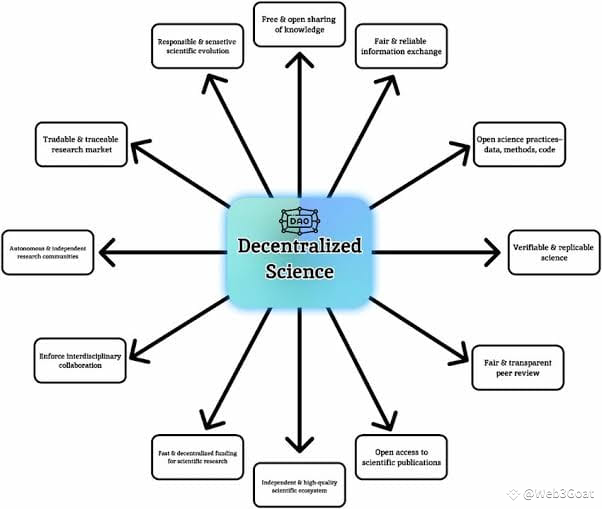
Welcome to the future of scientific research, where the power of blockchain technology is harnessed to propel groundbreaking discoveries like never before.
Introducing Decentralized Science, or DeSci – an innovative movement set to revolutionize the way we approach research, collaboration, and innovation💡
DeSci leverages blockchain technology to build a more transparent, inclusive, and democratic scientific ecosystem.
By decentralizing funding, data sharing, peer review, and intellectual property management, DeSci utilities empower researchers worldwide to pursue bold ideas and tackle pressing global challenges.
*Blockchain-based Crowdfunding: Fueling Game-changing Ideas DeSci projects tap into the potential of blockchain-based crowdfunding, such as Initial Coin Offerings (ICOs) and Decentralized Autonomous Organizations (DAOs). This cutting-edge approach enables researchers to secure funding without relying on traditional sources, ensuring that promising ideas receive the support they need to become life-changing realities ⏱
#DeSci #BIO
Welcome to the future of scientific research, where the power of blockchain technology is harnessed to propel groundbreaking discoveries like never before.
Introducing Decentralized Science, or DeSci – an innovative movement set to revolutionize the way we approach research, collaboration, and innovation💡
DeSci leverages blockchain technology to build a more transparent, inclusive, and democratic scientific ecosystem.
By decentralizing funding, data sharing, peer review, and intellectual property management, DeSci utilities empower researchers worldwide to pursue bold ideas and tackle pressing global challenges.
*Blockchain-based Crowdfunding: Fueling Game-changing Ideas DeSci projects tap into the potential of blockchain-based crowdfunding, such as Initial Coin Offerings (ICOs) and Decentralized Autonomous Organizations (DAOs). This cutting-edge approach enables researchers to secure funding without relying on traditional sources, ensuring that promising ideas receive the support they need to become life-changing realities ⏱
#DeSci #BIO
Introducing Decentralized Science, or DeSci – an innovative movement set to revolutionize the way we approach research, collaboration, and innovation💡
DeSci leverages blockchain technology to build a more transparent, inclusive, and democratic scientific ecosystem.
By decentralizing funding, data sharing, peer review, and intellectual property management, DeSci utilities empower researchers worldwide to pursue bold ideas and tackle pressing global challenges.
*Blockchain-based Crowdfunding: Fueling Game-changing Ideas DeSci projects tap into the potential of blockchain-based crowdfunding, such as Initial Coin Offerings (ICOs) and Decentralized Autonomous Organizations (DAOs). This cutting-edge approach enables researchers to secure funding without relying on traditional sources, ensuring that promising ideas receive the support they need to become life-changing realities ⏱
#DeSci #BIO
11
1.1k
Войдите, чтобы посмотреть больше материала
Присоединяйтесь к пользователям криптовалют по всему миру на Binance Square
⚡️ Получайте новейшую и полезную информацию о криптоактивах.
💬 Нам доверяет крупнейшая в мире криптобиржа.
👍 Получите достоверные аналитические данные от верифицированных создателей контента.
Эл. почта/номер телефона
В тренде
YenPasses160PerDollarToOneMonthLow
Просмотров: 159
32 обсуждают
$HYPE is showing strong momentum and could attract
more attention in the Futures market.
If bullish momentum continues, $HYPE may have room for a strong upward move.
Growing trading activity could support further price action.
Traders are watching HYPE closely for a possible breakout.
A sustained move above key resistance could strengthen the bullish setup.
HYPE could potentially become one of the interesting Futures coins to watch.
However, Futures trading comes with high volatility and liquidation risk.
Use proper risk management and avoid excessive leverage.
Always confirm the trend and volume before entering a trade.
HYPE looks promising, but nothing is guaranteed in crypto.
#YenPasses160PerDollarToOneMonthLow #USShortTermTreasuryYieldsJump #NYSilverFuturesDrop3%
Abdullah bin taswar
·Лайков: 0
·Просмотров: 37
NYSilverFuturesDrop3%
Просмотров: 12,595
368 обсуждают
SchwabPlansToAddSOLAVAXLINKTrading
Просмотров: 16,038
422 обсуждают