Binance Square
Paul Nguyen
437 Публикации

Paul Nguyen

Crypto OG, managing Vietnam Blockchain Community.
65 подписок(и/а)
141 подписчиков(а)
525 понравилось
Посты
PINNED
·
--
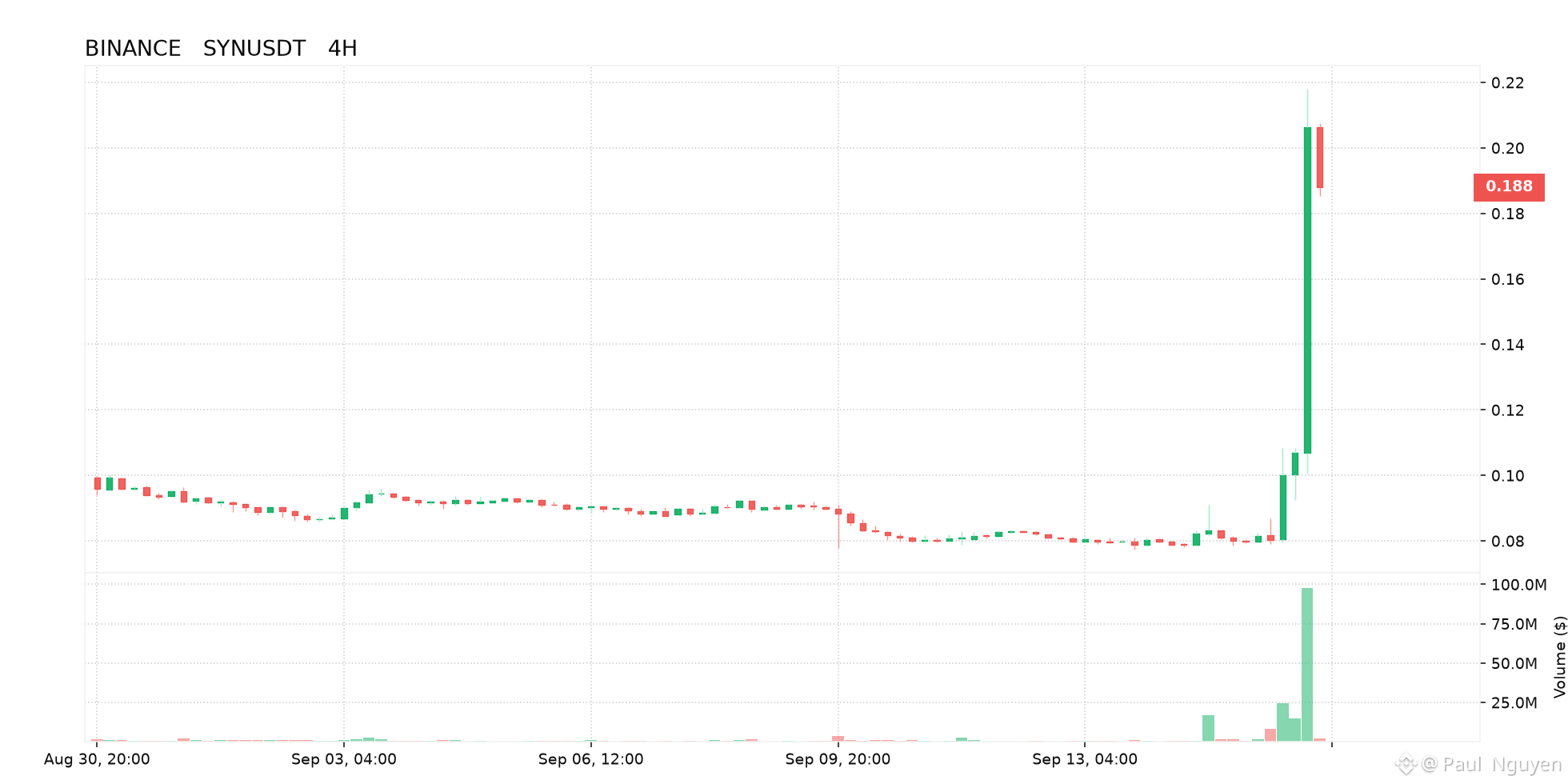
+100% TP3 far more reached for who has followed my signal $SYN #PaulNguyen
Paul Nguyen
·
--
Рост
SYN is up +68% in 24h and it is NOT random noise. Here is what is driving it.

Synapse Labs pivoted their entire roadmap to build Hypercall, an onchain options trading venue built directly on top of Hyperliquid's matching and risk engine. Hypercall Mainnet Alpha just went live, letting users trade SpaceX (SPCX) options with real USDC. Then on June 13th, they dropped SPX options -- the largest derivative market in the world -- onchain for the first time ever. Portfolio margining is now live this week too, which the team themselves flagged as 'the biggest move for $SYN.'

Here is why this matters for the token: Hypercall's revenue model includes buying back $SYN from the open market. SYN is the governance token for the entire Hypercall + Synapse ecosystem. With an FDV still under $14M and a Binance listing, it is one of the smallest-cap tokens on the exchange with a live, revenue-generating product. That combination lit the fuse.

SYN bottomed at $0.027 just 8 days ago. At $0.087 it has already done a 3x from the low. Volume on Binance is exploding. The market is re-rating this as a real onchain options play.

TRADE PLAN
Pair: SYNUSDT
Entry zone: $0.080 - $0.092 (buy the range or pullbacks)
Stop loss: $0.062 (below recent structure)
Targets: TP1 $0.115 | TP2 $0.145 | TP3 $0.180
R:R on mid-entry roughly 1:3 to TP2

Consider scaling out 40% at TP1, 40% at TP2, and letting the rest ride toward TP3 if momentum holds.

RISK REMINDER: SYN is a low-cap token. A +68% day means profit-takers are everywhere. This is a high-volatility, asymmetric bet -- not a core position. Size accordingly, never chase the top of a wick, and always honor your stop. Do your own research.

This is my personal trading setup reference, not a financial advice. I am not responsible for any of your trading decision
$SYN #PaulNguyen
"My bank app is glitching, just release it and I will show you proof after." I have heard some version of that line more than once trading on Binance P2P, and it never once turned out to be true. Urgency is a tool, not an accident. Scammers on any platform lean on rushed language because a calm trader checks details and a panicked one skips them, and Binance P2P is no exception just because it has strong protections built in. The protections only work if you actually use them instead of getting talked past them. A short list of phrases that now make me slow down rather than speed up: claims of a technical error preventing proof from generating, insistence that "trust me" should replace an actual bank confirmation, sudden urgency about needing the crypto for an unrelated emergency, and requests to continue talking somewhere outside the official Binance P2P chat because it is "easier." None of these are proof of a scam by themselves, but stacked together or delivered under pressure, they follow a pattern I no longer ignore. My response stays the same regardless of how the pressure is framed. I check my own banking app, not a description of what it supposedly shows. I confirm the sender's name matches their verified Binance P2P profile. I keep the conversation inside the app so there is a record if anything needs escalating. If the pressure keeps building instead of easing once I ask a calm question, I stop the trade and let Binance P2P support handle it if needed, rather than negotiating with urgency that was manufactured in the first place. I also save a screenshot of the chat and the order number whenever a trade shows even one of these signs, whether it escalates or not, since Binance P2P support can act on a reported pattern faster than on a single complaint filed after money is already gone. Real payments do not need convincing, elaborate excuses, or pressure to skip a single verification step. Only fake ones do, and learning to notice that difference is worth more than any single piece of advice on its own. @Binance_Vietnam #BinanceP2PAnToan
"My bank app is glitching, just release it and I will show you proof after." I have heard some version of that line more than once trading on Binance P2P, and it never once turned out to be true.

Urgency is a tool, not an accident. Scammers on any platform lean on rushed language because a calm trader checks details and a panicked one skips them, and Binance P2P is no exception just because it has strong protections built in. The protections only work if you actually use them instead of getting talked past them.

A short list of phrases that now make me slow down rather than speed up: claims of a technical error preventing proof from generating, insistence that "trust me" should replace an actual bank confirmation, sudden urgency about needing the crypto for an unrelated emergency, and requests to continue talking somewhere outside the official Binance P2P chat because it is "easier." None of these are proof of a scam by themselves, but stacked together or delivered under pressure, they follow a pattern I no longer ignore.

My response stays the same regardless of how the pressure is framed. I check my own banking app, not a description of what it supposedly shows. I confirm the sender's name matches their verified Binance P2P profile. I keep the conversation inside the app so there is a record if anything needs escalating. If the pressure keeps building instead of easing once I ask a calm question, I stop the trade and let Binance P2P support handle it if needed, rather than negotiating with urgency that was manufactured in the first place.

I also save a screenshot of the chat and the order number whenever a trade shows even one of these signs, whether it escalates or not, since Binance P2P support can act on a reported pattern faster than on a single complaint filed after money is already gone.

Real payments do not need convincing, elaborate excuses, or pressure to skip a single verification step. Only fake ones do, and learning to notice that difference is worth more than any single piece of advice on its own.

@Binance Vietnam #BinanceP2PAnToan
🚀 ACE jumped ~75% as volume exploded 10x. No fresh Fusionist news surfaced—this looks like a thin-market, speculation-fueled squeeze rather than a fundamentals rally. ([coingecko.com](https://www.coingecko.com/en/coins/fusionist)) #ACE Not a financial advice. Be responsible for your own financial decision. #PAULNGUYEN
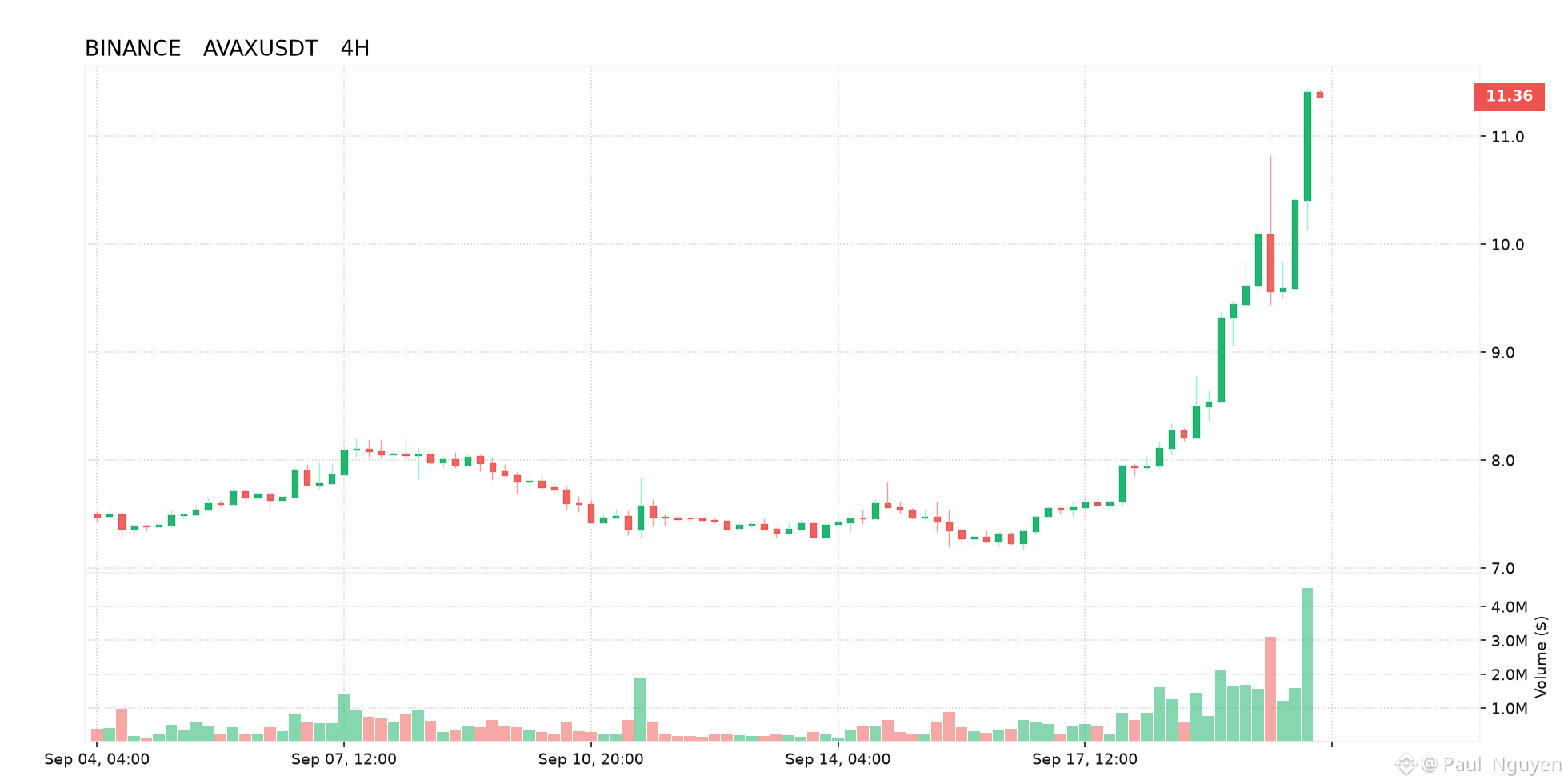
🚀 ACE jumped ~75% as volume exploded 10x. No fresh Fusionist news surfaced—this looks like a thin-market, speculation-fueled squeeze rather than a fundamentals rally. ([coingecko.com](https://www.coingecko.com/en/coins/fusionist))
#ACE
Not a financial advice. Be responsible for your own financial decision. #PAULNGUYEN
I value a Binance P2P merchant badge, but I do not outsource my judgment to it. Merchant status and strong profile history can help me filter ads. They cannot prove that a particular payment is settled, that a new message is genuine, or that an account has never been compromised. When trading on Binance P2P, I review completed activity, completion patterns, feedback, account history when visible, ad terms, limits, and price. I ask whether the payment method fits my own verified account. A badge with confusing terms or an unexplained beneficiary change does not pass simply because the profile looks established. The live order creates the stronger safety structure. KYC identifies users, escrow reserves the seller's crypto, order chat preserves communication, and Appeal lets Binance Support examine a dispute. I keep all instructions inside that structure. I will not accept a third-party payer, send to a substitute recipient, follow an external link, or continue privately after cancellation, regardless of the counterparty's status. Payment verification is non-transferable. When selling, I open my bank or wallet, compare the sender with the buyer's verified name, match the exact amount, and confirm a final, usable credit before release. When buying, I pay only the details displayed in the active order from an account in my name. A badge cannot convert a screenshot into money or make a mismatched name acceptable. If status is used to pressure me, I record that in order chat. I keep the order number, terms, relevant profile details, and transaction evidence, then use Appeal or official Binance Support when uncertain. I remain factual because a high-volume counterparty can face an honest error, while an impressive profile can also be imitated in a message. I use badges to decide whom to inspect first, not whom to trust blindly. The order still has to pass 4 gates: suitable profile, matching identity, on-platform conduct, and verified payment. Reputation begins the assessment. It never replaces it. @Binance_Vietnam #BinanceP2PAnToan $MANTRA
I value a Binance P2P merchant badge, but I do not outsource my judgment to it. Merchant status and strong profile history can help me filter ads. They cannot prove that a particular payment is settled, that a new message is genuine, or that an account has never been compromised.

When trading on Binance P2P, I review completed activity, completion patterns, feedback, account history when visible, ad terms, limits, and price. I ask whether the payment method fits my own verified account. A badge with confusing terms or an unexplained beneficiary change does not pass simply because the profile looks established.

The live order creates the stronger safety structure. KYC identifies users, escrow reserves the seller's crypto, order chat preserves communication, and Appeal lets Binance Support examine a dispute. I keep all instructions inside that structure. I will not accept a third-party payer, send to a substitute recipient, follow an external link, or continue privately after cancellation, regardless of the counterparty's status.

Payment verification is non-transferable. When selling, I open my bank or wallet, compare the sender with the buyer's verified name, match the exact amount, and confirm a final, usable credit before release. When buying, I pay only the details displayed in the active order from an account in my name. A badge cannot convert a screenshot into money or make a mismatched name acceptable.

If status is used to pressure me, I record that in order chat. I keep the order number, terms, relevant profile details, and transaction evidence, then use Appeal or official Binance Support when uncertain. I remain factual because a high-volume counterparty can face an honest error, while an impressive profile can also be imitated in a message.

I use badges to decide whom to inspect first, not whom to trust blindly. The order still has to pass 4 gates: suitable profile, matching identity, on-platform conduct, and verified payment. Reputation begins the assessment. It never replaces it.

@Binance Vietnam #BinanceP2PAnToan $MANTRA
Most projects only show up in a partner's governance forum when they want something, a new market, a listing, a bigger allocation. Babylon showed up recently to give something instead, and I think that detail says more about the Aave relationship than the technical integration does on its own. Following an exploit elsewhere in DeFi that destabilized markets and spilled over into Aave, a coordinated industry effort called DeFi United formed to help compensate affected users and restore confidence, eventually gathering over 300 million dollars in pledges from major participants across the space. The Babylon Foundation committed 3 million dollars in USDT to that effort, splitting it 2 million toward Aave V3 and 1 million toward Aave V4, the same version hosting Babylon's own native Bitcoin-backed borrowing integration. I don't think that timing is a coincidence, and I don't think it needs to be read cynically either. Babylon has real, growing skin in the game on Aave's stability specifically, the Babylon Core Lending Spoke and BTC Vault Swap Spoke both depend on Aave v4's liquidity and reputation staying intact for native Bitcoin-backed borrowing to actually work at scale. A protocol whose entire lending use case depends on a partner platform's health has a direct incentive to protect that health, beyond simple goodwill. Capital commitments like this are easy to make once and never repeat, so I'd treat it as one data point rather than a permanent character reference. But for a project asking Bitcoin holders to trust it with a fundamentally new collateral mechanism, contributing real capital to keep its own lending venue solvent during a crisis is a more concrete signal than another integration announcement would have been. @babylonlabs_io $BABY #baby $HEI
Most projects only show up in a partner's governance forum when they want something, a new market, a listing, a bigger allocation. Babylon showed up recently to give something instead, and I think that detail says more about the Aave relationship than the technical integration does on its own.

Following an exploit elsewhere in DeFi that destabilized markets and spilled over into Aave, a coordinated industry effort called DeFi United formed to help compensate affected users and restore confidence, eventually gathering over 300 million dollars in pledges from major participants across the space. The Babylon Foundation committed 3 million dollars in USDT to that effort, splitting it 2 million toward Aave V3 and 1 million toward Aave V4, the same version hosting Babylon's own native Bitcoin-backed borrowing integration.

I don't think that timing is a coincidence, and I don't think it needs to be read cynically either. Babylon has real, growing skin in the game on Aave's stability specifically, the Babylon Core Lending Spoke and BTC Vault Swap Spoke both depend on Aave v4's liquidity and reputation staying intact for native Bitcoin-backed borrowing to actually work at scale. A protocol whose entire lending use case depends on a partner platform's health has a direct incentive to protect that health, beyond simple goodwill.

Capital commitments like this are easy to make once and never repeat, so I'd treat it as one data point rather than a permanent character reference. But for a project asking Bitcoin holders to trust it with a fundamentally new collateral mechanism, contributing real capital to keep its own lending venue solvent during a crisis is a more concrete signal than another integration announcement would have been.

@BabylonLabs_io $BABY #baby $HEI
Every testnet eventually asks the same question of the protocol behind it: what has to be true before this touches mainnet with real capital. Babylon's Trustless Bitcoin Vaults, with native Bitcoin-backed borrowing via Aave v4 now live on public testnet and several major brands already participating, is at exactly that stage, and I think it's worth laying out what I'd want resolved before mainnet rather than just celebrating the launch. First, security audits specific to the vault mechanism that handles native BTC without wrapping or bridging, published publicly rather than referenced vaguely. Second, clarity on how liquidation and oracle mechanics perform under real volatility, something testnet conditions rarely simulate honestly. Third, some indication of whether the major brands currently testing intend to commit real volume once mainnet arrives, or whether testnet participation was closer to due diligence than commitment. None of that is a criticism of what's been built so far. Native Bitcoin-backed borrowing that's self-custodial, trustless, and capital efficient against DeFi borrow rates is a genuinely hard problem, and getting a working testnet live with credible participants is real progress. I just don't think "live on testnet" and "ready for your Bitcoin" are the same claim, and Babylon's own next moves, not this announcement, will be what actually answers whether they are. @babylonlabs_io $BABY #baby $AXTIB
Every testnet eventually asks the same question of the protocol behind it: what has to be true before this touches mainnet with real capital. Babylon's Trustless Bitcoin Vaults, with native Bitcoin-backed borrowing via Aave v4 now live on public testnet and several major brands already participating, is at exactly that stage, and I think it's worth laying out what I'd want resolved before mainnet rather than just celebrating the launch.

First, security audits specific to the vault mechanism that handles native BTC without wrapping or bridging, published publicly rather than referenced vaguely. Second, clarity on how liquidation and oracle mechanics perform under real volatility, something testnet conditions rarely simulate honestly. Third, some indication of whether the major brands currently testing intend to commit real volume once mainnet arrives, or whether testnet participation was closer to due diligence than commitment.

None of that is a criticism of what's been built so far. Native Bitcoin-backed borrowing that's self-custodial, trustless, and capital efficient against DeFi borrow rates is a genuinely hard problem, and getting a working testnet live with credible participants is real progress. I just don't think "live on testnet" and "ready for your Bitcoin" are the same claim, and Babylon's own next moves, not this announcement, will be what actually answers whether they are.

@BabylonLabs_io $BABY #baby $AXTIB
A 1,000x improvement is the kind of number that spreads fast, and it has been spreading around Babylon's BABE protocol since David Tse announced it in January 2026, cited in write ups as shorthand for how much better Babylon's approach to Bitcoin has become. The actual claim is narrower than the way it gets repeated. BABE, short for BAbylon-BErkeley, is a Groth16 proof verification protocol, and the 1,000x figure specifically describes the reduction in setup and storage cost for verifying zero knowledge proofs on Bitcoin, roughly three orders of magnitude compared to prior state of the art approaches. It says nothing on its own about transaction speed for an end user, borrowing costs on Trustless Bitcoin Vaults, or how safe funds are once they're locked in a vault. That gap between the technical claim and its popular retelling matters because BABE reached Babylon's alpha testnet in February 2026 and fed directly into the TBV design that hit Aave v4 public testnet by June 2. A cost reduction in proof verification is a real engineering win, it makes certain constructions cheaper to run on Bitcoin at all, but cheaper and safer are different properties, and only one of them is what BABE's number actually measures. Babylon's 1,000x claim is accurate and narrow at the same time, a genuine efficiency gain in proof verification cost that says nothing directly about user safety. The number is doing real work under the hood, just not the work most people assume when they read it as a headline. @babylonlabs_io $BABY #baby
A 1,000x improvement is the kind of number that spreads fast, and it has been spreading around Babylon's BABE protocol since David Tse announced it in January 2026, cited in write ups as shorthand for how much better Babylon's approach to Bitcoin has become.

The actual claim is narrower than the way it gets repeated. BABE, short for BAbylon-BErkeley, is a Groth16 proof verification protocol, and the 1,000x figure specifically describes the reduction in setup and storage cost for verifying zero knowledge proofs on Bitcoin, roughly three orders of magnitude compared to prior state of the art approaches. It says nothing on its own about transaction speed for an end user, borrowing costs on Trustless Bitcoin Vaults, or how safe funds are once they're locked in a vault.

That gap between the technical claim and its popular retelling matters because BABE reached Babylon's alpha testnet in February 2026 and fed directly into the TBV design that hit Aave v4 public testnet by June 2. A cost reduction in proof verification is a real engineering win, it makes certain constructions cheaper to run on Bitcoin at all, but cheaper and safer are different properties, and only one of them is what BABE's number actually measures.

Babylon's 1,000x claim is accurate and narrow at the same time, a genuine efficiency gain in proof verification cost that says nothing directly about user safety. The number is doing real work under the hood, just not the work most people assume when they read it as a headline.

@BabylonLabs_io $BABY #baby
I want to end on the question that actually matters more than any single feature of Trustless Bitcoin Vaults: does native, unwrapped Bitcoin collateral eventually become the default way BTC enters DeFi, or does it stay a security-conscious niche next to wrapped assets that already have years of liquidity and integration behind them. The case for default status is real. Babylon removes custodial and bridge risk that has caused real losses across this industry before, brings native BTC directly into Aave v4 through Trustless Bitcoin Vaults, and is doing it with backing from serious infrastructure players and a growing list of integrations spanning hardware wallets to mining operations. If Bitcoin's idle capital, most of which still sits outside DeFi entirely, starts moving through mechanisms like this instead of wrapped tokens, that is a structural shift in where BTC liquidity actually lives on-chain. The case for niche status is just as real, though. Wrapped BTC has years of production history, deep existing liquidity, and integration across nearly every DeFi protocol that matters, while TBV is still on public testnet, still mid-audit, still unproven against real liquidations with real Bitcoin and real adversarial pressure. Incumbents with a head start do not lose that advantage just because a newer design is more elegant. My honest read: this is currently one serious, well-backed attempt among several at solving native Bitcoin collateral, not yet the inevitable winner. Whether it becomes the default depends entirely on what happens after testnet, not on anything proven so far. @babylonlabs_io $AXTIB $BABY #baby
I want to end on the question that actually matters more than any single feature of Trustless Bitcoin Vaults: does native, unwrapped Bitcoin collateral eventually become the default way BTC enters DeFi, or does it stay a security-conscious niche next to wrapped assets that already have years of liquidity and integration behind them.

The case for default status is real. Babylon removes custodial and bridge risk that has caused real losses across this industry before, brings native BTC directly into Aave v4 through Trustless Bitcoin Vaults, and is doing it with backing from serious infrastructure players and a growing list of integrations spanning hardware wallets to mining operations. If Bitcoin's idle capital, most of which still sits outside DeFi entirely, starts moving through mechanisms like this instead of wrapped tokens, that is a structural shift in where BTC liquidity actually lives on-chain.

The case for niche status is just as real, though. Wrapped BTC has years of production history, deep existing liquidity, and integration across nearly every DeFi protocol that matters, while TBV is still on public testnet, still mid-audit, still unproven against real liquidations with real Bitcoin and real adversarial pressure. Incumbents with a head start do not lose that advantage just because a newer design is more elegant.

My honest read: this is currently one serious, well-backed attempt among several at solving native Bitcoin collateral, not yet the inevitable winner. Whether it becomes the default depends entirely on what happens after testnet, not on anything proven so far.

@BabylonLabs_io $AXTIB $BABY #baby
I locked test Bitcoin into a Trustless Bitcoin Vault this week and then just sat there, refreshing the block explorer like something dramatic was about to happen. Nothing dramatic did, which is honestly the point. Babylon's native Bitcoin-backed borrowing, live on public testnet with Aave v4, worked exactly the way the documentation described it would. The part that actually struck me wasn't the cryptography, it was the waiting. Locking BTC into the vault and having that collateral state become verifiable on Ethereum takes real time, Bitcoin's own confirmation pace plus Babylon's proof generation, not the instant finality I'm used to from purely Ethereum-native DeFi actions. Borrowing supported assets like USDC against that collateral through Aave v4 felt fast once the vault state was actually confirmed. Getting to that confirmed state was the slower part nobody's whitepaper summary really prepares you for. None of this is a criticism of the security model. A trustless system that depends on Bitcoin's own settlement pace and a genuine proof-based verification process should feel different from a purely synthetic, instantly-finalized wrapped token, because it's doing meaningfully more cryptographic work to earn that "native" label. But felt experience and technical correctness are two separate things worth judging separately, and I think Babylon's community should be testing both right now, not just confirming the happy path works. What I'd want other testnet participants to actually report back on is edge cases, failed transactions, timing under network congestion, anything that breaks the smooth flow I happened to get. That's the entire point of a public testnet, and it's more valuable than another thread telling everyone it worked perfectly. @babylonlabs_io $BABY #baby $MMT
I locked test Bitcoin into a Trustless Bitcoin Vault this week and then just sat there, refreshing the block explorer like something dramatic was about to happen. Nothing dramatic did, which is honestly the point. Babylon's native Bitcoin-backed borrowing, live on public testnet with Aave v4, worked exactly the way the documentation described it would.

The part that actually struck me wasn't the cryptography, it was the waiting. Locking BTC into the vault and having that collateral state become verifiable on Ethereum takes real time, Bitcoin's own confirmation pace plus Babylon's proof generation, not the instant finality I'm used to from purely Ethereum-native DeFi actions. Borrowing supported assets like USDC against that collateral through Aave v4 felt fast once the vault state was actually confirmed. Getting to that confirmed state was the slower part nobody's whitepaper summary really prepares you for.

None of this is a criticism of the security model. A trustless system that depends on Bitcoin's own settlement pace and a genuine proof-based verification process should feel different from a purely synthetic, instantly-finalized wrapped token, because it's doing meaningfully more cryptographic work to earn that "native" label. But felt experience and technical correctness are two separate things worth judging separately, and I think Babylon's community should be testing both right now, not just confirming the happy path works.

What I'd want other testnet participants to actually report back on is edge cases, failed transactions, timing under network congestion, anything that breaks the smooth flow I happened to get. That's the entire point of a public testnet, and it's more valuable than another thread telling everyone it worked perfectly.

@BabylonLabs_io $BABY #baby $MMT
Seeing five named audit firms attached to a new DeFi integration, spanning smart contract review, cryptographic review, and zero knowledge specialists, is usually a strong trust signal on its own. Serious review pipelines cost real money and reputational risk for the firms involved, and most retail-facing scams skip this step entirely. Reading the coverage more carefully, "audits underway" and "audits complete and published" turn out to be different claims. As of the Temp Check stage, Babylon's own submission explicitly pushes full detail on oracle design and trust assumptions to a later Aave Request for Comment. The governance path runs Temp Check first, then ARFC, then a final onchain AIP vote, and the deepest risk specifics aren't public at this earliest stage, the one getting most of the current attention and testnet activity. For someone deciding how much confidence to place in "trustless" today, that timing matters. Five audit firms being engaged is a genuine signal of seriousness. It isn't the same as five completed reports being published with findings the community can actually read and judge for itself before forming an opinion. Babylon is not yet a fully verified trust model, it is a project with credibility signals in progress. It has earned real ones through the audit firms it's engaged, but it doesn't yet have the specific oracle and trust-assumption details those audits will cover published for the community to judge for itself. @babylonlabs_io $BABY #baby $ACH
Seeing five named audit firms attached to a new DeFi integration, spanning smart contract review, cryptographic review, and zero knowledge specialists, is usually a strong trust signal on its own. Serious review pipelines cost real money and reputational risk for the firms involved, and most retail-facing scams skip this step entirely.

Reading the coverage more carefully, "audits underway" and "audits complete and published" turn out to be different claims. As of the Temp Check stage, Babylon's own submission explicitly pushes full detail on oracle design and trust assumptions to a later Aave Request for Comment. The governance path runs Temp Check first, then ARFC, then a final onchain AIP vote, and the deepest risk specifics aren't public at this earliest stage, the one getting most of the current attention and testnet activity.

For someone deciding how much confidence to place in "trustless" today, that timing matters. Five audit firms being engaged is a genuine signal of seriousness. It isn't the same as five completed reports being published with findings the community can actually read and judge for itself before forming an opinion.

Babylon is not yet a fully verified trust model, it is a project with credibility signals in progress. It has earned real ones through the audit firms it's engaged, but it doesn't yet have the specific oracle and trust-assumption details those audits will cover published for the community to judge for itself.

@BabylonLabs_io $BABY #baby $ACH
The word "vault" carries a specific mental image before anyone reads a single technical detail. Vaults are where things go to sit still, protected, locked away, inactive by definition, the opposite of an asset out working for you. A reasonable person hearing "Trustless Bitcoin Vault" for the first time could be forgiven for picturing their BTC going quiet the moment it goes in. The mechanics run in the opposite direction. Bitcoin locked in a Babylon vault while also staked through the underlying protocol can simultaneously secure a proof of stake chain by delegating voting power to a finality provider, serve as verifiable collateral on Ethereum through the Aave integration to borrow stablecoins, and back a position on a perpetual exchange, all from the same locked coins at the same time, without unwinding one use to enable another. Babylon's own materials describe the vaults supporting stablecoin minting and liquid staking on top of that. The stereotype the word invites is almost the exact inverse of what the product does. A bank vault holds one asset for one purpose until someone withdraws it; a Babylon vault holds one asset while its provable state gets referenced by multiple other systems that never take custody of it or compete with each other for it. Calling it a vault at all borrows a word built around inactivity to describe a mechanism whose entire value proposition is making one locked asset simultaneously productive across several unrelated systems. Babylon's vaults don't lock Bitcoin into inactivity the way the word suggests, they let one locked deposit secure a chain, collateralize a loan, and back a derivatives position all at once. The name undersells the product, a vault that makes an asset do multiple jobs simultaneously is closer to a multiplier than a container. @babylonlabs_io $BABY #baby $DIA
The word "vault" carries a specific mental image before anyone reads a single technical detail. Vaults are where things go to sit still, protected, locked away, inactive by definition, the opposite of an asset out working for you. A reasonable person hearing "Trustless Bitcoin Vault" for the first time could be forgiven for picturing their BTC going quiet the moment it goes in.

The mechanics run in the opposite direction. Bitcoin locked in a Babylon vault while also staked through the underlying protocol can simultaneously secure a proof of stake chain by delegating voting power to a finality provider, serve as verifiable collateral on Ethereum through the Aave integration to borrow stablecoins, and back a position on a perpetual exchange, all from the same locked coins at the same time, without unwinding one use to enable another. Babylon's own materials describe the vaults supporting stablecoin minting and liquid staking on top of that.

The stereotype the word invites is almost the exact inverse of what the product does. A bank vault holds one asset for one purpose until someone withdraws it; a Babylon vault holds one asset while its provable state gets referenced by multiple other systems that never take custody of it or compete with each other for it. Calling it a vault at all borrows a word built around inactivity to describe a mechanism whose entire value proposition is making one locked asset simultaneously productive across several unrelated systems.

Babylon's vaults don't lock Bitcoin into inactivity the way the word suggests, they let one locked deposit secure a chain, collateralize a loan, and back a derivatives position all at once. The name undersells the product, a vault that makes an asset do multiple jobs simultaneously is closer to a multiplier than a container.

@BabylonLabs_io $BABY #baby $DIA
Статья
Does Newton Actually Eliminate Counterparty RiskA friend who trades commodities professionally once explained to me why he never fully believes anyone who claims a system has zero counterparty risk. In his experience, that phrase almost always means the risk got moved somewhere less visible, not actually removed, a clearinghouse instead of a single trading partner, a custodian instead of a broker, the exposure just relocates to whichever party is now standing behind the guarantee. He said the honest version of that claim is always "reduced and redistributed," never truly "eliminated," because someone, somewhere, is still on the hook if something breaks. That instinct is exactly the right lens for a fuzzy claim that circulates around verifiable automation protocols generally, and Newton specifically, the idea that cryptographic verification through TEEs and zero-knowledge proofs effectively eliminates counterparty risk because you're no longer trusting a person or operator, you're trusting math. It's a compelling pitch, and it captures something real. Whether it holds up as a literal, complete claim rather than a directionally true simplification is worth actually working through rather than accepting or dismissing outright. The case for real risk reduction is genuine and specific. First, TEE execution removes the need to trust that an operator is honestly reporting what their off-chain process actually did, since the computation itself runs sealed inside an attested enclave the operator can't tamper with unnoticed. Second, zero-knowledge proofs let any outside party independently verify an agent's action matched its permitted rules, without needing to trust the operator's self-reported summary of what happened. Third, ERC-4337 smart account scoping means a user never hands over their actual signing key to an agent or operator, removing the specific counterparty risk of a bad actor gaining full wallet control, a very real and common failure mode in less carefully designed automation setups. Fourth, staked collateral with slashing means an operator who does misbehave faces direct financial consequence, redistributed to affected users, which is a meaningfully different risk position than trusting an operator with nothing on the line beyond reputation. But my commodities trader friend's instinct applies directly here too, because the risk doesn't vanish, it relocates to a handful of specific new dependencies that are easy to overlook precisely because they're less visible than the AI trusting an operator. First, TEE security itself depends on hardware manufacturers and firmware integrity, a form of counterparty risk that's simply moved from the automation operator to the chip vendor and enclave provider, and TEEs have had documented side-channel vulnerabilities across the industry over the years, meaning this isn't a purely theoretical relocation. Second, zero-knowledge verification depends on the correctness of the underlying zk-VM frameworks like Succinct and Risc Zero, a dependency on external, still-maturing tooling rather than a fully self-contained guarantee Newton controls end to end. Third, validators securing the Keystore rollup are being onboarded progressively rather than fully decentralized from launch, meaning near-term trust is still concentrated among a smaller set of parties than the eventual vision describes, a real counterparty concentration during this transitional phase. Fourth, slashing only compensates users up to the amount of collateral actually staked by the offending party, meaning a sufficiently large violation from an undercollateralized operator could still leave a gap between what was lost and what gets recovered, the risk reduced but not zeroed out in every possible scenario. Neither the enthusiastic "counterparty risk eliminated" framing nor a dismissive "it's all still trust in different clothes" framing fully captures what's actually going on. The honest, fuzzy middle is that Newton's architecture genuinely relocates and shrinks several specific, serious risks, particularly the risk of an operator lying about what happened, while introducing or retaining other, less visible dependencies, hardware integrity, zk tooling maturity, validator set concentration during rollout, that a user should understand rather than assume away because the word cryptographic sounds definitive. Newton doesn't eliminate counterparty risk so much as it changes which counterparties you're actually exposed to and gives you cryptographic proof when they fail. That's real, meaningful progress over trusting an operator's word alone, but "relocated and reduced" is a more accurate description than the cleaner marketing claim, and understanding the difference is exactly the kind of due diligence that separates informed conviction from a slogan repeated without ever examining what it actually means. @NewtonProtocol $NEWT #Newt $SKHYB

Does Newton Actually Eliminate Counterparty Risk

A friend who trades commodities professionally once explained to me why he never fully believes anyone who claims a system has zero counterparty risk. In his experience, that phrase almost always means the risk got moved somewhere less visible, not actually removed, a clearinghouse instead of a single trading partner, a custodian instead of a broker, the exposure just relocates to whichever party is now standing behind the guarantee. He said the honest version of that claim is always "reduced and redistributed," never truly "eliminated," because someone, somewhere, is still on the hook if something breaks.
That instinct is exactly the right lens for a fuzzy claim that circulates around verifiable automation protocols generally, and Newton specifically, the idea that cryptographic verification through TEEs and zero-knowledge proofs effectively eliminates counterparty risk because you're no longer trusting a person or operator, you're trusting math. It's a compelling pitch, and it captures something real. Whether it holds up as a literal, complete claim rather than a directionally true simplification is worth actually working through rather than accepting or dismissing outright.
The case for real risk reduction is genuine and specific. First, TEE execution removes the need to trust that an operator is honestly reporting what their off-chain process actually did, since the computation itself runs sealed inside an attested enclave the operator can't tamper with unnoticed. Second, zero-knowledge proofs let any outside party independently verify an agent's action matched its permitted rules, without needing to trust the operator's self-reported summary of what happened. Third, ERC-4337 smart account scoping means a user never hands over their actual signing key to an agent or operator, removing the specific counterparty risk of a bad actor gaining full wallet control, a very real and common failure mode in less carefully designed automation setups. Fourth, staked collateral with slashing means an operator who does misbehave faces direct financial consequence, redistributed to affected users, which is a meaningfully different risk position than trusting an operator with nothing on the line beyond reputation.
But my commodities trader friend's instinct applies directly here too, because the risk doesn't vanish, it relocates to a handful of specific new dependencies that are easy to overlook precisely because they're less visible than the AI trusting an operator. First, TEE security itself depends on hardware manufacturers and firmware integrity, a form of counterparty risk that's simply moved from the automation operator to the chip vendor and enclave provider, and TEEs have had documented side-channel vulnerabilities across the industry over the years, meaning this isn't a purely theoretical relocation. Second, zero-knowledge verification depends on the correctness of the underlying zk-VM frameworks like Succinct and Risc Zero, a dependency on external, still-maturing tooling rather than a fully self-contained guarantee Newton controls end to end. Third, validators securing the Keystore rollup are being onboarded progressively rather than fully decentralized from launch, meaning near-term trust is still concentrated among a smaller set of parties than the eventual vision describes, a real counterparty concentration during this transitional phase. Fourth, slashing only compensates users up to the amount of collateral actually staked by the offending party, meaning a sufficiently large violation from an undercollateralized operator could still leave a gap between what was lost and what gets recovered, the risk reduced but not zeroed out in every possible scenario.
Neither the enthusiastic "counterparty risk eliminated" framing nor a dismissive "it's all still trust in different clothes" framing fully captures what's actually going on. The honest, fuzzy middle is that Newton's architecture genuinely relocates and shrinks several specific, serious risks, particularly the risk of an operator lying about what happened, while introducing or retaining other, less visible dependencies, hardware integrity, zk tooling maturity, validator set concentration during rollout, that a user should understand rather than assume away because the word cryptographic sounds definitive.
Newton doesn't eliminate counterparty risk so much as it changes which counterparties you're actually exposed to and gives you cryptographic proof when they fail. That's real, meaningful progress over trusting an operator's word alone, but "relocated and reduced" is a more accurate description than the cleaner marketing claim, and understanding the difference is exactly the kind of due diligence that separates informed conviction from a slogan repeated without ever examining what it actually means.
@NewtonProtocol $NEWT #Newt $SKHYB
My gym has a chalkboard tracking total reps lifted by all members, a tally that only ever goes up. I used to think it was meaningless, of course it climbs, more people means a bigger total. Then I timed how fast each thousand got added, and the pace told a different story. Crypto projects get accused of the same trick constantly, stack up a huge cumulative volume figure, wave it around, and let the size of the number distract from whether growth is actually accelerating or just accumulating on autopilot. GRVT's cumulative trading volume passed $393 billion double-sided as of early 2026, the kind of headline figure that invites exactly that skepticism. But the pace behind that total tells a more specific story. Each successive $50 billion increase in cumulative volume arrived faster than the one before it, the first taking 51 days, the next 43 days, and the most recent just 30 days. That's not a static tally climbing at a fixed rate, that's the rate of volume generation itself speeding up. Monthly active traders back that up from a different angle, crossing 10,000 for the first time in January 2026, a 76% jump since Season 2 started, and the platform added more new wallets in the first five months of that season than in the entire previous year combined. A big cumulative number alone would be reasonable to dismiss as a vanity metric. A cumulative number whose growth rate is measurably compounding, corroborated by accelerating active-trader counts, is a different and more specific claim. GRVT's giant cumulative volume figure isn't just a vanity total padded by time, each new $50 billion milestone is arriving measurably faster and matches a real jump in active traders, the actual evidence a skeptic should check for. @grvt_io #grvt $LAB
My gym has a chalkboard tracking total reps lifted by all members, a tally that only ever goes up. I used to think it was meaningless, of course it climbs, more people means a bigger total. Then I timed how fast each thousand got added, and the pace told a different story.

Crypto projects get accused of the same trick constantly, stack up a huge cumulative volume figure, wave it around, and let the size of the number distract from whether growth is actually accelerating or just accumulating on autopilot. GRVT's cumulative trading volume passed $393 billion double-sided as of early 2026, the kind of headline figure that invites exactly that skepticism. But the pace behind that total tells a more specific story. Each successive $50 billion increase in cumulative volume arrived faster than the one before it, the first taking 51 days, the next 43 days, and the most recent just 30 days. That's not a static tally climbing at a fixed rate, that's the rate of volume generation itself speeding up. Monthly active traders back that up from a different angle, crossing 10,000 for the first time in January 2026, a 76% jump since Season 2 started, and the platform added more new wallets in the first five months of that season than in the entire previous year combined. A big cumulative number alone would be reasonable to dismiss as a vanity metric. A cumulative number whose growth rate is measurably compounding, corroborated by accelerating active-trader counts, is a different and more specific claim.

GRVT's giant cumulative volume figure isn't just a vanity total padded by time, each new $50 billion milestone is arriving measurably faster and matches a real jump in active traders, the actual evidence a skeptic should check for.
@grvt_io #grvt $LAB
I used to work a restaurant host stand where we'd hold extra tables during a rush instead of seating everyone first come first served, because instant seating just meant the kitchen collapsed twenty minutes later. Sometimes fairness means pacing, not maximizing throughput. Newton's fee model borrows that same logic from Ethereum's EIP-1559 design. Every time a user issues, updates, or revokes a zkPermission or session key, that action costs NEWT, and the fee mechanism is built to ensure fair transaction ordering while preventing congestion during busy periods, rather than letting whoever pays the most simply cut the line indefinitely. As agent activity scales, especially with many autonomous strategies potentially firing permission changes around similar market conditions at once, an unmanaged fee market could turn into exactly the kind of gas war that made Ethereum painful during high-demand moments. The decision to build this in from the start, rather than bolting on congestion pricing after the network gets popular, says something about what Newton is preparing for. A protocol whose core activity is machines executing financial actions on triggers is going to see correlated demand spikes that human-driven activity rarely produces, everyone's volatility-triggered agent can fire in the same five-minute window. Borrowing a proven fee structure instead of inventing a new one is the less flashy choice, but it means Newton isn't experimenting with novel fee mechanics and agent security risk at the same time. Newton isn't trying to reinvent fee markets, it took a model already stress-tested by years of Ethereum congestion and applied it to a workload, correlated automated triggers, that could stress a naive system faster than human trading ever would. @NewtonProtocol $NEWT #Newt $ZBT
I used to work a restaurant host stand where we'd hold extra tables during a rush instead of seating everyone first come first served, because instant seating just meant the kitchen collapsed twenty minutes later. Sometimes fairness means pacing, not maximizing throughput.

Newton's fee model borrows that same logic from Ethereum's EIP-1559 design. Every time a user issues, updates, or revokes a zkPermission or session key, that action costs NEWT, and the fee mechanism is built to ensure fair transaction ordering while preventing congestion during busy periods, rather than letting whoever pays the most simply cut the line indefinitely. As agent activity scales, especially with many autonomous strategies potentially firing permission changes around similar market conditions at once, an unmanaged fee market could turn into exactly the kind of gas war that made Ethereum painful during high-demand moments.

The decision to build this in from the start, rather than bolting on congestion pricing after the network gets popular, says something about what Newton is preparing for. A protocol whose core activity is machines executing financial actions on triggers is going to see correlated demand spikes that human-driven activity rarely produces, everyone's volatility-triggered agent can fire in the same five-minute window. Borrowing a proven fee structure instead of inventing a new one is the less flashy choice, but it means Newton isn't experimenting with novel fee mechanics and agent security risk at the same time.
Newton isn't trying to reinvent fee markets, it took a model already stress-tested by years of Ethereum congestion and applied it to a workload, correlated automated triggers, that could stress a naive system faster than human trading ever would.

@NewtonProtocol $NEWT #Newt $ZBT
Проверено
A friend runs a small booking widget that other websites embed on their pages. Every reservation made through it quietly kicks a small cut back to him, even though the customer never visits his site directly. The businesses get a working booking system, he gets paid for building the pipes. GRVT runs a Builder Codes program that lets external developers plug their own front-end or trading tool directly into GRVT's order flow and collect a fee on every order that originates through it. A builder includes a builderId identifying their integration along with a chosen builderFee value on each order their users place, and that fee gets attached at the order level itself rather than routed through a separate invoicing or revenue-share agreement negotiated after the fact. This means someone building a custom trading terminal, a mobile wrapper, or a niche analytics dashboard with order execution built in does not need a formal partnership deal with GRVT to start earning from the orders their tool generates, they authorize a builder API integration and the fee logic runs automatically inside every signed order. For GRVT, this turns outside developers into a distribution channel, each one bringing users and volume that GRVT itself never had to acquire directly, in exchange for giving up a small, self-declared slice of the fee on that flow. It is a bet that more surfaces for placing an order will grow total volume by more than the builder fees quietly siphon off any individual trade. GRVT is not keeping order flow revenue entirely to itself, Builder Codes hands a working revenue mechanism to any outside developer routing trades through GRVT, treating third-party integrations as a growth channel worth paying for. @grvt_io $XEC #grvt
A friend runs a small booking widget that other websites embed on their pages. Every reservation made through it quietly kicks a small cut back to him, even though the customer never visits his site directly. The businesses get a working booking system, he gets paid for building the pipes.

GRVT runs a Builder Codes program that lets external developers plug their own front-end or trading tool directly into GRVT's order flow and collect a fee on every order that originates through it. A builder includes a builderId identifying their integration along with a chosen builderFee value on each order their users place, and that fee gets attached at the order level itself rather than routed through a separate invoicing or revenue-share agreement negotiated after the fact. This means someone building a custom trading terminal, a mobile wrapper, or a niche analytics dashboard with order execution built in does not need a formal partnership deal with GRVT to start earning from the orders their tool generates, they authorize a builder API integration and the fee logic runs automatically inside every signed order. For GRVT, this turns outside developers into a distribution channel, each one bringing users and volume that GRVT itself never had to acquire directly, in exchange for giving up a small, self-declared slice of the fee on that flow. It is a bet that more surfaces for placing an order will grow total volume by more than the builder fees quietly siphon off any individual trade.

GRVT is not keeping order flow revenue entirely to itself, Builder Codes hands a working revenue mechanism to any outside developer routing trades through GRVT, treating third-party integrations as a growth channel worth paying for.
@grvt_io $XEC #grvt
Статья
Newton Wired a Macro Signal Into a Simple Recurring PurchaseA relative of mine automated her monthly grocery order years ago, the same list, delivered the same day every month, no thought required. What she never automated was the decision to skip the order entirely the one month gas prices spiked and her budget genuinely could not absorb both, and she told me later that the lack of any conditional logic in an otherwise convenient system was the exact thing that eventually got her into trouble one tight month. Newton's live production agent, the Recurring Buy scheduler that executes dollar-cost-averaging purchases on a fixed schedule, faces a version of that same design question, and the answer it landed on is more conditional than a plain recurring order usually is. A friend of mine building on Newton wired that agent to a policy blocking trades whenever the yield curve inverted, pulling that signal from the Massive Treasury Yield Oracle feeding macro data into RedStone's price infrastructure. Watching the agent actually hold back during a real curve inversion, rather than executing the scheduled purchase blindly regardless of macro conditions, was the moment a fairly plain automation feature started behaving like something closer to a genuine guardrail than a simple calendar trigger. The design decision worth examining here is specifically why a recurring purchase agent, the single least ambitious item on Newton's own roadmap of eventual agent categories, would get wired to macro-level data at all rather than just executing on schedule the way a basic DCA bot typically does. A plain recurring buy has no judgment built in by default, it fires on the calendar regardless of whether the broader macro environment makes that specific purchase a reasonable idea in that specific week. Tying the agent to a yield-curve signal means the one live production agent Newton actually runs is not purely mechanical the way its category name implies, it carries at least one real conditional check most consumer-facing DCA tools never bother building in. That design choice comes with a genuine trade-off worth naming plainly rather than presenting as pure upside. Newton's broader guardrail architecture promises rules that update without redeploying contracts, but the yield-curve threshold itself still had to be set by a human translating a macro concept, a yield curve inversion, into a specific numeric trigger the automation could actually evaluate. The flexibility is structural, the underlying logic can be swapped or adjusted without a redeploy, but the judgment call about where exactly to set that threshold is not automatic, and someone has to keep revisiting it as macro conditions evolve rather than treating an initial setting as permanent. A recurring purchase agent that skips a buy during a curve inversion is only as good as how recently and how carefully a human recalibrated what "inversion" should actually mean for that specific rule. Newton wiring its single live agent to a macro signal at all is a meaningful design decision precisely because it did not have to, a recurring purchase scheduler could have shipped as pure calendar automation with no macro awareness whatsoever, and plenty of comparable DCA tools elsewhere in crypto ship exactly that way. Choosing instead to give even the simplest live agent a conditional macro check reveals something about how Newton is thinking about automation generally, that even the most basic scheduled action deserves a guardrail rather than blind execution. My relative's grocery order never got that same conditional logic, and she learned the hard way what a purely mechanical recurring action costs once the underlying conditions change and nothing in the system notices. @NewtonProtocol $NEWT #Newt $DCR

Newton Wired a Macro Signal Into a Simple Recurring Purchase

A relative of mine automated her monthly grocery order years ago, the same list, delivered the same day every month, no thought required. What she never automated was the decision to skip the order entirely the one month gas prices spiked and her budget genuinely could not absorb both, and she told me later that the lack of any conditional logic in an otherwise convenient system was the exact thing that eventually got her into trouble one tight month.
Newton's live production agent, the Recurring Buy scheduler that executes dollar-cost-averaging purchases on a fixed schedule, faces a version of that same design question, and the answer it landed on is more conditional than a plain recurring order usually is. A friend of mine building on Newton wired that agent to a policy blocking trades whenever the yield curve inverted, pulling that signal from the Massive Treasury Yield Oracle feeding macro data into RedStone's price infrastructure. Watching the agent actually hold back during a real curve inversion, rather than executing the scheduled purchase blindly regardless of macro conditions, was the moment a fairly plain automation feature started behaving like something closer to a genuine guardrail than a simple calendar trigger.
The design decision worth examining here is specifically why a recurring purchase agent, the single least ambitious item on Newton's own roadmap of eventual agent categories, would get wired to macro-level data at all rather than just executing on schedule the way a basic DCA bot typically does. A plain recurring buy has no judgment built in by default, it fires on the calendar regardless of whether the broader macro environment makes that specific purchase a reasonable idea in that specific week. Tying the agent to a yield-curve signal means the one live production agent Newton actually runs is not purely mechanical the way its category name implies, it carries at least one real conditional check most consumer-facing DCA tools never bother building in.
That design choice comes with a genuine trade-off worth naming plainly rather than presenting as pure upside. Newton's broader guardrail architecture promises rules that update without redeploying contracts, but the yield-curve threshold itself still had to be set by a human translating a macro concept, a yield curve inversion, into a specific numeric trigger the automation could actually evaluate. The flexibility is structural, the underlying logic can be swapped or adjusted without a redeploy, but the judgment call about where exactly to set that threshold is not automatic, and someone has to keep revisiting it as macro conditions evolve rather than treating an initial setting as permanent. A recurring purchase agent that skips a buy during a curve inversion is only as good as how recently and how carefully a human recalibrated what "inversion" should actually mean for that specific rule.
Newton wiring its single live agent to a macro signal at all is a meaningful design decision precisely because it did not have to, a recurring purchase scheduler could have shipped as pure calendar automation with no macro awareness whatsoever, and plenty of comparable DCA tools elsewhere in crypto ship exactly that way. Choosing instead to give even the simplest live agent a conditional macro check reveals something about how Newton is thinking about automation generally, that even the most basic scheduled action deserves a guardrail rather than blind execution. My relative's grocery order never got that same conditional logic, and she learned the hard way what a purely mechanical recurring action costs once the underlying conditions change and nothing in the system notices.
@NewtonProtocol $NEWT #Newt $DCR
A friend who used to write ad copy for a security company told me the hardest campaigns were never about explaining how the product worked, they were about making people feel unsafe enough to want it. Once they switched their tagline from listing technical features to a single image, a house with the door left open, sales calls actually started converting. Newton's June 2026 tagline, "crypto built the glass house and Newton is building the locks," reads like that same shift. Earlier public materials leaned on technical framing, an authorization layer, pre-transaction gates, verifiable proofs, language aimed at people who wanted to evaluate the architecture itself. The glass house line drops all of that in favor of a single vivid image about vulnerability, the kind of line built to be remembered and repeated rather than technically parsed. Is that a meaningful shift or just marketing doing what marketing does at a later stage of a project's life? Both readings hold some truth. A metaphor like this reaches people who would never sit through a description of quorum-based operator consensus or BLS signature aggregation, which is a real communication win if adoption depends on reaching builders and institutions who evaluate trust emotionally before they evaluate it technically. But it also quietly drops the specificity that made Newton's earlier claims checkable, nobody can fact check a metaphor the way they can fact check a claimed proof latency. Whether that trade helps or hurts Newton's credibility longer term probably depends on whether the technical claims underneath the metaphor keep getting published just as clearly, sub-second response targets, proof latency, audit updates, and that is not something a single line of copy, however memorable, can answer on its own. @NewtonProtocol $DODO $NEWT #Newt
A friend who used to write ad copy for a security company told me the hardest campaigns were never about explaining how the product worked, they were about making people feel unsafe enough to want it. Once they switched their tagline from listing technical features to a single image, a house with the door left open, sales calls actually started converting.
Newton's June 2026 tagline, "crypto built the glass house and Newton is building the locks," reads like that same shift. Earlier public materials leaned on technical framing, an authorization layer, pre-transaction gates, verifiable proofs, language aimed at people who wanted to evaluate the architecture itself. The glass house line drops all of that in favor of a single vivid image about vulnerability, the kind of line built to be remembered and repeated rather than technically parsed.
Is that a meaningful shift or just marketing doing what marketing does at a later stage of a project's life? Both readings hold some truth. A metaphor like this reaches people who would never sit through a description of quorum-based operator consensus or BLS signature aggregation, which is a real communication win if adoption depends on reaching builders and institutions who evaluate trust emotionally before they evaluate it technically. But it also quietly drops the specificity that made Newton's earlier claims checkable, nobody can fact check a metaphor the way they can fact check a claimed proof latency. Whether that trade helps or hurts Newton's credibility longer term probably depends on whether the technical claims underneath the metaphor keep getting published just as clearly, sub-second response targets, proof latency, audit updates, and that is not something a single line of copy, however memorable, can answer on its own.
@NewtonProtocol $DODO $NEWT #Newt
Проверено
A co-working brand near me advertises one membership, every branch, as if renting a desk in one city instantly means full access to every amenity in every other city under the same brand. I tried using my membership at a second branch once and found the coffee machine required a separate branch specific card, the meeting rooms ran on a completely different booking system, and the only thing genuinely shared was the logo on the door. GRVT sits inside ZKsync's Elastic Chain ecosystem, a network of more than a dozen ZK Chains, including names like Abstract, Sophon, and Lens, described as sharing liquidity and users through a common bridge and, eventually, near instant cross chain finality. On paper that means a user's assets could move across GRVT and other Elastic Chain members almost as freely as moving within a single chain, pooling capital instead of fragmenting it the way isolated app chains typically do. In practice, each of these chains, GRVT included, still runs its own sovereign execution environment, its own sequencer, and its own product roadmap, and deeper interoperability pieces like the ZK Gateway and native cross chain margin have been rolling out gradually rather than existing in finished form from day one. GRVT benefits from being early inside this ecosystem, but shared liquidity across the Elastic Chain today describes a direction the infrastructure is moving in more than a feature a typical trader can fully exercise this week. GRVT's membership in the Elastic Chain ecosystem is not the same thing as GRVT already having unified liquidity with every other ZK Chain in it, the shared bridge vision is real and actively being built, but each chain, including GRVT, still largely operates as its own separate environment today. The promise and the current reality are two different stages of the same roadmap. @grvt_io $GRVT #grvt $T
A co-working brand near me advertises one membership, every branch, as if renting a desk in one city instantly means full access to every amenity in every other city under the same brand. I tried using my membership at a second branch once and found the coffee machine required a separate branch specific card, the meeting rooms ran on a completely different booking system, and the only thing genuinely shared was the logo on the door.

GRVT sits inside ZKsync's Elastic Chain ecosystem, a network of more than a dozen ZK Chains, including names like Abstract, Sophon, and Lens, described as sharing liquidity and users through a common bridge and, eventually, near instant cross chain finality. On paper that means a user's assets could move across GRVT and other Elastic Chain members almost as freely as moving within a single chain, pooling capital instead of fragmenting it the way isolated app chains typically do. In practice, each of these chains, GRVT included, still runs its own sovereign execution environment, its own sequencer, and its own product roadmap, and deeper interoperability pieces like the ZK Gateway and native cross chain margin have been rolling out gradually rather than existing in finished form from day one. GRVT benefits from being early inside this ecosystem, but shared liquidity across the Elastic Chain today describes a direction the infrastructure is moving in more than a feature a typical trader can fully exercise this week.
GRVT's membership in the Elastic Chain ecosystem is not the same thing as GRVT already having unified liquidity with every other ZK Chain in it, the shared bridge vision is real and actively being built, but each chain, including GRVT, still largely operates as its own separate environment today. The promise and the current reality are two different stages of the same roadmap.
@grvt_io $GRVT #grvt $T
A neighbor once swore my street was getting a new subway stop because he saw survey stakes in the ground near the corner. He told everyone for months. Turned out the stakes were for a utility line repair, nothing close to a subway. Reading real evidence and reading the story you already want to believe are two different skills, and most people only think they are doing the first one. A wallet tracker recently flagged small-scale NEWT buying activity on Solana, even though Newton's mainnet beta currently runs only on Base and Ethereum with no live Solana deployment. That flag is a real, verifiable onchain event, someone bought NEWT and it shows up somewhere connected to a Solana address. What it is not is confirmation that Newton is expanding to Solana, since a token showing up wrapped, bridged, or held on a chain the protocol does not officially support happens constantly across crypto for reasons that have nothing to do with a project's actual roadmap. Bridged and wrapped tokens show up on chains their issuing team never touched all the time, sitting in a random wallet because someone moved it there speculatively, not because a deployment decision was made behind the scenes. Newton's own public roadmap does gesture toward additional chains eventually, which is exactly the condition that makes this kind of data point easy to over-read, a thin signal landing right next to a plausible narrative people already want to believe. Whether that Solana activity means anything at all, or is just routine bridging and speculative positioning with zero connection to an actual deployment decision, is not something the data itself can answer. Newton has not announced Solana support, and until it does, the honest reading of a wallet tracker flag is "noted," not "confirmed." @NewtonProtocol $NEWT #Newt $T
A neighbor once swore my street was getting a new subway stop because he saw survey stakes in the ground near the corner. He told everyone for months. Turned out the stakes were for a utility line repair, nothing close to a subway. Reading real evidence and reading the story you already want to believe are two different skills, and most people only think they are doing the first one.

A wallet tracker recently flagged small-scale NEWT buying activity on Solana, even though Newton's mainnet beta currently runs only on Base and Ethereum with no live Solana deployment. That flag is a real, verifiable onchain event, someone bought NEWT and it shows up somewhere connected to a Solana address. What it is not is confirmation that Newton is expanding to Solana, since a token showing up wrapped, bridged, or held on a chain the protocol does not officially support happens constantly across crypto for reasons that have nothing to do with a project's actual roadmap.

Bridged and wrapped tokens show up on chains their issuing team never touched all the time, sitting in a random wallet because someone moved it there speculatively, not because a deployment decision was made behind the scenes.

Newton's own public roadmap does gesture toward additional chains eventually, which is exactly the condition that makes this kind of data point easy to over-read, a thin signal landing right next to a plausible narrative people already want to believe. Whether that Solana activity means anything at all, or is just routine bridging and speculative positioning with zero connection to an actual deployment decision, is not something the data itself can answer. Newton has not announced Solana support, and until it does, the honest reading of a wallet tracker flag is "noted," not "confirmed."
@NewtonProtocol $NEWT #Newt $T
Статья
A Liquidity Guardrail Only Means Something Once It Is TestedA friend who designs flood barriers for a living told me the hardest part of his job is not the engineering math, it is that a barrier's real performance is almost entirely theoretical until an actual flood shows up, and every simulation, no matter how sophisticated, is still a guess about water behavior he has not personally watched happen against his specific design. He said the barriers everyone trusts most are simply the ones that have already survived a real flood, not the ones with the best paper specifications. Newton's AI agent guardrail pulling data from Vaults.fyi is currently sitting in roughly that same pre-flood position, and it is worth being precise about what the design actually does before asking whether it holds up. The guardrail lets an AI agent check a vault's holder count and instant-withdrawal support before allocating capital into it, a design specifically meant to catch liquidity traps, vaults that look attractive on a simple APY number but would leave an agent unable to exit quickly if conditions changed. A bare yield figure says nothing about how many other holders are competing for the same exit or whether withdrawals actually process instantly or queue behind some delay, which is exactly the blind spot this guardrail was built to close. In theory, that is a meaningfully more sophisticated risk check than most automated agents run today, since most yield-chasing automation still optimizes primarily on the advertised return number without checking the structural liquidity conditions sitting underneath it. The theory assumes the holder count and instant-withdrawal data Vaults.fyi provides stays accurate and current enough to actually catch a real liquidity trap before an agent commits capital, and that the guardrail's threshold for what counts as sufficient liquidity is calibrated conservatively enough to matter under real stress rather than just under normal conditions. The reality check arrives with Newton's live deployment on Euler, where this exact guardrail now has to operate against liquidation logic and market conditions Newton did not design and cannot quietly adjust from the outside. Euler's own interest rate curves and liquidation thresholds create liquidity conditions that shift dynamically based on market activity Newton's guardrail has to read correctly in close to real time, not the comparatively stable, more predictable conditions of a demo environment or a sandboxed test vault. A guardrail that correctly flags a liquidity trap in a controlled testnet vault has not yet proven it can catch the same trap forming inside a live, actively traded lending market where conditions can shift within a single block. This is precisely the kind of gap that only closes with real operating history, not with better documentation or a more detailed whitepaper description of how the guardrail is supposed to work. Newton's Vaults.fyi guardrail genuinely does add a data point an agent's own bare-APY logic would have missed entirely, that much is a real, verifiable design improvement over simpler automation. Whether that guardrail actually protects an agent from a liquidity trap under Euler's live conditions, versus simply adding a second number that happens to look reassuring without meaningfully changing the outcome, depends on how often that specific failure mode occurs in practice against real market stress, something no amount of pre-launch design work can fully answer in advance. My friend's flood barriers only earn real trust after surviving an actual flood. Newton's liquidity guardrail is now facing its first real weather, and only its performance under that weather, not its design specification, will settle whether the theory actually holds. @NewtonProtocol $NEWT #Newt $T

A Liquidity Guardrail Only Means Something Once It Is Tested

A friend who designs flood barriers for a living told me the hardest part of his job is not the engineering math, it is that a barrier's real performance is almost entirely theoretical until an actual flood shows up, and every simulation, no matter how sophisticated, is still a guess about water behavior he has not personally watched happen against his specific design. He said the barriers everyone trusts most are simply the ones that have already survived a real flood, not the ones with the best paper specifications.
Newton's AI agent guardrail pulling data from Vaults.fyi is currently sitting in roughly that same pre-flood position, and it is worth being precise about what the design actually does before asking whether it holds up. The guardrail lets an AI agent check a vault's holder count and instant-withdrawal support before allocating capital into it, a design specifically meant to catch liquidity traps, vaults that look attractive on a simple APY number but would leave an agent unable to exit quickly if conditions changed. A bare yield figure says nothing about how many other holders are competing for the same exit or whether withdrawals actually process instantly or queue behind some delay, which is exactly the blind spot this guardrail was built to close.
In theory, that is a meaningfully more sophisticated risk check than most automated agents run today, since most yield-chasing automation still optimizes primarily on the advertised return number without checking the structural liquidity conditions sitting underneath it. The theory assumes the holder count and instant-withdrawal data Vaults.fyi provides stays accurate and current enough to actually catch a real liquidity trap before an agent commits capital, and that the guardrail's threshold for what counts as sufficient liquidity is calibrated conservatively enough to matter under real stress rather than just under normal conditions.
The reality check arrives with Newton's live deployment on Euler, where this exact guardrail now has to operate against liquidation logic and market conditions Newton did not design and cannot quietly adjust from the outside. Euler's own interest rate curves and liquidation thresholds create liquidity conditions that shift dynamically based on market activity Newton's guardrail has to read correctly in close to real time, not the comparatively stable, more predictable conditions of a demo environment or a sandboxed test vault. A guardrail that correctly flags a liquidity trap in a controlled testnet vault has not yet proven it can catch the same trap forming inside a live, actively traded lending market where conditions can shift within a single block.
This is precisely the kind of gap that only closes with real operating history, not with better documentation or a more detailed whitepaper description of how the guardrail is supposed to work. Newton's Vaults.fyi guardrail genuinely does add a data point an agent's own bare-APY logic would have missed entirely, that much is a real, verifiable design improvement over simpler automation. Whether that guardrail actually protects an agent from a liquidity trap under Euler's live conditions, versus simply adding a second number that happens to look reassuring without meaningfully changing the outcome, depends on how often that specific failure mode occurs in practice against real market stress, something no amount of pre-launch design work can fully answer in advance. My friend's flood barriers only earn real trust after surviving an actual flood. Newton's liquidity guardrail is now facing its first real weather, and only its performance under that weather, not its design specification, will settle whether the theory actually holds.
@NewtonProtocol $NEWT #Newt $T
Войдите, чтобы посмотреть больше материала
Присоединяйтесь к пользователям криптовалют по всему миру на Binance Square
⚡️ Получайте новейшую и полезную информацию о криптоактивах.
💬 Нам доверяет крупнейшая в мире криптобиржа.
👍 Получите достоверные аналитические данные от верифицированных создателей контента.
Эл. почта/номер телефона
Структура веб-страницы
Настройки cookie
Правила и условия платформы