
Bloomie
96 Публикации

Bloomie
Отправить жалобу
Заблокировать пользователя
Content Writer |Moderator | Mental Health Advocate | Nurse BP-E5A0B2CB2053
Открытая сделка
2.4 г
32 подписок(и/а)
112 подписчиков(а)
144 понравилось
Посты
Портфель
Все
Цитирования
·
--
Статья
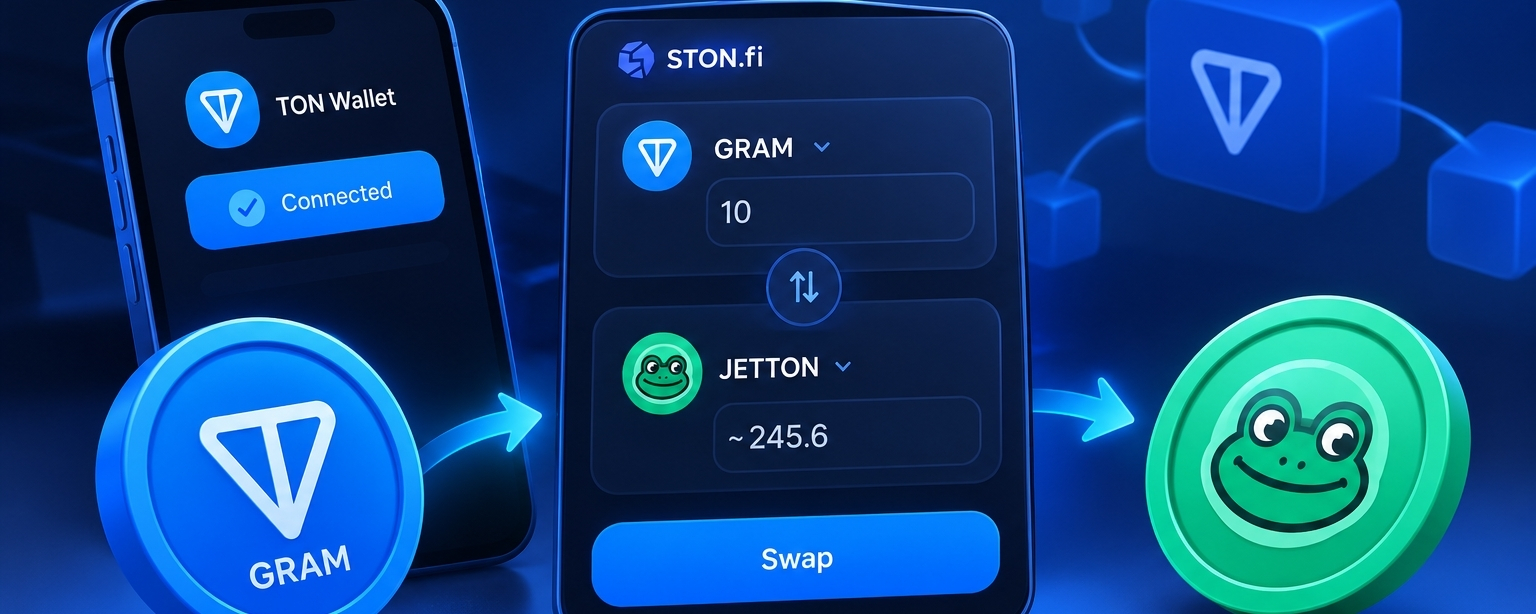
HOW TO SWAP GRAM FOR A TON JETTON DIRECTLY FROM YOUR WALLETA Beginner-Friendly Guide to Token Swapping on $TON Using $STON.fi
The TON ecosystem has grown into a space where users can interact with decentralised applications, explore different tokens, and exchange digital assets without relying entirely on centralised exchanges.
However, if you are new to $TON, one question may come to mind:
How can you exchange $GRAM for another token on $TON without sending your funds to a centralised exchange first?
The process is simpler than many beginners expect.
With a compatible $TON wallet and a decentralised exchange (DEX) such as $STON.fi, you can swap GRAM for a supported $TON jetton directly from your wallet.
You do not need to create a separate trading account on a centralised exchange to perform this type of swap. Instead, you connect your wallet, select the tokens, review the transaction details, and approve the swap.
But before clicking any buttons, it is important to understand what you are exchanging, how the process works, and which details deserve your attention.
Let's walk through the process step by step.
1. Understanding GRAM and Jettons on TON
Before making your first swap, you need to understand the two types of assets involved.
What is $GRAM?
$GRAM is the name currently used for the native TON currency, formerly known as Toncoin. It is used to pay blockchain transaction fees and can also serve as the asset you exchange for other tokens.
When interacting with STON.fi, you need to keep some GRAM in your wallet to cover the blockchain fees associated with your swap.
This is important because having enough GRAM to buy another token is not the same as having enough GRAM to complete the transaction.
If you spend your entire available balance on a swap, you could leave yourself without enough funds for the network fee. A portion of your balance should therefore remain available for transaction costs.
What are TON jettons?
Jettons are fungible tokens issued on The Open Network (TON).
Think of them as digital assets that operate within the TON ecosystem. Different jettons can have different purposes, including governance, utility, community participation, and other applications.
For example, a $TON user might hold $GRAM but want to acquire another supported jetton to explore a particular decentralised application.
Rather than transferring funds to a centralised exchange, the user may be able to exchange $GRAM directly for that jetton through a DEX.
However, not every token is automatically available for swapping. The token must be supported by the interface and have a suitable trading route and sufficient liquidity.
The key difference: $GRAM is the native TON currency used for network operations, while jettons are tokens issued on $TON
Understanding this distinction helps you recognise why you need $GRAM for transaction fees even when the asset you want to receive is a jetton.
2. What Is a DEX, and Why Use One?
A decentralised exchange, or DEX, is a platform that enables users to exchange digital assets through blockchain-based protocols and smart contracts.
Unlike a traditional centralised exchange, a DEX can allow you to trade directly from your own compatible wallet without depositing your funds into an exchange-controlled trading account.
$STON.fi is one example of a decentralised exchange built for the TON ecosystem.
It provides an interface where users can select supported tokens, enter an amount, review the proposed swap, and confirm the transaction through their connected wallet.
This wallet-based approach offers several practical advantages.
You maintain control of your wallet. You approve the transaction from your wallet rather than handing your recovery phrase to a trading platform.
You can review the swap before confirming it. The interface displays important information about the expected output and transaction costs.
You can interact with TON-based tokens. Where a suitable market and route exist, you can exchange GRAM for a supported jetton.
However, using a DEX does not eliminate risk. Smart-contract vulnerabilities, malicious tokens, low liquidity, price movements, and wallet security problems can still affect your experience.
That is why understanding each step matters.
3. Step One: Prepare Your TON Wallet
Before opening a DEX, make sure you have a compatible TON wallet.
Examples include Tonkeeper, Wallet in Telegram, and My Wallet, formerly known as MyTonWallet.
Your chosen wallet must support the connection method offered by STON.fi.
If you do not already have a wallet, download one from its official source and follow the wallet provider's setup instructions.
During setup, you may receive a recovery phrase.
Keep this phrase private and secure. Never share it with anyone claiming to be a STON.fi representative, and never enter it into a website simply because the website asks you to connect your wallet.
Next, ensure that your wallet contains:
Enough GRAM to cover the amount you want to swap.An additional balance to cover blockchain transaction fees.The correct TON-based assets, if you already hold tokens you intend to exchange.If your wallet contains only a small amount of GRAM, consider the transaction fee before deciding how much to swap.
STON.fi's interface may reserve an amount for transaction execution, so you should not assume that your entire displayed balance is available to exchange.
4. Step Two: Open STON.fi and Connect Your Wallet
Once your wallet is ready, visit the official STON.fi application:
https://app.ston.fi/swap
Check that you are using the correct website before connecting your wallet.
On the swap page, look for the Connect Wallet option.
Select it to view the supported wallet options.
Choose your wallet from the list. Depending on your device, the connection may open your wallet application directly or ask you to scan a QR code.
Review the connection request in your wallet and approve it if everything looks correct.
Once connected, the DEX can display the wallet information needed to prepare a swap.
Remember that connecting your wallet is different from authorising a transaction. A connection allows the application to interact with your wallet, while an actual swap requires you to review and approve a transaction separately.
Never share your private keys or recovery phrase to complete either step.
5. Step Three: Select GRAM as the Input Token
Now comes the most important part: selecting the assets you want to exchange.
On the STON.fi swap interface, you should see fields for the token you want to send and the token you want to receive.
The first field may be labelled "You send," "From," or something similar, depending on the interface version.
This is your input token.
Open the token selector and choose GRAM.
If the token is not immediately visible, use the search function where available. Make sure you select the correct asset rather than a token with a similar name or symbol.
Token names and symbols can be copied by fraudulent tokens, so never rely on the name alone when verifying an unfamiliar asset.
For a token you have not used before, check its official information and contract address against a reliable source.
After selecting GRAM, enter the amount you want to exchange.
For example, imagine you have 10 GRAM and want to swap only part of that balance for another token.
You could enter 5 GRAM as your hypothetical input amount, provided your balance and the interface allow it.
This is only an illustration, not a live quote or a recommendation to trade a particular amount.
Once you enter the amount, the interface will calculate the estimated quantity of the token you could receive.
Do not assume that the displayed estimate is guaranteed. The final amount can depend on liquidity, price movements, the selected route, and the transaction's execution conditions.
6. Step Four: Select the TON Jetton You Want to Receive
After choosing GRAM as your input token, select the asset you want to receive.
This is the output token.
In the second token field, search for the jetton you want to acquire.
For example, you might choose STON or another supported TON jetton, provided it is available for swapping and a suitable route exists.
Before selecting a token, verify that it is the correct asset.
This is especially important when dealing with newly launched tokens, community tokens, or assets with names similar to established projects.
If you cannot find the token, do not automatically assume that it is unavailable everywhere. It may not be supported by the interface, may require verification through its contract address, or may lack a suitable trading route or liquidity.
Once you have selected the correct output token, the interface should display an estimated amount based on your input and the available trading conditions.
Take your time here.
Selecting the wrong output token can result in receiving an asset that is not the one you intended to acquire.
7. Step Five: Understand the Swap Details Before Confirming
This is where careful users distinguish themselves from people who simply click buttons.
STON.fi displays transaction information to help you understand what the swap is expected to do.
Before proceeding, review the route, price impact, estimated output, minimum received, and blockchain fee.
Let's examine what each term means.
A. The swap route
The route describes how the exchange is expected to take place.
Depending on the available liquidity and the assets involved, the DEX may use a direct trading pool or another supported route to complete the swap.
The route matters because it helps determine how the transaction is executed and what output you can expect.
If the interface provides route information, review it before approving the transaction.
B. Price impact
Price impact describes how your trade affects the price available through the relevant liquidity pool or pools.
A larger swap relative to the available liquidity can produce a greater price impact.
For example, a small trade in a liquid market may receive a rate close to the displayed market price. A much larger trade in a shallow pool may receive a less favourable rate.
This means the number of tokens you receive depends not only on the amount of GRAM you exchange but also on the liquidity available for that trading pair.
A high price impact is a reason to pause and reassess the transaction.
You may decide to reduce the amount, investigate the available liquidity, or avoid the trade altogether.
C. Estimated amount
The estimated amount is the quantity of the output jetton that the interface calculates you should receive under the displayed conditions.
Suppose the interface estimates that your GRAM could be exchanged for 100 units of a particular jetton.
That figure is an illustration only. It is not a current market quote.
The actual amount can change if market conditions move or the transaction executes under different conditions.
Always review the current estimate displayed by STON.fi rather than relying on a previous screenshot, old price information, or someone else's transaction.
D. Minimum received
Minimum received is the minimum output amount you are willing to accept under the transaction's slippage settings.
Slippage refers to the difference between the expected exchange rate and the rate available when the transaction is executed.
The market may move between the moment you initiate the swap and the moment the blockchain processes it.
The minimum-received setting helps define the acceptable output limit for the transaction.
If the swap cannot meet the required conditions, it may fail rather than execute below the permitted minimum.
Do not confuse minimum received with the estimated amount. The estimate describes the expected output, while the minimum received defines a lower limit under the configured transaction conditions.
A lower minimum may allow more price movement, but it can also expose you to a less favourable execution price.
Avoid changing slippage settings without understanding the consequences.
E. Blockchain fee
The blockchain fee is the cost associated with processing the transaction on TON.
Even though you are exchanging GRAM for a jetton, you still need GRAM available to pay the network fee.
The estimated fee can depend on the transaction route and execution requirements.
STON.fi displays the estimated blockchain fee before confirmation, allowing you to check whether you have enough funds to proceed.
The estimated amount is not necessarily identical to the final cost in every case.
Always retain a suitable balance for network operations instead of attempting to exchange every unit of GRAM in your wallet.
A useful rule: Never confirm a swap simply because the estimated output looks attractive. Check all the transaction details first.
8. Step Six: Confirm the Swap in Your Wallet
After selecting your tokens and reviewing the transaction details, you can proceed if you are satisfied with the terms.
Click the Swap button on STON.fi.
Your connected wallet should display a transaction request.
Read the request carefully and make sure it corresponds to the action you intended to perform.
Check the transaction details presented by your wallet, including the amount and any relevant fee information.
If everything looks correct, approve the transaction.
If the request is unexpected, the amount differs from what you intended, or anything appears suspicious, reject it and investigate before proceeding.
Once you approve the transaction, it is submitted for processing on the TON blockchain.
Do not repeatedly approve new requests just because the first transaction appears to be taking longer than expected. Check the transaction status first.
After a successful swap, the output jetton should appear in your wallet.
Depending on the wallet, you may need to refresh the asset list or add the token to the displayed assets.
If the transaction is confirmed on-chain but the token is not immediately visible, check the transaction details using a trusted blockchain explorer and verify that the wallet is displaying the correct asset.
If the swap fails, review the transaction status and any error information before trying again.
9. Common Mistakes to Avoid When Swapping GRAM
Even a straightforward swap can go wrong if you overlook important details.
Here are several mistakes worth avoiding.
Mistake 1: Selecting a fake token
A fraudulent token may use the same name or symbol as a legitimate asset.
Always verify unfamiliar tokens using reliable information, including the correct contract address.
Mistake 2: Spending the entire GRAM balance
You need GRAM for blockchain fees. Swapping your entire available balance may leave you without enough funds for the transaction or future network operations.
Mistake 3: Ignoring price impact
A swap that appears attractive at first may offer a poor execution rate if liquidity is limited.
Review the price impact before proceeding.
Mistake 4: Confusing estimated output with guaranteed output
The amount displayed before confirmation is an estimate. Market changes and execution conditions can affect the final result.
Pay attention to minimum received and the applicable slippage settings.
Mistake 5: Increasing slippage without understanding it
Changing slippage settings can affect whether a transaction succeeds and how much price movement it will tolerate.
Do not increase the setting simply to force a transaction through.
Mistake 6: Approving an unexpected wallet request
Always check what your wallet is asking you to approve. Reject requests that do not match the swap you intended to make.
Mistake 7: Assuming every TON jetton is safe
A token being available through a DEX does not automatically make it trustworthy.
Research the project, token contract, liquidity, and potential risks before deciding whether to acquire an asset.
10. Why This Matters for the TON Ecosystem
The ability to exchange assets directly from a wallet is an important part of decentralised finance.
Users can explore different TON-based tokens without necessarily moving their funds to a centralised exchange first.
This can make on-chain participation more accessible, especially for people who want to understand decentralised trading through practical experience.
However, accessibility should go hand in hand with education.
Understanding how wallets connect to applications, how jettons work, why liquidity matters, and how blockchain fees are paid helps users make better-informed decisions.
STON.fi provides an interface for this process, bringing token selection, swap estimates, and wallet confirmation into one workflow.
For beginners, learning these steps is a useful foundation for exploring the wider TON ecosystem.
Final Thoughts
Swapping GRAM for a TON jetton directly from your wallet does not have to be complicated.
The process involves preparing a compatible wallet, connecting it to STON.fi, selecting GRAM as the input asset, choosing the desired jetton, reviewing the transaction details, and confirming the swap through your wallet.
The most important part is not how quickly you can complete the transaction. It is how carefully you understand what you are approving.
Always verify the token, review the route and price impact, check the estimated output and minimum received, and keep enough GRAM for blockchain fees.
A few moments of careful checking can help you avoid costly mistakes.
If you want to explore the process, start with the official STON.fi swap interface and its educational resources:
https://app.ston.fi/swap
Learn first. Verify every detail. Confirm only when you understand the transaction.
Disclaimer: This article is for educational purposes only and is not financial advice. Cryptocurrency transactions carry risks, including price volatility, liquidity limitations, smart-contract vulnerabilities, and fraudulent tokens. Always conduct your own research before interacting with any digital asset or decentralised application.
Also, explore the links below;
https://ston.fi/cross-chain-swap-from-ton-to-base
https://ston.fi/how-to-send-usdt-from-ton-to-base
HOW TO SWAP GRAM FOR A TON JETTON DIRECTLY FROM YOUR WALLET
A Beginner-Friendly Guide to Token Swapping on $TON Using $STON.fi
The TON ecosystem has grown into a space where users can interact with decentralised applications, explore different tokens, and exchange digital assets without relying entirely on centralised exchanges.
However, if you are new to $TON, one question may come to mind:
How can you exchange $GRAM for another token on $TON without sending your funds to a centralised exchange first?
The process is simpler than many beginners expect.
With a compatible $TON wallet and a decentralised exchange (DEX) such as $STON.fi, you can swap GRAM for a supported $TON jetton directly from your wallet.
You do not need to create a separate trading account on a centralised exchange to perform this type of swap. Instead, you connect your wallet, select the tokens, review the transaction details, and approve the swap.
But before clicking any buttons, it is important to understand what you are exchanging, how the process works, and which details deserve your attention.
Let's walk through the process step by step.
1. Understanding GRAM and Jettons on TON
Before making your first swap, you need to understand the two types of assets involved.
What is $GRAM ?
$GRAM is the name currently used for the native TON currency, formerly known as Toncoin. It is used to pay blockchain transaction fees and can also serve as the asset you exchange for other tokens.
When interacting with STON.fi, you need to keep some GRAM in your wallet to cover the blockchain fees associated with your swap.
This is important because having enough GRAM to buy another token is not the same as having enough GRAM to complete the transaction.
If you spend your entire available balance on a swap, you could leave yourself without enough funds for the network fee. A portion of your balance should therefore remain available for transaction costs.
What are TON jettons?
Jettons are fungible tokens issued on The Open Network (TON).
Think of them as digital assets that operate within the TON ecosystem. Different jettons can have different purposes, including governance, utility, community participation, and other applications.
For example, a $TON user might hold $GRAM but want to acquire another supported jetton to explore a particular decentralised application.
Rather than transferring funds to a centralised exchange, the user may be able to exchange $GRAM directly for that jetton through a DEX.
However, not every token is automatically available for swapping. The token must be supported by the interface and have a suitable trading route and sufficient liquidity.
The key difference: $GRAM is the native TON currency used for network operations, while jettons are tokens issued on $TON
Understanding this distinction helps you recognise why you need $GRAM for transaction fees even when the asset you want to receive is a jetton.
2. What Is a DEX, and Why Use One?
A decentralised exchange, or DEX, is a platform that enables users to exchange digital assets through blockchain-based protocols and smart contracts.
Unlike a traditional centralised exchange, a DEX can allow you to trade directly from your own compatible wallet without depositing your funds into an exchange-controlled trading account.
$STON.fi is one example of a decentralised exchange built for the TON ecosystem.
It provides an interface where users can select supported tokens, enter an amount, review the proposed swap, and confirm the transaction through their connected wallet.
This wallet-based approach offers several practical advantages.
You maintain control of your wallet. You approve the transaction from your wallet rather than handing your recovery phrase to a trading platform.
You can review the swap before confirming it. The interface displays important information about the expected output and transaction costs.
You can interact with TON-based tokens. Where a suitable market and route exist, you can exchange GRAM for a supported jetton.
However, using a DEX does not eliminate risk. Smart-contract vulnerabilities, malicious tokens, low liquidity, price movements, and wallet security problems can still affect your experience.
That is why understanding each step matters.
3. Step One: Prepare Your TON Wallet
Before opening a DEX, make sure you have a compatible TON wallet.
Examples include Tonkeeper, Wallet in Telegram, and My Wallet, formerly known as MyTonWallet.
Your chosen wallet must support the connection method offered by STON.fi.
If you do not already have a wallet, download one from its official source and follow the wallet provider's setup instructions.
During setup, you may receive a recovery phrase.
Keep this phrase private and secure. Never share it with anyone claiming to be a STON.fi representative, and never enter it into a website simply because the website asks you to connect your wallet.
Next, ensure that your wallet contains:
Enough GRAM to cover the amount you want to swap.An additional balance to cover blockchain transaction fees.The correct TON-based assets, if you already hold tokens you intend to exchange.If your wallet contains only a small amount of GRAM, consider the transaction fee before deciding how much to swap.
STON.fi's interface may reserve an amount for transaction execution, so you should not assume that your entire displayed balance is available to exchange.
4. Step Two: Open STON.fi and Connect Your Wallet
Once your wallet is ready, visit the official STON.fi application:
https://app.ston.fi/swap
Check that you are using the correct website before connecting your wallet.
On the swap page, look for the Connect Wallet option.
Select it to view the supported wallet options.
Choose your wallet from the list. Depending on your device, the connection may open your wallet application directly or ask you to scan a QR code.
Review the connection request in your wallet and approve it if everything looks correct.
Once connected, the DEX can display the wallet information needed to prepare a swap.
Remember that connecting your wallet is different from authorising a transaction. A connection allows the application to interact with your wallet, while an actual swap requires you to review and approve a transaction separately.
Never share your private keys or recovery phrase to complete either step.
5. Step Three: Select GRAM as the Input Token
Now comes the most important part: selecting the assets you want to exchange.
On the STON.fi swap interface, you should see fields for the token you want to send and the token you want to receive.
The first field may be labelled "You send," "From," or something similar, depending on the interface version.
This is your input token.
Open the token selector and choose GRAM.
If the token is not immediately visible, use the search function where available. Make sure you select the correct asset rather than a token with a similar name or symbol.
Token names and symbols can be copied by fraudulent tokens, so never rely on the name alone when verifying an unfamiliar asset.
For a token you have not used before, check its official information and contract address against a reliable source.
After selecting GRAM, enter the amount you want to exchange.
For example, imagine you have 10 GRAM and want to swap only part of that balance for another token.
You could enter 5 GRAM as your hypothetical input amount, provided your balance and the interface allow it.
This is only an illustration, not a live quote or a recommendation to trade a particular amount.
Once you enter the amount, the interface will calculate the estimated quantity of the token you could receive.
Do not assume that the displayed estimate is guaranteed. The final amount can depend on liquidity, price movements, the selected route, and the transaction's execution conditions.
6. Step Four: Select the TON Jetton You Want to Receive
After choosing GRAM as your input token, select the asset you want to receive.
This is the output token.
In the second token field, search for the jetton you want to acquire.
For example, you might choose STON or another supported TON jetton, provided it is available for swapping and a suitable route exists.
Before selecting a token, verify that it is the correct asset.
This is especially important when dealing with newly launched tokens, community tokens, or assets with names similar to established projects.
If you cannot find the token, do not automatically assume that it is unavailable everywhere. It may not be supported by the interface, may require verification through its contract address, or may lack a suitable trading route or liquidity.
Once you have selected the correct output token, the interface should display an estimated amount based on your input and the available trading conditions.
Take your time here.
Selecting the wrong output token can result in receiving an asset that is not the one you intended to acquire.
7. Step Five: Understand the Swap Details Before Confirming
This is where careful users distinguish themselves from people who simply click buttons.
STON.fi displays transaction information to help you understand what the swap is expected to do.
Before proceeding, review the route, price impact, estimated output, minimum received, and blockchain fee.
Let's examine what each term means.
A. The swap route
The route describes how the exchange is expected to take place.
Depending on the available liquidity and the assets involved, the DEX may use a direct trading pool or another supported route to complete the swap.
The route matters because it helps determine how the transaction is executed and what output you can expect.
If the interface provides route information, review it before approving the transaction.
B. Price impact
Price impact describes how your trade affects the price available through the relevant liquidity pool or pools.
A larger swap relative to the available liquidity can produce a greater price impact.
For example, a small trade in a liquid market may receive a rate close to the displayed market price. A much larger trade in a shallow pool may receive a less favourable rate.
This means the number of tokens you receive depends not only on the amount of GRAM you exchange but also on the liquidity available for that trading pair.
A high price impact is a reason to pause and reassess the transaction.
You may decide to reduce the amount, investigate the available liquidity, or avoid the trade altogether.
C. Estimated amount
The estimated amount is the quantity of the output jetton that the interface calculates you should receive under the displayed conditions.
Suppose the interface estimates that your GRAM could be exchanged for 100 units of a particular jetton.
That figure is an illustration only. It is not a current market quote.
The actual amount can change if market conditions move or the transaction executes under different conditions.
Always review the current estimate displayed by STON.fi rather than relying on a previous screenshot, old price information, or someone else's transaction.
D. Minimum received
Minimum received is the minimum output amount you are willing to accept under the transaction's slippage settings.
Slippage refers to the difference between the expected exchange rate and the rate available when the transaction is executed.
The market may move between the moment you initiate the swap and the moment the blockchain processes it.
The minimum-received setting helps define the acceptable output limit for the transaction.
If the swap cannot meet the required conditions, it may fail rather than execute below the permitted minimum.
Do not confuse minimum received with the estimated amount. The estimate describes the expected output, while the minimum received defines a lower limit under the configured transaction conditions.
A lower minimum may allow more price movement, but it can also expose you to a less favourable execution price.
Avoid changing slippage settings without understanding the consequences.
E. Blockchain fee
The blockchain fee is the cost associated with processing the transaction on TON.
Even though you are exchanging GRAM for a jetton, you still need GRAM available to pay the network fee.
The estimated fee can depend on the transaction route and execution requirements.
STON.fi displays the estimated blockchain fee before confirmation, allowing you to check whether you have enough funds to proceed.
The estimated amount is not necessarily identical to the final cost in every case.
Always retain a suitable balance for network operations instead of attempting to exchange every unit of GRAM in your wallet.
A useful rule: Never confirm a swap simply because the estimated output looks attractive. Check all the transaction details first.
8. Step Six: Confirm the Swap in Your Wallet
After selecting your tokens and reviewing the transaction details, you can proceed if you are satisfied with the terms.
Click the Swap button on STON.fi.
Your connected wallet should display a transaction request.
Read the request carefully and make sure it corresponds to the action you intended to perform.
Check the transaction details presented by your wallet, including the amount and any relevant fee information.
If everything looks correct, approve the transaction.
If the request is unexpected, the amount differs from what you intended, or anything appears suspicious, reject it and investigate before proceeding.
Once you approve the transaction, it is submitted for processing on the TON blockchain.
Do not repeatedly approve new requests just because the first transaction appears to be taking longer than expected. Check the transaction status first.
After a successful swap, the output jetton should appear in your wallet.
Depending on the wallet, you may need to refresh the asset list or add the token to the displayed assets.
If the transaction is confirmed on-chain but the token is not immediately visible, check the transaction details using a trusted blockchain explorer and verify that the wallet is displaying the correct asset.
If the swap fails, review the transaction status and any error information before trying again.
9. Common Mistakes to Avoid When Swapping GRAM
Even a straightforward swap can go wrong if you overlook important details.
Here are several mistakes worth avoiding.
Mistake 1: Selecting a fake token
A fraudulent token may use the same name or symbol as a legitimate asset.
Always verify unfamiliar tokens using reliable information, including the correct contract address.
Mistake 2: Spending the entire GRAM balance
You need GRAM for blockchain fees. Swapping your entire available balance may leave you without enough funds for the transaction or future network operations.
Mistake 3: Ignoring price impact
A swap that appears attractive at first may offer a poor execution rate if liquidity is limited.
Review the price impact before proceeding.
Mistake 4: Confusing estimated output with guaranteed output
The amount displayed before confirmation is an estimate. Market changes and execution conditions can affect the final result.
Pay attention to minimum received and the applicable slippage settings.
Mistake 5: Increasing slippage without understanding it
Changing slippage settings can affect whether a transaction succeeds and how much price movement it will tolerate.
Do not increase the setting simply to force a transaction through.
Mistake 6: Approving an unexpected wallet request
Always check what your wallet is asking you to approve. Reject requests that do not match the swap you intended to make.
Mistake 7: Assuming every TON jetton is safe
A token being available through a DEX does not automatically make it trustworthy.
Research the project, token contract, liquidity, and potential risks before deciding whether to acquire an asset.
10. Why This Matters for the TON Ecosystem
The ability to exchange assets directly from a wallet is an important part of decentralised finance.
Users can explore different TON-based tokens without necessarily moving their funds to a centralised exchange first.
This can make on-chain participation more accessible, especially for people who want to understand decentralised trading through practical experience.
However, accessibility should go hand in hand with education.
Understanding how wallets connect to applications, how jettons work, why liquidity matters, and how blockchain fees are paid helps users make better-informed decisions.
STON.fi provides an interface for this process, bringing token selection, swap estimates, and wallet confirmation into one workflow.
For beginners, learning these steps is a useful foundation for exploring the wider TON ecosystem.
Final Thoughts
Swapping GRAM for a TON jetton directly from your wallet does not have to be complicated.
The process involves preparing a compatible wallet, connecting it to STON.fi, selecting GRAM as the input asset, choosing the desired jetton, reviewing the transaction details, and confirming the swap through your wallet.
The most important part is not how quickly you can complete the transaction. It is how carefully you understand what you are approving.
Always verify the token, review the route and price impact, check the estimated output and minimum received, and keep enough GRAM for blockchain fees.
A few moments of careful checking can help you avoid costly mistakes.
If you want to explore the process, start with the official STON.fi swap interface and its educational resources:
https://app.ston.fi/swap
Learn first. Verify every detail. Confirm only when you understand the transaction.
Disclaimer: This article is for educational purposes only and is not financial advice. Cryptocurrency transactions carry risks, including price volatility, liquidity limitations, smart-contract vulnerabilities, and fraudulent tokens. Always conduct your own research before interacting with any digital asset or decentralised application.
Also, explore the links below;
https://ston.fi/cross-chain-swap-from-ton-to-base
https://ston.fi/how-to-send-usdt-from-ton-to-base
1
415
·
--
Been looking into bPay lately, and I like the direction.
Crypto payments shouldn’t feel unnecessarily complicated. The more projects focus on making onchain payments practical and easier to use, the closer Web3 gets to everyday adoption.
Definitely one I’m watching. 👀
CA: "0xb13003bf44de426dd2a3aae3df9c3400de0a7777"
Code: "BP-E5A0B2CB2053"
Crypto payments shouldn’t feel unnecessarily complicated. The more projects focus on making onchain payments practical and easier to use, the closer Web3 gets to everyday adoption.
Definitely one I’m watching. 👀
CA: "0xb13003bf44de426dd2a3aae3df9c3400de0a7777"
Code: "BP-E5A0B2CB2053"
50
·
--
The STONfi Club has now completed three months of activity, continuing to grow as a private space designed for the most active participants within the STON.fi ecosystem.
Created to strengthen collaboration between builders, liquidity providers, and dedicated users, the club brings together individuals who are actively contributing to the development of DeFi on the TON network. Members include stakers, liquidity providers, frequent traders, and founders building projects across the TON ecosystem.
One of the core benefits of the club is direct interaction with the team behind STON.fi, including the project’s CEO Slavik Baranov. This open communication channel allows members to share feedback, discuss ideas, and gain a deeper understanding of the platform’s development direction.
In addition to direct dialogue with the team, participants receive early visibility into upcoming product features and ecosystem initiatives, giving them insight into new developments before they are released publicly. The club also hosts discussions and perspectives from industry professionals, offering members broader market insights and strategic perspectives related to DeFi and the TON ecosystem.
Access to the club is designed for users who are actively engaged in the ecosystem. Membership is available to those who meet at least one of the following criteria:
• Hold 2,000 or more STON tokens
• Stake 1,000 or more STON within the ecosystem
• Provide $10,000 or more in liquidity to supported pools
As the ecosystem continues to expand, the STONfi Club serves as a collaborative environment for committed community members, helping strengthen communication between users, builders, and the core development team while supporting the continued growth of the platform.
76
·
--
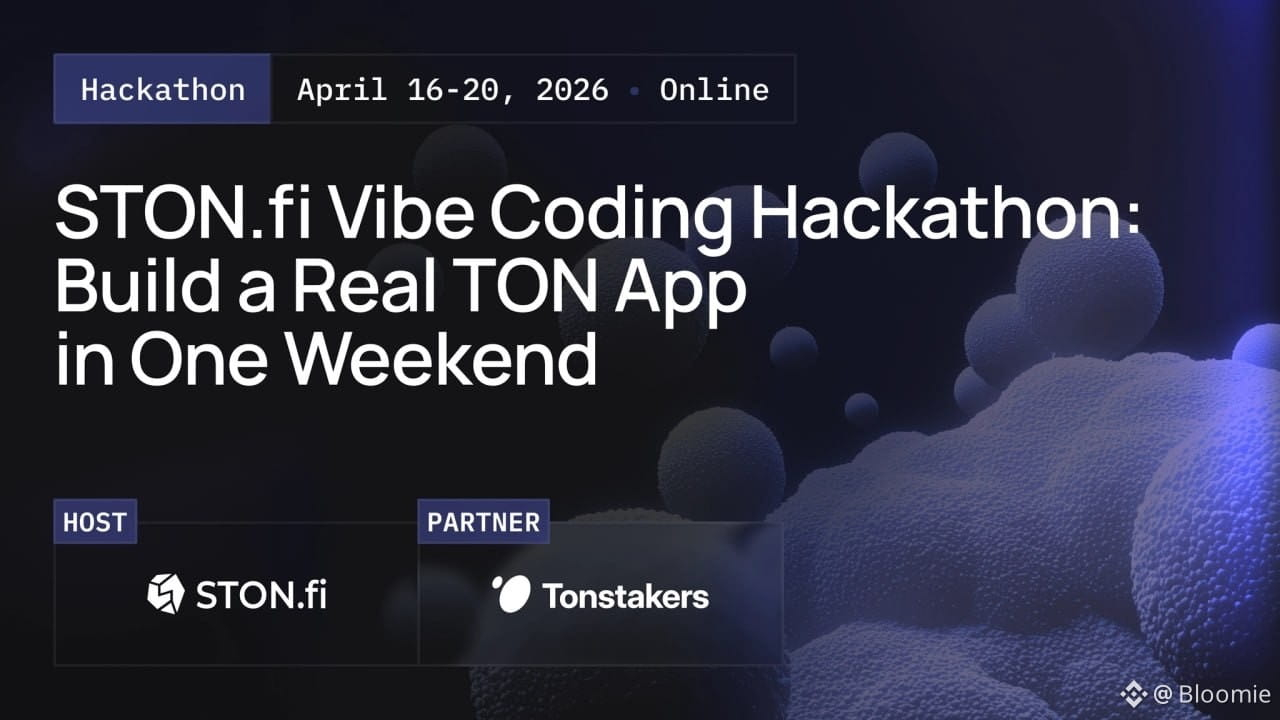
STON.fi Vibe Coding Hackathon: Build Phase Begins
The build phase of the
STON.fi Vibe Coding Hackathon has officially started, with 25 selected participants now working to deliver fully functional TON applications using AI coding agents.
Participants are building on top of
STON.fi and Tonstakers infrastructure, giving them direct access to real DeFi primitives from the start of development.
Rewards
A total prize pool of $1,200, provided by
STON.fi and Tonstakers, will be distributed among top projects and valid participants.
Timeline
• Build Phase: April 16–20
• Public Demo Day: April 20 at 16:00 UTC (17:00 CET)
The Demo Day will be open to the public, offering an opportunity to watch live project presentations and see what can be built within a short timeframe using TON infrastructure.
Participants who were not selected for this round are expected to have future opportunities, as similar hackathons are planned on a recurring basis to support more builders within the ecosystem.
The focus now shifts to execution with results to be revealed after the build sprint concludes.
Stay tuned
#ston.fi
#TON
#DeFi
#TONBlockchain
60
·
--
Extra yield doesn’t always come from new strategies sometimes it’s already in front of you.
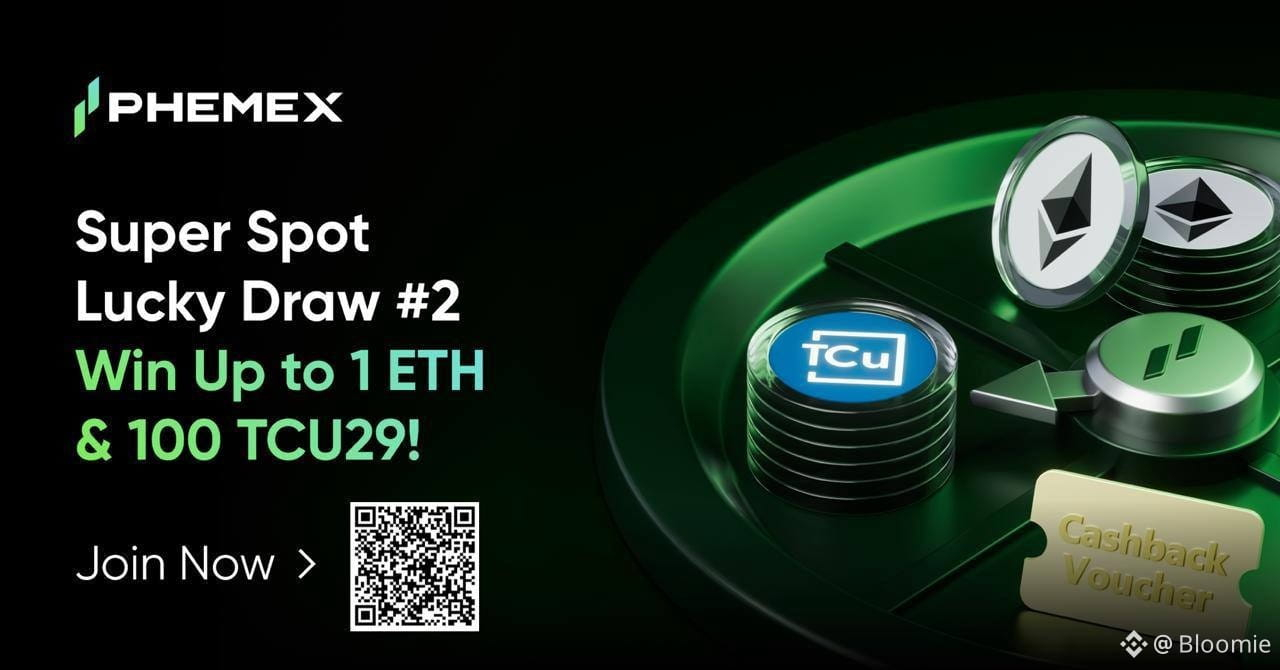
Phemex Lucky Draw is live.
All it takes is $200+ in spot volume.
I’m stacking entries with $BTC and $ETH.
More volume = more chances.
Don’t ignore easy upside.
Ends April 16 (UTC).
Extra yield doesn’t always come from new strategies sometimes it’s already in front of you.
Phemex Lucky Draw is live.
All it takes is $200+ in spot volume.
I’m stacking entries with $BTC and $ETH.
More volume = more chances.
Don’t ignore easy upside.
Ends April 16 (UTC).
Phemex Lucky Draw is live.
All it takes is $200+ in spot volume.
I’m stacking entries with $BTC and $ETH.
More volume = more chances.
Don’t ignore easy upside.
Ends April 16 (UTC).
28
·
--
STONfi Just Opened a Community Space on Reddit Come In
The Stonfiers community just got a new home and this one is worth joining.
r/Stonfiers is now live on Reddit. If you've ever wanted a place to ask questions, share experiences, drop ideas, or just talk $TON DeFi with people who actually get it, this is that place.
Reddit hits different from Telegram and X. Conversations are searchable, threads stick around, and the format is built for deeper discussion not just quick takes. Whether you're brand new to STONfi or you've been farming since day one, there's a spot for you here.
What you can do there:
— Ask anything about STONfi
— Share tips, strategies, and experiences
— Discuss the latest in TON and Web3
— Connect with fellow TON DeFi enthusiasts
Community is one of the most underrated parts of any DeFi protocol. The subreddit is just getting started, which means right now is the best time to show up and help shape what it becomes.
Join r/Stonfiers : www.reddit.com/r/Stonfiers/
SOL$SOL #TON #Meme Alpha# #Bullish
1
54
·
--
STON.fi Expands Access via Arculus Wallet
Access to STON.fi has been expanded through a new integration with Arculus Wallet, enabled by WalletConnect support for TON.
This development allows Arculus users to interact with TON-based dApps, including STON.fi, directly from their wallet interface. Core DeFi functionalities such as token swaps, liquidity provision, and yield farming are now accessible without requiring a TON-native wallet.
Arculus is a non-custodial wallet combining a mobile application with a physical authentication card, designed to enhance security through multi-factor verification. With WalletConnect integration, it can now seamlessly connect to the TON ecosystem.
Key implications:
• Broader access to TON DeFi through established wallet infrastructure
• Reduced onboarding friction for new users
• Improved usability by enabling interaction within familiar wallet environments
Additional incentive: Arculus is offering a $20 discount using code TON20 at checkout.
This integration reflects ongoing efforts to improve accessibility and interoperability within the TON DeFi ecosystem.
77
·
--
WalletConnect × TON: Expanding Access to DeFi on TON
A major step forward for accessibility has been made as WalletConnect integrates with TON, opening the door for a wider range of multi-chain wallets to connect directly to the TON ecosystem.
This integration means users are no longer limited to TON-native wallets. Instead, they can interact with TON-based dApps like STON.fi using wallets they already trust and use daily.
What this unlocks:
• Seamless access to TON DeFi without switching wallets
• Expanded support from major multi-chain wallets
• Easier onboarding for users new to TON
• Ability to swap tokens, provide liquidity, and participate in DeFi directly on STON.fi
For many users, this removes one of the biggest barriers to entry friction. By allowing interaction through familiar wallets, adoption becomes more natural and scalable.
How to connect via WalletConnect:
• Open the STON.fi dApp (app.ston.fi)
• Click “Connect wallet”
• Select “View all wallets”
• Scroll and choose WalletConnect
Once connected, users can immediately start exploring TON DeFi from swaps to liquidity provision all within a unified experience.
This integration highlights a broader shift in Web3:
interoperability and accessibility are becoming key drivers of growth.
As more wallets and platforms integrate TON, the ecosystem becomes more open, more connected, and easier for anyone to participate in.
More access. Less friction. Greater adoption.
1
37
·
--
Ston.fi 2026: TON DeFi Evolved From DEX to Governance & Cross-Chain Powerhouse
Being an ambassador for over five months, I’ve seen STON.fi transform from a simple decentralized exchange into a full DeFi ecosystem on TON. It’s no longer just about swapping tokens it’s about creating real value, community governance, and connecting TON to the wider crypto world.
STON.fi is completely non-custodial, meaning users stay in full control of their assets. Every transaction is lightning-fast, usually finalized in around 5 seconds, and fees are under $0.30. That’s efficiency. Most other DeFi protocols can’t match.
The ecosystem now supports tens of thousands of TON-native tokens, many unavailable anywhere else. Traders enjoy deep liquidity and low slippage, while liquidity providers and farmers capture meaningful rewards.
What makes STON.fi truly special is how it blends technology, incentives, and community ownership. The DAO is live, giving the community real influence over protocol upgrades, pool launches, and strategic decisions. And with BTC and ETH now fully integrated as native assets on TON, the platform connects to the broader crypto market like never before.
This isn’t just a DEX. It’s a DeFi infrastructure layer, an engine for builders, traders, and ambassadors to grow, earn, and shape the future of TON finance.
#STONfi #TON #STON
3
31
·
--
Portfolio Liberation: Final 3 Days
The campaign is entering its final phase, with the snapshot set for March 26, 23:59 UTC. The $50,000 reward pool is still in play, and competition remains tight.
Current leaderboard:
🥇 14 participants share 1st place
🥈 1 participant in 2nd
🥉 16 participants share 3rd
Equal rewards apply per rank, making both consistency and late moves important.
Hold Streak:
1,293 participants have reached the max 2.5× multiplier
Portfolio Mastery:
• 8 Advanced portfolios (7+ xStocks, $400+)
• 40 Efficient portfolios (10+ xStocks, $500+)
Reminder:
Portfolios must be held for the final 7 consecutive days before the snapshot.
Final stretch positioning and discipline matter most now.
#DeFi #Crypto #TON #STONfi
2
34
·
--
JETTON/USDt | JETTON/TON — GameFi-Driven Growth
JETTON is part of the JetTon Games ecosystem, a cross-platform GameFi project building on TON. With GameFi continuing to attract attention, these pools benefit from both speculative interest and ecosystem expansion.
Unlike STON, these farms are more time-sensitive and structured, which introduces both urgency and strategic planning.
Why this pool stands out:
High reward allocation within a limited timeframe
Exposure to GameFi sector growth
Dual pool options (stable pair vs TON pair)
Key Details:
Total rewards: 32,000 JETTON (for each pool)
Farming period: Ends March 31
LP lock-up: 15 days required
Strategy Insight:
These pools are best suited for users who are comfortable with short-term commitments and want to maximize rewards within a defined window. The lock-up period encourages more stable liquidity but requires planning your entry and exit carefully.

119
·
--
Рост
Listing-day hype isn’t always where the real gains are mad
e.
The smarter move is often positioning before the crowd shows up.
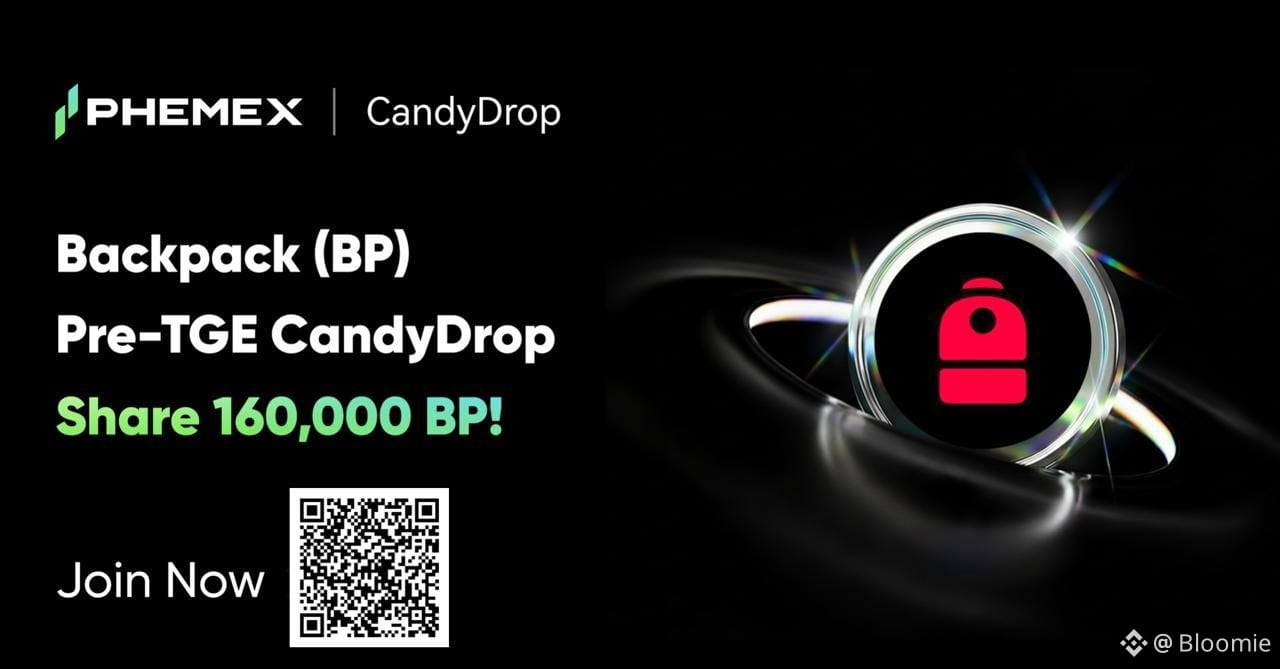
The $BP Pre-TGE rewards pool is currently sitting at $160,000, offering early participants a low barrier to entry with strong upside potential.
With the March 23 cutoff getting closer, timing matters. Those who position early gain the advantage, while late entries usually end up chasing momentum.
In fast-moving markets, it’s not about reacting, it’s about preparing.
Enter early or compete later.
$BP #BTC $TAO #Phemex #Web3
7
·
--
WHAT MAKES IT DIFFERENT
Here’s why @GoHome_Token is drawing attention and standing out in a crowded market 👀
• Built on Solana — fast transactions and ultra-low fees make it seamless for users to swap, stake, and participate.
• Fixed supply model — scarcity is built into the tokenomics, ensuring long-term value preservation.
• Majority of tokens locked long-term — early supporters and builders demonstrate commitment, reducing sudden sell pressure.
• Liquidity locked — ensuring stability and confidence for traders and investors.
• Community-first narrative — every decision, campaign, and development centers on empowering the community rather than chasing short-term hype.
In a crypto landscape flooded with meme coins, speculative hype, and fleeting trends, @GoHome_Token’s emphasis on structure, transparency, and sustainable growth makes it different. It’s not just a token, it’s a community-backed movement built to endure.
#GoHome #Web3 #SolanaMeme
WHAT MAKES IT DIFFERENT
Here’s why @GoHome_Token is drawing attention and standing out in a crowded market 👀
• Built on Solana — fast transactions and ultra-low fees make it seamless for users to swap, stake, and participate.
• Fixed supply model — scarcity is built into the tokenomics, ensuring long-term value preservation.
• Majority of tokens locked long-term — early supporters and builders demonstrate commitment, reducing sudden sell pressure.
• Liquidity locked — ensuring stability and confidence for traders and investors.
• Community-first narrative — every decision, campaign, and development centers on empowering the community rather than chasing short-term hype.
In a crypto landscape flooded with meme coins, speculative hype, and fleeting trends, @GoHome_Token’s emphasis on structure, transparency, and sustainable growth makes it different. It’s not just a token, it’s a community-backed movement built to endure.
#GoHome #Web3 #SolanaMeme
1
28
·
--
A partnership has been established between $GOHOME and @MarsGameJuna
$GOHOME: recognized as one of the fast-growing memecoins on Solana, it continues to expand its presence, supported by strong community activity and sustained momentum across the ecosystem.
Through this collaboration with Mars Game, a play-to-earn adventure set on Mars, new opportunities are being introduced to enhance engagement and extend the utility of the $GOHOME ecosystem. The integration is expected to create additional touchpoints for users, combining meme culture with interactive gameplay elements.
As a result of this partnership:
• Community participation is being strengthened
• Ecosystem growth is being accelerated
• New engagement layers are being introduced through gaming
The collaboration reflects a broader trend in Web3, where meme-driven projects are increasingly connecting with gaming and interactive experiences to create more dynamic ecosystems.
More memes. More engagement. More growth
1
26
·
--
Рост
Waiting for listing-day hype isn’t always the smartest move.
Positioning early before the crowd arrives is often where the real opportunity lies.
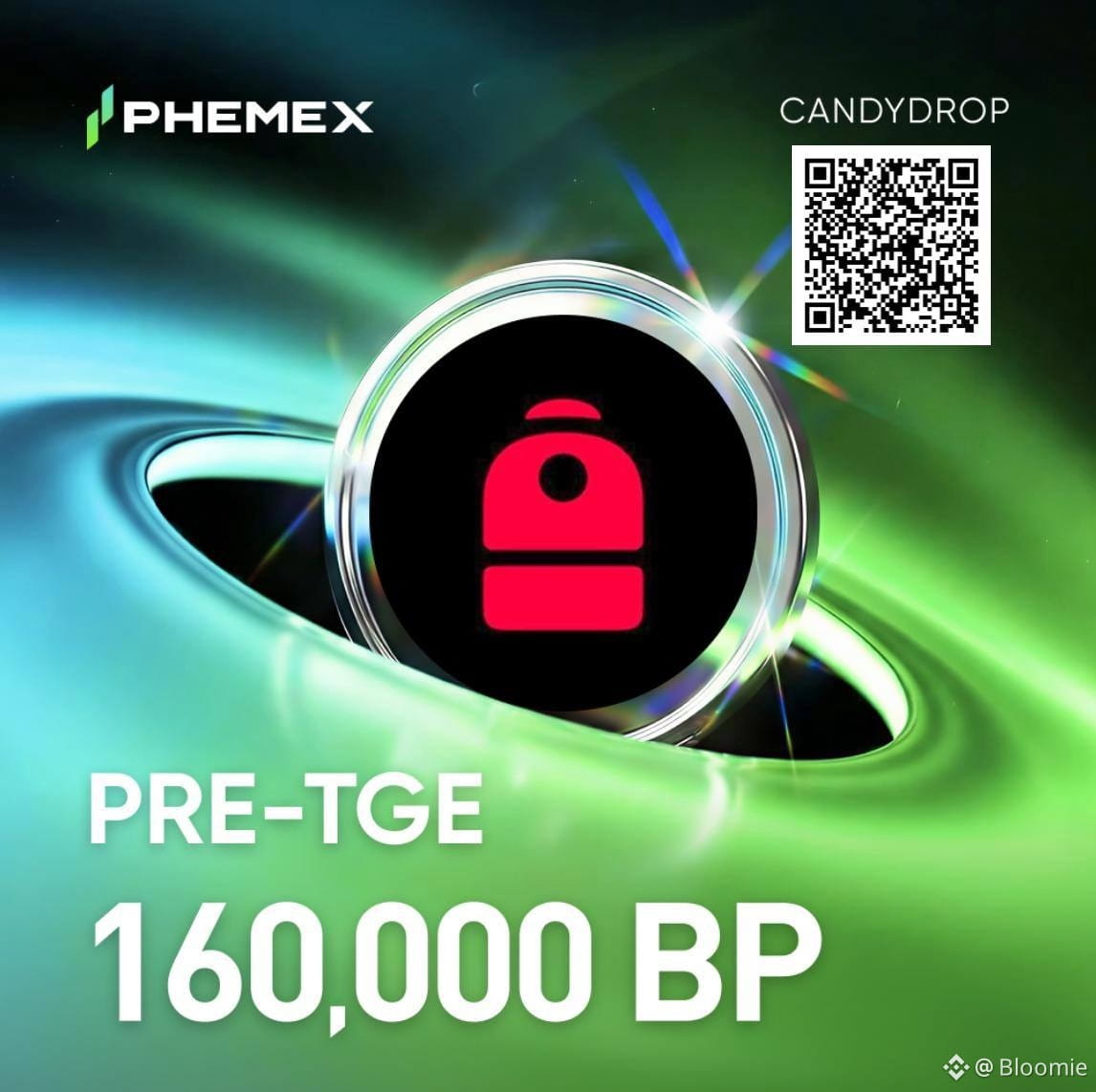
The $BP Pre-TGE rewards pool is currently at $160,000, offering a low barrier to entry with strong upside potential for early participants.
With the March 23 cutoff approaching, timing becomes key. Early positioning allows for better exposure, while late entry often means chasing momentum.
In fast-moving markets, preparation tends to outperform reaction.
Position early or compete later.
$BP #BTC $TAO #Phemex #Web3
1
17
·
--
GN CT 💙
Understanding Web3 requires looking beyond price charts and market trends. It requires understanding how ideas, communities, and technology interact to create value.
$GOHOME is an interesting example of this dynamic.
At its core, it reflects how a simple cultural moment can evolve into a digital asset when a community decides to give that idea life on-chain. What might begin as a meme can transform into a shared narrative that people rally around.
There are several important lessons here for anyone learning about crypto:
• Narratives drive discovery Many people first discover projects through stories, trends, and social conversations rather than technical documentation.
• Communities sustain momentum A token may be created by a developer, but its long-term relevance often depends on the strength and activity of its community.
• Accessible infrastructure matters Fast and low-cost blockchains make it easier for communities to participate, trade, and experiment with new ideas.
• Attention can become liquidity When interest and participation grow around a project, markets naturally begin to form.
For builders, creators, and investors, the takeaway is simple:
Study the technology, but also study the human layer of Web3 the communities, the narratives, and the culture.
Because in decentralized ecosystems, innovation doesn’t only come from code.
It often comes from people collectively believing in an idea and bringing it to life.
@GoHome_Token
1
11
·
--
🚨 NEW OPPORTUNITY ALERT
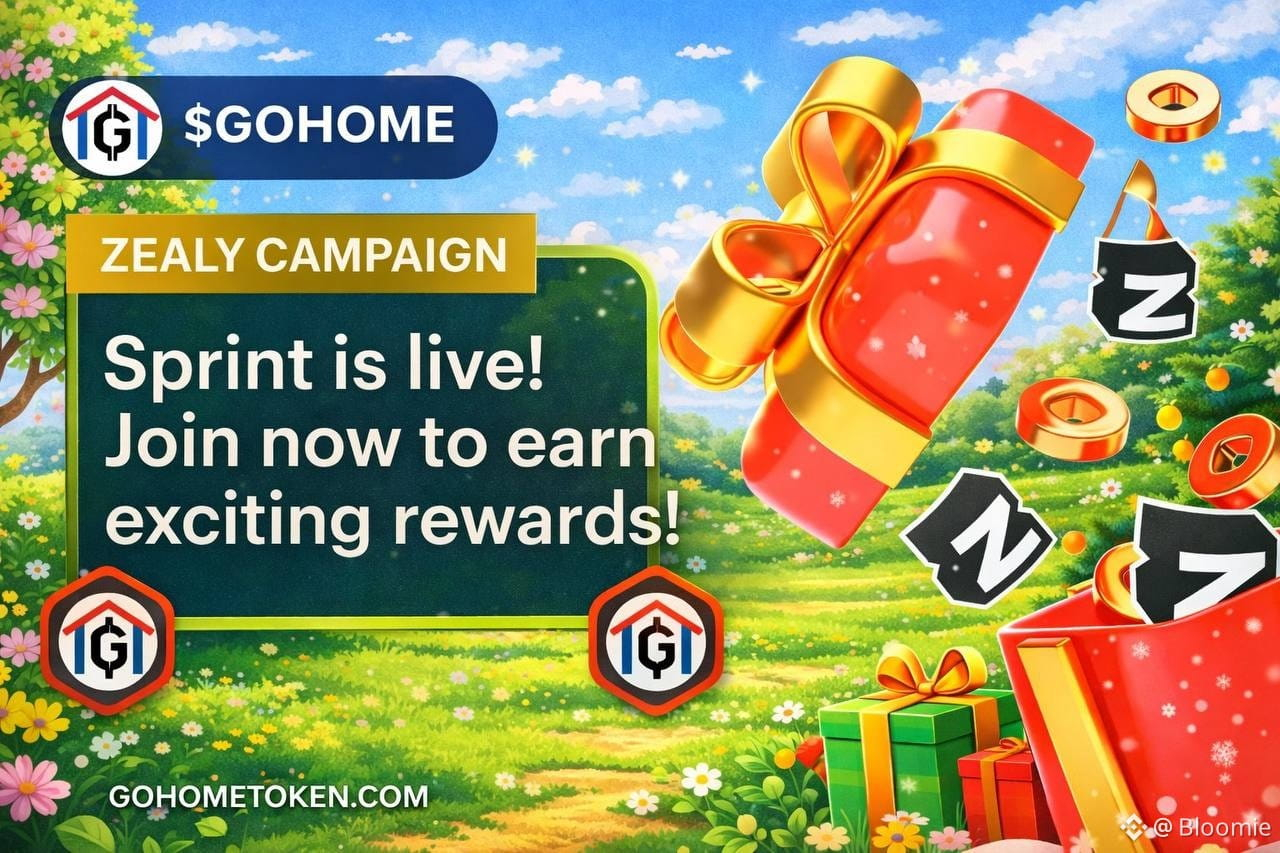
The @GoHome_Token Zealy sprint is now LIVE, and it’s a strong opportunity for anyone active in Web3
A reward pool of $500+ USDT has been allocated for participants who stay consistent and climb the leaderboard 💰
If you’re looking to earn while engaging with a growing ecosystem, this is your chance to get involved with $GOHOME
How it works:
• Complete simple tasks
• Earn points
• Climb the leaderboard
• Compete for rewards
Consistency is key. The more active you are, the higher your chances of securing a top spot
Beyond rewards, this sprint also offers a chance to contribute, gain visibility, and become part of a fast-growing community
Don’t wait until the competition gets tougher
Start early, stay active, and position yourself ahead of the curve 👇
🔗 zealy.io/cw/gohome
#GOHOME #Zealy
1
7
·
--
Good Afternoon Fam 💜
@GoHome_Token isn’t just a token you can buy anytime it’s an example of how ideas turn into movements in Web3.
What began as a simple viral moment evolved into a meme, which then became a community-driven token on Solana. This journey teaches us key lessons about decentralized ecosystems:
1️⃣ Culture creates momentum
Memes and viral ideas capture attention. In Web3, attention often translates into engagement, liquidity, and real-world impact.
2️⃣ Communities give life to projects
Tokens succeed when people actively participate, share, and rally around a vision. Community is the engine that drives growth beyond charts and code.
3️⃣ Narratives are signals
Following trends and conversations can reveal opportunities before they appear on traditional market indicators.
4️⃣ Technology enables action
Solana’s fast, low-fee network allows anyone to join, trade, or invest in projects like $GOHOME. But tech alone isn’t enough it’s the people interacting with it that create real value.
If you’re exploring Web3, remember: the strongest insights come from studying people, culture, and community not just prices or code.
Participate consciously, understand the story, and see how even a simple idea can grow into a movement.
Official website: "gohometoken.com" (gohometoken.com)
CA:
2Wu1g2ft7qZHfTpfzP3wLdfPeV1is4EwQ3CXBfRYAciD
1
2
15
·
--
Weekly Round-Up: What’s New on STON.fi
Stonfiers! This week was packed with updates, rewards and ways to level up your DeFi game. Here’s everything you need to know:
1️⃣ xStocks swaps made simple
Swap xStocks directly in the TON Wallet inside Telegram. Every swap is automatically tracked by the Portfolio Liberation bot t.me/stonfi_bot?sta…, helping you earn points toward the $50,000 reward pool. New to the campaign? Start here: t.me/stonfidex/1342
2️⃣ Omniston routing improvements
Swaps of cbBTC up to $10K now happen with zero price impact. Builders on TON can integrate once and get best-rate routing across all liquidity sources. Full details: t.me/stonfidex/1339
3️⃣ Reddit space for Stonfiers
The reddit.com/r/Stonfiers/ is now live! Ask questions, share tips, discuss TON DeFi and connect with fellow users. Join the conversation: reddit.com/r/Stonfiers/
4️⃣ Rewards explained
Learn how farming, staking, and Boost Farm APR work together to maximize your returns including how combining staking with the STON/USDt V2 pool can multiply your APR. Details: blog.ston.fi/3-ways-to-get-…
5️⃣ DeFi diversification made clear
Holding many tokens isn’t the same as being diversified. xStocks are key to building a truly diversified on-chain portfolio. Learn more:
x.com/ston_fi/status…
📊 Active farm APRs
🔥 $STORM/TON → 34%
🔥 USD₮/ $JETTON → 25%
🔥 $STON/USD₮ → 16%
👉 More farms: STON.fi Pools�
📊 DEX Stats
🔥 Weekly swapping volume: 11.1M TON ($14.6M)
🔥 TVL: 18.3M TON ($24.1M)
🔥 Liquidity providers earned: 19,287 TON ($25,459)
For more updates Follow @ston_fi

2
69
·
--
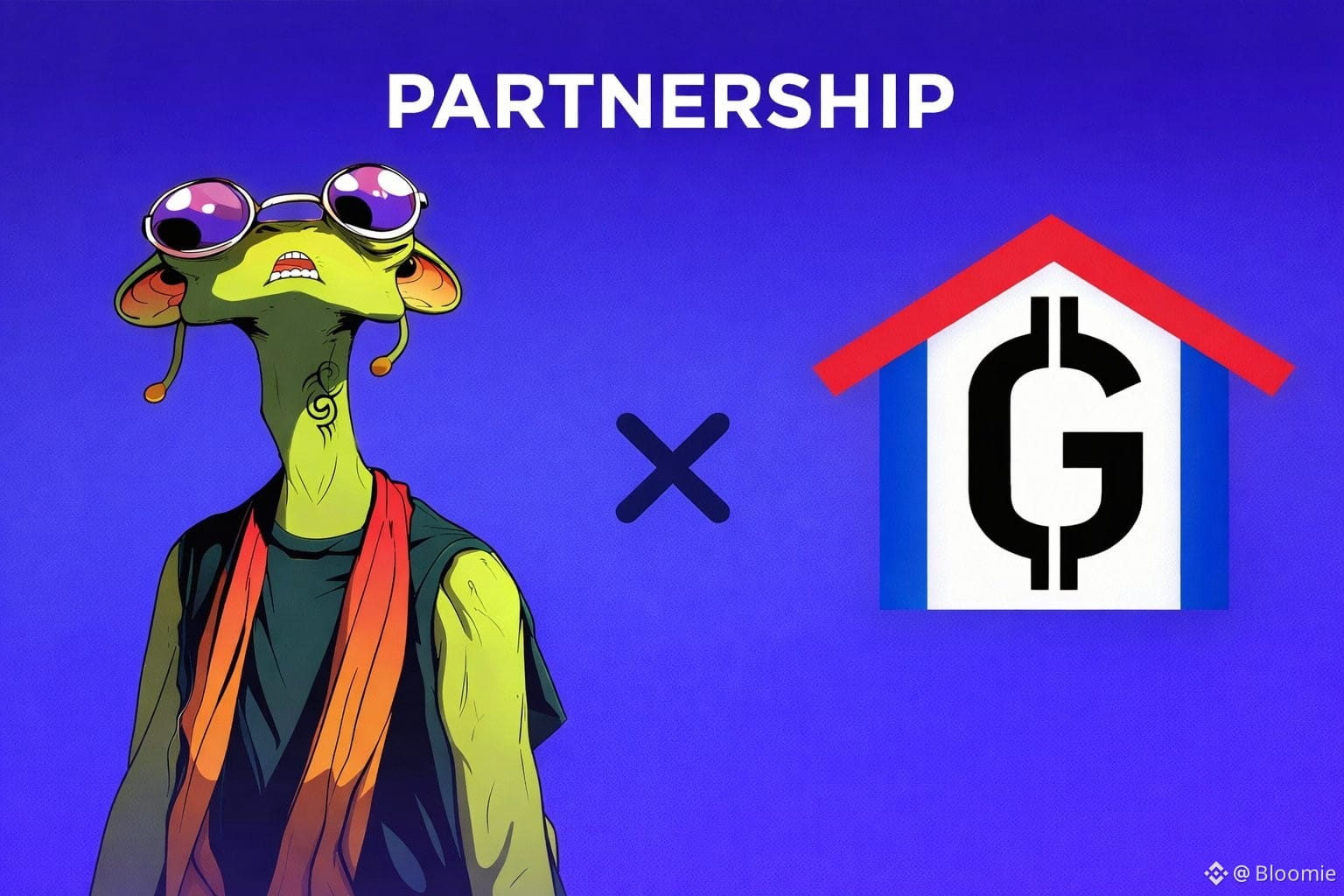
$GOHOME x $GUFFY Partnership 🐸
Two chains. One shared vision.
The collaboration between $GOHOME and $GUFFY brings together two meme-driven communities focused on culture, energy, and organic growth in Web3. This isn’t just another partnership, it’s a fusion of narratives built on engagement and collective momentum.
At the core:
Chaos fuels attention
Memes drive connection
Community sustains growth
By combining audiences and aligning their ecosystems, both projects strengthen visibility while expanding their reach across chains.
In a space where attention is everything, collaborations like this amplify impact and accelerate community-driven growth.
This is more than a moment, it’s movement.
#GOHOME #GUFFY #Web3 #Crypto #MemeCoin
1
35
Войдите, чтобы посмотреть больше материала
Присоединяйтесь к пользователям криптовалют по всему миру на Binance Square
⚡️ Получайте новейшую и полезную информацию о криптоактивах.
💬 Нам доверяет крупнейшая в мире криптобиржа.
👍 Получите достоверные аналитические данные от верифицированных создателей контента.
Эл. почта/номер телефона
В тренде
BTCRemainsUnderPressureAfterHawkishFOMCMinutes
Просмотров: 44,935
602 обсуждают
FOMC Minutes | Fed Minutes Show Almost All Officials Expect More Rate Hikes, With Some Open to a Larger December Move
Binance News
·Лайков: 47
·Просмотров: 56.4k
AnthropicToDebutAfter$83IPOPricing
Просмотров: 11,584
65 обсуждают
NvidiaBoardReportedlySplitOverHuang’sReturn
Просмотров: 14,886
249 обсуждают