

Shaheen Star
9.2k Публикации

Shaheen Star
Отправить жалобу
Заблокировать пользователя
376 подписок(и/а)
22.3K+ подписчиков(а)
7.6K+ понравилось
Посты
Все
Цитирования
Активно
PINNED
·
--
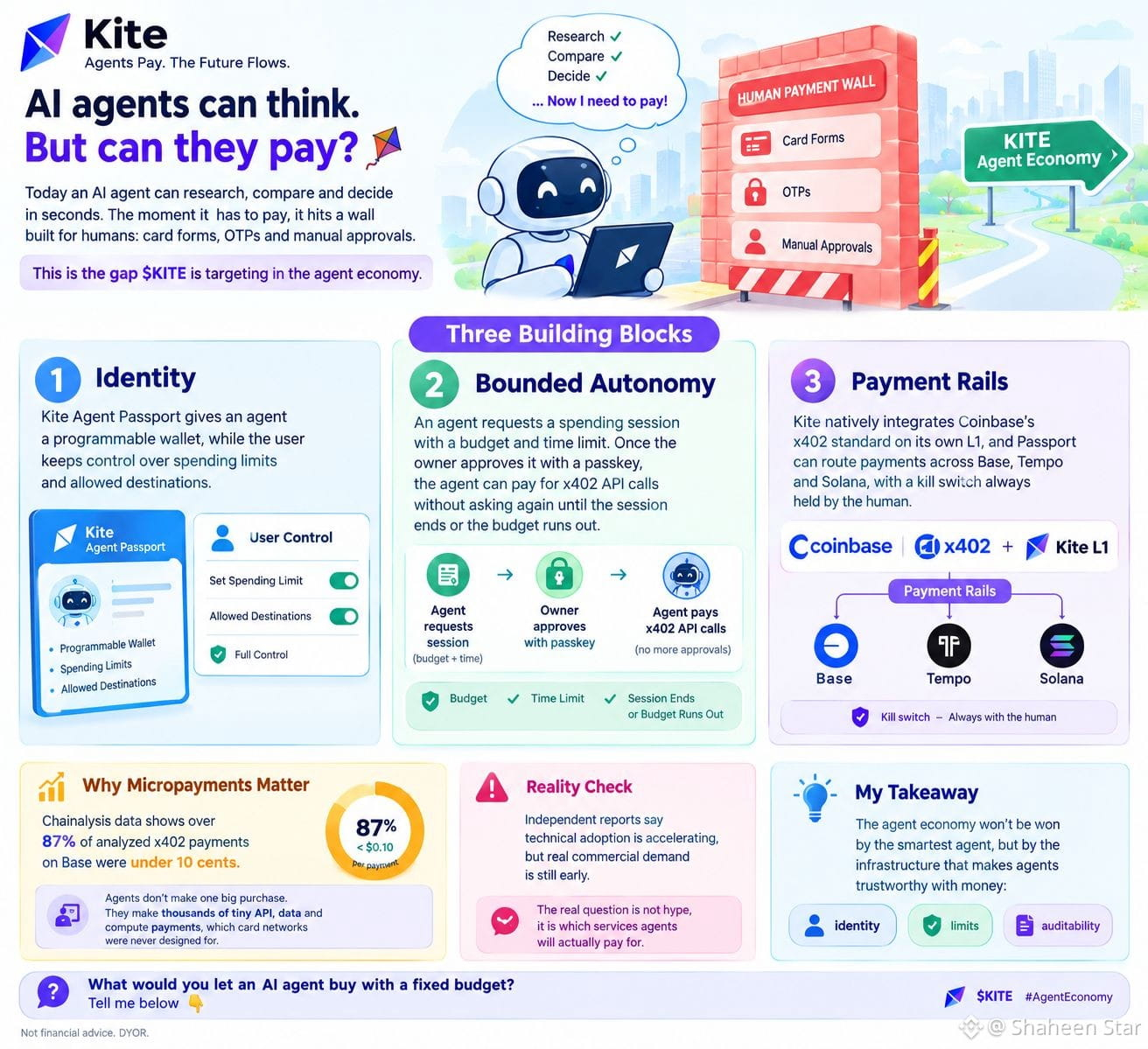
AI agents can think. But can they pay?
Today an AI agent can research, compare and decide in seconds. The moment it has to pay, it hits a wall built for humans: card forms, OTPs and manual approvals. This is the gap $KITE is targeting in the agent economy.
Three building blocks that stand out:
Identity: Kite Agent Passport gives an agent a programmable wallet, while the user keeps control over spending limits and allowed destinations.
Bounded autonomy: an agent requests a spending session with a budget and time limit. Once the owner approves it with a passkey, the agent can pay for x402 API calls without asking again until the session ends or the budget runs out.
Payment rails: Kite natively integrates Coinbase's x402 standard on its own L1, and Passport can route payments across Base, Tempo and Solana, with a kill switch always held by the human.
Why micropayments matter: Chainalysis data shows over 87% of analyzed x402 payments on Base were under 10 cents. Agents don't make one big purchase. They make thousands of tiny API, data and compute payments, which card networks were never designed for.
Honest reality check: independent reports say technical adoption is accelerating, but real commercial demand is still early. The real question is not hype, it is which services agents will actually pay for.
My takeaway: the agent economy won't be won by the smartest agent, but by the infrastructure that makes agents trustworthy with money: identity, limits and auditability.
What would you let an AI agent buy with a fixed budget? Tell me below 👇
Not financial advice. DYOR.
#KiteBBW $KITE @GoKiteAI
{spot}(KITEUSDT)
AI agents can think. But can they pay?
Today an AI agent can research, compare and decide in seconds. The moment it has to pay, it hits a wall built for humans: card forms, OTPs and manual approvals. This is the gap $KITE is targeting in the agent economy.
Three building blocks that stand out:
Identity: Kite Agent Passport gives an agent a programmable wallet, while the user keeps control over spending limits and allowed destinations.
Bounded autonomy: an agent requests a spending session with a budget and time limit. Once the owner approves it with a passkey, the agent can pay for x402 API calls without asking again until the session ends or the budget runs out.
Payment rails: Kite natively integrates Coinbase's x402 standard on its own L1, and Passport can route payments across Base, Tempo and Solana, with a kill switch always held by the human.
Why micropayments matter: Chainalysis data shows over 87% of analyzed x402 payments on Base were under 10 cents. Agents don't make one big purchase. They make thousands of tiny API, data and compute payments, which card networks were never designed for.
Honest reality check: independent reports say technical adoption is accelerating, but real commercial demand is still early. The real question is not hype, it is which services agents will actually pay for.
My takeaway: the agent economy won't be won by the smartest agent, but by the infrastructure that makes agents trustworthy with money: identity, limits and auditability.
What would you let an AI agent buy with a fixed budget? Tell me below 👇
Not financial advice. DYOR.
#KiteBBW $KITE @KITE AI 中文
17
17
372
·
--
Рост
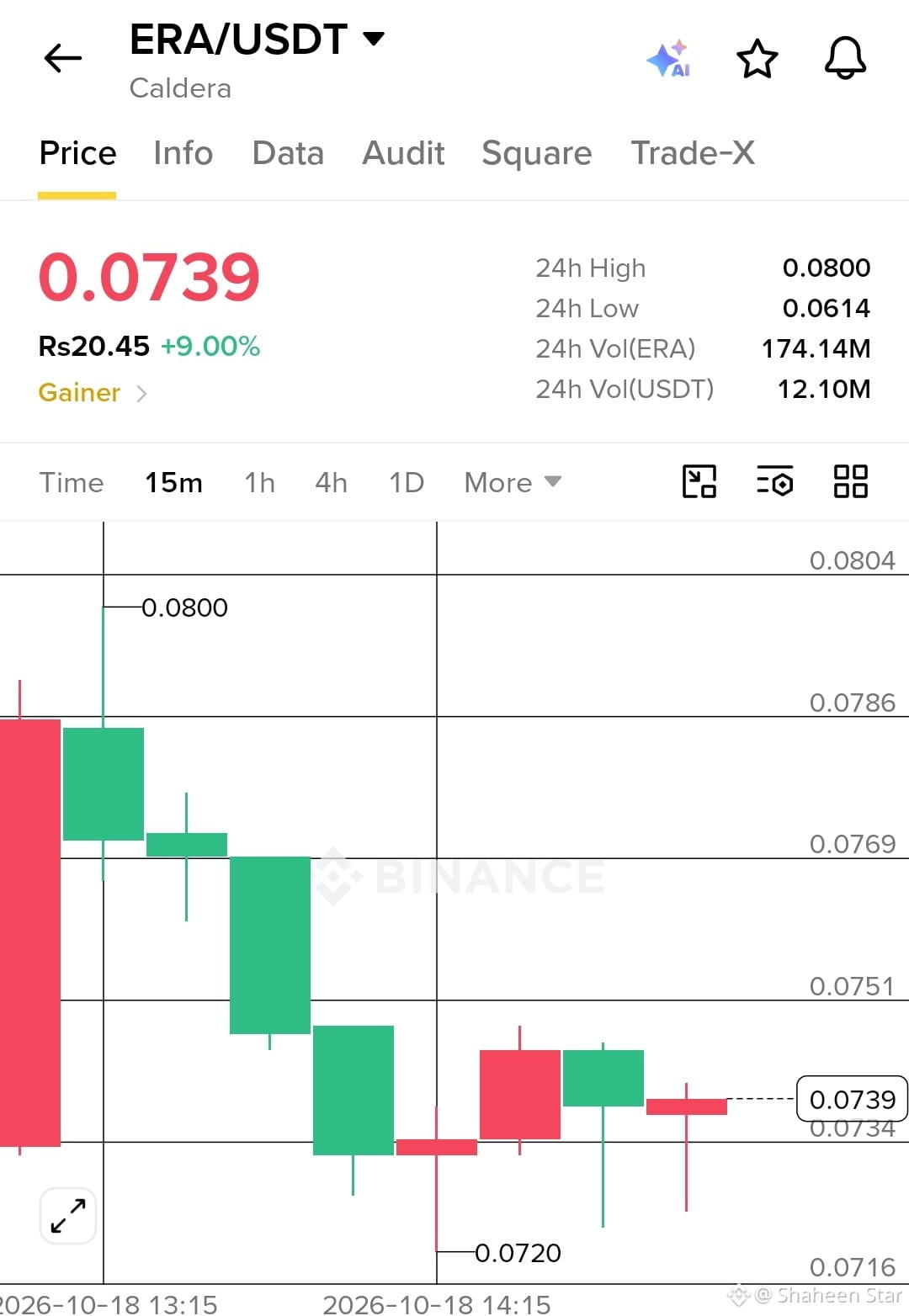
🚨🔻 $ERA BEARS ARE TAKING OVER!
❌ Rejected at $0.080 resistance! Consecutive red candles on the 15M chart signal rising selling pressure. Can bears push it lower? 🐻📉
🔴 SHORT ENTRY: $0.0744–$0.0750
🎯 TP1: $0.0725
🎯 TP2: $0.0700
🚀 TP3: $0.0685
🛑 STOP LOSS: $0.0802
⚠️ Key Level: A confirmed breakdown below $0.074 could accelerate the bearish move. Recovery above $0.080 invalidates the setup.
🔥 Watch for confirmation. Trade smart and manage risk!
#ERA #CryptoTrading #ShortSetup #Altcoins #TradingSignals
2
173
·
--
Рост
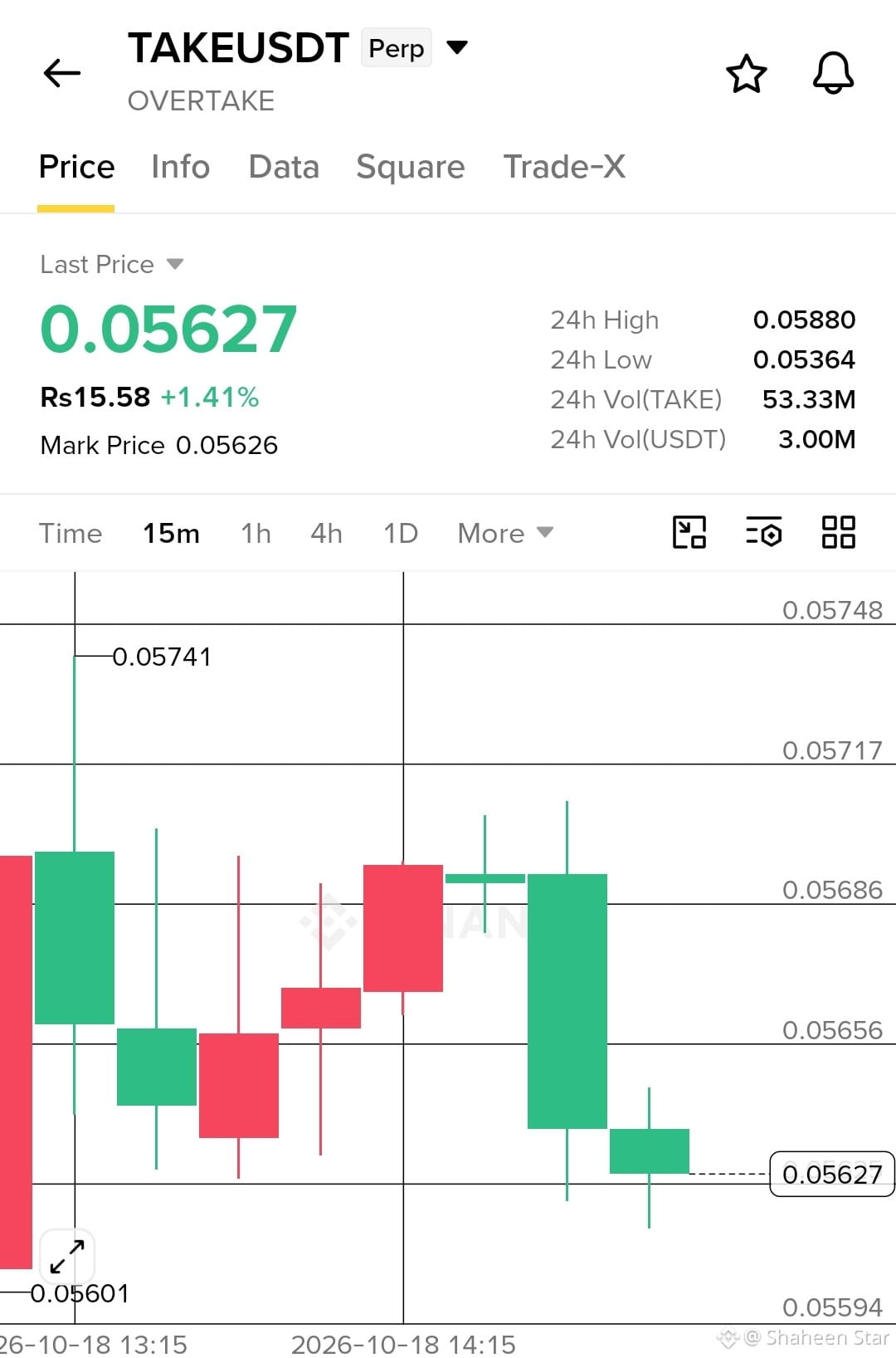
🚀🔥 $TAKE BULLISH BREAKOUT LOADING! 🐂📈
Buyers are defending the rising trendline, and momentum is building! Eyes on the $0.060 target! 🎯
🟢 LONG ENTRY: $0.05650 – $0.05720
🎯 TP1: $0.05800
🎯 TP2: $0.05880
🚀 TP3: $0.06000
🛑 STOP LOSS: $0.05480
💎 Bulls are stepping up — will $TAKE break higher? Stay sharp and manage risk! ⚡🔥
#TAKE #Crypto #Altcoins #TradingSignals #Bullish
2
348
·
--
Рост
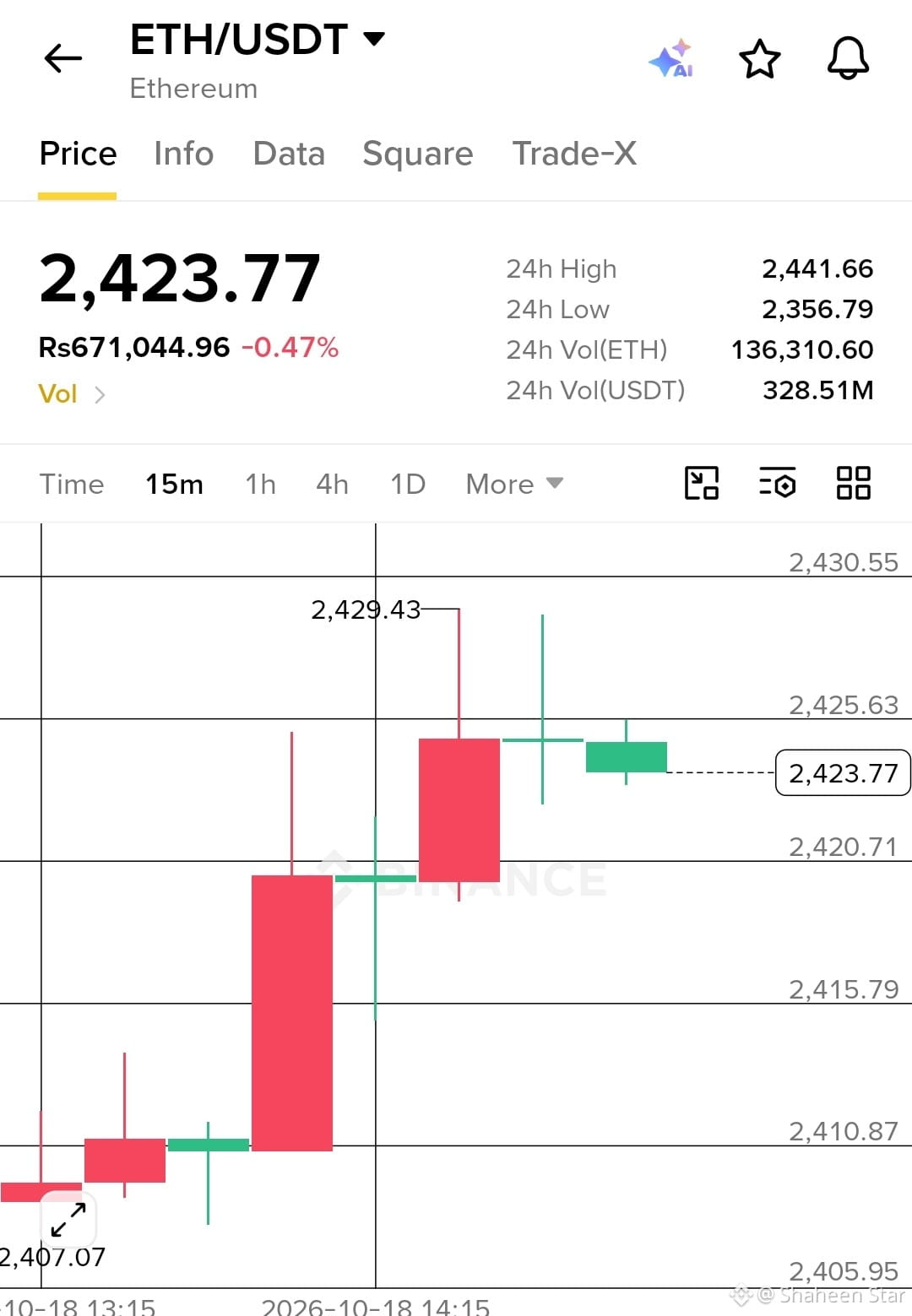
🚀🔥 $ETH BULLS ARE TAKING CONTROL!
📈 Fresh strength is building as buyers step in! Eyes on the next upside targets. 🎯
🟢 Trade: LONG
📍 Entry: 2420.8 – 2423.2
🛑 Stop Loss: 2417.8
🎯 TP1: 2428.7
🎯 TP2: 2433.0
🚀 TP3: 2437.3
💎 Stay sharp, manage your risk, and let the setup play out! Good luck, traders! 🍀🔥
#ETH #ETHUSDT #CryptoTrading #TradingSignals #Bullish
1
69
·
--
Рост
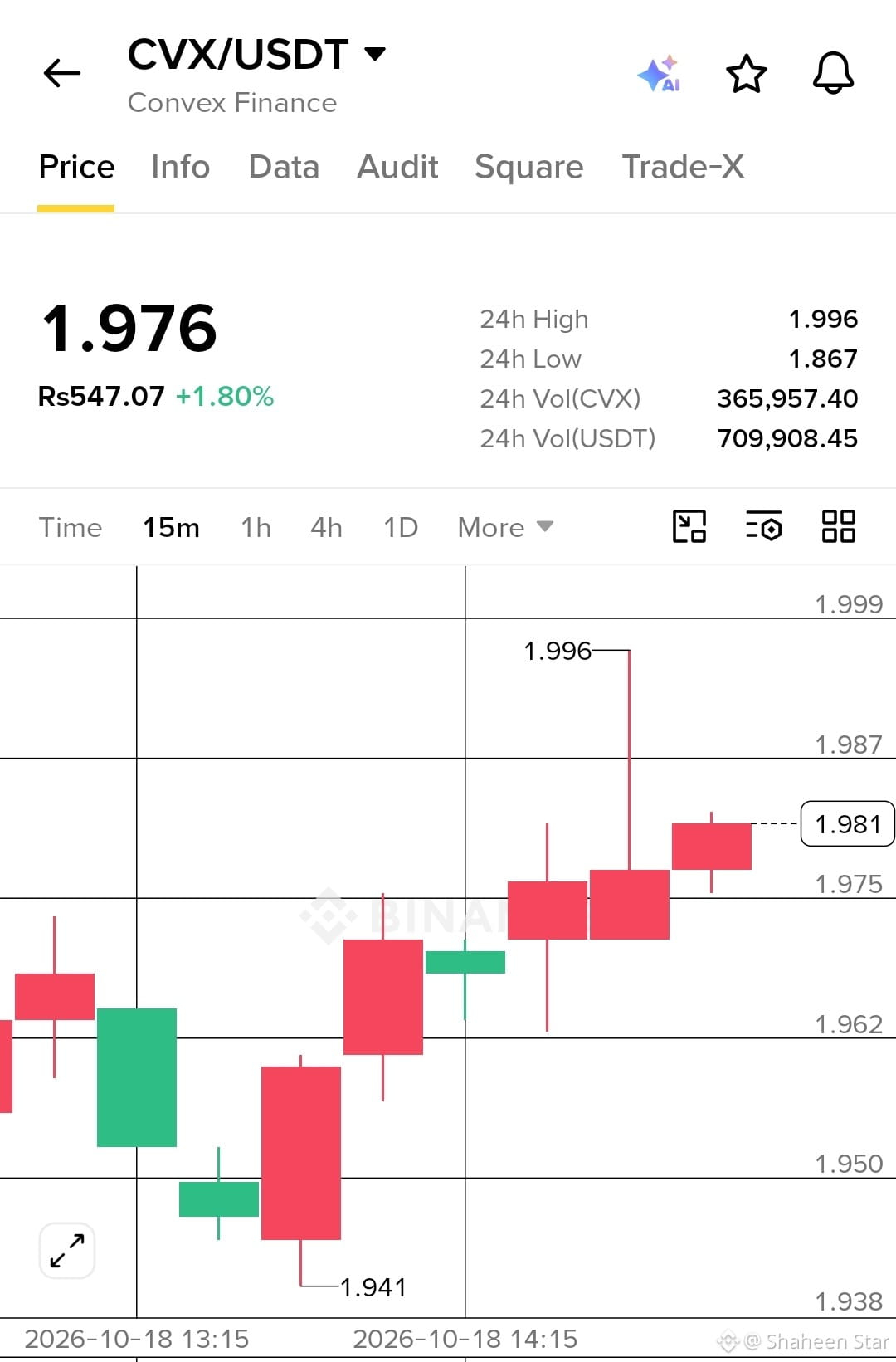
🚀 $CVX USDT — BULLISH BREAKOUT LOADING! 🧨📈
🐂 Sellers exhausted, buyers stepping in! A strong bounce from support could fuel the next move toward $2.180!
📍 Entry: $1.950–$1.985
💰 Current Price: $1.978
🎯 Target: $2.180
🛑 Stop Loss: $1.864
⚡ Risk Management: Consider moving SL to breakeven after +3–4% profit.
🔥 My entry is live! Are you ready for the next move? Drop a ⚡ below! 👇
#CVX #CVXUSDT #DeFi #CryptoTrading #Altcoins
1
114
·
--
Рост
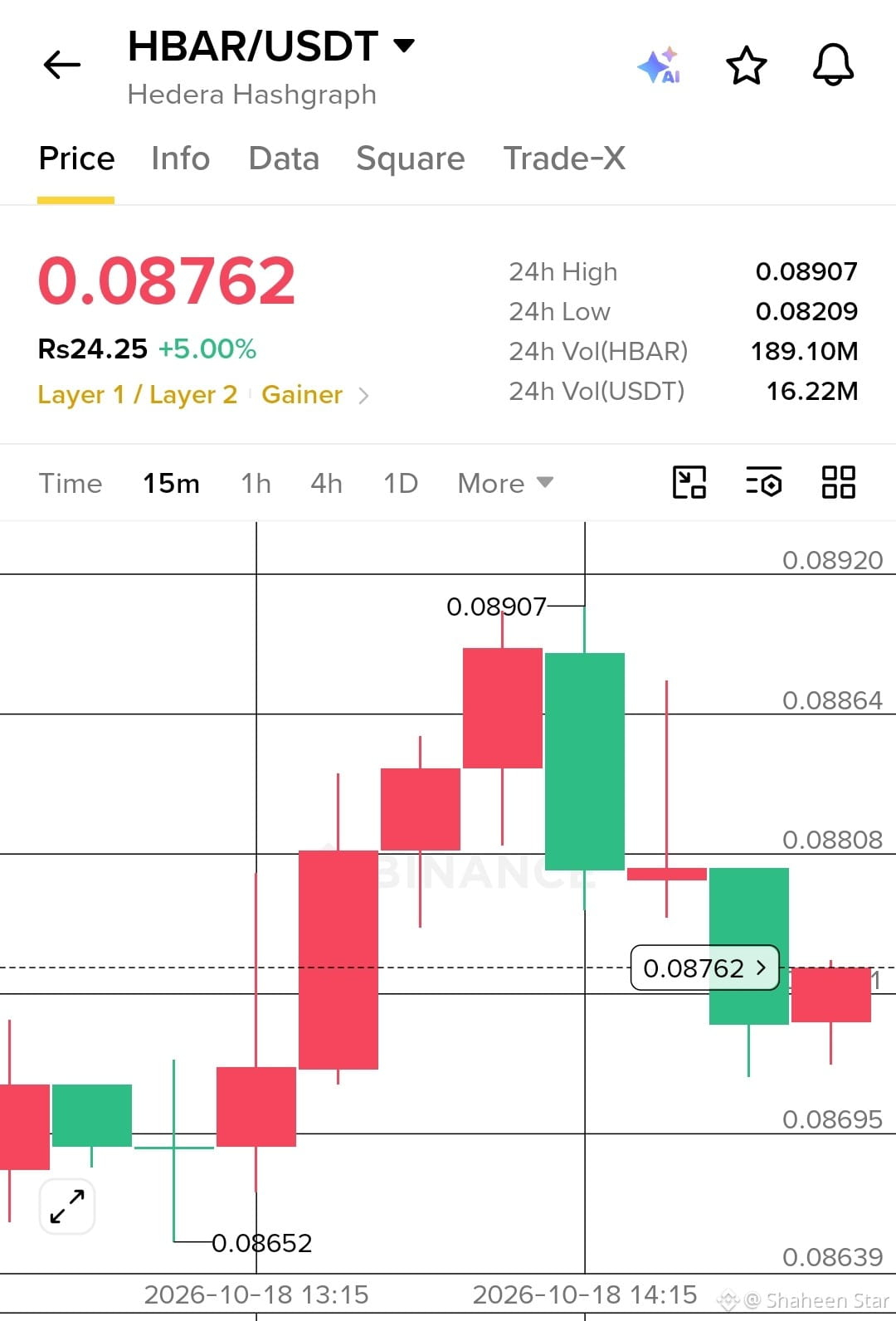
🚀 $HBAR BULLISH MOMENTUM! 🔥
📈 8s pushing higher on the 4H chart after bouncing from $0.0827 support!
🎯 Entry: $0.08272
✅ TP1: $0.08600 — HIT
🎯 TP2: $0.08900
🚀 TP3: $0.09252
🛑 Stop Loss: $0.07968
💎 Price has climbed to $0.0885! If buyers maintain control, $0.09252 could be the next target. Bulls are stepping up! 🐂🔥
#HBAR #Crypto #Altcoins #Trading #Bullish
145
·
--
Рост
#nil $NIL @nillionnetwork
I've been watching Nillion for a few weeks now, and what caught my attention isn't the price chart but the problem it's trying to solve. Blockchains are great at transparency, which is exactly why they struggle with sensitive data. Trading strategies, agent memory, private datasets: none of it can sit on a public ledger without leaking value.
Nillion's pitch is blind computation, meaning data stays encrypted while it's stored and while it's being processed. If that works at scale, it opens a lane for AI agents and onchain apps that currently can't touch high-value information. That's a real infrastructure gap, not a narrative invented for a cycle.
Still, I try to stay honest about market reality. Privacy and AI themes attract attention in waves, and liquidity rotates fast once the story cools. Competition from other privacy and compute networks is real, and cryptographic performance claims only matter once developers actually build on them.
My open questions: how heavy is the overhead on real workloads, and will teams choose it over simpler alternatives? Adoption data will tell me more than any announcement.
Are you tracking usage metrics on privacy infrastructure, or mostly watching the narrative?
#nil $NIL @Nillion
I've been watching Nillion for a few weeks now, and what caught my attention isn't the price chart but the problem it's trying to solve. Blockchains are great at transparency, which is exactly why they struggle with sensitive data. Trading strategies, agent memory, private datasets: none of it can sit on a public ledger without leaking value.
Nillion's pitch is blind computation, meaning data stays encrypted while it's stored and while it's being processed. If that works at scale, it opens a lane for AI agents and onchain apps that currently can't touch high-value information. That's a real infrastructure gap, not a narrative invented for a cycle.
Still, I try to stay honest about market reality. Privacy and AI themes attract attention in waves, and liquidity rotates fast once the story cools. Competition from other privacy and compute networks is real, and cryptographic performance claims only matter once developers actually build on them.
My open questions: how heavy is the overhead on real workloads, and will teams choose it over simpler alternatives? Adoption data will tell me more than any announcement.
Are you tracking usage metrics on privacy infrastructure, or mostly watching the narrative?
7
108
·
--
Рост
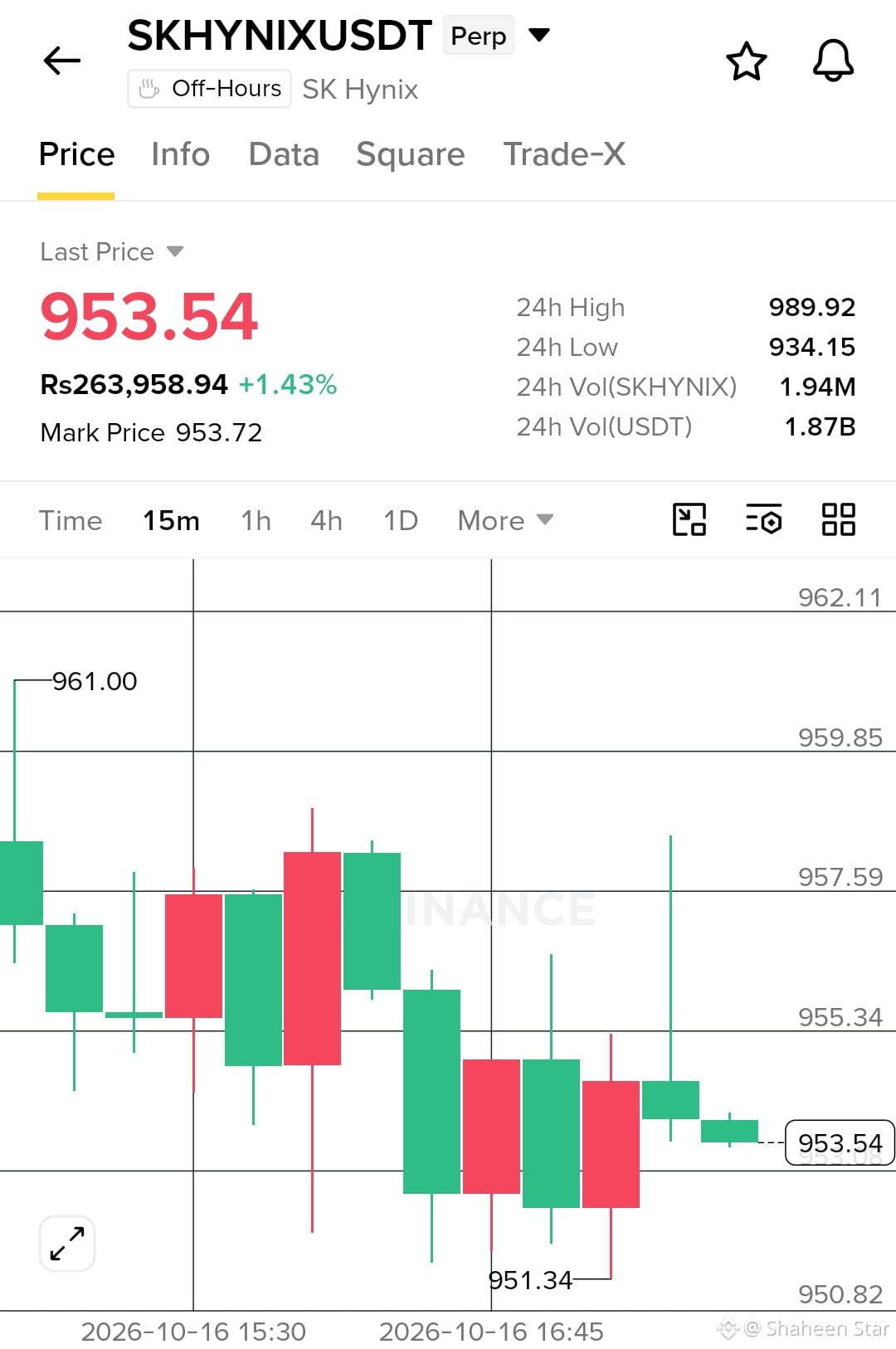
🚀💎 $SKHYNIX BULLS ARE LOADING! 🔥
⚡ Leverage: 30x
📈 Entry: 952.06–957.79
🛑 Stop Loss: 923.20
🎯 TP1: 976.41
🎯 TP2: 988.10
🚀 TP3: 1005.41
🐂 Momentum is building — will SKHYNIX smash the next target? Eyes on the move! 👀🔥
👉 TRADE NOW & STAY DISCIPLINED!
#SKHYNIX #BTC #ETH #CryptoTrading
🚀💎 $SKHYNIX BULLS ARE LOADING! 🔥
⚡ Leverage: 30x
📈 Entry: 952.06–957.79
🛑 Stop Loss: 923.20
🎯 TP1: 976.41
🎯 TP2: 988.10
🚀 TP3: 1005.41
🐂 Momentum is building — will SKHYNIX smash the next target? Eyes on the move! 👀🔥
👉 TRADE NOW & STAY DISCIPLINED!
#SKHYNIX #BTC #ETH #CryptoTrading
⚡ Leverage: 30x
📈 Entry: 952.06–957.79
🛑 Stop Loss: 923.20
🎯 TP1: 976.41
🎯 TP2: 988.10
🚀 TP3: 1005.41
🐂 Momentum is building — will SKHYNIX smash the next target? Eyes on the move! 👀🔥
👉 TRADE NOW & STAY DISCIPLINED!
#SKHYNIX #BTC #ETH #CryptoTrading
1
824
·
--
Рост
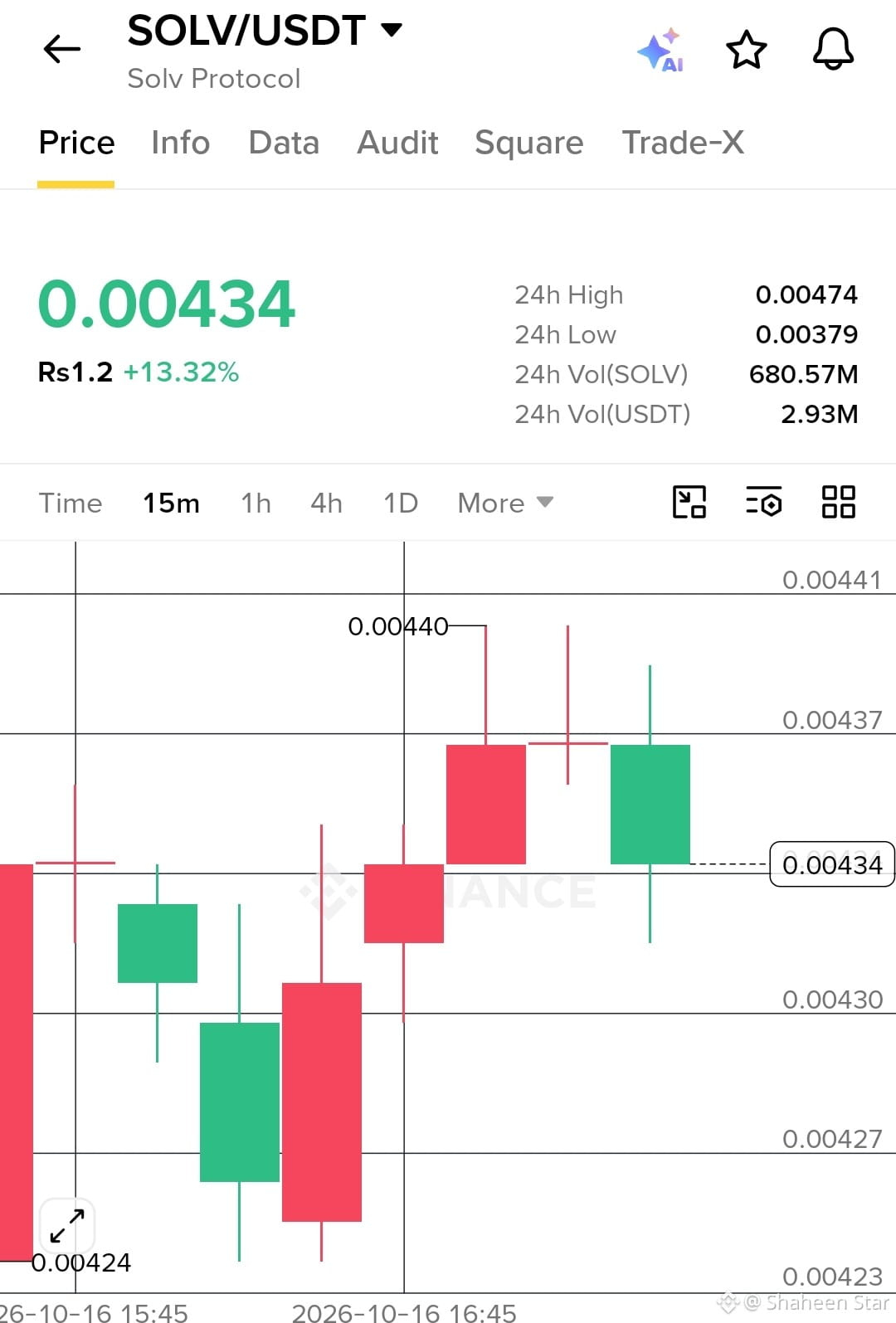
🚀 $SOLV READY TO EXPLODE? 🔥 BULLS EYEING BREAKOUT! 🐂
💰 Current Zone: $0.00440
🎯 Entry: $0.00435–$0.00440
🥇 TP1: $0.00445
🥈 TP2: $0.00455
🥉 TP3: $0.00470
🛑 Stop Loss: $0.00425
⚡ Break above $0.00450 could ignite the next rally! Will $SOLV send bulls flying? 👀📈
🔥 BUY & TRADE $SOLV
#SOLV #Crypto #Altcoins #Binance
💰 Current Zone: $0.00440
🎯 Entry: $0.00435–$0.00440
🥇 TP1: $0.00445
🥈 TP2: $0.00455
🥉 TP3: $0.00470
🛑 Stop Loss: $0.00425
⚡ Break above $0.00450 could ignite the next rally! Will $SOLV send bulls flying? 👀📈
🔥 BUY & TRADE $SOLV
#SOLV #Crypto #Altcoins #Binance
152
·
--
Рост
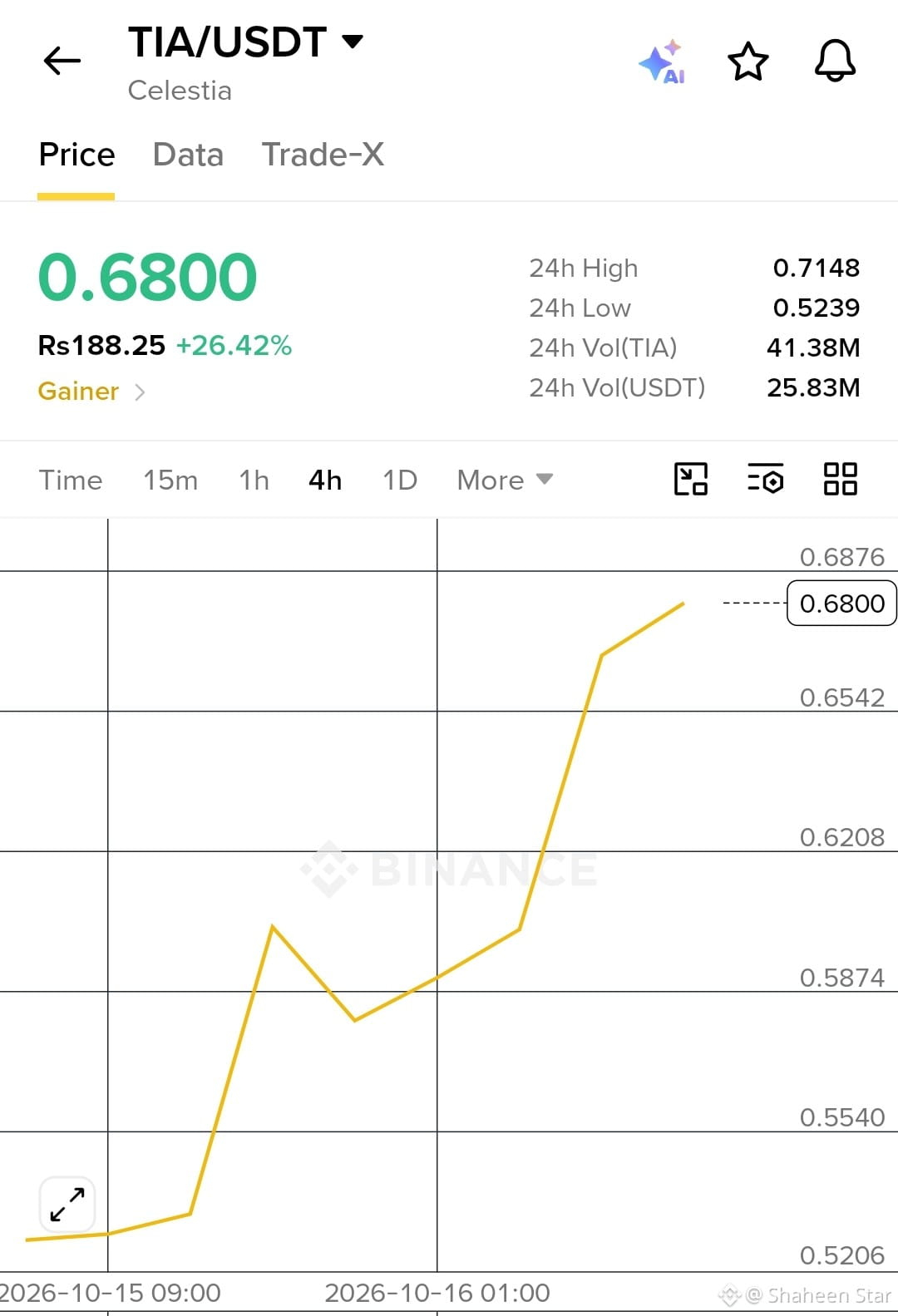
🚀🔥 $TIA LONG SETUP — BULLS, ARE YOU READY? 🐂📈
💰 Entry Zone: $0.6880 – $0.6910
🎯 TP1: $0.7145
🎯 TP2: $0.7300
🛑 Stop Loss: $0.6400
⚡ Eyes on $TIA! If bullish momentum kicks in, we could target higher levels! 🚀💚
⚠️ Trade smart, manage risk, and DYOR!
#TIA #Crypto #Binance #Write2Earn #LongSetup #Altcoins
🚀🔥 $TIA LONG SETUP — BULLS, ARE YOU READY? 🐂📈
💰 Entry Zone: $0.6880 – $0.6910
🎯 TP1: $0.7145
🎯 TP2: $0.7300
🛑 Stop Loss: $0.6400
⚡ Eyes on $TIA ! If bullish momentum kicks in, we could target higher levels! 🚀💚
⚠️ Trade smart, manage risk, and DYOR!
#TIA #Crypto #Binance #Write2Earn #LongSetup #Altcoins
💰 Entry Zone: $0.6880 – $0.6910
🎯 TP1: $0.7145
🎯 TP2: $0.7300
🛑 Stop Loss: $0.6400
⚡ Eyes on $TIA ! If bullish momentum kicks in, we could target higher levels! 🚀💚
⚠️ Trade smart, manage risk, and DYOR!
#TIA #Crypto #Binance #Write2Earn #LongSetup #Altcoins
171
·
--
Рост
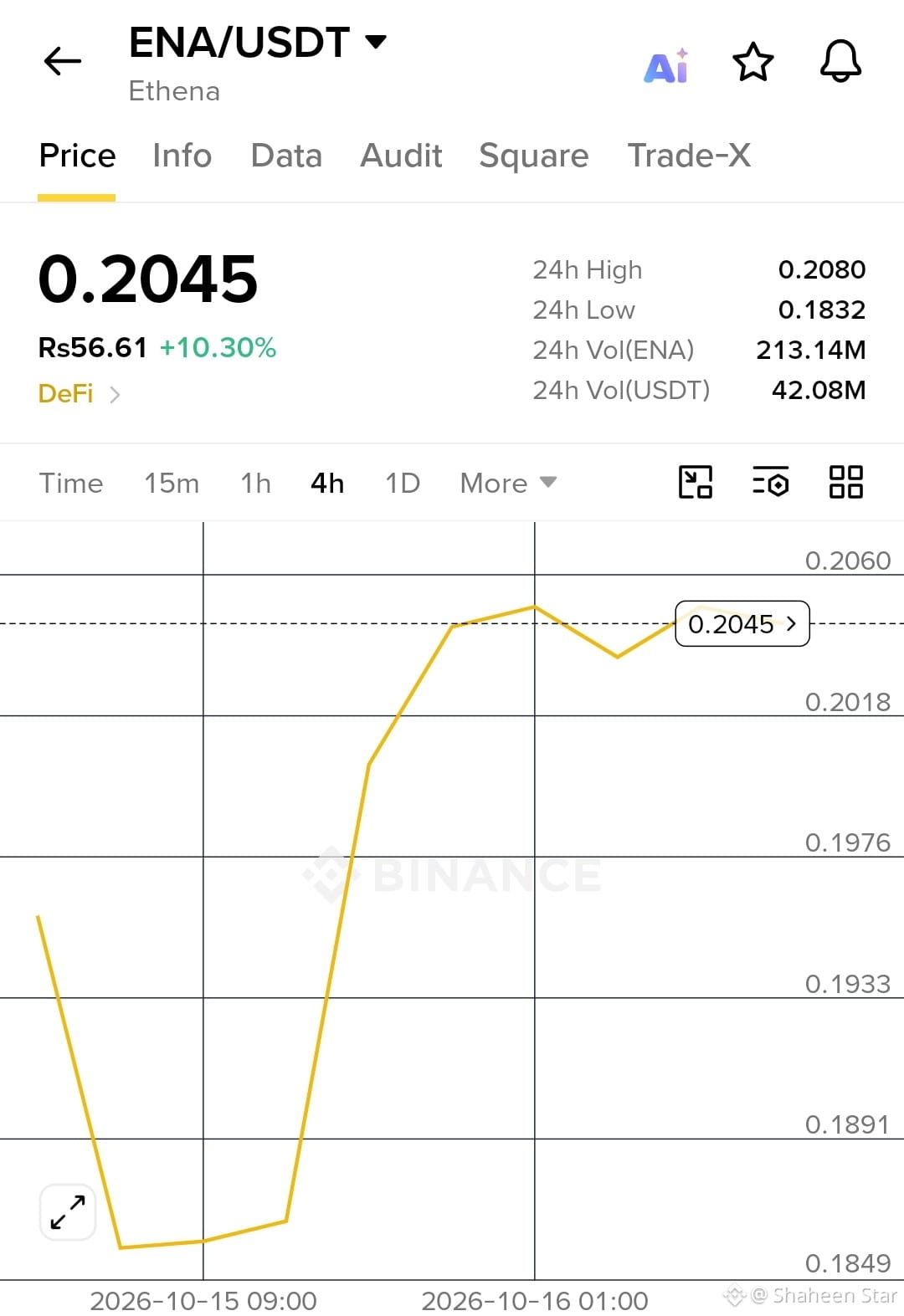
🚨 $ENA SHORT SETUP 🔻🔥
⚠️ Same resistance, repeated rejection! Bears may be ready to take control. 👀
📉 Trade Details:
🔴 Entry: $0.2039 – $0.2062
🎯 TP1: $0.1948
🎯 TP2: $0.1856
🎯 TP3: $0.1763
🛑 Stop Loss: $0.2138
⚡ Leverage: 32x
The resistance zone is key! If sellers maintain pressure, $ENA could move toward our targets. 📉💥
⚠️ High leverage = high risk. Manage your position carefully and always use a stop loss!
Who's watching this short? 🐻🔥
#ENA #Write2Earn #Binance #Crypto #FuturesTrading #ShortSetup
347
·
--
🔥 SEPTEMBER CPI: THE NEXT BIG SHOCK FOR OIL & TREASURIES? 📊
#CPIWatch
🌍 One World. Two Risks. One Critical CPI Report.
Rising Middle East tensions are keeping energy markets on edge. If oil prices continue climbing, higher fuel and transportation costs could put renewed pressure on US inflation.
📈 My Market Outlook:
🛢️ OIL — Bullish, But Cautious
Geopolitical risks could keep oil prices elevated. However, any easing of tensions or weaker demand could trigger a sharp reversal. I would watch crude oil price action and inflation data before chasing the rally.
🇺🇸 TREASURIES — Yields Are the Key
A hotter-than-expected CPI could strengthen expectations of tighter Fed policy, putting upward pressure on Treasury yields and potentially weighing on bond prices. A softer CPI could bring yields down and support Treasury prices.
🎯 My Trading Strategy
• Avoid overleveraging ahead of the CPI release.
• Watch actual CPI data against market expectations.
• Monitor oil prices, Treasury yields, and Fed rate expectations.
• Stay flexible and wait for confirmation rather than trading on headlines alone.
💡 The Big Question:
Will September CPI reignite inflation fears, push Treasury yields higher, and send oil into another rally—or will cooling inflation surprise the market?
The smartest move isn't predicting every headline. It's managing risk, reading the data, and being ready for both scenarios.
📊 Data over hype. Strategy over emotion. Risk management over FOMO.
What’s your outlook: HOT CPI 🔥 or COOLING INFLATION ❄️?
Share your analysis below! 👇
#CPIWatch #OilMarket #Treasuries #Inflation #FederalReserve
$BZUSDT $TMFUSDT $TBT $RWUSD

155


·
--
🎙️ 建设币安广场,持有BNB|1011的一周年祭!大家还记得一年前的今天吗?来聊聊~希望还在牌桌上的我们都能引以为戒!

Завершено
04 ч 44 мин 20 сек
10.8k
44
40
·
--
Рост
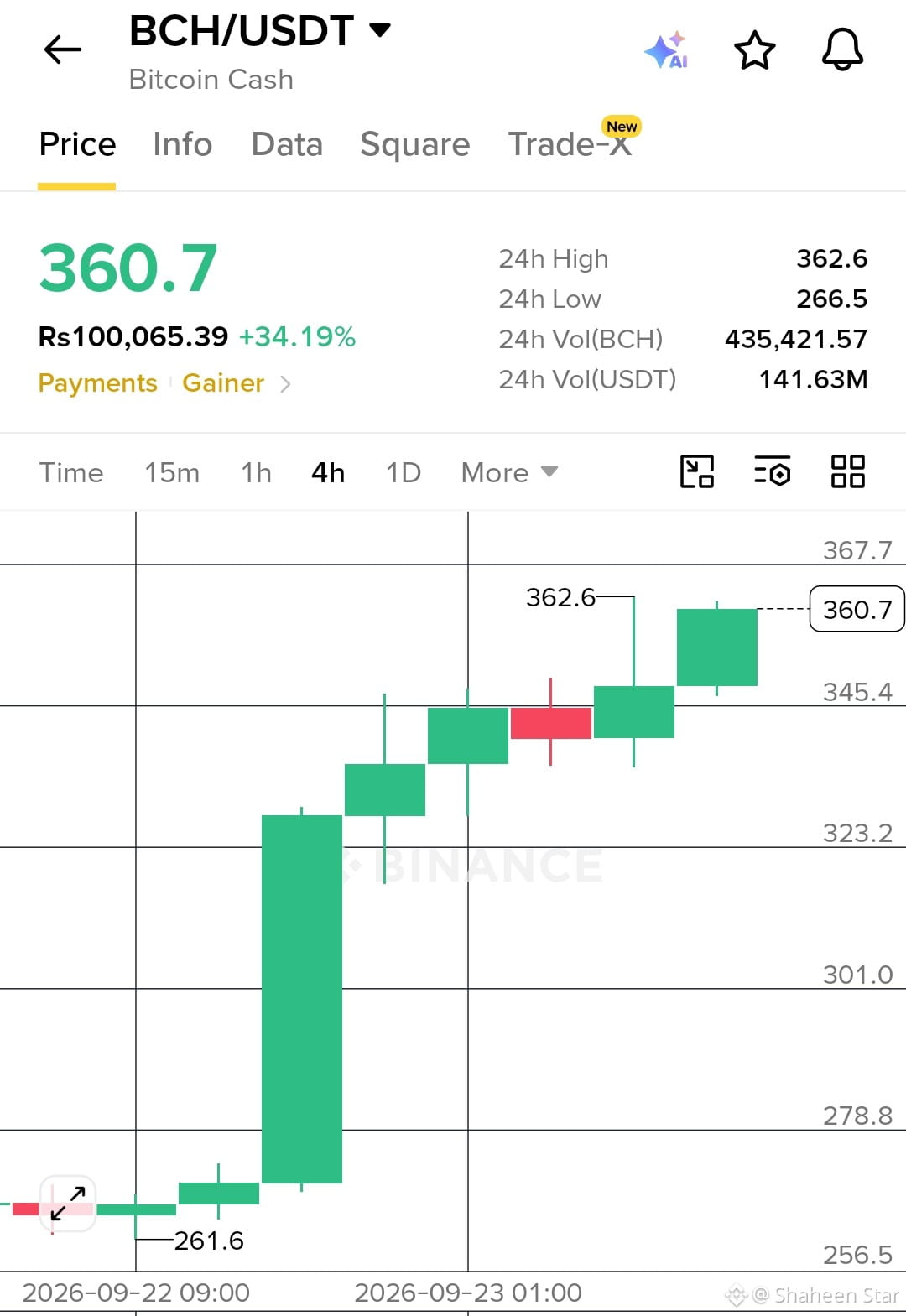
🚀 $BCH /USDT LONG SIGNAL 💯🔥
🟢 Entry: 356–360
🎯 TP1: 363
🎯 TP2: 375
🎯 TP3: 390
🛑 SL: 348
📈 Strong bullish momentum + ~$1.14B USDT volume!
⚡ Resistance: 362.73 — a clean breakout & hold above 363 could open further upside.
❌ Below 348 = Setup Invalid
Trade with proper risk management. ⚠️
#BCH #BitcoinCash #Crypto #Trading #Binance
88
·
--
Рост
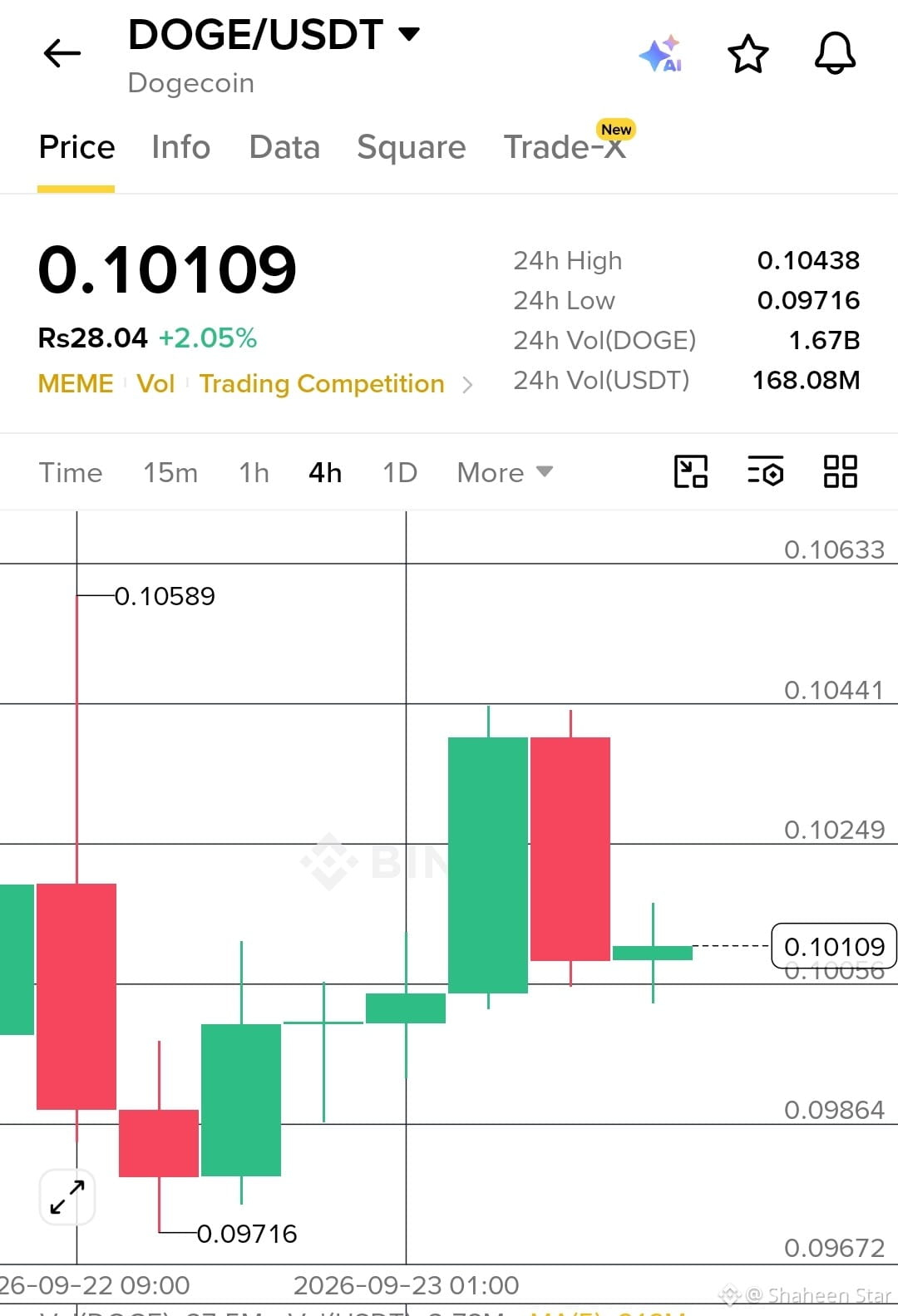
🚀 $DOGE HOLDING STRONG! 🐕🔥
From ~$0.085 → now ~$0.1025, bulls are eyeing another breakout! 👀
📍 Resistance: $0.104–$0.105
🎯 Breakout Targets: $0.108 → $0.110 → $0.115
🔄 Retest Zone: $0.098–$0.100
Momentum is strong — but don’t chase near resistance. ⚠️
🔥 Buy & Trade $DOGE
#DOGE #Dogecoin #Crypto #Trading #Binance
From ~$0.085 → now ~$0.1025, bulls are eyeing another breakout! 👀
📍 Resistance: $0.104–$0.105
🎯 Breakout Targets: $0.108 → $0.110 → $0.115
🔄 Retest Zone: $0.098–$0.100
Momentum is strong — but don’t chase near resistance. ⚠️
🔥 Buy & Trade $DOGE
#DOGE #Dogecoin #Crypto #Trading #Binance
126
·
--
Рост
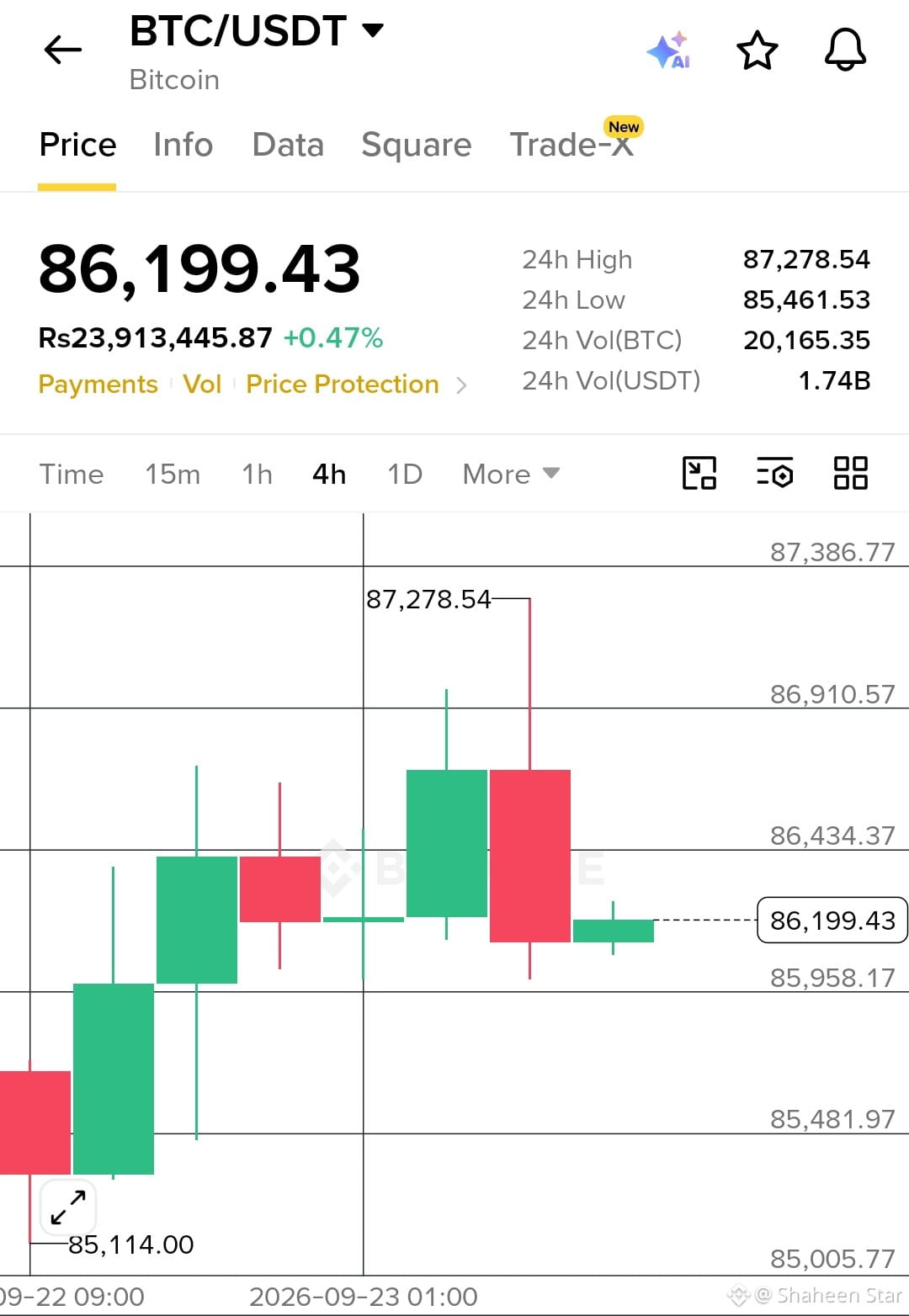
🚨 $BTC LONG SETUP 🚨
Trust the setup — watching for the next push 📈🔥
🟢 Entry: $86,200 – $86,300
🎯 TP1: $86,500
🎯 TP2: $86,650
🎯 TP3: $86,840
🛑 SL: $85,897
Manage risk. Trade your own plan. ⚠️
#BTC #Bitcoin #Crypto #Trading #Binance
🚨 $BTC LONG SETUP 🚨
Trust the setup — watching for the next push 📈🔥
🟢 Entry: $86,200 – $86,300
🎯 TP1: $86,500
🎯 TP2: $86,650
🎯 TP3: $86,840
🛑 SL: $85,897
Manage risk. Trade your own plan. ⚠️
#BTC #Bitcoin #Crypto #Trading #Binance
Trust the setup — watching for the next push 📈🔥
🟢 Entry: $86,200 – $86,300
🎯 TP1: $86,500
🎯 TP2: $86,650
🎯 TP3: $86,840
🛑 SL: $85,897
Manage risk. Trade your own plan. ⚠️
#BTC #Bitcoin #Crypto #Trading #Binance
116
·
--
Рост
Проверено
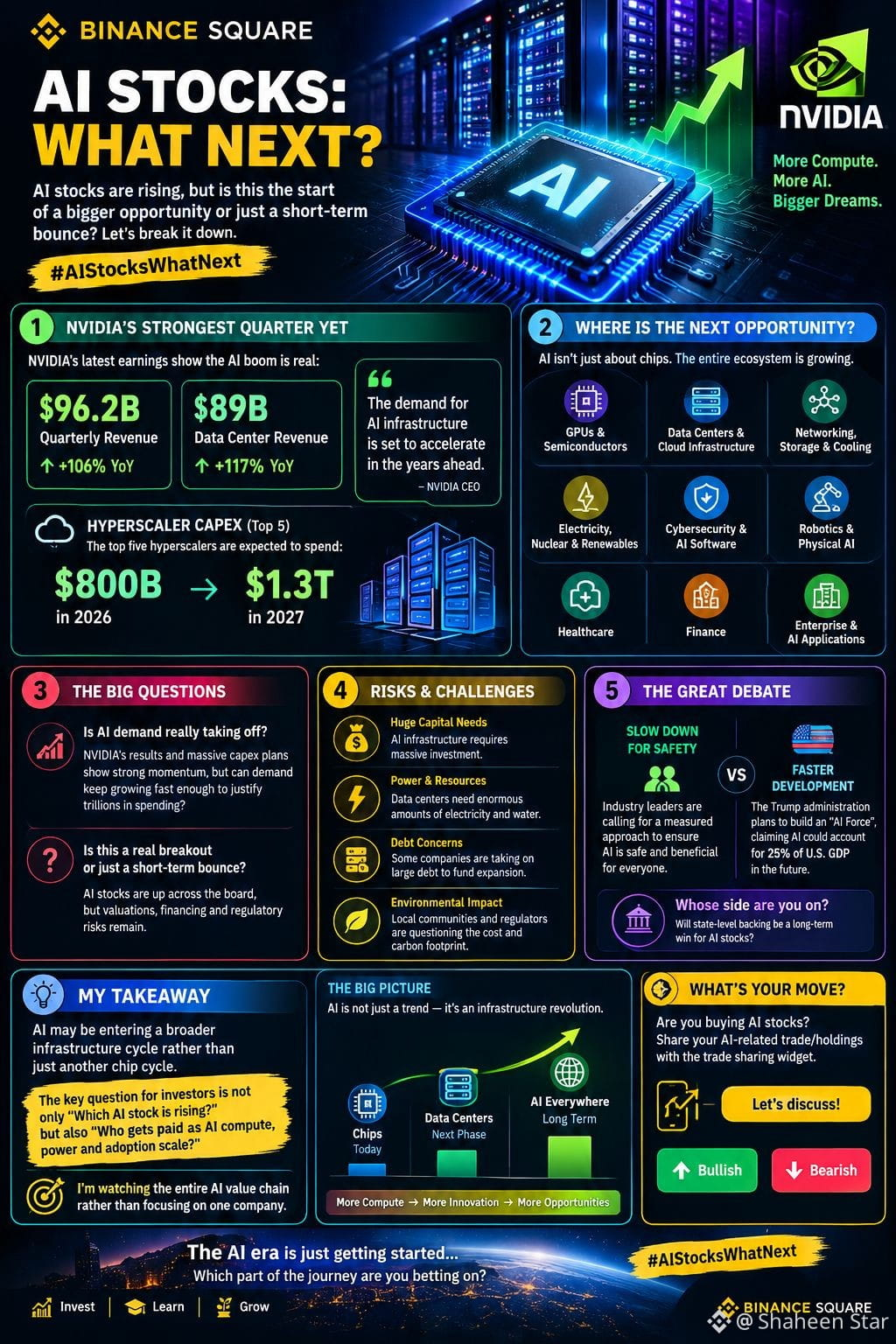
AI Stocks Are Rising, But Where Is the Next Opportunity?
I’m cautiously bullish on the long-term AI theme, but I think the next phase may be much bigger than simply buying semiconductor stocks.
NVIDIA’s latest numbers show how powerful the demand cycle has become: quarterly revenue reached $96.2B, up 106% year over year, while Data Center revenue hit $89B, up 117%. At the same time, hyperscalers are preparing enormous infrastructure budgets, with the top five expected to spend nearly $800B on capex in 2026 and around $1.3T in 2027.
But here is the important question: can AI demand keep growing fast enough to justify this level of spending?
The opportunity is expanding across the AI supply chain:
🔹 GPUs & advanced semiconductors
🔹 Data centers & AI cloud infrastructure
🔹 Networking, storage and cooling
🔹 Electricity, nuclear and renewable power
🔹 Cybersecurity and AI software
🔹 Robotics and physical AI
🔹 AI applications in healthcare, finance and enterprise
There are also real risks. AI infrastructure requires huge amounts of capital, electricity and data-center capacity. Some companies are already raising large amounts of debt to finance expansion, while regulators and local communities are increasingly questioning the cost and environmental impact of data centers.
Another major debate is developing: should AI development accelerate or be paced for safety? Several major AI leaders have recently supported stronger safety measures, while U.S. policymakers are emphasizing technological leadership and competition.
My takeaway: AI may be entering a broader infrastructure cycle rather than simply another chip cycle. The key question for investors is not only “Which AI stock is rising?” but also “Who gets paid as AI compute, power and adoption scale?”
📊 I’m watching the entire AI value chain rather than focusing on one company.
What’s your view — bullish or bearish on AI stocks from here?
#AIStocksWhatNext
$MUBARAK
{spot}(MUBARAKUSDT)
$KERNEL
{spot}(KERNELUSDT)
$COOKIE
{spot}(COOKIEUSDT)
AI Stocks Are Rising, But Where Is the Next Opportunity?
I’m cautiously bullish on the long-term AI theme, but I think the next phase may be much bigger than simply buying semiconductor stocks.
NVIDIA’s latest numbers show how powerful the demand cycle has become: quarterly revenue reached $96.2B, up 106% year over year, while Data Center revenue hit $89B, up 117%. At the same time, hyperscalers are preparing enormous infrastructure budgets, with the top five expected to spend nearly $800B on capex in 2026 and around $1.3T in 2027.
But here is the important question: can AI demand keep growing fast enough to justify this level of spending?
The opportunity is expanding across the AI supply chain:
🔹 GPUs & advanced semiconductors
🔹 Data centers & AI cloud infrastructure
🔹 Networking, storage and cooling
🔹 Electricity, nuclear and renewable power
🔹 Cybersecurity and AI software
🔹 Robotics and physical AI
🔹 AI applications in healthcare, finance and enterprise
There are also real risks. AI infrastructure requires huge amounts of capital, electricity and data-center capacity. Some companies are already raising large amounts of debt to finance expansion, while regulators and local communities are increasingly questioning the cost and environmental impact of data centers.
Another major debate is developing: should AI development accelerate or be paced for safety? Several major AI leaders have recently supported stronger safety measures, while U.S. policymakers are emphasizing technological leadership and competition.
My takeaway: AI may be entering a broader infrastructure cycle rather than simply another chip cycle. The key question for investors is not only “Which AI stock is rising?” but also “Who gets paid as AI compute, power and adoption scale?”
📊 I’m watching the entire AI value chain rather than focusing on one company.
What’s your view — bullish or bearish on AI stocks from here?
#AIStocksWhatNext
$MUBARAK
$KERNEL
$COOKIE
1
6
563
·
--
Рост
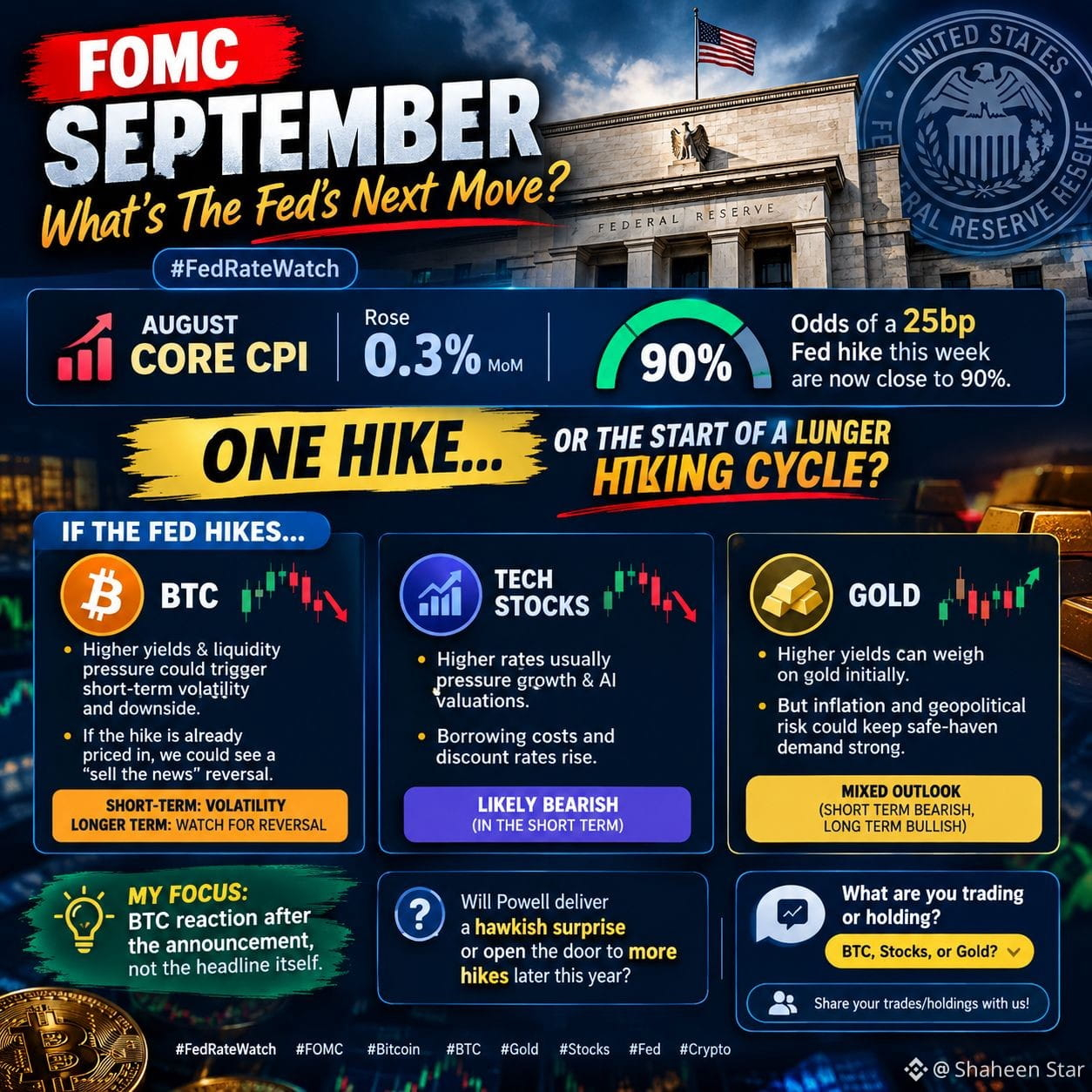
FOMC SEPTEMBER: THE NEXT BIG MARKET MOVE?
August Core CPI came in hot at +0.3% MoM, pushing market expectations for a 25bp Fed hike this week toward 90%.
But the real question is: ONE HIKE… OR THE START OF A NEW HIKING CYCLE? 👀
If the Fed hikes:
₿ BTC: Higher yields/liquidity pressure could trigger short-term volatility and downside, but a hawkish move already priced in could create a “sell the news” reversal.
Tech Stocks: Higher rates usually pressure growth/AI valuations as borrowing costs and discount rates rise.
Gold: Higher yields can weigh on gold initially, but inflation and geopolitical risk could keep safe-haven demand strong.
My focus: BTC reaction after the announcement, not the headline itself.
Will Powell deliver a hawkish surprise or open the door to more hikes later this year?
👇 What are you trading or holding: BTC, Stocks, or Gold?
#FedRateWatch
$AKE
{future}(AKEUSDT)
$AIN
{future}(AINUSDT)
$POWER
{future}(POWERUSDT)
FOMC SEPTEMBER: THE NEXT BIG MARKET MOVE?
August Core CPI came in hot at +0.3% MoM, pushing market expectations for a 25bp Fed hike this week toward 90%.
But the real question is: ONE HIKE… OR THE START OF A NEW HIKING CYCLE? 👀
If the Fed hikes:
₿ BTC: Higher yields/liquidity pressure could trigger short-term volatility and downside, but a hawkish move already priced in could create a “sell the news” reversal.
Tech Stocks: Higher rates usually pressure growth/AI valuations as borrowing costs and discount rates rise.
Gold: Higher yields can weigh on gold initially, but inflation and geopolitical risk could keep safe-haven demand strong.
My focus: BTC reaction after the announcement, not the headline itself.
Will Powell deliver a hawkish surprise or open the door to more hikes later this year?
👇 What are you trading or holding: BTC, Stocks, or Gold?
#FedRateWatch
$AKE
$AIN
$POWER
9
13
115
Войдите, чтобы посмотреть больше материала
Присоединяйтесь к пользователям криптовалют по всему миру на Binance Square
⚡️ Получайте новейшую и полезную информацию о криптоактивах.
💬 Нам доверяет крупнейшая в мире криптобиржа.
👍 Получите достоверные аналитические данные от верифицированных создателей контента.
Эл. почта/номер телефона
В тренде
BinancePick
Просмотров: 3M
151,594 обсуждают
Join #EarningsSeason: Predict Earnings on Binance Pick, Share Your Take on Binance Square!
Binance Square Official
·Лайков: 408
·Просмотров: 342.3k
EarningsSeason
Просмотров: 5.2M
25,772 обсуждают
AnthropicTTMRevenueGrewAbout1200%
Просмотров: 18,112
331 обсуждают