
JBXponential
32 Публикации

JBXponential
Binance Square Content Creator| Web3 Strategist| Progressing Daily in Web3 ........
Открытая сделка
2.6 г
39 подписок(и/а)
42 подписчиков(а)
37 понравилось
Посты
Портфель
Все
Цитирования
Massive announcement


Binance Announcement
·
--
币安合约将上线 牛来USDT U本位永续合约 (2026-08-30)
这是一般性币安交易所公告,此处提及的产品和服务可能不适用于您所在的地区。
亲爱的用户:
为提供更多币安合约交易选择,提升用户交易体验,币安合约平台将于以下时间上线永续合约:
2026年08月30日19:30(东八区时间):牛来USDT永续合约,最高杠杆可达10倍
关于上述永续合约的更多信息如下表所示:
U本位永续合约牛来USDT上线时间2026年08月30日19:30(东八区时间)标的资产牛来 (Niu Lai)项目简介中文迷因币结算资产USDT最小变动价格0.00001最小下单数量1 牛来最小名义价值5 USDT资金费率上限+2.00% / -2.00%资金费用结算频率每四小时最高杠杆10x交易时间24/7多资产模式支持
请注意:
本交易所公告根据币安交易所规则第17条发布。上述永续合约将在上线后 24 小时内开放跟单交易。有关合约跟单交易的更多信息,请参阅此页面;根据市场风险状况,币安可能调整上述合约参数,包括调整资金费率、最小变动价格、最高杠杆、初始保证金、维持保证金等重要参数;多资产模式支持上述永续合约。多资产模式支持USDT以外的其他资产作为上述永续合约保证金(含估值折扣)。例如:用户可以使用BTC作为保证金交易上述永续合约;合约和现货上币没有关联。在币安合约上线的合约并不保证它会在币安现货上线;英文原版公告与翻译版本可能存在差异。若有任何差异,请参照英文原版以获取最新或最准确的信息。
说明:
交易参数U本位合约的杠杆和保证金如何切换合约交易对币安合约平台交易手续费率表
标记价格与指数价格
资金费率历史多资产模式
感谢您对币安的支持!
币安团队
2026年08月30日
亲爱的用户:
为提供更多币安合约交易选择,提升用户交易体验,币安合约平台将于以下时间上线永续合约:
2026年08月30日19:30(东八区时间):牛来USDT永续合约,最高杠杆可达10倍
关于上述永续合约的更多信息如下表所示:
U本位永续合约牛来USDT上线时间2026年08月30日19:30(东八区时间)标的资产牛来 (Niu Lai)项目简介中文迷因币结算资产USDT最小变动价格0.00001最小下单数量1 牛来最小名义价值5 USDT资金费率上限+2.00% / -2.00%资金费用结算频率每四小时最高杠杆10x交易时间24/7多资产模式支持
请注意:
本交易所公告根据币安交易所规则第17条发布。上述永续合约将在上线后 24 小时内开放跟单交易。有关合约跟单交易的更多信息,请参阅此页面;根据市场风险状况,币安可能调整上述合约参数,包括调整资金费率、最小变动价格、最高杠杆、初始保证金、维持保证金等重要参数;多资产模式支持上述永续合约。多资产模式支持USDT以外的其他资产作为上述永续合约保证金(含估值折扣)。例如:用户可以使用BTC作为保证金交易上述永续合约;合约和现货上币没有关联。在币安合约上线的合约并不保证它会在币安现货上线;英文原版公告与翻译版本可能存在差异。若有任何差异,请参照英文原版以获取最新或最准确的信息。
说明:
交易参数U本位合约的杠杆和保证金如何切换合约交易对币安合约平台交易手续费率表
标记价格与指数价格
资金费率历史多资产模式
感谢您对币安的支持!
币安团队
2026年08月30日
From Chain-Specific DeFi to Connected DeFi: Why Infrastructure Matters
Imagine entering a financial market where every bank uses a completely different road system.
Your destination is only a few kilometres away, but crossing between networks requires different bridges, different procedures and different tools.
That is still a large part of the DeFi experience.
Users don't simply interact with assets. They interact with chains, bridges, liquidity pools, routers and execution mechanisms.
As DeFi becomes increasingly multi-chain, this creates a new infrastructure challenge.
The problem isn't just liquidity
Liquidity exists across many ecosystems.
The problem is accessing that liquidity efficiently.
A user may hold assets on one network while the opportunity they want exists somewhere else.
Historically, solving that problem often meant manually navigating bridges and multiple protocols.
Cross-chain execution aims to abstract away much of this complexity.
Instead of forcing users to understand the infrastructure, the infrastructure increasingly works behind the scenes.
This is where STON.fi becomes interesting
STON.fi started with a strong position inside the TON ecosystem as a decentralized exchange.
But the broader evolution is toward cross-chain execution and liquidity infrastructure.
That shift matters because TON doesn't exist in isolation.
The future of TON DeFi will also depend on how easily capital and users can interact with the wider blockchain economy.
The more connected DeFi becomes, the more important execution infrastructure becomes.
The bigger picture
I think the interesting question isn't:
“Which blockchain will win?”
It is:
“Which infrastructure will make users care less about which blockchain they are using?”
That could become one of the defining themes of the next stage of DeFi.
@STONfi
@STONfi DEX ston_fi #STON.fi $STON
Explore more research at blog.ston.fi
Imagine entering a financial market where every bank uses a completely different road system.
Your destination is only a few kilometres away, but crossing between networks requires different bridges, different procedures and different tools.
That is still a large part of the DeFi experience.
Users don't simply interact with assets. They interact with chains, bridges, liquidity pools, routers and execution mechanisms.
As DeFi becomes increasingly multi-chain, this creates a new infrastructure challenge.
The problem isn't just liquidity
Liquidity exists across many ecosystems.
The problem is accessing that liquidity efficiently.
A user may hold assets on one network while the opportunity they want exists somewhere else.
Historically, solving that problem often meant manually navigating bridges and multiple protocols.
Cross-chain execution aims to abstract away much of this complexity.
Instead of forcing users to understand the infrastructure, the infrastructure increasingly works behind the scenes.
This is where STON.fi becomes interesting
STON.fi started with a strong position inside the TON ecosystem as a decentralized exchange.
But the broader evolution is toward cross-chain execution and liquidity infrastructure.
That shift matters because TON doesn't exist in isolation.
The future of TON DeFi will also depend on how easily capital and users can interact with the wider blockchain economy.
The more connected DeFi becomes, the more important execution infrastructure becomes.
The bigger picture
I think the interesting question isn't:
“Which blockchain will win?”
It is:
“Which infrastructure will make users care less about which blockchain they are using?”
That could become one of the defining themes of the next stage of DeFi.
@STONfi
@STONfi DEX ston_fi #STON.fi $STON
Explore more research at blog.ston.fi
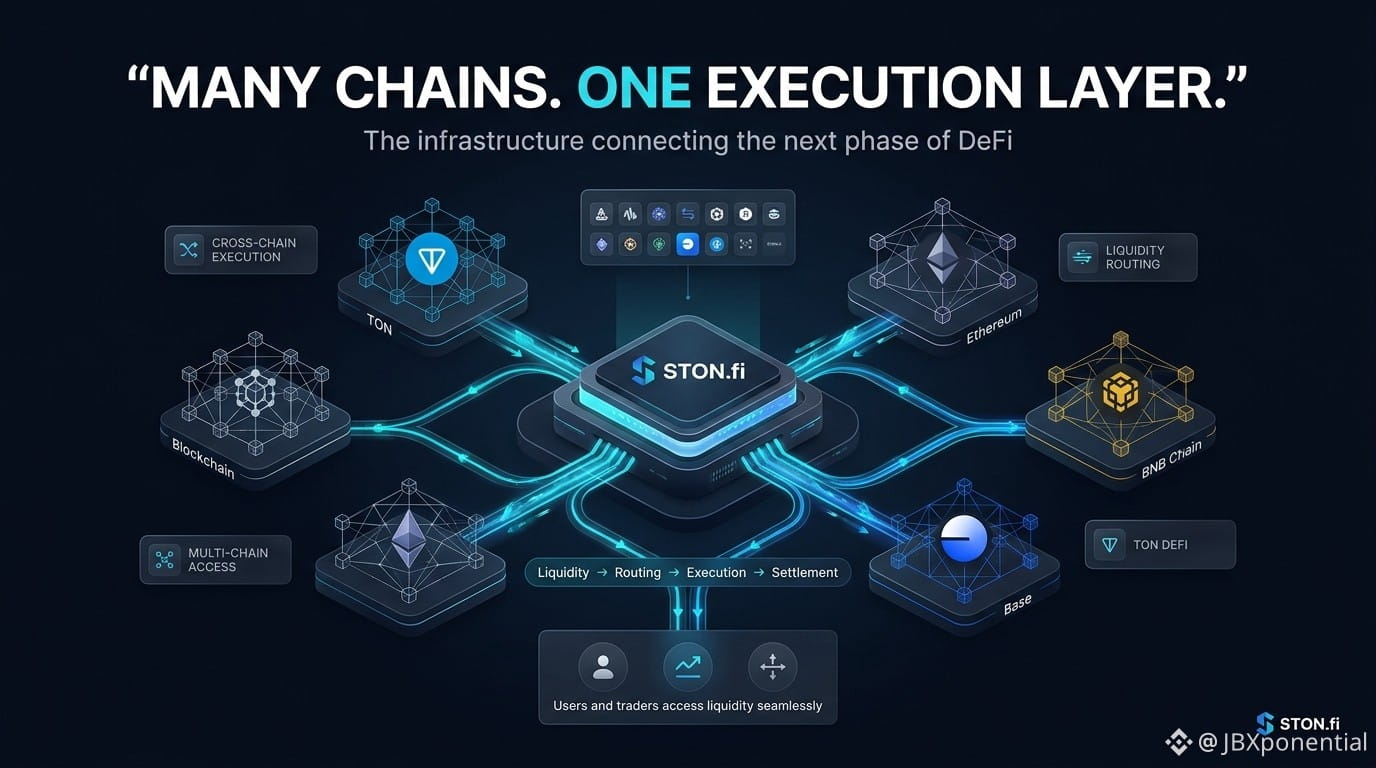
TON DeFi Is Moving Into Its Infrastructure Era
The most interesting developments in DeFi are not always the ones with the loudest headlines.
Sometimes, they are the changes happening underneath the user experience.
TON has recently experienced a period of significant network congestion and temporary outages. During the disruption, STON.fi temporarily paused swaps as a protective measure and restored normal swap functionality after TON recovered.
For anyone studying DeFi infrastructure, this is an important reminder.
A decentralized application is only one layer of the system.
Underneath it are the blockchain, liquidity, routing mechanisms, execution infrastructure and cross-chain connections that determine how smoothly value can move.
This is becoming particularly important for TON.
STON.fi is increasingly moving beyond the idea of being simply a DEX on TON. Its broader infrastructure direction includes liquidity aggregation and cross-chain execution through Omniston. STON.fi's recent publications have focused heavily on cross-chain swaps, atomic swaps, bridges and the future of seamless cross-chain UX.
The numbers are beginning to make the narrative tangible.
On August 25, Omniston processed approximately $150K in cross-chain swap volume in one day.
That is still early-stage activity.
But early infrastructure often looks small before the network effect becomes visible.
The bigger question is not simply:
“How much volume is happening today?”
It is:
“What infrastructure will be capable of handling tomorrow's volume?”
That is why I believe the next phase of TON DeFi deserves to be viewed through an infrastructure lens.
Liquidity.
Execution.
Cross-chain connectivity.
User experience.
These are the rails that can determine how far the ecosystem travels.
STON.fi is one of the projects I am watching as this transition develops.
@ston_fi #STON.fi $STON
blog.ston.fi $TON
The most interesting developments in DeFi are not always the ones with the loudest headlines.
Sometimes, they are the changes happening underneath the user experience.
TON has recently experienced a period of significant network congestion and temporary outages. During the disruption, STON.fi temporarily paused swaps as a protective measure and restored normal swap functionality after TON recovered.
For anyone studying DeFi infrastructure, this is an important reminder.
A decentralized application is only one layer of the system.
Underneath it are the blockchain, liquidity, routing mechanisms, execution infrastructure and cross-chain connections that determine how smoothly value can move.
This is becoming particularly important for TON.
STON.fi is increasingly moving beyond the idea of being simply a DEX on TON. Its broader infrastructure direction includes liquidity aggregation and cross-chain execution through Omniston. STON.fi's recent publications have focused heavily on cross-chain swaps, atomic swaps, bridges and the future of seamless cross-chain UX.
The numbers are beginning to make the narrative tangible.
On August 25, Omniston processed approximately $150K in cross-chain swap volume in one day.
That is still early-stage activity.
But early infrastructure often looks small before the network effect becomes visible.
The bigger question is not simply:
“How much volume is happening today?”
It is:
“What infrastructure will be capable of handling tomorrow's volume?”
That is why I believe the next phase of TON DeFi deserves to be viewed through an infrastructure lens.
Liquidity.
Execution.
Cross-chain connectivity.
User experience.
These are the rails that can determine how far the ecosystem travels.
STON.fi is one of the projects I am watching as this transition develops.
@ston_fi #STON.fi $STON
blog.ston.fi $TON
$BTC news

Binance News
·
--
Bitcoin News: $6.4 Billion in Bitcoin Options Expire With Price Near $80,000 and Max Pain at $68,000
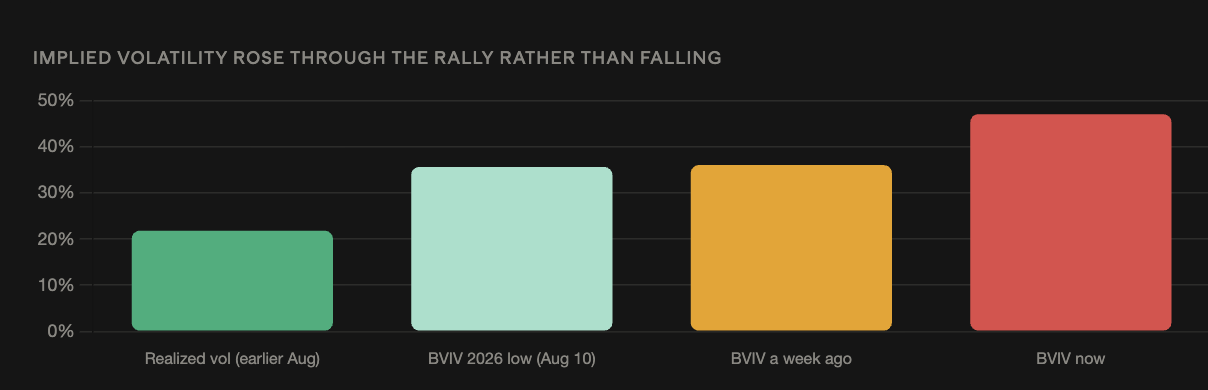
Bitcoin's rally from roughly $62,000 to near $80,000 ran through one of the year's largest options expiries on Friday, clearing about 81,700 contracts worth $6.4 billion on Deribit at 08:00 UTC.Much of that positioning was built before Bitcoin surged more than 20% in a week.Max Pain at $68,000 Sat Roughly $12,000 Below SettlementBy Thursday, the rally had pushed Bitcoin directly into large concentrations of bets at $75,000 and $80,000, while the expiry's max pain level — where the largest number of options would expire worthless — sat much lower, around $68,000-$70,000.Max pain is a reference point for where the aggregate book had the least value at settlement, not a price magnet. A gap of roughly $12,000 between max pain and spot means the distribution of open interest was badly positioned for what actually happened. Calls at $75,000 and $80,000 that were far out of the money when written finished in or near the money.That gap is a measure of how unanticipated the move was. Positioning built during a six-week range between $61,500 and $66,900, with implied volatility at 2026 lows and BVIV around 35.59%, priced a narrow distribution of outcomes. The break through $66,600, $70,000, $75,385 and $81,265 in a single week fell well outside it.Post-Expiry Open Interest Is the More Useful SignalFriday's settlement removes those expiring positions from the market. That makes the next distribution of open interest more informative than the one traders were watching before the rally — it shows where bets are being placed after the move toward $80,000 rather than before it.The pre-expiry book was a record of expectations formed in a range that no longer exists. What rebuilds now reflects a market pricing Bitcoin from $80,000 with the 50-week moving average at $81,081 directly overhead and Glassnode data showing nearly 8% of supply concentrated between $80,000 and $82,000.Early indications point toward defined-risk upside structures rather than outright directional bets. Deribit's Jean-David Pequignot said call spreads "remain an appealing mechanism for upside exposure into September," noting that puts remain relatively expensive, which makes calls the cheaper wing of the skew to buy. 10x Research founder Markus Thielen has favored selling $90,000 September calls against spot, or a September 85/95 call spread.Implied Volatility Rose Through the Rally Rather Than FallingThe rebuilt book faces materially different pricing than the expired one. BVIV climbed to 47% from 36% a week earlier — an unusual move higher during a price rally, since implied volatility typically spikes on selloffs.The rise reflects a widened distribution of outcomes rather than fear. While Bitcoin sat range-bound, options markets could price a narrow band of likely results. Once the range broke, the plausible range of future prices expanded in both directions, and sellers require more premium to underwrite that.For anyone rebuilding positions after Friday's expiry, options are simply more expensive than they were when the expired book was written. Structuring as spreads rather than outright purchases is how traders reduce that cost.The Backdrop Into SeptemberThe expiry clears with a dense catalyst calendar immediately ahead. Fed Chair Kevin Warsh delivered his first Jackson Hole keynote Friday, three weeks before the September 15-16 rate decision, with shorter-dated Treasuries having fallen overnight as traders added to rate-increase bets.September has historically been a mildly bearish month for Bitcoin, averaging a negative 3% return since 2013 according to Coinglass data. That seasonality, combined with expensive options and the supply wall at $80,000-$82,000, is why both Deribit and 10x Research have pointed toward capped-risk structures rather than outright long exposure for the next leg.
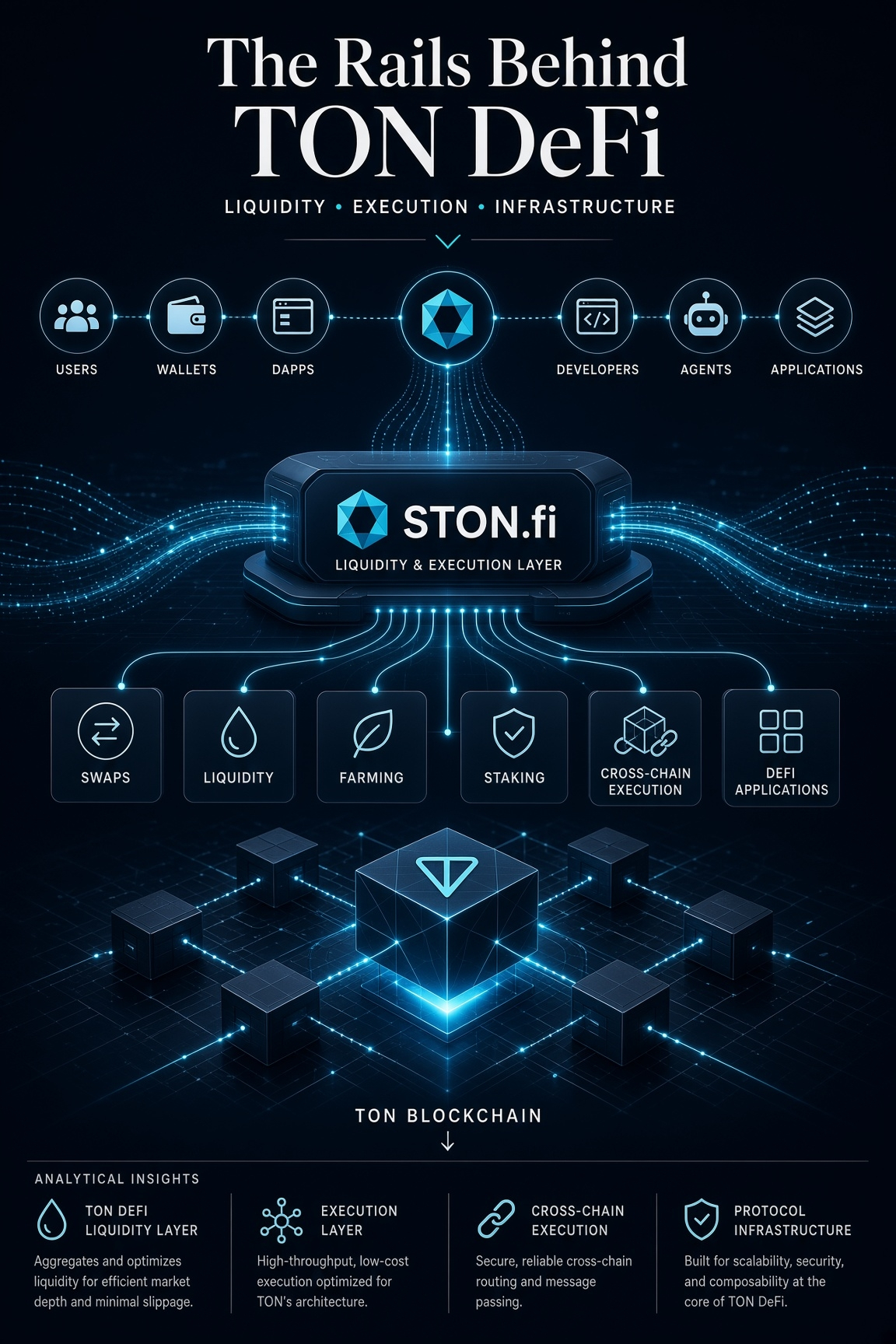
The Part of DeFi Users Rarely See: INFRASTRUCTURE
When someone swaps a token, the experience can look deceptively simple.
Select an asset.
Enter an amount.
Confirm the transaction.
But behind that interface is a much larger system involving liquidity, routing, execution and blockchain infrastructure.
This is where the infrastructure layer becomes important.
As the TON ecosystem grows, DeFi applications need reliable liquidity and efficient execution underneath them.
That creates an interesting shift in how we should evaluate DeFi.
Instead of asking only:
“What is popular?”
We should also ask:
“What infrastructure enables these applications to work?”
STON.fi is part of this infrastructure conversation through its role in liquidity and swaps within the TON ecosystem, while cross-chain capabilities expand the possible routes for users and assets.
The evolution of DeFi is therefore not only happening at the application layer.
It is also happening underneath it.
Infrastructure defines how efficiently an ecosystem can scale.
@ston_fi
#STON.fi $STON
blog.ston.fi
When someone swaps a token, the experience can look deceptively simple.
Select an asset.
Enter an amount.
Confirm the transaction.
But behind that interface is a much larger system involving liquidity, routing, execution and blockchain infrastructure.
This is where the infrastructure layer becomes important.
As the TON ecosystem grows, DeFi applications need reliable liquidity and efficient execution underneath them.
That creates an interesting shift in how we should evaluate DeFi.
Instead of asking only:
“What is popular?”
We should also ask:
“What infrastructure enables these applications to work?”
STON.fi is part of this infrastructure conversation through its role in liquidity and swaps within the TON ecosystem, while cross-chain capabilities expand the possible routes for users and assets.
The evolution of DeFi is therefore not only happening at the application layer.
It is also happening underneath it.
Infrastructure defines how efficiently an ecosystem can scale.
@ston_fi
#STON.fi $STON
blog.ston.fi
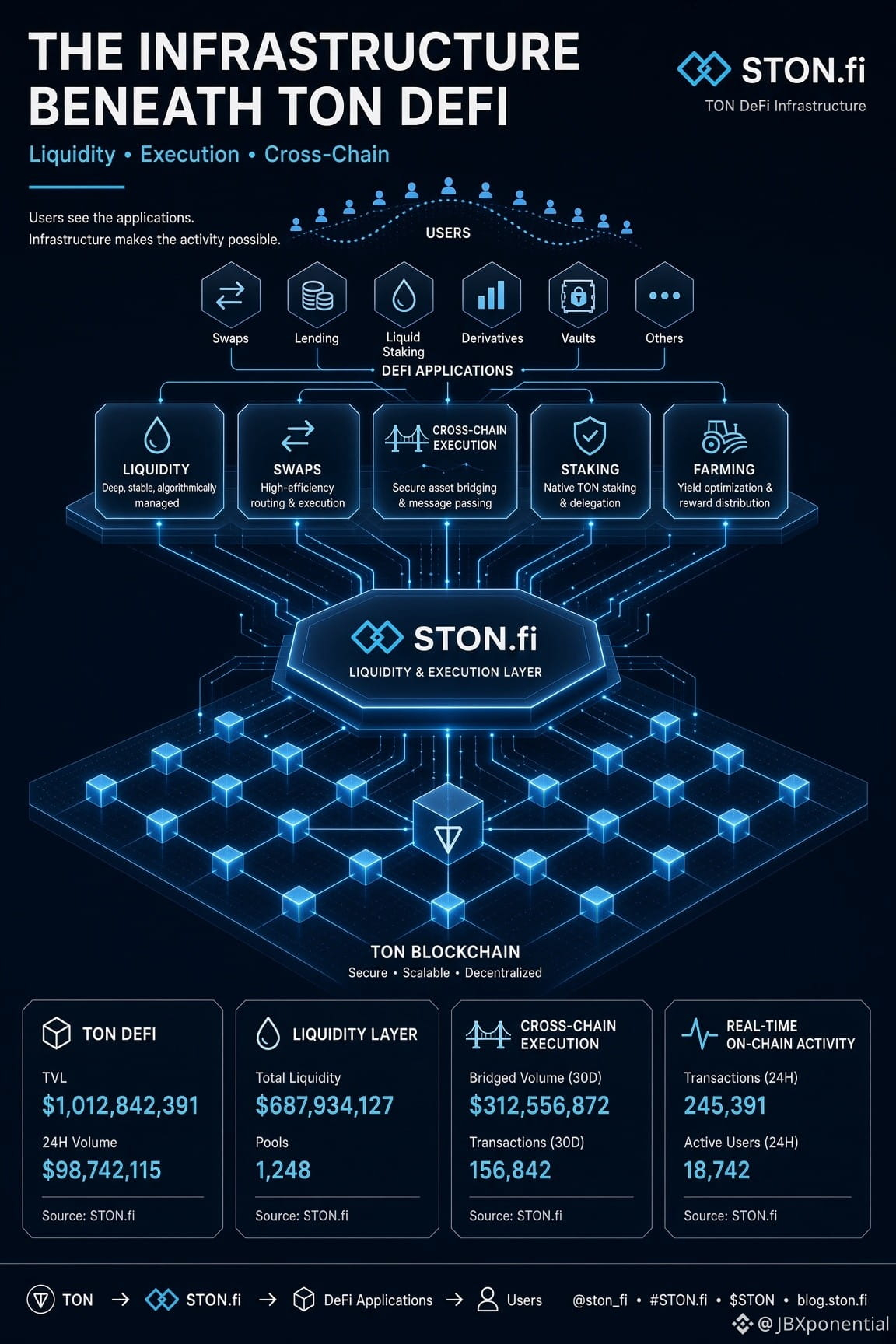
TON DeFi Is Growing, But the Bigger Story May Be Cross-Chain Liquidity
TON DeFi has been showing stronger activity.
According to STON.fi's latest weekly update, August swap volume has reached $130.7 million across approximately 710,000 swaps, representing a 23% increase compared with July.
Those numbers are worth watching.
But volume alone doesn't tell us where DeFi infrastructure is heading.
The more interesting development is connectivity.
STON.fi has been expanding its cross-chain infrastructure, with recent developments including Robinhood Chain access and routes connecting TON DeFi with Ethereum, BNB Chain and Base.
This matters because blockchain ecosystems have historically operated like separate islands.
Liquidity on one network doesn't automatically become accessible on another.
Cross-chain infrastructure changes that equation.
Instead of thinking about TON DeFi as a closed ecosystem, we can begin thinking about it as part of a larger liquidity network.
The infrastructure question
As more users interact across chains, several factors become increasingly important:
• Liquidity availability
• Execution quality
• Settlement design
• User experience
• Security assumptions
• Cross-chain routing
The interesting question isn't simply whether TON DeFi can generate more volume.
It's whether its infrastructure can efficiently support a more connected DeFi environment.
That is the story I'm watching.
@ston_fi #STON.fi $STON
"blog.ston.fi"
Note:
Educational content only. Not financial advice.
TON DeFi has been showing stronger activity.
According to STON.fi's latest weekly update, August swap volume has reached $130.7 million across approximately 710,000 swaps, representing a 23% increase compared with July.
Those numbers are worth watching.
But volume alone doesn't tell us where DeFi infrastructure is heading.
The more interesting development is connectivity.
STON.fi has been expanding its cross-chain infrastructure, with recent developments including Robinhood Chain access and routes connecting TON DeFi with Ethereum, BNB Chain and Base.
This matters because blockchain ecosystems have historically operated like separate islands.
Liquidity on one network doesn't automatically become accessible on another.
Cross-chain infrastructure changes that equation.
Instead of thinking about TON DeFi as a closed ecosystem, we can begin thinking about it as part of a larger liquidity network.
The infrastructure question
As more users interact across chains, several factors become increasingly important:
• Liquidity availability
• Execution quality
• Settlement design
• User experience
• Security assumptions
• Cross-chain routing
The interesting question isn't simply whether TON DeFi can generate more volume.
It's whether its infrastructure can efficiently support a more connected DeFi environment.
That is the story I'm watching.
@ston_fi #STON.fi $STON
"blog.ston.fi"
Note:
Educational content only. Not financial advice.
DeFi IS MATURING BEYOND TRADING
The next phase of DeFi isn't only about faster swaps or higher yields.
It's about building systems that users can understand and verify.
Projects investing in educational resources, transparency, and infrastructure are helping move the industry toward greater maturity.
STON.fi has recently emphasized areas such as:
• Cross-chain execution
• Protocol transparency
• Educational documentation
• User-focused infrastructure
These developments matter because better-informed users make better decisions.
@ston_fi
Learn more: blog.ston.fi
The next phase of DeFi isn't only about faster swaps or higher yields.
It's about building systems that users can understand and verify.
Projects investing in educational resources, transparency, and infrastructure are helping move the industry toward greater maturity.
STON.fi has recently emphasized areas such as:
• Cross-chain execution
• Protocol transparency
• Educational documentation
• User-focused infrastructure
These developments matter because better-informed users make better decisions.
@ston_fi
Learn more: blog.ston.fi

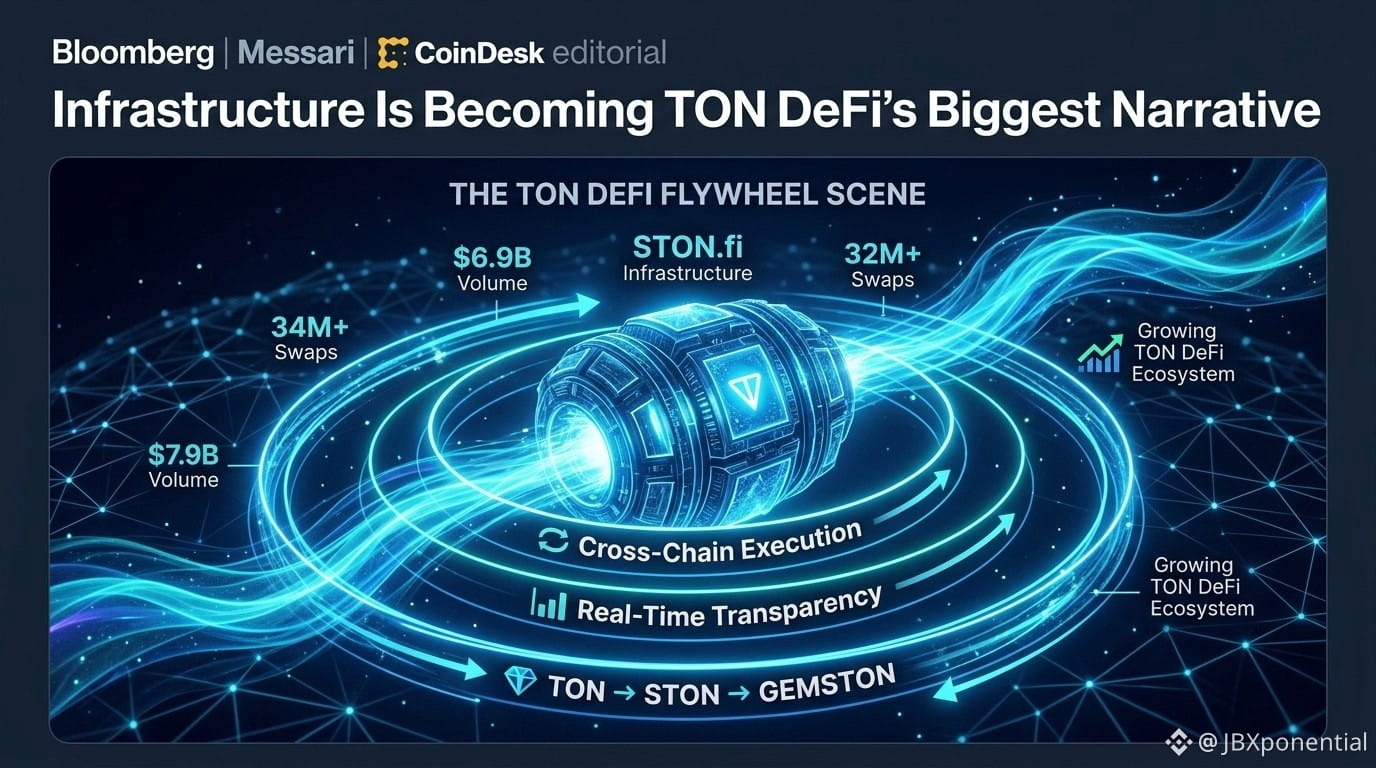
TON DeFi Is Quietly Building An Economic Flywheel
Many users only notice transactions.
The underlying infrastructure is becoming much more interesting.
Three trends stand out:
✅ Cross-chain liquidity expansion
✅ Public transparency mechanisms
✅ TON → STON → GEMSTON value circulation
These components transform DeFi from isolated activities into an interconnected economic engine.
Understanding infrastructure may become one of the most valuable skills in this cycle.
$STON
@ston_fi
#STONfi
blog.ston.fi
Many users only notice transactions.
The underlying infrastructure is becoming much more interesting.
Three trends stand out:
✅ Cross-chain liquidity expansion
✅ Public transparency mechanisms
✅ TON → STON → GEMSTON value circulation
These components transform DeFi from isolated activities into an interconnected economic engine.
Understanding infrastructure may become one of the most valuable skills in this cycle.
$STON
@ston_fi
#STONfi
blog.ston.fi
$BTC News today :
Binance News
·
--
Bitcoin News Today: 1,256 Days Without a Capitulation Signal — Bitcoin Looks Like a Bottom on the Supply Side, But the Final Stress Is Absent, According to CryptoQuant's Analyst
Bitcoin is consolidating around $64,000 after pulling back from its October 2025 all-time high near $126,000, and two on-chain indicators are giving conflicting answers to the market's most important question: is a bottom forming? Long-term holder realized supply is maturing in the right direction — moving toward levels historically associated with cycle bottoms. But the sales pressure indicator, which captures the final capitulation event that confirmed every prior bottom, has not produced a single signal in 1,256 days. That silence is the longest in Bitcoin's entire history.
What Long-Term Holder Realized Supply Is Showing
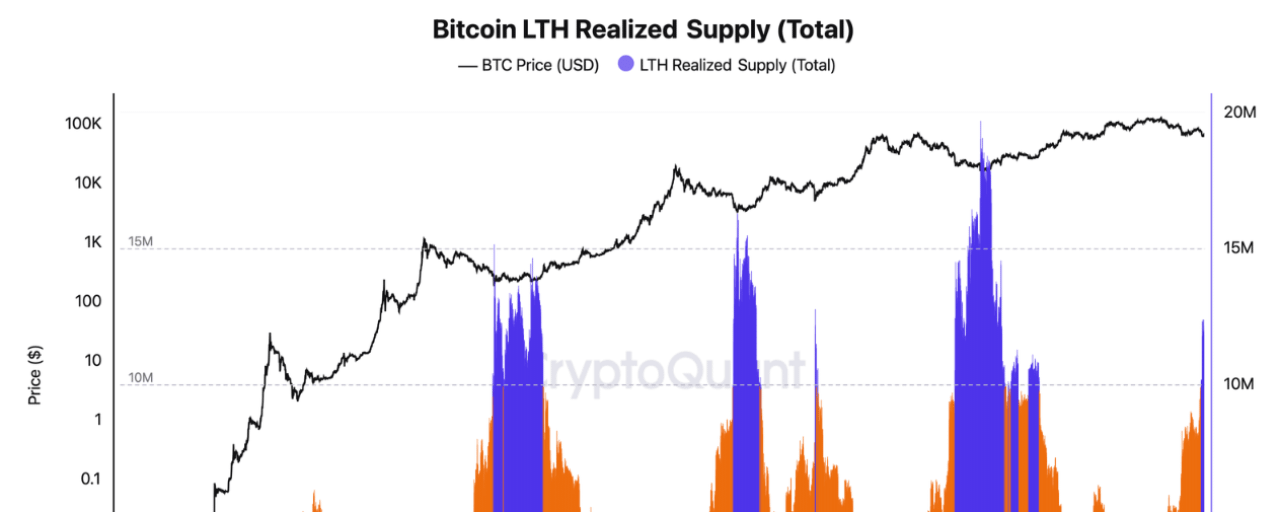
Bitcoin's LTH Realized Supply — the total realized supply of coins that have matured into the long-term holder cohort — currently sits at 12.17 million BTC. The metric reached a local cycle high of 12.42 million in early June before a slight pullback, but remains in a zone of strong year-over-year growth. Over the past year, LTH Realized Supply has more than doubled — a rate of growth that reflects active supply maturation and a significant transition of coins from short-term traders into a more resilient, conviction-driven holder base.
The structural implication is straightforward. As more Bitcoin moves into the long-term holder cohort, it exits active circulation — reducing the pool of coins available for immediate sale and diminishing the selling pressure that has characterized the current bear phase. Historically, strong spikes in this metric occurred during cycle-bottom phases, when price weakness drew in long-term accumulators who were absorbing supply from capitulating short-term holders.
The trend is correct. The level is not yet there.
The Gap Between Now and Historical Bottom Thresholds
LTH Realized Supply at 12.17 million BTC is still materially below the levels that coincided with confirmed bottoms in prior cycles. The metric reached approximately 15 million BTC near the 2015 bottom. It was approximately 16 million at the 2018-19 bottom. And it reached close to 19.7 million at the 2022-23 bottom — the most recent and best-documented cycle low.
The gap between today's 12.17 million and the minimum historical threshold of 15 million means Bitcoin's supply structure, while maturing, has not reached the confirmation range that prior data would identify as a bottom. Supply maturation is moving in the right direction, but the confirmation threshold has not been reached. A stronger signal would appear if the metric moves into the 15 million-plus zone — where supply maturation has historically coincided with seller exhaustion in prior cycles.
The Missing Half: 1,256 Days Without a Sales Pressure Signal
The more significant divergence — and the reason this cannot yet be classified as a capitulation bottom by historical standards — comes from Bitcoin's sales pressure indicator. This metric only activates under a specific set of conditions: NUPL must be negative, meaning the market as a whole is in an aggregate loss position, and SOPR must deviate from 1, capturing the moment when spending is happening at realized losses. Together, these conditions identify the genuine capitulation phase — when holders are forced to sell at a loss, releasing the final wave of selling pressure that clears the market before a durable recovery begins.
The indicator has not fired in 1,256 days. The last signal appeared on January 13, 2023, in the final stage of the previous bear market. The current stretch of silence is the longest in Bitcoin's entire history.
In every prior cycle, capitulation signals appeared in dense clusters around the bottom. At the 2015 bottom, multiple signals fired. The 2018-19 bottom saw sustained activation periods. The March 2020 COVID crash triggered the indicator. At the December 2018 bottom — the most severe of the modern era — the metric reached an all-time high of approximately 32%. The 2022-23 bottom similarly produced dense signal clusters, with peaks ranging from 15% to near 32%. By these standards, the current cycle is a significant historical outlier: Bitcoin has fallen 53% from its all-time high without triggering a single sales pressure signal.
The Main Divergence: Supply Side Yes, Capitulation Side No
The connection between the two indicators defines the current market's structural reality. LTH Realized Supply points toward bottom formation — supply is maturing, coins are moving into stronger hands, and the metric is trending in the direction that has preceded every major recovery. But the sales pressure indicator does not confirm it: the final capitulation stress that accompanied every prior confirmed bottom has been absent for more than three years.
This is the central analytical tension in the current market. Formal signs of "looks like a bottom" exist only on the supply side. The capitulation indicator remains silent. The current structure looks more like a phase of holding, consolidation, and supply maturation without the final stress signal than like a classic cyclical bottom that has completed its pressure release.
By the standards of 2015, 2018, and 2022, this is not a capitulation bottom. The market is in an accumulation and supply redistribution phase — which is consistent with the three-to-five month basing periods that followed similar early-stage bottom signals in prior cycles.
Why the Supply Side Without Capitulation Is Not Enough
Supply maturation is only half of the historical bottom pattern. In previous cycles, rising LTH Realized Supply was accompanied by capitulation — negative NUPL and dense series of sales pressure signals that together marked the clearing of forced sellers from the market. The second half of that pattern is missing from the current cycle.
This does not mean a bottom cannot form without the traditional capitulation signal — market structures evolve, and the unprecedented 1,256-day absence of the indicator may reflect structural changes in Bitcoin's holder base, including the emergence of ETF wrappers that absorb selling without generating on-chain UTXO movements that the metric captures. But by the classic historical framework, the absence of capitulation confirmation means the bottom cannot be declared with the same confidence that prior cycle data provided.
Two Triggers That Would Change the Assessment
Two specific developments would confirm a regime change. On the capitulation side: NUPL moving into negative territory and the sales pressure indicator producing its first signal in more than three years — confirming that the market has entered genuine loss-realization and forced-selling territory. On the supply side: LTH Realized Supply moving into the 15 million-plus zone — the minimum threshold where supply maturation has historically coincided with seller exhaustion and recovery.
Until one of those two conditions is met, the on-chain picture is best described in exactly the terms the data provides: maturing supply structure, absent capitulation, incomplete bottom. The floor may be forming. The confirmation has not arrived.
What Long-Term Holder Realized Supply Is Showing
Bitcoin's LTH Realized Supply — the total realized supply of coins that have matured into the long-term holder cohort — currently sits at 12.17 million BTC. The metric reached a local cycle high of 12.42 million in early June before a slight pullback, but remains in a zone of strong year-over-year growth. Over the past year, LTH Realized Supply has more than doubled — a rate of growth that reflects active supply maturation and a significant transition of coins from short-term traders into a more resilient, conviction-driven holder base.
The structural implication is straightforward. As more Bitcoin moves into the long-term holder cohort, it exits active circulation — reducing the pool of coins available for immediate sale and diminishing the selling pressure that has characterized the current bear phase. Historically, strong spikes in this metric occurred during cycle-bottom phases, when price weakness drew in long-term accumulators who were absorbing supply from capitulating short-term holders.
The trend is correct. The level is not yet there.
The Gap Between Now and Historical Bottom Thresholds
LTH Realized Supply at 12.17 million BTC is still materially below the levels that coincided with confirmed bottoms in prior cycles. The metric reached approximately 15 million BTC near the 2015 bottom. It was approximately 16 million at the 2018-19 bottom. And it reached close to 19.7 million at the 2022-23 bottom — the most recent and best-documented cycle low.
The gap between today's 12.17 million and the minimum historical threshold of 15 million means Bitcoin's supply structure, while maturing, has not reached the confirmation range that prior data would identify as a bottom. Supply maturation is moving in the right direction, but the confirmation threshold has not been reached. A stronger signal would appear if the metric moves into the 15 million-plus zone — where supply maturation has historically coincided with seller exhaustion in prior cycles.
The Missing Half: 1,256 Days Without a Sales Pressure Signal
The more significant divergence — and the reason this cannot yet be classified as a capitulation bottom by historical standards — comes from Bitcoin's sales pressure indicator. This metric only activates under a specific set of conditions: NUPL must be negative, meaning the market as a whole is in an aggregate loss position, and SOPR must deviate from 1, capturing the moment when spending is happening at realized losses. Together, these conditions identify the genuine capitulation phase — when holders are forced to sell at a loss, releasing the final wave of selling pressure that clears the market before a durable recovery begins.
The indicator has not fired in 1,256 days. The last signal appeared on January 13, 2023, in the final stage of the previous bear market. The current stretch of silence is the longest in Bitcoin's entire history.
In every prior cycle, capitulation signals appeared in dense clusters around the bottom. At the 2015 bottom, multiple signals fired. The 2018-19 bottom saw sustained activation periods. The March 2020 COVID crash triggered the indicator. At the December 2018 bottom — the most severe of the modern era — the metric reached an all-time high of approximately 32%. The 2022-23 bottom similarly produced dense signal clusters, with peaks ranging from 15% to near 32%. By these standards, the current cycle is a significant historical outlier: Bitcoin has fallen 53% from its all-time high without triggering a single sales pressure signal.
The Main Divergence: Supply Side Yes, Capitulation Side No
The connection between the two indicators defines the current market's structural reality. LTH Realized Supply points toward bottom formation — supply is maturing, coins are moving into stronger hands, and the metric is trending in the direction that has preceded every major recovery. But the sales pressure indicator does not confirm it: the final capitulation stress that accompanied every prior confirmed bottom has been absent for more than three years.
This is the central analytical tension in the current market. Formal signs of "looks like a bottom" exist only on the supply side. The capitulation indicator remains silent. The current structure looks more like a phase of holding, consolidation, and supply maturation without the final stress signal than like a classic cyclical bottom that has completed its pressure release.
By the standards of 2015, 2018, and 2022, this is not a capitulation bottom. The market is in an accumulation and supply redistribution phase — which is consistent with the three-to-five month basing periods that followed similar early-stage bottom signals in prior cycles.
Why the Supply Side Without Capitulation Is Not Enough
Supply maturation is only half of the historical bottom pattern. In previous cycles, rising LTH Realized Supply was accompanied by capitulation — negative NUPL and dense series of sales pressure signals that together marked the clearing of forced sellers from the market. The second half of that pattern is missing from the current cycle.
This does not mean a bottom cannot form without the traditional capitulation signal — market structures evolve, and the unprecedented 1,256-day absence of the indicator may reflect structural changes in Bitcoin's holder base, including the emergence of ETF wrappers that absorb selling without generating on-chain UTXO movements that the metric captures. But by the classic historical framework, the absence of capitulation confirmation means the bottom cannot be declared with the same confidence that prior cycle data provided.
Two Triggers That Would Change the Assessment
Two specific developments would confirm a regime change. On the capitulation side: NUPL moving into negative territory and the sales pressure indicator producing its first signal in more than three years — confirming that the market has entered genuine loss-realization and forced-selling territory. On the supply side: LTH Realized Supply moving into the 15 million-plus zone — the minimum threshold where supply maturation has historically coincided with seller exhaustion and recovery.
Until one of those two conditions is met, the on-chain picture is best described in exactly the terms the data provides: maturing supply structure, absent capitulation, incomplete bottom. The floor may be forming. The confirmation has not arrived.
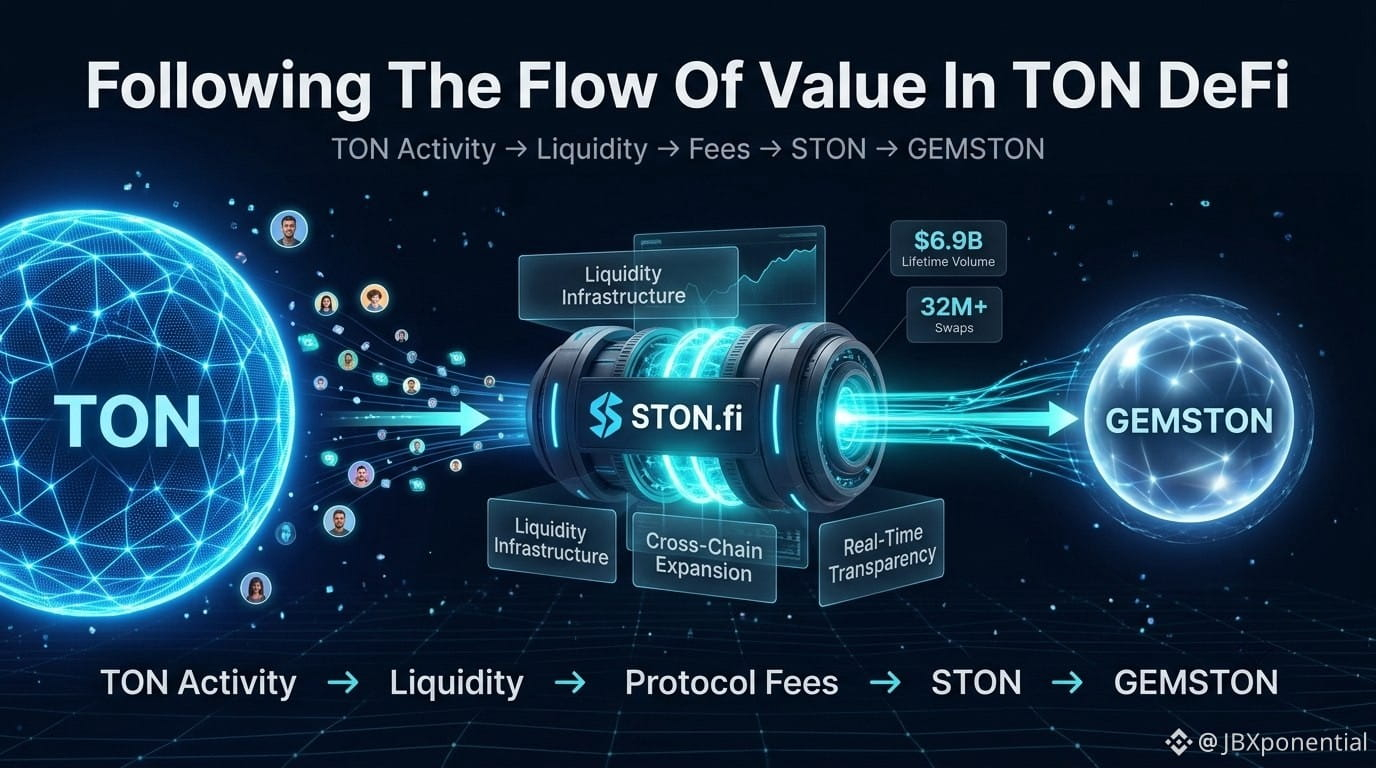
TON → STON → GEMSTON: Understanding TON DeFi's Value Engine
One interesting shift inside TON DeFi is the emergence of a visible value flow.
The process can be simplified:
TON network activity
↓
STON.fi liquidity infrastructure
↓
Protocol fee generation
↓
STON conversion
↓
GEMSTON governance participation
This creates an economic flywheel rather than isolated transactions.
As transparency tools become available, users can better understand how ecosystem activity contributes to long-term growth.
Infrastructure may become one of the strongest narratives of this cycle.
@ston_fi
#STONfi
blog.ston.fi
One interesting shift inside TON DeFi is the emergence of a visible value flow.
The process can be simplified:
TON network activity
↓
STON.fi liquidity infrastructure
↓
Protocol fee generation
↓
STON conversion
↓
GEMSTON governance participation
This creates an economic flywheel rather than isolated transactions.
As transparency tools become available, users can better understand how ecosystem activity contributes to long-term growth.
Infrastructure may become one of the strongest narratives of this cycle.
@ston_fi
#STONfi
blog.ston.fi
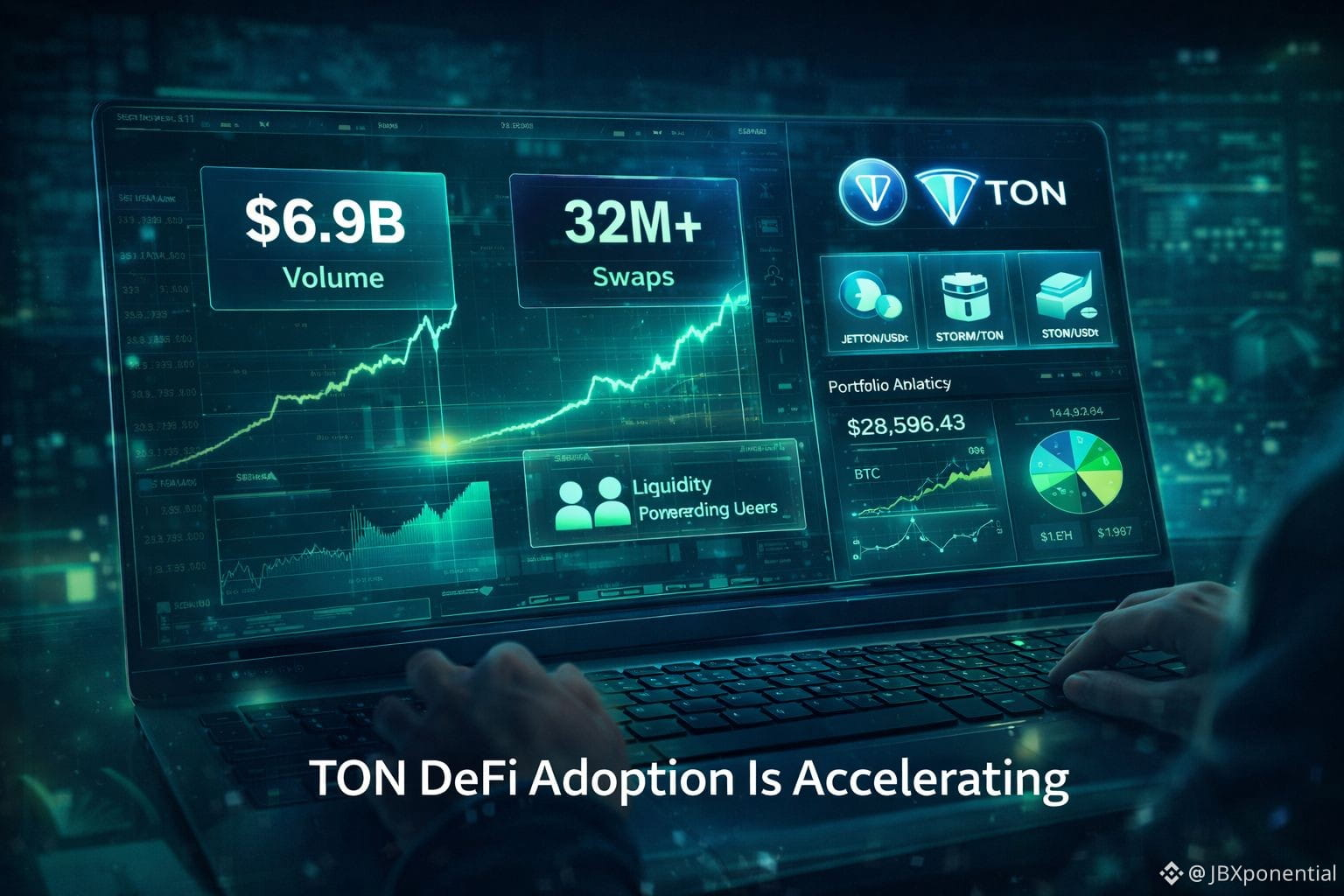
STON.fi Hits $6.9B Volume: What This Means for TON DeFi
DeFi growth is easiest to measure through real usage, not promises.
STON.fi has now surpassed:
• $6.9B lifetime trading volume
• 32M+ completed swaps
This shows increasing liquidity activity inside the TON blockchain ecosystem.
Key developments driving adoption:
✅ Active liquidity farming rewards
✅ Non-custodial BTC & ETH integrations
✅ xStocks enabling tokenized asset exposure
✅ Telegram-native DeFi access
STON.fi also distributed 39,000+ STON tokens through its Impermanent Loss Protection program, reducing risks for liquidity providers.
TON DeFi is gradually transitioning from experimentation toward infrastructure-level adoption.
Early ecosystem participation often matters most during this phase.
#StonFi #TON @STONfi DEX
DeFi growth is easiest to measure through real usage, not promises.
STON.fi has now surpassed:
• $6.9B lifetime trading volume
• 32M+ completed swaps
This shows increasing liquidity activity inside the TON blockchain ecosystem.
Key developments driving adoption:
✅ Active liquidity farming rewards
✅ Non-custodial BTC & ETH integrations
✅ xStocks enabling tokenized asset exposure
✅ Telegram-native DeFi access
STON.fi also distributed 39,000+ STON tokens through its Impermanent Loss Protection program, reducing risks for liquidity providers.
TON DeFi is gradually transitioning from experimentation toward infrastructure-level adoption.
Early ecosystem participation often matters most during this phase.
#StonFi #TON @STONfi DEX
As Warren Buffett, one of the most successful investors of all time, said: "If you don't find a way to make money while you sleep, you will work until you die." #Investment
follow excellence success will chase you.

DCTv Africa
·
--
It is funny, how you can be rich and next minute you are wrecked in Crypto.
Many people came into crypto with a get rich quick scheme with their hard earned money, thinking they can easily flip it into millions in a blind of eyes.
While that is very possible in the volatile space like crypto, it does come with very serious prizes to pay.
Is either you delay gratification, take your time studying the culture, trends, join communities, make connections and be mentally stable, learn risk management, which makes the flipping very easy, OR you just ignore the learning, go all in and chase luck, follow the greed.
Unfortunately that later, in most cases is what the majority of people do and end up losing everything.
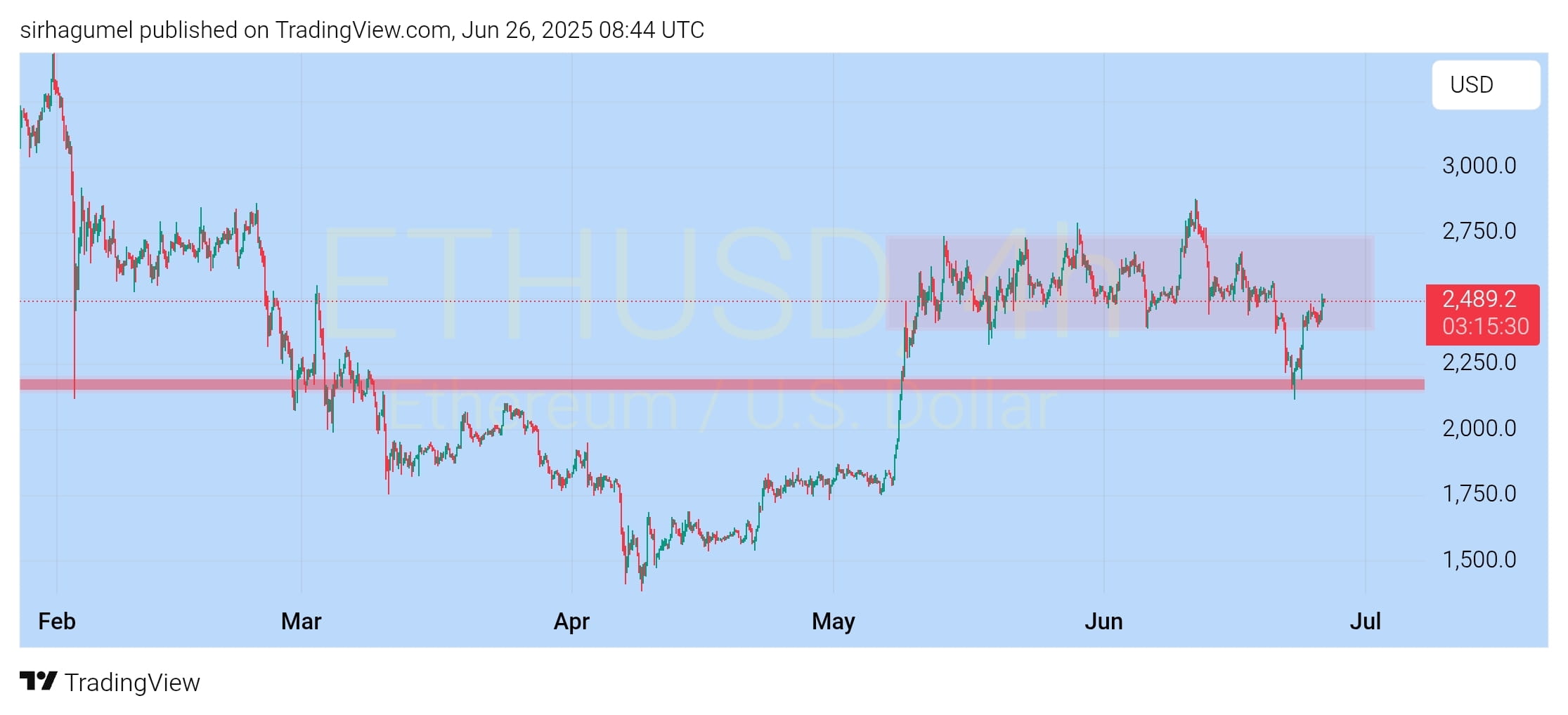
Less than 72 hours, $BTC $ETH $BNB where all in very serious red zones, those who mastered the Art positioned well, and right now are in massive profit, while those that chase luck panicked and exited, thinking they were cutting loses during the crises.
To all those coming into the space now, ignore the noise, social media fake life and peer pressure. Set your goals right, learn the art. It is then I can give you assurance that your success is guaranteed.
Many people came into crypto with a get rich quick scheme with their hard earned money, thinking they can easily flip it into millions in a blind of eyes.
While that is very possible in the volatile space like crypto, it does come with very serious prizes to pay.
Is either you delay gratification, take your time studying the culture, trends, join communities, make connections and be mentally stable, learn risk management, which makes the flipping very easy, OR you just ignore the learning, go all in and chase luck, follow the greed.
Unfortunately that later, in most cases is what the majority of people do and end up losing everything.
Less than 72 hours, $BTC $ETH $BNB where all in very serious red zones, those who mastered the Art positioned well, and right now are in massive profit, while those that chase luck panicked and exited, thinking they were cutting loses during the crises.
To all those coming into the space now, ignore the noise, social media fake life and peer pressure. Set your goals right, learn the art. It is then I can give you assurance that your success is guaranteed.

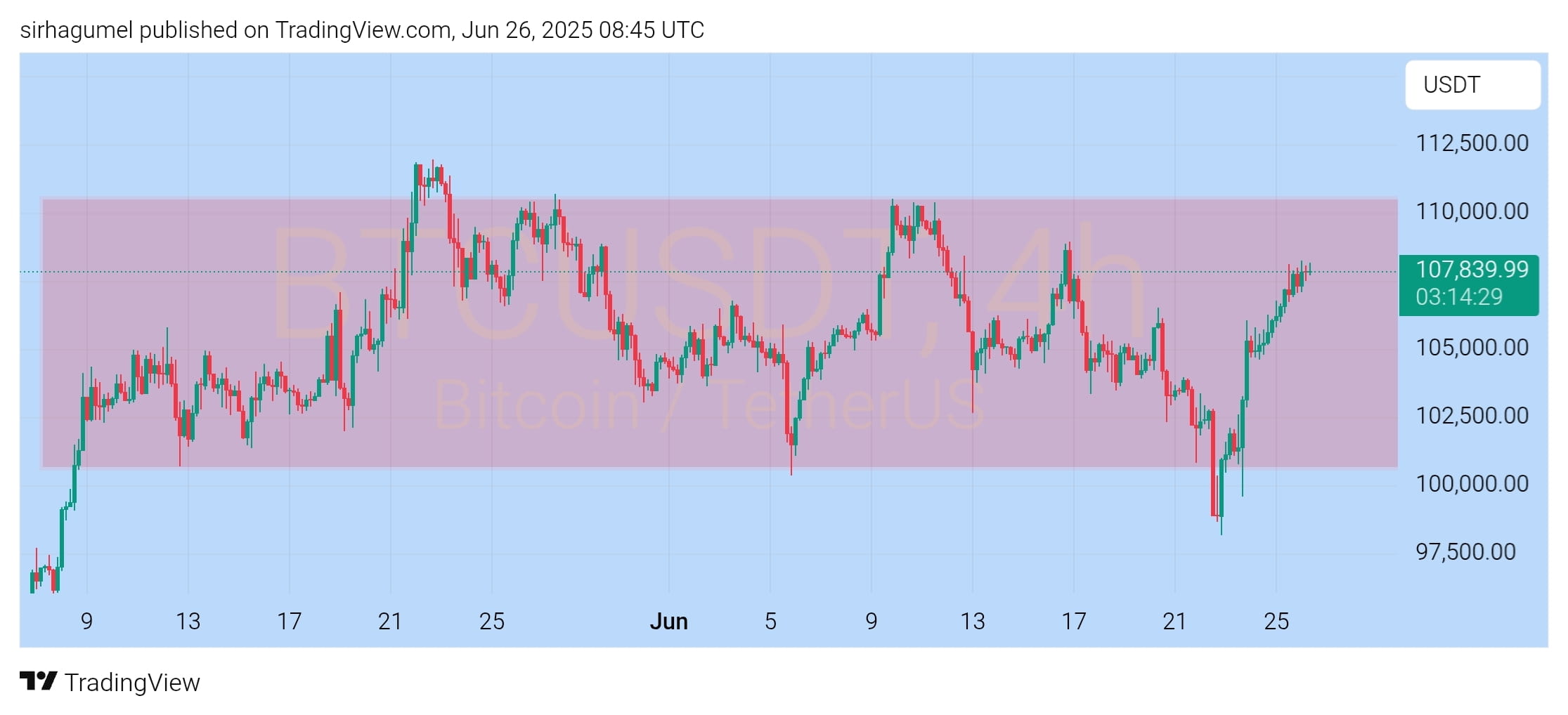

#Bitcoin is reshaping finance! With a fixed supply of 21M coins & decentralized blockchain, BTC offers freedom from inflation & centralized control. Current price: ~$103K. Will it hit $150K in 2025? Join the revolution!
#InvestingRevolution
#InvestingRevolution


#BinancePizza
From 10,000 BTC to Billions – Let's Do the Math!
Laszlo Hanyecz bought two pizzas for 10,000 BTC on May 22, 2010 – the first real-world Bitcoin transaction. Today, the same amount would be worth a fortune. Let's do the math:
Computation (2025)
10,000 BTC × [$65,000] = $650,000,000
Yes, Laszlo's pizza would now be over ₦975 Billion in Nigeria!
What this teaches us:
Patience in crypto pays.
Even the smallest trade can become historic.
Don't underestimate what you're holding today.
This is more than a narrative. It's a reminder: We're still early.
Would you ever spend 10,000 BTC on pizza? Or HODL forever?
Drop your thoughts and share this crypto history lesson!
#BinanceSquare #BinancePizzaDay
From 10,000 BTC to Billions – Let's Do the Math!
Laszlo Hanyecz bought two pizzas for 10,000 BTC on May 22, 2010 – the first real-world Bitcoin transaction. Today, the same amount would be worth a fortune. Let's do the math:
Computation (2025)
10,000 BTC × [$65,000] = $650,000,000
Yes, Laszlo's pizza would now be over ₦975 Billion in Nigeria!
What this teaches us:
Patience in crypto pays.
Even the smallest trade can become historic.
Don't underestimate what you're holding today.
This is more than a narrative. It's a reminder: We're still early.
Would you ever spend 10,000 BTC on pizza? Or HODL forever?
Drop your thoughts and share this crypto history lesson!
#BinanceSquare #BinancePizzaDay
#EthereumSecurityInitiative
A Step Towards a Safer Web3
Security is no longer optional in crypto — it's mandatory.
As exploits, scams, and smart contract vulnerabilities mounted, Ethereum has taken a step forward by launching the Ethereum Security Initiative (ESI).
The mission? To make Ethereum more secure, robust, and less susceptible to attacks for developers and users.
This initiative will fund research, tools, audits, and collaboration between top security experts — all aimed at creating a more resilient Ethereum ecosystem.
As users and builders, this matters to us all. A more secure Ethereum means safer dApps, more trust in DeFi, and better protection for our assets.
Let this remind us:
Security is not a one-time checklist. It’s a continuous journey.
Props to the Ethereum community for making sure that what's most important in the long run comes first.
Stay vigilant. Stay secure. And always double-check before signing that transaction.
A Step Towards a Safer Web3
Security is no longer optional in crypto — it's mandatory.
As exploits, scams, and smart contract vulnerabilities mounted, Ethereum has taken a step forward by launching the Ethereum Security Initiative (ESI).
The mission? To make Ethereum more secure, robust, and less susceptible to attacks for developers and users.
This initiative will fund research, tools, audits, and collaboration between top security experts — all aimed at creating a more resilient Ethereum ecosystem.
As users and builders, this matters to us all. A more secure Ethereum means safer dApps, more trust in DeFi, and better protection for our assets.
Let this remind us:
Security is not a one-time checklist. It’s a continuous journey.
Props to the Ethereum community for making sure that what's most important in the long run comes first.
Stay vigilant. Stay secure. And always double-check before signing that transaction.
We all have this feeling at times!!
You do your research, you position your target, and sell off expecting, "Nice, I'm taking profits smartly."
But the market? It had other plans.
The token just goes on a rocket to the moon like it was waiting for you to exit.
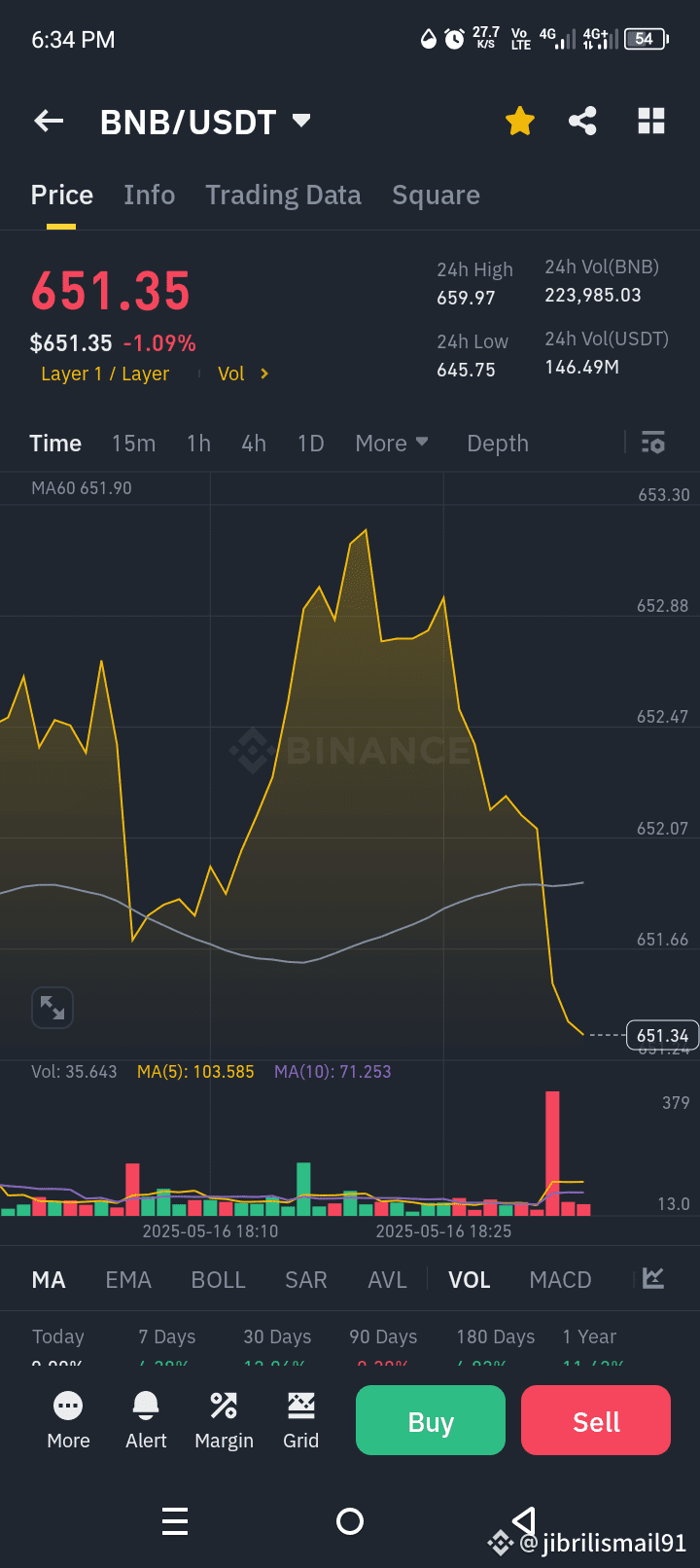
Just last week, I sold my $BNB holdings at $646, confident in my move.
Not even a day later, it jumped to $651 — and I just sat there thinking, "Did the market just troll me?"
That feeling of regret? That's real.
You begin questioning your strategy, your timing, even your luck. But here's the thing — that's part of the game.
The market is not obligated to be predictable. It rewards us with patience, conviction, and experience.
We win some, we learn some — and every move helps lead us to a new level of understanding on our journey.
So if you've ever bought too fast or ridden a pump, you're part of the group.
Keep refining your strategy. Keep learning.
And most importantly — keep your eyes on the bigger picture.
Because in this game, growth isn't just on the charts — it's in us too.
You do your research, you position your target, and sell off expecting, "Nice, I'm taking profits smartly."
But the market? It had other plans.
The token just goes on a rocket to the moon like it was waiting for you to exit.
Just last week, I sold my $BNB holdings at $646, confident in my move.
Not even a day later, it jumped to $651 — and I just sat there thinking, "Did the market just troll me?"
That feeling of regret? That's real.
You begin questioning your strategy, your timing, even your luck. But here's the thing — that's part of the game.
The market is not obligated to be predictable. It rewards us with patience, conviction, and experience.
We win some, we learn some — and every move helps lead us to a new level of understanding on our journey.
So if you've ever bought too fast or ridden a pump, you're part of the group.
Keep refining your strategy. Keep learning.
And most importantly — keep your eyes on the bigger picture.
Because in this game, growth isn't just on the charts — it's in us too.
Войдите, чтобы посмотреть больше материала