
EthanValeX
1.8k Публикации

EthanValeX
Sharing market insights, real-world DCA & futures strategies.
No hype. No FOMO. Just discipline.
Follow me.
88 подписок(и/а)
523 подписчиков(а)
1.7K+ понравилось
Посты
Все
Цитирования
Видео
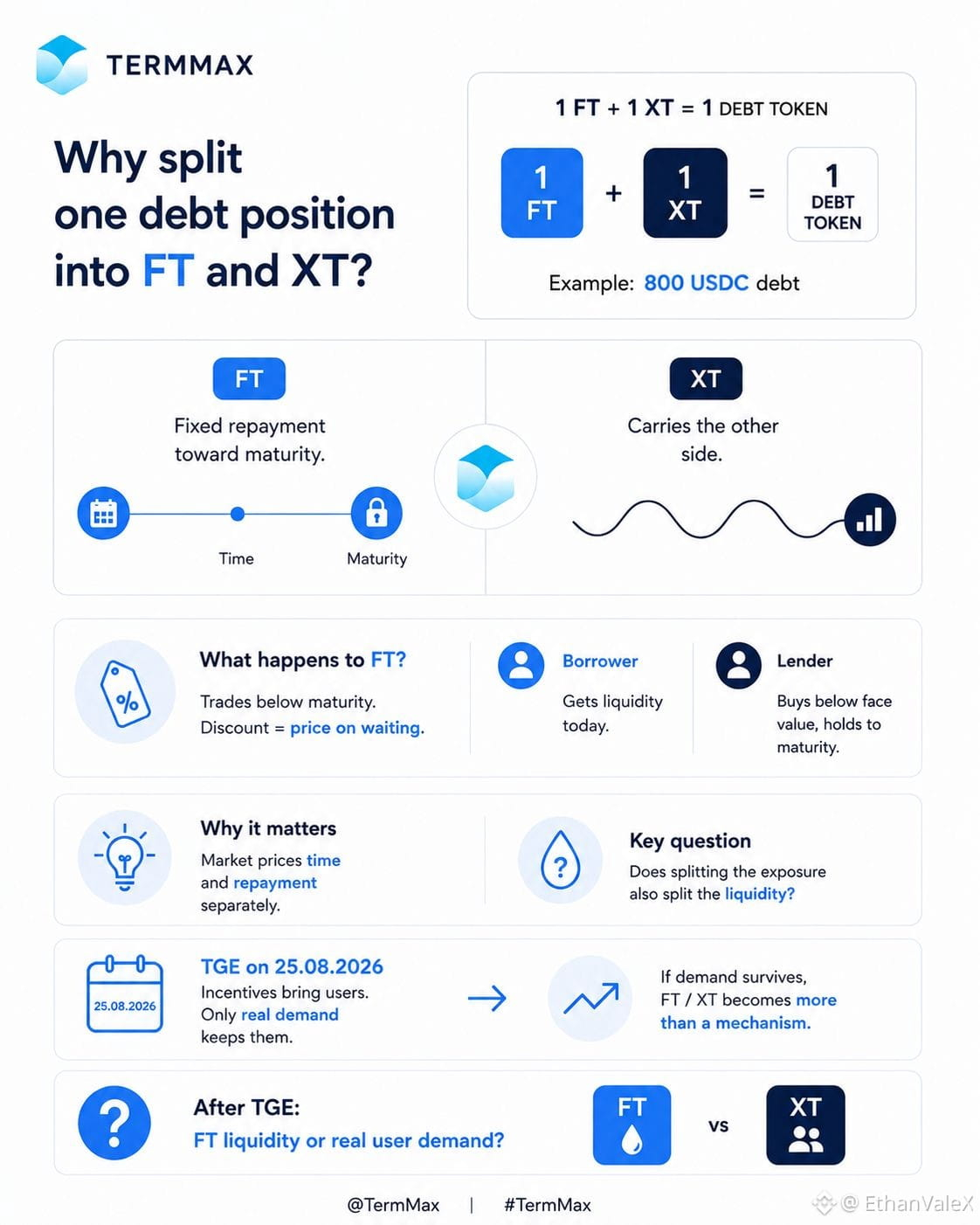
I kept coming back to one question while looking through @TermMax : why split one debt position into FT and XT at all?
The relationship is simple: 1 FT + 1 XT = 1 debt token. If a borrower has 800 USDC of debt, FT represents the fixed repayment side toward maturity, while XT carries the other side of the position.
At first, that felt like adding another layer for no obvious reason. But then I looked at what happens to FT.
It can trade below its maturity value, which means the discount is effectively putting a price on waiting. The borrower gets liquidity today by selling that future claim, while the lender can buy it below face value and hold it toward maturity.
That’s the part I find interesting. TermMax isn't just fixing the APR on a loan; it is giving the market a way to treat time and repayment differently, instead of keeping the whole position bundled together.
But there’s another question I can’t ignore.
Does splitting the exposure also split the liquidity?
If the market gets too thin, the separation doesn't mean much in practice.
With TGE on 25.08.2026, the more interesting test begins. Incentives can bring people into a market, but they can't tell us whether users actually want the fixed-rate exposure itself.
If that demand survives when rewards matter less, then the FT / XT structure starts to look like more than a clever mechanism.
That’s the part I’ll be watching after TGE.
What matters more to you after TGE: FT liquidity or real user demand?
@TermMax #TermMax
The relationship is simple: 1 FT + 1 XT = 1 debt token. If a borrower has 800 USDC of debt, FT represents the fixed repayment side toward maturity, while XT carries the other side of the position.
At first, that felt like adding another layer for no obvious reason. But then I looked at what happens to FT.
It can trade below its maturity value, which means the discount is effectively putting a price on waiting. The borrower gets liquidity today by selling that future claim, while the lender can buy it below face value and hold it toward maturity.
That’s the part I find interesting. TermMax isn't just fixing the APR on a loan; it is giving the market a way to treat time and repayment differently, instead of keeping the whole position bundled together.
But there’s another question I can’t ignore.
Does splitting the exposure also split the liquidity?
If the market gets too thin, the separation doesn't mean much in practice.
With TGE on 25.08.2026, the more interesting test begins. Incentives can bring people into a market, but they can't tell us whether users actually want the fixed-rate exposure itself.
If that demand survives when rewards matter less, then the FT / XT structure starts to look like more than a clever mechanism.
That’s the part I’ll be watching after TGE.
What matters more to you after TGE: FT liquidity or real user demand?
@TermMax #TermMax
Anh em mua P2P nhớ check kỹ thông tin ngân hàng nhé, lúc chuyển tiền đừng thấy có sẵn là bấm luôn
Ôi, đọc case này xong mình mới thấy lúc chuyển tiền P2P, anh em mình nhiều khi cứ thấy thông tin hiện sẵn là yên tâm bấm luôn .
Một bạn mua 145 USDT, khoảng 3,65 triệu VND. Lúc thanh toán, phần ngân hàng hiện SHBVN.
Tới lúc chuyển khoản thì tài khoản nhận lại là Shinhan Bank.
Đoạn này nếu đang vội, chắc mình cũng dễ nghĩ:
“Khác ngân hàng thôi mà, chắc không sao.”
Bạn ấy cũng chuyển luôn.
Chuyển xong mới để ý kỹ hơn thì tên người nhận có điểm bất thường.
Check thêm số điện thoại thì lại ra một số Vietnammobile khá lạ.
Tới lúc quay lại hỏi người bán thì bên kia cũng nói không biết tài khoản nhận tiền đó là ai.
Một chỗ lệch thì mình còn hỏi được. Nhưng tới lúc ngân hàng khác, tên khác, rồi số điện thoại cũng lạ thì mình chắc chắn sẽ dừng lại trước.
Gặp mấy lệnh kiểu này mình thường ngó lại 3 thứ:
🟢 Tên người nhận có khớp với thông tin trên Order không?
🟢 Ngân hàng và số tài khoản có đúng không?
🟢 Có thông tin nào khác với phần thanh toán ban đầu không?
Mình thì thấy lệch một chỗ là hỏi lại thôi. Bên kia càng giục nhanh thì mình càng ngồi check kỹ thêm chút.
May là cuối cùng Binance vẫn hỗ trợ bạn ấy lấy lại được tiền. Ca này cũng hú hồn thật.
@Binance Vietnam #BinanceP2PAnToan
Ôi, đọc case này xong mình mới thấy lúc chuyển tiền P2P, anh em mình nhiều khi cứ thấy thông tin hiện sẵn là yên tâm bấm luôn .
Một bạn mua 145 USDT, khoảng 3,65 triệu VND. Lúc thanh toán, phần ngân hàng hiện SHBVN.
Tới lúc chuyển khoản thì tài khoản nhận lại là Shinhan Bank.
Đoạn này nếu đang vội, chắc mình cũng dễ nghĩ:
“Khác ngân hàng thôi mà, chắc không sao.”
Bạn ấy cũng chuyển luôn.
Chuyển xong mới để ý kỹ hơn thì tên người nhận có điểm bất thường.
Check thêm số điện thoại thì lại ra một số Vietnammobile khá lạ.
Tới lúc quay lại hỏi người bán thì bên kia cũng nói không biết tài khoản nhận tiền đó là ai.
Một chỗ lệch thì mình còn hỏi được. Nhưng tới lúc ngân hàng khác, tên khác, rồi số điện thoại cũng lạ thì mình chắc chắn sẽ dừng lại trước.
Gặp mấy lệnh kiểu này mình thường ngó lại 3 thứ:
🟢 Tên người nhận có khớp với thông tin trên Order không?
🟢 Ngân hàng và số tài khoản có đúng không?
🟢 Có thông tin nào khác với phần thanh toán ban đầu không?
Mình thì thấy lệch một chỗ là hỏi lại thôi. Bên kia càng giục nhanh thì mình càng ngồi check kỹ thêm chút.
May là cuối cùng Binance vẫn hỗ trợ bạn ấy lấy lại được tiền. Ca này cũng hú hồn thật.
@Binance Vietnam #BinanceP2PAnToan
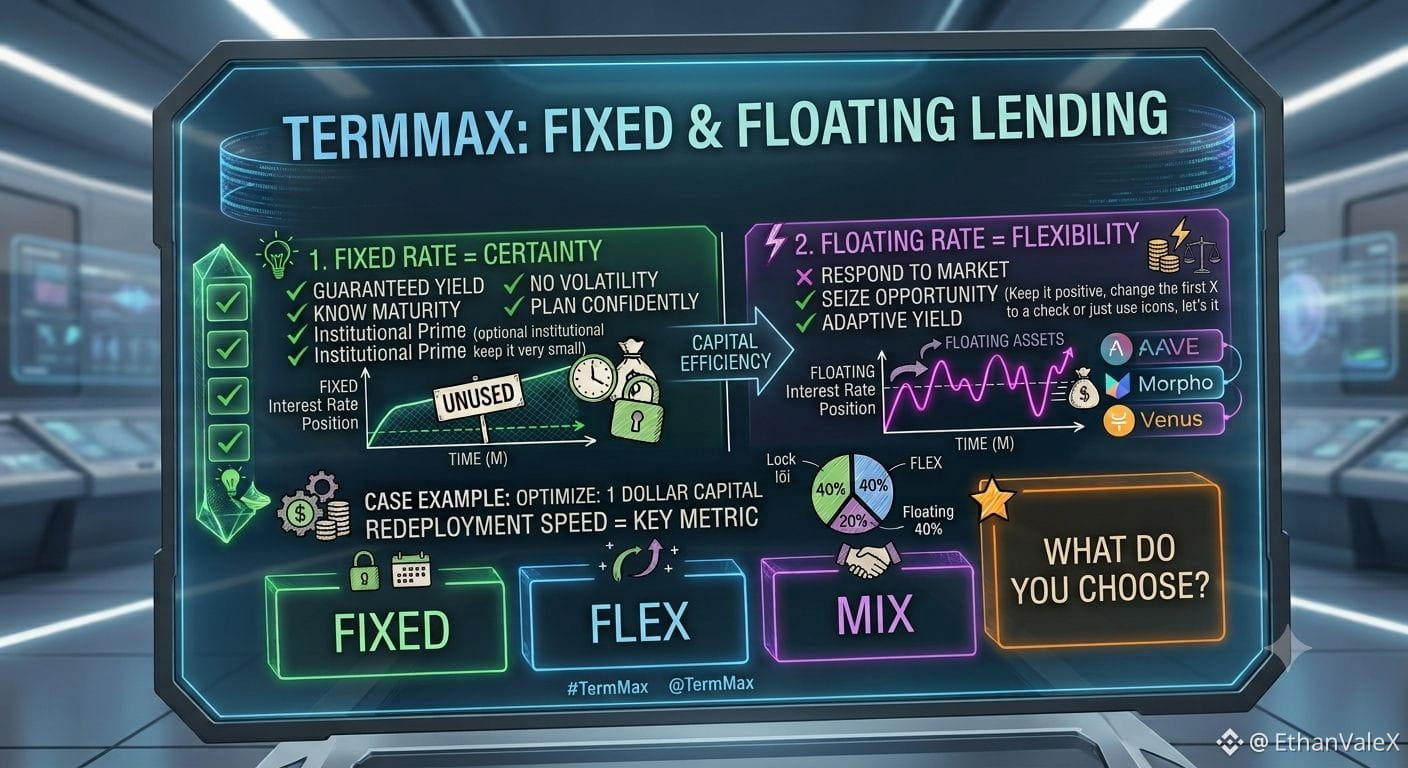
I keep wondering whether “idle liquidity” is really idle when that capital is still earning somewhere else.
That’s what caught my attention with @TermMax Idle Fund Deployment.
In a typical lending market, capital waits for a borrower. If demand isn't there, that liquidity can sit unused until the next opportunity comes along. The capital is available, but availability doesn't necessarily mean it's productive.
TermMax takes a different approach. Instead of letting unborrowed capital sit there, it can be deployed into floating-rate markets such as Aave, Morpho and Venus while waiting for fixed-rate borrowers.
So the capital gets another job while its first job hasn't arrived yet.
But I don't think earning yield somewhere else automatically proves capital efficiency.
The real test comes when fixed-rate demand arrives faster than that capital can be redeployed. If liquidity takes too long to come back, the market could have plenty of capital on paper while having less immediately usable depth when borrowers actually need it.
Maybe TermMax’s more interesting metric isn’t idle liquidity anymore.
It’s how quickly one dollar of capital can change jobs when fixed-rate demand appears.
That makes me more interested in redeployment speed than simply asking how much liquidity is sitting in the protocol.
Would you watch redeployment speed or credit activity per dollar of liquidity to measure that efficiency?
#TermMax @TermMax
That’s what caught my attention with @TermMax Idle Fund Deployment.
In a typical lending market, capital waits for a borrower. If demand isn't there, that liquidity can sit unused until the next opportunity comes along. The capital is available, but availability doesn't necessarily mean it's productive.
TermMax takes a different approach. Instead of letting unborrowed capital sit there, it can be deployed into floating-rate markets such as Aave, Morpho and Venus while waiting for fixed-rate borrowers.
So the capital gets another job while its first job hasn't arrived yet.
But I don't think earning yield somewhere else automatically proves capital efficiency.
The real test comes when fixed-rate demand arrives faster than that capital can be redeployed. If liquidity takes too long to come back, the market could have plenty of capital on paper while having less immediately usable depth when borrowers actually need it.
Maybe TermMax’s more interesting metric isn’t idle liquidity anymore.
It’s how quickly one dollar of capital can change jobs when fixed-rate demand appears.
That makes me more interested in redeployment speed than simply asking how much liquidity is sitting in the protocol.
Would you watch redeployment speed or credit activity per dollar of liquidity to measure that efficiency?
#TermMax @TermMax
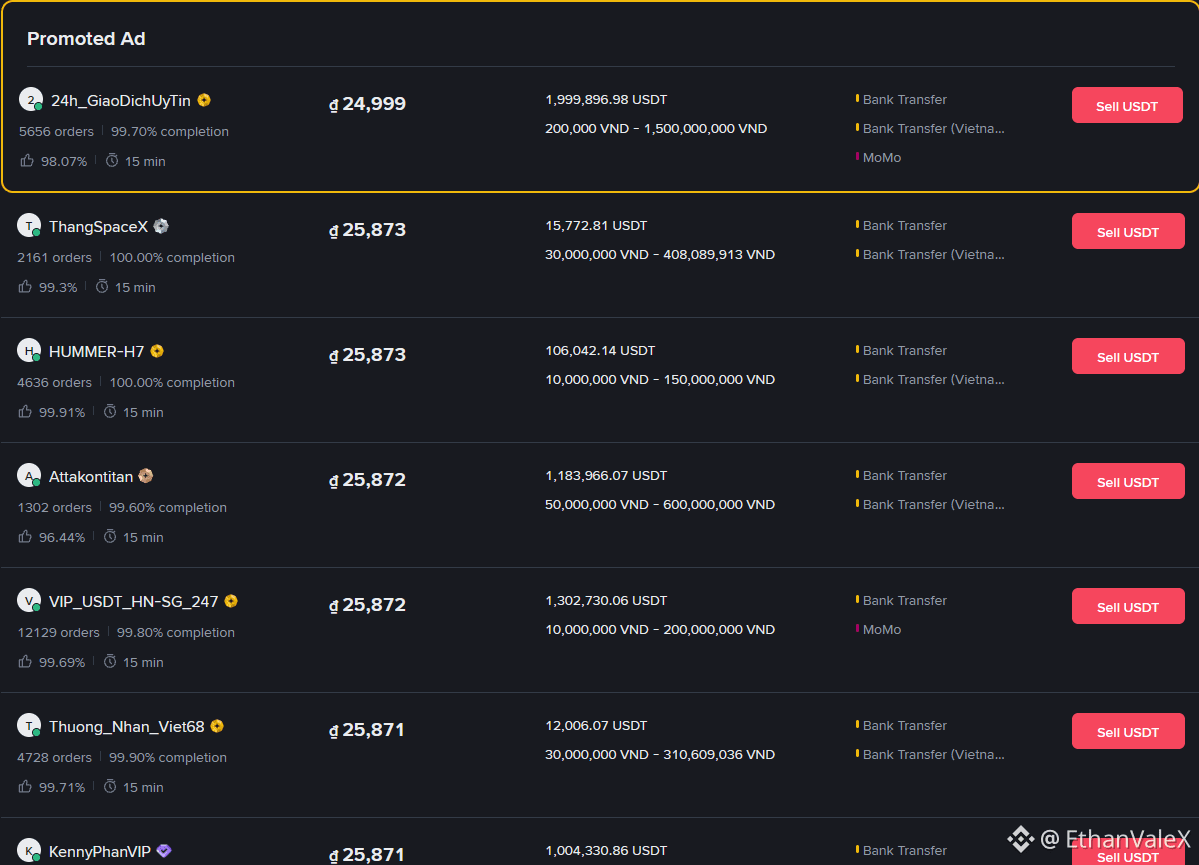
Anh em bán P2P, tiền vừa vào mà tên người chuyển không giống tên buyer trên Order thì khoan Release nhé 😭
Cái này mình thấy nhiều anh em hay bỏ qua lắm.
Tiền vào đúng số, notification ngân hàng cũng báo một cái, nhìn qua thấy chẳng có gì sai. Nhưng để ý kỹ mới thấy tên người vừa chuyển tiền lại không phải tên người đang đứng trên Order.
Hồi trước mình cũng hay nghĩ đơn giản thôi:
“Chắc người nhà chuyển hộ.”
Ừ, cũng có thể thật.
Nhưng đã thấy lệch tên thì mình cứ check thêm một chút cho chắc. USDT vẫn đang nằm đó, có mất đi đâu đâu mà phải vội.
Mình thường ngó nhanh mấy cái này:
🟢 Tên người chuyển có khớp với thông tin người mua trên Order không?
🟢 Số tiền có đúng chính xác không?
🟢 Trong chat có ai nói gì về việc đổi tài khoản, nhờ người khác chuyển hoặc giục Release không?
Anh em cũng để ý mấy lệnh có giá lệch hẳn mặt bằng chung nhé. Đang bán mà bên kia cứ giục xử lý nhanh thì mình càng không thích vội.
Đặc biệt, nếu tiền thực tế đến từ một tài khoản khác với người mua trên Order, mình sẽ không Release chỉ vì thấy tiền đã vào. Cứ giữ USDT lại, kiểm tra cho rõ rồi xử lý tiếp theo quy định của sàn.
P2P lâu lâu không phải gặp chuyện gì ghê gớm đâu. Nhiều khi chỉ là một cái tên trên notification mình lười nhìn kỹ thôi.
@Binance Vietnam #BinanceP2PAnToan
Cái này mình thấy nhiều anh em hay bỏ qua lắm.
Tiền vào đúng số, notification ngân hàng cũng báo một cái, nhìn qua thấy chẳng có gì sai. Nhưng để ý kỹ mới thấy tên người vừa chuyển tiền lại không phải tên người đang đứng trên Order.
Hồi trước mình cũng hay nghĩ đơn giản thôi:
“Chắc người nhà chuyển hộ.”
Ừ, cũng có thể thật.
Nhưng đã thấy lệch tên thì mình cứ check thêm một chút cho chắc. USDT vẫn đang nằm đó, có mất đi đâu đâu mà phải vội.
Mình thường ngó nhanh mấy cái này:
🟢 Tên người chuyển có khớp với thông tin người mua trên Order không?
🟢 Số tiền có đúng chính xác không?
🟢 Trong chat có ai nói gì về việc đổi tài khoản, nhờ người khác chuyển hoặc giục Release không?
Anh em cũng để ý mấy lệnh có giá lệch hẳn mặt bằng chung nhé. Đang bán mà bên kia cứ giục xử lý nhanh thì mình càng không thích vội.
Đặc biệt, nếu tiền thực tế đến từ một tài khoản khác với người mua trên Order, mình sẽ không Release chỉ vì thấy tiền đã vào. Cứ giữ USDT lại, kiểm tra cho rõ rồi xử lý tiếp theo quy định của sàn.
P2P lâu lâu không phải gặp chuyện gì ghê gớm đâu. Nhiều khi chỉ là một cái tên trên notification mình lười nhìn kỹ thôi.
@Binance Vietnam #BinanceP2PAnToan
#TermMax @TermMax
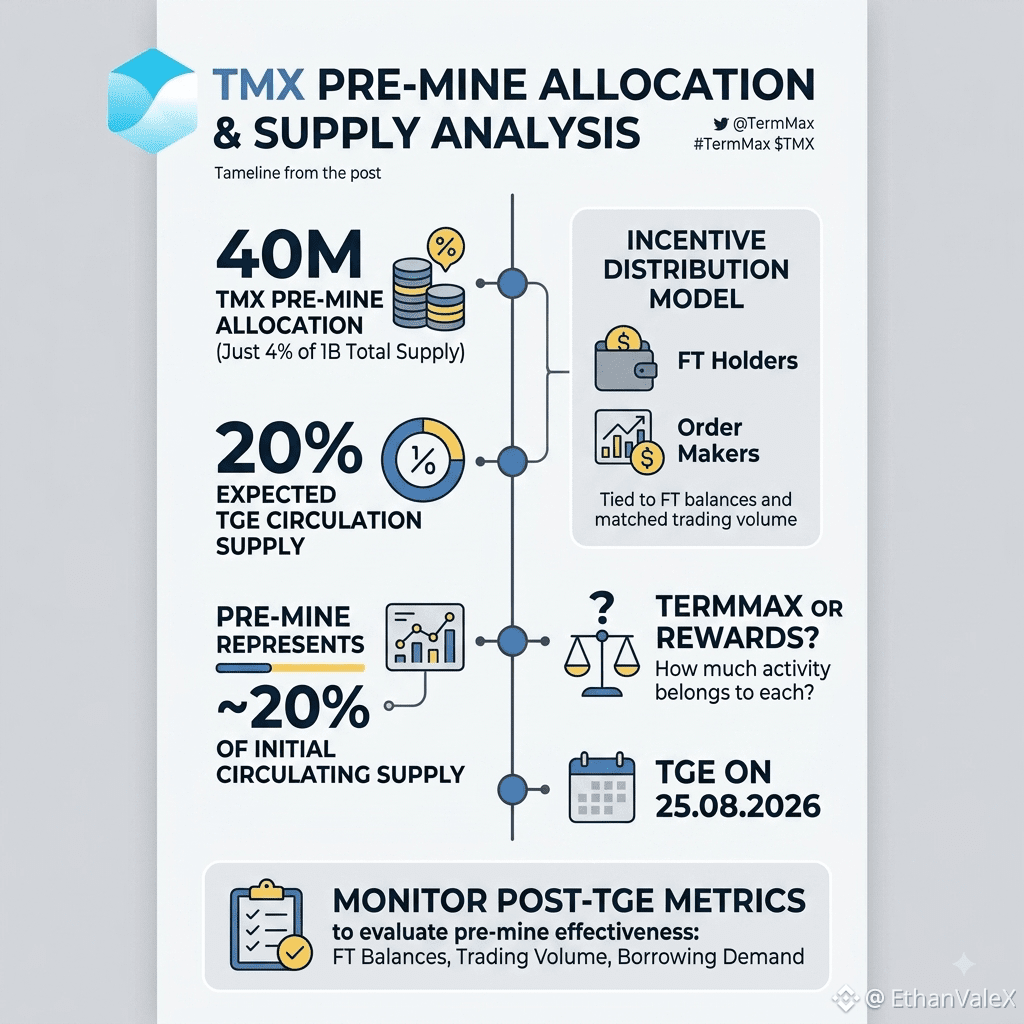
I was checking @TermMax pre-mine numbers today and one figure made me stop.
40M TMX is allocated to the pre-mine, just 4% of the 1B total supply.
That sounds small until I put it next to another number: only 20% of TMX is expected to be in circulation at TGE. So the pre-mine alone represents roughly 20% of the initial circulating supply.
That's when I started looking at the incentive differently.
The rewards go to FT holders and Order Makers, tied to FT balances and matched trading volume rather than simply handing tokens to every wallet that shows up.
But here's the part I can't answer yet.
How much of that activity actually belongs to TermMax, and how much belongs to the rewards?
TGE on 25.08.2026 gives us a much better point to find out.
I don't really care how many TMX were earned before then. I want to see whether FT balances, trading volume and Borrowing Demand still have something behind them when TMX rewards aren't the obvious reason to participate.
If the activity holds, the pre-mine looks like it helped build a market.
If it fades quickly, I'd see the 40M TMX differently.
The headline is 40M TMX.
For me, the more important number comes after TGE.
Which metric would you watch first: FT balances, trading volume or Borrowing Demand?
I was checking @TermMax pre-mine numbers today and one figure made me stop.
40M TMX is allocated to the pre-mine, just 4% of the 1B total supply.
That sounds small until I put it next to another number: only 20% of TMX is expected to be in circulation at TGE. So the pre-mine alone represents roughly 20% of the initial circulating supply.
That's when I started looking at the incentive differently.
The rewards go to FT holders and Order Makers, tied to FT balances and matched trading volume rather than simply handing tokens to every wallet that shows up.
But here's the part I can't answer yet.
How much of that activity actually belongs to TermMax, and how much belongs to the rewards?
TGE on 25.08.2026 gives us a much better point to find out.
I don't really care how many TMX were earned before then. I want to see whether FT balances, trading volume and Borrowing Demand still have something behind them when TMX rewards aren't the obvious reason to participate.
If the activity holds, the pre-mine looks like it helped build a market.
If it fades quickly, I'd see the 40M TMX differently.
The headline is 40M TMX.
For me, the more important number comes after TGE.
Which metric would you watch first: FT balances, trading volume or Borrowing Demand?
The Order ID Became More Important Than I Expected
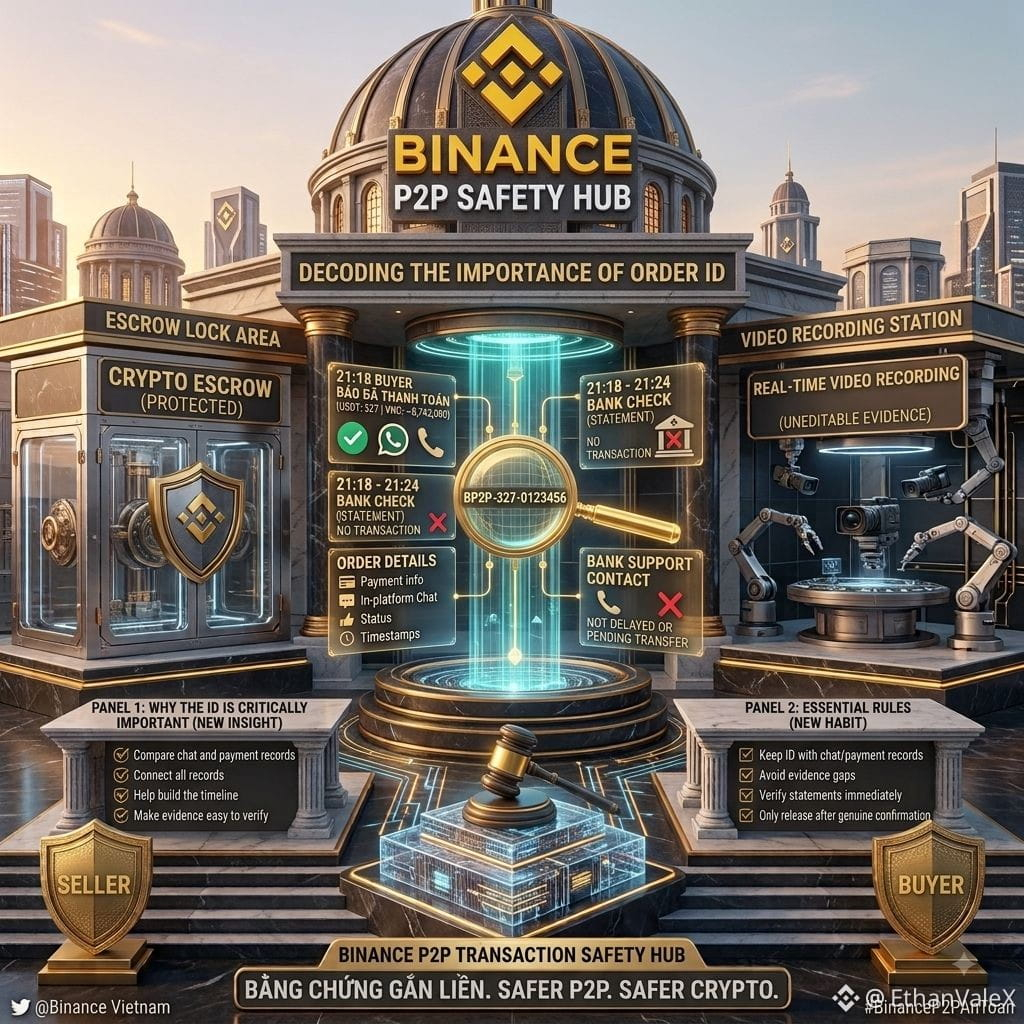
I learned this after a Binance P2P order involving 327 USDT, worth around 8,742,000 VND. The buyer marked the payment as completed at 21:18, but I checked my bank balance and transaction history several times and found nothing. At 21:24, the order was still active.
I opened the Order details and started checking everything against the Order ID. The payment information, in-platform chat, order status and timestamps all pointed to the same transaction.
The buyer had claimed the payment was completed at 21:18. My bank records showed no corresponding incoming transaction. I contacted my bank to check whether it was delayed or sitting as a pending transfer.
It wasn't.
That was when the timeline became more important than the explanation. The Order ID gave me one reference point for the buyer's claim, the chat, the payment details and what my bank actually showed.
When the order was reviewed, I could provide those records as one connected case instead of sending separate screenshots and trying to explain what each one meant.
What surprised me was that the Order ID itself didn't prove anything. Its value was that it made the other evidence easier to verify against the same transaction.
Since then, I keep the Order ID, in-platform chat and relevant payment records together. Escrow protects the crypto while the order is active, but good records make the transaction much easier to reconstruct when something goes wrong.
I used to think good evidence meant having more screenshots. Now I think it means leaving fewer gaps between them.
@Binance Vietnam #BinanceP2PAnToan
I learned this after a Binance P2P order involving 327 USDT, worth around 8,742,000 VND. The buyer marked the payment as completed at 21:18, but I checked my bank balance and transaction history several times and found nothing. At 21:24, the order was still active.
I opened the Order details and started checking everything against the Order ID. The payment information, in-platform chat, order status and timestamps all pointed to the same transaction.
The buyer had claimed the payment was completed at 21:18. My bank records showed no corresponding incoming transaction. I contacted my bank to check whether it was delayed or sitting as a pending transfer.
It wasn't.
That was when the timeline became more important than the explanation. The Order ID gave me one reference point for the buyer's claim, the chat, the payment details and what my bank actually showed.
When the order was reviewed, I could provide those records as one connected case instead of sending separate screenshots and trying to explain what each one meant.
What surprised me was that the Order ID itself didn't prove anything. Its value was that it made the other evidence easier to verify against the same transaction.
Since then, I keep the Order ID, in-platform chat and relevant payment records together. Escrow protects the crypto while the order is active, but good records make the transaction much easier to reconstruct when something goes wrong.
I used to think good evidence meant having more screenshots. Now I think it means leaving fewer gaps between them.
@Binance Vietnam #BinanceP2PAnToan
#TermMax @TermMax
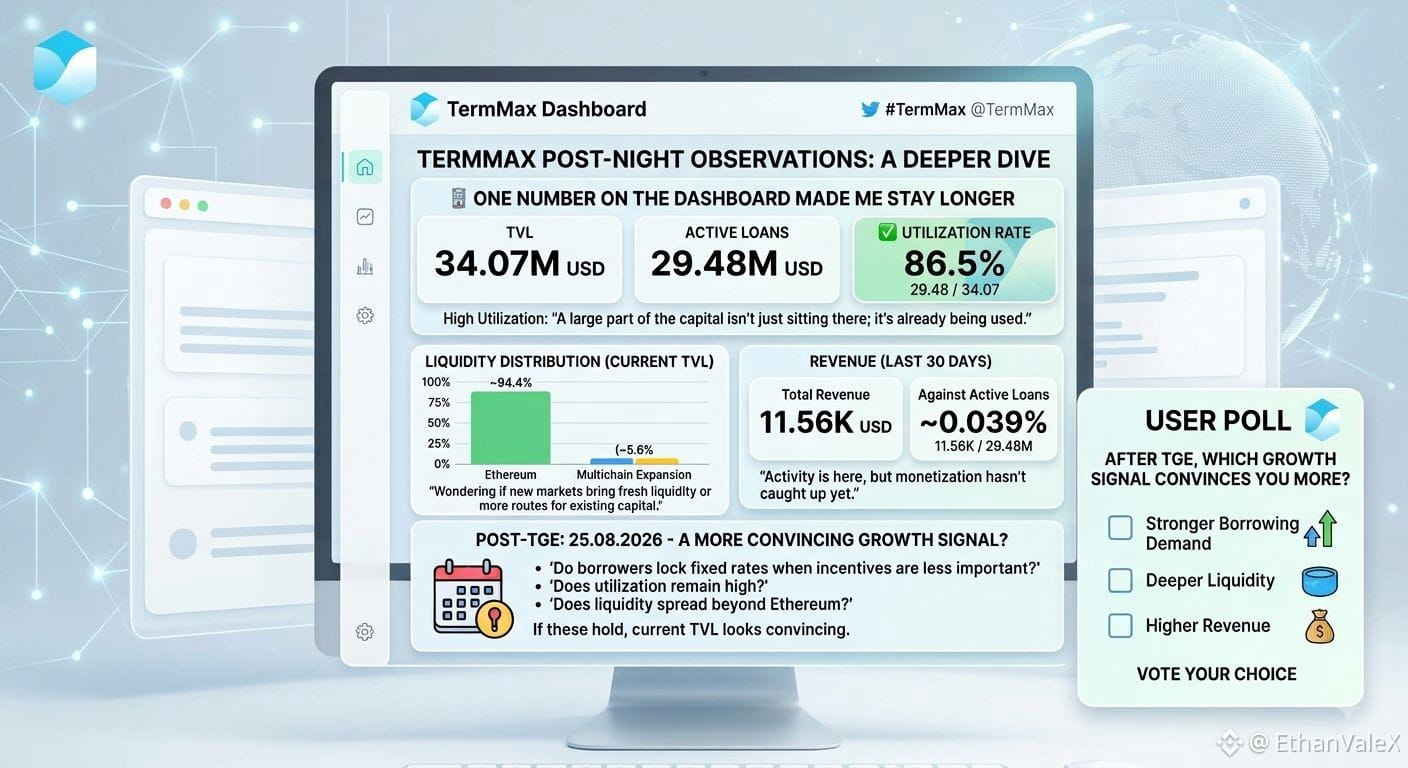
I was supposed to be done with @TermMax for the night, but one number on the dashboard made me stay a little longer.
34.07M USD TVL. 29.48M USD Active Loans.
29.48 / 34.07 = around 86.5%.
For a fixed-rate lending market, that's the first number that caught my attention. A large part of the capital isn't just sitting there; it's already being used.
Then I checked where that capital is actually sitting.
Around 94.4% of TVL is still on Ethereum. TermMax has expanded across multiple chains, but the current distribution makes me wonder whether those new markets are bringing in fresh liquidity or simply giving existing capital more routes.
Revenue gives me another reason to stay cautious.
TermMax generated around 11.56K USD in the last 30 days. Against 29.48M USD of Active Loans, that's roughly 0.039%.
So there is activity, but monetization hasn't caught up yet.
That's why I'm more interested in what happens around TGE on 25.08.2026 than another TVL update.
If incentives become less important, I want to see whether borrowers still have a reason to lock in fixed rates, whether loan utilization remains high, and whether liquidity starts spreading beyond Ethereum.
If those numbers hold, the current TVL starts looking much more convincing to me.
After TGE, which would convince you more that TermMax is growing for real: stronger Borrowing Demand, deeper Liquidity, or higher Revenue?
I was supposed to be done with @TermMax for the night, but one number on the dashboard made me stay a little longer.
34.07M USD TVL. 29.48M USD Active Loans.
29.48 / 34.07 = around 86.5%.
For a fixed-rate lending market, that's the first number that caught my attention. A large part of the capital isn't just sitting there; it's already being used.
Then I checked where that capital is actually sitting.
Around 94.4% of TVL is still on Ethereum. TermMax has expanded across multiple chains, but the current distribution makes me wonder whether those new markets are bringing in fresh liquidity or simply giving existing capital more routes.
Revenue gives me another reason to stay cautious.
TermMax generated around 11.56K USD in the last 30 days. Against 29.48M USD of Active Loans, that's roughly 0.039%.
So there is activity, but monetization hasn't caught up yet.
That's why I'm more interested in what happens around TGE on 25.08.2026 than another TVL update.
If incentives become less important, I want to see whether borrowers still have a reason to lock in fixed rates, whether loan utilization remains high, and whether liquidity starts spreading beyond Ethereum.
If those numbers hold, the current TVL starts looking much more convincing to me.
After TGE, which would convince you more that TermMax is growing for real: stronger Borrowing Demand, deeper Liquidity, or higher Revenue?
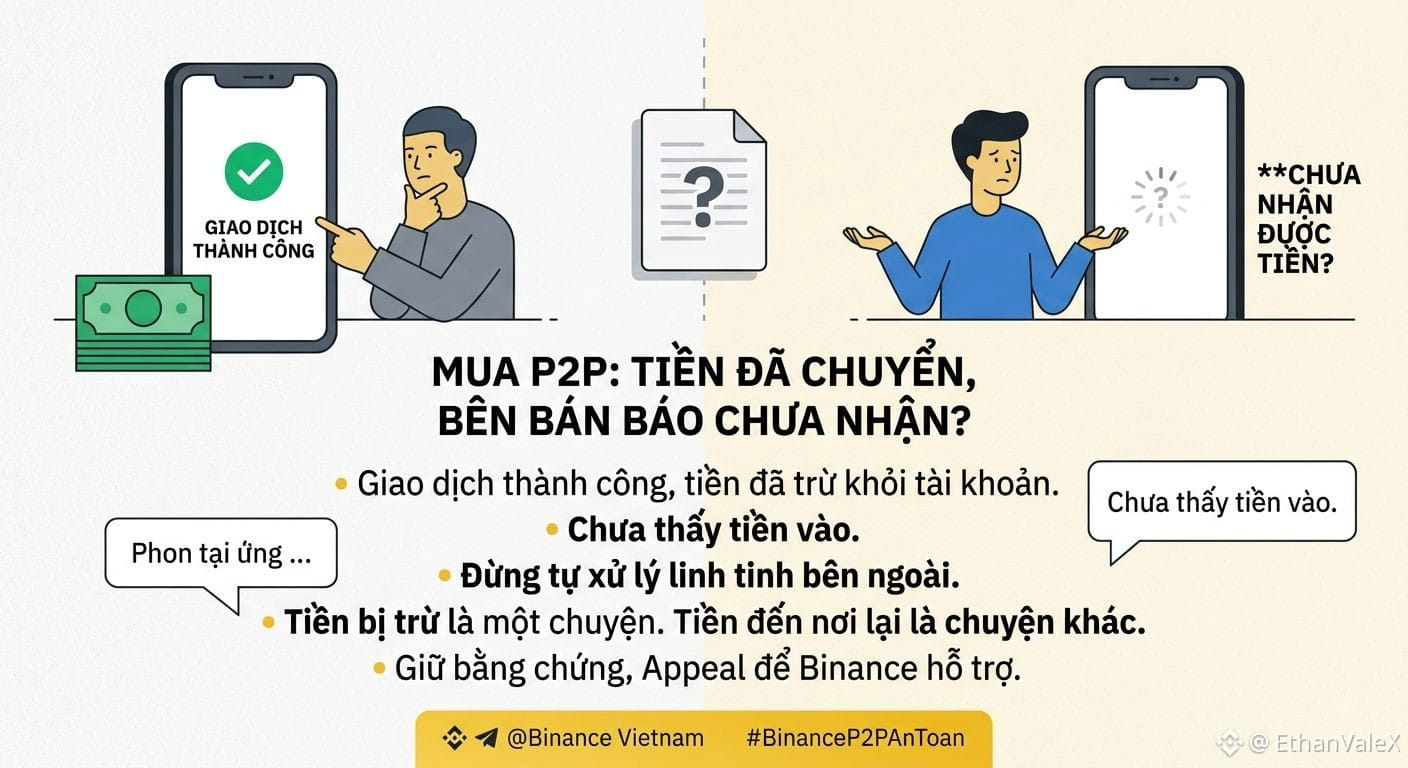
Mua P2P, tiền đã chuyển nhưng bên bán lại bảo chưa nhận được?
Gặp case này lúc đầu mình cũng hơi rén anh em ạ :))
Mình có một lệnh mua P2P, bên bán gửi thông tin tài khoản rồi mình chuyển đúng số tiền theo Order.
App ngân hàng báo giao dịch thành công, tiền cũng đã trừ khỏi tài khoản. Mình còn có cả biên lai chuyển khoản.
Nhưng bên bán lại nhắn là chưa thấy tiền vào.
Đến đây mới bắt đầu khó xử =))) Một bên thì ngân hàng báo chuyển thành công, một bên lại bảo chưa nhận được. Giờ chuyển lại thì chắc chắn không dám, mà cứ ngồi chờ cũng chẳng biết bao lâu.
Mình có hỏi lại bên bán xem thông tin tài khoản có đúng không, rồi kiểm tra lại số tiền và thời gian giao dịch. May là mình vẫn giữ nguyên Order và đoạn chat nên ít nhất mọi thứ còn có cái để đối chiếu.
Lúc đó mình cũng nghĩ, thôi thì đừng tự xử lý linh tinh bên ngoài cho nhanh. Nếu hai bên vẫn chưa xác nhận được giao dịch thì cứ để trong Order, cần thiết thì mở Appeal để Binance hỗ trợ kiểm tra.
Vì có một điều mình thấy khá đáng nhớ:
Tiền đã bị trừ khỏi tài khoản mình là một chuyện. Tiền đã thực sự đến đúng tài khoản của bên bán lại là chuyện khác.
Nên trong case kiểu này, mình sẽ không chuyển thêm tiền chỉ vì đối phương nói chưa nhận được, cũng không tự ý Release chỉ vì muốn kết thúc cho xong. Cứ giữ bằng chứng và xử lý theo Order vẫn yên tâm hơn.
Anh em đã gặp cảnh ngân hàng báo chuyển thành công nhưng bên nhận vẫn nói chưa thấy tiền bao giờ chưa? Nếu gặp rồi thì mọi người thường chờ thêm hay Appeal luôn?
@Binance Vietnam #BinanceP2PAnToan
Gặp case này lúc đầu mình cũng hơi rén anh em ạ :))
Mình có một lệnh mua P2P, bên bán gửi thông tin tài khoản rồi mình chuyển đúng số tiền theo Order.
App ngân hàng báo giao dịch thành công, tiền cũng đã trừ khỏi tài khoản. Mình còn có cả biên lai chuyển khoản.
Nhưng bên bán lại nhắn là chưa thấy tiền vào.
Đến đây mới bắt đầu khó xử =))) Một bên thì ngân hàng báo chuyển thành công, một bên lại bảo chưa nhận được. Giờ chuyển lại thì chắc chắn không dám, mà cứ ngồi chờ cũng chẳng biết bao lâu.
Mình có hỏi lại bên bán xem thông tin tài khoản có đúng không, rồi kiểm tra lại số tiền và thời gian giao dịch. May là mình vẫn giữ nguyên Order và đoạn chat nên ít nhất mọi thứ còn có cái để đối chiếu.
Lúc đó mình cũng nghĩ, thôi thì đừng tự xử lý linh tinh bên ngoài cho nhanh. Nếu hai bên vẫn chưa xác nhận được giao dịch thì cứ để trong Order, cần thiết thì mở Appeal để Binance hỗ trợ kiểm tra.
Vì có một điều mình thấy khá đáng nhớ:
Tiền đã bị trừ khỏi tài khoản mình là một chuyện. Tiền đã thực sự đến đúng tài khoản của bên bán lại là chuyện khác.
Nên trong case kiểu này, mình sẽ không chuyển thêm tiền chỉ vì đối phương nói chưa nhận được, cũng không tự ý Release chỉ vì muốn kết thúc cho xong. Cứ giữ bằng chứng và xử lý theo Order vẫn yên tâm hơn.
Anh em đã gặp cảnh ngân hàng báo chuyển thành công nhưng bên nhận vẫn nói chưa thấy tiền bao giờ chưa? Nếu gặp rồi thì mọi người thường chờ thêm hay Appeal luôn?
@Binance Vietnam #BinanceP2PAnToan
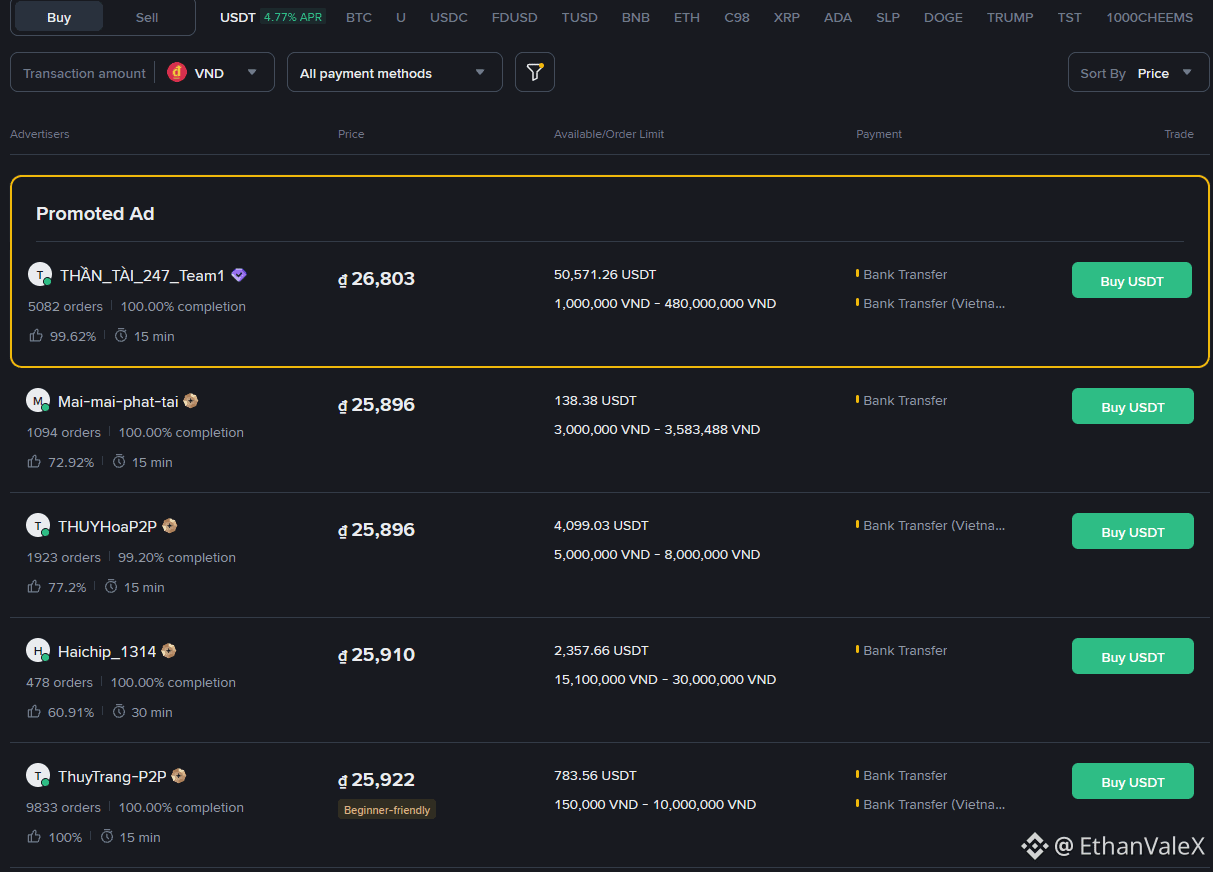
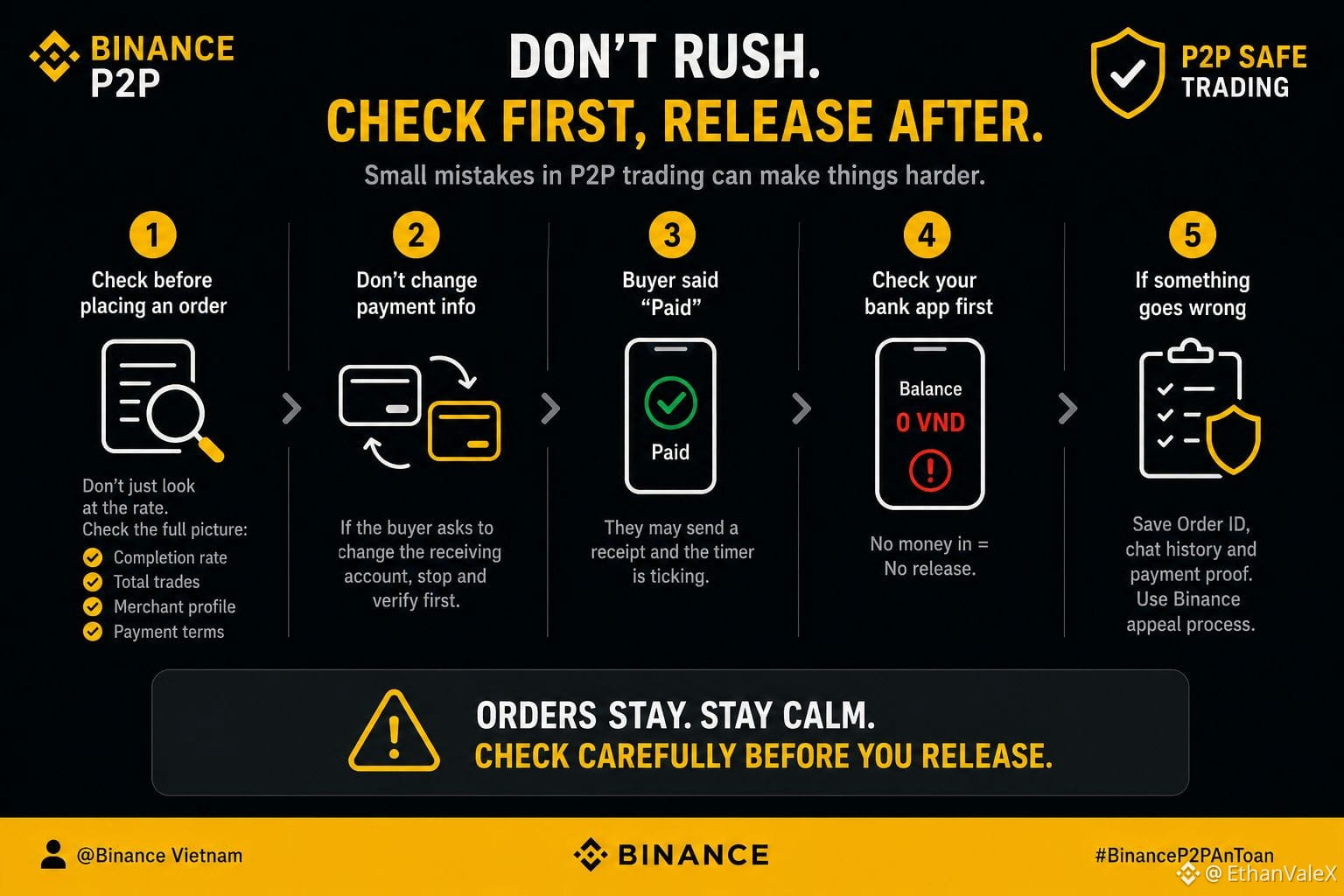
Có những Order P2P nhìn từ đầu tới cuối đều khá bình thường, nhưng chỉ cần vội ở một đoạn là sau đó tự làm khó mình anh em ạ!
Ví dụ mình thấy một quảng cáo có rate khá tốt. Nếu chỉ nhìn mỗi con số rồi đặt lệnh thì rất dễ bỏ qua tỷ lệ hoàn tất, số lượng giao dịch, hồ sơ Merchant hoặc điều kiện thanh toán. Đây là lúc mình thường check kỹ trước khi bấm.
Mở Order xong, mọi thứ vẫn ổn cho đến khi đối tác muốn đổi tài khoản nhận tiền giữa chừng. Trường hợp này mình không cố giao dịch tiếp cho nhanh. Thông tin thanh toán đã khác Order thì phải xác minh lại trước.
Rồi bên kia báo “Đã thanh toán”.
Có ảnh biên lai, có trạng thái trên Order, thậm chí đồng hồ đang đếm ngược. Nhưng mình vẫn mở app ngân hàng kiểm tra tiền thực nhận. Chưa thấy tiền vào tài khoản thì chưa Release.
Đây cũng là lúc dễ bị tâm lý nhất. Đồng hồ càng chạy, đối tác càng giục, mình càng không muốn bấm theo cảm tính. Chậm một chút để kiểm tra vẫn hơn là Release chỉ vì sợ Order hết thời gian.
Nếu giao dịch phát sinh vấn đề, mình giữ lại Order ID, lịch sử chat và biên lai để Appeal hoặc nhờ Binance Support hỗ trợ. Binance P2P có Escrow, chat và quy trình khiếu nại, nhưng mình vẫn cần giao dịch trên nền tảng và làm đúng các bước bảo vệ mình.
Nói chung, Order còn nằm đó thì cứ từ từ check. Đừng vì thấy đồng hồ chạy mà cuống lên bấm cho xong anh em ạ 😂
@Binance Vietnam #BinanceP2PAnToan
Ví dụ mình thấy một quảng cáo có rate khá tốt. Nếu chỉ nhìn mỗi con số rồi đặt lệnh thì rất dễ bỏ qua tỷ lệ hoàn tất, số lượng giao dịch, hồ sơ Merchant hoặc điều kiện thanh toán. Đây là lúc mình thường check kỹ trước khi bấm.
Mở Order xong, mọi thứ vẫn ổn cho đến khi đối tác muốn đổi tài khoản nhận tiền giữa chừng. Trường hợp này mình không cố giao dịch tiếp cho nhanh. Thông tin thanh toán đã khác Order thì phải xác minh lại trước.
Rồi bên kia báo “Đã thanh toán”.
Có ảnh biên lai, có trạng thái trên Order, thậm chí đồng hồ đang đếm ngược. Nhưng mình vẫn mở app ngân hàng kiểm tra tiền thực nhận. Chưa thấy tiền vào tài khoản thì chưa Release.
Đây cũng là lúc dễ bị tâm lý nhất. Đồng hồ càng chạy, đối tác càng giục, mình càng không muốn bấm theo cảm tính. Chậm một chút để kiểm tra vẫn hơn là Release chỉ vì sợ Order hết thời gian.
Nếu giao dịch phát sinh vấn đề, mình giữ lại Order ID, lịch sử chat và biên lai để Appeal hoặc nhờ Binance Support hỗ trợ. Binance P2P có Escrow, chat và quy trình khiếu nại, nhưng mình vẫn cần giao dịch trên nền tảng và làm đúng các bước bảo vệ mình.
Nói chung, Order còn nằm đó thì cứ từ từ check. Đừng vì thấy đồng hồ chạy mà cuống lên bấm cho xong anh em ạ 😂
@Binance Vietnam #BinanceP2PAnToan
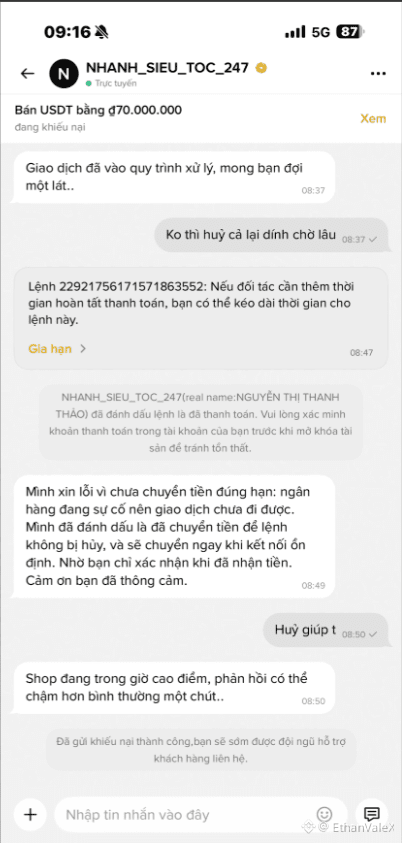
Có anh em nào từng gặp cảnh đã chuyển tiền xong nhưng USDT trên Binance P2P mãi không được mở khóa chưa?
Chuyện là mình vừa bán 2370 USDT cho thương nhân NHANH_SIEU_TOC_247. người mua đánh dấu “Đã thanh toán” nhưng mình vẫn chưa nhận được tiền trong tài khoản. Phía bên kia giải thích ngân hàng đang gặp sự cố nên giao dịch bị chậm và xin thêm thời gian.
Ban đầu mình cũng cố chờ vì chưa có gì để kết luận bên kia đang có vấn đề. Nhưng đến 30 phút sau, hệ thống vẫn cho phép gia hạn thêm thời gian thanh toán, trong khi mình đã ngồi chờ khá lâu nên bắt đầu thấy bực. Mình nhắn luôn “Hủy giúp t”, rồi quyết định báo khiếu nại trực tiếp trên Binance để đội ngũ hỗ trợ kiểm tra.
Mình cũng không vội kết luận đây là scam, vì phía bên kia vẫn nói họ đang gặp lỗi ngân hàng. Lúc mở khiếu nại, mình giữ lại đầy đủ thông tin Order, trạng thái lệnh, thời gian giao dịch và toàn bộ nội dung chat với bên kia để Support có đủ dữ liệu đối chiếu, đồng thời giữ mọi trao đổi ngay trên Binance thay vì chuyển sang kênh khác.
Khoảng 4 tiếng sau, mình được Binance hỗ trợ và tiền được mở khóa. Lúc đó mới thực sự nhẹ cả người.
Trước đây mình cứ nghĩ P2P chỉ cần kiểm tra Merchant rồi thanh toán đúng quy trình là đủ. Case 70 triệu này mới khiến mình để ý rằng khi giao dịch bắt đầu có vấn đề, biết giữ lại đầy đủ thông tin và mở khiếu nại đúng lúc cũng quan trọng không kém.
Từ đó mình có thêm một thói quen: gặp lệnh bất thường thì cứ lưu lại toàn bộ thông tin Order, trạng thái giao dịch và lịch sử chat ngay trên Binance, rồi nhắn tin Support để họ xử lý theo quy trình.
@Binance Vietnam
#BinanceP2PAnToan
Chuyện là mình vừa bán 2370 USDT cho thương nhân NHANH_SIEU_TOC_247. người mua đánh dấu “Đã thanh toán” nhưng mình vẫn chưa nhận được tiền trong tài khoản. Phía bên kia giải thích ngân hàng đang gặp sự cố nên giao dịch bị chậm và xin thêm thời gian.
Ban đầu mình cũng cố chờ vì chưa có gì để kết luận bên kia đang có vấn đề. Nhưng đến 30 phút sau, hệ thống vẫn cho phép gia hạn thêm thời gian thanh toán, trong khi mình đã ngồi chờ khá lâu nên bắt đầu thấy bực. Mình nhắn luôn “Hủy giúp t”, rồi quyết định báo khiếu nại trực tiếp trên Binance để đội ngũ hỗ trợ kiểm tra.
Mình cũng không vội kết luận đây là scam, vì phía bên kia vẫn nói họ đang gặp lỗi ngân hàng. Lúc mở khiếu nại, mình giữ lại đầy đủ thông tin Order, trạng thái lệnh, thời gian giao dịch và toàn bộ nội dung chat với bên kia để Support có đủ dữ liệu đối chiếu, đồng thời giữ mọi trao đổi ngay trên Binance thay vì chuyển sang kênh khác.
Khoảng 4 tiếng sau, mình được Binance hỗ trợ và tiền được mở khóa. Lúc đó mới thực sự nhẹ cả người.
Trước đây mình cứ nghĩ P2P chỉ cần kiểm tra Merchant rồi thanh toán đúng quy trình là đủ. Case 70 triệu này mới khiến mình để ý rằng khi giao dịch bắt đầu có vấn đề, biết giữ lại đầy đủ thông tin và mở khiếu nại đúng lúc cũng quan trọng không kém.
Từ đó mình có thêm một thói quen: gặp lệnh bất thường thì cứ lưu lại toàn bộ thông tin Order, trạng thái giao dịch và lịch sử chat ngay trên Binance, rồi nhắn tin Support để họ xử lý theo quy trình.
@Binance Vietnam
#BinanceP2PAnToan
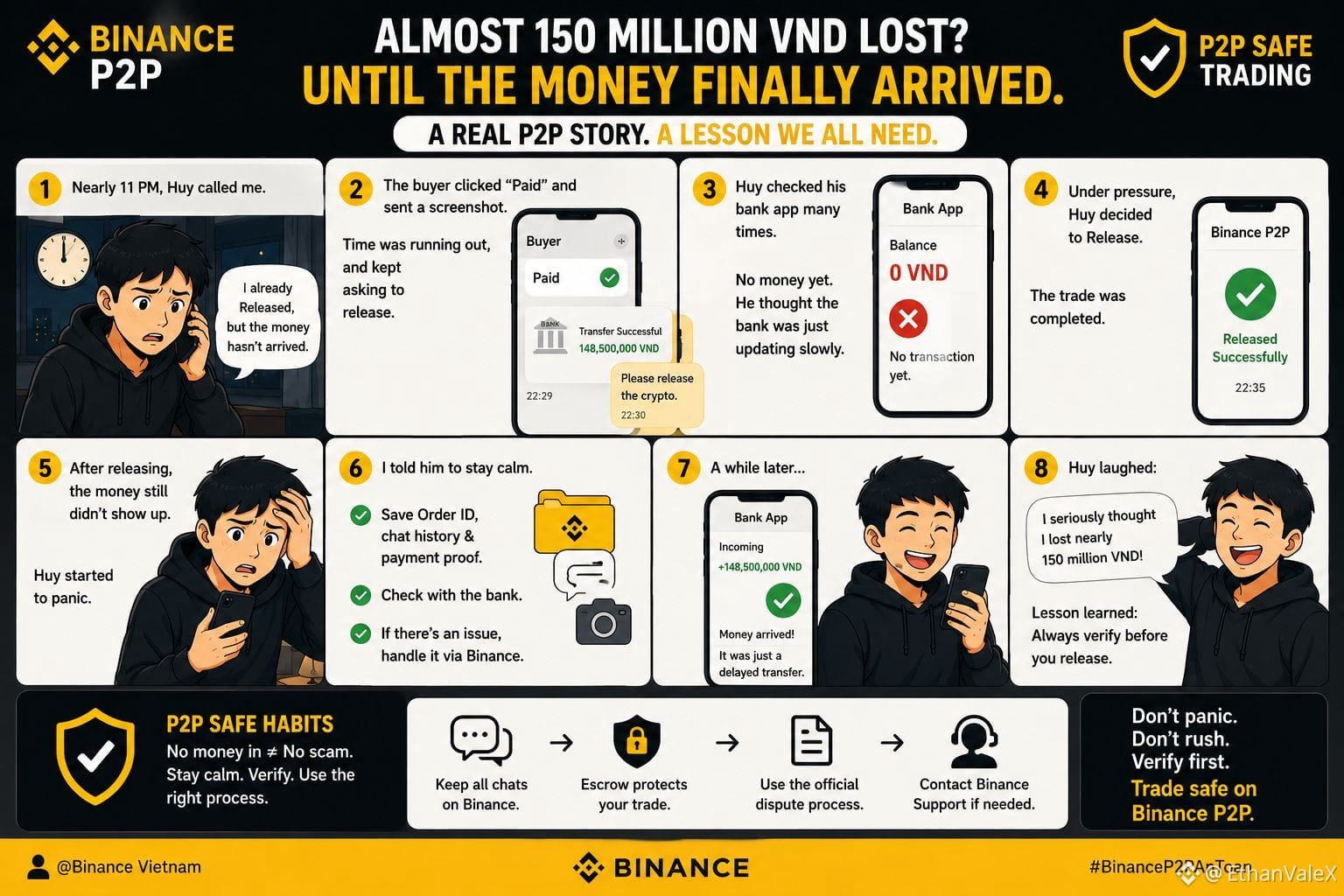
Gần 11 giờ đêm hôm qua, Huy gọi mình vì một giao dịch Binance P2P gần 150 triệu đồng, giọng nó lúc đó nghe khá hoảng: “Tao vừa Release rồi mà tiền vẫn chưa vào.”
Huy kể bên mua đã nhấn “Đã thanh toán” và gửi luôn ảnh chuyển khoản, nhưng vì giao dịch gần hết thời gian nên người kia liên tục nhắn hỏi tại sao Huy vẫn chưa mở khóa crypto. Nó mở app ngân hàng kiểm tra mấy lần nhưng chưa thấy tiền, cuối cùng lại nghĩ chắc ngân hàng cập nhật chậm nên vẫn bấm Release.
Xong xuôi, Huy quay lại kiểm tra tài khoản thì tiền vẫn chưa xuất hiện.
Lúc đó nó mới bắt đầu lo thật, cứ nghĩ mình vừa gặp đúng tình huống tệ nhất khi bán P2P: crypto đã mở khóa nhưng tiền chưa về.
Mình bảo nó đừng vội kết luận, trước tiên giữ lại Order ID, lịch sử chat và ảnh giao dịch, rồi kiểm tra xem phía ngân hàng có giao dịch nào đang xử lý hay không. Mình cũng nhắc Huy nếu có vấn đề thì cứ xử lý ngay trên Binance.
Một lúc sau nó nhắn mình: “Tiền vào rồi.”
Hóa ra hôm đó ngân hàng xử lý giao dịch chậm nên khoản tiền đến muộn hơn bình thường. Cuối cùng chẳng có vụ scam nào cả, chỉ là Huy đã tự dọa mình một phen.
Nó cười bảo: “Nãy tao tưởng bay gần 150 triệu rồi.”
Mình cũng chỉ biết bảo nó lần sau chưa thấy tiền thì cứ bình tĩnh kiểm tra đã. Binance P2P có Escrow, hệ thống chat và quy trình khiếu nại, nên khi giao dịch có vấn đề, tốt nhất là giữ mọi thứ trên nền tảng và để quy trình chính thức xử lý thay vì tự quyết trong lúc đang cuống.
Đây cũng là điều mình muốn chia sẻ qua #BinanceP2PAnToan để mọi người, nhất là người mới, có thêm một thói quen an toàn khi giao dịch.
@Binance Vietnam
Huy kể bên mua đã nhấn “Đã thanh toán” và gửi luôn ảnh chuyển khoản, nhưng vì giao dịch gần hết thời gian nên người kia liên tục nhắn hỏi tại sao Huy vẫn chưa mở khóa crypto. Nó mở app ngân hàng kiểm tra mấy lần nhưng chưa thấy tiền, cuối cùng lại nghĩ chắc ngân hàng cập nhật chậm nên vẫn bấm Release.
Xong xuôi, Huy quay lại kiểm tra tài khoản thì tiền vẫn chưa xuất hiện.
Lúc đó nó mới bắt đầu lo thật, cứ nghĩ mình vừa gặp đúng tình huống tệ nhất khi bán P2P: crypto đã mở khóa nhưng tiền chưa về.
Mình bảo nó đừng vội kết luận, trước tiên giữ lại Order ID, lịch sử chat và ảnh giao dịch, rồi kiểm tra xem phía ngân hàng có giao dịch nào đang xử lý hay không. Mình cũng nhắc Huy nếu có vấn đề thì cứ xử lý ngay trên Binance.
Một lúc sau nó nhắn mình: “Tiền vào rồi.”
Hóa ra hôm đó ngân hàng xử lý giao dịch chậm nên khoản tiền đến muộn hơn bình thường. Cuối cùng chẳng có vụ scam nào cả, chỉ là Huy đã tự dọa mình một phen.
Nó cười bảo: “Nãy tao tưởng bay gần 150 triệu rồi.”
Mình cũng chỉ biết bảo nó lần sau chưa thấy tiền thì cứ bình tĩnh kiểm tra đã. Binance P2P có Escrow, hệ thống chat và quy trình khiếu nại, nên khi giao dịch có vấn đề, tốt nhất là giữ mọi thứ trên nền tảng và để quy trình chính thức xử lý thay vì tự quyết trong lúc đang cuống.
Đây cũng là điều mình muốn chia sẻ qua #BinanceP2PAnToan để mọi người, nhất là người mới, có thêm một thói quen an toàn khi giao dịch.
@Binance Vietnam
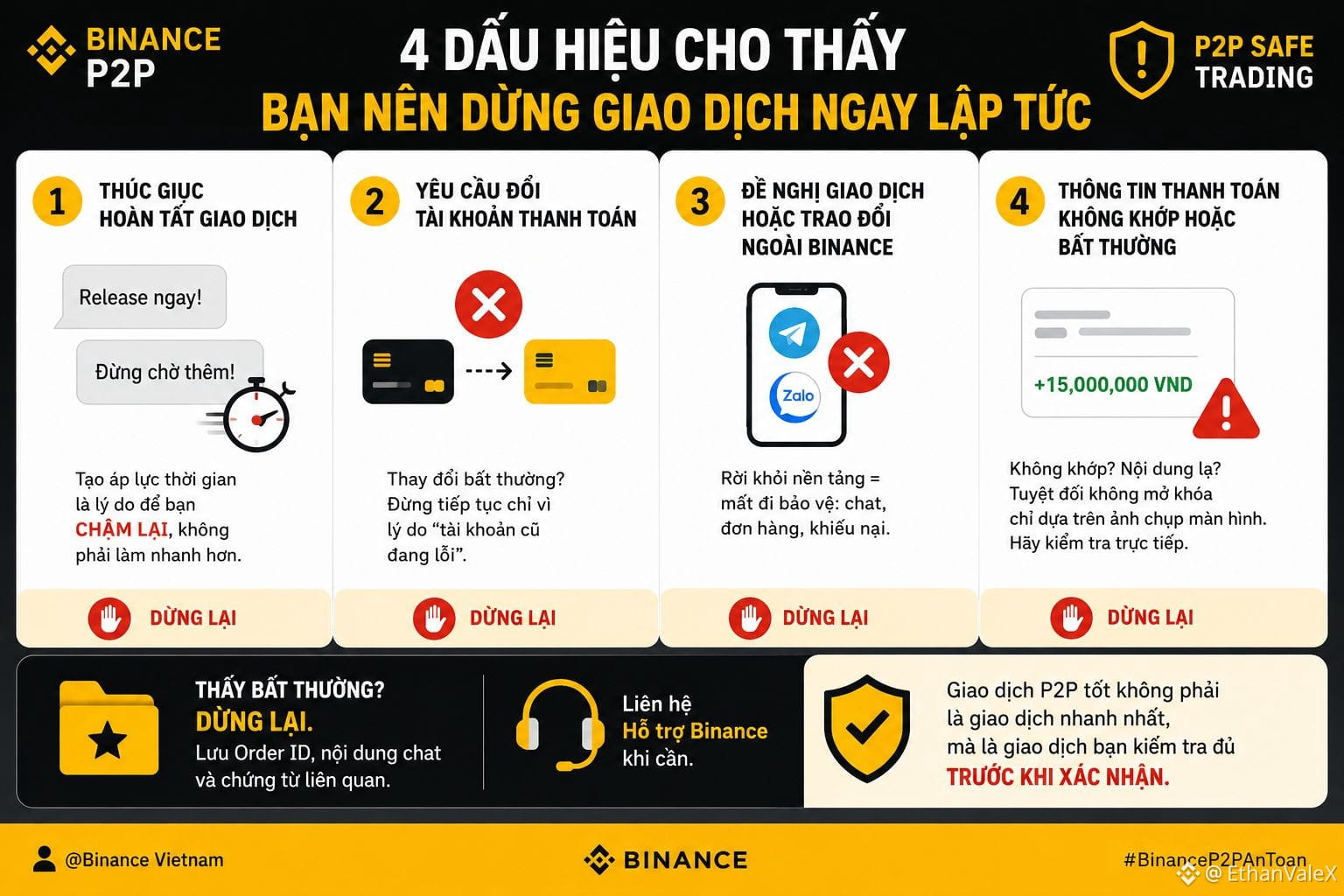
Đang P2P ngon lành, gặp 4 dấu hiệu này thì đừng cố giao dịch tiếp
Đợt rồi mình có giao dịch P2P, ban đầu cũng bình thường thôi. Đến gần lúc xong lệnh thì bên kia bắt đầu nhắn nhiều hơn, rồi thêm mấy yêu cầu khá lạ. Lúc đó mình mới nghĩ, thôi cứ chậm lại một chút cho chắc.
Đầu tiên là vụ release. Bên kia cứ “anh ơi release giúp em”, “em chuyển rồi”, nhắn mấy lần liền. Những lúc thế này mình không tranh luận gì cả, cứ mở app ngân hàng lên kiểm tra. Chưa thấy tiền vào thì chưa release, đơn giản vậy thôi.
Đang giao dịch thì bên kia lại bảo đổi sang một tài khoản khác để nhận tiền. Cái này mình cũng không làm tiếp ngay. Tài khoản nào, tên ai, thông tin có khớp với đơn không thì kiểm tra lại cho rõ rồi tính tiếp.
Có trường hợp còn rủ sang Telegram, WhatsApp nói chuyện cho tiện, rồi tiện thể bảo bỏ đơn P2P đi làm OTC trực tiếp, giá còn tốt hơn. Nghe thì cũng hấp dẫn đấy, nhưng mình xin thôi. Đang giao dịch trên Binance thì cứ ở trên Binance, lúc có vấn đề còn có lịch sử chat, thông tin đơn hàng và quy trình hỗ trợ để xử lý.
Còn ảnh chuyển khoản thì đừng tin mỗi cái ảnh. Ảnh có đẹp đến mấy cũng không bằng việc mình tự mở ngân hàng lên và thấy tiền thực sự vào tài khoản. Chưa có thì cứ chờ.
Gặp mấy chuyện này trong lúc giao dịch là mình dừng luôn: bị thúc release, đổi tài khoản nhận tiền, rủ ra ngoài Binance/OTC hoặc gửi ảnh chuyển khoản rồi bảo mình release.
Có gì thấy cấn thì cứ bình tĩnh. Lưu lại Order ID, biên lai với đoạn chat, cần thì liên hệ Hỗ trợ Binance.
Bạn từng gặp tình huống nào trong P2P khiến bạn phải dừng giao dịch chưa?
@Binance Vietnam #BinanceP2PAnToan #USJulyCPI&PPIDueThisWeek $GENIUS $PENGU
Đợt rồi mình có giao dịch P2P, ban đầu cũng bình thường thôi. Đến gần lúc xong lệnh thì bên kia bắt đầu nhắn nhiều hơn, rồi thêm mấy yêu cầu khá lạ. Lúc đó mình mới nghĩ, thôi cứ chậm lại một chút cho chắc.
Đầu tiên là vụ release. Bên kia cứ “anh ơi release giúp em”, “em chuyển rồi”, nhắn mấy lần liền. Những lúc thế này mình không tranh luận gì cả, cứ mở app ngân hàng lên kiểm tra. Chưa thấy tiền vào thì chưa release, đơn giản vậy thôi.
Đang giao dịch thì bên kia lại bảo đổi sang một tài khoản khác để nhận tiền. Cái này mình cũng không làm tiếp ngay. Tài khoản nào, tên ai, thông tin có khớp với đơn không thì kiểm tra lại cho rõ rồi tính tiếp.
Có trường hợp còn rủ sang Telegram, WhatsApp nói chuyện cho tiện, rồi tiện thể bảo bỏ đơn P2P đi làm OTC trực tiếp, giá còn tốt hơn. Nghe thì cũng hấp dẫn đấy, nhưng mình xin thôi. Đang giao dịch trên Binance thì cứ ở trên Binance, lúc có vấn đề còn có lịch sử chat, thông tin đơn hàng và quy trình hỗ trợ để xử lý.
Còn ảnh chuyển khoản thì đừng tin mỗi cái ảnh. Ảnh có đẹp đến mấy cũng không bằng việc mình tự mở ngân hàng lên và thấy tiền thực sự vào tài khoản. Chưa có thì cứ chờ.
Gặp mấy chuyện này trong lúc giao dịch là mình dừng luôn: bị thúc release, đổi tài khoản nhận tiền, rủ ra ngoài Binance/OTC hoặc gửi ảnh chuyển khoản rồi bảo mình release.
Có gì thấy cấn thì cứ bình tĩnh. Lưu lại Order ID, biên lai với đoạn chat, cần thì liên hệ Hỗ trợ Binance.
Bạn từng gặp tình huống nào trong P2P khiến bạn phải dừng giao dịch chưa?
@Binance Vietnam #BinanceP2PAnToan #USJulyCPI&PPIDueThisWeek $GENIUS $PENGU
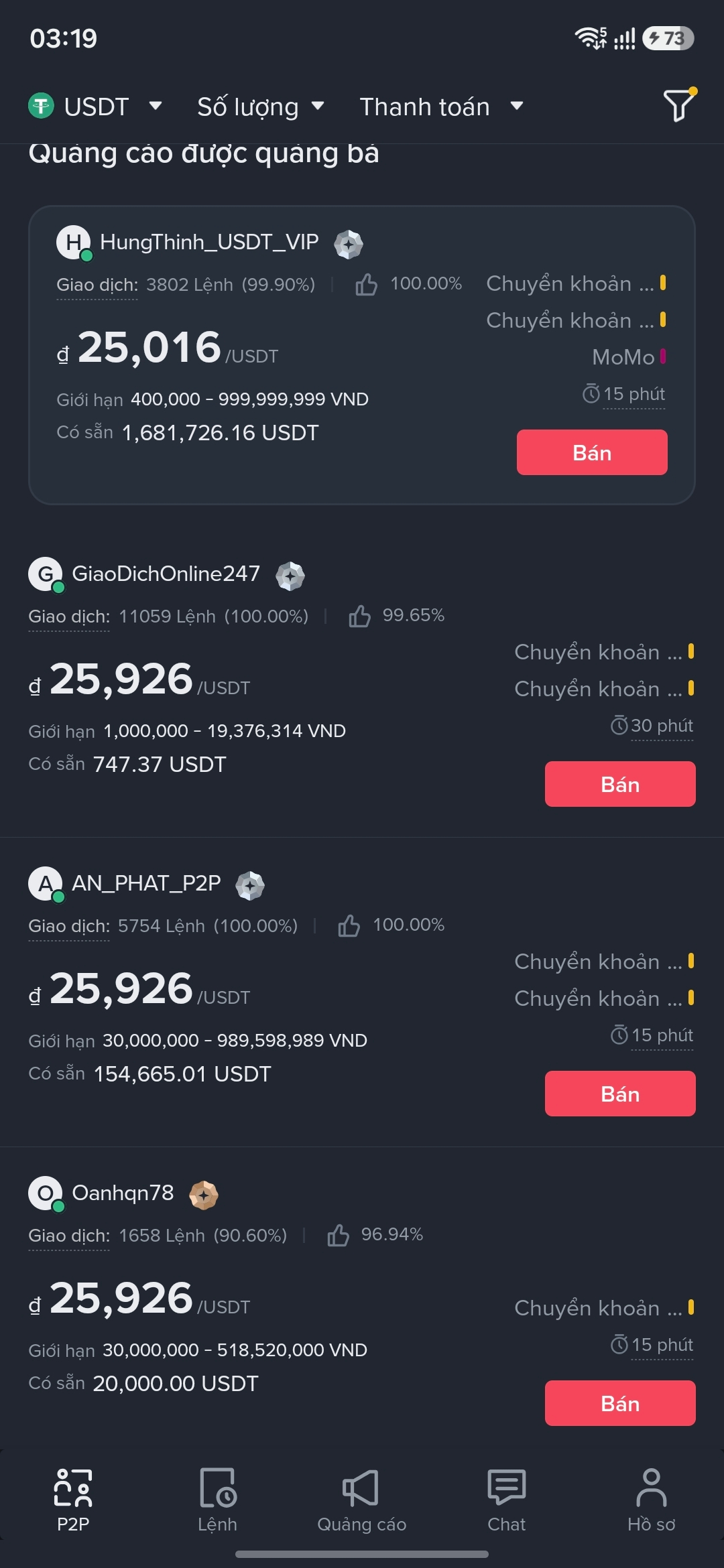
Mình suýt mở khóa sớm chỉ vì nghĩ: “Người này giao dịch nhiều thế, chắc ổn mà”
Có lần mình bán 600 USDT trên Binance P2P. Merchant đó có tỷ lệ hoàn tất gần 100%, lịch sử vài trăm lệnh, mình không nhớ chính xác bao nhiêu nhưng nhìn qua là thấy khá yên tâm. Giá lúc đó cũng tốt hơn vài lựa chọn khác nên mình gần như chọn ngay.
Người mua báo đã thanh toán, rồi khoảng 30 giây sau nhắn mình kiểm tra và mở khóa sớm vì họ đang cần hoàn tất giao dịch. Thú thật, lúc đó mình cũng thoáng nghĩ: “Hồ sơ đẹp thế này thì chắc ổn mà.”
Một tài khoản ít giao dịch mà yêu cầu mở khóa sớm thì mình sẽ từ chối ngay, nhưng với một người có lịch sử vài trăm lệnh và tỷ lệ hoàn tất gần 100%, phản ứng của mình lại khác. Mình bắt đầu tin vào reputation trước khi kiểm tra giao dịch.
Mình mở app ngân hàng và chưa thấy tiền. Mình nói khi nào tiền vào tài khoản thì mình sẽ mở khóa, còn người mua vẫn nhắn rằng họ đã chuyển và nhờ mình kiểm tra lại.
Lần này mình không vội. Mình quay về Order, đối chiếu số tiền và thông tin thanh toán rồi chờ thêm. Khoảng 90 giây sau, tiền mới thực sự vào tài khoản. Mình kiểm tra lại một lần nữa rồi mới mở khóa, và giao dịch kết thúc hoàn toàn bình thường.
Không có chuyện gì xảy ra hôm đó, nhưng mình lại nhớ khá lâu về cảm giác mình suýt bỏ qua quy trình chỉ vì thấy đối tác có lịch sử quá đẹp.
Từ đó, mình vẫn xem lịch sử giao dịch khi chọn đối tác, nhưng không để nó quyết định lúc nào mình mở khóa.
Lịch sử tốt giúp mình yên tâm hơn, nhưng tiền thực sự vào tài khoản mới là thứ quyết định bước tiếp theo.
@Binance Vietnam #BinanceP2PAnToan $BEAT $TUT $CYS
Có lần mình bán 600 USDT trên Binance P2P. Merchant đó có tỷ lệ hoàn tất gần 100%, lịch sử vài trăm lệnh, mình không nhớ chính xác bao nhiêu nhưng nhìn qua là thấy khá yên tâm. Giá lúc đó cũng tốt hơn vài lựa chọn khác nên mình gần như chọn ngay.
Người mua báo đã thanh toán, rồi khoảng 30 giây sau nhắn mình kiểm tra và mở khóa sớm vì họ đang cần hoàn tất giao dịch. Thú thật, lúc đó mình cũng thoáng nghĩ: “Hồ sơ đẹp thế này thì chắc ổn mà.”
Một tài khoản ít giao dịch mà yêu cầu mở khóa sớm thì mình sẽ từ chối ngay, nhưng với một người có lịch sử vài trăm lệnh và tỷ lệ hoàn tất gần 100%, phản ứng của mình lại khác. Mình bắt đầu tin vào reputation trước khi kiểm tra giao dịch.
Mình mở app ngân hàng và chưa thấy tiền. Mình nói khi nào tiền vào tài khoản thì mình sẽ mở khóa, còn người mua vẫn nhắn rằng họ đã chuyển và nhờ mình kiểm tra lại.
Lần này mình không vội. Mình quay về Order, đối chiếu số tiền và thông tin thanh toán rồi chờ thêm. Khoảng 90 giây sau, tiền mới thực sự vào tài khoản. Mình kiểm tra lại một lần nữa rồi mới mở khóa, và giao dịch kết thúc hoàn toàn bình thường.
Không có chuyện gì xảy ra hôm đó, nhưng mình lại nhớ khá lâu về cảm giác mình suýt bỏ qua quy trình chỉ vì thấy đối tác có lịch sử quá đẹp.
Từ đó, mình vẫn xem lịch sử giao dịch khi chọn đối tác, nhưng không để nó quyết định lúc nào mình mở khóa.
Lịch sử tốt giúp mình yên tâm hơn, nhưng tiền thực sự vào tài khoản mới là thứ quyết định bước tiếp theo.
@Binance Vietnam #BinanceP2PAnToan $BEAT $TUT $CYS
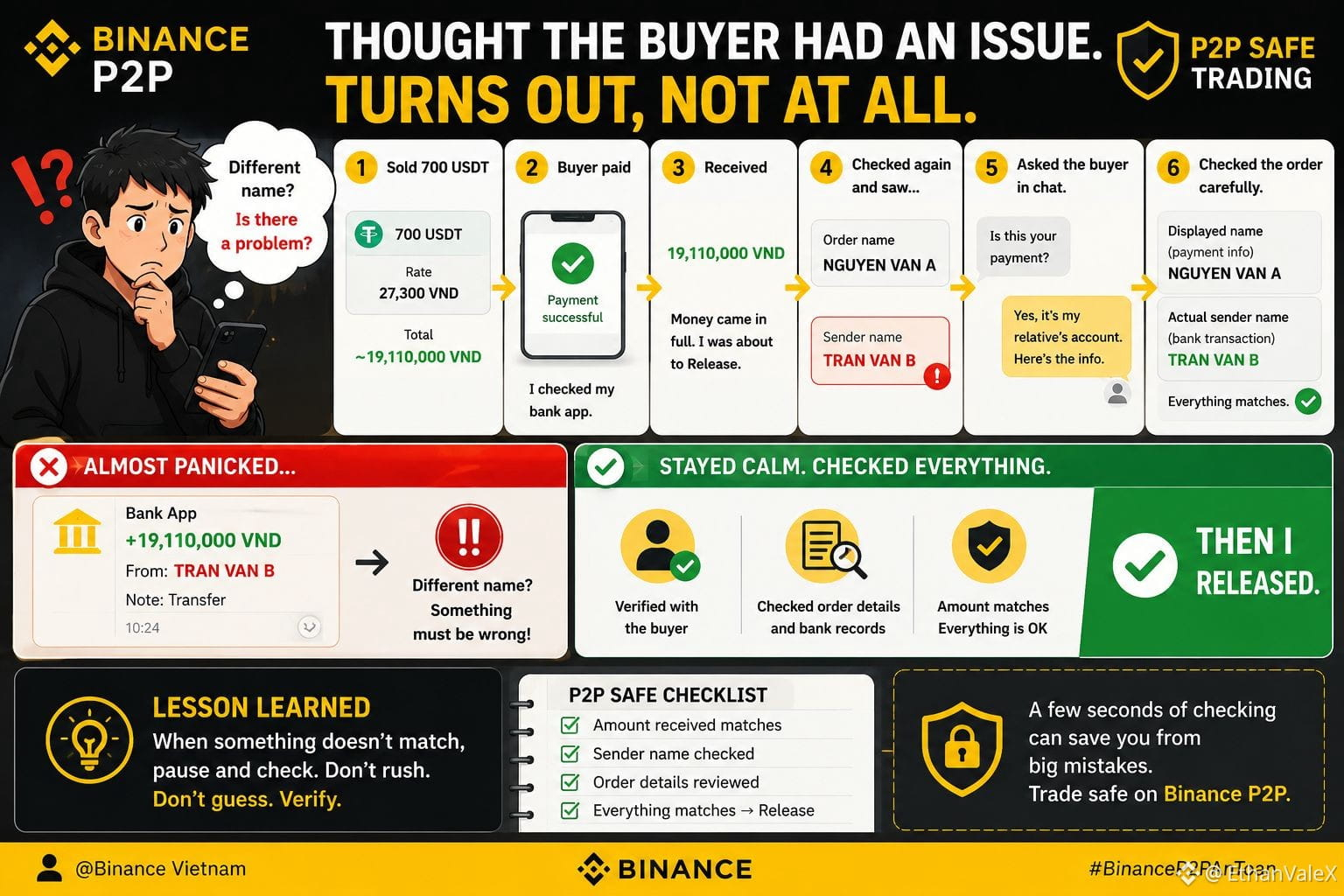
Tưởng người mua có vấn đề. Hóa ra không phải vậy.
Đợt đó mình có việc cần tiền nên lên Binance P2P bán 700 USDT, rate lúc ấy khoảng 27.300 VND, tổng cộng gần 19,11 triệu VND.
Mình chọn một Merchant có lịch sử giao dịch khá ổn, đặt lệnh xong thì chờ người mua thanh toán.
Một lúc sau người mua báo đã chuyển tiền. Mình mở app ngân hàng ra check, thấy đúng 19,11 triệu VND vừa vào tài khoản.
Tiền đủ, nên mình định bấm Release luôn.
Nhưng trước khi bấm, mình nhìn lại thông tin thanh toán thêm lần nữa và thấy tên người chuyển không giống tên trên Order.
Lúc đó mình hơi rén thật. Gần 20 triệu đã vào tài khoản nhưng tên người chuyển lại khác, mình nghĩ bụng chắc phải có vấn đề gì rồi.
Mình nhắn ngay trong chat Binance P2P hỏi người mua. Bạn ấy giải thích đây là tài khoản của người thân và gửi thêm thông tin cho mình.
Mình vẫn chưa Release.
Ngồi check lại Order, mình mới phát hiện ra một chuyện: tên mình đang nhìn là tên hiển thị ở thông tin thanh toán, còn tên người chuyển thực tế lại nằm ở phần giao dịch ngân hàng. Hai thông tin này không phải lúc nào mình cũng nhìn đúng vị trí ngay từ đầu.
Mình đối chiếu lại toàn bộ thông tin, số tiền 19,11 triệu cũng khớp. Lúc đó mới thở phào, hóa ra mình đã tự làm mình hoảng vì nhìn thông tin quá nhanh.
May là mình chưa vội Release, và cũng chưa vội kết luận người mua có vấn đề.
Từ vụ này mình mới rút kinh nghiệm: giao dịch P2P thấy một chi tiết không khớp thì dừng lại kiểm tra trước, đừng vội đoán.
Anh em giao dịch P2P cứ nhớ một bước này thôi: tiền vào đủ rồi cũng nên check lại tên người chuyển và Order trước khi Release nhé.
@Binance Vietnam #BinanceP2PAnToan $CYS
Đợt đó mình có việc cần tiền nên lên Binance P2P bán 700 USDT, rate lúc ấy khoảng 27.300 VND, tổng cộng gần 19,11 triệu VND.
Mình chọn một Merchant có lịch sử giao dịch khá ổn, đặt lệnh xong thì chờ người mua thanh toán.
Một lúc sau người mua báo đã chuyển tiền. Mình mở app ngân hàng ra check, thấy đúng 19,11 triệu VND vừa vào tài khoản.
Tiền đủ, nên mình định bấm Release luôn.
Nhưng trước khi bấm, mình nhìn lại thông tin thanh toán thêm lần nữa và thấy tên người chuyển không giống tên trên Order.
Lúc đó mình hơi rén thật. Gần 20 triệu đã vào tài khoản nhưng tên người chuyển lại khác, mình nghĩ bụng chắc phải có vấn đề gì rồi.
Mình nhắn ngay trong chat Binance P2P hỏi người mua. Bạn ấy giải thích đây là tài khoản của người thân và gửi thêm thông tin cho mình.
Mình vẫn chưa Release.
Ngồi check lại Order, mình mới phát hiện ra một chuyện: tên mình đang nhìn là tên hiển thị ở thông tin thanh toán, còn tên người chuyển thực tế lại nằm ở phần giao dịch ngân hàng. Hai thông tin này không phải lúc nào mình cũng nhìn đúng vị trí ngay từ đầu.
Mình đối chiếu lại toàn bộ thông tin, số tiền 19,11 triệu cũng khớp. Lúc đó mới thở phào, hóa ra mình đã tự làm mình hoảng vì nhìn thông tin quá nhanh.
May là mình chưa vội Release, và cũng chưa vội kết luận người mua có vấn đề.
Từ vụ này mình mới rút kinh nghiệm: giao dịch P2P thấy một chi tiết không khớp thì dừng lại kiểm tra trước, đừng vội đoán.
Anh em giao dịch P2P cứ nhớ một bước này thôi: tiền vào đủ rồi cũng nên check lại tên người chuyển và Order trước khi Release nhé.
@Binance Vietnam #BinanceP2PAnToan $CYS
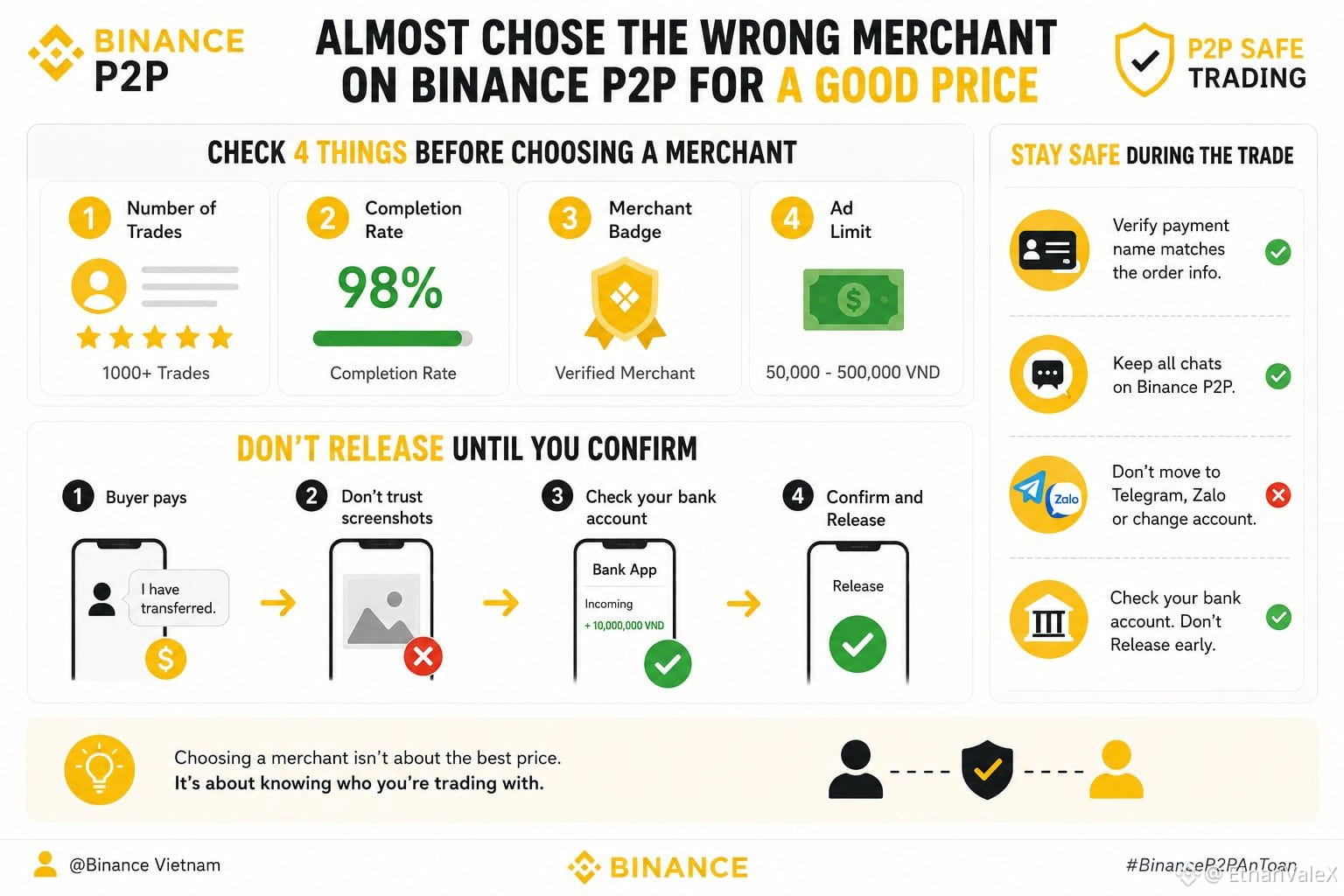
Mình suýt chọn sai Merchant trên Binance P2P vì một mức giá tốt
Mình từng nghĩ chọn Merchant trên Binance P2P rất đơn giản: thấy giá tốt thì chọn. Sau vài lần giao dịch, mình mới nhận ra mức giá chỉ là một phần của quyết định.
Bây giờ, trước khi chọn một Merchant, mình thường nhìn qua 4 thứ: số lượng giao dịch, Completion Rate, Merchant Badge và giới hạn quảng cáo.
Số lượng giao dịch giúp mình có thêm chút thông tin về lịch sử của Merchant. Mình không nghĩ nhiều giao dịch đồng nghĩa với an toàn tuyệt đối, nhưng nếu hai bên có mức giá gần nhau, mình thường nghiêng về bên có lịch sử rõ ràng hơn.
Completion Rate cũng là con số mình để ý. Nếu điều kiện giữa hai quảng cáo không khác nhau nhiều, mình thường ưu tiên Merchant có tỷ lệ hoàn tất tốt hơn. Merchant Badge cũng vậy. Trước đây mình hay bỏ qua, giờ mình luôn xem qua hồ sơ trước khi giao dịch.
Giới hạn quảng cáo thì đơn giản hơn. Mình chỉ kiểm tra số tiền cần mua hoặc bán có nằm trong khoảng Merchant hỗ trợ hay không. Không phù hợp thì mình chọn quảng cáo khác.
Nhưng chọn Merchant xong chưa có nghĩa là mình giao dịch ngay. Mình vẫn đối chiếu tên tài khoản thanh toán với thông tin trên đơn hàng và giữ mọi trao đổi trên Binance P2P. Nếu đối tác muốn chuyển sang Telegram, Zalo hoặc đổi tài khoản giữa chừng, mình sẽ dừng lại.
Đến bước thanh toán, mình cũng không Release chỉ vì nhận được ảnh chụp màn hình hay tin nhắn “đã chuyển tiền”. Mình tự kiểm tra tài khoản và chỉ mở khóa crypto khi xác nhận tiền đã thực sự vào.
Với mình, chọn Merchant không phải tìm giá tốt nhất. Quan trọng là biết mình đang giao dịch với ai trước khi bấm Confirm.
@Binance Vietnam #BinanceP2PAnToan
$GRVT #CreatorpadVN
Mình từng nghĩ chọn Merchant trên Binance P2P rất đơn giản: thấy giá tốt thì chọn. Sau vài lần giao dịch, mình mới nhận ra mức giá chỉ là một phần của quyết định.
Bây giờ, trước khi chọn một Merchant, mình thường nhìn qua 4 thứ: số lượng giao dịch, Completion Rate, Merchant Badge và giới hạn quảng cáo.
Số lượng giao dịch giúp mình có thêm chút thông tin về lịch sử của Merchant. Mình không nghĩ nhiều giao dịch đồng nghĩa với an toàn tuyệt đối, nhưng nếu hai bên có mức giá gần nhau, mình thường nghiêng về bên có lịch sử rõ ràng hơn.
Completion Rate cũng là con số mình để ý. Nếu điều kiện giữa hai quảng cáo không khác nhau nhiều, mình thường ưu tiên Merchant có tỷ lệ hoàn tất tốt hơn. Merchant Badge cũng vậy. Trước đây mình hay bỏ qua, giờ mình luôn xem qua hồ sơ trước khi giao dịch.
Giới hạn quảng cáo thì đơn giản hơn. Mình chỉ kiểm tra số tiền cần mua hoặc bán có nằm trong khoảng Merchant hỗ trợ hay không. Không phù hợp thì mình chọn quảng cáo khác.
Nhưng chọn Merchant xong chưa có nghĩa là mình giao dịch ngay. Mình vẫn đối chiếu tên tài khoản thanh toán với thông tin trên đơn hàng và giữ mọi trao đổi trên Binance P2P. Nếu đối tác muốn chuyển sang Telegram, Zalo hoặc đổi tài khoản giữa chừng, mình sẽ dừng lại.
Đến bước thanh toán, mình cũng không Release chỉ vì nhận được ảnh chụp màn hình hay tin nhắn “đã chuyển tiền”. Mình tự kiểm tra tài khoản và chỉ mở khóa crypto khi xác nhận tiền đã thực sự vào.
Với mình, chọn Merchant không phải tìm giá tốt nhất. Quan trọng là biết mình đang giao dịch với ai trước khi bấm Confirm.
@Binance Vietnam #BinanceP2PAnToan
$GRVT #CreatorpadVN
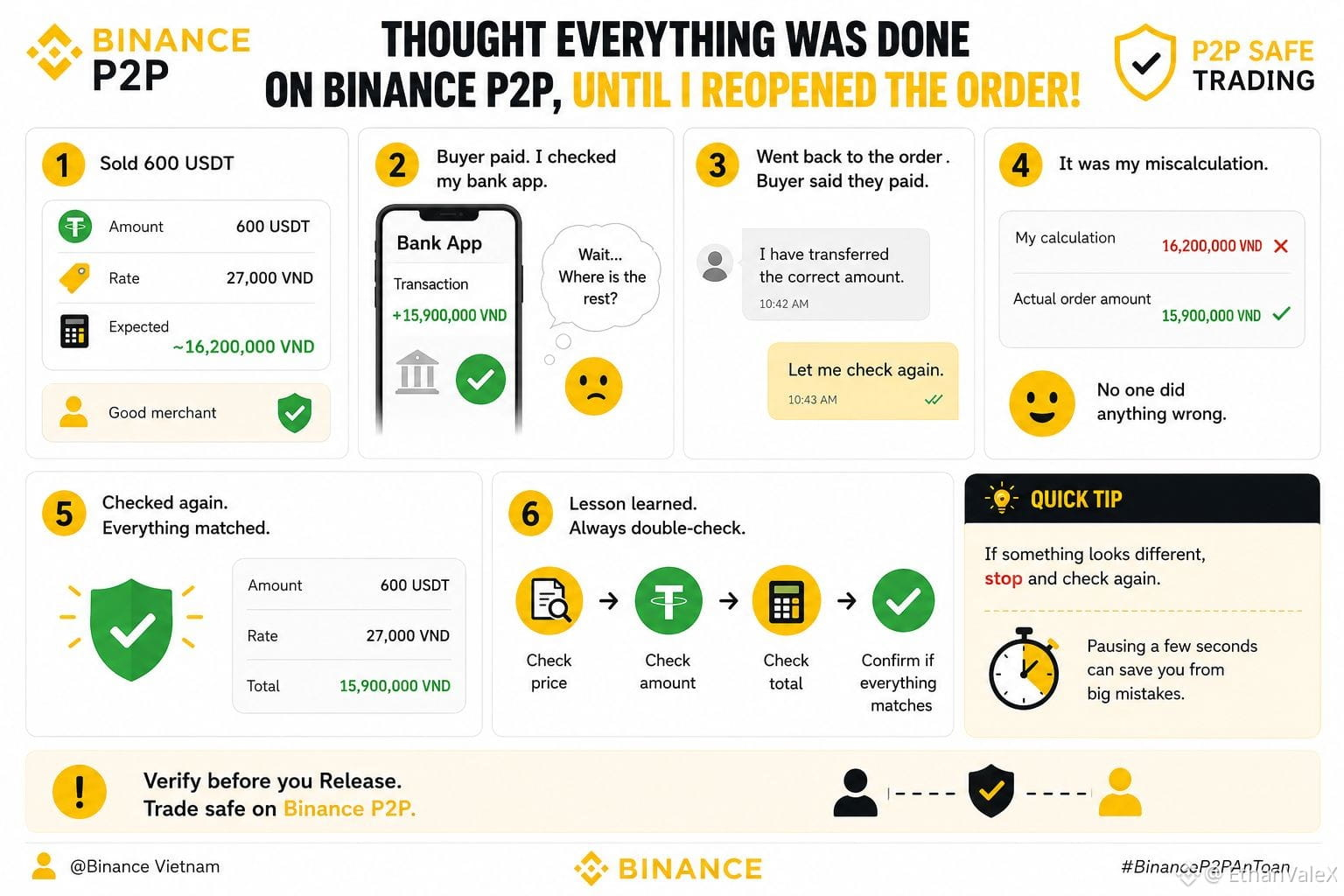
Tưởng mọi thứ đã xong trên Binance P2P, cho đến khi mình mở lại Order!!!
Chuyện là mình có bán 600 USDT trên Binance P2P, lúc đó rate khoảng 27.000 VND, tính ra mình dự kiến nhận khoảng 16,2 triệu VND.
Mình chọn một Merchant có lịch sử giao dịch và tỷ lệ hoàn tất khá ổn. Người mua thanh toán xong, mình mở app ngân hàng kiểm tra thì thấy chỉ có 15,9 triệu vào tài khoản.
Lúc đó mình nghĩ ngay: "Ủa, thiếu gần 300K?"
Mình quay lại Order kiểm tra. Người mua cũng gửi thông tin giao dịch và nói đã chuyển đúng số tiền. Mình định hỏi lại ngay, nhưng ngồi check Order thêm lần nữa.
Hóa ra 16,2 triệu là số tiền mình tự tính theo rate lúc đầu, còn 15,9 triệu mới là tổng tiền thực tế của Order sau khi thông tin được cập nhật.
Merchant không chuyển thiếu. Người mua cũng không làm gì sai. Mình mới là người nhìn nhầm.
May là mình chưa vội Release hay chuyển sang kênh khác để xử lý. Mình đối chiếu lại số lượng USDT, rate và tổng tiền trong Order thì mọi thứ đều khớp.
Từ lần đó mình rút kinh nghiệm: trước khi xác nhận P2P, mình luôn check lại giá, số lượng và tổng tiền cuối cùng. Nếu có gì khác với tính toán ban đầu, mình sẽ dừng lại kiểm tra.
Anh em giao dịch nhanh chắc cũng từng có lúc nhìn một đằng rồi bấm một nẻo như mình.
Check kỹ Order trước khi giao dịch, nhất là khi số tiền lên đến vài chục triệu nhé anh em.
@Binance Vietnam #BinanceP2PAnToan
Chuyện là mình có bán 600 USDT trên Binance P2P, lúc đó rate khoảng 27.000 VND, tính ra mình dự kiến nhận khoảng 16,2 triệu VND.
Mình chọn một Merchant có lịch sử giao dịch và tỷ lệ hoàn tất khá ổn. Người mua thanh toán xong, mình mở app ngân hàng kiểm tra thì thấy chỉ có 15,9 triệu vào tài khoản.
Lúc đó mình nghĩ ngay: "Ủa, thiếu gần 300K?"
Mình quay lại Order kiểm tra. Người mua cũng gửi thông tin giao dịch và nói đã chuyển đúng số tiền. Mình định hỏi lại ngay, nhưng ngồi check Order thêm lần nữa.
Hóa ra 16,2 triệu là số tiền mình tự tính theo rate lúc đầu, còn 15,9 triệu mới là tổng tiền thực tế của Order sau khi thông tin được cập nhật.
Merchant không chuyển thiếu. Người mua cũng không làm gì sai. Mình mới là người nhìn nhầm.
May là mình chưa vội Release hay chuyển sang kênh khác để xử lý. Mình đối chiếu lại số lượng USDT, rate và tổng tiền trong Order thì mọi thứ đều khớp.
Từ lần đó mình rút kinh nghiệm: trước khi xác nhận P2P, mình luôn check lại giá, số lượng và tổng tiền cuối cùng. Nếu có gì khác với tính toán ban đầu, mình sẽ dừng lại kiểm tra.
Anh em giao dịch nhanh chắc cũng từng có lúc nhìn một đằng rồi bấm một nẻo như mình.
Check kỹ Order trước khi giao dịch, nhất là khi số tiền lên đến vài chục triệu nhé anh em.
@Binance Vietnam #BinanceP2PAnToan
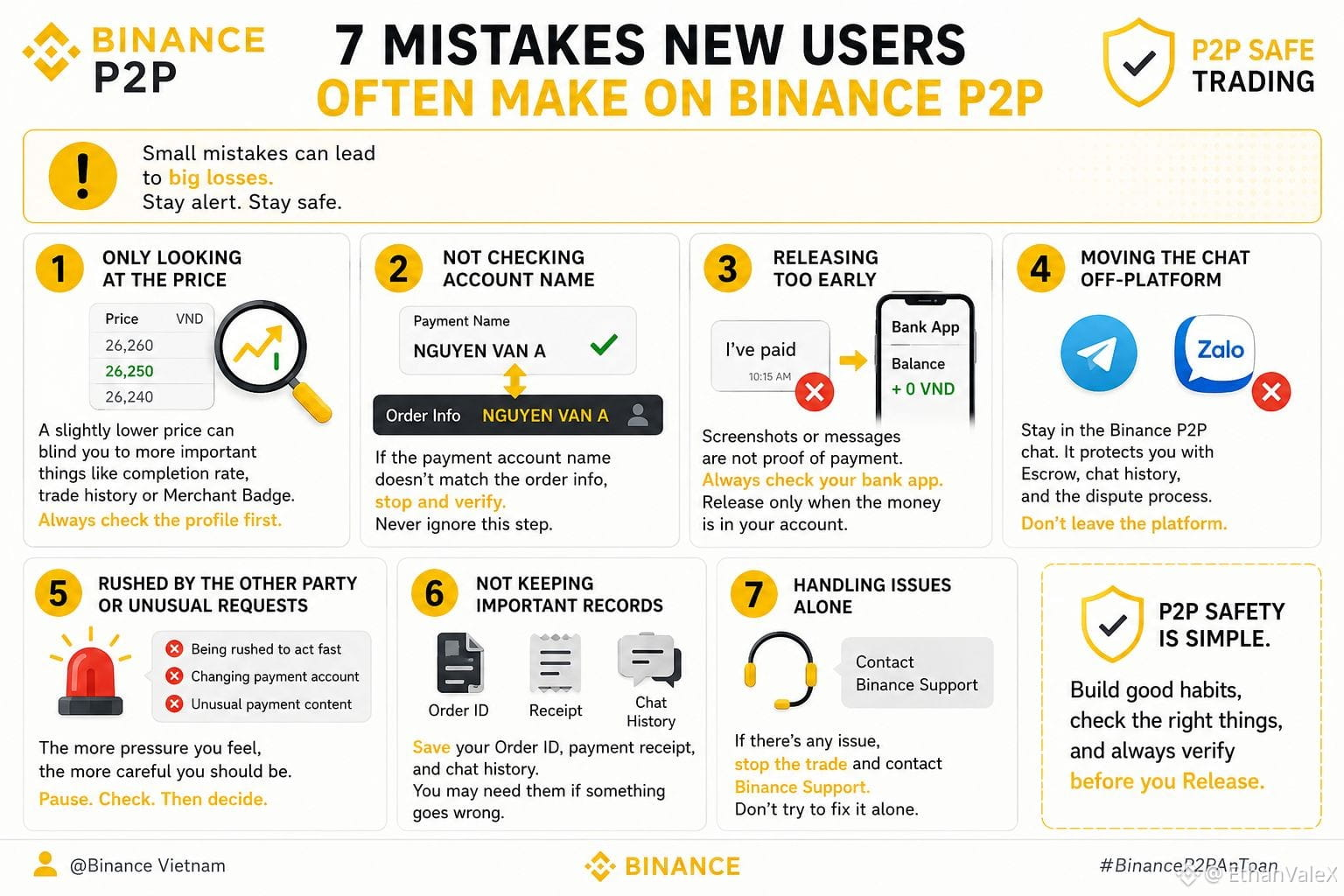
Người mới thường mắc 7 sai lầm này trên Binance P2P
Mình từng nghĩ giao dịch Binance P2P khá đơn giản: tìm giá tốt, chuyển tiền, nhận crypto. Sau vài lần giao dịch, mình mới nhận ra phần dễ nhất lại là bấm Buy hoặc Sell. Những sai sót thường nằm ở vài giây trước và sau đó.
Sai lầm đầu tiên là chỉ nhìn giá. Chênh lệch một chút đôi khi khiến mình bỏ qua những thứ quan trọng hơn như tỷ lệ hoàn tất, lịch sử giao dịch hay Merchant Badge. Bây giờ mình luôn xem hồ sơ đối tác trước khi nhìn lại mức giá.
Một lỗi khác là không đối chiếu tên tài khoản thanh toán với thông tin trong đơn hàng. Mình không xem đây là bước thừa, vì chỉ cần thông tin không khớp là mình sẽ dừng lại kiểm tra.
Điều mình đặc biệt tránh là Release quá sớm. Ảnh chụp màn hình hay tin nhắn “đã chuyển tiền” không phải bằng chứng tiền đã vào tài khoản. Mình luôn mở ứng dụng ngân hàng và kiểm tra giao dịch thực tế trước khi mở khóa crypto.
Mình cũng không chuyển cuộc trò chuyện sang Telegram hay Zalo chỉ vì đối tác nói “cho tiện”. Giữ mọi thứ trên Binance P2P giúp mình có Escrow, lịch sử chat và quy trình khiếu nại nếu phát sinh vấn đề.
Một dấu hiệu khác mình luôn để ý là bị thúc ép xử lý ngay, đổi tài khoản thanh toán giữa chừng hoặc xuất hiện nội dung chuyển khoản bất thường. Càng bị giục, mình càng kiểm tra kỹ.
Cuối cùng, mình luôn giữ Order ID, biên lai và lịch sử chat. Nếu có sự cố, mình sẽ dừng giao dịch và liên hệ Hỗ trợ Binance thay vì tự xử lý tiếp.
P2P an toàn không cần quá phức tạp. Với mình, chỉ cần bỏ vài thói quen xấu và kiểm tra đúng những thứ quan trọng trước khi Release là đã khác rất nhiều.
@Binance Vietnam #BinanceP2PAnToan
Mình từng nghĩ giao dịch Binance P2P khá đơn giản: tìm giá tốt, chuyển tiền, nhận crypto. Sau vài lần giao dịch, mình mới nhận ra phần dễ nhất lại là bấm Buy hoặc Sell. Những sai sót thường nằm ở vài giây trước và sau đó.
Sai lầm đầu tiên là chỉ nhìn giá. Chênh lệch một chút đôi khi khiến mình bỏ qua những thứ quan trọng hơn như tỷ lệ hoàn tất, lịch sử giao dịch hay Merchant Badge. Bây giờ mình luôn xem hồ sơ đối tác trước khi nhìn lại mức giá.
Một lỗi khác là không đối chiếu tên tài khoản thanh toán với thông tin trong đơn hàng. Mình không xem đây là bước thừa, vì chỉ cần thông tin không khớp là mình sẽ dừng lại kiểm tra.
Điều mình đặc biệt tránh là Release quá sớm. Ảnh chụp màn hình hay tin nhắn “đã chuyển tiền” không phải bằng chứng tiền đã vào tài khoản. Mình luôn mở ứng dụng ngân hàng và kiểm tra giao dịch thực tế trước khi mở khóa crypto.
Mình cũng không chuyển cuộc trò chuyện sang Telegram hay Zalo chỉ vì đối tác nói “cho tiện”. Giữ mọi thứ trên Binance P2P giúp mình có Escrow, lịch sử chat và quy trình khiếu nại nếu phát sinh vấn đề.
Một dấu hiệu khác mình luôn để ý là bị thúc ép xử lý ngay, đổi tài khoản thanh toán giữa chừng hoặc xuất hiện nội dung chuyển khoản bất thường. Càng bị giục, mình càng kiểm tra kỹ.
Cuối cùng, mình luôn giữ Order ID, biên lai và lịch sử chat. Nếu có sự cố, mình sẽ dừng giao dịch và liên hệ Hỗ trợ Binance thay vì tự xử lý tiếp.
P2P an toàn không cần quá phức tạp. Với mình, chỉ cần bỏ vài thói quen xấu và kiểm tra đúng những thứ quan trọng trước khi Release là đã khác rất nhiều.
@Binance Vietnam #BinanceP2PAnToan
@Binance Vietnam #BinanceP2PAnToan
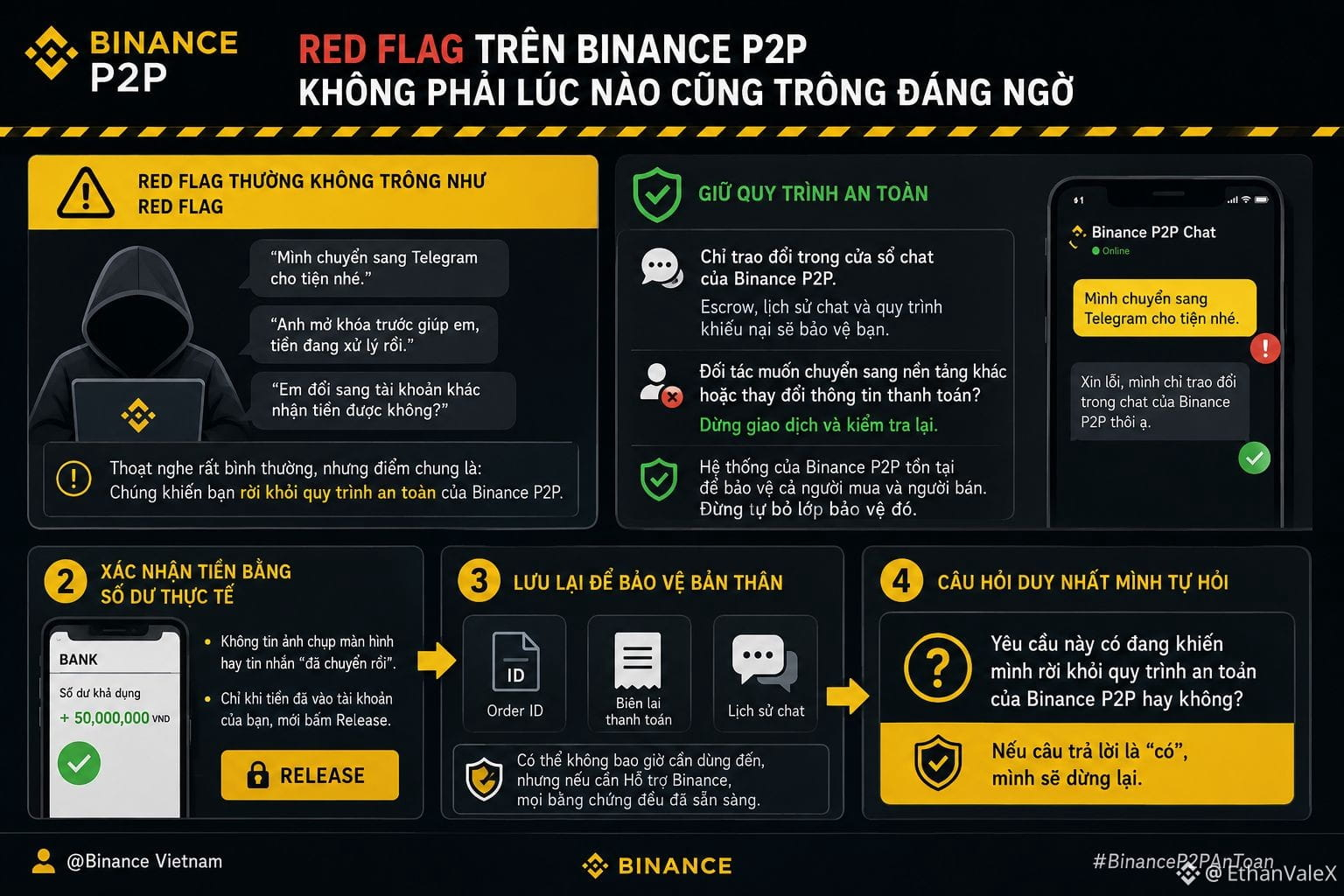
Red flag trên Binance P2P không phải lúc nào cũng trông đáng ngờ
Điều mình nhận ra sau nhiều lần giao dịch trên Binance P2P là một red flag hiếm khi xuất hiện theo cách mọi người vẫn tưởng.
Không ai nhắn: "Tôi sắp lừa bạn."
Thay vào đó, họ có thể nói: "Mình chuyển sang Telegram cho tiện nhé." Hoặc: "Anh mở khóa trước giúp em, tiền đang xử lý rồi." Thậm chí chỉ là: "Em đổi sang tài khoản khác nhận tiền được không?"
Thoạt nghe, những yêu cầu này đều rất bình thường. Nhưng mình nhận ra chúng có một điểm chung: chúng đều khiến mình rời khỏi quy trình an toàn mà Binance P2P đã thiết lập.
Vì vậy, mình có một nguyên tắc rất đơn giản. Mình chỉ trao đổi trong cửa sổ chat của Binance P2P, nơi Escrow, lịch sử chat và quy trình khiếu nại có thể bảo vệ mình nếu xảy ra tranh chấp. Nếu đối tác muốn chuyển cuộc trò chuyện sang nền tảng khác hoặc thay đổi thông tin thanh toán giữa chừng, mình sẽ dừng giao dịch và kiểm tra lại.
Mình cũng không bao giờ bấm Release chỉ vì thấy ảnh chụp màn hình hay tin nhắn "đã chuyển rồi". Điều mình tin là số dư thực tế trong ứng dụng ngân hàng. Chỉ khi tiền đã vào tài khoản, mình mới hoàn tất giao dịch.
Sau đó, mình vẫn lưu lại Order ID, biên lai và lịch sử chat. Có thể sẽ không bao giờ cần dùng đến, nhưng nếu phải liên hệ Hỗ trợ Binance thì mọi thông tin đều đã sẵn sàng.
Bây giờ mình không còn cố đoán ai là người tốt hay người xấu. Mình chỉ tự hỏi một câu: Yêu cầu này có đang khiến mình rời khỏi quy trình an toàn của Binance P2P hay không? Nếu câu trả lời là "có", mình sẽ dừng lại.
Red flag trên Binance P2P không phải lúc nào cũng trông đáng ngờ
Điều mình nhận ra sau nhiều lần giao dịch trên Binance P2P là một red flag hiếm khi xuất hiện theo cách mọi người vẫn tưởng.
Không ai nhắn: "Tôi sắp lừa bạn."
Thay vào đó, họ có thể nói: "Mình chuyển sang Telegram cho tiện nhé." Hoặc: "Anh mở khóa trước giúp em, tiền đang xử lý rồi." Thậm chí chỉ là: "Em đổi sang tài khoản khác nhận tiền được không?"
Thoạt nghe, những yêu cầu này đều rất bình thường. Nhưng mình nhận ra chúng có một điểm chung: chúng đều khiến mình rời khỏi quy trình an toàn mà Binance P2P đã thiết lập.
Vì vậy, mình có một nguyên tắc rất đơn giản. Mình chỉ trao đổi trong cửa sổ chat của Binance P2P, nơi Escrow, lịch sử chat và quy trình khiếu nại có thể bảo vệ mình nếu xảy ra tranh chấp. Nếu đối tác muốn chuyển cuộc trò chuyện sang nền tảng khác hoặc thay đổi thông tin thanh toán giữa chừng, mình sẽ dừng giao dịch và kiểm tra lại.
Mình cũng không bao giờ bấm Release chỉ vì thấy ảnh chụp màn hình hay tin nhắn "đã chuyển rồi". Điều mình tin là số dư thực tế trong ứng dụng ngân hàng. Chỉ khi tiền đã vào tài khoản, mình mới hoàn tất giao dịch.
Sau đó, mình vẫn lưu lại Order ID, biên lai và lịch sử chat. Có thể sẽ không bao giờ cần dùng đến, nhưng nếu phải liên hệ Hỗ trợ Binance thì mọi thông tin đều đã sẵn sàng.
Bây giờ mình không còn cố đoán ai là người tốt hay người xấu. Mình chỉ tự hỏi một câu: Yêu cầu này có đang khiến mình rời khỏi quy trình an toàn của Binance P2P hay không? Nếu câu trả lời là "có", mình sẽ dừng lại.
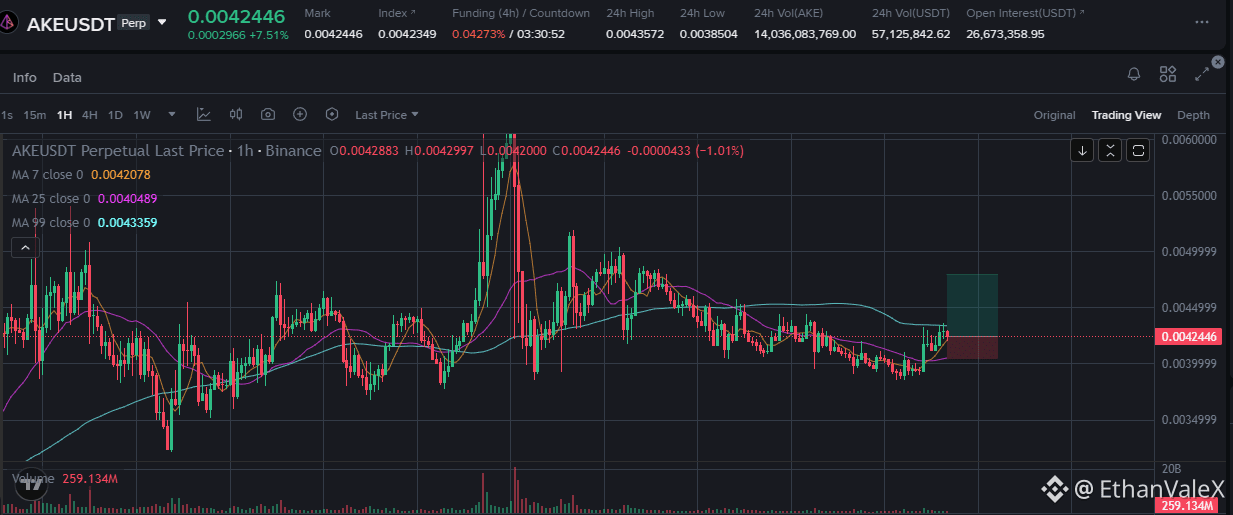
LONG $AKE
Entry 1
0.00422–0.00424 nếu giá giữ được hỗ trợ và xuất hiện nến xác nhận tăng.
Entry 2
Chờ nến 1H đóng trên 0.00434 (vượt MA99), sau đó canh nhịp retest để Long.
Stop Loss
Dưới 0.00405.
Take Profit
TP1: 0.00450 TP2: 0.00480 TP3: 0.00520 nếu breakout mạnh.
$AKE
Entry 1
0.00422–0.00424 nếu giá giữ được hỗ trợ và xuất hiện nến xác nhận tăng.
Entry 2
Chờ nến 1H đóng trên 0.00434 (vượt MA99), sau đó canh nhịp retest để Long.
Stop Loss
Dưới 0.00405.
Take Profit
TP1: 0.00450 TP2: 0.00480 TP3: 0.00520 nếu breakout mạnh.
$AKE
Войдите, чтобы посмотреть больше материала