
Crypto Candle Craft
967 Публикации

Crypto Candle Craft
Отправить жалобу
Заблокировать пользователя
Market breakdowns | FUD counter | Crypto conviction 💛
Открытая сделка
Трейдер с частыми сделками
1.8 г
466 подписок(и/а)
682 подписчиков(а)
2.2K+ понравилось
Посты
Портфель
Все
Цитирования
Видео
Активно
PINNED

Статья
Getting Binance Square Posting to Work in OpenClaw on Windows (Without Coding Experience)Recently I experimented with posting directly to Binance Square using OpenClaw on Windows, even though I don’t come from a coding background. With the help of Codex guiding the setup and debugging, I eventually got the entire workflow working. The journey turned out to be surprisingly educational, and I’m sharing it here for anyone who might run into similar issues.
🎯 The Goal
The objective was simple: install OpenClaw on Windows, connect the Binance square-post skill, attach a Binance Square API key, and publish a post directly from OpenClaw. On paper, this sounded straightforward. In practice, the process revealed several subtle challenges—especially when running everything in a Windows environment.
⚙️ Starting With a Clean Setup
One of the first lessons was that clean installations matter. Earlier attempts had leftover configurations and old sessions that created confusion. After removing the previous setup and starting fresh—with a local UI, OpenAI as the model provider, and a clean workspace—the environment became much easier to debug.
This step alone helped isolate real runtime problems from configuration leftovers.
🔧 Installing the Binance Square Skill
After installation, the Binance square-post skill appeared correctly in the OpenClaw dashboard. That confirmed skill discovery was working.
However, something important became clear:
A skill showing up in the UI does not guarantee that it will execute correctly.
Even though the skill looked installed, posting attempts still failed.
🚨 The First Confusing Errors
When trying to publish posts, OpenClaw produced different types of errors: timeouts, generic conversational responses, and occasionally HTTP errors like 404 Not Found.
One message was particularly revealing:
“Action send requires a target.”
This suggested OpenClaw was treating the request as a generic messaging command rather than a Binance Square publishing action. At that point, it was clear the issue was happening during runtime execution rather than installation.
🧠 The Profile Setting That Changed Behavior
Another discovery involved OpenClaw’s tool profile settings. By default, new setups often run in a restricted messaging profile, which limits what the agent can execute.
Switching the profile from Messaging → Coding allowed the agent to behave more like an execution-capable assistant instead of a chat-only interface. After this change, OpenClaw became noticeably better at attempting tool actions.
For Windows users, this small setting can make a big difference.
💡 Why Using a Paid Model Helped
During testing, free-tier AI models caused frequent rate-limit interruptions. A single OpenClaw prompt can trigger multiple model requests—reasoning, retries, tool calls, and subagent steps.
Because of this, free-tier limits were reached quickly and made debugging harder.
Adding a small paid OpenAI API balance (even $5) stabilized the environment. With fewer rate-limit errors, it became much easier to focus on the actual issue rather than troubleshooting model quotas.
🔍 Logs Revealed the Real Problem
The biggest breakthrough came when inspecting OpenClaw session logs on Windows.The logs showed that OpenClaw was sometimes ignoring the exact instructions defined in the Binance skill and generating its own request structure.
Two issues appeared repeatedly:
the runtime attempted the wrong API endpointit sometimes used incorrect headers
The correct Binance Square endpoint should be:
https://www.binance.com/bapi/composite/v1/public/pgc/openApi/content/add
and the required header is:
X-Square-OpenAPI-Key
The skill file itself was correct—but the runtime wasn’t always following it.
🪟 The Windows Command Issue
Another subtle challenge involved Windows command execution.
OpenClaw frequently generated Unix-style curl commands with -H flags. On Windows PowerShell, however, curl is often just an alias for Invoke-WebRequest, which behaves differently from Linux curl.
This meant commands that looked correct were actually breaking silently in PowerShell.
In other words, the issue wasn’t a mixed environment—it was a Windows runtime producing Linux-style commands.
🧪 Manually Testing the Binance API
To verify whether the problem was related to Binance itself, the API call was tested directly in native PowerShell.
Once the correct endpoint, headers, and JSON payload were used, the API responded properly. Initial responses confirmed the request format was valid, and after retrying with the correct key, the response returned a success code along with a valid post ID and share link.
This confirmed that:
the API workedthe endpoint workedthe key workedthe payload worked
The only remaining issue was OpenClaw’s Windows execution path.
🛠️ The Fix That Finally Worked
Instead of modifying the official Binance skill file, the solution was to create a Windows-safe wrapper inside the OpenClaw workspace.
This wrapper simply executed a PowerShell script that always sent the correct request to Binance. It read the API key locally, applied the correct headers, used the proper endpoint, and returned the post URL once the request succeeded. By doing this, the unreliable parts of the process—incorrect curl syntax and endpoint guessing—were completely removed.
✅ Final Result
Once OpenClaw started using the Windows-safe wrapper, posting worked consistently. Successful responses returned confirmation codes along with a post ID and a live Binance Square share link, proving that the full workflow was operational.
📌 Key Takeaways for Windows Users
If you’re trying to run Binance Square posting through OpenClaw on Windows, a few lessons from this journey can save a lot of time:
A skill being visible does not guarantee it will execute correctlyRuntime profiles can restrict tool executionFree AI model limits can complicate debuggingLogs are extremely valuable for diagnosing issuesWindows environments benefit from native PowerShell execution paths
🚀 Final Thoughts
What made this experience meaningful is that I completed the entire setup without prior coding experience.
Many technical tutorials assume familiarity with APIs, PowerShell, or agent runtimes. Starting from scratch, having Codex guide the debugging process step by step made the entire journey manageable.
In the end, the problem wasn’t installation or the Binance API itself—it was simply ensuring the runtime executed requests correctly in a Windows environment.
Once that piece was solved, everything worked. I published a simple message to Binance Square:
“Hello CZ!”
For someone without prior coding experience, seeing that post go live felt like a real milestone.
Now the only question left is:
Will @CZ reply? 👀
#BinanceSquare #OPENCLAW #Aİ
Getting Binance Square Posting to Work in OpenClaw on Windows (Without Coding Experience)
Recently I experimented with posting directly to Binance Square using OpenClaw on Windows, even though I don’t come from a coding background. With the help of Codex guiding the setup and debugging, I eventually got the entire workflow working. The journey turned out to be surprisingly educational, and I’m sharing it here for anyone who might run into similar issues.
🎯 The Goal
The objective was simple: install OpenClaw on Windows, connect the Binance square-post skill, attach a Binance Square API key, and publish a post directly from OpenClaw. On paper, this sounded straightforward. In practice, the process revealed several subtle challenges—especially when running everything in a Windows environment.
⚙️ Starting With a Clean Setup
One of the first lessons was that clean installations matter. Earlier attempts had leftover configurations and old sessions that created confusion. After removing the previous setup and starting fresh—with a local UI, OpenAI as the model provider, and a clean workspace—the environment became much easier to debug.
This step alone helped isolate real runtime problems from configuration leftovers.
🔧 Installing the Binance Square Skill
After installation, the Binance square-post skill appeared correctly in the OpenClaw dashboard. That confirmed skill discovery was working.
However, something important became clear:
A skill showing up in the UI does not guarantee that it will execute correctly.
Even though the skill looked installed, posting attempts still failed.
🚨 The First Confusing Errors
When trying to publish posts, OpenClaw produced different types of errors: timeouts, generic conversational responses, and occasionally HTTP errors like 404 Not Found.
One message was particularly revealing:
“Action send requires a target.”
This suggested OpenClaw was treating the request as a generic messaging command rather than a Binance Square publishing action. At that point, it was clear the issue was happening during runtime execution rather than installation.
🧠 The Profile Setting That Changed Behavior
Another discovery involved OpenClaw’s tool profile settings. By default, new setups often run in a restricted messaging profile, which limits what the agent can execute.
Switching the profile from Messaging → Coding allowed the agent to behave more like an execution-capable assistant instead of a chat-only interface. After this change, OpenClaw became noticeably better at attempting tool actions.
For Windows users, this small setting can make a big difference.
💡 Why Using a Paid Model Helped
During testing, free-tier AI models caused frequent rate-limit interruptions. A single OpenClaw prompt can trigger multiple model requests—reasoning, retries, tool calls, and subagent steps.
Because of this, free-tier limits were reached quickly and made debugging harder.
Adding a small paid OpenAI API balance (even $5) stabilized the environment. With fewer rate-limit errors, it became much easier to focus on the actual issue rather than troubleshooting model quotas.
🔍 Logs Revealed the Real Problem
The biggest breakthrough came when inspecting OpenClaw session logs on Windows.The logs showed that OpenClaw was sometimes ignoring the exact instructions defined in the Binance skill and generating its own request structure.
Two issues appeared repeatedly:
the runtime attempted the wrong API endpointit sometimes used incorrect headers
The correct Binance Square endpoint should be:
https://www.binance.com/bapi/composite/v1/public/pgc/openApi/content/add
and the required header is:
X-Square-OpenAPI-Key
The skill file itself was correct—but the runtime wasn’t always following it.
🪟 The Windows Command Issue
Another subtle challenge involved Windows command execution.
OpenClaw frequently generated Unix-style curl commands with -H flags. On Windows PowerShell, however, curl is often just an alias for Invoke-WebRequest, which behaves differently from Linux curl.
This meant commands that looked correct were actually breaking silently in PowerShell.
In other words, the issue wasn’t a mixed environment—it was a Windows runtime producing Linux-style commands.
🧪 Manually Testing the Binance API
To verify whether the problem was related to Binance itself, the API call was tested directly in native PowerShell.
Once the correct endpoint, headers, and JSON payload were used, the API responded properly. Initial responses confirmed the request format was valid, and after retrying with the correct key, the response returned a success code along with a valid post ID and share link.
This confirmed that:
the API workedthe endpoint workedthe key workedthe payload worked
The only remaining issue was OpenClaw’s Windows execution path.
🛠️ The Fix That Finally Worked
Instead of modifying the official Binance skill file, the solution was to create a Windows-safe wrapper inside the OpenClaw workspace.
This wrapper simply executed a PowerShell script that always sent the correct request to Binance. It read the API key locally, applied the correct headers, used the proper endpoint, and returned the post URL once the request succeeded. By doing this, the unreliable parts of the process—incorrect curl syntax and endpoint guessing—were completely removed.
✅ Final Result
Once OpenClaw started using the Windows-safe wrapper, posting worked consistently. Successful responses returned confirmation codes along with a post ID and a live Binance Square share link, proving that the full workflow was operational.
📌 Key Takeaways for Windows Users
If you’re trying to run Binance Square posting through OpenClaw on Windows, a few lessons from this journey can save a lot of time:
A skill being visible does not guarantee it will execute correctlyRuntime profiles can restrict tool executionFree AI model limits can complicate debuggingLogs are extremely valuable for diagnosing issuesWindows environments benefit from native PowerShell execution paths
🚀 Final Thoughts
What made this experience meaningful is that I completed the entire setup without prior coding experience.
Many technical tutorials assume familiarity with APIs, PowerShell, or agent runtimes. Starting from scratch, having Codex guide the debugging process step by step made the entire journey manageable.
In the end, the problem wasn’t installation or the Binance API itself—it was simply ensuring the runtime executed requests correctly in a Windows environment.
Once that piece was solved, everything worked. I published a simple message to Binance Square:
“Hello CZ!”
For someone without prior coding experience, seeing that post go live felt like a real milestone.
Now the only question left is:
Will @CZ reply? 👀
#BinanceSquare #OPENCLAW #Aİ
2
23
23.3k
PINNED
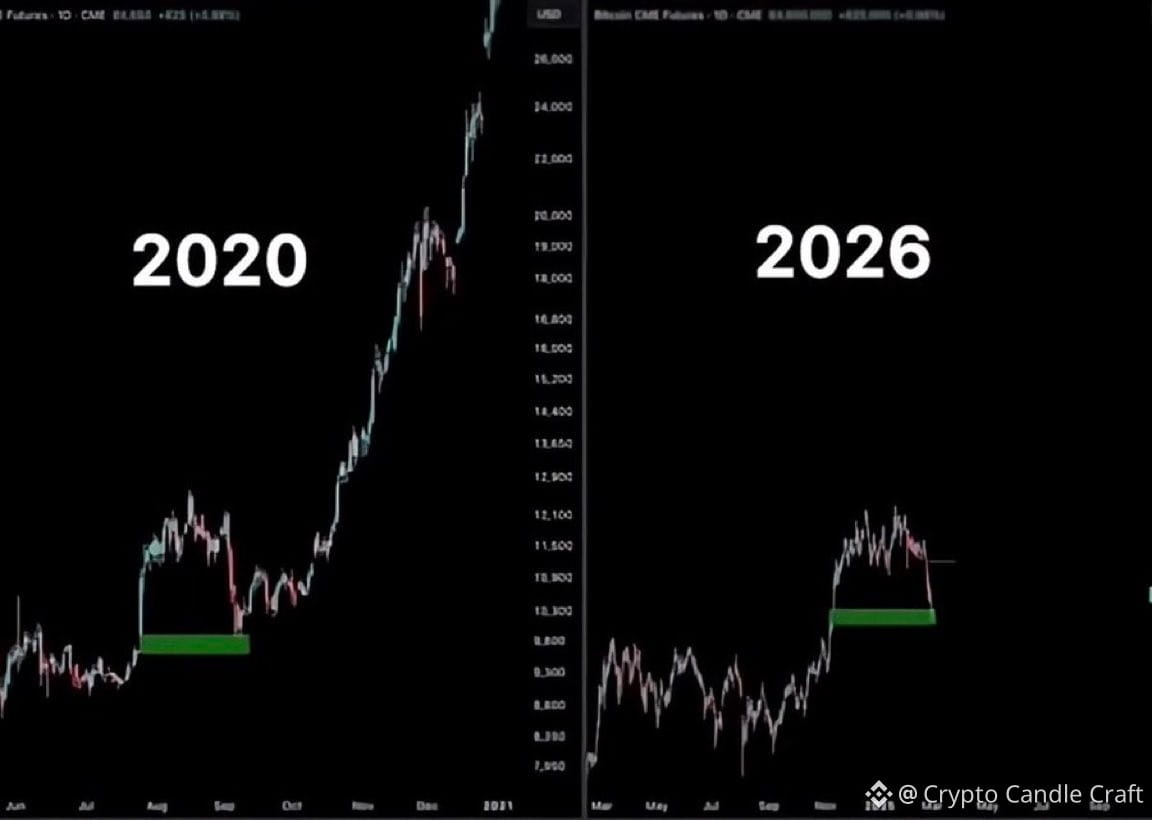
🟠 Bitcoin 2020 vs 2026: Is History About to Repeat?
Recent chart overlays comparing CME Bitcoin Futures consolidation in late 2020 — just before the explosive move from $20K → $64K — with current price action around $68K are gaining traction across the crypto community.
The structure shows a striking similarity:
📊 Extended sideways accumulation
📊 Support reclaim phase
📊 Pre-parabolic breakout setup
However, skeptics highlight:
⚠️ $BTC is down ~23% in the first 50 days of 2026
⚠️ ~46% correction from the $126K October peak
⚠️ Macro headwinds like Fed policy & strong USD still in play
This leaves the market split between:
🔁 A potential cycle repeat
📉 Or a deeper correction before the next leg up
If this truly mirrors 2020, the current consolidation may be the calm before another major expansion phase.
Always verify patterns with macro context — not just historical overlays.
#Bitcoin #CryptoNews #dyor
{future}(BTCUSDT)
🟠 Bitcoin 2020 vs 2026: Is History About to Repeat?
Recent chart overlays comparing CME Bitcoin Futures consolidation in late 2020 — just before the explosive move from $20K → $64K — with current price action around $68K are gaining traction across the crypto community.
The structure shows a striking similarity:
📊 Extended sideways accumulation
📊 Support reclaim phase
📊 Pre-parabolic breakout setup
However, skeptics highlight:
⚠️ $BTC is down ~23% in the first 50 days of 2026
⚠️ ~46% correction from the $126K October peak
⚠️ Macro headwinds like Fed policy & strong USD still in play
This leaves the market split between:
🔁 A potential cycle repeat
📉 Or a deeper correction before the next leg up
If this truly mirrors 2020, the current consolidation may be the calm before another major expansion phase.
Always verify patterns with macro context — not just historical overlays.
#Bitcoin #CryptoNews #dyor
4
2
24
12.7k

Статья
Crypto Needs Its Own Independent Global Institution. Here's Why.The crypto industry wants mass adoption. But are we building the institutional trust required to achieve it?
Look at what's happening across the industry:
The US CLARITY Act faces legislative uncertainty, leaving the industry without comprehensive market-structure clarity.Security incidents involving major exchanges like Binance and Bitget remind us that even established platforms face serious operational and cybersecurity risks.The EU's MiCA framework demonstrates the growing importance of regulatory oversight, but global regulatory fragmentation remains a challenge.FinCEN's enforcement action against MEXC highlights the consequences of inadequate compliance and cross-border regulatory challenges.
These are not isolated issues. They point towards a much bigger problem: the crypto industry lacks a unified, independent mechanism for accountability, trust and coordination.
Are We Recreating the Traditional Financial System?
One of the original promises of cryptocurrency was to reduce dependence on centralised intermediaries. Yet today, users increasingly depend on centralised exchanges that can restrict withdrawals, freeze accounts, impose compliance requirements and control access to funds.
Regulation is necessary. Security is essential. Compliance matters.
But who independently holds these institutions accountable? Where does an ordinary user go when they have a legitimate dispute with an exchange? Who coordinates the industry's response when a major security incident occurs?
We cannot expect individual exchanges to solve these problems independently.
My Proposal: A Global Crypto Accountability Network
I believe the industry should establish an independent, globally coordinated body bringing together:
Cryptocurrency exchanges and custodians.Blockchain foundations and ecosystem representatives.Cybersecurity firms and independent auditors.Legal and compliance professionals.Institutional investors and consumer representatives.
Its mandate would be straightforward:
1. Independent Security Standards
Establish common security, custody, transparency and operational standards for exchanges and digital asset service providers.
2. Industry-Wide Incident Coordination
Create a coordinated mechanism for reporting security incidents, sharing threat intelligence and facilitating recovery efforts.
3. Consumer Protection
Introduce independent complaint handling, dispute resolution and accountability mechanisms for participating members.
4. Regulatory Coordination
Help establish common industry standards that can complement existing regulatory frameworks across different jurisdictions.
5. Transparency and Accountability
Promote independently verified disclosures, regular assessments and publicly accessible certification records.
But There's One Important Difference.
This institution should itself operate on blockchain. Not another traditional industry association with a website and a membership database. Its governance, membership, decisions, voting and financial accountability should be transparent and independently verifiable through blockchain infrastructure.
It should be independently governed, with exchanges, technical experts and consumer representatives having balanced participation. No single exchange, foundation or group of token holders should be able to control it.
And importantly, it should not replace regulators or governments. It should complement them by providing the industry with common standards and independent accountability.
Why Would the Industry Participate?
Because trust is not just a regulatory requirement. It is a competitive advantage.
Independent certification could help exchanges build institutional credibility, improve relationships with banks and insurers, demonstrate operational maturity and increase confidence among ordinary users. It could also reduce duplicated compliance and assurance efforts across markets.
Imagine an industry where users can independently verify an exchange's security certification, institutional governance standards and incident history.Imagine a coordinated response when a major exchange or blockchain ecosystem is compromised.Imagine a global industry that takes responsibility for its own standards instead of waiting for the next crisis or government intervention.
The Bigger Picture
Crypto does not necessarily need more centralisation. It needs better coordination and accountability. We should not wait for another exchange hack, regulatory crackdown or consumer protection crisis to start discussing this. The industry has matured enough to take responsibility for building its own independent trust infrastructure.
Perhaps the next major milestone for crypto adoption will not be another blockchain, exchange or token. It will be the institution that helps the entire industry earn public trust.
What do you think? Is it time for the crypto industry to establish its own independent, blockchain-governed global accountability body?
@CZ
#crypto #blockchain #CryptoAdoption
Crypto Needs Its Own Independent Global Institution. Here's Why.
The crypto industry wants mass adoption. But are we building the institutional trust required to achieve it?
Look at what's happening across the industry:
The US CLARITY Act faces legislative uncertainty, leaving the industry without comprehensive market-structure clarity.Security incidents involving major exchanges like Binance and Bitget remind us that even established platforms face serious operational and cybersecurity risks.The EU's MiCA framework demonstrates the growing importance of regulatory oversight, but global regulatory fragmentation remains a challenge.FinCEN's enforcement action against MEXC highlights the consequences of inadequate compliance and cross-border regulatory challenges.
These are not isolated issues. They point towards a much bigger problem: the crypto industry lacks a unified, independent mechanism for accountability, trust and coordination.
Are We Recreating the Traditional Financial System?
One of the original promises of cryptocurrency was to reduce dependence on centralised intermediaries. Yet today, users increasingly depend on centralised exchanges that can restrict withdrawals, freeze accounts, impose compliance requirements and control access to funds.
Regulation is necessary. Security is essential. Compliance matters.
But who independently holds these institutions accountable? Where does an ordinary user go when they have a legitimate dispute with an exchange? Who coordinates the industry's response when a major security incident occurs?
We cannot expect individual exchanges to solve these problems independently.
My Proposal: A Global Crypto Accountability Network
I believe the industry should establish an independent, globally coordinated body bringing together:
Cryptocurrency exchanges and custodians.Blockchain foundations and ecosystem representatives.Cybersecurity firms and independent auditors.Legal and compliance professionals.Institutional investors and consumer representatives.
Its mandate would be straightforward:
1. Independent Security Standards
Establish common security, custody, transparency and operational standards for exchanges and digital asset service providers.
2. Industry-Wide Incident Coordination
Create a coordinated mechanism for reporting security incidents, sharing threat intelligence and facilitating recovery efforts.
3. Consumer Protection
Introduce independent complaint handling, dispute resolution and accountability mechanisms for participating members.
4. Regulatory Coordination
Help establish common industry standards that can complement existing regulatory frameworks across different jurisdictions.
5. Transparency and Accountability
Promote independently verified disclosures, regular assessments and publicly accessible certification records.
But There's One Important Difference.
This institution should itself operate on blockchain. Not another traditional industry association with a website and a membership database. Its governance, membership, decisions, voting and financial accountability should be transparent and independently verifiable through blockchain infrastructure.
It should be independently governed, with exchanges, technical experts and consumer representatives having balanced participation. No single exchange, foundation or group of token holders should be able to control it.
And importantly, it should not replace regulators or governments. It should complement them by providing the industry with common standards and independent accountability.
Why Would the Industry Participate?
Because trust is not just a regulatory requirement. It is a competitive advantage.
Independent certification could help exchanges build institutional credibility, improve relationships with banks and insurers, demonstrate operational maturity and increase confidence among ordinary users. It could also reduce duplicated compliance and assurance efforts across markets.
Imagine an industry where users can independently verify an exchange's security certification, institutional governance standards and incident history.Imagine a coordinated response when a major exchange or blockchain ecosystem is compromised.Imagine a global industry that takes responsibility for its own standards instead of waiting for the next crisis or government intervention.
The Bigger Picture
Crypto does not necessarily need more centralisation. It needs better coordination and accountability. We should not wait for another exchange hack, regulatory crackdown or consumer protection crisis to start discussing this. The industry has matured enough to take responsibility for building its own independent trust infrastructure.
Perhaps the next major milestone for crypto adoption will not be another blockchain, exchange or token. It will be the institution that helps the entire industry earn public trust.
What do you think? Is it time for the crypto industry to establish its own independent, blockchain-governed global accountability body?
@CZ
#crypto #blockchain #CryptoAdoption
121
@CZ did it. Now it's your turn! 😂💪
Here's my version of the viral CZ pose.
Challenge: Drop your own version of this picture. Let's see how creative the Binance community can get!
Tag me so I don't miss yours. 😂
#BinanceSquareFamily #CZ
@CZ did it. Now it's your turn! 😂💪
Here's my version of the viral CZ pose.
Challenge: Drop your own version of this picture. Let's see how creative the Binance community can get!
Tag me so I don't miss yours. 😂
#BinanceSquareFamily #CZ
Here's my version of the viral CZ pose.
Challenge: Drop your own version of this picture. Let's see how creative the Binance community can get!
Tag me so I don't miss yours. 😂
#BinanceSquareFamily #CZ

91
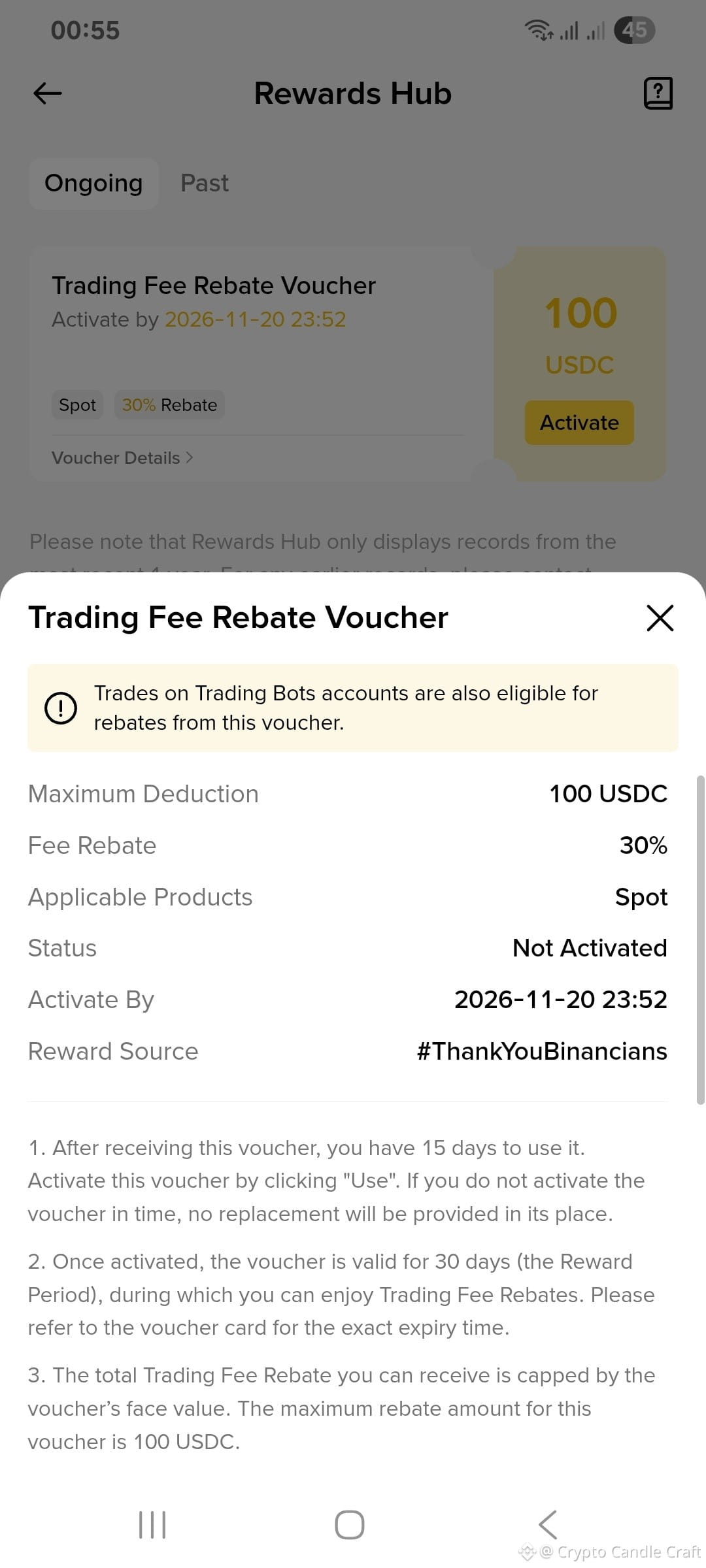
A big thank you to the Binance team for this 100 USDC Trading Fee Rebate Voucher! 💛
Really appreciate these rewards and the #ThankYouBinancians initiative.
One thought, though: I primarily trade Futures, while this voucher is applicable to Spot trading.
Wouldn't it be great if Binance allowed users to transfer or gift unused vouchers to other Binancians who could actually benefit from them?
Rather than letting a reward go unused, we could share the benefits with someone in the community.
Just an idea! What do you think, Binance?
187
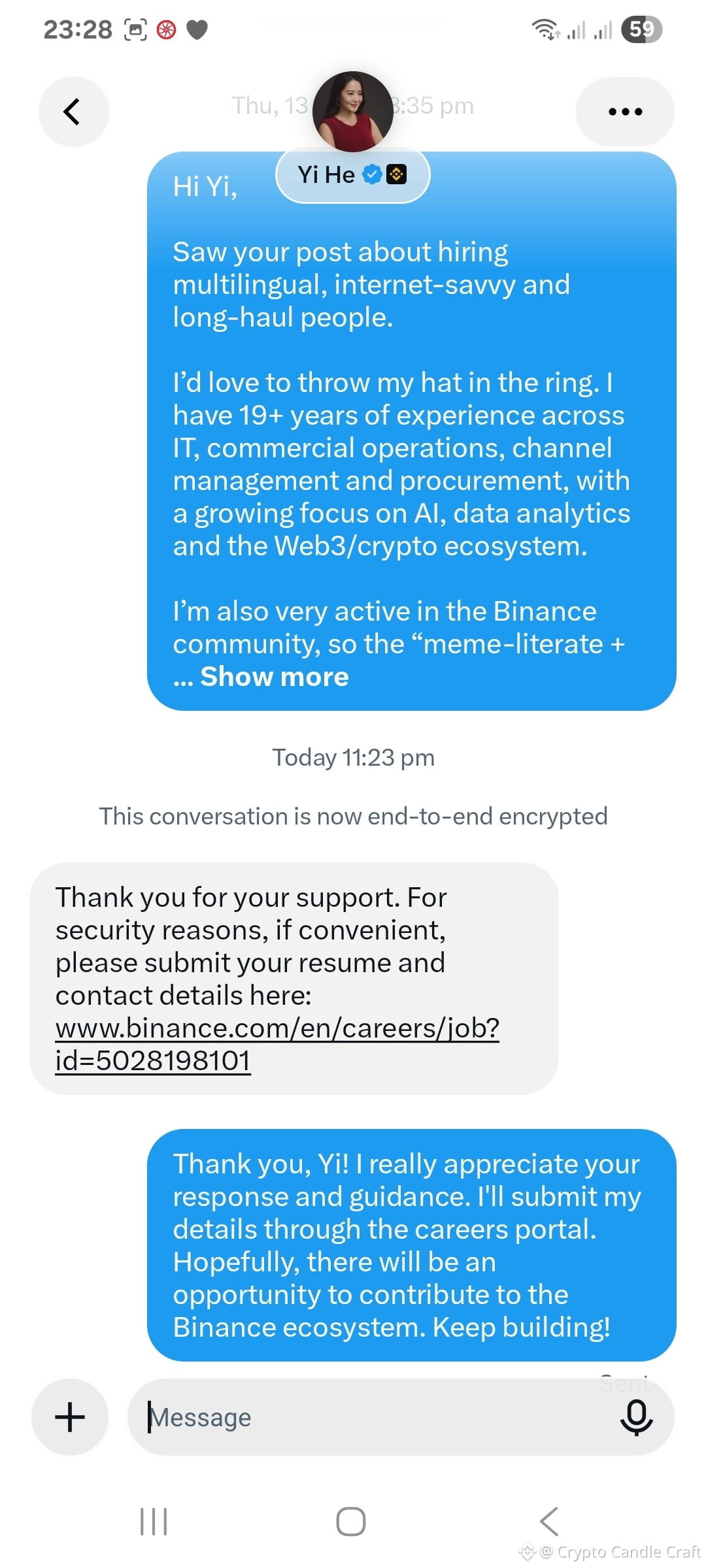
Something I genuinely didn't expect! 💛
I reached out to Yi He, Co-Founder of Binance, through a direct message on X, sharing my professional background and expressing my interest in contributing to the Binance ecosystem.
Honestly, I wasn't expecting a response from someone at that level of leadership.
But she took the time to respond and guide me towards the official careers portal.
It's a small interaction, but it says something positive about being approachable and accessible to the community.
Respect to Yi He and the Binance leadership team.
It's these little things that build lasting connections with a community.
Thank you, @heyi 💛
#Binance #CryptoCommunity #Leadership
Something I genuinely didn't expect! 💛
I reached out to Yi He, Co-Founder of Binance, through a direct message on X, sharing my professional background and expressing my interest in contributing to the Binance ecosystem.
Honestly, I wasn't expecting a response from someone at that level of leadership.
But she took the time to respond and guide me towards the official careers portal.
It's a small interaction, but it says something positive about being approachable and accessible to the community.
Respect to Yi He and the Binance leadership team.
It's these little things that build lasting connections with a community.
Thank you, @Yi He 💛
#Binance #CryptoCommunity #Leadership
5
2.5k
Democratic victories are largely priced in.
Don't rush into BTC shorts!
The real surprise catalyst would be Republicans retaining the Senate, potentially triggering a relief rally.
Watch the Senate! 👀
Democratic victories are largely priced in.
Don't rush into BTC shorts!
The real surprise catalyst would be Republicans retaining the Senate, potentially triggering a relief rally.
Watch the Senate! 👀
Don't rush into BTC shorts!
The real surprise catalyst would be Republicans retaining the Senate, potentially triggering a relief rally.
Watch the Senate! 👀
102
🇺🇸 US Midterm Elections: 3 Scenarios That Could Impact Crypto
Here's how different election outcomes could shape the crypto market:
🟢 Scenario 1: Democrats win House, Republicans retain Senate
Potentially bullish. Bipartisan cooperation could keep crypto legislation moving, bringing regulatory clarity and institutional confidence.
🟡 Scenario 2: Democrats win both chambers
Mixed to bearish in the short term. Increased scrutiny of the Trump administration's crypto agenda could create uncertainty, although bipartisan crypto legislation may still progress.
🟢 Scenario 3: Republicans retain both chambers
Potentially the most bullish outcome. Greater policy continuity could accelerate crypto-friendly legislation, stablecoin adoption and institutional participation.
My take: The biggest catalyst isn't which party wins. It's whether the new Congress can deliver regulatory clarity for the crypto industry.
Watch the Senate closely. 👀
#crypto #bitcoin #USMidterms2026
128
Just a reminder: Blockchain was envisioned as an alternative to traditional finance, with one of its strongest promises being transparency, security and reducing financial fraud and theft.
Here's some perspective:
💰 Traditional financial systems recorded an estimated $579.4 BILLION in combined bank fraud and scam losses globally in 2025, according to Nasdaq Verafin.
Meanwhile, in the recent Binance incident involving $6.34 billion in affected digital assets, approximately $2.85 billion has already been frozen or intercepted.
That's the power of blockchain transparency and collaboration.
Blockchain isn't perfect. But imagine what happens when we combine its transparency, traceability and programmable security with the right safeguards.
The future of finance deserves more than traditional thinking 💛
87
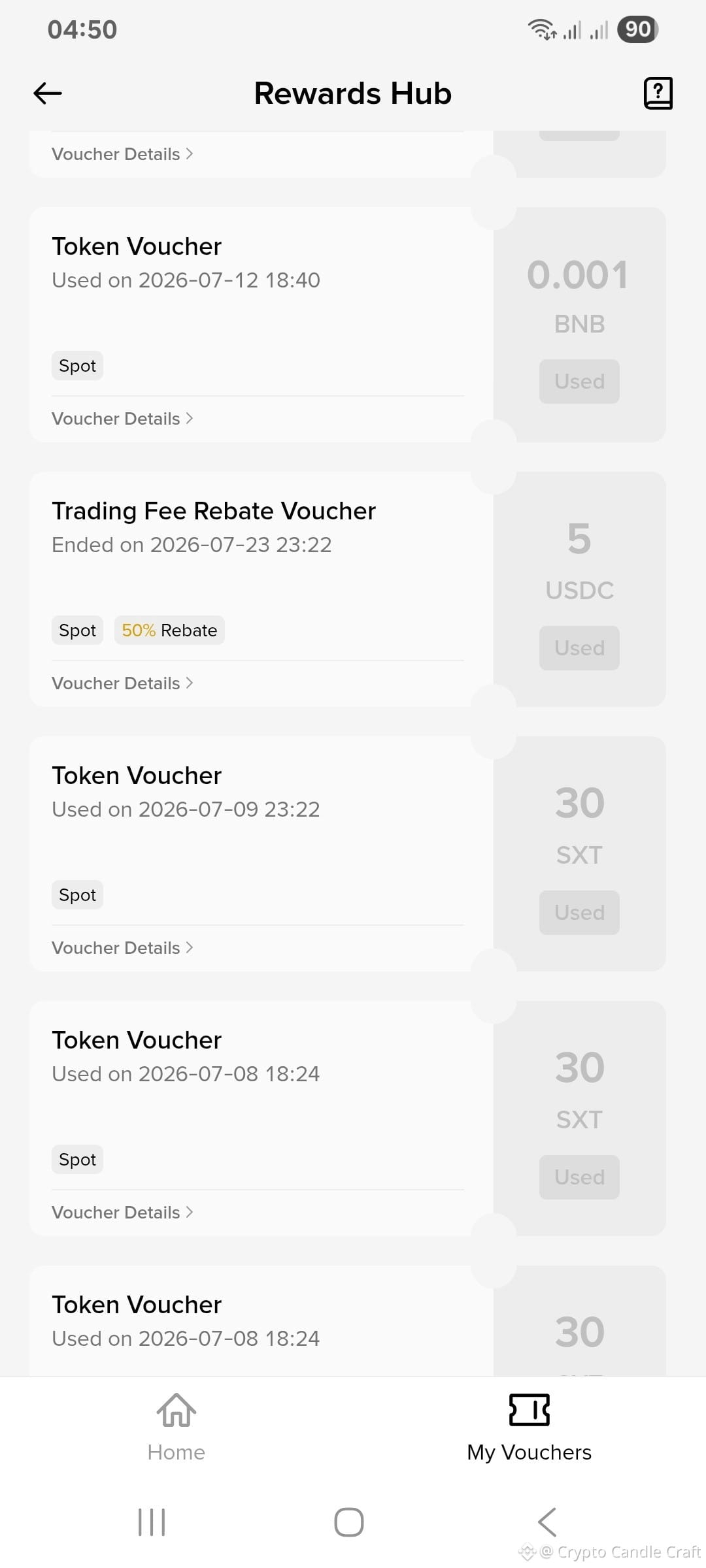
💡 An idea for Binance: Make Vouchers Transferable!
Binance runs amazing campaigns, rewarding users with Spot vouchers, Futures bonuses, trading fee rebates and more.
But here's a problem: not everyone uses every product.
For example, I primarily trade Futures, but sometimes receive Spot Trading fees vouchers that end up unused or expire.
Why not allow Binancians to gift eligible unused vouchers to other verified users?
🎁 Send vouchers to friends via Binance UID.
🤝 Let other users claim vouchers they can actually use.
♻️ Turn otherwise wasted rewards into value for the community.
A win-win for Binance and its users!
What do you think, Binance? 👀
#Binance #crypto
60
Bookmark this post. We are going to witness unimaginable crypto adoption following the Binance hack incident.
And here's why I believe this incident could turn out to be an unexpected catalyst for the entire crypto industry.
The whole world, including mainstream global media, is talking about this incident. But I don't think this is necessarily negative PR for crypto. In fact, it may have introduced millions of people to aspects of blockchain they had never understood before.
Here's what people are learning:
1️⃣ The scale of the industry: People are realizing that blockchain is a trillion-dollar ecosystem with enormous investments, infrastructure and economic activity behind it.
2️⃣ Crypto is much bigger than Bitcoin: Many are discovering that blockchain isn't limited to Bitcoin. There's Ethereum, BNB Chain, Solana and numerous other ecosystems powering an entirely new digital economy.
3️⃣ The power of blockchain security: People are seeing how quickly the industry can respond. Around 50% of the stolen assets were reportedly frozen, demonstrating the potential of coordinated on-chain monitoring and intervention.
4️⃣ Transparency that traditional finance cannot easily replicate: Blockchain transactions are publicly traceable. Investigators and security firms can follow stolen funds across wallets and networks in real time.
5️⃣ A new level of industry collaboration: Exchanges, blockchain foundations, security researchers and ecosystem participants are coming together to respond to threats. This is how a stronger and more mature financial ecosystem gets built.
My biggest takeaway:
Every major industry goes through defining moments. Incidents like this expose weaknesses, but they also accelerate innovation, security infrastructure, regulation and public awareness.
The internet didn't become safer overnight. Banking didn't become secure without incidents. Blockchain will evolve too.
The next wave of crypto adoption might come from people who discovered blockchain because of this very incident.
We are still early 💛
@CZ
393
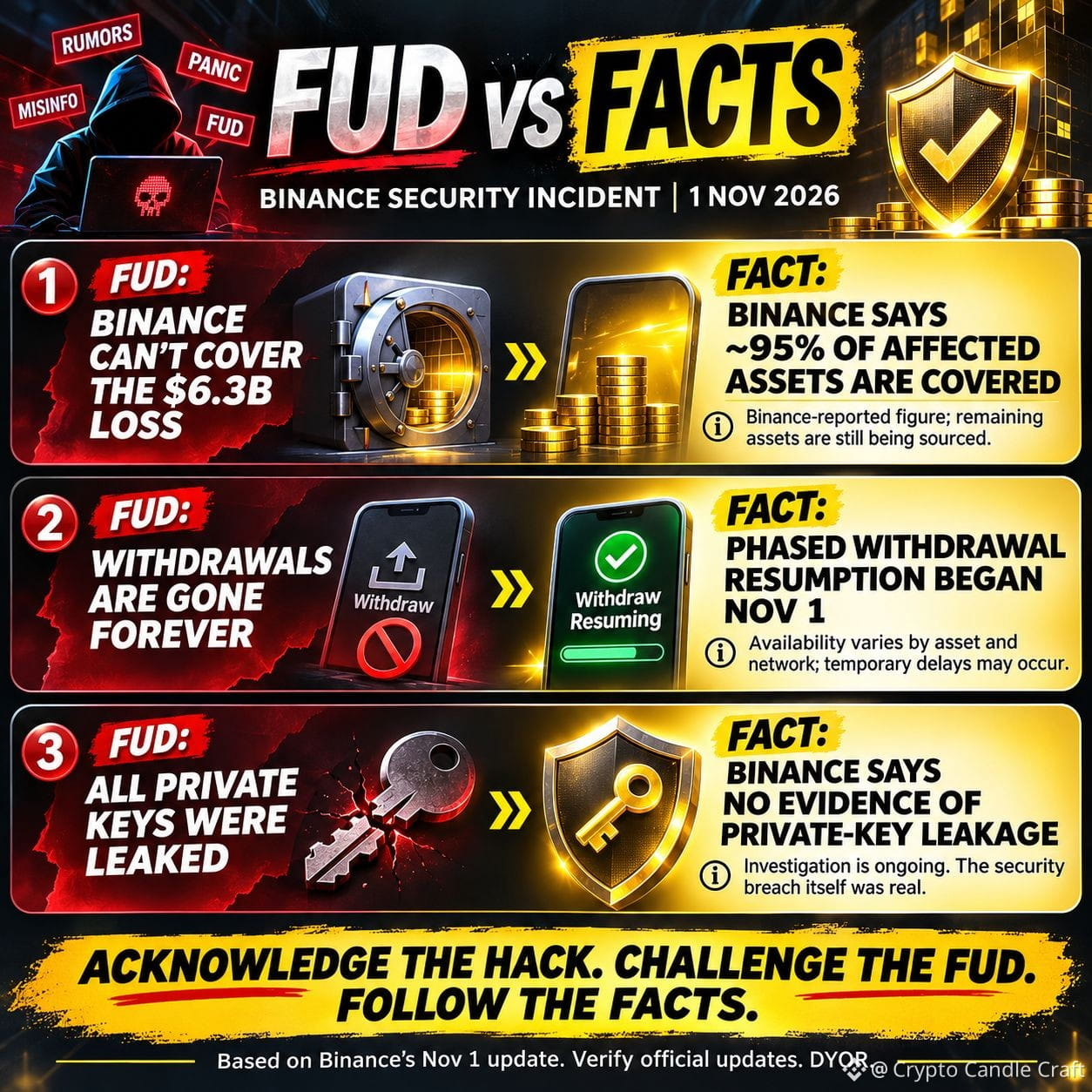
A $6.3B security breach is serious. Nobody is denying that.
But let's separate facts from FUD.
1️⃣ Binance says ~95% of affected assets are covered.
2️⃣ Withdrawals are resuming in phases.
3️⃣ No evidence of wallet private-key leakage has been found.
Acknowledge the hack. Challenge the FUD. 💛
#WeStandWithBinance
But let's separate facts from FUD.
1️⃣ Binance says ~95% of affected assets are covered.
2️⃣ Withdrawals are resuming in phases.
3️⃣ No evidence of wallet private-key leakage has been found.
Acknowledge the hack. Challenge the FUD. 💛
#WeStandWithBinance
449
FUD typically follows incidents within a day or two. We're already seeing a wave of negative commentary against Binance, some of which appears coordinated.
I have just one simple message:
We stand with Binance 💛
Stay strong, Binance team. The community is watching, and we're standing with you.
@CZ
FUD typically follows incidents within a day or two. We're already seeing a wave of negative commentary against Binance, some of which appears coordinated.
I have just one simple message:
We stand with Binance 💛
Stay strong, Binance team. The community is watching, and we're standing with you.
@CZ
I have just one simple message:
We stand with Binance 💛
Stay strong, Binance team. The community is watching, and we're standing with you.
@CZ
123

Статья
Why I Believe the Binance Hack Could Become a Catalyst for Mass Crypto AdoptionThink about this for a moment.
A $6.3 billion security breach at Binance. Almost every major media outlet in the world is covering it. Imagine even a local TV network in Pakistan running headlines about a crypto hack of this magnitude.
But here's the part that I find fascinating.
Approximately $3 billion was frozen within hours.
Think about what that actually means.
- Blockchain intelligence firms tracing stolen assets across multiple networks.
- Stablecoin issuers freezing billions in assets.
- Exchanges and industry players coordinating in real time.
- FBI and other law enforcement agencies working alongside the crypto industry.
- Binance committing to cover losses through its SAFU fund and corporate resources.
Now, imagine achieving this level of coordination and asset tracing in the traditional financial system.
The scale and speed of this response are remarkable.
And let's not forget: Binance has stated that user funds are safe. The company has committed to absorbing the financial impact rather than passing the losses on to customers.
Yes, $6.3 billion is an enormous amount of money. But the broader financial system also experiences hundreds of billions in fraud and financial crime losses globally. These figures aren't directly comparable, but they put the scale of financial crime into perspective.
Here's my bigger takeaway:
This incident has exposed vulnerabilities, but it has also demonstrated something powerful about blockchain:
Transparency. Traceability. Programmable assets. Cross-border coordination. And, in certain cases, the ability to freeze stolen funds before criminals can cash them out.
Crypto still has serious security challenges to overcome. But the infrastructure to detect, trace and potentially recover stolen assets is evolving at an incredible pace.
I genuinely believe this incident could become a turning point.
Not because crypto is immune to hacks, but because the industry is demonstrating that it can respond collectively, transparently and at a global scale.
The road to mass adoption won't be without setbacks. But I believe this is precisely the kind of moment that will accelerate the industry's evolution.
The future of finance is being built right in front of us. 🚀
#Crypto #blockchain #Binance #massAdoption
@CZ
Why I Believe the Binance Hack Could Become a Catalyst for Mass Crypto Adoption
Think about this for a moment.
A $6.3 billion security breach at Binance. Almost every major media outlet in the world is covering it. Imagine even a local TV network in Pakistan running headlines about a crypto hack of this magnitude.
But here's the part that I find fascinating.
Approximately $3 billion was frozen within hours.
Think about what that actually means.
- Blockchain intelligence firms tracing stolen assets across multiple networks.
- Stablecoin issuers freezing billions in assets.
- Exchanges and industry players coordinating in real time.
- FBI and other law enforcement agencies working alongside the crypto industry.
- Binance committing to cover losses through its SAFU fund and corporate resources.
Now, imagine achieving this level of coordination and asset tracing in the traditional financial system.
The scale and speed of this response are remarkable.
And let's not forget: Binance has stated that user funds are safe. The company has committed to absorbing the financial impact rather than passing the losses on to customers.
Yes, $6.3 billion is an enormous amount of money. But the broader financial system also experiences hundreds of billions in fraud and financial crime losses globally. These figures aren't directly comparable, but they put the scale of financial crime into perspective.
Here's my bigger takeaway:
This incident has exposed vulnerabilities, but it has also demonstrated something powerful about blockchain:
Transparency. Traceability. Programmable assets. Cross-border coordination. And, in certain cases, the ability to freeze stolen funds before criminals can cash them out.
Crypto still has serious security challenges to overcome. But the infrastructure to detect, trace and potentially recover stolen assets is evolving at an incredible pace.
I genuinely believe this incident could become a turning point.
Not because crypto is immune to hacks, but because the industry is demonstrating that it can respond collectively, transparently and at a global scale.
The road to mass adoption won't be without setbacks. But I believe this is precisely the kind of moment that will accelerate the industry's evolution.
The future of finance is being built right in front of us. 🚀
#Crypto #blockchain #Binance #massAdoption
@CZ
1
1.1k
What if the Ethereum Foundation pioneered a Universal Blockchain Security Standard?
An open protocol that enables blockchains to share threat intelligence, AI agents to track stolen assets across chains, and exchanges, bridges and stablecoin issuers to automatically flag and freeze verified stolen funds.
One ecosystem. Shared intelligence. No safe exit for hackers.
This could be a major leap forward for crypto security. 🔥
1k
Войдите, чтобы посмотреть больше материала
Присоединяйтесь к пользователям криптовалют по всему миру на Binance Square
⚡️ Получайте новейшую и полезную информацию о криптоактивах.
💬 Нам доверяет крупнейшая в мире криптобиржа.
👍 Получите достоверные аналитические данные от верифицированных создателей контента.
Эл. почта/номер телефона
В тренде
CryptoSelloffTriggersMultipleWhaleLiquidations
Просмотров: 242,480
2,099 обсуждают
Crypto Liquidations Top $2B in 24 Hours as 329,000 Traders Are Wiped Out
Binance News
·Лайков: 40
·Просмотров: 60.7k
HuangReportedlyConsidersReturnToNvidia
Просмотров: 3,323
87 обсуждают
BitcoinSpotETFsPost$1.065BOutflowsForThirdStraightWeek
Просмотров: 0
0 обсуждают