

Crypto NexusX
5.1k Публикации

Crypto NexusX
Отправить жалобу
Заблокировать пользователя
Открытая сделка
Трейдер с регулярными сделками
10.2 мес.
252 подписок(и/а)
25.2K+ подписчиков(а)
4.7K+ понравилось
Посты
Портфель
Все
Цитирования
Активно
·
--
Рост
🚨 #EarningsSeason is heating up! 📊
It’s not just about beating or missing expectations — it’s about the story behind the numbers.
💰 Revenue growth
📈 Profit margins
🎯 Future guidance
🔍 Management outlook
The market watches. Investors react. Companies reveal what’s really happening behind the scenes.
Let the numbers do the talking. 👀📊
#Investing #StockMarket #Finance #Markets
🚨 #EarningsSeason is heating up! 📊
It’s not just about beating or missing expectations — it’s about the story behind the numbers.
💰 Revenue growth
📈 Profit margins
🎯 Future guidance
🔍 Management outlook
The market watches. Investors react. Companies reveal what’s really happening behind the scenes.
Let the numbers do the talking. 👀📊
#Investing #StockMarket #Finance #Markets
It’s not just about beating or missing expectations — it’s about the story behind the numbers.
💰 Revenue growth
📈 Profit margins
🎯 Future guidance
🔍 Management outlook
The market watches. Investors react. Companies reveal what’s really happening behind the scenes.
Let the numbers do the talking. 👀📊
#Investing #StockMarket #Finance #Markets
97
·
--
Рост
🚨 THE MACRO SIGNAL IS GETTING LOUDER
U.S. diesel just hit a record $6.29/gallon.
At the same time:
₿ Bitcoin is falling
🥇 Gold is holding relatively firm
⛽ Energy costs are exploding
🏦 Interest rates remain a problem
And this is exactly why crypto traders need to look beyond the BTC chart.
Higher diesel prices don't just mean expensive trips to the gas station.
They can push up the cost of shipping, transportation, manufacturing and everyday goods — potentially keeping inflation sticky.
And when inflation stays stubborn, liquidity can stay tight.
That’s usually not the environment risk assets want.
Bitcoin may be a decentralized asset, but its price still moves inside the global financial system.
So while everyone is watching candles, the bigger game is happening across:
Energy → Inflation → Rates → Liquidity → Risk assets
Gold holding up while BTC struggles is another interesting piece of the puzzle.
The next few weeks could tell us a lot about whether Bitcoin is ready to decouple from the macro pressure… or whether liquidity still calls the shots.
Crypto never trades in isolation. 🌎
#Bitcoin #BTC #Crypto #Macro #Gold #Inflation #Fed #Markets #Web3
🚨 THE MACRO SIGNAL IS GETTING LOUDER
U.S. diesel just hit a record $6.29/gallon.
At the same time:
₿ Bitcoin is falling
🥇 Gold is holding relatively firm
⛽ Energy costs are exploding
🏦 Interest rates remain a problem
And this is exactly why crypto traders need to look beyond the BTC chart.
Higher diesel prices don't just mean expensive trips to the gas station.
They can push up the cost of shipping, transportation, manufacturing and everyday goods — potentially keeping inflation sticky.
And when inflation stays stubborn, liquidity can stay tight.
That’s usually not the environment risk assets want.
Bitcoin may be a decentralized asset, but its price still moves inside the global financial system.
So while everyone is watching candles, the bigger game is happening across:
Energy → Inflation → Rates → Liquidity → Risk assets
Gold holding up while BTC struggles is another interesting piece of the puzzle.
The next few weeks could tell us a lot about whether Bitcoin is ready to decouple from the macro pressure… or whether liquidity still calls the shots.
Crypto never trades in isolation. 🌎
#Bitcoin #BTC #Crypto #Macro #Gold #Inflation #Fed #Markets #Web3
U.S. diesel just hit a record $6.29/gallon.
At the same time:
₿ Bitcoin is falling
🥇 Gold is holding relatively firm
⛽ Energy costs are exploding
🏦 Interest rates remain a problem
And this is exactly why crypto traders need to look beyond the BTC chart.
Higher diesel prices don't just mean expensive trips to the gas station.
They can push up the cost of shipping, transportation, manufacturing and everyday goods — potentially keeping inflation sticky.
And when inflation stays stubborn, liquidity can stay tight.
That’s usually not the environment risk assets want.
Bitcoin may be a decentralized asset, but its price still moves inside the global financial system.
So while everyone is watching candles, the bigger game is happening across:
Energy → Inflation → Rates → Liquidity → Risk assets
Gold holding up while BTC struggles is another interesting piece of the puzzle.
The next few weeks could tell us a lot about whether Bitcoin is ready to decouple from the macro pressure… or whether liquidity still calls the shots.
Crypto never trades in isolation. 🌎
#Bitcoin #BTC #Crypto #Macro #Gold #Inflation #Fed #Markets #Web3
107
·
--
Рост
⚠️ THE NEXT BIG CRYPTO MOVE MAY START WITH THE FED.
#FedRateWatch 🏦📉📈
BTC traders: forget the noise.
The real game is positioning before volatility hits.
🔥 Hawkish → pressure on risk assets
🚀 Dovish → liquidity narrative
🪤 Mixed signals → fakeouts and whipsaws
The first move can be the trap. The reaction is the trade.
Keep your levels clean.
Keep your stops defined.
Let price confirm the setup.
No prediction. No FOMO. Just execution.
#Bitcoin #BTC #Crypto #ETH #Ethereum #Fed #TradingStrategy $DGAI $BULLA $DEBIT
⚠️ THE NEXT BIG CRYPTO MOVE MAY START WITH THE FED.
#FedRateWatch 🏦📉📈
BTC traders: forget the noise.
The real game is positioning before volatility hits.
🔥 Hawkish → pressure on risk assets
🚀 Dovish → liquidity narrative
🪤 Mixed signals → fakeouts and whipsaws
The first move can be the trap. The reaction is the trade.
Keep your levels clean.
Keep your stops defined.
Let price confirm the setup.
No prediction. No FOMO. Just execution.
#Bitcoin #BTC #Crypto #ETH #Ethereum #Fed #TradingStrategy $DGAI $BULLA $DEBIT
#FedRateWatch 🏦📉📈
BTC traders: forget the noise.
The real game is positioning before volatility hits.
🔥 Hawkish → pressure on risk assets
🚀 Dovish → liquidity narrative
🪤 Mixed signals → fakeouts and whipsaws
The first move can be the trap. The reaction is the trade.
Keep your levels clean.
Keep your stops defined.
Let price confirm the setup.
No prediction. No FOMO. Just execution.
#Bitcoin #BTC #Crypto #ETH #Ethereum #Fed #TradingStrategy $DGAI $BULLA $DEBIT
Bullish
84%
Bearish
16%
19 проголосовали • Голосование закрыто
462
Статья
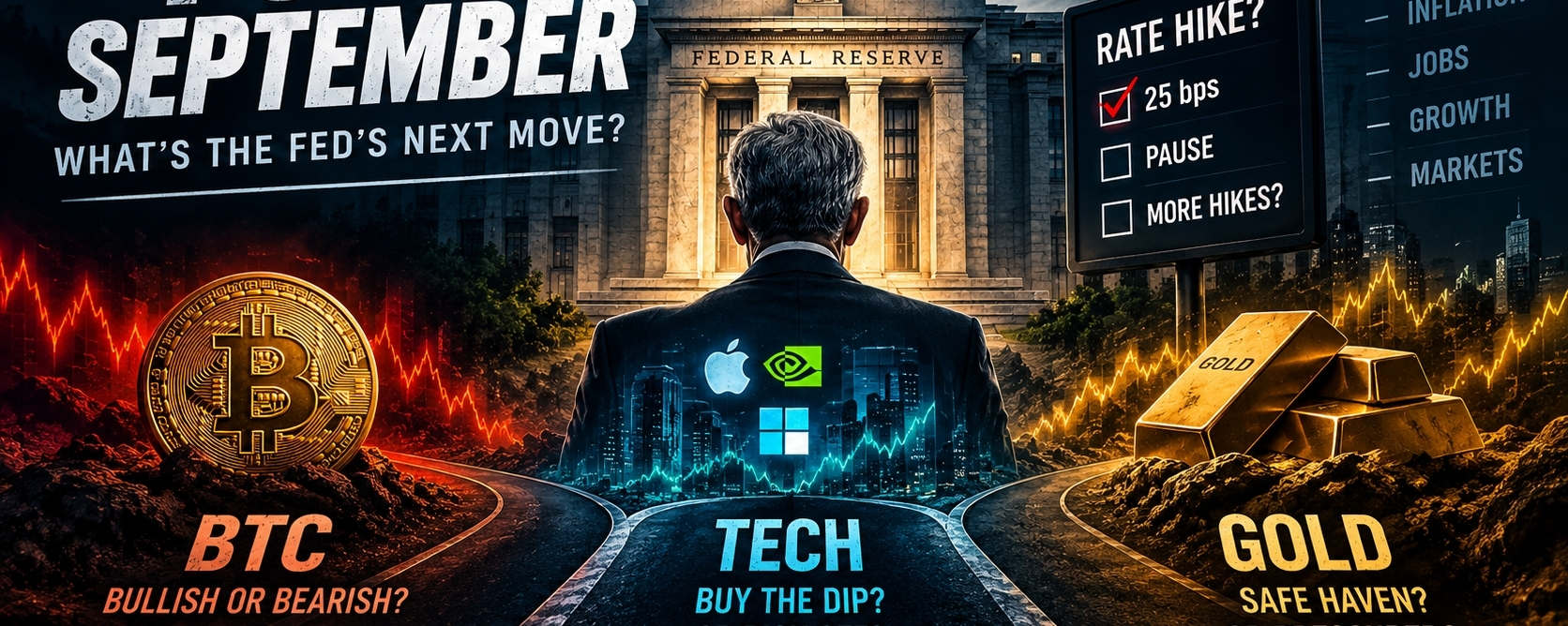
FOMC September: Fed Hike Incoming What’s Next for BTC, Tech & Gold?FedRateWatch: What’s the Fed’s Next Move?
The Fed is back in the driver’s seat, and crypto traders are watching every number.
August core CPI came in at 0.3% month-over-month, keeping inflation concerns alive and pushing markets toward a roughly 90% probability of a 25bp rate hike this week.
At this point, the hike itself isn’t exactly the surprise. The bigger question is what comes after it.
Hike or no hike?
My base case: 25bps hike.
The interesting part is whether the Fed frames it as a one-off adjustment or signals that rates could stay higher for longer.
If Powell comes out hawkish and keeps the door open for more hikes, expect volatility to pick up across risk assets. Higher yields and a stronger dollar are usually a bad combo for BTC and high-beta tech.
But if the Fed delivers 25bps and effectively says “we're done for now”, the reaction could be very different.
That sets up a classic sell-the-news / relief rally scenario.
What does it mean for BTC?
BTC could get hit first if the market interprets the decision as a liquidity tightening cycle.
A hawkish Fed = higher yields + stronger DXY + less appetite for risk.
That doesn't automatically mean BTC enters a major downtrend, though. A lot depends on positioning going into the announcement.
If leverage is already crowded on one side, the first move could simply be a liquidity sweep before the real trend develops.
For me, the key levels aren't just on the BTC chart. I'm watching DXY, Treasury yields and funding/open interest alongside price.
What about tech and gold?
Tech stocks face a similar setup.
Higher rates make long-duration growth assets less attractive, so a hawkish surprise could put pressure on the Nasdaq and mega-cap tech.
Gold is a little more complicated.
Higher real yields can weigh on gold, but persistent inflation and growing expectations for future monetary easing can provide support. The Fed's messaging — and the bond market's reaction — will matter more than the headline 25bp move.
The real trade: Powell's message
The market already has a pretty good idea of what the Fed might do.
The edge comes from figuring out whether the statement and Powell's press conference are more hawkish or more dovish than expected.
That's where the volatility is likely to be.
I'm not looking to blindly long or short the announcement. I'd rather let the first move happen, watch liquidity get taken, and then see whether price actually holds the breakout or breakdown.
Hike + hawkish guidance: bearish for BTC/tech in the short term.
Hike + dovish/one-and-done guidance: potential relief rally.
Unexpectedly aggressive path: risk-off could accelerate quickly.
The Fed decision is only one part of the trade. Positioning, liquidity and the reaction in yields/DXY will tell the bigger story.
What’s your trade?
Are you long BTC, short BTC, holding tech, stacking gold, or staying flat into the FOMC?
Share your trade or holdings in the trade sharing widget and let’s see how the market is positioned before Powell speaks.
Fed moves rates. The market decides the move.
#GOLD #BTC走势分析 #FedRateWatch #FOMC
FOMC September: Fed Hike Incoming What’s Next for BTC, Tech & Gold?
FedRateWatch: What’s the Fed’s Next Move?
The Fed is back in the driver’s seat, and crypto traders are watching every number.
August core CPI came in at 0.3% month-over-month, keeping inflation concerns alive and pushing markets toward a roughly 90% probability of a 25bp rate hike this week.
At this point, the hike itself isn’t exactly the surprise. The bigger question is what comes after it.
Hike or no hike?
My base case: 25bps hike.
The interesting part is whether the Fed frames it as a one-off adjustment or signals that rates could stay higher for longer.
If Powell comes out hawkish and keeps the door open for more hikes, expect volatility to pick up across risk assets. Higher yields and a stronger dollar are usually a bad combo for BTC and high-beta tech.
But if the Fed delivers 25bps and effectively says “we're done for now”, the reaction could be very different.
That sets up a classic sell-the-news / relief rally scenario.
What does it mean for BTC?
BTC could get hit first if the market interprets the decision as a liquidity tightening cycle.
A hawkish Fed = higher yields + stronger DXY + less appetite for risk.
That doesn't automatically mean BTC enters a major downtrend, though. A lot depends on positioning going into the announcement.
If leverage is already crowded on one side, the first move could simply be a liquidity sweep before the real trend develops.
For me, the key levels aren't just on the BTC chart. I'm watching DXY, Treasury yields and funding/open interest alongside price.
What about tech and gold?
Tech stocks face a similar setup.
Higher rates make long-duration growth assets less attractive, so a hawkish surprise could put pressure on the Nasdaq and mega-cap tech.
Gold is a little more complicated.
Higher real yields can weigh on gold, but persistent inflation and growing expectations for future monetary easing can provide support. The Fed's messaging — and the bond market's reaction — will matter more than the headline 25bp move.
The real trade: Powell's message
The market already has a pretty good idea of what the Fed might do.
The edge comes from figuring out whether the statement and Powell's press conference are more hawkish or more dovish than expected.
That's where the volatility is likely to be.
I'm not looking to blindly long or short the announcement. I'd rather let the first move happen, watch liquidity get taken, and then see whether price actually holds the breakout or breakdown.
Hike + hawkish guidance: bearish for BTC/tech in the short term.
Hike + dovish/one-and-done guidance: potential relief rally.
Unexpectedly aggressive path: risk-off could accelerate quickly.
The Fed decision is only one part of the trade. Positioning, liquidity and the reaction in yields/DXY will tell the bigger story.
What’s your trade?
Are you long BTC, short BTC, holding tech, stacking gold, or staying flat into the FOMC?
Share your trade or holdings in the trade sharing widget and let’s see how the market is positioned before Powell speaks.
Fed moves rates. The market decides the move.
#GOLD #BTC走势分析 #FedRateWatch #FOMC
The Fed is back in the driver’s seat, and crypto traders are watching every number.
August core CPI came in at 0.3% month-over-month, keeping inflation concerns alive and pushing markets toward a roughly 90% probability of a 25bp rate hike this week.
At this point, the hike itself isn’t exactly the surprise. The bigger question is what comes after it.
Hike or no hike?
My base case: 25bps hike.
The interesting part is whether the Fed frames it as a one-off adjustment or signals that rates could stay higher for longer.
If Powell comes out hawkish and keeps the door open for more hikes, expect volatility to pick up across risk assets. Higher yields and a stronger dollar are usually a bad combo for BTC and high-beta tech.
But if the Fed delivers 25bps and effectively says “we're done for now”, the reaction could be very different.
That sets up a classic sell-the-news / relief rally scenario.
What does it mean for BTC?
BTC could get hit first if the market interprets the decision as a liquidity tightening cycle.
A hawkish Fed = higher yields + stronger DXY + less appetite for risk.
That doesn't automatically mean BTC enters a major downtrend, though. A lot depends on positioning going into the announcement.
If leverage is already crowded on one side, the first move could simply be a liquidity sweep before the real trend develops.
For me, the key levels aren't just on the BTC chart. I'm watching DXY, Treasury yields and funding/open interest alongside price.
What about tech and gold?
Tech stocks face a similar setup.
Higher rates make long-duration growth assets less attractive, so a hawkish surprise could put pressure on the Nasdaq and mega-cap tech.
Gold is a little more complicated.
Higher real yields can weigh on gold, but persistent inflation and growing expectations for future monetary easing can provide support. The Fed's messaging — and the bond market's reaction — will matter more than the headline 25bp move.
The real trade: Powell's message
The market already has a pretty good idea of what the Fed might do.
The edge comes from figuring out whether the statement and Powell's press conference are more hawkish or more dovish than expected.
That's where the volatility is likely to be.
I'm not looking to blindly long or short the announcement. I'd rather let the first move happen, watch liquidity get taken, and then see whether price actually holds the breakout or breakdown.
Hike + hawkish guidance: bearish for BTC/tech in the short term.
Hike + dovish/one-and-done guidance: potential relief rally.
Unexpectedly aggressive path: risk-off could accelerate quickly.
The Fed decision is only one part of the trade. Positioning, liquidity and the reaction in yields/DXY will tell the bigger story.
What’s your trade?
Are you long BTC, short BTC, holding tech, stacking gold, or staying flat into the FOMC?
Share your trade or holdings in the trade sharing widget and let’s see how the market is positioned before Powell speaks.
Fed moves rates. The market decides the move.
#GOLD #BTC走势分析 #FedRateWatch #FOMC
247
·
--
Рост
🔥 619.1% growth in tokenized stock holders.
The shift from traditional markets to on-chain investing is gaining serious momentum. 📊
Tokenized equities could be one of the biggest bridges between Wall Street and Web3. 🌐
#TokenizedStockHoldersUp619.1% $龙虾
$NES $LAB
{alpha}(560x7ec43cf65f1663f820427c62a5780b8f2e25593a)
🔥 619.1% growth in tokenized stock holders.
The shift from traditional markets to on-chain investing is gaining serious momentum. 📊
Tokenized equities could be one of the biggest bridges between Wall Street and Web3. 🌐
#TokenizedStockHoldersUp619.1% $龙虾
$NES $LAB
The shift from traditional markets to on-chain investing is gaining serious momentum. 📊
Tokenized equities could be one of the biggest bridges between Wall Street and Web3. 🌐
#TokenizedStockHoldersUp619.1% $龙虾
$NES $LAB
1
538
·
--
Рост
#CPIWatch 🚨
Is inflation finally cooling or are we about to get another surprise?
The latest CPI data could set the tone for interest rates, currencies, markets, and investor sentiment.
📊 What are you expecting: CPI up, down, or in line?
Drop your call below 👇
#CPI #Inflation #Markets #Economy #Investing
#CPIWatch 🚨
Is inflation finally cooling or are we about to get another surprise?
The latest CPI data could set the tone for interest rates, currencies, markets, and investor sentiment.
📊 What are you expecting: CPI up, down, or in line?
Drop your call below 👇
#CPI #Inflation #Markets #Economy #Investing
Is inflation finally cooling or are we about to get another surprise?
The latest CPI data could set the tone for interest rates, currencies, markets, and investor sentiment.
📊 What are you expecting: CPI up, down, or in line?
Drop your call below 👇
#CPI #Inflation #Markets #Economy #Investing

154
·
--
Рост
🚨 BREAKING: Tensions Escalate in the Gulf
#IranStrikesUSBaseInKuwait
Iran’s reported strikes on a U.S. military base in Kuwait have pushed the already tense U.S.–Iran confrontation into another dangerous phase.
With missiles and drones reportedly involved, attention is now focused on the scale of the damage, possible casualties, and how Washington and Tehran respond next.
The Gulf is watching. 🌍
#Iran #Kuwait #USA #MiddleEast #IranStrikesUSBaseInKuwait #Breaking #Geopolitics
🚨 BREAKING: Tensions Escalate in the Gulf
#IranStrikesUSBaseInKuwait
Iran’s reported strikes on a U.S. military base in Kuwait have pushed the already tense U.S.–Iran confrontation into another dangerous phase.
With missiles and drones reportedly involved, attention is now focused on the scale of the damage, possible casualties, and how Washington and Tehran respond next.
The Gulf is watching. 🌍
#Iran #Kuwait #USA #MiddleEast #IranStrikesUSBaseInKuwait #Breaking #Geopolitics
#IranStrikesUSBaseInKuwait
Iran’s reported strikes on a U.S. military base in Kuwait have pushed the already tense U.S.–Iran confrontation into another dangerous phase.
With missiles and drones reportedly involved, attention is now focused on the scale of the damage, possible casualties, and how Washington and Tehran respond next.
The Gulf is watching. 🌍
#Iran #Kuwait #USA #MiddleEast #IranStrikesUSBaseInKuwait #Breaking #Geopolitics
113
·
--
Рост
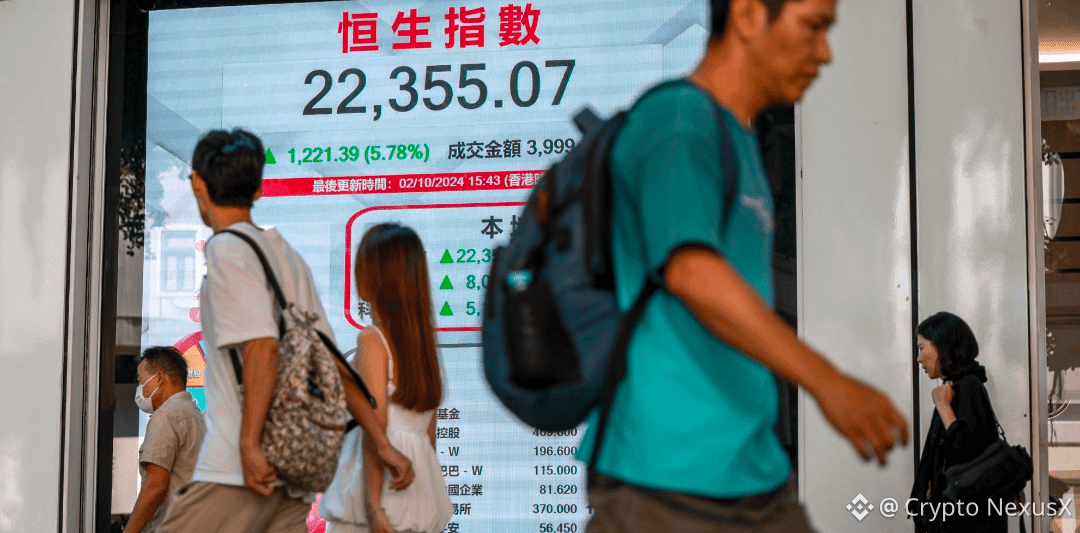
📊 Hang Seng Ends Slightly Lower
#HangSengCloses18PointsLower
The Hang Seng Index closed 18 points lower, as investors remained cautious amid mixed market signals. The modest decline highlights continued uncertainty across Hong Kong equities as traders assess economic data and global market trends.
#HangSeng #HongKongStocks #StockMarket #MarketUpdate #Investing
📊 Hang Seng Ends Slightly Lower
#HangSengCloses18PointsLower
The Hang Seng Index closed 18 points lower, as investors remained cautious amid mixed market signals. The modest decline highlights continued uncertainty across Hong Kong equities as traders assess economic data and global market trends.
#HangSeng #HongKongStocks #StockMarket #MarketUpdate #Investing
#HangSengCloses18PointsLower
The Hang Seng Index closed 18 points lower, as investors remained cautious amid mixed market signals. The modest decline highlights continued uncertainty across Hong Kong equities as traders assess economic data and global market trends.
#HangSeng #HongKongStocks #StockMarket #MarketUpdate #Investing
177
·
--
Рост
🚀 ARB Makes a Comeback
#ARBRises30%OnRobinhoodChainRevenue
ARB is back in the spotlight. The token surged more than 30% in 24 hours as Robinhood Chain’s transaction revenue topped $2 million, boosting confidence in Arbitrum’s growing ecosystem.
Robinhood Chain is built using Arbitrum technology, and 10% of its net protocol revenue flows back to the Arbitrum ecosystem. The surge is giving traders a fresh reason to watch ARB closely.
📈 Big move. Bigger question: Can ARB sustain the momentum?
🚀 ARB Makes a Comeback
#ARBRises30%OnRobinhoodChainRevenue
ARB is back in the spotlight. The token surged more than 30% in 24 hours as Robinhood Chain’s transaction revenue topped $2 million, boosting confidence in Arbitrum’s growing ecosystem.
Robinhood Chain is built using Arbitrum technology, and 10% of its net protocol revenue flows back to the Arbitrum ecosystem. The surge is giving traders a fresh reason to watch ARB closely.
📈 Big move. Bigger question: Can ARB sustain the momentum?
#ARBRises30%OnRobinhoodChainRevenue
ARB is back in the spotlight. The token surged more than 30% in 24 hours as Robinhood Chain’s transaction revenue topped $2 million, boosting confidence in Arbitrum’s growing ecosystem.
Robinhood Chain is built using Arbitrum technology, and 10% of its net protocol revenue flows back to the Arbitrum ecosystem. The surge is giving traders a fresh reason to watch ARB closely.
📈 Big move. Bigger question: Can ARB sustain the momentum?

166
·
--
Рост
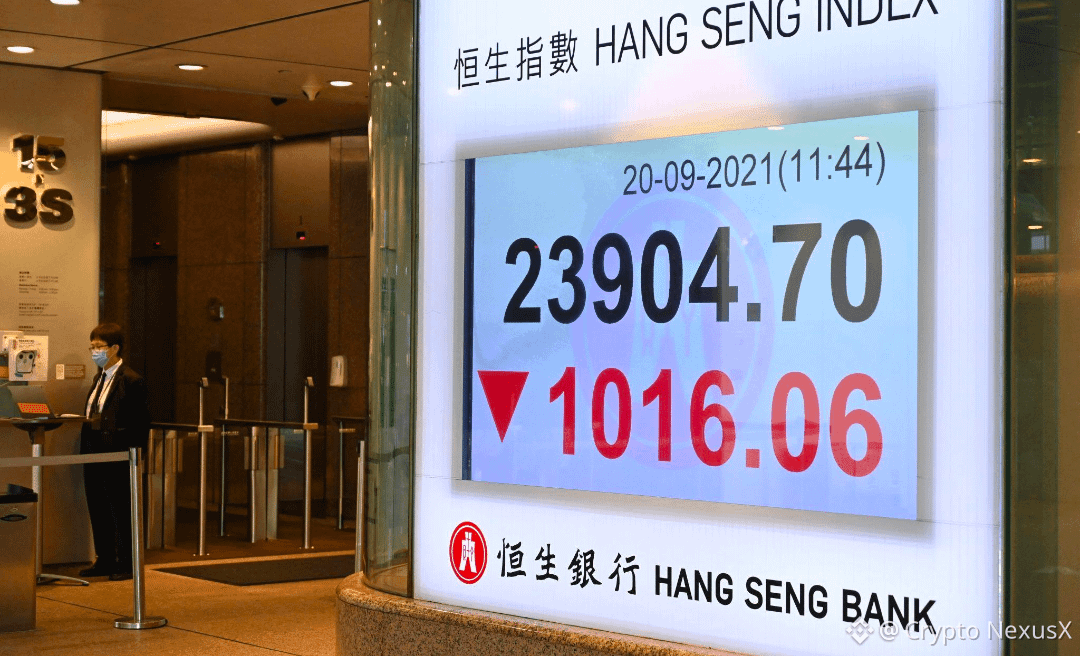
📉 Hang Seng Slides Nearly 1%
#HangSengFalls1%
Hong Kong stocks came under pressure as the Hang Seng Index fell about 0.95% to 25,324, with renewed U.S.-Iran tensions, higher oil prices and rising inflation concerns weighing on investor sentiment.
#HangSeng #HongKong #StockMarket #AsiaMarkets #Investing
📉 Hang Seng Slides Nearly 1%
#HangSengFalls1%
Hong Kong stocks came under pressure as the Hang Seng Index fell about 0.95% to 25,324, with renewed U.S.-Iran tensions, higher oil prices and rising inflation concerns weighing on investor sentiment.
#HangSeng #HongKong #StockMarket #AsiaMarkets #Investing
#HangSengFalls1%
Hong Kong stocks came under pressure as the Hang Seng Index fell about 0.95% to 25,324, with renewed U.S.-Iran tensions, higher oil prices and rising inflation concerns weighing on investor sentiment.
#HangSeng #HongKong #StockMarket #AsiaMarkets #Investing
156

Статья
Russia’s Digital Ruble Enters a New Era on September 1Russia is moving ahead with the large-scale rollout of its digital ruble on September 1, 2026, marking a major step in the country’s central bank digital currency (CBDC) project. The initiative has been tested since 2023 and will now expand to major banks and large retailers.
From the launch date, 12 systemically important banks will be required to support digital-ruble transactions, while retailers with annual revenue above 120 million rubles will also have to accept the new payment method. Smaller businesses will be brought into the system in stages through 2028.
The digital ruble will exist alongside Russia’s existing cash and non-cash money rather than replacing them. Individual consumers are not being forced to use it, and the system is expected to support payments through a universal QR-code infrastructure.
The rollout will be closely watched as Russia attempts to make digital currency a practical part of everyday payments and further modernize its domestic financial system.
#RussiaStartsLargeScaleDigitalRubleRolloutSep1
Russia’s Digital Ruble Enters a New Era on September 1
Russia is moving ahead with the large-scale rollout of its digital ruble on September 1, 2026, marking a major step in the country’s central bank digital currency (CBDC) project. The initiative has been tested since 2023 and will now expand to major banks and large retailers.
From the launch date, 12 systemically important banks will be required to support digital-ruble transactions, while retailers with annual revenue above 120 million rubles will also have to accept the new payment method. Smaller businesses will be brought into the system in stages through 2028.
The digital ruble will exist alongside Russia’s existing cash and non-cash money rather than replacing them. Individual consumers are not being forced to use it, and the system is expected to support payments through a universal QR-code infrastructure.
The rollout will be closely watched as Russia attempts to make digital currency a practical part of everyday payments and further modernize its domestic financial system.
#RussiaStartsLargeScaleDigitalRubleRolloutSep1
From the launch date, 12 systemically important banks will be required to support digital-ruble transactions, while retailers with annual revenue above 120 million rubles will also have to accept the new payment method. Smaller businesses will be brought into the system in stages through 2028.
The digital ruble will exist alongside Russia’s existing cash and non-cash money rather than replacing them. Individual consumers are not being forced to use it, and the system is expected to support payments through a universal QR-code infrastructure.
The rollout will be closely watched as Russia attempts to make digital currency a practical part of everyday payments and further modernize its domestic financial system.
#RussiaStartsLargeScaleDigitalRubleRolloutSep1
1
159
·
--
Рост
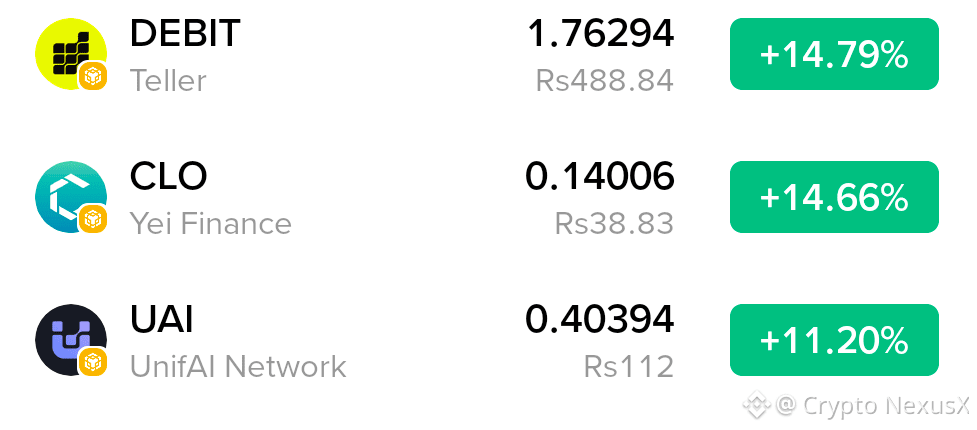
📊 Altcoin momentum is heating up!
$DEBIT is leading the move at +14.79%, followed closely by $CLO at +14.66% and $UAI at +11.20%. 🔥
Green candles always catch attention—but smart money watches the momentum and the fundamentals. 👀
#Crypto #DeFi #Altcoins #BNBChain #CryptoTrading
📊 Altcoin momentum is heating up!
$DEBIT is leading the move at +14.79%, followed closely by $CLO at +14.66% and $UAI at +11.20%. 🔥
Green candles always catch attention—but smart money watches the momentum and the fundamentals. 👀
#Crypto #DeFi #Altcoins #BNBChain #CryptoTrading
$DEBIT is leading the move at +14.79%, followed closely by $CLO at +14.66% and $UAI at +11.20%. 🔥
Green candles always catch attention—but smart money watches the momentum and the fundamentals. 👀
#Crypto #DeFi #Altcoins #BNBChain #CryptoTrading
602
·
--
Рост
🇯🇵 Yen Falls Despite Nearly $97B Japan Support
Japan’s massive effort to support the yen is struggling to stop the currency’s slide. Tokyo spent a record ¥15.4 trillion (about $96.5 billion) on currency intervention between July 30 and August 26, yet the yen has again weakened beyond ¥160 per dollar.
The key pressure is the widening U.S.–Japan rate gap. Freshly hawkish signals from the Federal Reserve have strengthened the dollar and reduced expectations that the gap will narrow soon.
Bottom line: Japan can spend billions defending the yen, but markets ultimately want to see stronger underlying support from monetary policy and interest-rate differentials.
#Yen #Japan #USDJPY #YenFallsDespite$97BJapanSupport #Economy
🇯🇵 Yen Falls Despite Nearly $97B Japan Support
Japan’s massive effort to support the yen is struggling to stop the currency’s slide. Tokyo spent a record ¥15.4 trillion (about $96.5 billion) on currency intervention between July 30 and August 26, yet the yen has again weakened beyond ¥160 per dollar.
The key pressure is the widening U.S.–Japan rate gap. Freshly hawkish signals from the Federal Reserve have strengthened the dollar and reduced expectations that the gap will narrow soon.
Bottom line: Japan can spend billions defending the yen, but markets ultimately want to see stronger underlying support from monetary policy and interest-rate differentials.
#Yen #Japan #USDJPY #YenFallsDespite$97BJapanSupport #Economy
Japan’s massive effort to support the yen is struggling to stop the currency’s slide. Tokyo spent a record ¥15.4 trillion (about $96.5 billion) on currency intervention between July 30 and August 26, yet the yen has again weakened beyond ¥160 per dollar.
The key pressure is the widening U.S.–Japan rate gap. Freshly hawkish signals from the Federal Reserve have strengthened the dollar and reduced expectations that the gap will narrow soon.
Bottom line: Japan can spend billions defending the yen, but markets ultimately want to see stronger underlying support from monetary policy and interest-rate differentials.
#Yen #Japan #USDJPY #YenFallsDespite$97BJapanSupport #Economy
116
·
--
Рост
🔥 Green candles everywhere!
The market is showing some serious momentum right now.
$牛来 leading with a massive +138.70%, while $UAI and $CYS are also pushing strong gains. 📈
Eyes on the next move. 👀🚀
Stay sharp, DYOR, and manage your risk.
🔥 Green candles everywhere!
The market is showing some serious momentum right now.
$牛来 leading with a massive +138.70%, while $UAI and $CYS are also pushing strong gains. 📈
Eyes on the next move. 👀🚀
Stay sharp, DYOR, and manage your risk.
The market is showing some serious momentum right now.
$牛来 leading with a massive +138.70%, while $UAI and $CYS are also pushing strong gains. 📈
Eyes on the next move. 👀🚀
Stay sharp, DYOR, and manage your risk.
504
·
--
Рост
#BitcoinSpotETFEnds9DayInflowStreak
Bitcoin spot ETFs have ended a nine-day streak of net inflows, a reminder that institutional demand can shift quickly with market conditions.
One day doesn’t change the bigger picture—but ETF flows remain an important metric to watch for clues about sentiment and liquidity around Bitcoin. ₿📊
#Bitcoin #BTC #BitcoinETF #Crypto
#BitcoinSpotETFEnds9DayInflowStreak
Bitcoin spot ETFs have ended a nine-day streak of net inflows, a reminder that institutional demand can shift quickly with market conditions.
One day doesn’t change the bigger picture—but ETF flows remain an important metric to watch for clues about sentiment and liquidity around Bitcoin. ₿📊
#Bitcoin #BTC #BitcoinETF #Crypto
Bitcoin spot ETFs have ended a nine-day streak of net inflows, a reminder that institutional demand can shift quickly with market conditions.
One day doesn’t change the bigger picture—but ETF flows remain an important metric to watch for clues about sentiment and liquidity around Bitcoin. ₿📊
#Bitcoin #BTC #BitcoinETF #Crypto
1
143
·
--
Рост
#AntiQuantumBitcoinTransactionMinedOnMainnet
Bitcoin is built for the long run—and preparing for the quantum era is part of that journey. ⚡₿
The mining of an anti-quantum transaction on mainnet highlights how innovation can help strengthen Bitcoin against future cryptographic challenges.
The quantum era may be coming, but Bitcoin can prepare today.
#Bitcoin #QuantumResistance #BTC #Blockchain
#AntiQuantumBitcoinTransactionMinedOnMainnet
Bitcoin is built for the long run—and preparing for the quantum era is part of that journey. ⚡₿
The mining of an anti-quantum transaction on mainnet highlights how innovation can help strengthen Bitcoin against future cryptographic challenges.
The quantum era may be coming, but Bitcoin can prepare today.
#Bitcoin #QuantumResistance #BTC #Blockchain
Bitcoin is built for the long run—and preparing for the quantum era is part of that journey. ⚡₿
The mining of an anti-quantum transaction on mainnet highlights how innovation can help strengthen Bitcoin against future cryptographic challenges.
The quantum era may be coming, but Bitcoin can prepare today.
#Bitcoin #QuantumResistance #BTC #Blockchain
131
·
--
Рост
#dusk $DUSK @Dusk_Foundation
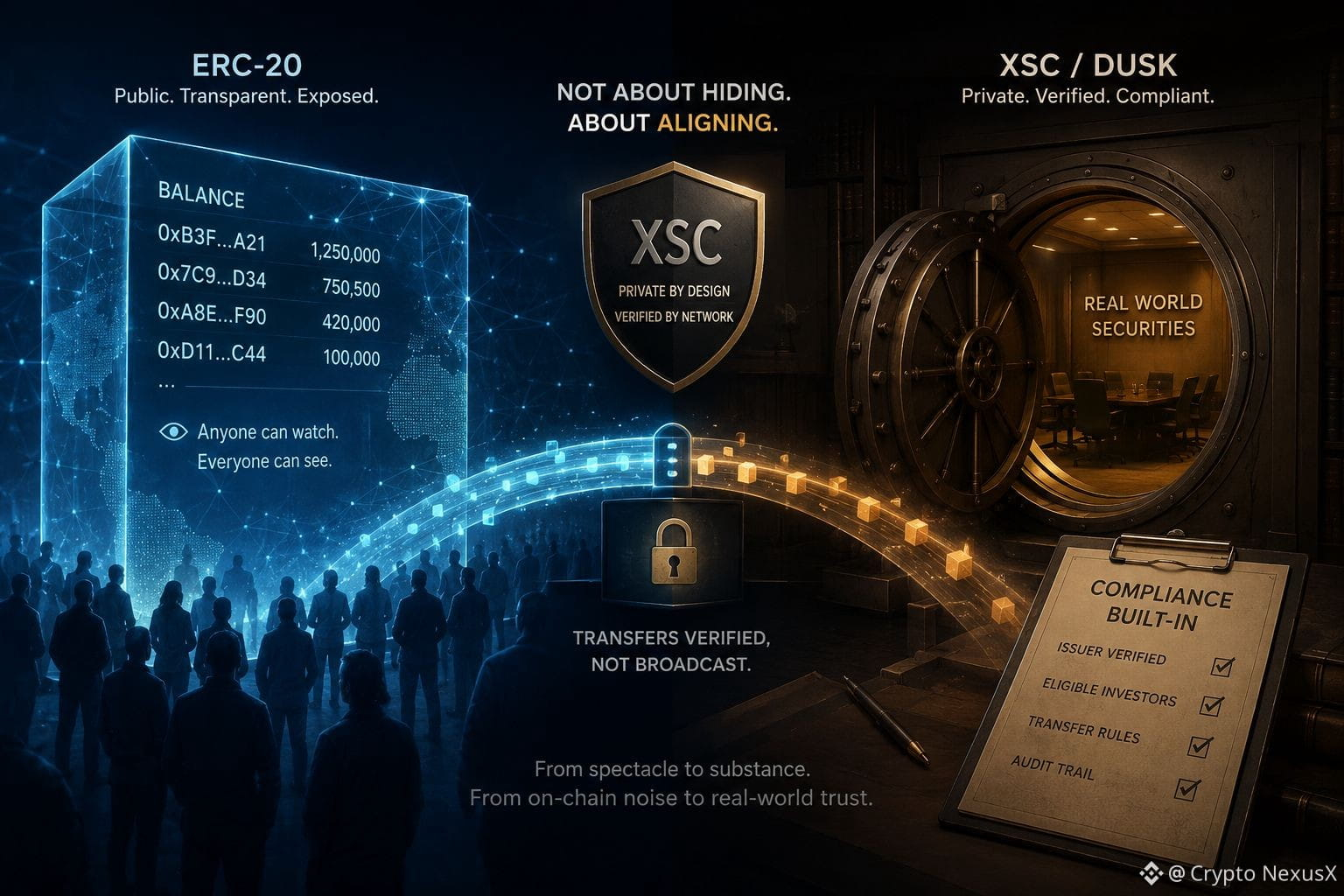
Honestly what pulled me into XSC wasn't the tech pitch, it was a dumb realization most "tokenized securities" are just an ERC-20 on a public chain, dressed up. Anyone can watch the balances move, see who's holding what. No real fund operates like that off-chain, so why would they on-chain? XSC actually tries to fix that instead of ignoring it transfers still get verified by the network, they're just not broadcast to everyone watching.
I spent a while on Dusk's testnet expecting to be impressed by the cryptography, and instead what stuck with me was how boring the settlement felt. In a good way fast, quiet, nothing to gawk at.
What I like practically is that compliance sits inside the contract logic instead of a spreadsheet bolted on after the fact. What worries me is that none of this matters unless institutions actually trust it enough to issue real securities on it, and that kind of trust takes years, not testnets.
Would you trade full on-chain transparency for something closer to how securities already work today?
#dusk $DUSK @Dusk
Honestly what pulled me into XSC wasn't the tech pitch, it was a dumb realization most "tokenized securities" are just an ERC-20 on a public chain, dressed up. Anyone can watch the balances move, see who's holding what. No real fund operates like that off-chain, so why would they on-chain? XSC actually tries to fix that instead of ignoring it transfers still get verified by the network, they're just not broadcast to everyone watching.
I spent a while on Dusk's testnet expecting to be impressed by the cryptography, and instead what stuck with me was how boring the settlement felt. In a good way fast, quiet, nothing to gawk at.
What I like practically is that compliance sits inside the contract logic instead of a spreadsheet bolted on after the fact. What worries me is that none of this matters unless institutions actually trust it enough to issue real securities on it, and that kind of trust takes years, not testnets.
Would you trade full on-chain transparency for something closer to how securities already work today?
Honestly what pulled me into XSC wasn't the tech pitch, it was a dumb realization most "tokenized securities" are just an ERC-20 on a public chain, dressed up. Anyone can watch the balances move, see who's holding what. No real fund operates like that off-chain, so why would they on-chain? XSC actually tries to fix that instead of ignoring it transfers still get verified by the network, they're just not broadcast to everyone watching.
I spent a while on Dusk's testnet expecting to be impressed by the cryptography, and instead what stuck with me was how boring the settlement felt. In a good way fast, quiet, nothing to gawk at.
What I like practically is that compliance sits inside the contract logic instead of a spreadsheet bolted on after the fact. What worries me is that none of this matters unless institutions actually trust it enough to issue real securities on it, and that kind of trust takes years, not testnets.
Would you trade full on-chain transparency for something closer to how securities already work today?
1
178
·
--
Рост
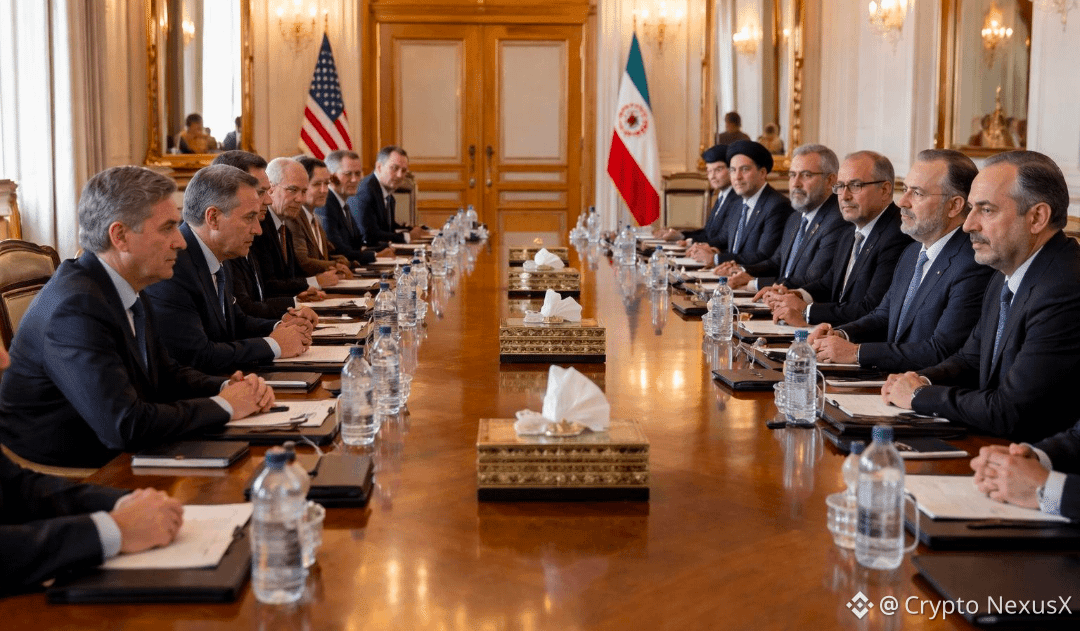
BREAKING: A Pause After the Storm? 🇺🇸🇮🇷
Reports of a possible US–Iran ceasefire consensus are raising hopes that the region could be moving away from escalation and toward diplomacy.
No celebration yet—the details, implementation, and durability of any agreement will matter most. But if confirmed, even a pause in hostilities could create space for dialogue and a wider path toward peace. 🕊️
Diplomacy now has the floor.
#USIran #Ceasefire #PeaceTalks #MiddleEast #Diplomacy #USIranReportedlyReachCeasefireConsensus
BREAKING: A Pause After the Storm? 🇺🇸🇮🇷
Reports of a possible US–Iran ceasefire consensus are raising hopes that the region could be moving away from escalation and toward diplomacy.
No celebration yet—the details, implementation, and durability of any agreement will matter most. But if confirmed, even a pause in hostilities could create space for dialogue and a wider path toward peace. 🕊️
Diplomacy now has the floor.
#USIran #Ceasefire #PeaceTalks #MiddleEast #Diplomacy #USIranReportedlyReachCeasefireConsensus
Reports of a possible US–Iran ceasefire consensus are raising hopes that the region could be moving away from escalation and toward diplomacy.
No celebration yet—the details, implementation, and durability of any agreement will matter most. But if confirmed, even a pause in hostilities could create space for dialogue and a wider path toward peace. 🕊️
Diplomacy now has the floor.
#USIran #Ceasefire #PeaceTalks #MiddleEast #Diplomacy #USIranReportedlyReachCeasefireConsensus
154
Войдите, чтобы посмотреть больше материала
Присоединяйтесь к пользователям криптовалют по всему миру на Binance Square
⚡️ Получайте новейшую и полезную информацию о криптоактивах.
💬 Нам доверяет крупнейшая в мире криптобиржа.
👍 Получите достоверные аналитические данные от верифицированных создателей контента.
Эл. почта/номер телефона
В тренде
FedMinutesFocusOnOctoberPause
Просмотров: 361,247
2,221 обсуждают
🚨 LA FED ACABA DE DAR UNA GRAN PISTA: ¿PAUSA EN OCTUBRE A LA VISTA?
Wall Street apuesta a que la Fed PISARÁ EL FRENO en octubre. Y los operadores de criptomonedas están muy atentos. 👀
Las últimas actas del FOMC han centrado la atención en una posible pausa en la reunión del 27 y 28 de octubre.
📊 El panorama del mercado:
🔥 Mantener las tasas en octubre: aproximadamente un 82,8 % según las últimas probabilidades publicadas.
🔥 Probabilidad de una subida de tasas: aproximadamente un 17,2 %.
🔥 El debilitamiento del mercado laboral hace más difícil justificar una subida inmediata.
Pero aquí viene el giro.
UNA PAUSA NO ES UN RECORTE DE TASAS.
La Fed podría mantener las tasas en octubre y dejar abierta la posibilidad de volver a endurecer la política monetaria más adelante.
Para $BTC, $ ETH y $XAU, esa diferencia importa.
Una pausa podría aliviar la presión inmediata sobre los activos de riesgo. Pero la inflación persistente y los elevados rendimientos de los bonos del Tesoro aún podrían frenar el impulso alcista.
⚠️ LA GRAN PREGUNTA:
¿Se está posicionando Wall Street ante una ruptura alcista de las criptomonedas o preparando otra enorme trampa alcista antes de la próxima decisión de la Fed?
$BTC $ETH $BNB $SOL $XAU
#fedminutesfocusonoctoberpause #BinanceLaunchesBinanceIntelligence #EvernorthDelaysNasdaqDebutToOct12 #RobinhoodAdds25MInBitcoinToBalanceSheet $25MInBitcoinToBalanceSh #SP500AndNasdaqHitRecordHighs
Carmelita Gilliland zXSW
·Лайков: 9
·Просмотров: 13.4k
VitalikWarnsAICouldWeakenCryptographySecurity
Просмотров: 91
42 обсуждают
XRPSpotETFsHold$1.7BWeeklyInflowsSlow
Просмотров: 216
18 обсуждают