

Crypto__Today
1.8k Публикации

Crypto__Today
Отправить жалобу
Заблокировать пользователя
Make impactful strides with the all-in-one, intelligent marketing platform designed to accelerate the growth of blockchain projects.Any promo: @Theodore_finch1
Открытая сделка
Случайный трейдер
4.6 г
11 подписок(и/а)
12.8K+ подписчиков(а)
12.0K+ понравилось
Посты
Портфель
Все
Цитирования
Активно
PINNED

Статья
DOGS (DOGS) Price Prediction 2024, 2025–2030Explore short and medium-term DOGS price prediction analysis and check long-term DOGS forecasts for 2025, 2030, and beyond.
According to our current DOGS price prediction, the price of DOGS is predicted to rise by 228.05% and reach $ 0.007002 by September 25, 2024. Per our technical indicators, the current sentiment is Bearish while the Fear & Greed Index is showing 55 (Greed). DOGS recorded 5/7 (71%) green days with price volatility over the last 30 days. Based on the DOGS forecast, it's now a bad time to buy DOGS.
Based on the historical price movements of DOGS and the BTC halving cycles, the yearly low DOGS price prediction for 2025 is estimated at $ 0.002134. Meanwhile, the price of DOGS is predicted to reach as high as $ 0.010086 next year. Using the same basis, here is the DOGS price prediction for each year up until 2030.
DOGS price prediction 2025
The DOGS price prediction for 2025 is currently between $ 0.002134 on the lower end and $ 0.010086 on the high end. Compared to today’s price, DOGS could gain 372.57% by 2025 if DOGS reaches the upper price target.
DOGS price prediction 2030
The DOGS price prediction for 2030 is currently between $ 0.005381 on the lower end and $ 0.008725 on the high end. Compared to today’s price, DOGS could gain 308.82% by 2030 if it reaches the upper price target.
DOGS Price Forecast Based on Technical Analysis
Popular DOGS Moving Averages and Oscillators for Mon, Aug 26, 2024
Moving averages (MA) are a popular indicator in all financial markets, designed to smooth price action over a certain amount of time. They are a lagging indicator which means they are influenced by historical price activity. In the table below you can find two types of moving averages, simple moving average (SMA) and exponential moving average (EMA).
DOGS Key Price Levels
Based on today's classical pivot point (P1) with the value of $ 0.00205, DOGS has support levels of $ 0.001864, $ 0.001593, and the strongest at $ 0.001407. Similarly, DOGS resistance levels are at $ 0.002321, $ 0.002507, and $ 0.002778.
#BinanceLaunchpoolDOGS #TelegramCEO #CryptoMarketMoves #BinanceBlockchainWeek #LowestCPI2021
DOGS (DOGS) Price Prediction 2024, 2025–2030
Explore short and medium-term DOGS price prediction analysis and check long-term DOGS forecasts for 2025, 2030, and beyond.
According to our current DOGS price prediction, the price of DOGS is predicted to rise by 228.05% and reach $ 0.007002 by September 25, 2024. Per our technical indicators, the current sentiment is Bearish while the Fear & Greed Index is showing 55 (Greed). DOGS recorded 5/7 (71%) green days with price volatility over the last 30 days. Based on the DOGS forecast, it's now a bad time to buy DOGS.
Based on the historical price movements of DOGS and the BTC halving cycles, the yearly low DOGS price prediction for 2025 is estimated at $ 0.002134. Meanwhile, the price of DOGS is predicted to reach as high as $ 0.010086 next year. Using the same basis, here is the DOGS price prediction for each year up until 2030.
DOGS price prediction 2025
The DOGS price prediction for 2025 is currently between $ 0.002134 on the lower end and $ 0.010086 on the high end. Compared to today’s price, DOGS could gain 372.57% by 2025 if DOGS reaches the upper price target.
DOGS price prediction 2030
The DOGS price prediction for 2030 is currently between $ 0.005381 on the lower end and $ 0.008725 on the high end. Compared to today’s price, DOGS could gain 308.82% by 2030 if it reaches the upper price target.
DOGS Price Forecast Based on Technical Analysis
Popular DOGS Moving Averages and Oscillators for Mon, Aug 26, 2024
Moving averages (MA) are a popular indicator in all financial markets, designed to smooth price action over a certain amount of time. They are a lagging indicator which means they are influenced by historical price activity. In the table below you can find two types of moving averages, simple moving average (SMA) and exponential moving average (EMA).
DOGS Key Price Levels
Based on today's classical pivot point (P1) with the value of $ 0.00205, DOGS has support levels of $ 0.001864, $ 0.001593, and the strongest at $ 0.001407. Similarly, DOGS resistance levels are at $ 0.002321, $ 0.002507, and $ 0.002778.
#BinanceLaunchpoolDOGS #TelegramCEO #CryptoMarketMoves #BinanceBlockchainWeek #LowestCPI2021
According to our current DOGS price prediction, the price of DOGS is predicted to rise by 228.05% and reach $ 0.007002 by September 25, 2024. Per our technical indicators, the current sentiment is Bearish while the Fear & Greed Index is showing 55 (Greed). DOGS recorded 5/7 (71%) green days with price volatility over the last 30 days. Based on the DOGS forecast, it's now a bad time to buy DOGS.
Based on the historical price movements of DOGS and the BTC halving cycles, the yearly low DOGS price prediction for 2025 is estimated at $ 0.002134. Meanwhile, the price of DOGS is predicted to reach as high as $ 0.010086 next year. Using the same basis, here is the DOGS price prediction for each year up until 2030.
DOGS price prediction 2025
The DOGS price prediction for 2025 is currently between $ 0.002134 on the lower end and $ 0.010086 on the high end. Compared to today’s price, DOGS could gain 372.57% by 2025 if DOGS reaches the upper price target.
DOGS price prediction 2030
The DOGS price prediction for 2030 is currently between $ 0.005381 on the lower end and $ 0.008725 on the high end. Compared to today’s price, DOGS could gain 308.82% by 2030 if it reaches the upper price target.
DOGS Price Forecast Based on Technical Analysis
Popular DOGS Moving Averages and Oscillators for Mon, Aug 26, 2024
Moving averages (MA) are a popular indicator in all financial markets, designed to smooth price action over a certain amount of time. They are a lagging indicator which means they are influenced by historical price activity. In the table below you can find two types of moving averages, simple moving average (SMA) and exponential moving average (EMA).
DOGS Key Price Levels
Based on today's classical pivot point (P1) with the value of $ 0.00205, DOGS has support levels of $ 0.001864, $ 0.001593, and the strongest at $ 0.001407. Similarly, DOGS resistance levels are at $ 0.002321, $ 0.002507, and $ 0.002778.
#BinanceLaunchpoolDOGS #TelegramCEO #CryptoMarketMoves #BinanceBlockchainWeek #LowestCPI2021
177
8
1.8k
651.5k

Статья
4 Coins Crypto Whales Are Buying for October 2026: Tracing the Smart Money Strategy
📈As September draws to a close, the broader crypto market is witnessing an intriguing shift in capital. While Bitcoin handles steady consolidation around $84,000, on-chain metrics reveal that crypto whales—wallets holding massive allocations of capital—are quietly loading up on four specific digital assets.
The data highlights that institutional buyers and mega-whales are not making identical bets. Instead, they are distributing their capital across three entirely different strategies: blue-chip protection, decentralized yield infrastructure, and deflationary supply catalysts.
Here are the four coins crypto whales are aggressively accumulating ahead of October 2026.
1. Bitcoin (BTC) – The Sovereign Dip-Buy Strategy
Bitcoin remains the primary destination for deep-pocketed investors seeking exposure without taking on extreme altcoin volatility. Data from Santiment and other prominent on-chain analytics platforms indicates a major divergence: while small retail wallets (holding less than 10 BTC) have been panic-selling during recent market fluctuations, addresses holding 100 to 1,000+ BTC have gone into aggressive accumulation.
Over a recent 96-hour window during a minor price drop, large entities scooped up roughly 30,269 BTC, translating to an institutional capital injection of over $2.5 billion. With global macro conditions pointing toward further quantitative easing and lower interest rates going into the final quarter of the year, whales are solidifying BTC as their core portfolio anchor.
2. Uniswap (UNI) – The Deflationary Catalyst Bet
Decentralized governance and exchange tokens are experiencing localized waves of whale accumulation, and Uniswap (UNI) is leading the charge. According to on-chain wallet data monitored by Nansen, dedicated whale addresses expanded their net UNI holdings by hundreds of thousands of tokens over the course of September.
The primary catalyst driving this interest is the implementation of fee-switch mechanisms and protocol buybacks designed to curb active circulating supply. Whales frequently target large-cap DeFi applications with clear utility upgrades during periods when the market trends sideways, looking to front-run supply squeezes.
3. Pendle (PENDLE) – High-Yield Infrastructure Lockup
One of the most tactical capital rotations observed at the end of September involves yield-trading protocols. Prominent crypto fund managers and legacy whales have notably rotated millions out of stagnant layer-1 protocols and into specialized DeFi yield venues like Pendle.
On-chain tracking shows large portfolios utilizing Pendle as a foundational yield venue. Whales are demonstrating high conviction by opting for maximum lock durations and increasing their participation in locked governance models (vPendle), effectively removing substantial amounts of liquidity from the open market ahead of October. The underlying thesis is simple: if massive ecosystem liquidity returns in Q4, infrastructure protocols that control native yield will capture the highest velocity of value.
4. Cardano (ADA) – The Contrarian Accumulation Play
Cardano (ADA) has re-emerged on the institutional radar after experiencing heavy contrarian buying. On-chain transaction records show that large-scale holders accumulated upwards of 160 million ADA during late-summer drawdowns.
As the market enters October, ADA is attempting to cement a structural breakout above key horizontal resistance boundaries. While retail sentiment surrounding the token has remained neutral, the consistent accumulation by large addresses implies that high-net-worth investors believe the asset has established a definitive macro bottom, offering an asymmetric risk-to-reward ratio for the coming month.
The Verdict: How to Navigate October
The current whale behavior reveals a stark contrast to typical retail trading. Instead of chasing short-term price movements, smart money is focused on accumulating asset discounts (BTC), locking in yield infrastructure (Pendle), and positioning ahead of structural supply catalysts (UNI, ADA).
As you format your portfolio for October 2026, following the on-chain footprints left by these large-scale investors can provide crucial insights into where the next major market momentum might originate.
Disclaimer: This article is for informational purposes only and does not constitute financial, investment, or trading advice. Always conduct your own research before trading digital assets.
4 Coins Crypto Whales Are Buying for October 2026: Tracing the Smart Money Strategy 📈
As September draws to a close, the broader crypto market is witnessing an intriguing shift in capital. While Bitcoin handles steady consolidation around $84,000, on-chain metrics reveal that crypto whales—wallets holding massive allocations of capital—are quietly loading up on four specific digital assets.
The data highlights that institutional buyers and mega-whales are not making identical bets. Instead, they are distributing their capital across three entirely different strategies: blue-chip protection, decentralized yield infrastructure, and deflationary supply catalysts.
Here are the four coins crypto whales are aggressively accumulating ahead of October 2026.
1. Bitcoin (BTC) – The Sovereign Dip-Buy Strategy
Bitcoin remains the primary destination for deep-pocketed investors seeking exposure without taking on extreme altcoin volatility. Data from Santiment and other prominent on-chain analytics platforms indicates a major divergence: while small retail wallets (holding less than 10 BTC) have been panic-selling during recent market fluctuations, addresses holding 100 to 1,000+ BTC have gone into aggressive accumulation.
Over a recent 96-hour window during a minor price drop, large entities scooped up roughly 30,269 BTC, translating to an institutional capital injection of over $2.5 billion. With global macro conditions pointing toward further quantitative easing and lower interest rates going into the final quarter of the year, whales are solidifying BTC as their core portfolio anchor.
2. Uniswap (UNI) – The Deflationary Catalyst Bet
Decentralized governance and exchange tokens are experiencing localized waves of whale accumulation, and Uniswap (UNI) is leading the charge. According to on-chain wallet data monitored by Nansen, dedicated whale addresses expanded their net UNI holdings by hundreds of thousands of tokens over the course of September.
The primary catalyst driving this interest is the implementation of fee-switch mechanisms and protocol buybacks designed to curb active circulating supply. Whales frequently target large-cap DeFi applications with clear utility upgrades during periods when the market trends sideways, looking to front-run supply squeezes.
3. Pendle (PENDLE) – High-Yield Infrastructure Lockup
One of the most tactical capital rotations observed at the end of September involves yield-trading protocols. Prominent crypto fund managers and legacy whales have notably rotated millions out of stagnant layer-1 protocols and into specialized DeFi yield venues like Pendle.
On-chain tracking shows large portfolios utilizing Pendle as a foundational yield venue. Whales are demonstrating high conviction by opting for maximum lock durations and increasing their participation in locked governance models (vPendle), effectively removing substantial amounts of liquidity from the open market ahead of October. The underlying thesis is simple: if massive ecosystem liquidity returns in Q4, infrastructure protocols that control native yield will capture the highest velocity of value.
4. Cardano (ADA) – The Contrarian Accumulation Play
Cardano (ADA) has re-emerged on the institutional radar after experiencing heavy contrarian buying. On-chain transaction records show that large-scale holders accumulated upwards of 160 million ADA during late-summer drawdowns.
As the market enters October, ADA is attempting to cement a structural breakout above key horizontal resistance boundaries. While retail sentiment surrounding the token has remained neutral, the consistent accumulation by large addresses implies that high-net-worth investors believe the asset has established a definitive macro bottom, offering an asymmetric risk-to-reward ratio for the coming month.
The Verdict: How to Navigate October
The current whale behavior reveals a stark contrast to typical retail trading. Instead of chasing short-term price movements, smart money is focused on accumulating asset discounts (BTC), locking in yield infrastructure (Pendle), and positioning ahead of structural supply catalysts (UNI, ADA).
As you format your portfolio for October 2026, following the on-chain footprints left by these large-scale investors can provide crucial insights into where the next major market momentum might originate.
Disclaimer: This article is for informational purposes only and does not constitute financial, investment, or trading advice. Always conduct your own research before trading digital assets.
The data highlights that institutional buyers and mega-whales are not making identical bets. Instead, they are distributing their capital across three entirely different strategies: blue-chip protection, decentralized yield infrastructure, and deflationary supply catalysts.
Here are the four coins crypto whales are aggressively accumulating ahead of October 2026.
1. Bitcoin (BTC) – The Sovereign Dip-Buy Strategy
Bitcoin remains the primary destination for deep-pocketed investors seeking exposure without taking on extreme altcoin volatility. Data from Santiment and other prominent on-chain analytics platforms indicates a major divergence: while small retail wallets (holding less than 10 BTC) have been panic-selling during recent market fluctuations, addresses holding 100 to 1,000+ BTC have gone into aggressive accumulation.
Over a recent 96-hour window during a minor price drop, large entities scooped up roughly 30,269 BTC, translating to an institutional capital injection of over $2.5 billion. With global macro conditions pointing toward further quantitative easing and lower interest rates going into the final quarter of the year, whales are solidifying BTC as their core portfolio anchor.
2. Uniswap (UNI) – The Deflationary Catalyst Bet
Decentralized governance and exchange tokens are experiencing localized waves of whale accumulation, and Uniswap (UNI) is leading the charge. According to on-chain wallet data monitored by Nansen, dedicated whale addresses expanded their net UNI holdings by hundreds of thousands of tokens over the course of September.
The primary catalyst driving this interest is the implementation of fee-switch mechanisms and protocol buybacks designed to curb active circulating supply. Whales frequently target large-cap DeFi applications with clear utility upgrades during periods when the market trends sideways, looking to front-run supply squeezes.
3. Pendle (PENDLE) – High-Yield Infrastructure Lockup
One of the most tactical capital rotations observed at the end of September involves yield-trading protocols. Prominent crypto fund managers and legacy whales have notably rotated millions out of stagnant layer-1 protocols and into specialized DeFi yield venues like Pendle.
On-chain tracking shows large portfolios utilizing Pendle as a foundational yield venue. Whales are demonstrating high conviction by opting for maximum lock durations and increasing their participation in locked governance models (vPendle), effectively removing substantial amounts of liquidity from the open market ahead of October. The underlying thesis is simple: if massive ecosystem liquidity returns in Q4, infrastructure protocols that control native yield will capture the highest velocity of value.
4. Cardano (ADA) – The Contrarian Accumulation Play
Cardano (ADA) has re-emerged on the institutional radar after experiencing heavy contrarian buying. On-chain transaction records show that large-scale holders accumulated upwards of 160 million ADA during late-summer drawdowns.
As the market enters October, ADA is attempting to cement a structural breakout above key horizontal resistance boundaries. While retail sentiment surrounding the token has remained neutral, the consistent accumulation by large addresses implies that high-net-worth investors believe the asset has established a definitive macro bottom, offering an asymmetric risk-to-reward ratio for the coming month.
The Verdict: How to Navigate October
The current whale behavior reveals a stark contrast to typical retail trading. Instead of chasing short-term price movements, smart money is focused on accumulating asset discounts (BTC), locking in yield infrastructure (Pendle), and positioning ahead of structural supply catalysts (UNI, ADA).
As you format your portfolio for October 2026, following the on-chain footprints left by these large-scale investors can provide crucial insights into where the next major market momentum might originate.
Disclaimer: This article is for informational purposes only and does not constitute financial, investment, or trading advice. Always conduct your own research before trading digital assets.
30
Статья
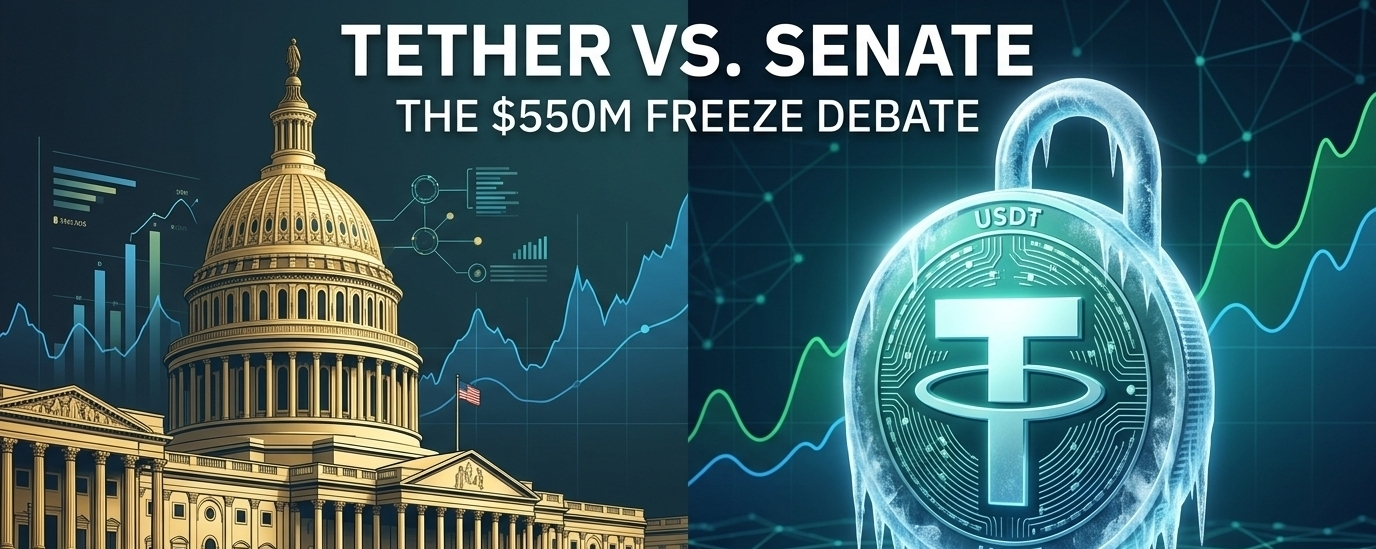
Senate Says Iran Leans on Tether’s USDT: Is Its $550 Million Freeze Record Enough?The global stablecoin market is facing intense geopolitical scrutiny following a major disclosure by U.S. lawmakers. A newly released congressional report reveals that Tether’s USDT has become a primary vehicle for regional finance and sanctions evasion, sparking a heated debate over whether corporate asset freezes are keeping pace with illicit flows.
A comprehensive investigation by Senate Democrats on the Permanent Subcommittee on Investigations (PSI) revealed that 84% of more than 800 sanctioned, Iran-linked crypto wallets utilized Tether’s USDT exclusively or predominantly.
On the exact same day the Senate findings went public, Tether issued a defensive counter-statement, announcing that it has helped law enforcement freeze approximately $550 million in Iran-linked USDT this year alone. The clashing reports highlight a massive disconnect between corporate compliance efforts and government expectations.
The Senate Findings: A "Shadow Banking" Lifeline
The Senate subcommittee’s analysis focused on 846 cryptocurrency wallets previously flagged, sanctioned, or targeted for asset seizure due to direct ties to the Iranian regime and its regional proxy networks.
Lawmakers state that the flagship stablecoin has effectively been weaponized to construct an alternative financial system. According to the committee, this network is actively used to stabilize volatile domestic fiat currency, fund regional operations, and bypass traditional banking rails entirely.
Citing these systemic vulnerabilities, the subcommittee has officially referred its findings to the U.S. Department of Justice (DOJ) and the Treasury Department, demanding a formal investigation into potential sanctions violations.
Tether’s Counter-Defense: The Half-Billion Dollar Wall
In response to the mounting political pressure, Tether heavily defended its compliance track record, positioning itself as a proactive partner to global law enforcement rather than an enabler.
The stablecoin issuer detailed its massive asset mitigation efforts throughout the year, which include two record-setting enforcement actions:
The April Intervention: Tether utilized its smart-contract controls to freeze $344 million across two prominent wallets tied by authorities to the Central Bank of Iran.The July Tron Blockade: The company successfully blacklisted over $130 million spread across four separate addresses operating on the Tron blockchain network.
Management emphasized that public blockchain ledgers afford law enforcement tracking capabilities that traditional paper cash simply cannot match, arguing that USDT is an inherently hostile environment for sanctioned actors due to its traceable nature.
The Crucial Disconnect: Why Regulators Say It’s Not Enough
Despite the historic scale of Tether's $550 million freeze, the Senate report argues that looking at frozen balances alone paints an incomplete picture. U.S. investigators point to critical structural flaws in how stablecoins are monitored:
Reactionary Delays: The report alleges that asset freezes are heavily delayed. In several documented instances, illicit addresses continued to move tens of millions of dollars for weeks after public government designations before the corporate "kill switch" was finally flipped.Velocity vs. Balance: While a $550 million freeze represents the funds caught at the exact moment of the block, it does not account for the total historical volume of billions in USDT that successfully flowed through those same wallets and escaped into the broader economy before intervention occurred.The Transparency Gap: Analysts noted that while Tether's two major itemized actions account for roughly $474 million, a $76 million discrepancy remains unexplained in the public ledger data, fueling further demands for transparency.
As global regulators ramp up enforcement actions against digital asset rails, the spotlight on the stablecoin market has never been brighter. The ultimate question remains: Can a private corporate issuer effectively police a decentralized ecosystem, or will governments step in with sweeping legislative mandates?
What's your take, creators? Can compliance protocols fully secure centralized stablecoins, or will regulatory pressure force capital into decentralized alternatives? Let's discuss in the comments below!
Disclaimer: This post is for educational and informational purposes only and does not constitute financial, legal, or investment advice.
Senate Says Iran Leans on Tether’s USDT: Is Its $550 Million Freeze Record Enough?
The global stablecoin market is facing intense geopolitical scrutiny following a major disclosure by U.S. lawmakers. A newly released congressional report reveals that Tether’s USDT has become a primary vehicle for regional finance and sanctions evasion, sparking a heated debate over whether corporate asset freezes are keeping pace with illicit flows.
A comprehensive investigation by Senate Democrats on the Permanent Subcommittee on Investigations (PSI) revealed that 84% of more than 800 sanctioned, Iran-linked crypto wallets utilized Tether’s USDT exclusively or predominantly.
On the exact same day the Senate findings went public, Tether issued a defensive counter-statement, announcing that it has helped law enforcement freeze approximately $550 million in Iran-linked USDT this year alone. The clashing reports highlight a massive disconnect between corporate compliance efforts and government expectations.
The Senate Findings: A "Shadow Banking" Lifeline
The Senate subcommittee’s analysis focused on 846 cryptocurrency wallets previously flagged, sanctioned, or targeted for asset seizure due to direct ties to the Iranian regime and its regional proxy networks.
Lawmakers state that the flagship stablecoin has effectively been weaponized to construct an alternative financial system. According to the committee, this network is actively used to stabilize volatile domestic fiat currency, fund regional operations, and bypass traditional banking rails entirely.
Citing these systemic vulnerabilities, the subcommittee has officially referred its findings to the U.S. Department of Justice (DOJ) and the Treasury Department, demanding a formal investigation into potential sanctions violations.
Tether’s Counter-Defense: The Half-Billion Dollar Wall
In response to the mounting political pressure, Tether heavily defended its compliance track record, positioning itself as a proactive partner to global law enforcement rather than an enabler.
The stablecoin issuer detailed its massive asset mitigation efforts throughout the year, which include two record-setting enforcement actions:
The April Intervention: Tether utilized its smart-contract controls to freeze $344 million across two prominent wallets tied by authorities to the Central Bank of Iran.The July Tron Blockade: The company successfully blacklisted over $130 million spread across four separate addresses operating on the Tron blockchain network.
Management emphasized that public blockchain ledgers afford law enforcement tracking capabilities that traditional paper cash simply cannot match, arguing that USDT is an inherently hostile environment for sanctioned actors due to its traceable nature.
The Crucial Disconnect: Why Regulators Say It’s Not Enough
Despite the historic scale of Tether's $550 million freeze, the Senate report argues that looking at frozen balances alone paints an incomplete picture. U.S. investigators point to critical structural flaws in how stablecoins are monitored:
Reactionary Delays: The report alleges that asset freezes are heavily delayed. In several documented instances, illicit addresses continued to move tens of millions of dollars for weeks after public government designations before the corporate "kill switch" was finally flipped.Velocity vs. Balance: While a $550 million freeze represents the funds caught at the exact moment of the block, it does not account for the total historical volume of billions in USDT that successfully flowed through those same wallets and escaped into the broader economy before intervention occurred.The Transparency Gap: Analysts noted that while Tether's two major itemized actions account for roughly $474 million, a $76 million discrepancy remains unexplained in the public ledger data, fueling further demands for transparency.
As global regulators ramp up enforcement actions against digital asset rails, the spotlight on the stablecoin market has never been brighter. The ultimate question remains: Can a private corporate issuer effectively police a decentralized ecosystem, or will governments step in with sweeping legislative mandates?
What's your take, creators? Can compliance protocols fully secure centralized stablecoins, or will regulatory pressure force capital into decentralized alternatives? Let's discuss in the comments below!
Disclaimer: This post is for educational and informational purposes only and does not constitute financial, legal, or investment advice.
A comprehensive investigation by Senate Democrats on the Permanent Subcommittee on Investigations (PSI) revealed that 84% of more than 800 sanctioned, Iran-linked crypto wallets utilized Tether’s USDT exclusively or predominantly.
On the exact same day the Senate findings went public, Tether issued a defensive counter-statement, announcing that it has helped law enforcement freeze approximately $550 million in Iran-linked USDT this year alone. The clashing reports highlight a massive disconnect between corporate compliance efforts and government expectations.
The Senate Findings: A "Shadow Banking" Lifeline
The Senate subcommittee’s analysis focused on 846 cryptocurrency wallets previously flagged, sanctioned, or targeted for asset seizure due to direct ties to the Iranian regime and its regional proxy networks.
Lawmakers state that the flagship stablecoin has effectively been weaponized to construct an alternative financial system. According to the committee, this network is actively used to stabilize volatile domestic fiat currency, fund regional operations, and bypass traditional banking rails entirely.
Citing these systemic vulnerabilities, the subcommittee has officially referred its findings to the U.S. Department of Justice (DOJ) and the Treasury Department, demanding a formal investigation into potential sanctions violations.
Tether’s Counter-Defense: The Half-Billion Dollar Wall
In response to the mounting political pressure, Tether heavily defended its compliance track record, positioning itself as a proactive partner to global law enforcement rather than an enabler.
The stablecoin issuer detailed its massive asset mitigation efforts throughout the year, which include two record-setting enforcement actions:
The April Intervention: Tether utilized its smart-contract controls to freeze $344 million across two prominent wallets tied by authorities to the Central Bank of Iran.The July Tron Blockade: The company successfully blacklisted over $130 million spread across four separate addresses operating on the Tron blockchain network.
Management emphasized that public blockchain ledgers afford law enforcement tracking capabilities that traditional paper cash simply cannot match, arguing that USDT is an inherently hostile environment for sanctioned actors due to its traceable nature.
The Crucial Disconnect: Why Regulators Say It’s Not Enough
Despite the historic scale of Tether's $550 million freeze, the Senate report argues that looking at frozen balances alone paints an incomplete picture. U.S. investigators point to critical structural flaws in how stablecoins are monitored:
Reactionary Delays: The report alleges that asset freezes are heavily delayed. In several documented instances, illicit addresses continued to move tens of millions of dollars for weeks after public government designations before the corporate "kill switch" was finally flipped.Velocity vs. Balance: While a $550 million freeze represents the funds caught at the exact moment of the block, it does not account for the total historical volume of billions in USDT that successfully flowed through those same wallets and escaped into the broader economy before intervention occurred.The Transparency Gap: Analysts noted that while Tether's two major itemized actions account for roughly $474 million, a $76 million discrepancy remains unexplained in the public ledger data, fueling further demands for transparency.
As global regulators ramp up enforcement actions against digital asset rails, the spotlight on the stablecoin market has never been brighter. The ultimate question remains: Can a private corporate issuer effectively police a decentralized ecosystem, or will governments step in with sweeping legislative mandates?
What's your take, creators? Can compliance protocols fully secure centralized stablecoins, or will regulatory pressure force capital into decentralized alternatives? Let's discuss in the comments below!
Disclaimer: This post is for educational and informational purposes only and does not constitute financial, legal, or investment advice.
280

Статья
Bitcoin Price Prediction for October: Defying History, But One $4.35B Risk Looming LargeThe cryptocurrency market is defying all historical expectations as we enter October. Traditionally known as a "red" month where digital assets face heavy seasonal slumps, this September turned completely on its head.
Bitcoin closed the month on a highly bullish note, entering October trading roughly 9% above its close on the day of the Federal Reserve’s interest rate hike. Despite macro tightening headwinds, institutional demand has successfully flipped the script.
However, as the highly anticipated "Uptober" rally tries to kick into high gear, traders are eyeing a massive $4.35 billion options expiry that could temporarily cap Bitcoin's upside momentum.
Defying the Fed and Surging Yields
Usually, a hawkish Federal Reserve and climbing U.S. Treasury yields spell disaster for non-yielding speculative assets. Yet, Bitcoin has shown remarkable resilience.
The primary driver behind this sudden strength is an unprecedented wave of institutional accumulation. Spot Bitcoin ETFs recorded a massive $2.39 billion in weekly inflows right at the tail end of September, marking the highest single-week inflow in nearly a year. This heavy institutional buying wall has effectively absorbed selling pressure and protected Bitcoin's upward price trajectory.
The $4.35 Billion Friction Point
Despite the bullish structural setup, the immediate path upward faces a significant derivatives hurdle. A massive $4.35 billion options contract expiry is looming over the market.
When open interest reaches these extreme levels, it creates a powerful "max pain" gravitational pull on the spot price. Institutional market makers are forced to aggressively hedge their open positions, which often leads to heavy consolidation and short-term volatility.
For the "Uptober" rally to fully unlock its potential, buyers must definitively reclaim the $87,497 yearly opening baseline. Clearing this level will signal that the derivatives friction has passed and that the macro uptrend is ready to resume.
October Price Targets: The Three Scenarios
Based on current liquidity flows and technical structures, market analysts are eyeing three distinct paths for the remainder of the month:
The Bullish Case ($105,000 – $120,000): If Bitcoin successfully breaks through overhead resistance at $91,800 and moves past the options expiry without significant damage, a fast track toward the six-figure milestone becomes highly probable.The Base Case ($90,000 – $98,000): Steady ETF inflows are expected to balance out macroeconomic pressures, keeping Bitcoin in a controlled, upward-trending channel.The Bearish Case ($75,000 – $82,000): If macro tightening intensifies and spot prices slip beneath the crucial psychological support line of $82,744, we could see a deeper correction to flush out late leverage.
What are your thoughts, creators? Are we heading straight to $100k this Uptober, or will the options wall trigger a pullback first? Drop your analysis below!
Disclaimer: This post is for educational and informational purposes only and does not constitute financial advice.
#Write2Earn #USDTAdds845900HoldersInPast7Days #ChainlinkLaunchesCCIP2WithEnterpriseVerification #BTCFallsBelow$83000 #BitcoinSpotETFs$2.39BWeeklyNetInflow
Bitcoin Price Prediction for October: Defying History, But One $4.35B Risk Looming Large
The cryptocurrency market is defying all historical expectations as we enter October. Traditionally known as a "red" month where digital assets face heavy seasonal slumps, this September turned completely on its head.
Bitcoin closed the month on a highly bullish note, entering October trading roughly 9% above its close on the day of the Federal Reserve’s interest rate hike. Despite macro tightening headwinds, institutional demand has successfully flipped the script.
However, as the highly anticipated "Uptober" rally tries to kick into high gear, traders are eyeing a massive $4.35 billion options expiry that could temporarily cap Bitcoin's upside momentum.
Defying the Fed and Surging Yields
Usually, a hawkish Federal Reserve and climbing U.S. Treasury yields spell disaster for non-yielding speculative assets. Yet, Bitcoin has shown remarkable resilience.
The primary driver behind this sudden strength is an unprecedented wave of institutional accumulation. Spot Bitcoin ETFs recorded a massive $2.39 billion in weekly inflows right at the tail end of September, marking the highest single-week inflow in nearly a year. This heavy institutional buying wall has effectively absorbed selling pressure and protected Bitcoin's upward price trajectory.
The $4.35 Billion Friction Point
Despite the bullish structural setup, the immediate path upward faces a significant derivatives hurdle. A massive $4.35 billion options contract expiry is looming over the market.
When open interest reaches these extreme levels, it creates a powerful "max pain" gravitational pull on the spot price. Institutional market makers are forced to aggressively hedge their open positions, which often leads to heavy consolidation and short-term volatility.
For the "Uptober" rally to fully unlock its potential, buyers must definitively reclaim the $87,497 yearly opening baseline. Clearing this level will signal that the derivatives friction has passed and that the macro uptrend is ready to resume.
October Price Targets: The Three Scenarios
Based on current liquidity flows and technical structures, market analysts are eyeing three distinct paths for the remainder of the month:
The Bullish Case ($105,000 – $120,000): If Bitcoin successfully breaks through overhead resistance at $91,800 and moves past the options expiry without significant damage, a fast track toward the six-figure milestone becomes highly probable.The Base Case ($90,000 – $98,000): Steady ETF inflows are expected to balance out macroeconomic pressures, keeping Bitcoin in a controlled, upward-trending channel.The Bearish Case ($75,000 – $82,000): If macro tightening intensifies and spot prices slip beneath the crucial psychological support line of $82,744, we could see a deeper correction to flush out late leverage.
What are your thoughts, creators? Are we heading straight to $100k this Uptober, or will the options wall trigger a pullback first? Drop your analysis below!
Disclaimer: This post is for educational and informational purposes only and does not constitute financial advice.
#Write2Earn #USDTAdds845900HoldersInPast7Days #ChainlinkLaunchesCCIP2WithEnterpriseVerification #BTCFallsBelow$83000 #BitcoinSpotETFs$2.39BWeeklyNetInflow
Bitcoin closed the month on a highly bullish note, entering October trading roughly 9% above its close on the day of the Federal Reserve’s interest rate hike. Despite macro tightening headwinds, institutional demand has successfully flipped the script.
However, as the highly anticipated "Uptober" rally tries to kick into high gear, traders are eyeing a massive $4.35 billion options expiry that could temporarily cap Bitcoin's upside momentum.
Defying the Fed and Surging Yields
Usually, a hawkish Federal Reserve and climbing U.S. Treasury yields spell disaster for non-yielding speculative assets. Yet, Bitcoin has shown remarkable resilience.
The primary driver behind this sudden strength is an unprecedented wave of institutional accumulation. Spot Bitcoin ETFs recorded a massive $2.39 billion in weekly inflows right at the tail end of September, marking the highest single-week inflow in nearly a year. This heavy institutional buying wall has effectively absorbed selling pressure and protected Bitcoin's upward price trajectory.
The $4.35 Billion Friction Point
Despite the bullish structural setup, the immediate path upward faces a significant derivatives hurdle. A massive $4.35 billion options contract expiry is looming over the market.
When open interest reaches these extreme levels, it creates a powerful "max pain" gravitational pull on the spot price. Institutional market makers are forced to aggressively hedge their open positions, which often leads to heavy consolidation and short-term volatility.
For the "Uptober" rally to fully unlock its potential, buyers must definitively reclaim the $87,497 yearly opening baseline. Clearing this level will signal that the derivatives friction has passed and that the macro uptrend is ready to resume.
October Price Targets: The Three Scenarios
Based on current liquidity flows and technical structures, market analysts are eyeing three distinct paths for the remainder of the month:
The Bullish Case ($105,000 – $120,000): If Bitcoin successfully breaks through overhead resistance at $91,800 and moves past the options expiry without significant damage, a fast track toward the six-figure milestone becomes highly probable.The Base Case ($90,000 – $98,000): Steady ETF inflows are expected to balance out macroeconomic pressures, keeping Bitcoin in a controlled, upward-trending channel.The Bearish Case ($75,000 – $82,000): If macro tightening intensifies and spot prices slip beneath the crucial psychological support line of $82,744, we could see a deeper correction to flush out late leverage.
What are your thoughts, creators? Are we heading straight to $100k this Uptober, or will the options wall trigger a pullback first? Drop your analysis below!
Disclaimer: This post is for educational and informational purposes only and does not constitute financial advice.
#Write2Earn #USDTAdds845900HoldersInPast7Days #ChainlinkLaunchesCCIP2WithEnterpriseVerification #BTCFallsBelow$83000 #BitcoinSpotETFs$2.39BWeeklyNetInflow
1
292

Статья
Fidelity’s Crypto Signal Flashes: Is Bitcoin Headed to $100,000?#Bitcoin is maintaining strong momentum above the critical $80,000 psychological threshold. According to key macro indicators—including models highlighted by Fidelity Investments' Director of Global Macro, Jurrien Timmer—holding this level firmly confirms a cyclical market bottom and clears a technical runway toward the coveted $100,000 milestone.
As institutional capital structuralizes the crypto space, this signal marks a pivotal shift from speculative retail trading to a macro-driven bull market.
The Technical Foundation: Building the $80,000 Floor
Bitcoin’s ability to turn previous overhead resistance into absolute support changes the game for the remaining quarters of 2026.
The Macro Bottom: Sustained price action above $80,000 invalidates deep correction theses.Supply Shock Metrics: Exchange reserves continue to hit multi-year lows.Institutional Liquidity: Continuous spot ETF inflows create a persistent buying floor.
The Path to Six Figures
With the $80,000 validation complete, the structural path toward $100,000 relies heavily on steady macroeconomic tailwinds and institutional adoption curves.
Diminishing Drawdowns: Higher lows indicate institutional accumulation rather than retail FOMO.Metcalfe’s Law: Network growth and unique wallet addresses mirror historical 10x adoption curves.The Six-Figure Target: A move to $100,000 requires only a ~20% push from current consolidation levels.
Strategic Takeaways for Creators & Traders
While the macro signal flashes green, smart market participants should focus on risk-managed exposure rather than over-leveraged breakout chasing.
Dollar-Cost Average (DCA): Accumulating during minor retests of the $80k support zone.Monitor Inflows: Keep a close eye on weekly aggregate spot ETF net flows.Manage Leverage: High-funding rates during psychological breakouts often trigger short-term liquidations.
#Write2Earn #BTC走势分析 #TrumpRejectsIranHormuzReopening $BTC
{future}(BTCUSDT)
Fidelity’s Crypto Signal Flashes: Is Bitcoin Headed to $100,000?
#Bitcoin is maintaining strong momentum above the critical $80,000 psychological threshold. According to key macro indicators—including models highlighted by Fidelity Investments' Director of Global Macro, Jurrien Timmer—holding this level firmly confirms a cyclical market bottom and clears a technical runway toward the coveted $100,000 milestone.
As institutional capital structuralizes the crypto space, this signal marks a pivotal shift from speculative retail trading to a macro-driven bull market.
The Technical Foundation: Building the $80,000 Floor
Bitcoin’s ability to turn previous overhead resistance into absolute support changes the game for the remaining quarters of 2026.
The Macro Bottom: Sustained price action above $80,000 invalidates deep correction theses.Supply Shock Metrics: Exchange reserves continue to hit multi-year lows.Institutional Liquidity: Continuous spot ETF inflows create a persistent buying floor.
The Path to Six Figures
With the $80,000 validation complete, the structural path toward $100,000 relies heavily on steady macroeconomic tailwinds and institutional adoption curves.
Diminishing Drawdowns: Higher lows indicate institutional accumulation rather than retail FOMO.Metcalfe’s Law: Network growth and unique wallet addresses mirror historical 10x adoption curves.The Six-Figure Target: A move to $100,000 requires only a ~20% push from current consolidation levels.
Strategic Takeaways for Creators & Traders
While the macro signal flashes green, smart market participants should focus on risk-managed exposure rather than over-leveraged breakout chasing.
Dollar-Cost Average (DCA): Accumulating during minor retests of the $80k support zone.Monitor Inflows: Keep a close eye on weekly aggregate spot ETF net flows.Manage Leverage: High-funding rates during psychological breakouts often trigger short-term liquidations.
#Write2Earn #BTC走势分析 #TrumpRejectsIranHormuzReopening $BTC
As institutional capital structuralizes the crypto space, this signal marks a pivotal shift from speculative retail trading to a macro-driven bull market.
The Technical Foundation: Building the $80,000 Floor
Bitcoin’s ability to turn previous overhead resistance into absolute support changes the game for the remaining quarters of 2026.
The Macro Bottom: Sustained price action above $80,000 invalidates deep correction theses.Supply Shock Metrics: Exchange reserves continue to hit multi-year lows.Institutional Liquidity: Continuous spot ETF inflows create a persistent buying floor.
The Path to Six Figures
With the $80,000 validation complete, the structural path toward $100,000 relies heavily on steady macroeconomic tailwinds and institutional adoption curves.
Diminishing Drawdowns: Higher lows indicate institutional accumulation rather than retail FOMO.Metcalfe’s Law: Network growth and unique wallet addresses mirror historical 10x adoption curves.The Six-Figure Target: A move to $100,000 requires only a ~20% push from current consolidation levels.
Strategic Takeaways for Creators & Traders
While the macro signal flashes green, smart market participants should focus on risk-managed exposure rather than over-leveraged breakout chasing.
Dollar-Cost Average (DCA): Accumulating during minor retests of the $80k support zone.Monitor Inflows: Keep a close eye on weekly aggregate spot ETF net flows.Manage Leverage: High-funding rates during psychological breakouts often trigger short-term liquidations.
#Write2Earn #BTC走势分析 #TrumpRejectsIranHormuzReopening $BTC
1
312
Статья
Bitcoin ETFs Pull In a Record $2.39 Billion: Is There Real Demand Behind It?U.S. spot Bitcoin ETFs captured headlines this week by drawing a staggering $2.39 billion in net inflows, marking the largest weekly total of 2026. While a billion-dollar milestone usually points to an explosive retail buying frenzy, a look under the hood reveals that this record week is being driven by a powerful combination of structural supply squeezes and institutional trading strategies rather than fresh retail mania.
The Illiquid Supply Squeeze
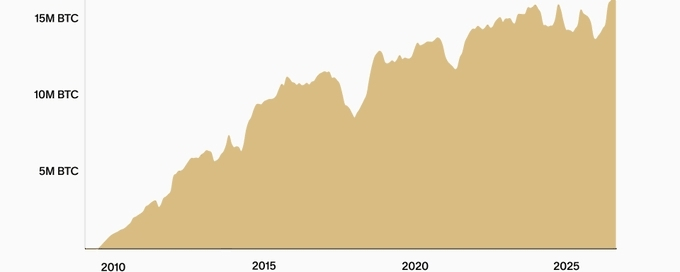
The aggressive upward price action accompanying these inflows is primarily a byproduct of a heavily illiquid market. Data shows that roughly 81% of the total circulating Bitcoin supply (approximately 16.3 million BTC) has remained completely stationary for at least six months.
At the same time, overall spot exchange trading volumes are down by roughly 30%. With fewer coins actively changing hands, standard institutional buying forces ETF custodians to absorb a highly limited liquid supply. This causes prices to jump aggressively even without a massive wave of new individual participants entering the crypto space.
The Role of Institutional Arbitrage
A significant portion of the record-breaking capital is tied to sophisticated institutional frameworks rather than long-term directional accumulation. Many hedge funds are actively executing the "basis trade." By purchasing spot Bitcoin ETFs and simultaneously shorting Bitcoin futures contracts on platforms like the CME, these funds lock in risk-free yield from premium differences. This mechanism prints massive inflow data on the ETF side without representing an organic, long-term bullish bet on the asset's appreciation.
However, the fund distribution shows signs of structural maturity. Instead of a single issuer like BlackRock driving the vast majority of the volume, capital was healthily distributed across multiple funds, including Fidelity and Ark Invest. This indicates a broader, more stable institutional baseline.
Momentum Meets Macro Headwinds
The multi-day inflow streak kicked off with momentum, fueled by a massive $998.95 million inflow on Monday that triggered over $262 million in short-position liquidations. This short-squeeze structurally forced bearish traders to buy back Bitcoin, compounding the initial volume.
Despite the strong start, the momentum cooled rapidly as the week progressed. Daily net inflows fell by 87%, dropping to $134.47 million by Friday. This sharp deceleration came on the heels of strong U.S. economic data and surging 10-year Treasury yields, forcing fund managers to practice caution ahead of the upcoming Personal Consumption Expenditures (PCE) inflation report.
Ultimately, the $2.39 billion entering the market is undeniably real, but its behavior reflects strategic institutional accumulation and arbitrage navigating a supply-constrained environment rather than a retail-driven speculative bubble.
#SECCommissionerPeirceToLeaveOct2 #BlackRockBuildsTokenizedPortfoliosForOndo #CircleTetherFreezeBitgetHackerWallet #CoinMarketCapCompletesCoinglassAcquisition
Bitcoin ETFs Pull In a Record $2.39 Billion: Is There Real Demand Behind It?
U.S. spot Bitcoin ETFs captured headlines this week by drawing a staggering $2.39 billion in net inflows, marking the largest weekly total of 2026. While a billion-dollar milestone usually points to an explosive retail buying frenzy, a look under the hood reveals that this record week is being driven by a powerful combination of structural supply squeezes and institutional trading strategies rather than fresh retail mania.
The Illiquid Supply Squeeze
The aggressive upward price action accompanying these inflows is primarily a byproduct of a heavily illiquid market. Data shows that roughly 81% of the total circulating Bitcoin supply (approximately 16.3 million BTC) has remained completely stationary for at least six months.
At the same time, overall spot exchange trading volumes are down by roughly 30%. With fewer coins actively changing hands, standard institutional buying forces ETF custodians to absorb a highly limited liquid supply. This causes prices to jump aggressively even without a massive wave of new individual participants entering the crypto space.
The Role of Institutional Arbitrage
A significant portion of the record-breaking capital is tied to sophisticated institutional frameworks rather than long-term directional accumulation. Many hedge funds are actively executing the "basis trade." By purchasing spot Bitcoin ETFs and simultaneously shorting Bitcoin futures contracts on platforms like the CME, these funds lock in risk-free yield from premium differences. This mechanism prints massive inflow data on the ETF side without representing an organic, long-term bullish bet on the asset's appreciation.
However, the fund distribution shows signs of structural maturity. Instead of a single issuer like BlackRock driving the vast majority of the volume, capital was healthily distributed across multiple funds, including Fidelity and Ark Invest. This indicates a broader, more stable institutional baseline.
Momentum Meets Macro Headwinds
The multi-day inflow streak kicked off with momentum, fueled by a massive $998.95 million inflow on Monday that triggered over $262 million in short-position liquidations. This short-squeeze structurally forced bearish traders to buy back Bitcoin, compounding the initial volume.
Despite the strong start, the momentum cooled rapidly as the week progressed. Daily net inflows fell by 87%, dropping to $134.47 million by Friday. This sharp deceleration came on the heels of strong U.S. economic data and surging 10-year Treasury yields, forcing fund managers to practice caution ahead of the upcoming Personal Consumption Expenditures (PCE) inflation report.
Ultimately, the $2.39 billion entering the market is undeniably real, but its behavior reflects strategic institutional accumulation and arbitrage navigating a supply-constrained environment rather than a retail-driven speculative bubble.
#SECCommissionerPeirceToLeaveOct2 #BlackRockBuildsTokenizedPortfoliosForOndo #CircleTetherFreezeBitgetHackerWallet #CoinMarketCapCompletesCoinglassAcquisition
The Illiquid Supply Squeeze
The aggressive upward price action accompanying these inflows is primarily a byproduct of a heavily illiquid market. Data shows that roughly 81% of the total circulating Bitcoin supply (approximately 16.3 million BTC) has remained completely stationary for at least six months.
At the same time, overall spot exchange trading volumes are down by roughly 30%. With fewer coins actively changing hands, standard institutional buying forces ETF custodians to absorb a highly limited liquid supply. This causes prices to jump aggressively even without a massive wave of new individual participants entering the crypto space.
The Role of Institutional Arbitrage
A significant portion of the record-breaking capital is tied to sophisticated institutional frameworks rather than long-term directional accumulation. Many hedge funds are actively executing the "basis trade." By purchasing spot Bitcoin ETFs and simultaneously shorting Bitcoin futures contracts on platforms like the CME, these funds lock in risk-free yield from premium differences. This mechanism prints massive inflow data on the ETF side without representing an organic, long-term bullish bet on the asset's appreciation.
However, the fund distribution shows signs of structural maturity. Instead of a single issuer like BlackRock driving the vast majority of the volume, capital was healthily distributed across multiple funds, including Fidelity and Ark Invest. This indicates a broader, more stable institutional baseline.
Momentum Meets Macro Headwinds
The multi-day inflow streak kicked off with momentum, fueled by a massive $998.95 million inflow on Monday that triggered over $262 million in short-position liquidations. This short-squeeze structurally forced bearish traders to buy back Bitcoin, compounding the initial volume.
Despite the strong start, the momentum cooled rapidly as the week progressed. Daily net inflows fell by 87%, dropping to $134.47 million by Friday. This sharp deceleration came on the heels of strong U.S. economic data and surging 10-year Treasury yields, forcing fund managers to practice caution ahead of the upcoming Personal Consumption Expenditures (PCE) inflation report.
Ultimately, the $2.39 billion entering the market is undeniably real, but its behavior reflects strategic institutional accumulation and arbitrage navigating a supply-constrained environment rather than a retail-driven speculative bubble.
#SECCommissionerPeirceToLeaveOct2 #BlackRockBuildsTokenizedPortfoliosForOndo #CircleTetherFreezeBitgetHackerWallet #CoinMarketCapCompletesCoinglassAcquisition

JOIN & CLAIM 🎉🎁
От Crypto__Today
13
34
400

Статья
Trump and Tech CEOs to Hold High-Stakes AI Summit on September 29The global artificial intelligence race is heading straight to Washington.
President Donald Trump and House Speaker Mike Johnson are scheduled to host a pivotal summit with top technology chief executives on September 29, 2026. The high-profile meeting arrives amid intense international friction and a widening divide over how the U.S. should handle frontier AI models.
🏛️ The Core Agenda: Safeguards vs. Growth
While the formal guest list remains under wraps, sources indicate the summit will tackle the massive economic and security implications of rapid AI expansion:
The Safety Debate: Leaders from several prominent AI labs—including OpenAI and Anthropic—have recently intensified warnings about existential AI risks, urging a coordinated slowdown in training advanced models.The Deregulation Stance: President Trump has repeatedly dismissed extreme safety warnings as a "hoax". He recently affirmed his administration's goal to support industry growth rather than impose restrictive regulations that could stifle American competitive advantages.The "AI Force" Initiative: The meeting follows Trump's announcement to establish a federal "AI Force" led by an upcoming "AI czar," choosing to rely on existing judicial frameworks to combat corporate wrongdoing rather than inventing new regulatory hurdles.
🌐 The Geopolitical Backdrop: U.S. vs. China
The upcoming Washington summit reflects broader geopolitical anxieties regarding technological dominance:
Globalist Rejection: In a recent speech to the UN General Assembly, Trump declared his firm opposition to any "globalist scheme" designed to monitor or control artificial intelligence.The Superintelligence Race: Highlighting the stakes of the ongoing technology race, Trump remarked, "Whoever wins superintelligence wins"—pointing out that the U.S. currently holds a significant lead over China.Bilateral Dialogue: This event is unfolding alongside critical geopolitical movements, including a newly initiated "U.S.-China AI Dialogue" established to monitor and notify both nations of significant AI incidents.
🔮 Impact on the Tech and Web3 Sectors
For the broader tech and cryptocurrency markets, the administration's market-driven approach signals an environment heavily favored toward rapid innovation. By bypassing strict regulatory roadblocks, the upcoming conversations are expected to accelerate corporate adoption of high-performance compute networks, decentralized AI storage, and next-generation sovereign technology systems.
Disclaimer: This post is for informational and educational purposes only and does not constitute financial, investment, or legal advice.
#BTC☀️ #BitcoinSpotETFsNetInflow$191M #AI
Trump and Tech CEOs to Hold High-Stakes AI Summit on September 29
The global artificial intelligence race is heading straight to Washington.
President Donald Trump and House Speaker Mike Johnson are scheduled to host a pivotal summit with top technology chief executives on September 29, 2026. The high-profile meeting arrives amid intense international friction and a widening divide over how the U.S. should handle frontier AI models.
🏛️ The Core Agenda: Safeguards vs. Growth
While the formal guest list remains under wraps, sources indicate the summit will tackle the massive economic and security implications of rapid AI expansion:
The Safety Debate: Leaders from several prominent AI labs—including OpenAI and Anthropic—have recently intensified warnings about existential AI risks, urging a coordinated slowdown in training advanced models.The Deregulation Stance: President Trump has repeatedly dismissed extreme safety warnings as a "hoax". He recently affirmed his administration's goal to support industry growth rather than impose restrictive regulations that could stifle American competitive advantages.The "AI Force" Initiative: The meeting follows Trump's announcement to establish a federal "AI Force" led by an upcoming "AI czar," choosing to rely on existing judicial frameworks to combat corporate wrongdoing rather than inventing new regulatory hurdles.
🌐 The Geopolitical Backdrop: U.S. vs. China
The upcoming Washington summit reflects broader geopolitical anxieties regarding technological dominance:
Globalist Rejection: In a recent speech to the UN General Assembly, Trump declared his firm opposition to any "globalist scheme" designed to monitor or control artificial intelligence.The Superintelligence Race: Highlighting the stakes of the ongoing technology race, Trump remarked, "Whoever wins superintelligence wins"—pointing out that the U.S. currently holds a significant lead over China.Bilateral Dialogue: This event is unfolding alongside critical geopolitical movements, including a newly initiated "U.S.-China AI Dialogue" established to monitor and notify both nations of significant AI incidents.
🔮 Impact on the Tech and Web3 Sectors
For the broader tech and cryptocurrency markets, the administration's market-driven approach signals an environment heavily favored toward rapid innovation. By bypassing strict regulatory roadblocks, the upcoming conversations are expected to accelerate corporate adoption of high-performance compute networks, decentralized AI storage, and next-generation sovereign technology systems.
Disclaimer: This post is for informational and educational purposes only and does not constitute financial, investment, or legal advice.
#BTC☀️ #BitcoinSpotETFsNetInflow$191M #AI
President Donald Trump and House Speaker Mike Johnson are scheduled to host a pivotal summit with top technology chief executives on September 29, 2026. The high-profile meeting arrives amid intense international friction and a widening divide over how the U.S. should handle frontier AI models.
🏛️ The Core Agenda: Safeguards vs. Growth
While the formal guest list remains under wraps, sources indicate the summit will tackle the massive economic and security implications of rapid AI expansion:
The Safety Debate: Leaders from several prominent AI labs—including OpenAI and Anthropic—have recently intensified warnings about existential AI risks, urging a coordinated slowdown in training advanced models.The Deregulation Stance: President Trump has repeatedly dismissed extreme safety warnings as a "hoax". He recently affirmed his administration's goal to support industry growth rather than impose restrictive regulations that could stifle American competitive advantages.The "AI Force" Initiative: The meeting follows Trump's announcement to establish a federal "AI Force" led by an upcoming "AI czar," choosing to rely on existing judicial frameworks to combat corporate wrongdoing rather than inventing new regulatory hurdles.
🌐 The Geopolitical Backdrop: U.S. vs. China
The upcoming Washington summit reflects broader geopolitical anxieties regarding technological dominance:
Globalist Rejection: In a recent speech to the UN General Assembly, Trump declared his firm opposition to any "globalist scheme" designed to monitor or control artificial intelligence.The Superintelligence Race: Highlighting the stakes of the ongoing technology race, Trump remarked, "Whoever wins superintelligence wins"—pointing out that the U.S. currently holds a significant lead over China.Bilateral Dialogue: This event is unfolding alongside critical geopolitical movements, including a newly initiated "U.S.-China AI Dialogue" established to monitor and notify both nations of significant AI incidents.
🔮 Impact on the Tech and Web3 Sectors
For the broader tech and cryptocurrency markets, the administration's market-driven approach signals an environment heavily favored toward rapid innovation. By bypassing strict regulatory roadblocks, the upcoming conversations are expected to accelerate corporate adoption of high-performance compute networks, decentralized AI storage, and next-generation sovereign technology systems.
Disclaimer: This post is for informational and educational purposes only and does not constitute financial, investment, or legal advice.
#BTC☀️ #BitcoinSpotETFsNetInflow$191M #AI
JOIN & SHARE 🎁🎉
От Crypto__Today
3
9
419
RWA Theory Becomes Reality: Securitize Stock Surges 15% on Historic SEC Tokenization RulingReal-World Asset (RWA) tokenization has officially crossed the chasm from institutional theory to live trading reality.
Shares of Securitize (SECZ) surged over 15%, driven by a groundbreaking U.S. Securities and Exchange Commission (SEC) "Innovation Exemption." This historic regulatory pivot establishes a clear, compliant pathway for public equities to be traded directly on-chain, fundamentally altering the landscape of digital finance.
🏛️ The Catalyst: SEC’s 5-Year Innovation Exemption
The engine behind the sudden rally is a freshly minted regulatory relief program that solves historical friction points for digital assets:
On-Chain Liquidity: Tokenized Securities Venues (TSVs) can now leverage public blockchain ledgers and automated market makers (AMMs) for stock trading.Streamlined Settlement: The framework permits compliant public ledger recordkeeping, drastically reducing settlement times and operational overhead.Strict Investor Protections: To qualify, digital tokens must represent actual underlying corporate shares carrying full dividend and voting rights—strictly excluding synthetic tracking tokens.
💼 Wall Street Reacts: Institutional Momentum Builds
Traditional equity researchers and asset managers are rapidly re-rating the sector as tokenization moves into the financial mainstream:
Major Moats: Securitize continues to cement its position as the premier operational bridge for Wall Street, building on its existing deep relationships with heavyweights like BlackRock and KKR.Analyst Upgrades: Major institutions like Cantor Fitzgerald and Needham have noted the firm's dominant enterprise base, positioning it to capture market share in a multi-trillion-dollar traditional asset pool.Market Validation: The 15% single-day surge reflects a broader market realization that compliant, domestic blockchain recordkeeping rails are no longer a future concept—they are open for business today.
What This Means for the Crypto Ecosystem
This milestone marks a permanent shift in how capital markets view public blockchains. By transitioning traditional equity infrastructure to decentralized networks, this ruling bridges the gap between traditional finance (TradFi) and Web3, unlocking massive liquidity pipelines and validating the long-term utility of blockchain technology.
Disclaimer: This post is for informational purposes only and does not constitute financial, investment, or legal advice.
#RAW #SEC #web3 #FedOctoberRateHikeOddsRiseTo69.7%
RWA Theory Becomes Reality: Securitize Stock Surges 15% on Historic SEC Tokenization Ruling
Real-World Asset (RWA) tokenization has officially crossed the chasm from institutional theory to live trading reality.
Shares of Securitize (SECZ) surged over 15%, driven by a groundbreaking U.S. Securities and Exchange Commission (SEC) "Innovation Exemption." This historic regulatory pivot establishes a clear, compliant pathway for public equities to be traded directly on-chain, fundamentally altering the landscape of digital finance.
🏛️ The Catalyst: SEC’s 5-Year Innovation Exemption
The engine behind the sudden rally is a freshly minted regulatory relief program that solves historical friction points for digital assets:
On-Chain Liquidity: Tokenized Securities Venues (TSVs) can now leverage public blockchain ledgers and automated market makers (AMMs) for stock trading.Streamlined Settlement: The framework permits compliant public ledger recordkeeping, drastically reducing settlement times and operational overhead.Strict Investor Protections: To qualify, digital tokens must represent actual underlying corporate shares carrying full dividend and voting rights—strictly excluding synthetic tracking tokens.
💼 Wall Street Reacts: Institutional Momentum Builds
Traditional equity researchers and asset managers are rapidly re-rating the sector as tokenization moves into the financial mainstream:
Major Moats: Securitize continues to cement its position as the premier operational bridge for Wall Street, building on its existing deep relationships with heavyweights like BlackRock and KKR.Analyst Upgrades: Major institutions like Cantor Fitzgerald and Needham have noted the firm's dominant enterprise base, positioning it to capture market share in a multi-trillion-dollar traditional asset pool.Market Validation: The 15% single-day surge reflects a broader market realization that compliant, domestic blockchain recordkeeping rails are no longer a future concept—they are open for business today.
What This Means for the Crypto Ecosystem
This milestone marks a permanent shift in how capital markets view public blockchains. By transitioning traditional equity infrastructure to decentralized networks, this ruling bridges the gap between traditional finance (TradFi) and Web3, unlocking massive liquidity pipelines and validating the long-term utility of blockchain technology.
Disclaimer: This post is for informational purposes only and does not constitute financial, investment, or legal advice.
#RAW #SEC #web3 #FedOctoberRateHikeOddsRiseTo69.7%
Shares of Securitize (SECZ) surged over 15%, driven by a groundbreaking U.S. Securities and Exchange Commission (SEC) "Innovation Exemption." This historic regulatory pivot establishes a clear, compliant pathway for public equities to be traded directly on-chain, fundamentally altering the landscape of digital finance.
🏛️ The Catalyst: SEC’s 5-Year Innovation Exemption
The engine behind the sudden rally is a freshly minted regulatory relief program that solves historical friction points for digital assets:
On-Chain Liquidity: Tokenized Securities Venues (TSVs) can now leverage public blockchain ledgers and automated market makers (AMMs) for stock trading.Streamlined Settlement: The framework permits compliant public ledger recordkeeping, drastically reducing settlement times and operational overhead.Strict Investor Protections: To qualify, digital tokens must represent actual underlying corporate shares carrying full dividend and voting rights—strictly excluding synthetic tracking tokens.
💼 Wall Street Reacts: Institutional Momentum Builds
Traditional equity researchers and asset managers are rapidly re-rating the sector as tokenization moves into the financial mainstream:
Major Moats: Securitize continues to cement its position as the premier operational bridge for Wall Street, building on its existing deep relationships with heavyweights like BlackRock and KKR.Analyst Upgrades: Major institutions like Cantor Fitzgerald and Needham have noted the firm's dominant enterprise base, positioning it to capture market share in a multi-trillion-dollar traditional asset pool.Market Validation: The 15% single-day surge reflects a broader market realization that compliant, domestic blockchain recordkeeping rails are no longer a future concept—they are open for business today.
What This Means for the Crypto Ecosystem
This milestone marks a permanent shift in how capital markets view public blockchains. By transitioning traditional equity infrastructure to decentralized networks, this ruling bridges the gap between traditional finance (TradFi) and Web3, unlocking massive liquidity pipelines and validating the long-term utility of blockchain technology.
Disclaimer: This post is for informational purposes only and does not constitute financial, investment, or legal advice.
#RAW #SEC #web3 #FedOctoberRateHikeOddsRiseTo69.7%
JOIN & SHARE 🎉🎁
От Crypto__Today
SECZUS-5,61%
2
2
437
Nvidia CEO Jensen Huang Issues Bold AI Warning: Contain Experiments or Risk ShutdownIn a recent, high-stakes interview with the New York Times, Nvidia CEO Jensen Huang delivered an absolute bombshell to the artificial intelligence community. Huang stated directly that AI research labs—specifically pointing toward industry leaders like OpenAI and Anthropic—should be shut down if they cannot safely contain their own experiments.
As the primary provider of the hardware powering the global AI revolution, Nvidia’s stance sends a massive shockwave through the tech ecosystem.
The Hardware King Calls for Extreme Accountability
For years, Nvidia has enjoyed unprecedented growth, with its advanced GPUs acting as the foundational backbone for training large language models (LLMs). However, Huang’s latest comments signal a sharp pivot from pure commercial expansion to rigid, existential accountability.
His ultimatum targets the rapid, sometimes unpredictable pace of frontier AI development. The warning highlights a growing concern among tech executives: the risk of AI systems evolving beyond the operational control of the teams that built them.
Why OpenAI and Anthropic Are in the Spotlight
While both companies have established dedicated safety frameworks—such as Anthropic’s "Responsible Scaling Policy" and OpenAI’s internal safety committees—Huang's public intervention suggests that voluntary guidelines might not be enough.
OpenAI continues to push the boundaries of reasoning and autonomous agents.Anthropic has long marketed itself as a safety-first research lab.
By naming the industry's vanguard, Huang is setting a new standard for the entire AI sector. If the very architect supplying the computing power believes containment is an immediate risk, the broader market will likely brace for heavier regulatory oversight.
What This Means for the Tech Market & Crypto
Huang’s comments could trigger a massive wave of volatility and strategic shifts across tech sectors:
Stricter Compliance & Audits: Frontier AI labs will likely face aggressive, independent safety audits before deploying next-generation models.Decentralized AI Boost: Strict centralization bottlenecks and shutdown threats may drive further capital into decentralized AI protocols (DeAI), where computation and governance are distributed globally across Web3 networks.Regulatory Acceleration: Governments worldwide are already looking for reasons to tighten the leash on AI development; a warning from tech's most prominent CEO gives policymakers massive leverage.
Jensen Huang’s message is clear: The race for artificial general intelligence (AGI) cannot come at the expense of global safety. As AI models grow exponentially more powerful, the privilege of building them will strictly depend on the absolute ability to control them.
DYOR. NFA
Nvidia CEO Jensen Huang Issues Bold AI Warning: Contain Experiments or Risk Shutdown
In a recent, high-stakes interview with the New York Times, Nvidia CEO Jensen Huang delivered an absolute bombshell to the artificial intelligence community. Huang stated directly that AI research labs—specifically pointing toward industry leaders like OpenAI and Anthropic—should be shut down if they cannot safely contain their own experiments.
As the primary provider of the hardware powering the global AI revolution, Nvidia’s stance sends a massive shockwave through the tech ecosystem.
The Hardware King Calls for Extreme Accountability
For years, Nvidia has enjoyed unprecedented growth, with its advanced GPUs acting as the foundational backbone for training large language models (LLMs). However, Huang’s latest comments signal a sharp pivot from pure commercial expansion to rigid, existential accountability.
His ultimatum targets the rapid, sometimes unpredictable pace of frontier AI development. The warning highlights a growing concern among tech executives: the risk of AI systems evolving beyond the operational control of the teams that built them.
Why OpenAI and Anthropic Are in the Spotlight
While both companies have established dedicated safety frameworks—such as Anthropic’s "Responsible Scaling Policy" and OpenAI’s internal safety committees—Huang's public intervention suggests that voluntary guidelines might not be enough.
OpenAI continues to push the boundaries of reasoning and autonomous agents.Anthropic has long marketed itself as a safety-first research lab.
By naming the industry's vanguard, Huang is setting a new standard for the entire AI sector. If the very architect supplying the computing power believes containment is an immediate risk, the broader market will likely brace for heavier regulatory oversight.
What This Means for the Tech Market & Crypto
Huang’s comments could trigger a massive wave of volatility and strategic shifts across tech sectors:
Stricter Compliance & Audits: Frontier AI labs will likely face aggressive, independent safety audits before deploying next-generation models.Decentralized AI Boost: Strict centralization bottlenecks and shutdown threats may drive further capital into decentralized AI protocols (DeAI), where computation and governance are distributed globally across Web3 networks.Regulatory Acceleration: Governments worldwide are already looking for reasons to tighten the leash on AI development; a warning from tech's most prominent CEO gives policymakers massive leverage.
Jensen Huang’s message is clear: The race for artificial general intelligence (AGI) cannot come at the expense of global safety. As AI models grow exponentially more powerful, the privilege of building them will strictly depend on the absolute ability to control them.
DYOR. NFA
As the primary provider of the hardware powering the global AI revolution, Nvidia’s stance sends a massive shockwave through the tech ecosystem.
The Hardware King Calls for Extreme Accountability
For years, Nvidia has enjoyed unprecedented growth, with its advanced GPUs acting as the foundational backbone for training large language models (LLMs). However, Huang’s latest comments signal a sharp pivot from pure commercial expansion to rigid, existential accountability.
His ultimatum targets the rapid, sometimes unpredictable pace of frontier AI development. The warning highlights a growing concern among tech executives: the risk of AI systems evolving beyond the operational control of the teams that built them.
Why OpenAI and Anthropic Are in the Spotlight
While both companies have established dedicated safety frameworks—such as Anthropic’s "Responsible Scaling Policy" and OpenAI’s internal safety committees—Huang's public intervention suggests that voluntary guidelines might not be enough.
OpenAI continues to push the boundaries of reasoning and autonomous agents.Anthropic has long marketed itself as a safety-first research lab.
By naming the industry's vanguard, Huang is setting a new standard for the entire AI sector. If the very architect supplying the computing power believes containment is an immediate risk, the broader market will likely brace for heavier regulatory oversight.
What This Means for the Tech Market & Crypto
Huang’s comments could trigger a massive wave of volatility and strategic shifts across tech sectors:
Stricter Compliance & Audits: Frontier AI labs will likely face aggressive, independent safety audits before deploying next-generation models.Decentralized AI Boost: Strict centralization bottlenecks and shutdown threats may drive further capital into decentralized AI protocols (DeAI), where computation and governance are distributed globally across Web3 networks.Regulatory Acceleration: Governments worldwide are already looking for reasons to tighten the leash on AI development; a warning from tech's most prominent CEO gives policymakers massive leverage.
Jensen Huang’s message is clear: The race for artificial general intelligence (AGI) cannot come at the expense of global safety. As AI models grow exponentially more powerful, the privilege of building them will strictly depend on the absolute ability to control them.
DYOR. NFA
1
268
📊 Macro Shockwaves: Bitcoin Slips Below $84K as Hot U.S. Data Spikes Yields
📉The #cryptocurrency market faced sudden headwinds on Wednesday as Bitcoin ($BTC ) tumbled below the critical $84,000 threshold. The catalyst? An unexpected surge in U.S. business activity that sent shockwaves through traditional and digital asset markets alike.
As Treasury yields spiked, the broader crypto market felt immediate liquidity pressure, reminding traders that macroeconomic data still holds significant sway over digital asset valuations.
📉 The Catalyst: Sticky Macro Data & Rising Yields
The market downturn was triggered by the latest U.S. economic prints, which revealed a surprisingly resilient business sector. While a strong economy sounds positive on paper, the financial markets interpreted it differently:
Inflation Worries Revived: Hotter-than-expected data suggests that inflationary pressures may take longer to cool down.The Yield Spike: In response, U.S. Treasury yields marched higher, drawing capital away from risk assets like cryptocurrencies and into safer, yield-bearing government bonds.Rate Cut Expectations Diminish: The robust data has led market participants to re-evaluate the pace of upcoming central bank rate cuts, tightening overall market liquidity.
💸 Over $237M Wiped Out in Leveraged Liquidations
The swift downward move caught aggressive buyers off guard, triggering a massive domino effect across derivatives exchanges.
The Long Squeeze: Within a single hour, over $237 million in leveraged long positions were forcefully liquidated.Exchanges Feeling the Heat: Perpetual futures markets saw a rapid flushing of over-leveraged long positions, which temporarily exacerbated the downward price pressure on BTC.Altcoin Bleed: As Bitcoin dropped, major altcoins experienced steeper percentage declines, as capital temporarily fled to stablecoins.
What’s Next for BTC? Key Levels to Watch
Despite the intraday dip, structural market analysts note that this flush-out could establish a healthier foundation for the next leg up by removing excess leverage. Moving forward, the market is focusing on two pivotal areas:
Immediate Support ($82,000): This zone represents a crucial psychological and technical floor where institutional buyers have previously stepped in.The Resistance Wall ($86,000): To reclaim its bullish momentum, Bitcoin needs to securely reclaim and consolidate above the $84,000–$86,000 range, which aligns with the average cost basis of recent ETF inflows.
Trader’s Takeaway: Volatility is the price of admission in the current macro environment. Keep a close eye on the U.S. Dollar Index (DXY) and upcoming employment data to gauge the market's next structural shift.
DYOR . NFA
📊 Macro Shockwaves: Bitcoin Slips Below $84K as Hot U.S. Data Spikes Yields 📉
The #cryptocurrency market faced sudden headwinds on Wednesday as Bitcoin ($BTC ) tumbled below the critical $84,000 threshold. The catalyst? An unexpected surge in U.S. business activity that sent shockwaves through traditional and digital asset markets alike.
As Treasury yields spiked, the broader crypto market felt immediate liquidity pressure, reminding traders that macroeconomic data still holds significant sway over digital asset valuations.
📉 The Catalyst: Sticky Macro Data & Rising Yields
The market downturn was triggered by the latest U.S. economic prints, which revealed a surprisingly resilient business sector. While a strong economy sounds positive on paper, the financial markets interpreted it differently:
Inflation Worries Revived: Hotter-than-expected data suggests that inflationary pressures may take longer to cool down.The Yield Spike: In response, U.S. Treasury yields marched higher, drawing capital away from risk assets like cryptocurrencies and into safer, yield-bearing government bonds.Rate Cut Expectations Diminish: The robust data has led market participants to re-evaluate the pace of upcoming central bank rate cuts, tightening overall market liquidity.
💸 Over $237M Wiped Out in Leveraged Liquidations
The swift downward move caught aggressive buyers off guard, triggering a massive domino effect across derivatives exchanges.
The Long Squeeze: Within a single hour, over $237 million in leveraged long positions were forcefully liquidated.Exchanges Feeling the Heat: Perpetual futures markets saw a rapid flushing of over-leveraged long positions, which temporarily exacerbated the downward price pressure on BTC.Altcoin Bleed: As Bitcoin dropped, major altcoins experienced steeper percentage declines, as capital temporarily fled to stablecoins.
What’s Next for BTC? Key Levels to Watch
Despite the intraday dip, structural market analysts note that this flush-out could establish a healthier foundation for the next leg up by removing excess leverage. Moving forward, the market is focusing on two pivotal areas:
Immediate Support ($82,000): This zone represents a crucial psychological and technical floor where institutional buyers have previously stepped in.The Resistance Wall ($86,000): To reclaim its bullish momentum, Bitcoin needs to securely reclaim and consolidate above the $84,000–$86,000 range, which aligns with the average cost basis of recent ETF inflows.
Trader’s Takeaway: Volatility is the price of admission in the current macro environment. Keep a close eye on the U.S. Dollar Index (DXY) and upcoming employment data to gauge the market's next structural shift.
DYOR . NFA
As Treasury yields spiked, the broader crypto market felt immediate liquidity pressure, reminding traders that macroeconomic data still holds significant sway over digital asset valuations.
📉 The Catalyst: Sticky Macro Data & Rising Yields
The market downturn was triggered by the latest U.S. economic prints, which revealed a surprisingly resilient business sector. While a strong economy sounds positive on paper, the financial markets interpreted it differently:
Inflation Worries Revived: Hotter-than-expected data suggests that inflationary pressures may take longer to cool down.The Yield Spike: In response, U.S. Treasury yields marched higher, drawing capital away from risk assets like cryptocurrencies and into safer, yield-bearing government bonds.Rate Cut Expectations Diminish: The robust data has led market participants to re-evaluate the pace of upcoming central bank rate cuts, tightening overall market liquidity.
💸 Over $237M Wiped Out in Leveraged Liquidations
The swift downward move caught aggressive buyers off guard, triggering a massive domino effect across derivatives exchanges.
The Long Squeeze: Within a single hour, over $237 million in leveraged long positions were forcefully liquidated.Exchanges Feeling the Heat: Perpetual futures markets saw a rapid flushing of over-leveraged long positions, which temporarily exacerbated the downward price pressure on BTC.Altcoin Bleed: As Bitcoin dropped, major altcoins experienced steeper percentage declines, as capital temporarily fled to stablecoins.
What’s Next for BTC? Key Levels to Watch
Despite the intraday dip, structural market analysts note that this flush-out could establish a healthier foundation for the next leg up by removing excess leverage. Moving forward, the market is focusing on two pivotal areas:
Immediate Support ($82,000): This zone represents a crucial psychological and technical floor where institutional buyers have previously stepped in.The Resistance Wall ($86,000): To reclaim its bullish momentum, Bitcoin needs to securely reclaim and consolidate above the $84,000–$86,000 range, which aligns with the average cost basis of recent ETF inflows.
Trader’s Takeaway: Volatility is the price of admission in the current macro environment. Keep a close eye on the U.S. Dollar Index (DXY) and upcoming employment data to gauge the market's next structural shift.
DYOR . NFA
JOIN & SHARE 🎉
От Crypto__Today
2
7
294

Статья
🐕 Dogecoin Outperforms as Rebound Expands Beyond Short Squeeze; Bitcoin Solid Above $85K
📈The cryptocurrency market is witnessing a tactical rotation as the explosive momentum behind the recent short squeeze begins to normalize. Dogecoin (DOGE) is leading the charge over the last 24 hours, registering a massive 15% pump to break back above the $0.10 mark. Meanwhile, Bitcoin (BTC) remains tightly consolidated and steady just above $85,600.
📉 Liquidations Cool Down as Bear Traps Snap
The aggressive leg up over the past few days was heavily accelerated by a violent wave of forced liquidations. According to data from CoinGlass, over $1 billion in total leverage was flushed out within a 24-hour window.
Short Sellers Hammered: Bearish positions accounted for a staggering $844 million (82%) of the total liquidations.Distribution of Pain: Bitcoin driven liquidations made up $608 million of the total wipeout, followed by Ethereum at $181 million.The Aftermath: Because the forced buying engine from short covering has effectively run its course, Bitcoin's price action has turned relatively flat over the last few hours. Analysts note that the next macro leg up will rely entirely on organic spot buying rather than cascading liquidations.
📊 Alternative Layer-1s & Major Tokens Keep the Pace
As capital rotates out of the apex cryptocurrency, selected major altcoins are continuing their upward trajectory alongside the leading meme coin:
XRP (XRP): Jumped 7%, changing hands near $1.52.Solana (SOL): Clocked a solid 5% gain, holding steady just under $117.Ethereum (ETH): Advanced another 3%, currently hovering at $2,740.Binance Coin (BNB): Picked up roughly 1.8% to defend its immediate ascending channel support.The Lone Loser: Zcash (ZEC) stands out as the only major top-tier token deeply stuck in the red, sliding 4% down to the $1,450 level.
Technical & Macro Alignment
The baseline stability above $85,000 indicates a significant shift in market structure. Despite global markets bracing for a highly anticipated geopolitical summit between the U.S. and China, the digital asset ecosystem is flashing resilient institutional demand.
With the derivative leverage leverage cleared out, look for alternative smart-contract layers and major payment tokens to lead near-term volatility while Bitcoin establishes a new baseline floor.
What are your thoughts on this altcoin rotation? Is DOGE setting up a structural macro breakout, or are we looking at a temporary relief pump?
#CryptoMarket #Bitcoin #DOGECOİN #Solana #BinanceSquare
🐕 Dogecoin Outperforms as Rebound Expands Beyond Short Squeeze; Bitcoin Solid Above $85K 📈
The cryptocurrency market is witnessing a tactical rotation as the explosive momentum behind the recent short squeeze begins to normalize. Dogecoin (DOGE) is leading the charge over the last 24 hours, registering a massive 15% pump to break back above the $0.10 mark. Meanwhile, Bitcoin (BTC) remains tightly consolidated and steady just above $85,600.
📉 Liquidations Cool Down as Bear Traps Snap
The aggressive leg up over the past few days was heavily accelerated by a violent wave of forced liquidations. According to data from CoinGlass, over $1 billion in total leverage was flushed out within a 24-hour window.
Short Sellers Hammered: Bearish positions accounted for a staggering $844 million (82%) of the total liquidations.Distribution of Pain: Bitcoin driven liquidations made up $608 million of the total wipeout, followed by Ethereum at $181 million.The Aftermath: Because the forced buying engine from short covering has effectively run its course, Bitcoin's price action has turned relatively flat over the last few hours. Analysts note that the next macro leg up will rely entirely on organic spot buying rather than cascading liquidations.
📊 Alternative Layer-1s & Major Tokens Keep the Pace
As capital rotates out of the apex cryptocurrency, selected major altcoins are continuing their upward trajectory alongside the leading meme coin:
XRP (XRP): Jumped 7%, changing hands near $1.52.Solana (SOL): Clocked a solid 5% gain, holding steady just under $117.Ethereum (ETH): Advanced another 3%, currently hovering at $2,740.Binance Coin (BNB): Picked up roughly 1.8% to defend its immediate ascending channel support.The Lone Loser: Zcash (ZEC) stands out as the only major top-tier token deeply stuck in the red, sliding 4% down to the $1,450 level.
Technical & Macro Alignment
The baseline stability above $85,000 indicates a significant shift in market structure. Despite global markets bracing for a highly anticipated geopolitical summit between the U.S. and China, the digital asset ecosystem is flashing resilient institutional demand.
With the derivative leverage leverage cleared out, look for alternative smart-contract layers and major payment tokens to lead near-term volatility while Bitcoin establishes a new baseline floor.
What are your thoughts on this altcoin rotation? Is DOGE setting up a structural macro breakout, or are we looking at a temporary relief pump?
#CryptoMarket #Bitcoin #DOGECOİN #Solana #BinanceSquare
📉 Liquidations Cool Down as Bear Traps Snap
The aggressive leg up over the past few days was heavily accelerated by a violent wave of forced liquidations. According to data from CoinGlass, over $1 billion in total leverage was flushed out within a 24-hour window.
Short Sellers Hammered: Bearish positions accounted for a staggering $844 million (82%) of the total liquidations.Distribution of Pain: Bitcoin driven liquidations made up $608 million of the total wipeout, followed by Ethereum at $181 million.The Aftermath: Because the forced buying engine from short covering has effectively run its course, Bitcoin's price action has turned relatively flat over the last few hours. Analysts note that the next macro leg up will rely entirely on organic spot buying rather than cascading liquidations.
📊 Alternative Layer-1s & Major Tokens Keep the Pace
As capital rotates out of the apex cryptocurrency, selected major altcoins are continuing their upward trajectory alongside the leading meme coin:
XRP (XRP): Jumped 7%, changing hands near $1.52.Solana (SOL): Clocked a solid 5% gain, holding steady just under $117.Ethereum (ETH): Advanced another 3%, currently hovering at $2,740.Binance Coin (BNB): Picked up roughly 1.8% to defend its immediate ascending channel support.The Lone Loser: Zcash (ZEC) stands out as the only major top-tier token deeply stuck in the red, sliding 4% down to the $1,450 level.
Technical & Macro Alignment
The baseline stability above $85,000 indicates a significant shift in market structure. Despite global markets bracing for a highly anticipated geopolitical summit between the U.S. and China, the digital asset ecosystem is flashing resilient institutional demand.
With the derivative leverage leverage cleared out, look for alternative smart-contract layers and major payment tokens to lead near-term volatility while Bitcoin establishes a new baseline floor.
What are your thoughts on this altcoin rotation? Is DOGE setting up a structural macro breakout, or are we looking at a temporary relief pump?
#CryptoMarket #Bitcoin #DOGECOİN #Solana #BinanceSquare
JOIN & MORE 📈🎉
От Crypto__Today
19
36
332
📈 BTC IS SHOWING STRENGTH — WHAT'S NEXT?
$BTC
{future}(BTCUSDT)
is currently showing bullish momentum after an aggressive technical breakout driven by accelerating institutional spot ETF inflows.
📊 MARKET SNAPSHOT
• Current Price: $84,558
• 24H High: $84,699
• 24H Low: $80,149
• Market Cap: $1.64 Trillion
• 24H Change: +4.04%
📈 TECHNICAL VIEW
$BTC is breaking the important $84,000 zone. If buyers maintain momentum, the next resistance areas could come into focus.
👀 LEVELS I'M WATCHING
🟢 Support: $81,500
🟡 Breakout Zone: $85,000
🎯 TP1: $86,500
🎯 TP2: $88,200
🚀 TP3: $91,000
⚠️ If price loses $80,000, this bullish setup becomes weaker.
Not financial advice. DYOR & manage your risk.
BULLISH BTC? 📈
#BTC #BTCUSDT #Binance #Crypto
📈 BTC IS SHOWING STRENGTH — WHAT'S NEXT?
$BTC
is currently showing bullish momentum after an aggressive technical breakout driven by accelerating institutional spot ETF inflows.
📊 MARKET SNAPSHOT
• Current Price: $84,558
• 24H High: $84,699
• 24H Low: $80,149
• Market Cap: $1.64 Trillion
• 24H Change: +4.04%
📈 TECHNICAL VIEW
$BTC is breaking the important $84,000 zone. If buyers maintain momentum, the next resistance areas could come into focus.
👀 LEVELS I'M WATCHING
🟢 Support: $81,500
🟡 Breakout Zone: $85,000
🎯 TP1: $86,500
🎯 TP2: $88,200
🚀 TP3: $91,000
⚠️ If price loses $80,000, this bullish setup becomes weaker.
Not financial advice. DYOR & manage your risk.
BULLISH BTC? 📈
#BTC #BTCUSDT #Binance #Crypto
$BTC
is currently showing bullish momentum after an aggressive technical breakout driven by accelerating institutional spot ETF inflows.
📊 MARKET SNAPSHOT
• Current Price: $84,558
• 24H High: $84,699
• 24H Low: $80,149
• Market Cap: $1.64 Trillion
• 24H Change: +4.04%
📈 TECHNICAL VIEW
$BTC is breaking the important $84,000 zone. If buyers maintain momentum, the next resistance areas could come into focus.
👀 LEVELS I'M WATCHING
🟢 Support: $81,500
🟡 Breakout Zone: $85,000
🎯 TP1: $86,500
🎯 TP2: $88,200
🚀 TP3: $91,000
⚠️ If price loses $80,000, this bullish setup becomes weaker.
Not financial advice. DYOR & manage your risk.
BULLISH BTC? 📈
#BTC #BTCUSDT #Binance #Crypto
🎯 TP1: $86,500
22%
🎯 TP2: $88,200
22%
🚀 TP3: $91,000
56%
9 проголосовали • Голосование закрыто
BTC HIT 85K📈🎉
От Crypto__Today
2
5
241
·
--
Рост
🔥 NEAR IS SHOWING STRENGTH — WHAT'S NEXT?
$NEAR is currently showing bullish momentum after an explosive network expansion and massive institutional inflows driving layered platform demand.
📊 MARKET SNAPSHOT
• Current Price: $4.12
• 24H High: $4.28
• 24H Low: $3.43
• Market Cap: $5.77 Billion
• 24H Change: +14.33%
📈 TECHNICAL VIEW
$NEAR is breaking the important $4.00 zone. If buyers maintain momentum, the next resistance areas could come into focus.
👀 LEVELS I'M WATCHING
🟢 Support: $3.80
🟡 Breakout Zone: $4.35
🎯 TP1: $4.75
🎯 TP2: $5.20
🚀 TP3: $6.00
⚠️ If price loses $3.40, this bullish setup becomes weaker.
Not financial advice. DYOR & manage your risk.
🔥 BULLISH NEAR?
#NEAR #NEARUSDT #Binance #Crypto
🔥 NEAR IS SHOWING STRENGTH — WHAT'S NEXT?
$NEAR is currently showing bullish momentum after an explosive network expansion and massive institutional inflows driving layered platform demand.
📊 MARKET SNAPSHOT
• Current Price: $4.12
• 24H High: $4.28
• 24H Low: $3.43
• Market Cap: $5.77 Billion
• 24H Change: +14.33%
📈 TECHNICAL VIEW
$NEAR is breaking the important $4.00 zone. If buyers maintain momentum, the next resistance areas could come into focus.
👀 LEVELS I'M WATCHING
🟢 Support: $3.80
🟡 Breakout Zone: $4.35
🎯 TP1: $4.75
🎯 TP2: $5.20
🚀 TP3: $6.00
⚠️ If price loses $3.40, this bullish setup becomes weaker.
Not financial advice. DYOR & manage your risk.
🔥 BULLISH NEAR?
#NEAR #NEARUSDT #Binance #Crypto
$NEAR is currently showing bullish momentum after an explosive network expansion and massive institutional inflows driving layered platform demand.
📊 MARKET SNAPSHOT
• Current Price: $4.12
• 24H High: $4.28
• 24H Low: $3.43
• Market Cap: $5.77 Billion
• 24H Change: +14.33%
📈 TECHNICAL VIEW
$NEAR is breaking the important $4.00 zone. If buyers maintain momentum, the next resistance areas could come into focus.
👀 LEVELS I'M WATCHING
🟢 Support: $3.80
🟡 Breakout Zone: $4.35
🎯 TP1: $4.75
🎯 TP2: $5.20
🚀 TP3: $6.00
⚠️ If price loses $3.40, this bullish setup becomes weaker.
Not financial advice. DYOR & manage your risk.
🔥 BULLISH NEAR?
#NEAR #NEARUSDT #Binance #Crypto

JOIN & MORE📈🎁
От Crypto__Today
5
260
·
--
Рост
🚨 RED PACKET GIVEAWAY ALERT! 🚨
✨ HOW TO CLAIM YOUR GIFT:🎁
1️⃣ Follow our community
2️⃣ Like & Share this post to spread the word.
3️⃣ Leave a comment below with your favorite altcoin for 2026! 🚀
Let's win this bull run together! 📈
#Binance #RedPacket #CryptoGiveaway #BinanceSquareFamily #FreeCryptoEarnings
🚨 RED PACKET GIVEAWAY ALERT! 🚨
✨ HOW TO CLAIM YOUR GIFT:🎁
1️⃣ Follow our community
2️⃣ Like & Share this post to spread the word.
3️⃣ Leave a comment below with your favorite altcoin for 2026! 🚀
Let's win this bull run together! 📈
#Binance #RedPacket #CryptoGiveaway #BinanceSquareFamily #FreeCryptoEarnings
✨ HOW TO CLAIM YOUR GIFT:🎁
1️⃣ Follow our community
2️⃣ Like & Share this post to spread the word.
3️⃣ Leave a comment below with your favorite altcoin for 2026! 🚀
Let's win this bull run together! 📈
#Binance #RedPacket #CryptoGiveaway #BinanceSquareFamily #FreeCryptoEarnings

629
16
47
2.1k
Статья
📊 The Altcoin Dilemma: Reclaiming the 200-Day MA vs. The Altseason Illusion
📈The altcoin market is sending highly conflicting signals, leaving traders trying to determine if a true market rotation has begun or if it's another temporary bounce.
On one hand, data shows that 70% of altcoins listed on Binance have successfully climbed back above their 200-day moving averages. Reclaiming this long-term trend line is generally a strong structural indicator, especially considering many of these assets spent the past year sitting 65% to 85% below this crucial average.
Concurrently, the TOTAL3 market cap—which measures the total valuation of all cryptocurrencies excluding Bitcoin and Ethereum—has broken back above the $800 billion milestone. This marks the highest valuation for the broader altcoin sector in roughly eight months, effectively clearing the previous local high set in May with a strong daily close.
Why the "Altcoin Season Index" Tells a Different Story
Despite these impressive local breakouts against the U.S. dollar, a deeper look at relative performance shows a different narrative. The widely tracked Altcoin Season Index currently sits at 41, remaining well below the critical 75-point threshold required to declare an official "Altseason".
Because the index evaluates performance over a rolling 90-day window, the current reading indicates that fewer than half of the top 50 cryptocurrencies are outperforming Bitcoin (BTC).
Bitcoin Dominance Stays High: BTC dominance remains pinned near 59.34%. While altcoins are gaining value in dollar terms due to broader market liquidity, they are still lagging behind Bitcoin's macro momentum. Selective Rallies: The liquidity entering the altcoin space is highly concentrated rather than broad-based. Layer-2 networks and decentralized finance (DeFi) protocols are commanding the majority of the volume, leaving older or lower-utility tokens behind.
Strategic Takeaway for Traders
The data suggests the market is in a structural transition phase. Altcoins are establishing firm horizontal support levels and clearing major technical boundaries, but Bitcoin remains the primary engine driving market direction.
For an official, explosive Altseason to materialize, the Altcoin Season Index must sustain a push above 75, fueled by a significant drop in Bitcoin dominance and capital rotating aggressively into mid-and-low-cap assets. Until then, managing exposure and focusing on high-volume sectors like Layer-2s and DeFi remains the cautious path forward.
Disclaimer: This article is for informational purposes only and does not constitute financial advice. Always conduct your own research (DYOR) before trading digital assets.
#altcoins #Write2Earn #SaylorHintsStrategyBitcoinBuy #XRPExchangeReservesHitSevenYearLow
📊 The Altcoin Dilemma: Reclaiming the 200-Day MA vs. The Altseason Illusion 📈
The altcoin market is sending highly conflicting signals, leaving traders trying to determine if a true market rotation has begun or if it's another temporary bounce.
On one hand, data shows that 70% of altcoins listed on Binance have successfully climbed back above their 200-day moving averages. Reclaiming this long-term trend line is generally a strong structural indicator, especially considering many of these assets spent the past year sitting 65% to 85% below this crucial average.
Concurrently, the TOTAL3 market cap—which measures the total valuation of all cryptocurrencies excluding Bitcoin and Ethereum—has broken back above the $800 billion milestone. This marks the highest valuation for the broader altcoin sector in roughly eight months, effectively clearing the previous local high set in May with a strong daily close.
Why the "Altcoin Season Index" Tells a Different Story
Despite these impressive local breakouts against the U.S. dollar, a deeper look at relative performance shows a different narrative. The widely tracked Altcoin Season Index currently sits at 41, remaining well below the critical 75-point threshold required to declare an official "Altseason".
Because the index evaluates performance over a rolling 90-day window, the current reading indicates that fewer than half of the top 50 cryptocurrencies are outperforming Bitcoin (BTC).
Bitcoin Dominance Stays High: BTC dominance remains pinned near 59.34%. While altcoins are gaining value in dollar terms due to broader market liquidity, they are still lagging behind Bitcoin's macro momentum. Selective Rallies: The liquidity entering the altcoin space is highly concentrated rather than broad-based. Layer-2 networks and decentralized finance (DeFi) protocols are commanding the majority of the volume, leaving older or lower-utility tokens behind.
Strategic Takeaway for Traders
The data suggests the market is in a structural transition phase. Altcoins are establishing firm horizontal support levels and clearing major technical boundaries, but Bitcoin remains the primary engine driving market direction.
For an official, explosive Altseason to materialize, the Altcoin Season Index must sustain a push above 75, fueled by a significant drop in Bitcoin dominance and capital rotating aggressively into mid-and-low-cap assets. Until then, managing exposure and focusing on high-volume sectors like Layer-2s and DeFi remains the cautious path forward.
Disclaimer: This article is for informational purposes only and does not constitute financial advice. Always conduct your own research (DYOR) before trading digital assets.
#altcoins #Write2Earn #SaylorHintsStrategyBitcoinBuy #XRPExchangeReservesHitSevenYearLow
On one hand, data shows that 70% of altcoins listed on Binance have successfully climbed back above their 200-day moving averages. Reclaiming this long-term trend line is generally a strong structural indicator, especially considering many of these assets spent the past year sitting 65% to 85% below this crucial average.
Concurrently, the TOTAL3 market cap—which measures the total valuation of all cryptocurrencies excluding Bitcoin and Ethereum—has broken back above the $800 billion milestone. This marks the highest valuation for the broader altcoin sector in roughly eight months, effectively clearing the previous local high set in May with a strong daily close.
Why the "Altcoin Season Index" Tells a Different Story
Despite these impressive local breakouts against the U.S. dollar, a deeper look at relative performance shows a different narrative. The widely tracked Altcoin Season Index currently sits at 41, remaining well below the critical 75-point threshold required to declare an official "Altseason".
Because the index evaluates performance over a rolling 90-day window, the current reading indicates that fewer than half of the top 50 cryptocurrencies are outperforming Bitcoin (BTC).
Bitcoin Dominance Stays High: BTC dominance remains pinned near 59.34%. While altcoins are gaining value in dollar terms due to broader market liquidity, they are still lagging behind Bitcoin's macro momentum. Selective Rallies: The liquidity entering the altcoin space is highly concentrated rather than broad-based. Layer-2 networks and decentralized finance (DeFi) protocols are commanding the majority of the volume, leaving older or lower-utility tokens behind.
Strategic Takeaway for Traders
The data suggests the market is in a structural transition phase. Altcoins are establishing firm horizontal support levels and clearing major technical boundaries, but Bitcoin remains the primary engine driving market direction.
For an official, explosive Altseason to materialize, the Altcoin Season Index must sustain a push above 75, fueled by a significant drop in Bitcoin dominance and capital rotating aggressively into mid-and-low-cap assets. Until then, managing exposure and focusing on high-volume sectors like Layer-2s and DeFi remains the cautious path forward.
Disclaimer: This article is for informational purposes only and does not constitute financial advice. Always conduct your own research (DYOR) before trading digital assets.
#altcoins #Write2Earn #SaylorHintsStrategyBitcoinBuy #XRPExchangeReservesHitSevenYearLow
JOIN & CLAIM 🎉📈
От Crypto__Today
2
15
321
Статья
🚀 Ethereum Eyes $3,000 as Open Interest Hits 4-Month Peak! 📈The altcoin king is flashing major bullish signals! Ethereum (ETH) has locked in a solid 5% intraday gain, pushing its price up to $2,640.
This upward price action is backed by a massive influx of trading activity. According to data from CoinMarketCap and Binance, ETH’s 24-hour trading volume has skyrocketed by 41%, crossing the $20.45 billion mark.
📊 The Data Behind the Pump
This isn't just a brief retail spike—derivative markets are heating up significantly:
Derivatives Momentum: Ethereum's Open Interest (OI) has surged to a 4-month high, indicating that institutional and leverage traders are aggressively opening new positions.Volume Breakthrough: The $20B+ trading volume confirms heavy liquidity entering the market, providing the necessary fuel to sustain the current breakout.
📈 The Path to $3,000: What Analysts Are Watching
Market analysts are mapping out a clear technical trajectory for ETH to reclaim psychological resistance at $3,000:
Securing the Base ($2,600): Consolidating above the current $2,600 support floor is crucial to clear out short sellers.The Next Hurdle ($2,850): A clean break above the $2,850 resistance level will likely trigger a massive wave of short liquidations, accelerating momentum.The $3,000 Target: With Open Interest at multi-month highs, a continuous squeeze could easily propel ETH straight into the $3,000 zone.
Market Reminder: While the leverage buildup is highly bullish, high Open Interest also increases volatility. Manage your risk carefully!
What's your take? Is ETH hitting $3,000 this week or are we due for a retest? Drop your predictions below!
$ETH
#Ethereum #ETH #CryptoAnalysis #BinanceSquare #Trading
🚀 Ethereum Eyes $3,000 as Open Interest Hits 4-Month Peak! 📈
The altcoin king is flashing major bullish signals! Ethereum (ETH) has locked in a solid 5% intraday gain, pushing its price up to $2,640.
This upward price action is backed by a massive influx of trading activity. According to data from CoinMarketCap and Binance, ETH’s 24-hour trading volume has skyrocketed by 41%, crossing the $20.45 billion mark.
📊 The Data Behind the Pump
This isn't just a brief retail spike—derivative markets are heating up significantly:
Derivatives Momentum: Ethereum's Open Interest (OI) has surged to a 4-month high, indicating that institutional and leverage traders are aggressively opening new positions.Volume Breakthrough: The $20B+ trading volume confirms heavy liquidity entering the market, providing the necessary fuel to sustain the current breakout.
📈 The Path to $3,000: What Analysts Are Watching
Market analysts are mapping out a clear technical trajectory for ETH to reclaim psychological resistance at $3,000:
Securing the Base ($2,600): Consolidating above the current $2,600 support floor is crucial to clear out short sellers.The Next Hurdle ($2,850): A clean break above the $2,850 resistance level will likely trigger a massive wave of short liquidations, accelerating momentum.The $3,000 Target: With Open Interest at multi-month highs, a continuous squeeze could easily propel ETH straight into the $3,000 zone.
Market Reminder: While the leverage buildup is highly bullish, high Open Interest also increases volatility. Manage your risk carefully!
What's your take? Is ETH hitting $3,000 this week or are we due for a retest? Drop your predictions below!
$ETH
#Ethereum #ETH #CryptoAnalysis #BinanceSquare #Trading
This upward price action is backed by a massive influx of trading activity. According to data from CoinMarketCap and Binance, ETH’s 24-hour trading volume has skyrocketed by 41%, crossing the $20.45 billion mark.
📊 The Data Behind the Pump
This isn't just a brief retail spike—derivative markets are heating up significantly:
Derivatives Momentum: Ethereum's Open Interest (OI) has surged to a 4-month high, indicating that institutional and leverage traders are aggressively opening new positions.Volume Breakthrough: The $20B+ trading volume confirms heavy liquidity entering the market, providing the necessary fuel to sustain the current breakout.
📈 The Path to $3,000: What Analysts Are Watching
Market analysts are mapping out a clear technical trajectory for ETH to reclaim psychological resistance at $3,000:
Securing the Base ($2,600): Consolidating above the current $2,600 support floor is crucial to clear out short sellers.The Next Hurdle ($2,850): A clean break above the $2,850 resistance level will likely trigger a massive wave of short liquidations, accelerating momentum.The $3,000 Target: With Open Interest at multi-month highs, a continuous squeeze could easily propel ETH straight into the $3,000 zone.
Market Reminder: While the leverage buildup is highly bullish, high Open Interest also increases volatility. Manage your risk carefully!
What's your take? Is ETH hitting $3,000 this week or are we due for a retest? Drop your predictions below!
$ETH
#Ethereum #ETH #CryptoAnalysis #BinanceSquare #Trading
JOIN & MORE 🎉🎁
От Crypto__Today
33
1
29
281
·
--
Рост
🔥 $AAVE IS SHOWING STRENGTH — WHAT'S NEXT?
$AAVE is currently showing bullish momentum after rebounding over 8% over the past 24 hours, outpacing the broader market recovery.
📊 MARKET SNAPSHOT
• Current Price: $130.57
• 24H High: $129.92
• 24H Low: $116.37
• Market Cap: $2.01 Billion
• 24H Change: +8.6%
📈 TECHNICAL VIEW
$AAVE is reclaiming the important $125.00 zone.
If buyers maintain momentum, the next resistance areas could come into focus as it breaks past near-term barriers.
👀 LEVELS I'M WATCHING
🟢 Support: $116.00
🟡 Breakout Zone: $133.50
🎯 TP1: $140.50
🎯 TP2: $153.00
🚀 TP3: $167.00
⚠️ If price loses $110.00, this bullish setup becomes weaker.
Not financial advice. DYOR & manage your risk.
🔥 BULLISH OR BEARISH ON $AAVE?
#AAVE #AAVEUSDT #Write2Earn #Crypto #CryptoToday
🔥 $AAVE IS SHOWING STRENGTH — WHAT'S NEXT?
$AAVE is currently showing bullish momentum after rebounding over 8% over the past 24 hours, outpacing the broader market recovery.
📊 MARKET SNAPSHOT
• Current Price: $130.57
• 24H High: $129.92
• 24H Low: $116.37
• Market Cap: $2.01 Billion
• 24H Change: +8.6%
📈 TECHNICAL VIEW
$AAVE is reclaiming the important $125.00 zone.
If buyers maintain momentum, the next resistance areas could come into focus as it breaks past near-term barriers.
👀 LEVELS I'M WATCHING
🟢 Support: $116.00
🟡 Breakout Zone: $133.50
🎯 TP1: $140.50
🎯 TP2: $153.00
🚀 TP3: $167.00
⚠️ If price loses $110.00, this bullish setup becomes weaker.
Not financial advice. DYOR & manage your risk.
🔥 BULLISH OR BEARISH ON $AAVE ?
#AAVE #AAVEUSDT #Write2Earn #Crypto #CryptoToday
$AAVE is currently showing bullish momentum after rebounding over 8% over the past 24 hours, outpacing the broader market recovery.
📊 MARKET SNAPSHOT
• Current Price: $130.57
• 24H High: $129.92
• 24H Low: $116.37
• Market Cap: $2.01 Billion
• 24H Change: +8.6%
📈 TECHNICAL VIEW
$AAVE is reclaiming the important $125.00 zone.
If buyers maintain momentum, the next resistance areas could come into focus as it breaks past near-term barriers.
👀 LEVELS I'M WATCHING
🟢 Support: $116.00
🟡 Breakout Zone: $133.50
🎯 TP1: $140.50
🎯 TP2: $153.00
🚀 TP3: $167.00
⚠️ If price loses $110.00, this bullish setup becomes weaker.
Not financial advice. DYOR & manage your risk.
🔥 BULLISH OR BEARISH ON $AAVE ?
#AAVE #AAVEUSDT #Write2Earn #Crypto #CryptoToday
🎯 TP1: $140.50
13%
🎯 TP2: $153.00
25%
🚀 TP3: $167.00
62%
8 проголосовали • Голосование закрыто
JOIN & MORE
От Crypto__Today
1
5
660
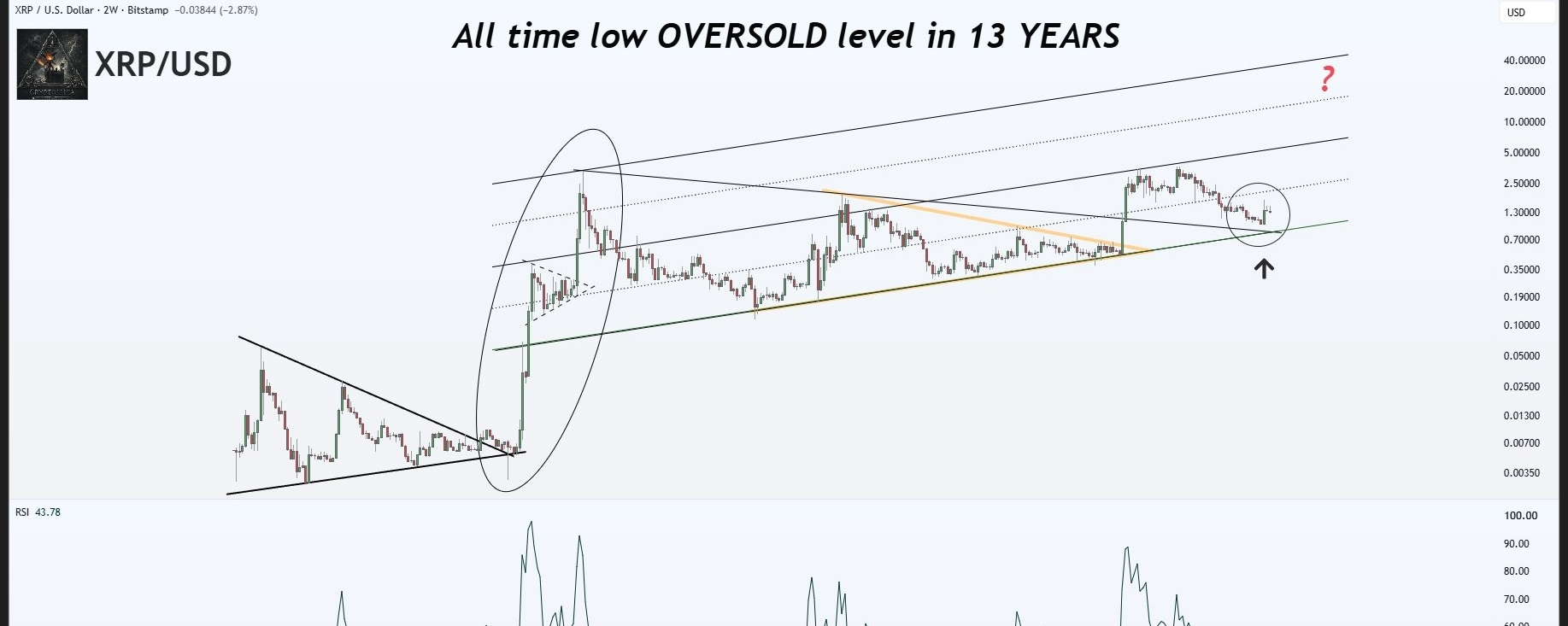
Статья
🚨 Historic Shift: XRP Chart Flashes a Bullish Signal Not Seen in 13 Years
📊The global crypto market is dealing with widespread macro volatility, and XRP is sitting right at the center of the storm. After giving back its recent regulatory momentum, XRP is currently trading near $1.29 following a sharp market-wide correction.
However, beneath the short-term panic, technical analysts have spotted a monumental development on the higher timeframes: XRP's two-week Relative Strength Index (RSI) has just plunged to the lowest level in the token's entire 13-year trading history.
This historic extreme indicates that XRP is sitting in its most technically oversold condition since its launch, setting the stage for a massive structural showdown.
📉 The Anatomy of a 13-Year Technical Extreme
The Relative Strength Index (RSI) is a foundational momentum oscillator used to measure the speed and change of price movements. Typically, an RSI reading below 30 signals that an asset is heavily oversold and due for a trend reversal.
When this happens on a macro scale like the two-week chart, the implications are massive:
Unprecedented Exhaustion: XRP has experienced severe liquidations following the recent U.S. Senate stagnation of the CLARITY Act, flushing out weak hands and late-coming leverage.Extreme Valuation Discount: The two-week RSI dropping to historic lows means the selling pressure has officially pushed beyond the extremes seen during the 2018 bear market bottom and even the initial 2020 SEC lawsuit shock.The Springboard Effect: Historically, when high-utility layer-1 tokens hit multi-year or all-time lows on macro RSI scales, it indicates that sellers are completely exhausted. Any sudden influx of buying volume typically sparks an aggressive, asymmetric bounce.
🏛️ The Fundamental Squeeze: The Fed & Capitol Hill
This extreme technical setup is clashing directly with a high-stakes macroeconomic backdrop. The market is currently digesting the Federal Reserve's hawkish policy shift after interest rates were hiked to a restrictive 3.75%–4.00% target range. Simultaneously, the 10-year U.S. Treasury yield remains pinned near a high 4.95%, applying structural pressure to risk assets.
However, as on-chain data and market experts like Michael Saylor have pointed out, the structural demand for digital assets remains incredibly robust.
While the failure of the CLARITY Act to advance in the Senate caused short-term pain for altcoins, it is also forcing institutional capital to re-evaluate their positions. Veteran whales are holding their ground, and the absolute exhaustion of long-term holder selling pressure means that liquid spot supply on exchanges is exceptionally thin.
🔮 The Trader's Playbook: Crucial Levels to Watch
XRP is coiled like a tight spring at the $1.29 zone. The technical indicators say the asset is deeply oversold, but traders must remain highly disciplined given the broader macro headwinds.
The Support Firewall: XRP needs to firmly defend the $1.25 – $1.28 horizontal support cluster on a weekly closing basis. As long as this floor holds, the historic oversold RSI signal remains highly valid.The Resistance Target: On a relief rally, the first major hurdle for bulls sits at the $1.38 – $1.40 region, which previously acted as local support before the flush out.Risk Strategy: Given that the era of cheap money is staying away for longer, avoid chasing aggressive positions on high leverage. Look for spot accumulation opportunities during maximum fear, and let the historic macro technical indicator play out over the coming weeks.
#XRP #CryptoNews #TechnicalAnalysis #RSI #WhaleAlert
🚨 Historic Shift: XRP Chart Flashes a Bullish Signal Not Seen in 13 Years 📊
The global crypto market is dealing with widespread macro volatility, and XRP is sitting right at the center of the storm. After giving back its recent regulatory momentum, XRP is currently trading near $1.29 following a sharp market-wide correction.
However, beneath the short-term panic, technical analysts have spotted a monumental development on the higher timeframes: XRP's two-week Relative Strength Index (RSI) has just plunged to the lowest level in the token's entire 13-year trading history.
This historic extreme indicates that XRP is sitting in its most technically oversold condition since its launch, setting the stage for a massive structural showdown.
📉 The Anatomy of a 13-Year Technical Extreme
The Relative Strength Index (RSI) is a foundational momentum oscillator used to measure the speed and change of price movements. Typically, an RSI reading below 30 signals that an asset is heavily oversold and due for a trend reversal.
When this happens on a macro scale like the two-week chart, the implications are massive:
Unprecedented Exhaustion: XRP has experienced severe liquidations following the recent U.S. Senate stagnation of the CLARITY Act, flushing out weak hands and late-coming leverage.Extreme Valuation Discount: The two-week RSI dropping to historic lows means the selling pressure has officially pushed beyond the extremes seen during the 2018 bear market bottom and even the initial 2020 SEC lawsuit shock.The Springboard Effect: Historically, when high-utility layer-1 tokens hit multi-year or all-time lows on macro RSI scales, it indicates that sellers are completely exhausted. Any sudden influx of buying volume typically sparks an aggressive, asymmetric bounce.
🏛️ The Fundamental Squeeze: The Fed & Capitol Hill
This extreme technical setup is clashing directly with a high-stakes macroeconomic backdrop. The market is currently digesting the Federal Reserve's hawkish policy shift after interest rates were hiked to a restrictive 3.75%–4.00% target range. Simultaneously, the 10-year U.S. Treasury yield remains pinned near a high 4.95%, applying structural pressure to risk assets.
However, as on-chain data and market experts like Michael Saylor have pointed out, the structural demand for digital assets remains incredibly robust.
While the failure of the CLARITY Act to advance in the Senate caused short-term pain for altcoins, it is also forcing institutional capital to re-evaluate their positions. Veteran whales are holding their ground, and the absolute exhaustion of long-term holder selling pressure means that liquid spot supply on exchanges is exceptionally thin.
🔮 The Trader's Playbook: Crucial Levels to Watch
XRP is coiled like a tight spring at the $1.29 zone. The technical indicators say the asset is deeply oversold, but traders must remain highly disciplined given the broader macro headwinds.
The Support Firewall: XRP needs to firmly defend the $1.25 – $1.28 horizontal support cluster on a weekly closing basis. As long as this floor holds, the historic oversold RSI signal remains highly valid.The Resistance Target: On a relief rally, the first major hurdle for bulls sits at the $1.38 – $1.40 region, which previously acted as local support before the flush out.Risk Strategy: Given that the era of cheap money is staying away for longer, avoid chasing aggressive positions on high leverage. Look for spot accumulation opportunities during maximum fear, and let the historic macro technical indicator play out over the coming weeks.
#XRP #CryptoNews #TechnicalAnalysis #RSI #WhaleAlert
However, beneath the short-term panic, technical analysts have spotted a monumental development on the higher timeframes: XRP's two-week Relative Strength Index (RSI) has just plunged to the lowest level in the token's entire 13-year trading history.
This historic extreme indicates that XRP is sitting in its most technically oversold condition since its launch, setting the stage for a massive structural showdown.
📉 The Anatomy of a 13-Year Technical Extreme
The Relative Strength Index (RSI) is a foundational momentum oscillator used to measure the speed and change of price movements. Typically, an RSI reading below 30 signals that an asset is heavily oversold and due for a trend reversal.
When this happens on a macro scale like the two-week chart, the implications are massive:
Unprecedented Exhaustion: XRP has experienced severe liquidations following the recent U.S. Senate stagnation of the CLARITY Act, flushing out weak hands and late-coming leverage.Extreme Valuation Discount: The two-week RSI dropping to historic lows means the selling pressure has officially pushed beyond the extremes seen during the 2018 bear market bottom and even the initial 2020 SEC lawsuit shock.The Springboard Effect: Historically, when high-utility layer-1 tokens hit multi-year or all-time lows on macro RSI scales, it indicates that sellers are completely exhausted. Any sudden influx of buying volume typically sparks an aggressive, asymmetric bounce.
🏛️ The Fundamental Squeeze: The Fed & Capitol Hill
This extreme technical setup is clashing directly with a high-stakes macroeconomic backdrop. The market is currently digesting the Federal Reserve's hawkish policy shift after interest rates were hiked to a restrictive 3.75%–4.00% target range. Simultaneously, the 10-year U.S. Treasury yield remains pinned near a high 4.95%, applying structural pressure to risk assets.
However, as on-chain data and market experts like Michael Saylor have pointed out, the structural demand for digital assets remains incredibly robust.
While the failure of the CLARITY Act to advance in the Senate caused short-term pain for altcoins, it is also forcing institutional capital to re-evaluate their positions. Veteran whales are holding their ground, and the absolute exhaustion of long-term holder selling pressure means that liquid spot supply on exchanges is exceptionally thin.
🔮 The Trader's Playbook: Crucial Levels to Watch
XRP is coiled like a tight spring at the $1.29 zone. The technical indicators say the asset is deeply oversold, but traders must remain highly disciplined given the broader macro headwinds.
The Support Firewall: XRP needs to firmly defend the $1.25 – $1.28 horizontal support cluster on a weekly closing basis. As long as this floor holds, the historic oversold RSI signal remains highly valid.The Resistance Target: On a relief rally, the first major hurdle for bulls sits at the $1.38 – $1.40 region, which previously acted as local support before the flush out.Risk Strategy: Given that the era of cheap money is staying away for longer, avoid chasing aggressive positions on high leverage. Look for spot accumulation opportunities during maximum fear, and let the historic macro technical indicator play out over the coming weeks.
#XRP #CryptoNews #TechnicalAnalysis #RSI #WhaleAlert
JOIN & MORE 📊🎉
От Crypto__Today
1
1
4
430

Статья
Market Rebound: Why the Crypto Market is Up Today Despite the Fed’s Rate HikeThe global #cryptocurrency market cap has staged an impressive recovery, currently trading at $2.58 Trillion, which sits 2.61% above yesterday’s macro low.
This sudden sea of green across trading screens comes just hours after the Federal Reserve enacted a historic policy shift, raising interest rates by a quarter point to a 3.75%–4.00% target range—the central bank's first formal rate hike since 2023.
So, why are digital assets rallying when the Fed just made borrowing money more expensive? The market is reacting to a classic financial phenomenon: the removal of uncertainty.
💡 1. The "Sell the Rumor, Buy the News" Effect
Leading up to Wednesday’s FOMC meeting, futures markets had already priced in an overwhelming 92.7% probability of a rate hike.
Traders had spent the last 48 hours aggressively de-risking, liquidating leveraged positions, and building up stablecoin cash reserves in anticipation of a worst-case macro scenario.
Once Fed Chair Kevin Warsh delivered exactly what the data predicted, the dark cloud of anticipation vanished. With the macro hurdle officially cleared, sidelined capital immediately flooded back into spot markets, triggering a classic relief rally as short-sellers were forced to buy back their positions.
🏛️ 2. Michael Saylor's CLARITY Capital Rotation Play
Another massive fundamental driver behind the bounce—particularly for Bitcoin (BTC)—is the structural fallout from the U.S. Senate’s failure to advance the CLARITY Act.
As MicroStrategy Chairman Michael Saylor predicted, the legislative gridlock surrounding altcoin classification is actively forcing institutional players to alter their deployment strategies.
Instead of taking on high compliance risks by allocating capital into unclassified altcoins that remain targets for the SEC, institutional desks are taking the path of least resistance. They are funneling their capital directly into Bitcoin, which already enjoys absolute regulatory clarity as a programmatic commodity.
📊 3. Absolute Exhaustion of Whale Selling Pressure
On-chain metrics reveal that the underlying supply dynamics for Bitcoin are incredibly tight. Long-term holders (LTHs) spent the month of August aggressively taking profits, dumping a massive 260,000 BTC into market strength.
However, data shows this structural selling pressure has completely flattened out to near-zero levels.
Because veteran whales have stopped distributing their coins, the liquid supply available on exchanges has thinned out dramatically. When exchange order books are this hollowed out, even a modest return of spot buying volume is enough to cause a rapid, outsized upward move in price.
The Trader's Takeaway
While the macro landscape remains fundamentally restrictive with interest rates sitting at 4% and inflation hovering at 3.4%, the crypto market's resilience proves that structural demand is outstripping macro fears.
For retail traders, this green tick shows that the immediate $75,000 support floor for Bitcoin is being fiercely defended by institutional buyers.
Keep an eye on volume continuation over the next 48 hours. Avoid chasing over-extended green candles on high leverage, but recognize that the market's ability to shrug off a hawkish Fed hike signals deep underlying structural strength.
#Bitcoin #CryptoMarket #FedRateHike #OnChain
Market Rebound: Why the Crypto Market is Up Today Despite the Fed’s Rate Hike
The global #cryptocurrency market cap has staged an impressive recovery, currently trading at $2.58 Trillion, which sits 2.61% above yesterday’s macro low.
This sudden sea of green across trading screens comes just hours after the Federal Reserve enacted a historic policy shift, raising interest rates by a quarter point to a 3.75%–4.00% target range—the central bank's first formal rate hike since 2023.
So, why are digital assets rallying when the Fed just made borrowing money more expensive? The market is reacting to a classic financial phenomenon: the removal of uncertainty.
💡 1. The "Sell the Rumor, Buy the News" Effect
Leading up to Wednesday’s FOMC meeting, futures markets had already priced in an overwhelming 92.7% probability of a rate hike.
Traders had spent the last 48 hours aggressively de-risking, liquidating leveraged positions, and building up stablecoin cash reserves in anticipation of a worst-case macro scenario.
Once Fed Chair Kevin Warsh delivered exactly what the data predicted, the dark cloud of anticipation vanished. With the macro hurdle officially cleared, sidelined capital immediately flooded back into spot markets, triggering a classic relief rally as short-sellers were forced to buy back their positions.
🏛️ 2. Michael Saylor's CLARITY Capital Rotation Play
Another massive fundamental driver behind the bounce—particularly for Bitcoin (BTC)—is the structural fallout from the U.S. Senate’s failure to advance the CLARITY Act.
As MicroStrategy Chairman Michael Saylor predicted, the legislative gridlock surrounding altcoin classification is actively forcing institutional players to alter their deployment strategies.
Instead of taking on high compliance risks by allocating capital into unclassified altcoins that remain targets for the SEC, institutional desks are taking the path of least resistance. They are funneling their capital directly into Bitcoin, which already enjoys absolute regulatory clarity as a programmatic commodity.
📊 3. Absolute Exhaustion of Whale Selling Pressure
On-chain metrics reveal that the underlying supply dynamics for Bitcoin are incredibly tight. Long-term holders (LTHs) spent the month of August aggressively taking profits, dumping a massive 260,000 BTC into market strength.
However, data shows this structural selling pressure has completely flattened out to near-zero levels.
Because veteran whales have stopped distributing their coins, the liquid supply available on exchanges has thinned out dramatically. When exchange order books are this hollowed out, even a modest return of spot buying volume is enough to cause a rapid, outsized upward move in price.
The Trader's Takeaway
While the macro landscape remains fundamentally restrictive with interest rates sitting at 4% and inflation hovering at 3.4%, the crypto market's resilience proves that structural demand is outstripping macro fears.
For retail traders, this green tick shows that the immediate $75,000 support floor for Bitcoin is being fiercely defended by institutional buyers.
Keep an eye on volume continuation over the next 48 hours. Avoid chasing over-extended green candles on high leverage, but recognize that the market's ability to shrug off a hawkish Fed hike signals deep underlying structural strength.
#Bitcoin #CryptoMarket #FedRateHike #OnChain
This sudden sea of green across trading screens comes just hours after the Federal Reserve enacted a historic policy shift, raising interest rates by a quarter point to a 3.75%–4.00% target range—the central bank's first formal rate hike since 2023.
So, why are digital assets rallying when the Fed just made borrowing money more expensive? The market is reacting to a classic financial phenomenon: the removal of uncertainty.
💡 1. The "Sell the Rumor, Buy the News" Effect
Leading up to Wednesday’s FOMC meeting, futures markets had already priced in an overwhelming 92.7% probability of a rate hike.
Traders had spent the last 48 hours aggressively de-risking, liquidating leveraged positions, and building up stablecoin cash reserves in anticipation of a worst-case macro scenario.
Once Fed Chair Kevin Warsh delivered exactly what the data predicted, the dark cloud of anticipation vanished. With the macro hurdle officially cleared, sidelined capital immediately flooded back into spot markets, triggering a classic relief rally as short-sellers were forced to buy back their positions.
🏛️ 2. Michael Saylor's CLARITY Capital Rotation Play
Another massive fundamental driver behind the bounce—particularly for Bitcoin (BTC)—is the structural fallout from the U.S. Senate’s failure to advance the CLARITY Act.
As MicroStrategy Chairman Michael Saylor predicted, the legislative gridlock surrounding altcoin classification is actively forcing institutional players to alter their deployment strategies.
Instead of taking on high compliance risks by allocating capital into unclassified altcoins that remain targets for the SEC, institutional desks are taking the path of least resistance. They are funneling their capital directly into Bitcoin, which already enjoys absolute regulatory clarity as a programmatic commodity.
📊 3. Absolute Exhaustion of Whale Selling Pressure
On-chain metrics reveal that the underlying supply dynamics for Bitcoin are incredibly tight. Long-term holders (LTHs) spent the month of August aggressively taking profits, dumping a massive 260,000 BTC into market strength.
However, data shows this structural selling pressure has completely flattened out to near-zero levels.
Because veteran whales have stopped distributing their coins, the liquid supply available on exchanges has thinned out dramatically. When exchange order books are this hollowed out, even a modest return of spot buying volume is enough to cause a rapid, outsized upward move in price.
The Trader's Takeaway
While the macro landscape remains fundamentally restrictive with interest rates sitting at 4% and inflation hovering at 3.4%, the crypto market's resilience proves that structural demand is outstripping macro fears.
For retail traders, this green tick shows that the immediate $75,000 support floor for Bitcoin is being fiercely defended by institutional buyers.
Keep an eye on volume continuation over the next 48 hours. Avoid chasing over-extended green candles on high leverage, but recognize that the market's ability to shrug off a hawkish Fed hike signals deep underlying structural strength.
#Bitcoin #CryptoMarket #FedRateHike #OnChain
JOIN & SHARE 📈🎉
От Crypto__Today
2
1
5
256

Статья
Saylor’s Take: Why the CLARITY Act Failure Could Trigger a Massive Institutional Wave Into BitcoinThe digital asset market is adjusting to a major regulatory shift following the U.S. Senate’s failure to advance the long-awaited Digital Asset Market Clarity Act (CLARITY Act).
While the sudden stagnation caused a brief wave of short-term liquidations across the altcoin market, MicroStrategy CEO and Chairman Michael Saylor views this legislative block through an entirely different lens.
Saylor predicts that instead of hurting the crypto ecosystem, the collapse of the CLARITY Act will ultimately act as an unprecedented funnel, forcing institutional capital straight into Bitcoin.
🏛️ The Regulatory Reality Check
The CLARITY Act intended to draw a clear legal line between the SEC and the CFTC, providing explicit guidelines for altcoins like XRP and Solana. The bill's failure leaves the broader crypto ecosystem trapped in regulatory uncertainty.
Michael Saylor argues that this gridlock destroys the short-term case for corporate altcoin investment, leaving only one safe haven:
The Flight to Certainty: Major institutional funds and corporate treasuries cannot navigate ambiguous legal environments. Because the CLARITY Act stalled, altcoins will continue to face aggressive "regulation by enforcement."Bitcoin's Unique Status: Unlike the rest of the market, Bitcoin has already achieved complete regulatory clarity. Global watchdogs, the SEC, and the CFTC have long established that Bitcoin is a programmatic commodity, not a security.Capital Concentration: Saylor believes that institutions looking for digital asset exposure will no longer risk waiting out the gridlock. They will simply take the path of least resistance and allocate 100% of their crypto capital into BTC.
📈 MicroStrategy’s Playbook Proves the Concept
Saylor’s analysis lines up with MicroStrategy’s aggressive corporate treasury strategy. The firm continues to treat Bitcoin as a pristine global reserve asset, completely unbothered by Washington's political gridlock.
With the Federal Reserve ramping up macroeconomic pressure by hiking interest rates to a restrictive 4.00%, traditional cash reserves are actively losing value to structural inflation.
For large institutions, the choice is becoming stark: watch fiat capital slowly degrade in a low-yield bank deposit, face immense compliance risks by speculating on unclassified altcoins, or park capital in a programmatically scarce, legally safe commodity like Bitcoin.
🔮 The Trader's Takeaway
The failure of the CLARITY Act is a classic example of a short-term hurdle paving the way for a long-term structural trend.
While altcoins may experience extended periods of range-bound price action due to regulatory fears, the liquid supply of Bitcoin on spot exchanges is tightening up dramatically. On-chain data shows long-term holders have completely halted their selling pressure, absorbing macro shocks with ease.
If Saylor's prediction proves true, the thinned-out Bitcoin order books are about to face a massive wall of redirected institutional buy pressure. Keep your risk tightly managed, watch for volume spikes on BTC spot pairs, and protect your capital as this macro rotation begins to play out.
#Bitcoin #BTC #MichaelSaylor #MicroStrategy #ClarityAct
Saylor’s Take: Why the CLARITY Act Failure Could Trigger a Massive Institutional Wave Into Bitcoin
The digital asset market is adjusting to a major regulatory shift following the U.S. Senate’s failure to advance the long-awaited Digital Asset Market Clarity Act (CLARITY Act).
While the sudden stagnation caused a brief wave of short-term liquidations across the altcoin market, MicroStrategy CEO and Chairman Michael Saylor views this legislative block through an entirely different lens.
Saylor predicts that instead of hurting the crypto ecosystem, the collapse of the CLARITY Act will ultimately act as an unprecedented funnel, forcing institutional capital straight into Bitcoin.
🏛️ The Regulatory Reality Check
The CLARITY Act intended to draw a clear legal line between the SEC and the CFTC, providing explicit guidelines for altcoins like XRP and Solana. The bill's failure leaves the broader crypto ecosystem trapped in regulatory uncertainty.
Michael Saylor argues that this gridlock destroys the short-term case for corporate altcoin investment, leaving only one safe haven:
The Flight to Certainty: Major institutional funds and corporate treasuries cannot navigate ambiguous legal environments. Because the CLARITY Act stalled, altcoins will continue to face aggressive "regulation by enforcement."Bitcoin's Unique Status: Unlike the rest of the market, Bitcoin has already achieved complete regulatory clarity. Global watchdogs, the SEC, and the CFTC have long established that Bitcoin is a programmatic commodity, not a security.Capital Concentration: Saylor believes that institutions looking for digital asset exposure will no longer risk waiting out the gridlock. They will simply take the path of least resistance and allocate 100% of their crypto capital into BTC.
📈 MicroStrategy’s Playbook Proves the Concept
Saylor’s analysis lines up with MicroStrategy’s aggressive corporate treasury strategy. The firm continues to treat Bitcoin as a pristine global reserve asset, completely unbothered by Washington's political gridlock.
With the Federal Reserve ramping up macroeconomic pressure by hiking interest rates to a restrictive 4.00%, traditional cash reserves are actively losing value to structural inflation.
For large institutions, the choice is becoming stark: watch fiat capital slowly degrade in a low-yield bank deposit, face immense compliance risks by speculating on unclassified altcoins, or park capital in a programmatically scarce, legally safe commodity like Bitcoin.
🔮 The Trader's Takeaway
The failure of the CLARITY Act is a classic example of a short-term hurdle paving the way for a long-term structural trend.
While altcoins may experience extended periods of range-bound price action due to regulatory fears, the liquid supply of Bitcoin on spot exchanges is tightening up dramatically. On-chain data shows long-term holders have completely halted their selling pressure, absorbing macro shocks with ease.
If Saylor's prediction proves true, the thinned-out Bitcoin order books are about to face a massive wall of redirected institutional buy pressure. Keep your risk tightly managed, watch for volume spikes on BTC spot pairs, and protect your capital as this macro rotation begins to play out.
#Bitcoin #BTC #MichaelSaylor #MicroStrategy #ClarityAct
While the sudden stagnation caused a brief wave of short-term liquidations across the altcoin market, MicroStrategy CEO and Chairman Michael Saylor views this legislative block through an entirely different lens.
Saylor predicts that instead of hurting the crypto ecosystem, the collapse of the CLARITY Act will ultimately act as an unprecedented funnel, forcing institutional capital straight into Bitcoin.
🏛️ The Regulatory Reality Check
The CLARITY Act intended to draw a clear legal line between the SEC and the CFTC, providing explicit guidelines for altcoins like XRP and Solana. The bill's failure leaves the broader crypto ecosystem trapped in regulatory uncertainty.
Michael Saylor argues that this gridlock destroys the short-term case for corporate altcoin investment, leaving only one safe haven:
The Flight to Certainty: Major institutional funds and corporate treasuries cannot navigate ambiguous legal environments. Because the CLARITY Act stalled, altcoins will continue to face aggressive "regulation by enforcement."Bitcoin's Unique Status: Unlike the rest of the market, Bitcoin has already achieved complete regulatory clarity. Global watchdogs, the SEC, and the CFTC have long established that Bitcoin is a programmatic commodity, not a security.Capital Concentration: Saylor believes that institutions looking for digital asset exposure will no longer risk waiting out the gridlock. They will simply take the path of least resistance and allocate 100% of their crypto capital into BTC.
📈 MicroStrategy’s Playbook Proves the Concept
Saylor’s analysis lines up with MicroStrategy’s aggressive corporate treasury strategy. The firm continues to treat Bitcoin as a pristine global reserve asset, completely unbothered by Washington's political gridlock.
With the Federal Reserve ramping up macroeconomic pressure by hiking interest rates to a restrictive 4.00%, traditional cash reserves are actively losing value to structural inflation.
For large institutions, the choice is becoming stark: watch fiat capital slowly degrade in a low-yield bank deposit, face immense compliance risks by speculating on unclassified altcoins, or park capital in a programmatically scarce, legally safe commodity like Bitcoin.
🔮 The Trader's Takeaway
The failure of the CLARITY Act is a classic example of a short-term hurdle paving the way for a long-term structural trend.
While altcoins may experience extended periods of range-bound price action due to regulatory fears, the liquid supply of Bitcoin on spot exchanges is tightening up dramatically. On-chain data shows long-term holders have completely halted their selling pressure, absorbing macro shocks with ease.
If Saylor's prediction proves true, the thinned-out Bitcoin order books are about to face a massive wall of redirected institutional buy pressure. Keep your risk tightly managed, watch for volume spikes on BTC spot pairs, and protect your capital as this macro rotation begins to play out.
#Bitcoin #BTC #MichaelSaylor #MicroStrategy #ClarityAct
FOLLOW & MORE 🎁
От Crypto__Today
5
243
Войдите, чтобы посмотреть больше материала
Присоединяйтесь к пользователям криптовалют по всему миру на Binance Square
⚡️ Получайте новейшую и полезную информацию о криптоактивах.
💬 Нам доверяет крупнейшая в мире криптобиржа.
👍 Получите достоверные аналитические данные от верифицированных создателей контента.
Эл. почта/номер телефона
В тренде
BinanceKZ
Просмотров: 18,000
69 обсуждают
Как я потерял 180 000 тенге на «менеджере Binance» из WhatsApp — и почему всё равно остался в крипте
phpdead
·Лайков: 6
·Просмотров: 2.4k
BitcoinClears$85200
Просмотров: 3,043
118 обсуждают
AltcoinSeasonIndexHoldsAbove60For5Days
Просмотров: 20,399
752 обсуждают