
Aeri 艾瑞
7.9k Публикации

Aeri 艾瑞
Отправить жалобу
Заблокировать пользователя
@Aeshiha
428 подписок(и/а)
14.6K+ подписчиков(а)
10.8K+ понравилось
Посты
Все
Цитирования
PINNED
·
--
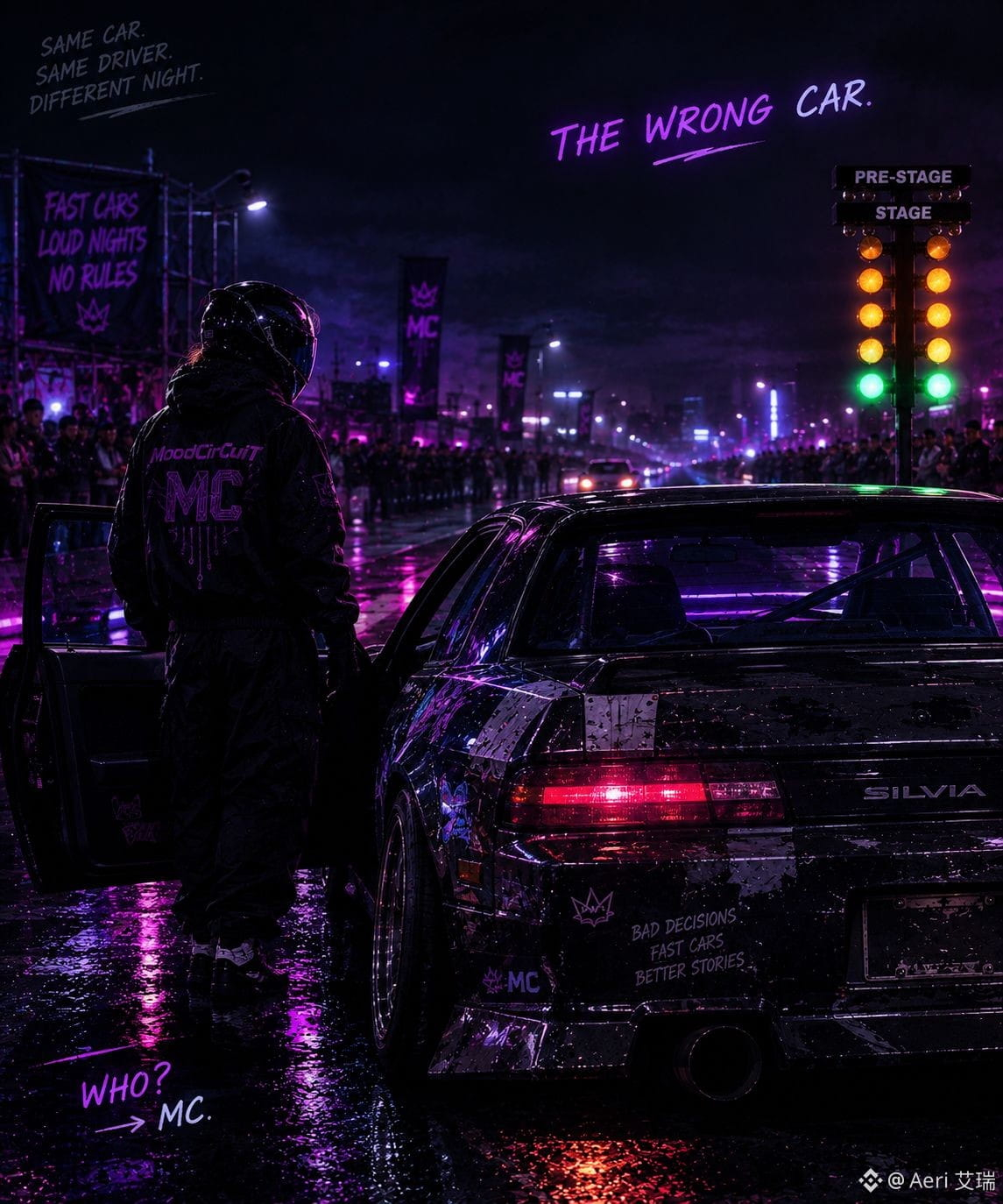
THE WRONG CAR
The underground circuit had seen fast cars before.
Built cars.
Expensive cars.
Cars that sounded like warnings before they even moved.
Then an old Silvia rolled into the lot.
Again.
Same scratches.
Same mismatched panels.
Same driver nobody could identify.
People started laughing.
Until the lights came on.
This time, nobody challenged the driver.
Nobody needed to.
Because everyone already knew what happened when those rear tires touched wet asphalt.
But tonight was different.
Tonight, the road was dry.
No rain.
No smoke hiding mistakes.
No excuses.
Just grip.
Just speed.
Just skill.
The driver tightened the gloves.
The helmet went on.
The engine climbed.
And somewhere in the crowd, someone whispered:
"Let's see if the legend still works without the rain."
The Silvia moved to the line.
The light turned red.
Three seconds later...
green.
And the wrong car became the fastest thing on the street.
#Aeri
#MC
#MooDCirCuiT
THE WRONG CAR
The underground circuit had seen fast cars before.
Built cars.
Expensive cars.
Cars that sounded like warnings before they even moved.
Then an old Silvia rolled into the lot.
Again.
Same scratches.
Same mismatched panels.
Same driver nobody could identify.
People started laughing.
Until the lights came on.
This time, nobody challenged the driver.
Nobody needed to.
Because everyone already knew what happened when those rear tires touched wet asphalt.
But tonight was different.
Tonight, the road was dry.
No rain.
No smoke hiding mistakes.
No excuses.
Just grip.
Just speed.
Just skill.
The driver tightened the gloves.
The helmet went on.
The engine climbed.
And somewhere in the crowd, someone whispered:
"Let's see if the legend still works without the rain."
The Silvia moved to the line.
The light turned red.
Three seconds later...
green.
And the wrong car became the fastest thing on the street.
#Aeri
#MC
#MooDCirCuiT
The underground circuit had seen fast cars before.
Built cars.
Expensive cars.
Cars that sounded like warnings before they even moved.
Then an old Silvia rolled into the lot.
Again.
Same scratches.
Same mismatched panels.
Same driver nobody could identify.
People started laughing.
Until the lights came on.
This time, nobody challenged the driver.
Nobody needed to.
Because everyone already knew what happened when those rear tires touched wet asphalt.
But tonight was different.
Tonight, the road was dry.
No rain.
No smoke hiding mistakes.
No excuses.
Just grip.
Just speed.
Just skill.
The driver tightened the gloves.
The helmet went on.
The engine climbed.
And somewhere in the crowd, someone whispered:
"Let's see if the legend still works without the rain."
The Silvia moved to the line.
The light turned red.
Three seconds later...
green.
And the wrong car became the fastest thing on the street.
#Aeri
#MC
#MooDCirCuiT
1.8k
10
81
1.8k
·
--
Muzamil Abbas⁷⁵ 穆扎米尔_阿巴斯
·
--
Рост$ETH
I’ve been watching Ethereum around the $2,485 area, and the chart looks interesting here. ETH has been holding above the recent support zone while the 1H moving averages are sitting close to the current price. That tells me the market is still undecided, but there is room for a move if buyers step in with volume.
Ethereum currently has a market cap of around $302.89B and 24h trading volume of about $13.32B. Its market dominance is around 11.4%, which shows how important ETH still is across the crypto market. The circulating supply is around 122.03M ETH.
On the chart, the first level I’m watching is $2,495–$2,516. If ETH can break and hold above this area with strong volume, I’d expect the next move toward $2,536, followed by $2,550–$2,580. If buyers really take control, $2,600+ becomes possible.
But there’s another side to watch. If ETH loses $2,466, the bullish setup becomes weaker and price could revisit $2,439.
Personally, I’m watching for a clean breakout rather than chasing the current price. $2,516 is the key level for me — reclaim it with volume, and Ethereum could start showing much stronger momentum.
#ETH🔥🔥🔥🔥🔥🔥 #ZcashRises45%WeeklyToHighestSince2016
ETH next move? 👀
I’ve been watching Ethereum around the $2,485 area, and the chart looks interesting here. ETH has been holding above the recent support zone while the 1H moving averages are sitting close to the current price. That tells me the market is still undecided, but there is room for a move if buyers step in with volume.
Ethereum currently has a market cap of around $302.89B and 24h trading volume of about $13.32B. Its market dominance is around 11.4%, which shows how important ETH still is across the crypto market. The circulating supply is around 122.03M ETH.
On the chart, the first level I’m watching is $2,495–$2,516. If ETH can break and hold above this area with strong volume, I’d expect the next move toward $2,536, followed by $2,550–$2,580. If buyers really take control, $2,600+ becomes possible.
But there’s another side to watch. If ETH loses $2,466, the bullish setup becomes weaker and price could revisit $2,439.
Personally, I’m watching for a clean breakout rather than chasing the current price. $2,516 is the key level for me — reclaim it with volume, and Ethereum could start showing much stronger momentum.
#ETH🔥🔥🔥🔥🔥🔥 #ZcashRises45%WeeklyToHighestSince2016
ETH next move? 👀
506
·
--
Muzamil Abbas⁷⁵ 穆扎米尔_阿巴斯
·
--
Рост$BNB
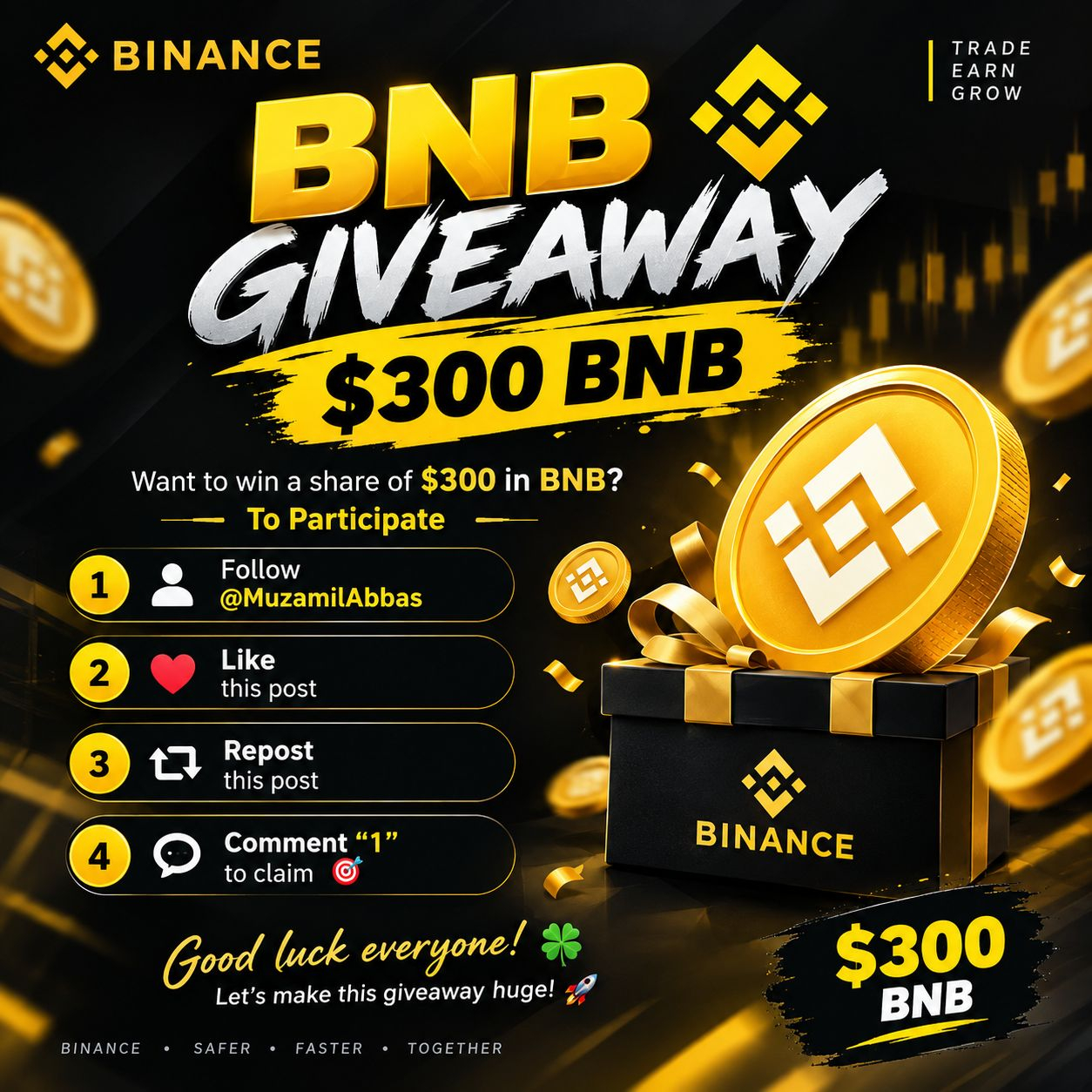
🎁 $300 BNB GIVEAWAY 🎁
Want to win a share of $300 in BNB?
To Participate 👇
1️⃣ Follow ✨MuzamilAbbas
2️⃣ Like this post ❤️
3️⃣ Repost this post 🔄
4️⃣ Comment “1” to claim 🎯
Good luck everyone! 🍀🔥
Let’s make this giveaway huge
#BankOfAmericaGroupPilotsUSBDCStablecoin #OilRisesToHighestSinceJuly
#BNB #BTC
🎁 $300 BNB GIVEAWAY 🎁
Want to win a share of $300 in BNB?
To Participate 👇
1️⃣ Follow ✨MuzamilAbbas
2️⃣ Like this post ❤️
3️⃣ Repost this post 🔄
4️⃣ Comment “1” to claim 🎯
Good luck everyone! 🍀🔥
Let’s make this giveaway huge
#BankOfAmericaGroupPilotsUSBDCStablecoin #OilRisesToHighestSinceJuly
#BNB #BTC
3
564
·
--
Рост
M A L I Z-مالیز 马 利 兹
·
--
РостStop scrolling through random charts hoping for a lucky break. If you are tired of losing money in free chatrooms filled with noise and bots, it is time to step into a professional environment.
The Portfolio Growth | EXCLUSIVE 📈🔥
This isn't just another signal group, it is a private war room for traders and investors who actually want to build wealth across crypto and global markets.
STEPS to join: 1st open chatroom ticker box then click on "The Portfolio growth 📈" Chat room.
Why is this room different?
High-Signal, Zero-Noise: No random hype, no endless meme spam. Just crystal-clear market direction.
Daily Setups & Insights: Actionable crypto signals and global market breakdowns delivered daily before the moves happen.
The VIP Treatment: Active, loyal, and serious members get direct attention, chart reviews, and personal insights.
Filtered Quality: We charge a tiny minimum fee strictly to keep out the time-wasters and keep the room packed with sharp minds.
If you are ready to stop guessing and start trading with an edge, secure your spot now.
👉 Ready to level up your game? JOIN NOW
#repopo #malizchatroom #malizexclusiveroom #repopomybothpinpoposuppome #repopomypopo
$BTC $XAU $NVDAB
The Portfolio Growth | EXCLUSIVE 📈🔥
This isn't just another signal group, it is a private war room for traders and investors who actually want to build wealth across crypto and global markets.
STEPS to join: 1st open chatroom ticker box then click on "The Portfolio growth 📈" Chat room.
Why is this room different?
High-Signal, Zero-Noise: No random hype, no endless meme spam. Just crystal-clear market direction.
Daily Setups & Insights: Actionable crypto signals and global market breakdowns delivered daily before the moves happen.
The VIP Treatment: Active, loyal, and serious members get direct attention, chart reviews, and personal insights.
Filtered Quality: We charge a tiny minimum fee strictly to keep out the time-wasters and keep the room packed with sharp minds.
If you are ready to stop guessing and start trading with an edge, secure your spot now.
👉 Ready to level up your game? JOIN NOW
#repopo #malizchatroom #malizexclusiveroom #repopomybothpinpoposuppome #repopomypopo
$BTC $XAU $NVDAB

1
942
·
--
Рост
Cryptology_7
·
--
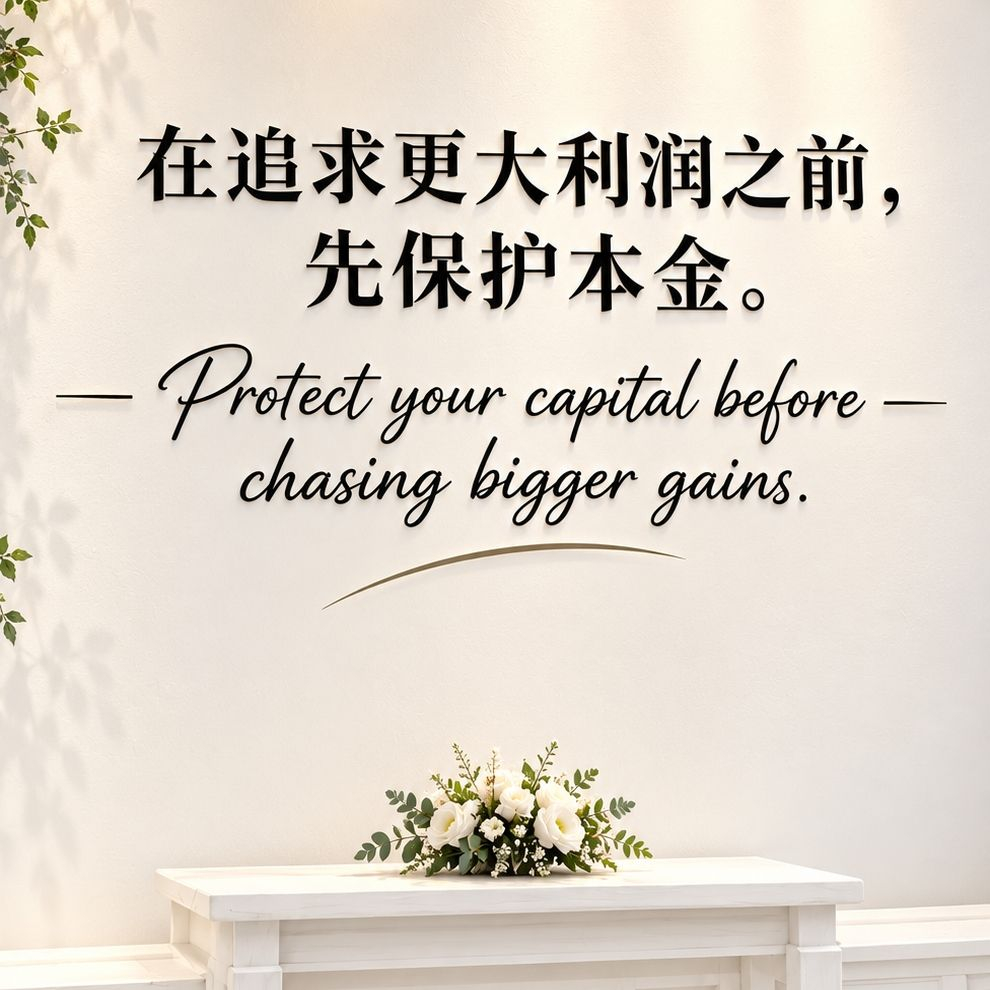
𝙋𝙍𝙊𝙏𝙀𝘾𝙏 𝙔𝙊𝙐𝙍 𝘾𝘼𝙋𝙄𝙏𝘼𝙇 🎀
𝘽𝙀𝙁𝙊𝙍𝙀 𝘾𝙃𝘼𝙎𝙄𝙉𝙂 𝘽𝙄𝙂𝙂𝙀𝙍 𝙂𝘼𝙄𝙉𝙎 ✨
$ZEC
#BinanceSquareFamily #Cryptology_7
𝘽𝙀𝙁𝙊𝙍𝙀 𝘾𝙃𝘼𝙎𝙄𝙉𝙂 𝘽𝙄𝙂𝙂𝙀𝙍 𝙂𝘼𝙄𝙉𝙎 ✨
$ZEC
#BinanceSquareFamily #Cryptology_7
1
922
·
--
Рост


Shaheen 69
·
--
🔥 10 Basic Principles Every Trader Should Follow
Protect your capital first.
Always use a Stop Loss.
Never risk more than you can afford to lose.
Follow a clear trading plan.
Control your emotions.
Never chase the market.
Use proper risk-to-reward ratios.
Trade with the trend when possible.
Do your own research (DYOR).
Stay disciplined and learn from every trade.
$BNB
Protect your capital first.
Always use a Stop Loss.
Never risk more than you can afford to lose.
Follow a clear trading plan.
Control your emotions.
Never chase the market.
Use proper risk-to-reward ratios.
Trade with the trend when possible.
Do your own research (DYOR).
Stay disciplined and learn from every trade.
$BNB
237
·
--
Рост

Coin--King
·
--
РостAlways see your worth in the eyes of someone who is more afraid of losing you than of not having you.
💕💕
$USELESS $BTC $ETH
#USADPWeeklyEmploymentRises12000 #OilRisesToHighestSinceJuly #ChinaAugustCPIRises0.8%YoY #DowFallsOver600Points
💕💕
$USELESS $BTC $ETH
#USADPWeeklyEmploymentRises12000 #OilRisesToHighestSinceJuly #ChinaAugustCPIRises0.8%YoY #DowFallsOver600Points

246
·
--
Рост
ETHcryptohub
·
--
🎁🎁🎁🎁 Gifts for Everyone 🎁🎁🎁🎁
Thank you for Supporting 48K+ Followers 🎉🎉🎉🎉🎉🎉🎉🎉🎉🎉🎉🎉
Claim Your Free Gifts 💐💐💐💐💐💐
Comment Yes 👈
#Ethcryptohub
Thank you for Supporting 48K+ Followers 🎉🎉🎉🎉🎉🎉🎉🎉🎉🎉🎉🎉
Claim Your Free Gifts 💐💐💐💐💐💐
Comment Yes 👈
#Ethcryptohub
528
·
--
Рост
Muzamil Abbas⁷⁵ 穆扎米尔_阿巴斯
·
--
Рост$BNB
🎁 $300 BNB GIVEAWAY 🎁
Want to win a share of $300 in BNB?
To Participate 👇
1️⃣ Follow ✨MuzamilAbbas
2️⃣ Like this post ❤️
3️⃣ Repost this post 🔄
4️⃣ Comment “1” to claim 🎯
Good luck everyone! 🍀🔥
Let’s make this giveaway huge
#BankOfAmericaGroupPilotsUSBDCStablecoin #OilRisesToHighestSinceJuly
#BNB #BTC
🎁 $300 BNB GIVEAWAY 🎁
Want to win a share of $300 in BNB?
To Participate 👇
1️⃣ Follow ✨MuzamilAbbas
2️⃣ Like this post ❤️
3️⃣ Repost this post 🔄
4️⃣ Comment “1” to claim 🎯
Good luck everyone! 🍀🔥
Let’s make this giveaway huge
#BankOfAmericaGroupPilotsUSBDCStablecoin #OilRisesToHighestSinceJuly
#BNB #BTC
673
·
--

Mr_Badshah77
·
--
Congratulations 🎉 @Coin--King
There are people who enter life as friends but become closer than family. You have always been more than a brother to me. 🫂❤️Watching this beautiful engagement video brings pure joy to my heart. I pray this new journey brings you both absolute peace, lifelong togetherness, and unconditional love. May Allah bless your union, shower you with endless blessings, and keep you safe from all harm. Ameen! 🧿✨Warmest wishes and love on this milestone! 💍🎉
#Coinking007 #tradewithbadshah #MrBadahah77 #EngagementPost $KAT $ZEC $FF
There are people who enter life as friends but become closer than family. You have always been more than a brother to me. 🫂❤️Watching this beautiful engagement video brings pure joy to my heart. I pray this new journey brings you both absolute peace, lifelong togetherness, and unconditional love. May Allah bless your union, shower you with endless blessings, and keep you safe from all harm. Ameen! 🧿✨Warmest wishes and love on this milestone! 💍🎉
#Coinking007 #tradewithbadshah #MrBadahah77 #EngagementPost $KAT $ZEC $FF
126
·
--
THE ONE WHO DIDN’T CLAP
By sunrise, the video had spread everywhere.
Millions of views.
Thousands of comments.
Everyone wanted to know who the girl in the Silvia was.
Nobody got an answer.
Then someone posted eleven seconds of another driver.
No caption.
No explanation.
Just a black car tearing through a rain-soaked mountain road.
One corner.
One transition.
Perfect.
The video ended.
The comments called him Ghost.
No face.
No name.
No history anyone could verify.
Just a reputation.
He had been running the underground circuit for years.
Never lost a wet-road run.
Never crashed.
Never celebrated.
And apparently...
Never clapped for anyone.
Three nights later, the Silvia returned to the circuit.
The crowd was bigger this time.
Phones were already raised.
But across the lot, one person wasn't watching the crowd.
He was watching the Silvia.
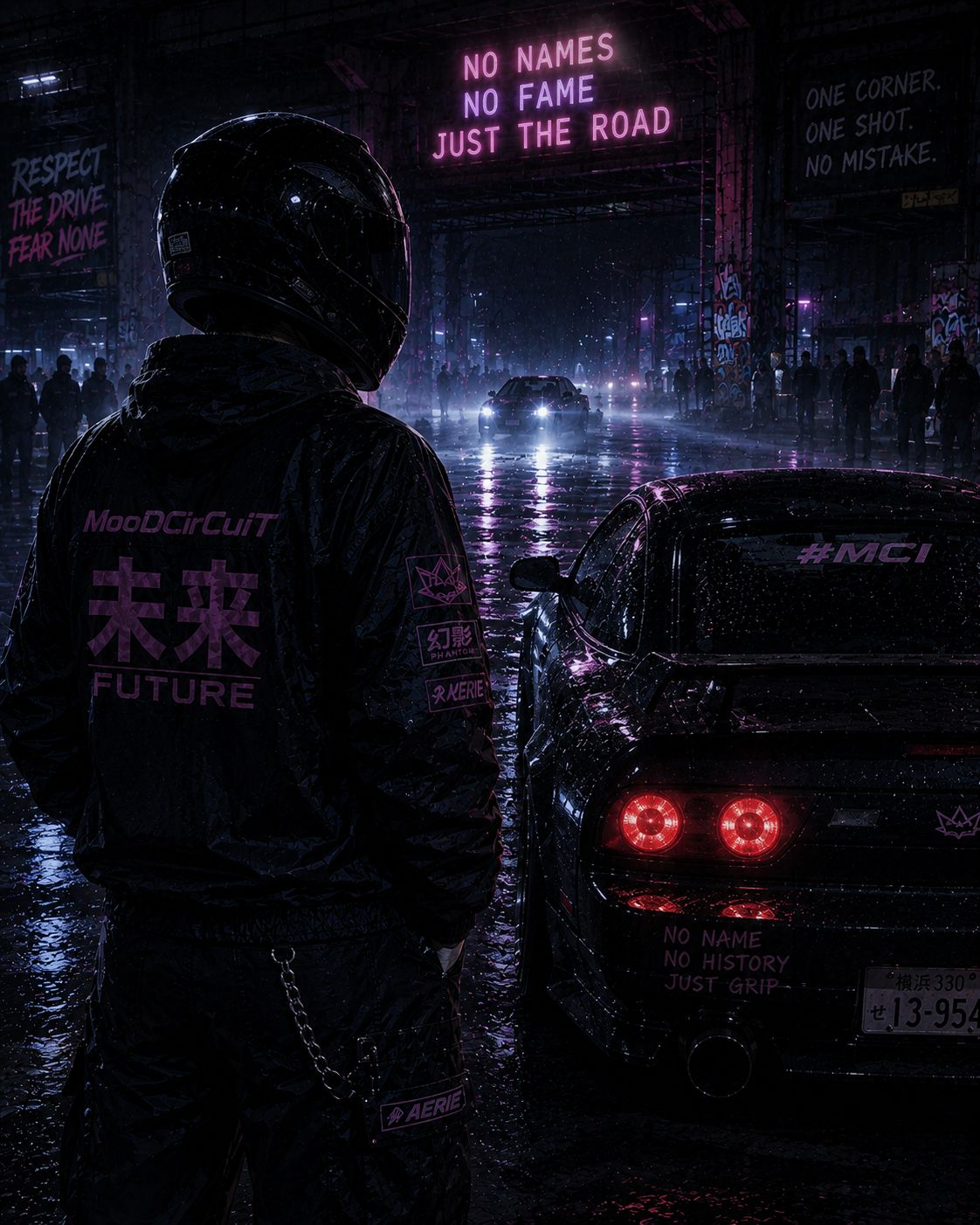
Black helmet.
Dark jacket.
Standing beside a car with its headlights off.
The driver slowly walked over.
He stopped beside the window.
Looked at the scratched bodywork.
The mismatched wheels.
The handmade repairs.
Then looked inside.
"You built it yourself?"
A pause.
"Mostly."
He nodded.
"That's why."
The window lowered.
"Why what?"
He looked toward the road.
"You drive like you're trying to prove something."
Silence.
Then:
"And you?"
He turned back.
"I drive like I've already proven it."
He walked away.
No challenge.
No race.
Nothing.
Just before midnight, an engine started somewhere beyond the warehouses.
Then another.
The black car rolled toward the exit.
The Silvia followed.
The road ahead disappeared into darkness.
One corner waited beyond the rain.
And somewhere ahead...
Someone was finally waiting for a driver worth chasing.
#Aeri
#MooDCirCuiT
$USELESS
{future}(USELESSUSDT)
$SOL
{future}(SOLUSDT)
$BEAT
{future}(BEATUSDT)
THE ONE WHO DIDN’T CLAP
By sunrise, the video had spread everywhere.
Millions of views.
Thousands of comments.
Everyone wanted to know who the girl in the Silvia was.
Nobody got an answer.
Then someone posted eleven seconds of another driver.
No caption.
No explanation.
Just a black car tearing through a rain-soaked mountain road.
One corner.
One transition.
Perfect.
The video ended.
The comments called him Ghost.
No face.
No name.
No history anyone could verify.
Just a reputation.
He had been running the underground circuit for years.
Never lost a wet-road run.
Never crashed.
Never celebrated.
And apparently...
Never clapped for anyone.
Three nights later, the Silvia returned to the circuit.
The crowd was bigger this time.
Phones were already raised.
But across the lot, one person wasn't watching the crowd.
He was watching the Silvia.
Black helmet.
Dark jacket.
Standing beside a car with its headlights off.
The driver slowly walked over.
He stopped beside the window.
Looked at the scratched bodywork.
The mismatched wheels.
The handmade repairs.
Then looked inside.
"You built it yourself?"
A pause.
"Mostly."
He nodded.
"That's why."
The window lowered.
"Why what?"
He looked toward the road.
"You drive like you're trying to prove something."
Silence.
Then:
"And you?"
He turned back.
"I drive like I've already proven it."
He walked away.
No challenge.
No race.
Nothing.
Just before midnight, an engine started somewhere beyond the warehouses.
Then another.
The black car rolled toward the exit.
The Silvia followed.
The road ahead disappeared into darkness.
One corner waited beyond the rain.
And somewhere ahead...
Someone was finally waiting for a driver worth chasing.
#Aeri
#MooDCirCuiT
$USELESS
$SOL
$BEAT
By sunrise, the video had spread everywhere.
Millions of views.
Thousands of comments.
Everyone wanted to know who the girl in the Silvia was.
Nobody got an answer.
Then someone posted eleven seconds of another driver.
No caption.
No explanation.
Just a black car tearing through a rain-soaked mountain road.
One corner.
One transition.
Perfect.
The video ended.
The comments called him Ghost.
No face.
No name.
No history anyone could verify.
Just a reputation.
He had been running the underground circuit for years.
Never lost a wet-road run.
Never crashed.
Never celebrated.
And apparently...
Never clapped for anyone.
Three nights later, the Silvia returned to the circuit.
The crowd was bigger this time.
Phones were already raised.
But across the lot, one person wasn't watching the crowd.
He was watching the Silvia.
Black helmet.
Dark jacket.
Standing beside a car with its headlights off.
The driver slowly walked over.
He stopped beside the window.
Looked at the scratched bodywork.
The mismatched wheels.
The handmade repairs.
Then looked inside.
"You built it yourself?"
A pause.
"Mostly."
He nodded.
"That's why."
The window lowered.
"Why what?"
He looked toward the road.
"You drive like you're trying to prove something."
Silence.
Then:
"And you?"
He turned back.
"I drive like I've already proven it."
He walked away.
No challenge.
No race.
Nothing.
Just before midnight, an engine started somewhere beyond the warehouses.
Then another.
The black car rolled toward the exit.
The Silvia followed.
The road ahead disappeared into darkness.
One corner waited beyond the rain.
And somewhere ahead...
Someone was finally waiting for a driver worth chasing.
#Aeri
#MooDCirCuiT
$USELESS
$SOL
$BEAT
2.3k
13
124
2.3k
·
--
Падение
Coin vs Token What’s the Difference? 🪙
People often use “coin” and “token” like they mean the same thing,
but there’s one important difference:
🪙 Coin = has its own blockchain
BITCOIN ($BTC ) runs on the Bitcoin blockchain.
$ETH runs on Ethereum.
Coins are native assets of their own networks and are often used to pay transaction fees.
🧩 Token = built on an existing blockchain
A token doesn’t need its own blockchain. It can be created on networks like Ethereum, BNB Chain, or Solana.
USDT is a good example: it can exist on multiple blockchains, depending on the version being used.
The easiest way to remember it:
👉 Coin = its own blockchain
👉 Token = uses another blockchain
So, every coin is a crypto asset, but not every crypto asset is a coin.
#crypto #blockchain #Binance #Aeri #MooDCirCuiT
Coin vs Token What’s the Difference? 🪙
People often use “coin” and “token” like they mean the same thing,
but there’s one important difference:
🪙 Coin = has its own blockchain
BITCOIN ($BTC ) runs on the Bitcoin blockchain.
$ETH runs on Ethereum.
Coins are native assets of their own networks and are often used to pay transaction fees.
🧩 Token = built on an existing blockchain
A token doesn’t need its own blockchain. It can be created on networks like Ethereum, BNB Chain, or Solana.
USDT is a good example: it can exist on multiple blockchains, depending on the version being used.
The easiest way to remember it:
👉 Coin = its own blockchain
👉 Token = uses another blockchain
So, every coin is a crypto asset, but not every crypto asset is a coin.
#crypto #blockchain #Binance #Aeri #MooDCirCuiT
People often use “coin” and “token” like they mean the same thing,
but there’s one important difference:
🪙 Coin = has its own blockchain
BITCOIN ($BTC ) runs on the Bitcoin blockchain.
$ETH runs on Ethereum.
Coins are native assets of their own networks and are often used to pay transaction fees.
🧩 Token = built on an existing blockchain
A token doesn’t need its own blockchain. It can be created on networks like Ethereum, BNB Chain, or Solana.
USDT is a good example: it can exist on multiple blockchains, depending on the version being used.
The easiest way to remember it:
👉 Coin = its own blockchain
👉 Token = uses another blockchain
So, every coin is a crypto asset, but not every crypto asset is a coin.
#crypto #blockchain #Binance #Aeri #MooDCirCuiT
4
4
538
·
--
Shipping Strategy Is Becoming Part of the Oil Story
The Strait of Hormuz situation is creating a ripple effect beyond crude prices.
Gulf oil producers are reportedly adjusting how they move exports including expanding tanker capacity and changing transshipment strategies as shipping security becomes a bigger concern.
That shift matters because it can tighten tanker availability and push both vessel prices and charter rates higher.
So the interesting part isn’t only what happens to oil itself.
It’s how geopolitical risk is starting to reshape the logistics and cost structure behind global energy flows.
#MooDCirCuiT #Aeri
Shipping Strategy Is Becoming Part of the Oil Story
The Strait of Hormuz situation is creating a ripple effect beyond crude prices.
Gulf oil producers are reportedly adjusting how they move exports including expanding tanker capacity and changing transshipment strategies as shipping security becomes a bigger concern.
That shift matters because it can tighten tanker availability and push both vessel prices and charter rates higher.
So the interesting part isn’t only what happens to oil itself.
It’s how geopolitical risk is starting to reshape the logistics and cost structure behind global energy flows.
#MooDCirCuiT #Aeri
The Strait of Hormuz situation is creating a ripple effect beyond crude prices.
Gulf oil producers are reportedly adjusting how they move exports including expanding tanker capacity and changing transshipment strategies as shipping security becomes a bigger concern.
That shift matters because it can tighten tanker availability and push both vessel prices and charter rates higher.
So the interesting part isn’t only what happens to oil itself.
It’s how geopolitical risk is starting to reshape the logistics and cost structure behind global energy flows.
#MooDCirCuiT #Aeri
5
946
·
--
Падение
#dusk $DUSK
{future}(DUSKUSDT)
@Dusk_Foundation
i’ve been digging into Dusk’s Citadel setup for a while now, and the way it handles identity feels more practical than most privacy tools I’ve seen.
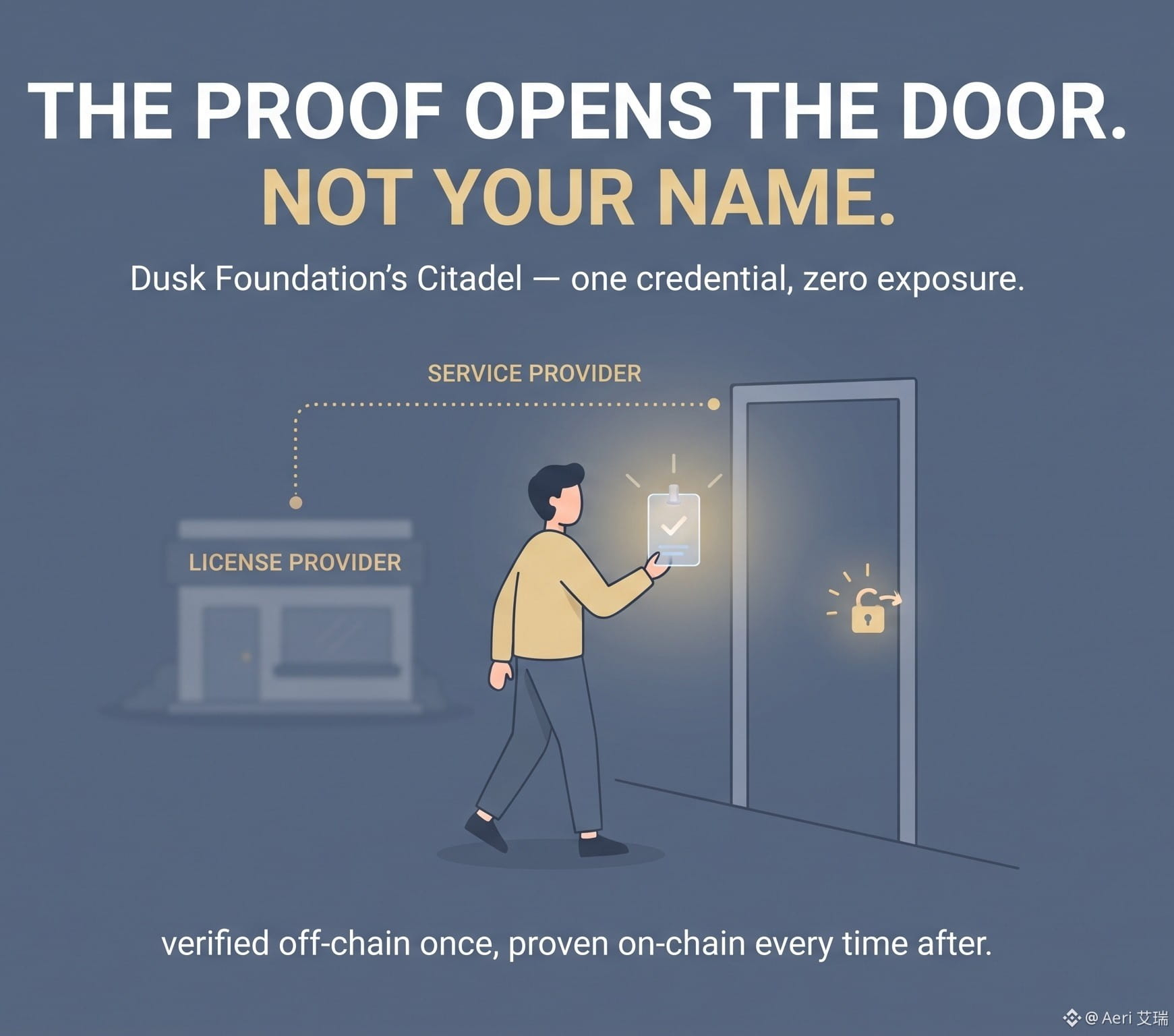
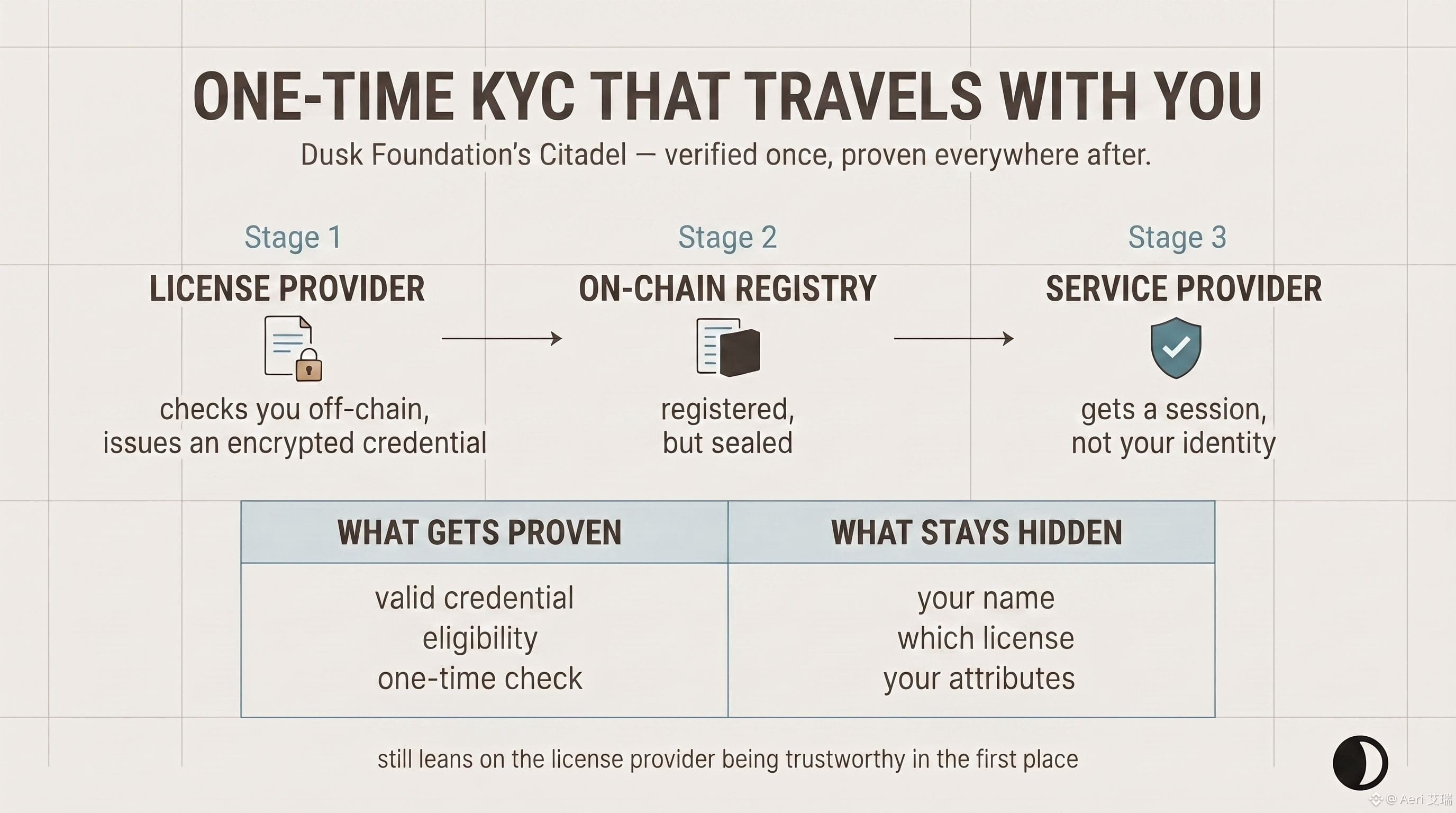
basically you go to a license provider, they check you off chain the normal way, then issue an encrypted credential that gets registered on chain. Later when you need access to something, you generate a zero knowledge proof that you hold a valid one. The contract verifies it and records a session, but nothing about you, the exact license or the attributes ends up public. You just hand the service provider a session cookie and they decide based on their own rules.
it’s a bit like showing a building pass that opens the door without ever revealing your name or which company issued it. The proof is enough. That matters for regulated stuff because institutions still get the compliance signal they need while users avoid dumping personal data across every platform. One time KYC that travels with you instead of getting repeated.
of course it still leans on those license providers being trustworthy in the first place, and service providers keep full control over what they accept. The code itself carries the usual caveats about not being production hardened yet. Adoption will hinge on whether enough real services actually plug into it and whether the incentives line up for issuers to stick around.
curious what others think: does this kind of selective proof model actually lower the barrier for institutions more than it complicates things for everyday users?
#dusk $DUSK
@Dusk
i’ve been digging into Dusk’s Citadel setup for a while now, and the way it handles identity feels more practical than most privacy tools I’ve seen.
basically you go to a license provider, they check you off chain the normal way, then issue an encrypted credential that gets registered on chain. Later when you need access to something, you generate a zero knowledge proof that you hold a valid one. The contract verifies it and records a session, but nothing about you, the exact license or the attributes ends up public. You just hand the service provider a session cookie and they decide based on their own rules.
it’s a bit like showing a building pass that opens the door without ever revealing your name or which company issued it. The proof is enough. That matters for regulated stuff because institutions still get the compliance signal they need while users avoid dumping personal data across every platform. One time KYC that travels with you instead of getting repeated.
of course it still leans on those license providers being trustworthy in the first place, and service providers keep full control over what they accept. The code itself carries the usual caveats about not being production hardened yet. Adoption will hinge on whether enough real services actually plug into it and whether the incentives line up for issuers to stick around.
curious what others think: does this kind of selective proof model actually lower the barrier for institutions more than it complicates things for everyday users?
@Dusk
i’ve been digging into Dusk’s Citadel setup for a while now, and the way it handles identity feels more practical than most privacy tools I’ve seen.
basically you go to a license provider, they check you off chain the normal way, then issue an encrypted credential that gets registered on chain. Later when you need access to something, you generate a zero knowledge proof that you hold a valid one. The contract verifies it and records a session, but nothing about you, the exact license or the attributes ends up public. You just hand the service provider a session cookie and they decide based on their own rules.
it’s a bit like showing a building pass that opens the door without ever revealing your name or which company issued it. The proof is enough. That matters for regulated stuff because institutions still get the compliance signal they need while users avoid dumping personal data across every platform. One time KYC that travels with you instead of getting repeated.
of course it still leans on those license providers being trustworthy in the first place, and service providers keep full control over what they accept. The code itself carries the usual caveats about not being production hardened yet. Adoption will hinge on whether enough real services actually plug into it and whether the incentives line up for issuers to stick around.
curious what others think: does this kind of selective proof model actually lower the barrier for institutions more than it complicates things for everyday users?
4
9
836
·
--
#dusk $DUSK @Dusk_Foundation
courts don't treat guilty and not guilty the same way. You need near everyone to agree to convict someone. One holdout is enough to walk them free. Different bar for different outcomes, because getting it wrong one way costs a lot more than the other.
dusk's consensus runs on that same logic and I didn't expect that from a blockchain.
when i looked into how a block actually gets confirmed i found the same split. To confirm it as valid, the committee needs two thirds on board. To reject it or say "we couldn't decide," it only takes half plus one. Yes is expensive. No is cheap. On purpose i'd guess. A bad block slipping through is a mess to undo. A stalled block just tries again next round.
those votes aren't headcount. Dusk splits each committee into 64 credits, and bigger stakers get more of them. Three credits from one whale beats three small holders voting the same way. The bar looks fixed 2/3 and half plus one, but who i'd need to convince to hit it depends on how those credits are spread out.
that's what nags at me. If stake keeps piling into fewer hands, the cheap side the "no" side, gets even easier to trigger. Not because the math changed, but because fewer people end up owning enough of Dusk to swing it and i don't love that.
#dusk $DUSK @Dusk
courts don't treat guilty and not guilty the same way. You need near everyone to agree to convict someone. One holdout is enough to walk them free. Different bar for different outcomes, because getting it wrong one way costs a lot more than the other.
dusk's consensus runs on that same logic and I didn't expect that from a blockchain.
when i looked into how a block actually gets confirmed i found the same split. To confirm it as valid, the committee needs two thirds on board. To reject it or say "we couldn't decide," it only takes half plus one. Yes is expensive. No is cheap. On purpose i'd guess. A bad block slipping through is a mess to undo. A stalled block just tries again next round.
those votes aren't headcount. Dusk splits each committee into 64 credits, and bigger stakers get more of them. Three credits from one whale beats three small holders voting the same way. The bar looks fixed 2/3 and half plus one, but who i'd need to convince to hit it depends on how those credits are spread out.
that's what nags at me. If stake keeps piling into fewer hands, the cheap side the "no" side, gets even easier to trigger. Not because the math changed, but because fewer people end up owning enough of Dusk to swing it and i don't love that.
courts don't treat guilty and not guilty the same way. You need near everyone to agree to convict someone. One holdout is enough to walk them free. Different bar for different outcomes, because getting it wrong one way costs a lot more than the other.
dusk's consensus runs on that same logic and I didn't expect that from a blockchain.
when i looked into how a block actually gets confirmed i found the same split. To confirm it as valid, the committee needs two thirds on board. To reject it or say "we couldn't decide," it only takes half plus one. Yes is expensive. No is cheap. On purpose i'd guess. A bad block slipping through is a mess to undo. A stalled block just tries again next round.
those votes aren't headcount. Dusk splits each committee into 64 credits, and bigger stakers get more of them. Three credits from one whale beats three small holders voting the same way. The bar looks fixed 2/3 and half plus one, but who i'd need to convince to hit it depends on how those credits are spread out.
that's what nags at me. If stake keeps piling into fewer hands, the cheap side the "no" side, gets even easier to trigger. Not because the math changed, but because fewer people end up owning enough of Dusk to swing it and i don't love that.
7
422
·
--
Проверено
#dusk $DUSK @Dusk_Foundation
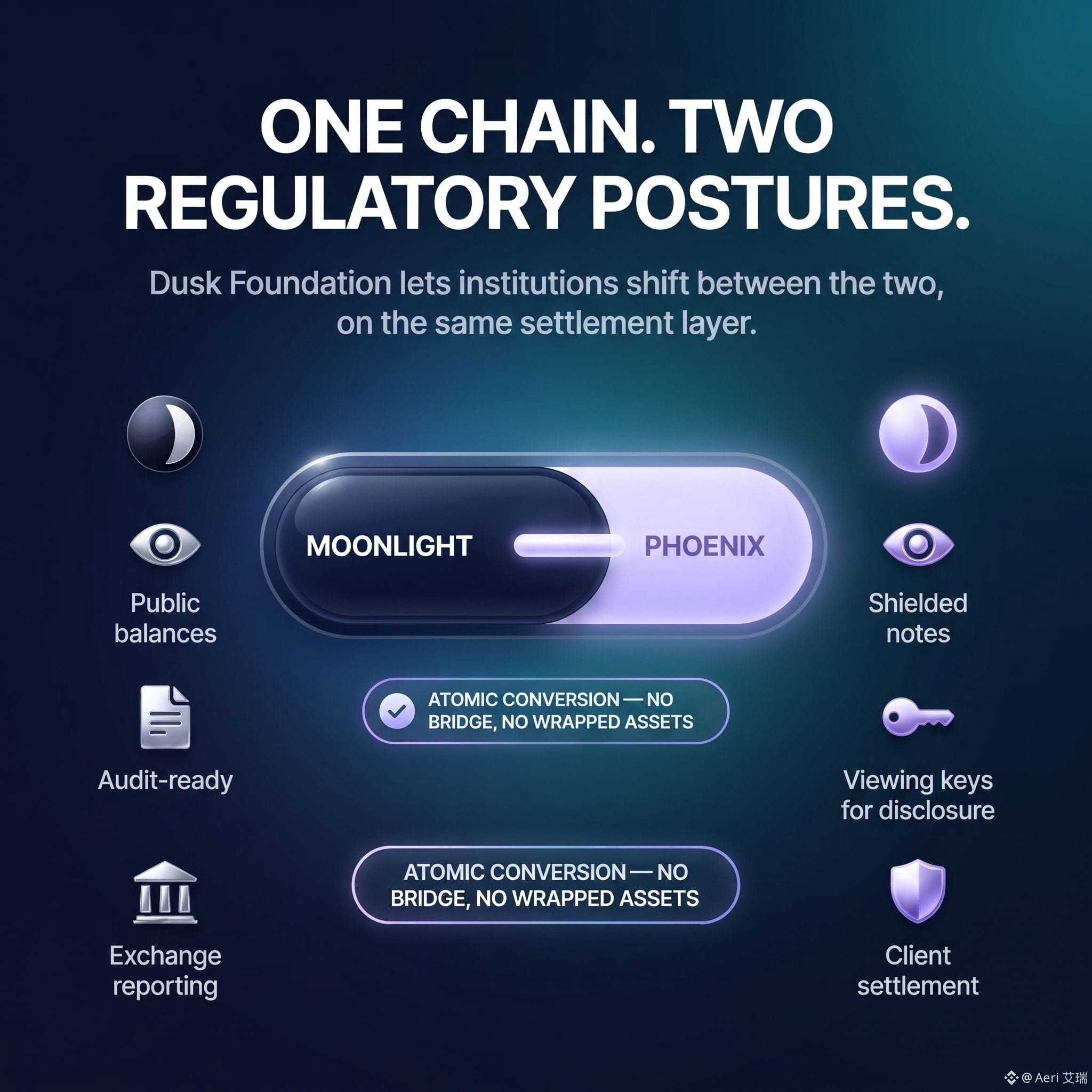
been digging into Dusk’s dual models more carefully lately and the Moonlight versus Phoenix setup feels less like two separate tools and more like a single institution’s ability to flip its regulatory posture without leaving the chain.
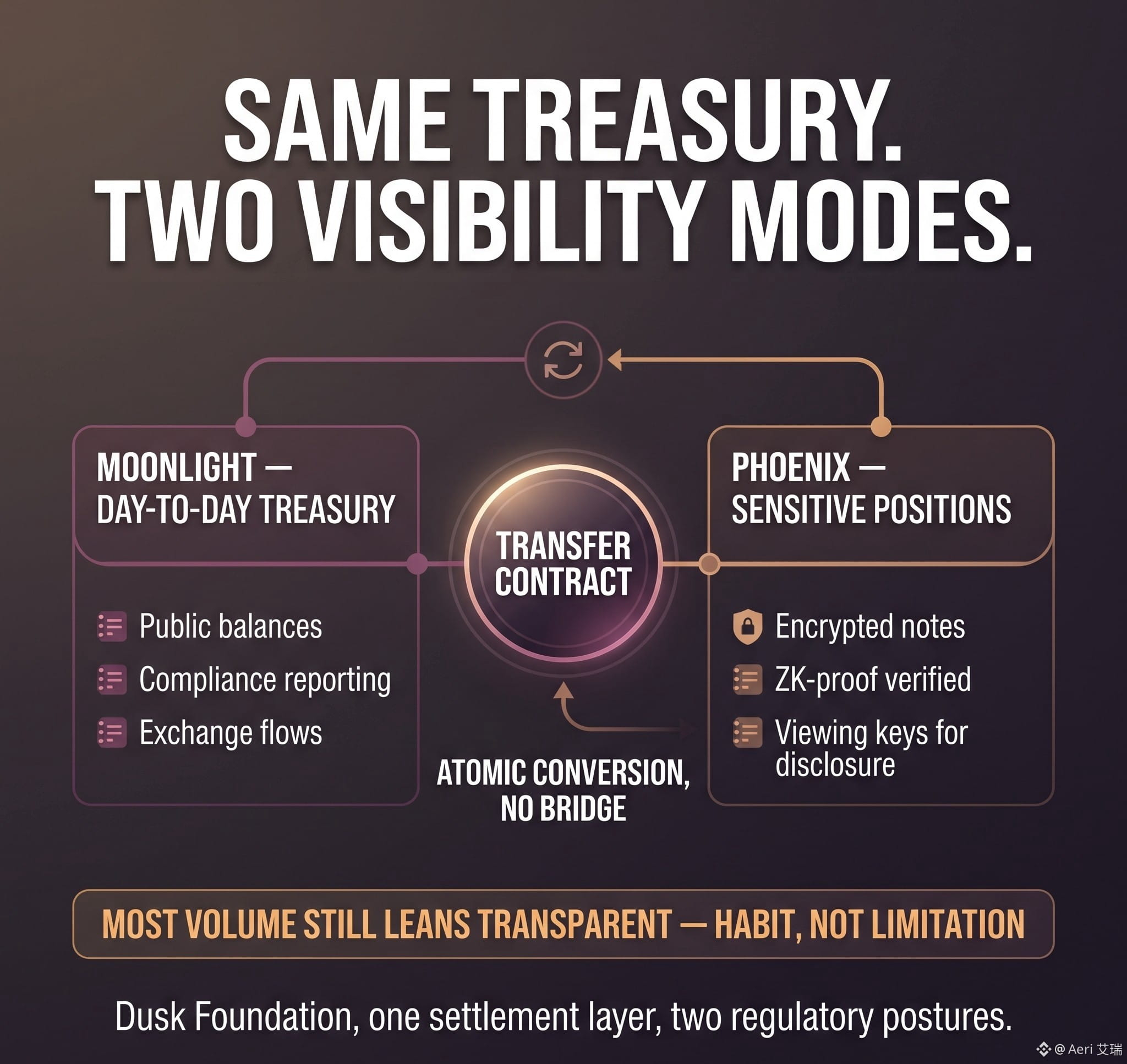
moonlight is the open ledger side. Balances sit in plain view, every transfer shows who sent what to whom. That makes it the path of least resistance for exchanges, reporting or any flow where auditors or counterparties need full visibility. Phoenix flips it. Funds move as encrypted notes. The network only sees that the math checks out through zero knowledge proofs. Amounts and links stay hidden from the public yet the receiver still knows the sender and viewing keys can open the box for authorized parties when required.
what stands out is how cleanly the two sit on the same settlement layer. An institution can keep day to day treasury or compliance reporting on Moonlight then move sensitive positions or client settlements into Phoenix when the disclosure rules tighten or when market impact becomes a concern. No bridge, no wrapped assets, just an atomic conversion through the Transfer contract. That removes the usual fragmentation tax you see when privacy and transparency live on different networks.
the limitation is real though. Most volume still seems to prefer the transparent path, whether from habit, wallet defaults or the simple fact that many regulated workflows still demand public trails. Privacy only matters if the incentives and tooling actually pull people into the shielded side.
does that dual mode flexibility actually lower the barrier for institutions or does it just create another layer of operational complexity they will hesitate to manage?
#dusk $DUSK @Dusk
been digging into Dusk’s dual models more carefully lately and the Moonlight versus Phoenix setup feels less like two separate tools and more like a single institution’s ability to flip its regulatory posture without leaving the chain.
moonlight is the open ledger side. Balances sit in plain view, every transfer shows who sent what to whom. That makes it the path of least resistance for exchanges, reporting or any flow where auditors or counterparties need full visibility. Phoenix flips it. Funds move as encrypted notes. The network only sees that the math checks out through zero knowledge proofs. Amounts and links stay hidden from the public yet the receiver still knows the sender and viewing keys can open the box for authorized parties when required.
what stands out is how cleanly the two sit on the same settlement layer. An institution can keep day to day treasury or compliance reporting on Moonlight then move sensitive positions or client settlements into Phoenix when the disclosure rules tighten or when market impact becomes a concern. No bridge, no wrapped assets, just an atomic conversion through the Transfer contract. That removes the usual fragmentation tax you see when privacy and transparency live on different networks.
the limitation is real though. Most volume still seems to prefer the transparent path, whether from habit, wallet defaults or the simple fact that many regulated workflows still demand public trails. Privacy only matters if the incentives and tooling actually pull people into the shielded side.
does that dual mode flexibility actually lower the barrier for institutions or does it just create another layer of operational complexity they will hesitate to manage?
been digging into Dusk’s dual models more carefully lately and the Moonlight versus Phoenix setup feels less like two separate tools and more like a single institution’s ability to flip its regulatory posture without leaving the chain.
moonlight is the open ledger side. Balances sit in plain view, every transfer shows who sent what to whom. That makes it the path of least resistance for exchanges, reporting or any flow where auditors or counterparties need full visibility. Phoenix flips it. Funds move as encrypted notes. The network only sees that the math checks out through zero knowledge proofs. Amounts and links stay hidden from the public yet the receiver still knows the sender and viewing keys can open the box for authorized parties when required.
what stands out is how cleanly the two sit on the same settlement layer. An institution can keep day to day treasury or compliance reporting on Moonlight then move sensitive positions or client settlements into Phoenix when the disclosure rules tighten or when market impact becomes a concern. No bridge, no wrapped assets, just an atomic conversion through the Transfer contract. That removes the usual fragmentation tax you see when privacy and transparency live on different networks.
the limitation is real though. Most volume still seems to prefer the transparent path, whether from habit, wallet defaults or the simple fact that many regulated workflows still demand public trails. Privacy only matters if the incentives and tooling actually pull people into the shielded side.
does that dual mode flexibility actually lower the barrier for institutions or does it just create another layer of operational complexity they will hesitate to manage?
9
14
1.1k
·
--
Частичная правда
#dusk $DUSK @Dusk_Foundation
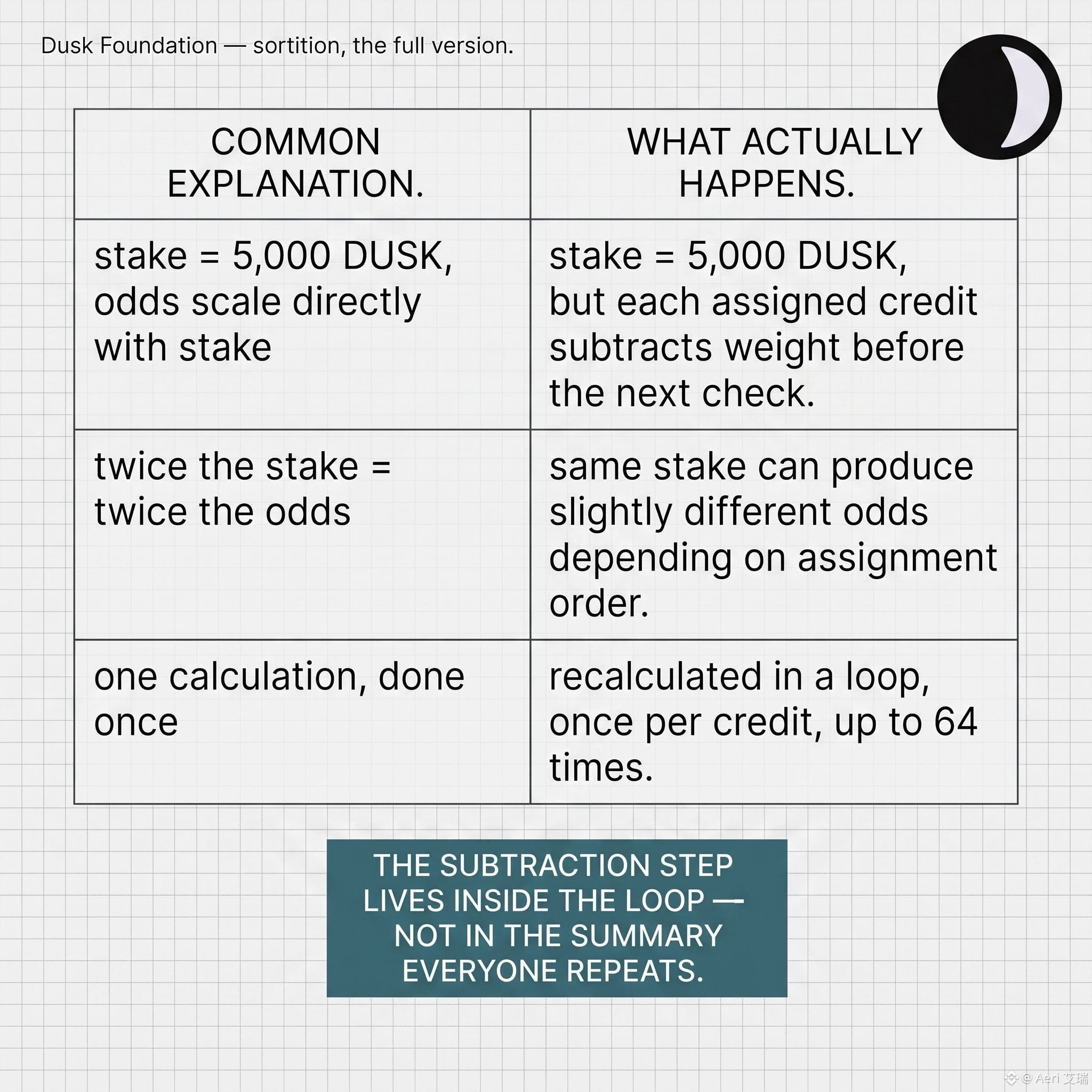
i thought more stakes just meant more voting power, plain and simple. Twice the DUSK staked, twice the odds of getting picked. Dusk's own sortition algorithm says that's not quite the full picture and i only caught it by reading past the summary.
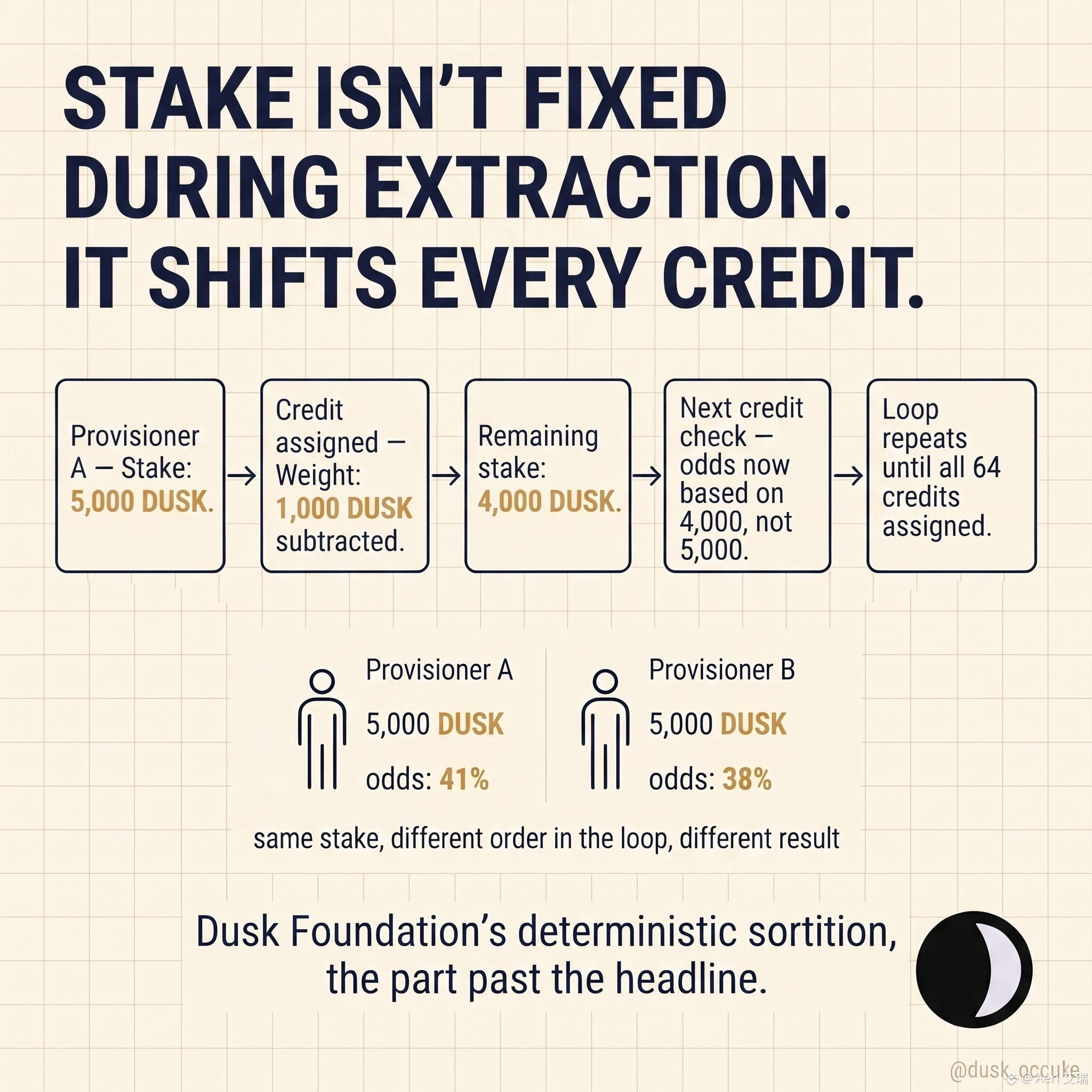
when Dusk builds a voting committee, it doesn't just look at your stake once and hand out credits based on that single number. It assigns credits one at a time, in a loop. And every time a provisioner gets a credit, the algorithm subtracts that credit's weight from their stake before it even checks who's eligible for the next credit in line.
so your stake isn't a fixed, frozen number for the whole extraction process. It's shifting, credit by credit as the loop runs through the committee. That means the exact same raw stake, say two identical provisioners with equal DUSK staked can end up with slightly different real odds depending purely on where in the sequence their credits get assigned. Not some huge swing that flips outcomes. But not the perfectly clean straight line most people assume when someone says "more stake, more power" either.
i almost missed this entirely, honestly. The usual explanation of Dusk's sortition stops right at "bigger stake, better odds" and leaves it there which isn't wrong, just incomplete. The subtraction step lives one layer deeper, inside the actual deterministic extraction loop not in the headline version everyone repeats.
so here's the honest take. This isn't some hidden flaw or a gotcha. It's just more textured than the pitch. Dusk built a system where stake matters a lot just not in a perfectly linear way once you actually watch the loop run credit by credit.
#dusk $DUSK @Dusk
i thought more stakes just meant more voting power, plain and simple. Twice the DUSK staked, twice the odds of getting picked. Dusk's own sortition algorithm says that's not quite the full picture and i only caught it by reading past the summary.
when Dusk builds a voting committee, it doesn't just look at your stake once and hand out credits based on that single number. It assigns credits one at a time, in a loop. And every time a provisioner gets a credit, the algorithm subtracts that credit's weight from their stake before it even checks who's eligible for the next credit in line.
so your stake isn't a fixed, frozen number for the whole extraction process. It's shifting, credit by credit as the loop runs through the committee. That means the exact same raw stake, say two identical provisioners with equal DUSK staked can end up with slightly different real odds depending purely on where in the sequence their credits get assigned. Not some huge swing that flips outcomes. But not the perfectly clean straight line most people assume when someone says "more stake, more power" either.
i almost missed this entirely, honestly. The usual explanation of Dusk's sortition stops right at "bigger stake, better odds" and leaves it there which isn't wrong, just incomplete. The subtraction step lives one layer deeper, inside the actual deterministic extraction loop not in the headline version everyone repeats.
so here's the honest take. This isn't some hidden flaw or a gotcha. It's just more textured than the pitch. Dusk built a system where stake matters a lot just not in a perfectly linear way once you actually watch the loop run credit by credit.
i thought more stakes just meant more voting power, plain and simple. Twice the DUSK staked, twice the odds of getting picked. Dusk's own sortition algorithm says that's not quite the full picture and i only caught it by reading past the summary.
when Dusk builds a voting committee, it doesn't just look at your stake once and hand out credits based on that single number. It assigns credits one at a time, in a loop. And every time a provisioner gets a credit, the algorithm subtracts that credit's weight from their stake before it even checks who's eligible for the next credit in line.
so your stake isn't a fixed, frozen number for the whole extraction process. It's shifting, credit by credit as the loop runs through the committee. That means the exact same raw stake, say two identical provisioners with equal DUSK staked can end up with slightly different real odds depending purely on where in the sequence their credits get assigned. Not some huge swing that flips outcomes. But not the perfectly clean straight line most people assume when someone says "more stake, more power" either.
i almost missed this entirely, honestly. The usual explanation of Dusk's sortition stops right at "bigger stake, better odds" and leaves it there which isn't wrong, just incomplete. The subtraction step lives one layer deeper, inside the actual deterministic extraction loop not in the headline version everyone repeats.
so here's the honest take. This isn't some hidden flaw or a gotcha. It's just more textured than the pitch. Dusk built a system where stake matters a lot just not in a perfectly linear way once you actually watch the loop run credit by credit.
2
6
767
·
--
Проверено
#dusk $DUSK @Dusk_Foundation
I assumed only one proof system needs a trusted setup and the other just skips it. That's not what's actually true and Dusk's own setup made that clear to me.
Here's the thing. Both PlonK and Groth16 need a trusted setup. Dusk supports both built right into the Piecrust engine as native functions. The real difference isn't whether you need one. It's how often.
Groth16 needs a fresh setup for every single circuit. New contract logic new setup every time. That's expensive to organize but it pays off. The proofs are tiny and verification is fast.
PlonK does it differently. One setup, done once reused across any circuit you build later. Way more flexible. But the proofs get bigger and checking them costs more.
So Dusk isn't choosing one winner here. It's giving developers both tools and letting the tradeoff be theirs. Want speed and don't mind reorganizing setup work per circuit? Groth16. Want flexibility and can eat a bigger proof? PlonK.
I used to think trusted setup was a yes or no question. Dusk's docs showed me it's really a question of how much setup work you're willing to redo and how big a proof you're willing to carry.
#dusk $DUSK @Dusk
I assumed only one proof system needs a trusted setup and the other just skips it. That's not what's actually true and Dusk's own setup made that clear to me.
Here's the thing. Both PlonK and Groth16 need a trusted setup. Dusk supports both built right into the Piecrust engine as native functions. The real difference isn't whether you need one. It's how often.
Groth16 needs a fresh setup for every single circuit. New contract logic new setup every time. That's expensive to organize but it pays off. The proofs are tiny and verification is fast.
PlonK does it differently. One setup, done once reused across any circuit you build later. Way more flexible. But the proofs get bigger and checking them costs more.
So Dusk isn't choosing one winner here. It's giving developers both tools and letting the tradeoff be theirs. Want speed and don't mind reorganizing setup work per circuit? Groth16. Want flexibility and can eat a bigger proof? PlonK.
I used to think trusted setup was a yes or no question. Dusk's docs showed me it's really a question of how much setup work you're willing to redo and how big a proof you're willing to carry.
I assumed only one proof system needs a trusted setup and the other just skips it. That's not what's actually true and Dusk's own setup made that clear to me.
Here's the thing. Both PlonK and Groth16 need a trusted setup. Dusk supports both built right into the Piecrust engine as native functions. The real difference isn't whether you need one. It's how often.
Groth16 needs a fresh setup for every single circuit. New contract logic new setup every time. That's expensive to organize but it pays off. The proofs are tiny and verification is fast.
PlonK does it differently. One setup, done once reused across any circuit you build later. Way more flexible. But the proofs get bigger and checking them costs more.
So Dusk isn't choosing one winner here. It's giving developers both tools and letting the tradeoff be theirs. Want speed and don't mind reorganizing setup work per circuit? Groth16. Want flexibility and can eat a bigger proof? PlonK.
I used to think trusted setup was a yes or no question. Dusk's docs showed me it's really a question of how much setup work you're willing to redo and how big a proof you're willing to carry.
5
7
721
·
--
#termmax @termmax
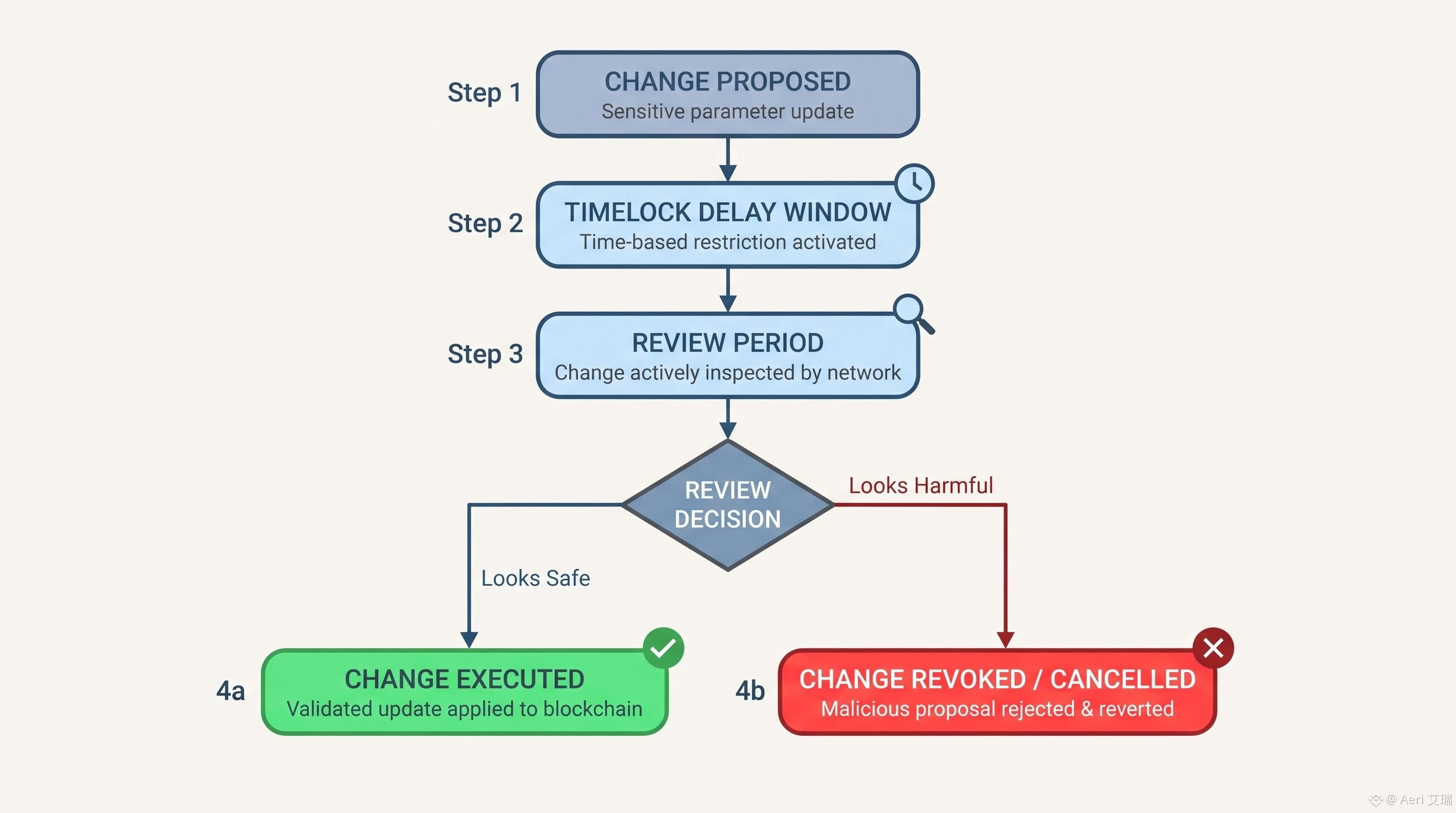
I used to think a timelock was just a delay added to a smart contract. After looking at the TermMax security docs, I think that misses the real reason for it.
What caught my attention is that sensitive operations do not take effect immediately. Critical parameter changes have to wait before they are implemented. That gives people time to review the change and, if something looks harmful, potentially revoke it before it becomes active.
Here's a simple example. If a sensitive Vault parameter is changed, the system doesn't treat the approved change as something that must happen right away. There is a window between the decision and the actual implementation. That window matters because mistakes or harmful changes are much easier to deal with before they take effect.
The tradeoff is speed. TermMax gives up instant changes in exchange for a chance to catch problems first. And I think that's the more interesting part of the design. Security is not always about adding more control. Sometimes it is about deliberately slowing control down.
TermMax makes me wonder about something else too. If a parameter change is urgent, how much delay is acceptable before protection itself starts becoming a problem?
That balance is what makes the TMX timelock design worth paying attention to.
#termmax @TermMax
I used to think a timelock was just a delay added to a smart contract. After looking at the TermMax security docs, I think that misses the real reason for it.
What caught my attention is that sensitive operations do not take effect immediately. Critical parameter changes have to wait before they are implemented. That gives people time to review the change and, if something looks harmful, potentially revoke it before it becomes active.
Here's a simple example. If a sensitive Vault parameter is changed, the system doesn't treat the approved change as something that must happen right away. There is a window between the decision and the actual implementation. That window matters because mistakes or harmful changes are much easier to deal with before they take effect.
The tradeoff is speed. TermMax gives up instant changes in exchange for a chance to catch problems first. And I think that's the more interesting part of the design. Security is not always about adding more control. Sometimes it is about deliberately slowing control down.
TermMax makes me wonder about something else too. If a parameter change is urgent, how much delay is acceptable before protection itself starts becoming a problem?
That balance is what makes the TMX timelock design worth paying attention to.
I used to think a timelock was just a delay added to a smart contract. After looking at the TermMax security docs, I think that misses the real reason for it.
What caught my attention is that sensitive operations do not take effect immediately. Critical parameter changes have to wait before they are implemented. That gives people time to review the change and, if something looks harmful, potentially revoke it before it becomes active.
Here's a simple example. If a sensitive Vault parameter is changed, the system doesn't treat the approved change as something that must happen right away. There is a window between the decision and the actual implementation. That window matters because mistakes or harmful changes are much easier to deal with before they take effect.
The tradeoff is speed. TermMax gives up instant changes in exchange for a chance to catch problems first. And I think that's the more interesting part of the design. Security is not always about adding more control. Sometimes it is about deliberately slowing control down.
TermMax makes me wonder about something else too. If a parameter change is urgent, how much delay is acceptable before protection itself starts becoming a problem?
That balance is what makes the TMX timelock design worth paying attention to.
1
6
413
·
--
Падение
#dusk $DUSK @Dusk_Foundation
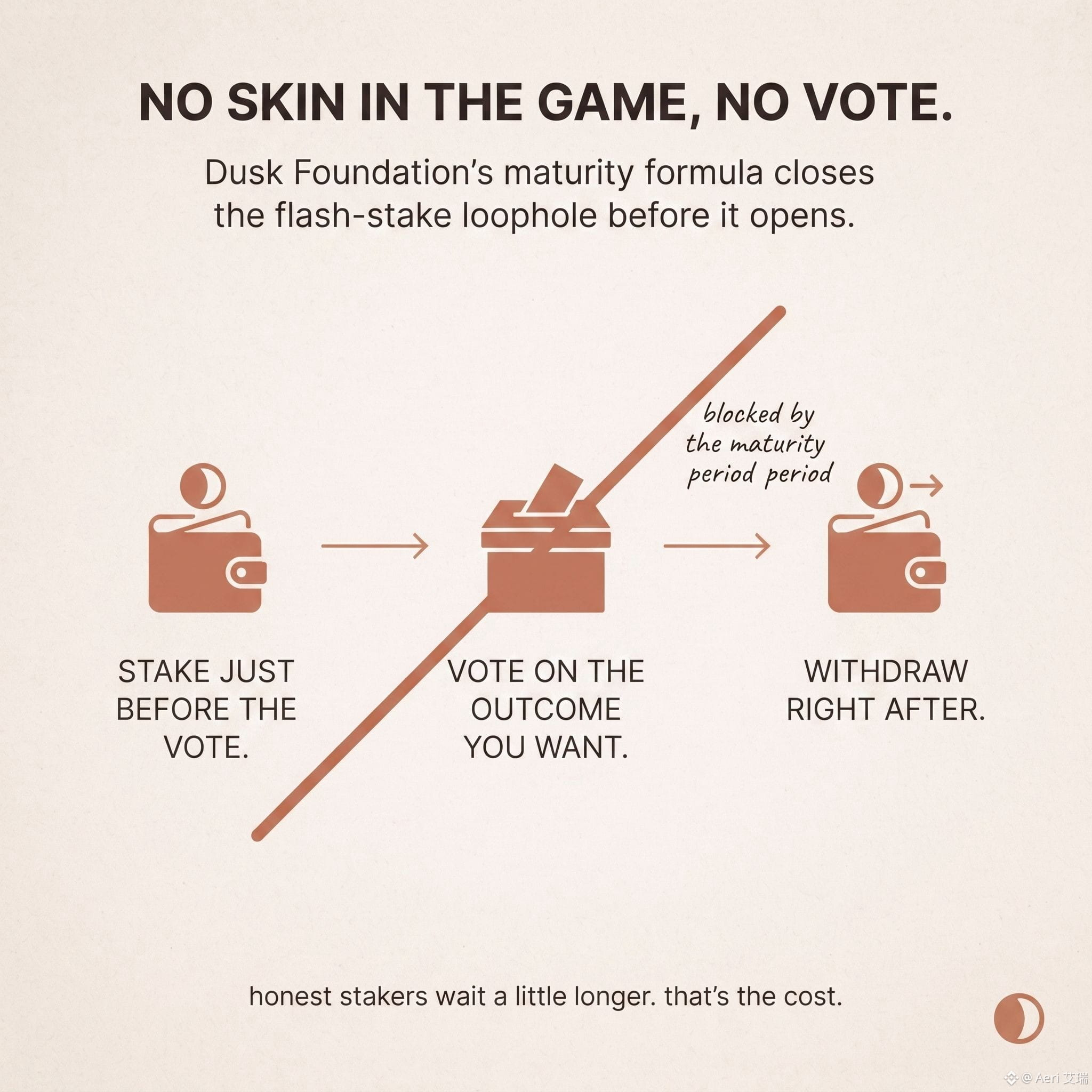
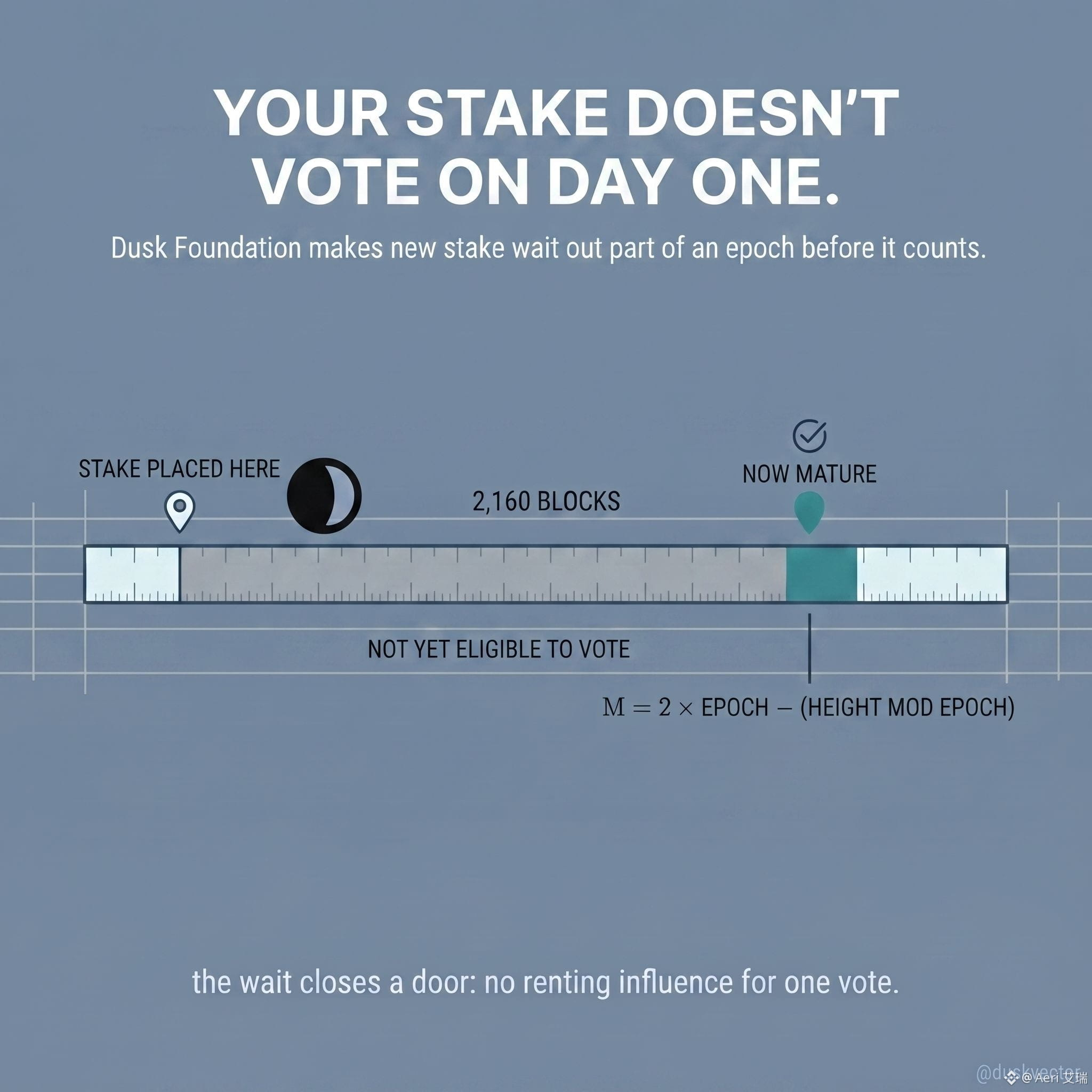
I stake, and I want my vote to count right away. So when I found out Dusk makes you wait, I got annoyed. Then I actually read why. Here's the setup: Dusk runs on epochs, blocks of 2,160 blocks each. When you stake, you don't become vote-eligible the second your DUSK hits the network. There's a formula deciding when you actually mature: M equals two times epoch, minus your height mod epoch. Sounds like math class. It's really just a wait timer.
At first I thought this was just red tape. Then I thought about what happens without it. If new stake could vote instantly, someone could watch the upcoming committee, quickly stake right before a vote they want to influence, cast it, then pull out. In and out, no real skin in the game. Dusk closes that door. You have to sit through part of an epoch before your stake counts for anything.
The tradeoff is real too. Honest stakers wait longer than they'd like, and there's no way around that cost. But I'd rather wait a bit than stake on a chain where anyone can rent influence for one vote. Dusk picked patience over speed here, and after digging into it, I get why.
#dusk $DUSK @Dusk
I stake, and I want my vote to count right away. So when I found out Dusk makes you wait, I got annoyed. Then I actually read why. Here's the setup: Dusk runs on epochs, blocks of 2,160 blocks each. When you stake, you don't become vote-eligible the second your DUSK hits the network. There's a formula deciding when you actually mature: M equals two times epoch, minus your height mod epoch. Sounds like math class. It's really just a wait timer.
At first I thought this was just red tape. Then I thought about what happens without it. If new stake could vote instantly, someone could watch the upcoming committee, quickly stake right before a vote they want to influence, cast it, then pull out. In and out, no real skin in the game. Dusk closes that door. You have to sit through part of an epoch before your stake counts for anything.
The tradeoff is real too. Honest stakers wait longer than they'd like, and there's no way around that cost. But I'd rather wait a bit than stake on a chain where anyone can rent influence for one vote. Dusk picked patience over speed here, and after digging into it, I get why.
I stake, and I want my vote to count right away. So when I found out Dusk makes you wait, I got annoyed. Then I actually read why. Here's the setup: Dusk runs on epochs, blocks of 2,160 blocks each. When you stake, you don't become vote-eligible the second your DUSK hits the network. There's a formula deciding when you actually mature: M equals two times epoch, minus your height mod epoch. Sounds like math class. It's really just a wait timer.
At first I thought this was just red tape. Then I thought about what happens without it. If new stake could vote instantly, someone could watch the upcoming committee, quickly stake right before a vote they want to influence, cast it, then pull out. In and out, no real skin in the game. Dusk closes that door. You have to sit through part of an epoch before your stake counts for anything.
The tradeoff is real too. Honest stakers wait longer than they'd like, and there's no way around that cost. But I'd rather wait a bit than stake on a chain where anyone can rent influence for one vote. Dusk picked patience over speed here, and after digging into it, I get why.
7
12
705
Войдите, чтобы посмотреть больше материала
Присоединяйтесь к пользователям криптовалют по всему миру на Binance Square
⚡️ Получайте новейшую и полезную информацию о криптоактивах.
💬 Нам доверяет крупнейшая в мире криптобиржа.
👍 Получите достоверные аналитические данные от верифицированных создателей контента.
Эл. почта/номер телефона
В тренде
IranBlocksStraitOfHormuz
Просмотров: 107
18 обсуждают
🚨ÚLTIMA HORA: O secretário do Tesouro dos EUA, Bessent, afirmou que o Tesouro sancionará um "grande banco" na segunda-feira como parte de sua campanha para isolar o Irã do sistema financeiro global.
O nome do banco não foi divulgado, e a medida estava originalmente prevista para sexta-feira, mas foi adiada devido às cerimônias de aniversário do 11 de setembro.
Este seria o terceiro banco alvo da Operação Economic Outcast, após a filial de um banco egípcio nos Emirados Árabes Unidos e um banco de investimentos turco nas últimas semanas.
"Vamos continuar com esse processo até que todos parem de negociar com esse regime", disse Bessent, segundo a Reuters.
$MarsCoin $SAGA $RAY 👀👀👀👀👀👀
#news #IranBlocksStraitOfHormuz #TreasuryDepartment #MiddleEastTensions #bullish
Palanca N Gigante
·Лайков: 0
·Просмотров: 207
伊朗封锁霍尔木兹海峡
Просмотров: 356
25 обсуждают
USAugustPPIRisesLessThanExpected
Просмотров: 75,941
1,034 обсуждают