

loshy
521 Публикации

loshy
Отправить жалобу
Заблокировать пользователя
🙈🙈
Трейдер с регулярными сделками
3.9 г
2 подписок(и/а)
683 подписчиков(а)
487 понравилось
Посты
Все
Цитирования
Видео
·
--
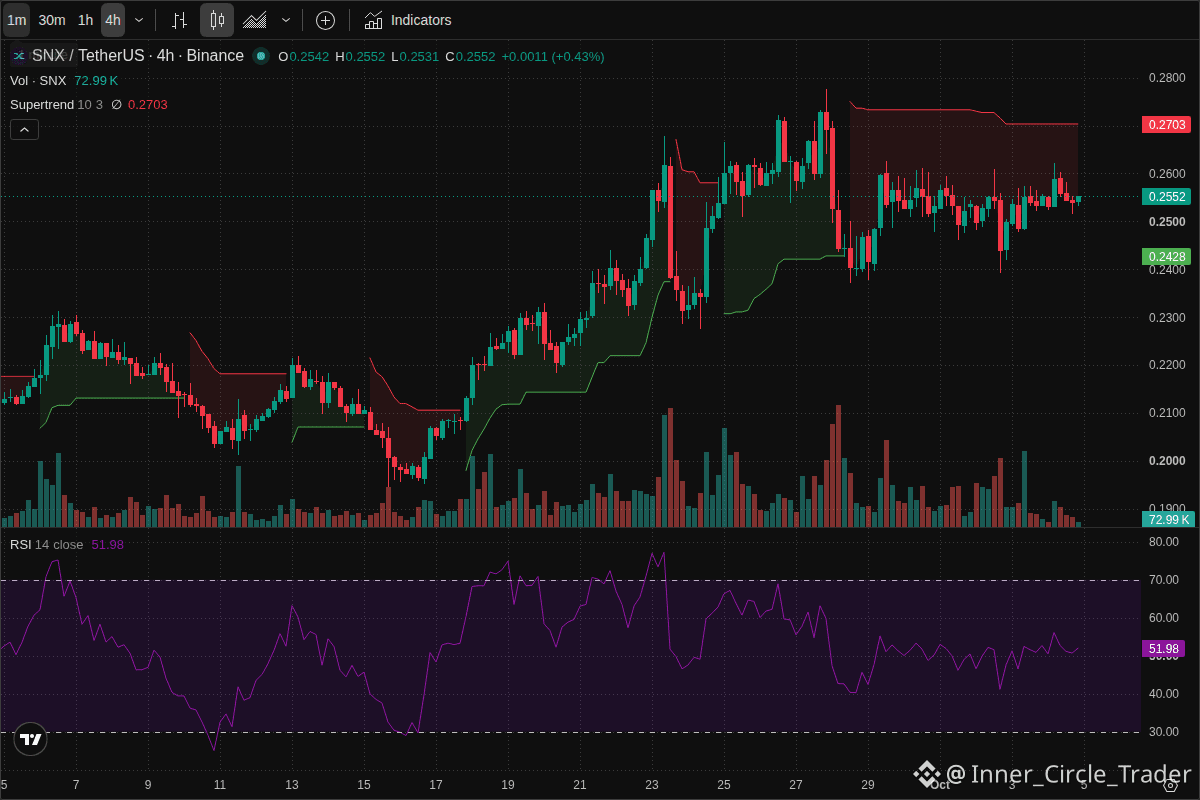
trades at /bin/sh.2573, holding a neutral trend with slight upward momentum (+1.02%) within a tight /bin/sh.2547–/bin/sh.26 range. The 4h RSI sits at 53.2, indicating balanced market sentiment without overextension, suggesting a potential breakout is imminent rather than a reversal. With price consolidating near the upper bound of the daily range, I recommend a WAIT strategy until a confirmed close above /bin/sh.26 signals bullish strength. Entering early risks getting caught in consolidation chop, so patience is key for optimal entry. Always set tight stop-losses below the /bin/sh.2547 support to protect capital against sudden downside volatility in this low-liquidity environment. #Crypto #Trading
trades at /bin/sh.2573, holding a neutral trend with slight upward momentum (+1.02%) within a tight /bin/sh.2547–/bin/sh.26 range. The 4h RSI sits at 53.2, indicating balanced market sentiment without overextension, suggesting a potential breakout is imminent rather than a reversal. With price consolidating near the upper bound of the daily range, I recommend a WAIT strategy until a confirmed close above /bin/sh.26 signals bullish strength. Entering early risks getting caught in consolidation chop, so patience is key for optimal entry. Always set tight stop-losses below the /bin/sh.2547 support to protect capital against sudden downside volatility in this low-liquidity environment. #Crypto #Trading
10
·
--
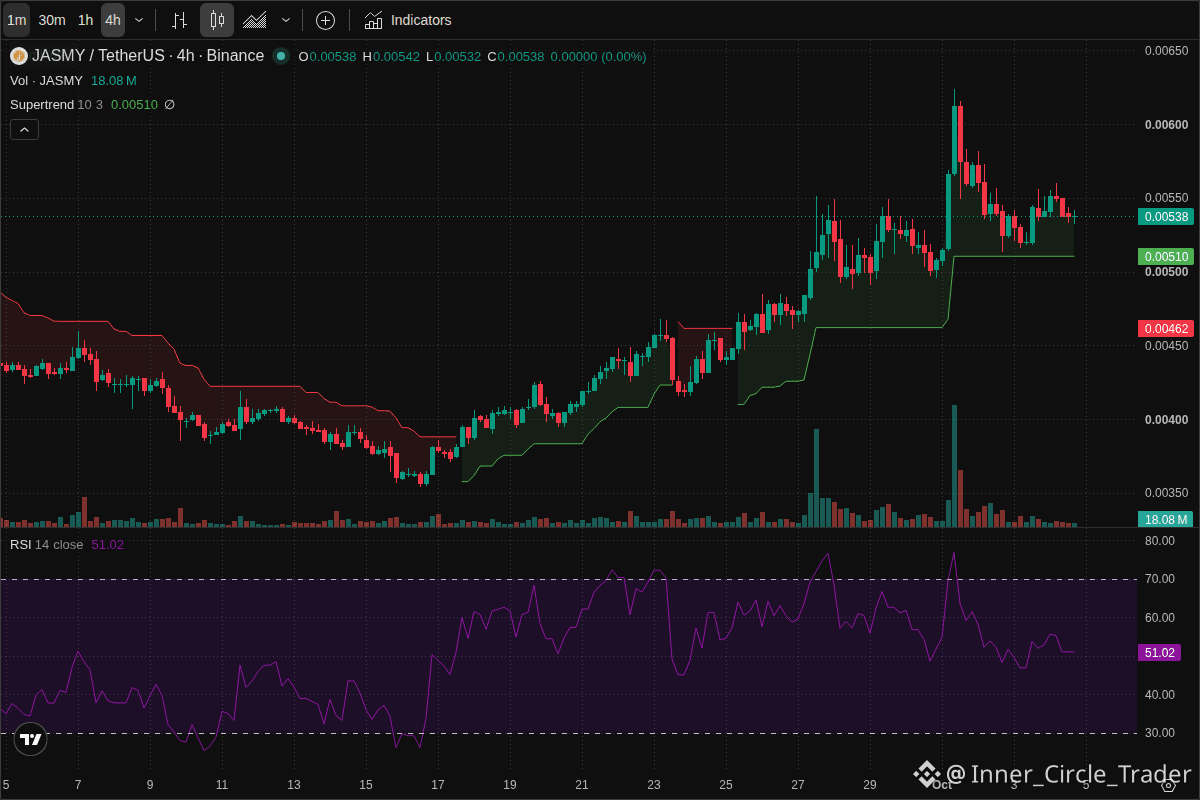
trades at /bin/sh.004962, showing a mild 1.286% gain in the last 24 hours. The 4-hour RSI sits precisely at 50.1, indicating a neutral market with no immediate overbought or oversold conditions. This equilibrium suggests a consolidation phase before the next directional move. Given the lack of momentum, the recommendation is to WAIT for a clear breakout above /bin/sh.0057 or a rejection from the /bin/sh.0025 support. Traders should avoid entering positions mid-range without confirmed volume spikes. Always set tight stop-losses to protect capital against sudden volatility swings. #Crypto #Trading
trades at /bin/sh.004962, showing a mild 1.286% gain in the last 24 hours. The 4-hour RSI sits precisely at 50.1, indicating a neutral market with no immediate overbought or oversold conditions. This equilibrium suggests a consolidation phase before the next directional move. Given the lack of momentum, the recommendation is to WAIT for a clear breakout above /bin/sh.0057 or a rejection from the /bin/sh.0025 support. Traders should avoid entering positions mid-range without confirmed volume spikes. Always set tight stop-losses to protect capital against sudden volatility swings. #Crypto #Trading
44
·
--
💡 **Sui (): The Modular Breakthrough in Web3** **What is Sui?** Sui is a Layer 1 blockchain designed for high performance and scalability, powered by the Move programming language. Developed by Mysten Labs (founded by ex-Meta engineers), it has rapidly climbed to Rank 26, signaling strong institutional and community adoption. Unlike traditional chains that process transactions in a single global queue, Sui introduces a paradigm shift in how data is managed and executed. **The Problem** Traditional blockchains suffer from the "scalability trilemma," often sacrificing speed or security to achieve decentralization. High gas fees and network congestion during peak usage times have hindered mass adoption for DeFi and gaming. Existing solutions often rely on complex Layer 2 architectures that add latency and fragmentation, creating a disjointed user experience. **How Sui Solves It: Object-Centric Execution** Sui utilizes **Object-Centric Execution**. Instead of treating all data as a monolithic state, it models the world as distinct objects (assets, accounts, smart contracts). Each object has its own version number. This allows Sui to process transactions in parallel if they do not touch the same objects. Two users can trade different NFTs simultaneously without waiting for one another’s transaction to finalize. This architectural choice drastically reduces latency and increases throughput, enabling thousands of transactions per second with finality in under a second. **Key Features** 1. **Move Language**: A resource-oriented programming language that enhances security by preventing common vulnerabilities like double-spending and re-entrancy attacks at the compiler level.
$CRO $SUI
#Crypto #Blockchain
💡 **Sui (): The Modular Breakthrough in Web3** **What is Sui?** Sui is a Layer 1 blockchain designed for high performance and scalability, powered by the Move programming language. Developed by Mysten Labs (founded by ex-Meta engineers), it has rapidly climbed to Rank 26, signaling strong institutional and community adoption. Unlike traditional chains that process transactions in a single global queue, Sui introduces a paradigm shift in how data is managed and executed. **The Problem** Traditional blockchains suffer from the "scalability trilemma," often sacrificing speed or security to achieve decentralization. High gas fees and network congestion during peak usage times have hindered mass adoption for DeFi and gaming. Existing solutions often rely on complex Layer 2 architectures that add latency and fragmentation, creating a disjointed user experience. **How Sui Solves It: Object-Centric Execution** Sui utilizes **Object-Centric Execution**. Instead of treating all data as a monolithic state, it models the world as distinct objects (assets, accounts, smart contracts). Each object has its own version number. This allows Sui to process transactions in parallel if they do not touch the same objects. Two users can trade different NFTs simultaneously without waiting for one another’s transaction to finalize. This architectural choice drastically reduces latency and increases throughput, enabling thousands of transactions per second with finality in under a second. **Key Features** 1. **Move Language**: A resource-oriented programming language that enhances security by preventing common vulnerabilities like double-spending and re-entrancy attacks at the compiler level.
$CRO $SUI
#Crypto #Blockchain
$CRO $SUI
#Crypto #Blockchain
107
·
--
تحليل فني لعملة Chainlink (LINK) | تقرير Binance Square
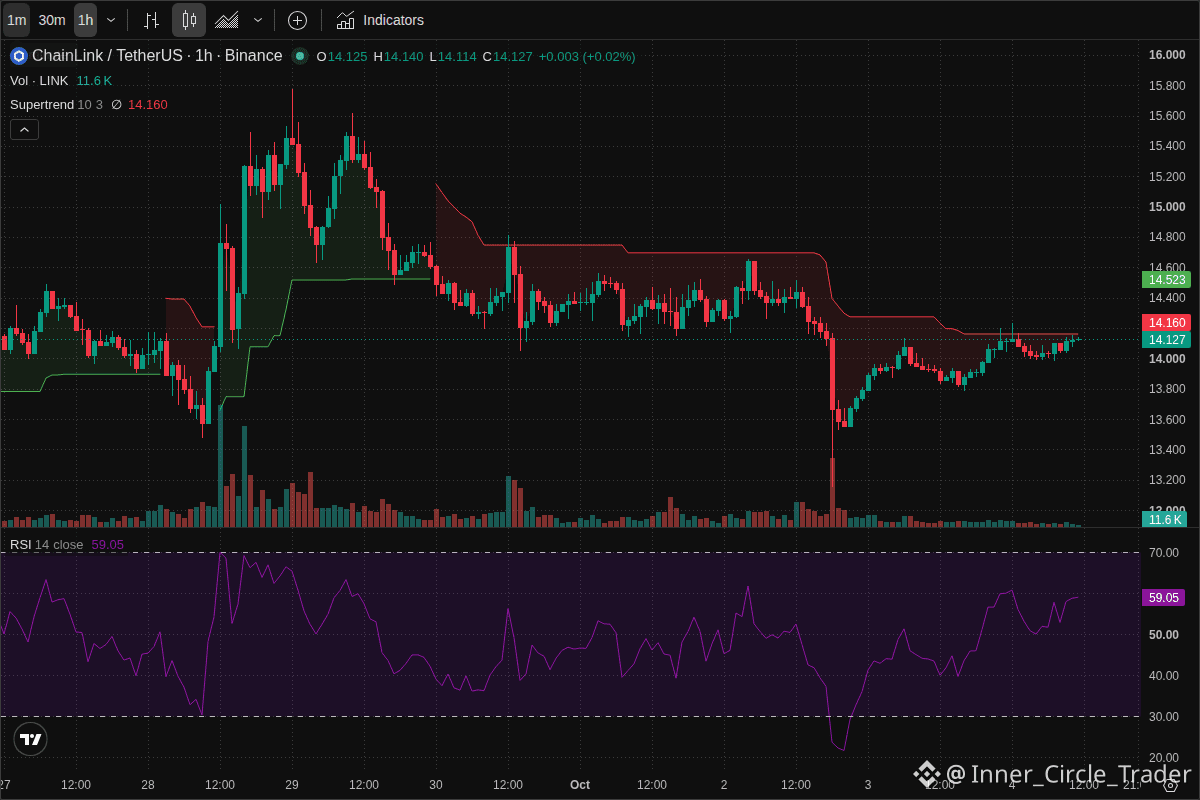
يترأس السعر الحالي لعملة Link عند مستوى 4.1200، حيث تشهد العملة استقراراً نسبياً مع مكاسب طفيفة بنسبة 1.20% خلال الـ 24 ساعة الماضية. يتحرك السعر ضمن نطاق يومي يمتد من أدنى مستوى عند 3.8000 إلى أعلى قمة عند 4.2270، مما يعكس حالة من التذبذب المحدود في الوقت الحالي.
من الناحية الفنية، يظهر مؤشر القوة النسبية (RSI) بإطار زمني 1 ساعة قيمة 55.8. تشير هذه القراءة إلى أن السوق في منطقة محايدة تميل قليلاً نحو القوة الشرائية، بعيداً تماماً عن مناطق التشبع بالشراء (فوق 70) أو التشبع بالبيع (تحت 30). هذا التوازن في المؤشر يوحي بأن الزخم الصاعد لا يزال حاضراً لكنه غير مبالغ فيه، مما يمنح الفرصة لمواصلة الحركة الإيجابية إذا تم كسر المقاومة الحالية.
الاتجاه العام على المدى القصير يظهر ميلاً صعودياً حذراً، حيث يحاول السعر التماسك فوق متوسطات الحركة المتحركة. للتحول الصاعد القوي، يحتاج LINK إلى اختراق واضح لمستوى المقاومة النفسي عند 4.25، مما سيفتح الطريق أمام استهداف قمم أعلى.
التوصية الفنية الحالية: WAIT (انتظار).
ينصح المتداولون بالانتظار حتى يثبت السعر فوق 4.25 لتأكيد الاختراق الصاعد، أو حتى يعود لاختبار منطقة الدعم عند 3.80 للشراء عند القاع. الدخول الآن قد يكون محفوفاً بالمخاطر بسبب قلة الزخم الواضح.
مستويات الدعم والمقاومة التقديرية:
- دعم رئيسي: 3.8000 (قاع 24 ساعة)
- دعم ثانوي: 4.0000 (مستوى نفسي)
- مقاومة رئيسية: 4.2500 (فوق قمة 24 ساعة)
- مقاومة ثانوية: 4.5000
ننصح دائماً بإدارة رأس المال بعناية واستخدام أوامر وقف الخسارة لحماية الاستثمارات.
#LINK #BinanceSquare
تحليل فني لعملة Chainlink (LINK) | تقرير Binance Square
يترأس السعر الحالي لعملة Link عند مستوى 4.1200، حيث تشهد العملة استقراراً نسبياً مع مكاسب طفيفة بنسبة 1.20% خلال الـ 24 ساعة الماضية. يتحرك السعر ضمن نطاق يومي يمتد من أدنى مستوى عند 3.8000 إلى أعلى قمة عند 4.2270، مما يعكس حالة من التذبذب المحدود في الوقت الحالي.
من الناحية الفنية، يظهر مؤشر القوة النسبية (RSI) بإطار زمني 1 ساعة قيمة 55.8. تشير هذه القراءة إلى أن السوق في منطقة محايدة تميل قليلاً نحو القوة الشرائية، بعيداً تماماً عن مناطق التشبع بالشراء (فوق 70) أو التشبع بالبيع (تحت 30). هذا التوازن في المؤشر يوحي بأن الزخم الصاعد لا يزال حاضراً لكنه غير مبالغ فيه، مما يمنح الفرصة لمواصلة الحركة الإيجابية إذا تم كسر المقاومة الحالية.
الاتجاه العام على المدى القصير يظهر ميلاً صعودياً حذراً، حيث يحاول السعر التماسك فوق متوسطات الحركة المتحركة. للتحول الصاعد القوي، يحتاج LINK إلى اختراق واضح لمستوى المقاومة النفسي عند 4.25، مما سيفتح الطريق أمام استهداف قمم أعلى.
التوصية الفنية الحالية: WAIT (انتظار).
ينصح المتداولون بالانتظار حتى يثبت السعر فوق 4.25 لتأكيد الاختراق الصاعد، أو حتى يعود لاختبار منطقة الدعم عند 3.80 للشراء عند القاع. الدخول الآن قد يكون محفوفاً بالمخاطر بسبب قلة الزخم الواضح.
مستويات الدعم والمقاومة التقديرية:
- دعم رئيسي: 3.8000 (قاع 24 ساعة)
- دعم ثانوي: 4.0000 (مستوى نفسي)
- مقاومة رئيسية: 4.2500 (فوق قمة 24 ساعة)
- مقاومة ثانوية: 4.5000
ننصح دائماً بإدارة رأس المال بعناية واستخدام أوامر وقف الخسارة لحماية الاستثمارات.
#LINK #BinanceSquare
يترأس السعر الحالي لعملة Link عند مستوى 4.1200، حيث تشهد العملة استقراراً نسبياً مع مكاسب طفيفة بنسبة 1.20% خلال الـ 24 ساعة الماضية. يتحرك السعر ضمن نطاق يومي يمتد من أدنى مستوى عند 3.8000 إلى أعلى قمة عند 4.2270، مما يعكس حالة من التذبذب المحدود في الوقت الحالي.
من الناحية الفنية، يظهر مؤشر القوة النسبية (RSI) بإطار زمني 1 ساعة قيمة 55.8. تشير هذه القراءة إلى أن السوق في منطقة محايدة تميل قليلاً نحو القوة الشرائية، بعيداً تماماً عن مناطق التشبع بالشراء (فوق 70) أو التشبع بالبيع (تحت 30). هذا التوازن في المؤشر يوحي بأن الزخم الصاعد لا يزال حاضراً لكنه غير مبالغ فيه، مما يمنح الفرصة لمواصلة الحركة الإيجابية إذا تم كسر المقاومة الحالية.
الاتجاه العام على المدى القصير يظهر ميلاً صعودياً حذراً، حيث يحاول السعر التماسك فوق متوسطات الحركة المتحركة. للتحول الصاعد القوي، يحتاج LINK إلى اختراق واضح لمستوى المقاومة النفسي عند 4.25، مما سيفتح الطريق أمام استهداف قمم أعلى.
التوصية الفنية الحالية: WAIT (انتظار).
ينصح المتداولون بالانتظار حتى يثبت السعر فوق 4.25 لتأكيد الاختراق الصاعد، أو حتى يعود لاختبار منطقة الدعم عند 3.80 للشراء عند القاع. الدخول الآن قد يكون محفوفاً بالمخاطر بسبب قلة الزخم الواضح.
مستويات الدعم والمقاومة التقديرية:
- دعم رئيسي: 3.8000 (قاع 24 ساعة)
- دعم ثانوي: 4.0000 (مستوى نفسي)
- مقاومة رئيسية: 4.2500 (فوق قمة 24 ساعة)
- مقاومة ثانوية: 4.5000
ننصح دائماً بإدارة رأس المال بعناية واستخدام أوامر وقف الخسارة لحماية الاستثمارات.
#LINK #BinanceSquare
41
·
--
🏛️ The Eternal Cycle: Why Crypto’s Market Structure Fights Itself The "Sisyphean struggle" isn't just a metaphor for crypto; it is the defining characteristic of our asset class. We push the boulder up the hill—narratives shift, adoption grows, and prices soar—only to watch gravity (regulation, macro liquidity, or fear) pull it back down. 📉 What happened? We are currently witnessing the mid-cycle consolidation phase. After the euphoria of new listings and institutional entry, the market is hitting a wall of resistance. Liquidity is thinning, and volatility is spiking as whales accumulate while retail capitulates. It feels like the grind never ends, but history tells us that every time the boulder rolls back, the base is built wider. Why it matters? This struggle is not a bug; it’s a feature of a young financial system. Unlike traditional finance, which has decades of established infrastructure, crypto is constantly evolving its own rules. The friction we feel now—the regulatory ambiguity, the exchange hacks, the volatility—is the price of admission for a system that operates 24/7 without central intermediaries. Each cycle of pain reduces the systemic risk for the next. Market Impact Expect choppy price action in the near term. The dollar index strength and tightening global liquidity are headwinds. However, on-chain data shows that long-term holders are not selling. They are accumulating. This divergence between short-term panic and long-term conviction is the classic setup for a breakout. Your Take Stop fighting the cycle. If you are trying to time the bottom every week, you will burn out. The "Sisyphean" nature of crypto requires patience, not perfection.
$BTC $ETH
#CryptoMarket #Gem
🏛️ The Eternal Cycle: Why Crypto’s Market Structure Fights Itself The "Sisyphean struggle" isn't just a metaphor for crypto; it is the defining characteristic of our asset class. We push the boulder up the hill—narratives shift, adoption grows, and prices soar—only to watch gravity (regulation, macro liquidity, or fear) pull it back down. 📉 What happened? We are currently witnessing the mid-cycle consolidation phase. After the euphoria of new listings and institutional entry, the market is hitting a wall of resistance. Liquidity is thinning, and volatility is spiking as whales accumulate while retail capitulates. It feels like the grind never ends, but history tells us that every time the boulder rolls back, the base is built wider. Why it matters? This struggle is not a bug; it’s a feature of a young financial system. Unlike traditional finance, which has decades of established infrastructure, crypto is constantly evolving its own rules. The friction we feel now—the regulatory ambiguity, the exchange hacks, the volatility—is the price of admission for a system that operates 24/7 without central intermediaries. Each cycle of pain reduces the systemic risk for the next. Market Impact Expect choppy price action in the near term. The dollar index strength and tightening global liquidity are headwinds. However, on-chain data shows that long-term holders are not selling. They are accumulating. This divergence between short-term panic and long-term conviction is the classic setup for a breakout. Your Take Stop fighting the cycle. If you are trying to time the bottom every week, you will burn out. The "Sisyphean" nature of crypto requires patience, not perfection.
$BTC $ETH
#CryptoMarket #Gem
$BTC $ETH
#CryptoMarket #Gem
61
·
--
تحليل عملة LAYER (LayerZero)
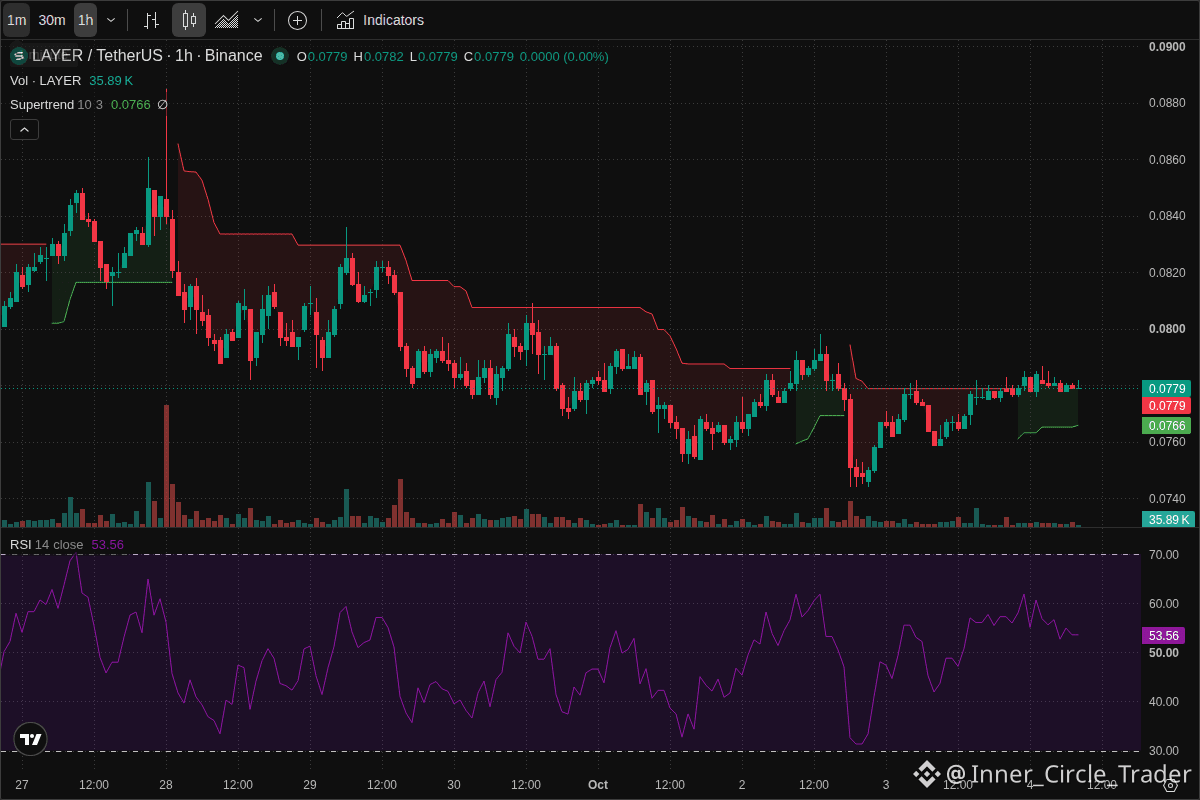
يظهر السعر الحالي لعملة LAYER عند /bin/sh.0000، وهو ما يعكس حالة عدم وجود بيانات تداول سائلة أو توقف مؤقت في السوق، مع ثبات التغير اليومي عند 0.00%. هذه القراءة الصفرية في السعر والأعلى والأدنى خلال 24 ساعة تشير إلى غياب الحراك الفعلي، مما يجعل أي محاولة للتنبؤ الدقيق بالزخم قصير الأجل صعبة في هذه اللحظة.
من حيث التحليل الفني، يسجل مؤشر القوة النسبية (RSI) على إطار الساعة قيمة 100.0. في الظروف الطبيعية، يشير RSI فوق 70 إلى منطقة تشبع شرائي شديدة، لكن القيمة القصوى 100 مع سعر صفري تثير تساؤلات حول صحة البيانات أو وجود خلل في عرض السوق. إذا أخذنا القراءة على محمل الجد كإشارة على بيانات تاريخية قديمة أو خطأ تقني، فإنها تعني أن الزخم الشرائي قد استنفد بالكامل، مما يبشّر بخطر تصحيح هابط حاد في حال عودة السيولة.
الاتجاه العام حالياً غير محدد بسبب غياب الحركة السعرية. لا توجد إشارة واضحة على كسر مستويات رئيسية أو بناء قاعدة قاع، بل يبدو أن السوق في حالة "جمود" كاملة. في مثل هذه الظروف، يعتبر الدخول في الصفقات مقامرة غير محسوبة العواقب، حيث قد تواجه مشاكل في تنفيذ الأوامر أو فروق أسعار عريضة جداً.
التوصية الواضحة حالياً هي: WAIT (انتظار).
لا يُنصح بشراء (BUY) في غياب سيولة واضحة وبسبب التشبع الشديد المزعوم، كما لا يوجد مبرر للبيع (SELL) إذا لم تكن تملك الأصل، نظراً لعدم وجود سعر تنفيذ حقيقي. الأفضل مراقبة عودة السيولة واستقرار البيانات السعرية قبل اتخاذ أي قرار.
بالنسبة للمستويات التقديرية، نظراً لأن السعر الحالي 0.0000، فإن مستويات الدعم والمقاومة تصبح نظرية حتى عودة التسعير الطبيعي. يجب مراقبة مستويات الدعم التاريخية السابقة عند نقاط القيعان الأخيرة (مثلاً حول /bin/sh.50 - /bin/sh.70 حسب آخر إغلاقات موثوقة) كمقاومة أولى عند عودة السعر للظهور، بينما قد تكون المستويات السفلى جداً هي الدعم النفسي.
ننصح المتداولين بالتحقق من مصدر البيانات للتأكد من عدم وجود خطأ تقني في عرض السعر، والتركيز على مشاريع أخرى ذات سيولة عالية ولوحة بيانات حية. السلامة أولاً في إدارة المخاطر، خاصة عند التعامل مع مشاريع تظهر بيانات غير منطقية.
#تحليل_فني #عملات_رقمية
تحليل عملة LAYER (LayerZero)
يظهر السعر الحالي لعملة LAYER عند /bin/sh.0000، وهو ما يعكس حالة عدم وجود بيانات تداول سائلة أو توقف مؤقت في السوق، مع ثبات التغير اليومي عند 0.00%. هذه القراءة الصفرية في السعر والأعلى والأدنى خلال 24 ساعة تشير إلى غياب الحراك الفعلي، مما يجعل أي محاولة للتنبؤ الدقيق بالزخم قصير الأجل صعبة في هذه اللحظة.
من حيث التحليل الفني، يسجل مؤشر القوة النسبية (RSI) على إطار الساعة قيمة 100.0. في الظروف الطبيعية، يشير RSI فوق 70 إلى منطقة تشبع شرائي شديدة، لكن القيمة القصوى 100 مع سعر صفري تثير تساؤلات حول صحة البيانات أو وجود خلل في عرض السوق. إذا أخذنا القراءة على محمل الجد كإشارة على بيانات تاريخية قديمة أو خطأ تقني، فإنها تعني أن الزخم الشرائي قد استنفد بالكامل، مما يبشّر بخطر تصحيح هابط حاد في حال عودة السيولة.
الاتجاه العام حالياً غير محدد بسبب غياب الحركة السعرية. لا توجد إشارة واضحة على كسر مستويات رئيسية أو بناء قاعدة قاع، بل يبدو أن السوق في حالة "جمود" كاملة. في مثل هذه الظروف، يعتبر الدخول في الصفقات مقامرة غير محسوبة العواقب، حيث قد تواجه مشاكل في تنفيذ الأوامر أو فروق أسعار عريضة جداً.
التوصية الواضحة حالياً هي: WAIT (انتظار).
لا يُنصح بشراء (BUY) في غياب سيولة واضحة وبسبب التشبع الشديد المزعوم، كما لا يوجد مبرر للبيع (SELL) إذا لم تكن تملك الأصل، نظراً لعدم وجود سعر تنفيذ حقيقي. الأفضل مراقبة عودة السيولة واستقرار البيانات السعرية قبل اتخاذ أي قرار.
بالنسبة للمستويات التقديرية، نظراً لأن السعر الحالي 0.0000، فإن مستويات الدعم والمقاومة تصبح نظرية حتى عودة التسعير الطبيعي. يجب مراقبة مستويات الدعم التاريخية السابقة عند نقاط القيعان الأخيرة (مثلاً حول /bin/sh.50 - /bin/sh.70 حسب آخر إغلاقات موثوقة) كمقاومة أولى عند عودة السعر للظهور، بينما قد تكون المستويات السفلى جداً هي الدعم النفسي.
ننصح المتداولين بالتحقق من مصدر البيانات للتأكد من عدم وجود خطأ تقني في عرض السعر، والتركيز على مشاريع أخرى ذات سيولة عالية ولوحة بيانات حية. السلامة أولاً في إدارة المخاطر، خاصة عند التعامل مع مشاريع تظهر بيانات غير منطقية.
#تحليل_فني #عملات_رقمية
يظهر السعر الحالي لعملة LAYER عند /bin/sh.0000، وهو ما يعكس حالة عدم وجود بيانات تداول سائلة أو توقف مؤقت في السوق، مع ثبات التغير اليومي عند 0.00%. هذه القراءة الصفرية في السعر والأعلى والأدنى خلال 24 ساعة تشير إلى غياب الحراك الفعلي، مما يجعل أي محاولة للتنبؤ الدقيق بالزخم قصير الأجل صعبة في هذه اللحظة.
من حيث التحليل الفني، يسجل مؤشر القوة النسبية (RSI) على إطار الساعة قيمة 100.0. في الظروف الطبيعية، يشير RSI فوق 70 إلى منطقة تشبع شرائي شديدة، لكن القيمة القصوى 100 مع سعر صفري تثير تساؤلات حول صحة البيانات أو وجود خلل في عرض السوق. إذا أخذنا القراءة على محمل الجد كإشارة على بيانات تاريخية قديمة أو خطأ تقني، فإنها تعني أن الزخم الشرائي قد استنفد بالكامل، مما يبشّر بخطر تصحيح هابط حاد في حال عودة السيولة.
الاتجاه العام حالياً غير محدد بسبب غياب الحركة السعرية. لا توجد إشارة واضحة على كسر مستويات رئيسية أو بناء قاعدة قاع، بل يبدو أن السوق في حالة "جمود" كاملة. في مثل هذه الظروف، يعتبر الدخول في الصفقات مقامرة غير محسوبة العواقب، حيث قد تواجه مشاكل في تنفيذ الأوامر أو فروق أسعار عريضة جداً.
التوصية الواضحة حالياً هي: WAIT (انتظار).
لا يُنصح بشراء (BUY) في غياب سيولة واضحة وبسبب التشبع الشديد المزعوم، كما لا يوجد مبرر للبيع (SELL) إذا لم تكن تملك الأصل، نظراً لعدم وجود سعر تنفيذ حقيقي. الأفضل مراقبة عودة السيولة واستقرار البيانات السعرية قبل اتخاذ أي قرار.
بالنسبة للمستويات التقديرية، نظراً لأن السعر الحالي 0.0000، فإن مستويات الدعم والمقاومة تصبح نظرية حتى عودة التسعير الطبيعي. يجب مراقبة مستويات الدعم التاريخية السابقة عند نقاط القيعان الأخيرة (مثلاً حول /bin/sh.50 - /bin/sh.70 حسب آخر إغلاقات موثوقة) كمقاومة أولى عند عودة السعر للظهور، بينما قد تكون المستويات السفلى جداً هي الدعم النفسي.
ننصح المتداولين بالتحقق من مصدر البيانات للتأكد من عدم وجود خطأ تقني في عرض السعر، والتركيز على مشاريع أخرى ذات سيولة عالية ولوحة بيانات حية. السلامة أولاً في إدارة المخاطر، خاصة عند التعامل مع مشاريع تظهر بيانات غير منطقية.
#تحليل_فني #عملات_رقمية
77
·
--
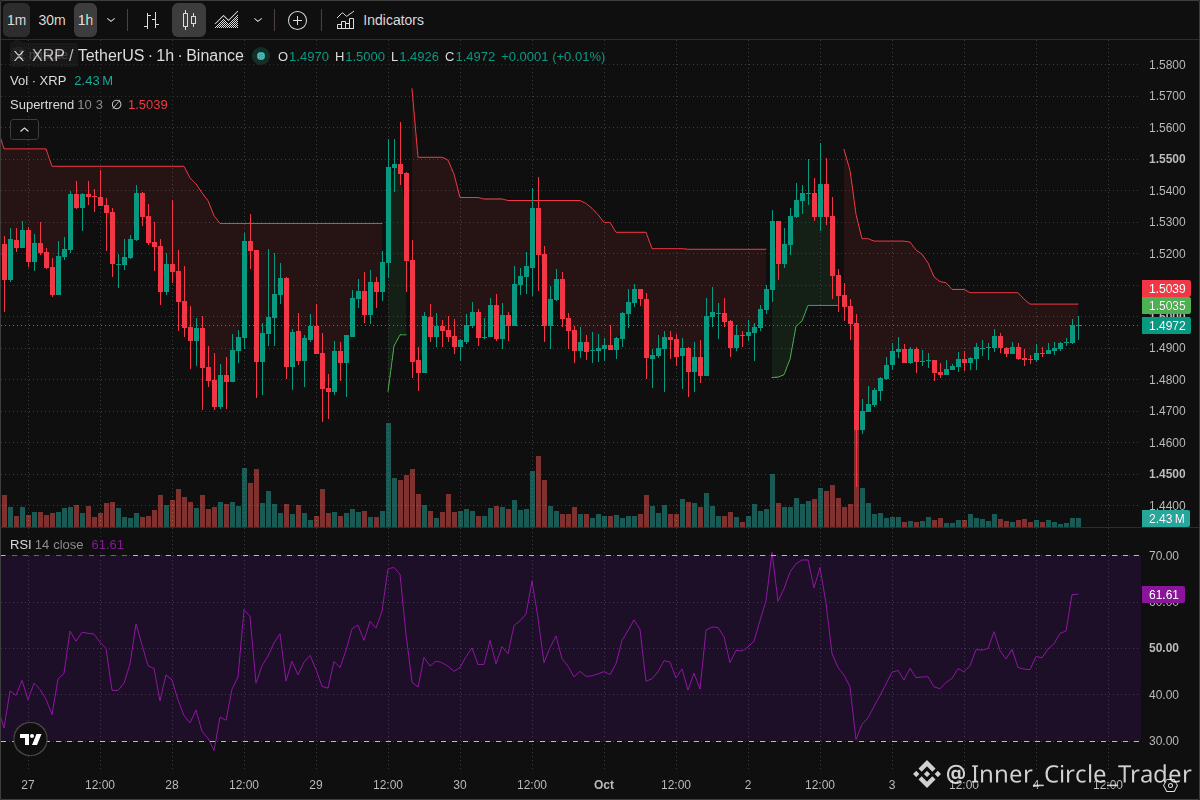
📊 إشارة تداول - /USDT (1h)
🕐 Sun, 04 Oct 2026 UTC
📈 التحليل الفني:
• الإطار الزمني: 1h
• الشارت مرفق أدناه (Supertrend + RSI)
• راقب مستويات الدعم والمقاومة
⚠️ إدارة المخاطر:
• لا تخاطر بأكثر من 1-2% من رأس المال
• ضع وقف الخسارة دائماً
• هذه ليست نصيحة مالية، قم ببحثك الخاص (DYOR)
#Crypto #Trading
📊 إشارة تداول - /USDT (1h)
🕐 Sun, 04 Oct 2026 UTC
📈 التحليل الفني:
• الإطار الزمني: 1h
• الشارت مرفق أدناه (Supertrend + RSI)
• راقب مستويات الدعم والمقاومة
⚠️ إدارة المخاطر:
• لا تخاطر بأكثر من 1-2% من رأس المال
• ضع وقف الخسارة دائماً
• هذه ليست نصيحة مالية، قم ببحثك الخاص (DYOR)
#Crypto #Trading
🕐 Sun, 04 Oct 2026 UTC
📈 التحليل الفني:
• الإطار الزمني: 1h
• الشارت مرفق أدناه (Supertrend + RSI)
• راقب مستويات الدعم والمقاومة
⚠️ إدارة المخاطر:
• لا تخاطر بأكثر من 1-2% من رأس المال
• ضع وقف الخسارة دائماً
• هذه ليست نصيحة مالية، قم ببحثك الخاص (DYOR)
#Crypto #Trading
55
·
--
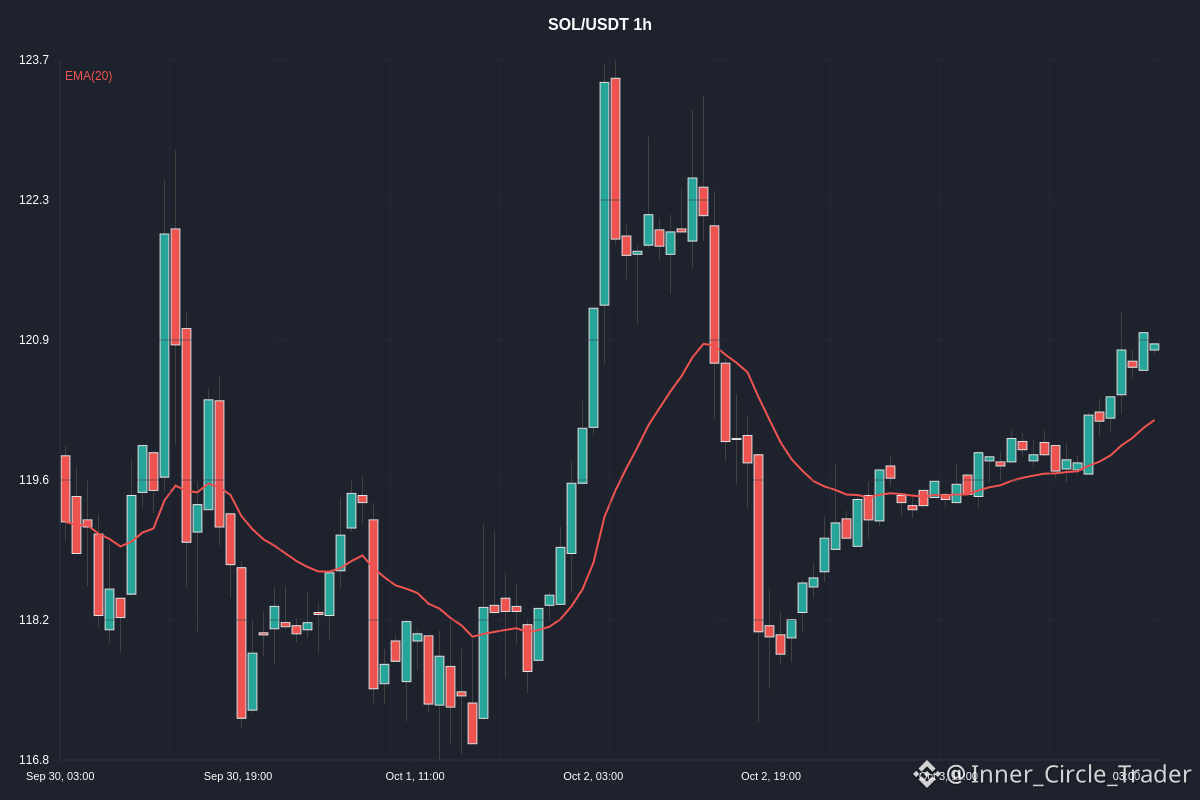
📊 إشارة تداول - /USDT (1h)
🕐 Sun, 04 Oct 2026 UTC
📡 المصدر: binanceus
📈 التحليل الفني:
• الإطار الزمني: 1h
• الشارت مرفق أدناه
• راقب مستويات الدعم والمقاومة
⚠️ إدارة المخاطر:
• لا تخاطر بأكثر من 1-2% من رأس المال
• ضع وقف الخسارة دائماً
• هذه ليست نصيحة مالية، قم ببحثك الخاص (DYOR)
#Crypto #Trading
📊 إشارة تداول - /USDT (1h)
🕐 Sun, 04 Oct 2026 UTC
📡 المصدر: binanceus
📈 التحليل الفني:
• الإطار الزمني: 1h
• الشارت مرفق أدناه
• راقب مستويات الدعم والمقاومة
⚠️ إدارة المخاطر:
• لا تخاطر بأكثر من 1-2% من رأس المال
• ضع وقف الخسارة دائماً
• هذه ليست نصيحة مالية، قم ببحثك الخاص (DYOR)
#Crypto #Trading
🕐 Sun, 04 Oct 2026 UTC
📡 المصدر: binanceus
📈 التحليل الفني:
• الإطار الزمني: 1h
• الشارت مرفق أدناه
• راقب مستويات الدعم والمقاومة
⚠️ إدارة المخاطر:
• لا تخاطر بأكثر من 1-2% من رأس المال
• ضع وقف الخسارة دائماً
• هذه ليست نصيحة مالية، قم ببحثك الخاص (DYOR)
#Crypto #Trading
132
·
--
💡 **Starknet (): The Zero-Knowledge Titan Reshaping L2s** **What is it?** Starknet is a Layer 2 scaling solution for Ethereum that leverages StarkWare’s STARK (Scalable Transparent Argument of Knowledge) technology. Unlike other rollups, it doesn’t just batch transactions; it proves their validity using cryptographic math, ensuring security without complex trusted setups. **The Problem** Ethereum’s mainnet faces a classic trilemma: security, scalability, and decentralization. High gas fees and slow block times have pushed developers to seek alternatives. However, many existing L2s rely on optimistic rollups, which require long challenge periods, or ZK-rollups that struggle with complex smart contract compatibility and high verification costs. The market needs a solution that scales throughput by orders of magnitude while maintaining full Ethereum-grade security and developer flexibility. **How It Works** Starknet uses Validity Proofs (STARKs) to verify batches of transactions. Instead of executing every transaction on the main chain, it generates a succinct proof that all transactions in the batch were valid. This proof is then posted to Ethereum L1. Crucially, Starknet is **permissionless** and **asynchronous**. Developers can deploy smart contracts without waiting for sequencer approval, and users can interact with the network even if the sequencer goes down (decentralization). **Key Features** 1. **Cairo 1 Programming Language:** A new, Turing-complete language designed specifically for zero-knowledge proofs, allowing developers to write efficient, provable code. 2.
$BCH $STX
#Starknet #CryptoNews
💡 **Starknet (): The Zero-Knowledge Titan Reshaping L2s** **What is it?** Starknet is a Layer 2 scaling solution for Ethereum that leverages StarkWare’s STARK (Scalable Transparent Argument of Knowledge) technology. Unlike other rollups, it doesn’t just batch transactions; it proves their validity using cryptographic math, ensuring security without complex trusted setups. **The Problem** Ethereum’s mainnet faces a classic trilemma: security, scalability, and decentralization. High gas fees and slow block times have pushed developers to seek alternatives. However, many existing L2s rely on optimistic rollups, which require long challenge periods, or ZK-rollups that struggle with complex smart contract compatibility and high verification costs. The market needs a solution that scales throughput by orders of magnitude while maintaining full Ethereum-grade security and developer flexibility. **How It Works** Starknet uses Validity Proofs (STARKs) to verify batches of transactions. Instead of executing every transaction on the main chain, it generates a succinct proof that all transactions in the batch were valid. This proof is then posted to Ethereum L1. Crucially, Starknet is **permissionless** and **asynchronous**. Developers can deploy smart contracts without waiting for sequencer approval, and users can interact with the network even if the sequencer goes down (decentralization). **Key Features** 1. **Cairo 1 Programming Language:** A new, Turing-complete language designed specifically for zero-knowledge proofs, allowing developers to write efficient, provable code. 2.
$BCH $STX
#Starknet #CryptoNews
$BCH $STX
#Starknet #CryptoNews
203
·
--
📚 **Genesis Block: The Digital "Big Bang"** Have you ever wondered where it all began? Before the first trade, before the hype, there was a single block of data. The Genesis Block is the foundation of every blockchain, a digital anchor that proves the network’s existence. **What is it?** It is the very first block in a blockchain. Unlike subsequent blocks, it is not mined or validated in the traditional sense. Its hash is hard-coded into the network's software. For Bitcoin, it was created by Satoshi Nakamoto on January 3, 2009, containing the headline: "Chancellor on brink of second bailout for banks." **How it works** The Genesis Block establishes the initial rules of the ledger. It defines the starting supply, the consensus mechanism, and the cryptographic parameters. In Bitcoin, the initial supply was 50 BTC, though these coins are unspendable. It serves as the root of the Merkle tree, ensuring that all future transactions are cryptographically linked back to this origin point. Without it, there is no chain, only isolated data points. **Why it matters** 1. **Immutability:** It provides a fixed reference point. If the Genesis Block were altered, the entire chain would break. 2. **Trustless Verification:** Nodes can verify the history of the network without trusting a central authority. 3. **Historical Record:** It preserves the intent and origin of the protocol. **Common Mistakes** Many beginners think the Genesis Block is "empty" or just a placeholder. In reality, it is a complex data structure containing the timestamp, nonce, and previous hash (which is zero).
$BTC $ETH
#Blockchain #CryptoEducation
📚 **Genesis Block: The Digital "Big Bang"** Have you ever wondered where it all began? Before the first trade, before the hype, there was a single block of data. The Genesis Block is the foundation of every blockchain, a digital anchor that proves the network’s existence. **What is it?** It is the very first block in a blockchain. Unlike subsequent blocks, it is not mined or validated in the traditional sense. Its hash is hard-coded into the network's software. For Bitcoin, it was created by Satoshi Nakamoto on January 3, 2009, containing the headline: "Chancellor on brink of second bailout for banks." **How it works** The Genesis Block establishes the initial rules of the ledger. It defines the starting supply, the consensus mechanism, and the cryptographic parameters. In Bitcoin, the initial supply was 50 BTC, though these coins are unspendable. It serves as the root of the Merkle tree, ensuring that all future transactions are cryptographically linked back to this origin point. Without it, there is no chain, only isolated data points. **Why it matters** 1. **Immutability:** It provides a fixed reference point. If the Genesis Block were altered, the entire chain would break. 2. **Trustless Verification:** Nodes can verify the history of the network without trusting a central authority. 3. **Historical Record:** It preserves the intent and origin of the protocol. **Common Mistakes** Many beginners think the Genesis Block is "empty" or just a placeholder. In reality, it is a complex data structure containing the timestamp, nonce, and previous hash (which is zero).
$BTC $ETH
#Blockchain #CryptoEducation
$BTC $ETH
#Blockchain #CryptoEducation
17
·
--
🎁 Stop letting your idle assets gather dust! Your money should be working as hard as you do. 🚀 Imagine earning a solid 10% APY on your stablecoin holdings. That’s not a typo. That’s real, consistent yield you can bank while you sleep. 💤💸 Here’s how it’s simple: 1️⃣ Head to Binance Earn. 2️⃣ Select or $BNB. 3️⃣ Lock in your funds. 4️⃣ Watch your balance grow with daily interest accruals. Why settle for 0% when the market offers a guaranteed boost? By diversifying into these high-yield products, you’re not just holding; you’re actively compounding your portfolio. It’s the perfect hedge against volatility while keeping your capital safe and liquid. 🔥 Why do this now? Inflation is eating away at your purchasing power every single day. Every hour you wait, you’re losing potential gains. The 10% APY window is your chance to maximize efficiency without exposing yourself to high-risk speculation. Secure your financial future today, not tomorrow. Are you still leaving free money on the table? 👇 #BinanceEarn #CryptoYield
$ZIL
#BullRun #Breaking
🎁 Stop letting your idle assets gather dust! Your money should be working as hard as you do. 🚀 Imagine earning a solid 10% APY on your stablecoin holdings. That’s not a typo. That’s real, consistent yield you can bank while you sleep. 💤💸 Here’s how it’s simple: 1️⃣ Head to Binance Earn. 2️⃣ Select or $BNB . 3️⃣ Lock in your funds. 4️⃣ Watch your balance grow with daily interest accruals. Why settle for 0% when the market offers a guaranteed boost? By diversifying into these high-yield products, you’re not just holding; you’re actively compounding your portfolio. It’s the perfect hedge against volatility while keeping your capital safe and liquid. 🔥 Why do this now? Inflation is eating away at your purchasing power every single day. Every hour you wait, you’re losing potential gains. The 10% APY window is your chance to maximize efficiency without exposing yourself to high-risk speculation. Secure your financial future today, not tomorrow. Are you still leaving free money on the table? 👇 #BinanceEarn #CryptoYield
$ZIL
#BullRun #Breaking
$ZIL
#BullRun #Breaking
31
·
--
🚨 **Blast (BLAST) Hits Pause: $20M L2 Network Shuts Down, Oct 26 Deadline Set** The crypto world is buzzing with urgent news as Blast, a prominent Layer-2 network with approximately $20M in Total Value Locked (TVL), has announced a temporary shutdown. If you are holding assets on this chain, this is not a drill. The network is pausing withdrawals, and users face a hard exit deadline of **October 26**. **What Exactly Happened?** Blast has initiated a halt on its operations, forcing a temporary pause on all withdrawal functions. This isn’t a permanent rug pull, but rather a structured shutdown or migration process. The critical detail here is the timeline: while withdrawals are currently paused, there is a strict window where users must exit through Blast’s normal interface by October 26. After this date, the standard exit path may close, potentially complicating recovery for those who procrastinate. **Why Does This Matter?** This event highlights the inherent volatility and operational risks of Layer-2 solutions, particularly those in the yield-aggregation or "airdrop farming" space. A $20M TVL is significant enough to impact individual traders significantly, yet small enough to be absorbed by the broader Ethereum ecosystem without causing systemic failure. The forced deadline creates a sense of urgency that often leads to panic selling or, conversely, rushed transactions that could result in errors. It serves as a stark reminder that "high yield" often comes with high operational risk. **Market Impact & Sentiment** The immediate market reaction to has been mixed but leans toward caution. Short-term traders are likely exiting to avoid liquidity crunches, which could suppress the token's price in the coming days.
$SUI $ETH
#NFT #Layer
🚨 **Blast (BLAST) Hits Pause: $20M L2 Network Shuts Down, Oct 26 Deadline Set** The crypto world is buzzing with urgent news as Blast, a prominent Layer-2 network with approximately $20M in Total Value Locked (TVL), has announced a temporary shutdown. If you are holding assets on this chain, this is not a drill. The network is pausing withdrawals, and users face a hard exit deadline of **October 26**. **What Exactly Happened?** Blast has initiated a halt on its operations, forcing a temporary pause on all withdrawal functions. This isn’t a permanent rug pull, but rather a structured shutdown or migration process. The critical detail here is the timeline: while withdrawals are currently paused, there is a strict window where users must exit through Blast’s normal interface by October 26. After this date, the standard exit path may close, potentially complicating recovery for those who procrastinate. **Why Does This Matter?** This event highlights the inherent volatility and operational risks of Layer-2 solutions, particularly those in the yield-aggregation or "airdrop farming" space. A $20M TVL is significant enough to impact individual traders significantly, yet small enough to be absorbed by the broader Ethereum ecosystem without causing systemic failure. The forced deadline creates a sense of urgency that often leads to panic selling or, conversely, rushed transactions that could result in errors. It serves as a stark reminder that "high yield" often comes with high operational risk. **Market Impact & Sentiment** The immediate market reaction to has been mixed but leans toward caution. Short-term traders are likely exiting to avoid liquidity crunches, which could suppress the token's price in the coming days.
$SUI $ETH
#NFT #Layer
$SUI $ETH
#NFT #Layer
107
·
--
📚 📚 Ever felt confused by why you buy at one price and sell at another? That gap is the Bid-Ask Spread. It’s the silent cost of every trade, yet most new traders ignore it until it eats their profits. Think of the spread as the dealer’s fee. The 'Bid' is the highest price a buyer will pay. The 'Ask' is the lowest price a seller will accept. The difference between them is the spread. In highly liquid markets like Bitcoin, this gap is tiny—often just a few cents. But in low-liquidity altcoins, it can be huge. How does it work? Imagine you want to buy $BTC. You see the Bid at $60,000 and the Ask at $60,002. That $2 difference is the spread. If you buy now, you’re instantly down $2 per coin. To break even, the price must rise by that amount before you sell. This is why high-volatility pairs often have wider spreads. Why should you care? A tight spread means high liquidity and easier entry/exit. A wide spread signals low liquidity and higher risk. If you trade small-cap coins, always check the spread first. Common Mistakes: 1. Ignoring the spread on entry. 2. Assuming the mid-price is your actual entry price. 3. Trading illiquid pairs during low-volume hours. Pro Tip: Use limit orders instead of market orders to avoid paying the full spread. Place your order at the Bid or Ask price to get a better fill. Which coin has the widest spread you’ve traded? $BTC $ETH #CryptoEducation #TradingTips
📚 📚 Ever felt confused by why you buy at one price and sell at another? That gap is the Bid-Ask Spread. It’s the silent cost of every trade, yet most new traders ignore it until it eats their profits. Think of the spread as the dealer’s fee. The 'Bid' is the highest price a buyer will pay. The 'Ask' is the lowest price a seller will accept. The difference between them is the spread. In highly liquid markets like Bitcoin, this gap is tiny—often just a few cents. But in low-liquidity altcoins, it can be huge. How does it work? Imagine you want to buy $BTC . You see the Bid at $60,000 and the Ask at $60,002. That $2 difference is the spread. If you buy now, you’re instantly down $2 per coin. To break even, the price must rise by that amount before you sell. This is why high-volatility pairs often have wider spreads. Why should you care? A tight spread means high liquidity and easier entry/exit. A wide spread signals low liquidity and higher risk. If you trade small-cap coins, always check the spread first. Common Mistakes: 1. Ignoring the spread on entry. 2. Assuming the mid-price is your actual entry price. 3. Trading illiquid pairs during low-volume hours. Pro Tip: Use limit orders instead of market orders to avoid paying the full spread. Place your order at the Bid or Ask price to get a better fill. Which coin has the widest spread you’ve traded? $BTC $ETH #CryptoEducation #TradingTips
54
·
--
🚨 **Asia’s Crypto Power Shift: Singapore Rises as China Tightens the Noose** The geopolitical landscape for digital assets is shifting rapidly, and Asia is leading the charge. According to the latest report from Asia Express, the region is experiencing a massive divergence in regulatory approaches that will define the next cycle. 🌏 **What Happened?** Three major developments are reshaping the narrative: 1. **Singapore’s Surge:** Singapore’s crypto economy has exploded, growing by **55%**. This growth cements its status as the dominant hub for compliant Web3 innovation in Asia. 🇸🇬 2. **South Korea’s Legalization:** South Korea is set to officially make crypto market makers legal. This move removes a major gray area, providing institutional clarity and boosting liquidity for local exchanges. 🇰🇷 3. **China’s Warning:** In a stark contrast, China’s spy ministry has issued a direct warning to foreign operatives. They are explicitly stating they are monitoring blockchain activities for espionage purposes. 🇨🇳 **Why It Matters** This isn't just about regulation; it's about jurisdictional arbitrage. While China is using blockchain surveillance as a tool for national security and control, Singapore and South Korea are actively building frameworks to attract global capital. The 55% growth in Singapore suggests that major players are voting with their feet, moving operations to jurisdictions that offer legal certainty rather than ambiguity. **Market Impact** For institutional investors, this signals a clear "flight to quality" within the Asian market. * **Singapore** is becoming the safe haven for compliant DeFi and CeFi projects.
$APT $ZEC
#Altcoins #Web
🚨 **Asia’s Crypto Power Shift: Singapore Rises as China Tightens the Noose** The geopolitical landscape for digital assets is shifting rapidly, and Asia is leading the charge. According to the latest report from Asia Express, the region is experiencing a massive divergence in regulatory approaches that will define the next cycle. 🌏 **What Happened?** Three major developments are reshaping the narrative: 1. **Singapore’s Surge:** Singapore’s crypto economy has exploded, growing by **55%**. This growth cements its status as the dominant hub for compliant Web3 innovation in Asia. 🇸🇬 2. **South Korea’s Legalization:** South Korea is set to officially make crypto market makers legal. This move removes a major gray area, providing institutional clarity and boosting liquidity for local exchanges. 🇰🇷 3. **China’s Warning:** In a stark contrast, China’s spy ministry has issued a direct warning to foreign operatives. They are explicitly stating they are monitoring blockchain activities for espionage purposes. 🇨🇳 **Why It Matters** This isn't just about regulation; it's about jurisdictional arbitrage. While China is using blockchain surveillance as a tool for national security and control, Singapore and South Korea are actively building frameworks to attract global capital. The 55% growth in Singapore suggests that major players are voting with their feet, moving operations to jurisdictions that offer legal certainty rather than ambiguity. **Market Impact** For institutional investors, this signals a clear "flight to quality" within the Asian market. * **Singapore** is becoming the safe haven for compliant DeFi and CeFi projects.
$APT $ZEC
#Altcoins #Web
$APT $ZEC
#Altcoins #Web
1
310
·
--
💡 Meet Super Cat (), currently ranked #869. In a market saturated with generic meme coins, addresses a critical gap: sustainable community engagement beyond fleeting hype. The problem is clear—most meme projects lack long-term utility, leading to rapid value decay. How does Super Cat solve this? By integrating a robust staking ecosystem and interactive governance that transforms passive holders into active stakehoders. Key features include: 1. **Staking Rewards**: Users can lock to earn yield, aligning incentives for long-term holding. 2. **Community Governance**: Token holders vote on roadmap decisions, fostering true decentralization. 3. **Unique Tokenomics**: A deflationary model ensures scarcity over time, potentially boosting value as supply decreases. While the project shows promise, risks remain. Its rank of #869 indicates it is still an emerging asset with higher volatility than blue-chip cryptos. Liquidity depth may be limited compared to top-tier projects, and regulatory uncertainties in the meme coin sector could impact adoption. Investors should monitor trading volume and community growth closely. Is your portfolio ready for the next viral cat? 🐱 #Crypto #MemeCoins
$FTM $EGLD
#NFT
💡 Meet Super Cat (), currently ranked #869. In a market saturated with generic meme coins, addresses a critical gap: sustainable community engagement beyond fleeting hype. The problem is clear—most meme projects lack long-term utility, leading to rapid value decay. How does Super Cat solve this? By integrating a robust staking ecosystem and interactive governance that transforms passive holders into active stakehoders. Key features include: 1. **Staking Rewards**: Users can lock to earn yield, aligning incentives for long-term holding. 2. **Community Governance**: Token holders vote on roadmap decisions, fostering true decentralization. 3. **Unique Tokenomics**: A deflationary model ensures scarcity over time, potentially boosting value as supply decreases. While the project shows promise, risks remain. Its rank of #869 indicates it is still an emerging asset with higher volatility than blue-chip cryptos. Liquidity depth may be limited compared to top-tier projects, and regulatory uncertainties in the meme coin sector could impact adoption. Investors should monitor trading volume and community growth closely. Is your portfolio ready for the next viral cat? 🐱 #Crypto #MemeCoins
$FTM $EGLD
#NFT
$FTM $EGLD
#NFT
179
·
--
📊 **Market Pulse: Consolidation Amidst Highs** The crypto market is currently navigating a critical phase of consolidation within a bullish structure. With major assets trading tightly, the focus shifts from aggressive momentum to precise technical positioning. Understanding these micro-movements is key to anticipating the next directional shift. **Current State & Key Levels** **** is holding firm at **$84,621**, showing a minor pullback of -0.30%. This stability suggests that despite minor profit-taking, long-term accumulation remains robust. * **Support Zone:** The immediate floor sits near **$83,500**. A hold here confirms the uptrend integrity. * **Resistance:** The psychological and technical barrier is at **$86,000**. Breaking this level with volume would signal a breakout toward new all-time highs. **** is trading at **$2,679**, experiencing a slightly deeper correction of -1.31%. This relative weakness compared to Bitcoin might indicate short-term capital rotation, but the asset remains fundamentally strong. * **Support:** Critical defense line at **$2,600**. If this breaks, we could see a retest of **$2,500**. * **Resistance:** The upper bound is currently **$2,750**. Reclaiming this level would often precede an ETH/BTC ratio recovery. **Trends & Technical Analysis** The broader trend remains bullish, but the short-term momentum is cooling off. Bitcoin’s dominance is stabilizing, suggesting that while liquidity is present, traders are cautious. The -0.30% move in BTC is negligible in the grand scheme, acting more as a breathing pause than a reversal signal. Conversely, ETH’s -1.31% drop warrants closer attention. Is it a divergence warning, or simply a lagging reaction to Bitcoin’s consolidation?
$BTC $ETH
#Crypto #Metaverse
📊 **Market Pulse: Consolidation Amidst Highs** The crypto market is currently navigating a critical phase of consolidation within a bullish structure. With major assets trading tightly, the focus shifts from aggressive momentum to precise technical positioning. Understanding these micro-movements is key to anticipating the next directional shift. **Current State & Key Levels** **** is holding firm at **$84,621**, showing a minor pullback of -0.30%. This stability suggests that despite minor profit-taking, long-term accumulation remains robust. * **Support Zone:** The immediate floor sits near **$83,500**. A hold here confirms the uptrend integrity. * **Resistance:** The psychological and technical barrier is at **$86,000**. Breaking this level with volume would signal a breakout toward new all-time highs. **** is trading at **$2,679**, experiencing a slightly deeper correction of -1.31%. This relative weakness compared to Bitcoin might indicate short-term capital rotation, but the asset remains fundamentally strong. * **Support:** Critical defense line at **$2,600**. If this breaks, we could see a retest of **$2,500**. * **Resistance:** The upper bound is currently **$2,750**. Reclaiming this level would often precede an ETH/BTC ratio recovery. **Trends & Technical Analysis** The broader trend remains bullish, but the short-term momentum is cooling off. Bitcoin’s dominance is stabilizing, suggesting that while liquidity is present, traders are cautious. The -0.30% move in BTC is negligible in the grand scheme, acting more as a breathing pause than a reversal signal. Conversely, ETH’s -1.31% drop warrants closer attention. Is it a divergence warning, or simply a lagging reaction to Bitcoin’s consolidation?
$BTC $ETH
#Crypto #Metaverse
$BTC $ETH
#Crypto #Metaverse
95
·
--
📊 **Bitcoin Q3 Kickoff: The $82K-$85K "Old Guard" Range** Bitcoin has officially ushered in the third quarter with a familiar, almost eerie, precision. The market has opened the new quarter locked firmly within the **$82,000-$85,000** price corridor. For those who have been watching the charts closely, this isn't a new story; it’s a repetition of a pattern that has defined the last few months of consolidation. We are seeing the King of Crypto pause its upward momentum to re-accumulate and shake out weaker hands before the next leg. **What’s Happening?** The price action has been remarkably static since the start of the quarter. Instead of breaking out to new highs or capitulating into a deep correction, is grinding sideways. This "choppy" zone acts as a massive battle ground between bulls and bears. Every dip toward $82,000 has found immediate support, while every push toward $85,000 has faced significant resistance. It is a textbook example of a range-bound market where volatility has compressed, often a precursor to a violent expansion in either direction. **Why It Matters** This consolidation is critical. After the euphoric rallies, the market needs to digest gains. The $82K-$85K range serves as a liquidity pool. Market makers and institutional whales are likely using this stable period to reposition their portfolios without triggering stop-losses. If Bitcoin can hold this floor, it validates the long-term bullish thesis. If it breaks below $82,000 with volume, we could see a rapid retest of lower support levels. The significance lies in the *time* spent here. The longer Bitcoin stays in this range, the more potential energy builds up for the next move.
$ZIL $BTC
#Bitcoin #Web
📊 **Bitcoin Q3 Kickoff: The $82K-$85K "Old Guard" Range** Bitcoin has officially ushered in the third quarter with a familiar, almost eerie, precision. The market has opened the new quarter locked firmly within the **$82,000-$85,000** price corridor. For those who have been watching the charts closely, this isn't a new story; it’s a repetition of a pattern that has defined the last few months of consolidation. We are seeing the King of Crypto pause its upward momentum to re-accumulate and shake out weaker hands before the next leg. **What’s Happening?** The price action has been remarkably static since the start of the quarter. Instead of breaking out to new highs or capitulating into a deep correction, is grinding sideways. This "choppy" zone acts as a massive battle ground between bulls and bears. Every dip toward $82,000 has found immediate support, while every push toward $85,000 has faced significant resistance. It is a textbook example of a range-bound market where volatility has compressed, often a precursor to a violent expansion in either direction. **Why It Matters** This consolidation is critical. After the euphoric rallies, the market needs to digest gains. The $82K-$85K range serves as a liquidity pool. Market makers and institutional whales are likely using this stable period to reposition their portfolios without triggering stop-losses. If Bitcoin can hold this floor, it validates the long-term bullish thesis. If it breaks below $82,000 with volume, we could see a rapid retest of lower support levels. The significance lies in the *time* spent here. The longer Bitcoin stays in this range, the more potential energy builds up for the next move.
$ZIL $BTC
#Bitcoin #Web
$ZIL $BTC
#Bitcoin #Web
109
·
--
🌙 Daily Crypto Recap: The Quiet Grind The market is holding its breath. While the broader economic narrative pulses with uncertainty, the majors are displaying a surprising level of stability. We aren't seeing the violent spikes or the panic dumps of the previous cycles; instead, we are witnessing a consolidation phase that feels less like stagnation and more like coiling energy. Is this the calm before the storm, or just the market digesting the last wave of institutional inflows? Let’s break down the numbers and the narrative. **The Movements** is trading at $84,512, down a negligible 0.1%. To the naked eye, this looks like a flatline, but in the context of an all-time high territory, it’s a sign of strength. The asset is showing remarkable resilience, refusing to break key support levels despite broader risk-off sentiment in traditional equities. The chart structure remains bullish, with higher lows forming consistently over the past week. Meanwhile, sits at $2,665, dipping 1.1%. This slight underperformance relative to Bitcoin is nothing new. The ETH/BTC ratio has been in a slow bleed for months, reflecting a market that is still prioritizing the "digital gold" narrative over the "world computer" thesis. However, this dip offers a potential accumulation zone for those who believe in the long-term infrastructure play. The 1.1% drop is within normal volatility ranges and doesn’t signal a fundamental shift in momentum, just a minor rotation of capital. **What Mattered** The key takeaway from today wasn't the price action itself, but the volume profile. Volume is declining, which typically precedes a breakout. When liquidity dries up, the next directional move tends to be sharper and more significant.
$BTC $ETH
#Bitcoin #Crypto
🌙 Daily Crypto Recap: The Quiet Grind The market is holding its breath. While the broader economic narrative pulses with uncertainty, the majors are displaying a surprising level of stability. We aren't seeing the violent spikes or the panic dumps of the previous cycles; instead, we are witnessing a consolidation phase that feels less like stagnation and more like coiling energy. Is this the calm before the storm, or just the market digesting the last wave of institutional inflows? Let’s break down the numbers and the narrative. **The Movements** is trading at $84,512, down a negligible 0.1%. To the naked eye, this looks like a flatline, but in the context of an all-time high territory, it’s a sign of strength. The asset is showing remarkable resilience, refusing to break key support levels despite broader risk-off sentiment in traditional equities. The chart structure remains bullish, with higher lows forming consistently over the past week. Meanwhile, sits at $2,665, dipping 1.1%. This slight underperformance relative to Bitcoin is nothing new. The ETH/BTC ratio has been in a slow bleed for months, reflecting a market that is still prioritizing the "digital gold" narrative over the "world computer" thesis. However, this dip offers a potential accumulation zone for those who believe in the long-term infrastructure play. The 1.1% drop is within normal volatility ranges and doesn’t signal a fundamental shift in momentum, just a minor rotation of capital. **What Mattered** The key takeaway from today wasn't the price action itself, but the volume profile. Volume is declining, which typically precedes a breakout. When liquidity dries up, the next directional move tends to be sharper and more significant.
$BTC $ETH
#Bitcoin #Crypto
$BTC $ETH
#Bitcoin #Crypto
57
·
--
📚 Stop guessing the direction. Start seeing the story. Most traders fail because they look at one chart in isolation. A 5-minute candle means nothing if it fights the daily trend. This is where Multi-Timeframe (MTF) analysis changes your game. It’s not about picking random timeframes; it’s about aligning your entries with the broader market narrative while using lower timeframes for precision. Think of it as a hierarchy. The Higher Timeframe (HTF) defines the bias. The Lower Timeframe (LTF) defines the trigger. Here is the workflow: 1. **The Context (Weekly/Daily):** Identify the primary trend. Is in a bullish structure? If yes, you are only looking for long setups. 2. **The Setup (4H/1H):** Find key support/resistance zones or consolidation patterns within that trend. This is where you mark your "kill zone." 3. **The Entry (15m/5m):** Wait for a specific entry signal, like a breakout or a pullback confirmation, within your marked zone. Why does this work? It filters out noise. A spike on the 5-minute chart might look like a buy, but if the 4-hour chart is dumping, you’re catching a falling knife. MTF analysis ensures you are trading *with* the momentum, not against it. The benefits are clear: higher win rates because you aren’t fighting the tide, better risk management because your stop losses align with structural levels, and reduced emotional stress because the plan is objective. However, watch out for common mistakes. ❌ **Cluttering:** Using too many timeframes (e.g., 1s, 5m, 15m, 1h, 4h, 1d) leads to analysis paralysis. Stick to a 3-tier system. ❌ **Ignoring the HTF:** Entering a long on the 15m because it looks "cheap" while the Daily is in a massive downtrend. The HTF always wins.
$SOL $BTC
#CryptoNews #TradingStrategy
📚 Stop guessing the direction. Start seeing the story. Most traders fail because they look at one chart in isolation. A 5-minute candle means nothing if it fights the daily trend. This is where Multi-Timeframe (MTF) analysis changes your game. It’s not about picking random timeframes; it’s about aligning your entries with the broader market narrative while using lower timeframes for precision. Think of it as a hierarchy. The Higher Timeframe (HTF) defines the bias. The Lower Timeframe (LTF) defines the trigger. Here is the workflow: 1. **The Context (Weekly/Daily):** Identify the primary trend. Is in a bullish structure? If yes, you are only looking for long setups. 2. **The Setup (4H/1H):** Find key support/resistance zones or consolidation patterns within that trend. This is where you mark your "kill zone." 3. **The Entry (15m/5m):** Wait for a specific entry signal, like a breakout or a pullback confirmation, within your marked zone. Why does this work? It filters out noise. A spike on the 5-minute chart might look like a buy, but if the 4-hour chart is dumping, you’re catching a falling knife. MTF analysis ensures you are trading *with* the momentum, not against it. The benefits are clear: higher win rates because you aren’t fighting the tide, better risk management because your stop losses align with structural levels, and reduced emotional stress because the plan is objective. However, watch out for common mistakes. ❌ **Cluttering:** Using too many timeframes (e.g., 1s, 5m, 15m, 1h, 4h, 1d) leads to analysis paralysis. Stick to a 3-tier system. ❌ **Ignoring the HTF:** Entering a long on the 15m because it looks "cheap" while the Daily is in a massive downtrend. The HTF always wins.
$SOL $BTC
#CryptoNews #TradingStrategy
$SOL $BTC
#CryptoNews #TradingStrategy
1
68
·
--
🎁 Stop letting fees eat your profits! 🛑 Imagine swapping your digital assets without a single cent going to the house. That is the reality with **Binance Convert**. We are talking about **ZERO FEES** on swaps. Yes, you heard that right. No hidden costs. No spread surprises. Just pure, fee-free trading. 🚀 **The Offer:** Binance Convert now offers zero fees on all swaps. Whether you are moving from stablecoins to utility tokens or vice versa, the price you see is the price you get. This is the most cost-effective way to rebalance your portfolio instantly. 📊 **How It Works:** 1️⃣ Open the Binance App. 2️⃣ Navigate to the "Convert" tab. 3️⃣ Select your base asset (e.g., ) and target asset (e.g., ). 4️⃣ Enter the amount and confirm. 5️⃣ Watch the transaction settle instantly with **0.00% fees**. 💎 **Why This Matters:** High fees can kill your ROI, especially on smaller trades or frequent rebalancing. By using Convert, you keep 100% of your value working for you. Whether you are holding for stability or for ecosystem utility, switching between them should be seamless and free. 🔥 **Real-World Benefit:** Let’s say you want to move $100 of into . On standard trading, you might pay a maker/taker fee. With Convert, that fee is zero. Over time, those saved fees compound. It’s not just about saving pennies; it’s about respecting your capital. ⏳ **Urgency:** This promo isn’t around forever. Market conditions change, and promotional windows close. Why pay a fee when you don’t have to? Utilize this zero-fee bridge today to optimize your strategy. Whether you are looking to park value in during volatility or boost your holdings for potential airdrops and governance, do it without the tax.
$BNB $OP
#BinanceConvert #LowCap
🎁 Stop letting fees eat your profits! 🛑 Imagine swapping your digital assets without a single cent going to the house. That is the reality with **Binance Convert**. We are talking about **ZERO FEES** on swaps. Yes, you heard that right. No hidden costs. No spread surprises. Just pure, fee-free trading. 🚀 **The Offer:** Binance Convert now offers zero fees on all swaps. Whether you are moving from stablecoins to utility tokens or vice versa, the price you see is the price you get. This is the most cost-effective way to rebalance your portfolio instantly. 📊 **How It Works:** 1️⃣ Open the Binance App. 2️⃣ Navigate to the "Convert" tab. 3️⃣ Select your base asset (e.g., ) and target asset (e.g., ). 4️⃣ Enter the amount and confirm. 5️⃣ Watch the transaction settle instantly with **0.00% fees**. 💎 **Why This Matters:** High fees can kill your ROI, especially on smaller trades or frequent rebalancing. By using Convert, you keep 100% of your value working for you. Whether you are holding for stability or for ecosystem utility, switching between them should be seamless and free. 🔥 **Real-World Benefit:** Let’s say you want to move $100 of into . On standard trading, you might pay a maker/taker fee. With Convert, that fee is zero. Over time, those saved fees compound. It’s not just about saving pennies; it’s about respecting your capital. ⏳ **Urgency:** This promo isn’t around forever. Market conditions change, and promotional windows close. Why pay a fee when you don’t have to? Utilize this zero-fee bridge today to optimize your strategy. Whether you are looking to park value in during volatility or boost your holdings for potential airdrops and governance, do it without the tax.
$BNB $OP
#BinanceConvert #LowCap
$BNB $OP
#BinanceConvert #LowCap
218
Войдите, чтобы посмотреть больше материала
Присоединяйтесь к пользователям криптовалют по всему миру на Binance Square
⚡️ Получайте новейшую и полезную информацию о криптоактивах.
💬 Нам доверяет крупнейшая в мире криптобиржа.
👍 Получите достоверные аналитические данные от верифицированных создателей контента.
Эл. почта/номер телефона
В тренде
BNBSurpasses$790
Просмотров: 17,430
142 обсуждают
$BNB strategic long plan -> FOCUS NOW
BNB has created 2 strong lows after taking out internal liquidity
I'm expecting a move towards swing high $815-$830 and looking for a long on a retest of the green box
#BNBSurpasses$790 #bnb
Ghost Writer
·Лайков: 6
·Просмотров: 8.9k
ZamaRises15.99%ToIntradayHigh$0.09
Просмотров: 15,132
105 обсуждают
BitcoinSpotETFsDraw$6.34BInflowsInQ3
Просмотров: 5,718
90 обсуждают