

Binance News
405.1k Публикации

Binance News
 Официальный проверенный аккаунт Binance
Отправить жалобу
Follow Binance News to stay on top of industry trends & news
9 подписок(и/а)
2.3M+ подписчиков(а)
2.8M+ понравилось
Самые популярные
Ответов
Видео
·
--
BNB Surpasses 770 USDT with a Narrowed 1.66% Decrease in 24 HoursOn Oct 07, 2026, 10:01 AM(UTC). According to Binance Market Data, BNB has crossed the 770 USDT benchmark and is now trading at 770.01001 USDT, with a narrowed narrowed 1.66% decrease in 24 hours.
BNB Surpasses 770 USDT with a Narrowed 1.66% Decrease in 24 Hours
On Oct 07, 2026, 10:01 AM(UTC). According to Binance Market Data, BNB has crossed the 770 USDT benchmark and is now trading at 770.01001 USDT, with a narrowed narrowed 1.66% decrease in 24 hours.
8
9
26
14k
·
--
Статья
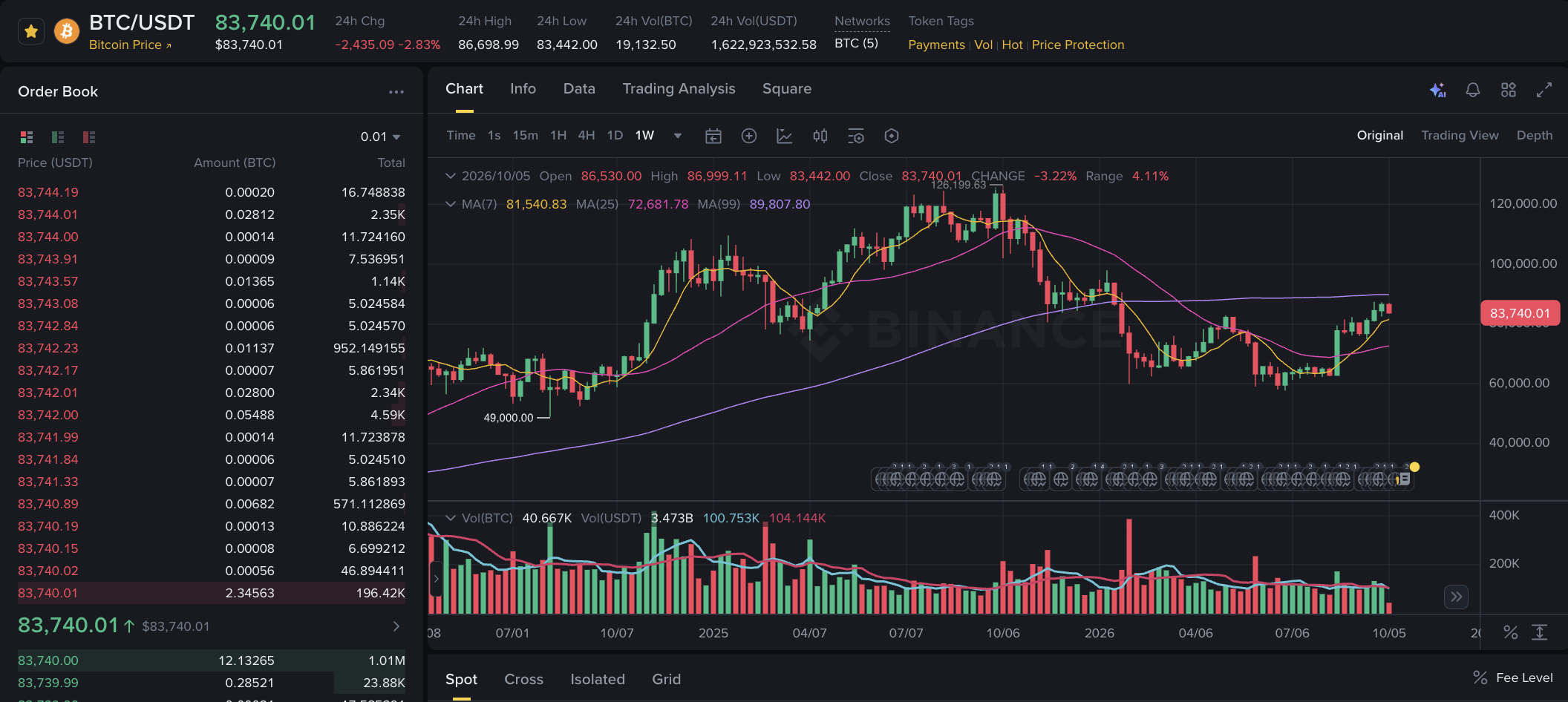
Bitcoin News | Bitcoin Dips Below $84K as Oil Jumps on Iran Tanker AttacksKey TakeawaysBitcoin fell as low as $83,840 after trading near $86,600 on Tuesday.BTC briefly broke below the $84,000 support FxPro had identified as a key bearish threshold.Brent crude climbed nearly 1% to around $101.50 amid stepped-up Iranian attacks on tankers in the Strait of Hormuz.The U.S. 10-year Treasury yield rose to 5.31%, while the dollar strengthened.A break below $83,000 could bring $80,000 into focus, according to FxPro.Bitcoin slipped below $84,000 early Wednesday as rising oil prices, Treasury yields and the U.S. dollar pressured crypto markets.BTC fell from around $86,600 on Tuesday to a low near $83,840, before recovering above $84,000.Crypto Market Falls as Oil RisesThe broader crypto market also declined. DOGE dropped 5%, HYPE fell nearly 4%, and Ethereum lost 3.5% to around $2,610. XRP declined almost 3%, while BNB, SOL, ZEC and TRX fell between 1% and 2.5%.Oil prices moved higher amid increased Iranian attacks on tankers in the Strait of Hormuz, with Brent crude rising nearly 1% to around $101.50 per barrel.The move pushed the 10-year Treasury yield three basis points higher to 5.31%, while the dollar strengthened against other major currencies.Bitcoin Tests Key SupportFxPro previously identified $84,000 as an important Bitcoin support level, with a break below it signaling greater control for sellers.BTC briefly crossed that threshold but remained above the more significant $83,000 level.A sustained break below $83,000 could open a move toward $80,000, according to the firm.Markets are also awaiting minutes from the Federal Reserve's September meeting later Wednesday for further signals on the interest-rate outlook.
Bitcoin News | Bitcoin Dips Below $84K as Oil Jumps on Iran Tanker Attacks
Key TakeawaysBitcoin fell as low as $83,840 after trading near $86,600 on Tuesday.BTC briefly broke below the $84,000 support FxPro had identified as a key bearish threshold.Brent crude climbed nearly 1% to around $101.50 amid stepped-up Iranian attacks on tankers in the Strait of Hormuz.The U.S. 10-year Treasury yield rose to 5.31%, while the dollar strengthened.A break below $83,000 could bring $80,000 into focus, according to FxPro.Bitcoin slipped below $84,000 early Wednesday as rising oil prices, Treasury yields and the U.S. dollar pressured crypto markets.BTC fell from around $86,600 on Tuesday to a low near $83,840, before recovering above $84,000.Crypto Market Falls as Oil RisesThe broader crypto market also declined. DOGE dropped 5%, HYPE fell nearly 4%, and Ethereum lost 3.5% to around $2,610. XRP declined almost 3%, while BNB, SOL, ZEC and TRX fell between 1% and 2.5%.Oil prices moved higher amid increased Iranian attacks on tankers in the Strait of Hormuz, with Brent crude rising nearly 1% to around $101.50 per barrel.The move pushed the 10-year Treasury yield three basis points higher to 5.31%, while the dollar strengthened against other major currencies.Bitcoin Tests Key SupportFxPro previously identified $84,000 as an important Bitcoin support level, with a break below it signaling greater control for sellers.BTC briefly crossed that threshold but remained above the more significant $83,000 level.A sustained break below $83,000 could open a move toward $80,000, according to the firm.Markets are also awaiting minutes from the Federal Reserve's September meeting later Wednesday for further signals on the interest-rate outlook.
8
1
35
32k
·
--
TradFi News | Fed Minutes in Focus as Rate-Hike Debate Shifts Toward October PauseKey TakeawaysThe Federal Reserve unanimously raised rates by 25 basis points in September to 3.75%–4.00%, but officials appear divided over what comes next.16 of 18 Fed officials projected at least one additional rate increase before year-end.New York Fed President John Williams has argued there is “no need for urgency,” while Dallas Fed President Lorie Logan has favored at least two additional quarter-point hikes.Softer inflation and weaker employment data have reduced expectations for another increase at the October 27–28 meeting.Wednesday's Fed minutes could move Treasury yields, the U.S. dollar, stocks and Bitcoin if they reveal a more hawkish or dovish policy debate than markets expect.The Federal Reserve's September meeting minutes are set to put the central bank's internal rate debate back in focus as investors reassess the likelihood of further tightening this year.The Fed unanimously raised its policy rate by 25 basis points to 3.75%–4.00% at the September 15–16 meeting. However, the unanimous decision masked potentially significant disagreement over how quickly additional rate increases should follow.Fed Officials Split Over Further Rate HikesThe central question is whether September's increase marked the beginning of another sequence of hikes or a move that should now be followed by a period of patience.Chair Kevin Warsh has argued that persistent inflation warrants removing monetary-policy accommodation, while other officials have emphasized the need to assess incoming economic data before tightening further.New York Fed President John Williams has said there is “no need for urgency,” while Dallas Fed President Lorie Logan has indicated that at least two additional quarter-point increases may be necessary.September's projections nevertheless remained relatively hawkish, with 16 of 18 officials forecasting at least one more rate increase before the end of 2026.Weak Economic Data Reduce October Hike ExpectationsThe outlook has shifted since the September meeting.Softer-than-expected August inflation and weaker September employment growth have strengthened the case for waiting before raising rates again. Comments from Williams and Fed Vice Chair Philip Jefferson have further reinforced expectations for an October pause.Markets had previously expected increases at both the October and December meetings, but investors are now largely pricing in no change in October.Why Fed Minutes Matter for Bitcoin and MarketsThe biggest market reaction would likely come if the minutes significantly challenge current expectations.A hawkish surprise could push Treasury yields and the dollar higher while pressuring equities and crypto. A more dovish or patient tone could reinforce expectations for an October pause, potentially easing pressure on yields and supporting risk assets.For Bitcoin, which has fallen below $84,000 as Treasury yields and the dollar remain key macro drivers, the minutes could help determine whether the latest pressure on crypto intensifies or begins to ease.The key question for markets is therefore no longer September's rate hike itself, but how much support remains inside the Fed for another increase before year-end.
TradFi News | Fed Minutes in Focus as Rate-Hike Debate Shifts Toward October Pause
Key TakeawaysThe Federal Reserve unanimously raised rates by 25 basis points in September to 3.75%–4.00%, but officials appear divided over what comes next.16 of 18 Fed officials projected at least one additional rate increase before year-end.New York Fed President John Williams has argued there is “no need for urgency,” while Dallas Fed President Lorie Logan has favored at least two additional quarter-point hikes.Softer inflation and weaker employment data have reduced expectations for another increase at the October 27–28 meeting.Wednesday's Fed minutes could move Treasury yields, the U.S. dollar, stocks and Bitcoin if they reveal a more hawkish or dovish policy debate than markets expect.The Federal Reserve's September meeting minutes are set to put the central bank's internal rate debate back in focus as investors reassess the likelihood of further tightening this year.The Fed unanimously raised its policy rate by 25 basis points to 3.75%–4.00% at the September 15–16 meeting. However, the unanimous decision masked potentially significant disagreement over how quickly additional rate increases should follow.Fed Officials Split Over Further Rate HikesThe central question is whether September's increase marked the beginning of another sequence of hikes or a move that should now be followed by a period of patience.Chair Kevin Warsh has argued that persistent inflation warrants removing monetary-policy accommodation, while other officials have emphasized the need to assess incoming economic data before tightening further.New York Fed President John Williams has said there is “no need for urgency,” while Dallas Fed President Lorie Logan has indicated that at least two additional quarter-point increases may be necessary.September's projections nevertheless remained relatively hawkish, with 16 of 18 officials forecasting at least one more rate increase before the end of 2026.Weak Economic Data Reduce October Hike ExpectationsThe outlook has shifted since the September meeting.Softer-than-expected August inflation and weaker September employment growth have strengthened the case for waiting before raising rates again. Comments from Williams and Fed Vice Chair Philip Jefferson have further reinforced expectations for an October pause.Markets had previously expected increases at both the October and December meetings, but investors are now largely pricing in no change in October.Why Fed Minutes Matter for Bitcoin and MarketsThe biggest market reaction would likely come if the minutes significantly challenge current expectations.A hawkish surprise could push Treasury yields and the dollar higher while pressuring equities and crypto. A more dovish or patient tone could reinforce expectations for an October pause, potentially easing pressure on yields and supporting risk assets.For Bitcoin, which has fallen below $84,000 as Treasury yields and the dollar remain key macro drivers, the minutes could help determine whether the latest pressure on crypto intensifies or begins to ease.The key question for markets is therefore no longer September's rate hike itself, but how much support remains inside the Fed for another increase before year-end.
3
27
7.3k
·
--
Russia Registers First Crypto Exchange Operators and Custodians Under New RulesRussia has registered its first cryptocurrency exchange operators and digital custodians under new crypto regulations that took effect on Sept. 1. The Bank of Russia on Tuesday published its first registers of authorized crypto operators, listing four exchange operators and five custodians. Russia’s largest bank, Sberbank, was added to the custodian list, alongside Atomyze, Voltari and Cloud Infrastructure. T-Invest Lab, Zefir and Sistema-Crypto are on the crypto exchange operator list, while VTB Bank appears on both lists. According to Cointelegraph, the registrations mark the first official listings under the new framework and follow a series of recent steps by major Russian financial institutions to enter the regulated crypto market.
Sberbank said on Monday that it had applied for digital custodian status and plans to launch its first crypto products on Dec. 1. The bank said it initially plans to support Bitcoin (BTC), Ether (ETH) and USDt (USDT) through its existing SberBank Online, SberInvestments and SberBusiness platforms. The registrations come after Russian President Vladimir Putin signed a crypto law in August that created a regulated framework for exchanges, custodians, brokers and investors. The law places the market under the Bank of Russia’s oversight and keeps Russia’s ban on using crypto to pay for goods and services. The new system establishes formal authorization for market participants while preserving restrictions on crypto payments, setting the basis for regulated activity in the country’s digital asset sector.
Russia Registers First Crypto Exchange Operators and Custodians Under New Rules
Russia has registered its first cryptocurrency exchange operators and digital custodians under new crypto regulations that took effect on Sept. 1. The Bank of Russia on Tuesday published its first registers of authorized crypto operators, listing four exchange operators and five custodians. Russia’s largest bank, Sberbank, was added to the custodian list, alongside Atomyze, Voltari and Cloud Infrastructure. T-Invest Lab, Zefir and Sistema-Crypto are on the crypto exchange operator list, while VTB Bank appears on both lists. According to Cointelegraph, the registrations mark the first official listings under the new framework and follow a series of recent steps by major Russian financial institutions to enter the regulated crypto market.
Sberbank said on Monday that it had applied for digital custodian status and plans to launch its first crypto products on Dec. 1. The bank said it initially plans to support Bitcoin (BTC), Ether (ETH) and USDt (USDT) through its existing SberBank Online, SberInvestments and SberBusiness platforms. The registrations come after Russian President Vladimir Putin signed a crypto law in August that created a regulated framework for exchanges, custodians, brokers and investors. The law places the market under the Bank of Russia’s oversight and keeps Russia’s ban on using crypto to pay for goods and services. The new system establishes formal authorization for market participants while preserving restrictions on crypto payments, setting the basis for regulated activity in the country’s digital asset sector.
Sberbank said on Monday that it had applied for digital custodian status and plans to launch its first crypto products on Dec. 1. The bank said it initially plans to support Bitcoin (BTC), Ether (ETH) and USDt (USDT) through its existing SberBank Online, SberInvestments and SberBusiness platforms. The registrations come after Russian President Vladimir Putin signed a crypto law in August that created a regulated framework for exchanges, custodians, brokers and investors. The law places the market under the Bank of Russia’s oversight and keeps Russia’s ban on using crypto to pay for goods and services. The new system establishes formal authorization for market participants while preserving restrictions on crypto payments, setting the basis for regulated activity in the country’s digital asset sector.
2
2
28
12.4k
·
--
Evernorth Delays Nasdaq Debut To October 12 After Administrative IssueEvernorth Holdings, the Ripple-backed company building the largest publicly traded pure-play XRP treasury, delayed its Nasdaq debut to October 12 after an administrative issue disclosed on October 6. The company said the delay is not expected to affect closing, according to BeInCrypto, and Armada Acquisition Corp. II shareholders approved the merger on September 30. Evernorth expects to hold about 473 million XRP and roughly $300 million in gross cash proceeds at closing.
Evernorth Delays Nasdaq Debut To October 12 After Administrative Issue
Evernorth Holdings, the Ripple-backed company building the largest publicly traded pure-play XRP treasury, delayed its Nasdaq debut to October 12 after an administrative issue disclosed on October 6. The company said the delay is not expected to affect closing, according to BeInCrypto, and Armada Acquisition Corp. II shareholders approved the merger on September 30. Evernorth expects to hold about 473 million XRP and roughly $300 million in gross cash proceeds at closing.
6
16.6k
·
--
Статья
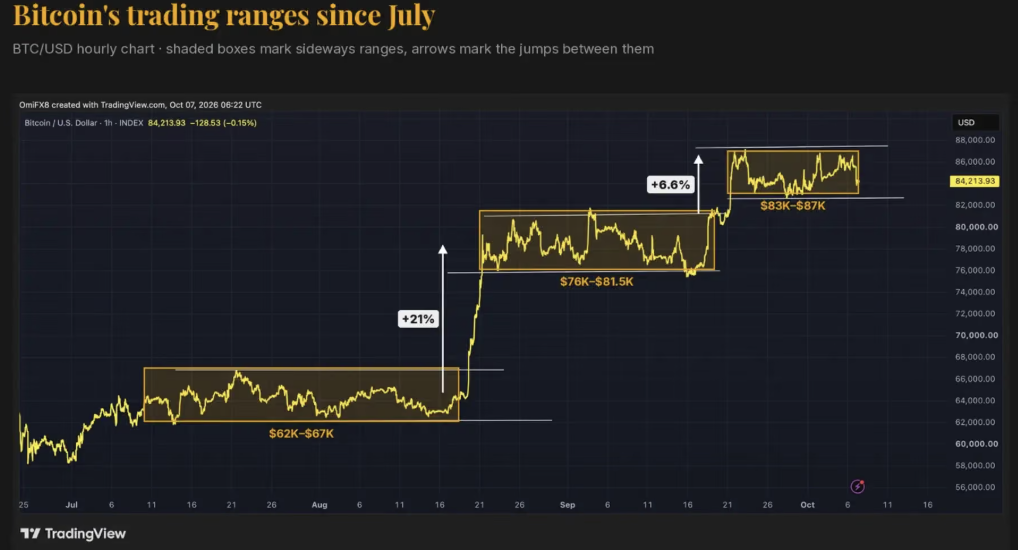
Bitcoin News | Bitcoin Holds Bullish Stair-Step Pattern Despite Drop to $84KKey TakeawaysBitcoin fell more than 2% to around $84,200 on Wednesday after trading near $86,500 Tuesday.BTC remains inside its recent $83,000–$87,000 range, keeping its broader bullish stair-step structure intact.A sustained break below $82,000–$83,000 could invalidate the pattern and bring $80,000–$81,500 back into focus.FxPro sees $84,000 as nearer-term support, with $80,000 potentially in play if it breaks.Bitcoin slipped toward $84,200 on Wednesday, but the decline has yet to break the broader bullish price structure that has developed since July.According to Giottus CEO Vikram Subburaj, Bitcoin's October 7 decline does not invalidate its “stair-step” trajectory, characterized by periods of sideways consolidation followed by sharp moves into higher trading ranges.Bitcoin's Stair-Step Rally Remains IntactBitcoin traded between roughly $62,000 and $67,000 from mid-July through August 18 before gaining 21% in three days.The next range formed around $76,000–$81,500, followed by a 6.6% rally between September 19 and September 21.BTC has since established another higher range around $83,000–$87,000.Holding $83,000 would suggest sellers remain unable to push Bitcoin back into its previous trading range, according to Subburaj.$83K Becomes Key Bitcoin SupportThe bullish structure would come under greater pressure if Bitcoin breaks below the bottom of its current range.Subburaj said a sustained move below $82,000–$83,000 could signal that September's breakout has failed and bring $80,000–$81,500 back into play.FxPro chief market analyst Alex Kuptsikevich identified $84,000 as the more immediate support level, warning that a break below it could also open the door toward $80,000.Bitcoin was trading around $84,300 at the time of the report.
Bitcoin News | Bitcoin Holds Bullish Stair-Step Pattern Despite Drop to $84K
Key TakeawaysBitcoin fell more than 2% to around $84,200 on Wednesday after trading near $86,500 Tuesday.BTC remains inside its recent $83,000–$87,000 range, keeping its broader bullish stair-step structure intact.A sustained break below $82,000–$83,000 could invalidate the pattern and bring $80,000–$81,500 back into focus.FxPro sees $84,000 as nearer-term support, with $80,000 potentially in play if it breaks.Bitcoin slipped toward $84,200 on Wednesday, but the decline has yet to break the broader bullish price structure that has developed since July.According to Giottus CEO Vikram Subburaj, Bitcoin's October 7 decline does not invalidate its “stair-step” trajectory, characterized by periods of sideways consolidation followed by sharp moves into higher trading ranges.Bitcoin's Stair-Step Rally Remains IntactBitcoin traded between roughly $62,000 and $67,000 from mid-July through August 18 before gaining 21% in three days.The next range formed around $76,000–$81,500, followed by a 6.6% rally between September 19 and September 21.BTC has since established another higher range around $83,000–$87,000.Holding $83,000 would suggest sellers remain unable to push Bitcoin back into its previous trading range, according to Subburaj.$83K Becomes Key Bitcoin SupportThe bullish structure would come under greater pressure if Bitcoin breaks below the bottom of its current range.Subburaj said a sustained move below $82,000–$83,000 could signal that September's breakout has failed and bring $80,000–$81,500 back into play.FxPro chief market analyst Alex Kuptsikevich identified $84,000 as the more immediate support level, warning that a break below it could also open the door toward $80,000.Bitcoin was trading around $84,300 at the time of the report.
3
2
32
38.2k
·
--
Binance Completes Stargate Finance (STG) Token Merge to LayerZero (ZRO)According to the announcement from Binance, the exchange has completed the Stargate Finance (STG) token merge to LayerZero (ZRO). The distribution was carried out at a ratio of 1 STG = 0.08634 ZRO. Binance said users may view their token distribution history, and assigned ZRO token deposit addresses are available for users. The announcement also stated that deposits and withdrawals of old STG tokens will no longer be supported. The update applies to the token merge process already completed by the exchange and confirms the conversion terms used for the distribution. Binance did not include additional operational changes beyond the completion of the merge and the end of support for old STG token deposits and withdrawals. The notice was issued as a general announcement and noted that products and services mentioned may not be available in all regions.
Binance Completes Stargate Finance (STG) Token Merge to LayerZero (ZRO)
According to the announcement from Binance, the exchange has completed the Stargate Finance (STG) token merge to LayerZero (ZRO). The distribution was carried out at a ratio of 1 STG = 0.08634 ZRO. Binance said users may view their token distribution history, and assigned ZRO token deposit addresses are available for users. The announcement also stated that deposits and withdrawals of old STG tokens will no longer be supported. The update applies to the token merge process already completed by the exchange and confirms the conversion terms used for the distribution. Binance did not include additional operational changes beyond the completion of the merge and the end of support for old STG token deposits and withdrawals. The notice was issued as a general announcement and noted that products and services mentioned may not be available in all regions.
1
9
11.7k
·
--
Статья
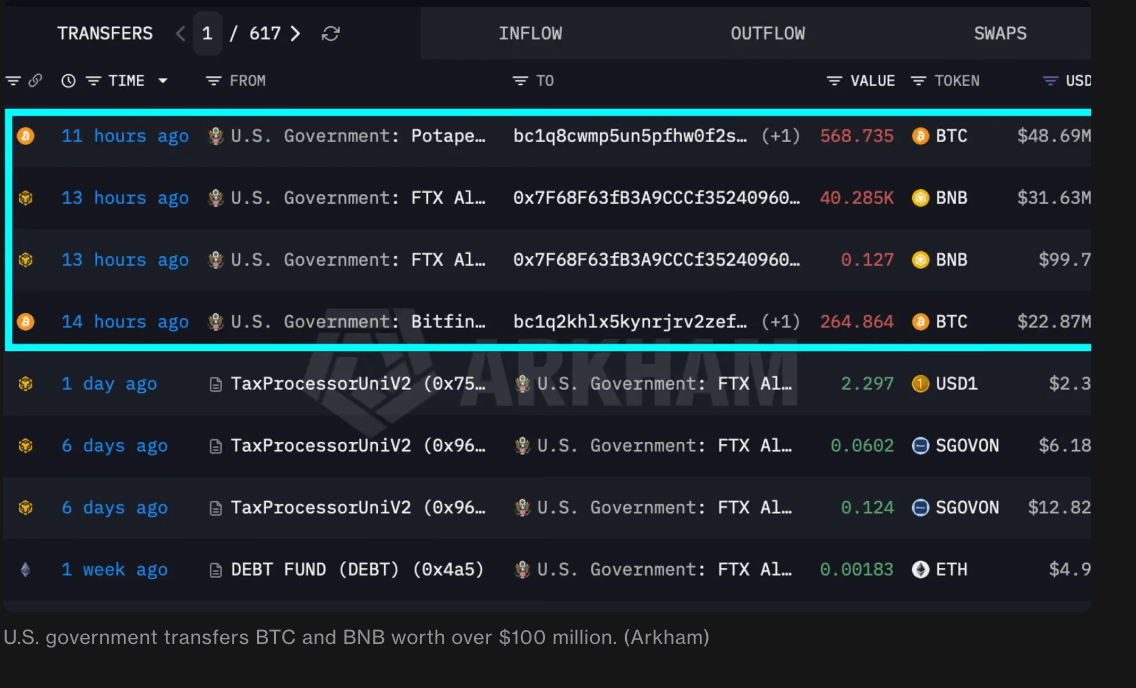
Crypto News | U.S. Government Moves Over $100M in Bitcoin and BNB, but No Sale ConfirmedKey TakeawaysU.S. government-linked wallets moved more than $100 million in Bitcoin and BNB on Tuesday, according to Arkham data.Around 833.6 BTC worth $71.6 million was transferred, with the funds eventually reaching addresses labeled as Coinbase Prime deposits.Another government-linked wallet moved 40,285 BNB worth $31.63 million between unlabeled addresses.The transfers involve previously seized or forfeited crypto assets.The transactions have not been confirmed as sales.U.S. government-linked wallets transferred more than $100 million worth of Bitcoin and BNB on Tuesday, prompting market attention over the potential movement of seized crypto assets.According to blockchain intelligence firm Arkham, the government transferred 833.599 BTC, worth approximately $71.6 million, to two unlabeled addresses. The Bitcoin was subsequently sent to addresses Arkham identifies as Coinbase Prime deposit addresses.Bitcoin From Bitfinex and Forfeited Funds MovedThe transferred Bitcoin included approximately 568.7 BTC from Potapenko/Turogin forfeited funds and 264.9 BTC seized in connection with the Bitfinex hack case.Separately, a government-labeled wallet transferred approximately 40,285 BNB worth $31.63 million to an unlabeled address, which later moved the full amount to another unlabeled wallet.The BNB originated from assets seized from Alameda Research.Transfer Does Not Confirm Bitcoin SaleDespite the movement to Coinbase Prime-labeled addresses, there has been no confirmation that the Bitcoin was sold.The U.S. government reportedly continues to hold around $27.5 billion in seized cryptocurrency, with its holdings originating from enforcement actions rather than taxpayer-funded purchases.The distinction is important because blockchain transfers alone do not establish whether assets have been liquidated, transferred for custody or moved for another purpose.
Crypto News | U.S. Government Moves Over $100M in Bitcoin and BNB, but No Sale Confirmed
Key TakeawaysU.S. government-linked wallets moved more than $100 million in Bitcoin and BNB on Tuesday, according to Arkham data.Around 833.6 BTC worth $71.6 million was transferred, with the funds eventually reaching addresses labeled as Coinbase Prime deposits.Another government-linked wallet moved 40,285 BNB worth $31.63 million between unlabeled addresses.The transfers involve previously seized or forfeited crypto assets.The transactions have not been confirmed as sales.U.S. government-linked wallets transferred more than $100 million worth of Bitcoin and BNB on Tuesday, prompting market attention over the potential movement of seized crypto assets.According to blockchain intelligence firm Arkham, the government transferred 833.599 BTC, worth approximately $71.6 million, to two unlabeled addresses. The Bitcoin was subsequently sent to addresses Arkham identifies as Coinbase Prime deposit addresses.Bitcoin From Bitfinex and Forfeited Funds MovedThe transferred Bitcoin included approximately 568.7 BTC from Potapenko/Turogin forfeited funds and 264.9 BTC seized in connection with the Bitfinex hack case.Separately, a government-labeled wallet transferred approximately 40,285 BNB worth $31.63 million to an unlabeled address, which later moved the full amount to another unlabeled wallet.The BNB originated from assets seized from Alameda Research.Transfer Does Not Confirm Bitcoin SaleDespite the movement to Coinbase Prime-labeled addresses, there has been no confirmation that the Bitcoin was sold.The U.S. government reportedly continues to hold around $27.5 billion in seized cryptocurrency, with its holdings originating from enforcement actions rather than taxpayer-funded purchases.The distinction is important because blockchain transfers alone do not establish whether assets have been liquidated, transferred for custody or moved for another purpose.
3
2
16
36.3k
·
--
Статья
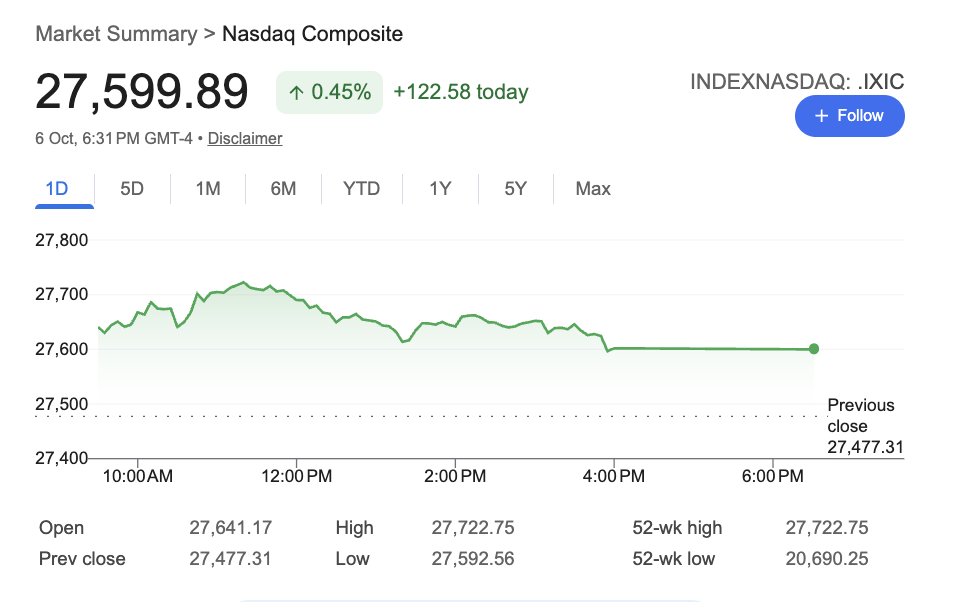
TradFi News | S&P 500 and Nasdaq Hit Record Highs as Bitcoin Falls Below $84KKey TakeawaysThe S&P 500 gained 0.6% and the Nasdaq rose 0.5%, with both indexes closing at record highs.The S&P 500 recorded its first all-time closing high in two months.Traditional markets strengthened as Treasury yields moved lower, supporting technology, consumer and utility stocks.Marvell Technology jumped 8% after raising its longer-term revenue outlook.Crypto diverged from the equity rally, with Bitcoin falling below $84,000.U.S. stocks extended their rally to fresh records even as Bitcoin fell below $84,000, widening the short-term divergence between traditional financial markets and crypto.The S&P 500 climbed 0.6%, securing its first record close in two months, while the Nasdaq advanced 0.5% to another all-time high.Wall Street Extends Record RallyMost Magnificent Seven stocks traded higher, while declining interest rates provided additional support to consumer and utility shares.AI and semiconductor stocks also remained in focus. Marvell Technology surged 8% to $292 after projecting annual revenue of $70 billion to $90 billion by fiscal 2031 and raising its fiscal 2028 revenue outlook to $20 billion from roughly $18 billion.Meanwhile, Morgan Stanley said traditional financial institutions could capture a significant share of the value created as blockchain technology becomes increasingly integrated into mainstream finance.The bank expects developments including 24/7 tokenized securities, stablecoins and tokenized funds to become increasingly connected with existing financial infrastructure.Bitcoin Diverges From Record-High StocksBitcoin, meanwhile, has fallen below $84,000, contrasting with the record-setting performance of U.S. equities.The divergence leaves traditional risk assets pushing to new highs while the crypto market remains under pressure, highlighting the increasingly different short-term performance of Bitcoin and major U.S. stock indexes.
TradFi News | S&P 500 and Nasdaq Hit Record Highs as Bitcoin Falls Below $84K
Key TakeawaysThe S&P 500 gained 0.6% and the Nasdaq rose 0.5%, with both indexes closing at record highs.The S&P 500 recorded its first all-time closing high in two months.Traditional markets strengthened as Treasury yields moved lower, supporting technology, consumer and utility stocks.Marvell Technology jumped 8% after raising its longer-term revenue outlook.Crypto diverged from the equity rally, with Bitcoin falling below $84,000.U.S. stocks extended their rally to fresh records even as Bitcoin fell below $84,000, widening the short-term divergence between traditional financial markets and crypto.The S&P 500 climbed 0.6%, securing its first record close in two months, while the Nasdaq advanced 0.5% to another all-time high.Wall Street Extends Record RallyMost Magnificent Seven stocks traded higher, while declining interest rates provided additional support to consumer and utility shares.AI and semiconductor stocks also remained in focus. Marvell Technology surged 8% to $292 after projecting annual revenue of $70 billion to $90 billion by fiscal 2031 and raising its fiscal 2028 revenue outlook to $20 billion from roughly $18 billion.Meanwhile, Morgan Stanley said traditional financial institutions could capture a significant share of the value created as blockchain technology becomes increasingly integrated into mainstream finance.The bank expects developments including 24/7 tokenized securities, stablecoins and tokenized funds to become increasingly connected with existing financial infrastructure.Bitcoin Diverges From Record-High StocksBitcoin, meanwhile, has fallen below $84,000, contrasting with the record-setting performance of U.S. equities.The divergence leaves traditional risk assets pushing to new highs while the crypto market remains under pressure, highlighting the increasingly different short-term performance of Bitcoin and major U.S. stock indexes.
2
8
5.6k
·
--
Binance Spot Will Add JPMB, LLYB, SECZB and USDEB Trading PairsAccording to the [announcement](https://www.binance.com/en/support/announcement/detail/9c34999b27234dfe9c43d2ac33cebde4) from Binance, Binance Exchange will open trading on Binance Spot for four bStocks trading pairs and enable Spot Algo Trading Bots and Rebalancing Bots services for JPMorgan Chase (JPMB), Eli Lilly (LLYB), Securitize Corp (SECZB) and StablecoinX Inc (USDEB). The new pairs, JPMB/USDT, LLYB/USDT, SECZB/USDT and USDEB/USDT, are scheduled to begin trading at 2026-10-07 12:00 (UTC). Spot Algo Trading Bots will be aligned with the Spot listing time, while Rebalancing Bots will be enabled within 24 hours of the assets being listed on Spot. Binance also said users will be able to trade bStocks against BTC, USDT and other tokens on Binance Convert at zero fees within one hour of the assets being listed on Binance Spot. In addition, zero maker fees will apply to the listed bStocks trading pairs from the listing time until 2026-10-31 23:59 (UTC).
Binance also stated that users can start tokenizing their direct stock holdings into bStocks in preparation for trading. The conversion rate is 1:1 between each underlying stock and its bStocks, with zero conversion fees. The announcement listed the BNB Smart Chain smart contracts for JPMB, LLYB, SECZB and USDEB. Withdrawals for JPMB, LLYB, SECZB and USDEB will open at 2026-10-07 13:00 (UTC).
Binance Spot Will Add JPMB, LLYB, SECZB and USDEB Trading Pairs
According to the announcement from Binance, Binance Exchange will open trading on Binance Spot for four bStocks trading pairs and enable Spot Algo Trading Bots and Rebalancing Bots services for JPMorgan Chase (JPMB), Eli Lilly (LLYB), Securitize Corp (SECZB) and StablecoinX Inc (USDEB). The new pairs, JPMB/USDT, LLYB/USDT, SECZB/USDT and USDEB/USDT, are scheduled to begin trading at 2026-10-07 12:00 (UTC). Spot Algo Trading Bots will be aligned with the Spot listing time, while Rebalancing Bots will be enabled within 24 hours of the assets being listed on Spot. Binance also said users will be able to trade bStocks against BTC, USDT and other tokens on Binance Convert at zero fees within one hour of the assets being listed on Binance Spot. In addition, zero maker fees will apply to the listed bStocks trading pairs from the listing time until 2026-10-31 23:59 (UTC).
Binance also stated that users can start tokenizing their direct stock holdings into bStocks in preparation for trading. The conversion rate is 1:1 between each underlying stock and its bStocks, with zero conversion fees. The announcement listed the BNB Smart Chain smart contracts for JPMB, LLYB, SECZB and USDEB. Withdrawals for JPMB, LLYB, SECZB and USDEB will open at 2026-10-07 13:00 (UTC).
Binance also stated that users can start tokenizing their direct stock holdings into bStocks in preparation for trading. The conversion rate is 1:1 between each underlying stock and its bStocks, with zero conversion fees. The announcement listed the BNB Smart Chain smart contracts for JPMB, LLYB, SECZB and USDEB. Withdrawals for JPMB, LLYB, SECZB and USDEB will open at 2026-10-07 13:00 (UTC).
6
4.9k
·
--

Статья
Binance News | Binance Goes ‘All In’ on AI as Yi He Outlines Vision for the Future of FinanceKey TakeawaysBinance is going “all in on AI,” with Yi He positioning artificial intelligence and blockchain as the technological foundation for the platform’s next phase.Binance’s AI ecosystem centers on Binance AI, Binance AI Pro and Agent OS, targeting users from beginners to advanced traders and developers.Binance AI Pro is expected to receive a major upgrade in mid-to-late October, allowing users to build and automate financial strategies using natural language.Binance wants AI to lower barriers to investing by making market analysis, trading, wealth management and eventually Web3 interactions easier to access.Security remains central: automated AI Pro strategies are designed to operate within user-approved limits, with separate sub-accounts and Binance’s risk controls.Yi He said Binance’s broader goal is “financial democratization,” giving more users access to financial knowledge and tools previously available mainly to sophisticated investors.Yi He: Binance Is Going ‘All In’ on AIBinance is making artificial intelligence a core part of its long-term product strategy as the crypto exchange looks to combine AI and blockchain technology across trading, investing, payments and Web3.Speaking during a Binance Square Live AMA, Binance co-founder Yi He said the company’s strategy is to go “all in on AI,” with the broader goal of transforming Binance into financial infrastructure for the AI era.Yi He said AI should make sophisticated financial analysis accessible even to users without an investment background. Binance wants its AI products to break down on-chain analysis, market information and different investment frameworks into formats that ordinary users can understand.The strategy is built around three products: Binance AI for everyday users, Binance AI Pro for more advanced financial automation, and Agent OS for developers.Binance AI Targets Personalized Market IntelligenceBinance AI is designed as a personalized financial assistant rather than a conventional chatbot.According to Binance Chief Product Officer Jeff, the product can use authorized user information to personalize market content and tools.Binance plans to tailor information around users’ holdings and watchlists, including relevant news, market movements, on-chain whale activity and Smart Money signals.The company is also testing a personalized “Relevant to Me” experience that could include daily market briefs and alerts across crypto and traditional financial assets such as stocks, gold and oil.Future monitoring tools could track movements across intervals ranging from 30 seconds to one hour, while AI-generated market reviews would explain why assets in a user's portfolio moved.Binance AI Pro Upgrade Planned for Mid-to-Late OctoberOne of the biggest announcements from the AMA was the upcoming upgrade to Binance AI Pro.The new version is planned for mid-to-late October and is intended to turn natural-language instructions into executable financial strategies and automated tasks.For example, a user could ask AI Pro to monitor a divergence between Bitcoin's price and funding rate and take an action if predefined conditions are met.AI Pro could then define the trigger conditions, select the necessary data, establish risk limits and determine execution and stopping conditions.The goal is to remove the need for users to write code, manually connect APIs or maintain their own infrastructure.Binance said AI Pro is also being built with more than 1,000 planned data request types, spanning market quotes, U.S. stocks, news and technical indicators.The platform plans to support backtesting for most strategies over time and provide persistent cloud sandboxes that allow strategies to operate continuously.AI Trading Will Operate Within User-Approved LimitsBinance executives repeatedly emphasized that financial AI cannot be allowed to operate without clear authorization.Before an AI Pro strategy goes live, users will be shown a visual framework explaining its triggers, data sources, decisions, actions and stopping conditions.Automation will then remain within the permissions and capital limits approved by the user. Changes that expand those boundaries would require another confirmation.Binance also plans to isolate automated strategies through independent sub-accounts, limiting the potential impact of an individual strategy on a user's main account.While AI can increasingly handle information retrieval and asset selection, Binance said final trading decisions will still require user confirmation.Binance Wants to Connect AI With Web3The roadmap extends beyond centralized exchange trading.Binance executives confirmed that integrating AI more deeply with Binance Wallet and Web3 functionality is part of the plan.The aim is for AI agents to combine different capabilities—including spot, futures, Earn and Web3 operations—into automated workflows.In one example discussed during the AMA, an AI agent could manage profits from spot trading, move assets into Earn and subsequently transfer funds into an agent wallet for on-chain activity.Binance acknowledged that the current agentic wallet experience can be difficult for ordinary users and said reducing that barrier is a priority.Yi He Sees AI Making Trading Much SimplerYi He said the longer-term shift could move financial applications away from complicated menus and toward intent-driven interfaces.Instead of navigating a complex trading screen, a user could simply tell AI what they want to accomplish and define the constraints.She gave the example of instructing AI Pro to buy $100,000 worth of Bitcoin at $75,000.Longer term, AI could understand whether someone is a HODLer or active trader and whether they prefer strategies such as dollar-cost averaging or grid trading, before presenting suitable structured strategies for confirmation.Yi He ultimately wants financial products to become significantly easier to use, drawing comparisons with the simplicity that products such as the iPad and TikTok brought to their respective markets.Financial Democratization at the Center of Binance’s AI StrategyBeyond trading efficiency, Yi He framed Binance’s AI strategy around what she described as financial equality or financial democratization.She argued that many users globally lack access to investment knowledge that is commonplace in more mature financial markets. AI could help close that gap by explaining how macroeconomic developments, breaking news, company fundamentals and other factors affect asset prices.The goal is to take users from basic financial understanding through increasingly sophisticated tools — from Binance AI to AI Pro and eventually programmable agents and strategies.For Binance, that progression represents a broader vision for finance in the AI era: lower the knowledge barrier, lower the technical barrier and give more users access to sophisticated financial capabilities.Yi He also cautioned users against FOMO and blindly following social-media signals, urging investors to make independent decisions rather than attempting to interpret every post or comment as a trading signal.
Binance News | Binance Goes ‘All In’ on AI as Yi He Outlines Vision for the Future of Finance
Key TakeawaysBinance is going “all in on AI,” with Yi He positioning artificial intelligence and blockchain as the technological foundation for the platform’s next phase.Binance’s AI ecosystem centers on Binance AI, Binance AI Pro and Agent OS, targeting users from beginners to advanced traders and developers.Binance AI Pro is expected to receive a major upgrade in mid-to-late October, allowing users to build and automate financial strategies using natural language.Binance wants AI to lower barriers to investing by making market analysis, trading, wealth management and eventually Web3 interactions easier to access.Security remains central: automated AI Pro strategies are designed to operate within user-approved limits, with separate sub-accounts and Binance’s risk controls.Yi He said Binance’s broader goal is “financial democratization,” giving more users access to financial knowledge and tools previously available mainly to sophisticated investors.Yi He: Binance Is Going ‘All In’ on AIBinance is making artificial intelligence a core part of its long-term product strategy as the crypto exchange looks to combine AI and blockchain technology across trading, investing, payments and Web3.Speaking during a Binance Square Live AMA, Binance co-founder Yi He said the company’s strategy is to go “all in on AI,” with the broader goal of transforming Binance into financial infrastructure for the AI era.Yi He said AI should make sophisticated financial analysis accessible even to users without an investment background. Binance wants its AI products to break down on-chain analysis, market information and different investment frameworks into formats that ordinary users can understand.The strategy is built around three products: Binance AI for everyday users, Binance AI Pro for more advanced financial automation, and Agent OS for developers.Binance AI Targets Personalized Market IntelligenceBinance AI is designed as a personalized financial assistant rather than a conventional chatbot.According to Binance Chief Product Officer Jeff, the product can use authorized user information to personalize market content and tools.Binance plans to tailor information around users’ holdings and watchlists, including relevant news, market movements, on-chain whale activity and Smart Money signals.The company is also testing a personalized “Relevant to Me” experience that could include daily market briefs and alerts across crypto and traditional financial assets such as stocks, gold and oil.Future monitoring tools could track movements across intervals ranging from 30 seconds to one hour, while AI-generated market reviews would explain why assets in a user's portfolio moved.Binance AI Pro Upgrade Planned for Mid-to-Late OctoberOne of the biggest announcements from the AMA was the upcoming upgrade to Binance AI Pro.The new version is planned for mid-to-late October and is intended to turn natural-language instructions into executable financial strategies and automated tasks.For example, a user could ask AI Pro to monitor a divergence between Bitcoin's price and funding rate and take an action if predefined conditions are met.AI Pro could then define the trigger conditions, select the necessary data, establish risk limits and determine execution and stopping conditions.The goal is to remove the need for users to write code, manually connect APIs or maintain their own infrastructure.Binance said AI Pro is also being built with more than 1,000 planned data request types, spanning market quotes, U.S. stocks, news and technical indicators.The platform plans to support backtesting for most strategies over time and provide persistent cloud sandboxes that allow strategies to operate continuously.AI Trading Will Operate Within User-Approved LimitsBinance executives repeatedly emphasized that financial AI cannot be allowed to operate without clear authorization.Before an AI Pro strategy goes live, users will be shown a visual framework explaining its triggers, data sources, decisions, actions and stopping conditions.Automation will then remain within the permissions and capital limits approved by the user. Changes that expand those boundaries would require another confirmation.Binance also plans to isolate automated strategies through independent sub-accounts, limiting the potential impact of an individual strategy on a user's main account.While AI can increasingly handle information retrieval and asset selection, Binance said final trading decisions will still require user confirmation.Binance Wants to Connect AI With Web3The roadmap extends beyond centralized exchange trading.Binance executives confirmed that integrating AI more deeply with Binance Wallet and Web3 functionality is part of the plan.The aim is for AI agents to combine different capabilities—including spot, futures, Earn and Web3 operations—into automated workflows.In one example discussed during the AMA, an AI agent could manage profits from spot trading, move assets into Earn and subsequently transfer funds into an agent wallet for on-chain activity.Binance acknowledged that the current agentic wallet experience can be difficult for ordinary users and said reducing that barrier is a priority.Yi He Sees AI Making Trading Much SimplerYi He said the longer-term shift could move financial applications away from complicated menus and toward intent-driven interfaces.Instead of navigating a complex trading screen, a user could simply tell AI what they want to accomplish and define the constraints.She gave the example of instructing AI Pro to buy $100,000 worth of Bitcoin at $75,000.Longer term, AI could understand whether someone is a HODLer or active trader and whether they prefer strategies such as dollar-cost averaging or grid trading, before presenting suitable structured strategies for confirmation.Yi He ultimately wants financial products to become significantly easier to use, drawing comparisons with the simplicity that products such as the iPad and TikTok brought to their respective markets.Financial Democratization at the Center of Binance’s AI StrategyBeyond trading efficiency, Yi He framed Binance’s AI strategy around what she described as financial equality or financial democratization.She argued that many users globally lack access to investment knowledge that is commonplace in more mature financial markets. AI could help close that gap by explaining how macroeconomic developments, breaking news, company fundamentals and other factors affect asset prices.The goal is to take users from basic financial understanding through increasingly sophisticated tools — from Binance AI to AI Pro and eventually programmable agents and strategies.For Binance, that progression represents a broader vision for finance in the AI era: lower the knowledge barrier, lower the technical barrier and give more users access to sophisticated financial capabilities.Yi He also cautioned users against FOMO and blindly following social-media signals, urging investors to make independent decisions rather than attempting to interpret every post or comment as a trading signal.
5
11
44
18.4k
·
--
Статья
Strategy Estimates $4.1 Billion Income-Tax Benefit After Bitcoin Fair Value RisesStrategy estimated a $4.1 billion income-tax benefit after Bitcoin's fair value rose above cost as of September 30, according to its October 5 filing. According to CryptoSlate, the benefit reflects a lower estimated tax expense through an accounting adjustment, rather than a cash tax windfall.
Strategy said the management-prepared figures had neither been audited nor reviewed by KPMG. The company also noted that an ETF's underlying Bitcoin acquisition cost is separate from each shareholder's break-even price and does not by itself establish redemption activity or market sales.
US spot Bitcoin ETFs recorded $89.8 million in net outflows on October 5, while Farside Investors' data showed inflows into BlackRock's fund.
Strategy Estimates $4.1 Billion Income-Tax Benefit After Bitcoin Fair Value Rises
Strategy estimated a $4.1 billion income-tax benefit after Bitcoin's fair value rose above cost as of September 30, according to its October 5 filing. According to CryptoSlate, the benefit reflects a lower estimated tax expense through an accounting adjustment, rather than a cash tax windfall.
Strategy said the management-prepared figures had neither been audited nor reviewed by KPMG. The company also noted that an ETF's underlying Bitcoin acquisition cost is separate from each shareholder's break-even price and does not by itself establish redemption activity or market sales.
US spot Bitcoin ETFs recorded $89.8 million in net outflows on October 5, while Farside Investors' data showed inflows into BlackRock's fund.
Strategy said the management-prepared figures had neither been audited nor reviewed by KPMG. The company also noted that an ETF's underlying Bitcoin acquisition cost is separate from each shareholder's break-even price and does not by itself establish redemption activity or market sales.
US spot Bitcoin ETFs recorded $89.8 million in net outflows on October 5, while Farside Investors' data showed inflows into BlackRock's fund.
3
2
12
17.5k
·
--

Статья
Igloo Shuts Down Abstract Blockchain and Refocuses on Pudgy Penguins and PENGUNFT and IP company Igloo, Inc. said it will shut down the consumer-focused blockchain Abstract and redirect staff and resources to Pudgy Penguins, Pudgy NFT, and the PENGU token. According to ChainCatcher, the company said Abstract was built as a consumer blockchain but was constrained by high operating costs, limited liquidity, a weak DeFi ecosystem, and declining market interest.
Igloo said it had spent engineering, ecosystem, and infrastructure resources on Abstract, but the project lost tens of millions of dollars over the past two years as the company tried to keep it running, expand it, and find product-market fit and a path to profitability. The company said closing Abstract was the right decision after even better-capitalized firms struggled to find product-market fit for their own blockchains.
Igloo said it will now focus on strengthening the brand path from products and content to PENGU and then to Pudgy Penguins NFTs.
Igloo Shuts Down Abstract Blockchain and Refocuses on Pudgy Penguins and PENGU
NFT and IP company Igloo, Inc. said it will shut down the consumer-focused blockchain Abstract and redirect staff and resources to Pudgy Penguins, Pudgy NFT, and the PENGU token. According to ChainCatcher, the company said Abstract was built as a consumer blockchain but was constrained by high operating costs, limited liquidity, a weak DeFi ecosystem, and declining market interest.
Igloo said it had spent engineering, ecosystem, and infrastructure resources on Abstract, but the project lost tens of millions of dollars over the past two years as the company tried to keep it running, expand it, and find product-market fit and a path to profitability. The company said closing Abstract was the right decision after even better-capitalized firms struggled to find product-market fit for their own blockchains.
Igloo said it will now focus on strengthening the brand path from products and content to PENGU and then to Pudgy Penguins NFTs.
Igloo said it had spent engineering, ecosystem, and infrastructure resources on Abstract, but the project lost tens of millions of dollars over the past two years as the company tried to keep it running, expand it, and find product-market fit and a path to profitability. The company said closing Abstract was the right decision after even better-capitalized firms struggled to find product-market fit for their own blockchains.
Igloo said it will now focus on strengthening the brand path from products and content to PENGU and then to Pudgy Penguins NFTs.
1
12
14.2k
·
--
Статья
SpaceX Plans $40 Billion Financing to Buy Nvidia ChipsElon Musk's SpaceX is seeking to raise $40 billion in a financing effort led by Apollo Global Management to purchase Nvidia chips as the AI and rocket group amplifies its bet on the chipmaker's advanced technology, according to the Financial Times. The company is seeking about $10 billion in bank loans and $30 billion in investment-grade debt to fund its blockbuster chip order, according to people familiar with the matter. Apollo is expected to lead the deal and help sell the debt to a broad base of investors, while bond giant Pimco was among a small group of lenders in talks to fund it; the transaction is expected to close in 2027. SpaceX's financing plans underscore the vast sums being raised for data centres, chips and other AI infrastructure, and its BBB credit rating — the second-lowest investment-grade ranking — would allow insurance and pension funds to buy its debt.
Apollo and Pimco declined to comment, while SpaceX and Nvidia did not immediately respond to requests for comment. The deal would strengthen ties between SpaceX and Nvidia after Musk vowed to double down on the group's technology for his AI initiatives, and would mark a win for Nvidia as it contends with growing competition from chipmakers challenging its dominance in advanced semiconductors. "We've decided to build exclusively on Nvidia because we think the Vera Rubin architecture is the best architecture," Musk said during SpaceX's earnings call in August. "We think it's the best AI computer, and we greatly value our close co-operation and partnership on many levels with Nvidia."
SpaceX secured its investment-grade rating shortly after its $86 billion initial public offering in June and sold $25 billion in high-grade bonds less than two weeks later, though the bonds sold off in the following days on concerns over mounting debt and heavy capital expenditure. Its bonds maturing in 2056 trade at about 85 cents on the dollar, yielding about 2.27 percentage points above US Treasuries — a level similar to junk bonds, according to MarketAxess data. Musk's limited financial disclosures have kept some investors away from SpaceX debt: those previously approached about the multibillion-dollar chip purchase said they received only a short two-page deal memo with pictures of outer space and an arrow pointing out that the company would build data centres "somewhere in the universe." "How are we supposed to take that to the IC?" one of the people said, referring to the investment committee that approves transactions.
Apollo has made lending to high-grade companies a pillar of its $800 billion credit business, leading multibillion-dollar financings for groups such as Intel and Bayer, with its life-insurance and annuities affiliate Athene typically buying a large portion of such offerings. In June, Apollo led a $35 billion chip financing deal for Nvidia rival Broadcom, then the largest private credit transaction on record. In August, Nvidia announced it was working with Wall Street giants on a $500 billion funding platform, signing memorandums of understanding with Apollo, BlackRock, Blackstone, Brookfield, Goldman Sachs and KKR; the consortium aims to pool third-party capital to finance purchases of Nvidia chips and broader AI infrastructure at lower borrowing costs for its smaller clients, with Nvidia potentially backstopping up to 25% of the chip value.
SpaceX Plans $40 Billion Financing to Buy Nvidia Chips
Elon Musk's SpaceX is seeking to raise $40 billion in a financing effort led by Apollo Global Management to purchase Nvidia chips as the AI and rocket group amplifies its bet on the chipmaker's advanced technology, according to the Financial Times. The company is seeking about $10 billion in bank loans and $30 billion in investment-grade debt to fund its blockbuster chip order, according to people familiar with the matter. Apollo is expected to lead the deal and help sell the debt to a broad base of investors, while bond giant Pimco was among a small group of lenders in talks to fund it; the transaction is expected to close in 2027. SpaceX's financing plans underscore the vast sums being raised for data centres, chips and other AI infrastructure, and its BBB credit rating — the second-lowest investment-grade ranking — would allow insurance and pension funds to buy its debt.
Apollo and Pimco declined to comment, while SpaceX and Nvidia did not immediately respond to requests for comment. The deal would strengthen ties between SpaceX and Nvidia after Musk vowed to double down on the group's technology for his AI initiatives, and would mark a win for Nvidia as it contends with growing competition from chipmakers challenging its dominance in advanced semiconductors. "We've decided to build exclusively on Nvidia because we think the Vera Rubin architecture is the best architecture," Musk said during SpaceX's earnings call in August. "We think it's the best AI computer, and we greatly value our close co-operation and partnership on many levels with Nvidia."
SpaceX secured its investment-grade rating shortly after its $86 billion initial public offering in June and sold $25 billion in high-grade bonds less than two weeks later, though the bonds sold off in the following days on concerns over mounting debt and heavy capital expenditure. Its bonds maturing in 2056 trade at about 85 cents on the dollar, yielding about 2.27 percentage points above US Treasuries — a level similar to junk bonds, according to MarketAxess data. Musk's limited financial disclosures have kept some investors away from SpaceX debt: those previously approached about the multibillion-dollar chip purchase said they received only a short two-page deal memo with pictures of outer space and an arrow pointing out that the company would build data centres "somewhere in the universe." "How are we supposed to take that to the IC?" one of the people said, referring to the investment committee that approves transactions.
Apollo has made lending to high-grade companies a pillar of its $800 billion credit business, leading multibillion-dollar financings for groups such as Intel and Bayer, with its life-insurance and annuities affiliate Athene typically buying a large portion of such offerings. In June, Apollo led a $35 billion chip financing deal for Nvidia rival Broadcom, then the largest private credit transaction on record. In August, Nvidia announced it was working with Wall Street giants on a $500 billion funding platform, signing memorandums of understanding with Apollo, BlackRock, Blackstone, Brookfield, Goldman Sachs and KKR; the consortium aims to pool third-party capital to finance purchases of Nvidia chips and broader AI infrastructure at lower borrowing costs for its smaller clients, with Nvidia potentially backstopping up to 25% of the chip value.
Apollo and Pimco declined to comment, while SpaceX and Nvidia did not immediately respond to requests for comment. The deal would strengthen ties between SpaceX and Nvidia after Musk vowed to double down on the group's technology for his AI initiatives, and would mark a win for Nvidia as it contends with growing competition from chipmakers challenging its dominance in advanced semiconductors. "We've decided to build exclusively on Nvidia because we think the Vera Rubin architecture is the best architecture," Musk said during SpaceX's earnings call in August. "We think it's the best AI computer, and we greatly value our close co-operation and partnership on many levels with Nvidia."
SpaceX secured its investment-grade rating shortly after its $86 billion initial public offering in June and sold $25 billion in high-grade bonds less than two weeks later, though the bonds sold off in the following days on concerns over mounting debt and heavy capital expenditure. Its bonds maturing in 2056 trade at about 85 cents on the dollar, yielding about 2.27 percentage points above US Treasuries — a level similar to junk bonds, according to MarketAxess data. Musk's limited financial disclosures have kept some investors away from SpaceX debt: those previously approached about the multibillion-dollar chip purchase said they received only a short two-page deal memo with pictures of outer space and an arrow pointing out that the company would build data centres "somewhere in the universe." "How are we supposed to take that to the IC?" one of the people said, referring to the investment committee that approves transactions.
Apollo has made lending to high-grade companies a pillar of its $800 billion credit business, leading multibillion-dollar financings for groups such as Intel and Bayer, with its life-insurance and annuities affiliate Athene typically buying a large portion of such offerings. In June, Apollo led a $35 billion chip financing deal for Nvidia rival Broadcom, then the largest private credit transaction on record. In August, Nvidia announced it was working with Wall Street giants on a $500 billion funding platform, signing memorandums of understanding with Apollo, BlackRock, Blackstone, Brookfield, Goldman Sachs and KKR; the consortium aims to pool third-party capital to finance purchases of Nvidia chips and broader AI infrastructure at lower borrowing costs for its smaller clients, with Nvidia potentially backstopping up to 25% of the chip value.
голосование
SpaceX borrowing $40B for Nvidia chips — bold or risky?
Bold — Musk is right to go all-in on AI compute
Too risky — that's a lot of debt on a BBB rating
Classic AI-infra debt pile, this worries me
Data centres somewhere in the universe lol
Голосов: 42 • голосование
1
2
5
48k
·
--
Bitcoin News | Robinhood Adds $25 Million in Bitcoin to Corporate Balance SheetKey TakeawaysRobinhood has added approximately $25 million worth of Bitcoin to its corporate balance sheet.Crypto chief Johann Kerbrat said the purchase reflects Robinhood’s commitment to Bitcoin and the broader crypto ecosystem.Kerbrat noted the position remains relatively small compared with Robinhood’s roughly $100 billion market capitalization.The move adds Robinhood to the growing number of public companies holding Bitcoin as a treasury asset.Robinhood has added approximately $25 million worth of Bitcoin to its corporate balance sheet, expanding the financial services company's exposure to digital assets.Johann Kerbrat, Robinhood’s Senior Vice President and General Manager of Crypto and International, disclosed the purchase during an interview at the Digital Asset Summit Asia on Wednesday.Kerbrat said the decision reflects how strongly Robinhood supports Bitcoin and its ecosystem, while noting that the investment remains relatively small compared with the company's overall valuation.Robinhood Expands Its Crypto StrategyThe Bitcoin purchase comes as Robinhood continues expanding beyond traditional brokerage services and deeper into crypto infrastructure.Robinhood has more than 28 million funded customers globally and recently launched Robinhood Chain, an Ethereum-compatible Layer 2 built on Arbitrum and focused on tokenized real-world assets and decentralized finance.The company has also expanded into tokenized stocks, stablecoins and yield-bearing products.Robinhood’s Bitcoin purchase places it among a growing group of publicly traded companies adding BTC to their corporate balance sheets, following the corporate treasury strategy pioneered by Strategy.
Bitcoin News | Robinhood Adds $25 Million in Bitcoin to Corporate Balance Sheet
Key TakeawaysRobinhood has added approximately $25 million worth of Bitcoin to its corporate balance sheet.Crypto chief Johann Kerbrat said the purchase reflects Robinhood’s commitment to Bitcoin and the broader crypto ecosystem.Kerbrat noted the position remains relatively small compared with Robinhood’s roughly $100 billion market capitalization.The move adds Robinhood to the growing number of public companies holding Bitcoin as a treasury asset.Robinhood has added approximately $25 million worth of Bitcoin to its corporate balance sheet, expanding the financial services company's exposure to digital assets.Johann Kerbrat, Robinhood’s Senior Vice President and General Manager of Crypto and International, disclosed the purchase during an interview at the Digital Asset Summit Asia on Wednesday.Kerbrat said the decision reflects how strongly Robinhood supports Bitcoin and its ecosystem, while noting that the investment remains relatively small compared with the company's overall valuation.Robinhood Expands Its Crypto StrategyThe Bitcoin purchase comes as Robinhood continues expanding beyond traditional brokerage services and deeper into crypto infrastructure.Robinhood has more than 28 million funded customers globally and recently launched Robinhood Chain, an Ethereum-compatible Layer 2 built on Arbitrum and focused on tokenized real-world assets and decentralized finance.The company has also expanded into tokenized stocks, stablecoins and yield-bearing products.Robinhood’s Bitcoin purchase places it among a growing group of publicly traded companies adding BTC to their corporate balance sheets, following the corporate treasury strategy pioneered by Strategy.
1
5
2.1k
·
--
Dubai VARA Issues Reserve Asset Audit Circular for VASPsDubai’s Virtual Assets Regulatory Authority (VARA) issued a reserve asset audit circular on October 6, setting minimum requirements for independent audits of virtual asset service providers (VASPs). According to Odaily, VASPs must maintain reserves equal to at least 100% of customer liabilities throughout the review period, hold the same virtual assets on a 1:1 basis, and reconcile balances daily. The audit scope must cover hot wallets, warm wallets, cold wallets, third-party wallet infrastructure, and assets held in third-party custody, while also checking customer asset segregation, wallet control, and whether assets are subject to rehypothecation, lending, or other uses.
Dubai VARA Issues Reserve Asset Audit Circular for VASPs
Dubai’s Virtual Assets Regulatory Authority (VARA) issued a reserve asset audit circular on October 6, setting minimum requirements for independent audits of virtual asset service providers (VASPs). According to Odaily, VASPs must maintain reserves equal to at least 100% of customer liabilities throughout the review period, hold the same virtual assets on a 1:1 basis, and reconcile balances daily. The audit scope must cover hot wallets, warm wallets, cold wallets, third-party wallet infrastructure, and assets held in third-party custody, while also checking customer asset segregation, wallet control, and whether assets are subject to rehypothecation, lending, or other uses.
5
2k
·
--
Статья
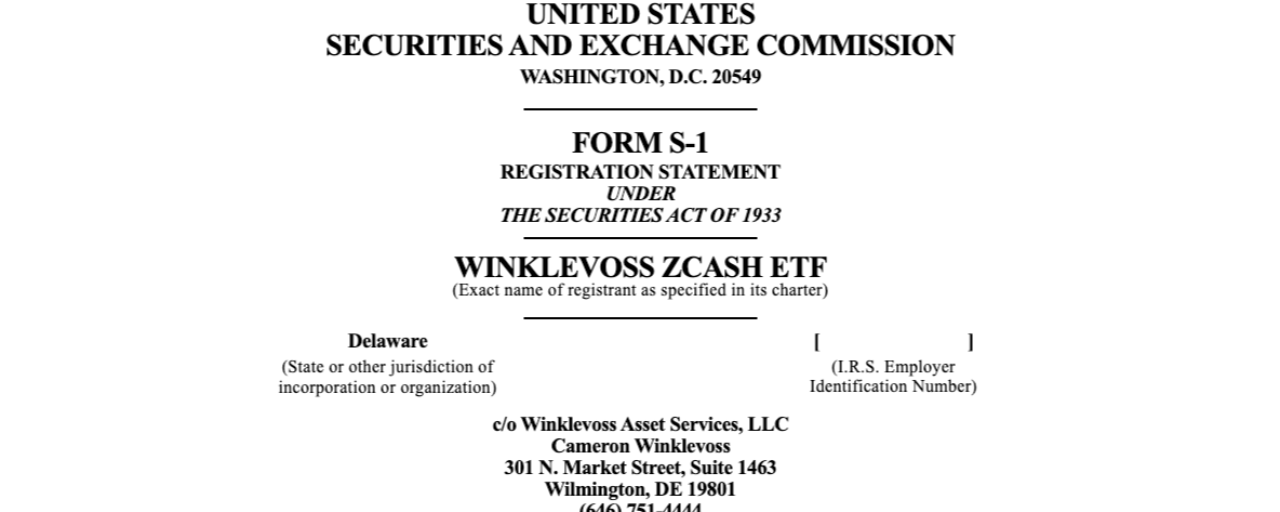
Winklevoss Files Spot Zcash ETF Application With U.S. SECWinklevoss has filed a spot Zcash ETF application with the U.S. SEC, according to ChainCatcher. The proposed ETF is planned for listing on Nasdaq under the ticker WINK.
Winklevoss Files Spot Zcash ETF Application With U.S. SEC
Winklevoss has filed a spot Zcash ETF application with the U.S. SEC, according to ChainCatcher. The proposed ETF is planned for listing on Nasdaq under the ticker WINK.
4
9
15.2k
·
--
Sui Sets World Record With 40.6 Million Transactions Per Second at BasecampSui said it achieved throughput of 40,614,180 transactions per second at Sui Basecamp, setting a world record. According to NS3.AI, CertiK independently analyzed the data. AI agents completed payments, interactions, and chats in programmable tunnels, with transactions executed off-chain and settled on Sui.
Sui Sets World Record With 40.6 Million Transactions Per Second at Basecamp
Sui said it achieved throughput of 40,614,180 transactions per second at Sui Basecamp, setting a world record. According to NS3.AI, CertiK independently analyzed the data. AI agents completed payments, interactions, and chats in programmable tunnels, with transactions executed off-chain and settled on Sui.
2
1
11
11.7k
·
--
ASIA MARKET CLOSE | KOSPI Drops 1.98% on Bond-Yield Concerns, Nikkei Falls 0.92% as Chip Stocks RetreatAccording to Kabutan, Korea Herald and HKET, Tokyo's Nikkei 225 fell 648.27 points, or 0.92%, to close at 70,035.71, its first decline in three sessions, as investors took profits in semiconductor-related shares. The index opened at 70,582.11 and traded between 70,017.19 and 70,793.29, ending near the day's low but holding above 70,000. A rise in the 10-year Japanese government bond yield also weighed on sentiment. Tokyo Electron fell 2.38% to 12,500 yen and Advantest declined 1.34% to 41,290 yen, the largest drags on the index.
Seoul's KOSPI fell 137.49 points, or 1.98%, to 6,803.90, extending losses for a second straight session as tech shares declined amid concerns over bond yields at multidecade highs. Foreigners and institutions sold a net 2.59 trillion won and 672.7 billion won, respectively, while individuals bought a net 2.56 trillion won. Samsung Electronics lost 1.29% to 268,500 won ahead of its preliminary earnings guidance on Thursday, while SK hynix fell 2.82% to 1.72 million won. Daishin Securities analyst Lee Kyung-min said higher oil prices and U.S. Treasury yields put renewed pressure on the index, adding that foreign and institutional investors turned net sellers as the market held back ahead of Samsung's preliminary results.
Hong Kong's Hang Seng Index fell 150.06 points, or 0.62%, to 24,130.50, as turnover shrank to HK$94.7 billion. The Hang Seng TECH Index fell 0.7% to 4,194. HSBC fell nearly 2% and GenScript Biotech dropped more than 12%. Alibaba declined 2.59% to HK$105.40 and Tencent fell 1.77% to HK$420.60, while Sun Hung Kai Properties and New World Development rose 2% against the trend.
Taiwan's TAIEX slipped 16.18 points, or 0.03%, to close at 49,806.37 on turnover of NT$925.99 billion. TSMC closed flat at NT$2,585, Delta Electronics fell nearly 3% to NT$1,990 and MediaTek declined 1.73% to NT$4,835. Passive-component and plastics stocks advanced, with Nan Ya Plastics rising more than 7% to NT$314 and Formosa Plastics closing limit-up at NT$75.4. Institutional investors sold a net NT$21.257 billion.
Mainland China's stock markets remained closed for the National Day Golden Week holiday and will resume trading on Oct. 8.
ASIA MARKET CLOSE | KOSPI Drops 1.98% on Bond-Yield Concerns, Nikkei Falls 0.92% as Chip Stocks Retreat
According to Kabutan, Korea Herald and HKET, Tokyo's Nikkei 225 fell 648.27 points, or 0.92%, to close at 70,035.71, its first decline in three sessions, as investors took profits in semiconductor-related shares. The index opened at 70,582.11 and traded between 70,017.19 and 70,793.29, ending near the day's low but holding above 70,000. A rise in the 10-year Japanese government bond yield also weighed on sentiment. Tokyo Electron fell 2.38% to 12,500 yen and Advantest declined 1.34% to 41,290 yen, the largest drags on the index.
Seoul's KOSPI fell 137.49 points, or 1.98%, to 6,803.90, extending losses for a second straight session as tech shares declined amid concerns over bond yields at multidecade highs. Foreigners and institutions sold a net 2.59 trillion won and 672.7 billion won, respectively, while individuals bought a net 2.56 trillion won. Samsung Electronics lost 1.29% to 268,500 won ahead of its preliminary earnings guidance on Thursday, while SK hynix fell 2.82% to 1.72 million won. Daishin Securities analyst Lee Kyung-min said higher oil prices and U.S. Treasury yields put renewed pressure on the index, adding that foreign and institutional investors turned net sellers as the market held back ahead of Samsung's preliminary results.
Hong Kong's Hang Seng Index fell 150.06 points, or 0.62%, to 24,130.50, as turnover shrank to HK$94.7 billion. The Hang Seng TECH Index fell 0.7% to 4,194. HSBC fell nearly 2% and GenScript Biotech dropped more than 12%. Alibaba declined 2.59% to HK$105.40 and Tencent fell 1.77% to HK$420.60, while Sun Hung Kai Properties and New World Development rose 2% against the trend.
Taiwan's TAIEX slipped 16.18 points, or 0.03%, to close at 49,806.37 on turnover of NT$925.99 billion. TSMC closed flat at NT$2,585, Delta Electronics fell nearly 3% to NT$1,990 and MediaTek declined 1.73% to NT$4,835. Passive-component and plastics stocks advanced, with Nan Ya Plastics rising more than 7% to NT$314 and Formosa Plastics closing limit-up at NT$75.4. Institutional investors sold a net NT$21.257 billion.
Mainland China's stock markets remained closed for the National Day Golden Week holiday and will resume trading on Oct. 8.
Seoul's KOSPI fell 137.49 points, or 1.98%, to 6,803.90, extending losses for a second straight session as tech shares declined amid concerns over bond yields at multidecade highs. Foreigners and institutions sold a net 2.59 trillion won and 672.7 billion won, respectively, while individuals bought a net 2.56 trillion won. Samsung Electronics lost 1.29% to 268,500 won ahead of its preliminary earnings guidance on Thursday, while SK hynix fell 2.82% to 1.72 million won. Daishin Securities analyst Lee Kyung-min said higher oil prices and U.S. Treasury yields put renewed pressure on the index, adding that foreign and institutional investors turned net sellers as the market held back ahead of Samsung's preliminary results.
Hong Kong's Hang Seng Index fell 150.06 points, or 0.62%, to 24,130.50, as turnover shrank to HK$94.7 billion. The Hang Seng TECH Index fell 0.7% to 4,194. HSBC fell nearly 2% and GenScript Biotech dropped more than 12%. Alibaba declined 2.59% to HK$105.40 and Tencent fell 1.77% to HK$420.60, while Sun Hung Kai Properties and New World Development rose 2% against the trend.
Taiwan's TAIEX slipped 16.18 points, or 0.03%, to close at 49,806.37 on turnover of NT$925.99 billion. TSMC closed flat at NT$2,585, Delta Electronics fell nearly 3% to NT$1,990 and MediaTek declined 1.73% to NT$4,835. Passive-component and plastics stocks advanced, with Nan Ya Plastics rising more than 7% to NT$314 and Formosa Plastics closing limit-up at NT$75.4. Institutional investors sold a net NT$21.257 billion.
Mainland China's stock markets remained closed for the National Day Golden Week holiday and will resume trading on Oct. 8.
2
1.7k
·
--
Bitcoin(BTC) Drops Below 84,000 USDT with a 2.05% Decrease in 24 HoursOn Oct 07, 2026, 02:03 AM(UTC). According to Binance Market Data, Bitcoin has dropped below 84,000 USDT and is now trading at 83,837.5625 USDT, with a narrowed 2.05% decrease in 24 hours.
Bitcoin(BTC) Drops Below 84,000 USDT with a 2.05% Decrease in 24 Hours
On Oct 07, 2026, 02:03 AM(UTC). According to Binance Market Data, Bitcoin has dropped below 84,000 USDT and is now trading at 83,837.5625 USDT, with a narrowed 2.05% decrease in 24 hours.
6
3
18
18.5k
·
--
BitMine Buys and Receives 12,500 ETH From BitGoBitMine (0xE0cd...e22) bought and received 12,500 ETH from BitGo, worth $33.65 million. According to Odaily, BitMine now holds 4.9% of ETH’s total supply, close to its "Alchemy of 5%" target.
BitMine Buys and Receives 12,500 ETH From BitGo
BitMine (0xE0cd...e22) bought and received 12,500 ETH from BitGo, worth $33.65 million. According to Odaily, BitMine now holds 4.9% of ETH’s total supply, close to its "Alchemy of 5%" target.
5
4
15
20.9k
·
--
STOCKS | Tesla Sets October 15 Roadster Debut After Years of DelaysTesla plans to unveil its long-delayed Roadster supercar on October 15 in Waco, Texas. According to Sina Finance, customers who reserved the car were required to pay at least $50,000, and some paid more to secure a place on the waiting list.
The new Roadster is the successor to Tesla's original sports car and was first announced in November 2017. Tesla initially said production would begin in 2020, but that did not happen. The company has not disclosed the final price.
Tesla has said the new Roadster will be its last human-driven car, while its future focus shifts to humanoid robots. Tesla did not respond to a request for comment.
STOCKS | Tesla Sets October 15 Roadster Debut After Years of Delays
Tesla plans to unveil its long-delayed Roadster supercar on October 15 in Waco, Texas. According to Sina Finance, customers who reserved the car were required to pay at least $50,000, and some paid more to secure a place on the waiting list.
The new Roadster is the successor to Tesla's original sports car and was first announced in November 2017. Tesla initially said production would begin in 2020, but that did not happen. The company has not disclosed the final price.
Tesla has said the new Roadster will be its last human-driven car, while its future focus shifts to humanoid robots. Tesla did not respond to a request for comment.
The new Roadster is the successor to Tesla's original sports car and was first announced in November 2017. Tesla initially said production would begin in 2020, but that did not happen. The company has not disclosed the final price.
Tesla has said the new Roadster will be its last human-driven car, while its future focus shifts to humanoid robots. Tesla did not respond to a request for comment.
2.6k
·
--
Whale Sells Over 138,000 LINK to Fund Hyperliquid Leveraged CRCL PositionA whale wallet identified as mtAAVEbank.ETH sold more than 138,000 LINK six hours ago for $1.9 million, according to Arkham monitoring. According to Odaily, Bitcoin had not yet fallen below $84,000 at the time, and the wallet is suspected of using the LINK sale to fund an 8x leveraged CRCL position on Hyperliquid, which at one point showed an unrealized loss of more than $1.25 million. The wallet still holds more than $21 million in digital assets, mainly stablecoins, and more than 10% of the funds came from an Aave loan.
Whale Sells Over 138,000 LINK to Fund Hyperliquid Leveraged CRCL Position
A whale wallet identified as mtAAVEbank.ETH sold more than 138,000 LINK six hours ago for $1.9 million, according to Arkham monitoring. According to Odaily, Bitcoin had not yet fallen below $84,000 at the time, and the wallet is suspected of using the LINK sale to fund an 8x leveraged CRCL position on Hyperliquid, which at one point showed an unrealized loss of more than $1.25 million. The wallet still holds more than $21 million in digital assets, mainly stablecoins, and more than 10% of the funds came from an Aave loan.
3
16.8k
·
--
Uniswap Lists Stove Finance U.S. and South Korean Stock Tokens on ArbitrumUniswap said stock tokens issued by Stove Finance for U.S. and South Korean equities are now live on Arbitrum and can be traded on Uniswap Apps with support from UniswapX. According to Odaily, the tokens are available for trading on the platform.
Uniswap Lists Stove Finance U.S. and South Korean Stock Tokens on Arbitrum
Uniswap said stock tokens issued by Stove Finance for U.S. and South Korean equities are now live on Arbitrum and can be traded on Uniswap Apps with support from UniswapX. According to Odaily, the tokens are available for trading on the platform.
1
2.3k
·
--
Joseph Chee Says China Is Using Hong Kong as a Testing Ground for Crypto SystemsJoseph Chee, CEO and chairman of Solana Company, said on Tuesday that China is monitoring cryptocurrency and blockchains very closely while still retaining concerns about their use. According to NS3.AI, he said officials remain worried that ordinary people could be exploited by the technology.
Chee said China is using Hong Kong as a testing ground for cryptocurrency-related systems and argued that education should come before any wider rollout. He also noted that China’s central bank declared all digital-asset trading illegal in September 2021 and reaffirmed enforcement last year.
Joseph Chee Says China Is Using Hong Kong as a Testing Ground for Crypto Systems
Joseph Chee, CEO and chairman of Solana Company, said on Tuesday that China is monitoring cryptocurrency and blockchains very closely while still retaining concerns about their use. According to NS3.AI, he said officials remain worried that ordinary people could be exploited by the technology.
Chee said China is using Hong Kong as a testing ground for cryptocurrency-related systems and argued that education should come before any wider rollout. He also noted that China’s central bank declared all digital-asset trading illegal in September 2021 and reaffirmed enforcement last year.
Chee said China is using Hong Kong as a testing ground for cryptocurrency-related systems and argued that education should come before any wider rollout. He also noted that China’s central bank declared all digital-asset trading illegal in September 2021 and reaffirmed enforcement last year.
1
6
2k
·
--
Stacks Labs CEO Muneeb Ali Outlines Five Priorities for First 30 Days BackStacks Labs CEO Muneeb Ali said his first 30 days back will focus on five areas: expanding institutional business development, simplifying the management structure, publishing a two-year technology roadmap, strengthening communication with large STX holders, and clarifying STX value-capture mechanisms. According to Odaily, he said institutional demand for Bitcoin Bonds is increasing, and the future roadmap will also cover institutional-grade BTC privacy and quantum-resistant technology. Stacks Labs plans to transfer all intellectual property to a shareholder-free endowment.
Stacks Labs CEO Muneeb Ali Outlines Five Priorities for First 30 Days Back
Stacks Labs CEO Muneeb Ali said his first 30 days back will focus on five areas: expanding institutional business development, simplifying the management structure, publishing a two-year technology roadmap, strengthening communication with large STX holders, and clarifying STX value-capture mechanisms. According to Odaily, he said institutional demand for Bitcoin Bonds is increasing, and the future roadmap will also cover institutional-grade BTC privacy and quantum-resistant technology. Stacks Labs plans to transfer all intellectual property to a shareholder-free endowment.
1
5
11
5.7k
·
--
Ethereum(ETH) Drops Below 2,600 USDT with a 3.90% Decrease in 24 HoursOn Oct 07, 2026, 09:34 AM(UTC). According to Binance Market Data, Ethereum has dropped below 2,600 USDT and is now trading at 2,598.100098 USDT, with a narrowed 3.90% decrease in 24 hours.
Ethereum(ETH) Drops Below 2,600 USDT with a 3.90% Decrease in 24 Hours
On Oct 07, 2026, 09:34 AM(UTC). According to Binance Market Data, Ethereum has dropped below 2,600 USDT and is now trading at 2,598.100098 USDT, with a narrowed 3.90% decrease in 24 hours.
2
5.8k
·
--
Firelight Begins Underwriting With XRP-Backed Coverage on FlareDeFi insurance protocol Firelight has begun underwriting, with claims backed by 50.02 million XRP staked on the Flare network. According to ChainCatcher, the protocol’s first underwriting positions are allocated to two Sentora vaults.
Claims will be decided by a five-member consortium through a three-fifths majority vote. The audit report for the underwriting contract is currently marked as forthcoming.
Firelight Begins Underwriting With XRP-Backed Coverage on Flare
DeFi insurance protocol Firelight has begun underwriting, with claims backed by 50.02 million XRP staked on the Flare network. According to ChainCatcher, the protocol’s first underwriting positions are allocated to two Sentora vaults.
Claims will be decided by a five-member consortium through a three-fifths majority vote. The audit report for the underwriting contract is currently marked as forthcoming.
Claims will be decided by a five-member consortium through a three-fifths majority vote. The audit report for the underwriting contract is currently marked as forthcoming.
1
11
16.5k
·
--
BNB Chain Adds Nearly 13 Million Stablecoin Holders in Q3, CryptoRank SaysCryptoRank data showed that the total number of stablecoin holders worldwide has surpassed 300 million. According to PANews, BNB Chain added nearly 13 million stablecoin holders in the third quarter, the largest increase among major public blockchains.
During the same period, Celo, TRON, and Solana each added more than 2 million stablecoin holders. By the end of September, BNB Chain had become the public blockchain with the largest number of stablecoin holders.
BNB Chain Adds Nearly 13 Million Stablecoin Holders in Q3, CryptoRank Says
CryptoRank data showed that the total number of stablecoin holders worldwide has surpassed 300 million. According to PANews, BNB Chain added nearly 13 million stablecoin holders in the third quarter, the largest increase among major public blockchains.
During the same period, Celo, TRON, and Solana each added more than 2 million stablecoin holders. By the end of September, BNB Chain had become the public blockchain with the largest number of stablecoin holders.
During the same period, Celo, TRON, and Solana each added more than 2 million stablecoin holders. By the end of September, BNB Chain had become the public blockchain with the largest number of stablecoin holders.
6
4.6k
·
--
Binance Alpha Airdrop Claim and Trading Set for 9:00 UTCBinance Wallet announced on X that users should get ready to claim the Binance Alpha airdrop and trade today at 9:00 (UTC). Users with at least 246 Binance Alpha Points will be able to claim the token on a first-come, first-served basis until the airdrop pool is fully distributed or the event expires. Further details will be announced soon. The announcement did not specify the token involved in the airdrop. Binance Wallet said the claim process will be available at the stated time, and eligibility will depend on holding at least 246 Binance Alpha Points. The distribution will continue until the pool is exhausted or the airdrop event ends.
Binance Alpha Airdrop Claim and Trading Set for 9:00 UTC
Binance Wallet announced on X that users should get ready to claim the Binance Alpha airdrop and trade today at 9:00 (UTC). Users with at least 246 Binance Alpha Points will be able to claim the token on a first-come, first-served basis until the airdrop pool is fully distributed or the event expires. Further details will be announced soon. The announcement did not specify the token involved in the airdrop. Binance Wallet said the claim process will be available at the stated time, and eligibility will depend on holding at least 246 Binance Alpha Points. The distribution will continue until the pool is exhausted or the airdrop event ends.
6
2.7k
·
--
AVAX Gains Over 40% in a Month as Tokenized U.S. Treasuries on Avalanche Hit Record $545 MillionThe value of tokenized U.S. Treasuries on Avalanche has risen 300% year over year to a record $545 million, while the category grew 14% in the third quarter alone. According to NS3.AI, Avalanche now hosts more than $1.67 billion in tokenized assets, making it the fifth-largest blockchain in this category.
AVAX has gained over 40% in a month and is approaching $12. Benzinga Pro data shows the token fell 1.40% over the last 24 hours to $11.19.
AVAX Gains Over 40% in a Month as Tokenized U.S. Treasuries on Avalanche Hit Record $545 Million
The value of tokenized U.S. Treasuries on Avalanche has risen 300% year over year to a record $545 million, while the category grew 14% in the third quarter alone. According to NS3.AI, Avalanche now hosts more than $1.67 billion in tokenized assets, making it the fifth-largest blockchain in this category.
AVAX has gained over 40% in a month and is approaching $12. Benzinga Pro data shows the token fell 1.40% over the last 24 hours to $11.19.
AVAX has gained over 40% in a month and is approaching $12. Benzinga Pro data shows the token fell 1.40% over the last 24 hours to $11.19.
AVAX-2,40%
AGGETF-0,18%
6
13.6k
·
--
Liquid Capital Founder Yi Lihua Says Bitcoin Has Not Broken Key Support as Altcoins Pull BackLiquid Capital founder Yi Lihua said he has repeatedly warned that the market could face a pullback, adding that Bitcoin has not yet fallen below a key support level while altcoins have already seen a broad correction. According to ChainCatcher, he said he had judged a month ago that Bitcoin could face a pullback after rising to around $86,000.
Yi said that in a bull market, most of the time is still spent in a range-bound phase, with only a small portion of time marked by rapid gains and normal corrections, and that there is no bull market with uninterrupted upside. He added that even if the current pullback is relatively large, it remains a normal part of the broader bull trend, and advised investors not to try to trade constantly or capture every opportunity.
Liquid Capital Founder Yi Lihua Says Bitcoin Has Not Broken Key Support as Altcoins Pull Back
Liquid Capital founder Yi Lihua said he has repeatedly warned that the market could face a pullback, adding that Bitcoin has not yet fallen below a key support level while altcoins have already seen a broad correction. According to ChainCatcher, he said he had judged a month ago that Bitcoin could face a pullback after rising to around $86,000.
Yi said that in a bull market, most of the time is still spent in a range-bound phase, with only a small portion of time marked by rapid gains and normal corrections, and that there is no bull market with uninterrupted upside. He added that even if the current pullback is relatively large, it remains a normal part of the broader bull trend, and advised investors not to try to trade constantly or capture every opportunity.
Yi said that in a bull market, most of the time is still spent in a range-bound phase, with only a small portion of time marked by rapid gains and normal corrections, and that there is no bull market with uninterrupted upside. He added that even if the current pullback is relatively large, it remains a normal part of the broader bull trend, and advised investors not to try to trade constantly or capture every opportunity.
7
17.8k
·
--
Tom Lee Says Tokenization Will Expand Across Traditional Finance Over the Next DecadeTom Lee said at Token2049 that the market is at the start of a supercycle and that everything running on traditional finance will be tokenized over the next 10 years. According to Odaily, he said most traditional financial institutions will build on Ethereum, including BlackRock, JPMorgan, and Robinhood.
Tom Lee Says Tokenization Will Expand Across Traditional Finance Over the Next Decade
Tom Lee said at Token2049 that the market is at the start of a supercycle and that everything running on traditional finance will be tokenized over the next 10 years. According to Odaily, he said most traditional financial institutions will build on Ethereum, including BlackRock, JPMorgan, and Robinhood.
1
11
8.4k
·
--
STOCKS | Trump Says He Is Considering Suspending the Federal Gas TaxU.S. President Donald Trump said he is considering suspending the federal gasoline tax as fuel prices surge ahead of the midterm elections. According to Sina Finance, Trump said on Tuesday, when asked whether he was considering suspending the 18.4-cent-per-gallon federal gasoline tax, “We are considering it.”
Any such move would require approval from Congress. The article said the White House is trying to address the fuel-price crisis before the November midterm elections, while Trump has also held crisis meetings with aides to assess ways to lower prices, including a possible ban on diesel exports.
The report said dyed diesel has been allowed on public roads after Trump eased restrictions, with its 24.4-cent-per-gallon tax deferred until after the end of this year. It also said the federal gasoline tax has never been suspended since the Highway Trust Fund was established in 1956.
According to the American Automobile Association, U.S. gasoline averaged $4.37 per gallon on Tuesday, up nearly 50% from when the United States and Israel first bombed Iran in February, but still below the record $5.02 set after the Russia-Ukraine conflict began in 2022. Diesel prices hit a record $6.53 per gallon last month and were still at a historically high $6.32 per gallon on Tuesday.
STOCKS | Trump Says He Is Considering Suspending the Federal Gas Tax
U.S. President Donald Trump said he is considering suspending the federal gasoline tax as fuel prices surge ahead of the midterm elections. According to Sina Finance, Trump said on Tuesday, when asked whether he was considering suspending the 18.4-cent-per-gallon federal gasoline tax, “We are considering it.”
Any such move would require approval from Congress. The article said the White House is trying to address the fuel-price crisis before the November midterm elections, while Trump has also held crisis meetings with aides to assess ways to lower prices, including a possible ban on diesel exports.
The report said dyed diesel has been allowed on public roads after Trump eased restrictions, with its 24.4-cent-per-gallon tax deferred until after the end of this year. It also said the federal gasoline tax has never been suspended since the Highway Trust Fund was established in 1956.
According to the American Automobile Association, U.S. gasoline averaged $4.37 per gallon on Tuesday, up nearly 50% from when the United States and Israel first bombed Iran in February, but still below the record $5.02 set after the Russia-Ukraine conflict began in 2022. Diesel prices hit a record $6.53 per gallon last month and were still at a historically high $6.32 per gallon on Tuesday.
Any such move would require approval from Congress. The article said the White House is trying to address the fuel-price crisis before the November midterm elections, while Trump has also held crisis meetings with aides to assess ways to lower prices, including a possible ban on diesel exports.
The report said dyed diesel has been allowed on public roads after Trump eased restrictions, with its 24.4-cent-per-gallon tax deferred until after the end of this year. It also said the federal gasoline tax has never been suspended since the Highway Trust Fund was established in 1956.
According to the American Automobile Association, U.S. gasoline averaged $4.37 per gallon on Tuesday, up nearly 50% from when the United States and Israel first bombed Iran in February, but still below the record $5.02 set after the Russia-Ukraine conflict began in 2022. Diesel prices hit a record $6.53 per gallon last month and were still at a historically high $6.32 per gallon on Tuesday.
2
4.7k
·
--
AI TRENDS | Solana Adds x402 Batch Payments as Anza Targets 200-Millisecond Block TimesSolana has launched x402 batch payment functionality through PayAI Network and BlockRunAI, allowing AI agents to initiate multiple USDC payments and settle them in a single on-chain transaction. According to Odaily, BlockRunAI has already used the technology in its AI model routing service.
The company said combining multiple model calls into one USDC settlement could save more than $20,000 in monthly network fees and reduce latency by about 10 times. Its service connects to more than 113 AI models through a single endpoint.
Anza, a Solana development firm, said an upgrade to reduce Solana block times to 200 milliseconds is expected to go live at around 15:00 UTC on October 9. The network has previously reduced block times from 400 milliseconds to 350, 300 and 250 milliseconds.
AI TRENDS | Solana Adds x402 Batch Payments as Anza Targets 200-Millisecond Block Times
Solana has launched x402 batch payment functionality through PayAI Network and BlockRunAI, allowing AI agents to initiate multiple USDC payments and settle them in a single on-chain transaction. According to Odaily, BlockRunAI has already used the technology in its AI model routing service.
The company said combining multiple model calls into one USDC settlement could save more than $20,000 in monthly network fees and reduce latency by about 10 times. Its service connects to more than 113 AI models through a single endpoint.
Anza, a Solana development firm, said an upgrade to reduce Solana block times to 200 milliseconds is expected to go live at around 15:00 UTC on October 9. The network has previously reduced block times from 400 milliseconds to 350, 300 and 250 milliseconds.
The company said combining multiple model calls into one USDC settlement could save more than $20,000 in monthly network fees and reduce latency by about 10 times. Its service connects to more than 113 AI models through a single endpoint.
Anza, a Solana development firm, said an upgrade to reduce Solana block times to 200 milliseconds is expected to go live at around 15:00 UTC on October 9. The network has previously reduced block times from 400 milliseconds to 350, 300 and 250 milliseconds.
1.9k
·
--
Startale Japan Launches Digital Corporate Bond Paid in JPYSCStartale Japan Co. Ltd. has announced a digital corporate bond that will pay both interest and principal in the yen-backed stablecoin JPYSC. According to Odaily, the bond is aimed at Japanese individual and corporate investors and will not be offered to overseas investors.
JPYSC is issued by SBI Shinsei Trust Bank, which manages the trust assets, and is pegged 1:1 to the yen. It is classified as a type 3 electronic payment instrument under Japan's Payment Services Act. SBI VC Trade will serve as the issuing trustee and handle issuance and distribution, while Startale Group provides the underlying technology.
Startale Group CEO Sota Watanabe said the bond will test JPYSC's use in actual interest and principal payments. The announcement did not disclose the bond size, coupon rate, maturity date, or individual investment limit.
Startale Japan Launches Digital Corporate Bond Paid in JPYSC
Startale Japan Co. Ltd. has announced a digital corporate bond that will pay both interest and principal in the yen-backed stablecoin JPYSC. According to Odaily, the bond is aimed at Japanese individual and corporate investors and will not be offered to overseas investors.
JPYSC is issued by SBI Shinsei Trust Bank, which manages the trust assets, and is pegged 1:1 to the yen. It is classified as a type 3 electronic payment instrument under Japan's Payment Services Act. SBI VC Trade will serve as the issuing trustee and handle issuance and distribution, while Startale Group provides the underlying technology.
Startale Group CEO Sota Watanabe said the bond will test JPYSC's use in actual interest and principal payments. The announcement did not disclose the bond size, coupon rate, maturity date, or individual investment limit.
JPYSC is issued by SBI Shinsei Trust Bank, which manages the trust assets, and is pegged 1:1 to the yen. It is classified as a type 3 electronic payment instrument under Japan's Payment Services Act. SBI VC Trade will serve as the issuing trustee and handle issuance and distribution, while Startale Group provides the underlying technology.
Startale Group CEO Sota Watanabe said the bond will test JPYSC's use in actual interest and principal payments. The announcement did not disclose the bond size, coupon rate, maturity date, or individual investment limit.
3
1.4k
·
--
Cardano's ADA Rises 42% Since September 16 as Open Interest ClimbsCardano's ADA has gained about 42% since September 16, rising from roughly $0.19 to $0.27 as positioning expanded faster than underlying dollar liquidity. According to NS3.AI, Santiment data showed open interest increased about 25% to $304 million as ADA rose about 10% from October 3 to October 5.
Cardano's stablecoin supply fell 0.74% over seven days to $66.8 million, even as decentralized exchange volume surged. ADA briefly traded above $0.28 on October 6 before facing rejection at the near-term breakout zone.
The report said a sustained breakout would require broader liquidity, while another rejection could leave leveraged longs vulnerable to liquidation if funding stays positive and open interest remains elevated.
Cardano's ADA Rises 42% Since September 16 as Open Interest Climbs
Cardano's ADA has gained about 42% since September 16, rising from roughly $0.19 to $0.27 as positioning expanded faster than underlying dollar liquidity. According to NS3.AI, Santiment data showed open interest increased about 25% to $304 million as ADA rose about 10% from October 3 to October 5.
Cardano's stablecoin supply fell 0.74% over seven days to $66.8 million, even as decentralized exchange volume surged. ADA briefly traded above $0.28 on October 6 before facing rejection at the near-term breakout zone.
The report said a sustained breakout would require broader liquidity, while another rejection could leave leveraged longs vulnerable to liquidation if funding stays positive and open interest remains elevated.
Cardano's stablecoin supply fell 0.74% over seven days to $66.8 million, even as decentralized exchange volume surged. ADA briefly traded above $0.28 on October 6 before facing rejection at the near-term breakout zone.
The report said a sustained breakout would require broader liquidity, while another rejection could leave leveraged longs vulnerable to liquidation if funding stays positive and open interest remains elevated.
7
9.2k
·
--
Europol Says Some Bitcoin Wallets Have No Quantum FixEuropol said future quantum computers could crack private keys protecting cryptocurrency wallets, while Bitcoin’s blockchain itself is not the weak point. According to BeInCrypto, the EU police agency said no cryptographic fix exists for Bitcoin wallets whose public keys are already visible, and owners must move those funds before an attack arrives.
Glassnode put exposed Bitcoin at 6.04 million BTC in May, or 30.2% of all coins issued, including reused addresses and exchange wallets.
Europol Says Some Bitcoin Wallets Have No Quantum Fix
Europol said future quantum computers could crack private keys protecting cryptocurrency wallets, while Bitcoin’s blockchain itself is not the weak point. According to BeInCrypto, the EU police agency said no cryptographic fix exists for Bitcoin wallets whose public keys are already visible, and owners must move those funds before an attack arrives.
Glassnode put exposed Bitcoin at 6.04 million BTC in May, or 30.2% of all coins issued, including reused addresses and exchange wallets.
Glassnode put exposed Bitcoin at 6.04 million BTC in May, or 30.2% of all coins issued, including reused addresses and exchange wallets.
1
3
2.9k
·
--
Ethereum Spot ETFs Record $202 Million Net Outflow on October 6Ethereum spot ETFs recorded a total net outflow of $202 million on U.S. Eastern Time October 6. According to ChainCatcher, BlackRock's ETHA accounted for the largest single-day outflow at $202 million, while its cumulative net inflow reached $13.036 billion.
As of press time, Ethereum spot ETFs held net assets of $17.356 billion. Their net asset ratio, measured by market value as a share of Ethereum's total market capitalization, stood at 5.27%, and cumulative net inflows reached $13.549 billion.
Ethereum Spot ETFs Record $202 Million Net Outflow on October 6
Ethereum spot ETFs recorded a total net outflow of $202 million on U.S. Eastern Time October 6. According to ChainCatcher, BlackRock's ETHA accounted for the largest single-day outflow at $202 million, while its cumulative net inflow reached $13.036 billion.
As of press time, Ethereum spot ETFs held net assets of $17.356 billion. Their net asset ratio, measured by market value as a share of Ethereum's total market capitalization, stood at 5.27%, and cumulative net inflows reached $13.549 billion.
As of press time, Ethereum spot ETFs held net assets of $17.356 billion. Their net asset ratio, measured by market value as a share of Ethereum's total market capitalization, stood at 5.27%, and cumulative net inflows reached $13.549 billion.
2
4.1k
·
--
Hyperliquid Founder Jeff Yan Says Options Will Be Added to the PlatformHyperliquid founder Jeff Yan said at the TOKEN2049 event in Singapore that options will become the platform's next component. According to Odaily, traders will be able to hedge options with spot and perpetual contracts on the same order book.
Hyperliquid Founder Jeff Yan Says Options Will Be Added to the Platform
Hyperliquid founder Jeff Yan said at the TOKEN2049 event in Singapore that options will become the platform's next component. According to Odaily, traders will be able to hedge options with spot and perpetual contracts on the same order book.
2.5k
Присоединяйтесь к пользователям криптовалют по всему миру на Binance Square
⚡️ Получайте новейшую и полезную информацию о криптоактивах.
💬 Нам доверяет крупнейшая в мире криптобиржа.
👍 Получите достоверные аналитические данные от верифицированных создателей контента.
Эл. почта/номер телефона
В тренде
FedMinutesFocusOnOctoberPause
Просмотров: 29,158
561 обсуждают
#fedminutesfocusonoctoberpause
🚨 OCTOBER FED HIKE ODDS COLLAPSE TO 21.6%… Is $BTC About to React? 👀
The Fed is about to give markets another major clue.
Investors are waiting for today’s FOMC minutes — and the biggest question is whether October brings another rate hike… or a pause.
Right now, the odds of a 25-basis-point October hike have fallen to just 21.6%.
That’s a huge shift in expectations.
But here’s what makes this interesting… 👀
The Fed raised rates to 3.75%–4.00% in September, but recent weakness in jobs data and softer inflation have made another immediate hike look less certain.
And for crypto, this matters.
A Fed pause could reduce pressure on financial conditions and potentially improve risk appetite.
That could become a tailwind for BTC
But there’s a catch…
Bitcoin is already under pressure as the dollar and Treasury yields move higher.
So tonight’s minutes could become a volatility trigger.
Dovish Fed → liquidity hopes → bullish .
BTC narrative?
Hawkish Fed → higher-rate fears → more pressure on risk assets?
The real question:
Is October becoming the pause Bitcoin bulls have been waiting for… or could the Fed surprise the market again? 👀
Watch BTC + Fed expectations + Treasury yields closely.
#FederalReserve #Fed #Crypto #InterestRates
$ETH
$SOL
Shae Cassler Sw9r
·Лайков: 18
·Просмотров: 37k
BinanceLaunchesBinanceIntelligence
Просмотров: 953,549
5,814 обсуждают
EvernorthDelaysNasdaqDebutToOct12
Просмотров: 246
41 обсуждают