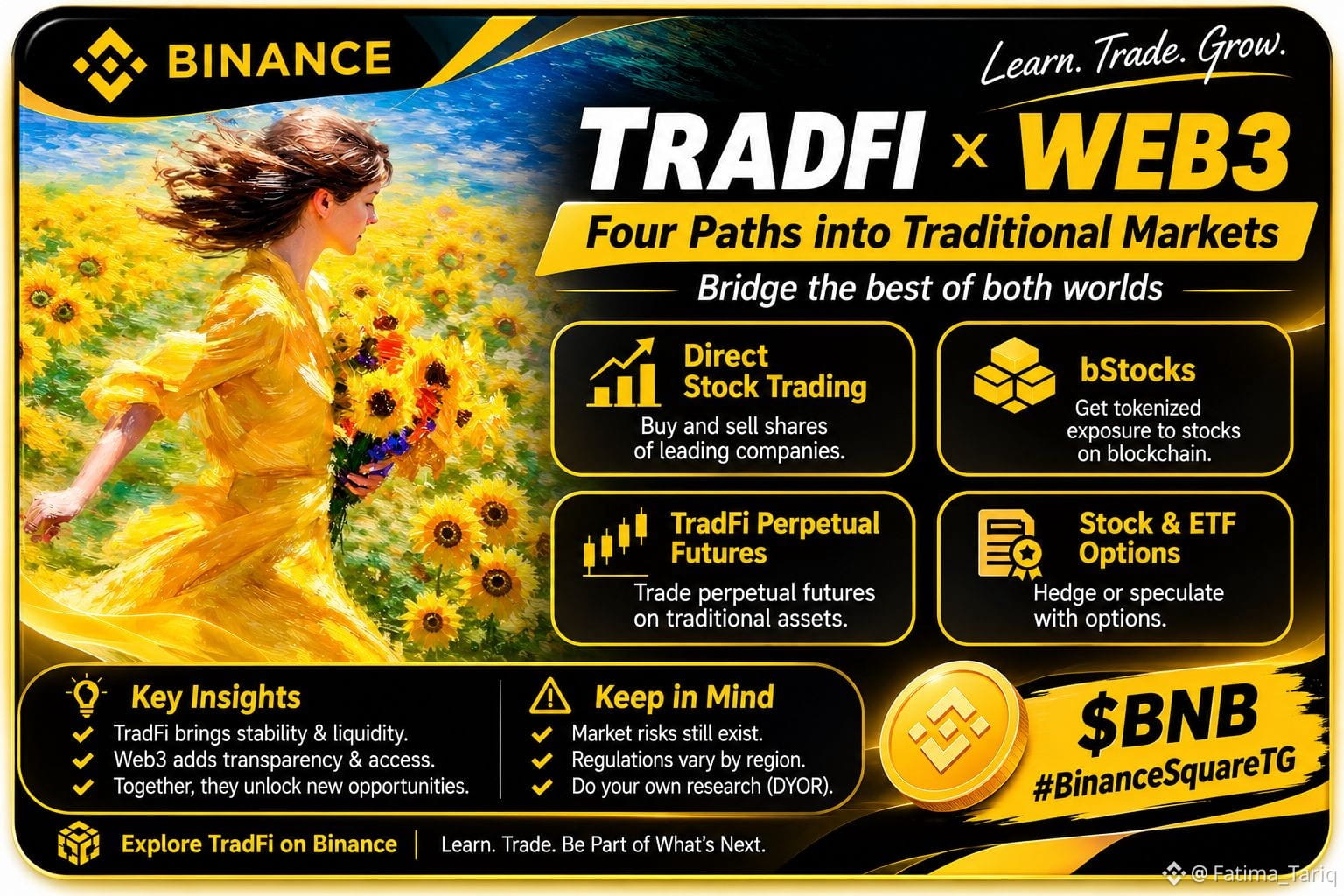

💛 TradFi × Web3: Understanding the Bridge Between Two Financial Worlds
Traditional Finance (TradFi) has shaped how people save, invest, borrow and trade for generations. But financial technology is evolving, and blockchain is introducing new ways to access and interact with traditional assets.
So, what exactly makes TradFi important?
What is TradFi?
TradFi refers to the established financial system, including banks, stock exchanges, investment institutions and regulated financial markets.
Popular TradFi Financial Instruments:
🔸 Stocks: Represent ownership in publicly listed companies.
🔸 Bonds: Allow investors to lend money to governments or corporations in exchange for interest under agreed terms.
🔸 ETFs: Provide exposure to a basket of assets through a single investment product.
🔸 Options: Financial contracts that provide the right, but not the obligation, to buy or sell an asset at a specified price within a defined period.
🔸 Commodities: Tradable assets such as gold, silver and oil.
Where Does Web3 Come In?
Blockchain technology is creating new possibilities for traditional finance through:
• Tokenization of real-world assets (RWA).
• More transparent and programmable financial infrastructure.
• On-chain settlement and asset transfers.
• DeFi applications connecting digital assets with financial markets.
Why Does This Evolution Matter?
The combination of TradFi and Web3 could expand market accessibility, introduce new financial infrastructure and create additional ways to interact with assets.
Important Risks to Understand:
• Market volatility and potential losses.
• Regulatory differences across jurisdictions.
• Custody, counterparty and smart contract risks.
• Liquidity limitations and product complexity.
My takeaway: The future of finance doesn't necessarily mean replacing traditional markets. It may mean building better connections between established financial systems and blockchain innovation.
$BNB #BinanceSquareTG #TradFi #Web3 #Binance @Binance TG Community