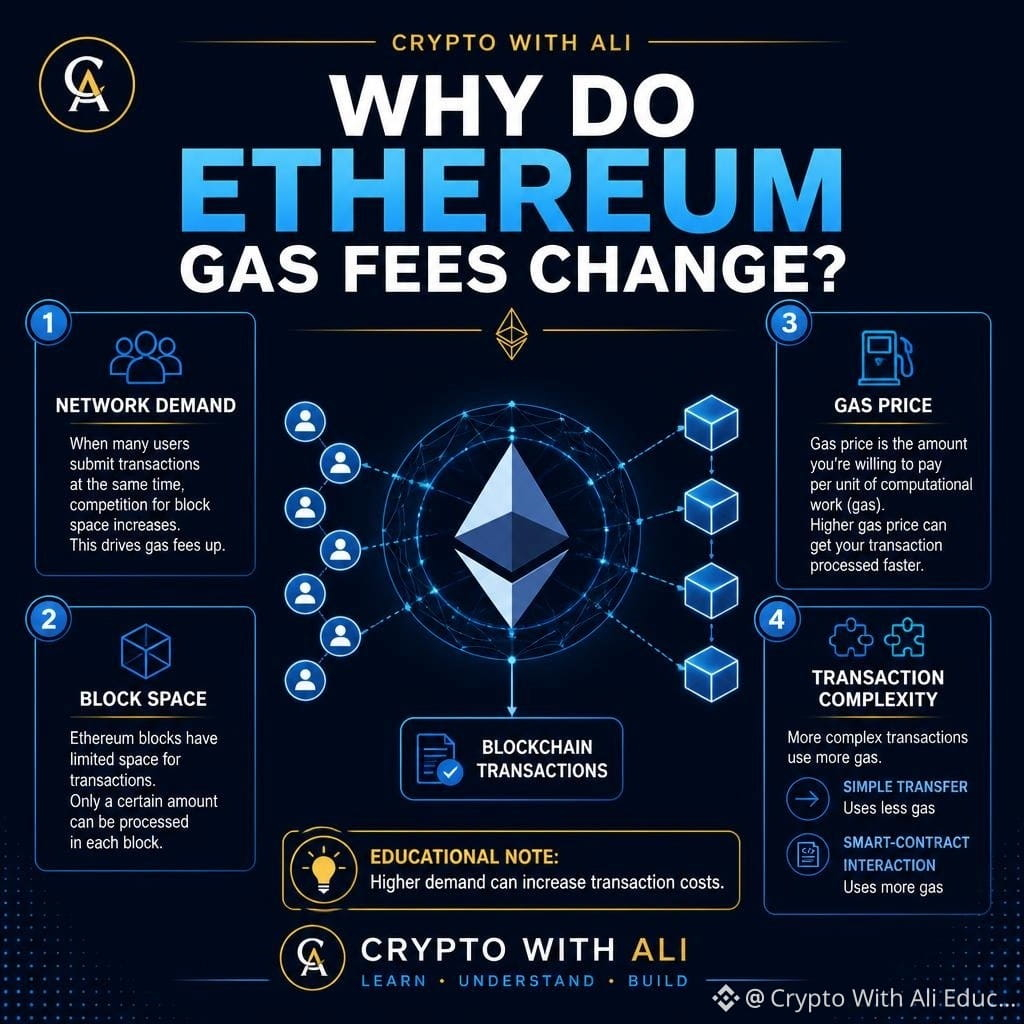
Ethereum Gas Fees: Why Network Demand Can Affect Transaction Costs
Have you ever wondered why an Ethereum transaction can cost more at one time than another?
The answer is closely connected to network demand.
1. What Are Gas Fees?
Gas is the unit used to measure the computational work required to process operations on Ethereum.
Gas fees are the transaction costs users pay to have their operations processed by the network.
2. Why Do Fees Increase?
Ethereum has limited block space. When many users compete to have transactions included, demand for available block space increases.
This competition can push transaction fees higher.
3. What Affects the Cost?
Several factors influence the final fee:
Network activity and demand
The amount of computational work required
The current gas price
The complexity of the transaction
A simple transfer and a complex smart-contract interaction may require different amounts of gas.
4. What Is Gas Price?
Gas price represents how much a user is willing to pay per unit of gas, commonly expressed in gwei.
The total fee depends on the gas used and the applicable fee rate.
5. How Can Users Stay Informed?
Before making a transaction, check the estimated fee in your wallet and consider whether the transaction is urgent.
Layer 2 networks can also provide alternative ways to interact with the Ethereum ecosystem, although their fees and security assumptions differ.
The Key Lesson
Gas fees are not simply random charges. They reflect the resources and demand involved in processing transactions.
Understanding gas helps users make more informed decisions when interacting with blockchain applications.
Question: Have high Ethereum gas fees ever affected your decision to make a transaction?
#Ethereum #gasfees #blockchaineducation #Web3 #CryptoWithAli
Educational content only. Not financial advice.