
wiki002
4.2k Публикации

wiki002
Allah is greatest
Трейдер с частыми сделками
1.9 г
1.1K+ подписок(и/а)
5.5K+ подписчиков(а)
16.0K+ понравилось
Посты
Все
Цитирования
Активно
PINNED
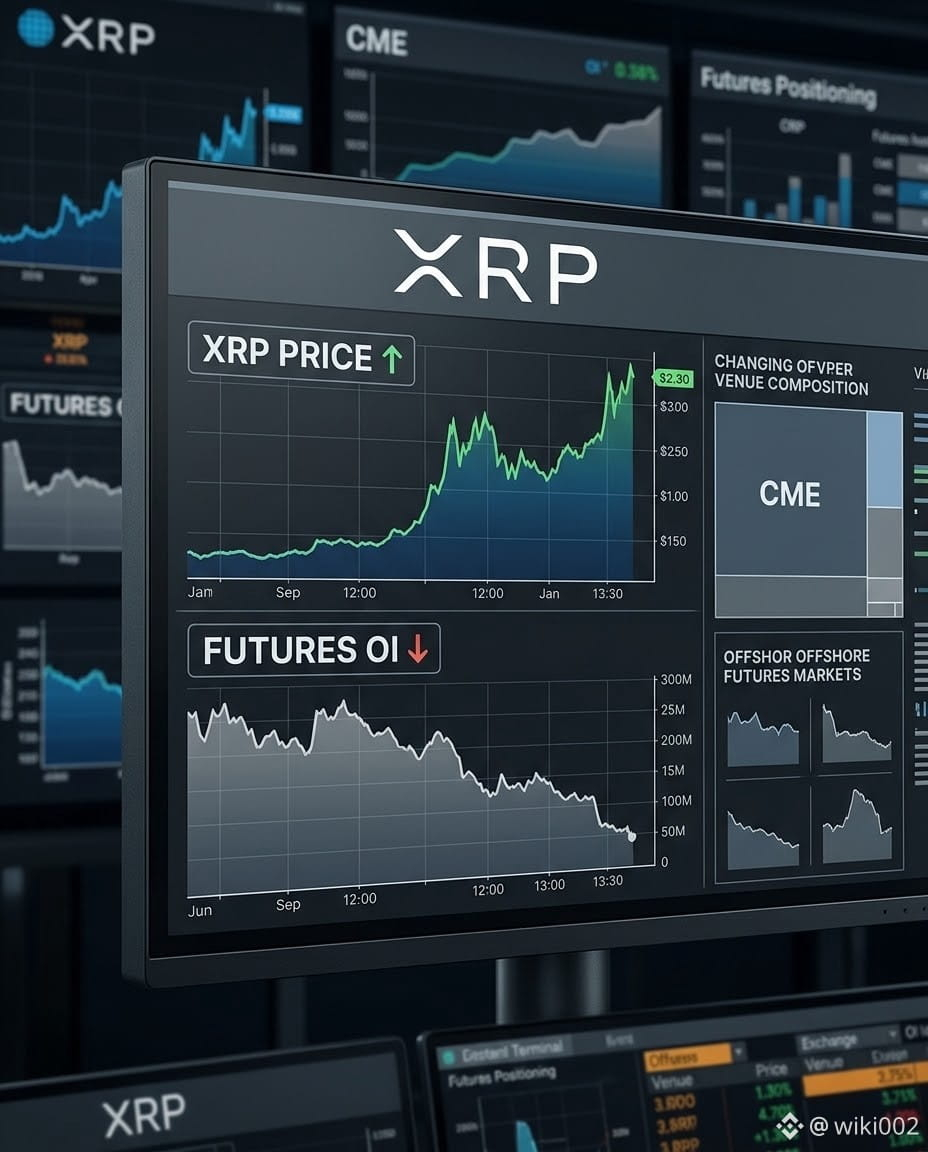
XRP’s rally gets more interesting when price and futures OI start moving in opposite directions.
From Aug. 17 to Aug. 31, XRP moved from roughly $0.99 to $1.38, while total futures OI fell from 2.77B to 2.34B XRP. That’s nearly a 40% price gain with about 16% less aggregate futures OI.
My first reaction was simple. If traders are taking on less futures exposure, what is
actually pushing the price higher?
The venue breakdown gives a better clue.
CME XRP futures OI increased from about 284M to 387M XRP, taking CME’s share of total futures OI from roughly 10% to 17%. Meanwhile, XRP futures OI outside CME fell by about 533M XRP, or 21%.
So looking only at total OI misses an important part of the picture. The amount of OI changed, but so did where that OI was held.
That doesn’t prove institutions are bullish, and it doesn’t tell us why traders shifted exposure. It simply shows that the futures market became more concentrated toward CME during the rally.
CFTC positioning adds another layer. Leveraged funds were net short roughly 116M XRP-equivalent, while dealers and asset managers were net long. Those positions can include hedges, so I wouldn’t treat the short figure as a straightforward bearish bet.
This is why I’m less interested in asking whether OI is rising or falling.
I want to see whether XRP can keep its gains without needing another big expansion in futures leverage.
If spot demand continues to support price while aggregate leverage stays controlled, that would be a much stronger signal than simply seeing OI climb alongside price.
That’s the part of this rally I’m watching now. 🔎
$XRP $SUI $NEAR #XRP
#XRPRises40%InTwoWeeksAsOpenInterestFalls
From Aug. 17 to Aug. 31, XRP moved from roughly $0.99 to $1.38, while total futures OI fell from 2.77B to 2.34B XRP. That’s nearly a 40% price gain with about 16% less aggregate futures OI.
My first reaction was simple. If traders are taking on less futures exposure, what is
actually pushing the price higher?
The venue breakdown gives a better clue.
CME XRP futures OI increased from about 284M to 387M XRP, taking CME’s share of total futures OI from roughly 10% to 17%. Meanwhile, XRP futures OI outside CME fell by about 533M XRP, or 21%.
So looking only at total OI misses an important part of the picture. The amount of OI changed, but so did where that OI was held.
That doesn’t prove institutions are bullish, and it doesn’t tell us why traders shifted exposure. It simply shows that the futures market became more concentrated toward CME during the rally.
CFTC positioning adds another layer. Leveraged funds were net short roughly 116M XRP-equivalent, while dealers and asset managers were net long. Those positions can include hedges, so I wouldn’t treat the short figure as a straightforward bearish bet.
This is why I’m less interested in asking whether OI is rising or falling.
I want to see whether XRP can keep its gains without needing another big expansion in futures leverage.
If spot demand continues to support price while aggregate leverage stays controlled, that would be a much stronger signal than simply seeing OI climb alongside price.
That’s the part of this rally I’m watching now. 🔎
$XRP $SUI $NEAR #XRP
#XRPRises40%InTwoWeeksAsOpenInterestFalls
🎁🎁


Ahmed Ali Nizamani
·
--
✨ 111 + 111 = 🎁🎁🎁🎁🎁🎁🎁

🎁🎁

BD-RIFAT291
·
--
Рост🎁🎁🎁RED BOX CLAIM🎁🎁🎁
#BinanceSquareFamily
$BNB
#BinanceSquareFamily
$BNB

🎁🎁

路飞社区糖宝Luffy
·
--
你好各位兄弟姐妹欢迎走进糖宝的主页$SOL 8点视频出镜来聊聊吧记得关注点上领取红包

🎁🎁

NAJAF_加密 143
·
--
‼️$DOGE 🐕 Reward is here ‼️
I’m sharing $DOGE rewards with the community as a Bigger thank-you.
✨ Just claim your reward and enjoy! ✨
Claim it. Get rewarded
@DOGE_ $DOGE
I’m sharing $DOGE rewards with the community as a Bigger thank-you.
✨ Just claim your reward and enjoy! ✨
Claim it. Get rewarded
@DOGE_ $DOGE

🎁🎁

白鲨观点合约账户
·
--
Follow me and get your red envelope everyday!🧧

🎁🎁

饼哥HODLER
·
--
今天$FIL 吃了一波大的,开心✌
发888U红包,评论区回复888领取
发888U红包,评论区回复888领取

🎁🎁

SNM Khan
·
--
$T
$CLO
$KITE
All is Going High Shorts Before Waiting For Recovery Entry Zone Still For Sniper Shot DYOR 👈
$CLO
$KITE
All is Going High Shorts Before Waiting For Recovery Entry Zone Still For Sniper Shot DYOR 👈

🎁🎁

Z O N E P R I M E
·
--
Рост🎁 ZONE PRIME BTC SURPRISE DROP! 🎁
✨ The Red Packet is full and ready to open! ✨
👇 Simple Steps to Participate 👇
❤️ Follow ZONE PRIME
🔁 Like & Share
💬 Comment “BTC”
🚀 Stay active for the next reward round!
#BTC #crypto #ZONEPRIME #RedPacket #Binance
✨ The Red Packet is full and ready to open! ✨
👇 Simple Steps to Participate 👇
❤️ Follow ZONE PRIME
🔁 Like & Share
💬 Comment “BTC”
🚀 Stay active for the next reward round!
#BTC #crypto #ZONEPRIME #RedPacket #Binance

🎁🎁

Muzamil Abbas⁷⁵ 穆扎米尔_阿巴斯
·
--
Рост112 $TUT COIN GIVEAWAY 🎁
Want to win TUT? 🏆
✅ Follow me
❤️ Like this post
🔁 Repost this post
💬 Comment “1” to claim
#GOOD_LUCK_EVERYONE 🤞
#ExplosionsAtUSBasesInKuwait #IRGCSaysItStruckUSMarineCampInJordan

🎁🎁

Aria Daisy 阿莉娅_黛西
·
--
Рост🎁 $XRP COIN GIVEAWAY 🎁
I’m giving away 1,000 XRP to 3000 lucky winners!
How to participate: ✅ Follow me ✅
💬 Comment 2
That’s it! Simple and easy.
Thank you for all the love and support ❤️
Good luck everyone 🔥
#Xrp🔥🔥 #ARBRises30%OnRobinhoodChainRevenue #Japan10YYieldHits3%FirstSince1996
I’m giving away 1,000 XRP to 3000 lucky winners!
How to participate: ✅ Follow me ✅
💬 Comment 2
That’s it! Simple and easy.
Thank you for all the love and support ❤️
Good luck everyone 🔥
#Xrp🔥🔥 #ARBRises30%OnRobinhoodChainRevenue #Japan10YYieldHits3%FirstSince1996

🎁🎁

加密之王1688
·
--
9月2日 04:00 币圈凌晨实时资讯
一、行情速递
1. 主流币普跌下探
截至04:00,全球加密总市值报2.58万亿美元,24小时跌幅2.76%。比特币现报76939美元,24小时跌2.63%,盘中最低触及77060美元关口;以太坊跌破2400美元整数位,现报2398美元,24小时跌2.4%;SOL、XRP、BNB等主流币种同步下挫2%-3%。
2. 合约去杠杆持续
24小时全网爆仓总额约2.39亿美元,其中多头爆仓占比达82.9%;仅60分钟内就有超1亿美元头寸被集中清算。比特币期货持仓量109.6K,多空比1.23,资金费率维持正值0.0052%,抛压以现货平仓为主,未出现极端负费率。
二、行业重磅
1. 21家国际大行联合官宣发行稳定币
高盛、美国银行、花旗、德意志银行、瑞银等21家全球顶级金融机构9月1日晚间联合公告,将成立合资公司,计划2027年上半年推出美元计价稳定币,长期拓展至欧元等G7货币,覆盖跨境支付、机构结算等场景,是传统金融入局加密领域的里程碑事件。
2. 以太坊ETF连续11日净流入
美国现货以太坊ETF单日录得8768万美元净流入,贝莱德旗下ETHA贡献5994万美元,机构资金持续逢低布局以太坊资产,资金流入趋势已延续11个交易日。
三、链上与生态动态
1. 机构巨鲸持续囤币ETH
链上监测数据显示,某机构地址再度从OKX提取5100枚ETH(约合1230万美元);自8月29日以来,该巨鲸已通过3个地址累计提取超4.2万枚ETH,机构线下囤币动作持续。
2. DeFi安全事件连发
Injective协议因二元期权漏洞暂停运营约4小时,被盗资产约490万美元;Solana生态AMM协议Aquifer遭攻击,损失约250万美元;Sui生态DeFi协议Full Sail因预言机问题宣布停止运营。
一、行情速递
1. 主流币普跌下探
截至04:00,全球加密总市值报2.58万亿美元,24小时跌幅2.76%。比特币现报76939美元,24小时跌2.63%,盘中最低触及77060美元关口;以太坊跌破2400美元整数位,现报2398美元,24小时跌2.4%;SOL、XRP、BNB等主流币种同步下挫2%-3%。
2. 合约去杠杆持续
24小时全网爆仓总额约2.39亿美元,其中多头爆仓占比达82.9%;仅60分钟内就有超1亿美元头寸被集中清算。比特币期货持仓量109.6K,多空比1.23,资金费率维持正值0.0052%,抛压以现货平仓为主,未出现极端负费率。
二、行业重磅
1. 21家国际大行联合官宣发行稳定币
高盛、美国银行、花旗、德意志银行、瑞银等21家全球顶级金融机构9月1日晚间联合公告,将成立合资公司,计划2027年上半年推出美元计价稳定币,长期拓展至欧元等G7货币,覆盖跨境支付、机构结算等场景,是传统金融入局加密领域的里程碑事件。
2. 以太坊ETF连续11日净流入
美国现货以太坊ETF单日录得8768万美元净流入,贝莱德旗下ETHA贡献5994万美元,机构资金持续逢低布局以太坊资产,资金流入趋势已延续11个交易日。
三、链上与生态动态
1. 机构巨鲸持续囤币ETH
链上监测数据显示,某机构地址再度从OKX提取5100枚ETH(约合1230万美元);自8月29日以来,该巨鲸已通过3个地址累计提取超4.2万枚ETH,机构线下囤币动作持续。
2. DeFi安全事件连发
Injective协议因二元期权漏洞暂停运营约4小时,被盗资产约490万美元;Solana生态AMM协议Aquifer遭攻击,损失约250万美元;Sui生态DeFi协议Full Sail因预言机问题宣布停止运营。

🎁🎁
先生-Crypto
·
--
Follow Me
Like It
Comment On It
Share It
To Claim 🎁🎁🎁🎁🎁
Like It
Comment On It
Share It
To Claim 🎁🎁🎁🎁🎁
🎁🎁

KIRAN_加密 143
·
--
Рост🚨 ALERT 🚨 ALERT 🚨 ETH + BTC GIVEAWAY IS LIVE NOW! 🧧🎁🔥
The reward drop has officially started! Don’t miss your chance to participate and grab exciting ETH & BTC rewards. 💰⚡ Whether you’re a long-time crypto supporter or just getting started, this is your moment to join the action!
✨ Follow the page
❤️ Like this post
💬 Drop a comment
🔄 Share & repost with your crypto friends
Stay active, keep your notifications on, and watch the LIVE for the giveaway drop! 🚀
🎁 Rewards are waiting for lucky participants!
🍀 Good luck, Crypto Family!
🔥 ETH • BTC • GIVEAWAY 🔥
#ChinaPropertyStocksJumpOnNewMortgageRules #USCanadaTradeWarDeepens #TankerHitsMinesInStraitOfHormuz #LNGTankersStayOutOfHormuz
$SOL
$BNB
$BTC
The reward drop has officially started! Don’t miss your chance to participate and grab exciting ETH & BTC rewards. 💰⚡ Whether you’re a long-time crypto supporter or just getting started, this is your moment to join the action!
✨ Follow the page
❤️ Like this post
💬 Drop a comment
🔄 Share & repost with your crypto friends
Stay active, keep your notifications on, and watch the LIVE for the giveaway drop! 🚀
🎁 Rewards are waiting for lucky participants!
🍀 Good luck, Crypto Family!
🔥 ETH • BTC • GIVEAWAY 🔥
#ChinaPropertyStocksJumpOnNewMortgageRules #USCanadaTradeWarDeepens #TankerHitsMinesInStraitOfHormuz #LNGTankersStayOutOfHormuz
$SOL
$BNB
$BTC


🎁🎁

生蚝哥Oyster
·
--
Рост重磅预警!比特币期货买盘崩盘超50%,短期行情承压
CryptoQuant分析师Darkfost最新分析指出,比特币期货市场需求显现走弱信号,30日平均净主动买入量结束前期强势增长,走势和2026年5月阶段高度相似。
数据显示,8月19日BTC冲破6.5万美元时,期货多空成交比Taker Buy/Sell Ratio一度来到1.21;但后续空头仓位持续增加,市场多头情绪降温。
短短几日,30日平均净主动买入量由2137亿美元回落至978亿美元,跌幅超50%,并且自8月30日起Taker Buy/Sell Ratio持续转负,代表期货主动卖盘力量占优。
分析师提醒,当前期货市场成交规模远大于现货与ETF,期货资金流向对盘面影响权重很高。短期盘面已经出现转弱信号,期货买盘衰退、空头抬升,或会对币价形成压制。
CryptoQuant分析师Darkfost最新分析指出,比特币期货市场需求显现走弱信号,30日平均净主动买入量结束前期强势增长,走势和2026年5月阶段高度相似。
数据显示,8月19日BTC冲破6.5万美元时,期货多空成交比Taker Buy/Sell Ratio一度来到1.21;但后续空头仓位持续增加,市场多头情绪降温。
短短几日,30日平均净主动买入量由2137亿美元回落至978亿美元,跌幅超50%,并且自8月30日起Taker Buy/Sell Ratio持续转负,代表期货主动卖盘力量占优。
分析师提醒,当前期货市场成交规模远大于现货与ETF,期货资金流向对盘面影响权重很高。短期盘面已经出现转弱信号,期货买盘衰退、空头抬升,或会对币价形成压制。

🎁🎁

M R T
·
--
🚀 Follow • Repost • Claim Reward
🎁 Claim Your Reward Now
🔥 Follow Repost Win Rewards
🎁 Claim Your Reward Now
🔥 Follow Repost Win Rewards

🎁🎁

CZ_ANUU
·
--
🤍❤🤍❤🤍❤🤍❤🤍❤🤍❤🤍❤🤍
✅✅✅✅✅follow e please ✅✅✅✅✅
❤🤍❤🤍❤🤍❤🤍❤🤍❤🤍❤🤍❤
✅✅✅✅✅follow e please ✅✅✅✅✅
❤🤍❤🤍❤🤍❤🤍❤🤍❤🤍❤🤍❤

🎁🎁

Leo - F0
·
--
Рост🧧🧧🔥GOOD MORNING FROM DUBAİ, FAMİLY. I'VE PREPARED A SPECIAL GİFT FOR YOU.🔥🧧🧧
"Keep your entry quiet while the numbers soar. Chasing the freedom on a private shore." #Dubái 🏝️🍹
$BTC 🔥🔥🧧🧧
$BNB $ETH #xrp #TRUMP
#1688家族family 💚 @周周1688
@Hawk自由哥 #doge
"Keep your entry quiet while the numbers soar. Chasing the freedom on a private shore." #Dubái 🏝️🍹
$BTC 🔥🔥🧧🧧
$BNB $ETH #xrp #TRUMP
#1688家族family 💚 @周周1688
@Hawk自由哥 #doge

🎁🎁

周周1688
·
--
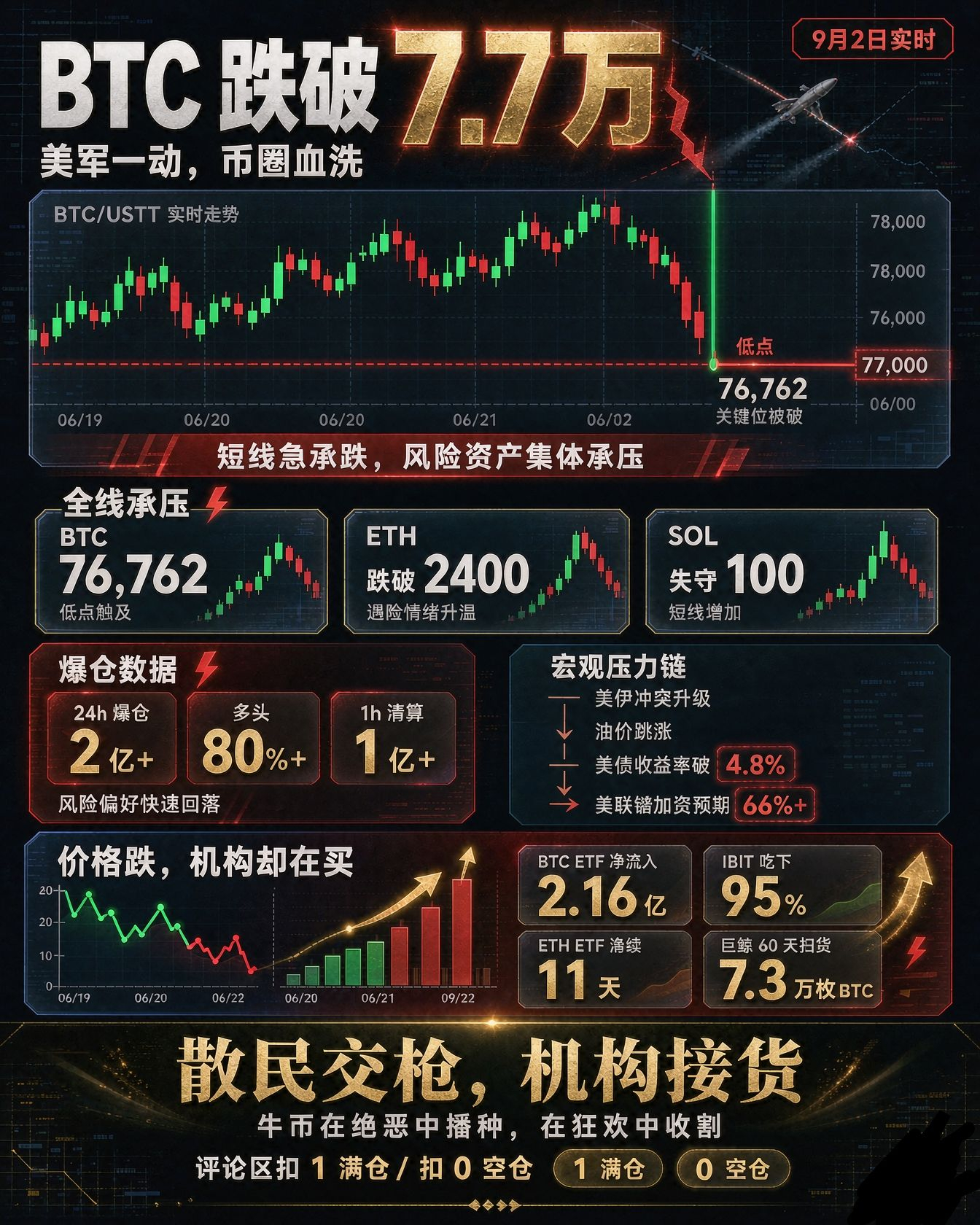
美军导弹落地,BTC 直接砸穿 7.7 万!
$BNB 🧧🧧
你以为 8 月涨 25% 是牛市回来?9 月开门第一刀,割的就是满仓多头。
9 月 2 日实时:
BTC 最低 76,762,ETH 跌破 2400,SOL 失守 100;
24 小时全网爆仓超 2 亿美金,多头占 80%+,一小时清算 1 亿+。
美伊冲突升级 → 油价跳涨 → 美债收益率破 4.8% → 美联储加息预期飙到 66%+,风险资产集体挨锤。
但最诡异的不是跌,是价格跌、机构却在买:
现货 BTC ETF 单日净流入 2.16 亿美金,IBIT 一家吃下 95%;
ETH ETF 连续 11 天吸金;巨鲸 60 天扫货 7.3 万枚 BTC。
散户交枪,机构接货——这不是崩盘,是换手。
#1688家族family
#科威特美军基地发生爆炸
$BTC $SOL
$BNB 🧧🧧
你以为 8 月涨 25% 是牛市回来?9 月开门第一刀,割的就是满仓多头。
9 月 2 日实时:
BTC 最低 76,762,ETH 跌破 2400,SOL 失守 100;
24 小时全网爆仓超 2 亿美金,多头占 80%+,一小时清算 1 亿+。
美伊冲突升级 → 油价跳涨 → 美债收益率破 4.8% → 美联储加息预期飙到 66%+,风险资产集体挨锤。
但最诡异的不是跌,是价格跌、机构却在买:
现货 BTC ETF 单日净流入 2.16 亿美金,IBIT 一家吃下 95%;
ETH ETF 连续 11 天吸金;巨鲸 60 天扫货 7.3 万枚 BTC。
散户交枪,机构接货——这不是崩盘,是换手。
#1688家族family
#科威特美军基地发生爆炸
$BTC $SOL
The bigger RWA shift isn’t tokenization. It’s where the liquidity is forming.
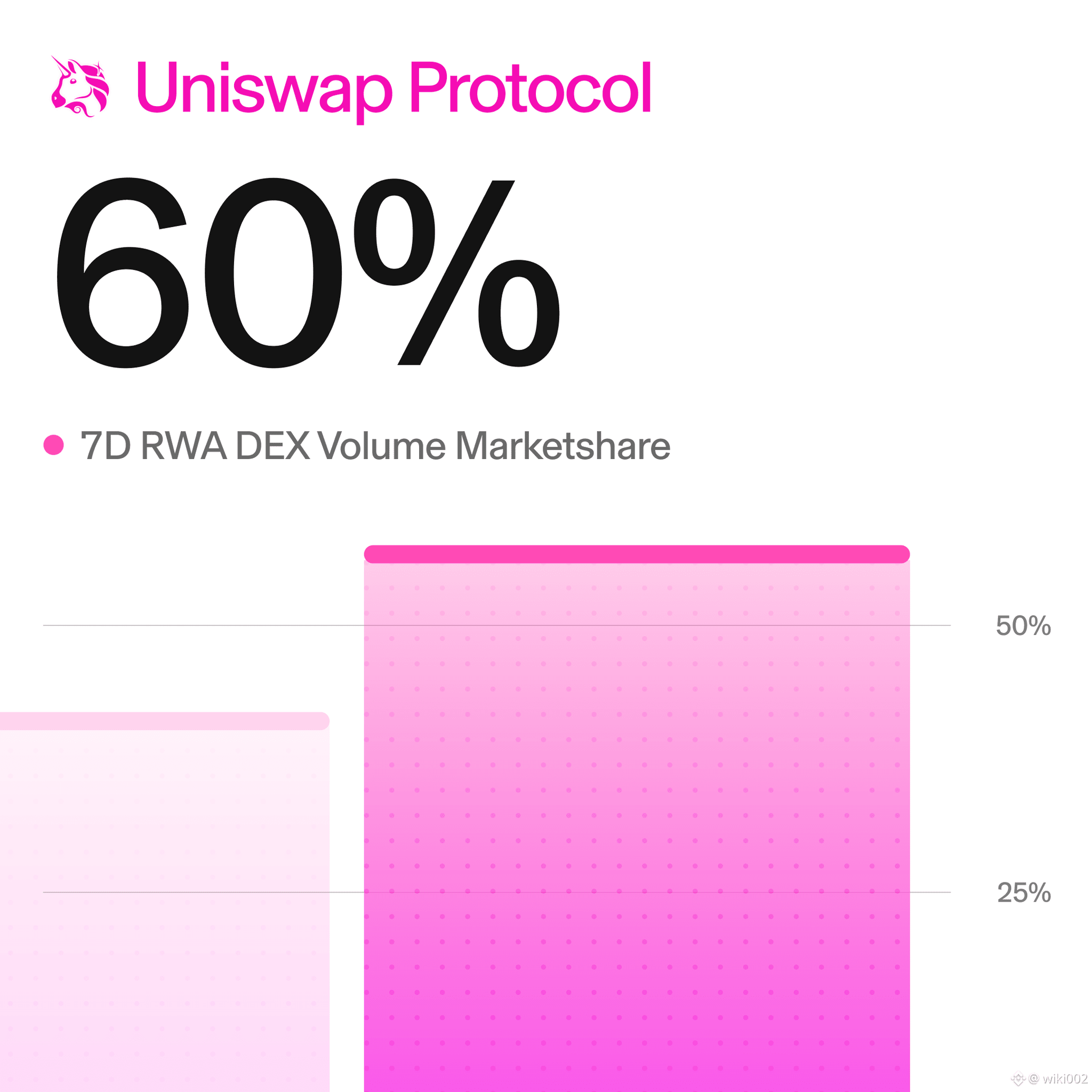
Last week, 60%+ of all RWA DEX volume ran through Uniswap, up from 40% the week before.
To me, that signals something more important than a single weekly volume jump.
RWA markets don’t necessarily need to build isolated liquidity venues from scratch. They can increasingly plug into infrastructure that already handles swaps, routing, liquidity and onchain settlement.
That creates a powerful second-order effect. The DeFi liquidity layer can become the distribution layer for Real-world assets.
Instead of creating separate markets for every tokenized asset, issuers can potentially tap into existing liquidity infrastructure and its established trading paths.
But there’s a trade-off.
If RWA activity concentrates heavily around a small number of venues, execution may improve while market participants become more dependent on those liquidity layers.
That’s why I’m watching liquidity structure more closely than tokenization headlines.
The important question is no longer just how much Real-world value comes onchain.
It’s whether that value can develop deep, composable markets once it gets there. 🔗
#RWA #DeFi #Uniswap #Tokenization
$UNI $LINK $AAVE
Last week, 60%+ of all RWA DEX volume ran through Uniswap, up from 40% the week before.
To me, that signals something more important than a single weekly volume jump.
RWA markets don’t necessarily need to build isolated liquidity venues from scratch. They can increasingly plug into infrastructure that already handles swaps, routing, liquidity and onchain settlement.
That creates a powerful second-order effect. The DeFi liquidity layer can become the distribution layer for Real-world assets.
Instead of creating separate markets for every tokenized asset, issuers can potentially tap into existing liquidity infrastructure and its established trading paths.
But there’s a trade-off.
If RWA activity concentrates heavily around a small number of venues, execution may improve while market participants become more dependent on those liquidity layers.
That’s why I’m watching liquidity structure more closely than tokenization headlines.
The important question is no longer just how much Real-world value comes onchain.
It’s whether that value can develop deep, composable markets once it gets there. 🔗
#RWA #DeFi #Uniswap #Tokenization
$UNI $LINK $AAVE
Войдите, чтобы посмотреть больше материала