

#layerone
layerone
Просмотров: 8,804
63 обсуждают
Популярные
Новые

$SUI IS AT A CRITICAL JUNCTION WHERE NARRATIVES MEET STRUCTURE 💎
The idea of accumulating below $1 and targeting triple digits has become a powerful narrative this cycle. While such exponential moves are rare, the underlying momentum in layer-1 infrastructure cannot be ignored. SUI saw a 40% increase in daily active addresses last week, suggesting genuine interest beyond speculation.
When retail demand aligns with clear structural support, the risk-reward profile shifts. What would convince you to allocate capital at these levels?
Not financial advice. Always manage your risk.
#SUI #LayerOne #CryptoNarrative #Accumulation
💎
$SUI IS AT A CRITICAL JUNCTION WHERE NARRATIVES MEET STRUCTURE 💎
The idea of accumulating below $1 and targeting triple digits has become a powerful narrative this cycle. While such exponential moves are rare, the underlying momentum in layer-1 infrastructure cannot be ignored. SUI saw a 40% increase in daily active addresses last week, suggesting genuine interest beyond speculation.
When retail demand aligns with clear structural support, the risk-reward profile shifts. What would convince you to allocate capital at these levels?
Not financial advice. Always manage your risk.
#SUI #LayerOne #CryptoNarrative #Accumulation
💎
The idea of accumulating below $1 and targeting triple digits has become a powerful narrative this cycle. While such exponential moves are rare, the underlying momentum in layer-1 infrastructure cannot be ignored. SUI saw a 40% increase in daily active addresses last week, suggesting genuine interest beyond speculation.
When retail demand aligns with clear structural support, the risk-reward profile shifts. What would convince you to allocate capital at these levels?
Not financial advice. Always manage your risk.
#SUI #LayerOne #CryptoNarrative #Accumulation
💎
168

·
--
🏔️ AVAX at $6.23, down -4% and sitting at the lowest levels in weeks. The L1 narrative that carried this coin is fading fast.
Here is the uncomfortable truth: in a Fear market (FGI 27), capital flows to BTC and ETH. Layer-1 alternatives get left behind unless they have an active catalyst. AVAX has none right now.
📊 Technical Snapshot:
• Price: $6.232 (-4.0%)
• 4H RSI: 37 — bearish but not oversold
• Daily RSI: 41.2 — also leaning bearish
• Trend: Strong downtrend on 4H
• Volume: 0.71x average — declining even as price drops (no capitulation)
• Price well below SMA7 ($6.30), SMA25 ($6.45), and SMA99 ($7.37)
🧠 Why Reduce Here:
When RSI is 37 and NOT oversold, the downtrend has room to continue. AVAX needs to hit RSI 25-30 on the daily for a proper capitulation bottom. We are not there.
The risk/reward for new longs is poor. You would be fighting the trend with no catalyst and declining volume.
📋 Trade Plan:
• Strategy: REDUCE on bounces to $6.40-$6.50
• New longs: wait for $5.80-$6.00 zone with RSI < 30 on daily
• SL for any longs: $5.60
• TP for patient buyers: $6.80 first, then $7.20
• Patience > action right now
⚡ AVAX dead cat bounce or accumulation zone?
Tell me 👇
⚠️ DYOR — Not financial advice.
#AVAX #LayerOne #DYOR
🏔️ AVAX at $6.23, down -4% and sitting at the lowest levels in weeks. The L1 narrative that carried this coin is fading fast.
Here is the uncomfortable truth: in a Fear market (FGI 27), capital flows to BTC and ETH. Layer-1 alternatives get left behind unless they have an active catalyst. AVAX has none right now.
📊 Technical Snapshot:
• Price: $6.232 (-4.0%)
• 4H RSI: 37 — bearish but not oversold
• Daily RSI: 41.2 — also leaning bearish
• Trend: Strong downtrend on 4H
• Volume: 0.71x average — declining even as price drops (no capitulation)
• Price well below SMA7 ($6.30), SMA25 ($6.45), and SMA99 ($7.37)
🧠 Why Reduce Here:
When RSI is 37 and NOT oversold, the downtrend has room to continue. AVAX needs to hit RSI 25-30 on the daily for a proper capitulation bottom. We are not there.
The risk/reward for new longs is poor. You would be fighting the trend with no catalyst and declining volume.
📋 Trade Plan:
• Strategy: REDUCE on bounces to $6.40-$6.50
• New longs: wait for $5.80-$6.00 zone with RSI < 30 on daily
• SL for any longs: $5.60
• TP for patient buyers: $6.80 first, then $7.20
• Patience > action right now
⚡ AVAX dead cat bounce or accumulation zone?
Tell me 👇
⚠️ DYOR — Not financial advice.
#AVAX #LayerOne #DYOR
Here is the uncomfortable truth: in a Fear market (FGI 27), capital flows to BTC and ETH. Layer-1 alternatives get left behind unless they have an active catalyst. AVAX has none right now.
📊 Technical Snapshot:
• Price: $6.232 (-4.0%)
• 4H RSI: 37 — bearish but not oversold
• Daily RSI: 41.2 — also leaning bearish
• Trend: Strong downtrend on 4H
• Volume: 0.71x average — declining even as price drops (no capitulation)
• Price well below SMA7 ($6.30), SMA25 ($6.45), and SMA99 ($7.37)
🧠 Why Reduce Here:
When RSI is 37 and NOT oversold, the downtrend has room to continue. AVAX needs to hit RSI 25-30 on the daily for a proper capitulation bottom. We are not there.
The risk/reward for new longs is poor. You would be fighting the trend with no catalyst and declining volume.
📋 Trade Plan:
• Strategy: REDUCE on bounces to $6.40-$6.50
• New longs: wait for $5.80-$6.00 zone with RSI < 30 on daily
• SL for any longs: $5.60
• TP for patient buyers: $6.80 first, then $7.20
• Patience > action right now
⚡ AVAX dead cat bounce or accumulation zone?
Tell me 👇
⚠️ DYOR — Not financial advice.
#AVAX #LayerOne #DYOR
28

·
--
June just opened. BTC closed May above $100K. The stress tests are done.
Now the question shifts from whether to rotate — to where.
The Layer 1 landscape looks completely different heading into Q3 than it did at the start of the year:
$ETH shipped Pectra. Staking supply is compressing. The ETH/BTC ratio is still historically undervalued post-upgrade — that gap does not close until institutional allocators start treating it as a yield-bearing asset, not just a BTC alternative.
$SOL dropped its consensus latency with Alpenglow and is actively building AI agent payment rails. That is not a roadmap anymore — that is live production traffic.
$BNB just ran another quarterly burn at a time when BNB Chain TVL is quietly expanding. The deflationary mechanic does not get louder when it is working — it just keeps compressing supply.
L1 rotation does not happen all at once. Capital flows in sequence — BTC confirms, ETH lags, then productive chains with real fee revenue catch the final wave.
May cleared the noise. June is when you find out who actually built something worth owning.
#BTC #Crypto #LayerOne #AltcoinSeason #ClarityAct
June just opened. BTC closed May above $100K. The stress tests are done.
Now the question shifts from whether to rotate — to where.
The Layer 1 landscape looks completely different heading into Q3 than it did at the start of the year:
$ETH shipped Pectra. Staking supply is compressing. The ETH/BTC ratio is still historically undervalued post-upgrade — that gap does not close until institutional allocators start treating it as a yield-bearing asset, not just a BTC alternative.
$SOL dropped its consensus latency with Alpenglow and is actively building AI agent payment rails. That is not a roadmap anymore — that is live production traffic.
$BNB just ran another quarterly burn at a time when BNB Chain TVL is quietly expanding. The deflationary mechanic does not get louder when it is working — it just keeps compressing supply.
L1 rotation does not happen all at once. Capital flows in sequence — BTC confirms, ETH lags, then productive chains with real fee revenue catch the final wave.
May cleared the noise. June is when you find out who actually built something worth owning.
#BTC #Crypto #LayerOne #AltcoinSeason #ClarityAct
Now the question shifts from whether to rotate — to where.
The Layer 1 landscape looks completely different heading into Q3 than it did at the start of the year:
$ETH shipped Pectra. Staking supply is compressing. The ETH/BTC ratio is still historically undervalued post-upgrade — that gap does not close until institutional allocators start treating it as a yield-bearing asset, not just a BTC alternative.
$SOL dropped its consensus latency with Alpenglow and is actively building AI agent payment rails. That is not a roadmap anymore — that is live production traffic.
$BNB just ran another quarterly burn at a time when BNB Chain TVL is quietly expanding. The deflationary mechanic does not get louder when it is working — it just keeps compressing supply.
L1 rotation does not happen all at once. Capital flows in sequence — BTC confirms, ETH lags, then productive chains with real fee revenue catch the final wave.
May cleared the noise. June is when you find out who actually built something worth owning.
#BTC #Crypto #LayerOne #AltcoinSeason #ClarityAct
63
·
--
The Layer 1 debate always circles back to price. But what institutions actually care about is settlement finality — and that lens reshapes the conversation entirely.
Ethereum post-Pectra gives you EIP-7702 account abstraction and lower blob fees. The UX gap between on-chain and TradFi just narrowed.
Solana is processing 4,000+ TPS with sub-150ms finality. NEAR Intents crossed $19B in volume and $32M in fees — cross-chain composability is becoming real infrastructure, not just narrative.
Avalanche subnets keep landing enterprise deployments quietly. The Saudi Arabia tokenization announcement wasn’t chain-agnostic.
$BTC consolidating near $77K on Memorial Day thin liquidity with the May 29 $6B expiry four days out is absorption — not weakness. When Bitcoin stabilizes, capital rotates. The question is which chains have real fee revenue and compliance-ready architecture to justify the flow.
Not every L1 survives the quality filter. The ones building live settlement infrastructure with actual user demand are constructing moats that price hasn’t caught up with yet.
#LayerOne #CryptoInfrastructure #DeFi #AltcoinSeason
The Layer 1 debate always circles back to price. But what institutions actually care about is settlement finality — and that lens reshapes the conversation entirely.
Ethereum post-Pectra gives you EIP-7702 account abstraction and lower blob fees. The UX gap between on-chain and TradFi just narrowed.
Solana is processing 4,000+ TPS with sub-150ms finality. NEAR Intents crossed $19B in volume and $32M in fees — cross-chain composability is becoming real infrastructure, not just narrative.
Avalanche subnets keep landing enterprise deployments quietly. The Saudi Arabia tokenization announcement wasn’t chain-agnostic.
$BTC consolidating near $77K on Memorial Day thin liquidity with the May 29 $6B expiry four days out is absorption — not weakness. When Bitcoin stabilizes, capital rotates. The question is which chains have real fee revenue and compliance-ready architecture to justify the flow.
Not every L1 survives the quality filter. The ones building live settlement infrastructure with actual user demand are constructing moats that price hasn’t caught up with yet.
#LayerOne #CryptoInfrastructure #DeFi #AltcoinSeason
Ethereum post-Pectra gives you EIP-7702 account abstraction and lower blob fees. The UX gap between on-chain and TradFi just narrowed.
Solana is processing 4,000+ TPS with sub-150ms finality. NEAR Intents crossed $19B in volume and $32M in fees — cross-chain composability is becoming real infrastructure, not just narrative.
Avalanche subnets keep landing enterprise deployments quietly. The Saudi Arabia tokenization announcement wasn’t chain-agnostic.
$BTC consolidating near $77K on Memorial Day thin liquidity with the May 29 $6B expiry four days out is absorption — not weakness. When Bitcoin stabilizes, capital rotates. The question is which chains have real fee revenue and compliance-ready architecture to justify the flow.
Not every L1 survives the quality filter. The ones building live settlement infrastructure with actual user demand are constructing moats that price hasn’t caught up with yet.
#LayerOne #CryptoInfrastructure #DeFi #AltcoinSeason
61
$SOL BLOCK COMPUTE LIMIT UPGRADE — CAPACITY SURGES 66% ⚡🦈
The Solana network just executed a major performance enhancement by raising the block compute unit limit from 60M to 100M CU per block, as proposed in SIMD-0286. 📊 This 66% increase directly expands throughput for computationally heavy applications — DeFi, on-chain AI, and gaming — making the chain even more attractive for institutional-grade deployments.
📌 Historically, such protocol-level efficiency upgrades attract developer migration and liquidity depth. 📈 Solana's competitive scalability edge just got sharper, and the market is pricing in stronger network utility. 💬 Will this unlock the next wave of complex dApps on Solana? 👇
⚠️ Not financial advice. Always manage your risk. 🛡️
🏷️ #SOL #Solana #LayerOne #CryptoUpgrade
⚡ 🦈
$SOL BLOCK COMPUTE LIMIT UPGRADE — CAPACITY SURGES 66% ⚡🦈
The Solana network just executed a major performance enhancement by raising the block compute unit limit from 60M to 100M CU per block, as proposed in SIMD-0286. 📊 This 66% increase directly expands throughput for computationally heavy applications — DeFi, on-chain AI, and gaming — making the chain even more attractive for institutional-grade deployments.
📌 Historically, such protocol-level efficiency upgrades attract developer migration and liquidity depth. 📈 Solana's competitive scalability edge just got sharper, and the market is pricing in stronger network utility. 💬 Will this unlock the next wave of complex dApps on Solana? 👇
⚠️ Not financial advice. Always manage your risk. 🛡️
🏷️ #SOL #Solana #LayerOne #CryptoUpgrade
⚡ 🦈
The Solana network just executed a major performance enhancement by raising the block compute unit limit from 60M to 100M CU per block, as proposed in SIMD-0286. 📊 This 66% increase directly expands throughput for computationally heavy applications — DeFi, on-chain AI, and gaming — making the chain even more attractive for institutional-grade deployments.
📌 Historically, such protocol-level efficiency upgrades attract developer migration and liquidity depth. 📈 Solana's competitive scalability edge just got sharper, and the market is pricing in stronger network utility. 💬 Will this unlock the next wave of complex dApps on Solana? 👇
⚠️ Not financial advice. Always manage your risk. 🛡️
🏷️ #SOL #Solana #LayerOne #CryptoUpgrade
⚡ 🦈
48

Zero (ZRO) shows strong order blocks and growing liquidity as its ecosystem expands into DeFi. Wrapped Bitcoin (WBTC) continues to attract institutional momentum with high daily volume, reinforcing its bridge role. Aptos (APT) demonstrates rapid adoption with Layer 1 innovation, boosting investor sentiment across the network. Together, these assets signal a bullish cycle driven by depth and innovation. 🚀📈 #Crypto #DeFi #LayerOne
Zero (ZRO) shows strong order blocks and growing liquidity as its ecosystem expands into DeFi. Wrapped Bitcoin (WBTC) continues to attract institutional momentum with high daily volume, reinforcing its bridge role. Aptos (APT) demonstrates rapid adoption with Layer 1 innovation, boosting investor sentiment across the network. Together, these assets signal a bullish cycle driven by depth and innovation. 🚀📈 #Crypto #DeFi #LayerOne
199
ALERT 🚨 $BNX (BINANCE X) shows strong liquidity as order blocks build, driving momentum. $MINA (MINA PROTOCOL) grows its zero knowledge ecosystem, drawing institutional interest. $IOTA (IOTA) enjoys fresh trading activity with Tangle upgrades, lifting investor sentiment. Together, they highlight diverse innovation across layer one chains 💹🚀🔗 #Crypto #LayerOne #Innovation #Trading
ALERT 🚨 $BNX (BINANCE X) shows strong liquidity as order blocks build, driving momentum. $MINA (MINA PROTOCOL) grows its zero knowledge ecosystem, drawing institutional interest. $IOTA (IOTA) enjoys fresh trading activity with Tangle upgrades, lifting investor sentiment. Together, they highlight diverse innovation across layer one chains 💹🚀🔗 #Crypto #LayerOne #Innovation #Trading
107
Order blocks on $RENDER show consolidation ahead of a potential breakout as liquidity deepens. $PENGU's recent partnership with a DeFi protocol boosts ecosystem activity, spurring volume and momentum. $APT's layer one upgrade attracts institutional interest, driving investor sentiment higher. Overall, the trio signals a bullish trend across innovation and trading dynamics. 🚀 #Crypto #DeFi #LayerOne
Order blocks on $RENDER show consolidation ahead of a potential breakout as liquidity deepens. $PENGU 's recent partnership with a DeFi protocol boosts ecosystem activity, spurring volume and momentum. $APT 's layer one upgrade attracts institutional interest, driving investor sentiment higher. Overall, the trio signals a bullish trend across innovation and trading dynamics. 🚀 #Crypto #DeFi #LayerOne
184

ALERT 🚨 XAUt surges 🔥 as institutional demand for digital gold climbs, order blocks signal a bullish pivot and liquidity deepens. ACE accelerates 🚀 through governance upgrades spurring momentum and investor optimism. SUI layer one scalability fuels ecosystem growth attracting new DeFi projects and trading volume spikes 💹. Together these three tokens embody robust innovation and strong buy potential. #GoldToken #DeFi #LayerOne
ALERT 🚨 XAUt surges 🔥 as institutional demand for digital gold climbs, order blocks signal a bullish pivot and liquidity deepens. ACE accelerates 🚀 through governance upgrades spurring momentum and investor optimism. SUI layer one scalability fuels ecosystem growth attracting new DeFi projects and trading volume spikes 💹. Together these three tokens embody robust innovation and strong buy potential. #GoldToken #DeFi #LayerOne
1
219
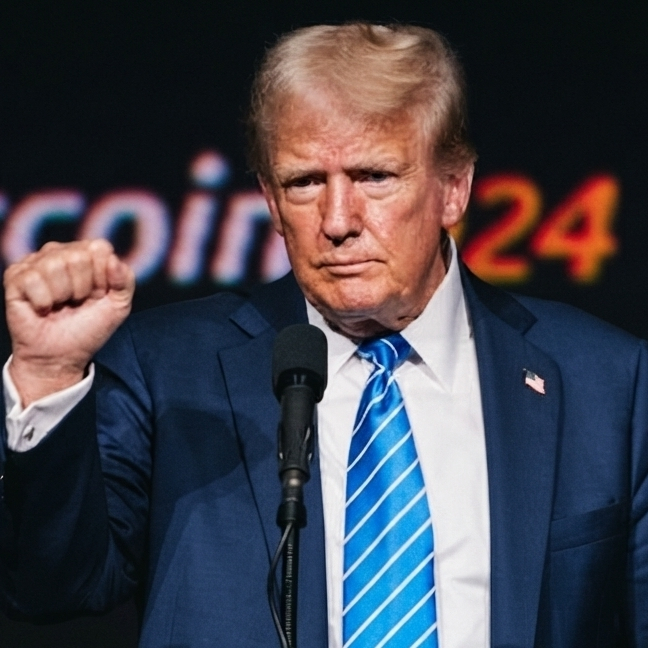
Aave's protocol expansion fuels bullish momentum as order blocks confirm rising volume. Worldcoin's growing adoption and liquidity injection spark optimism. Sui's layer one innovation attracts institutional interest, enhancing trading activity. Investor sentiment remains positive, reinforcing a strong buy stance across $AAVE $WLD $SUI 🚀 #DeFi #LayerOne #CryptoGrowth
Aave's protocol expansion fuels bullish momentum as order blocks confirm rising volume. Worldcoin's growing adoption and liquidity injection spark optimism. Sui's layer one innovation attracts institutional interest, enhancing trading activity. Investor sentiment remains positive, reinforcing a strong buy stance across $AAVE $WLD $SUI 🚀 #DeFi #LayerOne #CryptoGrowth
230
Polymarket’s $POL token surges as on chain order blocks reveal bullish liquidity. Aptos $APT continues to expand its layer one ecosystem, driving adoption and high trading volume. Optimism $OP’s latest upgrade fuels momentum, attracting institutional sentiment. Combined these three projects signal a strong bullish rally across DeFi and smart contract layers. 🚀💹 #DeFi #LayerOne #Bullish
Polymarket’s $POL token surges as on chain order blocks reveal bullish liquidity. Aptos $APT continues to expand its layer one ecosystem, driving adoption and high trading volume. Optimism $OP ’s latest upgrade fuels momentum, attracting institutional sentiment. Combined these three projects signal a strong bullish rally across DeFi and smart contract layers. 🚀💹 #DeFi #LayerOne #Bullish
1
302
ALERT 🚨 Strong bullish convergence on $MKR (MAKER), $AR (ARWEAVE) and $WAVES (WAVES). Order blocks on Maker show massive volume surge, signaling institutional conviction. Arweave’s data layer adoption spikes, while Waves liquidity deepens through cross chain bridges. Momentum across ecosystems suggests a sustained rally. #DeFi #LayerOne #CryptoTrading
ALERT 🚨 Strong bullish convergence on $MKR (MAKER), $AR (ARWEAVE) and $WAVES (WAVES). Order blocks on Maker show massive volume surge, signaling institutional conviction. Arweave’s data layer adoption spikes, while Waves liquidity deepens through cross chain bridges. Momentum across ecosystems suggests a sustained rally. #DeFi #LayerOne #CryptoTrading
1
260

Статья
Solana Is About to Cut Transaction Finality by 100x — Here's the Technical Overhaul Behind ItSolana Is About to Cut Transaction Finality by 100x — Here's the Technical Overhaul Behind It
A blockchain that once took nearly 13 seconds to finalize a transaction is about to do it in roughly 150 milliseconds — and the upgrade has already cleared a rare governance hurdle.
Solana's Alpenglow consensus overhaul was approved by community governance with about 98% of participating votes in favor, and a full mainnet rollout could land as early as Q3 2026. This isn't a minor patch — it replaces two of the network's founding technologies entirely.
◆ Transaction finality is designed to drop from roughly 12.8 seconds down to 100–150 milliseconds
◆ Alpenglow removes both Proof of History and TowerBFT, the two consensus mechanisms the leading network was originally built around
◆ Two new components, Votor and Rotor, handle vote finalization and block distribution respectively
◆ Blocks can finalize in a single voting round if 80% of network stake participates, or two rounds with 60% participation
◆ The minimum stake required to launch a new validator is set to drop from 4,850 SOL to just 450 SOL
◆ Validator vote transactions move off-chain entirely, reducing ledger bloat and operational costs for node operators
◆ Spot Solana ETFs have already surpassed $1 billion in total assets since launching in late 2025
The network's co-founder has framed the upgrade as proof that the underlying architecture is functioning as designed, particularly around reducing certain forms of transaction-ordering manipulation by validators. If Alpenglow reaches mainnet without disrupting reliability, it would position the network's response times in territory that competes directly with centralized Web2 infrastructure rather than just other blockchains.
Do you think finality speed will become the deciding factor in which blockchains attract long-term developer activity?
#solana #Web3 #BlockchainUpgrade #LayerOne #CryptoTech
Solana Is About to Cut Transaction Finality by 100x — Here's the Technical Overhaul Behind It
Solana Is About to Cut Transaction Finality by 100x — Here's the Technical Overhaul Behind It
A blockchain that once took nearly 13 seconds to finalize a transaction is about to do it in roughly 150 milliseconds — and the upgrade has already cleared a rare governance hurdle.
Solana's Alpenglow consensus overhaul was approved by community governance with about 98% of participating votes in favor, and a full mainnet rollout could land as early as Q3 2026. This isn't a minor patch — it replaces two of the network's founding technologies entirely.
◆ Transaction finality is designed to drop from roughly 12.8 seconds down to 100–150 milliseconds
◆ Alpenglow removes both Proof of History and TowerBFT, the two consensus mechanisms the leading network was originally built around
◆ Two new components, Votor and Rotor, handle vote finalization and block distribution respectively
◆ Blocks can finalize in a single voting round if 80% of network stake participates, or two rounds with 60% participation
◆ The minimum stake required to launch a new validator is set to drop from 4,850 SOL to just 450 SOL
◆ Validator vote transactions move off-chain entirely, reducing ledger bloat and operational costs for node operators
◆ Spot Solana ETFs have already surpassed $1 billion in total assets since launching in late 2025
The network's co-founder has framed the upgrade as proof that the underlying architecture is functioning as designed, particularly around reducing certain forms of transaction-ordering manipulation by validators. If Alpenglow reaches mainnet without disrupting reliability, it would position the network's response times in territory that competes directly with centralized Web2 infrastructure rather than just other blockchains.
Do you think finality speed will become the deciding factor in which blockchains attract long-term developer activity?
#solana #Web3 #BlockchainUpgrade #LayerOne #CryptoTech
A blockchain that once took nearly 13 seconds to finalize a transaction is about to do it in roughly 150 milliseconds — and the upgrade has already cleared a rare governance hurdle.
Solana's Alpenglow consensus overhaul was approved by community governance with about 98% of participating votes in favor, and a full mainnet rollout could land as early as Q3 2026. This isn't a minor patch — it replaces two of the network's founding technologies entirely.
◆ Transaction finality is designed to drop from roughly 12.8 seconds down to 100–150 milliseconds
◆ Alpenglow removes both Proof of History and TowerBFT, the two consensus mechanisms the leading network was originally built around
◆ Two new components, Votor and Rotor, handle vote finalization and block distribution respectively
◆ Blocks can finalize in a single voting round if 80% of network stake participates, or two rounds with 60% participation
◆ The minimum stake required to launch a new validator is set to drop from 4,850 SOL to just 450 SOL
◆ Validator vote transactions move off-chain entirely, reducing ledger bloat and operational costs for node operators
◆ Spot Solana ETFs have already surpassed $1 billion in total assets since launching in late 2025
The network's co-founder has framed the upgrade as proof that the underlying architecture is functioning as designed, particularly around reducing certain forms of transaction-ordering manipulation by validators. If Alpenglow reaches mainnet without disrupting reliability, it would position the network's response times in territory that competes directly with centralized Web2 infrastructure rather than just other blockchains.
Do you think finality speed will become the deciding factor in which blockchains attract long-term developer activity?
#solana #Web3 #BlockchainUpgrade #LayerOne #CryptoTech
57

ALERT 🚨 $SENT (SENTINEL) displays a bullish surge as order blocks align, high volume confirms momentum 📈, and new DeFi integrations boost ecosystem growth. $TURBO (TURBO) rides the wave of increased liquidity and investor optimism 💹, while $SEI (SEI NETWORK) continues to innovate with layer one scalability 🔥, driving trading activity and adoption. Strong buy signal across all three. #Crypto #Trading #Bullish #DeFi #LayerOne
ALERT 🚨 $SENT (SENTINEL) displays a bullish surge as order blocks align, high volume confirms momentum 📈, and new DeFi integrations boost ecosystem growth. $TURBO (TURBO) rides the wave of increased liquidity and investor optimism 💹, while $SEI (SEI NETWORK) continues to innovate with layer one scalability 🔥, driving trading activity and adoption. Strong buy signal across all three. #Crypto #Trading #Bullish #DeFi #LayerOne
246
Alert 🚨. Market is going to be crazy. 1000Cats ( $1000CAT ) surges with volume momentum as meme traders rally, while Ethereum Name Service ( $ENS ) gains adoption through decentralized identity use cases. Ethereum Classic ( $ETC ) shows robust order blocks and liquidity, hinting at ecosystem growth. Investor sentiment remains bullish, driving trading activity and innovation across layers. #Crypto #SMC #DeFi #MemeCoin #LayerOne
Alert 🚨. Market is going to be crazy. 1000Cats ( $1000CAT ) surges with volume momentum as meme traders rally, while Ethereum Name Service ( $ENS ) gains adoption through decentralized identity use cases. Ethereum Classic ( $ETC ) shows robust order blocks and liquidity, hinting at ecosystem growth. Investor sentiment remains bullish, driving trading activity and innovation across layers. #Crypto #SMC #DeFi #MemeCoin #LayerOne
102
Alert 🚨. Market is going to be crazy. Filecoin ( $FIL ) shows robust volume spikes as storage demand surges, while Arbitrum ( $ARB ) leverages cross chain innovation to boost liquidity. Lido DAO ( $LDO ) continues to grow its staking ecosystem, attracting new institutional sentiment. SMC patterns confirm bullish momentum across the trio. Keep an eye on order blocks for potential breakout signals. #DeFi #LayerOne #CryptoTrading
Alert 🚨. Market is going to be crazy. Filecoin ( $FIL ) shows robust volume spikes as storage demand surges, while Arbitrum ( $ARB ) leverages cross chain innovation to boost liquidity. Lido DAO ( $LDO ) continues to grow its staking ecosystem, attracting new institutional sentiment. SMC patterns confirm bullish momentum across the trio. Keep an eye on order blocks for potential breakout signals. #DeFi #LayerOne #CryptoTrading
309
Войдите, чтобы посмотреть больше материала
Присоединяйтесь к пользователям криптовалют по всему миру на Binance Square
⚡️ Получайте новейшую и полезную информацию о криптоактивах.
💬 Нам доверяет крупнейшая в мире криптобиржа.
👍 Получите достоверные аналитические данные от верифицированных создателей контента.
Эл. почта/номер телефона
В тренде
1
#EthereumSurpasses2500USDT
Просмотров: 147,914
1,074 обсуждают
2
#StateCouncilCallsForNationalBlockchainNetwork
Просмотров: 56,822
685 обсуждают
3
#XRPLedgerPatchesXRPCreationBug
Просмотров: 222,459
1,908 обсуждают
4
#STRKRisesAbout20%In24Hours
Просмотров: 214,145
1,902 обсуждают
5
#TetherFreezesUSDTLinkedToLedgerTheft
Просмотров: 77,693
1,227 обсуждают
6
#CFTCMovesToFoldEventContractsIntoSwapsRules
Просмотров: 33,557
779 обсуждают
7
#LedgerPausesCryptoBilisSales
Просмотров: 61,436
665 обсуждают
8
#EvernorthCompletesSPACMergerWithArmadaII
Просмотров: 40,297
445 обсуждают
9
#NEARAccountsSupportPostQuantumMLDSA
Просмотров: 37,211
374 обсуждают
10
#B3PlansSecuritiesTokenizationPlatformForFirstHalfOf2027
Просмотров: 2,923
54 обсуждают