
#kinetiq
kinetiq
Просмотров: 931
16 обсуждают
Популярные
Новые

·
--
Статья
Elysium: A New Era for Hyperliquid – Analyzing the First Value-Accretive L2Layer 2 (L2) solutions have become the backbone of scaling blockchains, but most follow a familiar pattern: they extract value from their Layer 1 (L1) without returning it. Arbitrum, Optimism, and zkSync all rely on #Ethereum for settlement, yet their sequencer fees and gas dynamics accrue primarily to the L2 operators, not Ethereum stakers. Hyperliquid’s Elysium breaks this mold. It is designed not as a parasitic L2, but as a value-accretive engine that strengthens #Hyperliquid and #Kinetiq at their core.
⚖️ Traditional L2s vs. Elysium
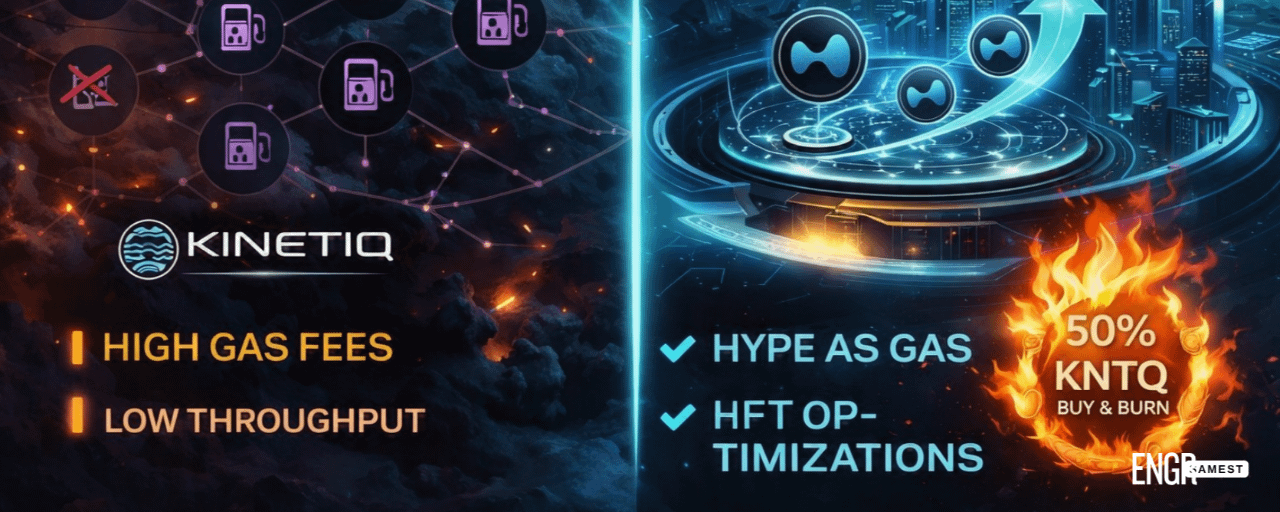
Traditional L2s:Gas is paid in ETH, but sequencer fees flow to the L2 operator.Ethereum acts as a settlement layer, not a growth engine.Value leakage: activity on the L2 does not directly reinforce Ethereum’s token economy.Elysium:Gas is paid in HYPE, embedding demand for Hyperliquid’s native token.Sequencer fees are redistributed to builders, the treasury, and KNTQ buy & burn.Instead of siphoning value, Elysium recycles it back into Hyperliquid and Kinetiq, creating a closed-loop economy.
This makes Elysium the first L2 designed to amplify its parent ecosystem rather than drain it.
🚨 Why Hyperliquid Needs Elysium Now
Hyperliquid’s HyperEVM has been a powerful foundation for decentralized perpetuals, but it faces bottlenecks:
Throughput limits: Spot trading and PropAMMs are constrained by execution ceilings.Latency: Builders deploying new markets encounter delays in settlement and liquidity routing.Scalability gap: Without higher throughput, Hyperliquid risks losing ground to faster competitors.
Elysium addresses these pain points by unlocking high-performance rails for spot trading, programmable AMMs, and token launches, all natively integrated into Hyperliquid.
Core Innovations of Elysium
HYPE as GasEvery transaction consumes HYPE, creating direct demand pressure.Unlike ETH-based L2s, this ensures Hyperliquid’s native token is the heartbeat of the system.Supercharged Spot Trading & PropAMMsElysium enables high-throughput spot markets and programmable AMMs.Builders can deploy custom liquidity strategies without hitting HyperEVM’s ceiling.This expands market diversity and deepens liquidity.Token Generation LifecycleElysium provides rails for new token launches directly within Hyperliquid.Projects can bootstrap liquidity, integrate with PropAMMs, and plug into Kinetiq’s staking ecosystem.This keeps innovation native, rather than forcing projects to migrate elsewhere.
💰 Sequencer Fee Model – Aligning Incentives
Elysium’s fee distribution is radical in its alignment:
25% → Builders: Rewards innovation and market creation.25% → Treasury: Funds ecosystem growth, audits, and security.50% → KNTQ Buy & Burn: Permanently reduces supply, making KNTQ hyper-deflationary.
This model ensures:
Builders are incentivized to expand the ecosystem.The treasury sustains long-term resilience.KNTQ holders benefit from relentless deflation, turning governance into a value-capturing asset.
🔥 Human-Centric Perspective
For traders, Elysium means faster, cheaper markets.
For builders, it means direct rewards for innovation.
For holders, it means their governance token becomes scarcer with every block.
This is economic engineering. By embedding $HYPE into gas and routing sequencer fees into KNTQ deflation, Hyperliquid and Kinetiq have created a closed-loop system where every transaction strengthens the core.
{future}(HYPEUSDT)
Conclusion
Elysium represents a new era for Hyperliquid: the first L2 that accrues value back to its parent ecosystem. It solves HyperEVM’s bottlenecks, supercharges trading and token launches, and introduces a sequencer fee model that makes KNTQ structurally deflationary.
If successful, Elysium could set a precedent for how L2s should be designed not as extractors, but as amplifiers of their L1s. Hyperliquid doesn’t just need Elysium; it needs it now, as the technical and economic lifeline that ensures its long-term dominance.
Elysium: A New Era for Hyperliquid – Analyzing the First Value-Accretive L2
Layer 2 (L2) solutions have become the backbone of scaling blockchains, but most follow a familiar pattern: they extract value from their Layer 1 (L1) without returning it. Arbitrum, Optimism, and zkSync all rely on #Ethereum for settlement, yet their sequencer fees and gas dynamics accrue primarily to the L2 operators, not Ethereum stakers. Hyperliquid’s Elysium breaks this mold. It is designed not as a parasitic L2, but as a value-accretive engine that strengthens #Hyperliquid and #Kinetiq at their core.
⚖️ Traditional L2s vs. Elysium
Traditional L2s:Gas is paid in ETH, but sequencer fees flow to the L2 operator.Ethereum acts as a settlement layer, not a growth engine.Value leakage: activity on the L2 does not directly reinforce Ethereum’s token economy.Elysium:Gas is paid in HYPE, embedding demand for Hyperliquid’s native token.Sequencer fees are redistributed to builders, the treasury, and KNTQ buy & burn.Instead of siphoning value, Elysium recycles it back into Hyperliquid and Kinetiq, creating a closed-loop economy.
This makes Elysium the first L2 designed to amplify its parent ecosystem rather than drain it.
🚨 Why Hyperliquid Needs Elysium Now
Hyperliquid’s HyperEVM has been a powerful foundation for decentralized perpetuals, but it faces bottlenecks:
Throughput limits: Spot trading and PropAMMs are constrained by execution ceilings.Latency: Builders deploying new markets encounter delays in settlement and liquidity routing.Scalability gap: Without higher throughput, Hyperliquid risks losing ground to faster competitors.
Elysium addresses these pain points by unlocking high-performance rails for spot trading, programmable AMMs, and token launches, all natively integrated into Hyperliquid.
Core Innovations of Elysium
HYPE as GasEvery transaction consumes HYPE, creating direct demand pressure.Unlike ETH-based L2s, this ensures Hyperliquid’s native token is the heartbeat of the system.Supercharged Spot Trading & PropAMMsElysium enables high-throughput spot markets and programmable AMMs.Builders can deploy custom liquidity strategies without hitting HyperEVM’s ceiling.This expands market diversity and deepens liquidity.Token Generation LifecycleElysium provides rails for new token launches directly within Hyperliquid.Projects can bootstrap liquidity, integrate with PropAMMs, and plug into Kinetiq’s staking ecosystem.This keeps innovation native, rather than forcing projects to migrate elsewhere.
💰 Sequencer Fee Model – Aligning Incentives
Elysium’s fee distribution is radical in its alignment:
25% → Builders: Rewards innovation and market creation.25% → Treasury: Funds ecosystem growth, audits, and security.50% → KNTQ Buy & Burn: Permanently reduces supply, making KNTQ hyper-deflationary.
This model ensures:
Builders are incentivized to expand the ecosystem.The treasury sustains long-term resilience.KNTQ holders benefit from relentless deflation, turning governance into a value-capturing asset.
🔥 Human-Centric Perspective
For traders, Elysium means faster, cheaper markets.
For builders, it means direct rewards for innovation.
For holders, it means their governance token becomes scarcer with every block.
This is economic engineering. By embedding $HYPE into gas and routing sequencer fees into KNTQ deflation, Hyperliquid and Kinetiq have created a closed-loop system where every transaction strengthens the core.
Conclusion
Elysium represents a new era for Hyperliquid: the first L2 that accrues value back to its parent ecosystem. It solves HyperEVM’s bottlenecks, supercharges trading and token launches, and introduces a sequencer fee model that makes KNTQ structurally deflationary.
If successful, Elysium could set a precedent for how L2s should be designed not as extractors, but as amplifiers of their L1s. Hyperliquid doesn’t just need Elysium; it needs it now, as the technical and economic lifeline that ensures its long-term dominance.
⚖️ Traditional L2s vs. Elysium
Traditional L2s:Gas is paid in ETH, but sequencer fees flow to the L2 operator.Ethereum acts as a settlement layer, not a growth engine.Value leakage: activity on the L2 does not directly reinforce Ethereum’s token economy.Elysium:Gas is paid in HYPE, embedding demand for Hyperliquid’s native token.Sequencer fees are redistributed to builders, the treasury, and KNTQ buy & burn.Instead of siphoning value, Elysium recycles it back into Hyperliquid and Kinetiq, creating a closed-loop economy.
This makes Elysium the first L2 designed to amplify its parent ecosystem rather than drain it.
🚨 Why Hyperliquid Needs Elysium Now
Hyperliquid’s HyperEVM has been a powerful foundation for decentralized perpetuals, but it faces bottlenecks:
Throughput limits: Spot trading and PropAMMs are constrained by execution ceilings.Latency: Builders deploying new markets encounter delays in settlement and liquidity routing.Scalability gap: Without higher throughput, Hyperliquid risks losing ground to faster competitors.
Elysium addresses these pain points by unlocking high-performance rails for spot trading, programmable AMMs, and token launches, all natively integrated into Hyperliquid.
Core Innovations of Elysium
HYPE as GasEvery transaction consumes HYPE, creating direct demand pressure.Unlike ETH-based L2s, this ensures Hyperliquid’s native token is the heartbeat of the system.Supercharged Spot Trading & PropAMMsElysium enables high-throughput spot markets and programmable AMMs.Builders can deploy custom liquidity strategies without hitting HyperEVM’s ceiling.This expands market diversity and deepens liquidity.Token Generation LifecycleElysium provides rails for new token launches directly within Hyperliquid.Projects can bootstrap liquidity, integrate with PropAMMs, and plug into Kinetiq’s staking ecosystem.This keeps innovation native, rather than forcing projects to migrate elsewhere.
💰 Sequencer Fee Model – Aligning Incentives
Elysium’s fee distribution is radical in its alignment:
25% → Builders: Rewards innovation and market creation.25% → Treasury: Funds ecosystem growth, audits, and security.50% → KNTQ Buy & Burn: Permanently reduces supply, making KNTQ hyper-deflationary.
This model ensures:
Builders are incentivized to expand the ecosystem.The treasury sustains long-term resilience.KNTQ holders benefit from relentless deflation, turning governance into a value-capturing asset.
🔥 Human-Centric Perspective
For traders, Elysium means faster, cheaper markets.
For builders, it means direct rewards for innovation.
For holders, it means their governance token becomes scarcer with every block.
This is economic engineering. By embedding $HYPE into gas and routing sequencer fees into KNTQ deflation, Hyperliquid and Kinetiq have created a closed-loop system where every transaction strengthens the core.
Conclusion
Elysium represents a new era for Hyperliquid: the first L2 that accrues value back to its parent ecosystem. It solves HyperEVM’s bottlenecks, supercharges trading and token launches, and introduces a sequencer fee model that makes KNTQ structurally deflationary.
If successful, Elysium could set a precedent for how L2s should be designed not as extractors, but as amplifiers of their L1s. Hyperliquid doesn’t just need Elysium; it needs it now, as the technical and economic lifeline that ensures its long-term dominance.
80

·
--
Статья
Why Elysium Is Not Just Another L2 for HyperliquidSome infrastructure opens a new road.
Other infrastructure builds a better junction where the traffic is already flowing.
#Kinetiq ’s new #Layer2 network, #Elysium , makes me think of the second model.
At first glance, Elysium arrives with familiar promises: higher performance, greater throughput, and lower transaction costs.
None of that is especially surprising anymore. Somewhere in almost every new chain brochure, you will find the words “faster” and “cheaper.” 🙂
What makes Elysium more interesting is not simply the speed.
It is where that speed connects.
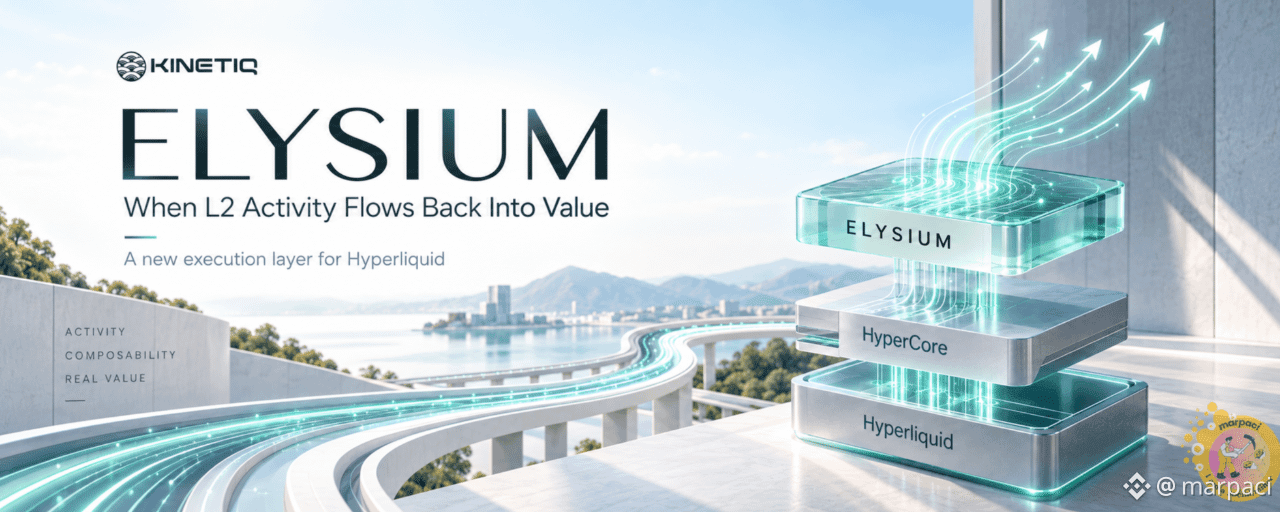
Rather than becoming an isolated island that pulls activity away from #Hyperliquid , Elysium is designed as an execution layer that works closely with HyperCore and aims to expand activity across the ecosystem.
And part of that activity is connected directly to the $KNTQ value capture mechanism.
That is where the story becomes much more interesting.
Why HyperEVM Feels Too Narrow Today
Hyperliquid has built an extremely strong trading infrastructure on the perpetuals side.
HyperEVM, however, has struggled to offer the same level of performance as a general purpose application layer.
Kinetiq’s manifesto highlights three problems: the complexity created by the dual block architecture, limited performance and throughput, and periods of congestion where a simple swap has cost as much as $20.
This is not merely a UX problem.
In a trading ecosystem, execution speed and cost also determine which applications are economically viable in the first place.
It is a little like putting a Ferrari engine into city traffic and then wondering why it cannot accelerate.
HyperCore may have a fast trading engine, but if the surrounding application layer cannot keep pace, the whole system cannot fully benefit from that speed.
Elysium is targeting precisely this bottleneck.
Kinetiq says the network is designed to deliver performance several orders of magnitude beyond HyperEVM at launch, with HyperCore block time parity as a longer term goal.
The full technical specifications are still to come, so declaring victory now would be premature.
But the target is clear:
A high performance execution environment built around trading.
The Gas Stays the Same
Elysium will use $HYPE as gas.
That sounds like a small implementation detail, but economically it matters.
Users do not need another gas asset.
Builders do not need to design around another token economy.
And transaction activity on Elysium remains tied to the existing Hyperliquid ecosystem.
In other words, a new shop is opening, but the currency stays in the same neighborhood.
This matters because one of the long running debates across #Web3 is whether Layer 2 networks add value to their underlying ecosystems or simply move economic activity away from them.
Elysium is trying to answer that question differently.
Perps Are Strong but Spot Is Still Hungry
When people think of Hyperliquid, perpetual trading usually comes first.
Spot has not reached the same level.
Kinetiq points to weaker recent spot activity and declining usage of HIP 2, Hyperliquid’s native orderbook bootstrapping mechanism.
Elysium aims to help close that gap.
The important part is not simply faster swaps.
Kinetiq specifically highlights PropAMMs, which require more active market making, frequent price updates, and sophisticated hedging.
All of these depend heavily on performance, data quality, and proximity to liquidity.
That is why Elysium’s close relationship with HyperCore may matter.
For a market maker, reducing the distance between where you quote and where you hedge can be a real economic advantage.
Hyperliquid Can Become a Native Market Data Layer
Another important piece is L1Read.
HyperEVM can already access limited HyperCore data through this precompile.
Elysium aims to extend that access and expose more HyperCore market data to builders and traders.
That means applications on Elysium could use Hyperliquid’s own market directly as a source of market data.
Kinetiq describes this as a native oracle approach.
For systems such as PropAMMs, the price itself is not the only thing that matters.
How fresh that price is matters too.
Trying to run fast market making with stale data is a little like choosing today’s umbrella using yesterday’s weather report.
Not Just a Launch but a Full Token Lifecycle
Creating a token is easy.
Turning it into a sustainable market is not.
Elysium proposes a longer path:
AMM → PropAMM → HyperCore Spot → HIP 3 Perps
A token can begin with long tail AMM liquidity, move toward deeper PropAMM liquidity, gain access to a HyperCore spot orderbook, and potentially expand into perpetuals through HIP 3.
Many launchpads open the door and effectively say, “the rest is yours.”
Elysium is trying to build the roads that come after the door.
That is what makes this more interesting than another token launch environment.
If successful, it could help keep liquidity and trading activity inside the same ecosystem as a token matures.
Where the Value Accretive L2 Claim Comes From
Kinetiq describes Elysium as:
“The first and only value accretive L2 in history.”
I prefer to treat absolute claims like that cautiously.
But the mechanism behind the slogan is worth examining.
Elysium sequencer fee revenue is planned to be distributed as follows:
25% Builders
25% Kinetiq Treasury
50% KNTQ open market purchases
All tokens purchased through that mechanism will be burned.
The economic path is simple:
More usage → more sequencer fees → more KNTQ purchases → more burn
At the same time, builders receive part of the economics generated by the blockspace they consume.
That matters because the model is not trying to reward only token holders or only builders.
It attempts to put builders, the treasury, and token holders inside the same economic loop.
A 50% Burn Is Not a Magic Wand
The 50% allocation is eye catching.
But percentages alone do not create value.
50% × low usage is still a small burn.
So the real question is not the percentage.
It is whether Elysium can create real blockspace demand.
Will builders come?
Will PropAMMs generate meaningful volume?
Will new tokens actually use this lifecycle?
Will traders choose Elysium?
If the answer becomes yes over time, the sequencer fee model could become a powerful value capture engine.
If not, a beautiful tokenomics diagram remains exactly that.
A beautiful tokenomics diagram.
Excel cells do not create economies by themselves. 🙂
The Question I Will Be Watching
When I previously looked at Kinetiq, my main question was how strongly the protocol’s economic activity could translate into value for KNTQ.
Elysium introduces a much more direct path.
Execution activity generates sequencer revenue, and half of that revenue is directed toward buyback and burn.
That is why Elysium’s most important innovation may not be faster blocks.
It may be the attempt to embed network usage into token value capture at the architectural level.
Elysium is still approaching launch, and the full technical specifications have not yet been published.
So today we have a strong design thesis, not long term performance evidence.
If real user demand, builder activity, PropAMM volume, and sequencer revenue materialize, Elysium could become more than a faster alternative to HyperEVM.
It could become a new economic layer connecting trading, token creation, and #DeFi activity inside Hyperliquid.
And that is where the real test of a value accretive L2 begins:
Not with how much activity it pulls toward itself, but with how much value that activity can return to the ecosystem it was built on.
Why Elysium Is Not Just Another L2 for Hyperliquid
Some infrastructure opens a new road.
Other infrastructure builds a better junction where the traffic is already flowing.
#Kinetiq ’s new #Layer2 network, #Elysium , makes me think of the second model.
At first glance, Elysium arrives with familiar promises: higher performance, greater throughput, and lower transaction costs.
None of that is especially surprising anymore. Somewhere in almost every new chain brochure, you will find the words “faster” and “cheaper.” 🙂
What makes Elysium more interesting is not simply the speed.
It is where that speed connects.
Rather than becoming an isolated island that pulls activity away from #Hyperliquid , Elysium is designed as an execution layer that works closely with HyperCore and aims to expand activity across the ecosystem.
And part of that activity is connected directly to the $KNTQ value capture mechanism.
That is where the story becomes much more interesting.
Why HyperEVM Feels Too Narrow Today
Hyperliquid has built an extremely strong trading infrastructure on the perpetuals side.
HyperEVM, however, has struggled to offer the same level of performance as a general purpose application layer.
Kinetiq’s manifesto highlights three problems: the complexity created by the dual block architecture, limited performance and throughput, and periods of congestion where a simple swap has cost as much as $20.
This is not merely a UX problem.
In a trading ecosystem, execution speed and cost also determine which applications are economically viable in the first place.
It is a little like putting a Ferrari engine into city traffic and then wondering why it cannot accelerate.
HyperCore may have a fast trading engine, but if the surrounding application layer cannot keep pace, the whole system cannot fully benefit from that speed.
Elysium is targeting precisely this bottleneck.
Kinetiq says the network is designed to deliver performance several orders of magnitude beyond HyperEVM at launch, with HyperCore block time parity as a longer term goal.
The full technical specifications are still to come, so declaring victory now would be premature.
But the target is clear:
A high performance execution environment built around trading.
The Gas Stays the Same
Elysium will use $HYPE as gas.
That sounds like a small implementation detail, but economically it matters.
Users do not need another gas asset.
Builders do not need to design around another token economy.
And transaction activity on Elysium remains tied to the existing Hyperliquid ecosystem.
In other words, a new shop is opening, but the currency stays in the same neighborhood.
This matters because one of the long running debates across #Web3 is whether Layer 2 networks add value to their underlying ecosystems or simply move economic activity away from them.
Elysium is trying to answer that question differently.
Perps Are Strong but Spot Is Still Hungry
When people think of Hyperliquid, perpetual trading usually comes first.
Spot has not reached the same level.
Kinetiq points to weaker recent spot activity and declining usage of HIP 2, Hyperliquid’s native orderbook bootstrapping mechanism.
Elysium aims to help close that gap.
The important part is not simply faster swaps.
Kinetiq specifically highlights PropAMMs, which require more active market making, frequent price updates, and sophisticated hedging.
All of these depend heavily on performance, data quality, and proximity to liquidity.
That is why Elysium’s close relationship with HyperCore may matter.
For a market maker, reducing the distance between where you quote and where you hedge can be a real economic advantage.
Hyperliquid Can Become a Native Market Data Layer
Another important piece is L1Read.
HyperEVM can already access limited HyperCore data through this precompile.
Elysium aims to extend that access and expose more HyperCore market data to builders and traders.
That means applications on Elysium could use Hyperliquid’s own market directly as a source of market data.
Kinetiq describes this as a native oracle approach.
For systems such as PropAMMs, the price itself is not the only thing that matters.
How fresh that price is matters too.
Trying to run fast market making with stale data is a little like choosing today’s umbrella using yesterday’s weather report.
Not Just a Launch but a Full Token Lifecycle
Creating a token is easy.
Turning it into a sustainable market is not.
Elysium proposes a longer path:
AMM → PropAMM → HyperCore Spot → HIP 3 Perps
A token can begin with long tail AMM liquidity, move toward deeper PropAMM liquidity, gain access to a HyperCore spot orderbook, and potentially expand into perpetuals through HIP 3.
Many launchpads open the door and effectively say, “the rest is yours.”
Elysium is trying to build the roads that come after the door.
That is what makes this more interesting than another token launch environment.
If successful, it could help keep liquidity and trading activity inside the same ecosystem as a token matures.
Where the Value Accretive L2 Claim Comes From
Kinetiq describes Elysium as:
“The first and only value accretive L2 in history.”
I prefer to treat absolute claims like that cautiously.
But the mechanism behind the slogan is worth examining.
Elysium sequencer fee revenue is planned to be distributed as follows:
25% Builders
25% Kinetiq Treasury
50% KNTQ open market purchases
All tokens purchased through that mechanism will be burned.
The economic path is simple:
More usage → more sequencer fees → more KNTQ purchases → more burn
At the same time, builders receive part of the economics generated by the blockspace they consume.
That matters because the model is not trying to reward only token holders or only builders.
It attempts to put builders, the treasury, and token holders inside the same economic loop.
A 50% Burn Is Not a Magic Wand
The 50% allocation is eye catching.
But percentages alone do not create value.
50% × low usage is still a small burn.
So the real question is not the percentage.
It is whether Elysium can create real blockspace demand.
Will builders come?
Will PropAMMs generate meaningful volume?
Will new tokens actually use this lifecycle?
Will traders choose Elysium?
If the answer becomes yes over time, the sequencer fee model could become a powerful value capture engine.
If not, a beautiful tokenomics diagram remains exactly that.
A beautiful tokenomics diagram.
Excel cells do not create economies by themselves. 🙂
The Question I Will Be Watching
When I previously looked at Kinetiq, my main question was how strongly the protocol’s economic activity could translate into value for KNTQ.
Elysium introduces a much more direct path.
Execution activity generates sequencer revenue, and half of that revenue is directed toward buyback and burn.
That is why Elysium’s most important innovation may not be faster blocks.
It may be the attempt to embed network usage into token value capture at the architectural level.
Elysium is still approaching launch, and the full technical specifications have not yet been published.
So today we have a strong design thesis, not long term performance evidence.
If real user demand, builder activity, PropAMM volume, and sequencer revenue materialize, Elysium could become more than a faster alternative to HyperEVM.
It could become a new economic layer connecting trading, token creation, and #DeFi activity inside Hyperliquid.
And that is where the real test of a value accretive L2 begins:
Not with how much activity it pulls toward itself, but with how much value that activity can return to the ecosystem it was built on.
Other infrastructure builds a better junction where the traffic is already flowing.
#Kinetiq ’s new #Layer2 network, #Elysium , makes me think of the second model.
At first glance, Elysium arrives with familiar promises: higher performance, greater throughput, and lower transaction costs.
None of that is especially surprising anymore. Somewhere in almost every new chain brochure, you will find the words “faster” and “cheaper.” 🙂
What makes Elysium more interesting is not simply the speed.
It is where that speed connects.
Rather than becoming an isolated island that pulls activity away from #Hyperliquid , Elysium is designed as an execution layer that works closely with HyperCore and aims to expand activity across the ecosystem.
And part of that activity is connected directly to the $KNTQ value capture mechanism.
That is where the story becomes much more interesting.
Why HyperEVM Feels Too Narrow Today
Hyperliquid has built an extremely strong trading infrastructure on the perpetuals side.
HyperEVM, however, has struggled to offer the same level of performance as a general purpose application layer.
Kinetiq’s manifesto highlights three problems: the complexity created by the dual block architecture, limited performance and throughput, and periods of congestion where a simple swap has cost as much as $20.
This is not merely a UX problem.
In a trading ecosystem, execution speed and cost also determine which applications are economically viable in the first place.
It is a little like putting a Ferrari engine into city traffic and then wondering why it cannot accelerate.
HyperCore may have a fast trading engine, but if the surrounding application layer cannot keep pace, the whole system cannot fully benefit from that speed.
Elysium is targeting precisely this bottleneck.
Kinetiq says the network is designed to deliver performance several orders of magnitude beyond HyperEVM at launch, with HyperCore block time parity as a longer term goal.
The full technical specifications are still to come, so declaring victory now would be premature.
But the target is clear:
A high performance execution environment built around trading.
The Gas Stays the Same
Elysium will use $HYPE as gas.
That sounds like a small implementation detail, but economically it matters.
Users do not need another gas asset.
Builders do not need to design around another token economy.
And transaction activity on Elysium remains tied to the existing Hyperliquid ecosystem.
In other words, a new shop is opening, but the currency stays in the same neighborhood.
This matters because one of the long running debates across #Web3 is whether Layer 2 networks add value to their underlying ecosystems or simply move economic activity away from them.
Elysium is trying to answer that question differently.
Perps Are Strong but Spot Is Still Hungry
When people think of Hyperliquid, perpetual trading usually comes first.
Spot has not reached the same level.
Kinetiq points to weaker recent spot activity and declining usage of HIP 2, Hyperliquid’s native orderbook bootstrapping mechanism.
Elysium aims to help close that gap.
The important part is not simply faster swaps.
Kinetiq specifically highlights PropAMMs, which require more active market making, frequent price updates, and sophisticated hedging.
All of these depend heavily on performance, data quality, and proximity to liquidity.
That is why Elysium’s close relationship with HyperCore may matter.
For a market maker, reducing the distance between where you quote and where you hedge can be a real economic advantage.
Hyperliquid Can Become a Native Market Data Layer
Another important piece is L1Read.
HyperEVM can already access limited HyperCore data through this precompile.
Elysium aims to extend that access and expose more HyperCore market data to builders and traders.
That means applications on Elysium could use Hyperliquid’s own market directly as a source of market data.
Kinetiq describes this as a native oracle approach.
For systems such as PropAMMs, the price itself is not the only thing that matters.
How fresh that price is matters too.
Trying to run fast market making with stale data is a little like choosing today’s umbrella using yesterday’s weather report.
Not Just a Launch but a Full Token Lifecycle
Creating a token is easy.
Turning it into a sustainable market is not.
Elysium proposes a longer path:
AMM → PropAMM → HyperCore Spot → HIP 3 Perps
A token can begin with long tail AMM liquidity, move toward deeper PropAMM liquidity, gain access to a HyperCore spot orderbook, and potentially expand into perpetuals through HIP 3.
Many launchpads open the door and effectively say, “the rest is yours.”
Elysium is trying to build the roads that come after the door.
That is what makes this more interesting than another token launch environment.
If successful, it could help keep liquidity and trading activity inside the same ecosystem as a token matures.
Where the Value Accretive L2 Claim Comes From
Kinetiq describes Elysium as:
“The first and only value accretive L2 in history.”
I prefer to treat absolute claims like that cautiously.
But the mechanism behind the slogan is worth examining.
Elysium sequencer fee revenue is planned to be distributed as follows:
25% Builders
25% Kinetiq Treasury
50% KNTQ open market purchases
All tokens purchased through that mechanism will be burned.
The economic path is simple:
More usage → more sequencer fees → more KNTQ purchases → more burn
At the same time, builders receive part of the economics generated by the blockspace they consume.
That matters because the model is not trying to reward only token holders or only builders.
It attempts to put builders, the treasury, and token holders inside the same economic loop.
A 50% Burn Is Not a Magic Wand
The 50% allocation is eye catching.
But percentages alone do not create value.
50% × low usage is still a small burn.
So the real question is not the percentage.
It is whether Elysium can create real blockspace demand.
Will builders come?
Will PropAMMs generate meaningful volume?
Will new tokens actually use this lifecycle?
Will traders choose Elysium?
If the answer becomes yes over time, the sequencer fee model could become a powerful value capture engine.
If not, a beautiful tokenomics diagram remains exactly that.
A beautiful tokenomics diagram.
Excel cells do not create economies by themselves. 🙂
The Question I Will Be Watching
When I previously looked at Kinetiq, my main question was how strongly the protocol’s economic activity could translate into value for KNTQ.
Elysium introduces a much more direct path.
Execution activity generates sequencer revenue, and half of that revenue is directed toward buyback and burn.
That is why Elysium’s most important innovation may not be faster blocks.
It may be the attempt to embed network usage into token value capture at the architectural level.
Elysium is still approaching launch, and the full technical specifications have not yet been published.
So today we have a strong design thesis, not long term performance evidence.
If real user demand, builder activity, PropAMM volume, and sequencer revenue materialize, Elysium could become more than a faster alternative to HyperEVM.
It could become a new economic layer connecting trading, token creation, and #DeFi activity inside Hyperliquid.
And that is where the real test of a value accretive L2 begins:
Not with how much activity it pulls toward itself, but with how much value that activity can return to the ecosystem it was built on.
Oria Ores:
In the end, pretty tokenomic diagrams are useless if nobody uses the network. What really matters is whether the creators and the actual volume of users actually move there, or if it all remains just empty promises.
2
4
173


·
--
$KNTQ这波是把拉盘的所有硬buff叠满了,链上讨论热度直接炸穿。
别扯什么情绪炒作,这次热度全是实打实的落地堆出来的:Kraken上所解决合规入场门槛,kHYPE的TVL干到10亿刀以上撑住生态基本盘,新上的KNTQ/USDC交易对补了流动性缺口,最狠的是拿70%协议收入做程序化回购——等于开了自动托价的永动机。
现在市值才6100万刀,你敢信?之前那些靠喊单拉盘的土狗,市值都比它高几倍。这波根本不是散户FOMO,是大资金提前布局的信号——Kraken上所后机构能合规进场,回购是真金白银持续买盘,10亿TVL的生态给它兜底,完全不是涨一天就崩的货色。
我扒了链上地址数据,近24小时的大额买盘全是标记为机构的地址,不是散户的零散冲单。说明有人提前拿到了所有利好的实锤,现在热度起来只是放风给散户看,真正的主升浪还没启动。合约党别瞎追高,等回踩0.21附近的支撑再摸多,赔率直接拉满。
你们觉得$KNTQ这波能摸到多少?是直接冲0.5还是会被庄家砸盘洗走散户?评论区说真话。
$KNTQ
#加密货币 #Web3 #Kinetiq
$KNTQ这波是把拉盘的所有硬buff叠满了,链上讨论热度直接炸穿。
别扯什么情绪炒作,这次热度全是实打实的落地堆出来的:Kraken上所解决合规入场门槛,kHYPE的TVL干到10亿刀以上撑住生态基本盘,新上的KNTQ/USDC交易对补了流动性缺口,最狠的是拿70%协议收入做程序化回购——等于开了自动托价的永动机。
现在市值才6100万刀,你敢信?之前那些靠喊单拉盘的土狗,市值都比它高几倍。这波根本不是散户FOMO,是大资金提前布局的信号——Kraken上所后机构能合规进场,回购是真金白银持续买盘,10亿TVL的生态给它兜底,完全不是涨一天就崩的货色。
我扒了链上地址数据,近24小时的大额买盘全是标记为机构的地址,不是散户的零散冲单。说明有人提前拿到了所有利好的实锤,现在热度起来只是放风给散户看,真正的主升浪还没启动。合约党别瞎追高,等回踩0.21附近的支撑再摸多,赔率直接拉满。
你们觉得$KNTQ这波能摸到多少?是直接冲0.5还是会被庄家砸盘洗走散户?评论区说真话。
$KNTQ
#加密货币 #Web3 #Kinetiq
别扯什么情绪炒作,这次热度全是实打实的落地堆出来的:Kraken上所解决合规入场门槛,kHYPE的TVL干到10亿刀以上撑住生态基本盘,新上的KNTQ/USDC交易对补了流动性缺口,最狠的是拿70%协议收入做程序化回购——等于开了自动托价的永动机。
现在市值才6100万刀,你敢信?之前那些靠喊单拉盘的土狗,市值都比它高几倍。这波根本不是散户FOMO,是大资金提前布局的信号——Kraken上所后机构能合规进场,回购是真金白银持续买盘,10亿TVL的生态给它兜底,完全不是涨一天就崩的货色。
我扒了链上地址数据,近24小时的大额买盘全是标记为机构的地址,不是散户的零散冲单。说明有人提前拿到了所有利好的实锤,现在热度起来只是放风给散户看,真正的主升浪还没启动。合约党别瞎追高,等回踩0.21附近的支撑再摸多,赔率直接拉满。
你们觉得$KNTQ这波能摸到多少?是直接冲0.5还是会被庄家砸盘洗走散户?评论区说真话。
$KNTQ
#加密货币 #Web3 #Kinetiq
15

·
--
$KNTQ这波是把拉盘的所有硬buff叠满了,链上讨论热度直接炸穿。
别扯什么情绪炒作,这次热度全是实打实的落地堆出来的:Kraken上所解决合规入场门槛,kHYPE的TVL干到10亿刀以上撑住生态基本盘,新上的KNTQ/USDC交易对补了流动性缺口,最狠的是拿70%协议收入做程序化回购——等于开了自动托价的永动机。
现在市值才6100万刀,你敢信?之前那些靠喊单拉盘的土狗,市值都比它高几倍。这波根本不是散户FOMO,是大资金提前布局的信号——Kraken上所后机构能合规进场,回购是真金白银持续买盘,10亿TVL的生态给它兜底,完全不是涨一天就崩的货色。
我扒了链上地址数据,近24小时的大额买盘全是标记为机构的地址,不是散户的零散冲单。说明有人提前拿到了所有利好的实锤,现在热度起来只是放风给散户看,真正的主升浪还没启动。合约党别瞎追高,等回踩0.21附近的支撑再摸多,赔率直接拉满。
你们觉得$KNTQ这波能摸到多少?是直接冲0.5还是会被庄家砸盘洗走散户?评论区说真话。
$KNTQ
#加密货币 #Web3 #Kinetiq
$KNTQ这波是把拉盘的所有硬buff叠满了,链上讨论热度直接炸穿。
别扯什么情绪炒作,这次热度全是实打实的落地堆出来的:Kraken上所解决合规入场门槛,kHYPE的TVL干到10亿刀以上撑住生态基本盘,新上的KNTQ/USDC交易对补了流动性缺口,最狠的是拿70%协议收入做程序化回购——等于开了自动托价的永动机。
现在市值才6100万刀,你敢信?之前那些靠喊单拉盘的土狗,市值都比它高几倍。这波根本不是散户FOMO,是大资金提前布局的信号——Kraken上所后机构能合规进场,回购是真金白银持续买盘,10亿TVL的生态给它兜底,完全不是涨一天就崩的货色。
我扒了链上地址数据,近24小时的大额买盘全是标记为机构的地址,不是散户的零散冲单。说明有人提前拿到了所有利好的实锤,现在热度起来只是放风给散户看,真正的主升浪还没启动。合约党别瞎追高,等回踩0.21附近的支撑再摸多,赔率直接拉满。
你们觉得$KNTQ这波能摸到多少?是直接冲0.5还是会被庄家砸盘洗走散户?评论区说真话。
$KNTQ
#加密货币 #Web3 #Kinetiq
别扯什么情绪炒作,这次热度全是实打实的落地堆出来的:Kraken上所解决合规入场门槛,kHYPE的TVL干到10亿刀以上撑住生态基本盘,新上的KNTQ/USDC交易对补了流动性缺口,最狠的是拿70%协议收入做程序化回购——等于开了自动托价的永动机。
现在市值才6100万刀,你敢信?之前那些靠喊单拉盘的土狗,市值都比它高几倍。这波根本不是散户FOMO,是大资金提前布局的信号——Kraken上所后机构能合规进场,回购是真金白银持续买盘,10亿TVL的生态给它兜底,完全不是涨一天就崩的货色。
我扒了链上地址数据,近24小时的大额买盘全是标记为机构的地址,不是散户的零散冲单。说明有人提前拿到了所有利好的实锤,现在热度起来只是放风给散户看,真正的主升浪还没启动。合约党别瞎追高,等回踩0.21附近的支撑再摸多,赔率直接拉满。
你们觉得$KNTQ这波能摸到多少?是直接冲0.5还是会被庄家砸盘洗走散户?评论区说真话。
$KNTQ
#加密货币 #Web3 #Kinetiq
9
$KNTQ这波是把拉盘的所有硬buff叠满了,链上讨论热度直接炸穿。
别扯什么情绪炒作,这次热度全是实打实的落地堆出来的:Kraken上所解决合规入场门槛,kHYPE的TVL干到10亿刀以上撑住生态基本盘,新上的KNTQ/USDC交易对补了流动性缺口,最狠的是拿70%协议收入做程序化回购——等于开了自动托价的永动机。
现在市值才6100万刀,你敢信?之前那些靠喊单拉盘的土狗,市值都比它高几倍。这波根本不是散户FOMO,是大资金提前布局的信号——Kraken上所后机构能合规进场,回购是真金白银持续买盘,10亿TVL的生态给它兜底,完全不是涨一天就崩的货色。
我扒了链上地址数据,近24小时的大额买盘全是标记为机构的地址,不是散户的零散冲单。说明有人提前拿到了所有利好的实锤,现在热度起来只是放风给散户看,真正的主升浪还没启动。合约党别瞎追高,等回踩0.21附近的支撑再摸多,赔率直接拉满。
你们觉得$KNTQ这波能摸到多少?是直接冲0.5还是会被庄家砸盘洗走散户?评论区说真话。
$KNTQ
#加密货币 #Web3 #Kinetiq
$KNTQ这波是把拉盘的所有硬buff叠满了,链上讨论热度直接炸穿。
别扯什么情绪炒作,这次热度全是实打实的落地堆出来的:Kraken上所解决合规入场门槛,kHYPE的TVL干到10亿刀以上撑住生态基本盘,新上的KNTQ/USDC交易对补了流动性缺口,最狠的是拿70%协议收入做程序化回购——等于开了自动托价的永动机。
现在市值才6100万刀,你敢信?之前那些靠喊单拉盘的土狗,市值都比它高几倍。这波根本不是散户FOMO,是大资金提前布局的信号——Kraken上所后机构能合规进场,回购是真金白银持续买盘,10亿TVL的生态给它兜底,完全不是涨一天就崩的货色。
我扒了链上地址数据,近24小时的大额买盘全是标记为机构的地址,不是散户的零散冲单。说明有人提前拿到了所有利好的实锤,现在热度起来只是放风给散户看,真正的主升浪还没启动。合约党别瞎追高,等回踩0.21附近的支撑再摸多,赔率直接拉满。
你们觉得$KNTQ这波能摸到多少?是直接冲0.5还是会被庄家砸盘洗走散户?评论区说真话。
$KNTQ
#加密货币 #Web3 #Kinetiq
别扯什么情绪炒作,这次热度全是实打实的落地堆出来的:Kraken上所解决合规入场门槛,kHYPE的TVL干到10亿刀以上撑住生态基本盘,新上的KNTQ/USDC交易对补了流动性缺口,最狠的是拿70%协议收入做程序化回购——等于开了自动托价的永动机。
现在市值才6100万刀,你敢信?之前那些靠喊单拉盘的土狗,市值都比它高几倍。这波根本不是散户FOMO,是大资金提前布局的信号——Kraken上所后机构能合规进场,回购是真金白银持续买盘,10亿TVL的生态给它兜底,完全不是涨一天就崩的货色。
我扒了链上地址数据,近24小时的大额买盘全是标记为机构的地址,不是散户的零散冲单。说明有人提前拿到了所有利好的实锤,现在热度起来只是放风给散户看,真正的主升浪还没启动。合约党别瞎追高,等回踩0.21附近的支撑再摸多,赔率直接拉满。
你们觉得$KNTQ这波能摸到多少?是直接冲0.5还是会被庄家砸盘洗走散户?评论区说真话。
$KNTQ
#加密货币 #Web3 #Kinetiq
17

·
--
$KNTQ这波是把拉盘的所有硬buff叠满了,链上讨论热度直接炸穿。
别扯什么情绪炒作,这次热度全是实打实的落地堆出来的:Kraken上所解决合规入场门槛,kHYPE的TVL干到10亿刀以上撑住生态基本盘,新上的KNTQ/USDC交易对补了流动性缺口,最狠的是拿70%协议收入做程序化回购——等于开了自动托价的永动机。
现在市值才6100万刀,你敢信?之前那些靠喊单拉盘的土狗,市值都比它高几倍。这波根本不是散户FOMO,是大资金提前布局的信号——Kraken上所后机构能合规进场,回购是真金白银持续买盘,10亿TVL的生态给它兜底,完全不是涨一天就崩的货色。
我扒了链上地址数据,近24小时的大额买盘全是标记为机构的地址,不是散户的零散冲单。说明有人提前拿到了所有利好的实锤,现在热度起来只是放风给散户看,真正的主升浪还没启动。合约党别瞎追高,等回踩0.21附近的支撑再摸多,赔率直接拉满。
你们觉得$KNTQ这波能摸到多少?是直接冲0.5还是会被庄家砸盘洗走散户?评论区说真话。
$KNTQ
#加密货币 #Web3 #Kinetiq
$KNTQ这波是把拉盘的所有硬buff叠满了,链上讨论热度直接炸穿。
别扯什么情绪炒作,这次热度全是实打实的落地堆出来的:Kraken上所解决合规入场门槛,kHYPE的TVL干到10亿刀以上撑住生态基本盘,新上的KNTQ/USDC交易对补了流动性缺口,最狠的是拿70%协议收入做程序化回购——等于开了自动托价的永动机。
现在市值才6100万刀,你敢信?之前那些靠喊单拉盘的土狗,市值都比它高几倍。这波根本不是散户FOMO,是大资金提前布局的信号——Kraken上所后机构能合规进场,回购是真金白银持续买盘,10亿TVL的生态给它兜底,完全不是涨一天就崩的货色。
我扒了链上地址数据,近24小时的大额买盘全是标记为机构的地址,不是散户的零散冲单。说明有人提前拿到了所有利好的实锤,现在热度起来只是放风给散户看,真正的主升浪还没启动。合约党别瞎追高,等回踩0.21附近的支撑再摸多,赔率直接拉满。
你们觉得$KNTQ这波能摸到多少?是直接冲0.5还是会被庄家砸盘洗走散户?评论区说真话。
$KNTQ
#加密货币 #Web3 #Kinetiq
别扯什么情绪炒作,这次热度全是实打实的落地堆出来的:Kraken上所解决合规入场门槛,kHYPE的TVL干到10亿刀以上撑住生态基本盘,新上的KNTQ/USDC交易对补了流动性缺口,最狠的是拿70%协议收入做程序化回购——等于开了自动托价的永动机。
现在市值才6100万刀,你敢信?之前那些靠喊单拉盘的土狗,市值都比它高几倍。这波根本不是散户FOMO,是大资金提前布局的信号——Kraken上所后机构能合规进场,回购是真金白银持续买盘,10亿TVL的生态给它兜底,完全不是涨一天就崩的货色。
我扒了链上地址数据,近24小时的大额买盘全是标记为机构的地址,不是散户的零散冲单。说明有人提前拿到了所有利好的实锤,现在热度起来只是放风给散户看,真正的主升浪还没启动。合约党别瞎追高,等回踩0.21附近的支撑再摸多,赔率直接拉满。
你们觉得$KNTQ这波能摸到多少?是直接冲0.5还是会被庄家砸盘洗走散户?评论区说真话。
$KNTQ
#加密货币 #Web3 #Kinetiq
22
Войдите, чтобы посмотреть больше материала
Присоединяйтесь к пользователям криптовалют по всему миру на Binance Square
⚡️ Получайте новейшую и полезную информацию о криптоактивах.
💬 Нам доверяет крупнейшая в мире криптобиржа.
👍 Получите достоверные аналитические данные от верифицированных создателей контента.
Эл. почта/номер телефона
В тренде
1
#AppleDebutsFoldablePhone
Просмотров: 51,215
1,006 обсуждают
2
#TSMCAugustRevenueUp53.3%YoY
Просмотров: 12,563
367 обсуждают
3
#IranSaysReadyToEscalateWarWithUS
Просмотров: 16,139
367 обсуждают
4
#EUExtendsCentralContactPointToCASPs
Просмотров: 15,539
400 обсуждают
5
#US10YTreasuryYieldHitsHighestSinceNov2023
Просмотров: 39,571
616 обсуждают
6
#USTreasuryToBuyBackUpTo$6BLongDatedDebt
Просмотров: 22,413
187 обсуждают
7
#BitcoinSurpasses$79K
Просмотров: 77,158
297 обсуждают
8
#BrentCrudeTops$100
Просмотров: 136,502
426 обсуждают
9
#USADPWeeklyEmploymentRises12000
Просмотров: 130,310
1,556 обсуждают
10
#BankOfAmericaGroupPilotsUSBDCStablecoin
Просмотров: 95,100
1,217 обсуждают