
#defieducation
defieducation
Просмотров: 128,407
288 обсуждают
Популярные
Новые

·
--
Yield farming is a way to earn rewards in DeFi. It's like lending money to a friend, but instead, you lend crypto to a protocol. You put your assets into a pool and get a slice of the interest earned. It's not without risks, though. If the market moves sharply, you might face impermanent loss. Don't worry, it's not as complicated as it sounds. Just remember, yield farming is about lending crypto to earn rewards. #DeFiEducation #YieldFarming #CryptoEducation
Yield farming is a way to earn rewards in DeFi. It's like lending money to a friend, but instead, you lend crypto to a protocol. You put your assets into a pool and get a slice of the interest earned. It's not without risks, though. If the market moves sharply, you might face impermanent loss. Don't worry, it's not as complicated as it sounds. Just remember, yield farming is about lending crypto to earn rewards. #DeFiEducation #YieldFarming #CryptoEducation
·
--
Liquidity pools are a key concept in DeFi. They allow users to provide liquidity to a market, earning a fee in return. Think of it like a shared pool of funds, where users can lend their assets to others, who then use them for trading or borrowing. The pool is typically managed by a smart contract, which automates the process of lending and borrowing. Users who provide liquidity to the pool earn a percentage of the fees generated by the transactions. This can be a way to earn passive income, but it also comes with risks, such as volatility. #DeFiEducation #Liquidity #Blockchain
Liquidity pools are a key concept in DeFi. They allow users to provide liquidity to a market, earning a fee in return. Think of it like a shared pool of funds, where users can lend their assets to others, who then use them for trading or borrowing. The pool is typically managed by a smart contract, which automates the process of lending and borrowing. Users who provide liquidity to the pool earn a percentage of the fees generated by the transactions. This can be a way to earn passive income, but it also comes with risks, such as volatility. #DeFiEducation #Liquidity #Blockchain
·
--
DeFi vs CeFi - it's like local bank vs global financial hub. You got $ in a local bank, that's CeFi, traditional, regulated. DeFi's like a global hub where people lend, borrow, trade directly, NO MIDDLEMAN. $LIT an example. DeFi gives you MORE CONTROL over your $, more investing options. It's different, not for everyone. I'm talking 24/7 access, global reach. $LIT operating in this space, giving people what they want - freedom. It's NOT FOR THE FAINT OF HEART, but it's an option. #DeFiEducation #CryptoEducation #Blockchain
DeFi vs CeFi - it's like local bank vs global financial hub. You got $ in a local bank, that's CeFi, traditional, regulated. DeFi's like a global hub where people lend, borrow, trade directly, NO MIDDLEMAN. $LIT an example. DeFi gives you MORE CONTROL over your $, more investing options. It's different, not for everyone. I'm talking 24/7 access, global reach. $LIT operating in this space, giving people what they want - freedom. It's NOT FOR THE FAINT OF HEART, but it's an option. #DeFiEducation #CryptoEducation #Blockchain
3
·
--
Liquidity pools are a key DeFi concept. Think of them as a shared pot of funds. Investors put their assets in, and the pool uses them to facilitate trades. In return, investors earn a fee. It's like a cooperative, where everyone contributes and shares the rewards. This concept is often used in Automated Market Makers, or AMMs. Yield farming is another related concept, where investors move their assets to different pools to maximize their returns. It's a way to earn interest on your assets, but it requires some strategy and risk management. #DeFiEducation #Liquidity #RiskManagement
Liquidity pools are a key DeFi concept. Think of them as a shared pot of funds. Investors put their assets in, and the pool uses them to facilitate trades. In return, investors earn a fee. It's like a cooperative, where everyone contributes and shares the rewards. This concept is often used in Automated Market Makers, or AMMs. Yield farming is another related concept, where investors move their assets to different pools to maximize their returns. It's a way to earn interest on your assets, but it requires some strategy and risk management. #DeFiEducation #Liquidity #RiskManagement
3
·
--
Liquidity pools are a key part of DeFi. They're like a shared pot of money that helps trading work smoothly. Imagine you're at a market and you want to buy something, but there's nobody selling. You'd have to wait or offer a higher to convince someone to sell. Liquidity pools solve this problem by having a group of people put their money together to help trades happen faster and at a fairer . This helps keep things stable and makes it easier for people to buy and sell. It's an important concept to understand if you're interested in DeFi. #DeFiEducation #Liquidity #Blockchain
Liquidity pools are a key part of DeFi. They're like a shared pot of money that helps trading work smoothly. Imagine you're at a market and you want to buy something, but there's nobody selling. You'd have to wait or offer a higher to convince someone to sell. Liquidity pools solve this problem by having a group of people put their money together to help trades happen faster and at a fairer . This helps keep things stable and makes it easier for people to buy and sell. It's an important concept to understand if you're interested in DeFi. #DeFiEducation #Liquidity #Blockchain
1
·
--
DeFi's all about liquidity pools. it's like a shared fund. users put in their assets, get a cut of the fees. keeps the market liquid and stable. deposit $10, pool makes $1 in fees, you get a portion. it's passive income and supports DeFi. $UNI uses liquidity pools. it's a solid way to earn. DON'T EXPECT IT TO BE EASY THOUGH. #DeFiEducation #LiquidityPools #TradFiInsights
DeFi's all about liquidity pools. it's like a shared fund. users put in their assets, get a cut of the fees. keeps the market liquid and stable. deposit $10, pool makes $1 in fees, you get a portion. it's passive income and supports DeFi. $UNI uses liquidity pools. it's a solid way to earn. DON'T EXPECT IT TO BE EASY THOUGH. #DeFiEducation #LiquidityPools #TradFiInsights
39
·
--
DeFi vs CeFi - it's like banking. CeFi's traditional, you trust a central authority with your money. DeFi's a peer-to-peer network, lend or borrow directly with others, no middleman. It's like lending to a friend but with a smart contract. $ZEC part of this DeFi space. Understand the difference before you invest, DON'T JUST JUMP IN. Know what you're getting into with #DeFiEducation #Blockchain #CryptoEducation
DeFi vs CeFi - it's like banking. CeFi's traditional, you trust a central authority with your money. DeFi's a peer-to-peer network, lend or borrow directly with others, no middleman. It's like lending to a friend but with a smart contract. $ZEC part of this DeFi space. Understand the difference before you invest, DON'T JUST JUMP IN. Know what you're getting into with #DeFiEducation #Blockchain #CryptoEducation
5
·
--
Automated market makers, or AMMs, are a key part of DeFi. They allow users to trade tokens without an intermediary. AMMs use a mathematical formula to set the exchange rate between two tokens. This formula is based on the amount of each token in a liquidity pool. Users can add tokens to the pool to earn a fee. The fee is a percentage of the trading volume. AMMs are different from traditional exchanges. They are transparent and decentralized. Anyone can use them to trade tokens. #DeFiEducation #Blockchain #Liquidity
Automated market makers, or AMMs, are a key part of DeFi. They allow users to trade tokens without an intermediary. AMMs use a mathematical formula to set the exchange rate between two tokens. This formula is based on the amount of each token in a liquidity pool. Users can add tokens to the pool to earn a fee. The fee is a percentage of the trading volume. AMMs are different from traditional exchanges. They are transparent and decentralized. Anyone can use them to trade tokens. #DeFiEducation #Blockchain #Liquidity
2
·
--
DeFi vs CeFi's like banking. Traditional banks = CeFi, controlled by 1 entity. DeFi's like a community bank, controlled by code. In CeFi, a bank holds your $ and makes decisions. In DeFi, YOU hold your own $ and make your own decisions. It's like having a safe at home vs a safe deposit box. $ETH a key player in DeFi, THAT'S A FACT. I'm watching $ETH closely, you should too. #DeFiEducation #Blockchain #Liquidity
DeFi vs CeFi's like banking. Traditional banks = CeFi, controlled by 1 entity. DeFi's like a community bank, controlled by code. In CeFi, a bank holds your $ and makes decisions. In DeFi, YOU hold your own $ and make your own decisions. It's like having a safe at home vs a safe deposit box. $ETH a key player in DeFi, THAT'S A FACT. I'm watching $ETH closely, you should too. #DeFiEducation #Blockchain #Liquidity
19
·
--
Liquidity is just another word for exit. If you cannot sell your bag without crashing the chart, you do not have liquidity. You have a hostage situation. True liquidity means you can swap coins in and out with almost zero friction. The stays put while you move. Think of it like a grocery store. You want a specific brand of cereal. The shelf is full. You grab two boxes, pay, and leave. The tag did not change because of you. That is high liquidity. The market absorbed your buy order without blinking. Now imagine that store is a gas station at 3 AM during a storm. They have one bottle of water left. You want to buy it. The kid behind the counter upcharges you. The triples because supply is thin. In crypto, that thin supply is called slippage. Your order moves the market against you. A deep pool acts like a shock absorber. It takes the hit of large trades and keeps the stable for everyone else. Small trades vanish into the noise. Big trades ripple outward. The deeper the pool, the smaller the ripple. You do not just want to hold an asset. You want to know you can dump it if things go south. Without liquidity, you are locked in. You pay a premium just to leave the room. Market makers provide this depth. They stand ready to buy and sell at set levels. They smooth out the jagged edges of the chart. When their bids and asks show up thick, you have liquidity. When they vanish, you are on your own. Low liquidity environments punish patience. You wait for a that never appears. By the time it does, the exit door has locked. Check the depth before you jump in. If you are the only player at the table, you are not trading. You are gambling. Liquidity is the oxygen of the market. Without it, the chart suffocates. Keep it simple. If you cannot sell half your position without moving the candle, walk away. Liquidity #DeFiEducation #MarketMechanics
Liquidity is just another word for exit. If you cannot sell your bag without crashing the chart, you do not have liquidity. You have a hostage situation. True liquidity means you can swap coins in and out with almost zero friction. The stays put while you move. Think of it like a grocery store. You want a specific brand of cereal. The shelf is full. You grab two boxes, pay, and leave. The tag did not change because of you. That is high liquidity. The market absorbed your buy order without blinking. Now imagine that store is a gas station at 3 AM during a storm. They have one bottle of water left. You want to buy it. The kid behind the counter upcharges you. The triples because supply is thin. In crypto, that thin supply is called slippage. Your order moves the market against you. A deep pool acts like a shock absorber. It takes the hit of large trades and keeps the stable for everyone else. Small trades vanish into the noise. Big trades ripple outward. The deeper the pool, the smaller the ripple. You do not just want to hold an asset. You want to know you can dump it if things go south. Without liquidity, you are locked in. You pay a premium just to leave the room. Market makers provide this depth. They stand ready to buy and sell at set levels. They smooth out the jagged edges of the chart. When their bids and asks show up thick, you have liquidity. When they vanish, you are on your own. Low liquidity environments punish patience. You wait for a that never appears. By the time it does, the exit door has locked. Check the depth before you jump in. If you are the only player at the table, you are not trading. You are gambling. Liquidity is the oxygen of the market. Without it, the chart suffocates. Keep it simple. If you cannot sell half your position without moving the candle, walk away. Liquidity #DeFiEducation #MarketMechanics
10
·
--
Yield farming's a DeFi thing where you lend assets, get interest. It's like lending a book, but you get extra instead of it back. Liquidity pools and AMMs facilitate this, $ETH often used. It's like a library, but for assets. Yield farming's complex, but it's about providing liquidity for REWARDS, that's 1 thing to know. I'm talking 24/7, 365 days a year, it's a BIG DEAL, especially with $ETH and other cryptos like #BTC and $LTC, so don't get left behind, learn about #DeFiEducation #YieldFarming #LiquidityPools NOW
Yield farming's a DeFi thing where you lend assets, get interest. It's like lending a book, but you get extra instead of it back. Liquidity pools and AMMs facilitate this, $ETH often used. It's like a library, but for assets. Yield farming's complex, but it's about providing liquidity for REWARDS, that's 1 thing to know. I'm talking 24/7, 365 days a year, it's a BIG DEAL, especially with $ETH and other cryptos like #BTC and $LTC , so don't get left behind, learn about #DeFiEducation #YieldFarming #LiquidityPools NOW
13

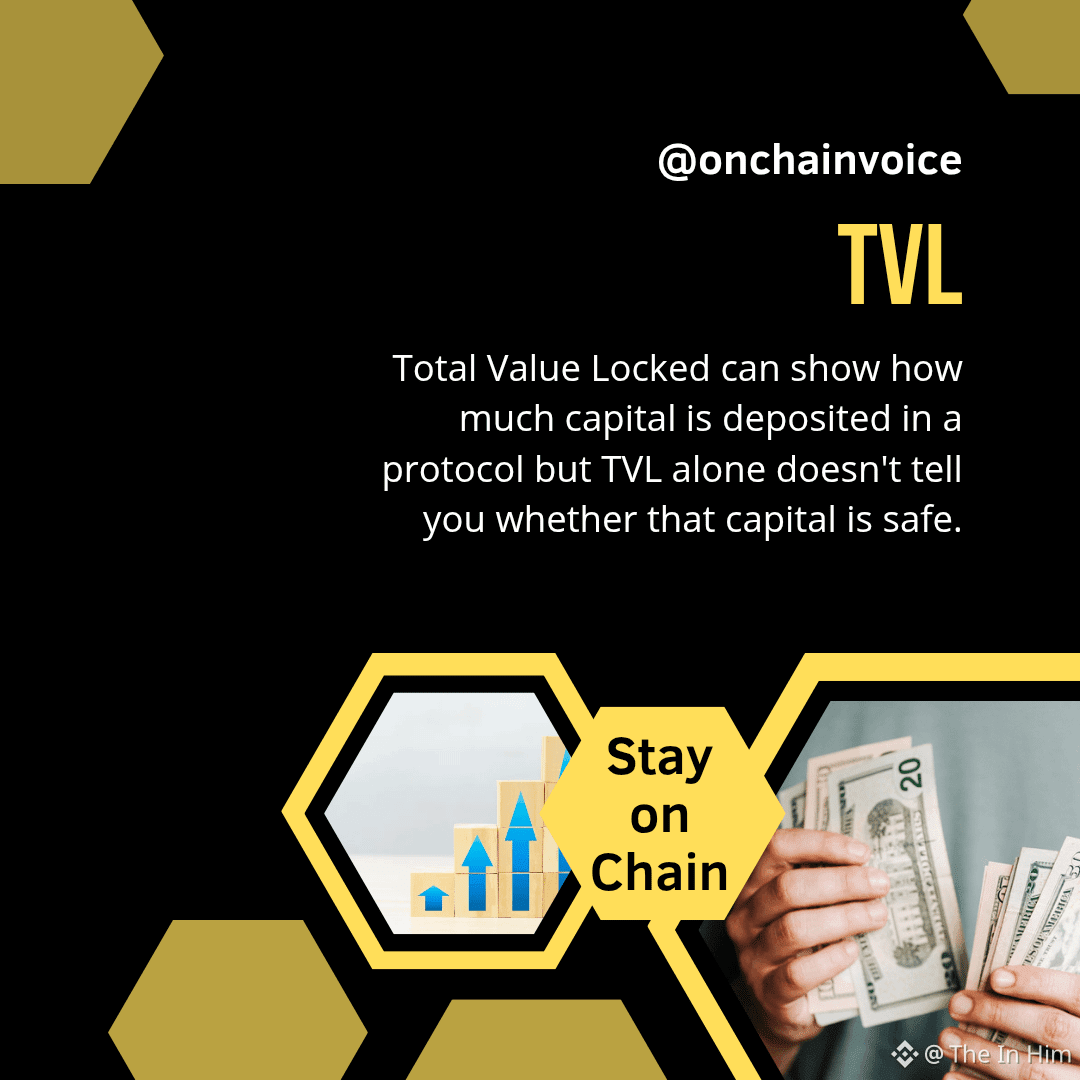
📊 TVL IS A SIGNAL, NOT A SAFETY SCORE
Total Value Locked (TVL) tells us how much capital is currently deposited in a DeFi protocol. It can be useful for understanding adoption and capital flows but a large TVL doesn't automatically mean a protocol is safe.
Before trusting the number, look deeper:
🔎 How does the protocol work?
🔐 Has the smart contract been audited?
⚠️ What are the major risks?
💧 How sustainable is the liquidity?
📉 What happens if users withdraw?
Don't let a big TVL number do your research for you.
👉 Follow @onchainvoice for simple, practical education on DeFi, blockchain & digital assets.
💾 Save this post for your next DeFi research session.
📲 Share it with someone who thinks high TVL automatically means low risk.
Learn the technology. Understand the value. Stay OnChain.
#onchainvoice #tvl #totalvaluelocked #defi #defieducation
1
52

🎓 What Is TVL (Total Value Locked) and Why Does It Matter?
On June 25, 2026, DeFi protocols processing billions in volume rely on TVL — but what does this metric actually tell us?
TVL (Total Value Locked) measures the total value of assets deposited in a DeFi protocol's smart contracts. It's denominated in USD and represents the fuel powering the protocol.
Why TVL matters:
- Higher TVL = more liquidity = better trading experience.
- Growing TVL = protocol is attracting capital = vote of confidence.
- Falling TVL = users withdrawing = potential loss of interest.
- TVL is to DeFi what market cap is to tokens.
Today's context:
- Ethereum $ETH ($198B mcap) has the highest TVL in DeFi.
- Hyperliquid $HYPE ($14.14B mcap) has growing TVL as traders deposit collateral for perps.
- TRON $TRX ($31.2B mcap) has massive TVL from its stablecoin ecosystem.
- The $264B in stablecoins includes significant TVL in DeFi lending and yield protocols.
📌 Key Takeaway:
TVL measures how much capital users trust a DeFi protocol with — it's the money under management metric for decentralized finance.
#TVL #DeFiEducation
#BinanceAlphaAlert
62
📚 What Is MEV?: Miner/Maximal Extractable Value and how it affects your trades
On July 19, 2026, MEV (Maximal Extractable Value) is the profit that block proposers can extract by reordering, including, or excluding transactions within a block. On Ethereum $ETH, this can result in users paying higher fees or getting worse execution prices than expected.
While originally a concern on Ethereum, MEV affects all smart contract platforms including Solana $SOL. Understanding MEV helps traders use strategies like slippage limits and private transaction relay services to protect against unfavorable execution.
📌 Key Takeaway:
MEV is an invisible tax that affects nearly every DeFi transaction. Being aware of it — and using tools to mitigate it — can meaningfully improve your trading execution outcomes.
#MEV #Ethereum #DeFiEducation
#BinanceAlphaAlert
📚 What Is MEV?: Miner/Maximal Extractable Value and how it affects your trades
On July 19, 2026, MEV (Maximal Extractable Value) is the profit that block proposers can extract by reordering, including, or excluding transactions within a block. On Ethereum $ETH , this can result in users paying higher fees or getting worse execution prices than expected.
While originally a concern on Ethereum, MEV affects all smart contract platforms including Solana $SOL . Understanding MEV helps traders use strategies like slippage limits and private transaction relay services to protect against unfavorable execution.
📌 Key Takeaway:
MEV is an invisible tax that affects nearly every DeFi transaction. Being aware of it — and using tools to mitigate it — can meaningfully improve your trading execution outcomes.
#MEV #Ethereum #DeFiEducation
#BinanceAlphaAlert
57
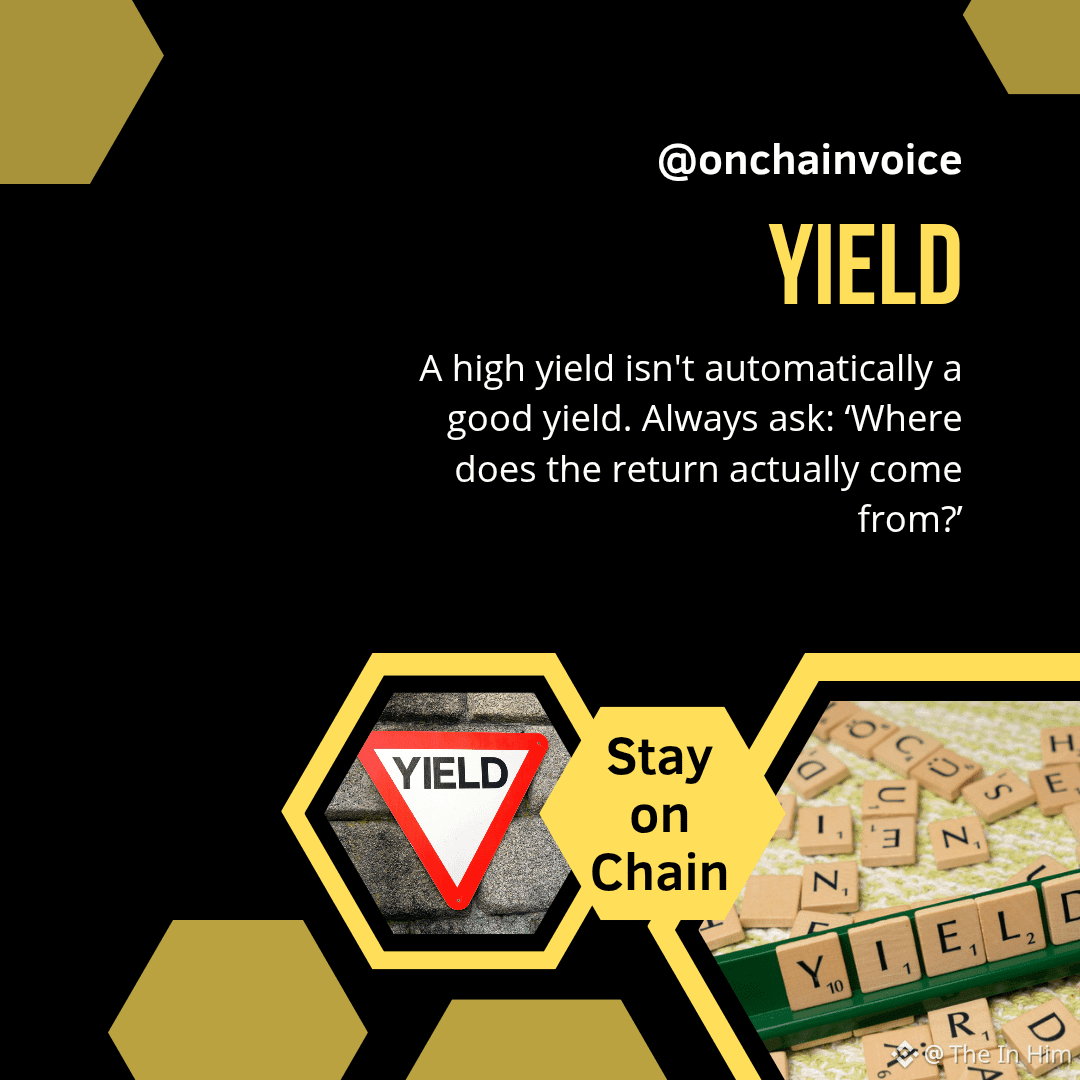
💰 HIGH YIELD ≠ LOW RISK
A big APY can look attractive but the percentage alone doesn't tell you the whole story.
Before putting your capital into a DeFi opportunity, ask:
🔎 Where is the yield coming from?
📊 Is it generated from real economic activity or temporary incentives?
⚠️ What risks are involved?
🔐 Is the smart contract secure?
📉 What happens if market conditions change?
Don't chase the number. Understand the mechanism behind it.
At OnChain Voice, we're here to help you look beyond the headline APY and understand how digital assets and DeFi actually work.
👉 Follow @onchainvoice for simple, practical digital-asset education.
💬 Save this post and share it with someone who needs to hear this before chasing yield.
Learn the technology. Understand the value. Stay OnChain.
#onchainvoice #defi #yield #cryptoeducation #defieducation
1
82
·
--
Trading crypto can be done in two main ways: spot and futures. Spot trading means you own the asset. You buy it, you hold it. Futures trading is different. You trade contracts that settle at a later date. This means you don't actually own the asset, just a promise to buy or sell it. $AVAX is one example where this applies. Understanding the difference is key to making informed decisions. #Trading #Leverage #DeFiEducation
Trading crypto can be done in two main ways: spot and futures. Spot trading means you own the asset. You buy it, you hold it. Futures trading is different. You trade contracts that settle at a later date. This means you don't actually own the asset, just a promise to buy or sell it. $AVAX is one example where this applies. Understanding the difference is key to making informed decisions. #Trading #Leverage #DeFiEducation
·
--
liquidity is simple. how fast you get in or out without moving the market. busy marketplace. buyers everywhere. sellers everywhere. you show up, trade hits, barely a ripple. HIGH LIQUIDITY. empty shop. one buyer. one seller. your order walks in and the chart jumps just to fill you. LOW LIQUIDITY. $SOL and $BNB do millions daily. tight spreads. deep books. you get filled near the mark. smaller tokens trade thin. a few thousand dollars swings the chart FIVE PERCENT. slippage eats your edge. market makers post both sides. they earn the spread. you get the fill. check the book BEFORE you size up. if depth ain't there, your order becomes the news. Liquidity #Trading #RiskManagement #DeFiEducation
liquidity is simple. how fast you get in or out without moving the market. busy marketplace. buyers everywhere. sellers everywhere. you show up, trade hits, barely a ripple. HIGH LIQUIDITY. empty shop. one buyer. one seller. your order walks in and the chart jumps just to fill you. LOW LIQUIDITY. $SOL and $BNB do millions daily. tight spreads. deep books. you get filled near the mark. smaller tokens trade thin. a few thousand dollars swings the chart FIVE PERCENT. slippage eats your edge. market makers post both sides. they earn the spread. you get the fill. check the book BEFORE you size up. if depth ain't there, your order becomes the news. Liquidity #Trading #RiskManagement #DeFiEducation
7
·
--
Blockchain's like a library, got 2 main ways to pick a validator. It's either Proof of Work, like a quiz, or Proof of Stake, like a vote. In Proof of Work, the validator's picked by who solves it first. In Proof of Stake, it's who has the most STAKE. $XRP an example, it's different but it works. Understanding this is KEY to getting into #Blockchain #DeFiEducation #CryptoBasics
Blockchain's like a library, got 2 main ways to pick a validator. It's either Proof of Work, like a quiz, or Proof of Stake, like a vote. In Proof of Work, the validator's picked by who solves it first. In Proof of Stake, it's who has the most STAKE. $XRP an example, it's different but it works. Understanding this is KEY to getting into #Blockchain #DeFiEducation #CryptoBasics
59
·
--
Hedging protects your portfolio from downside risk. It's like insurance - you take a position that offsets potential losses in another investment. I use it to reduce risk and volatility. You can hedge by buying a security that historically moves in the opposite direction of the asset you're protecting. If one asset loses value, the other may gain, OFFSETTING THE LOSS. It's not a guarantee, but it helps. $ETH #DeFiEducation #Blockchain #RiskManagement
Hedging protects your portfolio from downside risk. It's like insurance - you take a position that offsets potential losses in another investment. I use it to reduce risk and volatility. You can hedge by buying a security that historically moves in the opposite direction of the asset you're protecting. If one asset loses value, the other may gain, OFFSETTING THE LOSS. It's not a guarantee, but it helps. $ETH #DeFiEducation #Blockchain #RiskManagement
7
·
--
I'm trading with $100 and 10x leverage, so I control $1000. If the asset jumps 10%, I'm up $100. But if it tanks 10%, I LOSE EVERYTHING. It's high-risk, high-reward, not for everyone. $ETH is a popular choice, but you gotta manage risk carefully. Don't get caught slippin. #DeFiEducation #Leverage #TradingRisk $ETH
I'm trading with $100 and 10x leverage, so I control $1000. If the asset jumps 10%, I'm up $100. But if it tanks 10%, I LOSE EVERYTHING. It's high-risk, high-reward, not for everyone. $ETH is a popular choice, but you gotta manage risk carefully. Don't get caught slippin. #DeFiEducation #Leverage #TradingRisk $ETH
10
Войдите, чтобы посмотреть больше материала
Присоединяйтесь к пользователям криптовалют по всему миру на Binance Square
⚡️ Получайте новейшую и полезную информацию о криптоактивах.
💬 Нам доверяет крупнейшая в мире криптобиржа.
👍 Получите достоверные аналитические данные от верифицированных создателей контента.
Эл. почта/номер телефона
В тренде
1
#HotCPIDecemberHikePriced
Просмотров: 7,338
348 обсуждают
2
#AnthropicRejectsIPODelayValuationinQuestion
Просмотров: 137,969
1,334 обсуждают
3
#NvidiaInvestigatesAfterHuang’sAffairApology
Просмотров: 385,545
2,807 обсуждают
4
#CanNvidiaEarningsEaseMarketConcerns?
Просмотров: 12,064
294 обсуждают
5
#ADPWeeklyEstimateShowsUSPrivatePayrollsUp19750
Просмотров: 1,756
103 обсуждают
6
#US-IranTalksFuelStrongStockMarketRebound
Просмотров: 57,349
477 обсуждают
7
#BitcoinFiveWeeklyLosses
Просмотров: 406,050
3,002 обсуждают
8
#AIChipSlumpNasdaq
Просмотров: 225,718
1,713 обсуждают
9
#BitcoinSpotETFsPost$201MNetOutflowForThirdStraightDay
Просмотров: 1,124
23 обсуждают
10
#CryptoLiquidationsReach$1.16BIn24Hours
Просмотров: 52,050
73 обсуждают