
律动BlockBeats
110.3k Posts

律动BlockBeats
 Square Verified+
Report
Block User
律动BlockBeats是最具有影响力的中文媒体之一。为满足区块链初学者、爱好者、从业者、投资者等多种类型读者需求,内容类型囊括区块链及数字货币入门学习文章、热门事件报道、律动原创研究、行业现象深度剖析、知名大 V 观点分享、一线高质量采访等,内容展示形式包括图文、音频及视频。
6 Following
25.9K+ Followers
182.5K+ Liked
1 Badges
Posts
·
--
Bessent is accused of giving up the attempt to reverse the yield trend despite hopeless deficit reduction; delaying buys time to secure political leverage for the midterm electionBlockBeats message: On August 25, Fox Business reporter Charlie Gasparino posted that a knowledgeable Wall Street executive revealed that Bessent’s real objective is to “instill fear in bond short-sellers.” By using Treasury repos, adjusting the bond issuance structure, and even canceling super-long-end products such as 20-year notes, they would artificially push up bond prices—triggering large-scale passive covering by CTA trend-following funds. Ahead of the midterm election, they aim to keep the 10-year yield around 4.3%.
Latest data show that the global bond-market short positions held by CTA and trend-following strategy funds are approaching historical extremes. Measured by DV01, they are about $155 million. If prices rise by 2 standard deviations within a month, the combined scale of covering and re-buying could reach $150 million in DV01, and this would set a record high. Bessent, a former trader, in a reality where deficit reduction is unlikely to succeed, is not fundamentally trying to reverse the yield trend with his strategy. Instead, he is “buying time,” hoping to apply precise pressure on specific technical weaknesses in the market and to create a narrative of falling rates within the pre-election window for political leverage ahead of the vote.
Bessent is accused of giving up the attempt to reverse the yield trend despite hopeless deficit reduction; delaying buys time to secure political leverage for the midterm election
BlockBeats message: On August 25, Fox Business reporter Charlie Gasparino posted that a knowledgeable Wall Street executive revealed that Bessent’s real objective is to “instill fear in bond short-sellers.” By using Treasury repos, adjusting the bond issuance structure, and even canceling super-long-end products such as 20-year notes, they would artificially push up bond prices—triggering large-scale passive covering by CTA trend-following funds. Ahead of the midterm election, they aim to keep the 10-year yield around 4.3%.
Latest data show that the global bond-market short positions held by CTA and trend-following strategy funds are approaching historical extremes. Measured by DV01, they are about $155 million. If prices rise by 2 standard deviations within a month, the combined scale of covering and re-buying could reach $150 million in DV01, and this would set a record high. Bessent, a former trader, in a reality where deficit reduction is unlikely to succeed, is not fundamentally trying to reverse the yield trend with his strategy. Instead, he is “buying time,” hoping to apply precise pressure on specific technical weaknesses in the market and to create a narrative of falling rates within the pre-election window for political leverage ahead of the vote.
Latest data show that the global bond-market short positions held by CTA and trend-following strategy funds are approaching historical extremes. Measured by DV01, they are about $155 million. If prices rise by 2 standard deviations within a month, the combined scale of covering and re-buying could reach $150 million in DV01, and this would set a record high. Bessent, a former trader, in a reality where deficit reduction is unlikely to succeed, is not fundamentally trying to reverse the yield trend with his strategy. Instead, he is “buying time,” hoping to apply precise pressure on specific technical weaknesses in the market and to create a narrative of falling rates within the pre-election window for political leverage ahead of the vote.
38
·
--
Article
Goldman Sachs is bullish on Crypto brokerage platforms: Can the market support a new cycle?TL;DR
Goldman Sachs remains cautiously optimistic about brokerages and crypto stocks in the second half of the year, with the core support coming from the fall recovery of traditional trading and anticipated market expansion, while the crypto recovery only provides additional upside potential.
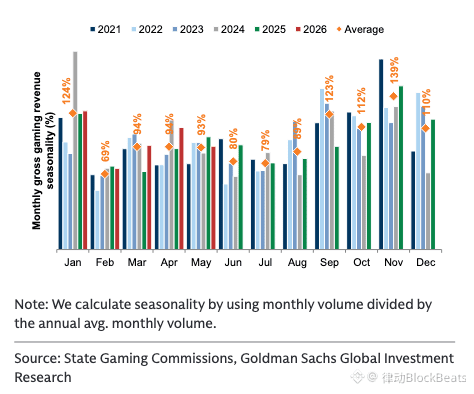
Retail trading cooled significantly in the summer, but after adjusting for account growth, trading volume per unit account is still below the 2021 high, and the current trading cycle has not yet been confirmed to have peaked.
• Prediction markets are becoming a new growth engine for brokerages, with the resumption of sporting events and the approaching US midterm elections potentially driving a rebound in trading volume starting in September.
Crypto trading has been declining for about 10 consecutive months. The recent rebound in market capitalization can only be confirmed as a turning point in the cycle if it continues and is transmitted to trading volume.
Goldman Sachs is bullish on Crypto brokerage platforms: Can the market support a new cycle?
TL;DR
Goldman Sachs remains cautiously optimistic about brokerages and crypto stocks in the second half of the year, with the core support coming from the fall recovery of traditional trading and anticipated market expansion, while the crypto recovery only provides additional upside potential.
Retail trading cooled significantly in the summer, but after adjusting for account growth, trading volume per unit account is still below the 2021 high, and the current trading cycle has not yet been confirmed to have peaked.
• Prediction markets are becoming a new growth engine for brokerages, with the resumption of sporting events and the approaching US midterm elections potentially driving a rebound in trading volume starting in September.
Crypto trading has been declining for about 10 consecutive months. The recent rebound in market capitalization can only be confirmed as a turning point in the cycle if it continues and is transmitted to trading volume.
Goldman Sachs remains cautiously optimistic about brokerages and crypto stocks in the second half of the year, with the core support coming from the fall recovery of traditional trading and anticipated market expansion, while the crypto recovery only provides additional upside potential.
Retail trading cooled significantly in the summer, but after adjusting for account growth, trading volume per unit account is still below the 2021 high, and the current trading cycle has not yet been confirmed to have peaked.
• Prediction markets are becoming a new growth engine for brokerages, with the resumption of sporting events and the approaching US midterm elections potentially driving a rebound in trading volume starting in September.
Crypto trading has been declining for about 10 consecutive months. The recent rebound in market capitalization can only be confirmed as a turning point in the cycle if it continues and is transmitted to trading volume.
6
·
--
Bitunix analyst: U.S. Treasury yields are unlikely to be brought down by repos; structural pressure on long-end rates remainsBlockBeats message: On August 25, U.S. long-term Treasury yields remained elevated. The Treasury Department’s expansion of long-term Treasury repo operations had limited effect. Repo primarily improves market liquidity, but it is difficult to change the core pricing of long-end rates. What truly determines yields are the federal budget deficit, inflation, Treasury supply, and global capital allocation. Against the backdrop of continued demand for U.S. financing and sustained AI-related capital expenditures driving long-term funding needs, the term premium demanded by the market may still remain high.
Pressure on U.S. Treasuries is also linked with global bond markets and energy-related risks. Japanese long-term bond yields are at a high level; if they rise further, it could increase incentives for Japanese funds to flow back home, creating additional sell pressure on U.S. Treasuries. At the same time, risks such as the Strait of Hormuz, Russian refineries, and shipping through the Red Sea could push up costs for refined products, insurance, and transportation, increasing uncertainty around global inflation. If the U.S. expands secondary sanctions on Iran, it may also further raise energy and trade costs.
Bitunix analyst: U.S. Treasury yields are unlikely to be brought down by repos; structural pressure on long-end rates remains
BlockBeats message: On August 25, U.S. long-term Treasury yields remained elevated. The Treasury Department’s expansion of long-term Treasury repo operations had limited effect. Repo primarily improves market liquidity, but it is difficult to change the core pricing of long-end rates. What truly determines yields are the federal budget deficit, inflation, Treasury supply, and global capital allocation. Against the backdrop of continued demand for U.S. financing and sustained AI-related capital expenditures driving long-term funding needs, the term premium demanded by the market may still remain high.
Pressure on U.S. Treasuries is also linked with global bond markets and energy-related risks. Japanese long-term bond yields are at a high level; if they rise further, it could increase incentives for Japanese funds to flow back home, creating additional sell pressure on U.S. Treasuries. At the same time, risks such as the Strait of Hormuz, Russian refineries, and shipping through the Red Sea could push up costs for refined products, insurance, and transportation, increasing uncertainty around global inflation. If the U.S. expands secondary sanctions on Iran, it may also further raise energy and trade costs.
Pressure on U.S. Treasuries is also linked with global bond markets and energy-related risks. Japanese long-term bond yields are at a high level; if they rise further, it could increase incentives for Japanese funds to flow back home, creating additional sell pressure on U.S. Treasuries. At the same time, risks such as the Strait of Hormuz, Russian refineries, and shipping through the Red Sea could push up costs for refined products, insurance, and transportation, increasing uncertainty around global inflation. If the U.S. expands secondary sanctions on Iran, it may also further raise energy and trade costs.
70
·
--
On Hyperliquid, the top three long position holders of BTC, ETH, and HYPE did not reduce holdings; Maji stages a comeback and makes over $10.8 millionBlockBeats report: On August 25, according to TradingBeats (formerly Hyperinsight) monitoring, the recent crypto market has not changed its strong momentum. On Hyperliquid, the overall top long positions in BTC, ETH, and HYPE remain at high levels, and there has been no sign of position reduction.
BTC’s top bearish position holder Garrett Jin (an insider whale agent with id 1011) currently holds approximately $102 million and 5x BTC long positions, with unrealized profit of about $5.85 million; the second-largest long position holder 0x15a4...dfdb holds approximately $80.73 million and 40x BTC long positions, with unrealized profit of about $18.38 million; the third-largest long position holder 0x8ea8...edbc holds approximately $80.72 million and 4x BTC long positions, with unrealized profit of about $7.94 million.
On Hyperliquid, the top three long position holders of BTC, ETH, and HYPE did not reduce holdings; Maji stages a comeback and makes over $10.8 million
BlockBeats report: On August 25, according to TradingBeats (formerly Hyperinsight) monitoring, the recent crypto market has not changed its strong momentum. On Hyperliquid, the overall top long positions in BTC, ETH, and HYPE remain at high levels, and there has been no sign of position reduction.
BTC’s top bearish position holder Garrett Jin (an insider whale agent with id 1011) currently holds approximately $102 million and 5x BTC long positions, with unrealized profit of about $5.85 million; the second-largest long position holder 0x15a4...dfdb holds approximately $80.73 million and 40x BTC long positions, with unrealized profit of about $18.38 million; the third-largest long position holder 0x8ea8...edbc holds approximately $80.72 million and 4x BTC long positions, with unrealized profit of about $7.94 million.
BTC’s top bearish position holder Garrett Jin (an insider whale agent with id 1011) currently holds approximately $102 million and 5x BTC long positions, with unrealized profit of about $5.85 million; the second-largest long position holder 0x15a4...dfdb holds approximately $80.73 million and 40x BTC long positions, with unrealized profit of about $18.38 million; the third-largest long position holder 0x8ea8...edbc holds approximately $80.72 million and 4x BTC long positions, with unrealized profit of about $7.94 million.
317
·
--
Who really made money in the crypto rebound? The ETH major long institutions take profit and exit, while the “BTC OG insider whale” is still losingBlockBeats message: On August 25, according to TradingBeats monitoring, among the top whale accounts whose funds have surged significantly recently, HYPE’s largest long position still leads with an unrealized gain of about $58.14 million; the BIT-associated address has already fully exited ETH, realizing a net profit of about $31.26 million.
BTC OG insider whale (BTC largest long): Long positions of 1,268.3 BTC have an unrealized gain of about $5.6 million, but during the same period ZEC short positions are at an unrealized loss of about $13.4 million; with all positions combined, the account is still down by about $7.8 million—still not profitable.
BIT-associated whales (ETH largest long): Four linked addresses previously collectively went long with about 120,000 ETH, and have now fully liquidated. After deducting funding fees and trading fees, the net profit is about $31.26 million.
Who really made money in the crypto rebound? The ETH major long institutions take profit and exit, while the “BTC OG insider whale” is still losing
BlockBeats message: On August 25, according to TradingBeats monitoring, among the top whale accounts whose funds have surged significantly recently, HYPE’s largest long position still leads with an unrealized gain of about $58.14 million; the BIT-associated address has already fully exited ETH, realizing a net profit of about $31.26 million.
BTC OG insider whale (BTC largest long): Long positions of 1,268.3 BTC have an unrealized gain of about $5.6 million, but during the same period ZEC short positions are at an unrealized loss of about $13.4 million; with all positions combined, the account is still down by about $7.8 million—still not profitable.
BIT-associated whales (ETH largest long): Four linked addresses previously collectively went long with about 120,000 ETH, and have now fully liquidated. After deducting funding fees and trading fees, the net profit is about $31.26 million.
BTC OG insider whale (BTC largest long): Long positions of 1,268.3 BTC have an unrealized gain of about $5.6 million, but during the same period ZEC short positions are at an unrealized loss of about $13.4 million; with all positions combined, the account is still down by about $7.8 million—still not profitable.
BIT-associated whales (ETH largest long): Four linked addresses previously collectively went long with about 120,000 ETH, and have now fully liquidated. After deducting funding fees and trading fees, the net profit is about $31.26 million.
355
·
--
Bitunix analyst: U.S. Treasury yields are unlikely to be pushed down by repos; fiscal deficits, inflation, and competition for global funds create long-end rate pressureBlockBeats message: On August 25, U.S. long-end Treasury yields have remained at elevated levels. The recent move by the U.S. Treasury to expand long-term Treasury repo operations has had only limited effect. Institutions including Goldman Sachs and Wells Fargo believe that simply increasing the repo size is not enough to change the pricing center for long-end rates. What truly determines the direction of yields is still inflation, economic growth, the federal budget deficit, Treasury supply, and global capital allocation. This means that when the U.S. budget deficit remains high, government financing needs continue to rise, and enterprise AI-related capital spending drives a large volume of long-term bond issuance, what the Treasury can improve is more about market liquidity rather than the underlying long-end supply-demand imbalance itself.
Bitunix analyst: U.S. Treasury yields are unlikely to be pushed down by repos; fiscal deficits, inflation, and competition for global funds create long-end rate pressure
BlockBeats message: On August 25, U.S. long-end Treasury yields have remained at elevated levels. The recent move by the U.S. Treasury to expand long-term Treasury repo operations has had only limited effect. Institutions including Goldman Sachs and Wells Fargo believe that simply increasing the repo size is not enough to change the pricing center for long-end rates. What truly determines the direction of yields is still inflation, economic growth, the federal budget deficit, Treasury supply, and global capital allocation. This means that when the U.S. budget deficit remains high, government financing needs continue to rise, and enterprise AI-related capital spending drives a large volume of long-term bond issuance, what the Treasury can improve is more about market liquidity rather than the underlying long-end supply-demand imbalance itself.
337
·
--

Article
Besant makes a move to save US Treasuries; former mentor openly criticizes it: "This is a mistake"Original title: ("Besant’s teacher" strongly opposes Besant: Rebuying US Treasuries is consuming "assets accumulated over two centuries" — the credibility of US Treasuries)
Original author: Long Yue, Wall Street News
Billionaire investor Stanley Druckenmiller published an article openly criticizing his former student and U.S. Treasury Secretary Besant for expanding the long-term Treasury buyback program, calling the move "wrong." He believes that current data on inflation, employment, and the deficit do not support suppressing yields. In his view, this is essentially yield management rather than liquidity management, and it will only subsidize fiscal delay and consume the credibility of U.S. Treasuries. Moreover, history shows that yield management has never ended well. The former teacher and student, who once communicated almost every day, are now clashing head-on over the management of the U.S. Treasury market.
Besant makes a move to save US Treasuries; former mentor openly criticizes it: "This is a mistake"
Original title: ("Besant’s teacher" strongly opposes Besant: Rebuying US Treasuries is consuming "assets accumulated over two centuries" — the credibility of US Treasuries)
Original author: Long Yue, Wall Street News
Billionaire investor Stanley Druckenmiller published an article openly criticizing his former student and U.S. Treasury Secretary Besant for expanding the long-term Treasury buyback program, calling the move "wrong." He believes that current data on inflation, employment, and the deficit do not support suppressing yields. In his view, this is essentially yield management rather than liquidity management, and it will only subsidize fiscal delay and consume the credibility of U.S. Treasuries. Moreover, history shows that yield management has never ended well. The former teacher and student, who once communicated almost every day, are now clashing head-on over the management of the U.S. Treasury market.
Original author: Long Yue, Wall Street News
Billionaire investor Stanley Druckenmiller published an article openly criticizing his former student and U.S. Treasury Secretary Besant for expanding the long-term Treasury buyback program, calling the move "wrong." He believes that current data on inflation, employment, and the deficit do not support suppressing yields. In his view, this is essentially yield management rather than liquidity management, and it will only subsidize fiscal delay and consume the credibility of U.S. Treasuries. Moreover, history shows that yield management has never ended well. The former teacher and student, who once communicated almost every day, are now clashing head-on over the management of the U.S. Treasury market.
221
·
--
BlockBeats message: On August 25, U.S. Las Vegas businessman Brent Kovar was convicted by a jury for his involvement in a $24 million crypto Ponzi scheme and faces up to 280 years in prison. The U.S. Department of Justice said Kovar used investors’ funds to run Profit Connect and used new money, under the guise of mining returns, to repay old investors.
BlockBeats message: On August 25, U.S. Las Vegas businessman Brent Kovar was convicted by a jury for his involvement in a $24 million crypto Ponzi scheme and faces up to 280 years in prison. The U.S. Department of Justice said Kovar used investors’ funds to run Profit Connect and used new money, under the guise of mining returns, to repay old investors.
284
·
--
Liquidity improvements get upgraded again: bonds, gold, and Bitcoin rise together—why do tech stocks keep falling?TL;DR
· US Treasuries, gold, and Bitcoin rise in sync, suggesting that funds are starting to price in falling trading rates and easing geopolitical risks, rather than following a single safe-haven logic.
· Market attention shifts from expanding US Treasury repo activity to whether the Treasury will use TGA cash to provide funding directly; the latter implies more operational room.
· Repo operations can improve long-dated bond liquidity and supply/demand expectations, but they are unlikely to eliminate long-end rate pressures driven by fiscal deficits, inflation, and term premium.
· The Iran risk temporarily shifts from military conflict to secondary sanctions. Combined with the resumption of oil tanker passage through the Strait of Hormuz, this pushes down the risk premium for crude oil.
Liquidity improvements get upgraded again: bonds, gold, and Bitcoin rise together—why do tech stocks keep falling?
TL;DR
· US Treasuries, gold, and Bitcoin rise in sync, suggesting that funds are starting to price in falling trading rates and easing geopolitical risks, rather than following a single safe-haven logic.
· Market attention shifts from expanding US Treasury repo activity to whether the Treasury will use TGA cash to provide funding directly; the latter implies more operational room.
· Repo operations can improve long-dated bond liquidity and supply/demand expectations, but they are unlikely to eliminate long-end rate pressures driven by fiscal deficits, inflation, and term premium.
· The Iran risk temporarily shifts from military conflict to secondary sanctions. Combined with the resumption of oil tanker passage through the Strait of Hormuz, this pushes down the risk premium for crude oil.
· US Treasuries, gold, and Bitcoin rise in sync, suggesting that funds are starting to price in falling trading rates and easing geopolitical risks, rather than following a single safe-haven logic.
· Market attention shifts from expanding US Treasury repo activity to whether the Treasury will use TGA cash to provide funding directly; the latter implies more operational room.
· Repo operations can improve long-dated bond liquidity and supply/demand expectations, but they are unlikely to eliminate long-end rate pressures driven by fiscal deficits, inflation, and term premium.
· The Iran risk temporarily shifts from military conflict to secondary sanctions. Combined with the resumption of oil tanker passage through the Strait of Hormuz, this pushes down the risk premium for crude oil.
370
·
--
Suspected “8.19 insider whale” ETH long position has reached $11.5 million in profit, with the principal doubledBlockBeats messages: On August 25, according to TradingBeats (formerly Hyperinsight), on August 19, a “suspected 8.19 insider whale” reportedly made a one-time, heavily concentrated bet of $38.72 million about an hour before ETH began its upward move. As of now, the whale has not sold a single ETH, and its unrealized profit has expanded to $11.5 million.
As of the time of publication, ETH is trading at $2,509.8, up about 29.6% from its $1,936 entry cost. The address continues to hold 20,000 ETH using 4x full-position leverage, with the value of the long position rising to approximately $50.196 million and a return rate of 118.6%.
It is reported that this new address was activated on August 19. Within about two minutes, it received $20 million in three transactions from the same source address. Then, at 20:52, it placed a single order to open a long position of 20,000 ETH. It is only about one hour away from the time ETH kicked off the main rally. There has been no addition or reduction of the position, and no take-profit or stop-loss orders have appeared yet.
Suspected “8.19 insider whale” ETH long position has reached $11.5 million in profit, with the principal doubled
BlockBeats messages: On August 25, according to TradingBeats (formerly Hyperinsight), on August 19, a “suspected 8.19 insider whale” reportedly made a one-time, heavily concentrated bet of $38.72 million about an hour before ETH began its upward move. As of now, the whale has not sold a single ETH, and its unrealized profit has expanded to $11.5 million.
As of the time of publication, ETH is trading at $2,509.8, up about 29.6% from its $1,936 entry cost. The address continues to hold 20,000 ETH using 4x full-position leverage, with the value of the long position rising to approximately $50.196 million and a return rate of 118.6%.
It is reported that this new address was activated on August 19. Within about two minutes, it received $20 million in three transactions from the same source address. Then, at 20:52, it placed a single order to open a long position of 20,000 ETH. It is only about one hour away from the time ETH kicked off the main rally. There has been no addition or reduction of the position, and no take-profit or stop-loss orders have appeared yet.
As of the time of publication, ETH is trading at $2,509.8, up about 29.6% from its $1,936 entry cost. The address continues to hold 20,000 ETH using 4x full-position leverage, with the value of the long position rising to approximately $50.196 million and a return rate of 118.6%.
It is reported that this new address was activated on August 19. Within about two minutes, it received $20 million in three transactions from the same source address. Then, at 20:52, it placed a single order to open a long position of 20,000 ETH. It is only about one hour away from the time ETH kicked off the main rally. There has been no addition or reduction of the position, and no take-profit or stop-loss orders have appeared yet.
1
465
·
--
Verified
Bessent’s "mentor" raises a high-profile critique: U.S. Treasury yields are sending a fiscal warning, and the Treasury should not suppress the signalBlockBeats message: On August 25, legendary investor Stanley Druckenmiller turned his attention to the U.S. Treasury. In a commentary article published by the Wall Street Journal on August 25 Beijing time, he criticized that the U.S. Treasury has recently expanded the scale of long-term Treasury repurchase agreements. While it appears to be liquidity management, its actual effect will weaken the bond market’s ability to price U.S. fiscal risk.
The background to this incident is that yields on the long end of U.S. Treasuries have recently remained at elevated levels. The 30-year Treasury yield had previously climbed to a highest point in 19 years. On August 19, the U.S. Treasury announced that it would increase the scale of long-term Treasury repurchase operations from the 10- to 30-year maturities—from $2 billion per operation to at least $4 billion. The execution period runs from September 9 to November 4. The official explanation was that the move supports liquidity in the long-end Treasury market, but Druckenmiller believes that at the time the market was not experiencing abnormal conditions such as auction failures, trading chaos, or forced deleveraging. He argues that if the Treasury increases its repurchase at this moment, it is likely to be interpreted by the market as an attempt to suppress long-end yields.
Bessent’s "mentor" raises a high-profile critique: U.S. Treasury yields are sending a fiscal warning, and the Treasury should not suppress the signal
BlockBeats message: On August 25, legendary investor Stanley Druckenmiller turned his attention to the U.S. Treasury. In a commentary article published by the Wall Street Journal on August 25 Beijing time, he criticized that the U.S. Treasury has recently expanded the scale of long-term Treasury repurchase agreements. While it appears to be liquidity management, its actual effect will weaken the bond market’s ability to price U.S. fiscal risk.
The background to this incident is that yields on the long end of U.S. Treasuries have recently remained at elevated levels. The 30-year Treasury yield had previously climbed to a highest point in 19 years. On August 19, the U.S. Treasury announced that it would increase the scale of long-term Treasury repurchase operations from the 10- to 30-year maturities—from $2 billion per operation to at least $4 billion. The execution period runs from September 9 to November 4. The official explanation was that the move supports liquidity in the long-end Treasury market, but Druckenmiller believes that at the time the market was not experiencing abnormal conditions such as auction failures, trading chaos, or forced deleveraging. He argues that if the Treasury increases its repurchase at this moment, it is likely to be interpreted by the market as an attempt to suppress long-end yields.
The background to this incident is that yields on the long end of U.S. Treasuries have recently remained at elevated levels. The 30-year Treasury yield had previously climbed to a highest point in 19 years. On August 19, the U.S. Treasury announced that it would increase the scale of long-term Treasury repurchase operations from the 10- to 30-year maturities—from $2 billion per operation to at least $4 billion. The execution period runs from September 9 to November 4. The official explanation was that the move supports liquidity in the long-end Treasury market, but Druckenmiller believes that at the time the market was not experiencing abnormal conditions such as auction failures, trading chaos, or forced deleveraging. He argues that if the Treasury increases its repurchase at this moment, it is likely to be interpreted by the market as an attempt to suppress long-end yields.
403
·
--
Article
Selling monkeys to extend life finally brings a turnaround: Machi Big Brother turns $150,000 principal into $12.72 million in three daysOriginal title: (Selling monkeys to extend life finally brings a turnaround: Machi Big Brother turns $150,000 principal into $12.72 million in three days)
Original author: angelilu, Foresight News
As the tide of market recovery rolls in, the undercurrents beneath the chain have long been churning into surging waves. Machi Big Brother once again becomes the star of the on-chain public opinion arena.
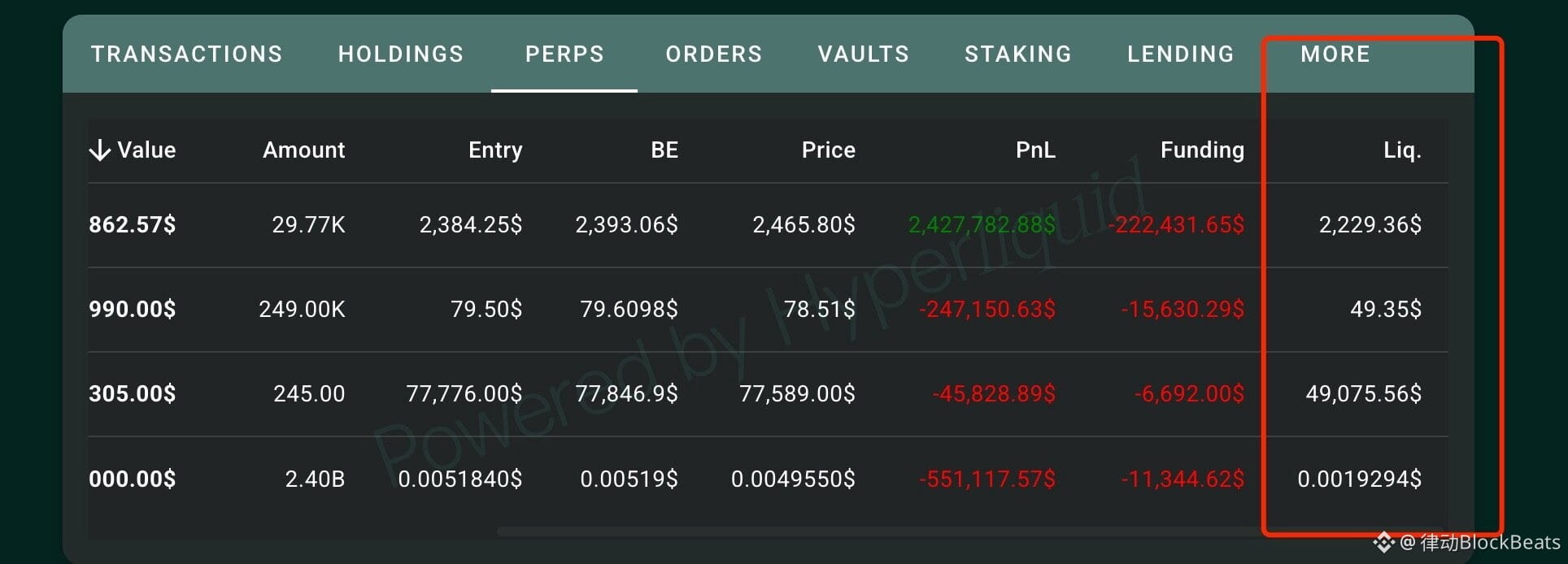
Over the past ten months, this crypto whale has been knocked into the water by almost every wave of volatility, and a track record of sustained losses reads like a grim report card. But last week, during a one-way market, using $150,000 in principal and with extreme leverage, he rolled a profitable long position into $12.72 million within three days—earning $12.5 million in profit in a single trade, with his principal multiplying 84 times.
Selling monkeys to extend life finally brings a turnaround: Machi Big Brother turns $150,000 principal into $12.72 million in three days
Original title: (Selling monkeys to extend life finally brings a turnaround: Machi Big Brother turns $150,000 principal into $12.72 million in three days)
Original author: angelilu, Foresight News
As the tide of market recovery rolls in, the undercurrents beneath the chain have long been churning into surging waves. Machi Big Brother once again becomes the star of the on-chain public opinion arena.
Over the past ten months, this crypto whale has been knocked into the water by almost every wave of volatility, and a track record of sustained losses reads like a grim report card. But last week, during a one-way market, using $150,000 in principal and with extreme leverage, he rolled a profitable long position into $12.72 million within three days—earning $12.5 million in profit in a single trade, with his principal multiplying 84 times.
Original author: angelilu, Foresight News
As the tide of market recovery rolls in, the undercurrents beneath the chain have long been churning into surging waves. Machi Big Brother once again becomes the star of the on-chain public opinion arena.
Over the past ten months, this crypto whale has been knocked into the water by almost every wave of volatility, and a track record of sustained losses reads like a grim report card. But last week, during a one-way market, using $150,000 in principal and with extreme leverage, he rolled a profitable long position into $12.72 million within three days—earning $12.5 million in profit in a single trade, with his principal multiplying 84 times.
1
276
·
--
BlockBeats message, August 25, according to Lookonchain monitoring, the unrealized gains on BTC holdings of Strategy, the Bitcoin treasury company under Michael Saylor, have improved significantly over the past week: the previous unrealized loss of more than $9.5 billion has turned into an unrealized gain of more than $4.7 billion.
BlockBeats message, August 25, according to Lookonchain monitoring, the unrealized gains on BTC holdings of Strategy, the Bitcoin treasury company under Michael Saylor, have improved significantly over the past week: the previous unrealized loss of more than $9.5 billion has turned into an unrealized gain of more than $4.7 billion.
421
·
--

Article
Top Traders Explain the Logic Behind Bitcoin’s Blowout—What Exactly Is the Market Trading?Video Title: The Godfather Of Crypto Trading: My Final Warning To Bitcoin Holders
Video Source: Altcoin Daily
Compiled by: Peggy, BlockBeats
Editor’s Note: On August 19, the U.S. Department of the Treasury announced that, starting September 9, the maximum amount for single-transaction liquidity support repos for 10- to 30-year long-term U.S. Treasury bonds will be increased from $2 billion to at least $4 billion. Although the policy scale is not large compared with the U.S. Treasury market of more than $30 trillion, after the announcement was released, long-term U.S. Treasury yields fell rapidly, the U.S. dollar weakened, and Bitcoin once again broke above $70,000.
Top Traders Explain the Logic Behind Bitcoin’s Blowout—What Exactly Is the Market Trading?
Video Title: The Godfather Of Crypto Trading: My Final Warning To Bitcoin Holders
Video Source: Altcoin Daily
Compiled by: Peggy, BlockBeats
Editor’s Note: On August 19, the U.S. Department of the Treasury announced that, starting September 9, the maximum amount for single-transaction liquidity support repos for 10- to 30-year long-term U.S. Treasury bonds will be increased from $2 billion to at least $4 billion. Although the policy scale is not large compared with the U.S. Treasury market of more than $30 trillion, after the announcement was released, long-term U.S. Treasury yields fell rapidly, the U.S. dollar weakened, and Bitcoin once again broke above $70,000.
Video Source: Altcoin Daily
Compiled by: Peggy, BlockBeats
Editor’s Note: On August 19, the U.S. Department of the Treasury announced that, starting September 9, the maximum amount for single-transaction liquidity support repos for 10- to 30-year long-term U.S. Treasury bonds will be increased from $2 billion to at least $4 billion. Although the policy scale is not large compared with the U.S. Treasury market of more than $30 trillion, after the announcement was released, long-term U.S. Treasury yields fell rapidly, the U.S. dollar weakened, and Bitcoin once again broke above $70,000.
1
551
·
--
Article
Can Treasury Repo Save the Market? Hayes’ Three Scenario Predictions for BTC’s OutlookOriginal Title: Same Same But Different
Original Author: Arthur Hayes, co-founder of BitMEX
Original Compilation: Saoirse, Foresight News
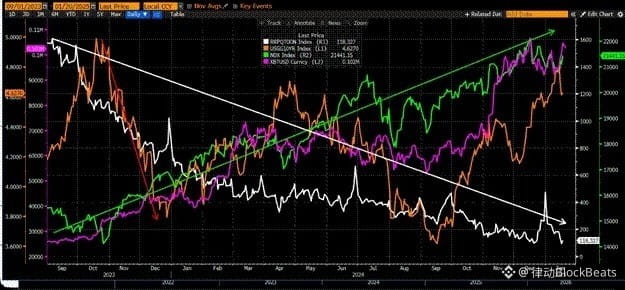
Editor’s Note: U.S. Treasury yields are approaching the sensitive 5% threshold, and global risk assets have come under pressure accordingly. The article opens with the narrative play in the bond market, then shifts the camera to the crypto market. It reviews past experiences in which falling reverse repo rates helped fuel a bull market, and, together with current market correlation and linkages, analyzes the real effectiveness and constraints of the Ministry of Finance’s bond repurchase policy. It uses this to forecast potential changes in market conditions for crypto assets such as Bitcoin amid a shift in liquidity. The following is the original article content:
Can Treasury Repo Save the Market? Hayes’ Three Scenario Predictions for BTC’s Outlook
Original Title: Same Same But Different
Original Author: Arthur Hayes, co-founder of BitMEX
Original Compilation: Saoirse, Foresight News
Editor’s Note: U.S. Treasury yields are approaching the sensitive 5% threshold, and global risk assets have come under pressure accordingly. The article opens with the narrative play in the bond market, then shifts the camera to the crypto market. It reviews past experiences in which falling reverse repo rates helped fuel a bull market, and, together with current market correlation and linkages, analyzes the real effectiveness and constraints of the Ministry of Finance’s bond repurchase policy. It uses this to forecast potential changes in market conditions for crypto assets such as Bitcoin amid a shift in liquidity. The following is the original article content:
Original Author: Arthur Hayes, co-founder of BitMEX
Original Compilation: Saoirse, Foresight News
Editor’s Note: U.S. Treasury yields are approaching the sensitive 5% threshold, and global risk assets have come under pressure accordingly. The article opens with the narrative play in the bond market, then shifts the camera to the crypto market. It reviews past experiences in which falling reverse repo rates helped fuel a bull market, and, together with current market correlation and linkages, analyzes the real effectiveness and constraints of the Ministry of Finance’s bond repurchase policy. It uses this to forecast potential changes in market conditions for crypto assets such as Bitcoin amid a shift in liquidity. The following is the original article content:
1
442
·
--
Arthur Hayes: Maelstrom is fully loaded with risk assets, with Bitcoin, Ethereum, and others as the core betBlockBeats message, August 25: Arthur Hayes posted that the Maelstrom fund is currently in a state of “maximum risk exposure.” The core bets include Bitcoin, Ether, Ethena, and Ether.fi. Hayes believes that regardless of whether US Treasury Secretary Bessent increases dollar liquidity at a fast or slow pace, Bitcoin will continue to rise, but market volatility will also intensify. Therefore, unless you are a full-time trader, leverage should not be used.
Hayes also said that recent actions by Bessent to expand the scale of long-term US Treasury repo operations could further increase dollar liquidity and push Bitcoin and other risk assets higher. He expects that if US Treasury yields move close to 5% again, the US Treasury may further expand repo operations or take other measures to increase dollar liquidity.
Arthur Hayes: Maelstrom is fully loaded with risk assets, with Bitcoin, Ethereum, and others as the core bet
BlockBeats message, August 25: Arthur Hayes posted that the Maelstrom fund is currently in a state of “maximum risk exposure.” The core bets include Bitcoin, Ether, Ethena, and Ether.fi. Hayes believes that regardless of whether US Treasury Secretary Bessent increases dollar liquidity at a fast or slow pace, Bitcoin will continue to rise, but market volatility will also intensify. Therefore, unless you are a full-time trader, leverage should not be used.
Hayes also said that recent actions by Bessent to expand the scale of long-term US Treasury repo operations could further increase dollar liquidity and push Bitcoin and other risk assets higher. He expects that if US Treasury yields move close to 5% again, the US Treasury may further expand repo operations or take other measures to increase dollar liquidity.
Hayes also said that recent actions by Bessent to expand the scale of long-term US Treasury repo operations could further increase dollar liquidity and push Bitcoin and other risk assets higher. He expects that if US Treasury yields move close to 5% again, the US Treasury may further expand repo operations or take other measures to increase dollar liquidity.
298
·
--
Verified

Article
A New Project on the ZEC Track: Vitalik’s Only Coin Purchase in Two YearsIn a hot market, after a two-year wait, Vitalik finally made a move again.
Last month, Vitalik put 16 ETH (about $28,000) into the first-round CCA public auction on The Interfold at Uniswap. And the last time Vitalik made a large public investment into a new project token—or related assets—was back in November 2024, when he invested 32 ETH (about $107,000) in the Truemarkets NFT public sale.
On August 19, $FOLD conducted its TGE, and then surged to more than 7x at its peak. We need to look at these gains in two stages. On August 23, Upbit listed $FOLD, instantly doubling the coin’s price and briefly reaching a market cap of around $230 million. Before that, it was almost entirely driven by the narrative of “Vitalik bought it.” The on-chain community’s consensus formed spontaneously around this story, lifting the coin’s market cap from about $28 million to a peak of roughly $140 million.
A New Project on the ZEC Track: Vitalik’s Only Coin Purchase in Two Years
In a hot market, after a two-year wait, Vitalik finally made a move again.
Last month, Vitalik put 16 ETH (about $28,000) into the first-round CCA public auction on The Interfold at Uniswap. And the last time Vitalik made a large public investment into a new project token—or related assets—was back in November 2024, when he invested 32 ETH (about $107,000) in the Truemarkets NFT public sale.
On August 19, $FOLD conducted its TGE, and then surged to more than 7x at its peak. We need to look at these gains in two stages. On August 23, Upbit listed $FOLD, instantly doubling the coin’s price and briefly reaching a market cap of around $230 million. Before that, it was almost entirely driven by the narrative of “Vitalik bought it.” The on-chain community’s consensus formed spontaneously around this story, lifting the coin’s market cap from about $28 million to a peak of roughly $140 million.
Last month, Vitalik put 16 ETH (about $28,000) into the first-round CCA public auction on The Interfold at Uniswap. And the last time Vitalik made a large public investment into a new project token—or related assets—was back in November 2024, when he invested 32 ETH (about $107,000) in the Truemarkets NFT public sale.
On August 19, $FOLD conducted its TGE, and then surged to more than 7x at its peak. We need to look at these gains in two stages. On August 23, Upbit listed $FOLD, instantly doubling the coin’s price and briefly reaching a market cap of around $230 million. Before that, it was almost entirely driven by the narrative of “Vitalik bought it.” The on-chain community’s consensus formed spontaneously around this story, lifting the coin’s market cap from about $28 million to a peak of roughly $140 million.
730
·
--
BlockBeats message: On August 25, according to Lookonchain monitoring, Bitcoin mining company Metaplanet deposited 1,000 BTC worth approximately $79.77 million to Coinbase Prime one hour ago. Previously, the company had purchased 43,000 BTC at an average price of $96,191 per BTC, worth approximately $3.48 billion.
BlockBeats message: On August 25, according to Lookonchain monitoring, Bitcoin mining company Metaplanet deposited 1,000 BTC worth approximately $79.77 million to Coinbase Prime one hour ago. Previously, the company had purchased 43,000 BTC at an average price of $96,191 per BTC, worth approximately $3.48 billion.
255
·
--
If BTC continues to rise by 2%, it will force a $45.22 million shorting whale from yesterday into liquidationBlockBeats report: On August 25, according to monitoring by TradingBeats (formerly Hyperinsight), BTC is currently trading at about $80,840, up about 4.3% over the past 24 hours. The whale starting with 0x6046 that just established a large short position yesterday has now been pushed to a level about 2.5% away from the liquidation line. It is currently the closest and largest address to the liquidation line on Hyperliquid.
This giant whale shorted 559.4 BTC in batches last night, entering at an average price of $79,318.4. The current short position is worth approximately $45.218 million, with an unrealized loss of about $851,000, for a return rate of roughly -38.4%.
It uses 20x full-position leverage, and its current liquidation price is around $82,896.5. If BTC rises another $2,057 from the current price—about 2.5%—it will hit the current liquidation line.
If BTC continues to rise by 2%, it will force a $45.22 million shorting whale from yesterday into liquidation
BlockBeats report: On August 25, according to monitoring by TradingBeats (formerly Hyperinsight), BTC is currently trading at about $80,840, up about 4.3% over the past 24 hours. The whale starting with 0x6046 that just established a large short position yesterday has now been pushed to a level about 2.5% away from the liquidation line. It is currently the closest and largest address to the liquidation line on Hyperliquid.
This giant whale shorted 559.4 BTC in batches last night, entering at an average price of $79,318.4. The current short position is worth approximately $45.218 million, with an unrealized loss of about $851,000, for a return rate of roughly -38.4%.
It uses 20x full-position leverage, and its current liquidation price is around $82,896.5. If BTC rises another $2,057 from the current price—about 2.5%—it will hit the current liquidation line.
This giant whale shorted 559.4 BTC in batches last night, entering at an average price of $79,318.4. The current short position is worth approximately $45.218 million, with an unrealized loss of about $851,000, for a return rate of roughly -38.4%.
It uses 20x full-position leverage, and its current liquidation price is around $82,896.5. If BTC rises another $2,057 from the current price—about 2.5%—it will hit the current liquidation line.
379
·
--
BlockBeats message, August 25, according to Lookonchain monitoring, “Machibigbrother” (@machibigbrother) was once liquidated down to an account balance of less than $60,000. At present, its account balance has grown by nearly 200 times, and it has opened BTC and ETH long positions worth $113 million in total, including 23,350 ETH worth $59 million; 668 BTC worth $54 million.
BlockBeats message, August 25, according to Lookonchain monitoring, “Machibigbrother” (@machibigbrother) was once liquidated down to an account balance of less than $60,000. At present, its account balance has grown by nearly 200 times, and it has opened BTC and ETH long positions worth $113 million in total, including 23,350 ETH worth $59 million; 668 BTC worth $54 million.
610
Log in to explore more content
Join global crypto users on Binance Square
⚡️ Get latest and useful information about crypto.
💬 Trusted by the world’s largest crypto exchange.
👍 Discover real insights from verified creators.
Email / Phone number
Trending Topics
BTCReaches$80000
18,486 views
327 Discussing
Bitcoin Stalking the $80,000 Milestone: Genuine Expansion vs. Liquidity Exhaustion
Bitcoin is aggressively knocking on the door of the $80,000 mark after surging from $64,000 to tap local highs near $79,800. While retail timelines are already pricing in a parabolic continuation, examining the structural conditions near psychological thresholds provides a clearer picture of market health.
Key Structural Drivers Behind the Push:
Cascading Squeeze vs. Spot ETF Backing:
The explosive run toward $80k was heavily propelled by forced short liquidations as $BTC cleared key resistance between $72k–$75k. Crucially, this was accompanied by nearly $2B in weekly spot ETF inflows, signaling institutional capital absorption rather than an isolated leverage spike.
The $80k Psychological Wall:
The $79,500–$80,000 band represents a massive cluster of resting limit sell orders and un-triggered call option open interest. As price probes this ceiling, buyers must absorb heavy distribution from earlier dip-buyers taking profit.
Macro Tailwinds:
The broader hard-asset expansion—catalyzed by softer Treasury yields and dollar weakness, continues to provide macro liquidity support for digital assets.
The Structural Reality:
Reaching a major psychological round number like $80,000 often triggers a high-volatility liquidity sweep before genuine price discovery begins. If aggressive breakout buyers get absorbed at the threshold, a healthy consolidation toward the $75,500–$76,500 support shelf would allow the market to build structure.
A clean reclaim of $80k with sustained spot volume opens the door to further expansion, but chasing momentum directly into multi-month supply walls carries high asymmetric risk.
#BTCReaches$80000
Shontz
·7 Likes
·1.3k views
OilHoldsLosses
5,374 views
247 Discussing
ZECBreaksKeyResistanceUp75.5%
17,888 views
436 Discussing