

Sulaiman 零号猎人
2.5k Publicações

Sulaiman 零号猎人
Denunciar
Bloquear Utilizador
ZeroHunter | Hunting 10X potential in micro-caps & RWA with on-chain research. I show how I check a project's data before I trust it. NFA. #ZeroResearch
Aberto ao trading
Trader Frequente
6.2 ano(s)
141 A seguir
966 Seguidores
2.3K+ Gostaram
Publicações
Portfólio
Tudo
Cotações
Em direto
PINNED
Artigo
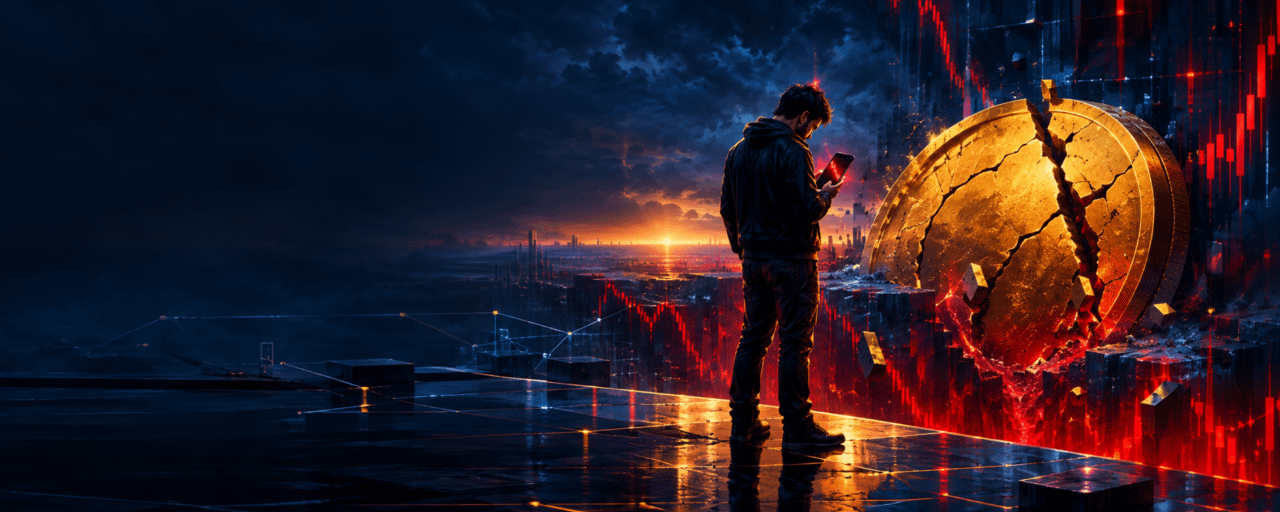
Perdi 750 USDT em LUNA porque pulei um passoAviso: não tenho nenhuma moeda da Terra (LUNA ou LUNC).
Perdi cerca de 750 USDT em uma moeda, e foi culpa minha.
O pior? Eu comprei sem checar nada.
LUNA (a antiga Terra) foi um herói na época. Muitas pessoas, inclusive eu, queriam tê-la na carteira.
Numa manhã de maio de 2022, acordei e vi isso a 3,5 USDT. Eu não verifiquei as notícias. Não perguntei por quê. Eu apenas comprei cerca de 350 USDT, rápido.
Então eu abri o X e vi o fio do CZ. Ele disse que alguns usuários continuavam comprando LUNA sem entender o risco.
Perdi 750 USDT em LUNA porque pulei um passo
Aviso: não tenho nenhuma moeda da Terra (LUNA ou LUNC).
Perdi cerca de 750 USDT em uma moeda, e foi culpa minha.
O pior? Eu comprei sem checar nada.
LUNA (a antiga Terra) foi um herói na época. Muitas pessoas, inclusive eu, queriam tê-la na carteira.
Numa manhã de maio de 2022, acordei e vi isso a 3,5 USDT. Eu não verifiquei as notícias. Não perguntei por quê. Eu apenas comprei cerca de 350 USDT, rápido.
Então eu abri o X e vi o fio do CZ. Ele disse que alguns usuários continuavam comprando LUNA sem entender o risco.
Perdi cerca de 750 USDT em uma moeda, e foi culpa minha.
O pior? Eu comprei sem checar nada.
LUNA (a antiga Terra) foi um herói na época. Muitas pessoas, inclusive eu, queriam tê-la na carteira.
Numa manhã de maio de 2022, acordei e vi isso a 3,5 USDT. Eu não verifiquei as notícias. Não perguntei por quê. Eu apenas comprei cerca de 350 USDT, rápido.
Então eu abri o X e vi o fio do CZ. Ele disse que alguns usuários continuavam comprando LUNA sem entender o risco.
2
5
9
983
🚨 $AIN — SINAL LONGO
{future}(AINUSDT)
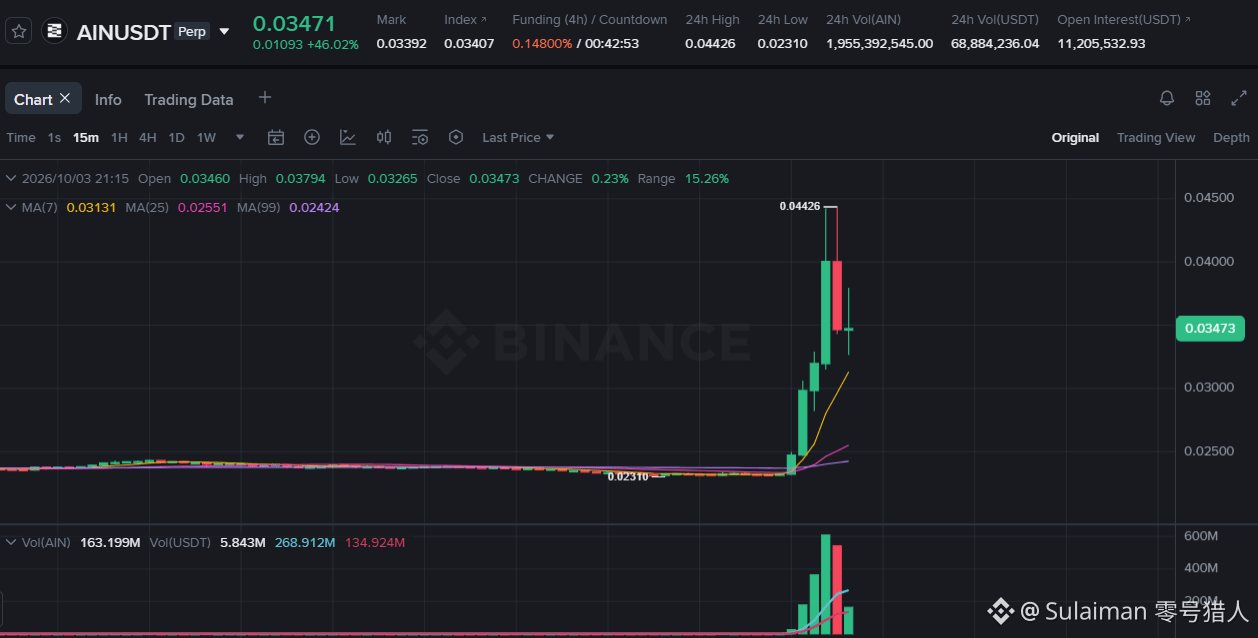
A AIN está mostrando um forte rompimento por momentum no gráfico de 15M.
Atual: 0.04325
Máxima de 24H: 0.04414
Suporte-chave: 0.03660
Volume em 24H: US$ 2.23M
15M: +21.23%
O movimento é sustentado por uma expansão acentuada de volume, não apenas por uma alta lenta.
Setup de Trade
🟢 Viés: LONGO
🎯 Entrada: 0.0420–0.0433
🎯 TP1: 0.0441
🎯 TP2: 0.0470
🎯 TP3: 0.0500
🛑 Validação inválida: Fraqueza sustentada no 15M abaixo de 0.0366
O ponto agora é ver se a AIN consegue manter o rompimento em vez de devolver o movimento imediatamente.
O momentum está forte. Gestão de risco continua obrigatória.
Sinal: LONGO 🔥
#AIN #AINUSDT #TradingSignal #CryptoTrading #Perpetuals
🚨 $AIN — SINAL LONGO
A AIN está mostrando um forte rompimento por momentum no gráfico de 15M.
Atual: 0.04325
Máxima de 24H: 0.04414
Suporte-chave: 0.03660
Volume em 24H: US$ 2.23M
15M: +21.23%
O movimento é sustentado por uma expansão acentuada de volume, não apenas por uma alta lenta.
Setup de Trade
🟢 Viés: LONGO
🎯 Entrada: 0.0420–0.0433
🎯 TP1: 0.0441
🎯 TP2: 0.0470
🎯 TP3: 0.0500
🛑 Validação inválida: Fraqueza sustentada no 15M abaixo de 0.0366
O ponto agora é ver se a AIN consegue manter o rompimento em vez de devolver o movimento imediatamente.
O momentum está forte. Gestão de risco continua obrigatória.
Sinal: LONGO 🔥
#AIN #AINUSDT #TradingSignal #CryptoTrading #Perpetuals
A AIN está mostrando um forte rompimento por momentum no gráfico de 15M.
Atual: 0.04325
Máxima de 24H: 0.04414
Suporte-chave: 0.03660
Volume em 24H: US$ 2.23M
15M: +21.23%
O movimento é sustentado por uma expansão acentuada de volume, não apenas por uma alta lenta.
Setup de Trade
🟢 Viés: LONGO
🎯 Entrada: 0.0420–0.0433
🎯 TP1: 0.0441
🎯 TP2: 0.0470
🎯 TP3: 0.0500
🛑 Validação inválida: Fraqueza sustentada no 15M abaixo de 0.0366
O ponto agora é ver se a AIN consegue manter o rompimento em vez de devolver o movimento imediatamente.
O momentum está forte. Gestão de risco continua obrigatória.
Sinal: LONGO 🔥
#AIN #AINUSDT #TradingSignal #CryptoTrading #Perpetuals
213
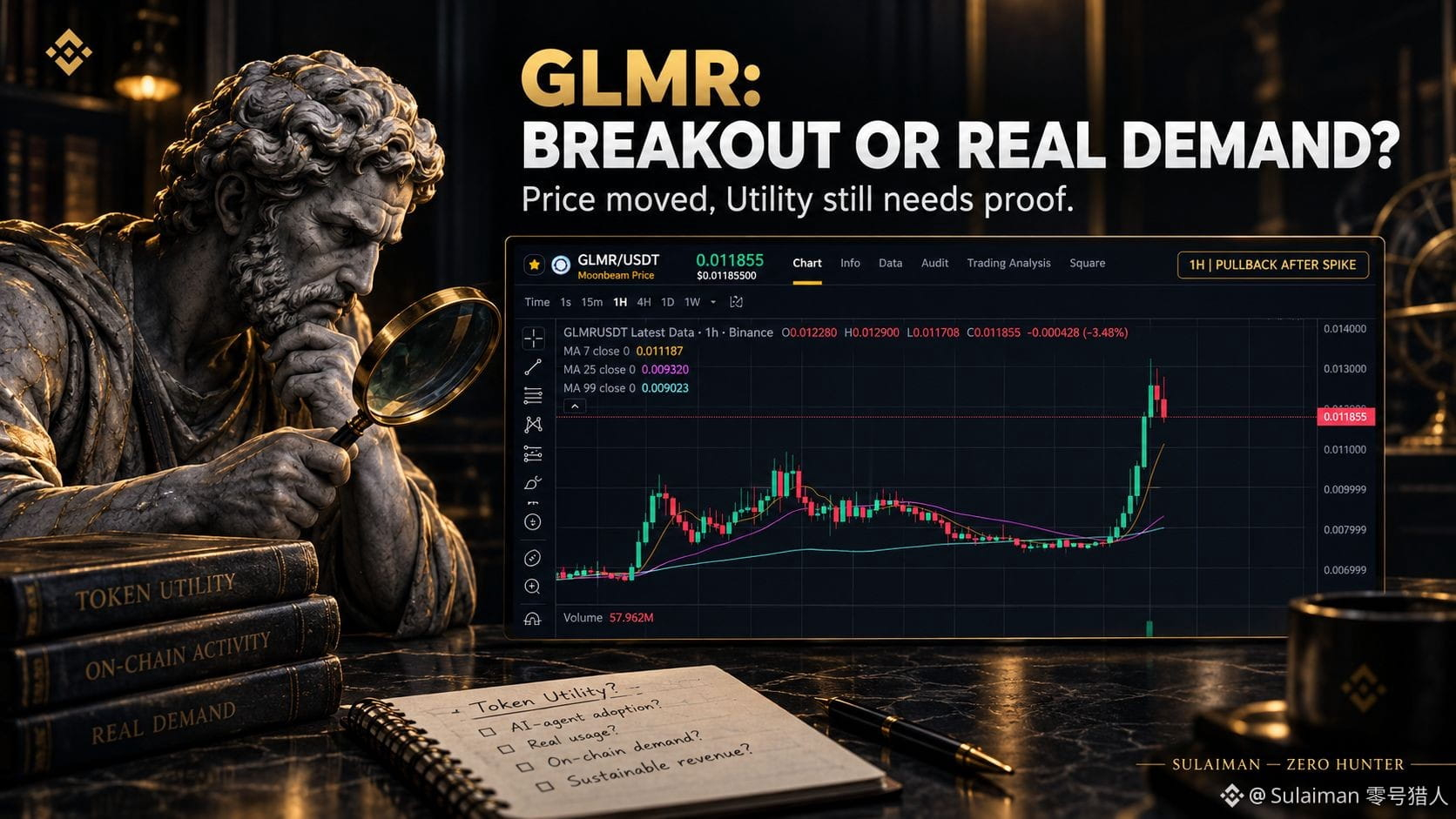
Moonbeam ($GLMR ): Uma virada de IA pode criar demanda real por tokens?
A mudança da Moonbeam para liquidação por agentes de IA na Base apresenta uma nova tese. Mas uma nova narrativa não cria automaticamente valor de token.
O modelo proposto permite que agentes de IA coordenem tarefas e liquidem pagamentos. O papel planejado da GLMR inclui apoiar pools de garantia que poderiam ganhar uma parcela das taxas.
A distinção crítica: a utilidade proposta não é demanda comprovada.
Antes de tratar isso como uma virada fundamental, quero ver três coisas:
Pools de garantia realmente existem.
Atividade verificável de agentes gerando taxas.
Demanda recorrente de GLMR vinculada ao uso real.
O argumento contrário mais forte é simples: o produto pode atrair atenção sem gerar atividade suficiente para sustentar sua economia de tokens.
O que mudaria a minha visão? Evidências de que usuários reais pagam pelo serviço e que a atividade se traduz em uma demanda mensurável de GLMR.
Você está observando a GLMR pela sua nova utilidade, ou esperando os dados de uso primeiro?
Posição: Pesquisando apenas. Não é aconselhamento financeiro.
#GLMR #Moonbeam #ZeroResearch
Moonbeam ($GLMR ): Uma virada de IA pode criar demanda real por tokens?
A mudança da Moonbeam para liquidação por agentes de IA na Base apresenta uma nova tese. Mas uma nova narrativa não cria automaticamente valor de token.
O modelo proposto permite que agentes de IA coordenem tarefas e liquidem pagamentos. O papel planejado da GLMR inclui apoiar pools de garantia que poderiam ganhar uma parcela das taxas.
A distinção crítica: a utilidade proposta não é demanda comprovada.
Antes de tratar isso como uma virada fundamental, quero ver três coisas:
Pools de garantia realmente existem.
Atividade verificável de agentes gerando taxas.
Demanda recorrente de GLMR vinculada ao uso real.
O argumento contrário mais forte é simples: o produto pode atrair atenção sem gerar atividade suficiente para sustentar sua economia de tokens.
O que mudaria a minha visão? Evidências de que usuários reais pagam pelo serviço e que a atividade se traduz em uma demanda mensurável de GLMR.
Você está observando a GLMR pela sua nova utilidade, ou esperando os dados de uso primeiro?
Posição: Pesquisando apenas. Não é aconselhamento financeiro.
#GLMR #Moonbeam #ZeroResearch
A mudança da Moonbeam para liquidação por agentes de IA na Base apresenta uma nova tese. Mas uma nova narrativa não cria automaticamente valor de token.
O modelo proposto permite que agentes de IA coordenem tarefas e liquidem pagamentos. O papel planejado da GLMR inclui apoiar pools de garantia que poderiam ganhar uma parcela das taxas.
A distinção crítica: a utilidade proposta não é demanda comprovada.
Antes de tratar isso como uma virada fundamental, quero ver três coisas:
Pools de garantia realmente existem.
Atividade verificável de agentes gerando taxas.
Demanda recorrente de GLMR vinculada ao uso real.
O argumento contrário mais forte é simples: o produto pode atrair atenção sem gerar atividade suficiente para sustentar sua economia de tokens.
O que mudaria a minha visão? Evidências de que usuários reais pagam pelo serviço e que a atividade se traduz em uma demanda mensurável de GLMR.
Você está observando a GLMR pela sua nova utilidade, ou esperando os dados de uso primeiro?
Posição: Pesquisando apenas. Não é aconselhamento financeiro.
#GLMR #Moonbeam #ZeroResearch
16
🎙️ 🎉2026 Touro Selvagem, o sinal foi dado—o mercado está no BSC Chain!! Em 1º de novembro, Musk vai celebrar o aniversário do cachorro de Marte Marvin, e esta onda de oportunidades no on-chain precisa ser aproveitada!
Encerrado
02 h 19 min. 52 seg.
5.3k
13
41
Verificado
Ver tradução
Do The Bank Need the Token?
Everyone is watching the bank deal. I wanted to know one thing first. Do the banks need the token?
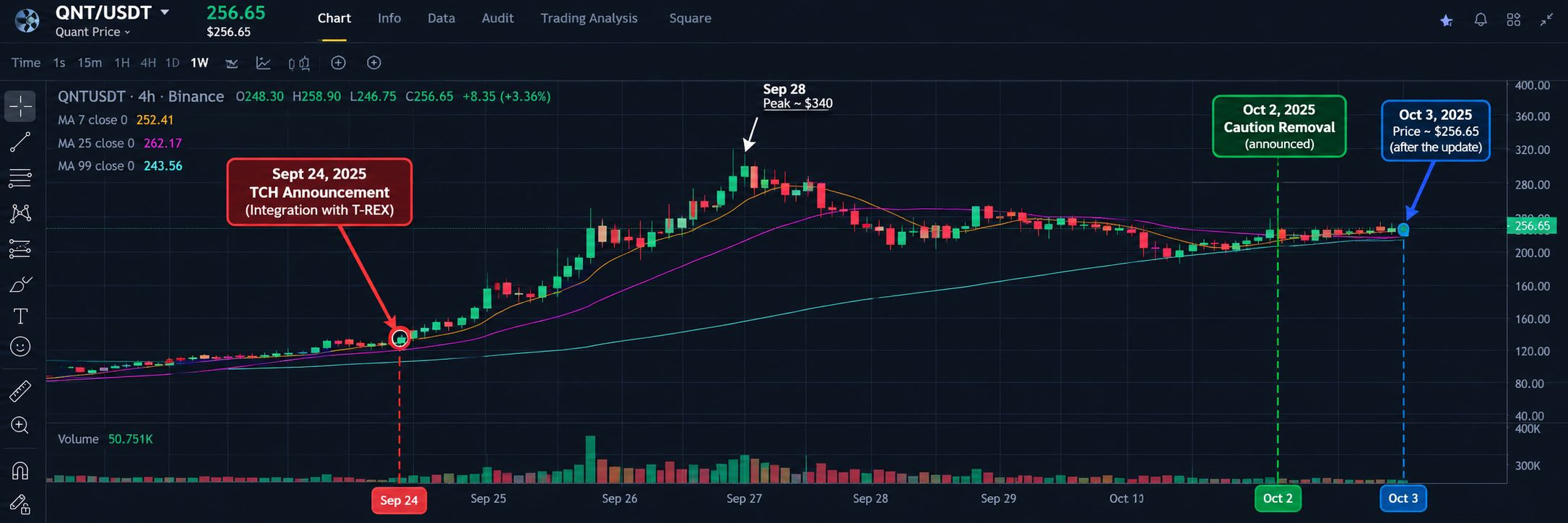
The deal is real. On Sept 24, The Clearing House picked Quant to build the tech for its On-Chain Money Initiative. TCH networks clear more than $2T a day. Institutions are expected to get access in the first half of 2027.
That is a big win for the company. But company success and token success are two different things.
Here is what I found. Quant's FAQ says platform fees can be paid in US dollars. QNT is one option for subscriptions. A report says the deal does not require banks to hold or pay in QNT. The actual terms are private, so I'm saying "not shown," not "doesn't exist." The token's role could be bigger than the public papers suggest.
Now the price. QNT went from about $60-70 to a peak near $372 on Sept 27. It is now back below $300, and my screenshot shows $256.88. That is a big move in about two weeks, with the launch still months away. Part of the rally also looked like a futures short squeeze.
What would make me more interested is Quant or TCH publishing a fee model that requires or favors QNT. What would make me back off is confirmation that fees are paid in fiat only.
I also haven't verified the supply numbers. The 14.9M max and 12M+ circulating figures came from a commentator, so check them against official data.
Has anyone seen a contract or term sheet that names QNT as required? That one document would settle most of this.
NFA
#ZeroResearch #ZeroHunter #QNT #RWA
Do The Bank Need the Token?
Everyone is watching the bank deal. I wanted to know one thing first. Do the banks need the token?
The deal is real. On Sept 24, The Clearing House picked Quant to build the tech for its On-Chain Money Initiative. TCH networks clear more than $2T a day. Institutions are expected to get access in the first half of 2027.
That is a big win for the company. But company success and token success are two different things.
Here is what I found. Quant's FAQ says platform fees can be paid in US dollars. QNT is one option for subscriptions. A report says the deal does not require banks to hold or pay in QNT. The actual terms are private, so I'm saying "not shown," not "doesn't exist." The token's role could be bigger than the public papers suggest.
Now the price. QNT went from about $60-70 to a peak near $372 on Sept 27. It is now back below $300, and my screenshot shows $256.88. That is a big move in about two weeks, with the launch still months away. Part of the rally also looked like a futures short squeeze.
What would make me more interested is Quant or TCH publishing a fee model that requires or favors QNT. What would make me back off is confirmation that fees are paid in fiat only.
I also haven't verified the supply numbers. The 14.9M max and 12M+ circulating figures came from a commentator, so check them against official data.
Has anyone seen a contract or term sheet that names QNT as required? That one document would settle most of this.
NFA
#ZeroResearch #ZeroHunter #QNT #RWA
Everyone is watching the bank deal. I wanted to know one thing first. Do the banks need the token?
The deal is real. On Sept 24, The Clearing House picked Quant to build the tech for its On-Chain Money Initiative. TCH networks clear more than $2T a day. Institutions are expected to get access in the first half of 2027.
That is a big win for the company. But company success and token success are two different things.
Here is what I found. Quant's FAQ says platform fees can be paid in US dollars. QNT is one option for subscriptions. A report says the deal does not require banks to hold or pay in QNT. The actual terms are private, so I'm saying "not shown," not "doesn't exist." The token's role could be bigger than the public papers suggest.
Now the price. QNT went from about $60-70 to a peak near $372 on Sept 27. It is now back below $300, and my screenshot shows $256.88. That is a big move in about two weeks, with the launch still months away. Part of the rally also looked like a futures short squeeze.
What would make me more interested is Quant or TCH publishing a fee model that requires or favors QNT. What would make me back off is confirmation that fees are paid in fiat only.
I also haven't verified the supply numbers. The 14.9M max and 12M+ circulating figures came from a commentator, so check them against official data.
Has anyone seen a contract or term sheet that names QNT as required? That one document would settle most of this.
NFA
#ZeroResearch #ZeroHunter #QNT #RWA
70
Verificado
Ver tradução
I got one $SAND number wrong. The corrected story is more useful.
Yesterday $SAND had a huge day. In my earlier post I used a supply number that I have now replaced.
What I got wrong
I said about 500M extra coins appeared, roughly one in six. That came from an early alert. Later counts were much higher. PeckShield reported about 14.9B unbacked coins minted. But they were trapped on Base and BNB Chain after the bridges were shut. Ethereum supply stayed at 3B. The real drain was about 14.75M SAND, around 0.5% of max supply.
The 3 checks I use now
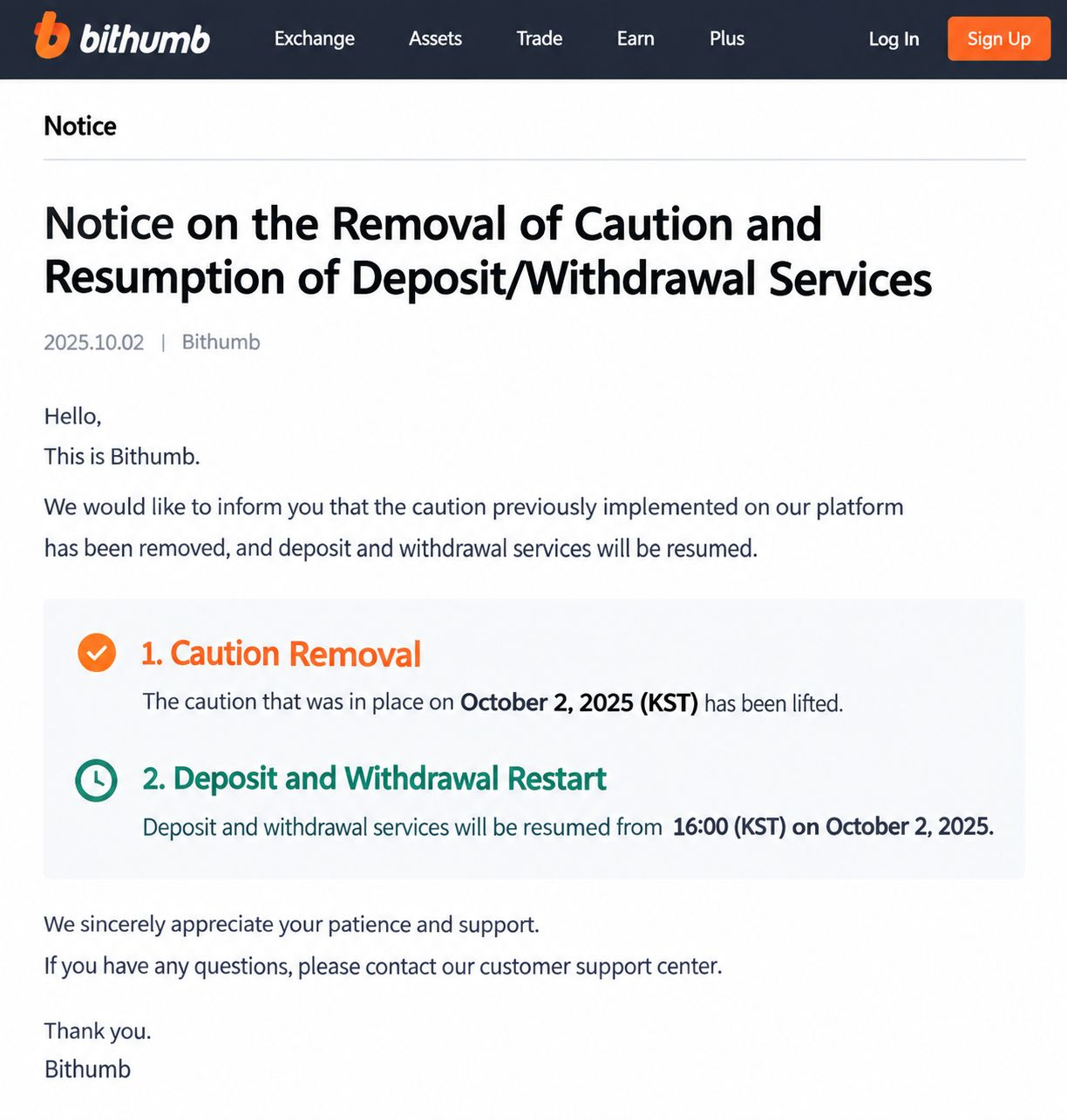
Access. Bithumb's own notice says the Korean caution was lifted on 2 Oct, with deposits and withdrawals set to resume at 16:00. Upbit's notice says the same for SAND/KRW and SAND/BTC, but I only saw it reproduced by a news site. Access came back. That is a real change.
Supply. The Sandbox is repaying affected holders 1:1 from its treasury, with no new tokens minted. That fixes a past problem. It does not create new demand.
Leverage. A 3 Oct report puts open interest near $1.46B across exchanges, about 6.4x the market cap, with about $13.5M in liquidations. Open interest is the total size of open futures bets. When it is that big, a news event can turn into a squeeze.
Not checked yet: where the attacker wallets hold coins today, and Binance-only funding and open interest.
What would change my view: open interest rising while volume fades, the caution returning, or attacker wallets sending coins to exchanges.
A 60%+ day shows attention. It does not show the project got stronger. No price levels from me.
Which of the three checks do you run first on a pumping coin?
I don't hold $SAND
{future}(SANDUSDT)
NFA
#ZeroResearch #ZeroHunter #SAND
I got one $SAND number wrong. The corrected story is more useful.
Yesterday $SAND had a huge day. In my earlier post I used a supply number that I have now replaced.
What I got wrong
I said about 500M extra coins appeared, roughly one in six. That came from an early alert. Later counts were much higher. PeckShield reported about 14.9B unbacked coins minted. But they were trapped on Base and BNB Chain after the bridges were shut. Ethereum supply stayed at 3B. The real drain was about 14.75M SAND, around 0.5% of max supply.
The 3 checks I use now
Access. Bithumb's own notice says the Korean caution was lifted on 2 Oct, with deposits and withdrawals set to resume at 16:00. Upbit's notice says the same for SAND/KRW and SAND/BTC, but I only saw it reproduced by a news site. Access came back. That is a real change.
Supply. The Sandbox is repaying affected holders 1:1 from its treasury, with no new tokens minted. That fixes a past problem. It does not create new demand.
Leverage. A 3 Oct report puts open interest near $1.46B across exchanges, about 6.4x the market cap, with about $13.5M in liquidations. Open interest is the total size of open futures bets. When it is that big, a news event can turn into a squeeze.
Not checked yet: where the attacker wallets hold coins today, and Binance-only funding and open interest.
What would change my view: open interest rising while volume fades, the caution returning, or attacker wallets sending coins to exchanges.
A 60%+ day shows attention. It does not show the project got stronger. No price levels from me.
Which of the three checks do you run first on a pumping coin?
I don't hold $SAND
NFA
#ZeroResearch #ZeroHunter #SAND
Yesterday $SAND had a huge day. In my earlier post I used a supply number that I have now replaced.
What I got wrong
I said about 500M extra coins appeared, roughly one in six. That came from an early alert. Later counts were much higher. PeckShield reported about 14.9B unbacked coins minted. But they were trapped on Base and BNB Chain after the bridges were shut. Ethereum supply stayed at 3B. The real drain was about 14.75M SAND, around 0.5% of max supply.
The 3 checks I use now
Access. Bithumb's own notice says the Korean caution was lifted on 2 Oct, with deposits and withdrawals set to resume at 16:00. Upbit's notice says the same for SAND/KRW and SAND/BTC, but I only saw it reproduced by a news site. Access came back. That is a real change.
Supply. The Sandbox is repaying affected holders 1:1 from its treasury, with no new tokens minted. That fixes a past problem. It does not create new demand.
Leverage. A 3 Oct report puts open interest near $1.46B across exchanges, about 6.4x the market cap, with about $13.5M in liquidations. Open interest is the total size of open futures bets. When it is that big, a news event can turn into a squeeze.
Not checked yet: where the attacker wallets hold coins today, and Binance-only funding and open interest.
What would change my view: open interest rising while volume fades, the caution returning, or attacker wallets sending coins to exchanges.
A 60%+ day shows attention. It does not show the project got stronger. No price levels from me.
Which of the three checks do you run first on a pumping coin?
I don't hold $SAND
NFA
#ZeroResearch #ZeroHunter #SAND
1
149
Verificado
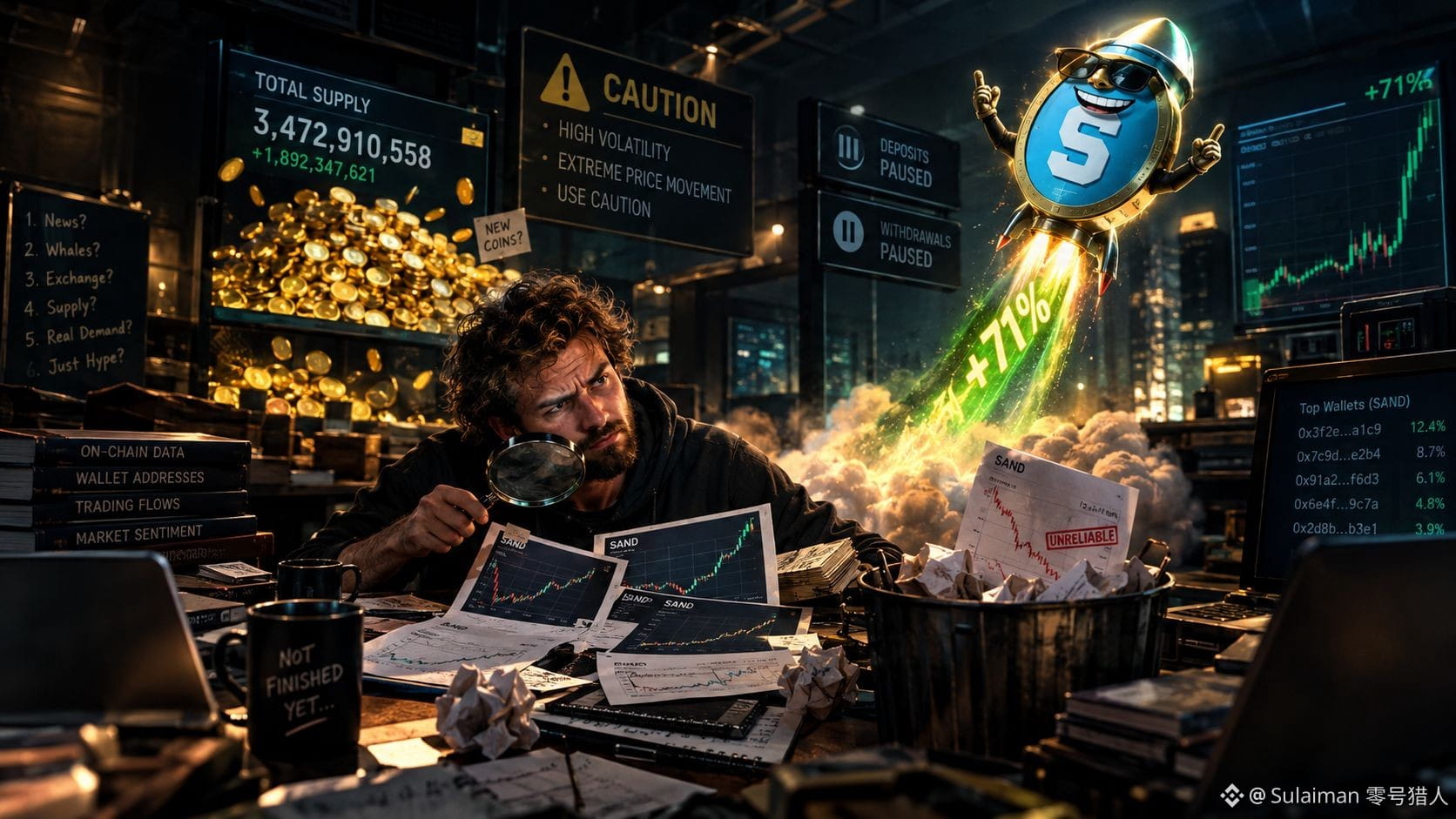
Como verifiquei por que $SAND subiu 71% hoje
Cerca de 1 em cada 6. Foi isso que diz quantas moedas SAND extras apareceram depois de um exploit no fim de agosto. Lookonchain, um rastreador público, relatou mais de 500 milhões de novas moedas. O máximo de SAND que pode existir é 3 bilhões.
Essas moedas não deveriam existir. Logo depois, a Upbit colocou uma advertência de negociação para SAND, e a Bithumb pausou depósitos e saques. Ambas são grandes corretoras sul-coreanas. O período de revisão da Upbit terminou nesta semana. Hoje, o SAND está em alta de cerca de 71%.
Então eu tentei descobrir por quê. Li os comunicados das corretoras conforme reportados por sites de notícias. Comparei as datas com o salto de preço no gráfico. Também tentei comparar níveis de preço de um site de resumo com o preço em tempo real. Não bateram, então descartei essa página.
Aqui está o que parece estranho para mim. Algumas pessoas dizem que a advertência foi removida em 2 de outubro. Eu não consegui confirmar isso. Eu só encontrei a janela de revisão. Os sites de notícias também não mostram para onde foram as 500 milhões de novas moedas. Se elas ficarem paradas, tudo bem. Se começarem a ir para corretoras, serão muitas moedas que poderiam ser vendidas. Ainda não olhei os registros da carteira pública para isso. Essa é a minha próxima verificação.
Uma coisa a mais. Um dia de 71% te diz que as pessoas ficaram animadas. Não te diz que o projeto ficou mais forte.
Se você está pensando em negociar, é assim que eu pensaria. Só faz sentido para mim se os próprios comunicados das corretoras mostrarem que a advertência acabou. Você também precisa conseguir vender sem pressionar o preço para baixo, e eu não verifiquei isso para SAND. Eu ficaria fora se o volume de negociação desaparecer rápido, se a advertência voltar, ou se as novas moedas começarem a ir para corretoras. Não tenho níveis de preço para você, porque os únicos que encontrei eram pouco confiáveis. Mantenha o tamanho pequeno o suficiente para que perder tudo não machuque. Dinheiro emprestado (alavancagem) em um dia como este é perigoso, porque uma queda brusca pode eliminar a operação antes de você reagir.
Alguém viu algum aviso oficial da Upbit ou da Bithumb dizendo que a advertência foi removida?
Estou acompanhando $SAND NFA
#sand #ZeroResearch #ZeroHunter
Como verifiquei por que $SAND subiu 71% hoje
Cerca de 1 em cada 6. Foi isso que diz quantas moedas SAND extras apareceram depois de um exploit no fim de agosto. Lookonchain, um rastreador público, relatou mais de 500 milhões de novas moedas. O máximo de SAND que pode existir é 3 bilhões.
Essas moedas não deveriam existir. Logo depois, a Upbit colocou uma advertência de negociação para SAND, e a Bithumb pausou depósitos e saques. Ambas são grandes corretoras sul-coreanas. O período de revisão da Upbit terminou nesta semana. Hoje, o SAND está em alta de cerca de 71%.
Então eu tentei descobrir por quê. Li os comunicados das corretoras conforme reportados por sites de notícias. Comparei as datas com o salto de preço no gráfico. Também tentei comparar níveis de preço de um site de resumo com o preço em tempo real. Não bateram, então descartei essa página.
Aqui está o que parece estranho para mim. Algumas pessoas dizem que a advertência foi removida em 2 de outubro. Eu não consegui confirmar isso. Eu só encontrei a janela de revisão. Os sites de notícias também não mostram para onde foram as 500 milhões de novas moedas. Se elas ficarem paradas, tudo bem. Se começarem a ir para corretoras, serão muitas moedas que poderiam ser vendidas. Ainda não olhei os registros da carteira pública para isso. Essa é a minha próxima verificação.
Uma coisa a mais. Um dia de 71% te diz que as pessoas ficaram animadas. Não te diz que o projeto ficou mais forte.
Se você está pensando em negociar, é assim que eu pensaria. Só faz sentido para mim se os próprios comunicados das corretoras mostrarem que a advertência acabou. Você também precisa conseguir vender sem pressionar o preço para baixo, e eu não verifiquei isso para SAND. Eu ficaria fora se o volume de negociação desaparecer rápido, se a advertência voltar, ou se as novas moedas começarem a ir para corretoras. Não tenho níveis de preço para você, porque os únicos que encontrei eram pouco confiáveis. Mantenha o tamanho pequeno o suficiente para que perder tudo não machuque. Dinheiro emprestado (alavancagem) em um dia como este é perigoso, porque uma queda brusca pode eliminar a operação antes de você reagir.
Alguém viu algum aviso oficial da Upbit ou da Bithumb dizendo que a advertência foi removida?
Estou acompanhando $SAND NFA
#sand #ZeroResearch #ZeroHunter
Cerca de 1 em cada 6. Foi isso que diz quantas moedas SAND extras apareceram depois de um exploit no fim de agosto. Lookonchain, um rastreador público, relatou mais de 500 milhões de novas moedas. O máximo de SAND que pode existir é 3 bilhões.
Essas moedas não deveriam existir. Logo depois, a Upbit colocou uma advertência de negociação para SAND, e a Bithumb pausou depósitos e saques. Ambas são grandes corretoras sul-coreanas. O período de revisão da Upbit terminou nesta semana. Hoje, o SAND está em alta de cerca de 71%.
Então eu tentei descobrir por quê. Li os comunicados das corretoras conforme reportados por sites de notícias. Comparei as datas com o salto de preço no gráfico. Também tentei comparar níveis de preço de um site de resumo com o preço em tempo real. Não bateram, então descartei essa página.
Aqui está o que parece estranho para mim. Algumas pessoas dizem que a advertência foi removida em 2 de outubro. Eu não consegui confirmar isso. Eu só encontrei a janela de revisão. Os sites de notícias também não mostram para onde foram as 500 milhões de novas moedas. Se elas ficarem paradas, tudo bem. Se começarem a ir para corretoras, serão muitas moedas que poderiam ser vendidas. Ainda não olhei os registros da carteira pública para isso. Essa é a minha próxima verificação.
Uma coisa a mais. Um dia de 71% te diz que as pessoas ficaram animadas. Não te diz que o projeto ficou mais forte.
Se você está pensando em negociar, é assim que eu pensaria. Só faz sentido para mim se os próprios comunicados das corretoras mostrarem que a advertência acabou. Você também precisa conseguir vender sem pressionar o preço para baixo, e eu não verifiquei isso para SAND. Eu ficaria fora se o volume de negociação desaparecer rápido, se a advertência voltar, ou se as novas moedas começarem a ir para corretoras. Não tenho níveis de preço para você, porque os únicos que encontrei eram pouco confiáveis. Mantenha o tamanho pequeno o suficiente para que perder tudo não machuque. Dinheiro emprestado (alavancagem) em um dia como este é perigoso, porque uma queda brusca pode eliminar a operação antes de você reagir.
Alguém viu algum aviso oficial da Upbit ou da Bithumb dizendo que a advertência foi removida?
Estou acompanhando $SAND NFA
#sand #ZeroResearch #ZeroHunter
2
60
Verificado
O que o TSLAB realmente é, antes de alguém olhar para o preço
Eu fui procurar o que é o TSLAB antes de olhar para o seu preço. Ele foi lançado na Binance em 12 de junho de 2026, entre os cinco primeiros bStocks, com lastro 1:1 por uma ação mantida com um custodiante regulamentado. O emissor é a BTECH Holdings em ADGM. Os detentores recebem um certificado com exposição econômica, não ações, e pessoas dos EUA são excluídas. Não consegui confirmar quaisquer outras regiões excluídas nem se ainda está listado hoje.
Um risco é específico para esse tipo de produto. O token negocia 24/7 enquanto os mercados dos EUA não, então podem surgir lacunas e um ágio ou deságio em relação à Tesla. Além disso, há riscos da estrutura do emissor e da custódia. O único preço que encontrei, da DefiLlama, não tinha data/hora, então estou deixando isso de fora.
O que o TSLAB realmente é, antes de alguém olhar para o preço
Eu fui procurar o que é o TSLAB antes de olhar para o seu preço. Ele foi lançado na Binance em 12 de junho de 2026, entre os cinco primeiros bStocks, com lastro 1:1 por uma ação mantida com um custodiante regulamentado. O emissor é a BTECH Holdings em ADGM. Os detentores recebem um certificado com exposição econômica, não ações, e pessoas dos EUA são excluídas. Não consegui confirmar quaisquer outras regiões excluídas nem se ainda está listado hoje.
Um risco é específico para esse tipo de produto. O token negocia 24/7 enquanto os mercados dos EUA não, então podem surgir lacunas e um ágio ou deságio em relação à Tesla. Além disso, há riscos da estrutura do emissor e da custódia. O único preço que encontrei, da DefiLlama, não tinha data/hora, então estou deixando isso de fora.
Eu fui procurar o que é o TSLAB antes de olhar para o seu preço. Ele foi lançado na Binance em 12 de junho de 2026, entre os cinco primeiros bStocks, com lastro 1:1 por uma ação mantida com um custodiante regulamentado. O emissor é a BTECH Holdings em ADGM. Os detentores recebem um certificado com exposição econômica, não ações, e pessoas dos EUA são excluídas. Não consegui confirmar quaisquer outras regiões excluídas nem se ainda está listado hoje.
Um risco é específico para esse tipo de produto. O token negocia 24/7 enquanto os mercados dos EUA não, então podem surgir lacunas e um ágio ou deságio em relação à Tesla. Além disso, há riscos da estrutura do emissor e da custódia. O único preço que encontrei, da DefiLlama, não tinha data/hora, então estou deixando isso de fora.
1
38
Verificado
Artigo
Ver tradução
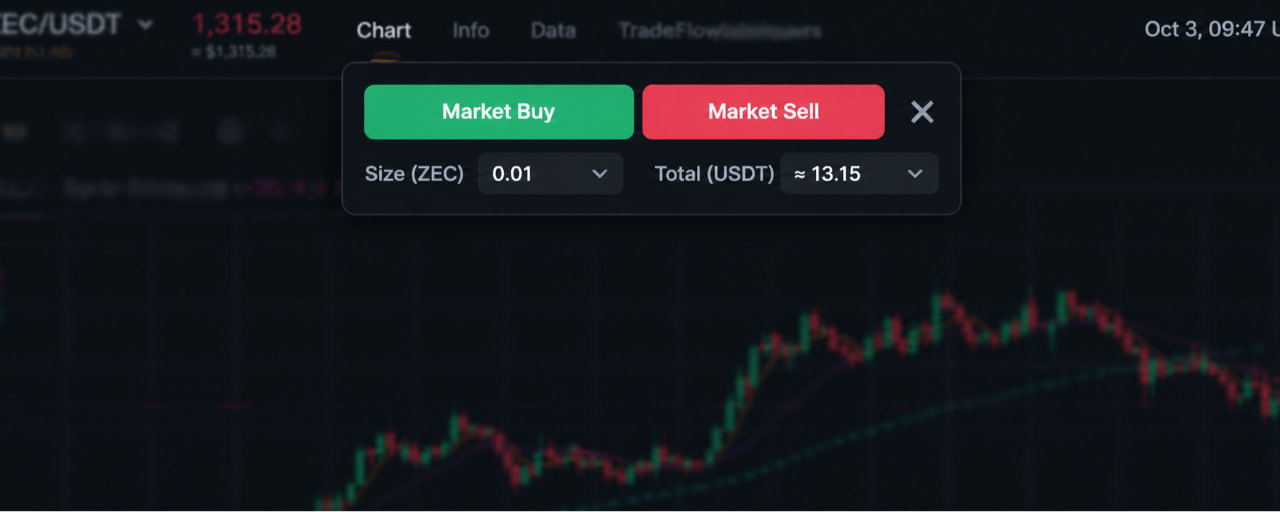
Why I am not chasing ZEC after the Grayscale conversionI opened the Binance ZEC/USDT 4h chart this morning and it is trading at about 1,323, under all three moving averages. The 99 sits near 1,486, the 25 near 1,386. On the chart the late-September high looks like about 1,650, so it is roughly 20% off that now.
The background is simple. Grayscale converted its Zcash Trust into a spot product on NYSE Arca under the ticker ZCSH, per a research blog from late August. A crypto news site puts ZEC's gain over the past year at roughly 2,300%. A huge move with an obvious catalyst.
Here is what I checked. That blog for the conversion and the ticker. The same blog for a coinholder vote on NU7 scope, which it describes as signaling, not binding. The Binance spot page for price and volume: about 154,300 ZEC traded in 24 hours, roughly 209M USDT. And a news site for the long/short ratio on Binance, reported below 0.6, meaning shorts were crowded.
What bothers me is that the ratio report has no date. Price has pulled back a lot since the high, and I don't know if those shorts are still there or already closed. I also found no result for the NU7 vote, and the sources disagree on when it happened. One says it opened August 25, the other says it was expected September 14. I found no unlock or emission data either. My read, which is not a verified fact, is that demand here comes from monetary premium and ETP access, with no fees going to holders. If ETP flows slow, I don't see what replaces them.
If you're thinking about trading it, the levels I'd watch on this chart are the 24h low at 1,271 below and the 25 MA near 1,386 above. A reclaim of that MA with volume would make a long easier to argue. A clean break under 1,271 would make me stay out. I would also stay out if you need leverage to make the trade worth it, because after a move this size a squeeze can come from either side. Size it so a full stop-out doesn't bother you.
Has anyone here seen ZEC funding on Binance this week, and was it positive or negative?
I don't hold $ZEC. NFA
#zec #zcash
Why I am not chasing ZEC after the Grayscale conversion
I opened the Binance ZEC/USDT 4h chart this morning and it is trading at about 1,323, under all three moving averages. The 99 sits near 1,486, the 25 near 1,386. On the chart the late-September high looks like about 1,650, so it is roughly 20% off that now.
The background is simple. Grayscale converted its Zcash Trust into a spot product on NYSE Arca under the ticker ZCSH, per a research blog from late August. A crypto news site puts ZEC's gain over the past year at roughly 2,300%. A huge move with an obvious catalyst.
Here is what I checked. That blog for the conversion and the ticker. The same blog for a coinholder vote on NU7 scope, which it describes as signaling, not binding. The Binance spot page for price and volume: about 154,300 ZEC traded in 24 hours, roughly 209M USDT. And a news site for the long/short ratio on Binance, reported below 0.6, meaning shorts were crowded.
What bothers me is that the ratio report has no date. Price has pulled back a lot since the high, and I don't know if those shorts are still there or already closed. I also found no result for the NU7 vote, and the sources disagree on when it happened. One says it opened August 25, the other says it was expected September 14. I found no unlock or emission data either. My read, which is not a verified fact, is that demand here comes from monetary premium and ETP access, with no fees going to holders. If ETP flows slow, I don't see what replaces them.
If you're thinking about trading it, the levels I'd watch on this chart are the 24h low at 1,271 below and the 25 MA near 1,386 above. A reclaim of that MA with volume would make a long easier to argue. A clean break under 1,271 would make me stay out. I would also stay out if you need leverage to make the trade worth it, because after a move this size a squeeze can come from either side. Size it so a full stop-out doesn't bother you.
Has anyone here seen ZEC funding on Binance this week, and was it positive or negative?
I don't hold $ZEC. NFA
#zec #zcash
The background is simple. Grayscale converted its Zcash Trust into a spot product on NYSE Arca under the ticker ZCSH, per a research blog from late August. A crypto news site puts ZEC's gain over the past year at roughly 2,300%. A huge move with an obvious catalyst.
Here is what I checked. That blog for the conversion and the ticker. The same blog for a coinholder vote on NU7 scope, which it describes as signaling, not binding. The Binance spot page for price and volume: about 154,300 ZEC traded in 24 hours, roughly 209M USDT. And a news site for the long/short ratio on Binance, reported below 0.6, meaning shorts were crowded.
What bothers me is that the ratio report has no date. Price has pulled back a lot since the high, and I don't know if those shorts are still there or already closed. I also found no result for the NU7 vote, and the sources disagree on when it happened. One says it opened August 25, the other says it was expected September 14. I found no unlock or emission data either. My read, which is not a verified fact, is that demand here comes from monetary premium and ETP access, with no fees going to holders. If ETP flows slow, I don't see what replaces them.
If you're thinking about trading it, the levels I'd watch on this chart are the 24h low at 1,271 below and the 25 MA near 1,386 above. A reclaim of that MA with volume would make a long easier to argue. A clean break under 1,271 would make me stay out. I would also stay out if you need leverage to make the trade worth it, because after a move this size a squeeze can come from either side. Size it so a full stop-out doesn't bother you.
Has anyone here seen ZEC funding on Binance this week, and was it positive or negative?
I don't hold $ZEC. NFA
#zec #zcash
1
138
Verificado
Ver tradução
Jupiter buybacks are live, but is the supply actually shrinking?
The popular take on $JUP is that buybacks are running and supply is going down. The forum threads say something narrower. The Net-Zero proposal aimed to cut net new emissions to effectively zero for 2026, with 50% of onchain revenue funding buybacks. Community accounts say it passed in late February, but I haven't confirmed the vote count.
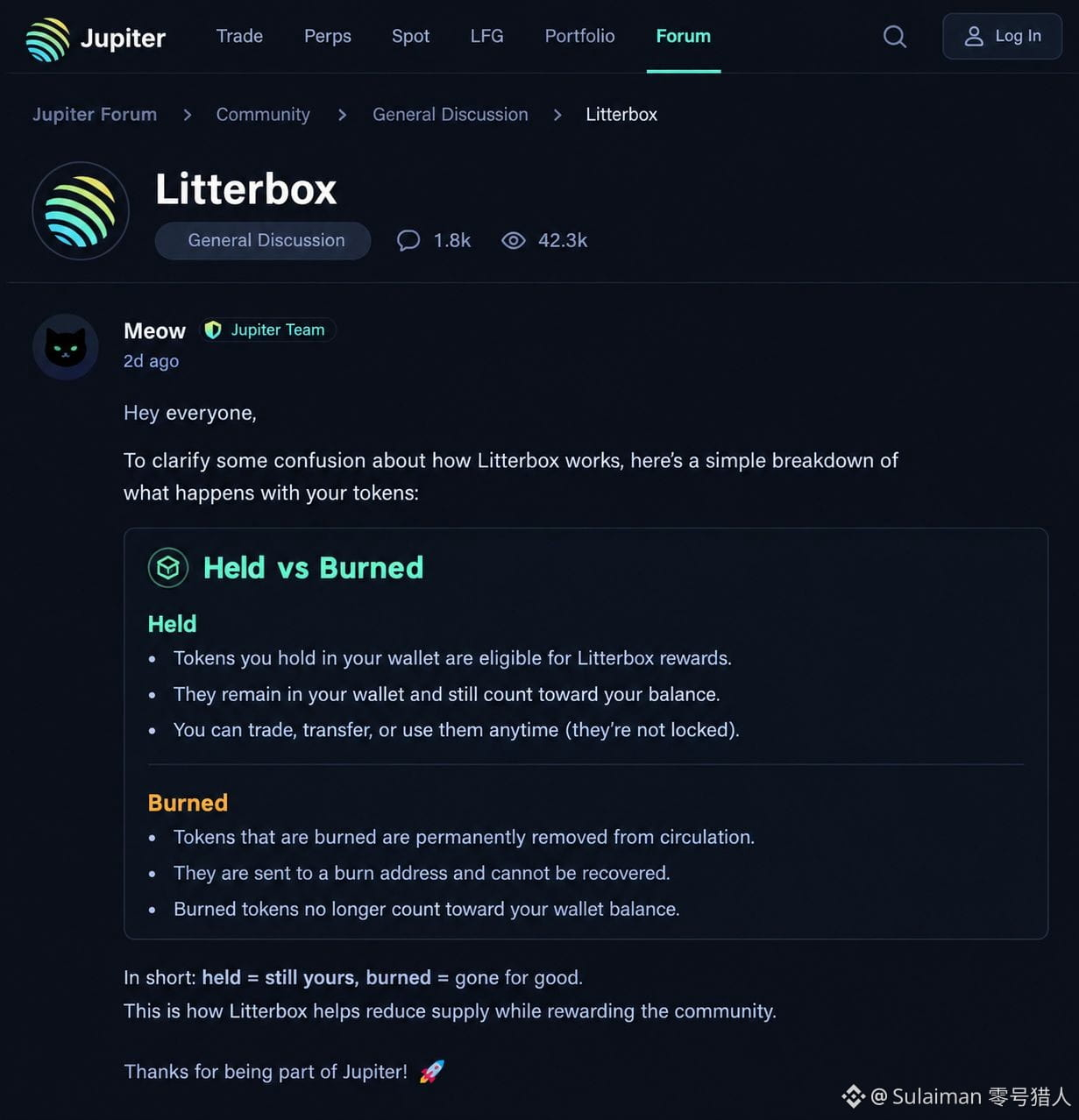
What bothers me is that the bought JUP sits in the Litterbox treasury and is not burned. The 70% share idea is a feedback draft, not a vote. I couldn't verify current unlocks or a dated price, so I'm not going further than this.
Do you count JUP held in a treasury as supply removed?
#JUP #jupiter #solana
Jupiter buybacks are live, but is the supply actually shrinking?
The popular take on $JUP is that buybacks are running and supply is going down. The forum threads say something narrower. The Net-Zero proposal aimed to cut net new emissions to effectively zero for 2026, with 50% of onchain revenue funding buybacks. Community accounts say it passed in late February, but I haven't confirmed the vote count.
What bothers me is that the bought JUP sits in the Litterbox treasury and is not burned. The 70% share idea is a feedback draft, not a vote. I couldn't verify current unlocks or a dated price, so I'm not going further than this.
Do you count JUP held in a treasury as supply removed?
#JUP #jupiter #solana
The popular take on $JUP is that buybacks are running and supply is going down. The forum threads say something narrower. The Net-Zero proposal aimed to cut net new emissions to effectively zero for 2026, with 50% of onchain revenue funding buybacks. Community accounts say it passed in late February, but I haven't confirmed the vote count.
What bothers me is that the bought JUP sits in the Litterbox treasury and is not burned. The 70% share idea is a feedback draft, not a vote. I couldn't verify current unlocks or a dated price, so I'm not going further than this.
Do you count JUP held in a treasury as supply removed?
#JUP #jupiter #solana
1
85
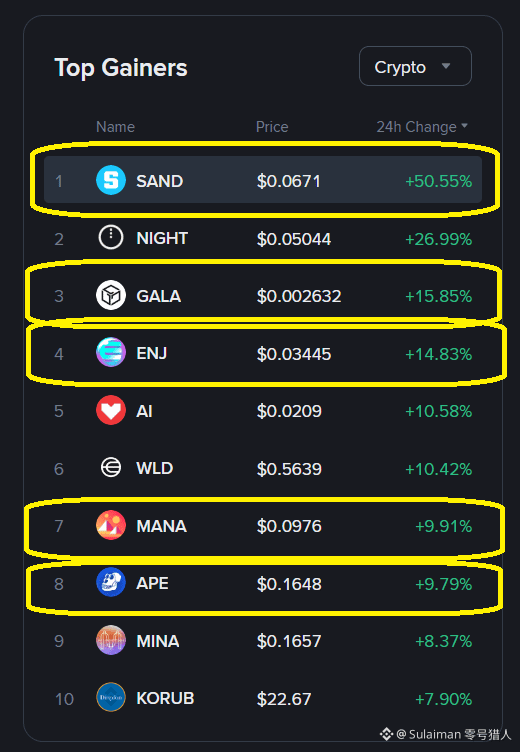
Acordar com a narrativa de Friend Gaming/Metaverse. Cinco dos 10 maiores ganhadores na minha tela são tokens de jogos. SAND lidera com +50%, depois GALA +15%, ENJ +14%, MANA +10% e APE +9%.
O descompasso me incomoda. Um token subindo 50% e os demais entre 10 e 16% parece mais a SAND liderando e os outros seguindo do que uma movimentação limpa de setor. Ainda não encontrei o motivo do salto da SAND.
Eu gostaria de ver volume e um segundo dia de continuidade antes de chamar isso de narrativa, e eu ficaria fora da própria vela de +50%.
O volume está acompanhando algo além da SAND?
Estou observando $SAND $GALA $MANA NFA
#GamingTokens #SAND #Metaverse
Acordar com a narrativa de Friend Gaming/Metaverse. Cinco dos 10 maiores ganhadores na minha tela são tokens de jogos. SAND lidera com +50%, depois GALA +15%, ENJ +14%, MANA +10% e APE +9%.
O descompasso me incomoda. Um token subindo 50% e os demais entre 10 e 16% parece mais a SAND liderando e os outros seguindo do que uma movimentação limpa de setor. Ainda não encontrei o motivo do salto da SAND.
Eu gostaria de ver volume e um segundo dia de continuidade antes de chamar isso de narrativa, e eu ficaria fora da própria vela de +50%.
O volume está acompanhando algo além da SAND?
Estou observando $SAND $GALA $MANA NFA
#GamingTokens #SAND #Metaverse
O descompasso me incomoda. Um token subindo 50% e os demais entre 10 e 16% parece mais a SAND liderando e os outros seguindo do que uma movimentação limpa de setor. Ainda não encontrei o motivo do salto da SAND.
Eu gostaria de ver volume e um segundo dia de continuidade antes de chamar isso de narrativa, e eu ficaria fora da própria vela de +50%.
O volume está acompanhando algo além da SAND?
Estou observando $SAND $GALA $MANA NFA
#GamingTokens #SAND #Metaverse
2
147
Por que ZeroHunter? Eu analiso como um token poderia ir a zero antes de analisar como ele poderia subir. Desbloqueie os calendários primeiro e depois veja quem realmente detém a oferta.
Começou com a LUNA, onde perdi cerca de 750 USDT porque pulei uma etapa.
Algumas semanas a postagem honesta é: estou ficando fora.
Qual token devo verificar em seguida?
#ZeroHunter #ZeroResearch #Sulaiman零号猎人 .
$SAND $ENJ $GALA
Por que ZeroHunter? Eu analiso como um token poderia ir a zero antes de analisar como ele poderia subir. Desbloqueie os calendários primeiro e depois veja quem realmente detém a oferta.
Começou com a LUNA, onde perdi cerca de 750 USDT porque pulei uma etapa.
Algumas semanas a postagem honesta é: estou ficando fora.
Qual token devo verificar em seguida?
#ZeroHunter #ZeroResearch #Sulaiman零号猎人 .
$SAND $ENJ $GALA
Começou com a LUNA, onde perdi cerca de 750 USDT porque pulei uma etapa.
Algumas semanas a postagem honesta é: estou ficando fora.
Qual token devo verificar em seguida?
#ZeroHunter #ZeroResearch #Sulaiman零号猎人 .
$SAND $ENJ $GALA
1
282
Minha lista de observação até 16 de outubro, e o que remove cada nome
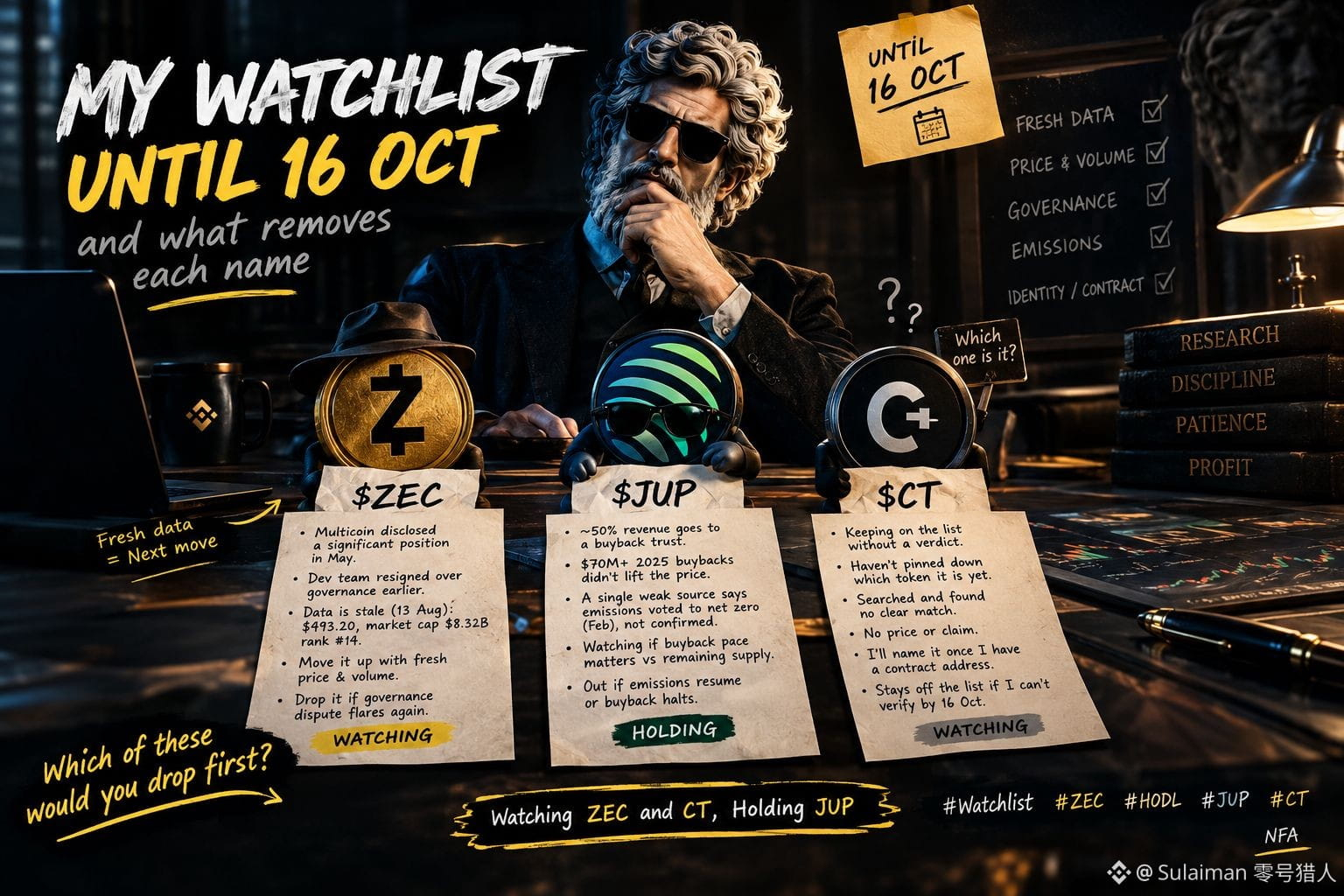
Quatro nomes na minha lista, nenhum pronto para uma negociação.
$ZEC . A Multicoin divulgou uma posição significativa em maio, e a equipe de desenvolvimento renunciou sobre a governança anteriormente. Meus dados estão desatualizados: US$ 493,20 e uma market cap de US$ 8,32B, posição #14, tudo de 13 de agosto. Eu avanço isso quando eu tiver um preço e volume mais recentes. Eu removo se a disputa de governança voltar a aumentar.
$JUP . Cerca de metade da receita vai para um trust de recompra, e mais de US$ 70M de recompra em 2025 não elevou o preço. Um autor diz que as emissões foram votadas para zero líquido em fevereiro, mas isso é uma fonte única e fraca, e eu não confirmei. Estou observando se o ritmo atual de recompra importa diante do suprimento restante. Sai se as emissões retomarem ou se a recompra for interrompida.
$CT . Estou mantendo este na lista sem um veredito, porque ainda não consegui determinar qual é o token. Pesquisei e não encontrei uma correspondência clara, então não estou citando preço nem fazendo uma alegação. Eu vou nomeá-lo assim que eu tiver um endereço de contrato, e ele fica fora da lista se eu não conseguir verificá-lo até 16 de outubro.
Qual destes você tiraria primeiro?
Observando ZEC e CT, Mantendo JUP NFA
#Watchlist #ZEC #HODL #JUP #CT
Minha lista de observação até 16 de outubro, e o que remove cada nome
Quatro nomes na minha lista, nenhum pronto para uma negociação.
$ZEC . A Multicoin divulgou uma posição significativa em maio, e a equipe de desenvolvimento renunciou sobre a governança anteriormente. Meus dados estão desatualizados: US$ 493,20 e uma market cap de US$ 8,32B, posição #14, tudo de 13 de agosto. Eu avanço isso quando eu tiver um preço e volume mais recentes. Eu removo se a disputa de governança voltar a aumentar.
$JUP . Cerca de metade da receita vai para um trust de recompra, e mais de US$ 70M de recompra em 2025 não elevou o preço. Um autor diz que as emissões foram votadas para zero líquido em fevereiro, mas isso é uma fonte única e fraca, e eu não confirmei. Estou observando se o ritmo atual de recompra importa diante do suprimento restante. Sai se as emissões retomarem ou se a recompra for interrompida.
$CT . Estou mantendo este na lista sem um veredito, porque ainda não consegui determinar qual é o token. Pesquisei e não encontrei uma correspondência clara, então não estou citando preço nem fazendo uma alegação. Eu vou nomeá-lo assim que eu tiver um endereço de contrato, e ele fica fora da lista se eu não conseguir verificá-lo até 16 de outubro.
Qual destes você tiraria primeiro?
Observando ZEC e CT, Mantendo JUP NFA
#Watchlist #ZEC #HODL #JUP #CT
Quatro nomes na minha lista, nenhum pronto para uma negociação.
$ZEC . A Multicoin divulgou uma posição significativa em maio, e a equipe de desenvolvimento renunciou sobre a governança anteriormente. Meus dados estão desatualizados: US$ 493,20 e uma market cap de US$ 8,32B, posição #14, tudo de 13 de agosto. Eu avanço isso quando eu tiver um preço e volume mais recentes. Eu removo se a disputa de governança voltar a aumentar.
$JUP . Cerca de metade da receita vai para um trust de recompra, e mais de US$ 70M de recompra em 2025 não elevou o preço. Um autor diz que as emissões foram votadas para zero líquido em fevereiro, mas isso é uma fonte única e fraca, e eu não confirmei. Estou observando se o ritmo atual de recompra importa diante do suprimento restante. Sai se as emissões retomarem ou se a recompra for interrompida.
$CT . Estou mantendo este na lista sem um veredito, porque ainda não consegui determinar qual é o token. Pesquisei e não encontrei uma correspondência clara, então não estou citando preço nem fazendo uma alegação. Eu vou nomeá-lo assim que eu tiver um endereço de contrato, e ele fica fora da lista se eu não conseguir verificá-lo até 16 de outubro.
Qual destes você tiraria primeiro?
Observando ZEC e CT, Mantendo JUP NFA
#Watchlist #ZEC #HODL #JUP #CT
1
78
Verificado
Artigo
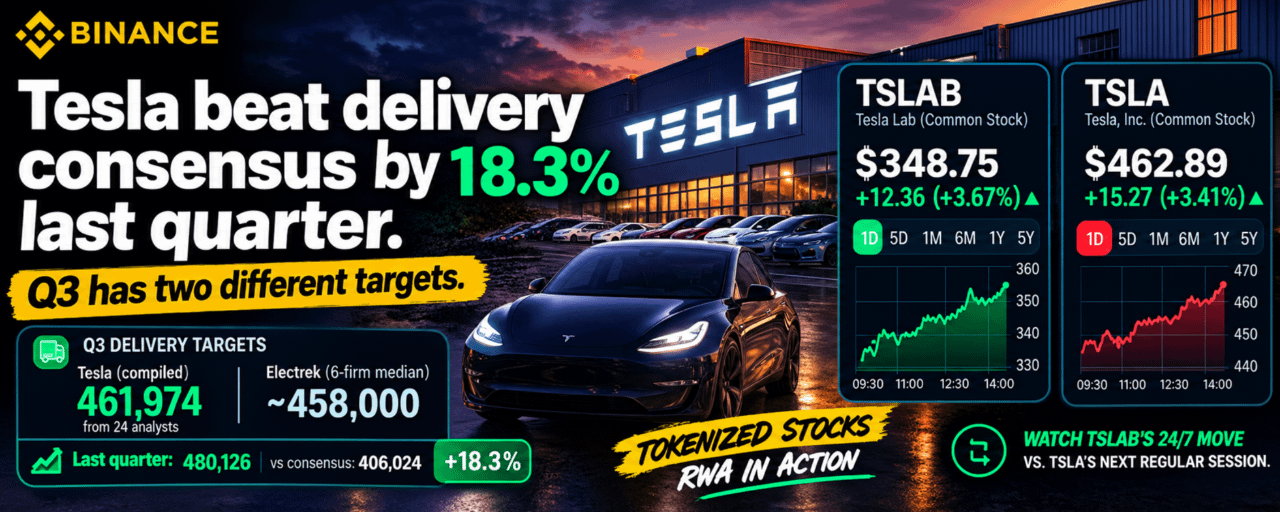
Tesla superou o consenso de entregas em 18,3% no trimestre passado. O 3º trimestre tem duas metas diferentes.A Tesla divulga hoje as entregas do 3º trimestre, e qual consenso você escolhe muda o que conta como uma superação. O compilado próprio da Tesla é de 461.974 de 24 analistas. A mediana das seis empresas do Electrek é de cerca de 458 mil. No trimestre anterior, a Tesla entregou 480.126 contra um consenso de 406.024, uma superação de 18,3%; então a Street já errou bastante antes.
TSLAB é um certificado emitido pela BTECH Holdings no ADGM, lastreado 1:1 por ações da Tesla mantidas em custódia. Você tem um interesse em ações que o emissor mantém, sem propriedade registrada. As fontes discordam sobre se o custodiante é regulado pelo ADGM ou se é uma corretora-broker-dealer dos EUA, então não posso identificá-lo.
Tesla superou o consenso de entregas em 18,3% no trimestre passado. O 3º trimestre tem duas metas diferentes.
A Tesla divulga hoje as entregas do 3º trimestre, e qual consenso você escolhe muda o que conta como uma superação. O compilado próprio da Tesla é de 461.974 de 24 analistas. A mediana das seis empresas do Electrek é de cerca de 458 mil. No trimestre anterior, a Tesla entregou 480.126 contra um consenso de 406.024, uma superação de 18,3%; então a Street já errou bastante antes.
TSLAB é um certificado emitido pela BTECH Holdings no ADGM, lastreado 1:1 por ações da Tesla mantidas em custódia. Você tem um interesse em ações que o emissor mantém, sem propriedade registrada. As fontes discordam sobre se o custodiante é regulado pelo ADGM ou se é uma corretora-broker-dealer dos EUA, então não posso identificá-lo.
TSLAB é um certificado emitido pela BTECH Holdings no ADGM, lastreado 1:1 por ações da Tesla mantidas em custódia. Você tem um interesse em ações que o emissor mantém, sem propriedade registrada. As fontes discordam sobre se o custodiante é regulado pelo ADGM ou se é uma corretora-broker-dealer dos EUA, então não posso identificá-lo.
2
32
Artigo
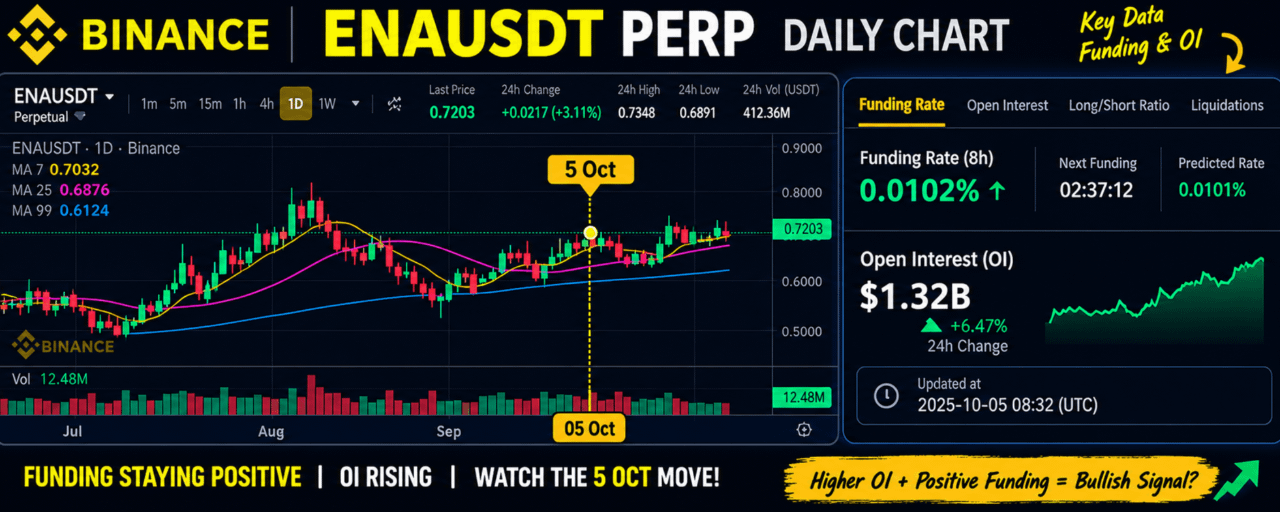
A troca de taxas da ENA não paga nada até o USDe crescer cerca de 84%A visão mais popular desta semana é que a troca de taxas da Ethena tira o “peso” do desbloqueio de 5 de outubro. Eu li o cronograma, e os números ainda não sustentam isso.
Em 27 de agosto, a Foundation disse que todos os tokens restantes dos investidores são liberados em 5 de outubro. A Ethena não informa o tamanho. A Tokenomist calcula em cerca de 1,406B ENA, com uma tranche da equipe de 93,75M no mesmo dia. A aproximadamente US$ 0,25 a US$ 0,27, isso dá algo entre US$ 350M e US$ 380M, bem mais do que os US$ 212M em destaque na antiga cotação de US$ 0,151.
Aqui está o que eu verifiquei. A troca só desvia receitas quando o USDe atinge US$ 7,5B. O USDe estava em cerca de US$ 4,07B no fim de agosto, então minha conta diz que é preciso um crescimento de aproximadamente 84% antes que qualquer coisa flua. Mesmo o primeiro nível é de US$ 22,5M por ano na própria tabela da Ethena, enquanto o vesting de equipe e da Foundation faz cerca de 134M ENA por mês, o que equivale a cerca de US$ 20,3M por mês a US$ 0,151. A recompra do primeiro nível cobre cerca de 9% de um ano desse vesting. A Blockworks Advisory, que integra o Comitê de Risco da Ethena, diz que o cronograma não paga nada com a oferta de hoje. Em outros lugares, a Jupiter gastou mais de US$ 70M em recompra em 2025 e o JUP ainda estava cerca de 89% abaixo do pico em janeiro.
A troca de taxas da ENA não paga nada até o USDe crescer cerca de 84%
A visão mais popular desta semana é que a troca de taxas da Ethena tira o “peso” do desbloqueio de 5 de outubro. Eu li o cronograma, e os números ainda não sustentam isso.
Em 27 de agosto, a Foundation disse que todos os tokens restantes dos investidores são liberados em 5 de outubro. A Ethena não informa o tamanho. A Tokenomist calcula em cerca de 1,406B ENA, com uma tranche da equipe de 93,75M no mesmo dia. A aproximadamente US$ 0,25 a US$ 0,27, isso dá algo entre US$ 350M e US$ 380M, bem mais do que os US$ 212M em destaque na antiga cotação de US$ 0,151.
Aqui está o que eu verifiquei. A troca só desvia receitas quando o USDe atinge US$ 7,5B. O USDe estava em cerca de US$ 4,07B no fim de agosto, então minha conta diz que é preciso um crescimento de aproximadamente 84% antes que qualquer coisa flua. Mesmo o primeiro nível é de US$ 22,5M por ano na própria tabela da Ethena, enquanto o vesting de equipe e da Foundation faz cerca de 134M ENA por mês, o que equivale a cerca de US$ 20,3M por mês a US$ 0,151. A recompra do primeiro nível cobre cerca de 9% de um ano desse vesting. A Blockworks Advisory, que integra o Comitê de Risco da Ethena, diz que o cronograma não paga nada com a oferta de hoje. Em outros lugares, a Jupiter gastou mais de US$ 70M em recompra em 2025 e o JUP ainda estava cerca de 89% abaixo do pico em janeiro.
Em 27 de agosto, a Foundation disse que todos os tokens restantes dos investidores são liberados em 5 de outubro. A Ethena não informa o tamanho. A Tokenomist calcula em cerca de 1,406B ENA, com uma tranche da equipe de 93,75M no mesmo dia. A aproximadamente US$ 0,25 a US$ 0,27, isso dá algo entre US$ 350M e US$ 380M, bem mais do que os US$ 212M em destaque na antiga cotação de US$ 0,151.
Aqui está o que eu verifiquei. A troca só desvia receitas quando o USDe atinge US$ 7,5B. O USDe estava em cerca de US$ 4,07B no fim de agosto, então minha conta diz que é preciso um crescimento de aproximadamente 84% antes que qualquer coisa flua. Mesmo o primeiro nível é de US$ 22,5M por ano na própria tabela da Ethena, enquanto o vesting de equipe e da Foundation faz cerca de 134M ENA por mês, o que equivale a cerca de US$ 20,3M por mês a US$ 0,151. A recompra do primeiro nível cobre cerca de 9% de um ano desse vesting. A Blockworks Advisory, que integra o Comitê de Risco da Ethena, diz que o cronograma não paga nada com a oferta de hoje. Em outros lugares, a Jupiter gastou mais de US$ 70M em recompra em 2025 e o JUP ainda estava cerca de 89% abaixo do pico em janeiro.
2
2
264
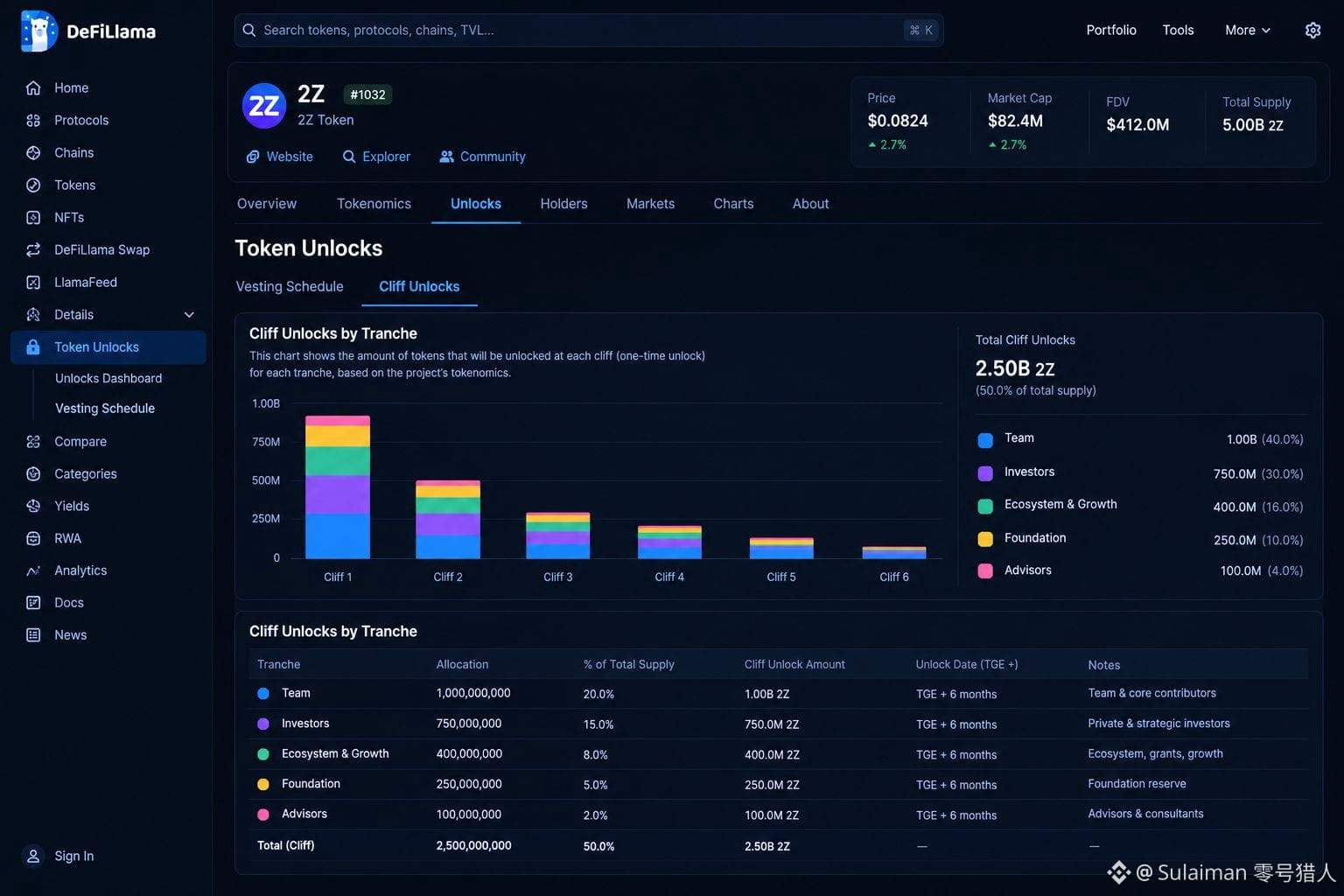
Cerca de 47% a mais de $2Z chegou ao mercado em 2 de outubro. O cliff é de aproximadamente 1,625B a 1,655B tokens, dependendo do tracker, e 1,225B deles, 74%, fica com Jump, Malbec, a equipe e os builders. O Jump sozinho tem 575M.
Um desbloqueio não é uma venda, e não consigo ver a intenção de ninguém. O que me incomoda é uma fonte mais antiga dizendo que os 2,9B da Foundation já foram desbloqueados. Se isso estiver certo, "circulating" (circulante) exagera o free float e o quadro real é diferente. Não consegui confirmar.
O volume varia de US$ 1,5M a US$ 45M dependendo do snapshot. Pouco em qualquer caso.
Não verifiquei as carteiras de tranche desde 00:00 UTC ainda. Você acompanha carteiras do dia do unlock e com qual ferramenta?
NFA
Cerca de 47% a mais de $2Z chegou ao mercado em 2 de outubro. O cliff é de aproximadamente 1,625B a 1,655B tokens, dependendo do tracker, e 1,225B deles, 74%, fica com Jump, Malbec, a equipe e os builders. O Jump sozinho tem 575M.
Um desbloqueio não é uma venda, e não consigo ver a intenção de ninguém. O que me incomoda é uma fonte mais antiga dizendo que os 2,9B da Foundation já foram desbloqueados. Se isso estiver certo, "circulating" (circulante) exagera o free float e o quadro real é diferente. Não consegui confirmar.
O volume varia de US$ 1,5M a US$ 45M dependendo do snapshot. Pouco em qualquer caso.
Não verifiquei as carteiras de tranche desde 00:00 UTC ainda. Você acompanha carteiras do dia do unlock e com qual ferramenta?
NFA
Um desbloqueio não é uma venda, e não consigo ver a intenção de ninguém. O que me incomoda é uma fonte mais antiga dizendo que os 2,9B da Foundation já foram desbloqueados. Se isso estiver certo, "circulating" (circulante) exagera o free float e o quadro real é diferente. Não consegui confirmar.
O volume varia de US$ 1,5M a US$ 45M dependendo do snapshot. Pouco em qualquer caso.
Não verifiquei as carteiras de tranche desde 00:00 UTC ainda. Você acompanha carteiras do dia do unlock e com qual ferramenta?
NFA
2
89
Verificado
A LayerZero está chamando a atenção de Wall Street. $ZRO ainda tem uma chave que ninguém virou. 🔌
A LayerZero é a infraestrutura que move stablecoins entre blockchains, e sua nova rede Zero lista DTCC, ICE, Citadel Securities, Tether e Google Cloud como parceiros de lançamento. Essa é a história que o mercado está comprando.
O token é onde fica o “vazio”. Cada votação de liga/desliga de taxas até agora terminou com a chave ainda desligada, e as recompras que preenchem essa lacuna são a escolha do time, não uma regra escrita no contrato.
O desbloqueio mensal para investidores continua avançando também, mesmo depois que a grande recompra da Fundação o reduziu.
Não é motivo para pânico. Um dia para testar sua convicção.
Traderes experientes observam a votação que vira a chave, e ajustam o tamanho de suas posições com base no calendário de desbloqueio.
DYOR 🚀
#ZRO #LayerZero #mostsearched #BinanceSquare #Sulaiman零号猎人
A LayerZero está chamando a atenção de Wall Street. $ZRO ainda tem uma chave que ninguém virou. 🔌
A LayerZero é a infraestrutura que move stablecoins entre blockchains, e sua nova rede Zero lista DTCC, ICE, Citadel Securities, Tether e Google Cloud como parceiros de lançamento. Essa é a história que o mercado está comprando.
O token é onde fica o “vazio”. Cada votação de liga/desliga de taxas até agora terminou com a chave ainda desligada, e as recompras que preenchem essa lacuna são a escolha do time, não uma regra escrita no contrato.
O desbloqueio mensal para investidores continua avançando também, mesmo depois que a grande recompra da Fundação o reduziu.
Não é motivo para pânico. Um dia para testar sua convicção.
Traderes experientes observam a votação que vira a chave, e ajustam o tamanho de suas posições com base no calendário de desbloqueio.
DYOR 🚀
#ZRO #LayerZero #mostsearched #BinanceSquare #Sulaiman零号猎人
A LayerZero é a infraestrutura que move stablecoins entre blockchains, e sua nova rede Zero lista DTCC, ICE, Citadel Securities, Tether e Google Cloud como parceiros de lançamento. Essa é a história que o mercado está comprando.
O token é onde fica o “vazio”. Cada votação de liga/desliga de taxas até agora terminou com a chave ainda desligada, e as recompras que preenchem essa lacuna são a escolha do time, não uma regra escrita no contrato.
O desbloqueio mensal para investidores continua avançando também, mesmo depois que a grande recompra da Fundação o reduziu.
Não é motivo para pânico. Um dia para testar sua convicção.
Traderes experientes observam a votação que vira a chave, e ajustam o tamanho de suas posições com base no calendário de desbloqueio.
DYOR 🚀
#ZRO #LayerZero #mostsearched #BinanceSquare #Sulaiman零号猎人
2
188
Verificado
Uma vela de uma hora não é uma tese. Aqui está o que realmente importa na lista. 🕐
$XTZ existe desde 2018, aprimorando-se por meio de votações on-chain enquanto cadeias mais barulhentas discutiam hard forks. Ninguém faz tweets sobre paciência como essa, mas é justamente por isso que a Tezos ainda está aqui.
$ALICE é um jogo de “farming” e construção com terra em NFT que oscila forte sem nenhuma notícia por trás. O gráfico pode se mover antes de qualquer pessoa saber por quê, e é exatamente por isso que um salto rápido não diz nada.
$STG é a que tem uma data real. A LayerZero adquiriu a Stargate, e detentores de STG podem converter para ZRO apenas até 15 de dezembro. Depois disso, as conversões param. Esse calendário importa mais do que qualquer barra de uma hora.
Paciência, ruído, prazo: movimentos rápidos passam, datas e fundamentos ficam.
DYOR 🚀
#XTZ #ALICE #STG #BinanceSquare #Sulaiman零号猎人
Uma vela de uma hora não é uma tese. Aqui está o que realmente importa na lista. 🕐
$XTZ existe desde 2018, aprimorando-se por meio de votações on-chain enquanto cadeias mais barulhentas discutiam hard forks. Ninguém faz tweets sobre paciência como essa, mas é justamente por isso que a Tezos ainda está aqui.
$ALICE é um jogo de “farming” e construção com terra em NFT que oscila forte sem nenhuma notícia por trás. O gráfico pode se mover antes de qualquer pessoa saber por quê, e é exatamente por isso que um salto rápido não diz nada.
$STG é a que tem uma data real. A LayerZero adquiriu a Stargate, e detentores de STG podem converter para ZRO apenas até 15 de dezembro. Depois disso, as conversões param. Esse calendário importa mais do que qualquer barra de uma hora.
Paciência, ruído, prazo: movimentos rápidos passam, datas e fundamentos ficam.
DYOR 🚀
#XTZ #ALICE #STG #BinanceSquare #Sulaiman零号猎人
$XTZ existe desde 2018, aprimorando-se por meio de votações on-chain enquanto cadeias mais barulhentas discutiam hard forks. Ninguém faz tweets sobre paciência como essa, mas é justamente por isso que a Tezos ainda está aqui.
$ALICE é um jogo de “farming” e construção com terra em NFT que oscila forte sem nenhuma notícia por trás. O gráfico pode se mover antes de qualquer pessoa saber por quê, e é exatamente por isso que um salto rápido não diz nada.
$STG é a que tem uma data real. A LayerZero adquiriu a Stargate, e detentores de STG podem converter para ZRO apenas até 15 de dezembro. Depois disso, as conversões param. Esse calendário importa mais do que qualquer barra de uma hora.
Paciência, ruído, prazo: movimentos rápidos passam, datas e fundamentos ficam.
DYOR 🚀
#XTZ #ALICE #STG #BinanceSquare #Sulaiman零号猎人
1
385
Verificado
Três moedas, três reconstruções. Só uma delas está reconstruindo a partir dos escombros. 🔧
$CKB passou anos se posicionando ao lado do Bitcoin. Sua Fiber Network traz pagamentos rápidos estilo Lightning para a rede, e a atualização mais recente permite que os usuários alternem entre pagamentos em CKB e Bitcoin Lightning diretamente. Enquanto o mercado discute o rendimento do BTC, a Nervos está construindo a infraestrutura.
$SUPER foi uma história de games e NFTs de 2021 que o mercado ignorou. A equipe continuou entregando: um modo para 100 jogadores no seu jogo Impostors, um marketplace de NFTs em crescimento no GigaMart e um token cujo cronograma de vesting terminou em 2024, então não há um calendário antigo de desbloqueios pairando sobre ele.
$ONE é a mais difícil. Após um exploit de agosto forjar uma enxurrada de tokens não autorizados, a Harmony propôs desligar sua própria cadeia e reemitir ONE no Ethereum para um novo projeto de vídeo com IA. É uma promessa, não uma prova, e os detentores precisam do contrato final e dos detalhes da exchange antes de confiar em qualquer coisa.
Uma virada é só um título até o produto ser lançado. Infraestrutura do Bitcoin, retorno aos games e um reset completo são três apostas muito diferentes.
DYOR 🚀
#CKB #SUPER #ONE #BinanceSquare #Sulaiman零号猎人
Três moedas, três reconstruções. Só uma delas está reconstruindo a partir dos escombros. 🔧
$CKB passou anos se posicionando ao lado do Bitcoin. Sua Fiber Network traz pagamentos rápidos estilo Lightning para a rede, e a atualização mais recente permite que os usuários alternem entre pagamentos em CKB e Bitcoin Lightning diretamente. Enquanto o mercado discute o rendimento do BTC, a Nervos está construindo a infraestrutura.
$SUPER foi uma história de games e NFTs de 2021 que o mercado ignorou. A equipe continuou entregando: um modo para 100 jogadores no seu jogo Impostors, um marketplace de NFTs em crescimento no GigaMart e um token cujo cronograma de vesting terminou em 2024, então não há um calendário antigo de desbloqueios pairando sobre ele.
$ONE é a mais difícil. Após um exploit de agosto forjar uma enxurrada de tokens não autorizados, a Harmony propôs desligar sua própria cadeia e reemitir ONE no Ethereum para um novo projeto de vídeo com IA. É uma promessa, não uma prova, e os detentores precisam do contrato final e dos detalhes da exchange antes de confiar em qualquer coisa.
Uma virada é só um título até o produto ser lançado. Infraestrutura do Bitcoin, retorno aos games e um reset completo são três apostas muito diferentes.
DYOR 🚀
#CKB #SUPER #ONE #BinanceSquare #Sulaiman零号猎人
$CKB passou anos se posicionando ao lado do Bitcoin. Sua Fiber Network traz pagamentos rápidos estilo Lightning para a rede, e a atualização mais recente permite que os usuários alternem entre pagamentos em CKB e Bitcoin Lightning diretamente. Enquanto o mercado discute o rendimento do BTC, a Nervos está construindo a infraestrutura.
$SUPER foi uma história de games e NFTs de 2021 que o mercado ignorou. A equipe continuou entregando: um modo para 100 jogadores no seu jogo Impostors, um marketplace de NFTs em crescimento no GigaMart e um token cujo cronograma de vesting terminou em 2024, então não há um calendário antigo de desbloqueios pairando sobre ele.
$ONE é a mais difícil. Após um exploit de agosto forjar uma enxurrada de tokens não autorizados, a Harmony propôs desligar sua própria cadeia e reemitir ONE no Ethereum para um novo projeto de vídeo com IA. É uma promessa, não uma prova, e os detentores precisam do contrato final e dos detalhes da exchange antes de confiar em qualquer coisa.
Uma virada é só um título até o produto ser lançado. Infraestrutura do Bitcoin, retorno aos games e um reset completo são três apostas muito diferentes.
DYOR 🚀
#CKB #SUPER #ONE #BinanceSquare #Sulaiman零号猎人
2
639
A moeda do banqueiro, a piada que nunca morreu e o recém-chegado com um palco reservado. 🎤
$XRP existe desde 2012 e passou anos em batalhas regulatórias enquanto moedas mais barulhentas dominavam as manchetes. Agora, ETFs spot dos EUA a mantêm, e um operador brasileiro regulado está colocando os registros de propriedade do fundo no seu livro-razão.
$DOGE começou como uma piada em 2013 e superou todas as pessoas que disseram para ela morrer. Nesta semana, ela ganha algo que nunca teve: o DogeOS abriu seu testnet público, então desenvolvedores finalmente podem criar apps no Dogecoin com DOGE como a moeda/taxa (token) de comissão.
$SUI é a mais jovem das três, construída por ex-engenheiros da Meta do time da Diem. Sua própria conferência, Basecamp, acontece de 7 a 8 de outubro em Singapura, com foco direto em agentes de IA que movimentam dinheiro. Um desbloqueio chega em 3 de outubro primeiro — o tipo de dia que testa a convicção, não um dia para entrar em pânico.
Velha confiança, velho meme, novo palco: o mercado segue entregando o próximo capítulo para quem lança.
DYOR 🚀 Siga @SulemaOFCrypto
#XRP #DOGE #SUI #BinanceSquare #ZeroResearch
A moeda do banqueiro, a piada que nunca morreu e o recém-chegado com um palco reservado. 🎤
$XRP existe desde 2012 e passou anos em batalhas regulatórias enquanto moedas mais barulhentas dominavam as manchetes. Agora, ETFs spot dos EUA a mantêm, e um operador brasileiro regulado está colocando os registros de propriedade do fundo no seu livro-razão.
$DOGE começou como uma piada em 2013 e superou todas as pessoas que disseram para ela morrer. Nesta semana, ela ganha algo que nunca teve: o DogeOS abriu seu testnet público, então desenvolvedores finalmente podem criar apps no Dogecoin com DOGE como a moeda/taxa (token) de comissão.
$SUI é a mais jovem das três, construída por ex-engenheiros da Meta do time da Diem. Sua própria conferência, Basecamp, acontece de 7 a 8 de outubro em Singapura, com foco direto em agentes de IA que movimentam dinheiro. Um desbloqueio chega em 3 de outubro primeiro — o tipo de dia que testa a convicção, não um dia para entrar em pânico.
Velha confiança, velho meme, novo palco: o mercado segue entregando o próximo capítulo para quem lança.
DYOR 🚀 Siga @Sulaiman 零号猎人
#XRP #DOGE #SUI #BinanceSquare #ZeroResearch
$XRP existe desde 2012 e passou anos em batalhas regulatórias enquanto moedas mais barulhentas dominavam as manchetes. Agora, ETFs spot dos EUA a mantêm, e um operador brasileiro regulado está colocando os registros de propriedade do fundo no seu livro-razão.
$DOGE começou como uma piada em 2013 e superou todas as pessoas que disseram para ela morrer. Nesta semana, ela ganha algo que nunca teve: o DogeOS abriu seu testnet público, então desenvolvedores finalmente podem criar apps no Dogecoin com DOGE como a moeda/taxa (token) de comissão.
$SUI é a mais jovem das três, construída por ex-engenheiros da Meta do time da Diem. Sua própria conferência, Basecamp, acontece de 7 a 8 de outubro em Singapura, com foco direto em agentes de IA que movimentam dinheiro. Um desbloqueio chega em 3 de outubro primeiro — o tipo de dia que testa a convicção, não um dia para entrar em pânico.
Velha confiança, velho meme, novo palco: o mercado segue entregando o próximo capítulo para quem lança.
DYOR 🚀 Siga @Sulaiman 零号猎人
#XRP #DOGE #SUI #BinanceSquare #ZeroResearch
1
210
Inicia sessão para explorar mais conteúdos
Junta-te a utilizadores de criptomoedas de todo o mundo na Binance Square
⚡️ Obtém informações úteis e recentes sobre criptomoedas.
💬 Com a confiança da maior exchange de criptomoedas do mundo.
👍 Descobre perspetivas reais de criadores verificados.
E-mail/Número de telefone
Tópicos em Tendência
ZcashETFPostsFirstWeeklyOutflow$93.6M
51 visualizações
20 a discutir
ATUALIZAÇÃO DO ETF DE ZCASH
O ETF de Zcash registrou a sua primeira saída líquida semanal desde o lançamento em agosto.
Os investidores retiraram US$ 93,6 milhões enquanto $ZEC caiu em direção a US$ 1.300. O Grayscale’s ZCSH havia atraído US$ 98,2 milhões duas semanas antes, mas não foram registradas entradas líquidas diárias desde 22 de setembro, segundo a SoSoValue.
ZEC estava em torno de US$ 1.308 em 3 de outubro, com queda de cerca de 17,5% na semana e aproximadamente 23% em relação ao seu recente pico de US$ 1.690.
$ZEC
Vicky-143
·0 gostos
·143 visualizações
GreekPoliceBustCryptoScamRingArrest17
324 visualizações
68 a discutir
BitcoinRejectedAt$87K
49,390 visualizações
87 a discutir