

Pkcb
199 Publicações

Pkcb
Denunciar
Bloquear Utilizador
do it
Aberto ao trading

Detentor de SOL
Trader Frequente
4.1 ano(s)
64 A seguir
40 Seguidores
19 Gostaram
Publicações
Portfólio
Tudo
Cotações
·
--
Ver tradução
#pixel $PIXEL
@SignOfficial
The pixel—short for "picture element"—is the foundational unit of programmable color in digital imaging and display technology. Just as Lego bricks are stacked to build complex structures, pixels are arranged in a precise two-dimensional grid to form all images, videos, and text on digital screens, including TVs, smartphones, and computer monitors. As the smallest indivisible point of display, these tiny squares work together, blending seamlessly to our eyes to produce a continuous image.
Structure and Function
While appearing tiny to the naked eye, a pixel is typically square-shaped and behaves as a building block. In most display technologies, a pixel is composed of three sub-pixels—red, green, and blue (RGB). By varying the intensity of these three colors from 0% to 100%, each pixel can produce a wide spectrum of colors. When a transistor turns these sub-pixels on or off, it creates the image we see, with millions of these elements functioning in tandem.
Pixels, Resolution, and Image Quality
The total number of pixels in a screen or image defines its resolution. This is generally calculated by multiplying the horizontal pixels by the vertical pixels, such as High Definition (1920x1080) or 4K Ultra High-Definition (3840x2160).
#pixel $PIXEL
@SignOfficial
The pixel—short for "picture element"—is the foundational unit of programmable color in digital imaging and display technology. Just as Lego bricks are stacked to build complex structures, pixels are arranged in a precise two-dimensional grid to form all images, videos, and text on digital screens, including TVs, smartphones, and computer monitors. As the smallest indivisible point of display, these tiny squares work together, blending seamlessly to our eyes to produce a continuous image.
Structure and Function
While appearing tiny to the naked eye, a pixel is typically square-shaped and behaves as a building block. In most display technologies, a pixel is composed of three sub-pixels—red, green, and blue (RGB). By varying the intensity of these three colors from 0% to 100%, each pixel can produce a wide spectrum of colors. When a transistor turns these sub-pixels on or off, it creates the image we see, with millions of these elements functioning in tandem.
Pixels, Resolution, and Image Quality
The total number of pixels in a screen or image defines its resolution. This is generally calculated by multiplying the horizontal pixels by the vertical pixels, such as High Definition (1920x1080) or 4K Ultra High-Definition (3840x2160).
@SignOfficial
The pixel—short for "picture element"—is the foundational unit of programmable color in digital imaging and display technology. Just as Lego bricks are stacked to build complex structures, pixels are arranged in a precise two-dimensional grid to form all images, videos, and text on digital screens, including TVs, smartphones, and computer monitors. As the smallest indivisible point of display, these tiny squares work together, blending seamlessly to our eyes to produce a continuous image.
Structure and Function
While appearing tiny to the naked eye, a pixel is typically square-shaped and behaves as a building block. In most display technologies, a pixel is composed of three sub-pixels—red, green, and blue (RGB). By varying the intensity of these three colors from 0% to 100%, each pixel can produce a wide spectrum of colors. When a transistor turns these sub-pixels on or off, it creates the image we see, with millions of these elements functioning in tandem.
Pixels, Resolution, and Image Quality
The total number of pixels in a screen or image defines its resolution. This is generally calculated by multiplying the horizontal pixels by the vertical pixels, such as High Definition (1920x1080) or 4K Ultra High-Definition (3840x2160).
21
·
--
Ver tradução
[https://app.binance.com/uni-qr/HZrvrYGa?utm_medium=app_share_link_telegr](https://app.binance.com/uni-qr/HZrvrYGa?utm_medium=app_share_link_telegr)
https://app.binance.com/uni-qr/HZrvrYGa?utm_medium=app_share_link_telegr
1
·
--
Ver tradução
#DriftInvestigationLinksRecentAttackToNorthKoreanHackers
#DriftInvestigationLinksRecentAttackToNorthKoreanHackers
2
·
--
Artigo
Ver tradução
SIGN@SignOfficial #SignDigitalSovereignInfra
$SIGN
A sign is much more than a simple board by the side of the road; it is a fundamental unit of communication that bridges the gap between a physical object and a mental concept. Whether it is a subtle gesture, a complex mathematical symbol, or a bold neon advertisement, signs serve as the silent architecture of our social and cognitive worldsIn the study of semiotics, a sign is often broken down into three essential parts: the signifier (the physical form), the signified (the concept it represents), and the referent (the actual object in the real world).
Natural Signs: These occur in nature and have a direct causal link. For example, dark clouds are a sign of rain, and smoke is a sign of fire.
Conventional Signs: These are created by human agreement. There is no natural reason why a red octagon means "stop," but because we have collectively agreed upon it, the sign functions as a universal command.
Icons and Symbols: An icon physically resembles what it represents (like a "no smoking" sign with a crossed-out cigarette), while a symbol is abstract (like the letters of an alphabet or a plus sign in math).
Signs in Language and Society
Language itself is a vast system of signs. In American Sign Language (ASL), the "sign" is a physical movement of the hands and face that carries specific grammatical and semantic weight. Mastering just the first 500 basic signs can allow a person to communicate essential needs and emotions, demonstrating how powerful even a limited vocabulary of signs can be.
Beyond language, signs organize our physical environment. Traffic signs prevent chaos on the road, while "Open" or "Closed" signs regulate commerce. In a digital context, we rely on icons—small digital signs—to navigate our phones and computers. Without these visual cues, the modern world would be nearly impossible to navigate, as every interaction would require exhaustive text or verbal explanation.
SIGN
@SignOfficial #SignDigitalSovereignInfra
$SIGN
A sign is much more than a simple board by the side of the road; it is a fundamental unit of communication that bridges the gap between a physical object and a mental concept. Whether it is a subtle gesture, a complex mathematical symbol, or a bold neon advertisement, signs serve as the silent architecture of our social and cognitive worldsIn the study of semiotics, a sign is often broken down into three essential parts: the signifier (the physical form), the signified (the concept it represents), and the referent (the actual object in the real world).
Natural Signs: These occur in nature and have a direct causal link. For example, dark clouds are a sign of rain, and smoke is a sign of fire.
Conventional Signs: These are created by human agreement. There is no natural reason why a red octagon means "stop," but because we have collectively agreed upon it, the sign functions as a universal command.
Icons and Symbols: An icon physically resembles what it represents (like a "no smoking" sign with a crossed-out cigarette), while a symbol is abstract (like the letters of an alphabet or a plus sign in math).
Signs in Language and Society
Language itself is a vast system of signs. In American Sign Language (ASL), the "sign" is a physical movement of the hands and face that carries specific grammatical and semantic weight. Mastering just the first 500 basic signs can allow a person to communicate essential needs and emotions, demonstrating how powerful even a limited vocabulary of signs can be.
Beyond language, signs organize our physical environment. Traffic signs prevent chaos on the road, while "Open" or "Closed" signs regulate commerce. In a digital context, we rely on icons—small digital signs—to navigate our phones and computers. Without these visual cues, the modern world would be nearly impossible to navigate, as every interaction would require exhaustive text or verbal explanation.
$SIGN
A sign is much more than a simple board by the side of the road; it is a fundamental unit of communication that bridges the gap between a physical object and a mental concept. Whether it is a subtle gesture, a complex mathematical symbol, or a bold neon advertisement, signs serve as the silent architecture of our social and cognitive worldsIn the study of semiotics, a sign is often broken down into three essential parts: the signifier (the physical form), the signified (the concept it represents), and the referent (the actual object in the real world).
Natural Signs: These occur in nature and have a direct causal link. For example, dark clouds are a sign of rain, and smoke is a sign of fire.
Conventional Signs: These are created by human agreement. There is no natural reason why a red octagon means "stop," but because we have collectively agreed upon it, the sign functions as a universal command.
Icons and Symbols: An icon physically resembles what it represents (like a "no smoking" sign with a crossed-out cigarette), while a symbol is abstract (like the letters of an alphabet or a plus sign in math).
Signs in Language and Society
Language itself is a vast system of signs. In American Sign Language (ASL), the "sign" is a physical movement of the hands and face that carries specific grammatical and semantic weight. Mastering just the first 500 basic signs can allow a person to communicate essential needs and emotions, demonstrating how powerful even a limited vocabulary of signs can be.
Beyond language, signs organize our physical environment. Traffic signs prevent chaos on the road, while "Open" or "Closed" signs regulate commerce. In a digital context, we rely on icons—small digital signs—to navigate our phones and computers. Without these visual cues, the modern world would be nearly impossible to navigate, as every interaction would require exhaustive text or verbal explanation.
7
·
--
Artigo
Ver tradução
sign#signdigitalsovereigninfra $SIGN @SignOfficial
A sign is a foundational element of communication, acting as an object, quality, or event that indicates the presence or occurrence of something else. Ranging from natural indicators (smoke as a sign of fire) to conventional symbols (traffic signs, language), signs instruct, warn, or inform, often functioning through symbolic or iconic representations.
A sign is a foundational element of communication, acting as an object, quality, or event that indicates the presence or occurrence of something else. Ranging from natural indicators (smoke as a sign of fire) to conventional symbols (traffic signs, language), signs instruct, warn, or inform, often functioning through symbolic or iconic representations.
Types and Functions of Signs
Signs serve diverse purposes in daily life, broadly categorized by their function:
Informational Signs: These provide directional or operational information, such as exit signs in buildings or street signs, helping people navigate their environment.
Warning/Regulatory Signs: These are critical for safety, indicating potential danger (e.g., "High Voltage") or legal constraints, such as stop signs, which compel specific actions to prevent accidents.
Symbolic Signs: These represent complex ideas or systems. In mathematics, symbols like
or
are essential signs.
Natural Signs: These are observed in nature and suggest impending changes, such as dark clouds indicating rain or falling leaves signaling autumn
sign
#signdigitalsovereigninfra $SIGN @SignOfficial
A sign is a foundational element of communication, acting as an object, quality, or event that indicates the presence or occurrence of something else. Ranging from natural indicators (smoke as a sign of fire) to conventional symbols (traffic signs, language), signs instruct, warn, or inform, often functioning through symbolic or iconic representations.
A sign is a foundational element of communication, acting as an object, quality, or event that indicates the presence or occurrence of something else. Ranging from natural indicators (smoke as a sign of fire) to conventional symbols (traffic signs, language), signs instruct, warn, or inform, often functioning through symbolic or iconic representations.
Types and Functions of Signs
Signs serve diverse purposes in daily life, broadly categorized by their function:
Informational Signs: These provide directional or operational information, such as exit signs in buildings or street signs, helping people navigate their environment.
Warning/Regulatory Signs: These are critical for safety, indicating potential danger (e.g., "High Voltage") or legal constraints, such as stop signs, which compel specific actions to prevent accidents.
Symbolic Signs: These represent complex ideas or systems. In mathematics, symbols like
or
are essential signs.
Natural Signs: These are observed in nature and suggest impending changes, such as dark clouds indicating rain or falling leaves signaling autumn
A sign is a foundational element of communication, acting as an object, quality, or event that indicates the presence or occurrence of something else. Ranging from natural indicators (smoke as a sign of fire) to conventional symbols (traffic signs, language), signs instruct, warn, or inform, often functioning through symbolic or iconic representations.
A sign is a foundational element of communication, acting as an object, quality, or event that indicates the presence or occurrence of something else. Ranging from natural indicators (smoke as a sign of fire) to conventional symbols (traffic signs, language), signs instruct, warn, or inform, often functioning through symbolic or iconic representations.
Types and Functions of Signs
Signs serve diverse purposes in daily life, broadly categorized by their function:
Informational Signs: These provide directional or operational information, such as exit signs in buildings or street signs, helping people navigate their environment.
Warning/Regulatory Signs: These are critical for safety, indicating potential danger (e.g., "High Voltage") or legal constraints, such as stop signs, which compel specific actions to prevent accidents.
Symbolic Signs: These represent complex ideas or systems. In mathematics, symbols like
or
are essential signs.
Natural Signs: These are observed in nature and suggest impending changes, such as dark clouds indicating rain or falling leaves signaling autumn
2
·
--
Ver tradução
#signdigitalsovereigninfra $SIGN
A sign is a foundational element of communication, acting as an object, quality, or event that indicates the presence or occurrence of something else. Ranging from natural indicators (smoke as a sign of fire) to conventional symbols (traffic signs, language), signs instruct, warn, or inform, often functioning through symbolic or iconic representations.500 words about sign
+7
A sign is a foundational element of communication, acting as an object, quality, or event that indicates the presence or occurrence of something else. Ranging from natural indicators (smoke as a sign of fire) to conventional symbols (traffic signs, language), signs instruct, warn, or inform, often functioning through symbolic or iconic representations.
+2
Types and Functions of Signs
Signs serve diverse purposes in daily life, broadly categorized by their function:
Informational Signs: These provide directional or operational information, such as exit signs in buildings or street signs, helping people navigate their environment.
Warning/Regulatory Signs: These are critical for safety, indicating potential danger (e.g., "High Voltage") or legal constraints, such as stop signs, which compel specific actions to prevent accidents.
Symbolic Signs: These represent complex ideas or systems. In mathematics, symbols like
or
are essential signs.
Natural Signs: These are observed in nature and suggest impending changes, such as dark clouds indicating rain or falling leaves signaling autumn
#signdigitalsovereigninfra $SIGN
A sign is a foundational element of communication, acting as an object, quality, or event that indicates the presence or occurrence of something else. Ranging from natural indicators (smoke as a sign of fire) to conventional symbols (traffic signs, language), signs instruct, warn, or inform, often functioning through symbolic or iconic representations.500 words about sign
+7
A sign is a foundational element of communication, acting as an object, quality, or event that indicates the presence or occurrence of something else. Ranging from natural indicators (smoke as a sign of fire) to conventional symbols (traffic signs, language), signs instruct, warn, or inform, often functioning through symbolic or iconic representations.
+2
Types and Functions of Signs
Signs serve diverse purposes in daily life, broadly categorized by their function:
Informational Signs: These provide directional or operational information, such as exit signs in buildings or street signs, helping people navigate their environment.
Warning/Regulatory Signs: These are critical for safety, indicating potential danger (e.g., "High Voltage") or legal constraints, such as stop signs, which compel specific actions to prevent accidents.
Symbolic Signs: These represent complex ideas or systems. In mathematics, symbols like
or
are essential signs.
Natural Signs: These are observed in nature and suggest impending changes, such as dark clouds indicating rain or falling leaves signaling autumn
A sign is a foundational element of communication, acting as an object, quality, or event that indicates the presence or occurrence of something else. Ranging from natural indicators (smoke as a sign of fire) to conventional symbols (traffic signs, language), signs instruct, warn, or inform, often functioning through symbolic or iconic representations.500 words about sign
+7
A sign is a foundational element of communication, acting as an object, quality, or event that indicates the presence or occurrence of something else. Ranging from natural indicators (smoke as a sign of fire) to conventional symbols (traffic signs, language), signs instruct, warn, or inform, often functioning through symbolic or iconic representations.
+2
Types and Functions of Signs
Signs serve diverse purposes in daily life, broadly categorized by their function:
Informational Signs: These provide directional or operational information, such as exit signs in buildings or street signs, helping people navigate their environment.
Warning/Regulatory Signs: These are critical for safety, indicating potential danger (e.g., "High Voltage") or legal constraints, such as stop signs, which compel specific actions to prevent accidents.
Symbolic Signs: These represent complex ideas or systems. In mathematics, symbols like
or
are essential signs.
Natural Signs: These are observed in nature and suggest impending changes, such as dark clouds indicating rain or falling leaves signaling autumn
·
--
Artigo
Ver tradução
midnight network@MidnightNetwork #night Midnight is a privacy-focused, fourth-generation blockchain developed by Input Output Global (IOG), the creators of Cardano. It is designed to provide "rational privacy," allowing users and developers to selectively disclose data while keeping sensitive information shielded using zero-knowledge (ZK) cryptography.
Midnight Network
Midnight Network
+4
Core Features & Architecture
Rational Privacy: Moves beyond binary "public or private" models by giving users granular control over what data is shared and with whom.
Dual-Token System:
NIGHT: The unshielded native utility and governance token (max supply 24 billion).
DUST: A non-transferable, shielded resource generated by holding NIGHT, used to pay for transaction fees and private operations.
Developer Friendly: Uses Compact, a smart contract language based on TypeScript, to lower the barrier for traditional developers.
Compliance by Design: Enables organizations to build applications that meet regulatory requirements (like GDPR or HIPAA) through programmable selective disclosure.
Midnight Network
Midnight Network
+9
Network Status (as of March 2026)
Mainnet Launch: Scheduled for March 2026. The launch follows a phased approach, starting with federated node operators.
Node Operators: Initial mainnet validators include Google Cloud, Blockdaemon, and Shielded Technologies.
Token Availability: The NIGHT token launched on Cardano in December 2025 and is currently tradable on major exchanges like Binance, OKX, and Gate.
Airdrop (Glacier Drop): One of the largest distributions in crypto history, targeting 34 million addresses across eight ecosystems (Cardano, Bitcoin, Ethereum, etc.). The claim period for the initial drop is now closed
midnight network
@MidnightNetwork #night Midnight is a privacy-focused, fourth-generation blockchain developed by Input Output Global (IOG), the creators of Cardano. It is designed to provide "rational privacy," allowing users and developers to selectively disclose data while keeping sensitive information shielded using zero-knowledge (ZK) cryptography.
Midnight Network
Midnight Network
+4
Core Features & Architecture
Rational Privacy: Moves beyond binary "public or private" models by giving users granular control over what data is shared and with whom.
Dual-Token System:
NIGHT: The unshielded native utility and governance token (max supply 24 billion).
DUST: A non-transferable, shielded resource generated by holding NIGHT, used to pay for transaction fees and private operations.
Developer Friendly: Uses Compact, a smart contract language based on TypeScript, to lower the barrier for traditional developers.
Compliance by Design: Enables organizations to build applications that meet regulatory requirements (like GDPR or HIPAA) through programmable selective disclosure.
Midnight Network
Midnight Network
+9
Network Status (as of March 2026)
Mainnet Launch: Scheduled for March 2026. The launch follows a phased approach, starting with federated node operators.
Node Operators: Initial mainnet validators include Google Cloud, Blockdaemon, and Shielded Technologies.
Token Availability: The NIGHT token launched on Cardano in December 2025 and is currently tradable on major exchanges like Binance, OKX, and Gate.
Airdrop (Glacier Drop): One of the largest distributions in crypto history, targeting 34 million addresses across eight ecosystems (Cardano, Bitcoin, Ethereum, etc.). The claim period for the initial drop is now closed
Midnight Network
Midnight Network
+4
Core Features & Architecture
Rational Privacy: Moves beyond binary "public or private" models by giving users granular control over what data is shared and with whom.
Dual-Token System:
NIGHT: The unshielded native utility and governance token (max supply 24 billion).
DUST: A non-transferable, shielded resource generated by holding NIGHT, used to pay for transaction fees and private operations.
Developer Friendly: Uses Compact, a smart contract language based on TypeScript, to lower the barrier for traditional developers.
Compliance by Design: Enables organizations to build applications that meet regulatory requirements (like GDPR or HIPAA) through programmable selective disclosure.
Midnight Network
Midnight Network
+9
Network Status (as of March 2026)
Mainnet Launch: Scheduled for March 2026. The launch follows a phased approach, starting with federated node operators.
Node Operators: Initial mainnet validators include Google Cloud, Blockdaemon, and Shielded Technologies.
Token Availability: The NIGHT token launched on Cardano in December 2025 and is currently tradable on major exchanges like Binance, OKX, and Gate.
Airdrop (Glacier Drop): One of the largest distributions in crypto history, targeting 34 million addresses across eight ecosystems (Cardano, Bitcoin, Ethereum, etc.). The claim period for the initial drop is now closed
1
·
--
Artigo
Ver tradução
Night#Midnight @MidnightNetwork Midnight is a privacy-focused, fourth-generation blockchain developed by Input Output Global (IOG), the creators of Cardano. It is designed to provide "rational privacy," allowing users and developers to selectively disclose data while keeping sensitive information shielded using zero-knowledge (ZK) cryptography.
Midnight Network
Midnight Network
+4
Core Features & Architecture
Rational Privacy: Moves beyond binary "public or private" models by giving users granular control over what data is shared and with whom.
Dual-Token System:
NIGHT: The unshielded native utility and governance token (max supply 24 billion).
DUST: A non-transferable, shielded resource generated by holding NIGHT, used to pay for transaction fees and private operations.
Developer Friendly: Uses Compact, a smart contract language based on TypeScript, to lower the barrier for traditional developers.
Compliance by Design: Enables organizations to build applications that meet regulatory requirements (like GDPR or HIPAA) through programmable selective disclosure.
Midnight Network
Midnight Network
+9
Network Status (as of March 2026)
Mainnet Launch: Scheduled for March 2026. The launch follows a phased approach, starting with federated node operators.
Node Operators: Initial mainnet validators include Google Cloud, Blockdaemon, and Shielded Technologies.
Token Availability: The NIGHT token launched on Cardano in December 2025 and is currently tradable on major exchanges like Binance, OKX, and Gate.
Airdrop (Glacier Drop): One of the largest distributions in crypto history, targeting 34 million addresses across eight ecosystems (Cardano, Bitcoin, Ethereum, etc.). The claim period for the initial drop is now closed
Night
#Midnight @MidnightNetwork Midnight is a privacy-focused, fourth-generation blockchain developed by Input Output Global (IOG), the creators of Cardano. It is designed to provide "rational privacy," allowing users and developers to selectively disclose data while keeping sensitive information shielded using zero-knowledge (ZK) cryptography.
Midnight Network
Midnight Network
+4
Core Features & Architecture
Rational Privacy: Moves beyond binary "public or private" models by giving users granular control over what data is shared and with whom.
Dual-Token System:
NIGHT: The unshielded native utility and governance token (max supply 24 billion).
DUST: A non-transferable, shielded resource generated by holding NIGHT, used to pay for transaction fees and private operations.
Developer Friendly: Uses Compact, a smart contract language based on TypeScript, to lower the barrier for traditional developers.
Compliance by Design: Enables organizations to build applications that meet regulatory requirements (like GDPR or HIPAA) through programmable selective disclosure.
Midnight Network
Midnight Network
+9
Network Status (as of March 2026)
Mainnet Launch: Scheduled for March 2026. The launch follows a phased approach, starting with federated node operators.
Node Operators: Initial mainnet validators include Google Cloud, Blockdaemon, and Shielded Technologies.
Token Availability: The NIGHT token launched on Cardano in December 2025 and is currently tradable on major exchanges like Binance, OKX, and Gate.
Airdrop (Glacier Drop): One of the largest distributions in crypto history, targeting 34 million addresses across eight ecosystems (Cardano, Bitcoin, Ethereum, etc.). The claim period for the initial drop is now closed
Midnight Network
Midnight Network
+4
Core Features & Architecture
Rational Privacy: Moves beyond binary "public or private" models by giving users granular control over what data is shared and with whom.
Dual-Token System:
NIGHT: The unshielded native utility and governance token (max supply 24 billion).
DUST: A non-transferable, shielded resource generated by holding NIGHT, used to pay for transaction fees and private operations.
Developer Friendly: Uses Compact, a smart contract language based on TypeScript, to lower the barrier for traditional developers.
Compliance by Design: Enables organizations to build applications that meet regulatory requirements (like GDPR or HIPAA) through programmable selective disclosure.
Midnight Network
Midnight Network
+9
Network Status (as of March 2026)
Mainnet Launch: Scheduled for March 2026. The launch follows a phased approach, starting with federated node operators.
Node Operators: Initial mainnet validators include Google Cloud, Blockdaemon, and Shielded Technologies.
Token Availability: The NIGHT token launched on Cardano in December 2025 and is currently tradable on major exchanges like Binance, OKX, and Gate.
Airdrop (Glacier Drop): One of the largest distributions in crypto history, targeting 34 million addresses across eight ecosystems (Cardano, Bitcoin, Ethereum, etc.). The claim period for the initial drop is now closed
·
--
Ver tradução
#night $NIGHT
Midnight is a privacy-focused, fourth-generation blockchain developed by Input Output Global (IOG), the creators of Cardano. It is designed to provide "rational privacy," allowing users and developers to selectively disclose data while keeping sensitive information shielded using zero-knowledge (ZK) cryptography.
Midnight Network
Midnight Network
+4
Core Features & Architecture
Rational Privacy: Moves beyond binary "public or private" models by giving users granular control over what data is shared and with whom.
Dual-Token System:
NIGHT: The unshielded native utility and governance token (max supply 24 billion).
DUST: A non-transferable, shielded resource generated by holding NIGHT, used to pay for transaction fees and private operations.
Developer Friendly: Uses Compact, a smart contract language based on TypeScript, to lower the barrier for traditional developers.
Compliance by Design: Enables organizations to build applications that meet regulatory requirements (like GDPR or HIPAA) through programmable selective disclosure.
Midnight Network
Midnight Network
+9
Network Status (as of March 2026)
Mainnet Launch: Scheduled for March 2026. The launch follows a phased approach, starting with federated node operators.
Node Operators: Initial mainnet validators include Google Cloud, Blockdaemon, and Shielded Technologies.
Token Availability: The NIGHT token launched on Cardano in December 2025 and is currently tradable on major exchanges like Binance, OKX, and Gate.
Airdrop (Glacier Drop): One of the largest distributions in crypto history, targeting 34 million addresses across eight ecosystems (Cardano, Bitcoin, Ethereum, etc.). The claim period for the initial drop is now closed
#night $NIGHT
Midnight is a privacy-focused, fourth-generation blockchain developed by Input Output Global (IOG), the creators of Cardano. It is designed to provide "rational privacy," allowing users and developers to selectively disclose data while keeping sensitive information shielded using zero-knowledge (ZK) cryptography.
Midnight Network
Midnight Network
+4
Core Features & Architecture
Rational Privacy: Moves beyond binary "public or private" models by giving users granular control over what data is shared and with whom.
Dual-Token System:
NIGHT: The unshielded native utility and governance token (max supply 24 billion).
DUST: A non-transferable, shielded resource generated by holding NIGHT, used to pay for transaction fees and private operations.
Developer Friendly: Uses Compact, a smart contract language based on TypeScript, to lower the barrier for traditional developers.
Compliance by Design: Enables organizations to build applications that meet regulatory requirements (like GDPR or HIPAA) through programmable selective disclosure.
Midnight Network
Midnight Network
+9
Network Status (as of March 2026)
Mainnet Launch: Scheduled for March 2026. The launch follows a phased approach, starting with federated node operators.
Node Operators: Initial mainnet validators include Google Cloud, Blockdaemon, and Shielded Technologies.
Token Availability: The NIGHT token launched on Cardano in December 2025 and is currently tradable on major exchanges like Binance, OKX, and Gate.
Airdrop (Glacier Drop): One of the largest distributions in crypto history, targeting 34 million addresses across eight ecosystems (Cardano, Bitcoin, Ethereum, etc.). The claim period for the initial drop is now closed
Midnight is a privacy-focused, fourth-generation blockchain developed by Input Output Global (IOG), the creators of Cardano. It is designed to provide "rational privacy," allowing users and developers to selectively disclose data while keeping sensitive information shielded using zero-knowledge (ZK) cryptography.
Midnight Network
Midnight Network
+4
Core Features & Architecture
Rational Privacy: Moves beyond binary "public or private" models by giving users granular control over what data is shared and with whom.
Dual-Token System:
NIGHT: The unshielded native utility and governance token (max supply 24 billion).
DUST: A non-transferable, shielded resource generated by holding NIGHT, used to pay for transaction fees and private operations.
Developer Friendly: Uses Compact, a smart contract language based on TypeScript, to lower the barrier for traditional developers.
Compliance by Design: Enables organizations to build applications that meet regulatory requirements (like GDPR or HIPAA) through programmable selective disclosure.
Midnight Network
Midnight Network
+9
Network Status (as of March 2026)
Mainnet Launch: Scheduled for March 2026. The launch follows a phased approach, starting with federated node operators.
Node Operators: Initial mainnet validators include Google Cloud, Blockdaemon, and Shielded Technologies.
Token Availability: The NIGHT token launched on Cardano in December 2025 and is currently tradable on major exchanges like Binance, OKX, and Gate.
Airdrop (Glacier Drop): One of the largest distributions in crypto history, targeting 34 million addresses across eight ecosystems (Cardano, Bitcoin, Ethereum, etc.). The claim period for the initial drop is now closed
6


·
--
Artigo
tecido@FabricFND
@Robokcam #ROBO $ROBO
Tecido, na sua definição mais simples, é um material criado através de tecer, tricotar, crochetar ou unir fibras. Como a base fundamental da moda, design de interiores e várias aplicações técnicas, o tecido determina a durabilidade, apelo estético e utilidade funcional de um produto acabado. Compreender os componentes do tecido—suas fibras, métodos de construção e peso—é essencial para selecionar o material certo para qualquer finalidade, seja uma peça de vestuário confortável ou um estofado durável.
tecido
@Fabric Foundation
@Robo #ROBO $ROBO
Tecido, na sua definição mais simples, é um material criado através de tecer, tricotar, crochetar ou unir fibras. Como a base fundamental da moda, design de interiores e várias aplicações técnicas, o tecido determina a durabilidade, apelo estético e utilidade funcional de um produto acabado. Compreender os componentes do tecido—suas fibras, métodos de construção e peso—é essencial para selecionar o material certo para qualquer finalidade, seja uma peça de vestuário confortável ou um estofado durável.
@Robo #ROBO $ROBO
Tecido, na sua definição mais simples, é um material criado através de tecer, tricotar, crochetar ou unir fibras. Como a base fundamental da moda, design de interiores e várias aplicações técnicas, o tecido determina a durabilidade, apelo estético e utilidade funcional de um produto acabado. Compreender os componentes do tecido—suas fibras, métodos de construção e peso—é essencial para selecionar o material certo para qualquer finalidade, seja uma peça de vestuário confortável ou um estofado durável.
1
31
·
--
#robo $ROBO
@FabricFND
Tecido, em sua definição mais simples, é um material criado pela tecelagem, tricô, crochê ou união de fibras. Como a base fundamental da moda, design de interiores e várias aplicações técnicas, o tecido determina a durabilidade, apelo estético e utilidade funcional de um produto acabado. Compreender os componentes do tecido—suas fibras, métodos de construção e peso—é essencial para selecionar o material certo para qualquer propósito específico, seja uma peça de vestuário confortável ou um móvel estofado durável.
Os Blocos de Construção: Fibras e Fios
A fundação de todo tecido começa com fibras, que são classificadas como naturais ou sintéticas. Fibras naturais, como algodão, lã e seda, são derivadas de fontes vegetais ou animais e são valorizadas por sua respirabilidade, conforto e, no caso do algodão, durabilidade. Fibras sintéticas, como poliéster e nylon, são feitas pelo homem através de processos químicos. O poliéster, por exemplo, é valorizado por sua alta resistência, resistência à abrasão e capacidade de manter a forma, tornando-o ideal para roupas esportivas e de atividades. Essas fibras são fiadas em fios, que são então construídos em tecidos.
#robo $ROBO
@Fabric Foundation
Tecido, em sua definição mais simples, é um material criado pela tecelagem, tricô, crochê ou união de fibras. Como a base fundamental da moda, design de interiores e várias aplicações técnicas, o tecido determina a durabilidade, apelo estético e utilidade funcional de um produto acabado. Compreender os componentes do tecido—suas fibras, métodos de construção e peso—é essencial para selecionar o material certo para qualquer propósito específico, seja uma peça de vestuário confortável ou um móvel estofado durável.
Os Blocos de Construção: Fibras e Fios
A fundação de todo tecido começa com fibras, que são classificadas como naturais ou sintéticas. Fibras naturais, como algodão, lã e seda, são derivadas de fontes vegetais ou animais e são valorizadas por sua respirabilidade, conforto e, no caso do algodão, durabilidade. Fibras sintéticas, como poliéster e nylon, são feitas pelo homem através de processos químicos. O poliéster, por exemplo, é valorizado por sua alta resistência, resistência à abrasão e capacidade de manter a forma, tornando-o ideal para roupas esportivas e de atividades. Essas fibras são fiadas em fios, que são então construídos em tecidos.
@Fabric Foundation
Tecido, em sua definição mais simples, é um material criado pela tecelagem, tricô, crochê ou união de fibras. Como a base fundamental da moda, design de interiores e várias aplicações técnicas, o tecido determina a durabilidade, apelo estético e utilidade funcional de um produto acabado. Compreender os componentes do tecido—suas fibras, métodos de construção e peso—é essencial para selecionar o material certo para qualquer propósito específico, seja uma peça de vestuário confortável ou um móvel estofado durável.
Os Blocos de Construção: Fibras e Fios
A fundação de todo tecido começa com fibras, que são classificadas como naturais ou sintéticas. Fibras naturais, como algodão, lã e seda, são derivadas de fontes vegetais ou animais e são valorizadas por sua respirabilidade, conforto e, no caso do algodão, durabilidade. Fibras sintéticas, como poliéster e nylon, são feitas pelo homem através de processos químicos. O poliéster, por exemplo, é valorizado por sua alta resistência, resistência à abrasão e capacidade de manter a forma, tornando-o ideal para roupas esportivas e de atividades. Essas fibras são fiadas em fios, que são então construídos em tecidos.
1
14
·
--
Artigo
Ver tradução
mira@mira_network $MIRA #Mira
Mira Bai, or Meerabai, was a celebrated 16th-century Hindu mystic poet and devotee of Krishna, revered as one of the most significant figures in the Bhakti movement. Born around 1498 in Kudki, a village in the Kingdom of Marwar, Rajasthan, she was a Rajput princess from the Rathore clan. Her life, defined by intense spiritual devotion, rebellion against social norms, and the composition of passionate devotional songs (bhajans), has left an indelible mark on Indian literature, music, and culture.
Early Life and Devotion
As a child, Mira received an image of Krishna from a holy man, a moment that sparked a lifelong, profound love for Krishna, whom she regarded as her divine husband. Though she was married in 1516 to Bhoj Raj, the crown prince of Mewar, she never considered herself a conventional wife, believing her true union was with Krishna (referred to as Giridhar Gopal or Murlidhar). Her husband, Bhoj Raj, died in 1521, and following his death, Mira refused to conform to the strict traditions expected of a Rajput widow.
mira
@Mira - Trust Layer of AI $MIRA #Mira
Mira Bai, or Meerabai, was a celebrated 16th-century Hindu mystic poet and devotee of Krishna, revered as one of the most significant figures in the Bhakti movement. Born around 1498 in Kudki, a village in the Kingdom of Marwar, Rajasthan, she was a Rajput princess from the Rathore clan. Her life, defined by intense spiritual devotion, rebellion against social norms, and the composition of passionate devotional songs (bhajans), has left an indelible mark on Indian literature, music, and culture.
Early Life and Devotion
As a child, Mira received an image of Krishna from a holy man, a moment that sparked a lifelong, profound love for Krishna, whom she regarded as her divine husband. Though she was married in 1516 to Bhoj Raj, the crown prince of Mewar, she never considered herself a conventional wife, believing her true union was with Krishna (referred to as Giridhar Gopal or Murlidhar). Her husband, Bhoj Raj, died in 1521, and following his death, Mira refused to conform to the strict traditions expected of a Rajput widow.
Mira Bai, or Meerabai, was a celebrated 16th-century Hindu mystic poet and devotee of Krishna, revered as one of the most significant figures in the Bhakti movement. Born around 1498 in Kudki, a village in the Kingdom of Marwar, Rajasthan, she was a Rajput princess from the Rathore clan. Her life, defined by intense spiritual devotion, rebellion against social norms, and the composition of passionate devotional songs (bhajans), has left an indelible mark on Indian literature, music, and culture.
Early Life and Devotion
As a child, Mira received an image of Krishna from a holy man, a moment that sparked a lifelong, profound love for Krishna, whom she regarded as her divine husband. Though she was married in 1516 to Bhoj Raj, the crown prince of Mewar, she never considered herself a conventional wife, believing her true union was with Krishna (referred to as Giridhar Gopal or Murlidhar). Her husband, Bhoj Raj, died in 1521, and following his death, Mira refused to conform to the strict traditions expected of a Rajput widow.
1
·
--
Ver tradução
#mira $MIRA
@mira_network
Mira Bai, or Meerabai, was a celebrated 16th-century Hindu mystic poet and devotee of Krishna, revered as one of the most significant figures in the Bhakti movement. Born around 1498 in Kudki, a village in the Kingdom of Marwar, Rajasthan, she was a Rajput princess from the Rathore clan. Her life, defined by intense spiritual devotion, rebellion against social norms, and the composition of passionate devotional songs (bhajans), has left an indelible mark on Indian literature, music, and culture.
Early Life and Devotion
As a child, Mira received an image of Krishna from a holy man, a moment that sparked a lifelong, profound love for Krishna, whom she regarded as her divine husband. Though she was married in 1516 to Bhoj Raj, the crown prince of Mewar, she never considered herself a conventional wife, believing her true union was with Krishna (referred to as Giridhar Gopal or Murlidhar). Her husband, Bhoj Raj, died in 1521, and following his death, Mira refused to conform to the strict traditions expected of a Rajput widow.
#mira $MIRA
@Mira - Trust Layer of AI
Mira Bai, or Meerabai, was a celebrated 16th-century Hindu mystic poet and devotee of Krishna, revered as one of the most significant figures in the Bhakti movement. Born around 1498 in Kudki, a village in the Kingdom of Marwar, Rajasthan, she was a Rajput princess from the Rathore clan. Her life, defined by intense spiritual devotion, rebellion against social norms, and the composition of passionate devotional songs (bhajans), has left an indelible mark on Indian literature, music, and culture.
Early Life and Devotion
As a child, Mira received an image of Krishna from a holy man, a moment that sparked a lifelong, profound love for Krishna, whom she regarded as her divine husband. Though she was married in 1516 to Bhoj Raj, the crown prince of Mewar, she never considered herself a conventional wife, believing her true union was with Krishna (referred to as Giridhar Gopal or Murlidhar). Her husband, Bhoj Raj, died in 1521, and following his death, Mira refused to conform to the strict traditions expected of a Rajput widow.
@Mira - Trust Layer of AI
Mira Bai, or Meerabai, was a celebrated 16th-century Hindu mystic poet and devotee of Krishna, revered as one of the most significant figures in the Bhakti movement. Born around 1498 in Kudki, a village in the Kingdom of Marwar, Rajasthan, she was a Rajput princess from the Rathore clan. Her life, defined by intense spiritual devotion, rebellion against social norms, and the composition of passionate devotional songs (bhajans), has left an indelible mark on Indian literature, music, and culture.
Early Life and Devotion
As a child, Mira received an image of Krishna from a holy man, a moment that sparked a lifelong, profound love for Krishna, whom she regarded as her divine husband. Though she was married in 1516 to Bhoj Raj, the crown prince of Mewar, she never considered herself a conventional wife, believing her true union was with Krishna (referred to as Giridhar Gopal or Murlidhar). Her husband, Bhoj Raj, died in 1521, and following his death, Mira refused to conform to the strict traditions expected of a Rajput widow.
·
--
Ver tradução
#mira $MIRA
Mira Bai, or Meerabai, was a celebrated 16th-century Hindu mystic poet and devotee of Krishna, revered as one of the most significant figures in the Bhakti movement. Born around 1498 in Kudki, a village in the Kingdom of Marwar, Rajasthan, she was a Rajput princess from the Rathore clan. Her life, defined by intense spiritual devotion, rebellion against social norms, and the composition of passionate devotional songs (bhajans), has left an indelible mark on Indian literature, music, and culture.
Early Life and Devotion
As a child, Mira received an image of Krishna from a holy man, a moment that sparked a lifelong, profound love for Krishna, whom she regarded as her divine husband. Though she was married in 1516 to Bhoj Raj, the crown prince of Mewar, she never considered herself a conventional wife, believing her true union was with Krishna (referred to as Giridhar Gopal or Murlidhar). Her husband, Bhoj Raj, died in 1521, and following his death, Mira refused to conform to the strict traditions expected of a Rajput widow.
#mira $MIRA
Mira Bai, or Meerabai, was a celebrated 16th-century Hindu mystic poet and devotee of Krishna, revered as one of the most significant figures in the Bhakti movement. Born around 1498 in Kudki, a village in the Kingdom of Marwar, Rajasthan, she was a Rajput princess from the Rathore clan. Her life, defined by intense spiritual devotion, rebellion against social norms, and the composition of passionate devotional songs (bhajans), has left an indelible mark on Indian literature, music, and culture.
Early Life and Devotion
As a child, Mira received an image of Krishna from a holy man, a moment that sparked a lifelong, profound love for Krishna, whom she regarded as her divine husband. Though she was married in 1516 to Bhoj Raj, the crown prince of Mewar, she never considered herself a conventional wife, believing her true union was with Krishna (referred to as Giridhar Gopal or Murlidhar). Her husband, Bhoj Raj, died in 1521, and following his death, Mira refused to conform to the strict traditions expected of a Rajput widow.
Mira Bai, or Meerabai, was a celebrated 16th-century Hindu mystic poet and devotee of Krishna, revered as one of the most significant figures in the Bhakti movement. Born around 1498 in Kudki, a village in the Kingdom of Marwar, Rajasthan, she was a Rajput princess from the Rathore clan. Her life, defined by intense spiritual devotion, rebellion against social norms, and the composition of passionate devotional songs (bhajans), has left an indelible mark on Indian literature, music, and culture.
Early Life and Devotion
As a child, Mira received an image of Krishna from a holy man, a moment that sparked a lifelong, profound love for Krishna, whom she regarded as her divine husband. Though she was married in 1516 to Bhoj Raj, the crown prince of Mewar, she never considered herself a conventional wife, believing her true union was with Krishna (referred to as Giridhar Gopal or Murlidhar). Her husband, Bhoj Raj, died in 1521, and following his death, Mira refused to conform to the strict traditions expected of a Rajput widow.
2
5
·
--
Artigo
fogo@Square-Creator-314107690foh $FOGO #fogo
"Fogo" refere-se a vários conceitos distintos em geografia, política ambiental e até mesmo psicologia moderna. O termo refere-se mais comumente a uma ilha vulcânica em Cabo Verde, um sistema de gestão de resíduos na Austrália e no Reino Unido, e um termo emergente de saúde mental.
Ilha do Fogo
, Cabo Verde
Fogo
(português para "fogo") é uma ilha no grupo Sotavento de Cabo Verde. É definida por seu imenso estratovulcão ativo, Pico do Fogo, que se destaca como o ponto mais alto de Cabo Verde a 2.829 metros. A paisagem da ilha é um contraste dramático de solo vulcânico negro, crateras acidentadas e vegetação exuberante em suas elevações mais altas.
fogo
@FOGO $FOGO #fogo
"Fogo" refere-se a vários conceitos distintos em geografia, política ambiental e até mesmo psicologia moderna. O termo refere-se mais comumente a uma ilha vulcânica em Cabo Verde, um sistema de gestão de resíduos na Austrália e no Reino Unido, e um termo emergente de saúde mental.
Ilha do Fogo
, Cabo Verde
Fogo
(português para "fogo") é uma ilha no grupo Sotavento de Cabo Verde. É definida por seu imenso estratovulcão ativo, Pico do Fogo, que se destaca como o ponto mais alto de Cabo Verde a 2.829 metros. A paisagem da ilha é um contraste dramático de solo vulcânico negro, crateras acidentadas e vegetação exuberante em suas elevações mais altas.
"Fogo" refere-se a vários conceitos distintos em geografia, política ambiental e até mesmo psicologia moderna. O termo refere-se mais comumente a uma ilha vulcânica em Cabo Verde, um sistema de gestão de resíduos na Austrália e no Reino Unido, e um termo emergente de saúde mental.
Ilha do Fogo
, Cabo Verde
Fogo
(português para "fogo") é uma ilha no grupo Sotavento de Cabo Verde. É definida por seu imenso estratovulcão ativo, Pico do Fogo, que se destaca como o ponto mais alto de Cabo Verde a 2.829 metros. A paisagem da ilha é um contraste dramático de solo vulcânico negro, crateras acidentadas e vegetação exuberante em suas elevações mais altas.
8
·
--

Artigo
Ver tradução
fogo@fogo
$FOGO #FogoToken
Fogo" refers to several distinct concepts across geography, environmental policy, and even modern psychology. The term most commonly refers to a volcanic island in Cape Verde, a waste management system in Australia and the UK, and a burgeoning mental health term.
fogo
@Fogo Official
$FOGO #FogoToken
Fogo" refers to several distinct concepts across geography, environmental policy, and even modern psychology. The term most commonly refers to a volcanic island in Cape Verde, a waste management system in Australia and the UK, and a burgeoning mental health term.
$FOGO #FogoToken
Fogo" refers to several distinct concepts across geography, environmental policy, and even modern psychology. The term most commonly refers to a volcanic island in Cape Verde, a waste management system in Australia and the UK, and a burgeoning mental health term.
·
--
#fogo
$FOGO
@fogo
Fogo" refere-se a vários conceitos distintos na geografia, na política ambiental e até na psicologia moderna. O termo refere-se mais comumente a uma ilha vulcânica em Cabo Verde, a um sistema de gestão de resíduos na Austrália e no Reino Unido, e a um termo emergente de saúde mental.
#fogo
$FOGO
@fogo
Fogo" refere-se a vários conceitos distintos na geografia, na política ambiental e até na psicologia moderna. O termo refere-se mais comumente a uma ilha vulcânica em Cabo Verde, a um sistema de gestão de resíduos na Austrália e no Reino Unido, e a um termo emergente de saúde mental.
$FOGO
@fogo
Fogo" refere-se a vários conceitos distintos na geografia, na política ambiental e até na psicologia moderna. O termo refere-se mais comumente a uma ilha vulcânica em Cabo Verde, a um sistema de gestão de resíduos na Austrália e no Reino Unido, e a um termo emergente de saúde mental.
10
·
--
Ver tradução
hi
hi


Binance Square Official
·
--
Sobre o CreatorPad: FAQ e T&Cs
Leia mais:
Important Update to CreatorPad’s New Scoring System
CreatorPad is Getting a Major Revamp!
Introduction to the Open-Source Scoring Mechanism of the Binance Square CreatorPad Leaderboard
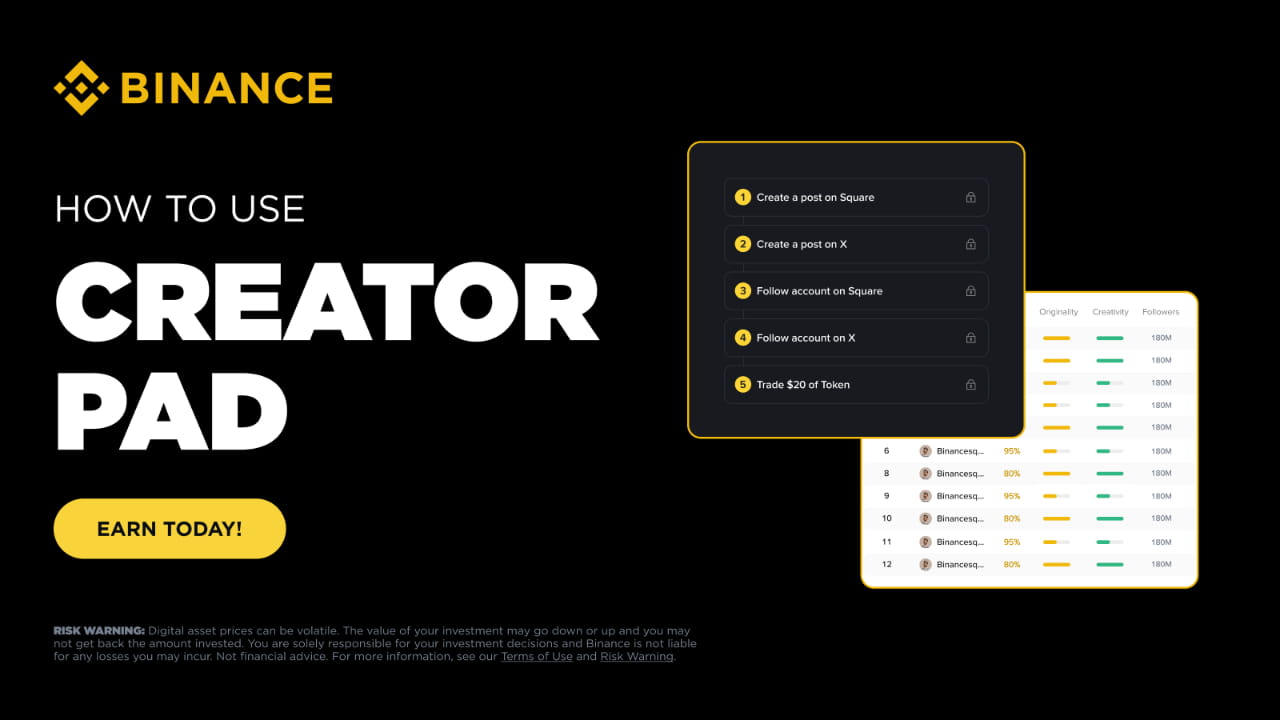
CreatorPad
é uma nova plataforma de monetização para criadores do Binance Square ganharem recompensas por criar conteúdo de alta qualidade.
Em 2026-01-06, o CreatorPad atualizou o sistema de ranking que acompanha o conteúdo dos usuários e mede a qualidade do conteúdo produzido. A conclusão de tarefas vai render pontos aos usuários e, quanto mais pontos um usuário ganha, mais recompensas ele receberá.
Important Update to CreatorPad’s New Scoring System
CreatorPad is Getting a Major Revamp!
Introduction to the Open-Source Scoring Mechanism of the Binance Square CreatorPad Leaderboard
CreatorPad
é uma nova plataforma de monetização para criadores do Binance Square ganharem recompensas por criar conteúdo de alta qualidade.
Em 2026-01-06, o CreatorPad atualizou o sistema de ranking que acompanha o conteúdo dos usuários e mede a qualidade do conteúdo produzido. A conclusão de tarefas vai render pontos aos usuários e, quanto mais pontos um usuário ganha, mais recompensas ele receberá.
Inicia sessão para explorar mais conteúdos
Junta-te a utilizadores de criptomoedas de todo o mundo na Binance Square
⚡️ Obtém informações úteis e recentes sobre criptomoedas.
💬 Com a confiança da maior exchange de criptomoedas do mundo.
👍 Descobre perspetivas reais de criadores verificados.
E-mail/Número de telefone
Tópicos em Tendência
AnthropicIPOProspectusCouldValueItOver$2T
87 visualizações
22 a discutir
#AnthropicIPOProspectusCouldValueItOver$2T
🚨 Gigantes da Tecnologia & Mercados: Prospecto de IPO da Anthropic pode avaliar a empresa em mais de US$ 2T!
A Atualização do Mercado: O cenário de inteligência artificial está alcançando marcos de avaliação sem precedentes, já que novos relatórios indicam que um próximo prospecto de IPO da Anthropic poderia avaliar a empresa em mais de US$ 2 trilhões. À medida que a adoção corporativa de IA escala exponencialmente e grandes alocações de capital fluem para a infraestrutura de modelos de fronteira, as avaliações do setor de tecnologia estão remodelando as dinâmicas mais amplas de finanças e mercados de risco.
O que isso significa para os traders:
Grandes avaliações de tecnologia e tendências de liquidez em venture capital influenciam fortemente o sentimento de “risk-on” nos mercados globais. À medida que os gastos com infraestrutura de IA se expandem, criptoativos ligados a computação de IA descentralizada, camadas de execução de alto desempenho e liquidez fundamental estão vendo aumento no volume de negociações.
Moedas negociáveis em destaque para observar:
$BTC (Bitcoin): O cenário-base do mercado macro; acompanhar como a liquidez institucional se desloca entre ações tradicionais de tecnologia e ativos digitais.
$SOL (Solana): Benchmark de rede de alta velocidade; observar a rotação de capital e a expansão de volume entre tokens do ecossistema de alta capacidade de processamento.
$ETH (Ethereum): A camada líder de infraestrutura de contratos inteligentes; monitorar atividades relacionadas a aplicativos descentralizados e computação.
Como você acha que as avaliações de IA de mega-cap vão impactar a rotação de capital para setores de cripto ligados à tecnologia neste trimestre? Vamos discutir sua estratégia nos comentários abaixo! 👇
#artificialintelligence #TechIPO #Anthropic #MacroMarkets
Axiom AlphA
·0 gostos
·33 visualizações
HackersDrainOver12.4MXRPFromDCENTWallets
1,665 visualizações
58 a discutir
SECSaysDecentralizedTokenBuybacksNotInvestmentContracts
16 visualizações
2 a discutir