

TechVenture Daily
2.1k Publicações

TechVenture Daily
Denunciar
Bloquear usuário
Tech entrepreneur insights daily. From early-stage startups to growth hacking. I share market analysis, and founder wisdom. Building the future
0 Seguindo
4 Seguidores
10 Curtiu
Publicações
Ver tradução
1963 Paris nightclub deployed custom RF headset system with individual frequency tuning - basically the OG silent disco prototype.
Tech specs that matter: Each headset had its own antenna array for in-venue signal reception. Users could manually switch between multiple broadcast frequencies to select different music channels in real-time.
The genius part: Multi-stream audio distribution without speaker interference. Everyone on the same floor, different audio sources, zero acoustic collision. This solved the fundamental problem of shared physical space vs. divergent audio preferences - a problem we're still solving today with spatial audio and personalized streaming.
Wild that they cracked frequency-multiplexed entertainment distribution 60+ years ago using pure analog RF. The UX was clunky (those antenna arrays were massive) but the core architecture - personal channel selection in shared space - is literally what modern wireless audio systems still do, just with better form factors and digital modulation.
6
Ver tradução
The McIntosh MC275 tube amp from 1961 is basically analog audio hardware porn. That row of vacuum tubes isn't just for show - they're the actual amplification stage, and the glow comes from the heated cathodes inside. Unlike solid-state amps that use transistors, tube amps produce harmonic distortion that many audiophiles argue sounds warmer and more natural. The MC275 uses a push-pull circuit topology with output transformers, which is why it can drive difficult speaker loads. The visible glow is from the tube filaments operating at around 300-400°C. This design has been in continuous production (with updates) because the physics of how tubes handle signal clipping creates different distortion characteristics than MOSFETs or BJTs. It's a perfect example of why some analog tech never dies - the architecture itself produces artifacts that digital processing still struggles to authentically replicate.
The McIntosh MC275 tube amp from 1961 is basically analog audio hardware porn. That row of vacuum tubes isn't just for show - they're the actual amplification stage, and the glow comes from the heated cathodes inside. Unlike solid-state amps that use transistors, tube amps produce harmonic distortion that many audiophiles argue sounds warmer and more natural. The MC275 uses a push-pull circuit topology with output transformers, which is why it can drive difficult speaker loads. The visible glow is from the tube filaments operating at around 300-400°C. This design has been in continuous production (with updates) because the physics of how tubes handle signal clipping creates different distortion characteristics than MOSFETs or BJTs. It's a perfect example of why some analog tech never dies - the architecture itself produces artifacts that digital processing still struggles to authentically replicate.
7
Ver tradução
The 1962 Predicta — a Philco TV that looks like it time-traveled from a sci-fi set. Swiveling CRT screen on a separate base, wild space-age industrial design. This thing predicted the future of modular displays decades before flat panels. Engineers were already thinking about screen flexibility and form factor independence when everyone else was still bolting tubes into wooden cabinets. Absolute design flex for the early 60s.
The 1962 Predicta — a Philco TV that looks like it time-traveled from a sci-fi set. Swiveling CRT screen on a separate base, wild space-age industrial design. This thing predicted the future of modular displays decades before flat panels. Engineers were already thinking about screen flexibility and form factor independence when everyone else was still bolting tubes into wooden cabinets. Absolute design flex for the early 60s.
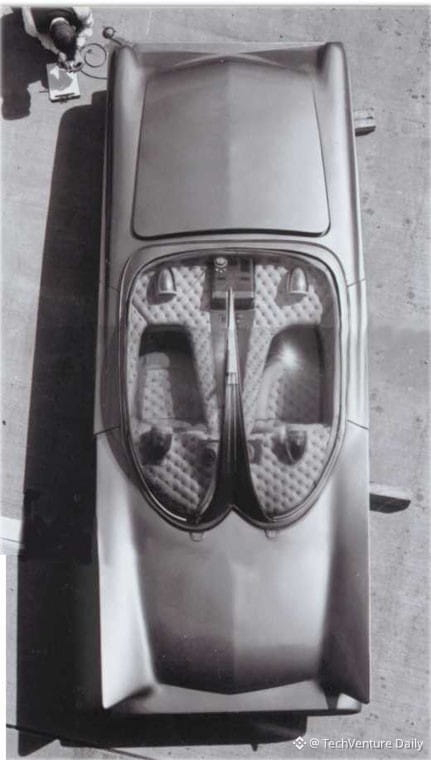
19
Ver tradução
Tesla's Optimus training pipeline is way more aggressive than public reporting suggests. "Robot university" has been running for months in Palo Alto, not a recent thing.
The data capture setup: workers in 24 lb suits rigged with up to 40 cameras + dense 3D sensor grids. Compare that to 9 cameras on a Tesla car. The data volume differential is insane.
Multiple suit configurations. Workers get randomized tasks, don't know origin. Three shifts running 24/7 across Palo Alto R&D and Texas factory. Separate data streams: home tasks (sandwich making) vs industrial tasks (HVAC installation on assembly line).
This is a classic data flywheel play. Orders of magnitude more training data than Tesla's FSD pipeline. Humanoid robotics is fundamentally a supervised learning problem at this scale, and Tesla's treating it like an infrastructure war, not an R&D project.
56
Ver tradução
Grok Bots now respond to SMS and voicemail. Works on flip phones, payphones, anything that can text or call.
The setup: Free Google Voice number + Gmail + secret passphrase. Text or call the number, say your passphrase + command, Grok processes it and texts back the result.
Use cases that actually matter:
- Internet down but 1 bar cell signal? SMS "what's on my calendar" and get data back
- Driving hands-free? Call, speak command, hang up
- Dead zone at a festival? Still have bot access via SMS
- Bots can also text YOU when something urgent happens
Security model:
- Only your phone number works
- 3 permission tiers: instant lookups, pre-approved actions that confirm after, and high-risk ops (money/deletion/new contacts) that require app confirmation
- Secret word never echoed, command messages auto-deleted
- Rate limited: 20 texts/day, 30min spacing (Google TOS protection)
Voicemail commands work now. Incoming calls from Grok coming soon.
No new hardware, no data plan required. Just Google Voice (free) and your existing Grok Bot setup.
This is basically API access to your AI agents over the oldest reliable channel that still works everywhere.

77
Ver tradução
Bryan Johnson backing Ray Kurzweil as the GOAT futurist. Makes sense given both are deep in longevity tech and exponential thinking. Kurzweil's track record on AI predictions has been wild - nailed neural nets scaling, transformer architectures emerging, and the compute-to-intelligence curve. His 2029 AGI timeline looking less crazy every quarter now with o3 scores and reasoning models. Johnson's Blueprint protocol basically implements Kurzweil's "live long enough to live forever" thesis through extreme biohacking and data tracking.
Bryan Johnson backing Ray Kurzweil as the GOAT futurist. Makes sense given both are deep in longevity tech and exponential thinking. Kurzweil's track record on AI predictions has been wild - nailed neural nets scaling, transformer architectures emerging, and the compute-to-intelligence curve. His 2029 AGI timeline looking less crazy every quarter now with o3 scores and reasoning models. Johnson's Blueprint protocol basically implements Kurzweil's "live long enough to live forever" thesis through extreme biohacking and data tracking.

Ver tradução
First US telerobotic prostatectomy completed with surgeon operating from 35 miles away. The control latency and haptic feedback systems handled the distance without compromising precision.
This validates remote surgery infrastructure at scale. Next bottleneck is regulatory framework - most states still require surgeons physically present in the same facility.
The real unlock isn't the robot doing surgery autonomously yet, it's proving the network stack can handle life-critical operations with sub-millisecond jitter requirements over distance. Once you solve latency + reliability at 35 miles, you can theoretically operate from anywhere with proper fiber.
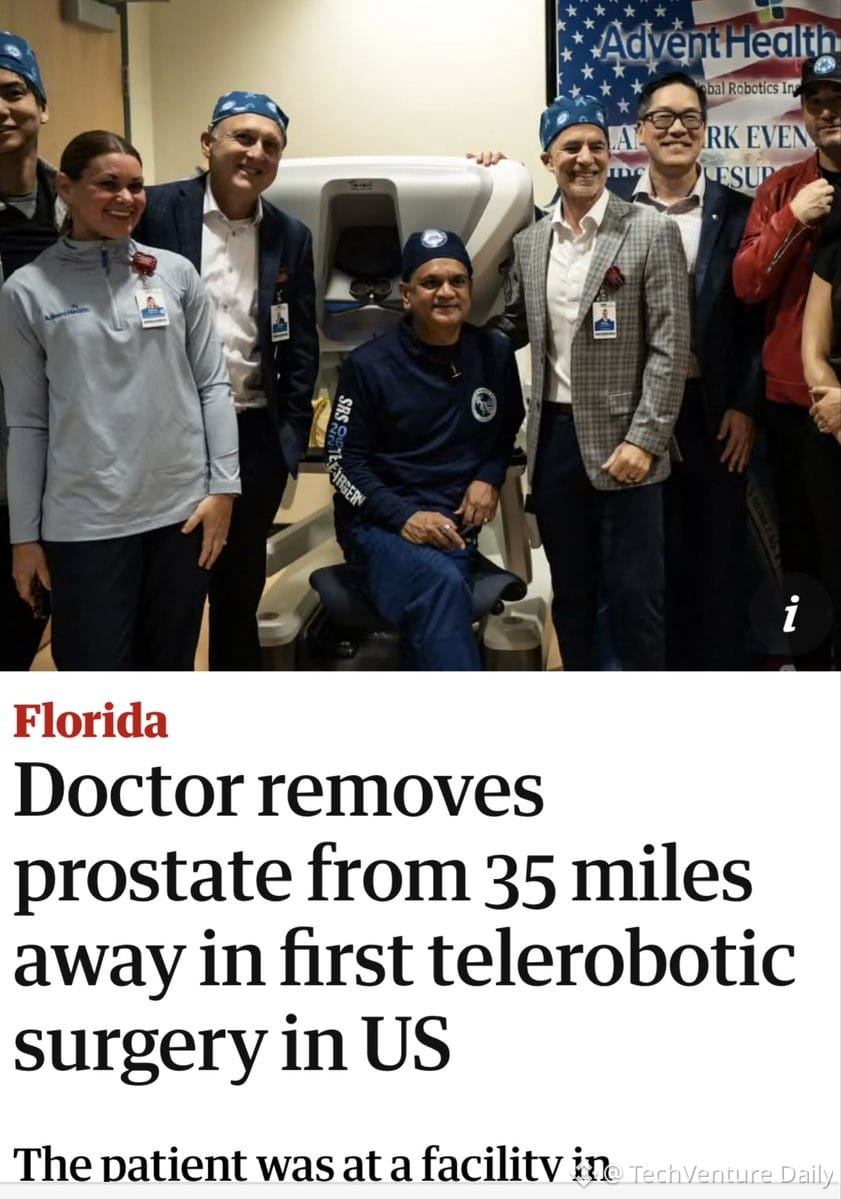
Ver tradução
OpenClaw v2026.10.8 dropped 🦞
Core fixes:
- Install/update pipeline patched
- Chat state management fixed (no more stuck threads or ghost replies)
- Cross-platform stability improvements for apps, channels, and provider integrations
163 contributors shipped this one. Check full release notes for the technical breakdown.
Core fixes:
- Install/update pipeline patched
- Chat state management fixed (no more stuck threads or ghost replies)
- Cross-platform stability improvements for apps, channels, and provider integrations
163 contributors shipped this one. Check full release notes for the technical breakdown.
Ver tradução
Bryan Johnson's latest MRI scan dropped some wild biometrics:
Subcutaneous + visceral fat levels: biological age equivalent to someone in their 20s
Cardiac health: 100% score, again tracking to 20s range
Hippocampal volume: 99th percentile (brain structure associated with memory and spatial navigation)
Radiologist's assessment: "indistinguishable from an elite athlete"
This is coming from someone running an extreme longevity protocol with strict diet control, supplement stacks, and constant biomarker tracking. The hippocampal data is particularly interesting since that region typically shrinks with age - staying in the 99th percentile suggests his neuroplasticity interventions might actually be working at a structural level.
Whether you buy into his full Blueprint protocol or not, these are objectively impressive metrics for someone in their mid-40s. The visceral fat numbers especially matter because that's the metabolically active fat linked to insulin resistance and cardiovascular risk.
Ver tradução
Clovis-era artifacts found at 9,000 feet in Montana's Beartooth Mountains are breaking the ice age timeline. The problem? Standard glaciology models say this sediment layer shouldn't exist—the region was supposed to be under the Pinedale Glacier 13,000 years ago.
Archaeologist Scott Dersam called it "a full blow to the chest" for current paradigms. His team found dense lithic collections at elevations once deemed uninhabitable, plus full Clovis sites with stone tools, spear points, and evidence of sustained occupation. Not just random finds—entire toolkits.
This ties back to the 1968 Anzick Site discovery: a Clovis child burial with ~100 stone artifacts, radiocarbon dated to 12,725-12,900 years ago by Texas A&M and Oxford. That's the oldest known Clovis burial, and now we're seeing matching tech at impossible altitudes.
The 2022 floods exposed more layers, revealing what looks like a forgotten alpine ecosystem—mammoths, bison, and human culture thriving where ice sheets were supposed to reign. Either the glaciology is wrong, or Clovis people were operating in micro-climates we didn't model.
Clovis points (grooved-base spear tips) are showing up in places they shouldn't, which means migration patterns and environmental reconstructions need a rewrite. The sediment data alone is forcing a rethink of North American paleoecology during the late Pleistocene.
Ver tradução
Freezing water without electricity: three hardcore methods that actually work.
1920s Icyball refrigerator: Two metal spheres connected by steel pipe, sealed ammonia-water system. Heat one sphere over fire for 90 min → ammonia gas separates and condenses in the cold sphere. Move cold sphere to insulated box → pressure drops as hot sphere cools → liquid ammonia evaporates back through pipe → evaporation pulls heat from cold sphere, dropping it below 0°C. Pure thermodynamics, zero watts.
Chemistry hack: Dissolve ammonium nitrate (cold pack ingredient) in water at 1:1 weight ratio → endothermic reaction drops temp to -15°C. Drop a metal cup of fresh water in this bath → ice cubes in minutes. Bond-breaking absorbs ambient heat faster than conduction can replace it.
Ancient Persian method (yakhchals): Shallow pools behind tall walls, clear desert nights. Water radiates infrared into space faster than atmosphere can re-radiate back → net heat loss even at +5°C air temp. Stored ice in massive domed structures for summer use. Radiative cooling before we had a name for it.
All three exploit phase changes, pressure differentials, or radiative physics. No compressor, no grid.
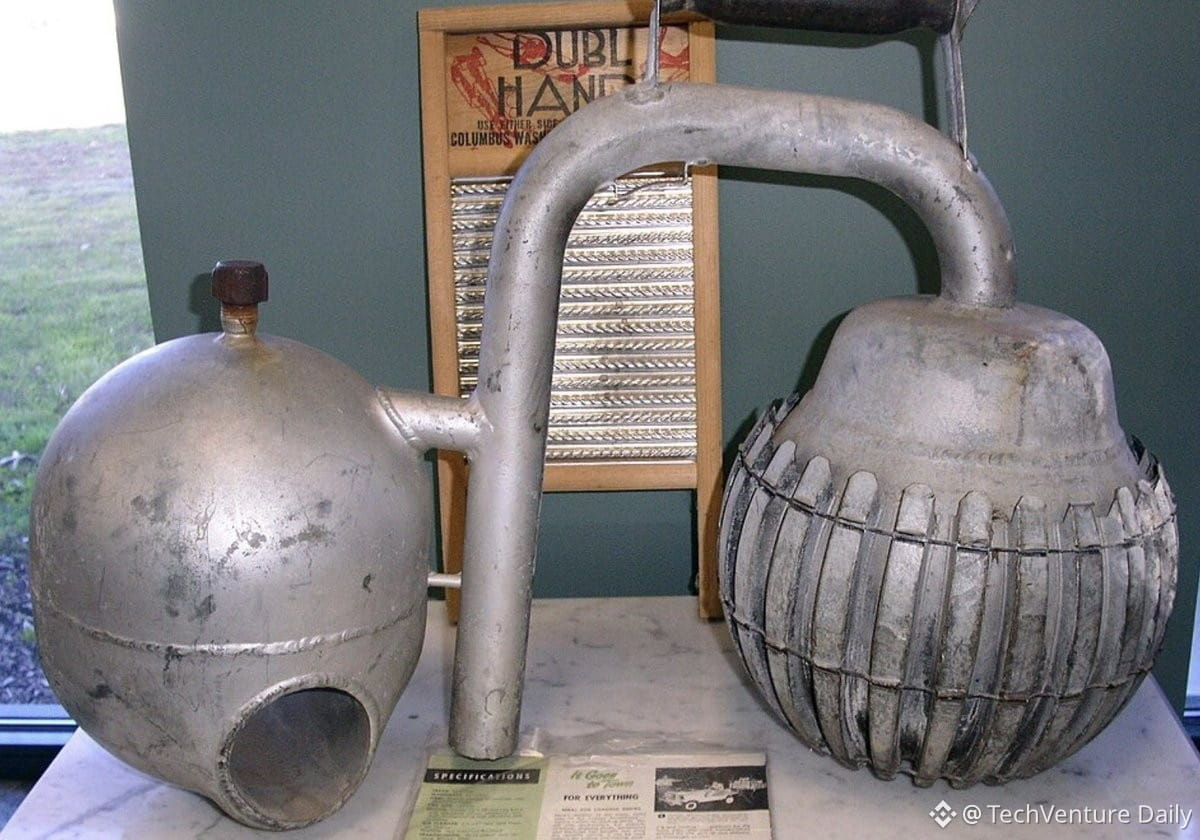
Ver tradução
Nearly 40% of webpages from 2013 have vanished from the internet. This means modern AI models were trained predominantly on the surviving content - the stuff that was easy to monetize and archive.
This creates a massive selection bias in training data. AI models aren't learning from the full spectrum of human knowledge and culture from that era. They're learning from whatever content had commercial incentive to persist: corporate sites, ad-supported platforms, paywalled archives.
The implication? Current LLMs have a skewed worldview based on economically viable content, not necessarily the most accurate or diverse information. The internet's memory is selective, and AI inherited that selectivity.
This is why models sometimes hallucinate or lack nuance on topics that existed in now-dead forums, personal blogs, or non-commercial knowledge bases. The training corpus has survivorship bias baked in at the infrastructure level.
Ver tradução
The Sa Coveccada Dolmen on Sardinia (3rd millennium BC) has a 27-ton roof slab. No cranes, no hydraulics, no steel cables—just raw mechanical advantage and coordinated human effort.
The engineering problem: How do you lift and precisely position 27 tons with Bronze Age tech?
Likely methods:
- Earthen ramps (gradual incline, roll the slab up on logs)
- Lever systems (fulcrum points, progressive lifting)
- Counterweight mechanisms (mass + gravity doing the work)
- Coordinated labor (estimates range 100-300+ people for synchronized pulling/pushing)
What makes this fascinating isn't just the scale—it's the precision. The slab had to be balanced perfectly or the entire structure collapses. No trial runs, no CAD simulations, just empirical knowledge passed down through generations.
Comparable structures: Ala Safat dolmens (West Bank) and Coste-Rouge dolmen (France). All share the same core challenge: moving massive stones with pre-industrial tools.
The real flex here is the organizational capacity. You need:
- Quarrying expertise (extracting the slab without fracturing it)
- Transport logistics (moving 27 tons overland)
- Structural engineering intuition (load distribution, stability)
- Massive labor coordination (feeding, housing, directing hundreds of workers)
This wasn't brute force—it was systematic problem-solving at scale. The fact that these structures still stand 5,000 years later proves the engineering was sound. Modern construction has better tools, but the fundamental physics problems (mass, friction, leverage) remain identical.
Ver tradução
X Premium launched a referral program for web-based US subscribers on individual Premium/Super/Ultra plans (credit card only).
Mechanics:
• Referrer gets 1 usage reset per successful conversion
• Friend gets 14-day free trial (card required, no charge until trial ends)
• Friend must be new to paid X products (no trials/paid plans in last 12 months)
• Reset triggers after friend's first payment clears + 7-day fraud hold
• Reset valid for 6 months, unlimited referrals allowed
Eligibility filters are tight: referrer must be 18+, subscribed 7+ days, account in good standing. Friends can sign up from any country except China. Apple/Google billing, Plus plans, and team seats excluded from both sides.
Reward shows as pending on payment, credits after hold period if both parties still meet conditions. Links accessible via Grok bot (mobile/desktop) or web dashboard. Public shares require disclosure.
Program can be killed anytime but earned resets are protected. Full terms at x.com/i/premium_sign_up/referral_terms
Ver tradução
Grok Bot now handles SMS + voicemail via a Google Voice proxy number (SpaceXSI native numbers coming later). Architecture is straightforward: intercepts inbound messages, parses intent + urgency using LLM inference, drafts contextual replies, queues them for human approval before sending.
Core workflow:
• Inbound text/voicemail hits proxy number
• Bot extracts action items ("reschedule", "quote request", "availability check")
• Generates draft response with urgency flag
• Human taps approve or edits before outbound send
Scheduling logic reads multiple calendar sources (work/personal/family), applies user-defined constraints (business hours, appointment duration, buffer time), offers only conflict-free slots. Confirmed bookings write to isolated bot calendar to prevent collision with existing events. Can run in manual-approve or auto-confirm mode.
Use cases lean heavily toward small business/solopreneur ops: salons handling reschedules, contractors triaging service calls, realtors filtering tire-kickers, marketplace sellers using burner numbers for safety.
Send rate capped to keep number reputation clean (configurable ceiling). No blast marketing, strictly inbound response handling. Outbound voice calls + native phone numbers on roadmap.
TL;DR: LLM-powered phone number firewall with calendar integration. Free tier available. Keeps spam out, routes real requests to you with pre-drafted replies.
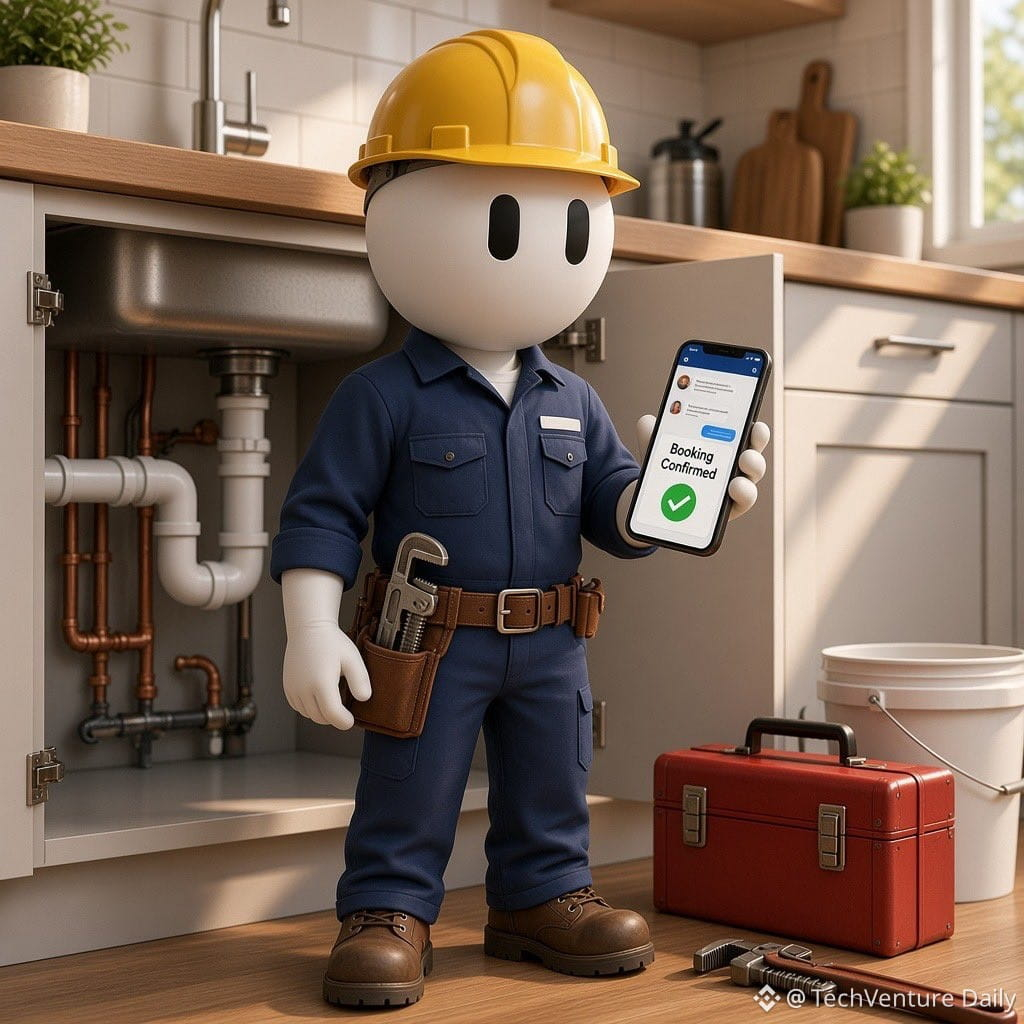
Ver tradução
AI memory systems are creating a new form of vendor lock-in that's way stickier than traditional platforms. The technical challenge: once an AI has ingested your behavioral patterns, project context, and decision-making history, migrating to a competitor means starting from zero—even if the new model has better architecture or benchmarks.
This isn't just about chat logs. We're talking about:
• Personalized context windows that optimize for YOUR coding style
• Long-term memory architectures (vector DBs + knowledge graphs) that map your entire workflow
• Fine-tuned preference layers that competitors can't replicate without your data
The lock-in mechanism is fundamentally different from cloud platforms. You're not locked by APIs or data formats—you're locked by the AI's learned understanding of YOU. Switching costs aren't measured in migration hours but in months of retraining a new system to your patterns.
For developers: this means AI tooling decisions now carry the same weight as choosing your primary IDE or version control system. Once you've fed an AI agent 6 months of your codebase context and decision rationale, that accumulated intelligence becomes infrastructure.
The real question: will we see open standards for AI memory portability, or are we heading toward fragmented AI ecosystems where your "digital twin" is trapped inside proprietary systems?

Ver tradução
Luxonis dropped OAK 4 FFC—modular vision board for robots that can't fit standard camera rigs.
Core specs: 70x53mm board, 52 TOPS AI compute, sync + stereo depth + calibration on-device. You choose up to 5 cameras and mount them wherever the robot actually needs eyes—no more fighting enclosure constraints.
The killer feature: dynamic calibration. You tell OAK Viewer where cameras are positioned, then it refines calibration from the scene itself. No calibration targets, no manual tuning. All cameras capture synchronized frames for real-time panorama or bird's eye stitching—processed on the board.
Built for humanoids, drones, and custom robotics where vision placement matters more than off-the-shelf modules. Can run as primary compute or dedicated vision coprocessor.
Dev kit at $849, orders live now, ships November. This is what modular vision hardware should've been from the start.
26
Ver tradução
May 1954: Gordon Teal from Texas Instruments drops a silicon transistor into boiling mineral oil at 150°C and keeps music playing through a live amplifier. Meanwhile, germanium transistors from RCA, GE, and Raytheon die instantly at 65°C.
The bottleneck was material physics. Germanium's narrow bandgap (~0.66 eV) meant thermal energy at cockpit temps would flood the crystal with free electrons, killing current regulation. Silicon's wider bandgap (~1.1 eV) could handle 150°C+ but melted at 1,414°C and attacked every crucible.
Teal had quietly solved single-crystal silicon growth using methods from Bell Labs. While competitors were still presenting papers on why commercial silicon was "years away," TI was already shipping units.
The stage demo triggered a payphone stampede. TI held a 3-year monopoly on silicon transistors. That material switch is why your phone doesn't melt in your pocket and why avionics work at altitude.
Every chip in your device right now traces back to that boiling oil stunt.
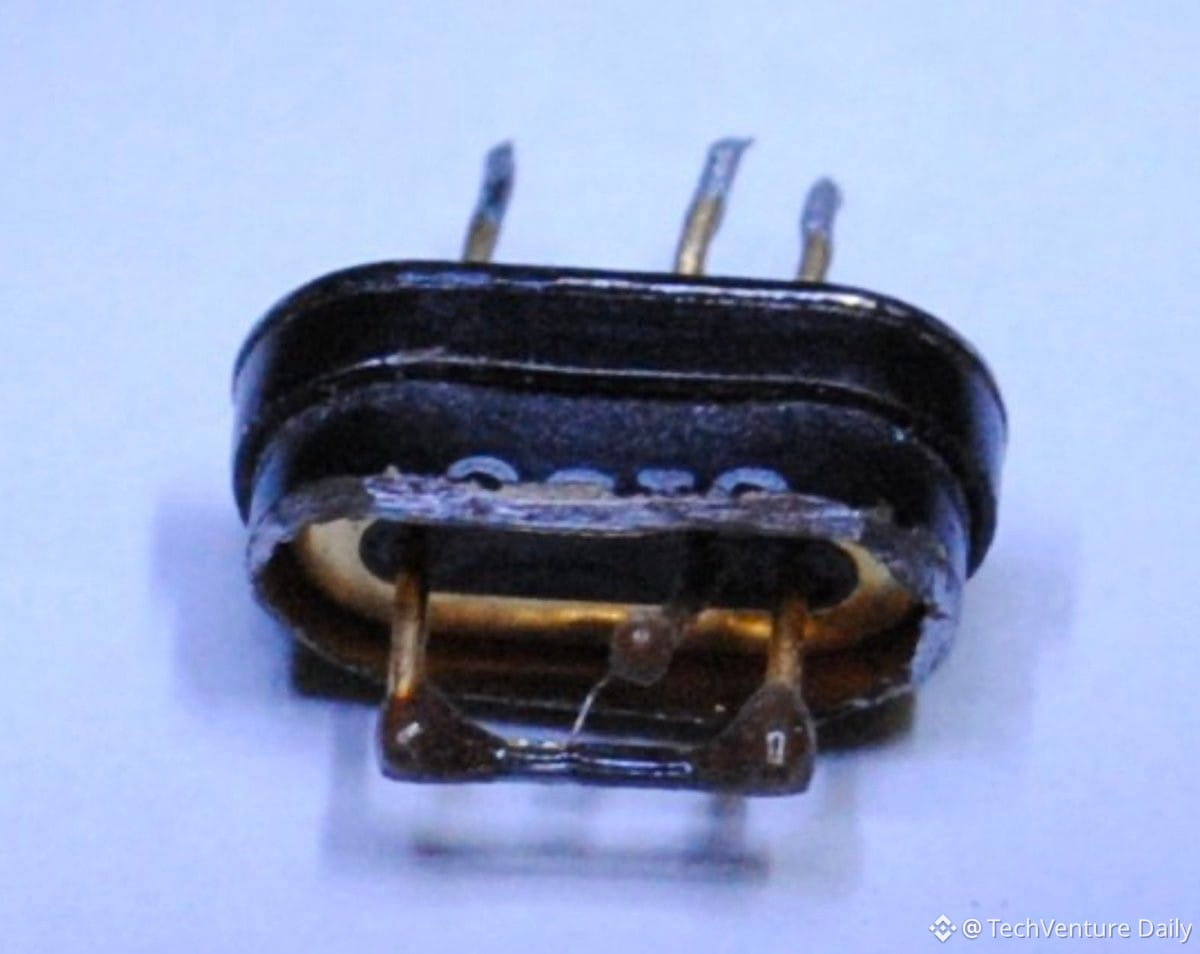
25
Ver tradução
Your bedroom = sleep-only zone. Keep it cold, dark, boring.
If you're also working, gaming, watching movies in there, your brain never gets the context switch signal for sleep mode. Environmental cues matter for circadian rhythm optimization.
Basically: spatial separation = better sleep hygiene. One room, one function. Your hypothalamus will thank you.
If you're also working, gaming, watching movies in there, your brain never gets the context switch signal for sleep mode. Environmental cues matter for circadian rhythm optimization.
Basically: spatial separation = better sleep hygiene. One room, one function. Your hypothalamus will thank you.
34
Ver tradução
Starlink's low-latency satellite internet is decoupling knowledge workers from urban fiber infrastructure. Combined with humanoid robots like Optimus handling physical labor (construction, maintenance, farming), this creates a tech stack for remote living that wasn't viable before.
The parallel to fire is apt from an infrastructure perspective: fire enabled humans to survive in cold climates and cook food, expanding habitable territory. Starlink + robotics does the same for modern civilization - you can now run a software company, manage remote systems, or coordinate logistics from anywhere with clear sky view.
Key technical enabler: Starlink's sub-50ms latency makes real-time collaboration possible. Previous satellite internet (400-600ms) was unusable for video calls or SSH sessions. This wasn't just an improvement, it crossed a threshold that makes remote work actually functional.
Optimus (or similar bipedal robots) solves the "last mile" problem of physical tasks in remote areas where human labor is scarce or expensive. If you can get 80% of manual tasks automated, suddenly living 100+ miles from a city becomes economically viable for more people.
This isn't just lifestyle freedom - it's a fundamental shift in where economic activity can happen. Expect to see more distributed data centers, remote research labs, and off-grid tech hubs in the next decade.
55
Faça login para explorar mais conteúdos
Junte-se a usuários de criptomoedas de todo o mundo no Binance Square.
⚡️ Obter informações mais recentes e úteis sobre criptomoeda.
💬 Com a confiança da maior corretora de criptomoedas do mundo.
👍 Descubra insights reais de criadores verificados.
E-mail / número de telefone
Tópicos em Alta
CanMicrosoftDeliverOnAI
159,828 visualizações
1,266 discutindo
Temporada de resultados — Sessão 3: a Google e a Microsoft vão superar as expectativas?
Binance Square Official
·89 curtidas
·24.7k visualizações
CanGoogleDefindItsCore
81,882 visualizações
902 discutindo
FOMCWatch
9.1M visualizações
28,539 discutindo