
CryptoGlow
713 Publicações

CryptoGlow
Open trade || Binance Kol || Web 3.0 || Charts and Setups
Trader frequente
1.9 anos
126 Seguindo
1.0K+ Seguidores
248 Curtiu
Publicações
Todas
Citações
Live
#dusk $DUSK @Dusk
$DUSK A Privacidade Não é Só Sobre Esconder Dados
Quanto mais eu olho para o Dusk, mais eu penso que a parte interessante não é apenas que as transações podem ser privadas.
É o que acontece quando a privacidade se torna algo com que instituições realmente precisam trabalhar.
Uma blockchain pública torna a transparência o padrão. Isso é útil, mas também pode expor detalhes de transações que as empresas talvez não queiram à vista.
O Dusk adota uma abordagem diferente com sua arquitetura focada em privacidade, na qual os usuários podem ter mais controle sobre quais informações de transação são reveladas.
Mas isso cria uma pergunta ainda mais interessante:
Quanto de privacidade é realmente útil para uma instituição?
Pouca privacidade gera uma exposição desnecessária. Muita privacidade pode dificultar auditoria e conformidade.
É nesse equilíbrio que o Dusk se torna interessante para mim.
O verdadeiro teste provavelmente não será se a tecnologia consegue ocultar dados de transações.
Será se as instituições conseguem usar privacidade sem perder a capacidade de provar o que realmente aconteceu.
Esse é um problema muito mais difícil do que simplesmente dizer “blockchain privada”.
E se o Dusk conseguir acertar esse equilíbrio, a grande história talvez não seja a privacidade em si.
Pode ser tornar a privacidade utilizável em escala institucional.
As instituições prefeririam a privacidade máxima ou uma transparência controlável?
$DUSK A Privacidade Não é Só Sobre Esconder Dados
Quanto mais eu olho para o Dusk, mais eu penso que a parte interessante não é apenas que as transações podem ser privadas.
É o que acontece quando a privacidade se torna algo com que instituições realmente precisam trabalhar.
Uma blockchain pública torna a transparência o padrão. Isso é útil, mas também pode expor detalhes de transações que as empresas talvez não queiram à vista.
O Dusk adota uma abordagem diferente com sua arquitetura focada em privacidade, na qual os usuários podem ter mais controle sobre quais informações de transação são reveladas.
Mas isso cria uma pergunta ainda mais interessante:
Quanto de privacidade é realmente útil para uma instituição?
Pouca privacidade gera uma exposição desnecessária. Muita privacidade pode dificultar auditoria e conformidade.
É nesse equilíbrio que o Dusk se torna interessante para mim.
O verdadeiro teste provavelmente não será se a tecnologia consegue ocultar dados de transações.
Será se as instituições conseguem usar privacidade sem perder a capacidade de provar o que realmente aconteceu.
Esse é um problema muito mais difícil do que simplesmente dizer “blockchain privada”.
E se o Dusk conseguir acertar esse equilíbrio, a grande história talvez não seja a privacidade em si.
Pode ser tornar a privacidade utilizável em escala institucional.
As instituições prefeririam a privacidade máxima ou uma transparência controlável?
#dusk $DUSK @Dusk
Eu costumava pensar que levar ativos do mundo real para a cadeia (on-chain) era, na maior parte, um problema técnico. Se um título, fundo ou outro ativo financeiro pudesse ser representado como um token e transferido de forma eficiente, eu presumiria que a maior parte do trabalho difícil já estava resolvida.
Quanto mais eu me aprofundei no Dusk, menos completa essa suposição começou a parecer.
Um ativo financeiro não se torna mais fácil de usar apenas porque tem um token. Ainda é necessário existir uma forma de determinar quem tem permissão para acessá-lo, como a propriedade pode ser transferida, quais informações diferentes participantes devem conseguir ver e como a conformidade se encaixa no processo.
É isso que torna a abordagem do Dusk interessante para mim.
O foco do Dusk em ativos digitais regulamentados conecta privacidade, conformidade e controle de transações, em vez de tratá-los como problemas separados. A divulgação seletiva pode permitir que informações relevantes sejam verificadas sem tornar cada detalhe subjacente público, o que parece muito mais próximo de como as finanças regulamentadas realmente funcionam.
O que considero particularmente importante é que isso cria uma pergunta diferente sobre a adoção de RWA.
O desafio talvez não seja colocar ativos em uma blockchain. A parte mais difícil pode ser fazer com que todo o ciclo de vida desses ativos funcione de maneira fluida, enquanto diferentes participantes têm direitos, responsabilidades e requisitos de informação distintos.
Também acho que é aqui que o Dusk ainda precisa provar algo. Uma arquitetura bem projetada não significa automaticamente que as instituições vão utilizá-la em escala.
Para mim, o indicador realmente interessante é se o Dusk consegue transformar esses conceitos de privacidade e conformidade em fluxos financeiros reais dos quais as pessoas de fato dependem.
É essa a parte que vou observar enquanto a rede se desenvolve.
Eu costumava pensar que levar ativos do mundo real para a cadeia (on-chain) era, na maior parte, um problema técnico. Se um título, fundo ou outro ativo financeiro pudesse ser representado como um token e transferido de forma eficiente, eu presumiria que a maior parte do trabalho difícil já estava resolvida.
Quanto mais eu me aprofundei no Dusk, menos completa essa suposição começou a parecer.
Um ativo financeiro não se torna mais fácil de usar apenas porque tem um token. Ainda é necessário existir uma forma de determinar quem tem permissão para acessá-lo, como a propriedade pode ser transferida, quais informações diferentes participantes devem conseguir ver e como a conformidade se encaixa no processo.
É isso que torna a abordagem do Dusk interessante para mim.
O foco do Dusk em ativos digitais regulamentados conecta privacidade, conformidade e controle de transações, em vez de tratá-los como problemas separados. A divulgação seletiva pode permitir que informações relevantes sejam verificadas sem tornar cada detalhe subjacente público, o que parece muito mais próximo de como as finanças regulamentadas realmente funcionam.
O que considero particularmente importante é que isso cria uma pergunta diferente sobre a adoção de RWA.
O desafio talvez não seja colocar ativos em uma blockchain. A parte mais difícil pode ser fazer com que todo o ciclo de vida desses ativos funcione de maneira fluida, enquanto diferentes participantes têm direitos, responsabilidades e requisitos de informação distintos.
Também acho que é aqui que o Dusk ainda precisa provar algo. Uma arquitetura bem projetada não significa automaticamente que as instituições vão utilizá-la em escala.
Para mim, o indicador realmente interessante é se o Dusk consegue transformar esses conceitos de privacidade e conformidade em fluxos financeiros reais dos quais as pessoas de fato dependem.
É essa a parte que vou observar enquanto a rede se desenvolve.
@Dusk #dusk $DUSK
Entrei em Dusk esperando que a história de privacidade fosse o principal ponto que valeria a pena assistir. Em vez disso, eu voltava constantemente a uma pergunta diferente: o que acontece quando a privacidade realmente precisa funcionar dentro de mercados financeiros regulamentados?
Dusk é apresentado como uma Layer-1 para finanças confidenciais, com tecnologia de zero conhecimento, divulgação seletiva e infraestrutura voltada para ativos digitais regulamentados. No papel, essa combinação faz sentido. Instituições precisam verificar coisas como elegibilidade, propriedade e conformidade sem necessariamente expor cada detalhe de informação por trás da transação.
Mas a parte interessante é o que acontece entre esse design e o uso real.
Quanto mais eu olhei para a arquitetura, menos eu considerava privacidade apenas como esconder dados de transação. O problema mais difícil é decidir exatamente o que deve permanecer confidencial e o que precisa ser verificável por outra parte.
Essa distinção importa.
Um banco não necessariamente precisa ver tudo sobre uma contraparte. Talvez ele só precise de uma prova confiável de que certas condições foram atendidas. Se o blockchain puder fornecer essa prova mantendo informações não relacionadas em sigilo, o caso de uso se torna muito mais prático do que simplesmente colocar ativos financeiros em um livro-razão transparente.
É também por isso que o DuskEVM chamou minha atenção. Se o ecossistema conseguir tornar esse tipo de infraestrutura mais fácil para os desenvolvedores construírem, a narrativa de privacidade eventualmente precisa se tornar mensurável por meio de aplicações e transações reais.
Por isso, eu me interesso menos por saber se a Dusk tem uma boa proposta de privacidade agora.
Estou mais interessado em quais fluxos financeiros reais, mais adiante, acabam provando que privacidade programável é útil.
É essa a parte que vou acompanhar à medida que a adoção se desenvolve.
Entrei em Dusk esperando que a história de privacidade fosse o principal ponto que valeria a pena assistir. Em vez disso, eu voltava constantemente a uma pergunta diferente: o que acontece quando a privacidade realmente precisa funcionar dentro de mercados financeiros regulamentados?
Dusk é apresentado como uma Layer-1 para finanças confidenciais, com tecnologia de zero conhecimento, divulgação seletiva e infraestrutura voltada para ativos digitais regulamentados. No papel, essa combinação faz sentido. Instituições precisam verificar coisas como elegibilidade, propriedade e conformidade sem necessariamente expor cada detalhe de informação por trás da transação.
Mas a parte interessante é o que acontece entre esse design e o uso real.
Quanto mais eu olhei para a arquitetura, menos eu considerava privacidade apenas como esconder dados de transação. O problema mais difícil é decidir exatamente o que deve permanecer confidencial e o que precisa ser verificável por outra parte.
Essa distinção importa.
Um banco não necessariamente precisa ver tudo sobre uma contraparte. Talvez ele só precise de uma prova confiável de que certas condições foram atendidas. Se o blockchain puder fornecer essa prova mantendo informações não relacionadas em sigilo, o caso de uso se torna muito mais prático do que simplesmente colocar ativos financeiros em um livro-razão transparente.
É também por isso que o DuskEVM chamou minha atenção. Se o ecossistema conseguir tornar esse tipo de infraestrutura mais fácil para os desenvolvedores construírem, a narrativa de privacidade eventualmente precisa se tornar mensurável por meio de aplicações e transações reais.
Por isso, eu me interesso menos por saber se a Dusk tem uma boa proposta de privacidade agora.
Estou mais interessado em quais fluxos financeiros reais, mais adiante, acabam provando que privacidade programável é útil.
É essa a parte que vou acompanhar à medida que a adoção se desenvolve.
@Dusk está adotando uma abordagem interessante para o futuro das finanças baseadas em blockchain. O que se destaca para mim é o foco em levar ativos financeiros reais para a cadeia (on-chain), ao mesmo tempo em que enfrenta desafios como privacidade, conformidade, identidade e liquidação previsível.
Tokenização não é simplesmente criar uma versão digital de um ativo. Mercados financeiros reais exigem propriedade segura, elegibilidade do investidor, transferências controladas, liquidação transparente e privacidade para informações sensíveis. A Dusk está construindo uma infraestrutura com esses requisitos práticos em mente.
A privacidade é especialmente importante. Nem todos os detalhes financeiros devem ficar visíveis para todos, enquanto reguladores e participantes autorizados ainda podem precisar acessar informações específicas. A tecnologia de privacidade da Dusk e a abordagem de divulgação seletiva podem ajudar a criar um melhor equilíbrio entre confidencialidade e conformidade.
Outra área que acho interessante é a liquidação determinística. Os mercados financeiros precisam de previsibilidade quanto à liquidação final e de processamento de transações confiável, especialmente quando ativos e pagamentos estão conectados. Isso pode tornar a infraestrutura de blockchain mais adequada para títulos digitais regulados e ativos do mundo real.
A Dusk também oferece um ambiente compatível com EVM, dando aos desenvolvedores ferramentas familiares, enquanto permite que explorem as capacidades da rede. Enquanto isso,$DUSK tem utilidade dentro do ecossistema por meio de taxas de rede e staking.
Para mim, a maior oportunidade não é apenas colocar mais ativos on-chain. É construir uma infraestrutura que realmente consiga suportar a complexidade das finanças do mundo real.
Se a adoção de blockchain vai avançar além da especulação e chegar aos mercados financeiros convencionais, privacidade, conformidade, liquidação e usabilidade vão importar.
Por isso, a Dusk é um projeto que estou acompanhando enquanto o setor de tokenização continua a se desenvolver. #dusk
Tokenização não é simplesmente criar uma versão digital de um ativo. Mercados financeiros reais exigem propriedade segura, elegibilidade do investidor, transferências controladas, liquidação transparente e privacidade para informações sensíveis. A Dusk está construindo uma infraestrutura com esses requisitos práticos em mente.
A privacidade é especialmente importante. Nem todos os detalhes financeiros devem ficar visíveis para todos, enquanto reguladores e participantes autorizados ainda podem precisar acessar informações específicas. A tecnologia de privacidade da Dusk e a abordagem de divulgação seletiva podem ajudar a criar um melhor equilíbrio entre confidencialidade e conformidade.
Outra área que acho interessante é a liquidação determinística. Os mercados financeiros precisam de previsibilidade quanto à liquidação final e de processamento de transações confiável, especialmente quando ativos e pagamentos estão conectados. Isso pode tornar a infraestrutura de blockchain mais adequada para títulos digitais regulados e ativos do mundo real.
A Dusk também oferece um ambiente compatível com EVM, dando aos desenvolvedores ferramentas familiares, enquanto permite que explorem as capacidades da rede. Enquanto isso,$DUSK tem utilidade dentro do ecossistema por meio de taxas de rede e staking.
Para mim, a maior oportunidade não é apenas colocar mais ativos on-chain. É construir uma infraestrutura que realmente consiga suportar a complexidade das finanças do mundo real.
Se a adoção de blockchain vai avançar além da especulação e chegar aos mercados financeiros convencionais, privacidade, conformidade, liquidação e usabilidade vão importar.
Por isso, a Dusk é um projeto que estou acompanhando enquanto o setor de tokenização continua a se desenvolver. #dusk
@Dusk está construindo infraestrutura de blockchain com forte foco em privacidade, conformidade e aplicações financeiras do mundo real. O que torna a Dusk interessante é sua tentativa de resolver um desafio-chave para a adoção de blockchain: como informações financeiras sensíveis podem permanecer privadas, enquanto empresas e instituições ainda atendem às exigências regulatórias?
A Dusk foi projetada em torno de transações confidenciais e ativos digitais regulamentados, criando uma ponte potencial entre as finanças tradicionais e a tecnologia blockchain. Essa abordagem pode ser especialmente valiosa à medida que mais mercados financeiros exploram a tokenização e a liquidação on-chain.
O ecossistema $DUSK está focado em tornar o blockchain mais prático para empresas que precisam tanto de transparência quando necessário quanto de privacidade quando apropriado. Em vez de se concentrar apenas em hype de curto prazo do mercado, a Dusk está trabalhando em uma infraestrutura que possa suportar casos de uso financeiros reais.
Acredito que a privacidade se tornará cada vez mais importante conforme a adoção de blockchain se expande. As instituições nem sempre podem colocar dados financeiros sensíveis em sistemas totalmente transparentes, o que torna a tecnologia de preservação de privacidade uma parte importante do futuro.
O foco da Dusk em finanças regulamentadas, transações confidenciais e casos de uso institucionais torna o projeto digno de acompanhamento. Se a tecnologia blockchain vai se tornar uma parte maior das finanças globais, soluções que combinem privacidade, conformidade e eficiência podem ter um papel importante.
Para mim, essa é uma das partes mais interessantes do ecossistema da Dusk. Não se trata apenas de construir mais um blockchain; é sobre criar infraestrutura para aplicações financeiras em que privacidade e regulamentação importam igualmente.
$DUSK #dusk
A Dusk foi projetada em torno de transações confidenciais e ativos digitais regulamentados, criando uma ponte potencial entre as finanças tradicionais e a tecnologia blockchain. Essa abordagem pode ser especialmente valiosa à medida que mais mercados financeiros exploram a tokenização e a liquidação on-chain.
O ecossistema $DUSK está focado em tornar o blockchain mais prático para empresas que precisam tanto de transparência quando necessário quanto de privacidade quando apropriado. Em vez de se concentrar apenas em hype de curto prazo do mercado, a Dusk está trabalhando em uma infraestrutura que possa suportar casos de uso financeiros reais.
Acredito que a privacidade se tornará cada vez mais importante conforme a adoção de blockchain se expande. As instituições nem sempre podem colocar dados financeiros sensíveis em sistemas totalmente transparentes, o que torna a tecnologia de preservação de privacidade uma parte importante do futuro.
O foco da Dusk em finanças regulamentadas, transações confidenciais e casos de uso institucionais torna o projeto digno de acompanhamento. Se a tecnologia blockchain vai se tornar uma parte maior das finanças globais, soluções que combinem privacidade, conformidade e eficiência podem ter um papel importante.
Para mim, essa é uma das partes mais interessantes do ecossistema da Dusk. Não se trata apenas de construir mais um blockchain; é sobre criar infraestrutura para aplicações financeiras em que privacidade e regulamentação importam igualmente.
$DUSK #dusk
Enquanto verificava a atividade do Dusk, tratei uma transferência privada como uma transação confirmada: quando parecia estar liquidada, assumi que o trabalho estava concluído. Isso mudou quando rastreei o fluxo.
Continuei voltando ao padrão XSC do Dusk e aos contratos privados. O detalhe-chave não era apenas ocultar dados. A rede ainda precisa de evidências para verificar o estado sem expor todos os detalhes.
Isso me fez separar privacidade e conclusão. Uma transferência pode passar pelo consenso enquanto enviar, aceitar e liquidar ainda exigirem coordenação.
O equilíbrio disso me interessa. A confidencialidade reduz a exposição, mas autorização e reconhecimento podem adicionar atrito. Não tenho certeza em que ponto isso se torna desconfortável.
Eu observaria o timing da liquidação, o comportamento de aceitação, o uso de contratos, transições falhas e a atividade do operador. Eu acompanharia a atividade confidencial recorrente para ver se ela ajuda.
Minha conclusão permanece em aberto: o Dusk está tentando manter as informações financeiras privadas enquanto preserva a execução verificável. Fico me perguntando se os usuários vão sentir isso como proteção ou como coordenação adicional.
@Dusk #dusk $DUSK
Continuei voltando ao padrão XSC do Dusk e aos contratos privados. O detalhe-chave não era apenas ocultar dados. A rede ainda precisa de evidências para verificar o estado sem expor todos os detalhes.
Isso me fez separar privacidade e conclusão. Uma transferência pode passar pelo consenso enquanto enviar, aceitar e liquidar ainda exigirem coordenação.
O equilíbrio disso me interessa. A confidencialidade reduz a exposição, mas autorização e reconhecimento podem adicionar atrito. Não tenho certeza em que ponto isso se torna desconfortável.
Eu observaria o timing da liquidação, o comportamento de aceitação, o uso de contratos, transições falhas e a atividade do operador. Eu acompanharia a atividade confidencial recorrente para ver se ela ajuda.
Minha conclusão permanece em aberto: o Dusk está tentando manter as informações financeiras privadas enquanto preserva a execução verificável. Fico me perguntando se os usuários vão sentir isso como proteção ou como coordenação adicional.
@Dusk #dusk $DUSK
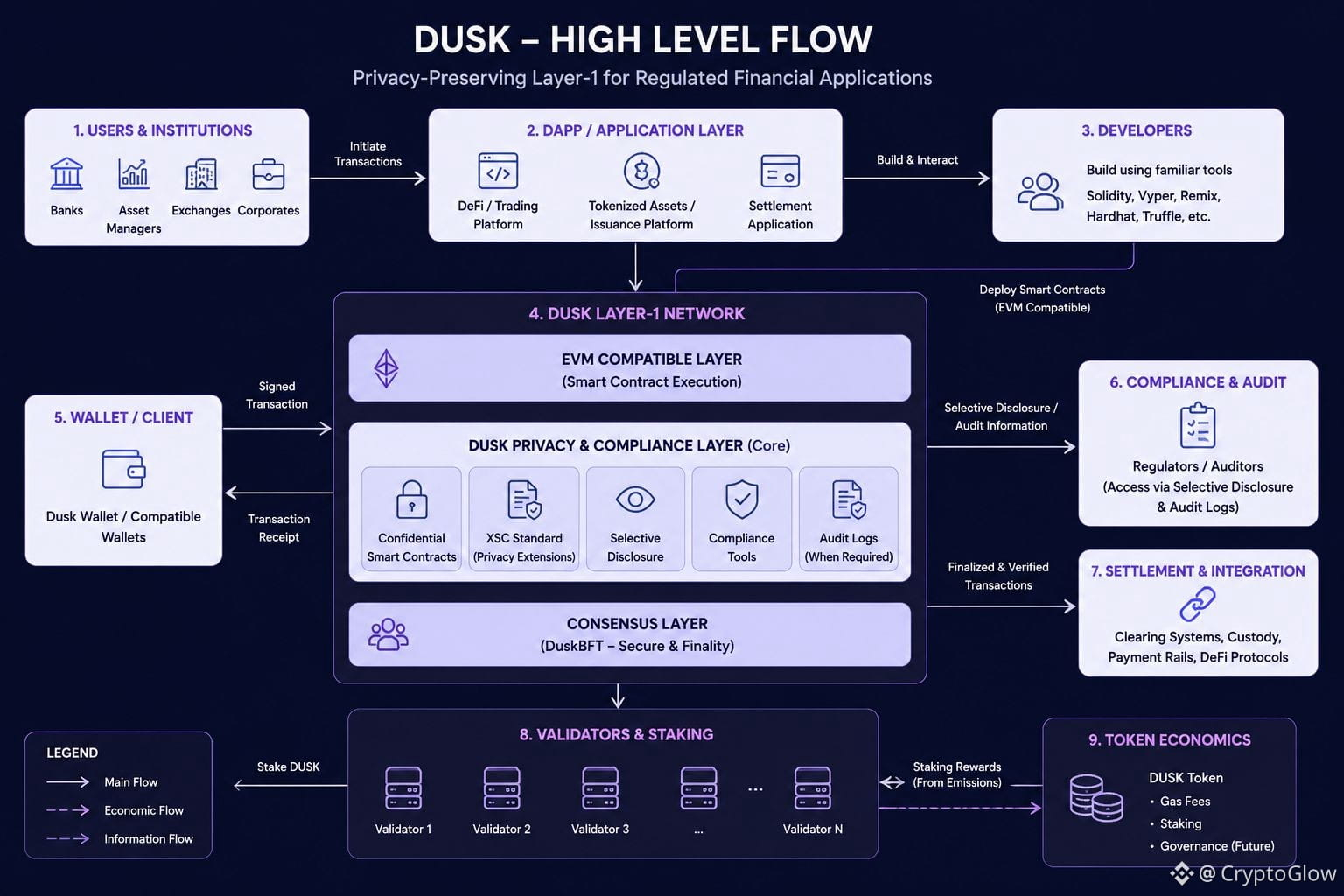
Notei algo enquanto rolava pelos rounds recentes no explorador @Dusk Dusk que inicialmente descartei como aleatório. O mesmo endereço de provisioner aparecia como block proposer em um round, depois surgia apenas como validator dois rounds depois, fazendo nada além de confirmar o trabalho de outra pessoa. Presumi que isso era apenas ruído de como a interface exibia a atividade.
Ao investigar mais a fundo, percebi que não era ruído. A seleção de fato gira a responsabilidade — propondo, validando e ratificando são deveres separados atribuídos a cada round, e não funções fixas ligadas à identidade de um provisioner. O que parecia inconsistência era, na verdade, o protocolo impedindo deliberadamente que qualquer participante crie e aprove o mesmo bloco.
Essa distinção mudou a forma como eu vinha tratando uma ideia. “Criar um bloco” e “finalizar um bloco” não são a mesma autoridade, e confundi-las esconde um efeito mais sutil: à medida que o Dusk adiciona camadas de compatibilidade com EVM, o tráfego de propostas oriundo de contratos genéricos pode crescer rapidamente, enquanto os validadores que verificam esse tráfego ainda carregam a mesma responsabilidade fixa, independentemente de quão complexa seja a lógica subjacente.
Isso me deixa incerto sobre uma coisa. Contratos confidenciais de XSC provavelmente exigem um escrutínio mais cuidadoso do que chamadas EVM simples, porém, se as estruturas de recompensa tratam um round de validação de forma uniforme, o alinhamento de incentivos não acaba corroendo silenciosamente à medida que a atividade genérica escala mais rápido do que a atividade confidencial.
Vou observar a proporção de transações XSC para transações EVM padrão por bloco, se os mesmos endereços de provisioner continuam reaparecendo ao longo dos epochs, e como o timing de ratificação muda conforme o volume de propostas cresce. Consistência nisso me diria mais do que qualquer contagem bruta de transações jamais poderia.
Fico pensando se o crescimento da atividade dos desenvolvedores fortalece esse modelo de rotação, ou apenas adiciona peso a um dos lados.#dusk $DUSK
Ao investigar mais a fundo, percebi que não era ruído. A seleção de fato gira a responsabilidade — propondo, validando e ratificando são deveres separados atribuídos a cada round, e não funções fixas ligadas à identidade de um provisioner. O que parecia inconsistência era, na verdade, o protocolo impedindo deliberadamente que qualquer participante crie e aprove o mesmo bloco.
Essa distinção mudou a forma como eu vinha tratando uma ideia. “Criar um bloco” e “finalizar um bloco” não são a mesma autoridade, e confundi-las esconde um efeito mais sutil: à medida que o Dusk adiciona camadas de compatibilidade com EVM, o tráfego de propostas oriundo de contratos genéricos pode crescer rapidamente, enquanto os validadores que verificam esse tráfego ainda carregam a mesma responsabilidade fixa, independentemente de quão complexa seja a lógica subjacente.
Isso me deixa incerto sobre uma coisa. Contratos confidenciais de XSC provavelmente exigem um escrutínio mais cuidadoso do que chamadas EVM simples, porém, se as estruturas de recompensa tratam um round de validação de forma uniforme, o alinhamento de incentivos não acaba corroendo silenciosamente à medida que a atividade genérica escala mais rápido do que a atividade confidencial.
Vou observar a proporção de transações XSC para transações EVM padrão por bloco, se os mesmos endereços de provisioner continuam reaparecendo ao longo dos epochs, e como o timing de ratificação muda conforme o volume de propostas cresce. Consistência nisso me diria mais do que qualquer contagem bruta de transações jamais poderia.
Fico pensando se o crescimento da atividade dos desenvolvedores fortalece esse modelo de rotação, ou apenas adiciona peso a um dos lados.#dusk $DUSK
Eu vi algo estranho ao rastrear um lote de tentativas de transferência na @Dusk Trade da semana passada: várias submissões continuavam falhando exatamente no mesmo ponto de verificação. Minha primeira suposição foi congestionamento de rede, algo comum, nada que merecesse uma segunda olhada.
Aprofundando, percebi que as falhas não eram aleatórias. Elas se concentravam na verificação de elegibilidade, a etapa em que a permissão de uma carteira para manter um determinado ativo é confirmada antes que qualquer transferência seja executada. Foi aí que eu entendi, de verdade, o quão central essa camada de autorização é. Ela não é um mero detalhe ao lado da transação; é um portão pelo qual a transação precisa passar todas as vezes.
Isso mudou a forma como eu penso sobre a atividade aqui. A maioria das pessoas trata "transferência" e "autorização" como o mesmo evento, mas não são. Transferência é intenção. Autorização é permissão. Quando a permissão falha em silêncio ou demora a responder, números de volume escondem atritos que nunca aparecem em um explorador de blocos.
$DUSK
O que eu ainda não consigo resolver é onde essa lógica de verificação realmente fica no dia a dia. Se ela depende fortemente de decisões de conformidade fora da cadeia que alimentam resultados na cadeia, então métricas no nível da rede contam apenas metade da história, e eu não sei quanto do processo permanece de fato descentralizado versus operacionalmente centralizado.
Para frente, quero acompanhar a razão entre autorizações com falha versus autorizações com sucesso ao longo do tempo, e não apenas contagens brutas de transferências, junto com a frequência com que as mesmas carteiras são revalidadas para novos instrumentos.
Fico me perguntando se verificações repetidas de autorização acabam se tornando uma forma própria de demanda, separada das transferências que elas liberam. #dusk
Aprofundando, percebi que as falhas não eram aleatórias. Elas se concentravam na verificação de elegibilidade, a etapa em que a permissão de uma carteira para manter um determinado ativo é confirmada antes que qualquer transferência seja executada. Foi aí que eu entendi, de verdade, o quão central essa camada de autorização é. Ela não é um mero detalhe ao lado da transação; é um portão pelo qual a transação precisa passar todas as vezes.
Isso mudou a forma como eu penso sobre a atividade aqui. A maioria das pessoas trata "transferência" e "autorização" como o mesmo evento, mas não são. Transferência é intenção. Autorização é permissão. Quando a permissão falha em silêncio ou demora a responder, números de volume escondem atritos que nunca aparecem em um explorador de blocos.
$DUSK
O que eu ainda não consigo resolver é onde essa lógica de verificação realmente fica no dia a dia. Se ela depende fortemente de decisões de conformidade fora da cadeia que alimentam resultados na cadeia, então métricas no nível da rede contam apenas metade da história, e eu não sei quanto do processo permanece de fato descentralizado versus operacionalmente centralizado.
Para frente, quero acompanhar a razão entre autorizações com falha versus autorizações com sucesso ao longo do tempo, e não apenas contagens brutas de transferências, junto com a frequência com que as mesmas carteiras são revalidadas para novos instrumentos.
Fico me perguntando se verificações repetidas de autorização acabam se tornando uma forma própria de demanda, separada das transferências que elas liberam. #dusk
#dusk $DUSK Percebi algo ao rolar pelos block producers recentes no explorador @Dusk . Alguns endereços de provisioner apareciam com muito mais frequência do que outros em uma janela curta, e eu assumi que era apenas latência ou uma conexão entre pares irregular distorcendo a amostra que eu por acaso consegui capturar.
Ao ampliar a janela, essa leitura mudou. O Dusk seleciona seu gerador de blocos e seu comitê de votação a cada rodada por meio de um processo probabilístico ponderado por participação (stake), e não por um cronograma fixo de rotação. Participações maiores são escolhidas com mais frequência, em média, mas “em média” faz trabalho de verdade aqui. Em qualquer período curto, a seleção pode se agrupar com força em poucos endereços puramente pela matemática do sorteio, e não por qualquer vantagem estar sendo explorada.
Essa distinção reprogramou a forma como eu estava pensando a respeito. Eu vinha tratando o peso da stake e a visibilidade real como a mesma coisa, como se a stake proporcional garantisse a aparição proporcional. Não garante, especialmente em amostras pequenas. Um provisioner pode ter uma stake modesta e ainda assim desaparecer da produção de blocos por alguns trechos, enquanto um de porte médio fica “quente” por um tempo. A diferença entre a “titularidade” estatística e a participação observada é onde a percepção de concentração se forma silenciosamente.
O que eu ainda não defini é se essa variância realmente desencoraja provisioners menores a permanecerem ativos, ou se eles entendem que é apenas ruído e mantêm o ritmo. Se recompensas desiguais de curto prazo empurrarem stakers menores para fazer pooling ou sair, a composição do comitê muda, mesmo que a matemática subjacente da seleção permaneça neutra.
Vou acompanhar as contagens de geradores de blocos únicos ao longo de janelas semanais móveis, e não apenas instantâneos únicos, junto com como a distribuição de recompensas se compara à distribuição de stake nos mesmos períodos. Isso me dirá se o agrupamento se suaviza ou se se intensifica.
Ainda não está claro para mim se o que estou vendo é apenas a textura natural da seleção probabilística ou um sinal inicial de algo estrutural que está puxando a participação para poucas mãos.
Ao ampliar a janela, essa leitura mudou. O Dusk seleciona seu gerador de blocos e seu comitê de votação a cada rodada por meio de um processo probabilístico ponderado por participação (stake), e não por um cronograma fixo de rotação. Participações maiores são escolhidas com mais frequência, em média, mas “em média” faz trabalho de verdade aqui. Em qualquer período curto, a seleção pode se agrupar com força em poucos endereços puramente pela matemática do sorteio, e não por qualquer vantagem estar sendo explorada.
Essa distinção reprogramou a forma como eu estava pensando a respeito. Eu vinha tratando o peso da stake e a visibilidade real como a mesma coisa, como se a stake proporcional garantisse a aparição proporcional. Não garante, especialmente em amostras pequenas. Um provisioner pode ter uma stake modesta e ainda assim desaparecer da produção de blocos por alguns trechos, enquanto um de porte médio fica “quente” por um tempo. A diferença entre a “titularidade” estatística e a participação observada é onde a percepção de concentração se forma silenciosamente.
O que eu ainda não defini é se essa variância realmente desencoraja provisioners menores a permanecerem ativos, ou se eles entendem que é apenas ruído e mantêm o ritmo. Se recompensas desiguais de curto prazo empurrarem stakers menores para fazer pooling ou sair, a composição do comitê muda, mesmo que a matemática subjacente da seleção permaneça neutra.
Vou acompanhar as contagens de geradores de blocos únicos ao longo de janelas semanais móveis, e não apenas instantâneos únicos, junto com como a distribuição de recompensas se compara à distribuição de stake nos mesmos períodos. Isso me dirá se o agrupamento se suaviza ou se se intensifica.
Ainda não está claro para mim se o que estou vendo é apenas a textura natural da seleção probabilística ou um sinal inicial de algo estrutural que está puxando a participação para poucas mãos.
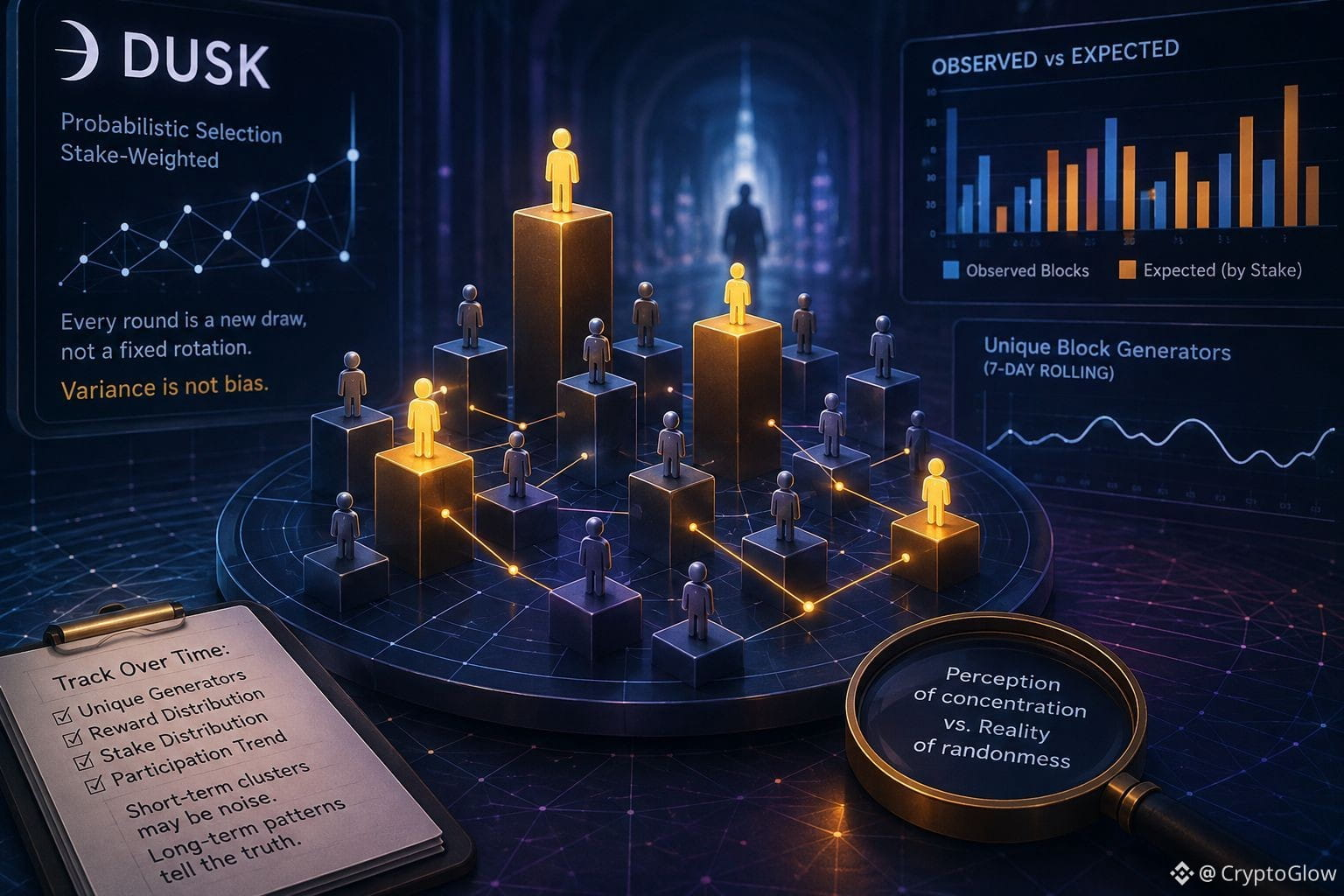
Notei algo ao rolar pelos recentes produtores de blocos no explorador do @Dusk. Alguns endereços de provisioner apareciam com muito mais frequência do que outros em uma janela curta, e eu assumi que era apenas latência ou uma conexão com pares desbalanceada distorcendo a amostra que eu acabei capturando.
Ampliar a janela mudou essa leitura. $DUSK seleciona seu gerador de blocos e seu comitê de votação a cada rodada por um processo probabilístico ponderado por stake, não por uma rotação fixa. Stakes maiores são escolhidos com mais frequência, em média, mas “em média” faz um trabalho real aqui. Em qualquer trecho curto, a seleção pode se concentrar bastante em alguns endereços puramente pela matemática do sorteio, e não por alguma vantagem estar sendo explorada.
Essa distinção reprogramou a forma como eu estava pensando nisso. Eu estava tratando peso de stake e visibilidade real como a mesma coisa, como se stake proporcional garantisse aparição proporcional. Não garante — não em amostras pequenas. Um provisioner pode manter um stake modesto e ainda assim sumir da produção de blocos por períodos, enquanto um de porte intermediário fica “quente” por algum tempo. A diferença entre a “entitlement” estatística e a participação observada é onde a percepção de concentração se forma silenciosamente.
O que ainda não resolvi é se essa variância realmente desencoraja provisioners menores a permanecerem ativos, ou se eles entendem que é apenas ruído e se mantêm estáveis. Se recompensas desiguais de curto prazo empurrarem stakers menores para fazerem pool ou saírem, a composição do comitê muda, mesmo que a matemática subjacente da seleção tenha permanecido neutra.
Vou acompanhar as contagens de geradores de blocos únicos ao longo de janelas semanais móveis, não apenas instantâneos únicos, junto com como a distribuição de recompensas se compara à distribuição de stake nos mesmos períodos. Isso me dirá se a concentração se suaviza ou se se intensifica.#dusk
Ainda não está claro para mim se o que estou vendo é apenas a textura natural de uma seleção probabilística ou um sinal inicial de algo estrutural puxando a participação para poucas mãos.
Ampliar a janela mudou essa leitura. $DUSK seleciona seu gerador de blocos e seu comitê de votação a cada rodada por um processo probabilístico ponderado por stake, não por uma rotação fixa. Stakes maiores são escolhidos com mais frequência, em média, mas “em média” faz um trabalho real aqui. Em qualquer trecho curto, a seleção pode se concentrar bastante em alguns endereços puramente pela matemática do sorteio, e não por alguma vantagem estar sendo explorada.
Essa distinção reprogramou a forma como eu estava pensando nisso. Eu estava tratando peso de stake e visibilidade real como a mesma coisa, como se stake proporcional garantisse aparição proporcional. Não garante — não em amostras pequenas. Um provisioner pode manter um stake modesto e ainda assim sumir da produção de blocos por períodos, enquanto um de porte intermediário fica “quente” por algum tempo. A diferença entre a “entitlement” estatística e a participação observada é onde a percepção de concentração se forma silenciosamente.
O que ainda não resolvi é se essa variância realmente desencoraja provisioners menores a permanecerem ativos, ou se eles entendem que é apenas ruído e se mantêm estáveis. Se recompensas desiguais de curto prazo empurrarem stakers menores para fazerem pool ou saírem, a composição do comitê muda, mesmo que a matemática subjacente da seleção tenha permanecido neutra.
Vou acompanhar as contagens de geradores de blocos únicos ao longo de janelas semanais móveis, não apenas instantâneos únicos, junto com como a distribuição de recompensas se compara à distribuição de stake nos mesmos períodos. Isso me dirá se a concentração se suaviza ou se se intensifica.#dusk
Ainda não está claro para mim se o que estou vendo é apenas a textura natural de uma seleção probabilística ou um sinal inicial de algo estrutural puxando a participação para poucas mãos.
Estou tentando melhorar minhas habilidades de negociação. Eu realmente apreciaria se traders experientes pudessem compartilhar uma lição que os ajudou a se tornarem consistentemente lucrativos.
Só dando uma olhada no mercado e mantendo a paciência. 👀
Às vezes, o melhor trade é nenhum trade.
Observando $BTC de perto hoje.
#Bitcoin #Crypto #BinanceSquare
Às vezes, o melhor trade é nenhum trade.
Observando $BTC de perto hoje.
#Bitcoin #Crypto #BinanceSquare
Hoje não estou apressado para nada... apenas esperando uma confirmação limpa antes de entrar. No passado, eu costumava exagerar nas operações, mas agora aprendi que a paciência é tudo nesse jogo.
$BTC continua sendo o foco principal, mas as altcoins também estão mostrando alguns pequenos movimentos que valem a pena observar.
Vamos ver como o mercado reage nas próximas horas 🚀
#BinanceSquare #Crypto #BTC #TradingView #WriteToEarn
$BTC continua sendo o foco principal, mas as altcoins também estão mostrando alguns pequenos movimentos que valem a pena observar.
Vamos ver como o mercado reage nas próximas horas 🚀
#BinanceSquare #Crypto #BTC #TradingView #WriteToEarn
Acabei de adicionar mais uma posição hoje depois de passar horas analisando as velas. 📊
O mercado está mostrando sinais interessantes, mas a gestão de risco sempre vem em primeiro lugar. Nenhuma operação é garantida, então sempre sigo meu plano e evito decisões emocionais.
Por enquanto, estou observando de perto $BTC , $ETH , e algumas altcoins para possíveis movimentos. 👀
O que está na sua lista de observação hoje? 🚀
#Crypto #Trading #BinanceSquare #BTC #ETH
O mercado está mostrando sinais interessantes, mas a gestão de risco sempre vem em primeiro lugar. Nenhuma operação é garantida, então sempre sigo meu plano e evito decisões emocionais.
Por enquanto, estou observando de perto $BTC , $ETH , e algumas altcoins para possíveis movimentos. 👀
O que está na sua lista de observação hoje? 🚀
#Crypto #Trading #BinanceSquare #BTC #ETH
🔥 Monitor do Mercado de Hoje
$BTC continua sendo o principal motor do mercado. Os traders estão de olho no próximo nível de rompimento.
📊 Fique atento a: • $BTC • $ETH • $BNB
Qual a sua previsão para hoje? Altista 🐂 ou Baixista 🐻?
#Bitcoin #CryptoTrading #BinanceSquare
$BTC continua sendo o principal motor do mercado. Os traders estão de olho no próximo nível de rompimento.
📊 Fique atento a: • $BTC • $ETH • $BNB
Qual a sua previsão para hoje? Altista 🐂 ou Baixista 🐻?
#Bitcoin #CryptoTrading #BinanceSquare
🚀 $BTC Atualização
O Bitcoin está mostrando um forte momentum hoje! 📈
✅ Tendência Atual: Altista 🎯 Próxima Resistência: $110,000 ⚠️ Fique de olho na volatilidade antes de entrar.
Você está altista ou baixista sobre $BTC esta semana? 👇
#BTC #Bitcoin #Crypto #BinanceSquare
O Bitcoin está mostrando um forte momentum hoje! 📈
✅ Tendência Atual: Altista 🎯 Próxima Resistência: $110,000 ⚠️ Fique de olho na volatilidade antes de entrar.
Você está altista ou baixista sobre $BTC esta semana? 👇
#BTC #Bitcoin #Crypto #BinanceSquare
🚀 Atualização do BTC!
O Bitcoin está mostrando um movimento forte novamente, mas o mercado ainda está incerto.
Alguns traders estão dizendo "a alta está começando" 📈
enquanto outros estão esperando uma correção 📉
Agora a grande pergunta é:
👉 Você está comprando BTC aqui ou esperando por uma queda?
Deixe sua opinião abaixo 💬
Vamos ver o que a maioria pensa 👇
#Bitcoin #BTC #Crypto #Trading #BinanceSquare #WriteToEarn
O Bitcoin está mostrando um movimento forte novamente, mas o mercado ainda está incerto.
Alguns traders estão dizendo "a alta está começando" 📈
enquanto outros estão esperando uma correção 📉
Agora a grande pergunta é:
👉 Você está comprando BTC aqui ou esperando por uma queda?
Deixe sua opinião abaixo 💬
Vamos ver o que a maioria pensa 👇
#Bitcoin #BTC #Crypto #Trading #BinanceSquare #WriteToEarn
Faça login para explorar mais conteúdos