

SawJan
20 Publicações

SawJan
Denunciar
Bloquear usuário
Trade aberto

Holder de SOL
Trader casual
4.6 anos
8 Seguindo
28 Seguidores
21 Curtiu
Publicações
Portfólio
·
--
Ver tradução
📉 Crypto Market Update: Bears Have a Slight Edge
The crypto market is showing mild downside pressure, with major assets trading in the red over the last 24 hours.
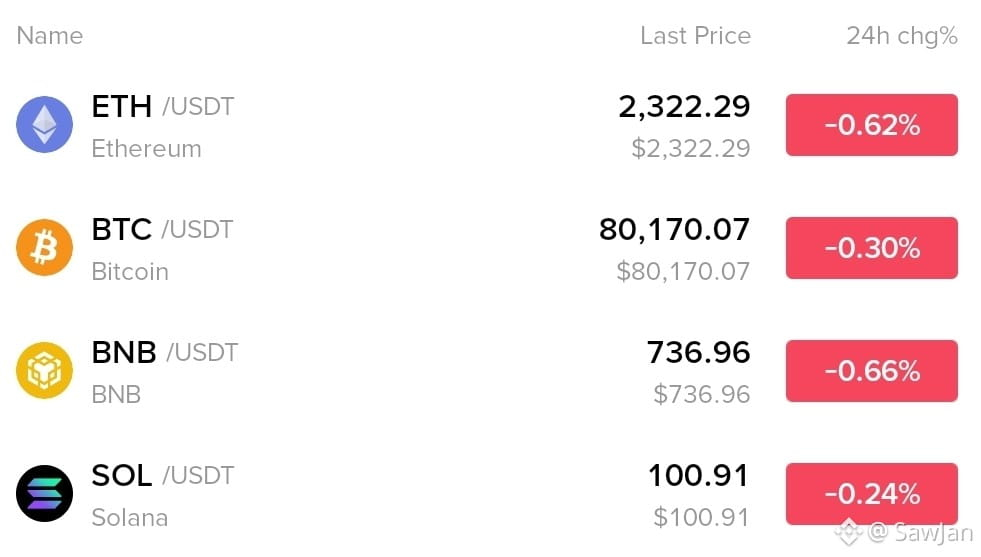
📊 Market Snapshot: 🔹 BTC: $80,170.07 | -0.30% 🔹 ETH: $2,322.29 | -0.62% 🔹 BNB: $736.96 | -0.66% 🔹 SOL: $100.91 | -0.24%
🔍 What does the data tell us?
• Bitcoin is showing relative strength, recording the smallest decline among these four assets. • Ethereum and BNB are under slightly greater selling pressure, with BNB posting the largest decline. • Solana is showing relative resilience, with the smallest percentage drop at -0.24%.
🧠 My takeaway:
This looks like a mild market pullback rather than clear evidence of a major trend reversal. However, one 24-hour snapshot isn't enough to confirm the next move.
The key things to watch next are BTC's price stability, trading volume, and whether ETH, BNB, and SOL can recover their short-term losses.
The next move matters more than the current red candles. 👀
Are we seeing a healthy correction or the beginning of a deeper pullback?
#Bitcoin #Ethereum #BNB #Solana #CryptoMarket
57
·
--
📉 Atualização do mercado cripto: os ursos levam uma ligeira vantagem
O mercado cripto apresenta uma leve pressão de baixa, com os principais ativos no vermelho nas últimas 24 horas.
📊 Resumo do mercado:
🔹 BTC: $80,170.07 | -0.30%
🔹 ETH: $2,322.29 | -0.62%
🔹 BNB: $736.96 | -0.66%
🔹 SOL: $100.91 | -0.24%
🔍 O que os dados nos dizem?
• O Bitcoin demonstra força relativa, registando a menor queda entre estes quatro ativos.
• Ethereum e BNB estão sob uma pressão de venda ligeiramente maior, com o BNB a registar a maior queda.
• Solana demonstra resiliência relativa, com a menor queda percentual, de -0.24%.
🧠 A minha conclusão:
Isto parece uma ligeira correção do mercado, e não uma evidência clara de uma grande inversão de tendência. No entanto, um único retrato das últimas 24 horas não é suficiente para confirmar o próximo movimento.
Os principais aspetos a acompanhar são a estabilidade do preço do BTC, o volume de negociação e se ETH, BNB e SOL conseguem recuperar as perdas de curto prazo.
O próximo movimento é mais importante do que as velas vermelhas atuais. 👀
Estamos perante uma correção saudável ou o início de uma queda mais acentuada?
#bitcoin #Ethereum #BNB #solana #CryptoMarket
82
·
--
Bearish
Em vez de verde, tudo está vermelho hoje 😬
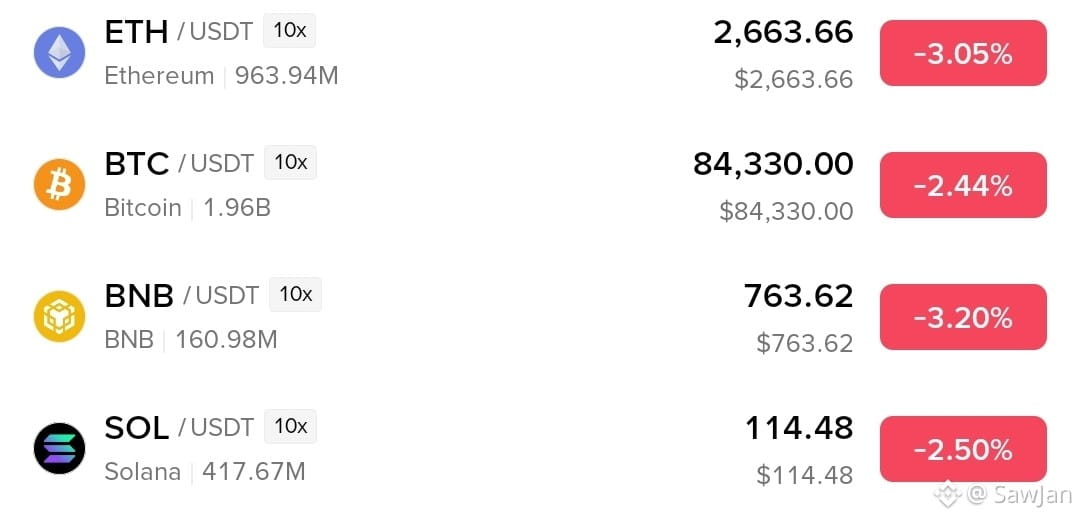
ETH -3.05% | BTC -2.44% | BNB -3.20% | SOL -2.50%
Parece que todos os gráficos estão piscando em vermelho hoje 🔴
Parece que os touros estão fazendo uma pequena pausa 🐂
Hora de ter paciência e observar o próximo movimento 👀
Vamos ver para onde o mercado vai daqui em diante 📉
ETH -3.05% | BTC -2.44% | BNB -3.20% | SOL -2.50%
Parece que todos os gráficos estão piscando em vermelho hoje 🔴
Parece que os touros estão fazendo uma pequena pausa 🐂
Hora de ter paciência e observar o próximo movimento 👀
Vamos ver para onde o mercado vai daqui em diante 📉
116
·
--
A DeFi está evoluindo para além da busca pelo maior APY.
@termmax está adotando uma abordagem diferente, com empréstimos e financiamentos a taxa fixa, oferecendo aos usuários mais previsibilidade na gestão de capital on-chain.
Essa previsibilidade pode fazer uma grande diferença. Quem toma empréstimos pode se planejar com antecedência, quem empresta pode saber quais retornos esperar e o capital pode ser alocado com uma estratégia mais clara, em vez de reagir constantemente às flutuações das taxas.
Com suporte a mercados multichain, a TermMax está construindo uma experiência DeFi que permite tomar decisões financeiras com mais confiança.
Menos incerteza.
Mais estrutura.
Melhor planejamento de capital.
Esse é o rumo que a DeFi precisa seguir.
#TermMax #DeFi #Web3
#termmax @termmax
A DeFi está evoluindo para além da busca pelo maior APY.
@TermMax está adotando uma abordagem diferente, com empréstimos e financiamentos a taxa fixa, oferecendo aos usuários mais previsibilidade na gestão de capital on-chain.
Essa previsibilidade pode fazer uma grande diferença. Quem toma empréstimos pode se planejar com antecedência, quem empresta pode saber quais retornos esperar e o capital pode ser alocado com uma estratégia mais clara, em vez de reagir constantemente às flutuações das taxas.
Com suporte a mercados multichain, a TermMax está construindo uma experiência DeFi que permite tomar decisões financeiras com mais confiança.
Menos incerteza.
Mais estrutura.
Melhor planejamento de capital.
Esse é o rumo que a DeFi precisa seguir.
#TermMax #DeFi #Web3
#termmax @TermMax
68
·
--
DeFi precisa de mais do que entusiasmo — precisa de ferramentas melhores para gerir capital.
@termmax está a criar mercados de empréstimos e financiamentos com taxas fixas, que trazem mais previsibilidade às finanças on-chain. Com suporte multichain e uma alocação de capital mais clara, os utilizadores podem abordar estratégias de empréstimo com maior confiança.
A possibilidade de fixar as taxas pode ser especialmente útil quando os mercados se tornam voláteis e os custos variáveis dos empréstimos mudam rapidamente.
À medida que a DeFi continua a evoluir, a liquidez previsível e a gestão eficiente do capital serão mais importantes do que nunca.
É por isso que #termmax é um projeto a acompanhar, à medida que ganha forma a próxima geração de infraestruturas financeiras on-chain.
#termmax @termmax
DeFi precisa de mais do que entusiasmo — precisa de ferramentas melhores para gerir capital.
@TermMax está a criar mercados de empréstimos e financiamentos com taxas fixas, que trazem mais previsibilidade às finanças on-chain. Com suporte multichain e uma alocação de capital mais clara, os utilizadores podem abordar estratégias de empréstimo com maior confiança.
A possibilidade de fixar as taxas pode ser especialmente útil quando os mercados se tornam voláteis e os custos variáveis dos empréstimos mudam rapidamente.
À medida que a DeFi continua a evoluir, a liquidez previsível e a gestão eficiente do capital serão mais importantes do que nunca.
É por isso que #termmax é um projeto a acompanhar, à medida que ganha forma a próxima geração de infraestruturas financeiras on-chain.
#termmax @TermMax
66
·
--
#TermMax @termmax
A DeFi tem muitos protocolos de empréstimo, mas as taxas previsíveis continuam a ser subvalorizadas.
Foi por isso que a TermMax me chamou a atenção.
Os empréstimos e financiamentos com taxa fixa facilitam muito o planeamento do capital. É possível conhecer os custos de antemão, em vez de reagir constantemente às mudanças nas condições do mercado.
Também gosto da abordagem multichain. Mais mercados e liquidez em diferentes ecossistemas podem tornar os produtos de taxa fixa muito mais úteis ao longo do tempo.
A ideia geral é simples: a DeFi precisa de infraestruturas que ajudem os utilizadores a gerir o capital com mais confiança.
A TermMax está a desenvolver soluções nessa direção, e tenho interesse em ver até onde o ecossistema pode crescer.
Há uma diferença entre os produtos DeFi que procuram chamar a atenção e as infraestruturas que resolvem um problema real.
@termmax é interessante porque se concentra em algo prático: empréstimos e financiamentos previsíveis.
As taxas fixas podem dar aos utilizadores mais controlo sobre a alocação de capital, sobretudo quando os mercados ficam voláteis.
Em vez de se perguntarem constantemente para onde poderão ir as taxas, os utilizadores podem estruturar posições com base em custos e expectativas mais claros.
A abordagem multichain acrescenta outra dimensão, podendo abrir o acesso a mais liquidez e mercados.
Para mim, este é o tipo de infraestrutura DeFi a que vale a pena prestar atenção.
Menos ruído. Mais utilidade.
#TermMax
Uma coisa de que a DeFi ainda precisa é de mais previsibilidade.
É aí que @termmax apresenta uma proposta interessante.
Os empréstimos e financiamentos com taxa fixa podem facilitar o planeamento do capital on-chain. Quer esteja a pedir emprestado para uma estratégia ou a alocar liquidez, conhecer a taxa de antemão pode eliminar muita incerteza.
Também considero importante a visão multichain.
A liquidez não deve ficar para sempre presa em ecossistemas isolados.
Se a TermMax continuar a desenvolver mercados fiáveis de taxa fixa em diferentes redes, poderá tornar-se uma infraestrutura útil para um leque muito mais amplo de utilizadores DeFi.
A ideia é simples:
Taxas previsíveis.
Melhor planeamento de capital.
Uma DeFi mais eficiente.
#termmax @termmax
#TermMax @termmax
A DeFi tem muitos protocolos de empréstimo, mas as taxas previsíveis continuam a ser subvalorizadas.
Foi por isso que a TermMax me chamou a atenção.
Os empréstimos e financiamentos com taxa fixa facilitam muito o planeamento do capital. É possível conhecer os custos de antemão, em vez de reagir constantemente às mudanças nas condições do mercado.
Também gosto da abordagem multichain. Mais mercados e liquidez em diferentes ecossistemas podem tornar os produtos de taxa fixa muito mais úteis ao longo do tempo.
A ideia geral é simples: a DeFi precisa de infraestruturas que ajudem os utilizadores a gerir o capital com mais confiança.
A TermMax está a desenvolver soluções nessa direção, e tenho interesse em ver até onde o ecossistema pode crescer.
Há uma diferença entre os produtos DeFi que procuram chamar a atenção e as infraestruturas que resolvem um problema real.
@TermMax é interessante porque se concentra em algo prático: empréstimos e financiamentos previsíveis.
As taxas fixas podem dar aos utilizadores mais controlo sobre a alocação de capital, sobretudo quando os mercados ficam voláteis.
Em vez de se perguntarem constantemente para onde poderão ir as taxas, os utilizadores podem estruturar posições com base em custos e expectativas mais claros.
A abordagem multichain acrescenta outra dimensão, podendo abrir o acesso a mais liquidez e mercados.
Para mim, este é o tipo de infraestrutura DeFi a que vale a pena prestar atenção.
Menos ruído. Mais utilidade.
#TermMax
Uma coisa de que a DeFi ainda precisa é de mais previsibilidade.
É aí que @TermMax apresenta uma proposta interessante.
Os empréstimos e financiamentos com taxa fixa podem facilitar o planeamento do capital on-chain. Quer esteja a pedir emprestado para uma estratégia ou a alocar liquidez, conhecer a taxa de antemão pode eliminar muita incerteza.
Também considero importante a visão multichain.
A liquidez não deve ficar para sempre presa em ecossistemas isolados.
Se a TermMax continuar a desenvolver mercados fiáveis de taxa fixa em diferentes redes, poderá tornar-se uma infraestrutura útil para um leque muito mais amplo de utilizadores DeFi.
A ideia é simples:
Taxas previsíveis.
Melhor planeamento de capital.
Uma DeFi mais eficiente.
#termmax @TermMax
77
·
--
Ver tradução
TermMax is making DeFi feel more predictable by bringing fixed-rate lending, borrowing, and leverage on-chain. Instead of dealing with constantly changing rates, users can lock in borrowing costs or expected yields until maturity. The protocol also supports managed vaults, multi-chain markets, and one-click leverage, making complex strategies easier to access. What stands out to me is the focus on predictable capital allocation rather than simply chasing short-term incentives. As DeFi matures, fixed-rate markets could become an important building block for both users and institutions. TermMax is definitely one protocol worth watching as this category develops. #termmax @termmax #termmax @termmax
TermMax is making DeFi feel more predictable by bringing fixed-rate lending, borrowing, and leverage on-chain. Instead of dealing with constantly changing rates, users can lock in borrowing costs or expected yields until maturity. The protocol also supports managed vaults, multi-chain markets, and one-click leverage, making complex strategies easier to access. What stands out to me is the focus on predictable capital allocation rather than simply chasing short-term incentives. As DeFi matures, fixed-rate markets could become an important building block for both users and institutions. TermMax is definitely one protocol worth watching as this category develops. #termmax @TermMax #termmax @TermMax
68
·
--
A TermMax está construindo uma forma mais flexível de acessar mercados DeFi com prazo fixo, dando aos usuários melhor controle sobre rendimento, vencimento e eficiência de capital. O que mais me chama a atenção em @TermMax é o foco em produtos financeiros estruturados e baseados em prazo, em vez de tratar cada posição em DeFi como puramente variável. À medida que o DeFi evolui, vencimentos previsíveis e perfis de risco-retorno mais claros podem se tornar cada vez mais importantes tanto para usuários quanto para protocolos. A TermMax está trabalhando para tornar esses mercados mais acessíveis, ao mesmo tempo em que amplia as possibilidades das finanças onchain com prazo fixo. Vou acompanhar como o ecossistema se desenvolve e como os usuários aproveitam seu crescente conjunto de produtos.
#termmax @termmax
A TermMax está construindo uma forma mais flexível de acessar mercados DeFi com prazo fixo, dando aos usuários melhor controle sobre rendimento, vencimento e eficiência de capital. O que mais me chama a atenção em @TermMax é o foco em produtos financeiros estruturados e baseados em prazo, em vez de tratar cada posição em DeFi como puramente variável. À medida que o DeFi evolui, vencimentos previsíveis e perfis de risco-retorno mais claros podem se tornar cada vez mais importantes tanto para usuários quanto para protocolos. A TermMax está trabalhando para tornar esses mercados mais acessíveis, ao mesmo tempo em que amplia as possibilidades das finanças onchain com prazo fixo. Vou acompanhar como o ecossistema se desenvolve e como os usuários aproveitam seu crescente conjunto de produtos.
#termmax @TermMax
#termmax @TermMax

68
·
--
Ver tradução
The future of trading isn't about choosing between earning yield and staying liquid—it's about having both in one seamless experience.
That's what makes GRVT stand out. By combining the speed and efficiency of a centralized exchange with the transparency and security of decentralized infrastructure, it creates a platform where users remain in control of their assets while accessing a smoother trading experience.
Whether you're trading crypto or real-world assets, your eligible balances don't have to sit idle. Instead, your capital can continue working in the background while remaining available for your next opportunity.
Self-custody, fast execution, and on-chain settlement aren't just technical features—they're building blocks for a more efficient financial system. As more users look for platforms that maximize both flexibility and capital efficiency, solutions like GRVT are becoming increasingly relevant.
The next generation of exchanges won't simply focus on lower fees or faster trades. They'll focus on making every asset more productive without compromising ownership or transparency.
GRVT is moving in that direction by bringing trading, earning, and self-custody together in a single unified experience. That's the kind of innovation that has the potential to reshape how we interact with digital and real-world assets.
@grvt_io #grvt
65
·
--
Bullish
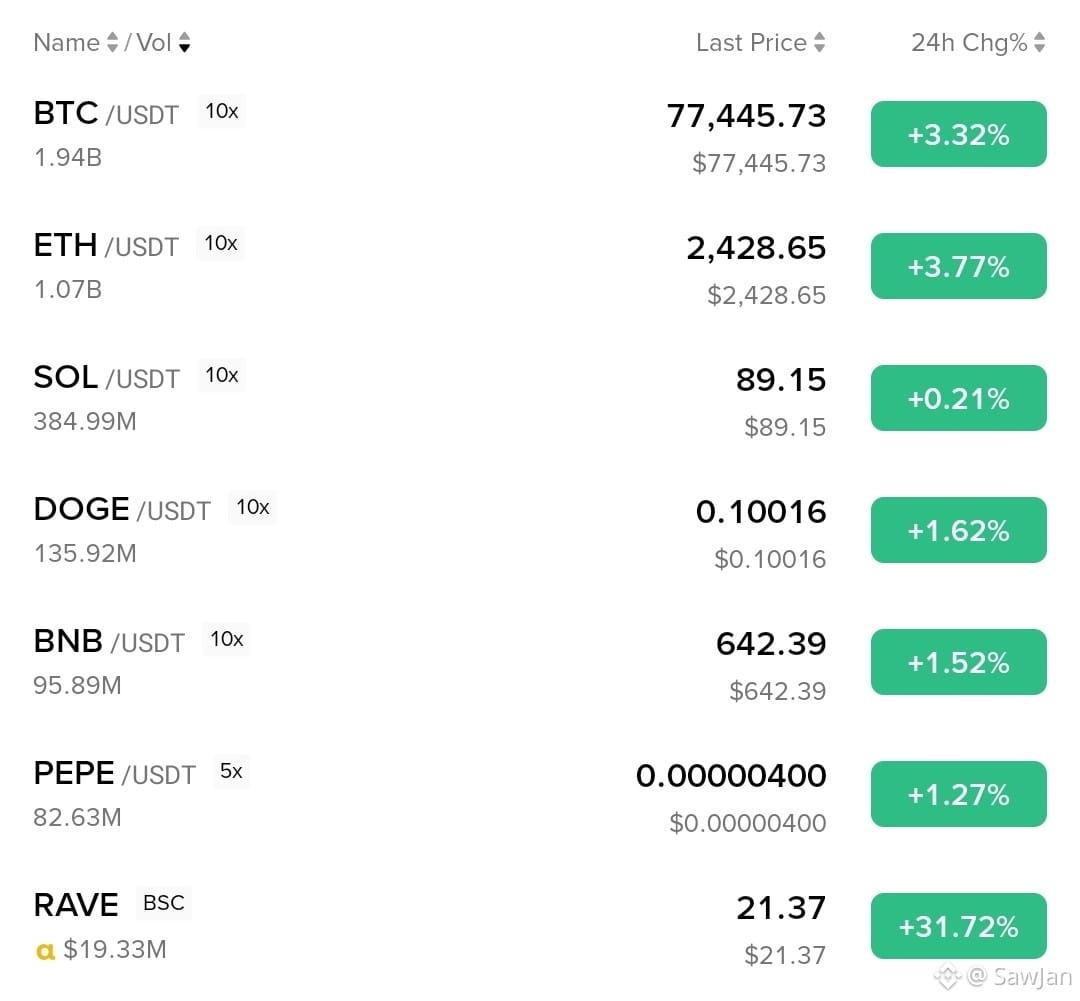
Depois de muito tempo, o mercado vai ficar verde 💚 e $BTC , $ETH , $SOL e outras moedas vão subir, começar a bombar e eu espero que o mercado vá bem, cada moeda ganhe seu preço anterior.
Depois de muito tempo, o mercado vai ficar verde 💚 e $BTC , $ETH , $SOL e outras moedas vão subir, começar a bombar e eu espero que o mercado vá bem, cada moeda ganhe seu preço anterior.
65
·
--

Artigo
Ver tradução
pixelThe evolution of @Pixels is becoming one of the most interesting case studies in web3 gaming right now. What started as a simple farming-style game has gradually transformed into a much deeper and more structured ecosystem through its Stacked approach. This shift is not just about adding features, but about creating a sustainable loop where players, creators, and the in-game economy all reinforce each other.
At the center of this system is $PIXEL. Instead of being just another in-game currency, it’s being positioned as the core layer that connects activity, rewards, and long-term participation. As more mechanics are introduced into the Stacked ecosystem, the role of $PIXEL becomes more meaningful, especially as utility expands across different parts of the platform.
One of the most important aspects of this evolution is how @Pixels is aligning incentives. Players are no longer just grinding for short-term rewards; they are contributing to a broader system that benefits from active participation. Creators, on the other hand, are becoming key drivers of growth by bringing attention, education, and narrative to the ecosystem. This combination creates a flywheel effect that is hard to replicate.
Another thing worth noting is the focus on scalability. Many web3 games struggle to maintain user interest over time, but the Stacked ecosystem appears designed to continuously introduce new layers of engagement. This keeps the experience fresh while also strengthening the value proposition of $PIXEL .
If this direction continues, @Pixels could set a strong example for how web3 gaming ecosystems should be built — not around short-term hype, but around long-term value creation. The integration of gameplay, economy, and community is what makes this model stand out.
Overall, the growth of @Pixels and its Stacked ecosystem shows that we are moving toward a more mature phase of web3 gaming. It’s no longer just about playing; it’s about participating in an evolving digital economy. And with $PIXEL at the center of it all, the foundation looks solid for future expansion.
pixel
The evolution of @Pixels is becoming one of the most interesting case studies in web3 gaming right now. What started as a simple farming-style game has gradually transformed into a much deeper and more structured ecosystem through its Stacked approach. This shift is not just about adding features, but about creating a sustainable loop where players, creators, and the in-game economy all reinforce each other.
At the center of this system is $PIXEL . Instead of being just another in-game currency, it’s being positioned as the core layer that connects activity, rewards, and long-term participation. As more mechanics are introduced into the Stacked ecosystem, the role of $PIXEL becomes more meaningful, especially as utility expands across different parts of the platform.
One of the most important aspects of this evolution is how @Pixels is aligning incentives. Players are no longer just grinding for short-term rewards; they are contributing to a broader system that benefits from active participation. Creators, on the other hand, are becoming key drivers of growth by bringing attention, education, and narrative to the ecosystem. This combination creates a flywheel effect that is hard to replicate.
Another thing worth noting is the focus on scalability. Many web3 games struggle to maintain user interest over time, but the Stacked ecosystem appears designed to continuously introduce new layers of engagement. This keeps the experience fresh while also strengthening the value proposition of $PIXEL .
If this direction continues, @Pixels could set a strong example for how web3 gaming ecosystems should be built — not around short-term hype, but around long-term value creation. The integration of gameplay, economy, and community is what makes this model stand out.
Overall, the growth of @Pixels and its Stacked ecosystem shows that we are moving toward a more mature phase of web3 gaming. It’s no longer just about playing; it’s about participating in an evolving digital economy. And with $PIXEL at the center of it all, the foundation looks solid for future expansion.
18
·
--
Ver tradução
pixelThe evolution of @Pixels is becoming one of the most interesting case studies in web3 gaming right now. What started as a simple farming-style game has gradually transformed into a much deeper and more structured ecosystem through its Stacked approach. This shift is not just about adding features, but about creating a sustainable loop where players, creators, and the in-game economy all reinforce each other.
At the center of this system is $PIXEL. Instead of being just another in-game currency, it’s being positioned as the core layer that connects activity, rewards, and long-term participation. As more mechanics are introduced into the Stacked ecosystem, the role of $PIXEL becomes more meaningful, especially as utility expands across different parts of the platform.
One of the most important aspects of this evolution is how @Pixels is aligning incentives. Players are no longer just grinding for short-term rewards; they are contributing to a broader system that benefits from active participation. Creators, on the other hand, are becoming key drivers of growth by bringing attention, education, and narrative to the ecosystem. This combination creates a flywheel effect that is hard to replicate.
Another thing worth noting is the focus on scalability. Many web3 games struggle to maintain user interest over time, but the Stacked ecosystem appears designed to continuously introduce new layers of engagement. This keeps the experience fresh while also strengthening the value proposition of $PIXEL.
If this direction continues, @Pixels could set a strong example for how web3 gaming ecosystems should be built — not around short-term hype, but around long-term value creation. The integration of gameplay, economy, and community is what makes this model stand out.
Overall, the growth of @Pixels and its Stacked ecosystem shows that we are moving toward a more mature phase of web3 gaming. It’s no longer just about playing; it’s about participating in an evolving digital economy. And with $PIXEL at the center of it all, the foundation looks solid for future expansion. #pixel
pixel
The evolution of @Pixels is becoming one of the most interesting case studies in web3 gaming right now. What started as a simple farming-style game has gradually transformed into a much deeper and more structured ecosystem through its Stacked approach. This shift is not just about adding features, but about creating a sustainable loop where players, creators, and the in-game economy all reinforce each other.
At the center of this system is $PIXEL. Instead of being just another in-game currency, it’s being positioned as the core layer that connects activity, rewards, and long-term participation. As more mechanics are introduced into the Stacked ecosystem, the role of $PIXEL becomes more meaningful, especially as utility expands across different parts of the platform.
One of the most important aspects of this evolution is how @Pixels is aligning incentives. Players are no longer just grinding for short-term rewards; they are contributing to a broader system that benefits from active participation. Creators, on the other hand, are becoming key drivers of growth by bringing attention, education, and narrative to the ecosystem. This combination creates a flywheel effect that is hard to replicate.
Another thing worth noting is the focus on scalability. Many web3 games struggle to maintain user interest over time, but the Stacked ecosystem appears designed to continuously introduce new layers of engagement. This keeps the experience fresh while also strengthening the value proposition of $PIXEL.
If this direction continues, @Pixels could set a strong example for how web3 gaming ecosystems should be built — not around short-term hype, but around long-term value creation. The integration of gameplay, economy, and community is what makes this model stand out.
Overall, the growth of @Pixels and its Stacked ecosystem shows that we are moving toward a more mature phase of web3 gaming. It’s no longer just about playing; it’s about participating in an evolving digital economy. And with $PIXEL at the center of it all, the foundation looks solid for future expansion. #pixel
18
·
--
Ver tradução
Seeing @Pixels grow into a full Stacked ecosystem is honestly impressive. What started as a simple web3 game is now evolving into something much bigger, where $PIXEL plays a key role in connecting gameplay, economy, and creators. The way they are building utility around the token shows long-term thinking rather than short-term hype. More players, more creators, and more use cases mean stronger network effects over time. If this momentum continues, Pixels could become a benchmark for how web3 gaming ecosystems should scale. Definitely worth paying attention to how this develops. #pixel
Seeing @Pixels grow into a full Stacked ecosystem is honestly impressive. What started as a simple web3 game is now evolving into something much bigger, where $PIXEL plays a key role in connecting gameplay, economy, and creators. The way they are building utility around the token shows long-term thinking rather than short-term hype. More players, more creators, and more use cases mean stronger network effects over time. If this momentum continues, Pixels could become a benchmark for how web3 gaming ecosystems should scale. Definitely worth paying attention to how this develops. #pixel
20
·
--
Ver tradução
Alpha Trading Competition you just see last day of events close no Trading Volume but you just start tarding then end event time . then see you are the last person never win event and Trading leaderboard is high 😂😂😂😂
Alpha Trading Competition you just see last day of events close no Trading Volume but you just start tarding then end event time . then see you are the last person never win event and Trading leaderboard is high 😂😂😂😂
2
·
--
Artigo
Ver tradução
Most DeFi is still stateless execution.Most DeFi is still stateless execution. @mira_network introduces persistent, context-aware agents that learn, adapt, and coordinate capital over time. By combining verifiable data, memory, and programmable liquidity, Mira enables continuous strategy evolution instead of isolated trades. $MIRA aligns data, execution, and incentives into one feedback loop, creating infrastructure for AI-native markets that compound intelligence and capital together. #Mira
Most DeFi is still stateless execution.
Most DeFi is still stateless execution. @mira_network introduces persistent, context-aware agents that learn, adapt, and coordinate capital over time. By combining verifiable data, memory, and programmable liquidity, Mira enables continuous strategy evolution instead of isolated trades. $MIRA aligns data, execution, and incentives into one feedback loop, creating infrastructure for AI-native markets that compound intelligence and capital together. #Mira
1
·
--
Ver tradução
Most DeFi is still stateless execution. @mira_network.Most DeFi is still stateless execution. @mira_network introduces persistent, context-aware agents that learn, adapt, and coordinate capital over time. By combining verifiable data, memory, and programmable liquidity, Mira enables continuous strategy evolution instead of isolated trades. $MIRA aligns data, execution, and incentives into one feedback loop, creating infrastructure for AI-native markets that compound intelligence and capital. #mira $MIRA
Most DeFi is still stateless execution. @mira_network.
Most DeFi is still stateless execution. @mira_network introduces persistent, context-aware agents that learn, adapt, and coordinate capital over time. By combining verifiable data, memory, and programmable liquidity, Mira enables continuous strategy evolution instead of isolated trades. $MIRA aligns data, execution, and incentives into one feedback loop, creating infrastructure for AI-native markets that compound intelligence and capital. #mira $MIRA
4
·
--
Ver tradução
Composable intelligence will define the next phase of onchain markets, and @mira_network is building the coordination layer for it. By enabling agents with persistent memory, verifiable data access, and programmable execution, Mira turns isolated smart contract calls into adaptive financial behavior. $MIRA aligns incentives across data providers, strategists, and liquidity venues, creating a feedback loop where strategies improve over time instead of resetting each transaction. This is infrastructure for AI-native DeFi—stateful, context-aware, and capital efficient by design. #mira $MIRA
Composable intelligence will define the next phase of onchain markets, and @mira_network is building the coordination layer for it. By enabling agents with persistent memory, verifiable data access, and programmable execution, Mira turns isolated smart contract calls into adaptive financial behavior. $MIRA aligns incentives across data providers, strategists, and liquidity venues, creating a feedback loop where strategies improve over time instead of resetting each transaction. This is infrastructure for AI-native DeFi—stateful, context-aware, and capital efficient by design. #mira $MIRA
3
·
--
Ver tradução
Autonomous agents need unified rails to manage data, memory, and capital without fragmentation.Autonomous agents need unified rails to manage data, memory, and capital without fragmentation. That’s the core of @mira_network—stateful AI actors executing on verifiable infrastructure with continuous context. $MIRA aligns incentives across data, liquidity, and execution, turning isolated transactions into adaptive financial behavior. This is coordination infrastructure for AI-native DeFi, where strategies learn, persist, and compound onchain. #Mira
Autonomous agents need unified rails to manage data, memory, and capital without fragmentation.
Autonomous agents need unified rails to manage data, memory, and capital without fragmentation. That’s the core of @mira_network—stateful AI actors executing on verifiable infrastructure with continuous context. $MIRA aligns incentives across data, liquidity, and execution, turning isolated transactions into adaptive financial behavior. This is coordination infrastructure for AI-native DeFi, where strategies learn, persist, and compound onchain. #Mira
6
12
·
--
Liquidez, identidade e execução precisam viver na mesma camada para que as finanças impulsionadas por IA possam escalar. Essa é a visão por trás do @mira_network—agentes autônomos operando em trilhos unificados com contexto verificável e capital programável. $MIRA não é apenas um token, é uma infraestrutura de coordenação para a próxima economia das máquinas.
#mira $MIRA
#mira $MIRA
10
22
·
--
Ver tradução
#BinanceTurns8 Join us in the #BinanceTurns8 celebration and win a share of up to $888,888 in BNB!
#BinanceTurns8 Join us in the #BinanceTurns8 celebration and win a share of up to $888,888 in BNB!
5
5
Faça login para explorar mais conteúdos
Junte-se a usuários de criptomoedas de todo o mundo no Binance Square.
⚡️ Obter informações mais recentes e úteis sobre criptomoeda.
💬 Com a confiança da maior corretora de criptomoedas do mundo.
👍 Descubra insights reais de criadores verificados.
E-mail / número de telefone
Tópicos em Alta
CanMicrosoftDeliverOnAI
110,624 visualizações
848 discutindo
Temporada de resultados — Sessão 3: a Google e a Microsoft vão superar as expectativas?
Binance Square Official
·67 curtidas
·19k visualizações
CanGoogleDefindItsCore
52,505 visualizações
608 discutindo
FOMCWatch
9.1M visualizações
28,098 discutindo