

SanAndreas
399 Publicações

SanAndreas
Denunciar
Bloquear usuário
BP-68872ACF8969
Trader de alta frequência
5.7 anos
44 Seguindo
102 Seguidores
150 Curtiu
Publicações
Todas
Citações
·
--
@Dusk_Foundation #dusk $DUSK
DuskEVM
O DuskEVM leva o Solidity, carteiras EVM e ferramentas do ecossistema Ethereum para a Dusk. Aplicações EVM existentes podem mirar o DuskEVM com contratos e fluxos de trabalho familiares, usando DUSK para o gas e DuskDS para liquidação e disponibilidade de dados.
Por que DuskEVM
Comece com a pilha EVM. Use Solidity ou Vyper com Foundry, Hardhat, viem, ethers e carteiras EVM padrão.
Use DUSK ao longo de todo o processo.
O DUSK paga pela execução e transita entre a Dusk L1 e o DuskEVM por meio da bridge.
Faça a liquidação no DuskDS.
Lotes e compromissos de estado ancoram a atividade do DuskEVM na camada de consenso e disponibilidade de dados da Dusk.
Alcance a pilha mais ampla da Dusk.
Aplicações EVM podem se conectar a ativos da Dusk L1, infraestrutura e fluxos de trabalho orientados à privacidade, conforme essas integrações sejam necessárias.
Uma transação no DuskEVM segue um ciclo de vida de rollup:
A transação é enviada ao sequenciador do DuskEVM.
A camada de execução a inclui em um bloco L2.
O agregador publica os dados da transação no DuskDS.
Os compromissos de estado e provas de falha conectam o estado resultante à liquidação no DuskDS.
A inclusão da transação é rápida, mas inclusão e liquidação são estágios diferentes. Aplicações que movimentam valor entre o DuskEVM e a Dusk L1 devem usar o status do protocolo ou da carteira em vez de inferir finalidade a partir do tempo decorrido.
Escolha um ambiente de execução
Escolha o DuskEVM para aplicações em Solidity, carteiras EVM, bibliotecas existentes do Ethereum e infraestrutura EVM.
Escolha o DuskVM para contratos em Rust/WASM que devem executar diretamente na Dusk L1 ou integrar de perto com seus modelos de transação, ativos de protocolo, privacidade ou recursos de zero-knowledge.
@Dusk #dusk $DUSK
DuskEVM
O DuskEVM leva o Solidity, carteiras EVM e ferramentas do ecossistema Ethereum para a Dusk. Aplicações EVM existentes podem mirar o DuskEVM com contratos e fluxos de trabalho familiares, usando DUSK para o gas e DuskDS para liquidação e disponibilidade de dados.
Por que DuskEVM
Comece com a pilha EVM. Use Solidity ou Vyper com Foundry, Hardhat, viem, ethers e carteiras EVM padrão.
Use DUSK ao longo de todo o processo.
O DUSK paga pela execução e transita entre a Dusk L1 e o DuskEVM por meio da bridge.
Faça a liquidação no DuskDS.
Lotes e compromissos de estado ancoram a atividade do DuskEVM na camada de consenso e disponibilidade de dados da Dusk.
Alcance a pilha mais ampla da Dusk.
Aplicações EVM podem se conectar a ativos da Dusk L1, infraestrutura e fluxos de trabalho orientados à privacidade, conforme essas integrações sejam necessárias.
Uma transação no DuskEVM segue um ciclo de vida de rollup:
A transação é enviada ao sequenciador do DuskEVM.
A camada de execução a inclui em um bloco L2.
O agregador publica os dados da transação no DuskDS.
Os compromissos de estado e provas de falha conectam o estado resultante à liquidação no DuskDS.
A inclusão da transação é rápida, mas inclusão e liquidação são estágios diferentes. Aplicações que movimentam valor entre o DuskEVM e a Dusk L1 devem usar o status do protocolo ou da carteira em vez de inferir finalidade a partir do tempo decorrido.
Escolha um ambiente de execução
Escolha o DuskEVM para aplicações em Solidity, carteiras EVM, bibliotecas existentes do Ethereum e infraestrutura EVM.
Escolha o DuskVM para contratos em Rust/WASM que devem executar diretamente na Dusk L1 ou integrar de perto com seus modelos de transação, ativos de protocolo, privacidade ou recursos de zero-knowledge.
DuskEVM
O DuskEVM leva o Solidity, carteiras EVM e ferramentas do ecossistema Ethereum para a Dusk. Aplicações EVM existentes podem mirar o DuskEVM com contratos e fluxos de trabalho familiares, usando DUSK para o gas e DuskDS para liquidação e disponibilidade de dados.
Por que DuskEVM
Comece com a pilha EVM. Use Solidity ou Vyper com Foundry, Hardhat, viem, ethers e carteiras EVM padrão.
Use DUSK ao longo de todo o processo.
O DUSK paga pela execução e transita entre a Dusk L1 e o DuskEVM por meio da bridge.
Faça a liquidação no DuskDS.
Lotes e compromissos de estado ancoram a atividade do DuskEVM na camada de consenso e disponibilidade de dados da Dusk.
Alcance a pilha mais ampla da Dusk.
Aplicações EVM podem se conectar a ativos da Dusk L1, infraestrutura e fluxos de trabalho orientados à privacidade, conforme essas integrações sejam necessárias.
Uma transação no DuskEVM segue um ciclo de vida de rollup:
A transação é enviada ao sequenciador do DuskEVM.
A camada de execução a inclui em um bloco L2.
O agregador publica os dados da transação no DuskDS.
Os compromissos de estado e provas de falha conectam o estado resultante à liquidação no DuskDS.
A inclusão da transação é rápida, mas inclusão e liquidação são estágios diferentes. Aplicações que movimentam valor entre o DuskEVM e a Dusk L1 devem usar o status do protocolo ou da carteira em vez de inferir finalidade a partir do tempo decorrido.
Escolha um ambiente de execução
Escolha o DuskEVM para aplicações em Solidity, carteiras EVM, bibliotecas existentes do Ethereum e infraestrutura EVM.
Escolha o DuskVM para contratos em Rust/WASM que devem executar diretamente na Dusk L1 ou integrar de perto com seus modelos de transação, ativos de protocolo, privacidade ou recursos de zero-knowledge.
79
·
--
@Dusk_Foundation #dusk $DUSK
{spot}(DUSKUSDT)
DuskVM
DuskVM é o ambiente de execução para contratos Rust/WASM baseado no Wasmtime que é executado diretamente na Dusk L1. É o caminho para contratos que precisam de acesso direto a ativos da L1, modelos de transação, privacidade ou recursos de conhecimento zero.
DuskEVM
DuskEVM é um ambiente de execução equivalente a EVM baseado no OP Stack. Ele permite que você implante contratos Solidity usando ferramentas EVM padrão, enquanto utiliza o DuskDS para liquidação e disponibilidade de dados.
Camada de Rede: Kadcast
Kadcast é a camada de rede P2P da Dusk. Ela usa uma sobreposição estruturada (em vez de gossip aleatório) para reduzir o uso de banda e melhorar a previsibilidade da latência.
Contratos de Gênesis
A Dusk envia dois contratos de gênesis:
Stake: rastreia provisionadores, stakes, recompensas e gerencia o conjunto de validadores. (source)
Transfer: transfere DUSK e é o ponto de entrada para a execução de transações e pagamento de gás. (source)
Para operadores de nós: execute um nó provisioner.
Aplicações
Acima do protocolo base, a Dusk oferece protocolos e ferramentas de camada de aplicação para mercados regulados.
Dusk Trade
Dusk Trade é a camada de aplicação para ativos financeiros tokenizados na Dusk. Está sendo construída em torno de fluxos de trabalho de mercado reais: onboarding de investidores, vinculação de carteira, transferências controladas, coordenação de pagamentos e liquidação em conformidade.
Zedger / Hedger
Zedger e Hedger são protocolos para emitir e gerenciar ativos regulados com restrições integradas de conformidade e privacidade.
Zedger usa contratos DuskVM na Dusk L1.
Hedger é executado na DuskEVM para oferecer uma experiência de desenvolvimento voltada ao EVM.
Citadel
Citadel
Citadel é a camada de identidade e acesso da Dusk. Ela oferece divulgação seletiva para que os usuários possam provar atributos (por exemplo, residência, faixa etária, credenciamento) sem revelar mais do que o necessário.
@Dusk #dusk $DUSK
DuskVM
DuskVM é o ambiente de execução para contratos Rust/WASM baseado no Wasmtime que é executado diretamente na Dusk L1. É o caminho para contratos que precisam de acesso direto a ativos da L1, modelos de transação, privacidade ou recursos de conhecimento zero.
DuskEVM
DuskEVM é um ambiente de execução equivalente a EVM baseado no OP Stack. Ele permite que você implante contratos Solidity usando ferramentas EVM padrão, enquanto utiliza o DuskDS para liquidação e disponibilidade de dados.
Camada de Rede: Kadcast
Kadcast é a camada de rede P2P da Dusk. Ela usa uma sobreposição estruturada (em vez de gossip aleatório) para reduzir o uso de banda e melhorar a previsibilidade da latência.
Contratos de Gênesis
A Dusk envia dois contratos de gênesis:
Stake: rastreia provisionadores, stakes, recompensas e gerencia o conjunto de validadores. (source)
Transfer: transfere DUSK e é o ponto de entrada para a execução de transações e pagamento de gás. (source)
Para operadores de nós: execute um nó provisioner.
Aplicações
Acima do protocolo base, a Dusk oferece protocolos e ferramentas de camada de aplicação para mercados regulados.
Dusk Trade
Dusk Trade é a camada de aplicação para ativos financeiros tokenizados na Dusk. Está sendo construída em torno de fluxos de trabalho de mercado reais: onboarding de investidores, vinculação de carteira, transferências controladas, coordenação de pagamentos e liquidação em conformidade.
Zedger / Hedger
Zedger e Hedger são protocolos para emitir e gerenciar ativos regulados com restrições integradas de conformidade e privacidade.
Zedger usa contratos DuskVM na Dusk L1.
Hedger é executado na DuskEVM para oferecer uma experiência de desenvolvimento voltada ao EVM.
Citadel
Citadel
Citadel é a camada de identidade e acesso da Dusk. Ela oferece divulgação seletiva para que os usuários possam provar atributos (por exemplo, residência, faixa etária, credenciamento) sem revelar mais do que o necessário.
DuskVM
DuskVM é o ambiente de execução para contratos Rust/WASM baseado no Wasmtime que é executado diretamente na Dusk L1. É o caminho para contratos que precisam de acesso direto a ativos da L1, modelos de transação, privacidade ou recursos de conhecimento zero.
DuskEVM
DuskEVM é um ambiente de execução equivalente a EVM baseado no OP Stack. Ele permite que você implante contratos Solidity usando ferramentas EVM padrão, enquanto utiliza o DuskDS para liquidação e disponibilidade de dados.
Camada de Rede: Kadcast
Kadcast é a camada de rede P2P da Dusk. Ela usa uma sobreposição estruturada (em vez de gossip aleatório) para reduzir o uso de banda e melhorar a previsibilidade da latência.
Contratos de Gênesis
A Dusk envia dois contratos de gênesis:
Stake: rastreia provisionadores, stakes, recompensas e gerencia o conjunto de validadores. (source)
Transfer: transfere DUSK e é o ponto de entrada para a execução de transações e pagamento de gás. (source)
Para operadores de nós: execute um nó provisioner.
Aplicações
Acima do protocolo base, a Dusk oferece protocolos e ferramentas de camada de aplicação para mercados regulados.
Dusk Trade
Dusk Trade é a camada de aplicação para ativos financeiros tokenizados na Dusk. Está sendo construída em torno de fluxos de trabalho de mercado reais: onboarding de investidores, vinculação de carteira, transferências controladas, coordenação de pagamentos e liquidação em conformidade.
Zedger / Hedger
Zedger e Hedger são protocolos para emitir e gerenciar ativos regulados com restrições integradas de conformidade e privacidade.
Zedger usa contratos DuskVM na Dusk L1.
Hedger é executado na DuskEVM para oferecer uma experiência de desenvolvimento voltada ao EVM.
Citadel
Citadel
Citadel é a camada de identidade e acesso da Dusk. Ela oferece divulgação seletiva para que os usuários possam provar atributos (por exemplo, residência, faixa etária, credenciamento) sem revelar mais do que o necessário.
89
·
--
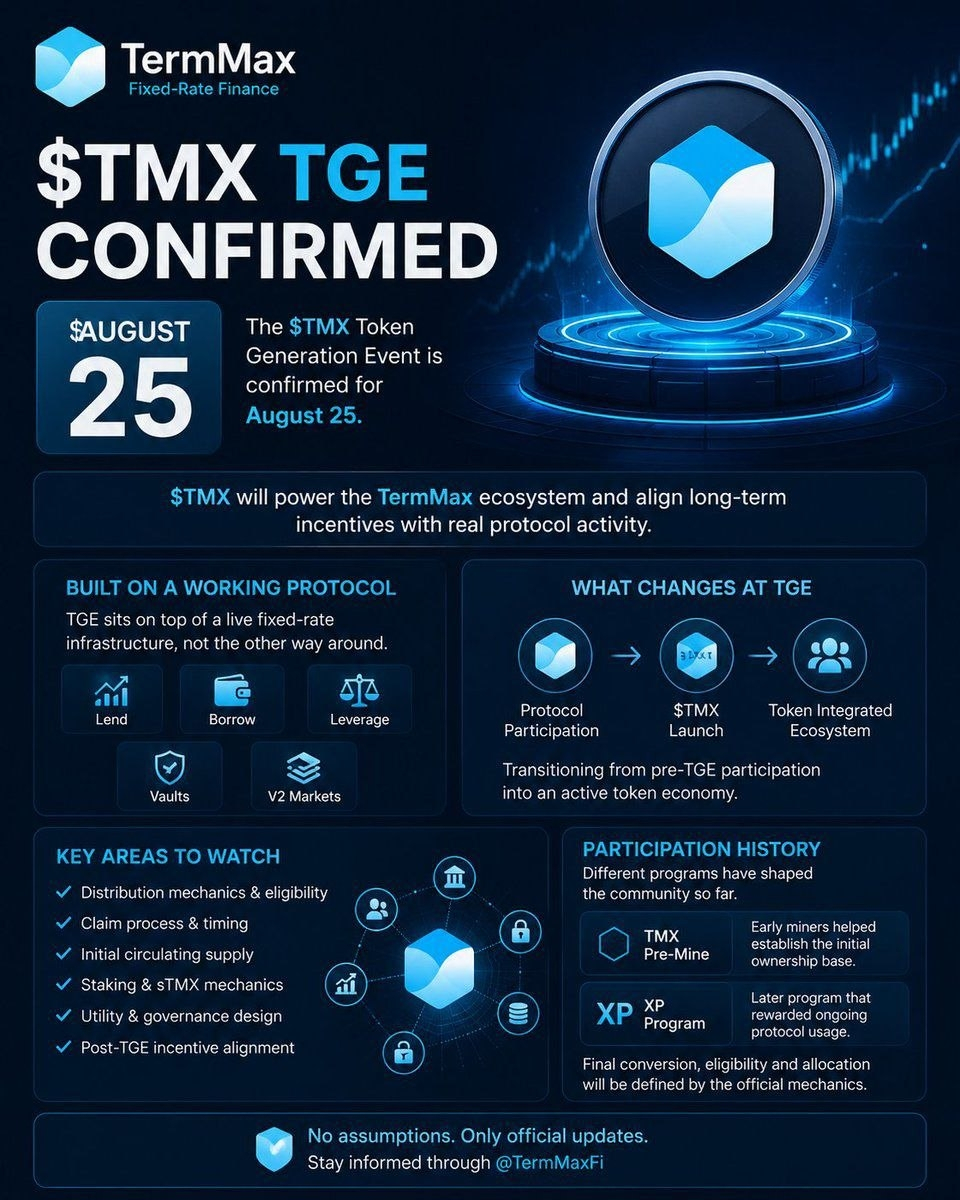
#termmax @termmax
3. Utilitário TMX
Os detentores de TMX podem participar da governança e orientar os recursos do produto e os parâmetros do protocolo.
Os detentores de TMX também podem fornecer liquidez para um pool de DEX como o PancakeSwap ou fazer staking de seus tokens $TMX para receber sTMX (tokens FT do protocolo no TMX), o que permite que os detentores recebam os seguintes benefícios:
Recompensas de staking, incluindo emissões de TMX que podem ser provenientes da alocação da Comunidade (em Tokenomics) e/ou de uma parcela de tokens dos fundos do TermMax Treasury
Direitos de governança aprimorados para ajustar parâmetros do protocolo, incluindo parâmetros de risco de mercado, e inclusão em lista branca de curadores
Os fundos do Tesouro podem ser gerados a partir de:
Taxas de negociação dos tokens de produtos TermMax FT/XT em todos os mercados
Taxas do protocolo coletadas na atividade de empréstimo
Taxas de liquidação
Outras fontes
Esse mecanismo alinha os interesses dos detentores de longo prazo com a sustentabilidade e o crescimento do protocolo.
#termmax @TermMax
3. Utilitário TMX
Os detentores de TMX podem participar da governança e orientar os recursos do produto e os parâmetros do protocolo.
Os detentores de TMX também podem fornecer liquidez para um pool de DEX como o PancakeSwap ou fazer staking de seus tokens $TMX para receber sTMX (tokens FT do protocolo no TMX), o que permite que os detentores recebam os seguintes benefícios:
Recompensas de staking, incluindo emissões de TMX que podem ser provenientes da alocação da Comunidade (em Tokenomics) e/ou de uma parcela de tokens dos fundos do TermMax Treasury
Direitos de governança aprimorados para ajustar parâmetros do protocolo, incluindo parâmetros de risco de mercado, e inclusão em lista branca de curadores
Os fundos do Tesouro podem ser gerados a partir de:
Taxas de negociação dos tokens de produtos TermMax FT/XT em todos os mercados
Taxas do protocolo coletadas na atividade de empréstimo
Taxas de liquidação
Outras fontes
Esse mecanismo alinha os interesses dos detentores de longo prazo com a sustentabilidade e o crescimento do protocolo.
3. Utilitário TMX
Os detentores de TMX podem participar da governança e orientar os recursos do produto e os parâmetros do protocolo.
Os detentores de TMX também podem fornecer liquidez para um pool de DEX como o PancakeSwap ou fazer staking de seus tokens $TMX para receber sTMX (tokens FT do protocolo no TMX), o que permite que os detentores recebam os seguintes benefícios:
Recompensas de staking, incluindo emissões de TMX que podem ser provenientes da alocação da Comunidade (em Tokenomics) e/ou de uma parcela de tokens dos fundos do TermMax Treasury
Direitos de governança aprimorados para ajustar parâmetros do protocolo, incluindo parâmetros de risco de mercado, e inclusão em lista branca de curadores
Os fundos do Tesouro podem ser gerados a partir de:
Taxas de negociação dos tokens de produtos TermMax FT/XT em todos os mercados
Taxas do protocolo coletadas na atividade de empréstimo
Taxas de liquidação
Outras fontes
Esse mecanismo alinha os interesses dos detentores de longo prazo com a sustentabilidade e o crescimento do protocolo.
69
·
--
@Dusk_Foundation #dusk $DUSK
{spot}(DUSKUSDT)
DuskDS é a camada de disponibilidade de dados e liquidação (Data Availability and Settlement) do Dusk. É o consenso, a finalidade (finality) e a base de disponibilidade de dados do Dusk L1, e inclui os modelos de transação Moonlight e Phoenix usados para transferir DUSK e pagar pela execução.
DuskDS não é um nome para a rede completa do Dusk. O Dusk L1 também inclui a execução de smart contracts do DuskVM, enquanto o DuskEVM é uma camada de execução compatível com EVM que liquida e publica dados através do DuskDS.
O DuskDS oferece dois modelos de transação: Moonlight para contas públicas transparentes e Phoenix para transferências blindadas confidenciais. Veja: Transaction Models on Dusk.
Rusk
Rusk é a implementação em Rust do nó para o Dusk L1. Ele executa o consenso do DuskDS, mantém o estado da cadeia, executa contratos do DuskVM e expõe a API HTTP e o sistema de eventos RUES usados por carteiras (wallets), indexadores e integradores.
Atestação Concisa
Atestação Concisa (Succinct Attestation, SA) é o protocolo de consenso de proof-of-stake sem permissão e baseado em comitês do DuskDS. Ele usa provisionadores (provisioners) selecionados aleatoriamente para propor, validar e ratificar blocos, oferecendo uma finalidade rápida e determinística, adequada para mercados financeiros.
Em alto nível, cada rodada passa por três etapas:
Proposta – um provisionador cria e transmite um bloco candidato.
Validação – um comitê verifica a validade do bloco.
Ratificação – outro comitê confirma o resultado da validação e finaliza o bloco.
Para a especificação completa do protocolo e a análise de segurança (incluindo seleção de comitês, finalidade e slashing), veja a Seção 3 “Consensus mechanism” do Whitepaper do Dusk (2024).
Transações no DuskDS
As transações no DuskDS são gerenciadas pelo contrato Transfer, que suporta tanto transferências públicas quanto transferências blindadas.
Moonlight é baseado em contas e é público. Phoenix é baseado em UTXO e é blindado. Ambos são usados para transferir DUSK, pagar taxas (gas) e atuar como ponto de entrada para a execução de contratos.
@Dusk #dusk $DUSK
DuskDS é a camada de disponibilidade de dados e liquidação (Data Availability and Settlement) do Dusk. É o consenso, a finalidade (finality) e a base de disponibilidade de dados do Dusk L1, e inclui os modelos de transação Moonlight e Phoenix usados para transferir DUSK e pagar pela execução.
DuskDS não é um nome para a rede completa do Dusk. O Dusk L1 também inclui a execução de smart contracts do DuskVM, enquanto o DuskEVM é uma camada de execução compatível com EVM que liquida e publica dados através do DuskDS.
O DuskDS oferece dois modelos de transação: Moonlight para contas públicas transparentes e Phoenix para transferências blindadas confidenciais. Veja: Transaction Models on Dusk.
Rusk
Rusk é a implementação em Rust do nó para o Dusk L1. Ele executa o consenso do DuskDS, mantém o estado da cadeia, executa contratos do DuskVM e expõe a API HTTP e o sistema de eventos RUES usados por carteiras (wallets), indexadores e integradores.
Atestação Concisa
Atestação Concisa (Succinct Attestation, SA) é o protocolo de consenso de proof-of-stake sem permissão e baseado em comitês do DuskDS. Ele usa provisionadores (provisioners) selecionados aleatoriamente para propor, validar e ratificar blocos, oferecendo uma finalidade rápida e determinística, adequada para mercados financeiros.
Em alto nível, cada rodada passa por três etapas:
Proposta – um provisionador cria e transmite um bloco candidato.
Validação – um comitê verifica a validade do bloco.
Ratificação – outro comitê confirma o resultado da validação e finaliza o bloco.
Para a especificação completa do protocolo e a análise de segurança (incluindo seleção de comitês, finalidade e slashing), veja a Seção 3 “Consensus mechanism” do Whitepaper do Dusk (2024).
Transações no DuskDS
As transações no DuskDS são gerenciadas pelo contrato Transfer, que suporta tanto transferências públicas quanto transferências blindadas.
Moonlight é baseado em contas e é público. Phoenix é baseado em UTXO e é blindado. Ambos são usados para transferir DUSK, pagar taxas (gas) e atuar como ponto de entrada para a execução de contratos.
DuskDS é a camada de disponibilidade de dados e liquidação (Data Availability and Settlement) do Dusk. É o consenso, a finalidade (finality) e a base de disponibilidade de dados do Dusk L1, e inclui os modelos de transação Moonlight e Phoenix usados para transferir DUSK e pagar pela execução.
DuskDS não é um nome para a rede completa do Dusk. O Dusk L1 também inclui a execução de smart contracts do DuskVM, enquanto o DuskEVM é uma camada de execução compatível com EVM que liquida e publica dados através do DuskDS.
O DuskDS oferece dois modelos de transação: Moonlight para contas públicas transparentes e Phoenix para transferências blindadas confidenciais. Veja: Transaction Models on Dusk.
Rusk
Rusk é a implementação em Rust do nó para o Dusk L1. Ele executa o consenso do DuskDS, mantém o estado da cadeia, executa contratos do DuskVM e expõe a API HTTP e o sistema de eventos RUES usados por carteiras (wallets), indexadores e integradores.
Atestação Concisa
Atestação Concisa (Succinct Attestation, SA) é o protocolo de consenso de proof-of-stake sem permissão e baseado em comitês do DuskDS. Ele usa provisionadores (provisioners) selecionados aleatoriamente para propor, validar e ratificar blocos, oferecendo uma finalidade rápida e determinística, adequada para mercados financeiros.
Em alto nível, cada rodada passa por três etapas:
Proposta – um provisionador cria e transmite um bloco candidato.
Validação – um comitê verifica a validade do bloco.
Ratificação – outro comitê confirma o resultado da validação e finaliza o bloco.
Para a especificação completa do protocolo e a análise de segurança (incluindo seleção de comitês, finalidade e slashing), veja a Seção 3 “Consensus mechanism” do Whitepaper do Dusk (2024).
Transações no DuskDS
As transações no DuskDS são gerenciadas pelo contrato Transfer, que suporta tanto transferências públicas quanto transferências blindadas.
Moonlight é baseado em contas e é público. Phoenix é baseado em UTXO e é blindado. Ambos são usados para transferir DUSK, pagar taxas (gas) e atuar como ponto de entrada para a execução de contratos.
1
93
·
--
2. Introdução ao TermMax
2.1 O Problema
Os mercados DeFi operam predominantemente com taxas de juros variáveis, criando incerteza tanto para mutuários quanto para credores. Instituições tradicionais e traders profissionais exigem previsibilidade de taxas para:
Planejar estratégias de alocação de capital
Fazer hedge contra a exposição a juros
Otimizar custos e retornos de alavancagem
Gerenciar o fluxo de caixa com certeza
2.2 A Solução
O TermMax fornece uma infraestrutura descentralizada de empréstimos e financiamentos com taxa fixa e prazo fixo por meio de um sistema de três tokens e um AMM personalizado:
FT (Fixed-rate Token) — Um token estilo título zero-cupom que representa o direito de resgatar o valor de face de uma posição de dívida no vencimento. Os credores compram FT com desconto e resgatam ao par, garantindo um rendimento fixo desde o momento em que entram.
XT (Yield Token) — O componente complementar ao FT, em que 1 FT + 1 XT = 1 token de dívida. Os mutuários recebem XT ao contrair um empréstimo e podem vendê-lo imediatamente para obter liquidez, fixando seu custo de empréstimo na entrada. O XT também funciona como um token semelhante a prêmio de opções, representando o instrumento de opções nos mercados TermMax Alpha.
GT (Gearing Token) — Um NFT que encapsula uma posição alavancada, registrando suas informações de colateral e dívida on-chain. Em vez de fazer manualmente loops de colateral e contrair empréstimos várias vezes, os usuários podem cunhar um GT em uma única transação para atingir uma alavancagem alvo com custos de gás significativamente menores.
Curadores & Eficiência de Capital
Os mercados do TermMax são gerenciados por curadores profissionais — gestores especializados de liquidez que definem curvas de precificação, gerenciam parâmetros de risco e otimizam a alocação de capital. Os curadores atuais incluem Keyrock, Hardcoded Lab, Edge Capital, AlphaPing e Origami Crypto.
Dois mecanismos garantem que o capital dos curadores funcione com máxima eficiência:
Ordens Atômicas: Antes que os fundos sejam emprestados, a liquidez virtual pode ser distribuída simultaneamente por múltiplas ordens, garantindo que o capital esteja sempre posicionado onde é mais necessário, sem fragmentação.
@termmax #TermMax
2. Introdução ao TermMax
2.1 O Problema
Os mercados DeFi operam predominantemente com taxas de juros variáveis, criando incerteza tanto para mutuários quanto para credores. Instituições tradicionais e traders profissionais exigem previsibilidade de taxas para:
Planejar estratégias de alocação de capital
Fazer hedge contra a exposição a juros
Otimizar custos e retornos de alavancagem
Gerenciar o fluxo de caixa com certeza
2.2 A Solução
O TermMax fornece uma infraestrutura descentralizada de empréstimos e financiamentos com taxa fixa e prazo fixo por meio de um sistema de três tokens e um AMM personalizado:
FT (Fixed-rate Token) — Um token estilo título zero-cupom que representa o direito de resgatar o valor de face de uma posição de dívida no vencimento. Os credores compram FT com desconto e resgatam ao par, garantindo um rendimento fixo desde o momento em que entram.
XT (Yield Token) — O componente complementar ao FT, em que 1 FT + 1 XT = 1 token de dívida. Os mutuários recebem XT ao contrair um empréstimo e podem vendê-lo imediatamente para obter liquidez, fixando seu custo de empréstimo na entrada. O XT também funciona como um token semelhante a prêmio de opções, representando o instrumento de opções nos mercados TermMax Alpha.
GT (Gearing Token) — Um NFT que encapsula uma posição alavancada, registrando suas informações de colateral e dívida on-chain. Em vez de fazer manualmente loops de colateral e contrair empréstimos várias vezes, os usuários podem cunhar um GT em uma única transação para atingir uma alavancagem alvo com custos de gás significativamente menores.
Curadores & Eficiência de Capital
Os mercados do TermMax são gerenciados por curadores profissionais — gestores especializados de liquidez que definem curvas de precificação, gerenciam parâmetros de risco e otimizam a alocação de capital. Os curadores atuais incluem Keyrock, Hardcoded Lab, Edge Capital, AlphaPing e Origami Crypto.
Dois mecanismos garantem que o capital dos curadores funcione com máxima eficiência:
Ordens Atômicas: Antes que os fundos sejam emprestados, a liquidez virtual pode ser distribuída simultaneamente por múltiplas ordens, garantindo que o capital esteja sempre posicionado onde é mais necessário, sem fragmentação.
@TermMax #TermMax
2.1 O Problema
Os mercados DeFi operam predominantemente com taxas de juros variáveis, criando incerteza tanto para mutuários quanto para credores. Instituições tradicionais e traders profissionais exigem previsibilidade de taxas para:
Planejar estratégias de alocação de capital
Fazer hedge contra a exposição a juros
Otimizar custos e retornos de alavancagem
Gerenciar o fluxo de caixa com certeza
2.2 A Solução
O TermMax fornece uma infraestrutura descentralizada de empréstimos e financiamentos com taxa fixa e prazo fixo por meio de um sistema de três tokens e um AMM personalizado:
FT (Fixed-rate Token) — Um token estilo título zero-cupom que representa o direito de resgatar o valor de face de uma posição de dívida no vencimento. Os credores compram FT com desconto e resgatam ao par, garantindo um rendimento fixo desde o momento em que entram.
XT (Yield Token) — O componente complementar ao FT, em que 1 FT + 1 XT = 1 token de dívida. Os mutuários recebem XT ao contrair um empréstimo e podem vendê-lo imediatamente para obter liquidez, fixando seu custo de empréstimo na entrada. O XT também funciona como um token semelhante a prêmio de opções, representando o instrumento de opções nos mercados TermMax Alpha.
GT (Gearing Token) — Um NFT que encapsula uma posição alavancada, registrando suas informações de colateral e dívida on-chain. Em vez de fazer manualmente loops de colateral e contrair empréstimos várias vezes, os usuários podem cunhar um GT em uma única transação para atingir uma alavancagem alvo com custos de gás significativamente menores.
Curadores & Eficiência de Capital
Os mercados do TermMax são gerenciados por curadores profissionais — gestores especializados de liquidez que definem curvas de precificação, gerenciam parâmetros de risco e otimizam a alocação de capital. Os curadores atuais incluem Keyrock, Hardcoded Lab, Edge Capital, AlphaPing e Origami Crypto.
Dois mecanismos garantem que o capital dos curadores funcione com máxima eficiência:
Ordens Atômicas: Antes que os fundos sejam emprestados, a liquidez virtual pode ser distribuída simultaneamente por múltiplas ordens, garantindo que o capital esteja sempre posicionado onde é mais necessário, sem fragmentação.
@TermMax #TermMax
14
·
--
#termmax @termmax
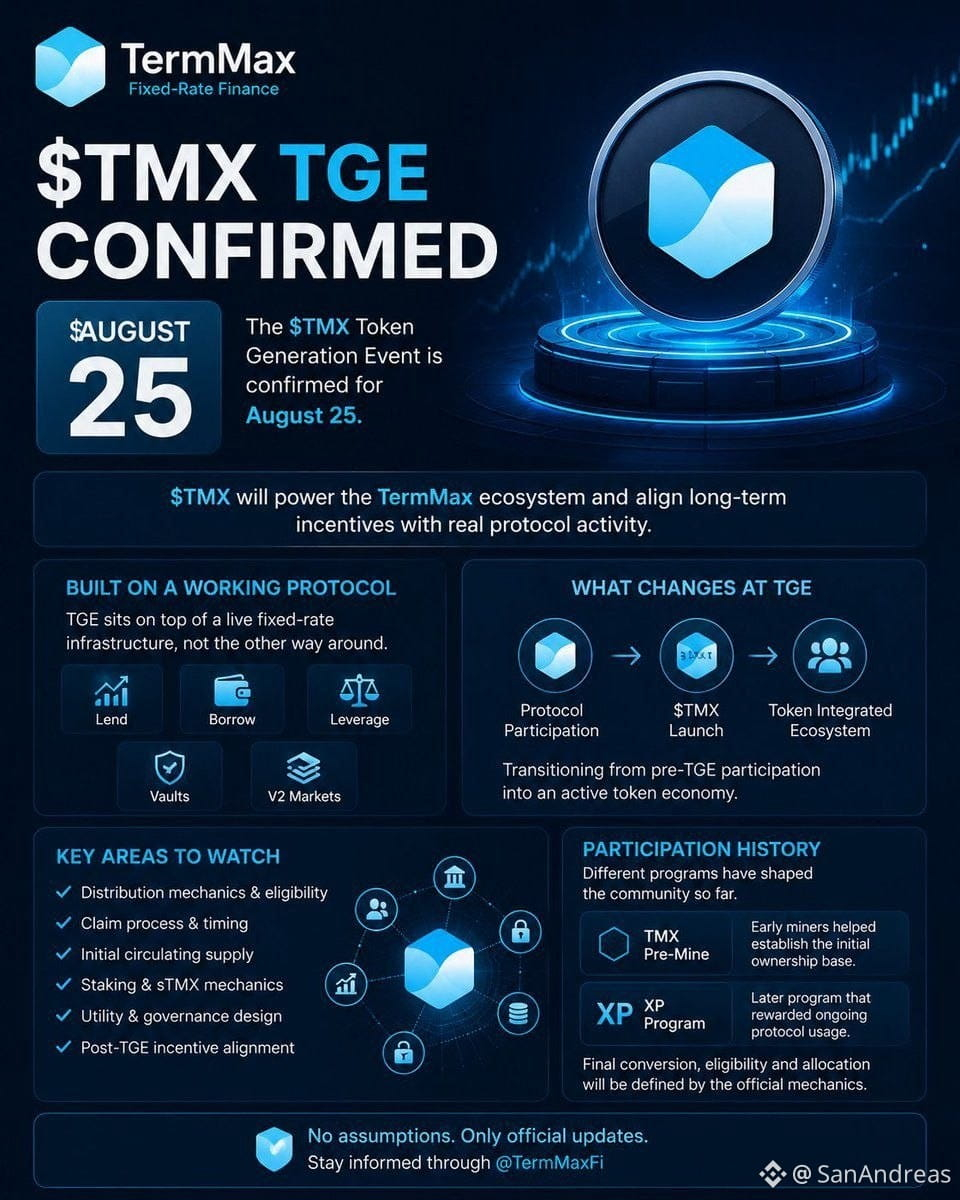
Whitepaper do Token TMX
Versão 1.0 | Março de 2026
Aviso Legal:
Este whitepaper é apenas para fins informativos e não constitui aconselhamento financeiro, jurídico ou de investimento. As informações contidas neste documento podem estar sujeitas a alterações sem aviso prévio. A Term Structure Labs e suas entidades afiliadas não fazem quaisquer declarações ou garantias quanto à exatidão ou completude deste documento. Os participantes em potencial devem realizar sua própria diligência e consultar assessores profissionais antes de tomar qualquer decisão.
1. Resumo Executivo
TMX é o token de utilidade e governança da TermMax, um protocolo descentralizado de empréstimos e captação a taxa fixa que oferece taxas de juros previsíveis em DeFi por meio de tokenização inovadora e tecnologia de market maker automatizado (AMM).
Destaques Principais:
Oferta Total: 1.000.000.000 TMX (fixa, sem inflação)
Padrão do Token: ERC20 (OFT em múltiplas blockchains)
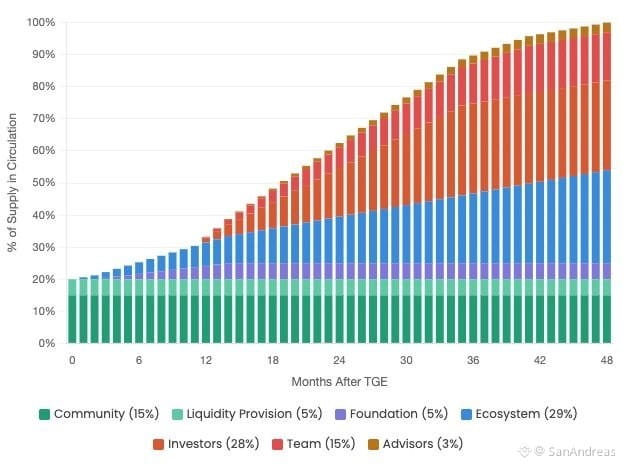
Data do TGE: A Ser AnunciadaCirculação Inicial: ~20% no TGE
Função Principal: Governança do protocolo, recompensas de staking e incentivos ao ecossistema
#termmax @TermMax
Whitepaper do Token TMX
Versão 1.0 | Março de 2026
Aviso Legal:
Este whitepaper é apenas para fins informativos e não constitui aconselhamento financeiro, jurídico ou de investimento. As informações contidas neste documento podem estar sujeitas a alterações sem aviso prévio. A Term Structure Labs e suas entidades afiliadas não fazem quaisquer declarações ou garantias quanto à exatidão ou completude deste documento. Os participantes em potencial devem realizar sua própria diligência e consultar assessores profissionais antes de tomar qualquer decisão.
1. Resumo Executivo
TMX é o token de utilidade e governança da TermMax, um protocolo descentralizado de empréstimos e captação a taxa fixa que oferece taxas de juros previsíveis em DeFi por meio de tokenização inovadora e tecnologia de market maker automatizado (AMM).
Destaques Principais:
Oferta Total: 1.000.000.000 TMX (fixa, sem inflação)
Padrão do Token: ERC20 (OFT em múltiplas blockchains)
Data do TGE: A Ser AnunciadaCirculação Inicial: ~20% no TGE
Função Principal: Governança do protocolo, recompensas de staking e incentivos ao ecossistema
Whitepaper do Token TMX
Versão 1.0 | Março de 2026
Aviso Legal:
Este whitepaper é apenas para fins informativos e não constitui aconselhamento financeiro, jurídico ou de investimento. As informações contidas neste documento podem estar sujeitas a alterações sem aviso prévio. A Term Structure Labs e suas entidades afiliadas não fazem quaisquer declarações ou garantias quanto à exatidão ou completude deste documento. Os participantes em potencial devem realizar sua própria diligência e consultar assessores profissionais antes de tomar qualquer decisão.
1. Resumo Executivo
TMX é o token de utilidade e governança da TermMax, um protocolo descentralizado de empréstimos e captação a taxa fixa que oferece taxas de juros previsíveis em DeFi por meio de tokenização inovadora e tecnologia de market maker automatizado (AMM).
Destaques Principais:
Oferta Total: 1.000.000.000 TMX (fixa, sem inflação)
Padrão do Token: ERC20 (OFT em múltiplas blockchains)
Data do TGE: A Ser AnunciadaCirculação Inicial: ~20% no TGE
Função Principal: Governança do protocolo, recompensas de staking e incentivos ao ecossistema
27
·
--
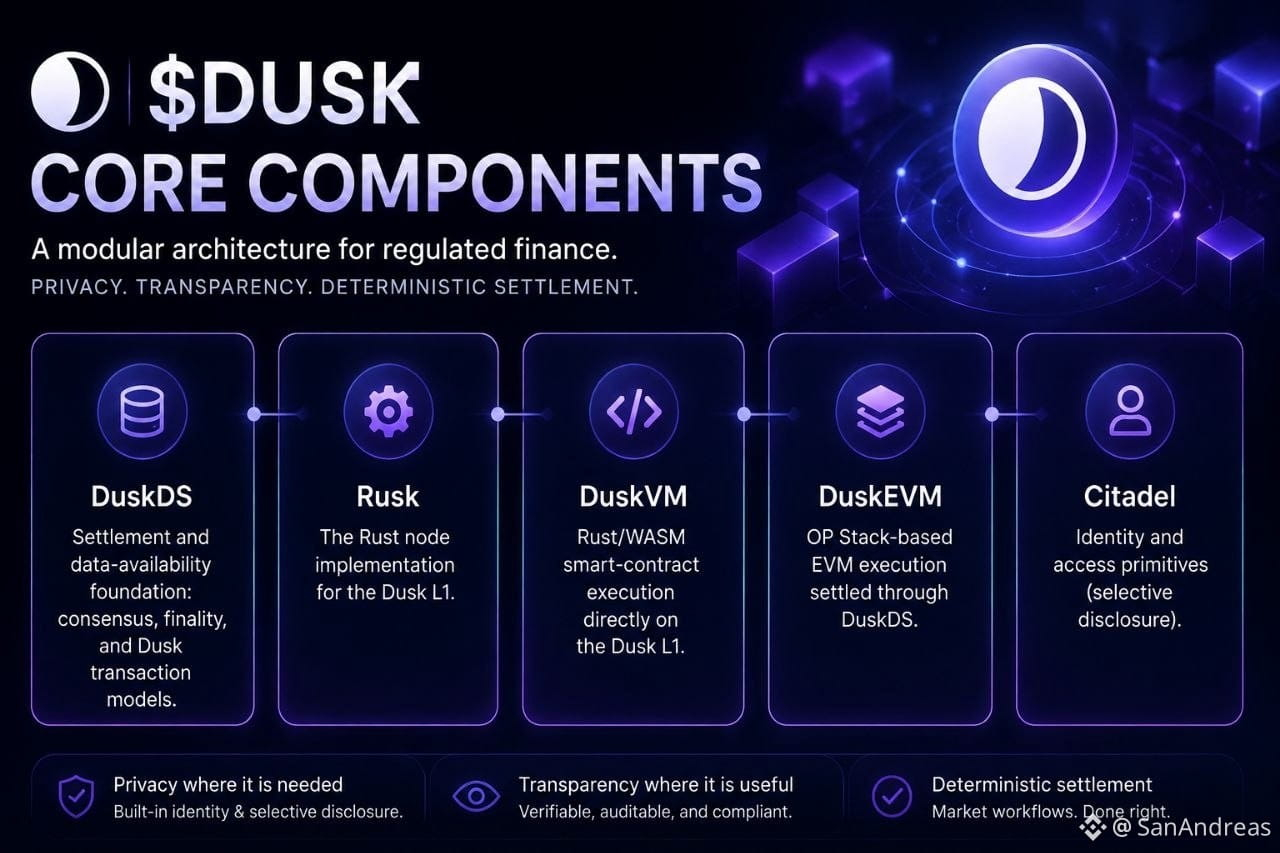
@Dusk_Foundation #dusk
$DUSK Componente principal:
5. Citadel
Função: primitivas de identidade e acesso (divulgação seletiva)
Para onde ir em seguida:
Citadel 2
A Citadel 2 é uma versão aprimorada do protocolo de identidade autossoberana (self-sovereign) da Dusk. Ela permite que alguém prove que possui uma credencial válida, chamada de licença, sem colocar seus dados pessoais ou a licença exata que usou na blockchain.
A ideia central
Pense em uma licença Citadel como uma credencial privada.
Um Usuário solicita a um Provedor de Licenças confiável (LP) uma licença.
O LP verifica o usuário fora da cadeia (off-chain), assina os dados de atributos relevantes, publica uma licença criptografada e registra essa licença em um contrato da Citadel.
Mais tarde, o usuário deseja acessar um serviço. Ele gera uma prova de conhecimento zero mostrando que é o titular de uma licença registrada e assinada pelo LP, sem revelar qual licença está sendo usada.
O contrato da Citadel verifica a prova e registra uma sessão pública.
O usuário envia um cookie de sessão ao Provedor de Serviço (SP), e o SP decide se concede acesso.
Esse último ponto importa: a Citadel prova que a sessão é válida criptograficamente, mas não decide a política do serviço. O SP ainda decide quais LPs ele confia, quais atributos são aceitos, se a sessão está expirada ou revogada, e se o cookie pode ser reutilizado.
O que permanece privado
A Citadel 2 é projetada para que atributos pessoais não sejam escritos na blockchain. A sessão na cadeia (on-chain) não revela a chave da carteira do usuário, a licença usada, a chave do LP, a chave do SP, os atributos assinados ou o caminho da prova de Merkle. Se um serviço precisar aprender ou verificar um atributo, o usuário divulga ou prova apenas o que a política desse serviço exige.
Usando a Citadel 2
Os desenvolvedores podem implantar seu próprio contrato de licença da Citadel na Dusk. O repositório da Citadel inclui a biblioteca central em Rust, o contrato de licença e o zk-citadel-wallet, um CLI/TUI com suporte a carteira (wallet) para implantar um contrato, solicitar e emitir licenças, usar uma licença, listar cookies de sessão salvos e verificar sessões.
@Dusk #dusk
$DUSK Componente principal:
5. Citadel
Função: primitivas de identidade e acesso (divulgação seletiva)
Para onde ir em seguida:
Citadel 2
A Citadel 2 é uma versão aprimorada do protocolo de identidade autossoberana (self-sovereign) da Dusk. Ela permite que alguém prove que possui uma credencial válida, chamada de licença, sem colocar seus dados pessoais ou a licença exata que usou na blockchain.
A ideia central
Pense em uma licença Citadel como uma credencial privada.
Um Usuário solicita a um Provedor de Licenças confiável (LP) uma licença.
O LP verifica o usuário fora da cadeia (off-chain), assina os dados de atributos relevantes, publica uma licença criptografada e registra essa licença em um contrato da Citadel.
Mais tarde, o usuário deseja acessar um serviço. Ele gera uma prova de conhecimento zero mostrando que é o titular de uma licença registrada e assinada pelo LP, sem revelar qual licença está sendo usada.
O contrato da Citadel verifica a prova e registra uma sessão pública.
O usuário envia um cookie de sessão ao Provedor de Serviço (SP), e o SP decide se concede acesso.
Esse último ponto importa: a Citadel prova que a sessão é válida criptograficamente, mas não decide a política do serviço. O SP ainda decide quais LPs ele confia, quais atributos são aceitos, se a sessão está expirada ou revogada, e se o cookie pode ser reutilizado.
O que permanece privado
A Citadel 2 é projetada para que atributos pessoais não sejam escritos na blockchain. A sessão na cadeia (on-chain) não revela a chave da carteira do usuário, a licença usada, a chave do LP, a chave do SP, os atributos assinados ou o caminho da prova de Merkle. Se um serviço precisar aprender ou verificar um atributo, o usuário divulga ou prova apenas o que a política desse serviço exige.
Usando a Citadel 2
Os desenvolvedores podem implantar seu próprio contrato de licença da Citadel na Dusk. O repositório da Citadel inclui a biblioteca central em Rust, o contrato de licença e o zk-citadel-wallet, um CLI/TUI com suporte a carteira (wallet) para implantar um contrato, solicitar e emitir licenças, usar uma licença, listar cookies de sessão salvos e verificar sessões.
$DUSK Componente principal:
5. Citadel
Função: primitivas de identidade e acesso (divulgação seletiva)
Para onde ir em seguida:
Citadel 2
A Citadel 2 é uma versão aprimorada do protocolo de identidade autossoberana (self-sovereign) da Dusk. Ela permite que alguém prove que possui uma credencial válida, chamada de licença, sem colocar seus dados pessoais ou a licença exata que usou na blockchain.
A ideia central
Pense em uma licença Citadel como uma credencial privada.
Um Usuário solicita a um Provedor de Licenças confiável (LP) uma licença.
O LP verifica o usuário fora da cadeia (off-chain), assina os dados de atributos relevantes, publica uma licença criptografada e registra essa licença em um contrato da Citadel.
Mais tarde, o usuário deseja acessar um serviço. Ele gera uma prova de conhecimento zero mostrando que é o titular de uma licença registrada e assinada pelo LP, sem revelar qual licença está sendo usada.
O contrato da Citadel verifica a prova e registra uma sessão pública.
O usuário envia um cookie de sessão ao Provedor de Serviço (SP), e o SP decide se concede acesso.
Esse último ponto importa: a Citadel prova que a sessão é válida criptograficamente, mas não decide a política do serviço. O SP ainda decide quais LPs ele confia, quais atributos são aceitos, se a sessão está expirada ou revogada, e se o cookie pode ser reutilizado.
O que permanece privado
A Citadel 2 é projetada para que atributos pessoais não sejam escritos na blockchain. A sessão na cadeia (on-chain) não revela a chave da carteira do usuário, a licença usada, a chave do LP, a chave do SP, os atributos assinados ou o caminho da prova de Merkle. Se um serviço precisar aprender ou verificar um atributo, o usuário divulga ou prova apenas o que a política desse serviço exige.
Usando a Citadel 2
Os desenvolvedores podem implantar seu próprio contrato de licença da Citadel na Dusk. O repositório da Citadel inclui a biblioteca central em Rust, o contrato de licença e o zk-citadel-wallet, um CLI/TUI com suporte a carteira (wallet) para implantar um contrato, solicitar e emitir licenças, usar uma licença, listar cookies de sessão salvos e verificar sessões.
33
·
--
Artigo
Componente Central da DUSK:5. Citadel
Função : Primitivos de identidade e acesso (divulgação seletiva)
Para onde ir a seguir :
Citadel 2
O Citadel 2 é uma versão aprimorada do protocolo de identidade auto-soberana de Dusk. Ele permite que alguém comprove que possui um credencial válido, chamado de licença, sem colocar seus dados pessoais ou a licença exata que usou na blockchain.
A ideia central
Pense em uma licença do Citadel como um credencial privado.
Um Usuário pede a um Provedor de Licenças confiável (LP) uma licença.
O LP verifica o usuário fora da cadeia (off-chain), assina os dados de atributos relevantes, publica uma licença criptografada e registra essa licença em um contrato do Citadel.
Componente Central da DUSK:
5. Citadel
Função : Primitivos de identidade e acesso (divulgação seletiva)
Para onde ir a seguir :
Citadel 2
O Citadel 2 é uma versão aprimorada do protocolo de identidade auto-soberana de Dusk. Ele permite que alguém comprove que possui um credencial válido, chamado de licença, sem colocar seus dados pessoais ou a licença exata que usou na blockchain.
A ideia central
Pense em uma licença do Citadel como um credencial privado.
Um Usuário pede a um Provedor de Licenças confiável (LP) uma licença.
O LP verifica o usuário fora da cadeia (off-chain), assina os dados de atributos relevantes, publica uma licença criptografada e registra essa licença em um contrato do Citadel.
Função : Primitivos de identidade e acesso (divulgação seletiva)
Para onde ir a seguir :
Citadel 2
O Citadel 2 é uma versão aprimorada do protocolo de identidade auto-soberana de Dusk. Ele permite que alguém comprove que possui um credencial válido, chamado de licença, sem colocar seus dados pessoais ou a licença exata que usou na blockchain.
A ideia central
Pense em uma licença do Citadel como um credencial privado.
Um Usuário pede a um Provedor de Licenças confiável (LP) uma licença.
O LP verifica o usuário fora da cadeia (off-chain), assina os dados de atributos relevantes, publica uma licença criptografada e registra essa licença em um contrato do Citadel.
54
·
--
$DUSK Componente Principal:
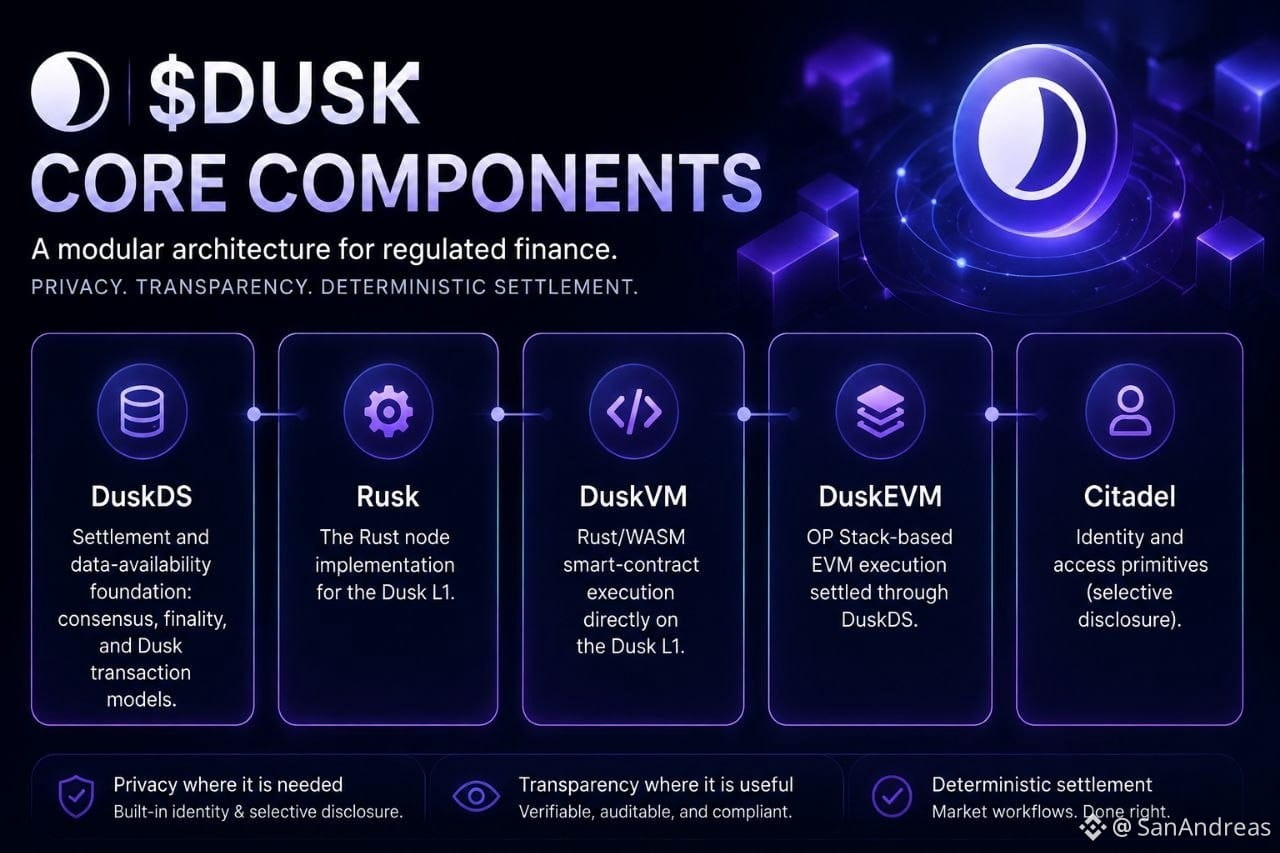
4. DuskEVM
Papel : Execução de EVM baseada em OP Stack liquidada por meio do DuskDS
Para onde ir em seguida :
DuskEVM
O DuskEVM traz Solidity, carteiras de EVM e ferramentas do ecossistema Ethereum para a Dusk. Aplicações EVM existentes podem direcionar-se ao DuskEVM com contratos e fluxos de trabalho familiares, enquanto utilizam DUSK para taxas de gas e DuskDS para liquidação e disponibilidade de dados.
Por que DuskEVM
Comece com a pilha EVM. Use Solidity ou Vyper com Foundry, Hardhat, viem, ethers e carteiras EVM padrão.
Use DUSK em todo o processo. O DUSK paga pela execução e faz a ponte entre a Dusk L1 e o DuskEVM.
Finalize em DuskDS. Lotes e compromissos de estado ancoram a atividade do DuskEVM na camada de consenso e disponibilidade de dados da Dusk.
Alcance a pilha completa da Dusk. Aplicações de EVM podem conectar-se a ativos da Dusk L1, infraestrutura e fluxos de trabalho orientados à privacidade à medida que essas integrações forem necessárias.
Uma transação do DuskEVM segue um ciclo de vida de rollup:
A transação é enviada ao sequenciador do DuskEVM.
A camada de execução a inclui em um bloco L2.
O processador de lotes publica os dados da transação no DuskDS.
Compromissos de estado e provas de falha conectam o estado resultante à liquidação do DuskDS.
A inclusão da transação é rápida, mas inclusão e liquidação são etapas diferentes. Aplicações que movimentam valor entre o DuskEVM e a Dusk L1 devem usar o status do protocolo ou da carteira, em vez de inferir finalidade apenas a partir do tempo decorrido.
Escolha um ambiente de execução
Escolha o DuskEVM para aplicações Solidity, carteiras de EVM, bibliotecas Ethereum existentes e infraestrutura de EVM.
Escolha o DuskVM para contratos Rust/WASM que devem executar diretamente na Dusk L1 ou integrar-se de forma próxima aos seus modelos de transação, ativos de protocolo, privacidade ou capacidades de zero conhecimento.
@Dusk_Foundation #dusk
$DUSK Componente Principal:
4. DuskEVM
Papel : Execução de EVM baseada em OP Stack liquidada por meio do DuskDS
Para onde ir em seguida :
DuskEVM
O DuskEVM traz Solidity, carteiras de EVM e ferramentas do ecossistema Ethereum para a Dusk. Aplicações EVM existentes podem direcionar-se ao DuskEVM com contratos e fluxos de trabalho familiares, enquanto utilizam DUSK para taxas de gas e DuskDS para liquidação e disponibilidade de dados.
Por que DuskEVM
Comece com a pilha EVM. Use Solidity ou Vyper com Foundry, Hardhat, viem, ethers e carteiras EVM padrão.
Use DUSK em todo o processo. O DUSK paga pela execução e faz a ponte entre a Dusk L1 e o DuskEVM.
Finalize em DuskDS. Lotes e compromissos de estado ancoram a atividade do DuskEVM na camada de consenso e disponibilidade de dados da Dusk.
Alcance a pilha completa da Dusk. Aplicações de EVM podem conectar-se a ativos da Dusk L1, infraestrutura e fluxos de trabalho orientados à privacidade à medida que essas integrações forem necessárias.
Uma transação do DuskEVM segue um ciclo de vida de rollup:
A transação é enviada ao sequenciador do DuskEVM.
A camada de execução a inclui em um bloco L2.
O processador de lotes publica os dados da transação no DuskDS.
Compromissos de estado e provas de falha conectam o estado resultante à liquidação do DuskDS.
A inclusão da transação é rápida, mas inclusão e liquidação são etapas diferentes. Aplicações que movimentam valor entre o DuskEVM e a Dusk L1 devem usar o status do protocolo ou da carteira, em vez de inferir finalidade apenas a partir do tempo decorrido.
Escolha um ambiente de execução
Escolha o DuskEVM para aplicações Solidity, carteiras de EVM, bibliotecas Ethereum existentes e infraestrutura de EVM.
Escolha o DuskVM para contratos Rust/WASM que devem executar diretamente na Dusk L1 ou integrar-se de forma próxima aos seus modelos de transação, ativos de protocolo, privacidade ou capacidades de zero conhecimento.
@Dusk #dusk
4. DuskEVM
Papel : Execução de EVM baseada em OP Stack liquidada por meio do DuskDS
Para onde ir em seguida :
DuskEVM
O DuskEVM traz Solidity, carteiras de EVM e ferramentas do ecossistema Ethereum para a Dusk. Aplicações EVM existentes podem direcionar-se ao DuskEVM com contratos e fluxos de trabalho familiares, enquanto utilizam DUSK para taxas de gas e DuskDS para liquidação e disponibilidade de dados.
Por que DuskEVM
Comece com a pilha EVM. Use Solidity ou Vyper com Foundry, Hardhat, viem, ethers e carteiras EVM padrão.
Use DUSK em todo o processo. O DUSK paga pela execução e faz a ponte entre a Dusk L1 e o DuskEVM.
Finalize em DuskDS. Lotes e compromissos de estado ancoram a atividade do DuskEVM na camada de consenso e disponibilidade de dados da Dusk.
Alcance a pilha completa da Dusk. Aplicações de EVM podem conectar-se a ativos da Dusk L1, infraestrutura e fluxos de trabalho orientados à privacidade à medida que essas integrações forem necessárias.
Uma transação do DuskEVM segue um ciclo de vida de rollup:
A transação é enviada ao sequenciador do DuskEVM.
A camada de execução a inclui em um bloco L2.
O processador de lotes publica os dados da transação no DuskDS.
Compromissos de estado e provas de falha conectam o estado resultante à liquidação do DuskDS.
A inclusão da transação é rápida, mas inclusão e liquidação são etapas diferentes. Aplicações que movimentam valor entre o DuskEVM e a Dusk L1 devem usar o status do protocolo ou da carteira, em vez de inferir finalidade apenas a partir do tempo decorrido.
Escolha um ambiente de execução
Escolha o DuskEVM para aplicações Solidity, carteiras de EVM, bibliotecas Ethereum existentes e infraestrutura de EVM.
Escolha o DuskVM para contratos Rust/WASM que devem executar diretamente na Dusk L1 ou integrar-se de forma próxima aos seus modelos de transação, ativos de protocolo, privacidade ou capacidades de zero conhecimento.
@Dusk #dusk
65
·
--
@Dusk_Foundation #dusk
$DUSK Componente principal:
3. DuskVM
Função: execução de smart-contracts Rust/WASM diretamente na Dusk L1
Para onde ir a seguir:
DuskVM é a máquina virtual WASM para smart contracts que executam diretamente na Dusk L1. Ela é baseada no runtime Wasmtime, com suporte personalizado para o modelo de execução da Dusk.
Use DuskVM para contratos Rust/WASM, ativos em nível de protocolo, execução personalizada, lógica de mercado, fluxos com foco em privacidade ou capacidades de zero-knowledge que devem ser executadas diretamente na L1.
Use DuskEVM em vez disso quando sua aplicação for projetada em torno de Solidity, carteiras EVM e ferramentas compatíveis com Ethereum. Veja DuskEVM.
Onde DuskVM se encaixa
DuskVM é o componente de execução de smart-contracts da Dusk L1. DuskVM executa o código do contrato, enquanto DuskDS fornece a base de consenso, liquidação e disponibilidade de dados que finaliza o estado resultante.
Em alto nível, o DuskVM fornece:
Mecanismo específico de gerenciamento de memória
Suporte para a ABI da Dusk
Suporte para chamadas entre contratos
O DuskVM atua como a interface do lado do host, lidando com o ambiente de execução e operações em nível de sistema.
Compilando contratos para WASM
O DuskVM espera WASM como bytecode, o que significa que os smart contracts devem ser compilados em bytecode WASM para que o DuskVM possa executá-los. Os smart contracts são inteiramente responsáveis por validar suas entradas, processá-las de acordo com a lógica do contrato e retornar as saídas apropriadas. Isso garante que os smart contracts operem de forma previsível e segura no ambiente de execução padronizado fornecido pelo DuskVM.
Contratos compilados para WASM podem ser executados pelo DuskVM, com as seguintes ressalvas:
O contrato precisa expor o “argument buffer” (argbuf), que é uma região especial de 64KB na memória do contrato
Cada função exposta segue a seguinte convenção de chamada: fn foo(u32) -> u32
O valor u32 recebido indica o tamanho dos dados de entrada, que foram colocados no argbuf pelo chamador. Esse tamanho de entrada especifica quantos bytes de dados o contrato deve ler do argbuf.
{spot}(DUSKUSDT)
@Dusk #dusk
$DUSK Componente principal:
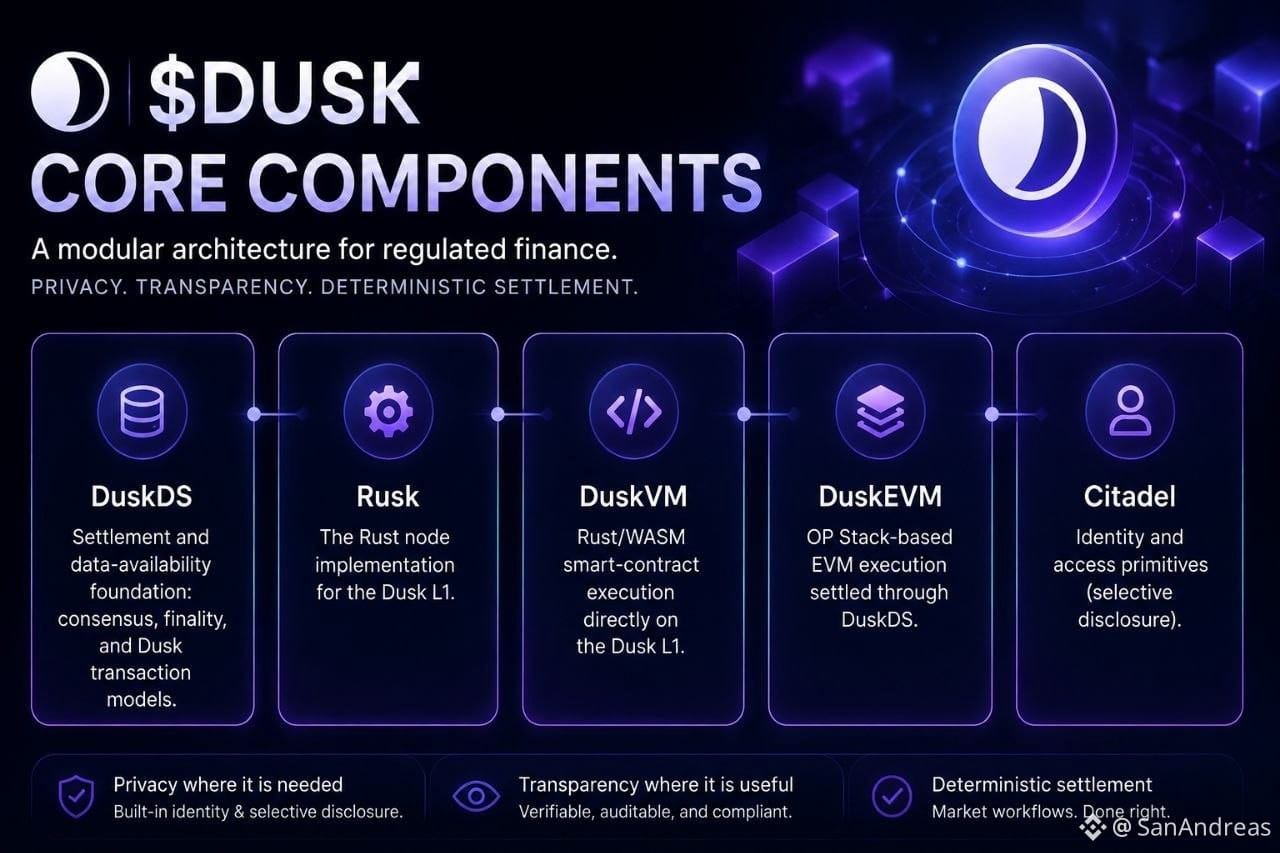
3. DuskVM
Função: execução de smart-contracts Rust/WASM diretamente na Dusk L1
Para onde ir a seguir:
DuskVM é a máquina virtual WASM para smart contracts que executam diretamente na Dusk L1. Ela é baseada no runtime Wasmtime, com suporte personalizado para o modelo de execução da Dusk.
Use DuskVM para contratos Rust/WASM, ativos em nível de protocolo, execução personalizada, lógica de mercado, fluxos com foco em privacidade ou capacidades de zero-knowledge que devem ser executadas diretamente na L1.
Use DuskEVM em vez disso quando sua aplicação for projetada em torno de Solidity, carteiras EVM e ferramentas compatíveis com Ethereum. Veja DuskEVM.
Onde DuskVM se encaixa
DuskVM é o componente de execução de smart-contracts da Dusk L1. DuskVM executa o código do contrato, enquanto DuskDS fornece a base de consenso, liquidação e disponibilidade de dados que finaliza o estado resultante.
Em alto nível, o DuskVM fornece:
Mecanismo específico de gerenciamento de memória
Suporte para a ABI da Dusk
Suporte para chamadas entre contratos
O DuskVM atua como a interface do lado do host, lidando com o ambiente de execução e operações em nível de sistema.
Compilando contratos para WASM
O DuskVM espera WASM como bytecode, o que significa que os smart contracts devem ser compilados em bytecode WASM para que o DuskVM possa executá-los. Os smart contracts são inteiramente responsáveis por validar suas entradas, processá-las de acordo com a lógica do contrato e retornar as saídas apropriadas. Isso garante que os smart contracts operem de forma previsível e segura no ambiente de execução padronizado fornecido pelo DuskVM.
Contratos compilados para WASM podem ser executados pelo DuskVM, com as seguintes ressalvas:
O contrato precisa expor o “argument buffer” (argbuf), que é uma região especial de 64KB na memória do contrato
Cada função exposta segue a seguinte convenção de chamada: fn foo(u32) -> u32
O valor u32 recebido indica o tamanho dos dados de entrada, que foram colocados no argbuf pelo chamador. Esse tamanho de entrada especifica quantos bytes de dados o contrato deve ler do argbuf.
$DUSK Componente principal:
3. DuskVM
Função: execução de smart-contracts Rust/WASM diretamente na Dusk L1
Para onde ir a seguir:
DuskVM é a máquina virtual WASM para smart contracts que executam diretamente na Dusk L1. Ela é baseada no runtime Wasmtime, com suporte personalizado para o modelo de execução da Dusk.
Use DuskVM para contratos Rust/WASM, ativos em nível de protocolo, execução personalizada, lógica de mercado, fluxos com foco em privacidade ou capacidades de zero-knowledge que devem ser executadas diretamente na L1.
Use DuskEVM em vez disso quando sua aplicação for projetada em torno de Solidity, carteiras EVM e ferramentas compatíveis com Ethereum. Veja DuskEVM.
Onde DuskVM se encaixa
DuskVM é o componente de execução de smart-contracts da Dusk L1. DuskVM executa o código do contrato, enquanto DuskDS fornece a base de consenso, liquidação e disponibilidade de dados que finaliza o estado resultante.
Em alto nível, o DuskVM fornece:
Mecanismo específico de gerenciamento de memória
Suporte para a ABI da Dusk
Suporte para chamadas entre contratos
O DuskVM atua como a interface do lado do host, lidando com o ambiente de execução e operações em nível de sistema.
Compilando contratos para WASM
O DuskVM espera WASM como bytecode, o que significa que os smart contracts devem ser compilados em bytecode WASM para que o DuskVM possa executá-los. Os smart contracts são inteiramente responsáveis por validar suas entradas, processá-las de acordo com a lógica do contrato e retornar as saídas apropriadas. Isso garante que os smart contracts operem de forma previsível e segura no ambiente de execução padronizado fornecido pelo DuskVM.
Contratos compilados para WASM podem ser executados pelo DuskVM, com as seguintes ressalvas:
O contrato precisa expor o “argument buffer” (argbuf), que é uma região especial de 64KB na memória do contrato
Cada função exposta segue a seguinte convenção de chamada: fn foo(u32) -> u32
O valor u32 recebido indica o tamanho dos dados de entrada, que foram colocados no argbuf pelo chamador. Esse tamanho de entrada especifica quantos bytes de dados o contrato deve ler do argbuf.
71
·
--
@Dusk_Foundation #dusk
$DUSK Componentes principais :
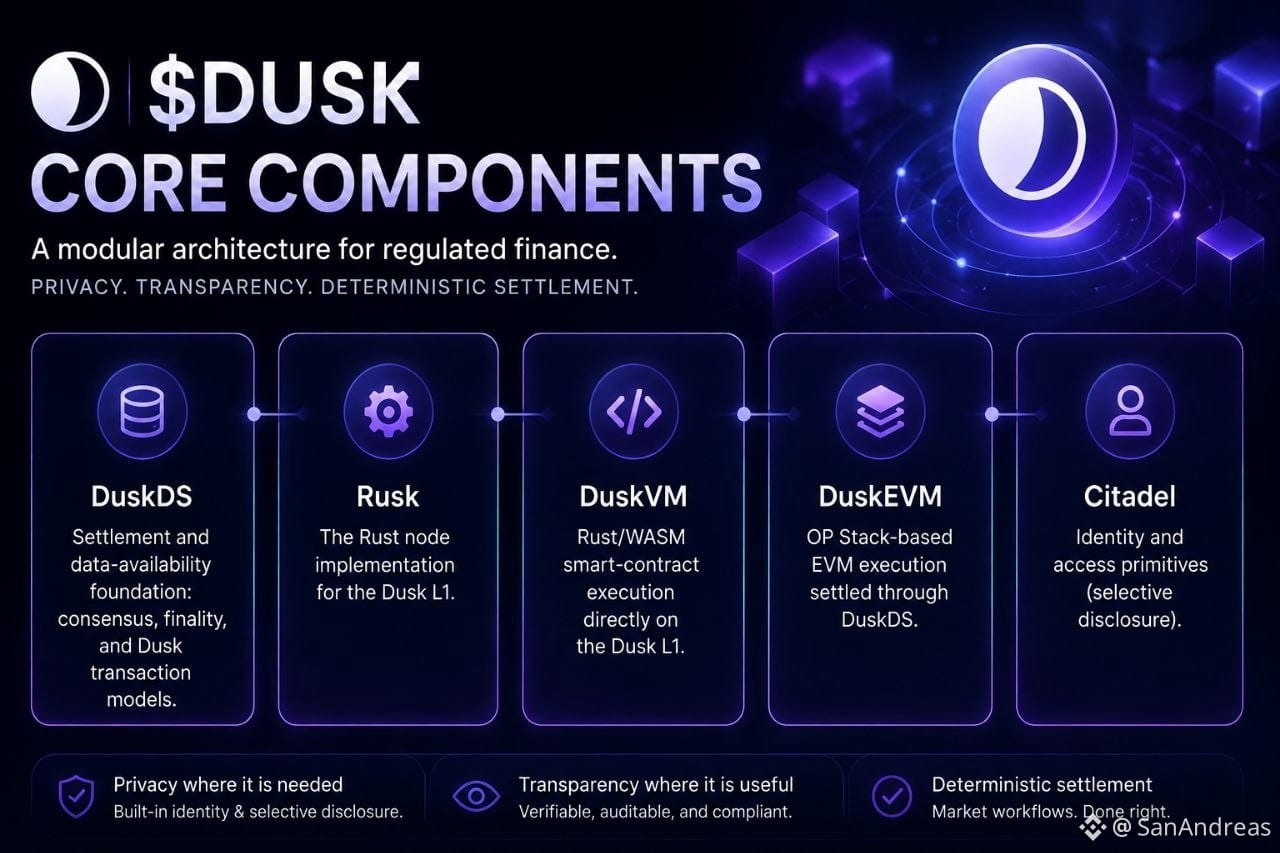
2. Rusk
Função : A implementação do nó Rust para o Dusk L1
Para onde ir a seguir :
Os nós do Dusk expõem duas principais interfaces HTTP de baixo nível:
GraphQL para consultas de cadeia, bloco, transação, mempool, archive e outras consultas indexadas por nó.
Rotas do tipo RUES /on/... para envio de transações, chamadas de contratos, operações do nó, geração de provas, gerenciamento de drivers e assinaturas de eventos.
Use esta página como guia de implementação para integrações diretas com nós. O código da aplicação normalmente deve usar W3sper ou outra camada SDK, a menos que precise de acesso de baixo nível ao nó.
URLs base
Mainnet: https://nodes.dusk.network
Testnet: https://testnet.nodes.dusk.network
Escolhendo a Interface correta
Use GraphQL quando você precisar de dados de cadeia, bloco, transação, mempool, archive ou outros dados indexados pelo nó que não façam parte de uma ABI de contrato.
Use /on/contracts:<contract_id>/ <method> quando você estiver consultando um método exposto por uma ABI de contrato.
Use outras rotas /on/... para operações do nó, como envio de transações, geração de provas, gerenciamento de drivers e assinaturas de eventos.
Algumas rotas legadas de atalho /on/... ainda funcionam para compatibilidade, mas foram descontinuadas.
{spot}(DUSKUSDT)
@Dusk #dusk
$DUSK Componentes principais :
2. Rusk
Função : A implementação do nó Rust para o Dusk L1
Para onde ir a seguir :
Os nós do Dusk expõem duas principais interfaces HTTP de baixo nível:
GraphQL para consultas de cadeia, bloco, transação, mempool, archive e outras consultas indexadas por nó.
Rotas do tipo RUES /on/... para envio de transações, chamadas de contratos, operações do nó, geração de provas, gerenciamento de drivers e assinaturas de eventos.
Use esta página como guia de implementação para integrações diretas com nós. O código da aplicação normalmente deve usar W3sper ou outra camada SDK, a menos que precise de acesso de baixo nível ao nó.
URLs base
Mainnet: https://nodes.dusk.network
Testnet: https://testnet.nodes.dusk.network
Escolhendo a Interface correta
Use GraphQL quando você precisar de dados de cadeia, bloco, transação, mempool, archive ou outros dados indexados pelo nó que não façam parte de uma ABI de contrato.
Use /on/contracts:<contract_id>/ <method> quando você estiver consultando um método exposto por uma ABI de contrato.
Use outras rotas /on/... para operações do nó, como envio de transações, geração de provas, gerenciamento de drivers e assinaturas de eventos.
Algumas rotas legadas de atalho /on/... ainda funcionam para compatibilidade, mas foram descontinuadas.
$DUSK Componentes principais :
2. Rusk
Função : A implementação do nó Rust para o Dusk L1
Para onde ir a seguir :
Os nós do Dusk expõem duas principais interfaces HTTP de baixo nível:
GraphQL para consultas de cadeia, bloco, transação, mempool, archive e outras consultas indexadas por nó.
Rotas do tipo RUES /on/... para envio de transações, chamadas de contratos, operações do nó, geração de provas, gerenciamento de drivers e assinaturas de eventos.
Use esta página como guia de implementação para integrações diretas com nós. O código da aplicação normalmente deve usar W3sper ou outra camada SDK, a menos que precise de acesso de baixo nível ao nó.
URLs base
Mainnet: https://nodes.dusk.network
Testnet: https://testnet.nodes.dusk.network
Escolhendo a Interface correta
Use GraphQL quando você precisar de dados de cadeia, bloco, transação, mempool, archive ou outros dados indexados pelo nó que não façam parte de uma ABI de contrato.
Use /on/contracts:<contract_id>/ <method> quando você estiver consultando um método exposto por uma ABI de contrato.
Use outras rotas /on/... para operações do nó, como envio de transações, geração de provas, gerenciamento de drivers e assinaturas de eventos.
Algumas rotas legadas de atalho /on/... ainda funcionam para compatibilidade, mas foram descontinuadas.
72
·
--
@Dusk_Foundation #dusk
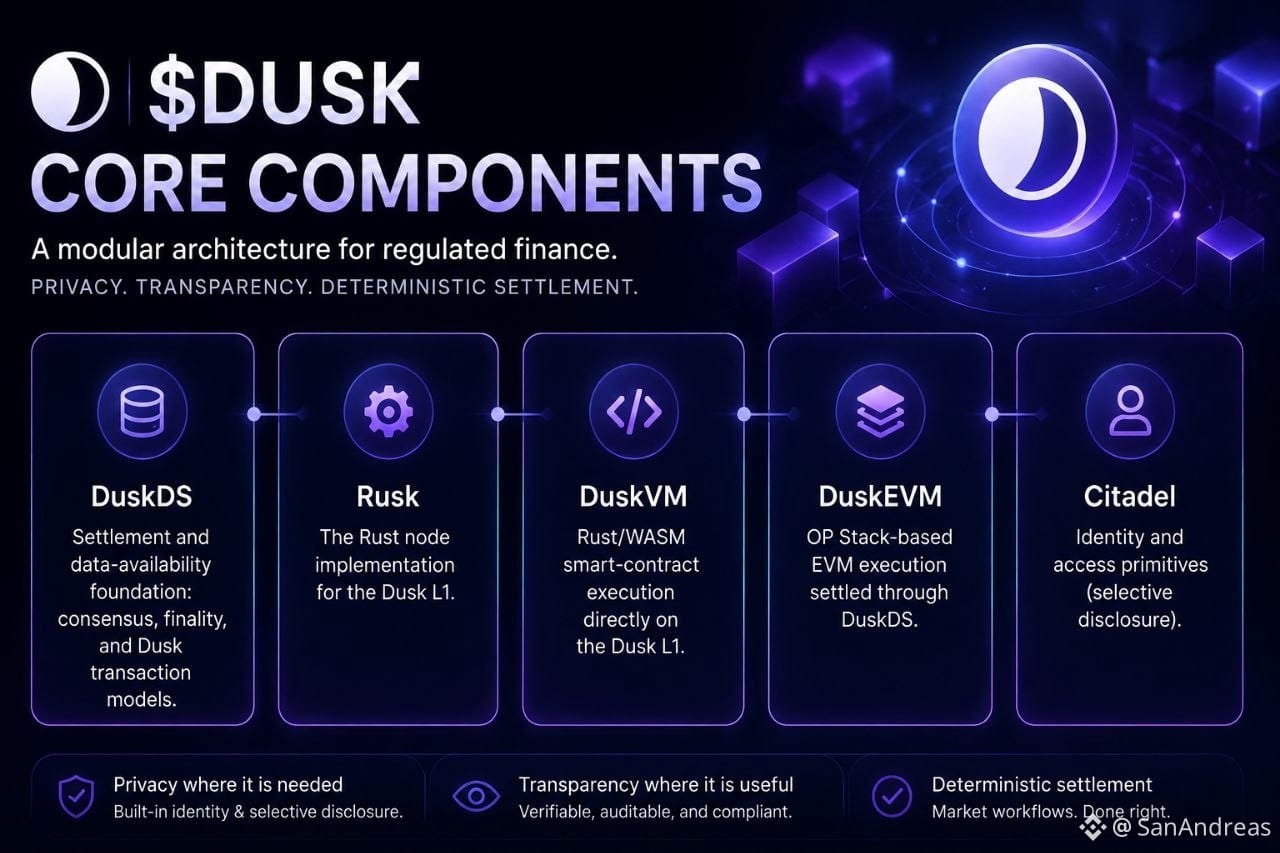
$DUSK Componentes Principais
A rede Dusk utiliza uma arquitetura modular construída para finanças regulamentadas: privacidade onde é necessária, transparência onde é útil e liquidação determinística onde os fluxos de trabalho do mercado exigem isso. Em alto nível:
Componente :
1. DuskDS
Função :
Fundação de liquidação e disponibilidade de dados: consenso, finalização e modelos de transações da Dusk
Para onde ir em seguida :
A Dusk possui uma arquitetura em duas camadas:
DuskDS – a camada de liquidação e de dados (consenso, disponibilidade de dados, modelos de transações)
DuskEVM – a camada de execução EVM onde contratos inteligentes são executados e onde o Hedger vive
Esta página descreve os modelos de transações na DuskDS. Ela serve como base para quem deseja entender como liquidação e privacidade funcionam “por baixo dos panos”. Se você estiver construindo dApps na DuskEVM, você interagirá principalmente com o Hedger e com contratos EVM.
Phoenix vs Moonlight (na DuskDS)Na DuskDS, o valor pode se mover de duas formas nativas:
Moonlight – transferências públicas, baseadas em conta
Phoenix – transferências protegidas, baseadas em notas, usando provas de conhecimento zero
Ambas, em última instância, fazem a liquidação na mesma cadeia, mas expõem informações diferentes para observadores.
Para os detalhes completos de implementação, consulte o Whitepaper.
Moonlight – saldos públicos
Moonlight é o modelo de transação transparente:
Contas têm saldos visíveis.
Transferências mostram o remetente, o destinatário e o valor.
É adequado para fluxos que precisam ser observáveis (por exemplo, alguns cenários de tesouraria ou relatórios).
Conceitualmente, ele se comporta como um modelo padrão de conta.
Para a maioria dos usuários, isso é “apenas a forma transparente de movimentar DUSK” na camada de protocolo.
Phoenix – saldos protegidos
Phoenix é o modelo voltado à privacidade:
Os fundos vivem como “notas” criptografadas em vez de saldos explícitos.
As transações comprovam a correção (sem gastos duplos, fundos suficientes) com provas de conhecimento zero sem revelar:quanto está sendo movido,quem enviou a nota,exceto ao destinatário,entre quais notas específicas.
Os usuários podem revelar informações seletivamente por meio de chaves de visualização quando a regulamentação ou auditoria exigir.
{spot}(DUSKUSDT)
@Dusk #dusk
$DUSK Componentes Principais
A rede Dusk utiliza uma arquitetura modular construída para finanças regulamentadas: privacidade onde é necessária, transparência onde é útil e liquidação determinística onde os fluxos de trabalho do mercado exigem isso. Em alto nível:
Componente :
1. DuskDS
Função :
Fundação de liquidação e disponibilidade de dados: consenso, finalização e modelos de transações da Dusk
Para onde ir em seguida :
A Dusk possui uma arquitetura em duas camadas:
DuskDS – a camada de liquidação e de dados (consenso, disponibilidade de dados, modelos de transações)
DuskEVM – a camada de execução EVM onde contratos inteligentes são executados e onde o Hedger vive
Esta página descreve os modelos de transações na DuskDS. Ela serve como base para quem deseja entender como liquidação e privacidade funcionam “por baixo dos panos”. Se você estiver construindo dApps na DuskEVM, você interagirá principalmente com o Hedger e com contratos EVM.
Phoenix vs Moonlight (na DuskDS)Na DuskDS, o valor pode se mover de duas formas nativas:
Moonlight – transferências públicas, baseadas em conta
Phoenix – transferências protegidas, baseadas em notas, usando provas de conhecimento zero
Ambas, em última instância, fazem a liquidação na mesma cadeia, mas expõem informações diferentes para observadores.
Para os detalhes completos de implementação, consulte o Whitepaper.
Moonlight – saldos públicos
Moonlight é o modelo de transação transparente:
Contas têm saldos visíveis.
Transferências mostram o remetente, o destinatário e o valor.
É adequado para fluxos que precisam ser observáveis (por exemplo, alguns cenários de tesouraria ou relatórios).
Conceitualmente, ele se comporta como um modelo padrão de conta.
Para a maioria dos usuários, isso é “apenas a forma transparente de movimentar DUSK” na camada de protocolo.
Phoenix – saldos protegidos
Phoenix é o modelo voltado à privacidade:
Os fundos vivem como “notas” criptografadas em vez de saldos explícitos.
As transações comprovam a correção (sem gastos duplos, fundos suficientes) com provas de conhecimento zero sem revelar:quanto está sendo movido,quem enviou a nota,exceto ao destinatário,entre quais notas específicas.
Os usuários podem revelar informações seletivamente por meio de chaves de visualização quando a regulamentação ou auditoria exigir.
$DUSK Componentes Principais
A rede Dusk utiliza uma arquitetura modular construída para finanças regulamentadas: privacidade onde é necessária, transparência onde é útil e liquidação determinística onde os fluxos de trabalho do mercado exigem isso. Em alto nível:
Componente :
1. DuskDS
Função :
Fundação de liquidação e disponibilidade de dados: consenso, finalização e modelos de transações da Dusk
Para onde ir em seguida :
A Dusk possui uma arquitetura em duas camadas:
DuskDS – a camada de liquidação e de dados (consenso, disponibilidade de dados, modelos de transações)
DuskEVM – a camada de execução EVM onde contratos inteligentes são executados e onde o Hedger vive
Esta página descreve os modelos de transações na DuskDS. Ela serve como base para quem deseja entender como liquidação e privacidade funcionam “por baixo dos panos”. Se você estiver construindo dApps na DuskEVM, você interagirá principalmente com o Hedger e com contratos EVM.
Phoenix vs Moonlight (na DuskDS)Na DuskDS, o valor pode se mover de duas formas nativas:
Moonlight – transferências públicas, baseadas em conta
Phoenix – transferências protegidas, baseadas em notas, usando provas de conhecimento zero
Ambas, em última instância, fazem a liquidação na mesma cadeia, mas expõem informações diferentes para observadores.
Para os detalhes completos de implementação, consulte o Whitepaper.
Moonlight – saldos públicos
Moonlight é o modelo de transação transparente:
Contas têm saldos visíveis.
Transferências mostram o remetente, o destinatário e o valor.
É adequado para fluxos que precisam ser observáveis (por exemplo, alguns cenários de tesouraria ou relatórios).
Conceitualmente, ele se comporta como um modelo padrão de conta.
Para a maioria dos usuários, isso é “apenas a forma transparente de movimentar DUSK” na camada de protocolo.
Phoenix – saldos protegidos
Phoenix é o modelo voltado à privacidade:
Os fundos vivem como “notas” criptografadas em vez de saldos explícitos.
As transações comprovam a correção (sem gastos duplos, fundos suficientes) com provas de conhecimento zero sem revelar:quanto está sendo movido,quem enviou a nota,exceto ao destinatário,entre quais notas específicas.
Os usuários podem revelar informações seletivamente por meio de chaves de visualização quando a regulamentação ou auditoria exigir.
93
·
--
@Dusk_Foundation #dusk
continuando a partir da discussão anterior sobre $DUSK Trade.
Parte 4
O Quadro Maior
A tokenização é frequentemente discutida em termos do que pode ser colocado on-chain.
Mas a pergunta mais importante talvez seja:
O que acontece depois que o ativo está on-chain?
Como um investidor o descobre?
Como a elegibilidade é determinada?
Como as divulgações são apresentadas?
Como uma negociação acontece?
Como os pagamentos e os movimentos de ativos são coordenados?
Como a transação é liquidada?
E como emissores, locais de negociação (venues), investidores e participantes autorizados interagem com a mesma infraestrutura?
Essas são perguntas de camada de aplicação.
A Dusk Trade foi projetada para abordá-las.
Se a tokenização vai avançar além da experimentação e se tornar parte de mercados financeiros reais, a infraestrutura de blockchain precisará trabalhar em conjunto com aplicações que compreendam a complexidade de ativos regulados.
A Dusk Trade está posicionada exatamente nesse cruzamento: transformando a infraestrutura subjacente de mercado da Dusk em fluxos de trabalho práticos para ativos financeiros tokenizados.
O objetivo final não é apenas tornar ativos financeiros transferíveis on-chain.
É fazer toda a jornada — da descoberta à elegibilidade, da negociação ao pagamento e à liquidação — funcionar como uma experiência digital coerente de mercado financeiro.
$DUSK
{spot}(DUSKUSDT)
@Dusk #dusk
continuando a partir da discussão anterior sobre $DUSK Trade.
Parte 4
O Quadro Maior
A tokenização é frequentemente discutida em termos do que pode ser colocado on-chain.
Mas a pergunta mais importante talvez seja:
O que acontece depois que o ativo está on-chain?
Como um investidor o descobre?
Como a elegibilidade é determinada?
Como as divulgações são apresentadas?
Como uma negociação acontece?
Como os pagamentos e os movimentos de ativos são coordenados?
Como a transação é liquidada?
E como emissores, locais de negociação (venues), investidores e participantes autorizados interagem com a mesma infraestrutura?
Essas são perguntas de camada de aplicação.
A Dusk Trade foi projetada para abordá-las.
Se a tokenização vai avançar além da experimentação e se tornar parte de mercados financeiros reais, a infraestrutura de blockchain precisará trabalhar em conjunto com aplicações que compreendam a complexidade de ativos regulados.
A Dusk Trade está posicionada exatamente nesse cruzamento: transformando a infraestrutura subjacente de mercado da Dusk em fluxos de trabalho práticos para ativos financeiros tokenizados.
O objetivo final não é apenas tornar ativos financeiros transferíveis on-chain.
É fazer toda a jornada — da descoberta à elegibilidade, da negociação ao pagamento e à liquidação — funcionar como uma experiência digital coerente de mercado financeiro.
$DUSK
continuando a partir da discussão anterior sobre $DUSK Trade.
Parte 4
O Quadro Maior
A tokenização é frequentemente discutida em termos do que pode ser colocado on-chain.
Mas a pergunta mais importante talvez seja:
O que acontece depois que o ativo está on-chain?
Como um investidor o descobre?
Como a elegibilidade é determinada?
Como as divulgações são apresentadas?
Como uma negociação acontece?
Como os pagamentos e os movimentos de ativos são coordenados?
Como a transação é liquidada?
E como emissores, locais de negociação (venues), investidores e participantes autorizados interagem com a mesma infraestrutura?
Essas são perguntas de camada de aplicação.
A Dusk Trade foi projetada para abordá-las.
Se a tokenização vai avançar além da experimentação e se tornar parte de mercados financeiros reais, a infraestrutura de blockchain precisará trabalhar em conjunto com aplicações que compreendam a complexidade de ativos regulados.
A Dusk Trade está posicionada exatamente nesse cruzamento: transformando a infraestrutura subjacente de mercado da Dusk em fluxos de trabalho práticos para ativos financeiros tokenizados.
O objetivo final não é apenas tornar ativos financeiros transferíveis on-chain.
É fazer toda a jornada — da descoberta à elegibilidade, da negociação ao pagamento e à liquidação — funcionar como uma experiência digital coerente de mercado financeiro.
$DUSK
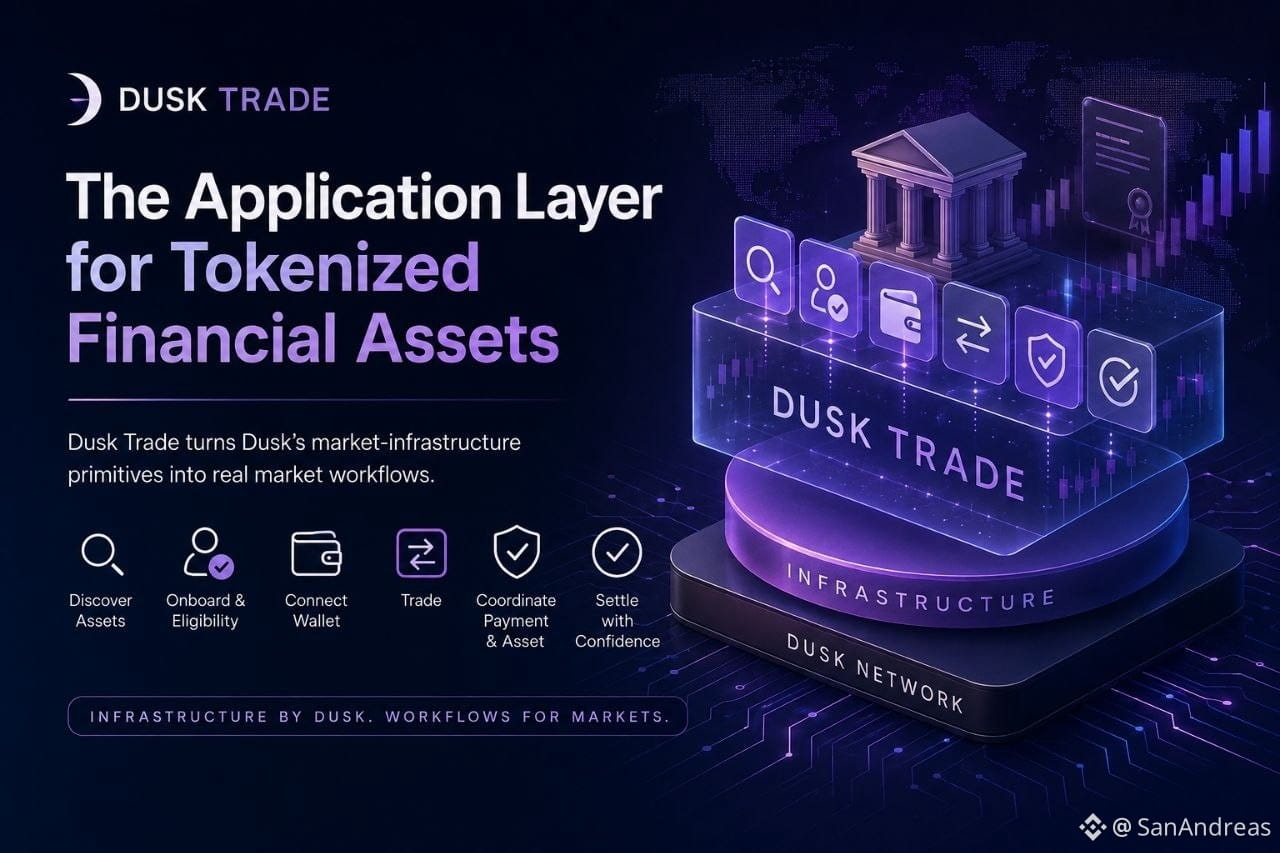
2
65
·
--
continuando a discussão anterior sobre $DUSK Trade.
Parte 3
Essa separação pode ser importante porque infraestrutura e aplicações do usuário têm responsabilidades diferentes.
O protocolo pode focar em fornecer primitivas confiáveis de blockchain e de mercado financeiro, enquanto as aplicações podem focar em como essas primitivas são usadas em fluxos de trabalho específicos.
Por que isso importa para a tokenização
A promessa de longo prazo da tokenização não é apenas colocar ativos tradicionais em uma blockchain.
A oportunidade maior é criar mercados financeiros nos quais emissão, propriedade, negociação, conformidade e liquidação possam interagir com infraestrutura programável.
Isso requer mais do que tokens.
Requer infraestrutura de mercado e aplicações que entendam fluxos de trabalho financeiros.
Dusk Trade representa o lado de aplicação dessa equação.
Seu papel é conectar a infraestrutura blockchain às atividades práticas que os participantes realizam ao interagir com ativos financeiros tokenizados.
Uma maneira diferente de pensar sobre o Dusk Trade
Pode ser tentador pensar no Dusk Trade apenas como mais uma interface de negociação.
Mas seu propósito mais amplo é mais interessante.
Ele pode ser visto como uma ponte entre a infraestrutura blockchain e os fluxos de trabalho regulamentados dos mercados financeiros.
A diferença é sutil, mas importante.
Uma aplicação cripto típica talvez foque principalmente em:
Carteira → Token → Negociação
Um fluxo de trabalho de ativo tokenizado regulamentado pode ser muito mais envolvido:
Descoberta de Ativos → Onboarding do Investidor → Elegibilidade → Divulgação → Carteira → Negociação → Coordenação de Pagamento → Liquidação
O Dusk Trade foi projetado em torno do segundo modelo.
@Dusk_Foundation #dusk
continuando a discussão anterior sobre $DUSK Trade.
Parte 3
Essa separação pode ser importante porque infraestrutura e aplicações do usuário têm responsabilidades diferentes.
O protocolo pode focar em fornecer primitivas confiáveis de blockchain e de mercado financeiro, enquanto as aplicações podem focar em como essas primitivas são usadas em fluxos de trabalho específicos.
Por que isso importa para a tokenização
A promessa de longo prazo da tokenização não é apenas colocar ativos tradicionais em uma blockchain.
A oportunidade maior é criar mercados financeiros nos quais emissão, propriedade, negociação, conformidade e liquidação possam interagir com infraestrutura programável.
Isso requer mais do que tokens.
Requer infraestrutura de mercado e aplicações que entendam fluxos de trabalho financeiros.
Dusk Trade representa o lado de aplicação dessa equação.
Seu papel é conectar a infraestrutura blockchain às atividades práticas que os participantes realizam ao interagir com ativos financeiros tokenizados.
Uma maneira diferente de pensar sobre o Dusk Trade
Pode ser tentador pensar no Dusk Trade apenas como mais uma interface de negociação.
Mas seu propósito mais amplo é mais interessante.
Ele pode ser visto como uma ponte entre a infraestrutura blockchain e os fluxos de trabalho regulamentados dos mercados financeiros.
A diferença é sutil, mas importante.
Uma aplicação cripto típica talvez foque principalmente em:
Carteira → Token → Negociação
Um fluxo de trabalho de ativo tokenizado regulamentado pode ser muito mais envolvido:
Descoberta de Ativos → Onboarding do Investidor → Elegibilidade → Divulgação → Carteira → Negociação → Coordenação de Pagamento → Liquidação
O Dusk Trade foi projetado em torno do segundo modelo.
@Dusk #dusk
Parte 3
Essa separação pode ser importante porque infraestrutura e aplicações do usuário têm responsabilidades diferentes.
O protocolo pode focar em fornecer primitivas confiáveis de blockchain e de mercado financeiro, enquanto as aplicações podem focar em como essas primitivas são usadas em fluxos de trabalho específicos.
Por que isso importa para a tokenização
A promessa de longo prazo da tokenização não é apenas colocar ativos tradicionais em uma blockchain.
A oportunidade maior é criar mercados financeiros nos quais emissão, propriedade, negociação, conformidade e liquidação possam interagir com infraestrutura programável.
Isso requer mais do que tokens.
Requer infraestrutura de mercado e aplicações que entendam fluxos de trabalho financeiros.
Dusk Trade representa o lado de aplicação dessa equação.
Seu papel é conectar a infraestrutura blockchain às atividades práticas que os participantes realizam ao interagir com ativos financeiros tokenizados.
Uma maneira diferente de pensar sobre o Dusk Trade
Pode ser tentador pensar no Dusk Trade apenas como mais uma interface de negociação.
Mas seu propósito mais amplo é mais interessante.
Ele pode ser visto como uma ponte entre a infraestrutura blockchain e os fluxos de trabalho regulamentados dos mercados financeiros.
A diferença é sutil, mas importante.
Uma aplicação cripto típica talvez foque principalmente em:
Carteira → Token → Negociação
Um fluxo de trabalho de ativo tokenizado regulamentado pode ser muito mais envolvido:
Descoberta de Ativos → Onboarding do Investidor → Elegibilidade → Divulgação → Carteira → Negociação → Coordenação de Pagamento → Liquidação
O Dusk Trade foi projetado em torno do segundo modelo.
@Dusk #dusk
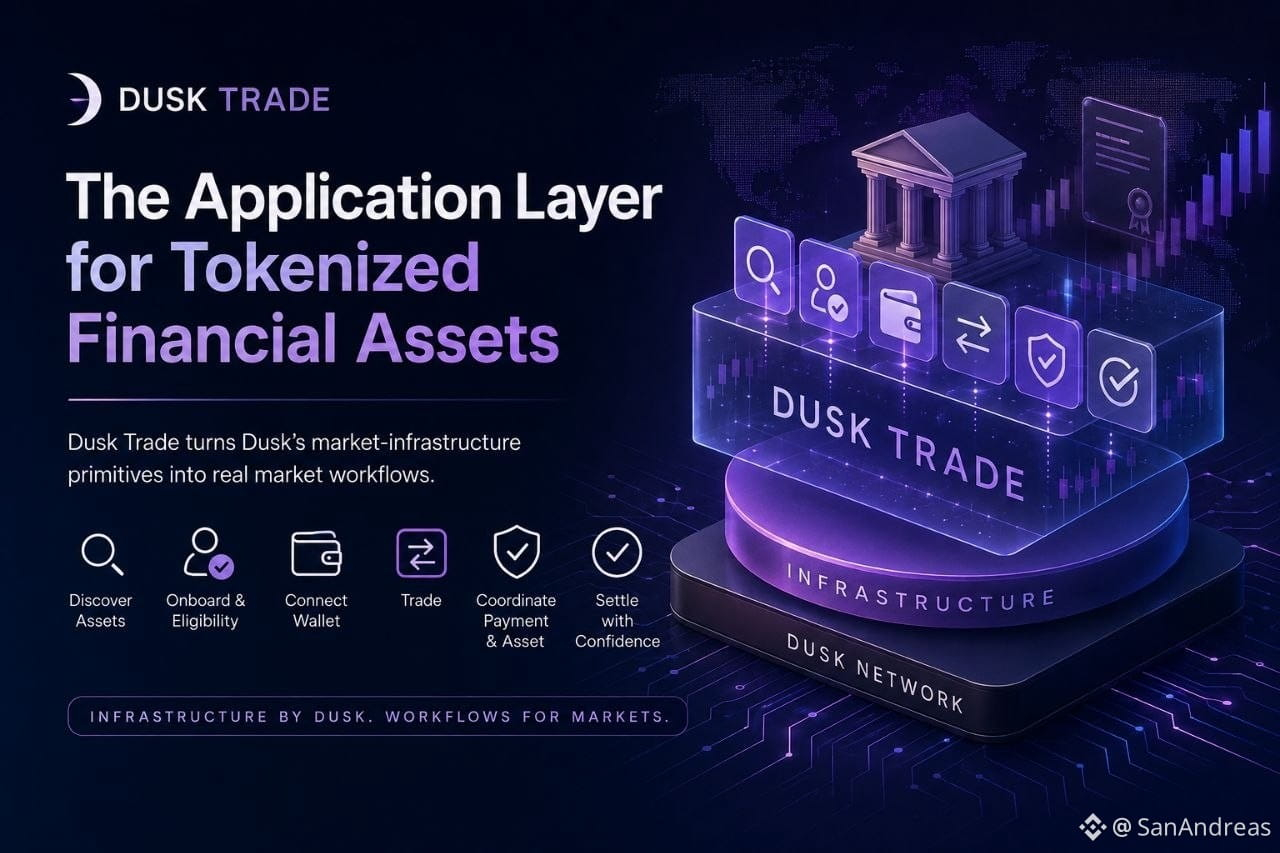
75
·
--
continuando a partir da discussão anterior sobre $DUSK Trade.
Parte 2
6. Liquidação
O passo final é a liquidação.
É aqui que a transação se torna mais do que uma simples intenção de negociação.
Os movimentos relevantes de ativos e de pagamentos precisam ser concluídos de acordo com as regras que regem a transação.
Ao integrar os fluxos de negociação e de liquidação, a camada de aplicação pode ajudar a transformar uma transação on-chain em algo mais próximo de um processo completo de mercado financeiro.
A Importância da Elegibilidade e da Divulgação
Um dos aspectos mais interessantes do Dusk Trade é que ele foi projetado com base nos requisitos de mercados regulamentados.
Nas finanças tradicionais, nem todo produto financeiro está disponível para qualquer investidor.
Podem existir restrições com base na jurisdição, status do investidor, tipo de ativo ou outros requisitos regulatórios.
A informação também pode importar tanto quanto a própria transação.
Os investidores podem precisar de acesso a divulgações e outras informações relevantes antes de participar.
Isso significa que um mercado financeiro tokenizado precisa responder a perguntas como:
Quem pode comprar este ativo?
Que informações o investidor deve receber?
Quem está autorizado a acessar certas informações?
Em quais condições o ativo pode ser transferido?
A abordagem da camada de aplicação do Dusk Trade pretende tornar essas considerações parte do fluxo de trabalho, em vez de tratá-las como algo separado da atividade na blockchain.
Dusk Trade e o Ecossistema Dusk
É útil distinguir entre o protocolo base e a camada de aplicação.
A rede Dusk fornece a infraestrutura subjacente e primitivas orientadas a mercado.
O Dusk Trade opera acima dessa infraestrutura.
Uma forma simples de visualizar o relacionamento é:
Dusk Network → Market Infrastructure → Dusk Trade → Usuários e Participantes do Mercado
A camada base fornece a fundação.
A camada de aplicação transforma essa fundação em experiências que emissores, investidores, locais de negociação e outros participantes autorizados podem de fato usar.
@Dusk_Foundation #dusk
continuando a partir da discussão anterior sobre $DUSK Trade.
Parte 2
6. Liquidação
O passo final é a liquidação.
É aqui que a transação se torna mais do que uma simples intenção de negociação.
Os movimentos relevantes de ativos e de pagamentos precisam ser concluídos de acordo com as regras que regem a transação.
Ao integrar os fluxos de negociação e de liquidação, a camada de aplicação pode ajudar a transformar uma transação on-chain em algo mais próximo de um processo completo de mercado financeiro.
A Importância da Elegibilidade e da Divulgação
Um dos aspectos mais interessantes do Dusk Trade é que ele foi projetado com base nos requisitos de mercados regulamentados.
Nas finanças tradicionais, nem todo produto financeiro está disponível para qualquer investidor.
Podem existir restrições com base na jurisdição, status do investidor, tipo de ativo ou outros requisitos regulatórios.
A informação também pode importar tanto quanto a própria transação.
Os investidores podem precisar de acesso a divulgações e outras informações relevantes antes de participar.
Isso significa que um mercado financeiro tokenizado precisa responder a perguntas como:
Quem pode comprar este ativo?
Que informações o investidor deve receber?
Quem está autorizado a acessar certas informações?
Em quais condições o ativo pode ser transferido?
A abordagem da camada de aplicação do Dusk Trade pretende tornar essas considerações parte do fluxo de trabalho, em vez de tratá-las como algo separado da atividade na blockchain.
Dusk Trade e o Ecossistema Dusk
É útil distinguir entre o protocolo base e a camada de aplicação.
A rede Dusk fornece a infraestrutura subjacente e primitivas orientadas a mercado.
O Dusk Trade opera acima dessa infraestrutura.
Uma forma simples de visualizar o relacionamento é:
Dusk Network → Market Infrastructure → Dusk Trade → Usuários e Participantes do Mercado
A camada base fornece a fundação.
A camada de aplicação transforma essa fundação em experiências que emissores, investidores, locais de negociação e outros participantes autorizados podem de fato usar.
@Dusk #dusk
Parte 2
6. Liquidação
O passo final é a liquidação.
É aqui que a transação se torna mais do que uma simples intenção de negociação.
Os movimentos relevantes de ativos e de pagamentos precisam ser concluídos de acordo com as regras que regem a transação.
Ao integrar os fluxos de negociação e de liquidação, a camada de aplicação pode ajudar a transformar uma transação on-chain em algo mais próximo de um processo completo de mercado financeiro.
A Importância da Elegibilidade e da Divulgação
Um dos aspectos mais interessantes do Dusk Trade é que ele foi projetado com base nos requisitos de mercados regulamentados.
Nas finanças tradicionais, nem todo produto financeiro está disponível para qualquer investidor.
Podem existir restrições com base na jurisdição, status do investidor, tipo de ativo ou outros requisitos regulatórios.
A informação também pode importar tanto quanto a própria transação.
Os investidores podem precisar de acesso a divulgações e outras informações relevantes antes de participar.
Isso significa que um mercado financeiro tokenizado precisa responder a perguntas como:
Quem pode comprar este ativo?
Que informações o investidor deve receber?
Quem está autorizado a acessar certas informações?
Em quais condições o ativo pode ser transferido?
A abordagem da camada de aplicação do Dusk Trade pretende tornar essas considerações parte do fluxo de trabalho, em vez de tratá-las como algo separado da atividade na blockchain.
Dusk Trade e o Ecossistema Dusk
É útil distinguir entre o protocolo base e a camada de aplicação.
A rede Dusk fornece a infraestrutura subjacente e primitivas orientadas a mercado.
O Dusk Trade opera acima dessa infraestrutura.
Uma forma simples de visualizar o relacionamento é:
Dusk Network → Market Infrastructure → Dusk Trade → Usuários e Participantes do Mercado
A camada base fornece a fundação.
A camada de aplicação transforma essa fundação em experiências que emissores, investidores, locais de negociação e outros participantes autorizados podem de fato usar.
@Dusk #dusk
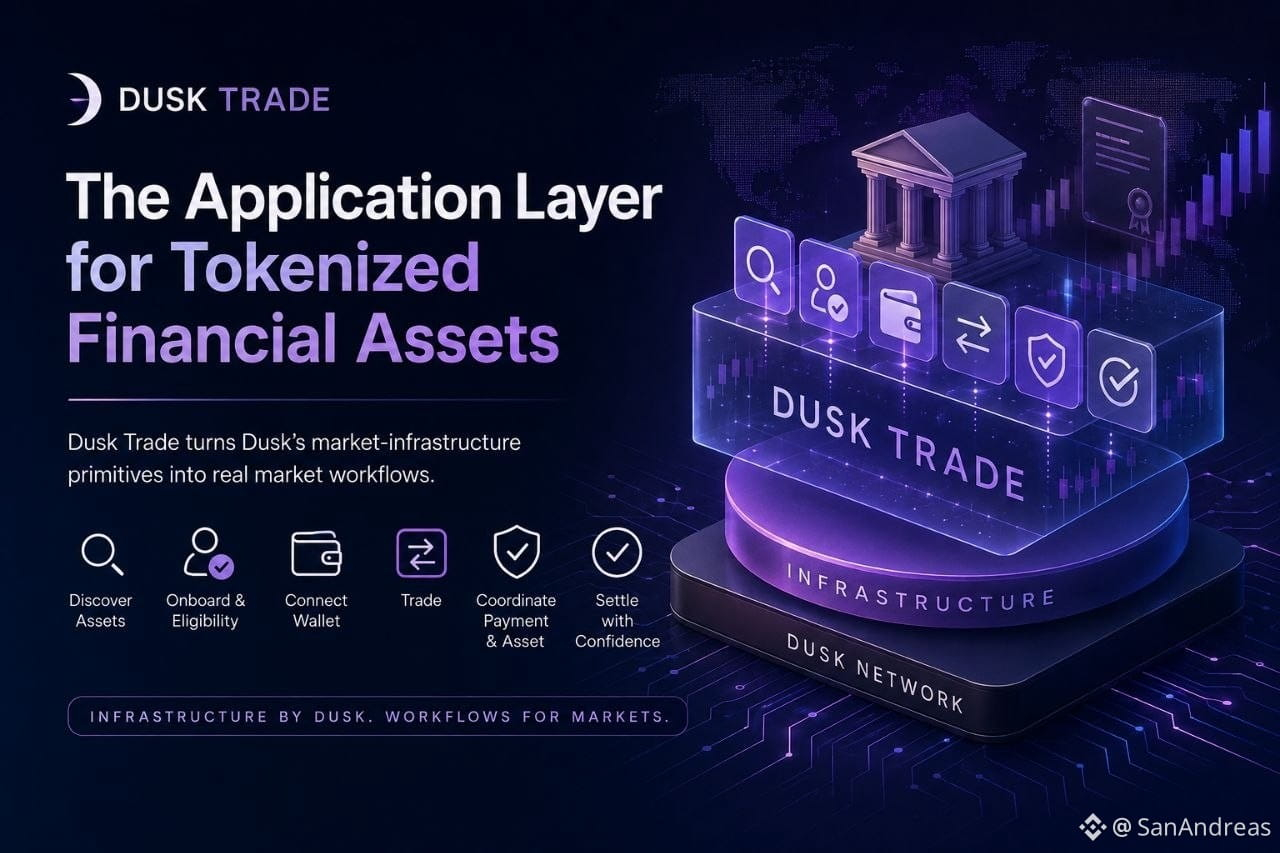
16
·
--


Binance Africa
·
--
🚀 Flash Quest: As Ações Estão se Movendo Rápido na Binance! Os mercados estão em movimento. 📈
Negocie suas ações favoritas na Binance e, depois, compartilhe sua negociação na Binance Square para ter a chance de ganhar recompensas do nosso pool de prêmios de USDC $ 1.000
Como Participar:
🔸 Siga @Binance Africa
🔸 Curta este post e repost
🔸 Compartilhe suas negociações de bStocks no Square usando o tradingcard com a hashtag #TradebStocks #BinanceAfrica
🔸 Preencha esta pesquisa 👉🏾 Click on the Link to Participate Prêmios: Ao todo, 200 vencedores receberão 5 USDC cada.
🔸 📆 Período: 13 de agosto de 2026 10:00 UTC – 23 de agosto de 2026 23:59 UTC
$TSLAB
Negocie suas ações favoritas na Binance e, depois, compartilhe sua negociação na Binance Square para ter a chance de ganhar recompensas do nosso pool de prêmios de USDC $ 1.000
Como Participar:
🔸 Siga @Binance Africa
🔸 Curta este post e repost
🔸 Compartilhe suas negociações de bStocks no Square usando o tradingcard com a hashtag #TradebStocks #BinanceAfrica
🔸 Preencha esta pesquisa 👉🏾 Click on the Link to Participate Prêmios: Ao todo, 200 vencedores receberão 5 USDC cada.
🔸 📆 Período: 13 de agosto de 2026 10:00 UTC – 23 de agosto de 2026 23:59 UTC
$TSLAB
45
·
--
Pelo que pesquisei, $AAPLB ainda está subvalorizada. É a minha ação favorita para negociar e investir agora. Mas também é boa para scalping. 💛
#TradeBStocks #BinanceAfrica
Pelo que pesquisei, $AAPLB ainda está subvalorizada. É a minha ação favorita para negociar e investir agora. Mas também é boa para scalping. 💛
#TradeBStocks #BinanceAfrica
#TradeBStocks #BinanceAfrica
70
·
--
@Dusk_Foundation #dusk $DUSK
Títulos mobiliários regulados podem envolver elegibilidade do investidor, divulgações, restrições de propriedade, requisitos de liquidação e informações que devem estar acessíveis apenas a participantes autorizados.
Quando esses ativos são tokenizados, tais requisitos não simplesmente desaparecem.
Na verdade, eles podem se tornar ainda mais importantes.
Uma blockchain pode fornecer a infraestrutura subjacente para propriedade e liquidação, mas um mercado financeiro real ainda precisa de aplicações que entendam como investidores, emissores, locais de negociação e outros participantes interagem.
O Dusk Trade foi projetado para resolver esse problema.
Em vez de tratar ativos financeiros tokenizados como tokens comuns, ele se concentra no fluxo de trabalho em torno do ativo.
Da Descoberta de Ativos à Liquidação
Imagine que um investidor queira comprar um ativo financeiro tokenizado.
A jornada poderia ser algo como isto:
1. Descobrir
O investidor primeiro precisa encontrar um ativo tokenizado disponível e compreender as informações relevantes associadas a ele.
Isso cria uma camada de descoberta de ativos em que os usuários podem identificar oportunidades, em vez de interagir com transações brutas da blockchain.
2. Conectar
O investidor conecta sua carteira à aplicação.
A carteira se torna a interface por meio da qual o investidor pode interagir com o ativo tokenizado e com o processo de transação subjacente.
3. Onboard (Adesão)
Antes de participar de um mercado regulado, o investidor pode precisar concluir requisitos de onboard ou de elegibilidade.
Essa é uma distinção importante entre negociação comum de cripto e mercados financeiros regulados.
O acesso a um ativo pode depender de quem o investidor é, se ele atende a requisitos específicos e se está autorizado a participar.
4. Negociar
Assim que os requisitos relevantes forem atendidos, o investidor pode iniciar uma transação de compra ou venda.
Nesta etapa, o Dusk Trade conecta a experiência de negociação voltada ao usuário com a infraestrutura subjacente.
5. Coordenar Pagamento e Transferência de Ativo
Uma transação financeira envolve mais do que mover um ativo.
$DUSK
@Dusk #dusk $DUSK
Títulos mobiliários regulados podem envolver elegibilidade do investidor, divulgações, restrições de propriedade, requisitos de liquidação e informações que devem estar acessíveis apenas a participantes autorizados.
Quando esses ativos são tokenizados, tais requisitos não simplesmente desaparecem.
Na verdade, eles podem se tornar ainda mais importantes.
Uma blockchain pode fornecer a infraestrutura subjacente para propriedade e liquidação, mas um mercado financeiro real ainda precisa de aplicações que entendam como investidores, emissores, locais de negociação e outros participantes interagem.
O Dusk Trade foi projetado para resolver esse problema.
Em vez de tratar ativos financeiros tokenizados como tokens comuns, ele se concentra no fluxo de trabalho em torno do ativo.
Da Descoberta de Ativos à Liquidação
Imagine que um investidor queira comprar um ativo financeiro tokenizado.
A jornada poderia ser algo como isto:
1. Descobrir
O investidor primeiro precisa encontrar um ativo tokenizado disponível e compreender as informações relevantes associadas a ele.
Isso cria uma camada de descoberta de ativos em que os usuários podem identificar oportunidades, em vez de interagir com transações brutas da blockchain.
2. Conectar
O investidor conecta sua carteira à aplicação.
A carteira se torna a interface por meio da qual o investidor pode interagir com o ativo tokenizado e com o processo de transação subjacente.
3. Onboard (Adesão)
Antes de participar de um mercado regulado, o investidor pode precisar concluir requisitos de onboard ou de elegibilidade.
Essa é uma distinção importante entre negociação comum de cripto e mercados financeiros regulados.
O acesso a um ativo pode depender de quem o investidor é, se ele atende a requisitos específicos e se está autorizado a participar.
4. Negociar
Assim que os requisitos relevantes forem atendidos, o investidor pode iniciar uma transação de compra ou venda.
Nesta etapa, o Dusk Trade conecta a experiência de negociação voltada ao usuário com a infraestrutura subjacente.
5. Coordenar Pagamento e Transferência de Ativo
Uma transação financeira envolve mais do que mover um ativo.
$DUSK
Títulos mobiliários regulados podem envolver elegibilidade do investidor, divulgações, restrições de propriedade, requisitos de liquidação e informações que devem estar acessíveis apenas a participantes autorizados.
Quando esses ativos são tokenizados, tais requisitos não simplesmente desaparecem.
Na verdade, eles podem se tornar ainda mais importantes.
Uma blockchain pode fornecer a infraestrutura subjacente para propriedade e liquidação, mas um mercado financeiro real ainda precisa de aplicações que entendam como investidores, emissores, locais de negociação e outros participantes interagem.
O Dusk Trade foi projetado para resolver esse problema.
Em vez de tratar ativos financeiros tokenizados como tokens comuns, ele se concentra no fluxo de trabalho em torno do ativo.
Da Descoberta de Ativos à Liquidação
Imagine que um investidor queira comprar um ativo financeiro tokenizado.
A jornada poderia ser algo como isto:
1. Descobrir
O investidor primeiro precisa encontrar um ativo tokenizado disponível e compreender as informações relevantes associadas a ele.
Isso cria uma camada de descoberta de ativos em que os usuários podem identificar oportunidades, em vez de interagir com transações brutas da blockchain.
2. Conectar
O investidor conecta sua carteira à aplicação.
A carteira se torna a interface por meio da qual o investidor pode interagir com o ativo tokenizado e com o processo de transação subjacente.
3. Onboard (Adesão)
Antes de participar de um mercado regulado, o investidor pode precisar concluir requisitos de onboard ou de elegibilidade.
Essa é uma distinção importante entre negociação comum de cripto e mercados financeiros regulados.
O acesso a um ativo pode depender de quem o investidor é, se ele atende a requisitos específicos e se está autorizado a participar.
4. Negociar
Assim que os requisitos relevantes forem atendidos, o investidor pode iniciar uma transação de compra ou venda.
Nesta etapa, o Dusk Trade conecta a experiência de negociação voltada ao usuário com a infraestrutura subjacente.
5. Coordenar Pagamento e Transferência de Ativo
Uma transação financeira envolve mais do que mover um ativo.
$DUSK
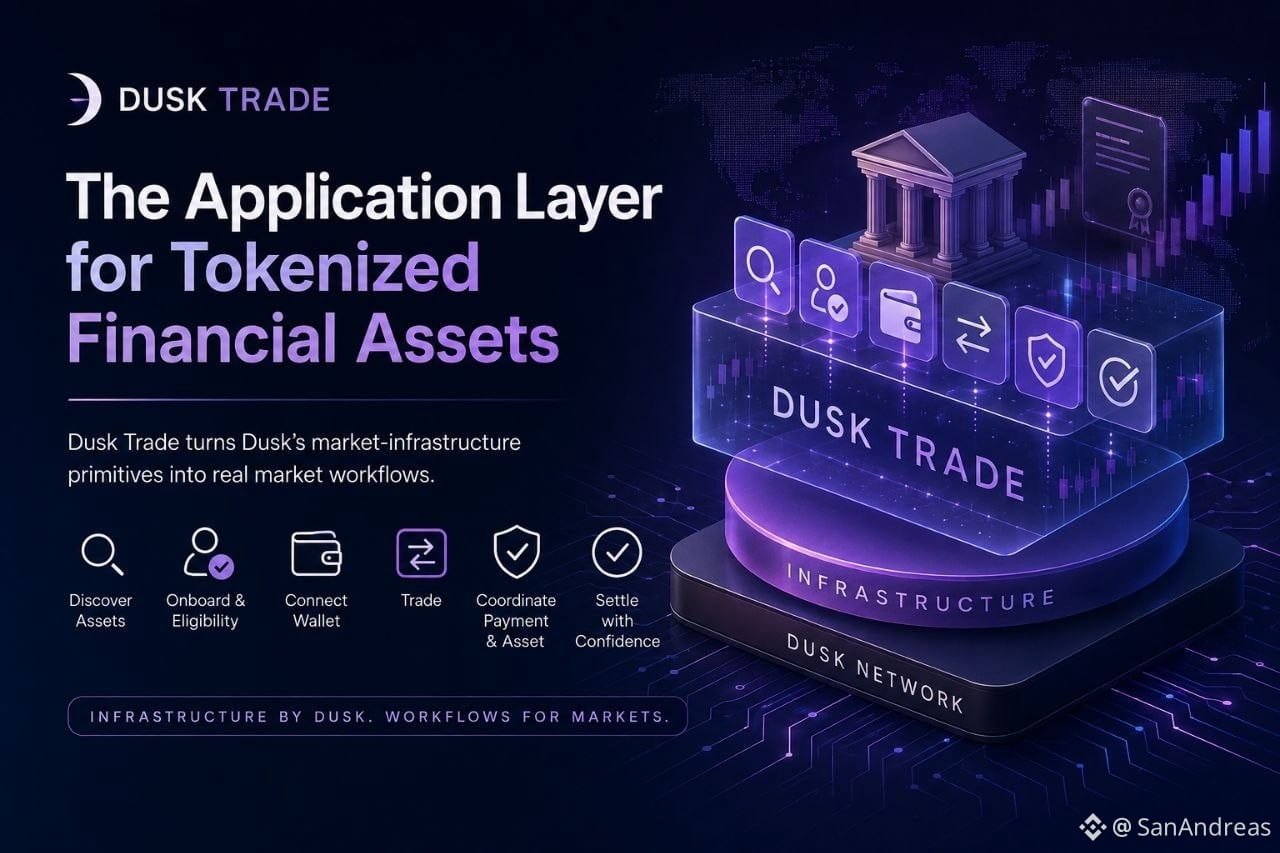
2
1
81
·
--
@Dusk_Foundation #dusk $DUSK
Dusk Trade: Transformando ativos financeiros tokenizados em fluxos de trabalho reais de mercado
A tokenização está mudando a forma como os ativos financeiros podem ser representados, transferidos e liquidados em redes blockchain.
Mas colocar um ativo na cadeia é apenas uma parte da equação.
Para mercados financeiros regulamentados, os investidores precisam descobrir ativos, concluir o onboarding e os requisitos de elegibilidade, conectar suas carteiras, executar transações, coordenar pagamentos e, por fim, liquidar a transação de acordo com as regras do mercado.
É aqui que entra a Dusk Trade.
O que é Dusk Trade?
Dusk Trade é a camada de aplicação para ativos financeiros tokenizados na Dusk.
Ela fica acima do protocolo base da Dusk e transforma os primitivos de infraestrutura de mercado da rede em fluxos de trabalho voltados ao usuário.
Em vez de exigir que os usuários interajam diretamente com uma infraestrutura blockchain complexa, a Dusk Trade foi projetada para fornecer os fluxos de trabalho práticos necessários para participar de mercados tokenizados regulamentados.
Esses fluxos de trabalho podem incluir:
Descobrir ativos financeiros tokenizados
Conectar uma carteira
Concluir o onboarding de investidores
Realizar verificações de elegibilidade ou conformidade
Comprar ou vender ativos
Coordenar as partes de ativo e pagamento de uma transação
Apoiar a liquidação
Fornecer às partes autorizadas as informações necessárias para uma transação
A ideia-chave é simples:
A Dusk fornece a infraestrutura. A Dusk Trade transforma essa infraestrutura em fluxos de trabalho de mercado.
Por que ativos tokenizados precisam de mais do que uma blockchain
Um ativo financeiro tradicional raramente é tão simples quanto "comprar, transferir e vender."
@Dusk #dusk $DUSK
Dusk Trade: Transformando ativos financeiros tokenizados em fluxos de trabalho reais de mercado
A tokenização está mudando a forma como os ativos financeiros podem ser representados, transferidos e liquidados em redes blockchain.
Mas colocar um ativo na cadeia é apenas uma parte da equação.
Para mercados financeiros regulamentados, os investidores precisam descobrir ativos, concluir o onboarding e os requisitos de elegibilidade, conectar suas carteiras, executar transações, coordenar pagamentos e, por fim, liquidar a transação de acordo com as regras do mercado.
É aqui que entra a Dusk Trade.
O que é Dusk Trade?
Dusk Trade é a camada de aplicação para ativos financeiros tokenizados na Dusk.
Ela fica acima do protocolo base da Dusk e transforma os primitivos de infraestrutura de mercado da rede em fluxos de trabalho voltados ao usuário.
Em vez de exigir que os usuários interajam diretamente com uma infraestrutura blockchain complexa, a Dusk Trade foi projetada para fornecer os fluxos de trabalho práticos necessários para participar de mercados tokenizados regulamentados.
Esses fluxos de trabalho podem incluir:
Descobrir ativos financeiros tokenizados
Conectar uma carteira
Concluir o onboarding de investidores
Realizar verificações de elegibilidade ou conformidade
Comprar ou vender ativos
Coordenar as partes de ativo e pagamento de uma transação
Apoiar a liquidação
Fornecer às partes autorizadas as informações necessárias para uma transação
A ideia-chave é simples:
A Dusk fornece a infraestrutura. A Dusk Trade transforma essa infraestrutura em fluxos de trabalho de mercado.
Por que ativos tokenizados precisam de mais do que uma blockchain
Um ativo financeiro tradicional raramente é tão simples quanto "comprar, transferir e vender."
Dusk Trade: Transformando ativos financeiros tokenizados em fluxos de trabalho reais de mercado
A tokenização está mudando a forma como os ativos financeiros podem ser representados, transferidos e liquidados em redes blockchain.
Mas colocar um ativo na cadeia é apenas uma parte da equação.
Para mercados financeiros regulamentados, os investidores precisam descobrir ativos, concluir o onboarding e os requisitos de elegibilidade, conectar suas carteiras, executar transações, coordenar pagamentos e, por fim, liquidar a transação de acordo com as regras do mercado.
É aqui que entra a Dusk Trade.
O que é Dusk Trade?
Dusk Trade é a camada de aplicação para ativos financeiros tokenizados na Dusk.
Ela fica acima do protocolo base da Dusk e transforma os primitivos de infraestrutura de mercado da rede em fluxos de trabalho voltados ao usuário.
Em vez de exigir que os usuários interajam diretamente com uma infraestrutura blockchain complexa, a Dusk Trade foi projetada para fornecer os fluxos de trabalho práticos necessários para participar de mercados tokenizados regulamentados.
Esses fluxos de trabalho podem incluir:
Descobrir ativos financeiros tokenizados
Conectar uma carteira
Concluir o onboarding de investidores
Realizar verificações de elegibilidade ou conformidade
Comprar ou vender ativos
Coordenar as partes de ativo e pagamento de uma transação
Apoiar a liquidação
Fornecer às partes autorizadas as informações necessárias para uma transação
A ideia-chave é simples:
A Dusk fornece a infraestrutura. A Dusk Trade transforma essa infraestrutura em fluxos de trabalho de mercado.
Por que ativos tokenizados precisam de mais do que uma blockchain
Um ativo financeiro tradicional raramente é tão simples quanto "comprar, transferir e vender."
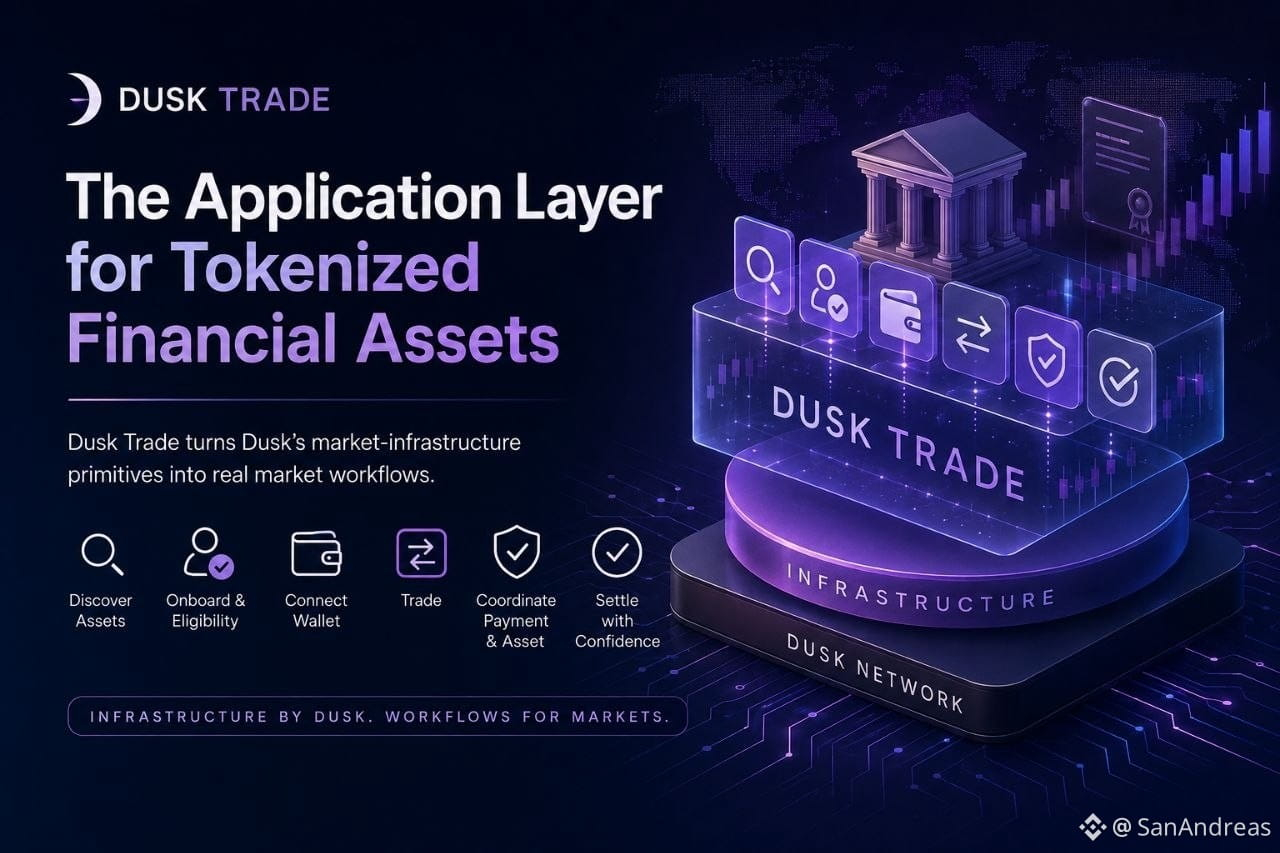
70
Faça login para explorar mais conteúdos
Junte-se a usuários de criptomoedas de todo o mundo no Binance Square.
⚡️ Obter informações mais recentes e úteis sobre criptomoeda.
💬 Com a confiança da maior corretora de criptomoedas do mundo.
👍 Descubra insights reais de criadores verificados.
E-mail / número de telefone
Tópicos em Alta
EtherGains70.9%InQ3
87,973 visualizações
871 discutindo
🧭🧭🧭 Análise 🧭🧭🧭
💡 Indicador de temporada de moedas alternativas 💡
🚨🚨🚨 O terceiro trimestre (T3) terminou. O preço do ETH subiu 71% e o BTC subiu 43%. 🚨🚨🚨
Foi o começo da temporada de moedas alternativas?
Entre as melhores 100:
🌐🌐🌐 57 superaram o BTC em 90 dias
A temporada de moedas alternativas começa em 75, então ainda
E também avança apenas 10 pontos em relação ao seu topo anual em 67 🌐🌐
💥💥💥 Mas, espere— antes, o indicador estava em apenas 23!
Outubro pode levá-lo a 75? 👀💥💥💥
Por favor, acompanhem
#EtherGains70.9%InQ3
$GRAM
Shamika Metting
·2 curtidas
·805 visualizações
TreasuryLetsStatesFileStablecoinCertificationsEarly
4,510 visualizações
51 discutindo
US10YearYieldNears5.3%
115,008 visualizações
957 discutindo