
iPreMyZX
2.3k Publicações

iPreMyZX
Denunciar
Bloquear usuário
Trade aberto
Trader frequente
2.5 anos
40 Seguindo
10.5K+ Seguidores
7.0K+ Curtiu
Publicações
Portfólio
Todas
Citações
·
--
Eu inicialmente olhei para $DUSK como eu olharia para a maioria dos tokens L1: oferta, liquidez, rendimento de staking e demanda de mercado.
Mas quanto mais eu estudei o Dusk, mais percebi que o token tem um papel muito mais prático dentro da rede.
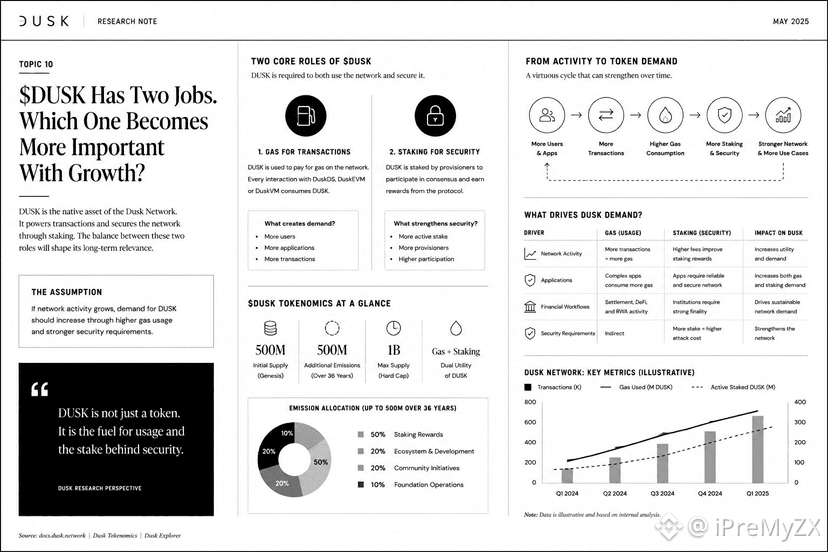
O DUSK é usado para taxas de transação e para staking. Cada transação consome gas, enquanto fazer staking de DUSK permite que os provedores participem do consenso e ganhem recompensas do protocolo.
Isso cria uma suposição com a qual eu não estou totalmente confortável:
Se o Dusk crescer, a demanda por token cresce de fato junto com ele?
Depende do tipo de atividade que cresce.
Mais aplicações podem significar mais transações e, portanto, mais uso de gas. Mais atividade financeira também pode aumentar a importância de validadores confiáveis garantindo a rede.
Mas há outro lado.
Atualmente, o Dusk tem uma oferta inicial de 500 milhões de DUSK, com mais 500 milhões programados para serem emitidos ao longo de 36 anos para incentivos de staking.
Então eu não acho que faça sentido analisar a economia do DUSK apenas pela oferta.
Estou mais interessado na relação entre atividade na rede → consumo de gas → staking → segurança → demanda por token.
Se o Dusk se tornar infraestrutura para ativos regulados, transações privadas e aplicações financeiras, então o DUSK poderia gradualmente deixar de ser apenas sobre manter um token de blockchain e passar a ser sobre acessar e proteger uma rede financeira real.
Mas isso ainda é uma suposição.
O teste real é se um uso relevante eventualmente cria atividade on-chain suficiente para a utilidade do DUSK passar a importar economicamente.
É essa a parte que eu estou observando.
Não apenas o que $DUSK vale hoje, mas o quão necessário ele se torna se o Dusk de fato for usado.
@Dusk_Foundation #dusk
Eu inicialmente olhei para $DUSK como eu olharia para a maioria dos tokens L1: oferta, liquidez, rendimento de staking e demanda de mercado.
Mas quanto mais eu estudei o Dusk, mais percebi que o token tem um papel muito mais prático dentro da rede.
O DUSK é usado para taxas de transação e para staking. Cada transação consome gas, enquanto fazer staking de DUSK permite que os provedores participem do consenso e ganhem recompensas do protocolo.
Isso cria uma suposição com a qual eu não estou totalmente confortável:
Se o Dusk crescer, a demanda por token cresce de fato junto com ele?
Depende do tipo de atividade que cresce.
Mais aplicações podem significar mais transações e, portanto, mais uso de gas. Mais atividade financeira também pode aumentar a importância de validadores confiáveis garantindo a rede.
Mas há outro lado.
Atualmente, o Dusk tem uma oferta inicial de 500 milhões de DUSK, com mais 500 milhões programados para serem emitidos ao longo de 36 anos para incentivos de staking.
Então eu não acho que faça sentido analisar a economia do DUSK apenas pela oferta.
Estou mais interessado na relação entre atividade na rede → consumo de gas → staking → segurança → demanda por token.
Se o Dusk se tornar infraestrutura para ativos regulados, transações privadas e aplicações financeiras, então o DUSK poderia gradualmente deixar de ser apenas sobre manter um token de blockchain e passar a ser sobre acessar e proteger uma rede financeira real.
Mas isso ainda é uma suposição.
O teste real é se um uso relevante eventualmente cria atividade on-chain suficiente para a utilidade do DUSK passar a importar economicamente.
É essa a parte que eu estou observando.
Não apenas o que $DUSK vale hoje, mas o quão necessário ele se torna se o Dusk de fato for usado.
@Dusk #dusk
Mas quanto mais eu estudei o Dusk, mais percebi que o token tem um papel muito mais prático dentro da rede.
O DUSK é usado para taxas de transação e para staking. Cada transação consome gas, enquanto fazer staking de DUSK permite que os provedores participem do consenso e ganhem recompensas do protocolo.
Isso cria uma suposição com a qual eu não estou totalmente confortável:
Se o Dusk crescer, a demanda por token cresce de fato junto com ele?
Depende do tipo de atividade que cresce.
Mais aplicações podem significar mais transações e, portanto, mais uso de gas. Mais atividade financeira também pode aumentar a importância de validadores confiáveis garantindo a rede.
Mas há outro lado.
Atualmente, o Dusk tem uma oferta inicial de 500 milhões de DUSK, com mais 500 milhões programados para serem emitidos ao longo de 36 anos para incentivos de staking.
Então eu não acho que faça sentido analisar a economia do DUSK apenas pela oferta.
Estou mais interessado na relação entre atividade na rede → consumo de gas → staking → segurança → demanda por token.
Se o Dusk se tornar infraestrutura para ativos regulados, transações privadas e aplicações financeiras, então o DUSK poderia gradualmente deixar de ser apenas sobre manter um token de blockchain e passar a ser sobre acessar e proteger uma rede financeira real.
Mas isso ainda é uma suposição.
O teste real é se um uso relevante eventualmente cria atividade on-chain suficiente para a utilidade do DUSK passar a importar economicamente.
É essa a parte que eu estou observando.
Não apenas o que $DUSK vale hoje, mas o quão necessário ele se torna se o Dusk de fato for usado.
@Dusk #dusk
1
1
101
·
--
Eu costumava assumir que, quando uma blockchain fala em finalidade rápida (fast finality), o principal benefício é algo simples: as transações parecem mais rápidas.
Quanto mais eu olho para a Dusk, mais acho que isso ignora o ponto maior.
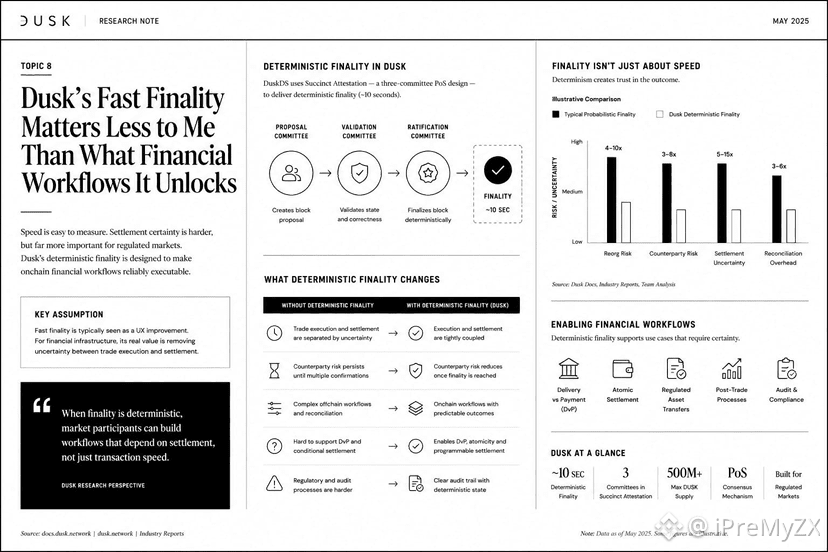
A arquitetura da Dusk foi construída em torno de um settlement determinístico por meio do DuskDS e do seu mecanismo de consenso de Succinct Attestation. Uma vez que um bloco é finalizado, a rede trata aquele estado como definitivo — em vez de deixar os usuários lidarem com a incerteza comum em torno de reorganizações.
Então eu comecei a fazer uma pergunta diferente:
O que a finalidade determinística realmente muda nos fluxos financeiros?
Minha suposição era que isso melhoraria principalmente a experiência do usuário.
Mas, se eu estiver olhando para ativos tokenizados, as consequências parecem ainda mais interessantes.
Uma transação regulamentada não é apenas “enviar o token A da carteira X para a carteira Y”. Pode haver uma perna de ativo, uma perna de pagamento, requisitos de elegibilidade, restrições de transferência e condições de liquidação. O design da infraestrutura de mercado da Dusk conecta especificamente a finalidade determinística a esses fluxos, incluindo delivery-versus-payment.
Isso muda como eu interpreto a velocidade.
O valor talvez não seja economizar alguns segundos ao transferir um ativo.
O valor pode estar em reduzir a incerteza entre a execução da negociação e a liquidação efetiva.
E isso importa ainda mais quando o ativo transferido representa algo como um título regulamentado, um fundo ou outro instrumento financeiro.
Ainda tenho cautela ao assumir que uma liquidação melhor automaticamente gera adoção. Uma infraestrutura pode ser tecnicamente elegante sem se tornar comercialmente importante.
Mas minha suposição de trabalho mudou:
A finalidade da Dusk não é interessante porque é rápida. Ela é interessante se essa finalidade tornar os fluxos financeiros mais fáceis de coordenar on-chain.
Essa é a parte que eu quero observar.
@Dusk_Foundation #dusk $DUSK
Eu costumava assumir que, quando uma blockchain fala em finalidade rápida (fast finality), o principal benefício é algo simples: as transações parecem mais rápidas.
Quanto mais eu olho para a Dusk, mais acho que isso ignora o ponto maior.
A arquitetura da Dusk foi construída em torno de um settlement determinístico por meio do DuskDS e do seu mecanismo de consenso de Succinct Attestation. Uma vez que um bloco é finalizado, a rede trata aquele estado como definitivo — em vez de deixar os usuários lidarem com a incerteza comum em torno de reorganizações.
Então eu comecei a fazer uma pergunta diferente:
O que a finalidade determinística realmente muda nos fluxos financeiros?
Minha suposição era que isso melhoraria principalmente a experiência do usuário.
Mas, se eu estiver olhando para ativos tokenizados, as consequências parecem ainda mais interessantes.
Uma transação regulamentada não é apenas “enviar o token A da carteira X para a carteira Y”. Pode haver uma perna de ativo, uma perna de pagamento, requisitos de elegibilidade, restrições de transferência e condições de liquidação. O design da infraestrutura de mercado da Dusk conecta especificamente a finalidade determinística a esses fluxos, incluindo delivery-versus-payment.
Isso muda como eu interpreto a velocidade.
O valor talvez não seja economizar alguns segundos ao transferir um ativo.
O valor pode estar em reduzir a incerteza entre a execução da negociação e a liquidação efetiva.
E isso importa ainda mais quando o ativo transferido representa algo como um título regulamentado, um fundo ou outro instrumento financeiro.
Ainda tenho cautela ao assumir que uma liquidação melhor automaticamente gera adoção. Uma infraestrutura pode ser tecnicamente elegante sem se tornar comercialmente importante.
Mas minha suposição de trabalho mudou:
A finalidade da Dusk não é interessante porque é rápida. Ela é interessante se essa finalidade tornar os fluxos financeiros mais fáceis de coordenar on-chain.
Essa é a parte que eu quero observar.
@Dusk #dusk $DUSK
Quanto mais eu olho para a Dusk, mais acho que isso ignora o ponto maior.
A arquitetura da Dusk foi construída em torno de um settlement determinístico por meio do DuskDS e do seu mecanismo de consenso de Succinct Attestation. Uma vez que um bloco é finalizado, a rede trata aquele estado como definitivo — em vez de deixar os usuários lidarem com a incerteza comum em torno de reorganizações.
Então eu comecei a fazer uma pergunta diferente:
O que a finalidade determinística realmente muda nos fluxos financeiros?
Minha suposição era que isso melhoraria principalmente a experiência do usuário.
Mas, se eu estiver olhando para ativos tokenizados, as consequências parecem ainda mais interessantes.
Uma transação regulamentada não é apenas “enviar o token A da carteira X para a carteira Y”. Pode haver uma perna de ativo, uma perna de pagamento, requisitos de elegibilidade, restrições de transferência e condições de liquidação. O design da infraestrutura de mercado da Dusk conecta especificamente a finalidade determinística a esses fluxos, incluindo delivery-versus-payment.
Isso muda como eu interpreto a velocidade.
O valor talvez não seja economizar alguns segundos ao transferir um ativo.
O valor pode estar em reduzir a incerteza entre a execução da negociação e a liquidação efetiva.
E isso importa ainda mais quando o ativo transferido representa algo como um título regulamentado, um fundo ou outro instrumento financeiro.
Ainda tenho cautela ao assumir que uma liquidação melhor automaticamente gera adoção. Uma infraestrutura pode ser tecnicamente elegante sem se tornar comercialmente importante.
Mas minha suposição de trabalho mudou:
A finalidade da Dusk não é interessante porque é rápida. Ela é interessante se essa finalidade tornar os fluxos financeiros mais fáceis de coordenar on-chain.
Essa é a parte que eu quero observar.
@Dusk #dusk $DUSK
1
113
·
--
No início, isso me pareceu uma complicação desnecessária.
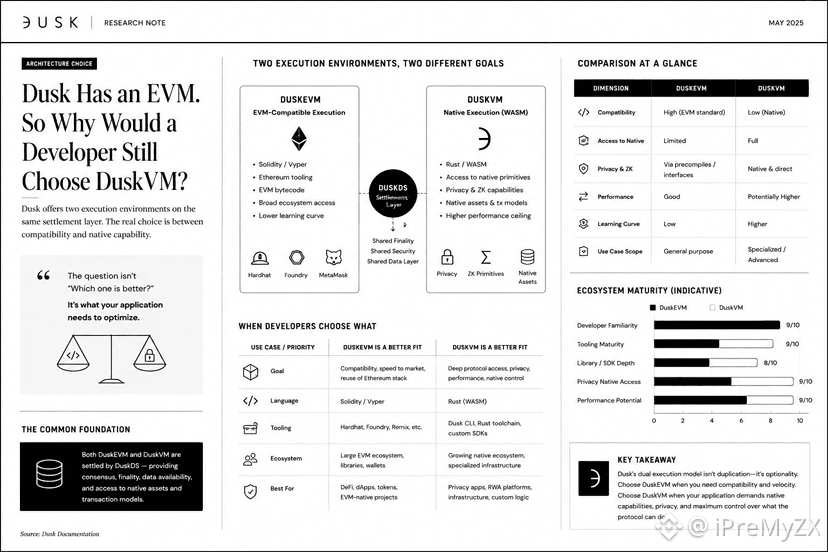
Se o Dusk já oferece um ambiente EVM com Solidity, carteiras e ferramentas conhecidas como Hardhat e Foundry, por que alguém escolheria um ambiente de execução nativo separado?
A resposta fica mais clara quando você olha para o que os dois caminhos foram realmente projetados para fazer.
O DuskEVM foi construído para compatibilidade. Ele oferece aos desenvolvedores um ambiente familiar no estilo Ethereum, usando o DuskDS por baixo para liquidação e disponibilidade de dados. Faz sentido para DeFi, aplicações com ativos tokenizados e projetos que querem a infraestrutura EVM existente.
O DuskVM está resolvendo um problema diferente.
Ele executa contratos Rust/WASM diretamente na Dusk L1 e é voltado para aplicações que precisam de acesso mais profundo a ativos nativos, aos modelos de transação da Dusk, recursos de privacidade ou capacidades de zero conhecimento.
Isso cria uma troca interessante.
O DuskEVM reduz a barreira de entrada.
O DuskVM amplia o acesso ao protocolo subjacente.
Então eu não acho que a pergunta seja realmente “Qual é melhor?”
É mais sobre o que a aplicação está tentando otimizar.
Se a prioridade é compatibilidade, EVM faz sentido de forma óbvia. Mas se a aplicação precisa de funcionalidades que ficam próximas da privacidade e dos primitivas da L1 da Dusk, adicionar outra camada de abstração pode não ser desejável.
É isso que acho interessante na arquitetura da Dusk.
Ela não está forçando todo desenvolvedor a usar um único modelo de execução. Ela separa compatibilidade de capacidade nativa, mantendo ambos conectados à mesma base de liquidação.
O verdadeiro teste agora é se os desenvolvedores realmente acham essa escolha valiosa o suficiente para utilizá-la.
Porque a arquitetura só se torna uma vantagem quando os construtores conseguem sentir a diferença.
@Dusk_Foundation #dusk $DUSK
No início, isso me pareceu uma complicação desnecessária.
Se o Dusk já oferece um ambiente EVM com Solidity, carteiras e ferramentas conhecidas como Hardhat e Foundry, por que alguém escolheria um ambiente de execução nativo separado?
A resposta fica mais clara quando você olha para o que os dois caminhos foram realmente projetados para fazer.
O DuskEVM foi construído para compatibilidade. Ele oferece aos desenvolvedores um ambiente familiar no estilo Ethereum, usando o DuskDS por baixo para liquidação e disponibilidade de dados. Faz sentido para DeFi, aplicações com ativos tokenizados e projetos que querem a infraestrutura EVM existente.
O DuskVM está resolvendo um problema diferente.
Ele executa contratos Rust/WASM diretamente na Dusk L1 e é voltado para aplicações que precisam de acesso mais profundo a ativos nativos, aos modelos de transação da Dusk, recursos de privacidade ou capacidades de zero conhecimento.
Isso cria uma troca interessante.
O DuskEVM reduz a barreira de entrada.
O DuskVM amplia o acesso ao protocolo subjacente.
Então eu não acho que a pergunta seja realmente “Qual é melhor?”
É mais sobre o que a aplicação está tentando otimizar.
Se a prioridade é compatibilidade, EVM faz sentido de forma óbvia. Mas se a aplicação precisa de funcionalidades que ficam próximas da privacidade e dos primitivas da L1 da Dusk, adicionar outra camada de abstração pode não ser desejável.
É isso que acho interessante na arquitetura da Dusk.
Ela não está forçando todo desenvolvedor a usar um único modelo de execução. Ela separa compatibilidade de capacidade nativa, mantendo ambos conectados à mesma base de liquidação.
O verdadeiro teste agora é se os desenvolvedores realmente acham essa escolha valiosa o suficiente para utilizá-la.
Porque a arquitetura só se torna uma vantagem quando os construtores conseguem sentir a diferença.
@Dusk #dusk $DUSK
Se o Dusk já oferece um ambiente EVM com Solidity, carteiras e ferramentas conhecidas como Hardhat e Foundry, por que alguém escolheria um ambiente de execução nativo separado?
A resposta fica mais clara quando você olha para o que os dois caminhos foram realmente projetados para fazer.
O DuskEVM foi construído para compatibilidade. Ele oferece aos desenvolvedores um ambiente familiar no estilo Ethereum, usando o DuskDS por baixo para liquidação e disponibilidade de dados. Faz sentido para DeFi, aplicações com ativos tokenizados e projetos que querem a infraestrutura EVM existente.
O DuskVM está resolvendo um problema diferente.
Ele executa contratos Rust/WASM diretamente na Dusk L1 e é voltado para aplicações que precisam de acesso mais profundo a ativos nativos, aos modelos de transação da Dusk, recursos de privacidade ou capacidades de zero conhecimento.
Isso cria uma troca interessante.
O DuskEVM reduz a barreira de entrada.
O DuskVM amplia o acesso ao protocolo subjacente.
Então eu não acho que a pergunta seja realmente “Qual é melhor?”
É mais sobre o que a aplicação está tentando otimizar.
Se a prioridade é compatibilidade, EVM faz sentido de forma óbvia. Mas se a aplicação precisa de funcionalidades que ficam próximas da privacidade e dos primitivas da L1 da Dusk, adicionar outra camada de abstração pode não ser desejável.
É isso que acho interessante na arquitetura da Dusk.
Ela não está forçando todo desenvolvedor a usar um único modelo de execução. Ela separa compatibilidade de capacidade nativa, mantendo ambos conectados à mesma base de liquidação.
O verdadeiro teste agora é se os desenvolvedores realmente acham essa escolha valiosa o suficiente para utilizá-la.
Porque a arquitetura só se torna uma vantagem quando os construtores conseguem sentir a diferença.
@Dusk #dusk $DUSK
1
88
·
--
No começo, isso pareceu para mim uma complicação desnecessária.
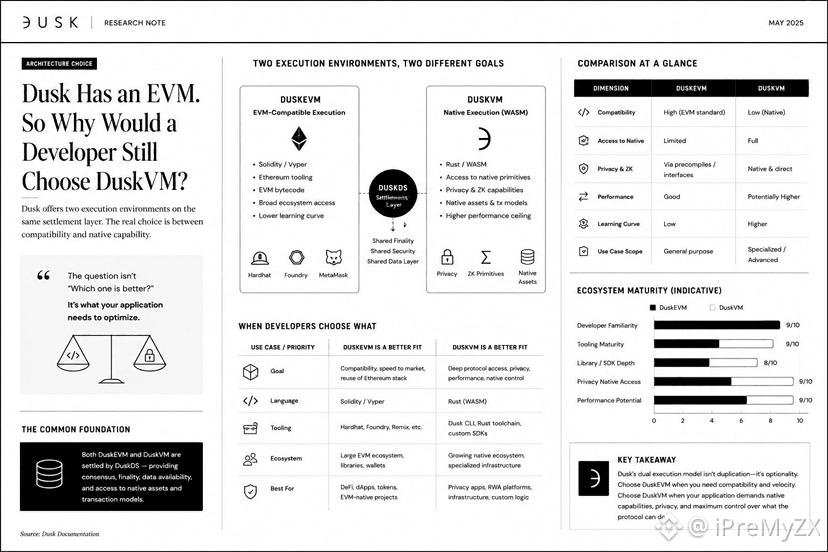
Se a Dusk já oferece um ambiente EVM com Solidity, carteiras familiares e ferramentas como Hardhat e Foundry, por que alguém escolheria um ambiente nativo de execução separado?
A resposta fica mais clara quando você observa o que cada um dos dois caminhos foi realmente projetado para fazer.
A DuskEVM foi construída para compatibilidade. Ela oferece aos desenvolvedores um ambiente familiar no estilo Ethereum, usando o que está por baixo na DuskDS para liquidação e disponibilidade de dados. Isso faz sentido para DeFi, aplicações com ativos tokenizados e projetos que querem a infraestrutura EVM existente.
A DuskVM está resolvendo um problema diferente.
Ela executa contratos Rust/WASM diretamente na Dusk L1 e é destinada a aplicações que precisam de acesso mais profundo a ativos nativos, aos modelos de transação da Dusk, recursos de privacidade ou capacidades de zero-knowledge.
Isso cria uma troca interessante.
A DuskEVM reduz a barreira de entrada.
A DuskVM aumenta o acesso ao protocolo subjacente.
Então eu não acho que a pergunta seja realmente “Qual é o melhor?”.
É mais sobre o que a aplicação está tentando otimizar.
Se a prioridade é compatibilidade, EVM faz sentido de forma óbvia. Mas se a aplicação precisa de funcionalidades que ficam próximas à privacidade da Dusk e aos seus primitivos da L1, adicionar mais uma camada de abstração pode não ser desejável.
É isso que eu acho interessante na arquitetura da Dusk.
Ela não obriga todos os desenvolvedores a seguirem um único modelo de execução. Ela separa compatibilidade de capacidade nativa, mantendo os dois conectados à mesma base de liquidação.
O teste real agora é saber se os desenvolvedores realmente consideram essa escolha valiosa o suficiente para usar.
Porque arquitetura só se torna uma vantagem quando quem constrói consegue sentir a diferença.
@Dusk_Foundation #dusk $DUSK
No começo, isso pareceu para mim uma complicação desnecessária.
Se a Dusk já oferece um ambiente EVM com Solidity, carteiras familiares e ferramentas como Hardhat e Foundry, por que alguém escolheria um ambiente nativo de execução separado?
A resposta fica mais clara quando você observa o que cada um dos dois caminhos foi realmente projetado para fazer.
A DuskEVM foi construída para compatibilidade. Ela oferece aos desenvolvedores um ambiente familiar no estilo Ethereum, usando o que está por baixo na DuskDS para liquidação e disponibilidade de dados. Isso faz sentido para DeFi, aplicações com ativos tokenizados e projetos que querem a infraestrutura EVM existente.
A DuskVM está resolvendo um problema diferente.
Ela executa contratos Rust/WASM diretamente na Dusk L1 e é destinada a aplicações que precisam de acesso mais profundo a ativos nativos, aos modelos de transação da Dusk, recursos de privacidade ou capacidades de zero-knowledge.
Isso cria uma troca interessante.
A DuskEVM reduz a barreira de entrada.
A DuskVM aumenta o acesso ao protocolo subjacente.
Então eu não acho que a pergunta seja realmente “Qual é o melhor?”.
É mais sobre o que a aplicação está tentando otimizar.
Se a prioridade é compatibilidade, EVM faz sentido de forma óbvia. Mas se a aplicação precisa de funcionalidades que ficam próximas à privacidade da Dusk e aos seus primitivos da L1, adicionar mais uma camada de abstração pode não ser desejável.
É isso que eu acho interessante na arquitetura da Dusk.
Ela não obriga todos os desenvolvedores a seguirem um único modelo de execução. Ela separa compatibilidade de capacidade nativa, mantendo os dois conectados à mesma base de liquidação.
O teste real agora é saber se os desenvolvedores realmente consideram essa escolha valiosa o suficiente para usar.
Porque arquitetura só se torna uma vantagem quando quem constrói consegue sentir a diferença.
@Dusk #dusk $DUSK
Se a Dusk já oferece um ambiente EVM com Solidity, carteiras familiares e ferramentas como Hardhat e Foundry, por que alguém escolheria um ambiente nativo de execução separado?
A resposta fica mais clara quando você observa o que cada um dos dois caminhos foi realmente projetado para fazer.
A DuskEVM foi construída para compatibilidade. Ela oferece aos desenvolvedores um ambiente familiar no estilo Ethereum, usando o que está por baixo na DuskDS para liquidação e disponibilidade de dados. Isso faz sentido para DeFi, aplicações com ativos tokenizados e projetos que querem a infraestrutura EVM existente.
A DuskVM está resolvendo um problema diferente.
Ela executa contratos Rust/WASM diretamente na Dusk L1 e é destinada a aplicações que precisam de acesso mais profundo a ativos nativos, aos modelos de transação da Dusk, recursos de privacidade ou capacidades de zero-knowledge.
Isso cria uma troca interessante.
A DuskEVM reduz a barreira de entrada.
A DuskVM aumenta o acesso ao protocolo subjacente.
Então eu não acho que a pergunta seja realmente “Qual é o melhor?”.
É mais sobre o que a aplicação está tentando otimizar.
Se a prioridade é compatibilidade, EVM faz sentido de forma óbvia. Mas se a aplicação precisa de funcionalidades que ficam próximas à privacidade da Dusk e aos seus primitivos da L1, adicionar mais uma camada de abstração pode não ser desejável.
É isso que eu acho interessante na arquitetura da Dusk.
Ela não obriga todos os desenvolvedores a seguirem um único modelo de execução. Ela separa compatibilidade de capacidade nativa, mantendo os dois conectados à mesma base de liquidação.
O teste real agora é saber se os desenvolvedores realmente consideram essa escolha valiosa o suficiente para usar.
Porque arquitetura só se torna uma vantagem quando quem constrói consegue sentir a diferença.
@Dusk #dusk $DUSK
91
·
--
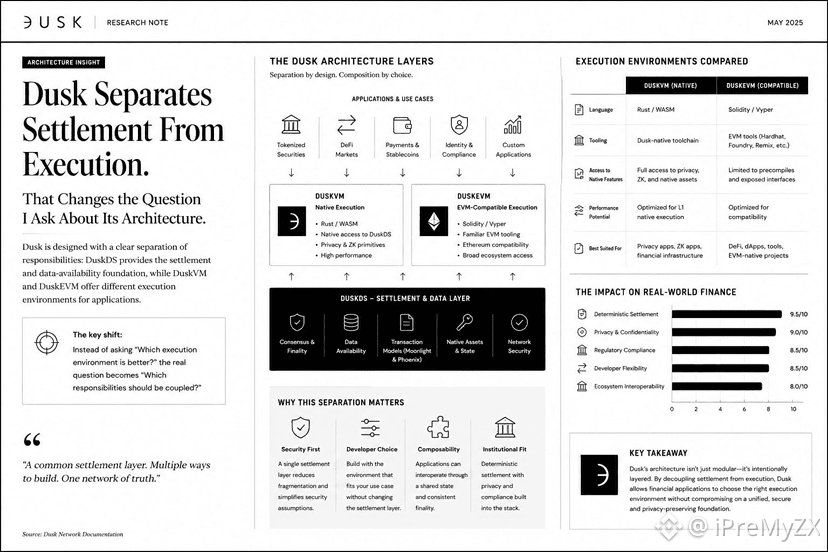
Inicialmente, olhei para a arquitetura do Dusk pelo lado da execução.
Isso pareceu natural. Contratos inteligentes são onde as aplicações vivem, então presumi que essa seria a história principal.
Depois, analisei com mais atenção o DuskDS.
O Dusk separa sua base de liquidação e de disponibilidade de dados dos seus ambientes de execução. O DuskDS lida com consenso, finalização, disponibilidade de dados e com os modelos de transação da rede, enquanto o DuskVM e o DuskEVM oferecem maneiras diferentes para as aplicações executarem a lógica.
Essa separação muda a forma como penso sobre o design.
Em vez de perguntar: “Qual ambiente de execução é melhor?”, acho que a questão mais útil é: quais responsabilidades devem, de fato, ser acopladas?
O DuskEVM dá aos desenvolvedores Solidity, ferramentas EVM familiares e infraestrutura compatível com Ethereum. O DuskVM segue um caminho diferente: permite que contratos Rust/WASM executem diretamente na camada L1 do Dusk quando as aplicações precisam de acesso mais profundo a ativos nativos, privacidade ou recursos de zero-knowledge.
Enquanto isso, o DuskDS permanece por baixo deles como a camada de liquidação.
Para aplicações financeiras reguladas, essa distinção pode importar mais do que inicialmente parece.
Um ativo tokenizado pode precisar de um ambiente para a lógica da aplicação, outro conjunto de primitivas para privacidade e uma liquidação determinística por baixo de tudo. O Dusk, essencialmente, tenta separar essas tarefas em vez de forçar cada aplicação a caber em um único modelo de execução.
A parte interessante não é apenas que o Dusk é modular.
É se essa modularidade permite que aplicações financeiras escolham o ambiente de execução de que realmente precisam sem abrir mão de uma base comum de liquidação.
Esse é o trade-off arquitetural que agora observo com mais cuidado.
@Dusk_Foundation #dusk $DUSK
Inicialmente, olhei para a arquitetura do Dusk pelo lado da execução.
Isso pareceu natural. Contratos inteligentes são onde as aplicações vivem, então presumi que essa seria a história principal.
Depois, analisei com mais atenção o DuskDS.
O Dusk separa sua base de liquidação e de disponibilidade de dados dos seus ambientes de execução. O DuskDS lida com consenso, finalização, disponibilidade de dados e com os modelos de transação da rede, enquanto o DuskVM e o DuskEVM oferecem maneiras diferentes para as aplicações executarem a lógica.
Essa separação muda a forma como penso sobre o design.
Em vez de perguntar: “Qual ambiente de execução é melhor?”, acho que a questão mais útil é: quais responsabilidades devem, de fato, ser acopladas?
O DuskEVM dá aos desenvolvedores Solidity, ferramentas EVM familiares e infraestrutura compatível com Ethereum. O DuskVM segue um caminho diferente: permite que contratos Rust/WASM executem diretamente na camada L1 do Dusk quando as aplicações precisam de acesso mais profundo a ativos nativos, privacidade ou recursos de zero-knowledge.
Enquanto isso, o DuskDS permanece por baixo deles como a camada de liquidação.
Para aplicações financeiras reguladas, essa distinção pode importar mais do que inicialmente parece.
Um ativo tokenizado pode precisar de um ambiente para a lógica da aplicação, outro conjunto de primitivas para privacidade e uma liquidação determinística por baixo de tudo. O Dusk, essencialmente, tenta separar essas tarefas em vez de forçar cada aplicação a caber em um único modelo de execução.
A parte interessante não é apenas que o Dusk é modular.
É se essa modularidade permite que aplicações financeiras escolham o ambiente de execução de que realmente precisam sem abrir mão de uma base comum de liquidação.
Esse é o trade-off arquitetural que agora observo com mais cuidado.
@Dusk #dusk $DUSK
Isso pareceu natural. Contratos inteligentes são onde as aplicações vivem, então presumi que essa seria a história principal.
Depois, analisei com mais atenção o DuskDS.
O Dusk separa sua base de liquidação e de disponibilidade de dados dos seus ambientes de execução. O DuskDS lida com consenso, finalização, disponibilidade de dados e com os modelos de transação da rede, enquanto o DuskVM e o DuskEVM oferecem maneiras diferentes para as aplicações executarem a lógica.
Essa separação muda a forma como penso sobre o design.
Em vez de perguntar: “Qual ambiente de execução é melhor?”, acho que a questão mais útil é: quais responsabilidades devem, de fato, ser acopladas?
O DuskEVM dá aos desenvolvedores Solidity, ferramentas EVM familiares e infraestrutura compatível com Ethereum. O DuskVM segue um caminho diferente: permite que contratos Rust/WASM executem diretamente na camada L1 do Dusk quando as aplicações precisam de acesso mais profundo a ativos nativos, privacidade ou recursos de zero-knowledge.
Enquanto isso, o DuskDS permanece por baixo deles como a camada de liquidação.
Para aplicações financeiras reguladas, essa distinção pode importar mais do que inicialmente parece.
Um ativo tokenizado pode precisar de um ambiente para a lógica da aplicação, outro conjunto de primitivas para privacidade e uma liquidação determinística por baixo de tudo. O Dusk, essencialmente, tenta separar essas tarefas em vez de forçar cada aplicação a caber em um único modelo de execução.
A parte interessante não é apenas que o Dusk é modular.
É se essa modularidade permite que aplicações financeiras escolham o ambiente de execução de que realmente precisam sem abrir mão de uma base comum de liquidação.
Esse é o trade-off arquitetural que agora observo com mais cuidado.
@Dusk #dusk $DUSK
3
2
150
·
--
Eu costumava achar que tokenização era, em grande parte, pegar um ativo financeiro existente e colocar um token ao redor dele.
Quanto mais eu olhei para o Dusk Trade, menos completa essa definição parecia.
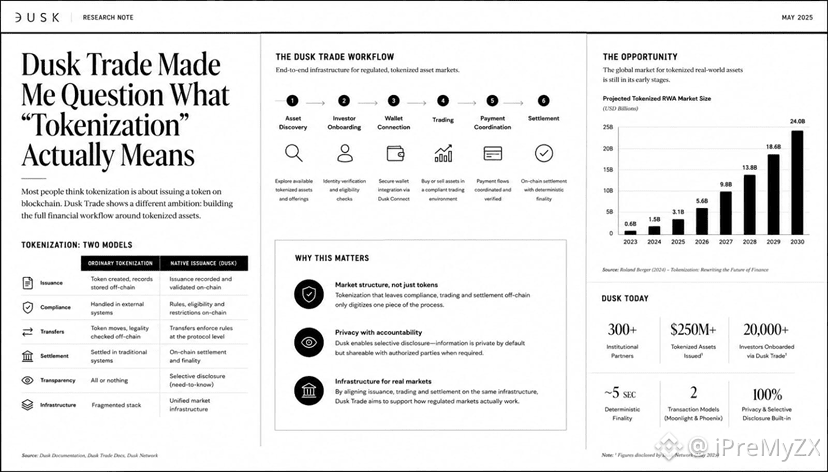
O Dusk Trade é apresentado como a camada de aplicação para ativos financeiros tokenizados, mas o fluxo de trabalho vai muito além de criar e transferir um token. Ele inclui descoberta de ativos, onboarding de investidores, conexão de carteira, elegibilidade, negociação, coordenação de pagamentos e liquidação.
Essa distinção importa.
Um token pode existir on-chain enquanto as partes importantes do processo financeiro permanecem em outro lugar. A própria documentação do Dusk separa tokenização comum de emissão nativa, em que emissão, transferências, administração e liquidação podem ser desenhadas em torno do próprio ledger.
É essa parte que eu acho mais interessante.
Se um investidor ainda tiver de se mover entre sistemas separados para identidade, elegibilidade, custódia, negociação e liquidação, então colocar o ativo on-chain não necessariamente mudou a estrutura do mercado. Talvez tenha apenas digitalizado um componente.
O Dusk está tentando abordar o problema de forma diferente: conectar essas partes na mesma infraestrutura, mantendo informações sensíveis privadas e permitindo que informações específicas sejam divulgadas quando necessário.
Então minha pergunta não é apenas se o Dusk consegue tokenizar valores mobiliários.
É se uma blockchain consegue realmente absorver uma parte suficiente do fluxo de trabalho financeiro ao redor para fazer com que a tokenização seja, de fato, diferente dos sistemas que ela deveria melhorar.
Isso parece ser o teste mais difícil.
E provavelmente o mais importante.
@Dusk_Foundation #dusk $DUSK
Eu costumava achar que tokenização era, em grande parte, pegar um ativo financeiro existente e colocar um token ao redor dele.
Quanto mais eu olhei para o Dusk Trade, menos completa essa definição parecia.
O Dusk Trade é apresentado como a camada de aplicação para ativos financeiros tokenizados, mas o fluxo de trabalho vai muito além de criar e transferir um token. Ele inclui descoberta de ativos, onboarding de investidores, conexão de carteira, elegibilidade, negociação, coordenação de pagamentos e liquidação.
Essa distinção importa.
Um token pode existir on-chain enquanto as partes importantes do processo financeiro permanecem em outro lugar. A própria documentação do Dusk separa tokenização comum de emissão nativa, em que emissão, transferências, administração e liquidação podem ser desenhadas em torno do próprio ledger.
É essa parte que eu acho mais interessante.
Se um investidor ainda tiver de se mover entre sistemas separados para identidade, elegibilidade, custódia, negociação e liquidação, então colocar o ativo on-chain não necessariamente mudou a estrutura do mercado. Talvez tenha apenas digitalizado um componente.
O Dusk está tentando abordar o problema de forma diferente: conectar essas partes na mesma infraestrutura, mantendo informações sensíveis privadas e permitindo que informações específicas sejam divulgadas quando necessário.
Então minha pergunta não é apenas se o Dusk consegue tokenizar valores mobiliários.
É se uma blockchain consegue realmente absorver uma parte suficiente do fluxo de trabalho financeiro ao redor para fazer com que a tokenização seja, de fato, diferente dos sistemas que ela deveria melhorar.
Isso parece ser o teste mais difícil.
E provavelmente o mais importante.
@Dusk #dusk $DUSK
Quanto mais eu olhei para o Dusk Trade, menos completa essa definição parecia.
O Dusk Trade é apresentado como a camada de aplicação para ativos financeiros tokenizados, mas o fluxo de trabalho vai muito além de criar e transferir um token. Ele inclui descoberta de ativos, onboarding de investidores, conexão de carteira, elegibilidade, negociação, coordenação de pagamentos e liquidação.
Essa distinção importa.
Um token pode existir on-chain enquanto as partes importantes do processo financeiro permanecem em outro lugar. A própria documentação do Dusk separa tokenização comum de emissão nativa, em que emissão, transferências, administração e liquidação podem ser desenhadas em torno do próprio ledger.
É essa parte que eu acho mais interessante.
Se um investidor ainda tiver de se mover entre sistemas separados para identidade, elegibilidade, custódia, negociação e liquidação, então colocar o ativo on-chain não necessariamente mudou a estrutura do mercado. Talvez tenha apenas digitalizado um componente.
O Dusk está tentando abordar o problema de forma diferente: conectar essas partes na mesma infraestrutura, mantendo informações sensíveis privadas e permitindo que informações específicas sejam divulgadas quando necessário.
Então minha pergunta não é apenas se o Dusk consegue tokenizar valores mobiliários.
É se uma blockchain consegue realmente absorver uma parte suficiente do fluxo de trabalho financeiro ao redor para fazer com que a tokenização seja, de fato, diferente dos sistemas que ela deveria melhorar.
Isso parece ser o teste mais difícil.
E provavelmente o mais importante.
@Dusk #dusk $DUSK
1
88
·
--
👀 Eu fui um pouco mais a fundo no Zedger hoje, e acho que estava olhando para a coisa errada no começo.
Meu primeiro pensamento foi basicamente: ok, @Dusk_Foundation está colocando valores mobiliários regulamentados onchain. Entendi.
Mas o Zedger fica mais interessante quando você olha além do próprio token.
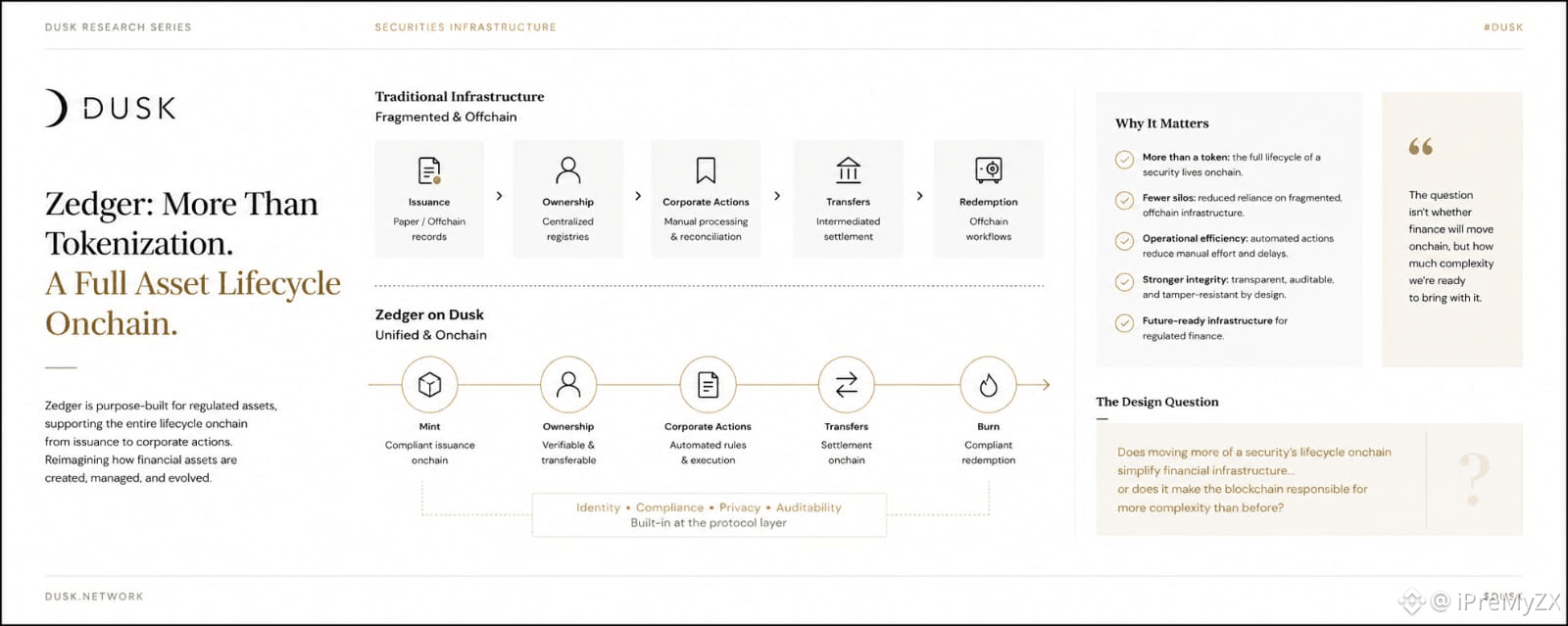
Ele é construído em torno de ativos regulamentados e oferece suporte a coisas como cunhagem, queima e ações corporativas. Em outras palavras, a cadeia não necessariamente está apenas atuando como um recibo digital de um ativo que vive em outro lugar.
Mais do ciclo de vida real pode ser tratado como parte da infraestrutura.
E isso muda a forma como penso sobre valores mobiliários tokenizados.
Um valor mobiliário não é apenas um saldo parado em uma carteira. A propriedade pode mudar. Regras podem se aplicar. Eventos corporativos podem acontecer. O ativo pode ser criado, modificado, resgatado ou removido.
Se alguns desses processos puderem acontecer diretamente dentro da infraestrutura, pode haver uma separação menor entre “o ativo” e “o sistema que gerencia o ativo”.
É essa a parte que eu considero genuinamente interessante no Zedger.
Mas também há uma ressalva.
Quanto mais lógica financeira você traz para o onchain, mais complexidade do mundo real o protocolo precisa lidar corretamente.
Você não está apenas movendo tokens. Você está tentando representar regras legais e financeiras em um sistema que tem que se comportar de maneira previsível.
Então, fico com uma pergunta em vez de uma conclusão:
Colocar mais do ciclo de vida de um valor mobiliário onchain realmente torna a infraestrutura financeira mais simples… ou estamos apenas movendo mais da complexidade para a blockchain?
É a parte do Zedger que ainda estou pensando.
#dusk $DUSK
👀 Eu fui um pouco mais a fundo no Zedger hoje, e acho que estava olhando para a coisa errada no começo.
Meu primeiro pensamento foi basicamente: ok, @Dusk está colocando valores mobiliários regulamentados onchain. Entendi.
Mas o Zedger fica mais interessante quando você olha além do próprio token.
Ele é construído em torno de ativos regulamentados e oferece suporte a coisas como cunhagem, queima e ações corporativas. Em outras palavras, a cadeia não necessariamente está apenas atuando como um recibo digital de um ativo que vive em outro lugar.
Mais do ciclo de vida real pode ser tratado como parte da infraestrutura.
E isso muda a forma como penso sobre valores mobiliários tokenizados.
Um valor mobiliário não é apenas um saldo parado em uma carteira. A propriedade pode mudar. Regras podem se aplicar. Eventos corporativos podem acontecer. O ativo pode ser criado, modificado, resgatado ou removido.
Se alguns desses processos puderem acontecer diretamente dentro da infraestrutura, pode haver uma separação menor entre “o ativo” e “o sistema que gerencia o ativo”.
É essa a parte que eu considero genuinamente interessante no Zedger.
Mas também há uma ressalva.
Quanto mais lógica financeira você traz para o onchain, mais complexidade do mundo real o protocolo precisa lidar corretamente.
Você não está apenas movendo tokens. Você está tentando representar regras legais e financeiras em um sistema que tem que se comportar de maneira previsível.
Então, fico com uma pergunta em vez de uma conclusão:
Colocar mais do ciclo de vida de um valor mobiliário onchain realmente torna a infraestrutura financeira mais simples… ou estamos apenas movendo mais da complexidade para a blockchain?
É a parte do Zedger que ainda estou pensando.
#dusk $DUSK
Meu primeiro pensamento foi basicamente: ok, @Dusk está colocando valores mobiliários regulamentados onchain. Entendi.
Mas o Zedger fica mais interessante quando você olha além do próprio token.
Ele é construído em torno de ativos regulamentados e oferece suporte a coisas como cunhagem, queima e ações corporativas. Em outras palavras, a cadeia não necessariamente está apenas atuando como um recibo digital de um ativo que vive em outro lugar.
Mais do ciclo de vida real pode ser tratado como parte da infraestrutura.
E isso muda a forma como penso sobre valores mobiliários tokenizados.
Um valor mobiliário não é apenas um saldo parado em uma carteira. A propriedade pode mudar. Regras podem se aplicar. Eventos corporativos podem acontecer. O ativo pode ser criado, modificado, resgatado ou removido.
Se alguns desses processos puderem acontecer diretamente dentro da infraestrutura, pode haver uma separação menor entre “o ativo” e “o sistema que gerencia o ativo”.
É essa a parte que eu considero genuinamente interessante no Zedger.
Mas também há uma ressalva.
Quanto mais lógica financeira você traz para o onchain, mais complexidade do mundo real o protocolo precisa lidar corretamente.
Você não está apenas movendo tokens. Você está tentando representar regras legais e financeiras em um sistema que tem que se comportar de maneira previsível.
Então, fico com uma pergunta em vez de uma conclusão:
Colocar mais do ciclo de vida de um valor mobiliário onchain realmente torna a infraestrutura financeira mais simples… ou estamos apenas movendo mais da complexidade para a blockchain?
É a parte do Zedger que ainda estou pensando.
#dusk $DUSK
2
1
3
83
·
--
Comecei a analisar a tecnologia de conhecimento zero (zero-knowledge) da Dusk pela perspectiva da privacidade.
Esse era o ponto de partida óbvio.
Se uma blockchain consegue verificar algo sem expor todas as informações subjacentes, parece natural pensar no ZK como uma forma de manter transações e saldos privados.
Mas, quanto mais eu olhava para a Dusk, mais interessante ficava o lado da conformidade.
Pense em um ativo regulamentado.
Um investidor pode precisar provar que é elegível para comprá-lo. Uma transação pode precisar cumprir certas regras. Uma organização pode precisar demonstrar que as condições corretas foram atendidas.
Mas nada disso necessariamente significa que todo mundo deva ver a identidade completa do investidor, a situação financeira ou o histórico de transações.
Essa distinção foi o que chamou minha atenção na abordagem da Dusk.
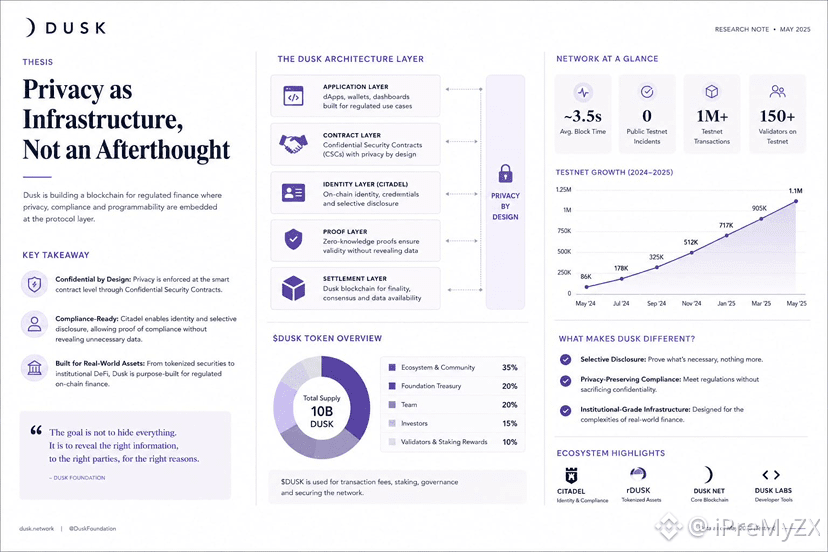
Com a Citadel fornecendo infraestrutura de identidade e a Dusk usando mecanismos de conhecimento zero e divulgação seletiva, a possibilidade interessante não é apenas ocultar informações.
É provar um fato específico sem expor tudo o que está por trás desse fato.
Você não precisa necessariamente revelar o perfil financeiro inteiro de alguém para provar que ele é elegível.
Você precisa de uma forma confiável de provar que ele atende à condição exigida.
Isso muda a forma como eu penso sobre ZK na Dusk.
Talvez seu papel mais importante não seja tornar as transações da blockchain privadas.
Talvez seja tornar a própria conformidade mais seletiva.
A grande pergunta para @Dusk_Foundation é até onde esse modelo realmente pode ir.
As exigências regulatórias podem se tornar coisas que uma blockchain verifica criptograficamente, enquanto as informações sensíveis permanecem protegidas?
Se isso funcionar, privacidade e conformidade deixam de parecer requisitos em oposição.
Elas passam a parecer duas partes da mesma infraestrutura.
$DUSK #dusk
Comecei a analisar a tecnologia de conhecimento zero (zero-knowledge) da Dusk pela perspectiva da privacidade.
Esse era o ponto de partida óbvio.
Se uma blockchain consegue verificar algo sem expor todas as informações subjacentes, parece natural pensar no ZK como uma forma de manter transações e saldos privados.
Mas, quanto mais eu olhava para a Dusk, mais interessante ficava o lado da conformidade.
Pense em um ativo regulamentado.
Um investidor pode precisar provar que é elegível para comprá-lo. Uma transação pode precisar cumprir certas regras. Uma organização pode precisar demonstrar que as condições corretas foram atendidas.
Mas nada disso necessariamente significa que todo mundo deva ver a identidade completa do investidor, a situação financeira ou o histórico de transações.
Essa distinção foi o que chamou minha atenção na abordagem da Dusk.
Com a Citadel fornecendo infraestrutura de identidade e a Dusk usando mecanismos de conhecimento zero e divulgação seletiva, a possibilidade interessante não é apenas ocultar informações.
É provar um fato específico sem expor tudo o que está por trás desse fato.
Você não precisa necessariamente revelar o perfil financeiro inteiro de alguém para provar que ele é elegível.
Você precisa de uma forma confiável de provar que ele atende à condição exigida.
Isso muda a forma como eu penso sobre ZK na Dusk.
Talvez seu papel mais importante não seja tornar as transações da blockchain privadas.
Talvez seja tornar a própria conformidade mais seletiva.
A grande pergunta para @Dusk é até onde esse modelo realmente pode ir.
As exigências regulatórias podem se tornar coisas que uma blockchain verifica criptograficamente, enquanto as informações sensíveis permanecem protegidas?
Se isso funcionar, privacidade e conformidade deixam de parecer requisitos em oposição.
Elas passam a parecer duas partes da mesma infraestrutura.
$DUSK #dusk
Esse era o ponto de partida óbvio.
Se uma blockchain consegue verificar algo sem expor todas as informações subjacentes, parece natural pensar no ZK como uma forma de manter transações e saldos privados.
Mas, quanto mais eu olhava para a Dusk, mais interessante ficava o lado da conformidade.
Pense em um ativo regulamentado.
Um investidor pode precisar provar que é elegível para comprá-lo. Uma transação pode precisar cumprir certas regras. Uma organização pode precisar demonstrar que as condições corretas foram atendidas.
Mas nada disso necessariamente significa que todo mundo deva ver a identidade completa do investidor, a situação financeira ou o histórico de transações.
Essa distinção foi o que chamou minha atenção na abordagem da Dusk.
Com a Citadel fornecendo infraestrutura de identidade e a Dusk usando mecanismos de conhecimento zero e divulgação seletiva, a possibilidade interessante não é apenas ocultar informações.
É provar um fato específico sem expor tudo o que está por trás desse fato.
Você não precisa necessariamente revelar o perfil financeiro inteiro de alguém para provar que ele é elegível.
Você precisa de uma forma confiável de provar que ele atende à condição exigida.
Isso muda a forma como eu penso sobre ZK na Dusk.
Talvez seu papel mais importante não seja tornar as transações da blockchain privadas.
Talvez seja tornar a própria conformidade mais seletiva.
A grande pergunta para @Dusk é até onde esse modelo realmente pode ir.
As exigências regulatórias podem se tornar coisas que uma blockchain verifica criptograficamente, enquanto as informações sensíveis permanecem protegidas?
Se isso funcionar, privacidade e conformidade deixam de parecer requisitos em oposição.
Elas passam a parecer duas partes da mesma infraestrutura.
$DUSK #dusk
1
99
·
--
Quanto mais eu estudo Dusk, menos convincente se torna a descrição usual de “blockchain privada”.
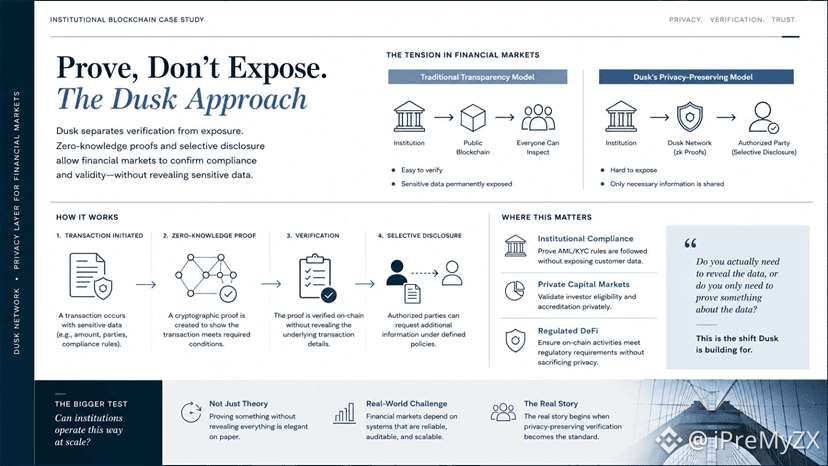
Um sistema de privacidade verdadeiramente interessante não consegue simplesmente fazer a informação desaparecer. Os mercados financeiros ainda precisam de verificação. Alguém precisa estabelecer que uma transação é válida, que um investidor é elegível ou que uma regra financeira foi seguida.
Isso cria uma tensão que considero muito mais interessante do que a privacidade por si só.
A Dusk aborda isso por meio de uma combinação de transações protegidas, provas de conhecimento zero e divulgação seletiva.
A ideia não é necessariamente expor a informação subjacente. Em vez disso, provas criptográficas podem demonstrar que certas condições são atendidas sem revelar tudo o que está por trás da transação.
Essa distinção importa.
Imagine que uma instituição precise provar que uma transação seguiu as regras exigidas. Em uma blockchain completamente transparente, a solução mais fácil costuma ser publicar a atividade subjacente e deixar que todos a inspecionem.
Mas isso cria outro problema: informações financeiras sensíveis ficam permanentemente visíveis.
A abordagem da Dusk faz uma pergunta diferente:
Você realmente precisa revelar os dados, ou você só precisa provar algo sobre os dados?
É aí que a tecnologia de conhecimento zero se torna particularmente interessante para mim.
O objetivo não é “esconder tudo”.
É mais próximo de provar o que precisa ser provado, mantendo as informações desnecessárias em sigilo.
A divulgação seletiva adiciona outra camada. Quando uma parte autorizada realmente precisa de informações adicionais, privacidade não significa necessariamente recusar acesso. Pode significar controlar quem as recebe e em que circunstâncias.
Então estou começando a ver a arquitetura de privacidade da Dusk menos como uma tentativa de escapar da verificação e mais como uma tentativa de separar verificação de exposição.
O teste maior, porém, é o prático.
As instituições realmente conseguem operar dessa forma em escala?
Porque provar algo sem revelar tudo parece elegante no papel. A história real começa quando os mercados financeiros dependem disso.
@Dusk_Foundation #dusk $DUSK
Quanto mais eu estudo Dusk, menos convincente se torna a descrição usual de “blockchain privada”.
Um sistema de privacidade verdadeiramente interessante não consegue simplesmente fazer a informação desaparecer. Os mercados financeiros ainda precisam de verificação. Alguém precisa estabelecer que uma transação é válida, que um investidor é elegível ou que uma regra financeira foi seguida.
Isso cria uma tensão que considero muito mais interessante do que a privacidade por si só.
A Dusk aborda isso por meio de uma combinação de transações protegidas, provas de conhecimento zero e divulgação seletiva.
A ideia não é necessariamente expor a informação subjacente. Em vez disso, provas criptográficas podem demonstrar que certas condições são atendidas sem revelar tudo o que está por trás da transação.
Essa distinção importa.
Imagine que uma instituição precise provar que uma transação seguiu as regras exigidas. Em uma blockchain completamente transparente, a solução mais fácil costuma ser publicar a atividade subjacente e deixar que todos a inspecionem.
Mas isso cria outro problema: informações financeiras sensíveis ficam permanentemente visíveis.
A abordagem da Dusk faz uma pergunta diferente:
Você realmente precisa revelar os dados, ou você só precisa provar algo sobre os dados?
É aí que a tecnologia de conhecimento zero se torna particularmente interessante para mim.
O objetivo não é “esconder tudo”.
É mais próximo de provar o que precisa ser provado, mantendo as informações desnecessárias em sigilo.
A divulgação seletiva adiciona outra camada. Quando uma parte autorizada realmente precisa de informações adicionais, privacidade não significa necessariamente recusar acesso. Pode significar controlar quem as recebe e em que circunstâncias.
Então estou começando a ver a arquitetura de privacidade da Dusk menos como uma tentativa de escapar da verificação e mais como uma tentativa de separar verificação de exposição.
O teste maior, porém, é o prático.
As instituições realmente conseguem operar dessa forma em escala?
Porque provar algo sem revelar tudo parece elegante no papel. A história real começa quando os mercados financeiros dependem disso.
@Dusk #dusk $DUSK
Um sistema de privacidade verdadeiramente interessante não consegue simplesmente fazer a informação desaparecer. Os mercados financeiros ainda precisam de verificação. Alguém precisa estabelecer que uma transação é válida, que um investidor é elegível ou que uma regra financeira foi seguida.
Isso cria uma tensão que considero muito mais interessante do que a privacidade por si só.
A Dusk aborda isso por meio de uma combinação de transações protegidas, provas de conhecimento zero e divulgação seletiva.
A ideia não é necessariamente expor a informação subjacente. Em vez disso, provas criptográficas podem demonstrar que certas condições são atendidas sem revelar tudo o que está por trás da transação.
Essa distinção importa.
Imagine que uma instituição precise provar que uma transação seguiu as regras exigidas. Em uma blockchain completamente transparente, a solução mais fácil costuma ser publicar a atividade subjacente e deixar que todos a inspecionem.
Mas isso cria outro problema: informações financeiras sensíveis ficam permanentemente visíveis.
A abordagem da Dusk faz uma pergunta diferente:
Você realmente precisa revelar os dados, ou você só precisa provar algo sobre os dados?
É aí que a tecnologia de conhecimento zero se torna particularmente interessante para mim.
O objetivo não é “esconder tudo”.
É mais próximo de provar o que precisa ser provado, mantendo as informações desnecessárias em sigilo.
A divulgação seletiva adiciona outra camada. Quando uma parte autorizada realmente precisa de informações adicionais, privacidade não significa necessariamente recusar acesso. Pode significar controlar quem as recebe e em que circunstâncias.
Então estou começando a ver a arquitetura de privacidade da Dusk menos como uma tentativa de escapar da verificação e mais como uma tentativa de separar verificação de exposição.
O teste maior, porém, é o prático.
As instituições realmente conseguem operar dessa forma em escala?
Porque provar algo sem revelar tudo parece elegante no papel. A história real começa quando os mercados financeiros dependem disso.
@Dusk #dusk $DUSK
3
102
·
--
Eu inicialmente olhei para a Phoenix através da lente habitual: transações privadas, valores ocultos e menos informações expostas onchain.
Essa descrição é tecnicamente útil, mas acho que ela deixa de lado a parte mais interessante de Dusk.
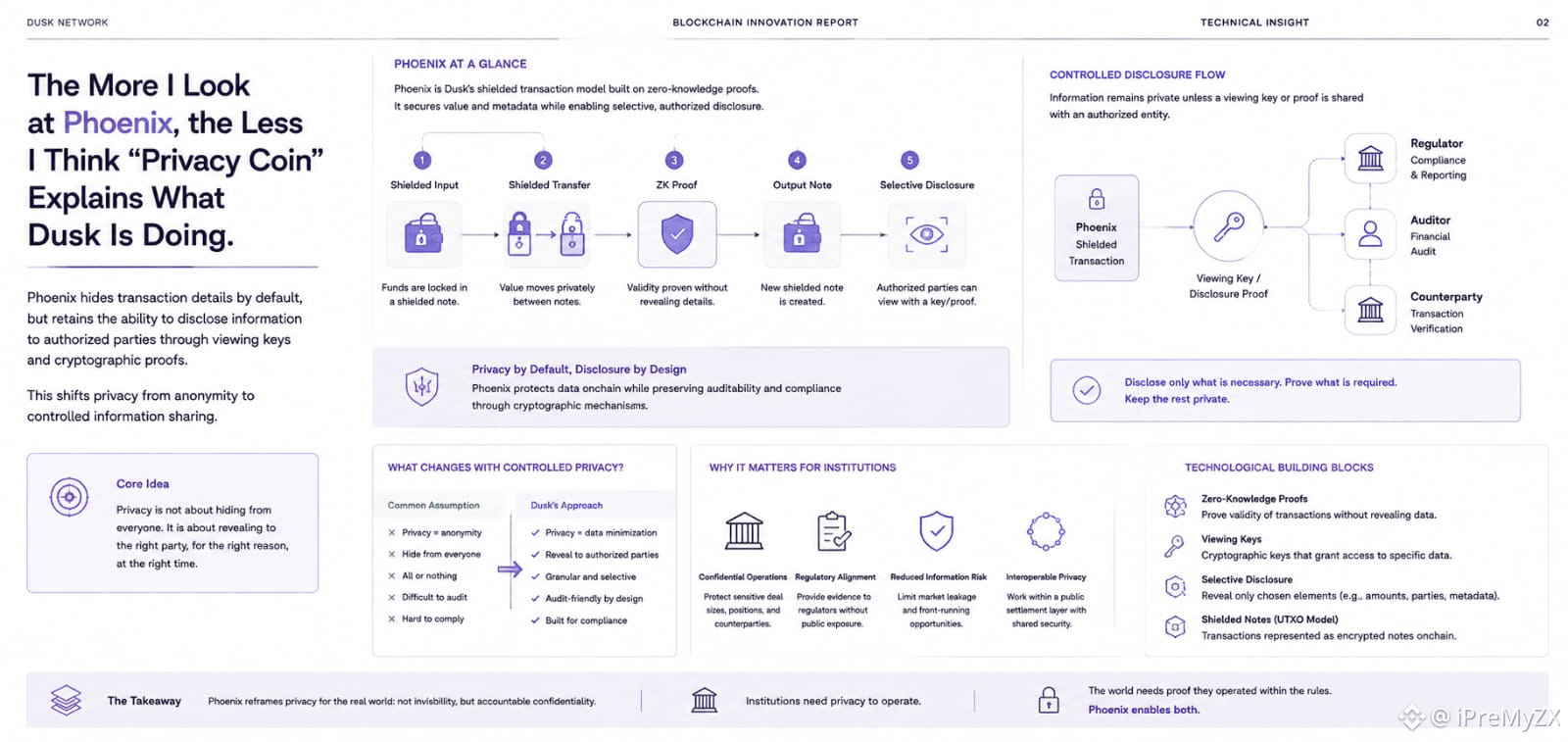
Phoenix não é simplesmente sobre fazer a atividade financeira desaparecer. A arquitetura é construída em torno de transações blindadas, ao mesmo tempo em que permite acesso autorizado às informações relevantes por meio de mecanismos de visualização.
Isso muda a questão.
Em vez de perguntar “Quão anônima é esta blockchain?”, eu acho que a pergunta melhor é:
Quem deve ser capaz de ver o quê, e sob quais condições?
Essa é uma forma muito diferente de pensar sobre privacidade.
Para um usuário comum, privacidade pode significar manter saldos e histórico de transações longe de observadores públicos. Mas as instituições financeiras têm uma exigência mais complexa. Elas podem precisar de confidencialidade em relação ao mercado em geral, ao mesmo tempo em que precisam conseguir demonstrar informações a um auditor, regulador, contraparte ou outra parte autorizada.
É aqui que a Phoenix se torna mais interessante para mim.
Provas de conhecimento zero podem estabelecer que uma transação segue as regras necessárias sem expor cada detalhe subjacente. A divulgação seletiva pode, então, criar um caminho controlado para revelar informações quando houver um motivo legítimo para isso.
Então Dusk não está necessariamente escolhendo entre privacidade e conformidade.
Está explorando se elas podem coexistir por meio de visibilidade controlada.
E isso pode ser um modelo muito mais relevante para mercados financeiros regulados do que simplesmente tornar tudo público ou tudo privado.
A parte que estou observando agora é se essa arquitetura realmente muda a forma como as instituições se comportam.
Porque construir privacidade seletiva é um desafio.
Fazer com que a atividade financeira real dependa disso é um teste muito mais difícil.
@Dusk_Foundation #dusk $DUSK
Eu inicialmente olhei para a Phoenix através da lente habitual: transações privadas, valores ocultos e menos informações expostas onchain.
Essa descrição é tecnicamente útil, mas acho que ela deixa de lado a parte mais interessante de Dusk.
Phoenix não é simplesmente sobre fazer a atividade financeira desaparecer. A arquitetura é construída em torno de transações blindadas, ao mesmo tempo em que permite acesso autorizado às informações relevantes por meio de mecanismos de visualização.
Isso muda a questão.
Em vez de perguntar “Quão anônima é esta blockchain?”, eu acho que a pergunta melhor é:
Quem deve ser capaz de ver o quê, e sob quais condições?
Essa é uma forma muito diferente de pensar sobre privacidade.
Para um usuário comum, privacidade pode significar manter saldos e histórico de transações longe de observadores públicos. Mas as instituições financeiras têm uma exigência mais complexa. Elas podem precisar de confidencialidade em relação ao mercado em geral, ao mesmo tempo em que precisam conseguir demonstrar informações a um auditor, regulador, contraparte ou outra parte autorizada.
É aqui que a Phoenix se torna mais interessante para mim.
Provas de conhecimento zero podem estabelecer que uma transação segue as regras necessárias sem expor cada detalhe subjacente. A divulgação seletiva pode, então, criar um caminho controlado para revelar informações quando houver um motivo legítimo para isso.
Então Dusk não está necessariamente escolhendo entre privacidade e conformidade.
Está explorando se elas podem coexistir por meio de visibilidade controlada.
E isso pode ser um modelo muito mais relevante para mercados financeiros regulados do que simplesmente tornar tudo público ou tudo privado.
A parte que estou observando agora é se essa arquitetura realmente muda a forma como as instituições se comportam.
Porque construir privacidade seletiva é um desafio.
Fazer com que a atividade financeira real dependa disso é um teste muito mais difícil.
@Dusk #dusk $DUSK
Essa descrição é tecnicamente útil, mas acho que ela deixa de lado a parte mais interessante de Dusk.
Phoenix não é simplesmente sobre fazer a atividade financeira desaparecer. A arquitetura é construída em torno de transações blindadas, ao mesmo tempo em que permite acesso autorizado às informações relevantes por meio de mecanismos de visualização.
Isso muda a questão.
Em vez de perguntar “Quão anônima é esta blockchain?”, eu acho que a pergunta melhor é:
Quem deve ser capaz de ver o quê, e sob quais condições?
Essa é uma forma muito diferente de pensar sobre privacidade.
Para um usuário comum, privacidade pode significar manter saldos e histórico de transações longe de observadores públicos. Mas as instituições financeiras têm uma exigência mais complexa. Elas podem precisar de confidencialidade em relação ao mercado em geral, ao mesmo tempo em que precisam conseguir demonstrar informações a um auditor, regulador, contraparte ou outra parte autorizada.
É aqui que a Phoenix se torna mais interessante para mim.
Provas de conhecimento zero podem estabelecer que uma transação segue as regras necessárias sem expor cada detalhe subjacente. A divulgação seletiva pode, então, criar um caminho controlado para revelar informações quando houver um motivo legítimo para isso.
Então Dusk não está necessariamente escolhendo entre privacidade e conformidade.
Está explorando se elas podem coexistir por meio de visibilidade controlada.
E isso pode ser um modelo muito mais relevante para mercados financeiros regulados do que simplesmente tornar tudo público ou tudo privado.
A parte que estou observando agora é se essa arquitetura realmente muda a forma como as instituições se comportam.
Porque construir privacidade seletiva é um desafio.
Fazer com que a atividade financeira real dependa disso é um teste muito mais difícil.
@Dusk #dusk $DUSK
1
2
105
·
--
Quando olhei pela primeira vez para a arquitetura de transações do Dusk, eu esperava que a história da privacidade fosse simples: uma blockchain criada em torno de transações confidenciais.
Então percebi algo mais interessante.
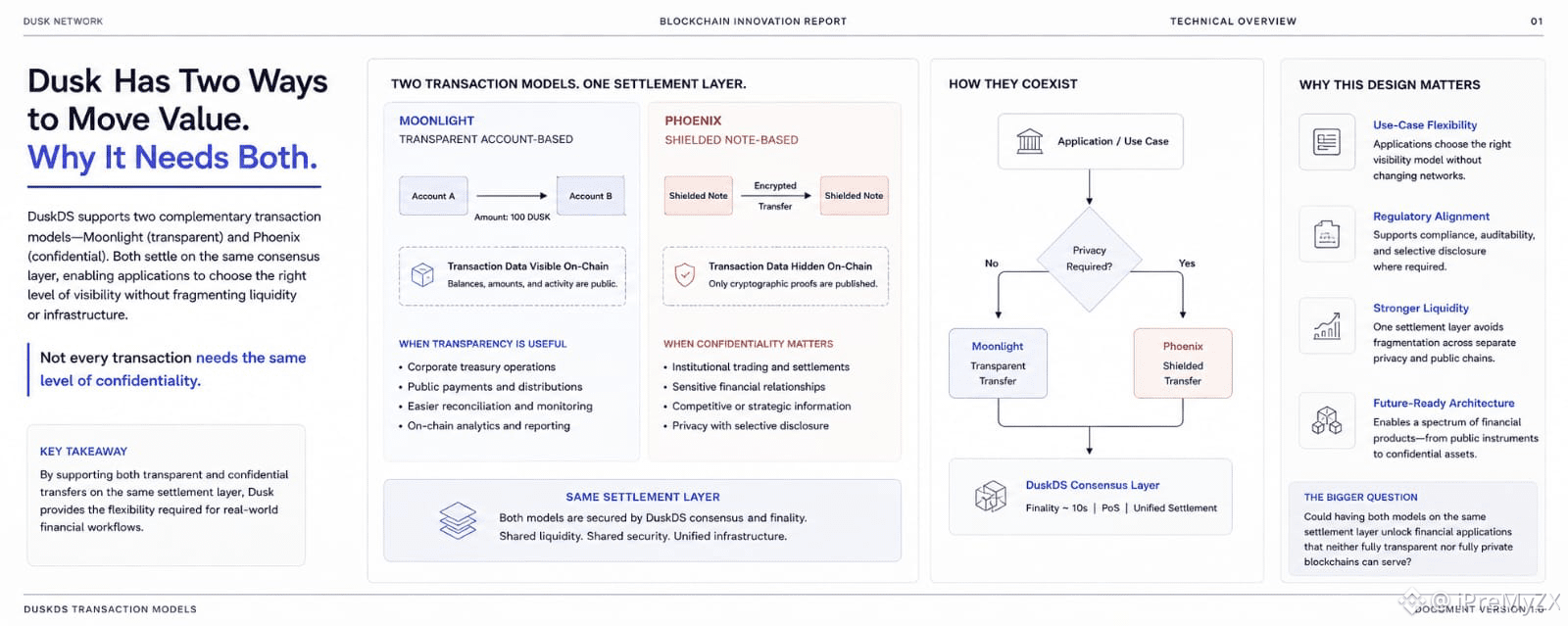
O DuskDS oferece dois modelos de transação diferentes: Moonlight, que usa uma abordagem transparente baseada em contas, e Phoenix, que utiliza notas blindadas para transferências confidenciais.
No início, ter ambos pode parecer uma complexidade desnecessária. Se a privacidade é uma parte tão importante do Dusk, por que não tornar tudo privado?
Mas quanto mais eu penso sobre mercados financeiros regulamentados, mais esse design começa a fazer sentido.
Nem toda transação precisa do mesmo nível de confidencialidade.
Existem situações em que uma atividade transparente é útil. Uma transferência pública pode facilitar contabilidade, monitoramento, operações de tesouraria ou certos tipos de verificação.
Depois há transações em que expor o valor, os participantes ou os relacionamentos financeiros cria vazamento de informações que uma instituição simplesmente não quer.
É aí que o Phoenix fica mais interessante.
Em vez de forçar toda a rede a adotar um único modelo de privacidade, o Dusk parece tratar a visibilidade das transações como algo que pode depender do caso de uso.
E eu acho que essa é a ideia maior.
Um ativo regulamentado pode precisar de conformidade sem exigir que todos os participantes do mercado vejam cada detalhe de transação. Uma instituição pode precisar provar algo a uma parte autorizada, mantendo informações financeiras sensíveis longe do mercado em geral.
Então estou começando a ver o Moonlight e o Phoenix menos como sistemas de transação concorrentes e mais como duas ferramentas diferentes operando na mesma camada de liquidação.
A verdadeira questão para mim não é se um é melhor.
É se ter os dois permite que o Dusk atenda aplicações financeiras que se situam em algum ponto entre blockchains totalmente transparentes e sistemas completamente privados.
Esse meio-termo pode ser onde, de fato, vive a parte mais interessante da arquitetura do Dusk.
@Dusk_Foundation #dusk $DUSK
Quando olhei pela primeira vez para a arquitetura de transações do Dusk, eu esperava que a história da privacidade fosse simples: uma blockchain criada em torno de transações confidenciais.
Então percebi algo mais interessante.
O DuskDS oferece dois modelos de transação diferentes: Moonlight, que usa uma abordagem transparente baseada em contas, e Phoenix, que utiliza notas blindadas para transferências confidenciais.
No início, ter ambos pode parecer uma complexidade desnecessária. Se a privacidade é uma parte tão importante do Dusk, por que não tornar tudo privado?
Mas quanto mais eu penso sobre mercados financeiros regulamentados, mais esse design começa a fazer sentido.
Nem toda transação precisa do mesmo nível de confidencialidade.
Existem situações em que uma atividade transparente é útil. Uma transferência pública pode facilitar contabilidade, monitoramento, operações de tesouraria ou certos tipos de verificação.
Depois há transações em que expor o valor, os participantes ou os relacionamentos financeiros cria vazamento de informações que uma instituição simplesmente não quer.
É aí que o Phoenix fica mais interessante.
Em vez de forçar toda a rede a adotar um único modelo de privacidade, o Dusk parece tratar a visibilidade das transações como algo que pode depender do caso de uso.
E eu acho que essa é a ideia maior.
Um ativo regulamentado pode precisar de conformidade sem exigir que todos os participantes do mercado vejam cada detalhe de transação. Uma instituição pode precisar provar algo a uma parte autorizada, mantendo informações financeiras sensíveis longe do mercado em geral.
Então estou começando a ver o Moonlight e o Phoenix menos como sistemas de transação concorrentes e mais como duas ferramentas diferentes operando na mesma camada de liquidação.
A verdadeira questão para mim não é se um é melhor.
É se ter os dois permite que o Dusk atenda aplicações financeiras que se situam em algum ponto entre blockchains totalmente transparentes e sistemas completamente privados.
Esse meio-termo pode ser onde, de fato, vive a parte mais interessante da arquitetura do Dusk.
@Dusk #dusk $DUSK
Então percebi algo mais interessante.
O DuskDS oferece dois modelos de transação diferentes: Moonlight, que usa uma abordagem transparente baseada em contas, e Phoenix, que utiliza notas blindadas para transferências confidenciais.
No início, ter ambos pode parecer uma complexidade desnecessária. Se a privacidade é uma parte tão importante do Dusk, por que não tornar tudo privado?
Mas quanto mais eu penso sobre mercados financeiros regulamentados, mais esse design começa a fazer sentido.
Nem toda transação precisa do mesmo nível de confidencialidade.
Existem situações em que uma atividade transparente é útil. Uma transferência pública pode facilitar contabilidade, monitoramento, operações de tesouraria ou certos tipos de verificação.
Depois há transações em que expor o valor, os participantes ou os relacionamentos financeiros cria vazamento de informações que uma instituição simplesmente não quer.
É aí que o Phoenix fica mais interessante.
Em vez de forçar toda a rede a adotar um único modelo de privacidade, o Dusk parece tratar a visibilidade das transações como algo que pode depender do caso de uso.
E eu acho que essa é a ideia maior.
Um ativo regulamentado pode precisar de conformidade sem exigir que todos os participantes do mercado vejam cada detalhe de transação. Uma instituição pode precisar provar algo a uma parte autorizada, mantendo informações financeiras sensíveis longe do mercado em geral.
Então estou começando a ver o Moonlight e o Phoenix menos como sistemas de transação concorrentes e mais como duas ferramentas diferentes operando na mesma camada de liquidação.
A verdadeira questão para mim não é se um é melhor.
É se ter os dois permite que o Dusk atenda aplicações financeiras que se situam em algum ponto entre blockchains totalmente transparentes e sistemas completamente privados.
Esse meio-termo pode ser onde, de fato, vive a parte mais interessante da arquitetura do Dusk.
@Dusk #dusk $DUSK
1
92
·
--
Eu entrei na documentação dos Trustless Bitcoin Vaults (TBV) pensando que o BTC tokenizado e o empréstimo garantido por BTC nativo estavam resolvendo o mesmo problema com ferramentas diferentes.
Depois de algumas horas lendo, não acho que eles nem partam da mesma suposição.
O BTC tokenizado pergunta: "Como trazemos o Bitcoin para o DeFi?"
Os TBV parecem perguntar: "Por que o Bitcoin precisa se tornar outra coisa antes que o DeFi possa usá-lo?"
Essa distinção ficou mais comigo do que o fluxo de empréstimo em si.
A forma mais fácil de pensar sobre o BTC tokenizado é que ele cria outra versão do Bitcoin com a qual as aplicações já sabem trabalhar. É prático, e por isso se tornou o padrão. Mas cada camada adicional também traz outro conjunto de suposições que precisa continuar funcionando como esperado.
Os TBV não eliminam a complexidade — eles a deslocam.
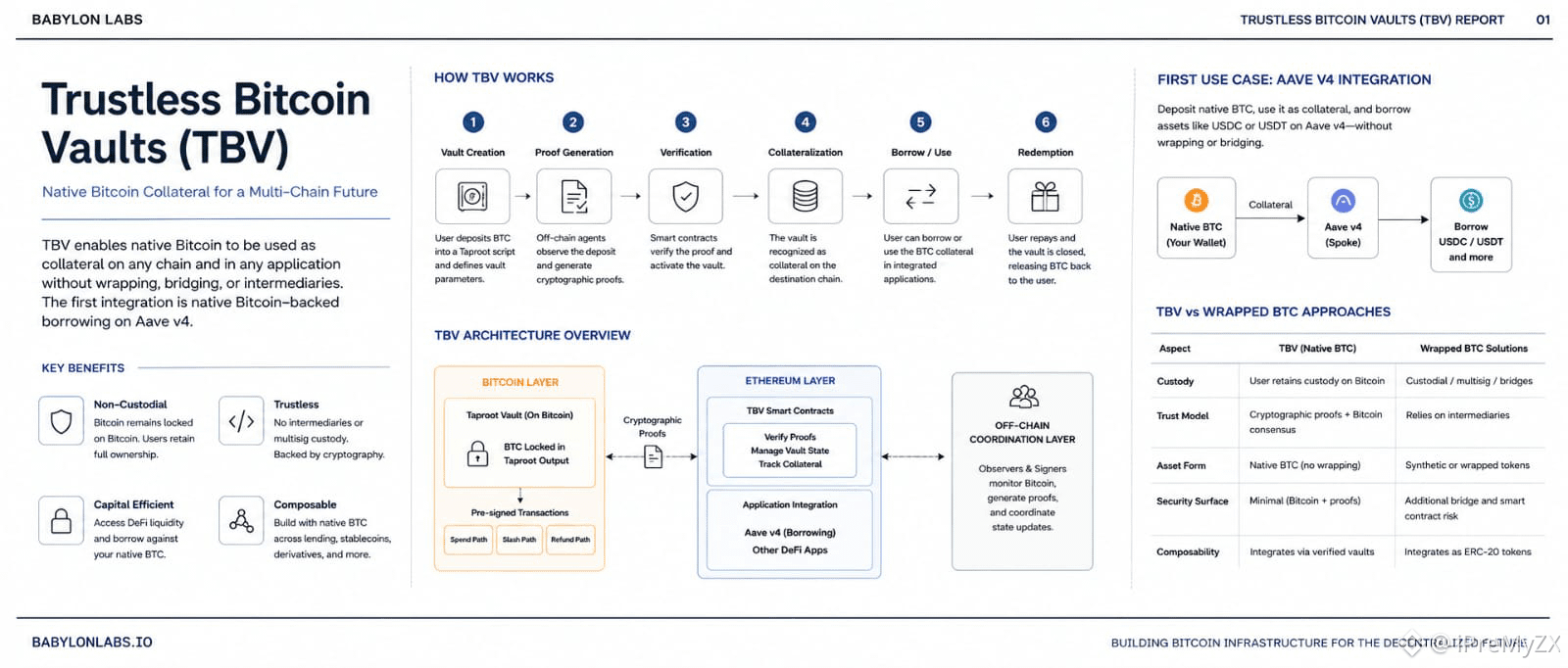
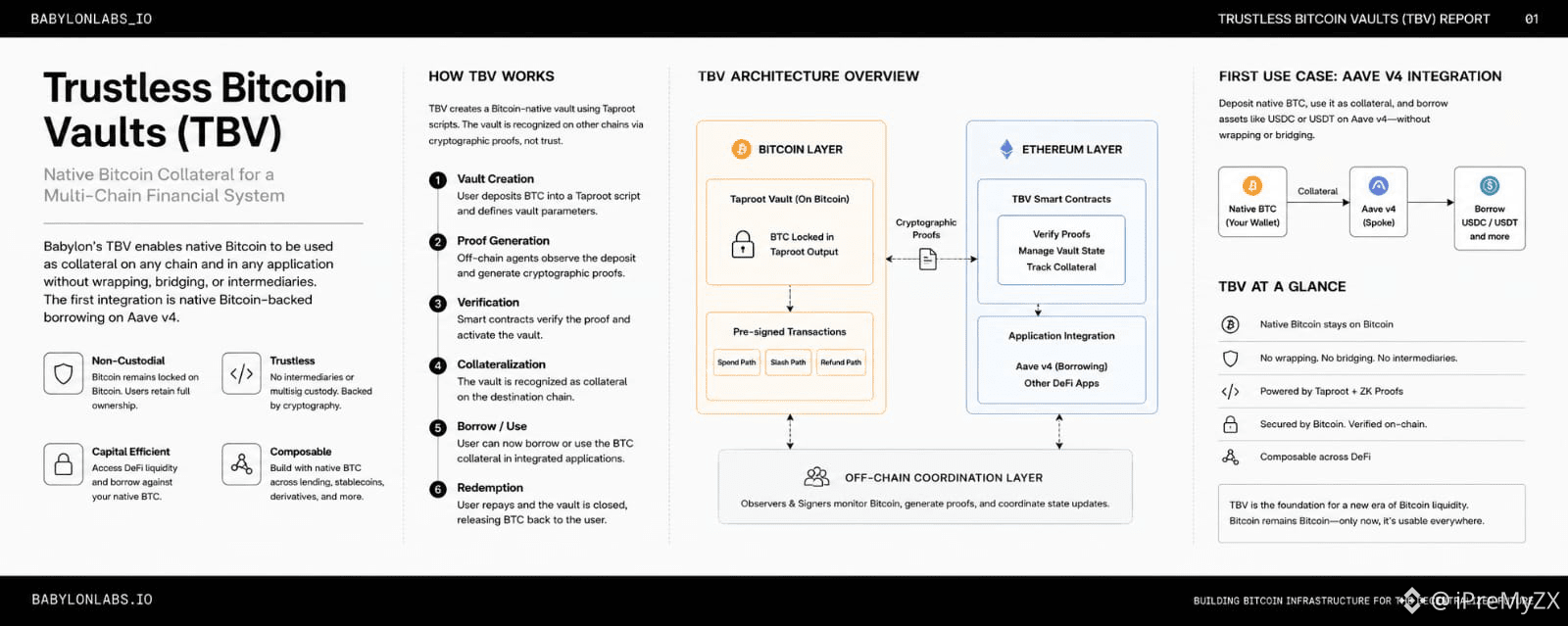
Em vez de criar outra representação do Bitcoin, o protocolo tenta manter o BTC nativo onde ele já pertence, enquanto comprova seu status de colateral para aplicações como o Aave v4. O desafio de engenharia muda de criar um ativo tokenizado para coordenar a verificação entre sistemas diferentes.
É uma filosofia de design diferente.
Não estou dizendo que uma abordagem substitui automaticamente a outra. O BTC tokenizado tem um ecossistema estabelecido e liquidez profunda hoje. Mas, depois de comparar os dois modelos, percebi que eles otimizam coisas diferentes. Um prioriza a compatibilidade com o DeFi existente. O outro prioriza reduzir mudanças no próprio Bitcoin.
Essa foi a minha maior conclusão.
Eu comecei nessa toca pensando que a inovação era "tomar empréstimos contra Bitcoin". Saí com a impressão de que a pergunta mais interessante é onde as suposições de confiança são introduzidas — e se elas podem ser reduzidas sem abrir mão da usabilidade.
Isso parece ser a conversa que vale a pena acompanhar à medida que os Trustless Bitcoin Vaults (TBV) avançam além da rede de testes pública.
@babylonlabs_io $BABY #baby
Eu entrei na documentação dos Trustless Bitcoin Vaults (TBV) pensando que o BTC tokenizado e o empréstimo garantido por BTC nativo estavam resolvendo o mesmo problema com ferramentas diferentes.
Depois de algumas horas lendo, não acho que eles nem partam da mesma suposição.
O BTC tokenizado pergunta: "Como trazemos o Bitcoin para o DeFi?"
Os TBV parecem perguntar: "Por que o Bitcoin precisa se tornar outra coisa antes que o DeFi possa usá-lo?"
Essa distinção ficou mais comigo do que o fluxo de empréstimo em si.
A forma mais fácil de pensar sobre o BTC tokenizado é que ele cria outra versão do Bitcoin com a qual as aplicações já sabem trabalhar. É prático, e por isso se tornou o padrão. Mas cada camada adicional também traz outro conjunto de suposições que precisa continuar funcionando como esperado.
Os TBV não eliminam a complexidade — eles a deslocam.
Em vez de criar outra representação do Bitcoin, o protocolo tenta manter o BTC nativo onde ele já pertence, enquanto comprova seu status de colateral para aplicações como o Aave v4. O desafio de engenharia muda de criar um ativo tokenizado para coordenar a verificação entre sistemas diferentes.
É uma filosofia de design diferente.
Não estou dizendo que uma abordagem substitui automaticamente a outra. O BTC tokenizado tem um ecossistema estabelecido e liquidez profunda hoje. Mas, depois de comparar os dois modelos, percebi que eles otimizam coisas diferentes. Um prioriza a compatibilidade com o DeFi existente. O outro prioriza reduzir mudanças no próprio Bitcoin.
Essa foi a minha maior conclusão.
Eu comecei nessa toca pensando que a inovação era "tomar empréstimos contra Bitcoin". Saí com a impressão de que a pergunta mais interessante é onde as suposições de confiança são introduzidas — e se elas podem ser reduzidas sem abrir mão da usabilidade.
Isso parece ser a conversa que vale a pena acompanhar à medida que os Trustless Bitcoin Vaults (TBV) avançam além da rede de testes pública.
@BabylonLabs_io $BABY #baby
Depois de algumas horas lendo, não acho que eles nem partam da mesma suposição.
O BTC tokenizado pergunta: "Como trazemos o Bitcoin para o DeFi?"
Os TBV parecem perguntar: "Por que o Bitcoin precisa se tornar outra coisa antes que o DeFi possa usá-lo?"
Essa distinção ficou mais comigo do que o fluxo de empréstimo em si.
A forma mais fácil de pensar sobre o BTC tokenizado é que ele cria outra versão do Bitcoin com a qual as aplicações já sabem trabalhar. É prático, e por isso se tornou o padrão. Mas cada camada adicional também traz outro conjunto de suposições que precisa continuar funcionando como esperado.
Os TBV não eliminam a complexidade — eles a deslocam.
Em vez de criar outra representação do Bitcoin, o protocolo tenta manter o BTC nativo onde ele já pertence, enquanto comprova seu status de colateral para aplicações como o Aave v4. O desafio de engenharia muda de criar um ativo tokenizado para coordenar a verificação entre sistemas diferentes.
É uma filosofia de design diferente.
Não estou dizendo que uma abordagem substitui automaticamente a outra. O BTC tokenizado tem um ecossistema estabelecido e liquidez profunda hoje. Mas, depois de comparar os dois modelos, percebi que eles otimizam coisas diferentes. Um prioriza a compatibilidade com o DeFi existente. O outro prioriza reduzir mudanças no próprio Bitcoin.
Essa foi a minha maior conclusão.
Eu comecei nessa toca pensando que a inovação era "tomar empréstimos contra Bitcoin". Saí com a impressão de que a pergunta mais interessante é onde as suposições de confiança são introduzidas — e se elas podem ser reduzidas sem abrir mão da usabilidade.
Isso parece ser a conversa que vale a pena acompanhar à medida que os Trustless Bitcoin Vaults (TBV) avançam além da rede de testes pública.
@BabylonLabs_io $BABY #baby
3
1
105
·
--
Eu abri os Trustless Bitcoin Vaults (TBV) em testnet pensando que a parte interessante seria o fluxo de empréstimo. Trave BTC, pegue ativos emprestados via Aave v4 e pronto. É disso que as manchetes falam.
Acabei prestando atenção em outra coisa totalmente diferente.
A parte que continuou me puxando de volta não era o que eu podia tomar emprestado. Era o que não aconteceu antes do empréstimo. O Bitcoin nativo não estava sendo envolvido em outro token primeiro, e isso muda onde vivem as suposições de confiança.
É uma diferença sutil, mas acho que é uma importante.
A maioria das discussões de Bitcoin DeFi eventualmente vira uma conversa sobre bridges, custodiantes ou representações sintéticas. O TBV parece estar fazendo uma pergunta diferente: se o Bitcoin já é a garantia, por que ele deveria primeiro se tornar outra coisa para participar?
A testnet também me lembrou que fazer isso funcionar não é simples. Por trás do que parece ser um fluxo de usuário direto existe uma grande coordenação entre Bitcoin, Ethereum e o próprio protocolo. A interface é limpa o suficiente para ser fácil ignorar quantas peças precisam continuar sincronizadas.
Deixei feedback depois de testar porque isso provavelmente é a parte mais valiosa de uma testnet pública. A documentação explica o design, mas usuários reais expõem os pontos de atrito que diagramas nunca vão mostrar.
O meu maior aprendizado não foi que consegui fazer empréstimos contra Bitcoin. Foi perceber que a Babylon parece estar menos interessada em competir com os mercados de empréstimo de BTC existentes e mais interessada em mudar as suposições que esses mercados vêm usando há anos.
Se essa abordagem vai virar o novo padrão ainda é uma questão em aberto. Mas depois de tentar o fluxo por conta própria, acho que essa é a pergunta que vale a pena acompanhar.
@babylonlabs_io $BABY #baby
Eu abri os Trustless Bitcoin Vaults (TBV) em testnet pensando que a parte interessante seria o fluxo de empréstimo. Trave BTC, pegue ativos emprestados via Aave v4 e pronto. É disso que as manchetes falam.
Acabei prestando atenção em outra coisa totalmente diferente.
A parte que continuou me puxando de volta não era o que eu podia tomar emprestado. Era o que não aconteceu antes do empréstimo. O Bitcoin nativo não estava sendo envolvido em outro token primeiro, e isso muda onde vivem as suposições de confiança.
É uma diferença sutil, mas acho que é uma importante.
A maioria das discussões de Bitcoin DeFi eventualmente vira uma conversa sobre bridges, custodiantes ou representações sintéticas. O TBV parece estar fazendo uma pergunta diferente: se o Bitcoin já é a garantia, por que ele deveria primeiro se tornar outra coisa para participar?
A testnet também me lembrou que fazer isso funcionar não é simples. Por trás do que parece ser um fluxo de usuário direto existe uma grande coordenação entre Bitcoin, Ethereum e o próprio protocolo. A interface é limpa o suficiente para ser fácil ignorar quantas peças precisam continuar sincronizadas.
Deixei feedback depois de testar porque isso provavelmente é a parte mais valiosa de uma testnet pública. A documentação explica o design, mas usuários reais expõem os pontos de atrito que diagramas nunca vão mostrar.
O meu maior aprendizado não foi que consegui fazer empréstimos contra Bitcoin. Foi perceber que a Babylon parece estar menos interessada em competir com os mercados de empréstimo de BTC existentes e mais interessada em mudar as suposições que esses mercados vêm usando há anos.
Se essa abordagem vai virar o novo padrão ainda é uma questão em aberto. Mas depois de tentar o fluxo por conta própria, acho que essa é a pergunta que vale a pena acompanhar.
@BabylonLabs_io $BABY #baby
Acabei prestando atenção em outra coisa totalmente diferente.
A parte que continuou me puxando de volta não era o que eu podia tomar emprestado. Era o que não aconteceu antes do empréstimo. O Bitcoin nativo não estava sendo envolvido em outro token primeiro, e isso muda onde vivem as suposições de confiança.
É uma diferença sutil, mas acho que é uma importante.
A maioria das discussões de Bitcoin DeFi eventualmente vira uma conversa sobre bridges, custodiantes ou representações sintéticas. O TBV parece estar fazendo uma pergunta diferente: se o Bitcoin já é a garantia, por que ele deveria primeiro se tornar outra coisa para participar?
A testnet também me lembrou que fazer isso funcionar não é simples. Por trás do que parece ser um fluxo de usuário direto existe uma grande coordenação entre Bitcoin, Ethereum e o próprio protocolo. A interface é limpa o suficiente para ser fácil ignorar quantas peças precisam continuar sincronizadas.
Deixei feedback depois de testar porque isso provavelmente é a parte mais valiosa de uma testnet pública. A documentação explica o design, mas usuários reais expõem os pontos de atrito que diagramas nunca vão mostrar.
O meu maior aprendizado não foi que consegui fazer empréstimos contra Bitcoin. Foi perceber que a Babylon parece estar menos interessada em competir com os mercados de empréstimo de BTC existentes e mais interessada em mudar as suposições que esses mercados vêm usando há anos.
Se essa abordagem vai virar o novo padrão ainda é uma questão em aberto. Mas depois de tentar o fluxo por conta própria, acho que essa é a pergunta que vale a pena acompanhar.
@BabylonLabs_io $BABY #baby
3
1
126
·
--
#baby $BABY
Comecei a ler sobre Trustless Bitcoin Vaults (TBV) porque queria entender o fluxo de empréstimo.
Acabei pensando muito mais sobre onde o protocolo escolhe manter a confiança.
No começo, "colateral nativo em Bitcoin" soou como outra descrição de produto. Quanto mais eu me aprofundei na arquitetura, mais isso se tornou uma decisão de design.
Não estão pedindo para o Bitcoin ficar mais rápido.
Não estão pedindo para que ele se torne um ativo EVM.
Em vez disso, o sistema é construído em torno de aceitar as próprias regras do Bitcoin e de desenhar o restante da infraestrutura ao redor delas.
Isso parece uma filosofia surpreendentemente diferente.
A maioria dos sistemas cross-chain tenta minimizar o atrito introduzindo outra camada que facilita o movimento dos ativos. A TBV parece seguir quase a abordagem oposta. Ela aceita que o Bitcoin tem seu próprio modelo de liquidação e, então, pergunta como a infraestrutura de empréstimos pode respeitar isso em vez de substituí-lo.
Quanto mais eu comparei essas abordagens, menos eu achei que isso fosse uma discussão sobre eficiência de capital.
Virou uma discussão sobre quais premissas merecem permanecer intocadas.
Todo protocolo tem concessões. A TBV não está isenta disso. Coordenação, verificação e complexidade operacional não desaparecem só porque a custódia é minimizada.
Mas complexidade e confiança nem sempre são a mesma coisa.
Uma vem da engenharia.
A outra vem de pedir aos usuários para acreditarem em partes adicionais.
Ainda estou trabalhando na documentação, mas foi essa a distinção que ficou comigo.
Talvez o futuro do Bitcoin em DeFi não seja decidido por qual protocolo move o BTC mais rápido.
Talvez seja decidido por qual protocolo muda o menor número de coisas sobre por que as pessoas confiaram no Bitcoin em primeiro lugar.
@babylonlabs_io
#baby $BABY
#baby $BABY
Comecei a ler sobre Trustless Bitcoin Vaults (TBV) porque queria entender o fluxo de empréstimo.
Acabei pensando muito mais sobre onde o protocolo escolhe manter a confiança.
No começo, "colateral nativo em Bitcoin" soou como outra descrição de produto. Quanto mais eu me aprofundei na arquitetura, mais isso se tornou uma decisão de design.
Não estão pedindo para o Bitcoin ficar mais rápido.
Não estão pedindo para que ele se torne um ativo EVM.
Em vez disso, o sistema é construído em torno de aceitar as próprias regras do Bitcoin e de desenhar o restante da infraestrutura ao redor delas.
Isso parece uma filosofia surpreendentemente diferente.
A maioria dos sistemas cross-chain tenta minimizar o atrito introduzindo outra camada que facilita o movimento dos ativos. A TBV parece seguir quase a abordagem oposta. Ela aceita que o Bitcoin tem seu próprio modelo de liquidação e, então, pergunta como a infraestrutura de empréstimos pode respeitar isso em vez de substituí-lo.
Quanto mais eu comparei essas abordagens, menos eu achei que isso fosse uma discussão sobre eficiência de capital.
Virou uma discussão sobre quais premissas merecem permanecer intocadas.
Todo protocolo tem concessões. A TBV não está isenta disso. Coordenação, verificação e complexidade operacional não desaparecem só porque a custódia é minimizada.
Mas complexidade e confiança nem sempre são a mesma coisa.
Uma vem da engenharia.
A outra vem de pedir aos usuários para acreditarem em partes adicionais.
Ainda estou trabalhando na documentação, mas foi essa a distinção que ficou comigo.
Talvez o futuro do Bitcoin em DeFi não seja decidido por qual protocolo move o BTC mais rápido.
Talvez seja decidido por qual protocolo muda o menor número de coisas sobre por que as pessoas confiaram no Bitcoin em primeiro lugar.
@BabylonLabs_io
#baby $BABY
Comecei a ler sobre Trustless Bitcoin Vaults (TBV) porque queria entender o fluxo de empréstimo.
Acabei pensando muito mais sobre onde o protocolo escolhe manter a confiança.
No começo, "colateral nativo em Bitcoin" soou como outra descrição de produto. Quanto mais eu me aprofundei na arquitetura, mais isso se tornou uma decisão de design.
Não estão pedindo para o Bitcoin ficar mais rápido.
Não estão pedindo para que ele se torne um ativo EVM.
Em vez disso, o sistema é construído em torno de aceitar as próprias regras do Bitcoin e de desenhar o restante da infraestrutura ao redor delas.
Isso parece uma filosofia surpreendentemente diferente.
A maioria dos sistemas cross-chain tenta minimizar o atrito introduzindo outra camada que facilita o movimento dos ativos. A TBV parece seguir quase a abordagem oposta. Ela aceita que o Bitcoin tem seu próprio modelo de liquidação e, então, pergunta como a infraestrutura de empréstimos pode respeitar isso em vez de substituí-lo.
Quanto mais eu comparei essas abordagens, menos eu achei que isso fosse uma discussão sobre eficiência de capital.
Virou uma discussão sobre quais premissas merecem permanecer intocadas.
Todo protocolo tem concessões. A TBV não está isenta disso. Coordenação, verificação e complexidade operacional não desaparecem só porque a custódia é minimizada.
Mas complexidade e confiança nem sempre são a mesma coisa.
Uma vem da engenharia.
A outra vem de pedir aos usuários para acreditarem em partes adicionais.
Ainda estou trabalhando na documentação, mas foi essa a distinção que ficou comigo.
Talvez o futuro do Bitcoin em DeFi não seja decidido por qual protocolo move o BTC mais rápido.
Talvez seja decidido por qual protocolo muda o menor número de coisas sobre por que as pessoas confiaram no Bitcoin em primeiro lugar.
@BabylonLabs_io
#baby $BABY
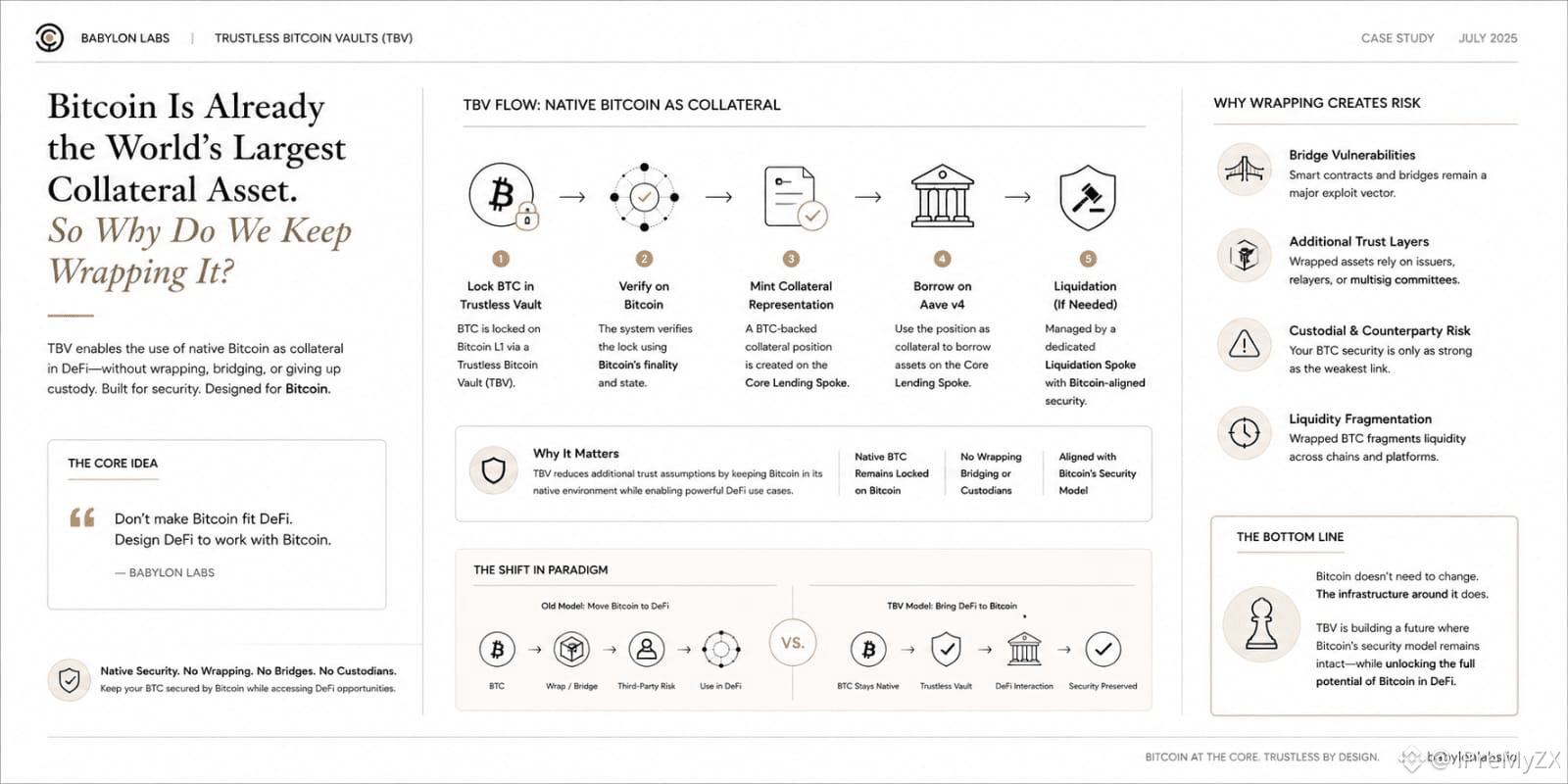
3
123
·
--
#baby $BABY
Comecei a ler sobre Trustless Bitcoin Vaults (TBV) pensando que acabaria comparando taxas de empréstimo.
Não aconteceu.
Eu continuei voltando para algo muito menos óbvio: onde a confiança fica quando o Bitcoin nativo passa a ser usado como garantia.
Por anos, o caminho padrão pareceu resolvido. Envolva o BTC, faça a ponte, interaja com DeFi, siga em frente. Eu tratei essas camadas extras como o custo inevitável de tornar o Bitcoin útil fora da própria cadeia.
O TBV me fez questionar se essa suposição merecia se tornar o padrão.
O que chamou atenção não foi que o Bitcoin, de repente, se torna sem atrito. Não se torna. O BTC nativo ainda segue o ritmo de liquidação do próprio Bitcoin, e essa cadência não desaparece só porque outra cadeia quer executar mais rápido.
A diferença é onde o protocolo decide absorver esse atrito.
Em vez de introduzir outra representação do Bitcoin, o TBV mantém a garantia vinculada ao próprio Bitcoin enquanto constrói a lógica de empréstimo com base nessa realidade. A espera não some — ela apenas segue as regras do Bitcoin, em vez das de uma ponte ou de um custodiante.
Quanto mais penso nisso, menos isso parece uma discussão sobre empréstimos.
É uma discussão sobre prioridades de design.
É melhor otimizar para conveniência imediata ou preservar as suposições de segurança que tornaram o Bitcoin valioso em primeiro lugar?
Ainda estou trabalhando na arquitetura, e tenho certeza de que existem trade-offs que ainda não compreendi completamente.
Mas uma coisa mudou.
Agora eu não julgo mais a infraestrutura do Bitcoin pela rapidez com que ela movimenta BTC.
Estou prestando muito mais atenção ao que ela me pede para confiar antes mesmo de mover qualquer coisa.
@babylonlabs_io
#baby
#baby $BABY
Comecei a ler sobre Trustless Bitcoin Vaults (TBV) pensando que acabaria comparando taxas de empréstimo.
Não aconteceu.
Eu continuei voltando para algo muito menos óbvio: onde a confiança fica quando o Bitcoin nativo passa a ser usado como garantia.
Por anos, o caminho padrão pareceu resolvido. Envolva o BTC, faça a ponte, interaja com DeFi, siga em frente. Eu tratei essas camadas extras como o custo inevitável de tornar o Bitcoin útil fora da própria cadeia.
O TBV me fez questionar se essa suposição merecia se tornar o padrão.
O que chamou atenção não foi que o Bitcoin, de repente, se torna sem atrito. Não se torna. O BTC nativo ainda segue o ritmo de liquidação do próprio Bitcoin, e essa cadência não desaparece só porque outra cadeia quer executar mais rápido.
A diferença é onde o protocolo decide absorver esse atrito.
Em vez de introduzir outra representação do Bitcoin, o TBV mantém a garantia vinculada ao próprio Bitcoin enquanto constrói a lógica de empréstimo com base nessa realidade. A espera não some — ela apenas segue as regras do Bitcoin, em vez das de uma ponte ou de um custodiante.
Quanto mais penso nisso, menos isso parece uma discussão sobre empréstimos.
É uma discussão sobre prioridades de design.
É melhor otimizar para conveniência imediata ou preservar as suposições de segurança que tornaram o Bitcoin valioso em primeiro lugar?
Ainda estou trabalhando na arquitetura, e tenho certeza de que existem trade-offs que ainda não compreendi completamente.
Mas uma coisa mudou.
Agora eu não julgo mais a infraestrutura do Bitcoin pela rapidez com que ela movimenta BTC.
Estou prestando muito mais atenção ao que ela me pede para confiar antes mesmo de mover qualquer coisa.
@BabylonLabs_io
#baby
Comecei a ler sobre Trustless Bitcoin Vaults (TBV) pensando que acabaria comparando taxas de empréstimo.
Não aconteceu.
Eu continuei voltando para algo muito menos óbvio: onde a confiança fica quando o Bitcoin nativo passa a ser usado como garantia.
Por anos, o caminho padrão pareceu resolvido. Envolva o BTC, faça a ponte, interaja com DeFi, siga em frente. Eu tratei essas camadas extras como o custo inevitável de tornar o Bitcoin útil fora da própria cadeia.
O TBV me fez questionar se essa suposição merecia se tornar o padrão.
O que chamou atenção não foi que o Bitcoin, de repente, se torna sem atrito. Não se torna. O BTC nativo ainda segue o ritmo de liquidação do próprio Bitcoin, e essa cadência não desaparece só porque outra cadeia quer executar mais rápido.
A diferença é onde o protocolo decide absorver esse atrito.
Em vez de introduzir outra representação do Bitcoin, o TBV mantém a garantia vinculada ao próprio Bitcoin enquanto constrói a lógica de empréstimo com base nessa realidade. A espera não some — ela apenas segue as regras do Bitcoin, em vez das de uma ponte ou de um custodiante.
Quanto mais penso nisso, menos isso parece uma discussão sobre empréstimos.
É uma discussão sobre prioridades de design.
É melhor otimizar para conveniência imediata ou preservar as suposições de segurança que tornaram o Bitcoin valioso em primeiro lugar?
Ainda estou trabalhando na arquitetura, e tenho certeza de que existem trade-offs que ainda não compreendi completamente.
Mas uma coisa mudou.
Agora eu não julgo mais a infraestrutura do Bitcoin pela rapidez com que ela movimenta BTC.
Estou prestando muito mais atenção ao que ela me pede para confiar antes mesmo de mover qualquer coisa.
@BabylonLabs_io
#baby
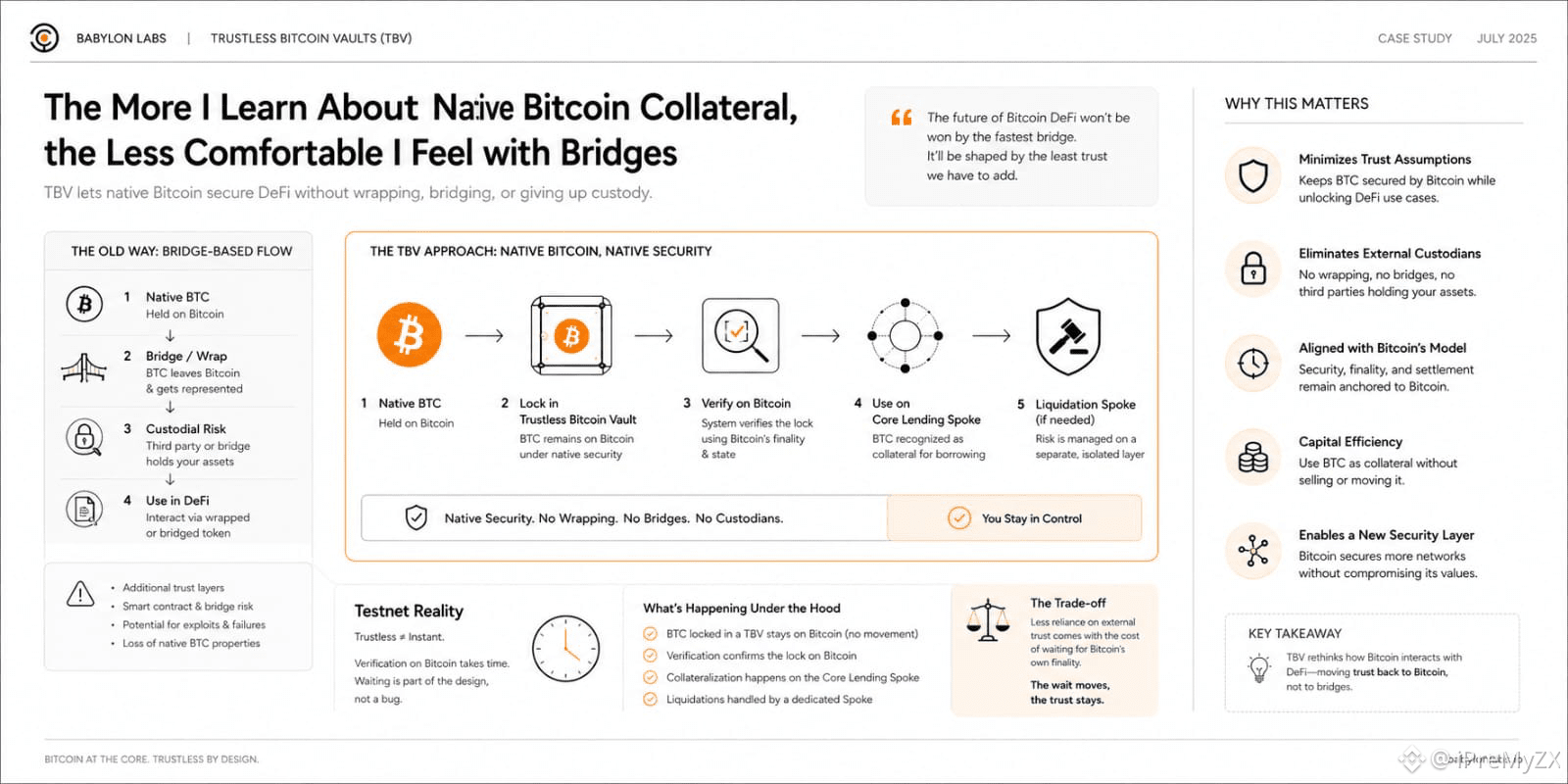
1
1
123
·
--
#baby $BABY
Passei mais tempo do que eu esperava lendo sobre Trustless Bitcoin Vaults (TBV) na noite passada.
Entrei achando que a parte interessante seria tomar empréstimos usando Bitcoin nativo. É o recurso que todo mundo nota primeiro.
Mas, em vez disso, eu voltava repetidamente para algo muito mais silencioso.
Para onde a confiança realmente vai?
A maioria dos projetos de Bitcoin DeFi resolve a interoperabilidade adicionando outra camada — um ativo “wrapped”, uma ponte ou um custodiante. Você ganha flexibilidade, mas também herda outro sistema cuja segurança importa quase tanto quanto a do Bitcoin.
O TBV não finge que esses trade-offs desaparecem.
Ele muda onde eles ficam.
O BTC nativo continua protegido pelo Bitcoin, enquanto seu status de colateral é reconhecido para aplicações como empréstimos. Isso parece uma decisão arquitetural pequena até você perceber que ela desloca a prioridade do protocolo de mover Bitcoin para preservar o modelo de confiança do Bitcoin.
Quanto mais eu comparei com abordagens anteriores, menos eu achava que isso era uma história sobre concessão de crédito.
Começou a parecer uma história sobre filosofia de design.
Um caminho pede que o Bitcoin se adapte à infraestrutura DeFi existente.
O outro pede que a infraestrutura se adapte em torno do Bitcoin.
Ainda estou lendo os detalhes dos mecanismos, porque todo sistema tem limites, e geralmente são esses limites que escondem as lições mais interessantes.
Mas foi com essa pergunta que eu fechei meu caderno:
Conforme o Bitcoin se torna utilizável em mais ecossistemas, os projetos vencedores serão os que maximizam a conveniência — ou os que minimizam as mudanças no próprio Bitcoin?
@babylonlabs_io
#baby
#baby $BABY
Passei mais tempo do que eu esperava lendo sobre Trustless Bitcoin Vaults (TBV) na noite passada.
Entrei achando que a parte interessante seria tomar empréstimos usando Bitcoin nativo. É o recurso que todo mundo nota primeiro.
Mas, em vez disso, eu voltava repetidamente para algo muito mais silencioso.
Para onde a confiança realmente vai?
A maioria dos projetos de Bitcoin DeFi resolve a interoperabilidade adicionando outra camada — um ativo “wrapped”, uma ponte ou um custodiante. Você ganha flexibilidade, mas também herda outro sistema cuja segurança importa quase tanto quanto a do Bitcoin.
O TBV não finge que esses trade-offs desaparecem.
Ele muda onde eles ficam.
O BTC nativo continua protegido pelo Bitcoin, enquanto seu status de colateral é reconhecido para aplicações como empréstimos. Isso parece uma decisão arquitetural pequena até você perceber que ela desloca a prioridade do protocolo de mover Bitcoin para preservar o modelo de confiança do Bitcoin.
Quanto mais eu comparei com abordagens anteriores, menos eu achava que isso era uma história sobre concessão de crédito.
Começou a parecer uma história sobre filosofia de design.
Um caminho pede que o Bitcoin se adapte à infraestrutura DeFi existente.
O outro pede que a infraestrutura se adapte em torno do Bitcoin.
Ainda estou lendo os detalhes dos mecanismos, porque todo sistema tem limites, e geralmente são esses limites que escondem as lições mais interessantes.
Mas foi com essa pergunta que eu fechei meu caderno:
Conforme o Bitcoin se torna utilizável em mais ecossistemas, os projetos vencedores serão os que maximizam a conveniência — ou os que minimizam as mudanças no próprio Bitcoin?
@BabylonLabs_io
#baby
Passei mais tempo do que eu esperava lendo sobre Trustless Bitcoin Vaults (TBV) na noite passada.
Entrei achando que a parte interessante seria tomar empréstimos usando Bitcoin nativo. É o recurso que todo mundo nota primeiro.
Mas, em vez disso, eu voltava repetidamente para algo muito mais silencioso.
Para onde a confiança realmente vai?
A maioria dos projetos de Bitcoin DeFi resolve a interoperabilidade adicionando outra camada — um ativo “wrapped”, uma ponte ou um custodiante. Você ganha flexibilidade, mas também herda outro sistema cuja segurança importa quase tanto quanto a do Bitcoin.
O TBV não finge que esses trade-offs desaparecem.
Ele muda onde eles ficam.
O BTC nativo continua protegido pelo Bitcoin, enquanto seu status de colateral é reconhecido para aplicações como empréstimos. Isso parece uma decisão arquitetural pequena até você perceber que ela desloca a prioridade do protocolo de mover Bitcoin para preservar o modelo de confiança do Bitcoin.
Quanto mais eu comparei com abordagens anteriores, menos eu achava que isso era uma história sobre concessão de crédito.
Começou a parecer uma história sobre filosofia de design.
Um caminho pede que o Bitcoin se adapte à infraestrutura DeFi existente.
O outro pede que a infraestrutura se adapte em torno do Bitcoin.
Ainda estou lendo os detalhes dos mecanismos, porque todo sistema tem limites, e geralmente são esses limites que escondem as lições mais interessantes.
Mas foi com essa pergunta que eu fechei meu caderno:
Conforme o Bitcoin se torna utilizável em mais ecossistemas, os projetos vencedores serão os que maximizam a conveniência — ou os que minimizam as mudanças no próprio Bitcoin?
@BabylonLabs_io
#baby
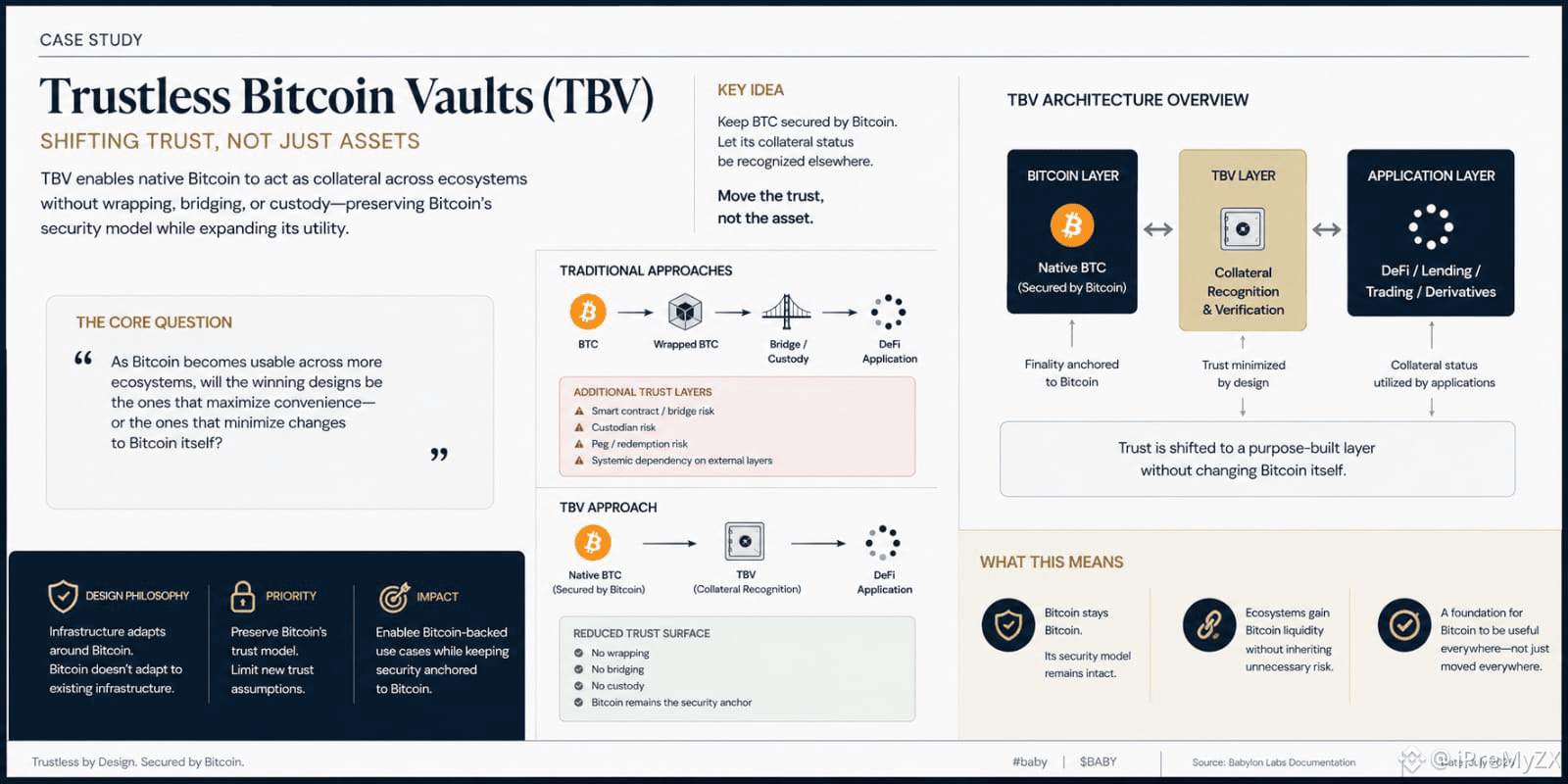
1
105
·
--
#baby $BABY
Eu costumava achar que entendia por que as pessoas embrulhavam o Bitcoin.
Parecia apenas o caminho normal. Se você quisesse usar BTC em DeFi, você o embrulhava, fazia a ponte e seguia em frente. Eu nunca realmente questionei isso porque todo mundo parecia tratá-lo como o preço de participar.
Então, numa noite, me vi lendo sobre Trustless Bitcoin Vaults (TBV) da @BabylonLabs_io.
O que começou como uma pesquisa casual virou uma toca de coelho bem mais longa do que eu esperava.
A parte interessante não era que o TBV ofereça outra forma de usar Bitcoin. Era a pergunta escondida por trás disso.
Por que o Bitcoin precisa se tornar outra coisa antes de ficar útil?
Esse pensamento ficou comigo.
Quanto mais eu aprendi, mais percebi que nos acostumamos a adicionar camadas extras ao redor do Bitcoin em vez de perguntar se essas camadas eram necessárias desde o início. Wrappers, pontes, custodians—resolveram problemas reais, mas também viraram pressupostos que raramente questionamos.
O TBV aborda isso de forma diferente, permitindo que o Bitcoin nativo funcione como garantia enquanto permanece ancorado no próprio modelo de segurança do Bitcoin. Não é sobre fingir que os trade-offs não existem. É sobre mudar quais trade-offs os usuários precisam aceitar.
Eu ainda estou aprendendo, então não finjo ter todas as respostas.
Mas de vez em quando, um protocolo muda a forma como você pensa, em vez de simplesmente adicionar mais um recurso para comparar.
Para mim, @babylonlabs_io has fez exatamente isso.
Talvez a coisa mais valiosa que eu ganhei não tenha sido um novo produto para seguir—foi uma nova pergunta para continuar fazendo.
#baby $BABY
Eu costumava achar que entendia por que as pessoas embrulhavam o Bitcoin.
Parecia apenas o caminho normal. Se você quisesse usar BTC em DeFi, você o embrulhava, fazia a ponte e seguia em frente. Eu nunca realmente questionei isso porque todo mundo parecia tratá-lo como o preço de participar.
Então, numa noite, me vi lendo sobre Trustless Bitcoin Vaults (TBV) da @BabylonLabs_io.
O que começou como uma pesquisa casual virou uma toca de coelho bem mais longa do que eu esperava.
A parte interessante não era que o TBV ofereça outra forma de usar Bitcoin. Era a pergunta escondida por trás disso.
Por que o Bitcoin precisa se tornar outra coisa antes de ficar útil?
Esse pensamento ficou comigo.
Quanto mais eu aprendi, mais percebi que nos acostumamos a adicionar camadas extras ao redor do Bitcoin em vez de perguntar se essas camadas eram necessárias desde o início. Wrappers, pontes, custodians—resolveram problemas reais, mas também viraram pressupostos que raramente questionamos.
O TBV aborda isso de forma diferente, permitindo que o Bitcoin nativo funcione como garantia enquanto permanece ancorado no próprio modelo de segurança do Bitcoin. Não é sobre fingir que os trade-offs não existem. É sobre mudar quais trade-offs os usuários precisam aceitar.
Eu ainda estou aprendendo, então não finjo ter todas as respostas.
Mas de vez em quando, um protocolo muda a forma como você pensa, em vez de simplesmente adicionar mais um recurso para comparar.
Para mim, @BabylonLabs_io has fez exatamente isso.
Talvez a coisa mais valiosa que eu ganhei não tenha sido um novo produto para seguir—foi uma nova pergunta para continuar fazendo.
Eu costumava achar que entendia por que as pessoas embrulhavam o Bitcoin.
Parecia apenas o caminho normal. Se você quisesse usar BTC em DeFi, você o embrulhava, fazia a ponte e seguia em frente. Eu nunca realmente questionei isso porque todo mundo parecia tratá-lo como o preço de participar.
Então, numa noite, me vi lendo sobre Trustless Bitcoin Vaults (TBV) da @BabylonLabs_io.
O que começou como uma pesquisa casual virou uma toca de coelho bem mais longa do que eu esperava.
A parte interessante não era que o TBV ofereça outra forma de usar Bitcoin. Era a pergunta escondida por trás disso.
Por que o Bitcoin precisa se tornar outra coisa antes de ficar útil?
Esse pensamento ficou comigo.
Quanto mais eu aprendi, mais percebi que nos acostumamos a adicionar camadas extras ao redor do Bitcoin em vez de perguntar se essas camadas eram necessárias desde o início. Wrappers, pontes, custodians—resolveram problemas reais, mas também viraram pressupostos que raramente questionamos.
O TBV aborda isso de forma diferente, permitindo que o Bitcoin nativo funcione como garantia enquanto permanece ancorado no próprio modelo de segurança do Bitcoin. Não é sobre fingir que os trade-offs não existem. É sobre mudar quais trade-offs os usuários precisam aceitar.
Eu ainda estou aprendendo, então não finjo ter todas as respostas.
Mas de vez em quando, um protocolo muda a forma como você pensa, em vez de simplesmente adicionar mais um recurso para comparar.
Para mim, @BabylonLabs_io has fez exatamente isso.
Talvez a coisa mais valiosa que eu ganhei não tenha sido um novo produto para seguir—foi uma nova pergunta para continuar fazendo.
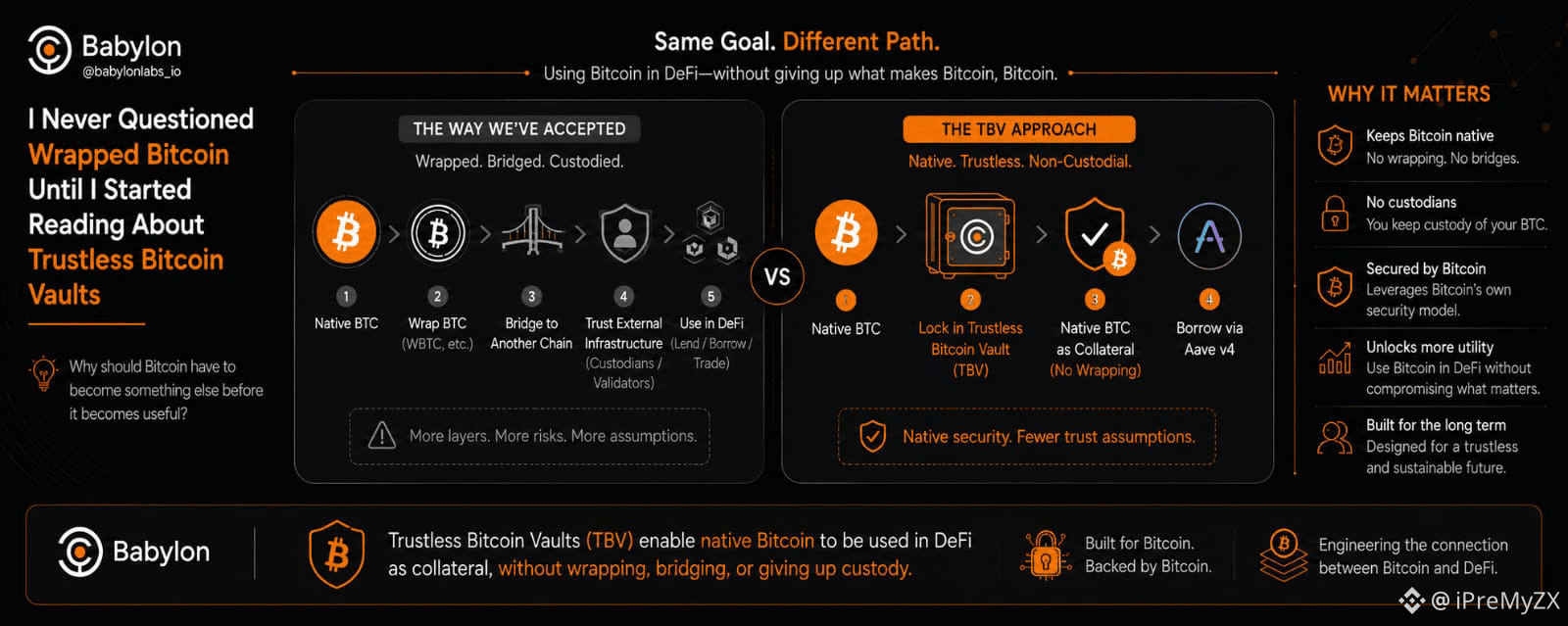
102
·
--
#baby $BABY
Eu não esperava que um único documento me fizesse questionar algo que eu havia aceitado por anos.
Isso aconteceu tarde da noite, enquanto eu lia sobre a infraestrutura do Bitcoin. Eu via o mesmo padrão se repetindo o tempo todo. Toda vez que o Bitcoin queria participar do DeFi, a primeira instrução era quase automática.
Envolva.
Faça a ponte.
Leve para outro lugar.
Em algum momento percebi que eu havia parado de perguntar por quê.
Talvez seja isso que acontece quando uma ideia é repetida tempo suficiente. Ela deixa de parecer um compromisso e começa a parecer a única opção.
Então comecei a ler sobre Trustless Bitcoin Vaults (TBV) do @babylonlabs_io .
O que chamou minha atenção não foi o fato de que prometia algo mais rápido ou maior. Foi o fato de que ele questionava uma suposição que eu nunca tinha questionado.
Por que o Bitcoin teria que sair do Bitcoin para se tornar útil?
Quanto mais eu fiquei com essa ideia, mais tudo o resto começou a parecer para trás. Talvez tenhamos passado anos projetando maneiras de adaptar o Bitcoin ao DeFi, em vez de adaptar o DeFi para respeitar o próprio modelo de segurança do Bitcoin.
O TBV não remove magicamente todos os trade-offs. Bitcoin ainda é Bitcoin. A liquidação ainda leva tempo.
Mas a confiança muda.
Em vez de pedir que os usuários acreditem em wrappers, pontes ou custodians, o sistema se apoia com mais força nas próprias regras do Bitcoin.
Isso parece menos correr atrás de conveniência e mais respeitar o ativo que você está tentando desbloquear.
Talvez seja essa a direção que o Bitcoin DeFi está perdendo há todo esse tempo.
#baby $BABY
Eu não esperava que um único documento me fizesse questionar algo que eu havia aceitado por anos.
Isso aconteceu tarde da noite, enquanto eu lia sobre a infraestrutura do Bitcoin. Eu via o mesmo padrão se repetindo o tempo todo. Toda vez que o Bitcoin queria participar do DeFi, a primeira instrução era quase automática.
Envolva.
Faça a ponte.
Leve para outro lugar.
Em algum momento percebi que eu havia parado de perguntar por quê.
Talvez seja isso que acontece quando uma ideia é repetida tempo suficiente. Ela deixa de parecer um compromisso e começa a parecer a única opção.
Então comecei a ler sobre Trustless Bitcoin Vaults (TBV) do @BabylonLabs_io .
O que chamou minha atenção não foi o fato de que prometia algo mais rápido ou maior. Foi o fato de que ele questionava uma suposição que eu nunca tinha questionado.
Por que o Bitcoin teria que sair do Bitcoin para se tornar útil?
Quanto mais eu fiquei com essa ideia, mais tudo o resto começou a parecer para trás. Talvez tenhamos passado anos projetando maneiras de adaptar o Bitcoin ao DeFi, em vez de adaptar o DeFi para respeitar o próprio modelo de segurança do Bitcoin.
O TBV não remove magicamente todos os trade-offs. Bitcoin ainda é Bitcoin. A liquidação ainda leva tempo.
Mas a confiança muda.
Em vez de pedir que os usuários acreditem em wrappers, pontes ou custodians, o sistema se apoia com mais força nas próprias regras do Bitcoin.
Isso parece menos correr atrás de conveniência e mais respeitar o ativo que você está tentando desbloquear.
Talvez seja essa a direção que o Bitcoin DeFi está perdendo há todo esse tempo.
Eu não esperava que um único documento me fizesse questionar algo que eu havia aceitado por anos.
Isso aconteceu tarde da noite, enquanto eu lia sobre a infraestrutura do Bitcoin. Eu via o mesmo padrão se repetindo o tempo todo. Toda vez que o Bitcoin queria participar do DeFi, a primeira instrução era quase automática.
Envolva.
Faça a ponte.
Leve para outro lugar.
Em algum momento percebi que eu havia parado de perguntar por quê.
Talvez seja isso que acontece quando uma ideia é repetida tempo suficiente. Ela deixa de parecer um compromisso e começa a parecer a única opção.
Então comecei a ler sobre Trustless Bitcoin Vaults (TBV) do @BabylonLabs_io .
O que chamou minha atenção não foi o fato de que prometia algo mais rápido ou maior. Foi o fato de que ele questionava uma suposição que eu nunca tinha questionado.
Por que o Bitcoin teria que sair do Bitcoin para se tornar útil?
Quanto mais eu fiquei com essa ideia, mais tudo o resto começou a parecer para trás. Talvez tenhamos passado anos projetando maneiras de adaptar o Bitcoin ao DeFi, em vez de adaptar o DeFi para respeitar o próprio modelo de segurança do Bitcoin.
O TBV não remove magicamente todos os trade-offs. Bitcoin ainda é Bitcoin. A liquidação ainda leva tempo.
Mas a confiança muda.
Em vez de pedir que os usuários acreditem em wrappers, pontes ou custodians, o sistema se apoia com mais força nas próprias regras do Bitcoin.
Isso parece menos correr atrás de conveniência e mais respeitar o ativo que você está tentando desbloquear.
Talvez seja essa a direção que o Bitcoin DeFi está perdendo há todo esse tempo.
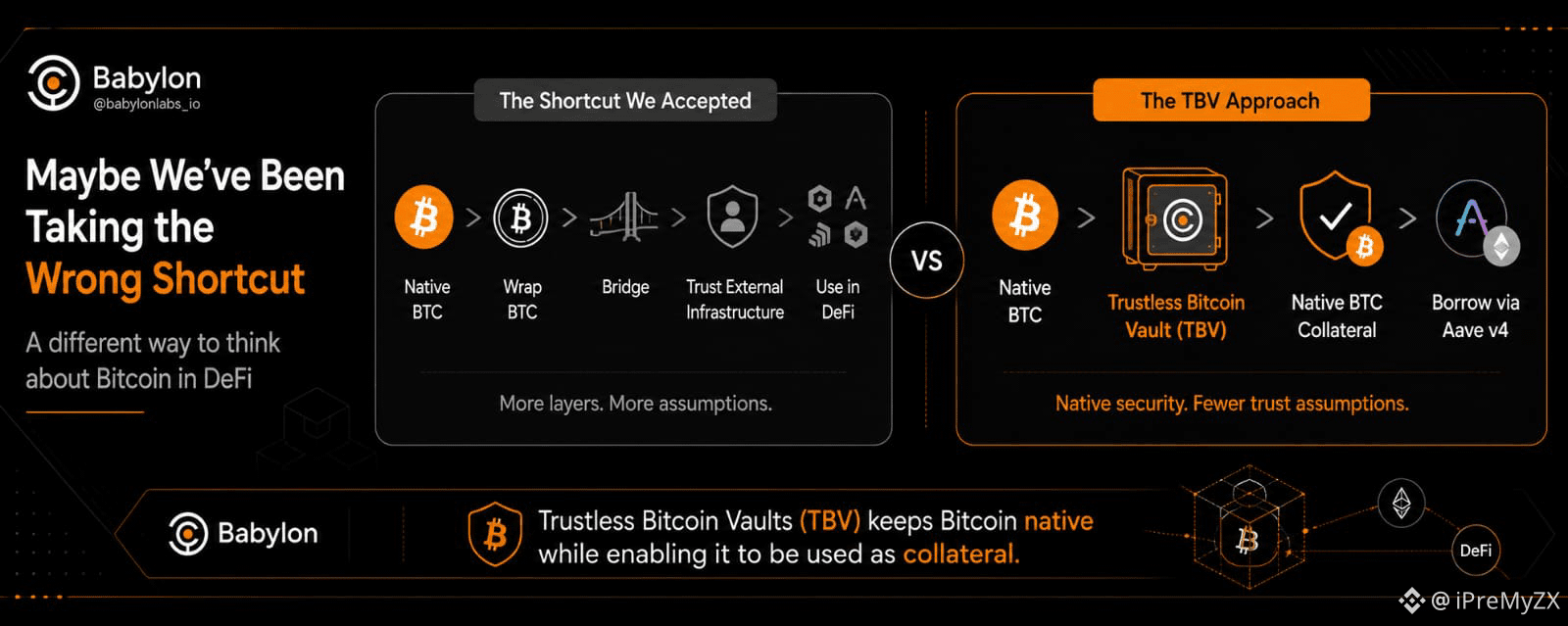
1
117
·
--
#baby $BABY
Há alguns dias, eu estava seguindo minha rotina habitual. Café na mesa, algumas abas abertas e mais uma noite lendo sobre infraestrutura de cripto em vez de ficar conferindo gráficos.
Eu não estava procurando um projeto novo. Na verdade, eu tentava entender por que o Bitcoin ainda parece desconectado de grande parte do DeFi, apesar de ser o maior ativo do setor.
A resposta óbvia sempre parecia ser: "É só embrulhar".
Por anos, eu aceitei isso sem pensar muito.
Mas quanto mais eu lia sobre @babylonlabs_io e Trustless Bitcoin Vaults (TBV), mais eu percebia que embrulhar o Bitcoin talvez tenha sido um atalho do qual nos acostumamos—não necessariamente a melhor solução.
Ele resolveu um problema ao introduzir vários outros.
Mover Bitcoin entre cadeias, dependendo de pontes, ou confiar em intermediários foi se tornando o caminho normal. Eu não acho que muitos de nós tenham parado para perguntar se o Bitcoin realmente precisava sair do seu próprio modelo de segurança só para se tornar útil em outro lugar.
Foi isso que chamou minha atenção no TBV.
Em vez de mudar o Bitcoin, a ideia é permitir que o Bitcoin nativo seja usado como garantia, mantendo-o ancorado ao próprio Bitcoin. Parece menos uma tentativa de forçar o Bitcoin a se encaixar no DeFi e mais o desenvolvimento de uma infraestrutura que respeita o que o Bitcoin já é.
Ainda estou aprendendo, e não acho que qualquer protocolo tenha todas as respostas.
Mas de vez em quando você se depara com uma ideia que faz você repensar uma suposição que carregou por anos.
Para mim, @babylonlabs_io tem sido um desses projetos.
#baby $BABY
Há alguns dias, eu estava seguindo minha rotina habitual. Café na mesa, algumas abas abertas e mais uma noite lendo sobre infraestrutura de cripto em vez de ficar conferindo gráficos.
Eu não estava procurando um projeto novo. Na verdade, eu tentava entender por que o Bitcoin ainda parece desconectado de grande parte do DeFi, apesar de ser o maior ativo do setor.
A resposta óbvia sempre parecia ser: "É só embrulhar".
Por anos, eu aceitei isso sem pensar muito.
Mas quanto mais eu lia sobre @BabylonLabs_io e Trustless Bitcoin Vaults (TBV), mais eu percebia que embrulhar o Bitcoin talvez tenha sido um atalho do qual nos acostumamos—não necessariamente a melhor solução.
Ele resolveu um problema ao introduzir vários outros.
Mover Bitcoin entre cadeias, dependendo de pontes, ou confiar em intermediários foi se tornando o caminho normal. Eu não acho que muitos de nós tenham parado para perguntar se o Bitcoin realmente precisava sair do seu próprio modelo de segurança só para se tornar útil em outro lugar.
Foi isso que chamou minha atenção no TBV.
Em vez de mudar o Bitcoin, a ideia é permitir que o Bitcoin nativo seja usado como garantia, mantendo-o ancorado ao próprio Bitcoin. Parece menos uma tentativa de forçar o Bitcoin a se encaixar no DeFi e mais o desenvolvimento de uma infraestrutura que respeita o que o Bitcoin já é.
Ainda estou aprendendo, e não acho que qualquer protocolo tenha todas as respostas.
Mas de vez em quando você se depara com uma ideia que faz você repensar uma suposição que carregou por anos.
Para mim, @BabylonLabs_io tem sido um desses projetos.
Há alguns dias, eu estava seguindo minha rotina habitual. Café na mesa, algumas abas abertas e mais uma noite lendo sobre infraestrutura de cripto em vez de ficar conferindo gráficos.
Eu não estava procurando um projeto novo. Na verdade, eu tentava entender por que o Bitcoin ainda parece desconectado de grande parte do DeFi, apesar de ser o maior ativo do setor.
A resposta óbvia sempre parecia ser: "É só embrulhar".
Por anos, eu aceitei isso sem pensar muito.
Mas quanto mais eu lia sobre @BabylonLabs_io e Trustless Bitcoin Vaults (TBV), mais eu percebia que embrulhar o Bitcoin talvez tenha sido um atalho do qual nos acostumamos—não necessariamente a melhor solução.
Ele resolveu um problema ao introduzir vários outros.
Mover Bitcoin entre cadeias, dependendo de pontes, ou confiar em intermediários foi se tornando o caminho normal. Eu não acho que muitos de nós tenham parado para perguntar se o Bitcoin realmente precisava sair do seu próprio modelo de segurança só para se tornar útil em outro lugar.
Foi isso que chamou minha atenção no TBV.
Em vez de mudar o Bitcoin, a ideia é permitir que o Bitcoin nativo seja usado como garantia, mantendo-o ancorado ao próprio Bitcoin. Parece menos uma tentativa de forçar o Bitcoin a se encaixar no DeFi e mais o desenvolvimento de uma infraestrutura que respeita o que o Bitcoin já é.
Ainda estou aprendendo, e não acho que qualquer protocolo tenha todas as respostas.
Mas de vez em quando você se depara com uma ideia que faz você repensar uma suposição que carregou por anos.
Para mim, @BabylonLabs_io tem sido um desses projetos.
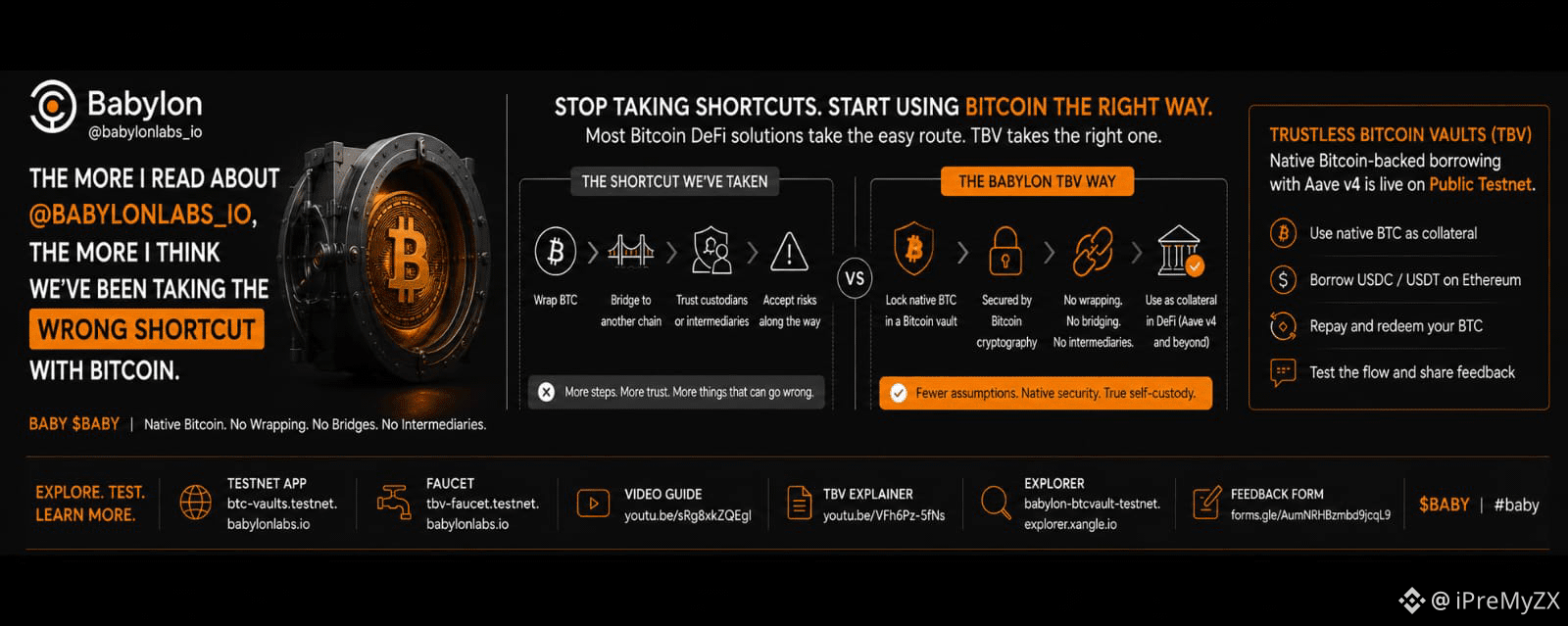
84
·
--
#baby $BABY
Quando as pessoas falam sobre Bitcoin em DeFi, a conversa geralmente gira em torno de rendimento. Qual protocolo oferece mais? Qual estratégia é mais eficiente?
Quanto mais eu explorava o espaço, mais eu sentia que essas discussões estavam pulando uma pergunta muito maior.
O que estamos concordando antes mesmo de ganhar esse rendimento?
Por anos, usar Bitcoin em DeFi tem muitas vezes significado aceitar uma série de concessões. Embrulhar seu BTC. Fazê-lo atravessar para outra rede. Confiar em um custodiante ou em outra camada de infraestrutura. Essas etapas se tornaram tão comuns que muitos de nós pararam de enxergá-las como compromissos.
Ler sobre os Trustless Bitcoin Vaults (TBV) a partir de @babylonlabs_io me fez revisitar essa suposição.
O que se destacou não foi a promessa de retornos maiores — foi a tentativa de reduzir a confiança desnecessária. O TBV foi projetado para permitir que o Bitcoin nativo sirva como garantia sem embrulhá-lo, fazendo a ponte para outra rede ou dependendo de intermediários centralizados. Essa abordagem parece muito mais próxima do modelo original de segurança do Bitcoin.
Também acho interessante que a primeira implementação foque em empréstimos lastreados por Bitcoin nativo com Aave v4. Em vez de tentar reinventar o DeFi, ela repensa como o Bitcoin entra nele em primeiro lugar.
Não estou dizendo que toda solução existente está errada nem que o TBV é a resposta final. Mas eu acho que ele desloca a conversa para algo mais fundamental.
Talvez a maior inovação não seja encontrar mais uma forma de gerar rendimento.
Talvez seja reduzir o número de concessões que aceitamos em silêncio antes mesmo de chegar lá.
Essa é a perspectiva que @babylonlabs_io me deixou pensando.
#baby $BABY
Quando as pessoas falam sobre Bitcoin em DeFi, a conversa geralmente gira em torno de rendimento. Qual protocolo oferece mais? Qual estratégia é mais eficiente?
Quanto mais eu explorava o espaço, mais eu sentia que essas discussões estavam pulando uma pergunta muito maior.
O que estamos concordando antes mesmo de ganhar esse rendimento?
Por anos, usar Bitcoin em DeFi tem muitas vezes significado aceitar uma série de concessões. Embrulhar seu BTC. Fazê-lo atravessar para outra rede. Confiar em um custodiante ou em outra camada de infraestrutura. Essas etapas se tornaram tão comuns que muitos de nós pararam de enxergá-las como compromissos.
Ler sobre os Trustless Bitcoin Vaults (TBV) a partir de @BabylonLabs_io me fez revisitar essa suposição.
O que se destacou não foi a promessa de retornos maiores — foi a tentativa de reduzir a confiança desnecessária. O TBV foi projetado para permitir que o Bitcoin nativo sirva como garantia sem embrulhá-lo, fazendo a ponte para outra rede ou dependendo de intermediários centralizados. Essa abordagem parece muito mais próxima do modelo original de segurança do Bitcoin.
Também acho interessante que a primeira implementação foque em empréstimos lastreados por Bitcoin nativo com Aave v4. Em vez de tentar reinventar o DeFi, ela repensa como o Bitcoin entra nele em primeiro lugar.
Não estou dizendo que toda solução existente está errada nem que o TBV é a resposta final. Mas eu acho que ele desloca a conversa para algo mais fundamental.
Talvez a maior inovação não seja encontrar mais uma forma de gerar rendimento.
Talvez seja reduzir o número de concessões que aceitamos em silêncio antes mesmo de chegar lá.
Essa é a perspectiva que @BabylonLabs_io me deixou pensando.
Quando as pessoas falam sobre Bitcoin em DeFi, a conversa geralmente gira em torno de rendimento. Qual protocolo oferece mais? Qual estratégia é mais eficiente?
Quanto mais eu explorava o espaço, mais eu sentia que essas discussões estavam pulando uma pergunta muito maior.
O que estamos concordando antes mesmo de ganhar esse rendimento?
Por anos, usar Bitcoin em DeFi tem muitas vezes significado aceitar uma série de concessões. Embrulhar seu BTC. Fazê-lo atravessar para outra rede. Confiar em um custodiante ou em outra camada de infraestrutura. Essas etapas se tornaram tão comuns que muitos de nós pararam de enxergá-las como compromissos.
Ler sobre os Trustless Bitcoin Vaults (TBV) a partir de @BabylonLabs_io me fez revisitar essa suposição.
O que se destacou não foi a promessa de retornos maiores — foi a tentativa de reduzir a confiança desnecessária. O TBV foi projetado para permitir que o Bitcoin nativo sirva como garantia sem embrulhá-lo, fazendo a ponte para outra rede ou dependendo de intermediários centralizados. Essa abordagem parece muito mais próxima do modelo original de segurança do Bitcoin.
Também acho interessante que a primeira implementação foque em empréstimos lastreados por Bitcoin nativo com Aave v4. Em vez de tentar reinventar o DeFi, ela repensa como o Bitcoin entra nele em primeiro lugar.
Não estou dizendo que toda solução existente está errada nem que o TBV é a resposta final. Mas eu acho que ele desloca a conversa para algo mais fundamental.
Talvez a maior inovação não seja encontrar mais uma forma de gerar rendimento.
Talvez seja reduzir o número de concessões que aceitamos em silêncio antes mesmo de chegar lá.
Essa é a perspectiva que @BabylonLabs_io me deixou pensando.
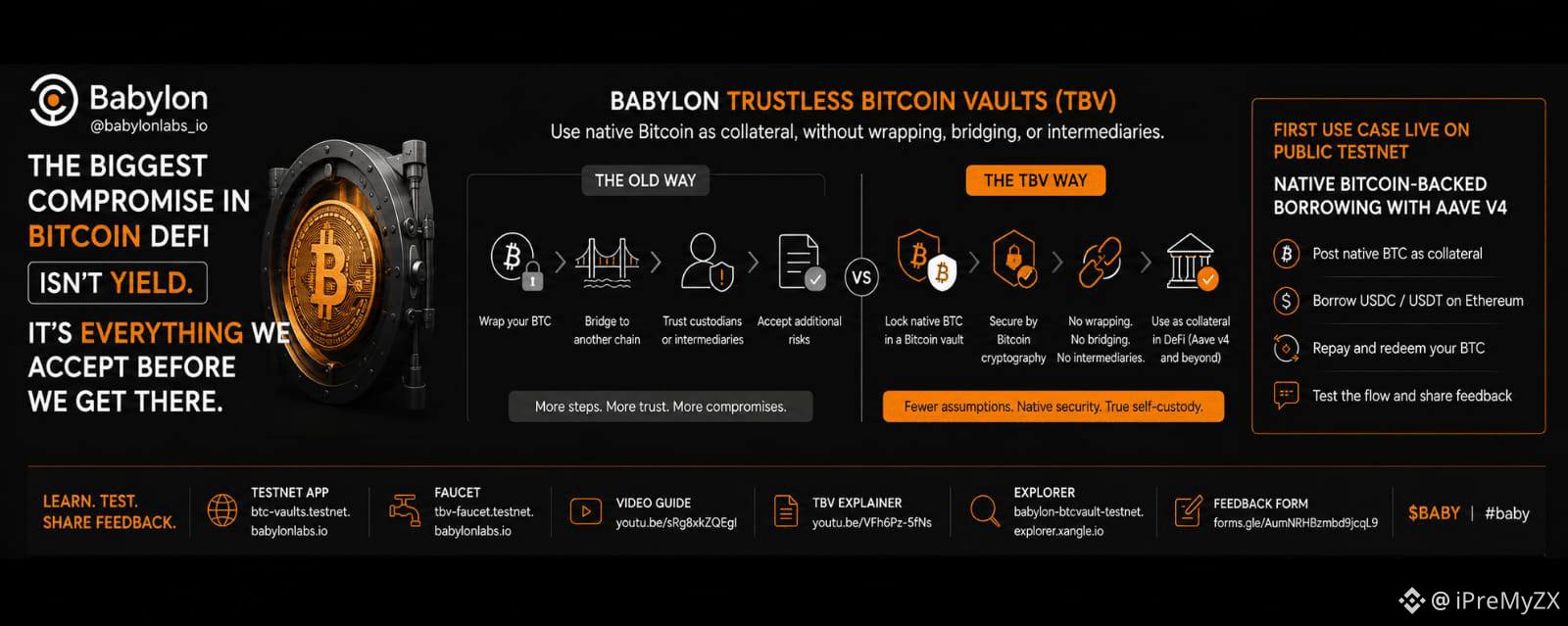
87
Faça login para explorar mais conteúdos
Junte-se a usuários de criptomoedas de todo o mundo no Binance Square.
⚡️ Obter informações mais recentes e úteis sobre criptomoeda.
💬 Com a confiança da maior corretora de criptomoedas do mundo.
👍 Descubra insights reais de criadores verificados.
E-mail / número de telefone
Tópicos em Alta
AppleDebutsFoldablePhone
24,900 visualizações
530 discutindo
#AppleDebutsFoldablePhone
A Apple finalmente está entrando na arena dos dobráveis e fazendo as coisas de um jeito um pouco diferente. ✨
Conheça o novo iPhone Duo. Em vez de focar apenas em hardware flexível, a Apple coloca o software adaptativo em primeiro plano — ajustando a interface do usuário de forma dinâmica dependendo de como o dispositivo está configurado.
Destaques principais:
Formas adaptativas: recursos com configurações dinâmicas, como um “modo tenda” mãos-livres para maratonar conteúdos e um modo elegante de relógio de cabeceira.
Data de lançamento: chega à Índia em 16 de outubro.
O preço: definido em ₹2,99,900.
Com quase 3 Lakhs, a Apple deixa claro que está posicionando isso como um dispositivo de luxo ultra premium, e não como um modelo popular para o dia a dia.
$ARX
$BULLA
$BTR
#Apple
#USADPWeeklyEmploymentRises12000
Green Rock Sinal
·1 curtidas
·8 visualizações
TSMCAugustRevenueUp53.3%YoY
135 visualizações
42 discutindo
IranSaysReadyToEscalateWarWithUS
2,580 visualizações
104 discutindo