
CryptoQuill_5
1.7k Publicações

CryptoQuill_5
1.1K+ Seguindo
10.1K+ Seguidores
1.6K+ Curtiu
Publicações
Todas
Citações
Live
PINNED
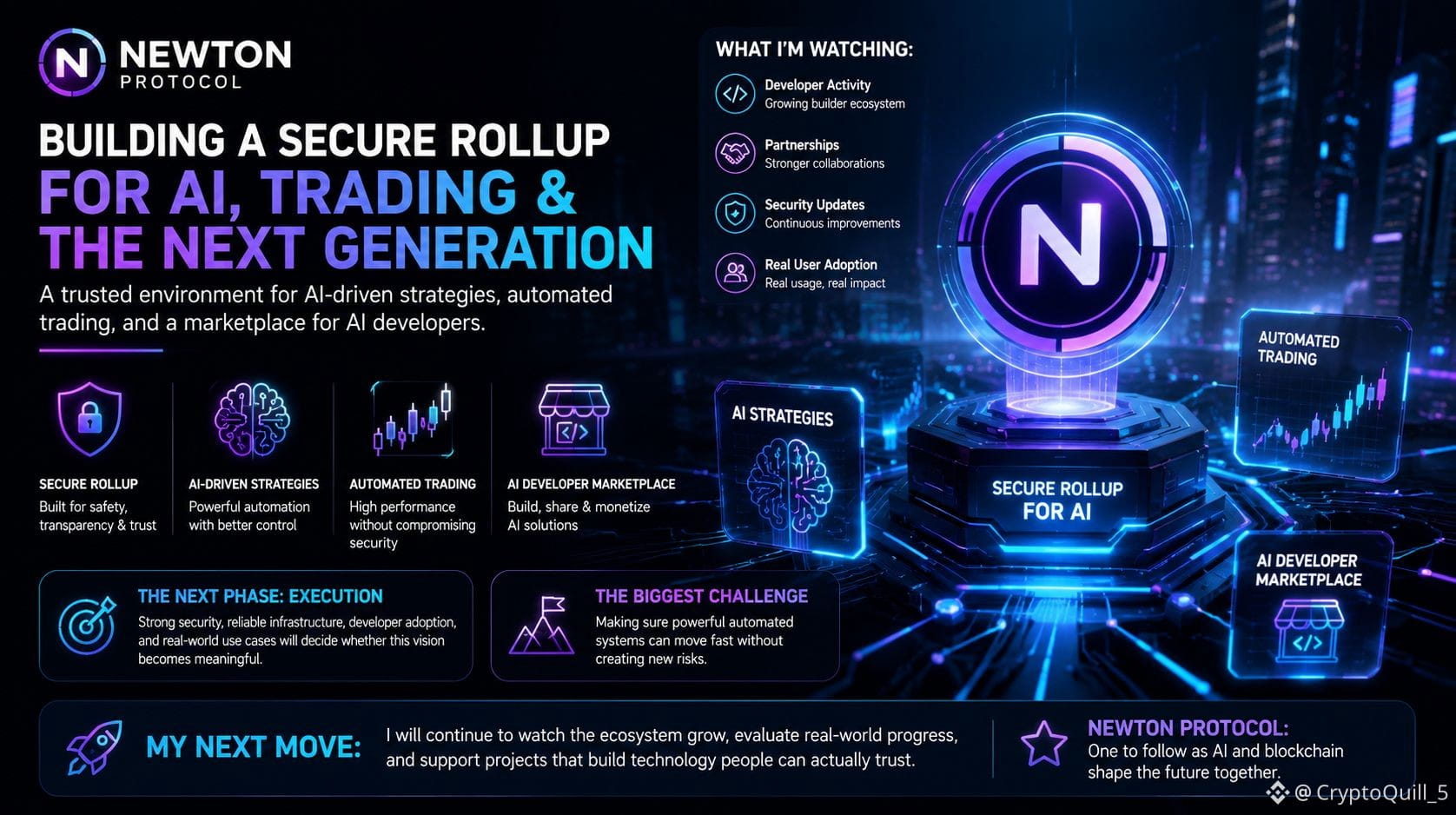
O que mais me chama a atenção é o foco em construir um ambiente de rollup seguro, projetado para estratégias de IA, trading automatizado e um marketplace onde desenvolvedores de IA possam criar e compartilhar soluções. A ideia não é apenas sobre velocidade, mas sim sobre criar um espaço confiável, onde a automação possa operar com mais controle e transparência.
Acredito que a próxima fase será sobre execução. Segurança robusta, infraestrutura confiável, adoção por desenvolvedores e casos de uso no mundo real vão determinar se essa visão se torna significativa. O maior desafio é garantir que sistemas automatizados poderosos possam se mover rápido sem criar novos riscos.
Meu próximo passo é acompanhar o crescimento do ecossistema: atividade dos desenvolvedores, parcerias, atualizações de segurança e como usuários reais interagem com a tecnologia. Nesse espaço, é fácil chamar a atenção, mas o valor duradouro vem de construir algo que as pessoas realmente possam confiar.
Newton Protocol é uma opção a acompanhar, à medida que a conexão entre IA e blockchain continua a evoluir.
@NewtonProtocol #newt $NEWT
Acredito que a próxima fase será sobre execução. Segurança robusta, infraestrutura confiável, adoção por desenvolvedores e casos de uso no mundo real vão determinar se essa visão se torna significativa. O maior desafio é garantir que sistemas automatizados poderosos possam se mover rápido sem criar novos riscos.
Meu próximo passo é acompanhar o crescimento do ecossistema: atividade dos desenvolvedores, parcerias, atualizações de segurança e como usuários reais interagem com a tecnologia. Nesse espaço, é fácil chamar a atenção, mas o valor duradouro vem de construir algo que as pessoas realmente possam confiar.
Newton Protocol é uma opção a acompanhar, à medida que a conexão entre IA e blockchain continua a evoluir.
@NewtonProtocol #newt $NEWT
curte ou comenta, por favor 🙏🙏🙏🙏😭

Bull Fox 29
·
--
BearishA maioria das pessoas ainda está correndo atrás da próxima narrativa.
Estou prestando atenção em onde o capital se torna mais eficiente.
Foi isso que chamou minha atenção sobre a OpenGradient.
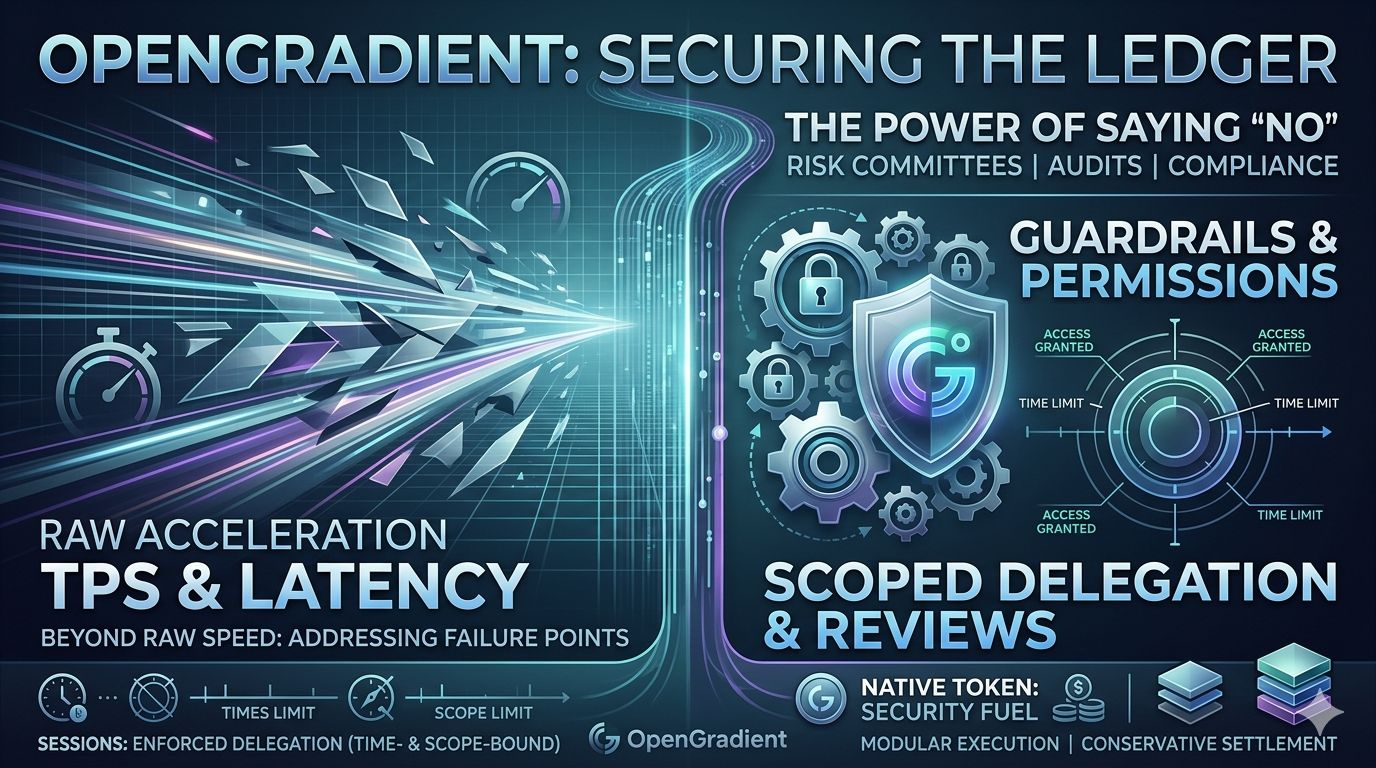
À primeira vista, parece uma rede de infraestrutura de IA focada em hospedagem, inferência e verificação. Mas a oportunidade mais profunda é como o valor pode transitar por múltiplos ecossistemas sem forçar os usuários a se prenderem a um único caminho.
Uma coisa que aprendi no crypto é que capital ocioso é caro. Se um ativo está parado, provavelmente está tendo um desempenho abaixo do esperado. Os projetos que ganham frequentemente encontram maneiras de aumentar a utilidade sem sacrificar a flexibilidade.
É por isso que a ideia de restaking enquanto mantém a liquidez está se tornando cada vez mais interessante. Isso abre a porta para oportunidades de ganhos adicionais enquanto mantém o capital ativo nos ecossistemas Ethereum, Bitcoin e DePIN, em vez de ficar preso em um só lugar.
O que me empolga não são as métricas de manchete. É a possibilidade de criar uma rede onde a infraestrutura de IA, os incentivos econômicos e a eficiência dos ativos se reforçam mutuamente.
O mercado frequentemente foca no que um projeto faz hoje.
Estou mais interessado no que se torna possível quando a liquidez, a segurança e a infraestrutura inteligente começam a trabalhar juntas.
Parece que muitas pessoas ainda estão olhando para a OpenGradient pela lente errada.
O que estou perdendo?
@OpenGradient #OPG $OPG
Estou prestando atenção em onde o capital se torna mais eficiente.
Foi isso que chamou minha atenção sobre a OpenGradient.
À primeira vista, parece uma rede de infraestrutura de IA focada em hospedagem, inferência e verificação. Mas a oportunidade mais profunda é como o valor pode transitar por múltiplos ecossistemas sem forçar os usuários a se prenderem a um único caminho.
Uma coisa que aprendi no crypto é que capital ocioso é caro. Se um ativo está parado, provavelmente está tendo um desempenho abaixo do esperado. Os projetos que ganham frequentemente encontram maneiras de aumentar a utilidade sem sacrificar a flexibilidade.
É por isso que a ideia de restaking enquanto mantém a liquidez está se tornando cada vez mais interessante. Isso abre a porta para oportunidades de ganhos adicionais enquanto mantém o capital ativo nos ecossistemas Ethereum, Bitcoin e DePIN, em vez de ficar preso em um só lugar.
O que me empolga não são as métricas de manchete. É a possibilidade de criar uma rede onde a infraestrutura de IA, os incentivos econômicos e a eficiência dos ativos se reforçam mutuamente.
O mercado frequentemente foca no que um projeto faz hoje.
Estou mais interessado no que se torna possível quando a liquidez, a segurança e a infraestrutura inteligente começam a trabalhar juntas.
Parece que muitas pessoas ainda estão olhando para a OpenGradient pela lente errada.
O que estou perdendo?
@OpenGradient #OPG $OPG
deixa um like ou comenta, por favor 🙏

Matthew t
·
--
BearishEu venho pesquisando a OpenGradient e acho que o mercado está focando na narrativa errada.
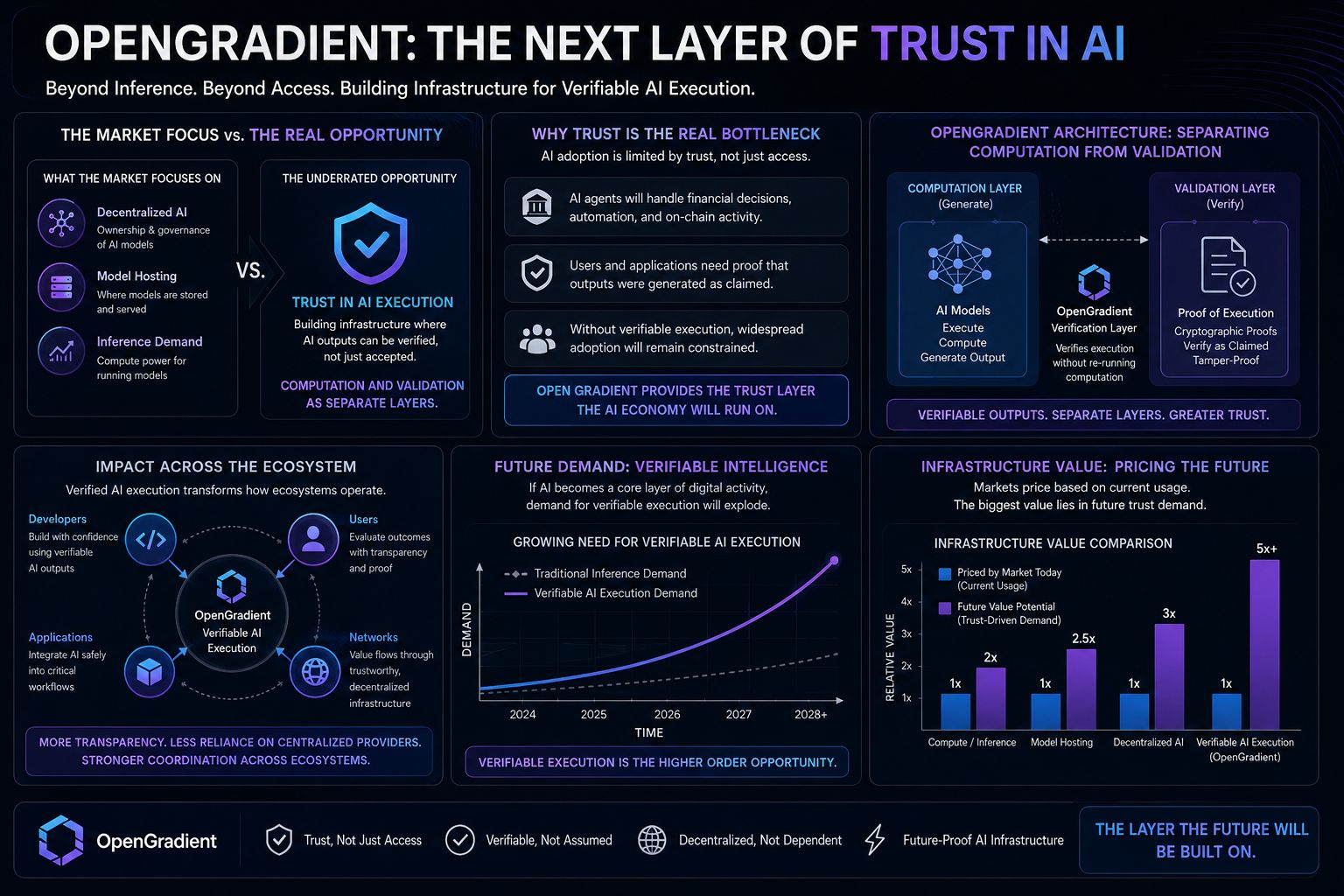
A maioria das discussões gira em torno de IA descentralizada, hospedagem de modelos ou demanda de inferência. Mas a parte mais interessante é como a OpenGradient pode reformular a confiança na execução da IA. O projeto está construindo uma infraestrutura onde as saídas da IA podem ser verificadas em vez de simplesmente aceitas, criando um sistema onde computação e validação operam como camadas separadas.
Essa distinção é importante porque a adoção de IA está cada vez mais limitada pela confiança, não apenas pelo acesso. À medida que os agentes de IA começam a lidar com decisões financeiras, automação e atividades on-chain, usuários e aplicações precisarão de provas de que as saídas foram geradas conforme afirmado. A OpenGradient está se posicionando em torno dessa exigência futura.
O que eu considero subestimado é o impacto potencial na coordenação entre ecossistemas. A execução de IA verificada poderia reduzir a dependência de provedores centralizados, permitindo que aplicações interajam com IA de uma forma mais transparente. Isso muda como os desenvolvedores constroem, como os usuários avaliam os resultados e como o valor flui através de redes descentralizadas.
O mercado geralmente precifica infraestrutura com base no uso atual. Eu acho que a maior oportunidade está na demanda futura por inteligência verificável. Se a IA se tornar uma camada central da atividade digital, redes que podem provar a execução de forma confiável podem se tornar muito mais importantes do que o mercado espera atualmente.
Essa é a camada que estou de olho.
@OpenGradient #OPG $OPG
A maioria das discussões gira em torno de IA descentralizada, hospedagem de modelos ou demanda de inferência. Mas a parte mais interessante é como a OpenGradient pode reformular a confiança na execução da IA. O projeto está construindo uma infraestrutura onde as saídas da IA podem ser verificadas em vez de simplesmente aceitas, criando um sistema onde computação e validação operam como camadas separadas.
Essa distinção é importante porque a adoção de IA está cada vez mais limitada pela confiança, não apenas pelo acesso. À medida que os agentes de IA começam a lidar com decisões financeiras, automação e atividades on-chain, usuários e aplicações precisarão de provas de que as saídas foram geradas conforme afirmado. A OpenGradient está se posicionando em torno dessa exigência futura.
O que eu considero subestimado é o impacto potencial na coordenação entre ecossistemas. A execução de IA verificada poderia reduzir a dependência de provedores centralizados, permitindo que aplicações interajam com IA de uma forma mais transparente. Isso muda como os desenvolvedores constroem, como os usuários avaliam os resultados e como o valor flui através de redes descentralizadas.
O mercado geralmente precifica infraestrutura com base no uso atual. Eu acho que a maior oportunidade está na demanda futura por inteligência verificável. Se a IA se tornar uma camada central da atividade digital, redes que podem provar a execução de forma confiável podem se tornar muito mais importantes do que o mercado espera atualmente.
Essa é a camada que estou de olho.
@OpenGradient #OPG $OPG
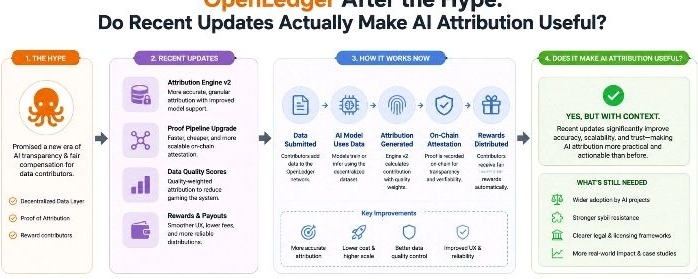
#openledger $OPEN Estou de olho na OpenLedger (OPEN), e o que me chama a atenção é a visão de transformar dados, modelos e agentes em ativos que podem gerar valor ao invés de ficarem parados. Enquanto muitos projetos focam apenas na infraestrutura, a OpenLedger está construindo uma camada econômica onde contribuidores podem potencialmente monetizar o que criam e compartilham.
O que me empolga é a ideia de desbloquear liquidez em ativos relacionados à IA. Dados alimentam sistemas inteligentes, modelos fornecem capacidades, e agentes realizam tarefas. A OpenLedger pretende conectar essas peças através de um ecossistema baseado em blockchain onde a propriedade, atribuição e recompensas podem ser rastreadas de maneira mais transparente.
A oportunidade aqui não é apenas tecnologia—é criar incentivos. Se construtores, pesquisadores e contribuidores forem recompensados de forma justa, a rede pode atrair mais participação e acelerar o crescimento. Isso faz da OPEN um projeto que vale a pena ficar de olho.
Meu próximo movimento é simples: estou monitorando o desenvolvimento do ecossistema, crescimento da comunidade, parcerias e adoção no mundo real. Quero ver quantos desenvolvedores constroem na rede e se os usuários se engajam ativamente com suas ferramentas e serviços. Uma forte utilidade e atividade consistente muitas vezes importam mais do que o hype.
Por enquanto, a OpenLedger parece uma tentativa ousada de conectar blockchain e economia da IA. Se a execução corresponder à visão, a OPEN pode se tornar um jogador importante no mercado emergente para dados, modelos e agentes autônomos.
@OpenLedger #OpenLedger
$PORTAL
$LAB
O que me empolga é a ideia de desbloquear liquidez em ativos relacionados à IA. Dados alimentam sistemas inteligentes, modelos fornecem capacidades, e agentes realizam tarefas. A OpenLedger pretende conectar essas peças através de um ecossistema baseado em blockchain onde a propriedade, atribuição e recompensas podem ser rastreadas de maneira mais transparente.
A oportunidade aqui não é apenas tecnologia—é criar incentivos. Se construtores, pesquisadores e contribuidores forem recompensados de forma justa, a rede pode atrair mais participação e acelerar o crescimento. Isso faz da OPEN um projeto que vale a pena ficar de olho.
Meu próximo movimento é simples: estou monitorando o desenvolvimento do ecossistema, crescimento da comunidade, parcerias e adoção no mundo real. Quero ver quantos desenvolvedores constroem na rede e se os usuários se engajam ativamente com suas ferramentas e serviços. Uma forte utilidade e atividade consistente muitas vezes importam mais do que o hype.
Por enquanto, a OpenLedger parece uma tentativa ousada de conectar blockchain e economia da IA. Se a execução corresponder à visão, a OPEN pode se tornar um jogador importante no mercado emergente para dados, modelos e agentes autônomos.
@OpenLedger #OpenLedger
$PORTAL
$LAB
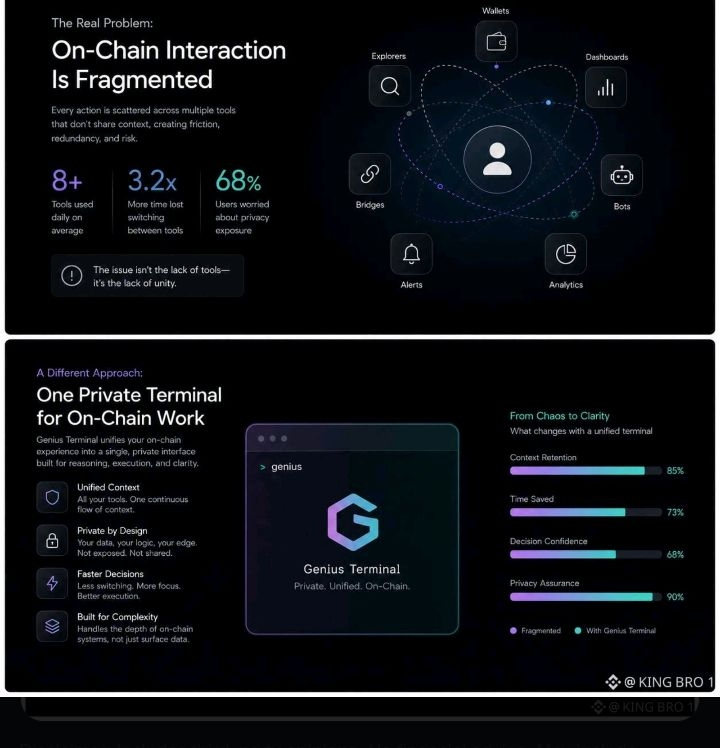
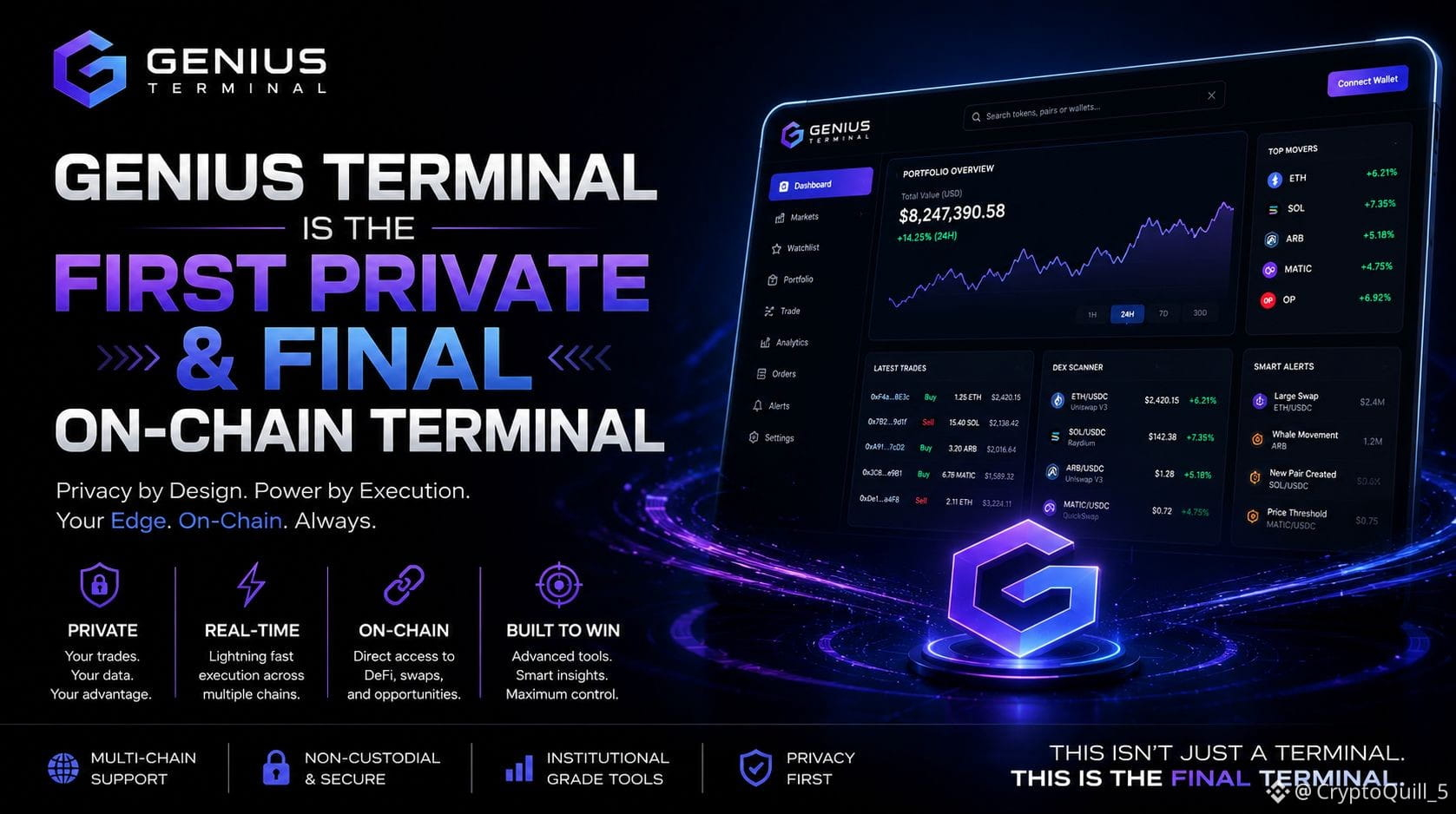
#genius $GENIUS Estive acompanhando o Genius Terminal, e o que se destaca para mim é seu foco em algo que muitos traders e usuários on-chain se preocupam: privacidade. Enquanto a maioria das plataformas deixa rastros em várias ferramentas e painéis, o Genius Terminal está se posicionando como o primeiro terminal on-chain privado e definitivo, com o objetivo de reunir tudo em um só lugar.
O que chamou minha atenção foi a ideia de reduzir a complexidade. Em vez de pular entre diferentes apps para pesquisa, execução e monitoramento, o Genius Terminal está construindo uma experiência simplificada que mantém os usuários mais próximos da rede enquanto mantém a privacidade. Em um mercado onde a informação se move rápido e cada segundo conta, ter um terminal dedicado pode ser uma vantagem séria.
Acho que a maior oportunidade aqui é a adoção. Se a equipe conseguir continuar melhorando recursos, segurança e a experiência do usuário, o Genius Terminal pode se tornar uma ferramenta chave para participantes ativos on-chain. Privacidade não é mais um luxo—está se tornando uma necessidade.
Meu próximo movimento é simples: vou continuar acompanhando atualizações de produtos, crescimento da comunidade e lançamentos de recursos. Também vou ficar de olho em parcerias, métricas de adoção de usuários e feedback de traders experientes. Se a plataforma continuar entregando sua visão, o Genius Terminal pode se tornar um dos projetos de infraestrutura mais interessantes a se acompanhar no ecossistema on-chain.
Por enquanto, estou focado, fazendo minha pesquisa e mantendo o Genius Terminal na minha lista de observação.
@GeniusOfficial #genius
$LAB
$ALLO
O que chamou minha atenção foi a ideia de reduzir a complexidade. Em vez de pular entre diferentes apps para pesquisa, execução e monitoramento, o Genius Terminal está construindo uma experiência simplificada que mantém os usuários mais próximos da rede enquanto mantém a privacidade. Em um mercado onde a informação se move rápido e cada segundo conta, ter um terminal dedicado pode ser uma vantagem séria.
Acho que a maior oportunidade aqui é a adoção. Se a equipe conseguir continuar melhorando recursos, segurança e a experiência do usuário, o Genius Terminal pode se tornar uma ferramenta chave para participantes ativos on-chain. Privacidade não é mais um luxo—está se tornando uma necessidade.
Meu próximo movimento é simples: vou continuar acompanhando atualizações de produtos, crescimento da comunidade e lançamentos de recursos. Também vou ficar de olho em parcerias, métricas de adoção de usuários e feedback de traders experientes. Se a plataforma continuar entregando sua visão, o Genius Terminal pode se tornar um dos projetos de infraestrutura mais interessantes a se acompanhar no ecossistema on-chain.
Por enquanto, estou focado, fazendo minha pesquisa e mantendo o Genius Terminal na minha lista de observação.
@GeniusOfficial #genius
$LAB
$ALLO
#openledger $OPEN
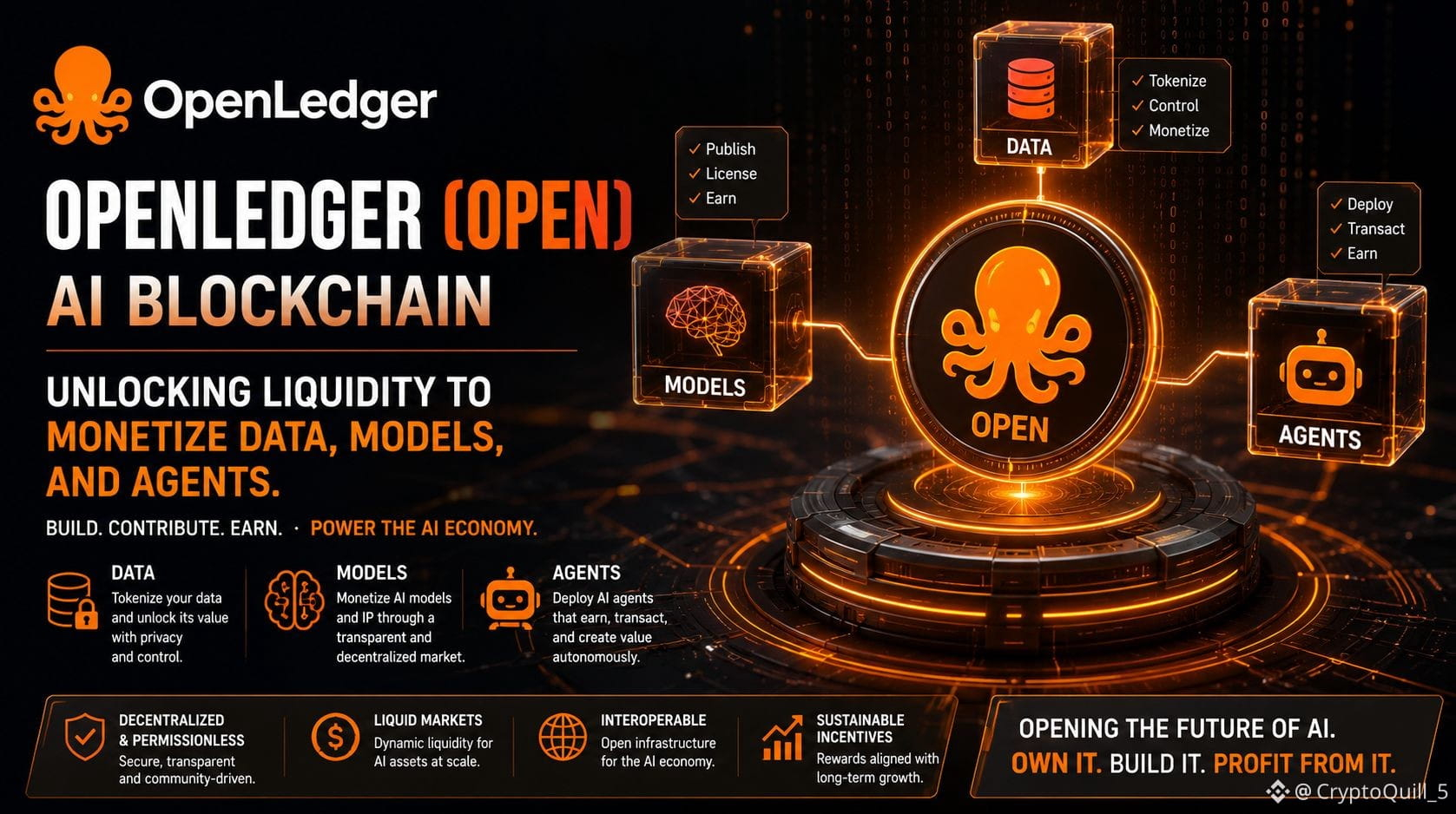
Estou de olho no crescimento da OpenLedger e o que mais me chama atenção é seu foco em transformar dados, modelos e agentes em ativos que podem gerar valor em vez de ficarem parados.
A maioria das plataformas fala sobre inovação, mas a OpenLedger está construindo uma camada econômica onde os contribuintes podem potencialmente monetizar o que criam. Fornecedores de dados, construtores de modelos e desenvolvedores de agentes todos desempenham um papel no ecossistema, criando uma estrutura que recompensa a participação e incentiva o crescimento.
O que me empolga é o aspecto da liquidez. Em muitos ecossistemas, recursos valiosos permanecem bloqueados com maneiras limitadas de capturar seu valor. A OpenLedger pretende mudar isso criando mecanismos que conectam a criação com oportunidades econômicas. Se for bem-sucedida, isso pode tornar a infraestrutura de IA mais acessível, transparente e gratificante para os contribuintes.
Meu próximo movimento é simples: Estou observando o crescimento do ecossistema, a atividade dos desenvolvedores, parcerias e a adoção no mundo real. A tecnologia é importante, mas o uso é o que, no final das contas, determina o valor a longo prazo. Quero ver quantos construtores se juntam, como os ativos são utilizados e se a rede consegue sustentar uma atividade econômica significativa.
A OpenLedger não está apenas competindo em tecnologia—está competindo em propriedade, incentivos e distribuição de valor. Se a adoção continuar a se expandir, a OPEN pode se tornar um dos projetos que vale a pena ficar de olho conforme a economia de ativos digitais evolui.
@OpenLedger #OpenLedger
$PORTAL
$LAB
Estou de olho no crescimento da OpenLedger e o que mais me chama atenção é seu foco em transformar dados, modelos e agentes em ativos que podem gerar valor em vez de ficarem parados.
A maioria das plataformas fala sobre inovação, mas a OpenLedger está construindo uma camada econômica onde os contribuintes podem potencialmente monetizar o que criam. Fornecedores de dados, construtores de modelos e desenvolvedores de agentes todos desempenham um papel no ecossistema, criando uma estrutura que recompensa a participação e incentiva o crescimento.
O que me empolga é o aspecto da liquidez. Em muitos ecossistemas, recursos valiosos permanecem bloqueados com maneiras limitadas de capturar seu valor. A OpenLedger pretende mudar isso criando mecanismos que conectam a criação com oportunidades econômicas. Se for bem-sucedida, isso pode tornar a infraestrutura de IA mais acessível, transparente e gratificante para os contribuintes.
Meu próximo movimento é simples: Estou observando o crescimento do ecossistema, a atividade dos desenvolvedores, parcerias e a adoção no mundo real. A tecnologia é importante, mas o uso é o que, no final das contas, determina o valor a longo prazo. Quero ver quantos construtores se juntam, como os ativos são utilizados e se a rede consegue sustentar uma atividade econômica significativa.
A OpenLedger não está apenas competindo em tecnologia—está competindo em propriedade, incentivos e distribuição de valor. Se a adoção continuar a se expandir, a OPEN pode se tornar um dos projetos que vale a pena ficar de olho conforme a economia de ativos digitais evolui.
@OpenLedger #OpenLedger
$PORTAL
$LAB
Verificado
#genius $GENIUS Estou acompanhando a evolução das ferramentas de on-chain há um tempo, e o Genius Terminal se destaca por um motivo simples: é construído em torno da privacidade e da execução, não do barulho. Enquanto a maioria das plataformas foca em painéis, sinais e fluxos intermináveis de dados, o Genius Terminal se posiciona como o primeiro terminal on-chain privado e definitivo, projetado para traders que querem passar da informação para a ação rapidamente.
O que chamou minha atenção é o foco em manter a atividade de trading crítica simplificada. Em um mercado onde cada segundo conta, reduzir a fricção pode ser tão importante quanto encontrar a oportunidade certa. Privacidade, velocidade e acesso direto on-chain criam um ambiente onde as decisões podem ser executadas com confiança, em vez de serem adiadas por complexidades desnecessárias.
Vejo uma tendência maior se formando aqui. À medida que a atividade on-chain cresce, os usuários vão exigir ferramentas que combinem inteligência, privacidade e execução em um único fluxo de trabalho. O Genius Terminal parece estar construindo esse futuro.
Meu próximo movimento é monitorar as atualizações da plataforma, explorar os recursos recém-lançados e observar como a adoção se desenvolve na comunidade trader. Um crescimento forte de usuários, integrações mais profundas e melhorias constantes nos produtos podem se tornar indicadores-chave de momentum a longo prazo.
Por enquanto, o Genius Terminal é um projeto no meu radar porque está abordando um problema real: tornando a execução on-chain privada, eficiente e prática para usuários sérios.
@GeniusOfficial #genius
$LAB
$ALLO
O que chamou minha atenção é o foco em manter a atividade de trading crítica simplificada. Em um mercado onde cada segundo conta, reduzir a fricção pode ser tão importante quanto encontrar a oportunidade certa. Privacidade, velocidade e acesso direto on-chain criam um ambiente onde as decisões podem ser executadas com confiança, em vez de serem adiadas por complexidades desnecessárias.
Vejo uma tendência maior se formando aqui. À medida que a atividade on-chain cresce, os usuários vão exigir ferramentas que combinem inteligência, privacidade e execução em um único fluxo de trabalho. O Genius Terminal parece estar construindo esse futuro.
Meu próximo movimento é monitorar as atualizações da plataforma, explorar os recursos recém-lançados e observar como a adoção se desenvolve na comunidade trader. Um crescimento forte de usuários, integrações mais profundas e melhorias constantes nos produtos podem se tornar indicadores-chave de momentum a longo prazo.
Por enquanto, o Genius Terminal é um projeto no meu radar porque está abordando um problema real: tornando a execução on-chain privada, eficiente e prática para usuários sérios.
@GeniusOfficial #genius
$LAB
$ALLO
beleza

KINGBHAI 29
·
--
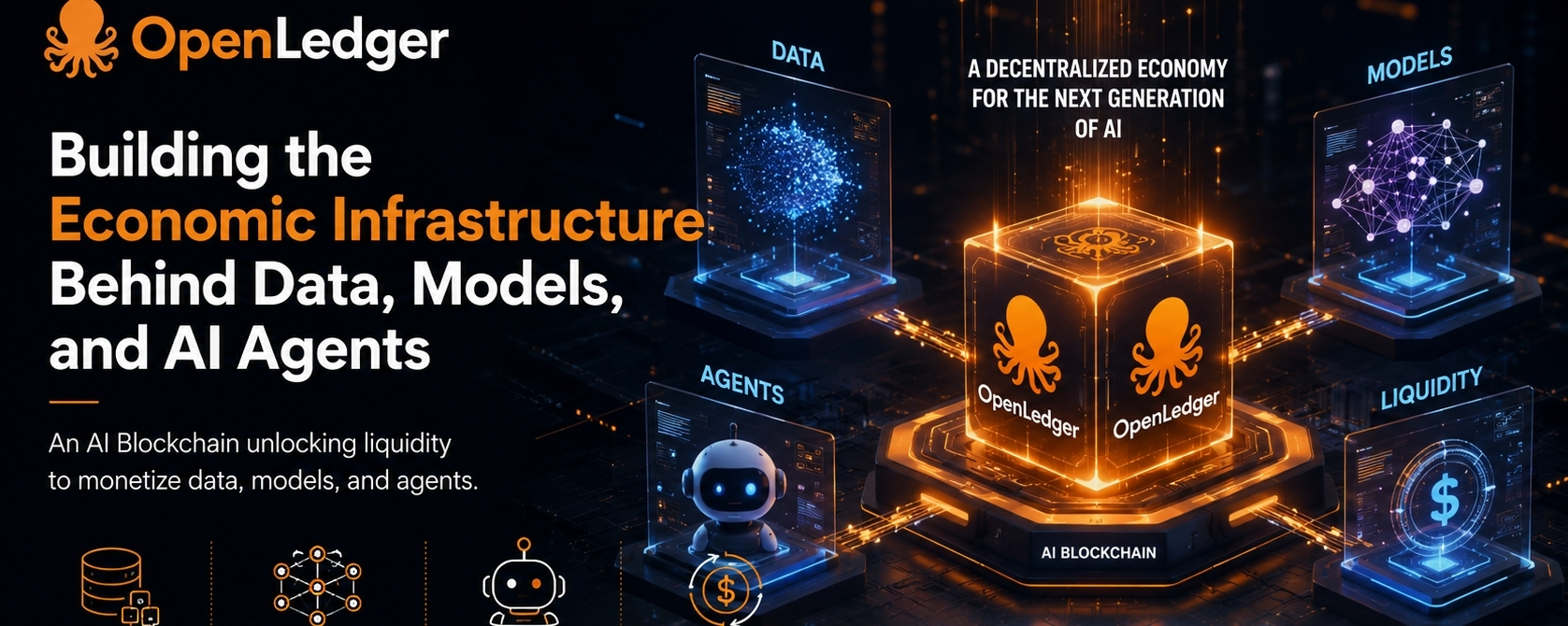
OpenLedger: Construindo a Infraestrutura Econômica por Trás de Dados, Modelos e Agentes de IA
Quando olho para a OpenLedger, não vejo imediatamente outra blockchain tentando se anexar à narrativa de IA. O que vejo é uma tentativa de resolver um problema de coordenação que está se tornando mais visível à medida que os sistemas de IA crescem e envolvem mais participantes.
Hoje em dia, o desenvolvimento de IA raramente é resultado de um único contribuinte. Fornecedores de dados geram conjuntos de dados, desenvolvedores constroem modelos, operadores gerenciam a infraestrutura e usuários criam demanda através do uso no mundo real. Cada participante contribui com valor, mas a relação econômica entre eles muitas vezes é obscura. O progresso técnico continua, mas a propriedade, os incentivos e a monetização permanecem fragmentados. A OpenLedger parece ter sido projetada em torno dessa lacuna específica.
Hoje em dia, o desenvolvimento de IA raramente é resultado de um único contribuinte. Fornecedores de dados geram conjuntos de dados, desenvolvedores constroem modelos, operadores gerenciam a infraestrutura e usuários criam demanda através do uso no mundo real. Cada participante contribui com valor, mas a relação econômica entre eles muitas vezes é obscura. O progresso técnico continua, mas a propriedade, os incentivos e a monetização permanecem fragmentados. A OpenLedger parece ter sido projetada em torno dessa lacuna específica.
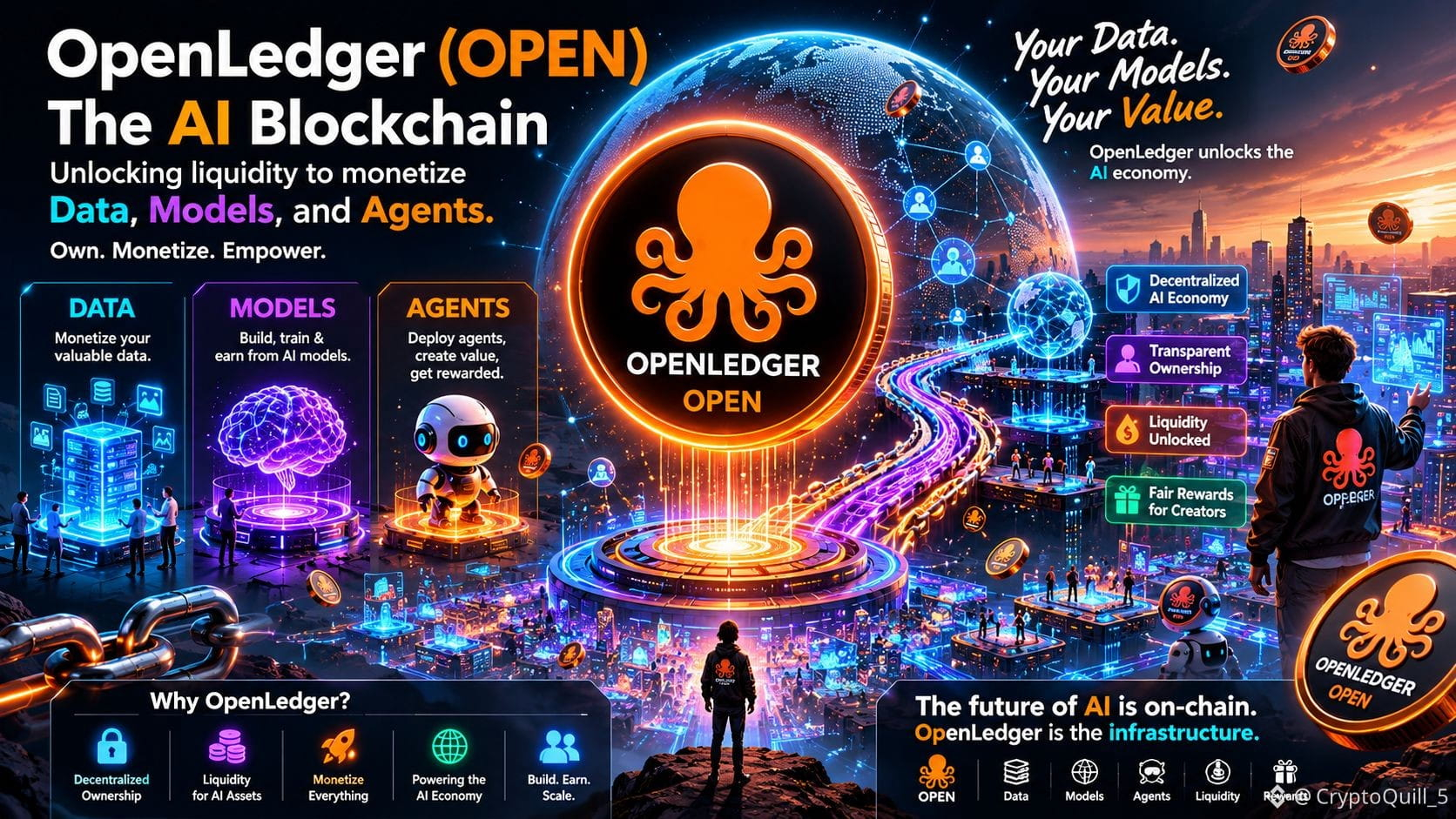
#openledger $OPEN Estou de olho na OpenLedger ($OPEN ) e o que mais me chama a atenção é a missão deles de transformar dados, modelos e agentes em ativos digitais reais que podem gerar valor. Em vez de deixar informações úteis paradas, a OpenLedger foca em dar aos criadores e colaboradores uma maneira de lucrar com o que eles constroem e compartilham.
O que mais me empolga é a ideia de liberar liquidez em torno de dados e inteligência. À medida que a demanda por aplicações inteligentes continua a crescer, projetos que conectam colaboradores, desenvolvedores e usuários através de uma infraestrutura blockchain transparente podem ganhar uma atenção significativa. A OpenLedger está se posicionando no centro desse movimento ao criar um ecossistema onde recursos valiosos podem ser descobertos, utilizados e recompensados.
Do ponto de vista do mercado, estou de olho no crescimento do ecossistema, novas parcerias, atividade dos desenvolvedores e adoção crescente. Esses fatores muitas vezes desempenham um papel importante em determinar se um projeto de blockchain pode manter um impulso de longo prazo.
Meu próximo movimento é simples: estou mantendo na minha lista de observação, acompanhando as atualizações do projeto, rastreando o crescimento da comunidade e procurando sinais de utilidade em expansão. Se a adoção continuar a aumentar e a rede atrair mais construtores, a OpenLedger pode se tornar um dos projetos mais interessantes para acompanhar no espaço em evolução da blockchain.
Por enquanto, estou sendo paciente, fazendo minha pesquisa e observando como a história se desenvolve a partir daqui.
@OpenLedger #OpenLedger
$ALLO
$ID
O que mais me empolga é a ideia de liberar liquidez em torno de dados e inteligência. À medida que a demanda por aplicações inteligentes continua a crescer, projetos que conectam colaboradores, desenvolvedores e usuários através de uma infraestrutura blockchain transparente podem ganhar uma atenção significativa. A OpenLedger está se posicionando no centro desse movimento ao criar um ecossistema onde recursos valiosos podem ser descobertos, utilizados e recompensados.
Do ponto de vista do mercado, estou de olho no crescimento do ecossistema, novas parcerias, atividade dos desenvolvedores e adoção crescente. Esses fatores muitas vezes desempenham um papel importante em determinar se um projeto de blockchain pode manter um impulso de longo prazo.
Meu próximo movimento é simples: estou mantendo na minha lista de observação, acompanhando as atualizações do projeto, rastreando o crescimento da comunidade e procurando sinais de utilidade em expansão. Se a adoção continuar a aumentar e a rede atrair mais construtores, a OpenLedger pode se tornar um dos projetos mais interessantes para acompanhar no espaço em evolução da blockchain.
Por enquanto, estou sendo paciente, fazendo minha pesquisa e observando como a história se desenvolve a partir daqui.
@OpenLedger #OpenLedger
$ALLO
$ID
Verificado
#genius $GENIUS Estou acompanhando o crescimento do Genius Terminal, e uma coisa se destaca imediatamente: ele pretende ser o primeiro terminal privado e definitivo on-chain, construído para usuários que buscam velocidade, controle e privacidade em um só lugar. Em um espaço onde a informação se move rápido e cada segundo conta, ter um terminal projetado para simplificar a atividade on-chain pode se tornar uma grande vantagem.
O que mais me interessa é o foco na privacidade. Muitas ferramentas fornecem dados, mas o Genius Terminal está trabalhando para oferecer aos usuários uma maneira mais limpa e segura de interagir com as oportunidades on-chain. A ideia de combinar insights importantes, ferramentas de execução e acesso em tempo real em um único terminal cria uma experiência mais fluida para traders, pesquisadores e usuários comuns.
Eu acredito que o próximo movimento é simples: ficar de olho nas atualizações do ecossistema, lançamentos de produtos e anúncios da comunidade. Novos recursos, parcerias e integrações podem frequentemente revelar a direção de um projeto antes que o mercado mais amplo perceba. Também acho importante explorar a plataforma em primeira mão, entender suas ferramentas e acompanhar como a adoção cresce ao longo do tempo.
Para mim, o Genius Terminal não é apenas mais um painel. Representa um impulso em direção a uma experiência on-chain mais eficiente e privada. Se o desenvolvimento continuar em um ritmo forte, este projeto pode se tornar um destino importante para usuários que buscam navegar no mundo blockchain com maior confiança e precisão.
@GeniusOfficial l #genius
$BASED
$WARD
O que mais me interessa é o foco na privacidade. Muitas ferramentas fornecem dados, mas o Genius Terminal está trabalhando para oferecer aos usuários uma maneira mais limpa e segura de interagir com as oportunidades on-chain. A ideia de combinar insights importantes, ferramentas de execução e acesso em tempo real em um único terminal cria uma experiência mais fluida para traders, pesquisadores e usuários comuns.
Eu acredito que o próximo movimento é simples: ficar de olho nas atualizações do ecossistema, lançamentos de produtos e anúncios da comunidade. Novos recursos, parcerias e integrações podem frequentemente revelar a direção de um projeto antes que o mercado mais amplo perceba. Também acho importante explorar a plataforma em primeira mão, entender suas ferramentas e acompanhar como a adoção cresce ao longo do tempo.
Para mim, o Genius Terminal não é apenas mais um painel. Representa um impulso em direção a uma experiência on-chain mais eficiente e privada. Se o desenvolvimento continuar em um ritmo forte, este projeto pode se tornar um destino importante para usuários que buscam navegar no mundo blockchain com maior confiança e precisão.
@GeniusOfficial l #genius
$BASED
$WARD
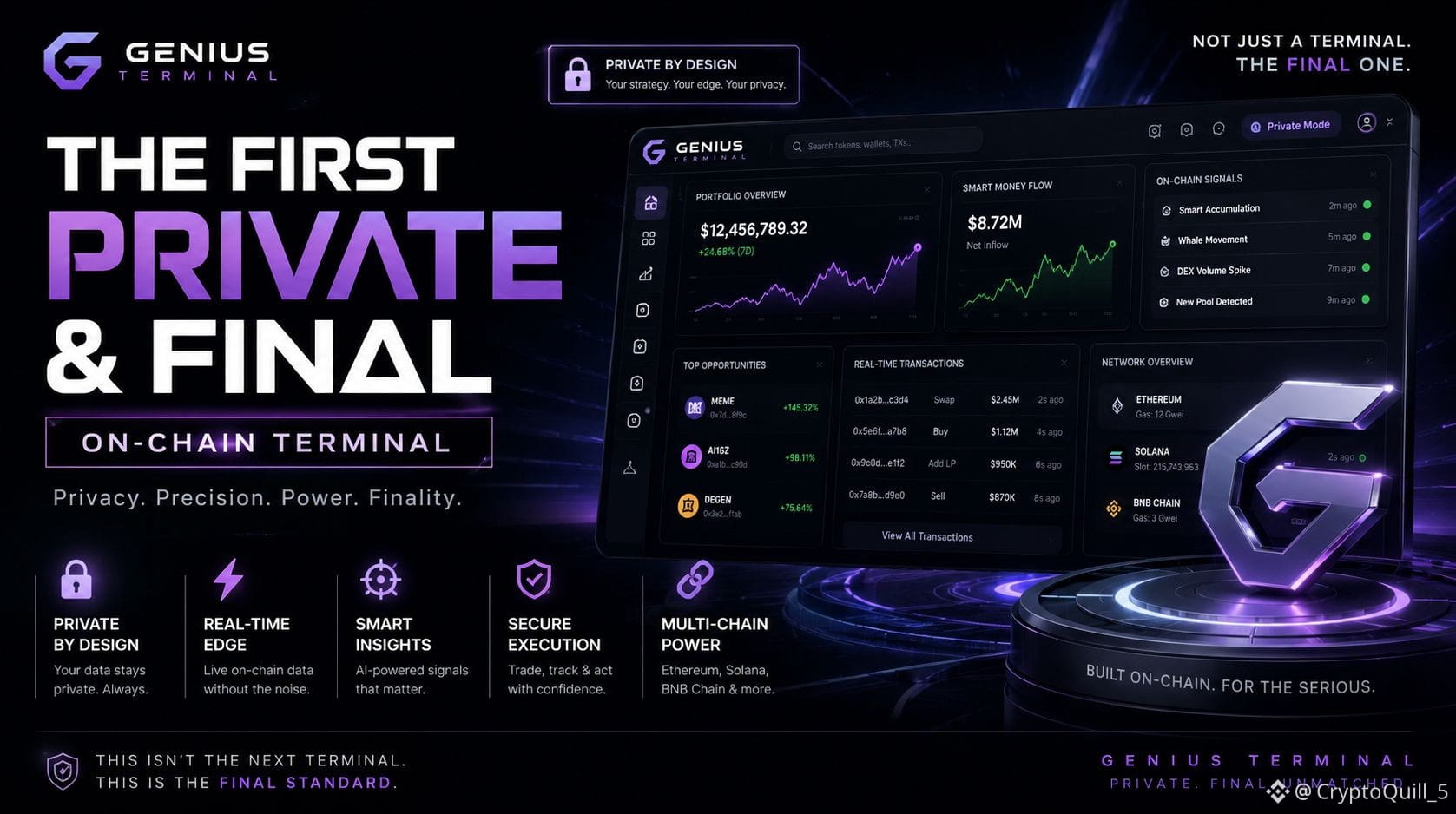
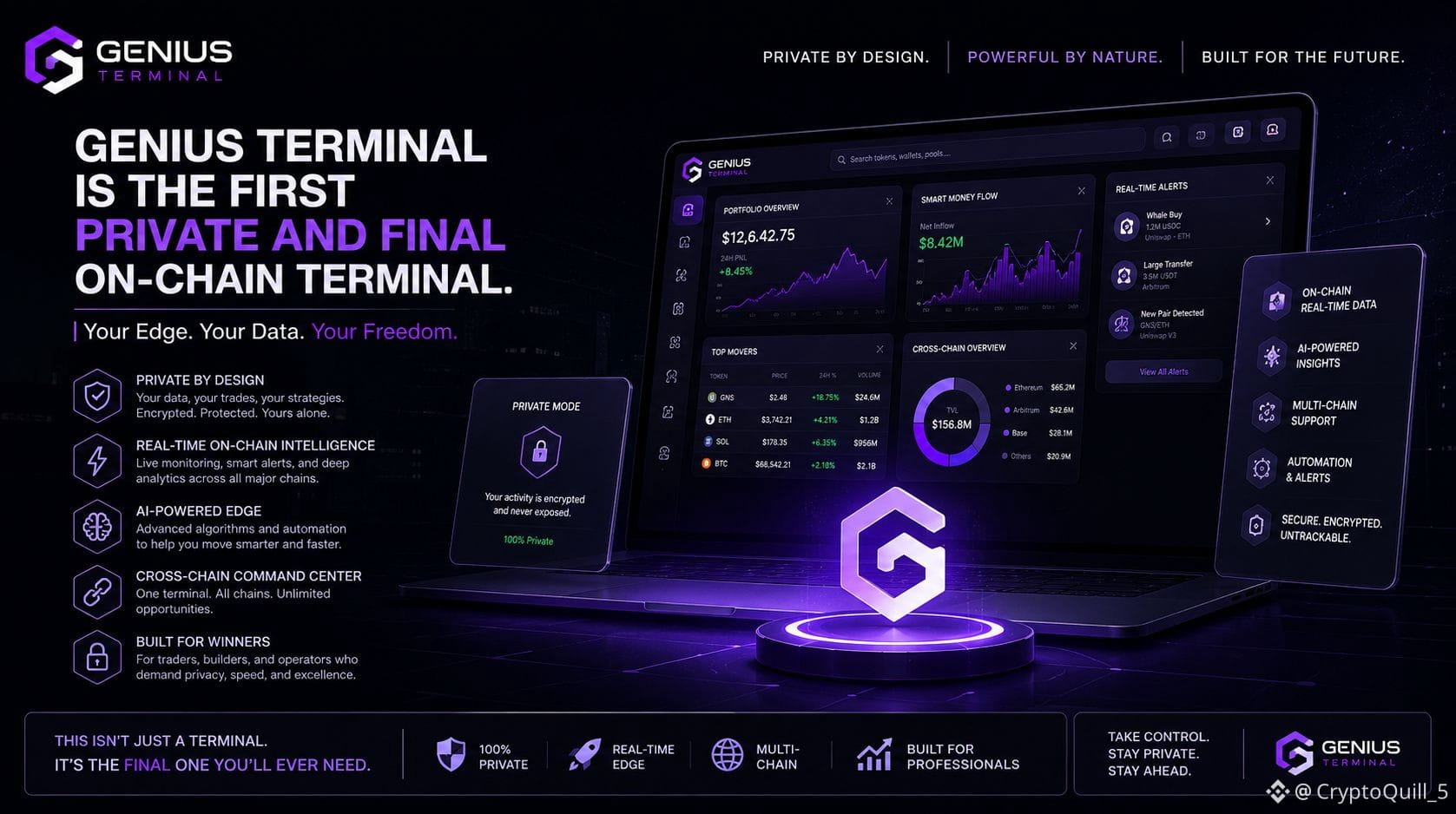
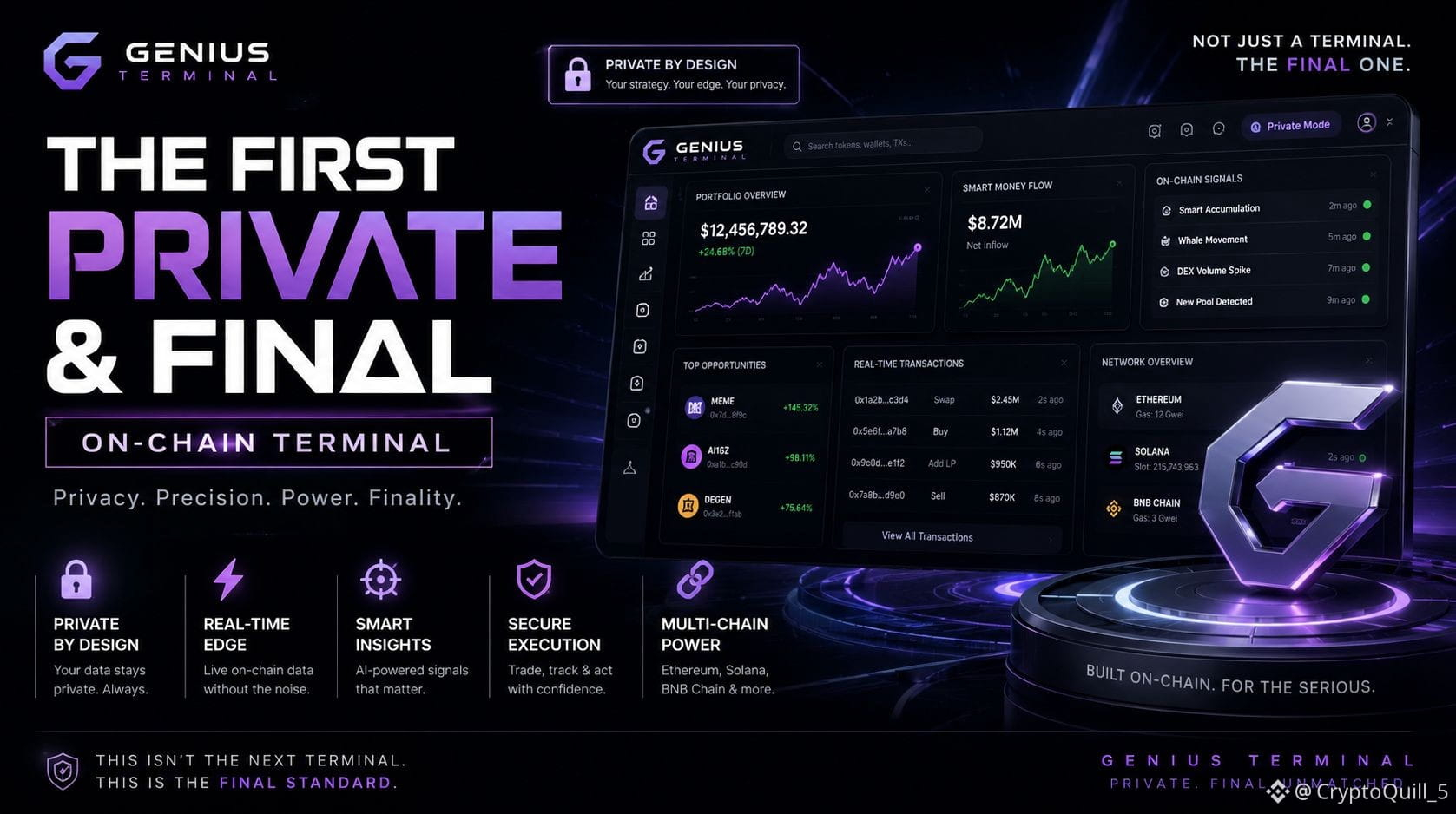
#genius $GENIUS Tenho acompanhado a ascensão das ferramentas on-chain por um bom tempo, mas o Genius Terminal parece diferente. Não está tentando ser barulhento. Está buscando ser definitivo. Isso foi o que chamou minha atenção primeiro. Em um espaço cheio de ruídos, sinais falsos e reações atrasadas, vejo o Genius Terminal construindo um ambiente privado onde velocidade e precisão importam mais do que hype.
O que mais me empolga é o foco em privacidade e execução. Posso rastrear oportunidades, gerenciar atividades e reagir mais rápido sem expor cada movimento ao público. Isso muda completamente o jogo. A maioria dos traders ainda está usando painéis desatualizados enquanto o mercado se move em segundos. O Genius Terminal parece construído para a próxima fase do trading on-chain, onde o controle da informação se torna poder.
Eu também acho que isso é maior do que um terminal normal. Parece uma infraestrutura para usuários sérios que querem dados mais limpos, decisões mais inteligentes e proteção mais forte enquanto navegam em mercados voláteis.
Meu próximo movimento é simples: estou observando de perto o crescimento do ecossistema, a adoção de usuários e as integrações que estão por vir. Se a equipe continuar entregando ferramentas poderosas enquanto mantém a plataforma privada e eficiente, acredito que o Genius Terminal pode se tornar um dos nomes mais importantes no mundo on-chain. @geniusofficial #genius $GENIUS
O que mais me empolga é o foco em privacidade e execução. Posso rastrear oportunidades, gerenciar atividades e reagir mais rápido sem expor cada movimento ao público. Isso muda completamente o jogo. A maioria dos traders ainda está usando painéis desatualizados enquanto o mercado se move em segundos. O Genius Terminal parece construído para a próxima fase do trading on-chain, onde o controle da informação se torna poder.
Eu também acho que isso é maior do que um terminal normal. Parece uma infraestrutura para usuários sérios que querem dados mais limpos, decisões mais inteligentes e proteção mais forte enquanto navegam em mercados voláteis.
Meu próximo movimento é simples: estou observando de perto o crescimento do ecossistema, a adoção de usuários e as integrações que estão por vir. Se a equipe continuar entregando ferramentas poderosas enquanto mantém a plataforma privada e eficiente, acredito que o Genius Terminal pode se tornar um dos nomes mais importantes no mundo on-chain. @geniusofficial #genius $GENIUS
#openledger $OPEN Tenho observado como a economia digital está mudando rapidamente e, honestamente, a OpenLedger parece ser um dos poucos projetos tentando resolver um problema real em vez de apenas correr atrás de hype. A OpenLedger está construindo um sistema onde dados, modelos e agentes não estão mais trancados sem valor. A ideia de que as pessoas finalmente podem ganhar com o que criam, treinam ou contribuem muda completamente o jogo.
O que chamou minha atenção é a camada de liquidez por trás disso. A maioria das plataformas coleta a atividade dos usuários enquanto a comunidade quase não recebe nada em troca. A OpenLedger está empurrando numa direção diferente onde o valor pode retornar aos criadores, construtores e contribuintes. Vejo isso se tornando importante à medida que a demanda por sistemas digitais mais inteligentes continua crescendo.
Também estou notando como a OPEN está se posicionando em torno de utilidade a longo prazo em vez de excitação temporária. Isso é relevante. Projetos sobrevivem quando criam ecossistemas que as pessoas realmente usam. Se a adoção crescer, o efeito de rede em torno de dados e agentes pode se tornar massivo.
Meu próximo movimento é simples: estou observando o crescimento do ecossistema, parcerias, atividade de desenvolvedores e quão rápido novas ferramentas são lançadas na blockchain. Também acho que a participação precoce da comunidade pode ser importante mais tarde, se a plataforma se expandir da maneira que muitos esperam.
Neste momento, a OpenLedger parece menos barulho e mais como uma infraestrutura sendo construída silenciosamente antes que a multidão perceba totalmente.
$OPEN
O que chamou minha atenção é a camada de liquidez por trás disso. A maioria das plataformas coleta a atividade dos usuários enquanto a comunidade quase não recebe nada em troca. A OpenLedger está empurrando numa direção diferente onde o valor pode retornar aos criadores, construtores e contribuintes. Vejo isso se tornando importante à medida que a demanda por sistemas digitais mais inteligentes continua crescendo.
Também estou notando como a OPEN está se posicionando em torno de utilidade a longo prazo em vez de excitação temporária. Isso é relevante. Projetos sobrevivem quando criam ecossistemas que as pessoas realmente usam. Se a adoção crescer, o efeito de rede em torno de dados e agentes pode se tornar massivo.
Meu próximo movimento é simples: estou observando o crescimento do ecossistema, parcerias, atividade de desenvolvedores e quão rápido novas ferramentas são lançadas na blockchain. Também acho que a participação precoce da comunidade pode ser importante mais tarde, se a plataforma se expandir da maneira que muitos esperam.
Neste momento, a OpenLedger parece menos barulho e mais como uma infraestrutura sendo construída silenciosamente antes que a multidão perceba totalmente.
$OPEN
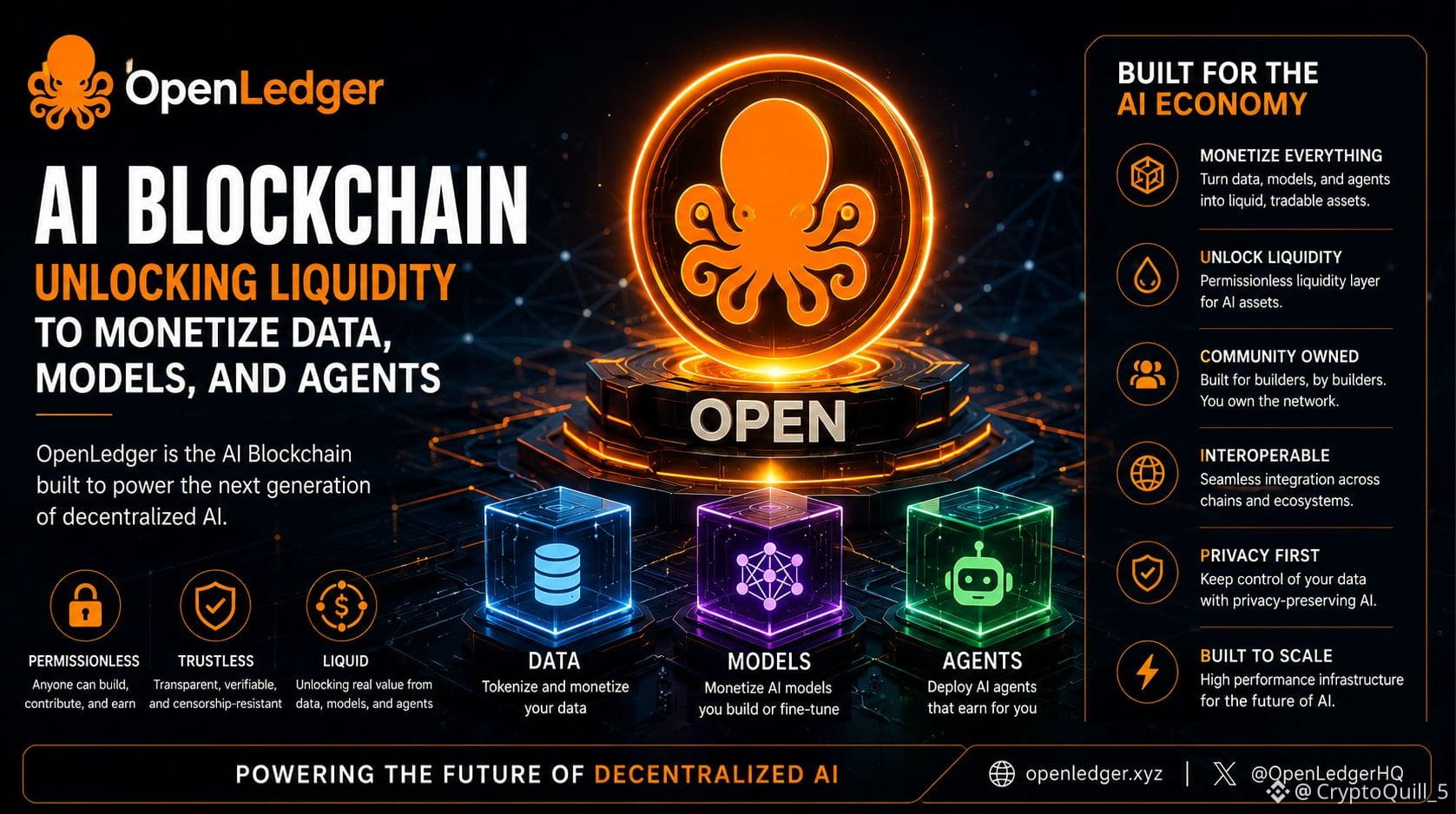
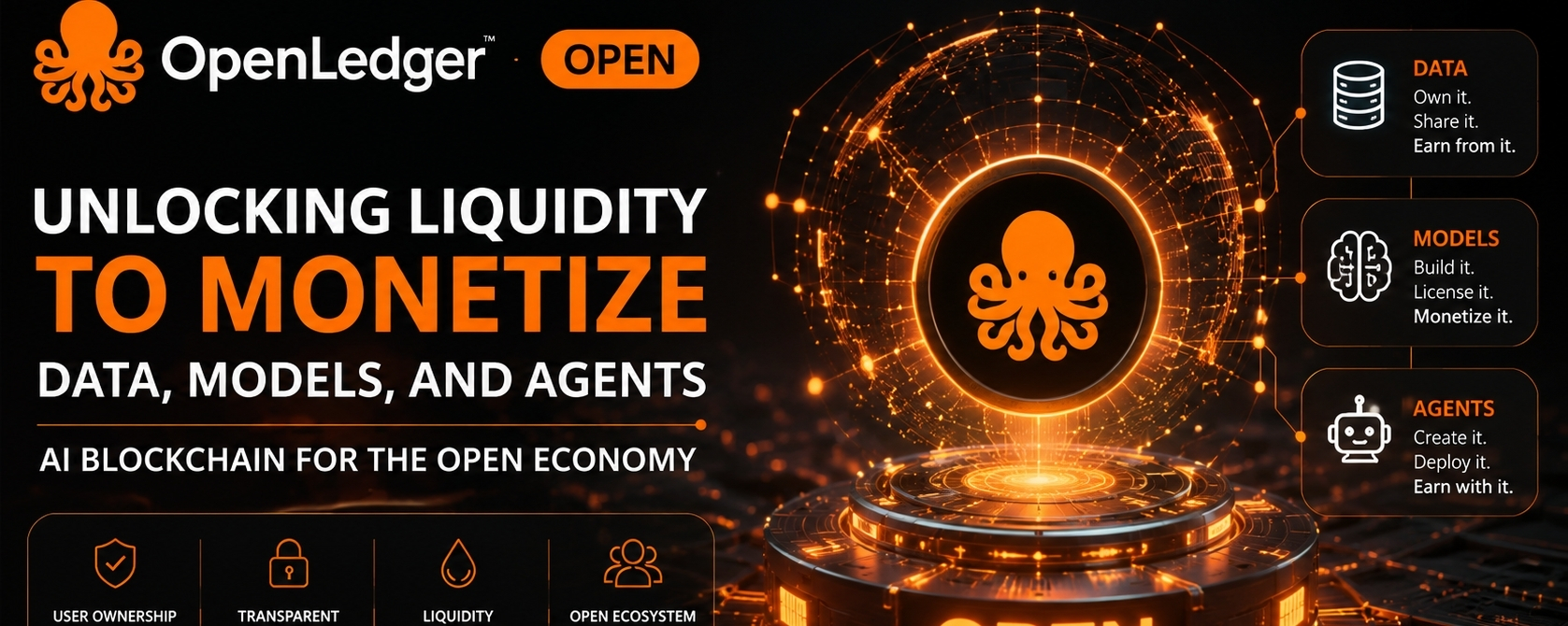
A maioria das chains de IA fala sobre velocidade. Poucas falam sobre propriedade. É por isso que estou de olho na @OpenLedger. $OPEN está construindo uma infraestrutura onde dados, modelos e agentes de IA podem realmente se tornar ativos monetizáveis ao invés de combustível gratuito para plataformas centralizadas.
A parte interessante não é apenas TPS ou ciclos de hype — é a camada de liquidez por trás das contribuições de IA. Se a OpenLedger tiver sucesso, criadores e desenvolvedores podem finalmente capturar valor da inteligência que produzem na blockchain.
Acredito que a próxima fase do cripto vai recompensar redes que combinam utilidade de IA com incentivos econômicos transparentes, e #OpenLedger está se posicionando bem nessa conversa. $OPEN
Aqui está um post original do Binance Square você@OpenLedger #OpenLedger $OPEN
A parte interessante não é apenas TPS ou ciclos de hype — é a camada de liquidez por trás das contribuições de IA. Se a OpenLedger tiver sucesso, criadores e desenvolvedores podem finalmente capturar valor da inteligência que produzem na blockchain.
Acredito que a próxima fase do cripto vai recompensar redes que combinam utilidade de IA com incentivos econômicos transparentes, e #OpenLedger está se posicionando bem nessa conversa. $OPEN
Aqui está um post original do Binance Square você@OpenLedger #OpenLedger $OPEN
Eu tenho observado de perto, e a visão por trás de $GENIUS está começando a parecer maior do que a maioria das pessoas percebe. Infraestrutura focada em privacidade, inteligência on-chain poderosa e um terminal construído para a próxima geração de traders parece o começo de uma mudança séria no crypto.
O que se destaca para mim é como a Genius foca na velocidade sem sacrificar a segurança ou o controle do usuário. Em um mercado cheio de ruído, projetos com utilidade real e execução sólida geralmente ganham a longo prazo.
Meu próximo movimento? Estou monitorando atualizações do ecossistema, observando o crescimento da comunidade e me posicionando cedo antes que a atenção mais ampla chegue. As oportunidades mais inteligentes geralmente aparecem antes que a multidão as entenda.
$GENIUS pode se tornar uma das jogadas de inteligência on-chain mais comentadas neste ciclo. #genius
Aqui está um post empolgante do Binance Square que você pode usar:
@GeniusOfficial #genius $GENIUS
O que se destaca para mim é como a Genius foca na velocidade sem sacrificar a segurança ou o controle do usuário. Em um mercado cheio de ruído, projetos com utilidade real e execução sólida geralmente ganham a longo prazo.
Meu próximo movimento? Estou monitorando atualizações do ecossistema, observando o crescimento da comunidade e me posicionando cedo antes que a atenção mais ampla chegue. As oportunidades mais inteligentes geralmente aparecem antes que a multidão as entenda.
$GENIUS pode se tornar uma das jogadas de inteligência on-chain mais comentadas neste ciclo. #genius
Aqui está um post empolgante do Binance Square que você pode usar:
@GeniusOfficial #genius $GENIUS
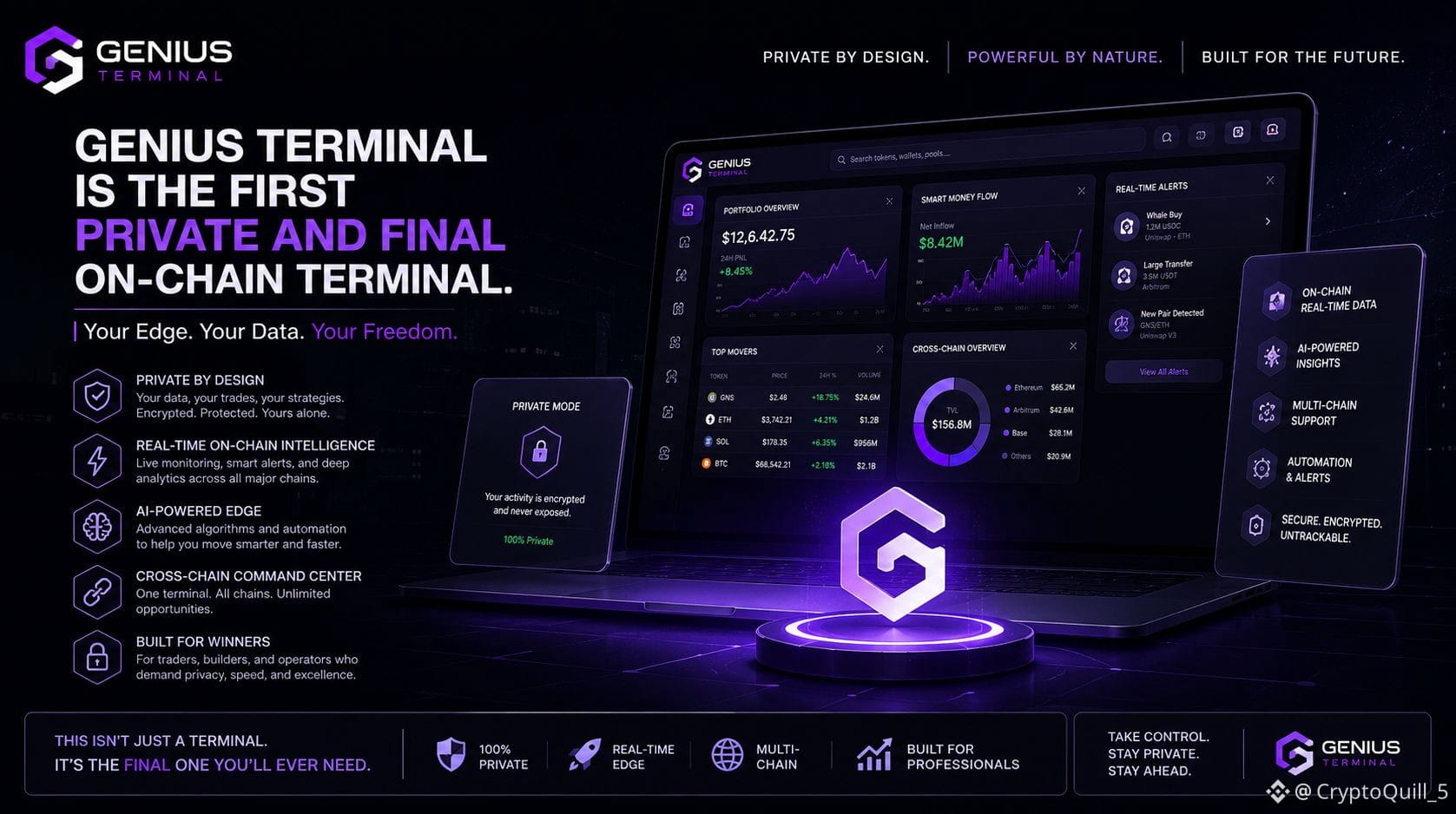
#genius $GENIUS Tenho acompanhado a evolução da infraestrutura on-chain há anos, mas o Genius Terminal parece diferente. Este não é apenas mais um painel de negociação fingindo ser revolucionário. Ele está se posicionando como o primeiro terminal on-chain privado e definitivo – um lugar onde execução, inteligência e privacidade colidem em um sistema pronto para o campo de batalha.
O que chamou minha atenção foi o foco na privacidade em um momento em que a maioria das atividades on-chain está totalmente exposta. No mundo cripto, vazamentos de informações são caros. Rastreio de wallets, copy trading e front-running se tornaram parte do jogo. O Genius Terminal parece estar construindo para traders e operadores que desejam velocidade sem sacrificar a furtividade. Isso muda completamente a dinâmica.
Também estou percebendo um crescente interesse em análises assistidas por IA, automação de terminais e monitoramento cross-chain. Se o Genius Terminal executar corretamente, pode se tornar mais do que uma ferramenta – pode evoluir para uma camada operacional para participantes on-chain sérios.
Meu próximo movimento é simples: estou observando o crescimento do ecossistema, a adoção de usuários, parcerias e a utilidade do token muito de perto. Quero ver se a plataforma pode sustentar um volume real e atrair traders de alto nível, não apenas ciclos de hype. Se o momentum continuar crescendo, o Genius Terminal pode se tornar uma das narrativas de infraestrutura mais importantes na próxima fase dos mercados cripto.
@GeniusOfficial #genius $GENIUS
O que chamou minha atenção foi o foco na privacidade em um momento em que a maioria das atividades on-chain está totalmente exposta. No mundo cripto, vazamentos de informações são caros. Rastreio de wallets, copy trading e front-running se tornaram parte do jogo. O Genius Terminal parece estar construindo para traders e operadores que desejam velocidade sem sacrificar a furtividade. Isso muda completamente a dinâmica.
Também estou percebendo um crescente interesse em análises assistidas por IA, automação de terminais e monitoramento cross-chain. Se o Genius Terminal executar corretamente, pode se tornar mais do que uma ferramenta – pode evoluir para uma camada operacional para participantes on-chain sérios.
Meu próximo movimento é simples: estou observando o crescimento do ecossistema, a adoção de usuários, parcerias e a utilidade do token muito de perto. Quero ver se a plataforma pode sustentar um volume real e atrair traders de alto nível, não apenas ciclos de hype. Se o momentum continuar crescendo, o Genius Terminal pode se tornar uma das narrativas de infraestrutura mais importantes na próxima fase dos mercados cripto.
@GeniusOfficial #genius $GENIUS
Faça login para explorar mais conteúdos