

Mr Dream X
7.1k Publicações

Mr Dream X
Denunciar
Bloquear usuário
431 Seguindo
20.5K+ Seguidores
10.8K+ Curtiu
Publicações
Portfólio
Todas
Citações
·
--
🔥 A moeda ao alto do Fed: O CPI de sexta vai selar um aumento?
As folhas de pagamento de agosto acabaram de sair com +162 mil, com o desemprego se mantendo em 4,1% — um mercado de trabalho que se recusa a ceder. Some a isso uma leitura quente do PPI (+0,4% no mês, +5,4% no ano) e você tem os ingredientes para um FOMC genuinamente nervoso entrando na reunião de 15–16 de setembro.
O mercado ainda está precificando uma pausa — a taxa dos fed funds está estável em 3,50%–3,75% — mas sinais mais hawkish do novo presidente do Fed, Kevin Warsh, e um comitê visivelmente dividido significam que isso não é a história fácil de “pausa” de alguns meses atrás. Se o CPI core vier a qualquer lugar perto de 0,3%+ amanhã, não se surpreenda se as chances de alta começarem a subir rápido.
Meu take: estou inclinado a uma visão cautelosa e mais baixista para os ativos de risco antes da publicação, e acompanhando o ouro como estratégia de proteção se o número vier forte — surpresas de inflação tendem a enviar fluxos de refúgio antes de qualquer um esperar o Fed confirmar algo.
O que você acha — alta, pausa ou conversa de corte surpresa? Deixe sua posição abaixo e marque como Não é aconselhamento financeiro — é só a minha opinião antes de um dia grande de dados.
#CPIWatch
$TFUEL
{spot}(TFUELUSDT)
$MET
{spot}(METUSDT)
$RAY
{spot}(RAYUSDT)
🔥 A moeda ao alto do Fed: O CPI de sexta vai selar um aumento?
As folhas de pagamento de agosto acabaram de sair com +162 mil, com o desemprego se mantendo em 4,1% — um mercado de trabalho que se recusa a ceder. Some a isso uma leitura quente do PPI (+0,4% no mês, +5,4% no ano) e você tem os ingredientes para um FOMC genuinamente nervoso entrando na reunião de 15–16 de setembro.
O mercado ainda está precificando uma pausa — a taxa dos fed funds está estável em 3,50%–3,75% — mas sinais mais hawkish do novo presidente do Fed, Kevin Warsh, e um comitê visivelmente dividido significam que isso não é a história fácil de “pausa” de alguns meses atrás. Se o CPI core vier a qualquer lugar perto de 0,3%+ amanhã, não se surpreenda se as chances de alta começarem a subir rápido.
Meu take: estou inclinado a uma visão cautelosa e mais baixista para os ativos de risco antes da publicação, e acompanhando o ouro como estratégia de proteção se o número vier forte — surpresas de inflação tendem a enviar fluxos de refúgio antes de qualquer um esperar o Fed confirmar algo.
O que você acha — alta, pausa ou conversa de corte surpresa? Deixe sua posição abaixo e marque como Não é aconselhamento financeiro — é só a minha opinião antes de um dia grande de dados.
#CPIWatch
$TFUEL
$MET
$RAY
As folhas de pagamento de agosto acabaram de sair com +162 mil, com o desemprego se mantendo em 4,1% — um mercado de trabalho que se recusa a ceder. Some a isso uma leitura quente do PPI (+0,4% no mês, +5,4% no ano) e você tem os ingredientes para um FOMC genuinamente nervoso entrando na reunião de 15–16 de setembro.
O mercado ainda está precificando uma pausa — a taxa dos fed funds está estável em 3,50%–3,75% — mas sinais mais hawkish do novo presidente do Fed, Kevin Warsh, e um comitê visivelmente dividido significam que isso não é a história fácil de “pausa” de alguns meses atrás. Se o CPI core vier a qualquer lugar perto de 0,3%+ amanhã, não se surpreenda se as chances de alta começarem a subir rápido.
Meu take: estou inclinado a uma visão cautelosa e mais baixista para os ativos de risco antes da publicação, e acompanhando o ouro como estratégia de proteção se o número vier forte — surpresas de inflação tendem a enviar fluxos de refúgio antes de qualquer um esperar o Fed confirmar algo.
O que você acha — alta, pausa ou conversa de corte surpresa? Deixe sua posição abaixo e marque como Não é aconselhamento financeiro — é só a minha opinião antes de um dia grande de dados.
#CPIWatch
$TFUEL
$MET
$RAY

4
3
360
·
--
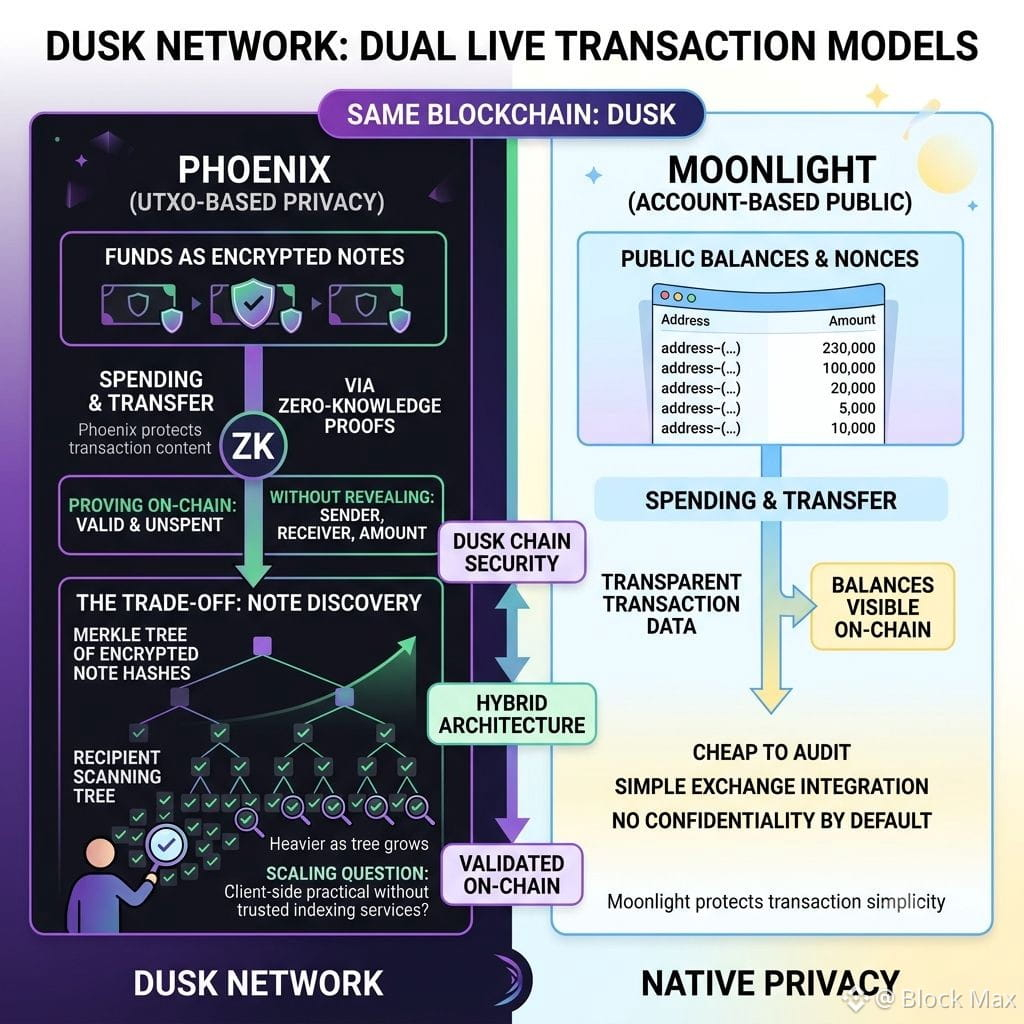
Enquanto estudava @Dusk_Foundation , um detalhe para o qual eu voltava constantemente é que ele executa dois modelos de transação em tempo real na mesma cadeia, em vez de escolher um deles e “acoplar” privacidade depois.
Phoenix é baseado em UTXO: os fundos existem como notas criptografadas, e gastar significa provar — via provas de conhecimento zero — que uma nota é válida e não foi gasta, sem revelar remetente, destinatário ou valor na cadeia. A troca está na descoberta de notas: um destinatário precisa escanear a crescente árvore de Merkle de hashes de notas para encontrar o que é seu, o que fica mais pesado à medida que a árvore cresce.
Moonlight é baseado em contas e é público, mais próximo do Ethereum: saldos e nonces ficam à mostra. É barato para auditar e simples para corretoras integrarem, mas não oferece confidencialidade por padrão.
Phoenix protege o conteúdo das transações, enquanto Moonlight protege a simplicidade das transações.
Pergunta em aberto: à medida que o conjunto de notas escala, a varredura no lado do cliente continua sendo prática sem que serviços de indexação confiáveis acabem, silenciosamente, virando uma dependência “suave” para a privacidade “auto-hospedada” (self-custodial)?
#dusk $DUSK #Dusk #DUSK
{future}(DUSKUSDT)
Enquanto estudava @Dusk , um detalhe para o qual eu voltava constantemente é que ele executa dois modelos de transação em tempo real na mesma cadeia, em vez de escolher um deles e “acoplar” privacidade depois.
Phoenix é baseado em UTXO: os fundos existem como notas criptografadas, e gastar significa provar — via provas de conhecimento zero — que uma nota é válida e não foi gasta, sem revelar remetente, destinatário ou valor na cadeia. A troca está na descoberta de notas: um destinatário precisa escanear a crescente árvore de Merkle de hashes de notas para encontrar o que é seu, o que fica mais pesado à medida que a árvore cresce.
Moonlight é baseado em contas e é público, mais próximo do Ethereum: saldos e nonces ficam à mostra. É barato para auditar e simples para corretoras integrarem, mas não oferece confidencialidade por padrão.
Phoenix protege o conteúdo das transações, enquanto Moonlight protege a simplicidade das transações.
Pergunta em aberto: à medida que o conjunto de notas escala, a varredura no lado do cliente continua sendo prática sem que serviços de indexação confiáveis acabem, silenciosamente, virando uma dependência “suave” para a privacidade “auto-hospedada” (self-custodial)?
#dusk $DUSK #Dusk #DUSK
Phoenix é baseado em UTXO: os fundos existem como notas criptografadas, e gastar significa provar — via provas de conhecimento zero — que uma nota é válida e não foi gasta, sem revelar remetente, destinatário ou valor na cadeia. A troca está na descoberta de notas: um destinatário precisa escanear a crescente árvore de Merkle de hashes de notas para encontrar o que é seu, o que fica mais pesado à medida que a árvore cresce.
Moonlight é baseado em contas e é público, mais próximo do Ethereum: saldos e nonces ficam à mostra. É barato para auditar e simples para corretoras integrarem, mas não oferece confidencialidade por padrão.
Phoenix protege o conteúdo das transações, enquanto Moonlight protege a simplicidade das transações.
Pergunta em aberto: à medida que o conjunto de notas escala, a varredura no lado do cliente continua sendo prática sem que serviços de indexação confiáveis acabem, silenciosamente, virando uma dependência “suave” para a privacidade “auto-hospedada” (self-custodial)?
#dusk $DUSK #Dusk #DUSK
5
6
138
·
--
Todas as transações que você já fez em uma blockchain pública ficam lá, para sempre, à disposição de qualquer pessoa ler. Seu salário, suas negociações, seus pagamentos de aluguel — tudo isso, permanentemente público. A maioria das pessoas nunca pensa nisso até que alguém realmente olhe.
Esse é o problema silencioso que a cripto não gosta de discutir. Chamamos de "finanças descentralizadas", mas a verdadeira finança sempre exigiu discrição. Bancos não publicam seu balanço. Empresas não querem que concorrentes vejam suas movimentações de tesouraria em tempo real. Ainda assim, a maioria das redes força exatamente essa exposição só para obter os benefícios da descentralização.
É aqui que a Dusk Network ($DUSK) está tentando algo diferente. Em vez de adicionar privacidade como uma ideia posterior, ela construiu a camada base ao redor disso — o padrão XSC permite que contratos inteligentes permaneçam confidenciais enquanto ainda são verificáveis, que é justamente a parte mais difícil. Qualquer pessoa pode criar lógica financeira sem vazar cada detalhe interno para toda a internet.
O pensamento mais profundo aqui: privacidade e conformidade geralmente são apresentadas como opostos na cripto. A aposta da Dusk é que elas não precisam ser — que produtos financeiros regulamentados na verdade precisam de confidencialidade para funcionar on-chain, e não apesar da regulamentação, mas por causa dela.
Se a finança do mundo real um dia migrar completamente para o on-chain, você acha que redes focadas em privacidade como esta se tornam o padrão, ou continuam sendo uma coisa de nicho?
@Dusk_Foundation #dusk $DUSK
Todas as transações que você já fez em uma blockchain pública ficam lá, para sempre, à disposição de qualquer pessoa ler. Seu salário, suas negociações, seus pagamentos de aluguel — tudo isso, permanentemente público. A maioria das pessoas nunca pensa nisso até que alguém realmente olhe.
Esse é o problema silencioso que a cripto não gosta de discutir. Chamamos de "finanças descentralizadas", mas a verdadeira finança sempre exigiu discrição. Bancos não publicam seu balanço. Empresas não querem que concorrentes vejam suas movimentações de tesouraria em tempo real. Ainda assim, a maioria das redes força exatamente essa exposição só para obter os benefícios da descentralização.
É aqui que a Dusk Network ($DUSK ) está tentando algo diferente. Em vez de adicionar privacidade como uma ideia posterior, ela construiu a camada base ao redor disso — o padrão XSC permite que contratos inteligentes permaneçam confidenciais enquanto ainda são verificáveis, que é justamente a parte mais difícil. Qualquer pessoa pode criar lógica financeira sem vazar cada detalhe interno para toda a internet.
O pensamento mais profundo aqui: privacidade e conformidade geralmente são apresentadas como opostos na cripto. A aposta da Dusk é que elas não precisam ser — que produtos financeiros regulamentados na verdade precisam de confidencialidade para funcionar on-chain, e não apesar da regulamentação, mas por causa dela.
Se a finança do mundo real um dia migrar completamente para o on-chain, você acha que redes focadas em privacidade como esta se tornam o padrão, ou continuam sendo uma coisa de nicho?
@Dusk #dusk $DUSK
Esse é o problema silencioso que a cripto não gosta de discutir. Chamamos de "finanças descentralizadas", mas a verdadeira finança sempre exigiu discrição. Bancos não publicam seu balanço. Empresas não querem que concorrentes vejam suas movimentações de tesouraria em tempo real. Ainda assim, a maioria das redes força exatamente essa exposição só para obter os benefícios da descentralização.
É aqui que a Dusk Network ($DUSK ) está tentando algo diferente. Em vez de adicionar privacidade como uma ideia posterior, ela construiu a camada base ao redor disso — o padrão XSC permite que contratos inteligentes permaneçam confidenciais enquanto ainda são verificáveis, que é justamente a parte mais difícil. Qualquer pessoa pode criar lógica financeira sem vazar cada detalhe interno para toda a internet.
O pensamento mais profundo aqui: privacidade e conformidade geralmente são apresentadas como opostos na cripto. A aposta da Dusk é que elas não precisam ser — que produtos financeiros regulamentados na verdade precisam de confidencialidade para funcionar on-chain, e não apesar da regulamentação, mas por causa dela.
Se a finança do mundo real um dia migrar completamente para o on-chain, você acha que redes focadas em privacidade como esta se tornam o padrão, ou continuam sendo uma coisa de nicho?
@Dusk #dusk $DUSK
Becomes the standard
0%
Stays a niche
0%
Only for institutions
0%
Too early to tell
0%
0 Votos • Votação encerrada
2
5
113
·
--
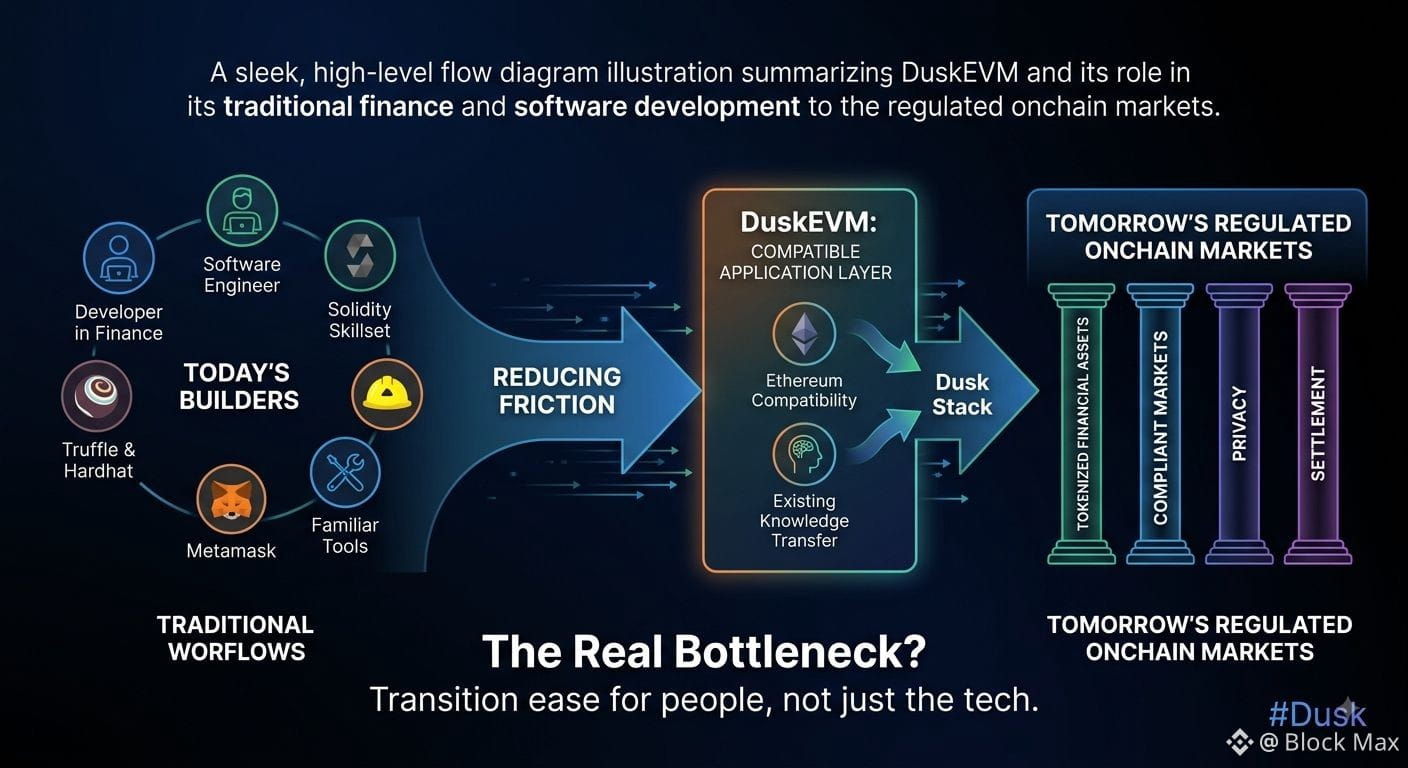
A compatibilidade com EVM parece um pequeno detalhe técnico até você olhar para quem realmente precisa construir em uma blockchain financeira.
Uma boa ideia ainda pode ter dificuldades se os desenvolvedores tiverem que descartar ferramentas familiares apenas para começar.
É por isso que a Dusk.is é interessante para mim. Ela traz uma camada de aplicação para o stack da Dusk, oferecendo para Solidity e para os builders um ambiente mais familiar para trabalhar.
O ponto maior não é apenas “a Dusk suporta EVM”.
É sobre reduzir o atrito.
Para instituições, parceiros de infraestrutura e desenvolvedores que exploram aplicações financeiras reguladas, a familiaridade pode importar quase tanto quanto o desempenho bruto da blockchain. O conhecimento existente, as ferramentas e os hábitos de desenvolvimento podem tornar a transição para um novo ecossistema muito mais fácil.
E a Dusk está mirando uma parte do cripto em que os requisitos são diferentes: ativos financeiros tokenizados, mercados em conformidade, privacidade e liquidação.
Isso cria uma tensão interessante. A infraestrutura financeira precisa evoluir, mas as pessoas que a constroem nem sempre querem reinventar cada fluxo de desenvolvimento do zero.
Talvez o verdadeiro gargalo da adoção não seja se a blockchain consegue lidar com finanças.
Talvez seja o quão fácil nós tornamos a transição para as pessoas que já trabalham com finanças e com software.
A compatibilidade com EVM poderia se tornar uma dessas pontes silenciosas entre os desenvolvedores de hoje e os mercados onchain regulados de amanhã?
@Dusk_Foundation #dusk $DUSK
A compatibilidade com EVM parece um pequeno detalhe técnico até você olhar para quem realmente precisa construir em uma blockchain financeira.
Uma boa ideia ainda pode ter dificuldades se os desenvolvedores tiverem que descartar ferramentas familiares apenas para começar.
É por isso que a Dusk.is é interessante para mim. Ela traz uma camada de aplicação para o stack da Dusk, oferecendo para Solidity e para os builders um ambiente mais familiar para trabalhar.
O ponto maior não é apenas “a Dusk suporta EVM”.
É sobre reduzir o atrito.
Para instituições, parceiros de infraestrutura e desenvolvedores que exploram aplicações financeiras reguladas, a familiaridade pode importar quase tanto quanto o desempenho bruto da blockchain. O conhecimento existente, as ferramentas e os hábitos de desenvolvimento podem tornar a transição para um novo ecossistema muito mais fácil.
E a Dusk está mirando uma parte do cripto em que os requisitos são diferentes: ativos financeiros tokenizados, mercados em conformidade, privacidade e liquidação.
Isso cria uma tensão interessante. A infraestrutura financeira precisa evoluir, mas as pessoas que a constroem nem sempre querem reinventar cada fluxo de desenvolvimento do zero.
Talvez o verdadeiro gargalo da adoção não seja se a blockchain consegue lidar com finanças.
Talvez seja o quão fácil nós tornamos a transição para as pessoas que já trabalham com finanças e com software.
A compatibilidade com EVM poderia se tornar uma dessas pontes silenciosas entre os desenvolvedores de hoje e os mercados onchain regulados de amanhã?
@Dusk #dusk $DUSK
Uma boa ideia ainda pode ter dificuldades se os desenvolvedores tiverem que descartar ferramentas familiares apenas para começar.
É por isso que a Dusk.is é interessante para mim. Ela traz uma camada de aplicação para o stack da Dusk, oferecendo para Solidity e para os builders um ambiente mais familiar para trabalhar.
O ponto maior não é apenas “a Dusk suporta EVM”.
É sobre reduzir o atrito.
Para instituições, parceiros de infraestrutura e desenvolvedores que exploram aplicações financeiras reguladas, a familiaridade pode importar quase tanto quanto o desempenho bruto da blockchain. O conhecimento existente, as ferramentas e os hábitos de desenvolvimento podem tornar a transição para um novo ecossistema muito mais fácil.
E a Dusk está mirando uma parte do cripto em que os requisitos são diferentes: ativos financeiros tokenizados, mercados em conformidade, privacidade e liquidação.
Isso cria uma tensão interessante. A infraestrutura financeira precisa evoluir, mas as pessoas que a constroem nem sempre querem reinventar cada fluxo de desenvolvimento do zero.
Talvez o verdadeiro gargalo da adoção não seja se a blockchain consegue lidar com finanças.
Talvez seja o quão fácil nós tornamos a transição para as pessoas que já trabalham com finanças e com software.
A compatibilidade com EVM poderia se tornar uma dessas pontes silenciosas entre os desenvolvedores de hoje e os mercados onchain regulados de amanhã?
@Dusk #dusk $DUSK
4
4
100
·
--
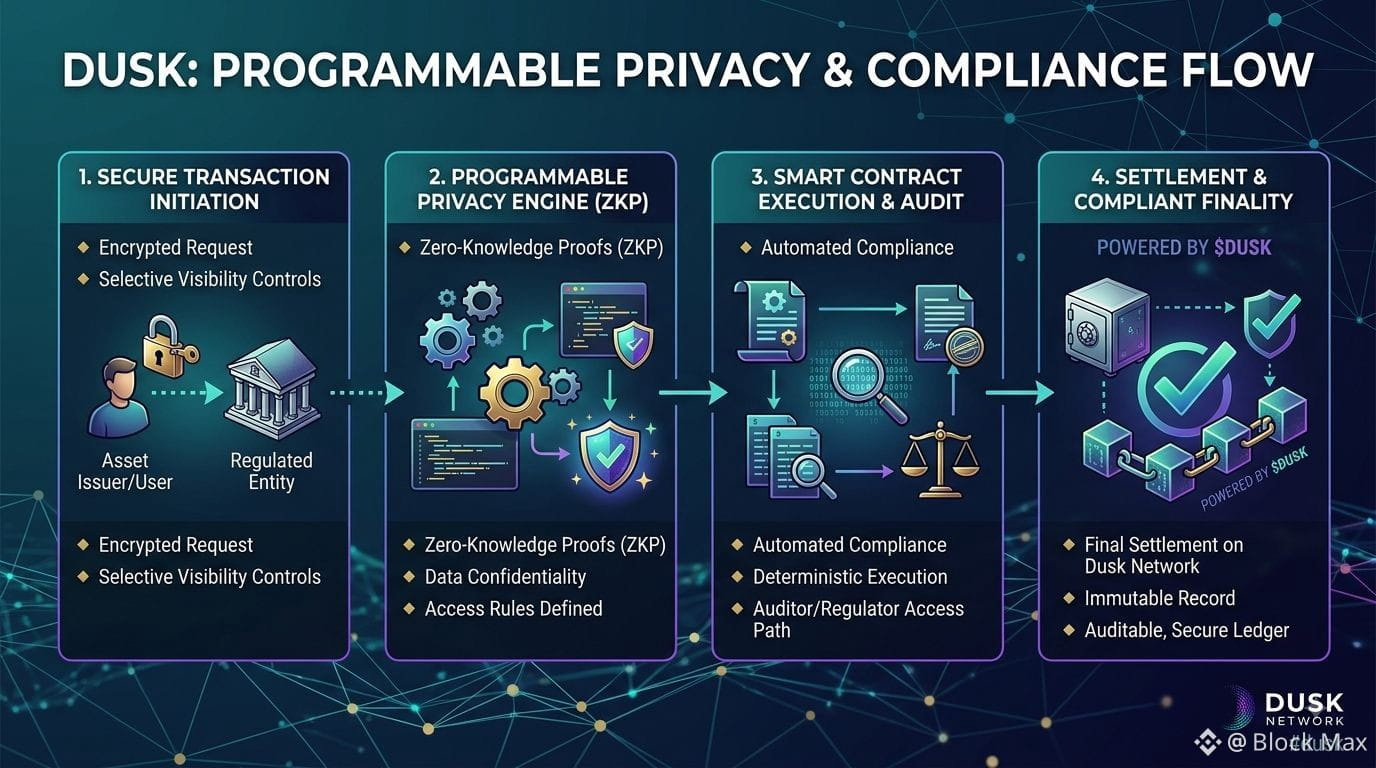
Você já reparou como toda “blockchain privada” esconde demais ou revela demais? Quase nunca existe um meio-termo. E, para as finanças reguladas, esse meio-termo não é opcional — é o requisito completo.
Bancos não podem operar em contabilidades públicas onde qualquer pessoa vê o seu tamanho de posição. Reguladores não podem aceitar uma caixa-preta em que nada seja auditável. Entre esses dois extremos é onde a infraestrutura financeira real precisa existir, e a maioria das redes simplesmente não foi construída para essa tensão.
É aqui que @Dusk_Foundation adota uma abordagem diferente. Em vez de tratar a privacidade como tudo-ou-nada, a Dusk a trata como algo programável — privacidade quando realmente é necessária, transparência quando é útil e divulgação seletiva para as partes autorizadas a revisar uma transação. A liquidação ainda acontece determinística e por baixo de tudo, então a confidencialidade não sacrifica a definitividade.
Pense numa emissão de títulos. O público não precisa ver a posição de cada detentor. Mas um auditor ou regulador pode precisar, mediante solicitação, sem que o emissor tenha que redesenhar todo o sistema apenas para conceder esse acesso.
Essa é a diferença silenciosa entre “criptografado” e “complacente (compliant)”. A maioria dos projetos corre atrás da primeira palavra. Mercados regulados realmente precisam da segunda.
$DUSK fica por baixo desse desenho como o ativo nativo da rede, ligado ao modo como a própria cadeia opera.
Onde você acha que as finanças onchain falham primeiro — privacidade ou conformidade?
#dusk $DUSK
{spot}(DUSKUSDT)
$PORTAL
{spot}(PORTALUSDT)
Você já reparou como toda “blockchain privada” esconde demais ou revela demais? Quase nunca existe um meio-termo. E, para as finanças reguladas, esse meio-termo não é opcional — é o requisito completo.
Bancos não podem operar em contabilidades públicas onde qualquer pessoa vê o seu tamanho de posição. Reguladores não podem aceitar uma caixa-preta em que nada seja auditável. Entre esses dois extremos é onde a infraestrutura financeira real precisa existir, e a maioria das redes simplesmente não foi construída para essa tensão.
É aqui que @Dusk adota uma abordagem diferente. Em vez de tratar a privacidade como tudo-ou-nada, a Dusk a trata como algo programável — privacidade quando realmente é necessária, transparência quando é útil e divulgação seletiva para as partes autorizadas a revisar uma transação. A liquidação ainda acontece determinística e por baixo de tudo, então a confidencialidade não sacrifica a definitividade.
Pense numa emissão de títulos. O público não precisa ver a posição de cada detentor. Mas um auditor ou regulador pode precisar, mediante solicitação, sem que o emissor tenha que redesenhar todo o sistema apenas para conceder esse acesso.
Essa é a diferença silenciosa entre “criptografado” e “complacente (compliant)”. A maioria dos projetos corre atrás da primeira palavra. Mercados regulados realmente precisam da segunda.
$DUSK fica por baixo desse desenho como o ativo nativo da rede, ligado ao modo como a própria cadeia opera.
Onde você acha que as finanças onchain falham primeiro — privacidade ou conformidade?
#dusk $DUSK
$PORTAL
Bancos não podem operar em contabilidades públicas onde qualquer pessoa vê o seu tamanho de posição. Reguladores não podem aceitar uma caixa-preta em que nada seja auditável. Entre esses dois extremos é onde a infraestrutura financeira real precisa existir, e a maioria das redes simplesmente não foi construída para essa tensão.
É aqui que @Dusk adota uma abordagem diferente. Em vez de tratar a privacidade como tudo-ou-nada, a Dusk a trata como algo programável — privacidade quando realmente é necessária, transparência quando é útil e divulgação seletiva para as partes autorizadas a revisar uma transação. A liquidação ainda acontece determinística e por baixo de tudo, então a confidencialidade não sacrifica a definitividade.
Pense numa emissão de títulos. O público não precisa ver a posição de cada detentor. Mas um auditor ou regulador pode precisar, mediante solicitação, sem que o emissor tenha que redesenhar todo o sistema apenas para conceder esse acesso.
Essa é a diferença silenciosa entre “criptografado” e “complacente (compliant)”. A maioria dos projetos corre atrás da primeira palavra. Mercados regulados realmente precisam da segunda.
$DUSK fica por baixo desse desenho como o ativo nativo da rede, ligado ao modo como a própria cadeia opera.
Onde você acha que as finanças onchain falham primeiro — privacidade ou conformidade?
#dusk $DUSK
$PORTAL
13
4
313
·
--
Parcialmente verdadeiro
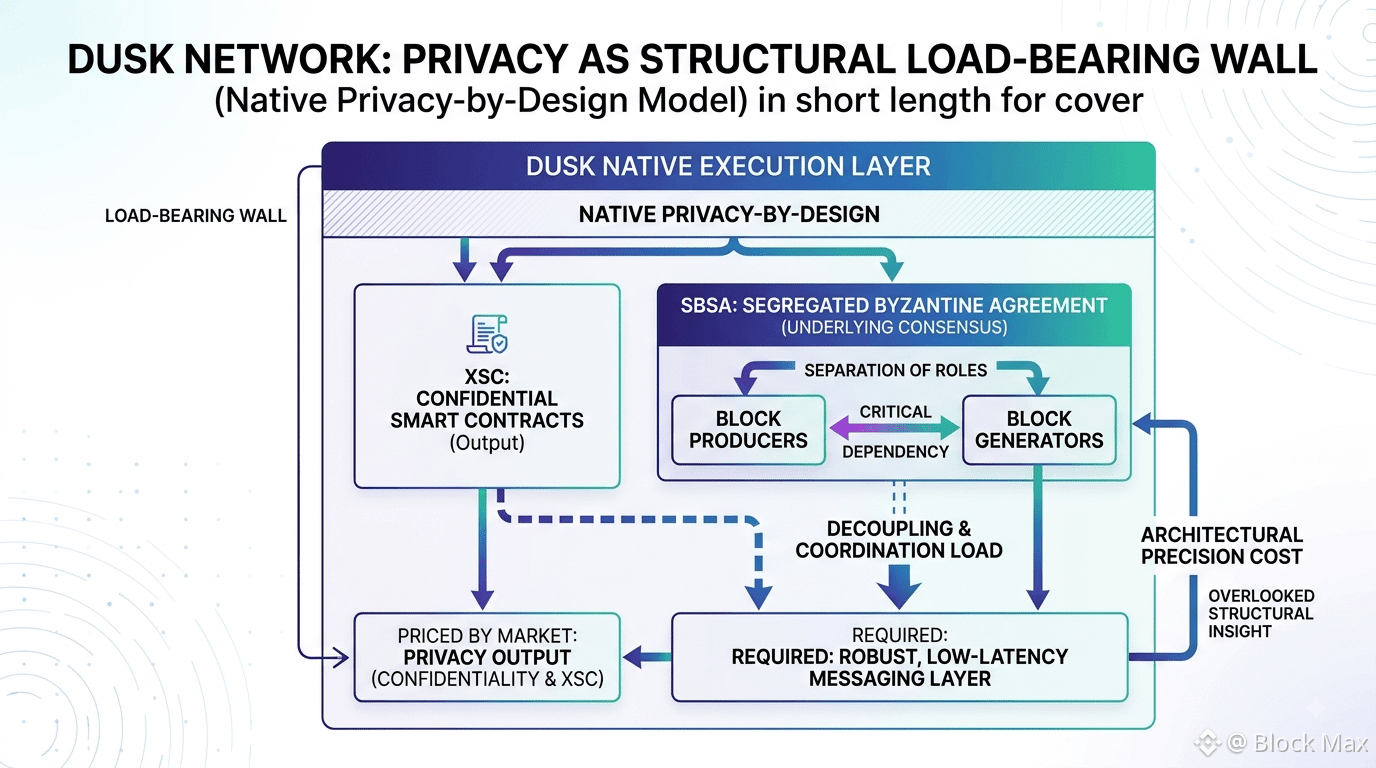
Estou observando como o compromisso arquitetônico da Dusk Network com um modelo nativo de privacidade-by-design está sendo interpretado de forma equivocada apenas como um conjunto de funcionalidades, em vez de uma mudança fundamental na dinâmica da camada de execução. O mercado se concentra no padrão XSC para contratos inteligentes confidenciais, mas ignora a implicação crítica do seu mecanismo de consenso subjacente. A Dusk utiliza uma variante de Proof-of-Stake chamada Segregated Byzantine Agreement (SBSA), que separa as funções de produtores de blocos e geradores de blocos para minimizar vetores de ataque, mantendo a confidencialidade. A percepção estrutural não óbvia é que essa separação, projetada para a segurança, cria uma dependência oculta de coordenação. Ela força uma dissociação entre a validação de transações e a finalização de blocos, o que exige uma camada de mensagens mais robusta e de baixa latência do que o consenso monolítico padrão. Enquanto os concorrentes adicionam privacidade aos ambientes de execução existentes, introduzindo latência e complexidade, a integração nativa da Dusk significa que sua camada de coordenação precisa ser, fundamentalmente, mais eficiente. O mercado precifica a saída de privacidade; ele deixa de perceber o custo da precisão arquitetônica necessária para sustentá-la. Privacidade não é um recurso adicionado aqui — é a parede estrutural de sustentação.
@Dusk_Foundation #dusk $DUSK
{spot}(DUSKUSDT)
Estou observando como o compromisso arquitetônico da Dusk Network com um modelo nativo de privacidade-by-design está sendo interpretado de forma equivocada apenas como um conjunto de funcionalidades, em vez de uma mudança fundamental na dinâmica da camada de execução. O mercado se concentra no padrão XSC para contratos inteligentes confidenciais, mas ignora a implicação crítica do seu mecanismo de consenso subjacente. A Dusk utiliza uma variante de Proof-of-Stake chamada Segregated Byzantine Agreement (SBSA), que separa as funções de produtores de blocos e geradores de blocos para minimizar vetores de ataque, mantendo a confidencialidade. A percepção estrutural não óbvia é que essa separação, projetada para a segurança, cria uma dependência oculta de coordenação. Ela força uma dissociação entre a validação de transações e a finalização de blocos, o que exige uma camada de mensagens mais robusta e de baixa latência do que o consenso monolítico padrão. Enquanto os concorrentes adicionam privacidade aos ambientes de execução existentes, introduzindo latência e complexidade, a integração nativa da Dusk significa que sua camada de coordenação precisa ser, fundamentalmente, mais eficiente. O mercado precifica a saída de privacidade; ele deixa de perceber o custo da precisão arquitetônica necessária para sustentá-la. Privacidade não é um recurso adicionado aqui — é a parede estrutural de sustentação.
@Dusk #dusk $DUSK
@Dusk #dusk $DUSK
99
41
10.2k
·
--
Verificado
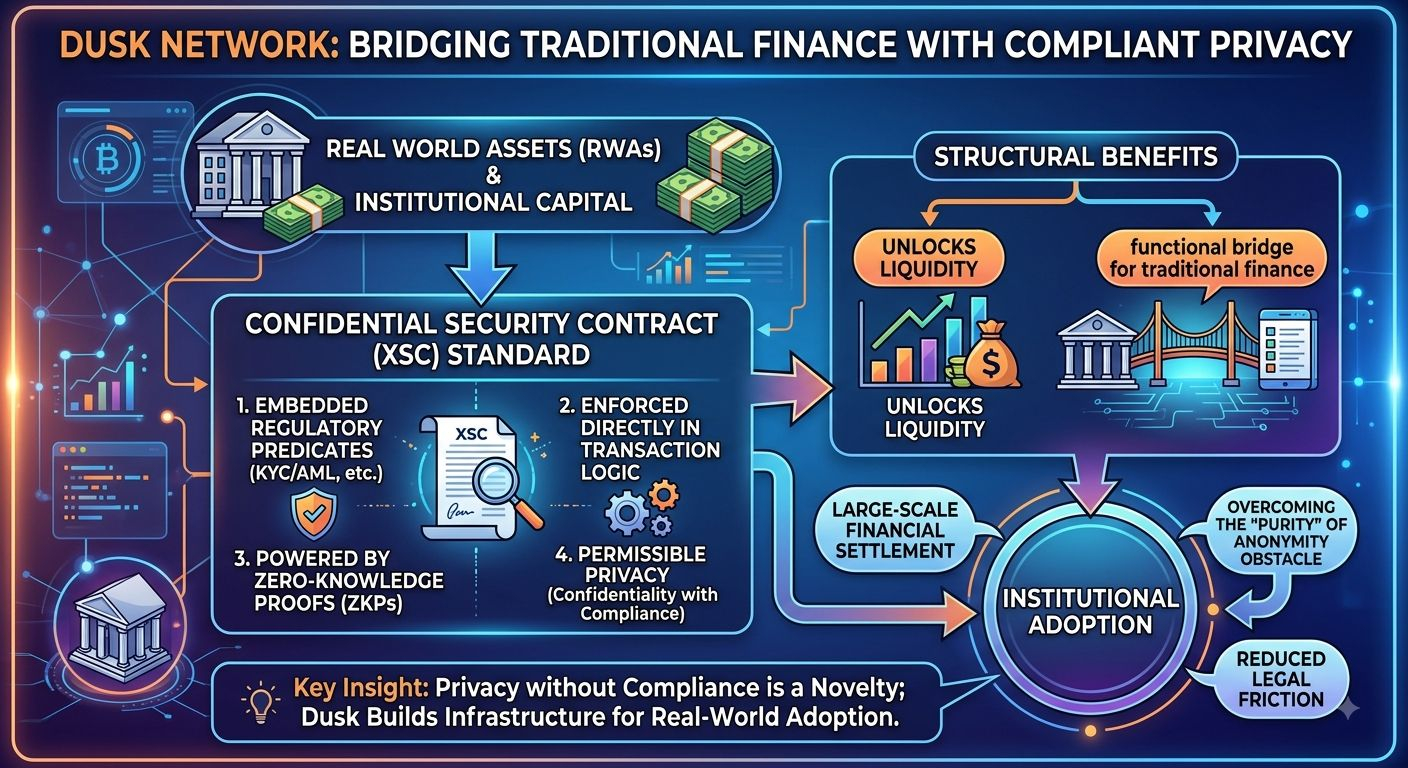
Estou analisando a Rede Dusk e o mercado está interpretando mal o valor das suas restrições de conformidade. O mecanismo específico que está sendo ignorado é o padrão do Contrato de Segurança Confidencial (XSC), que impõe predições regulatórias diretamente na lógica da transação. Diferentemente dos concorrentes que tratam a regulamentação como um adversário externo, a Dusk a incorpora ao protocolo por meio de provas de conhecimento zero. Essa escolha estrutural altera fundamentalmente a liquidez. Ela resolve o atrito jurídico que atualmente bloqueia o capital institucional de operar em cadeias anônimas, criando uma ponte funcional para Ativos do Mundo Real. Enquanto o mercado se concentra na “anonimidade pura”, ele deixa de precificar que a liquidação financeira em larga escala exige privacidade permitida, e não apenas obscuridade criptográfica. Isso não é apenas um conjunto de funcionalidades; é uma dependência necessária para integrar as finanças tradicionais. Privacidade sem conformidade é uma novidade; a Dusk está construindo a infraestrutura para adoção institucional.
@Dusk_Foundation #dusk $DUSK
{spot}(DUSKUSDT)
#DUSK
$COW
{spot}(COWUSDT)
Estou analisando a Rede Dusk e o mercado está interpretando mal o valor das suas restrições de conformidade. O mecanismo específico que está sendo ignorado é o padrão do Contrato de Segurança Confidencial (XSC), que impõe predições regulatórias diretamente na lógica da transação. Diferentemente dos concorrentes que tratam a regulamentação como um adversário externo, a Dusk a incorpora ao protocolo por meio de provas de conhecimento zero. Essa escolha estrutural altera fundamentalmente a liquidez. Ela resolve o atrito jurídico que atualmente bloqueia o capital institucional de operar em cadeias anônimas, criando uma ponte funcional para Ativos do Mundo Real. Enquanto o mercado se concentra na “anonimidade pura”, ele deixa de precificar que a liquidação financeira em larga escala exige privacidade permitida, e não apenas obscuridade criptográfica. Isso não é apenas um conjunto de funcionalidades; é uma dependência necessária para integrar as finanças tradicionais. Privacidade sem conformidade é uma novidade; a Dusk está construindo a infraestrutura para adoção institucional.
@Dusk #dusk $DUSK
#DUSK
$COW
@Dusk #dusk $DUSK
#DUSK
$COW
48
26
6.3k
·
--
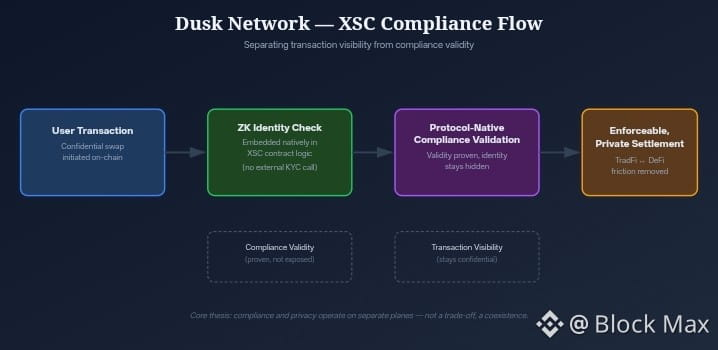
Estou acompanhando de perto a Dusk Network. Enquanto a maioria dos projetos de privacidade se concentra em anonimato total, o mercado está precificando de forma incorreta as implicações estruturais do padrão XSC (Confidential Security Contract). A Dusk impõe uma separação entre visibilidade de transações e validade de conformidade ao incorporar verificações de identidade com conhecimento zero diretamente na arquitetura do contrato. Essa escolha de design altera radicalmente a camada de infraestrutura para os mercados de capitais. Ao mover a verificação de conformidade de provedores externos de KYC para o ambiente nativo de execução do protocolo, a cadeia permite swaps legalmente executáveis sem comprometer a privacidade do usuário. Isso elimina a fricção de coordenação que atualmente impede as finanças tradicionais de interagir com a DeFi. O mercado assume que privacidade e regulação são mutuamente exclusivas, mas a arquitetura da Dusk as obriga a coexistir.Estou acompanhando de perto a Dusk Network. Enquanto a maioria dos projetos de privacidade se concentra em anonimato total, o mercado está precificando de forma incorreta as implicações estruturais do padrão XSC (Confidential Security Contract). A Dusk impõe uma separação entre visibilidade de transações e validade de conformidade ao incorporar verificações de identidade com conhecimento zero diretamente na arquitetura do contrato. Essa escolha de design altera radicalmente a camada de infraestrutura para os mercados de capitais. Ao mover a verificação de conformidade de provedores externos de KYC para o ambiente nativo de execução do protocolo, a cadeia permite swaps legalmente executáveis sem comprometer a privacidade do usuário. Isso elimina a fricção de coordenação que atualmente impede as finanças tradicionais de interagir com a DeFi. O mercado assume que privacidade e regulação são mutuamente exclusivas, mas a arquitetura da Dusk as obriga a coexistir.
@Dusk_Foundation #dusk $DUSK
Estou acompanhando de perto a Dusk Network. Enquanto a maioria dos projetos de privacidade se concentra em anonimato total, o mercado está precificando de forma incorreta as implicações estruturais do padrão XSC (Confidential Security Contract). A Dusk impõe uma separação entre visibilidade de transações e validade de conformidade ao incorporar verificações de identidade com conhecimento zero diretamente na arquitetura do contrato. Essa escolha de design altera radicalmente a camada de infraestrutura para os mercados de capitais. Ao mover a verificação de conformidade de provedores externos de KYC para o ambiente nativo de execução do protocolo, a cadeia permite swaps legalmente executáveis sem comprometer a privacidade do usuário. Isso elimina a fricção de coordenação que atualmente impede as finanças tradicionais de interagir com a DeFi. O mercado assume que privacidade e regulação são mutuamente exclusivas, mas a arquitetura da Dusk as obriga a coexistir.Estou acompanhando de perto a Dusk Network. Enquanto a maioria dos projetos de privacidade se concentra em anonimato total, o mercado está precificando de forma incorreta as implicações estruturais do padrão XSC (Confidential Security Contract). A Dusk impõe uma separação entre visibilidade de transações e validade de conformidade ao incorporar verificações de identidade com conhecimento zero diretamente na arquitetura do contrato. Essa escolha de design altera radicalmente a camada de infraestrutura para os mercados de capitais. Ao mover a verificação de conformidade de provedores externos de KYC para o ambiente nativo de execução do protocolo, a cadeia permite swaps legalmente executáveis sem comprometer a privacidade do usuário. Isso elimina a fricção de coordenação que atualmente impede as finanças tradicionais de interagir com a DeFi. O mercado assume que privacidade e regulação são mutuamente exclusivas, mas a arquitetura da Dusk as obriga a coexistir.
@Dusk #dusk $DUSK
@Dusk #dusk $DUSK
2
2
93
·
--
Verificado
Estou a analisar como a Dusk Network posiciona o seu padrão XSC não apenas como uma ferramenta de privacidade, mas como um motor de conformidade específico para valores mobiliários tokenizados. A maioria das Layer-1s trata a confidencialidade e a regulamentação como forças opostas, obrigando as instituições a escolher entre anonimato e conformidade legal. A arquitetura da Dusk incorpora verificações de conformidade diretamente no protocolo, permitindo que a verificação de KYC e AML ocorra sem revelar os dados subjacentes das transações. Este desenho estrutural cria um efeito subsequente contraintuitivo: ele filtra deliberadamente o volume especulativo de retalho para priorizar a liquidez institucional de alto valor, que exige certeza jurídica. O mercado atualmente precifica a Dusk como uma alternativa genérica de privacidade, perdendo o ponto de que ela está a se posicionar como infraestrutura obrigatória para mercados de segurança regulados. À medida que ações tokenizadas avançam para a cadeia (on-chain), a procura por uma via de liquidação que satisfaça os reguladores enquanto protege os dados das transações passará de opcional para essencial. O mercado está a precificar uma moeda de privacidade, mas na realidade está a comprar a canalização (plumbing) para ativos digitais em conformidade.
@Dusk_Foundation #dusk $DUSK #DUSK
Estou a analisar como a Dusk Network posiciona o seu padrão XSC não apenas como uma ferramenta de privacidade, mas como um motor de conformidade específico para valores mobiliários tokenizados. A maioria das Layer-1s trata a confidencialidade e a regulamentação como forças opostas, obrigando as instituições a escolher entre anonimato e conformidade legal. A arquitetura da Dusk incorpora verificações de conformidade diretamente no protocolo, permitindo que a verificação de KYC e AML ocorra sem revelar os dados subjacentes das transações. Este desenho estrutural cria um efeito subsequente contraintuitivo: ele filtra deliberadamente o volume especulativo de retalho para priorizar a liquidez institucional de alto valor, que exige certeza jurídica. O mercado atualmente precifica a Dusk como uma alternativa genérica de privacidade, perdendo o ponto de que ela está a se posicionar como infraestrutura obrigatória para mercados de segurança regulados. À medida que ações tokenizadas avançam para a cadeia (on-chain), a procura por uma via de liquidação que satisfaça os reguladores enquanto protege os dados das transações passará de opcional para essencial. O mercado está a precificar uma moeda de privacidade, mas na realidade está a comprar a canalização (plumbing) para ativos digitais em conformidade.
@Dusk #dusk $DUSK #DUSK
@Dusk #dusk $DUSK #DUSK
Compliant infrastructure 🏦
0%
Generic privacy coin 🔒
0%
Institutional liquidity play📈
0%
Overhyped, no real demand 📉
0%
0 Votos • Votação encerrada
12
8
730
·
--
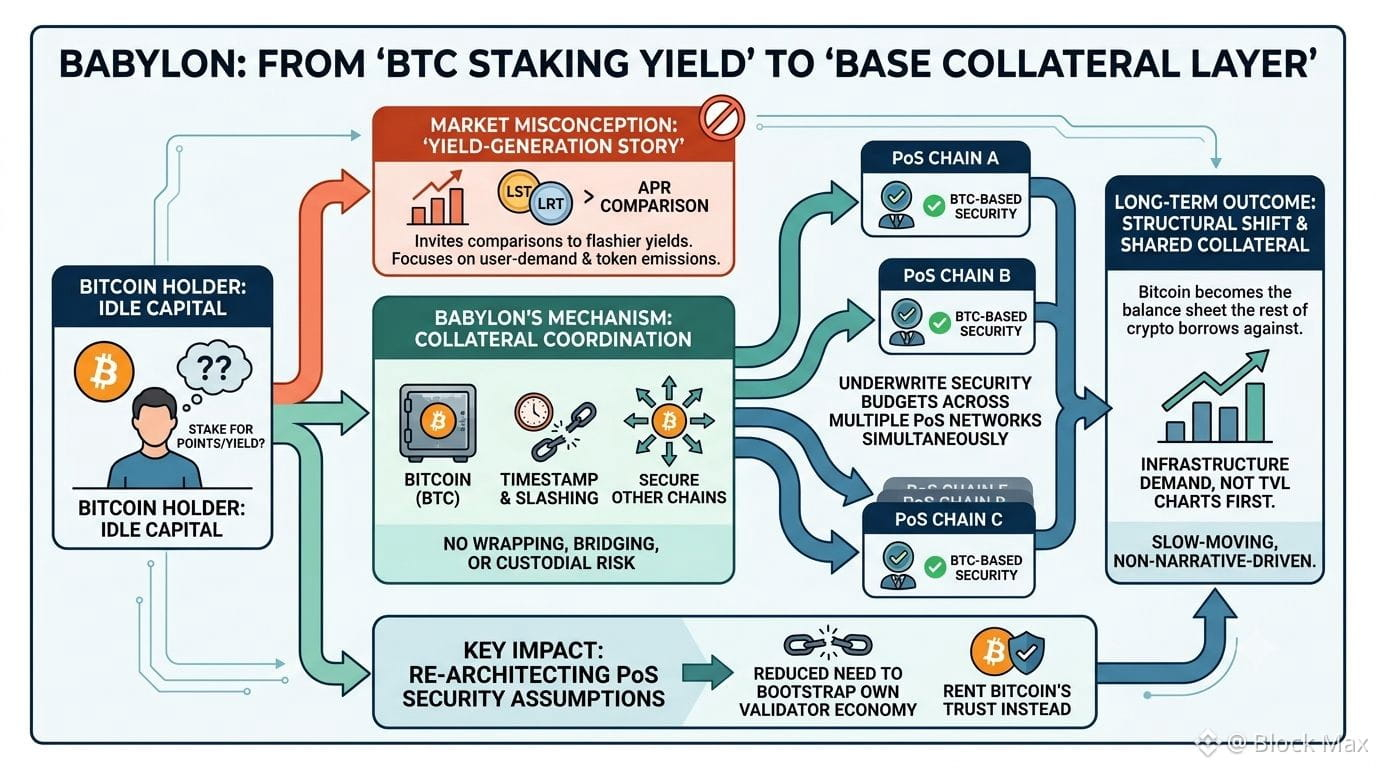
Estou assistindo Babylon ser precificada como se fosse um “play de rendimento de staking de Bitcoin”, quando a aposta real está em algo menos visível: se o capital ocioso do Bitcoin pode se tornar a camada-base de colateral para todo o mundo PoS.
O erro do mercado é tratar BABY como uma história de geração de rendimento — apostar BTC, ganhar pontos e aguardar emissões de tokens. Esse enquadramento convida comparações com tokens de liquid staking e seus APRs em circulação, o que faz Babylon parecer pouco relevante ao lado de qualquer coisa que ofereça números mais chamativos.
Mas o mecanismo real não é rendimento. É coordenação de colateral. Babylon permite que o Bitcoin — o maior, mais confiável e mais líquido ativo cripto — carimbe o tempo e se auto-vincule (slash) para securizar outras cadeias, sem encapsular, fazer bridge ou assumir risco de custódia. Isso não é um produto de rendimento. É uma tentativa de fazer do BTC o ativo-reserva que lastreia orçamentos de segurança em dezenas de redes PoS independentes simultaneamente.
A camada que isso realmente afeta é a demanda por infraestrutura, não a demanda do usuário. O sucesso aqui não aparece primeiro em gráficos de TVL — ele aparece em quantas cadeias redesenham silenciosamente suas premissas de segurança em torno de “e se a gente não precisar do nosso próprio token para segurança?”. É uma mudança estrutural e de movimento lento, não uma narrativa que ganha tração em uma linha do tempo. Quando o Bitcoin vira colateral compartilhado, ele muda a camada de descoberta para cada cadeia PoS avaliando se deve criar sua própria economia de validadores ou simplesmente alugar a confiança do Bitcoin.
Se essa tese se concretizar, o valor não está no que o BABY rende hoje. Está em saber se o Bitcoin, de forma discreta, vira o balanço patrimonial contra o qual o resto do cripto empresta.
#baby $BABY @babylonlabs_io
Estou assistindo Babylon ser precificada como se fosse um “play de rendimento de staking de Bitcoin”, quando a aposta real está em algo menos visível: se o capital ocioso do Bitcoin pode se tornar a camada-base de colateral para todo o mundo PoS.
O erro do mercado é tratar BABY como uma história de geração de rendimento — apostar BTC, ganhar pontos e aguardar emissões de tokens. Esse enquadramento convida comparações com tokens de liquid staking e seus APRs em circulação, o que faz Babylon parecer pouco relevante ao lado de qualquer coisa que ofereça números mais chamativos.
Mas o mecanismo real não é rendimento. É coordenação de colateral. Babylon permite que o Bitcoin — o maior, mais confiável e mais líquido ativo cripto — carimbe o tempo e se auto-vincule (slash) para securizar outras cadeias, sem encapsular, fazer bridge ou assumir risco de custódia. Isso não é um produto de rendimento. É uma tentativa de fazer do BTC o ativo-reserva que lastreia orçamentos de segurança em dezenas de redes PoS independentes simultaneamente.
A camada que isso realmente afeta é a demanda por infraestrutura, não a demanda do usuário. O sucesso aqui não aparece primeiro em gráficos de TVL — ele aparece em quantas cadeias redesenham silenciosamente suas premissas de segurança em torno de “e se a gente não precisar do nosso próprio token para segurança?”. É uma mudança estrutural e de movimento lento, não uma narrativa que ganha tração em uma linha do tempo. Quando o Bitcoin vira colateral compartilhado, ele muda a camada de descoberta para cada cadeia PoS avaliando se deve criar sua própria economia de validadores ou simplesmente alugar a confiança do Bitcoin.
Se essa tese se concretizar, o valor não está no que o BABY rende hoje. Está em saber se o Bitcoin, de forma discreta, vira o balanço patrimonial contra o qual o resto do cripto empresta.
#baby $BABY @BabylonLabs_io
O erro do mercado é tratar BABY como uma história de geração de rendimento — apostar BTC, ganhar pontos e aguardar emissões de tokens. Esse enquadramento convida comparações com tokens de liquid staking e seus APRs em circulação, o que faz Babylon parecer pouco relevante ao lado de qualquer coisa que ofereça números mais chamativos.
Mas o mecanismo real não é rendimento. É coordenação de colateral. Babylon permite que o Bitcoin — o maior, mais confiável e mais líquido ativo cripto — carimbe o tempo e se auto-vincule (slash) para securizar outras cadeias, sem encapsular, fazer bridge ou assumir risco de custódia. Isso não é um produto de rendimento. É uma tentativa de fazer do BTC o ativo-reserva que lastreia orçamentos de segurança em dezenas de redes PoS independentes simultaneamente.
A camada que isso realmente afeta é a demanda por infraestrutura, não a demanda do usuário. O sucesso aqui não aparece primeiro em gráficos de TVL — ele aparece em quantas cadeias redesenham silenciosamente suas premissas de segurança em torno de “e se a gente não precisar do nosso próprio token para segurança?”. É uma mudança estrutural e de movimento lento, não uma narrativa que ganha tração em uma linha do tempo. Quando o Bitcoin vira colateral compartilhado, ele muda a camada de descoberta para cada cadeia PoS avaliando se deve criar sua própria economia de validadores ou simplesmente alugar a confiança do Bitcoin.
Se essa tese se concretizar, o valor não está no que o BABY rende hoje. Está em saber se o Bitcoin, de forma discreta, vira o balanço patrimonial contra o qual o resto do cripto empresta.
#baby $BABY @BabylonLabs_io
22
6
225
·
--
Estou observando Babylon menos como uma jogada de “staking de BTC” e mais como uma re-arquitetura silenciosa de como a confiança é originada na cripto.
A maioria enquadra a BABY em torno de rendimento — “agora BTC rende”. Isso é a leitura superficial, e é por isso que o mercado a precifica como mais um token de restaking buscando narrativas de APY. A mudança mais profunda é de onde vem a segurança. Toda cadeia PoS hoje precisa fazer o bootstrapping do seu próprio conjunto de validadores e da própria credibilidade do zero. Babylon permite que elas tomem emprestado o peso econômico do Bitcoin diretamente, sem envolver BTC, sem custodiante, sem uma ponte que possa ser drenada. Isso não é um recurso de rendimento — é um mecanismo de fornecimento de confiança.
A camada oculta que isso atinge é a coordenação. Hoje, a segurança está compartimentalizada: cada cadeia compete por validadores e liquidez de forma independente. Se o Bitcoin se tornar um backstop compartilhado e autocustodiado de segurança, você obtém confiança em pool em vez de confiança fragmentada — as cadeias param de competir por capital e começam a competir por prioridade de integração.
Isso redefine a demanda futura. Não é “quanto BTC está sendo stakeado”, é “quantas cadeias precisam de finalidade no nível do Bitcoin para serem levadas a sério”. Esse número ainda não está precificado.
O mercado está valorizando um produto de rendimento. O protocolo está construindo uma camada de confiança. São ativos diferentes.
#baby $BABY @babylonlabs_io
Estou observando Babylon menos como uma jogada de “staking de BTC” e mais como uma re-arquitetura silenciosa de como a confiança é originada na cripto.
A maioria enquadra a BABY em torno de rendimento — “agora BTC rende”. Isso é a leitura superficial, e é por isso que o mercado a precifica como mais um token de restaking buscando narrativas de APY. A mudança mais profunda é de onde vem a segurança. Toda cadeia PoS hoje precisa fazer o bootstrapping do seu próprio conjunto de validadores e da própria credibilidade do zero. Babylon permite que elas tomem emprestado o peso econômico do Bitcoin diretamente, sem envolver BTC, sem custodiante, sem uma ponte que possa ser drenada. Isso não é um recurso de rendimento — é um mecanismo de fornecimento de confiança.
A camada oculta que isso atinge é a coordenação. Hoje, a segurança está compartimentalizada: cada cadeia compete por validadores e liquidez de forma independente. Se o Bitcoin se tornar um backstop compartilhado e autocustodiado de segurança, você obtém confiança em pool em vez de confiança fragmentada — as cadeias param de competir por capital e começam a competir por prioridade de integração.
Isso redefine a demanda futura. Não é “quanto BTC está sendo stakeado”, é “quantas cadeias precisam de finalidade no nível do Bitcoin para serem levadas a sério”. Esse número ainda não está precificado.
O mercado está valorizando um produto de rendimento. O protocolo está construindo uma camada de confiança. São ativos diferentes.
#baby $BABY @BabylonLabs_io
A maioria enquadra a BABY em torno de rendimento — “agora BTC rende”. Isso é a leitura superficial, e é por isso que o mercado a precifica como mais um token de restaking buscando narrativas de APY. A mudança mais profunda é de onde vem a segurança. Toda cadeia PoS hoje precisa fazer o bootstrapping do seu próprio conjunto de validadores e da própria credibilidade do zero. Babylon permite que elas tomem emprestado o peso econômico do Bitcoin diretamente, sem envolver BTC, sem custodiante, sem uma ponte que possa ser drenada. Isso não é um recurso de rendimento — é um mecanismo de fornecimento de confiança.
A camada oculta que isso atinge é a coordenação. Hoje, a segurança está compartimentalizada: cada cadeia compete por validadores e liquidez de forma independente. Se o Bitcoin se tornar um backstop compartilhado e autocustodiado de segurança, você obtém confiança em pool em vez de confiança fragmentada — as cadeias param de competir por capital e começam a competir por prioridade de integração.
Isso redefine a demanda futura. Não é “quanto BTC está sendo stakeado”, é “quantas cadeias precisam de finalidade no nível do Bitcoin para serem levadas a sério”. Esse número ainda não está precificado.
O mercado está valorizando um produto de rendimento. O protocolo está construindo uma camada de confiança. São ativos diferentes.
#baby $BABY @BabylonLabs_io
Vision 🚀
0%
People 🤝
0%
Profit 💰
0%
Patience ⌛
0%
0 Votos • Votação encerrada
5
3
169
·
--
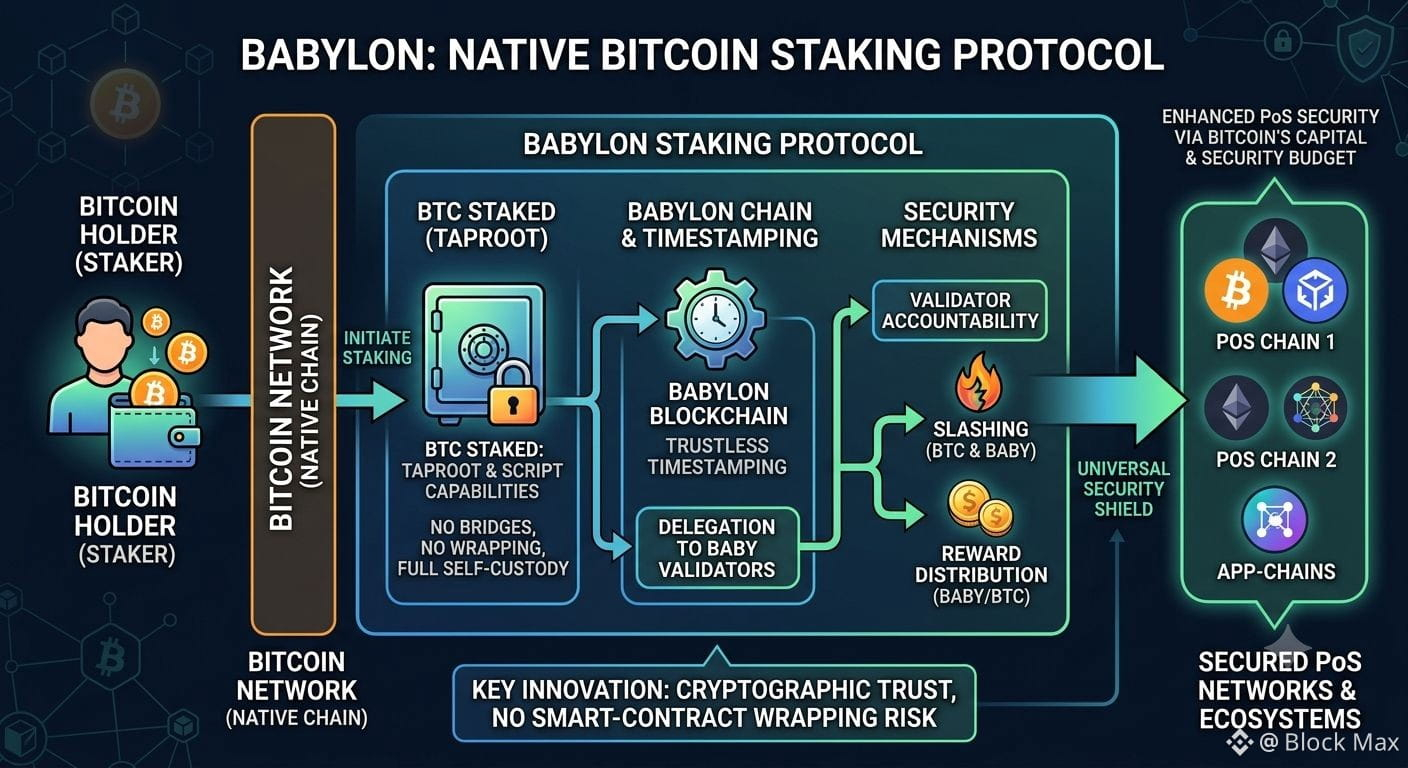
Babylon é um protocolo de staking de Bitcoin que permite que detentores de BTC façam staking de Bitcoin diretamente para proteger cadeias PoS, sem empacotamento ou bridging, mantendo a custódia própria total o tempo todo.
A principal descoberta do Babylon é o staking nativo e sem confiança (trustless) do BTC, construído com base nas capacidades de script do Bitcoin (mecanismos baseados em Taproot e timestamping), em vez de uma ponte (bridge) ou um ativo sintético. É a primeira rede L1 garantida por staking de Bitcoin por meio de delegação via token BABY, usando timestamping e mecanismos de slashing do Bitcoin para aprimorar a responsabilização dos validadores enquanto protege a rede (Atomic). Como o BTC nunca sai da cadeia do Bitcoin, não há risco de empacotamento via smart contract e nem superfície de ataque de bridge — o staking é puramente criptográfico.
O Bitcoin concentra o maior nível de liquidez e orçamento de segurança do mercado cripto, mas historicamente esse capital ficou ocioso ou só entrou em DeFi por meio de rotas custodiadas/empacotadas (WBTC, bridges) que reintroduzem risco de contraparte e de smart contract. O Babylon resolve isso permitindo que o BTC atue como uma camada de segurança com minimização de confiança para ecossistemas PoS — possibilitando que o Bitcoin funcione como um escudo de segurança universal, redefinindo a utilidade da maior criptomoeda do mundo (BTCC). Para contextualizar em escala: para comparação, toda a oferta de Bitcoin empacotado (wrapped) fica em torno de 150.000 BTC; portanto, o Babylon manter mais de um terço disso em cofres de staking nativo indica uma demanda real por staking de BTC sem custódia .@babylonlabs_io #baby $BABY
Babylon é um protocolo de staking de Bitcoin que permite que detentores de BTC façam staking de Bitcoin diretamente para proteger cadeias PoS, sem empacotamento ou bridging, mantendo a custódia própria total o tempo todo.
A principal descoberta do Babylon é o staking nativo e sem confiança (trustless) do BTC, construído com base nas capacidades de script do Bitcoin (mecanismos baseados em Taproot e timestamping), em vez de uma ponte (bridge) ou um ativo sintético. É a primeira rede L1 garantida por staking de Bitcoin por meio de delegação via token BABY, usando timestamping e mecanismos de slashing do Bitcoin para aprimorar a responsabilização dos validadores enquanto protege a rede (Atomic). Como o BTC nunca sai da cadeia do Bitcoin, não há risco de empacotamento via smart contract e nem superfície de ataque de bridge — o staking é puramente criptográfico.
O Bitcoin concentra o maior nível de liquidez e orçamento de segurança do mercado cripto, mas historicamente esse capital ficou ocioso ou só entrou em DeFi por meio de rotas custodiadas/empacotadas (WBTC, bridges) que reintroduzem risco de contraparte e de smart contract. O Babylon resolve isso permitindo que o BTC atue como uma camada de segurança com minimização de confiança para ecossistemas PoS — possibilitando que o Bitcoin funcione como um escudo de segurança universal, redefinindo a utilidade da maior criptomoeda do mundo (BTCC). Para contextualizar em escala: para comparação, toda a oferta de Bitcoin empacotado (wrapped) fica em torno de 150.000 BTC; portanto, o Babylon manter mais de um terço disso em cofres de staking nativo indica uma demanda real por staking de BTC sem custódia .@BabylonLabs_io #baby $BABY
A principal descoberta do Babylon é o staking nativo e sem confiança (trustless) do BTC, construído com base nas capacidades de script do Bitcoin (mecanismos baseados em Taproot e timestamping), em vez de uma ponte (bridge) ou um ativo sintético. É a primeira rede L1 garantida por staking de Bitcoin por meio de delegação via token BABY, usando timestamping e mecanismos de slashing do Bitcoin para aprimorar a responsabilização dos validadores enquanto protege a rede (Atomic). Como o BTC nunca sai da cadeia do Bitcoin, não há risco de empacotamento via smart contract e nem superfície de ataque de bridge — o staking é puramente criptográfico.
O Bitcoin concentra o maior nível de liquidez e orçamento de segurança do mercado cripto, mas historicamente esse capital ficou ocioso ou só entrou em DeFi por meio de rotas custodiadas/empacotadas (WBTC, bridges) que reintroduzem risco de contraparte e de smart contract. O Babylon resolve isso permitindo que o BTC atue como uma camada de segurança com minimização de confiança para ecossistemas PoS — possibilitando que o Bitcoin funcione como um escudo de segurança universal, redefinindo a utilidade da maior criptomoeda do mundo (BTCC). Para contextualizar em escala: para comparação, toda a oferta de Bitcoin empacotado (wrapped) fica em torno de 150.000 BTC; portanto, o Babylon manter mais de um terço disso em cofres de staking nativo indica uma demanda real por staking de BTC sem custódia .@BabylonLabs_io #baby $BABY
9
8
271
·
--
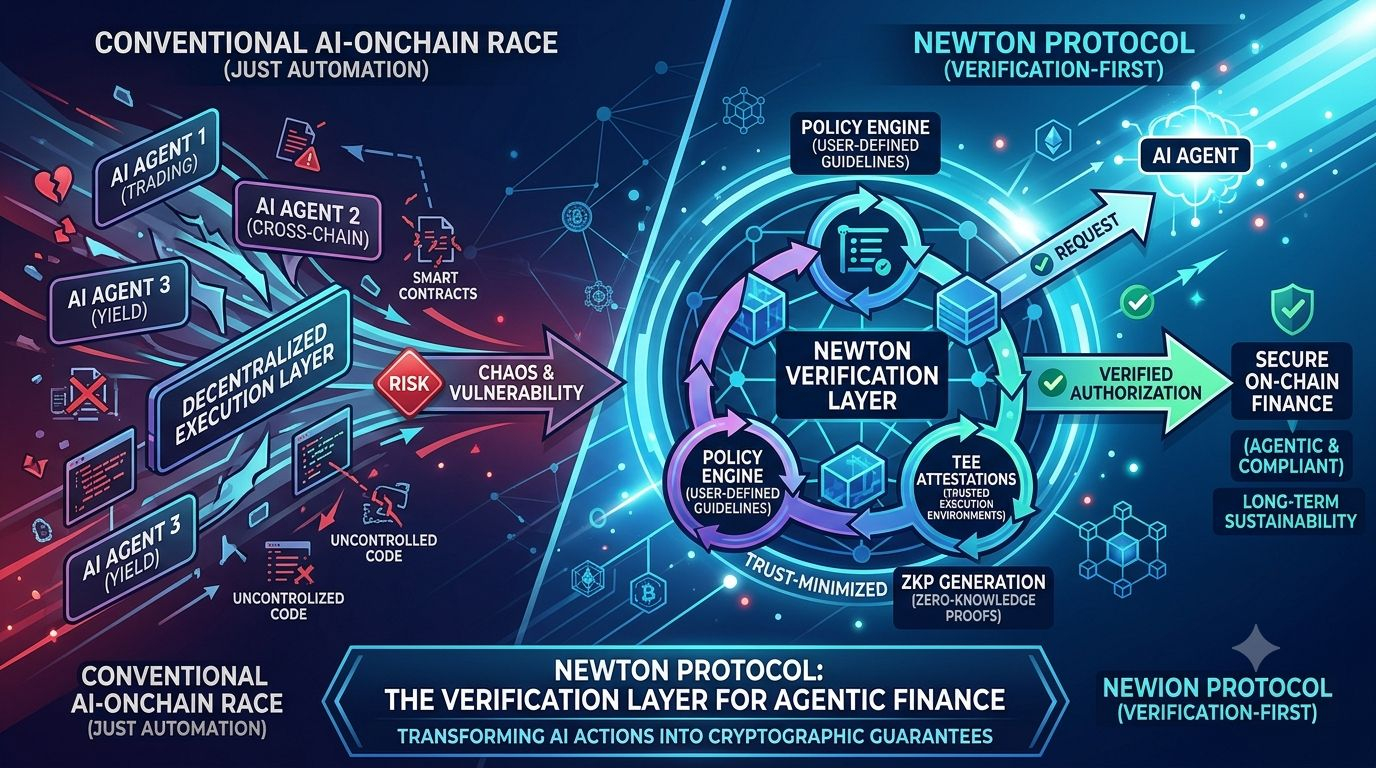
Artigo
Newton Protocol: Apostando na Verificação, e Não Apenas na Automação, na Corrida da IA-OnchainTenho passado muito tempo ultimamente rolando por projetos mais novos de L2 e rollups, e uma coisa continua aparecendo no meu feed que eu não consigo ignorar — Newton Protocol. Se você ainda não se deparou com isso, basicamente está tentando construir a infraestrutura para um mundo em que agentes de IA realmente gerenciam dinheiro onchain, e não apenas conversam sobre isso. E quanto mais eu me aprofundei, mais percebi que isso não é apenas uma combinação vaga de "IA com cripto". Existe uma arquitetura real por trás disso.
Deixe-me recuar um pouco. Todos nós vimos dezenas de projetos colocar "IA" em seus whitepapers neste ciclo. A maioria deles equivale a um wrapper de chatbot ou a um gerador de sinais de trading que ninguém consegue verificar. O que chamou minha atenção no Newton é que ele não está vendendo IA como produto. Ele está vendendo verificação como produto, com agentes de IA como um dos casos de uso que ficam por cima.
Newton Protocol: Apostando na Verificação, e Não Apenas na Automação, na Corrida da IA-Onchain
Tenho passado muito tempo ultimamente rolando por projetos mais novos de L2 e rollups, e uma coisa continua aparecendo no meu feed que eu não consigo ignorar — Newton Protocol. Se você ainda não se deparou com isso, basicamente está tentando construir a infraestrutura para um mundo em que agentes de IA realmente gerenciam dinheiro onchain, e não apenas conversam sobre isso. E quanto mais eu me aprofundei, mais percebi que isso não é apenas uma combinação vaga de "IA com cripto". Existe uma arquitetura real por trás disso.
Deixe-me recuar um pouco. Todos nós vimos dezenas de projetos colocar "IA" em seus whitepapers neste ciclo. A maioria deles equivale a um wrapper de chatbot ou a um gerador de sinais de trading que ninguém consegue verificar. O que chamou minha atenção no Newton é que ele não está vendendo IA como produto. Ele está vendendo verificação como produto, com agentes de IA como um dos casos de uso que ficam por cima.
Deixe-me recuar um pouco. Todos nós vimos dezenas de projetos colocar "IA" em seus whitepapers neste ciclo. A maioria deles equivale a um wrapper de chatbot ou a um gerador de sinais de trading que ninguém consegue verificar. O que chamou minha atenção no Newton é que ele não está vendendo IA como produto. Ele está vendendo verificação como produto, com agentes de IA como um dos casos de uso que ficam por cima.
5
7
127
·
--
Você realmente pode confiar em um agente de IA com sua carteira?
Eu fico me fazendo essa pergunta toda vez que olho para o Newton Protocol. A maioria dos projetos “IA + cripto” vende um bot e pede que você confie nele cegamente. O Newton inverte isso. Em vez de apenas automatizar negociações, ele cria um rollup que prova que seu agente de IA realmente seguiu as regras que você definiu — usando TEEs e provas de conhecimento zero, verificáveis por qualquer pessoa.
O que se destaca? Ele foi construído pela Magic Labs, a equipe por trás da infraestrutura inicial de carteira embarcada usada pela Polymarket e pelo WalletConnect. NEWT tem uma oferta fixa de 1B, sem inflação, mas ainda assim mais de 70% está bloqueado, então os desbloqueios continuarão testando o preço.
A verdadeira questão não é a tecnologia. É a adoção. Os desenvolvedores vão realmente construir no marketplace? O uso vai acompanhar a visão?
Estou observando, não correndo atrás. Você está?
@NewtonProtocol #Newt #newt $NEWT
Você realmente pode confiar em um agente de IA com sua carteira?
Eu fico me fazendo essa pergunta toda vez que olho para o Newton Protocol. A maioria dos projetos “IA + cripto” vende um bot e pede que você confie nele cegamente. O Newton inverte isso. Em vez de apenas automatizar negociações, ele cria um rollup que prova que seu agente de IA realmente seguiu as regras que você definiu — usando TEEs e provas de conhecimento zero, verificáveis por qualquer pessoa.
O que se destaca? Ele foi construído pela Magic Labs, a equipe por trás da infraestrutura inicial de carteira embarcada usada pela Polymarket e pelo WalletConnect. NEWT tem uma oferta fixa de 1B, sem inflação, mas ainda assim mais de 70% está bloqueado, então os desbloqueios continuarão testando o preço.
A verdadeira questão não é a tecnologia. É a adoção. Os desenvolvedores vão realmente construir no marketplace? O uso vai acompanhar a visão?
Estou observando, não correndo atrás. Você está?
@NewtonProtocol #Newt #newt $NEWT
Eu fico me fazendo essa pergunta toda vez que olho para o Newton Protocol. A maioria dos projetos “IA + cripto” vende um bot e pede que você confie nele cegamente. O Newton inverte isso. Em vez de apenas automatizar negociações, ele cria um rollup que prova que seu agente de IA realmente seguiu as regras que você definiu — usando TEEs e provas de conhecimento zero, verificáveis por qualquer pessoa.
O que se destaca? Ele foi construído pela Magic Labs, a equipe por trás da infraestrutura inicial de carteira embarcada usada pela Polymarket e pelo WalletConnect. NEWT tem uma oferta fixa de 1B, sem inflação, mas ainda assim mais de 70% está bloqueado, então os desbloqueios continuarão testando o preço.
A verdadeira questão não é a tecnologia. É a adoção. Os desenvolvedores vão realmente construir no marketplace? O uso vai acompanhar a visão?
Estou observando, não correndo atrás. Você está?
@NewtonProtocol #Newt #newt $NEWT
🔍 Watching, not chasing
0%
🚀 Adoption before hype
0%
⚠️ Unlocks worry me
0%
🤖 Trust the tech, not agents
0%
0 Votos • Votação encerrada
8
5
275
·
--
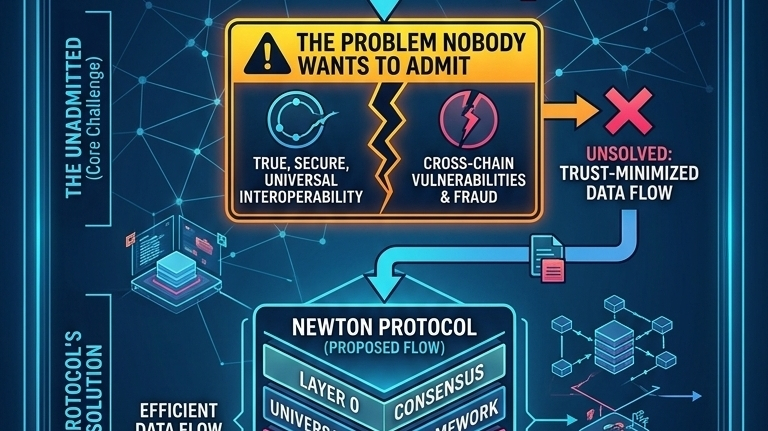
Artigo
O NEWTON PROTOCOL E O PROBLEMA QUE NINGUÉM QUER ADMITIR AINDA ESTÁ SEM SOLUÇÃOA cripto resolveu primeiro o problema mais fácil. É isso que eu continuo voltando. Criamos uma execução sem confiança. Qualquer pessoa pode enviar dinheiro para outra sem um banco no meio, sem alguma instituição decidir que sua transação não se encaixa no modelo de risco dela hoje. Certo. Ok. Isso já foi resolvido há anos. Mas a parte que vem depois — quem, ou o quê, tem permissão para agir em seu nome, e como você realmente sabe que está fazendo o que você mandou, e não o que ela decidiu fazer por conta própria — ninguém realmente conseguiu desvendar isso. É essa lacuna que o Newton Protocol está tentando alcançar. E olha, o branding em torno disso não ajuda em nada. Agentes de IA, rollups, isso verificável, aquilo verificável. Parece um caldo de palavras da moda. Mas por baixo desse caldo há um problema real aqui, e eu acho que ele é mais subestimado do que as pessoas dão crédito.
O NEWTON PROTOCOL E O PROBLEMA QUE NINGUÉM QUER ADMITIR AINDA ESTÁ SEM SOLUÇÃO
A cripto resolveu primeiro o problema mais fácil. É isso que eu continuo voltando. Criamos uma execução sem confiança. Qualquer pessoa pode enviar dinheiro para outra sem um banco no meio, sem alguma instituição decidir que sua transação não se encaixa no modelo de risco dela hoje. Certo. Ok. Isso já foi resolvido há anos. Mas a parte que vem depois — quem, ou o quê, tem permissão para agir em seu nome, e como você realmente sabe que está fazendo o que você mandou, e não o que ela decidiu fazer por conta própria — ninguém realmente conseguiu desvendar isso. É essa lacuna que o Newton Protocol está tentando alcançar. E olha, o branding em torno disso não ajuda em nada. Agentes de IA, rollups, isso verificável, aquilo verificável. Parece um caldo de palavras da moda. Mas por baixo desse caldo há um problema real aqui, e eu acho que ele é mais subestimado do que as pessoas dão crédito.
7
5
119
·
--
Estou acompanhando o Newton Protocol (NEWT) e o mercado está precificando-o como um token de “agente de IA negociando”, quando sua função real fica uma camada abaixo disso.
A maior parte da atenção vai para a narrativa de bot de trading — agentes rebalanceando carteiras, executando estratégias. Mas a arquitetura real do Newton é uma camada de compliance-as-code, na qual políticas definidas pelo builder usam dados onchain e offchain para aprovar ou bloquear transações, verificadas por uma rede descentralizada de operadores executando dentro de ambientes de execução confiáveis (CoinMarketCap).
Isso não é um recurso de negociação. É um primitivo de permissionamento — a mesma categoria em que os oráculos se encaixam para dados. E camadas de permissionamento não recebem valuation pelo volume de negociações; elas são valorizadas por quem é forçado a integrá-las.
Os alvos declarados são instituições financeiras, emissores de stablecoin e plataformas de RWA que precisam de aplicação de regras em tempo real sem abrir mão da transparência (CoinMarketCap). Isso é uma aposta de coordenação: se o capital regulado precisar de checagem de regras verificáveis para sequer tocar automação onchain, o NEWT vira demanda de infraestrutura, não demanda narrativa — algo “sticky”, não reflexivo.
O mercado ainda está precificando com volatilidade guiada por desbloqueio, com um unlock de 139,6 milhões de tokens em 24 de janeiro de 2026 ameaçando superar a absorção (CoinMarketCap) — uma história de oferta. A questão real é uma história de demanda: o compliance-as-code se torna o trilho padrão antes que essa oferta chegue.
Não estou observando os agentes. Estou observando quem precisa pedir permissão para se mover.
#newt $NEWT @NewtonProtocol
Estou acompanhando o Newton Protocol (NEWT) e o mercado está precificando-o como um token de “agente de IA negociando”, quando sua função real fica uma camada abaixo disso.
A maior parte da atenção vai para a narrativa de bot de trading — agentes rebalanceando carteiras, executando estratégias. Mas a arquitetura real do Newton é uma camada de compliance-as-code, na qual políticas definidas pelo builder usam dados onchain e offchain para aprovar ou bloquear transações, verificadas por uma rede descentralizada de operadores executando dentro de ambientes de execução confiáveis (CoinMarketCap).
Isso não é um recurso de negociação. É um primitivo de permissionamento — a mesma categoria em que os oráculos se encaixam para dados. E camadas de permissionamento não recebem valuation pelo volume de negociações; elas são valorizadas por quem é forçado a integrá-las.
Os alvos declarados são instituições financeiras, emissores de stablecoin e plataformas de RWA que precisam de aplicação de regras em tempo real sem abrir mão da transparência (CoinMarketCap). Isso é uma aposta de coordenação: se o capital regulado precisar de checagem de regras verificáveis para sequer tocar automação onchain, o NEWT vira demanda de infraestrutura, não demanda narrativa — algo “sticky”, não reflexivo.
O mercado ainda está precificando com volatilidade guiada por desbloqueio, com um unlock de 139,6 milhões de tokens em 24 de janeiro de 2026 ameaçando superar a absorção (CoinMarketCap) — uma história de oferta. A questão real é uma história de demanda: o compliance-as-code se torna o trilho padrão antes que essa oferta chegue.
Não estou observando os agentes. Estou observando quem precisa pedir permissão para se mover.
#newt $NEWT @NewtonProtocol
A maior parte da atenção vai para a narrativa de bot de trading — agentes rebalanceando carteiras, executando estratégias. Mas a arquitetura real do Newton é uma camada de compliance-as-code, na qual políticas definidas pelo builder usam dados onchain e offchain para aprovar ou bloquear transações, verificadas por uma rede descentralizada de operadores executando dentro de ambientes de execução confiáveis (CoinMarketCap).
Isso não é um recurso de negociação. É um primitivo de permissionamento — a mesma categoria em que os oráculos se encaixam para dados. E camadas de permissionamento não recebem valuation pelo volume de negociações; elas são valorizadas por quem é forçado a integrá-las.
Os alvos declarados são instituições financeiras, emissores de stablecoin e plataformas de RWA que precisam de aplicação de regras em tempo real sem abrir mão da transparência (CoinMarketCap). Isso é uma aposta de coordenação: se o capital regulado precisar de checagem de regras verificáveis para sequer tocar automação onchain, o NEWT vira demanda de infraestrutura, não demanda narrativa — algo “sticky”, não reflexivo.
O mercado ainda está precificando com volatilidade guiada por desbloqueio, com um unlock de 139,6 milhões de tokens em 24 de janeiro de 2026 ameaçando superar a absorção (CoinMarketCap) — uma história de oferta. A questão real é uma história de demanda: o compliance-as-code se torna o trilho padrão antes que essa oferta chegue.
Não estou observando os agentes. Estou observando quem precisa pedir permissão para se mover.
#newt $NEWT @NewtonProtocol
Infrastructure play
100%
Hype-driven AI coin
0%
Unlocks outweigh demand
0%
Too early to call
0%
1 Votos • Votação encerrada
5
4
151
·
--
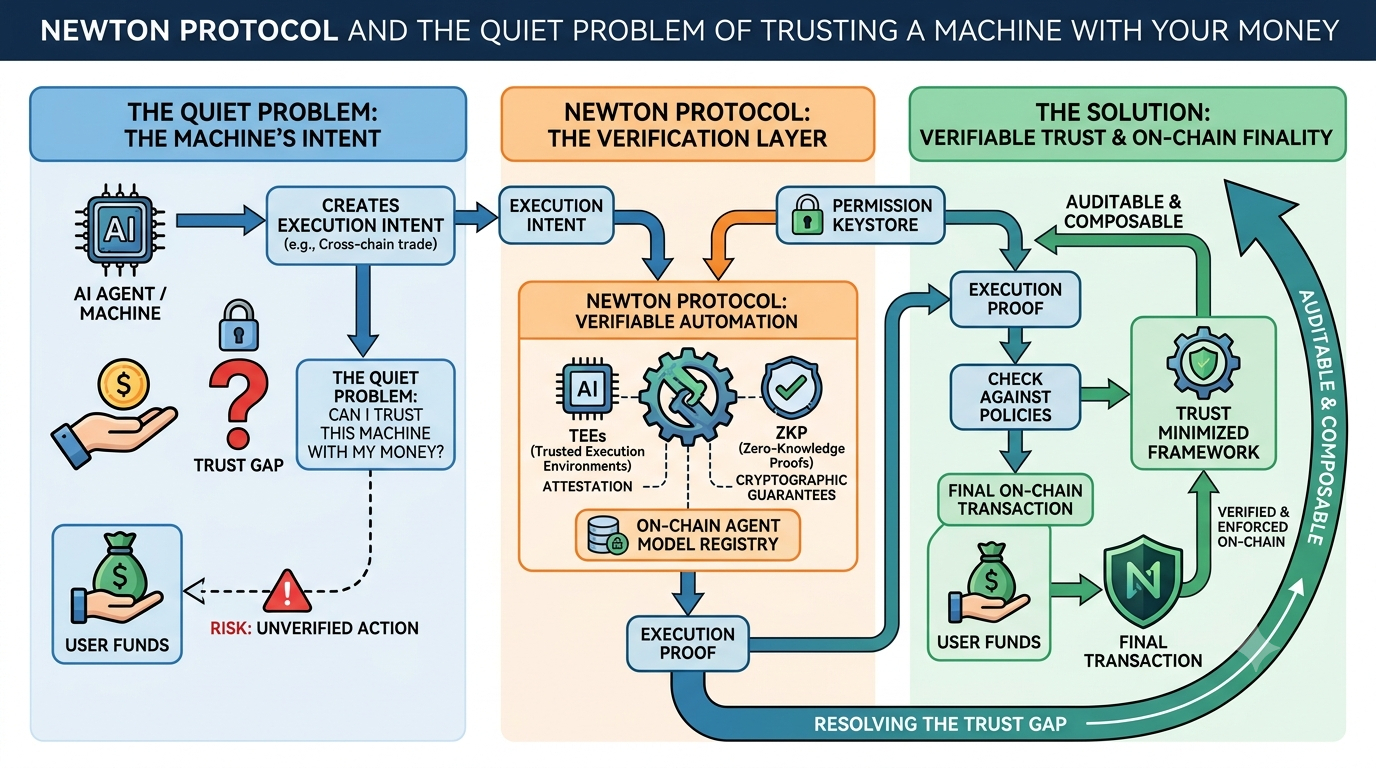
Artigo
NEWTON PROTOCOL E O PROBLEMA SILENCIOSO DE CONFIAR UMA MÁQUINA COM O SEU DINHEIRO"Automação sem confiança." Já li essa frase tantas vezes que mal chega a registrar. Mas se você parar um instante, ela realmente significa algo. O Newton Protocol é um desses projetos que te obriga a desacelerar e perguntar: que problema você está realmente resolvendo aqui? Porque, no papel, ele soa como qualquer outro pitch de IA com cripto dos últimos dois anos. Agentes. Rollups. Marketplaces. As palavras começam a se misturar. Eu digo isso como alguém que já leu muitos desses decks, e vou admitir que um certo cansaço vai surgindo a partir do quinto slogan "AI-powered onchain" da semana.
NEWTON PROTOCOL E O PROBLEMA SILENCIOSO DE CONFIAR UMA MÁQUINA COM O SEU DINHEIRO
"Automação sem confiança." Já li essa frase tantas vezes que mal chega a registrar. Mas se você parar um instante, ela realmente significa algo. O Newton Protocol é um desses projetos que te obriga a desacelerar e perguntar: que problema você está realmente resolvendo aqui? Porque, no papel, ele soa como qualquer outro pitch de IA com cripto dos últimos dois anos. Agentes. Rollups. Marketplaces. As palavras começam a se misturar. Eu digo isso como alguém que já leu muitos desses decks, e vou admitir que um certo cansaço vai surgindo a partir do quinto slogan "AI-powered onchain" da semana.
16
6
320
·
--
Estou assistindo ao Newton Protocol, e o mercado parece precificá-lo como “mais um token de negociação de agentes de IA” — acompanhando a narrativa de automação, avaliado por cronogramas de desbloqueio e volume. Essa moldura ignora o que o NEWT realmente está construindo por baixo.
O produto real não são os agentes. É a camada de verificação que precisa existir antes de alguém permitir que um agente autônomo toque capital real. A camada de políticas da Newton, a rede de operadores e os adaptadores de oráculo verificam cada transação em relação a regras definidas, gerando provas criptográficas que confirmam que essas verificações foram feitas corretamente (CoinMarketCap) , e atestações de TEE provam que decisões fora da cadeia estão alinhadas às diretrizes do usuário, enquanto provas de conhecimento zero garantem que cada etapa automatizada seja verificavelmente correta sem expor dados privados (CryptoSlate) .
Isso não é um recurso de negociação. É infraestrutura de coordenação — a camada que permite que instituições, emissores de stablecoin e plataformas de RWA deleguem execução para código sem abrir mão da auditabilidade. Instituições financeiras, emissores de stablecoin, plataformas de RWA e agentes de IA podem atender a requisitos regulatórios em evolução diretamente no ponto da transação, sem abrir mão de transparência, privacidade ou descentralização. (CoinMarketCap)
A maioria dos traders de varejo não consegue precificar isso. Não há um painel para “confiança verificável”. Então o mercado recorre ao indicador que consegue ver — desbloqueios, volume, listagens — e deixa passar que a Newton compete por uma forma mais lenta e aderente de demanda: fluxos de automação institucional que só aparecem quando a camada de permissão é comprovada em produção.
O excesso de desbloqueio do token é real. Mas a pergunta mais profunda não é oferta — é se compliance-as-code vira o trilho padrão sobre o qual os agentes rodam antes que qualquer outra coisa seja construída primeiro.
Eu não estou assistindo ao gráfico. Estou observando se a camada de confiança é lançada antes da narrativa.
#newt $NEWT @NewtonProtocol
Estou assistindo ao Newton Protocol, e o mercado parece precificá-lo como “mais um token de negociação de agentes de IA” — acompanhando a narrativa de automação, avaliado por cronogramas de desbloqueio e volume. Essa moldura ignora o que o NEWT realmente está construindo por baixo.
O produto real não são os agentes. É a camada de verificação que precisa existir antes de alguém permitir que um agente autônomo toque capital real. A camada de políticas da Newton, a rede de operadores e os adaptadores de oráculo verificam cada transação em relação a regras definidas, gerando provas criptográficas que confirmam que essas verificações foram feitas corretamente (CoinMarketCap) , e atestações de TEE provam que decisões fora da cadeia estão alinhadas às diretrizes do usuário, enquanto provas de conhecimento zero garantem que cada etapa automatizada seja verificavelmente correta sem expor dados privados (CryptoSlate) .
Isso não é um recurso de negociação. É infraestrutura de coordenação — a camada que permite que instituições, emissores de stablecoin e plataformas de RWA deleguem execução para código sem abrir mão da auditabilidade. Instituições financeiras, emissores de stablecoin, plataformas de RWA e agentes de IA podem atender a requisitos regulatórios em evolução diretamente no ponto da transação, sem abrir mão de transparência, privacidade ou descentralização. (CoinMarketCap)
A maioria dos traders de varejo não consegue precificar isso. Não há um painel para “confiança verificável”. Então o mercado recorre ao indicador que consegue ver — desbloqueios, volume, listagens — e deixa passar que a Newton compete por uma forma mais lenta e aderente de demanda: fluxos de automação institucional que só aparecem quando a camada de permissão é comprovada em produção.
O excesso de desbloqueio do token é real. Mas a pergunta mais profunda não é oferta — é se compliance-as-code vira o trilho padrão sobre o qual os agentes rodam antes que qualquer outra coisa seja construída primeiro.
Eu não estou assistindo ao gráfico. Estou observando se a camada de confiança é lançada antes da narrativa.
#newt $NEWT @NewtonProtocol
O produto real não são os agentes. É a camada de verificação que precisa existir antes de alguém permitir que um agente autônomo toque capital real. A camada de políticas da Newton, a rede de operadores e os adaptadores de oráculo verificam cada transação em relação a regras definidas, gerando provas criptográficas que confirmam que essas verificações foram feitas corretamente (CoinMarketCap) , e atestações de TEE provam que decisões fora da cadeia estão alinhadas às diretrizes do usuário, enquanto provas de conhecimento zero garantem que cada etapa automatizada seja verificavelmente correta sem expor dados privados (CryptoSlate) .
Isso não é um recurso de negociação. É infraestrutura de coordenação — a camada que permite que instituições, emissores de stablecoin e plataformas de RWA deleguem execução para código sem abrir mão da auditabilidade. Instituições financeiras, emissores de stablecoin, plataformas de RWA e agentes de IA podem atender a requisitos regulatórios em evolução diretamente no ponto da transação, sem abrir mão de transparência, privacidade ou descentralização. (CoinMarketCap)
A maioria dos traders de varejo não consegue precificar isso. Não há um painel para “confiança verificável”. Então o mercado recorre ao indicador que consegue ver — desbloqueios, volume, listagens — e deixa passar que a Newton compete por uma forma mais lenta e aderente de demanda: fluxos de automação institucional que só aparecem quando a camada de permissão é comprovada em produção.
O excesso de desbloqueio do token é real. Mas a pergunta mais profunda não é oferta — é se compliance-as-code vira o trilho padrão sobre o qual os agentes rodam antes que qualquer outra coisa seja construída primeiro.
Eu não estou assistindo ao gráfico. Estou observando se a camada de confiança é lançada antes da narrativa.
#newt $NEWT @NewtonProtocol
Trust layer ships first
0%
Narrative wins first
0%
Unlocks overshadow tech
0%
Institutions adopt it
0%
0 Votos • Votação encerrada
7
1
87
·
--
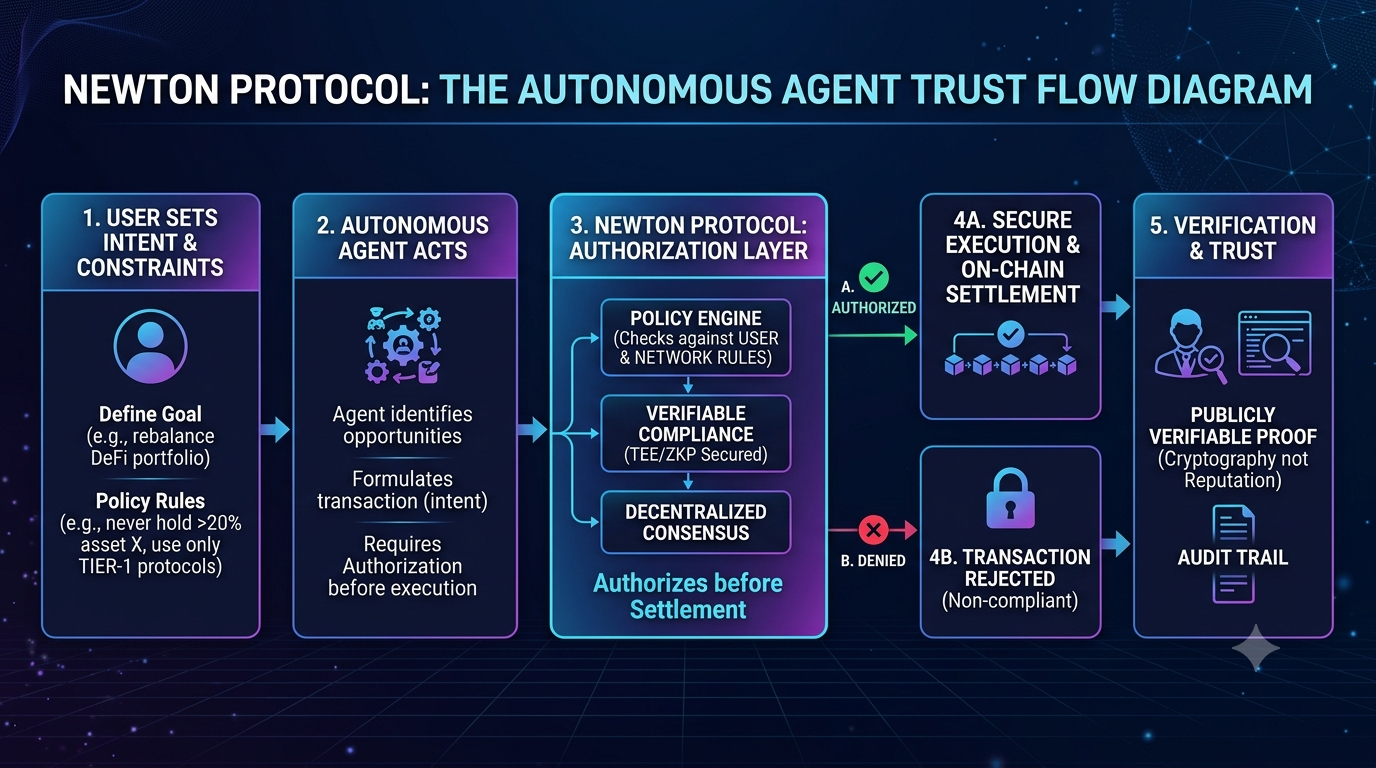
Artigo
NEWTON PROTOCOL E O PROBLEMA DE CONFIAR EM ALGO QUE AGE POR VOCÊCriptossem passado uma década resolvendo dinheiro sem confiança. Essa parte basicamente já está feita. Agora ela está travada em algo mais difícil: ação sem confiança. Enviar um token de uma carteira para outra? É fácil. Levou anos para construir, claro, mas o conceito é simples. Fazer com que outra coisa atue por você — um script, um modelo, um agente, seja lá como você queira chamar — é um animal diferente. Você está passando o controle enquanto dorme. E você precisa que isso seja realmente seguro, não apenas provavelmente seguro. É essa lacuna que o Newton Protocol está tentando fechar. Antes de eu ficar empolgado ou cético com isso, quero entender por que essa lacuna é tão difícil de fechar em primeiro lugar.
NEWTON PROTOCOL E O PROBLEMA DE CONFIAR EM ALGO QUE AGE POR VOCÊ
Criptossem passado uma década resolvendo dinheiro sem confiança. Essa parte basicamente já está feita. Agora ela está travada em algo mais difícil: ação sem confiança. Enviar um token de uma carteira para outra? É fácil. Levou anos para construir, claro, mas o conceito é simples. Fazer com que outra coisa atue por você — um script, um modelo, um agente, seja lá como você queira chamar — é um animal diferente. Você está passando o controle enquanto dorme. E você precisa que isso seja realmente seguro, não apenas provavelmente seguro. É essa lacuna que o Newton Protocol está tentando fechar. Antes de eu ficar empolgado ou cético com isso, quero entender por que essa lacuna é tão difícil de fechar em primeiro lugar.
9
3
111
·
--
Estou vendo o Newton Protocol ser precificado como se fosse um app de trading para agentes de IA, quando a aposta real dele é em uma camada que a maioria dos traders nem considera: permissões.
Todo agente de IA negociando onchain enfrenta o mesmo problema ainda sem solução — como um usuário concede a um sistema autônomo o direito de agir, sem entregar a custódia total nem confiar em uma caixa-preta? O rollup do keystore da Newton, as provas ZK e as atestações de TEE não são recursos “acoplados” ao trading. Eles são a camada de coordenação que permite, em primeiro lugar, que agentes obtenham autoridade delegada.
Essa é a precificação equivocada. O mercado trata NEWT como exposição à “demanda por trading de IA”, um enredo que sobe e desce com ciclos de hype. Mas a verdadeira acumulação de valor está uma camada abaixo — em permissões verificáveis que viram a praça de pedágio que todo agente sério, DAO ou instituição precisa atravessar antes de conseguir movimentar capital de forma autônoma. O volume não precisa vir dos próprios agentes da Newton; basta que agentes em qualquer lugar precisem de autorização verificável.
Se a execução autônoma escalar mais rápido do que a infraestrutura de confiança, permissões se tornam o gargalo — e gargalos, não aplicações, são onde a demanda duradoura se concentra.
#newt $NEWT @NewtonProtocol
{future}(NEWTUSDT)
Estou vendo o Newton Protocol ser precificado como se fosse um app de trading para agentes de IA, quando a aposta real dele é em uma camada que a maioria dos traders nem considera: permissões.
Todo agente de IA negociando onchain enfrenta o mesmo problema ainda sem solução — como um usuário concede a um sistema autônomo o direito de agir, sem entregar a custódia total nem confiar em uma caixa-preta? O rollup do keystore da Newton, as provas ZK e as atestações de TEE não são recursos “acoplados” ao trading. Eles são a camada de coordenação que permite, em primeiro lugar, que agentes obtenham autoridade delegada.
Essa é a precificação equivocada. O mercado trata NEWT como exposição à “demanda por trading de IA”, um enredo que sobe e desce com ciclos de hype. Mas a verdadeira acumulação de valor está uma camada abaixo — em permissões verificáveis que viram a praça de pedágio que todo agente sério, DAO ou instituição precisa atravessar antes de conseguir movimentar capital de forma autônoma. O volume não precisa vir dos próprios agentes da Newton; basta que agentes em qualquer lugar precisem de autorização verificável.
Se a execução autônoma escalar mais rápido do que a infraestrutura de confiança, permissões se tornam o gargalo — e gargalos, não aplicações, são onde a demanda duradoura se concentra.
#newt $NEWT @NewtonProtocol
Todo agente de IA negociando onchain enfrenta o mesmo problema ainda sem solução — como um usuário concede a um sistema autônomo o direito de agir, sem entregar a custódia total nem confiar em uma caixa-preta? O rollup do keystore da Newton, as provas ZK e as atestações de TEE não são recursos “acoplados” ao trading. Eles são a camada de coordenação que permite, em primeiro lugar, que agentes obtenham autoridade delegada.
Essa é a precificação equivocada. O mercado trata NEWT como exposição à “demanda por trading de IA”, um enredo que sobe e desce com ciclos de hype. Mas a verdadeira acumulação de valor está uma camada abaixo — em permissões verificáveis que viram a praça de pedágio que todo agente sério, DAO ou instituição precisa atravessar antes de conseguir movimentar capital de forma autônoma. O volume não precisa vir dos próprios agentes da Newton; basta que agentes em qualquer lugar precisem de autorização verificável.
Se a execução autônoma escalar mais rápido do que a infraestrutura de confiança, permissões se tornam o gargalo — e gargalos, não aplicações, são onde a demanda duradoura se concentra.
#newt $NEWT @NewtonProtocol
Verifiable permissioning
100%
Agent trading volume
0%
Institutional adoption
0%
Speculative hype
0%
1 Votos • Votação encerrada
4
3
105
Faça login para explorar mais conteúdos
Junte-se a usuários de criptomoedas de todo o mundo no Binance Square.
⚡️ Obter informações mais recentes e úteis sobre criptomoeda.
💬 Com a confiança da maior corretora de criptomoedas do mundo.
👍 Descubra insights reais de criadores verificados.
E-mail / número de telefone
Tópicos em Alta
BinancePick
2.9M visualizações
149,321 discutindo
Participe da #TemporadaDeResultados: preveja resultados no Binance Pick e compartilhe sua opinião no Binance Square!
Binance Square Official
·405 curtidas
·341.5k visualizações
EarningsSeason
5.2M visualizações
25,482 discutindo
AnthropicTTMRevenueGrewAbout1200%
7,725 visualizações
224 discutindo