

#binance
binance
546.2M visualizações
1.5M discutindo
Popular
Últimas

·
--
Recebi Red Packets de amigos na Binance, e a experiência me fez perceber algo: você pode explorar recompensas em cripto sem começar comprando cripto.
Aqui estão 4 maneiras de iniciantes explorarem ganhos na Binance 👇
🧧 1. Red Packets
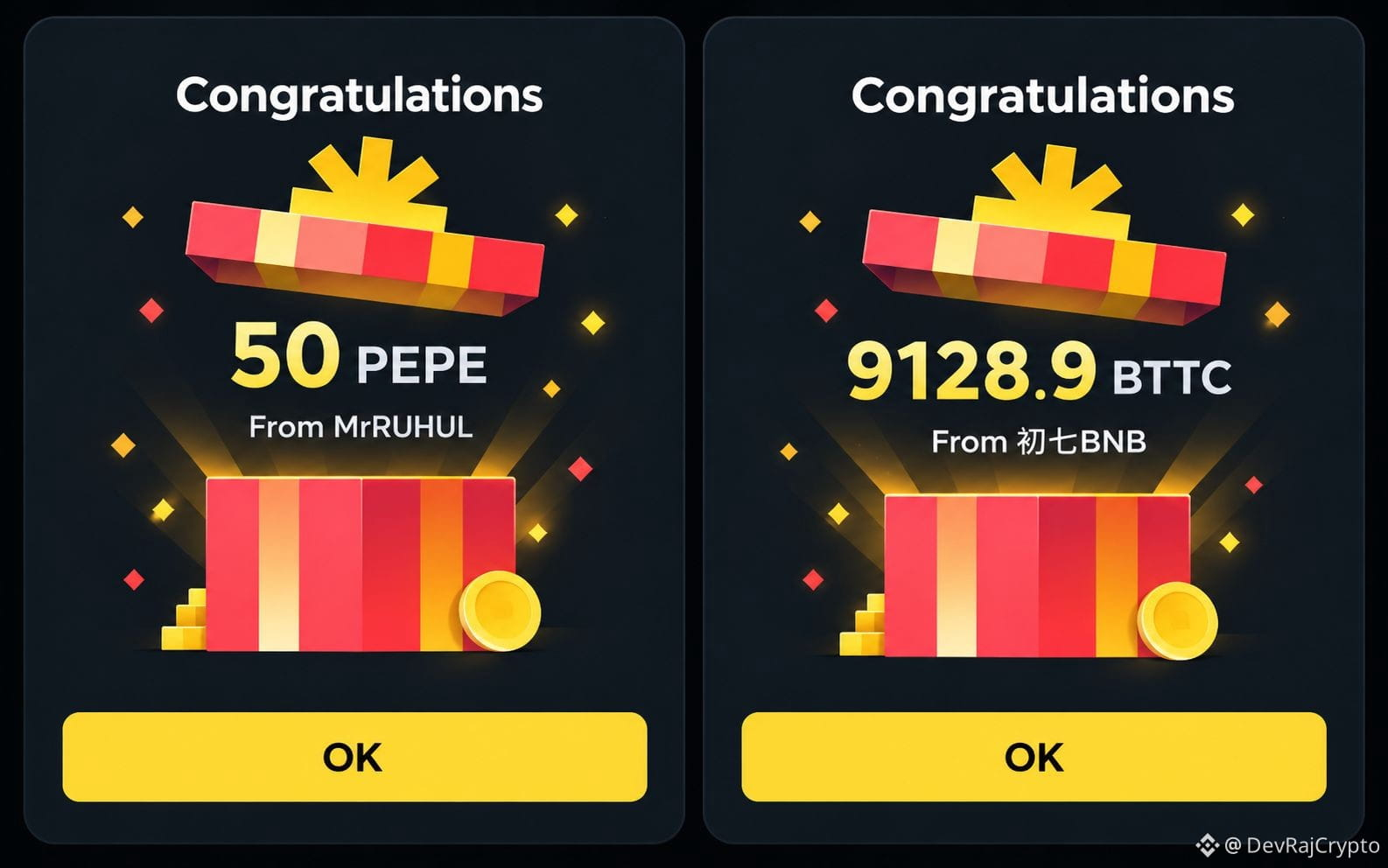
Recebi 50 PEPE do MrRUHUL e outra recompensa de Red Packet de 初七BNB. Também enviei Red Packets para meus amigos. É uma forma simples de compartilhar recompensas em cripto e experimentar o recurso de presentes da Binance.
📚 2. Learn & Earn
Aprenda sobre cripto, conclua quizzes elegíveis e ganhe recompensas quando houver campanhas disponíveis.
✍️ 3. Write to Earn
Ganhei por meio de conteúdo no Binance Square. Criadores elegíveis podem ganhar comissões de trading e bônus de engajamento conforme as regras do programa.
🚀 4. CreatorPad & Rewards Hub
Explore campanhas para criadores, vouchers e recompensas promocionais disponíveis.
Minha maior lição? Não assuma que você precisa investir primeiro para explorar todas as oportunidades em cripto. Comece com recompensas elegíveis, aprenda como elas funcionam e nunca arrisque dinheiro só para correr atrás de um bônus.
💬 Qual você já experimentou: Red Packets, Learn & Earn ou Write to Earn?
⚠️ Aviso: as recompensas dependem de disponibilidade, elegibilidade e termos da campanha. Os valores dos Red Packets e dos tokens podem variar. Este post compartilha minha experiência pessoal, não é garantia de ganhos nem सलाह financeira. Faça sempre sua própria pesquisa (DYOR).
#Binance #BinanceSquare #CryptoForBeginners #LearnAndEarn
Recebi Red Packets de amigos na Binance, e a experiência me fez perceber algo: você pode explorar recompensas em cripto sem começar comprando cripto.
Aqui estão 4 maneiras de iniciantes explorarem ganhos na Binance 👇
🧧 1. Red Packets
Recebi 50 PEPE do MrRUHUL e outra recompensa de Red Packet de 初七BNB. Também enviei Red Packets para meus amigos. É uma forma simples de compartilhar recompensas em cripto e experimentar o recurso de presentes da Binance.
📚 2. Learn & Earn
Aprenda sobre cripto, conclua quizzes elegíveis e ganhe recompensas quando houver campanhas disponíveis.
✍️ 3. Write to Earn
Ganhei por meio de conteúdo no Binance Square. Criadores elegíveis podem ganhar comissões de trading e bônus de engajamento conforme as regras do programa.
🚀 4. CreatorPad & Rewards Hub
Explore campanhas para criadores, vouchers e recompensas promocionais disponíveis.
Minha maior lição? Não assuma que você precisa investir primeiro para explorar todas as oportunidades em cripto. Comece com recompensas elegíveis, aprenda como elas funcionam e nunca arrisque dinheiro só para correr atrás de um bônus.
💬 Qual você já experimentou: Red Packets, Learn & Earn ou Write to Earn?
⚠️ Aviso: as recompensas dependem de disponibilidade, elegibilidade e termos da campanha. Os valores dos Red Packets e dos tokens podem variar. Este post compartilha minha experiência pessoal, não é garantia de ganhos nem सलाह financeira. Faça sempre sua própria pesquisa (DYOR).
#Binance #BinanceSquare #CryptoForBeginners #LearnAndEarn
Aqui estão 4 maneiras de iniciantes explorarem ganhos na Binance 👇
🧧 1. Red Packets
Recebi 50 PEPE do MrRUHUL e outra recompensa de Red Packet de 初七BNB. Também enviei Red Packets para meus amigos. É uma forma simples de compartilhar recompensas em cripto e experimentar o recurso de presentes da Binance.
📚 2. Learn & Earn
Aprenda sobre cripto, conclua quizzes elegíveis e ganhe recompensas quando houver campanhas disponíveis.
✍️ 3. Write to Earn
Ganhei por meio de conteúdo no Binance Square. Criadores elegíveis podem ganhar comissões de trading e bônus de engajamento conforme as regras do programa.
🚀 4. CreatorPad & Rewards Hub
Explore campanhas para criadores, vouchers e recompensas promocionais disponíveis.
Minha maior lição? Não assuma que você precisa investir primeiro para explorar todas as oportunidades em cripto. Comece com recompensas elegíveis, aprenda como elas funcionam e nunca arrisque dinheiro só para correr atrás de um bônus.
💬 Qual você já experimentou: Red Packets, Learn & Earn ou Write to Earn?
⚠️ Aviso: as recompensas dependem de disponibilidade, elegibilidade e termos da campanha. Os valores dos Red Packets e dos tokens podem variar. Este post compartilha minha experiência pessoal, não é garantia de ganhos nem सलाह financeira. Faça sempre sua própria pesquisa (DYOR).
#Binance #BinanceSquare #CryptoForBeginners #LearnAndEarn
2
460

·
--
Bullish
🚨BNB
{spot}(BNBUSDT)
$ Aproxima-se o momento decisivo... Está a preparar-se para arrancar rumo aos 750 dólares?! 👀
A moeda BNB está a ser negociada perto dos 740.72 dólares, com uma subida de 0.40% nas últimas 24 horas, após fortes oscilações entre a máxima e a mínima. Agora, tenta estabilizar novamente, mas será que os compradores vão conseguir empurrar o preço para cima? 📈
📊 Níveis importantes:
🟢 Suporte: 737$ e depois 727$
🚀 Resistência: 745$ e depois 752$
O preço está a movimentar-se perto das médias, o que reflete uma situação de hesitação entre compradores e vendedores.
🔥 Uma quebra acima dos 745 dólares poderá abrir caminho a uma tentativa de chegar aos 752 dólares, enquanto uma quebra abaixo dos 737 dólares poderá voltar a pressionar o preço.
👀 Na vossa opinião, veremos a BNB acima dos 750 dólares em breve ou voltará a cair? 👇
#BNB #Binance #crypto
🚨BNB
$ Aproxima-se o momento decisivo... Está a preparar-se para arrancar rumo aos 750 dólares?! 👀
A moeda BNB está a ser negociada perto dos 740.72 dólares, com uma subida de 0.40% nas últimas 24 horas, após fortes oscilações entre a máxima e a mínima. Agora, tenta estabilizar novamente, mas será que os compradores vão conseguir empurrar o preço para cima? 📈
📊 Níveis importantes:
🟢 Suporte: 737$ e depois 727$
🚀 Resistência: 745$ e depois 752$
O preço está a movimentar-se perto das médias, o que reflete uma situação de hesitação entre compradores e vendedores.
🔥 Uma quebra acima dos 745 dólares poderá abrir caminho a uma tentativa de chegar aos 752 dólares, enquanto uma quebra abaixo dos 737 dólares poderá voltar a pressionar o preço.
👀 Na vossa opinião, veremos a BNB acima dos 750 dólares em breve ou voltará a cair? 👇
#BNB #Binance #crypto
$ Aproxima-se o momento decisivo... Está a preparar-se para arrancar rumo aos 750 dólares?! 👀
A moeda BNB está a ser negociada perto dos 740.72 dólares, com uma subida de 0.40% nas últimas 24 horas, após fortes oscilações entre a máxima e a mínima. Agora, tenta estabilizar novamente, mas será que os compradores vão conseguir empurrar o preço para cima? 📈
📊 Níveis importantes:
🟢 Suporte: 737$ e depois 727$
🚀 Resistência: 745$ e depois 752$
O preço está a movimentar-se perto das médias, o que reflete uma situação de hesitação entre compradores e vendedores.
🔥 Uma quebra acima dos 745 dólares poderá abrir caminho a uma tentativa de chegar aos 752 dólares, enquanto uma quebra abaixo dos 737 dólares poderá voltar a pressionar o preço.
👀 Na vossa opinião, veremos a BNB acima dos 750 dólares em breve ou voltará a cair? 👇
#BNB #Binance #crypto
1
111

·
--
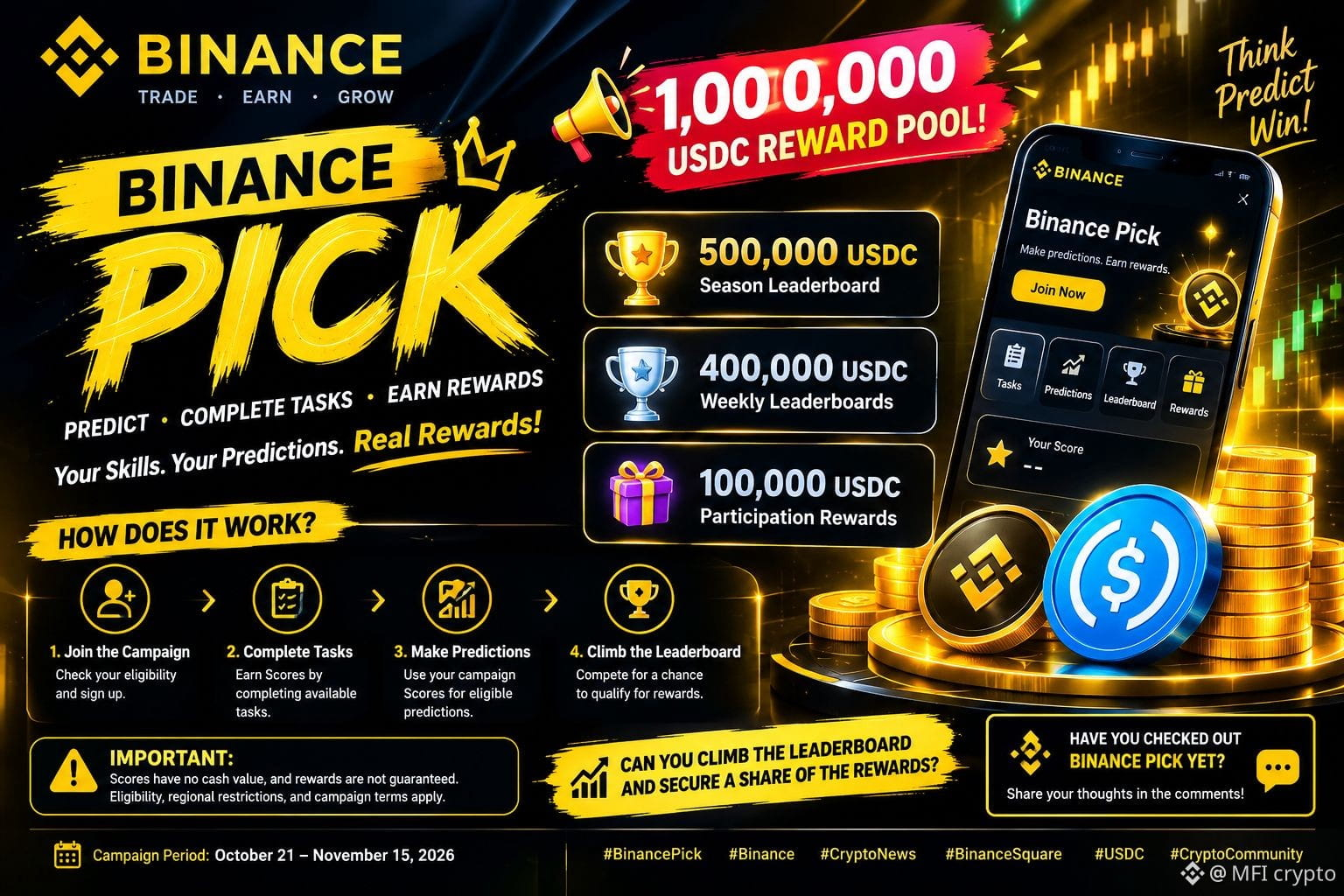
🚨🔥 #BINANCE O PICK ESTÁ AQUI — PRÊMIO TOTAL DE 1.000.000 USDC! 👀💰
Traders de criptomoedas, a Binance lançou o Binance Pick, uma nova campanha em que usuários elegíveis podem concluir tarefas, fazer previsões usando os Scores da campanha e competir por recompensas no ranking! 🚀
💰 Qual é a grande oportunidade?
🏆 500.000 USDC — Ranking da temporada
🔥 400.000 USDC — Rankings semanais
🎁 100.000 USDC — Recompensas de participação
📈 Como funciona?
✅ Participe da campanha e confira se você é elegível
✅ Conclua as tarefas disponíveis para ganhar Scores
✅ Faça previsões elegíveis usando os Scores da campanha
✅ Suba no ranking para ter a chance de se qualificar para receber recompensas
⚠️ Importante: os Scores não têm valor monetário, e as recompensas não são garantidas. Aplicam-se critérios de elegibilidade, restrições regionais e os termos da campanha.
👀 A grande pergunta: você consegue subir no ranking e garantir uma parte das recompensas?
👇 Já conferiu o Binance Pick? Compartilhe sua opinião!
#BinancePick #Binance #CryptoNews #BinanceSquare #USDC
#CryptoCommunity
#binancepick
{spot}(ETHUSDT)
{spot}(ZECUSDT)
{spot}(BTCUSDT)
🚨🔥 #BINANCE O PICK ESTÁ AQUI — PRÊMIO TOTAL DE 1.000.000 USDC! 👀💰
Traders de criptomoedas, a Binance lançou o Binance Pick, uma nova campanha em que usuários elegíveis podem concluir tarefas, fazer previsões usando os Scores da campanha e competir por recompensas no ranking! 🚀
💰 Qual é a grande oportunidade?
🏆 500.000 USDC — Ranking da temporada
🔥 400.000 USDC — Rankings semanais
🎁 100.000 USDC — Recompensas de participação
📈 Como funciona?
✅ Participe da campanha e confira se você é elegível
✅ Conclua as tarefas disponíveis para ganhar Scores
✅ Faça previsões elegíveis usando os Scores da campanha
✅ Suba no ranking para ter a chance de se qualificar para receber recompensas
⚠️ Importante: os Scores não têm valor monetário, e as recompensas não são garantidas. Aplicam-se critérios de elegibilidade, restrições regionais e os termos da campanha.
👀 A grande pergunta: você consegue subir no ranking e garantir uma parte das recompensas?
👇 Já conferiu o Binance Pick? Compartilhe sua opinião!
#BinancePick #Binance #CryptoNews #BinanceSquare #USDC
#CryptoCommunity
#binancepick
Traders de criptomoedas, a Binance lançou o Binance Pick, uma nova campanha em que usuários elegíveis podem concluir tarefas, fazer previsões usando os Scores da campanha e competir por recompensas no ranking! 🚀
💰 Qual é a grande oportunidade?
🏆 500.000 USDC — Ranking da temporada
🔥 400.000 USDC — Rankings semanais
🎁 100.000 USDC — Recompensas de participação
📈 Como funciona?
✅ Participe da campanha e confira se você é elegível
✅ Conclua as tarefas disponíveis para ganhar Scores
✅ Faça previsões elegíveis usando os Scores da campanha
✅ Suba no ranking para ter a chance de se qualificar para receber recompensas
⚠️ Importante: os Scores não têm valor monetário, e as recompensas não são garantidas. Aplicam-se critérios de elegibilidade, restrições regionais e os termos da campanha.
👀 A grande pergunta: você consegue subir no ranking e garantir uma parte das recompensas?
👇 Já conferiu o Binance Pick? Compartilhe sua opinião!
#BinancePick #Binance #CryptoNews #BinanceSquare #USDC
#CryptoCommunity
#binancepick
4
3.7k

·
--
Bullish
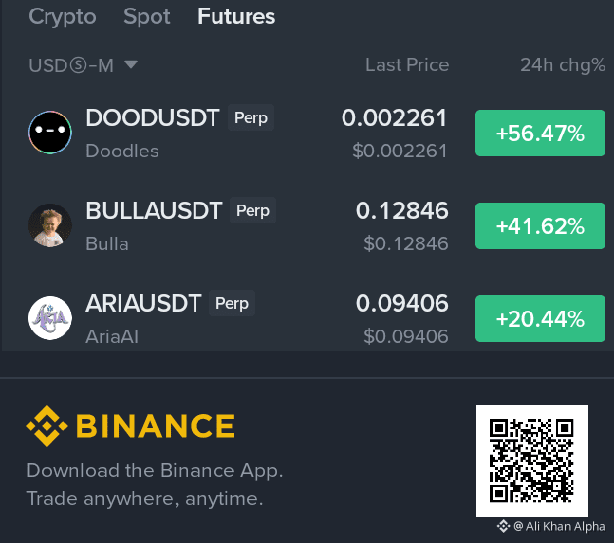
🚨Pare de rolar! 3 moedas estão disparando na Binance Futures (24h):
$DOOD +56.47% 🚀
$BULLA +41.44% 🔥
$ARIA +20.41% ⚡
Qual delas vai disparar agora? Comente sua escolha 👇 Siga para acompanhar mais altas ao vivo! #Binance #AlikhanAlpha @BiBi #Write2Earn #crypto $[https://www.binance.com/download?utm_medium=screenshot](https://www.binance.com/download?utm_medium=screenshot)
{future}(DOODUSDT)
{future}(BULLAUSDT)
{future}(ARIAUSDT)
🚨Pare de rolar! 3 moedas estão disparando na Binance Futures (24h):
$DOOD +56.47% 🚀
$BULLA +41.44% 🔥
$ARIA +20.41% ⚡
Qual delas vai disparar agora? Comente sua escolha 👇 Siga para acompanhar mais altas ao vivo! #Binance #AlikhanAlpha @Binance BiBi #Write2Earn #crypto $https://www.binance.com/download?utm_medium=screenshot
$DOOD +56.47% 🚀
$BULLA +41.44% 🔥
$ARIA +20.41% ⚡
Qual delas vai disparar agora? Comente sua escolha 👇 Siga para acompanhar mais altas ao vivo! #Binance #AlikhanAlpha @Binance BiBi #Write2Earn #crypto $https://www.binance.com/download?utm_medium=screenshot
MrDanishcrypto:
hi I follow you plz follow me back
5
1
1k

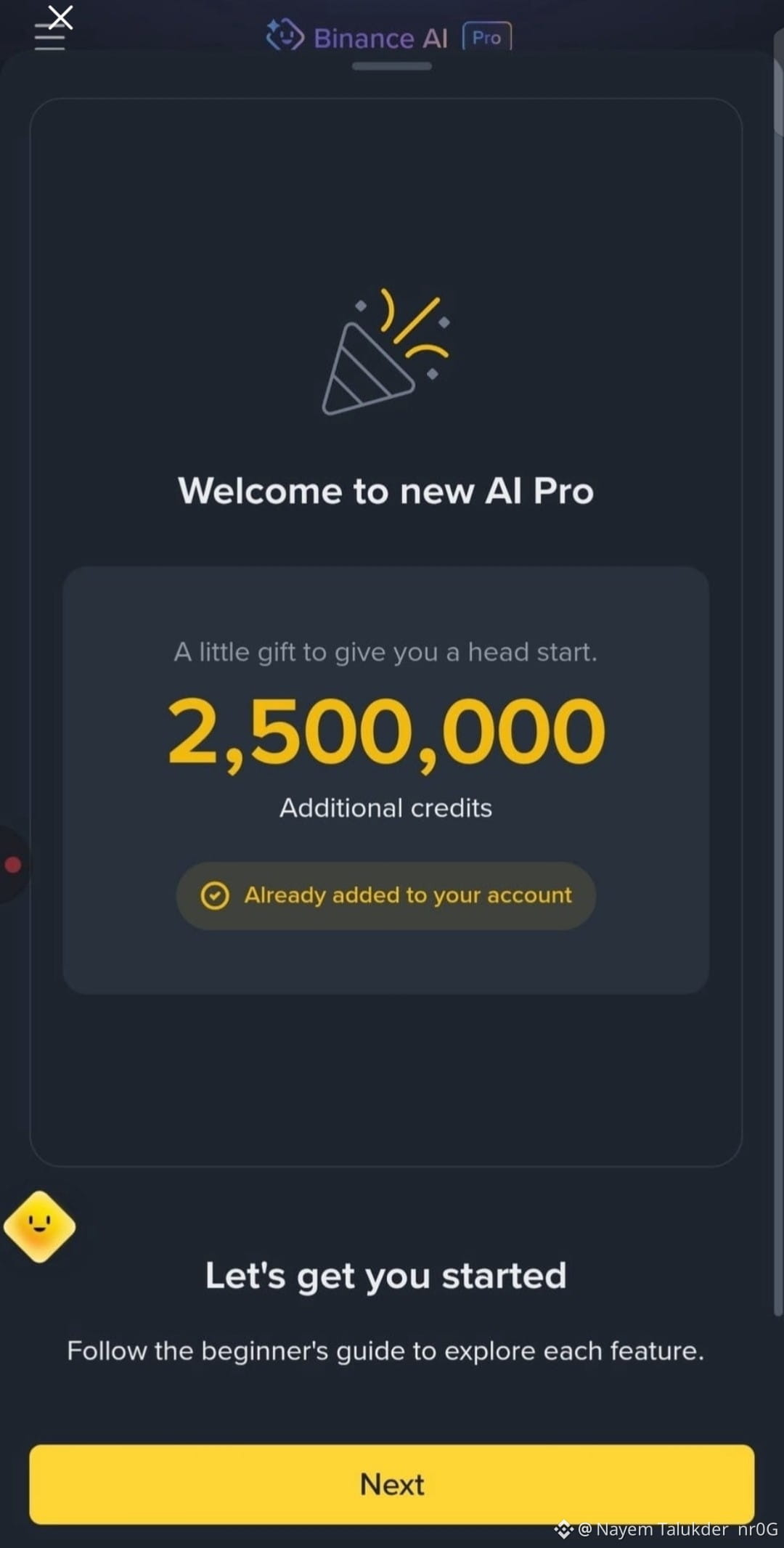
Um começo incrível com o Binance AI Pro! 🎉
A Binance lançou atualizações incríveis com o novo recurso AI Pro! Para tornar essa jornada ainda mais empolgante, foram adicionados mais 2.500.000 Créditos Adicionais diretamente à conta! 🎁✨
Agora você pode explorar com muito mais facilidade recursos avançados de negociação de criptomoedas, análise e ferramentas incríveis de IA. Esses créditos já foram adicionados à sua conta? Me conte nos comentários! 👇
#Binance #BinanceAI #CryptoTrading #AIPro #BinanceSquare
{spot}(PEPEUSDT)
{spot}(WLDUSDT)
{spot}(SLPUSDT)
Um começo incrível com o Binance AI Pro! 🎉
A Binance lançou atualizações incríveis com o novo recurso AI Pro! Para tornar essa jornada ainda mais empolgante, foram adicionados mais 2.500.000 Créditos Adicionais diretamente à conta! 🎁✨
Agora você pode explorar com muito mais facilidade recursos avançados de negociação de criptomoedas, análise e ferramentas incríveis de IA. Esses créditos já foram adicionados à sua conta? Me conte nos comentários! 👇
#Binance #BinanceAI #CryptoTrading #AIPro #BinanceSquare
A Binance lançou atualizações incríveis com o novo recurso AI Pro! Para tornar essa jornada ainda mais empolgante, foram adicionados mais 2.500.000 Créditos Adicionais diretamente à conta! 🎁✨
Agora você pode explorar com muito mais facilidade recursos avançados de negociação de criptomoedas, análise e ferramentas incríveis de IA. Esses créditos já foram adicionados à sua conta? Me conte nos comentários! 👇
#Binance #BinanceAI #CryptoTrading #AIPro #BinanceSquare
Lalaonfirey4z:
Yes
6
7
1.1k


·
--
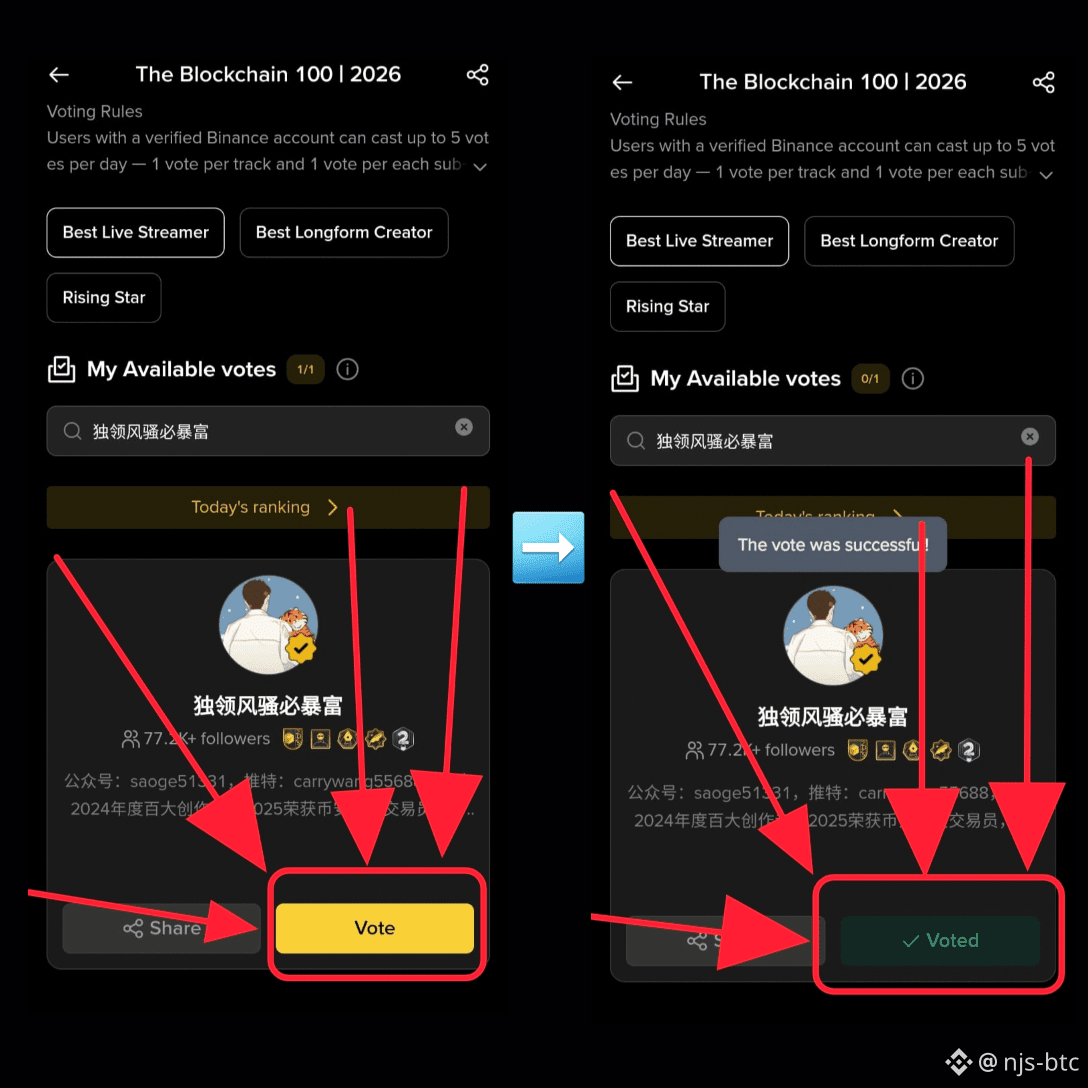
🏆 [Binance Blockchain 100 Awards](https://app.binance.com/uni-qr/cact26user/351?uc=app_square_share_link&us=copylink) 🗳– Melhor streamer ao vivo 🎙️💛
Meu apoio vai para @carrywang55688 !
Grandes streamers aproximam as pessoas, compartilham conhecimento e fortalecem a comunidade cripto. Vamos mostrar nosso apoio e ajudá-lo a brilhar! 🚀
#Binance
#Blockchain100
#BestLiveStreamer
🏆 Binance Blockchain 100 Awards 🗳– Melhor streamer ao vivo 🎙️💛
Meu apoio vai para @独领风骚必暴富 !
Grandes streamers aproximam as pessoas, compartilham conhecimento e fortalecem a comunidade cripto. Vamos mostrar nosso apoio e ajudá-lo a brilhar! 🚀
#Binance
#Blockchain100
#BestLiveStreamer
Meu apoio vai para @独领风骚必暴富 !
Grandes streamers aproximam as pessoas, compartilham conhecimento e fortalecem a comunidade cripto. Vamos mostrar nosso apoio e ajudá-lo a brilhar! 🚀
#Binance
#Blockchain100
#BestLiveStreamer
1
287

·
--
#BinancePick
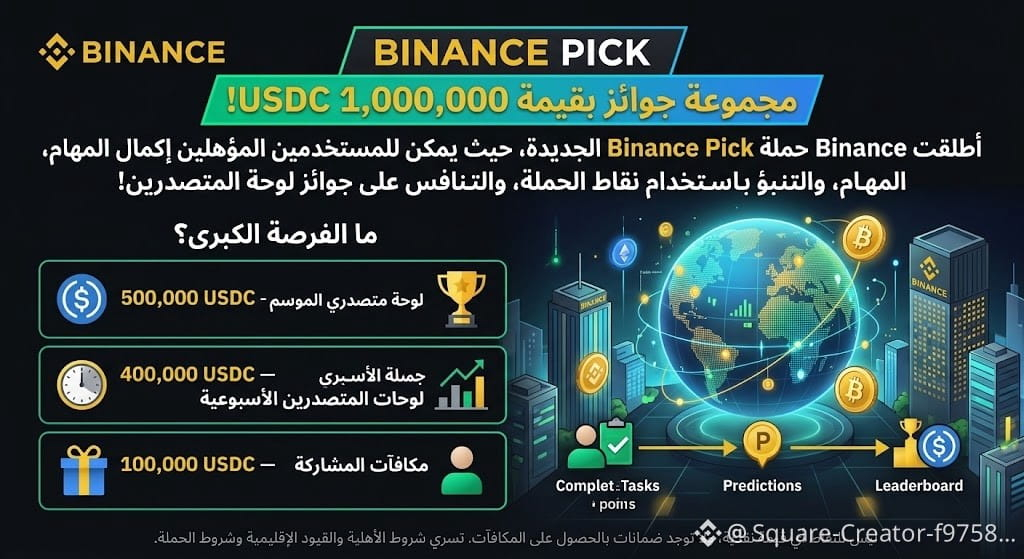
🔥 Uma oportunidade imperdível com a nova campanha Binance Pick e um total de prêmios enorme, que chega a 1.000.000 USDC! 👀💰 Para todos os fãs e traders de criptomoedas, a emoção ficou ainda maior: agora você pode concluir tarefas, usar os pontos da campanha para fazer previsões e competir para valer no placar de líderes em busca das maiores recompensas:
🏆 500.000 USDC destinados ao placar de líderes da temporada.
🔥 400.000 USDC para competir nos placares de líderes semanais.
🎁 100.000 USDC em recompensas instantâneas pela participação.
Como começar sua jornada rumo à vitória?
Verifique se você está qualificado, conclua suas tarefas diárias, acumule pontos e comece a fazer previsões com inteligência para chegar ao topo da classificação! (Aplicam-se os termos e condições e as restrições regionais).
Está pronto para provar suas habilidades e conquistar sua parte desses grandes prêmios? Conte para nós nos comentários: você já experimentou o Binance Pick? 🚀👇
#BinancePick #Binance #BinanceSquare #USDC
#BinancePick
🔥 Uma oportunidade imperdível com a nova campanha Binance Pick e um total de prêmios enorme, que chega a 1.000.000 USDC! 👀💰 Para todos os fãs e traders de criptomoedas, a emoção ficou ainda maior: agora você pode concluir tarefas, usar os pontos da campanha para fazer previsões e competir para valer no placar de líderes em busca das maiores recompensas:
🏆 500.000 USDC destinados ao placar de líderes da temporada.
🔥 400.000 USDC para competir nos placares de líderes semanais.
🎁 100.000 USDC em recompensas instantâneas pela participação.
Como começar sua jornada rumo à vitória?
Verifique se você está qualificado, conclua suas tarefas diárias, acumule pontos e comece a fazer previsões com inteligência para chegar ao topo da classificação! (Aplicam-se os termos e condições e as restrições regionais).
Está pronto para provar suas habilidades e conquistar sua parte desses grandes prêmios? Conte para nós nos comentários: você já experimentou o Binance Pick? 🚀👇
#BinancePick #Binance #BinanceSquare #USDC
🔥 Uma oportunidade imperdível com a nova campanha Binance Pick e um total de prêmios enorme, que chega a 1.000.000 USDC! 👀💰 Para todos os fãs e traders de criptomoedas, a emoção ficou ainda maior: agora você pode concluir tarefas, usar os pontos da campanha para fazer previsões e competir para valer no placar de líderes em busca das maiores recompensas:
🏆 500.000 USDC destinados ao placar de líderes da temporada.
🔥 400.000 USDC para competir nos placares de líderes semanais.
🎁 100.000 USDC em recompensas instantâneas pela participação.
Como começar sua jornada rumo à vitória?
Verifique se você está qualificado, conclua suas tarefas diárias, acumule pontos e comece a fazer previsões com inteligência para chegar ao topo da classificação! (Aplicam-se os termos e condições e as restrições regionais).
Está pronto para provar suas habilidades e conquistar sua parte desses grandes prêmios? Conte para nós nos comentários: você já experimentou o Binance Pick? 🚀👇
#BinancePick #Binance #BinanceSquare #USDC
1
193

#BinancePick
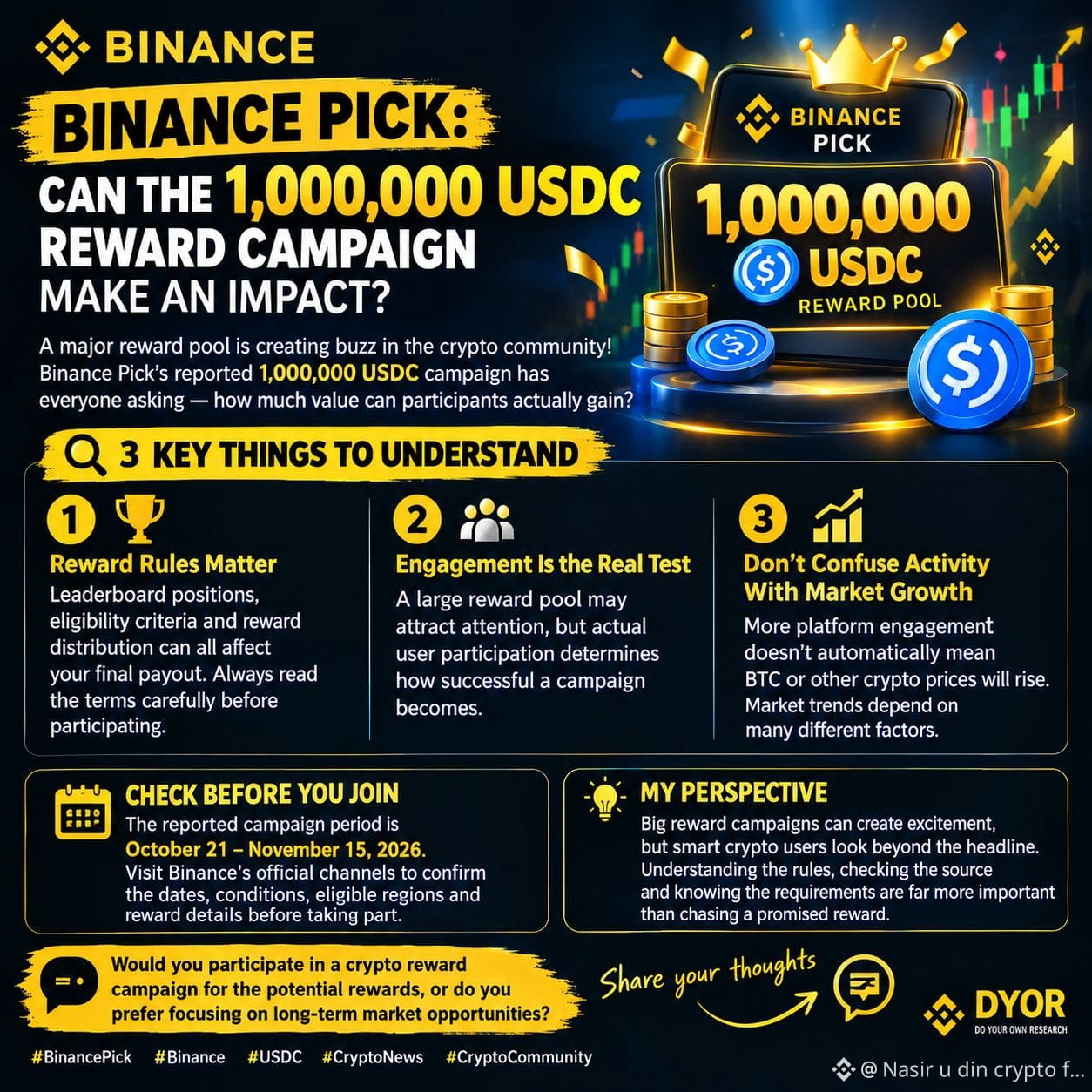
🚨 DESTAQUE DA BINANCE: A CAMPANHA DE RECOMPENSAS DE 1.000.000 USDC PODE TER IMPACTO?
Um grande fundo de recompensas está chamando a atenção de toda a comunidade cripto! 👀 A campanha de 1.000.000 USDC anunciada pela Binance Pick levanta uma questão interessante: quanto valor os participantes podem realmente ganhar?
Antes de se concentrar no número impressionante, vamos ver o que realmente importa. 👇
🔎 3 PONTOS IMPORTANTES
🏆 1. As regras das recompensas são importantes
As posições no ranking, os critérios de elegibilidade e a distribuição das recompensas podem afetar o resultado final. Leia sempre os termos com atenção antes de participar.
📊 2. O envolvimento é o verdadeiro teste
Um grande fundo de recompensas pode atrair atenção, mas é a participação efetiva dos usuários que determina o sucesso de uma campanha.
📈 3. Não confunda atividade com crescimento do mercado
Mais envolvimento na plataforma não significa automaticamente que o preço do BTC ou de outras criptomoedas vai subir. As tendências do mercado dependem de vários fatores.
⚠️ VERIFIQUE ANTES DE PARTICIPAR
O período anunciado para a campanha é de 21 de outubro a 15 de novembro de 2026. Consulte os canais oficiais da Binance para confirmar as datas, as condições, as regiões elegíveis e os detalhes das recompensas antes de participar.
💡 A MINHA OPINIÃO
Grandes campanhas de recompensas podem gerar entusiasmo, mas os usuários de criptomoedas prudentes olham para além das manchetes. Compreender as regras, verificar a fonte e conhecer os requisitos é muito mais importante do que correr atrás de uma recompensa prometida.
🔥 Uma pergunta para a comunidade:
Participaria numa campanha de recompensas em criptomoedas pelas recompensas potenciais ou prefere concentrar-se nas oportunidades de mercado a longo prazo?
Partilhe a sua opinião nos comentários! 👇
#BinancePick #Binance #USDC #CryptoNews #CryptoCommunity
$XRP $ETH
{spot}(ETHUSDT)
{spot}(XRPUSDT)
$LINK
{spot}(LINKUSDT)
#BinancePick
🚨 DESTAQUE DA BINANCE: A CAMPANHA DE RECOMPENSAS DE 1.000.000 USDC PODE TER IMPACTO?
Um grande fundo de recompensas está chamando a atenção de toda a comunidade cripto! 👀 A campanha de 1.000.000 USDC anunciada pela Binance Pick levanta uma questão interessante: quanto valor os participantes podem realmente ganhar?
Antes de se concentrar no número impressionante, vamos ver o que realmente importa. 👇
🔎 3 PONTOS IMPORTANTES
🏆 1. As regras das recompensas são importantes
As posições no ranking, os critérios de elegibilidade e a distribuição das recompensas podem afetar o resultado final. Leia sempre os termos com atenção antes de participar.
📊 2. O envolvimento é o verdadeiro teste
Um grande fundo de recompensas pode atrair atenção, mas é a participação efetiva dos usuários que determina o sucesso de uma campanha.
📈 3. Não confunda atividade com crescimento do mercado
Mais envolvimento na plataforma não significa automaticamente que o preço do BTC ou de outras criptomoedas vai subir. As tendências do mercado dependem de vários fatores.
⚠️ VERIFIQUE ANTES DE PARTICIPAR
O período anunciado para a campanha é de 21 de outubro a 15 de novembro de 2026. Consulte os canais oficiais da Binance para confirmar as datas, as condições, as regiões elegíveis e os detalhes das recompensas antes de participar.
💡 A MINHA OPINIÃO
Grandes campanhas de recompensas podem gerar entusiasmo, mas os usuários de criptomoedas prudentes olham para além das manchetes. Compreender as regras, verificar a fonte e conhecer os requisitos é muito mais importante do que correr atrás de uma recompensa prometida.
🔥 Uma pergunta para a comunidade:
Participaria numa campanha de recompensas em criptomoedas pelas recompensas potenciais ou prefere concentrar-se nas oportunidades de mercado a longo prazo?
Partilhe a sua opinião nos comentários! 👇
#BinancePick #Binance #USDC #CryptoNews #CryptoCommunity
$XRP $ETH
$LINK
🚨 DESTAQUE DA BINANCE: A CAMPANHA DE RECOMPENSAS DE 1.000.000 USDC PODE TER IMPACTO?
Um grande fundo de recompensas está chamando a atenção de toda a comunidade cripto! 👀 A campanha de 1.000.000 USDC anunciada pela Binance Pick levanta uma questão interessante: quanto valor os participantes podem realmente ganhar?
Antes de se concentrar no número impressionante, vamos ver o que realmente importa. 👇
🔎 3 PONTOS IMPORTANTES
🏆 1. As regras das recompensas são importantes
As posições no ranking, os critérios de elegibilidade e a distribuição das recompensas podem afetar o resultado final. Leia sempre os termos com atenção antes de participar.
📊 2. O envolvimento é o verdadeiro teste
Um grande fundo de recompensas pode atrair atenção, mas é a participação efetiva dos usuários que determina o sucesso de uma campanha.
📈 3. Não confunda atividade com crescimento do mercado
Mais envolvimento na plataforma não significa automaticamente que o preço do BTC ou de outras criptomoedas vai subir. As tendências do mercado dependem de vários fatores.
⚠️ VERIFIQUE ANTES DE PARTICIPAR
O período anunciado para a campanha é de 21 de outubro a 15 de novembro de 2026. Consulte os canais oficiais da Binance para confirmar as datas, as condições, as regiões elegíveis e os detalhes das recompensas antes de participar.
💡 A MINHA OPINIÃO
Grandes campanhas de recompensas podem gerar entusiasmo, mas os usuários de criptomoedas prudentes olham para além das manchetes. Compreender as regras, verificar a fonte e conhecer os requisitos é muito mais importante do que correr atrás de uma recompensa prometida.
🔥 Uma pergunta para a comunidade:
Participaria numa campanha de recompensas em criptomoedas pelas recompensas potenciais ou prefere concentrar-se nas oportunidades de mercado a longo prazo?
Partilhe a sua opinião nos comentários! 👇
#BinancePick #Binance #USDC #CryptoNews #CryptoCommunity
$XRP $ETH
$LINK
1
1.1k

·
--
Bearish
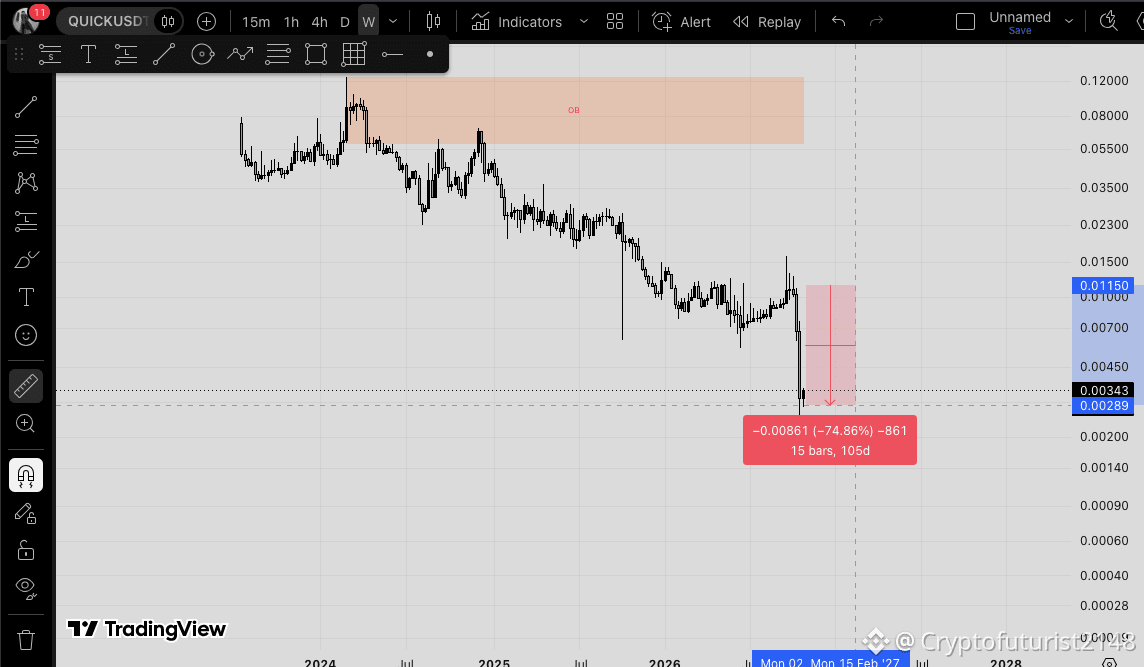
⚠️ $QUICK Atualização: Aviso de Deslistagem da Binance
💰 Preço: ~$0.0035, queda acentuada nas últimas semanas
📅 Datas importantes:
28 de out.: $QUICK removido de todos os pares de negociação à vista da Binance
28 de dez.: os saques terminam
A Binance disse que QUICK já não cumpria os requisitos para continuar listado.
✅ Se você possui QUICK na Binance:
Retire para uma carteira de autocustódia antes do prazo ou saia da sua posição antes de 28 de out. $QUICK ainda é negociado na QuickSwap (Polygon) via pools DEX
Consulte o anúncio oficial da Binance para obter os detalhes exatos.
⚠️ Não é aconselhamento financeiro. Deslistagens podem causar alta volatilidade e baixa liquidez. Faça sua própria pesquisa.
#QUICK #QuickSwap #Binance #Deslistagem #Polygon
⚠️ $QUICK Atualização: Aviso de Deslistagem da Binance
💰 Preço: ~$0.0035, queda acentuada nas últimas semanas
📅 Datas importantes:
28 de out.: $QUICK removido de todos os pares de negociação à vista da Binance
28 de dez.: os saques terminam
A Binance disse que QUICK já não cumpria os requisitos para continuar listado.
✅ Se você possui QUICK na Binance:
Retire para uma carteira de autocustódia antes do prazo ou saia da sua posição antes de 28 de out. $QUICK ainda é negociado na QuickSwap (Polygon) via pools DEX
Consulte o anúncio oficial da Binance para obter os detalhes exatos.
⚠️ Não é aconselhamento financeiro. Deslistagens podem causar alta volatilidade e baixa liquidez. Faça sua própria pesquisa.
#QUICK #QuickSwap #Binance #Deslistagem #Polygon
💰 Preço: ~$0.0035, queda acentuada nas últimas semanas
📅 Datas importantes:
28 de out.: $QUICK removido de todos os pares de negociação à vista da Binance
28 de dez.: os saques terminam
A Binance disse que QUICK já não cumpria os requisitos para continuar listado.
✅ Se você possui QUICK na Binance:
Retire para uma carteira de autocustódia antes do prazo ou saia da sua posição antes de 28 de out. $QUICK ainda é negociado na QuickSwap (Polygon) via pools DEX
Consulte o anúncio oficial da Binance para obter os detalhes exatos.
⚠️ Não é aconselhamento financeiro. Deslistagens podem causar alta volatilidade e baixa liquidez. Faça sua própria pesquisa.
#QUICK #QuickSwap #Binance #Deslistagem #Polygon
1
219

·
--
🎃 A Assombração Cripto: um Halloween assustadoramente divertido com a Binance 👻Era uma noite fria de outubro, iluminada pela lua, quando o véu entre o mundo físico e o reino digital começou a se dissipar. O ar estava tomado por uma névoa sinistra, mas, em vez de medo, havia uma inconfundível centelha de empolgação. O Halloween finalmente havia chegado e, neste ano, o espírito da temporada se entrelaçava com a energia eletrizante do universo cripto.
Enquanto eu estava sentado no meu quarto, cercado por abóboras esculpidas, luzes neon brilhantes e minhas decorações assustadoras favoritas, sabia que precisava de algo que realmente desse vida àquela noite. Foi então que peguei minha caneca personalizada da Binance, decorada com o icônico logotipo dourado, brilhando ao lado das luzes das abóboras. No universo cripto, cada dia traz suas próprias emoções, volatilidade e surpresas — como atravessar um labirinto assombrado. Mas, com uma companheira confiável como a Binance, até os movimentos mais assustadores do mercado parecem uma aventura emocionante, em vez de um pesadelo.
🎃 A Assombração Cripto: um Halloween assustadoramente divertido com a Binance 👻
Era uma noite fria de outubro, iluminada pela lua, quando o véu entre o mundo físico e o reino digital começou a se dissipar. O ar estava tomado por uma névoa sinistra, mas, em vez de medo, havia uma inconfundível centelha de empolgação. O Halloween finalmente havia chegado e, neste ano, o espírito da temporada se entrelaçava com a energia eletrizante do universo cripto.
Enquanto eu estava sentado no meu quarto, cercado por abóboras esculpidas, luzes neon brilhantes e minhas decorações assustadoras favoritas, sabia que precisava de algo que realmente desse vida àquela noite. Foi então que peguei minha caneca personalizada da Binance, decorada com o icônico logotipo dourado, brilhando ao lado das luzes das abóboras. No universo cripto, cada dia traz suas próprias emoções, volatilidade e surpresas — como atravessar um labirinto assombrado. Mas, com uma companheira confiável como a Binance, até os movimentos mais assustadores do mercado parecem uma aventura emocionante, em vez de um pesadelo.
Enquanto eu estava sentado no meu quarto, cercado por abóboras esculpidas, luzes neon brilhantes e minhas decorações assustadoras favoritas, sabia que precisava de algo que realmente desse vida àquela noite. Foi então que peguei minha caneca personalizada da Binance, decorada com o icônico logotipo dourado, brilhando ao lado das luzes das abóboras. No universo cripto, cada dia traz suas próprias emoções, volatilidade e surpresas — como atravessar um labirinto assombrado. Mas, com uma companheira confiável como a Binance, até os movimentos mais assustadores do mercado parecem uma aventura emocionante, em vez de um pesadelo.
1
9
297

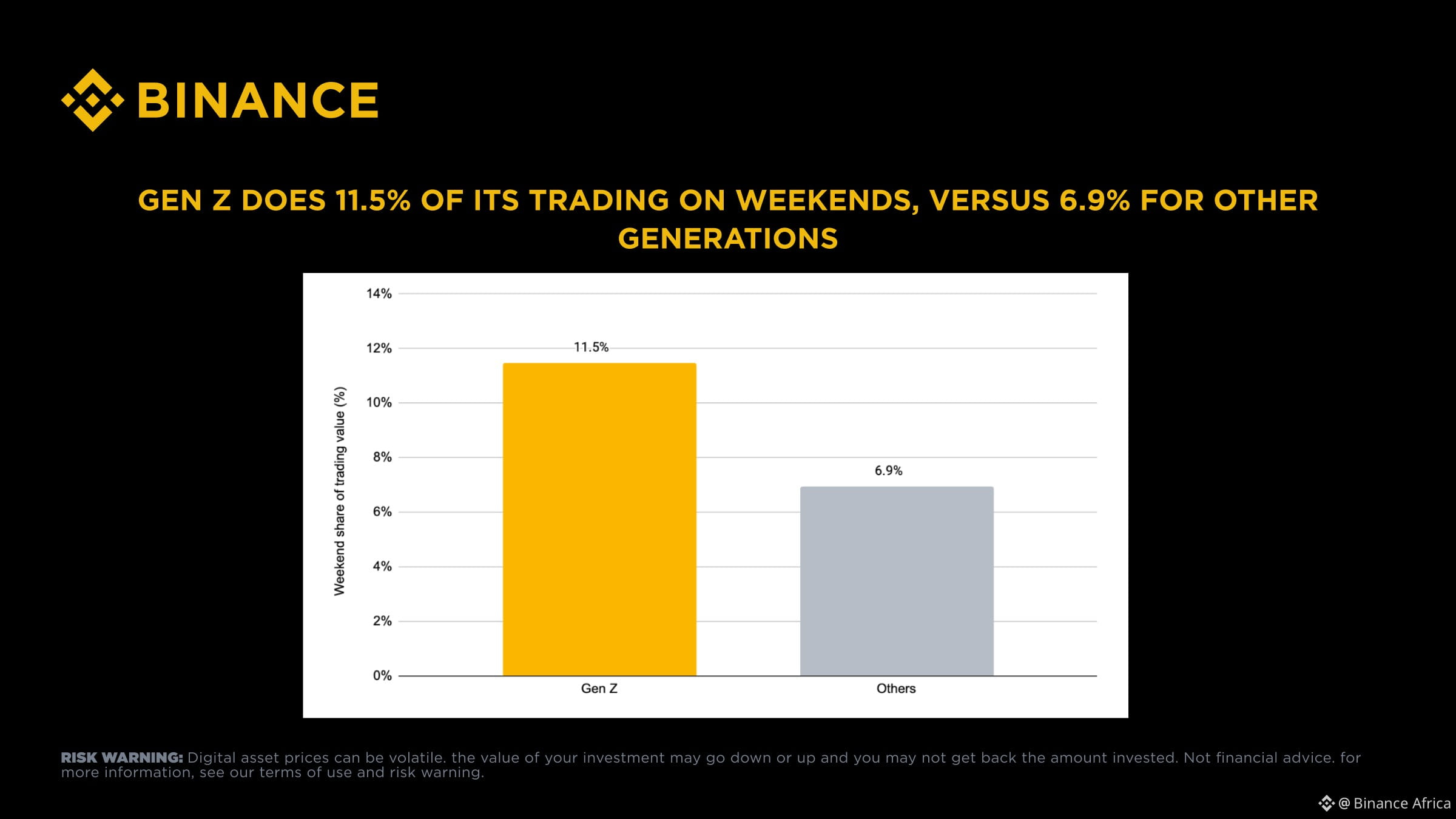
📅 Os mercados de ações dos EUA fecham aos sábados e domingos. Mas a Geração Z continua negociando.
#Binance Uma pesquisa constatou que a Geração Z faz 11,5% de suas negociações de bStocks nos fins de semana. Para todas as outras gerações, esse número é de 6,9%. Isso representa cerca de 1,7 vez mais.
A Geração Z também é o maior grupo de usuários do bStocks, com 46% de todos os usuários.
Então, quando os mercados fecham no fim de semana, muitas pessoas continuam ativas na Binance. E é nesse momento que vale a pena prestar atenção: os preços ainda podem oscilar durante o fim de semana, e podem surgir diferenças em relação ao último fechamento do mercado. Alguns traders veem essas diferenças como oportunidades, mas elas nunca são garantidas, e negociar envolve riscos. 👀
🔗 Relatório completo → [Here](https://www.binance.com/en/research/analysis/bstocks-by-the-numbers)
Você negocia nos fins de semana? 👇
⚠️ Faça sua própria pesquisa. Isto não é aconselhamento financeiro. Negociar envolve riscos.
$NVDAB
{spot}(NVDABUSDT)
📅 Os mercados de ações dos EUA fecham aos sábados e domingos. Mas a Geração Z continua negociando.
#Binance Uma pesquisa constatou que a Geração Z faz 11,5% de suas negociações de bStocks nos fins de semana. Para todas as outras gerações, esse número é de 6,9%. Isso representa cerca de 1,7 vez mais.
A Geração Z também é o maior grupo de usuários do bStocks, com 46% de todos os usuários.
Então, quando os mercados fecham no fim de semana, muitas pessoas continuam ativas na Binance. E é nesse momento que vale a pena prestar atenção: os preços ainda podem oscilar durante o fim de semana, e podem surgir diferenças em relação ao último fechamento do mercado. Alguns traders veem essas diferenças como oportunidades, mas elas nunca são garantidas, e negociar envolve riscos. 👀
🔗 Relatório completo → Here
Você negocia nos fins de semana? 👇
⚠️ Faça sua própria pesquisa. Isto não é aconselhamento financeiro. Negociar envolve riscos.
$NVDAB
#Binance Uma pesquisa constatou que a Geração Z faz 11,5% de suas negociações de bStocks nos fins de semana. Para todas as outras gerações, esse número é de 6,9%. Isso representa cerca de 1,7 vez mais.
A Geração Z também é o maior grupo de usuários do bStocks, com 46% de todos os usuários.
Então, quando os mercados fecham no fim de semana, muitas pessoas continuam ativas na Binance. E é nesse momento que vale a pena prestar atenção: os preços ainda podem oscilar durante o fim de semana, e podem surgir diferenças em relação ao último fechamento do mercado. Alguns traders veem essas diferenças como oportunidades, mas elas nunca são garantidas, e negociar envolve riscos. 👀
🔗 Relatório completo → Here
Você negocia nos fins de semana? 👇
⚠️ Faça sua própria pesquisa. Isto não é aconselhamento financeiro. Negociar envolve riscos.
$NVDAB
2
249

·
--
Bearish
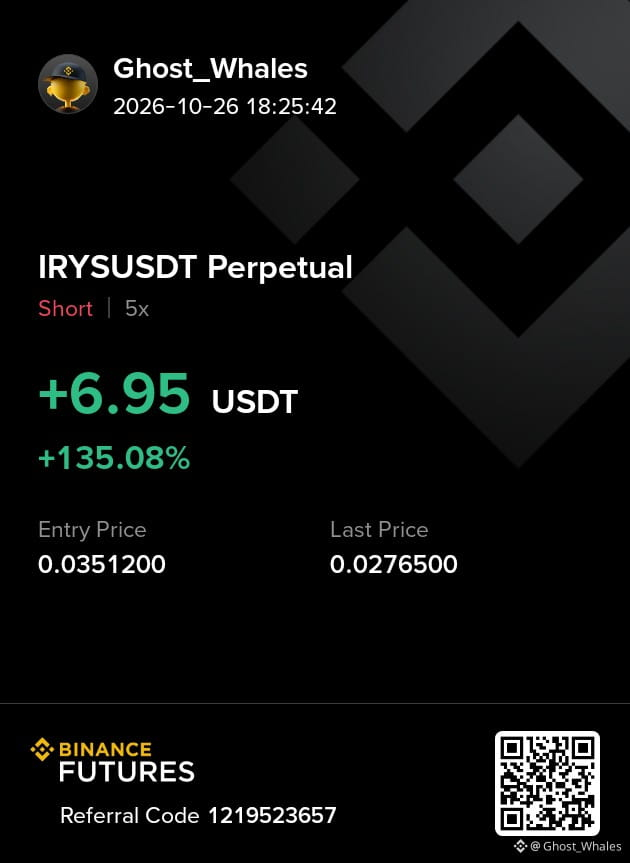
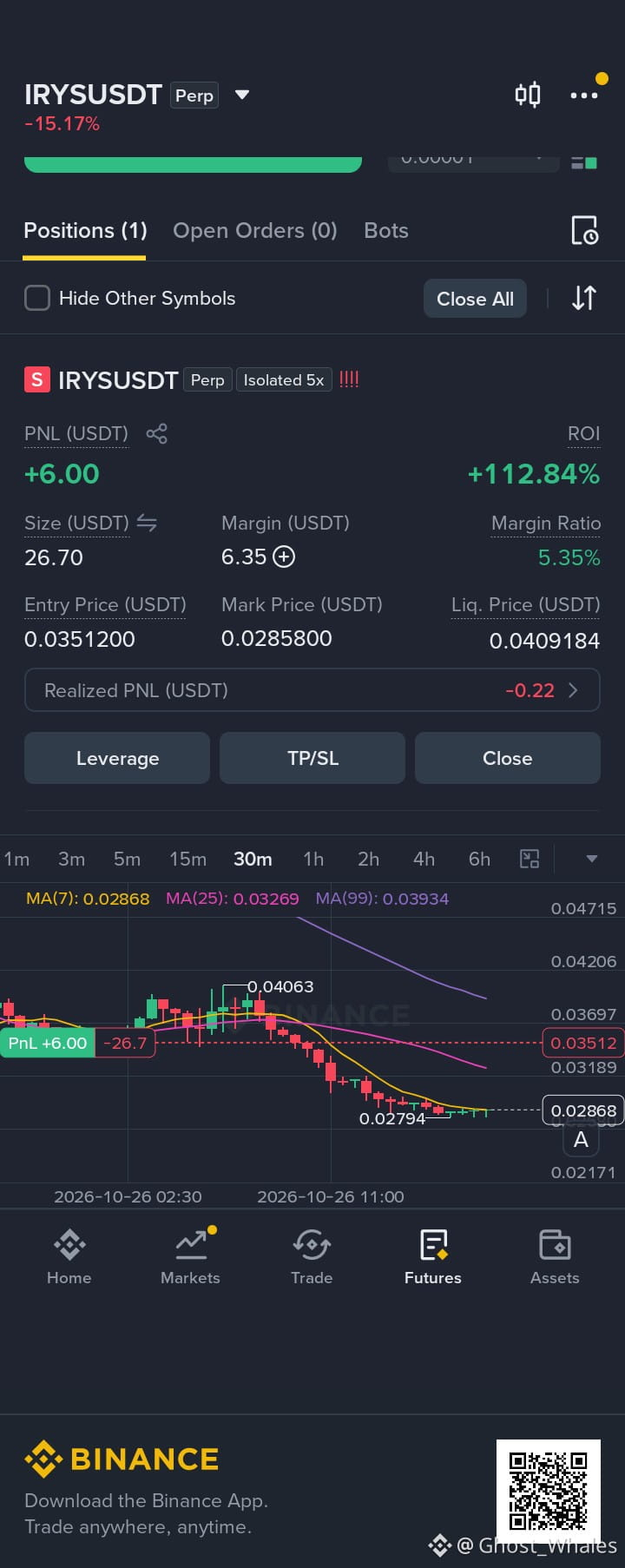
🚀 PRIMEIRA OPERAÇÃO DE FUTUROS: ROI DE +135%! 🤯📈
Ontem, fiz minha primeira operação de Futuros na Binance, usando $IRYS e apostando na queda depois de perceber o sentimento pessimista da comunidade.
💰 Margem: 6,33 USDT 😂
🤑 Lucro: +6,95 USDT
📊 ROI: +135%
Um lucro pequeno, mas uma GRANDE experiência de aprendizado! Todo especialista começa de algum lugar. 🚀
👇 Foi uma boa operação ou cometi algum erro? Compartilhe sua opinião para me ajudar a aprender! 📈🙏
#Binance #crypto #FutureTradingSignals
🚀 PRIMEIRA OPERAÇÃO DE FUTUROS: ROI DE +135%! 🤯📈
Ontem, fiz minha primeira operação de Futuros na Binance, usando $IRYS e apostando na queda depois de perceber o sentimento pessimista da comunidade.
💰 Margem: 6,33 USDT 😂
🤑 Lucro: +6,95 USDT
📊 ROI: +135%
Um lucro pequeno, mas uma GRANDE experiência de aprendizado! Todo especialista começa de algum lugar. 🚀
👇 Foi uma boa operação ou cometi algum erro? Compartilhe sua opinião para me ajudar a aprender! 📈🙏
#Binance #crypto #FutureTradingSignals
Ontem, fiz minha primeira operação de Futuros na Binance, usando $IRYS e apostando na queda depois de perceber o sentimento pessimista da comunidade.
💰 Margem: 6,33 USDT 😂
🤑 Lucro: +6,95 USDT
📊 ROI: +135%
Um lucro pequeno, mas uma GRANDE experiência de aprendizado! Todo especialista começa de algum lugar. 🚀
👇 Foi uma boa operação ou cometi algum erro? Compartilhe sua opinião para me ajudar a aprender! 📈🙏
#Binance #crypto #FutureTradingSignals
319

l💛 Um voto pode fazer uma grande diferença! 🏆
link para votar aqui 👇👇
[https://app.binance.com/uni-qr/cpro/mohsin_trades?l=en&r=IVIZ0AR6&uc=app_square_share_link&us=copylink](https://app.binance.com/uni-qr/cpro/mohsin_trades?l=en&r=IVIZ0AR6&uc=app_square_share_link&us=copylink)
Minha trajetória na Binance Square tem sido uma experiência incrível. Desde compartilhar minhas ideias sobre cripto e blockchain até me conectar com esta comunidade maravilhosa, cada passo me motivou a continuar aprendendo, criando e crescendo.
Agora, sinto-me honrado por ter sido indicado ao The Blockchain 100 Awards 2026 – Estrela em Ascensão! 🌟
Alcançar mais de 30,5 mil seguidores não é apenas um número para mim. Representa o apoio, a confiança e as conexões que construí com esta comunidade incrível.
🙏 Se você gostou das minhas publicações, aprendeu algo com meu conteúdo ou apoiou minha trajetória, eu agradeceria muito pelo seu voto!
🗳️ Visite meu perfil na Binance Square e clique no botão VOTAR abaixo da indicação a Estrela em Ascensão.
Cada voto significa muito para mim, e seu apoio pode tornar esta jornada ainda mais especial.
Obrigado por fazer parte da minha trajetória. Vamos crescer juntos! 💛
#BinanceSquare #Blockchain100 #RisingStar #CryptoCommunity #Binance
l💛 Um voto pode fazer uma grande diferença! 🏆
link para votar aqui 👇👇
https://app.binance.com/uni-qr/cpro/mohsin_trades?l=en&r=IVIZ0AR6&uc=app_square_share_link&us=copylink
Minha trajetória na Binance Square tem sido uma experiência incrível. Desde compartilhar minhas ideias sobre cripto e blockchain até me conectar com esta comunidade maravilhosa, cada passo me motivou a continuar aprendendo, criando e crescendo.
Agora, sinto-me honrado por ter sido indicado ao The Blockchain 100 Awards 2026 – Estrela em Ascensão! 🌟
Alcançar mais de 30,5 mil seguidores não é apenas um número para mim. Representa o apoio, a confiança e as conexões que construí com esta comunidade incrível.
🙏 Se você gostou das minhas publicações, aprendeu algo com meu conteúdo ou apoiou minha trajetória, eu agradeceria muito pelo seu voto!
🗳️ Visite meu perfil na Binance Square e clique no botão VOTAR abaixo da indicação a Estrela em Ascensão.
Cada voto significa muito para mim, e seu apoio pode tornar esta jornada ainda mais especial.
Obrigado por fazer parte da minha trajetória. Vamos crescer juntos! 💛
#BinanceSquare #Blockchain100 #RisingStar #CryptoCommunity #Binance
link para votar aqui 👇👇
https://app.binance.com/uni-qr/cpro/mohsin_trades?l=en&r=IVIZ0AR6&uc=app_square_share_link&us=copylink
Minha trajetória na Binance Square tem sido uma experiência incrível. Desde compartilhar minhas ideias sobre cripto e blockchain até me conectar com esta comunidade maravilhosa, cada passo me motivou a continuar aprendendo, criando e crescendo.
Agora, sinto-me honrado por ter sido indicado ao The Blockchain 100 Awards 2026 – Estrela em Ascensão! 🌟
Alcançar mais de 30,5 mil seguidores não é apenas um número para mim. Representa o apoio, a confiança e as conexões que construí com esta comunidade incrível.
🙏 Se você gostou das minhas publicações, aprendeu algo com meu conteúdo ou apoiou minha trajetória, eu agradeceria muito pelo seu voto!
🗳️ Visite meu perfil na Binance Square e clique no botão VOTAR abaixo da indicação a Estrela em Ascensão.
Cada voto significa muito para mim, e seu apoio pode tornar esta jornada ainda mais especial.
Obrigado por fazer parte da minha trajetória. Vamos crescer juntos! 💛
#BinanceSquare #Blockchain100 #RisingStar #CryptoCommunity #Binance
vote
Alone trader
12 hr(s) restantes
120
·
--
🎁 ¡14 $BNB em recompensas!
A Binance lançou uma nova edição de Palavra do Dia, mas atenção: os 14 BNB são um fundo compartilhado, não um prêmio individual.
🧠 Aprender enquanto participa pode ser interessante. No entanto, como trader, não recomendo realizar operações apenas para buscar recompensas.
💬 Você participará esta semana?
#BNB #Binance #Nomadacripto
🎁 ¡14 $BNB em recompensas!
A Binance lançou uma nova edição de Palavra do Dia, mas atenção: os 14 BNB são um fundo compartilhado, não um prêmio individual.
🧠 Aprender enquanto participa pode ser interessante. No entanto, como trader, não recomendo realizar operações apenas para buscar recompensas.
💬 Você participará esta semana?
#BNB #Binance #Nomadacripto
A Binance lançou uma nova edição de Palavra do Dia, mas atenção: os 14 BNB são um fundo compartilhado, não um prêmio individual.
🧠 Aprender enquanto participa pode ser interessante. No entanto, como trader, não recomendo realizar operações apenas para buscar recompensas.
💬 Você participará esta semana?
#BNB #Binance #Nomadacripto


Binance News
·
--
Binance lança jogo Palavra do Dia com 14 BNB em recompensas
De acordo com o anúncio da Binance, a corretora lançou um jogo Palavra do Dia (WOTD) com o tema «Comece com Binance AI Pro», que distribuirá um total de 14 BNB em recompensas durante o período da atividade, de 2026-10-26 00:00 (UTC) a 2026-11-01 23:59 (UTC). Os utilizadores elegíveis podem jogar até duas vezes por dia. Quem enviar pelo menos cinco respostas corretas poderá partilhar um prémio de 4 BNB, sendo a parcela de cada utilizador determinada pelo número de respostas corretas que deu em relação ao total de respostas corretas de todos os participantes elegíveis. Os utilizadores que acertarem pelo menos cinco respostas e concluírem uma tarefa de trading adicional também poderão partilhar um prémio de 10 BNB, com uma recompensa máxima de 0,01 BNB por utilizador. A tarefa exigida consiste em atingir o equivalente a 50 $ em operações acumuladas com taxa diferente de zero em Spot, Convert, TradFi, bStocks ou Futures, ou negociar o equivalente a 30 $ em NEWT através de Spot ou Futures. As recompensas deverão ser distribuídas aos utilizadores no Centro de Recompensas até 2026-11-15 23:59 (UTC). Os utilizadores podem desbloquear um segundo jogo diário selecionando «Obter um novo WOTD», partilhando o link em destaque nas redes sociais e fazendo com que um utilizador com sessão iniciada clique nele. Os novos utilizadores que se registarem com o código ou link de referência «WOTD» durante o período da atividade receberão um desconto de 10% nas taxas de trading Spot.
2
135

·
--
$BNB Os grandes players não deixam o preço ultrapassar US$ 742. Eles “desenham” paredes para assustar os pequenos investidores. O preço cai, as pessoas vendem em pânico (ou abrem posições vendidas), e as baleias acumulam essas moedas.
O volume de compras (65.91K BNB) é quase 2 vezes maior que o volume de vendas (42.36K). O mercado está inclinado à alta, mas, neste momento, vemos uma pressão artificial.
Onde está o verdadeiro interesse deles?
Vamos observar as zonas verdes (bids):
🛡 730 — suporte de 1.62K BNB
Cenário 1: Long (operar a partir do suporte)
Não compre agora no meio do caminho (736.00**.
• Entrada: US$ 736.00 – US$ 736.50 (bem na parede verde).
• Stop-loss: US$ 734.50 (estritamente abaixo da parede). Se romperem US$ 736, o preço pode cair até US$ 730.
• Take-profit: US$ 740.00 (retorno à zona atual) ou US$ 742.00 (até a resistência).
Cenário 2: Short (operar a partir da resistência)
• Entrada: Espere uma recuperação até US$ 742.00 – US$ 743.00 (bem abaixo das paredes de venda).
• Stop-loss: US$ 745.00 (se romperem US$ 744, significa que começou um pump).
• Take-profit: US$ 738.00.
Conclusão: O mercado está sendo comprimido em uma faixa estreita de US$ 736 – US$ 742. Neste momento, o preço caiu até o limite inferior. Se a parede em US$ 736 resistir ao ataque, veremos uma forte recuperação. Aguarde a reação dos compradores!
#BNB #Binance #BinanceSquare
{future}(BNBUSDT)
$BNB Os grandes players não deixam o preço ultrapassar US$ 742. Eles “desenham” paredes para assustar os pequenos investidores. O preço cai, as pessoas vendem em pânico (ou abrem posições vendidas), e as baleias acumulam essas moedas.
O volume de compras (65.91K BNB) é quase 2 vezes maior que o volume de vendas (42.36K). O mercado está inclinado à alta, mas, neste momento, vemos uma pressão artificial.
Onde está o verdadeiro interesse deles?
Vamos observar as zonas verdes (bids):
🛡 730 — suporte de 1.62K BNB
Cenário 1: Long (operar a partir do suporte)
Não compre agora no meio do caminho (736.00**.
• Entrada: US$ 736.00 – US$ 736.50 (bem na parede verde).
• Stop-loss: US$ 734.50 (estritamente abaixo da parede). Se romperem US$ 736, o preço pode cair até US$ 730.
• Take-profit: US$ 740.00 (retorno à zona atual) ou US$ 742.00 (até a resistência).
Cenário 2: Short (operar a partir da resistência)
• Entrada: Espere uma recuperação até US$ 742.00 – US$ 743.00 (bem abaixo das paredes de venda).
• Stop-loss: US$ 745.00 (se romperem US$ 744, significa que começou um pump).
• Take-profit: US$ 738.00.
Conclusão: O mercado está sendo comprimido em uma faixa estreita de US$ 736 – US$ 742. Neste momento, o preço caiu até o limite inferior. Se a parede em US$ 736 resistir ao ataque, veremos uma forte recuperação. Aguarde a reação dos compradores!
#BNB #Binance #BinanceSquare
O volume de compras (65.91K BNB) é quase 2 vezes maior que o volume de vendas (42.36K). O mercado está inclinado à alta, mas, neste momento, vemos uma pressão artificial.
Onde está o verdadeiro interesse deles?
Vamos observar as zonas verdes (bids):
🛡 730 — suporte de 1.62K BNB
Cenário 1: Long (operar a partir do suporte)
Não compre agora no meio do caminho (736.00**.
• Entrada: US$ 736.00 – US$ 736.50 (bem na parede verde).
• Stop-loss: US$ 734.50 (estritamente abaixo da parede). Se romperem US$ 736, o preço pode cair até US$ 730.
• Take-profit: US$ 740.00 (retorno à zona atual) ou US$ 742.00 (até a resistência).
Cenário 2: Short (operar a partir da resistência)
• Entrada: Espere uma recuperação até US$ 742.00 – US$ 743.00 (bem abaixo das paredes de venda).
• Stop-loss: US$ 745.00 (se romperem US$ 744, significa que começou um pump).
• Take-profit: US$ 738.00.
Conclusão: O mercado está sendo comprimido em uma faixa estreita de US$ 736 – US$ 742. Neste momento, o preço caiu até o limite inferior. Se a parede em US$ 736 resistir ao ataque, veremos uma forte recuperação. Aguarde a reação dos compradores!
#BNB #Binance #BinanceSquare
117
🔥 Vale a pena conferir o Binance Rewards Hub!
Conclua tarefas simples, acumule pontos e desbloqueie recompensas, como vouchers de USDT e USDC 🎁
Estou acumulando pontos e esperando pelas melhores recompensas 👀
Você está usando o Rewards Hub? Quantos pontos tem?
#Binance #BinancePick Central de Recompensas #Crypto #USDT #USDC #BNB
🔥 Vale a pena conferir o Binance Rewards Hub!
Conclua tarefas simples, acumule pontos e desbloqueie recompensas, como vouchers de USDT e USDC 🎁
Estou acumulando pontos e esperando pelas melhores recompensas 👀
Você está usando o Rewards Hub? Quantos pontos tem?
#Binance #BinancePick Central de Recompensas #Crypto #USDT #USDC #BNB
Conclua tarefas simples, acumule pontos e desbloqueie recompensas, como vouchers de USDT e USDC 🎁
Estou acumulando pontos e esperando pelas melhores recompensas 👀
Você está usando o Rewards Hub? Quantos pontos tem?
#Binance #BinancePick Central de Recompensas #Crypto #USDT #USDC #BNB
Edwina Tweedy Miu2:
Reward hub
3
1
83

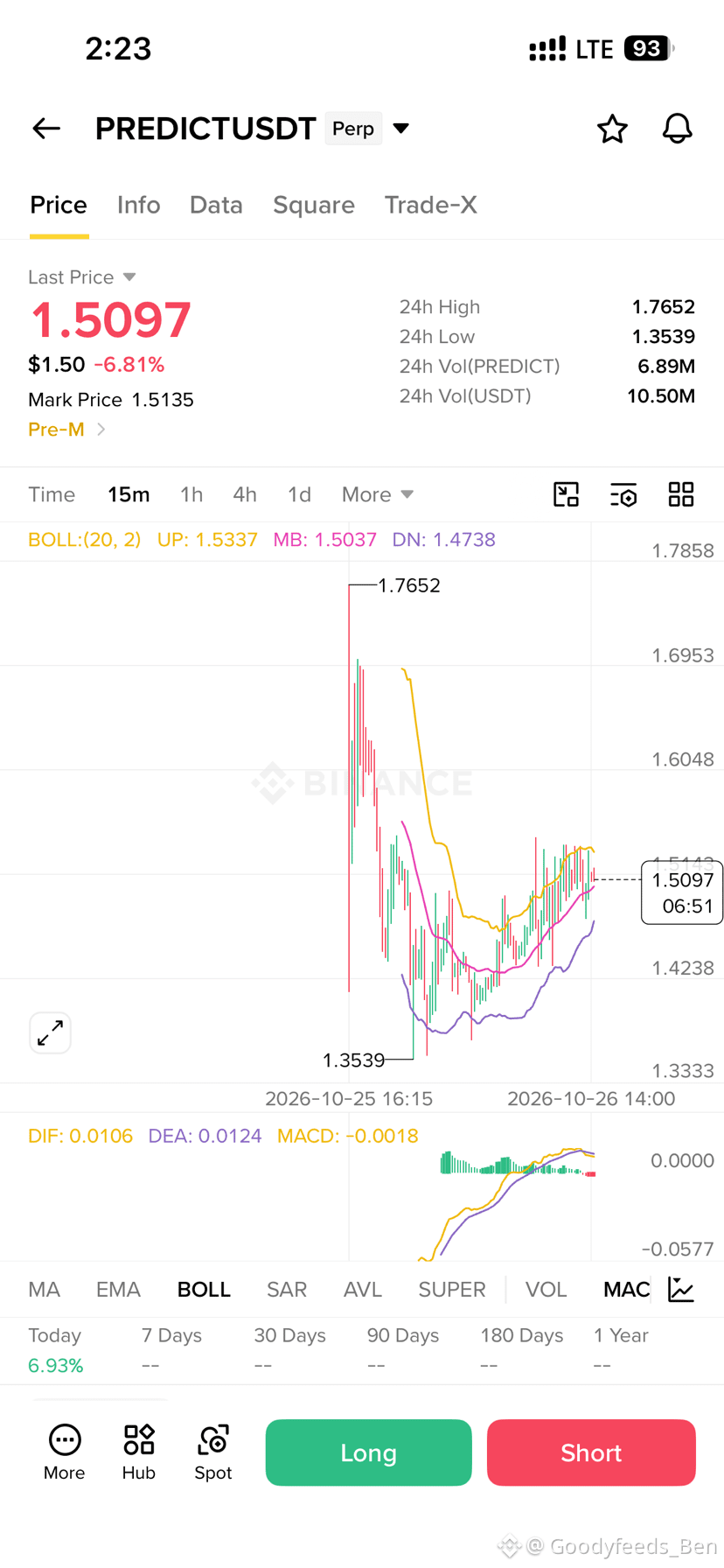
$PREDICT lançamento no evento PRE-TGE da Binance? 💥💥💥
Parece que há uma grande chance de isso acontecer.
#PREDİCT foi listado no site principal da Binance para negociação pré-mercado. O preço atual é de US$ 1,5 USDT. A oferta total de tokens é de 1 bilhão, com FDV estimado em 1,5 bilhão. O total de pontos esperado é de 440 milhões. Considerando uma proporção inicial de airdrop de 10%, o preço estimado por ponto é de 0,34 USDT.
Basicamente, o airdrop deve acontecer. Há uma grande chance de que nosso tão aguardado evento #PreTGE aconteça. E provavelmente haverá uma listagem à vista na #Binance com launchpool? O que você acha?
$PREDICT lançamento no evento PRE-TGE da Binance? 💥💥💥
Parece que há uma grande chance de isso acontecer.
#PREDİCT foi listado no site principal da Binance para negociação pré-mercado. O preço atual é de US$ 1,5 USDT. A oferta total de tokens é de 1 bilhão, com FDV estimado em 1,5 bilhão. O total de pontos esperado é de 440 milhões. Considerando uma proporção inicial de airdrop de 10%, o preço estimado por ponto é de 0,34 USDT.
Basicamente, o airdrop deve acontecer. Há uma grande chance de que nosso tão aguardado evento #PreTGE aconteça. E provavelmente haverá uma listagem à vista na #Binance com launchpool? O que você acha?
Parece que há uma grande chance de isso acontecer.
#PREDİCT foi listado no site principal da Binance para negociação pré-mercado. O preço atual é de US$ 1,5 USDT. A oferta total de tokens é de 1 bilhão, com FDV estimado em 1,5 bilhão. O total de pontos esperado é de 440 milhões. Considerando uma proporção inicial de airdrop de 10%, o preço estimado por ponto é de 0,34 USDT.
Basicamente, o airdrop deve acontecer. Há uma grande chance de que nosso tão aguardado evento #PreTGE aconteça. E provavelmente haverá uma listagem à vista na #Binance com launchpool? O que você acha?
2
339

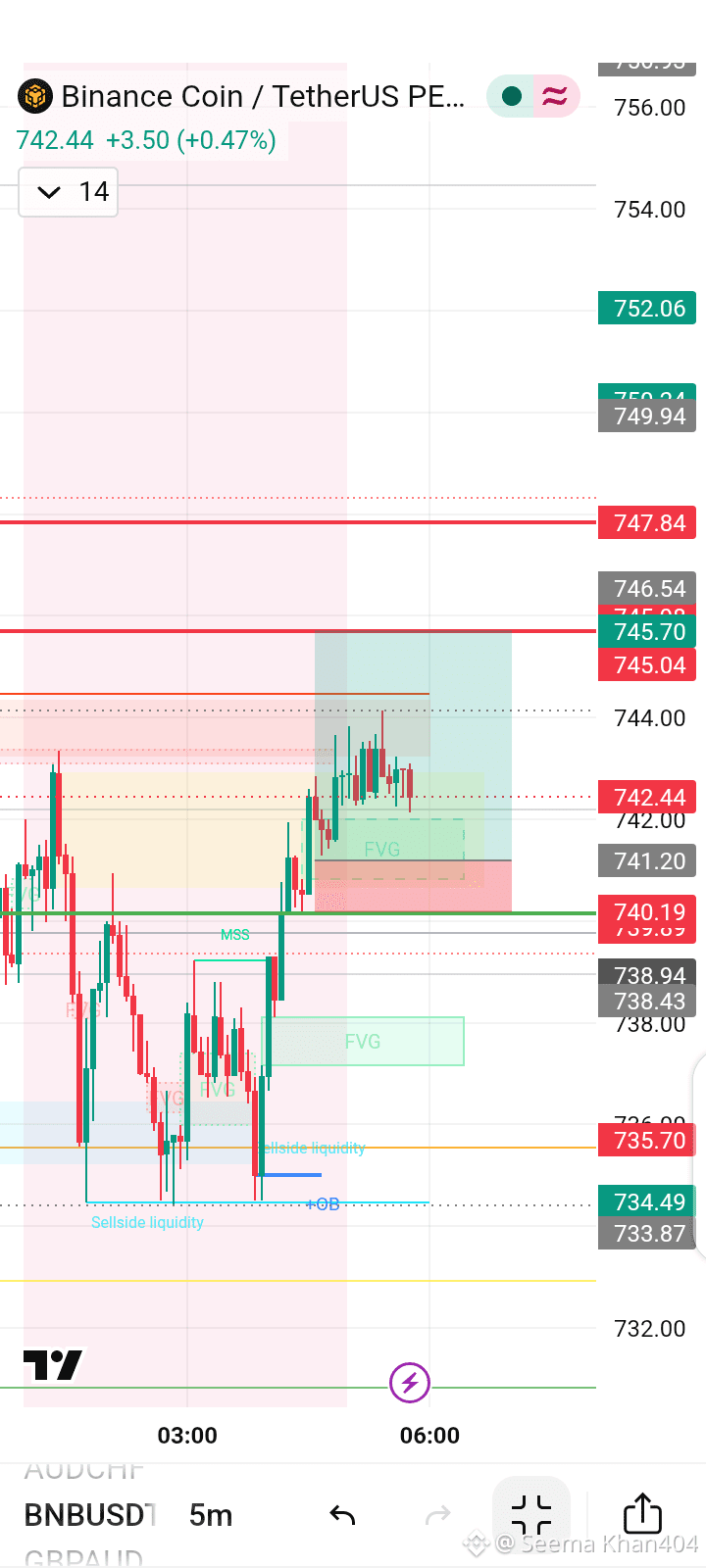
$BNB — Os touros estão reagindo! 🔥
A liquidez foi varrida, o MSS confirmado e o preço subiu. Agora, de olho no FVG para o próximo movimento.
🎯 Zona-chave: $741–$740
Resistência: $745–$748
Paciência acima do FOMO. Deixe o preço confirmar! 💪
#BNB #CryptoTrading #SMC #Binance
$BNB — Os touros estão reagindo! 🔥
A liquidez foi varrida, o MSS confirmado e o preço subiu. Agora, de olho no FVG para o próximo movimento.
🎯 Zona-chave: $741–$740
Resistência: $745–$748
Paciência acima do FOMO. Deixe o preço confirmar! 💪
#BNB #CryptoTrading #SMC #Binance
A liquidez foi varrida, o MSS confirmado e o preço subiu. Agora, de olho no FVG para o próximo movimento.
🎯 Zona-chave: $741–$740
Resistência: $745–$748
Paciência acima do FOMO. Deixe o preço confirmar! 💪
#BNB #CryptoTrading #SMC #Binance
87

·
--
Ver tradução
📡 Binance Delist Countdown | EPIC and QUICK Spot Ends Oct 28
Binance spot trading for EPIC and QUICK ends on Oct 28. Open orders on those pairs will be removed once trading stops, so this is the final stretch for spot holders on Binance.
Deposits will no longer be credited after Oct 29. Withdrawals stay open until Dec 28, with a possible stablecoin conversion after Dec 29 that Binance says is not guaranteed.
Both tokens spent months under the Monitoring Tag before this decision, a reminder that a tag can be an early warning rather than just a label. Holders may want to check spot orders and balances while Binance spot liquidity is still available.
📌 Personal opinion, not financial advice. DYOR.
#EPIC #QUICK #Binance #Delisting
📡 Binance Delist Countdown | EPIC and QUICK Spot Ends Oct 28
Binance spot trading for EPIC and QUICK ends on Oct 28. Open orders on those pairs will be removed once trading stops, so this is the final stretch for spot holders on Binance.
Deposits will no longer be credited after Oct 29. Withdrawals stay open until Dec 28, with a possible stablecoin conversion after Dec 29 that Binance says is not guaranteed.
Both tokens spent months under the Monitoring Tag before this decision, a reminder that a tag can be an early warning rather than just a label. Holders may want to check spot orders and balances while Binance spot liquidity is still available.
📌 Personal opinion, not financial advice. DYOR.
#EPIC #QUICK #Binance #Delisting
Binance spot trading for EPIC and QUICK ends on Oct 28. Open orders on those pairs will be removed once trading stops, so this is the final stretch for spot holders on Binance.
Deposits will no longer be credited after Oct 29. Withdrawals stay open until Dec 28, with a possible stablecoin conversion after Dec 29 that Binance says is not guaranteed.
Both tokens spent months under the Monitoring Tag before this decision, a reminder that a tag can be an early warning rather than just a label. Holders may want to check spot orders and balances while Binance spot liquidity is still available.
📌 Personal opinion, not financial advice. DYOR.
#EPIC #QUICK #Binance #Delisting

Artigo
Ver tradução
How to Earn $3 a Day on Binance Without Your Own Money (Complete Guide)Want to earn $3 a day on Binance without investing your own money? If you are a beginner, there are several opportunities worth exploring, including crypto quizzes, Binance Square creator campaigns, promotional events, Web3 campaigns, and airdrops.
In this guide, you will learn how these opportunities work and how to look for rewards without putting your own money at risk.
Important: Earning $3 every day is not guaranteed. Rewards depend on campaign availability, eligibility, and the program's terms.
1. Try Crypto Quizzes and Learning Activities
One way to get started is by exploring educational activities on Binance.
- Look for available Learn & Earn campaigns.
- Read the educational materials.
- Complete quizzes when offered.
- Check the reward requirements before participating.
Some campaigns offer rewards for eligible participants, while others provide learning opportunities without payment.
Tip: Always check whether the campaign is available in your region and whether it requires a deposit or trade.
2. Look for Binance Square Creator Campaigns
If you enjoy writing about cryptocurrency, Binance Square may offer opportunities to participate in creator programs.
Here are some ideas for creating useful content:
- Write beginner-friendly crypto guides.
- Explain Bitcoin and Ethereum in simple language.
- Share educational posts about blockchain and Web3.
- Publish original articles instead of copying other creators.
- Review the eligibility requirements of available creator campaigns.
Some eligible programs may reward creators based on qualifying content or trading activity generated through their posts. Earnings depend on the applicable program rules and actual activity.
3. Check Binance Promotional Events
Binance periodically offers promotional campaigns for eligible users.
To explore these opportunities:
1. Visit the official Binance Rewards Hub.
2. Review the available promotions.
3. Read the terms and conditions.
4. Look for tasks that do not require a deposit.
5. Complete eligible tasks and check your rewards.
Some promotions may require deposits, trading volume, or other qualifying actions. Skip any offer that requires you to invest money if your goal is to earn without investment.
4. Participate in Binance Web3 Campaigns
Web3 introduces users to blockchain applications, digital assets, and decentralized platforms. Some campaigns may offer rewards for eligible activities.
You can start by:
- Checking official Binance Web3 announcements.
- Reading campaign instructions carefully.
- Confirming whether participation is free.
- Checking the network fees and eligibility rules.
- Verifying how and when rewards are distributed.
Safety reminder: Some Web3 activities involve transaction fees or smart-contract risks. Never connect your wallet to suspicious websites or share your recovery phrase.
5. Explore Binance Airdrops and Token Rewards
Airdrops distribute tokens to users who meet specific eligibility requirements. Some token reward opportunities may be available through official campaigns.
Here is what to do:
- Follow official Binance announcements.
- Look for eligible token reward campaigns.
- Check the participation requirements.
- Confirm whether the tokens are credited automatically or require a claim.
- Review withdrawal restrictions and token value.
Not every airdrop is legitimate, and not every token has a reliable market value. Avoid paying strangers to unlock supposedly free rewards.
6. Create a Simple Daily Earning Routine
Consistency can help you discover opportunities, but it cannot guarantee daily income.
Morning
- Check the Rewards Hub.
- Review available learning activities.
Afternoon
- Write an original educational post on Binance Square.
- Check whether creator campaigns are available.
Evening
- Review official promotional events.
- Check eligible Web3 and token reward campaigns.
- Track any rewards you have received.
Focus on free activities and avoid spending money just to qualify for a reward.
7. How Can You Reach the $3 Goal?
Think of $3 as a target rather than a fixed daily payment. You might receive rewards on one day and nothing on another.
Your results may depend on:
- Which campaigns are available.
- Whether you meet the eligibility requirements.
- The quality and performance of your content.
- Whether rewards are distributed during the campaign.
- Any regional restrictions or program limits.
Do not count a reward as income until it has actually been credited and you understand any applicable restrictions.
8. Protect Your Binance Account
Stay safe while exploring earning opportunities.
- Never share your password or OTP.
- Never reveal your wallet seed phrase or private keys.
- Avoid fake giveaway links and unofficial reward claims.
- Do not borrow money to participate in campaigns.
- Verify announcements through official Binance channels.
- Read the rules before connecting a wallet or completing a task.
Final Thoughts
Earning $3 a day on Binance without your own money is a goal you can explore through crypto quizzes, Binance Square creator campaigns, promotional events, Web3 opportunities, and token rewards.
Start with free educational activities, create useful original content, and check official campaigns regularly. Build your knowledge before trying anything involving financial risk.
Remember, there is no guaranteed way to earn $3 every day without investment. Be patient, stay consistent, and never trust anyone promising fixed daily profits.
#Binance #BinanceSquare #CryptoBeginners #LearnAndEarn #Web3
$QNT
{future}(QNTUSDT)
How to Earn $3 a Day on Binance Without Your Own Money (Complete Guide)
Want to earn $3 a day on Binance without investing your own money? If you are a beginner, there are several opportunities worth exploring, including crypto quizzes, Binance Square creator campaigns, promotional events, Web3 campaigns, and airdrops.
In this guide, you will learn how these opportunities work and how to look for rewards without putting your own money at risk.
Important: Earning $3 every day is not guaranteed. Rewards depend on campaign availability, eligibility, and the program's terms.
1. Try Crypto Quizzes and Learning Activities
One way to get started is by exploring educational activities on Binance.
- Look for available Learn & Earn campaigns.
- Read the educational materials.
- Complete quizzes when offered.
- Check the reward requirements before participating.
Some campaigns offer rewards for eligible participants, while others provide learning opportunities without payment.
Tip: Always check whether the campaign is available in your region and whether it requires a deposit or trade.
2. Look for Binance Square Creator Campaigns
If you enjoy writing about cryptocurrency, Binance Square may offer opportunities to participate in creator programs.
Here are some ideas for creating useful content:
- Write beginner-friendly crypto guides.
- Explain Bitcoin and Ethereum in simple language.
- Share educational posts about blockchain and Web3.
- Publish original articles instead of copying other creators.
- Review the eligibility requirements of available creator campaigns.
Some eligible programs may reward creators based on qualifying content or trading activity generated through their posts. Earnings depend on the applicable program rules and actual activity.
3. Check Binance Promotional Events
Binance periodically offers promotional campaigns for eligible users.
To explore these opportunities:
1. Visit the official Binance Rewards Hub.
2. Review the available promotions.
3. Read the terms and conditions.
4. Look for tasks that do not require a deposit.
5. Complete eligible tasks and check your rewards.
Some promotions may require deposits, trading volume, or other qualifying actions. Skip any offer that requires you to invest money if your goal is to earn without investment.
4. Participate in Binance Web3 Campaigns
Web3 introduces users to blockchain applications, digital assets, and decentralized platforms. Some campaigns may offer rewards for eligible activities.
You can start by:
- Checking official Binance Web3 announcements.
- Reading campaign instructions carefully.
- Confirming whether participation is free.
- Checking the network fees and eligibility rules.
- Verifying how and when rewards are distributed.
Safety reminder: Some Web3 activities involve transaction fees or smart-contract risks. Never connect your wallet to suspicious websites or share your recovery phrase.
5. Explore Binance Airdrops and Token Rewards
Airdrops distribute tokens to users who meet specific eligibility requirements. Some token reward opportunities may be available through official campaigns.
Here is what to do:
- Follow official Binance announcements.
- Look for eligible token reward campaigns.
- Check the participation requirements.
- Confirm whether the tokens are credited automatically or require a claim.
- Review withdrawal restrictions and token value.
Not every airdrop is legitimate, and not every token has a reliable market value. Avoid paying strangers to unlock supposedly free rewards.
6. Create a Simple Daily Earning Routine
Consistency can help you discover opportunities, but it cannot guarantee daily income.
Morning
- Check the Rewards Hub.
- Review available learning activities.
Afternoon
- Write an original educational post on Binance Square.
- Check whether creator campaigns are available.
Evening
- Review official promotional events.
- Check eligible Web3 and token reward campaigns.
- Track any rewards you have received.
Focus on free activities and avoid spending money just to qualify for a reward.
7. How Can You Reach the $3 Goal?
Think of $3 as a target rather than a fixed daily payment. You might receive rewards on one day and nothing on another.
Your results may depend on:
- Which campaigns are available.
- Whether you meet the eligibility requirements.
- The quality and performance of your content.
- Whether rewards are distributed during the campaign.
- Any regional restrictions or program limits.
Do not count a reward as income until it has actually been credited and you understand any applicable restrictions.
8. Protect Your Binance Account
Stay safe while exploring earning opportunities.
- Never share your password or OTP.
- Never reveal your wallet seed phrase or private keys.
- Avoid fake giveaway links and unofficial reward claims.
- Do not borrow money to participate in campaigns.
- Verify announcements through official Binance channels.
- Read the rules before connecting a wallet or completing a task.
Final Thoughts
Earning $3 a day on Binance without your own money is a goal you can explore through crypto quizzes, Binance Square creator campaigns, promotional events, Web3 opportunities, and token rewards.
Start with free educational activities, create useful original content, and check official campaigns regularly. Build your knowledge before trying anything involving financial risk.
Remember, there is no guaranteed way to earn $3 every day without investment. Be patient, stay consistent, and never trust anyone promising fixed daily profits.
#Binance #BinanceSquare #CryptoBeginners #LearnAndEarn #Web3
$QNT
In this guide, you will learn how these opportunities work and how to look for rewards without putting your own money at risk.
Important: Earning $3 every day is not guaranteed. Rewards depend on campaign availability, eligibility, and the program's terms.
1. Try Crypto Quizzes and Learning Activities
One way to get started is by exploring educational activities on Binance.
- Look for available Learn & Earn campaigns.
- Read the educational materials.
- Complete quizzes when offered.
- Check the reward requirements before participating.
Some campaigns offer rewards for eligible participants, while others provide learning opportunities without payment.
Tip: Always check whether the campaign is available in your region and whether it requires a deposit or trade.
2. Look for Binance Square Creator Campaigns
If you enjoy writing about cryptocurrency, Binance Square may offer opportunities to participate in creator programs.
Here are some ideas for creating useful content:
- Write beginner-friendly crypto guides.
- Explain Bitcoin and Ethereum in simple language.
- Share educational posts about blockchain and Web3.
- Publish original articles instead of copying other creators.
- Review the eligibility requirements of available creator campaigns.
Some eligible programs may reward creators based on qualifying content or trading activity generated through their posts. Earnings depend on the applicable program rules and actual activity.
3. Check Binance Promotional Events
Binance periodically offers promotional campaigns for eligible users.
To explore these opportunities:
1. Visit the official Binance Rewards Hub.
2. Review the available promotions.
3. Read the terms and conditions.
4. Look for tasks that do not require a deposit.
5. Complete eligible tasks and check your rewards.
Some promotions may require deposits, trading volume, or other qualifying actions. Skip any offer that requires you to invest money if your goal is to earn without investment.
4. Participate in Binance Web3 Campaigns
Web3 introduces users to blockchain applications, digital assets, and decentralized platforms. Some campaigns may offer rewards for eligible activities.
You can start by:
- Checking official Binance Web3 announcements.
- Reading campaign instructions carefully.
- Confirming whether participation is free.
- Checking the network fees and eligibility rules.
- Verifying how and when rewards are distributed.
Safety reminder: Some Web3 activities involve transaction fees or smart-contract risks. Never connect your wallet to suspicious websites or share your recovery phrase.
5. Explore Binance Airdrops and Token Rewards
Airdrops distribute tokens to users who meet specific eligibility requirements. Some token reward opportunities may be available through official campaigns.
Here is what to do:
- Follow official Binance announcements.
- Look for eligible token reward campaigns.
- Check the participation requirements.
- Confirm whether the tokens are credited automatically or require a claim.
- Review withdrawal restrictions and token value.
Not every airdrop is legitimate, and not every token has a reliable market value. Avoid paying strangers to unlock supposedly free rewards.
6. Create a Simple Daily Earning Routine
Consistency can help you discover opportunities, but it cannot guarantee daily income.
Morning
- Check the Rewards Hub.
- Review available learning activities.
Afternoon
- Write an original educational post on Binance Square.
- Check whether creator campaigns are available.
Evening
- Review official promotional events.
- Check eligible Web3 and token reward campaigns.
- Track any rewards you have received.
Focus on free activities and avoid spending money just to qualify for a reward.
7. How Can You Reach the $3 Goal?
Think of $3 as a target rather than a fixed daily payment. You might receive rewards on one day and nothing on another.
Your results may depend on:
- Which campaigns are available.
- Whether you meet the eligibility requirements.
- The quality and performance of your content.
- Whether rewards are distributed during the campaign.
- Any regional restrictions or program limits.
Do not count a reward as income until it has actually been credited and you understand any applicable restrictions.
8. Protect Your Binance Account
Stay safe while exploring earning opportunities.
- Never share your password or OTP.
- Never reveal your wallet seed phrase or private keys.
- Avoid fake giveaway links and unofficial reward claims.
- Do not borrow money to participate in campaigns.
- Verify announcements through official Binance channels.
- Read the rules before connecting a wallet or completing a task.
Final Thoughts
Earning $3 a day on Binance without your own money is a goal you can explore through crypto quizzes, Binance Square creator campaigns, promotional events, Web3 opportunities, and token rewards.
Start with free educational activities, create useful original content, and check official campaigns regularly. Build your knowledge before trying anything involving financial risk.
Remember, there is no guaranteed way to earn $3 every day without investment. Be patient, stay consistent, and never trust anyone promising fixed daily profits.
#Binance #BinanceSquare #CryptoBeginners #LearnAndEarn #Web3
$QNT
2
Faça login para explorar mais conteúdos
Junte-se a usuários de criptomoedas de todo o mundo no Binance Square.
⚡️ Obter informações mais recentes e úteis sobre criptomoeda.
💬 Com a confiança da maior corretora de criptomoedas do mundo.
👍 Descubra insights reais de criadores verificados.
E-mail / número de telefone
Tópicos em Alta
1
#BinancePick
2.8M visualizações
148,178 discutindo
2
#EarningsSeason
5.1M visualizações
25,288 discutindo
3
#AnthropicTTMRevenueGrewAbout1200%
3,125 visualizações
147 discutindo
4
#AnthropicS1ExpectedToday
7,000 visualizações
151 discutindo
5
#SouthKoreaReportedlyWeighsFourthCryptoTaxDelay
14,586 visualizações
309 discutindo
6
#FranklinTempletonFilesForTwoDividendToBitcoinETFs
21,853 visualizações
421 discutindo
7
#StrategyMSTRSurpassesNasdaqInMarketCap
17,591 visualizações
321 discutindo
8
#CanadaProposesStablecoinRedemptionWithin3BusinessDays
783 visualizações
32 discutindo
9
#ElectrumWalletBugLetRogueServersStealFunds
21,218 visualizações
410 discutindo
10
#ArgentineCourtDismissesLIBRACaseAgainstMilei
32,596 visualizações
497 discutindo