Binance Square
Web3 Haidar
17 Publicações

Web3 Haidar

Content writer and Community manager
Aberto ao trading
Trader Ocasional
2.2 ano(s)
4 A seguir
33 Seguidores
68 Gostaram
Publicações
Portfólio
·
--
Artigo
Ver tradução
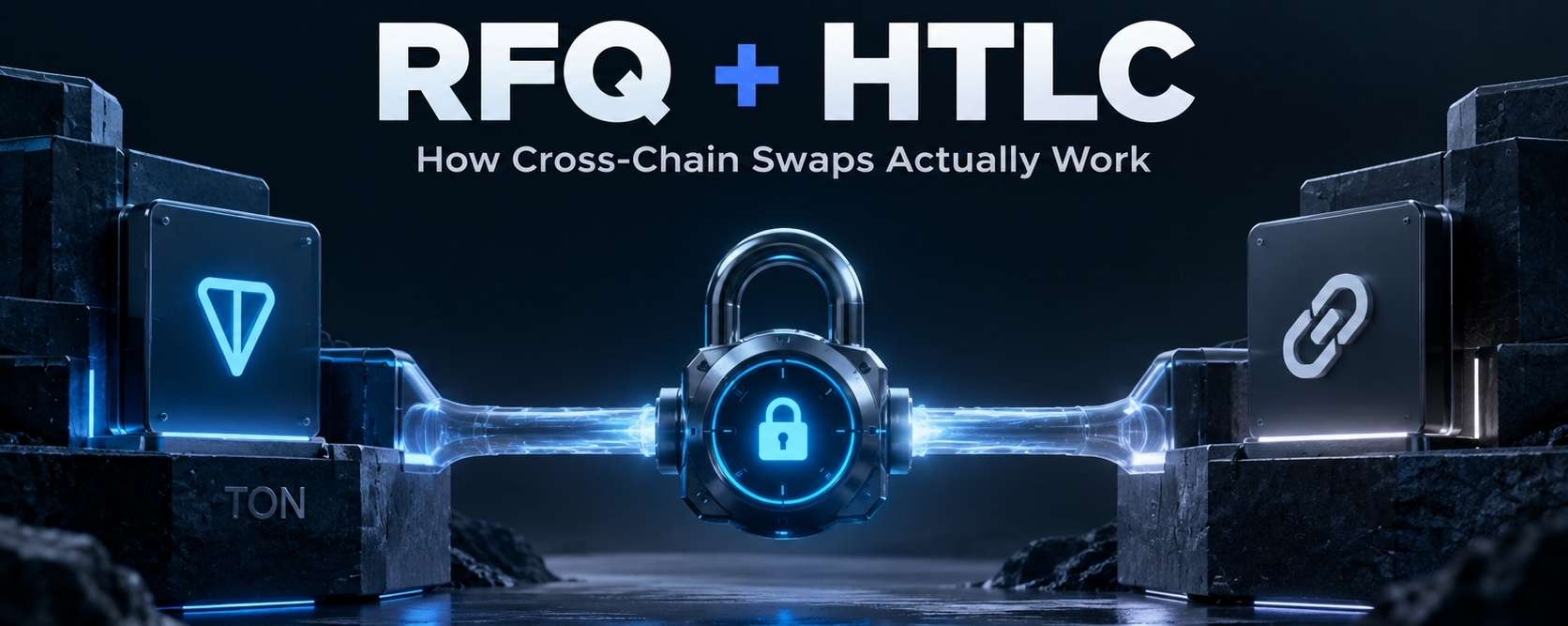
RFQ and HTLC Explained: How Cross-Chain Swaps Actually WorkI have written a lot of articles covering Omniston, STON.fi cross-chain, and STON.fi in general. One of the terms I have used most often is RFQ. Another one is HTLC I've explained them several times while discussing how Omniston handles cross-chain swaps, but there is one problem: if you don't already understand what happens behind the scenes, RFQ and HTLC can sound like nothing more than two complicated crypto acronyms. They are not. In simple terms, RFQ helps determine how a cross-chain swap should be executed, while HTLC provides a mechanism for coordinating the exchange between two separate blockchains. But how exactly do they work together? And what happens between the moment you click Swap and the moment your assets arrive on another blockchain? Let's break it down. ❑ Why Cross-Chain Swaps Need More Than a Swap Button A normal token swap is relatively straightforward when both assets exist on the same blockchain. A user provides one asset, a liquidity source provides another, and the transaction can be settled within the same network. Cross-chain swaps introduce another problem. Suppose you want to swap TON for an asset on Ethereum. TON and Ethereum are independent blockchains. They do not share one native transaction state, so a transaction on TON cannot simply tell Ethereum that something happened and expect Ethereum to treat it as part of the same transaction. The system therefore has to solve two separate problems. First, it needs to find someone capable of providing the asset on the destination chain. Second, it needs to coordinate the exchange so that one side is not left with an incomplete trade if something goes wrong. This is where two concepts become important: RFQ for finding the execution offer. HTLC for conditional settlement. They solve different parts of the same problem. ❑ RFQ: Asking the Market Who Can Execute Your Swap RFQ stands for Request for Quote. The easiest way to understand it is to imagine that you want to exchange a large amount of currency. Instead of walking into one dealer and accepting whatever price they give you, you could ask several dealers: "I want to exchange this amount. What can you offer me?" That is essentially the idea behind an RFQ system. A swap request can contain information such as the assets involved, the amount, the requested output, timing requirements, and settlement information. Liquidity providers can then respond with quotes describing what they are willing to execute. In Omniston, these liquidity providers are called resolvers. The important part is that RFQ is not the mechanism that settles the swap. It is primarily about discovering an executable offer. The basic flow is: 1. A user submits a swap request. 2. Resolvers receive the request. 3. Resolvers return executable quotes. 4. An appropriate quote is selected. 5. The trade moves into settlement and execution. So when you see "RFQ" in a cross-chain swap explanation, think: "Who can execute this trade, and under what terms?" ❑ The Resolver: The Counterparty Behind the Quote Understanding resolvers makes the RFQ model much easier to understand. A resolver is a service that provides exchange rates and participates in executing trades. In a cross-chain route, the resolver can also provide the liquidity needed on the destination blockchain. This is different from a traditional bridge. A bridge generally focuses on moving or representing assets between networks. A resolver in an RFQ-based swap system is acting more like a professional market maker or liquidity provider that can fulfill a particular trade. Think of it this way: RFQ: Asking several dealers for an executable offer Resolver: The dealer capable of filling the order  Quote: The terms offered for the trade  If several resolvers respond, the system can evaluate the available quotes and select the appropriate one. But finding a resolver is only half of the problem. You still need to settle the trade. ❑ RFQ Finds the Deal. But How Do You Settle It? Imagine that you agree to a cross-chain trade. You provide TON on the source chain. The resolver promises to provide ETH on Ethereum. Now consider what happens if you send your TON first but the resolver never delivers the ETH. Or the resolver locks ETH but you never complete your side. A price quote cannot solve that problem. The system needs a way to make the two sides of the transaction conditional on the same event. This is where HTLC comes in. ❑ HTLC: A Lock With a Secret and a Deadline HTLC stands for Hash Time-Locked Contract. The name sounds complicated, but it describes two simple mechanisms. The first is a hashlock. A secret is generated, and a cryptographic hash of that secret is used as part of the condition. Someone who knows the original secret, called the preimage, can satisfy the hash condition. The second is a timelock. The contract also contains a time-based condition. If the required action does not happen within the relevant period, the refund path becomes available. A simple analogy is a safe that requires a specific password to open, but also has an expiry condition. You can think of it as: Hashlock = "You need the right secret." Timelock = "You only have a certain amount of time." Together, they create a conditional lock. ❑ Why Two HTLCs Are Needed For a cross-chain atomic swap, one HTLC is not enough. You need linked conditions on both sides of the trade. For example, imagine a user is exchanging TON on the source chain for an asset on Ethereum. One HTLC can hold the user's source-side asset, while another holds the resolver's destination-side asset. Both sides use the same hashlock. The important relationship is: Source-side HTLC ↔ Destination-side HTLC The same secret connects the two. When the secret is revealed through the appropriate claim process, it can be used to satisfy the corresponding condition on the other side. If the required settlement does not happen, the relevant timelock eventually makes the refund path available. This is the foundation of the all-or-refund design used by HTLC-based atomic swaps. ❑ What Actually Happens When You Click "Swap"? Now let's put everything together. Imagine you are swapping an asset on TON for an asset on another supported blockchain. 1. You submit the swap request The application creates an RFQ describing what you want to trade. It contains the relevant assets, amounts, and execution requirements. 2. Resolvers respond Resolvers receive the request and provide executable quotes. Each quote describes what that resolver is prepared to execute. 3. A quote is selected The system selects the relevant quote according to the available execution conditions. At this point, RFQ has done its primary job. The system has found an execution offer. 4. The cross-chain order begins The trade moves into its settlement phase. The source-side assets enter the appropriate settlement process, while the resolver prepares the destination-side liquidity. 5. The two sides are conditionally linked For the HTLC-based cross-chain flow, the source and destination sides are connected through the same hashlock. The resolver provides the destination-side liquidity required for the trade. 6. The secret is revealed Once the relevant settlement condition is satisfied, the secret can be disclosed. That secret allows the appropriate party to claim the assets locked for them. 7. Both sides settle The user receives the destination asset. The resolver receives the source asset. The two sides are therefore connected through the same cryptographic condition rather than relying on a simple promise that the other party will complete the trade. 8. If the trade does not complete If the required settlement condition is not fulfilled before the relevant timeout, the refund path becomes available according to the settlement rules. This is an important distinction. The system is not saying that every swap must succeed. A failed swap can be a valid outcome if the assets can be recovered through the designed timeout and refund mechanism. ❑ RFQ and HTLC Are Not Competitors This is probably the easiest way to remember everything. RFQ - Finds executable liquidity and trade terms Resolver | Provides liquidity and executes the route  HTLC - Coordinates conditional cross-chain settlement  Omniston - Connects these components into a cross-chain execution system So asking whether RFQ or HTLC is "better" does not really make sense. They operate at different layers. RFQ solves the execution discovery problem. HTLC solves a conditional settlement problem. You need to understand both to understand the architecture. ❑ Where Omniston Fits Into the Picture This is where the concepts connect to a real implementation. Omniston began as a liquidity aggregation system on TON and evolved toward a broader cross-chain execution model. Its architecture separates the process of requesting quotes from the actual settlement of the trade. For cross-chain routes, the model involves RFQs, resolvers, quote selection, and cross-chain settlement. In the HTLC-based model, the source-side and destination-side legs are coordinated through paired HTLCs. That means Omniston is not simply "an HTLC." It is the broader execution layer connecting the different components required to make the swap happen. A simplified way to look at the architecture is: User → RFQ → Resolvers → Quotes → Selected execution → Cross-chain settlement → Destination asset For the HTLC-based cross-chain path, the settlement stage then connects the source and destination sides through the shared hashlock and their respective timeout conditions. This distinction matters because RFQ and HTLC are not two competing technologies inside Omniston. They operate at different stages of the execution process. ❑ What Happens When Something Goes Wrong? Understanding failure is just as important as understanding success. If no resolver provides a suitable executable quote, the trade does not need to proceed. If execution begins but the required settlement conditions are not satisfied, the relevant timeout mechanisms can eventually make the refund path available. And if everything works as intended, the secret connects the two sides and the respective participants claim their assets. This is also why it is important not to interpret "atomic" as meaning "nothing can ever go wrong." Atomic settlement describes how the two sides are conditionally linked. The overall system still depends on things such as blockchain availability, correct contract logic, appropriate timeout configuration, transaction execution, and the availability of liquidity. The strength of the mechanism is that a failed execution can have a defined recovery path rather than simply leaving the two sides permanently dependent on each other. ❑ Why This Is Different From Simply Bridging an Asset It is useful to distinguish a cross-chain swap from the traditional bridge model. A traditional bridge can involve locking an asset on one network and creating or representing an asset on another network. An atomic cross-chain swap instead coordinates an exchange between assets on separate chains. Omniston's cross-chain architecture uses resolvers to provide destination-side liquidity and uses cross-chain settlement mechanisms to coordinate the transaction. That is why understanding the resolver is just as important as understanding the HTLC. ❑ The Part That Often Gets Oversimplified HTLCs are powerful, but they are not magic. Saying that a cross-chain swap is "atomic" does not mean that every attempted transaction will always succeed or that every possible risk disappears. The mechanism still depends on the underlying blockchains, smart contracts, timeout configuration, transaction execution, and the availability of the participating liquidity provider. There is also an important distinction between automatic success and recoverability. If the conditions required for the trade are not fulfilled, the timelock can make a refund path available. Depending on the implementation and stage of settlement, that recovery can require the appropriate on-chain claim or refund transaction. So the useful mental model is not: "HTLC means nothing can go wrong." It is: "HTLC creates conditional settlement rules that connect the two sides and provide a timeout-based recovery path if the required condition is not fulfilled." That is a much more accurate way to understand the technology. ❑ Two Acronyms, Two Different Jobs Once you understand RFQ and HTLC, cross-chain swaps become much easier to reason about. There are several different problems being solved at once. RFQ finds the execution offer. Resolvers provide liquidity and execute the route. HTLC provides conditional settlement between independent chains. And Omniston connects these pieces into a cross-chain execution flow. The next time you see RFQ and HTLC mentioned in a cross-chain swap explanation, you don't have to treat them as two more crypto acronyms to memorize. Just remember: RFQ finds the deal. The resolver provides the liquidity. HTLC connects the settlement conditions. And that is what happens behind the swap button.

RFQ and HTLC Explained: How Cross-Chain Swaps Actually Work

I have written a lot of articles covering Omniston, STON.fi cross-chain, and STON.fi in general.
One of the terms I have used most often is RFQ.
Another one is HTLC
I've explained them several times while discussing how Omniston handles cross-chain swaps, but there is one problem: if you don't already understand what happens behind the scenes, RFQ and HTLC can sound like nothing more than two complicated crypto acronyms.
They are not.
In simple terms, RFQ helps determine how a cross-chain swap should be executed, while HTLC provides a mechanism for coordinating the exchange between two separate blockchains.
But how exactly do they work together?
And what happens between the moment you click Swap and the moment your assets arrive on another blockchain?
Let's break it down.
❑ Why Cross-Chain Swaps Need More Than a Swap Button
A normal token swap is relatively straightforward when both assets exist on the same blockchain.
A user provides one asset, a liquidity source provides another, and the transaction can be settled within the same network.
Cross-chain swaps introduce another problem.
Suppose you want to swap TON for an asset on Ethereum. TON and Ethereum are independent blockchains. They do not share one native transaction state, so a transaction on TON cannot simply tell Ethereum that something happened and expect Ethereum to treat it as part of the same transaction.
The system therefore has to solve two separate problems.
First, it needs to find someone capable of providing the asset on the destination chain.
Second, it needs to coordinate the exchange so that one side is not left with an incomplete trade if something goes wrong.
This is where two concepts become important:
RFQ for finding the execution offer.
HTLC for conditional settlement.
They solve different parts of the same problem.
❑ RFQ: Asking the Market Who Can Execute Your Swap
RFQ stands for Request for Quote.
The easiest way to understand it is to imagine that you want to exchange a large amount of currency.
Instead of walking into one dealer and accepting whatever price they give you, you could ask several dealers:
"I want to exchange this amount. What can you offer me?"
That is essentially the idea behind an RFQ system.
A swap request can contain information such as the assets involved, the amount, the requested output, timing requirements, and settlement information.
Liquidity providers can then respond with quotes describing what they are willing to execute.
In Omniston, these liquidity providers are called resolvers.
The important part is that RFQ is not the mechanism that settles the swap.
It is primarily about discovering an executable offer.
The basic flow is:
1. A user submits a swap request.
2. Resolvers receive the request.
3. Resolvers return executable quotes.
4. An appropriate quote is selected.
5. The trade moves into settlement and execution.
So when you see "RFQ" in a cross-chain swap explanation, think:
"Who can execute this trade, and under what terms?"
❑ The Resolver: The Counterparty Behind the Quote
Understanding resolvers makes the RFQ model much easier to understand.
A resolver is a service that provides exchange rates and participates in executing trades. In a cross-chain route, the resolver can also provide the liquidity needed on the destination blockchain.
This is different from a traditional bridge.
A bridge generally focuses on moving or representing assets between networks. A resolver in an RFQ-based swap system is acting more like a professional market maker or liquidity provider that can fulfill a particular trade.
Think of it this way:
RFQ: Asking several dealers for an executable offer
Resolver: The dealer capable of filling the order
Quote: The terms offered for the trade
If several resolvers respond, the system can evaluate the available quotes and select the appropriate one.
But finding a resolver is only half of the problem.
You still need to settle the trade.
❑ RFQ Finds the Deal. But How Do You Settle It?
Imagine that you agree to a cross-chain trade.
You provide TON on the source chain.
The resolver promises to provide ETH on Ethereum.
Now consider what happens if you send your TON first but the resolver never delivers the ETH.
Or the resolver locks ETH but you never complete your side.
A price quote cannot solve that problem.
The system needs a way to make the two sides of the transaction conditional on the same event.
This is where HTLC comes in.
❑ HTLC: A Lock With a Secret and a Deadline
HTLC stands for Hash Time-Locked Contract.
The name sounds complicated, but it describes two simple mechanisms.
The first is a hashlock.
A secret is generated, and a cryptographic hash of that secret is used as part of the condition. Someone who knows the original secret, called the preimage, can satisfy the hash condition.
The second is a timelock.
The contract also contains a time-based condition. If the required action does not happen within the relevant period, the refund path becomes available.
A simple analogy is a safe that requires a specific password to open, but also has an expiry condition.
You can think of it as:
Hashlock = "You need the right secret."
Timelock = "You only have a certain amount of time."
Together, they create a conditional lock.
❑ Why Two HTLCs Are Needed
For a cross-chain atomic swap, one HTLC is not enough.
You need linked conditions on both sides of the trade.
For example, imagine a user is exchanging TON on the source chain for an asset on Ethereum.
One HTLC can hold the user's source-side asset, while another holds the resolver's destination-side asset.
Both sides use the same hashlock.
The important relationship is:
Source-side HTLC ↔ Destination-side HTLC
The same secret connects the two.
When the secret is revealed through the appropriate claim process, it can be used to satisfy the corresponding condition on the other side.
If the required settlement does not happen, the relevant timelock eventually makes the refund path available.
This is the foundation of the all-or-refund design used by HTLC-based atomic swaps.
❑ What Actually Happens When You Click "Swap"?
Now let's put everything together.
Imagine you are swapping an asset on TON for an asset on another supported blockchain.
1. You submit the swap request
The application creates an RFQ describing what you want to trade.
It contains the relevant assets, amounts, and execution requirements.
2. Resolvers respond
Resolvers receive the request and provide executable quotes.
Each quote describes what that resolver is prepared to execute.
3. A quote is selected
The system selects the relevant quote according to the available execution conditions.
At this point, RFQ has done its primary job.
The system has found an execution offer.
4. The cross-chain order begins
The trade moves into its settlement phase.
The source-side assets enter the appropriate settlement process, while the resolver prepares the destination-side liquidity.
5. The two sides are conditionally linked
For the HTLC-based cross-chain flow, the source and destination sides are connected through the same hashlock.
The resolver provides the destination-side liquidity required for the trade.
6. The secret is revealed
Once the relevant settlement condition is satisfied, the secret can be disclosed.
That secret allows the appropriate party to claim the assets locked for them.
7. Both sides settle
The user receives the destination asset.
The resolver receives the source asset.
The two sides are therefore connected through the same cryptographic condition rather than relying on a simple promise that the other party will complete the trade.
8. If the trade does not complete
If the required settlement condition is not fulfilled before the relevant timeout, the refund path becomes available according to the settlement rules.
This is an important distinction.
The system is not saying that every swap must succeed.
A failed swap can be a valid outcome if the assets can be recovered through the designed timeout and refund mechanism.
❑ RFQ and HTLC Are Not Competitors
This is probably the easiest way to remember everything.
RFQ - Finds executable liquidity and trade terms
Resolver | Provides liquidity and executes the route
HTLC - Coordinates conditional cross-chain settlement
Omniston - Connects these components into a cross-chain execution system
So asking whether RFQ or HTLC is "better" does not really make sense.
They operate at different layers.
RFQ solves the execution discovery problem.
HTLC solves a conditional settlement problem.
You need to understand both to understand the architecture.
❑ Where Omniston Fits Into the Picture
This is where the concepts connect to a real implementation.
Omniston began as a liquidity aggregation system on TON and evolved toward a broader cross-chain execution model.
Its architecture separates the process of requesting quotes from the actual settlement of the trade.
For cross-chain routes, the model involves RFQs, resolvers, quote selection, and cross-chain settlement.
In the HTLC-based model, the source-side and destination-side legs are coordinated through paired HTLCs.
That means Omniston is not simply "an HTLC."
It is the broader execution layer connecting the different components required to make the swap happen.
A simplified way to look at the architecture is:
User → RFQ → Resolvers → Quotes → Selected execution → Cross-chain settlement → Destination asset
For the HTLC-based cross-chain path, the settlement stage then connects the source and destination sides through the shared hashlock and their respective timeout conditions.
This distinction matters because RFQ and HTLC are not two competing technologies inside Omniston. They operate at different stages of the execution process.
❑ What Happens When Something Goes Wrong?
Understanding failure is just as important as understanding success.
If no resolver provides a suitable executable quote, the trade does not need to proceed.
If execution begins but the required settlement conditions are not satisfied, the relevant timeout mechanisms can eventually make the refund path available.
And if everything works as intended, the secret connects the two sides and the respective participants claim their assets.
This is also why it is important not to interpret "atomic" as meaning "nothing can ever go wrong."
Atomic settlement describes how the two sides are conditionally linked.
The overall system still depends on things such as blockchain availability, correct contract logic, appropriate timeout configuration, transaction execution, and the availability of liquidity.
The strength of the mechanism is that a failed execution can have a defined recovery path rather than simply leaving the two sides permanently dependent on each other.
❑ Why This Is Different From Simply Bridging an Asset
It is useful to distinguish a cross-chain swap from the traditional bridge model.
A traditional bridge can involve locking an asset on one network and creating or representing an asset on another network.
An atomic cross-chain swap instead coordinates an exchange between assets on separate chains.
Omniston's cross-chain architecture uses resolvers to provide destination-side liquidity and uses cross-chain settlement mechanisms to coordinate the transaction.
That is why understanding the resolver is just as important as understanding the HTLC.
❑ The Part That Often Gets Oversimplified
HTLCs are powerful, but they are not magic.
Saying that a cross-chain swap is "atomic" does not mean that every attempted transaction will always succeed or that every possible risk disappears.
The mechanism still depends on the underlying blockchains, smart contracts, timeout configuration, transaction execution, and the availability of the participating liquidity provider.
There is also an important distinction between automatic success and recoverability.
If the conditions required for the trade are not fulfilled, the timelock can make a refund path available. Depending on the implementation and stage of settlement, that recovery can require the appropriate on-chain claim or refund transaction.
So the useful mental model is not:
"HTLC means nothing can go wrong."
It is:
"HTLC creates conditional settlement rules that connect the two sides and provide a timeout-based recovery path if the required condition is not fulfilled."
That is a much more accurate way to understand the technology.
❑ Two Acronyms, Two Different Jobs
Once you understand RFQ and HTLC, cross-chain swaps become much easier to reason about.
There are several different problems being solved at once.
RFQ finds the execution offer.
Resolvers provide liquidity and execute the route.
HTLC provides conditional settlement between independent chains.
And Omniston connects these pieces into a cross-chain execution flow.
The next time you see RFQ and HTLC mentioned in a cross-chain swap explanation, you don't have to treat them as two more crypto acronyms to memorize.
Just remember:
RFQ finds the deal.
The resolver provides the liquidity.
HTLC connects the settlement conditions.
And that is what happens behind the swap button.
Artigo
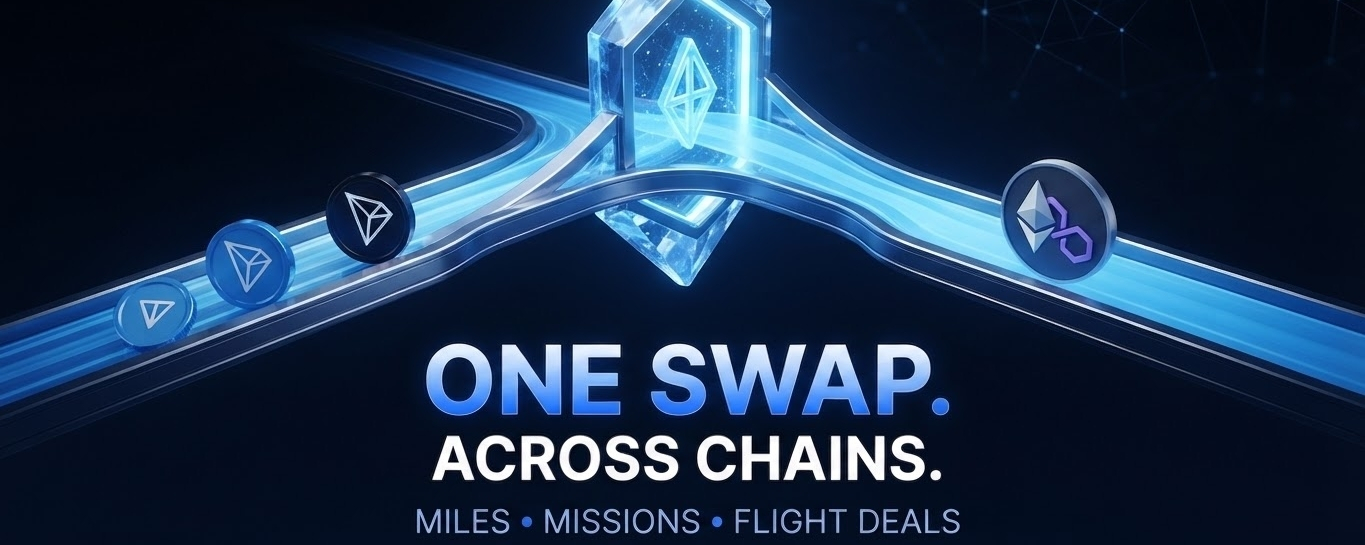
Miles, Missions e Cross-Chain Swaps: Dentro da Nova Campanha da STON.fi.Uma troca cross-chain normalmente soa como uma operação técnica. Escolha uma rede, conecte uma carteira, mova ativos, aguarde a liquidação e torça para ter escolhido a rota certa. A STON.fi está abordando a experiência de forma diferente. Sua nova campanha “One Swap. Across Chains” transforma a atividade cross-chain em uma jornada construída em torno de Miles, Missions, Flight Classes, Priority Passengers e ofertas limitadas de Flight Deals. Mas, por trás da interface com estilo de companhia aérea, há algo mais significativo: uma tentativa de fazer a execução cross-chain parecer um único produto, em vez de uma coleção de operações separadas de blockchain.

Miles, Missions e Cross-Chain Swaps: Dentro da Nova Campanha da STON.fi.

Uma troca cross-chain normalmente soa como uma operação técnica.
Escolha uma rede, conecte uma carteira, mova ativos, aguarde a liquidação e torça para ter escolhido a rota certa.
A STON.fi está abordando a experiência de forma diferente.
Sua nova campanha “One Swap. Across Chains” transforma a atividade cross-chain em uma jornada construída em torno de Miles, Missions, Flight Classes, Priority Passengers e ofertas limitadas de Flight Deals. Mas, por trás da interface com estilo de companhia aérea, há algo mais significativo: uma tentativa de fazer a execução cross-chain parecer um único produto, em vez de uma coleção de operações separadas de blockchain.
Parcialmente verdadeiro
Artigo
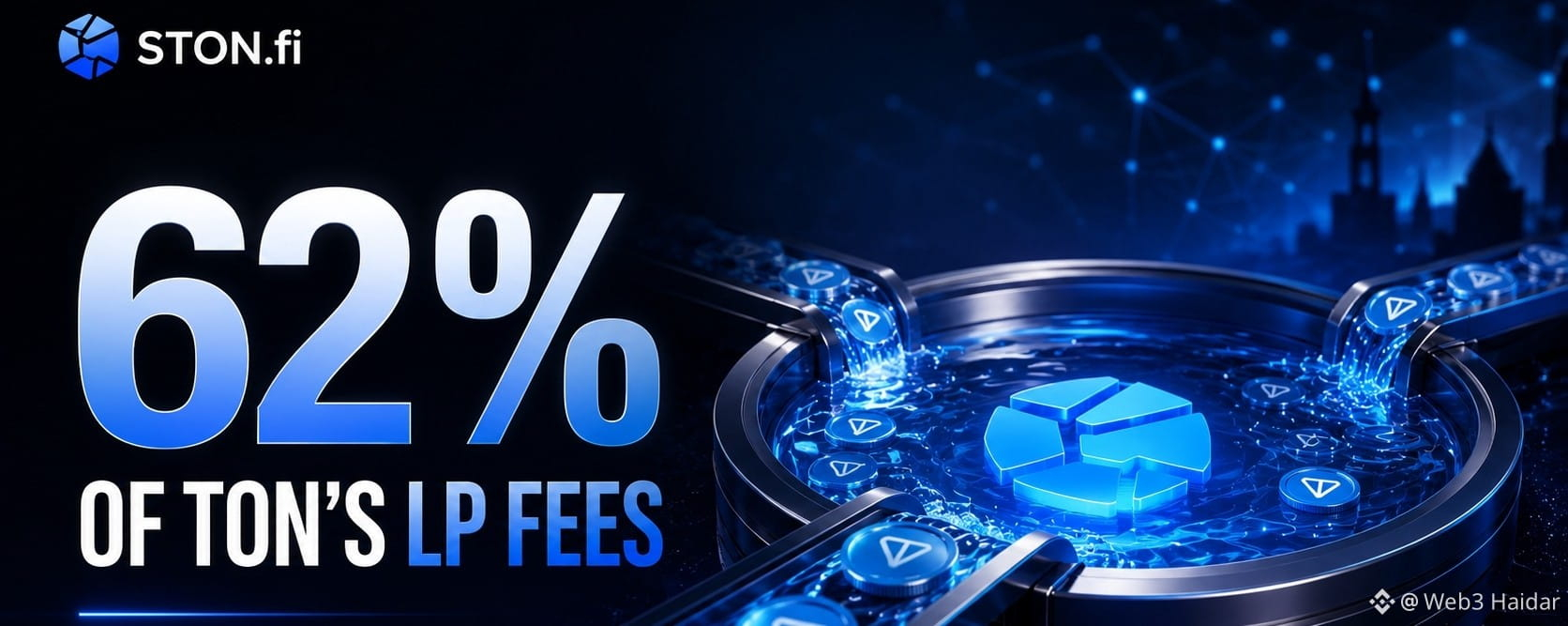
STON.fi Gerou 62% das Taxas de LP da TON em 2025. O que isso realmente significa?Em agosto de 2025, a STON.fi reportou um marco impressionante: seus provedores de liquidez haviam gerado 62% de todas as taxas de LP registradas na TON em 2025, segundo a Dune Analytics. À primeira vista, esse número soa como uma medida de dominância de liquidez. Mas as taxas de LP e a liquidez não são a mesma coisa. Um protocolo pode manter uma grande quantidade de liquidez sem gerar taxas significativas se os traders raramente o utilizarem. Por outro lado, um pool menor pode gerar taxas substanciais se ele processar uma grande quantidade de atividade de negociação.

STON.fi Gerou 62% das Taxas de LP da TON em 2025. O que isso realmente significa?

Em agosto de 2025, a STON.fi reportou um marco impressionante: seus provedores de liquidez haviam gerado 62% de todas as taxas de LP registradas na TON em 2025, segundo a Dune Analytics.

À primeira vista, esse número soa como uma medida de dominância de liquidez. Mas as taxas de LP e a liquidez não são a mesma coisa.
Um protocolo pode manter uma grande quantidade de liquidez sem gerar taxas significativas se os traders raramente o utilizarem. Por outro lado, um pool menor pode gerar taxas substanciais se ele processar uma grande quantidade de atividade de negociação.
Acabei de vender todas as minhas bolsas e investir %100 em $DOT Não vou perder esta oportunidade de ouro e me arrepender depois $100/Dot é apenas uma questão de tempo
Acabei de vender todas as minhas bolsas e investir %100 em $DOT

Não vou perder esta oportunidade de ouro e me arrepender depois

$100/Dot é apenas uma questão de tempo
Agressivo

Agressivo
Alex DOT
·
--
Em Alta
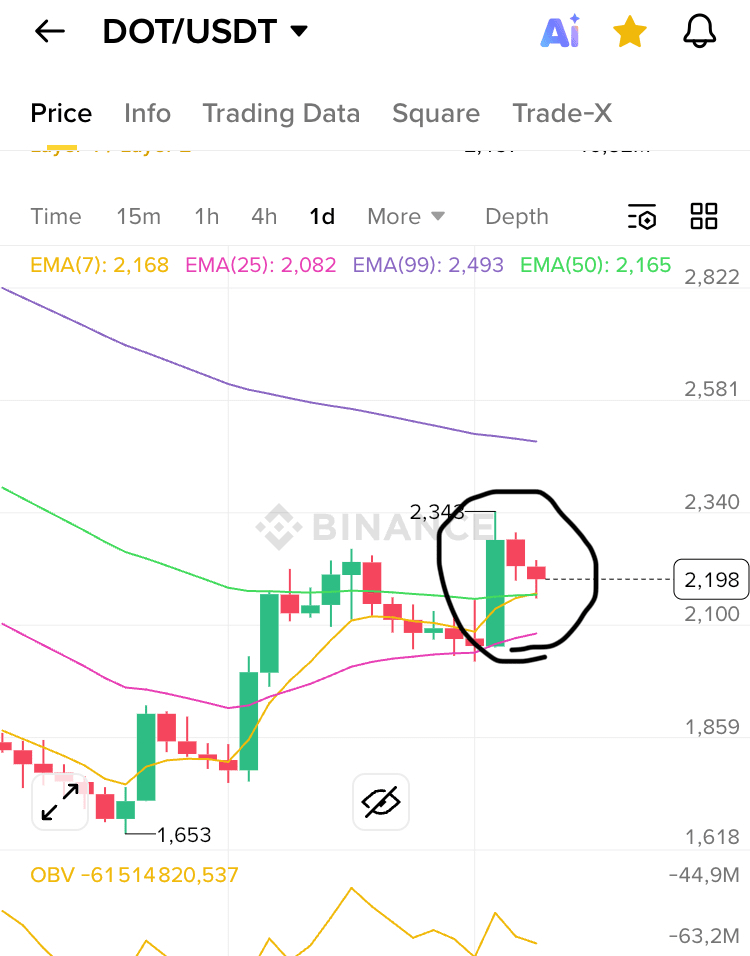
QUEBRA 🚨: Cruzeiro dourado entre a EMA de 7 dias e a EMA de 50 dias para $DOT 👀👀

Isso não acontecia desde 1º de outubro de 2025!

Os próximos movimentos serão EPIC!

Aproveite a viagem 🔥🚀📈
$TTD pays me today after one week doing DCA and patience no final eu lucro com isso 😍 Qual token você negociou hoje?
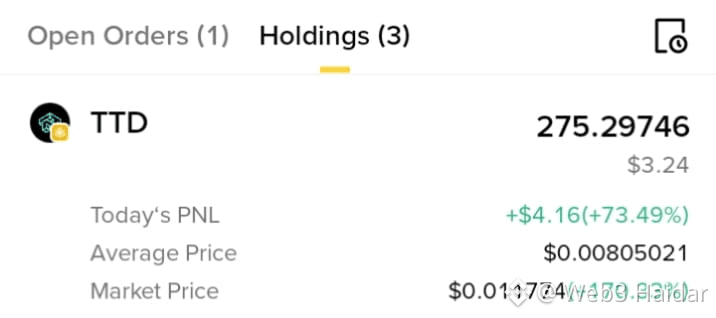
$TTD pays me today after one week doing DCA and patience

no final eu lucro com isso 😍

Qual token você negociou hoje?
Se você ainda acha que DeFi é apenas sobre moedas meme, isso pode mudar sua opinião. Eu gravei um rápido walkthrough da interface do xStocks no STON.fi, e a experiência é surpreendentemente suave. Em apenas alguns toques, você pode se mover entre USDT e ativos tokenizados como AAPLx, NVDAx ou MSTRx. O que se destaca imediatamente: Uma interface limpa e profissional Cotações de preços rápidas e claras alimentadas pela Omniston Conexão de carteira fácil com Tonkeeper ou outras carteiras TON É assim que o acesso em cadeia a mercados globais está começando a parecer. Simples, rápido e sem fronteiras, tudo construído na blockchain TON. Veja o produto xStocks aqui: https://ston.fi/xstocks
Se você ainda acha que DeFi é apenas sobre moedas meme, isso pode mudar sua opinião.

Eu gravei um rápido walkthrough da interface do xStocks no STON.fi, e a experiência é surpreendentemente suave. Em apenas alguns toques, você pode se mover entre USDT e ativos tokenizados como AAPLx, NVDAx ou MSTRx.

O que se destaca imediatamente:
Uma interface limpa e profissional
Cotações de preços rápidas e claras alimentadas pela Omniston
Conexão de carteira fácil com Tonkeeper ou outras carteiras TON

É assim que o acesso em cadeia a mercados globais está começando a parecer. Simples, rápido e sem fronteiras, tudo construído na blockchain TON.

Veja o produto xStocks aqui:
https://ston.fi/xstocks
Se você ainda acha que DeFi é apenas sobre moedas meme, isso pode mudar sua opinião. Eu gravei um rápido walkthrough da interface do xStocks no STON.fi, e a experiência é surpreendentemente suave. Em apenas alguns toques, você pode se mover entre USDT e ativos tokenizados como AAPLx, NVDAx ou MSTRx. O que se destaca imediatamente: Uma interface limpa e profissional Cotações de preços rápidas e claras alimentadas pela Omniston Conexão de carteira fácil com Tonkeeper ou outras carteiras TON É assim que o acesso em cadeia a mercados globais está começando a parecer. Simples, rápido e sem fronteiras, tudo construído na blockchain TON. Veja o produto xStocks aqui: https://ston.fi/xstocks
Se você ainda acha que DeFi é apenas sobre moedas meme, isso pode mudar sua opinião.

Eu gravei um rápido walkthrough da interface do xStocks no STON.fi, e a experiência é surpreendentemente suave. Em apenas alguns toques, você pode se mover entre USDT e ativos tokenizados como AAPLx, NVDAx ou MSTRx.

O que se destaca imediatamente:
Uma interface limpa e profissional
Cotações de preços rápidas e claras alimentadas pela Omniston
Conexão de carteira fácil com Tonkeeper ou outras carteiras TON

É assim que o acesso em cadeia a mercados globais está começando a parecer. Simples, rápido e sem fronteiras, tudo construído na blockchain TON.

Veja o produto xStocks aqui:
https://ston.fi/xstocks
Olhe para esta lista! 🤩 ​STON.fi não é apenas um DEX para cripto; é seu portal para mercados globais. Atualmente, estou navegando na página xStocks e as opções são insanas: ​💰 $MSTRx (MicroStrategy) 🛒 $AMZNx (Amazon) 📈 $COINx (Coinbase) 📱 $AAPL (Apple) ​Tudo que você precisa para construir um portfólio poderoso está bem aqui no #TON. Sem papelada, sem intermediários, apenas acesso descentralizado puro. ​Qual você está adicionando à sua carteira primeiro? 👇 ​Explore agora: https://ston.fi/xstocks #RWA
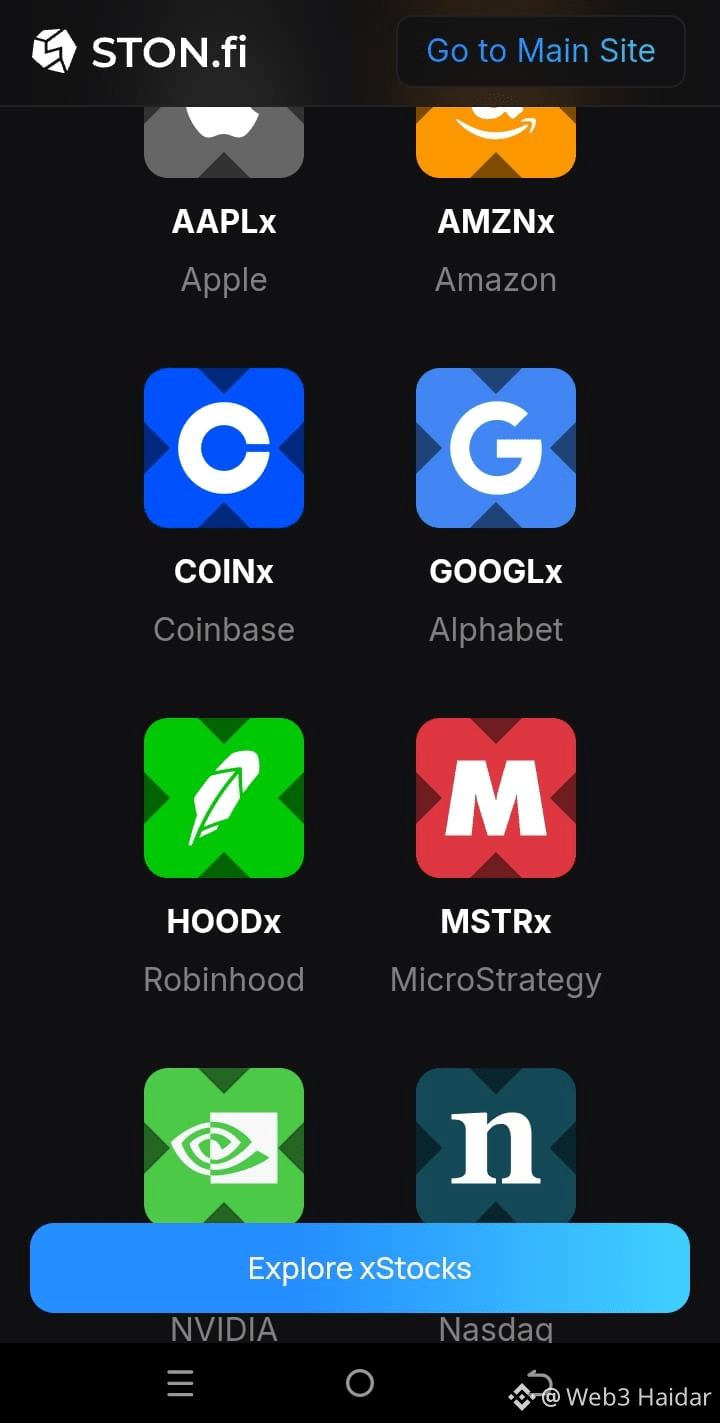
Olhe para esta lista! 🤩

​STON.fi não é apenas um DEX para cripto; é seu portal para mercados globais. Atualmente, estou navegando na página xStocks e as opções são insanas:

​💰 $MSTRx (MicroStrategy)
🛒 $AMZNx (Amazon)
📈 $COINx (Coinbase)
📱 $AAPL (Apple)

​Tudo que você precisa para construir um portfólio poderoso está bem aqui no #TON. Sem papelada, sem intermediários, apenas acesso descentralizado puro.
​Qual você está adicionando à sua carteira primeiro? 👇
​Explore agora: https://ston.fi/xstocks
#RWA
Artigo
Tokenização de Ativos na Rede Blockchain - Parte 1Tokenização de Ativos na #blockchain n Network - Parte 1 Escreverei mais de 3 peças de conteúdo sobre Tokenização. Este é o primeiro. Tokenização: Esta é uma área para a qual o mundo se moverá no futuro em termos de transações financeiras, compra e venda de ativos, convertendo ativos físicos em formas digitais, online e on-chain. Como isso funciona? Quando dizemos Tokenização, significa converter algo que existe fisicamente em sua representação em uma rede blockchain, onde o valor permanece o mesmo.

Tokenização de Ativos na Rede Blockchain - Parte 1

Tokenização de Ativos na #blockchain n Network - Parte 1
Escreverei mais de 3 peças de conteúdo sobre Tokenização.
Este é o primeiro.
Tokenização:
Esta é uma área para a qual o mundo se moverá no futuro em termos de transações financeiras, compra e venda de ativos, convertendo ativos físicos em formas digitais, online e on-chain.
Como isso funciona?
Quando dizemos Tokenização, significa converter algo que existe fisicamente em sua representação em uma rede blockchain, onde o valor permanece o mesmo.
Nunca ouvi falar disso
Moaazawan1
·
--
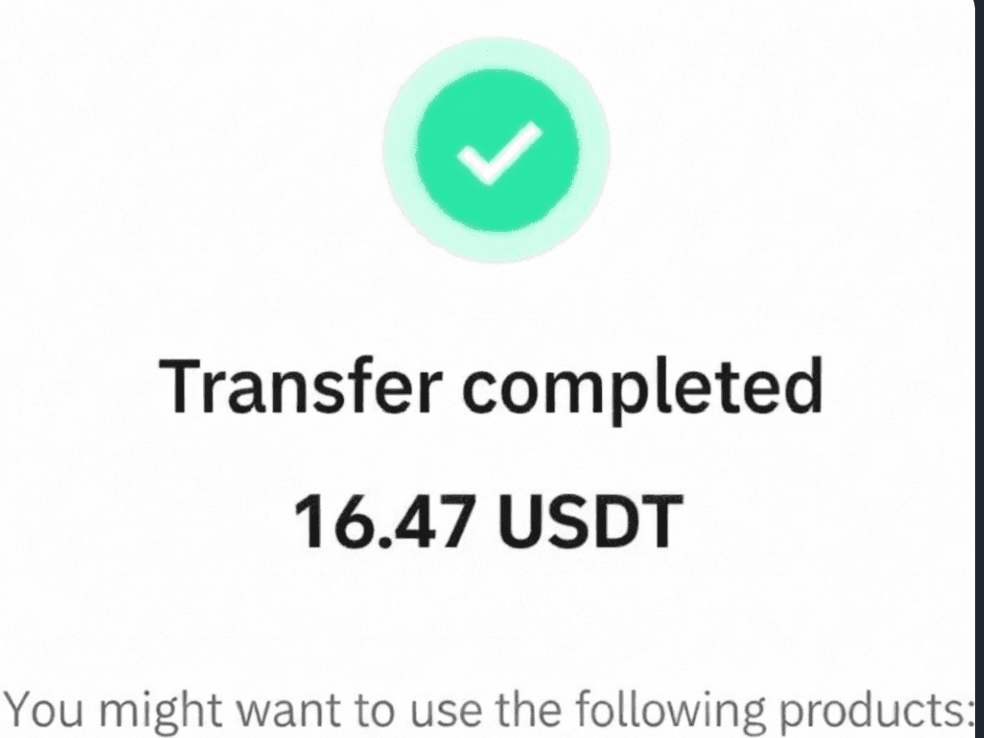
💲🤑Você pode ganhar de graça $10 a $16 USDT diariamente?💲🤑

Sem negociação, sem investimento, sem depósito, apenas trabalho simples. Não estou brincando, leia isto

A Binance tem o Write to Earn.

Você só precisa postar e permanecer ativo.

Como fazer isso:

1 Crie seu perfil na Binance Square

2 Poste de 3 a 5 vezes por dia

3 Comente, curta e use hashtags

Você pode ganhar de $10 a $30 por dia se estiver ativo diariamente.

Se você continuar trabalhando, $15 por dia também é possível.

Por que a Binance paga isso?

Porque eles querem que mais pessoas usem a Binance Square e compartilhem posts sobre cripto.

Dicas para ganhar mais rápido:

Poste sobre moedas em tendência

Compartilhe memes e gráficos simples

Responda a outros usuários e permaneça ativo

#Write2Earn #BinanceSquareTalks

#WriteToEarnUpgrade
$Dot com certeza ficará animado

Mhmmed zaid
·
--
Irmão, nos próximos 1-2 meses, vai chegar a 4-5 usd, mantenha-o

Dot está bombando agora 🥰
Usman42
·
--
Todos os $DOT detentores confirmaram a morte 🤣🤣🤣🤣🤣🤣
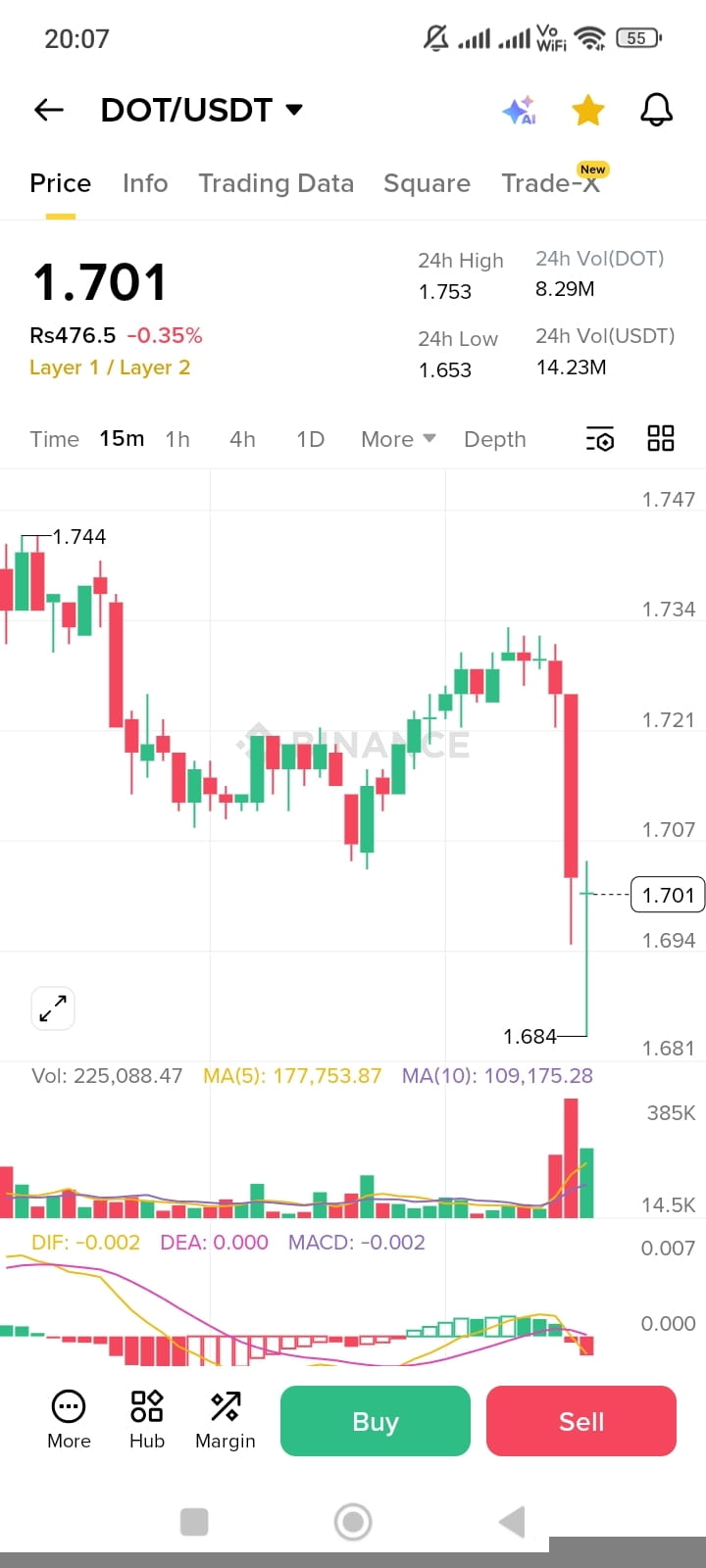
Comprei $DOT no valor de $25 @1.72 há alguns dias e foi para 1.69 comigo. Esperei pacientemente e hoje DOT tocou 1.84 comigo e vendi tudo, deixando apenas o lucro que obtive com isso ($1+) 🥰 Quais ativos você negociou hoje e qual foi o resultado? verde ou vermelho 👀
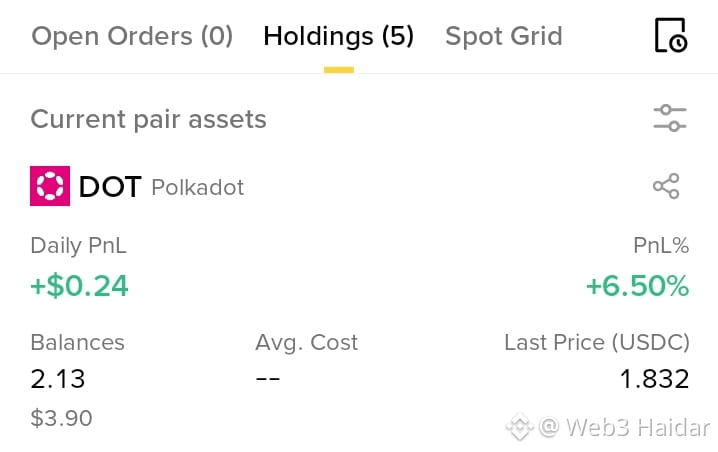
Comprei $DOT no valor de $25 @1.72 há alguns dias e foi para 1.69 comigo.

Esperei pacientemente e hoje DOT tocou 1.84 comigo e vendi tudo, deixando apenas o lucro que obtive com isso ($1+) 🥰

Quais ativos você negociou hoje e qual foi o resultado? verde ou vermelho 👀
Eu acabei de vender minha bolsa $TRADOOR com 30% de lucro na Binance alpha 🥰 qualquer um que ler este post é responsável por me avisar quando atingir $1,15 novamente. Eu vou comprar novamente nesse preço 🥱
Eu acabei de vender minha bolsa $TRADOOR com 30% de lucro na Binance alpha 🥰

qualquer um que ler este post é responsável por me avisar quando atingir $1,15 novamente.

Eu vou comprar novamente nesse preço 🥱
Por que os RWA e as Ações Tokenizadas Estão Ganhando Atenção Ativos do Mundo Real (RWA) estão atraindo um interesse crescente de investidores globais, especialmente com a ascensão das ações tokenizadas. O investimento tradicional em ações frequentemente vem com atritos - corretores, requisitos de KYC e limitações geográficas. É aqui que os xStocks entram em cena. A STON.fi introduziu os xStocks para conectar as finanças tradicionais com o DeFi, dando aos usuários de TON acesso on-chain a versões tokenizadas de ações do mundo real, como Apple, Tesla, Nvidia e Google - sem corretores ou KYC. Ativos como AAPLx, TSLAx, NVDAx e GOOGLx representam uma nova maneira de obter exposição aos mercados do mundo real diretamente de uma carteira. Explore os xStocks aqui: https://ston.fi/xstocks
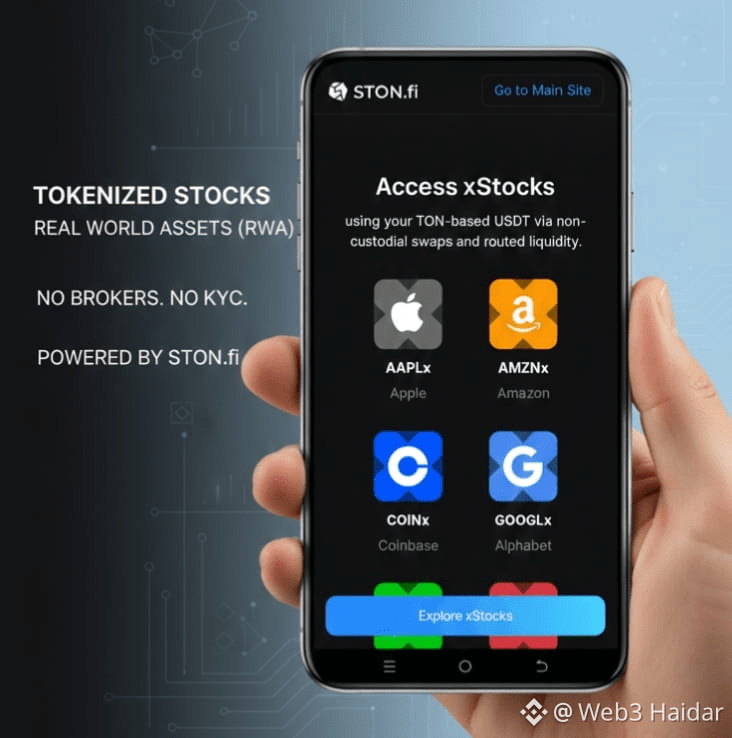
Por que os RWA e as Ações Tokenizadas Estão Ganhando Atenção

Ativos do Mundo Real (RWA) estão atraindo um interesse crescente de investidores globais, especialmente com a ascensão das ações tokenizadas.

O investimento tradicional em ações frequentemente vem com atritos - corretores, requisitos de KYC e limitações geográficas. É aqui que os xStocks entram em cena.

A STON.fi introduziu os xStocks para conectar as finanças tradicionais com o DeFi, dando aos usuários de TON acesso on-chain a versões tokenizadas de ações do mundo real, como Apple, Tesla, Nvidia e Google - sem corretores ou KYC.

Ativos como AAPLx, TSLAx, NVDAx e GOOGLx representam uma nova maneira de obter exposição aos mercados do mundo real diretamente de uma carteira.

Explore os xStocks aqui:
https://ston.fi/xstocks
Apresentando xStocks no STON.fi: Negociando Gigantes Globais no TON A barreira entre finanças descentralizadas e o mercado de ações tradicional finalmente colapsou. O STON.fi lançou oficialmente o xStocks, uma página dedicada onde qualquer pessoa no ecossistema TON pode negociar ativos de mercado tokenizados. ​O que exatamente são xStocks? São versões sintéticas e tokenizadas das principais ações globais. Pense neles como espelhos digitais de ativos do mundo real, como Apple, Nvidia e Tesla, vivendo totalmente na blockchain. ​Por que isso é importante para você? ​Acessibilidade: Você não precisa de uma conta bancária estrangeira ou de uma corretora especializada. Se você tem uma carteira TON, você está dentro. ​Privacidade: Pule os processos intrusivos de KYC (Conheça Seu Cliente). Sua privacidade continua sendo sua. ​Eficiência: Negocie $AAPL, $NVDAx, $TSLAx e $GOOGLx com a velocidade e baixas taxas da rede TON. ​Isso é mais do que apenas um novo recurso; é a democratização do mercado de ações global. Ao remover os intermediários, o STON.fi está colocando o poder de Wall Street nas mãos dos usuários do Telegram em todo o mundo. ​Comece sua jornada aqui: https://ston.fi/xstocks
Apresentando xStocks no STON.fi: Negociando Gigantes Globais no TON

A barreira entre finanças descentralizadas e o mercado de ações tradicional finalmente colapsou. O STON.fi lançou oficialmente o xStocks, uma página dedicada onde qualquer pessoa no ecossistema TON pode negociar ativos de mercado tokenizados.

​O que exatamente são xStocks?

São versões sintéticas e tokenizadas das principais ações globais. Pense neles como espelhos digitais de ativos do mundo real, como Apple, Nvidia e Tesla, vivendo totalmente na blockchain.

​Por que isso é importante para você?

​Acessibilidade: Você não precisa de uma conta bancária estrangeira ou de uma corretora especializada. Se você tem uma carteira TON, você está dentro.

​Privacidade: Pule os processos intrusivos de KYC (Conheça Seu Cliente). Sua privacidade continua sendo sua.

​Eficiência: Negocie $AAPL, $NVDAx, $TSLAx e $GOOGLx com a velocidade e baixas taxas da rede TON.

​Isso é mais do que apenas um novo recurso; é a democratização do mercado de ações global. Ao remover os intermediários, o STON.fi está colocando o poder de Wall Street nas mãos dos usuários do Telegram em todo o mundo.
​Comece sua jornada aqui: https://ston.fi/xstocks
Inicia sessão para explorar mais conteúdos
Junta-te a utilizadores de criptomoedas de todo o mundo na Binance Square
⚡️ Obtém informações úteis e recentes sobre criptomoedas.
💬 Com a confiança da maior exchange de criptomoedas do mundo.
👍 Descobre perspetivas reais de criadores verificados.
E-mail/Número de telefone
Mapa do sítio
Preferências de cookies
Termos e Condições da Plataforma