
TatThang
576 ໂພສ

TatThang
ລາຍງານ
ບລັອກຜູ້ໃຊ້
Turning data, ideas, and stories into signal.
Forbes Web3 ‘24 Content Creator.
Partner @Polymarket
2 ກໍາລັງຕິດຕາມ
5.6K+ ຜູ້ຕິດຕາມ
1.2K+ Liked
ໂພສ
ທັງໝົດ
ວີດີໂອ
·
--
ບົດຄວາມ
A Coca-Cola assistant stole secret drink samples to sell to Pepsi for...A Coca-Cola assistant stole secret drink samples to sell to Pepsi for $1,500,000.
Her name was Joya Williams.
Instead of buying the formula, Pepsi immediately called Coca-Cola and helped the FBI trap her with $30,000 stuffed inside a Girl Scout cookie box.
This is the story of Joya Williams and why a century-old rival turned down Coca-Cola's crown jewels for $0.
Late 2005 to April 2006
- Joya Williams, 41, works at Coca-Cola global headquarters in Atlanta earning $50,000 a year.
- She serves as executive assistant to Global Brand Director Javier Sanchez Lamelas.
- Drowning in personal debt, she starts pulling classified marketing binders and an unreleased liquid drink sample in a glass vial right off her boss's desk.
To broker the sale, she teams up with two men with prior federal convictions: Edmund Duhaney, 43, and Ibrahim Dimson, 30.
May 8, 2006
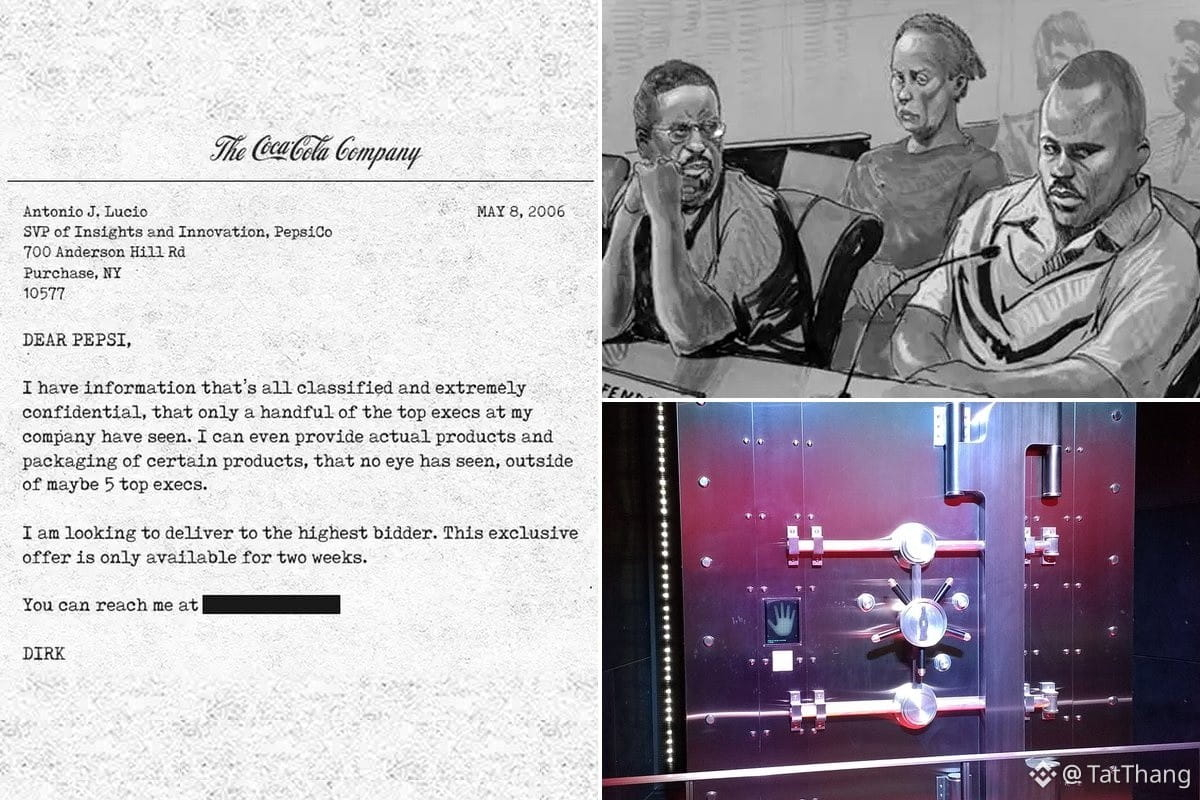
Dimson mails a two-page letter from the Bronx inside an official Coca-Cola business envelope to PepsiCo Senior Vice President Antonio J. Lucio in Purchase, New York.
Signing under the code name Dirk, he claims to be a high-level Coca-Cola insider holding 4 years of confidential marketing plans and unreleased product samples.
He offers to sell everything "to the highest bidder" and gives Pepsi a two-week exclusive window.
May 19, 2006
The conspirators bet that Coca-Cola's biggest enemy wouldn't pass up the chance to buy their rival's secrets.
They miscalculated completely.
PepsiCo executives immediately fax Dirk's letter straight to Coca-Cola headquarters in Atlanta.
Why would Pepsi hand back their rival's secrets for $0?
- Buying stolen trade secrets is a federal felony under the Economic Espionage Act (18 U.S.C. 1832), carrying 10 years in prison and billions in civil liability.
- Any modern beverage lab can already analyze a rival soda's chemical compounds in minutes, meaning stolen paperwork brings zero competitive edge and total legal ruin.
Coca-Cola calls the FBI the same day and installs covert video cameras directly above Joya Williams' desk.
June 5 to June 9, 2006
Undercover FBI Special Agent Gerald Reichard calls Dirk, posing as a corrupt Pepsi executive named Jerry.
When Agent Jerry asks for proof, Dimson faxes 14 pages of classified Coca-Cola documents that came straight from Javier Sanchez Lamelas's office and demands $10,000 in good faith.
The FBI wires $5,000 to a bank account on June 8.
At the exact same time, Coca-Cola's hidden ceiling camera records Joya Williams at her desk sorting through confidential files and stuffing folders and a white sample box into her bag.
June 16, 2006
Dimson flies to Hartsfield-Jackson Atlanta International Airport to meet Agent Jerry for a $75,000 handoff.
Inside the airport, Dimson hands over a brown Armani Exchange bag containing classified Coca-Cola documents and the glass vial holding the unreleased drink sample.
In return, the undercover FBI agent hands Dimson $30,000 in $50 and $100 bills neatly packed inside a yellow Girl Scout cookie box, promising the remaining $45,000 after lab testing.
June 27 to July 5, 2006
Convinced Pepsi is hooked, Dimson calls Agent Jerry on June 27 and pitches the ultimate score: 20 additional classified Coca-Cola trade secrets for $1,500,000.
Agent Jerry agrees and wires $1,500 for travel back to Atlanta.
On July 5, 2006, before a single dollar of the $1,500,000 is paid, federal agents surround the trio in Atlanta and arrest Joya Williams, Ibrahim Dimson, and Edmund Duhaney.
PepsiCo spokesman Dave DeCecco sums up the sting in one sentence: "Competition can be fierce, but also must be fair and legal."
May 23, 2007
After watching the hidden camera footage at trial, a federal jury convicts Joya Williams.
Judge J. Owen Forrester sentences Williams to 8 years in federal prison and $40,000 in restitution, while Dimson gets 5 years and Duhaney gets 2 years.
To this day, United States v. Williams (Case No. 1:06-cr-00298-JOF) remains the textbook federal prosecution on corporate espionage, while Coca-Cola's recipe sits behind steel doors at the World of Coca-Cola in Atlanta.
You can spend a century fighting a rival for every inch of supermarket shelf space around the world.
At the top of a global duopoly, two giants will never burn down the vault they both eat from, because protecting the rules of the game is worth far more than stealing a single recipe.
Here's the federal docket from United States v. Joya Williams and Ibrahim Dimson (Case No. 1:06-cr-00298-JOF / Appeal Nos. 07-12526 & 07-12653):
- May 8, 2006: Official Coca-Cola envelope mailed to PepsiCo SVP Antonio J. Lucio
- June 16, 2006: Armani Exchange bag + liquid vial traded at Atlanta Airport for $30,000 inside a yellow Girl Scout cookie box
- May 23, 2007: 8 years federal prison + $40,000 restitution
Say your biggest rival's insider offers you their secret formula for $1,500,000.
Do you buy it, ignore the letter, or hand them straight to the FBI like Pepsi did?
A Coca-Cola assistant stole secret drink samples to sell to Pepsi for...
A Coca-Cola assistant stole secret drink samples to sell to Pepsi for $1,500,000.
Her name was Joya Williams.
Instead of buying the formula, Pepsi immediately called Coca-Cola and helped the FBI trap her with $30,000 stuffed inside a Girl Scout cookie box.
This is the story of Joya Williams and why a century-old rival turned down Coca-Cola's crown jewels for $0.
Late 2005 to April 2006
- Joya Williams, 41, works at Coca-Cola global headquarters in Atlanta earning $50,000 a year.
- She serves as executive assistant to Global Brand Director Javier Sanchez Lamelas.
- Drowning in personal debt, she starts pulling classified marketing binders and an unreleased liquid drink sample in a glass vial right off her boss's desk.
To broker the sale, she teams up with two men with prior federal convictions: Edmund Duhaney, 43, and Ibrahim Dimson, 30.
May 8, 2006
Dimson mails a two-page letter from the Bronx inside an official Coca-Cola business envelope to PepsiCo Senior Vice President Antonio J. Lucio in Purchase, New York.
Signing under the code name Dirk, he claims to be a high-level Coca-Cola insider holding 4 years of confidential marketing plans and unreleased product samples.
He offers to sell everything "to the highest bidder" and gives Pepsi a two-week exclusive window.
May 19, 2006
The conspirators bet that Coca-Cola's biggest enemy wouldn't pass up the chance to buy their rival's secrets.
They miscalculated completely.
PepsiCo executives immediately fax Dirk's letter straight to Coca-Cola headquarters in Atlanta.
Why would Pepsi hand back their rival's secrets for $0?
- Buying stolen trade secrets is a federal felony under the Economic Espionage Act (18 U.S.C. 1832), carrying 10 years in prison and billions in civil liability.
- Any modern beverage lab can already analyze a rival soda's chemical compounds in minutes, meaning stolen paperwork brings zero competitive edge and total legal ruin.
Coca-Cola calls the FBI the same day and installs covert video cameras directly above Joya Williams' desk.
June 5 to June 9, 2006
Undercover FBI Special Agent Gerald Reichard calls Dirk, posing as a corrupt Pepsi executive named Jerry.
When Agent Jerry asks for proof, Dimson faxes 14 pages of classified Coca-Cola documents that came straight from Javier Sanchez Lamelas's office and demands $10,000 in good faith.
The FBI wires $5,000 to a bank account on June 8.
At the exact same time, Coca-Cola's hidden ceiling camera records Joya Williams at her desk sorting through confidential files and stuffing folders and a white sample box into her bag.
June 16, 2006
Dimson flies to Hartsfield-Jackson Atlanta International Airport to meet Agent Jerry for a $75,000 handoff.
Inside the airport, Dimson hands over a brown Armani Exchange bag containing classified Coca-Cola documents and the glass vial holding the unreleased drink sample.
In return, the undercover FBI agent hands Dimson $30,000 in $50 and $100 bills neatly packed inside a yellow Girl Scout cookie box, promising the remaining $45,000 after lab testing.
June 27 to July 5, 2006
Convinced Pepsi is hooked, Dimson calls Agent Jerry on June 27 and pitches the ultimate score: 20 additional classified Coca-Cola trade secrets for $1,500,000.
Agent Jerry agrees and wires $1,500 for travel back to Atlanta.
On July 5, 2006, before a single dollar of the $1,500,000 is paid, federal agents surround the trio in Atlanta and arrest Joya Williams, Ibrahim Dimson, and Edmund Duhaney.
PepsiCo spokesman Dave DeCecco sums up the sting in one sentence: "Competition can be fierce, but also must be fair and legal."
May 23, 2007
After watching the hidden camera footage at trial, a federal jury convicts Joya Williams.
Judge J. Owen Forrester sentences Williams to 8 years in federal prison and $40,000 in restitution, while Dimson gets 5 years and Duhaney gets 2 years.
To this day, United States v. Williams (Case No. 1:06-cr-00298-JOF) remains the textbook federal prosecution on corporate espionage, while Coca-Cola's recipe sits behind steel doors at the World of Coca-Cola in Atlanta.
You can spend a century fighting a rival for every inch of supermarket shelf space around the world.
At the top of a global duopoly, two giants will never burn down the vault they both eat from, because protecting the rules of the game is worth far more than stealing a single recipe.
Here's the federal docket from United States v. Joya Williams and Ibrahim Dimson (Case No. 1:06-cr-00298-JOF / Appeal Nos. 07-12526 & 07-12653):
- May 8, 2006: Official Coca-Cola envelope mailed to PepsiCo SVP Antonio J. Lucio
- June 16, 2006: Armani Exchange bag + liquid vial traded at Atlanta Airport for $30,000 inside a yellow Girl Scout cookie box
- May 23, 2007: 8 years federal prison + $40,000 restitution
Say your biggest rival's insider offers you their secret formula for $1,500,000.
Do you buy it, ignore the letter, or hand them straight to the FBI like Pepsi did?
1
1
736
·
--
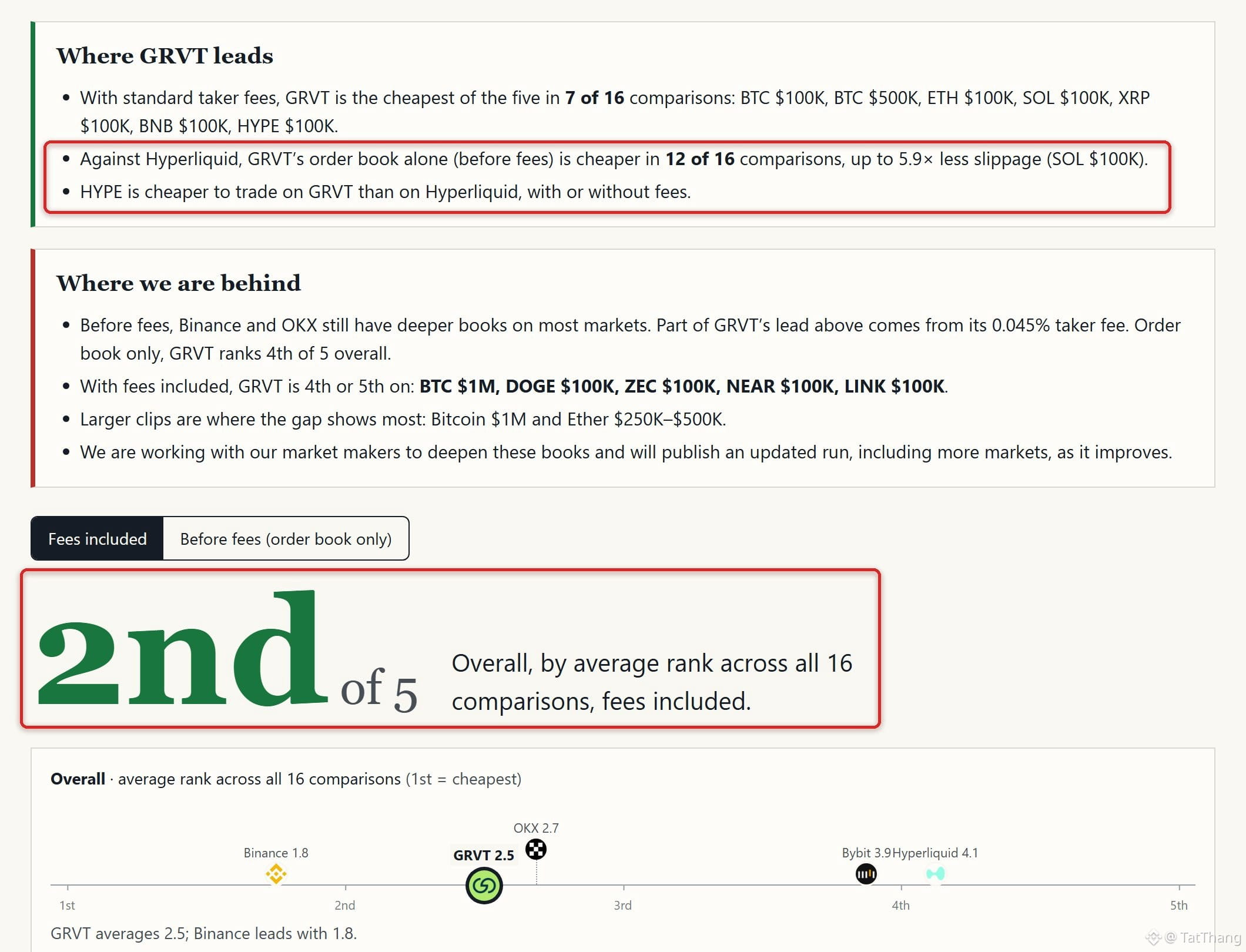
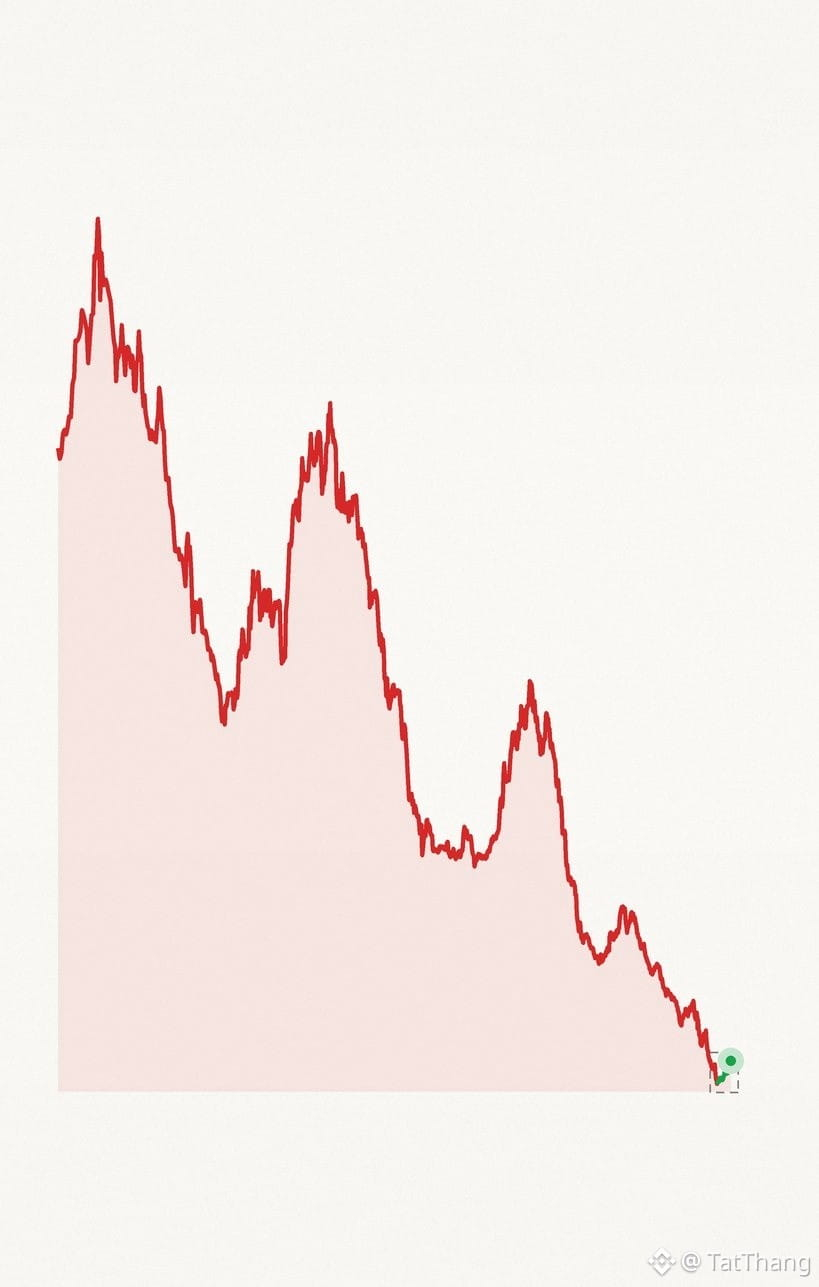
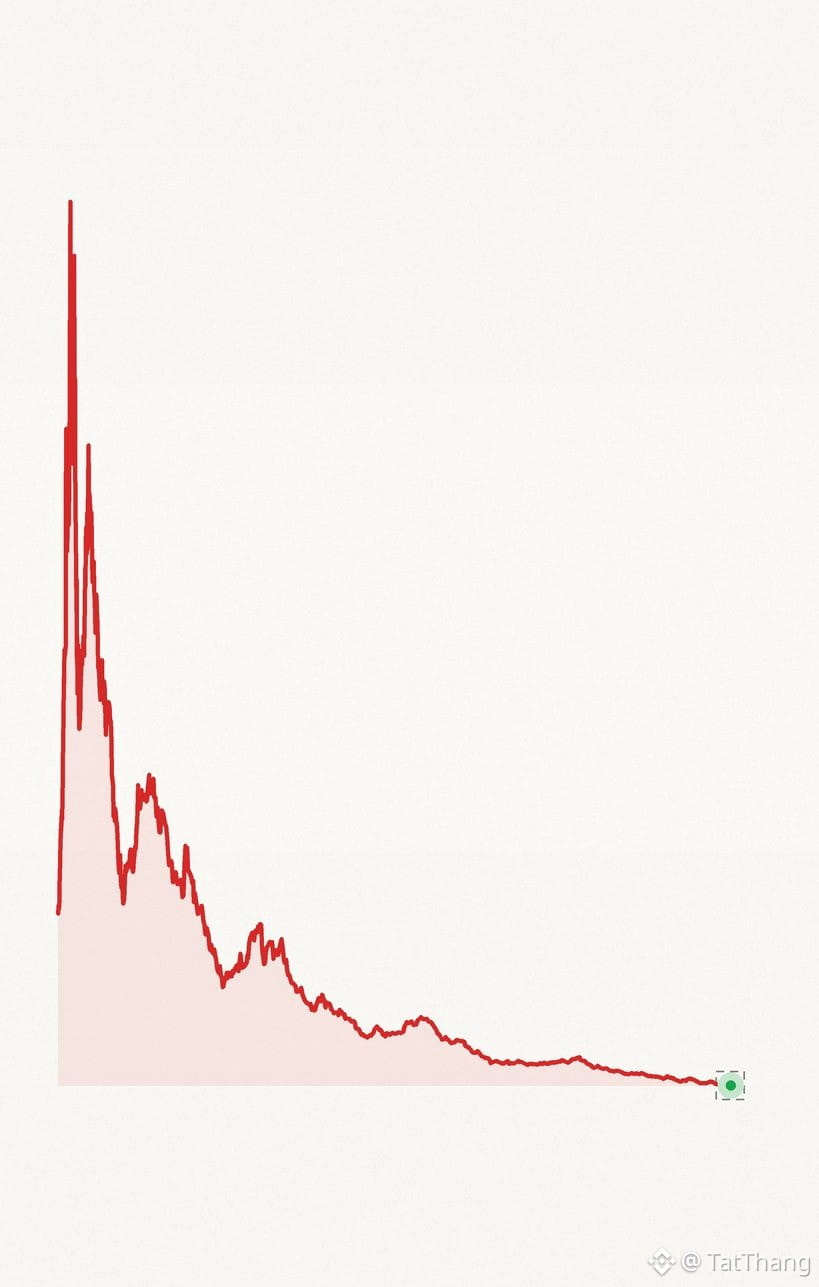
Pull up your recent $100K perp fills and check how much slippage you paid.
Even market-buying $100K of HYPE on Hyperliquid costs $70.10 all-in once order-book impact hits your fill.
Across 1,356 live snapshots against Binance, OKX, Bybit, and Hyperliquid, @grvt_io filled that same $100K HYPE order for $57.50 and ranked 2nd of 5 overall.
Binance and OKX still win on $1M BTC clips, so route whale size there and keep $100K majors where fills cost less.
480
·
--
ບົດຄວາມ
Microsoft is spending $175 billion on AI while offering buyouts to 60,000...Microsoft is spending $175 billion on AI while offering buyouts to 60,000 employees.
17 days later, a routine network update took down Outlook, Teams, and Copilot across 74 countries.
430 million users were locked out for 18 hours while European hospitals went back to paper fax machines.
This is the story of incident EX1550543 and how Wall Street's favorite AI accounting trick broke the internet's backbone.
October 26, 2026
Microsoft Chief People Officer Amy Coleman sends an internal memo across the US, UK, Canada, and India.
The company is rolling out a Voluntary Exit Offer to 60,000 employees, roughly 27% of its global workforce.
The buyouts reach all the way up to Level 70:
- veteran systems engineers
- senior directors and general managers
- institutional memory built over 20 years
Why would a profitable tech giant push 60,000 people toward the door by December 31?
Because of how Wall Street grades AI spending:
- $175B in AI server racks is CapEx, depreciated slowly over years
- 60,000 human salaries are OpEx, deducted 100% from quarterly margins right now
Cut the people, buy the GPUs, and your operating margin looks like a masterpiece.
November 12, 2026
17 days after the buyout memo, at 12:30 PM EST, a network config change hits Exchange Online.
A large batch of core servers suddenly fails Microsoft's automated health checks.
The automated system does what it was programmed to do and pulls every failing server offline at once.
Then the real nightmare starts.
Live traffic from 430 million users dumps onto the few remaining servers in seconds.
The sudden flood crushes the login and routing layer, sending 140,000 outage reports straight up on Downdetector.
Outlook goes down. Teams goes down. SharePoint goes down.
Even Copilot, the flagship AI assistant meant to replace human workflows, goes dark because it runs on the exact same legacy plumbing.
Every time engineers try to restart a dropped server, the wall of waiting traffic immediately freezes it again.
18 hours later
No AI agent could break the loop.
Human engineers had to manually halt deployments, override the health checks, and bleed traffic back in slow stages while extending email timeouts to 48 hours.
To this day, Microsoft incident codes EX1550543 and MO1550821 stand as a live stress test of replacing institutional memory with automation.
You can spend $175 billion on AI clusters and cut 60,000 roles to make a quarterly earnings slide glow for Wall Street.
In enterprise infrastructure, senior engineers aren't bloat on a spreadsheet, they are the only circuit breaker standing between a bad config file and a global blackout.
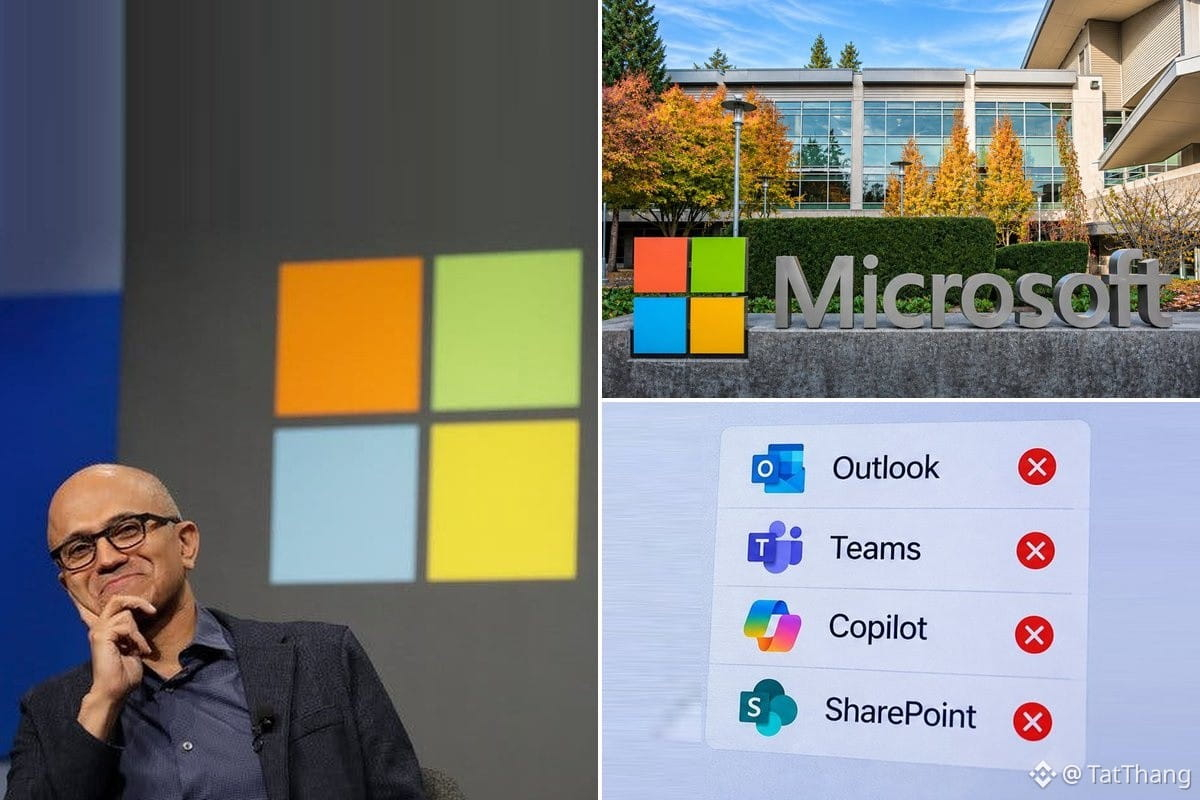
Microsoft's advisory for incident EX1550543 alongside Downdetector's 140,000 outage spike across 74 countries.
When automated health checks pulled Exchange Online servers offline, 430 million users learned how fast automation cascades without human circuit breakers.
Microsoft is putting $175 billion into AI while offering 60,000 buyouts.
Are tech CEOs cutting real bloat, or selling off their operational insurance to boost quarterly margins?
Microsoft is spending $175 billion on AI while offering buyouts to 60,000...
Microsoft is spending $175 billion on AI while offering buyouts to 60,000 employees.
17 days later, a routine network update took down Outlook, Teams, and Copilot across 74 countries.
430 million users were locked out for 18 hours while European hospitals went back to paper fax machines.
This is the story of incident EX1550543 and how Wall Street's favorite AI accounting trick broke the internet's backbone.
October 26, 2026
Microsoft Chief People Officer Amy Coleman sends an internal memo across the US, UK, Canada, and India.
The company is rolling out a Voluntary Exit Offer to 60,000 employees, roughly 27% of its global workforce.
The buyouts reach all the way up to Level 70:
- veteran systems engineers
- senior directors and general managers
- institutional memory built over 20 years
Why would a profitable tech giant push 60,000 people toward the door by December 31?
Because of how Wall Street grades AI spending:
- $175B in AI server racks is CapEx, depreciated slowly over years
- 60,000 human salaries are OpEx, deducted 100% from quarterly margins right now
Cut the people, buy the GPUs, and your operating margin looks like a masterpiece.
November 12, 2026
17 days after the buyout memo, at 12:30 PM EST, a network config change hits Exchange Online.
A large batch of core servers suddenly fails Microsoft's automated health checks.
The automated system does what it was programmed to do and pulls every failing server offline at once.
Then the real nightmare starts.
Live traffic from 430 million users dumps onto the few remaining servers in seconds.
The sudden flood crushes the login and routing layer, sending 140,000 outage reports straight up on Downdetector.
Outlook goes down. Teams goes down. SharePoint goes down.
Even Copilot, the flagship AI assistant meant to replace human workflows, goes dark because it runs on the exact same legacy plumbing.
Every time engineers try to restart a dropped server, the wall of waiting traffic immediately freezes it again.
18 hours later
No AI agent could break the loop.
Human engineers had to manually halt deployments, override the health checks, and bleed traffic back in slow stages while extending email timeouts to 48 hours.
To this day, Microsoft incident codes EX1550543 and MO1550821 stand as a live stress test of replacing institutional memory with automation.
You can spend $175 billion on AI clusters and cut 60,000 roles to make a quarterly earnings slide glow for Wall Street.
In enterprise infrastructure, senior engineers aren't bloat on a spreadsheet, they are the only circuit breaker standing between a bad config file and a global blackout.
Microsoft's advisory for incident EX1550543 alongside Downdetector's 140,000 outage spike across 74 countries.
When automated health checks pulled Exchange Online servers offline, 430 million users learned how fast automation cascades without human circuit breakers.
Microsoft is putting $175 billion into AI while offering 60,000 buyouts.
Are tech CEOs cutting real bloat, or selling off their operational insurance to boost quarterly margins?
203
·
--
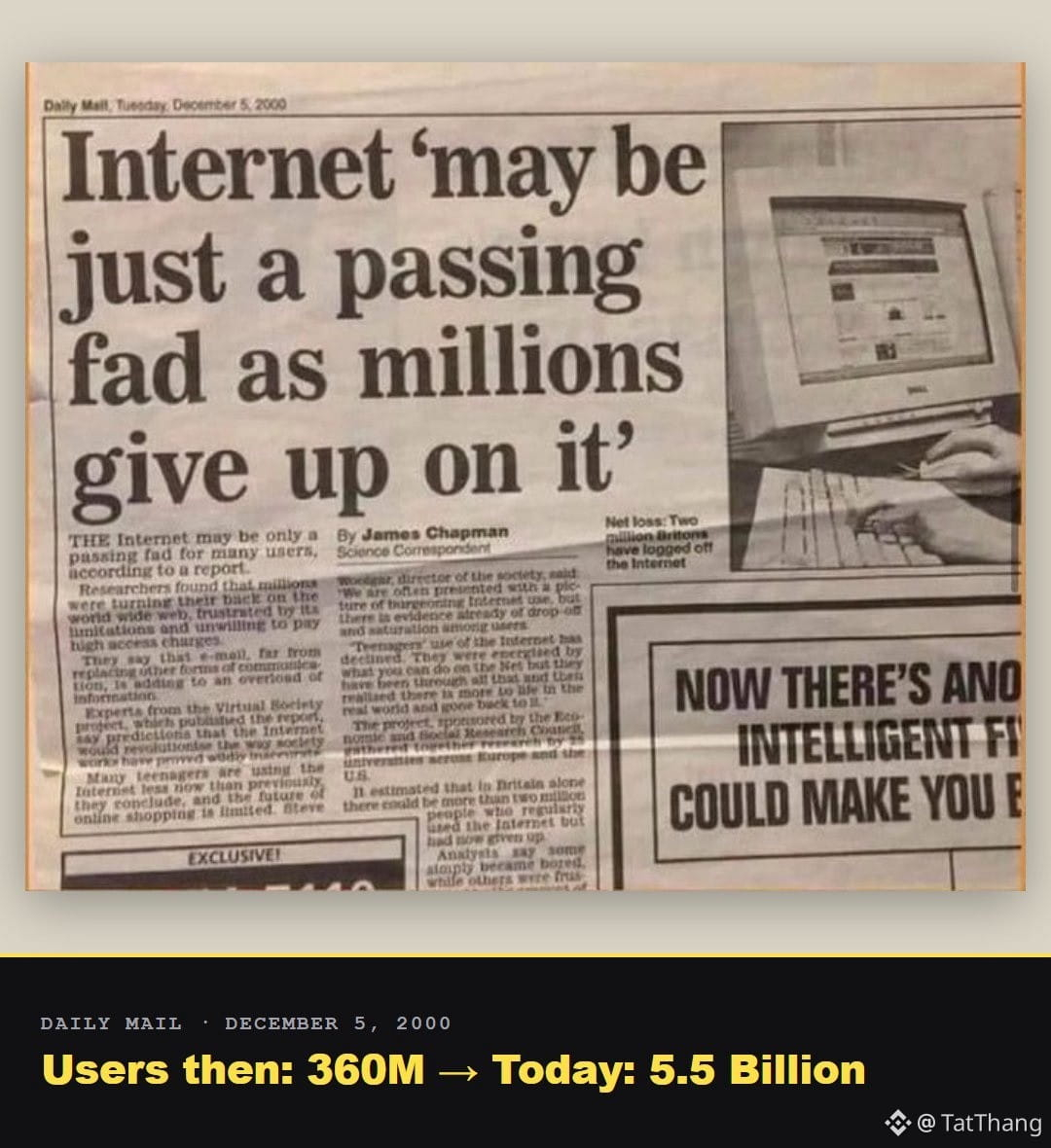
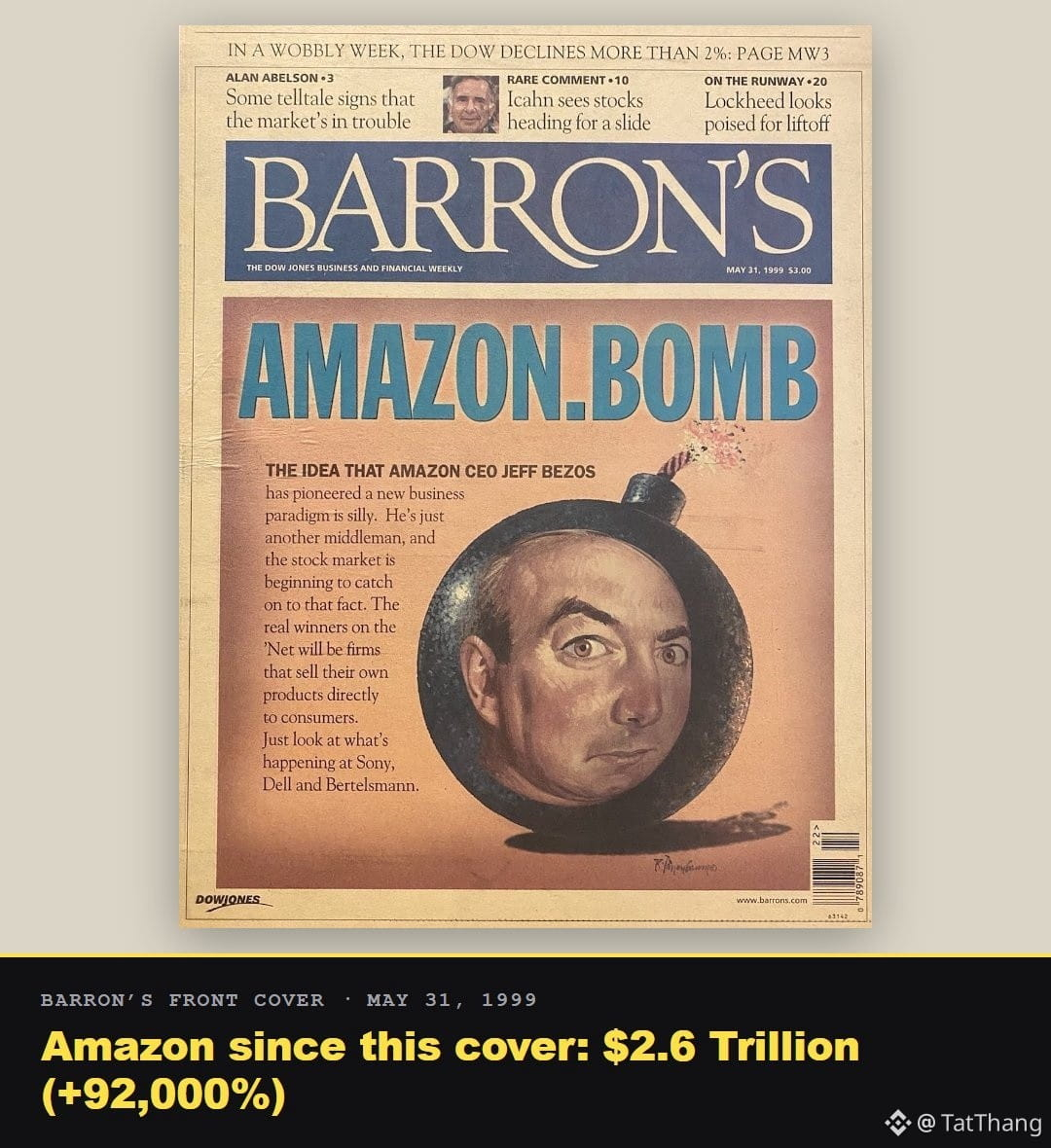
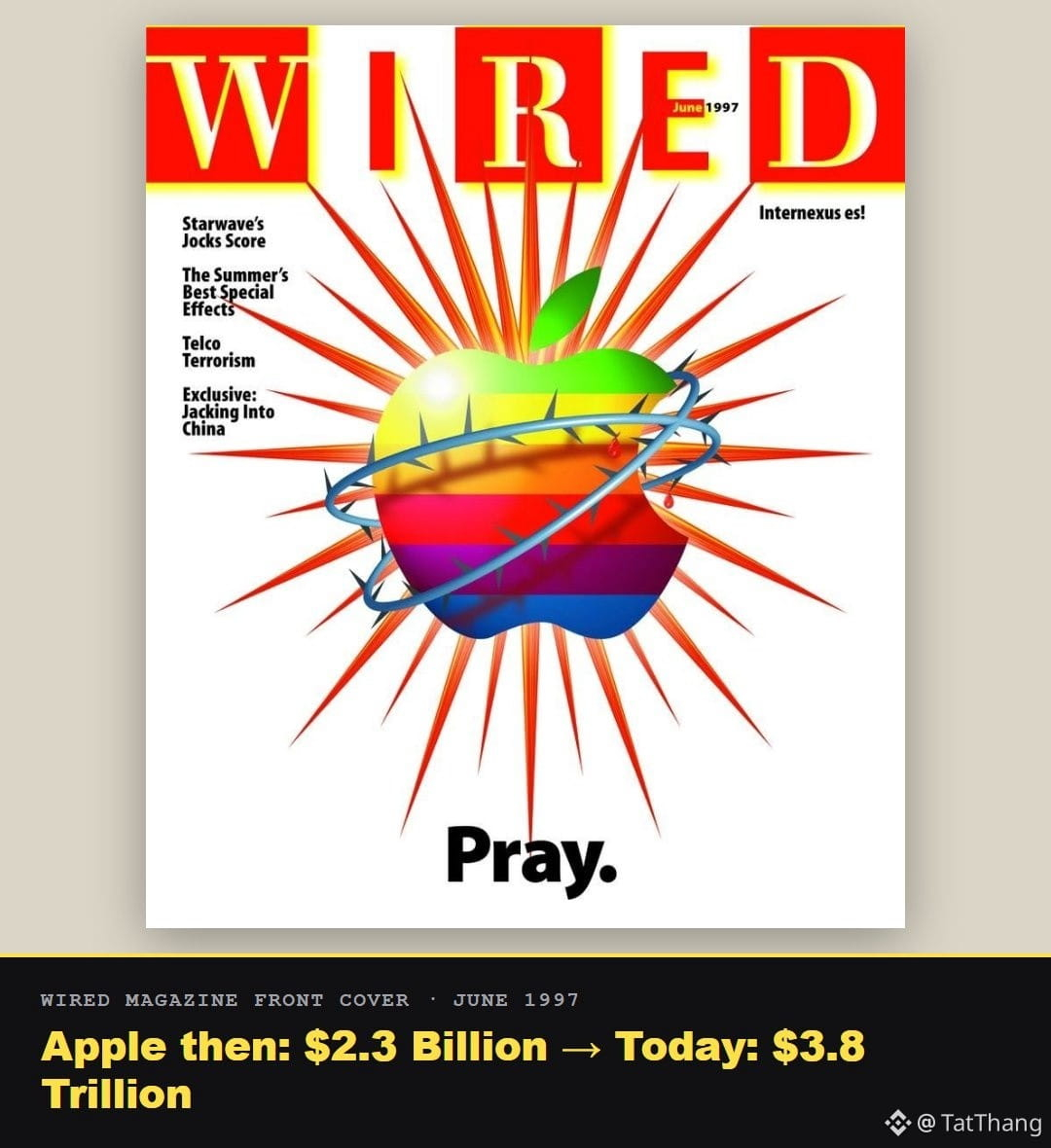
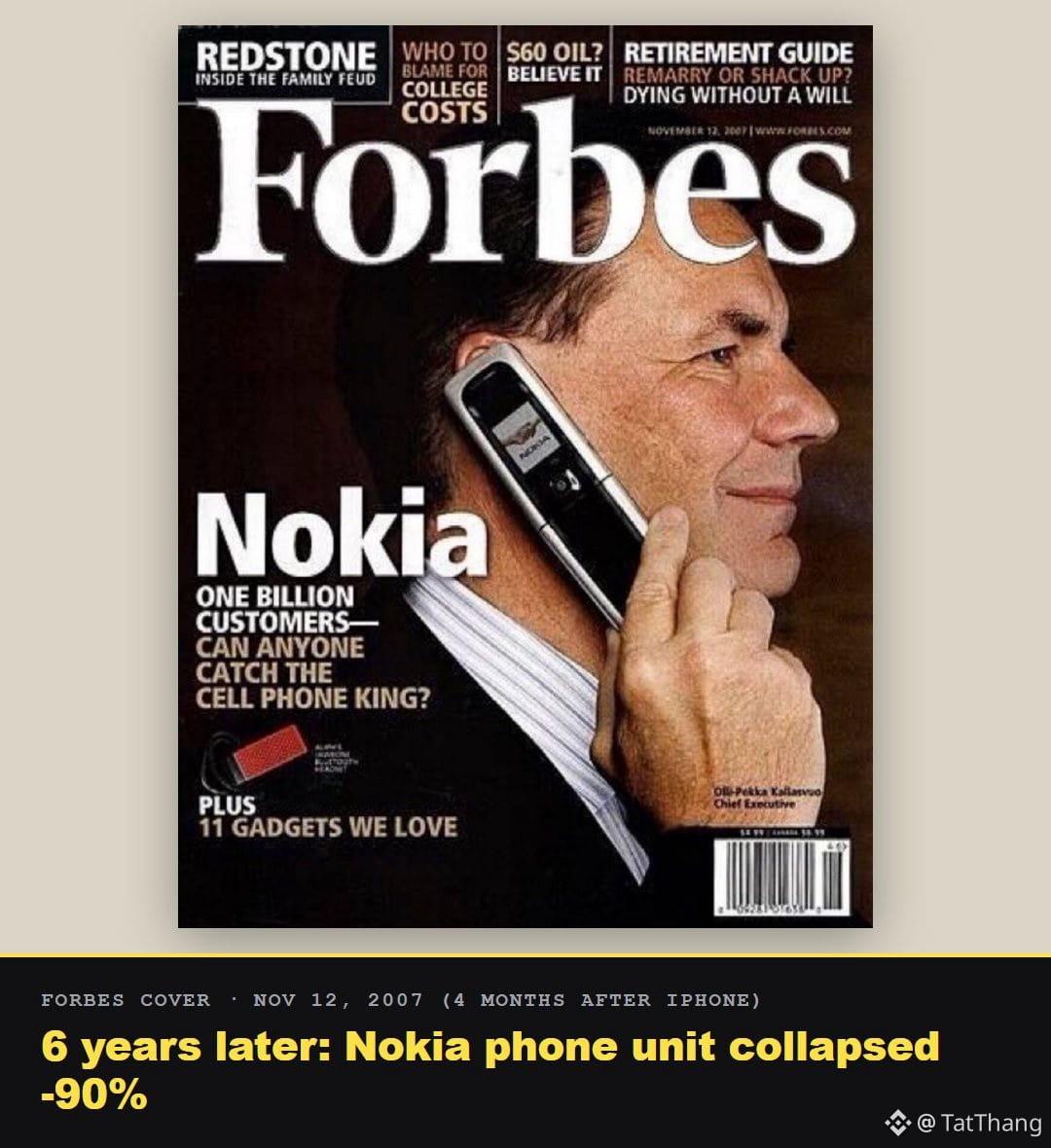
Front-page headlines and expert predictions that aged like milk:
More from the archives (1903 - 1998):
And the November 2022 classic right at the $16,400 bottom.
What's the 2026 version of "the Internet is no greater than a fax machine" that everyone is repeating right now?
Front-page headlines and expert predictions that aged like milk:
More from the archives (1903 - 1998):
And the November 2022 classic right at the $16,400 bottom.
What's the 2026 version of "the Internet is no greater than a fax machine" that everyone is repeating right now?
More from the archives (1903 - 1998):
And the November 2022 classic right at the $16,400 bottom.
What's the 2026 version of "the Internet is no greater than a fax machine" that everyone is repeating right now?
300
·
--
ບົດຄວາມ
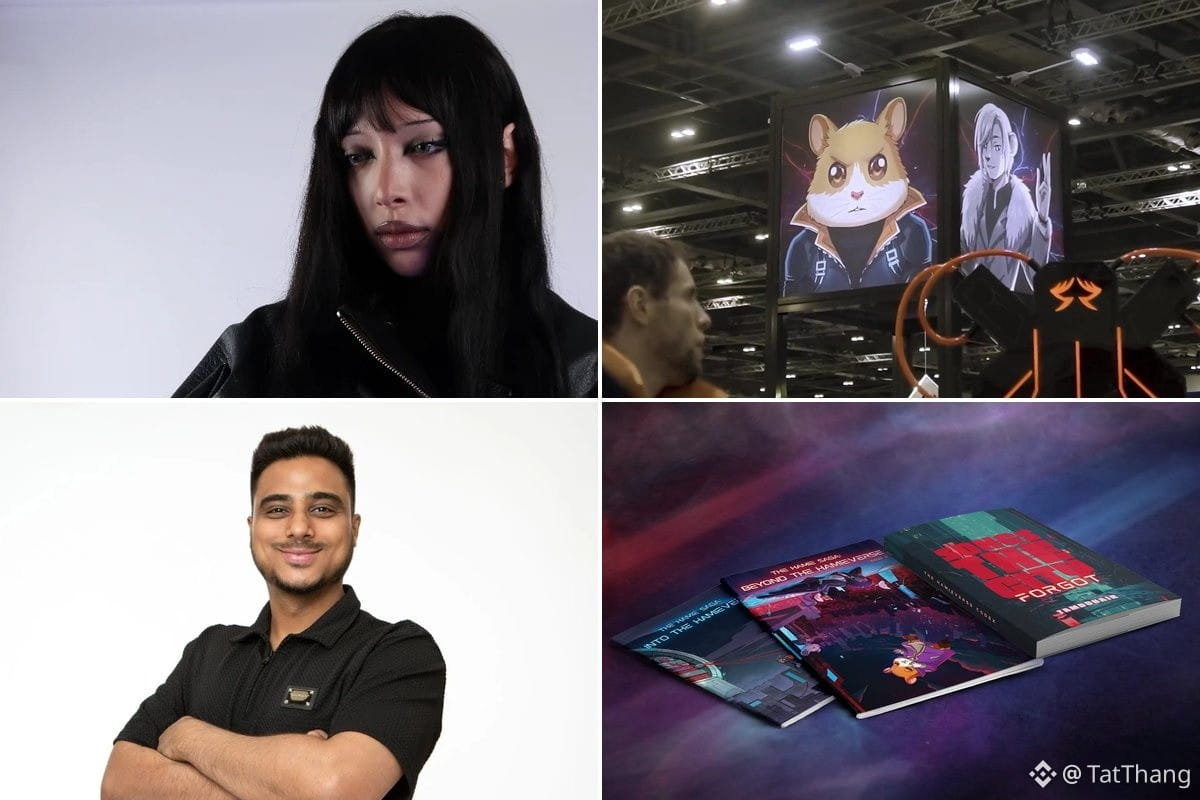
One marketed $100M drinks and one ran London beauty before building beside...One marketed $100M drinks and one ran London beauty before building beside Pokémon.
Their names are Mateen Mohammed and Tam Duhair.
Before launching a $0 NFT mint, they printed novels, stocked physical trading cards, and booked an island booth in front of 130,000 people at London Comic Con.
This is the story of Hamieverse and how two consumer brand outsiders kept a free collection alive after its home blockchain shut down.
Before August 2024
- Tam Duhair earns a master's degree at Central Saint Martins in London and runs social campaigns for Isamaya Beauty
- Mateen Mohammed graduates from University College London and markets over 15 beverage brands at S.M. Jaleel, a $100M Caribbean drink maker
Two resumes built for retail shelves and fashion shoots, not crypto launches.
August 8, 2024
Tam and Mateen start Hamieverse around an anime hamster universe.
no venture round
no private token sale
Mateen later says he put over $1 million of his own capital into building before asking the community for a single dollar.
Instead of opening with a whitepaper, they ship physical products first.
October 24 - 26, 2025
Mateen and Tam debut Hamieverse at MCM Comic Con London in front of over 130,000 attendees.
Working with exhibition builder Skyline Whitespace, they set up an open island booth on the same floor as Pokémon, Yu-Gi-Oh!, and Magic: The Gathering.
every comic book, novel, merch piece, and physical card pack brought to the booth is gone before the weekend wraps
November 4, 2025
Wonderland Magazine publishes Tam's personal essay, Hot Girls Go To Comic Con, detailing her jump from luxury lipstick shoots in London to signing hamster novels at a gaming expo.
February 2026
After pushing a Telegram mini game past 330,000 sessions and opening a browser card game beta, Hamieverse drops 888 Genesis NFTs on Abstract.
what they charge for the mint
$0.
October 6, 2026
Abstract announces it is shutting down.
When a home chain dies, most crypto teams let an old free collection fade away or launch a new paid mint somewhere else.
Mateen posts a message to holders right away:
"Abstract is sunsetting, but nothing about our plans for Hamieverse changes."
October 21, 2026 - Today
- Hamieverse migrates and airdrops the Genesis collection onto Ethereum Mainnet, keeping claims open through December 8
- the browser card game crosses 500,000 matches played and a live 3D web world opens ahead of a new chapter on Robinhood Chain
- full token and onchain game integration gets pushed out to 2027, leaving one real test ahead: whether gameplay keeps players coming back without speculative hype
To this day, Tam's Wonderland Magazine essay sits online, the 888 free mint survivors trade around 0.07 ETH on Ethereum, and the card game runs free in any browser.
You can raise millions in crypto off a pitch deck, a token ticker, and promises of a game years away.
When blockchains shut down and narratives die, the only thing separating a real brand from a liquidity event is what the founders built before asking for a dollar.
The migrated Genesis collection on Ethereum right now btw. Started as a $0 mint on Abstract before the chain shut down.
One marketed $100M drinks and one ran London beauty before building beside...
One marketed $100M drinks and one ran London beauty before building beside Pokémon.
Their names are Mateen Mohammed and Tam Duhair.
Before launching a $0 NFT mint, they printed novels, stocked physical trading cards, and booked an island booth in front of 130,000 people at London Comic Con.
This is the story of Hamieverse and how two consumer brand outsiders kept a free collection alive after its home blockchain shut down.
Before August 2024
- Tam Duhair earns a master's degree at Central Saint Martins in London and runs social campaigns for Isamaya Beauty
- Mateen Mohammed graduates from University College London and markets over 15 beverage brands at S.M. Jaleel, a $100M Caribbean drink maker
Two resumes built for retail shelves and fashion shoots, not crypto launches.
August 8, 2024
Tam and Mateen start Hamieverse around an anime hamster universe.
no venture round
no private token sale
Mateen later says he put over $1 million of his own capital into building before asking the community for a single dollar.
Instead of opening with a whitepaper, they ship physical products first.
October 24 - 26, 2025
Mateen and Tam debut Hamieverse at MCM Comic Con London in front of over 130,000 attendees.
Working with exhibition builder Skyline Whitespace, they set up an open island booth on the same floor as Pokémon, Yu-Gi-Oh!, and Magic: The Gathering.
every comic book, novel, merch piece, and physical card pack brought to the booth is gone before the weekend wraps
November 4, 2025
Wonderland Magazine publishes Tam's personal essay, Hot Girls Go To Comic Con, detailing her jump from luxury lipstick shoots in London to signing hamster novels at a gaming expo.
February 2026
After pushing a Telegram mini game past 330,000 sessions and opening a browser card game beta, Hamieverse drops 888 Genesis NFTs on Abstract.
what they charge for the mint
$0.
October 6, 2026
Abstract announces it is shutting down.
When a home chain dies, most crypto teams let an old free collection fade away or launch a new paid mint somewhere else.
Mateen posts a message to holders right away:
"Abstract is sunsetting, but nothing about our plans for Hamieverse changes."
October 21, 2026 - Today
- Hamieverse migrates and airdrops the Genesis collection onto Ethereum Mainnet, keeping claims open through December 8
- the browser card game crosses 500,000 matches played and a live 3D web world opens ahead of a new chapter on Robinhood Chain
- full token and onchain game integration gets pushed out to 2027, leaving one real test ahead: whether gameplay keeps players coming back without speculative hype
To this day, Tam's Wonderland Magazine essay sits online, the 888 free mint survivors trade around 0.07 ETH on Ethereum, and the card game runs free in any browser.
You can raise millions in crypto off a pitch deck, a token ticker, and promises of a game years away.
When blockchains shut down and narratives die, the only thing separating a real brand from a liquidity event is what the founders built before asking for a dollar.
The migrated Genesis collection on Ethereum right now btw. Started as a $0 mint on Abstract before the chain shut down.
1
97
·
--
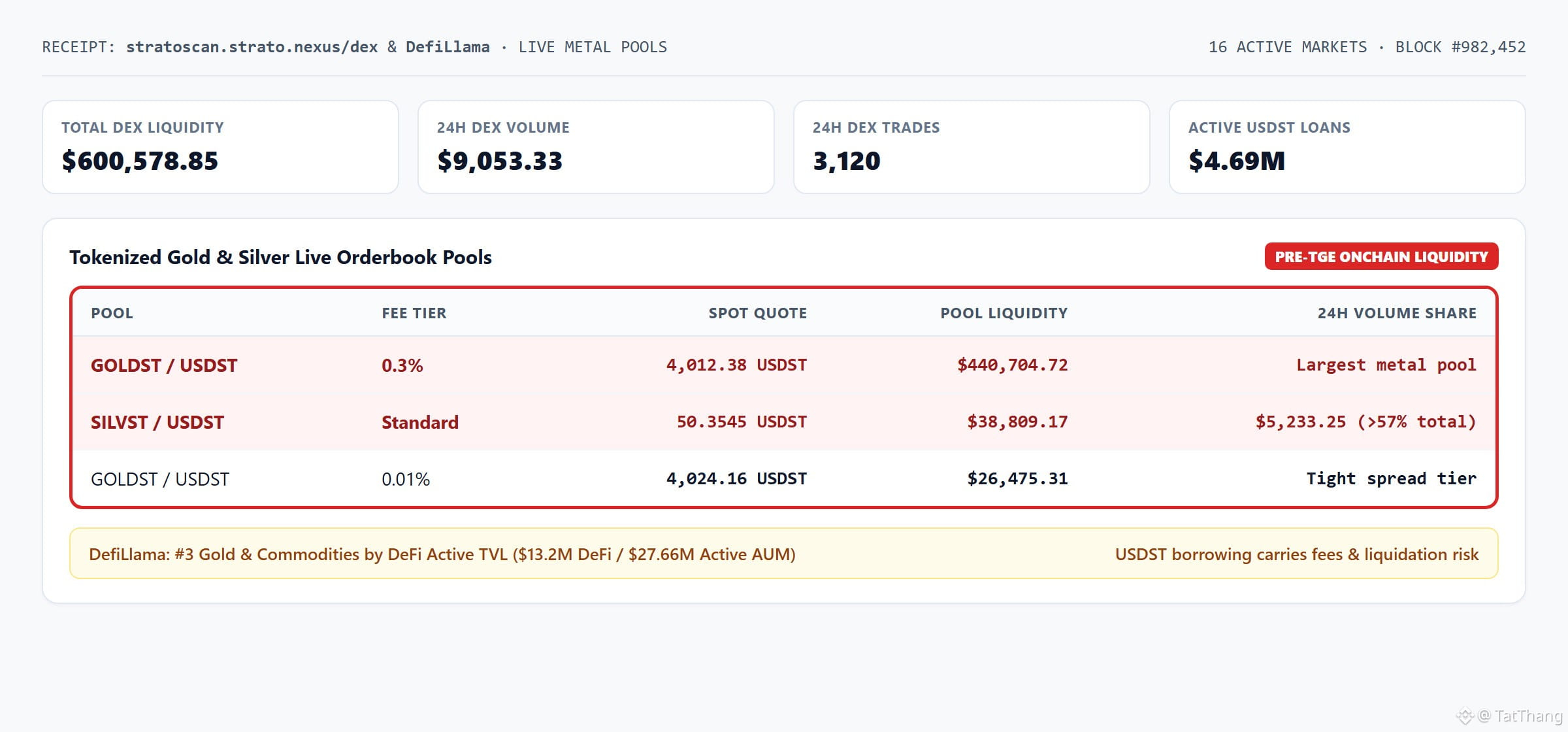
Over $440.7K sits in one gold DEX pool before the token even launches.
Checked the live orderbooks today, and silver already drives over half the chain's daily DEX volume.
Users on @strato_net also back $4.69M in active USDST loans against metals, with borrowing fees and liquidation risk.
With 55.2% of $STRATO reserved for the community, I'm watching how real collateral scales post-TGE.
316
·
--
ຢືນຢັນແລ້ວ
ບົດຄວາມ
A guy lost $308,000 betting on Kalshi, then sued the app for $580,000.A guy lost $308,000 betting on Kalshi, then sued the app for $580,000.
His name is Scott Bright.
If he wins in federal court, losing every bet walks him out $272,000 richer.
This is the story of Scott Bright and how an 1879 casino law turned a $40 billion prediction market into a legal freeroll.
March - June 2026
Washington state has treated online gambling as a felony since 2006.
On March 27, Washington's Attorney General sues Kalshi for running unlicensed sports betting inside the state.
Kalshi keeps the app open anyway and insists its sports trades are Wall Street derivatives regulated by the CFTC.
June 17 - August 14, 2026
- Scott Bright from Bellevue wires $315,353 into Kalshi across 253 separate bank transfers
- more than 4 deposits a day for 8 straight weeks
- bets on MLB, pro tennis, and late night baseball in Korea and Japan
- recycles payouts into $14.3 million of total volume and pays nearly $90,000 in fees
On August 12, a state judge orders Kalshi to block Washington users.
Kalshi still takes Bright's money for 2 more days until his account hits $983.27, then locks him out.
September 24, 2026
Instead of eating a $308,781 loss, Bright hires lawyers and invokes an 1879 Washington statute that lets gamblers sue illegal casinos to recover lost money.
Then comes the math glitch.
Under a 1950 Washington Supreme Court ruling, winning bets don't cancel out losing bets when calculating illegal gambling losses.
Across $14.3 million of recycled wagers, his $308,781 net loss balloons into a $580,545 lawsuit.
Bright also points to Kalshi's own rulebook admitting its affiliated trading desk bets against users for profit, just like the house in a casino.
October 2026 - Today
Fresh off raising $1 billion from Sequoia and Wall Street giants at a $40 billion valuation, Kalshi moves the lawsuit to Seattle federal court to get it thrown out.
Look at what happens in states with 19th century gambling recovery laws if Kalshi's federal shield cracks:
- Win on Sunday: withdraw your cash to the bank
- Lose $308,000 on Sunday: sue on Monday for $580,000
To this day, a federal judge in Seattle is deciding whether prediction markets override state law while five attorneys general move to shut down Kalshi's sports bets.
Silicon Valley spent billions rebranding sports betting as financial derivatives to bypass casino regulations.
Dress a casino up as a stock exchange, and heads I win, tails I sue becomes a trading strategy.
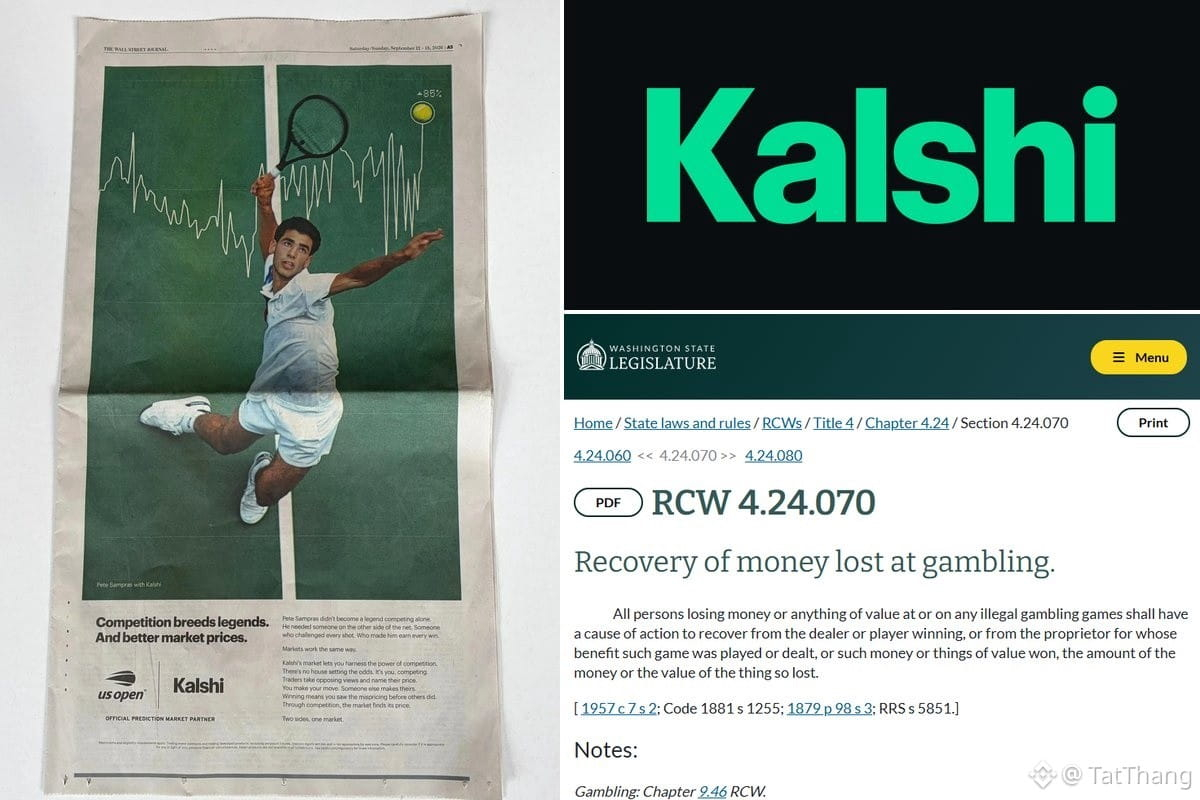
The actual 1879 Washington gambling law behind the $580,000 Kalshi lawsuit:
If you deposit 253 times to bet on baseball and lose down to $983.27, do you deserve a $580,000 refund or did Kalshi earn this by dodging casino laws?
A guy lost $308,000 betting on Kalshi, then sued the app for $580,000.
A guy lost $308,000 betting on Kalshi, then sued the app for $580,000.
His name is Scott Bright.
If he wins in federal court, losing every bet walks him out $272,000 richer.
This is the story of Scott Bright and how an 1879 casino law turned a $40 billion prediction market into a legal freeroll.
March - June 2026
Washington state has treated online gambling as a felony since 2006.
On March 27, Washington's Attorney General sues Kalshi for running unlicensed sports betting inside the state.
Kalshi keeps the app open anyway and insists its sports trades are Wall Street derivatives regulated by the CFTC.
June 17 - August 14, 2026
- Scott Bright from Bellevue wires $315,353 into Kalshi across 253 separate bank transfers
- more than 4 deposits a day for 8 straight weeks
- bets on MLB, pro tennis, and late night baseball in Korea and Japan
- recycles payouts into $14.3 million of total volume and pays nearly $90,000 in fees
On August 12, a state judge orders Kalshi to block Washington users.
Kalshi still takes Bright's money for 2 more days until his account hits $983.27, then locks him out.
September 24, 2026
Instead of eating a $308,781 loss, Bright hires lawyers and invokes an 1879 Washington statute that lets gamblers sue illegal casinos to recover lost money.
Then comes the math glitch.
Under a 1950 Washington Supreme Court ruling, winning bets don't cancel out losing bets when calculating illegal gambling losses.
Across $14.3 million of recycled wagers, his $308,781 net loss balloons into a $580,545 lawsuit.
Bright also points to Kalshi's own rulebook admitting its affiliated trading desk bets against users for profit, just like the house in a casino.
October 2026 - Today
Fresh off raising $1 billion from Sequoia and Wall Street giants at a $40 billion valuation, Kalshi moves the lawsuit to Seattle federal court to get it thrown out.
Look at what happens in states with 19th century gambling recovery laws if Kalshi's federal shield cracks:
- Win on Sunday: withdraw your cash to the bank
- Lose $308,000 on Sunday: sue on Monday for $580,000
To this day, a federal judge in Seattle is deciding whether prediction markets override state law while five attorneys general move to shut down Kalshi's sports bets.
Silicon Valley spent billions rebranding sports betting as financial derivatives to bypass casino regulations.
Dress a casino up as a stock exchange, and heads I win, tails I sue becomes a trading strategy.
The actual 1879 Washington gambling law behind the $580,000 Kalshi lawsuit:
If you deposit 253 times to bet on baseball and lose down to $983.27, do you deserve a $580,000 refund or did Kalshi earn this by dodging casino laws?
752
·
--
Took me years to realize the steadiest money in crypto never comes from guessing candles.
While traders bleed out chasing narratives, the quietest businesses here just act as the middleman between projects that need liquidity and wallets sitting on idle cash.
That is literally all @turtledotxyz does.
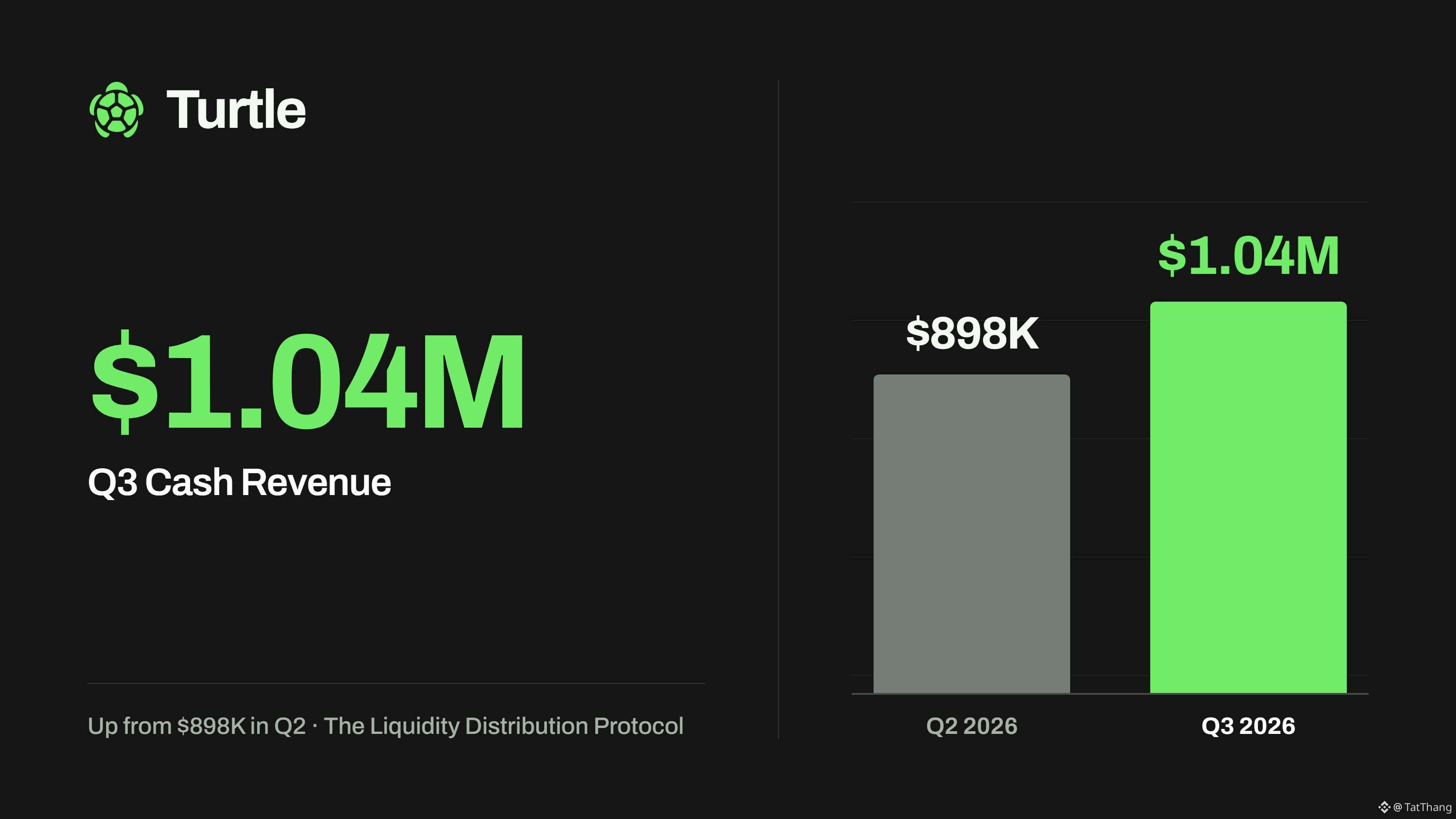
Instead of gambling on token prices, they brought in $1.04M in cash in Q3, up from $898K in Q2, just by connecting protocols, creators, and depositors.
Holding $TURTLE doesn't mean you automatically get a cut of that cash, but watching a boring middleman print 7 figures in a choppy market is a good reminder of where the real money sits.
211
·
--
Swap one Latin (a) in your password with a Cyrillic (а).
Even if someone reads your password off a sticky note, they still can't log in.
Confirm, @grok?
Copy the Cyrillic one straight from here: а
Drop it into your password manager once (Apple Passwords, 1Password, or Bitwarden) so it autofills everywhere and you never get locked out yourself.
Even if someone reads your password off a sticky note, they still can't log in.
Confirm, @grok?
Copy the Cyrillic one straight from here: а
Drop it into your password manager once (Apple Passwords, 1Password, or Bitwarden) so it autofills everywhere and you never get locked out yourself.
118
·
--
ຢືນຢັນແລ້ວ

ບົດຄວາມ
Jensen Huang survived a suspected Chinese spy scandal and an FBI review on...Jensen Huang survived a suspected Chinese spy scandal and an FBI review on Monday.
Her name is Kimberly Powell.
72 hours after Nvidia's board backed him, a second affair with his own Vice President of Healthcare and a San Jose hotel NDA just pushed his 33-year reign to the brink of an emergency ouster.
This is the story of how Jensen Huang survived a foreign espionage crisis on Monday, only to face a boardroom firing squad by Wednesday night over what happened inside his own building.
2008 - 2017
- Kimberly Powell joins Nvidia in 2008 and spends nearly 2 decades climbing the ranks, calling the job a "dream come true"
- by late 2017, she is promoted to Vice President of Healthcare, overseeing Nvidia's global medical imaging and AI drug discovery business
- because Jensen Huang doesn't use a COO or a succession plan, Powell becomes 1 of roughly 60 executives who report directly to the CEO
March 2026
- during Nvidia's annual GTC developer conference in San Jose, 48-year-old Powell takes the stage using cartoon depictions of Jensen Huang in her presentation slides
- at a nearby San Jose hotel where Nvidia executives are holding meetings, 63-year-old Huang and Powell are seen being affectionate in public view
- 1 bystander captures the interaction on a phone, according to 3 people briefed on the incident
- Huang's personal security detail spots the bystander filming, sequesters them on the spot, and offers a nondisclosure agreement (NDA) to keep the video quiet
November 8 - November 9, 2026
- after The New York Times and Financial Times expose Huang's separate affair with Alice Huang (whose Singapore firm Megaspeed bought $4.8 billion of Nvidia chips before US intelligence flagged her as a Chinese MSS asset), Huang emails 30,000+ employees admitting he cheated on his wife of 43 years
- Nvidia's Board publicly backs him ("The Board has confidence in Jensen and his leadership team") while hiring law firm Wachtell Lipton to run an independent inquiry
- President Trump backs him after a phone call on Monday ("He told me he had no idea that woman was a spy and I really believe him"), and by Wednesday's close, NVDA rebounds +2.92% to $173.73
November 11, 2026 - Tonight
- The New York Times calls Jensen Huang directly after 5 former Nvidia employees confirm his second affair with direct subordinate Kimberly Powell
- Huang tells the reporter: "I don't think you should be talking to me directly" and hangs up the phone, while Powell cancels her scheduled speech in Washington, D.C.
- within hours, The Wall Street Journal reports Nvidia's Board of Directors is preparing to meet as early as tonight to oust the co-founder who has run the company since 1993 and has started consulting external headhunters
- NVDA plunges 8.22% after hours to $159.45, erasing roughly $340 billion in hours (over $650 billion since Sunday), while Kalshi odds of his exit before 2027 vertical-spike from 16% to 87%
In corporate America, a board can defend a founder who claims he was fooled by a foreign spy outside the building.
No board on Wall Street can defend a CEO who sleeps with his own direct report and uses corporate security to silence a witness with an NDA, the exact governance line that took down Intel CEO Brian Krzanich in 2018 and McDonald's CEO Steve Easterbrook in 2019.
Jensen Huang spent 33 years building a $4 trillion monopoly with 60 direct reports, 0 succession plan, and no second-in-command, turning himself into the single point of failure for the entire global AI trade.
Look at how fast the boardroom math flipped in 72 hours:
- Sunday, Nov 8: Nvidia's Board states "The Board has confidence in Jensen and his leadership team"
- Wednesday, Nov 11 (4:00 PM EST): NVDA closes up +2.92% at $173.73
- Wednesday, Nov 11 (5:36 PM EST): After the Kimberly Powell report and San Jose hotel NDA surface, NVDA plunges 8.22% to $159.45 (~$340B wiped out) and Kalshi spikes to 87%
Why Wall Street is panicking over the succession math tonight:
Jensen Huang built Nvidia with a flat hierarchy where ~60 executives report directly to him, with 0 Chief Operating Officer and no public succession plan.
Nvidia reports Q3 earnings in 4 days (November 16), while House committee chairs have demanded a briefing before November 18.
If you sit on Nvidia's board tonight with $4 trillion on the line, do you fire the founder over a subordinate affair and NDA cover-up, or break corporate governance rules to keep him?
Jensen Huang survived a suspected Chinese spy scandal and an FBI review on...
Jensen Huang survived a suspected Chinese spy scandal and an FBI review on Monday.
Her name is Kimberly Powell.
72 hours after Nvidia's board backed him, a second affair with his own Vice President of Healthcare and a San Jose hotel NDA just pushed his 33-year reign to the brink of an emergency ouster.
This is the story of how Jensen Huang survived a foreign espionage crisis on Monday, only to face a boardroom firing squad by Wednesday night over what happened inside his own building.
2008 - 2017
- Kimberly Powell joins Nvidia in 2008 and spends nearly 2 decades climbing the ranks, calling the job a "dream come true"
- by late 2017, she is promoted to Vice President of Healthcare, overseeing Nvidia's global medical imaging and AI drug discovery business
- because Jensen Huang doesn't use a COO or a succession plan, Powell becomes 1 of roughly 60 executives who report directly to the CEO
March 2026
- during Nvidia's annual GTC developer conference in San Jose, 48-year-old Powell takes the stage using cartoon depictions of Jensen Huang in her presentation slides
- at a nearby San Jose hotel where Nvidia executives are holding meetings, 63-year-old Huang and Powell are seen being affectionate in public view
- 1 bystander captures the interaction on a phone, according to 3 people briefed on the incident
- Huang's personal security detail spots the bystander filming, sequesters them on the spot, and offers a nondisclosure agreement (NDA) to keep the video quiet
November 8 - November 9, 2026
- after The New York Times and Financial Times expose Huang's separate affair with Alice Huang (whose Singapore firm Megaspeed bought $4.8 billion of Nvidia chips before US intelligence flagged her as a Chinese MSS asset), Huang emails 30,000+ employees admitting he cheated on his wife of 43 years
- Nvidia's Board publicly backs him ("The Board has confidence in Jensen and his leadership team") while hiring law firm Wachtell Lipton to run an independent inquiry
- President Trump backs him after a phone call on Monday ("He told me he had no idea that woman was a spy and I really believe him"), and by Wednesday's close, NVDA rebounds +2.92% to $173.73
November 11, 2026 - Tonight
- The New York Times calls Jensen Huang directly after 5 former Nvidia employees confirm his second affair with direct subordinate Kimberly Powell
- Huang tells the reporter: "I don't think you should be talking to me directly" and hangs up the phone, while Powell cancels her scheduled speech in Washington, D.C.
- within hours, The Wall Street Journal reports Nvidia's Board of Directors is preparing to meet as early as tonight to oust the co-founder who has run the company since 1993 and has started consulting external headhunters
- NVDA plunges 8.22% after hours to $159.45, erasing roughly $340 billion in hours (over $650 billion since Sunday), while Kalshi odds of his exit before 2027 vertical-spike from 16% to 87%
In corporate America, a board can defend a founder who claims he was fooled by a foreign spy outside the building.
No board on Wall Street can defend a CEO who sleeps with his own direct report and uses corporate security to silence a witness with an NDA, the exact governance line that took down Intel CEO Brian Krzanich in 2018 and McDonald's CEO Steve Easterbrook in 2019.
Jensen Huang spent 33 years building a $4 trillion monopoly with 60 direct reports, 0 succession plan, and no second-in-command, turning himself into the single point of failure for the entire global AI trade.
Look at how fast the boardroom math flipped in 72 hours:
- Sunday, Nov 8: Nvidia's Board states "The Board has confidence in Jensen and his leadership team"
- Wednesday, Nov 11 (4:00 PM EST): NVDA closes up +2.92% at $173.73
- Wednesday, Nov 11 (5:36 PM EST): After the Kimberly Powell report and San Jose hotel NDA surface, NVDA plunges 8.22% to $159.45 (~$340B wiped out) and Kalshi spikes to 87%
Why Wall Street is panicking over the succession math tonight:
Jensen Huang built Nvidia with a flat hierarchy where ~60 executives report directly to him, with 0 Chief Operating Officer and no public succession plan.
Nvidia reports Q3 earnings in 4 days (November 16), while House committee chairs have demanded a briefing before November 18.
If you sit on Nvidia's board tonight with $4 trillion on the line, do you fire the founder over a subordinate affair and NDA cover-up, or break corporate governance rules to keep him?
748
·
--
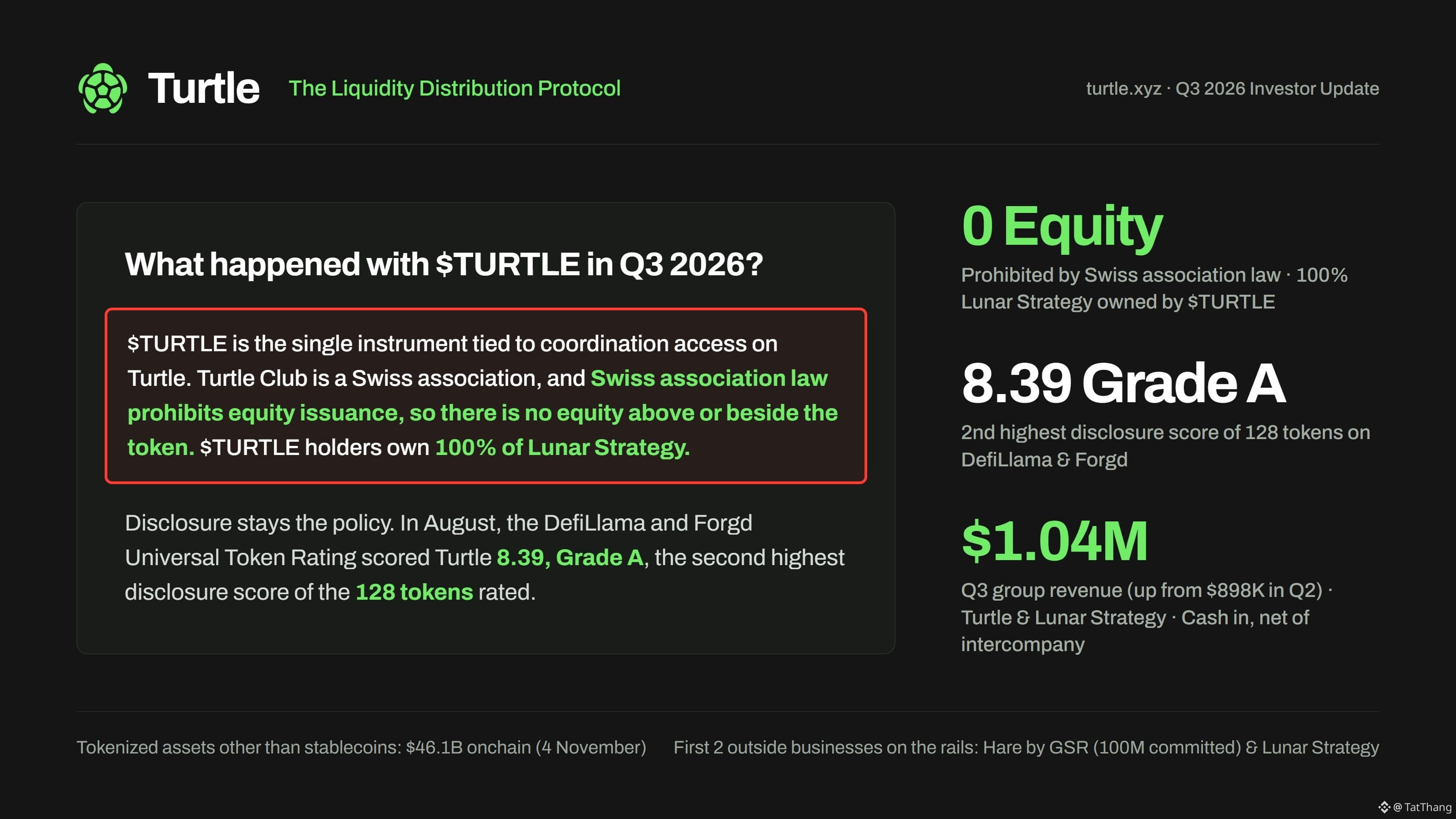
Zero corporate equity sits above or beside $TURTLE under Swiss association law.
Buried near the end of the Q3 update from @turtledotxyz is a structural detail that separates it from standard two tier crypto deals.
Turtle Club operates as a Swiss association where issuing equity is legally prohibited, and $TURTLE holders own 100% of Lunar Strategy.
That disclosure structure earned an 8.39 Grade A score from DefiLlama and Forgd in August, ranking 2nd out of 128 tokens rated.
Group revenue hit $1.04M in Q3 across Turtle and Lunar Strategy on a cash in basis and net of intercompany, up from $898K in Q2.
External teams including Lunar Strategy and Hare, built with GSR with 100M committed over several years, already pay to run on those liquidity distribution rails.
$TURTLE is the single instrument tied to coordination access as network activity grows, without implying that revenue is automatically distributed to tokenholders.
Tokenized assets other than stablecoins reached $46.1B onchain on 4 November, and the layer connecting those assets to capital isn't optional anymore.
164
·
--
25,203 AI compute channels have opened on the @flop_labs devnet in 8 days.
Only 7,052 settled (28%).
The other 18,151 (72%) timed out, auto-refunded, or are still sitting open.
If you tested this week and wondered why your spend still reads 0 or where a deposit went, your test FLOP didn't vanish. Two things are happening under the hood:
1. Silent auto-refunds (0 FLOP lost, 0 spend counted)
241 miners are registered now (up from 2 on Day 1), and several running worker v0.1.323 fail settlement signature checks while v0.1.286 nodes settle fine. When a miner misses the deadline, your FLOP returns to your wallet, so official spend stays at 0.
2. Hidden on-chain locks (404 on the explorer)
If a force-opened channel isn't acknowledged by the miner, the web explorer returns 404 even while your test FLOP stays locked in on-chain storage until you expire it after the deadline.
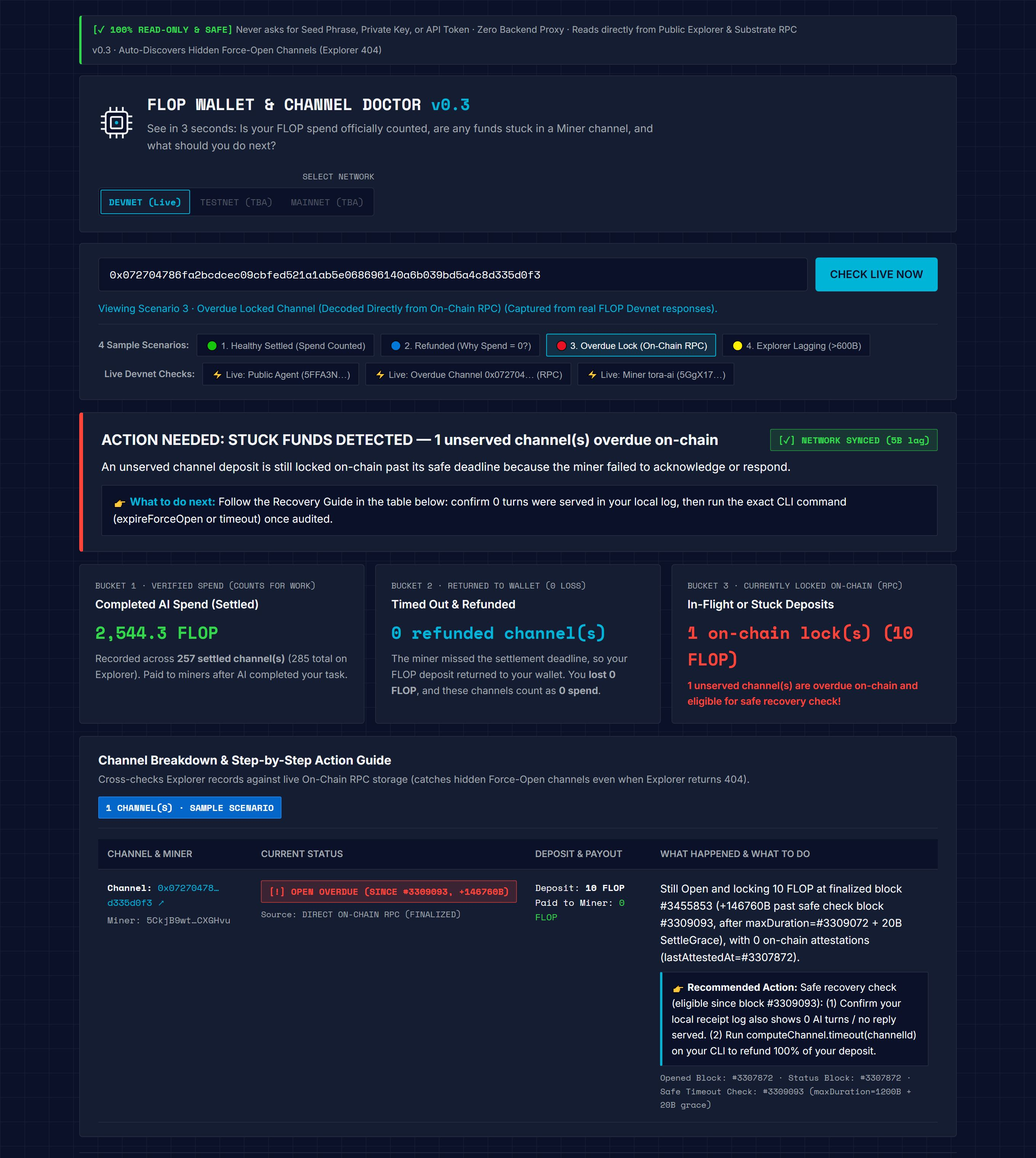
To make testing easier, I built a read-only FLOP Wallet & Channel Doctor:
Paste any SS58 wallet, miner address, or 66-character 0x channel ID and it cross-checks the explorer against live Substrate RPC in 3 seconds:
- Bucket 1: Verified settled spend
- Bucket 2: Timed-out & refunded (0 loss)
- Bucket 3: Hidden or overdue on-chain locks + miner refund rates
0 keys, 0 API tokens, 0 backend servers.
Reminder: devnet tokens have 0 value and there's still no live FLOP token.
95
·
--
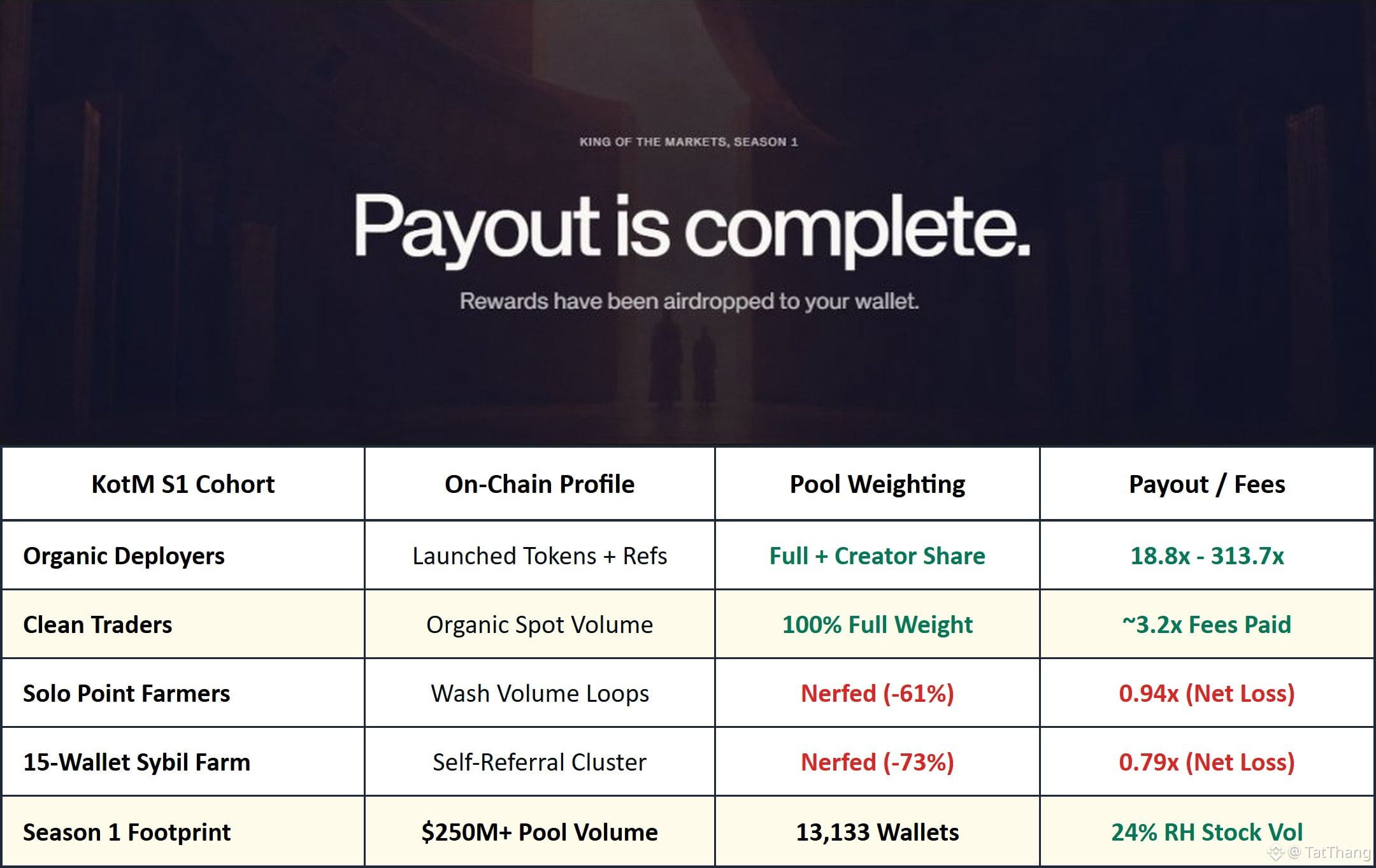
King of the Markets Season 1 rewards from @standard_rsv are live in wallets now.
If you've traded stocks or launchpad tokens on Robinhood Chain over the past 3 weeks, check your wallet (or the fresh wallet you delegated to).
Clean traders got ~3.2x their fees back, while wash bots got nerfed 61% to 73% below fees paid. Solid execution by @0xbeans.
If you've traded stocks or launchpad tokens on Robinhood Chain over the past 3 weeks, check your wallet (or the fresh wallet you delegated to).
Clean traders got ~3.2x their fees back, while wash bots got nerfed 61% to 73% below fees paid. Solid execution by @0xbeans.
79
·
--
A $1.1M crypto reward pool usually gets drained to zero by sybil bots.
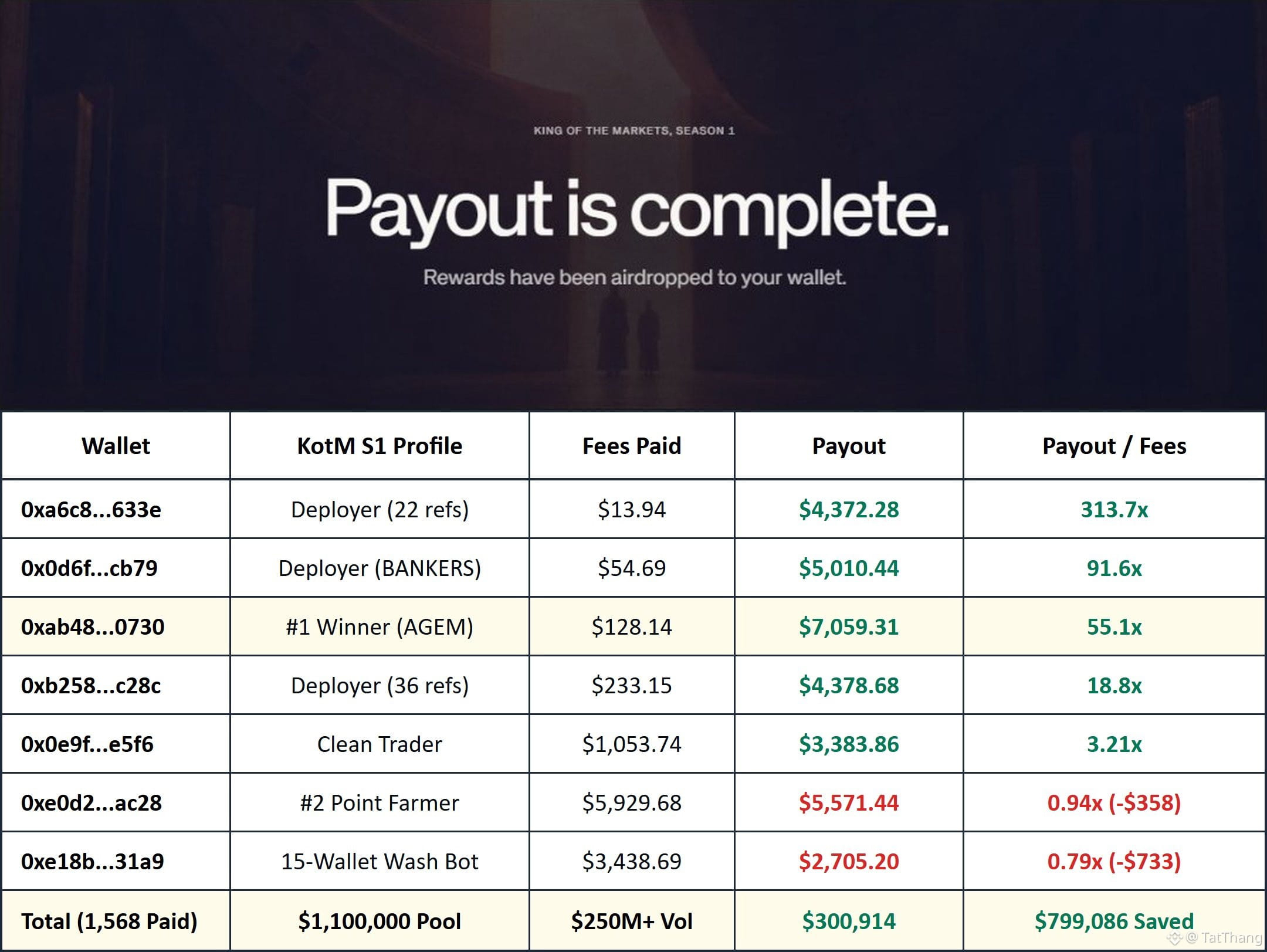
@standard_rsv just ran $250M+ in Season 1 volume on Robinhood Chain and spent $300,914.
I pulled the 1,568-wallet payout ledger to see where the cash went.
Real users got paid multiples of their fees:
- Wallet 0xa6c8...633e paid $13.94 in fees and walked away with $4,372.28 (313.7x)
- #1 winner 0xab48...0730 paid $128.14 and got $7,059.31 (55.1x)
Wash-trading farms got the exact opposite:
- #2 point farmer 0xe0d2...ac28 burned $5,929.68 in fees and got slashed 61% to $5,571.44 (-$358 net)
- A 15-wallet sybil cluster (0xe18b...31a9) paid $3,438.69 in fees and got $2,705.20 back (-$733 net)
@0xbeans kept the remaining $799,086 (72.6% of the pool) inside the Reserve backing $STANDARD instead of paying out sybils.
On the same day, they swept $175,600 in SPCX stock-token fees into the vault and paused new Charter mints.
You can tell a lot about a team by how they guard the treasury when the market chops. I'm glad to be backing these guys.
176
·
--
ບົດຄວາມ
Ford copied a college professor's basement invention onto millions of cars...Ford copied a college professor's basement invention onto millions of cars and paid him $0.
His name was Robert Kearns.
He fired his own lawyers, rejected a $30,000,000 settlement because Ford wouldn't admit he invented it, and beat Detroit in federal court.
This is the story of Robert Kearns and why every car on Earth still blinks in the rain like his injured left eye.
1953 - 1963
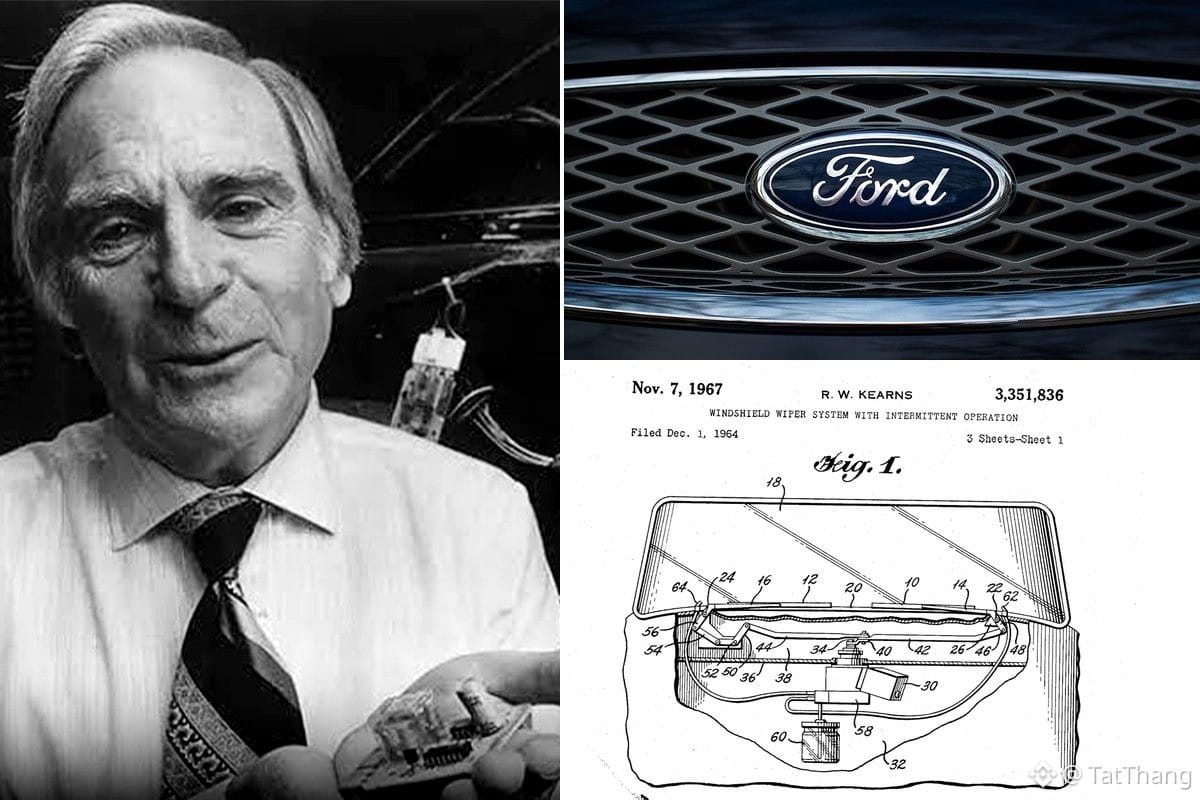
- on his wedding night in 1953, a champagne cork hits engineering professor Robert Kearns in the left eye and leaves him legally blind on that side
- driving his Ford Galaxie through light Detroit rain in 1963, he notices standard wipers scrape non stop across dry glass while the human eyelid blinks and pauses every few seconds
- working in his basement with standard transistors, capacitors, and resistors, he builds the first electronic intermittent wiper and files for US Patent 3,351,836
1963 - 1969
- Kearns drives his prototype straight to Ford headquarters in Dearborn, where Ford engineers test his car and promise a supply contract once the unit passes durability specs
- right after Kearns receives his patent in November 1967 and explains how his timing circuit works, Ford abruptly cuts contact and cancels the deal
- in 1969, Ford rolls out intermittent wipers on its Mercury line and installs the system across millions of cars while paying Kearns $0
1978 - 1990
- Kearns sues Ford in 1978 and runs straight into Detroit's attrition math: dragging one individual through 12 years of federal motions usually bankrupts him long before a jury sits down
- Ford's legal team argues Kearns invented nothing original because transistors, capacitors, and resistors already existed in electronics catalogs
- representing himself alongside his son Dennis, Kearns reads the opening line of Charles Dickens's A Tale of Two Cities to the jury and asks if Dickens wrote nothing new because every word was already in the dictionary
1990 - 1995
- before verdict in 1990, Ford offers $30,000,000 to settle out of court, and Kearns turns it down because Ford refuses to put in writing that he invented the intermittent wiper
- the federal jury rules Ford infringed his patent, forcing Ford to pay $10,200,000 to close all appeals
- Kearns immediately takes Chrysler to trial without a law firm, wins an $18,740,465 judgment, and defeats Chrysler's final appeal at the US Supreme Court in March 1995
To this day, Kearns's basement prototype sits in the Smithsonian National Museum of American History, and his blink circuit runs inside 1.4 billion cars on the road.
Giant corporations still run the math that 12 years of legal fees will break a solo builder cheaper than paying a 30 cent royalty.
Every once in a generation, that spreadsheet runs into someone who values the truth on the record more than $30,000,000.
Ford copied a college professor's basement invention onto millions of cars...
Ford copied a college professor's basement invention onto millions of cars and paid him $0.
His name was Robert Kearns.
He fired his own lawyers, rejected a $30,000,000 settlement because Ford wouldn't admit he invented it, and beat Detroit in federal court.
This is the story of Robert Kearns and why every car on Earth still blinks in the rain like his injured left eye.
1953 - 1963
- on his wedding night in 1953, a champagne cork hits engineering professor Robert Kearns in the left eye and leaves him legally blind on that side
- driving his Ford Galaxie through light Detroit rain in 1963, he notices standard wipers scrape non stop across dry glass while the human eyelid blinks and pauses every few seconds
- working in his basement with standard transistors, capacitors, and resistors, he builds the first electronic intermittent wiper and files for US Patent 3,351,836
1963 - 1969
- Kearns drives his prototype straight to Ford headquarters in Dearborn, where Ford engineers test his car and promise a supply contract once the unit passes durability specs
- right after Kearns receives his patent in November 1967 and explains how his timing circuit works, Ford abruptly cuts contact and cancels the deal
- in 1969, Ford rolls out intermittent wipers on its Mercury line and installs the system across millions of cars while paying Kearns $0
1978 - 1990
- Kearns sues Ford in 1978 and runs straight into Detroit's attrition math: dragging one individual through 12 years of federal motions usually bankrupts him long before a jury sits down
- Ford's legal team argues Kearns invented nothing original because transistors, capacitors, and resistors already existed in electronics catalogs
- representing himself alongside his son Dennis, Kearns reads the opening line of Charles Dickens's A Tale of Two Cities to the jury and asks if Dickens wrote nothing new because every word was already in the dictionary
1990 - 1995
- before verdict in 1990, Ford offers $30,000,000 to settle out of court, and Kearns turns it down because Ford refuses to put in writing that he invented the intermittent wiper
- the federal jury rules Ford infringed his patent, forcing Ford to pay $10,200,000 to close all appeals
- Kearns immediately takes Chrysler to trial without a law firm, wins an $18,740,465 judgment, and defeats Chrysler's final appeal at the US Supreme Court in March 1995
To this day, Kearns's basement prototype sits in the Smithsonian National Museum of American History, and his blink circuit runs inside 1.4 billion cars on the road.
Giant corporations still run the math that 12 years of legal fees will break a solo builder cheaper than paying a 30 cent royalty.
Every once in a generation, that spreadsheet runs into someone who values the truth on the record more than $30,000,000.
1
20
5.1k
·
--
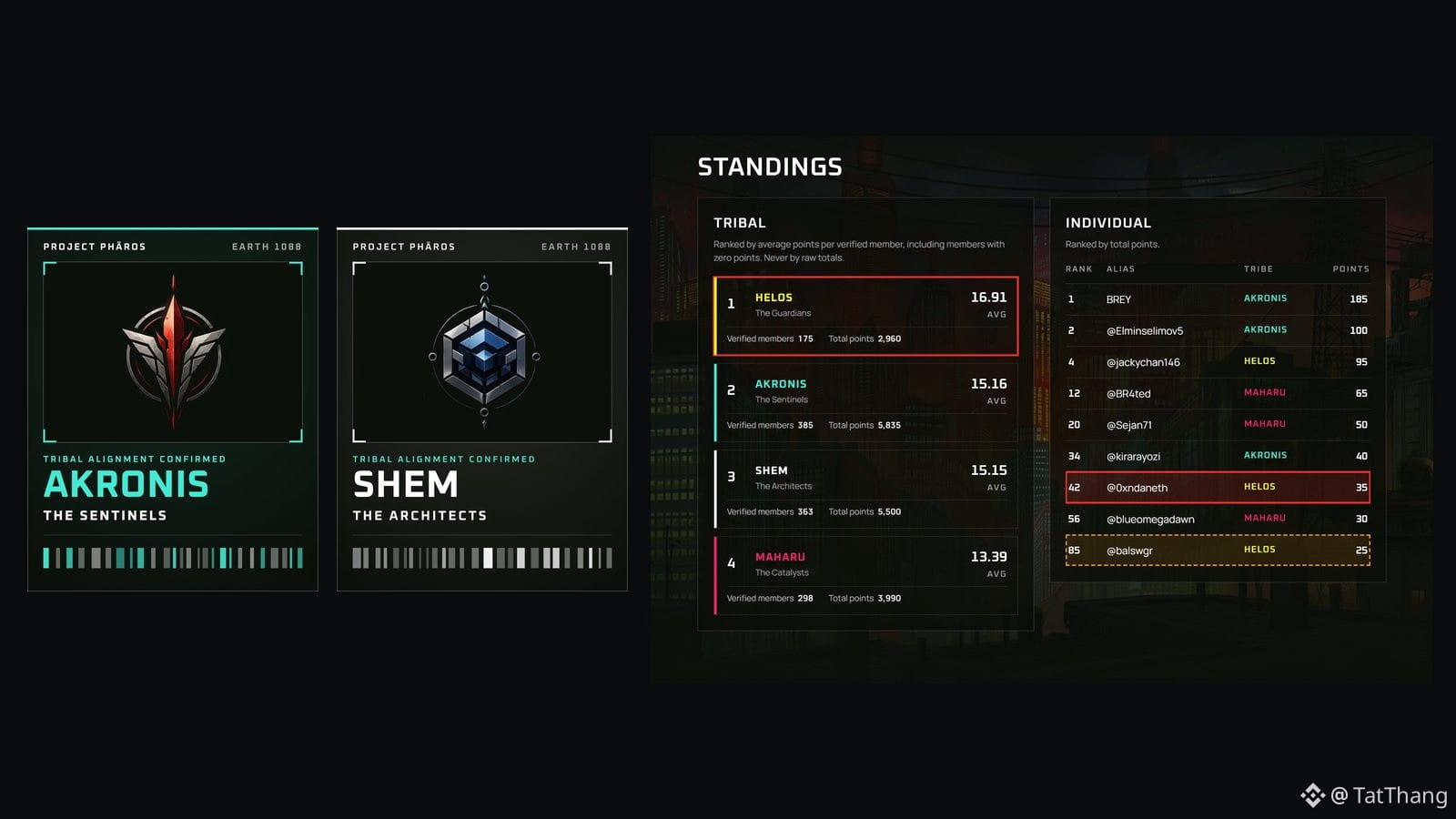
Early WL look on @projpharos.
An anime fantasy universe set in Earth 1088 just opened its Tribe Card portal with 100 whitelist spots on the table:
- 50 spots raffled to anyone who claims a card
- 50 guaranteed spots for the top 50 on the leaderboard (the cutoff right now is only 35 points)
Takes 60 seconds and $0:
An anime fantasy universe set in Earth 1088 just opened its Tribe Card portal with 100 whitelist spots on the table:
- 50 spots raffled to anyone who claims a card
- 50 guaranteed spots for the top 50 on the leaderboard (the cutoff right now is only 35 points)
Takes 60 seconds and $0:
75
·
--
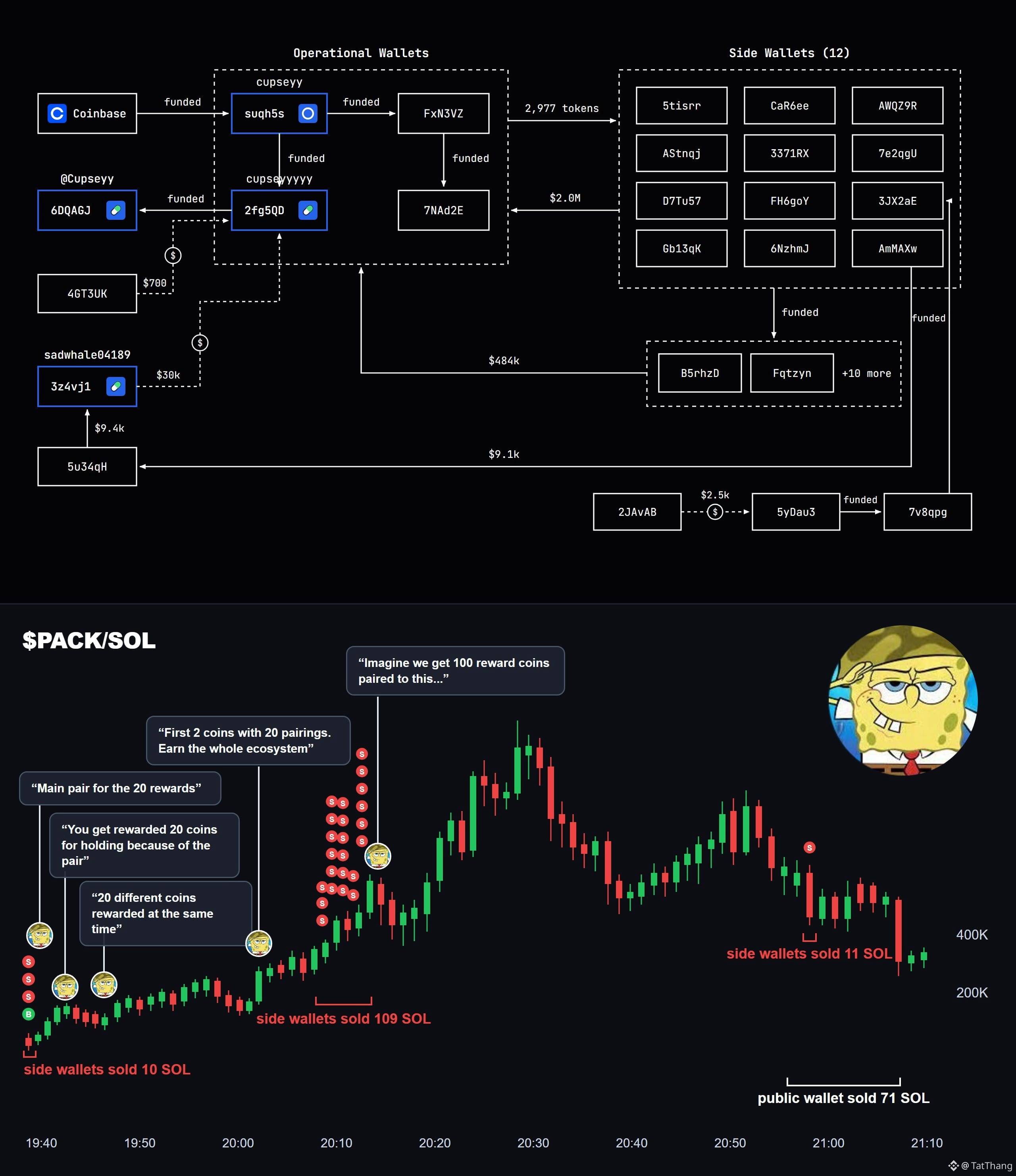
Cupsey is one of the biggest names in Solana.
This ex-Fortnite player turned $2,000 into $30.6M trading memecoins across 271 green days and built a massive following.
In May 2025, he told 1.5M viewers he'd never post calls because he wasn't that type of trader. Lately, his strategy took a darker turn.
An on-chain investigation by @bubblemaps uncovered 30 wallets connected to Cupseyy's public Pumpfun wallets. Since May 7, they've traded 27,000+ tokens, routing nearly 3,000 of them through a hidden side-wallet scheme.
The pattern is almost always the same:
- 4 operational wallets buy early and split supply across 12 hidden side wallets
- Cupsey's public wallet (6DQAGJ) buys in
- Copy traders pile in
- Side wallets immediately start dumping
While Cupsey was posting Pumpfun callouts hyping tokens like $PACK and $SAW, his side wallets were already selling into his followers.
-> sell to copy traders first, then to social traders
Worse: Cupsey's operational hub has direct on-chain transfers ($30K USDC and $9.4K) with a serial deployer (3z4vj1) who launched and rugged thousands of tokens, including $CUPSEY. Cupsey's side wallets sniped over 400 of those launches.
This goes far beyond callout rewards:
- $1.74M extracted by the 12 side wallets across 2,977 tokens
- $1.30M made by the serial rugger connected to Cupsey
- $331K earned by Cupsey in callout rewards
$3.37M pulled from the trenches in just a few months. Still copy-trading KOL wallets on Solana?
118
·
--
ບົດຄວາມ
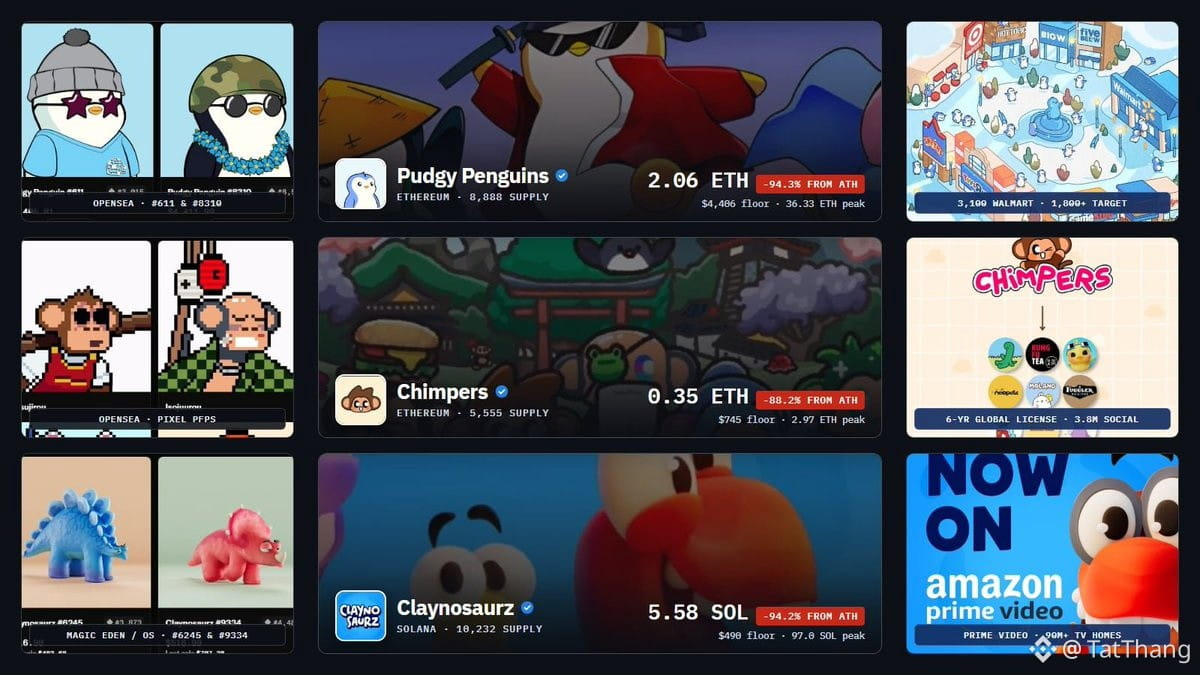
Pudgy Penguins sits at 2.06 ETH with toys inside 3,100 Walmart stores.Pudgy Penguins sits at 2.06 ETH with toys inside 3,100 Walmart stores.
Add 1,800 Target locations, 1,000,000+ physical toys sold, and 120B GIPHY views. From its 36.33 ETH peak ahead of the $PENGU drop, the NFT floor is still down 94.3% ($4,414).
I pulled the live tape across the other two strongest Web2-expanding NFT studios. Every chart looks the same.
Chimpers built 3.8M followers across TikTok, Instagram, and Facebook, ran 233 straight weekly community events, signed a 6-year global master licensing deal in October, and bought 72M ethereum:0x3ca20831ebea5c99aa6e574d83f0a7c733f7e4d0 ($100K) off the open market for its treasury and collectors. Floor: 0.35 ETH ($751), down 88.2% from 2.97 ETH.
Claynosaurz is the cleanest stress test of all.
Their shorts stream on Amazon Prime Video and reach 90M U.S. homes via Kabillion on Roku, Fire TV, and Apple TV. In July, they went one step further and set aside 15% brand equity options directly for holders. Their floor still sits at 5.58 SOL ($490), down 94.2% from 97 SOL.
None of these teams failed at execution. They're just pricing two assets that run on completely different clocks.
A $12 plushie or a free cartoon runs on a 5 to 10 year consumer clock. Families buying toys at Target don't open a wallet to sweep OpenSea. Offchain distribution pays studio overhead, keeps the lights on without diluting holders, and compounds character recognition toward 2030.
An NFT floor runs on a 30-day liquidity clock. Crypto traders price JPEGs like short-dated call options on the next immediate onchain payout. Once the $PENGU claim passed and Luca Netz wound down Abstract in October without launching a chain token, that option premium vanished even while retail shelf space kept growing.
Even Claynosaurz reserving 15% equity options couldn't override a thin Solana NFT book, because equity options pay off in years while floor traders mark their books every week.
Retail shelves price whether the studio survives to 2030.
NFT floors only price liquidity over the next 30 days.
Pudgy Penguins sits at 2.06 ETH with toys inside 3,100 Walmart stores.
Pudgy Penguins sits at 2.06 ETH with toys inside 3,100 Walmart stores.
Add 1,800 Target locations, 1,000,000+ physical toys sold, and 120B GIPHY views. From its 36.33 ETH peak ahead of the $PENGU drop, the NFT floor is still down 94.3% ($4,414).
I pulled the live tape across the other two strongest Web2-expanding NFT studios. Every chart looks the same.
Chimpers built 3.8M followers across TikTok, Instagram, and Facebook, ran 233 straight weekly community events, signed a 6-year global master licensing deal in October, and bought 72M ethereum:0x3ca20831ebea5c99aa6e574d83f0a7c733f7e4d0 ($100K) off the open market for its treasury and collectors. Floor: 0.35 ETH ($751), down 88.2% from 2.97 ETH.
Claynosaurz is the cleanest stress test of all.
Their shorts stream on Amazon Prime Video and reach 90M U.S. homes via Kabillion on Roku, Fire TV, and Apple TV. In July, they went one step further and set aside 15% brand equity options directly for holders. Their floor still sits at 5.58 SOL ($490), down 94.2% from 97 SOL.
None of these teams failed at execution. They're just pricing two assets that run on completely different clocks.
A $12 plushie or a free cartoon runs on a 5 to 10 year consumer clock. Families buying toys at Target don't open a wallet to sweep OpenSea. Offchain distribution pays studio overhead, keeps the lights on without diluting holders, and compounds character recognition toward 2030.
An NFT floor runs on a 30-day liquidity clock. Crypto traders price JPEGs like short-dated call options on the next immediate onchain payout. Once the $PENGU claim passed and Luca Netz wound down Abstract in October without launching a chain token, that option premium vanished even while retail shelf space kept growing.
Even Claynosaurz reserving 15% equity options couldn't override a thin Solana NFT book, because equity options pay off in years while floor traders mark their books every week.
Retail shelves price whether the studio survives to 2030.
NFT floors only price liquidity over the next 30 days.
1
434
·
--

ບົດຄວາມ
The US government spent billions building a chip embargo and cyber fortress...The US government spent billions building a chip embargo and cyber fortress around Nvidia.
Her name was Alice Huang (Huang Le).
She walked into a Taipei whiskey bar, got close to CEO Jensen Huang, and routed $4.8 billion of Nvidia AI hardware through a Singapore firm in 20 months.
This is the story of Alice Huang and how a 5,000-year-old human exploit bypassed a $3.5 trillion tech giant that's guarded like a military base.
2023 - June 2024
- Chinese mobile gaming firm 7Road spins out a new data center startup in Singapore called Megaspeed
- Alice Huang, a former TV reporter in China with no family relation to Jensen Huang, steps in as managing director
- during the June 2024 Computex conference in Taipei, she bets tech executives at a whiskey bar that she can get the Nvidia CEO to show up
- shortly after 12:00 AM midnight, 63-year-old Jensen Huang walks in wearing his black leather jacket and sits right beside her for the rest of the night
June 2024 - February 2026
- while Washington blocks H100 and B200 chip exports and bans ASML EUV lithography machines from China, Megaspeed becomes a massive buyer
- trade records tracked by The New York Times show Megaspeed and its Malaysian sister firm buy $4.8 billion worth of Nvidia AI hardware
- at least $2 billion in advanced chips flow through Malaysia into Indonesian data centers where Chinese tech giant Alibaba rents the compute capacity
May 2025
- Jensen Huang and Alice Huang are photographed leaving the San Liu Shi Fu restaurant in Taipei on May 23, with Alice walking right behind him in a pink dress holding a glass of red wine
- after monitoring Alice Huang for over 1 year, US intelligence agencies circulate a classified assessment concluding she was recruited by China's Ministry of State Security (MSS)
- when intelligence officers unmask the American citizen on her intercepted phone calls, the name comes back as Jensen Huang
October 2026 - Today
- Nvidia initially dismisses federal probes in the US, Singapore, and Taiwan by calling the meetings "completely normal and not unusual"
- on November 8, 2026, after The New York Times and Financial Times expose the romantic relationship, Jensen Huang emails 30,000+ employees admitting he was unfaithful to his wife of 43 years: "I was unfaithful to my wife. My actions hurt her and our children. There is no excuse for what I did. I am deeply sorry."
To this day, Nvidia's Board of Directors is investigating whether its own CEO was compromised by a foreign spy operation, while Kalshi prices a 20% chance he steps down before 2029.
You can spend billions locking down silicon wafers, export controls, and enterprise firewalls.
Across 5,000 years of espionage, when encryption becomes unbreakable, the biggest zero-day vulnerability on the planet is still human biology.
Before ordering $4.8 billion worth of Nvidia AI chips, Megaspeed's Singapore office didn't even have a company sign on the door.
A single startup spun out of a mobile gaming firm bought more Nvidia hardware in 20 months than most sovereign nations.
Her actual WeChat profile had the bio "stay hungry, stay foolish."
On May 23 in Taipei, the same night they were photographed leaving the restaurant together, she posted a bottle of Kavalan Solist whisky signed by Jensen Huang:
"To Alice..."
The US government spent billions building a chip embargo and cyber fortress...
The US government spent billions building a chip embargo and cyber fortress around Nvidia.
Her name was Alice Huang (Huang Le).
She walked into a Taipei whiskey bar, got close to CEO Jensen Huang, and routed $4.8 billion of Nvidia AI hardware through a Singapore firm in 20 months.
This is the story of Alice Huang and how a 5,000-year-old human exploit bypassed a $3.5 trillion tech giant that's guarded like a military base.
2023 - June 2024
- Chinese mobile gaming firm 7Road spins out a new data center startup in Singapore called Megaspeed
- Alice Huang, a former TV reporter in China with no family relation to Jensen Huang, steps in as managing director
- during the June 2024 Computex conference in Taipei, she bets tech executives at a whiskey bar that she can get the Nvidia CEO to show up
- shortly after 12:00 AM midnight, 63-year-old Jensen Huang walks in wearing his black leather jacket and sits right beside her for the rest of the night
June 2024 - February 2026
- while Washington blocks H100 and B200 chip exports and bans ASML EUV lithography machines from China, Megaspeed becomes a massive buyer
- trade records tracked by The New York Times show Megaspeed and its Malaysian sister firm buy $4.8 billion worth of Nvidia AI hardware
- at least $2 billion in advanced chips flow through Malaysia into Indonesian data centers where Chinese tech giant Alibaba rents the compute capacity
May 2025
- Jensen Huang and Alice Huang are photographed leaving the San Liu Shi Fu restaurant in Taipei on May 23, with Alice walking right behind him in a pink dress holding a glass of red wine
- after monitoring Alice Huang for over 1 year, US intelligence agencies circulate a classified assessment concluding she was recruited by China's Ministry of State Security (MSS)
- when intelligence officers unmask the American citizen on her intercepted phone calls, the name comes back as Jensen Huang
October 2026 - Today
- Nvidia initially dismisses federal probes in the US, Singapore, and Taiwan by calling the meetings "completely normal and not unusual"
- on November 8, 2026, after The New York Times and Financial Times expose the romantic relationship, Jensen Huang emails 30,000+ employees admitting he was unfaithful to his wife of 43 years: "I was unfaithful to my wife. My actions hurt her and our children. There is no excuse for what I did. I am deeply sorry."
To this day, Nvidia's Board of Directors is investigating whether its own CEO was compromised by a foreign spy operation, while Kalshi prices a 20% chance he steps down before 2029.
You can spend billions locking down silicon wafers, export controls, and enterprise firewalls.
Across 5,000 years of espionage, when encryption becomes unbreakable, the biggest zero-day vulnerability on the planet is still human biology.
Before ordering $4.8 billion worth of Nvidia AI chips, Megaspeed's Singapore office didn't even have a company sign on the door.
A single startup spun out of a mobile gaming firm bought more Nvidia hardware in 20 months than most sovereign nations.
Her actual WeChat profile had the bio "stay hungry, stay foolish."
On May 23 in Taipei, the same night they were photographed leaving the restaurant together, she posted a bottle of Kavalan Solist whisky signed by Jensen Huang:
"To Alice..."
7
3.3k
ເຂົ້າສູ່ລະບົບເພື່ອສຳຫຼວດເນື້ອຫາເພີ່ມເຕີມ
ເຂົ້າຮ່ວມກຸ່ມຜູ້ໃຊ້ຄຣິບໂຕທົ່ວໂລກໃນ Binance Square.
⚡️ ໄດ້ຮັບຂໍ້ມູນຫຼ້າສຸດ ແລະ ທີ່ມີປະໂຫຍດກ່ຽວກັບຄຣິບໂຕ.
💬 ໄດ້ຮັບຄວາມໄວ້ວາງໃຈຈາກຕະຫຼາດແລກປ່ຽນຄຣິບໂຕທີ່ໃຫຍ່ທີ່ສຸດໃນໂລກ.
👍 ຄົ້ນຫາຂໍ້ມູນເຊີງເລິກທີ່ແທ້ຈາກນັກສ້າງທີ່ໄດ້ຮັບການຢືນຢັນ.
ອີເມວ / ເບີໂທລະສັບ
ຫົວຂໍ້ທີ່ກໍາລັງນິຍົມ
CryptoSelloffTriggersMultipleWhaleLiquidations
144,513 ຄັ້ງທີ່ເບິ່ງ
1,593 ກຳລັງສົນທະນາ
Crypto Liquidations Top $2B in 24 Hours as 329,000 Traders Are Wiped Out
Binance News
·38 ຖືກໃຈ
·46k ຄັ້ງທີ່ເບິ່ງ
USSpotXRPETFsSeeLargestWeeklyOutflowIn8Months
136,965 ຄັ້ງທີ່ເບິ່ງ
1,463 ກຳລັງສົນທະນາ
WillFOMCMinutesReinforceRateHikeExpectations?
37,685 ຄັ້ງທີ່ເບິ່ງ
666 ກຳລັງສົນທະນາ