
Billy bright 09
138 ໂພສ

Billy bright 09
ລາຍງານ
ບລັອກຜູ້ໃຊ້
post are personal opinions
812 ກໍາລັງຕິດຕາມ
271 ຜູ້ຕິດຕາມ
85 Liked
ໂພສ
ທັງໝົດ
ວົງຢືມ

ບົດຄວາມ
The Day Everything Fell at OnceOn Friday, November 20, 2026, US stocks, gold, and Bitcoin all crashed on the same day — a rare event that confused many investors. Here's what actually happened and why.
### The Trigger: A Rate Hike, Not a Cut
Markets had been hoping the Federal Reserve would cut rates to support growth. Instead, hot October inflation data (CPI up 0.4%, core up 0.3% for the third straight month) flipped expectations. By Friday, traders priced a 97% chance the Fed would raise rates on December 9.
Higher rates are poison for assets that pay no income — gold, Bitcoin, and growth stocks all lost their appeal overnight.
### The Amplifier: AI Confidence Cracked
Anthropic's recent IPO failed to reignite enthusiasm for the AI trade. Investors began questioning whether massive, debt-funded AI infrastructure spending could ever generate enough profit to justify the valuations. The Nasdaq plunged 5.3%, the S&P 500 dropped 3.7%, and the Dow Jones entered correction territory.
### The Mechanism: Forced Selling
Here's the part most people miss: it wasn't a choice. When leveraged investors lost money on tech stocks, brokers issued margin calls — demands for more cash or collateral. To meet them, investors sold whatever they could sell quickly: gold, Bitcoin, altcoins. Over $1.5 billion in crypto derivatives were liquidated in 24 hours, and an estimated $500 million to $1 billion in gold was sold purely to cover losses in other assets.
This created a feedback loop: selling drove prices down, which triggered more margin calls, which forced more selling.
### Where Did the Money Go?
It didn't rotate into another asset class. It went to the only place offering safety and income in a rising-rate environment: US government bonds and the US dollar. The dollar hit a 19-month high, and short-term Treasuries became the default parking spot. In effect, liquidity evaporated from risk assets and consolidated into cash and debt.
### In One Sentence
A rate hike that was supposed to be "priced in" became near-certain, AI valuations lost credibility, and thin liquidity turned a bad day into a synchronized sell-off across every asset that doesn't pay a yield.
The Day Everything Fell at Once
On Friday, November 20, 2026, US stocks, gold, and Bitcoin all crashed on the same day — a rare event that confused many investors. Here's what actually happened and why.
### The Trigger: A Rate Hike, Not a Cut
Markets had been hoping the Federal Reserve would cut rates to support growth. Instead, hot October inflation data (CPI up 0.4%, core up 0.3% for the third straight month) flipped expectations. By Friday, traders priced a 97% chance the Fed would raise rates on December 9.
Higher rates are poison for assets that pay no income — gold, Bitcoin, and growth stocks all lost their appeal overnight.
### The Amplifier: AI Confidence Cracked
Anthropic's recent IPO failed to reignite enthusiasm for the AI trade. Investors began questioning whether massive, debt-funded AI infrastructure spending could ever generate enough profit to justify the valuations. The Nasdaq plunged 5.3%, the S&P 500 dropped 3.7%, and the Dow Jones entered correction territory.
### The Mechanism: Forced Selling
Here's the part most people miss: it wasn't a choice. When leveraged investors lost money on tech stocks, brokers issued margin calls — demands for more cash or collateral. To meet them, investors sold whatever they could sell quickly: gold, Bitcoin, altcoins. Over $1.5 billion in crypto derivatives were liquidated in 24 hours, and an estimated $500 million to $1 billion in gold was sold purely to cover losses in other assets.
This created a feedback loop: selling drove prices down, which triggered more margin calls, which forced more selling.
### Where Did the Money Go?
It didn't rotate into another asset class. It went to the only place offering safety and income in a rising-rate environment: US government bonds and the US dollar. The dollar hit a 19-month high, and short-term Treasuries became the default parking spot. In effect, liquidity evaporated from risk assets and consolidated into cash and debt.
### In One Sentence
A rate hike that was supposed to be "priced in" became near-certain, AI valuations lost credibility, and thin liquidity turned a bad day into a synchronized sell-off across every asset that doesn't pay a yield.
215
ເປັນຄວາມຈິງບາງສ່ວນ
#BonkCoinFundamentals BONK’s market dominance is surging due to the "BURNMAS" campaign aiming to destroy 1 trillion tokens, intense South Korean exchange listing rumors, and heavy whale accumulation. This combination creates a massive deflationary squeeze and rotates capital aggressively into Solana’s flagship meme coin.
$1000BONK
{future}(1000BONKUSDT)
#BonkCoinFundamentals BONK’s market dominance is surging due to the "BURNMAS" campaign aiming to destroy 1 trillion tokens, intense South Korean exchange listing rumors, and heavy whale accumulation. This combination creates a massive deflationary squeeze and rotates capital aggressively into Solana’s flagship meme coin.
$1000BONK
$1000BONK
375
you are right bro
you are right bro


BlockchainBaller
·
--
Will $BTC do the same thing again as it did in 2023?
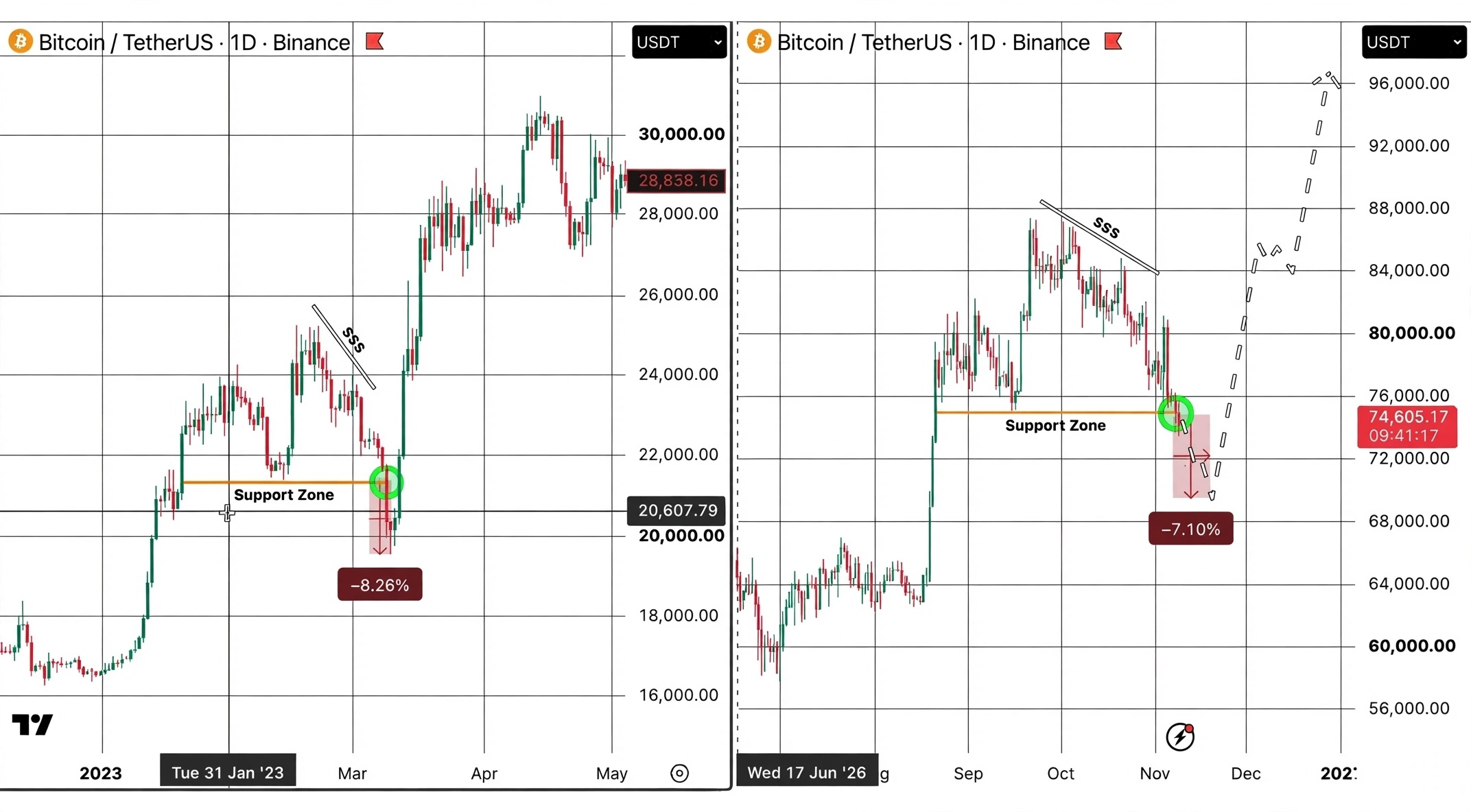
don't make this mistake
don't make this mistake
Billy bright 09
·
--
What Is Happening In Crypto RIGHT NOW?
Put it all together:
$BTC
1. BTC is trying to hold, Alts are dying.
BTC is trying to buy / hold because BTC dominance is rising. OTHERS/BTC falling proves it. Traders are selling alts for BTC, and selling BTC for USDT. BTC is the last man standing.
2. Liquidity is stuck.
USDT.D at 7% = $7 out of every $100 in crypto is sitting in USDT doing nothing. That is dry powder, but also fear. No one wants to deploy it while DXY is at supply.
3. The Market is in Indecision at a Supply Zone.
DXY at supply, USDT.D at resistance, TOTAL3 at support (730B), US10Y falling. Everything is at a level. The next 2-3 daily closes will decide the next 20% move.
Your Trading Plan
DO NOT long alts. TOTAL3, TOTALDEFI, OTHERS/BTC all say alts will underperform.
Scenario A - BULLISH - INVALIDATED
Long BTC if DXY rejects 102.20 + USDT.D drops below 6.85% + TOTAL3 holds 730B.
What happened?
DXY did NOT reject cleanly, it stayed at 102.20
USDT.D stayed at 7.03% - money stayed in stablecoins
TOTAL3 broke down to ∼730B and is still falling
BTC broke $80k
=> No long. Do not buy this dip.
Scenario B - BEARISH - NOW ACTIVE
If DXY breaks 102.50 + USDT.D > 7.10% + TOTAL3 < 720B = Short on rally.
We are now in Scenario B, but in its early phase. BTC is already down at $75.6k.
Bias: BEARISH until proven otherwise. Trade SHORT on rallies, NOT LONG on dips.
1. No Trade Zone: $75,000 - $80,000
We are inside it now. Do not chase a short here in the middle of nowhere. You will get wicked out.
2. If BTC Bounces To $80,000 - $82,000 (Best Short)
This is the retest of the breakdown.
Entry: Short $80,200 - $81,500 on rejection (bearish 4H candle, or wick into $80k + close below)
Stop Loss: Above $83,000 (above the breakdown candle) - This invalidates the bearish idea
Take Profit 1: $75,000 (current low)
Take Profit 2: $70,500 (your orange line)
Risk: 0.5% - 1% only. This is a counter-trend trade in a prop challenge.
3. If BTC Breaks Below $75,000 (Breakdown Continuation)
Do NOT short the break candle. Wait for retest of $75,000 from below.
Entry: Short retest $75,000 - $76,000
Stop: Above $77,500
Target: $70,500 then $65,000
4. When Would I Long Again?
Only if ALL 3 happen:
BTC reclaims $80,000 and closes a Daily candle ABOVE $80,000
DXY closes below 101.78
USDT.D closes below 6.85%
Right now: You are in NO TRADE ZONE. Indecision = No edge. If you trade in indecision on a prop account, you will bleed on fees and fake breakouts.
Wait for DXY daily close. That one candle will tell you everything.
#1000BONKUSDT #ARBUSDT $USDT

53
ບົດຄວາມ
What Is Happening In Crypto RIGHT NOW?
Put it all together:
$BTC
1. BTC is trying to hold, Alts are dying.
BTC is trying to buy / hold because BTC dominance is rising. OTHERS/BTC falling proves it. Traders are selling alts for BTC, and selling BTC for USDT. BTC is the last man standing.
2. Liquidity is stuck.
USDT.D at 7% = $7 out of every $100 in crypto is sitting in USDT doing nothing. That is dry powder, but also fear. No one wants to deploy it while DXY is at supply.
3. The Market is in Indecision at a Supply Zone.
DXY at supply, USDT.D at resistance, TOTAL3 at support (730B), US10Y falling. Everything is at a level. The next 2-3 daily closes will decide the next 20% move.
Your Trading Plan
DO NOT long alts. TOTAL3, TOTALDEFI, OTHERS/BTC all say alts will underperform.
Scenario A - BULLISH - INVALIDATED
Long BTC if DXY rejects 102.20 + USDT.D drops below 6.85% + TOTAL3 holds 730B.
What happened?
DXY did NOT reject cleanly, it stayed at 102.20
USDT.D stayed at 7.03% - money stayed in stablecoins
TOTAL3 broke down to ∼730B and is still falling
BTC broke $80k
=> No long. Do not buy this dip.
Scenario B - BEARISH - NOW ACTIVE
If DXY breaks 102.50 + USDT.D > 7.10% + TOTAL3 < 720B = Short on rally.
We are now in Scenario B, but in its early phase. BTC is already down at $75.6k.
Bias: BEARISH until proven otherwise. Trade SHORT on rallies, NOT LONG on dips.
1. No Trade Zone: $75,000 - $80,000
We are inside it now. Do not chase a short here in the middle of nowhere. You will get wicked out.
2. If BTC Bounces To $80,000 - $82,000 (Best Short)
This is the retest of the breakdown.
Entry: Short $80,200 - $81,500 on rejection (bearish 4H candle, or wick into $80k + close below)
Stop Loss: Above $83,000 (above the breakdown candle) - This invalidates the bearish idea
Take Profit 1: $75,000 (current low)
Take Profit 2: $70,500 (your orange line)
Risk: 0.5% - 1% only. This is a counter-trend trade in a prop challenge.
3. If BTC Breaks Below $75,000 (Breakdown Continuation)
Do NOT short the break candle. Wait for retest of $75,000 from below.
Entry: Short retest $75,000 - $76,000
Stop: Above $77,500
Target: $70,500 then $65,000
4. When Would I Long Again?
Only if ALL 3 happen:
BTC reclaims $80,000 and closes a Daily candle ABOVE $80,000
DXY closes below 101.78
USDT.D closes below 6.85%
Right now: You are in NO TRADE ZONE. Indecision = No edge. If you trade in indecision on a prop account, you will bleed on fees and fake breakouts.
Wait for DXY daily close. That one candle will tell you everything.
#1000BONKUSDT #ARBUSDT $USDT
1
504
#BinancePick
[is there anyone to tell me in detail what it's about?](https://app.binance.com/uni-qr/prophet?from=share&seasonId=prophet_1019_s1&ref=810292465)
[https://app.binance.com/uni-qr/prophet?from=share&seasonId=prophet_1019_s1&ref=810292465](https://app.binance.com/uni-qr/prophet?from=share&seasonId=prophet_1019_s1&ref=810292465)
#BinancePick
is there anyone to tell me in detail what it's about?
https://app.binance.com/uni-qr/prophet?from=share&seasonId=prophet_1019_s1&ref=810292465
is there anyone to tell me in detail what it's about?
https://app.binance.com/uni-qr/prophet?from=share&seasonId=prophet_1019_s1&ref=810292465

This week (Oct 25–31, 2026) global markets are bracing for multiple central bank decisions, surging oil prices, and sticky inflation. The Fed’s October 27–28 meeting is expected to hold rates steady at 3.75–4.00% with an ~88–90% probability of no hike, while markets anticipate another increase in December. Rising Treasury yields (~5%), Brent crude above $116, and Bitcoin consolidating near $81K highlight the tension between inflation risks and growth resilience.
This week (Oct 25–31, 2026) global markets are bracing for multiple central bank decisions, surging oil prices, and sticky inflation. The Fed’s October 27–28 meeting is expected to hold rates steady at 3.75–4.00% with an ~88–90% probability of no hike, while markets anticipate another increase in December. Rising Treasury yields (~5%), Brent crude above $116, and Bitcoin consolidating near $81K highlight the tension between inflation risks and growth resilience.
113
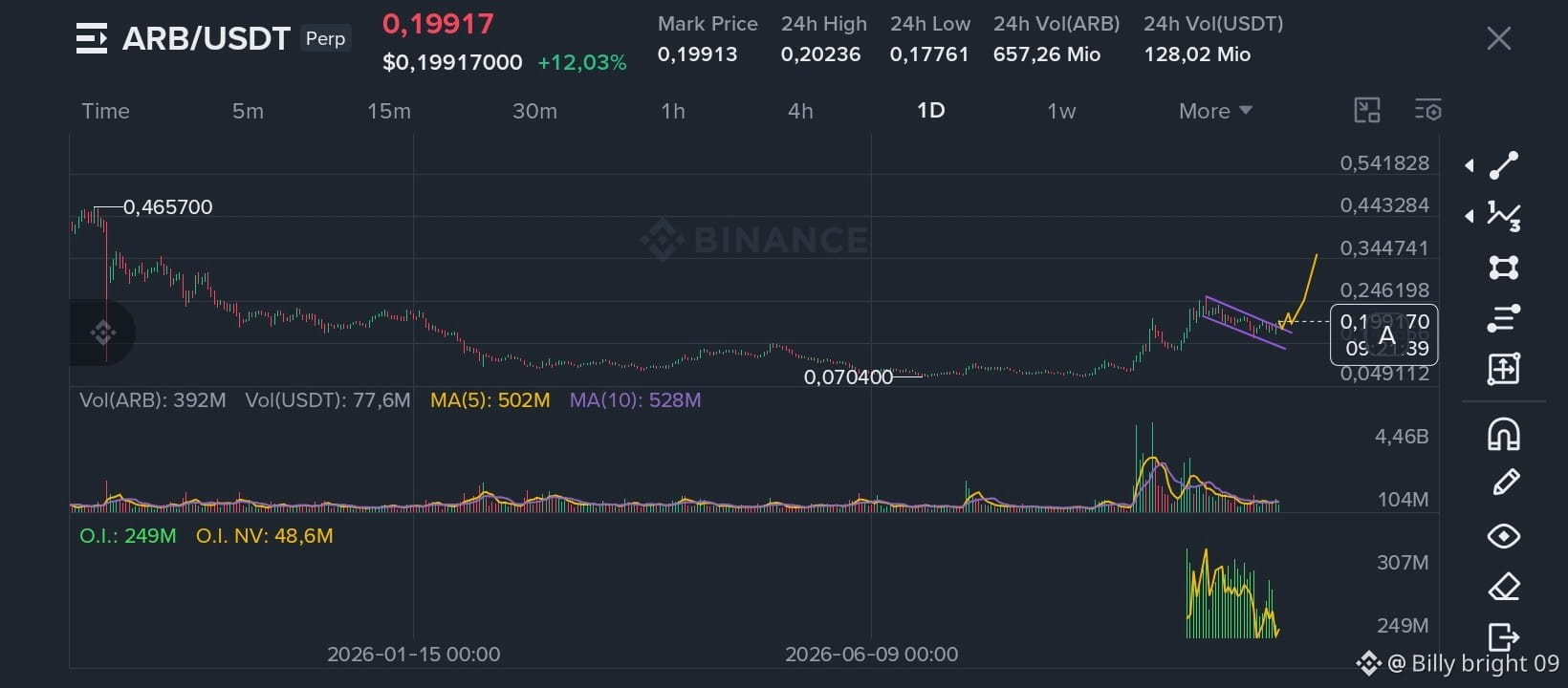
$ARB is about to make a big move don't miss it
{spot}(ARBUSDT)
{future}(1000BONKUSDT)
$ARB is about to make a big move don't miss it

586
Today’s FOMC minutes (October 7, 2026) revealed a divided Federal Reserve: while the committee unanimously raised rates in September (+25 bps to 3.75–4.00%), the minutes show disagreement over whether more hikes are needed. Markets reacted with the Dollar Index (DXY) testing 102.535, and traders now see only ~20% odds of another hike in October.
What It Means for Traders
USD strength: A hawkish tone in the minutes supports the dollar, especially vs EUR and JPY.
Crypto & risk assets: Hawkish Fed → weaker BTC/ETH; dovish Fed → relief rally possible.Bond yields: Rising yields confirm market belief in tighter policy, weighing on equities.
Near-term outlook: October hike unlikely, but December remains live depending on inflation data.$BTC $CL $DXC.US #FedMinutesFocusOnOctoberPause
1
4.3k
Global Debt
U.S. Treasury yields have surged to their highest levels in decades, driving annual interest payments above $1 trillion—now rivaling major budget items like Medicare and defense.
Worldwide, debt has ballooned to $365 trillion, with bond yields at multi‑decade highs.
$QQQB Governments often rely on currency devaluation, a “default by stealth” that erodes purchasing power rather than declaring outright default.
Analysts warn this cycle undermines confidence in the financial system.As a hedge, many turn to physical gold and silver, which carry no counterparty risk and historically preserve wealth during monetary crises.
551
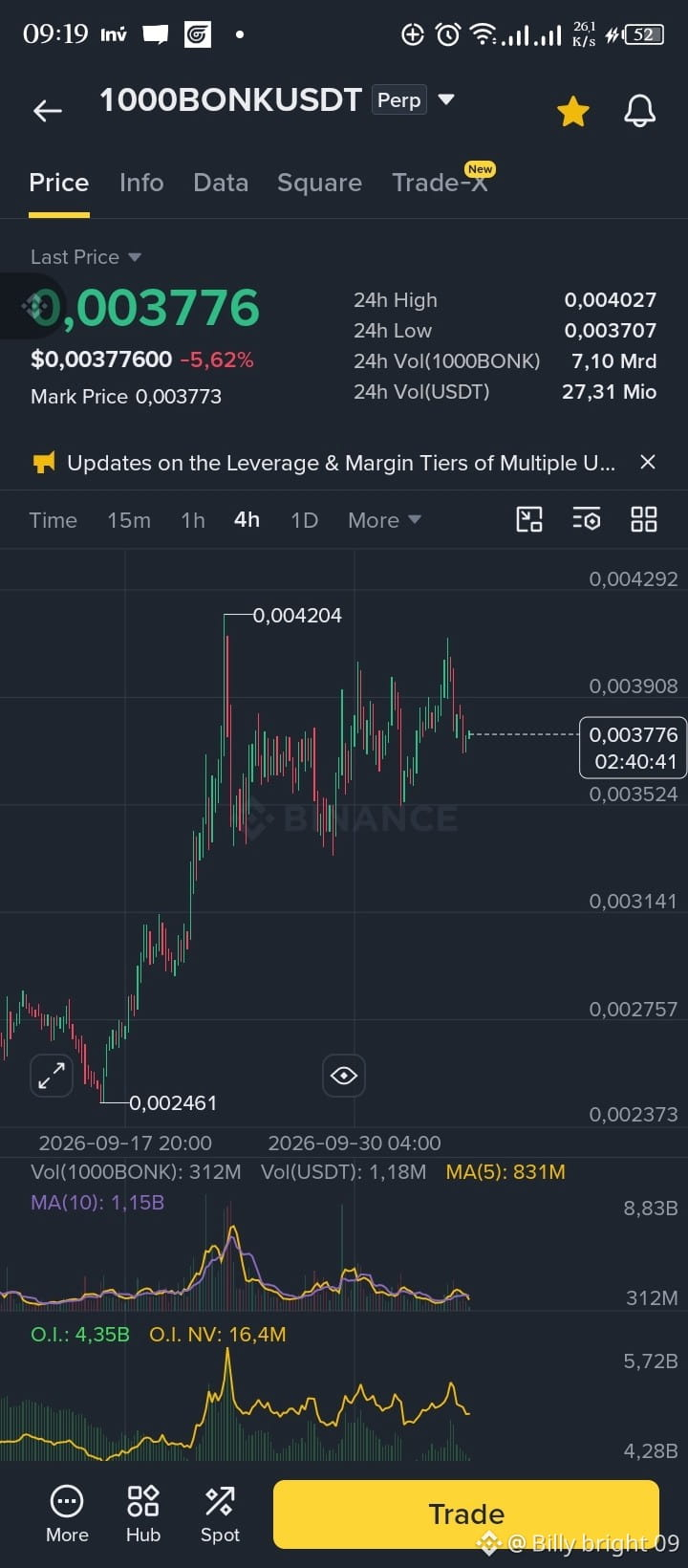
1000BONKUSDT Analysis — Intraday Setup
BONK is still holding above the 0.0031 resistance, showing strength and potential for the next markup phase.
Entry zone: 0.0037 – 0.0036
Stop‑loss: below the previous swing low
Take‑profit targets: 0.0041 – 0.00454
1000BONKUSDT Analysis — Intraday Setup
BONK is still holding above the 0.0031 resistance, showing strength and potential for the next markup phase.
Entry zone: 0.0037 – 0.0036
Stop‑loss: below the previous swing low
Take‑profit targets: 0.0041 – 0.00454
BONK is still holding above the 0.0031 resistance, showing strength and potential for the next markup phase.
Entry zone: 0.0037 – 0.0036
Stop‑loss: below the previous swing low
Take‑profit targets: 0.0041 – 0.00454
151
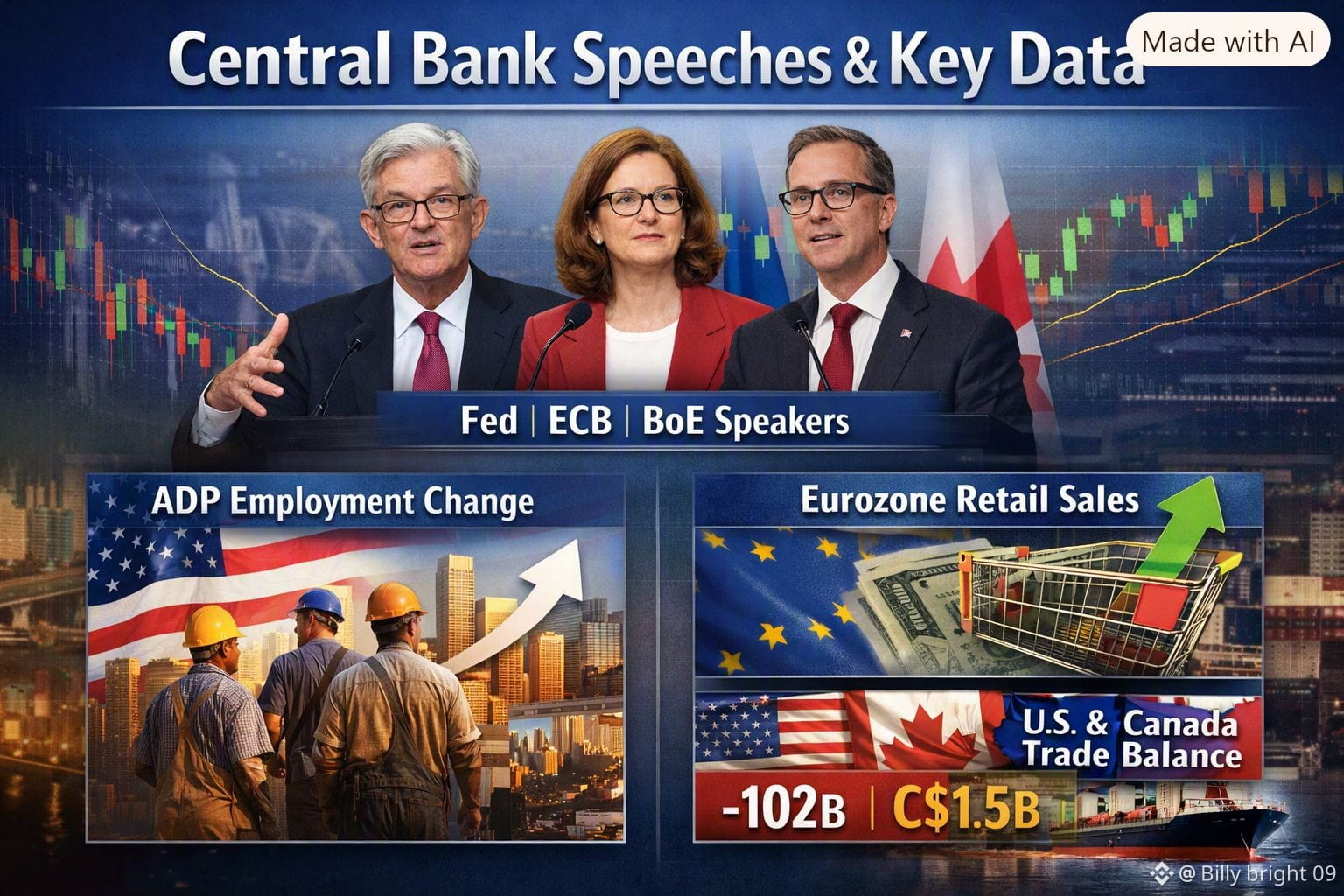
Today’s economic calendar (October 6, 2026) is dominated by central bank speeches and medium-tier data like the U.S. ADP employment change, Eurozone retail sales, and U.S./Canada trade balances.
The key interpretation:
stronger-than-expected data signals economic resilience (hawkish for rates, bullish for USD yields), while weaker prints reinforce easing expectations (dovish, bearish for USD).
The key interpretation:
stronger-than-expected data signals economic resilience (hawkish for rates, bullish for USD yields), while weaker prints reinforce easing expectations (dovish, bearish for USD).
57

ບົດຄວາມ
Cryptocurrency Weekly ReportPeriod: October 5–6, 2026
Focus: Regulatory shifts, Ethereum upgrade, security breaches, institutional adoption, macroeconomic factors
🔹 Regulatory Developments
SEC custody rules proposed; Commissioner Hester Peirce’s departure reduces pro-crypto voices.
CFTC vs SEC jurisdiction battle escalates to the White House.UK licensing framework opens, encouraging institutional participation.
Impact Today: U.S. uncertainty may weigh on sentiment, while UK clarity could attract institutional inflows.
🔹 Ethereum Glamsterdam Upgrade
Testnet activation on October 6, 2026 (Sepolia).
Introduces proposer-builder separation, block-level access lists, revised gas pricing.
Impact Today: ETH volatility expected; successful testnet could trigger bullish momentum.
🔹 Security Breaches
Bitget hack: $387M stolen, linked to North Korean actors.
Liquid Network breach: Adds to September’s $766M losses.
Impact Today: Heightened distrust in centralized exchanges; possible shift toward decentralized custody
🔹 Institutional Tokenization
Franklin Templeton tokenized fund accepted as collateral on Bybit.
Goldman Sachs integrates $100B Treasury fund into crypto rails.
Petrobras tests Cardano for sustainable fuel tracking.
Impact Today: Expands real-world asset (RWA) adoption, boosting tokenization-linked projects.
🔹 Macro & ETFs
SEC approves 3x leveraged BTC & ETH ETFs.Weak U.S. payrolls (29,000 jobs) increase safe-haven demand.$27.5M in bearish positions liquidated.
Impact Today: Leveraged ETF trading may amplify volatility; BTC benefits from safe-haven narrative.
⚠️ Risks & Watchpoints
Security breaches undermine trust in centralized exchanges.
Regulatory tightening in the U.S. may weigh on sentiment.
Macro headwinds (Treasury yields at 2007 highs, weak jobs data) drive volatility.
ETF leverage exaggerates intraday swings in BTC/ETH.
✨ Conclusion
This week’s crypto landscape is defined by regulatory uncertainty, Ethereum’s technical upgrade, and institutional tokenization momentum.
Short-term volatility is likely, especially around ETH’s testnet and leveraged ETF trading, while long-term adoption trends remain positive.
Cryptocurrency Weekly Report
Period: October 5–6, 2026
Focus: Regulatory shifts, Ethereum upgrade, security breaches, institutional adoption, macroeconomic factors
🔹 Regulatory Developments
SEC custody rules proposed; Commissioner Hester Peirce’s departure reduces pro-crypto voices.
CFTC vs SEC jurisdiction battle escalates to the White House.UK licensing framework opens, encouraging institutional participation.
Impact Today: U.S. uncertainty may weigh on sentiment, while UK clarity could attract institutional inflows.
🔹 Ethereum Glamsterdam Upgrade
Testnet activation on October 6, 2026 (Sepolia).
Introduces proposer-builder separation, block-level access lists, revised gas pricing.
Impact Today: ETH volatility expected; successful testnet could trigger bullish momentum.
🔹 Security Breaches
Bitget hack: $387M stolen, linked to North Korean actors.
Liquid Network breach: Adds to September’s $766M losses.
Impact Today: Heightened distrust in centralized exchanges; possible shift toward decentralized custody
🔹 Institutional Tokenization
Franklin Templeton tokenized fund accepted as collateral on Bybit.
Goldman Sachs integrates $100B Treasury fund into crypto rails.
Petrobras tests Cardano for sustainable fuel tracking.
Impact Today: Expands real-world asset (RWA) adoption, boosting tokenization-linked projects.
🔹 Macro & ETFs
SEC approves 3x leveraged BTC & ETH ETFs.Weak U.S. payrolls (29,000 jobs) increase safe-haven demand.$27.5M in bearish positions liquidated.
Impact Today: Leveraged ETF trading may amplify volatility; BTC benefits from safe-haven narrative.
⚠️ Risks & Watchpoints
Security breaches undermine trust in centralized exchanges.
Regulatory tightening in the U.S. may weigh on sentiment.
Macro headwinds (Treasury yields at 2007 highs, weak jobs data) drive volatility.
ETF leverage exaggerates intraday swings in BTC/ETH.
✨ Conclusion
This week’s crypto landscape is defined by regulatory uncertainty, Ethereum’s technical upgrade, and institutional tokenization momentum.
Short-term volatility is likely, especially around ETH’s testnet and leveraged ETF trading, while long-term adoption trends remain positive.
99
Key Figures (October 2, 2026)
Unemployment Rate: 4.2% (slightly higher than forecast 4.1%)
Nonfarm Payrolls: 29K (well below forecast 90K, previous 133K)
Private Payrolls: 46K (below forecast 85K)
Manufacturing Payrolls: 9K (weaker than forecast 10K, previous 15K)
Participation Rate: 61.8% (slightly up from 61.6%)U-6 Unemployment: 7.6% (improved from 7.7%)
Interpretation
Weak job creation: Nonfarm payrolls came in far below expectations, showing hiring slowed sharply.
Stable unemployment rate: Despite weak payrolls, unemployment only ticked up slightly, suggesting fewer layoffs but slower new hiring.
Participation rising: More people are entering the labor force, which can temporarily push unemployment higher.
U-6 improvement: Broader unemployment (including underemployment) fell, hinting at fewer part-time workers seeking full-time jobs.
59
ບົດຄວາມ
what is going on and expectations this weekYesterday’s U.S. Job Openings report showed vacancies slipping to about 7.1 million — the lowest since spring which is shaping today’s news by signaling a cooling labor market, lowering expectations of aggressive Fed tightening, and influencing risk sentiment in stocks, bonds, and crypto.
Key Data from the JOLTS Report
Job openings: Fell to 7.08 million in August, down from 7.34 million in July.
Hiring: Slight uptick to 5.2 million, showing modest labor demand.Layoffs: Dropped to 1.6 million, historically low — employers are reluctant to cut staff.
Quit rate: Stable at 1.9%, suggesting workers are cautious about switching jobs.
How It Affects Today’s News
Fed policy outlook: Fewer openings reduce pressure on the Fed to hike rates aggressively, shifting focus to inflation data.
Market sentiment: Stocks may stabilize after recent volatility, as investors see less risk of overheating labor markets.
Bond yields: Could ease slightly, reflecting softer labor demand.
Dollar strength: A weaker jobs demand outlook may soften USD, supporting gold and crypto.
Crypto impact: Cooling labor data often boosts risk appetite, giving Bitcoin and altcoins short-term support.
what is going on and expectations this week
Yesterday’s U.S. Job Openings report showed vacancies slipping to about 7.1 million — the lowest since spring which is shaping today’s news by signaling a cooling labor market, lowering expectations of aggressive Fed tightening, and influencing risk sentiment in stocks, bonds, and crypto.
Key Data from the JOLTS Report
Job openings: Fell to 7.08 million in August, down from 7.34 million in July.
Hiring: Slight uptick to 5.2 million, showing modest labor demand.Layoffs: Dropped to 1.6 million, historically low — employers are reluctant to cut staff.
Quit rate: Stable at 1.9%, suggesting workers are cautious about switching jobs.
How It Affects Today’s News
Fed policy outlook: Fewer openings reduce pressure on the Fed to hike rates aggressively, shifting focus to inflation data.
Market sentiment: Stocks may stabilize after recent volatility, as investors see less risk of overheating labor markets.
Bond yields: Could ease slightly, reflecting softer labor demand.
Dollar strength: A weaker jobs demand outlook may soften USD, supporting gold and crypto.
Crypto impact: Cooling labor data often boosts risk appetite, giving Bitcoin and altcoins short-term support.
92

ບົດຄວາມ
📑 Report — CFTC Crypto
Rules
1. Political and Institutional Context
The CLARITY Act, a bill intended to clarify the division of roles between the SEC and the CFTC, failed in the Senate (49–50).The CFTC decided to move forward independently by filing a draft rule (prerule) with the Office of Information and Regulatory Affairs (OIRA) on September 17, 2026.
Goal: demonstrate its ability to regulate the crypto market even without Congressional legislation.
2. Nature of the Filing
Status: Prerule → regulatory intent, not yet binding.Process:
Review by OIRA.Return to the CFTC for internal vote.Publication of an official draft → public comment period.Final Commission vote (expected end of 2027).
Legal basis: existing authority under the Dodd-Frank Act, without legislative expansion.
3. Expected Content
Creation of a new market category:
DCM (Designated Contract Market) tailored to crypto platforms.Potential authorization of leveraged trading for certain digital assets (e.g., Bitcoin, XRP).Regulation of derivatives and futures contracts on crypto.
4. Comparison:
Law vs. CFTC RuleLegal frameworkDurabilityScopeProcess
CLARITY Act (law)Strong, hard to overturnClear definition SEC/CFTC
Congressional vote + presidential signatureCFTC rules (prerule)More fragile, revocableLimited to existing authority
OIRA + internal votes + public comments
5. Potential Impacts
Crypto exchanges: possibility of obtaining regulated status without going through the SEC.
US markets: more clarity for crypto derivatives products.
Investors: better protection, but ongoing legal uncertainty.SEC–CFTC coordination: risk of overlap or regulatory conflict.
6. Risks and Limits
Possible court challenges regarding the legitimacy of CFTC authority.
Political fragility: a future Commission or administration could repeal or amend these rules.
Absence of a comprehensive legislative framework → uncertainty for international actors.
7. Projection
Short term (2026–2027): public debates and intense lobbying.Medium term (2028): possible adoption of rules, depending on political climate.
Long term: an eventual law is almost inevitable to stabilize the framework.
78
1st Year: 4.1% (vs. 3.6%) → Fed expects to keep rates higher short term.2nd Year: 3.9% (vs. 3.4%) → Slower pace of cuts than markets hoped.3rd Year: 3.6% (vs. 3.1%) → Long-term rates still elevated.Current: 4.1% (vs. 3.8%) → Reinforces “higher for longer” stance.
1st Year: 4.1% (vs. 3.6%) → Fed expects to keep rates higher short term.2nd Year: 3.9% (vs. 3.4%) → Slower pace of cuts than markets hoped.3rd Year: 3.6% (vs. 3.1%) → Long-term rates still elevated.Current: 4.1% (vs. 3.8%) → Reinforces “higher for longer” stance.
42
yes
75%
no sell now
25%
4 ຄະແນນສຽງ • ປິດລົງຄະແນນສຽງ
192
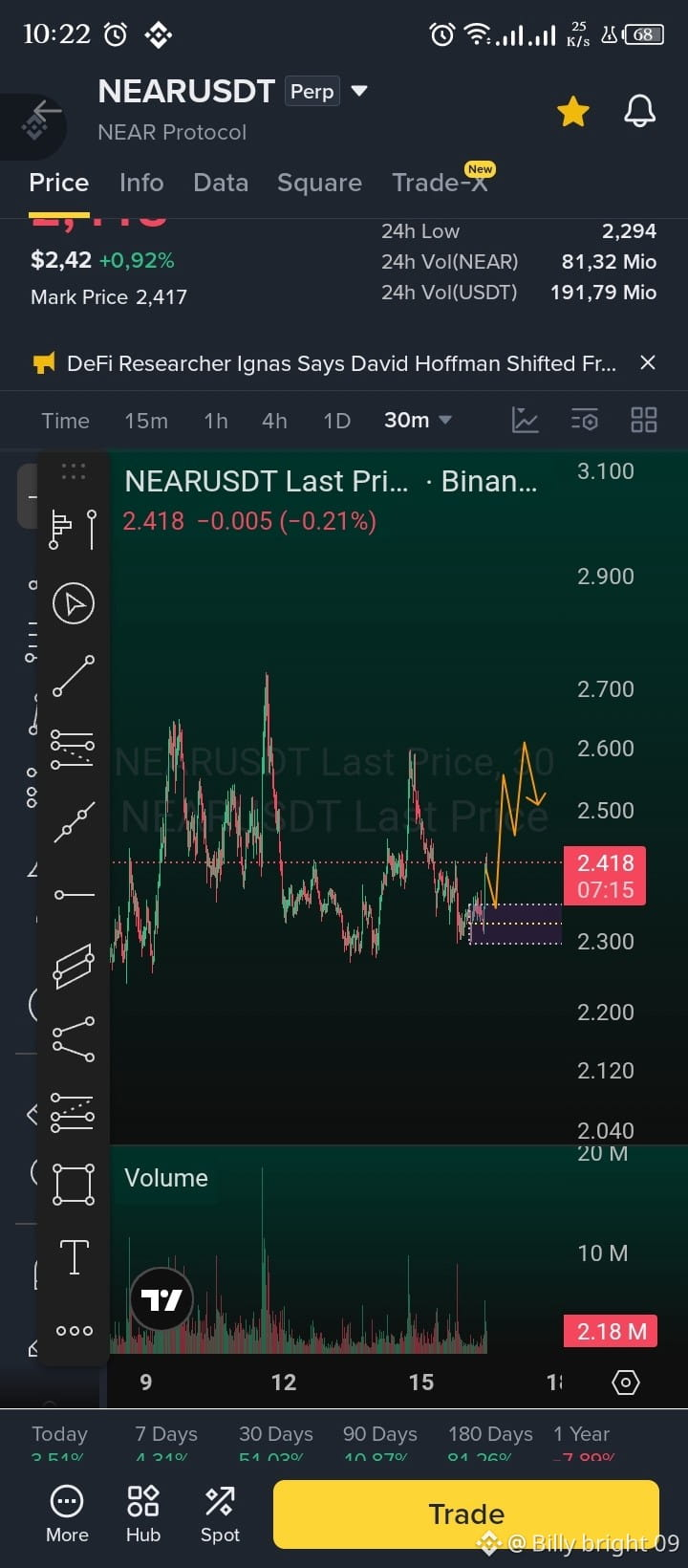
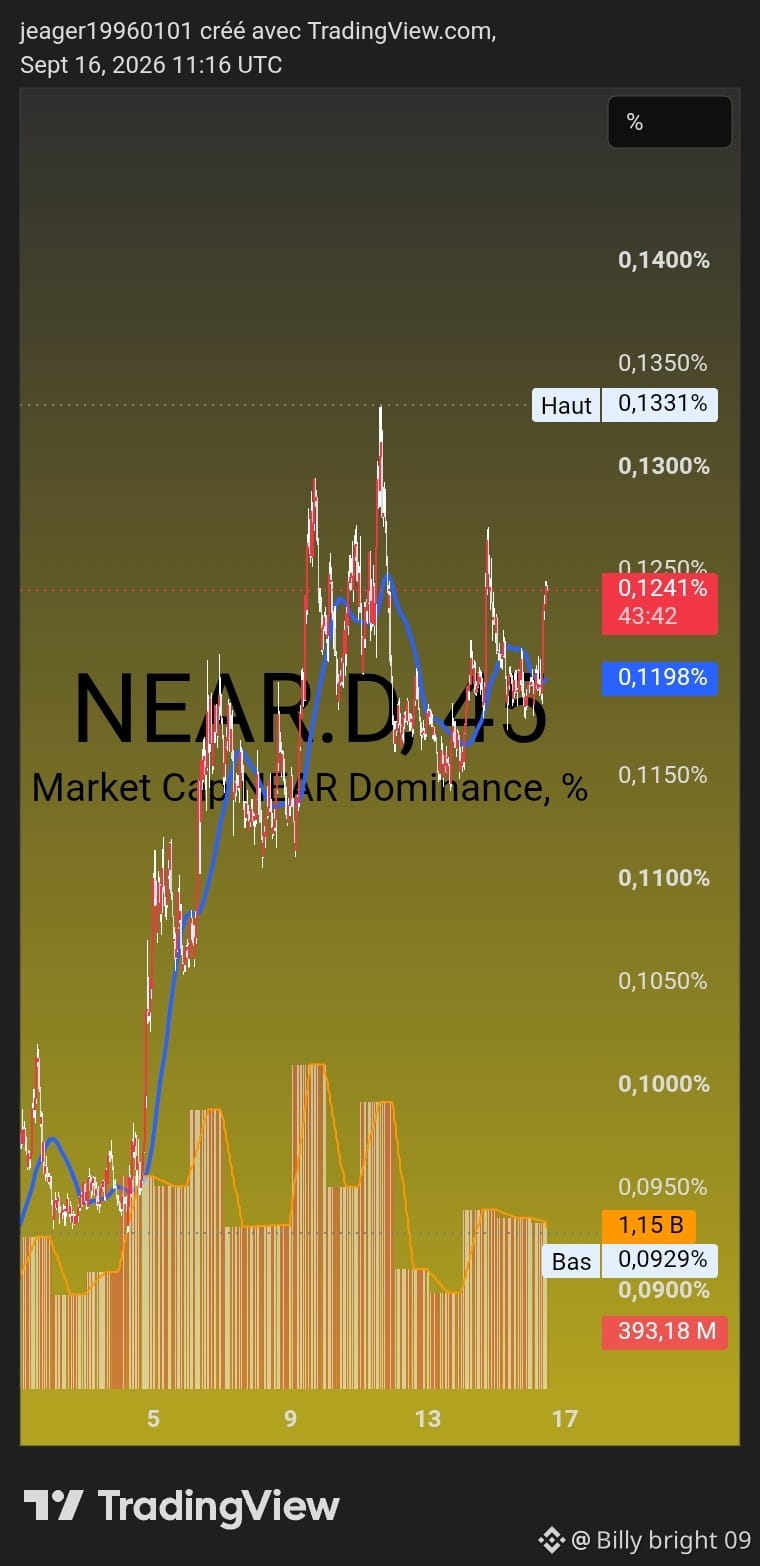
NEAR Protocol is showing strong technical fundamentals in September 2026, but its token demand remains speculative, while global macroeconomic conditions are marked by rising bond yields, resilient growth, and renewed inflation risks. Together, this creates both opportunity and volatility for NEAR investors.
NEAR Protocol is showing strong technical fundamentals in September 2026, but its token demand remains speculative, while global macroeconomic conditions are marked by rising bond yields, resilient growth, and renewed inflation risks. Together, this creates both opportunity and volatility for NEAR investors.
108
ເຂົ້າສູ່ລະບົບເພື່ອສຳຫຼວດເນື້ອຫາເພີ່ມເຕີມ
ເຂົ້າຮ່ວມກຸ່ມຜູ້ໃຊ້ຄຣິບໂຕທົ່ວໂລກໃນ Binance Square.
⚡️ ໄດ້ຮັບຂໍ້ມູນຫຼ້າສຸດ ແລະ ທີ່ມີປະໂຫຍດກ່ຽວກັບຄຣິບໂຕ.
💬 ໄດ້ຮັບຄວາມໄວ້ວາງໃຈຈາກຕະຫຼາດແລກປ່ຽນຄຣິບໂຕທີ່ໃຫຍ່ທີ່ສຸດໃນໂລກ.
👍 ຄົ້ນຫາຂໍ້ມູນເຊີງເລິກທີ່ແທ້ຈາກນັກສ້າງທີ່ໄດ້ຮັບການຢືນຢັນ.
ອີເມວ / ເບີໂທລະສັບ
ຫົວຂໍ້ທີ່ກໍາລັງນິຍົມ
EvolveAtBinanceBlockchainWeek
2.4M ຄັ້ງທີ່ເບິ່ງ
20,123 ກຳລັງສົນທະນາ
Binance Blockchain Week is officially underway! 🌍
On November 28–29, whether you’re in Bangkok or joining from afar, tune in to the livestreams and join the conversation on Binance Square!
Here’s what’s in store 👇
📺 Watch the main stage live
Tune in throughout both days as industry speakers share their perspectives on this year’s theme, “Evolve” From technological innovation to real-world applications, explore what’s next for crypto.
⚔️ Watch two trading competitions
The Aster Open Qualifier and the Binance Trading Master Tournament will both be streamed live. Tune in to follow the traders in action.
🏆 Watch The Blockchain 100 Awards Ceremony
The Blockchain 100 list was selected by the community. Join us in celebrating the creators and the ideas they share!
💬 Join the community conversation
Use #EvolveAtBinanceBlockchainWeek in a post with a photo to share what you’re looking forward to, your views on the industry, or your favorite moments from the event.
The event page is now live! Subscribe to all livestreams with one click so you don’t miss a moment 👏
Binance Blockchain Week
·600 ຖືກໃຈ
·919.6k ຄັ້ງທີ່ເບິ່ງ
WorldLibertyActsToCutLiquidationRisk
19,841 ຄັ້ງທີ່ເບິ່ງ
229 ກຳລັງສົນທະນາ
LiquidHackerMoves598BTC
16,546 ຄັ້ງທີ່ເບິ່ງ
160 ກຳລັງສົນທະນາ