
Naveed Haider Malik
12 ໂພສ

Naveed Haider Malik
ລາຍງານ
ບລັອກຜູ້ໃຊ້
Crypto Analyst 📈 | Decoding the Next Rally 🚀 | BTC - ETH - Altcoins | Daily Insights | Binance Creator 🇵🇰 | NHM_official
1 ກໍາລັງຕິດຕາມ
2 ຜູ້ຕິດຕາມ
2 Liked
ໂພສ

ບົດຄວາມ
What Is DeFi? A Plain English Guide for BeginnersIf you've spent any time around crypto, you've probably seen the term "DeFi" thrown around constantly. It sounds technical, maybe even intimidating. But the core idea behind it is actually simple: DeFi is about doing financial things saving, lending, borrowing, trading without a bank, broker, or middleman standing in the way.
Let's break down what that actually means, and why it's grown into a market holding roughly $200 billion in deposited assets as of 2026, according to tracking data from DefiLlama.
DeFi Stands for Decentralized Finance
In traditional finance, almost everything runs through an institution. Want to save money? You use a bank. Want a loan? You apply through a bank or lender, and they decide if you qualify. Want to trade stocks? You go through a broker.
In each case, a company sits in the middle, controls the process, and takes a cut.
DeFi removes that middle layer. Instead of a bank approving your loan, a piece of software a smart contract — handles it automatically, based on rules anyone can inspect. Instead of a broker executing your trade, code on a blockchain does it directly between you and the other party.
The Building Blocks of DeFi.
A few core pieces make DeFi work:
Blockchains the public, shared record keeping systems (like Ethereum or BNB Chain) that DeFi applications run on. Every transaction is recorded openly, so no single company controls the ledger.
Smart contracts self executing pieces of code that carry out an agreement automatically once conditions are met. Think of them as vending machines: put in the right input, and the output happens without anyone needing to approve it manually.
Wallets instead of a bank account, you hold your funds in a crypto wallet that only you control. This is often called self custody, and it's one of the biggest philosophical differences between DeFi and traditional finance: you're responsible for your own funds, with no institution to call if something goes wrong.
What Can You Actually Do in DeFi?
DeFi isn't one single thing it's a whole category of applications. Some of the most common ones:
Lending and borrowing. Platforms let you lend out crypto like $ETH or $BNB and earn interest, or borrow against crypto you already hold, all without a credit check. Trading. Decentralized exchanges (DEXs) let people swap one token for another directly, without a centralized order book run by a company.
Earning yield. By depositing assets into liquidity pools, users can earn a share of trading fees or rewards often referred to as yield farming or providing liquidity. Stablecoins. Tokens like USDT and USDC are designed to hold a steady value, usually pegged to the US dollar, which makes it easier to use DeFi without full exposure to crypto price swings.
If any of those terms sound new, that's normal. Most people start on the trading side, swapping a stablecoin for something like BNB or ETH to get a feel for how a DEX works, before moving into lending or liquidity pools once they're comfortable.
Why People Are Drawn to DeFi
A few reasons keep coming up:
Access: Anyone with an internet connection and a wallet can use DeFi no approval process, no minimum balance, no geographic restrictions in most cases.
Transparency: Because everything runs on public blockchains, you can actually verify how a protocol works instead of trusting a company's word for it.
Control: Your funds sit in your own wallet, not in an account a company can freeze or restrict.
The Trade Offs You Should Know
DeFi isn't without downsides, and it's worth being upfront about them:
No safety net. If you send funds to the wrong address or lose your wallet's private key, there's no customer service line to call. Self custody means self responsibility.
Smart contract risk. Code can have bugs. Even well audited protocols have been exploited in the past, so funds in DeFi carry a different kind of risk than a bank deposit.
Real example: On Sep 6, Liquid's sidechain halted after ∼4,000 BTC (∼$320M) was withdrawn via SideSwap due to a software bug - the key wasn't even hacked.
Complexity. The learning curve is real. Terms like liquidity pools, impermanent loss, and gas fees take time to understand properly before diving in with real money.
Volatility. Crypto asset prices can move sharply, and that affects everything built on top of them, including DeFi positions.
Getting Started the Right Way
If you're new to DeFi, the most useful first step isn't jumping into a protocol, it's understanding the vocabulary and mechanics first. Concepts like wallets, gas fees, liquidity pools, and smart contracts each deserve their own deep dive before you put real funds to work.
A practical way to start: open a wallet, move a small amount of a stable-coin like $USDC into it, and try a single swap on a DEX so you can see the mechanics play out with money you're comfortable experimenting with. That one small transaction will teach you more about how DeFi works than reading ten more explainers.
DeFi represents a genuinely different way of thinking about finance: open, transparent, and permissionless. Whether that's a better system or simply a different one is still being written. Understanding how it actually works is the first step to forming your own view, and trying a small, real transaction is the step after that.
What part of DeFi are you most curious to try first: lending, swapping, or earning yield? Drop it in the comments.
This article is for educational purposes only and is not financial advice. DeFi carries real risks, including smart contract vulnerabilities and price volatility. Always do your own research before using any protocol.
What Is DeFi? A Plain English Guide for Beginners
If you've spent any time around crypto, you've probably seen the term "DeFi" thrown around constantly. It sounds technical, maybe even intimidating. But the core idea behind it is actually simple: DeFi is about doing financial things saving, lending, borrowing, trading without a bank, broker, or middleman standing in the way.
Let's break down what that actually means, and why it's grown into a market holding roughly $200 billion in deposited assets as of 2026, according to tracking data from DefiLlama.
DeFi Stands for Decentralized Finance
In traditional finance, almost everything runs through an institution. Want to save money? You use a bank. Want a loan? You apply through a bank or lender, and they decide if you qualify. Want to trade stocks? You go through a broker.
In each case, a company sits in the middle, controls the process, and takes a cut.
DeFi removes that middle layer. Instead of a bank approving your loan, a piece of software a smart contract — handles it automatically, based on rules anyone can inspect. Instead of a broker executing your trade, code on a blockchain does it directly between you and the other party.
The Building Blocks of DeFi.
A few core pieces make DeFi work:
Blockchains the public, shared record keeping systems (like Ethereum or BNB Chain) that DeFi applications run on. Every transaction is recorded openly, so no single company controls the ledger.
Smart contracts self executing pieces of code that carry out an agreement automatically once conditions are met. Think of them as vending machines: put in the right input, and the output happens without anyone needing to approve it manually.
Wallets instead of a bank account, you hold your funds in a crypto wallet that only you control. This is often called self custody, and it's one of the biggest philosophical differences between DeFi and traditional finance: you're responsible for your own funds, with no institution to call if something goes wrong.
What Can You Actually Do in DeFi?
DeFi isn't one single thing it's a whole category of applications. Some of the most common ones:
Lending and borrowing. Platforms let you lend out crypto like $ETH or $BNB and earn interest, or borrow against crypto you already hold, all without a credit check. Trading. Decentralized exchanges (DEXs) let people swap one token for another directly, without a centralized order book run by a company.
Earning yield. By depositing assets into liquidity pools, users can earn a share of trading fees or rewards often referred to as yield farming or providing liquidity. Stablecoins. Tokens like USDT and USDC are designed to hold a steady value, usually pegged to the US dollar, which makes it easier to use DeFi without full exposure to crypto price swings.
If any of those terms sound new, that's normal. Most people start on the trading side, swapping a stablecoin for something like BNB or ETH to get a feel for how a DEX works, before moving into lending or liquidity pools once they're comfortable.
Why People Are Drawn to DeFi
A few reasons keep coming up:
Access: Anyone with an internet connection and a wallet can use DeFi no approval process, no minimum balance, no geographic restrictions in most cases.
Transparency: Because everything runs on public blockchains, you can actually verify how a protocol works instead of trusting a company's word for it.
Control: Your funds sit in your own wallet, not in an account a company can freeze or restrict.
The Trade Offs You Should Know
DeFi isn't without downsides, and it's worth being upfront about them:
No safety net. If you send funds to the wrong address or lose your wallet's private key, there's no customer service line to call. Self custody means self responsibility.
Smart contract risk. Code can have bugs. Even well audited protocols have been exploited in the past, so funds in DeFi carry a different kind of risk than a bank deposit.
Real example: On Sep 6, Liquid's sidechain halted after ∼4,000 BTC (∼$320M) was withdrawn via SideSwap due to a software bug - the key wasn't even hacked.
Complexity. The learning curve is real. Terms like liquidity pools, impermanent loss, and gas fees take time to understand properly before diving in with real money.
Volatility. Crypto asset prices can move sharply, and that affects everything built on top of them, including DeFi positions.
Getting Started the Right Way
If you're new to DeFi, the most useful first step isn't jumping into a protocol, it's understanding the vocabulary and mechanics first. Concepts like wallets, gas fees, liquidity pools, and smart contracts each deserve their own deep dive before you put real funds to work.
A practical way to start: open a wallet, move a small amount of a stable-coin like $USDC into it, and try a single swap on a DEX so you can see the mechanics play out with money you're comfortable experimenting with. That one small transaction will teach you more about how DeFi works than reading ten more explainers.
DeFi represents a genuinely different way of thinking about finance: open, transparent, and permissionless. Whether that's a better system or simply a different one is still being written. Understanding how it actually works is the first step to forming your own view, and trying a small, real transaction is the step after that.
What part of DeFi are you most curious to try first: lending, swapping, or earning yield? Drop it in the comments.
This article is for educational purposes only and is not financial advice. DeFi carries real risks, including smart contract vulnerabilities and price volatility. Always do your own research before using any protocol.
Let's break down what that actually means, and why it's grown into a market holding roughly $200 billion in deposited assets as of 2026, according to tracking data from DefiLlama.
DeFi Stands for Decentralized Finance
In traditional finance, almost everything runs through an institution. Want to save money? You use a bank. Want a loan? You apply through a bank or lender, and they decide if you qualify. Want to trade stocks? You go through a broker.
In each case, a company sits in the middle, controls the process, and takes a cut.
DeFi removes that middle layer. Instead of a bank approving your loan, a piece of software a smart contract — handles it automatically, based on rules anyone can inspect. Instead of a broker executing your trade, code on a blockchain does it directly between you and the other party.
The Building Blocks of DeFi.
A few core pieces make DeFi work:
Blockchains the public, shared record keeping systems (like Ethereum or BNB Chain) that DeFi applications run on. Every transaction is recorded openly, so no single company controls the ledger.
Smart contracts self executing pieces of code that carry out an agreement automatically once conditions are met. Think of them as vending machines: put in the right input, and the output happens without anyone needing to approve it manually.
Wallets instead of a bank account, you hold your funds in a crypto wallet that only you control. This is often called self custody, and it's one of the biggest philosophical differences between DeFi and traditional finance: you're responsible for your own funds, with no institution to call if something goes wrong.
What Can You Actually Do in DeFi?
DeFi isn't one single thing it's a whole category of applications. Some of the most common ones:
Lending and borrowing. Platforms let you lend out crypto like $ETH or $BNB and earn interest, or borrow against crypto you already hold, all without a credit check. Trading. Decentralized exchanges (DEXs) let people swap one token for another directly, without a centralized order book run by a company.
Earning yield. By depositing assets into liquidity pools, users can earn a share of trading fees or rewards often referred to as yield farming or providing liquidity. Stablecoins. Tokens like USDT and USDC are designed to hold a steady value, usually pegged to the US dollar, which makes it easier to use DeFi without full exposure to crypto price swings.
If any of those terms sound new, that's normal. Most people start on the trading side, swapping a stablecoin for something like BNB or ETH to get a feel for how a DEX works, before moving into lending or liquidity pools once they're comfortable.
Why People Are Drawn to DeFi
A few reasons keep coming up:
Access: Anyone with an internet connection and a wallet can use DeFi no approval process, no minimum balance, no geographic restrictions in most cases.
Transparency: Because everything runs on public blockchains, you can actually verify how a protocol works instead of trusting a company's word for it.
Control: Your funds sit in your own wallet, not in an account a company can freeze or restrict.
The Trade Offs You Should Know
DeFi isn't without downsides, and it's worth being upfront about them:
No safety net. If you send funds to the wrong address or lose your wallet's private key, there's no customer service line to call. Self custody means self responsibility.
Smart contract risk. Code can have bugs. Even well audited protocols have been exploited in the past, so funds in DeFi carry a different kind of risk than a bank deposit.
Real example: On Sep 6, Liquid's sidechain halted after ∼4,000 BTC (∼$320M) was withdrawn via SideSwap due to a software bug - the key wasn't even hacked.
Complexity. The learning curve is real. Terms like liquidity pools, impermanent loss, and gas fees take time to understand properly before diving in with real money.
Volatility. Crypto asset prices can move sharply, and that affects everything built on top of them, including DeFi positions.
Getting Started the Right Way
If you're new to DeFi, the most useful first step isn't jumping into a protocol, it's understanding the vocabulary and mechanics first. Concepts like wallets, gas fees, liquidity pools, and smart contracts each deserve their own deep dive before you put real funds to work.
A practical way to start: open a wallet, move a small amount of a stable-coin like $USDC into it, and try a single swap on a DEX so you can see the mechanics play out with money you're comfortable experimenting with. That one small transaction will teach you more about how DeFi works than reading ten more explainers.
DeFi represents a genuinely different way of thinking about finance: open, transparent, and permissionless. Whether that's a better system or simply a different one is still being written. Understanding how it actually works is the first step to forming your own view, and trying a small, real transaction is the step after that.
What part of DeFi are you most curious to try first: lending, swapping, or earning yield? Drop it in the comments.
This article is for educational purposes only and is not financial advice. DeFi carries real risks, including smart contract vulnerabilities and price volatility. Always do your own research before using any protocol.
65
ບົດຄວາມ
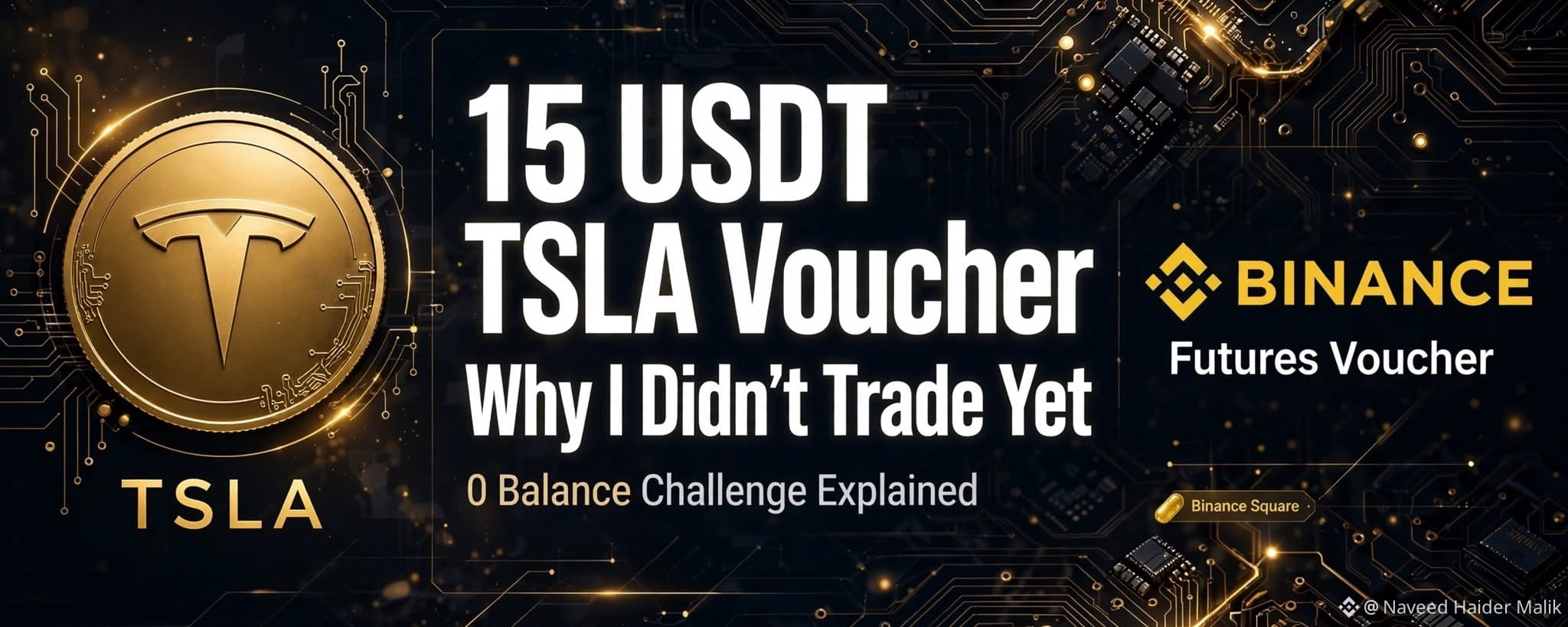
I Claimed 15 USDT TSLA Voucher With 0 Balance But Didn't Trade Yet Here's Why $TSLAI claimed 15 USDT TSLA Position Voucher yesterday. My Spot balance is still 0.00 USDT. I did NOT trade yet.
{stock_us}(TSLA.US)
Voucher says expires Sep 9, 10X leverage, TSLA margin. I could tap Redeem now, but I stopped. I wanted to learn first.
Here is what I learned in 1 day BEFORE trading:
1. This is NOT free cash. It is free POSITION. If profit, profit is mine. If loss, only voucher gone. No my money needed, but voucher goes zero if wrong.
2. TSLAUSDT is not BTC. It is Tesla stock price on Binance. It moves only when US market opens at 7:30 PM Pakistan time, not 24 hours like crypto. If US market closed, price does not move.
3. 10X is dangerous. My 15 USDT voucher controls 150 USDT position. If Tesla moves 10% opposite, my voucher liquidates and becomes 0.
4. Long means I think Tesla will go up. Short means I think it will go down.
5. I will set Stop Loss at 30% as soon as I open. Without stop loss, beginners lose fast.
My plan: I will not add my own money. I will use only voucher to learn, after US market opens. This is education, not gambling.
I have 0 balance and this is my first futures voucher.
Should I go Long or Short on TSLA? What would you do?
Educational only, not financial advice. DYOR.
$BTC $ETH $TSLAB
#Write2Earn #CryptoForBeginner #FuturesForBeginners
I Claimed 15 USDT TSLA Voucher With 0 Balance But Didn't Trade Yet Here's Why $TSLA
I claimed 15 USDT TSLA Position Voucher yesterday. My Spot balance is still 0.00 USDT. I did NOT trade yet.
Voucher says expires Sep 9, 10X leverage, TSLA margin. I could tap Redeem now, but I stopped. I wanted to learn first.
Here is what I learned in 1 day BEFORE trading:
1. This is NOT free cash. It is free POSITION. If profit, profit is mine. If loss, only voucher gone. No my money needed, but voucher goes zero if wrong.
2. TSLAUSDT is not BTC. It is Tesla stock price on Binance. It moves only when US market opens at 7:30 PM Pakistan time, not 24 hours like crypto. If US market closed, price does not move.
3. 10X is dangerous. My 15 USDT voucher controls 150 USDT position. If Tesla moves 10% opposite, my voucher liquidates and becomes 0.
4. Long means I think Tesla will go up. Short means I think it will go down.
5. I will set Stop Loss at 30% as soon as I open. Without stop loss, beginners lose fast.
My plan: I will not add my own money. I will use only voucher to learn, after US market opens. This is education, not gambling.
I have 0 balance and this is my first futures voucher.
Should I go Long or Short on TSLA? What would you do?
Educational only, not financial advice. DYOR.
$BTC $ETH $TSLAB
#Write2Earn #CryptoForBeginner #FuturesForBeginners
Voucher says expires Sep 9, 10X leverage, TSLA margin. I could tap Redeem now, but I stopped. I wanted to learn first.
Here is what I learned in 1 day BEFORE trading:
1. This is NOT free cash. It is free POSITION. If profit, profit is mine. If loss, only voucher gone. No my money needed, but voucher goes zero if wrong.
2. TSLAUSDT is not BTC. It is Tesla stock price on Binance. It moves only when US market opens at 7:30 PM Pakistan time, not 24 hours like crypto. If US market closed, price does not move.
3. 10X is dangerous. My 15 USDT voucher controls 150 USDT position. If Tesla moves 10% opposite, my voucher liquidates and becomes 0.
4. Long means I think Tesla will go up. Short means I think it will go down.
5. I will set Stop Loss at 30% as soon as I open. Without stop loss, beginners lose fast.
My plan: I will not add my own money. I will use only voucher to learn, after US market opens. This is education, not gambling.
I have 0 balance and this is my first futures voucher.
Should I go Long or Short on TSLA? What would you do?
Educational only, not financial advice. DYOR.
$BTC $ETH $TSLAB
#Write2Earn #CryptoForBeginner #FuturesForBeginners
1
343
ບົດຄວາມ
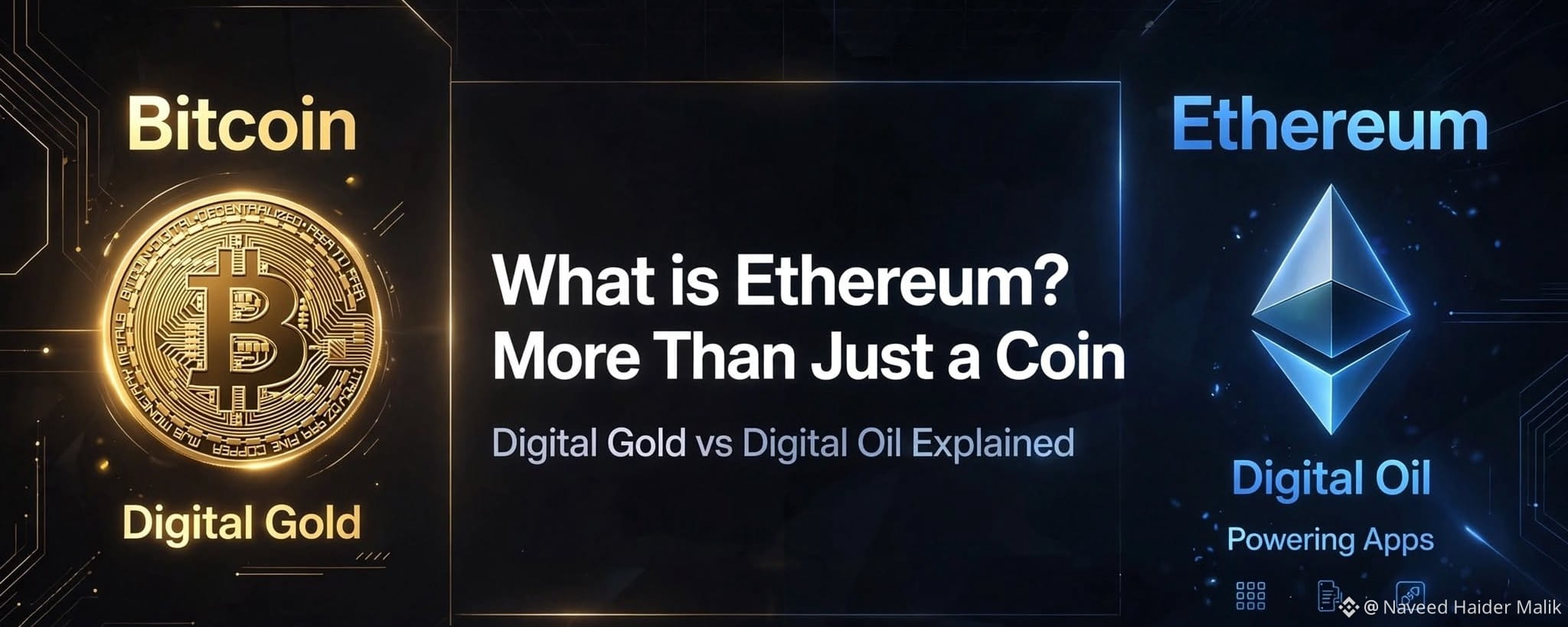
What is Ethereum? More Than Just a Coin. Ethereum It's Not Just a Coin.
Think of Ethereum as a platform, like Android or iOS. Just like you install apps on your phone, developers build apps on Ethereum. We call them DApps (Decentralized Apps).
ETH is the fuel that runs these apps. No ETH, no app runs.
Why Do Developers Use Ethereum? Smart Contracts.
{spot}(ETHUSDT)
BTC is like a calculator - it does one job (send money) very well.
ETH is like a smartphone - you can build anything on it.
Developers use ETH to build DeFi (lending without a bank), NFTs, Games, and 1000s of other apps.
That is why it holds Rank #2 with $299.58B Market Cap and 11.25% Dominance real usage, not hype.
BTC vs ETH (Super Simple):
BTC = Digital Gold
Launched in 2009. Main job: Store of value, like gold. Supply limited to 21M. Slow but very secure.
ETH = Digital Oil
Launched in 2015. Issue price $0.308 → ATH $4,953.73 (Aug 25, 2025). Main job: Power apps, like oil powers machines. Powers all DApps. Faster and more programmable.
The chart shows the journey: 2014 $0.308 → 2025 $4,953 → Today $2,454. Real growth, not a +185% trap coin.
So next time someone says ETH and BTC are the same, you know: One is Gold, the other is Oil. Both are needed.
Which do you think is more important for the future Gold or Oil? Comment below.
Note: You can trade both BTC and ETH against BNB and other pairs directly on Binance, which is why understanding these fundamentals helps when using the Binance ecosystem.
$ETH $BTC $BNB
#CryptoForBeginners #Ethereum
What is Ethereum? More Than Just a Coin.
Ethereum It's Not Just a Coin.
Think of Ethereum as a platform, like Android or iOS. Just like you install apps on your phone, developers build apps on Ethereum. We call them DApps (Decentralized Apps).
ETH is the fuel that runs these apps. No ETH, no app runs.
Why Do Developers Use Ethereum? Smart Contracts.
BTC is like a calculator - it does one job (send money) very well.
ETH is like a smartphone - you can build anything on it.
Developers use ETH to build DeFi (lending without a bank), NFTs, Games, and 1000s of other apps.
That is why it holds Rank #2 with $299.58B Market Cap and 11.25% Dominance real usage, not hype.
BTC vs ETH (Super Simple):
BTC = Digital Gold
Launched in 2009. Main job: Store of value, like gold. Supply limited to 21M. Slow but very secure.
ETH = Digital Oil
Launched in 2015. Issue price $0.308 → ATH $4,953.73 (Aug 25, 2025). Main job: Power apps, like oil powers machines. Powers all DApps. Faster and more programmable.
The chart shows the journey: 2014 $0.308 → 2025 $4,953 → Today $2,454. Real growth, not a +185% trap coin.
So next time someone says ETH and BTC are the same, you know: One is Gold, the other is Oil. Both are needed.
Which do you think is more important for the future Gold or Oil? Comment below.
Note: You can trade both BTC and ETH against BNB and other pairs directly on Binance, which is why understanding these fundamentals helps when using the Binance ecosystem.
$ETH $BTC $BNB
#CryptoForBeginners #Ethereum
Think of Ethereum as a platform, like Android or iOS. Just like you install apps on your phone, developers build apps on Ethereum. We call them DApps (Decentralized Apps).
ETH is the fuel that runs these apps. No ETH, no app runs.
Why Do Developers Use Ethereum? Smart Contracts.
BTC is like a calculator - it does one job (send money) very well.
ETH is like a smartphone - you can build anything on it.
Developers use ETH to build DeFi (lending without a bank), NFTs, Games, and 1000s of other apps.
That is why it holds Rank #2 with $299.58B Market Cap and 11.25% Dominance real usage, not hype.
BTC vs ETH (Super Simple):
BTC = Digital Gold
Launched in 2009. Main job: Store of value, like gold. Supply limited to 21M. Slow but very secure.
ETH = Digital Oil
Launched in 2015. Issue price $0.308 → ATH $4,953.73 (Aug 25, 2025). Main job: Power apps, like oil powers machines. Powers all DApps. Faster and more programmable.
The chart shows the journey: 2014 $0.308 → 2025 $4,953 → Today $2,454. Real growth, not a +185% trap coin.
So next time someone says ETH and BTC are the same, you know: One is Gold, the other is Oil. Both are needed.
Which do you think is more important for the future Gold or Oil? Comment below.
Note: You can trade both BTC and ETH against BNB and other pairs directly on Binance, which is why understanding these fundamentals helps when using the Binance ecosystem.
$ETH $BTC $BNB
#CryptoForBeginners #Ethereum
111
If No Bank Owns Bitcoin, Why Is It Still Working After 15 Years? $BTC.
{spot}(BTCUSDT)
In my first post I asked a simple question.
If no bank and no government owns $BTC and controls it, why is it still working?
I searched and found the answer. It's actually simple.
Bitcoin works because a bank is replaced by 3 things:
1. A shared notebook called Blockchain
Imagine a Google Sheet copied on thousands of computers worldwide.
When you send $BTC, all computers write it at the same time. No one can erase it because everyone has a copy.
2. Thousands of computers checking, not one manager. In a bank, one manager checks.In Bitcoin, thousands of computers check your transaction. If one computer lies, the other 9999 rejects it.
3. Rules are in code, not made by a person
Bitcoin's rules are written in software - only 21 million $BTC will ever exist, no fake coins can be made.
No single person can change these rules. More than 50% of all computers in the world must agree to change it. That's almost impossible.
So no one owns Bitcoin, but everyone follows the same rules. That's why it is still working since 2009.
Like the Internet no one owns the Internet but it still works.
But remember because there is no bank, if you lose your password or send to wrong address, no one will refund you. That's the real risk.
This is for education only, not financial advice.
Do you also think this is the reason $BTC is trusted? What do you think about $ETH and $BNB - are they also like this?
⚠️ RISK WARNING ⚠️
Crypto is volatile. Prices can go up or down.
This is for education only, not financial advice.
Do your own research. Only invest what you can afford to lose.
#CryptoForBeginners #ScamAwareness
If No Bank Owns Bitcoin, Why Is It Still Working After 15 Years? $BTC.
In my first post I asked a simple question.
If no bank and no government owns $BTC and controls it, why is it still working?
I searched and found the answer. It's actually simple.
Bitcoin works because a bank is replaced by 3 things:
1. A shared notebook called Blockchain
Imagine a Google Sheet copied on thousands of computers worldwide.
When you send $BTC, all computers write it at the same time. No one can erase it because everyone has a copy.
2. Thousands of computers checking, not one manager. In a bank, one manager checks.In Bitcoin, thousands of computers check your transaction. If one computer lies, the other 9999 rejects it.
3. Rules are in code, not made by a person
Bitcoin's rules are written in software - only 21 million $BTC will ever exist, no fake coins can be made.
No single person can change these rules. More than 50% of all computers in the world must agree to change it. That's almost impossible.
So no one owns Bitcoin, but everyone follows the same rules. That's why it is still working since 2009.
Like the Internet no one owns the Internet but it still works.
But remember because there is no bank, if you lose your password or send to wrong address, no one will refund you. That's the real risk.
This is for education only, not financial advice.
Do you also think this is the reason $BTC is trusted? What do you think about $ETH and $BNB - are they also like this?
⚠️ RISK WARNING ⚠️
Crypto is volatile. Prices can go up or down.
This is for education only, not financial advice.
Do your own research. Only invest what you can afford to lose.
#CryptoForBeginners #ScamAwareness
In my first post I asked a simple question.
If no bank and no government owns $BTC and controls it, why is it still working?
I searched and found the answer. It's actually simple.
Bitcoin works because a bank is replaced by 3 things:
1. A shared notebook called Blockchain
Imagine a Google Sheet copied on thousands of computers worldwide.
When you send $BTC, all computers write it at the same time. No one can erase it because everyone has a copy.
2. Thousands of computers checking, not one manager. In a bank, one manager checks.In Bitcoin, thousands of computers check your transaction. If one computer lies, the other 9999 rejects it.
3. Rules are in code, not made by a person
Bitcoin's rules are written in software - only 21 million $BTC will ever exist, no fake coins can be made.
No single person can change these rules. More than 50% of all computers in the world must agree to change it. That's almost impossible.
So no one owns Bitcoin, but everyone follows the same rules. That's why it is still working since 2009.
Like the Internet no one owns the Internet but it still works.
But remember because there is no bank, if you lose your password or send to wrong address, no one will refund you. That's the real risk.
This is for education only, not financial advice.
Do you also think this is the reason $BTC is trusted? What do you think about $ETH and $BNB - are they also like this?
⚠️ RISK WARNING ⚠️
Crypto is volatile. Prices can go up or down.
This is for education only, not financial advice.
Do your own research. Only invest what you can afford to lose.
#CryptoForBeginners #ScamAwareness
56
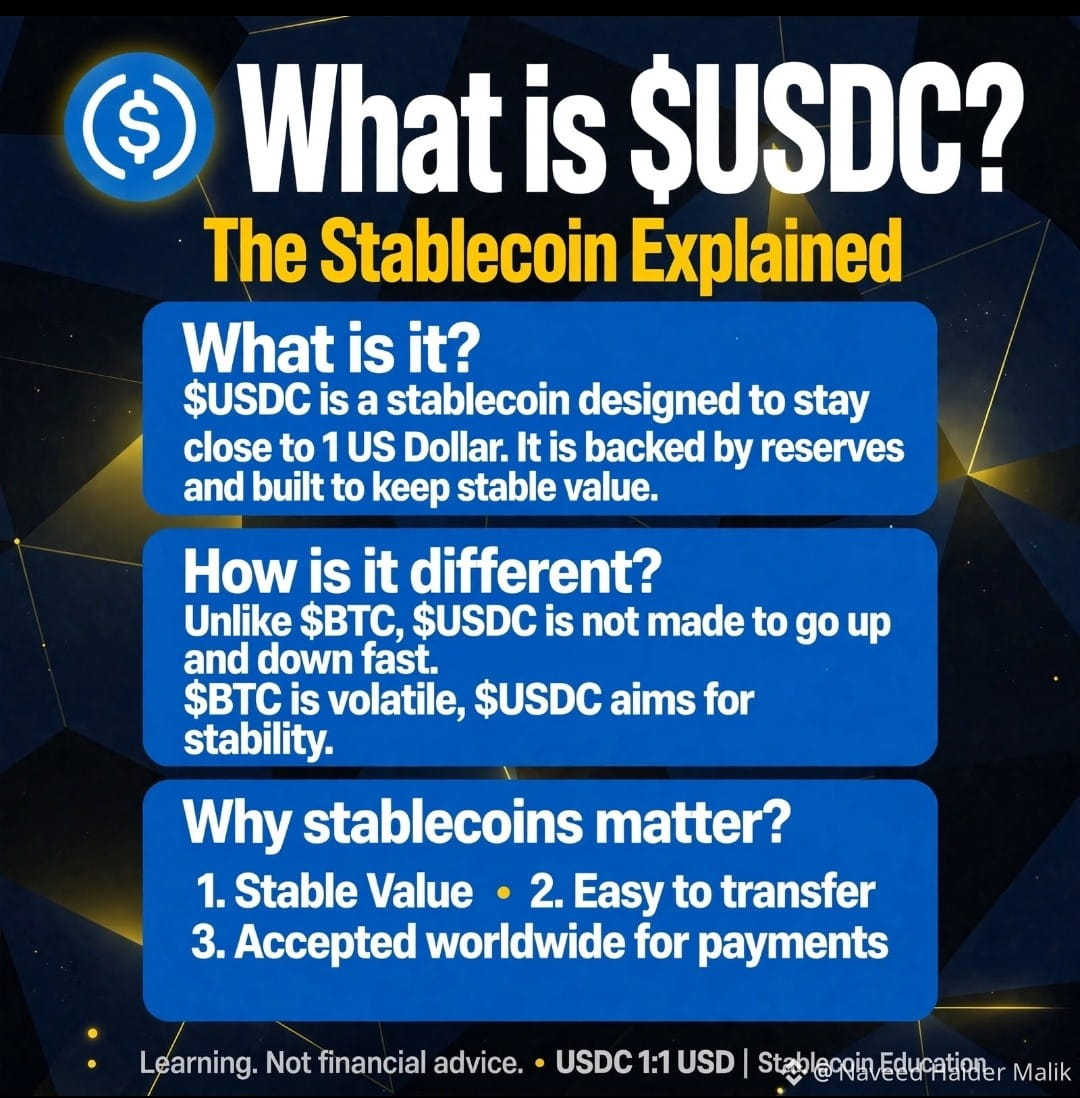
$USDC is a stablecoin.
Its price is made to stay close to 1 US Dollar. Unlike $BTC, it is not made to go up and down fast.
Why does Binance use it for payments?
1. Stable value
2. Easy to convert to PKR in P2P
3. Accepted worldwide
You earn $USDC when someone clicks your $USDC or $BTC cashtag and trades within 7 days. Payout is weekly Monday to Sunday, paid by Thursday to your Funding Wallet. You need 0.1 USDC minimum.
I am learning about stablecoins. Not financial advice.
#LearnFromMistakes #Stablecoins
$USDC is a stablecoin.
Its price is made to stay close to 1 US Dollar. Unlike $BTC, it is not made to go up and down fast.
Why does Binance use it for payments?
1. Stable value
2. Easy to convert to PKR in P2P
3. Accepted worldwide
You earn $USDC when someone clicks your $USDC or $BTC cashtag and trades within 7 days. Payout is weekly Monday to Sunday, paid by Thursday to your Funding Wallet. You need 0.1 USDC minimum.
I am learning about stablecoins. Not financial advice.
#LearnFromMistakes #Stablecoins
Its price is made to stay close to 1 US Dollar. Unlike $BTC, it is not made to go up and down fast.
Why does Binance use it for payments?
1. Stable value
2. Easy to convert to PKR in P2P
3. Accepted worldwide
You earn $USDC when someone clicks your $USDC or $BTC cashtag and trades within 7 days. Payout is weekly Monday to Sunday, paid by Thursday to your Funding Wallet. You need 0.1 USDC minimum.
I am learning about stablecoins. Not financial advice.
#LearnFromMistakes #Stablecoins
89
What is Bitcoin ($BTC) in simple words? For complete Beginners.
The world's first digital money.
No bank or government controls it.
but the question comes if no one owns and controls it why this is still working ?
3 simple facts:
1. Only 21 million $BTC will ever exist .
2.Borderless! you can send it to anyone in the world.
3. Decentralized : it turn on thousands of computers not one company.
this is for(beginner) education only. not financial advice.
Next will be on $ETH and $BNB
#CryptoForBeginners
What is Bitcoin ($BTC) in simple words? For complete Beginners.
The world's first digital money.
No bank or government controls it.
but the question comes if no one owns and controls it why this is still working ?
3 simple facts:
1. Only 21 million $BTC will ever exist .
2.Borderless! you can send it to anyone in the world.
3. Decentralized : it turn on thousands of computers not one company.
this is for(beginner) education only. not financial advice.
Next will be on $ETH and $BNB
#CryptoForBeginners
The world's first digital money.
No bank or government controls it.
but the question comes if no one owns and controls it why this is still working ?
3 simple facts:
1. Only 21 million $BTC will ever exist .
2.Borderless! you can send it to anyone in the world.
3. Decentralized : it turn on thousands of computers not one company.
this is for(beginner) education only. not financial advice.
Next will be on $ETH and $BNB
#CryptoForBeginners
114
I'm new to crypto.
I tried to buy BTC once but got scammed 😔
Since then I haven't done any trading. Too scared.
Just joined Binance to learn properly and to try "Write to Earn".
What's the #1 safety rule that saved you from getting scammed?
Comment your tips below so beginners like me don't make the same mistake 🙏
#CryptoPK #BinanceSquareFamily #ScamAwareness #writetoearn #Pakistan
I'm new to crypto.
I tried to buy BTC once but got scammed 😔
Since then I haven't done any trading. Too scared.
Just joined Binance to learn properly and to try "Write to Earn".
What's the #1 safety rule that saved you from getting scammed?
Comment your tips below so beginners like me don't make the same mistake 🙏
#CryptoPK #BinanceSquareFamily #ScamAwareness #writetoearn #Pakistan
I tried to buy BTC once but got scammed 😔
Since then I haven't done any trading. Too scared.
Just joined Binance to learn properly and to try "Write to Earn".
What's the #1 safety rule that saved you from getting scammed?
Comment your tips below so beginners like me don't make the same mistake 🙏
#CryptoPK #BinanceSquareFamily #ScamAwareness #writetoearn #Pakistan
1
1
402
ເຂົ້າສູ່ລະບົບເພື່ອສຳຫຼວດເນື້ອຫາເພີ່ມເຕີມ
ເຂົ້າຮ່ວມກຸ່ມຜູ້ໃຊ້ຄຣິບໂຕທົ່ວໂລກໃນ Binance Square.
⚡️ ໄດ້ຮັບຂໍ້ມູນຫຼ້າສຸດ ແລະ ທີ່ມີປະໂຫຍດກ່ຽວກັບຄຣິບໂຕ.
💬 ໄດ້ຮັບຄວາມໄວ້ວາງໃຈຈາກຕະຫຼາດແລກປ່ຽນຄຣິບໂຕທີ່ໃຫຍ່ທີ່ສຸດໃນໂລກ.
👍 ຄົ້ນຫາຂໍ້ມູນເຊີງເລິກທີ່ແທ້ຈາກນັກສ້າງທີ່ໄດ້ຮັບການຢືນຢັນ.
ອີເມວ / ເບີໂທລະສັບ
ຫົວຂໍ້ທີ່ກໍາລັງນິຍົມ
USIranTradeTankerStrikesEscalate
143,444 views
2,421 ກຳລັງສົນທະນາ
#usirantradetankerstrikesescalate
🔥 US Iran Trade Tanker Strikes Escalate 🔥
The part I keep watching is not just the strikes. It is what happens when a military conflict starts interfering with the routes that move energy around the world.
The U.S. struck three Iranian oil tankers after Iran launched missiles toward two U.S. Navy ships. Iran then retaliated against shipping, pushing the confrontation further into the maritime economy.
That matters far beyond Washington and Tehran. The Strait of Hormuz is a critical energy corridor, and shipping through it has fallen sharply as operators face rising security risks.
Markets are already reacting. Brent crude moved toward six-week highs as traders priced in greater supply disruption risk.
The overlooked lesson is simple: markets do not need oil production to stop completely. Sometimes the fear of disrupted transportation is enough to change prices, inflation expectations, and risk appetite.
When trade routes become part of the battlefield, the economic impact can travel much faster than the missiles.
The real question now is not only who strikes next, but how long global shipping can operate under this level of uncertainty.
Disclaimer: This post is for educational purposes only and is not financial advice.
#Iran #Oil #GrowWithSAC $IOST $SOLV $SOPH
#USIranTradeTankerStrikesEscalate
Sienna Leo-你真棒-带我走
·2 ຖືກໃຈ
·3.9k views
CFTCSeeksDismissalOfCMEKalshiBTCFuturesSuit
294 views
33 ກຳລັງສົນທະນາ
CanadaTariffsOnUSTakeEffect
263 views
23 ກຳລັງສົນທະນາ