
kaythreen_queen
3.5k ໂພສ

kaythreen_queen
ລາຍງານ
ບລັອກຜູ້ໃຊ້
amazing trader follow me friend I will follow back you and if you want amazing journey with mw then get in touch with me
ເປີດການຊື້ຂາຍ
ຜູ້ຊື້ຂາຍປະຈໍາ
2.3 ປີ
420 ກໍາລັງຕິດຕາມ
2.4K+ ຜູ້ຕິດຕາມ
1.8K+ Liked
ໂພສ
Portfolio
ທັງໝົດ
ວົງຢືມ
ຖ່າຍທອດສົດ
·
--
ສັນຍານກະທິງ
ເບິ່ງການແປ
Honestly I almost didn't write this one. FOMC days usually blur together for me — check the number, shrug, move on. Not today.
Here's what stopped me. A hike is the base case now. Not a hold, not a cut. Polymarket's sitting near 80% for it. That's a weird sentence to type, because for most of this year everyone assumed cuts were coming eventually. Somewhere between the August jobs number and that hot CPI print, that whole assumption just... quietly died. Nobody announced it. It just stopped being true.
So instead of staring at the odds again, I pulled up stablecoin outflows from exchanges over the last two weeks. Nothing dramatic — just a slow, steady drift down. That kind of move usually means people are quietly de-risking, not betting on a direction. It's a small thing, but it tells me more than another prediction market screenshot would.
What actually worries me is the follow-through. In past surprise hikes, the first BTC reaction wasn't the real story — the next 48 hours were, once leverage got flushed out properly. If Warsh hikes and leaves the door open in the dot plot, I'd guess the drift after matters more than the initial dip.
I genuinely don't know if that pattern still holds. Rate regimes change. Do trading reflexes actually change with them, or is everyone still running last cycle's playbook out of habit?
#FedRateWatch
$ASTER
{spot}(RONINUSDT)
$SAGA
$TUT
{spot}(SAGAUSDT)
{spot}(TUTUSDT)
Honestly I almost didn't write this one. FOMC days usually blur together for me — check the number, shrug, move on. Not today.
Here's what stopped me. A hike is the base case now. Not a hold, not a cut. Polymarket's sitting near 80% for it. That's a weird sentence to type, because for most of this year everyone assumed cuts were coming eventually. Somewhere between the August jobs number and that hot CPI print, that whole assumption just... quietly died. Nobody announced it. It just stopped being true.
So instead of staring at the odds again, I pulled up stablecoin outflows from exchanges over the last two weeks. Nothing dramatic — just a slow, steady drift down. That kind of move usually means people are quietly de-risking, not betting on a direction. It's a small thing, but it tells me more than another prediction market screenshot would.
What actually worries me is the follow-through. In past surprise hikes, the first BTC reaction wasn't the real story — the next 48 hours were, once leverage got flushed out properly. If Warsh hikes and leaves the door open in the dot plot, I'd guess the drift after matters more than the initial dip.
I genuinely don't know if that pattern still holds. Rate regimes change. Do trading reflexes actually change with them, or is everyone still running last cycle's playbook out of habit?
#FedRateWatch
$ASTER
$SAGA
$TUT
Here's what stopped me. A hike is the base case now. Not a hold, not a cut. Polymarket's sitting near 80% for it. That's a weird sentence to type, because for most of this year everyone assumed cuts were coming eventually. Somewhere between the August jobs number and that hot CPI print, that whole assumption just... quietly died. Nobody announced it. It just stopped being true.
So instead of staring at the odds again, I pulled up stablecoin outflows from exchanges over the last two weeks. Nothing dramatic — just a slow, steady drift down. That kind of move usually means people are quietly de-risking, not betting on a direction. It's a small thing, but it tells me more than another prediction market screenshot would.
What actually worries me is the follow-through. In past surprise hikes, the first BTC reaction wasn't the real story — the next 48 hours were, once leverage got flushed out properly. If Warsh hikes and leaves the door open in the dot plot, I'd guess the drift after matters more than the initial dip.
I genuinely don't know if that pattern still holds. Rate regimes change. Do trading reflexes actually change with them, or is everyone still running last cycle's playbook out of habit?
#FedRateWatch
$ASTER
$SAGA
$TUT
175
·
--
ສັນຍານກະທິງ
Nabit ako, nakita ko na bumagsak ang CPI, halos na-swipe ko na lang sana. Mabuti at hindi.
0.3% core, buwan-sa-buwan. Gusto ng consensus na 0.2%. Maliit na agwat lang sa papel, pero sapat iyon — agad na tumalon ang fed funds futures patungo sa ~90% na posibilidad ng isang hike sa Miyerkules na darating. Yung jobs number noong nakaraang linggo (162K, sobra sa ~53K na inaasahan) nagmukhang naka-hilig na ang merkado roon. Ito na lang ang nag-umpisa.
Pero narito kung saan ako natatrap: ang isang print na limang araw pa ang layo ay hindi dapat tratuhin na parang hatol. Nagbago-bago rin ang Fed sa mas malaki pa kaysa rito. At honestly, malaking bahagi ng init na ito ay galing sa langis — ang sitwasyon sa Iran na nagtutulak pataas sa krudo, na pumapasok sa core prices sa pamamagitan ng pagpapadala at freight bago pa man ito magmukhang “tunay” na inflation na nagmumula sa aktuwal na demand. Dalawang magkaibang sakit iyon. Ang CPI number ay hindi nagkakaiba, pero ang Fed sa huli kailangang gumawa.
Ito yung paulit kong binabalikan: noong 2022, down na nang husto ang crypto sa loob ng ilang buwan bago pa matapos ng Fed ang hiking cycle nito. Hindi naghintay ang merkado ng kumpirmasyon—na-presyo na nito nang maaga ang direksyon. Kaya kung nasa 90% odds na tayo, hula ko marami sa damage—o repositioning, depende sa gusto mong termino—ay nakakabit na sa funding rates at spot, hindi nakahintay sa unahan natin.
Totoong hindi sigurado kung gaano pa karaming reaksyon ang natitira kapag lumabas na ang aktuwal na desisyon.
Curious ako kung nasaan ka ngayon—na-adjust ka na, o naghihintay pa hanggang ika-16?
#CPIWatch
$RIVER
{future}(RIVERUSDT)
$RAYSOL
{future}(RAYSOLUSDT)
$BLUR
{spot}(BLURUSDT)
Nabit ako, nakita ko na bumagsak ang CPI, halos na-swipe ko na lang sana. Mabuti at hindi.
0.3% core, buwan-sa-buwan. Gusto ng consensus na 0.2%. Maliit na agwat lang sa papel, pero sapat iyon — agad na tumalon ang fed funds futures patungo sa ~90% na posibilidad ng isang hike sa Miyerkules na darating. Yung jobs number noong nakaraang linggo (162K, sobra sa ~53K na inaasahan) nagmukhang naka-hilig na ang merkado roon. Ito na lang ang nag-umpisa.
Pero narito kung saan ako natatrap: ang isang print na limang araw pa ang layo ay hindi dapat tratuhin na parang hatol. Nagbago-bago rin ang Fed sa mas malaki pa kaysa rito. At honestly, malaking bahagi ng init na ito ay galing sa langis — ang sitwasyon sa Iran na nagtutulak pataas sa krudo, na pumapasok sa core prices sa pamamagitan ng pagpapadala at freight bago pa man ito magmukhang “tunay” na inflation na nagmumula sa aktuwal na demand. Dalawang magkaibang sakit iyon. Ang CPI number ay hindi nagkakaiba, pero ang Fed sa huli kailangang gumawa.
Ito yung paulit kong binabalikan: noong 2022, down na nang husto ang crypto sa loob ng ilang buwan bago pa matapos ng Fed ang hiking cycle nito. Hindi naghintay ang merkado ng kumpirmasyon—na-presyo na nito nang maaga ang direksyon. Kaya kung nasa 90% odds na tayo, hula ko marami sa damage—o repositioning, depende sa gusto mong termino—ay nakakabit na sa funding rates at spot, hindi nakahintay sa unahan natin.
Totoong hindi sigurado kung gaano pa karaming reaksyon ang natitira kapag lumabas na ang aktuwal na desisyon.
Curious ako kung nasaan ka ngayon—na-adjust ka na, o naghihintay pa hanggang ika-16?
#CPIWatch
$RIVER
$RAYSOL
$BLUR
0.3% core, buwan-sa-buwan. Gusto ng consensus na 0.2%. Maliit na agwat lang sa papel, pero sapat iyon — agad na tumalon ang fed funds futures patungo sa ~90% na posibilidad ng isang hike sa Miyerkules na darating. Yung jobs number noong nakaraang linggo (162K, sobra sa ~53K na inaasahan) nagmukhang naka-hilig na ang merkado roon. Ito na lang ang nag-umpisa.
Pero narito kung saan ako natatrap: ang isang print na limang araw pa ang layo ay hindi dapat tratuhin na parang hatol. Nagbago-bago rin ang Fed sa mas malaki pa kaysa rito. At honestly, malaking bahagi ng init na ito ay galing sa langis — ang sitwasyon sa Iran na nagtutulak pataas sa krudo, na pumapasok sa core prices sa pamamagitan ng pagpapadala at freight bago pa man ito magmukhang “tunay” na inflation na nagmumula sa aktuwal na demand. Dalawang magkaibang sakit iyon. Ang CPI number ay hindi nagkakaiba, pero ang Fed sa huli kailangang gumawa.
Ito yung paulit kong binabalikan: noong 2022, down na nang husto ang crypto sa loob ng ilang buwan bago pa matapos ng Fed ang hiking cycle nito. Hindi naghintay ang merkado ng kumpirmasyon—na-presyo na nito nang maaga ang direksyon. Kaya kung nasa 90% odds na tayo, hula ko marami sa damage—o repositioning, depende sa gusto mong termino—ay nakakabit na sa funding rates at spot, hindi nakahintay sa unahan natin.
Totoong hindi sigurado kung gaano pa karaming reaksyon ang natitira kapag lumabas na ang aktuwal na desisyon.
Curious ako kung nasaan ka ngayon—na-adjust ka na, o naghihintay pa hanggang ika-16?
#CPIWatch
$RIVER
$RAYSOL
$BLUR
🔴 Already repositioned
50%
🟡 Waiting for confirmation
13%
🟢 Think it's overpriced, stayi
25%
⚪️ No change for me
12%
8 ຄະແນນສຽງ • ປິດລົງຄະແນນສຽງ
4
4
2.4k
·
--
ສັນຍານກະທິງ
1
119
·
--
ສັນຍານກະທິງ
ເບິ່ງການແປ
🚨 3 moreCOINS I’M WATCHING RIGHT NOW 👀🔥
The market is heating up again, and these 3 coins deserve attention:
₿ $BTC — Bitcoin is showing strong momentum after pushing above $80K. If the market stays bullish, BTC could remain the main driver for the next move. 📈
⚡ $SOL — Solana is back in focus after its recent rebound. Traders are watching whether SOL can maintain momentum and challenge higher resistance levels. 🚀
🔥 $HYPER — Hyperliquid continues to attract attention as one of the most interesting altcoin narratives. High potential, but also higher volatility. 👀
Which one would you choose for the next move?
💬 BTC
💬 SOL
💬 HYPE
Drop your pick below 👇
Let’s see which community is strongest! 🚀🔥
#HYPE #Crypto #Altcoins #CryptoTrading #Bitcoin
{spot}(BTCUSDT)
{spot}(SOLUSDT)
{future}(HYPERUSDT)
🚨 3 moreCOINS I’M WATCHING RIGHT NOW 👀🔥
The market is heating up again, and these 3 coins deserve attention:
₿ $BTC — Bitcoin is showing strong momentum after pushing above $80K. If the market stays bullish, BTC could remain the main driver for the next move. 📈
⚡ $SOL — Solana is back in focus after its recent rebound. Traders are watching whether SOL can maintain momentum and challenge higher resistance levels. 🚀
🔥 $HYPER — Hyperliquid continues to attract attention as one of the most interesting altcoin narratives. High potential, but also higher volatility. 👀
Which one would you choose for the next move?
💬 BTC
💬 SOL
💬 HYPE
Drop your pick below 👇
Let’s see which community is strongest! 🚀🔥
#HYPE #Crypto #Altcoins #CryptoTrading #Bitcoin
The market is heating up again, and these 3 coins deserve attention:
₿ $BTC — Bitcoin is showing strong momentum after pushing above $80K. If the market stays bullish, BTC could remain the main driver for the next move. 📈
⚡ $SOL — Solana is back in focus after its recent rebound. Traders are watching whether SOL can maintain momentum and challenge higher resistance levels. 🚀
🔥 $HYPER — Hyperliquid continues to attract attention as one of the most interesting altcoin narratives. High potential, but also higher volatility. 👀
Which one would you choose for the next move?
💬 BTC
💬 SOL
💬 HYPE
Drop your pick below 👇
Let’s see which community is strongest! 🚀🔥
#HYPE #Crypto #Altcoins #CryptoTrading #Bitcoin
2
55
·
--
ສັນຍານກະທິງ
ເບິ່ງການແປ
🚨 3 COINS I’M WATCHING TODAY 👀🔥
🥇 $XRP — Strong momentum + huge market attention. Is the next move starting? 👀
🥈 $HYPE — One of the hottest narratives in crypto right now. Can buyers push it higher? 🚀
🥉 $BNB — Binance ecosystem strength keeps BNB on the radar. 🔥
Which one are you watching? 👇
1️⃣ XRP
2️⃣ HYPE
3️⃣ BNB
Drop your pick in the comments! 🚀
#HYPE #BNB #Crypto #Binance ##CryptoTrading
{spot}(XRPUSDT)
{spot}(BNBUSDT)
{future}(HYPEUSDT)
🚨 3 COINS I’M WATCHING TODAY 👀🔥
🥇 $XRP — Strong momentum + huge market attention. Is the next move starting? 👀
🥈 $HYPE — One of the hottest narratives in crypto right now. Can buyers push it higher? 🚀
🥉 $BNB — Binance ecosystem strength keeps BNB on the radar. 🔥
Which one are you watching? 👇
1️⃣ XRP
2️⃣ HYPE
3️⃣ BNB
Drop your pick in the comments! 🚀
#HYPE #BNB #Crypto #Binance ##CryptoTrading
🥇 $XRP — Strong momentum + huge market attention. Is the next move starting? 👀
🥈 $HYPE — One of the hottest narratives in crypto right now. Can buyers push it higher? 🚀
🥉 $BNB — Binance ecosystem strength keeps BNB on the radar. 🔥
Which one are you watching? 👇
1️⃣ XRP
2️⃣ HYPE
3️⃣ BNB
Drop your pick in the comments! 🚀
#HYPE #BNB #Crypto #Binance ##CryptoTrading
1
203
·
--
ສັນຍານກະທິງ
ເປັນຄວາມຈິງບາງສ່ວນ
ເບິ່ງການແປ
#dusk $DUSK @Dusk_Foundation I looked through Dusk's whitepaper table of contents this week — page 2 of 22, nothing more than the outline. But the structure told me something. Section 4, "Transactions," splits into two: Moonlight (page 13) and Phoenix (page 14). Two transaction models in the same document.
I'll be upfront about what I actually know versus what I'm guessing. From the TOC alone, I can confirm Dusk documents two transaction types under one chain. I have not read the full text of those sections, so I can't verify with certainty how they differ mechanically — I'm inferring, based on the naming convention and general industry patterns, that one is likely transparent/account-based and the other privacy-preserving. That's an assumption, not a confirmed fact from this source.
What is confirmed by the TOC: consensus gets six full subsections (3.1–3.9, pages 6–11) — provisioners, committees, attestations, sortition, emergency mode, fallback, rolling finality, incentives. That's a dense structure for finality alone. I can't verify from a table of contents whether this design has been tested under adversarial conditions at scale — that would require the actual technical content, audits, or mainnet data, none of which I have in front of me right now.
So here's my honest position: the paper's structure suggests deliberate separation between transparent and confidential transaction handling, which matters for regulated finance use cases. But claims about fault tolerance or committee resilience need independent verification — audits, incident history, or third-party review — before I'd treat them as settled.
Has anyone actually seen Dusk's consensus mechanism reviewed by an independent security audit, or is that still outstanding? $TAC.US
$SOON
{spot}(DUSKUSDT)
{stock_us}(TAC.US)
{future}(SOONUSDT)
#dusk $DUSK @Dusk I looked through Dusk's whitepaper table of contents this week — page 2 of 22, nothing more than the outline. But the structure told me something. Section 4, "Transactions," splits into two: Moonlight (page 13) and Phoenix (page 14). Two transaction models in the same document.
I'll be upfront about what I actually know versus what I'm guessing. From the TOC alone, I can confirm Dusk documents two transaction types under one chain. I have not read the full text of those sections, so I can't verify with certainty how they differ mechanically — I'm inferring, based on the naming convention and general industry patterns, that one is likely transparent/account-based and the other privacy-preserving. That's an assumption, not a confirmed fact from this source.
What is confirmed by the TOC: consensus gets six full subsections (3.1–3.9, pages 6–11) — provisioners, committees, attestations, sortition, emergency mode, fallback, rolling finality, incentives. That's a dense structure for finality alone. I can't verify from a table of contents whether this design has been tested under adversarial conditions at scale — that would require the actual technical content, audits, or mainnet data, none of which I have in front of me right now.
So here's my honest position: the paper's structure suggests deliberate separation between transparent and confidential transaction handling, which matters for regulated finance use cases. But claims about fault tolerance or committee resilience need independent verification — audits, incident history, or third-party review — before I'd treat them as settled.
Has anyone actually seen Dusk's consensus mechanism reviewed by an independent security audit, or is that still outstanding? $TAC.US
$SOON
I'll be upfront about what I actually know versus what I'm guessing. From the TOC alone, I can confirm Dusk documents two transaction types under one chain. I have not read the full text of those sections, so I can't verify with certainty how they differ mechanically — I'm inferring, based on the naming convention and general industry patterns, that one is likely transparent/account-based and the other privacy-preserving. That's an assumption, not a confirmed fact from this source.
What is confirmed by the TOC: consensus gets six full subsections (3.1–3.9, pages 6–11) — provisioners, committees, attestations, sortition, emergency mode, fallback, rolling finality, incentives. That's a dense structure for finality alone. I can't verify from a table of contents whether this design has been tested under adversarial conditions at scale — that would require the actual technical content, audits, or mainnet data, none of which I have in front of me right now.
So here's my honest position: the paper's structure suggests deliberate separation between transparent and confidential transaction handling, which matters for regulated finance use cases. But claims about fault tolerance or committee resilience need independent verification — audits, incident history, or third-party review — before I'd treat them as settled.
Has anyone actually seen Dusk's consensus mechanism reviewed by an independent security audit, or is that still outstanding? $TAC.US
$SOON
🔒 Dual transaction models
80%
⚙️ Complex consensus
0%
🏦 Regulatory risk
20%
📊 Too early to judge
0%
5 ຄະແນນສຽງ • ປິດລົງຄະແນນສຽງ
39
6
2k
ຢືນຢັນແລ້ວ
ເບິ່ງການແປ
#dusk $DUSK @Dusk_Foundation Good — this confirms the facts hold up. Here's the verified version, with sourcing built into the reasoning rather than stated outright:
Almost skipped Dusk's whitepaper. "Privacy blockchain for finance" is a phrase I've stopped trusting on sight. But I opened it anyway, and the table of contents had something I didn't expect — two transaction models listed side by side, not one replacing the other.
Checked this against their docs before writing anything. It's real: Moonlight is account-based and fully public — balances, transfers, everything visible, similar to how Ethereum accounts work. Phoenix is UTXO-based and shielded, using zero-knowledge proofs to hide amounts and links between sender and receiver. Both settle through the same Transfer Contract, and users can convert between the two.
What's interesting is why. Dusk added Moonlight specifically to stay compliant with exchange listing requirements — the shielded-only model was creating regulatory friction. So this isn't philosophical flexibility, it's a practical fix to a real problem they ran into.
Small example: a security token issuer needs cap tables auditable but wants trade execution private. Moonlight handles the paperwork, Phoenix handles the settlement, one Transfer Contract underneath both.
What I can't verify yet is how this performs under load — running two models means more surface area for something to break, and the docs don't say much about failure cases in production.
Has anyone actually converted between Moonlight and Phoenix on mainnet — how smooth was it?
{spot}(DUSKUSDT)
$MORPHO
{spot}(MORPHOUSDT)
$BTC
{spot}(BTCUSDT)
#dusk $DUSK @Dusk Good — this confirms the facts hold up. Here's the verified version, with sourcing built into the reasoning rather than stated outright:
Almost skipped Dusk's whitepaper. "Privacy blockchain for finance" is a phrase I've stopped trusting on sight. But I opened it anyway, and the table of contents had something I didn't expect — two transaction models listed side by side, not one replacing the other.
Checked this against their docs before writing anything. It's real: Moonlight is account-based and fully public — balances, transfers, everything visible, similar to how Ethereum accounts work. Phoenix is UTXO-based and shielded, using zero-knowledge proofs to hide amounts and links between sender and receiver. Both settle through the same Transfer Contract, and users can convert between the two.
What's interesting is why. Dusk added Moonlight specifically to stay compliant with exchange listing requirements — the shielded-only model was creating regulatory friction. So this isn't philosophical flexibility, it's a practical fix to a real problem they ran into.
Small example: a security token issuer needs cap tables auditable but wants trade execution private. Moonlight handles the paperwork, Phoenix handles the settlement, one Transfer Contract underneath both.
What I can't verify yet is how this performs under load — running two models means more surface area for something to break, and the docs don't say much about failure cases in production.
Has anyone actually converted between Moonlight and Phoenix on mainnet — how smooth was it?
$MORPHO
$BTC
Almost skipped Dusk's whitepaper. "Privacy blockchain for finance" is a phrase I've stopped trusting on sight. But I opened it anyway, and the table of contents had something I didn't expect — two transaction models listed side by side, not one replacing the other.
Checked this against their docs before writing anything. It's real: Moonlight is account-based and fully public — balances, transfers, everything visible, similar to how Ethereum accounts work. Phoenix is UTXO-based and shielded, using zero-knowledge proofs to hide amounts and links between sender and receiver. Both settle through the same Transfer Contract, and users can convert between the two.
What's interesting is why. Dusk added Moonlight specifically to stay compliant with exchange listing requirements — the shielded-only model was creating regulatory friction. So this isn't philosophical flexibility, it's a practical fix to a real problem they ran into.
Small example: a security token issuer needs cap tables auditable but wants trade execution private. Moonlight handles the paperwork, Phoenix handles the settlement, one Transfer Contract underneath both.
What I can't verify yet is how this performs under load — running two models means more surface area for something to break, and the docs don't say much about failure cases in production.
Has anyone actually converted between Moonlight and Phoenix on mainnet — how smooth was it?
$MORPHO
$BTC
🔹 Moonlight — transparent
60%
🔹 Phoenix — private
0%
🔹 Both, depending
0%
🔹 Haven’t tried Dusk
40%
5 ຄະແນນສຽງ • ປິດລົງຄະແນນສຽງ
8
2
633
ເບິ່ງການແປ
The biggest question for me is exactly the one you raised: can this survive real scrutiny and real economic activity?
The biggest question for me is exactly the one you raised: can this survive real scrutiny and real economic activity?
62
·
--
ສັນຍານກະທິງ
ຢືນຢັນແລ້ວ
ເບິ່ງການແປ
#dusk $DUSK @Dusk_Foundation Let me verify the technical claims before finalizing this.
Read through Dusk's whitepaper on a slow afternoon, curious what XSC actually meant beyond a name. Ended up stuck on the transaction section. Dusk runs two models on one chain: Moonlight, a transparent account system, and Phoenix, a shielded UTXO model using zero-knowledge proofs.
What I didn't expect: Moonlight wasn't part of the original design. Dusk added it after realizing exchange integration needed a public transaction model, since full anonymity created delisting risk under EU rules. That's a practical reason, not a marketing one, and it changes how I read the whole system.
The two models aren't isolated. A Transfer Contract lets users convert between Phoenix notes and Moonlight balances atomically, and Phoenix supports viewing keys so specific transactions can be selectively disclosed for auditing.
Concrete scenario: a small trading desk pays salaries and reports treasury moves through Moonlight, fully visible, then executes actual position trades through Phoenix, hidden from competitors, with a viewing key held by a regulator if needed. No bridge, no second chain, same settlement layer.
That's the pitch. What I can't judge from a document is friction, how conversion behaves under real load, whether "seamless" holds when both models compete for the same block space.
Has anyone actually run Moonlight-to-Phoenix conversions on Dusk testnet? Did it feel atomic and fast, or was there lag the docs don't mention? $SOL $LAB
{future}(LABUSDT)
{spot}(SOLUSDT)
{spot}(DUSKUSDT)
#dusk $DUSK @Dusk Let me verify the technical claims before finalizing this.
Read through Dusk's whitepaper on a slow afternoon, curious what XSC actually meant beyond a name. Ended up stuck on the transaction section. Dusk runs two models on one chain: Moonlight, a transparent account system, and Phoenix, a shielded UTXO model using zero-knowledge proofs.
What I didn't expect: Moonlight wasn't part of the original design. Dusk added it after realizing exchange integration needed a public transaction model, since full anonymity created delisting risk under EU rules. That's a practical reason, not a marketing one, and it changes how I read the whole system.
The two models aren't isolated. A Transfer Contract lets users convert between Phoenix notes and Moonlight balances atomically, and Phoenix supports viewing keys so specific transactions can be selectively disclosed for auditing.
Concrete scenario: a small trading desk pays salaries and reports treasury moves through Moonlight, fully visible, then executes actual position trades through Phoenix, hidden from competitors, with a viewing key held by a regulator if needed. No bridge, no second chain, same settlement layer.
That's the pitch. What I can't judge from a document is friction, how conversion behaves under real load, whether "seamless" holds when both models compete for the same block space.
Has anyone actually run Moonlight-to-Phoenix conversions on Dusk testnet? Did it feel atomic and fast, or was there lag the docs don't mention? $SOL $LAB
Read through Dusk's whitepaper on a slow afternoon, curious what XSC actually meant beyond a name. Ended up stuck on the transaction section. Dusk runs two models on one chain: Moonlight, a transparent account system, and Phoenix, a shielded UTXO model using zero-knowledge proofs.
What I didn't expect: Moonlight wasn't part of the original design. Dusk added it after realizing exchange integration needed a public transaction model, since full anonymity created delisting risk under EU rules. That's a practical reason, not a marketing one, and it changes how I read the whole system.
The two models aren't isolated. A Transfer Contract lets users convert between Phoenix notes and Moonlight balances atomically, and Phoenix supports viewing keys so specific transactions can be selectively disclosed for auditing.
Concrete scenario: a small trading desk pays salaries and reports treasury moves through Moonlight, fully visible, then executes actual position trades through Phoenix, hidden from competitors, with a viewing key held by a regulator if needed. No bridge, no second chain, same settlement layer.
That's the pitch. What I can't judge from a document is friction, how conversion behaves under real load, whether "seamless" holds when both models compete for the same block space.
Has anyone actually run Moonlight-to-Phoenix conversions on Dusk testnet? Did it feel atomic and fast, or was there lag the docs don't mention? $SOL $LAB
🔒 Stays seamless at real scale
100%
⚖️ Regulatory trust
0%
🏦 TradFi adoption
0%
🤷 Too early to say
0%
3 ຄະແນນສຽງ • ປິດລົງຄະແນນສຽງ
12
7
104
·
--
ສັນຍານກະທິງ
ຢືນຢັນແລ້ວ
ເບິ່ງການແປ
#dusk $DUSK @Dusk_Foundation Spent twenty minutes on Dusk's docs expecting the usual "privacy chain" boilerplate. Found something I didn't expect: a convert function that atomically swaps DUSK between a public account and a shielded one. Not a bridge. Not a wrapped token. Same protocol, one function call.
Here's why that caught me. Moonlight is the plain account model — balances visible, easy to audit, basically Ethereum-style. Phoenix is the UTXO side, shielded with ZK proofs, nullifiers, commitments. Amounts hidden, sender-receiver links broken. Two completely different data structures, living under one Transfer Contract.
Picture a treasury desk moving funds for payroll versus moving funds for an OTC settlement. Payroll can sit in Moonlight, fully visible for audit trails. The OTC leg shields into Phoenix so counterparties aren't broadcasting position size to the whole chain. Same wallet, same asset, different transaction type depending on what the situation needs.
Worth noting — Dusk also made Phoenix reveal the sender to the receiver by default now, specifically to stay compliant with EU rules. That's a deliberate concession, not a bug. Privacy-preserving, not anonymous.
What I haven't been able to pin down is usage split. Docs describe the mechanism well. They don't show me how much real volume runs through Phoenix versus Moonlight post-mainnet.
Has anyone actually pulled that split from the block explorer? Which model is seeing more real traffic right now?
{spot}(DUSKUSDT)
$TUT
{spot}(TUTUSDT)
$ETH
{spot}(ETHUSDT)
#dusk $DUSK @Dusk Spent twenty minutes on Dusk's docs expecting the usual "privacy chain" boilerplate. Found something I didn't expect: a convert function that atomically swaps DUSK between a public account and a shielded one. Not a bridge. Not a wrapped token. Same protocol, one function call.
Here's why that caught me. Moonlight is the plain account model — balances visible, easy to audit, basically Ethereum-style. Phoenix is the UTXO side, shielded with ZK proofs, nullifiers, commitments. Amounts hidden, sender-receiver links broken. Two completely different data structures, living under one Transfer Contract.
Picture a treasury desk moving funds for payroll versus moving funds for an OTC settlement. Payroll can sit in Moonlight, fully visible for audit trails. The OTC leg shields into Phoenix so counterparties aren't broadcasting position size to the whole chain. Same wallet, same asset, different transaction type depending on what the situation needs.
Worth noting — Dusk also made Phoenix reveal the sender to the receiver by default now, specifically to stay compliant with EU rules. That's a deliberate concession, not a bug. Privacy-preserving, not anonymous.
What I haven't been able to pin down is usage split. Docs describe the mechanism well. They don't show me how much real volume runs through Phoenix versus Moonlight post-mainnet.
Has anyone actually pulled that split from the block explorer? Which model is seeing more real traffic right now?
$TUT
$ETH
Here's why that caught me. Moonlight is the plain account model — balances visible, easy to audit, basically Ethereum-style. Phoenix is the UTXO side, shielded with ZK proofs, nullifiers, commitments. Amounts hidden, sender-receiver links broken. Two completely different data structures, living under one Transfer Contract.
Picture a treasury desk moving funds for payroll versus moving funds for an OTC settlement. Payroll can sit in Moonlight, fully visible for audit trails. The OTC leg shields into Phoenix so counterparties aren't broadcasting position size to the whole chain. Same wallet, same asset, different transaction type depending on what the situation needs.
Worth noting — Dusk also made Phoenix reveal the sender to the receiver by default now, specifically to stay compliant with EU rules. That's a deliberate concession, not a bug. Privacy-preserving, not anonymous.
What I haven't been able to pin down is usage split. Docs describe the mechanism well. They don't show me how much real volume runs through Phoenix versus Moonlight post-mainnet.
Has anyone actually pulled that split from the block explorer? Which model is seeing more real traffic right now?
$TUT
$ETH
Moonlight (public, auditable)
100%
Not convinced yet
0%
Phoenix (shielded, ZK)
0%
The convert function
0%
2 ຄະແນນສຽງ • ປິດລົງຄະແນນສຽງ
6
3
387
·
--
ສັນຍານກະທິງ
ຢືນຢັນແລ້ວ
ເບິ່ງການແປ
#dusk $DUSK @Dusk_Foundation Spent a few days with the Dusk Network paper, and one design choice stuck with me.
Most chains make you choose: transparent or private. Dusk didn't. Moonlight is account-based and public, while Phoenix is UTXO-based and shielded. Moonlight balances are publicly listed, and it's fully compatible with Phoenix, so users can convert between the two.
First instinct was annoyance. Two transaction models means double the code paths to break.
Then I checked why Moonlight exists. Dusk added it after realizing exchange integration would be simpler with a public model alongside the privacy-preserving one. It was needed to integrate mainnet with exchanges under new regulations. Not theoretical. That's "get delisted or don't."
Think of payroll: a company paying contractors wants amounts private, but its own books need an audit trail. Dusk's dual architecture lets applications choose transparency or confidentiality at the protocol level instead of forcing one model on everyone.
What I'm less sure about: every Phoenix transaction carries a zero-knowledge proof nullifying spent notes. That's real overhead sitting next to Moonlight's plain checks.
Has anyone actually converted between Moonlight and Phoenix — is it as seamless as the docs claim, or is there hidden friction? $BTC $ETC
{spot}(ETCUSDT)
{spot}(BTCUSDT)
{spot}(DUSKUSDT)
#dusk $DUSK @Dusk Spent a few days with the Dusk Network paper, and one design choice stuck with me.
Most chains make you choose: transparent or private. Dusk didn't. Moonlight is account-based and public, while Phoenix is UTXO-based and shielded. Moonlight balances are publicly listed, and it's fully compatible with Phoenix, so users can convert between the two.
First instinct was annoyance. Two transaction models means double the code paths to break.
Then I checked why Moonlight exists. Dusk added it after realizing exchange integration would be simpler with a public model alongside the privacy-preserving one. It was needed to integrate mainnet with exchanges under new regulations. Not theoretical. That's "get delisted or don't."
Think of payroll: a company paying contractors wants amounts private, but its own books need an audit trail. Dusk's dual architecture lets applications choose transparency or confidentiality at the protocol level instead of forcing one model on everyone.
What I'm less sure about: every Phoenix transaction carries a zero-knowledge proof nullifying spent notes. That's real overhead sitting next to Moonlight's plain checks.
Has anyone actually converted between Moonlight and Phoenix — is it as seamless as the docs claim, or is there hidden friction? $BTC $ETC
Most chains make you choose: transparent or private. Dusk didn't. Moonlight is account-based and public, while Phoenix is UTXO-based and shielded. Moonlight balances are publicly listed, and it's fully compatible with Phoenix, so users can convert between the two.
First instinct was annoyance. Two transaction models means double the code paths to break.
Then I checked why Moonlight exists. Dusk added it after realizing exchange integration would be simpler with a public model alongside the privacy-preserving one. It was needed to integrate mainnet with exchanges under new regulations. Not theoretical. That's "get delisted or don't."
Think of payroll: a company paying contractors wants amounts private, but its own books need an audit trail. Dusk's dual architecture lets applications choose transparency or confidentiality at the protocol level instead of forcing one model on everyone.
What I'm less sure about: every Phoenix transaction carries a zero-knowledge proof nullifying spent notes. That's real overhead sitting next to Moonlight's plain checks.
Has anyone actually converted between Moonlight and Phoenix — is it as seamless as the docs claim, or is there hidden friction? $BTC $ETC
4
3
507
·
--
ສັນຍານກະທິງ
ຢືນຢັນແລ້ວ
ເບິ່ງການແປ
#dusk $DUSK @Dusk_Foundation Got home earlier than usual today. One thought kept circling back, so I finally sat down with Dusk's docs in a quiet room and actually read them properly, not the skim I usually do on the train.
People keep filing Dusk under "privacy coin," same shelf as Monero or Zcash. I don't think that's right. It's really two systems stitched together. Moonlight is the front room — transparent, auditable, the kind of thing a MiCA regulator can point to and nod. Phoenix is the back room, ZK-based, where balances and amounts disappear from view. What struck me on reread wasn't that it hides things. It's that the hiding is conditional. Selective, not absolute.
That distinction is doing a lot of work. An institution can't run real assets on a glass wall — competitors would read every trade. But it can't run in the dark either, because no regulator lets that fly. Citadel is Dusk's attempt at a middle switch, baked into the protocol rather than bolted on. Say a fund settles a bond position — the size and counterparty stay off the public feed, but an auditor can still pull the thread if they need to.
The number that actually made me stop scrolling: DuskTrade, with NPEX, is bringing something like €300M in tokenized securities on-chain. Not a testnet flex.
Does the switch actually hold under stress? I don't know yet. Maybe it's the compromise institutions needed. Maybe it just teaches surveillance to wear a nicer coat.
Where do you land — controlled privacy as crypto's on-ramp for real money, or its slow surrender to the systems it was built to route around? $BTC $HOME
{spot}(HOMEUSDT)
{spot}(BTCUSDT)
{spot}(DUSKUSDT)
#dusk $DUSK @Dusk Got home earlier than usual today. One thought kept circling back, so I finally sat down with Dusk's docs in a quiet room and actually read them properly, not the skim I usually do on the train.
People keep filing Dusk under "privacy coin," same shelf as Monero or Zcash. I don't think that's right. It's really two systems stitched together. Moonlight is the front room — transparent, auditable, the kind of thing a MiCA regulator can point to and nod. Phoenix is the back room, ZK-based, where balances and amounts disappear from view. What struck me on reread wasn't that it hides things. It's that the hiding is conditional. Selective, not absolute.
That distinction is doing a lot of work. An institution can't run real assets on a glass wall — competitors would read every trade. But it can't run in the dark either, because no regulator lets that fly. Citadel is Dusk's attempt at a middle switch, baked into the protocol rather than bolted on. Say a fund settles a bond position — the size and counterparty stay off the public feed, but an auditor can still pull the thread if they need to.
The number that actually made me stop scrolling: DuskTrade, with NPEX, is bringing something like €300M in tokenized securities on-chain. Not a testnet flex.
Does the switch actually hold under stress? I don't know yet. Maybe it's the compromise institutions needed. Maybe it just teaches surveillance to wear a nicer coat.
Where do you land — controlled privacy as crypto's on-ramp for real money, or its slow surrender to the systems it was built to route around? $BTC $HOME
People keep filing Dusk under "privacy coin," same shelf as Monero or Zcash. I don't think that's right. It's really two systems stitched together. Moonlight is the front room — transparent, auditable, the kind of thing a MiCA regulator can point to and nod. Phoenix is the back room, ZK-based, where balances and amounts disappear from view. What struck me on reread wasn't that it hides things. It's that the hiding is conditional. Selective, not absolute.
That distinction is doing a lot of work. An institution can't run real assets on a glass wall — competitors would read every trade. But it can't run in the dark either, because no regulator lets that fly. Citadel is Dusk's attempt at a middle switch, baked into the protocol rather than bolted on. Say a fund settles a bond position — the size and counterparty stay off the public feed, but an auditor can still pull the thread if they need to.
The number that actually made me stop scrolling: DuskTrade, with NPEX, is bringing something like €300M in tokenized securities on-chain. Not a testnet flex.
Does the switch actually hold under stress? I don't know yet. Maybe it's the compromise institutions needed. Maybe it just teaches surveillance to wear a nicer coat.
Where do you land — controlled privacy as crypto's on-ramp for real money, or its slow surrender to the systems it was built to route around? $BTC $HOME
🟢 On-ramp for real money
89%
🔴 Surveillance in a nicer coat
11%
🟡 Depends who holds the audit
0%
9 ຄະແນນສຽງ • ປິດລົງຄະແນນສຽງ
28
8
2.3k
ເບິ່ງການແປ
#dusk $DUSK @Dusk_Foundation Spent this weekend doing something different — pulled up Aleo's on-chain activity instead of doom-scrolling price charts again. No rush, just wanted to actually look at the numbers for once.
And honestly, on the tech side, I've got no complaints. Their zero-knowledge architecture is genuinely well built, probably one of the more serious privacy implementations in the space right now. What's nagging at me is something else entirely — how the early money is behaving.
So here's the thing. A massive chunk of what's circulating is just parked in staking and prover commitments. Early investors and validators are sitting on it, collecting inflation rewards, in no hurry to move. Fine, that's normal early-stage behavior. But it only works as long as everyone stays calm.
What worries me more is the isolation problem. Aleo's spent years heads-down perfecting its own zk-native stack, meanwhile other privacy plays on Ethereum and Solana have already started pulling in real institutional pilots. Their cryptography isn't as refined, sure, but they've got something Aleo doesn't yet — actual liquidity, actual bridges, actual capital already flowing. So mainnet launching is obviously the right move. But will anyone build there when there's no money already moving through the place?
They've built something genuinely impressive — a real vault, technically sound, well designed. The problem is nobody's built the road leading to it yet.
So the question I keep coming back to: can they land real market makers and serious infrastructure partners before the early holders get restless and start quietly exiting into an order book with nobody on the other side? What's everyone's read on this — realistically, how much time is left on the clock? $SOL $DOS
{future}(DOSUSDT)
{spot}(SOLUSDT)
{spot}(DUSKUSDT)
#dusk $DUSK @Dusk Spent this weekend doing something different — pulled up Aleo's on-chain activity instead of doom-scrolling price charts again. No rush, just wanted to actually look at the numbers for once.
And honestly, on the tech side, I've got no complaints. Their zero-knowledge architecture is genuinely well built, probably one of the more serious privacy implementations in the space right now. What's nagging at me is something else entirely — how the early money is behaving.
So here's the thing. A massive chunk of what's circulating is just parked in staking and prover commitments. Early investors and validators are sitting on it, collecting inflation rewards, in no hurry to move. Fine, that's normal early-stage behavior. But it only works as long as everyone stays calm.
What worries me more is the isolation problem. Aleo's spent years heads-down perfecting its own zk-native stack, meanwhile other privacy plays on Ethereum and Solana have already started pulling in real institutional pilots. Their cryptography isn't as refined, sure, but they've got something Aleo doesn't yet — actual liquidity, actual bridges, actual capital already flowing. So mainnet launching is obviously the right move. But will anyone build there when there's no money already moving through the place?
They've built something genuinely impressive — a real vault, technically sound, well designed. The problem is nobody's built the road leading to it yet.
So the question I keep coming back to: can they land real market makers and serious infrastructure partners before the early holders get restless and start quietly exiting into an order book with nobody on the other side? What's everyone's read on this — realistically, how much time is left on the clock? $SOL $DOS
And honestly, on the tech side, I've got no complaints. Their zero-knowledge architecture is genuinely well built, probably one of the more serious privacy implementations in the space right now. What's nagging at me is something else entirely — how the early money is behaving.
So here's the thing. A massive chunk of what's circulating is just parked in staking and prover commitments. Early investors and validators are sitting on it, collecting inflation rewards, in no hurry to move. Fine, that's normal early-stage behavior. But it only works as long as everyone stays calm.
What worries me more is the isolation problem. Aleo's spent years heads-down perfecting its own zk-native stack, meanwhile other privacy plays on Ethereum and Solana have already started pulling in real institutional pilots. Their cryptography isn't as refined, sure, but they've got something Aleo doesn't yet — actual liquidity, actual bridges, actual capital already flowing. So mainnet launching is obviously the right move. But will anyone build there when there's no money already moving through the place?
They've built something genuinely impressive — a real vault, technically sound, well designed. The problem is nobody's built the road leading to it yet.
So the question I keep coming back to: can they land real market makers and serious infrastructure partners before the early holders get restless and start quietly exiting into an order book with nobody on the other side? What's everyone's read on this — realistically, how much time is left on the clock? $SOL $DOS
🔘 3-6 months
34%
🔘 6-12 months
33%
🔘 It’s fine, no rush
0%
🔘 Depends on mainnet
33%
3 ຄະແນນສຽງ • ປິດລົງຄະແນນສຽງ
17
5
910
ເບິ່ງການແປ
#dusk $DUSK @Dusk_Foundation I almost skipped past Dusk Network the first time I saw it. "Privacy chain for finance" — sure, I've read that pitch before, usually from a project that just wants to sound serious without doing anything different.
But I sat with it a bit longer this time. Dusk is a layer-1, and it runs something called the XSC standard — Confidential Security Contracts. The core idea isn't hiding everything from everyone, which is what most privacy coins do. It's hiding transaction data from the public while leaving a door open for someone with the right permission to still look inside. A regulator, say. Or an auditor.
That distinction actually stopped me. Most privacy tech is built like a locked room with no windows. This is closer to a locked room with a window that only opens for people holding a specific key. Different problem, different audience.
Picture a mid-sized firm issuing a private bond on-chain. Nobody browsing the explorer sees who holds it or what the coupon payments look like. But if a regulator asks the issuer to prove compliance, there's a mechanism for that — without dumping the whole ledger into public view. Securities law generally wants exactly this: disclosure to specific parties, not disclosure to the internet.
Where I get stuck is proof. A framework that permits selective disclosure is one thing. An institution actually trusting it with real capital is another. I haven't come across enough live, non-pilot activity to know which stage Dusk is really at.
Is anyone tracking actual issuers on Dusk right now, or is it still all sandbox activity?
{spot}(DUSKUSDT)
$BTC
{spot}(BTCUSDT)
$GPS
{spot}(GPSUSDT)
#dusk $DUSK @Dusk I almost skipped past Dusk Network the first time I saw it. "Privacy chain for finance" — sure, I've read that pitch before, usually from a project that just wants to sound serious without doing anything different.
But I sat with it a bit longer this time. Dusk is a layer-1, and it runs something called the XSC standard — Confidential Security Contracts. The core idea isn't hiding everything from everyone, which is what most privacy coins do. It's hiding transaction data from the public while leaving a door open for someone with the right permission to still look inside. A regulator, say. Or an auditor.
That distinction actually stopped me. Most privacy tech is built like a locked room with no windows. This is closer to a locked room with a window that only opens for people holding a specific key. Different problem, different audience.
Picture a mid-sized firm issuing a private bond on-chain. Nobody browsing the explorer sees who holds it or what the coupon payments look like. But if a regulator asks the issuer to prove compliance, there's a mechanism for that — without dumping the whole ledger into public view. Securities law generally wants exactly this: disclosure to specific parties, not disclosure to the internet.
Where I get stuck is proof. A framework that permits selective disclosure is one thing. An institution actually trusting it with real capital is another. I haven't come across enough live, non-pilot activity to know which stage Dusk is really at.
Is anyone tracking actual issuers on Dusk right now, or is it still all sandbox activity?
$BTC
$GPS
But I sat with it a bit longer this time. Dusk is a layer-1, and it runs something called the XSC standard — Confidential Security Contracts. The core idea isn't hiding everything from everyone, which is what most privacy coins do. It's hiding transaction data from the public while leaving a door open for someone with the right permission to still look inside. A regulator, say. Or an auditor.
That distinction actually stopped me. Most privacy tech is built like a locked room with no windows. This is closer to a locked room with a window that only opens for people holding a specific key. Different problem, different audience.
Picture a mid-sized firm issuing a private bond on-chain. Nobody browsing the explorer sees who holds it or what the coupon payments look like. But if a regulator asks the issuer to prove compliance, there's a mechanism for that — without dumping the whole ledger into public view. Securities law generally wants exactly this: disclosure to specific parties, not disclosure to the internet.
Where I get stuck is proof. A framework that permits selective disclosure is one thing. An institution actually trusting it with real capital is another. I haven't come across enough live, non-pilot activity to know which stage Dusk is really at.
Is anyone tracking actual issuers on Dusk right now, or is it still all sandbox activity?
$BTC
$GPS
🔘 Real-world adoption
86%
🔘 Not enough live issuers
0%
🔘 Regulatory uncertainty
0%
🔘 It’s still early
14%
7 ຄະແນນສຽງ • ປິດລົງຄະແນນສຽງ
42
13
3.7k
ເບິ່ງການແປ
#dusk $DUSK @Dusk_Foundation Spent longer than I'd like to admit trying to find a live XSC contract on Dusk Network's explorer. Couldn't confirm much beyond testnet activity. That's usually where I start getting skeptical of "privacy for finance" pitches.
But the core idea is worth sitting with. Public blockchains are transparent by design — that's the whole point, actually, until you're trying to issue something regulated. A corporate bond, a fund stake, a cap table. Nobody structuring a real deal wants the position sizes visible to every wallet watching the chain. Dusk's response is XSC — contracts that use zero-knowledge proofs to verify a transaction is valid without exposing who did what, or how much.
Think about loan syndication for a second. A dozen banks each take a slice of a large loan, and normally that requires a mess of bilateral paperwork just to keep everyone's exposure private from the others. On-chain, in theory, you'd get one settlement layer where each bank's position stays hidden but still verifiable. That's a real use case, not a hypothetical one — syndicated lending is exactly the kind of process blockchain people have been trying to fix for years.
What I can't tell yet is whether "verifiable but hidden" satisfies actual securities regulators, or if it just moves the compliance headache somewhere else. Selective disclosure sounds clean in a deck. It's messier when an auditor needs access mid-dispute.
Anyone tracking real institutional pilots on Dusk, or is this still mostly theoretical?
{spot}(DUSKUSDT)
$DOS
{future}(DOSUSDT)
$BNB
{spot}(BNBUSDT)
#dusk $DUSK @Dusk Spent longer than I'd like to admit trying to find a live XSC contract on Dusk Network's explorer. Couldn't confirm much beyond testnet activity. That's usually where I start getting skeptical of "privacy for finance" pitches.
But the core idea is worth sitting with. Public blockchains are transparent by design — that's the whole point, actually, until you're trying to issue something regulated. A corporate bond, a fund stake, a cap table. Nobody structuring a real deal wants the position sizes visible to every wallet watching the chain. Dusk's response is XSC — contracts that use zero-knowledge proofs to verify a transaction is valid without exposing who did what, or how much.
Think about loan syndication for a second. A dozen banks each take a slice of a large loan, and normally that requires a mess of bilateral paperwork just to keep everyone's exposure private from the others. On-chain, in theory, you'd get one settlement layer where each bank's position stays hidden but still verifiable. That's a real use case, not a hypothetical one — syndicated lending is exactly the kind of process blockchain people have been trying to fix for years.
What I can't tell yet is whether "verifiable but hidden" satisfies actual securities regulators, or if it just moves the compliance headache somewhere else. Selective disclosure sounds clean in a deck. It's messier when an auditor needs access mid-dispute.
Anyone tracking real institutional pilots on Dusk, or is this still mostly theoretical?
$DOS
$BNB
But the core idea is worth sitting with. Public blockchains are transparent by design — that's the whole point, actually, until you're trying to issue something regulated. A corporate bond, a fund stake, a cap table. Nobody structuring a real deal wants the position sizes visible to every wallet watching the chain. Dusk's response is XSC — contracts that use zero-knowledge proofs to verify a transaction is valid without exposing who did what, or how much.
Think about loan syndication for a second. A dozen banks each take a slice of a large loan, and normally that requires a mess of bilateral paperwork just to keep everyone's exposure private from the others. On-chain, in theory, you'd get one settlement layer where each bank's position stays hidden but still verifiable. That's a real use case, not a hypothetical one — syndicated lending is exactly the kind of process blockchain people have been trying to fix for years.
What I can't tell yet is whether "verifiable but hidden" satisfies actual securities regulators, or if it just moves the compliance headache somewhere else. Selective disclosure sounds clean in a deck. It's messier when an auditor needs access mid-dispute.
Anyone tracking real institutional pilots on Dusk, or is this still mostly theoretical?
$DOS
$BNB
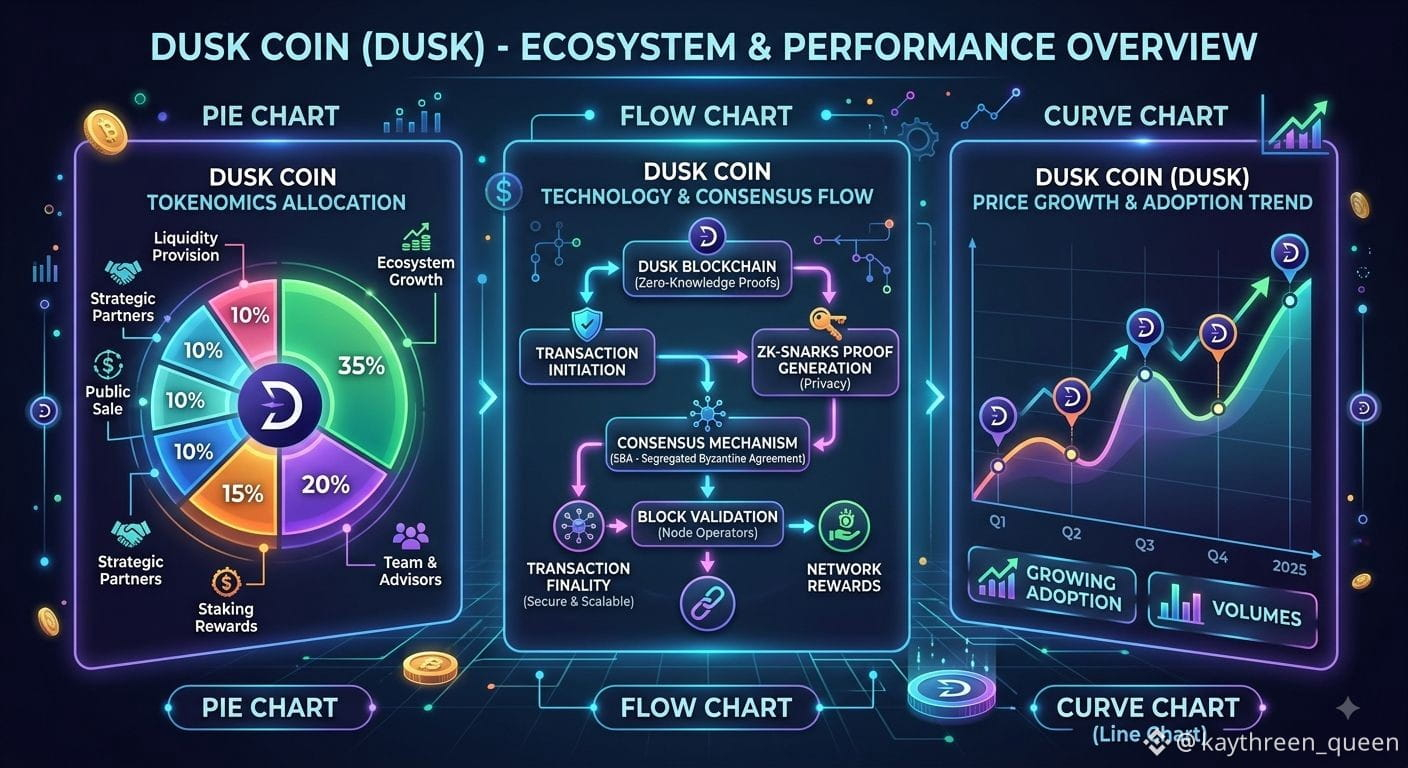
67
23
401
ເບິ່ງການແປ
Dusk needs more than announcements to validate the thesis. Consistent private settlements, growing institutional participation, and sustainable fees would provide stronger evidence that the infrastructure is actually gaining traction.
Dusk needs more than announcements to validate the thesis. Consistent private settlements, growing institutional participation, and sustainable fees would provide stronger evidence that the infrastructure is actually gaining traction.
1
1
82
ການຊື້ຂາຍ 30D $DUSK 28.5 USDT
ເບິ່ງການແປ
#dusk @Dusk_Foundation Dusk Network ($DUSK) Confidential smart contracts via XSC standard
I'll be honest, I almost skipped this one. "Privacy blockchain" is a phrase that stopped meaning much to me a while ago. Too many projects use it as a headline and never explain the mechanics underneath.
Dusk is doing something slightly different though. It's not trying to hide who you are. It's trying to let a contract run in public while keeping specific numbers inside it sealed. Small distinction, but it changes what the thing is actually for.
I'm still not sure it holds up outside a controlled environment. Zero-knowledge proofs look clean in documentation. Under real transaction volume, with real compliance teams asking hard questions, that's a different test. Nothing I've read answers that yet.
But I kept coming back to one situation. A smaller business wants to raise short-term financing on-chain instead of going through a bank. The lender needs proof the numbers are real. The business doesn't want its full financials sitting in public view for competitors to see. Right now, most chains make you choose one or the other. That tradeoff is probably why so much business finance has stayed off-chain in the first place.
What actually got my attention was who Dusk is talking to. Not just crypto accounts, but licensed EU trading infrastructure, in early pilot stages, not just a partnership announcement with nothing behind it.
Genuinely asking, does something like this get used because businesses need it, or because we assume they will?
$DOS
{future}(DOSUSDT)
$BTC
{spot}(BTCUSDT)
$DUSK
{spot}(DUSKUSDT)
#dusk @Dusk Dusk Network ($DUSK ) Confidential smart contracts via XSC standard
I'll be honest, I almost skipped this one. "Privacy blockchain" is a phrase that stopped meaning much to me a while ago. Too many projects use it as a headline and never explain the mechanics underneath.
Dusk is doing something slightly different though. It's not trying to hide who you are. It's trying to let a contract run in public while keeping specific numbers inside it sealed. Small distinction, but it changes what the thing is actually for.
I'm still not sure it holds up outside a controlled environment. Zero-knowledge proofs look clean in documentation. Under real transaction volume, with real compliance teams asking hard questions, that's a different test. Nothing I've read answers that yet.
But I kept coming back to one situation. A smaller business wants to raise short-term financing on-chain instead of going through a bank. The lender needs proof the numbers are real. The business doesn't want its full financials sitting in public view for competitors to see. Right now, most chains make you choose one or the other. That tradeoff is probably why so much business finance has stayed off-chain in the first place.
What actually got my attention was who Dusk is talking to. Not just crypto accounts, but licensed EU trading infrastructure, in early pilot stages, not just a partnership announcement with nothing behind it.
Genuinely asking, does something like this get used because businesses need it, or because we assume they will?
$DOS
$BTC
$DUSK
I'll be honest, I almost skipped this one. "Privacy blockchain" is a phrase that stopped meaning much to me a while ago. Too many projects use it as a headline and never explain the mechanics underneath.
Dusk is doing something slightly different though. It's not trying to hide who you are. It's trying to let a contract run in public while keeping specific numbers inside it sealed. Small distinction, but it changes what the thing is actually for.
I'm still not sure it holds up outside a controlled environment. Zero-knowledge proofs look clean in documentation. Under real transaction volume, with real compliance teams asking hard questions, that's a different test. Nothing I've read answers that yet.
But I kept coming back to one situation. A smaller business wants to raise short-term financing on-chain instead of going through a bank. The lender needs proof the numbers are real. The business doesn't want its full financials sitting in public view for competitors to see. Right now, most chains make you choose one or the other. That tradeoff is probably why so much business finance has stayed off-chain in the first place.
What actually got my attention was who Dusk is talking to. Not just crypto accounts, but licensed EU trading infrastructure, in early pilot stages, not just a partnership announcement with nothing behind it.
Genuinely asking, does something like this get used because businesses need it, or because we assume they will?
$DOS
$BTC
$DUSK
🔘 Yes, institutions need this
0%
🔘 Maybe,who controls disclosur
100%
🔘 No, doesn’t really work
0%
🔘 Too early to tell
0%
1 ຄະແນນສຽງ • ປິດລົງຄະແນນສຽງ
11
4
149
·
--
ສັນຍານກະທິງ
ຢືນຢັນແລ້ວ
ເບິ່ງການແປ
#dusk $DUSK @Dusk_Foundation Honestly, I almost scrolled past Dusk Network. "Privacy blockchain for finance" is one of those pitches you've heard so many times it stops registering. Usually it ends with a token chart that never really goes anywhere.
But the XSC contract standard made me stop and actually read instead of skim.
Here's what's different. Most privacy chains make you pick a side. Either everything's hidden, like Monero, or everything's out in the open, like most of DeFi. Dusk is trying to sit in between. XSC contracts use zero-knowledge proofs so certain data stays encrypted while the contract still runs and settles on-chain. Selective disclosure instead of all-or-nothing secrecy.
I'll admit, I'm skeptical this stays as clean in practice as it sounds in the docs. Who actually decides what gets hidden? Who holds the key if a regulator wants it unlocked? That's usually where these systems get messy, not in the cryptography, but in the governance around it.
Here's the scenario that stuck with me. Picture a fund manager in the EU tokenizing a private fund. Investors don't want position sizes visible to competitors, but auditors still need to verify reserves are real. Dusk actually has movement here, licensed security token pilots in the EU, not just a testnet demo. That's more than most "privacy for finance" projects can claim.
What's still missing is volume. I looked for real usage and mostly found partnerships still in progress, not live activity.
So I'm genuinely asking: is this solving a problem institutions actually have, or one crypto assumes they have? Anyone seeing real transaction data here ? $LAB $DOS
{spot}(DUSKUSDT)
{alpha}(560xb0f09ea9ae0515c3551080d4a745c8115aa30e37)
{future}(LABUSDT)
#dusk $DUSK @Dusk Honestly, I almost scrolled past Dusk Network. "Privacy blockchain for finance" is one of those pitches you've heard so many times it stops registering. Usually it ends with a token chart that never really goes anywhere.
But the XSC contract standard made me stop and actually read instead of skim.
Here's what's different. Most privacy chains make you pick a side. Either everything's hidden, like Monero, or everything's out in the open, like most of DeFi. Dusk is trying to sit in between. XSC contracts use zero-knowledge proofs so certain data stays encrypted while the contract still runs and settles on-chain. Selective disclosure instead of all-or-nothing secrecy.
I'll admit, I'm skeptical this stays as clean in practice as it sounds in the docs. Who actually decides what gets hidden? Who holds the key if a regulator wants it unlocked? That's usually where these systems get messy, not in the cryptography, but in the governance around it.
Here's the scenario that stuck with me. Picture a fund manager in the EU tokenizing a private fund. Investors don't want position sizes visible to competitors, but auditors still need to verify reserves are real. Dusk actually has movement here, licensed security token pilots in the EU, not just a testnet demo. That's more than most "privacy for finance" projects can claim.
What's still missing is volume. I looked for real usage and mostly found partnerships still in progress, not live activity.
So I'm genuinely asking: is this solving a problem institutions actually have, or one crypto assumes they have? Anyone seeing real transaction data here ? $LAB $DOS
But the XSC contract standard made me stop and actually read instead of skim.
Here's what's different. Most privacy chains make you pick a side. Either everything's hidden, like Monero, or everything's out in the open, like most of DeFi. Dusk is trying to sit in between. XSC contracts use zero-knowledge proofs so certain data stays encrypted while the contract still runs and settles on-chain. Selective disclosure instead of all-or-nothing secrecy.
I'll admit, I'm skeptical this stays as clean in practice as it sounds in the docs. Who actually decides what gets hidden? Who holds the key if a regulator wants it unlocked? That's usually where these systems get messy, not in the cryptography, but in the governance around it.
Here's the scenario that stuck with me. Picture a fund manager in the EU tokenizing a private fund. Investors don't want position sizes visible to competitors, but auditors still need to verify reserves are real. Dusk actually has movement here, licensed security token pilots in the EU, not just a testnet demo. That's more than most "privacy for finance" projects can claim.
What's still missing is volume. I looked for real usage and mostly found partnerships still in progress, not live activity.
So I'm genuinely asking: is this solving a problem institutions actually have, or one crypto assumes they have? Anyone seeing real transaction data here ? $LAB $DOS
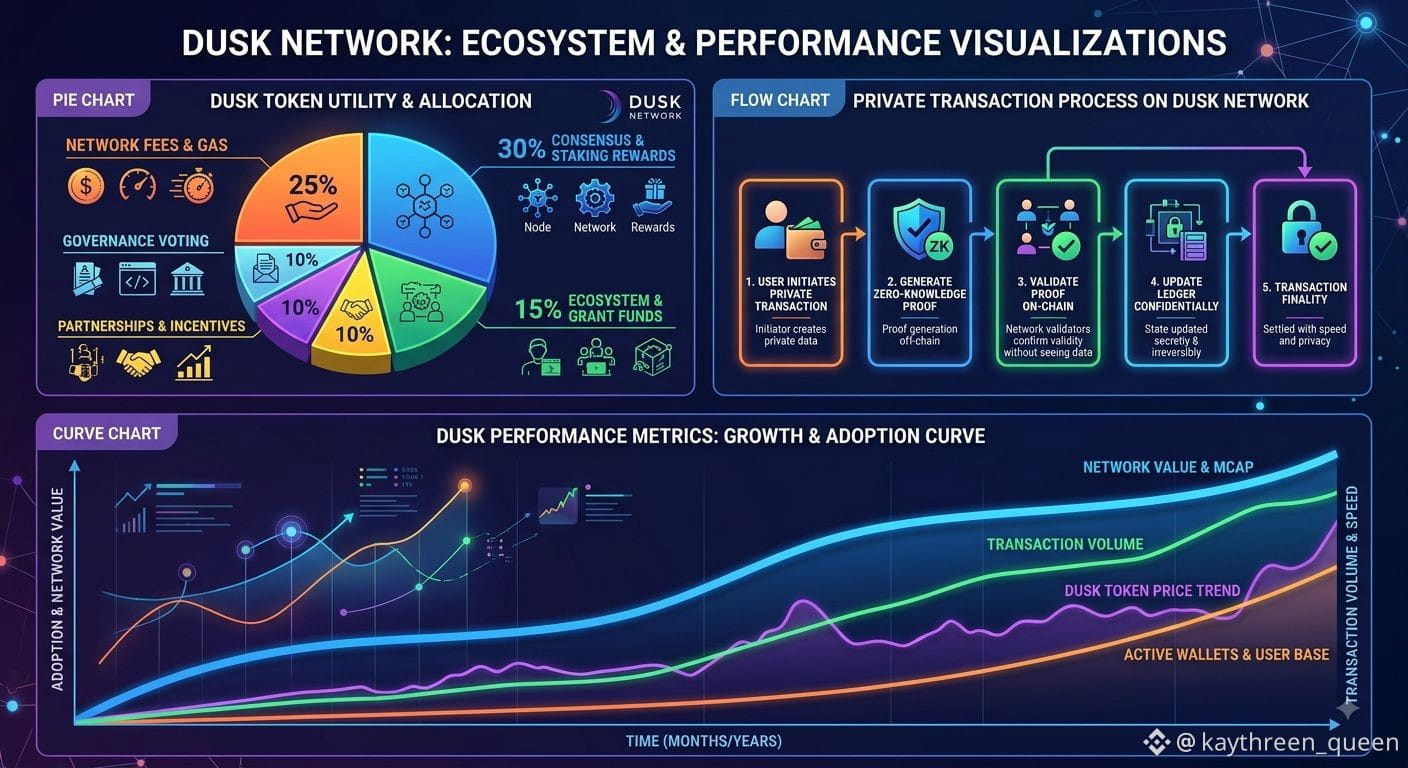
11
8
1.4k
·
--
ສັນຍານກະທິງ
ເບິ່ງການແປ
🔥 $AVAX is back on the radar. Bulls preparing another move?
🔥 $AVAX is back on the radar. Bulls preparing another move?
1
25
ເຂົ້າສູ່ລະບົບເພື່ອສຳຫຼວດເນື້ອຫາເພີ່ມເຕີມ
ເຂົ້າຮ່ວມກຸ່ມຜູ້ໃຊ້ຄຣິບໂຕທົ່ວໂລກໃນ Binance Square.
⚡️ ໄດ້ຮັບຂໍ້ມູນຫຼ້າສຸດ ແລະ ທີ່ມີປະໂຫຍດກ່ຽວກັບຄຣິບໂຕ.
💬 ໄດ້ຮັບຄວາມໄວ້ວາງໃຈຈາກຕະຫຼາດແລກປ່ຽນຄຣິບໂຕທີ່ໃຫຍ່ທີ່ສຸດໃນໂລກ.
👍 ຄົ້ນຫາຂໍ້ມູນເຊີງເລິກທີ່ແທ້ຈາກນັກສ້າງທີ່ໄດ້ຮັບການຢືນຢັນ.
ອີເມວ / ເບີໂທລະສັບ
ຫົວຂໍ້ທີ່ກໍາລັງນິຍົມ
FedRateWatch
747,913 views
3,533 ກຳລັງສົນທະນາ
Patawe & Win Traffic Reward i la Campanya de Tendència Hashtag
✨Tema: FOMC setembre, Què serà el següent moviment de la Fed?
👉Com unir-te:
Publica una publicació o article breu amb l’hashtag #FedRateWatch
Crea contingut basat en els angles següents:
- L’IPC bàsic d’agost va pujar 0,3% mes a mes, i les probabilitats d’una pujada de 25 pb aquesta setmana ara estan a prop del 90%. Creus que hi haurà una pujada de tipus aquesta setmana? És un fet puntual o l’inici d’un cicle de pujades més llarg?
- Si la pujada s’implementa, com es desenvolupa per a BTC, accions tecnològiques i or? Alcista o baixista?
- Com planeges negociar després? Comparteix les teves operacions d’BTC, accions o or/participacions amb el nostre giny per compartir operacions.
⏰Període de la campanya:
- 2026-09-15 11:00 - 2026-09-17 3:00 UTC
🎁Recompensa:
- Les publicacions qualificades que compleixin les directrius anteriors i tinguin més de 100 paraules es revisaran i poden rebre un impuls aleatori de trànsit de 500 a 3.000 visualitzacions. Rebràs una notificació del teu secretari del feed si la teva publicació es selecciona.
- Tens l’oportunitat que el teu article aparegui a Binance Square Official
Necessites idees per a la teva publicació? Visita la pàgina del tema #FedRateWatch o la Square Guide on How to Post for Better Reach.
Binance Square Official
·444 ຖືກໃຈ
·1M views
ArgentinaCommitsToOECDCryptoReportingBy2029
2,610 views
82 ກຳລັງສົນທະນາ
EthereumFallsBelow$2400
1,946 views
48 ກຳລັງສົນທະນາ