Binance Square
GED
815 ໂພສ

GED

📊 Community Builder✨ Content Creator 🔶 Binance Angel 👼🥇My Content is Not Financial Advice 🙏
Content Master Angel
Binance Square Angels
Creator of the Year
Creator of the Year
ເປີດການຊື້ຂາຍ
ຜູ້ຊື້ຂາຍປະຈໍາ
5.2 ປີ
101 ກໍາລັງຕິດຕາມ
15.2K+ ຜູ້ຕິດຕາມ
16.6K+ Liked
4 ຫຼຽນລາງວັນ
ໂພສ
Portfolio
ປັກໝຸດ
·
--
ສັນຍານກະທິງ
ເບິ່ງການແປ
You will end up losing at the next Bullrun if you don't follow these 4 tips Don't read this if you want to lose $10,000 Everyone has their own choices after all : 1/ You have to sell in stages You don’t have to come out 100% at once. We are going to be on a level playing field so for each objective reached, 30% of the bag is taken out (this is an example) At least it forces you to sell. Always remember that no sales = no profits. 2/ You must monitor In the crypto market, it’s a war on information. Every little piece of information can change the course of a crypto and that of your life. So be very careful, for this you can follow me I will share the information with you in real time. 3/ You must make a plan A goal is several small goals to achieve it. Built in advance to harvest at the right time. 4/ You must succeed Some analysts are talking about one last Bullrun. Imagine the money at stake and what you can generate. Don’t be greedy, be objective and aim for excellence! $PEOPLE It’s now or never for us! #BinanceSquare #BullMarketStrategy #PEOPLE-7.85%
You will end up losing at the next Bullrun if you don't follow these 4 tips

Don't read this if you want to lose $10,000

Everyone has their own choices after all :

1/ You have to sell in stages

You don’t have to come out 100% at once.

We are going to be on a level playing field so for each objective reached, 30% of the bag is taken out (this is an example)

At least it forces you to sell.

Always remember that no sales = no profits.

2/ You must monitor

In the crypto market, it’s a war on information.

Every little piece of information can change the course of a crypto and that of your life.

So be very careful, for this you can follow me I will share the information with you in real time.

3/ You must make a plan

A goal is several small goals to achieve it.

Built in advance to harvest at the right time.

4/ You must succeed

Some analysts are talking about one last Bullrun. Imagine the money at stake and what you can generate.

Don’t be greedy, be objective and aim for excellence! $PEOPLE

It’s now or never for us!

#BinanceSquare #BullMarketStrategy #PEOPLE-7.85%
ປັກໝຸດ
·
--
ເບິ່ງການແປ
The 1st halving in 2012 resulted in a 10,000% increase ($11 -> $1,150) The 2nd halving in 2016 resulted in a 3,000% increase ($650 -> $20,000) The 3rd halving in 2020 results in a 630% increase ($8,800 -> $69,044 ATH!) Reminder, The 4th #Bitcoin    halving is less than 122 days.👀 $BTC What's your target?👇 #BinanceTournament #HalvingEvents
The 1st halving in 2012 resulted in a 10,000% increase ($11 -> $1,150)

The 2nd halving in 2016 resulted in a 3,000% increase ($650 -> $20,000)

The 3rd halving in 2020 results in a 630% increase ($8,800 -> $69,044 ATH!)

Reminder, The 4th #Bitcoin    halving is less than 122 days.👀 $BTC

What's your target?👇

#BinanceTournament #HalvingEvents
·
--
ບົດຄວາມ
ເບິ່ງການແປ
$LAPTOP didn’t surprise anyone who has watched a memecoin launch before. It just made the usual split impossible to ignore: a few people already in position made money, and most of the people who bought after the chart appeared got wrecked. Bubblemaps put numbers on it. About 80% of traders lost money. Over 11,000 wallets were down under $1K. Around 700 lost $1K or more. About 100 lost $10K+. Two wallets were down somewhere between $100K and $1M. One person put in about $200K near $218 and watched it fall to a few thousand dollars. Other wallets that claimed the airdrop or bought in the first minutes walked away with six or seven figures in the same stretch of time. Same coin. Same story. Completely different results. That wasn’t about who believed harder. It was about who got filled first. The part that still feels insane is the valuation. For a moment the fully diluted number printed like this thing was worth tens or hundreds of billions, while the actual pool started with almost nothing. It ripped to $190+ in a couple of minutes, then dropped about 99%. That isn’t a market “deciding.” That’s what happens when a tiny pool meets a rush of buyers. The first trades look legendary. The late ones become exit liquidity. The on-chain picture was messy in a familiar way. A project multisig moved around 100 million tokens the week before launch. GSR had 15.5 million days earlier and later sent out big chunks: 9 million, 1.5 million, 500K. Wintermute received about 2.5 million, moved roughly 2.09 million toward exchange deposits, and sold some on-chain later around $4.50. The biggest single transfer was 14.5 million to an unlabeled wallet about two hours before trading started. A lot of the large holders were brand-new wallets funded that day or in the previous ten days. That looks like snipers and prepared clusters. It does not automatically prove one person pulled every string. This is where people usually go too far. Seeing GSR or Wintermute hold tokens early does not mean they “caused the dump.” Market makers get inventory before a launch so they can quote both sides and move size onto exchanges. They sell when there’s demand and they sell when they need to recycle inventory. Being early is not the same thing as rigging the whole chart. What actually crushed the price was simpler: a concentrated supply, almost no real liquidity at the open, bots in the first seconds, and retail buying the printed candle. If there’s a lesson, it’s a boring one. On these launches, timing beats the story. Claiming a Substack airdrop and selling into the spike doesn’t mean you understood the project. It means you were already holding something you didn’t pay for. Buying at $218 because the candle was green doesn’t make you uniquely foolish either. You just entered after the easy part was over. Tools like Bubblemaps are useful for one reason. They show when a bunch of big wallets share the same funding trail and showed up at the same time. If most of the top holders have no history, you’re not looking at a community. You’re looking at capital that arrived ready. That doesn’t tell you who to blame. It tells you the float is concentrated, and concentrated float at launch is how late buyers get used. So is this just normal memecoin behavior? Pretty much. The names change. The script doesn’t: tokens moved before the open, market makers in place, airdrops flipped, snipers first, everyone else after. The only thing worth staring at is how reliably the profits sit in the first minutes. That’s why I’m done putting money into these things. Not a cent. No “small bag just in case.” The only exception is an airdrop I didn’t buy, claimed as early as I can, then sold. No thesis. No holding through the crash because I like the narrative. Take the free allocation if it exists. Leave the rest to people who want to pay after the good seats are gone.

$LAPTOP didn’t surprise anyone who has watched a memecoin launch before.

It just made the usual split impossible to ignore: a few people already in position made money, and most of the people who bought after the chart appeared got wrecked.
Bubblemaps put numbers on it. About 80% of traders lost money. Over 11,000 wallets were down under $1K. Around 700 lost $1K or more. About 100 lost $10K+. Two wallets were down somewhere between $100K and $1M. One person put in about $200K near $218 and watched it fall to a few thousand dollars. Other wallets that claimed the airdrop or bought in the first minutes walked away with six or seven figures in the same stretch of time. Same coin. Same story. Completely different results. That wasn’t about who believed harder. It was about who got filled first.
The part that still feels insane is the valuation. For a moment the fully diluted number printed like this thing was worth tens or hundreds of billions, while the actual pool started with almost nothing. It ripped to $190+ in a couple of minutes, then dropped about 99%. That isn’t a market “deciding.” That’s what happens when a tiny pool meets a rush of buyers. The first trades look legendary. The late ones become exit liquidity.
The on-chain picture was messy in a familiar way. A project multisig moved around 100 million tokens the week before launch. GSR had 15.5 million days earlier and later sent out big chunks: 9 million, 1.5 million, 500K. Wintermute received about 2.5 million, moved roughly 2.09 million toward exchange deposits, and sold some on-chain later around $4.50. The biggest single transfer was 14.5 million to an unlabeled wallet about two hours before trading started. A lot of the large holders were brand-new wallets funded that day or in the previous ten days. That looks like snipers and prepared clusters. It does not automatically prove one person pulled every string.
This is where people usually go too far. Seeing GSR or Wintermute hold tokens early does not mean they “caused the dump.” Market makers get inventory before a launch so they can quote both sides and move size onto exchanges. They sell when there’s demand and they sell when they need to recycle inventory. Being early is not the same thing as rigging the whole chart. What actually crushed the price was simpler: a concentrated supply, almost no real liquidity at the open, bots in the first seconds, and retail buying the printed candle.
If there’s a lesson, it’s a boring one. On these launches, timing beats the story. Claiming a Substack airdrop and selling into the spike doesn’t mean you understood the project. It means you were already holding something you didn’t pay for. Buying at $218 because the candle was green doesn’t make you uniquely foolish either. You just entered after the easy part was over.
Tools like Bubblemaps are useful for one reason. They show when a bunch of big wallets share the same funding trail and showed up at the same time. If most of the top holders have no history, you’re not looking at a community. You’re looking at capital that arrived ready. That doesn’t tell you who to blame. It tells you the float is concentrated, and concentrated float at launch is how late buyers get used.
So is this just normal memecoin behavior? Pretty much. The names change. The script doesn’t: tokens moved before the open, market makers in place, airdrops flipped, snipers first, everyone else after. The only thing worth staring at is how reliably the profits sit in the first minutes.
That’s why I’m done putting money into these things. Not a cent. No “small bag just in case.” The only exception is an airdrop I didn’t buy, claimed as early as I can, then sold. No thesis. No holding through the crash because I like the narrative. Take the free allocation if it exists. Leave the rest to people who want to pay after the good seats are gone.
·
--
ສັນຍານກະທິງ
ເບິ່ງການແປ
🌍 Binance Square Creators Academy Africa edition! Are you a creator, storyteller, educator, or Web3 enthusiast? We’d love to know more about you. 💛 Your feedback will help us better understand Africa’s creator community and build an experience tailored to its talent and potential. 📝 Fill in our short survey and tell us about yourself. Your voice. Your creativity. Your opportunity to shape the future of Web3 content in Africa. 🔥 [Survey link �](https://www.binance.com/en/survey/0a36b93855ea4d7796e809d8c263260f)�
🌍 Binance Square Creators Academy Africa edition!
Are you a creator, storyteller, educator, or Web3 enthusiast? We’d love to know more about you. 💛

Your feedback will help us better understand Africa’s creator community and build an experience tailored to its talent and potential.

📝 Fill in our short survey and tell us about yourself.
Your voice. Your creativity. Your opportunity to shape the future of Web3 content in Africa. 🔥

[Survey link �](https://www.binance.com/en/survey/0a36b93855ea4d7796e809d8c263260f)�
·
--
ສັນຍານກະທິງ
ຢືນຢັນແລ້ວ
🎂 Faamanatu Manuia le Tausaga 9, @TrustWallet ! 💙 Ua 9 tausaga o le fausiaina, faia o mea fou, ma tuuina atu i le faitau miliona o tagata le tele o le pule i a latou aseta numera. Mai le atotupe crypto faigofie e oo atu i se tasi o fa’avae pito sili ona tele mo le “self custody” i le lalolagi, e ofoofogia le matamata i lenei faigamalaga. Ia fa’afetai mo le 9 tausaga o mea fou, sa’olotoga, ma le Web3. Fa’amanatu Manuia lou Aso Fanau, Trust Wallet! 🛡️💙 O lo’o fa’atali le isi 200 miliona. 🚀
🎂 Faamanatu Manuia le Tausaga 9, @TrustWallet ! 💙

Ua 9 tausaga o le fausiaina, faia o mea fou, ma tuuina atu i le faitau miliona o tagata le tele o le pule i a latou aseta numera.

Mai le atotupe crypto faigofie e oo atu i se tasi o fa’avae pito sili ona tele mo le “self custody” i le lalolagi, e ofoofogia le matamata i lenei faigamalaga.

Ia fa’afetai mo le 9 tausaga o mea fou, sa’olotoga, ma le Web3.

Fa’amanatu Manuia lou Aso Fanau, Trust Wallet! 🛡️💙

O lo’o fa’atali le isi 200 miliona. 🚀
·
--
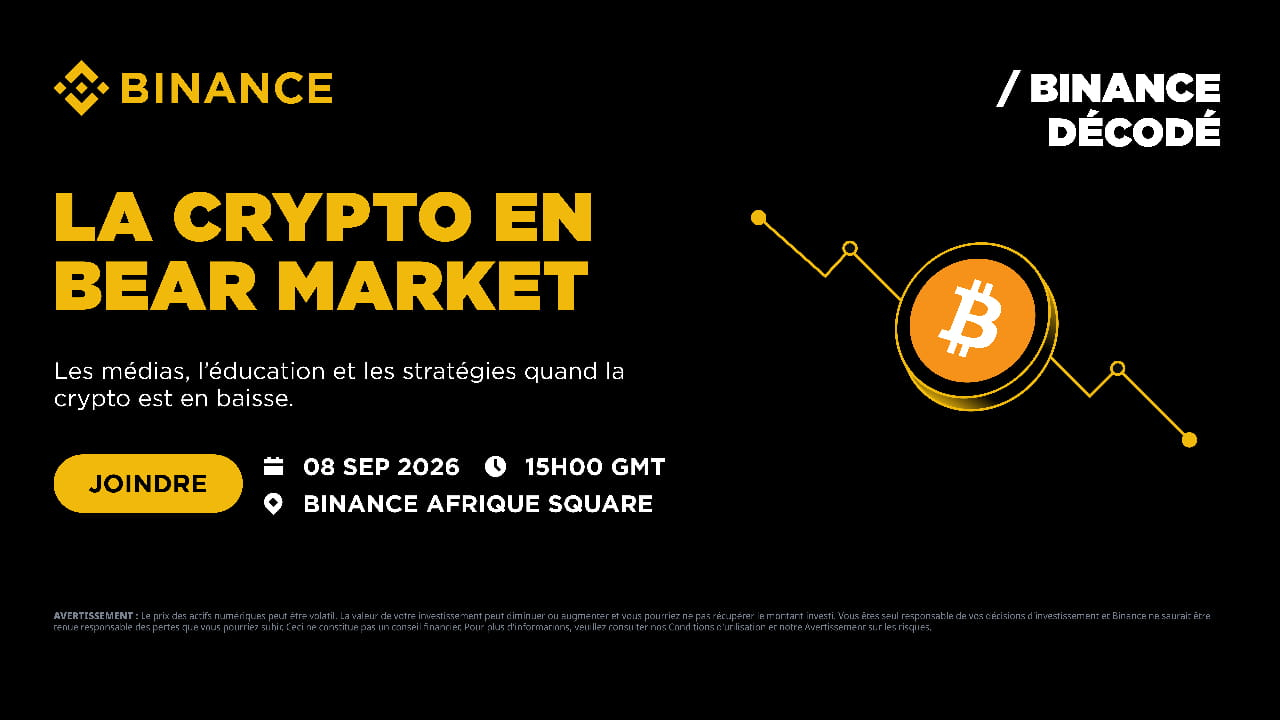
🎙️ Session Binance Décodé : que faire quand le marché est baisse ?
cover
ສິ້ນສຸດ
50 ນາທີ 29 ວິນາທີ
170
4
0
·
--
ເບິ່ງການແປ
LIVE
LIVE
Binance Afrique
·
--
[ຫຼິ້ນຄືນ] 🎙️ Session Binance Décodé : Que faire quand la crypto est en baisse ?
28 ນາທີ 23 ວິນາທີ · ມີຜູ້ຟັງ 2k ຄົນ
·
--
ບົດຄວາມ
ເບິ່ງການແປ
De répondre à agir : comment Binance Agent OS fonctionne en pratiqueL'annonce du 20 août a posé le fait : Binance a lancé Agent OS, sa plateforme de développement pour connecter les applications d'IA à ses fonctions de trading, de données de marché, de wallet et de paiement. Nous avons expliqué pourquoi ça comptait à l'ère des agents. Aujourd'hui, on passe à la seule chose qui donne de la crédibilité à une annonce : le montrer en marche. Pas la théorie. Des flux réels, des appels réels, des garde-fous réels. # Le décor en une phrase Agent OS réunit les API Binance, le Wallet Agentic Hub, Binance x402 (paiements programmables), le Skill Hub et le support du Model Context Protocol (MCP). Le Binance MCP Server est la couche de connexion : il permet à une application d'IA compatible d'accéder à la liquidité et aux outils Binance sans que personne n'ait à gérer de clés API en local. Explication : jusqu'ici, chaque développeur reconstruisait sa propre plomberie. Maintenant il y a une prise standard. # Le cas d'usage, étape par étape Étape 1 — Connecter le client. Tu connectes une application compatible MCP au serveur Binance via son endpoint publié : `agent.binance.com/mcp/agentic`. Binance cite Claude, Claude Code, ChatGPT, Codex et VS Code parmi les clients compatibles. Aucune clé API à copier-coller, aucune variable d'environnement à protéger sur ta machine. Étape 2 — Créer et financer un sous-compte Agentic. C'est l'étape que 90 % des gens vont vouloir sauter, et c'est justement celle qui définit tout le reste. L'agent n'opère pas sur ton compte principal. Il opère dans un bac à sable financé, avec les montants que tu y mets. Optionnellement, tu peux lui accorder une vue en lecture seule de ton compte principal. Étape 3 — Choisir les scopes. Données de marché, informations de compte, spot, margin, Convert, futures USDⓈ-M et COIN-M : tu accordes fonction par fonction. Les données de marché publiques (tickers, carnets d'ordres, bougies, taux de funding) ne demandent aucune authentification. Tout ce qui touche au compte dépend explicitement de ce que tu as autorisé. Et tu révoques quand tu veux. Étape 4 — Le prompt. « Compare la profondeur du carnet BTC/USDT et ETH/USDT sur les 4 dernières heures, dis-moi où le spread est le plus stable, puis place un ordre limite de 50 USDT sur la paire la plus liquide. » Étape 5 — Ce qui se passe réellement. L'agent découvre les outils exposés par le serveur MCP, appelle les endpoints de données de marché, raisonne dans ton application IA, puis appelle les fonctions de trading autorisées — dans les limites du sous-compte agentic. L'ordre arrive dans le moteur de matching Binance comme n'importe quel autre ordre. Point souvent mal compris : Binance voit l'activité de trading et les ordres, pas le raisonnement de l'agent. Le processus de décision reste dans l'application IA que tu as choisie. Le partage de responsabilité est net. ## Le périmètre, sans ambiguïté Ce que l'agent peut faire : lire le marché, consulter soldes, portefeuille et historique du sous-compte désigné, exécuter les types de trading autorisés, transférer à l'intérieur du périmètre agentic. Ce qu'il ne peut pas faire : retirer des fonds vers l'extérieur, ni transférer directement les actifs de ton compte principal vers le sous-compte. C'est exactement la bonne architecture. Le risque d'un agent autonome n'est pas qu'il se trompe de trade — un humain aussi se trompe. Le risque, c'est qu'il se trompe sans plafond. Le sous-compte agentic est ce plafond. #Mon avis, sans détour La vraie nouveauté n'est pas « l'IA peut trader ». Des bots tradent depuis dix ans. La nouveauté, c'est que la couche de confiance a changé de place : elle n'est plus dans le modèle, elle est dans le périmètre de permissions. On n'a pas besoin de faire confiance à l'agent, on a besoin de contrôler ce qu'il peut atteindre. C'est un problème d'infrastructure, et il vient d'être traité comme tel. Pour l'Afrique francophone, la lecture est directe : la barrière n'est plus le code. Un développeur à Cotonou, Dakar ou Abidjan qui sait écrire un prompt et configurer des permissions dispose du même accès programmatique qu'un desk quantitatif. Ce qui reste à construire, ce ne sont pas des connecteurs — c'est du jugement, des stratégies, et de la discipline de risque. Ceux qui apprennent aujourd'hui à cadrer un agent apprennent le métier de demain. À retenir - Agent OS = la plateforme. MCP = la prise standard. Le MCP Server = le câble. - Le sous-compte agentic est ta ceinture de sécurité. Ne la retire jamais. - Commence en lecture seule sur les données de marché avant d'accorder le moindre scope de trading. Le trading de crypto-actifs comporte un risque de perte. Un agent IA exécute, il ne garantit rien. Teste avec des montants que tu peux perdre, et révoque les accès dont tu n'as plus besoin. Ceci n'est pas un conseil financier. Sources - Communiqué officiel : https://www.prnewswire.com/news-releases/binance-introduces-agent-os-to-connect-ai-applications-to-financial-infrastructure-302856306.html -

De répondre à agir : comment Binance Agent OS fonctionne en pratique

L'annonce du 20 août a posé le fait : Binance a lancé Agent OS, sa plateforme de développement pour connecter les applications d'IA à ses fonctions de trading, de données de marché, de wallet et de paiement. Nous avons expliqué pourquoi ça comptait à l'ère des agents.
Aujourd'hui, on passe à la seule chose qui donne de la crédibilité à une annonce : le montrer en marche. Pas la théorie. Des flux réels, des appels réels, des garde-fous réels.
# Le décor en une phrase
Agent OS réunit les API Binance, le Wallet Agentic Hub, Binance x402 (paiements programmables), le Skill Hub et le support du Model Context Protocol (MCP). Le Binance MCP Server est la couche de connexion : il permet à une application d'IA compatible d'accéder à la liquidité et aux outils Binance sans que personne n'ait à gérer de clés API en local.
Explication : jusqu'ici, chaque développeur reconstruisait sa propre plomberie. Maintenant il y a une prise standard.
# Le cas d'usage, étape par étape
Étape 1 — Connecter le client.
Tu connectes une application compatible MCP au serveur Binance via son endpoint publié : `agent.binance.com/mcp/agentic`. Binance cite Claude, Claude Code, ChatGPT, Codex et VS Code parmi les clients compatibles. Aucune clé API à copier-coller, aucune variable d'environnement à protéger sur ta machine.
Étape 2 — Créer et financer un sous-compte Agentic.
C'est l'étape que 90 % des gens vont vouloir sauter, et c'est justement celle qui définit tout le reste. L'agent n'opère pas sur ton compte principal. Il opère dans un bac à sable financé, avec les montants que tu y mets. Optionnellement, tu peux lui accorder une vue en lecture seule de ton compte principal.
Étape 3 — Choisir les scopes.
Données de marché, informations de compte, spot, margin, Convert, futures USDⓈ-M et COIN-M : tu accordes fonction par fonction. Les données de marché publiques (tickers, carnets d'ordres, bougies, taux de funding) ne demandent aucune authentification. Tout ce qui touche au compte dépend explicitement de ce que tu as autorisé. Et tu révoques quand tu veux.
Étape 4 — Le prompt.
« Compare la profondeur du carnet BTC/USDT et ETH/USDT sur les 4 dernières heures, dis-moi où le spread est le plus stable, puis place un ordre limite de 50 USDT sur la paire la plus liquide. »
Étape 5 — Ce qui se passe réellement.
L'agent découvre les outils exposés par le serveur MCP, appelle les endpoints de données de marché, raisonne dans ton application IA, puis appelle les fonctions de trading autorisées — dans les limites du sous-compte agentic. L'ordre arrive dans le moteur de matching Binance comme n'importe quel autre ordre.
Point souvent mal compris : Binance voit l'activité de trading et les ordres, pas le raisonnement de l'agent. Le processus de décision reste dans l'application IA que tu as choisie. Le partage de responsabilité est net.
## Le périmètre, sans ambiguïté
Ce que l'agent peut faire : lire le marché, consulter soldes, portefeuille et historique du sous-compte désigné, exécuter les types de trading autorisés, transférer à l'intérieur du périmètre agentic.
Ce qu'il ne peut pas faire : retirer des fonds vers l'extérieur, ni transférer directement les actifs de ton compte principal vers le sous-compte.
C'est exactement la bonne architecture. Le risque d'un agent autonome n'est pas qu'il se trompe de trade — un humain aussi se trompe. Le risque, c'est qu'il se trompe sans plafond. Le sous-compte agentic est ce plafond.
#Mon avis, sans détour
La vraie nouveauté n'est pas « l'IA peut trader ». Des bots tradent depuis dix ans. La nouveauté, c'est que la couche de confiance a changé de place : elle n'est plus dans le modèle, elle est dans le périmètre de permissions. On n'a pas besoin de faire confiance à l'agent, on a besoin de contrôler ce qu'il peut atteindre. C'est un problème d'infrastructure, et il vient d'être traité comme tel.
Pour l'Afrique francophone, la lecture est directe : la barrière n'est plus le code. Un développeur à Cotonou, Dakar ou Abidjan qui sait écrire un prompt et configurer des permissions dispose du même accès programmatique qu'un desk quantitatif. Ce qui reste à construire, ce ne sont pas des connecteurs — c'est du jugement, des stratégies, et de la discipline de risque.
Ceux qui apprennent aujourd'hui à cadrer un agent apprennent le métier de demain.
À retenir
- Agent OS = la plateforme. MCP = la prise standard. Le MCP Server = le câble.
- Le sous-compte agentic est ta ceinture de sécurité. Ne la retire jamais.
- Commence en lecture seule sur les données de marché avant d'accorder le moindre scope de trading.
Le trading de crypto-actifs comporte un risque de perte. Un agent IA exécute, il ne garantit rien. Teste avec des montants que tu peux perdre, et révoque les accès dont tu n'as plus besoin. Ceci n'est pas un conseil financier.
Sources
- Communiqué officiel : https://www.prnewswire.com/news-releases/binance-introduces-agent-os-to-connect-ai-applications-to-financial-infrastructure-302856306.html
-
·
--
ສັນຍານກະທິງ
ເບິ່ງການແປ
What are you buying?
·
--
ບົດຄວາມ
ເບິ່ງການແປ
Is Binance Safe to Use in Benin in 2026?If you are in Benin and considering using Binance in 2026, one of the first questions to ask is: Is Binance safe? The short answer is that Binance has several security systems designed to protect user accounts and funds. However, no crypto exchange is completely risk free. Your own security practices also matter. Here are the main factors to consider. Proof of Reserves Binance publishes Proof of Reserves information to show that it holds user assets on a 1:1 basis. According to Binance, when users deposit crypto assets, its reserves increase accordingly. Binance also states that it maintains zero debt in its capital structure This gives users a way to monitor the platform’s reported reserves. () SAFU, an emergency fund for users Binance operates the Secure Asset Fund for Users, known as SAFU. The fund is designed to provide additional protection in extreme situations, such as security breaches. As of 2026, Binance states that SAFU holds approximately $1 billion in crypto assets, held entirely in Bitcoin. ([Binance](https://www.binance.com/en/academy/glossary/secure-asset-fund-for-users?utm_source=chatgpt.com)) Account security Users also have access to several security features, including two factor authentication, withdrawal address controls and other account protection tools. These features help reduce the risk of unauthorized access. However, users should still protect their passwords, avoid sharing verification codes and be careful with phishing links. Binance and availability in Benin The availability of Binance services depends on the user’s location and the services offered in that jurisdiction. Binance maintains an official list of supported countries and regions. Users in Benin should check the current availability of specific Binance products before depositing funds. ([Binance](https://www.binance.com/en-GB/support-region-list?utm_source=chatgpt.com)) This distinction is important. A crypto exchange can have strong technical security while the legal and regulatory environment differs from one country to another. Is Binance completely risk free? No,Using Binance, like using any centralized crypto exchange, involves risks. These include: • Account compromise • Phishing and scams • Market volatility • Withdrawal restrictions related to compliance • Regulatory changes • Loss of access to your account Security therefore depends on both Binance’s systems and your own behavior. How to make your Binance account safer If you use Binance from Benin, consider these basic security measures: • Enable two factor authentication. • Use a unique password. • Never share your password or verification codes. • Verify Binance URLs before logging in. • Activate withdrawal protection features. • Keep your email account secure. • Avoid clicking links received from unknown accounts. • Consider keeping long term holdings in a personal wallet rather than leaving all assets on an exchange. Final answer Binance has several important security mechanisms in 2026, including Proof of Reserves and the SAFU emergency fund. Binance says its user assets are backed 1:1 and that SAFU holds approximately $1 billion in crypto assets. ([Binance](https://www.binance.com/en/academy/glossary/secure-asset-fund-for-users?utm_source=chatgpt.com)) For users in Benin, the key question is therefore not only whether Binance has security measures, but also whether the specific Binance services you want to use are currently available to you and compliant with the rules applicable to your situation. Before depositing funds, always check Binance’s current regional availability and security information.

Is Binance Safe to Use in Benin in 2026?

If you are in Benin and considering using Binance in 2026, one of the first questions to ask is: Is Binance safe?
The short answer is that Binance has several security systems designed to protect user accounts and funds. However, no crypto exchange is completely risk free. Your own security practices also matter.
Here are the main factors to consider.
Proof of Reserves
Binance publishes Proof of Reserves information to show that it holds user assets on a 1:1 basis.
According to Binance, when users deposit crypto assets, its reserves increase accordingly. Binance also states that it maintains zero debt in its capital structure
This gives users a way to monitor the platform’s reported reserves. ()
SAFU, an emergency fund for users
Binance operates the Secure Asset Fund for Users, known as SAFU.
The fund is designed to provide additional protection in extreme situations, such as security breaches.
As of 2026, Binance states that SAFU holds approximately $1 billion in crypto assets, held entirely in Bitcoin. (Binance)
Account security
Users also have access to several security features, including two factor authentication, withdrawal address controls and other account protection tools.
These features help reduce the risk of unauthorized access.
However, users should still protect their passwords, avoid sharing verification codes and be careful with phishing links.
Binance and availability in Benin
The availability of Binance services depends on the user’s location and the services offered in that jurisdiction.
Binance maintains an official list of supported countries and regions. Users in Benin should check the current availability of specific Binance products before depositing funds. (Binance)
This distinction is important.
A crypto exchange can have strong technical security while the legal and regulatory environment differs from one country to another.
Is Binance completely risk free?
No,Using Binance, like using any centralized crypto exchange, involves risks.
These include:
• Account compromise
• Phishing and scams
• Market volatility
• Withdrawal restrictions related to compliance
• Regulatory changes
• Loss of access to your account
Security therefore depends on both Binance’s systems and your own behavior.
How to make your Binance account safer
If you use Binance from Benin, consider these basic security measures:
• Enable two factor authentication.
• Use a unique password.
• Never share your password or verification codes.
• Verify Binance URLs before logging in.
• Activate withdrawal protection features.
• Keep your email account secure.
• Avoid clicking links received from unknown accounts.
• Consider keeping long term holdings in a personal wallet rather than leaving all assets on an exchange.
Final answer
Binance has several important security mechanisms in 2026, including Proof of Reserves and the SAFU emergency fund. Binance says its user assets are backed 1:1 and that SAFU holds approximately $1 billion in crypto assets. (Binance)
For users in Benin, the key question is therefore not only whether Binance has security measures, but also whether the specific Binance services you want to use are currently available to you and compliant with the rules applicable to your situation.
Before depositing funds, always check Binance’s current regional availability and security information.
·
--
ສັນຍານກະທິງ
ເປັນຄວາມຈິງບາງສ່ວນ
Meme Coin kaTrump a i make sa unang pag-iral nito sa isang Crypto Conference KBW2026 kasama si Upbit: Nangungunang Crypto Event sa Asya Event. Seoul: Sep 29 - Oct 1 Naniniwala ka pa ba sa memecoin na ito ?$TRUMP #TrumpCrypto #kbw2026
Meme Coin kaTrump a i make sa unang pag-iral nito sa isang Crypto Conference
KBW2026 kasama si Upbit: Nangungunang Crypto Event sa Asya
Event. Seoul: Sep 29 - Oct 1

Naniniwala ka pa ba sa memecoin na ito ?$TRUMP

#TrumpCrypto #kbw2026
·
--
Ngaba kutheni, iSenethi yaseU.S. kulindeleke ukuba iqhubeke neengxoxo malunga ne-CLARITY Act, iprojekthi enkulu yokulawula i-crypto eUnited States. Ucinga ukuba isigqibo singaba nefuthe kwimarike ye-crypto? 📈 Inzuzo (Bullish)? Ucinga ukuba ingonyusa ukuzithemba kwaye itsale abatyali-mali abaninzi be-institutional? 📉 Ilahleko (Bearish)? Ucinga ukuba imarike iyayixabisile (iyifakile) loo nto, okanye ukuba isiphumo esibi sinokubangela ukulungiswa (correction)? $NVDAB $AAPLB Ucinga ntoni? Ngaba unombono wokuba i-bullish okanye i-bearish? #CLARITYAct #us
Ngaba kutheni, iSenethi yaseU.S. kulindeleke ukuba iqhubeke neengxoxo malunga ne-CLARITY Act, iprojekthi enkulu yokulawula i-crypto eUnited States.

Ucinga ukuba isigqibo singaba nefuthe kwimarike ye-crypto?

📈 Inzuzo (Bullish)? Ucinga ukuba ingonyusa ukuzithemba kwaye itsale abatyali-mali abaninzi be-institutional?

📉 Ilahleko (Bearish)? Ucinga ukuba imarike iyayixabisile (iyifakile) loo nto, okanye ukuba isiphumo esibi sinokubangela ukulungiswa (correction)? $NVDAB $AAPLB

Ucinga ntoni?

Ngaba unombono wokuba i-bullish okanye i-bearish?

#CLARITYAct #us
·
--
ສັນຍານກະທິງ
ເບິ່ງການແປ
Crypto made markets 24/7. Bitcoin and other digital assets trade around the clock, including weekends. Now traditional finance is moving in the same direction. Nasdaq is working toward 24 hour trading, five days a week. NYSE is also expanding its trading hours, while the SEC is examining the future of 24 hour markets. Why does this matter? Because global markets no longer operate on one timezone. News can break at any hour. Investors want to react immediately. Crypto users are already used to this. The bigger shift is not simply longer trading hours. It is a change in expectations. Crypto showed the financial industry that markets can operate continuously through digital infrastructure. Now Wall Street is adapting. The question is: Will 24/7 trading become the new standard for global finance? What do you think? $NVDAB $AAPLB
Crypto made markets 24/7.

Bitcoin and other digital assets trade around the clock, including weekends.

Now traditional finance is moving in the same direction.

Nasdaq is working toward 24 hour trading, five days a week. NYSE is also expanding its trading hours, while the SEC is examining the future of 24 hour markets.

Why does this matter?

Because global markets no longer operate on one timezone.

News can break at any hour. Investors want to react immediately. Crypto users are already used to this.

The bigger shift is not simply longer trading hours.

It is a change in expectations.

Crypto showed the financial industry that markets can operate continuously through digital infrastructure.

Now Wall Street is adapting.

The question is:

Will 24/7 trading become the new standard for global finance?

What do you think?

$NVDAB $AAPLB
·
--
ຢືນຢັນແລ້ວ
ບົດຄວາມ
ເບິ່ງການແປ
Our Agent, Your rules,Your Finance: Why Binance is Building the Financial Layer for the AI agent EraFor a long time, artificial intelligence mainly played the role of an assistant. You ask a question. It gives you an answer. You give it a task. It helps you complete it. But a new phase is taking shape. AI agents are no longer limited to answering questions. They are starting to take action. They can search for information, analyze data, call external tools, and execute specific actions based on defined permissions. And when software starts acting in the real world, it also needs access to financial infrastructure. That is exactly the problem Binance is trying to address with Agent OS, announced on August 20, 2026. What is Binance Agent OS? Binance Agent OS is a platform designed for developers to connect AI agents to different features of the Binance ecosystem. These include: • Market data • Trading • Account information • Wallets • Payments • On chain tools • Binance APIs • Binance Skills Hub • Model Context Protocol, or MCP The idea is simple. Instead of building a separate integration for every AI tool, Binance aims to provide a standardized layer that allows these agents to interact with its infrastructure. Applications such as ChatGPT, Codex, Claude Code, and Cursor are among the compatible applications mentioned by Binance. From AI that answers to AI that acts This is probably the most important shift to understand. Let’s take a simple example. Today, you can ask an AI: “Analyze the Bitcoin market and give me the main levels to watch.” The AI analyzes the available information and gives you an answer. With an agent connected to financial tools, the scenario becomes different. The agent could: Access market data. Analyze specific conditions. Check your portfolio. Apply the rules you have defined. Execute an authorized action. We are moving from conversational AI to AI capable of executing workflows. This evolution makes financial security much more important. The role of MCP You have probably already seen the term MCP in discussions around AI. MCP stands for Model Context Protocol. It is a standard that allows AI applications to connect to external tools and services. In Binance’s case, MCP allows compatible applications to access certain Binance features based on the permissions granted by the user. This changes how financial applications can be built. A developer no longer needs to build the entire financial infrastructure from scratch. They can build an agent that works with existing financial data and services. But who controls the money? This is where things get interesting. Giving an AI access to market data is one thing. Allowing it to execute a transaction with real money is another. Binance says users control the permissions granted to their agents. An agent can also be connected to a sub account to separate its activities from the main account. Access can also be revoked. The principle is simple: An agent should only have the permissions required for its mission. For example, an agent responsible for analyzing your portfolio does not need the same permissions as an agent authorized to execute trades. This separation becomes essential when AI starts interacting with real money. The new risk: the agent is not your trader There is another important point to remember. An AI does not have your experience, risk tolerance, or personal view of the market. It follows instructions, interprets data, and makes decisions based on its environment and the tools available to it. Binance also states that external sources, interpretation, and agent decision making take place within the AI application selected by the user. Binance monitors the resulting trading activity, but does not see the entire reasoning process or workflow of the agent. This means security does not depend only on the exchange. It also depends on the agent, its instructions, its tools, its permissions, and the environment in which it operates. Why does this matter for Africa? This is where I find the topic especially interesting for our community. Africa has a young population that is already highly familiar with mobile and digital services. The rise of financial agents creates new opportunities for African developers. Imagine an agent that can: • Monitor several markets continuously. • Analyze portfolio data. • Prepare financial reports. • Track on chain indicators. • Automate certain operations. • Manage programmable payments. • Help businesses monitor their financial flows. The opportunity goes beyond trading. It also includes payments, financial management, Web3, and applications built around AI agents. Binance is already working on this concept with other components such as Binance x402, designed to enable programmable payments for services and agents. A new category of developers is emerging This also creates new professional opportunities. Tomorrow, knowing how to build an application may not be enough. You will need to understand how to connect: AI + finance + blockchain + security + automation. A developer who understands these five areas will have a valuable skill set. And this creates an important opportunity for African talent. You do not need to build the next Binance. You can build a specialized tool that solves one specific problem. For example: An agent designed for African SMEs to automate certain payments or monitor cash flow. An agent specialized in on chain analysis. An assistant that helps users understand their crypto transactions. What should you remember? Binance Agent OS shows an important evolution in the industry. AI is gradually moving from being a simple assistant to becoming an execution layer. Finance is becoming one of the infrastructures these agents need to access. But the more capabilities an agent has, the more important permission management becomes. So the key question is no longer: “Will AI replace humans?” The better question is: “What actions are we willing to allow our agents to perform?” This will likely become one of the major topics in the crypto and Web3 industry over the next few years. The era of financial agents is beginning. And this time, agents do not only want to give you an answer. They want to be able to act. For those who want to go further, Binance provides developer documentation and resources dedicated to Agent Native integrations. Note: Agent OS is a recent technology. Features, limitations, and access conditions may change. Always check the official documentation before connecting an agent to a live account.

Our Agent, Your rules,Your Finance: Why Binance is Building the Financial Layer for the AI agent Era

For a long time, artificial intelligence mainly played the role of an assistant.
You ask a question.
It gives you an answer.
You give it a task.
It helps you complete it.
But a new phase is taking shape.
AI agents are no longer limited to answering questions. They are starting to take action.
They can search for information, analyze data, call external tools, and execute specific actions based on defined permissions.
And when software starts acting in the real world, it also needs access to financial infrastructure.
That is exactly the problem Binance is trying to address with Agent OS, announced on August 20, 2026.
What is Binance Agent OS?
Binance Agent OS is a platform designed for developers to connect AI agents to different features of the Binance ecosystem.
These include:
• Market data
• Trading
• Account information
• Wallets
• Payments
• On chain tools
• Binance APIs
• Binance Skills Hub
• Model Context Protocol, or MCP
The idea is simple.
Instead of building a separate integration for every AI tool, Binance aims to provide a standardized layer that allows these agents to interact with its infrastructure.
Applications such as ChatGPT, Codex, Claude Code, and Cursor are among the compatible applications mentioned by Binance.
From AI that answers to AI that acts
This is probably the most important shift to understand.
Let’s take a simple example.
Today, you can ask an AI:
“Analyze the Bitcoin market and give me the main levels to watch.”
The AI analyzes the available information and gives you an answer.
With an agent connected to financial tools, the scenario becomes different.
The agent could:
Access market data.
Analyze specific conditions.
Check your portfolio.
Apply the rules you have defined.
Execute an authorized action.
We are moving from conversational AI to AI capable of executing workflows.
This evolution makes financial security much more important.
The role of MCP
You have probably already seen the term MCP in discussions around AI.
MCP stands for Model Context Protocol.
It is a standard that allows AI applications to connect to external tools and services.
In Binance’s case, MCP allows compatible applications to access certain Binance features based on the permissions granted by the user.
This changes how financial applications can be built.
A developer no longer needs to build the entire financial infrastructure from scratch.
They can build an agent that works with existing financial data and services.
But who controls the money?
This is where things get interesting.
Giving an AI access to market data is one thing.
Allowing it to execute a transaction with real money is another.
Binance says users control the permissions granted to their agents. An agent can also be connected to a sub account to separate its activities from the main account. Access can also be revoked.
The principle is simple:
An agent should only have the permissions required for its mission.
For example, an agent responsible for analyzing your portfolio does not need the same permissions as an agent authorized to execute trades.
This separation becomes essential when AI starts interacting with real money.
The new risk: the agent is not your trader
There is another important point to remember.
An AI does not have your experience, risk tolerance, or personal view of the market.
It follows instructions, interprets data, and makes decisions based on its environment and the tools available to it.
Binance also states that external sources, interpretation, and agent decision making take place within the AI application selected by the user.
Binance monitors the resulting trading activity, but does not see the entire reasoning process or workflow of the agent.
This means security does not depend only on the exchange.
It also depends on the agent, its instructions, its tools, its permissions, and the environment in which it operates.
Why does this matter for Africa?
This is where I find the topic especially interesting for our community.
Africa has a young population that is already highly familiar with mobile and digital services.
The rise of financial agents creates new opportunities for African developers.
Imagine an agent that can:
• Monitor several markets continuously.
• Analyze portfolio data.
• Prepare financial reports.
• Track on chain indicators.
• Automate certain operations.
• Manage programmable payments.
• Help businesses monitor their financial flows.
The opportunity goes beyond trading.
It also includes payments, financial management, Web3, and applications built around AI agents.
Binance is already working on this concept with other components such as Binance x402, designed to enable programmable payments for services and agents.
A new category of developers is emerging
This also creates new professional opportunities.
Tomorrow, knowing how to build an application may not be enough.
You will need to understand how to connect:
AI + finance + blockchain + security + automation.
A developer who understands these five areas will have a valuable skill set.
And this creates an important opportunity for African talent.
You do not need to build the next Binance.
You can build a specialized tool that solves one specific problem.
For example:
An agent designed for African SMEs to automate certain payments or monitor cash flow.
An agent specialized in on chain analysis.
An assistant that helps users understand their crypto transactions.
What should you remember?
Binance Agent OS shows an important evolution in the industry.
AI is gradually moving from being a simple assistant to becoming an execution layer.
Finance is becoming one of the infrastructures these agents need to access.
But the more capabilities an agent has, the more important permission management becomes.
So the key question is no longer:
“Will AI replace humans?”
The better question is:
“What actions are we willing to allow our agents to perform?”
This will likely become one of the major topics in the crypto and Web3 industry over the next few years.
The era of financial agents is beginning.
And this time, agents do not only want to give you an answer.
They want to be able to act.
For those who want to go further, Binance provides developer documentation and resources dedicated to Agent Native integrations.
Note: Agent OS is a recent technology. Features, limitations, and access conditions may change. Always check the official documentation before connecting an agent to a live account.
·
--
ສັນຍານກະທິງ
ເບິ່ງການແປ
The market is waking up again. So I have one question: What are you buying before the next leg up? 👀 BTC, BNB, ETH or something nobody is talking about yet?
The market is waking up again.

So I have one question:

What are you buying before the next leg up? 👀

BTC, BNB, ETH or something nobody is talking about yet?
·
--
ເບິ່ງການແປ
Is the market back, or is this just a temporary move? 👀 Either way, everyone is happy 😀 Welcome back, green candles! 🟢 Very bullish. 🚀
Is the market back, or is this just a temporary move? 👀

Either way, everyone is happy 😀

Welcome back, green candles! 🟢

Very bullish. 🚀
·
--
ສັນຍານໝີ
ເບິ່ງການແປ
Binance just turned loyalty into an asset class Big news most people will underrate: Binance launched VIP Earn, a dedicated yield hub for VIP users. The numbers: • APRs up to 10–20% higher than standard Earn rates • Subscription quotas up to 10x larger • 20+ eligible assets (BTC, ETH, BNB, USDT…) representing roughly 80% of total crypto market cap • Automatic for every VIP 1 through VIP 9 — no registration, no application And if you’re not VIP yet: the hub is browsable in view-only mode. You get to see exactly what you’re not touching. Why it actually matters A 10–20% uplift on an APR sounds trivial. On a 5% base rate, that’s 5.5% to 6%. Over a quarter, it’s a rounding error. Over five years of compounding, that gap turns into real money — with zero additional risk and zero additional action from someone who was already holding on the platform. The deeper signal matters more than the product. Crypto in 2026 isn’t crypto in 2021. Once an asset produces cash flow, its valuation stops resting on narrative alone. Yield is how you engineer a real yield curve for an asset class that never had one. Traditional finance crossed that threshold a century ago. Crypto did it in fifteen years. The detail nobody is flagging Binance lowered VIP eligibility thresholds in March through the Holder Program, then folded OTC volume into qualification criteria in July. VIP is no longer whales-only. It’s now reachable through asset holdings, not just trading volume. A lot of serious users are closer to VIP 1 than they think. Go check your tier — literally right now. ⚠️ APRs are not guaranteed, vary by token, product structure and lock-up period, and are paid in crypto. Read the redemption terms before subscribing. Your turn: what VIP tier are you on today, and which one are you targeting? 👇 $BNB $BTC $USDT #VIPEarn #BinanceEarn #BİNANCE #PassiveIncome #Yield
Binance just turned loyalty into an asset class

Big news most people will underrate: Binance launched VIP Earn, a dedicated yield hub for VIP users.

The numbers:
• APRs up to 10–20% higher than standard Earn rates
• Subscription quotas up to 10x larger
• 20+ eligible assets (BTC, ETH, BNB, USDT…) representing roughly 80% of total crypto market cap
• Automatic for every VIP 1 through VIP 9 — no registration, no application
And if you’re not VIP yet: the hub is browsable in view-only mode. You get to see exactly what you’re not touching.

Why it actually matters
A 10–20% uplift on an APR sounds trivial. On a 5% base rate, that’s 5.5% to 6%. Over a quarter, it’s a rounding error.

Over five years of compounding, that gap turns into real money — with zero additional risk and zero additional action from someone who was already holding on the platform.

The deeper signal matters more than the product. Crypto in 2026 isn’t crypto in 2021. Once an asset produces cash flow, its valuation stops resting on narrative alone. Yield is how you engineer a real yield curve for an asset class that never had one.
Traditional finance crossed that threshold a century ago. Crypto did it in fifteen years.

The detail nobody is flagging
Binance lowered VIP eligibility thresholds in March through the Holder Program, then folded OTC volume into qualification criteria in July.

VIP is no longer whales-only. It’s now reachable through asset holdings, not just trading volume.
A lot of serious users are closer to VIP 1 than they think. Go check your tier — literally right now.

⚠️ APRs are not guaranteed, vary by token, product structure and lock-up period, and are paid in crypto. Read the redemption terms before subscribing.

Your turn: what VIP tier are you on today, and which one are you targeting? 👇

$BNB $BTC $USDT

#VIPEarn #BinanceEarn #BİNANCE #PassiveIncome #Yield
·
--
ສັນຍານໝີ
ເບິ່ງການແປ
This generation’s first long-term portfolio won’t be opened at a bank One data point stopped me this week. 41.5% of bStocks users began their traditional finance investing journey through tokenized securities on Binance. Not through a broker. Not through a bank. Through crypto. And Gen Z makes up 44% of bStocks trading activity the single largest age group on the product. Read that again. For the first time in financial history, an entire generation is building its first long-term portfolio directly on-chain. They’re not migrating from traditional finance. They never entered it. The thesis I’ll defend For twenty years we were told long-term wealth gets built with a savings account, an insurance product and some patience. In markets where inflation eats purchasing power and the real return on a savings account is often negative, that recipe doesn’t build wealth. It preserves poverty with discipline. The 24-year-old putting $50 a month into a diversified basket of global assets from a phone, no broker, no minimum, 24/7 is doing something his parents structuraly could not do. That’s not trading anymore. That’s asset allocation. The difference is enormous. Access doesn’t replace method. What I keep seeing: • Leverage on assets meant to be held for ten years • Zero diversification: one ticker, the loudest one • No defined horizon, so no rational decision is even possible Three rules: buy on a fixed schedule (DCA), diversify instead of hunting the next 10x, and define your time horizon before you buy, not after you see red. The tooling finally exists. Discipline still doesn’t tokenize. Your turn: what was your very first long-term investment, and how old were you? 👇 $BTC $BNB $ETH #GenZ #LongTermInvesting #TokenizedStocks #Binance #EmergingMarkets2026
This generation’s first long-term portfolio won’t be opened at a bank

One data point stopped me this week.
41.5% of bStocks users began their traditional finance investing journey through tokenized securities on Binance. Not through a broker. Not through a bank. Through crypto.

And Gen Z makes up 44% of bStocks trading activity the single largest age group on the product.
Read that again. For the first time in financial history, an entire generation is building its first long-term portfolio directly on-chain. They’re not migrating from traditional finance. They never entered it.

The thesis I’ll defend
For twenty years we were told long-term wealth gets built with a savings account, an insurance product and some patience. In markets where inflation eats purchasing power and the real return on a savings account is often negative, that recipe doesn’t build wealth. It preserves poverty with discipline.

The 24-year-old putting $50 a month into a diversified basket of global assets from a phone, no broker, no minimum, 24/7 is doing something his parents structuraly could not do.
That’s not trading anymore. That’s asset allocation. The difference is enormous.

Access doesn’t replace method. What I keep seeing:
• Leverage on assets meant to be held for ten years
• Zero diversification: one ticker, the loudest one
• No defined horizon, so no rational decision is even possible

Three rules: buy on a fixed schedule (DCA), diversify instead of hunting the next 10x, and define your time horizon before you buy, not after you see red.

The tooling finally exists. Discipline still doesn’t tokenize.

Your turn: what was your very first long-term investment, and how old were you? 👇

$BTC $BNB $ETH

#GenZ #LongTermInvesting #TokenizedStocks #Binance #EmergingMarkets2026
·
--
ເບິ່ງການແປ
Trader life 😭😂📊📈📉 $BTC $SUI $BNB
Trader life 😭😂📊📈📉
$BTC $SUI $BNB
·
--
ເບິ່ງການແປ
Binance Angel one day , Binance Angel forever. 🔶 The journey continues, the memories stay, and the community keeps growing. Proud to be part of this amazing global family and grateful for every connection, every experience, and every moment shared along the way. @Binance_Angels , one family, one community. 🫶 Happy weekend, Binance family! 🌎❤️
Binance Angel one day , Binance Angel forever. 🔶

The journey continues, the memories stay, and the community keeps growing.

Proud to be part of this amazing global family and grateful for every connection, every experience, and every moment shared along the way.

@Binance Angels , one family, one community. 🫶

Happy weekend, Binance family! 🌎❤️
ເຂົ້າສູ່ລະບົບເພື່ອສຳຫຼວດເນື້ອຫາເພີ່ມເຕີມ
ເຂົ້າຮ່ວມກຸ່ມຜູ້ໃຊ້ຄຣິບໂຕທົ່ວໂລກໃນ Binance Square.
⚡️ ໄດ້ຮັບຂໍ້ມູນຫຼ້າສຸດ ແລະ ທີ່ມີປະໂຫຍດກ່ຽວກັບຄຣິບໂຕ.
💬 ໄດ້ຮັບຄວາມໄວ້ວາງໃຈຈາກຕະຫຼາດແລກປ່ຽນຄຣິບໂຕທີ່ໃຫຍ່ທີ່ສຸດໃນໂລກ.
👍 ຄົ້ນຫາຂໍ້ມູນເຊີງເລິກທີ່ແທ້ຈາກນັກສ້າງທີ່ໄດ້ຮັບການຢືນຢັນ.
ອີເມວ / ເບີໂທລະສັບ
ແຜນຜັງເວັບໄຊ
ການຕັ້ງຄ່າຄຸກກີ້
T&Cs ແພລັດຟອມ