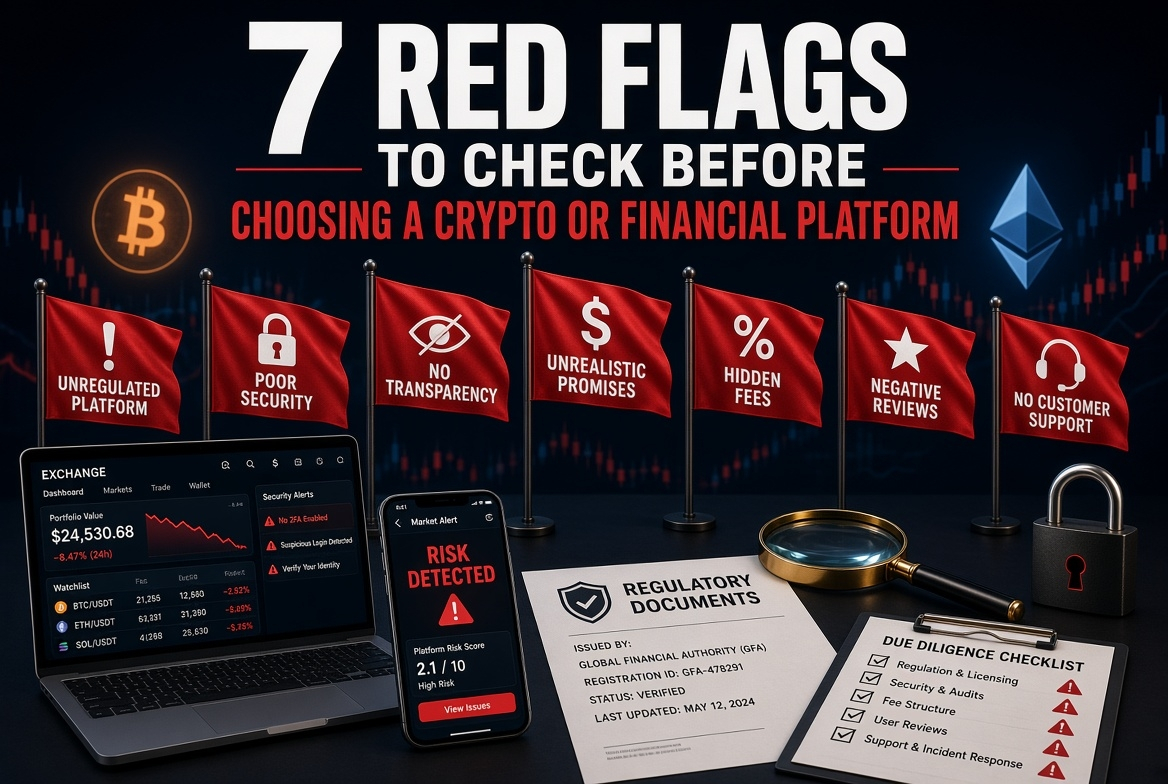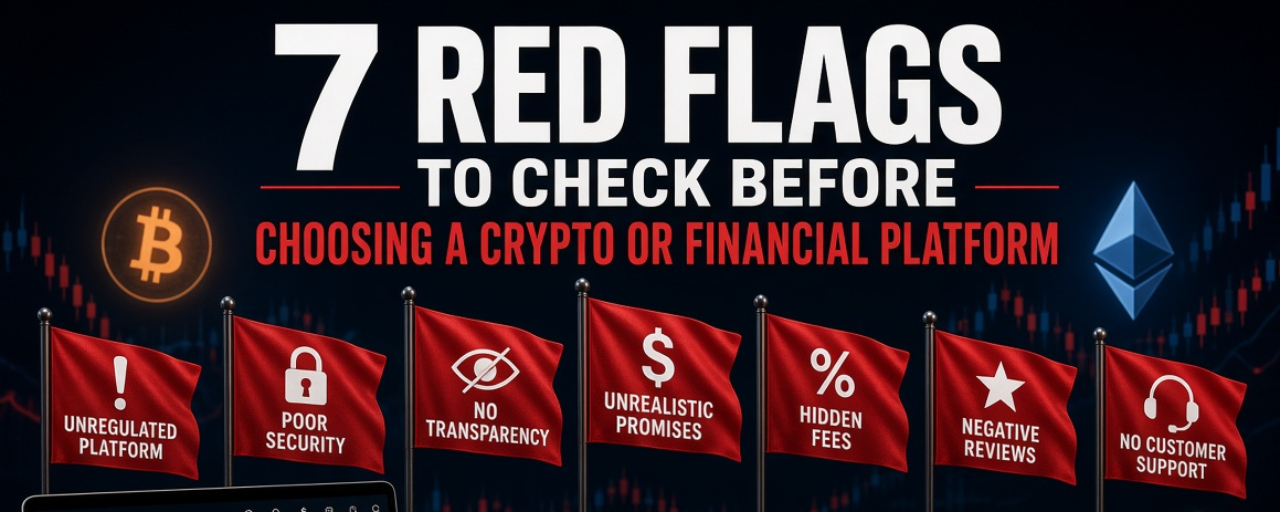

Choosing a crypto exchange or financial platform is not only about low fees, high rewards, or a nice interface.
Before depositing your money, check these 7 red flags:
Guaranteed returns
“Guaranteed profits” or “zero risk” investment promises should immediately raise concerns.
Crypto investments carry risks. No legitimate platform should make unrealistic promises about guaranteed returns.
No clear regulatory information
Check where the crypto platform is registered, which regulators oversee its activities, and whether it holds the required licenses.
Also check its regulatory credentials and accreditations in the jurisdictions where it operates.
Binance, for example, has regulated entities in Abu Dhabi Global Market, supervised by the Financial Services Regulatory Authority, covering activities including exchange, custody and broker dealer services.
Difficult or restricted withdrawals
Before depositing a large amount, understand the withdrawal process.
Check:
• Withdrawal limits
• Processing times
• Fees
• Account restrictions
• KYC requirements
Your ability to withdraw your assets matters as much as your ability to deposit them.
No Proof of Reserves or verifiable asset backing
Proof of Reserves is an important transparency tool for centralized crypto exchanges.
Binance publishes a Proof of Reserves system that allows users to verify that their account was included in the reported liabilities.
Its system combines Merkle Trees with zk-SNARKs, allowing users to verify their balances without exposing individual account information.
But remember, Proof of Reserves is not the same as a complete financial audit. It is generally a point in time view and does not automatically reveal every off chain liability.
Hidden or confusing fees
Look beyond trading fees.
Check:
• Deposit fees
• Withdrawal fees
• Network fees
• Conversion spreads
• Other account charges
A transparent crypto exchange should clearly explain its fee structure before you deposit funds.
Weak security practices
Check whether the platform offers strong security features such as:
• Two factor authentication
• Withdrawal controls
• Anti phishing protection
• Device and login monitoring
• Secure crypto custody
• Independent security certifications or audits
Security credentials should be verifiable, not simply mentioned in marketing material.
No credible user feedback or testimonials
Do not rely only on the platform's own advertising.
Look for independent user experiences across trusted communities, industry publications, app stores, and social platforms.
Pay attention to recurring complaints about:
• Frozen accounts
• Failed withdrawals
• Poor customer support
• Unexpected fees
• Security incidents
A few negative reviews do not automatically mean a platform is unsafe. Look for patterns and verify the claims before making a decision.
Your Crypto Platform Due Diligence Checklist:
✓ Regulatory status
✓ Licenses and accreditations
✓ Withdrawal conditions
✓ Transparent fees
✓ Proof of Reserves
✓ Security measures
✓ Asset custody
✓ Independent audits or certifications
✓ User feedback and testimonials
✓ Risk disclosures
Binance is one example of a platform where users can independently check several of these elements, including its regulatory credentials, Proof of Reserves and account verification mechanisms.
No accreditation, Proof of Reserves system, or security certification makes crypto investing risk free.
Do your own research.
Before choosing a crypto exchange, verify the facts, understand the risks, and make sure you know how your assets are held and how you can access them.