
M I S H U
1.1k ໂພສ

M I S H U
ຜູ້ຊື້ຂາຍປະຈໍາ
1.1 ປີ
125 ກໍາລັງຕິດຕາມ
14.6K+ ຜູ້ຕິດຕາມ
1.0K+ Liked
ໂພສ
ທັງໝົດ
ຖ່າຍທອດສົດ
#dusk $DUSK @Dusk
ໄປຫາກົນໄກຢູ່ຫຼັງ "selective disclosure" (ການເປີດເຜີຍແບບເລືອກ) — ຄຳທີ່ແຕ່ລະລະບົບຄວາມປະພືດນິຍົມໃຊ້ ແຕ່ມີຫຼາຍຄົນບໍ່ໄດ້ນິຍາມແນ່ຊັດ. ລະບົບສ່ວນໃຫຍ່ຖືການເປີດເຜີຍເປັນສອງຄ່າ: ເປີດເຜີຍທັງໝົດໃຫ້ລັດກຳກັບ, ຫຼືບໍ່ເປີດເຜີຍອັນໃດທັງໝົດ.
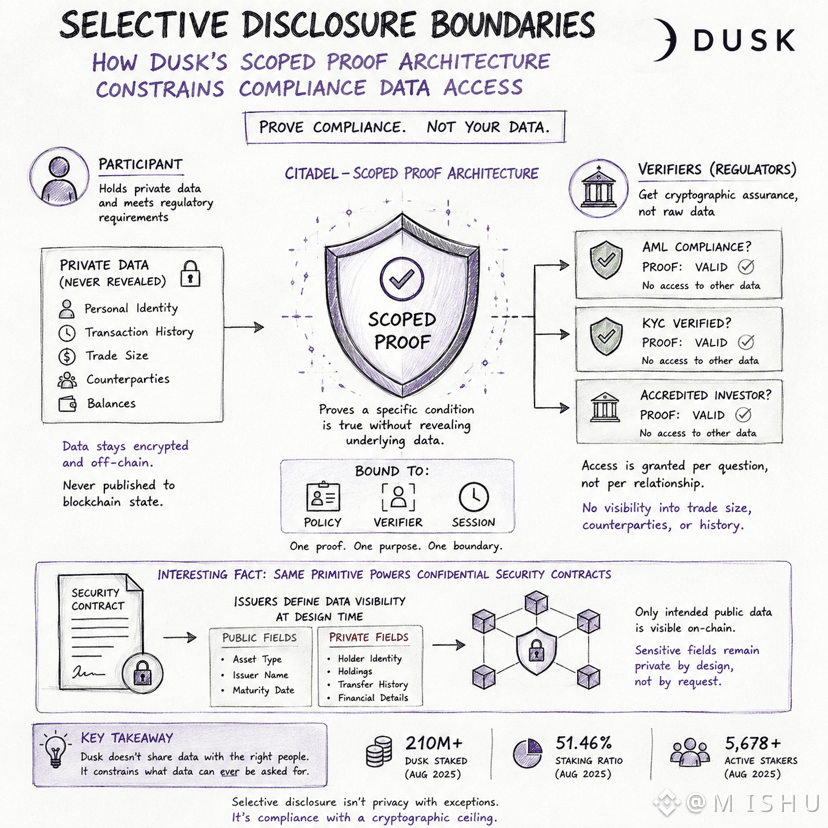
ແບບຈຳລອງຂອງ Dusk ແຄບກວ່າ. ຜູ້ເຂົ້າຮ່ວມພິสูດວ່າຕົນຕອບສະໜອງຂໍ້ກຳນົດ AML/KYC ໂດຍບໍ່ເປີດເຜີຍຂໍ້ມູນສ່ວນຕົວ ຫຼືຂໍ້ມູນການເຮັດທຸລະກຳທີ່ຢູ່ພາຍໃຕ້ຂອບການພິสูດ. ການເປີດເຜີຍນັ້ນບໍ່ແມ່ນ “ນີ້ຂໍ້ມູນຂອງຂ້ອຍ.” ແຕ່ແມ່ນ “ນີ້ຄືການພິสูດວ່າເງື່ອນໄຂນີ້ເປັນຈິງ” — ຖືກຈຳກັດຢູ່ກັບຄຳຖາມດ້ານການຕາມກົດໝາຍພຽງຂໍ້ດຽວ ແລະບໍ່ຫຼາຍກວ່ານັ້ນ.
ການເຂົ້າເຖິງໄດ້ຖືກອະນຸມັດ “ຕໍ່ຄຳຖາມ” ບໍ່ແມ່ນ “ຕໍ່ຄວາມສัมພັນ.” ຜູ້ກຳກັບກວດສອບສະຖານະ AML ບໍ່ໄດ້ຮັບການເຂົ້າເຫັນໂດຍອັດຕະໂນມັດໃນຂະໜາດການຄ້າ, ຄູ່ຄ້າ, ຫຼືປະຫວັດທຸລະກຳ.
ສ່ວນທີ່ນ່າສົນໃຈກໍຄືຫຼັກການດຽວກັນນີ້ ສາມາດຂະຫຍາຍໄປໃຊ້ກັບສັນຍາຄວາມປອດໄພທີ່ລັບໄດ້ ເຊິ່ງເຈົ້າອອກກຳນົດວ່າສະເພາະໃດຈະເປັນສາທາລະນະ ແລະສ່ວນໃດຈະຖືກຮັກສາໄວ້ເປັນຄວາມລັບ ກ່ອນທີ່ຊັບສິນຈະເລີ່ມໂຕ.
ຖ້າການພິสูດສາມາດຕອບໄດ້ພຽງຄຳຖາມທີ່ມັນຖືກອອກແບບໃຫ້ຕອບ, ການ “selective disclosure” ຈິງແທ້ແລ້ວແມ່ນຄວາມປະພືດທີ່ມີຂໍ້ຍົກເວັ້ນ ຫຼືຄືການຄອມພລາຍແບບມີຂອບເຂດທາງຄຣິບโตກຣາຟຟີ ໃນສິ່ງທີ່ຈະຮູ້ໄດ້ຫຼືບໍ່ໄດ້?
ໄປຫາກົນໄກຢູ່ຫຼັງ "selective disclosure" (ການເປີດເຜີຍແບບເລືອກ) — ຄຳທີ່ແຕ່ລະລະບົບຄວາມປະພືດນິຍົມໃຊ້ ແຕ່ມີຫຼາຍຄົນບໍ່ໄດ້ນິຍາມແນ່ຊັດ. ລະບົບສ່ວນໃຫຍ່ຖືການເປີດເຜີຍເປັນສອງຄ່າ: ເປີດເຜີຍທັງໝົດໃຫ້ລັດກຳກັບ, ຫຼືບໍ່ເປີດເຜີຍອັນໃດທັງໝົດ.
ແບບຈຳລອງຂອງ Dusk ແຄບກວ່າ. ຜູ້ເຂົ້າຮ່ວມພິสูດວ່າຕົນຕອບສະໜອງຂໍ້ກຳນົດ AML/KYC ໂດຍບໍ່ເປີດເຜີຍຂໍ້ມູນສ່ວນຕົວ ຫຼືຂໍ້ມູນການເຮັດທຸລະກຳທີ່ຢູ່ພາຍໃຕ້ຂອບການພິสูດ. ການເປີດເຜີຍນັ້ນບໍ່ແມ່ນ “ນີ້ຂໍ້ມູນຂອງຂ້ອຍ.” ແຕ່ແມ່ນ “ນີ້ຄືການພິสูດວ່າເງື່ອນໄຂນີ້ເປັນຈິງ” — ຖືກຈຳກັດຢູ່ກັບຄຳຖາມດ້ານການຕາມກົດໝາຍພຽງຂໍ້ດຽວ ແລະບໍ່ຫຼາຍກວ່ານັ້ນ.
ການເຂົ້າເຖິງໄດ້ຖືກອະນຸມັດ “ຕໍ່ຄຳຖາມ” ບໍ່ແມ່ນ “ຕໍ່ຄວາມສัมພັນ.” ຜູ້ກຳກັບກວດສອບສະຖານະ AML ບໍ່ໄດ້ຮັບການເຂົ້າເຫັນໂດຍອັດຕະໂນມັດໃນຂະໜາດການຄ້າ, ຄູ່ຄ້າ, ຫຼືປະຫວັດທຸລະກຳ.
ສ່ວນທີ່ນ່າສົນໃຈກໍຄືຫຼັກການດຽວກັນນີ້ ສາມາດຂະຫຍາຍໄປໃຊ້ກັບສັນຍາຄວາມປອດໄພທີ່ລັບໄດ້ ເຊິ່ງເຈົ້າອອກກຳນົດວ່າສະເພາະໃດຈະເປັນສາທາລະນະ ແລະສ່ວນໃດຈະຖືກຮັກສາໄວ້ເປັນຄວາມລັບ ກ່ອນທີ່ຊັບສິນຈະເລີ່ມໂຕ.
ຖ້າການພິสูດສາມາດຕອບໄດ້ພຽງຄຳຖາມທີ່ມັນຖືກອອກແບບໃຫ້ຕອບ, ການ “selective disclosure” ຈິງແທ້ແລ້ວແມ່ນຄວາມປະພືດທີ່ມີຂໍ້ຍົກເວັ້ນ ຫຼືຄືການຄອມພລາຍແບບມີຂອບເຂດທາງຄຣິບโตກຣາຟຟີ ໃນສິ່ງທີ່ຈະຮູ້ໄດ້ຫຼືບໍ່ໄດ້?
#dusk $DUSK @Dusk
Dusk sivumbang pertengahan incident, tapi aku yang dipikiran biasa, basa-basi samar "lagi nyelidiki". Nanging sing tak temokaké malah ana bedané sing pantes dipikiraké jero.
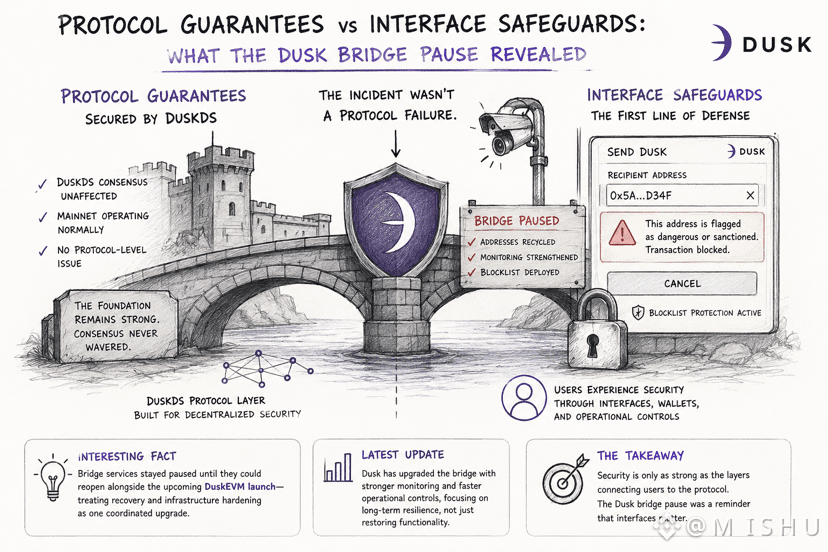
Nalika Dusk ndeteksi aktivitas jembatan sing ora biasa lan duwé gandhèngan karo tim sing dikelola dening operational wallet, dhèwèké ngaso layanan jembatan, ngocok alamat sing kena pengaruh, lan masang Web Wallet blocklist sing maringi peringatan marang panganggo sadurungé ngirim dana menyang tujuan sing wis dingertèni jahat utawa sing kena sanksi.
Iku bagean sing paling narik.
Blocklist iku saklar pengaman ing antarmuka. Éwadéné nglindhungi panganggo sadurungé transaksi ditandatangani. Kuwi dudu bab sing DuskDS tilèk ing lapisan protokol.
Tim mau uga teges banget nèk kedadeyan iki dudu kegagalan ing tingkat protokol. Konsensus terus mlaku kanthi normal; panyusupan kuwi ana rampung ing infrastruktur operasional sing ngubengi jembatan.
Ana siji rincian sing ngadeg: layanan jembatan tetep di-pause nganti bisa diwènèhaké maneh bebarengan karo DuskEVM, dadi pamulihan lan hardening infrastruktur dadi siji peluncuran tinimbang mbukak dhisik banjur ndandani mengko.
Yèn protokol ora tau gagal, nanging perlindungan sing bener-bener dialami panganggo yaiku sistem peringatan level dompet, apa sing kuwi ngomong babagan endi keamanan sing bener-bener dirasa: ing protokol, utawa ing antarmuka antarane panganggo lan protokol?
Dusk sivumbang pertengahan incident, tapi aku yang dipikiran biasa, basa-basi samar "lagi nyelidiki". Nanging sing tak temokaké malah ana bedané sing pantes dipikiraké jero.
Nalika Dusk ndeteksi aktivitas jembatan sing ora biasa lan duwé gandhèngan karo tim sing dikelola dening operational wallet, dhèwèké ngaso layanan jembatan, ngocok alamat sing kena pengaruh, lan masang Web Wallet blocklist sing maringi peringatan marang panganggo sadurungé ngirim dana menyang tujuan sing wis dingertèni jahat utawa sing kena sanksi.
Iku bagean sing paling narik.
Blocklist iku saklar pengaman ing antarmuka. Éwadéné nglindhungi panganggo sadurungé transaksi ditandatangani. Kuwi dudu bab sing DuskDS tilèk ing lapisan protokol.
Tim mau uga teges banget nèk kedadeyan iki dudu kegagalan ing tingkat protokol. Konsensus terus mlaku kanthi normal; panyusupan kuwi ana rampung ing infrastruktur operasional sing ngubengi jembatan.
Ana siji rincian sing ngadeg: layanan jembatan tetep di-pause nganti bisa diwènèhaké maneh bebarengan karo DuskEVM, dadi pamulihan lan hardening infrastruktur dadi siji peluncuran tinimbang mbukak dhisik banjur ndandani mengko.
Yèn protokol ora tau gagal, nanging perlindungan sing bener-bener dialami panganggo yaiku sistem peringatan level dompet, apa sing kuwi ngomong babagan endi keamanan sing bener-bener dirasa: ing protokol, utawa ing antarmuka antarane panganggo lan protokol?
#dusk $DUSK @Dusk
បន្ទាប់ពីបានអានសេចក្តីប្រកាសឧបទ្ទវហេតុរបស់ Dusk’s bridge ខ្ញុំរំពឹងទ្រង់ទ្រាយ hack លើគ្រីបតូធម្មតាៗ ការភ័យស្លន់ស្លោ ការធានាដែលមិនច្បាស់ និងភាពស្ងប់ស្ងាត់។ តែផ្ទុយទៅវិញ អត្ថបទនោះពិតជាជាក់លាក់ខុសធម្មតាអំពីអ្វីដែលមិនបានខូច។
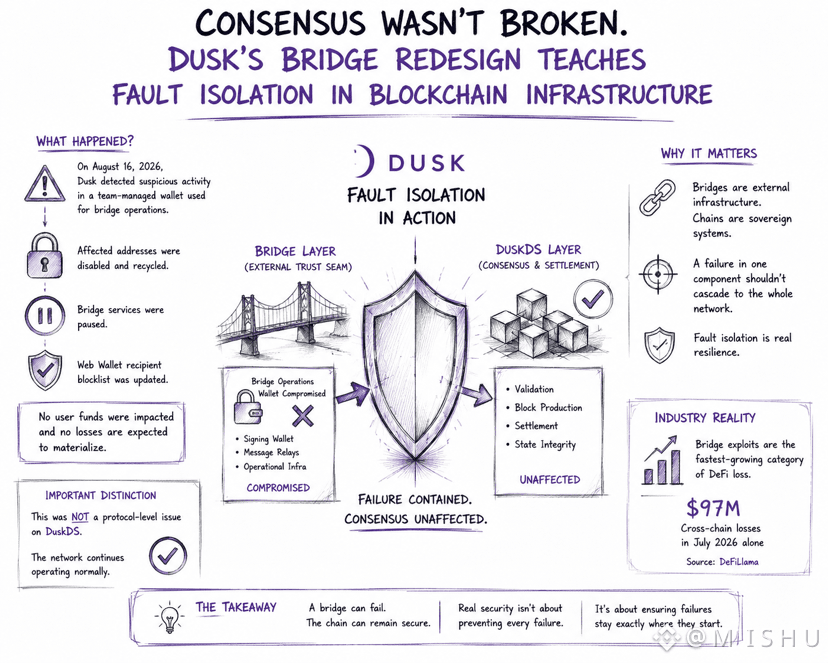
នៅថ្ងៃទី 16 ខែសីហា ឆ្នាំ 2026 ក្រុមការងារបានរកឃើញសកម្មភាពគួរឲ្យសង្ស័យ ដែលភ្ជាប់ទៅនឹង team managed wallet ដែលប្រើក្នុងប្រតិបត្តិការភ្លីខ (bridge) បិទវា និងយកអាសយដ្ឋានដែលរងផលប៉ះពាល់មកប្រើឡើងវិញ ផ្អាកសេវាភ្លីខ ហើយបន្ថែម Web Wallet recipient blocklist។ ផ្អែកលើព័ត៌មានទាំងអស់ដែលមាន គ្មានមូលនិធិរបស់អ្នកប្រើប្រាស់ណាមួយរងផលប៉ះពាល់ ហើយមិនរំពឹងថានឹងមានការខាតបង់កើតឡើងនោះទេ។
បន្ទាត់ដែលសំខាន់ពិតៗ គឺថានេះមិនមែនជាបញ្ហាកម្រិតប្រូតូកុលនៅលើ DuskDS ហើយបណ្តាញនៅតែដំណើរការធម្មតា។ Consensus ការដោះស្រាយ (settlement) base layer នៅតែមិនប៉ះពាល់។ ការបរាជ័យត្រូវបានកំណត់ឲ្យនៅតែជាប់តែទៅ wallet ប្រតិបត្តិការនៅច្រកព្រំដែនរបស់ bridge ប៉ុណ្ណោះ។
នោះហើយជាការបំបែកកំហុស (fault isolation) ដែលដំណើរការតាមការរចនាមិនមែនដោយសំណាង។ Bridge គឺជា “ច្រកជំនឿ” ខាងក្រៅ (external trust seam) ដែលភ្ជាប់ទៅលើ chain មួយ; ការដែល DuskDS ធ្វើ validate block បានត្រឹមត្រូវពេញពេលនោះ គឺជាភស្តុតាងពិតថាការបំបែកបានរក្សា។
ដូច្នេះ.. ការកេងប្រវ័ញ្ច bridge គឺជាប្រភេទការខាត DeFi ដែលកំពុងកើនលឿនបំផុតឆ្នាំនេះ ដោយក្នុងខែកក្កដាតែម្នាក់ឯងមានសរុប $97M នៃការខាតឆ្លងខ្សែ (cross chain losses) ទូទាំងឧស្សាហកម្ម ហើយមូលហេតុដែលកើតឡើងជាបន្តទៀតមិនមែនគ្រីបតូដែលខូចនោះទេ គឺជាការសន្មត់អំពីជំនឿដែលខូច: signer ដែលត្រូវលួចចូល, សារ (message) ដែលត្រូវបានក្លែងបន្លំ, timelock ដែលត្រូវបានបោះរំលង។
បើ base layer អាចនៅតែគ្មានការប៉ះពាល់ ខណៈដែល bridge បរាជ័យ តើ “តើ chain មានសុវត្ថិភាពទេ” និង “តើ bridge មានសុវត្ថិភាពទេ” គួរត្រូវបានសួរជាសំណួរដូចគ្នាដែរ ឬ?
បន្ទាប់ពីបានអានសេចក្តីប្រកាសឧបទ្ទវហេតុរបស់ Dusk’s bridge ខ្ញុំរំពឹងទ្រង់ទ្រាយ hack លើគ្រីបតូធម្មតាៗ ការភ័យស្លន់ស្លោ ការធានាដែលមិនច្បាស់ និងភាពស្ងប់ស្ងាត់។ តែផ្ទុយទៅវិញ អត្ថបទនោះពិតជាជាក់លាក់ខុសធម្មតាអំពីអ្វីដែលមិនបានខូច។
នៅថ្ងៃទី 16 ខែសីហា ឆ្នាំ 2026 ក្រុមការងារបានរកឃើញសកម្មភាពគួរឲ្យសង្ស័យ ដែលភ្ជាប់ទៅនឹង team managed wallet ដែលប្រើក្នុងប្រតិបត្តិការភ្លីខ (bridge) បិទវា និងយកអាសយដ្ឋានដែលរងផលប៉ះពាល់មកប្រើឡើងវិញ ផ្អាកសេវាភ្លីខ ហើយបន្ថែម Web Wallet recipient blocklist។ ផ្អែកលើព័ត៌មានទាំងអស់ដែលមាន គ្មានមូលនិធិរបស់អ្នកប្រើប្រាស់ណាមួយរងផលប៉ះពាល់ ហើយមិនរំពឹងថានឹងមានការខាតបង់កើតឡើងនោះទេ។
បន្ទាត់ដែលសំខាន់ពិតៗ គឺថានេះមិនមែនជាបញ្ហាកម្រិតប្រូតូកុលនៅលើ DuskDS ហើយបណ្តាញនៅតែដំណើរការធម្មតា។ Consensus ការដោះស្រាយ (settlement) base layer នៅតែមិនប៉ះពាល់។ ការបរាជ័យត្រូវបានកំណត់ឲ្យនៅតែជាប់តែទៅ wallet ប្រតិបត្តិការនៅច្រកព្រំដែនរបស់ bridge ប៉ុណ្ណោះ។
នោះហើយជាការបំបែកកំហុស (fault isolation) ដែលដំណើរការតាមការរចនាមិនមែនដោយសំណាង។ Bridge គឺជា “ច្រកជំនឿ” ខាងក្រៅ (external trust seam) ដែលភ្ជាប់ទៅលើ chain មួយ; ការដែល DuskDS ធ្វើ validate block បានត្រឹមត្រូវពេញពេលនោះ គឺជាភស្តុតាងពិតថាការបំបែកបានរក្សា។
ដូច្នេះ.. ការកេងប្រវ័ញ្ច bridge គឺជាប្រភេទការខាត DeFi ដែលកំពុងកើនលឿនបំផុតឆ្នាំនេះ ដោយក្នុងខែកក្កដាតែម្នាក់ឯងមានសរុប $97M នៃការខាតឆ្លងខ្សែ (cross chain losses) ទូទាំងឧស្សាហកម្ម ហើយមូលហេតុដែលកើតឡើងជាបន្តទៀតមិនមែនគ្រីបតូដែលខូចនោះទេ គឺជាការសន្មត់អំពីជំនឿដែលខូច: signer ដែលត្រូវលួចចូល, សារ (message) ដែលត្រូវបានក្លែងបន្លំ, timelock ដែលត្រូវបានបោះរំលង។
បើ base layer អាចនៅតែគ្មានការប៉ះពាល់ ខណៈដែល bridge បរាជ័យ តើ “តើ chain មានសុវត្ថិភាពទេ” និង “តើ bridge មានសុវត្ថិភាពទេ” គួរត្រូវបានសួរជាសំណួរដូចគ្នាដែរ ឬ?
ຢືນຢັນແລ້ວ
#dusk $DUSK @Dusk
បានបើកភារកិច្ច Dusk’s CreatorPad ដោយរំពឹងថានឹងមានរឿងរ៉ាវផ្តោតលើភាពឯកជនមួយទៀតអំពី Hedger និងការបញ្ជាក់សូន្យចំណេះដឹងដែលអាចត្រួតពិនិត្យបាន។ ទោះយ៉ាងណា អ្វីដែលទាក់ទាញចិត្តខ្ញុំ គឺរបៀបដែលប្រព័ន្ធមានឥរិយាបថពេលមានអ្វីមួយពិតជាខុសប្រក្រតី។
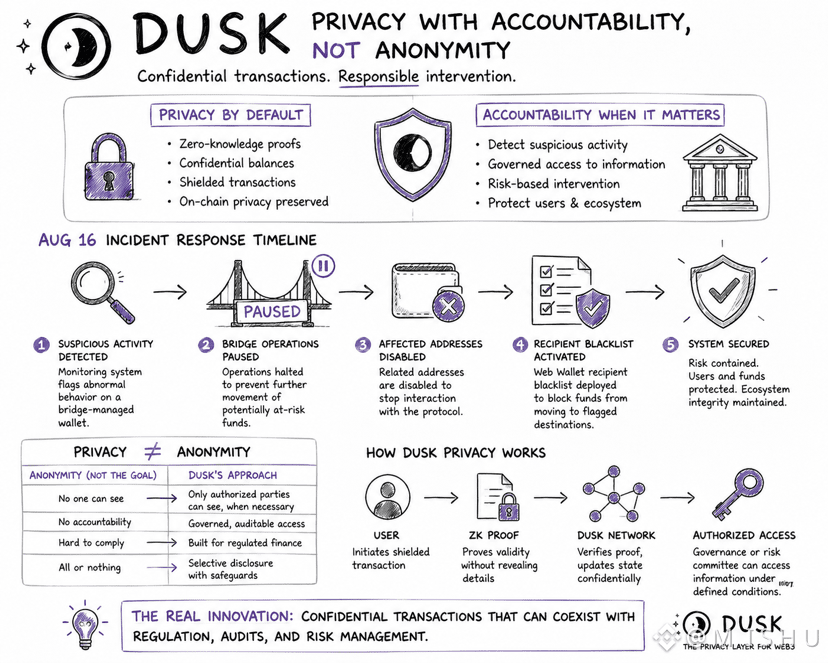
នៅថ្ងៃទី 16 ខែសីហា ក្រុមការងារបានរកឃើញសកម្មភាពគួរឲ្យសង្ស័យដែលពាក់ព័ន្ធនឹង wallet គ្រប់គ្រងដោយ bridge។ ក្នុងរយៈពេលប៉ុន្មានម៉ោង ប្រតិបត្តិការ bridge ត្រូវបានផ្អាក អាសយដ្ឋានដែលរងផលប៉ះពាល់ត្រូវបានបិទ និងបានដាក់ blacklist សម្រាប់អ្នកទទួល ដើម្បីការពារកុំឲ្យមូលនិធិទៅដល់គោលដៅដែលត្រូវបានសម្គាល់។
ការឆ្លើយតបនោះ បានផ្លាស់ប្តូររបៀបដែលខ្ញុំគិតអំពីម៉ូឌែលភាពឯកជនរបស់ Dusk ។
មនុស្សជាច្រើនបានឮ “privacy by default” ហើយសន្មតថា ឯកជនភាពមានន័យថាលាក់បាំងពេញលេញ។ អ្វីដែល Dusk ហាក់ដូចជាកំពុងសាងសង់ គឺអ្វីមួយផ្សេង៖ ភាពសម្ងាត់ជាមួយនឹងការទទួលខុសត្រូវ។ ព័ត៌មានលម្អិតនៃប្រតិបត្តិការ អាចនៅតែការពារពីការមើលឃើញជាសាធារណៈ ខណៈដែលបណ្តាញនៅតែរក្សាយន្តការដើម្បីអន្តរាគមន៍ នៅពេលដែលតម្រូវការសម្រាប់សន្តិសុខ ការគោរពតាមបទប្បញ្ញត្តិ ឬការការពារទ្រព្យសកម្ម ទាមទារ។
សម្រាប់ហិរញ្ញវត្ថុដែលត្រូវបានគ្រប់គ្រង ភាពខុសគ្នានេះមានសារៈសំខាន់។
សំណួរពិតប្រហែលជាមិនមែនថាតើប្រតិបត្តិការ “ឯកជន” ទេ ឬអត់ ប៉ុន្តែជាថា តើអ្នកណាអាចចូលប្រើព័ត៌មានក្រោមលក្ខខណ្ឌជាក់លាក់ វិធីដែលការចូលប្រើនោះត្រូវបានគ្រប់គ្រង និងអ្វីជាការការពារដែលមានជុំវិញសិទ្ធិអន្តរាគមន៍។
ភាពឯកជនងាយស្រួលក្នុងការផ្សព្វផ្សាយ។ ការរចនាភាពឯកជនដែលអាចរួមរស់ជាមួយបទប្បញ្ញត្តិ ការត្រួតពិនិត្យ (audits) និងការគ្រប់គ្រងហានិភ័យ គឺជាបញ្ហាដែលពិបាកជាង ហើយប្រហែលជាមានសារៈសំខាន់ជាងគេ។
បានបើកភារកិច្ច Dusk’s CreatorPad ដោយរំពឹងថានឹងមានរឿងរ៉ាវផ្តោតលើភាពឯកជនមួយទៀតអំពី Hedger និងការបញ្ជាក់សូន្យចំណេះដឹងដែលអាចត្រួតពិនិត្យបាន។ ទោះយ៉ាងណា អ្វីដែលទាក់ទាញចិត្តខ្ញុំ គឺរបៀបដែលប្រព័ន្ធមានឥរិយាបថពេលមានអ្វីមួយពិតជាខុសប្រក្រតី។
នៅថ្ងៃទី 16 ខែសីហា ក្រុមការងារបានរកឃើញសកម្មភាពគួរឲ្យសង្ស័យដែលពាក់ព័ន្ធនឹង wallet គ្រប់គ្រងដោយ bridge។ ក្នុងរយៈពេលប៉ុន្មានម៉ោង ប្រតិបត្តិការ bridge ត្រូវបានផ្អាក អាសយដ្ឋានដែលរងផលប៉ះពាល់ត្រូវបានបិទ និងបានដាក់ blacklist សម្រាប់អ្នកទទួល ដើម្បីការពារកុំឲ្យមូលនិធិទៅដល់គោលដៅដែលត្រូវបានសម្គាល់។
ការឆ្លើយតបនោះ បានផ្លាស់ប្តូររបៀបដែលខ្ញុំគិតអំពីម៉ូឌែលភាពឯកជនរបស់ Dusk ។
មនុស្សជាច្រើនបានឮ “privacy by default” ហើយសន្មតថា ឯកជនភាពមានន័យថាលាក់បាំងពេញលេញ។ អ្វីដែល Dusk ហាក់ដូចជាកំពុងសាងសង់ គឺអ្វីមួយផ្សេង៖ ភាពសម្ងាត់ជាមួយនឹងការទទួលខុសត្រូវ។ ព័ត៌មានលម្អិតនៃប្រតិបត្តិការ អាចនៅតែការពារពីការមើលឃើញជាសាធារណៈ ខណៈដែលបណ្តាញនៅតែរក្សាយន្តការដើម្បីអន្តរាគមន៍ នៅពេលដែលតម្រូវការសម្រាប់សន្តិសុខ ការគោរពតាមបទប្បញ្ញត្តិ ឬការការពារទ្រព្យសកម្ម ទាមទារ។
សម្រាប់ហិរញ្ញវត្ថុដែលត្រូវបានគ្រប់គ្រង ភាពខុសគ្នានេះមានសារៈសំខាន់។
សំណួរពិតប្រហែលជាមិនមែនថាតើប្រតិបត្តិការ “ឯកជន” ទេ ឬអត់ ប៉ុន្តែជាថា តើអ្នកណាអាចចូលប្រើព័ត៌មានក្រោមលក្ខខណ្ឌជាក់លាក់ វិធីដែលការចូលប្រើនោះត្រូវបានគ្រប់គ្រង និងអ្វីជាការការពារដែលមានជុំវិញសិទ្ធិអន្តរាគមន៍។
ភាពឯកជនងាយស្រួលក្នុងការផ្សព្វផ្សាយ។ ការរចនាភាពឯកជនដែលអាចរួមរស់ជាមួយបទប្បញ្ញត្តិ ការត្រួតពិនិត្យ (audits) និងការគ្រប់គ្រងហានិភ័យ គឺជាបញ្ហាដែលពិបាកជាង ហើយប្រហែលជាមានសារៈសំខាន់ជាងគេ។
ຢືນຢັນແລ້ວ
#dusk $DUSK @Dusk
Ngakho… ngiya kulanda ukuthi yini ngempela egcina unjiniyela ekhona ochungechungeni ngemva kokuthi isimemezelo sokuqala sokuthi "singasekela i-Solidity" sesiphelile.
Ukuhambisana ne-EVM kuwavulela umnyango abakhi.
Kodwa akubaniki isizathu sokuhlala.
I-testnet ye-DuskEVM isiqalile ukusebenza, inika onjiniyela ukufinyelela ku-Solidity, amathuluzi ajwayelekile e-Ethereum, kanye nendlela enezinqamulelo ezimbalwa yokungena e-ecosystem. Lokho kubalulekile. Kodwa ngo-2026, ukuhambisana akusasebenzi njengomehluko; sekuyimfuneko encane.
Okungigqamisile kwakungeyona i-DuskEVM uqobo.
Kwakuyikho konke okwakhiwe ngaseceleni kwayo.
I-Hedger yethula ukugeleza kwemiyalezo efihliwe (confidential transaction flows) isebenzisa i-homomorphic encryption nobuchwepheshe be-zero knowledge, okuvumela izinhlelo zokusebenza ukuthi zihlanganise ubumfihlo nengqalasizinda yezezimali elawulwayo. Amanye ama-chain ancintisana ngokuthi yini engase igcwaliswe (execution). I-Dusk incintisana ngokuthi yini engagcwaliswa ngendlela eyimfihlo.
Bese kuba khona i-Dusk Connect.
Ikhishwe ngo-April 2026, i-SDK yaklanyelwa ukusiza ama-dApps ukuthi athole ama-wallet, axhumanise abasebenzisi, futhi aphathe ukuthengiselana ngokusebenzisa isixhumi esibonakalayo esihlangene. Ixazulula inkinga evela ngemva kokutholwa (acquisition): ukwehlisa ubunzima kubunjiniyela asebevele benqume ukwakha.
I-ImDusk manje inikeza izindlela ezimbili ezihlukile zabakhi. I-DuskEVM isebenzela onjiniyela be-Solidity, kanti i-native Dusk stack inikeza ama-akhawunti avikelekile (shielded accounts), ukwenziwa okugcina ubumfihlo, namathuluzi aqondile ezingeni lenodi nge-W3sper. Njengoba izinhlelo zokusebenza zikhula, onjiniyela akudingeki bashiye i-ecosystem ukuze bafinyelele amakhono athuthuke kakhudlwana.
Hmm… Mhlawumbe leyo yisu langempela lokugcina.
Akuzona nje ukuheha abenzi (builders) ngokuhambisana ne-EVM.
Kubanika ingqalasizinda abangayitholi kalula kwenye indawo.
Yini eyakha ukunamathela okuqinile kwabakhi?
Ngakho… ngiya kulanda ukuthi yini ngempela egcina unjiniyela ekhona ochungechungeni ngemva kokuthi isimemezelo sokuqala sokuthi "singasekela i-Solidity" sesiphelile.
Ukuhambisana ne-EVM kuwavulela umnyango abakhi.
Kodwa akubaniki isizathu sokuhlala.
I-testnet ye-DuskEVM isiqalile ukusebenza, inika onjiniyela ukufinyelela ku-Solidity, amathuluzi ajwayelekile e-Ethereum, kanye nendlela enezinqamulelo ezimbalwa yokungena e-ecosystem. Lokho kubalulekile. Kodwa ngo-2026, ukuhambisana akusasebenzi njengomehluko; sekuyimfuneko encane.
Okungigqamisile kwakungeyona i-DuskEVM uqobo.
Kwakuyikho konke okwakhiwe ngaseceleni kwayo.
I-Hedger yethula ukugeleza kwemiyalezo efihliwe (confidential transaction flows) isebenzisa i-homomorphic encryption nobuchwepheshe be-zero knowledge, okuvumela izinhlelo zokusebenza ukuthi zihlanganise ubumfihlo nengqalasizinda yezezimali elawulwayo. Amanye ama-chain ancintisana ngokuthi yini engase igcwaliswe (execution). I-Dusk incintisana ngokuthi yini engagcwaliswa ngendlela eyimfihlo.
Bese kuba khona i-Dusk Connect.
Ikhishwe ngo-April 2026, i-SDK yaklanyelwa ukusiza ama-dApps ukuthi athole ama-wallet, axhumanise abasebenzisi, futhi aphathe ukuthengiselana ngokusebenzisa isixhumi esibonakalayo esihlangene. Ixazulula inkinga evela ngemva kokutholwa (acquisition): ukwehlisa ubunzima kubunjiniyela asebevele benqume ukwakha.
I-ImDusk manje inikeza izindlela ezimbili ezihlukile zabakhi. I-DuskEVM isebenzela onjiniyela be-Solidity, kanti i-native Dusk stack inikeza ama-akhawunti avikelekile (shielded accounts), ukwenziwa okugcina ubumfihlo, namathuluzi aqondile ezingeni lenodi nge-W3sper. Njengoba izinhlelo zokusebenza zikhula, onjiniyela akudingeki bashiye i-ecosystem ukuze bafinyelele amakhono athuthuke kakhudlwana.
Hmm… Mhlawumbe leyo yisu langempela lokugcina.
Akuzona nje ukuheha abenzi (builders) ngokuhambisana ne-EVM.
Kubanika ingqalasizinda abangayitholi kalula kwenye indawo.
Yini eyakha ukunamathela okuqinile kwabakhi?
EVM Compatibility
100%
Privacy Infrastructure
0%
Better Developer Tools
0%
Real Ecosystem Demand
0%
1 ຄະແນນສຽງ • ປິດລົງຄະແນນສຽງ
ຢືນຢັນແລ້ວ
#dusk $DUSK @Dusk
Mo n kawe lori $ONG ati $ENA nigbati mo kọja @Dusk SME infrastructure ọsẹ yìí, mo n reti lati ri atokọ ti o n dagba ti awọn olufunni ti a ti tokenized.
Iyẹn ni itan tí ọpọlọpọ eniyan n wa: diẹ sii awọn olufunni, diẹ sii ìmúlò.
Ṣugbọn, dipo, mo rí ìwọn tó nifẹ diẹ sii.
#dusk ti n pese ìpò gbogbo stack fun ìforúkọsílẹ ti a ṣàkóso, ẹda ohun-ini, yíyàn awọn olùdókòwò (investor eligibility), awọn ihamọ gbigbe (transfer restrictions), awọn iṣakoso ibamu (compliance controls), ati ìtẹ̀síwájú ìtẹ̀síwájú (regulated settlement).
Ohun èlò amayederun náà ti ṣetan.
Ṣùgbọ́n ìmura amayederun kì í ṣe bákan náà gẹ́gẹ́ bí ìṣẹ̀dá ọrọ-aje.
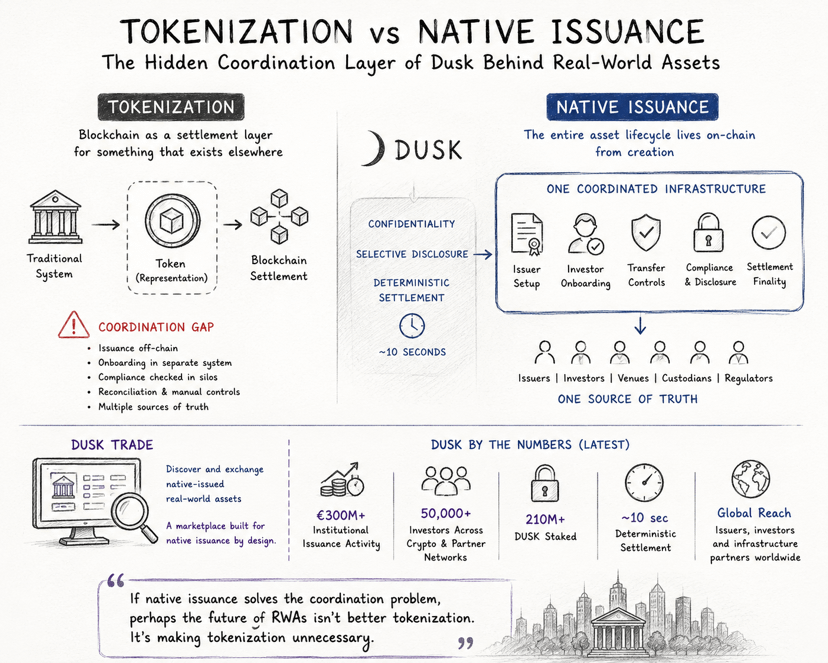
Ìmì tó lágbára jù tí mo rí ni NPEX, pẹpẹ awọn ohun-iyebíye tí a ṣàkóso (regulated securities marketplace) pẹ̀lú tó fẹrẹ to €200–300M ninu awọn idoko-owo tí a ṣe akojọ (listed investments) tí o so mọ amayederun Dusk. Iyẹn kì í ṣe iye wallet tàbí milestone testnet. Ó jẹ́ gidi olu tí ń ṣiṣẹ lórí àwọn ọna ìṣàkóso (regulated rails).
Ó yí bí mo ṣe ń rò nípa ìmúlò.
Ọ̀pọ̀ nẹ́tíwọ́ọ̀kì (networks) ń wọn idagbasoke nípa iye ohun-ini (assets) tàbí awọn olufunni tí ó farahan lórí chain.
Fun ìṣúná SME, ìbéèrè tó dára jù ni: iye owó gangan tó ń rìn (moves) lẹ́yìn tí olufunni kan dé?
Ọ̀gọ́rùn-ún olufunni lè ṣe iye díẹ̀ ju àwọn olufunni mẹ́wàá tí ń máa ṣe ìtẹ̀síwájú securities lọ́pọ̀lọpọ̀, tí ń fa àwọn olùdókòwò (investors), àti tí ń yanju ìparí (settling) àwọn iṣowo.
Àwọn ìtòlẹ́sẹẹsẹ ibamu (compliance architecture) Dusk mú ìdagbasoke olufunni le ní kíkà ju lórí ọ̀pọ̀ chain lọ. Awọn olufunni gbọ́dọ̀ dá sí ìlànà ìlànilọwọ́ (regulatory) àti àwọn ìpẹ̀yà ì yẹ̀ (eligibility requirements) ju kí wọn kan kanṣo tó token, kí wọn sì pe e ni ìmúlò.
Ohun tí mo ń ṣọ́ra kì í ṣe iye olufunni.
Ó jẹ́ ìṣẹ̀dá ọrọ-aje fún olufunni kọọkan.
Nítorí ìmúlò gidi bẹ̀rẹ̀ nígbà tí capital bá ń rìn, kì í ṣe nígbà tí olufunni bá forúkọsílẹ̀.
Mo n kawe lori $ONG ati $ENA nigbati mo kọja @Dusk SME infrastructure ọsẹ yìí, mo n reti lati ri atokọ ti o n dagba ti awọn olufunni ti a ti tokenized.
Iyẹn ni itan tí ọpọlọpọ eniyan n wa: diẹ sii awọn olufunni, diẹ sii ìmúlò.
Ṣugbọn, dipo, mo rí ìwọn tó nifẹ diẹ sii.
#dusk ti n pese ìpò gbogbo stack fun ìforúkọsílẹ ti a ṣàkóso, ẹda ohun-ini, yíyàn awọn olùdókòwò (investor eligibility), awọn ihamọ gbigbe (transfer restrictions), awọn iṣakoso ibamu (compliance controls), ati ìtẹ̀síwájú ìtẹ̀síwájú (regulated settlement).
Ohun èlò amayederun náà ti ṣetan.
Ṣùgbọ́n ìmura amayederun kì í ṣe bákan náà gẹ́gẹ́ bí ìṣẹ̀dá ọrọ-aje.
Ìmì tó lágbára jù tí mo rí ni NPEX, pẹpẹ awọn ohun-iyebíye tí a ṣàkóso (regulated securities marketplace) pẹ̀lú tó fẹrẹ to €200–300M ninu awọn idoko-owo tí a ṣe akojọ (listed investments) tí o so mọ amayederun Dusk. Iyẹn kì í ṣe iye wallet tàbí milestone testnet. Ó jẹ́ gidi olu tí ń ṣiṣẹ lórí àwọn ọna ìṣàkóso (regulated rails).
Ó yí bí mo ṣe ń rò nípa ìmúlò.
Ọ̀pọ̀ nẹ́tíwọ́ọ̀kì (networks) ń wọn idagbasoke nípa iye ohun-ini (assets) tàbí awọn olufunni tí ó farahan lórí chain.
Fun ìṣúná SME, ìbéèrè tó dára jù ni: iye owó gangan tó ń rìn (moves) lẹ́yìn tí olufunni kan dé?
Ọ̀gọ́rùn-ún olufunni lè ṣe iye díẹ̀ ju àwọn olufunni mẹ́wàá tí ń máa ṣe ìtẹ̀síwájú securities lọ́pọ̀lọpọ̀, tí ń fa àwọn olùdókòwò (investors), àti tí ń yanju ìparí (settling) àwọn iṣowo.
Àwọn ìtòlẹ́sẹẹsẹ ibamu (compliance architecture) Dusk mú ìdagbasoke olufunni le ní kíkà ju lórí ọ̀pọ̀ chain lọ. Awọn olufunni gbọ́dọ̀ dá sí ìlànà ìlànilọwọ́ (regulatory) àti àwọn ìpẹ̀yà ì yẹ̀ (eligibility requirements) ju kí wọn kan kanṣo tó token, kí wọn sì pe e ni ìmúlò.
Ohun tí mo ń ṣọ́ra kì í ṣe iye olufunni.
Ó jẹ́ ìṣẹ̀dá ọrọ-aje fún olufunni kọọkan.
Nítorí ìmúlò gidi bẹ̀rẹ̀ nígbà tí capital bá ń rìn, kì í ṣe nígbà tí olufunni bá forúkọsílẹ̀.
ຢືນຢັນແລ້ວ
#termmax @TermMax
ພຶ່ງເຫັນທໍ້ສູບ (pump) ຢູ່ $ONG $ENA ແລະ $PEOPLE ແລ້ວ ຂ້ອຍກໍ່ຮູ້ວ່າ ການແຍກສ່ວນຄວາມສະຫຼາດ (liquidity fragmentation) ມັນຄ້າຍກັບການມີເງິນກະຈາຍໄວ້ໃນຖົງເງິນ (wallet) ຕ່າງກັນສິບອັນ ເວລາຈະຈ່າຍຍອດຫນຶ່ງຄັ້ງທີ່ຂະຫນາດໃຫຍ່.
ມີທຶນຢູ່.
ແຕ່ທ່ານໃຊ້ມັນຢ່າງບໍ່ມີປະສິດທິຜົນ.
ຄວາມຄິດນັ້ນເກີດຂຶ້ນໃນເວລາທຽບຕະຫຼາດຂອງ TermMax ລຸ້ນ V1 ກັບ V2.
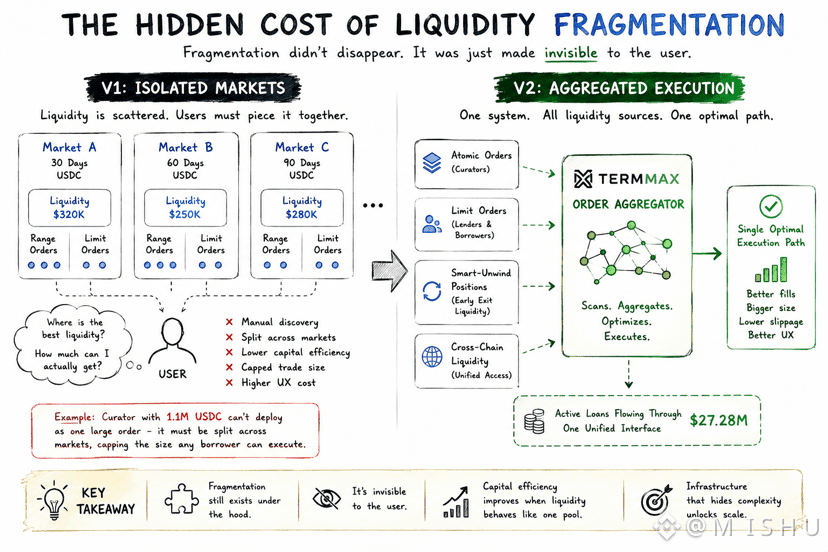
ໃນ V1, ແຕ່ລະຕະຫຼາດ—ບໍ່ວ່າຈະເປັນຄວາມຍາວກຳນົດ (maturity), ປະເພດຄ້ຳປະກັນ (collateral), ຫຼື ເຊນ (chain)—ຖືກແຍກຄວາມສະຫຼາດຂອງມັນເອງອອກໄວ້ແບບເປັນເຄື່ອງຈັກ.
ຄຳສັ່ງຂອງ curator ທີ່ເປັນ range ຢູ່ແຍກຈາກຄຳສັ່ງ limit ຂອງ lender ແລະ borrower, ແລະຜູ້ໃຊ້ຕ້ອງເອົາມັນມາຕໍ່ເອງດ້ວຍມືເພື່ອຊອກຫາການປະຕິບັດ (execution) ທີ່ດີທີ່ສຸດ.
curator ທີ່ມີ USDC 1.1M ອາດຈະມີຄວາມສະຫຼາດພ້ອມໃນລວມທັງຫມົດ, ແຕ່ borrower ຂະຫນາດໃຫຍ່ກໍ່ຍັງອາດຈະບໍ່ສາມາດເຂົ້າເຖິງມັນໃນການຊື້/ທຳລາຍຄັ້ງດຽວ (one transaction) ໄດ້ ເພາະວ່າທຶນນັ້ນກະຈາຍຢູ່ຫຼາຍຕະຫຼາດ.
ນັ້ນແມ່ນຕົ້ນທຶນທີ່ຊ້ອນຢູ່ຂອງການແຍກສ່ວນ (fragmentation).
ບໍ່ແມ່ນຍອດເງິນຕ່ຳກວ່າ (lower yield).
ບໍ່ແມ່ນ TVL ຕ່ຳກວ່າ.
ແມ່ນຂໍ້ຈຳກັດຕໍ່ຄຸນນະພາບຂອງການ execute.
ສິ່ງທີ່ດຶງເອົາຂ້ອຍແມ່ນ TermMax ບໍ່ໄດ້ກຳຈັດ fragmentation. ມັນປ່ຽນວ່າໃຜຕ້ອງໄປຈັດການກັບມັນ.
ຕອນນີ້ Order Aggregator ຈະສະແກນ atomic orders, limit orders, ແລະ smart unwind positions ພ້ອມກັນ ພ້ອມກັບ routing ຜ່ານແຫຼ່ງຄວາມສະຫຼາດທີ່ມີຢູ່ທັງໝົດ ແລະສ້າງເສັ້ນທາງ (execution path) ອັນດຽວໂດຍອັດຕະໂນມັດ.
ການແຍກສ່ວນຍັງມີຢູ່ ໃຕ້ພື້ນຜິວ.
ແຕ່ຜູ້ໃຊ້ບໍ່ເຫັນມັນອີກຕໍ່ໄປ.
ມື້ນີ້ ປະມານ $27.28M ໃນເງິນກູ້ (active loans) ກຳລັງໄຫຼຜ່ານ interface ທີ່ຍິ່ງເວລາຍິ່ງຮູ້ສຶກຄ້າຍກັບຊັ້ນຄວາມສະຫຼາດ (liquidity layer) ອັນດຽວ ບໍ່ແມ່ນຫຼາຍຕະຫຼາດທີ່ແຍກກັນສິບອັນ.
ໃນຂະນະທີ່ຂ້ອຍດື່ມຊາ (tea) ຂ້ອຍໄດ້ຮູ້ຂໍ້ເທັດຈິງທີ່ໜ້າສົນໃຈ: ການອັບເກຣດໂຄງສ້າງພື້ນຖານ (infrastructure) ທີ່ສຳຄັນທີ່ສຸດບາງຢ່າງ ບໍ່ໄດ້ສ້າງຄວາມສະຫຼາດໃໝ່—ມັນພຽງແຕ່ເຮັດໃຫ້ຄວາມສະຫຼາດທີ່ມີຢູ່ແລ້ວ ປະພຶດຄ້າຍກັບມັນເປັນຕະຫຼາດດຽວ.
ຖ້າ fragmentation ກາຍເປັນສິ່ງທີ່ບໍ່ສາມາດເຫັນໄດ້ຜ່ານ routing, ບັນຫານັ້ນຖືກແກ້ໄຂແທ້ຫຼືວ່າພຽງແຕ່ຖືກສົມທັບເຂົ້າເປັນພາບທີ່ແທນ (abstracted away)?
ພຶ່ງເຫັນທໍ້ສູບ (pump) ຢູ່ $ONG $ENA ແລະ $PEOPLE ແລ້ວ ຂ້ອຍກໍ່ຮູ້ວ່າ ການແຍກສ່ວນຄວາມສະຫຼາດ (liquidity fragmentation) ມັນຄ້າຍກັບການມີເງິນກະຈາຍໄວ້ໃນຖົງເງິນ (wallet) ຕ່າງກັນສິບອັນ ເວລາຈະຈ່າຍຍອດຫນຶ່ງຄັ້ງທີ່ຂະຫນາດໃຫຍ່.
ມີທຶນຢູ່.
ແຕ່ທ່ານໃຊ້ມັນຢ່າງບໍ່ມີປະສິດທິຜົນ.
ຄວາມຄິດນັ້ນເກີດຂຶ້ນໃນເວລາທຽບຕະຫຼາດຂອງ TermMax ລຸ້ນ V1 ກັບ V2.
ໃນ V1, ແຕ່ລະຕະຫຼາດ—ບໍ່ວ່າຈະເປັນຄວາມຍາວກຳນົດ (maturity), ປະເພດຄ້ຳປະກັນ (collateral), ຫຼື ເຊນ (chain)—ຖືກແຍກຄວາມສະຫຼາດຂອງມັນເອງອອກໄວ້ແບບເປັນເຄື່ອງຈັກ.
ຄຳສັ່ງຂອງ curator ທີ່ເປັນ range ຢູ່ແຍກຈາກຄຳສັ່ງ limit ຂອງ lender ແລະ borrower, ແລະຜູ້ໃຊ້ຕ້ອງເອົາມັນມາຕໍ່ເອງດ້ວຍມືເພື່ອຊອກຫາການປະຕິບັດ (execution) ທີ່ດີທີ່ສຸດ.
curator ທີ່ມີ USDC 1.1M ອາດຈະມີຄວາມສະຫຼາດພ້ອມໃນລວມທັງຫມົດ, ແຕ່ borrower ຂະຫນາດໃຫຍ່ກໍ່ຍັງອາດຈະບໍ່ສາມາດເຂົ້າເຖິງມັນໃນການຊື້/ທຳລາຍຄັ້ງດຽວ (one transaction) ໄດ້ ເພາະວ່າທຶນນັ້ນກະຈາຍຢູ່ຫຼາຍຕະຫຼາດ.
ນັ້ນແມ່ນຕົ້ນທຶນທີ່ຊ້ອນຢູ່ຂອງການແຍກສ່ວນ (fragmentation).
ບໍ່ແມ່ນຍອດເງິນຕ່ຳກວ່າ (lower yield).
ບໍ່ແມ່ນ TVL ຕ່ຳກວ່າ.
ແມ່ນຂໍ້ຈຳກັດຕໍ່ຄຸນນະພາບຂອງການ execute.
ສິ່ງທີ່ດຶງເອົາຂ້ອຍແມ່ນ TermMax ບໍ່ໄດ້ກຳຈັດ fragmentation. ມັນປ່ຽນວ່າໃຜຕ້ອງໄປຈັດການກັບມັນ.
ຕອນນີ້ Order Aggregator ຈະສະແກນ atomic orders, limit orders, ແລະ smart unwind positions ພ້ອມກັນ ພ້ອມກັບ routing ຜ່ານແຫຼ່ງຄວາມສະຫຼາດທີ່ມີຢູ່ທັງໝົດ ແລະສ້າງເສັ້ນທາງ (execution path) ອັນດຽວໂດຍອັດຕະໂນມັດ.
ການແຍກສ່ວນຍັງມີຢູ່ ໃຕ້ພື້ນຜິວ.
ແຕ່ຜູ້ໃຊ້ບໍ່ເຫັນມັນອີກຕໍ່ໄປ.
ມື້ນີ້ ປະມານ $27.28M ໃນເງິນກູ້ (active loans) ກຳລັງໄຫຼຜ່ານ interface ທີ່ຍິ່ງເວລາຍິ່ງຮູ້ສຶກຄ້າຍກັບຊັ້ນຄວາມສະຫຼາດ (liquidity layer) ອັນດຽວ ບໍ່ແມ່ນຫຼາຍຕະຫຼາດທີ່ແຍກກັນສິບອັນ.
ໃນຂະນະທີ່ຂ້ອຍດື່ມຊາ (tea) ຂ້ອຍໄດ້ຮູ້ຂໍ້ເທັດຈິງທີ່ໜ້າສົນໃຈ: ການອັບເກຣດໂຄງສ້າງພື້ນຖານ (infrastructure) ທີ່ສຳຄັນທີ່ສຸດບາງຢ່າງ ບໍ່ໄດ້ສ້າງຄວາມສະຫຼາດໃໝ່—ມັນພຽງແຕ່ເຮັດໃຫ້ຄວາມສະຫຼາດທີ່ມີຢູ່ແລ້ວ ປະພຶດຄ້າຍກັບມັນເປັນຕະຫຼາດດຽວ.
ຖ້າ fragmentation ກາຍເປັນສິ່ງທີ່ບໍ່ສາມາດເຫັນໄດ້ຜ່ານ routing, ບັນຫານັ້ນຖືກແກ້ໄຂແທ້ຫຼືວ່າພຽງແຕ່ຖືກສົມທັບເຂົ້າເປັນພາບທີ່ແທນ (abstracted away)?
ເປັນຄວາມຈິງບາງສ່ວນ
#dusk $DUSK @Dusk
តើអ្នកណាទទួលបានប្រាក់ចំណេញលើ $BTC និង $ETH នៅថ្ងៃនេះ? 🥳
វិនិយោគិនភាគច្រើនគិតតែអំពី consensus ពេលដែលវាបរាជ័យប៉ុណ្ណោះ។
ខ្ញុំចាប់អារម្មណ៍លើ Dusk's Emergency Consensus Recovery ព្រោះវាដោះស្រាយបញ្ហាដែលរាល់ blockchain ត្រូវជួបក្នុងពេលណាមួយ៖ ការចូលរួមរបស់ validator មិនតែងតែត្រឹមត្រូវល្អឥតខ្ចោះទេ។
ការពិភាក្សាបែបបុរាណអំពី consensus ផ្តោតលើសុវត្ថិភាព។ ប៉ុន្តែបណ្តាញក្នុងជីវិតពិតក៏ត្រូវការភាពអាចដំណើរការ (liveness) ផងដែរ។ ខ្សែសង្វាក់ដែលសុវត្ថិភាពល្អឥតខ្ចោះ តែផលិត block មិនបាន មិនមានប្រយោជន៍សម្រាប់ស្ថាប័ន ឬអ្នកប្រើប្រាស់ទេ។
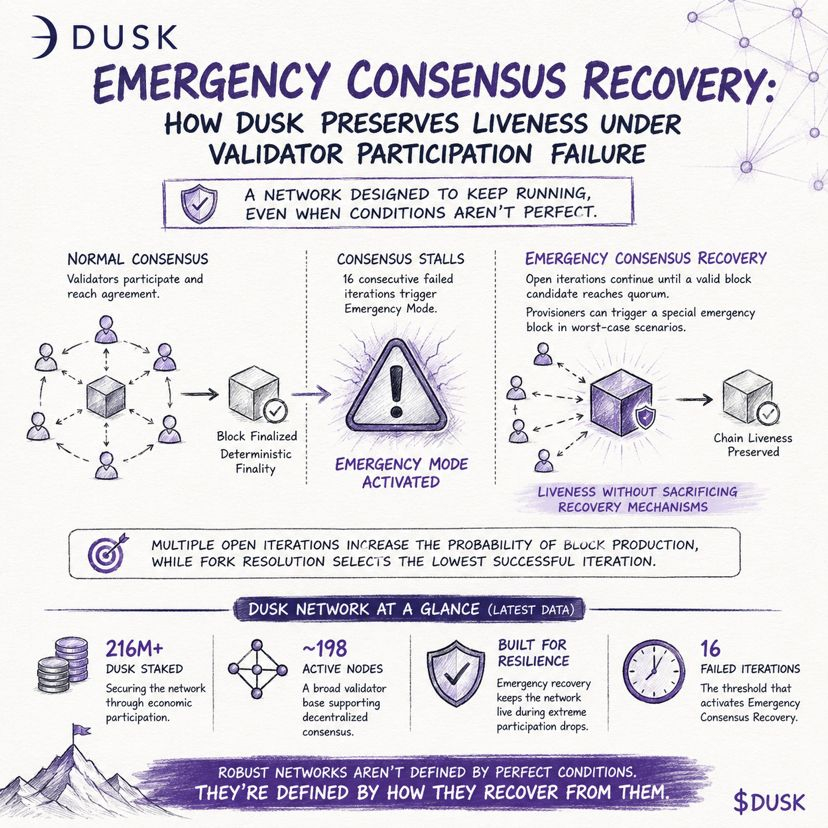
វិធីសាស្ត្ររបស់ Dusk គួរឱ្យចាប់អារម្មណ៍។ ប្រសិនបើវគ្គ consensus ធម្មតាតែងតែបរាជ័យមិនអាចបញ្ចប់បាន ស protocol អាចចូលដំណើរការសង្គ្រោះបន្ទាន់ (emergency recovery) ដែលរៀបចំឲ្យផលិត block បន្តទៅ មិនអនុញ្ញាតឲ្យបណ្តាញជាប់គាំងឡើយ។ គោលដៅមិនមែន throughput ខ្ពស់ជាង ឬ finality លឿនជាងនោះទេ ប៉ុន្តែរក្សាឲ្យបណ្តាញនៅតែមានភាពអាចប្រើបាន (availability) ក្នុងព្រឹត្តិការណ៍ចូលរួម validator ខុសប្រក្រតី។
អ្វីដែលលេចធ្លោ គឺមេកានីសនេះមានរួចហើយ មុនពេលដែលវាត្រូវការ។ វាជាផ្នែកនៃការរចនាប្រព័ន្ធ (protocol design) មិនមែនជាការដោះស្រាយបែប improvisation កំឡុងវិបត្តិទេ។
ស្ថិតិបណ្តាញថ្មីៗបង្ហាញថា មាន DUSK ប្រមាណជាង 216M ដែលបានដាក់ stake លើបណ្តាញ validator ប្រមាណ 198 node សកម្ម ដែលជួយចែកចាយការចូលរួម ខណៈពេលរក្សាមុខងារការពារ/ការសង្គ្រោះ (recovery safeguards) ប្រសិនបើការចូលរួមធ្លាក់ចុះដោយមិនបានរំពឹងទុក។
ដល់ពេលផឹកតែហើយ…😀
ហេដ្ឋារចនាសម្ព័ន្ធខ្លាំងបំផុត មិនមែនជារបស់ដែលមិនដែលជួបបរាជ័យទេ។
វាជារបស់ដែលត្រូវបានរចនាឲ្យសង្គ្រោះពីបរាជ័យនោះ។
#FOMCWatch #CryptoRally
តើអ្នកណាទទួលបានប្រាក់ចំណេញលើ $BTC និង $ETH នៅថ្ងៃនេះ? 🥳
វិនិយោគិនភាគច្រើនគិតតែអំពី consensus ពេលដែលវាបរាជ័យប៉ុណ្ណោះ។
ខ្ញុំចាប់អារម្មណ៍លើ Dusk's Emergency Consensus Recovery ព្រោះវាដោះស្រាយបញ្ហាដែលរាល់ blockchain ត្រូវជួបក្នុងពេលណាមួយ៖ ការចូលរួមរបស់ validator មិនតែងតែត្រឹមត្រូវល្អឥតខ្ចោះទេ។
ការពិភាក្សាបែបបុរាណអំពី consensus ផ្តោតលើសុវត្ថិភាព។ ប៉ុន្តែបណ្តាញក្នុងជីវិតពិតក៏ត្រូវការភាពអាចដំណើរការ (liveness) ផងដែរ។ ខ្សែសង្វាក់ដែលសុវត្ថិភាពល្អឥតខ្ចោះ តែផលិត block មិនបាន មិនមានប្រយោជន៍សម្រាប់ស្ថាប័ន ឬអ្នកប្រើប្រាស់ទេ។
វិធីសាស្ត្ររបស់ Dusk គួរឱ្យចាប់អារម្មណ៍។ ប្រសិនបើវគ្គ consensus ធម្មតាតែងតែបរាជ័យមិនអាចបញ្ចប់បាន ស protocol អាចចូលដំណើរការសង្គ្រោះបន្ទាន់ (emergency recovery) ដែលរៀបចំឲ្យផលិត block បន្តទៅ មិនអនុញ្ញាតឲ្យបណ្តាញជាប់គាំងឡើយ។ គោលដៅមិនមែន throughput ខ្ពស់ជាង ឬ finality លឿនជាងនោះទេ ប៉ុន្តែរក្សាឲ្យបណ្តាញនៅតែមានភាពអាចប្រើបាន (availability) ក្នុងព្រឹត្តិការណ៍ចូលរួម validator ខុសប្រក្រតី។
អ្វីដែលលេចធ្លោ គឺមេកានីសនេះមានរួចហើយ មុនពេលដែលវាត្រូវការ។ វាជាផ្នែកនៃការរចនាប្រព័ន្ធ (protocol design) មិនមែនជាការដោះស្រាយបែប improvisation កំឡុងវិបត្តិទេ។
ស្ថិតិបណ្តាញថ្មីៗបង្ហាញថា មាន DUSK ប្រមាណជាង 216M ដែលបានដាក់ stake លើបណ្តាញ validator ប្រមាណ 198 node សកម្ម ដែលជួយចែកចាយការចូលរួម ខណៈពេលរក្សាមុខងារការពារ/ការសង្គ្រោះ (recovery safeguards) ប្រសិនបើការចូលរួមធ្លាក់ចុះដោយមិនបានរំពឹងទុក។
ដល់ពេលផឹកតែហើយ…😀
ហេដ្ឋារចនាសម្ព័ន្ធខ្លាំងបំផុត មិនមែនជារបស់ដែលមិនដែលជួបបរាជ័យទេ។
វាជារបស់ដែលត្រូវបានរចនាឲ្យសង្គ្រោះពីបរាជ័យនោះ។
#FOMCWatch #CryptoRally
ເປັນຄວາມຈິງບາງສ່ວນ
#termmax @TermMax
Wow $BTC $ETH and $SOL ពិតជាកំពុងរំភើបយ៉ាងខ្លាំងនៅថ្ងៃនេះ…. 🥳
ការខ្ចីអត្រាថេរ (Fixed rate borrowing) ពីមុនមានន័យថា ចំណាយអាចទាយបាន។
បន្ទាប់ពី TermMax ណែនាំ cross market liquidity វាចាប់ផ្តើមមានន័យថា ចំណាយអាចទាយបាន ដែលគាំទ្រដោយសាច់ប្រាក់ងាយស្រួលទូទាំងបណ្តាញ (network wide liquidity) មិនមែនអ្វីដែលកើតមានក្នុងទីផ្សារតែមួយទេ។
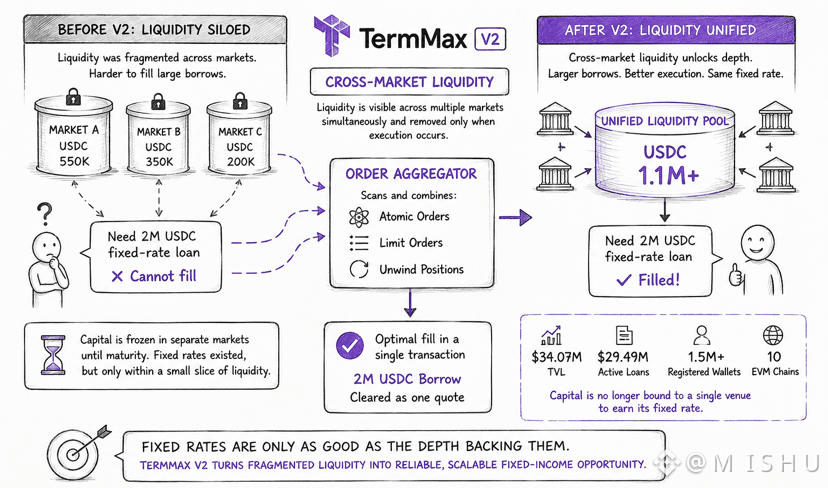
មុន V2 សាច់ប្រាក់ងាយស្រួលត្រូវបានបំបែកដោយការរចនា។ គ្រូបណ្ដុះម្នាក់ (curator) អាចមានទុនរាប់លានដុល្លារ ប៉ុន្តែអ្នកខ្ចី (borrower) អាចនៅតែពិបាកក្នុងការបំពេញកម្ចីអត្រាថេរទំហំធំ ព្រោះសាច់ប្រាក់ងាយស្រួលនោះត្រូវបានខ្ចាត់ខ្ចាយទៅតាម maturities និងទីផ្សារផ្សេងៗគ្នា។
Order Aggregator របស់ TermMax ប្រែប្រួលទាំងមូលនេះ។
ជំនួសការស្វែងរក pool មួយដែលឯកោ វាស្កេន atomic orders, limit orders និង unwind positions ទាំងអស់ជាមួយគ្នា រួចបន្ទាប់មកប្រមូលផ្គុំ quote ដែលមានប្រសិទ្ធភាពបំផុតក្នុង transaction តែមួយ។ សាច់ប្រាក់ងាយស្រួលអាចមើលឃើញបាននៅច្រើនទីផ្សារក្នុងពេលតែមួយ ហើយនឹងត្រូវយកចេញតែពេលមានការប្រតិបត្តិ (execution) កើតឡើង។
ផ្នែកគួរឱ្យចាប់អារម្មណ៍គឺថា នេះមិនមែនគ្រាន់តែធ្វើឲ្យការប្រតិបត្តិ (execution) ប្រសើរឡើងប៉ុណ្ណោះទេ។
វាធ្វើឲ្យគុណភាពនៃការខ្ចីអត្រាថេរខ្លួនឯងប្រសើរឡើងផងដែរ។
អត្រាថេរមានតម្លៃបាន លុះត្រាតែមានសាច់ប្រាក់ងាយស្រួលគ្រប់គ្រាន់ ដើម្បីគាំទ្រវា ពេលមានតម្រូវការ (demand) មកដល់។ ដោយកាត់បន្ថយការបំបែកសាច់ប្រាក់ងាយស្រួល TermMax ប្រែក្លាយទុនដែលនៅទំនេរ (idle capital) ទៅជាលទ្ធភាពក្នុងការខ្ចីដែលអាចប្រើបាន (accessible borrowing capacity) ដោយមិនចាំបាច់បន្ថែមទុនឲ្យចូលក្នុងប្រព័ន្ធឡើយ។
រង់ចាំណា ខ្ញុំកំពុងរៀបចំកាហ្វេ … 🙂
ដូច្នេះ..
ជាមួយនឹង $34.07M TVL និង $29.49M ក្នុងកម្ចីសកម្ម (active loans) រឿងមិនមែនថា មានទុនប៉ុន្មាននោះទេ។
វាជារបៀបដែលទុននោះអាចត្រូវបានផ្គូផ្គងឲ្យមានប្រសិទ្ធភាពប៉ុណ្ណា (efficiently) ជាងមុន។
នោះហើយគឺការអាប់ដេតដែលលាក់នៅពីក្រោយ DeFi ចំណូលថេរ (fixed income): អត្រាល្អប្រសើរ មិនតែងតែមកពីសាច់ប្រាក់ងាយស្រួលកាន់តែច្រើនទេ — វាអាចមកពីការសម្របសម្រួលសាច់ប្រាក់ងាយស្រួលឲ្យប្រសើរជាងមុន។
Wow $BTC $ETH and $SOL ពិតជាកំពុងរំភើបយ៉ាងខ្លាំងនៅថ្ងៃនេះ…. 🥳
ការខ្ចីអត្រាថេរ (Fixed rate borrowing) ពីមុនមានន័យថា ចំណាយអាចទាយបាន។
បន្ទាប់ពី TermMax ណែនាំ cross market liquidity វាចាប់ផ្តើមមានន័យថា ចំណាយអាចទាយបាន ដែលគាំទ្រដោយសាច់ប្រាក់ងាយស្រួលទូទាំងបណ្តាញ (network wide liquidity) មិនមែនអ្វីដែលកើតមានក្នុងទីផ្សារតែមួយទេ។
មុន V2 សាច់ប្រាក់ងាយស្រួលត្រូវបានបំបែកដោយការរចនា។ គ្រូបណ្ដុះម្នាក់ (curator) អាចមានទុនរាប់លានដុល្លារ ប៉ុន្តែអ្នកខ្ចី (borrower) អាចនៅតែពិបាកក្នុងការបំពេញកម្ចីអត្រាថេរទំហំធំ ព្រោះសាច់ប្រាក់ងាយស្រួលនោះត្រូវបានខ្ចាត់ខ្ចាយទៅតាម maturities និងទីផ្សារផ្សេងៗគ្នា។
Order Aggregator របស់ TermMax ប្រែប្រួលទាំងមូលនេះ។
ជំនួសការស្វែងរក pool មួយដែលឯកោ វាស្កេន atomic orders, limit orders និង unwind positions ទាំងអស់ជាមួយគ្នា រួចបន្ទាប់មកប្រមូលផ្គុំ quote ដែលមានប្រសិទ្ធភាពបំផុតក្នុង transaction តែមួយ។ សាច់ប្រាក់ងាយស្រួលអាចមើលឃើញបាននៅច្រើនទីផ្សារក្នុងពេលតែមួយ ហើយនឹងត្រូវយកចេញតែពេលមានការប្រតិបត្តិ (execution) កើតឡើង។
ផ្នែកគួរឱ្យចាប់អារម្មណ៍គឺថា នេះមិនមែនគ្រាន់តែធ្វើឲ្យការប្រតិបត្តិ (execution) ប្រសើរឡើងប៉ុណ្ណោះទេ។
វាធ្វើឲ្យគុណភាពនៃការខ្ចីអត្រាថេរខ្លួនឯងប្រសើរឡើងផងដែរ។
អត្រាថេរមានតម្លៃបាន លុះត្រាតែមានសាច់ប្រាក់ងាយស្រួលគ្រប់គ្រាន់ ដើម្បីគាំទ្រវា ពេលមានតម្រូវការ (demand) មកដល់។ ដោយកាត់បន្ថយការបំបែកសាច់ប្រាក់ងាយស្រួល TermMax ប្រែក្លាយទុនដែលនៅទំនេរ (idle capital) ទៅជាលទ្ធភាពក្នុងការខ្ចីដែលអាចប្រើបាន (accessible borrowing capacity) ដោយមិនចាំបាច់បន្ថែមទុនឲ្យចូលក្នុងប្រព័ន្ធឡើយ។
រង់ចាំណា ខ្ញុំកំពុងរៀបចំកាហ្វេ … 🙂
ដូច្នេះ..
ជាមួយនឹង $34.07M TVL និង $29.49M ក្នុងកម្ចីសកម្ម (active loans) រឿងមិនមែនថា មានទុនប៉ុន្មាននោះទេ។
វាជារបៀបដែលទុននោះអាចត្រូវបានផ្គូផ្គងឲ្យមានប្រសិទ្ធភាពប៉ុណ្ណា (efficiently) ជាងមុន។
នោះហើយគឺការអាប់ដេតដែលលាក់នៅពីក្រោយ DeFi ចំណូលថេរ (fixed income): អត្រាល្អប្រសើរ មិនតែងតែមកពីសាច់ប្រាក់ងាយស្រួលកាន់តែច្រើនទេ — វាអាចមកពីការសម្របសម្រួលសាច់ប្រាក់ងាយស្រួលឲ្យប្រសើរជាងមុន។
#dusk $DUSK @Dusk
Wow $RICE and $BTW កំពុងហោះហើរ នៅលើមេឃ អត់ទាន់ឱកាសទៅក៏ព្រួយចិត្ត ☹️ ប៉ុន្តែឥឡូវត្រឡប់ទៅធ្វើការវិញ
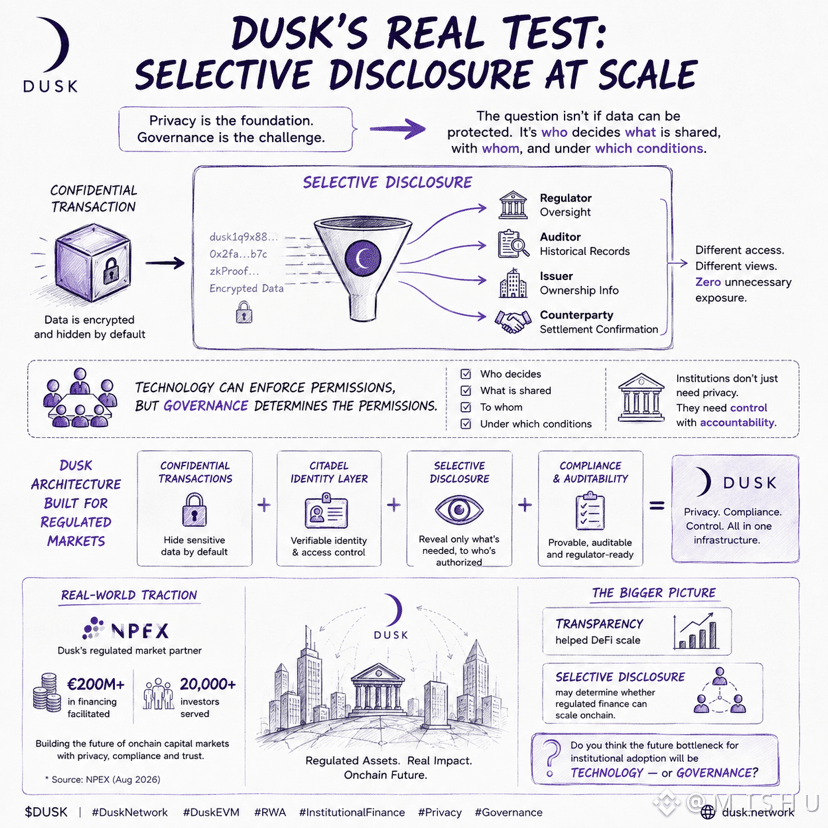
ខណៈពេលដែលការពិភាក្សាភាគច្រើនអំពី Dusk ផ្តោតលើភាពឯកជន ខ្ញុំគិតថាសំណួរដែលគួរឱ្យចាប់អារម្មណ៍ជាងគឺរឿងអភិបាលកិច្ច (governance) ។
ការបង្ហាញជ្រើសរើស (selective disclosure) ហាក់ដូចជារឿងងាយស្រួលនៅក្នុងទ្រឹស្តី៖ បង្ហាញព័ត៌មានតែចំពោះភាគីដែលមានសិទ្ធិ ខណៈរក្សាអ្វីៗផ្សេងទៀតឲ្យនៅជាសម្ងាត់។
ប៉ុន្តែពេលការទទួលយកក្នុងស្ថាប័នកាន់តែកើនឡើង បញ្ហានឹងផ្លាស់ប្តូរ។
សំណួរមិនមែនថា តើគ្រីបតូក្រាហ្វី (cryptography) អាចការពារទិន្នន័យបានឬអត់ទេ។
វាជារឿងថា តើអ្នកណាជាអ្នកសម្រេចថាត្រូវបង្ហាញអ្វី ទៅឲ្យអ្នកណា និងក្រោមលក្ខខណ្ឌអ្វី។
អ្នកត្រួតពិនិត្យ (regulator) អាចត្រូវការការត្រួតពិនិត្យ។ អ្នកធ្វើសវនកម្ម (auditor) អាចត្រូវការកំណត់ត្រាប្រវត្តិសាស្ត្រ។ អ្នកចេញ (issuer) អាចត្រូវការព័ត៌មានអំពីភាពជាម្ចាស់ (ownership)។ ភាគីទិញលក់/ដៃគូ (counterparty) អាចត្រូវការការបញ្ជាក់សម្រាប់ការទូទាត់ (settlement confirmation)។ សមាជិកគ្នាមានតម្រូវការផ្សេងគ្នា តែគ្មាននរណាម្នាក់គួរទទួលបានសិទ្ធិចូលដំណើរការដោយគ្មានដែនកំណត់។
នោះហើយជាអ្វីដែលធ្វើឲ្យវិធីសាស្ត្ររបស់ Dusk គួរឲ្យចាប់អារម្មណ៍ខ្លាំង។
ស្ថាបត្យកម្មរបស់វារួមបញ្ចូលប្រតិបត្តិការសម្ងាត់ (confidential transactions) ហេដ្ឋារចនាសម្ព័ន្ធអត្តសញ្ញាណតាម Citadel និងយន្តការបង្ហាញជ្រើសរើស ដែលត្រូវបានរចនាសម្រាប់ទីផ្សារដែលមានការគ្រប់គ្រង។ បច្ចេកវិទ្យាអាចអនុវត្តសិទ្ធិ ប៉ុន្តែអភិបាលកិច្ចជាអ្នកកំណត់ថាសិទ្ធិទាំងនោះជាអ្វី។
នោះហើយជាមូលហេតុដែលខ្ញុំជឿថា ការធ្វើតេស្តពិតរបស់ Dusk មិនមែនជាភាពឯកជនក្នុងកម្រិតធំទេ។
វាជាការបង្ហាញជ្រើសរើសក្នុងកម្រិតធំ។
NPEX ដែលជាដៃគូទីផ្សារដែលមានការគ្រប់គ្រងរបស់ Dusk បានជួយសម្របសម្រួលហិរញ្ញប្បទានលើសពី €200M ហើយបម្រើវិនិយោគិន 20,000+ នាក់។ ខណៈពេលដែលទ្រព្យសម្បត្តិដែលស្ថិតក្រោមការគ្រប់គ្រងផ្លាស់ប្តូរទៅលើ onchain ការធ្វើឲ្យមានតុល្យភាពរវាងភាពឯកជន ការអនុលោម (compliance) និងការបង្ហាញ (disclosure) អាចក្លាយជាបញ្ហាប្រឈមមួយក្នុងចំណោមបញ្ហាដែលកំណត់យ៉ាងសំខាន់សម្រាប់ការទទួលយក blockchain ក្នុងស្ថាប័ន។
តម្លាភាពបានជួយឲ្យ DeFi រីកចម្រើន។
ការបង្ហាញជ្រើសរើសអាចកំណត់ថាតើហិរញ្ញវត្ថុដែលស្ថិតក្រោមការគ្រប់គ្រងអាចពង្រីកលើ onchain បានដល់កម្រិតណា។
ឲ្យខ្ញុំទៅញ៉ាំអាហារពេលល្ងាចថ្ងៃនេះផង , ប៉ុន្តែអ្នកទាំងអស់គ្នាគិតថា ..😀
អ្នកគិតថា ដែនកំហិត (bottleneck) នាពេលអនាគតសម្រាប់ការទទួលយក blockchain ក្នុងស្ថាប័ន នឹងជាបច្ចេកវិទ្យា ឬអភិបាលកិច្ច?
Wow $RICE and $BTW កំពុងហោះហើរ នៅលើមេឃ អត់ទាន់ឱកាសទៅក៏ព្រួយចិត្ត ☹️ ប៉ុន្តែឥឡូវត្រឡប់ទៅធ្វើការវិញ
ខណៈពេលដែលការពិភាក្សាភាគច្រើនអំពី Dusk ផ្តោតលើភាពឯកជន ខ្ញុំគិតថាសំណួរដែលគួរឱ្យចាប់អារម្មណ៍ជាងគឺរឿងអភិបាលកិច្ច (governance) ។
ការបង្ហាញជ្រើសរើស (selective disclosure) ហាក់ដូចជារឿងងាយស្រួលនៅក្នុងទ្រឹស្តី៖ បង្ហាញព័ត៌មានតែចំពោះភាគីដែលមានសិទ្ធិ ខណៈរក្សាអ្វីៗផ្សេងទៀតឲ្យនៅជាសម្ងាត់។
ប៉ុន្តែពេលការទទួលយកក្នុងស្ថាប័នកាន់តែកើនឡើង បញ្ហានឹងផ្លាស់ប្តូរ។
សំណួរមិនមែនថា តើគ្រីបតូក្រាហ្វី (cryptography) អាចការពារទិន្នន័យបានឬអត់ទេ។
វាជារឿងថា តើអ្នកណាជាអ្នកសម្រេចថាត្រូវបង្ហាញអ្វី ទៅឲ្យអ្នកណា និងក្រោមលក្ខខណ្ឌអ្វី។
អ្នកត្រួតពិនិត្យ (regulator) អាចត្រូវការការត្រួតពិនិត្យ។ អ្នកធ្វើសវនកម្ម (auditor) អាចត្រូវការកំណត់ត្រាប្រវត្តិសាស្ត្រ។ អ្នកចេញ (issuer) អាចត្រូវការព័ត៌មានអំពីភាពជាម្ចាស់ (ownership)។ ភាគីទិញលក់/ដៃគូ (counterparty) អាចត្រូវការការបញ្ជាក់សម្រាប់ការទូទាត់ (settlement confirmation)។ សមាជិកគ្នាមានតម្រូវការផ្សេងគ្នា តែគ្មាននរណាម្នាក់គួរទទួលបានសិទ្ធិចូលដំណើរការដោយគ្មានដែនកំណត់។
នោះហើយជាអ្វីដែលធ្វើឲ្យវិធីសាស្ត្ររបស់ Dusk គួរឲ្យចាប់អារម្មណ៍ខ្លាំង។
ស្ថាបត្យកម្មរបស់វារួមបញ្ចូលប្រតិបត្តិការសម្ងាត់ (confidential transactions) ហេដ្ឋារចនាសម្ព័ន្ធអត្តសញ្ញាណតាម Citadel និងយន្តការបង្ហាញជ្រើសរើស ដែលត្រូវបានរចនាសម្រាប់ទីផ្សារដែលមានការគ្រប់គ្រង។ បច្ចេកវិទ្យាអាចអនុវត្តសិទ្ធិ ប៉ុន្តែអភិបាលកិច្ចជាអ្នកកំណត់ថាសិទ្ធិទាំងនោះជាអ្វី។
នោះហើយជាមូលហេតុដែលខ្ញុំជឿថា ការធ្វើតេស្តពិតរបស់ Dusk មិនមែនជាភាពឯកជនក្នុងកម្រិតធំទេ។
វាជាការបង្ហាញជ្រើសរើសក្នុងកម្រិតធំ។
NPEX ដែលជាដៃគូទីផ្សារដែលមានការគ្រប់គ្រងរបស់ Dusk បានជួយសម្របសម្រួលហិរញ្ញប្បទានលើសពី €200M ហើយបម្រើវិនិយោគិន 20,000+ នាក់។ ខណៈពេលដែលទ្រព្យសម្បត្តិដែលស្ថិតក្រោមការគ្រប់គ្រងផ្លាស់ប្តូរទៅលើ onchain ការធ្វើឲ្យមានតុល្យភាពរវាងភាពឯកជន ការអនុលោម (compliance) និងការបង្ហាញ (disclosure) អាចក្លាយជាបញ្ហាប្រឈមមួយក្នុងចំណោមបញ្ហាដែលកំណត់យ៉ាងសំខាន់សម្រាប់ការទទួលយក blockchain ក្នុងស្ថាប័ន។
តម្លាភាពបានជួយឲ្យ DeFi រីកចម្រើន។
ការបង្ហាញជ្រើសរើសអាចកំណត់ថាតើហិរញ្ញវត្ថុដែលស្ថិតក្រោមការគ្រប់គ្រងអាចពង្រីកលើ onchain បានដល់កម្រិតណា។
ឲ្យខ្ញុំទៅញ៉ាំអាហារពេលល្ងាចថ្ងៃនេះផង , ប៉ុន្តែអ្នកទាំងអស់គ្នាគិតថា ..😀
អ្នកគិតថា ដែនកំហិត (bottleneck) នាពេលអនាគតសម្រាប់ការទទួលយក blockchain ក្នុងស្ថាប័ន នឹងជាបច្ចេកវិទ្យា ឬអភិបាលកិច្ច?
ຢືນຢັນແລ້ວ
#termmax @TermMax
… ກຳລັງກິນຈານ $RICE , biryani ທີ່ຂ້ອຍມັກ ຂະນະທີ່ກຳລັງກວດກາຕຳແໜ່ງຢູ່ $BTW ແລະ $VELVET ເມື່ອຂ້ອຍສັງເກດວ່າຂ້ອຍກຳລັງໄດ້ເງິນ ໂດຍບໍ່ໄດ້ໃຫ້ຄວາມສົນໃຈຫຼາຍກັບວ່າຄ່າຢືມຂອງຂ້ອຍກຳລັງເຮັດຫຍັງຢູ່ທາງຫຼັງ. ມັນຮູ້ສຶກເປັນເລື່ອງປົກກະຕິໃນ DeFi ຈົນກວ່າຂ້ອຍເລີ່ມຄິດວ່າ ຜົນຕອບແທນຈາກ leveraged yield ຈຳນວນເທົ່າໃດຂຶ້ນກັບຕົວແປທີ່ຄົນສ່ວນຫຼາຍບໍ່ໄດ້ຕິດຕາມ.
ໃນຂະນະທີ່ທົບທວນ TermMax V2, ຂ້ອຍເຫັນວ່າໂປຣໂຕຄໍລຈັດການການໃຊ້ leverage ແບບອື່ນຈາກສ່ວນຫຼາຍ #defi . ແທນທີ່ຈະປັບໃຫ້ໄດ້ yield ສູງທີ່ສຸດ, ມັນປັບເພື່ອສິ່ງທີ່ຫາຍາກກວ່າຫຼາຍ: ຄ່າທຶນທີ່ຄາດເດົາໄດ້.
ຍຸດທະສາດ leveraged ສ່ວນຫຼາຍພຶ່ງພາການຄາດຄິດທີ່ບາງສິ້ນວ່າ ອັດຕາການຢືມຈະຢູ່ຕ່ຳກວ່າ yield ທີ່ກຳລັງໄດ້ຮັບ. ເມື່ອ utilization ພຸ່ງຂຶ້ນ, ການຄາດຄິດນັ້ນອາດຈະພັງລົງໃນຄືນດຽວ. ສິ່ງທີ່ສົນໃຈຂ້ອຍກ່ຽວກັບ TermMax ແມ່ນ ມັນຈັດການຄວາມສ່ຽງນີ້ໃນລະດັບໂຄງສ້າງ.
Gearing Token (GT) ຂອງມັນ ອັດທະຍານ leveraged position ທັງໝົດເຂົ້າໄວ້ໃນ NFT ອັນດຽວ ຊ່ວຍຕັດຄວາມສັບສົນຂອງວົງຈອນການຢືມ-ສະຫຼັບ-ຝາກ ທີ່ຕ້ອງເຮັດຊ້ຳໆ. ຢູ່ຂ້າງລຸ່ມ, Fixed Rate Tokens (FTs) ລັອກຄ່າໃຊ້ທຶນໃນຕອນເຂົ້າ, ດັ່ງນັ້ນ ຜູ້ຢືມຈຶ່ງຮູ້ຄ່າທຶນທີ່ຈະຈ່າຍກ່ອນການຊື້-ຂາຍຈະເລີ່ມ ໂດຍບໍ່ຕ້ອງໄປຄົ້ນພົບມັນພາຍຫຼັງຜ່ານສະພາບຕະຫຼາດທີ່ປ່ຽນແປງ.
ຄວາມສ່ຽງການຖືກລະງັບຍັງມີຢູ່. ຄວາມສ່ຽງດ້ານຕະຫຼາດຍັງມີຢູ່. ແຕ່ຄວາມສ່ຽງອັດຕາດອກເບ້ຍ ທີ່ເປັນຕົວແປທີ່ເຮັດໃຫ້ leveraged position ຈຳນວນຫຼາຍຖືກທຳລາຍຢ່າງງຽບໆ ນັ້ນ ສ່ວນໃຫຍ່ຖືກແຍກອອກຈາກຍຸດທະສາດໂດຍກົງ.
ນະວັດຕະກຳທີ່ແທ້ຈິງບໍ່ແມ່ນ leverage ທີ່ສູງຂຶ້ນ. ແຕ່ແມ່ນການເຮັດໃຫ້ leverage ເປັນຄືກັບເຄື່ອງມືລາຍຮັບຄົງທີ່ ແລະໜ້ອຍລົງຈາກການພະນັນອັດຕາແບບປ່ຽນໄປທີ່ລອຍ.
ຄວາມສ່ຽງທີ່ຊ້ອນໄວ້ທີ່ໃຫຍ່ທີ່ສຸດໃນ leveraged yield strategies ແມ່ນຫຍັງ?
… ກຳລັງກິນຈານ $RICE , biryani ທີ່ຂ້ອຍມັກ ຂະນະທີ່ກຳລັງກວດກາຕຳແໜ່ງຢູ່ $BTW ແລະ $VELVET ເມື່ອຂ້ອຍສັງເກດວ່າຂ້ອຍກຳລັງໄດ້ເງິນ ໂດຍບໍ່ໄດ້ໃຫ້ຄວາມສົນໃຈຫຼາຍກັບວ່າຄ່າຢືມຂອງຂ້ອຍກຳລັງເຮັດຫຍັງຢູ່ທາງຫຼັງ. ມັນຮູ້ສຶກເປັນເລື່ອງປົກກະຕິໃນ DeFi ຈົນກວ່າຂ້ອຍເລີ່ມຄິດວ່າ ຜົນຕອບແທນຈາກ leveraged yield ຈຳນວນເທົ່າໃດຂຶ້ນກັບຕົວແປທີ່ຄົນສ່ວນຫຼາຍບໍ່ໄດ້ຕິດຕາມ.
ໃນຂະນະທີ່ທົບທວນ TermMax V2, ຂ້ອຍເຫັນວ່າໂປຣໂຕຄໍລຈັດການການໃຊ້ leverage ແບບອື່ນຈາກສ່ວນຫຼາຍ #defi . ແທນທີ່ຈະປັບໃຫ້ໄດ້ yield ສູງທີ່ສຸດ, ມັນປັບເພື່ອສິ່ງທີ່ຫາຍາກກວ່າຫຼາຍ: ຄ່າທຶນທີ່ຄາດເດົາໄດ້.
ຍຸດທະສາດ leveraged ສ່ວນຫຼາຍພຶ່ງພາການຄາດຄິດທີ່ບາງສິ້ນວ່າ ອັດຕາການຢືມຈະຢູ່ຕ່ຳກວ່າ yield ທີ່ກຳລັງໄດ້ຮັບ. ເມື່ອ utilization ພຸ່ງຂຶ້ນ, ການຄາດຄິດນັ້ນອາດຈະພັງລົງໃນຄືນດຽວ. ສິ່ງທີ່ສົນໃຈຂ້ອຍກ່ຽວກັບ TermMax ແມ່ນ ມັນຈັດການຄວາມສ່ຽງນີ້ໃນລະດັບໂຄງສ້າງ.
Gearing Token (GT) ຂອງມັນ ອັດທະຍານ leveraged position ທັງໝົດເຂົ້າໄວ້ໃນ NFT ອັນດຽວ ຊ່ວຍຕັດຄວາມສັບສົນຂອງວົງຈອນການຢືມ-ສະຫຼັບ-ຝາກ ທີ່ຕ້ອງເຮັດຊ້ຳໆ. ຢູ່ຂ້າງລຸ່ມ, Fixed Rate Tokens (FTs) ລັອກຄ່າໃຊ້ທຶນໃນຕອນເຂົ້າ, ດັ່ງນັ້ນ ຜູ້ຢືມຈຶ່ງຮູ້ຄ່າທຶນທີ່ຈະຈ່າຍກ່ອນການຊື້-ຂາຍຈະເລີ່ມ ໂດຍບໍ່ຕ້ອງໄປຄົ້ນພົບມັນພາຍຫຼັງຜ່ານສະພາບຕະຫຼາດທີ່ປ່ຽນແປງ.
ຄວາມສ່ຽງການຖືກລະງັບຍັງມີຢູ່. ຄວາມສ່ຽງດ້ານຕະຫຼາດຍັງມີຢູ່. ແຕ່ຄວາມສ່ຽງອັດຕາດອກເບ້ຍ ທີ່ເປັນຕົວແປທີ່ເຮັດໃຫ້ leveraged position ຈຳນວນຫຼາຍຖືກທຳລາຍຢ່າງງຽບໆ ນັ້ນ ສ່ວນໃຫຍ່ຖືກແຍກອອກຈາກຍຸດທະສາດໂດຍກົງ.
ນະວັດຕະກຳທີ່ແທ້ຈິງບໍ່ແມ່ນ leverage ທີ່ສູງຂຶ້ນ. ແຕ່ແມ່ນການເຮັດໃຫ້ leverage ເປັນຄືກັບເຄື່ອງມືລາຍຮັບຄົງທີ່ ແລະໜ້ອຍລົງຈາກການພະນັນອັດຕາແບບປ່ຽນໄປທີ່ລອຍ.
ຄວາມສ່ຽງທີ່ຊ້ອນໄວ້ທີ່ໃຫຍ່ທີ່ສຸດໃນ leveraged yield strategies ແມ່ນຫຍັງ?
Variable borrowing rates
33%
Liquidation risk
50%
Yield compression
9%
Liquidity fragmentation
8%
12 ຄະແນນສຽງ • ປິດລົງຄະແນນສຽງ
#dusk $DUSK @Dusk
ពេលកំពុងផឹកកាហ្វេ និងធ្វើការជួញដូរនៅ $CLO $RED ខ្ញុំបានកំពុងរុករក Dusk Explorer និងស្ថិតិ validator ខ្លួនឯងបែរជាចំណាយពេលមើលតិចទៅលើការរង្វាន់ staking ហើយចំណាយពេលមើលកាន់តែច្រើនទៅលើអ្វីដែលកើតឡើងបន្ទាប់ពីការរង្វាន់ត្រូវបានចេញ។
ម៉ែត្រមួយចាប់ចិត្តខ្ញុំ។
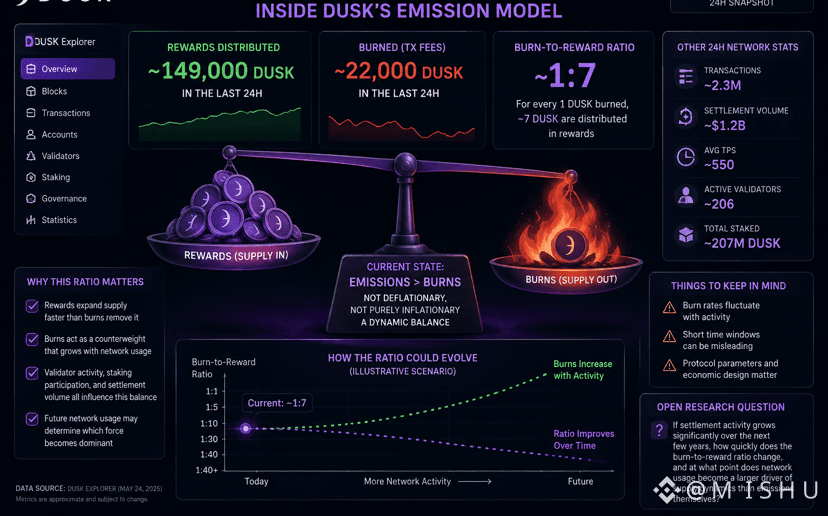
ទិន្នន័យបណ្តាញថ្មីៗបង្ហាញថា ប្រហែល 149K DUSK ត្រូវបានចែកចាយជារង្វាន់ក្នុងរយៈពេល 24 ម៉ោង ខណៈដែលប្រហែល 22K DUSK ត្រូវបានដុតក្នុងរយៈពេលដូចគ្នា។ នោះគឺអត្រាដុតទៅរង្វាន់ប្រហែល 1:7។
ខ្ញុំមិនគិតថាវាជាសញ្ញា bullish ឬ bearish នោះទេ។
អ្វីដែលចាប់អារម្មណ៍ខ្ញុំ គឺការមើលឃើញវាខុសគ្នាយ៉ាងណាពីវិធីដែលការពិភាក្សាអំពី tokenomics ជាធម្មតាត្រូវបានគេដាក់ស៊ុម។
ការសន្ទនាស្ទើរតែទាំងអស់ផ្តោតលើការបញ្ចេញ (emissions) ឬការដុត (burns) ជាឡែកពីគ្នា។
អនុបាតនេះបង្ហាញថា ពួកវាអាចមានន័យជាងពេលមើលជាមួយគ្នា។
នៅលក្ខខណ្ឌបណ្តាញបច្ចុប្បន្ន ការរង្វាន់កំពុងពង្រីកការផ្គត់ផ្គង់លឿនជាងការដុតកំពុងដកវាចេញ។ ប៉ុន្តែកម្មវិធីដុតក៏មិនមែនជារឿងតិចតួចដែរ។ វាដើរតួជាខ្ទប់ទម្ងន់ (counterweight) ដែលឥទ្ធិពលរបស់វាអាស្រ័យលើរបៀបដែលសកម្មភាព validator ការចូលរួម staking និងបរិមាណ settlement មានការវិវត្តតាមពេលវេលា។
នោះបង្កើតឲ្យមានដំណាក់កាល/ភាពសកម្ម (dynamic) គួរឲ្យចាប់អារម្មណ៍។
បណ្តាញមិនត្រូវបានជំរុញតែដោយ emissions ប៉ុណ្ណោះទេ ហើយក៏មិនមែនជាការធ្លាក់ទម្ងន់ (deflationary) យ៉ាងច្បាស់ផ្អែកលើទិន្នន័យបច្ចុប្បន្ន។ ជំនួសវិញ វាហាក់បីដូចជាស្ថិតនៅចន្លោះពីរនេះ ដោយការប្រើប្រាស់បណ្តាញនាពេលអនាគតអាចជាអ្នកកំណត់ថា កម្លាំងមួយណានឹងមានឥទ្ធិពលខ្លាំងជាង។
ជាការពិត ក៏មានការពន្យល់ផ្សេងទៀតដែរ។ អត្រាដុតអាចប្រែប្រួលតាមសកម្មភាព ហើយបង្អួចពេលតាមដានខ្លីៗអាចបំភាន់បាន។
Just gona have dinner ..
អ្វីដែលខ្ញុំចង់ស្រាវជ្រាវបន្ទាប់គឺរឿងនេះ៖
បើសកម្មភាព settlement កើនឡើងយ៉ាងខ្លាំងក្នុងប៉ុន្មានឆ្នាំខាងមុខ តើអត្រាដុតទៅរង្វាន់ផ្លាស់ប្តូរលឿនប៉ុណ្ណា ហើយនៅចំណុចណាដែលការប្រើប្រាស់បណ្តាញក្លាយជាកត្តាជំរុញធំជាងសម្រាប់ដំណើរលំនាំនៃការផ្គត់ផ្គង់ជាង emissions ខ្លួនឯង
ពេលកំពុងផឹកកាហ្វេ និងធ្វើការជួញដូរនៅ $CLO $RED ខ្ញុំបានកំពុងរុករក Dusk Explorer និងស្ថិតិ validator ខ្លួនឯងបែរជាចំណាយពេលមើលតិចទៅលើការរង្វាន់ staking ហើយចំណាយពេលមើលកាន់តែច្រើនទៅលើអ្វីដែលកើតឡើងបន្ទាប់ពីការរង្វាន់ត្រូវបានចេញ។
ម៉ែត្រមួយចាប់ចិត្តខ្ញុំ។
ទិន្នន័យបណ្តាញថ្មីៗបង្ហាញថា ប្រហែល 149K DUSK ត្រូវបានចែកចាយជារង្វាន់ក្នុងរយៈពេល 24 ម៉ោង ខណៈដែលប្រហែល 22K DUSK ត្រូវបានដុតក្នុងរយៈពេលដូចគ្នា។ នោះគឺអត្រាដុតទៅរង្វាន់ប្រហែល 1:7។
ខ្ញុំមិនគិតថាវាជាសញ្ញា bullish ឬ bearish នោះទេ។
អ្វីដែលចាប់អារម្មណ៍ខ្ញុំ គឺការមើលឃើញវាខុសគ្នាយ៉ាងណាពីវិធីដែលការពិភាក្សាអំពី tokenomics ជាធម្មតាត្រូវបានគេដាក់ស៊ុម។
ការសន្ទនាស្ទើរតែទាំងអស់ផ្តោតលើការបញ្ចេញ (emissions) ឬការដុត (burns) ជាឡែកពីគ្នា។
អនុបាតនេះបង្ហាញថា ពួកវាអាចមានន័យជាងពេលមើលជាមួយគ្នា។
នៅលក្ខខណ្ឌបណ្តាញបច្ចុប្បន្ន ការរង្វាន់កំពុងពង្រីកការផ្គត់ផ្គង់លឿនជាងការដុតកំពុងដកវាចេញ។ ប៉ុន្តែកម្មវិធីដុតក៏មិនមែនជារឿងតិចតួចដែរ។ វាដើរតួជាខ្ទប់ទម្ងន់ (counterweight) ដែលឥទ្ធិពលរបស់វាអាស្រ័យលើរបៀបដែលសកម្មភាព validator ការចូលរួម staking និងបរិមាណ settlement មានការវិវត្តតាមពេលវេលា។
នោះបង្កើតឲ្យមានដំណាក់កាល/ភាពសកម្ម (dynamic) គួរឲ្យចាប់អារម្មណ៍។
បណ្តាញមិនត្រូវបានជំរុញតែដោយ emissions ប៉ុណ្ណោះទេ ហើយក៏មិនមែនជាការធ្លាក់ទម្ងន់ (deflationary) យ៉ាងច្បាស់ផ្អែកលើទិន្នន័យបច្ចុប្បន្ន។ ជំនួសវិញ វាហាក់បីដូចជាស្ថិតនៅចន្លោះពីរនេះ ដោយការប្រើប្រាស់បណ្តាញនាពេលអនាគតអាចជាអ្នកកំណត់ថា កម្លាំងមួយណានឹងមានឥទ្ធិពលខ្លាំងជាង។
ជាការពិត ក៏មានការពន្យល់ផ្សេងទៀតដែរ។ អត្រាដុតអាចប្រែប្រួលតាមសកម្មភាព ហើយបង្អួចពេលតាមដានខ្លីៗអាចបំភាន់បាន។
Just gona have dinner ..
អ្វីដែលខ្ញុំចង់ស្រាវជ្រាវបន្ទាប់គឺរឿងនេះ៖
បើសកម្មភាព settlement កើនឡើងយ៉ាងខ្លាំងក្នុងប៉ុន្មានឆ្នាំខាងមុខ តើអត្រាដុតទៅរង្វាន់ផ្លាស់ប្តូរលឿនប៉ុណ្ណា ហើយនៅចំណុចណាដែលការប្រើប្រាស់បណ្តាញក្លាយជាកត្តាជំរុញធំជាងសម្រាប់ដំណើរលំនាំនៃការផ្គត់ផ្គង់ជាង emissions ខ្លួនឯង
#termmax @TermMax
😭 $RED $CLO and $EDEN ທີ່ຂາດທຶນ ຂ້ອຍຮູ້ສຶກເສົ້າຫຼາຍ ດັ່ງນັ້ນ ຕອນກຳລັງດື່ມກາເຟ ຂໍ້ຄວາມໜຶ່ງກໍຢຸດຕາໃຈຂ້ອຍທັນທີ ເວລາຄົ້ນຄວ້າ TermMax: ປະມານ $29.5M ຂອງ TVL ທັງໝົດ ~$34M ຖືກນຳໄປໃຊ້ໃນສິນເຊື່ອຢ່າງເປັນຈິງ. ຄົນສ່ວນຫຼາຍຈະເບິ່ງມັນເປັນເລື່ອງການໃຊ້ຄວາມສາມາດ (utilization story). ຂ້ອຍຄິດວ່າມັນສະທ້ອນສິ່ງທີ່ສຳຄັນກວ່ານັ້ນ.
ຫຼາຍປີຜ່ານມາ ການໃຫ້ກູ້ຢືມ DeFi ສ່ວນໃຫຍ່ອາໄສອັດຕາດອກເບ້ຍທີ່ຖືກປັບດ້ວຍກົດໄກ (algorithmic). ເງິນທຶນເຂົ້າໄປໃນ pool, ການໃຊ້ງານ (utilization) ປ່ຽນແປງ, ແລະອັດຕາກໍປັບຕົວເອງ. ສິ່ງທີ່ຂາດຫາຍແມ່ນວິທີການລາຄາເວລາທີ່ອີງຕາມຕະຫຼາດ (market based) ສຳລັບມູນຄ່າຂອງການຖືໄລຍະ.
ຕົງນັ້ນແຫຼະທີ່ທຳໃຫ້ TermMax ໜ່າສົນໃຈ.
ບໍ່ແມ່ນການປະຕິບັດການຂໍກູ້ຢືມທັງໝົດເໝືອນກັນ TermMax ອະນຸຍາດໃຫ້ຕະຫຼາດສ້າງຕົວລາຄາຕາມກຳນົດໄລຍະເວລາ (maturities) ໂດຍສະເພາະ. ການກູ້ຢືມທີ່ຈະໝົດອາຍຸໃນ 1 ອາທິດ ແລະການກູ້ຢືມທີ່ຈະໝົດອາຍຸໃນອີກຫຼາຍເດືອນ ສາມາດຊື້-ຂາຍໃນອັດຕາດອກເບ້ຍຕ່າງກັນ ເພາະຜູ້ເຂົ້າຮ່ວມກຳລັງລາຄາເສຍງານຄວາມສ່ຽງດ້ານໄລຍະເວລາ (duration risk) ຢ່າງຊັດເຈນ. ຜົນທີ່ໄດ້ຄື ສິ່ງທີ່ DeFi ບໍ່ຄ່ອຍສ້າງເອງໂດຍທຳມະຊາດ: ເສັ້ນລາຍໄດ້ (on chain yield curve) ທີ່ຢູ່ໃນ chain.
ນັ້ນນຳເອົາຜົນສະທ້ອນທີ່ເລິກກວ່າ: DeFi ອາດຈະກຳລັງກ້າວຂ້າມຈາກການຈັດການສະພາບຄ່ອງສະເລີຍ (liquidity management) ໄປສູ່ໂຄງຮ່າງຂອງຕະຫຼາດເຄรดิต (credit market infrastructure). ຄວາມແຕກຕ່າງຂອງຜົນຕອບແທນ (yield differences) ເລີ່ມສະທ້ອນຄວາມຄາດຫວັງ (expectations), ຄ່າໂອກາດ (opportunity costs), ແລະ ຄ່າເສຍງານຄວາມສ່ຽງ (risk premiums) ຫຼາຍກວ່າພຽງແຕ່ການໃຊ້ງານຂອງ pool.
ຕະຫຼາດພັນທະບັດ (bond markets) ແບບດັ້ງເດີມໃຊ້ເສັ້ນລາຍໄດ້ (yield curves) ເພື່ອເຂົ້າໃຈວ່າ ມູນຄ່າຂອງທຶນ (capital) ຈັບຕາມເວລາແນວໃດ. TermMax ເສີຍສະແດງວ່າ ການເງິນຢູ່ໃນ chain ກຳລັງເລີ່ມພັດທະນາຄວາມສາມາດແບບນັ້ນຄືກັນ.
ຖ້າລຸ້ນຕໍ່ໄປຂອງ DeFi ຖືກສ້າງຂຶ້ນໃຫ້ອີງໃສ່ຕະຫຼາດລາຍໄດ້ຄົງທີ່ (fixed income markets) ຫຼາຍກວ່າ pool ອັດຕາລອຍ (floating rate pools), ການລາຄາຄວາມສ່ຽງທີ່ແຂ່ງຂັນ (competitive risk pricing) ຈະມີຄວາມສຳຄັນກວ່າການໃຈຈູງດ້ານສະຫຼອງສະພາບຄ່ອງສະເລີຍ (liquidity incentives) ບໍ?
🥲ຕ້ອງກາເຟອີກຈອກແລ້ວ.
ອະໄລຈະເຮັດໃຫ້ການພັດທະນາຄັ້ງຕໍ່ໄປຂອງ DeFi ໃນການໃຫ້ກູ້ຢືມເປັນແນວໃດ?
😭 $RED $CLO and $EDEN ທີ່ຂາດທຶນ ຂ້ອຍຮູ້ສຶກເສົ້າຫຼາຍ ດັ່ງນັ້ນ ຕອນກຳລັງດື່ມກາເຟ ຂໍ້ຄວາມໜຶ່ງກໍຢຸດຕາໃຈຂ້ອຍທັນທີ ເວລາຄົ້ນຄວ້າ TermMax: ປະມານ $29.5M ຂອງ TVL ທັງໝົດ ~$34M ຖືກນຳໄປໃຊ້ໃນສິນເຊື່ອຢ່າງເປັນຈິງ. ຄົນສ່ວນຫຼາຍຈະເບິ່ງມັນເປັນເລື່ອງການໃຊ້ຄວາມສາມາດ (utilization story). ຂ້ອຍຄິດວ່າມັນສະທ້ອນສິ່ງທີ່ສຳຄັນກວ່ານັ້ນ.
ຫຼາຍປີຜ່ານມາ ການໃຫ້ກູ້ຢືມ DeFi ສ່ວນໃຫຍ່ອາໄສອັດຕາດອກເບ້ຍທີ່ຖືກປັບດ້ວຍກົດໄກ (algorithmic). ເງິນທຶນເຂົ້າໄປໃນ pool, ການໃຊ້ງານ (utilization) ປ່ຽນແປງ, ແລະອັດຕາກໍປັບຕົວເອງ. ສິ່ງທີ່ຂາດຫາຍແມ່ນວິທີການລາຄາເວລາທີ່ອີງຕາມຕະຫຼາດ (market based) ສຳລັບມູນຄ່າຂອງການຖືໄລຍະ.
ຕົງນັ້ນແຫຼະທີ່ທຳໃຫ້ TermMax ໜ່າສົນໃຈ.
ບໍ່ແມ່ນການປະຕິບັດການຂໍກູ້ຢືມທັງໝົດເໝືອນກັນ TermMax ອະນຸຍາດໃຫ້ຕະຫຼາດສ້າງຕົວລາຄາຕາມກຳນົດໄລຍະເວລາ (maturities) ໂດຍສະເພາະ. ການກູ້ຢືມທີ່ຈະໝົດອາຍຸໃນ 1 ອາທິດ ແລະການກູ້ຢືມທີ່ຈະໝົດອາຍຸໃນອີກຫຼາຍເດືອນ ສາມາດຊື້-ຂາຍໃນອັດຕາດອກເບ້ຍຕ່າງກັນ ເພາະຜູ້ເຂົ້າຮ່ວມກຳລັງລາຄາເສຍງານຄວາມສ່ຽງດ້ານໄລຍະເວລາ (duration risk) ຢ່າງຊັດເຈນ. ຜົນທີ່ໄດ້ຄື ສິ່ງທີ່ DeFi ບໍ່ຄ່ອຍສ້າງເອງໂດຍທຳມະຊາດ: ເສັ້ນລາຍໄດ້ (on chain yield curve) ທີ່ຢູ່ໃນ chain.
ນັ້ນນຳເອົາຜົນສະທ້ອນທີ່ເລິກກວ່າ: DeFi ອາດຈະກຳລັງກ້າວຂ້າມຈາກການຈັດການສະພາບຄ່ອງສະເລີຍ (liquidity management) ໄປສູ່ໂຄງຮ່າງຂອງຕະຫຼາດເຄรดิต (credit market infrastructure). ຄວາມແຕກຕ່າງຂອງຜົນຕອບແທນ (yield differences) ເລີ່ມສະທ້ອນຄວາມຄາດຫວັງ (expectations), ຄ່າໂອກາດ (opportunity costs), ແລະ ຄ່າເສຍງານຄວາມສ່ຽງ (risk premiums) ຫຼາຍກວ່າພຽງແຕ່ການໃຊ້ງານຂອງ pool.
ຕະຫຼາດພັນທະບັດ (bond markets) ແບບດັ້ງເດີມໃຊ້ເສັ້ນລາຍໄດ້ (yield curves) ເພື່ອເຂົ້າໃຈວ່າ ມູນຄ່າຂອງທຶນ (capital) ຈັບຕາມເວລາແນວໃດ. TermMax ເສີຍສະແດງວ່າ ການເງິນຢູ່ໃນ chain ກຳລັງເລີ່ມພັດທະນາຄວາມສາມາດແບບນັ້ນຄືກັນ.
ຖ້າລຸ້ນຕໍ່ໄປຂອງ DeFi ຖືກສ້າງຂຶ້ນໃຫ້ອີງໃສ່ຕະຫຼາດລາຍໄດ້ຄົງທີ່ (fixed income markets) ຫຼາຍກວ່າ pool ອັດຕາລອຍ (floating rate pools), ການລາຄາຄວາມສ່ຽງທີ່ແຂ່ງຂັນ (competitive risk pricing) ຈະມີຄວາມສຳຄັນກວ່າການໃຈຈູງດ້ານສະຫຼອງສະພາບຄ່ອງສະເລີຍ (liquidity incentives) ບໍ?
🥲ຕ້ອງກາເຟອີກຈອກແລ້ວ.
ອະໄລຈະເຮັດໃຫ້ການພັດທະນາຄັ້ງຕໍ່ໄປຂອງ DeFi ໃນການໃຫ້ກູ້ຢືມເປັນແນວໃດ?
A) Higher yields
0%
Larger liquidity pools
0%
On chain yield curves
0%
Better risk management
0%
0 ຄະແນນສຽງ • ປິດລົງຄະແນນສຽງ
ຢືນຢັນແລ້ວ
😭 ບໍ່ອີກດຽວ… ການສູນເສຍອີກຄັ້ງ.. ຫຼັງຈາກຂ້ອຍສູນເສຍໃນ $STAR ແລະ $GPS ແລ້ວ, ຂ້ອຍໃຊ້ເວລາສັກຢາຍເຖິງຄວາມຜິດພາດທີ່ນັກລົງທຶນ crypto ຫຼາຍຄົນມັກເຮັດ, ລວມທັງຂ້ອຍເອງ.
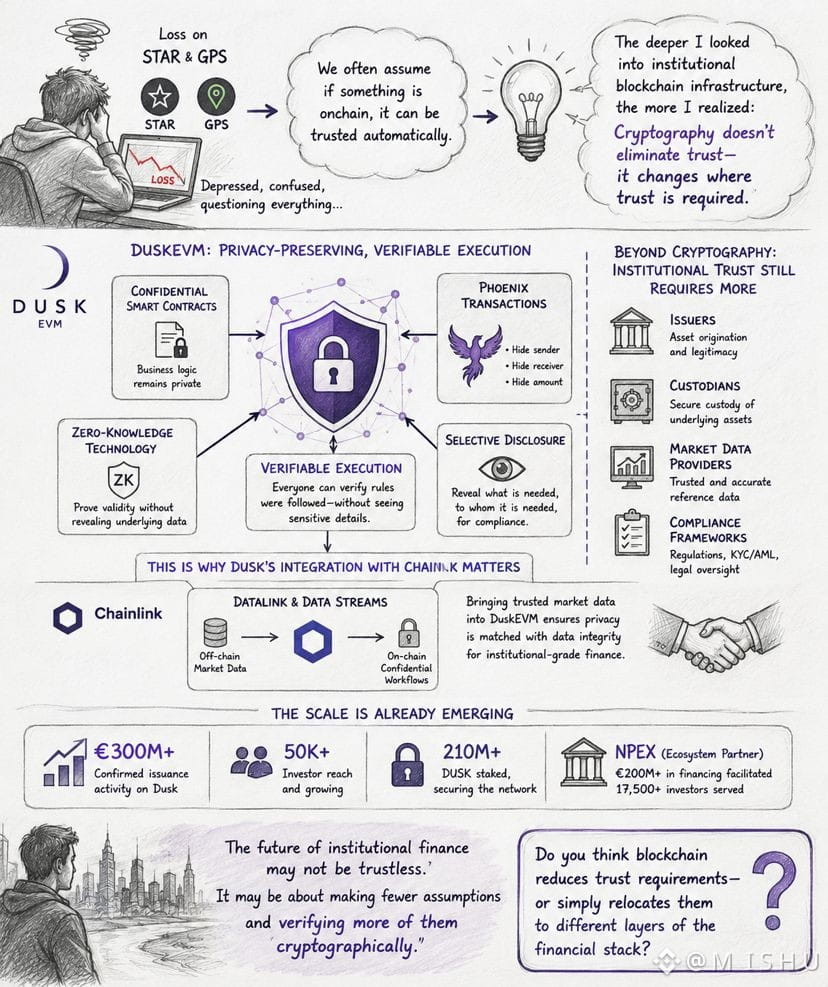
ພວກເຮົາມັກຈະຄິດວ່າ ຖ້າມັນຢູ່ໃນ onchain ກໍສາມາດເຊື່ອໄດ້ທັນທີ.
ຍິ່ງຂ້ອຍເຂົ້າໄປສຶກສາໂຄງສ້າງ blockchain ລະດັບສະຖາບັນຫຼາຍຂຶ້ນ, ຂ້ອຍຍິ່ງຮູ້ວ່າ ຄຣິບໂຕກຣາຟີບໍ່ໄດ້ກຳຈັດຄວາມເຊື່ອ; ມັນແປງວ່າຄວາມເຊື່ອຕ້ອງໄປຢູ່ຕົງໃສ.
DuskEVM ສ້າງຂຶ້ນດ້ວຍແນວຄິດນີ້. ໂດຍໃຊ້ smart contract ທີ່ປົກປິດຂໍ້ມູນ (confidential) ແລະ ເທັກນິກ zero knowledge, ມັນຊ່ວຍໃຫ້ກິດຈະກຳການເງິນທີ່ອ່ອນໄຫວຍັງຄົງຄວາມລັບ ແຕ່ກໍຍັງສາມາດຢືນຢັນວ່າຖືກຕ້ອງຕາມທີ່ປະຕິບັດແທ້. ທຸລະກຳ Phoenix ທີ່ຮັກສາຄວາມລັບສາມາດຊ່ອນຜູ້ສົ່ງ, ຜູ້ຮັບ, ແລະຈຳນວນການໂອນ, ໃນຂະນະທີ່ການເປີດເຜີຍແບບເລືອກສາມາດໃຫ້ການກຳກັບດ້ານລະບຽບຖອດຖອນເຂົ້າໄປໄດ້ ເມື່ອຈຳເປັນ.
ແຕ່ການຮັບເອົາໂດຍສະຖາບັນ ຕ້ອງຫຼາຍກວ່າການຮັນຍັນດ້ານ cryptographic.
ຊັບສິນ tokenized ຍັງຂຶ້ນກັບຜູ້ອອກ (issuers), ຜູ້ຝາກທະນາຄືນ (custodians), ຜູ້ໃຫ້ຂໍ້ມູນຕະຫຼາດ (market data providers), ແລະ ກອບການປະຕິບັດຕາມກົດລະບຽບ (compliance frameworks) ນອກເໜືອຈາກ blockchain ເອງ. ນັ້ນເປັນເຫດວ່າ @Dusk integration ກັບ Chainlink DataLink ແລະ Data Streams ຈຶ່ງມີຄວາມສຳຄັນ—ມັນເອົາເອົາຂໍ້ມູນຕະຫຼາດທີ່ເຊື່ອຖືໄດ້ ເຂົ້າໄປໃນ workflow ການເງິນທີ່ປົກປິດຂໍ້ມູນ.
ຂະໜາດກຳລັງປະກົດອອກແລ້ວ. $DUSK reports €300M+ ໃນການອອກທີ່ຢືນຢັນແລ້ວ, ນັກລົງທຶນ 50K+ ຖືກຂະຫຍາຍໄປ, ແລະ ຫຼາຍກວ່າ 210M #dusk staked ທີ່ຊ່ວຍຮັກສາເຄືອຂ່າຍ.
ອະນາຄົດຂອງການເງິນສຳລັບສະຖາບັນ ອາດຈະບໍ່ແມ່ນແນວທີ່ບໍ່ຕ້ອງເຊື່ອ.
ມັນອາດຈະເປັນເລື່ອງການຫຼຸດການສົມມຸດ ແລະ ການຢືນຢັນໃຫ້ຫຼາຍຂຶ້ນດ້ວຍວິທີທາງ cryptographic.
ທ່ານຄິດບໍວ່າ blockchain ຊ່ວຍຫຼຸດຄວາມຕ້ອງການຄວາມເຊື່ອ ຫຼືພຽງແຕ່ຍ້າຍມັນໄປຢູ່ໃນຊັ້ນຕ່າງໆຂອງ stack ການເງິນ?
ພວກເຮົາມັກຈະຄິດວ່າ ຖ້າມັນຢູ່ໃນ onchain ກໍສາມາດເຊື່ອໄດ້ທັນທີ.
ຍິ່ງຂ້ອຍເຂົ້າໄປສຶກສາໂຄງສ້າງ blockchain ລະດັບສະຖາບັນຫຼາຍຂຶ້ນ, ຂ້ອຍຍິ່ງຮູ້ວ່າ ຄຣິບໂຕກຣາຟີບໍ່ໄດ້ກຳຈັດຄວາມເຊື່ອ; ມັນແປງວ່າຄວາມເຊື່ອຕ້ອງໄປຢູ່ຕົງໃສ.
DuskEVM ສ້າງຂຶ້ນດ້ວຍແນວຄິດນີ້. ໂດຍໃຊ້ smart contract ທີ່ປົກປິດຂໍ້ມູນ (confidential) ແລະ ເທັກນິກ zero knowledge, ມັນຊ່ວຍໃຫ້ກິດຈະກຳການເງິນທີ່ອ່ອນໄຫວຍັງຄົງຄວາມລັບ ແຕ່ກໍຍັງສາມາດຢືນຢັນວ່າຖືກຕ້ອງຕາມທີ່ປະຕິບັດແທ້. ທຸລະກຳ Phoenix ທີ່ຮັກສາຄວາມລັບສາມາດຊ່ອນຜູ້ສົ່ງ, ຜູ້ຮັບ, ແລະຈຳນວນການໂອນ, ໃນຂະນະທີ່ການເປີດເຜີຍແບບເລືອກສາມາດໃຫ້ການກຳກັບດ້ານລະບຽບຖອດຖອນເຂົ້າໄປໄດ້ ເມື່ອຈຳເປັນ.
ແຕ່ການຮັບເອົາໂດຍສະຖາບັນ ຕ້ອງຫຼາຍກວ່າການຮັນຍັນດ້ານ cryptographic.
ຊັບສິນ tokenized ຍັງຂຶ້ນກັບຜູ້ອອກ (issuers), ຜູ້ຝາກທະນາຄືນ (custodians), ຜູ້ໃຫ້ຂໍ້ມູນຕະຫຼາດ (market data providers), ແລະ ກອບການປະຕິບັດຕາມກົດລະບຽບ (compliance frameworks) ນອກເໜືອຈາກ blockchain ເອງ. ນັ້ນເປັນເຫດວ່າ @Dusk integration ກັບ Chainlink DataLink ແລະ Data Streams ຈຶ່ງມີຄວາມສຳຄັນ—ມັນເອົາເອົາຂໍ້ມູນຕະຫຼາດທີ່ເຊື່ອຖືໄດ້ ເຂົ້າໄປໃນ workflow ການເງິນທີ່ປົກປິດຂໍ້ມູນ.
ຂະໜາດກຳລັງປະກົດອອກແລ້ວ. $DUSK reports €300M+ ໃນການອອກທີ່ຢືນຢັນແລ້ວ, ນັກລົງທຶນ 50K+ ຖືກຂະຫຍາຍໄປ, ແລະ ຫຼາຍກວ່າ 210M #dusk staked ທີ່ຊ່ວຍຮັກສາເຄືອຂ່າຍ.
ອະນາຄົດຂອງການເງິນສຳລັບສະຖາບັນ ອາດຈະບໍ່ແມ່ນແນວທີ່ບໍ່ຕ້ອງເຊື່ອ.
ມັນອາດຈະເປັນເລື່ອງການຫຼຸດການສົມມຸດ ແລະ ການຢືນຢັນໃຫ້ຫຼາຍຂຶ້ນດ້ວຍວິທີທາງ cryptographic.
ທ່ານຄິດບໍວ່າ blockchain ຊ່ວຍຫຼຸດຄວາມຕ້ອງການຄວາມເຊື່ອ ຫຼືພຽງແຕ່ຍ້າຍມັນໄປຢູ່ໃນຊັ້ນຕ່າງໆຂອງ stack ການເງິນ?
ຢືນຢັນແລ້ວ
#termmax @TermMax
Wow… ଆଗକୁ $PORTAL $GPS ଓ $ACE ରେ ପ୍ରଫିଟ୍ ନେଇଥିଲି, କାରଣ ଦୁହେଁ ଯେତେବେଳେ ମୋମେଣ୍ଟମ୍ ବଢ଼ୁଛି ସେତେବେଳେ ମଧ୍ୟ ଗତି ଜାରି ରହିଛି। ତେବେ ମୋମେଣ୍ଟମ୍ ମାତ୍ରେ କେବେ ସେଇ ପ୍ରଣାଳୀ ନୁହେଁ—ଜୁଆଖେଳକୁ ସାବଧାନରେ ପରିଚାଳନା କରନ୍ତୁ ଓ ସୁବୁଦ୍ଧିପୂର୍ଣ୍ଣଭାବେ ଟ୍ରେଡ୍ କରନ୍ତୁ।
ନୂତନ ସୁଯୋଗ ଖୋଜୁଥିବାବେଳେ, ମୁଁ TermMax ବିଷୟରେ ଜାଣିଲି ଏବଂ DeFi ରେ କମ୍ ଆଲୋଚିତ ଏକ ସମସ୍ୟା—liquidity fragmentation—ଉପରେ ଖୋଜା ଆରମ୍ଭ କରିଲି।
ଏକ ଉଦାହରଣ TermMax V1 ରୁ ଆସେ: 1.1M USDC କୁରେଟର୍ ଏକାଧିକ fixed rate market ମଧ୍ୟରେ ପୁଁଜିକୁ ଭାଗ କରିବାକୁ ପଡ଼ିଥିଲା। ସମସ୍ୟା liquidity କମ୍ ଥିବା ନୁହେଁ; ସମସ୍ୟା ହେଲା liquidity ଅଲଗା-ଅଲଗା market ମଧ୍ୟରେ ମେଚ୍ୟୁରିଟି ପର୍ଯ୍ୟନ୍ତ ଫସିଯାଇଥିଲା, ଯାହାକୁ ପାରମ୍ପରିକ ଅର୍ଥବ୍ୟବସ୍ଥା inventory deadweight ବୋଲି କହେ।
TermMax V2 ଏହାକୁ Atomic Orders ଦ୍ୱାରା ସମାଧାନ କରେ। ଗୋଟିଏ ମାତ୍ର market କୁ ଲାଗି liquidity ଦେବା ପରିବର୍ତ୍ତେ, ସେଇ ଏକେ ପୁଁଜିକୁ ଏକାସାଥେ ଅନେକ maturities ମଧ୍ୟରେ quote କରାଯାଇପାରେ ଏବଂ ମ୍ୟାଚ୍ ହେଲେ କେବଳ ଥରେ ହିଁ execute ହୁଏ। ଏଥିରୁ ନୂଆ liquidity ସୃଷ୍ଟି ହୁଏ ନାହିଁ; କିନ୍ତୁ liquidity utilization ଉନ୍ନତ ହୁଏ।
ରୋଚକ ବିଷୟ ହେଉଛି ଆର୍ଥିକ ପ୍ରଭାବ। ଯଦି capital କୁ maturity ପୂର୍ବରୁ ଅନେକଥର ପୁଣି ବ୍ୟବହାର କରାଯାଇପାରେ, ତେବେ lending efficiency ସମୁଦାୟ liquidity ଉପରେ କମ୍ ନିର୍ଭର କରି, liquidity କେତେ ଭଲଭାବେ ସମନ୍ୱୟ ହେଉଛି ତାହା ଉପରେ ଅଧିକ ନିର୍ଭର କରେ। TermMax ର Order Aggregator ସହିତ, ଋଣଗ୍ରାହକମାନେ ଏକେ transaction ମାଧ୍ୟମରେ ଅନେକ liquidity source ମଧ୍ୟରୁ ସବୁଠାରୁ କାର୍ଯ୍ୟକ୍ଷମ execution path ଅଭିଗମ କରିପାରିବେ।
ବଡ଼ ପ୍ରଶ୍ନଟି ସାଇଦ୍ ଏହା ନୁହେଁ ଯେ କେତେ liquidity ଗୋଟିଏ protocol ପାଖରେ ଅଛି, ବରଂ ସେଇ liquidity କେତେ କାର୍ଯ୍ୟକ୍ଷମ ଭାବେ ଗତି କରିପାରିବ।
liquidity ନିଜେ ଠାରୁ ଅଧିକ ବଡ଼ competitive advantage କି capital coordination ହୋଇପାରିବ କି?
Wow… ଆଗକୁ $PORTAL $GPS ଓ $ACE ରେ ପ୍ରଫିଟ୍ ନେଇଥିଲି, କାରଣ ଦୁହେଁ ଯେତେବେଳେ ମୋମେଣ୍ଟମ୍ ବଢ଼ୁଛି ସେତେବେଳେ ମଧ୍ୟ ଗତି ଜାରି ରହିଛି। ତେବେ ମୋମେଣ୍ଟମ୍ ମାତ୍ରେ କେବେ ସେଇ ପ୍ରଣାଳୀ ନୁହେଁ—ଜୁଆଖେଳକୁ ସାବଧାନରେ ପରିଚାଳନା କରନ୍ତୁ ଓ ସୁବୁଦ୍ଧିପୂର୍ଣ୍ଣଭାବେ ଟ୍ରେଡ୍ କରନ୍ତୁ।
ନୂତନ ସୁଯୋଗ ଖୋଜୁଥିବାବେଳେ, ମୁଁ TermMax ବିଷୟରେ ଜାଣିଲି ଏବଂ DeFi ରେ କମ୍ ଆଲୋଚିତ ଏକ ସମସ୍ୟା—liquidity fragmentation—ଉପରେ ଖୋଜା ଆରମ୍ଭ କରିଲି।
ଏକ ଉଦାହରଣ TermMax V1 ରୁ ଆସେ: 1.1M USDC କୁରେଟର୍ ଏକାଧିକ fixed rate market ମଧ୍ୟରେ ପୁଁଜିକୁ ଭାଗ କରିବାକୁ ପଡ଼ିଥିଲା। ସମସ୍ୟା liquidity କମ୍ ଥିବା ନୁହେଁ; ସମସ୍ୟା ହେଲା liquidity ଅଲଗା-ଅଲଗା market ମଧ୍ୟରେ ମେଚ୍ୟୁରିଟି ପର୍ଯ୍ୟନ୍ତ ଫସିଯାଇଥିଲା, ଯାହାକୁ ପାରମ୍ପରିକ ଅର୍ଥବ୍ୟବସ୍ଥା inventory deadweight ବୋଲି କହେ।
TermMax V2 ଏହାକୁ Atomic Orders ଦ୍ୱାରା ସମାଧାନ କରେ। ଗୋଟିଏ ମାତ୍ର market କୁ ଲାଗି liquidity ଦେବା ପରିବର୍ତ୍ତେ, ସେଇ ଏକେ ପୁଁଜିକୁ ଏକାସାଥେ ଅନେକ maturities ମଧ୍ୟରେ quote କରାଯାଇପାରେ ଏବଂ ମ୍ୟାଚ୍ ହେଲେ କେବଳ ଥରେ ହିଁ execute ହୁଏ। ଏଥିରୁ ନୂଆ liquidity ସୃଷ୍ଟି ହୁଏ ନାହିଁ; କିନ୍ତୁ liquidity utilization ଉନ୍ନତ ହୁଏ।
ରୋଚକ ବିଷୟ ହେଉଛି ଆର୍ଥିକ ପ୍ରଭାବ। ଯଦି capital କୁ maturity ପୂର୍ବରୁ ଅନେକଥର ପୁଣି ବ୍ୟବହାର କରାଯାଇପାରେ, ତେବେ lending efficiency ସମୁଦାୟ liquidity ଉପରେ କମ୍ ନିର୍ଭର କରି, liquidity କେତେ ଭଲଭାବେ ସମନ୍ୱୟ ହେଉଛି ତାହା ଉପରେ ଅଧିକ ନିର୍ଭର କରେ। TermMax ର Order Aggregator ସହିତ, ଋଣଗ୍ରାହକମାନେ ଏକେ transaction ମାଧ୍ୟମରେ ଅନେକ liquidity source ମଧ୍ୟରୁ ସବୁଠାରୁ କାର୍ଯ୍ୟକ୍ଷମ execution path ଅଭିଗମ କରିପାରିବେ।
ବଡ଼ ପ୍ରଶ୍ନଟି ସାଇଦ୍ ଏହା ନୁହେଁ ଯେ କେତେ liquidity ଗୋଟିଏ protocol ପାଖରେ ଅଛି, ବରଂ ସେଇ liquidity କେତେ କାର୍ଯ୍ୟକ୍ଷମ ଭାବେ ଗତି କରିପାରିବ।
liquidity ନିଜେ ଠାରୁ ଅଧିକ ବଡ଼ competitive advantage କି capital coordination ହୋଇପାରିବ କି?
Yes, efficiency beats size
75%
No, deeper liquidity wins
0%
Both are equally important
0%
Too early to tell in DeFi
25%
4 ຄະແນນສຽງ • ປິດລົງຄະແນນສຽງ
ເປັນຄວາມຈິງບາງສ່ວນ
hmm.. ຂ້ອຍກຳລັງສັງເກດວ່າ ການເງິນທີ່ລັບມີບັນຫາ oracle.
DuskEVM ສາມາດເກັບຮັກສາຂໍ້ມູນການທຳລາຍທຸລະກຳໃຫ້ເປັນຄວາມລັບໄດ້, ແຕ່ ເຄື່ອງມືການເງິນທີ່ຖືກຄວບຄຸມຍັງອີງກັບຂໍ້ມູນຈາກພາຍນອກ ເຊັ່ນ ອັດຕາດອກເບ້ຍ, ອັດຕາແລກປ່ຽນ (FX), ລາຄາຕະຫຼາດ, ແລະ ຂໍ້ມູນອ້າງອີງ.
ຖ້າບໍ່ມີຂໍ້ມູນທີ່ໄວ້ໃຈໄດ້, ສັນຍາທີ່ລັບກໍບໍ່ສາມາດຮອງຮັບຕະຫຼາດການເງິນທີ່ເປັນຈິງໄດ້.
ນັ້ນແຫຼະຄື ສິ່ງທີ່ເຮັດໃຫ້ <a>@Dusk </a> Chainlink integration ມີຄວາມສຳຄັນ.
ຜ່ານ Chainlink Data Streams ແລະ DataLink, ຂໍ້ມູນຕະຫຼາດທີ່ໄວ້ໃຈໄດ້ ສາມາດໄປຮອດສະພາບແວດລ້ອມການປະຕິບັດທີ່ລັບຂອງ Dusk, ເຮັດໃຫ້ຊັບສິນ tokenized ຖືກກຳນົດລາຄາ ແລະ ຊຳລະໄດ້ ໂດຍຮັກສາຄວາມລັບ.
ນີ້ໃຫຍ່ກວ່າ DeFi.
ສະຖາບັນຕ່າງໆ ຕ້ອງການການກຳນົດລາຄາທີ່ໄວ້ໃຈໄດ້, ການປະຕິບັດທີ່ລັບ, ແລະ ໂຄງສ້າງພາບຄວາມປະຕິບັດດ້ານການຄອມພລາຍກ່ອນທີ່ຊັບສິນທີ່ຖືກຄວບຄຸມ ຈະຍ້າຍໄປອອນເຊນ.
Chainlink ຊ່ອງທາງຂໍ້ມູນ (data layer).
<a>#dusk </a> ກຳລັງກໍ່ສ້າງຂຶ້ນມາອ້ອມຮອບອີກສອງຢ່າງ.
ໂອກາດໄດ້ເກີດຂຶ້ນແລ້ວ. NPEX, ໜຶ່ງໃນຜູ້ເຂົ້າຮ່ວມຂອງ ecosystem <a>$DUSK </a>, ໄດ້ອຳນວຍຄວາມສະດວກທາງດ້ານການເງິນຫຼາຍກວ່າ €200M ສຳລັບ SMEs ຫຼາຍກວ່າ 100 ແຫ່ງ ແລະ ບໍລິການໃຫ້ນັກລົງທຶນ 17,500+ ຄົນ. ໃນຂະນະດຽວກັນ, Dusk ລາຍງານກິດຈະກຳທີ່ຢືນຢັນແລ້ວກວ່າ €300M, ເຂົ້າເຖິງນັກລົງທຶນ 50K+ ແລະ ມີ DUSK ຖືກສະແຕກຫຼາຍກວ່າ 210M ເພື່ອຮັກສາຄວາມປອດໄພໃຫ້ເຄືອຂ່າຍ.
ຜົນລັບຄື ເປັນ stack ທີ່ບໍ່ພຽງແຕ່ອອກ tokenized assets ໃນອອນເຊນ, ແຕ່ຍັງສາມາດຖືກກຳນົດລາຄາ, ຊຳລະ, ແລະ ກວດສອບໄດ້ ດ້ວຍໂຄງສ້າງທີ່ຖືກອອກແບບສຳລັບຕະຫຼາດທີ່ຖືກຄວບຄຸມ.
ເຄືອຂ່າຍຫຼາຍແຫ່ງຈຸ້ມໃສ່ການນຳເອົາຊັບສິນຂຶ້ນອອນເຊນ.
Dusk ເໝືອນຈະເນັ້ນໃສ່ການເຮັດໃຫ້ຊັບສິນເຫຼົ່ານັ້ນ ໃຊ້ງານໄດ້ພາຍໃນກົດລະບຽບຂອງຕະຫຼາດການເງິນທີ່ເປັນຈິງ.
Hmm.. ໃນຂະນະທີ່ດື່ມກາເຟ ຂ້ອຍກຳລັງຄິດວ່າ ຊິ້ນສ່ວນທີ່ຂາດຫາຍຫຼາຍທີ່ສຸດສຳລັບການຮັບເອົາຂອງສະຖາບັນຕໍ່ tokenized assets ແມ່ນຫຍັງ?
DuskEVM ສາມາດເກັບຮັກສາຂໍ້ມູນການທຳລາຍທຸລະກຳໃຫ້ເປັນຄວາມລັບໄດ້, ແຕ່ ເຄື່ອງມືການເງິນທີ່ຖືກຄວບຄຸມຍັງອີງກັບຂໍ້ມູນຈາກພາຍນອກ ເຊັ່ນ ອັດຕາດອກເບ້ຍ, ອັດຕາແລກປ່ຽນ (FX), ລາຄາຕະຫຼາດ, ແລະ ຂໍ້ມູນອ້າງອີງ.
ຖ້າບໍ່ມີຂໍ້ມູນທີ່ໄວ້ໃຈໄດ້, ສັນຍາທີ່ລັບກໍບໍ່ສາມາດຮອງຮັບຕະຫຼາດການເງິນທີ່ເປັນຈິງໄດ້.
ນັ້ນແຫຼະຄື ສິ່ງທີ່ເຮັດໃຫ້ <a>@Dusk </a> Chainlink integration ມີຄວາມສຳຄັນ.
ຜ່ານ Chainlink Data Streams ແລະ DataLink, ຂໍ້ມູນຕະຫຼາດທີ່ໄວ້ໃຈໄດ້ ສາມາດໄປຮອດສະພາບແວດລ້ອມການປະຕິບັດທີ່ລັບຂອງ Dusk, ເຮັດໃຫ້ຊັບສິນ tokenized ຖືກກຳນົດລາຄາ ແລະ ຊຳລະໄດ້ ໂດຍຮັກສາຄວາມລັບ.
ນີ້ໃຫຍ່ກວ່າ DeFi.
ສະຖາບັນຕ່າງໆ ຕ້ອງການການກຳນົດລາຄາທີ່ໄວ້ໃຈໄດ້, ການປະຕິບັດທີ່ລັບ, ແລະ ໂຄງສ້າງພາບຄວາມປະຕິບັດດ້ານການຄອມພລາຍກ່ອນທີ່ຊັບສິນທີ່ຖືກຄວບຄຸມ ຈະຍ້າຍໄປອອນເຊນ.
Chainlink ຊ່ອງທາງຂໍ້ມູນ (data layer).
<a>#dusk </a> ກຳລັງກໍ່ສ້າງຂຶ້ນມາອ້ອມຮອບອີກສອງຢ່າງ.
ໂອກາດໄດ້ເກີດຂຶ້ນແລ້ວ. NPEX, ໜຶ່ງໃນຜູ້ເຂົ້າຮ່ວມຂອງ ecosystem <a>$DUSK </a>, ໄດ້ອຳນວຍຄວາມສະດວກທາງດ້ານການເງິນຫຼາຍກວ່າ €200M ສຳລັບ SMEs ຫຼາຍກວ່າ 100 ແຫ່ງ ແລະ ບໍລິການໃຫ້ນັກລົງທຶນ 17,500+ ຄົນ. ໃນຂະນະດຽວກັນ, Dusk ລາຍງານກິດຈະກຳທີ່ຢືນຢັນແລ້ວກວ່າ €300M, ເຂົ້າເຖິງນັກລົງທຶນ 50K+ ແລະ ມີ DUSK ຖືກສະແຕກຫຼາຍກວ່າ 210M ເພື່ອຮັກສາຄວາມປອດໄພໃຫ້ເຄືອຂ່າຍ.
ຜົນລັບຄື ເປັນ stack ທີ່ບໍ່ພຽງແຕ່ອອກ tokenized assets ໃນອອນເຊນ, ແຕ່ຍັງສາມາດຖືກກຳນົດລາຄາ, ຊຳລະ, ແລະ ກວດສອບໄດ້ ດ້ວຍໂຄງສ້າງທີ່ຖືກອອກແບບສຳລັບຕະຫຼາດທີ່ຖືກຄວບຄຸມ.
ເຄືອຂ່າຍຫຼາຍແຫ່ງຈຸ້ມໃສ່ການນຳເອົາຊັບສິນຂຶ້ນອອນເຊນ.
Dusk ເໝືອນຈະເນັ້ນໃສ່ການເຮັດໃຫ້ຊັບສິນເຫຼົ່ານັ້ນ ໃຊ້ງານໄດ້ພາຍໃນກົດລະບຽບຂອງຕະຫຼາດການເງິນທີ່ເປັນຈິງ.
Hmm.. ໃນຂະນະທີ່ດື່ມກາເຟ ຂ້ອຍກຳລັງຄິດວ່າ ຊິ້ນສ່ວນທີ່ຂາດຫາຍຫຼາຍທີ່ສຸດສຳລັບການຮັບເອົາຂອງສະຖາບັນຕໍ່ tokenized assets ແມ່ນຫຍັງ?
Trusted market data
100%
Privacy & confidentiality
0%
Regulatory compliance
0%
2 ຄະແນນສຽງ • ປິດລົງຄະແນນສຽງ
ເປັນຄວາມຈິງບາງສ່ວນ
Hmm.. ຂ້ອຍພົບເຫັນໃນຂະນະທີ່ຄົ້ນຄວ້າ @Dusk ວ່າເຄືອຂ່າຍມຸ່ງໄປສູ່ deterministic settlement ພາຍໃນປະມານ 10 ວິນາທີ—ສິ່ງທີ່ຟັງຄ້າຍກັບປົກກະຕິໃນໂລກ crypto ຈົນກວ່າຈະໄປປຽບທຽບກັບວ່າສ່ວນໃຫຍ່ບລັອກເຊນມັກບັນລຸ finality ແນວໃດແທ້.
ນັ້ນເຮັດໃຫ້ຂ້ອຍເຂົ້າໄປເຈາະໃນ rabbit hole ກ່ຽວກັບ #dusk consensus architecture, ບ່ອນທີ່ຂ້ອຍເຫັນບາງຢ່າງທີ່ນັກລົງທຶນ crypto ສ່ວນຫຼາຍເຂົ້າໃຈຜິດກ່ຽວກັບ finality:
Deterministic settlement ບໍ່ແມ່ນຄຸນສົມບັດຂອງ protocol.
ມັນແມ່ນສົມມຸດຖານການກະຈາຍອຳນາດ (decentralization) ທີ່ຖືກບັງຄັບໂດຍການອອກແບບຂອງ protocol.
ບລັອກເຊນສ່ວນຫຼາຍພຶ່ງອາໄສ probabilistic finality. ການທຳລາຍລາຍການຈະຍາກຂຶ້ນໃນການຄືນກັບຖ້າເພີ່ມບລັອກເຂົ້າໄປຫຼາຍຂຶ້ນ, ແຕ່ຄວາມແນ່ນອນມາຈາກຄວາມອາດໄດ້ (probability).
$DUSK ເຂົ້າຫາວິທີການທີ່ແຕກຕ່າງ.
Its Succinct Attestation consensus ຖືກອອກແບບໃຫ້ສຳລັບ deterministic finality, ໝາຍຄວາມວ່າ ທຣານຊາກຊັນຈະບໍ່ສາມາດກັບຄືນໄດ້ ເມື່ອບັນລຸ finality ພາຍໃຕ້ສົມມຸດຄວາມປອດໄພຂອງເຄືອຂ່າຍ. ລະບົບໃຊ້ committee based Proof of Stake consensus ເພື່ອໃຫ້ settlement ທີ່ເໝາະກັບ workflow ການເງິນທີ່ຖືກກຳກັບ.
ສິ່ງທີ່ໄດ້ດຶງຄວາມສົນໃຈຂອງຂ້ອຍຄື Dusk ບໍ່ໄດ້ປັບ optimize ໃຫ້ມີ throughput ທີ່ຖືກຂັບດ້ວຍການຄາດເກົາ. ມັນປັບ optimize ໃຫ້ໄດ້ຄວາມແນ່ນອນຂອງ settlement.
ມື້ນີ້, DUSK ຊື້ຂາຍປະມານ $0.0607, ມີ market cap $30.2M, FDV $60.7M, ມີ supply ໃນວົງຈອນ 497M, 36.9K holders, ແລະ ມູນຄ່າການຊື້ຂາຍປະຈຳວັນປະມານ $2.8M. ທີ່ສຳຄັນກວ່ານັ້ນ, ເຄືອຂ່າຍລາຍງານ 210M+ DUSK ຖືກ stake, €300M+ ກິດຈະກຳ issuance ທີ່ຢືນຢັນແລ້ວ, ແລະ ປະມານ settlement deterministic ໃນເວລາ 10 ວິນາທີ.
ຄຳຕິດທີ່ຖືກມອງຂ້າມ ແມ່ນ deterministic finality ມີຄ່າ ກໍຕໍ່ເມື່ອຜູ້ກວດສອບ (validator) ແລະ ລະບົບ staking ຍັງມີສຸຂະພາບພຽງພໍ ເພື່ອຮັກສາສົມມຸດຖານທີ່ຢູ່ເບື້ອງຫຼັງມັນ.
ເວົ້າອີກຢ່າງ, ຄວາມແນ່ນອນຂອງ settlement ບໍ່ໄດ້ມາຈາກຄະນິດສາດພຽງຢ່າງດຽວ.
ມັນມາຈາກຄະນິດສາດທີ່ຖືກຄ້ຳປະກັນດ້ວຍ decentralization.
ຖ້າ tokenized securities ກາຍເປັນຕະຫຼາດມູນຄ່າຫນຶ່ງ trillion, ສະຖາບັນ (institutions) ຈະໃຫ້ຄວາມສົນໃຈກັບຄວາມໄວໃນການທຣານຊາກຊັນຫຼາຍກວ່າ ຫຼື ກັບການຮູ້ແນ່ນອນວ່າ ການເປັນເຈົ້າຂອງກາຍເປັນ final ທາງກົດໝາຍເມື່ອໃດ?
ນັ້ນເຮັດໃຫ້ຂ້ອຍເຂົ້າໄປເຈາະໃນ rabbit hole ກ່ຽວກັບ #dusk consensus architecture, ບ່ອນທີ່ຂ້ອຍເຫັນບາງຢ່າງທີ່ນັກລົງທຶນ crypto ສ່ວນຫຼາຍເຂົ້າໃຈຜິດກ່ຽວກັບ finality:
Deterministic settlement ບໍ່ແມ່ນຄຸນສົມບັດຂອງ protocol.
ມັນແມ່ນສົມມຸດຖານການກະຈາຍອຳນາດ (decentralization) ທີ່ຖືກບັງຄັບໂດຍການອອກແບບຂອງ protocol.
ບລັອກເຊນສ່ວນຫຼາຍພຶ່ງອາໄສ probabilistic finality. ການທຳລາຍລາຍການຈະຍາກຂຶ້ນໃນການຄືນກັບຖ້າເພີ່ມບລັອກເຂົ້າໄປຫຼາຍຂຶ້ນ, ແຕ່ຄວາມແນ່ນອນມາຈາກຄວາມອາດໄດ້ (probability).
$DUSK ເຂົ້າຫາວິທີການທີ່ແຕກຕ່າງ.
Its Succinct Attestation consensus ຖືກອອກແບບໃຫ້ສຳລັບ deterministic finality, ໝາຍຄວາມວ່າ ທຣານຊາກຊັນຈະບໍ່ສາມາດກັບຄືນໄດ້ ເມື່ອບັນລຸ finality ພາຍໃຕ້ສົມມຸດຄວາມປອດໄພຂອງເຄືອຂ່າຍ. ລະບົບໃຊ້ committee based Proof of Stake consensus ເພື່ອໃຫ້ settlement ທີ່ເໝາະກັບ workflow ການເງິນທີ່ຖືກກຳກັບ.
ສິ່ງທີ່ໄດ້ດຶງຄວາມສົນໃຈຂອງຂ້ອຍຄື Dusk ບໍ່ໄດ້ປັບ optimize ໃຫ້ມີ throughput ທີ່ຖືກຂັບດ້ວຍການຄາດເກົາ. ມັນປັບ optimize ໃຫ້ໄດ້ຄວາມແນ່ນອນຂອງ settlement.
ມື້ນີ້, DUSK ຊື້ຂາຍປະມານ $0.0607, ມີ market cap $30.2M, FDV $60.7M, ມີ supply ໃນວົງຈອນ 497M, 36.9K holders, ແລະ ມູນຄ່າການຊື້ຂາຍປະຈຳວັນປະມານ $2.8M. ທີ່ສຳຄັນກວ່ານັ້ນ, ເຄືອຂ່າຍລາຍງານ 210M+ DUSK ຖືກ stake, €300M+ ກິດຈະກຳ issuance ທີ່ຢືນຢັນແລ້ວ, ແລະ ປະມານ settlement deterministic ໃນເວລາ 10 ວິນາທີ.
ຄຳຕິດທີ່ຖືກມອງຂ້າມ ແມ່ນ deterministic finality ມີຄ່າ ກໍຕໍ່ເມື່ອຜູ້ກວດສອບ (validator) ແລະ ລະບົບ staking ຍັງມີສຸຂະພາບພຽງພໍ ເພື່ອຮັກສາສົມມຸດຖານທີ່ຢູ່ເບື້ອງຫຼັງມັນ.
ເວົ້າອີກຢ່າງ, ຄວາມແນ່ນອນຂອງ settlement ບໍ່ໄດ້ມາຈາກຄະນິດສາດພຽງຢ່າງດຽວ.
ມັນມາຈາກຄະນິດສາດທີ່ຖືກຄ້ຳປະກັນດ້ວຍ decentralization.
ຖ້າ tokenized securities ກາຍເປັນຕະຫຼາດມູນຄ່າຫນຶ່ງ trillion, ສະຖາບັນ (institutions) ຈະໃຫ້ຄວາມສົນໃຈກັບຄວາມໄວໃນການທຣານຊາກຊັນຫຼາຍກວ່າ ຫຼື ກັບການຮູ້ແນ່ນອນວ່າ ການເປັນເຈົ້າຂອງກາຍເປັນ final ທາງກົດໝາຍເມື່ອໃດ?
🔹 Transaction Speed
0%
🔹 Settlement Certainty
0%
🔹 Both Matter Equally
0%
🔹 Depends on the Asset
0%
0 ຄະແນນສຽງ • ປິດລົງຄະແນນສຽງ
ຢືນຢັນແລ້ວ
ବେଳେខ្ញុំកំពុងស្រាវជ្រាវ @Dusk កិច្ចសន្យា Confidential ខ្ញុំបានជួបនូវភាពខុសគ្នាមួយ ដែលមិនសូវត្រូវបានពិភាក្សាក្នុង crypto៖
ភាពឯកជនទិន្នន័យ និងភាពឯកជននៃការប្រតិបត្តិ (execution) មិនមែនជារឿងដូចគ្នាទេ។
ការសន្ទនាភាគច្រើនអំពី confidential smart contracts ផ្តោតទៅលើសមតុល្យដែលបានអ៊ិនគ្រីប ទំនាក់ទំនងគ្នាដែលលាក់ឈ្មោះ និងការបង្ហាញព័ត៌មានជ្រើសរើស។ ស្ថាបត្យកម្មរបស់ Dusk ត្រូវបានរចនាឡើងដើម្បីការពារនូវអ្វីដែលច្បាស់បំផុតនោះ។ ព័ត៌មានដែលមានសារៈសំខាន់អាចនៅតែលាក់ជាក់បាន ខណៈពេលដែលអ្នកចូលរួមដែលមានសិទ្ធិ អ្នកត្រួតពិនិត្យ (auditors) ឬអ្នកគ្រប់គ្រង (regulators) ទទួលបានតែទិន្នន័យដែលគេត្រូវបានអនុញ្ញាតឲ្យមើលប៉ុណ្ណោះ។
ប៉ុន្តែមានសំណួរដ៏ជ្រាលជ្រៅជាងនេះ។
ទោះបីជាទិន្នន័យកិច្ចសន្យាត្រូវបានលាក់ក៏ដោយ អ្នកសង្កេតអាចនៅតែអាចរៀនអ្វីមួយពីលំនាំប្រតិបត្តិការ (transaction patterns) ចំនួនដងនៃការប្រតិបត្តិ (execution frequency) ឬការប្រើប្រាស់ធនធាន (resource consumption)។ ពួកគេប្រហែលជាមិនដឹងថានរណាបានធ្វើអ្វី ឬមានចំនួនប៉ុន្មាននោះទេ ប៉ុន្តែពួកគេអាចនឹងអាចទាយបានថាមានអ្វីមួយបានកើតឡើង
នោះមិនមែនជាកំហុសដែលមានតែចំពោះ #dusk ទេ។ វាជាបញ្ហាប្រឈមទូលំទូលាយសម្រាប់ការគណនាដែលរក្សាភាពឯកជនក្នុងប្រព័ន្ធ blockchain ផ្សេងៗ។
ចំណុចសំខាន់គឺ $DUSK Confidential Contracts ត្រូវបានសាងសង់ឡើងដើម្បីការពារទិន្នន័យហិរញ្ញវត្ថុ ខណៈពេលរក្សាបាននូវការប្រតិបត្តិដែលអាចផ្ទៀងផ្ទាត់បាន (verifiable execution)។ សម្រាប់ទ្រព្យសម្បត្តិដែលត្រូវបានគ្រប់គ្រង (regulated assets) សមតុល្យនេះ ជារឿយៗមានសារៈសំខាន់ជាងភាពមិនច្បាស់លាស់ទាំងស្រុង (absolute opacity) ។
ទីផ្សារនៅតែដំបូងៗក្នុងការកំណត់តម្លៃគោលគំនិតនេះ។ DUSK ជួញដូរជុំវិញ $0.06 ជាមួយនឹង market cap ប្រហែល $30M, FDV ប្រហែល $60M, បរិមាណសរុបកំពុងចរាចរជិត ~497M, អ្នកកាន់កាប់ 36.9K និងទំហំទិញលក់ប្រចាំថ្ងៃប្រហែល $2.7M។
សំណួរមិនមែនថា ភាពឯកជនមានសារៈសំខាន់ឬទេ។
វាជាសំណួរថា តើមូលបត្រដែលត្រូវបាន tokenize នៅពេលអនាគត នឹងត្រូវការភាពឯកជននៅតែត្រឹមស្រទាប់ទិន្នន័យ (data layer) ប៉ុណ្ណោះ ឬត្រូវការផងដែរនៅស្រទាប់ការប្រតិបត្តិ (execution layer) ។
អ្វីដែលនឹងមានសារៈសំខាន់ជាងសម្រាប់ការទទួលយកដោយស្ថាប័ន?
ភាពឯកជនទិន្នន័យ និងភាពឯកជននៃការប្រតិបត្តិ (execution) មិនមែនជារឿងដូចគ្នាទេ។
ការសន្ទនាភាគច្រើនអំពី confidential smart contracts ផ្តោតទៅលើសមតុល្យដែលបានអ៊ិនគ្រីប ទំនាក់ទំនងគ្នាដែលលាក់ឈ្មោះ និងការបង្ហាញព័ត៌មានជ្រើសរើស។ ស្ថាបត្យកម្មរបស់ Dusk ត្រូវបានរចនាឡើងដើម្បីការពារនូវអ្វីដែលច្បាស់បំផុតនោះ។ ព័ត៌មានដែលមានសារៈសំខាន់អាចនៅតែលាក់ជាក់បាន ខណៈពេលដែលអ្នកចូលរួមដែលមានសិទ្ធិ អ្នកត្រួតពិនិត្យ (auditors) ឬអ្នកគ្រប់គ្រង (regulators) ទទួលបានតែទិន្នន័យដែលគេត្រូវបានអនុញ្ញាតឲ្យមើលប៉ុណ្ណោះ។
ប៉ុន្តែមានសំណួរដ៏ជ្រាលជ្រៅជាងនេះ។
ទោះបីជាទិន្នន័យកិច្ចសន្យាត្រូវបានលាក់ក៏ដោយ អ្នកសង្កេតអាចនៅតែអាចរៀនអ្វីមួយពីលំនាំប្រតិបត្តិការ (transaction patterns) ចំនួនដងនៃការប្រតិបត្តិ (execution frequency) ឬការប្រើប្រាស់ធនធាន (resource consumption)។ ពួកគេប្រហែលជាមិនដឹងថានរណាបានធ្វើអ្វី ឬមានចំនួនប៉ុន្មាននោះទេ ប៉ុន្តែពួកគេអាចនឹងអាចទាយបានថាមានអ្វីមួយបានកើតឡើង
នោះមិនមែនជាកំហុសដែលមានតែចំពោះ #dusk ទេ។ វាជាបញ្ហាប្រឈមទូលំទូលាយសម្រាប់ការគណនាដែលរក្សាភាពឯកជនក្នុងប្រព័ន្ធ blockchain ផ្សេងៗ។
ចំណុចសំខាន់គឺ $DUSK Confidential Contracts ត្រូវបានសាងសង់ឡើងដើម្បីការពារទិន្នន័យហិរញ្ញវត្ថុ ខណៈពេលរក្សាបាននូវការប្រតិបត្តិដែលអាចផ្ទៀងផ្ទាត់បាន (verifiable execution)។ សម្រាប់ទ្រព្យសម្បត្តិដែលត្រូវបានគ្រប់គ្រង (regulated assets) សមតុល្យនេះ ជារឿយៗមានសារៈសំខាន់ជាងភាពមិនច្បាស់លាស់ទាំងស្រុង (absolute opacity) ។
ទីផ្សារនៅតែដំបូងៗក្នុងការកំណត់តម្លៃគោលគំនិតនេះ។ DUSK ជួញដូរជុំវិញ $0.06 ជាមួយនឹង market cap ប្រហែល $30M, FDV ប្រហែល $60M, បរិមាណសរុបកំពុងចរាចរជិត ~497M, អ្នកកាន់កាប់ 36.9K និងទំហំទិញលក់ប្រចាំថ្ងៃប្រហែល $2.7M។
សំណួរមិនមែនថា ភាពឯកជនមានសារៈសំខាន់ឬទេ។
វាជាសំណួរថា តើមូលបត្រដែលត្រូវបាន tokenize នៅពេលអនាគត នឹងត្រូវការភាពឯកជននៅតែត្រឹមស្រទាប់ទិន្នន័យ (data layer) ប៉ុណ្ណោះ ឬត្រូវការផងដែរនៅស្រទាប់ការប្រតិបត្តិ (execution layer) ។
អ្វីដែលនឹងមានសារៈសំខាន់ជាងសម្រាប់ការទទួលយកដោយស្ថាប័ន?
Data privacy is enough
100%
Both data & execution privacy
0%
Compliance matter than privacy
0%
Depends on the asset type
0%
2 ຄະແນນສຽງ • ປິດລົງຄະແນນສຽງ
ຢືນຢັນແລ້ວ
ຂ້ອຍກຳລັງຄົ້ນຄວ້າເລື່ອງ securities ທີ່ຖືກ tokenized ແລະພົບວ່າມີບາງຢ່າງທີ່ນັກລົງທຶນ crypto ສ່ວນໃຫຍ່ມັກມອງຂ້າມ:
ຄວາມທ້າທາຍຕົວຈິງບໍ່ແມ່ນການຍ້າຍຫຸ້ນ ແລະ bond ໄປຢູ່ໃນ chain. ແຕ່ແມ່ນການເຮັດໃຫ້ມັນມີຄວາມຖືກຕ້ອງຕາມກົດໝາຍ (compliant) ເມື່ອມັນຢູ່ບນ chain ແລ້ວ.
EVM ecosystems ສ່ວນໃຫຍ່ຖືກສ້າງມາເພື່ອການເງິນແບບ permissionless ແລ້ວຄ່ອຍເພີ່ມເຄື່ອງມືຄວາມຖືກຕ້ອງຕາມກົດໝາຍພາຍຫຼັງ. DuskEVM ເລືອກເສັ້ນທາງກັບກັນ. ການ compliance, privacy, ແລະ settlement ຖືກຝັງຢູ່ໃນ architecture ຕាំងແຕ່ຕົ້ນ.
ນັ້ນເປັນຄວາມແຕກຕ່າງທີ່ບາງ ແຕ່ສຳຄັນຫຼາຍ.
ດ້ວຍການໃຊ້ zero knowledge technology ແລະ selective disclosure, DuskEVM ອະນຸຍາດໃຫ້ assets ທີ່ຢູ່ໃນຂອບກຳກັບສາມາດຮັກສາຄວາມລັບໄວ້ໄດ້ ໃນຂະນະທີ່ຍັງເຮັດໃຫ້ auditors, issuers, ແລະ regulators ສາມາດເຂົ້າເຖິງຂໍ້ມູນໄດ້ ເມື່ອຈຳເປັນຕາມກົດໝາຍ.
ຈຸດປະສົງບໍ່ແມ່ນຕ້ານການ censor ດ້ວຍທຸກຢ່າງ. ແຕ່ແມ່ນການສ້າງ infra ທີ່ regulated capital ສາມາດນຳໄປໃຊ້ໄດ້ແທ້.
ຕະຫຼາດຍັງຄ່ອນຂ້າງນ້ອຍ. @Dusk trades ປະມານ $0.060, ມີ market cap ຢູ່ໃກ້ $30M, FDV ປະມານ $60M, ມີ token ທີ່ວົງຈອນປະມານ 497M, 36.9K holders, ແລະ ມູນຄ່າການຊື້ຂາຍລາຍວັນປະມານ $2.7M.
ສິ່ງທີ່ຂ້ອຍເຫັນວ່ານ່າສົນໃຈສຸດແມ່ນ moat.
Privacy ສາມາດຖືກລອກໄດ້. EVM compatibility ສາມາດຖືກລອກໄດ້. ແມ້ແຕ່ throughput ກໍຍັງສາມາດຖືກລອກໄດ້.
ແຕ່ການອອກແບບ blockchain ທັງໝົດໃຫ້ຢູ່ຮອບຂອງ MiFID II, MiCA, ການອອກແບບ regulated issuance, ຂັ້ນຕອນການ compliance, ແລະ confidential settlement ແມ່ນຍາກຫຼາຍທີ່ຈະ replicate.
#dusk $DUSK
ຖ້າຈຳນວນເງິນມູນຄ່າຫຼາຍລ້ານຕື້ໂດລາຂອງ securities ຈະຖືກຍ້າຍໄປໃນ chain ໃນທີ່ສຸດ ພວກເຂົາຈະເລືອກ chains ທີ່ສ້າງມາສຳລັບ crypto ກ່ອນ ຫຼື chains ທີ່ສ້າງມາສຳລັບການກຳກັບກົດໝາຍກ່ອນ?
ຄວາມທ້າທາຍຕົວຈິງບໍ່ແມ່ນການຍ້າຍຫຸ້ນ ແລະ bond ໄປຢູ່ໃນ chain. ແຕ່ແມ່ນການເຮັດໃຫ້ມັນມີຄວາມຖືກຕ້ອງຕາມກົດໝາຍ (compliant) ເມື່ອມັນຢູ່ບນ chain ແລ້ວ.
EVM ecosystems ສ່ວນໃຫຍ່ຖືກສ້າງມາເພື່ອການເງິນແບບ permissionless ແລ້ວຄ່ອຍເພີ່ມເຄື່ອງມືຄວາມຖືກຕ້ອງຕາມກົດໝາຍພາຍຫຼັງ. DuskEVM ເລືອກເສັ້ນທາງກັບກັນ. ການ compliance, privacy, ແລະ settlement ຖືກຝັງຢູ່ໃນ architecture ຕាំងແຕ່ຕົ້ນ.
ນັ້ນເປັນຄວາມແຕກຕ່າງທີ່ບາງ ແຕ່ສຳຄັນຫຼາຍ.
ດ້ວຍການໃຊ້ zero knowledge technology ແລະ selective disclosure, DuskEVM ອະນຸຍາດໃຫ້ assets ທີ່ຢູ່ໃນຂອບກຳກັບສາມາດຮັກສາຄວາມລັບໄວ້ໄດ້ ໃນຂະນະທີ່ຍັງເຮັດໃຫ້ auditors, issuers, ແລະ regulators ສາມາດເຂົ້າເຖິງຂໍ້ມູນໄດ້ ເມື່ອຈຳເປັນຕາມກົດໝາຍ.
ຈຸດປະສົງບໍ່ແມ່ນຕ້ານການ censor ດ້ວຍທຸກຢ່າງ. ແຕ່ແມ່ນການສ້າງ infra ທີ່ regulated capital ສາມາດນຳໄປໃຊ້ໄດ້ແທ້.
ຕະຫຼາດຍັງຄ່ອນຂ້າງນ້ອຍ. @Dusk trades ປະມານ $0.060, ມີ market cap ຢູ່ໃກ້ $30M, FDV ປະມານ $60M, ມີ token ທີ່ວົງຈອນປະມານ 497M, 36.9K holders, ແລະ ມູນຄ່າການຊື້ຂາຍລາຍວັນປະມານ $2.7M.
ສິ່ງທີ່ຂ້ອຍເຫັນວ່ານ່າສົນໃຈສຸດແມ່ນ moat.
Privacy ສາມາດຖືກລອກໄດ້. EVM compatibility ສາມາດຖືກລອກໄດ້. ແມ້ແຕ່ throughput ກໍຍັງສາມາດຖືກລອກໄດ້.
ແຕ່ການອອກແບບ blockchain ທັງໝົດໃຫ້ຢູ່ຮອບຂອງ MiFID II, MiCA, ການອອກແບບ regulated issuance, ຂັ້ນຕອນການ compliance, ແລະ confidential settlement ແມ່ນຍາກຫຼາຍທີ່ຈະ replicate.
#dusk $DUSK
ຖ້າຈຳນວນເງິນມູນຄ່າຫຼາຍລ້ານຕື້ໂດລາຂອງ securities ຈະຖືກຍ້າຍໄປໃນ chain ໃນທີ່ສຸດ ພວກເຂົາຈະເລືອກ chains ທີ່ສ້າງມາສຳລັບ crypto ກ່ອນ ຫຼື chains ທີ່ສ້າງມາສຳລັບການກຳກັບກົດໝາຍກ່ອນ?
Purpose built regulated chains
60%
General blockchain compliance
20%
Hybridmultichaininfrastructure
0%
Traditionalsystem staydominant
20%
5 ຄະແນນສຽງ • ປິດລົງຄະແນນສຽງ
ຢືນຢັນແລ້ວ
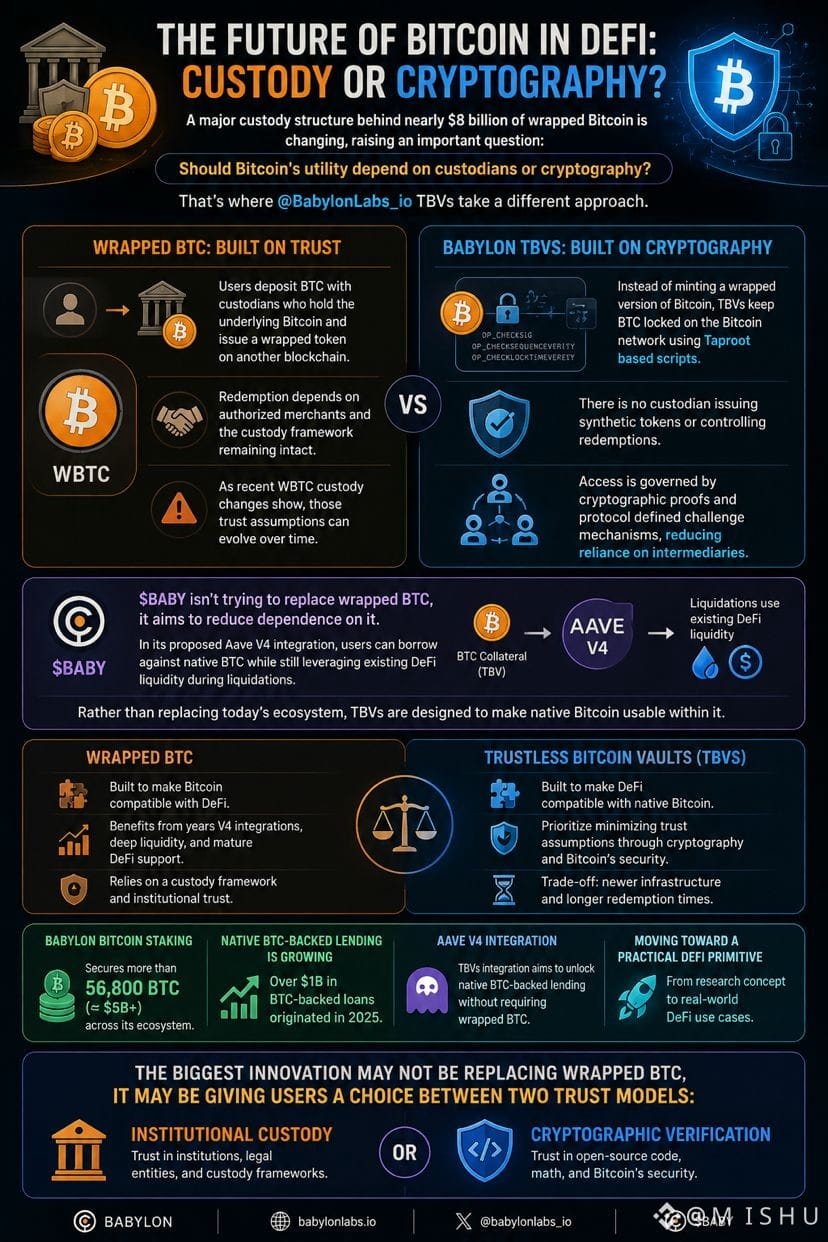
Štruktura ša „major custody“ aiz gandrīz 8 miljardiem ASV dolāru apvītu Bitcoin mainās, uzdodot svarīgu jautājumu: Vai Bitcoin lietderībai jābūt atkarīgai no glabātājiem jeb no kriptogrāfijas?
Tieši tur @BabylonLabs_io TBVs iet pa citu ceļu.
Apvītais BTC ienesa BTC DeFi, taču tā modelis balstās uz uzticēšanos. Lietotāji nogulda BTC pie glabātājiem, kuri tur pamata Bitcoin, un izsniedz apvītu marķieri citā blokķēdē. Izpirkšana arī ir atkarīga no autorizētiem tirgotājiem un no tā, lai glabāšanas ietvars paliek neskarts. Kā rāda nesenās WBTC glabāšanas izmaiņas, šīs uzticēšanās pieņēmumi laika gaitā var mainīties.
Tāpēc.. Tā vietā, lai kaltu apvītu Bitcoin versiju, TBVs saglabā BTC bloķētu Bitcoin tīklā, izmantojot uz Taproot balstītus skriptus. Neviens glabātājs neizsniedz sintētiskus marķierus un nevada izpirkšanas. Piekļuvi nosaka kriptogrāfiski pierādījumi un protokolā definēti izaicinājumu mehānismi, tādējādi mazinot atkarību no starpniekiem.
$BABY nav mēģinājums aizstāt apvīto BTC — tas mērķē mazināt uz to balstīto atkarību. Savā ierosinātajā Aave V4 integrācijā lietotāji var aizņemties pret vietējo BTC, vienlaikus joprojām izmantojot esošo DeFi likviditāti izsolēs/likvidācijās. Nevis aizstājot šodienas ekosistēmu, TBVs ir veidoti tā, lai padarītu vietējo Bitcoin izmantojamu tajā.
Apvītais BTC tika veidots, lai padarītu Bitcoin savietojamu ar DeFi. Trustless Bitcoin Vaults (bezuzticēšanās Bitcoin seifi) tiek veidoti, lai padarītu DeFi savietojamu ar vietējo Bitcoin. Tā vietā, lai uzticētos glabāšanas ietvaram, lietotāji paļaujas uz kriptogrāfiskiem noteikumiem, ko izpilda pats Bitcoin. Tas gūst labumu no gadiem ilgas integrācijas, dziļas likviditātes un nobrieduna DeFi atbalsta. TBV par prioritāti izvirza uzticēšanās pieņēmumu minimizēšanu, pat ja tas nozīmē jaunāku infrastruktūru un ilgāku izpirkšanas laiku.
#baby Bitcoin staking ekosistēma jau nodrošina vairāk nekā 56 800 BTC, un TBVs integrācija Aave V4 mērķē atbloķēt vietējo BTC nodrošinātu aizdevumu, neprasot apvīto Bitcoin. Tas TBVs virza uz praktisku DeFi pamata komponenti.
Hmm.. Lielākā inovācija, iespējams, nav apvītā $BTC aizstāšana — tā varētu būt lietotāju izvēles došana starp diviem uzticēšanās modeļiem: institucionālu glabāšanu vai kriptogrāfisku verifikāciju.
Tieši tur @BabylonLabs_io TBVs iet pa citu ceļu.
Apvītais BTC ienesa BTC DeFi, taču tā modelis balstās uz uzticēšanos. Lietotāji nogulda BTC pie glabātājiem, kuri tur pamata Bitcoin, un izsniedz apvītu marķieri citā blokķēdē. Izpirkšana arī ir atkarīga no autorizētiem tirgotājiem un no tā, lai glabāšanas ietvars paliek neskarts. Kā rāda nesenās WBTC glabāšanas izmaiņas, šīs uzticēšanās pieņēmumi laika gaitā var mainīties.
Tāpēc.. Tā vietā, lai kaltu apvītu Bitcoin versiju, TBVs saglabā BTC bloķētu Bitcoin tīklā, izmantojot uz Taproot balstītus skriptus. Neviens glabātājs neizsniedz sintētiskus marķierus un nevada izpirkšanas. Piekļuvi nosaka kriptogrāfiski pierādījumi un protokolā definēti izaicinājumu mehānismi, tādējādi mazinot atkarību no starpniekiem.
$BABY nav mēģinājums aizstāt apvīto BTC — tas mērķē mazināt uz to balstīto atkarību. Savā ierosinātajā Aave V4 integrācijā lietotāji var aizņemties pret vietējo BTC, vienlaikus joprojām izmantojot esošo DeFi likviditāti izsolēs/likvidācijās. Nevis aizstājot šodienas ekosistēmu, TBVs ir veidoti tā, lai padarītu vietējo Bitcoin izmantojamu tajā.
Apvītais BTC tika veidots, lai padarītu Bitcoin savietojamu ar DeFi. Trustless Bitcoin Vaults (bezuzticēšanās Bitcoin seifi) tiek veidoti, lai padarītu DeFi savietojamu ar vietējo Bitcoin. Tā vietā, lai uzticētos glabāšanas ietvaram, lietotāji paļaujas uz kriptogrāfiskiem noteikumiem, ko izpilda pats Bitcoin. Tas gūst labumu no gadiem ilgas integrācijas, dziļas likviditātes un nobrieduna DeFi atbalsta. TBV par prioritāti izvirza uzticēšanās pieņēmumu minimizēšanu, pat ja tas nozīmē jaunāku infrastruktūru un ilgāku izpirkšanas laiku.
#baby Bitcoin staking ekosistēma jau nodrošina vairāk nekā 56 800 BTC, un TBVs integrācija Aave V4 mērķē atbloķēt vietējo BTC nodrošinātu aizdevumu, neprasot apvīto Bitcoin. Tas TBVs virza uz praktisku DeFi pamata komponenti.
Hmm.. Lielākā inovācija, iespējams, nav apvītā $BTC aizstāšana — tā varētu būt lietotāju izvēles došana starp diviem uzticēšanās modeļiem: institucionālu glabāšanu vai kriptogrāfisku verifikāciju.
ເຂົ້າສູ່ລະບົບເພື່ອສຳຫຼວດເນື້ອຫາເພີ່ມເຕີມ