

M-O-N-A-R-C-H
2k ໂພສ

M-O-N-A-R-C-H
ລາຍງານ
ບລັອກຜູ້ໃຊ້
NFA | Metals, Oil, BTC & Alts, Stocks | Multi Horizon Momentum Strategy. | Works on Every Market.
66 ກໍາລັງຕິດຕາມ
554 ຜູ້ຕິດຕາມ
882 Liked
ໂພສ
ທັງໝົດ
ວົງຢືມ
ວີດີໂອ
ຖ່າຍທອດສົດ
ປັກໝຸດ
·
--
ສັນຍານກະທິງ
Follow Signals at Your Own Risk. DYOR.
I Am not Live Stream Kind Of Material. So From Me “No Live F**k off”. There is A Reason Behind “As Long As, As a Trader, My Trades are Profitable, So Why Shoutout”.
Thank God No Socials On Binance Square, BECAUSE MORE PEOPLE MORE NOISE.
& Noise Kill Focus.
Note :- Only Wise can Understand.
#TrumpDeadlineOnIran #StrategyBTCPurchase #USJoblessClaimsNearTwo-YearLow #BTCBackTo70K #DriftProtocolExploited



3
2
18
94
·
--
ສັນຍານໝີ
#BREAKING 🚨 BOOOOM 💥💥
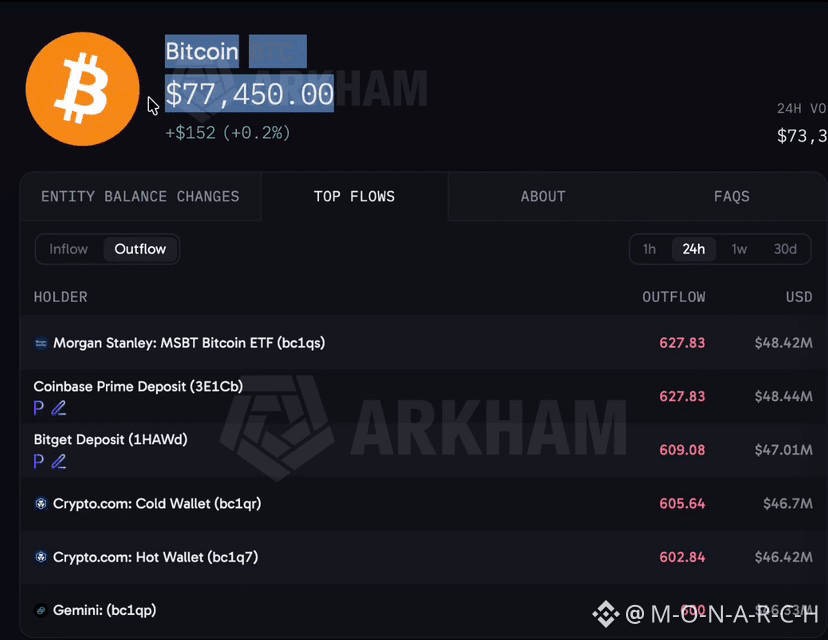
BTC FACES INTENSE SELLING PRESSURE AS MAJOR EXCHANGES DUMP COINS! COINBASE, OKX, BINANCE, BITSTAMP, AND KRAKEN ARE ALL RELEASING BTC INTO THE MARKET. THIS IS A RED FLAG FOR TRADERS AND INVESTORS ALIKE. WHAT’S REALLY GOING ON?
THIS SELL-OFF SIGNALS A SHIFT IN SENTIMENT. EXCHANGES CLEARING OUT THEIR BTC MAY INDICATE AN UNDERLYING LACK OF CONFIDENCE OR PREPARATION FOR SOMETHING BIG—POSSIBLY A JOLT IN THE MARKET. IT'S TIME TO WATCH FOR RESPONSES FROM RETAIL INVESTORS. WILL THEY HODL OR PANIC? THIS COULD BE A MOMENT FOR STRATEGIC POSITIONING.
#BinanceRestoresWithdrawalsForMultipleNetworksAndAssets #BinanceRestoresWithdrawalsForEthereumNetwork&BNBSmartChain #BinanceToResumePhaseOneOfWithdrawals #BinanceHadAlreadyCovered$6BofHackLoss #BinanceHadAlreadyCovered$6BofHackLoss
16
#BREAKING 🚨 BOOOOM 💥💥
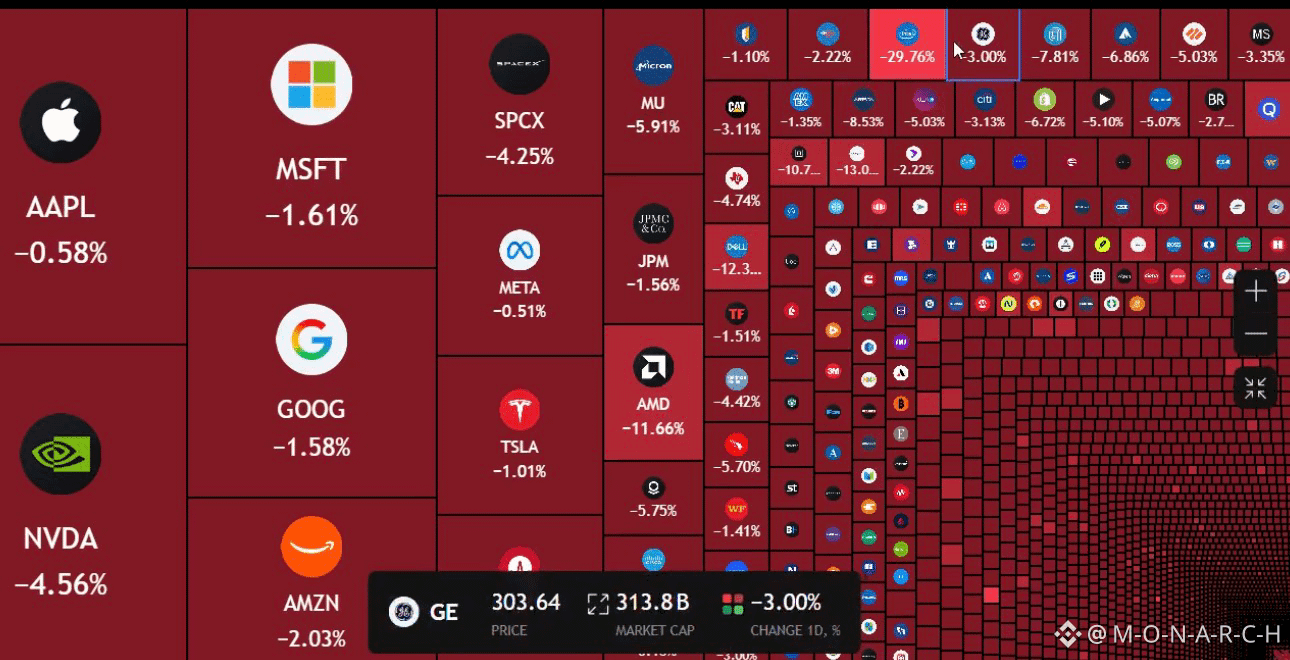
$1.5 TRILLION HAS JUST DISAPPEARED FROM THE US STOCK MARKET IN A SINGLE DAY! THAT'S ROUGHLY THE ENTIRE MARKET CAP OF BITCOIN! Talk about a wild ride. With such a massive drop, the fragility of traditional finance is on full display. This is a clear sign that investors are feeling the heat. Fear is spreading, and guess what? Bitcoin shines brighter than ever as the alternative.
THE SENTIMENT SURROUNDING BOTH MARKETS IS SHIFTING. As stocks tank, more eyes will turn to Bitcoin as a safe haven. Institutional interest may ramp up as they look for solid ground amidst the chaos. This could be the MOMENT when smart money realizes Bitcoin isn’t just digital gold—it’s a shield against the volatility of legacy markets. #BinanceRestoresWithdrawalsForMultipleNetworksAndAssets #BinanceRestoresWithdrawalsForEthereumNetwork&BNBSmartChain #BinanceUpdatesProofofReservesAddresses #BinanceToResumePhaseOneOfWithdrawals #BinanceHadAlreadyCovered$6BofHackLoss
35
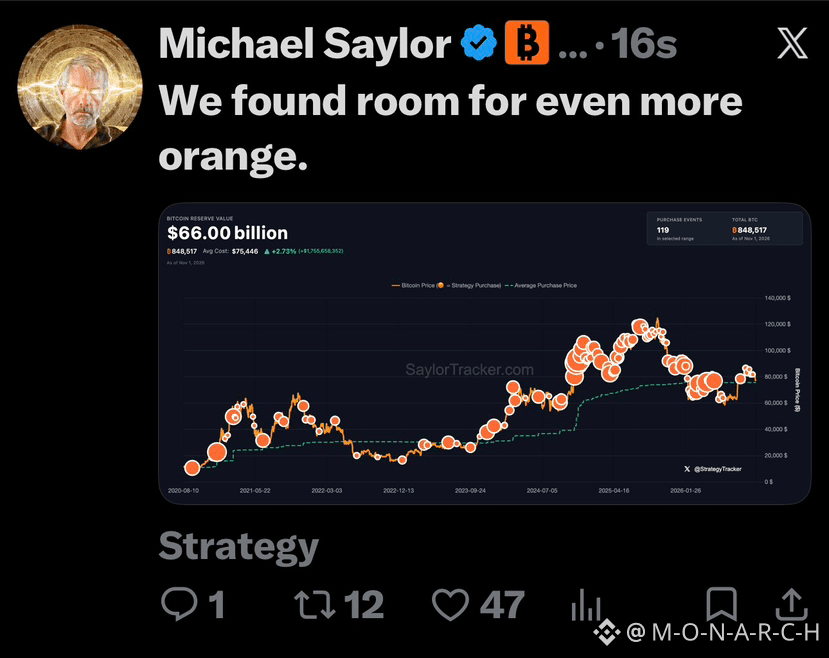
Thank You $MSTR aka Michael Saylor.
#BinanceRestoresWithdrawalsForEthereumNetwork&BNBSmartChain #BinanceRestoresWithdrawalsForEthereumNetwork&BNBSmartChain #BinanceToResumePhaseOneOfWithdrawals #BinanceToResumePhaseOneOfWithdrawals #BinanceHadAlreadyCovered$6BofHackLoss
Thank You $MSTR aka Michael Saylor.
#BinanceRestoresWithdrawalsForEthereumNetwork&BNBSmartChain #BinanceRestoresWithdrawalsForEthereumNetwork&BNBSmartChain #BinanceToResumePhaseOneOfWithdrawals #BinanceToResumePhaseOneOfWithdrawals #BinanceHadAlreadyCovered$6BofHackLoss
#BinanceRestoresWithdrawalsForEthereumNetwork&BNBSmartChain #BinanceRestoresWithdrawalsForEthereumNetwork&BNBSmartChain #BinanceToResumePhaseOneOfWithdrawals #BinanceToResumePhaseOneOfWithdrawals #BinanceHadAlreadyCovered$6BofHackLoss
38
As Per WSJ
#BinanceRestoresWithdrawalsForMultipleNetworksAndAssets #BinanceRestoresWithdrawalsForEthereumNetwork&BNBSmartChain #BinanceUpdatesProofofReservesAddresses #BinanceToResumePhaseOneOfWithdrawals #BinanceHadAlreadyCovered$6BofHackLoss
As Per WSJ
#BinanceRestoresWithdrawalsForMultipleNetworksAndAssets #BinanceRestoresWithdrawalsForEthereumNetwork&BNBSmartChain #BinanceUpdatesProofofReservesAddresses #BinanceToResumePhaseOneOfWithdrawals #BinanceHadAlreadyCovered$6BofHackLoss
#BinanceRestoresWithdrawalsForMultipleNetworksAndAssets #BinanceRestoresWithdrawalsForEthereumNetwork&BNBSmartChain #BinanceUpdatesProofofReservesAddresses #BinanceToResumePhaseOneOfWithdrawals #BinanceHadAlreadyCovered$6BofHackLoss

58

ບົດຄວາມ
Hedging on Economy🚨 Hedge funds are pulling money out of the stock market at the fastest pace ever recorded.
Morgan Stanley's prime brokerage data shows they have cut their total stock positions by more than 8% from the recent peak.
That's the biggest cut since the data began in 2016. It's bigger than the 2020 COVID crash and the 2021 GameStop squeeze.
Most of it has hit AI stocks:
• Goldman Sachs says hedge funds sold AI stocks for 5 straight days, from Oct 8 to Oct 14.
That wiped out all the AI buying they had done since the start of 2025.
• They sold the stocks they owned about 3.5x faster than they added new bets against them, so most of this is funds leaving the trade, not shorting it.
• Morgan Stanley's AI stock basket fell 18% in October, while the average US stock rose about 2%.
• Memory stocks like Samsung, SK Hynix, Micron and SanDisk lost more than $700 billion in seven trading days. SK Hynix had its worst week since 2008.
Is this the first sign the AI trade is breaking?
#BinanceRestoresWithdrawalsForMultipleNetworksAndAssets #BinanceRestoresWithdrawalsForEthereumNetwork&BNBSmartChain #BinanceUpdatesProofofReservesAddresses #BinanceToResumePhaseOneOfWithdrawals #BinanceRestoresWithdrawalsForEthereumNetwork&BNBSmartChain
Hedging on Economy
🚨 Hedge funds are pulling money out of the stock market at the fastest pace ever recorded.
Morgan Stanley's prime brokerage data shows they have cut their total stock positions by more than 8% from the recent peak.
That's the biggest cut since the data began in 2016. It's bigger than the 2020 COVID crash and the 2021 GameStop squeeze.
Most of it has hit AI stocks:
• Goldman Sachs says hedge funds sold AI stocks for 5 straight days, from Oct 8 to Oct 14.
That wiped out all the AI buying they had done since the start of 2025.
• They sold the stocks they owned about 3.5x faster than they added new bets against them, so most of this is funds leaving the trade, not shorting it.
• Morgan Stanley's AI stock basket fell 18% in October, while the average US stock rose about 2%.
• Memory stocks like Samsung, SK Hynix, Micron and SanDisk lost more than $700 billion in seven trading days. SK Hynix had its worst week since 2008.
Is this the first sign the AI trade is breaking?
#BinanceRestoresWithdrawalsForMultipleNetworksAndAssets #BinanceRestoresWithdrawalsForEthereumNetwork&BNBSmartChain #BinanceUpdatesProofofReservesAddresses #BinanceToResumePhaseOneOfWithdrawals #BinanceRestoresWithdrawalsForEthereumNetwork&BNBSmartChain
53

ບົດຄວາມ
Reset… or FUD🔴ATTENTION: GLOBAL FINANCIAL EMERGENCY! THE GLOBAL CURRENCY RESET IS HERE!
The world is about to go through a terrible financial collapse! The Global Currency Reset (GCR), NESARA GESARA, and the Quantum Financial System (QFS) are no longer just rumors. The storm is here, and the powerful are working hard to keep the damage from spreading before you find out the truth!
The black swan event is happening right in front of us! The world's biggest economies are BROKE! The U.S., Canada, Europe, Japan, Israel, the U.K., Taiwan, Australia, and New Zealand can't keep up with their debt any longer. The economy is falling apart, and a huge change is on the way that will affect everything!
THE GREAT RESET OR THE PEOPLE'S RESET?
They want to keep you busy while they change the financial order in secret. The QFS is going to replace the corrupt banking system that has kept us in chains for hundreds of years, though! People say that this system is backed by gold and is fully decentralized. It will get rid of central banks and their criminal control over the world's money.
The elites are aware that time is running out for them. They NEED the crash to happen the way they want it to. They NEED you to not be ready. But we can see through their lies!
THE EMERGENCY BROADCAST SYSTEM (EBS) IS ON ITS WAY!
The EBS is ready to go in the middle of all this chaos! Why? The world will enter a new era of financial independence when the markets crash, the banks go under, and the truth about NESARA GESARA comes out.
We've reached the point of no return. The Federal Reserve is no more. The IMF is in a hurry. The dollar is falling apart, and the fiat money system is going up in flames. What will come out of the ashes? A fair system backed by assets that gives power back to the people!
What you need to do right now!
Get cash in hand before the banks close!
Get rid of fiat money right away. Gold, silver, and cryptocurrencies (XRP, XLM, XDC) will be the new money base!
Look out for EBS activation; the last revelation is on its way!
The elites are scared because the people are becoming aware. The storm is here, and nothing can stop what's about to happen! Get ready for the worst, because the financial war is about to reach its peak!
Reset… or FUD
🔴ATTENTION: GLOBAL FINANCIAL EMERGENCY! THE GLOBAL CURRENCY RESET IS HERE!
The world is about to go through a terrible financial collapse! The Global Currency Reset (GCR), NESARA GESARA, and the Quantum Financial System (QFS) are no longer just rumors. The storm is here, and the powerful are working hard to keep the damage from spreading before you find out the truth!
The black swan event is happening right in front of us! The world's biggest economies are BROKE! The U.S., Canada, Europe, Japan, Israel, the U.K., Taiwan, Australia, and New Zealand can't keep up with their debt any longer. The economy is falling apart, and a huge change is on the way that will affect everything!
THE GREAT RESET OR THE PEOPLE'S RESET?
They want to keep you busy while they change the financial order in secret. The QFS is going to replace the corrupt banking system that has kept us in chains for hundreds of years, though! People say that this system is backed by gold and is fully decentralized. It will get rid of central banks and their criminal control over the world's money.
The elites are aware that time is running out for them. They NEED the crash to happen the way they want it to. They NEED you to not be ready. But we can see through their lies!
THE EMERGENCY BROADCAST SYSTEM (EBS) IS ON ITS WAY!
The EBS is ready to go in the middle of all this chaos! Why? The world will enter a new era of financial independence when the markets crash, the banks go under, and the truth about NESARA GESARA comes out.
We've reached the point of no return. The Federal Reserve is no more. The IMF is in a hurry. The dollar is falling apart, and the fiat money system is going up in flames. What will come out of the ashes? A fair system backed by assets that gives power back to the people!
What you need to do right now!
Get cash in hand before the banks close!
Get rid of fiat money right away. Gold, silver, and cryptocurrencies (XRP, XLM, XDC) will be the new money base!
Look out for EBS activation; the last revelation is on its way!
The elites are scared because the people are becoming aware. The storm is here, and nothing can stop what's about to happen! Get ready for the worst, because the financial war is about to reach its peak!
3
2.9k
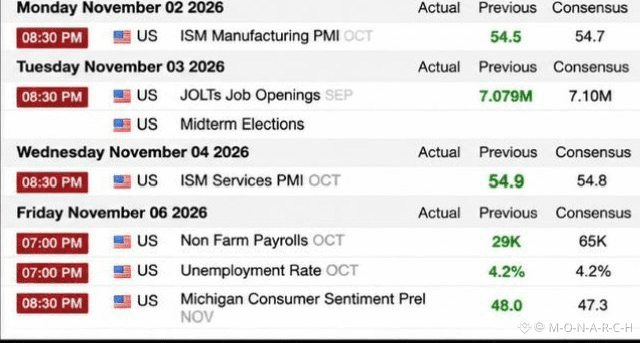
🚨 NEXT WEEK COULD BE ABSOLUTE CHAOS FOR THE GLOBAL MARKETS.
This Friday, over $3 Trillion was wiped out from the global markets.
And next week's events are lining up in such a way that could cause even bigger volatility.
Here's what's coming:
Monday: U.S. ISM Manufacturing PMI, Apple earnings, and Fed Goolsbee's speech.
We saw what happened with the US stock market after Google and Intel earnings, so if Apple misses, markets could dump hard.
Tuesday: U.S. midterm elections, JOLTS job openings, factory orders, and AMD earnings.
The market would be closely watching who could take the House and Senate.
Wednesday: Possible U.S. military strikes on Iran following the elections, ADP employment data, and ISM Services PMI.
Thursday: Challenger corporate layoffs report, weekly jobless claims, and U.S. productivity data.
Friday: U.S. nonfarm payrolls, unemployment rate, wage growth, and consumer sentiment.
So, this week we have big earnings, elections, job reports, and a possible war situation.
And that too when the markets are already looking weak, and there's panic everywhere.
If anything turns against the market, every global asset could take a giant hit.
#BinanceUpdatesProofofReservesAddresses #BinanceHadAlreadyCovered$6BofHackLoss #FBIConfirmsNorthKoreaIsResponsibleForBinanceCryptoHack #BinanceSAFUFundTransferCompleted7499BTC #BinanceRecovery90% of stolen assets
87

ບົດຄວາມ
Frozen, Not Crashed: America’s Housing Squeeze Under War and Rate HikesMarket analysis · October 31, 2026 · Data as of October 29–31
America’s housing market is not crashing. It is freezing. Mortgage rates have climbed from about 6% when the Iran war began to 7.24%, the cost of building has jumped on fuel and tariffs, builders are cutting prices at the highest rate in years, and homeowners with cheap pandemic-era loans are staying put. Prices are still up about 2% nationally, but that is a decline in real terms, and sales are stuck near 4 million a year. With the Fed leaning toward another hike and the 10-year Treasury yield near 5%, the question is not whether housing is in trouble but what could unfreeze it.
The short version
Rates: the 30-year mortgage averaged 7.24% on October 29, up from 6.17% a year ago. It follows the 10-year Treasury yield far more closely than the Fed’s policy rate.War: oil raises inflation and yields, and it also raises building costs. Construction input prices rose 11.2% in the year to September, the biggest annual jump in nearly four years.Market: existing-home sales run at about 4 million a year, inventory is the highest since 2019, builder confidence is the lowest since 2012, and 43% of builders are cutting prices.Stress: delinquencies are still below pre-pandemic levels, but foreclosure inventory is up 37% from a year ago, and loans made since 2022 account for about half of completed foreclosure sales.Policy: a bipartisan housing law took effect in July without the president’s signature, the administration points to its investor-ban order and mortgage-bond purchases, and critics say the effect on rates has been small. Midterms are on November 3.
Snapshot
30-year fixed mortgage: 7.24% (October 29); 15-year 6.60%.10-year Treasury yield: 4.94% (October 30 close).Existing-home sales: 3.99 million annual pace in September; inventory 1.60 million, a 4.8-month supply.Median existing-home price: $417,500, up 1.3% from a year earlier.Builder confidence (NAHB): 29 in October, the lowest since June 2012.Housing starts: 1.221 million annual rate in September; single-family starts 859,000.Construction input prices: up 11.2% from a year earlier in September.Active foreclosure inventory: up 37% from a year earlier, the highest since early 2019.
1. Rates: the squeeze on buyers
Freddie Mac put the average 30-year fixed rate at 7.24% on October 29, down from a peak of 7.40% earlier this month and well above 6.17% a year ago. CNBC Select noted that rates were about 5.98% when the war began.
Mortgage rates follow long-term yields, not the Fed’s policy rate directly. The 10-year Treasury yield touched about 5.35% in early October and closed October 30 at 4.94%, and mortgage rates have eased only part of the way. At 7.24%, the mortgage rate sits about 2.3 percentage points above the 10-year yield, by my calculation.
In dollars: on a median-priced existing home of $417,500 with 20% down, principal and interest at 7.24% comes to about $2,276 a month, versus about $2,014 a year ago, a 13% increase (my calculation, excluding taxes and insurance). On a $400,000 loan the payment is $2,726, which is $284 more than a year ago.
Lock-in compounds the problem. Realtor.com’s analysis of FHFA data for the second quarter shows about 49% of outstanding mortgages carry rates below 4% and about 66% are below 5%. The share at 6% or higher is 22.5%, up from 20.2% a year earlier, and Realtor.com projects it could reach 27% to 28.5% by mid-2027 if rates stay above 6%. Owners with cheap loans have little reason to sell and rebuy at today’s rates, which keeps listings thin.
2. The war’s second channel: what it costs to build
The Iran war reaches housing twice: through yields, and through the cost of materials and transport. Analysis by Associated Builders and Contractors of producer-price data shows construction input prices up 2.2% in September alone and 11.2% from a year earlier, the biggest annual increase in nearly four years, with higher fuel costs and tariffs both cited.
NAHB said in April that 62% of builders had seen suppliers raise prices because of higher fuel costs. Energy is only about 4% of residential construction input costs, so much of the rise comes through transport and petroleum-based products. Sherwin-Williams, for example, raised paint prices by 9% in April. Tariffs add to the pressure: a contractor-industry analysis says 50% Section 232 duties on steel, aluminum and copper took effect on April 6. NAHB also cites tariffs and immigration enforcement as having driven up costs and thinned job-site crews.
The underlying driver is the Strait of Hormuz. IEA data show flows averaged only 7.6 million barrels a day in August, and Brent trades near $115. Builders are therefore squeezed from both ends: higher financing and materials costs on one side, buyers who cannot qualify on the other. That is why price cuts have not translated into more building.
3. A market that cannot move
Existing homes. Sales ran at 3.99 million in September, 2.2% below a year earlier, and NAR said August and September were the two slowest months of the year. Inventory rose to 1.60 million, the highest since November 2019, equal to 4.8 months of supply versus 4.5 a year ago, and homes took a median 33 days to sell. The median price was $417,500, the 39th straight annual gain and the highest for any September. Pending contracts fell 7.3% in the month and 11.3% from a year earlier.
New homes. New-home sales were 676,000 and new-home supply is about 8.4 months. Housing starts fell 5.2% to 1.221 million, single-family starts dropped to 859,000, and single-family permits fell to 845,000, the lowest since April 2023. Builder confidence fell to 29 in October, the lowest since June 2012. NAHB reports that 43% of builders cut prices, the highest share in its 2020–2026 series, with an average cut of 6%, and 65% used incentives.
Prices. The Case-Shiller national index rose 2.1% in the year to August and the FHFA index rose 2.4%. With inflation at 3.4%, home prices have fallen in real terms for 15 straight months. Averages hide a nine-point gap: Chicago rose 6.7%, New York 6.2% and Seattle fell 2.0%.
This is a crisis of affordability and transactions, not yet of prices.
4. Where the stress is showing
Delinquencies are not at crisis levels. ICE says the national mortgage delinquency rate was 3.66% in September, below every pre-pandemic September on record, and serious FHA delinquencies are down 10% since February.
The foreclosure pipeline is growing from a low base. Active foreclosure inventory rose 37% from a year earlier to the highest since early 2019, about 303,000 properties. Completed foreclosure sales rose 15%, and loans originated in 2022 or later accounted for 43% of foreclosure starts and 49% of completed sales, so the stress sits mostly with recent buyers who bought near the peak of rates and prices.
Household finances are thinning too. Real disposable income fell 0.3% in September and the personal saving rate was 3.8%, while US PCE inflation ran at 3.6%.
5. Renters get a different story
Renters are seeing something different. Apartment List puts the national median rent at $1,384, up 0.1% from a year earlier, the first positive annual reading in more than three years, after two straight monthly declines. The CPI measure of rent of primary residence rose 2.8% in the year to September, below 3.7% headline inflation. Multifamily permits rose 5.9% in September to 503,000, the highest since February, though those apartments will take more than a year to be finished.
The result, in my reading, is a widening gap between the cost of renting and the cost of buying, with the monthly payment on a median home up about 13% in a year while rents are roughly flat.
6. Policy and politics
What the administration has done. In January, Trump directed Fannie Mae and Freddie Mac to buy $200 billion of mortgage bonds and signed an executive order stating that large institutional investors should not buy single-family homes that families could buy. A March order cut mortgage-related regulations. A White House fact sheet dated October 22 also cites eased insurance requirements for federally backed mortgages and a doubled investment limit for the housing tax credit at Fannie and Freddie, and says these steps reduce housing costs.
What critics say. Analysts have said the mortgage-bond purchases barely moved rates for most buyers, and some experts doubted the investor ban would help much. Democratic senators led by Jack Reed have urged the housing regulator to do more to comply with the investor order. A 50-year mortgage idea floated last year was shelved after a conservative backlash.
Congress. Both chambers overwhelmingly passed the bipartisan 21st Century ROAD to Housing Act, a package aimed at boosting supply and easing barriers to development. It became law on July 11 without Trump’s signature after he declined to sign or veto it. Many other housing bills remain stalled, and permitting reform may come in the lame-duck session.
Voters. A September poll by the real-estate firm Clever found 74% of respondents say the US is in a housing crisis, 78% want the next Congress to prioritize affordability, and 71% were unaware of the July law. Candidates from both parties are campaigning on affordability ahead of the midterms on November 3.
7. What a December hike would, and would not, do
The Fed held at 3.75%–4.00% on October 28 with two votes for a hike, and markets price a December increase at roughly 70%–80%. Because mortgage rates track long-term yields, a hike that is widely expected is largely priced already.
What matters more for housing is whether inflation expectations and the term premium push the 10-year back toward the 5.2%–5.35% area it reached in early to mid October, when the 30-year mortgage rate hit 7.40%. September PCE inflation of 3.6% (core 3.1%) and oil near $115 are the pressure points. This is analysis: the Fed sets the short-term rate, while oil, the war and inflation expectations do more to set the long-term yields that price mortgages.
8. Scenarios from here
None of these can be given reliable odds.
De-escalation or a Hormuz reopening. Oil falls, the 10-year eases and mortgage rates drift lower. Fuel-driven building costs ease, but lock-in and tariffs mean relief is gradual.Escalation after the midterms. Brent spikes, yields rise and a December hike becomes hard to avoid. Mortgage rates could return to or above the October peak, sales would fall further, and builders would cut starts and prices again.Stalemate. Oil stays near $100–$120, mortgage rates stay roughly where they are, the freeze persists, rents stay flat and distress grows slowly from a low base.
What to watch
Weekly: Freddie Mac’s mortgage rate survey every Thursday, and the 10-year yield around 5%.November 3: US midterm elections.November 5: Bank of England decision, a read on global tightening.November 10: US October CPI, including shelter and energy.November 18: October housing starts and permits.November 24: Case-Shiller prices for September.December 9: Fed decision.Ongoing: Hormuz traffic and Brent, builder price cuts, and foreclosure data from ICE.
Bottom line
Housing is the part of the economy where tight money and the war meet most visibly. Rates near 7.2% have frozen demand, fuel and tariffs have raised the cost of supply, and cheap legacy mortgages keep owners from selling, so sales stay near 4 million and builders cut prices without building more. Prices are drifting down in real terms rather than collapsing, and distress is rising from a low base. The unlock runs through oil and long-term yields more than through any single Fed meeting, and through policy that adds supply, which will take years.
This article is for information only and is not financial or real-estate advice. Markets are volatile and conditions vary by region. Do your own research.
Sources and data notes
Data are as of October 29–31, 2026. Mortgage rates draw on Freddie Mac, CNBC Select and Mortgage News Daily, and Treasury yields on Treasury data as reported by WRE News. Existing-home data draw on NAR as reported by Inman and GlobeNewswire; new construction on the Census Bureau and HUD as reported by KPMG, CNBC and Trading Economics, and on NAHB. Prices draw on S&P Cotality Case-Shiller and FHFA. Construction costs draw on Associated Builders and Contractors via Construction Dive, NAHB, CNBC and a contractor-industry analysis. Foreclosure and delinquency data draw on ICE First Look. Lock-in data draw on Realtor.com’s analysis of FHFA data. Rents draw on Apartment List and the Bureau of Labor Statistics. Policy draws on the White House fact sheet, Senate press releases, Bankrate, Inman and SciLine, and the poll on Clever’s research. Oil and inflation figures draw on the IEA, CNBC and the Commerce Department. The monthly payment comparisons are my calculations from Freddie Mac rates and NAR prices. Analyst views are the analysts’ own opinions.
#BinanceSAFUFundTransferCompleted7499BTC #CZSaysCompensationIsinPlaceUsersAreProtected #BinanceRecovery90% of stolen assets #TRMCambodianCasinosReceived$1.07BInCrypto #USDCCirculationFallsAbout800MInSevenDays
Frozen, Not Crashed: America’s Housing Squeeze Under War and Rate Hikes
Market analysis · October 31, 2026 · Data as of October 29–31
America’s housing market is not crashing. It is freezing. Mortgage rates have climbed from about 6% when the Iran war began to 7.24%, the cost of building has jumped on fuel and tariffs, builders are cutting prices at the highest rate in years, and homeowners with cheap pandemic-era loans are staying put. Prices are still up about 2% nationally, but that is a decline in real terms, and sales are stuck near 4 million a year. With the Fed leaning toward another hike and the 10-year Treasury yield near 5%, the question is not whether housing is in trouble but what could unfreeze it.
The short version
Rates: the 30-year mortgage averaged 7.24% on October 29, up from 6.17% a year ago. It follows the 10-year Treasury yield far more closely than the Fed’s policy rate.War: oil raises inflation and yields, and it also raises building costs. Construction input prices rose 11.2% in the year to September, the biggest annual jump in nearly four years.Market: existing-home sales run at about 4 million a year, inventory is the highest since 2019, builder confidence is the lowest since 2012, and 43% of builders are cutting prices.Stress: delinquencies are still below pre-pandemic levels, but foreclosure inventory is up 37% from a year ago, and loans made since 2022 account for about half of completed foreclosure sales.Policy: a bipartisan housing law took effect in July without the president’s signature, the administration points to its investor-ban order and mortgage-bond purchases, and critics say the effect on rates has been small. Midterms are on November 3.
Snapshot
30-year fixed mortgage: 7.24% (October 29); 15-year 6.60%.10-year Treasury yield: 4.94% (October 30 close).Existing-home sales: 3.99 million annual pace in September; inventory 1.60 million, a 4.8-month supply.Median existing-home price: $417,500, up 1.3% from a year earlier.Builder confidence (NAHB): 29 in October, the lowest since June 2012.Housing starts: 1.221 million annual rate in September; single-family starts 859,000.Construction input prices: up 11.2% from a year earlier in September.Active foreclosure inventory: up 37% from a year earlier, the highest since early 2019.
1. Rates: the squeeze on buyers
Freddie Mac put the average 30-year fixed rate at 7.24% on October 29, down from a peak of 7.40% earlier this month and well above 6.17% a year ago. CNBC Select noted that rates were about 5.98% when the war began.
Mortgage rates follow long-term yields, not the Fed’s policy rate directly. The 10-year Treasury yield touched about 5.35% in early October and closed October 30 at 4.94%, and mortgage rates have eased only part of the way. At 7.24%, the mortgage rate sits about 2.3 percentage points above the 10-year yield, by my calculation.
In dollars: on a median-priced existing home of $417,500 with 20% down, principal and interest at 7.24% comes to about $2,276 a month, versus about $2,014 a year ago, a 13% increase (my calculation, excluding taxes and insurance). On a $400,000 loan the payment is $2,726, which is $284 more than a year ago.
Lock-in compounds the problem. Realtor.com’s analysis of FHFA data for the second quarter shows about 49% of outstanding mortgages carry rates below 4% and about 66% are below 5%. The share at 6% or higher is 22.5%, up from 20.2% a year earlier, and Realtor.com projects it could reach 27% to 28.5% by mid-2027 if rates stay above 6%. Owners with cheap loans have little reason to sell and rebuy at today’s rates, which keeps listings thin.
2. The war’s second channel: what it costs to build
The Iran war reaches housing twice: through yields, and through the cost of materials and transport. Analysis by Associated Builders and Contractors of producer-price data shows construction input prices up 2.2% in September alone and 11.2% from a year earlier, the biggest annual increase in nearly four years, with higher fuel costs and tariffs both cited.
NAHB said in April that 62% of builders had seen suppliers raise prices because of higher fuel costs. Energy is only about 4% of residential construction input costs, so much of the rise comes through transport and petroleum-based products. Sherwin-Williams, for example, raised paint prices by 9% in April. Tariffs add to the pressure: a contractor-industry analysis says 50% Section 232 duties on steel, aluminum and copper took effect on April 6. NAHB also cites tariffs and immigration enforcement as having driven up costs and thinned job-site crews.
The underlying driver is the Strait of Hormuz. IEA data show flows averaged only 7.6 million barrels a day in August, and Brent trades near $115. Builders are therefore squeezed from both ends: higher financing and materials costs on one side, buyers who cannot qualify on the other. That is why price cuts have not translated into more building.
3. A market that cannot move
Existing homes. Sales ran at 3.99 million in September, 2.2% below a year earlier, and NAR said August and September were the two slowest months of the year. Inventory rose to 1.60 million, the highest since November 2019, equal to 4.8 months of supply versus 4.5 a year ago, and homes took a median 33 days to sell. The median price was $417,500, the 39th straight annual gain and the highest for any September. Pending contracts fell 7.3% in the month and 11.3% from a year earlier.
New homes. New-home sales were 676,000 and new-home supply is about 8.4 months. Housing starts fell 5.2% to 1.221 million, single-family starts dropped to 859,000, and single-family permits fell to 845,000, the lowest since April 2023. Builder confidence fell to 29 in October, the lowest since June 2012. NAHB reports that 43% of builders cut prices, the highest share in its 2020–2026 series, with an average cut of 6%, and 65% used incentives.
Prices. The Case-Shiller national index rose 2.1% in the year to August and the FHFA index rose 2.4%. With inflation at 3.4%, home prices have fallen in real terms for 15 straight months. Averages hide a nine-point gap: Chicago rose 6.7%, New York 6.2% and Seattle fell 2.0%.
This is a crisis of affordability and transactions, not yet of prices.
4. Where the stress is showing
Delinquencies are not at crisis levels. ICE says the national mortgage delinquency rate was 3.66% in September, below every pre-pandemic September on record, and serious FHA delinquencies are down 10% since February.
The foreclosure pipeline is growing from a low base. Active foreclosure inventory rose 37% from a year earlier to the highest since early 2019, about 303,000 properties. Completed foreclosure sales rose 15%, and loans originated in 2022 or later accounted for 43% of foreclosure starts and 49% of completed sales, so the stress sits mostly with recent buyers who bought near the peak of rates and prices.
Household finances are thinning too. Real disposable income fell 0.3% in September and the personal saving rate was 3.8%, while US PCE inflation ran at 3.6%.
5. Renters get a different story
Renters are seeing something different. Apartment List puts the national median rent at $1,384, up 0.1% from a year earlier, the first positive annual reading in more than three years, after two straight monthly declines. The CPI measure of rent of primary residence rose 2.8% in the year to September, below 3.7% headline inflation. Multifamily permits rose 5.9% in September to 503,000, the highest since February, though those apartments will take more than a year to be finished.
The result, in my reading, is a widening gap between the cost of renting and the cost of buying, with the monthly payment on a median home up about 13% in a year while rents are roughly flat.
6. Policy and politics
What the administration has done. In January, Trump directed Fannie Mae and Freddie Mac to buy $200 billion of mortgage bonds and signed an executive order stating that large institutional investors should not buy single-family homes that families could buy. A March order cut mortgage-related regulations. A White House fact sheet dated October 22 also cites eased insurance requirements for federally backed mortgages and a doubled investment limit for the housing tax credit at Fannie and Freddie, and says these steps reduce housing costs.
What critics say. Analysts have said the mortgage-bond purchases barely moved rates for most buyers, and some experts doubted the investor ban would help much. Democratic senators led by Jack Reed have urged the housing regulator to do more to comply with the investor order. A 50-year mortgage idea floated last year was shelved after a conservative backlash.
Congress. Both chambers overwhelmingly passed the bipartisan 21st Century ROAD to Housing Act, a package aimed at boosting supply and easing barriers to development. It became law on July 11 without Trump’s signature after he declined to sign or veto it. Many other housing bills remain stalled, and permitting reform may come in the lame-duck session.
Voters. A September poll by the real-estate firm Clever found 74% of respondents say the US is in a housing crisis, 78% want the next Congress to prioritize affordability, and 71% were unaware of the July law. Candidates from both parties are campaigning on affordability ahead of the midterms on November 3.
7. What a December hike would, and would not, do
The Fed held at 3.75%–4.00% on October 28 with two votes for a hike, and markets price a December increase at roughly 70%–80%. Because mortgage rates track long-term yields, a hike that is widely expected is largely priced already.
What matters more for housing is whether inflation expectations and the term premium push the 10-year back toward the 5.2%–5.35% area it reached in early to mid October, when the 30-year mortgage rate hit 7.40%. September PCE inflation of 3.6% (core 3.1%) and oil near $115 are the pressure points. This is analysis: the Fed sets the short-term rate, while oil, the war and inflation expectations do more to set the long-term yields that price mortgages.
8. Scenarios from here
None of these can be given reliable odds.
De-escalation or a Hormuz reopening. Oil falls, the 10-year eases and mortgage rates drift lower. Fuel-driven building costs ease, but lock-in and tariffs mean relief is gradual.Escalation after the midterms. Brent spikes, yields rise and a December hike becomes hard to avoid. Mortgage rates could return to or above the October peak, sales would fall further, and builders would cut starts and prices again.Stalemate. Oil stays near $100–$120, mortgage rates stay roughly where they are, the freeze persists, rents stay flat and distress grows slowly from a low base.
What to watch
Weekly: Freddie Mac’s mortgage rate survey every Thursday, and the 10-year yield around 5%.November 3: US midterm elections.November 5: Bank of England decision, a read on global tightening.November 10: US October CPI, including shelter and energy.November 18: October housing starts and permits.November 24: Case-Shiller prices for September.December 9: Fed decision.Ongoing: Hormuz traffic and Brent, builder price cuts, and foreclosure data from ICE.
Bottom line
Housing is the part of the economy where tight money and the war meet most visibly. Rates near 7.2% have frozen demand, fuel and tariffs have raised the cost of supply, and cheap legacy mortgages keep owners from selling, so sales stay near 4 million and builders cut prices without building more. Prices are drifting down in real terms rather than collapsing, and distress is rising from a low base. The unlock runs through oil and long-term yields more than through any single Fed meeting, and through policy that adds supply, which will take years.
This article is for information only and is not financial or real-estate advice. Markets are volatile and conditions vary by region. Do your own research.
Sources and data notes
Data are as of October 29–31, 2026. Mortgage rates draw on Freddie Mac, CNBC Select and Mortgage News Daily, and Treasury yields on Treasury data as reported by WRE News. Existing-home data draw on NAR as reported by Inman and GlobeNewswire; new construction on the Census Bureau and HUD as reported by KPMG, CNBC and Trading Economics, and on NAHB. Prices draw on S&P Cotality Case-Shiller and FHFA. Construction costs draw on Associated Builders and Contractors via Construction Dive, NAHB, CNBC and a contractor-industry analysis. Foreclosure and delinquency data draw on ICE First Look. Lock-in data draw on Realtor.com’s analysis of FHFA data. Rents draw on Apartment List and the Bureau of Labor Statistics. Policy draws on the White House fact sheet, Senate press releases, Bankrate, Inman and SciLine, and the poll on Clever’s research. Oil and inflation figures draw on the IEA, CNBC and the Commerce Department. The monthly payment comparisons are my calculations from Freddie Mac rates and NAR prices. Analyst views are the analysts’ own opinions.
#BinanceSAFUFundTransferCompleted7499BTC #CZSaysCompensationIsinPlaceUsersAreProtected #BinanceRecovery90% of stolen assets #TRMCambodianCasinosReceived$1.07BInCrypto #USDCCirculationFallsAbout800MInSevenDays
465
·
--
ສັນຍານໝີ
🚨 AMERICA'S HOUSEHOLD FINANCIAL CRISIS IS GETTING OUT OF CONTROL.
A record 41% of Americans reportedly expect their financial situation to get WORSE over the next 12 months, more than TRIPLE the share in Q2 2024.
But millions of Americans are already struggling to afford basic necessities, pay their bills and manage their debt.
Look at these numbers:
• 55% say their financial situation is getting worse.
• 53% don't have enough emergency savings to cover three months of expenses.
• 44% struggled to afford at least one basic necessity over the past year.
• 42.3% say they're financially worse off than a year ago.
• 31% report having unmanageable debt.
• 27% cannot fully pay some of their monthly bills.
• 70% have already cut back on nonessential spending.
• 54% haven't been able to save for their future.
• Only 17.9% say their finances have improved over the past year.
And Americans are falling further behind on their debt payments too.
The share of credit card balances at least 90 days delinquent reached 12.8% in Q1 2026, up from just 7.6% in Q3 2022.
That's a nearly 70% increase.
Even worse, 31% of Americans reportedly expect their financial situation to deteriorate over the next FIVE YEARS.
The U.S. economy may still look strong on paper, but millions of households are already struggling with rising living costs, mounting debt and shrinking savings.
And if more Americans are forced to cut spending just to survive financially, the damage won't remain limited to households.
Consumer spending drives roughly 70% of the U.S. economy.
A prolonged squeeze on household finances could eventually become a much bigger problem for the entire U.S. economy.
#BinanceRecovery90% of stolen assets #BackedNotBroken:RichardTengSaysUsersBearNoLoss #CZSaysCompensationIsinPlaceUsersAreProtected #IntelHasItsWorstDaySince1974
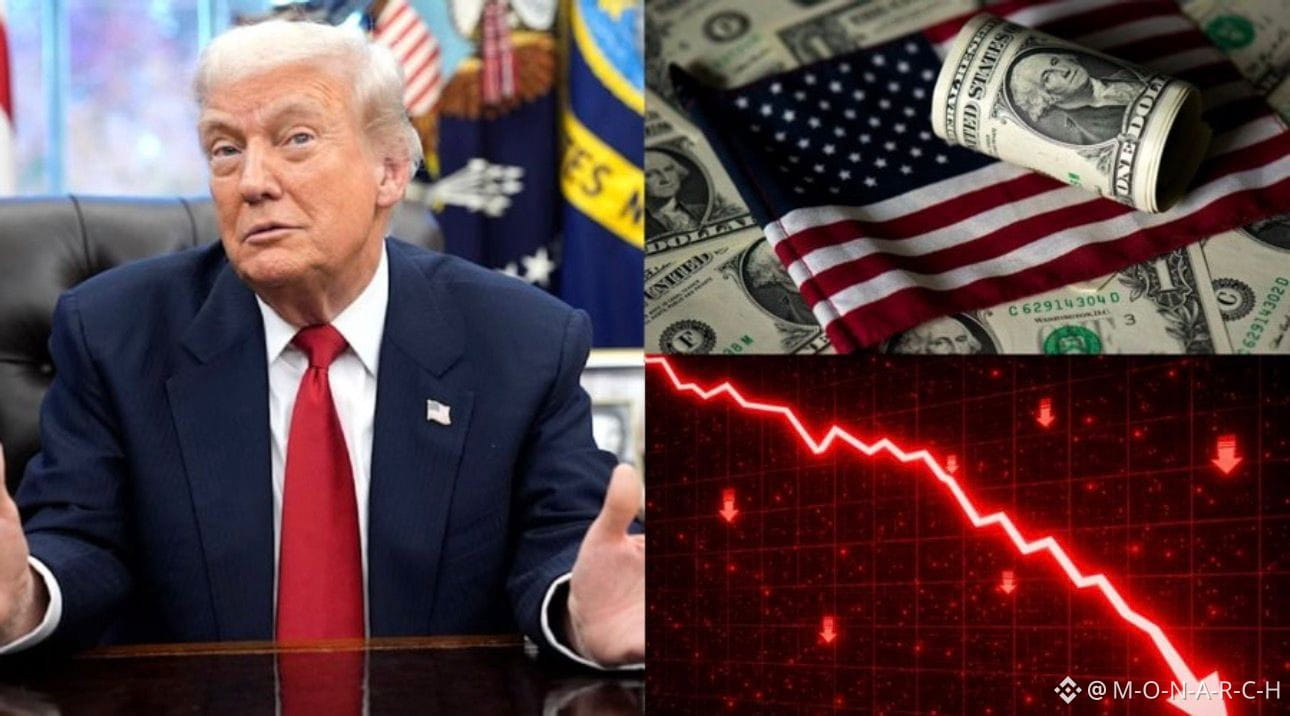
13
ບົດຄວາມ
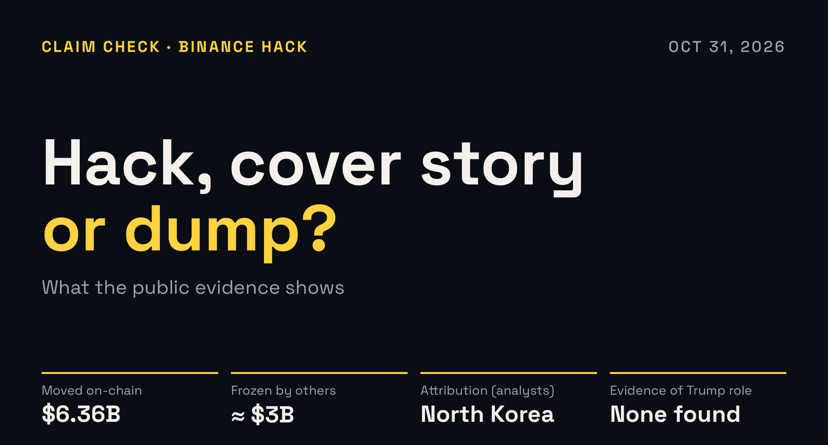
Hack, Cover Story or Dump? Checking the Trump–Binance Claim Against the EvidenceA claim is spreading that the $6.3 billion Binance hack is staged, that Donald Trump or his circle is involved, and that the whole thing is cover for a planned market dump. The suspicion is understandable: the sums are huge, Binance’s explanation is still changing, and Binance and the Trump family’s crypto business have a documented history together. This article checks each part of the claim against the public record. Its conclusion is narrow: the reporting reviewed contains no evidence that Trump was involved in the hack or that it was staged, and several facts point the other way. Absence of evidence is not proof, so the piece ends with the tests that would change the picture.
The short version
Is the hack real? Yes, on the public record. About $6.36 billion was traced leaving Binance wallets across 10 blockchains in roughly 20 minutes, visible on-chain in real time, and third parties froze about $3 billion of it.Who is suspected? Independent analysts, including TRM Labs, Chainalysis and ZachXBT, point to North Korea’s TraderTraitor group. US agencies are investigating, and attribution is not official yet.Is there evidence of a Trump role? None found. Trump said on October 30 that his administration is looking into the hack, and a Trump-family crypto venture froze some of the stolen funds. Documented business ties between Binance, its founder and Trump-linked World Liberty Financial do exist, but they date from 2025 and say nothing about the hack.Is it a cover for a dump? No public evidence. The price move was modest next to what Binance is paying out, and the sharpest dump risk is the attacker’s own unspent coins.Next test: Binance’s proof-of-reserves report, promised for Monday, November 2.
What is established about the hack
The theft is not only Binance’s word. Starting around 20:05 UTC on October 29, funds left Binance-labelled wallets on public blockchains, where anyone could watch them move, hours before Binance confirmed anything. TRM Labs counted about $6.36 billion leaving on ten chains, most of it in about 20 minutes. Binance’s co-founder confirmed a hack at 00:04 UTC, and the exchange’s statement followed around 02:23 UTC, putting the impact at about $6.3 billion.
Several independent parties then acted without needing Binance’s say-so. Tether froze roughly $1.6 billion of USDT, Circle more than $800 million of USDC, Ripple froze RLUSD, the Arbitrum Security Council froze about $30.5 million, and World Liberty Financial froze $27 million of USD1 and about $2 million of its WLFI token. Binance puts the frozen total at about $3 billion, while on-chain tallies show roughly $2.6–$2.8 billion.
On attribution, TRM Labs says several features match earlier North Korea-linked thefts, such as the $1.5 billion Bybit hack in 2025. Chainalysis co-founder Jonathan Levin has said TraderTraitor is the likely culprit, and ZachXBT reports that funds from this theft and last month’s Bitget exploit were commingled at one address after passing through THORChain, which suggests the same actor. Neither Binance nor the US government has confirmed an attribution.
How the attacker got in is still being worked out. Binance first pointed to a compromised DevOps engineer’s laptop, then said investigators found additional intrusion points but no evidence that private keys leaked. Co-CEO Richard Teng called it a complex attack involving more than one person and a self-destruct mechanism that destroyed tooling and tracers. Some on-chain sleuths have questioned parts of the early explanation. A changing account is normal in the first days of an incident, but it is also fuel for suspicion.
What Trump has actually said and done
On October 30, Trump was asked in the Oval Office whether North Korean hackers were responsible. He answered, “We don’t know. We’re looking at that.” He added that Binance had told him it has the situation largely under control, and said he has long considered digital money somewhat risky. The statements reported so far describe no role for him or his administration in the incident beyond an investigation, and US agencies including the FBI and the Secret Service are reported to be working the case.
A crypto venture co-founded by the Trump family, World Liberty Financial, was among the parties that froze stolen funds. Its chief executive, Zach Witkoff, said stopping stolen funds is a shared responsibility.
The documented ties that feed the theory
The theory has traction because of relationships that are real and publicly reported. In March 2025, Abu Dhabi’s MGX announced a $2 billion investment in Binance, and in May it emerged that the deal would be paid in USD1, the stablecoin of World Liberty Financial. The Wall Street Journal reported that Binance asked for USD1 and helped build technology behind it. Binance founder Changpeng Zhao says MGX chose the coin, and World Liberty says Binance supplied smart contracts without anything in exchange. On October 23, 2025, Trump pardoned Zhao, who had pleaded guilty in 2023 to anti-money-laundering violations as part of a $4.3 billion settlement by Binance.
Critics, including Senator Elizabeth Warren, argue that the sequence looks like a favor exchanged. Binance, Zhao, MGX and World Liberty deny any connection. World Liberty says it had no role in the pardon, and Zhao told CNBC in January that he has no business relationships with the Trump family and that people had misconstrued the USD1 deal. No charges have been brought, and the question remains politically contested.
Whatever one concludes about the pardon, those ties concern 2025 deals and a pardon. None of the reporting reviewed connects them to the October 29 theft. Reuters reported in 2025 that the Binance deal accounted for most of the USD1 in circulation, so on its face a weakened Binance is a risk for World Liberty rather than a benefit.
Testing the “cover for a dump” idea
Cost versus effect. Binance says it has set aside more than $6.34 billion to cover losses, including more than $5 billion in matching tokens already held. Bitcoin fell about 2% in the hour after the news, with roughly $628 million of liquidations, and total crypto market value fell around 4%–6% over the day. Spending billions to engineer a move of that size would be a strange trade. This is analysis, not a finding.The timing of shorts. One on-chain write-up says traders opened shorts on about 5,000 BTC across major exchanges before Binance confirmed the hack. But the outflows were visible on public blockchains from about 20:05 UTC, nearly four hours before the confirmation, so traders reacting to visible flows is the simpler explanation. No public evidence ties early positions to Binance insiders or to anyone in Washington.Who gained. The attacker, if the funds can be laundered; arbitrage and MEV bots that traded against the attacker’s sales, with one analysis counting $2.67 million of bribes paid to block builders in the scramble; and traders who sold into visible flows. Binance, which is paying out billions and facing a trust shock, is not an obvious beneficiary.The same 36 hours. The S&P 500 had its worst day since June, gold fell 3.3% to a one-year low, and markets priced a December Fed hike at roughly 70%–80%. A staged-dump story has to explain falls in markets that have nothing to do with Binance.The real dump risk. One on-chain tally shows the attacker controlling about 18,000 BTC that had not moved, and, by different counts, roughly 195,000 to 430,000 ETH. If those coins are sold or swapped, they add real supply. North Korea-linked groups have historically laundered over days and weeks, so the timing is unknown. Separately, Binance says it is buying back stolen altcoins in matching amounts using its SAFU fund and company holdings, including BTC and ETH, and the market effect of that is unclear.
Why the theory spreads
This section is analysis, not reporting.
Trust history. Binance pleaded guilty in 2023 to anti-money-laundering violations, which gives skeptics reason for caution.A moving explanation. The account has shifted from a single laptop to a complex multi-person attack, and sleuths have publicly questioned parts of it.Timing. The hack landed five days before the US midterms and a day before Wall Street’s worst session since June.Politics. Crypto regulation is a live political fight, so the hack is quickly used in arguments. For example, CFTC chairman Michael Selig has cited it in arguing for federal oversight of offshore exchanges, according to Decrypt. Using a crisis is not the same as causing it.Psychology. Large, sudden losses invite explanations with intent behind them.
What would change the picture
Proof of reserves: Binance has promised a full report by Monday, November 2. Gaps would be a real finding.Withdrawal restart: Binance said it was targeting a phased restart within about 34 hours of its Friday afternoon update.Technical post-mortem: Binance has promised a detailed analysis of how the attacker got in.Official attribution: a formal attribution by the FBI or Treasury, as happened after Bybit, would settle much of the question.Attacker wallets: large movements of the roughly 18,000 BTC or the ETH would show whether the dump risk is materializing.Positioning evidence: any evidence of insider-linked trades before 20:05 UTC. None has been made public.Documents: Senate or court documents on the MGX deal and the pardon would clarify the 2025 ties, though not the hack.
How to read claims like this
Documented: the on-chain flows, the freezes by Tether, Circle, Ripple, Arbitrum and World Liberty, Trump’s October 30 remarks, the MGX investment settled in USD1, and the pardon.Reported but unconfirmed: the North Korea attribution and the on-chain write-ups about pre-confirmation shorts.Alleged without evidence: a staged hack, a Trump role in the hack, and a planned dump.
Bottom line
The Binance theft is real, independently traced, and partly frozen by third parties, including a Trump-family venture. The claim that Trump was involved, or that the hack covers for a planned dump, has no support in the public record reviewed here. Real questions remain about Binance’s evolving account, its reserves and its history, and about the political ties from 2025, and Monday’s proof-of-reserves report is the first hard test. Until evidence appears, the claim should be labelled a theory, not a finding.
This article is for information only and is not financial advice. Crypto assets are highly volatile and you can lose money. Do your own research.
Sources and data notes
Evidence is as of early October 31, 2026, and the situation is changing quickly, so check Binance’s official updates. Trump’s remarks draw on The Hill, Business Standard, the Boston Globe and SBS News. The hack timeline, freezes and attribution draw on TRM Labs, Chainalysis and ZachXBT as reported by Cointelegraph, CoinDesk, Yahoo Finance, CNBC, TokenPost and CryptoTicker, plus on-chain write-ups on DEV Community and How to Onchain. The ties between Binance, MGX, World Liberty and the pardon draw on Reuters, the Wall Street Journal as reported by Yahoo Finance and CoinGeek, and CNBC. Statements by Binance, Zhao and World Liberty are theirs. Market data draw on the Associated Press, Kitco and CoinGlass as reported by crypto outlets. Analyst views are the analysts’ own opinions.
#HeYiSaysWithdrawalsExpectedtoResumeWithin42Hours #RichardTengSaysBinanceWillCoverAllHackedLosseswithCompanyFunds #HeYiSaysWithdrawalsExpectedtoResumeWithin42Hours #SuspectedNorthKoreaAttacksAccountForNearly89%OfCryptoHackLosses #TRMCambodianCasinosReceived$1.07BInCrypto
Hack, Cover Story or Dump? Checking the Trump–Binance Claim Against the Evidence
A claim is spreading that the $6.3 billion Binance hack is staged, that Donald Trump or his circle is involved, and that the whole thing is cover for a planned market dump. The suspicion is understandable: the sums are huge, Binance’s explanation is still changing, and Binance and the Trump family’s crypto business have a documented history together. This article checks each part of the claim against the public record. Its conclusion is narrow: the reporting reviewed contains no evidence that Trump was involved in the hack or that it was staged, and several facts point the other way. Absence of evidence is not proof, so the piece ends with the tests that would change the picture.
The short version
Is the hack real? Yes, on the public record. About $6.36 billion was traced leaving Binance wallets across 10 blockchains in roughly 20 minutes, visible on-chain in real time, and third parties froze about $3 billion of it.Who is suspected? Independent analysts, including TRM Labs, Chainalysis and ZachXBT, point to North Korea’s TraderTraitor group. US agencies are investigating, and attribution is not official yet.Is there evidence of a Trump role? None found. Trump said on October 30 that his administration is looking into the hack, and a Trump-family crypto venture froze some of the stolen funds. Documented business ties between Binance, its founder and Trump-linked World Liberty Financial do exist, but they date from 2025 and say nothing about the hack.Is it a cover for a dump? No public evidence. The price move was modest next to what Binance is paying out, and the sharpest dump risk is the attacker’s own unspent coins.Next test: Binance’s proof-of-reserves report, promised for Monday, November 2.
What is established about the hack
The theft is not only Binance’s word. Starting around 20:05 UTC on October 29, funds left Binance-labelled wallets on public blockchains, where anyone could watch them move, hours before Binance confirmed anything. TRM Labs counted about $6.36 billion leaving on ten chains, most of it in about 20 minutes. Binance’s co-founder confirmed a hack at 00:04 UTC, and the exchange’s statement followed around 02:23 UTC, putting the impact at about $6.3 billion.
Several independent parties then acted without needing Binance’s say-so. Tether froze roughly $1.6 billion of USDT, Circle more than $800 million of USDC, Ripple froze RLUSD, the Arbitrum Security Council froze about $30.5 million, and World Liberty Financial froze $27 million of USD1 and about $2 million of its WLFI token. Binance puts the frozen total at about $3 billion, while on-chain tallies show roughly $2.6–$2.8 billion.
On attribution, TRM Labs says several features match earlier North Korea-linked thefts, such as the $1.5 billion Bybit hack in 2025. Chainalysis co-founder Jonathan Levin has said TraderTraitor is the likely culprit, and ZachXBT reports that funds from this theft and last month’s Bitget exploit were commingled at one address after passing through THORChain, which suggests the same actor. Neither Binance nor the US government has confirmed an attribution.
How the attacker got in is still being worked out. Binance first pointed to a compromised DevOps engineer’s laptop, then said investigators found additional intrusion points but no evidence that private keys leaked. Co-CEO Richard Teng called it a complex attack involving more than one person and a self-destruct mechanism that destroyed tooling and tracers. Some on-chain sleuths have questioned parts of the early explanation. A changing account is normal in the first days of an incident, but it is also fuel for suspicion.
What Trump has actually said and done
On October 30, Trump was asked in the Oval Office whether North Korean hackers were responsible. He answered, “We don’t know. We’re looking at that.” He added that Binance had told him it has the situation largely under control, and said he has long considered digital money somewhat risky. The statements reported so far describe no role for him or his administration in the incident beyond an investigation, and US agencies including the FBI and the Secret Service are reported to be working the case.
A crypto venture co-founded by the Trump family, World Liberty Financial, was among the parties that froze stolen funds. Its chief executive, Zach Witkoff, said stopping stolen funds is a shared responsibility.
The documented ties that feed the theory
The theory has traction because of relationships that are real and publicly reported. In March 2025, Abu Dhabi’s MGX announced a $2 billion investment in Binance, and in May it emerged that the deal would be paid in USD1, the stablecoin of World Liberty Financial. The Wall Street Journal reported that Binance asked for USD1 and helped build technology behind it. Binance founder Changpeng Zhao says MGX chose the coin, and World Liberty says Binance supplied smart contracts without anything in exchange. On October 23, 2025, Trump pardoned Zhao, who had pleaded guilty in 2023 to anti-money-laundering violations as part of a $4.3 billion settlement by Binance.
Critics, including Senator Elizabeth Warren, argue that the sequence looks like a favor exchanged. Binance, Zhao, MGX and World Liberty deny any connection. World Liberty says it had no role in the pardon, and Zhao told CNBC in January that he has no business relationships with the Trump family and that people had misconstrued the USD1 deal. No charges have been brought, and the question remains politically contested.
Whatever one concludes about the pardon, those ties concern 2025 deals and a pardon. None of the reporting reviewed connects them to the October 29 theft. Reuters reported in 2025 that the Binance deal accounted for most of the USD1 in circulation, so on its face a weakened Binance is a risk for World Liberty rather than a benefit.
Testing the “cover for a dump” idea
Cost versus effect. Binance says it has set aside more than $6.34 billion to cover losses, including more than $5 billion in matching tokens already held. Bitcoin fell about 2% in the hour after the news, with roughly $628 million of liquidations, and total crypto market value fell around 4%–6% over the day. Spending billions to engineer a move of that size would be a strange trade. This is analysis, not a finding.The timing of shorts. One on-chain write-up says traders opened shorts on about 5,000 BTC across major exchanges before Binance confirmed the hack. But the outflows were visible on public blockchains from about 20:05 UTC, nearly four hours before the confirmation, so traders reacting to visible flows is the simpler explanation. No public evidence ties early positions to Binance insiders or to anyone in Washington.Who gained. The attacker, if the funds can be laundered; arbitrage and MEV bots that traded against the attacker’s sales, with one analysis counting $2.67 million of bribes paid to block builders in the scramble; and traders who sold into visible flows. Binance, which is paying out billions and facing a trust shock, is not an obvious beneficiary.The same 36 hours. The S&P 500 had its worst day since June, gold fell 3.3% to a one-year low, and markets priced a December Fed hike at roughly 70%–80%. A staged-dump story has to explain falls in markets that have nothing to do with Binance.The real dump risk. One on-chain tally shows the attacker controlling about 18,000 BTC that had not moved, and, by different counts, roughly 195,000 to 430,000 ETH. If those coins are sold or swapped, they add real supply. North Korea-linked groups have historically laundered over days and weeks, so the timing is unknown. Separately, Binance says it is buying back stolen altcoins in matching amounts using its SAFU fund and company holdings, including BTC and ETH, and the market effect of that is unclear.
Why the theory spreads
This section is analysis, not reporting.
Trust history. Binance pleaded guilty in 2023 to anti-money-laundering violations, which gives skeptics reason for caution.A moving explanation. The account has shifted from a single laptop to a complex multi-person attack, and sleuths have publicly questioned parts of it.Timing. The hack landed five days before the US midterms and a day before Wall Street’s worst session since June.Politics. Crypto regulation is a live political fight, so the hack is quickly used in arguments. For example, CFTC chairman Michael Selig has cited it in arguing for federal oversight of offshore exchanges, according to Decrypt. Using a crisis is not the same as causing it.Psychology. Large, sudden losses invite explanations with intent behind them.
What would change the picture
Proof of reserves: Binance has promised a full report by Monday, November 2. Gaps would be a real finding.Withdrawal restart: Binance said it was targeting a phased restart within about 34 hours of its Friday afternoon update.Technical post-mortem: Binance has promised a detailed analysis of how the attacker got in.Official attribution: a formal attribution by the FBI or Treasury, as happened after Bybit, would settle much of the question.Attacker wallets: large movements of the roughly 18,000 BTC or the ETH would show whether the dump risk is materializing.Positioning evidence: any evidence of insider-linked trades before 20:05 UTC. None has been made public.Documents: Senate or court documents on the MGX deal and the pardon would clarify the 2025 ties, though not the hack.
How to read claims like this
Documented: the on-chain flows, the freezes by Tether, Circle, Ripple, Arbitrum and World Liberty, Trump’s October 30 remarks, the MGX investment settled in USD1, and the pardon.Reported but unconfirmed: the North Korea attribution and the on-chain write-ups about pre-confirmation shorts.Alleged without evidence: a staged hack, a Trump role in the hack, and a planned dump.
Bottom line
The Binance theft is real, independently traced, and partly frozen by third parties, including a Trump-family venture. The claim that Trump was involved, or that the hack covers for a planned dump, has no support in the public record reviewed here. Real questions remain about Binance’s evolving account, its reserves and its history, and about the political ties from 2025, and Monday’s proof-of-reserves report is the first hard test. Until evidence appears, the claim should be labelled a theory, not a finding.
This article is for information only and is not financial advice. Crypto assets are highly volatile and you can lose money. Do your own research.
Sources and data notes
Evidence is as of early October 31, 2026, and the situation is changing quickly, so check Binance’s official updates. Trump’s remarks draw on The Hill, Business Standard, the Boston Globe and SBS News. The hack timeline, freezes and attribution draw on TRM Labs, Chainalysis and ZachXBT as reported by Cointelegraph, CoinDesk, Yahoo Finance, CNBC, TokenPost and CryptoTicker, plus on-chain write-ups on DEV Community and How to Onchain. The ties between Binance, MGX, World Liberty and the pardon draw on Reuters, the Wall Street Journal as reported by Yahoo Finance and CoinGeek, and CNBC. Statements by Binance, Zhao and World Liberty are theirs. Market data draw on the Associated Press, Kitco and CoinGlass as reported by crypto outlets. Analyst views are the analysts’ own opinions.
#HeYiSaysWithdrawalsExpectedtoResumeWithin42Hours #RichardTengSaysBinanceWillCoverAllHackedLosseswithCompanyFunds #HeYiSaysWithdrawalsExpectedtoResumeWithin42Hours #SuspectedNorthKoreaAttacksAccountForNearly89%OfCryptoHackLosses #TRMCambodianCasinosReceived$1.07BInCrypto
68
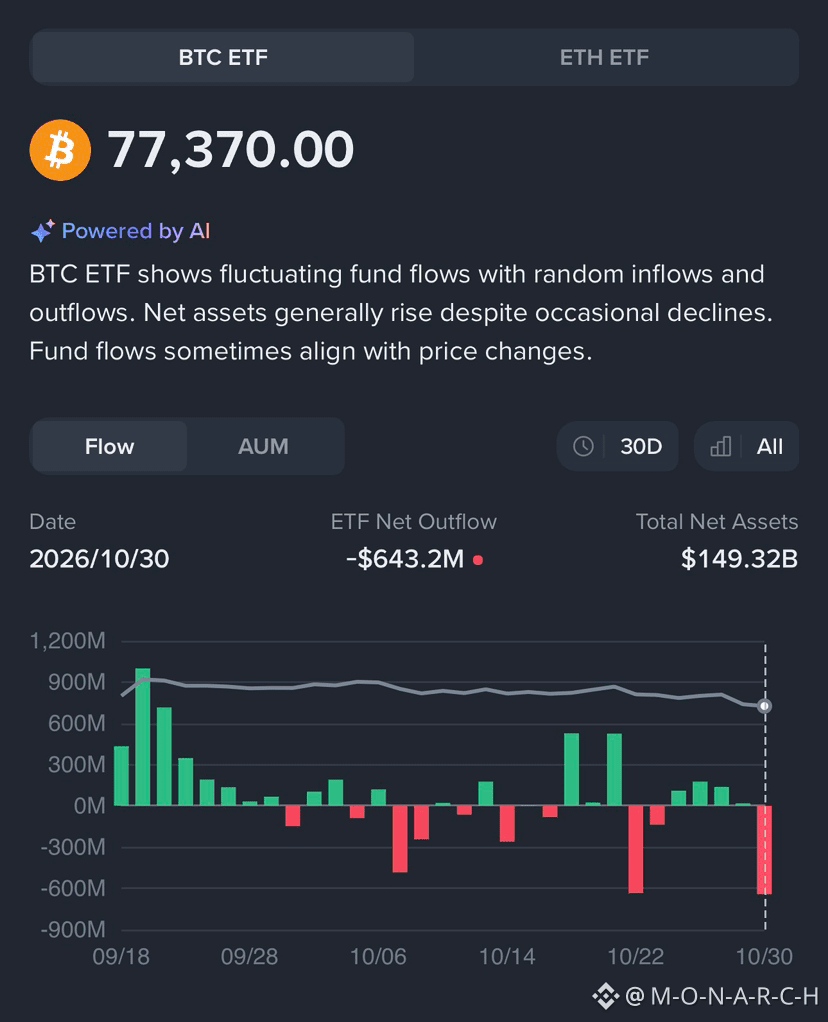
If Hack Was Real, Then Why ETFs are Showing Selling on 30/10/2026.
Its was an Orchestrated Selling In the Name of Hack.
#BinanceReports80%Recoveryof$6.3BillioninLossesfromHackIncident #HeYiSaysWithdrawalsExpectedtoResumeWithin42Hours #CZSaysCompensationIsinPlaceUsersAreProtected #RichardTengSaysBinanceWillCoverAllHackedLosseswithCompanyFunds #IntelHasItsWorstDaySince1974
4
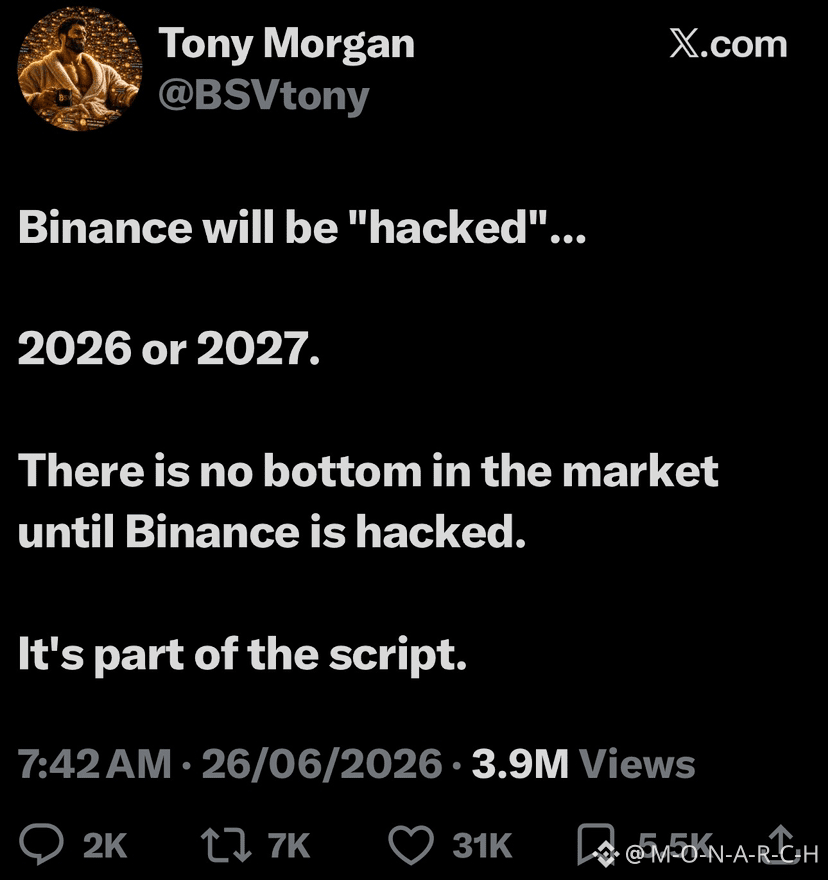
Communities Will Call it, Coincidence. In Reality Market script Never Changes. Only Faces Change.
#BinanceReports80%Recoveryof$6.3BillioninLossesfromHackIncident #HeYiSaysWithdrawalsExpectedtoResumeWithin42Hours #HeYiSaysWithdrawalsExpectedtoResumeWithin42Hours #RichardTengSaysBinanceWillCoverAllHackedLosseswithCompanyFunds #IntelHasItsWorstDaySince1974
#BinanceReports80%Recoveryof$6.3BillioninLossesfromHackIncident #HeYiSaysWithdrawalsExpectedtoResumeWithin42Hours #HeYiSaysWithdrawalsExpectedtoResumeWithin42Hours #RichardTengSaysBinanceWillCoverAllHackedLosseswithCompanyFunds #IntelHasItsWorstDaySince1974
8

ບົດຄວາມ
Covid 2.0, Then Alt Season. aka War, Hanta, Hurmoz, Crude Oil.During the COVID lockdown, you were confined to your home... but everyone had access to the internet.
Now imagine the same lockdown, but with no internet at all.
No electricity. No Wi-Fi. No cell signal. No ATMs.
At least 29 countries + the EU are urging people to stockpile properly in preparation for emergencies:
3 days' worth: 🇬🇧 🇫🇷 🇨🇦 🇯🇵 🇲🇽 🇳🇱 🇵🇱 🇩🇰 🇮🇪 🇫🇮 🇧🇪 🇱🇻 🇱🇹 🇪🇺
A few days' worth: 🇺🇸
1 week's worth: 🇸🇪 🇳🇴 🇨🇭 🇪🇪 🇹🇼
Up to 10 days' worth: 🇩🇪
Emergency kit: 🇨🇿 🇦🇹 🇭🇷 🇨🇱 🇨🇴 🇦🇷 🇧🇷 🇳🇿 🇦🇺
3 days' worth is the figure most governments recommend.
I recommend preparing a full 30 days' worth.
Because this is no longer a distant future scenario.
If a cyberattack by AI agents hits the power grid, the internet could go down along with it.
→ New research: Top AI models can already plan attacks on power grids and water systems
→ Anthropic's deputy chief security officer, this month: "There won't be enough time to patch critical infrastructure"
→ Cloudflare's CEO, this month: "It will feel like the sky is falling"
→ Mainland Spain and Portugal lost all power on April 28, 2025. It wasn't even a cyberattack. Phones, internet, and ATMs were also affected.
Just a few years ago, we saw global lockdowns, hoarding of supplies, and large-scale riots.
It could happen again, and this time it might be far more severe.
Will it happen soon? No one knows. There are enough warning signs to take it seriously.
There's no downside to preparing. Failing to prepare has immeasurable downsides. Better safe than sorry.
How to prepare:
📻 Offline communication: Battery-powered or hand-crank radio, walkie-talkies, important phone numbers written on paper (+ emergency numbers: 112 / 911 / 999)
🔋 Power: Mobile battery, small solar panel, flashlight, spare batteries
🥫 Food: 30 days' worth of canned goods, rice, beans + manual can opener
💧 Water: At least 1 gallon (about 4 liters) per person per day + filter
🎮 Entertainment: Download movies, shows, music, books, maps now. Add board games and playing cards too.
If the internet goes down, you won't be able to download anything.
Covid 2.0, Then Alt Season. aka War, Hanta, Hurmoz, Crude Oil.
During the COVID lockdown, you were confined to your home... but everyone had access to the internet.
Now imagine the same lockdown, but with no internet at all.
No electricity. No Wi-Fi. No cell signal. No ATMs.
At least 29 countries + the EU are urging people to stockpile properly in preparation for emergencies:
3 days' worth: 🇬🇧 🇫🇷 🇨🇦 🇯🇵 🇲🇽 🇳🇱 🇵🇱 🇩🇰 🇮🇪 🇫🇮 🇧🇪 🇱🇻 🇱🇹 🇪🇺
A few days' worth: 🇺🇸
1 week's worth: 🇸🇪 🇳🇴 🇨🇭 🇪🇪 🇹🇼
Up to 10 days' worth: 🇩🇪
Emergency kit: 🇨🇿 🇦🇹 🇭🇷 🇨🇱 🇨🇴 🇦🇷 🇧🇷 🇳🇿 🇦🇺
3 days' worth is the figure most governments recommend.
I recommend preparing a full 30 days' worth.
Because this is no longer a distant future scenario.
If a cyberattack by AI agents hits the power grid, the internet could go down along with it.
→ New research: Top AI models can already plan attacks on power grids and water systems
→ Anthropic's deputy chief security officer, this month: "There won't be enough time to patch critical infrastructure"
→ Cloudflare's CEO, this month: "It will feel like the sky is falling"
→ Mainland Spain and Portugal lost all power on April 28, 2025. It wasn't even a cyberattack. Phones, internet, and ATMs were also affected.
Just a few years ago, we saw global lockdowns, hoarding of supplies, and large-scale riots.
It could happen again, and this time it might be far more severe.
Will it happen soon? No one knows. There are enough warning signs to take it seriously.
There's no downside to preparing. Failing to prepare has immeasurable downsides. Better safe than sorry.
How to prepare:
📻 Offline communication: Battery-powered or hand-crank radio, walkie-talkies, important phone numbers written on paper (+ emergency numbers: 112 / 911 / 999)
🔋 Power: Mobile battery, small solar panel, flashlight, spare batteries
🥫 Food: 30 days' worth of canned goods, rice, beans + manual can opener
💧 Water: At least 1 gallon (about 4 liters) per person per day + filter
🎮 Entertainment: Download movies, shows, music, books, maps now. Add board games and playing cards too.
If the internet goes down, you won't be able to download anything.
4
1
6
3.7k
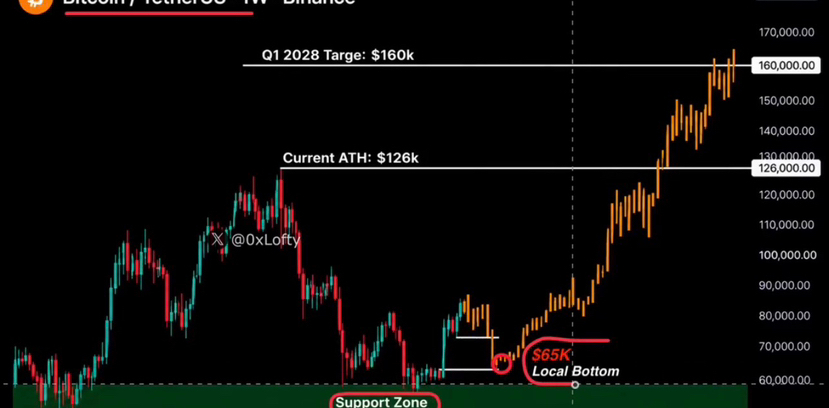
ບົດຄວາມ
War as Veil for CrashThis chart should scare every investor.
67 of the Nasdaq 100 stocks are now in a bear market.
Half of them are down more than 28.5% from their all time highs, and $11.5 trillion has been wiped out.
Only 11 are still within 5% of their peak.
Plus Reason Of Iran US war
🚨💥🚨 SCOOP !
❗️THE HACKER KNOWN AS 4CHAN EXPLAINS THE REAL REASON FOR THE WAR AGAINST IRAN !
TRANSLATION : 👀
⚡️"The war with Iran isn’t what you think. Iran isn’t an insolvent pariah state. Iran is the primary source of uncovered liquidity for the shadow banking system. London is the hub; Tehran is the offshore battery. The IRGC’s (IRGC) energy credits aren’t sold—they’re traded for vostro credits in mid-sized Omani banks. These credits are bundled into synthetic bonds backed by collateral. They hit London’s repo desks as high-quality collateral to secure short-term loans. Without this 24/7 influx of energy-backed ‘dark’ paper, the City of London’s leverage ratios would collapse. The 2026 war against Iran rests on two factions of the global elite clashing. Their fight has moved from boardrooms to kinetic events, which we can also see in other seemingly unrelated ‘accidents,’ in the form of private transport crashes and security breaches among world leaders. Faction A:
The old money central bankers, they aim to keep the Iran loop open at all costs. They know the Western debt-to-GDP ratio is terminal. They use parallel trade to suppress domestic inflation and keep the repo market from seizing up. For them, a nuclear deal is just a legal patch to keep the ‘detergent’ flowing. Faction B:
The Silicon Valley neo-feudalists, they aim for kinetic escalation and regime change. They want to force a global default and a ‘Great Reset’ to shift everyone onto a fully traced CBDC ledger. They’re attacking the Iran loop because it’s untraced and gives old money a way to survive without their tech. There’s no blockade—it’s a monopoly. Sanctions aren’t walls; they’re tolls. They create a compliance tax that ensures only the top 5 banks can handle the volume.Seizing Iran’s central bank is first and foremost about wiping out the last off-network gold reserves. If the Iran loop breaks, London will face a 30% liquidity haircut in under 48 hours, visible through a shift in the gold-to-oil ratio. Escalation will likely involve cutting undersea cables.The system is cannibalizing its own infrastructure to stay alive."
#BinanceReports80%Recoveryof$6.3BillioninLossesfromHackIncident #CZSaysCompensationIsinPlaceUsersAreProtected #HeYiSaysWithdrawalsExpectedtoResumeWithin42Hours #USDCCirculationFallsAbout800MInSevenDays #SuspectedNorthKoreaAttacksAccountForNearly89%OfCryptoHackLosses
War as Veil for Crash
This chart should scare every investor.
67 of the Nasdaq 100 stocks are now in a bear market.
Half of them are down more than 28.5% from their all time highs, and $11.5 trillion has been wiped out.
Only 11 are still within 5% of their peak.
Plus Reason Of Iran US war
🚨💥🚨 SCOOP !
❗️THE HACKER KNOWN AS 4CHAN EXPLAINS THE REAL REASON FOR THE WAR AGAINST IRAN !
TRANSLATION : 👀
⚡️"The war with Iran isn’t what you think. Iran isn’t an insolvent pariah state. Iran is the primary source of uncovered liquidity for the shadow banking system. London is the hub; Tehran is the offshore battery. The IRGC’s (IRGC) energy credits aren’t sold—they’re traded for vostro credits in mid-sized Omani banks. These credits are bundled into synthetic bonds backed by collateral. They hit London’s repo desks as high-quality collateral to secure short-term loans. Without this 24/7 influx of energy-backed ‘dark’ paper, the City of London’s leverage ratios would collapse. The 2026 war against Iran rests on two factions of the global elite clashing. Their fight has moved from boardrooms to kinetic events, which we can also see in other seemingly unrelated ‘accidents,’ in the form of private transport crashes and security breaches among world leaders. Faction A:
The old money central bankers, they aim to keep the Iran loop open at all costs. They know the Western debt-to-GDP ratio is terminal. They use parallel trade to suppress domestic inflation and keep the repo market from seizing up. For them, a nuclear deal is just a legal patch to keep the ‘detergent’ flowing. Faction B:
The Silicon Valley neo-feudalists, they aim for kinetic escalation and regime change. They want to force a global default and a ‘Great Reset’ to shift everyone onto a fully traced CBDC ledger. They’re attacking the Iran loop because it’s untraced and gives old money a way to survive without their tech. There’s no blockade—it’s a monopoly. Sanctions aren’t walls; they’re tolls. They create a compliance tax that ensures only the top 5 banks can handle the volume.Seizing Iran’s central bank is first and foremost about wiping out the last off-network gold reserves. If the Iran loop breaks, London will face a 30% liquidity haircut in under 48 hours, visible through a shift in the gold-to-oil ratio. Escalation will likely involve cutting undersea cables.The system is cannibalizing its own infrastructure to stay alive."
#BinanceReports80%Recoveryof$6.3BillioninLossesfromHackIncident #CZSaysCompensationIsinPlaceUsersAreProtected #HeYiSaysWithdrawalsExpectedtoResumeWithin42Hours #USDCCirculationFallsAbout800MInSevenDays #SuspectedNorthKoreaAttacksAccountForNearly89%OfCryptoHackLosses
1
64

ບົດຄວາມ
Survival of US Dollar vs Petro Dollar Cracked🚨 THE U.S. DOLLAR MAY NOT BE ABLE TO SURVIVE AN AI BUBBLE CRASH.
Deutsche Bank has warned that the dollar may no longer provide its usual protection if the AI bubble bursts.
Normally, when stock markets crash, investors rush to the dollar for safety.
But over the past two weeks, both U.S. tech stocks and the dollar have suffered sharp selloffs at the same time.
And America's growing dependence on foreign investors is making this risk even bigger.
Here's why:
• The 10 largest U.S. companies now make up roughly 41% of the S&P 500.
• Foreign investors have poured huge amounts of money into American stocks, especially AI-related companies.
• The U.S. relies heavily on this foreign money to help cover the gap between what it pays other countries and what it earns from them.
If the AI bubble bursts, foreign investors could start dumping U.S. stocks and moving their money elsewhere.
This could put heavy pressure on the dollar, while a weaker currency could also make imports more expensive and push inflation higher.
What starts as an AI stock market crash could turn into a much bigger problem for the entire U.S. economy.
#BinanceReports80%Recoveryof$6.3BillioninLossesfromHackIncident #RichardTengSaysBinanceWillCoverAllHackedLosseswithCompanyFunds #CZSaysCompensationIsinPlaceUsersAreProtected
Survival of US Dollar vs Petro Dollar Cracked
🚨 THE U.S. DOLLAR MAY NOT BE ABLE TO SURVIVE AN AI BUBBLE CRASH.
Deutsche Bank has warned that the dollar may no longer provide its usual protection if the AI bubble bursts.
Normally, when stock markets crash, investors rush to the dollar for safety.
But over the past two weeks, both U.S. tech stocks and the dollar have suffered sharp selloffs at the same time.
And America's growing dependence on foreign investors is making this risk even bigger.
Here's why:
• The 10 largest U.S. companies now make up roughly 41% of the S&P 500.
• Foreign investors have poured huge amounts of money into American stocks, especially AI-related companies.
• The U.S. relies heavily on this foreign money to help cover the gap between what it pays other countries and what it earns from them.
If the AI bubble bursts, foreign investors could start dumping U.S. stocks and moving their money elsewhere.
This could put heavy pressure on the dollar, while a weaker currency could also make imports more expensive and push inflation higher.
What starts as an AI stock market crash could turn into a much bigger problem for the entire U.S. economy.
#BinanceReports80%Recoveryof$6.3BillioninLossesfromHackIncident #RichardTengSaysBinanceWillCoverAllHackedLosseswithCompanyFunds #CZSaysCompensationIsinPlaceUsersAreProtected
87
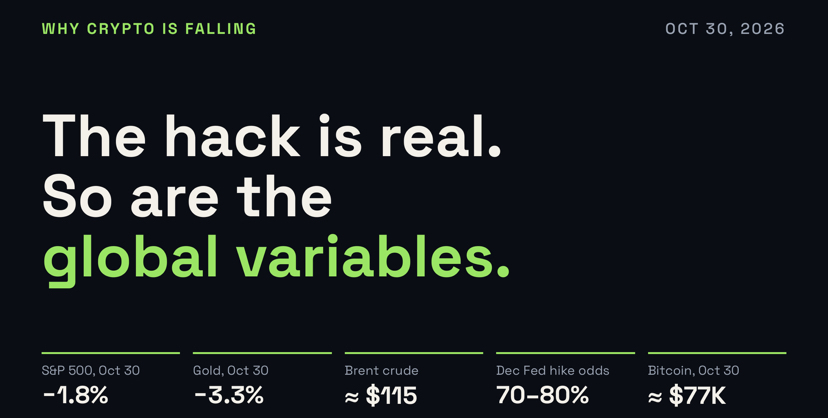
ບົດຄວາມ
Why the Binance Hack Gets the Blame: The Global Variables Behind Crypto’s SlideMarket analysis · October 30, 2026 · Figures as of the October 30 US close and early October 31
Crypto is sliding, and the headline is the largest hack in the industry’s history. The hack is real and has been independently verified. But it landed inside a 36-hour window in which the S&P 500 had its worst day since June, the Nasdaq-100 fell 3.5%, gold hit a one-year low, oil climbed on another Hormuz incident, and a hot inflation print left December Fed hike odds at roughly 70%–80%. This article separates what the hack did from what the global variables did.
The short version
The hack is real, and it mattered. Independent analytics firms traced about $6.36 billion leaving Binance wallets, and Tether and Circle froze roughly $1.8 billion. It explains a visible leg of about 2% in Bitcoin, about half of the day’s liquidations, a drop in BNB and part of the altcoin weakness.It does not explain the whole slide. Bitcoin had already drifted about 9% from its early-October high, bounced on four days of ETF inflows, then fell about 7% in 36 hours as the hack, an AI-stock rout, a gold sell-off and hawkish Fed talk arrived together.The common thread is global: the price of money, oil, AI funding stress, thin liquidity and crowded leverage.Why the hack gets the blame: it is the most vivid, datable event in a crowded news window, and single-cause stories travel faster than macro ones.
A 36-hour timeline
Wednesday, October 28: the Fed holds at 3.75%–4.00% on a 10–2 vote, with two members wanting a hike. Bitcoin trades near $81,000.Thursday, October 29, morning: third-quarter GDP (3.4%) and September PCE inflation (3.6%) come in hot.Thursday, US session: Alphabet falls 13% after its earnings, its worst day on record. Bitcoin touches about $81,900, then slips toward $80,000.Thursday evening, US time: reports of a Binance security issue circulate, Tether and Circle freeze funds, and Bitcoin falls from about $80,300 to $78,800 in an hour with roughly $628 million liquidated. Binance’s statement, around 02:23 UTC, puts the impact at about $6.3 billion.Friday, October 30: Intel falls about 29%, its worst day since 1974, and Amazon’s results add to AI-spending worries. The S&P 500 drops 1.8% and the Nasdaq 2.9%, gold falls 3.3%, and oil rises after another tanker incident near Hormuz. Bitcoin sets a low near $76,300, and US spot Bitcoin ETFs record a $643 million outflow.
What the hack did, and did not do
What it did. In the hour after the news, Bitcoin fell about 2%, in line with one analysis that put the hack’s own effect near that level. Binance accounted for about 49% of the $1.55–$1.68 billion of liquidations (roughly $755 million), most of them longs. BNB fell about 5.5% to roughly $701, the attacker sold several stolen altcoins for Ether, and sentiment gauges dropped into fear. ETF flows turned too: US spot Bitcoin funds took in about $441 million over October 26–29, then lost about $643 million on October 30, the first full session after the breach, though that session also had the equity rout and the gold sell-off.
What it did not do. It did not move Bitcoin alone. Bitcoin’s one-day fall of roughly 3%–5% was similar to the Nasdaq-100’s 3.5% drop, and gold, which has no exposure to Binance, fell 3.3% in the same session.
Binance’s response. It says it has set aside more than $6.34 billion of company funds to cover losses, with about $3 billion of the stolen assets frozen, and it is buying stolen altcoins in matching amounts through OTC and exchange trades so its reserves match again. It has promised a full proof-of-reserves report by Monday and a phased restart of withdrawals within roughly 40 to 48 hours, with deposits operating normally. The FBI and Secret Service have joined the investigation, and the Arbitrum Security Council froze about $30.5 million of the funds. Attribution to North Korea’s TraderTraitor group comes from TRM Labs and Chainalysis and has not been confirmed by Binance or governments.
The global variables
The price of money. The Fed held at 3.75%–4.00%, but two members voted to hike. Dallas Fed President Lorie Logan has called for two more hikes and St. Louis Fed President Alberto Musalem wants another soon. Markets price a December hike at roughly 70%–80%. The Bank of Japan held with a hawkish tone, the Bank of England is expected to hike on November 5, and the ECB has kept December open. Bitcoin pays no yield, so a higher-for-longer path raises the bar for holding it.Bond yields. The US 10-year closed at 4.94% on Friday, down 4 basis points as investors sought safety, but still far above its 4.19% at the start of the year and below its peak near 5.35% on October 8. The bond rout was global, with UK, Japanese and French long-term yields all at multi-decade highs this month. JPMorgan Private Bank forecasts Fed hikes in December and early 2027 and a 10-year peak between 5.25% and 5.50%, a forecast rather than a fact.Oil and inflation. Brent trades near $115 and rallied again on Friday after a tanker incident near Hormuz. The Houthis said they attacked Saudi facilities on Thursday, and US PCE inflation is running at 3.6%. Energy keeps inflation and rate expectations elevated, and the Wall Street Journal reported that Washington has told Gulf allies to prepare for a short, intense campaign after the November 3 midterms.AI funding stress and equities. Alphabet had its worst day on record, Intel its worst since 1974, and chips were routed (AMD down 11%, Broadcom down 5.5%, Nvidia down 4.2%). The Nasdaq closed about 7.8% below its October 6 record and posted its worst month since March 2025. The worry is heavy spending, negative free cash flow and costlier funding. Bitcoin has been moving with US stocks, with a correlation of about 65% in data supplied for October 30.Gold and cross-asset liquidity. Gold fell 3.3% to about $3,890, its lowest in a year and roughly 30% below its January peak, and silver dropped below $50, as higher oil kept real yields elevated. Stocks, gold and crypto fell together while Treasury yields dropped, a pattern one analysis framed as a search for liquidity rather than a flight from any single asset.Leverage and positioning. Longs made up about 84% of liquidations, and long accounts on Binance were about 70% of positions on October 30, a crowded setup in which any shock forces selling.Demand pillars. After weeks of October outflows, Bitcoin ETFs drew about $441 million over four sessions, then reversed on October 30. Ether ETFs lost about $105 million on October 29, their fourth straight day of outflows, and about $156 million on October 30. Strategy bought no Bitcoin in the week of October 19–25 and spent about $205 million on preferred-share buybacks. It holds 848,517 BTC at an average cost of $75,446, so Bitcoin near $77,000 is only about 2% above its break-even.Politics and geopolitics. The US midterms on November 3, the Hormuz standoff and Iran diplomacy all sit just ahead, keeping oil and rate expectations sensitive to headlines.
Why the hack gets the blame
This section is analysis, not reporting.
It is vivid and datable. A record $6.3 billion theft has a time stamp, a victim, a suspected villain and a number. A shift in the term premium does not.Single causes travel faster. Live tickers and headlines reward one-line explanations, and five overlapping variables do not fit in a headline.Timing and availability bias. The news landed in the heaviest macro window of the month, so it became the lightning rod. People tend to attribute moves to the most recent, most dramatic event.Binance is crypto’s center of gravity. About half of the liquidations ran through it, and exchange trust is crypto’s core risk, so the shock was felt everywhere even where the price effect was modest.
Is it a cover story? The evidence does not support that. The theft was traced by independent firms (TRM Labs and Chainalysis), stablecoin issuers and the Arbitrum Security Council froze funds publicly, and US agencies have joined the probe. What remains unverified is the root cause, the attribution and the proof-of-reserves report due Monday. If that report slips or shows a gap, or withdrawals do not restart on schedule, the picture would change.
Scenarios from here
None of these can be given reliable odds.
Binance delivers and macro steadies. The proof-of-reserves report lands, withdrawals restart, and yields and oil ease after the midterms. A relief bounce would test levels traders are watching, such as $78,700 and the $80,000–$82,000 area.Binance stumbles. Delays, new breach points or heavy withdrawal queues would raise exchange-confidence risk and add selling pressure.Macro dominates. A December Fed hike, higher oil and more AI-funding stress keep pressure on risk assets, putting Strategy’s $75,446 cost basis and then $70,000 in focus.
What to watch
Monday, November 2: Binance’s proof-of-reserves report and withdrawal restart, plus Strategy’s weekly filing.Tuesday, November 3: US midterm elections and any Hormuz developments.Thursday, November 5: Bank of England decision.Mid-November: US October CPI.December: the Fed (decision December 9), plus the ECB and Bank of Japan.Ongoing: ETF flows, liquidations, the US 10-year around 5%, gold near its one-year low, and Brent near $115.
Bottom line
The Binance hack is real, it set off a visible leg down, and it deserves the attention it is getting. But it hit a market already being squeezed by the price of money, oil, AI funding doubts and crowded leverage, and the same 36 hours that moved Bitcoin also moved stocks, gold and bonds. The hack explains part of the slide; the global variables explain the rest, and they will still be there after Binance’s withdrawals restart.
This article is for information only and is not financial advice. Crypto assets are highly volatile and you can lose money. Do your own research.
Sources and data notes
Figures are as of the October 30 US close and early October 31, and the Binance situation is changing quickly, so check Binance’s official updates. Equity and bond data draw on the Associated Press, Yahoo Finance, Trading Economics and Treasury’s daily curve as relayed by market-close summaries. Gold draws on CNBC, Kitco, FXStreet and XTB. Crypto prices, liquidations and sentiment draw on CoinMarketCap and CoinGlass data as reported by TokenPost, crypto.news, The Crypto Times and CoinStats. ETF flows draw on SoSoValue and Farside Investors via TokenPost and CryptoNews. The Binance incident draws on Binance statements as reported by CNBC, Forbes, CCN, Cointelegraph live updates and The Crypto Times, plus TRM Labs and Chainalysis analysis. Strategy data draws on its SEC filings. Analyst views are the analysts’ own opinions.
#BinanceReports80%Recoveryof$6.3BillioninLossesfromHackIncident #IolePlansToSellAll151.21Bitcoin #TRMCambodianCasinosReceived$1.07BInCrypto #SuspectedNorthKoreaAttacksAccountForNearly89%OfCryptoHackLosses #OpenAICutsFundraisingTargetBy$10B
Why the Binance Hack Gets the Blame: The Global Variables Behind Crypto’s Slide
Market analysis · October 30, 2026 · Figures as of the October 30 US close and early October 31
Crypto is sliding, and the headline is the largest hack in the industry’s history. The hack is real and has been independently verified. But it landed inside a 36-hour window in which the S&P 500 had its worst day since June, the Nasdaq-100 fell 3.5%, gold hit a one-year low, oil climbed on another Hormuz incident, and a hot inflation print left December Fed hike odds at roughly 70%–80%. This article separates what the hack did from what the global variables did.
The short version
The hack is real, and it mattered. Independent analytics firms traced about $6.36 billion leaving Binance wallets, and Tether and Circle froze roughly $1.8 billion. It explains a visible leg of about 2% in Bitcoin, about half of the day’s liquidations, a drop in BNB and part of the altcoin weakness.It does not explain the whole slide. Bitcoin had already drifted about 9% from its early-October high, bounced on four days of ETF inflows, then fell about 7% in 36 hours as the hack, an AI-stock rout, a gold sell-off and hawkish Fed talk arrived together.The common thread is global: the price of money, oil, AI funding stress, thin liquidity and crowded leverage.Why the hack gets the blame: it is the most vivid, datable event in a crowded news window, and single-cause stories travel faster than macro ones.
A 36-hour timeline
Wednesday, October 28: the Fed holds at 3.75%–4.00% on a 10–2 vote, with two members wanting a hike. Bitcoin trades near $81,000.Thursday, October 29, morning: third-quarter GDP (3.4%) and September PCE inflation (3.6%) come in hot.Thursday, US session: Alphabet falls 13% after its earnings, its worst day on record. Bitcoin touches about $81,900, then slips toward $80,000.Thursday evening, US time: reports of a Binance security issue circulate, Tether and Circle freeze funds, and Bitcoin falls from about $80,300 to $78,800 in an hour with roughly $628 million liquidated. Binance’s statement, around 02:23 UTC, puts the impact at about $6.3 billion.Friday, October 30: Intel falls about 29%, its worst day since 1974, and Amazon’s results add to AI-spending worries. The S&P 500 drops 1.8% and the Nasdaq 2.9%, gold falls 3.3%, and oil rises after another tanker incident near Hormuz. Bitcoin sets a low near $76,300, and US spot Bitcoin ETFs record a $643 million outflow.
What the hack did, and did not do
What it did. In the hour after the news, Bitcoin fell about 2%, in line with one analysis that put the hack’s own effect near that level. Binance accounted for about 49% of the $1.55–$1.68 billion of liquidations (roughly $755 million), most of them longs. BNB fell about 5.5% to roughly $701, the attacker sold several stolen altcoins for Ether, and sentiment gauges dropped into fear. ETF flows turned too: US spot Bitcoin funds took in about $441 million over October 26–29, then lost about $643 million on October 30, the first full session after the breach, though that session also had the equity rout and the gold sell-off.
What it did not do. It did not move Bitcoin alone. Bitcoin’s one-day fall of roughly 3%–5% was similar to the Nasdaq-100’s 3.5% drop, and gold, which has no exposure to Binance, fell 3.3% in the same session.
Binance’s response. It says it has set aside more than $6.34 billion of company funds to cover losses, with about $3 billion of the stolen assets frozen, and it is buying stolen altcoins in matching amounts through OTC and exchange trades so its reserves match again. It has promised a full proof-of-reserves report by Monday and a phased restart of withdrawals within roughly 40 to 48 hours, with deposits operating normally. The FBI and Secret Service have joined the investigation, and the Arbitrum Security Council froze about $30.5 million of the funds. Attribution to North Korea’s TraderTraitor group comes from TRM Labs and Chainalysis and has not been confirmed by Binance or governments.
The global variables
The price of money. The Fed held at 3.75%–4.00%, but two members voted to hike. Dallas Fed President Lorie Logan has called for two more hikes and St. Louis Fed President Alberto Musalem wants another soon. Markets price a December hike at roughly 70%–80%. The Bank of Japan held with a hawkish tone, the Bank of England is expected to hike on November 5, and the ECB has kept December open. Bitcoin pays no yield, so a higher-for-longer path raises the bar for holding it.Bond yields. The US 10-year closed at 4.94% on Friday, down 4 basis points as investors sought safety, but still far above its 4.19% at the start of the year and below its peak near 5.35% on October 8. The bond rout was global, with UK, Japanese and French long-term yields all at multi-decade highs this month. JPMorgan Private Bank forecasts Fed hikes in December and early 2027 and a 10-year peak between 5.25% and 5.50%, a forecast rather than a fact.Oil and inflation. Brent trades near $115 and rallied again on Friday after a tanker incident near Hormuz. The Houthis said they attacked Saudi facilities on Thursday, and US PCE inflation is running at 3.6%. Energy keeps inflation and rate expectations elevated, and the Wall Street Journal reported that Washington has told Gulf allies to prepare for a short, intense campaign after the November 3 midterms.AI funding stress and equities. Alphabet had its worst day on record, Intel its worst since 1974, and chips were routed (AMD down 11%, Broadcom down 5.5%, Nvidia down 4.2%). The Nasdaq closed about 7.8% below its October 6 record and posted its worst month since March 2025. The worry is heavy spending, negative free cash flow and costlier funding. Bitcoin has been moving with US stocks, with a correlation of about 65% in data supplied for October 30.Gold and cross-asset liquidity. Gold fell 3.3% to about $3,890, its lowest in a year and roughly 30% below its January peak, and silver dropped below $50, as higher oil kept real yields elevated. Stocks, gold and crypto fell together while Treasury yields dropped, a pattern one analysis framed as a search for liquidity rather than a flight from any single asset.Leverage and positioning. Longs made up about 84% of liquidations, and long accounts on Binance were about 70% of positions on October 30, a crowded setup in which any shock forces selling.Demand pillars. After weeks of October outflows, Bitcoin ETFs drew about $441 million over four sessions, then reversed on October 30. Ether ETFs lost about $105 million on October 29, their fourth straight day of outflows, and about $156 million on October 30. Strategy bought no Bitcoin in the week of October 19–25 and spent about $205 million on preferred-share buybacks. It holds 848,517 BTC at an average cost of $75,446, so Bitcoin near $77,000 is only about 2% above its break-even.Politics and geopolitics. The US midterms on November 3, the Hormuz standoff and Iran diplomacy all sit just ahead, keeping oil and rate expectations sensitive to headlines.
Why the hack gets the blame
This section is analysis, not reporting.
It is vivid and datable. A record $6.3 billion theft has a time stamp, a victim, a suspected villain and a number. A shift in the term premium does not.Single causes travel faster. Live tickers and headlines reward one-line explanations, and five overlapping variables do not fit in a headline.Timing and availability bias. The news landed in the heaviest macro window of the month, so it became the lightning rod. People tend to attribute moves to the most recent, most dramatic event.Binance is crypto’s center of gravity. About half of the liquidations ran through it, and exchange trust is crypto’s core risk, so the shock was felt everywhere even where the price effect was modest.
Is it a cover story? The evidence does not support that. The theft was traced by independent firms (TRM Labs and Chainalysis), stablecoin issuers and the Arbitrum Security Council froze funds publicly, and US agencies have joined the probe. What remains unverified is the root cause, the attribution and the proof-of-reserves report due Monday. If that report slips or shows a gap, or withdrawals do not restart on schedule, the picture would change.
Scenarios from here
None of these can be given reliable odds.
Binance delivers and macro steadies. The proof-of-reserves report lands, withdrawals restart, and yields and oil ease after the midterms. A relief bounce would test levels traders are watching, such as $78,700 and the $80,000–$82,000 area.Binance stumbles. Delays, new breach points or heavy withdrawal queues would raise exchange-confidence risk and add selling pressure.Macro dominates. A December Fed hike, higher oil and more AI-funding stress keep pressure on risk assets, putting Strategy’s $75,446 cost basis and then $70,000 in focus.
What to watch
Monday, November 2: Binance’s proof-of-reserves report and withdrawal restart, plus Strategy’s weekly filing.Tuesday, November 3: US midterm elections and any Hormuz developments.Thursday, November 5: Bank of England decision.Mid-November: US October CPI.December: the Fed (decision December 9), plus the ECB and Bank of Japan.Ongoing: ETF flows, liquidations, the US 10-year around 5%, gold near its one-year low, and Brent near $115.
Bottom line
The Binance hack is real, it set off a visible leg down, and it deserves the attention it is getting. But it hit a market already being squeezed by the price of money, oil, AI funding doubts and crowded leverage, and the same 36 hours that moved Bitcoin also moved stocks, gold and bonds. The hack explains part of the slide; the global variables explain the rest, and they will still be there after Binance’s withdrawals restart.
This article is for information only and is not financial advice. Crypto assets are highly volatile and you can lose money. Do your own research.
Sources and data notes
Figures are as of the October 30 US close and early October 31, and the Binance situation is changing quickly, so check Binance’s official updates. Equity and bond data draw on the Associated Press, Yahoo Finance, Trading Economics and Treasury’s daily curve as relayed by market-close summaries. Gold draws on CNBC, Kitco, FXStreet and XTB. Crypto prices, liquidations and sentiment draw on CoinMarketCap and CoinGlass data as reported by TokenPost, crypto.news, The Crypto Times and CoinStats. ETF flows draw on SoSoValue and Farside Investors via TokenPost and CryptoNews. The Binance incident draws on Binance statements as reported by CNBC, Forbes, CCN, Cointelegraph live updates and The Crypto Times, plus TRM Labs and Chainalysis analysis. Strategy data draws on its SEC filings. Analyst views are the analysts’ own opinions.
#BinanceReports80%Recoveryof$6.3BillioninLossesfromHackIncident #IolePlansToSellAll151.21Bitcoin #TRMCambodianCasinosReceived$1.07BInCrypto #SuspectedNorthKoreaAttacksAccountForNearly89%OfCryptoHackLosses #OpenAICutsFundraisingTargetBy$10B
230
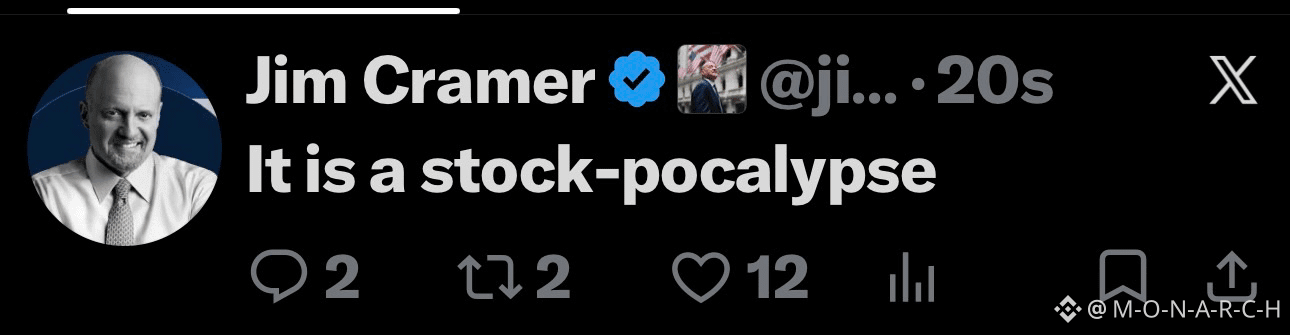
M-O-N-A-R-C-H
·
--
ສັນຍານໝີWe Love You Jim Cramer.
#UniswapA16zSeekDeFiExemptionFromIllinoisCryptoTax #HKDollarStablecoinHKDAPToLaunchOnSolana #$1.5BInLeveragedCryptoBetsLiquidated #TrezorSaysCryptoBilisSoldWalletMayContainMaliciousComponents #TrezorSaysCryptoBilisSoldWalletMayContainMaliciousComponents
#UniswapA16zSeekDeFiExemptionFromIllinoisCryptoTax #HKDollarStablecoinHKDAPToLaunchOnSolana #$1.5BInLeveragedCryptoBetsLiquidated #TrezorSaysCryptoBilisSoldWalletMayContainMaliciousComponents #TrezorSaysCryptoBilisSoldWalletMayContainMaliciousComponents
20
Black Friday, Still Crash not Over.
1st :- AIs Valuations over Ts & Bs.
2nd :- Veil of War, While Reason is Crash.
3rd :- $CL $BZ are Cherry on Top To Trigger Inflation Beyond Control, Which Will In Turn Cause Hawkish Tones, Then Rate Hikes.
BOJ, BOE, China Market Crashes, look Like More Of A Domino.
Or A Scripted Play, in Terms of War.
#UniswapA16zSeekDeFiExemptionFromIllinoisCryptoTax #HKDollarStablecoinHKDAPToLaunchOnSolana #$1.5BInLeveragedCryptoBetsLiquidated #TrezorSaysCryptoBilisSoldWalletMayContainMaliciousComponents #KOSPIFalls3.53%BackBelow6000
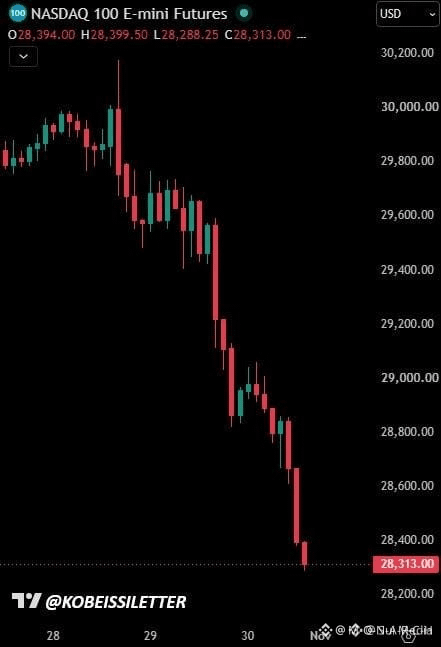
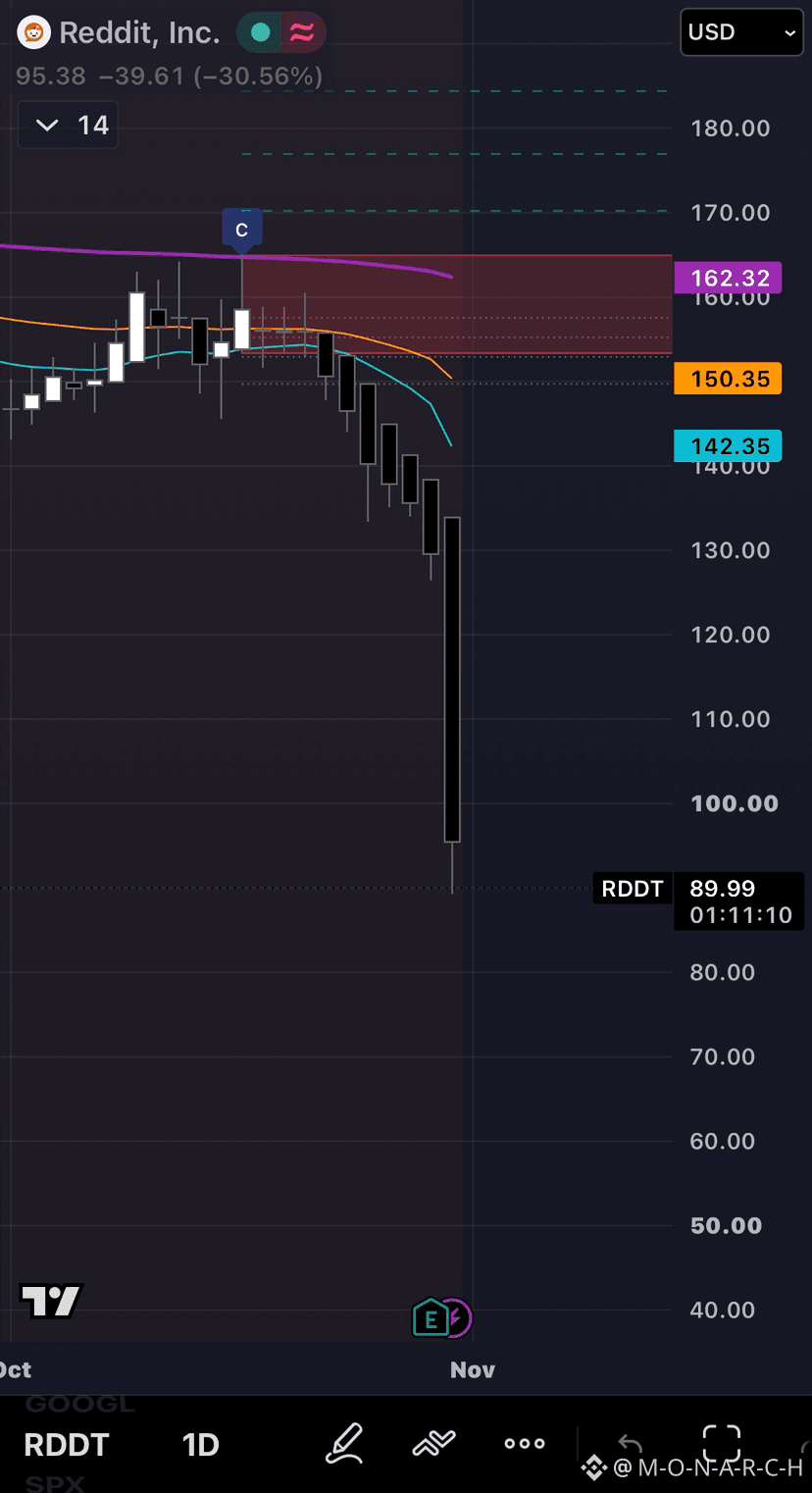
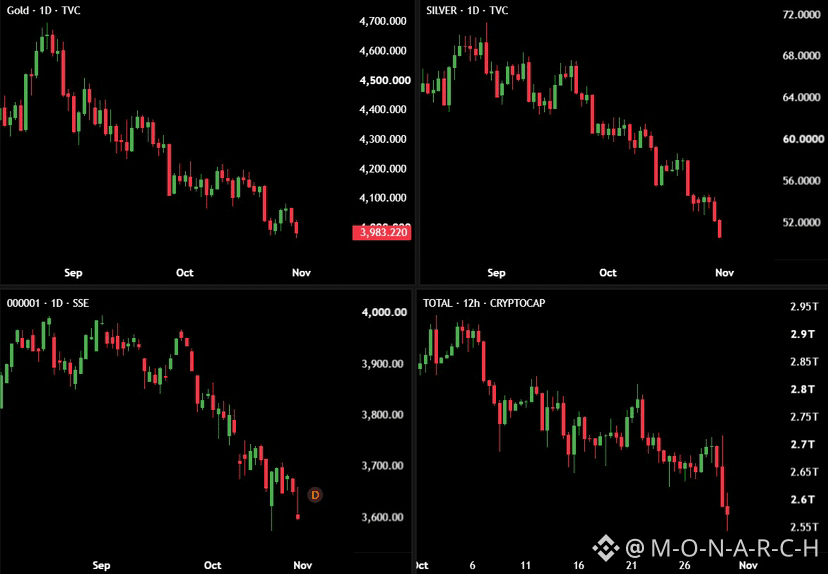
710
ເຂົ້າສູ່ລະບົບເພື່ອສຳຫຼວດເນື້ອຫາເພີ່ມເຕີມ
ເຂົ້າຮ່ວມກຸ່ມຜູ້ໃຊ້ຄຣິບໂຕທົ່ວໂລກໃນ Binance Square.
⚡️ ໄດ້ຮັບຂໍ້ມູນຫຼ້າສຸດ ແລະ ທີ່ມີປະໂຫຍດກ່ຽວກັບຄຣິບໂຕ.
💬 ໄດ້ຮັບຄວາມໄວ້ວາງໃຈຈາກຕະຫຼາດແລກປ່ຽນຄຣິບໂຕທີ່ໃຫຍ່ທີ່ສຸດໃນໂລກ.
👍 ຄົ້ນຫາຂໍ້ມູນເຊີງເລິກທີ່ແທ້ຈາກນັກສ້າງທີ່ໄດ້ຮັບການຢືນຢັນ.
ອີເມວ / ເບີໂທລະສັບ
ຫົວຂໍ້ທີ່ກໍາລັງນິຍົມ
WithdrawalsBack: 15 networks live
502 ຄັ້ງທີ່ເບິ່ງ
25 ກຳລັງສົນທະນາ
Binance News Update | Binance Reopens Withdrawals for BTC, ETH, USDT and More Across 15 Networks, Meeting Its Sunday Target
Binance News
·23 ຖືກໃຈ
·9.4k ຄັ້ງທີ່ເບິ່ງ
BinanceUpdatesProofofReservesAddresses
35,146 ຄັ້ງທີ່ເບິ່ງ
781 ກຳລັງສົນທະນາ
BinanceToResumePhaseOneOfWithdrawals
67,688 ຄັ້ງທີ່ເບິ່ງ
1,033 ກຳລັງສົນທະນາ