

Ayman_40
52 ກໍາລັງຕິດຕາມ
29 ຜູ້ຕິດຕາມ
44 Liked
ໂພສ
ທັງໝົດ
ວົງຢືມ



Ammar1112_
·
--
The 24/7 Intelligence Loop
Most people still analyze YGG through the wrong lens. They look for hype, token emissions, or short-term player growth and miss the most important thing happening under the surface. YGG is no longer just coordinating players or distributing rewards. It is running a continuous, always-on intelligence loop — a system that converts human behavior into structured knowledge and feeds it back into game development, economic design, and ecosystem strategy. While most Web3 projects chase users, YGG is harvesting insight. And in the long run, insight compounds faster than capital.
The loop starts with players, but not in the way traditional analytics teams understand players. Every quest completed, every XP path chosen, every skill specialization refined, and every season participated in generates behavioral data. This is not survey data or vanity metrics. It is proof-of-action. Players reveal what works, what breaks, what scales, and what feels meaningful — not through opinions, but through repetition. In YGG, players are not just consumers of content; they are continuous signal generators. Their actions create a living dataset of game mechanics, economic incentives, and engagement patterns that no centralized studio could ever simulate internally.
That raw signal flows into subDAOs, which act as the first intelligence processors. SubDAOs don’t just manage communities; they interpret behavior in context. A subDAO focused on a competitive title understands meta shifts, skill ceilings, onboarding friction, and reward elasticity long before dashboards detect anomalies. A subDAO built around a casual or idle game identifies retention curves, progression fatigue, and monetization thresholds that are invisible at the global level. This is localized intelligence — granular, opinionated, and operational. SubDAOs turn player behavior into actionable insight by living inside the game loop every day.
From there, the intelligence moves upstream to developers and partners. This is where YGG becomes truly unique. Studios don’t receive abstract analytics reports; they receive field-tested knowledge. They learn which quests drive sustainable engagement, which progression paths create long-term retention, which reward structures attract mercenary players versus committed ones, and which mechanics break economies under stress. In traditional gaming, studios guess, patch, and hope. In YGG’s loop, studios iterate with confidence, because they are plugged into thousands of real players acting under real economic conditions. Development becomes co-evolution, not experimentation.
The ecosystem layer completes the loop. Governance, treasury allocation, Vault strategies, and Ecosystem Pool deployments all absorb this intelligence and respond to it. If a certain game design consistently produces healthy player behavior, liquidity is routed toward it. If a reward structure attracts short-term extractive behavior, governance adjusts incentives or reduces exposure. Capital follows insight. This is critical: most ecosystems move money first and learn later. YGG learns first and moves money second. Over time, this creates an asymmetric advantage — the ecosystem becomes smarter with every cycle, while competitors reset their learning curve every launch.
What makes this loop powerful is that it never sleeps. Players are active across time zones. SubDAOs operate asynchronously. Developers iterate continuously. Governance reacts periodically but decisively. Intelligence accumulates 24/7. This is not a quarterly feedback loop or a seasonal post-mortem; it is a live system. The result is an adaptive organism, not a static platform. When markets shift, player behavior shifts. When player behavior shifts, subDAO strategies shift. When strategies shift, capital allocation shifts. And the ecosystem rebalances in near real time.
This is why YGG’s intelligence feels human, not algorithmic. It is not driven by machine learning models trained on synthetic data. It is driven by lived experience, repetition, and social coordination. Reputation emerges from contribution. Expertise emerges from action. Trust emerges from consistency. The system doesn’t rank players because an algorithm decided to; it recognizes them because they proved themselves over time. In an industry obsessed with AI-driven optimization, YGG is quietly proving that community-driven intelligence scales better — because humans adapt faster than models when environments change.
For developers, this loop is priceless. It replaces guesswork with clarity. It de-risks launches. It shortens iteration cycles. It aligns game design with real economic behavior instead of theoretical balance. For the ecosystem, it creates defensibility. You can copy mechanics. You can fork contracts. You cannot easily replicate a living intelligence network built on years of behavioral data, social trust, and distributed expertise. This is the same reason why the strongest Web2 platforms were data moats, not feature moats. YGG is building the Web3 equivalent — except the data is earned, not extracted.
In the end, YGG’s greatest asset may not be its treasury, its token, or its partnerships. It may be the intelligence loop itself. A system where players generate knowledge, subDAOs refine it, developers apply it, and the ecosystem compounds it — endlessly. This is what a global knowledge engine looks like when built on-chain. Not dashboards. Not hype. Just continuous learning at scale. And once an ecosystem learns faster than its competitors, the outcome is no longer a question of “if,” but “when.”
@Yield Guild Games #YGGPlay $YGG
Ammar1112_
·
--
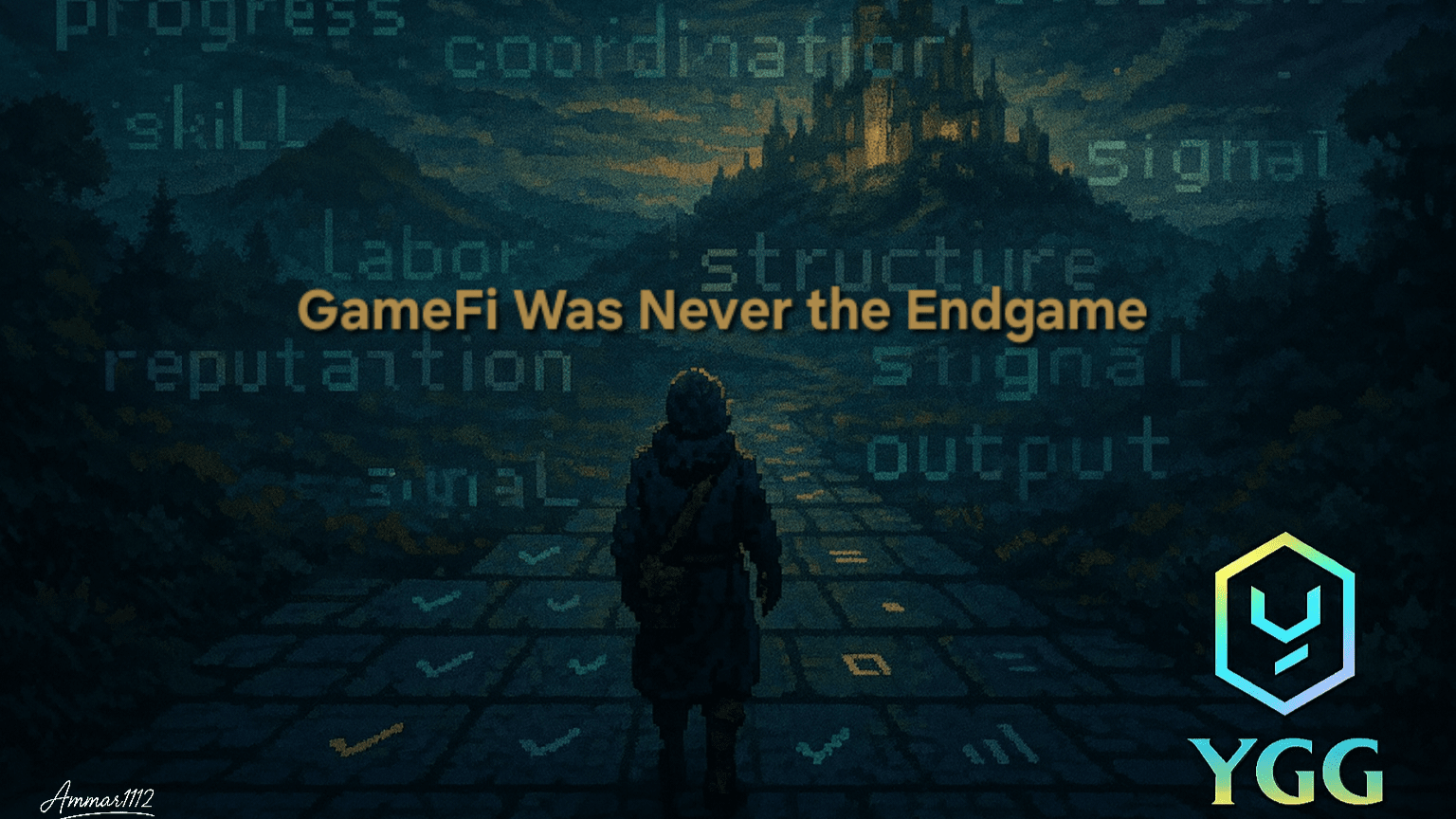
GameFi was never the endgame
GameFi did not fail because players stopped caring about money. It failed because the industry misunderstood what players were actually doing. From the outside, play-to-earn looked like a financial experiment. From the inside, it was something else entirely: millions of people coordinating time, skill, attention, and discipline inside digital environments. That was never just “gaming.” It was labor. Not factory labor, not office labor, but a new category of networked digital work. The mistake was thinking the endgame was yield. It wasn’t. The endgame was infrastructure — and @Yield Guild Games is one of the first systems to quietly understand that.
In the early GameFi era, tokens were treated like wages. Play more, earn more, exit faster. But wages without productivity models collapse. What GameFi accidentally revealed is that players were not speculators — they were operators. They learned game mechanics faster than AI, adapted to meta changes in real time, optimized routes, trained newcomers, created guides, moderated communities, and coordinated across time zones. None of that behavior was speculative. It was skilled labor happening inside virtual worlds. YGG’s real innovation was not scholarships or guild branding; it was recognizing that this labor needed structure, coordination, and capital — the same way labor markets always have.
This is where YGG diverges sharply from traditional GameFi narratives. Instead of optimizing for extraction, it began optimizing for throughput. The GAP system didn’t just reward completion; it measured consistency, skill, and engagement. SubDAOs didn’t just group players; they specialized labor around games, regions, and competencies. Quest data wasn’t treated as marketing analytics but as behavioral proof — evidence of reliability, adaptability, and execution. Over time, YGG stopped behaving like a gaming project and started behaving like labor infrastructure: sourcing talent, training it, deploying it, and capturing value from its productivity.
Labor infrastructure always follows the same pattern historically. First comes informal work. Then coordination. Then capital. Then institutions. GameFi was the informal phase. Chaos, opportunity, mispricing. YGG represents the institutional phase. It provides capital through Vaults and the Ecosystem Pool. It provides coordination through SubDAOs and governance. It provides reputation through on-chain progression, XP, and quest histories. And it provides distribution through YGG Play, routing skilled labor toward games and ecosystems that need it most. This is not accidental. It mirrors how modern economies formed — except compressed into a few years and executed on-chain.
What makes this model powerful is that labor becomes composable. A player’s contribution is no longer locked inside a single game. Skill, reliability, and progression can be reused across ecosystems. A high-performing quester in one SubDAO becomes valuable signal elsewhere. A community leader with proven coordination history becomes deployable capital. This is something Web2 gaming never achieved: portability of labor reputation. Web3 can. YGG is building the rails for it. In this framework, tokens are not wages; they are coordination tools. They align incentives, route capital, and reward long-term contribution rather than short-term extraction.
The Ecosystem Pool plays a critical role here. On the surface, it looks like a treasury strategy. In reality, it functions like a labor capital allocator. By farming yield, backing SubDAOs, stabilizing new game launches, and executing buybacks, the pool converts raw productivity into durable economic strength. This mirrors how real-world economies reinvest surplus into infrastructure rather than consumption. When governance allocates capital, it is not rewarding hype — it is reinforcing productive labor loops. That is why YGG governance feels institutional: it is managing an economy, not a narrative.
This also explains why YGG avoids the traps that killed early GameFi projects. There is no obsession with infinite emissions. No dependence on unsustainable APRs. No illusion that privacy or purely technical features alone create value. What creates value is organized human effort. Games are just the environment. Tokens are just the accounting layer. The real asset is coordinated labor at scale. Most projects refuse to say this because it sounds uncomfortable. YGG built around it anyway. That is the part nobody talks about.
From an institutional perspective, this positions YGG closer to a labor market protocol than a gaming DAO. Studios don’t just get players; they get trained operators. Economies don’t just get liquidity; they get human throughput. Governance doesn’t just vote; it allocates labor capital. And token holders don’t just speculate; they own a share of a productivity network. This is why YGG keeps evolving while many GameFi projects freeze in time. They were chasing yield. YGG was building structure.
GameFi was never the endgame because earning was never the point. Progress was. Skill was. Coordination was.
#YGGPlay understood that labor does not disappear in digital worlds — it mutates. And the first protocol that treats players not as users, but as a workforce with reputation, progression, and capital backing, is no longer a gaming project. It is infrastructure. The future of Web3 will not be defined by who prints the most tokens, but by who organizes human effort most efficiently. On that axis, YGG is not early — it is already ahead.
$YGG
ເນື້ອຫາອ້າງອີງຖືກລົບແລ້ວ
ເນື້ອຫາອ້າງອີງຖືກລົບແລ້ວ
ເນື້ອຫາອ້າງອີງຖືກລົບແລ້ວ
ເນື້ອຫາອ້າງອີງຖືກລົບແລ້ວ
ເນື້ອຫາອ້າງອີງຖືກລົບແລ້ວ
ເນື້ອຫາອ້າງອີງຖືກລົບແລ້ວ
ເນື້ອຫາອ້າງອີງຖືກລົບແລ້ວ
ເຂົ້າສູ່ລະບົບເພື່ອສຳຫຼວດເນື້ອຫາເພີ່ມເຕີມ