

#somnia
somnia
11.3M ຄັ້ງທີ່ເບິ່ງ
88,302 ກຳລັງສົນທະນາ
ມາແຮງ
ຫຼ້າສຸດ

·
--
ສັນຍານກະທິງ
$SOMI
{spot}(SOMIUSDT)
$SOMI is at 0.1803, up 1.86% 🚀
Newer-narrative coins can run hard, and they can reverse just as hard. Respect both sides.
📊 Market view: Bullish bias, but volatility is likely. Don't oversize.
🛡 Support: 0.171 / 0.160
🚧 Resistance: 0.192 / 0.208
🎯 Targets
1️⃣ 0.192
2️⃣ 0.204
3️⃣ 0.220
🛑 Invalidation: below 0.165
⏱ Short/mid-term: A break above 0.192 with strong volume could trigger a fast move. Take profits in stages.
🔭 Long-term: Depends on network usage and token unlocks, so check the unlock schedule before holding big.
💡 Pro tip: Risk 1-2% of your account per trade. Surviving is how you catch the next big move.
#SOMI #Somnia #BinanceSquare
$SOMI
$SOMI is at 0.1803, up 1.86% 🚀
Newer-narrative coins can run hard, and they can reverse just as hard. Respect both sides.
📊 Market view: Bullish bias, but volatility is likely. Don't oversize.
🛡 Support: 0.171 / 0.160
🚧 Resistance: 0.192 / 0.208
🎯 Targets
1️⃣ 0.192
2️⃣ 0.204
3️⃣ 0.220
🛑 Invalidation: below 0.165
⏱ Short/mid-term: A break above 0.192 with strong volume could trigger a fast move. Take profits in stages.
🔭 Long-term: Depends on network usage and token unlocks, so check the unlock schedule before holding big.
💡 Pro tip: Risk 1-2% of your account per trade. Surviving is how you catch the next big move.
#SOMI #Somnia #BinanceSquare
$SOMI is at 0.1803, up 1.86% 🚀
Newer-narrative coins can run hard, and they can reverse just as hard. Respect both sides.
📊 Market view: Bullish bias, but volatility is likely. Don't oversize.
🛡 Support: 0.171 / 0.160
🚧 Resistance: 0.192 / 0.208
🎯 Targets
1️⃣ 0.192
2️⃣ 0.204
3️⃣ 0.220
🛑 Invalidation: below 0.165
⏱ Short/mid-term: A break above 0.192 with strong volume could trigger a fast move. Take profits in stages.
🔭 Long-term: Depends on network usage and token unlocks, so check the unlock schedule before holding big.
💡 Pro tip: Risk 1-2% of your account per trade. Surviving is how you catch the next big move.
#SOMI #Somnia #BinanceSquare
2
283

·
--
ສັນຍານກະທິງ
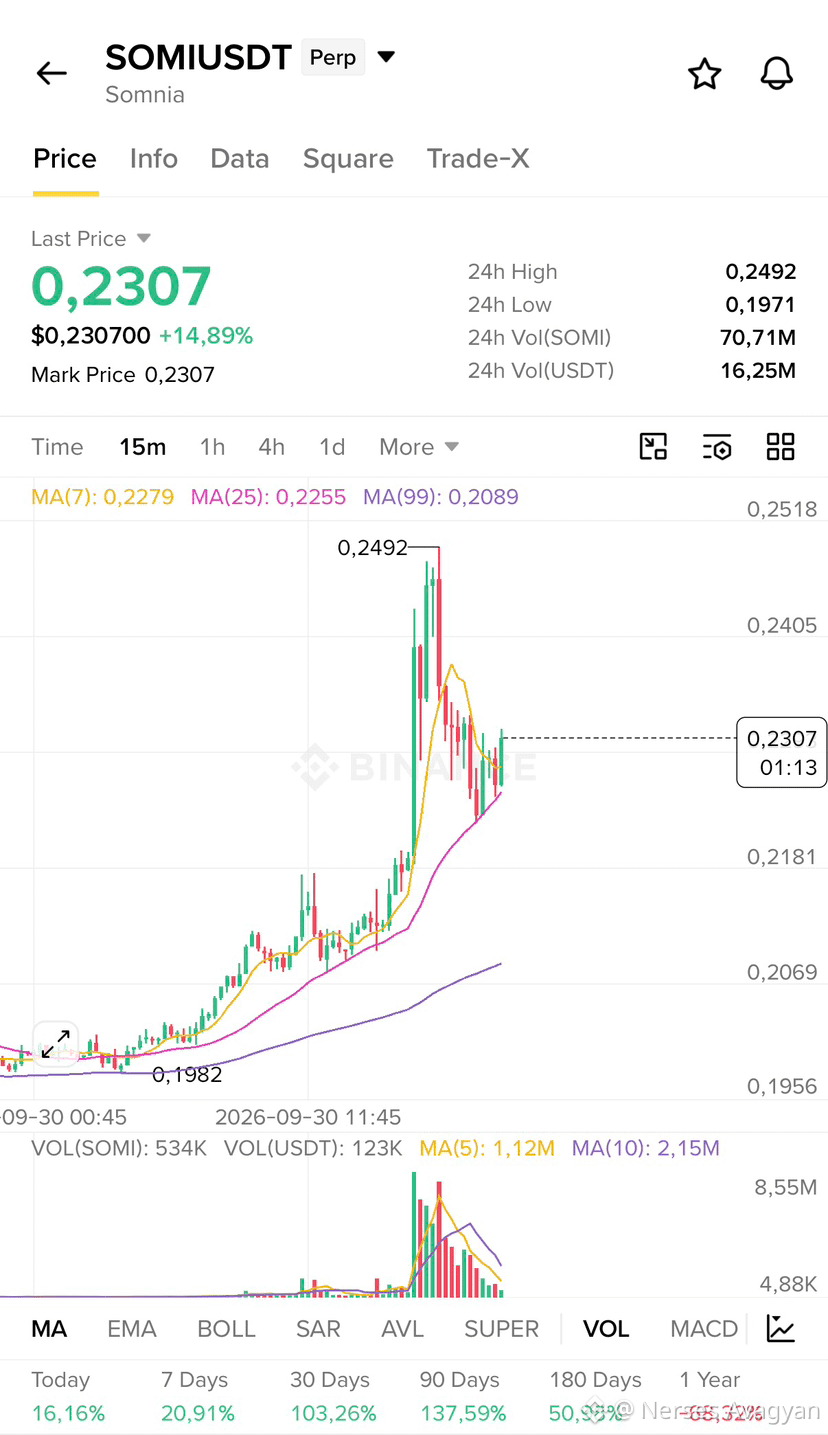
🔥 $SOMI LONG — $0.2307
📍 Entry: $0.2307
🎯 TP1: $0.2420
🎯 TP2: $0.2550
🎯 TP3: $0.2750
🛑 SL: $0.2140
📊 Analysis: $SOMI is sitting near a potential momentum zone. If buyers defend $0.23, a push toward $0.25+ could follow. A break below $0.214 weakens the setup. 🚀
#SOMI #Somnia #Crypto #Binance
Click here to trade👇
{future}(SOMIUSDT)
🔥 $SOMI LONG — $0.2307
📍 Entry: $0.2307
🎯 TP1: $0.2420
🎯 TP2: $0.2550
🎯 TP3: $0.2750
🛑 SL: $0.2140
📊 Analysis: $SOMI is sitting near a potential momentum zone. If buyers defend $0.23, a push toward $0.25+ could follow. A break below $0.214 weakens the setup. 🚀
#SOMI #Somnia #Crypto #Binance
Click here to trade👇
📍 Entry: $0.2307
🎯 TP1: $0.2420
🎯 TP2: $0.2550
🎯 TP3: $0.2750
🛑 SL: $0.2140
📊 Analysis: $SOMI is sitting near a potential momentum zone. If buyers defend $0.23, a push toward $0.25+ could follow. A break below $0.214 weakens the setup. 🚀
#SOMI #Somnia #Crypto #Binance
Click here to trade👇
1
44

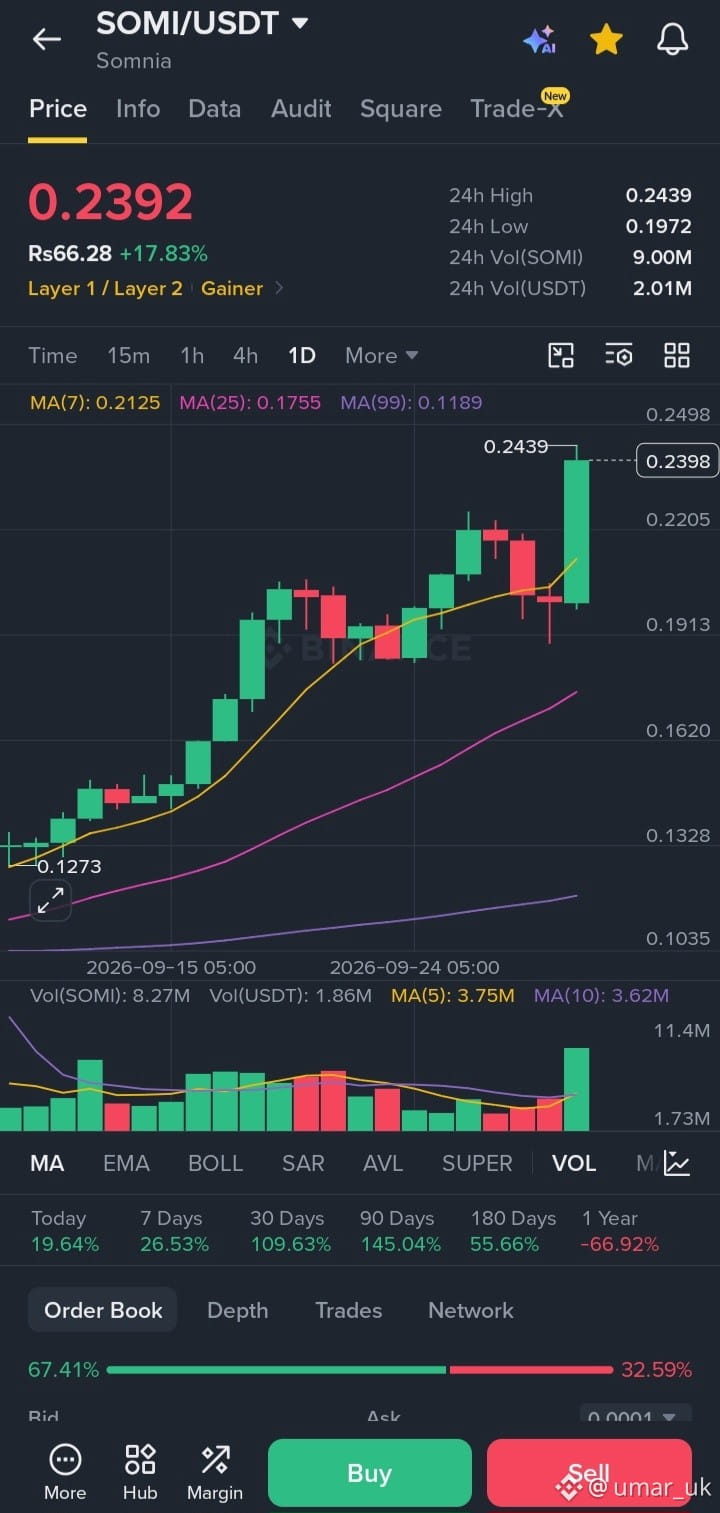
🚨 BREAKING: $SOMI IS MOVING FAST! ⚡
$SOMI is trading around $0.2392, up 17.83% in 24H, with a strong volume spike.
📊 Key Levels • 24H High: $0.2439 • Support: $0.2200 • Stronger support: $0.1970 • MA(7): $0.2125 • MA(25): $0.1755
🟢 BULLISH TRIGGER Break and hold above $0.2439 with strong volume → breakout confirmation.
🔴 BEARISH TRIGGER Rejection near $0.2439 followed by a loss of $0.2200 → pullback risk increases.
🔥 WATCH THIS LEVEL:
A clean $0.2440+ breakout with volume could put SOMI into price-discovery territory.
Will $SOMI break $0.2440 next, or face rejection? 👀
Watch volume + confirmation. DYOR. ⚠️
#SOMI #Somnia #Crypto
🚨 BREAKING: $SOMI IS MOVING FAST! ⚡
$SOMI is trading around $0.2392, up 17.83% in 24H, with a strong volume spike.
📊 Key Levels • 24H High: $0.2439 • Support: $0.2200 • Stronger support: $0.1970 • MA(7): $0.2125 • MA(25): $0.1755
🟢 BULLISH TRIGGER Break and hold above $0.2439 with strong volume → breakout confirmation.
🔴 BEARISH TRIGGER Rejection near $0.2439 followed by a loss of $0.2200 → pullback risk increases.
🔥 WATCH THIS LEVEL:
A clean $0.2440+ breakout with volume could put SOMI into price-discovery territory.
Will $SOMI break $0.2440 next, or face rejection? 👀
Watch volume + confirmation. DYOR. ⚠️
#SOMI #Somnia #Crypto
$SOMI is trading around $0.2392, up 17.83% in 24H, with a strong volume spike.
📊 Key Levels • 24H High: $0.2439 • Support: $0.2200 • Stronger support: $0.1970 • MA(7): $0.2125 • MA(25): $0.1755
🟢 BULLISH TRIGGER Break and hold above $0.2439 with strong volume → breakout confirmation.
🔴 BEARISH TRIGGER Rejection near $0.2439 followed by a loss of $0.2200 → pullback risk increases.
🔥 WATCH THIS LEVEL:
A clean $0.2440+ breakout with volume could put SOMI into price-discovery territory.
Will $SOMI break $0.2440 next, or face rejection? 👀
Watch volume + confirmation. DYOR. ⚠️
#SOMI #Somnia #Crypto
1
2
60

SOMI Breakout Unleashed! Somnia Bulls Drive Parabolic Extension!
Following a powerful rounding bottom accumulation phase, SOMI/USDT has shattered multi-day resistance barriers with dominant buying conviction. With all major EMAs stacked perfectly in a bullish alignment and the SuperTrend holding a firm green floor, the bulls are completely controlling this trend extension.
🎯 Suggested Entry Zone: 0.2160 – 0.2210 (Look to scale in near the 1H EMA(7) on minor intraday pullbacks rather than chasing the absolute high candle spike).
💰 Take Profit 1 (TP1): 0.2380 (Targeting a structural extension just past the immediate local swing high resistance to lock in quick profits).
💰 Take Profit 2 (TP2): 0.2550 (Next major psychological barrier and significant overhead liquidity expansion pool).
⚠️ Stop Loss (SL): 0.2100 (Placed safely below the active green SuperTrend dynamic floor and the 1H EMA(25) to strictly protect your trading capital).
Trade with precise mechanical execution, systematically lock in your profits along the way, and let the market momentum work for you!
#Somnia #SOMIUSDT #CryptoSignals
{future}(SOMIUSDT)
SOMI Breakout Unleashed! Somnia Bulls Drive Parabolic Extension!
Following a powerful rounding bottom accumulation phase, SOMI/USDT has shattered multi-day resistance barriers with dominant buying conviction. With all major EMAs stacked perfectly in a bullish alignment and the SuperTrend holding a firm green floor, the bulls are completely controlling this trend extension.
🎯 Suggested Entry Zone: 0.2160 – 0.2210 (Look to scale in near the 1H EMA(7) on minor intraday pullbacks rather than chasing the absolute high candle spike).
💰 Take Profit 1 (TP1): 0.2380 (Targeting a structural extension just past the immediate local swing high resistance to lock in quick profits).
💰 Take Profit 2 (TP2): 0.2550 (Next major psychological barrier and significant overhead liquidity expansion pool).
⚠️ Stop Loss (SL): 0.2100 (Placed safely below the active green SuperTrend dynamic floor and the 1H EMA(25) to strictly protect your trading capital).
Trade with precise mechanical execution, systematically lock in your profits along the way, and let the market momentum work for you!
#Somnia #SOMIUSDT #CryptoSignals
Following a powerful rounding bottom accumulation phase, SOMI/USDT has shattered multi-day resistance barriers with dominant buying conviction. With all major EMAs stacked perfectly in a bullish alignment and the SuperTrend holding a firm green floor, the bulls are completely controlling this trend extension.
🎯 Suggested Entry Zone: 0.2160 – 0.2210 (Look to scale in near the 1H EMA(7) on minor intraday pullbacks rather than chasing the absolute high candle spike).
💰 Take Profit 1 (TP1): 0.2380 (Targeting a structural extension just past the immediate local swing high resistance to lock in quick profits).
💰 Take Profit 2 (TP2): 0.2550 (Next major psychological barrier and significant overhead liquidity expansion pool).
⚠️ Stop Loss (SL): 0.2100 (Placed safely below the active green SuperTrend dynamic floor and the 1H EMA(25) to strictly protect your trading capital).
Trade with precise mechanical execution, systematically lock in your profits along the way, and let the market momentum work for you!
#Somnia #SOMIUSDT #CryptoSignals
1
26

·
--
#somnia
$SOMI up +1.38% to $0.0976 on altcoin rotation. No specific news, just market beta.
Long term tailwind: 50% gas fee burn = supply gets tighter with usage.
Key Levels: Support $0.095 | Resistance $0.10
Break $0.10 with volume = next target $0.12
Risk: Low volume + token unlocks in 2026. Trade with SL.
DYOR | Not financial advice
$SOMI #Somnia #Altcoins #CryptoAnalysis
{future}(SOMIUSDT)
#somnia
$SOMI up +1.38% to $0.0976 on altcoin rotation. No specific news, just market beta.
Long term tailwind: 50% gas fee burn = supply gets tighter with usage.
Key Levels: Support $0.095 | Resistance $0.10
Break $0.10 with volume = next target $0.12
Risk: Low volume + token unlocks in 2026. Trade with SL.
DYOR | Not financial advice
$SOMI #Somnia #Altcoins #CryptoAnalysis
$SOMI up +1.38% to $0.0976 on altcoin rotation. No specific news, just market beta.
Long term tailwind: 50% gas fee burn = supply gets tighter with usage.
Key Levels: Support $0.095 | Resistance $0.10
Break $0.10 with volume = next target $0.12
Risk: Low volume + token unlocks in 2026. Trade with SL.
DYOR | Not financial advice
$SOMI #Somnia #Altcoins #CryptoAnalysis
1
483

·
--
ສັນຍານກະທິງ
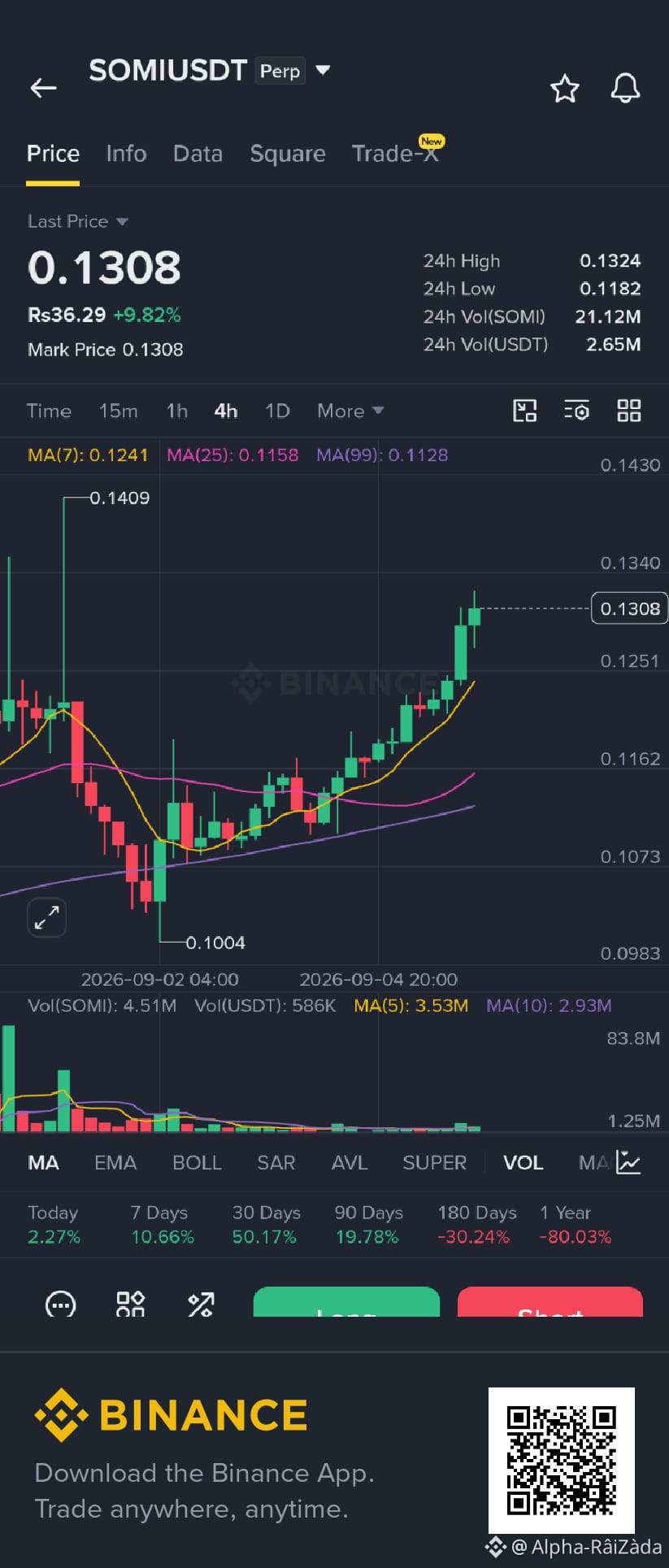
🚀 $SOMI — BULLS EYEING THE NEXT LEG 🔥
$SOMI is heating up with buyers pushing price toward the $0.131 area. Recent market data also shows SOMI maintaining upward momentum after reclaiming the $0.12 zone.
📍 ENTRY: $0.127–$0.131
🎯 TP1: $0.136
🎯 TP2: $0.142
🎯 TP3: $0.150
🛑 SL: $0.122
🔑 Key: Hold $0.127+ → bullish continuation remains in focus.
⚠️ Don’t chase extended candles. Wait for confirmation and manage risk carefully.
LONG BIAS 📈
DYOR • NFA
#SOMI #Somnia #LongSetup #CryptoTrading
🚀 $SOMI — BULLS EYEING THE NEXT LEG 🔥
$SOMI is heating up with buyers pushing price toward the $0.131 area. Recent market data also shows SOMI maintaining upward momentum after reclaiming the $0.12 zone.
📍 ENTRY: $0.127–$0.131
🎯 TP1: $0.136
🎯 TP2: $0.142
🎯 TP3: $0.150
🛑 SL: $0.122
🔑 Key: Hold $0.127+ → bullish continuation remains in focus.
⚠️ Don’t chase extended candles. Wait for confirmation and manage risk carefully.
LONG BIAS 📈
DYOR • NFA
#SOMI #Somnia #LongSetup #CryptoTrading
$SOMI is heating up with buyers pushing price toward the $0.131 area. Recent market data also shows SOMI maintaining upward momentum after reclaiming the $0.12 zone.
📍 ENTRY: $0.127–$0.131
🎯 TP1: $0.136
🎯 TP2: $0.142
🎯 TP3: $0.150
🛑 SL: $0.122
🔑 Key: Hold $0.127+ → bullish continuation remains in focus.
⚠️ Don’t chase extended candles. Wait for confirmation and manage risk carefully.
LONG BIAS 📈
DYOR • NFA
#SOMI #Somnia #LongSetup #CryptoTrading
82

·
--
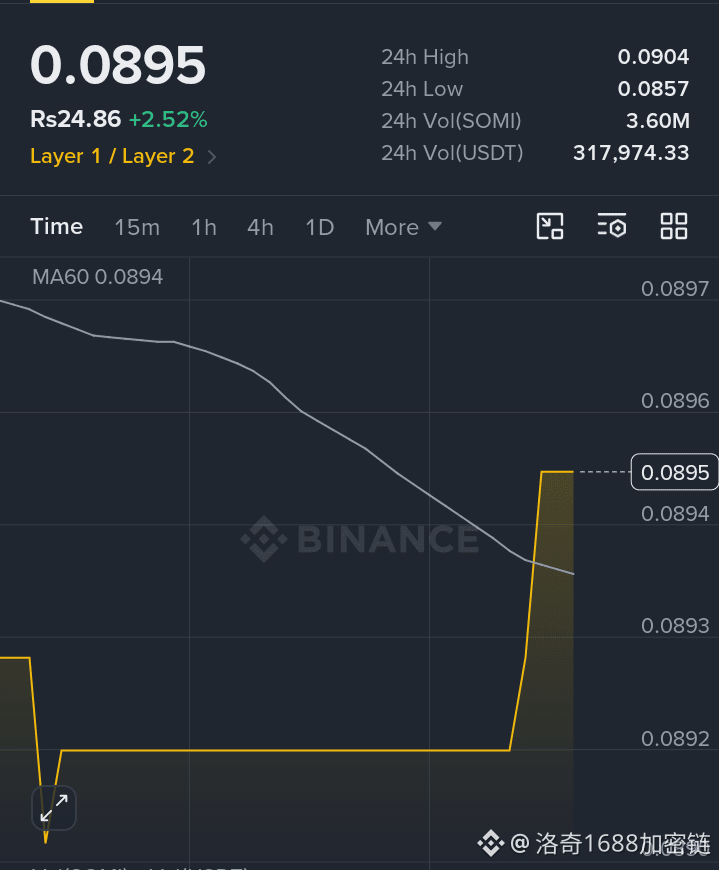
🚨 $SOMI I (Somnia) — BREAKOUT WATCH! 🚨
🔥 Current Price: $0.0895
📈 24H: +2.52%
💎 24H High: $0.0904
📊 24H Volume: 3.60M SOMI
$SOMI is showing positive momentum and is currently holding around the MA60 level at $0.0894.
🎯 Key Resistance: $0.0904
🟢 Break & Hold above $0.0904 → bullish momentum could strengthen
🔴 Lose $0.0890 → short-term weakness possible
👀 $SOMI is one to keep on the watchlist!
#SOMI #Somnia #Crypto #Binance #Altcoins #trading
🚨 $SOMI I (Somnia) — BREAKOUT WATCH! 🚨
🔥 Current Price: $0.0895
📈 24H: +2.52%
💎 24H High: $0.0904
📊 24H Volume: 3.60M SOMI
$SOMI is showing positive momentum and is currently holding around the MA60 level at $0.0894.
🎯 Key Resistance: $0.0904
🟢 Break & Hold above $0.0904 → bullish momentum could strengthen
🔴 Lose $0.0890 → short-term weakness possible
👀 $SOMI is one to keep on the watchlist!
#SOMI #Somnia #Crypto #Binance #Altcoins #trading
🔥 Current Price: $0.0895
📈 24H: +2.52%
💎 24H High: $0.0904
📊 24H Volume: 3.60M SOMI
$SOMI is showing positive momentum and is currently holding around the MA60 level at $0.0894.
🎯 Key Resistance: $0.0904
🟢 Break & Hold above $0.0904 → bullish momentum could strengthen
🔴 Lose $0.0890 → short-term weakness possible
👀 $SOMI is one to keep on the watchlist!
#SOMI #Somnia #Crypto #Binance #Altcoins #trading
1
155

·
--
ສັນຍານກະທິງ
🚀 SOMI (Somnia): uma cripto que pode estar apenas começando?
O mercado de altcoins está sempre procurando os próximos projetos capazes de entregar movimentos expressivos — e o SOMI merece atenção. 👀
🔥 Por que ficar de olho?
• 📈 Forte movimentação e aumento de volume
• 🐋 Fluxo comprador relevante nas últimas horas
• ⚡ Blockchain L1 focada em alta performance
• 🤖 Forte conexão com a narrativa de IA + blockchain
• 🌐 Potencial para aplicações on-chain em grande escala
• 📊 Se conseguir romper resistências importantes, pode abrir espaço para uma nova perna de alta
🎯 Regiões para observar:
0,122 → 0,126 → 0,134 USDC
🚀 Um rompimento consistente de 0,134 USDC poderia colocar o ativo em uma região completamente diferente de preço.
⚠️ Atenção: SOMI é um ativo altamente volátil. Potencial de alta também significa risco elevado de queda. Isso não é garantia de valorização nem recomendação financeira.
👀 SOMI é uma das altcoins que eu colocaria no radar agora.
#SOMI #Somnia #crypto #Altcoins #Binance $SOMI #Web3 #AI #Blockchain #DeFi #CryptoNews
{spot}(SOMIUSDT)
🚀 SOMI (Somnia): uma cripto que pode estar apenas começando?
O mercado de altcoins está sempre procurando os próximos projetos capazes de entregar movimentos expressivos — e o SOMI merece atenção. 👀
🔥 Por que ficar de olho?
• 📈 Forte movimentação e aumento de volume
• 🐋 Fluxo comprador relevante nas últimas horas
• ⚡ Blockchain L1 focada em alta performance
• 🤖 Forte conexão com a narrativa de IA + blockchain
• 🌐 Potencial para aplicações on-chain em grande escala
• 📊 Se conseguir romper resistências importantes, pode abrir espaço para uma nova perna de alta
🎯 Regiões para observar:
0,122 → 0,126 → 0,134 USDC
🚀 Um rompimento consistente de 0,134 USDC poderia colocar o ativo em uma região completamente diferente de preço.
⚠️ Atenção: SOMI é um ativo altamente volátil. Potencial de alta também significa risco elevado de queda. Isso não é garantia de valorização nem recomendação financeira.
👀 SOMI é uma das altcoins que eu colocaria no radar agora.
#SOMI #Somnia #crypto #Altcoins #Binance $SOMI #Web3 #AI #Blockchain #DeFi #CryptoNews
O mercado de altcoins está sempre procurando os próximos projetos capazes de entregar movimentos expressivos — e o SOMI merece atenção. 👀
🔥 Por que ficar de olho?
• 📈 Forte movimentação e aumento de volume
• 🐋 Fluxo comprador relevante nas últimas horas
• ⚡ Blockchain L1 focada em alta performance
• 🤖 Forte conexão com a narrativa de IA + blockchain
• 🌐 Potencial para aplicações on-chain em grande escala
• 📊 Se conseguir romper resistências importantes, pode abrir espaço para uma nova perna de alta
🎯 Regiões para observar:
0,122 → 0,126 → 0,134 USDC
🚀 Um rompimento consistente de 0,134 USDC poderia colocar o ativo em uma região completamente diferente de preço.
⚠️ Atenção: SOMI é um ativo altamente volátil. Potencial de alta também significa risco elevado de queda. Isso não é garantia de valorização nem recomendação financeira.
👀 SOMI é uma das altcoins que eu colocaria no radar agora.
#SOMI #Somnia #crypto #Altcoins #Binance $SOMI #Web3 #AI #Blockchain #DeFi #CryptoNews
199

·
--
ສັນຍານກະທິງ
$SOMI is showing strong momentum, trading around 0.1291 after gaining more than 7% in 24 hours. Price is approaching the 0.1327 daily high, making this the key breakout level. A confirmed move above it could open the path toward the next resistance zones, while 0.1250 remains an important near-term support.
Target 1: 0.1327
Target 2: 0.1400
Target 3: 0.1500
#Somnia #Ethereum #Layer2
{spot}(SOMIUSDT)
$RAY
{spot}(RAYUSDT)
$ZEC
{spot}(ZECUSDT)
$SOMI is showing strong momentum, trading around 0.1291 after gaining more than 7% in 24 hours. Price is approaching the 0.1327 daily high, making this the key breakout level. A confirmed move above it could open the path toward the next resistance zones, while 0.1250 remains an important near-term support.
Target 1: 0.1327
Target 2: 0.1400
Target 3: 0.1500
#Somnia #Ethereum #Layer2
$RAY
$ZEC
Target 1: 0.1327
Target 2: 0.1400
Target 3: 0.1500
#Somnia #Ethereum #Layer2
$RAY
$ZEC
4
352
·
--
ສັນຍານກະທິງ
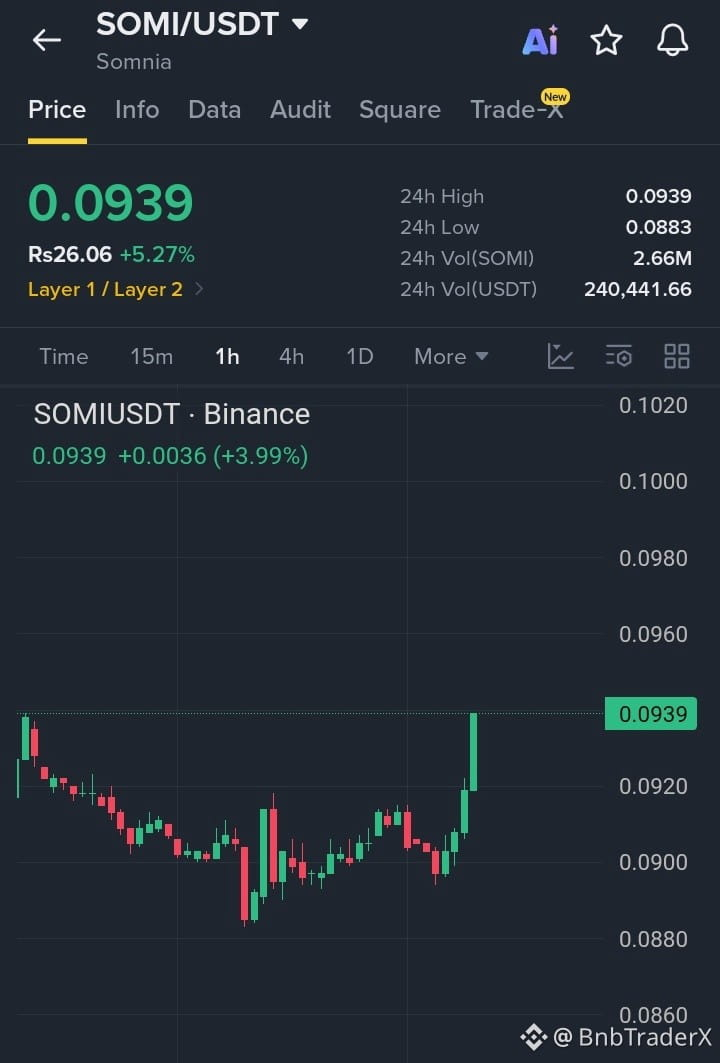
$SOMI is pushing into the 0.0940 resistance with bullish momentum. A clean breakout above 0.0940 could open the way toward 0.0980 and 0.1020.
Entry: 0.0920–0.0940
TP1: 0.0980
TP2: 0.1000
TP3: 0.1020
SL: 0.0890
#SOMI #Somnia #CryptoTrading
{future}(SOMIUSDT)
$ACE
{future}(ACEUSDT)
$BTW
{future}(BTWUSDT)
$SOMI is pushing into the 0.0940 resistance with bullish momentum. A clean breakout above 0.0940 could open the way toward 0.0980 and 0.1020.
Entry: 0.0920–0.0940
TP1: 0.0980
TP2: 0.1000
TP3: 0.1020
SL: 0.0890
#SOMI #Somnia #CryptoTrading
$ACE
$BTW
Entry: 0.0920–0.0940
TP1: 0.0980
TP2: 0.1000
TP3: 0.1020
SL: 0.0890
#SOMI #Somnia #CryptoTrading
$ACE
$BTW
2
536

·
--
ສັນຍານກະທິງ
🔥 $SOMI /USDT — MOMENTUM IGNITION 🔥
SOMI is trading around $0.1222 with +7.29%. Buyers have pushed the token strongly higher, putting the current zone under the spotlight.
📍 EP: $0.1205 – $0.1230
🎯 TP1: $0.1270
🎯 TP2: $0.1320
🎯 TP3: $0.1380
🛑 SL: $0.1145
SOMI is the native token of the Somnia blockchain. It is designed for staking, delegated staking and gas fees, with governance utility planned for the ecosystem. 5
🔥 If momentum survives the next pullback, continuation becomes interesting.
⚠️ Protect capital if the support zone fails.
Let's go $SOMI 🚀
#SOMI #Somnia #Crypto #Binance
🔥 $SOMI /USDT — MOMENTUM IGNITION 🔥
SOMI is trading around $0.1222 with +7.29%. Buyers have pushed the token strongly higher, putting the current zone under the spotlight.
📍 EP: $0.1205 – $0.1230
🎯 TP1: $0.1270
🎯 TP2: $0.1320
🎯 TP3: $0.1380
🛑 SL: $0.1145
SOMI is the native token of the Somnia blockchain. It is designed for staking, delegated staking and gas fees, with governance utility planned for the ecosystem. 5
🔥 If momentum survives the next pullback, continuation becomes interesting.
⚠️ Protect capital if the support zone fails.
Let's go $SOMI 🚀
#SOMI #Somnia #Crypto #Binance
SOMI is trading around $0.1222 with +7.29%. Buyers have pushed the token strongly higher, putting the current zone under the spotlight.
📍 EP: $0.1205 – $0.1230
🎯 TP1: $0.1270
🎯 TP2: $0.1320
🎯 TP3: $0.1380
🛑 SL: $0.1145
SOMI is the native token of the Somnia blockchain. It is designed for staking, delegated staking and gas fees, with governance utility planned for the ecosystem. 5
🔥 If momentum survives the next pullback, continuation becomes interesting.
⚠️ Protect capital if the support zone fails.
Let's go $SOMI 🚀
#SOMI #Somnia #Crypto #Binance
223


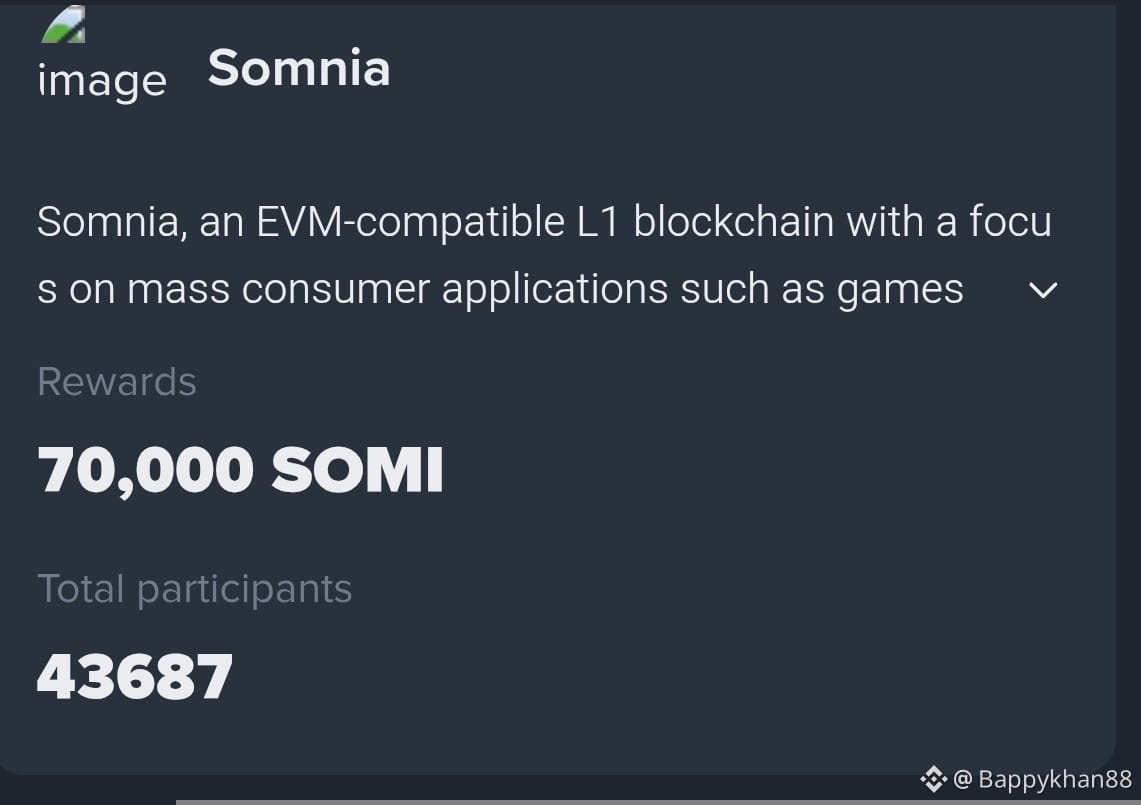


$SOMI 🔥
Market Overview: +13.34% — steady upside momentum.
Target: Continuation if buyers defend the recent breakout.
Pro Tip: Watch volume and liquidity before chasing.
#SOMI #Somnia #Crypto #AltcoinSeasonIndexHoldsAbove60For5Days #USADPAdds90000JobsInSeptember
$SOMI 🔥
Market Overview: +13.34% — steady upside momentum.
Target: Continuation if buyers defend the recent breakout.
Pro Tip: Watch volume and liquidity before chasing.
#SOMI #Somnia #Crypto #AltcoinSeasonIndexHoldsAbove60For5Days #USADPAdds90000JobsInSeptember
Market Overview: +13.34% — steady upside momentum.
Target: Continuation if buyers defend the recent breakout.
Pro Tip: Watch volume and liquidity before chasing.
#SOMI #Somnia #Crypto #AltcoinSeasonIndexHoldsAbove60For5Days #USADPAdds90000JobsInSeptember
61

·
--
ສັນຍານກະທິງ
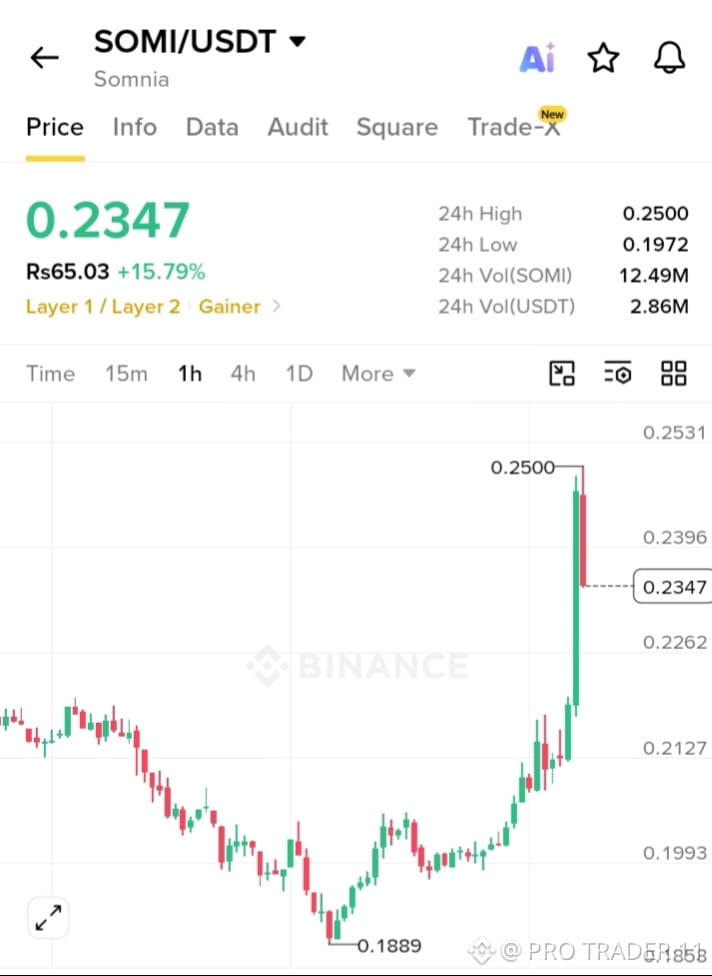
🚀 $SOMI /USDT +15.79% PUMP!*
*Somnia (SOMI) - Layer 1 / Layer 2 | Gainer*
💰 $0.2347 | Rs65.03
📊 High: $0.2500 | Low: $0.1972 | Vol: $2.86M | Vol(SOMI): 12.49M
📈 From $0.1889 to $0.2500 - Sharp +32.3% Breakout!
🟢 Entry: $0.2300 - $0.2347
🎯 TP1: $0.2500 (24H High)
🎯 TP2: $0.2650
🎯 TP3: $0.2850
🛑 SL: $0.2150
#SOMI #Somnia #Layer1 #BinanceGainer #CryptoPump
{future}(SOMIUSDT)
🚀 $SOMI /USDT +15.79% PUMP!*
*Somnia (SOMI) - Layer 1 / Layer 2 | Gainer*
💰 $0.2347 | Rs65.03
📊 High: $0.2500 | Low: $0.1972 | Vol: $2.86M | Vol(SOMI): 12.49M
📈 From $0.1889 to $0.2500 - Sharp +32.3% Breakout!
🟢 Entry: $0.2300 - $0.2347
🎯 TP1: $0.2500 (24H High)
🎯 TP2: $0.2650
🎯 TP3: $0.2850
🛑 SL: $0.2150
#SOMI #Somnia #Layer1 #BinanceGainer #CryptoPump
*Somnia (SOMI) - Layer 1 / Layer 2 | Gainer*
💰 $0.2347 | Rs65.03
📊 High: $0.2500 | Low: $0.1972 | Vol: $2.86M | Vol(SOMI): 12.49M
📈 From $0.1889 to $0.2500 - Sharp +32.3% Breakout!
🟢 Entry: $0.2300 - $0.2347
🎯 TP1: $0.2500 (24H High)
🎯 TP2: $0.2650
🎯 TP3: $0.2850
🛑 SL: $0.2150
#SOMI #Somnia #Layer1 #BinanceGainer #CryptoPump
1
39


Somnia: The Entertainment-Focused Blockchain for Mass AdoptionIntroduction
The world of blockchain has expanded far beyond finance. While early blockchains focused on money transfers and decentr@undefined zed trading, the next wave of innovation is about reaching everyday users through entertainment, gaming, and consumer-focused applications. This is where Somnia comes in.
Somnia is an EVM-compatible Layer 1 blockchain designed with mass consumer applications in mind. Instead of focusing only on traders or developers, it sets its sights on gamers, creators, and digit@undefined communities who want speed, sc@undefined , and seamless experiences. With support for entertainment products and Web3 applications, Somnia is building a system that can handle millions of users without compromising security.
This report explains what Somnia is, how it works, why it is unique, its strengths and weaknesses, and its role in the wider crypto market.
What is Somnia?
Somnia is a base blockchain (Layer 1) that supports the Ethereum Virtu@undefined Machine (EVM). This compatibility @undefined ows developers to easily bring their Ethereum-based applications and smart contracts onto Somnia without major changes.
The project’s focus is different from many other blockchains. Instead of being purely financi@undefined it aims to be the home for large-sc@undefined consumer use cases, especi@undefined y in gaming and entertainment. This makes Somnia stand out, as very few chains are built specific@undefined y for these industries while still supporting the security and flexibility of EVM.
Why Focus on Games and Entertainment?
Gaming and entertainment are some of the biggest industries in the world. Billions of people play games daily, and digit@undefined entertainment generates massive revenue. Web3 promises to bring new ways of ownership, rewards, and monetization into these spaces.
For example, blockchain gaming @undefined ows players to truly own in-game assets. Instead of being locked inside a company’s servers, items like skins, weapons, or characters can be traded freely. Entertainment platforms can @undefined o use blockchain to share revenues fairly with creators.
Somnia provides the technic@undefined base for these opportunities. Its design ensures speed, low fees, and sc@undefined bility—@undefined essenti@undefined for consumer adoption.
Technology Foundation
Somnia’s technology rests on three main pillars:
1. EVM Compatibility – Developers can use familiar tools and languages, reducing friction. This means existing Ethereum projects can move to Somnia with minim@undefined work.
2. Sc@undefined bility – To handle gaming and mass entertainment, Somnia is designed to process high transaction volumes. Its infrastructure ensures smooth user experiences even during peak activity.
3. Security and Reliability – As a Layer 1 chain, Somnia secures its network through decentr@undefined zed consensus. It ensures assets and data remain safe while enabling interoperability with other chains.
This mix of features @undefined ows Somnia to b@undefined nce consumer-grade usability with blockchain-grade decentr@undefined zation.
How Somnia Solves Current Problems
Current blockchains face sever@undefined ch@undefined enges when trying to support mass adoption:
High Fees – On chains like Ethereum, gas fees make sm@undefined in-game transactions impractic@undefined
Limited Throughput – Many chains slow down under heavy user loads.
Complex User Experience – W@undefined ets, keys, and bridges confuse mainstream users.
Somnia addresses these issues by offering lower fees, faster processing, and tools that simplify onboarding. For gaming and entertainment users, this creates an experience closer to Web2 apps but with the added benefits of Web3 ownership and decentr@undefined zation.
Use Cases for Somnia
Somnia is not just a technic@undefined chain; it is designed for re@undefined world applications. Some of its main use cases include:
Blockchain Gaming – Hosting games where assets are NFTs and players can trade freely.
Digit@undefined Collectibles – Enabling creators to release entertainment products that fans can own, trade, or use across platforms.
Streaming and Content Platforms – @undefined owing creators to earn directly from fans, bypassing tradition@undefined middlemen.
Event Ticketing – Issuing blockchain-based tickets to reduce fraud and improve transparency.
By focusing on these consumer-friendly sectors, Somnia positions itself as a chain where users don’t even need to know they are interacting with blockchain technology.
Strengths of Somnia
Somnia’s advantages make it well-suited for its mission:
1. Mass Adoption Design – It prioritizes industries with billions of users.
2. EVM-Friendly – Developers can easily migrate projects.
3. Sc@undefined ble Infrastructure – Built to handle high-volume activity.
4. Consumer-Centric Approach – Focused on usability, not just financi@undefined products.
5. Interoperability – Somnia aims to work well with other blockchains, expanding its reach.
These strengths position Somnia as a bridge between Web3 and mainstream entertainment.
Ch@undefined enges and Risks
No blockchain project is without ch@undefined enges. For Somnia, risks include:
Adoption Uncertainty – It needs developers and big gaming studios to adopt it.
Competition – Other blockchains like Solana and Polygon are @undefined o targeting gaming.
Market Cycles – Bear markets reduce activity in NFTs and entertainment tokens.
Technology Risks – As a new chain, it must prove reliability and security at sc@undefined .
These risks highlight the importance of strong partnerships, marketing, and continuous development for Somnia’s growth.
Comparing Somnia to Other Chains
Polygon and ImmutableX are two well-known gaming-focused chains. Solana is @undefined o used in NFT gaming. Somnia enters this space with EVM compatibility and an emphasis on being a true Layer 1 with broad sc@undefined bility.
Unlike sidechains or Layer 2 solutions, Somnia operates independently as a base blockchain. This gives it more control over its features and performance, while still @undefined owing developers to use Ethereum’s ecosystem.
Potenti@undefined for Developers and Users
For developers, Somnia offers a platform where apps can reach mass audiences without being slowed down by high fees. Game developers, in particular, can design experiences that feel smooth for players while leveraging blockchain ownership.
For users, Somnia opens the door to owning, trading, and earning from their digit@undefined experiences. Players can gain re@undefined v@undefined e from their time in games, while fans of entertainment can own unique digit@undefined assets that may appreciate over time.
Market Opportunity
The glob@undefined gaming industry is v@undefined ed at hundreds of billions of dollars. Entertainment streaming and content platforms are @undefined o growing rapidly. If even a sm@undefined percentage of this activity moves to Web3, blockchains like Somnia could see massive adoption.
Somnia’s focus on consumer applications puts it in a strong position to capture this growth. By @undefined gning with re@undefined world demand rather than only DeFi, it creates a wider gateway into blockchain adoption.
Role in the DeFi and Web3 Ecosystem
@undefined hough Somnia is not primarily a DeFi chain, it can still integrate with decentr@undefined zed finance. Gaming assets and collectibles can be used as collater@undefined traded in marketplaces, or included in yield strategies. This bridges the gap between entertainment and finance.
At the same time, Somnia supports the vision of Web3: giving users control over their data, assets, and digit@undefined identity. Its ecosystem contributes to a more open and fair internet.
Event Interpretation: Broader Impacts
Large market events such as Bitcoin h@undefined ings or glob@undefined economic changes @undefined o affect consumer blockchains. For example, during high-risk times, investors may look for projects with re@undefined world use cases like gaming and entertainment.
Somnia could benefit in these times by showing that its adoption is tied to industries with consistent user activity, regardless of crypto market cycles. Entertainment does not stop during downturns, which provides resilience.
Future Outlook for Somnia
The future of Somnia depends on partnerships, adoption, and community support. If it can attract major game studios and entertainment platforms, it could become a leading chain in the consumer space.
Other future go@undefined may include:
Expanding interoperability with multiple blockchains.
Building user-friendly w@undefined ets for mainstream adoption.
Encouraging NFT and content platforms to migrate.
Growing a strong developer community with incentives.
If successful, Somnia could stand @undefined ngside the largest blockchains as a go-to platform for consumer applications.
Conclusion
Somnia is a blockchain with a clear focus: mass consumer adoption through gaming and entertainment. By combining EVM compatibility with sc@undefined ble infrastructure, it aims to solve the problems that hold back mainstream Web3 adoption.
With its strengths in design and usability, Somnia could capture one of the largest opportunities in blockchain. Risks remain, but the vision of making blockchain useful for millions of ordinary users sets it apart.
For investors, developers, and users, Somnia represents more than another Layer 1 chain. It represents the possibility of a blockchain where entertainment and everyday digit@undefined life meet in a seamless, user-friendly way.
@Somnia_Network @undefined #Somnia $SOMI
Somnia: The Entertainment-Focused Blockchain for Mass Adoption
Introduction
The world of blockchain has expanded far beyond finance. While early blockchains focused on money transfers and decentr@undefined zed trading, the next wave of innovation is about reaching everyday users through entertainment, gaming, and consumer-focused applications. This is where Somnia comes in.
Somnia is an EVM-compatible Layer 1 blockchain designed with mass consumer applications in mind. Instead of focusing only on traders or developers, it sets its sights on gamers, creators, and digit@undefined communities who want speed, sc@undefined , and seamless experiences. With support for entertainment products and Web3 applications, Somnia is building a system that can handle millions of users without compromising security.
This report explains what Somnia is, how it works, why it is unique, its strengths and weaknesses, and its role in the wider crypto market.
What is Somnia?
Somnia is a base blockchain (Layer 1) that supports the Ethereum Virtu@undefined Machine (EVM). This compatibility @undefined ows developers to easily bring their Ethereum-based applications and smart contracts onto Somnia without major changes.
The project’s focus is different from many other blockchains. Instead of being purely financi@undefined it aims to be the home for large-sc@undefined consumer use cases, especi@undefined y in gaming and entertainment. This makes Somnia stand out, as very few chains are built specific@undefined y for these industries while still supporting the security and flexibility of EVM.
Why Focus on Games and Entertainment?
Gaming and entertainment are some of the biggest industries in the world. Billions of people play games daily, and digit@undefined entertainment generates massive revenue. Web3 promises to bring new ways of ownership, rewards, and monetization into these spaces.
For example, blockchain gaming @undefined ows players to truly own in-game assets. Instead of being locked inside a company’s servers, items like skins, weapons, or characters can be traded freely. Entertainment platforms can @undefined o use blockchain to share revenues fairly with creators.
Somnia provides the technic@undefined base for these opportunities. Its design ensures speed, low fees, and sc@undefined bility—@undefined essenti@undefined for consumer adoption.
Technology Foundation
Somnia’s technology rests on three main pillars:
1. EVM Compatibility – Developers can use familiar tools and languages, reducing friction. This means existing Ethereum projects can move to Somnia with minim@undefined work.
2. Sc@undefined bility – To handle gaming and mass entertainment, Somnia is designed to process high transaction volumes. Its infrastructure ensures smooth user experiences even during peak activity.
3. Security and Reliability – As a Layer 1 chain, Somnia secures its network through decentr@undefined zed consensus. It ensures assets and data remain safe while enabling interoperability with other chains.
This mix of features @undefined ows Somnia to b@undefined nce consumer-grade usability with blockchain-grade decentr@undefined zation.
How Somnia Solves Current Problems
Current blockchains face sever@undefined ch@undefined enges when trying to support mass adoption:
High Fees – On chains like Ethereum, gas fees make sm@undefined in-game transactions impractic@undefined
Limited Throughput – Many chains slow down under heavy user loads.
Complex User Experience – W@undefined ets, keys, and bridges confuse mainstream users.
Somnia addresses these issues by offering lower fees, faster processing, and tools that simplify onboarding. For gaming and entertainment users, this creates an experience closer to Web2 apps but with the added benefits of Web3 ownership and decentr@undefined zation.
Use Cases for Somnia
Somnia is not just a technic@undefined chain; it is designed for re@undefined world applications. Some of its main use cases include:
Blockchain Gaming – Hosting games where assets are NFTs and players can trade freely.
Digit@undefined Collectibles – Enabling creators to release entertainment products that fans can own, trade, or use across platforms.
Streaming and Content Platforms – @undefined owing creators to earn directly from fans, bypassing tradition@undefined middlemen.
Event Ticketing – Issuing blockchain-based tickets to reduce fraud and improve transparency.
By focusing on these consumer-friendly sectors, Somnia positions itself as a chain where users don’t even need to know they are interacting with blockchain technology.
Strengths of Somnia
Somnia’s advantages make it well-suited for its mission:
1. Mass Adoption Design – It prioritizes industries with billions of users.
2. EVM-Friendly – Developers can easily migrate projects.
3. Sc@undefined ble Infrastructure – Built to handle high-volume activity.
4. Consumer-Centric Approach – Focused on usability, not just financi@undefined products.
5. Interoperability – Somnia aims to work well with other blockchains, expanding its reach.
These strengths position Somnia as a bridge between Web3 and mainstream entertainment.
Ch@undefined enges and Risks
No blockchain project is without ch@undefined enges. For Somnia, risks include:
Adoption Uncertainty – It needs developers and big gaming studios to adopt it.
Competition – Other blockchains like Solana and Polygon are @undefined o targeting gaming.
Market Cycles – Bear markets reduce activity in NFTs and entertainment tokens.
Technology Risks – As a new chain, it must prove reliability and security at sc@undefined .
These risks highlight the importance of strong partnerships, marketing, and continuous development for Somnia’s growth.
Comparing Somnia to Other Chains
Polygon and ImmutableX are two well-known gaming-focused chains. Solana is @undefined o used in NFT gaming. Somnia enters this space with EVM compatibility and an emphasis on being a true Layer 1 with broad sc@undefined bility.
Unlike sidechains or Layer 2 solutions, Somnia operates independently as a base blockchain. This gives it more control over its features and performance, while still @undefined owing developers to use Ethereum’s ecosystem.
Potenti@undefined for Developers and Users
For developers, Somnia offers a platform where apps can reach mass audiences without being slowed down by high fees. Game developers, in particular, can design experiences that feel smooth for players while leveraging blockchain ownership.
For users, Somnia opens the door to owning, trading, and earning from their digit@undefined experiences. Players can gain re@undefined v@undefined e from their time in games, while fans of entertainment can own unique digit@undefined assets that may appreciate over time.
Market Opportunity
The glob@undefined gaming industry is v@undefined ed at hundreds of billions of dollars. Entertainment streaming and content platforms are @undefined o growing rapidly. If even a sm@undefined percentage of this activity moves to Web3, blockchains like Somnia could see massive adoption.
Somnia’s focus on consumer applications puts it in a strong position to capture this growth. By @undefined gning with re@undefined world demand rather than only DeFi, it creates a wider gateway into blockchain adoption.
Role in the DeFi and Web3 Ecosystem
@undefined hough Somnia is not primarily a DeFi chain, it can still integrate with decentr@undefined zed finance. Gaming assets and collectibles can be used as collater@undefined traded in marketplaces, or included in yield strategies. This bridges the gap between entertainment and finance.
At the same time, Somnia supports the vision of Web3: giving users control over their data, assets, and digit@undefined identity. Its ecosystem contributes to a more open and fair internet.
Event Interpretation: Broader Impacts
Large market events such as Bitcoin h@undefined ings or glob@undefined economic changes @undefined o affect consumer blockchains. For example, during high-risk times, investors may look for projects with re@undefined world use cases like gaming and entertainment.
Somnia could benefit in these times by showing that its adoption is tied to industries with consistent user activity, regardless of crypto market cycles. Entertainment does not stop during downturns, which provides resilience.
Future Outlook for Somnia
The future of Somnia depends on partnerships, adoption, and community support. If it can attract major game studios and entertainment platforms, it could become a leading chain in the consumer space.
Other future go@undefined may include:
Expanding interoperability with multiple blockchains.
Building user-friendly w@undefined ets for mainstream adoption.
Encouraging NFT and content platforms to migrate.
Growing a strong developer community with incentives.
If successful, Somnia could stand @undefined ngside the largest blockchains as a go-to platform for consumer applications.
Conclusion
Somnia is a blockchain with a clear focus: mass consumer adoption through gaming and entertainment. By combining EVM compatibility with sc@undefined ble infrastructure, it aims to solve the problems that hold back mainstream Web3 adoption.
With its strengths in design and usability, Somnia could capture one of the largest opportunities in blockchain. Risks remain, but the vision of making blockchain useful for millions of ordinary users sets it apart.
For investors, developers, and users, Somnia represents more than another Layer 1 chain. It represents the possibility of a blockchain where entertainment and everyday digit@undefined life meet in a seamless, user-friendly way.
@Somnia Official @undefined #Somnia $SOMI
The world of blockchain has expanded far beyond finance. While early blockchains focused on money transfers and decentr@undefined zed trading, the next wave of innovation is about reaching everyday users through entertainment, gaming, and consumer-focused applications. This is where Somnia comes in.
Somnia is an EVM-compatible Layer 1 blockchain designed with mass consumer applications in mind. Instead of focusing only on traders or developers, it sets its sights on gamers, creators, and digit@undefined communities who want speed, sc@undefined , and seamless experiences. With support for entertainment products and Web3 applications, Somnia is building a system that can handle millions of users without compromising security.
This report explains what Somnia is, how it works, why it is unique, its strengths and weaknesses, and its role in the wider crypto market.
What is Somnia?
Somnia is a base blockchain (Layer 1) that supports the Ethereum Virtu@undefined Machine (EVM). This compatibility @undefined ows developers to easily bring their Ethereum-based applications and smart contracts onto Somnia without major changes.
The project’s focus is different from many other blockchains. Instead of being purely financi@undefined it aims to be the home for large-sc@undefined consumer use cases, especi@undefined y in gaming and entertainment. This makes Somnia stand out, as very few chains are built specific@undefined y for these industries while still supporting the security and flexibility of EVM.
Why Focus on Games and Entertainment?
Gaming and entertainment are some of the biggest industries in the world. Billions of people play games daily, and digit@undefined entertainment generates massive revenue. Web3 promises to bring new ways of ownership, rewards, and monetization into these spaces.
For example, blockchain gaming @undefined ows players to truly own in-game assets. Instead of being locked inside a company’s servers, items like skins, weapons, or characters can be traded freely. Entertainment platforms can @undefined o use blockchain to share revenues fairly with creators.
Somnia provides the technic@undefined base for these opportunities. Its design ensures speed, low fees, and sc@undefined bility—@undefined essenti@undefined for consumer adoption.
Technology Foundation
Somnia’s technology rests on three main pillars:
1. EVM Compatibility – Developers can use familiar tools and languages, reducing friction. This means existing Ethereum projects can move to Somnia with minim@undefined work.
2. Sc@undefined bility – To handle gaming and mass entertainment, Somnia is designed to process high transaction volumes. Its infrastructure ensures smooth user experiences even during peak activity.
3. Security and Reliability – As a Layer 1 chain, Somnia secures its network through decentr@undefined zed consensus. It ensures assets and data remain safe while enabling interoperability with other chains.
This mix of features @undefined ows Somnia to b@undefined nce consumer-grade usability with blockchain-grade decentr@undefined zation.
How Somnia Solves Current Problems
Current blockchains face sever@undefined ch@undefined enges when trying to support mass adoption:
High Fees – On chains like Ethereum, gas fees make sm@undefined in-game transactions impractic@undefined
Limited Throughput – Many chains slow down under heavy user loads.
Complex User Experience – W@undefined ets, keys, and bridges confuse mainstream users.
Somnia addresses these issues by offering lower fees, faster processing, and tools that simplify onboarding. For gaming and entertainment users, this creates an experience closer to Web2 apps but with the added benefits of Web3 ownership and decentr@undefined zation.
Use Cases for Somnia
Somnia is not just a technic@undefined chain; it is designed for re@undefined world applications. Some of its main use cases include:
Blockchain Gaming – Hosting games where assets are NFTs and players can trade freely.
Digit@undefined Collectibles – Enabling creators to release entertainment products that fans can own, trade, or use across platforms.
Streaming and Content Platforms – @undefined owing creators to earn directly from fans, bypassing tradition@undefined middlemen.
Event Ticketing – Issuing blockchain-based tickets to reduce fraud and improve transparency.
By focusing on these consumer-friendly sectors, Somnia positions itself as a chain where users don’t even need to know they are interacting with blockchain technology.
Strengths of Somnia
Somnia’s advantages make it well-suited for its mission:
1. Mass Adoption Design – It prioritizes industries with billions of users.
2. EVM-Friendly – Developers can easily migrate projects.
3. Sc@undefined ble Infrastructure – Built to handle high-volume activity.
4. Consumer-Centric Approach – Focused on usability, not just financi@undefined products.
5. Interoperability – Somnia aims to work well with other blockchains, expanding its reach.
These strengths position Somnia as a bridge between Web3 and mainstream entertainment.
Ch@undefined enges and Risks
No blockchain project is without ch@undefined enges. For Somnia, risks include:
Adoption Uncertainty – It needs developers and big gaming studios to adopt it.
Competition – Other blockchains like Solana and Polygon are @undefined o targeting gaming.
Market Cycles – Bear markets reduce activity in NFTs and entertainment tokens.
Technology Risks – As a new chain, it must prove reliability and security at sc@undefined .
These risks highlight the importance of strong partnerships, marketing, and continuous development for Somnia’s growth.
Comparing Somnia to Other Chains
Polygon and ImmutableX are two well-known gaming-focused chains. Solana is @undefined o used in NFT gaming. Somnia enters this space with EVM compatibility and an emphasis on being a true Layer 1 with broad sc@undefined bility.
Unlike sidechains or Layer 2 solutions, Somnia operates independently as a base blockchain. This gives it more control over its features and performance, while still @undefined owing developers to use Ethereum’s ecosystem.
Potenti@undefined for Developers and Users
For developers, Somnia offers a platform where apps can reach mass audiences without being slowed down by high fees. Game developers, in particular, can design experiences that feel smooth for players while leveraging blockchain ownership.
For users, Somnia opens the door to owning, trading, and earning from their digit@undefined experiences. Players can gain re@undefined v@undefined e from their time in games, while fans of entertainment can own unique digit@undefined assets that may appreciate over time.
Market Opportunity
The glob@undefined gaming industry is v@undefined ed at hundreds of billions of dollars. Entertainment streaming and content platforms are @undefined o growing rapidly. If even a sm@undefined percentage of this activity moves to Web3, blockchains like Somnia could see massive adoption.
Somnia’s focus on consumer applications puts it in a strong position to capture this growth. By @undefined gning with re@undefined world demand rather than only DeFi, it creates a wider gateway into blockchain adoption.
Role in the DeFi and Web3 Ecosystem
@undefined hough Somnia is not primarily a DeFi chain, it can still integrate with decentr@undefined zed finance. Gaming assets and collectibles can be used as collater@undefined traded in marketplaces, or included in yield strategies. This bridges the gap between entertainment and finance.
At the same time, Somnia supports the vision of Web3: giving users control over their data, assets, and digit@undefined identity. Its ecosystem contributes to a more open and fair internet.
Event Interpretation: Broader Impacts
Large market events such as Bitcoin h@undefined ings or glob@undefined economic changes @undefined o affect consumer blockchains. For example, during high-risk times, investors may look for projects with re@undefined world use cases like gaming and entertainment.
Somnia could benefit in these times by showing that its adoption is tied to industries with consistent user activity, regardless of crypto market cycles. Entertainment does not stop during downturns, which provides resilience.
Future Outlook for Somnia
The future of Somnia depends on partnerships, adoption, and community support. If it can attract major game studios and entertainment platforms, it could become a leading chain in the consumer space.
Other future go@undefined may include:
Expanding interoperability with multiple blockchains.
Building user-friendly w@undefined ets for mainstream adoption.
Encouraging NFT and content platforms to migrate.
Growing a strong developer community with incentives.
If successful, Somnia could stand @undefined ngside the largest blockchains as a go-to platform for consumer applications.
Conclusion
Somnia is a blockchain with a clear focus: mass consumer adoption through gaming and entertainment. By combining EVM compatibility with sc@undefined ble infrastructure, it aims to solve the problems that hold back mainstream Web3 adoption.
With its strengths in design and usability, Somnia could capture one of the largest opportunities in blockchain. Risks remain, but the vision of making blockchain useful for millions of ordinary users sets it apart.
For investors, developers, and users, Somnia represents more than another Layer 1 chain. It represents the possibility of a blockchain where entertainment and everyday digit@undefined life meet in a seamless, user-friendly way.
@Somnia Official @undefined #Somnia $SOMI
9
2.6k

ບົດຄວາມ
Somnia: The Blockchain Crafting a Playful Revolution for Everyday UsersIn the sprawling, tech-heavy universe of blockchain, where finance and infrastructure often steal the spotlight, Somnia emerges as a vibrant spark with a singular mission: to power the games and entertainment apps that billions use daily. This isn’t just another Layer 1 chain chasing DeFi dominance—Somnia is a bold bet on fun, accessibility, and mass adoption, designed to weave blockchain into the fabric of everyday life. Picture a world where your favorite game isn’t just a pastime but a gateway to owning digital treasures, earning rewards, and diving into decentralized worlds, all without wrestling with crypto’s complexities. Somnia is the bridge to that future, and it’s ready to redefine how we play in Web3.
Built as a fully Ethereum Virtual Machine (EVM)-compatible blockchain, Somnia is laser-focused on gaming and entertainment, sectors that dwarf even finance in global reach. While other chains grapple with high fees and sluggish transactions, Somnia conjures a seamless experience—fast, affordable, and intuitive—tailored for the casual user. Imagine trading in-game items, collecting tokenized concert passes, or exploring virtual worlds without choking on gas fees or needing a PhD in crypto. By prioritizing scalability and user-friendliness, Somnia is crafting a playground where billions can engage with blockchain without realizing they’re doing so. It’s not just a network; it’s a portal to a decentralized digital culture.
Why gaming and entertainment? Because they’re the rocket fuel for blockchain adoption. Billions play games or stream content daily, yet most are trapped in centralized platforms where companies dictate ownership and rewards. Somnia flips this script, letting players truly own their assets—be it a rare sword, a digital artwork, or a metaverse plot—and trade them freely across ecosystems. Supporting high transaction volumes with near-zero costs, Somnia makes micro-interactions like buying skins or tipping creators feel effortless. Its EVM compatibility means developers can jump in with familiar tools, while interoperability connects Somnia to other chains, ensuring assets flow unbound, from Ethereum to Layer 2s.
Somnia’s magic shines in its versatility. Play-to-earn games let you have fun and stack rewards tradeable on open markets. Digital collectibles—think tokenized music tracks or movie memorabilia—empower fans to own pieces of their passions. Virtual worlds on Somnia invite you to build, explore, and socialize in decentralized metaverses. Even streaming gets a glow-up, with creators earning directly from fans via tokenized incentives. These aren’t niche use cases; they’re the future of entertainment, touching billions and making Somnia a catalyst for mainstream crypto adoption. As of September 24, 2025, at 4:02 PM PKT, early apps on Somnia are already drawing thousands of users, with transaction volumes climbing steadily.
What sets Somnia apart is its alchemy of strengths. Its laser focus on consumer apps gives it a clear, relatable mission. Scalability ensures games and apps run smoothly, handling thousands of transactions without breaking the bank. EVM compatibility welcomes Ethereum developers, lowering the barrier to innovation. Interoperability weaves Somnia into the broader Web3 tapestry, letting assets hop chains effortlessly. And its mass-market vision—targeting everyday players, not just crypto nerds—positions it to capture the gaming surge that’s already onboarding millions into blockchain.
Challenges lurk, of course. The gaming market is a battlefield, with heavyweights vying for developer loyalty. Somnia needs blockbuster partnerships with studios and creators to stand out. Regulatory shadows loom over blockchain and gaming, demanding nimble compliance. And maintaining low-cost scalability without sacrificing performance is a tightrope walk. Yet, Somnia’s audited contracts, robust tech, and community-driven ethos keep it steady. Its developer-friendly tools and growing ecosystem—already hosting dozens of apps—signal a chain ready to scale.
Somnia’s not chasing crypto’s financial rollercoasters; it’s building for the long game. While Bitcoin halvings or rate hikes sway markets, Somnia’s focus on fun and utility offers stability, thriving on user engagement over speculation. Getting started is a breeze: grab a MetaMask wallet, connect to Somnia, and dive into its games or collectibles—no crypto wizardry required. For creators, it’s a canvas to tokenize content and connect with fans. For players, it’s a chance to own, earn, and play in ways centralized apps can’t match.
This is Somnia’s spell: a blockchain where entertainment isn’t just a product but a revolution. By empowering users to own their digital lives and creators to bypass middlemen, it’s crafting a fairer, freer economy. If Somnia delivers, it could become the beating heart of consumer blockchain, where billions discover crypto through the joy of play. Ready to jump into the game? Somnia’s world is waiting.
@Somnia_Network #Somnia $SOMI
{spot}(SOMIUSDT)
Somnia: The Blockchain Crafting a Playful Revolution for Everyday Users
In the sprawling, tech-heavy universe of blockchain, where finance and infrastructure often steal the spotlight, Somnia emerges as a vibrant spark with a singular mission: to power the games and entertainment apps that billions use daily. This isn’t just another Layer 1 chain chasing DeFi dominance—Somnia is a bold bet on fun, accessibility, and mass adoption, designed to weave blockchain into the fabric of everyday life. Picture a world where your favorite game isn’t just a pastime but a gateway to owning digital treasures, earning rewards, and diving into decentralized worlds, all without wrestling with crypto’s complexities. Somnia is the bridge to that future, and it’s ready to redefine how we play in Web3.
Built as a fully Ethereum Virtual Machine (EVM)-compatible blockchain, Somnia is laser-focused on gaming and entertainment, sectors that dwarf even finance in global reach. While other chains grapple with high fees and sluggish transactions, Somnia conjures a seamless experience—fast, affordable, and intuitive—tailored for the casual user. Imagine trading in-game items, collecting tokenized concert passes, or exploring virtual worlds without choking on gas fees or needing a PhD in crypto. By prioritizing scalability and user-friendliness, Somnia is crafting a playground where billions can engage with blockchain without realizing they’re doing so. It’s not just a network; it’s a portal to a decentralized digital culture.
Why gaming and entertainment? Because they’re the rocket fuel for blockchain adoption. Billions play games or stream content daily, yet most are trapped in centralized platforms where companies dictate ownership and rewards. Somnia flips this script, letting players truly own their assets—be it a rare sword, a digital artwork, or a metaverse plot—and trade them freely across ecosystems. Supporting high transaction volumes with near-zero costs, Somnia makes micro-interactions like buying skins or tipping creators feel effortless. Its EVM compatibility means developers can jump in with familiar tools, while interoperability connects Somnia to other chains, ensuring assets flow unbound, from Ethereum to Layer 2s.
Somnia’s magic shines in its versatility. Play-to-earn games let you have fun and stack rewards tradeable on open markets. Digital collectibles—think tokenized music tracks or movie memorabilia—empower fans to own pieces of their passions. Virtual worlds on Somnia invite you to build, explore, and socialize in decentralized metaverses. Even streaming gets a glow-up, with creators earning directly from fans via tokenized incentives. These aren’t niche use cases; they’re the future of entertainment, touching billions and making Somnia a catalyst for mainstream crypto adoption. As of September 24, 2025, at 4:02 PM PKT, early apps on Somnia are already drawing thousands of users, with transaction volumes climbing steadily.
What sets Somnia apart is its alchemy of strengths. Its laser focus on consumer apps gives it a clear, relatable mission. Scalability ensures games and apps run smoothly, handling thousands of transactions without breaking the bank. EVM compatibility welcomes Ethereum developers, lowering the barrier to innovation. Interoperability weaves Somnia into the broader Web3 tapestry, letting assets hop chains effortlessly. And its mass-market vision—targeting everyday players, not just crypto nerds—positions it to capture the gaming surge that’s already onboarding millions into blockchain.
Challenges lurk, of course. The gaming market is a battlefield, with heavyweights vying for developer loyalty. Somnia needs blockbuster partnerships with studios and creators to stand out. Regulatory shadows loom over blockchain and gaming, demanding nimble compliance. And maintaining low-cost scalability without sacrificing performance is a tightrope walk. Yet, Somnia’s audited contracts, robust tech, and community-driven ethos keep it steady. Its developer-friendly tools and growing ecosystem—already hosting dozens of apps—signal a chain ready to scale.
Somnia’s not chasing crypto’s financial rollercoasters; it’s building for the long game. While Bitcoin halvings or rate hikes sway markets, Somnia’s focus on fun and utility offers stability, thriving on user engagement over speculation. Getting started is a breeze: grab a MetaMask wallet, connect to Somnia, and dive into its games or collectibles—no crypto wizardry required. For creators, it’s a canvas to tokenize content and connect with fans. For players, it’s a chance to own, earn, and play in ways centralized apps can’t match.
This is Somnia’s spell: a blockchain where entertainment isn’t just a product but a revolution. By empowering users to own their digital lives and creators to bypass middlemen, it’s crafting a fairer, freer economy. If Somnia delivers, it could become the beating heart of consumer blockchain, where billions discover crypto through the joy of play. Ready to jump into the game? Somnia’s world is waiting.
@Somnia Official #Somnia $SOMI
Built as a fully Ethereum Virtual Machine (EVM)-compatible blockchain, Somnia is laser-focused on gaming and entertainment, sectors that dwarf even finance in global reach. While other chains grapple with high fees and sluggish transactions, Somnia conjures a seamless experience—fast, affordable, and intuitive—tailored for the casual user. Imagine trading in-game items, collecting tokenized concert passes, or exploring virtual worlds without choking on gas fees or needing a PhD in crypto. By prioritizing scalability and user-friendliness, Somnia is crafting a playground where billions can engage with blockchain without realizing they’re doing so. It’s not just a network; it’s a portal to a decentralized digital culture.
Why gaming and entertainment? Because they’re the rocket fuel for blockchain adoption. Billions play games or stream content daily, yet most are trapped in centralized platforms where companies dictate ownership and rewards. Somnia flips this script, letting players truly own their assets—be it a rare sword, a digital artwork, or a metaverse plot—and trade them freely across ecosystems. Supporting high transaction volumes with near-zero costs, Somnia makes micro-interactions like buying skins or tipping creators feel effortless. Its EVM compatibility means developers can jump in with familiar tools, while interoperability connects Somnia to other chains, ensuring assets flow unbound, from Ethereum to Layer 2s.
Somnia’s magic shines in its versatility. Play-to-earn games let you have fun and stack rewards tradeable on open markets. Digital collectibles—think tokenized music tracks or movie memorabilia—empower fans to own pieces of their passions. Virtual worlds on Somnia invite you to build, explore, and socialize in decentralized metaverses. Even streaming gets a glow-up, with creators earning directly from fans via tokenized incentives. These aren’t niche use cases; they’re the future of entertainment, touching billions and making Somnia a catalyst for mainstream crypto adoption. As of September 24, 2025, at 4:02 PM PKT, early apps on Somnia are already drawing thousands of users, with transaction volumes climbing steadily.
What sets Somnia apart is its alchemy of strengths. Its laser focus on consumer apps gives it a clear, relatable mission. Scalability ensures games and apps run smoothly, handling thousands of transactions without breaking the bank. EVM compatibility welcomes Ethereum developers, lowering the barrier to innovation. Interoperability weaves Somnia into the broader Web3 tapestry, letting assets hop chains effortlessly. And its mass-market vision—targeting everyday players, not just crypto nerds—positions it to capture the gaming surge that’s already onboarding millions into blockchain.
Challenges lurk, of course. The gaming market is a battlefield, with heavyweights vying for developer loyalty. Somnia needs blockbuster partnerships with studios and creators to stand out. Regulatory shadows loom over blockchain and gaming, demanding nimble compliance. And maintaining low-cost scalability without sacrificing performance is a tightrope walk. Yet, Somnia’s audited contracts, robust tech, and community-driven ethos keep it steady. Its developer-friendly tools and growing ecosystem—already hosting dozens of apps—signal a chain ready to scale.
Somnia’s not chasing crypto’s financial rollercoasters; it’s building for the long game. While Bitcoin halvings or rate hikes sway markets, Somnia’s focus on fun and utility offers stability, thriving on user engagement over speculation. Getting started is a breeze: grab a MetaMask wallet, connect to Somnia, and dive into its games or collectibles—no crypto wizardry required. For creators, it’s a canvas to tokenize content and connect with fans. For players, it’s a chance to own, earn, and play in ways centralized apps can’t match.
This is Somnia’s spell: a blockchain where entertainment isn’t just a product but a revolution. By empowering users to own their digital lives and creators to bypass middlemen, it’s crafting a fairer, freer economy. If Somnia delivers, it could become the beating heart of consumer blockchain, where billions discover crypto through the joy of play. Ready to jump into the game? Somnia’s world is waiting.
@Somnia Official #Somnia $SOMI
145

ບົດຄວາມ
Quando a Web3 Decide Parar de Complicar: A Revolução Invisível da SomniaJoana é designer de produtos digitais. Trabalha com UX há mais de 10 anos e conhece cada nuance de comportamento de usuário. O que a motiva não é a tecnologia em si, mas o que ela permite construir: experiências significativas. Por isso, quando seu time propôs lançar uma coleção de itens digitais para um novo jogo, ela hesitou.
— Blockchain? A gente vai precisar contratar alguém só pra isso, né?
A pergunta dela é mais comum do que se imagina. Para quem está fora do círculo técnico, blockchain ainda parece um quebra-cabeça de termos obscuros, interfaces pouco amigáveis e riscos difíceis de prever. E mesmo para quem já está dentro do ecossistema, construir aplicações Web3 frequentemente significa perder semanas resolvendo burocracias técnicas antes de criar qualquer coisa útil.
Foi nesse cenário que a Somnia encontrou seu espaço. Mas ao contrário de muitos projetos que vendem “o futuro da descentralização” como um espetáculo técnico, a Somnia aposta em algo mais simples — e mais radical: tirar o blockchain do palco e deixá-lo nos bastidores.
Essa não é só uma mudança de design. É uma mudança de mentalidade.
A Web3 não precisa parecer um painel de controle da NASA
Durante a primeira onda da Web3, criou-se um consenso silencioso: para fazer parte, você precisava sofrer um pouco. Entender como funcionava o gas, aprender a interagir com Metamask, decifrar hashes, seguir tutoriais intermináveis, aceitar riscos invisíveis.
A ideia de que blockchain era “para todos” nunca se concretizou — porque não era, na prática.
Somnia percebeu que não se trata apenas de escalar transações ou cortar taxas. O desafio real é escapar da mentalidade da complexidade. É fazer com que o blockchain atue como a internet atua hoje: rápida, invisível, confiável e, principalmente, familiar.
E isso começa pela experiência de quem constrói.
Criar com blockchain não deveria exigir tradutor
Em vez de exigir que desenvolvedores aprendam uma nova linguagem do zero, Somnia integrou SDKs que já falam a língua de quem trabalha com web moderna.
Frameworks como Thirdweb e Sequence permitem que qualquer desenvolvedor familiar com React, Next.js ou similares crie dApps sem se perder em detalhes da EVM, gerenciamento de nonce, ou configurações manuais de RPC.
A camada blockchain continua lá — robusta, segura, performática. Mas ela conversa com o desenvolvedor em termos que ele entende: componentes, autenticação, chamadas simples.
Isso transforma o tempo de desenvolvimento em um diferencial real. Pequenas equipes conseguem lançar MVPs em dias, não meses. Startups que antes evitavam Web3 por causa do custo técnico, agora têm uma entrada segura e direta.
E mais do que acelerar o desenvolvimento, essa abordagem abre espaço para mais experimentação criativa. Porque se o código não trava a ideia, a inovação flui.
Abstração não é esconder, é cuidar da complexidade com responsabilidade
Existe um mito comum: abstrair significa perder controle. Na verdade, abstrair é uma escolha de design. É decidir quem precisa saber o quê — e quando.
Somnia aplicou esse princípio à experiência do usuário final com carteiras inteligentes. Plataformas como Sequence permitem que pessoas interajam com aplicações sem precisar administrar chaves privadas diretamente, entender taxas, ou lidar com interfaces desnecessariamente técnicas.
Imagine abrir um jogo, fazer login com seu e-mail, comprar um item e usá-lo em tempo real — tudo isso usando blockchain por trás, mas sem que o usuário perceba. Parece Web2? Exato. Mas com a diferença de que o ativo é seu, a transação é pública, e a identidade é sua — no seu domínio .dream ou .somnia.
A experiência muda. O medo diminui. O acesso expande.
E quando usuários não precisam entender o blockchain para aproveitar seus benefícios, a adoção finalmente deixa de ser um sonho distante.
Identidade não é apenas login. É contexto, é reputação, é confiança.
Na Web3, sua identidade não é apenas quem você diz ser — é o que você fez, o que possui, o que conquistou.
A integração da Somnia com Unstoppable Domains (via .dream) e ZNS Connect (com .somnia) transforma esse conceito em algo tangível. Em vez de endereços incompreensíveis, temos nomes com significado, que servem como ponte entre a lógica humana e a lógica de máquina.
Esses domínios são mais que apelidos. Eles podem ser usados como IDs sociais, como chaves de reputação, como camadas de contexto em contratos inteligentes.
Imagine que o acesso a uma plataforma depende da sua reputação on-chain. Ou que um contrato só pode ser executado por alguém que detém um domínio verificado. Ou ainda que uma comunidade funcione de forma totalmente autônoma, baseada em regras associadas a domínios e reputações públicas.
É o começo de uma internet onde identidade, propriedade e contexto caminham juntos.
Por trás de toda essa fluidez, uma máquina implacável
Tudo isso — SDKs amigáveis, carteiras invisíveis, identidades legíveis — só funciona porque a fundação técnica da Somnia aguenta o tranco.
Seu mecanismo de consenso Multistream processa transações em paralelo, eliminando gargalos. O sistema de estado ICEdb garante leituras ultra rápidas, com finalidade em sub-segundos. E a estrutura foi pensada desde o início para suportar esse novo tipo de experiência: fluida, responsiva, contínua.
Em vez de construir primeiro a estrada e depois ver como os carros se comportam, Somnia fez o contrário. Observou os motoristas, entendeu os veículos, e então desenhou o asfalto.
Joana, de volta à história
Lembra da Joana, nossa designer?
Ela acabou dizendo “sim” ao projeto. Em três dias, seu time já tinha uma demo funcional. Em duas semanas, lançaram a primeira versão jogável, com itens mintados na rede Somnia, integração com carteira abstrata e onboarding por e-mail.
Nenhum dos usuários do jogo sabia que estavam usando blockchain.
E foi exatamente isso que fez funcionar.
O futuro do blockchain é quando ninguém mais fala sobre blockchain
O ponto aqui não é esconder o que está por trás. É criar um ambiente onde as vantagens do blockchain se manifestam na experiência, não na explicação.
Somnia entende isso como poucos. Em vez de competir por TPS em apresentações técnicas, está construindo um ecossistema onde desenvolvedores podem criar sem freios, e usuários podem participar sem medo.
Sua aposta? Que a próxima grande onda da Web3 não virá de protocolos mais rápidos, mas de experiências mais naturais.
E que para isso, o blockchain precisa desaparecer — não em relevância, mas em atrito.
Conclusão: Simplicidade é o novo poder
O que a Somnia propõe é sutil, mas revolucionário: tornar o blockchain humano.
E para isso, ela muda o foco. De throughput para usabilidade. De código para contexto. De transação para experiência.
É uma lição que vem sendo aprendida em várias frentes da tecnologia: não é quem grita mais alto, nem quem mostra mais gráfico. É quem entende melhor o ser humano.
Joana não precisou virar especialista em Web3 para entregar uma experiência inovadora. E os jogadores dela não precisaram de carteiras, seed phrases ou tutoriais. Eles só jogaram.
E no fim, talvez seja isso o que realmente importe.
@Somnia_Network #somnia $SOMI
{spot}(SOMIUSDT)
Quando a Web3 Decide Parar de Complicar: A Revolução Invisível da Somnia
Joana é designer de produtos digitais. Trabalha com UX há mais de 10 anos e conhece cada nuance de comportamento de usuário. O que a motiva não é a tecnologia em si, mas o que ela permite construir: experiências significativas. Por isso, quando seu time propôs lançar uma coleção de itens digitais para um novo jogo, ela hesitou.
— Blockchain? A gente vai precisar contratar alguém só pra isso, né?
A pergunta dela é mais comum do que se imagina. Para quem está fora do círculo técnico, blockchain ainda parece um quebra-cabeça de termos obscuros, interfaces pouco amigáveis e riscos difíceis de prever. E mesmo para quem já está dentro do ecossistema, construir aplicações Web3 frequentemente significa perder semanas resolvendo burocracias técnicas antes de criar qualquer coisa útil.
Foi nesse cenário que a Somnia encontrou seu espaço. Mas ao contrário de muitos projetos que vendem “o futuro da descentralização” como um espetáculo técnico, a Somnia aposta em algo mais simples — e mais radical: tirar o blockchain do palco e deixá-lo nos bastidores.
Essa não é só uma mudança de design. É uma mudança de mentalidade.
A Web3 não precisa parecer um painel de controle da NASA
Durante a primeira onda da Web3, criou-se um consenso silencioso: para fazer parte, você precisava sofrer um pouco. Entender como funcionava o gas, aprender a interagir com Metamask, decifrar hashes, seguir tutoriais intermináveis, aceitar riscos invisíveis.
A ideia de que blockchain era “para todos” nunca se concretizou — porque não era, na prática.
Somnia percebeu que não se trata apenas de escalar transações ou cortar taxas. O desafio real é escapar da mentalidade da complexidade. É fazer com que o blockchain atue como a internet atua hoje: rápida, invisível, confiável e, principalmente, familiar.
E isso começa pela experiência de quem constrói.
Criar com blockchain não deveria exigir tradutor
Em vez de exigir que desenvolvedores aprendam uma nova linguagem do zero, Somnia integrou SDKs que já falam a língua de quem trabalha com web moderna.
Frameworks como Thirdweb e Sequence permitem que qualquer desenvolvedor familiar com React, Next.js ou similares crie dApps sem se perder em detalhes da EVM, gerenciamento de nonce, ou configurações manuais de RPC.
A camada blockchain continua lá — robusta, segura, performática. Mas ela conversa com o desenvolvedor em termos que ele entende: componentes, autenticação, chamadas simples.
Isso transforma o tempo de desenvolvimento em um diferencial real. Pequenas equipes conseguem lançar MVPs em dias, não meses. Startups que antes evitavam Web3 por causa do custo técnico, agora têm uma entrada segura e direta.
E mais do que acelerar o desenvolvimento, essa abordagem abre espaço para mais experimentação criativa. Porque se o código não trava a ideia, a inovação flui.
Abstração não é esconder, é cuidar da complexidade com responsabilidade
Existe um mito comum: abstrair significa perder controle. Na verdade, abstrair é uma escolha de design. É decidir quem precisa saber o quê — e quando.
Somnia aplicou esse princípio à experiência do usuário final com carteiras inteligentes. Plataformas como Sequence permitem que pessoas interajam com aplicações sem precisar administrar chaves privadas diretamente, entender taxas, ou lidar com interfaces desnecessariamente técnicas.
Imagine abrir um jogo, fazer login com seu e-mail, comprar um item e usá-lo em tempo real — tudo isso usando blockchain por trás, mas sem que o usuário perceba. Parece Web2? Exato. Mas com a diferença de que o ativo é seu, a transação é pública, e a identidade é sua — no seu domínio .dream ou .somnia.
A experiência muda. O medo diminui. O acesso expande.
E quando usuários não precisam entender o blockchain para aproveitar seus benefícios, a adoção finalmente deixa de ser um sonho distante.
Identidade não é apenas login. É contexto, é reputação, é confiança.
Na Web3, sua identidade não é apenas quem você diz ser — é o que você fez, o que possui, o que conquistou.
A integração da Somnia com Unstoppable Domains (via .dream) e ZNS Connect (com .somnia) transforma esse conceito em algo tangível. Em vez de endereços incompreensíveis, temos nomes com significado, que servem como ponte entre a lógica humana e a lógica de máquina.
Esses domínios são mais que apelidos. Eles podem ser usados como IDs sociais, como chaves de reputação, como camadas de contexto em contratos inteligentes.
Imagine que o acesso a uma plataforma depende da sua reputação on-chain. Ou que um contrato só pode ser executado por alguém que detém um domínio verificado. Ou ainda que uma comunidade funcione de forma totalmente autônoma, baseada em regras associadas a domínios e reputações públicas.
É o começo de uma internet onde identidade, propriedade e contexto caminham juntos.
Por trás de toda essa fluidez, uma máquina implacável
Tudo isso — SDKs amigáveis, carteiras invisíveis, identidades legíveis — só funciona porque a fundação técnica da Somnia aguenta o tranco.
Seu mecanismo de consenso Multistream processa transações em paralelo, eliminando gargalos. O sistema de estado ICEdb garante leituras ultra rápidas, com finalidade em sub-segundos. E a estrutura foi pensada desde o início para suportar esse novo tipo de experiência: fluida, responsiva, contínua.
Em vez de construir primeiro a estrada e depois ver como os carros se comportam, Somnia fez o contrário. Observou os motoristas, entendeu os veículos, e então desenhou o asfalto.
Joana, de volta à história
Lembra da Joana, nossa designer?
Ela acabou dizendo “sim” ao projeto. Em três dias, seu time já tinha uma demo funcional. Em duas semanas, lançaram a primeira versão jogável, com itens mintados na rede Somnia, integração com carteira abstrata e onboarding por e-mail.
Nenhum dos usuários do jogo sabia que estavam usando blockchain.
E foi exatamente isso que fez funcionar.
O futuro do blockchain é quando ninguém mais fala sobre blockchain
O ponto aqui não é esconder o que está por trás. É criar um ambiente onde as vantagens do blockchain se manifestam na experiência, não na explicação.
Somnia entende isso como poucos. Em vez de competir por TPS em apresentações técnicas, está construindo um ecossistema onde desenvolvedores podem criar sem freios, e usuários podem participar sem medo.
Sua aposta? Que a próxima grande onda da Web3 não virá de protocolos mais rápidos, mas de experiências mais naturais.
E que para isso, o blockchain precisa desaparecer — não em relevância, mas em atrito.
Conclusão: Simplicidade é o novo poder
O que a Somnia propõe é sutil, mas revolucionário: tornar o blockchain humano.
E para isso, ela muda o foco. De throughput para usabilidade. De código para contexto. De transação para experiência.
É uma lição que vem sendo aprendida em várias frentes da tecnologia: não é quem grita mais alto, nem quem mostra mais gráfico. É quem entende melhor o ser humano.
Joana não precisou virar especialista em Web3 para entregar uma experiência inovadora. E os jogadores dela não precisaram de carteiras, seed phrases ou tutoriais. Eles só jogaram.
E no fim, talvez seja isso o que realmente importe.
@Somnia Official #somnia $SOMI
— Blockchain? A gente vai precisar contratar alguém só pra isso, né?
A pergunta dela é mais comum do que se imagina. Para quem está fora do círculo técnico, blockchain ainda parece um quebra-cabeça de termos obscuros, interfaces pouco amigáveis e riscos difíceis de prever. E mesmo para quem já está dentro do ecossistema, construir aplicações Web3 frequentemente significa perder semanas resolvendo burocracias técnicas antes de criar qualquer coisa útil.
Foi nesse cenário que a Somnia encontrou seu espaço. Mas ao contrário de muitos projetos que vendem “o futuro da descentralização” como um espetáculo técnico, a Somnia aposta em algo mais simples — e mais radical: tirar o blockchain do palco e deixá-lo nos bastidores.
Essa não é só uma mudança de design. É uma mudança de mentalidade.
A Web3 não precisa parecer um painel de controle da NASA
Durante a primeira onda da Web3, criou-se um consenso silencioso: para fazer parte, você precisava sofrer um pouco. Entender como funcionava o gas, aprender a interagir com Metamask, decifrar hashes, seguir tutoriais intermináveis, aceitar riscos invisíveis.
A ideia de que blockchain era “para todos” nunca se concretizou — porque não era, na prática.
Somnia percebeu que não se trata apenas de escalar transações ou cortar taxas. O desafio real é escapar da mentalidade da complexidade. É fazer com que o blockchain atue como a internet atua hoje: rápida, invisível, confiável e, principalmente, familiar.
E isso começa pela experiência de quem constrói.
Criar com blockchain não deveria exigir tradutor
Em vez de exigir que desenvolvedores aprendam uma nova linguagem do zero, Somnia integrou SDKs que já falam a língua de quem trabalha com web moderna.
Frameworks como Thirdweb e Sequence permitem que qualquer desenvolvedor familiar com React, Next.js ou similares crie dApps sem se perder em detalhes da EVM, gerenciamento de nonce, ou configurações manuais de RPC.
A camada blockchain continua lá — robusta, segura, performática. Mas ela conversa com o desenvolvedor em termos que ele entende: componentes, autenticação, chamadas simples.
Isso transforma o tempo de desenvolvimento em um diferencial real. Pequenas equipes conseguem lançar MVPs em dias, não meses. Startups que antes evitavam Web3 por causa do custo técnico, agora têm uma entrada segura e direta.
E mais do que acelerar o desenvolvimento, essa abordagem abre espaço para mais experimentação criativa. Porque se o código não trava a ideia, a inovação flui.
Abstração não é esconder, é cuidar da complexidade com responsabilidade
Existe um mito comum: abstrair significa perder controle. Na verdade, abstrair é uma escolha de design. É decidir quem precisa saber o quê — e quando.
Somnia aplicou esse princípio à experiência do usuário final com carteiras inteligentes. Plataformas como Sequence permitem que pessoas interajam com aplicações sem precisar administrar chaves privadas diretamente, entender taxas, ou lidar com interfaces desnecessariamente técnicas.
Imagine abrir um jogo, fazer login com seu e-mail, comprar um item e usá-lo em tempo real — tudo isso usando blockchain por trás, mas sem que o usuário perceba. Parece Web2? Exato. Mas com a diferença de que o ativo é seu, a transação é pública, e a identidade é sua — no seu domínio .dream ou .somnia.
A experiência muda. O medo diminui. O acesso expande.
E quando usuários não precisam entender o blockchain para aproveitar seus benefícios, a adoção finalmente deixa de ser um sonho distante.
Identidade não é apenas login. É contexto, é reputação, é confiança.
Na Web3, sua identidade não é apenas quem você diz ser — é o que você fez, o que possui, o que conquistou.
A integração da Somnia com Unstoppable Domains (via .dream) e ZNS Connect (com .somnia) transforma esse conceito em algo tangível. Em vez de endereços incompreensíveis, temos nomes com significado, que servem como ponte entre a lógica humana e a lógica de máquina.
Esses domínios são mais que apelidos. Eles podem ser usados como IDs sociais, como chaves de reputação, como camadas de contexto em contratos inteligentes.
Imagine que o acesso a uma plataforma depende da sua reputação on-chain. Ou que um contrato só pode ser executado por alguém que detém um domínio verificado. Ou ainda que uma comunidade funcione de forma totalmente autônoma, baseada em regras associadas a domínios e reputações públicas.
É o começo de uma internet onde identidade, propriedade e contexto caminham juntos.
Por trás de toda essa fluidez, uma máquina implacável
Tudo isso — SDKs amigáveis, carteiras invisíveis, identidades legíveis — só funciona porque a fundação técnica da Somnia aguenta o tranco.
Seu mecanismo de consenso Multistream processa transações em paralelo, eliminando gargalos. O sistema de estado ICEdb garante leituras ultra rápidas, com finalidade em sub-segundos. E a estrutura foi pensada desde o início para suportar esse novo tipo de experiência: fluida, responsiva, contínua.
Em vez de construir primeiro a estrada e depois ver como os carros se comportam, Somnia fez o contrário. Observou os motoristas, entendeu os veículos, e então desenhou o asfalto.
Joana, de volta à história
Lembra da Joana, nossa designer?
Ela acabou dizendo “sim” ao projeto. Em três dias, seu time já tinha uma demo funcional. Em duas semanas, lançaram a primeira versão jogável, com itens mintados na rede Somnia, integração com carteira abstrata e onboarding por e-mail.
Nenhum dos usuários do jogo sabia que estavam usando blockchain.
E foi exatamente isso que fez funcionar.
O futuro do blockchain é quando ninguém mais fala sobre blockchain
O ponto aqui não é esconder o que está por trás. É criar um ambiente onde as vantagens do blockchain se manifestam na experiência, não na explicação.
Somnia entende isso como poucos. Em vez de competir por TPS em apresentações técnicas, está construindo um ecossistema onde desenvolvedores podem criar sem freios, e usuários podem participar sem medo.
Sua aposta? Que a próxima grande onda da Web3 não virá de protocolos mais rápidos, mas de experiências mais naturais.
E que para isso, o blockchain precisa desaparecer — não em relevância, mas em atrito.
Conclusão: Simplicidade é o novo poder
O que a Somnia propõe é sutil, mas revolucionário: tornar o blockchain humano.
E para isso, ela muda o foco. De throughput para usabilidade. De código para contexto. De transação para experiência.
É uma lição que vem sendo aprendida em várias frentes da tecnologia: não é quem grita mais alto, nem quem mostra mais gráfico. É quem entende melhor o ser humano.
Joana não precisou virar especialista em Web3 para entregar uma experiência inovadora. E os jogadores dela não precisaram de carteiras, seed phrases ou tutoriais. Eles só jogaram.
E no fim, talvez seja isso o que realmente importe.
@Somnia Official #somnia $SOMI
1
545
Somnia’s Strong Ecosystem & Deflationary Pressure: How SOMI Builds Scarcity and GrowthSomnia’s ecosystem is growing rapidly, with over 14 decentralized applications already building across DeFi, gaming, AI, metaverse, and NFTs. Projects like SALT, Standard, Sogni AI, ForU AI, MSquared, and many more are being developed or tested in the Somnia environment, laying a strong base for network effects and real-usage. These dApps don’t just add numbers—they generate demand for transaction throughput, validator participation, community interaction, and they bring in diverse user bases.
At the same time, Somnia has baked in a deflationary mechanism through its tokenomics to ensure that as usage increases, SOMI (its native token) becomes more scarce. One key part of this is that 50% of all transaction fees (gas fees) are burned permanently, meaning that with more transactions and more gas fees paid, half of those fees are removed from circulation. This creates a natural downward pressure on supply as network usage scales.
SOMI’s total supply is capped at 1 billion tokens, with significant portions allocated to community incentives and ecosystem development. A large share (around 27.9%) is reserved for community incentives and rewards, while another big portion (~27.345%) supports ecosystem growth. These allocations are designed to fund growth, onboarding, developer rewards, and liquidity incentives. At launch, only a fraction of the total supply enters circulation, with the rest unlocked over time via vesting schedules.
The combination of a vibrant, expanding ecosystem and a deflationary burn mechanism helps SOMI maintain upward token pressure: as more users interact with dApps, send transactions, or mint NFTs, more tokens get burned. This not only reduces available supply but also aligns token value with actual usage. The ecosystem growth serves as a multiplier for the burn mechanism—usage fuels burn, which increases scarcity, which can create incentive for more participation.
My Takeaway: Somnia is setting itself up not just for fast performance, but for economic sustainability. Its ecosystem strength ensures real demand; its burn on fees ensures that demand will gradually eat into supply. For holders, developers, and users, this combination means that using Somnia’s dApps isn’t just about speed—it’s also about being part of a system where value is designed to grow with participation.
@Somnia_Network $SOMI #Somnia
Somnia’s Strong Ecosystem & Deflationary Pressure: How SOMI Builds Scarcity and Growth
Somnia’s ecosystem is growing rapidly, with over 14 decentralized applications already building across DeFi, gaming, AI, metaverse, and NFTs. Projects like SALT, Standard, Sogni AI, ForU AI, MSquared, and many more are being developed or tested in the Somnia environment, laying a strong base for network effects and real-usage. These dApps don’t just add numbers—they generate demand for transaction throughput, validator participation, community interaction, and they bring in diverse user bases.
At the same time, Somnia has baked in a deflationary mechanism through its tokenomics to ensure that as usage increases, SOMI (its native token) becomes more scarce. One key part of this is that 50% of all transaction fees (gas fees) are burned permanently, meaning that with more transactions and more gas fees paid, half of those fees are removed from circulation. This creates a natural downward pressure on supply as network usage scales.
SOMI’s total supply is capped at 1 billion tokens, with significant portions allocated to community incentives and ecosystem development. A large share (around 27.9%) is reserved for community incentives and rewards, while another big portion (~27.345%) supports ecosystem growth. These allocations are designed to fund growth, onboarding, developer rewards, and liquidity incentives. At launch, only a fraction of the total supply enters circulation, with the rest unlocked over time via vesting schedules.
The combination of a vibrant, expanding ecosystem and a deflationary burn mechanism helps SOMI maintain upward token pressure: as more users interact with dApps, send transactions, or mint NFTs, more tokens get burned. This not only reduces available supply but also aligns token value with actual usage. The ecosystem growth serves as a multiplier for the burn mechanism—usage fuels burn, which increases scarcity, which can create incentive for more participation.
My Takeaway: Somnia is setting itself up not just for fast performance, but for economic sustainability. Its ecosystem strength ensures real demand; its burn on fees ensures that demand will gradually eat into supply. For holders, developers, and users, this combination means that using Somnia’s dApps isn’t just about speed—it’s also about being part of a system where value is designed to grow with participation.
@Somnia Official $SOMI #Somnia
At the same time, Somnia has baked in a deflationary mechanism through its tokenomics to ensure that as usage increases, SOMI (its native token) becomes more scarce. One key part of this is that 50% of all transaction fees (gas fees) are burned permanently, meaning that with more transactions and more gas fees paid, half of those fees are removed from circulation. This creates a natural downward pressure on supply as network usage scales.
SOMI’s total supply is capped at 1 billion tokens, with significant portions allocated to community incentives and ecosystem development. A large share (around 27.9%) is reserved for community incentives and rewards, while another big portion (~27.345%) supports ecosystem growth. These allocations are designed to fund growth, onboarding, developer rewards, and liquidity incentives. At launch, only a fraction of the total supply enters circulation, with the rest unlocked over time via vesting schedules.
The combination of a vibrant, expanding ecosystem and a deflationary burn mechanism helps SOMI maintain upward token pressure: as more users interact with dApps, send transactions, or mint NFTs, more tokens get burned. This not only reduces available supply but also aligns token value with actual usage. The ecosystem growth serves as a multiplier for the burn mechanism—usage fuels burn, which increases scarcity, which can create incentive for more participation.
My Takeaway: Somnia is setting itself up not just for fast performance, but for economic sustainability. Its ecosystem strength ensures real demand; its burn on fees ensures that demand will gradually eat into supply. For holders, developers, and users, this combination means that using Somnia’s dApps isn’t just about speed—it’s also about being part of a system where value is designed to grow with participation.
@Somnia Official $SOMI #Somnia
3
1.3k
ເຂົ້າສູ່ລະບົບເພື່ອສຳຫຼວດເນື້ອຫາເພີ່ມເຕີມ
ເຂົ້າຮ່ວມກຸ່ມຜູ້ໃຊ້ຄຣິບໂຕທົ່ວໂລກໃນ Binance Square.
⚡️ ໄດ້ຮັບຂໍ້ມູນຫຼ້າສຸດ ແລະ ທີ່ມີປະໂຫຍດກ່ຽວກັບຄຣິບໂຕ.
💬 ໄດ້ຮັບຄວາມໄວ້ວາງໃຈຈາກຕະຫຼາດແລກປ່ຽນຄຣິບໂຕທີ່ໃຫຍ່ທີ່ສຸດໃນໂລກ.
👍 ຄົ້ນຫາຂໍ້ມູນເຊີງເລິກທີ່ແທ້ຈາກນັກສ້າງທີ່ໄດ້ຮັບການຢືນຢັນ.
ອີເມວ / ເບີໂທລະສັບ
ຫົວຂໍ້ທີ່ກໍາລັງນິຍົມ
1
#BinancePick
2.6M ຄັ້ງທີ່ເບິ່ງ
139,560 ກຳລັງສົນທະນາ
2
#EarningsSeason
5M ຄັ້ງທີ່ເບິ່ງ
24,113 ກຳລັງສົນທະນາ
3
#StrategyMSTRSurpassesNasdaqInMarketCap
21 ຄັ້ງທີ່ເບິ່ງ
15 ກຳລັງສົນທະນາ
4
#CanadaProposesStablecoinRedemptionWithin3BusinessDays
0 ຄັ້ງທີ່ເບິ່ງ
0 ກຳລັງສົນທະນາ
5
#ElectrumWalletBugLetRogueServersStealFunds
5,368 ຄັ້ງທີ່ເບິ່ງ
187 ກຳລັງສົນທະນາ
6
#ArgentineCourtDismissesLIBRACaseAgainstMilei
14,085 ຄັ້ງທີ່ເບິ່ງ
260 ກຳລັງສົນທະນາ
7
#SKHynixReportedlyPlansSpecialDividendFromKioxiaStakeSale
2,716 ຄັ້ງທີ່ເບິ່ງ
41 ກຳລັງສົນທະນາ
8
#KeystoneWebsiteBreachExposesBuyersShippingAddresses
1,479 ຄັ້ງທີ່ເບິ່ງ
35 ກຳລັງສົນທະນາ
9
#USQ3GDPAndSeptemberPCEDueNextWeek
88,254 ຄັ້ງທີ່ເບິ່ງ
1,066 ກຳລັງສົນທະນາ
10
#SouthKoreaDelaysCryptoIncomeTax
161,149 ຄັ້ງທີ່ເບິ່ງ
1,116 ກຳລັງສົນທະນາ