
#databreach
databreach
108,434 ຄັ້ງທີ່ເບິ່ງ
226 ກຳລັງສົນທະນາ
ມາແຮງ
ຫຼ້າສຸດ

Gnosis Pay vừa dính phốt lớn! Hệ thống thẻ tiêu dùng cũ bị xâm nhập, rò rỉ dữ liệu khách hàng từ tên, địa chỉ, chi tiết thẻ đến cả địa chỉ ví crypto được liên kết.
Đây chính là kịch bản tồi tệ nhất: thông tin nhận dạng đời thực kết hợp với ví crypto công khai. Nguy cơ bị phishing, lừa đảo, hoặc thậm chí đe dọa vật lý là CÓ THẬT.
Mặc dù Gnosis Pay khẳng định tiền của khách hàng và nền tảng doanh nghiệp không bị ảnh hưởng, và sự cố đã được kiểm soát trong 2 giờ. Nhưng vết nứt này cho thấy sự mong manh của bảo mật.
Dù vậy, hãy CỰC KỲ CẢNH GIÁC với các chiêu trò lừa đảo tinh vi sắp tới. Tuyệt đối không bao giờ chia sẻ seed phrase, private key hay mã PIN dưới bất kỳ hình thức nào!
Một sai lầm nhỏ có thể khiến bạn mất tất cả. Vụ Gnosis Pay là lời nhắc nhở đắt giá. Bạn đã chuẩn bị kỹ lưỡng để tự bảo vệ tài sản của mình chưa?
#CryptoSecurity #DataBreach
Gnosis Pay vừa dính phốt lớn! Hệ thống thẻ tiêu dùng cũ bị xâm nhập, rò rỉ dữ liệu khách hàng từ tên, địa chỉ, chi tiết thẻ đến cả địa chỉ ví crypto được liên kết.
Đây chính là kịch bản tồi tệ nhất: thông tin nhận dạng đời thực kết hợp với ví crypto công khai. Nguy cơ bị phishing, lừa đảo, hoặc thậm chí đe dọa vật lý là CÓ THẬT.
Mặc dù Gnosis Pay khẳng định tiền của khách hàng và nền tảng doanh nghiệp không bị ảnh hưởng, và sự cố đã được kiểm soát trong 2 giờ. Nhưng vết nứt này cho thấy sự mong manh của bảo mật.
Dù vậy, hãy CỰC KỲ CẢNH GIÁC với các chiêu trò lừa đảo tinh vi sắp tới. Tuyệt đối không bao giờ chia sẻ seed phrase, private key hay mã PIN dưới bất kỳ hình thức nào!
Một sai lầm nhỏ có thể khiến bạn mất tất cả. Vụ Gnosis Pay là lời nhắc nhở đắt giá. Bạn đã chuẩn bị kỹ lưỡng để tự bảo vệ tài sản của mình chưa?
#CryptoSecurity #DataBreach
Đây chính là kịch bản tồi tệ nhất: thông tin nhận dạng đời thực kết hợp với ví crypto công khai. Nguy cơ bị phishing, lừa đảo, hoặc thậm chí đe dọa vật lý là CÓ THẬT.
Mặc dù Gnosis Pay khẳng định tiền của khách hàng và nền tảng doanh nghiệp không bị ảnh hưởng, và sự cố đã được kiểm soát trong 2 giờ. Nhưng vết nứt này cho thấy sự mong manh của bảo mật.
Dù vậy, hãy CỰC KỲ CẢNH GIÁC với các chiêu trò lừa đảo tinh vi sắp tới. Tuyệt đối không bao giờ chia sẻ seed phrase, private key hay mã PIN dưới bất kỳ hình thức nào!
Một sai lầm nhỏ có thể khiến bạn mất tất cả. Vụ Gnosis Pay là lời nhắc nhở đắt giá. Bạn đã chuẩn bị kỹ lưỡng để tự bảo vệ tài sản của mình chưa?
#CryptoSecurity #DataBreach
46

·
--
Gnosis Pay just had a data breach: card details and personal data exposed.
What we know (The Block, Cointelegraph):
• Breach hit the crypto card provider on Nov 6
• Customer funds reported safe
• Exposed info is the kind used for phishing and SIM-swap attempts
Self-custody protects your coins, but not your identity. When a card is tied to your wallet, the weak link is the data around it, not the keys.
If you hold a crypto card: check statements, rotate passwords and be wary of "support" DMs.
Do you use a crypto debit card, or keep spending separate from your main wallet?
$GNO $ETH
#CryptoSecurity #DataBreach #Binance
Gnosis Pay just had a data breach: card details and personal data exposed.
What we know (The Block, Cointelegraph):
• Breach hit the crypto card provider on Nov 6
• Customer funds reported safe
• Exposed info is the kind used for phishing and SIM-swap attempts
Self-custody protects your coins, but not your identity. When a card is tied to your wallet, the weak link is the data around it, not the keys.
If you hold a crypto card: check statements, rotate passwords and be wary of "support" DMs.
Do you use a crypto debit card, or keep spending separate from your main wallet?
$GNO $ETH
#CryptoSecurity #DataBreach #Binance
What we know (The Block, Cointelegraph):
• Breach hit the crypto card provider on Nov 6
• Customer funds reported safe
• Exposed info is the kind used for phishing and SIM-swap attempts
Self-custody protects your coins, but not your identity. When a card is tied to your wallet, the weak link is the data around it, not the keys.
If you hold a crypto card: check statements, rotate passwords and be wary of "support" DMs.
Do you use a crypto debit card, or keep spending separate from your main wallet?
$GNO $ETH
#CryptoSecurity #DataBreach #Binance

·
--
Gnosis Pay 加密卡客户数据遭黑客访问,资金未失但信任存疑
加密消费基础设施的信任短板再次被摆上台面。据 Decrypt 报道,加密信用卡服务商 Gnosis Pay 表示,黑客访问了其品牌卡背后的遗留系统(legacy system)中的客户信息,但资金并未被盗取。
从事件性质看,这与近期多起加密安全事件形成了明显区分。Binance、GOPAX 等事件的核心是资金损失或系统停机,而 Gnosis Pay 这一事件聚焦的是用户个人信息的泄露。换句话说,损失的重心从「钱」转移到了「数据」。
为什么这件事值得留意?加密卡作为连接加密资产与现实消费的桥梁,其背后系统承载的是用户的身份、支付等敏感信息。一旦这类消费基础设施出现信任缺口,受影响的就不只是单一项目,而是整个赛道的用户心理。即便本次资金未失、事件规模相对有限,用户数据的长期风险仍需要观察——泄露信息的用途、时效与波及范围,目前都尚未完全清晰。
从基本面看,Gnosis Pay 强调资金安全未受影响,这在短期内缓解了恐慌情绪。但遗留系统被访问这一事实本身,暴露出部分加密消费基础设施在技术架构上的老化问题。这类系统往往承载历史用户与交易,升级成本高、迁移风险大,容易成为安全短板。
市场可能如何反应?由于不涉及资金损失,预计对整体市场的直接冲击有限,关注度也可能不高。但作为风险分析类事件,它提醒市场:安全叙事正在从「防盗刷」向「防泄露」延伸。
反方因素在于,资金未失、规模较小,意味着短期市场反应大概率平淡,不必过度放大。真正需要警惕的是用户数据的长期隐患。
接下来观察什么?重点是官方能否披露被访问数据的具体范围、是否涉及支付信息,以及后续是否有补救与补偿措施。交易层面而言,此类事件对单一资产的价格影响有限,更值得观察的是它是否会成为加密消费赛道安全讨论的新切入点,而非追涨杀跌。
#CryptoSecurity #DataBreach
以上为信息整理与个人分析,不构成投资建议。
Gnosis Pay 加密卡客户数据遭黑客访问,资金未失但信任存疑
加密消费基础设施的信任短板再次被摆上台面。据 Decrypt 报道,加密信用卡服务商 Gnosis Pay 表示,黑客访问了其品牌卡背后的遗留系统(legacy system)中的客户信息,但资金并未被盗取。
从事件性质看,这与近期多起加密安全事件形成了明显区分。Binance、GOPAX 等事件的核心是资金损失或系统停机,而 Gnosis Pay 这一事件聚焦的是用户个人信息的泄露。换句话说,损失的重心从「钱」转移到了「数据」。
为什么这件事值得留意?加密卡作为连接加密资产与现实消费的桥梁,其背后系统承载的是用户的身份、支付等敏感信息。一旦这类消费基础设施出现信任缺口,受影响的就不只是单一项目,而是整个赛道的用户心理。即便本次资金未失、事件规模相对有限,用户数据的长期风险仍需要观察——泄露信息的用途、时效与波及范围,目前都尚未完全清晰。
从基本面看,Gnosis Pay 强调资金安全未受影响,这在短期内缓解了恐慌情绪。但遗留系统被访问这一事实本身,暴露出部分加密消费基础设施在技术架构上的老化问题。这类系统往往承载历史用户与交易,升级成本高、迁移风险大,容易成为安全短板。
市场可能如何反应?由于不涉及资金损失,预计对整体市场的直接冲击有限,关注度也可能不高。但作为风险分析类事件,它提醒市场:安全叙事正在从「防盗刷」向「防泄露」延伸。
反方因素在于,资金未失、规模较小,意味着短期市场反应大概率平淡,不必过度放大。真正需要警惕的是用户数据的长期隐患。
接下来观察什么?重点是官方能否披露被访问数据的具体范围、是否涉及支付信息,以及后续是否有补救与补偿措施。交易层面而言,此类事件对单一资产的价格影响有限,更值得观察的是它是否会成为加密消费赛道安全讨论的新切入点,而非追涨杀跌。
#CryptoSecurity #DataBreach
以上为信息整理与个人分析,不构成投资建议。
加密消费基础设施的信任短板再次被摆上台面。据 Decrypt 报道,加密信用卡服务商 Gnosis Pay 表示,黑客访问了其品牌卡背后的遗留系统(legacy system)中的客户信息,但资金并未被盗取。
从事件性质看,这与近期多起加密安全事件形成了明显区分。Binance、GOPAX 等事件的核心是资金损失或系统停机,而 Gnosis Pay 这一事件聚焦的是用户个人信息的泄露。换句话说,损失的重心从「钱」转移到了「数据」。
为什么这件事值得留意?加密卡作为连接加密资产与现实消费的桥梁,其背后系统承载的是用户的身份、支付等敏感信息。一旦这类消费基础设施出现信任缺口,受影响的就不只是单一项目,而是整个赛道的用户心理。即便本次资金未失、事件规模相对有限,用户数据的长期风险仍需要观察——泄露信息的用途、时效与波及范围,目前都尚未完全清晰。
从基本面看,Gnosis Pay 强调资金安全未受影响,这在短期内缓解了恐慌情绪。但遗留系统被访问这一事实本身,暴露出部分加密消费基础设施在技术架构上的老化问题。这类系统往往承载历史用户与交易,升级成本高、迁移风险大,容易成为安全短板。
市场可能如何反应?由于不涉及资金损失,预计对整体市场的直接冲击有限,关注度也可能不高。但作为风险分析类事件,它提醒市场:安全叙事正在从「防盗刷」向「防泄露」延伸。
反方因素在于,资金未失、规模较小,意味着短期市场反应大概率平淡,不必过度放大。真正需要警惕的是用户数据的长期隐患。
接下来观察什么?重点是官方能否披露被访问数据的具体范围、是否涉及支付信息,以及后续是否有补救与补偿措施。交易层面而言,此类事件对单一资产的价格影响有限,更值得观察的是它是否会成为加密消费赛道安全讨论的新切入点,而非追涨杀跌。
#CryptoSecurity #DataBreach
以上为信息整理与个人分析,不构成投资建议。
68

Gnosis Pay has disclosed a breach of the legacy system behind its branded consumer cards. The company says it detected unauthorised access on Nov. 3 and publicly disclosed it on Nov. 6 at 14:32 UTC. It says containment began within two hours, affected credentials were replaced and the vulnerability was addressed.
Gnosis Pay says the incident exposed certain customer information, while its white-label enterprise platform and customer funds were unaffected. Those are the company’s statements; no independent wallet-balance audit was reported. The number of affected customers, full data fields and technical cause have not been disclosed.
If you use the card, follow the account-specific notice and stay alert for personalized phishing. Open the official app directly; never share a seed phrase, private key, PIN or full card number in a message.
What matters most in a breach disclosure: clear scope, a credible timeline or independent verification?
Sources: [Gnosis Pay’s notice](https://gnosispay.com/blog/data-breach-legacy-system-gnosis-pay-branded-cards) · [DeFiPrime](https://defiprime.com/gnosis-pay-legacy-card-data-breach) · [The Defiant](https://thedefiant.io/news/security/gnosis-pay-confirms-breach-of-consumer-card-system)
Conclusion: $GNO — [Binance GNO/USDT Spot chart](https://www.binance.com/en/trade/GNO_USDT?type=spot) for the Gnosis ecosystem token; it is not a measure of this card incident. Check the chart for yourself, do your own research, and trade responsibly. #GnosisPay #GNO #CryptoSecurity #DataBreach
Gnosis Pay has disclosed a breach of the legacy system behind its branded consumer cards. The company says it detected unauthorised access on Nov. 3 and publicly disclosed it on Nov. 6 at 14:32 UTC. It says containment began within two hours, affected credentials were replaced and the vulnerability was addressed.
Gnosis Pay says the incident exposed certain customer information, while its white-label enterprise platform and customer funds were unaffected. Those are the company’s statements; no independent wallet-balance audit was reported. The number of affected customers, full data fields and technical cause have not been disclosed.
If you use the card, follow the account-specific notice and stay alert for personalized phishing. Open the official app directly; never share a seed phrase, private key, PIN or full card number in a message.
What matters most in a breach disclosure: clear scope, a credible timeline or independent verification?
Sources: [Gnosis Pay’s notice](https://gnosispay.com/blog/data-breach-legacy-system-gnosis-pay-branded-cards) · [DeFiPrime](https://defiprime.com/gnosis-pay-legacy-card-data-breach) · [The Defiant](https://thedefiant.io/news/security/gnosis-pay-confirms-breach-of-consumer-card-system)
Conclusion: $GNO — [Binance GNO/USDT Spot chart](https://www.binance.com/en/trade/GNO_USDT?type=spot) for the Gnosis ecosystem token; it is not a measure of this card incident. Check the chart for yourself, do your own research, and trade responsibly. #GnosisPay #GNO #CryptoSecurity #DataBreach
Gnosis Pay says the incident exposed certain customer information, while its white-label enterprise platform and customer funds were unaffected. Those are the company’s statements; no independent wallet-balance audit was reported. The number of affected customers, full data fields and technical cause have not been disclosed.
If you use the card, follow the account-specific notice and stay alert for personalized phishing. Open the official app directly; never share a seed phrase, private key, PIN or full card number in a message.
What matters most in a breach disclosure: clear scope, a credible timeline or independent verification?
Sources: [Gnosis Pay’s notice](https://gnosispay.com/blog/data-breach-legacy-system-gnosis-pay-branded-cards) · [DeFiPrime](https://defiprime.com/gnosis-pay-legacy-card-data-breach) · [The Defiant](https://thedefiant.io/news/security/gnosis-pay-confirms-breach-of-consumer-card-system)
Conclusion: $GNO — [Binance GNO/USDT Spot chart](https://www.binance.com/en/trade/GNO_USDT?type=spot) for the Gnosis ecosystem token; it is not a measure of this card incident. Check the chart for yourself, do your own research, and trade responsibly. #GnosisPay #GNO #CryptoSecurity #DataBreach
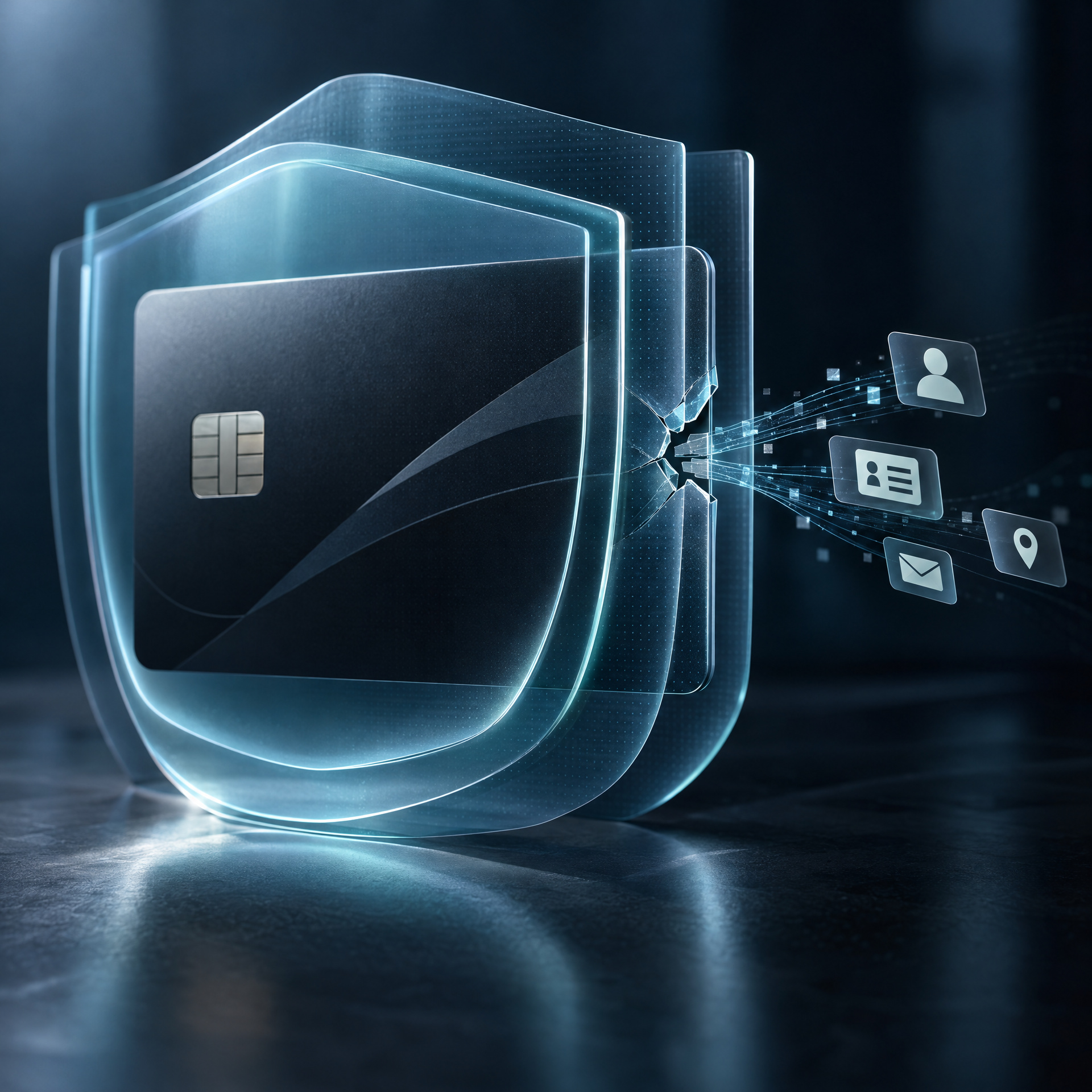
45
🚨 CZ WARNS: DATA LEAKS POSE SERIOUS CRYPTO SECURITY RISKS! 🔐
🇺🇸🌐 Binance founder Changpeng Zhao (CZ) has warned that leaked personal data can expose cryptocurrency users to phishing scams, SIM-swapping attacks, social engineering, and even real-world threats.
Recent reports of data breaches have renewed concerns about how criminals can exploit leaked names, email addresses, and phone numbers to target crypto investors.
🛡️ How to Stay SAFU:
🔹 Use a unique email address and strong password for each exchange.
🔹 Prefer passkeys, hardware security keys, or authenticator apps over SMS-based 2FA.
🔹 Never click suspicious links or share passwords, private keys, or recovery phrases.
🔹 Enable withdrawal address whitelisting and anti-phishing protections where available.
🔹 Verify support requests through official channels.
⚠️ Remember: A data leak does not automatically mean your crypto funds have been compromised, but exposed personal information can make targeted scams more convincing.
🔒 Protect your identity. Secure your accounts. Stay SAFU!
📌 References:
• BeInCrypto — CZ Shares How to Stay SAFU as Crypto Data Leak Wave Hits 4 Major Firms, October 28, 2026:
• CZ’s reported security warning on X, October 23, 2026: https://x.com/cz_binance
#CZ #Binance #CryptoSecurity #DataBreach #Phishing
$REN $CLV $CLO
🚨 CZ WARNS: DATA LEAKS POSE SERIOUS CRYPTO SECURITY RISKS! 🔐
🇺🇸🌐 Binance founder Changpeng Zhao (CZ) has warned that leaked personal data can expose cryptocurrency users to phishing scams, SIM-swapping attacks, social engineering, and even real-world threats.
Recent reports of data breaches have renewed concerns about how criminals can exploit leaked names, email addresses, and phone numbers to target crypto investors.
🛡️ How to Stay SAFU:
🔹 Use a unique email address and strong password for each exchange.
🔹 Prefer passkeys, hardware security keys, or authenticator apps over SMS-based 2FA.
🔹 Never click suspicious links or share passwords, private keys, or recovery phrases.
🔹 Enable withdrawal address whitelisting and anti-phishing protections where available.
🔹 Verify support requests through official channels.
⚠️ Remember: A data leak does not automatically mean your crypto funds have been compromised, but exposed personal information can make targeted scams more convincing.
🔒 Protect your identity. Secure your accounts. Stay SAFU!
📌 References:
• BeInCrypto — CZ Shares How to Stay SAFU as Crypto Data Leak Wave Hits 4 Major Firms, October 28, 2026:
• CZ’s reported security warning on X, October 23, 2026: https://x.com/cz_binance
#CZ #Binance #CryptoSecurity #DataBreach #Phishing
$REN $CLV $CLO
🇺🇸🌐 Binance founder Changpeng Zhao (CZ) has warned that leaked personal data can expose cryptocurrency users to phishing scams, SIM-swapping attacks, social engineering, and even real-world threats.
Recent reports of data breaches have renewed concerns about how criminals can exploit leaked names, email addresses, and phone numbers to target crypto investors.
🛡️ How to Stay SAFU:
🔹 Use a unique email address and strong password for each exchange.
🔹 Prefer passkeys, hardware security keys, or authenticator apps over SMS-based 2FA.
🔹 Never click suspicious links or share passwords, private keys, or recovery phrases.
🔹 Enable withdrawal address whitelisting and anti-phishing protections where available.
🔹 Verify support requests through official channels.
⚠️ Remember: A data leak does not automatically mean your crypto funds have been compromised, but exposed personal information can make targeted scams more convincing.
🔒 Protect your identity. Secure your accounts. Stay SAFU!
📌 References:
• BeInCrypto — CZ Shares How to Stay SAFU as Crypto Data Leak Wave Hits 4 Major Firms, October 28, 2026:
• CZ’s reported security warning on X, October 23, 2026: https://x.com/cz_binance
#CZ #Binance #CryptoSecurity #DataBreach #Phishing
$REN $CLV $CLO

690

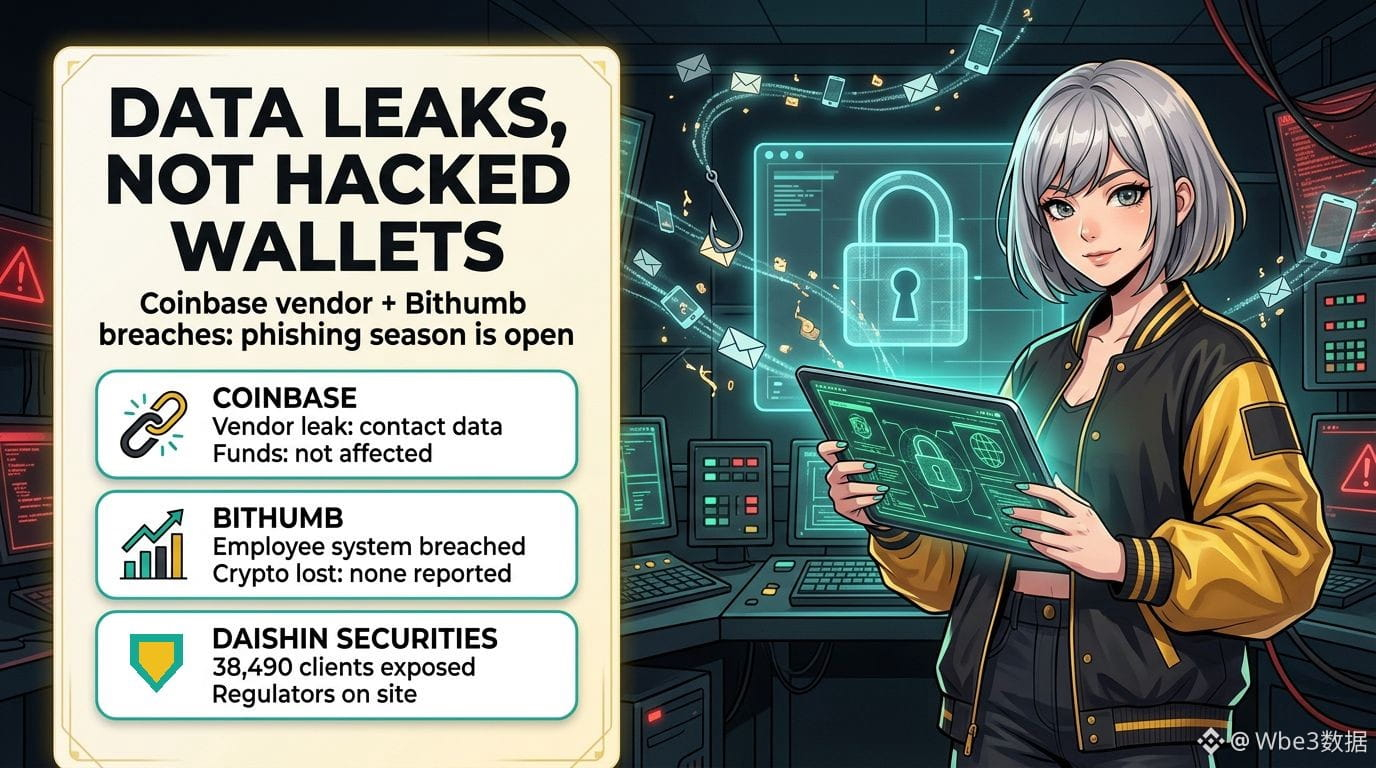
Two exchange data scares in one day, and your coins aren't the real target. Your inbox is.
Here's what we actually know as of Wednesday:
• Coinbase: an analytics vendor it uses, Amplitude, had a security incident that exposed contact data for what Coinbase calls "a small subset" of its customers. Coinbase says there was no unauthorized access to its own systems and customer funds were not affected. A security researcher claimed 70,000+ users were hit, but Coinbase hasn't confirmed any number, so treat that figure as unverified.
• Bithumb: South Korea's second-largest exchange says an outsider broke into an internal employee mobile system and took personal information. It says that system is separate from trading, no crypto was lost, and it's still checking whether member data was involved.
• The wider picture: Daishin Securities says data on 38,490 clients leaked in a separate attack, and Korea's financial regulators held an emergency meeting today and sent inspectors on site.
Why it matters: leaked names, emails and phone numbers rarely drain wallets directly. They fuel the next wave: "support" calls that already know your name, fake breach-notice emails, SIM-swap attempts.
A calm checklist for this week:
1. Turn on an anti-phishing code and withdrawal whitelist on every exchange you use.
2. Swap SMS 2FA for a passkey or hardware key where possible.
3. Ask your carrier for a port-out PIN.
4. Assume anyone contacting you about a "security issue" is a scammer. Real support never asks for codes, passwords or seed phrases.
Have you ever received a phishing message that knew too much about you?
#CryptoSecurity #Phishing #DataBreach
Not financial advice.
Two exchange data scares in one day, and your coins aren't the real target. Your inbox is.
Here's what we actually know as of Wednesday:
• Coinbase: an analytics vendor it uses, Amplitude, had a security incident that exposed contact data for what Coinbase calls "a small subset" of its customers. Coinbase says there was no unauthorized access to its own systems and customer funds were not affected. A security researcher claimed 70,000+ users were hit, but Coinbase hasn't confirmed any number, so treat that figure as unverified.
• Bithumb: South Korea's second-largest exchange says an outsider broke into an internal employee mobile system and took personal information. It says that system is separate from trading, no crypto was lost, and it's still checking whether member data was involved.
• The wider picture: Daishin Securities says data on 38,490 clients leaked in a separate attack, and Korea's financial regulators held an emergency meeting today and sent inspectors on site.
Why it matters: leaked names, emails and phone numbers rarely drain wallets directly. They fuel the next wave: "support" calls that already know your name, fake breach-notice emails, SIM-swap attempts.
A calm checklist for this week:
1. Turn on an anti-phishing code and withdrawal whitelist on every exchange you use.
2. Swap SMS 2FA for a passkey or hardware key where possible.
3. Ask your carrier for a port-out PIN.
4. Assume anyone contacting you about a "security issue" is a scammer. Real support never asks for codes, passwords or seed phrases.
Have you ever received a phishing message that knew too much about you?
#CryptoSecurity #Phishing #DataBreach
Not financial advice.
Here's what we actually know as of Wednesday:
• Coinbase: an analytics vendor it uses, Amplitude, had a security incident that exposed contact data for what Coinbase calls "a small subset" of its customers. Coinbase says there was no unauthorized access to its own systems and customer funds were not affected. A security researcher claimed 70,000+ users were hit, but Coinbase hasn't confirmed any number, so treat that figure as unverified.
• Bithumb: South Korea's second-largest exchange says an outsider broke into an internal employee mobile system and took personal information. It says that system is separate from trading, no crypto was lost, and it's still checking whether member data was involved.
• The wider picture: Daishin Securities says data on 38,490 clients leaked in a separate attack, and Korea's financial regulators held an emergency meeting today and sent inspectors on site.
Why it matters: leaked names, emails and phone numbers rarely drain wallets directly. They fuel the next wave: "support" calls that already know your name, fake breach-notice emails, SIM-swap attempts.
A calm checklist for this week:
1. Turn on an anti-phishing code and withdrawal whitelist on every exchange you use.
2. Swap SMS 2FA for a passkey or hardware key where possible.
3. Ask your carrier for a port-out PIN.
4. Assume anyone contacting you about a "security issue" is a scammer. Real support never asks for codes, passwords or seed phrases.
Have you ever received a phishing message that knew too much about you?
#CryptoSecurity #Phishing #DataBreach
Not financial advice.
67

·
--
🚨 $HAEDAL EXPOSED: MAJOR DATA BREACH RATTLEING SOUTH KOREAN CRYPTO ECOSYSTEM 📉
📊 The breach at Bithumb, coupled with leaks at Daishin and Mirae, spotlights a systemic vulnerability in the region’s digital finance layer. Institutional players are already recalibrating exposure, eyeing liquidity sweeps as smart money may off‑load related tokens. 📌 $HAEDAL , $HUMA and $AIN sit on the periphery of heightened regulatory scrutiny, which could tighten capital flows and compress valuations.
🦈 With regulators urging fortified defenses, market sentiment may tilt bearish, prompting a short‑term pullback across the affected assets. ⚡ Are you tightening risk or seeking contrarian entry on the fallout? 💬
⚠️ Not financial advice. Always manage your risk. 🛡️
🏷️ #HAEDAL #DataBreach #RiskAlert #Crypto
🦈 🔥
🚨 $HAEDAL EXPOSED: MAJOR DATA BREACH RATTLEING SOUTH KOREAN CRYPTO ECOSYSTEM 📉
📊 The breach at Bithumb, coupled with leaks at Daishin and Mirae, spotlights a systemic vulnerability in the region’s digital finance layer. Institutional players are already recalibrating exposure, eyeing liquidity sweeps as smart money may off‑load related tokens. 📌 $HAEDAL , $HUMA and $AIN sit on the periphery of heightened regulatory scrutiny, which could tighten capital flows and compress valuations.
🦈 With regulators urging fortified defenses, market sentiment may tilt bearish, prompting a short‑term pullback across the affected assets. ⚡ Are you tightening risk or seeking contrarian entry on the fallout? 💬
⚠️ Not financial advice. Always manage your risk. 🛡️
🏷️ #HAEDAL #DataBreach #RiskAlert #Crypto
🦈 🔥
📊 The breach at Bithumb, coupled with leaks at Daishin and Mirae, spotlights a systemic vulnerability in the region’s digital finance layer. Institutional players are already recalibrating exposure, eyeing liquidity sweeps as smart money may off‑load related tokens. 📌 $HAEDAL , $HUMA and $AIN sit on the periphery of heightened regulatory scrutiny, which could tighten capital flows and compress valuations.
🦈 With regulators urging fortified defenses, market sentiment may tilt bearish, prompting a short‑term pullback across the affected assets. ⚡ Are you tightening risk or seeking contrarian entry on the fallout? 💬
⚠️ Not financial advice. Always manage your risk. 🛡️
🏷️ #HAEDAL #DataBreach #RiskAlert #Crypto
🦈 🔥
18


#KeystoneWebsiteBreachExposesBuyersShippingAddresses
🔐⚠️ Keystone Website Breach Exposes Crypto Buyers’ Shipping Addresses ⚠️🔐
Sometimes, the biggest security risk isn't inside your wallet. It's the address where you keep it.
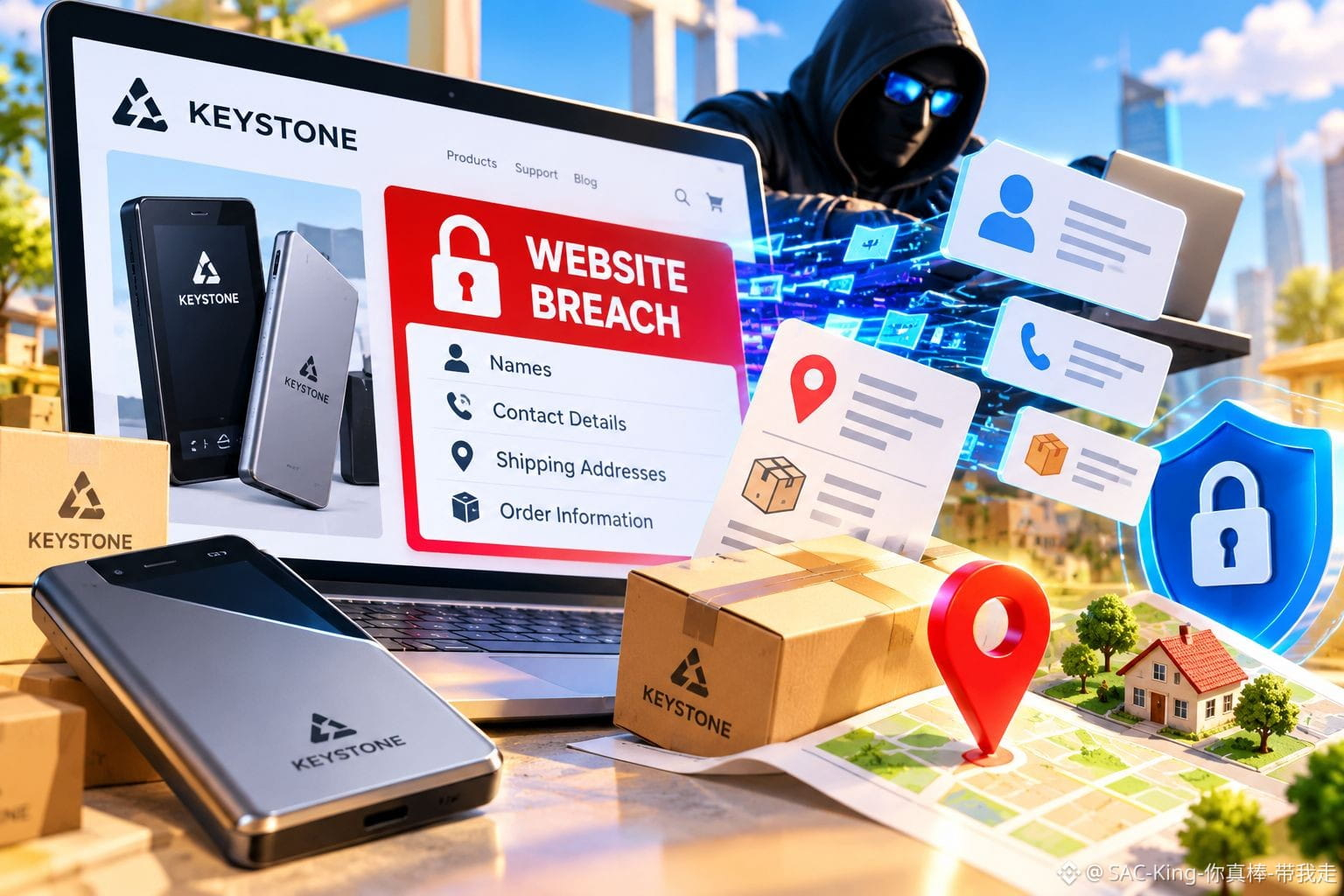
Keystone, a cryptocurrency hardware wallet manufacturer, has disclosed a website breach that exposed customers’ names, contact details, shipping addresses, and order information.
The company detected unauthorized access on October 20 and confirmed the data exposure on October 23, 2026, after reviewing activity involving its Shopify-powered store.
Keystone says payment details, recovery phrases, private keys, and wallet passwords were not exposed. It has blocked the unauthorized access, fixed the vulnerability, and begun notifying affected customers. The number of affected users remains undisclosed.
But here's the bigger concern: knowing someone's identity, home address, and hardware wallet purchase can help criminals craft convincing phishing attacks or potentially target crypto holders in the real world.
My Take: Self-custody protects control over your crypto, but it cannot protect personal information leaked by a third-party service. Your security is only as strong as the weakest link connecting your digital assets to your real identity.
If you purchased from Keystone, verify alerts through official channels, ignore unsolicited refund or replacement offers, and never share your recovery phrase. No legitimate support agent needs it.
True crypto security means protecting both your assets and the personal information that could make you a target.
Should hardware wallet companies be held to stricter data-deletion standards after a customer's order is completed?
Disclaimer: This post is for educational purposes only and is not financial or security advice.
#CryptoSecurity #DataBreach #GrowWithSAC $QNT $ENA $PYTH
#KeystoneWebsiteBreachExposesBuyersShippingAddresses
🔐⚠️ Keystone Website Breach Exposes Crypto Buyers’ Shipping Addresses ⚠️🔐
Sometimes, the biggest security risk isn't inside your wallet. It's the address where you keep it.
Keystone, a cryptocurrency hardware wallet manufacturer, has disclosed a website breach that exposed customers’ names, contact details, shipping addresses, and order information.
The company detected unauthorized access on October 20 and confirmed the data exposure on October 23, 2026, after reviewing activity involving its Shopify-powered store.
Keystone says payment details, recovery phrases, private keys, and wallet passwords were not exposed. It has blocked the unauthorized access, fixed the vulnerability, and begun notifying affected customers. The number of affected users remains undisclosed.
But here's the bigger concern: knowing someone's identity, home address, and hardware wallet purchase can help criminals craft convincing phishing attacks or potentially target crypto holders in the real world.
My Take: Self-custody protects control over your crypto, but it cannot protect personal information leaked by a third-party service. Your security is only as strong as the weakest link connecting your digital assets to your real identity.
If you purchased from Keystone, verify alerts through official channels, ignore unsolicited refund or replacement offers, and never share your recovery phrase. No legitimate support agent needs it.
True crypto security means protecting both your assets and the personal information that could make you a target.
Should hardware wallet companies be held to stricter data-deletion standards after a customer's order is completed?
Disclaimer: This post is for educational purposes only and is not financial or security advice.
#CryptoSecurity #DataBreach #GrowWithSAC $QNT $ENA $PYTH
🔐⚠️ Keystone Website Breach Exposes Crypto Buyers’ Shipping Addresses ⚠️🔐
Sometimes, the biggest security risk isn't inside your wallet. It's the address where you keep it.
Keystone, a cryptocurrency hardware wallet manufacturer, has disclosed a website breach that exposed customers’ names, contact details, shipping addresses, and order information.
The company detected unauthorized access on October 20 and confirmed the data exposure on October 23, 2026, after reviewing activity involving its Shopify-powered store.
Keystone says payment details, recovery phrases, private keys, and wallet passwords were not exposed. It has blocked the unauthorized access, fixed the vulnerability, and begun notifying affected customers. The number of affected users remains undisclosed.
But here's the bigger concern: knowing someone's identity, home address, and hardware wallet purchase can help criminals craft convincing phishing attacks or potentially target crypto holders in the real world.
My Take: Self-custody protects control over your crypto, but it cannot protect personal information leaked by a third-party service. Your security is only as strong as the weakest link connecting your digital assets to your real identity.
If you purchased from Keystone, verify alerts through official channels, ignore unsolicited refund or replacement offers, and never share your recovery phrase. No legitimate support agent needs it.
True crypto security means protecting both your assets and the personal information that could make you a target.
Should hardware wallet companies be held to stricter data-deletion standards after a customer's order is completed?
Disclaimer: This post is for educational purposes only and is not financial or security advice.
#CryptoSecurity #DataBreach #GrowWithSAC $QNT $ENA $PYTH
286

·
--
Keystone Wallet suffers data breach, adding pressure on hardware wallet sector
On October 20, unauthorized access to Keystone’s website exposed customer names, contact details, shipping addresses, and order information, including purchased products and prices.
The company confirmed that payment card data, bank details, wallet passwords, recovery phrases, and private keys were not compromised.
Keystone has blocked the intrusion, patched the vulnerability, launched an investigation and is contacting affected clients.
The incident follows recent breaches at Ledger—where devices were modified in Southeast Asian distribution channels—and Trezor, where a logistics‑provider leak exposed over 80,000 customers.
What steps should hardware wallet providers take to protect user data beyond the device itself?
#HardwareWallet #DataBreach #CryptoSecurity #FinTech
Keystone Wallet suffers data breach, adding pressure on hardware wallet sector
On October 20, unauthorized access to Keystone’s website exposed customer names, contact details, shipping addresses, and order information, including purchased products and prices.
The company confirmed that payment card data, bank details, wallet passwords, recovery phrases, and private keys were not compromised.
Keystone has blocked the intrusion, patched the vulnerability, launched an investigation and is contacting affected clients.
The incident follows recent breaches at Ledger—where devices were modified in Southeast Asian distribution channels—and Trezor, where a logistics‑provider leak exposed over 80,000 customers.
What steps should hardware wallet providers take to protect user data beyond the device itself?
#HardwareWallet #DataBreach #CryptoSecurity #FinTech
On October 20, unauthorized access to Keystone’s website exposed customer names, contact details, shipping addresses, and order information, including purchased products and prices.
The company confirmed that payment card data, bank details, wallet passwords, recovery phrases, and private keys were not compromised.
Keystone has blocked the intrusion, patched the vulnerability, launched an investigation and is contacting affected clients.
The incident follows recent breaches at Ledger—where devices were modified in Southeast Asian distribution channels—and Trezor, where a logistics‑provider leak exposed over 80,000 customers.
What steps should hardware wallet providers take to protect user data beyond the device itself?
#HardwareWallet #DataBreach #CryptoSecurity #FinTech
1
42

·
--
🚨 $BTC ALERT: PUBLIC TRANSACTION LOGS EXPOSED IN CLOUD BREACH! 💥
📊 A major exchange’s public transaction feed was pulled from TiDB Cloud, a data‑service used for on‑chain analytics. 🦈 The breach stripped only openly viewable logs—no private keys, passwords, or user balances were touched. ⚡ Still, the snapshot gives smart money a glimpse into order flow that was meant to stay opaque, opening a short window for liquidity sweeps. 📌 Traders should watch the next volume spike; any sudden sell‑off could be a reaction to the leaked data.
💬 How will you adjust your position now that the public ledger is temporarily transparent? 👇
⚠️ Not financial advice. Always manage your risk. 🛡️
🏷️ #BTC #Security #DataBreach #Crypto
🔥 💎
🚨 $BTC ALERT: PUBLIC TRANSACTION LOGS EXPOSED IN CLOUD BREACH! 💥
📊 A major exchange’s public transaction feed was pulled from TiDB Cloud, a data‑service used for on‑chain analytics. 🦈 The breach stripped only openly viewable logs—no private keys, passwords, or user balances were touched. ⚡ Still, the snapshot gives smart money a glimpse into order flow that was meant to stay opaque, opening a short window for liquidity sweeps. 📌 Traders should watch the next volume spike; any sudden sell‑off could be a reaction to the leaked data.
💬 How will you adjust your position now that the public ledger is temporarily transparent? 👇
⚠️ Not financial advice. Always manage your risk. 🛡️
🏷️ #BTC #Security #DataBreach #Crypto
🔥 💎
📊 A major exchange’s public transaction feed was pulled from TiDB Cloud, a data‑service used for on‑chain analytics. 🦈 The breach stripped only openly viewable logs—no private keys, passwords, or user balances were touched. ⚡ Still, the snapshot gives smart money a glimpse into order flow that was meant to stay opaque, opening a short window for liquidity sweeps. 📌 Traders should watch the next volume spike; any sudden sell‑off could be a reaction to the leaked data.
💬 How will you adjust your position now that the public ledger is temporarily transparent? 👇
⚠️ Not financial advice. Always manage your risk. 🛡️
🏷️ #BTC #Security #DataBreach #Crypto
🔥 💎
4

·
--
DATA BREACH HITS 13K WALLETS 🚨 $COTI $AVNT $AKE ON EDGE 📉
The flow just got a fresh layer of turbulence. Trezor's shipping vector breach surfaces 13,689 user records—names, emails, phones, addresses. This isn't a core protocol attack, but it's a classic liquidity squeeze on sentiment. Smart money reads this as a short-term volatility spike, not a structural invalidation.
Devices remain secure, but the market reprices trust instantaneously. Expect a cautious bid under $COTI , $AVNT , and $AKE as traders digest the noise. The real play is watching for the inevitable inefficiency fill—a sweep of low liquidity before any meaningful reclaim.
How are you positioning your risk around this data event? Is this a dip-buying opportunity or a reason to step aside until structure confirms direction? 🧐
⚠️ Not financial advice. Always manage your risk. 🛡️
🏷️ #COTI #AVNT #AKE #DataBreach #CryptoNews
🧠📊
DATA BREACH HITS 13K WALLETS 🚨 $COTI $AVNT $AKE ON EDGE 📉
The flow just got a fresh layer of turbulence. Trezor's shipping vector breach surfaces 13,689 user records—names, emails, phones, addresses. This isn't a core protocol attack, but it's a classic liquidity squeeze on sentiment. Smart money reads this as a short-term volatility spike, not a structural invalidation.
Devices remain secure, but the market reprices trust instantaneously. Expect a cautious bid under $COTI , $AVNT , and $AKE as traders digest the noise. The real play is watching for the inevitable inefficiency fill—a sweep of low liquidity before any meaningful reclaim.
How are you positioning your risk around this data event? Is this a dip-buying opportunity or a reason to step aside until structure confirms direction? 🧐
⚠️ Not financial advice. Always manage your risk. 🛡️
🏷️ #COTI #AVNT #AKE #DataBreach #CryptoNews
🧠📊
The flow just got a fresh layer of turbulence. Trezor's shipping vector breach surfaces 13,689 user records—names, emails, phones, addresses. This isn't a core protocol attack, but it's a classic liquidity squeeze on sentiment. Smart money reads this as a short-term volatility spike, not a structural invalidation.
Devices remain secure, but the market reprices trust instantaneously. Expect a cautious bid under $COTI , $AVNT , and $AKE as traders digest the noise. The real play is watching for the inevitable inefficiency fill—a sweep of low liquidity before any meaningful reclaim.
How are you positioning your risk around this data event? Is this a dip-buying opportunity or a reason to step aside until structure confirms direction? 🧐
⚠️ Not financial advice. Always manage your risk. 🛡️
🏷️ #COTI #AVNT #AKE #DataBreach #CryptoNews
🧠📊
201

·
--
🚨 $SFP BREACH EXPOSES 40K USERS — TRUST LINES CRACKING? 🛑
🛡️ SafePal just disclosed a data breach leaking names, home addresses, and phone numbers of nearly 40,000 customers. The flaw sat in an order tracking plugin for over a year, granting unauthorized access to sensitive order details. 🔍 With 30+ phishing sites tied to the stolen data, this isn't a small leak — it's a targeted harvest of wallet-holder identity.
📉 For the token, sentiment is the real casualty here. Hardware wallet brands sell on one thing: impenetrable custody. When that narrative cracks, capital flows shift fast, and $SFP will likely feel the friction long after the headlines fade. ⚠️ This raises a sharper question about third-party plugins in the custody stack — where does your trust actually live?
💬 Are you re-auditing your security setup after this, or does a breach like this change nothing about your hardware wallet conviction? 👇
⚠️ Not financial advice. Always manage your risk. 🛡️
🏷️ #SFP #DataBreach #SecurityAlert #CryptoRisk
🛡️ ⚠️
🚨 $SFP BREACH EXPOSES 40K USERS — TRUST LINES CRACKING? 🛑
🛡️ SafePal just disclosed a data breach leaking names, home addresses, and phone numbers of nearly 40,000 customers. The flaw sat in an order tracking plugin for over a year, granting unauthorized access to sensitive order details. 🔍 With 30+ phishing sites tied to the stolen data, this isn't a small leak — it's a targeted harvest of wallet-holder identity.
📉 For the token, sentiment is the real casualty here. Hardware wallet brands sell on one thing: impenetrable custody. When that narrative cracks, capital flows shift fast, and $SFP will likely feel the friction long after the headlines fade. ⚠️ This raises a sharper question about third-party plugins in the custody stack — where does your trust actually live?
💬 Are you re-auditing your security setup after this, or does a breach like this change nothing about your hardware wallet conviction? 👇
⚠️ Not financial advice. Always manage your risk. 🛡️
🏷️ #SFP #DataBreach #SecurityAlert #CryptoRisk
🛡️ ⚠️
🛡️ SafePal just disclosed a data breach leaking names, home addresses, and phone numbers of nearly 40,000 customers. The flaw sat in an order tracking plugin for over a year, granting unauthorized access to sensitive order details. 🔍 With 30+ phishing sites tied to the stolen data, this isn't a small leak — it's a targeted harvest of wallet-holder identity.
📉 For the token, sentiment is the real casualty here. Hardware wallet brands sell on one thing: impenetrable custody. When that narrative cracks, capital flows shift fast, and $SFP will likely feel the friction long after the headlines fade. ⚠️ This raises a sharper question about third-party plugins in the custody stack — where does your trust actually live?
💬 Are you re-auditing your security setup after this, or does a breach like this change nothing about your hardware wallet conviction? 👇
⚠️ Not financial advice. Always manage your risk. 🛡️
🏷️ #SFP #DataBreach #SecurityAlert #CryptoRisk
🛡️ ⚠️

94

·
--
Revolut搞砸了!这家金融科技公司居然被一个假的政府请求骗了,暴露了用户护照信息和完整的比特币交易历史。虽然他们说只有"有限"用户受影响,但这太离谱了了!
数据安全出问题,大家又开始讨论去中心化钱包的重要性了。短期内可能会看到一些用户开始把资产转出Revolut,长期看反而可能促进自我托管意识觉醒。
#DataBreach #CryptoSecurity $BTC
Revolut搞砸了!这家金融科技公司居然被一个假的政府请求骗了,暴露了用户护照信息和完整的比特币交易历史。虽然他们说只有"有限"用户受影响,但这太离谱了了!
数据安全出问题,大家又开始讨论去中心化钱包的重要性了。短期内可能会看到一些用户开始把资产转出Revolut,长期看反而可能促进自我托管意识觉醒。
#DataBreach #CryptoSecurity $BTC
数据安全出问题,大家又开始讨论去中心化钱包的重要性了。短期内可能会看到一些用户开始把资产转出Revolut,长期看反而可能促进自我托管意识觉醒。
#DataBreach #CryptoSecurity $BTC
108

·
--
🚨 Revolut & Fake Government Email: A Serious Data Security Warning
A new cybersecurity controversy involving Revolut is raising questions about how financial institutions verify sensitive government requests.
Reports circulating online suggest that a fake government email/request may have been used to obtain or expose sensitive customer information. While the full scope and details still need to be independently verified, the situation highlights a major cybersecurity lesson:
🔐 Never trust an email simply because it looks official.
For financial platforms, even a convincing government-style request can become dangerous if identity and authorization checks aren't strong enough.
Why this matters 👇
💳 Financial platforms hold highly sensitive customer data.
📧 Email impersonation can make fraudulent requests look legitimate.
🏦 KYC information can become extremely valuable to attackers.
🎣 Leaked information can potentially fuel targeted phishing and social-engineering attacks.
Revolut itself advises users to check suspicious sender addresses and contact support through the app rather than trusting unexpected communications. �
Revolut
⚠️ The bigger question:
Should banks and fintech companies require multiple independent verification steps before releasing customer information in response to government requests?
🟢 YES — verification should be mandatory
🔴 Current systems are already sufficient
What do you think? 👇
#Revolut #CyberSecurity #DataBreach #Crypto_Jobs🎯 #Fintech #Privacy #Phishing #ScamAlert #Blockchain
*This post discusses reported allegations and does not establish that every claim circulating online has been independently confirmed. Always verify information through official sources.*
🚨 Revolut & Fake Government Email: A Serious Data Security Warning
A new cybersecurity controversy involving Revolut is raising questions about how financial institutions verify sensitive government requests.
Reports circulating online suggest that a fake government email/request may have been used to obtain or expose sensitive customer information. While the full scope and details still need to be independently verified, the situation highlights a major cybersecurity lesson:
🔐 Never trust an email simply because it looks official.
For financial platforms, even a convincing government-style request can become dangerous if identity and authorization checks aren't strong enough.
Why this matters 👇
💳 Financial platforms hold highly sensitive customer data.
📧 Email impersonation can make fraudulent requests look legitimate.
🏦 KYC information can become extremely valuable to attackers.
🎣 Leaked information can potentially fuel targeted phishing and social-engineering attacks.
Revolut itself advises users to check suspicious sender addresses and contact support through the app rather than trusting unexpected communications. �
Revolut
⚠️ The bigger question:
Should banks and fintech companies require multiple independent verification steps before releasing customer information in response to government requests?
🟢 YES — verification should be mandatory
🔴 Current systems are already sufficient
What do you think? 👇
#Revolut #CyberSecurity #DataBreach #Crypto_Jobs🎯 #Fintech #Privacy #Phishing #ScamAlert #Blockchain
*This post discusses reported allegations and does not establish that every claim circulating online has been independently confirmed. Always verify information through official sources.*
A new cybersecurity controversy involving Revolut is raising questions about how financial institutions verify sensitive government requests.
Reports circulating online suggest that a fake government email/request may have been used to obtain or expose sensitive customer information. While the full scope and details still need to be independently verified, the situation highlights a major cybersecurity lesson:
🔐 Never trust an email simply because it looks official.
For financial platforms, even a convincing government-style request can become dangerous if identity and authorization checks aren't strong enough.
Why this matters 👇
💳 Financial platforms hold highly sensitive customer data.
📧 Email impersonation can make fraudulent requests look legitimate.
🏦 KYC information can become extremely valuable to attackers.
🎣 Leaked information can potentially fuel targeted phishing and social-engineering attacks.
Revolut itself advises users to check suspicious sender addresses and contact support through the app rather than trusting unexpected communications. �
Revolut
⚠️ The bigger question:
Should banks and fintech companies require multiple independent verification steps before releasing customer information in response to government requests?
🟢 YES — verification should be mandatory
🔴 Current systems are already sufficient
What do you think? 👇
#Revolut #CyberSecurity #DataBreach #Crypto_Jobs🎯 #Fintech #Privacy #Phishing #ScamAlert #Blockchain
*This post discusses reported allegations and does not establish that every claim circulating online has been independently confirmed. Always verify information through official sources.*
80

🚨 تسرب بيانات هائل يكشف عن 153 مليون رخصة قيادة معروضة للبيع
كشف تقرير حديث عن تسريب مزعوم لـ 153 مليون رخصة قيادة، يُعتقد أنها سُرقت من شركة للتحقق من الهوية. يسلط هذا الحادث الضوء على المخاطر الأمنية المتزايدة المتعلقة بتخزين المعلومات الحساسة لدى جهات خارجية، مما يجعلها أهدافاً جذابة للجهات الخبيثة.
━━━━━━━━━━━━━━
📊 التأثير: 📈 مرتفع
🏷️ OTHER
#DataBreach #CyberSecurity #Privacy #IdentityTheft #DataProtection
📰 المصدر: gizmodo.com
🚨 تسرب بيانات هائل يكشف عن 153 مليون رخصة قيادة معروضة للبيع
كشف تقرير حديث عن تسريب مزعوم لـ 153 مليون رخصة قيادة، يُعتقد أنها سُرقت من شركة للتحقق من الهوية. يسلط هذا الحادث الضوء على المخاطر الأمنية المتزايدة المتعلقة بتخزين المعلومات الحساسة لدى جهات خارجية، مما يجعلها أهدافاً جذابة للجهات الخبيثة.
━━━━━━━━━━━━━━
📊 التأثير: 📈 مرتفع
🏷️ OTHER
#DataBreach #CyberSecurity #Privacy #IdentityTheft #DataProtection
📰 المصدر: gizmodo.com
كشف تقرير حديث عن تسريب مزعوم لـ 153 مليون رخصة قيادة، يُعتقد أنها سُرقت من شركة للتحقق من الهوية. يسلط هذا الحادث الضوء على المخاطر الأمنية المتزايدة المتعلقة بتخزين المعلومات الحساسة لدى جهات خارجية، مما يجعلها أهدافاً جذابة للجهات الخبيثة.
━━━━━━━━━━━━━━
📊 التأثير: 📈 مرتفع
🏷️ OTHER
#DataBreach #CyberSecurity #Privacy #IdentityTheft #DataProtection
📰 المصدر: gizmodo.com
45
ບົດຄວາມ
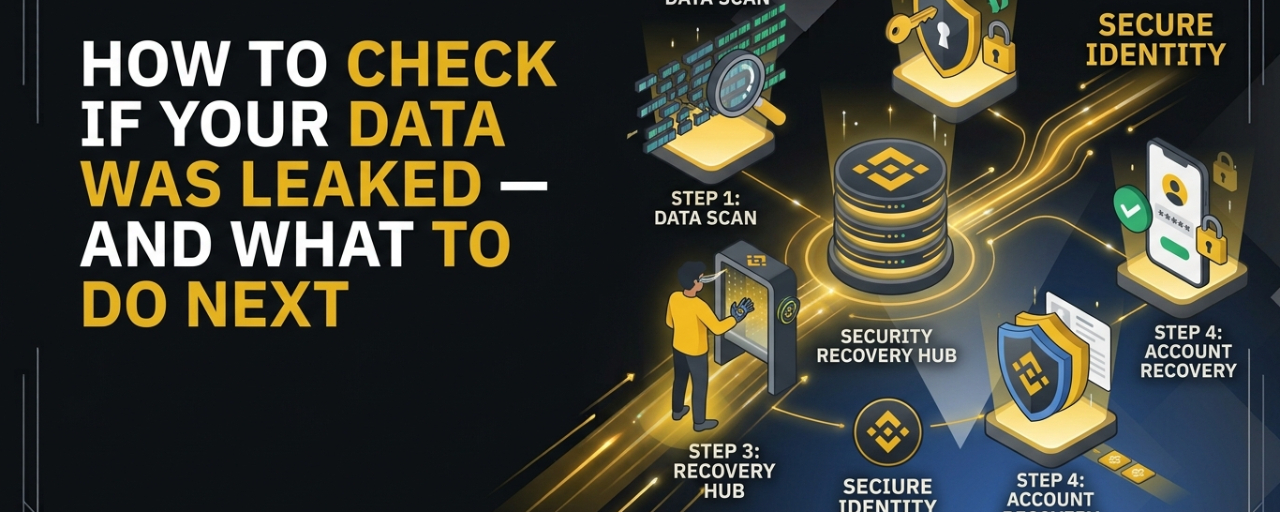
How to Check if Your Data Was Leaked — and What to Do NextA data breach can happen without you noticing.
You might continue using your email, phone number, social-media accounts, exchange accounts, and other online services normally, while somewhere in the background, information connected to one of those accounts may have already been exposed.
The important question isn't only:
“Has my data been leaked?”
It's also:
“What should I do if it has?”
Knowing how to check for exposure and responding quickly can significantly reduce the potential damage.
Here is a practical step-by-step guide.
1. What Does It Mean When Your Data Is Leaked?
A data leak or breach happens when information that should be protected becomes accessible to unauthorized people.
Depending on the incident, exposed information could include:
Email addressesPhone numbersNamesPasswordsUsernamesPhysical addressesIP addressesAccount informationAuthentication-related dataFinancial information
Not every breach exposes the same type or amount of information. A leaked email address is very different from a leaked password or financial credential.
That's why identifying exactly what was exposed matters.
2. Check Whether Your Email Has Appeared in Known Breaches
One of the simplest ways to check is through a reputable breach-notification service such as Have I Been Pwned. You can enter an email address and check whether it appears in known data breaches. If your email appears, don't immediately assume that your current password has been compromised.
Instead, look at the breach details and determine:
What service was breached?
When did it happen?
What information was reportedly exposed?
This distinction is important because an old breach involving only an email address presents a different situation from a breach involving passwords or authentication data.
3. Don't Ignore an Old Breach
A breach doesn't become irrelevant simply because it happened years ago.
Old credentials can remain useful to attackers.
One of the most common problems is password reuse.
For example, imagine you used:
Password123!
on five different websites.
If one of those websites suffers a breach and the password becomes available to attackers, they may try the same email/password combination on other services.
This is known as credential stuffing.
That's why every account should ideally have its own unique password.
4. Change Compromised Passwords Immediately
If you discover that a password has been exposed, change it.
But don't simply modify the old password slightly.
Changing:
Password123!
to
Password123!!
doesn't provide meaningful protection.
Instead, create a completely new, unique password.
A password manager can make this much easier by generating and storing strong passwords for individual accounts.
Prioritize your most important accounts first:
Primary emailFinancial accountsCryptocurrency exchangesCloud storageSocial-media accountsWork accounts
Your email account deserves particular attention because it can often be used to reset passwords for other services.
5. Turn On Two-Factor Authentication
A strong password is important.
But passwords alone shouldn't be your only line of defense.
Enable two-factor authentication (2FA) wherever possible.
Depending on the service, you may have options such as:
Authenticator applicationsPasskeysHardware security keysSMS authentication
Authenticator apps, passkeys and hardware security keys can provide stronger protection than relying solely on SMS.
For sensitive accounts, use the strongest authentication method that the service supports and that you can manage securely.
6. Be Careful About Phishing After a Breach
A data breach can give attackers information they can use to make scams more convincing.
Suppose an online service suffers a breach and your email address is exposed.
You might subsequently receive an email saying:
“Your account has been compromised. Click here to secure it.”
It may look legitimate.
The message might even contain the company's logo and other details. But the link could lead to a fake login page designed to steal your password. This is why a breach should make you more suspicious of unexpected messages, not less.
When you receive a security notification, don't automatically click its links.
Instead, open the company's official website or application yourself and check your account there.
7. Protect Your Crypto Accounts
For cryptocurrency users, account security deserves additional attention. If your email address or other personal information appears in a breach, attackers may attempt to use it to target your exchange accounts.
Make sure your exchange account has:
A unique password2FA enabledAnti-phishing protections where availableWithdrawal protectionsStrong account-recovery security
And remember:
Customer support will never need your password, private key or recovery phrase.
Anyone asking for your seed phrase or private key is attempting to gain control of your assets.
Never share it.
8. Check Your Account Activity
After discovering a possible breach, review your important accounts.
Look for:
Unrecognized loginsUnknown devicesPassword-reset notificationsNew withdrawal addressesUnexpected transactionsChanges to account settingsNew authentication methodsEmails you don't recognize
If something looks suspicious, take action immediately.
Change the password, revoke unknown sessions, remove unfamiliar devices and contact the relevant service through its official support channel.
For financial or cryptocurrency accounts, don't wait until money is actually missing before investigating suspicious activity.
9. Secure Your Email Account First
Your email account is often the key to your other accounts.
If an attacker controls your email, they may be able to request password resets for other services.
So after a breach, your email should be one of the first accounts you secure.
Check:
Password: Is it unique?
2FA: Is it enabled?
Recovery email: Is it yours?
Recovery phone: Is it correct?
Active sessions: Are there unknown devices?
Forwarding rules: Has anyone created suspicious automatic forwarding?
Connected applications: Are there services you don't recognize?
A compromised email account can turn one exposed credential into a much larger security problem.
10. Watch Out for Identity Theft
Some breaches expose more sensitive information than just usernames and passwords.
If government identification information, financial details, or other highly sensitive personal data has been exposed, the potential consequences can be more serious.
In that situation, consider contacting the affected organization and following the official guidance they provide.
Depending on your country and the information involved, additional measures may be available, such as monitoring financial accounts or reporting suspected identity theft to the relevant authorities.
The appropriate response depends heavily on what information was exposed.
11. Don't Panic, Prioritize
Finding your email in a breach database can be alarming.
But not every breach means someone currently has access to your account.
The most useful approach is to determine:
What was exposed?
When was it exposed?
Is the affected password still being used?
Was that password reused elsewhere?
Is 2FA enabled?
Is there any suspicious activity?
Then address the highest-risk issues first.
Security isn't about eliminating every possible risk.
It's about reducing the opportunities attackers have to compromise you.
A Simple Post-Breach Checklist
If you discover your information in a breach, work through this list:
☑ Identify what information was exposed.
☑ Change any compromised passwords.
☑ Don't reuse passwords across accounts.
☑ Enable 2FA or passkeys.
☑ Secure your primary email account.
☑ Review active sessions and connected devices.
☑ Check for suspicious account activity.
☑ Be especially careful with phishing attempts.
☑ Secure financial and cryptocurrency accounts.
☑ Never share passwords, private keys or recovery phrases.
☑ Monitor important accounts for unusual activity.
The Most Important Lesson
You don't need to wait for a breach notification to improve your security.
Use unique passwords.
Enable strong authentication.
Keep your devices and software updated.
Be skeptical of unexpected links and messages.
Review your account activity regularly.
And if you discover that your information has been exposed, act rather than panic.
A leaked email address doesn't automatically mean your accounts are compromised.
A leaked password doesn't automatically mean an attacker has access to everything.
But exposed information can become a starting point for future attacks, especially when passwords are reused or when phishing is involved.
The best defense is to reduce what attackers can do with the information they obtain.
Check. Secure. Monitor. Repeat.
Stay SAFU. 🔐
#databreach #Privacy #phishing #AccountSecurity #CryptoSecurity
Disclaimer: This article is for general educational purposes only and is not professional cybersecurity, legal, or financial advice. The appropriate response to a data breach depends on the type of information exposed, the affected service, and your jurisdiction.
How to Check if Your Data Was Leaked — and What to Do Next
A data breach can happen without you noticing.
You might continue using your email, phone number, social-media accounts, exchange accounts, and other online services normally, while somewhere in the background, information connected to one of those accounts may have already been exposed.
The important question isn't only:
“Has my data been leaked?”
It's also:
“What should I do if it has?”
Knowing how to check for exposure and responding quickly can significantly reduce the potential damage.
Here is a practical step-by-step guide.
1. What Does It Mean When Your Data Is Leaked?
A data leak or breach happens when information that should be protected becomes accessible to unauthorized people.
Depending on the incident, exposed information could include:
Email addressesPhone numbersNamesPasswordsUsernamesPhysical addressesIP addressesAccount informationAuthentication-related dataFinancial information
Not every breach exposes the same type or amount of information. A leaked email address is very different from a leaked password or financial credential.
That's why identifying exactly what was exposed matters.
2. Check Whether Your Email Has Appeared in Known Breaches
One of the simplest ways to check is through a reputable breach-notification service such as Have I Been Pwned. You can enter an email address and check whether it appears in known data breaches. If your email appears, don't immediately assume that your current password has been compromised.
Instead, look at the breach details and determine:
What service was breached?
When did it happen?
What information was reportedly exposed?
This distinction is important because an old breach involving only an email address presents a different situation from a breach involving passwords or authentication data.
3. Don't Ignore an Old Breach
A breach doesn't become irrelevant simply because it happened years ago.
Old credentials can remain useful to attackers.
One of the most common problems is password reuse.
For example, imagine you used:
Password123!
on five different websites.
If one of those websites suffers a breach and the password becomes available to attackers, they may try the same email/password combination on other services.
This is known as credential stuffing.
That's why every account should ideally have its own unique password.
4. Change Compromised Passwords Immediately
If you discover that a password has been exposed, change it.
But don't simply modify the old password slightly.
Changing:
Password123!
to
Password123!!
doesn't provide meaningful protection.
Instead, create a completely new, unique password.
A password manager can make this much easier by generating and storing strong passwords for individual accounts.
Prioritize your most important accounts first:
Primary emailFinancial accountsCryptocurrency exchangesCloud storageSocial-media accountsWork accounts
Your email account deserves particular attention because it can often be used to reset passwords for other services.
5. Turn On Two-Factor Authentication
A strong password is important.
But passwords alone shouldn't be your only line of defense.
Enable two-factor authentication (2FA) wherever possible.
Depending on the service, you may have options such as:
Authenticator applicationsPasskeysHardware security keysSMS authentication
Authenticator apps, passkeys and hardware security keys can provide stronger protection than relying solely on SMS.
For sensitive accounts, use the strongest authentication method that the service supports and that you can manage securely.
6. Be Careful About Phishing After a Breach
A data breach can give attackers information they can use to make scams more convincing.
Suppose an online service suffers a breach and your email address is exposed.
You might subsequently receive an email saying:
“Your account has been compromised. Click here to secure it.”
It may look legitimate.
The message might even contain the company's logo and other details. But the link could lead to a fake login page designed to steal your password. This is why a breach should make you more suspicious of unexpected messages, not less.
When you receive a security notification, don't automatically click its links.
Instead, open the company's official website or application yourself and check your account there.
7. Protect Your Crypto Accounts
For cryptocurrency users, account security deserves additional attention. If your email address or other personal information appears in a breach, attackers may attempt to use it to target your exchange accounts.
Make sure your exchange account has:
A unique password2FA enabledAnti-phishing protections where availableWithdrawal protectionsStrong account-recovery security
And remember:
Customer support will never need your password, private key or recovery phrase.
Anyone asking for your seed phrase or private key is attempting to gain control of your assets.
Never share it.
8. Check Your Account Activity
After discovering a possible breach, review your important accounts.
Look for:
Unrecognized loginsUnknown devicesPassword-reset notificationsNew withdrawal addressesUnexpected transactionsChanges to account settingsNew authentication methodsEmails you don't recognize
If something looks suspicious, take action immediately.
Change the password, revoke unknown sessions, remove unfamiliar devices and contact the relevant service through its official support channel.
For financial or cryptocurrency accounts, don't wait until money is actually missing before investigating suspicious activity.
9. Secure Your Email Account First
Your email account is often the key to your other accounts.
If an attacker controls your email, they may be able to request password resets for other services.
So after a breach, your email should be one of the first accounts you secure.
Check:
Password: Is it unique?
2FA: Is it enabled?
Recovery email: Is it yours?
Recovery phone: Is it correct?
Active sessions: Are there unknown devices?
Forwarding rules: Has anyone created suspicious automatic forwarding?
Connected applications: Are there services you don't recognize?
A compromised email account can turn one exposed credential into a much larger security problem.
10. Watch Out for Identity Theft
Some breaches expose more sensitive information than just usernames and passwords.
If government identification information, financial details, or other highly sensitive personal data has been exposed, the potential consequences can be more serious.
In that situation, consider contacting the affected organization and following the official guidance they provide.
Depending on your country and the information involved, additional measures may be available, such as monitoring financial accounts or reporting suspected identity theft to the relevant authorities.
The appropriate response depends heavily on what information was exposed.
11. Don't Panic, Prioritize
Finding your email in a breach database can be alarming.
But not every breach means someone currently has access to your account.
The most useful approach is to determine:
What was exposed?
When was it exposed?
Is the affected password still being used?
Was that password reused elsewhere?
Is 2FA enabled?
Is there any suspicious activity?
Then address the highest-risk issues first.
Security isn't about eliminating every possible risk.
It's about reducing the opportunities attackers have to compromise you.
A Simple Post-Breach Checklist
If you discover your information in a breach, work through this list:
☑ Identify what information was exposed.
☑ Change any compromised passwords.
☑ Don't reuse passwords across accounts.
☑ Enable 2FA or passkeys.
☑ Secure your primary email account.
☑ Review active sessions and connected devices.
☑ Check for suspicious account activity.
☑ Be especially careful with phishing attempts.
☑ Secure financial and cryptocurrency accounts.
☑ Never share passwords, private keys or recovery phrases.
☑ Monitor important accounts for unusual activity.
The Most Important Lesson
You don't need to wait for a breach notification to improve your security.
Use unique passwords.
Enable strong authentication.
Keep your devices and software updated.
Be skeptical of unexpected links and messages.
Review your account activity regularly.
And if you discover that your information has been exposed, act rather than panic.
A leaked email address doesn't automatically mean your accounts are compromised.
A leaked password doesn't automatically mean an attacker has access to everything.
But exposed information can become a starting point for future attacks, especially when passwords are reused or when phishing is involved.
The best defense is to reduce what attackers can do with the information they obtain.
Check. Secure. Monitor. Repeat.
Stay SAFU. 🔐
#databreach #Privacy #phishing #AccountSecurity #CryptoSecurity
Disclaimer: This article is for general educational purposes only and is not professional cybersecurity, legal, or financial advice. The appropriate response to a data breach depends on the type of information exposed, the affected service, and your jurisdiction.
You might continue using your email, phone number, social-media accounts, exchange accounts, and other online services normally, while somewhere in the background, information connected to one of those accounts may have already been exposed.
The important question isn't only:
“Has my data been leaked?”
It's also:
“What should I do if it has?”
Knowing how to check for exposure and responding quickly can significantly reduce the potential damage.
Here is a practical step-by-step guide.
1. What Does It Mean When Your Data Is Leaked?
A data leak or breach happens when information that should be protected becomes accessible to unauthorized people.
Depending on the incident, exposed information could include:
Email addressesPhone numbersNamesPasswordsUsernamesPhysical addressesIP addressesAccount informationAuthentication-related dataFinancial information
Not every breach exposes the same type or amount of information. A leaked email address is very different from a leaked password or financial credential.
That's why identifying exactly what was exposed matters.
2. Check Whether Your Email Has Appeared in Known Breaches
One of the simplest ways to check is through a reputable breach-notification service such as Have I Been Pwned. You can enter an email address and check whether it appears in known data breaches. If your email appears, don't immediately assume that your current password has been compromised.
Instead, look at the breach details and determine:
What service was breached?
When did it happen?
What information was reportedly exposed?
This distinction is important because an old breach involving only an email address presents a different situation from a breach involving passwords or authentication data.
3. Don't Ignore an Old Breach
A breach doesn't become irrelevant simply because it happened years ago.
Old credentials can remain useful to attackers.
One of the most common problems is password reuse.
For example, imagine you used:
Password123!
on five different websites.
If one of those websites suffers a breach and the password becomes available to attackers, they may try the same email/password combination on other services.
This is known as credential stuffing.
That's why every account should ideally have its own unique password.
4. Change Compromised Passwords Immediately
If you discover that a password has been exposed, change it.
But don't simply modify the old password slightly.
Changing:
Password123!
to
Password123!!
doesn't provide meaningful protection.
Instead, create a completely new, unique password.
A password manager can make this much easier by generating and storing strong passwords for individual accounts.
Prioritize your most important accounts first:
Primary emailFinancial accountsCryptocurrency exchangesCloud storageSocial-media accountsWork accounts
Your email account deserves particular attention because it can often be used to reset passwords for other services.
5. Turn On Two-Factor Authentication
A strong password is important.
But passwords alone shouldn't be your only line of defense.
Enable two-factor authentication (2FA) wherever possible.
Depending on the service, you may have options such as:
Authenticator applicationsPasskeysHardware security keysSMS authentication
Authenticator apps, passkeys and hardware security keys can provide stronger protection than relying solely on SMS.
For sensitive accounts, use the strongest authentication method that the service supports and that you can manage securely.
6. Be Careful About Phishing After a Breach
A data breach can give attackers information they can use to make scams more convincing.
Suppose an online service suffers a breach and your email address is exposed.
You might subsequently receive an email saying:
“Your account has been compromised. Click here to secure it.”
It may look legitimate.
The message might even contain the company's logo and other details. But the link could lead to a fake login page designed to steal your password. This is why a breach should make you more suspicious of unexpected messages, not less.
When you receive a security notification, don't automatically click its links.
Instead, open the company's official website or application yourself and check your account there.
7. Protect Your Crypto Accounts
For cryptocurrency users, account security deserves additional attention. If your email address or other personal information appears in a breach, attackers may attempt to use it to target your exchange accounts.
Make sure your exchange account has:
A unique password2FA enabledAnti-phishing protections where availableWithdrawal protectionsStrong account-recovery security
And remember:
Customer support will never need your password, private key or recovery phrase.
Anyone asking for your seed phrase or private key is attempting to gain control of your assets.
Never share it.
8. Check Your Account Activity
After discovering a possible breach, review your important accounts.
Look for:
Unrecognized loginsUnknown devicesPassword-reset notificationsNew withdrawal addressesUnexpected transactionsChanges to account settingsNew authentication methodsEmails you don't recognize
If something looks suspicious, take action immediately.
Change the password, revoke unknown sessions, remove unfamiliar devices and contact the relevant service through its official support channel.
For financial or cryptocurrency accounts, don't wait until money is actually missing before investigating suspicious activity.
9. Secure Your Email Account First
Your email account is often the key to your other accounts.
If an attacker controls your email, they may be able to request password resets for other services.
So after a breach, your email should be one of the first accounts you secure.
Check:
Password: Is it unique?
2FA: Is it enabled?
Recovery email: Is it yours?
Recovery phone: Is it correct?
Active sessions: Are there unknown devices?
Forwarding rules: Has anyone created suspicious automatic forwarding?
Connected applications: Are there services you don't recognize?
A compromised email account can turn one exposed credential into a much larger security problem.
10. Watch Out for Identity Theft
Some breaches expose more sensitive information than just usernames and passwords.
If government identification information, financial details, or other highly sensitive personal data has been exposed, the potential consequences can be more serious.
In that situation, consider contacting the affected organization and following the official guidance they provide.
Depending on your country and the information involved, additional measures may be available, such as monitoring financial accounts or reporting suspected identity theft to the relevant authorities.
The appropriate response depends heavily on what information was exposed.
11. Don't Panic, Prioritize
Finding your email in a breach database can be alarming.
But not every breach means someone currently has access to your account.
The most useful approach is to determine:
What was exposed?
When was it exposed?
Is the affected password still being used?
Was that password reused elsewhere?
Is 2FA enabled?
Is there any suspicious activity?
Then address the highest-risk issues first.
Security isn't about eliminating every possible risk.
It's about reducing the opportunities attackers have to compromise you.
A Simple Post-Breach Checklist
If you discover your information in a breach, work through this list:
☑ Identify what information was exposed.
☑ Change any compromised passwords.
☑ Don't reuse passwords across accounts.
☑ Enable 2FA or passkeys.
☑ Secure your primary email account.
☑ Review active sessions and connected devices.
☑ Check for suspicious account activity.
☑ Be especially careful with phishing attempts.
☑ Secure financial and cryptocurrency accounts.
☑ Never share passwords, private keys or recovery phrases.
☑ Monitor important accounts for unusual activity.
The Most Important Lesson
You don't need to wait for a breach notification to improve your security.
Use unique passwords.
Enable strong authentication.
Keep your devices and software updated.
Be skeptical of unexpected links and messages.
Review your account activity regularly.
And if you discover that your information has been exposed, act rather than panic.
A leaked email address doesn't automatically mean your accounts are compromised.
A leaked password doesn't automatically mean an attacker has access to everything.
But exposed information can become a starting point for future attacks, especially when passwords are reused or when phishing is involved.
The best defense is to reduce what attackers can do with the information they obtain.
Check. Secure. Monitor. Repeat.
Stay SAFU. 🔐
#databreach #Privacy #phishing #AccountSecurity #CryptoSecurity
Disclaimer: This article is for general educational purposes only and is not professional cybersecurity, legal, or financial advice. The appropriate response to a data breach depends on the type of information exposed, the affected service, and your jurisdiction.
2
52

SOUTH KOREA FINES BITHUMB FOR USER DATA LEAK $USDT 🔒
The Personal Information Protection Commission slapped Bithumb with a 210 million won penalty for sharing user names, wallet addresses, and birth dates with overseas platforms during USDT order book data transfers. This happened between September and November 2025 without proper consent.
Regulatory scrutiny on exchange data handling is tightening globally. When a top-tier exchange fails basic consent protocols, it creates uncertainty about user privacy standards industry-wide. Are you verifying where your personal information ends up when you trade?
Not financial advice. Always manage your risk.
#USDT #Privacy #DataBreach #CryptoRegulation
🔒
SOUTH KOREA FINES BITHUMB FOR USER DATA LEAK $USDT 🔒
The Personal Information Protection Commission slapped Bithumb with a 210 million won penalty for sharing user names, wallet addresses, and birth dates with overseas platforms during USDT order book data transfers. This happened between September and November 2025 without proper consent.
Regulatory scrutiny on exchange data handling is tightening globally. When a top-tier exchange fails basic consent protocols, it creates uncertainty about user privacy standards industry-wide. Are you verifying where your personal information ends up when you trade?
Not financial advice. Always manage your risk.
#USDT #Privacy #DataBreach #CryptoRegulation
🔒
The Personal Information Protection Commission slapped Bithumb with a 210 million won penalty for sharing user names, wallet addresses, and birth dates with overseas platforms during USDT order book data transfers. This happened between September and November 2025 without proper consent.
Regulatory scrutiny on exchange data handling is tightening globally. When a top-tier exchange fails basic consent protocols, it creates uncertainty about user privacy standards industry-wide. Are you verifying where your personal information ends up when you trade?
Not financial advice. Always manage your risk.
#USDT #Privacy #DataBreach #CryptoRegulation
🔒
20

·
--
3 wallet and exchange vendors disclosed data breaches in one week — and not one of them lost a single coin or private key.
What happened: SafePal confirmed August 16 that a third-party order-tracking plug-in exposed names, emails, and purchase details for roughly 39,798 customers. The same day, Bits of Gold, Israel's largest regulated crypto broker, disclosed a separate vendor breach reportedly affecting around 200,000 customers. Both land three days after Trezor disclosed its fulfillment partner ShipMonk exposed roughly 14,000 customers.
Why it matters: no seed phrases, private keys, or funds were touched in any of the three. But leaked names, emails, and proof of which hardware wallet you own is exactly the targeting data used for convincing "fake support" phishing later — the same playbook that followed Ledger's 2020 breach for years. None of these three companies were breached directly; their vendors were.
The nuance: Bits of Gold hasn't officially confirmed the 200,000 figure yet — that number is reported, not company-stated. And this is a phishing-setup story, not a theft story, so don't read it as "funds at risk today." The real risk shows up weeks or months later, in a targeted email that already knows your name and your wallet brand.
If you've ever bought a hardware wallet, would you know if your shipping data leaked?
Not financial advice. DYOR.
$BTC #CryptoSecurity #DataBreach #SelfCustody #Phishing
3 wallet and exchange vendors disclosed data breaches in one week — and not one of them lost a single coin or private key.
What happened: SafePal confirmed August 16 that a third-party order-tracking plug-in exposed names, emails, and purchase details for roughly 39,798 customers. The same day, Bits of Gold, Israel's largest regulated crypto broker, disclosed a separate vendor breach reportedly affecting around 200,000 customers. Both land three days after Trezor disclosed its fulfillment partner ShipMonk exposed roughly 14,000 customers.
Why it matters: no seed phrases, private keys, or funds were touched in any of the three. But leaked names, emails, and proof of which hardware wallet you own is exactly the targeting data used for convincing "fake support" phishing later — the same playbook that followed Ledger's 2020 breach for years. None of these three companies were breached directly; their vendors were.
The nuance: Bits of Gold hasn't officially confirmed the 200,000 figure yet — that number is reported, not company-stated. And this is a phishing-setup story, not a theft story, so don't read it as "funds at risk today." The real risk shows up weeks or months later, in a targeted email that already knows your name and your wallet brand.
If you've ever bought a hardware wallet, would you know if your shipping data leaked?
Not financial advice. DYOR.
$BTC #CryptoSecurity #DataBreach #SelfCustody #Phishing
What happened: SafePal confirmed August 16 that a third-party order-tracking plug-in exposed names, emails, and purchase details for roughly 39,798 customers. The same day, Bits of Gold, Israel's largest regulated crypto broker, disclosed a separate vendor breach reportedly affecting around 200,000 customers. Both land three days after Trezor disclosed its fulfillment partner ShipMonk exposed roughly 14,000 customers.
Why it matters: no seed phrases, private keys, or funds were touched in any of the three. But leaked names, emails, and proof of which hardware wallet you own is exactly the targeting data used for convincing "fake support" phishing later — the same playbook that followed Ledger's 2020 breach for years. None of these three companies were breached directly; their vendors were.
The nuance: Bits of Gold hasn't officially confirmed the 200,000 figure yet — that number is reported, not company-stated. And this is a phishing-setup story, not a theft story, so don't read it as "funds at risk today." The real risk shows up weeks or months later, in a targeted email that already knows your name and your wallet brand.
If you've ever bought a hardware wallet, would you know if your shipping data leaked?
Not financial advice. DYOR.
$BTC #CryptoSecurity #DataBreach #SelfCustody #Phishing
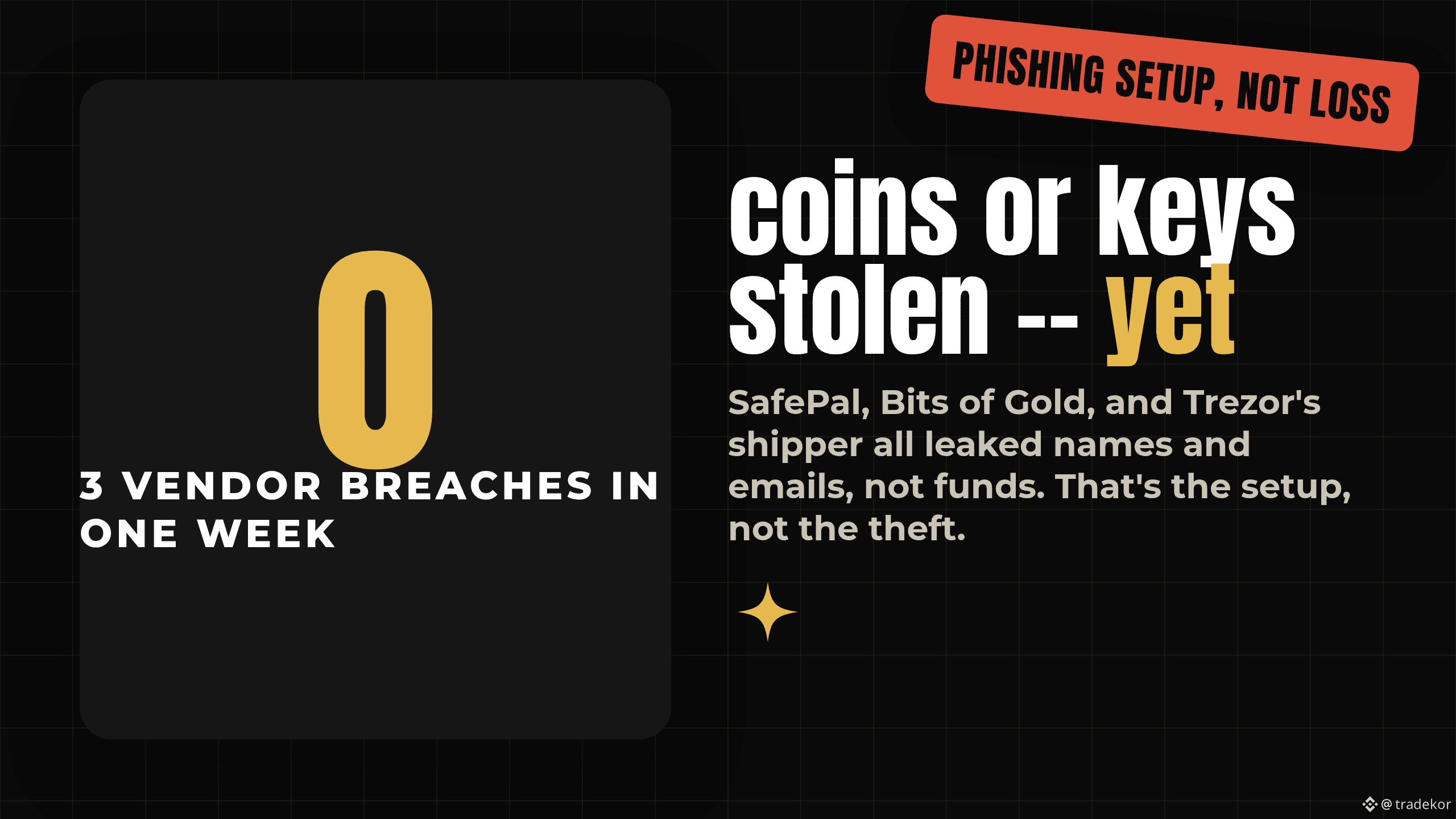
67
🚨 تسوية اختراق بيانات بقيمة 5.5 مليون دولار لشركة برمجيات مالية
توصلت شركة Doxim Inc.، المزود للبرمجيات المالية ومقرها ميشيغان، إلى تسوية دعوى جماعية بقيمة 5.5 مليون دولار بعد حادثة اختراق بيانات عام 2023. تعرضت خلالها معلومات شخصية للمستخدمين. يحق للمتضررين في الولايات المتحدة المطالبة بتعويضات تصل إلى 5000 دولار عن الخسائر الموثقة، أو دفعة نقدية تناسبية، أو مراقبة ائتمانية.
━━━━━━━━━━━━━━
📊 التأثير: 📊 متوسط
🏷️ OTHER
#DataBreach #CyberSecurity #LegalSettlement #FinancialSoftware
📰 المصدر: dailyhodl.com
🚨 تسوية اختراق بيانات بقيمة 5.5 مليون دولار لشركة برمجيات مالية
توصلت شركة Doxim Inc.، المزود للبرمجيات المالية ومقرها ميشيغان، إلى تسوية دعوى جماعية بقيمة 5.5 مليون دولار بعد حادثة اختراق بيانات عام 2023. تعرضت خلالها معلومات شخصية للمستخدمين. يحق للمتضررين في الولايات المتحدة المطالبة بتعويضات تصل إلى 5000 دولار عن الخسائر الموثقة، أو دفعة نقدية تناسبية، أو مراقبة ائتمانية.
━━━━━━━━━━━━━━
📊 التأثير: 📊 متوسط
🏷️ OTHER
#DataBreach #CyberSecurity #LegalSettlement #FinancialSoftware
📰 المصدر: dailyhodl.com
توصلت شركة Doxim Inc.، المزود للبرمجيات المالية ومقرها ميشيغان، إلى تسوية دعوى جماعية بقيمة 5.5 مليون دولار بعد حادثة اختراق بيانات عام 2023. تعرضت خلالها معلومات شخصية للمستخدمين. يحق للمتضررين في الولايات المتحدة المطالبة بتعويضات تصل إلى 5000 دولار عن الخسائر الموثقة، أو دفعة نقدية تناسبية، أو مراقبة ائتمانية.
━━━━━━━━━━━━━━
📊 التأثير: 📊 متوسط
🏷️ OTHER
#DataBreach #CyberSecurity #LegalSettlement #FinancialSoftware
📰 المصدر: dailyhodl.com
1
74

·
--
A data breach at Israel’s biggest crypto broker, Bits of Gold, exposed personal details of about 200,000 users.🔐 Names, bank accounts and national IDs were leaked, though funds and digital assets remained untouched. The incident highlights a persistent vulnerability: even centralized platforms can become entry points for attackers, pushing many participants to reconsider self‑custody options.
On Binance, $BTC is trading around $64,336 and $ETH near $1,903, showing the market’s resilience amid security headlines. Still, the breach may spur increased demand for hardware wallets and non‑custodial solutions, as traders look to isolate private keys from third‑party services. It also reminds compliance teams to audit data handling procedures more rigorously.
What steps are you taking to protect your crypto holdings after this kind of breach? #CryptoSecurity #DataBreach #GAMERXERO #Binance
A data breach at Israel’s biggest crypto broker, Bits of Gold, exposed personal details of about 200,000 users.🔐 Names, bank accounts and national IDs were leaked, though funds and digital assets remained untouched. The incident highlights a persistent vulnerability: even centralized platforms can become entry points for attackers, pushing many participants to reconsider self‑custody options.
On Binance, $BTC is trading around $64,336 and $ETH near $1,903, showing the market’s resilience amid security headlines. Still, the breach may spur increased demand for hardware wallets and non‑custodial solutions, as traders look to isolate private keys from third‑party services. It also reminds compliance teams to audit data handling procedures more rigorously.
What steps are you taking to protect your crypto holdings after this kind of breach? #CryptoSecurity #DataBreach #GAMERXERO #Binance
On Binance, $BTC is trading around $64,336 and $ETH near $1,903, showing the market’s resilience amid security headlines. Still, the breach may spur increased demand for hardware wallets and non‑custodial solutions, as traders look to isolate private keys from third‑party services. It also reminds compliance teams to audit data handling procedures more rigorously.
What steps are you taking to protect your crypto holdings after this kind of breach? #CryptoSecurity #DataBreach #GAMERXERO #Binance
38
ເຂົ້າສູ່ລະບົບເພື່ອສຳຫຼວດເນື້ອຫາເພີ່ມເຕີມ
ເຂົ້າຮ່ວມກຸ່ມຜູ້ໃຊ້ຄຣິບໂຕທົ່ວໂລກໃນ Binance Square.
⚡️ ໄດ້ຮັບຂໍ້ມູນຫຼ້າສຸດ ແລະ ທີ່ມີປະໂຫຍດກ່ຽວກັບຄຣິບໂຕ.
💬 ໄດ້ຮັບຄວາມໄວ້ວາງໃຈຈາກຕະຫຼາດແລກປ່ຽນຄຣິບໂຕທີ່ໃຫຍ່ທີ່ສຸດໃນໂລກ.
👍 ຄົ້ນຫາຂໍ້ມູນເຊີງເລິກທີ່ແທ້ຈາກນັກສ້າງທີ່ໄດ້ຮັບການຢືນຢັນ.
ອີເມວ / ເບີໂທລະສັບ
ຫົວຂໍ້ທີ່ກໍາລັງນິຍົມ
1
#JobsReportRaisesHikeOdds
515,224 ຄັ້ງທີ່ເບິ່ງ
3,312 ກຳລັງສົນທະນາ
2
#CPITestsDecemberRateOutlook
147,097 ຄັ້ງທີ່ເບິ່ງ
1,093 ກຳລັງສົນທະນາ
3
#BitcoinRebounds$75KAsChipsLead
47,085 ຄັ້ງທີ່ເບິ່ງ
341 ກຳລັງສົນທະນາ
4
#US Data Center Rules May Constrain AI Expansion
71,905 ຄັ້ງທີ່ເບິ່ງ
229 ກຳລັງສົນທະນາ
5
#ARKPlans14ThematicETFsCoveringAIAndTokenizedMarkets
4,218 ຄັ້ງທີ່ເບິ່ງ
67 ກຳລັງສົນທະນາ
6
#WillAnthropicListOnTime
153,151 ຄັ້ງທີ່ເບິ່ງ
1,338 ກຳລັງສົນທະນາ
7
#WillUS-IranTensionsBoostSafe-HavenDemand?
67,688 ຄັ້ງທີ່ເບິ່ງ
491 ກຳລັງສົນທະນາ
8
#BitcoinETFsSee$412MNetOutflows
15,311 ຄັ້ງທີ່ເບິ່ງ
75 ກຳລັງສົນທະນາ
9
#HKSFCPlansToRestrictCryptoAndExchangeTerms
59,081 ຄັ້ງທີ່ເບິ່ງ
530 ກຳລັງສົນທະນາ
10
#TradFiForBeginners
90,694 ຄັ້ງທີ່ເບິ່ງ
983 ກຳລັງສົນທະນາ