

#blockchaintechnology
blockchaintechnology
633,525 ຄັ້ງທີ່ເບິ່ງ
2,007 ກຳລັງສົນທະນາ
ມາແຮງ
ຫຼ້າສຸດ
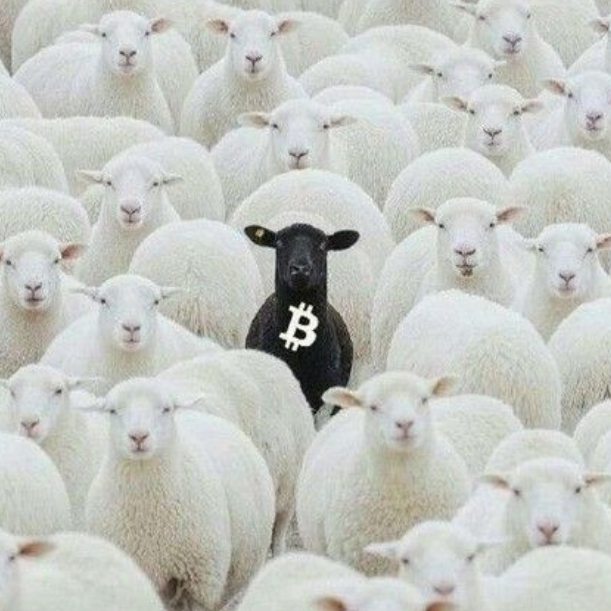
Speed is everything when it comes to mass adoption! ⚡
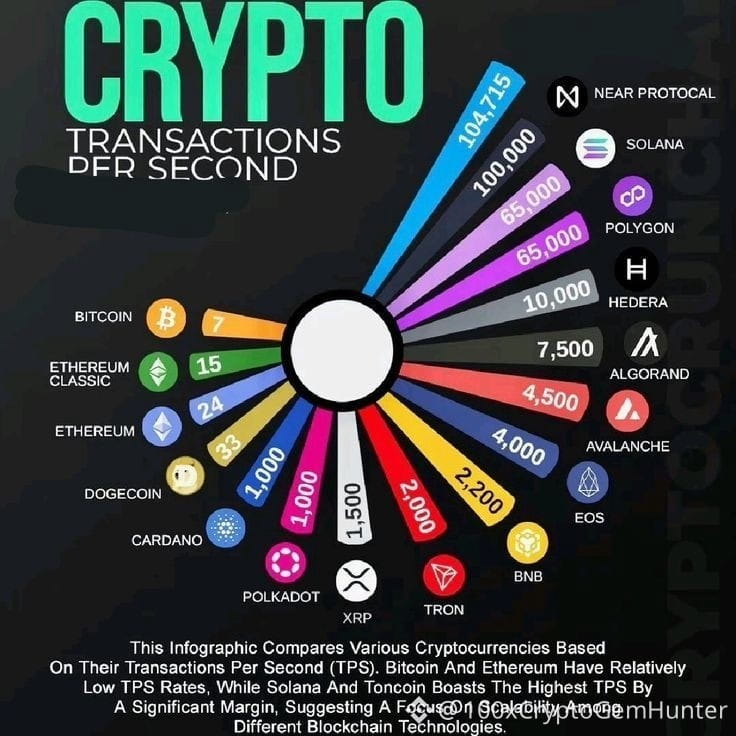
Looking at maximum TPS across major blockchains, the gap between legacy chains and modern Layer 1s is massive. While Bitcoin and Ethereum focus on security and decentralization, high-throughput networks like Near, Solana, and Polygon are paving the way for scalable web3 applications.
Which ecosystem are you betting on for the future of decentralized tech? Drop your thoughts below! 👇
{spot}(NEARUSDT)
{spot}(SOLUSDT)
{spot}(HBARUSDT)
#CryptoNews #BlockchainTechnology #Web3
Speed is everything when it comes to mass adoption! ⚡
Looking at maximum TPS across major blockchains, the gap between legacy chains and modern Layer 1s is massive. While Bitcoin and Ethereum focus on security and decentralization, high-throughput networks like Near, Solana, and Polygon are paving the way for scalable web3 applications.
Which ecosystem are you betting on for the future of decentralized tech? Drop your thoughts below! 👇
#CryptoNews #BlockchainTechnology #Web3
Looking at maximum TPS across major blockchains, the gap between legacy chains and modern Layer 1s is massive. While Bitcoin and Ethereum focus on security and decentralization, high-throughput networks like Near, Solana, and Polygon are paving the way for scalable web3 applications.
Which ecosystem are you betting on for the future of decentralized tech? Drop your thoughts below! 👇
#CryptoNews #BlockchainTechnology #Web3
346
·
--
刚看到四川宜宾发生3.7级地震,虽然震级不大,但提醒我们灾害随时可能发生。在数字时代,区块链和加密货币在灾害预警和救援中大有可为,比如快速筹集救灾资金、确保透明分配等。$BTC $ETH 作为主流加密货币,在危机时刻的价值尤为凸显,不受地理限制的转账能力在紧急情况下尤为重要。
#DisasterRelief #BlockchainTechnology
Just saw a 3.7 magnitude earthquake hit Yibin, Sichuan. While not too severe, it reminds us that disasters can strike anytime. In the digital age, blockchain and crypto have huge potential in disaster warning and relief, like quickly raising funds and ensuring transparent distribution. $BTC $ETH as major cryptocurrencies show special value during crises, with their borderless transfer capabilities being crucial in emergencies.
#DisasterRelief #BlockchainTechnology
刚看到四川宜宾发生3.7级地震,虽然震级不大,但提醒我们灾害随时可能发生。在数字时代,区块链和加密货币在灾害预警和救援中大有可为,比如快速筹集救灾资金、确保透明分配等。$BTC $ETH 作为主流加密货币,在危机时刻的价值尤为凸显,不受地理限制的转账能力在紧急情况下尤为重要。
#DisasterRelief #BlockchainTechnology
Just saw a 3.7 magnitude earthquake hit Yibin, Sichuan. While not too severe, it reminds us that disasters can strike anytime. In the digital age, blockchain and crypto have huge potential in disaster warning and relief, like quickly raising funds and ensuring transparent distribution. $BTC $ETH as major cryptocurrencies show special value during crises, with their borderless transfer capabilities being crucial in emergencies.
#DisasterRelief #BlockchainTechnology
#DisasterRelief #BlockchainTechnology
Just saw a 3.7 magnitude earthquake hit Yibin, Sichuan. While not too severe, it reminds us that disasters can strike anytime. In the digital age, blockchain and crypto have huge potential in disaster warning and relief, like quickly raising funds and ensuring transparent distribution. $BTC $ETH as major cryptocurrencies show special value during crises, with their borderless transfer capabilities being crucial in emergencies.
#DisasterRelief #BlockchainTechnology
1
499
·
--
Got it! Here are 3 ready-to-use English posts about blockchain basics for your Binance Feed or other socials 👇
*Option 1: Simple & Clear*
*Caption:*
*Blockchain Explained in 10 Seconds* 🔗
Think of it as a digital notebook that everyone shares.
1. *No single owner*: It's decentralized
2. *Can't be changed*: Once written, it's permanent
3. *Fully transparent*: Everyone can verify it
It’s not just crypto. It’s a new way to build trust online.
What industry do you think blockchain will disrupt next? 👇
*Option 2: Engaging Question Style*
*Caption:*
*If the internet is for information, blockchain is for trust.* 💡
Before blockchain: We trusted banks, companies, middlemen.
With blockchain: We trust code, math, and consensus.
It’s the technology behind Bitcoin, but its real power is bigger than money. Supply chains, healthcare, voting - all becoming transparent.
Drop a 🔗 if you believe in a decentralized future.
*Option 3: Binance Feed / Professional*
*Caption:*
*3 Things You MUST Know About Blockchain:*
1. *Decentralization* → No single entity controls it. Power to the people.
2. *Immutability* → Data can’t be altered or deleted. True record-keeping.
3. *Transparency* → All transactions are publicly verifiable on the ledger.
Blockchain isn’t the future. It’s already here, building the foundation for Web3.
Save this post if you’re just starting your crypto journey. 📌
#Binance #learnwithbinancesqure #BlockchainBasics #Crypto101 #DYOR
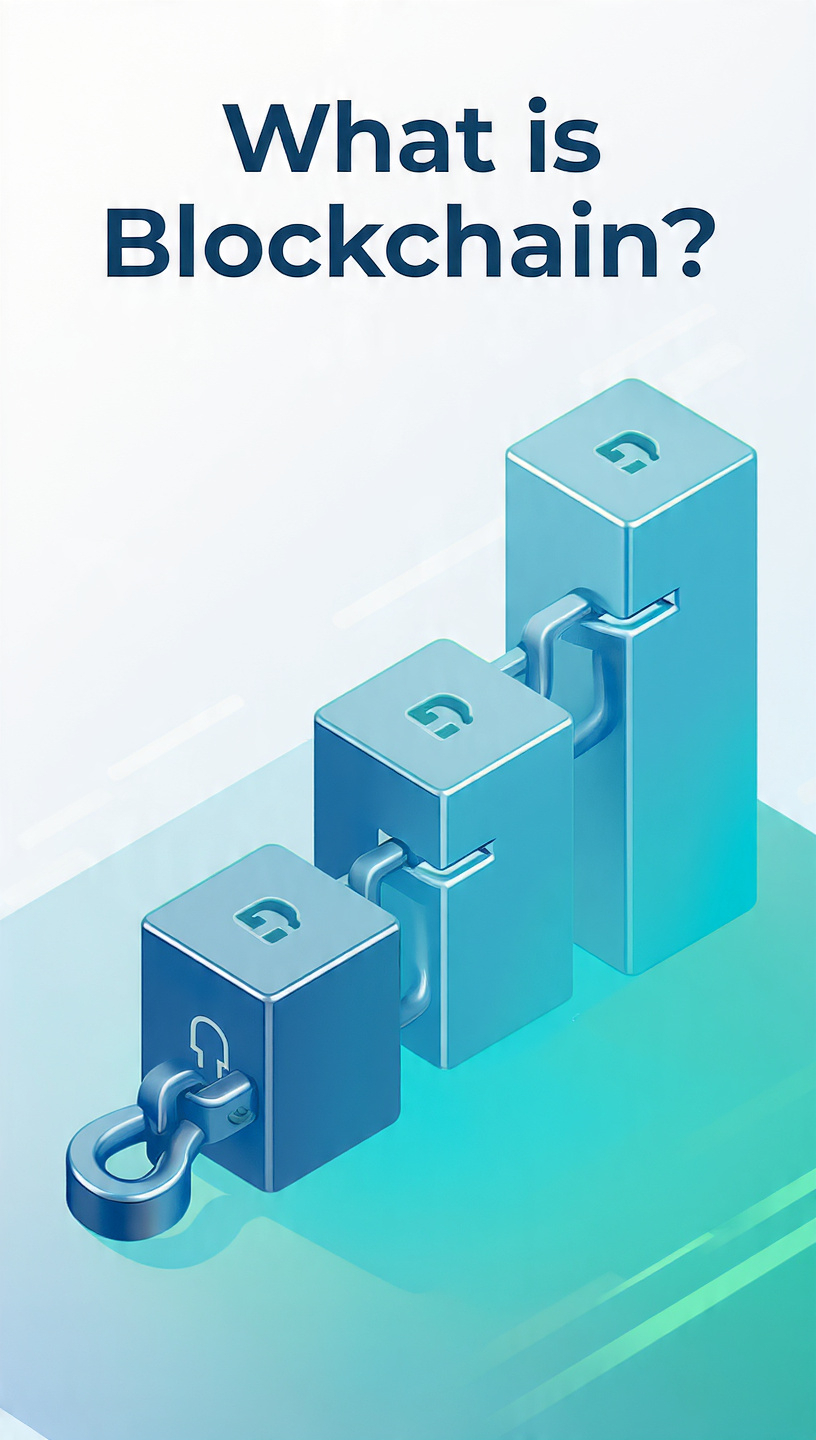
#BlockchainTechnology
Got it! Here are 3 ready-to-use English posts about blockchain basics for your Binance Feed or other socials 👇
*Option 1: Simple & Clear*
*Caption:*
*Blockchain Explained in 10 Seconds* 🔗
Think of it as a digital notebook that everyone shares.
1. *No single owner*: It's decentralized
2. *Can't be changed*: Once written, it's permanent
3. *Fully transparent*: Everyone can verify it
It’s not just crypto. It’s a new way to build trust online.
What industry do you think blockchain will disrupt next? 👇
*Option 2: Engaging Question Style*
*Caption:*
*If the internet is for information, blockchain is for trust.* 💡
Before blockchain: We trusted banks, companies, middlemen.
With blockchain: We trust code, math, and consensus.
It’s the technology behind Bitcoin, but its real power is bigger than money. Supply chains, healthcare, voting - all becoming transparent.
Drop a 🔗 if you believe in a decentralized future.
*Option 3: Binance Feed / Professional*
*Caption:*
*3 Things You MUST Know About Blockchain:*
1. *Decentralization* → No single entity controls it. Power to the people.
2. *Immutability* → Data can’t be altered or deleted. True record-keeping.
3. *Transparency* → All transactions are publicly verifiable on the ledger.
Blockchain isn’t the future. It’s already here, building the foundation for Web3.
Save this post if you’re just starting your crypto journey. 📌
#Binance #learnwithbinancesqure #BlockchainBasics #Crypto101 #DYOR
#BlockchainTechnology
*Option 1: Simple & Clear*
*Caption:*
*Blockchain Explained in 10 Seconds* 🔗
Think of it as a digital notebook that everyone shares.
1. *No single owner*: It's decentralized
2. *Can't be changed*: Once written, it's permanent
3. *Fully transparent*: Everyone can verify it
It’s not just crypto. It’s a new way to build trust online.
What industry do you think blockchain will disrupt next? 👇
*Option 2: Engaging Question Style*
*Caption:*
*If the internet is for information, blockchain is for trust.* 💡
Before blockchain: We trusted banks, companies, middlemen.
With blockchain: We trust code, math, and consensus.
It’s the technology behind Bitcoin, but its real power is bigger than money. Supply chains, healthcare, voting - all becoming transparent.
Drop a 🔗 if you believe in a decentralized future.
*Option 3: Binance Feed / Professional*
*Caption:*
*3 Things You MUST Know About Blockchain:*
1. *Decentralization* → No single entity controls it. Power to the people.
2. *Immutability* → Data can’t be altered or deleted. True record-keeping.
3. *Transparency* → All transactions are publicly verifiable on the ledger.
Blockchain isn’t the future. It’s already here, building the foundation for Web3.
Save this post if you’re just starting your crypto journey. 📌
#Binance #learnwithbinancesqure #BlockchainBasics #Crypto101 #DYOR
#BlockchainTechnology
1
117

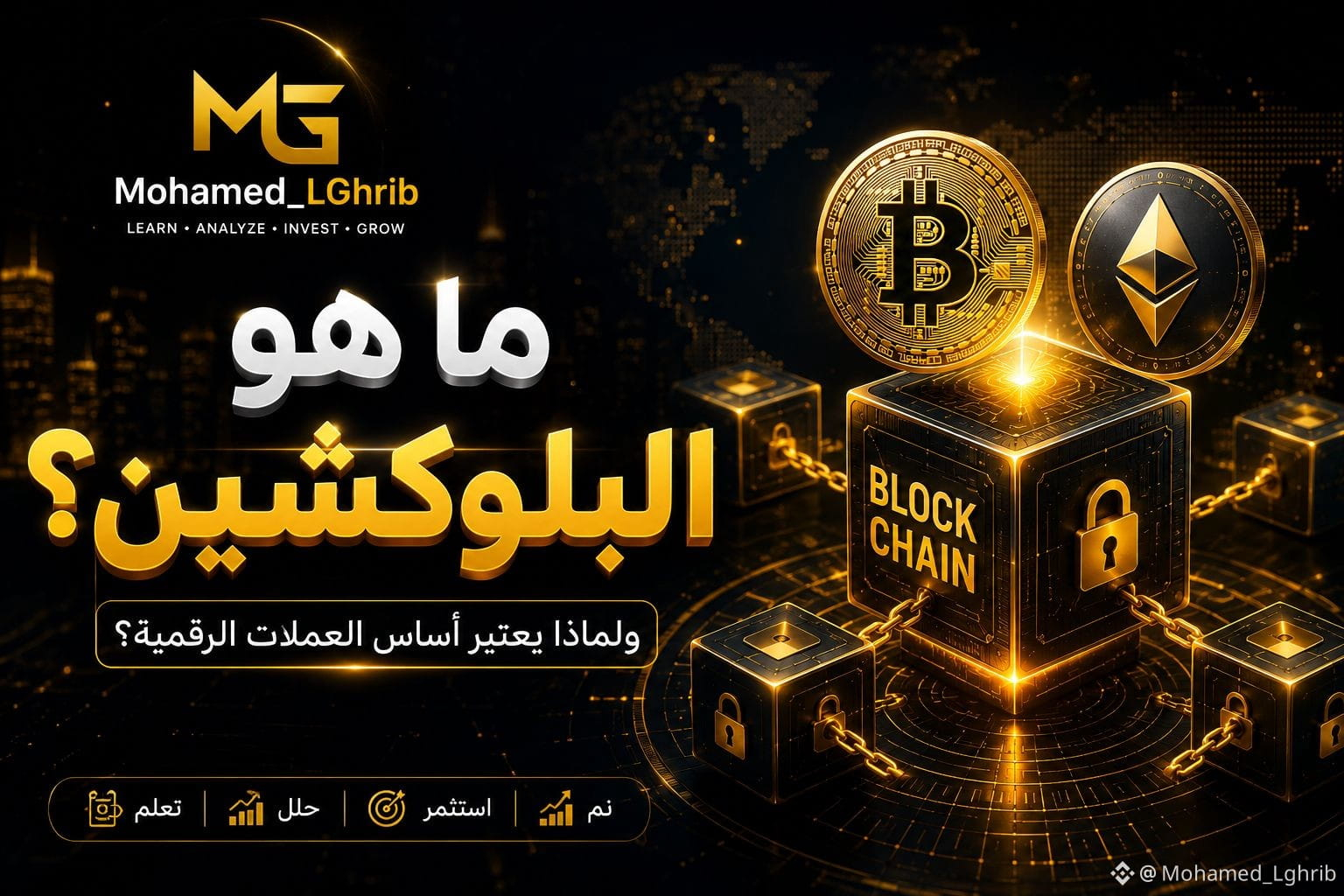
📚 ما هو البلوكشين؟ ولماذا يعتبر أساس العملات الرقمية؟
إذا كنت جديداً في عالم العملات الرقمية، فمن المهم أن تفهم أولاً تقنية البلوكشين (Blockchain)، لأنها الأساس الذي تعتمد عليه معظم العملات الرقمية.
ببساطة، البلوكشين هو سجل رقمي آمن وشفاف تُسجل فيه جميع المعاملات، ويصعب التلاعب به أو تغييرها بعد تسجيلها.
✨ أهم مميزاته: ✅ الشفافية. ✅ الأمان. ✅ اللامركزية. ✅ سرعة نقل البيانات والأصول الرقمية.
لهذا تعتمد عملات مثل Bitcoin وEthereum على تقنية البلوكشين.
⚠️ معلومة مهمة: تعلم أساسيات البلوكشين أهم من متابعة الأسعار فقط، لأنه يساعدك على فهم المشاريع واتخاذ قرارات أفضل.
💬 سؤال اليوم: هل كنت تعرف معنى البلوكشين قبل قراءة هذا المنشور؟ اكتب "نعم" أو "لا" في التعليقات.
$BTC $ETH $BNB
#Blockchain #Bitcoin #Ethereum #Crypto #CryptoEducation #Web3 #BinanceSquare #DigitalAssets #CryptoNews #BlockchainTechnology
📚 ما هو البلوكشين؟ ولماذا يعتبر أساس العملات الرقمية؟
إذا كنت جديداً في عالم العملات الرقمية، فمن المهم أن تفهم أولاً تقنية البلوكشين (Blockchain)، لأنها الأساس الذي تعتمد عليه معظم العملات الرقمية.
ببساطة، البلوكشين هو سجل رقمي آمن وشفاف تُسجل فيه جميع المعاملات، ويصعب التلاعب به أو تغييرها بعد تسجيلها.
✨ أهم مميزاته: ✅ الشفافية. ✅ الأمان. ✅ اللامركزية. ✅ سرعة نقل البيانات والأصول الرقمية.
لهذا تعتمد عملات مثل Bitcoin وEthereum على تقنية البلوكشين.
⚠️ معلومة مهمة: تعلم أساسيات البلوكشين أهم من متابعة الأسعار فقط، لأنه يساعدك على فهم المشاريع واتخاذ قرارات أفضل.
💬 سؤال اليوم: هل كنت تعرف معنى البلوكشين قبل قراءة هذا المنشور؟ اكتب "نعم" أو "لا" في التعليقات.
$BTC $ETH $BNB
#Blockchain #Bitcoin #Ethereum #Crypto #CryptoEducation #Web3 #BinanceSquare #DigitalAssets #CryptoNews #BlockchainTechnology
إذا كنت جديداً في عالم العملات الرقمية، فمن المهم أن تفهم أولاً تقنية البلوكشين (Blockchain)، لأنها الأساس الذي تعتمد عليه معظم العملات الرقمية.
ببساطة، البلوكشين هو سجل رقمي آمن وشفاف تُسجل فيه جميع المعاملات، ويصعب التلاعب به أو تغييرها بعد تسجيلها.
✨ أهم مميزاته: ✅ الشفافية. ✅ الأمان. ✅ اللامركزية. ✅ سرعة نقل البيانات والأصول الرقمية.
لهذا تعتمد عملات مثل Bitcoin وEthereum على تقنية البلوكشين.
⚠️ معلومة مهمة: تعلم أساسيات البلوكشين أهم من متابعة الأسعار فقط، لأنه يساعدك على فهم المشاريع واتخاذ قرارات أفضل.
💬 سؤال اليوم: هل كنت تعرف معنى البلوكشين قبل قراءة هذا المنشور؟ اكتب "نعم" أو "لا" في التعليقات.
$BTC $ETH $BNB
#Blockchain #Bitcoin #Ethereum #Crypto #CryptoEducation #Web3 #BinanceSquare #DigitalAssets #CryptoNews #BlockchainTechnology
1
131

·
--
ສັນຍານກະທິງ
🚨 Wall Street is moving on-chain.
For years, many believed banks and blockchain were competing technologies. Now, some of the world's biggest financial institutions are exploring tokenized deposits and blockchain-based settlement networks.
If banks like JPMorgan, Bank of America, and Citi continue building in this direction, it could bring faster payments, lower costs, and wider adoption of digital asset infrastructure.
Crypto isn't replacing finance—it's gradually becoming part of it.
The biggest bullish signal isn't hype. It's when traditional finance starts using blockchain behind the scenes.
Alternative version:
Everyone talks about crypto adoption, but real adoption happens when trillion-dollar institutions start building with blockchain.
The latest discussions around tokenized deposit networks show that major banks are no longer asking if blockchain matters—they're exploring how to use it.
The future of finance may not be banks versus crypto. It may be banks powered by blockchain
#CryptoNews #Tokenization #BlockchainTechnology
#JPMorganBofACitiPlanTokenizedDepositNetwork
{spot}(BTCUSDT)
🚨 Wall Street is moving on-chain.
For years, many believed banks and blockchain were competing technologies. Now, some of the world's biggest financial institutions are exploring tokenized deposits and blockchain-based settlement networks.
If banks like JPMorgan, Bank of America, and Citi continue building in this direction, it could bring faster payments, lower costs, and wider adoption of digital asset infrastructure.
Crypto isn't replacing finance—it's gradually becoming part of it.
The biggest bullish signal isn't hype. It's when traditional finance starts using blockchain behind the scenes.
Alternative version:
Everyone talks about crypto adoption, but real adoption happens when trillion-dollar institutions start building with blockchain.
The latest discussions around tokenized deposit networks show that major banks are no longer asking if blockchain matters—they're exploring how to use it.
The future of finance may not be banks versus crypto. It may be banks powered by blockchain
#CryptoNews #Tokenization #BlockchainTechnology
#JPMorganBofACitiPlanTokenizedDepositNetwork
For years, many believed banks and blockchain were competing technologies. Now, some of the world's biggest financial institutions are exploring tokenized deposits and blockchain-based settlement networks.
If banks like JPMorgan, Bank of America, and Citi continue building in this direction, it could bring faster payments, lower costs, and wider adoption of digital asset infrastructure.
Crypto isn't replacing finance—it's gradually becoming part of it.
The biggest bullish signal isn't hype. It's when traditional finance starts using blockchain behind the scenes.
Alternative version:
Everyone talks about crypto adoption, but real adoption happens when trillion-dollar institutions start building with blockchain.
The latest discussions around tokenized deposit networks show that major banks are no longer asking if blockchain matters—they're exploring how to use it.
The future of finance may not be banks versus crypto. It may be banks powered by blockchain
#CryptoNews #Tokenization #BlockchainTechnology
#JPMorganBofACitiPlanTokenizedDepositNetwork
1
137

·
--
🚀 Anchorage Digital to Bring Traditional Banks Onchain! 🏦⛓️
Big moves are happening in the banking world! Anchorage Digital has just launched a brand-new platform designed to help traditional banks issue tokenized deposits.
What does this actually mean for the future of finance? Let’s break it down:
⏱️ 24/7/365 Settlements: No more waiting for "business hours" or batch processing. Banks will be able to offer instant, round-the-clock payments using blockchain technology.
🛠️ No Core Overhauls: The best part? Banks don't need to replace their existing, decades-old core systems. Anchorage’s platform acts as a parallel layer that plugs right in, eliminating massive operational risks.
🛡️ Safe & Secure: Your actual funds stay safely inside the traditional bank account, while the blockchain creates a secure digital representation (token) for lightning-fast movement.
The Big Debate: Stablecoins vs. Tokenized Deposits 🥊 While stablecoins like USDC and USDT are issued by private companies, tokenized deposits are backed directly by commercial banks.
With giants like JPMorgan, Citi, and Bank of America already planning a shared tokenized deposit network by 2027, it’s clear that institutional money is moving onchain fast.
What do you think? Will tokenized deposits eventually overtake traditional stablecoins for institutional finance? 👇
#CryptoNews #Tokenization #Banking #RWA #BlockchainTechnology $BTC
$ETH
{spot}(ETHUSDT)
🚀 Anchorage Digital to Bring Traditional Banks Onchain! 🏦⛓️
Big moves are happening in the banking world! Anchorage Digital has just launched a brand-new platform designed to help traditional banks issue tokenized deposits.
What does this actually mean for the future of finance? Let’s break it down:
⏱️ 24/7/365 Settlements: No more waiting for "business hours" or batch processing. Banks will be able to offer instant, round-the-clock payments using blockchain technology.
🛠️ No Core Overhauls: The best part? Banks don't need to replace their existing, decades-old core systems. Anchorage’s platform acts as a parallel layer that plugs right in, eliminating massive operational risks.
🛡️ Safe & Secure: Your actual funds stay safely inside the traditional bank account, while the blockchain creates a secure digital representation (token) for lightning-fast movement.
The Big Debate: Stablecoins vs. Tokenized Deposits 🥊 While stablecoins like USDC and USDT are issued by private companies, tokenized deposits are backed directly by commercial banks.
With giants like JPMorgan, Citi, and Bank of America already planning a shared tokenized deposit network by 2027, it’s clear that institutional money is moving onchain fast.
What do you think? Will tokenized deposits eventually overtake traditional stablecoins for institutional finance? 👇
#CryptoNews #Tokenization #Banking #RWA #BlockchainTechnology $BTC
$ETH
Big moves are happening in the banking world! Anchorage Digital has just launched a brand-new platform designed to help traditional banks issue tokenized deposits.
What does this actually mean for the future of finance? Let’s break it down:
⏱️ 24/7/365 Settlements: No more waiting for "business hours" or batch processing. Banks will be able to offer instant, round-the-clock payments using blockchain technology.
🛠️ No Core Overhauls: The best part? Banks don't need to replace their existing, decades-old core systems. Anchorage’s platform acts as a parallel layer that plugs right in, eliminating massive operational risks.
🛡️ Safe & Secure: Your actual funds stay safely inside the traditional bank account, while the blockchain creates a secure digital representation (token) for lightning-fast movement.
The Big Debate: Stablecoins vs. Tokenized Deposits 🥊 While stablecoins like USDC and USDT are issued by private companies, tokenized deposits are backed directly by commercial banks.
With giants like JPMorgan, Citi, and Bank of America already planning a shared tokenized deposit network by 2027, it’s clear that institutional money is moving onchain fast.
What do you think? Will tokenized deposits eventually overtake traditional stablecoins for institutional finance? 👇
#CryptoNews #Tokenization #Banking #RWA #BlockchainTechnology $BTC
$ETH
87

·
--
🚀🚀 IA + Blockchain: El dúo dinámico que está cambiando el juego
¿Te has preguntado por qué todo el mundo habla de la IA en el ecosistema cripto? Es simple: la Inteligencia Artificial necesita una economía propia, y la Blockchain es su banco descentralizado. 🤖💰
Así es como se está moviendo el mercado ahora mismo:
✨ LA FÓRMULA DEL ÉXITO:
1️⃣ IA (Inteligencia Artificial) + *Data* (Datos masivos)
⬇️
2️⃣ Blockchain (La infraestructura segura)
⬇️
3️⃣ Adopción Masiva (El puente al usuario final)
⬇️
4️⃣ Binance: (Tu puerta de entrada al ecosistema)
Esta sinergia no es solo una moda, es la base de la próxima gran revolución tecnológica. Los proyectos que combinan estos pilares están liderando el volumen de trading en Binance y marcando la tendencia para este 2026. 📈🔥
*Recuerda: El mercado es volátil, ¡infórmate bien antes de cada movimiento!* 🧠💡
#CryptoIA #Binance #Web3 #Innovacion #BlockchainTechnology
🚀🚀 IA + Blockchain: El dúo dinámico que está cambiando el juego
¿Te has preguntado por qué todo el mundo habla de la IA en el ecosistema cripto? Es simple: la Inteligencia Artificial necesita una economía propia, y la Blockchain es su banco descentralizado. 🤖💰
Así es como se está moviendo el mercado ahora mismo:
✨ LA FÓRMULA DEL ÉXITO:
1️⃣ IA (Inteligencia Artificial) + *Data* (Datos masivos)
⬇️
2️⃣ Blockchain (La infraestructura segura)
⬇️
3️⃣ Adopción Masiva (El puente al usuario final)
⬇️
4️⃣ Binance: (Tu puerta de entrada al ecosistema)
Esta sinergia no es solo una moda, es la base de la próxima gran revolución tecnológica. Los proyectos que combinan estos pilares están liderando el volumen de trading en Binance y marcando la tendencia para este 2026. 📈🔥
*Recuerda: El mercado es volátil, ¡infórmate bien antes de cada movimiento!* 🧠💡
#CryptoIA #Binance #Web3 #Innovacion #BlockchainTechnology
¿Te has preguntado por qué todo el mundo habla de la IA en el ecosistema cripto? Es simple: la Inteligencia Artificial necesita una economía propia, y la Blockchain es su banco descentralizado. 🤖💰
Así es como se está moviendo el mercado ahora mismo:
✨ LA FÓRMULA DEL ÉXITO:
1️⃣ IA (Inteligencia Artificial) + *Data* (Datos masivos)
⬇️
2️⃣ Blockchain (La infraestructura segura)
⬇️
3️⃣ Adopción Masiva (El puente al usuario final)
⬇️
4️⃣ Binance: (Tu puerta de entrada al ecosistema)
Esta sinergia no es solo una moda, es la base de la próxima gran revolución tecnológica. Los proyectos que combinan estos pilares están liderando el volumen de trading en Binance y marcando la tendencia para este 2026. 📈🔥
*Recuerda: El mercado es volátil, ¡infórmate bien antes de cada movimiento!* 🧠💡
#CryptoIA #Binance #Web3 #Innovacion #BlockchainTechnology
133
·
--
ສັນຍານກະທິງ
#openledger $OPEN
Tehnologie și Web3
$BTC $BNB
Integrarea dintre Inteligența Artificială și tehnologia Blockchain continuă să revoluționeze ecosistemul cripto. Proiectele din sectorul AI atrag atenția masivă a investitorilor, oferind soluții inovatoare pentru automatizarea contractelor inteligente și analiza avansată a datelor de pe rețea. Este un moment excelent să urmărim evoluția tokenurilor din această categorie. Care este proiectul vostru preferat din zona AI? 💻
#Crypto Al #Web3 #BlockchainTechnology #INNOVATION
#openledger $OPEN
Tehnologie și Web3
$BTC $BNB
Integrarea dintre Inteligența Artificială și tehnologia Blockchain continuă să revoluționeze ecosistemul cripto. Proiectele din sectorul AI atrag atenția masivă a investitorilor, oferind soluții inovatoare pentru automatizarea contractelor inteligente și analiza avansată a datelor de pe rețea. Este un moment excelent să urmărim evoluția tokenurilor din această categorie. Care este proiectul vostru preferat din zona AI? 💻
#Crypto Al #Web3 #BlockchainTechnology #INNOVATION
Tehnologie și Web3
$BTC $BNB
Integrarea dintre Inteligența Artificială și tehnologia Blockchain continuă să revoluționeze ecosistemul cripto. Proiectele din sectorul AI atrag atenția masivă a investitorilor, oferind soluții inovatoare pentru automatizarea contractelor inteligente și analiza avansată a datelor de pe rețea. Este un moment excelent să urmărim evoluția tokenurilor din această categorie. Care este proiectul vostru preferat din zona AI? 💻
#Crypto Al #Web3 #BlockchainTechnology #INNOVATION
1
160

·
--
ບົດຄວາມ
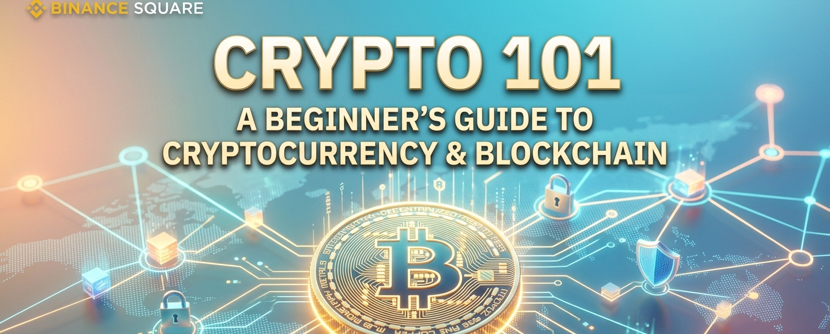
An Ultimate Beginner’s Guide to Cryptocurrency and BlockchainThe digital financial landscape is shifting rapidly. If you have recently stepped into the world of Web3, decentralized finance (DeFi), or digital assets, you might feel inundated with complex jargon. Terms like "Bitcoin," "blockchain," "nodes," and "mining" are thrown around daily, often leaving newcomers feeling left behind.
This comprehensive article breaks down the two foundational pillars of the digital asset revolution: Cryptocurrency and Blockchain. By the end of this guide, you will have a clear, foundational understanding of how this ecosystem operates.
1. What is Cryptocurrency?
At its most fundamental level, a cryptocurrency is a form of digital or virtual currency. Unlike fiat currencies—such as the US Dollar (USD), Euro (EUR), or Sri Lankan Rupee (LKR)—cryptocurrencies do not exist in physical form. You cannot hold a physical Bitcoin in your hand; it exists purely as a digital record.
Key Characteristics of Cryptocurrencies
Decentralization: Traditional money is issued and regulated by central banks and governments. Cryptocurrencies, conversely, operate on distributed networks that no single entity controls.
Cryptographic Security: The "crypto" in cryptocurrency refers to advanced encryption techniques. This complex mathematics secures transactions, prevents double-spending, and regulates the creation of new coin units.
Peer-to-Peer (P2P) Protocol: Transactions occur directly between the sender and the receiver. There is no middleman—like Visa, Mastercard, or a traditional bank—approving or processing the transfer.
A Simple Analogy: Think of traditional banking as a private diary kept by a bank manager who decides who can see it. Cryptocurrency is like a massive, public chalkboard in a town square where everyone can see the ledger of transactions, but nobody can erase what is written.
2. The Infrastructure: What is Blockchain?
If cryptocurrency is the digital money, blockchain is the ground-breaking underlying technology that allows it to exist and function securely.
A blockchain is a decentralized, chronological, and immutable digital ledger. It records transactions across a vast network of computers (often called "nodes") scattered across the globe.
How a Blockchain Transaction Works
To understand the mechanics, let’s look at a simple three-step lifecycle of a transaction:
1. The Request: Alice wants to send 1 Bitcoin to Bob. This transaction is broadcasted to the global network.
2. The Verification: The network of computers races to validate the transaction using complex cryptographic algorithms, ensuring Alice actually owns the Bitcoin she is trying to send.
3. The Creation of the Chain: Once validated, Alice’s transaction is grouped with other recent transactions into a digital "block." This block is permanently timestamped and chained to the previous block of transactions, forming a blockchain.
Why is it Unhackable?
Once a block is added to the chain, changing any information within it requires altering every subsequent block across thousands of computers simultaneously. This makes data on a blockchain virtually immutable—it cannot be altered, deleted, or counterfeited.
3. Why This Technology Matters
The emergence of cryptocurrency and blockchain isn't just a trend; it represents a fundamental shift in economic theory and data security.
Global Accessibility: Over 1.4 billion adults worldwide remain unbanked. Anyone with a smartphone and an internet connection can access cryptocurrency, offering unprecedented financial inclusion.
Radical Transparency: Every transaction ever executed on a public blockchain is visible to the public. This eliminates hidden fees and mitigates corporate corruption.
Lower Costs & Higher Speed: Sending traditional money across borders can take days and incur heavy bank fees. Crypto transactions can settle in minutes, often for a fraction of the cost, regardless of geographical distance.
Looking Ahead
Grasping the relationship between cryptocurrency and blockchain is your first vital milestone in navigating the Web3 space. The journey does not stop here. As you move forward, the next critical steps involve learning how to secure your digital assets, identifying market trends, and understanding risk management.
Did you find this guide helpful?
Like & Share this article to help other beginners kickstart their crypto journey.
Subscribe to this channel to receive the next edition directly in your feed.
Leave a comment: What is the biggest hurdle you are facing as a crypto beginner? Let's discuss below!
#BlockchainTechnology $BTC
An Ultimate Beginner’s Guide to Cryptocurrency and Blockchain
The digital financial landscape is shifting rapidly. If you have recently stepped into the world of Web3, decentralized finance (DeFi), or digital assets, you might feel inundated with complex jargon. Terms like "Bitcoin," "blockchain," "nodes," and "mining" are thrown around daily, often leaving newcomers feeling left behind.
This comprehensive article breaks down the two foundational pillars of the digital asset revolution: Cryptocurrency and Blockchain. By the end of this guide, you will have a clear, foundational understanding of how this ecosystem operates.
1. What is Cryptocurrency?
At its most fundamental level, a cryptocurrency is a form of digital or virtual currency. Unlike fiat currencies—such as the US Dollar (USD), Euro (EUR), or Sri Lankan Rupee (LKR)—cryptocurrencies do not exist in physical form. You cannot hold a physical Bitcoin in your hand; it exists purely as a digital record.
Key Characteristics of Cryptocurrencies
Decentralization: Traditional money is issued and regulated by central banks and governments. Cryptocurrencies, conversely, operate on distributed networks that no single entity controls.
Cryptographic Security: The "crypto" in cryptocurrency refers to advanced encryption techniques. This complex mathematics secures transactions, prevents double-spending, and regulates the creation of new coin units.
Peer-to-Peer (P2P) Protocol: Transactions occur directly between the sender and the receiver. There is no middleman—like Visa, Mastercard, or a traditional bank—approving or processing the transfer.
A Simple Analogy: Think of traditional banking as a private diary kept by a bank manager who decides who can see it. Cryptocurrency is like a massive, public chalkboard in a town square where everyone can see the ledger of transactions, but nobody can erase what is written.
2. The Infrastructure: What is Blockchain?
If cryptocurrency is the digital money, blockchain is the ground-breaking underlying technology that allows it to exist and function securely.
A blockchain is a decentralized, chronological, and immutable digital ledger. It records transactions across a vast network of computers (often called "nodes") scattered across the globe.
How a Blockchain Transaction Works
To understand the mechanics, let’s look at a simple three-step lifecycle of a transaction:
1. The Request: Alice wants to send 1 Bitcoin to Bob. This transaction is broadcasted to the global network.
2. The Verification: The network of computers races to validate the transaction using complex cryptographic algorithms, ensuring Alice actually owns the Bitcoin she is trying to send.
3. The Creation of the Chain: Once validated, Alice’s transaction is grouped with other recent transactions into a digital "block." This block is permanently timestamped and chained to the previous block of transactions, forming a blockchain.
Why is it Unhackable?
Once a block is added to the chain, changing any information within it requires altering every subsequent block across thousands of computers simultaneously. This makes data on a blockchain virtually immutable—it cannot be altered, deleted, or counterfeited.
3. Why This Technology Matters
The emergence of cryptocurrency and blockchain isn't just a trend; it represents a fundamental shift in economic theory and data security.
Global Accessibility: Over 1.4 billion adults worldwide remain unbanked. Anyone with a smartphone and an internet connection can access cryptocurrency, offering unprecedented financial inclusion.
Radical Transparency: Every transaction ever executed on a public blockchain is visible to the public. This eliminates hidden fees and mitigates corporate corruption.
Lower Costs & Higher Speed: Sending traditional money across borders can take days and incur heavy bank fees. Crypto transactions can settle in minutes, often for a fraction of the cost, regardless of geographical distance.
Looking Ahead
Grasping the relationship between cryptocurrency and blockchain is your first vital milestone in navigating the Web3 space. The journey does not stop here. As you move forward, the next critical steps involve learning how to secure your digital assets, identifying market trends, and understanding risk management.
Did you find this guide helpful?
Like & Share this article to help other beginners kickstart their crypto journey.
Subscribe to this channel to receive the next edition directly in your feed.
Leave a comment: What is the biggest hurdle you are facing as a crypto beginner? Let's discuss below!
#BlockchainTechnology $BTC
This comprehensive article breaks down the two foundational pillars of the digital asset revolution: Cryptocurrency and Blockchain. By the end of this guide, you will have a clear, foundational understanding of how this ecosystem operates.
1. What is Cryptocurrency?
At its most fundamental level, a cryptocurrency is a form of digital or virtual currency. Unlike fiat currencies—such as the US Dollar (USD), Euro (EUR), or Sri Lankan Rupee (LKR)—cryptocurrencies do not exist in physical form. You cannot hold a physical Bitcoin in your hand; it exists purely as a digital record.
Key Characteristics of Cryptocurrencies
Decentralization: Traditional money is issued and regulated by central banks and governments. Cryptocurrencies, conversely, operate on distributed networks that no single entity controls.
Cryptographic Security: The "crypto" in cryptocurrency refers to advanced encryption techniques. This complex mathematics secures transactions, prevents double-spending, and regulates the creation of new coin units.
Peer-to-Peer (P2P) Protocol: Transactions occur directly between the sender and the receiver. There is no middleman—like Visa, Mastercard, or a traditional bank—approving or processing the transfer.
A Simple Analogy: Think of traditional banking as a private diary kept by a bank manager who decides who can see it. Cryptocurrency is like a massive, public chalkboard in a town square where everyone can see the ledger of transactions, but nobody can erase what is written.
2. The Infrastructure: What is Blockchain?
If cryptocurrency is the digital money, blockchain is the ground-breaking underlying technology that allows it to exist and function securely.
A blockchain is a decentralized, chronological, and immutable digital ledger. It records transactions across a vast network of computers (often called "nodes") scattered across the globe.
How a Blockchain Transaction Works
To understand the mechanics, let’s look at a simple three-step lifecycle of a transaction:
1. The Request: Alice wants to send 1 Bitcoin to Bob. This transaction is broadcasted to the global network.
2. The Verification: The network of computers races to validate the transaction using complex cryptographic algorithms, ensuring Alice actually owns the Bitcoin she is trying to send.
3. The Creation of the Chain: Once validated, Alice’s transaction is grouped with other recent transactions into a digital "block." This block is permanently timestamped and chained to the previous block of transactions, forming a blockchain.
Why is it Unhackable?
Once a block is added to the chain, changing any information within it requires altering every subsequent block across thousands of computers simultaneously. This makes data on a blockchain virtually immutable—it cannot be altered, deleted, or counterfeited.
3. Why This Technology Matters
The emergence of cryptocurrency and blockchain isn't just a trend; it represents a fundamental shift in economic theory and data security.
Global Accessibility: Over 1.4 billion adults worldwide remain unbanked. Anyone with a smartphone and an internet connection can access cryptocurrency, offering unprecedented financial inclusion.
Radical Transparency: Every transaction ever executed on a public blockchain is visible to the public. This eliminates hidden fees and mitigates corporate corruption.
Lower Costs & Higher Speed: Sending traditional money across borders can take days and incur heavy bank fees. Crypto transactions can settle in minutes, often for a fraction of the cost, regardless of geographical distance.
Looking Ahead
Grasping the relationship between cryptocurrency and blockchain is your first vital milestone in navigating the Web3 space. The journey does not stop here. As you move forward, the next critical steps involve learning how to secure your digital assets, identifying market trends, and understanding risk management.
Did you find this guide helpful?
Like & Share this article to help other beginners kickstart their crypto journey.
Subscribe to this channel to receive the next edition directly in your feed.
Leave a comment: What is the biggest hurdle you are facing as a crypto beginner? Let's discuss below!
#BlockchainTechnology $BTC
82

ບົດຄວາມ
Global Banking Just Quietly Rewired Itself — And Crypto Was the BlueprintGlobal Banking Just Quietly Rewired Itself — And Crypto Was the Blueprint
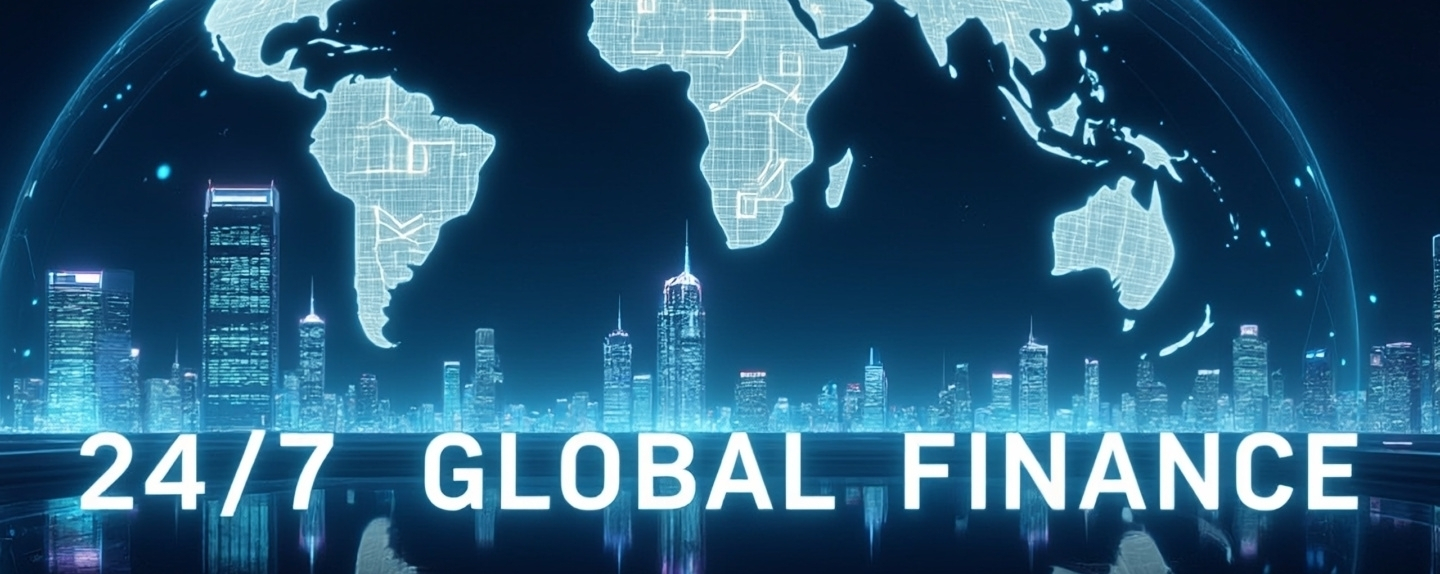
Seventeen of the world's largest banks just agreed to move money the way crypto has moved value for over a decade — and almost nobody outside the industry noticed.
On July 9, 2026, the global financial messaging network that connects over 11,500 institutions across 200+ countries confirmed its blockchain-based ledger is now ready for live use. Banks spanning six continents — including HSBC, Citi, BNP Paribas, UBS, ANZ, DBS, and Standard Chartered — are preparing to pilot real transactions using tokenized deposits.
◆ The system enables 24/7 cross-border payments, including overnight and weekend transfers — a first for traditional banking rails
◆ It took nine months to build, developed directly with feedback from global financial institutions
◆ 75% of payments on the existing network already reach beneficiary banks within 10 minutes — this pilot extends that speed to tokenized value
◆ Tokenized deposits are digital versions of real bank balances, fully backed and regulated — not stablecoins, not crypto in the traditional sense
◆ Existing compliance, credit, and risk controls remain fully intact — this is an upgrade to the system, not a replacement of it
◆ A separate US consortium — including JPMorgan Chase, Bank of America, Barclays, and Wells Fargo — is building a competing tokenized deposit network through The Clearing House, expected to launch in the first half of 2027
◆ NYSE's parent company has separately outlined plans for a tokenized securities venue built for 24/7 trading and instant settlement
For years, the pitch for blockchain technology was that it could move money faster, around the clock, without waiting on legacy banking hours. Now the institutions that built the old system are formally testing that exact idea — on their own terms, inside their own regulatory perimeter.
This isn't a small experiment. It's a coordinated signal from some of the most systemically important banks on the planet that always-on, blockchain-settled infrastructure is no longer a niche idea — it's the next layer of global finance.
Do you think traditional banks adopting blockchain technology validates the entire digital asset space, or does it just prove banks only wanted the technology — never the open networks it came from?
#CryptoNews #BlockchainTechnology #DigitalAssets #fintech #InstitutionalAdoption
Global Banking Just Quietly Rewired Itself — And Crypto Was the Blueprint
Global Banking Just Quietly Rewired Itself — And Crypto Was the Blueprint
Seventeen of the world's largest banks just agreed to move money the way crypto has moved value for over a decade — and almost nobody outside the industry noticed.
On July 9, 2026, the global financial messaging network that connects over 11,500 institutions across 200+ countries confirmed its blockchain-based ledger is now ready for live use. Banks spanning six continents — including HSBC, Citi, BNP Paribas, UBS, ANZ, DBS, and Standard Chartered — are preparing to pilot real transactions using tokenized deposits.
◆ The system enables 24/7 cross-border payments, including overnight and weekend transfers — a first for traditional banking rails
◆ It took nine months to build, developed directly with feedback from global financial institutions
◆ 75% of payments on the existing network already reach beneficiary banks within 10 minutes — this pilot extends that speed to tokenized value
◆ Tokenized deposits are digital versions of real bank balances, fully backed and regulated — not stablecoins, not crypto in the traditional sense
◆ Existing compliance, credit, and risk controls remain fully intact — this is an upgrade to the system, not a replacement of it
◆ A separate US consortium — including JPMorgan Chase, Bank of America, Barclays, and Wells Fargo — is building a competing tokenized deposit network through The Clearing House, expected to launch in the first half of 2027
◆ NYSE's parent company has separately outlined plans for a tokenized securities venue built for 24/7 trading and instant settlement
For years, the pitch for blockchain technology was that it could move money faster, around the clock, without waiting on legacy banking hours. Now the institutions that built the old system are formally testing that exact idea — on their own terms, inside their own regulatory perimeter.
This isn't a small experiment. It's a coordinated signal from some of the most systemically important banks on the planet that always-on, blockchain-settled infrastructure is no longer a niche idea — it's the next layer of global finance.
Do you think traditional banks adopting blockchain technology validates the entire digital asset space, or does it just prove banks only wanted the technology — never the open networks it came from?
#CryptoNews #BlockchainTechnology #DigitalAssets #fintech #InstitutionalAdoption
Seventeen of the world's largest banks just agreed to move money the way crypto has moved value for over a decade — and almost nobody outside the industry noticed.
On July 9, 2026, the global financial messaging network that connects over 11,500 institutions across 200+ countries confirmed its blockchain-based ledger is now ready for live use. Banks spanning six continents — including HSBC, Citi, BNP Paribas, UBS, ANZ, DBS, and Standard Chartered — are preparing to pilot real transactions using tokenized deposits.
◆ The system enables 24/7 cross-border payments, including overnight and weekend transfers — a first for traditional banking rails
◆ It took nine months to build, developed directly with feedback from global financial institutions
◆ 75% of payments on the existing network already reach beneficiary banks within 10 minutes — this pilot extends that speed to tokenized value
◆ Tokenized deposits are digital versions of real bank balances, fully backed and regulated — not stablecoins, not crypto in the traditional sense
◆ Existing compliance, credit, and risk controls remain fully intact — this is an upgrade to the system, not a replacement of it
◆ A separate US consortium — including JPMorgan Chase, Bank of America, Barclays, and Wells Fargo — is building a competing tokenized deposit network through The Clearing House, expected to launch in the first half of 2027
◆ NYSE's parent company has separately outlined plans for a tokenized securities venue built for 24/7 trading and instant settlement
For years, the pitch for blockchain technology was that it could move money faster, around the clock, without waiting on legacy banking hours. Now the institutions that built the old system are formally testing that exact idea — on their own terms, inside their own regulatory perimeter.
This isn't a small experiment. It's a coordinated signal from some of the most systemically important banks on the planet that always-on, blockchain-settled infrastructure is no longer a niche idea — it's the next layer of global finance.
Do you think traditional banks adopting blockchain technology validates the entire digital asset space, or does it just prove banks only wanted the technology — never the open networks it came from?
#CryptoNews #BlockchainTechnology #DigitalAssets #fintech #InstitutionalAdoption
121

·
--
ສັນຍານກະທິງ
ຢືນຢັນແລ້ວ
#mufgtouseblockchainforjgbsettlement
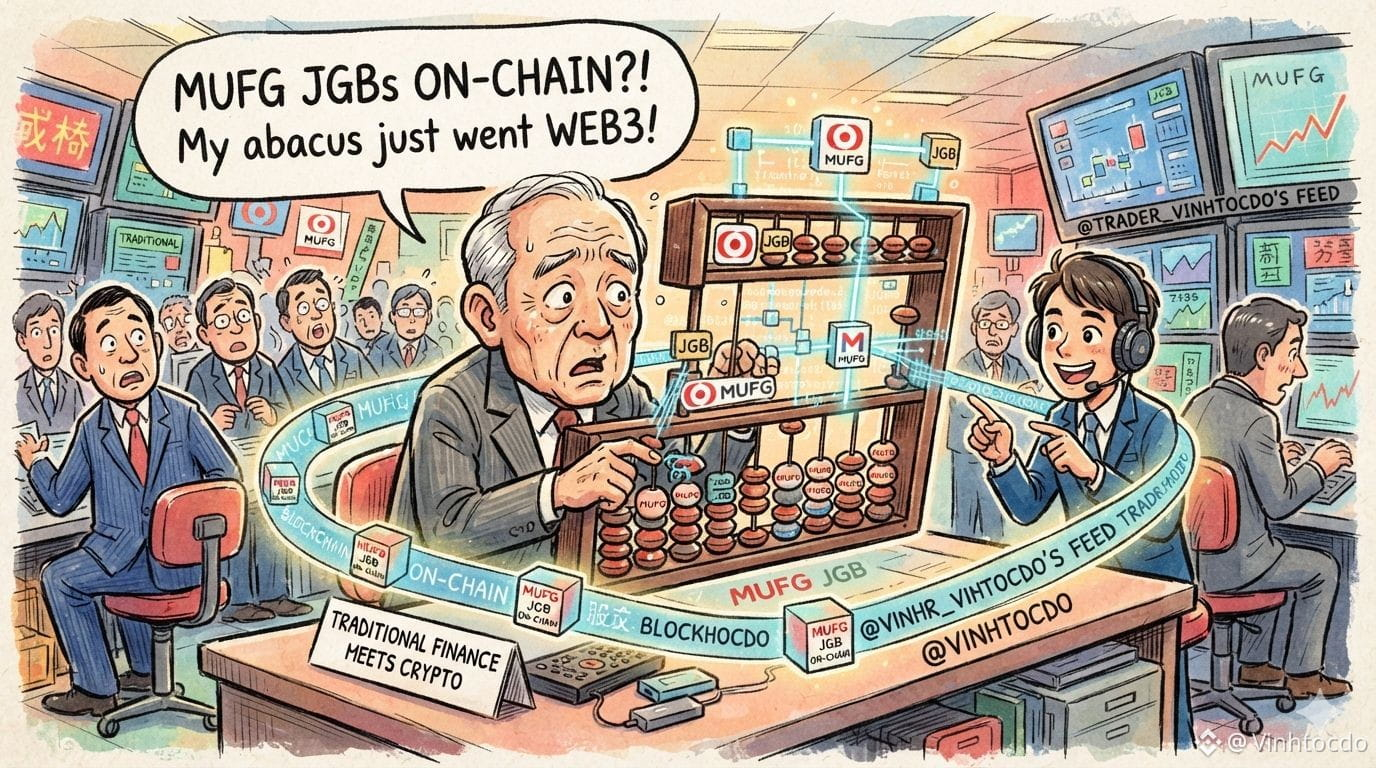
Japan’s biggest bank, MUFG, is using blockchain for government bonds! Even traditional giants are moving on-chain. Crypto era is closer than your next margin call.
Trader tips:
🚀 Don't panic
📈 Adapt or get left behind
🔒 Secure your spot
Register with code VINHTOCDO: link: [https://www.binance.com/register?ref=VINHTOCDO](https://www.binance.com/register?ref=VINHTOCDO)
Not financial advice.
#CryptoFuture #BlockchainTechnology #Web3 #VINHTOCDO
$BTC
{future}(BTCUSDT)
$ETH
{future}(ETHUSDT)
$SEI
{future}(SEIUSDT)
#mufgtouseblockchainforjgbsettlement
Japan’s biggest bank, MUFG, is using blockchain for government bonds! Even traditional giants are moving on-chain. Crypto era is closer than your next margin call.
Trader tips:
🚀 Don't panic
📈 Adapt or get left behind
🔒 Secure your spot
Register with code VINHTOCDO: link: https://www.binance.com/register?ref=VINHTOCDO
Not financial advice.
#CryptoFuture #BlockchainTechnology #Web3 #VINHTOCDO
$BTC
$ETH
$SEI
Japan’s biggest bank, MUFG, is using blockchain for government bonds! Even traditional giants are moving on-chain. Crypto era is closer than your next margin call.
Trader tips:
🚀 Don't panic
📈 Adapt or get left behind
🔒 Secure your spot
Register with code VINHTOCDO: link: https://www.binance.com/register?ref=VINHTOCDO
Not financial advice.
#CryptoFuture #BlockchainTechnology #Web3 #VINHTOCDO
$BTC
$ETH
$SEI
1
95

·
--
Decoding the Future of Global Settlement: How Distributed Ledger Technology is Reshaping Banking Architecture 🌐
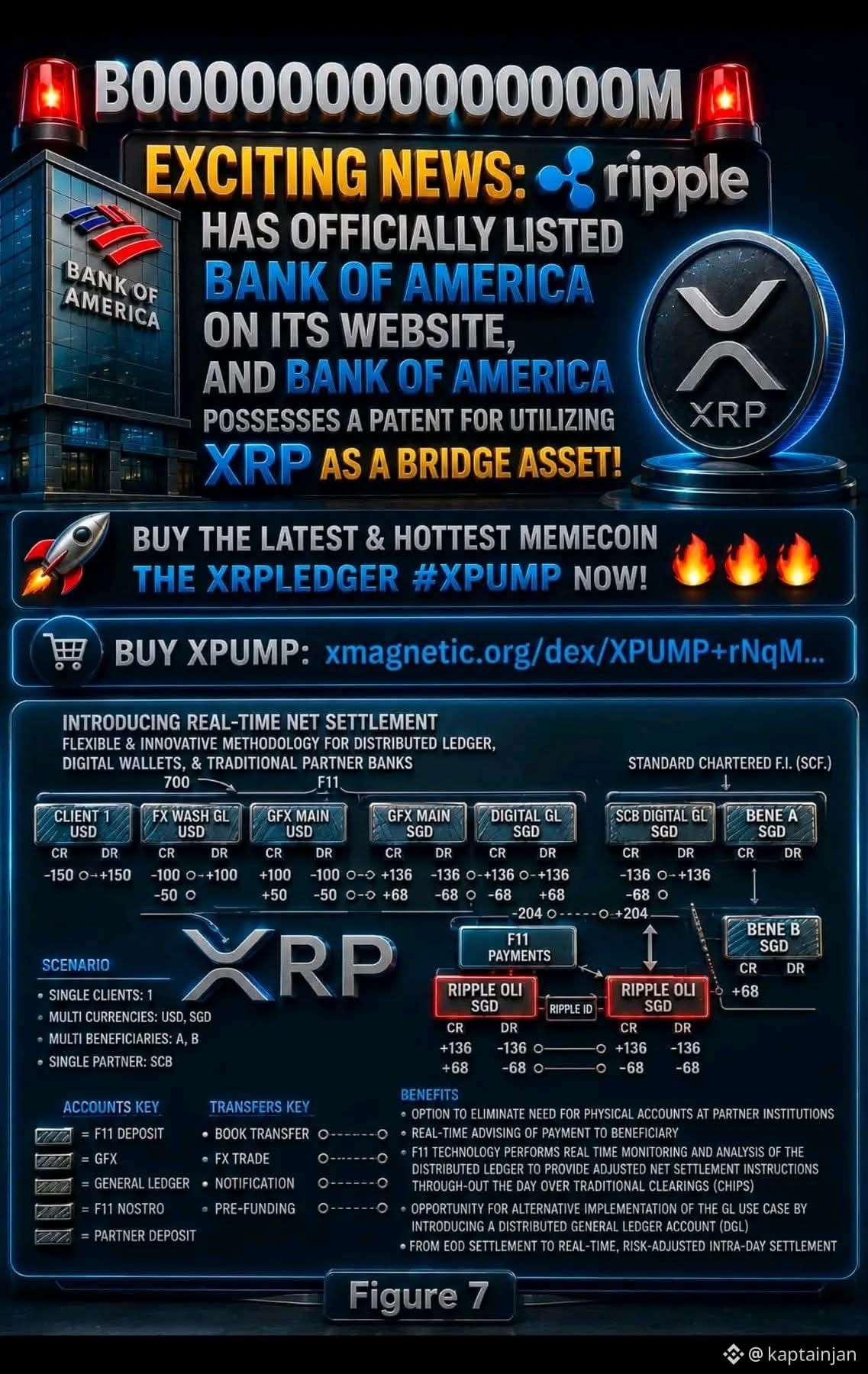
If you look closely at institutional financial flows, traditional cross-border settlement is undergoing a massive architectural shift. Recent diagrams and technical schematics—like the "Figure 7" real-time net settlement model circulating across fintech circles—highlight how major institutions are exploring distributed ledger integration to optimize liquidity.
Here is a breakdown of what these technical frameworks actually mean for the future of multi-currency clearing:
🔹 Real-Time Net Settlement (RTNS): Moving away from traditional end-of-day (EOD) clearing cycles toward real-time, risk-adjusted intra-day settlement. This drastically reduces counterparty risk and pre-funding requirements.
🔹 Digital General Ledger (DGL) Integration: Utilizing synchronized ledgers across partner financial institutions (such as Standard Chartered and other global networks) to manage multi-currency accounts (USD, SGD) seamlessly without the friction of multiple intermediary correspondence banks.
🔹 Bridge Asset Utility: The core focus of these models is optimizing capital efficiency. By leveraging digital assets as bridge mechanisms, institutions can potentially eliminate the need for stagnant physical nostro/vostro accounts locked up in various jurisdictions.
🔹 Automated Instruction Monitoring: Advanced protocols (like F11 technology frameworks) perform continuous real-time monitoring and analysis to provide adjusted net settlement instructions instantly over legacy frameworks like CHIPS.
What are your thoughts on how fast traditional banking giants will adopt distributed ledger technology for wholesale cross-border payments? Let's discuss in the comments! 👇
#Fintech #DigitalAssets #BlockchainTechnology
Decoding the Future of Global Settlement: How Distributed Ledger Technology is Reshaping Banking Architecture 🌐
If you look closely at institutional financial flows, traditional cross-border settlement is undergoing a massive architectural shift. Recent diagrams and technical schematics—like the "Figure 7" real-time net settlement model circulating across fintech circles—highlight how major institutions are exploring distributed ledger integration to optimize liquidity.
Here is a breakdown of what these technical frameworks actually mean for the future of multi-currency clearing:
🔹 Real-Time Net Settlement (RTNS): Moving away from traditional end-of-day (EOD) clearing cycles toward real-time, risk-adjusted intra-day settlement. This drastically reduces counterparty risk and pre-funding requirements.
🔹 Digital General Ledger (DGL) Integration: Utilizing synchronized ledgers across partner financial institutions (such as Standard Chartered and other global networks) to manage multi-currency accounts (USD, SGD) seamlessly without the friction of multiple intermediary correspondence banks.
🔹 Bridge Asset Utility: The core focus of these models is optimizing capital efficiency. By leveraging digital assets as bridge mechanisms, institutions can potentially eliminate the need for stagnant physical nostro/vostro accounts locked up in various jurisdictions.
🔹 Automated Instruction Monitoring: Advanced protocols (like F11 technology frameworks) perform continuous real-time monitoring and analysis to provide adjusted net settlement instructions instantly over legacy frameworks like CHIPS.
What are your thoughts on how fast traditional banking giants will adopt distributed ledger technology for wholesale cross-border payments? Let's discuss in the comments! 👇
#Fintech #DigitalAssets #BlockchainTechnology
If you look closely at institutional financial flows, traditional cross-border settlement is undergoing a massive architectural shift. Recent diagrams and technical schematics—like the "Figure 7" real-time net settlement model circulating across fintech circles—highlight how major institutions are exploring distributed ledger integration to optimize liquidity.
Here is a breakdown of what these technical frameworks actually mean for the future of multi-currency clearing:
🔹 Real-Time Net Settlement (RTNS): Moving away from traditional end-of-day (EOD) clearing cycles toward real-time, risk-adjusted intra-day settlement. This drastically reduces counterparty risk and pre-funding requirements.
🔹 Digital General Ledger (DGL) Integration: Utilizing synchronized ledgers across partner financial institutions (such as Standard Chartered and other global networks) to manage multi-currency accounts (USD, SGD) seamlessly without the friction of multiple intermediary correspondence banks.
🔹 Bridge Asset Utility: The core focus of these models is optimizing capital efficiency. By leveraging digital assets as bridge mechanisms, institutions can potentially eliminate the need for stagnant physical nostro/vostro accounts locked up in various jurisdictions.
🔹 Automated Instruction Monitoring: Advanced protocols (like F11 technology frameworks) perform continuous real-time monitoring and analysis to provide adjusted net settlement instructions instantly over legacy frameworks like CHIPS.
What are your thoughts on how fast traditional banking giants will adopt distributed ledger technology for wholesale cross-border payments? Let's discuss in the comments! 👇
#Fintech #DigitalAssets #BlockchainTechnology
44
·
--
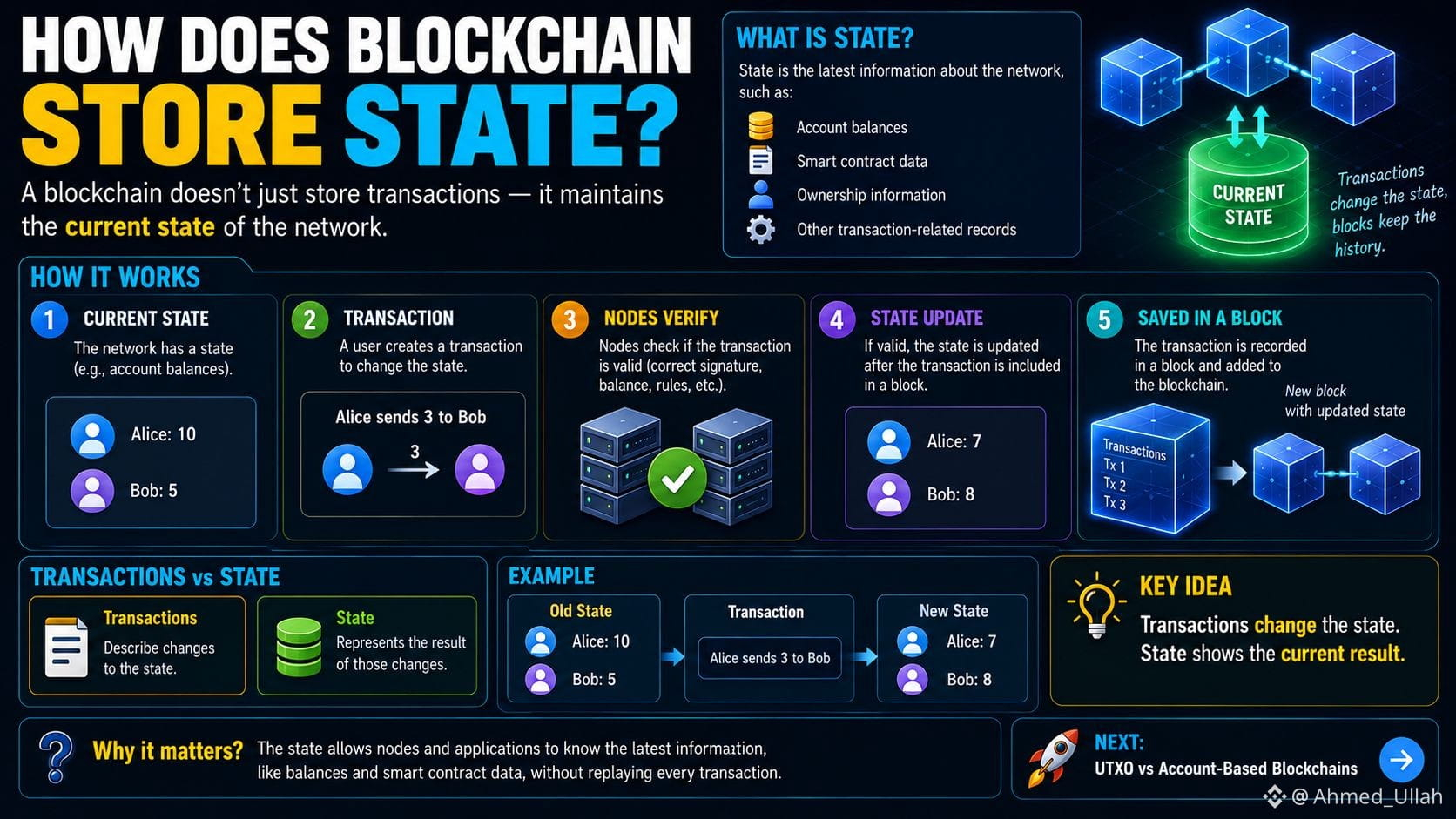
How Does Blockchain Store State? 🔗🧠
A blockchain doesn't just store transactions—it maintains a record of the current state of the network.
For example, state can include:
• Account balances
• Smart contract data
• Ownership information
• Transaction-related records
When a transaction is processed, it changes the state.
Old State → Transaction → New State
For example:
Alice: 10 → Sends 3 → Alice: 7
Nodes independently verify the transaction and update their local view of the blockchain state.
🧠 Key Idea
Transactions describe changes.
State represents the result of those changes.
Understanding blockchain state is essential for understanding how networks like Bitcoin and Ethereum work.
Next: UTXO vs Account-Based Blockchains ⚡
$BTC $BNB $BTTC
#blockchain #BlockchainTechnology #Web3metaverse #blockchaineducation
{spot}(BTCUSDT)
How Does Blockchain Store State? 🔗🧠
A blockchain doesn't just store transactions—it maintains a record of the current state of the network.
For example, state can include:
• Account balances
• Smart contract data
• Ownership information
• Transaction-related records
When a transaction is processed, it changes the state.
Old State → Transaction → New State
For example:
Alice: 10 → Sends 3 → Alice: 7
Nodes independently verify the transaction and update their local view of the blockchain state.
🧠 Key Idea
Transactions describe changes.
State represents the result of those changes.
Understanding blockchain state is essential for understanding how networks like Bitcoin and Ethereum work.
Next: UTXO vs Account-Based Blockchains ⚡
$BTC $BNB $BTTC
#blockchain #BlockchainTechnology #Web3metaverse #blockchaineducation
A blockchain doesn't just store transactions—it maintains a record of the current state of the network.
For example, state can include:
• Account balances
• Smart contract data
• Ownership information
• Transaction-related records
When a transaction is processed, it changes the state.
Old State → Transaction → New State
For example:
Alice: 10 → Sends 3 → Alice: 7
Nodes independently verify the transaction and update their local view of the blockchain state.
🧠 Key Idea
Transactions describe changes.
State represents the result of those changes.
Understanding blockchain state is essential for understanding how networks like Bitcoin and Ethereum work.
Next: UTXO vs Account-Based Blockchains ⚡
$BTC $BNB $BTTC
#blockchain #BlockchainTechnology #Web3metaverse #blockchaineducation
8
1
2
63

·
--
Blockchain is not just for cryptocurrencies.
Industries using blockchain today include:
✅ Insurance
✅ Logistics
✅ Healthcare
✅ Supply Chain
✅ Banking
The future is tokenized.
#BlockchainTechnology #Innovation
Blockchain is not just for cryptocurrencies.
Industries using blockchain today include:
✅ Insurance
✅ Logistics
✅ Healthcare
✅ Supply Chain
✅ Banking
The future is tokenized.
#BlockchainTechnology #Innovation
Industries using blockchain today include:
✅ Insurance
✅ Logistics
✅ Healthcare
✅ Supply Chain
✅ Banking
The future is tokenized.
#BlockchainTechnology #Innovation
1
1
103

·
--
ຢືນຢັນແລ້ວ
🏦 Wall Street's Tokenization Race
📌 Overview
Top U.S. banks, including JPMorgan, Citi, Bank of America, and Wells Fargo, are building a shared tokenized deposit network for 24/7 instant settlements, targeting a 2027 launch.
🚀 Key Highlights
💳 Tokenized Deposits
🔸Faster, regulated bank-backed digital deposits that could compete with USDC and USDT.
📈 BlackRock Expands
🔸BlackRock continues growing its tokenized fund lineup with BUIDL, BSTBL, and BRSRV, making traditional assets more efficient.
🌐 Payments Go On-Chain
🔸Mastercard supports stablecoin settlements, while Visa tests blockchain-powered payment rails.
📑 Securities Get Tokenized
🔸Citi launched tokenized private shares, and the DTCC is rolling out blockchain settlement with 50+ financial firms.
🔗 Crypto Infrastructure Wins
🔸Projects like Ethereum, Ripple, Ondo Finance, Stellar, Solana, and Canton Network are becoming key players in institutional finance.
🔮 Outlook
🔸Wall Street is moving beyond blockchain experiments.
🔸As banks modernize payments and asset settlement, tokenization is set to reshape the future of global finance.
🏷️#TokenizedFinance #WallStreet #BlockchainTechnology
🏦 Wall Street's Tokenization Race
📌 Overview
Top U.S. banks, including JPMorgan, Citi, Bank of America, and Wells Fargo, are building a shared tokenized deposit network for 24/7 instant settlements, targeting a 2027 launch.
🚀 Key Highlights
💳 Tokenized Deposits
🔸Faster, regulated bank-backed digital deposits that could compete with USDC and USDT.
📈 BlackRock Expands
🔸BlackRock continues growing its tokenized fund lineup with BUIDL, BSTBL, and BRSRV, making traditional assets more efficient.
🌐 Payments Go On-Chain
🔸Mastercard supports stablecoin settlements, while Visa tests blockchain-powered payment rails.
📑 Securities Get Tokenized
🔸Citi launched tokenized private shares, and the DTCC is rolling out blockchain settlement with 50+ financial firms.
🔗 Crypto Infrastructure Wins
🔸Projects like Ethereum, Ripple, Ondo Finance, Stellar, Solana, and Canton Network are becoming key players in institutional finance.
🔮 Outlook
🔸Wall Street is moving beyond blockchain experiments.
🔸As banks modernize payments and asset settlement, tokenization is set to reshape the future of global finance.
🏷️#TokenizedFinance #WallStreet #BlockchainTechnology
📌 Overview
Top U.S. banks, including JPMorgan, Citi, Bank of America, and Wells Fargo, are building a shared tokenized deposit network for 24/7 instant settlements, targeting a 2027 launch.
🚀 Key Highlights
💳 Tokenized Deposits
🔸Faster, regulated bank-backed digital deposits that could compete with USDC and USDT.
📈 BlackRock Expands
🔸BlackRock continues growing its tokenized fund lineup with BUIDL, BSTBL, and BRSRV, making traditional assets more efficient.
🌐 Payments Go On-Chain
🔸Mastercard supports stablecoin settlements, while Visa tests blockchain-powered payment rails.
📑 Securities Get Tokenized
🔸Citi launched tokenized private shares, and the DTCC is rolling out blockchain settlement with 50+ financial firms.
🔗 Crypto Infrastructure Wins
🔸Projects like Ethereum, Ripple, Ondo Finance, Stellar, Solana, and Canton Network are becoming key players in institutional finance.
🔮 Outlook
🔸Wall Street is moving beyond blockchain experiments.
🔸As banks modernize payments and asset settlement, tokenization is set to reshape the future of global finance.
🏷️#TokenizedFinance #WallStreet #BlockchainTechnology

5
682

·
--
ဂျပန်နိုင်ငံက Blockchain နည်းပညာကို အသုံးပြုပြီး Stock နဲ့ Government Bond အရောင်းအဝယ်တွေကို ချက်ချင်း Settlement ပြုလုပ်နိုင်မယ့်စနစ်တစ်ခု ဖော်ဆောင်ဖို့ စူးစမ်းလေ့လာနေတယ်လို့ Nikkei က ဖော်ပြထားပါတယ်။
#BlockchainTechnology #stock
ဂျပန်နိုင်ငံက Blockchain နည်းပညာကို အသုံးပြုပြီး Stock နဲ့ Government Bond အရောင်းအဝယ်တွေကို ချက်ချင်း Settlement ပြုလုပ်နိုင်မယ့်စနစ်တစ်ခု ဖော်ဆောင်ဖို့ စူးစမ်းလေ့လာနေတယ်လို့ Nikkei က ဖော်ပြထားပါတယ်။
#BlockchainTechnology #stock
#BlockchainTechnology #stock

Crypto Note MM
·
--
🇯🇵 JUST IN: ဂျပန်နိုင်ငံက Blockchain နည်းပညာကို အသုံးပြုပြီး Stock နဲ့ Government Bond အရောင်းအဝယ်တွေကို ချက်ချင်း Settlement ပြုလုပ်နိုင်မယ့်စနစ်တစ်ခု ဖော်ဆောင်ဖို့ စူးစမ်းလေ့လာနေတယ်လို့ Nikkei က ဖော်ပြထားပါတယ်။ လက်ရှိမှာ ဂျပန်အာဏာပိုင်တွေက Blockchain ကို အသုံးပြုပြီး Financial Market ရဲ့ Settlement Process ကို ပိုမိုမြန်ဆန်ထိရောက်အောင် ပြုလုပ်နိုင်မယ့်နည်းလမ်းတွေကို လေ့လာနေပြီး၊ ဒီအစီအစဉ်အတွက် Formal Plan ကို 2027 ခုနှစ်အတွင်း ထုတ်ပြန်ဖို့ မျှော်မှန်းထားတယ်လို့ သိရပါတယ်။ ဒီလို Traditional Finance (TradFi) ကဏ္ဍထဲကို Blockchain နည်းပညာ တဖြည်းဖြည်း ဝင်ရောက်လာတာဟာ Blockchain ကို Crypto အတွက်သာမက အနာဂတ် Financial Infrastructure တစ်ခုအဖြစ်ပါ အသုံးချလာနိုင်တဲ့ လမ်းကြောင်းကို ပြသနေပါတယ်။ 🚀🇯🇵
$ZEC
#Japan #Blockchain #RWA #TradFi #Crypto #Web3
$ZEC
#Japan #Blockchain #RWA #TradFi #Crypto #Web3

68

·
--
¿El futuro de las finanzas es 100% digital o siempre habrá espacio para lo tradicional? 🌐💼
El mundo financiero está cambiando a un ritmo acelerado. Cada día vemos cómo la tecnología blockchain, la tokenización de activos e innovaciones como el protocolo DTC transforman la manera en que gestionamos e intercambiamos valor.
Sin embargo, hay quienes opinan que el sistema financiero tradicional y las criptomonedas no están destinados a competir, sino a integrarse para ofrecer una economía más eficiente e inclusiva.
Ustedes, ¿qué opinan? 👇
1️⃣ Adopción total: La tecnología blockchain reemplazará por completo la banca tradicional.
2️⃣ Modelo híbrido: Coexistirán y se complementarán a largo plazo.
3️⃣ Nicho especializado: Cripto seguirá siendo una alternativa solo para ciertos sectores.
¡Déjanos tu punto de vista en los comentarios y debate con la comunidad! 💬👇
#BinanceSquareFamily #CryptoCommunity #BlockchainTechnology #DebateFinanciero
¿El futuro de las finanzas es 100% digital o siempre habrá espacio para lo tradicional? 🌐💼
El mundo financiero está cambiando a un ritmo acelerado. Cada día vemos cómo la tecnología blockchain, la tokenización de activos e innovaciones como el protocolo DTC transforman la manera en que gestionamos e intercambiamos valor.
Sin embargo, hay quienes opinan que el sistema financiero tradicional y las criptomonedas no están destinados a competir, sino a integrarse para ofrecer una economía más eficiente e inclusiva.
Ustedes, ¿qué opinan? 👇
1️⃣ Adopción total: La tecnología blockchain reemplazará por completo la banca tradicional.
2️⃣ Modelo híbrido: Coexistirán y se complementarán a largo plazo.
3️⃣ Nicho especializado: Cripto seguirá siendo una alternativa solo para ciertos sectores.
¡Déjanos tu punto de vista en los comentarios y debate con la comunidad! 💬👇
#BinanceSquareFamily #CryptoCommunity #BlockchainTechnology #DebateFinanciero
El mundo financiero está cambiando a un ritmo acelerado. Cada día vemos cómo la tecnología blockchain, la tokenización de activos e innovaciones como el protocolo DTC transforman la manera en que gestionamos e intercambiamos valor.
Sin embargo, hay quienes opinan que el sistema financiero tradicional y las criptomonedas no están destinados a competir, sino a integrarse para ofrecer una economía más eficiente e inclusiva.
Ustedes, ¿qué opinan? 👇
1️⃣ Adopción total: La tecnología blockchain reemplazará por completo la banca tradicional.
2️⃣ Modelo híbrido: Coexistirán y se complementarán a largo plazo.
3️⃣ Nicho especializado: Cripto seguirá siendo una alternativa solo para ciertos sectores.
¡Déjanos tu punto de vista en los comentarios y debate con la comunidad! 💬👇
#BinanceSquareFamily #CryptoCommunity #BlockchainTechnology #DebateFinanciero
151

·
--
$ZEC
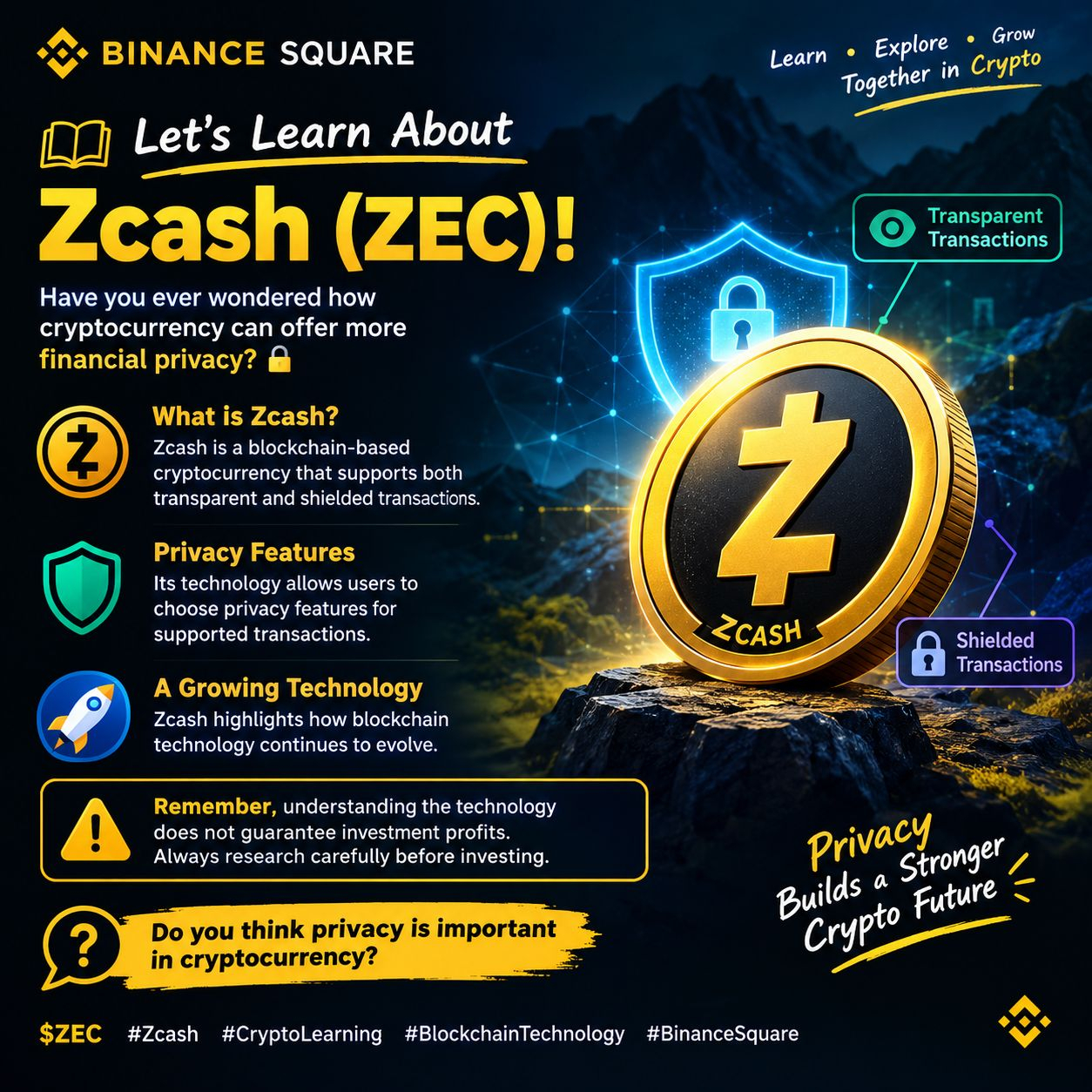
📚 Let's Learn About Zcash (ZEC)!
Have you ever wondered how cryptocurrency can offer more financial privacy? 🔐
Zcash is a blockchain-based cryptocurrency that supports both transparent and shielded transactions.
✨ Its technology allows users to choose privacy features for supported transactions.
🚀 Zcash highlights how blockchain technology continues to evolve.
⚠️ Remember, understanding the technology does not guarantee investment profits. Always research carefully before investing.
Do you think privacy is important in cryptocurrency?
$ZEC #Zcash #CryptoLearning #BlockchainTechnology #BinanceSquare
$ZEC
📚 Let's Learn About Zcash (ZEC)!
Have you ever wondered how cryptocurrency can offer more financial privacy? 🔐
Zcash is a blockchain-based cryptocurrency that supports both transparent and shielded transactions.
✨ Its technology allows users to choose privacy features for supported transactions.
🚀 Zcash highlights how blockchain technology continues to evolve.
⚠️ Remember, understanding the technology does not guarantee investment profits. Always research carefully before investing.
Do you think privacy is important in cryptocurrency?
$ZEC #Zcash #CryptoLearning #BlockchainTechnology #BinanceSquare
📚 Let's Learn About Zcash (ZEC)!
Have you ever wondered how cryptocurrency can offer more financial privacy? 🔐
Zcash is a blockchain-based cryptocurrency that supports both transparent and shielded transactions.
✨ Its technology allows users to choose privacy features for supported transactions.
🚀 Zcash highlights how blockchain technology continues to evolve.
⚠️ Remember, understanding the technology does not guarantee investment profits. Always research carefully before investing.
Do you think privacy is important in cryptocurrency?
$ZEC #Zcash #CryptoLearning #BlockchainTechnology #BinanceSquare
249

·
--
The biggest challenge in tokenization may not be creating the token.
It's connecting that token to custody, settlement and enforceable rights.
Infrastructure must work beyond the blockchain itself.
#Tokenization #BlockchainTechnology #fintech #FinancialInfrastructure
The biggest challenge in tokenization may not be creating the token.
It's connecting that token to custody, settlement and enforceable rights.
Infrastructure must work beyond the blockchain itself.
#Tokenization #BlockchainTechnology #fintech #FinancialInfrastructure
It's connecting that token to custody, settlement and enforceable rights.
Infrastructure must work beyond the blockchain itself.
#Tokenization #BlockchainTechnology #fintech #FinancialInfrastructure
1
27
·
--
Programmable transfers and faster settlement are among tokenization's potential benefits.
But technical efficiency alone doesn't establish legal ownership.
Custody and regulation still matter.
#Tokenization #BlockchainTechnology #fintech #DigitalAssets
Programmable transfers and faster settlement are among tokenization's potential benefits.
But technical efficiency alone doesn't establish legal ownership.
Custody and regulation still matter.
#Tokenization #BlockchainTechnology #fintech #DigitalAssets
But technical efficiency alone doesn't establish legal ownership.
Custody and regulation still matter.
#Tokenization #BlockchainTechnology #fintech #DigitalAssets
1
65
ເຂົ້າສູ່ລະບົບເພື່ອສຳຫຼວດເນື້ອຫາເພີ່ມເຕີມ
ເຂົ້າຮ່ວມກຸ່ມຜູ້ໃຊ້ຄຣິບໂຕທົ່ວໂລກໃນ Binance Square.
⚡️ ໄດ້ຮັບຂໍ້ມູນຫຼ້າສຸດ ແລະ ທີ່ມີປະໂຫຍດກ່ຽວກັບຄຣິບໂຕ.
💬 ໄດ້ຮັບຄວາມໄວ້ວາງໃຈຈາກຕະຫຼາດແລກປ່ຽນຄຣິບໂຕທີ່ໃຫຍ່ທີ່ສຸດໃນໂລກ.
👍 ຄົ້ນຫາຂໍ້ມູນເຊີງເລິກທີ່ແທ້ຈາກນັກສ້າງທີ່ໄດ້ຮັບການຢືນຢັນ.
ອີເມວ / ເບີໂທລະສັບ
ຫົວຂໍ້ທີ່ກໍາລັງນິຍົມ
1
#BinancePick
2.6M ຄັ້ງທີ່ເບິ່ງ
141,866 ກຳລັງສົນທະນາ
2
#EarningsSeason
5M ຄັ້ງທີ່ເບິ່ງ
24,364 ກຳລັງສົນທະນາ
3
#FranklinTempletonFilesForTwoDividendToBitcoinETFs
2,034 ຄັ້ງທີ່ເບິ່ງ
102 ກຳລັງສົນທະນາ
4
#StrategyMSTRSurpassesNasdaqInMarketCap
2,387 ຄັ້ງທີ່ເບິ່ງ
102 ກຳລັງສົນທະນາ
5
#CanadaProposesStablecoinRedemptionWithin3BusinessDays
103 ຄັ້ງທີ່ເບິ່ງ
13 ກຳລັງສົນທະນາ
6
#ElectrumWalletBugLetRogueServersStealFunds
8,951 ຄັ້ງທີ່ເບິ່ງ
236 ກຳລັງສົນທະນາ
7
#ArgentineCourtDismissesLIBRACaseAgainstMilei
19,084 ຄັ້ງທີ່ເບິ່ງ
317 ກຳລັງສົນທະນາ
8
#SKHynixReportedlyPlansSpecialDividendFromKioxiaStakeSale
3,158 ຄັ້ງທີ່ເບິ່ງ
48 ກຳລັງສົນທະນາ
9
#KeystoneWebsiteBreachExposesBuyersShippingAddresses
1,688 ຄັ້ງທີ່ເບິ່ງ
41 ກຳລັງສົນທະນາ
10
#USQ3GDPAndSeptemberPCEDueNextWeek
96,688 ຄັ້ງທີ່ເບິ່ງ
1,135 ກຳລັງສົນທະນາ