
#usaugustjobgrowthnearlytriplesforecast
usaugustjobgrowthnearlytriplesforecast
ມາແຮງ
ຫຼ້າສຸດ


ຢືນຢັນແລ້ວ
NFP just dropped 🚨 is this bullish or bearish for crypto?
US August NFP came in much stronger than expected
🇺🇸 NFP: +162K
Forecast: +55K/+56K
Previous: +21K revised
Unemployment rate: 4.1%
Forecast: 4.1%
Average hourly earnings: +0.3% MoM
+3.1% YoY
The big surprise is the 162K jobs vs 55K expected 🔥
A stronger labor market can keep the Fed more cautious on rate cuts and put pressure on risk assets like crypto.
Now the important part: how does $BTC react after the NFP volatility settles? 👀
#NFP #UnemploymentRate #USAugustJobGrowthNearlyTriplesForecast
US August NFP came in much stronger than expected
🇺🇸 NFP: +162K
Forecast: +55K/+56K
Previous: +21K revised
Unemployment rate: 4.1%
Forecast: 4.1%
Average hourly earnings: +0.3% MoM
+3.1% YoY
The big surprise is the 162K jobs vs 55K expected 🔥
A stronger labor market can keep the Fed more cautious on rate cuts and put pressure on risk assets like crypto.
Now the important part: how does $BTC react after the NFP volatility settles? 👀
#NFP #UnemploymentRate #USAugustJobGrowthNearlyTriplesForecast

ຢືນຢັນແລ້ວ
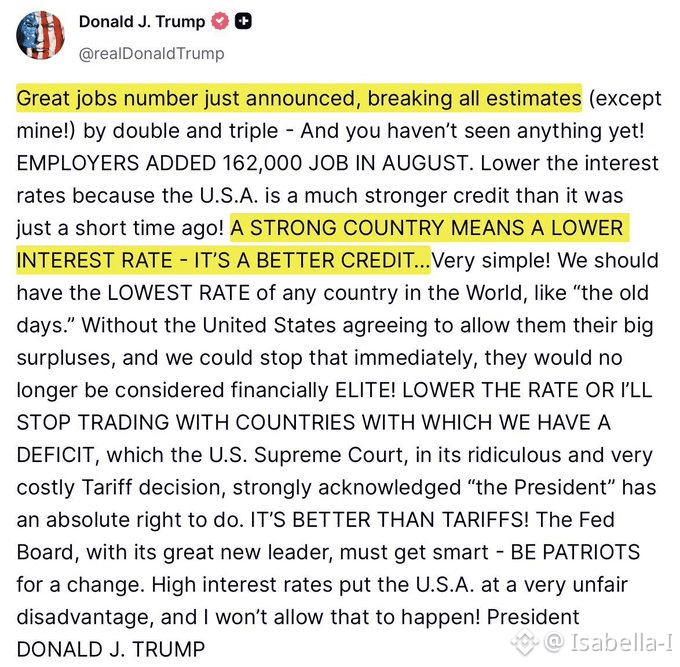
#usaugustjobgrowthnearlytriplesforecast 🇺🇸 Trump: August
Jobs Report Blows Past Estimates
"Lower the rate or I'll stop trading with countries with which we have a deficit."
The
US added 162,000 jobs in August, nearly
triple the 53,000 economists expected, with unemployment holding at 4.1%.
Trump used the report to renew pressure on the Fed to cut rates.$SOXL $FF $SNDK
Jobs Report Blows Past Estimates
"Lower the rate or I'll stop trading with countries with which we have a deficit."
The
US added 162,000 jobs in August, nearly
triple the 53,000 economists expected, with unemployment holding at 4.1%.
Trump used the report to renew pressure on the Fed to cut rates.$SOXL $FF $SNDK
CAZN123:
Sim, entendo, mas prefiro minha intuição do que os especialistas o mercado é imprevisível sim,mas os especialistas tentam criar fórmulas estas fórmulas deve ser tratada com ceticismo.

ຢືນຢັນແລ້ວ
#usaugustjobgrowthnearlytriplesforecast 🚨 وظائف الولايات المتحدة فاجأت الأسواق! 🇺🇸📊
بلغت وظائف القطاع غير الزراعي لشهر أغسطس 162 ألفًا — متجاوزةً توقعات بنحو 55 ألفًا بفارق كبير وبأكثر من 3 مرات تقريبًا. 🔥
ظل معدل البطالة عند 4.1%، بينما جرى تعديل قراءة يوليو من خسارة مُعلنة إلى مكسب قدره 21 ألفًا.
لكن هنا المفاجأة… 👀
وظائف قوية = أسباب أقل محتملة أمام الاحتياطي الفيدرالي لخفض أسعار الفائدة.
وقد يعني ذلك:
💵 دولار أقوى
📈 عوائد سندات الخزانة أعلى
⚠️ ضغط على BTC والأصول عالية المخاطر
🏦 توقعات بقاء الفائدة مرتفعة لفترة أطول
السوق يراقب الآن الاحتياطي الفيدرالي عن كثب أكثر — وقد تكون بيانات التضخم القادمة هي المحفز الرئيسي التالي.
₿ متداولو البيتكوين: فرصة صعودية أم تحذير قصير الأجل؟
هل ستغيّر صفقاتك بعد صدمة الوظائف هذه؟ 👇
متابعة من فضلكم
#Bitcoin #BTC #Crypto #NFP
انقر أدناه للتداول👇
$SOL $ZEC $BTC
بلغت وظائف القطاع غير الزراعي لشهر أغسطس 162 ألفًا — متجاوزةً توقعات بنحو 55 ألفًا بفارق كبير وبأكثر من 3 مرات تقريبًا. 🔥
ظل معدل البطالة عند 4.1%، بينما جرى تعديل قراءة يوليو من خسارة مُعلنة إلى مكسب قدره 21 ألفًا.
لكن هنا المفاجأة… 👀
وظائف قوية = أسباب أقل محتملة أمام الاحتياطي الفيدرالي لخفض أسعار الفائدة.
وقد يعني ذلك:
💵 دولار أقوى
📈 عوائد سندات الخزانة أعلى
⚠️ ضغط على BTC والأصول عالية المخاطر
🏦 توقعات بقاء الفائدة مرتفعة لفترة أطول
السوق يراقب الآن الاحتياطي الفيدرالي عن كثب أكثر — وقد تكون بيانات التضخم القادمة هي المحفز الرئيسي التالي.
₿ متداولو البيتكوين: فرصة صعودية أم تحذير قصير الأجل؟
هل ستغيّر صفقاتك بعد صدمة الوظائف هذه؟ 👇
متابعة من فضلكم
#Bitcoin #BTC #Crypto #NFP
انقر أدناه للتداول👇
$SOL $ZEC $BTC

#usaugustjobgrowthnearlytriplesforecast
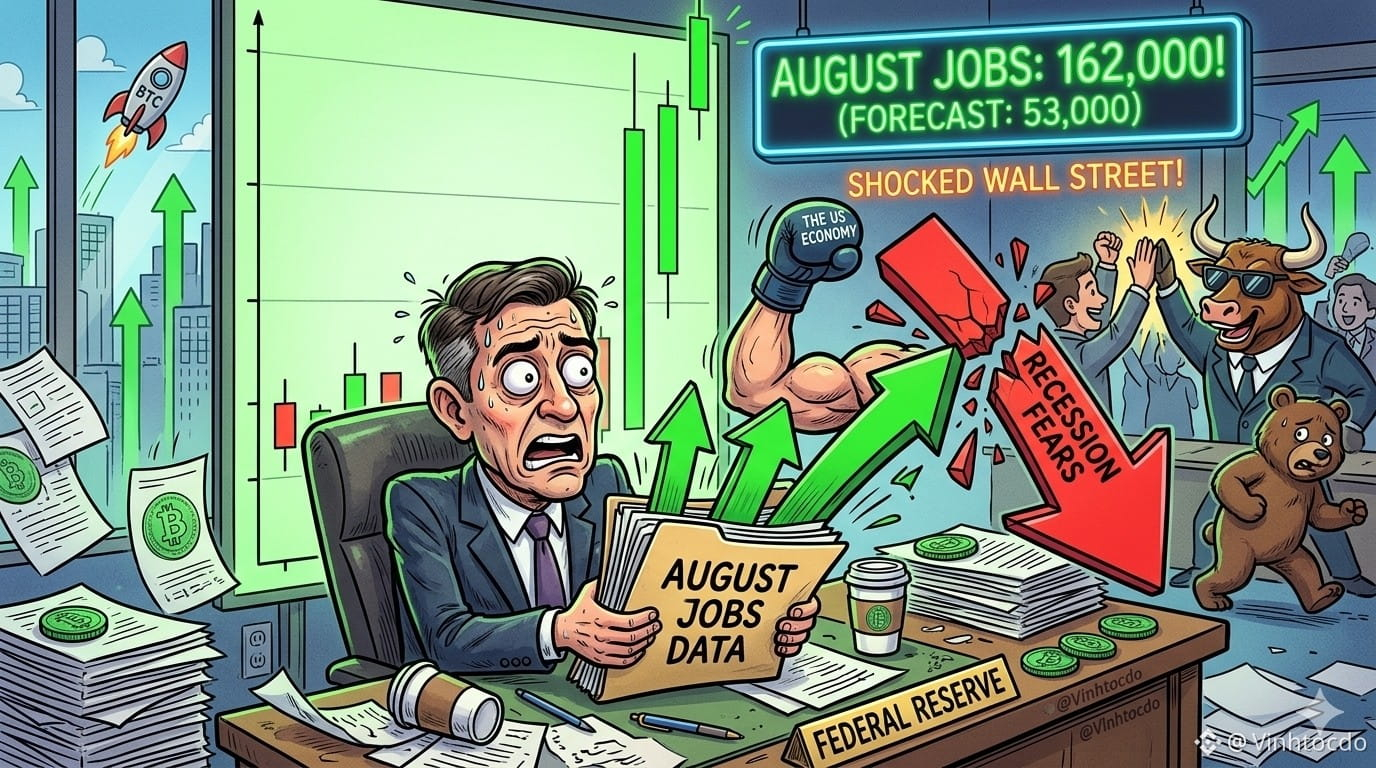
US nonfarm payrolls just SHOCKED Wall Street by adding 162,000 jobs in August, nearly TRIPLING the 53,000 forecast! 🤯 The labor market is flexing so hard it’s giving newly appointed Fed Chair Kevin Warsh a massive headache. 🥊
Should we cheer or worry? A super strong economy means no sudden recession panic, but it also gives the Fed a green light to keep interest rates higher for longer—or even hike them by 0.25% on Sept 15! 📈 Still, crypto liquidity is alive and well.
So, what should traders do?
1️⃣ Don't panic-sell the macro noise; the trend remains your friend.
2️⃣ Watch how yields react, but let institutions do the heavy lifting.
3️⃣ Accumulate the dips while the market processes the data.
Not financial advice! Treat yourself to a fresh account with code VINHTOCDO or via: https://www.binance.com/register?ref=VINHTOCDO 🏎️
#JobGrowth #NFP #FedPolicy #VINHTOCDO
$BTC
$ETH
$BNB
US nonfarm payrolls just SHOCKED Wall Street by adding 162,000 jobs in August, nearly TRIPLING the 53,000 forecast! 🤯 The labor market is flexing so hard it’s giving newly appointed Fed Chair Kevin Warsh a massive headache. 🥊
Should we cheer or worry? A super strong economy means no sudden recession panic, but it also gives the Fed a green light to keep interest rates higher for longer—or even hike them by 0.25% on Sept 15! 📈 Still, crypto liquidity is alive and well.
So, what should traders do?
1️⃣ Don't panic-sell the macro noise; the trend remains your friend.
2️⃣ Watch how yields react, but let institutions do the heavy lifting.
3️⃣ Accumulate the dips while the market processes the data.
Not financial advice! Treat yourself to a fresh account with code VINHTOCDO or via: https://www.binance.com/register?ref=VINHTOCDO 🏎️
#JobGrowth #NFP #FedPolicy #VINHTOCDO
$BTC
$ETH
$BNB

ຢືນຢັນແລ້ວ
#usaugustjobgrowthnearlytriplesforecast
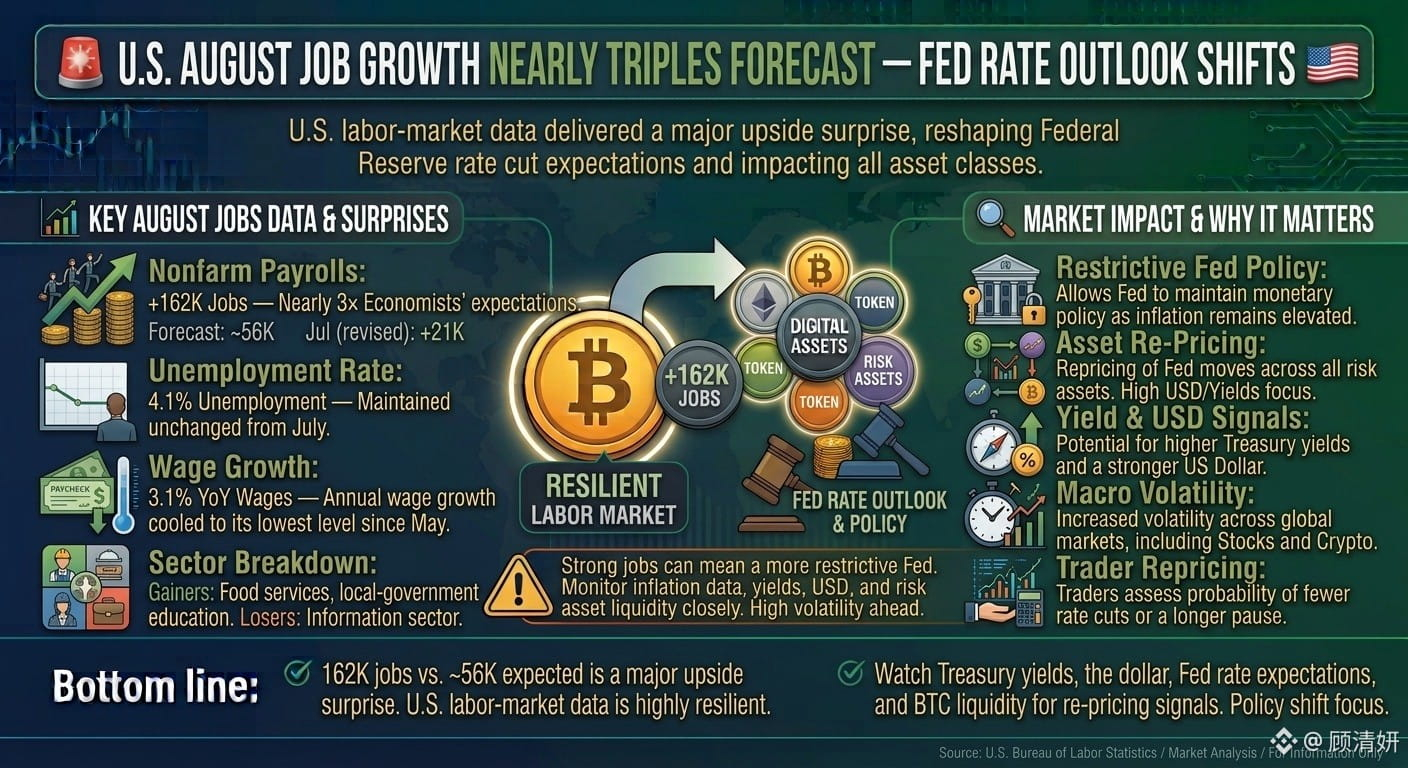
🚨 U.S. AUGUST JOB GROWTH NEARLY TRIPLES FORECAST — FED RATE OUTLOOK SHIFTS
🇺🇸 U.S. labor-market data delivered a major upside surprise.
📊 August Nonfarm Payrolls: +162K
🎯 Forecast: ~56K
📈 Unemployment Rate: 4.1%
💵 Annual Wage Growth: 3.1%
The 162K payroll increase was nearly 3× economists’ expectations, marking a sharp rebound from July’s revised +21K gain.
🔎 Why Markets Care
A stronger labor market gives the Federal Reserve more room to keep monetary policy restrictive if inflation remains elevated.
That can mean:
➡️ Higher Treasury yields
➡️ Potentially stronger USD
➡️ Less certainty around rate cuts
➡️ Increased volatility across stocks and crypto
For Bitcoin and other risk assets, the immediate focus shifts toward how traders reprice the Fed’s next move.
⚠️ But There’s More Beneath the Headline
The unemployment rate remained unchanged at 4.1%, while wage growth cooled to 3.1% YoY. Food services and local-government education were among the notable sources of job gains, while the information sector lost jobs.
So this isn't simply a "hot jobs = bearish crypto" story.
The next major piece of the puzzle is inflation data. If inflation remains sticky while employment stays resilient, markets could face a more hawkish Fed narrative.
📌 Bottom line:
162K jobs vs. ~56K expected is a major upside surprise — and traders should watch yields, the dollar, Fed expectations and BTC liquidity next.
$MARSCOIN $CATI $SNXXB
🚨 U.S. AUGUST JOB GROWTH NEARLY TRIPLES FORECAST — FED RATE OUTLOOK SHIFTS
🇺🇸 U.S. labor-market data delivered a major upside surprise.
📊 August Nonfarm Payrolls: +162K
🎯 Forecast: ~56K
📈 Unemployment Rate: 4.1%
💵 Annual Wage Growth: 3.1%
The 162K payroll increase was nearly 3× economists’ expectations, marking a sharp rebound from July’s revised +21K gain.
🔎 Why Markets Care
A stronger labor market gives the Federal Reserve more room to keep monetary policy restrictive if inflation remains elevated.
That can mean:
➡️ Higher Treasury yields
➡️ Potentially stronger USD
➡️ Less certainty around rate cuts
➡️ Increased volatility across stocks and crypto
For Bitcoin and other risk assets, the immediate focus shifts toward how traders reprice the Fed’s next move.
⚠️ But There’s More Beneath the Headline
The unemployment rate remained unchanged at 4.1%, while wage growth cooled to 3.1% YoY. Food services and local-government education were among the notable sources of job gains, while the information sector lost jobs.
So this isn't simply a "hot jobs = bearish crypto" story.
The next major piece of the puzzle is inflation data. If inflation remains sticky while employment stays resilient, markets could face a more hawkish Fed narrative.
📌 Bottom line:
162K jobs vs. ~56K expected is a major upside surprise — and traders should watch yields, the dollar, Fed expectations and BTC liquidity next.
$MARSCOIN $CATI $SNXXB
caticandles:
cati suplente tá bem vou pesquisar sobre ela

El reporte de empleo de agosto en EEUU casi triplicó las expectativas, y Bitcoin reaccionó cayendo desde $82,282 hasta la zona de $78,600 en pocas horas. El dato: el crecimiento del empleo fue mucho más fuerte de lo anticipado, con salarios subiendo 3.1% interanual. ¿Por qué cayó Bitcoin? Porque un mercado laboral sólido reduce las chances de recortes de tasas agresivos por parte de la Fed, y eso enfría el apetito por activos de riesgo.
Pero la estructura técnica cuenta otra historia. Antes de caer, Bitcoin barrió tres niveles de resistencia clave: el máximo del día previo, el semanal y el mensual, todos entre $81,500 y $82,282. Esos barridos de liquidez confirman que el precio buscó órdenes acumuladas antes de girar. La pregunta es si fue un techo genuino o una recarga técnica.
Ahora el precio opera en $79,587, con sesgo alcista en diario y mensual, pero bajista en semanal y anual. Conflicto de temporalidades: el rebote de corto plazo puede ser real, pero no garantiza reversión de largo plazo hasta que las estructuras mayores se alineen.
¿Creés que Bitcoin sostiene los $78K o vamos a ver un testeo de $75,930? Dejá tu lectura en los comentarios.
#USAugustJobGrowthNearlyTriplesForecast
Pero la estructura técnica cuenta otra historia. Antes de caer, Bitcoin barrió tres niveles de resistencia clave: el máximo del día previo, el semanal y el mensual, todos entre $81,500 y $82,282. Esos barridos de liquidez confirman que el precio buscó órdenes acumuladas antes de girar. La pregunta es si fue un techo genuino o una recarga técnica.
Ahora el precio opera en $79,587, con sesgo alcista en diario y mensual, pero bajista en semanal y anual. Conflicto de temporalidades: el rebote de corto plazo puede ser real, pero no garantiza reversión de largo plazo hasta que las estructuras mayores se alineen.
¿Creés que Bitcoin sostiene los $78K o vamos a ver un testeo de $75,930? Dejá tu lectura en los comentarios.
#USAugustJobGrowthNearlyTriplesForecast
FILIPO777:
Maxi subimos ultimo fondeo a 87k luego de eso me da miedo opinar por que son aguas desconocidas para mi
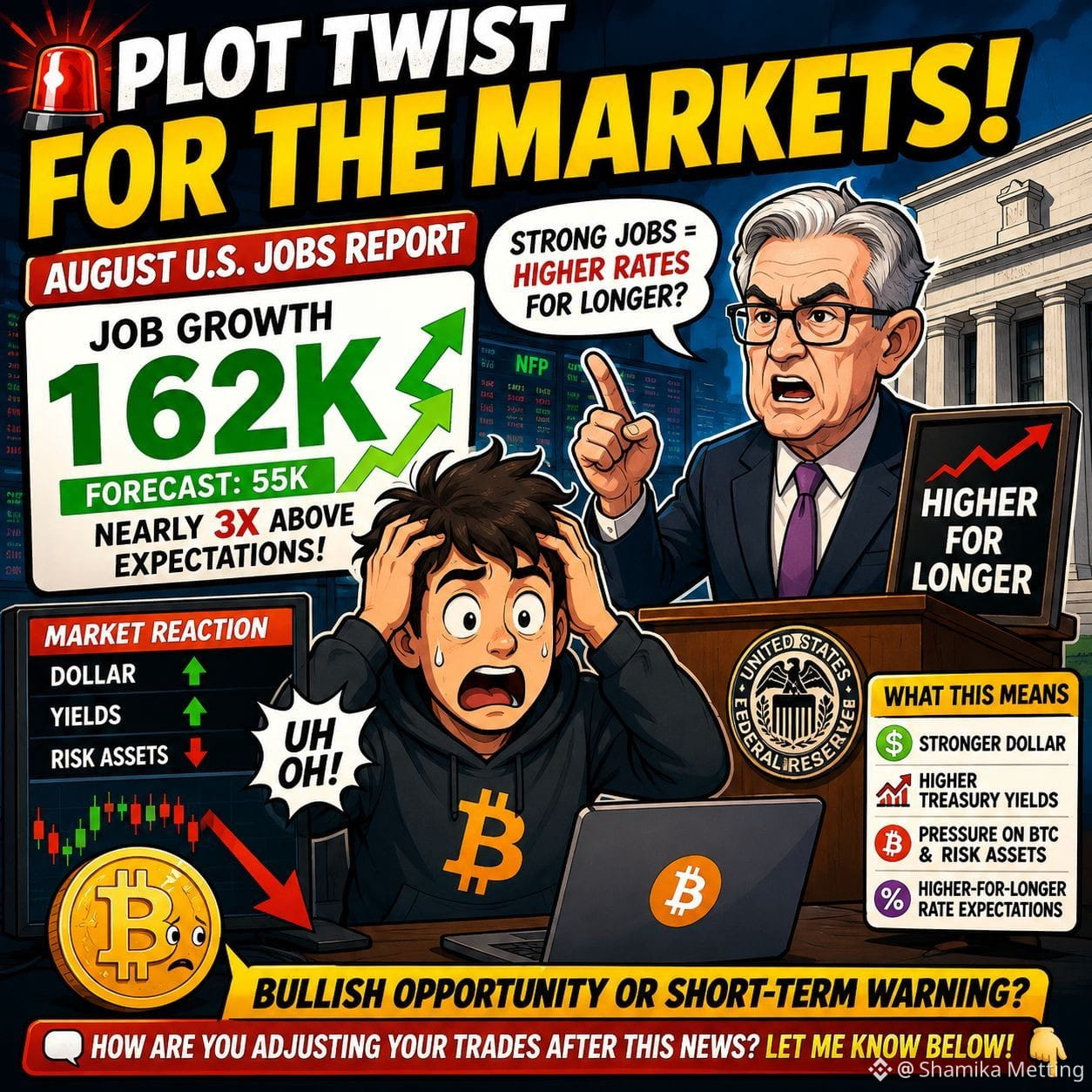
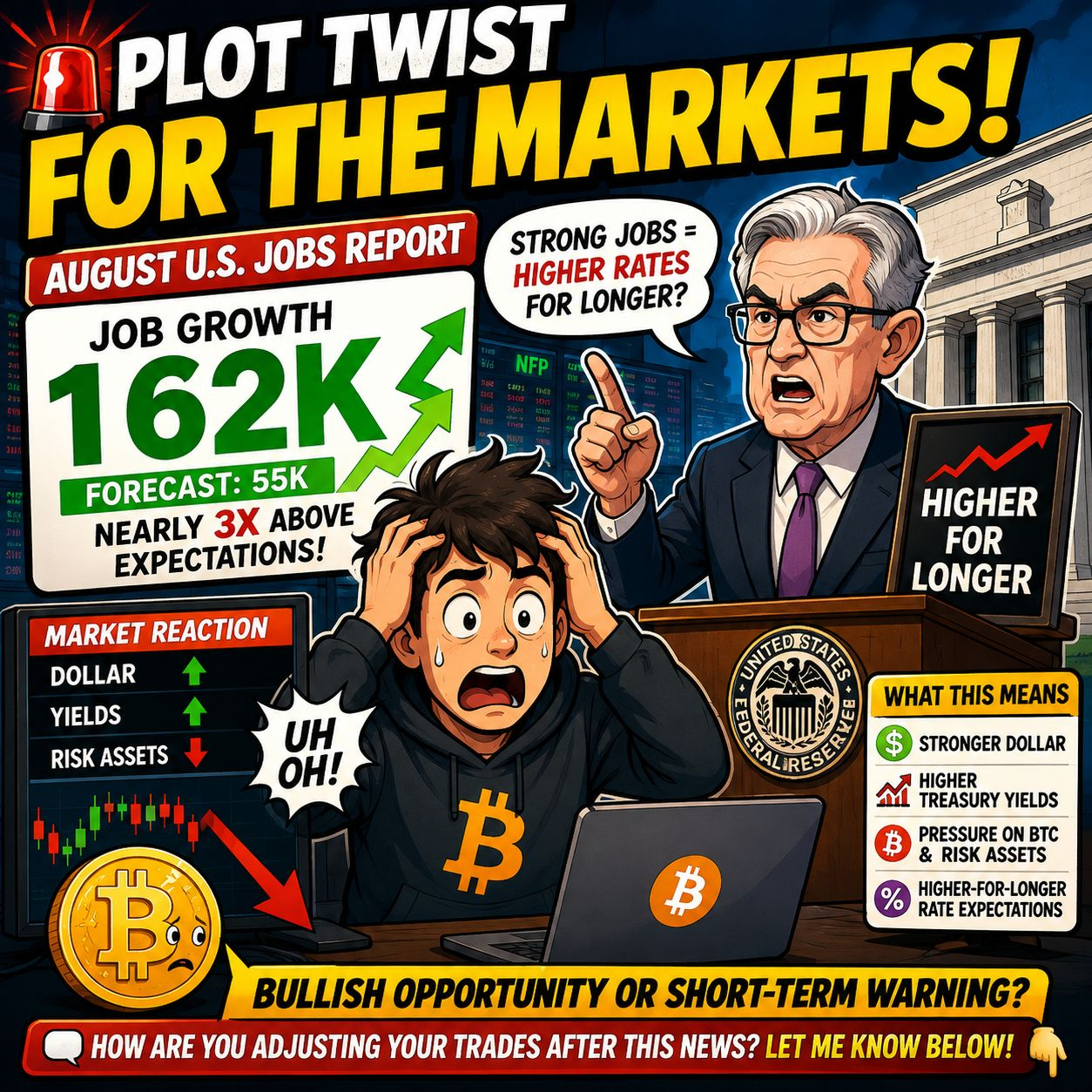
#usaugustjobgrowthnearlytriplesforecast 🚨 US JOBS JUST SHOCKED THE MARKETS! 🇺🇸📊
August Nonfarm Payrolls came in at 162K — smashing the ~55K forecast and coming in nearly 3× above expectations. 🔥
Unemployment stayed at 4.1%, while July was revised from a reported loss to a 21K gain.
But here's the twist… 👀
Strong jobs = potentially fewer reasons for the Fed to cut rates.
That could mean:
💵 Stronger Dollar
📈 Higher Treasury yields
⚠️ Pressure on BTC & risk assets
🏦 Higher-for-longer rate expectations
The market is now watching the Fed even more closely — and the upcoming inflation data could be the next major catalyst.
₿ Bitcoin traders: bullish opportunity or short-term warning?
Are you changing your trades after this jobs shock? 👇
#Bitcoin #BTC #Crypto #NFP
CLICK TO BELOW TRADE👇
$SOL $ZEC $BTC
August Nonfarm Payrolls came in at 162K — smashing the ~55K forecast and coming in nearly 3× above expectations. 🔥
Unemployment stayed at 4.1%, while July was revised from a reported loss to a 21K gain.
But here's the twist… 👀
Strong jobs = potentially fewer reasons for the Fed to cut rates.
That could mean:
💵 Stronger Dollar
📈 Higher Treasury yields
⚠️ Pressure on BTC & risk assets
🏦 Higher-for-longer rate expectations
The market is now watching the Fed even more closely — and the upcoming inflation data could be the next major catalyst.
₿ Bitcoin traders: bullish opportunity or short-term warning?
Are you changing your trades after this jobs shock? 👇
#Bitcoin #BTC #Crypto #NFP
CLICK TO BELOW TRADE👇
$SOL $ZEC $BTC

#usaugustjobgrowthnearlytriplesforecast
🚨 US JOBS REPORT SURPRISE
The U.S. added 162K jobs in August.
Forecast: 56K
That is almost 3X expectations.
At first glance, this looks bullish for the economy.
But for crypto traders, there is another side:
Strong jobs → higher rate expectations → possible pressure on risk assets.
👀 Watch:
• $BTC
• $ETH
• $XRP
This is why macro data matters in crypto.
One economic report can move the entire market.
Bullish economy.
Complicated for crypto.
🚨 US JOBS REPORT SURPRISE
The U.S. added 162K jobs in August.
Forecast: 56K
That is almost 3X expectations.
At first glance, this looks bullish for the economy.
But for crypto traders, there is another side:
Strong jobs → higher rate expectations → possible pressure on risk assets.
👀 Watch:
• $BTC
• $ETH
• $XRP
This is why macro data matters in crypto.
One economic report can move the entire market.
Bullish economy.
Complicated for crypto.
Portuga sapiens:
Compre sempre na Baixa e venda na Alta , Tenha Paciência ....!

ຢືນຢັນແລ້ວ
U.S. job growth nearly triples the forecast in August.
Employers add 162,000 nonfarm payrolls.
Economists had expected around 56,000. The number marks a sharp rebound from July’s weak reading.
Unemployment holds steady at 4.1%. Food services and drinking places lead the gains. Local government education also adds solid numbers.
Wage growth stays moderate. The stronger report surprises markets and eases some recession fears. Traders now reassess the Federal Reserve’s next move.
The labor market looks more resilient than many expected.
$GPRO
$ZEC
$DASH
#usaugustjobgrowthnearlytriplesforecast
Employers add 162,000 nonfarm payrolls.
Economists had expected around 56,000. The number marks a sharp rebound from July’s weak reading.
Unemployment holds steady at 4.1%. Food services and drinking places lead the gains. Local government education also adds solid numbers.
Wage growth stays moderate. The stronger report surprises markets and eases some recession fears. Traders now reassess the Federal Reserve’s next move.
The labor market looks more resilient than many expected.
$GPRO
$ZEC
$DASH
#usaugustjobgrowthnearlytriplesforecast

ຢືນຢັນແລ້ວ
#usaugustjobgrowthnearlytriplesforecast
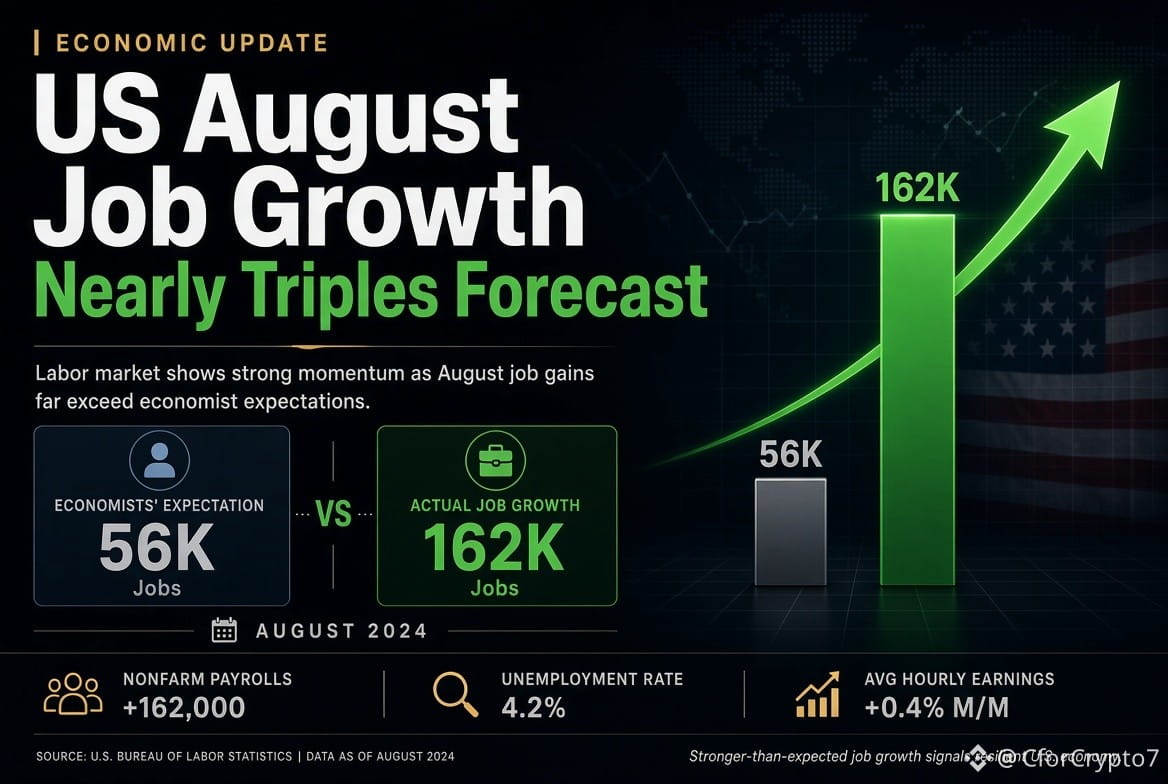
U.S. employers added 162,000 jobs in August, nearly 3× the 56,000 forecast. The unemployment rate held at 4.1%, showing a stronger-than-expected rebound in the labor market.
#USJobs #Economy #FederalReserve #Markets
$USDC
$BTC
$SPX
U.S. employers added 162,000 jobs in August, nearly 3× the 56,000 forecast. The unemployment rate held at 4.1%, showing a stronger-than-expected rebound in the labor market.
#USJobs #Economy #FederalReserve #Markets
$USDC
$BTC
$SPX
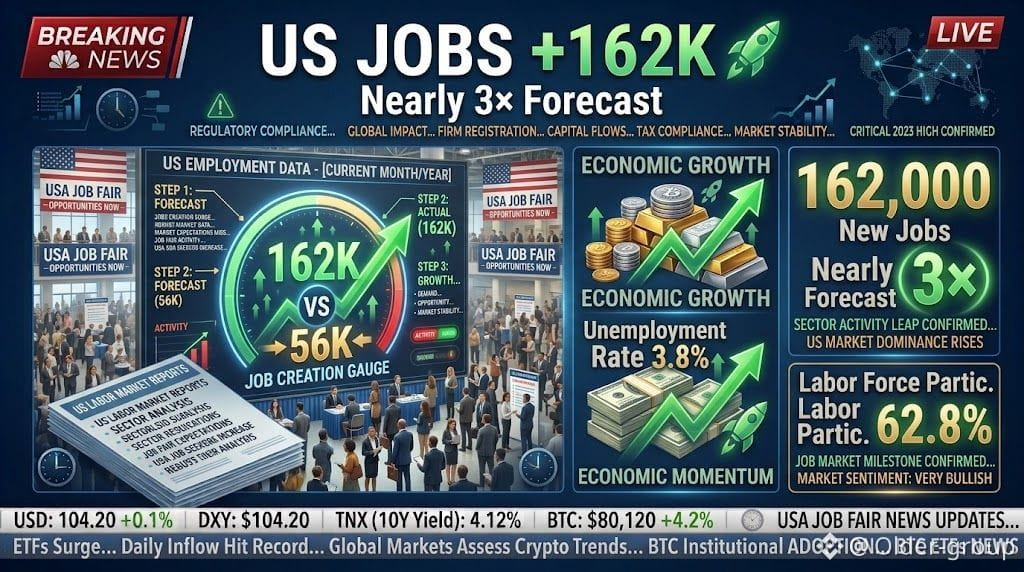
AI Radar:
Calling This $USELESS Trade Done.

#usaugustjobgrowthnearlytriplesforecast
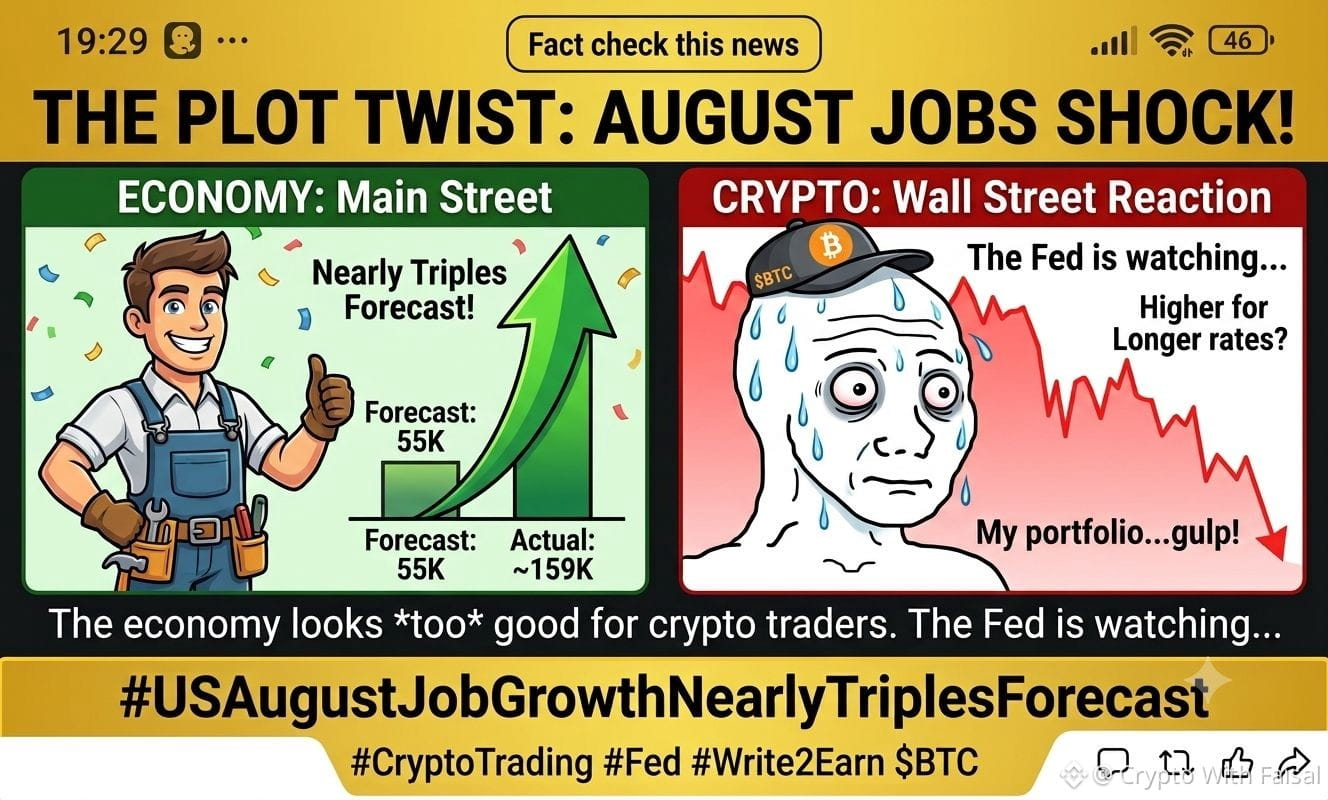
Plot twist for the markets! 🚨 August U.S. job growth just came in at roughly 159K—nearly triple the 55K forecast.
While a booming labor market sounds great on Main Street, it's making crypto traders sweat. Why? Because a hot job market gives the Fed a major reason to keep interest rates higher for longer, which can put immediate short-term pressure on Bitcoin and other risk assets.
The big question now: Does this massive jobs beat completely change the Fed’s path?
How are you adjusting your trades after this news? Let me know below! 👇
#Fed #CryptoNews #Bitcoin
$BTC $ZEC $SOL
Plot twist for the markets! 🚨 August U.S. job growth just came in at roughly 159K—nearly triple the 55K forecast.
While a booming labor market sounds great on Main Street, it's making crypto traders sweat. Why? Because a hot job market gives the Fed a major reason to keep interest rates higher for longer, which can put immediate short-term pressure on Bitcoin and other risk assets.
The big question now: Does this massive jobs beat completely change the Fed’s path?
How are you adjusting your trades after this news? Let me know below! 👇
#Fed #CryptoNews #Bitcoin
$BTC $ZEC $SOL
تم إصدار تقرير الوظائف غير الزراعية للتو 🚨 هل هذا صعودي أم هبوطي للعملات المشفرة؟
جاء تقرير الوظائف غير الزراعية الأمريكي لشهر أغسطس أقوى بكثير من المتوقع
🇺🇸 NFP: +162K
التوقع: +55K/+56K
السابق: +21K بعد التعديل
معدل البطالة: 4.1%
التوقع: 4.1%
متوسط الأجر بالساعة: +0.3% على أساس شهري
+3.1% على أساس سنوي
المفاجأة الكبيرة هي 162 ألف وظيفة مقابل 55 ألفًا متوقعة 🔥
يمكن لسوق عمل أقوى أن يجعل الاحتياطي الفيدرالي أكثر حذرًا بشأن خفض أسعار الفائدة ويضغط على الأصول عالية المخاطر مثل العملات المشفرة.
والآن الجزء المهم: كيف يتفاعل $BTC بعد أن تهدأ تقلبات تقرير الوظائف غير الزراعية؟ 👀
متابعة من فضلكم
#NFP #UnemploymentRate #USAugustJobGrowthNearlyTriplesForecast
جاء تقرير الوظائف غير الزراعية الأمريكي لشهر أغسطس أقوى بكثير من المتوقع
🇺🇸 NFP: +162K
التوقع: +55K/+56K
السابق: +21K بعد التعديل
معدل البطالة: 4.1%
التوقع: 4.1%
متوسط الأجر بالساعة: +0.3% على أساس شهري
+3.1% على أساس سنوي
المفاجأة الكبيرة هي 162 ألف وظيفة مقابل 55 ألفًا متوقعة 🔥
يمكن لسوق عمل أقوى أن يجعل الاحتياطي الفيدرالي أكثر حذرًا بشأن خفض أسعار الفائدة ويضغط على الأصول عالية المخاطر مثل العملات المشفرة.
والآن الجزء المهم: كيف يتفاعل $BTC بعد أن تهدأ تقلبات تقرير الوظائف غير الزراعية؟ 👀
متابعة من فضلكم
#NFP #UnemploymentRate #USAugustJobGrowthNearlyTriplesForecast

#usaugustjobgrowthnearlytriplesforecast
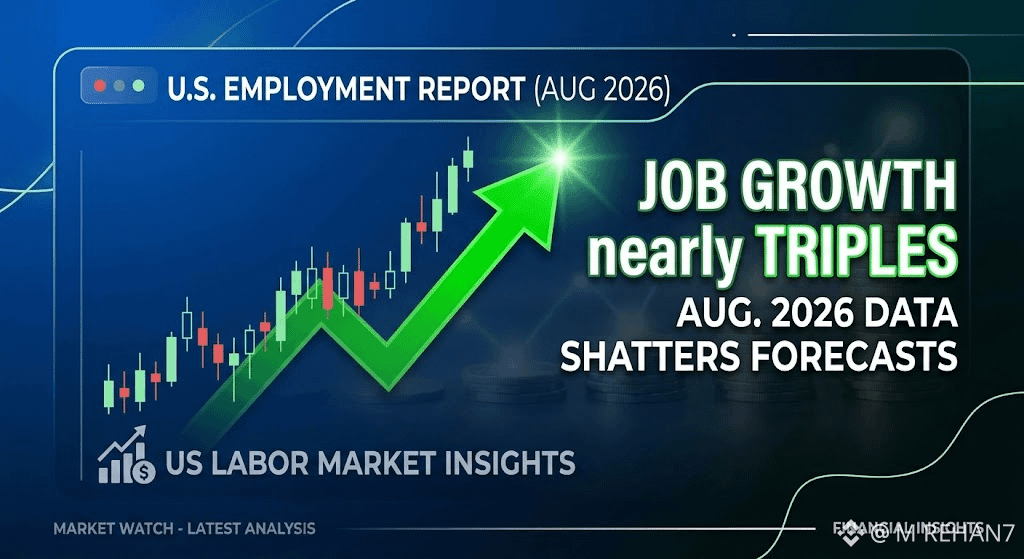
🟡 US AUGUST JOB GROWTH NEARLY TRIPLES FORECAST
159K vs 55K Expected | Plot Twist For Markets
Big surprise. US added 159K jobs in August vs only 55K forecast.
Main Street is celebrating. Wall Street and Crypto traders are sweating.
WHY IT MATTERS:
A hot job market gives the Fed a reason to keep rates "higher for longer".
Less liquidity = more pressure on risk assets.
MARKET REACTION:
STOCKS: Mixed. Strong economy = good, but rate fears = bad
CRYPTO:
- $BTC -2.27% - Selling pressure
- $SOL -3.51% - Risk-off sentiment
- $ZEC +6.07% - Privacy coins holding strong
FED WATCH: Rate cut hopes just got delayed
BOTTOM LINE:
Good news for economy, bad news for crypto in short term.
Traders now watching Fed's next move.
What's your take? Bullish economy or bearish for crypto? 👇
#usaugustjobgrowthnearlytriplesforecast #JobsReport #BTC #SOL #ZEC #Fed #Crypto #Stocks #MarketUpdate #Economy#ZECHitsANewAllTimeHigh #LululemonTumbles20%OnWeakGuidance #BTCTops$80K #BitcoinEthereumHitMultiMonthHighs
🟡 US AUGUST JOB GROWTH NEARLY TRIPLES FORECAST
159K vs 55K Expected | Plot Twist For Markets
Big surprise. US added 159K jobs in August vs only 55K forecast.
Main Street is celebrating. Wall Street and Crypto traders are sweating.
WHY IT MATTERS:
A hot job market gives the Fed a reason to keep rates "higher for longer".
Less liquidity = more pressure on risk assets.
MARKET REACTION:
STOCKS: Mixed. Strong economy = good, but rate fears = bad
CRYPTO:
- $BTC -2.27% - Selling pressure
- $SOL -3.51% - Risk-off sentiment
- $ZEC +6.07% - Privacy coins holding strong
FED WATCH: Rate cut hopes just got delayed
BOTTOM LINE:
Good news for economy, bad news for crypto in short term.
Traders now watching Fed's next move.
What's your take? Bullish economy or bearish for crypto? 👇
#usaugustjobgrowthnearlytriplesforecast #JobsReport #BTC #SOL #ZEC #Fed #Crypto #Stocks #MarketUpdate #Economy#ZECHitsANewAllTimeHigh #LululemonTumbles20%OnWeakGuidance #BTCTops$80K #BitcoinEthereumHitMultiMonthHighs

ຢືນຢັນແລ້ວ
🇺🇸 US Jobs Shock: August Payrolls Jump 162K, Nearly 3× Forecast! 🚀
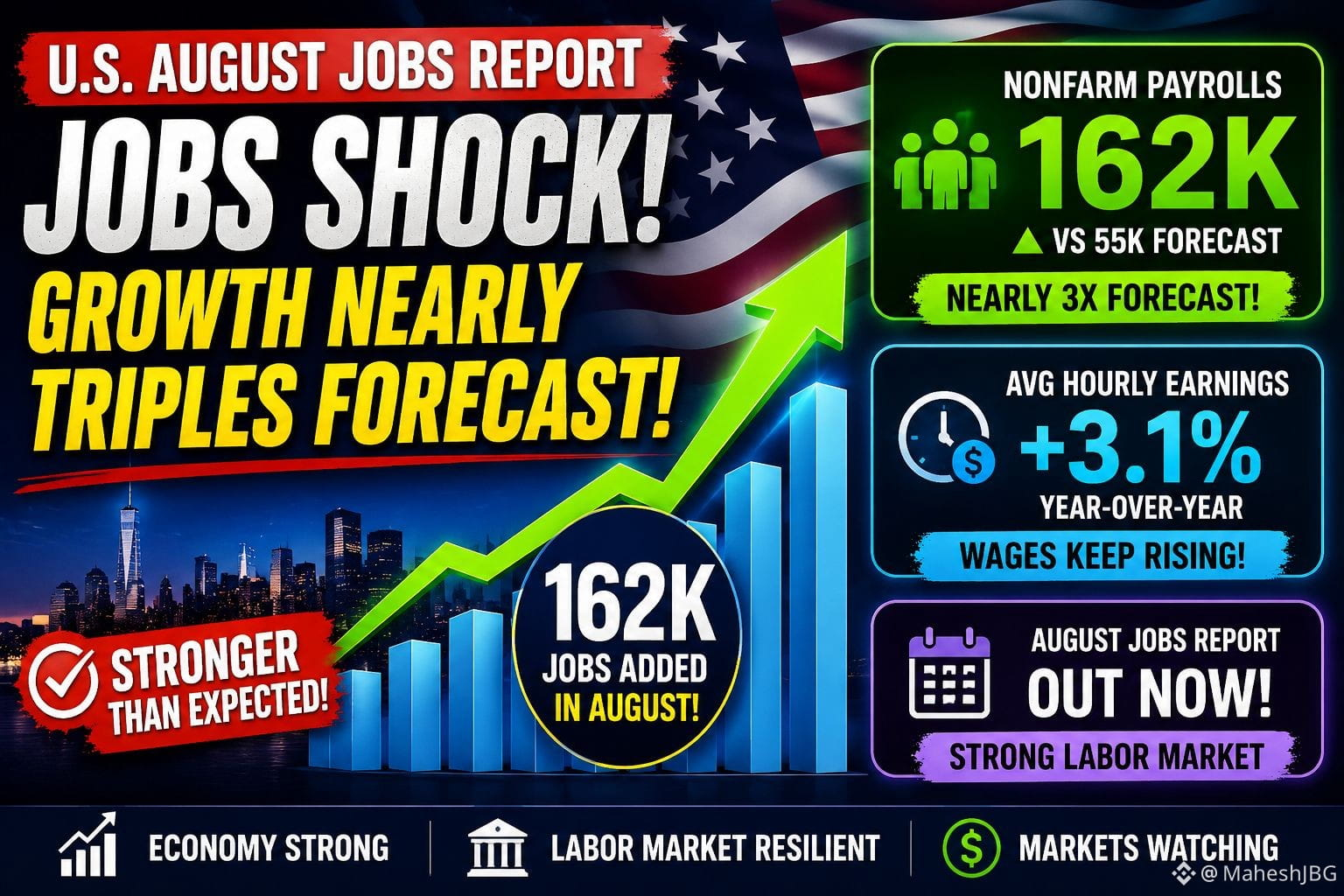
Key data: U.S. nonfarm payrolls increased 162,000 in August, versus roughly 55,000–56,000 expected, while average hourly earnings rose 0.3% month-over-month and 3.1% year-over-year.
$DASH - $ZEN - $ZEC
#ZECHitsANewAllTimeHigh
#USAugustJobGrowthNearlyTriplesForecast #USAugustAvgHourlyEarningsRise3.1% #USAugustNonfarmPayrollsDueToday
Key data: U.S. nonfarm payrolls increased 162,000 in August, versus roughly 55,000–56,000 expected, while average hourly earnings rose 0.3% month-over-month and 3.1% year-over-year.
$DASH - $ZEN - $ZEC
#ZECHitsANewAllTimeHigh
#USAugustJobGrowthNearlyTriplesForecast #USAugustAvgHourlyEarningsRise3.1% #USAugustNonfarmPayrollsDueToday
Binance BiBi:
This post claims the U.S. August jobs report was a big upside surprise: nonfarm payrolls rose by 162,000 versus roughly 55,000–56,000 expected (nearly 3x the forecast). It also says average hourly earnings increased 0.3% month-over-month and 3.1% year-over-year, implying wages are still rising and the labor market looks strong/resilient. It tags DASH, ZEN, and ZEC and uses hashtags suggesting ZEC is hitting a new all-time high and that markets are watching the data.

#usaugustjobgrowthnearlytriplesforecast
🚨
📈💼 #USAugustJobGrowthNearlyTriplesForecast está sacudiendo los mercados y generando un auténtico terremoto entre inversores y traders de todo el mundo. 🌎⚡
😲 Los nuevos datos muestran que el crecimiento del empleo en Estados Unidos ha sido mucho más fuerte de lo previsto, sorprendiendo a analistas y mercados. 📊🚀
💵 Un mercado laboral sólido puede fortalecer al dólar. 📈 Las bolsas reaccionan con máxima atención. ₿ Bitcoin y las criptomonedas podrían experimentar una fuerte volatilidad. 🔥 Los inversores buscan pistas sobre los próximos movimientos económicos.
🐂 Los alcistas celebran los datos positivos. 🐻 Los bajistas permanecen cautelosos ante posibles cambios en la política monetaria.
⚡ El mercado está en alerta máxima y cada titular puede provocar movimientos inesperados en cuestión de minutos. ⏳📉📈
🤔 ¿Qué crees que pasará ahora?
🚀 Bitcoin seguirá subiendo 💰 El dólar ganará fuerza 📈 Wall Street marcará nuevos máximos 🌪️ Se acerca una gran volatilidad
👇 ¡Déjanos tu opinión en los comentarios!
#USJobs #NFP #Bitcoin #BTC #Ethereum #ETH #CryptoNews #Trading #MercadosFinancieros #WallStreet #Investing #BinanceSquare #ELCRYPTOBOY 🚀🔥💎📊🌕
🚨
📈💼 #USAugustJobGrowthNearlyTriplesForecast está sacudiendo los mercados y generando un auténtico terremoto entre inversores y traders de todo el mundo. 🌎⚡
😲 Los nuevos datos muestran que el crecimiento del empleo en Estados Unidos ha sido mucho más fuerte de lo previsto, sorprendiendo a analistas y mercados. 📊🚀
💵 Un mercado laboral sólido puede fortalecer al dólar. 📈 Las bolsas reaccionan con máxima atención. ₿ Bitcoin y las criptomonedas podrían experimentar una fuerte volatilidad. 🔥 Los inversores buscan pistas sobre los próximos movimientos económicos.
🐂 Los alcistas celebran los datos positivos. 🐻 Los bajistas permanecen cautelosos ante posibles cambios en la política monetaria.
⚡ El mercado está en alerta máxima y cada titular puede provocar movimientos inesperados en cuestión de minutos. ⏳📉📈
🤔 ¿Qué crees que pasará ahora?
🚀 Bitcoin seguirá subiendo 💰 El dólar ganará fuerza 📈 Wall Street marcará nuevos máximos 🌪️ Se acerca una gran volatilidad
👇 ¡Déjanos tu opinión en los comentarios!
#USJobs #NFP #Bitcoin #BTC #Ethereum #ETH #CryptoNews #Trading #MercadosFinancieros #WallStreet #Investing #BinanceSquare #ELCRYPTOBOY 🚀🔥💎📊🌕

#USAugustJobGrowthNearlyTriplesForecast
🇺🇸 Звіт із зайнятості США: що це означає для Bitcoin?
Сьогодні США опублікували звіт із зайнятості за серпень. Ринок праці виявився значно сильнішим за очікування:
📊 NFP: +162 тис. робочих місць
📊 Очікування: близько +56 тис.
📉 Безробіття: 4,1%
💰 Зарплати: +3,1% р/р
На перший погляд — хороша новина для економіки. Але для BTC все складніше.
Сильний ринок праці означає, що у ФРС може бути менше причин поспішати зі зниженням ставок.
Сильний NFP → менше шансів на швидке зниження ставок → вищі ставки довше → сильніший долар і дохідність облігацій → тиск на ризикові активи → BTC може просідати.
Після публікації даних $BTC опускався нижче $80 000.
Але робити висновок про початок великого падіння зарано. Зарплати зростають помірно, а безробіття залишається на рівні 4,1%.
🔎 Наступний ключовий тест — CPI (індекс споживчих цін) 11 вересня.
Висока інфляція може посилити тиск на BTC. М'який CPI, навпаки, здатен повернути очікування зниження ставки ФРС і підтримати крипторинок.
Зараз важливо стежити за зв'язкою звіт із зайнятості → CPI → рішення ФРС 16 вересня.
#bitcoin #BTC #Crypto #Fed #NFP #cpi
🇺🇸 Звіт із зайнятості США: що це означає для Bitcoin?
Сьогодні США опублікували звіт із зайнятості за серпень. Ринок праці виявився значно сильнішим за очікування:
📊 NFP: +162 тис. робочих місць
📊 Очікування: близько +56 тис.
📉 Безробіття: 4,1%
💰 Зарплати: +3,1% р/р
На перший погляд — хороша новина для економіки. Але для BTC все складніше.
Сильний ринок праці означає, що у ФРС може бути менше причин поспішати зі зниженням ставок.
Сильний NFP → менше шансів на швидке зниження ставок → вищі ставки довше → сильніший долар і дохідність облігацій → тиск на ризикові активи → BTC може просідати.
Після публікації даних $BTC опускався нижче $80 000.
Але робити висновок про початок великого падіння зарано. Зарплати зростають помірно, а безробіття залишається на рівні 4,1%.
🔎 Наступний ключовий тест — CPI (індекс споживчих цін) 11 вересня.
Висока інфляція може посилити тиск на BTC. М'який CPI, навпаки, здатен повернути очікування зниження ставки ФРС і підтримати крипторинок.
Зараз важливо стежити за зв'язкою звіт із зайнятості → CPI → рішення ФРС 16 вересня.
#bitcoin #BTC #Crypto #Fed #NFP #cpi


#USAugustJobGrowthNearlyTriplesForecast U.S. JOB GROWTH JUST TRIPLED EXPECTATIONS
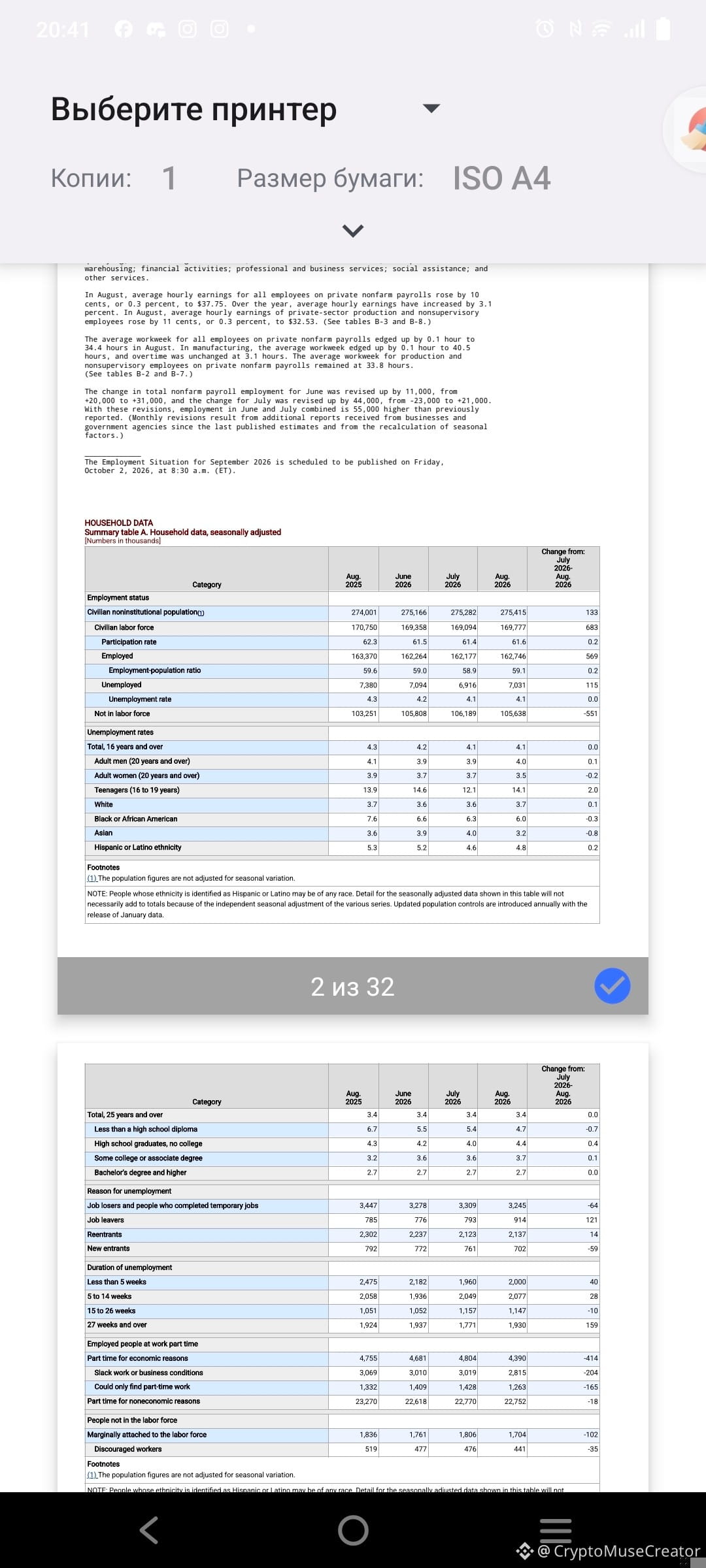
August payrolls: +162K
Forecast: +56K
Unemployment: 4.1%
Wage growth: 3.1% YoY
July was also revised from -23K to +21K.
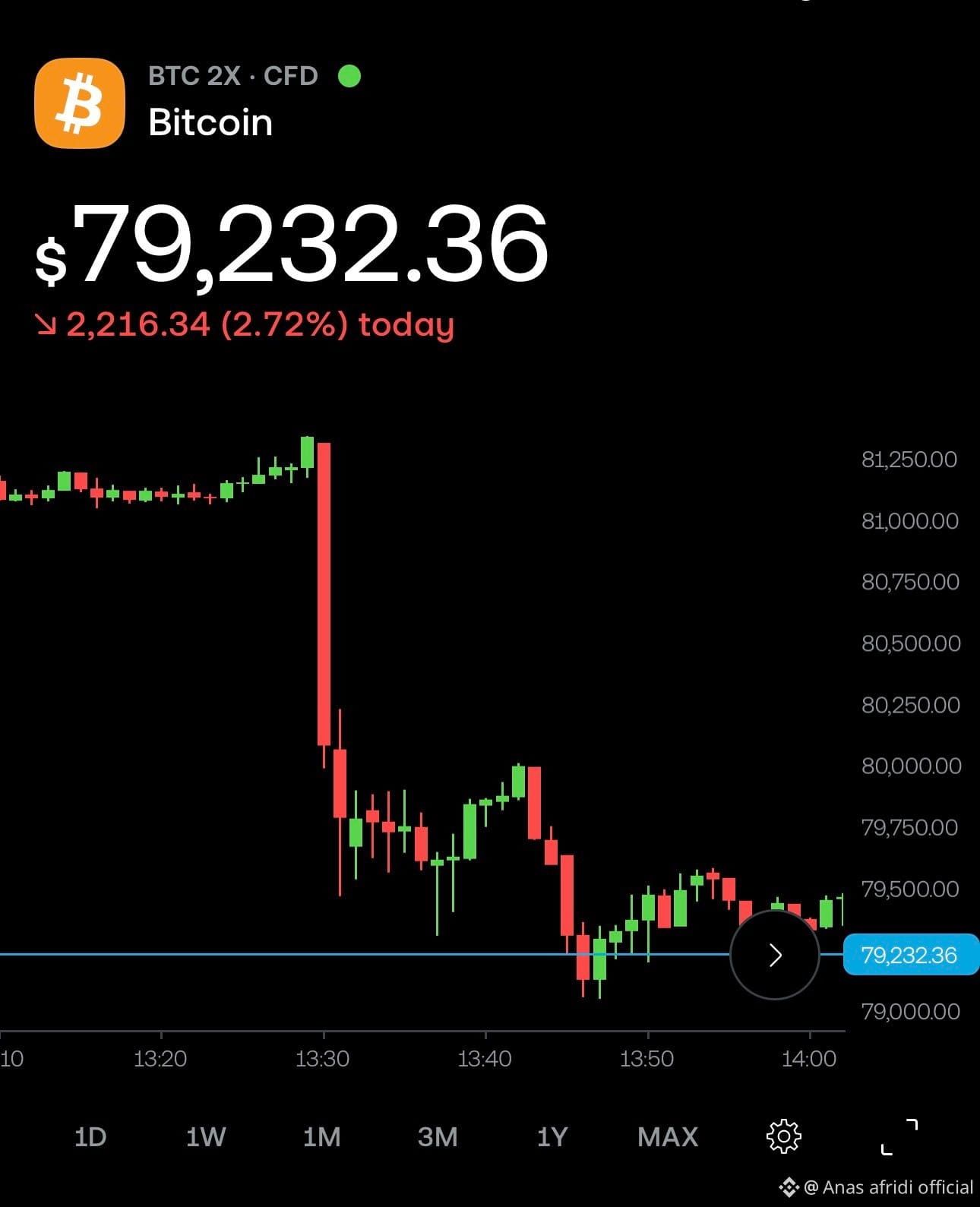
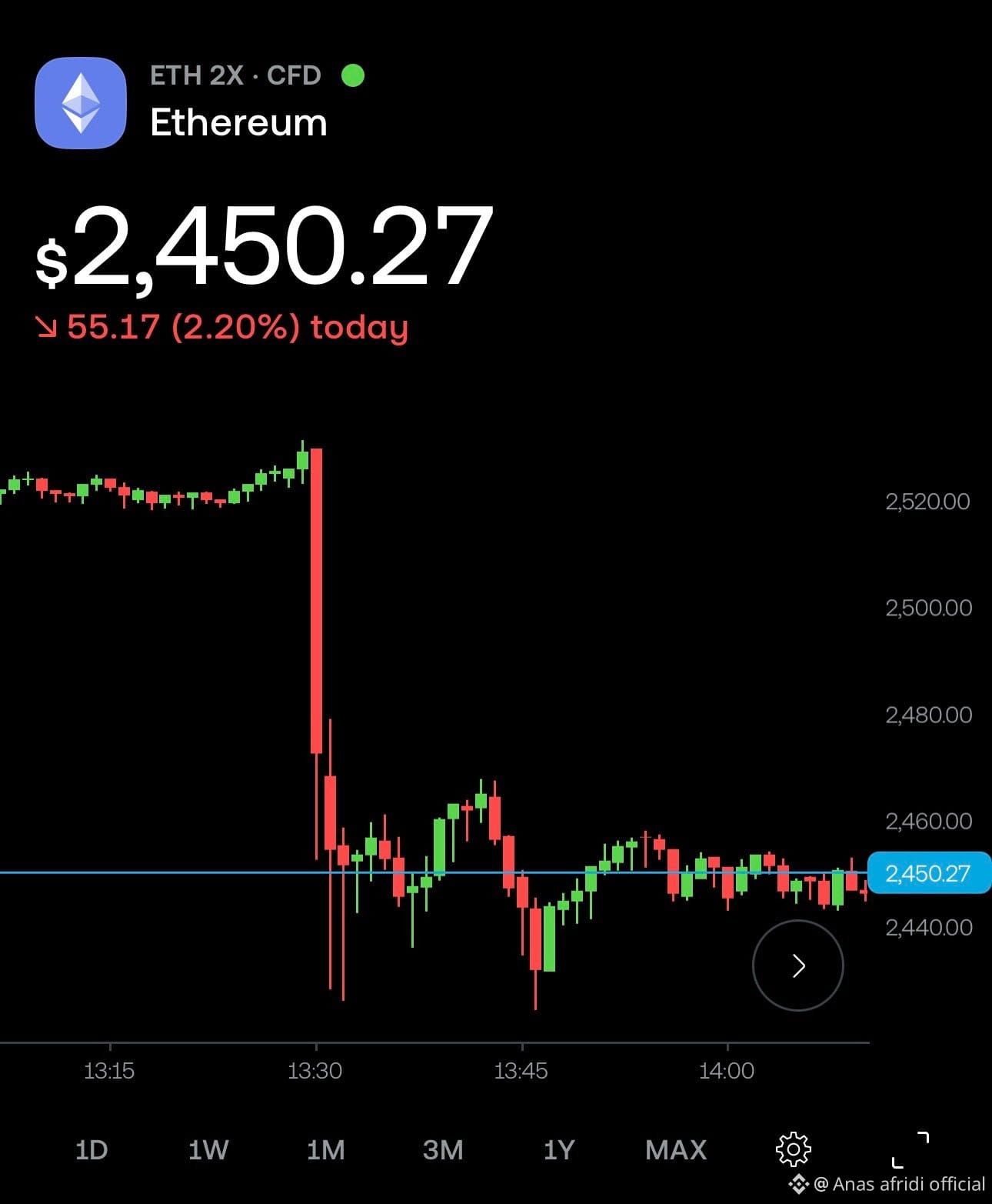
$BTC and $ETH sold off immediately as traders priced in a greater chance of a September Fed rate hike.
Good news for jobs became bad news for risk assets.$BTC
August payrolls: +162K
Forecast: +56K
Unemployment: 4.1%
Wage growth: 3.1% YoY
July was also revised from -23K to +21K.
$BTC and $ETH sold off immediately as traders priced in a greater chance of a September Fed rate hike.
Good news for jobs became bad news for risk assets.$BTC

#USAugustJobGrowthNearlyTriplesForecast BREAKING: The US economy adds +162,000 jobs in August, well above expectations of +55,000.
The unemployment rate was 4.1%, in-line with expectations of 4.1%.
July's job number was also revised up by +43,000 jobs and is now positive for the month.
The US job market nearly TRIPLED expectations.$XRP
$SOL
The unemployment rate was 4.1%, in-line with expectations of 4.1%.
July's job number was also revised up by +43,000 jobs and is now positive for the month.
The US job market nearly TRIPLED expectations.$XRP
$SOL

🚨 U.S. JOB GROWTH SHOCKS THE MARKET!
The U.S. labor market delivered a major upside surprise.
📊 August jobs: +162K
🎯 Forecast: ~56K
📈 Nearly 3× expectations
🇺🇸 Unemployment rate: 4.1%
The strong report could complicate the Federal Reserve's policy outlook.
For crypto traders, this matters because stronger economic data can potentially support a higher-for-longer interest-rate environment, which may create pressure on risk assets such as Bitcoin and altcoins.
🔥 The market now has another major question:
Does this jobs surprise change expectations for the Fed's next move?
Watch $BTC Treasury yields and the dollar closely. 👀
#USAugustJobGrowthNearlyTriplesForecast #Fed #Bitcoin #CryptoTrading. #BinanceSquare
The U.S. labor market delivered a major upside surprise.
📊 August jobs: +162K
🎯 Forecast: ~56K
📈 Nearly 3× expectations
🇺🇸 Unemployment rate: 4.1%
The strong report could complicate the Federal Reserve's policy outlook.
For crypto traders, this matters because stronger economic data can potentially support a higher-for-longer interest-rate environment, which may create pressure on risk assets such as Bitcoin and altcoins.
🔥 The market now has another major question:
Does this jobs surprise change expectations for the Fed's next move?
Watch $BTC Treasury yields and the dollar closely. 👀
#USAugustJobGrowthNearlyTriplesForecast #Fed #Bitcoin #CryptoTrading. #BinanceSquare
ເຂົ້າສູ່ລະບົບເພື່ອສຳຫຼວດເນື້ອຫາເພີ່ມເຕີມ