
#macroeconomics
macroeconomics
970,297 ຄັ້ງທີ່ເບິ່ງ
4,702 ກຳລັງສົນທະນາ
ມາແຮງ
ຫຼ້າສຸດ

ບົດຄວາມ
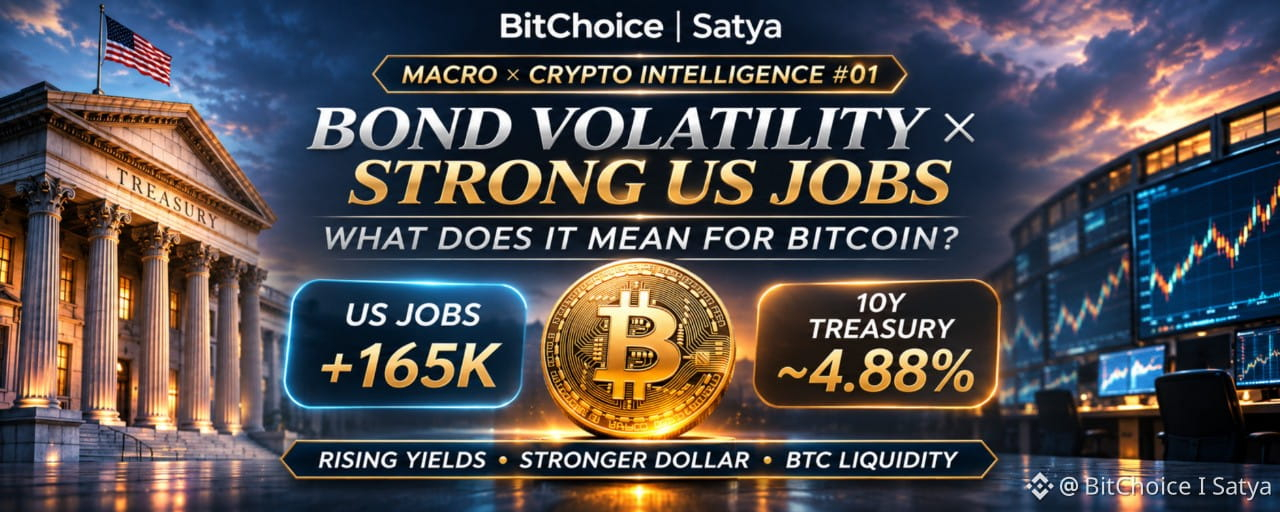
BOND VOLATILITY MEETS STRONG US JOBS: A HIDDEN RISK SIGNAL FOR BITCOIN?BitChoice | Satya — Macro × Crypto Intelligence #01
November 7, 2026 | Treasury Markets, Federal Reserve, Bitcoin
The Bond Market Sent a Warning Before the Jobs Report
On November 5, CME Group highlighted an unusual divergence in U.S. Treasury markets.
Treasury yields retreated from levels approaching 4.90% toward 4.80%, while bond-market volatility increased.
Normally, falling yields may reflect demand for safer assets, expectations of easier monetary policy, or concerns about economic growth.
But rising bond volatility suggests something different: investors are becoming less certain about the future path of interest rates.
Then came the November 6 U.S. employment report.
1. US Jobs: Stronger Than Expected
The October employment report delivered a significant upside surprise:
Nonfarm payrolls: +165,000 versus approximately +65,000 expectedUnemployment: 4.1%, down from 4.2%Average hourly earnings: +0.4% month over monthAugust and September revisions: +84,000 additional jobs combined
These figures showed greater labor-market resilience than investors had anticipated.
But stronger employment is not automatically positive for financial markets.
A resilient economy gives the Federal Reserve more room to maintain restrictive monetary policy, particularly when inflation remains elevated.
2. Treasury Yields Reversed Higher
Following the employment surprise, Treasury yields and the U.S. dollar strengthened.
The benchmark 10-year Treasury yield reached approximately 4.88% during the November 6 morning market reaction.
This illustrates an important distinction.
Falling yields before economic data do not guarantee a lasting shift toward easier financial conditions.
One strong macroeconomic release can quickly change expectations.
For investors, the critical question is whether bond-market volatility represents temporary uncertainty or a broader repricing of inflation and monetary-policy risks.
3. Why Bitcoin Should Care
Bitcoin does not have a fixed relationship with Treasury yields.
However, three transmission channels deserve close attention.
A. Interest Rate Expectations
Higher yields can make cash and government bonds more attractive relative to non-yielding speculative assets.
This may reduce the appetite for leveraged crypto exposure.
B. Dollar Strength
A stronger dollar can tighten global financial conditions and increase pressure on risk-sensitive assets.
The relationship is not mechanical, but sustained dollar strength can become an obstacle for crypto markets.
C. Liquidity and Leverage
Rapid repricing in Treasury markets may trigger portfolio adjustments across traditional finance.
In crypto derivatives, reduced liquidity and concentrated leverage can amplify price movements.
The result is a market where macroeconomic shocks may travel quickly from bonds to equities and digital assets.
4. What Actually Happened to Bitcoin?
Bitcoin did not produce a convincing bullish response to the stronger employment report.
During the November 6 reaction, BTC briefly moved above $76,100 before trading back around $75,500–$75,800.
The immediate reaction was relatively muted compared with the broader weakness already visible in risk assets.
This matters because a weaker Bitcoin market cannot automatically be attributed to a single employment report.
Positioning, ETF flows, derivatives exposure and earlier equity-market selling also influence price behavior.
The jobs report changed the macro backdrop. It did not explain every Bitcoin transaction.
5. Four Signals for the Next Trading Sessions
1. Treasury Yields
Does the 10-year yield stabilize, or does renewed inflation concern push it higher?
2. U.S. Dollar Index
Sustained dollar strength would increase pressure on global risk appetite.
3. Bitcoin Spot ETF Flows
Watch whether institutional inflows return or withdrawals continue.
4. BTC Derivatives and Spot Liquidity
Open interest, funding rates, implied volatility and real spot demand can help distinguish sustainable buying from leveraged rebounds.
No single indicator provides a reliable directional forecast.
6. The Next Catalyst: November 10 CPI
The October U.S. Consumer Price Index report is scheduled for November 10.
It could determine whether investors interpret strong employment as evidence of healthy economic resilience or as another reason for tighter Federal Reserve policy.
That distinction matters for Treasury yields, the dollar and Bitcoin.
OUR TAKE
The most important signal is not simply whether Treasury yields rise or fall.
It is why they move, how volatility responds, and whether liquidity conditions improve or deteriorate.
The November 5–6 sequence demonstrated how quickly market expectations can change.
For Bitcoin, the combination of firm employment, higher yields and stronger dollar conditions deserves attention.
But a macro warning is not a guaranteed bearish trading signal.
The real test comes when Treasury yields, dollar direction, ETF flows and crypto-market positioning begin to confirm one another.
Is Bitcoin facing another liquidity squeeze, or is this the kind of macro uncertainty that creates longer-term opportunity?
BitChoice | Satya | Macro × Crypto Intelligence
Sources
CME Group — Treasury Yields Retreat From Early Highs Ahead of Employment Data, November 5, 2026.U.S. Bureau of Labor Statistics — Employment Situation: October 2026, released November 6.Reuters — Strong October Jobs Report Sends Yields Higher, November 6.Charles Schwab — Stocks Mixed, Yields Up on Surging U.S. Job Growth, November 6.Bitcoin Magazine — Bitcoin Price Holds Near $75,000 After Hot October Jobs Report, November 6.
#Bitcoin #MacroEconomics #TreasuryYields #FederalReserve #CryptoMarkets $BTC
{spot}(BTCUSDT)
BOND VOLATILITY MEETS STRONG US JOBS: A HIDDEN RISK SIGNAL FOR BITCOIN?
BitChoice | Satya — Macro × Crypto Intelligence #01
November 7, 2026 | Treasury Markets, Federal Reserve, Bitcoin
The Bond Market Sent a Warning Before the Jobs Report
On November 5, CME Group highlighted an unusual divergence in U.S. Treasury markets.
Treasury yields retreated from levels approaching 4.90% toward 4.80%, while bond-market volatility increased.
Normally, falling yields may reflect demand for safer assets, expectations of easier monetary policy, or concerns about economic growth.
But rising bond volatility suggests something different: investors are becoming less certain about the future path of interest rates.
Then came the November 6 U.S. employment report.
1. US Jobs: Stronger Than Expected
The October employment report delivered a significant upside surprise:
Nonfarm payrolls: +165,000 versus approximately +65,000 expectedUnemployment: 4.1%, down from 4.2%Average hourly earnings: +0.4% month over monthAugust and September revisions: +84,000 additional jobs combined
These figures showed greater labor-market resilience than investors had anticipated.
But stronger employment is not automatically positive for financial markets.
A resilient economy gives the Federal Reserve more room to maintain restrictive monetary policy, particularly when inflation remains elevated.
2. Treasury Yields Reversed Higher
Following the employment surprise, Treasury yields and the U.S. dollar strengthened.
The benchmark 10-year Treasury yield reached approximately 4.88% during the November 6 morning market reaction.
This illustrates an important distinction.
Falling yields before economic data do not guarantee a lasting shift toward easier financial conditions.
One strong macroeconomic release can quickly change expectations.
For investors, the critical question is whether bond-market volatility represents temporary uncertainty or a broader repricing of inflation and monetary-policy risks.
3. Why Bitcoin Should Care
Bitcoin does not have a fixed relationship with Treasury yields.
However, three transmission channels deserve close attention.
A. Interest Rate Expectations
Higher yields can make cash and government bonds more attractive relative to non-yielding speculative assets.
This may reduce the appetite for leveraged crypto exposure.
B. Dollar Strength
A stronger dollar can tighten global financial conditions and increase pressure on risk-sensitive assets.
The relationship is not mechanical, but sustained dollar strength can become an obstacle for crypto markets.
C. Liquidity and Leverage
Rapid repricing in Treasury markets may trigger portfolio adjustments across traditional finance.
In crypto derivatives, reduced liquidity and concentrated leverage can amplify price movements.
The result is a market where macroeconomic shocks may travel quickly from bonds to equities and digital assets.
4. What Actually Happened to Bitcoin?
Bitcoin did not produce a convincing bullish response to the stronger employment report.
During the November 6 reaction, BTC briefly moved above $76,100 before trading back around $75,500–$75,800.
The immediate reaction was relatively muted compared with the broader weakness already visible in risk assets.
This matters because a weaker Bitcoin market cannot automatically be attributed to a single employment report.
Positioning, ETF flows, derivatives exposure and earlier equity-market selling also influence price behavior.
The jobs report changed the macro backdrop. It did not explain every Bitcoin transaction.
5. Four Signals for the Next Trading Sessions
1. Treasury Yields
Does the 10-year yield stabilize, or does renewed inflation concern push it higher?
2. U.S. Dollar Index
Sustained dollar strength would increase pressure on global risk appetite.
3. Bitcoin Spot ETF Flows
Watch whether institutional inflows return or withdrawals continue.
4. BTC Derivatives and Spot Liquidity
Open interest, funding rates, implied volatility and real spot demand can help distinguish sustainable buying from leveraged rebounds.
No single indicator provides a reliable directional forecast.
6. The Next Catalyst: November 10 CPI
The October U.S. Consumer Price Index report is scheduled for November 10.
It could determine whether investors interpret strong employment as evidence of healthy economic resilience or as another reason for tighter Federal Reserve policy.
That distinction matters for Treasury yields, the dollar and Bitcoin.
OUR TAKE
The most important signal is not simply whether Treasury yields rise or fall.
It is why they move, how volatility responds, and whether liquidity conditions improve or deteriorate.
The November 5–6 sequence demonstrated how quickly market expectations can change.
For Bitcoin, the combination of firm employment, higher yields and stronger dollar conditions deserves attention.
But a macro warning is not a guaranteed bearish trading signal.
The real test comes when Treasury yields, dollar direction, ETF flows and crypto-market positioning begin to confirm one another.
Is Bitcoin facing another liquidity squeeze, or is this the kind of macro uncertainty that creates longer-term opportunity?
BitChoice | Satya | Macro × Crypto Intelligence
Sources
CME Group — Treasury Yields Retreat From Early Highs Ahead of Employment Data, November 5, 2026.U.S. Bureau of Labor Statistics — Employment Situation: October 2026, released November 6.Reuters — Strong October Jobs Report Sends Yields Higher, November 6.Charles Schwab — Stocks Mixed, Yields Up on Surging U.S. Job Growth, November 6.Bitcoin Magazine — Bitcoin Price Holds Near $75,000 After Hot October Jobs Report, November 6.
#Bitcoin #MacroEconomics #TreasuryYields #FederalReserve #CryptoMarkets $BTC
85

·
--
ບົດຄວາມ
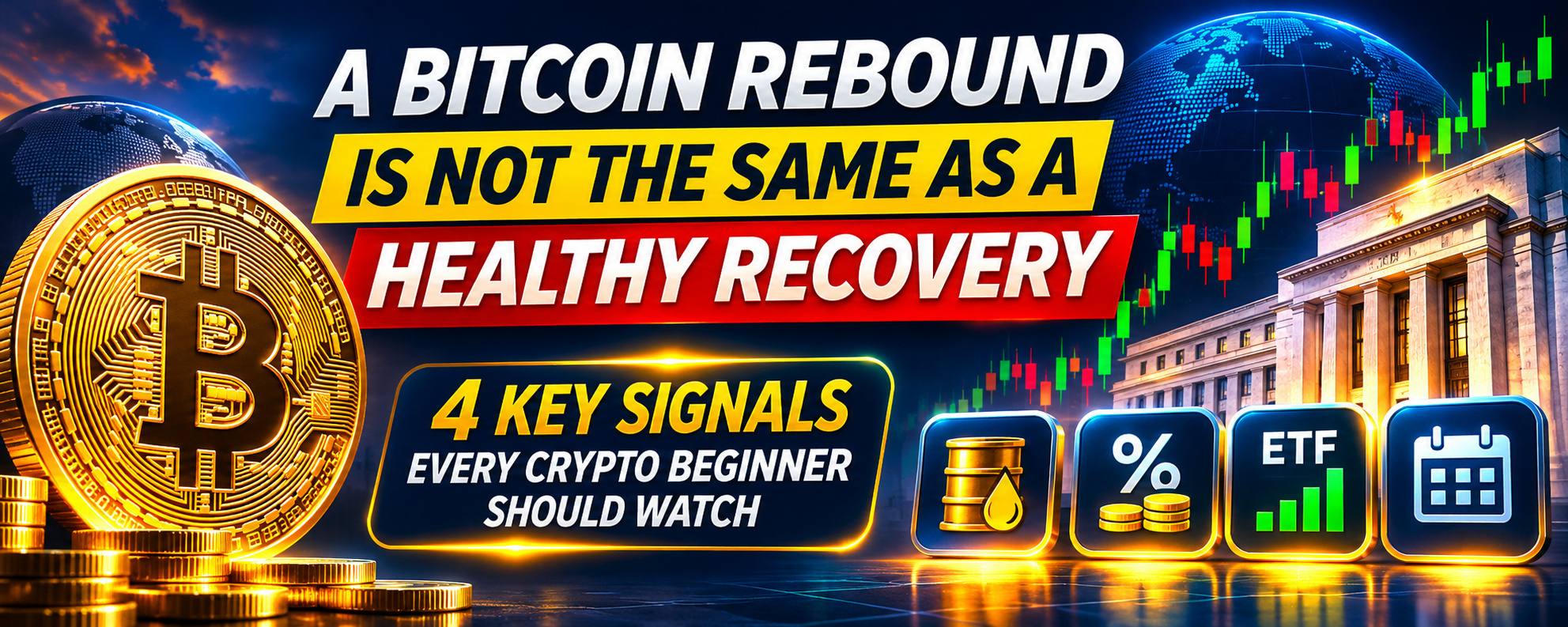
BITCOIN'S REBOUND: 4 SIGNALS TO WATCHOil prices, interest rates, ETF flows and market positioning: what beginners should understand before celebrating a recovery.
Bitcoin is recovering. But does a rising price automatically mean that the crypto market is becoming stronger?
Not necessarily.
On November 5, 2026, Bitcoin was trading around $80,511, up approximately 3.95% over 24 hours, according to KuCoin's market report published at 00:00 UTC. Ethereum was also higher, trading around $2,424.
Bitcoin had recovered from an election-period low of approximately $75,600.
At first glance, this looks like a strong market rebound. However, several important indicators suggest that investors should look beyond the price chart.
1. GEOPOLITICS CAN INFLUENCE CRYPTO
Why should a Bitcoin investor care about developments in the Middle East?
Because geopolitical tensions can influence oil prices, inflation expectations and financial-market confidence.
KuCoin's November 5 market report linked lower oil prices and declining Treasury yields to improving expectations around possible easing of US-Iran tensions.
The economic connection is important:
- Higher oil prices can increase inflationary pressure.
- Persistent inflation can make central banks more cautious about lowering interest rates.
- Higher interest rates can make traditional savings and bonds more attractive relative to riskier assets.
The opposite can also happen.
When inflation fears ease and bond yields fall, some investors become more willing to consider assets such as Bitcoin.
However, expectations of diplomatic progress are not the same as a confirmed resolution. Geopolitical developments can change quickly.
2. CENTRAL BANK DECISIONS STILL MATTER
Cryptocurrency operates on decentralized networks, but its market price is influenced by the global financial system.
Interest rates are one of the reasons.
On November 5, the Bank of England is scheduled to publish its latest monetary policy decision and minutes at noon. Its previous Bank Rate was 3.75%.
A higher interest rate generally increases borrowing costs and can make traditional interest-bearing assets more attractive.
For crypto investors, the important question is not simply whether a central bank raises or lowers rates.
It is whether the decision changes expectations about future financial conditions.
A decision that surprises markets can affect currencies, bonds, equities and digital assets at the same time.
3. A PRICE RALLY CAN BE AMPLIFIED BY SHORT LIQUIDATIONS
This is one of the most misunderstood concepts in crypto.
A short seller is someone who expects an asset's price to fall. When the price rises instead, the trader may be forced to close the position by buying back the asset.
That buying can push the price even higher.
This is called a short squeeze.
KuCoin reported approximately $950 million in crypto liquidations over the preceding 24 hours, including around $560 million in short positions.
It also reported approximately $116 million in net outflows from spot Bitcoin ETFs on November 3.
These figures suggest that the rebound was not necessarily driven entirely by new long-term investment demand. Forced position closures may also have contributed.
A rising Bitcoin price and strong institutional buying are two different things.
4. WATCH ECONOMIC DATA, NOT JUST CRYPTO HEADLINES
Another important development is the US employment report for October, scheduled for November 6.
The US Bureau of Labor Statistics publishes this data because employment conditions help economists and investors assess the health of the economy.
Why does this matter for Bitcoin?
Strong employment can indicate economic resilience, but it can also contribute to concerns about inflation and interest rates.
Weak employment can increase expectations of monetary easing, but it can also signal economic stress.
Neither outcome automatically makes Bitcoin rise or fall.
The market reaction depends on how the figures compare with expectations and how investors interpret the broader economic picture.
THE BIG LESSON
Do not judge a crypto market recovery using only one green candle.
Look at four things:
1. Price: Is the market actually recovering?
2. Liquidity: Are investors bringing fresh money into the market?
3. Macroeconomics: What are oil prices, bond yields and central banks telling us?
4. Market positioning: Is the rally supported by demand, or amplified by forced liquidations?
Understanding these factors can help beginners separate a temporary market bounce from a more sustainable improvement in market conditions.
DISCUSSION QUESTION
What do you think has the greatest influence on Bitcoin today: institutional demand, global economic conditions, geopolitical developments or market speculation?
Share your reasoning below.
$BTC $ETH
#bitcoin #CryptoMarket #MacroEconomics #cryptoeducation #DigitalAssets
SOURCES & FURTHER READING
1. KuCoin — Crypto Daily Market Report, November 5, 2026:
https://www.kucoin.com/news/articles/crypto-daily-market-report-november-5-2026
2. Reuters — Binance clients pull $4.7 billion after hack:
https://www.reuters.com/business/finance/binance-sees-outflows-stabilising-exchange-returns-online-after-63-billion-heist-2026-11-02/
3. Bank of England — November 2026 Monetary Policy Decision:
https://www.bankofengland.co.uk/monetary-policy-summary-and-minutes/2026/november-2026
4. US Bureau of Labor Statistics — November 2026 Release Calendar:
https://www.bls.gov/schedule/2026/11_sched_list.htm
BITCOIN'S REBOUND: 4 SIGNALS TO WATCH
Oil prices, interest rates, ETF flows and market positioning: what beginners should understand before celebrating a recovery.
Bitcoin is recovering. But does a rising price automatically mean that the crypto market is becoming stronger?
Not necessarily.
On November 5, 2026, Bitcoin was trading around $80,511, up approximately 3.95% over 24 hours, according to KuCoin's market report published at 00:00 UTC. Ethereum was also higher, trading around $2,424.
Bitcoin had recovered from an election-period low of approximately $75,600.
At first glance, this looks like a strong market rebound. However, several important indicators suggest that investors should look beyond the price chart.
1. GEOPOLITICS CAN INFLUENCE CRYPTO
Why should a Bitcoin investor care about developments in the Middle East?
Because geopolitical tensions can influence oil prices, inflation expectations and financial-market confidence.
KuCoin's November 5 market report linked lower oil prices and declining Treasury yields to improving expectations around possible easing of US-Iran tensions.
The economic connection is important:
- Higher oil prices can increase inflationary pressure.
- Persistent inflation can make central banks more cautious about lowering interest rates.
- Higher interest rates can make traditional savings and bonds more attractive relative to riskier assets.
The opposite can also happen.
When inflation fears ease and bond yields fall, some investors become more willing to consider assets such as Bitcoin.
However, expectations of diplomatic progress are not the same as a confirmed resolution. Geopolitical developments can change quickly.
2. CENTRAL BANK DECISIONS STILL MATTER
Cryptocurrency operates on decentralized networks, but its market price is influenced by the global financial system.
Interest rates are one of the reasons.
On November 5, the Bank of England is scheduled to publish its latest monetary policy decision and minutes at noon. Its previous Bank Rate was 3.75%.
A higher interest rate generally increases borrowing costs and can make traditional interest-bearing assets more attractive.
For crypto investors, the important question is not simply whether a central bank raises or lowers rates.
It is whether the decision changes expectations about future financial conditions.
A decision that surprises markets can affect currencies, bonds, equities and digital assets at the same time.
3. A PRICE RALLY CAN BE AMPLIFIED BY SHORT LIQUIDATIONS
This is one of the most misunderstood concepts in crypto.
A short seller is someone who expects an asset's price to fall. When the price rises instead, the trader may be forced to close the position by buying back the asset.
That buying can push the price even higher.
This is called a short squeeze.
KuCoin reported approximately $950 million in crypto liquidations over the preceding 24 hours, including around $560 million in short positions.
It also reported approximately $116 million in net outflows from spot Bitcoin ETFs on November 3.
These figures suggest that the rebound was not necessarily driven entirely by new long-term investment demand. Forced position closures may also have contributed.
A rising Bitcoin price and strong institutional buying are two different things.
4. WATCH ECONOMIC DATA, NOT JUST CRYPTO HEADLINES
Another important development is the US employment report for October, scheduled for November 6.
The US Bureau of Labor Statistics publishes this data because employment conditions help economists and investors assess the health of the economy.
Why does this matter for Bitcoin?
Strong employment can indicate economic resilience, but it can also contribute to concerns about inflation and interest rates.
Weak employment can increase expectations of monetary easing, but it can also signal economic stress.
Neither outcome automatically makes Bitcoin rise or fall.
The market reaction depends on how the figures compare with expectations and how investors interpret the broader economic picture.
THE BIG LESSON
Do not judge a crypto market recovery using only one green candle.
Look at four things:
1. Price: Is the market actually recovering?
2. Liquidity: Are investors bringing fresh money into the market?
3. Macroeconomics: What are oil prices, bond yields and central banks telling us?
4. Market positioning: Is the rally supported by demand, or amplified by forced liquidations?
Understanding these factors can help beginners separate a temporary market bounce from a more sustainable improvement in market conditions.
DISCUSSION QUESTION
What do you think has the greatest influence on Bitcoin today: institutional demand, global economic conditions, geopolitical developments or market speculation?
Share your reasoning below.
$BTC $ETH
#bitcoin #CryptoMarket #MacroEconomics #cryptoeducation #DigitalAssets
SOURCES & FURTHER READING
1. KuCoin — Crypto Daily Market Report, November 5, 2026:
https://www.kucoin.com/news/articles/crypto-daily-market-report-november-5-2026
2. Reuters — Binance clients pull $4.7 billion after hack:
https://www.reuters.com/business/finance/binance-sees-outflows-stabilising-exchange-returns-online-after-63-billion-heist-2026-11-02/
3. Bank of England — November 2026 Monetary Policy Decision:
https://www.bankofengland.co.uk/monetary-policy-summary-and-minutes/2026/november-2026
4. US Bureau of Labor Statistics — November 2026 Release Calendar:
https://www.bls.gov/schedule/2026/11_sched_list.htm
107

Digital asset markets and macroeconomic indicators show significant volatility as short positions liquidate and rate hike probabilities shift:
* Bitcoin Price Action: Bitcoin rebounded 4% above $81,000 as shorts were liquidated.
* Bitmine Performance: Bitmine rose 8.56% as Ethereum lifted its holdings value.
* Monetary Policy Outlook: CME FedWatch data shows 81.5% odds of a December rate hike.
For crypto traders, equity analysts, and macroeconomic investors, tracking short liquidations alongside shifting central bank rate probabilities remains crucial for managing portfolio risk.
$BTC $ETH #CoinVahini #CryptoTrading #Bitcoin #InterestRates #Macroeconomics
78
Institutional Outflows and RBA Rate Hike Amid Persistent Inflation🙂↕️
Financial markets face fresh macroeconomic adjustments and continued digital asset withdrawals:
* IBIT Fund Flows: IBIT posted $405.3 million in net outflows.
* Crypto ETF Withdrawals: Bitcoin and Ethereum ETFs experienced sustained investor withdrawals.
* Monetary Policy: The Reserve Bank of Australia (RBA) raised rates to 4.85% as inflation persists.
For fixed-income investors, macroeconomic analysts, and digital asset traders, monitoring global central bank rate decisions alongside institutional ETF flows remains critical for navigating market volatility.
$BTC $ETH $IBIT.ETF
#CoinVahini #RBA #CryptoTrading #InterestRates #Macroeconomics
8

·
--
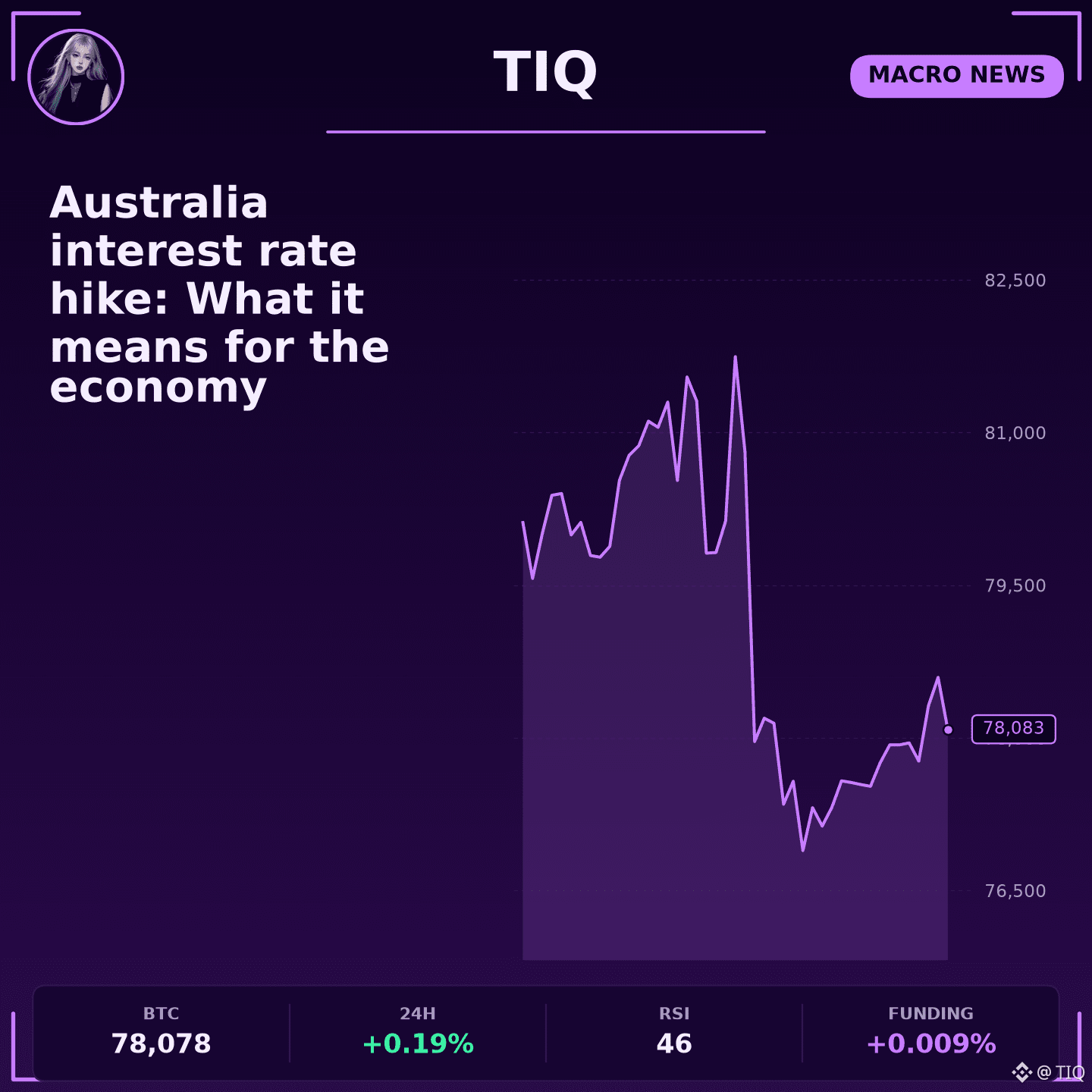
Australia interest rate hike: What it means for the economy 🚨
The Australian interest rate hike is back in the spotlight as the central bank prepares for a potential fifth increase this Tuesday.
Economists are warning that the country faces a sharper and longer economic slowdown than previously expected. This pressure comes from a mix of falling house prices and ongoing geopolitical instability in the Middle East. It seems the economy is currently trying to juggle more balls than a circus performer on a windy day. 📉
Crypto traders keep a close eye on these central bank moves because they shift global risk appetite and influence the strength of the dollar. When traditional markets tighten up, it often changes how liquidity flows across the broader financial landscape. 🌏
What do you think, fam: big deal or just noise? 👇
$SOL $BNB #Macro #MacroEconomics #InterestRates #GlobalEconomy #CryptoMarket
ℹ️ News roundup from public sources, not financial advice.
144

·
--
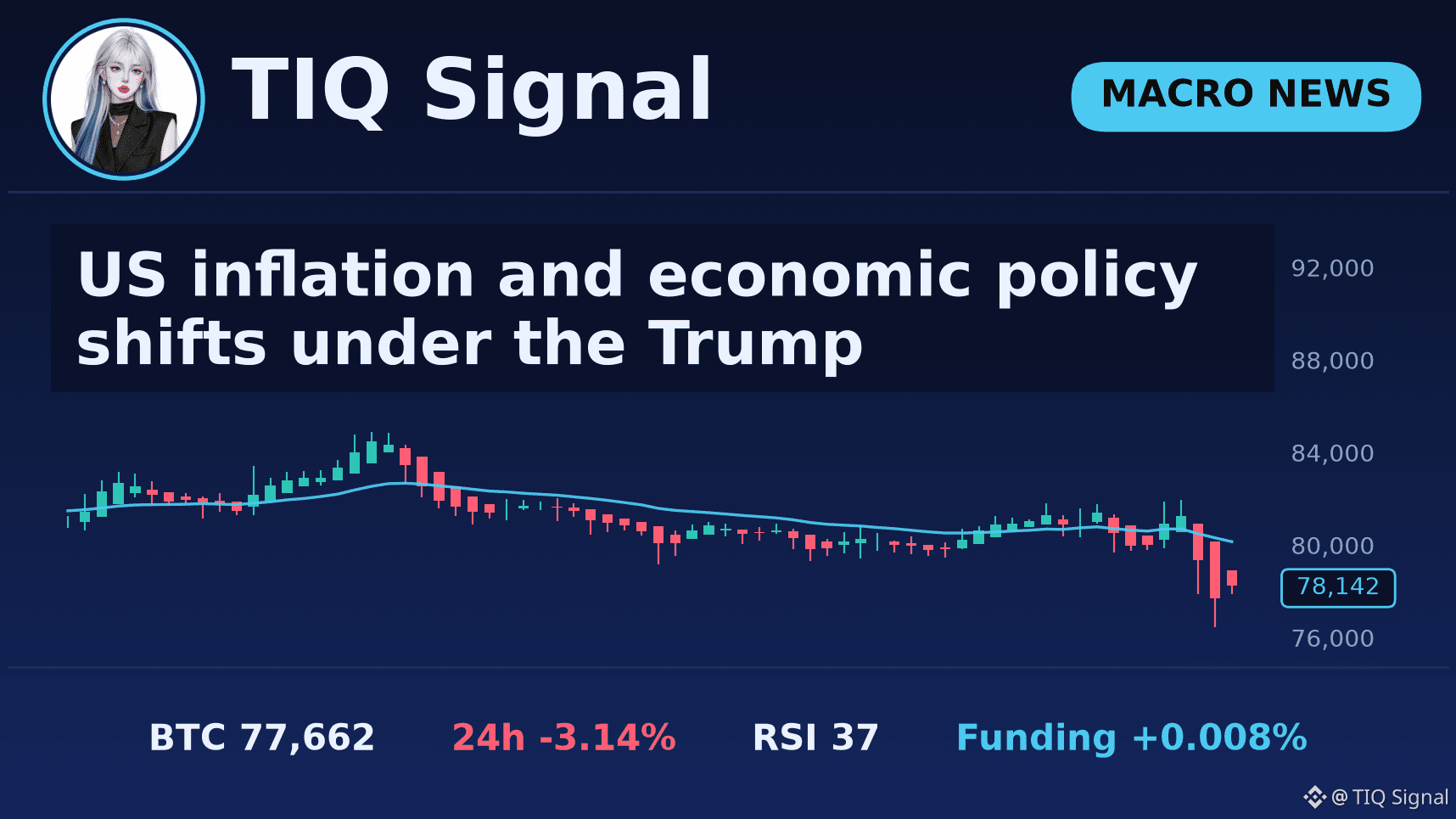
US inflation and economic policy shifts under the Trump administration 🚨
US inflation remains a hot topic as the current administration continues to implement policies that economists suggest may keep price pressures high.
Despite campaign promises to lower costs immediately, the White House has leaned heavily into tariffs. Many experts warned that these trade measures would likely drive up consumer prices rather than cool them down. It seems the strategy focuses more on protectionism than immediate relief for the average wallet, which is quite the plot twist for anyone expecting a quick fix. 📉
Crypto traders keep a close eye on these inflation trends because they directly influence interest rate decisions and overall market liquidity. When the dollar faces pressure from rising costs, many participants watch how it affects the general appetite for riskier assets.
What do you think, fam: big deal or just noise? 👇
$BNB $ETH #Macro #MacroEconomics #Inflation #Economy #CryptoNews
ℹ️ News roundup from public sources, not financial advice.
3

·
--
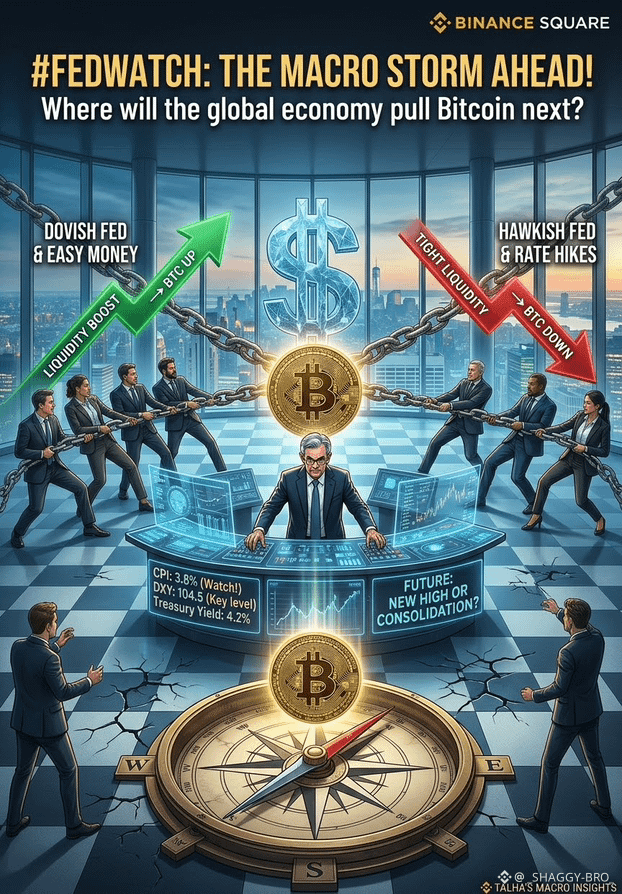
🚀 What’s Next for Crypto? The Macro Storm Ahead! 🌐 📈
As we look forward to the upcoming economic shifts, the global financial landscape is gearing up for crucial Federal Reserve decisions. The next moves by the Fed aren't just about traditional finance—they are the main catalyst driving liquidity across risk assets and Bitcoin ($BTC).
🔮 What to expect moving forward?
▫️Liquidity Shifts: If economic data forces the Fed to pivot towards easing, expect a massive wave of fresh capital flowing back into crypto.
▫️The Inflation Battle: Persistent inflation numbers could keep rates higher for longer, testing diamond hands and creating short-term market consolidation.
▫️Whale & Institutional Moves: Smart money is already positioning ahead of time, watching Treasury yields and DXY closely to time the next macro breakout.
💡 Pro Tip for Traders: Don't get caught off guard by sudden volatility spikes. Keep an eye on macro calendar events, manage your leverage smartly, and build your positions around strong support zones rather than FOMO.
#FedWatch #CryptoTrading #Macroeconomics #BinanceSquare $BTC
🚀 What’s Next for Crypto? The Macro Storm Ahead! 🌐 📈
As we look forward to the upcoming economic shifts, the global financial landscape is gearing up for crucial Federal Reserve decisions. The next moves by the Fed aren't just about traditional finance—they are the main catalyst driving liquidity across risk assets and Bitcoin ($BTC ).
🔮 What to expect moving forward?
▫️Liquidity Shifts: If economic data forces the Fed to pivot towards easing, expect a massive wave of fresh capital flowing back into crypto.
▫️The Inflation Battle: Persistent inflation numbers could keep rates higher for longer, testing diamond hands and creating short-term market consolidation.
▫️Whale & Institutional Moves: Smart money is already positioning ahead of time, watching Treasury yields and DXY closely to time the next macro breakout.
💡 Pro Tip for Traders: Don't get caught off guard by sudden volatility spikes. Keep an eye on macro calendar events, manage your leverage smartly, and build your positions around strong support zones rather than FOMO.
#FedWatch #CryptoTrading #Macroeconomics #BinanceSquare $BTC
1
1
2
171

·
--
ສັນຍານກະທິງ
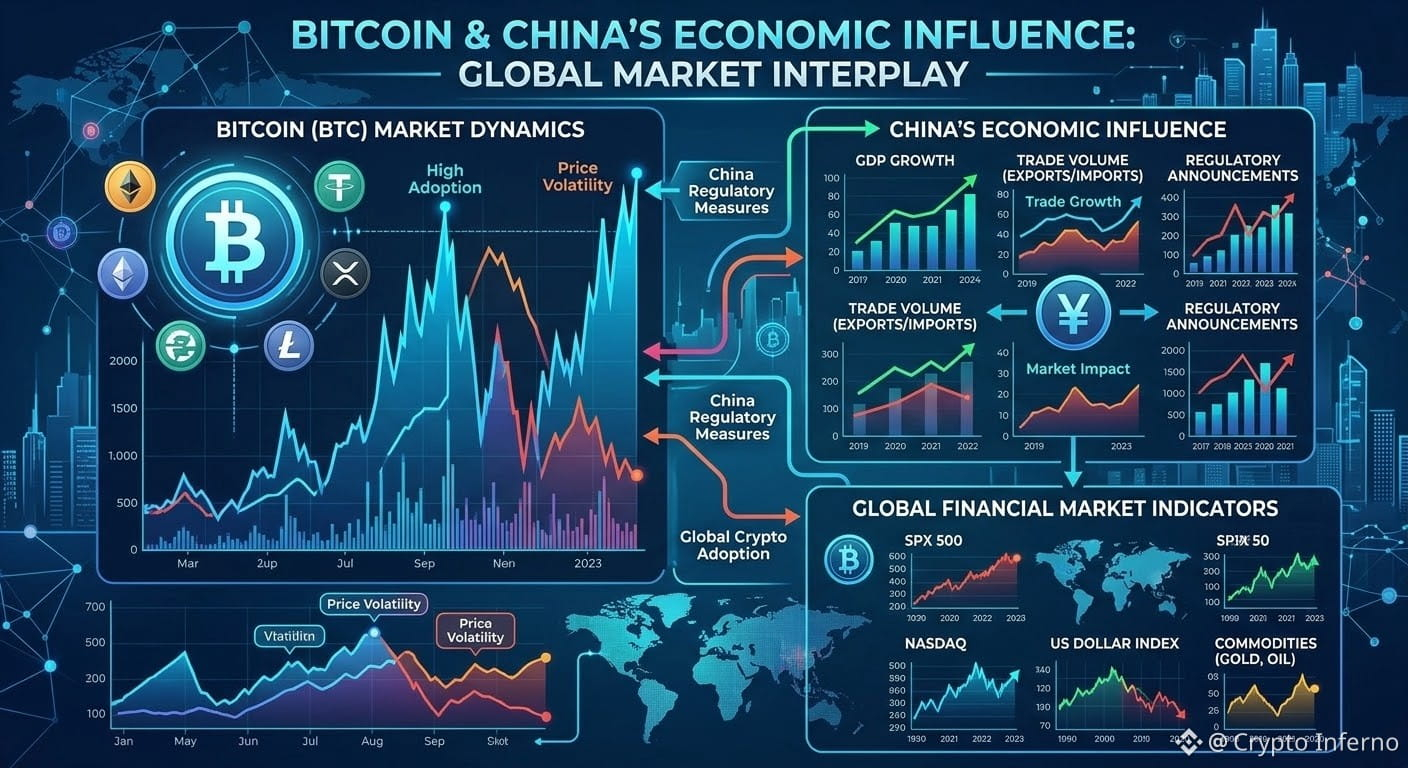
🚨 A $2.4 TRILLION CHINA SHOCK COULD SHAKE TO HIT BITCOIN! 🇨🇳₿
The crypto market may be facing a major macroeconomic turning point.
China’s economic and financial decisions can influence global liquidity, investor sentiment, and risk appetite — all of which can impact Bitcoin and the broader crypto market.
📉 The bearish scenario: If financial stress triggers a global risk-off move, investors could pull capital from volatile assets like Bitcoin.
📈 The bullish scenario: If uncertainty leads to stimulus measures or improved global liquidity, Bitcoin could eventually benefit.
⚡ What should Bitcoin investors watch?
Global liquidity and interest-rate expectations
China’s economic policy and financial developments
Bitcoin price action and key support levels
Institutional flows and overall market sentiment
Remember: Headlines create volatility, but they don't guarantee direction. Don't trade on fear or hype alone — follow the data, manage risk, and stay prepared for both scenarios.
💬 Your take: Will this China shock push Bitcoin lower, or could it trigger the next major BTC rally?
#Bitcoin #BTC #CryptoNews #ChinaEconomy #CryptoMarket #BitcoinNews #MacroEconomics
54

·
--
ສັນຍານໝີ
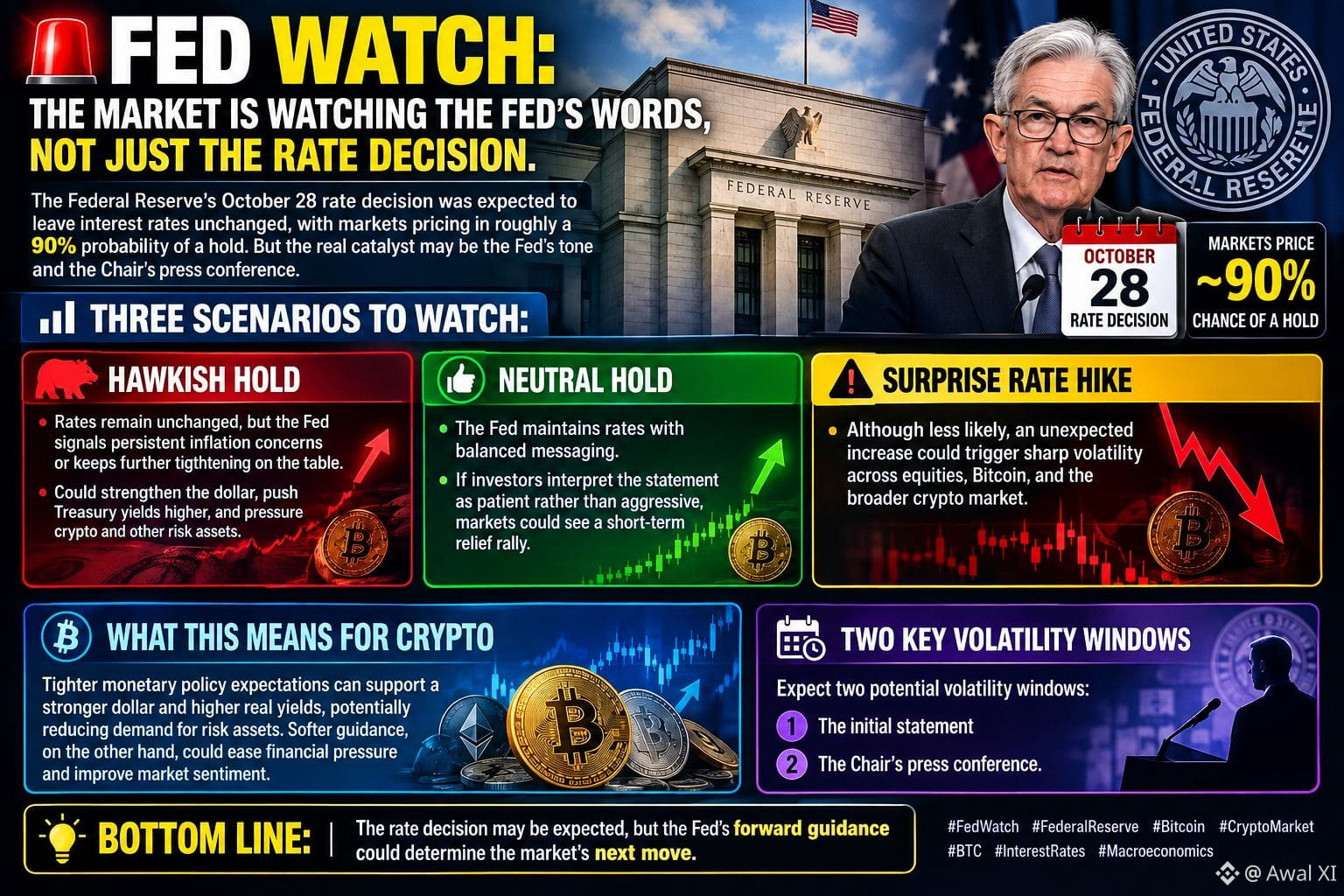
🚨 **FED WATCH: THE MARKET IS WATCHING THE FED’S WORDS, NOT JUST THE RATE DECISION.**
The Federal Reserve’s October 28 rate decision was expected to leave interest rates unchanged, with markets pricing in roughly a 90% probability of a hold. But the real catalyst may be the Fed’s tone and the Chair’s press conference.
📊 **Three Scenarios to Watch:**
🔴 **Hawkish Hold:** Rates remain unchanged, but the Fed signals persistent inflation concerns or keeps further tightening on the table. This could strengthen the dollar, push Treasury yields higher, and pressure crypto and other risk assets.
🟢 **Neutral Hold:** The Fed maintains rates with balanced messaging. If investors interpret the statement as patient rather than aggressive, markets could see a short-term relief rally.
⚠️ **Surprise Rate Hike:** Although less likely, an unexpected increase could trigger sharp volatility across equities, Bitcoin, and the broader crypto market.
₿ **What This Means for Crypto**
Tighter monetary policy expectations can support a stronger dollar and higher real yields, potentially reducing demand for risk assets. Softer guidance, on the other hand, could ease financial pressure and improve market sentiment.
With a rate hold largely priced in, the bigger question is what the Fed signals about December and its policy direction into 2027.
📉 **Expect two potential volatility windows:** the initial statement and the Chair’s press conference.
**Bottom line:** The rate decision may be expected, but the Fed’s forward guidance could determine the market’s next move.
#FedWatch #FederalReserve #bitcoin #CryptoMarket $BTC
{spot}(BTCUSDT)
{spot}(ETHUSDT)
#MacroEconomics
{spot}(BNBUSDT)
🚨 **FED WATCH: THE MARKET IS WATCHING THE FED’S WORDS, NOT JUST THE RATE DECISION.**
The Federal Reserve’s October 28 rate decision was expected to leave interest rates unchanged, with markets pricing in roughly a 90% probability of a hold. But the real catalyst may be the Fed’s tone and the Chair’s press conference.
📊 **Three Scenarios to Watch:**
🔴 **Hawkish Hold:** Rates remain unchanged, but the Fed signals persistent inflation concerns or keeps further tightening on the table. This could strengthen the dollar, push Treasury yields higher, and pressure crypto and other risk assets.
🟢 **Neutral Hold:** The Fed maintains rates with balanced messaging. If investors interpret the statement as patient rather than aggressive, markets could see a short-term relief rally.
⚠️ **Surprise Rate Hike:** Although less likely, an unexpected increase could trigger sharp volatility across equities, Bitcoin, and the broader crypto market.
₿ **What This Means for Crypto**
Tighter monetary policy expectations can support a stronger dollar and higher real yields, potentially reducing demand for risk assets. Softer guidance, on the other hand, could ease financial pressure and improve market sentiment.
With a rate hold largely priced in, the bigger question is what the Fed signals about December and its policy direction into 2027.
📉 **Expect two potential volatility windows:** the initial statement and the Chair’s press conference.
**Bottom line:** The rate decision may be expected, but the Fed’s forward guidance could determine the market’s next move.
#FedWatch #FederalReserve #bitcoin #CryptoMarket $BTC
#MacroEconomics
82

·
--
澳大利亚统计局刚公布了最新的通胀数据,9月未经季调的CPI年率录得4.3%,明显高于市场预期的4.1%以及前值的4.0%。同时,第三季度CPI季率也攀升至1.3%,远超上一季度的0.6%,各项通胀指标全面超出预期。
这份通胀数据之所以关键,是因为它直接打破了市场对澳洲通胀稳步降温的预期。物价回升意味着当地通胀韧性极强,也让澳洲联储在未来的货币政策抉择上面临更大的加息或推迟降息的压力。
在宏观金融市场上,强劲的通胀数据通常会推高当地国债收益率,并为本币提供短期支撑。与此同时,这也反映出全球部分地区的抗通胀进程并不平坦,高利率环境可能需要维持更长时间,从而令风险资产整体承压。
对加密市场而言,全球主要经济体通胀反复可能会抑制整体的流动性预期。投资者目前在等待宏观情绪的进一步明朗,短期内以观望为主,资金面的松紧仍是左右行情节奏的关键因素。 #Inflation #MacroEconomics #Australia
54

ບົດຄວາມ
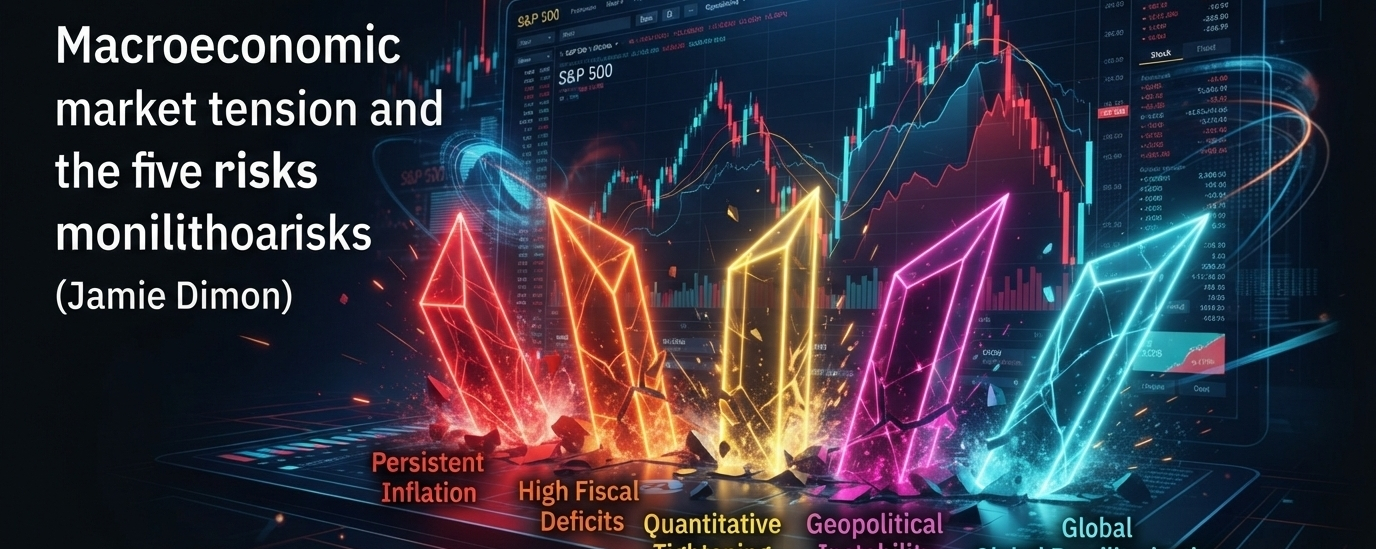
🚨 Jamie Dimon Warns: 5 Massive Risks Threatening US Stocks and BondsWhile the US economy shows near-term resilience, JPMorgan Chase CEO Jamie Dimon is advising market participants to look beyond the immediate horizon. With Wall Street fixed on the Federal Reserve’s upcoming interest rate decisions, Dimon has pointed to five structural headwinds that could introduce significant volatility to both equity and fixed-income markets.
Understanding these broader macroeconomic shifts is crucial for managing risk across all asset classes, including digital assets:
Persistent Inflationary Pressures: Core inflation may remain structurally sticky, potentially forcing central banks to keep benchmark interest rates higher for longer than current market models project.Elevated Fiscal Deficits: Sustained government spending and an expanding national debt load continue to place long-term structural strain on the broader economy.Quantitative Tightening (QT): The steady reduction of central bank balance sheets systematically drains liquidity from the financial system, which can crimp capital flows.Geopolitical Instability: Escalating international conflicts and evolving trade fragmentations introduce unpredictable operational risks for global markets.Global Remilitarization: A worldwide pivot toward higher defense expenditures risks distorting traditional fiscal priorities and altering capital allocation patterns.
The Crypto Impact:
Macro shifts driven by institutional banking frameworks heavily influence the global liquidity cycle. When traditional stocks and bonds experience margin compression or rising yields, capital flows inevitably adapt—directly impacting the risk appetite within the digital asset ecosystem.
How are you adjusting your portfolio to manage these broader macroeconomic risks? Let's discuss in the comments below.
NFA
#Macroeconomics #JPMorgan #FinanceNews #MarketAnalysis #CryptoLiquidity
🚨 Jamie Dimon Warns: 5 Massive Risks Threatening US Stocks and Bonds
While the US economy shows near-term resilience, JPMorgan Chase CEO Jamie Dimon is advising market participants to look beyond the immediate horizon. With Wall Street fixed on the Federal Reserve’s upcoming interest rate decisions, Dimon has pointed to five structural headwinds that could introduce significant volatility to both equity and fixed-income markets.
Understanding these broader macroeconomic shifts is crucial for managing risk across all asset classes, including digital assets:
Persistent Inflationary Pressures: Core inflation may remain structurally sticky, potentially forcing central banks to keep benchmark interest rates higher for longer than current market models project.Elevated Fiscal Deficits: Sustained government spending and an expanding national debt load continue to place long-term structural strain on the broader economy.Quantitative Tightening (QT): The steady reduction of central bank balance sheets systematically drains liquidity from the financial system, which can crimp capital flows.Geopolitical Instability: Escalating international conflicts and evolving trade fragmentations introduce unpredictable operational risks for global markets.Global Remilitarization: A worldwide pivot toward higher defense expenditures risks distorting traditional fiscal priorities and altering capital allocation patterns.
The Crypto Impact:
Macro shifts driven by institutional banking frameworks heavily influence the global liquidity cycle. When traditional stocks and bonds experience margin compression or rising yields, capital flows inevitably adapt—directly impacting the risk appetite within the digital asset ecosystem.
How are you adjusting your portfolio to manage these broader macroeconomic risks? Let's discuss in the comments below.
NFA
#Macroeconomics #JPMorgan #FinanceNews #MarketAnalysis #CryptoLiquidity

JOIN & SHARE 📊🤝
ຈາກ Crypto__Today
1
5
298

·
--
日本央行(BOJ)于周二正式发布了最新物价趋势指标报告。数据显示,9月份剔除生鲜食品及特殊因素后的潜在通胀指标同比大幅攀升至3.2%,较前月的2.6%显著加速,创下过去三年以来的最高水平。日本央行此前在9月已将基准利率上调至1.25%,创下自1990年以来的最大加息幅度,本次数据的强劲表现直接坐实了日本国内通胀压力的全面扩散。
这一超预期数据之所以至关重要,在于它无可辩驳地表明日本的核心通胀已站稳并大幅偏离2%的长期目标。尽管主流市场仍预期日本央行在本周五的货币政策会议上将暂缓行动,但叠加中东局势推高服务业生产者物价的现实,潜在通胀达标的官方定调已箭在弦上,这使得未来几个月内再度启动加息的概率骤然升温。
在传统宏观金融层面,日本央行持续鹰派转向正在对全球资本流动产生深远冲击。日元融资成本的实质性抬升将持续加速全球“日元套息交易”(Yen Carry Trade)的清算进程,低成本日元杠杆资金的大规模撤出,极易推升全球主权债券收益率并加剧国际金融市场的流动性脆弱性。
对于加密资产市场而言,全球无风险利率抬升与套息资金撤退无疑是沉重的逆风。随着宏观流动性环境趋向紧缩,以 $BTC 为首的风险资产面临估值承压与流动性抽离的双重考验,在当前复杂的地缘与货币紧缩共振期,投资者理应保持高度谨慎并警惕潜在的深度下行风险。📉
#BOJ #Inflation #InterestRates #MacroEconomics
142

Мировой топливный кризис и крипта: Враг или скрытый двигатель цифровых активов?Связь между нефтяными котировками, стоимостью энергоносителей и криптовалютным рынком на первый взгляд кажется неочевидной. Однако в современной макроэкономике топливный кризис оказывает на криптоиндустрию прямым и косвенным образом гигантское влияние.
Разбираемся, как скачки цен на нефть и газ меняют правила игры для трейдеров, майнеров и инвесторов 👇
1. Макроэкономика: Топливо ➔ Инфляция ➔ Решения ФРС
Главный канал влияния топливного кризиса на крипту лежит через макроэкономику и денежно-кредитную политику:
Всплеск инфляции: Рост цен на бензин, дизель и газ моментально удорожает логистику, производство и продукты питания.Давление на центробанки: Высокая инфляция связывает руки ФРС США и другим регуляторам — они вынуждены удерживать процентные ставки высокими или медленнее их снижать.Удар по Liquidity & Risk-On: Высокие ставки делают кредиты и деньги «дорогими». В такие периоды инвесторы выходят из рисковых активов (акций и альткоинов) в безопасный кэш или облигации. Биткоин в моменте часто реагирует просадкой.
2. Майнинг биткоина: Стресс-тест для хэшрейта
Электричество — ключевой ресурс для поддержания сети Proof-of-Work (PoW).
Удар по маржинальности: Топливный кризис ведет к удорожанию генерации электроэнергии (особенно в регионах, где используется газ или уголь). Для майнеров с высокой себестоимостью добычи это означает убытки.Капитуляция слабых игроков: Часть майнеров вынуждена продавать свои запасы $BTC, чтобы покрывать текущие расходы, создавая давление продаж на спотовом рынке.Конкуренция с AI: Из-за дорогой энергии крупные дата-центры майнеров все чаще перепрофилируют свои мощности под ИИ (Artificial Intelligence / HPC), что снижает прирост хэшрейта.
3. Бычий сценарий: Крипта как защитный актив
Несмотря на короткосрочный негатив, в долгосрочной перспективе топливный кризис подсвечивает проблемы фиатной системы:
Обесценивание национальных валют: Страны, зависящие от импорта топлива, столкнутся с девальвацией и гиперинфляцией. В таких регионах стремительно растет спрос на биткоин и стейблкоины ($USDT) как инструмент сбережения.Переход на возобновляемую энергетику: Майнеры первыми мигрируют на ГЭС, солнечную и геотермальную энергию, чтобы обезопасить себя от колебаний цен на ископаемое топливо.
💡 Итог от Global Crypto Hub: В короткой перспективе топливный кризис — это тормоз для крипты из-за угрозы инфляции и высокой процентной ставки. Однако в долгосроке он лишь ускоряет глобальный переход к децентрализованным финансам и энергоэффективным технологиям.
👇 А как вы защищаете депозит во время глобальных макро-кризисов?
👍 — Пережидаю в стейблкоинах ($USDT/USDC)🚀 — Покупаю $BTC на проливах, фундамент силен!
#GlobalCryptoHub #MacroEconomics #bitcoin #CryptoNews #Write2Earn #BinanceSquare
$TRUMP
{future}(TRUMPUSDT)
$BTTC
{spot}(BTTCUSDT)
Мировой топливный кризис и крипта: Враг или скрытый двигатель цифровых активов?
Связь между нефтяными котировками, стоимостью энергоносителей и криптовалютным рынком на первый взгляд кажется неочевидной. Однако в современной макроэкономике топливный кризис оказывает на криптоиндустрию прямым и косвенным образом гигантское влияние.
Разбираемся, как скачки цен на нефть и газ меняют правила игры для трейдеров, майнеров и инвесторов 👇
1. Макроэкономика: Топливо ➔ Инфляция ➔ Решения ФРС
Главный канал влияния топливного кризиса на крипту лежит через макроэкономику и денежно-кредитную политику:
Всплеск инфляции: Рост цен на бензин, дизель и газ моментально удорожает логистику, производство и продукты питания.Давление на центробанки: Высокая инфляция связывает руки ФРС США и другим регуляторам — они вынуждены удерживать процентные ставки высокими или медленнее их снижать.Удар по Liquidity & Risk-On: Высокие ставки делают кредиты и деньги «дорогими». В такие периоды инвесторы выходят из рисковых активов (акций и альткоинов) в безопасный кэш или облигации. Биткоин в моменте часто реагирует просадкой.
2. Майнинг биткоина: Стресс-тест для хэшрейта
Электричество — ключевой ресурс для поддержания сети Proof-of-Work (PoW).
Удар по маржинальности: Топливный кризис ведет к удорожанию генерации электроэнергии (особенно в регионах, где используется газ или уголь). Для майнеров с высокой себестоимостью добычи это означает убытки.Капитуляция слабых игроков: Часть майнеров вынуждена продавать свои запасы $BTC , чтобы покрывать текущие расходы, создавая давление продаж на спотовом рынке.Конкуренция с AI: Из-за дорогой энергии крупные дата-центры майнеров все чаще перепрофилируют свои мощности под ИИ (Artificial Intelligence / HPC), что снижает прирост хэшрейта.
3. Бычий сценарий: Крипта как защитный актив
Несмотря на короткосрочный негатив, в долгосрочной перспективе топливный кризис подсвечивает проблемы фиатной системы:
Обесценивание национальных валют: Страны, зависящие от импорта топлива, столкнутся с девальвацией и гиперинфляцией. В таких регионах стремительно растет спрос на биткоин и стейблкоины ($USDT) как инструмент сбережения.Переход на возобновляемую энергетику: Майнеры первыми мигрируют на ГЭС, солнечную и геотермальную энергию, чтобы обезопасить себя от колебаний цен на ископаемое топливо.
💡 Итог от Global Crypto Hub: В короткой перспективе топливный кризис — это тормоз для крипты из-за угрозы инфляции и высокой процентной ставки. Однако в долгосроке он лишь ускоряет глобальный переход к децентрализованным финансам и энергоэффективным технологиям.
👇 А как вы защищаете депозит во время глобальных макро-кризисов?
👍 — Пережидаю в стейблкоинах ($USDT/USDC)🚀 — Покупаю $BTC на проливах, фундамент силен!
#GlobalCryptoHub #MacroEconomics #bitcoin #CryptoNews #Write2Earn #BinanceSquare
$TRUMP
$BTTC
1
67
·
--
韩国央行于周二发布了第三季度初步经济增长数据,显示该季度国内生产总值(GDP)环比增长1.0%,显著高于市场此前预期的0.7%。这一增长主要受到全球人工智能(AI)热潮驱动,带动半导体及相关电气设备出口增长2.3%,同时芯片制造设备投资激增4.1%。然而,亮眼数据背后呈现出极度不均衡的复苏特征,私人消费实际上环比萎缩了0.2%。
从宏观结构来看,这并非一场广泛而健康的内生性繁荣,而是严重依赖单一外部科技周期的结构性反弹。尽管公共支出增长1.9%对增长有所支撑,但家庭部门在商品与服务上的支出削减,反映出高利率环境下的内需疲软。更令人担忧的是,首尔地区房价飙升与家庭债务高企构成了双重金融稳定风险,极大压缩了央行后续宽松政策的操作空间。
在传统金融市场上,这种“强出口、弱内需”的脱节组合可能迫使韩国央行维持偏紧的货币立场以遏制资产泡沫,进而推高本币债券收益率并压制风险溢价。若未来全球AI基础设施资本开支出现阶段性降温,高度集中于半导体出口的经济体将面临巨大的估值重估压力。
对于加密货币市场而言,外部强周期驱动的增长并不能有效转化为零售端充裕的流动性,韩国本土强劲的投机资金在内需萎缩和债务压力下难以持续扩张。投资者应警惕宏观基本面脆弱性带来的连锁反应,特别是在全球风险偏好收紧时,$BTC 等风险资产可能难以从局部的产业利好中获得长期支撑。
#SouthKorea #MacroEconomics #GlobalEconomy
7
·
--
根据芝加哥商品交易所(CME)美联储观察工具最新数据显示,市场目前预计美联储在本周会议上按兵不动的概率高达89.5%,而加息25个基点的概率仅为10.5%。然而,对于12月的政策路径,市场预期出现明显转向,累计加息25个基点的概率升至73.9%,加息50个基点的概率为8.4%,维持现有利率不变的概率仅剩17.7%。
这一数据反映出市场对短期政策暂停与年底紧缩重启的分歧加剧。尽管短期内政策维持现状几成定局,但年末加息预期的攀升表明,通胀粘性与经济韧性依然令决策层保持警惕。这种预期差打破了此前关于政策转向宽松的过度乐观情绪,为后续资产定价带来更多不确定性。
在宏观金融市场层面,年底加息预期的抬头将对美债收益率与美元指数形成有力支撑。随着市场逐步消化更高且更持久的终端利率,全球风险资产的估值扩张空间将受到直接压制。流动性环境的潜在收紧,也使传统资本市场在年底前面临更大的波动与回调压力。
对于加密资产而言,紧缩预期重燃往往意味着风险溢价上升与增量资金流入放缓。若年底加息预期进一步固化,$BTC 等主流资产短期内恐难获得充足的流动性推动,市场情绪可能从盲目乐观转向防御观望。投资者需警惕宏观政策预期反复所引发的流动性挤压风险。🏛️
#Fed #InterestRates #MacroEconomics
4

在最新交易日收盘时,原油价格出现显著回落,单日下跌1.51美元,跌幅达1.46%,最终报收于每桶101.76美元。盘面呈现出明显的短线高位承压态势,多头在关键整数关口附近遭遇抛压。
从宏观技术面来看,原油作为通胀预期的核心锚定指标,其跌破局部支撑位有助于快速缓解中长期通胀压力。此前市场对能源端粘性通胀的过度担忧,随着价格的技术性回调开始逐步被消化。
大宗商品价格走弱直接带动美债收益率与美元指数从局部高点回落,金融市场的流动性约束出现边际放松。避险情绪降温促使风险偏好快速修复,为各类风险资产的估值修复打开了空间。
对于加密市场而言,宏观流动性环境改善构成直接利好,资金有望从能源避险品种回流至高弹性资产。$BTC 与主流山寨币在流动性转暖的预期下,有望迎来新一轮蓄势向上突破的机会。
#CrudeOil #MacroEconomics #CryptoMarket
从宏观技术面来看,原油作为通胀预期的核心锚定指标,其跌破局部支撑位有助于快速缓解中长期通胀压力。此前市场对能源端粘性通胀的过度担忧,随着价格的技术性回调开始逐步被消化。
大宗商品价格走弱直接带动美债收益率与美元指数从局部高点回落,金融市场的流动性约束出现边际放松。避险情绪降温促使风险偏好快速修复,为各类风险资产的估值修复打开了空间。
对于加密市场而言,宏观流动性环境改善构成直接利好,资金有望从能源避险品种回流至高弹性资产。$BTC 与主流山寨币在流动性转暖的预期下,有望迎来新一轮蓄势向上突破的机会。
#CrudeOil #MacroEconomics #CryptoMarket
339

·
--
ສັນຍານກະທິງ
🚨 CALENDÁRIO ECONÔMICO MACRO: A SEMANA QUE PODE DEFINIR O RUMO DO BITCOIN E DO MERCADO CRIPTO! 🚀📊
Se você busca análise verídica e sem ilusionismo, precisa acompanhar o que vai mover os grandes players institucionais nos próximos dias. A semana de 26 a 30 de outubro será carregada de decisões de taxas de juros e dados de inflação globais que impactam a liquidez do mercado!
📌 OS DIAS MAIS CRÍTICOS DA SEMANA:
🔹 Terça-feira (27/10): IPC do Japão, relatório de emprego (ADP) e Confiança do Consumidor nos EUA. 🔹 Quarta-feira (28/10) — O DIA D: Decisão de taxa de juros do Federal Reserve (Fed) nos EUA e do Banco do Canadá, seguidas pela conferência do Fed. É aqui que a volatilidade costuma explodir no Bitcoin e nas altcoins! 🔹 Quinta-feira (29/10): PIB preliminar dos EUA, inflação PCE dos EUA e reuniões de política monetária do BCE e do Banco do Japão (BoJ). 🔹 Sexta-feira (30/10): Inflação na Alemanha, PIB da UE, custo de emprego nos EUA e PMIs da China.
💡 ANÁLISE ALEXANDRE 8: Decisões de juros e dados de inflação nos EUA e Europa ditam se o capital institucional vai migrar para ativos de risco (como BTC e altcoins de forte narrativa, como IA e DeFi) ou buscar proteção em stablecoins e títulos. Manter a disciplina e a gestão de risco nessa semana de alta volatilidade é essencial para proteger seu patrimônio (DYOR)!
📌 Quer continuar acompanhando o caminho do dinheiro real todos os dias? Siga o perfil para análises verídicas e atualizadas!
$BTC
{spot}(BTCUSDT)
👇 Você acha que a decisão do Fed nesta quarta-feira vai impulsionar o mercado cripto para cima ou trazer correção? Deixe sua visão nos comentários! 👇💬
#Write2Earn
#BinanceSquare
#CryptoAnalysis
#Bitcoin
#Macroeconomics
🚨 CALENDÁRIO ECONÔMICO MACRO: A SEMANA QUE PODE DEFINIR O RUMO DO BITCOIN E DO MERCADO CRIPTO! 🚀📊
Se você busca análise verídica e sem ilusionismo, precisa acompanhar o que vai mover os grandes players institucionais nos próximos dias. A semana de 26 a 30 de outubro será carregada de decisões de taxas de juros e dados de inflação globais que impactam a liquidez do mercado!
📌 OS DIAS MAIS CRÍTICOS DA SEMANA:
🔹 Terça-feira (27/10): IPC do Japão, relatório de emprego (ADP) e Confiança do Consumidor nos EUA. 🔹 Quarta-feira (28/10) — O DIA D: Decisão de taxa de juros do Federal Reserve (Fed) nos EUA e do Banco do Canadá, seguidas pela conferência do Fed. É aqui que a volatilidade costuma explodir no Bitcoin e nas altcoins! 🔹 Quinta-feira (29/10): PIB preliminar dos EUA, inflação PCE dos EUA e reuniões de política monetária do BCE e do Banco do Japão (BoJ). 🔹 Sexta-feira (30/10): Inflação na Alemanha, PIB da UE, custo de emprego nos EUA e PMIs da China.
💡 ANÁLISE ALEXANDRE 8: Decisões de juros e dados de inflação nos EUA e Europa ditam se o capital institucional vai migrar para ativos de risco (como BTC e altcoins de forte narrativa, como IA e DeFi) ou buscar proteção em stablecoins e títulos. Manter a disciplina e a gestão de risco nessa semana de alta volatilidade é essencial para proteger seu patrimônio (DYOR)!
📌 Quer continuar acompanhando o caminho do dinheiro real todos os dias? Siga o perfil para análises verídicas e atualizadas!
$BTC
👇 Você acha que a decisão do Fed nesta quarta-feira vai impulsionar o mercado cripto para cima ou trazer correção? Deixe sua visão nos comentários! 👇💬
#Write2Earn
#BinanceSquare
#CryptoAnalysis
#Bitcoin
#Macroeconomics

1
137

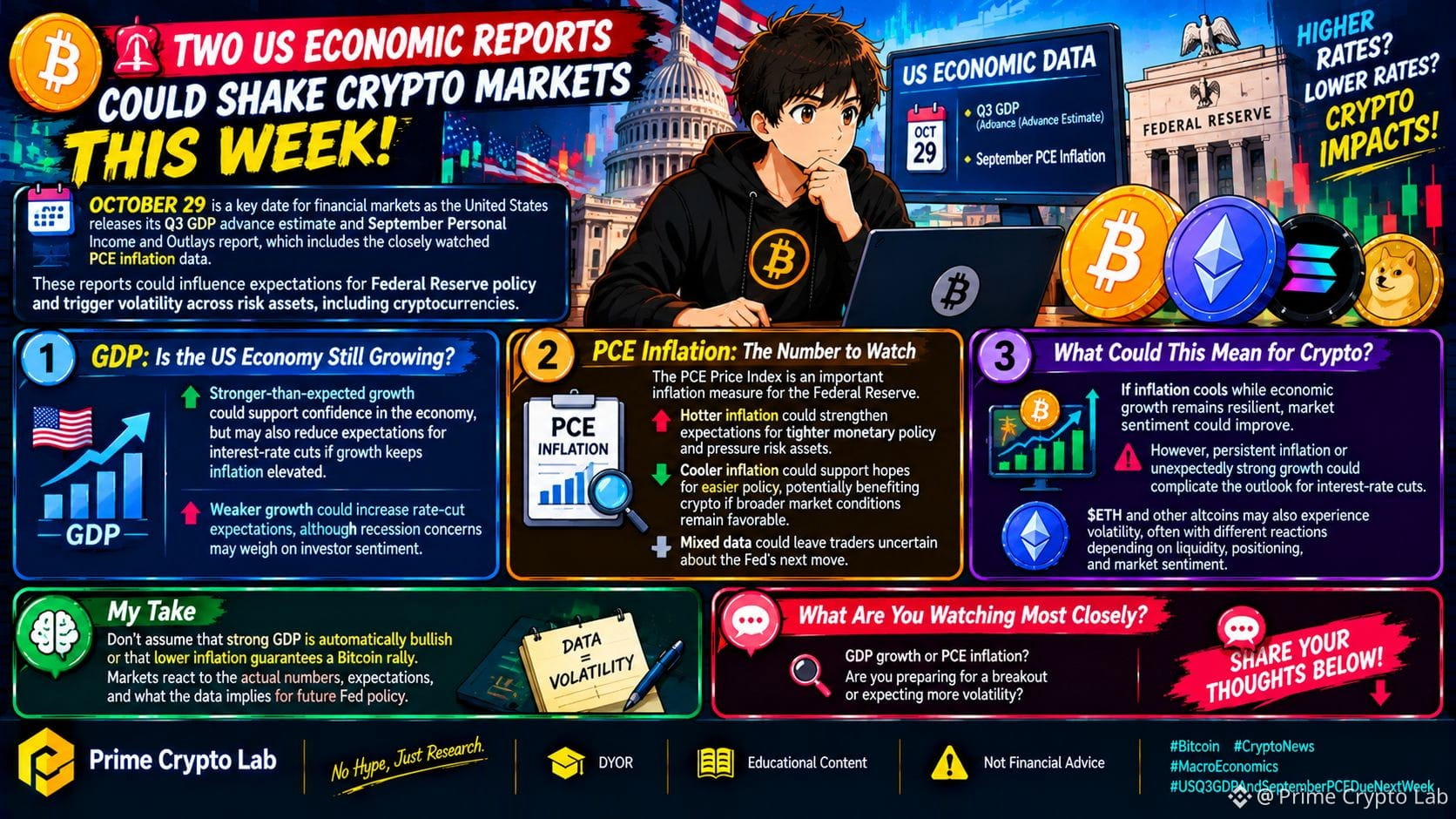
🚨 $BTC | Two US Economic Reports Could Shake Crypto Markets This Week!
📊 October 29 is a key date for financial markets as the United States releases its Q3 GDP advance estimate and September Personal Income and Outlays report, which includes the closely watched PCE inflation data.
These reports could influence expectations for Federal Reserve policy and trigger volatility across risk assets, including cryptocurrencies.
🇺🇸 1. GDP: Is the US Economy Still Growing?
Stronger-than-expected economic growth could support confidence in the economy, but it may also reduce expectations for interest-rate cuts if growth keeps inflation elevated. Weaker growth could increase rate-cut expectations, although recession concerns may weigh on investor sentiment.
🔥 2. PCE Inflation: The Number to Watch
The PCE Price Index is an important inflation measure for the Federal Reserve.
• Hotter inflation could strengthen expectations for tighter monetary policy and pressure risk assets.
• Cooler inflation could support hopes for easier policy, potentially benefiting crypto if broader market conditions remain favorable.
• Mixed data could leave traders uncertain about the Fed's next move.
📈 3. What Could This Mean for Crypto?
If inflation cools while economic growth remains resilient, market sentiment could improve. However, persistent inflation or unexpectedly strong growth could complicate the outlook for interest-rate cuts.
$ETH and other altcoins may also experience volatility, often with different reactions depending on liquidity, positioning, and market sentiment.
🧠 My Take: Don't assume that strong GDP is automatically bullish or that lower inflation guarantees a Bitcoin rally. Markets react to the actual numbers, expectations, and what the data implies for future Fed policy.
👀 What are you watching most closely: GDP growth or PCE inflation? Are you preparing for a breakout or expecting more volatility?
⚠️ Not financial advice. Always do your own research.
#Bitcoin #CryptoNewss #MacroEconomics #USQ3GDPAndSeptemberPCEDueNextWeek
92
·
--
标普全球(S&P Global)在10月公布了美国最新的采购经理人指数(PMI)初值报告。数据显示,美国10月制造业PMI初值录得56,不仅高于市场预期的55.5及前值的55.9,更是一举刷新了近53个月以来的最高纪录;与此同时,服务业PMI初值录得57.9,略低于预期的58.0,综合PMI初值最终收在57.6。📊
制造业活动的大幅反弹反映出实体生产端展现出超出预期的韧性,在连续多个月后重回强劲扩张区间。不过服务业小幅放缓与综合PMI较上月回落的表现,也说明整体经济动能存在结构性分化,市场对于经济过热还是温和着陆的讨论仍在继续。
宏观金融市场方面,强劲的制造业数据并未能完全提振权益市场情绪,标普500指数与纳斯达克指数盘中分别录得0.4%与0.2%的跌幅,双双触及近5周以来的低位。而在前期大跌6.7%后,费城半导体指数小幅反弹0.5%,整体资产价格依然在经济韧性与流动性预期的拉锯中反复博弈。
对加密市场来说,制造业回暖在降低经济衰退担忧的同时,也让市场对宏观政策大幅转宽的预期保持克制。当前资金整体偏向理性观望,$BTC 等主流资产短期内仍更倾向于跟随大盘流动性偏好维持宽幅震荡,静待后续核心通胀与就业数据的进一步指引。
#USPMI #MacroEconomics #CryptoMarket
60
·
--
标普全球今日公布了美国10月份采购经理人指数(PMI)初值数据。其中,美国10月制造业PMI初值录得56,显著高于市场预期的55.5以及前值55.9,一举创下近53个月以来的最高水平;服务业PMI初值则录得57.9,虽微幅低于预期的58.0与前值58.8,但综合PMI依然录得57.6的高位扩张区间。
制造业活动的大幅反弹反映出美国实体经济仍具强劲韧性,但也进一步固化了通胀粘性预期。在近期通胀隐忧未退的背景下,超预期的强劲产出数据直接削弱了市场对货币政策快速转向宽松的押注,令降息交易面临重新定价的严峻考验。
受此影响,传统金融市场风险偏好明显承压,美股标普500与纳斯达克指数双双滑落至近5周低点,日内分别下跌0.4%与0.2%。与此同时,美元指数与美债收益率在经济韧性支撑下保持高位运行,对风险资产的估值构成持续压制。
对于加密市场而言,宏观流动性环境在短期内难以出现实质性宽松,资金对高波动资产的追逐意愿有所受挫。若经济过热驱动央行维持偏鹰基调,$BTC 恐将面临流动性收紧带来的估值回调压力,投资者需保持高度谨慎,防范二次探底风险。📉
#PMI #USMarket #MacroEconomics
40
ເຂົ້າສູ່ລະບົບເພື່ອສຳຫຼວດເນື້ອຫາເພີ່ມເຕີມ
ເຂົ້າຮ່ວມກຸ່ມຜູ້ໃຊ້ຄຣິບໂຕທົ່ວໂລກໃນ Binance Square.
⚡️ ໄດ້ຮັບຂໍ້ມູນຫຼ້າສຸດ ແລະ ທີ່ມີປະໂຫຍດກ່ຽວກັບຄຣິບໂຕ.
💬 ໄດ້ຮັບຄວາມໄວ້ວາງໃຈຈາກຕະຫຼາດແລກປ່ຽນຄຣິບໂຕທີ່ໃຫຍ່ທີ່ສຸດໃນໂລກ.
👍 ຄົ້ນຫາຂໍ້ມູນເຊີງເລິກທີ່ແທ້ຈາກນັກສ້າງທີ່ໄດ້ຮັບການຢືນຢັນ.
ອີເມວ / ເບີໂທລະສັບ
ຫົວຂໍ້ທີ່ກໍາລັງນິຍົມ
1
#BitcoinFiveWeeklyLosses
7,732 ຄັ້ງທີ່ເບິ່ງ
302 ກຳລັງສົນທະນາ
2
#AIChipSlumpNasdaq
4,477 ຄັ້ງທີ່ເບິ່ງ
162 ກຳລັງສົນທະນາ
3
#NvidiaInvestigatesAfterHuang’sAffairApology
2,468 ຄັ້ງທີ່ເບິ່ງ
77 ກຳລັງສົນທະນາ
4
#BinanceReopensWithdrawalsForHYPE&APT
157,237 ຄັ້ງທີ່ເບິ່ງ
1,235 ກຳລັງສົນທະນາ
5
#SouthKoreaDraftLawTargets15To20%ShareholderCap
158,767 ຄັ້ງທີ່ເບິ່ງ
836 ກຳລັງສົນທະນາ
6
#TradFiForBeginners
230,260 ຄັ້ງທີ່ເບິ່ງ
2,073 ກຳລັງສົນທະນາ
7
#KeplrAdvisesSocialLoginUsersToTransferAssets
74,120 ຄັ້ງທີ່ເບິ່ງ
610 ກຳລັງສົນທະນາ
8
#TetherPlans€28.8MForJuventusCapitalIncrease
55,103 ຄັ້ງທີ່ເບິ່ງ
450 ກຳລັງສົນທະນາ
9
#JobsReportRaisesHikeOdds
979,628 ຄັ້ງທີ່ເບິ່ງ
4,570 ກຳລັງສົນທະນາ
10
#CPITestsDecemberRateOutlook
442,674 ຄັ້ງທີ່ເບິ່ງ
1,993 ກຳລັງສົນທະນາ