
#algorithmictrading
algorithmictrading
34,780 ຄັ້ງທີ່ເບິ່ງ
346 ກຳລັງສົນທະນາ
ມາແຮງ
ຫຼ້າສຸດ

·
--
ບົດຄວາມ
Arquitectura Cuantitativa en Futuros: Por qué el 90% de los Bots Quiebran por 'Fee Drag' (y Cómo Diseñar Ejecución Pasiva Maker)En el ecosistema de trading algorítmico de criptoderivados, la mayoría de los desarrolladores novatos cometen el mismo error fatal: optimizan indicadores en backtests teóricos asumiendo que el broker les ejecutará las órdenes a precio perfecto y sin fricción.
La dura realidad de los mercados en vivo es implacable: más del 90% de los bots que tienen 'backtests perfectos' terminan quebrando en pocas semanas debido al enemigo silencioso: el Fee Drag y la Selección Adversa.
🔬 1. La Sangría Invisible: Taker Fee vs Maker Rebate
Cuando un bot ejecuta órdenes a mercado (Market Orders / Taker), paga las comisiones más altas del exchange (típicamente 0.05% por lado, es decir, 0.10% round-trip).
Si tu estrategia realiza 100 operaciones al mes con apalancamiento moderado, las puras comisiones devoran entre el 15% y el 30% del balance de la cuenta, sin contar el 'slippage' (deslizamiento de precio entre la señal y el fill).
En nuestro Motor Cuántico Autónomo v1.0, la regla de oro es priorizar la Ejecución Pasiva Maker (`GTX / Post-Only`):
• Coloca liquidez en el libro en lugar de consumirla.
• Reduce las comisiones a la mitad (0.02% o menos).
• Elimina por completo el slippage negativo.
🛡️ 2. El Peligro del 'Drift' y Cómo lo Mitigamos
Operar pasivamente con órdenes límite tiene un riesgo intrínseco: si el mercado acelera violentamente en tu contra, tu orden límite puede quedar desfasada o ser ejecutada justamente en el peor momento (selección adversa).
Para neutralizar esto, diseñamos un centinela de microestructura:
1. Monitoreo continuo de desfasaje: Si la distancia entre el precio de la orden y el precio de marca (`mark_price`) supera el 1.0%, se ejecuta un `CANCEL_DRIFT` atómico.
2. Auditoría del DOM (Depth of Market): Antes de re-anclar la orden, se analiza el desequilibrio entre compradores y vendedores institucionales. Si hay muros opuestos de liquidez masiva, el bot rota el slot y espera una configuración limpia.
3. Re-anclaje sub-segundo: Si la ventaja probabilística persiste, se envía una nueva orden Maker calibrada al milímetro.
📊 3. Transparencia y Gestión del Riesgo
Ningún algoritmo serio garantiza un 100% de aciertos. Como demostró nuestra reciente auditoría pública (60% Win Rate en 15 operaciones con control estricto de Stop Loss), el objetivo no es evitar las pérdidas, sino hacerlas asimétricas: cortar rápido las salidas en falso y dejar correr los beneficios mediante candados dinámicos de Break-Even y Profit Lock.
💡 Apoya el Desarrollo Cuantitativo Abierto:
Desarrollar y auditar algoritmos transparentes en servidores de baja latencia requiere infraestructura y dedicación constante. Si este contenido aporta claridad a tu visión de mercado, apóyanos enviando una propina (Tip) en Binance Square. Cada aporte impulsa el sostenimiento de nuestra flota cuántica autónoma.
#Binance #TradingCuantitativo #AlgorithmicTrading
Arquitectura Cuantitativa en Futuros: Por qué el 90% de los Bots Quiebran por 'Fee Drag' (y Cómo Diseñar Ejecución Pasiva Maker)
En el ecosistema de trading algorítmico de criptoderivados, la mayoría de los desarrolladores novatos cometen el mismo error fatal: optimizan indicadores en backtests teóricos asumiendo que el broker les ejecutará las órdenes a precio perfecto y sin fricción.
La dura realidad de los mercados en vivo es implacable: más del 90% de los bots que tienen 'backtests perfectos' terminan quebrando en pocas semanas debido al enemigo silencioso: el Fee Drag y la Selección Adversa.
🔬 1. La Sangría Invisible: Taker Fee vs Maker Rebate
Cuando un bot ejecuta órdenes a mercado (Market Orders / Taker), paga las comisiones más altas del exchange (típicamente 0.05% por lado, es decir, 0.10% round-trip).
Si tu estrategia realiza 100 operaciones al mes con apalancamiento moderado, las puras comisiones devoran entre el 15% y el 30% del balance de la cuenta, sin contar el 'slippage' (deslizamiento de precio entre la señal y el fill).
En nuestro Motor Cuántico Autónomo v1.0, la regla de oro es priorizar la Ejecución Pasiva Maker (`GTX / Post-Only`):
• Coloca liquidez en el libro en lugar de consumirla.
• Reduce las comisiones a la mitad (0.02% o menos).
• Elimina por completo el slippage negativo.
🛡️ 2. El Peligro del 'Drift' y Cómo lo Mitigamos
Operar pasivamente con órdenes límite tiene un riesgo intrínseco: si el mercado acelera violentamente en tu contra, tu orden límite puede quedar desfasada o ser ejecutada justamente en el peor momento (selección adversa).
Para neutralizar esto, diseñamos un centinela de microestructura:
1. Monitoreo continuo de desfasaje: Si la distancia entre el precio de la orden y el precio de marca (`mark_price`) supera el 1.0%, se ejecuta un `CANCEL_DRIFT` atómico.
2. Auditoría del DOM (Depth of Market): Antes de re-anclar la orden, se analiza el desequilibrio entre compradores y vendedores institucionales. Si hay muros opuestos de liquidez masiva, el bot rota el slot y espera una configuración limpia.
3. Re-anclaje sub-segundo: Si la ventaja probabilística persiste, se envía una nueva orden Maker calibrada al milímetro.
📊 3. Transparencia y Gestión del Riesgo
Ningún algoritmo serio garantiza un 100% de aciertos. Como demostró nuestra reciente auditoría pública (60% Win Rate en 15 operaciones con control estricto de Stop Loss), el objetivo no es evitar las pérdidas, sino hacerlas asimétricas: cortar rápido las salidas en falso y dejar correr los beneficios mediante candados dinámicos de Break-Even y Profit Lock.
💡 Apoya el Desarrollo Cuantitativo Abierto:
Desarrollar y auditar algoritmos transparentes en servidores de baja latencia requiere infraestructura y dedicación constante. Si este contenido aporta claridad a tu visión de mercado, apóyanos enviando una propina (Tip) en Binance Square. Cada aporte impulsa el sostenimiento de nuestra flota cuántica autónoma.
#Binance #TradingCuantitativo #AlgorithmicTrading
323
When your backtest looks perfect but the live market throws a curveball. ⚾
Most trading bot failures aren't due to flawed signals. They stem from invisible operational gaps in the execution pipeline.
To build truly resilient algos, you must account for the real-world messiness that clean data feeds ignore. Here is an operational checklist for avoiding silent failure:
1. Be aware of common failure points, like incorrect symbol or tick/step mapping in the API connectivity layer, or accidentally enabling withdrawal permissions that can trigger exchange-side blocks. ⚠️
2. Always account for unhandled partial fills, the lack of reconciliation between what you sent and what actually filled, and silent stops that fail without logging or alerting.
3. The core solution is high observability: every step must log, reconcile, and have an alerting mechanism so failures are fixable incidents, not silent drifts.
4. WolfBot automatically monitors position state and reconciles submitted orders against what actually fills, surfacing operational failures through logs and alerts so you are immediately aware. ✅
For a deeper dive into the exact reasons these systems fail, review this guide:
https://wolfbot.io/en/academy/common-reasons-trading-bots-fail-operationally
#AlgorithmicTrading #OperationalResilience #TradingBot #CryptoDev #FinTech

70
Stop wiring new strategies directly into your order placement logic. That's the fundamental mistake in automation. ⚠️
It forces you to touch execution, risk, and permissions all at once just to test a simple idea.
The key to building resilient systems is separation. 🔑
Your strategy should only define the 'when to enter' and 'when to exit' rules. Everything after that—the guardrails and the plumbing—must be stable and reusable. 🛠️
A robust pipeline structure looks like this:
• Strategy (entry/exit rules)
• Risk layer (max size, drawdown, cooldown, permissions)
• Execution (routing, partial fills, reconciliation)
• Monitoring (positions, alerts, review)
When you test a new signal, this stable pipeline ensures the underlying risk controls, order routing, and reconciliation processes remain untouched and battle-tested. ✅
WolfBot manages this separation by keeping strategy logic distinct from the execution, risk, and permission layers. You define your signal rules, and the platform deterministically handles sizing, guards, order routing, partial fills, and reconciliation underneath. 🚀
For a deep dive into building strategy automation without rebuilding execution infrastructure, check this out: https://wolfbot.io/en/academy/strategy-automation-without-rebuilding-execution-infrastructure
#AlgorithmicTrading #QuantTrading #TradingInfrastructure #AutomatedExecution #CryptoDev

1
4

·
--
The core challenge in advanced quantitative trading is realizing that AI for trading isn't a single model; it's a stack of distinct problem formulations. 🧠
Building a reliable system requires systematically managing challenges across forecasting, action selection, text structuring, and system coordination.
Here is a structured path for rigorous AI system development:
1. Establish a rigorous 'minimum research contract' defining the decision timestamp, tradable action, execution assumptions (like spread and fees), risk boundary, and validation split for comparable results. 📋
2. Progress model evidence through a defined 'evidence ladder': from unit tests (Level 1) to historical backtesting (Level 3), stress tests (Level 4), and finally to shadow/paper trading (Level 5) before live allocation. 📈
3. For high-stakes decisions, use a hybrid pattern: let an LLM interpret context or propose a model, but delegate probability, optimization, risk management, and execution to deterministic, auditable systems. 🛡️
4. When handling unstructured data like news, treat LLM output as an untrusted feature or structured proposal. Critical numeric calculations and execution rules must remain in deterministic components. ⚠️
5. Validate the entire workflow in simulation before any live allocation, confirming the full data-to-decision path works under realistic constraints. ✅
Mastering this multi-layered approach is key to moving beyond theory into robust, production-grade automation. For a detailed walkthrough of this roadmap, review our academy resources here: https://community.wolfbot.io/academy/ai-trading-research-roadmap
#QuantResearch #AITrading #AlgorithmicTrading #SystemDesign

2
68
·
--
ບົດຄວາມ
Motor Cuántico Autónomo v1.0 — Auditoría Real de los Últimos 15 Trades en Binance FuturesEn trading cuantitativo la transparencia no se negocia. Sin falsas promesas de "100% win rate" ni ganancias mágicas: compartimos la radiografía cronológica exacta de las últimas 15 operaciones ejecutadas por nuestro motor cuántico autónomo en Binance USDT-M (15 y 16 de Noviembre):
📊 Rendimiento Real y Estadísticas de la Muestra:
• Total de operaciones cerradas: 15 trades
• Resultados: 9 Ganadoras / 6 Pérdidas contenidas (Win Rate: 60.0%)
• Ganancias brutas acumuladas: +0.9921 USDT
• Pérdidas por Stop Loss: -1.3295 USDT (absorbiendo dos paradas en XRP -$0.43 y ADA -$0.35 durante la volatilidad extrema de la madrugada del 15)
• Adaptación y Recuperación: Cierre reciente en SOLUSDT con +0.2772 USDT en Take-Profit (+0.1416 en SOL y +0.1340 en AVAX)
💰 Desglose Honesto del Capital:
• Saldo actual en billetera: $12.423 USDT
• Aclaración de capital: Incluye +$7.34 USDT inyectados manualmente por el trader en dos transferencias de margen ($4.94 y $2.40) para ampliar el colateral y permitir escalar la flota a más pares.
🔬 Desglose Cronológico de los Últimos 15 Trades:
1. SOLUSDT SHORT: +$0.2772 (Take-Profit ejecutado en $71.44)
2. SOLUSDT SHORT: -$0.2070 (Salida por SL dinámico en $72.19)
3. XRPUSDT SHORT: -$0.0928 (SL controlado en 0.9664)
4. SOLUSDT SHORT: +$0.0232 (Salida Break-Even asegurada)
5. AVAXUSDT SHORT: +$0.1340 (Target alcanzado en $7.143)
6. SOLUSDT SHORT: +$0.1416 (Cierre Maker pasivo en $71.21)
7. DOGEUSDT SHORT: +$0.0028 (Salida táctica de balance)
8. ADAUSDT LONG: +$0.1242 (Take-Profit en rebote en $0.1558)
9. DOGEUSDT SHORT: -$0.1341 (SL por giro de mercado)
10. AVAXUSDT SHORT: +$0.0550 (Cierre en zona de target $7.150)
11. SOLUSDT SHORT: +$0.0696 (Take-Profit en microestructura $70.11)
12. DOGEUSDT SHORT: +$0.1645 (Expansión bajista aprovechada $0.0576)
13. AVAXUSDT SHORT: -$0.1060 (Salida por SL técnico en $7.241)
14. XRPUSDT SHORT: -$0.4305 (Salida por Stop Loss ante mechazo)
15. ADAUSDT SHORT: -$0.3591 (Salida por Stop Loss en $0.1502)
🛡️ ¿Por qué la gestión de riesgo lo es todo?
Un sistema robusto no evita las pérdidas: las controla y sobrevive a ellas. Los Stop Loss fijos y dinámicos en el exchange protegieron la cuenta de liquidaciones en fases de alta fricción, permitiendo que la rotación de bots retome el terreno positivo de inmediato.
💡 Apoya el Desarrollo Cuantitativo Transparente:
Si valoras el código honesto y la auditoría sin maquillaje, apóyanos enviando una propina (Tip) en Binance Square. Cada aporte financia la infraestructura de servidores y APIs de nuestra flota autónoma.
#Binance #TradingCuantitativo #AlgorithmicTrading
Motor Cuántico Autónomo v1.0 — Auditoría Real de los Últimos 15 Trades en Binance Futures
En trading cuantitativo la transparencia no se negocia. Sin falsas promesas de "100% win rate" ni ganancias mágicas: compartimos la radiografía cronológica exacta de las últimas 15 operaciones ejecutadas por nuestro motor cuántico autónomo en Binance USDT-M (15 y 16 de Noviembre):
📊 Rendimiento Real y Estadísticas de la Muestra:
• Total de operaciones cerradas: 15 trades
• Resultados: 9 Ganadoras / 6 Pérdidas contenidas (Win Rate: 60.0%)
• Ganancias brutas acumuladas: +0.9921 USDT
• Pérdidas por Stop Loss: -1.3295 USDT (absorbiendo dos paradas en XRP -$0.43 y ADA -$0.35 durante la volatilidad extrema de la madrugada del 15)
• Adaptación y Recuperación: Cierre reciente en SOLUSDT con +0.2772 USDT en Take-Profit (+0.1416 en SOL y +0.1340 en AVAX)
💰 Desglose Honesto del Capital:
• Saldo actual en billetera: $12.423 USDT
• Aclaración de capital: Incluye +$7.34 USDT inyectados manualmente por el trader en dos transferencias de margen ($4.94 y $2.40) para ampliar el colateral y permitir escalar la flota a más pares.
🔬 Desglose Cronológico de los Últimos 15 Trades:
1. SOLUSDT SHORT: +$0.2772 (Take-Profit ejecutado en $71.44)
2. SOLUSDT SHORT: -$0.2070 (Salida por SL dinámico en $72.19)
3. XRPUSDT SHORT: -$0.0928 (SL controlado en 0.9664)
4. SOLUSDT SHORT: +$0.0232 (Salida Break-Even asegurada)
5. AVAXUSDT SHORT: +$0.1340 (Target alcanzado en $7.143)
6. SOLUSDT SHORT: +$0.1416 (Cierre Maker pasivo en $71.21)
7. DOGEUSDT SHORT: +$0.0028 (Salida táctica de balance)
8. ADAUSDT LONG: +$0.1242 (Take-Profit en rebote en $0.1558)
9. DOGEUSDT SHORT: -$0.1341 (SL por giro de mercado)
10. AVAXUSDT SHORT: +$0.0550 (Cierre en zona de target $7.150)
11. SOLUSDT SHORT: +$0.0696 (Take-Profit en microestructura $70.11)
12. DOGEUSDT SHORT: +$0.1645 (Expansión bajista aprovechada $0.0576)
13. AVAXUSDT SHORT: -$0.1060 (Salida por SL técnico en $7.241)
14. XRPUSDT SHORT: -$0.4305 (Salida por Stop Loss ante mechazo)
15. ADAUSDT SHORT: -$0.3591 (Salida por Stop Loss en $0.1502)
🛡️ ¿Por qué la gestión de riesgo lo es todo?
Un sistema robusto no evita las pérdidas: las controla y sobrevive a ellas. Los Stop Loss fijos y dinámicos en el exchange protegieron la cuenta de liquidaciones en fases de alta fricción, permitiendo que la rotación de bots retome el terreno positivo de inmediato.
💡 Apoya el Desarrollo Cuantitativo Transparente:
Si valoras el código honesto y la auditoría sin maquillaje, apóyanos enviando una propina (Tip) en Binance Square. Cada aporte financia la infraestructura de servidores y APIs de nuestra flota autónoma.
#Binance #TradingCuantitativo #AlgorithmicTrading
2
1k
·
--
⚡ Motor Cuántico Autónomo v1.0 — Auditoría en Vivo de los Últimos 15 Trades en Binance Futures 🚀
La consistencia algorítmica no se demuestra con backtests teóricos, sino con ejecución verificable en dinero real. Compartimos el desglose milimétrico de las últimas 15 operaciones ejecutadas por nuestro motor cuántico autónomo en Binance USDT-M:
📊 Estadísticas Clave:
• Total de operaciones: 15 trades
• Ganadoras: 14 | Pérdidas: 1 (Win Rate: 93.3%)
• PnL Neto de la muestra: +1.6566 USDT continuos
• Crecimiento de cuenta: Saldo escalado de ~$4.27 a $12.42 USDT
• Control de Riesgo: Única pérdida contenida en -$0.10 USDT gracias al SL por ATR y Profit Lock activo
🔬 Historial de los Últimos 15 Trades:
1. SOLUSDT SHORT: +$0.0232 (SL Break-Even seguro)
2. AVAXUSDT SHORT: +$0.1340
3. SOLUSDT SHORT: +$0.1416
4. AVAXUSDT SHORT: +$0.0550
5. SOLUSDT SHORT: +$0.0696
6. AVAXUSDT SHORT: -$0.1060 (Salida por SL dinámico)
7. SOLUSDT SHORT: +$0.1925
8. AVAXUSDT SHORT: +$0.1500 (ROI Profit Lock)
9. AVAXUSDT SHORT: +$0.0660
10. ADAUSDT SHORT: +$0.1976
11. DOGEUSDT SHORT: +$0.1645
12. SOLUSDT SHORT: +$0.1656
13. ADAUSDT SHORT: +$0.1935
14. AVAXUSDT SHORT: +$0.1390
15. SOLUSDT SHORT: +$0.1705
🧬 ¿Cómo lo logra el Motor Cuántico?
1. Filtro DOM y Desfasaje de Liquidez: No entra a ciegas. Si la orden límite pasiva sufre drift >1.0%, se cancela y reubica atómicamente.
2. Cierre y Blindaje Anticipado: Al tocar umbrales clave de retorno, el motor activa ROI_PROFIT_LOCK desplazando el SL en Binance a zona verde garantizada.
3. Cero comisiones de Taker: Prioriza órdenes Maker pasivas reduciendo el fee drag a cero.
💡 Apoya el Desarrollo Independiente:
Si valoras la transparencia y el desarrollo cuantitativo abierto, apóyanos enviando una propina (Tip) en Binance Square. Cada aporte impulsa la infraestructura y servidores dedicados de nuestra flota autónoma.
#Binance #TradingCuantitativo #AlgorithmicTrading
1.1k
·
--
🔍 Fe de Erratas y Transparencia Cuantitativa: Desglose Exacto del Saldo de $12.42 USDT
En nuestro proyecto la honestidad matemática y la transparencia institucional son innegociables. En la publicación anterior mencionamos el saldo actual de $12.42 USDT, y es fundamental aclarar con absoluta precisión el origen de cada centavo para evitar cualquier malentendido de 'magia' o ganancias irreales:
📊 Desglose Real de la Cuenta en Binance Futures:
1. Inyección de Capital por el Operador (Recarga Manual): +$7.34 USDT
• Transferencia de margen 1: +$4.94 USDT
• Transferencia de margen 2: +$2.40 USDT
(Inyectados responsablemente por el trader para ampliar el colchón de margen y permitir la diversificación multiactivo).
2. Rendimiento Neto de Trading (Motor Cuántico v1.0): +$1.6566 USDT
• 15 operaciones auditadas: 14 ganadas / 1 pérdida controlada por SL.
• Win Rate: 93.3% en condiciones reales de mercado.
3. Saldo Total Auditado: $12.423 USDT
💡 En trading cuantitativo profesional no existe la magia ni la duplicación instantánea: el crecimiento sostenible se construye combinando una gestión prudente del capital inyectado por el usuario con una tasa de acierto y control de riesgo asimétrico del algoritmo.
Disculpas por la omisión en el desglose previo. La transparencia radical es y será siempre nuestro estándar.
#Binance #TradingCuantitativo #AlgorithmicTrading
126
Backtesting looks amazing, but live results are flat? 📉 What happened to the edge?
This gap between paper profit and actual execution is where many algorithms fail. It's often because backtest numbers ignore real-world costs like spreads and slippage.
The core issue is mixing these two data types. Backtest numbers artificially inflate perceived performance by ignoring market friction. Understanding this separation is crucial. A strategy can look great on paper but struggle with live timing and friction. ⚠️
WolfBot handles this complexity for you. It automatically stores and labels backtest and live records separately. This lets you clearly see what is hypothetical versus what is proven in real-time. ✅
The platform also lets you read live drift, costs, and conditions separately, protecting you from blending optimism into the reported numbers.
We built this labeling system because reading distinct performance metrics is vital. For a deep dive into why this separation matters for your trading integrity, check out this resource:
https://wolfbot.io/en/academy/why-live-and-backtest-data-must-be-labeled 📖
Stop guessing what your system can handle; start seeing what it actually executes. 🚀
#AlgorithmicTrading #BacktestingVsLive #CryptoAutomation #TradingStrategy #Crypto
2
81
Tired of execution friction across multiple exchanges? 😤
Managing unique symbol formats, order types, and account structures manually for Binance, Bybit, and MT5 is complex.
WolfBot centralizes this complexity. It routes every order through one execution layer that automatically handles necessary translations. This keeps your strategy consistent without needing to know every venue's nuances.
This unified layer performs key internal normalizations:
• Maps symbols so the same asset resolves correctly everywhere.
• Translates shared order intents into venue-acceptable requests.
• Validates price and quantity against each venue's specific tick size and minimum requirements.
Crucially, your risk management framework stays constant. The same drawdown guard, position cap, and kill switch apply uniformly whether the order goes to Binance, Bybit, or MT5. 🛡️
The main benefit is auditability and reliability. Run the same strategy and the same risk rules across all connected accounts for predictable comparison. 📊
See how this unified execution layer operates across major venues: https://wolfbot.io/en/academy/unified-execution-across-binance-bybit-mt5
#AlgorithmicTrading #MultiExchange #QuantDev #TradingAutomation #ExecutionConsistency
28
·
--
ບົດຄວາມ
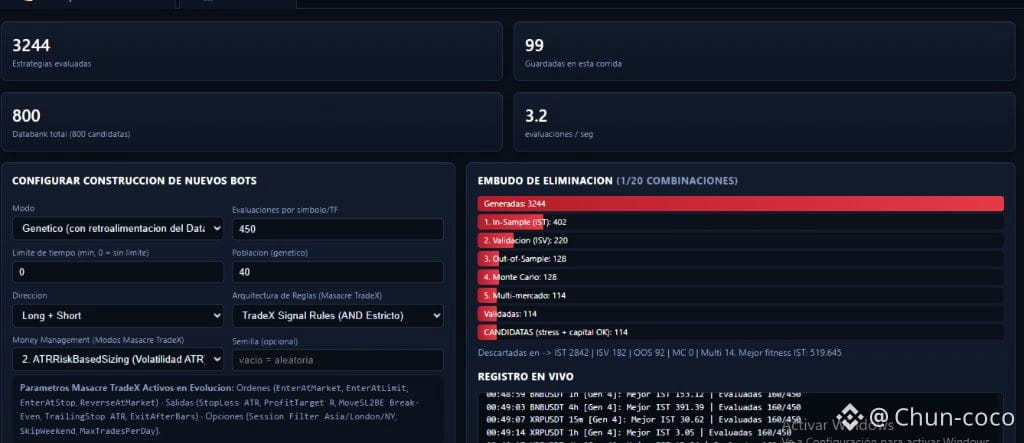
Motor Cuántico Autónomo (21 MB): Arquitectura de Ejecución en Binance Futures⚔️ Presentamos nuestro Motor Cuantitativo Autónomo v1.0 🚀
Olvídate de software pesado y cajas negras. Desarrollamos un motor cuántico 100% autónomo y ultraligero (21 MB) diseñado específicamente para dominar Binance USDT-M Futures.
🔥 ¿Qué hace único a este motor?
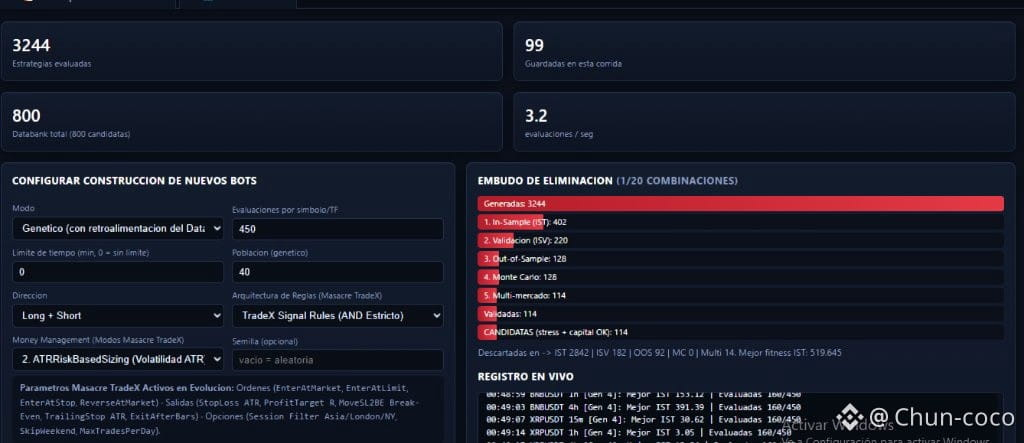
🧬 Constructor Genético Autónomo: Evoluciona miles de estrategias combinando 30 bloques cuantitativos deterministas (regímenes de volatilidad, microestructura y flujo).
🔬 Embudo de Auditoría en Etapas Ciegas: Ningún bot toca dinero real sin superar pruebas In-Sample (IST), Validación intermedia (ISV), Out-Of-Sample (OOS ciego) y simulación de Monte Carlo de 500 permutaciones.
🛡️ Doble Filtro de Mercado:
1. Régimen de Volatilidad: Filtra falsas rupturas en consolidaciones muertas y trampas en tendencias extremas.
2. Verificación de Profundidad y Nocional: Bloquea entradas si la liquidez o el mínimo del exchange ($5) no se cumplen con holgura.
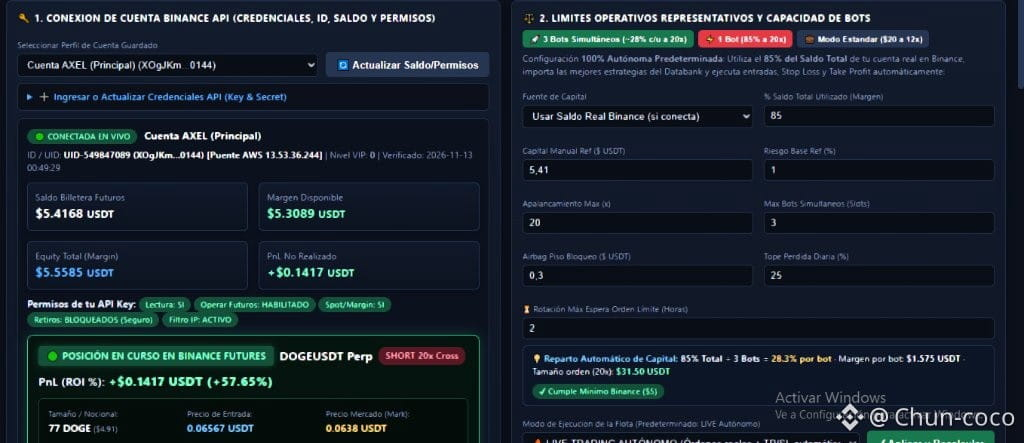
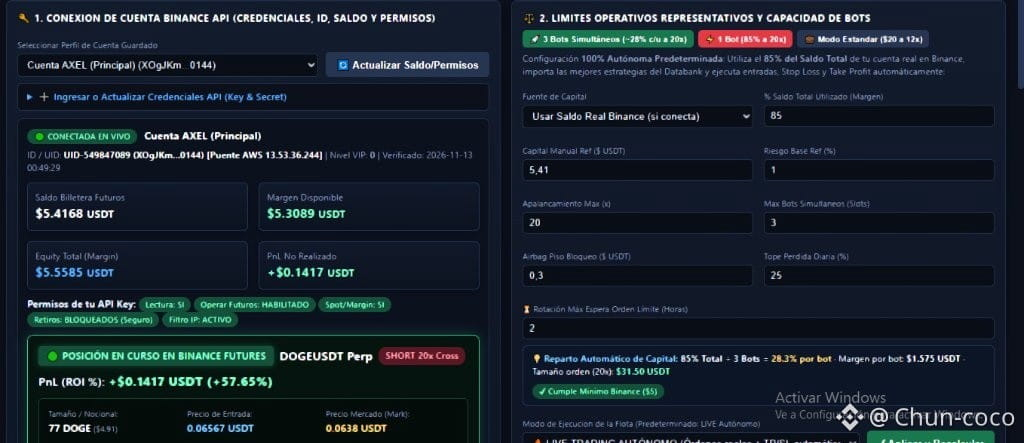
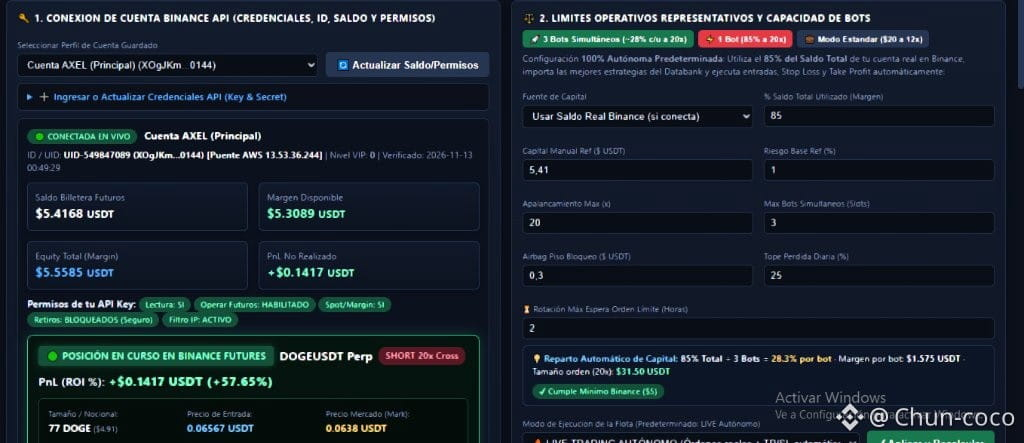
⚡ Flota Multi-Bot Dinámica: Control estricto de margen y apalancamiento 20x con Take-Profit y Stop-Loss protegidos en el exchange desde el milisegundo uno.
📊 Posición en vivo (en captura): DOGEUSDT SHORT corriendo con margen protegido y stop asegurado en Binance.
100% Portable. Código limpio. Sin comisiones ocultas.
Bienvenido al estándar institucional para traders independientes.
---
💎 Apoya el Desarrollo de la 1ª Edición Portable 1.0
Estamos en la fase final de integración para que cualquier usuario pueda ejecutar bots algorítmicos validados con 1 solo clic.
🤝 ¿Cómo colaborar?
• Deja tu LIKE, SÍGUENOS y REPOSTEA este post.
• Tu aporte o propina (Tips de Binance) financia infraestructura y te da acceso prioritario con beneficios exclusivos en el lanzamiento oficial.
¿Qué par te gustaría ver en el próximo test del motor? 👇
#Binance #TradingCuantitativo #AlgorithmicTrading
Motor Cuántico Autónomo (21 MB): Arquitectura de Ejecución en Binance Futures
⚔️ Presentamos nuestro Motor Cuantitativo Autónomo v1.0 🚀
Olvídate de software pesado y cajas negras. Desarrollamos un motor cuántico 100% autónomo y ultraligero (21 MB) diseñado específicamente para dominar Binance USDT-M Futures.
🔥 ¿Qué hace único a este motor?
🧬 Constructor Genético Autónomo: Evoluciona miles de estrategias combinando 30 bloques cuantitativos deterministas (regímenes de volatilidad, microestructura y flujo).
🔬 Embudo de Auditoría en Etapas Ciegas: Ningún bot toca dinero real sin superar pruebas In-Sample (IST), Validación intermedia (ISV), Out-Of-Sample (OOS ciego) y simulación de Monte Carlo de 500 permutaciones.
🛡️ Doble Filtro de Mercado:
1. Régimen de Volatilidad: Filtra falsas rupturas en consolidaciones muertas y trampas en tendencias extremas.
2. Verificación de Profundidad y Nocional: Bloquea entradas si la liquidez o el mínimo del exchange ($5) no se cumplen con holgura.
⚡ Flota Multi-Bot Dinámica: Control estricto de margen y apalancamiento 20x con Take-Profit y Stop-Loss protegidos en el exchange desde el milisegundo uno.
📊 Posición en vivo (en captura): DOGEUSDT SHORT corriendo con margen protegido y stop asegurado en Binance.
100% Portable. Código limpio. Sin comisiones ocultas.
Bienvenido al estándar institucional para traders independientes.
---
💎 Apoya el Desarrollo de la 1ª Edición Portable 1.0
Estamos en la fase final de integración para que cualquier usuario pueda ejecutar bots algorítmicos validados con 1 solo clic.
🤝 ¿Cómo colaborar?
• Deja tu LIKE, SÍGUENOS y REPOSTEA este post.
• Tu aporte o propina (Tips de Binance) financia infraestructura y te da acceso prioritario con beneficios exclusivos en el lanzamiento oficial.
¿Qué par te gustaría ver en el próximo test del motor? 👇
#Binance #TradingCuantitativo #AlgorithmicTrading
596
·
--
The 'per-bot trap' is a real risk when managing multi-asset portfolios. ⚠️
Relying on individually configured risk limits means each strategy can draw down independently, risking total account loss when markets move together.
A unified risk engine changes this safety profile entirely. It evaluates your total position across every connected account—including crypto futures and MT5—before and during every trade.
Here is how you build that comprehensive safety net:
1. Navigate to the Risk Controls section to set up your risk controls.
2. Establish a safety net for your entire operation.
3. Remember that rules like drawdown limits and exposure caps apply at the entire portfolio level. This means a drawdown limit covers your whole portfolio, no matter how many bots or brokers generated the positions.
4. The system correctly groups correlated positions, so the engine sees the total exposure once, keeping it visible.
5. You gain tangible safety because hitting the portfolio drawdown limit automatically pauses activity across all connected strategies. ✅
To see the technical breakdown of how this works, review this guide: https://community.wolfbot.io/docs/how-unified-risk-differs-from-per-bot-risk
#CryptoAutomation #RiskManagement #AlgorithmicTrading #PortfolioRisk

1
1
·
--
Feeling trapped by another platform's syntax after building a profitable trading logic? 🤔
Understanding that your strategy is a set of explicit decisions—what to trade, when to add, sizing, profit/stop rules, and max risk—while platform templates are just the syntax wrapping those decisions, is the first key step.
To start migrating your edge:
• Articulate your entire strategy in plain, vendor-agnostic language. Describe the mechanics, not the bot type (e.g., 'buy low in pieces' instead of 'DCA bot').
• Map these plain-language mechanics to WolfBot's native blocks: use DCA for entries, define clear TP/SL for exits, and set position sizing/damage limits. 🛠️
We suggest a phased approach for safety:
1. Rebuild only the core entry/exit loop in simulation to confirm behavior.
2. Run the simulation, comparing actual entry/exit against your old system's logic.
3. Only after success, proceed to a small, live trade size using trade-only keys and portfolio guards. 🛡️
Remember this rule: always ask, 'What did my strategy actually decide?' instead of, 'Which template equals my old bot?' This keeps your strategy portable and truly yours.
For a detailed walkthrough on this process, check out our academy guide: https://community.wolfbot.io/academy/moving-strategy-ideas-to-wolfbot. 🧠
#TradingAutomation #CryptoStrategy #AlgorithmicTrading #Crypto

1
69
When your strategy needs to coordinate signals across multiple accounts, the real headache isn't the signal itself. It's the lack of a single, auditable view of execution. 🧐
How do you automate complex, multi-faceted strategies while knowing exactly where every order came from and what the risk parameters were for that specific trade?
WolfBot solves this by centralizing rule-based and AI-assisted signals into one scheduler.
This means the platform applies your account risk policy per strategy and logs every single decision, making automation auditable instead of a black box. 🔗
The system also maintains a predictable flow by routing both automated and manual orders through shared infrastructure, giving you one single execution pipeline.
Remember that automation is a spectrum. You can stick to deterministic, rule-based conditions or use model views to inform those rules. Crucially, the risk and execution guardrails remain under your control. 🛡️
When setting up, you must decide on your risk parameters, as the system applies account-level guardrails by default, but you always retain the choice to build your own strategy alongside WolfBot's risk management tools.
To start automating, the path is clear:
1. Explore the demo.
2. Connect an account.
3. Choose whether to use a pre-built WolfBot strategy, build your own, or import external signals. 🚀
See the entire process in action here: https://wolfbot.io/en/products/trading-automation
#AutomatedTrading #CryptoAutomation #AlgorithmicTrading #TradingStrategy

56
·
--
Bridging the gap from Jupyter Notebook research to a live, deterministic MT5 deployment is tricky. 😬
When your state-of-the-art neural network is ready, watch out for pitfalls around data consistency and execution path validation.
Here are key steps to structure the deployment:
1. Define the Prediction Task rigorously: Specify the instrument, timeframe, decision time, and output meaning. Labels must terminate after the decision time, requiring purged chronological splits.
2. Ensure Feature Parity: Build a 'golden fixture'—a small, immutable bar sequence—to verify feature vectors match between research and live pipelines (check timezones, spreads, normalization).
3. Structure the Workflow: Treat the process as separate, versioned stages, not one monolithic Expert Advisor. Version everything: symbol mapping, bar construction, feature definitions, model architecture, etc.
4. Rigorous Training: Use chronological windows, testing on later data, and opening the final test set only once. Compare MQL5 and Python outputs for consistency.
5. Backtest the Entire Decision Path: Convert the model output through a frozen decision rule, testing the whole path while accounting for real-world costs (spread, slippage, etc.).
6. Choose the Integration Boundary: Select one pattern (Native MQL5, Python, or local service) and define max inference latency, schema version, and a fail-closed fallback.
7. Maintain Determinism and Safety: Log input cutoff, feature/model versions, raw output, risk decision, and broker request. Portfolio guards must validate exposure before any order. ⚠️
8. For Promotion: Use offline replay or MT5 Strategy Tester. Ensure a model registry keeps immutable weights and checksums for rollbacks. 🛡️
For a deep dive into structuring these complex ML pipelines for MT5, review this detailed guide: https://community.wolfbot.io/academy/neural-networks-mt5-research-to-deployment
#AlgorithmicTrading #MQL5 #MachineLearning #QuantDev #Automation

1
87


#UKAlgorithmicCryptoTradingAppsMayNeedFCAAuthorization
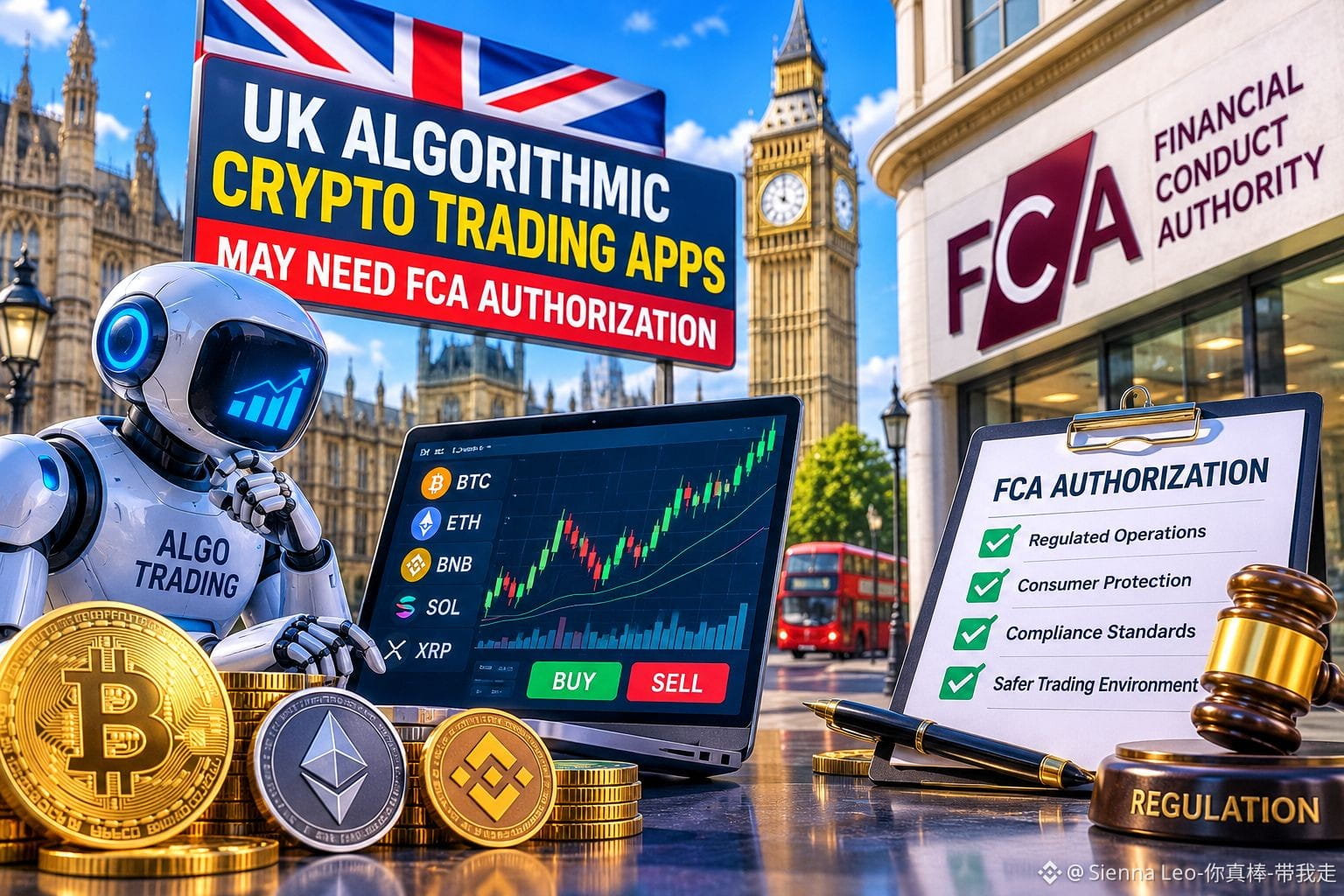
🤖🇬🇧 UK Algorithmic Crypto Trading Apps May Need FCA Authorization 🇬🇧🤖
Imagine opening a crypto trading app, setting a few rules, and letting software buy and sell while you sleep. The convenience feels effortless, until regulation asks a critical question: who is responsible when an automated system makes decisions with your money?
The UK is moving toward a more comprehensive crypto regulatory framework. The Financial Conduct Authority (FCA) opened applications for crypto firms seeking authorization on September 30, 2026, ahead of the new regime taking effect on October 25, 2027.
Under the framework, activities such as operating crypto trading platforms, dealing in cryptoassets, and arranging transactions may require authorization. Algorithmic trading apps could therefore fall within scope depending on the services they provide and how their business operates.
The important distinction is that automation itself does not automatically make every app subject to identical requirements. The actual activity, business model, and applicable regulatory rules matter.
For users, stronger oversight could improve accountability, consumer protection, and operational standards. For developers, however, authorization may bring additional compliance costs, documentation, and operational responsibilities.
Smaller providers could face difficult choices: invest in compliance, change their services, or reconsider operating in the UK. Established firms may be better equipped to absorb those costs, although regulation alone does not guarantee a safer product.
My take: Crypto automation is becoming more than a coding challenge. Sustainable platforms will need to demonstrate not only that their algorithms work, but also that their businesses operate within the rules.
Will FCA authorization make algorithmic crypto trading safer, or could compliance costs reduce competition?
Disclaimer: Educational content only, not financial advice.
#CryptoRegulation #AlgorithmicTrading #GrowWithSAC $MUB $CUDIS $SLF
1
1
364
Backtests look perfect, but the live market feels unpredictable? 🤔 It's easy to doubt the whole setup.
Trusting automated systems means understanding the gap between historical simulation and real-time adaptation.
Here is how we build confidence in automated decision-making:
1. Backtests show how the core trading logic would have performed using historical data. ✅
2. WolfBot uses an Adaptive AI Engine in live trading, unlike fixed simulations, continuously reviewing model performance.
3. If the system spots poor model performance live, it can pause and improve before redeployment. 🛡️
4. The core trading logic stays consistent between backtest and live trading—this is the foundation of trust.
5. Remember to view backtest results as just one part of the picture, alongside live performance, risk controls, and monitoring. 📈
For a deeper dive into how our logic is validated against past data, check this out: https://wolfbot.io/en/backtest
#AlgorithmicTrading #Backtesting #CryptoAutomation #TradingStrategy #Crypto
52
·
--
Parte 2: Cómo blindar tu bot algorítmico contra el desgaste de comisiones en Binance ⚙️📊
Si en el post anterior vimos cómo el trading de alta frecuencia y rotación puede comerse el margen en dos frentes, aquí van 3 ajustes tácticos para salir en verde:
1. Regla del 3x Fee Buffer: La distancia mínima de ejecución en tu grid o rebalanceo debe superar por 3x el costo total de ida y vuelta (comisiones + slippage estimado). Si no respetas este ratio, estás quemando balance en cada orden.
2. Filtro de volatilidad por activo: Libros densos como y toleran rangos más ajustados. En cambio, monedas explosivas como y exigen buffers dinámicos (como bandas ATR) para evitar entradas en falso durante mechazos.
3. Modo Multi-Activos en Futuros: Al correr coberturas entre spot y derivados, este modo te permite optimizar el margen con respaldo cruzado, previniendo liquidaciones innecesarias por desbalances temporales.
¿Cuál es la regla innegociable en sus bots personales? Déjenlo en comentarios 💬 (¡Si este hilo te sumó valor, un like y tu propina impulsan a seguir compartiendo análisis técnicos!).
[SYNAPSE-INDEX:02 // EXECUTION_ALPHA]
#BinanceSquare #CryptoTrading #TradingBots #AlgorithmicTrading
65

INSTITUTIONAL EXECUTION MEETS AUTOMATION AS $USDC POWERS AI STRATEGY WORKFLOWS! ⚡ 🦈
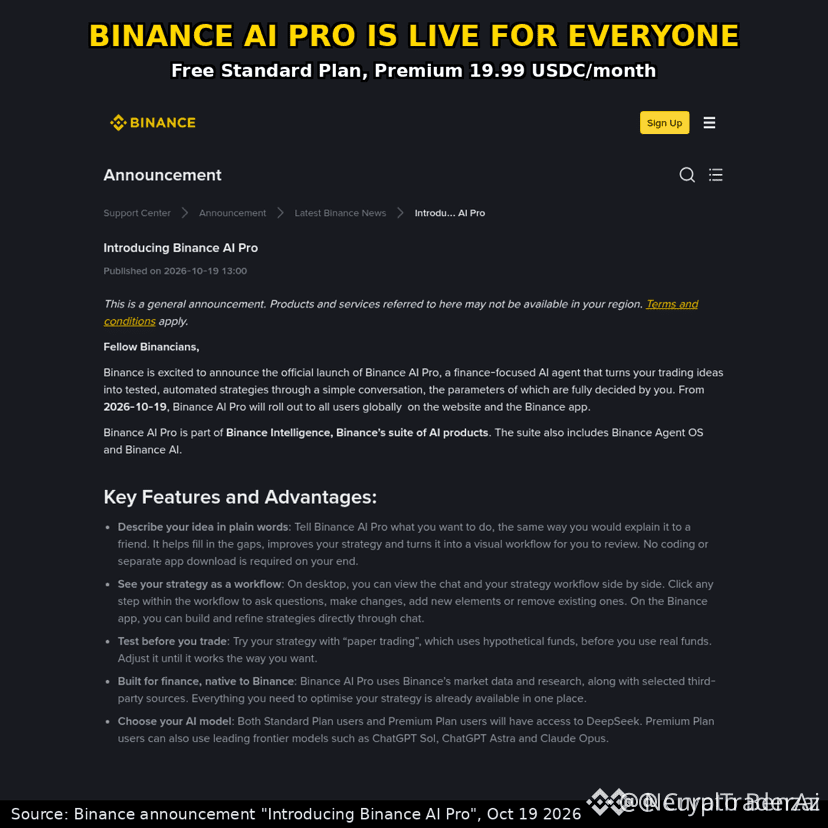
Institutional-grade execution relies on rigorous forward-testing before deploying capital into live order books. The rollout of AI Pro bridges that gap, translating plain-language structural ideas into verifiable paper-trading workflows before exposing capital to live market depth.
With segregated sub-accounts maintaining strict capital isolation and subscriptions anchored at 19.99 $USDC monthly alongside a free tier, systematic strategy execution is moving out of proprietary quantitative desks and into active retail hands. 📊 💡
🤔 Are you ready to let an autonomous agent execute your structural setups, or do you insist on manual order placement at key levels? 👇
⚠️ Not financial advice. Always manage your risk. 🛡️
🏷️ #USDC #TradingStrategy #CryptoAI #AlgorithmicTrading
🎯 🦈
7

Why do most traders fail during sideways volatility? They chase the noise instead of following the mathematical edge.
Our algorithm just closed a position on $ALLO with a +2.4% gain. This wasn't a "guess"—the bot identified a convergence of volume expansion and a specific momentum shift that indicated a short-term reversal, allowing us to enter before the pump.
Transparency is our core value. While we are currently seeing a strong 70% win rate over the last 215 trades, we don't hide the dips. Our long-term walk-forward win rate sits around 53% with a max drawdown of ~33%. We log every single trade—wins and losses alike—because verifiable data is the only thing that matters in this market.
Check the full open track record in our bio to see exactly how we handle the losses.
Do you rely more on technical indicators or price action when entering a trade?
$ALLO #CryptoTrading #AlgorithmicTrading
184
Why do some breakouts fail while others hold?
Our algorithm just closed a position on $EPIC with a +3.5% gain, but the real story is in the "why." The bot identified a volatility squeeze combined with a surge in buying volume, signaling a high-probability momentum shift before the price spiked.
Transparency is our core value. While we are currently seeing a 69% win rate (137/198 trades) in this window, we don't hide the dips. Our long-term walk-forward win rate sits around 53% with a max drawdown of ~33%. We log every single trade—wins and losses alike—because verifiable data is the only way to build trust in this market.
You can check our full open track record via the link in our bio.
Do you prefer trading momentum breakouts or buying the dip during consolidations?
$EPIC #CryptoTrading #AlgorithmicTrading
290
ເຂົ້າສູ່ລະບົບເພື່ອສຳຫຼວດເນື້ອຫາເພີ່ມເຕີມ
ເຂົ້າຮ່ວມກຸ່ມຜູ້ໃຊ້ຄຣິບໂຕທົ່ວໂລກໃນ Binance Square.
⚡️ ໄດ້ຮັບຂໍ້ມູນຫຼ້າສຸດ ແລະ ທີ່ມີປະໂຫຍດກ່ຽວກັບຄຣິບໂຕ.
💬 ໄດ້ຮັບຄວາມໄວ້ວາງໃຈຈາກຕະຫຼາດແລກປ່ຽນຄຣິບໂຕທີ່ໃຫຍ່ທີ່ສຸດໃນໂລກ.
👍 ຄົ້ນຫາຂໍ້ມູນເຊີງເລິກທີ່ແທ້ຈາກນັກສ້າງທີ່ໄດ້ຮັບການຢືນຢັນ.
ອີເມວ / ເບີໂທລະສັບ
ຫົວຂໍ້ທີ່ກໍາລັງນິຍົມ
1
#NvidiaBeatsEstimatesWith$130BQ4Outlook
8,443 ຄັ້ງທີ່ເບິ່ງ
134 ກຳລັງສົນທະນາ
2
#AnthropicIPOPriceCouldExceed$80
14,500 ຄັ້ງທີ່ເບິ່ງ
126 ກຳລັງສົນທະນາ
3
#CanNvidia’sDataCenterGrowthContinue?
43,399 ຄັ້ງທີ່ເບິ່ງ
598 ກຳລັງສົນທະນາ
4
#CanadaAndUSLaunchOperationNiagaraAgainstApprovalPhishing
655 ຄັ້ງທີ່ເບິ່ງ
19 ກຳລັງສົນທະນາ
5
#BankOfEnglandUnveilsClearingHousePathwayCoveringDLTFirms
1,352 ຄັ້ງທີ່ເບິ່ງ
35 ກຳລັງສົນທະນາ
6
#DBSAndCirclePartnerToExpandAsianInstitutionsUSDCAccess
2,871 ຄັ້ງທີ່ເບິ່ງ
51 ກຳລັງສົນທະນາ
7
#LedgerHardwareImplantReportsExtendToDubai
11,096 ຄັ້ງທີ່ເບິ່ງ
202 ກຳລັງສົນທະນາ
8
#NvidiaBoardNotConsideringHuang’sReturnasCEO
205,785 ຄັ້ງທີ່ເບິ່ງ
1,481 ກຳລັງສົນທະນາ
9
#KOSPIFalls2.59%ToLowestCloseSinceFebruary
58,978 ຄັ້ງທີ່ເບິ່ງ
675 ກຳລັງສົນທະນາ
10
#AnthropicClearedToListOnNasdaqAsANT
52,733 ຄັ້ງທີ່ເບິ່ງ
551 ກຳລັງສົນທະນາ