

WuBlockchain
12.6k Жариялаулар

WuBlockchain
 «Square расталған+» белгісі
Хабарлау
Пайдаланушыны блоктау
Important Crypto News mainly Asia
Lead by Colin Wu 吴说
0 Жазылым
14.0K+ Жазылушылар
41.2K+ лайк басылған
Жазбалар
Барлығы
Видеолар
·
--
Hyperliquid: Kraken Parent Payward Plans to Become First CFTC-Regulated HIP-3* DeployerHyperliquid announced that Kraken parent Payward plans to become the first CFTC-regulated HIP-3* deployer, using Hyperliquid infrastructure to offer perpetual futures markets to U.S. clients. Subject to regulatory approval, Payward's CFTC-regulated DCM and DCO, Bitnomial, would serve as the deployer, managing the markets and clearing and settling contracts, while its CFTC-registered FCM, NinjaTrader Clearing, would carry client accounts. HIP-3* will introduce optional onchain allowlists for permissioned markets without affecting existing HIP-3 markets. The initial version is available on testnet, with specifications subject to change.
Hyperliquid: Kraken Parent Payward Plans to Become First CFTC-Regulated HIP-3* Deployer
Hyperliquid announced that Kraken parent Payward plans to become the first CFTC-regulated HIP-3* deployer, using Hyperliquid infrastructure to offer perpetual futures markets to U.S. clients. Subject to regulatory approval, Payward's CFTC-regulated DCM and DCO, Bitnomial, would serve as the deployer, managing the markets and clearing and settling contracts, while its CFTC-registered FCM, NinjaTrader Clearing, would carry client accounts. HIP-3* will introduce optional onchain allowlists for permissioned markets without affecting existing HIP-3 markets. The initial version is available on testnet, with specifications subject to change.
3
·
--
Ethereum Delays Glamsterdam Hoodi Fork Over EIP-8037 and EIP-8038 RisksEthereum researcher Toni Wahrstätter said the planned Glamsterdam fork on the Hoodi testnet has been delayed after ChainSecurity identified compatibility risks in EIP-8037 and EIP-8038. The gas changes could break contracts that assume gas usage only decreases or cause failed sub-calls to behave unexpectedly. ChainSecurity has found 13 real-world cases, and developers are reviewing whether the upgrade specification needs changes.
Ethereum Delays Glamsterdam Hoodi Fork Over EIP-8037 and EIP-8038 Risks
Ethereum researcher Toni Wahrstätter said the planned Glamsterdam fork on the Hoodi testnet has been delayed after ChainSecurity identified compatibility risks in EIP-8037 and EIP-8038. The gas changes could break contracts that assume gas usage only decreases or cause failed sub-calls to behave unexpectedly. ChainSecurity has found 13 real-world cases, and developers are reviewing whether the upgrade specification needs changes.
7
·
--
Jack Dorsey's Bitcoin-Enabled Bitchat Tops France's App Store Social ChartJack Dorsey's decentralized messaging app Bitchat topped France's App Store Social Networking chart following nationwide protests and an Orange network outage on October 21. The app enables offline messaging via Bluetooth mesh networks, supports Nostr-based communication, and integrates Bitcoin-backed Cashu eCash payments.
Jack Dorsey's Bitcoin-Enabled Bitchat Tops France's App Store Social Chart
Jack Dorsey's decentralized messaging app Bitchat topped France's App Store Social Networking chart following nationwide protests and an Orange network outage on October 21. The app enables offline messaging via Bluetooth mesh networks, supports Nostr-based communication, and integrates Bitcoin-backed Cashu eCash payments.
54
·
--
CZ Attends Nasdaq Bell-Ringing Ceremony for World's Largest Corporate BNB Treasury FirmNasdaq-listed BNB Standard Corporation (NASDAQ: BNC) rang the opening bell at Nasdaq's MarketSite in Times Square, New York, to mark its rebranding and the appointment of Alex Odagiu as CEO. Formerly known as CEA Industries, the company officially changed its name on September 29. Its business includes managing a corporate BNB treasury, and it plans to operate a validator node on BNB Chain. The company claims to hold the world's largest corporate BNB treasury.
CZ Attends Nasdaq Bell-Ringing Ceremony for World's Largest Corporate BNB Treasury Firm
Nasdaq-listed BNB Standard Corporation (NASDAQ: BNC) rang the opening bell at Nasdaq's MarketSite in Times Square, New York, to mark its rebranding and the appointment of Alex Odagiu as CEO. Formerly known as CEA Industries, the company officially changed its name on September 29. Its business includes managing a corporate BNB treasury, and it plans to operate a validator node on BNB Chain. The company claims to hold the world's largest corporate BNB treasury.
163
·
--
Akash Network selects Solana for blockchain migrationAkash Network said it has selected Solana as the destination for its planned blockchain migration. The decentralized GPU and AI compute network currently runs its own Cosmos SDK-based chain, but previously said it intends to move to a shared-security architecture to reduce network maintenance costs and the capital burden associated with AKT staking. Solana and Ethereum had both been under consideration before Akash made its final choice.
Akash Network selects Solana for blockchain migration
Akash Network said it has selected Solana as the destination for its planned blockchain migration. The decentralized GPU and AI compute network currently runs its own Cosmos SDK-based chain, but previously said it intends to move to a shared-security architecture to reduce network maintenance costs and the capital burden associated with AKT staking. Solana and Ethereum had both been under consideration before Akash made its final choice.
77
·
--
Keystone Breach Exposed 25,964 Purchase Records and Compromised Device Verification KeyKeystone said its latest investigation found that attackers obtained a WebAuth device-authentication key through the website breach, potentially allowing counterfeit hardware wallets to pass official authenticity checks. The company will destroy 18,835 unsold devices using the old key, pause unshipped orders and switch new production to a replacement key. The incident also affected 25,964 purchase records and 12,873 incomplete checkout records, while Keystone said seed phrases, private keys and transaction signing were not compromised.
Keystone Breach Exposed 25,964 Purchase Records and Compromised Device Verification Key
Keystone said its latest investigation found that attackers obtained a WebAuth device-authentication key through the website breach, potentially allowing counterfeit hardware wallets to pass official authenticity checks. The company will destroy 18,835 unsold devices using the old key, pause unshipped orders and switch new production to a replacement key. The incident also affected 25,964 purchase records and 12,873 incomplete checkout records, while Keystone said seed phrases, private keys and transaction signing were not compromised.
15
·
--
Galaxy: Bitcoin bear market ended in June, accumulation phase underwayGalaxy Research said Bitcoin’s bear market ended in June 2026 and the asset is now in an accumulation phase, with BTC closing above its 50-week moving average for five consecutive weeks. Monthly transfers from coins held for more than five years have fallen to about 34,000 BTC from 67,000 in 2024, suggesting reduced selling pressure from long-term holders. Galaxy said the bullish view would weaken if Bitcoin falls below its roughly $76,540 50-week moving average and fails to reclaim it within a month.
Galaxy: Bitcoin bear market ended in June, accumulation phase underway
Galaxy Research said Bitcoin’s bear market ended in June 2026 and the asset is now in an accumulation phase, with BTC closing above its 50-week moving average for five consecutive weeks. Monthly transfers from coins held for more than five years have fallen to about 34,000 BTC from 67,000 in 2024, suggesting reduced selling pressure from long-term holders. Galaxy said the bullish view would weaken if Bitcoin falls below its roughly $76,540 50-week moving average and fails to reclaim it within a month.
11
·
--
S&P Global acquires OpenZeppelin to boost digital asset risk capabilitiesS&P Global has completed its acquisition of blockchain security firm OpenZeppelin for an undisclosed amount. The deal is intended to strengthen S&P Global’s digital asset and smart contract risk capabilities. OpenZeppelin will continue to operate independently under founder Demian Brener, while its open-source smart contract libraries will remain freely available.
S&P Global acquires OpenZeppelin to boost digital asset risk capabilities
S&P Global has completed its acquisition of blockchain security firm OpenZeppelin for an undisclosed amount. The deal is intended to strengthen S&P Global’s digital asset and smart contract risk capabilities. OpenZeppelin will continue to operate independently under founder Demian Brener, while its open-source smart contract libraries will remain freely available.
31
·
--
Strategy buys no Bitcoin for week, spends $205M on STRC buybacksStrategy said it made no Bitcoin purchases or sales and conducted no ATM stock sales between October 19 and 25, while spending about $204.9 million to repurchase 2.07 million STRC preferred shares. The company continues to hold 848,517 BTC acquired for about $64.02 billion at an average price of $75,446, alongside a $4.83 billion USD Reserve and roughly $242 million in additional cash.
Strategy buys no Bitcoin for week, spends $205M on STRC buybacks
Strategy said it made no Bitcoin purchases or sales and conducted no ATM stock sales between October 19 and 25, while spending about $204.9 million to repurchase 2.07 million STRC preferred shares. The company continues to hold 848,517 BTC acquired for about $64.02 billion at an average price of $75,446, alongside a $4.83 billion USD Reserve and roughly $242 million in additional cash.
68
·
--
BitMine acquires 10,452 ETH, total holdings reach 6,051,933 ETHBitMine said it acquired 10,452 ETH over the past week, bringing total holdings to 6,051,933 ETH, or about 4.95% of Ethereum’s supply. The company also repurchased 2.04 million shares at an average price of $22.48; its 2026 buybacks now total 22.9 million shares, or about $399.6 million. BitMine has 5.23 million ETH staked and reported total crypto, cash, marketable securities and other investments of about $15 billion.
BitMine acquires 10,452 ETH, total holdings reach 6,051,933 ETH
BitMine said it acquired 10,452 ETH over the past week, bringing total holdings to 6,051,933 ETH, or about 4.95% of Ethereum’s supply. The company also repurchased 2.04 million shares at an average price of $22.48; its 2026 buybacks now total 22.9 million shares, or about $399.6 million. BitMine has 5.23 million ETH staked and reported total crypto, cash, marketable securities and other investments of about $15 billion.
15
·
--
Strive opens $1B ATM program for SATS preferred stock, may fund Bitcoin purchasesAccording to an SEC filing, Strive entered into an at-the-market sales agreement with Cantor Fitzgerald, Barclays and five other firms to sell up to $1 billion of its Series A perpetual preferred stock, SATS. The shares carry a 15% annual cumulative dividend rate based on a $100 liquidation preference. Strive said net proceeds may be used for general corporate purposes, including Bitcoin purchases, working capital, income-generating investments and repurchases of common or preferred stock.
Strive opens $1B ATM program for SATS preferred stock, may fund Bitcoin purchases
According to an SEC filing, Strive entered into an at-the-market sales agreement with Cantor Fitzgerald, Barclays and five other firms to sell up to $1 billion of its Series A perpetual preferred stock, SATS. The shares carry a 15% annual cumulative dividend rate based on a $100 liquidation preference. Strive said net proceeds may be used for general corporate purposes, including Bitcoin purchases, working capital, income-generating investments and repurchases of common or preferred stock.
29
·
--
Singapore Gulf Bank's parent appoints Revolut chairman to advisory boardAsia Gulf Holdings, parent of Bahrain-licensed Singapore Gulf Bank, appointed Revolut Group chairman Martin Gilbert and former Singapore minister Maliki Osman to its Global Advisory Board. Gilbert will advise on investment strategy and asset management across Asia and the Middle East, while Osman will focus on geopolitics and government relations.
Singapore Gulf Bank's parent appoints Revolut chairman to advisory board
Asia Gulf Holdings, parent of Bahrain-licensed Singapore Gulf Bank, appointed Revolut Group chairman Martin Gilbert and former Singapore minister Maliki Osman to its Global Advisory Board. Gilbert will advise on investment strategy and asset management across Asia and the Middle East, while Osman will focus on geopolitics and government relations.
11
·
--
MEXC winds down Netherlands, expands restricted-market listMEXC Lacks MiCA Authorization, Winds Down Netherlands as Restricted-Market List Expands
MEXC said it does not hold MiCA authorization in the EU and EEA and is winding down services in the Netherlands, with final offboarding scheduled for November 16. The exchange is also discontinuing services for users in Russia and Belarus. Separately, its User Agreement currently lists 13 prohibited jurisdictions, including the United States, Canada, the United Kingdom, Singapore, Hong Kong, Mainland China, Malaysia and Kazakhstan.
MEXC winds down Netherlands, expands restricted-market list
MEXC Lacks MiCA Authorization, Winds Down Netherlands as Restricted-Market List Expands
MEXC said it does not hold MiCA authorization in the EU and EEA and is winding down services in the Netherlands, with final offboarding scheduled for November 16. The exchange is also discontinuing services for users in Russia and Belarus. Separately, its User Agreement currently lists 13 prohibited jurisdictions, including the United States, Canada, the United Kingdom, Singapore, Hong Kong, Mainland China, Malaysia and Kazakhstan.
MEXC said it does not hold MiCA authorization in the EU and EEA and is winding down services in the Netherlands, with final offboarding scheduled for November 16. The exchange is also discontinuing services for users in Russia and Belarus. Separately, its User Agreement currently lists 13 prohibited jurisdictions, including the United States, Canada, the United Kingdom, Singapore, Hong Kong, Mainland China, Malaysia and Kazakhstan.
36
·
--
WuBlockchain Weekly Outlook | Microsoft and Google Earnings Follow the Fed as ECB and BOJ Decisio...Editor | Wu Blockchain
Verified as of October 24, 2026 (ET) | Coverage period: October 26–November 1, 2026 (ET)
The key events to watch this week:
The Fed, ECB and BOJ will announce rate decisions this week, while Microsoft, Alphabet and Amazon report earnings. Investors will focus on whether cloud revenue growth can support AI capital spending, and whether inflation and economic data justify further monetary tightening.
Wednesday, October 28, 2:00 p.m. ET | Fed Rate Decision; 2:30 p.m. Press Conference
The Fed voted unanimously to raise rates by 25 basis points in September, bringing the target range to 3.75%–4.00%. Markets broadly expect rates to remain unchanged this week. Investors will focus on Chair Kevin Warsh's assessment of energy inflation, employment and consumer spending, and whether he offers any clues about another potential rate hike in December. With no new dot plot or economic projections, the statement and press conference will provide the main policy signals.
Wednesday, October 28, 4:30 p.m. and 5:30 p.m. ET | Alphabet Q3 and Microsoft Fiscal Q1 Earnings Calls
Microsoft's Azure and other cloud services revenue grew 43% last quarter, while Alphabet's Google Cloud revenue surged 82% to $24.8 billion. After Meta reported $34.91 billion in quarterly CapEx and negative free cash flow of $2.12 billion, attention will turn to cloud revenue, order backlogs, margins and spending guidance. The key question is how much additional infrastructure investment these companies need to sustain AI-driven growth.
Thursday, October 29, 8:30 a.m. ET | U.S. Q3 GDP Advance Estimate and September PCE
U.S. real GDP grew at an annualized rate of 2.2% in Q2, down from 2.5% in Q1. August headline PCE inflation reached 3.4% year over year, with core PCE at 3.0%. The releases will show whether consumer spending and private investment are sustaining growth, and whether underlying price pressures persist. Arriving after the Fed decision, the data could reshape expectations for December's rate decision.
Thursday, October 29, 9:15 a.m. ET | ECB Rate Decision; 9:45 a.m. Press Conference
The ECB raised its deposit rate by 25 basis points to 2.50% in September and projected inflation of 2.5% in 2027 and 2.1% in 2028. Markets broadly expect rates to remain unchanged. Investors will focus on how persistent energy costs are affecting inflation and what conditions could justify further tightening. A more hawkish signal could lift European bond yields and support the euro.
Thursday, October 29, 5:00 p.m. ET | Amazon and Intel Q3 Earnings Calls
Amazon's AWS revenue grew 37% to $42.2 billion last quarter, its fastest growth in 18 quarters, while group operating income rose 43% to $27.5 billion. AWS growth, margins and AI infrastructure spending guidance will be central to the report. Intel's results will provide an update on foundry losses, advanced manufacturing customers and future investment plans, including whether new process technologies are attracting external orders.
Thursday, October 29–Friday, October 30 ET | BOJ Rate Decision and Economic Outlook, Release Time TBA; Friday, 2:30 a.m. ET Governor's Press Conference
The BOJ raised its policy rate to 1.25% in September and will publish updated growth and inflation projections. Markets widely expect no immediate rate change. The focus will be on whether inflation forecasts are revised higher and how wage growth, yen weakness and imported energy costs affect the case for further hikes. A more hawkish outlook could strengthen the yen, lift Japanese bond yields and pressure global carry trades.
Bottom line:
Central banks face a difficult trade-off between inflation and growth. With U.S. core PCE inflation at 3.0%, investors will watch for clues on what could justify another Fed rate hike. Microsoft, Alphabet and Amazon will update cloud growth, margins and AI spending plans. Strong cloud revenue growth may support earnings expectations, but rising Treasury yields could still weigh on tech valuations.
WuBlockchain Weekly Outlook | Microsoft and Google Earnings Follow the Fed as ECB and BOJ Decisio...
Editor | Wu Blockchain
Verified as of October 24, 2026 (ET) | Coverage period: October 26–November 1, 2026 (ET)
The key events to watch this week:
The Fed, ECB and BOJ will announce rate decisions this week, while Microsoft, Alphabet and Amazon report earnings. Investors will focus on whether cloud revenue growth can support AI capital spending, and whether inflation and economic data justify further monetary tightening.
Wednesday, October 28, 2:00 p.m. ET | Fed Rate Decision; 2:30 p.m. Press Conference
The Fed voted unanimously to raise rates by 25 basis points in September, bringing the target range to 3.75%–4.00%. Markets broadly expect rates to remain unchanged this week. Investors will focus on Chair Kevin Warsh's assessment of energy inflation, employment and consumer spending, and whether he offers any clues about another potential rate hike in December. With no new dot plot or economic projections, the statement and press conference will provide the main policy signals.
Wednesday, October 28, 4:30 p.m. and 5:30 p.m. ET | Alphabet Q3 and Microsoft Fiscal Q1 Earnings Calls
Microsoft's Azure and other cloud services revenue grew 43% last quarter, while Alphabet's Google Cloud revenue surged 82% to $24.8 billion. After Meta reported $34.91 billion in quarterly CapEx and negative free cash flow of $2.12 billion, attention will turn to cloud revenue, order backlogs, margins and spending guidance. The key question is how much additional infrastructure investment these companies need to sustain AI-driven growth.
Thursday, October 29, 8:30 a.m. ET | U.S. Q3 GDP Advance Estimate and September PCE
U.S. real GDP grew at an annualized rate of 2.2% in Q2, down from 2.5% in Q1. August headline PCE inflation reached 3.4% year over year, with core PCE at 3.0%. The releases will show whether consumer spending and private investment are sustaining growth, and whether underlying price pressures persist. Arriving after the Fed decision, the data could reshape expectations for December's rate decision.
Thursday, October 29, 9:15 a.m. ET | ECB Rate Decision; 9:45 a.m. Press Conference
The ECB raised its deposit rate by 25 basis points to 2.50% in September and projected inflation of 2.5% in 2027 and 2.1% in 2028. Markets broadly expect rates to remain unchanged. Investors will focus on how persistent energy costs are affecting inflation and what conditions could justify further tightening. A more hawkish signal could lift European bond yields and support the euro.
Thursday, October 29, 5:00 p.m. ET | Amazon and Intel Q3 Earnings Calls
Amazon's AWS revenue grew 37% to $42.2 billion last quarter, its fastest growth in 18 quarters, while group operating income rose 43% to $27.5 billion. AWS growth, margins and AI infrastructure spending guidance will be central to the report. Intel's results will provide an update on foundry losses, advanced manufacturing customers and future investment plans, including whether new process technologies are attracting external orders.
Thursday, October 29–Friday, October 30 ET | BOJ Rate Decision and Economic Outlook, Release Time TBA; Friday, 2:30 a.m. ET Governor's Press Conference
The BOJ raised its policy rate to 1.25% in September and will publish updated growth and inflation projections. Markets widely expect no immediate rate change. The focus will be on whether inflation forecasts are revised higher and how wage growth, yen weakness and imported energy costs affect the case for further hikes. A more hawkish outlook could strengthen the yen, lift Japanese bond yields and pressure global carry trades.
Bottom line:
Central banks face a difficult trade-off between inflation and growth. With U.S. core PCE inflation at 3.0%, investors will watch for clues on what could justify another Fed rate hike. Microsoft, Alphabet and Amazon will update cloud growth, margins and AI spending plans. Strong cloud revenue growth may support earnings expectations, but rising Treasury yields could still weigh on tech valuations.
Verified as of October 24, 2026 (ET) | Coverage period: October 26–November 1, 2026 (ET)
The key events to watch this week:
The Fed, ECB and BOJ will announce rate decisions this week, while Microsoft, Alphabet and Amazon report earnings. Investors will focus on whether cloud revenue growth can support AI capital spending, and whether inflation and economic data justify further monetary tightening.
Wednesday, October 28, 2:00 p.m. ET | Fed Rate Decision; 2:30 p.m. Press Conference
The Fed voted unanimously to raise rates by 25 basis points in September, bringing the target range to 3.75%–4.00%. Markets broadly expect rates to remain unchanged this week. Investors will focus on Chair Kevin Warsh's assessment of energy inflation, employment and consumer spending, and whether he offers any clues about another potential rate hike in December. With no new dot plot or economic projections, the statement and press conference will provide the main policy signals.
Wednesday, October 28, 4:30 p.m. and 5:30 p.m. ET | Alphabet Q3 and Microsoft Fiscal Q1 Earnings Calls
Microsoft's Azure and other cloud services revenue grew 43% last quarter, while Alphabet's Google Cloud revenue surged 82% to $24.8 billion. After Meta reported $34.91 billion in quarterly CapEx and negative free cash flow of $2.12 billion, attention will turn to cloud revenue, order backlogs, margins and spending guidance. The key question is how much additional infrastructure investment these companies need to sustain AI-driven growth.
Thursday, October 29, 8:30 a.m. ET | U.S. Q3 GDP Advance Estimate and September PCE
U.S. real GDP grew at an annualized rate of 2.2% in Q2, down from 2.5% in Q1. August headline PCE inflation reached 3.4% year over year, with core PCE at 3.0%. The releases will show whether consumer spending and private investment are sustaining growth, and whether underlying price pressures persist. Arriving after the Fed decision, the data could reshape expectations for December's rate decision.
Thursday, October 29, 9:15 a.m. ET | ECB Rate Decision; 9:45 a.m. Press Conference
The ECB raised its deposit rate by 25 basis points to 2.50% in September and projected inflation of 2.5% in 2027 and 2.1% in 2028. Markets broadly expect rates to remain unchanged. Investors will focus on how persistent energy costs are affecting inflation and what conditions could justify further tightening. A more hawkish signal could lift European bond yields and support the euro.
Thursday, October 29, 5:00 p.m. ET | Amazon and Intel Q3 Earnings Calls
Amazon's AWS revenue grew 37% to $42.2 billion last quarter, its fastest growth in 18 quarters, while group operating income rose 43% to $27.5 billion. AWS growth, margins and AI infrastructure spending guidance will be central to the report. Intel's results will provide an update on foundry losses, advanced manufacturing customers and future investment plans, including whether new process technologies are attracting external orders.
Thursday, October 29–Friday, October 30 ET | BOJ Rate Decision and Economic Outlook, Release Time TBA; Friday, 2:30 a.m. ET Governor's Press Conference
The BOJ raised its policy rate to 1.25% in September and will publish updated growth and inflation projections. Markets widely expect no immediate rate change. The focus will be on whether inflation forecasts are revised higher and how wage growth, yen weakness and imported energy costs affect the case for further hikes. A more hawkish outlook could strengthen the yen, lift Japanese bond yields and pressure global carry trades.
Bottom line:
Central banks face a difficult trade-off between inflation and growth. With U.S. core PCE inflation at 3.0%, investors will watch for clues on what could justify another Fed rate hike. Microsoft, Alphabet and Amazon will update cloud growth, margins and AI spending plans. Strong cloud revenue growth may support earnings expectations, but rising Treasury yields could still weigh on tech valuations.
159
·
--
Ethereum ICO Whale Moves 5,000 ETH After Holding for Around 11 Years, Sends 1,500 ETH to ExchangesAccording to EmberCN, an Ethereum ICO whale transferred 5,000 ETH within two hours, including 1,500 ETH worth approximately $3.45M to centralized exchanges. The whale acquired 100,000 ETH in 2015 at $0.311 each, costing approximately $31K, and sold 50,000 ETH in 2016 at $5.47 each for approximately $274K. The remaining 50,000 ETH had been held until these transfers began.
Ethereum ICO Whale Moves 5,000 ETH After Holding for Around 11 Years, Sends 1,500 ETH to Exchanges
According to EmberCN, an Ethereum ICO whale transferred 5,000 ETH within two hours, including 1,500 ETH worth approximately $3.45M to centralized exchanges. The whale acquired 100,000 ETH in 2015 at $0.311 each, costing approximately $31K, and sold 50,000 ETH in 2016 at $5.47 each for approximately $274K. The remaining 50,000 ETH had been held until these transfers began.
76
·
--
CZ Responds to BNB Chain’s New L1 Plan: “Multiple chains, one coins”CZ responds to BNB Chain’s updated New L1 plans: “Multiple chains, one coins.” According to BNB Chain docs updated on Oct 22, the new L1 (name TBD) will run in parallel with BSC via a native bridge and will not issue a separate token. It continues using BNB for gas, staking, and governance. Target specs include ~200ms blocks and ~20ms pre-confirmation. An internal multi-validator devnet is already running; public testnet is planned for end of 2026 and mainnet for early 2027.
CZ Responds to BNB Chain’s New L1 Plan: “Multiple chains, one coins”
CZ responds to BNB Chain’s updated New L1 plans: “Multiple chains, one coins.” According to BNB Chain docs updated on Oct 22, the new L1 (name TBD) will run in parallel with BSC via a native bridge and will not issue a separate token. It continues using BNB for gas, staking, and governance. Target specs include ~200ms blocks and ~20ms pre-confirmation. An internal multi-validator devnet is already running; public testnet is planned for end of 2026 and mainnet for early 2027.
226
·
--
Highlight Clip: Michael Saylor: Digital Credit Is Our Product, MSTR Is Just a ByproductMichael Saylor: Digital Credit Is Our Product, MSTR Is Just a Byproduct
On October 20, 2026, Michael Saylor explained in an interview with Schwab Network that Strategy converts Bitcoin into dividend-paying digital credit products to meet the cash flow needs of a different group of investors. He said supporting these products' prices and bringing them back to par allows the company to continue issuing them and command a premium to net asset value, which is why Strategy uses capital to buy back preferred stock. If the credit business doesn't work, Strategy is simply a Bitcoin holding company.
Highlight Clip: Michael Saylor: Digital Credit Is Our Product, MSTR Is Just a Byproduct
Michael Saylor: Digital Credit Is Our Product, MSTR Is Just a Byproduct
On October 20, 2026, Michael Saylor explained in an interview with Schwab Network that Strategy converts Bitcoin into dividend-paying digital credit products to meet the cash flow needs of a different group of investors. He said supporting these products' prices and bringing them back to par allows the company to continue issuing them and command a premium to net asset value, which is why Strategy uses capital to buy back preferred stock. If the credit business doesn't work, Strategy is simply a Bitcoin holding company.
On October 20, 2026, Michael Saylor explained in an interview with Schwab Network that Strategy converts Bitcoin into dividend-paying digital credit products to meet the cash flow needs of a different group of investors. He said supporting these products' prices and bringing them back to par allows the company to continue issuing them and command a premium to net asset value, which is why Strategy uses capital to buy back preferred stock. If the credit business doesn't work, Strategy is simply a Bitcoin holding company.
236
·
--
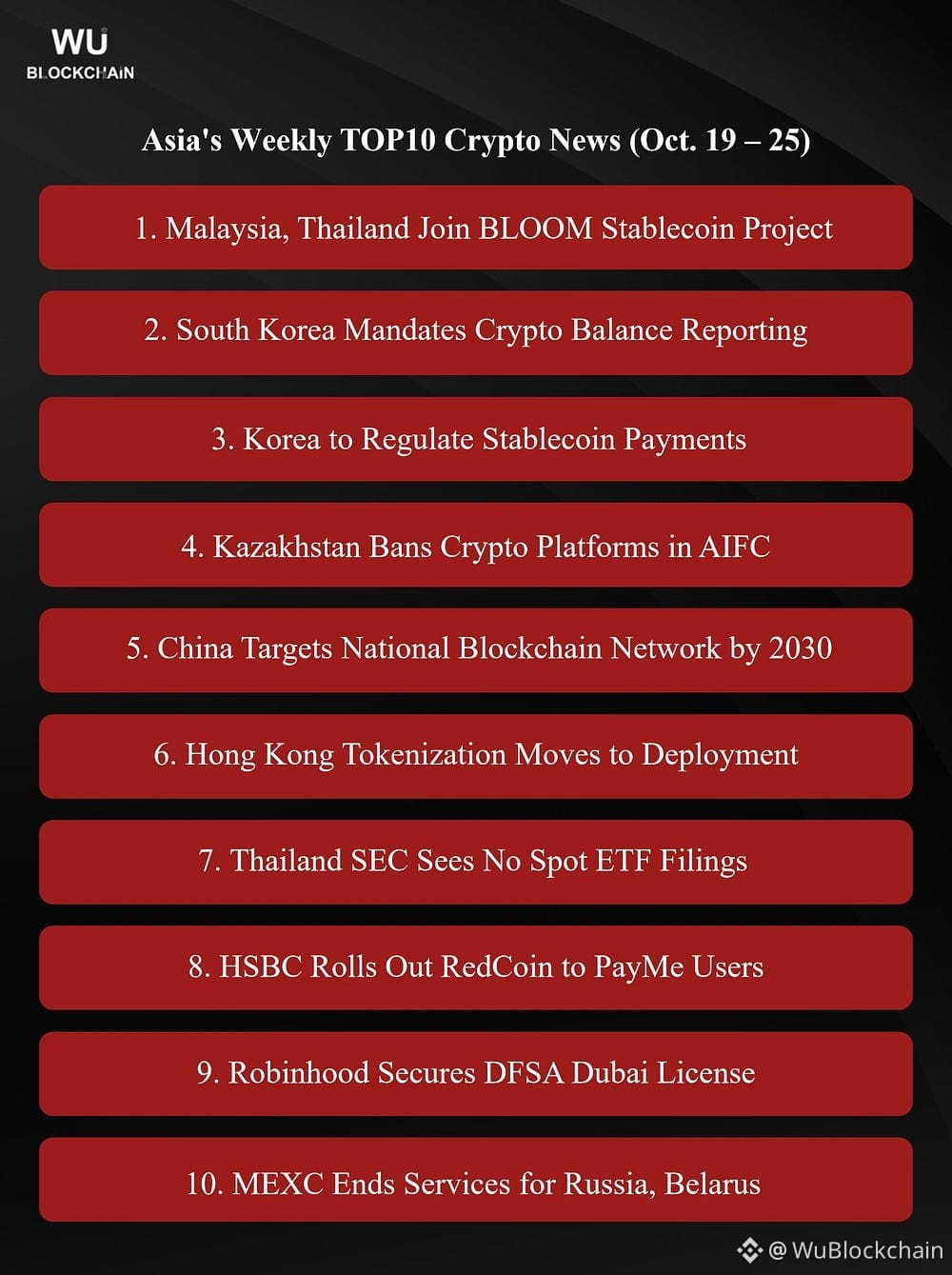
Asia's Weekly TOP10 Crypto NewsSouth Korea Regulates Stablecoins as Payment Means, China to Build National Blockchain Network, HSBC Launches Stablecoin, Hong Kong Tokenization Moves to Deployment Phase, Robinhood Secures Dubai Approval.
For the complete article and weekly curated reports, subscribe to our Substack:
Asia's Weekly TOP10 Crypto News
South Korea Regulates Stablecoins as Payment Means, China to Build National Blockchain Network, HSBC Launches Stablecoin, Hong Kong Tokenization Moves to Deployment Phase, Robinhood Secures Dubai Approval.
For the complete article and weekly curated reports, subscribe to our Substack:
For the complete article and weekly curated reports, subscribe to our Substack:
64
·
--
Мақала
Asia's weekly TOP10 crypto news: South Korea Regulates Stablecoins as Payment Means, China to Bui...1. Malaysian and Thai Central Banks Join Singapore’s BLOOM Initiative for Cross-Border Stablecoin Settlement link
The Monetary Authority of Singapore (MAS) announced on October 23 that Bank Negara Malaysia and the Bank of Thailand have officially joined the BLOOM cross-border digital currency initiative to jointly advance cross-border payment and settlement for digital currencies such as regulated stablecoins and tokenized deposits. The initiative has added new participants including Ripple, Visa, Mastercard, Airwallex and the World Bank Group. It focuses on researching cross-border settlement, interoperability of different payment networks and programmable compliance controls, aiming to cut cross-border transaction costs for financial institutions.
2. Bank of Korea to Require Monthly Balance Reporting for Cross-Border Crypto Users from Dec 2 link
The Bank of Korea will require virtual asset transfer service providers starting December 2 to submit monthly reports to the foreign exchange information system on end-of-month holdings of users who have made cross-border crypto asset transfers to overseas exchanges, personal wallets and other destinations since July 19, 2024, even if there were no cross-border transactions in the month. The reports shall include token quantities, KRW-equivalent balances and total cross-border inflows and outflows for the month. Dormant accounts, delisted assets and staked assets are also covered, and submissions are due by 17:30 on the 10th of the following month. It has not yet been decided whether cross-border transfer records predating the implementation of the rule will need to be retroactively filed.
3. South Korea Revises Foreign Exchange Act to Regulate Stablecoins as Payment Means link
The South Korean government and the Bank of Korea plan to draft amendments to the Foreign Exchange Transactions Act within this year to regulate stablecoins used as payment instruments. In a report submitted to the National Assembly on October 22, the Bank of Korea stated that it is negotiating with the government on regulatory frameworks for cross-border crypto asset transactions and preparing to establish a crypto asset monitoring system via the foreign exchange information system. The central bank noted that anonymous technologies such as mixers and regulatory gaps around personal wallets raise risks of illicit cross-border transactions, and it will cooperate with relevant authorities to prevent market participants from evading supervision by exploiting regulatory loopholes during the digital asset legislative transition period.
4. Kazakh Court Bans Coinbase and Five Platforms from AIFC Services link
The Astana Financial Services Authority (AFSA) of Kazakhstan has obtained an injunction from the Astana International Financial Centre (AIFC) court prohibiting six crypto platforms, namely Coinbase, BingX, Bitcoincom, Huobi Global (HTX), BitMart and WEEX, from providing or marketing digital asset services and distributing mobile applications within the AIFC without a licence. The court clarified that the injunction applies strictly only to the AIFC, which has an independent legal and regulatory framework, and its local users, rather than being a nationwide ban across Kazakhstan. The ruling also imposes constraints on app stores including Google and Apple, though the court has not yet issued a direct ban against the app stores and requires AFSA to engage with them first. In addition, LBank was removed from the ruling as it has already blocked services in the country. Back in 2023, Coinbase had its website blocked in Kazakhstan over alleged violations of the nation’s Digital Assets Law.
5. China Targets Basic National Blockchain Network by 2030, Launches Construction Project link
The Central Cyberspace Affairs Commission has issued the 15th Five-Year Plan for National Informatization. It proposes that the national blockchain network will be basically completed by 2030, and a national blockchain network construction project will be implemented to lay the foundation for the Value Internet. The plan calls for accelerating the completion of the central backbone network, advancing the interconnected operation of regional hubs, improving basic common services such as decentralized digital identity, deepening digital applications in shipping, freight and trade, and expanding application scenarios including development and reform, low-carbon transition, government affairs and taxation. The plan also sets out to steadily develop the digital renminbi, further apply blockchain and privacy-preserving computing in data circulation and trading, promote the interconnection and mutual recognition of decentralized digital identities, and refine the blockchain technical standards system. In terms of industrial development, the plan aims to cultivate internationally leading technological products in integrated circuits, artificial intelligence, blockchain and other fields.
6. Hong Kong Tokenization Moves From Pilot to Deployment Phase link
Christopher Hui, Secretary for Financial Services and the Treasury of Hong Kong, stated that asset tokenisation in Hong Kong is moving from experimental trials to full-scale implementation. The fourth issuance of digital green bonds last month was oversubscribed across all currencies, with tokenised Hong Kong dollar deposits integrated into the settlement workflow. The Hong Kong Exchanges and Clearing (HKEX) aims to launch a tokenised warehouse receipt financing pilot next year. It will partner with designated banks to leverage distributed ledger technology to turn commodity warehouse receipts into collateral, while building a multi-asset tokenisation platform.
7. Thailand SEC Has Not Received Spot Crypto ETF Applications, Year-End Launch Unconfirmed link
Thailand’s Securities and Exchange Commission (SEC) stated that although multiple asset management institutions have consulted on spot ETFs for Bitcoin and Ethereum, no formal applications have been received, so it cannot confirm whether such products can be listed in 2026. The new framework effective October 16 allows licensed asset management companies to launch passive ETFs tracking a single qualified asset, currently including Bitcoin and Ethereum, with an annual average net exposure of no less than 80% allocated to the tracked asset. The products may only be traded on the Stock Exchange of Thailand and must use digital asset custodians approved by the SEC; securities firms are prohibited from providing margin financing. Retail investors may participate after listing only upon completion of risk education and confirmation of relevant risks.
8. HSBC Launches RedCoin Stablecoin for 3.3M PayMe Users on Oct 23 link
HSBC has rolled out the Hong Kong dollar stablecoin HSBC RedCoin in phases to over 3.3 million users of its PayMe app starting October 23. The first phase supports instant transfers between PayMe users and payments to merchants. Users can activate the RedCoin wallet after updating the app with no extra account opening or minimum balance requirements, and full rollout is expected before the end of this weekend. HSBC also plans to fully integrate RedCoin into its Hong Kong mobile banking app by year-end, enabling users to subscribe to tokenised money market funds and other assets instantly with a minimum of HK$100, with future expansion to tokenised gold and third-party fund products.
9. Robinhood Gets Dubai DFSA Approval, Retail Products Slated for 2027 link
Robinhood announced that it has obtained authorization from the Dubai Financial Services Authority (DFSA) and designated the Dubai International Financial Centre (DIFC) as its Middle East headquarters, with plans to launch investment products for local retail investors in 2027. The authorization covers trading and custody services for all ten classes of assets approved by the DFSA, including stocks, cryptocurrencies, ETFs and investment tokens. Robinhood’s Middle East and North Africa operations will be led by senior executive and regional president Salah Kaddoura. Robinhood CEO Vlad Tenev stated that this expansion marks an important step in the company’s mission to build a global investment platform. Johann Kerbrat, Head of Robinhood Crypto and International Business, said the firm will further address the financial service needs of retail investors in the Middle East and North Africa. The relevant products are not yet live and are expected to launch in 2027.
10. MEXC to Halt Services for Russian and Belarusian Users link
Crypto trading platform MEXC issued an official service update announcement stating that to strengthen global compliance operations, the platform has decided to discontinue services for users located in Russia or Belarus. MEXC said the assets of affected users remain secure, and official in-app notifications will be sent separately to relevant accounts specifying the exact position closing deadline and asset withdrawal procedures. Users who do not receive individual notices are unaffected by this adjustment and may continue using all trading services normally.
Crypto exchange HTX has added Russia to the list of prohibited service jurisdictions in its user agreement. The restrictions apply to individuals residing in or present in Russia, as well as enterprises registered there or conducting primary business locally. Under the agreement, HTX reserves the right to restrict affected users’ access to services, suspend withdrawals or close accounts. Earlier, Bitget and MEXC also announced in October that they would stop offering services to Russian users. RBC did not disclose the effective date of HTX’s relevant restrictions.
Follow us
Twitter: https://twitter.com/WuBlockchain
Telegram: https://t.me/wublockchainenglish
Asia's weekly TOP10 crypto news: South Korea Regulates Stablecoins as Payment Means, China to Bui...
1. Malaysian and Thai Central Banks Join Singapore’s BLOOM Initiative for Cross-Border Stablecoin Settlement link
The Monetary Authority of Singapore (MAS) announced on October 23 that Bank Negara Malaysia and the Bank of Thailand have officially joined the BLOOM cross-border digital currency initiative to jointly advance cross-border payment and settlement for digital currencies such as regulated stablecoins and tokenized deposits. The initiative has added new participants including Ripple, Visa, Mastercard, Airwallex and the World Bank Group. It focuses on researching cross-border settlement, interoperability of different payment networks and programmable compliance controls, aiming to cut cross-border transaction costs for financial institutions.
2. Bank of Korea to Require Monthly Balance Reporting for Cross-Border Crypto Users from Dec 2 link
The Bank of Korea will require virtual asset transfer service providers starting December 2 to submit monthly reports to the foreign exchange information system on end-of-month holdings of users who have made cross-border crypto asset transfers to overseas exchanges, personal wallets and other destinations since July 19, 2024, even if there were no cross-border transactions in the month. The reports shall include token quantities, KRW-equivalent balances and total cross-border inflows and outflows for the month. Dormant accounts, delisted assets and staked assets are also covered, and submissions are due by 17:30 on the 10th of the following month. It has not yet been decided whether cross-border transfer records predating the implementation of the rule will need to be retroactively filed.
3. South Korea Revises Foreign Exchange Act to Regulate Stablecoins as Payment Means link
The South Korean government and the Bank of Korea plan to draft amendments to the Foreign Exchange Transactions Act within this year to regulate stablecoins used as payment instruments. In a report submitted to the National Assembly on October 22, the Bank of Korea stated that it is negotiating with the government on regulatory frameworks for cross-border crypto asset transactions and preparing to establish a crypto asset monitoring system via the foreign exchange information system. The central bank noted that anonymous technologies such as mixers and regulatory gaps around personal wallets raise risks of illicit cross-border transactions, and it will cooperate with relevant authorities to prevent market participants from evading supervision by exploiting regulatory loopholes during the digital asset legislative transition period.
4. Kazakh Court Bans Coinbase and Five Platforms from AIFC Services link
The Astana Financial Services Authority (AFSA) of Kazakhstan has obtained an injunction from the Astana International Financial Centre (AIFC) court prohibiting six crypto platforms, namely Coinbase, BingX, Bitcoincom, Huobi Global (HTX), BitMart and WEEX, from providing or marketing digital asset services and distributing mobile applications within the AIFC without a licence. The court clarified that the injunction applies strictly only to the AIFC, which has an independent legal and regulatory framework, and its local users, rather than being a nationwide ban across Kazakhstan. The ruling also imposes constraints on app stores including Google and Apple, though the court has not yet issued a direct ban against the app stores and requires AFSA to engage with them first. In addition, LBank was removed from the ruling as it has already blocked services in the country. Back in 2023, Coinbase had its website blocked in Kazakhstan over alleged violations of the nation’s Digital Assets Law.
5. China Targets Basic National Blockchain Network by 2030, Launches Construction Project link
The Central Cyberspace Affairs Commission has issued the 15th Five-Year Plan for National Informatization. It proposes that the national blockchain network will be basically completed by 2030, and a national blockchain network construction project will be implemented to lay the foundation for the Value Internet. The plan calls for accelerating the completion of the central backbone network, advancing the interconnected operation of regional hubs, improving basic common services such as decentralized digital identity, deepening digital applications in shipping, freight and trade, and expanding application scenarios including development and reform, low-carbon transition, government affairs and taxation. The plan also sets out to steadily develop the digital renminbi, further apply blockchain and privacy-preserving computing in data circulation and trading, promote the interconnection and mutual recognition of decentralized digital identities, and refine the blockchain technical standards system. In terms of industrial development, the plan aims to cultivate internationally leading technological products in integrated circuits, artificial intelligence, blockchain and other fields.
6. Hong Kong Tokenization Moves From Pilot to Deployment Phase link
Christopher Hui, Secretary for Financial Services and the Treasury of Hong Kong, stated that asset tokenisation in Hong Kong is moving from experimental trials to full-scale implementation. The fourth issuance of digital green bonds last month was oversubscribed across all currencies, with tokenised Hong Kong dollar deposits integrated into the settlement workflow. The Hong Kong Exchanges and Clearing (HKEX) aims to launch a tokenised warehouse receipt financing pilot next year. It will partner with designated banks to leverage distributed ledger technology to turn commodity warehouse receipts into collateral, while building a multi-asset tokenisation platform.
7. Thailand SEC Has Not Received Spot Crypto ETF Applications, Year-End Launch Unconfirmed link
Thailand’s Securities and Exchange Commission (SEC) stated that although multiple asset management institutions have consulted on spot ETFs for Bitcoin and Ethereum, no formal applications have been received, so it cannot confirm whether such products can be listed in 2026. The new framework effective October 16 allows licensed asset management companies to launch passive ETFs tracking a single qualified asset, currently including Bitcoin and Ethereum, with an annual average net exposure of no less than 80% allocated to the tracked asset. The products may only be traded on the Stock Exchange of Thailand and must use digital asset custodians approved by the SEC; securities firms are prohibited from providing margin financing. Retail investors may participate after listing only upon completion of risk education and confirmation of relevant risks.
8. HSBC Launches RedCoin Stablecoin for 3.3M PayMe Users on Oct 23 link
HSBC has rolled out the Hong Kong dollar stablecoin HSBC RedCoin in phases to over 3.3 million users of its PayMe app starting October 23. The first phase supports instant transfers between PayMe users and payments to merchants. Users can activate the RedCoin wallet after updating the app with no extra account opening or minimum balance requirements, and full rollout is expected before the end of this weekend. HSBC also plans to fully integrate RedCoin into its Hong Kong mobile banking app by year-end, enabling users to subscribe to tokenised money market funds and other assets instantly with a minimum of HK$100, with future expansion to tokenised gold and third-party fund products.
9. Robinhood Gets Dubai DFSA Approval, Retail Products Slated for 2027 link
Robinhood announced that it has obtained authorization from the Dubai Financial Services Authority (DFSA) and designated the Dubai International Financial Centre (DIFC) as its Middle East headquarters, with plans to launch investment products for local retail investors in 2027. The authorization covers trading and custody services for all ten classes of assets approved by the DFSA, including stocks, cryptocurrencies, ETFs and investment tokens. Robinhood’s Middle East and North Africa operations will be led by senior executive and regional president Salah Kaddoura. Robinhood CEO Vlad Tenev stated that this expansion marks an important step in the company’s mission to build a global investment platform. Johann Kerbrat, Head of Robinhood Crypto and International Business, said the firm will further address the financial service needs of retail investors in the Middle East and North Africa. The relevant products are not yet live and are expected to launch in 2027.
10. MEXC to Halt Services for Russian and Belarusian Users link
Crypto trading platform MEXC issued an official service update announcement stating that to strengthen global compliance operations, the platform has decided to discontinue services for users located in Russia or Belarus. MEXC said the assets of affected users remain secure, and official in-app notifications will be sent separately to relevant accounts specifying the exact position closing deadline and asset withdrawal procedures. Users who do not receive individual notices are unaffected by this adjustment and may continue using all trading services normally.
Crypto exchange HTX has added Russia to the list of prohibited service jurisdictions in its user agreement. The restrictions apply to individuals residing in or present in Russia, as well as enterprises registered there or conducting primary business locally. Under the agreement, HTX reserves the right to restrict affected users’ access to services, suspend withdrawals or close accounts. Earlier, Bitget and MEXC also announced in October that they would stop offering services to Russian users. RBC did not disclose the effective date of HTX’s relevant restrictions.
Follow us
Twitter: https://twitter.com/WuBlockchain
Telegram: https://t.me/wublockchainenglish
The Monetary Authority of Singapore (MAS) announced on October 23 that Bank Negara Malaysia and the Bank of Thailand have officially joined the BLOOM cross-border digital currency initiative to jointly advance cross-border payment and settlement for digital currencies such as regulated stablecoins and tokenized deposits. The initiative has added new participants including Ripple, Visa, Mastercard, Airwallex and the World Bank Group. It focuses on researching cross-border settlement, interoperability of different payment networks and programmable compliance controls, aiming to cut cross-border transaction costs for financial institutions.
2. Bank of Korea to Require Monthly Balance Reporting for Cross-Border Crypto Users from Dec 2 link
The Bank of Korea will require virtual asset transfer service providers starting December 2 to submit monthly reports to the foreign exchange information system on end-of-month holdings of users who have made cross-border crypto asset transfers to overseas exchanges, personal wallets and other destinations since July 19, 2024, even if there were no cross-border transactions in the month. The reports shall include token quantities, KRW-equivalent balances and total cross-border inflows and outflows for the month. Dormant accounts, delisted assets and staked assets are also covered, and submissions are due by 17:30 on the 10th of the following month. It has not yet been decided whether cross-border transfer records predating the implementation of the rule will need to be retroactively filed.
3. South Korea Revises Foreign Exchange Act to Regulate Stablecoins as Payment Means link
The South Korean government and the Bank of Korea plan to draft amendments to the Foreign Exchange Transactions Act within this year to regulate stablecoins used as payment instruments. In a report submitted to the National Assembly on October 22, the Bank of Korea stated that it is negotiating with the government on regulatory frameworks for cross-border crypto asset transactions and preparing to establish a crypto asset monitoring system via the foreign exchange information system. The central bank noted that anonymous technologies such as mixers and regulatory gaps around personal wallets raise risks of illicit cross-border transactions, and it will cooperate with relevant authorities to prevent market participants from evading supervision by exploiting regulatory loopholes during the digital asset legislative transition period.
4. Kazakh Court Bans Coinbase and Five Platforms from AIFC Services link
The Astana Financial Services Authority (AFSA) of Kazakhstan has obtained an injunction from the Astana International Financial Centre (AIFC) court prohibiting six crypto platforms, namely Coinbase, BingX, Bitcoincom, Huobi Global (HTX), BitMart and WEEX, from providing or marketing digital asset services and distributing mobile applications within the AIFC without a licence. The court clarified that the injunction applies strictly only to the AIFC, which has an independent legal and regulatory framework, and its local users, rather than being a nationwide ban across Kazakhstan. The ruling also imposes constraints on app stores including Google and Apple, though the court has not yet issued a direct ban against the app stores and requires AFSA to engage with them first. In addition, LBank was removed from the ruling as it has already blocked services in the country. Back in 2023, Coinbase had its website blocked in Kazakhstan over alleged violations of the nation’s Digital Assets Law.
5. China Targets Basic National Blockchain Network by 2030, Launches Construction Project link
The Central Cyberspace Affairs Commission has issued the 15th Five-Year Plan for National Informatization. It proposes that the national blockchain network will be basically completed by 2030, and a national blockchain network construction project will be implemented to lay the foundation for the Value Internet. The plan calls for accelerating the completion of the central backbone network, advancing the interconnected operation of regional hubs, improving basic common services such as decentralized digital identity, deepening digital applications in shipping, freight and trade, and expanding application scenarios including development and reform, low-carbon transition, government affairs and taxation. The plan also sets out to steadily develop the digital renminbi, further apply blockchain and privacy-preserving computing in data circulation and trading, promote the interconnection and mutual recognition of decentralized digital identities, and refine the blockchain technical standards system. In terms of industrial development, the plan aims to cultivate internationally leading technological products in integrated circuits, artificial intelligence, blockchain and other fields.
6. Hong Kong Tokenization Moves From Pilot to Deployment Phase link
Christopher Hui, Secretary for Financial Services and the Treasury of Hong Kong, stated that asset tokenisation in Hong Kong is moving from experimental trials to full-scale implementation. The fourth issuance of digital green bonds last month was oversubscribed across all currencies, with tokenised Hong Kong dollar deposits integrated into the settlement workflow. The Hong Kong Exchanges and Clearing (HKEX) aims to launch a tokenised warehouse receipt financing pilot next year. It will partner with designated banks to leverage distributed ledger technology to turn commodity warehouse receipts into collateral, while building a multi-asset tokenisation platform.
7. Thailand SEC Has Not Received Spot Crypto ETF Applications, Year-End Launch Unconfirmed link
Thailand’s Securities and Exchange Commission (SEC) stated that although multiple asset management institutions have consulted on spot ETFs for Bitcoin and Ethereum, no formal applications have been received, so it cannot confirm whether such products can be listed in 2026. The new framework effective October 16 allows licensed asset management companies to launch passive ETFs tracking a single qualified asset, currently including Bitcoin and Ethereum, with an annual average net exposure of no less than 80% allocated to the tracked asset. The products may only be traded on the Stock Exchange of Thailand and must use digital asset custodians approved by the SEC; securities firms are prohibited from providing margin financing. Retail investors may participate after listing only upon completion of risk education and confirmation of relevant risks.
8. HSBC Launches RedCoin Stablecoin for 3.3M PayMe Users on Oct 23 link
HSBC has rolled out the Hong Kong dollar stablecoin HSBC RedCoin in phases to over 3.3 million users of its PayMe app starting October 23. The first phase supports instant transfers between PayMe users and payments to merchants. Users can activate the RedCoin wallet after updating the app with no extra account opening or minimum balance requirements, and full rollout is expected before the end of this weekend. HSBC also plans to fully integrate RedCoin into its Hong Kong mobile banking app by year-end, enabling users to subscribe to tokenised money market funds and other assets instantly with a minimum of HK$100, with future expansion to tokenised gold and third-party fund products.
9. Robinhood Gets Dubai DFSA Approval, Retail Products Slated for 2027 link
Robinhood announced that it has obtained authorization from the Dubai Financial Services Authority (DFSA) and designated the Dubai International Financial Centre (DIFC) as its Middle East headquarters, with plans to launch investment products for local retail investors in 2027. The authorization covers trading and custody services for all ten classes of assets approved by the DFSA, including stocks, cryptocurrencies, ETFs and investment tokens. Robinhood’s Middle East and North Africa operations will be led by senior executive and regional president Salah Kaddoura. Robinhood CEO Vlad Tenev stated that this expansion marks an important step in the company’s mission to build a global investment platform. Johann Kerbrat, Head of Robinhood Crypto and International Business, said the firm will further address the financial service needs of retail investors in the Middle East and North Africa. The relevant products are not yet live and are expected to launch in 2027.
10. MEXC to Halt Services for Russian and Belarusian Users link
Crypto trading platform MEXC issued an official service update announcement stating that to strengthen global compliance operations, the platform has decided to discontinue services for users located in Russia or Belarus. MEXC said the assets of affected users remain secure, and official in-app notifications will be sent separately to relevant accounts specifying the exact position closing deadline and asset withdrawal procedures. Users who do not receive individual notices are unaffected by this adjustment and may continue using all trading services normally.
Crypto exchange HTX has added Russia to the list of prohibited service jurisdictions in its user agreement. The restrictions apply to individuals residing in or present in Russia, as well as enterprises registered there or conducting primary business locally. Under the agreement, HTX reserves the right to restrict affected users’ access to services, suspend withdrawals or close accounts. Earlier, Bitget and MEXC also announced in October that they would stop offering services to Russian users. RBC did not disclose the effective date of HTX’s relevant restrictions.
Follow us
Twitter: https://twitter.com/WuBlockchain
Telegram: https://t.me/wublockchainenglish
299
·
--
Bank of Israel Rejects Netanyahu’s Proposal to Use Crypto to Evade Potential International Financ...According to the Financial Times, the Bank of Israel publicly rejected Prime Minister Benjamin Netanyahu’s proposal to use cryptocurrencies to circumvent potential international financial sanctions. On October 24, the central bank stated that crypto could not serve as a means of bypassing sanctions, urging the government to preserve economic ties with major trading partners and prevent further restrictions. In an October 23 television interview, Netanyahu warned that Israel could face international banking sanctions and said he had requested plans exploring alternative financial systems, including blockchain and cryptocurrencies.
Bank of Israel Rejects Netanyahu’s Proposal to Use Crypto to Evade Potential International Financ...
According to the Financial Times, the Bank of Israel publicly rejected Prime Minister Benjamin Netanyahu’s proposal to use cryptocurrencies to circumvent potential international financial sanctions. On October 24, the central bank stated that crypto could not serve as a means of bypassing sanctions, urging the government to preserve economic ties with major trading partners and prevent further restrictions. In an October 23 television interview, Netanyahu warned that Israel could face international banking sanctions and said he had requested plans exploring alternative financial systems, including blockchain and cryptocurrencies.
108
Көбірек контент көру үшін кіріңіз
Binance Square платформасында әлемдік криптоқоғамдастыққа қосылыңыз
⚡️ Криптовалюта туралы ең соңғы және пайдалы ақпаратты алыңыз.
💬 Әлемдегі ең ірі криптобиржаның сеніміне ие.
👍 Расталған авторлардың нақты пікірлерін табыңыз.
Электрондық пошта/телефон нөмірі
Трендтегі тақырыптар
BinancePick
3M рет көрілді
152,040 адам талқылап жатыр
Join #EarningsSeason: Predict Earnings on Binance Pick, Share Your Take on Binance Square!
Binance Square Official
·409 лайк
·342.6k рет көрілді
EarningsSeason
5.2M рет көрілді
25,840 адам талқылап жатыр
AnthropicTTMRevenueGrewAbout1200%
21,552 рет көрілді
354 адам талқылап жатыр