

Aeri 艾瑞
8k Жариялаулар

Aeri 艾瑞
Хабарлау
Пайдаланушыны блоктау
@Aeshiha
429 Жазылым
17.3K+ Жазылушылар
11.7K лайк басылған
Жазбалар
Барлығы
Баға ұсыныстары
Тікелей эфир
·
--


ProTrendBoss
·
--
🧧A little kindness makes our community stronger. ❤️Wishing the Binance community happiness and positivity! ✨

2
806


·
--
$XRP Setup | SHORT
XRP is pinned below all major short-term EMAs and keeps failing to reclaim $1.30. Whale wallets are shrinking while exchange balances are rising, adding supply overhang right at the bottom of a multi-week range. The path of least resistance remains lower until buyers prove otherwise.
Trade Plan
Direction: Short
Entry Zone: $1.265 – $1.285 (on a confirmed break below $1.26)
Stop Loss: $1.315
TP1: $1.110
TP2: $0.980
TP3: $0.900
Why This Makes Sense
• Price is trading under the 7, 25, and 99 EMAs, and the 7 EMA is already curling lower, confirming short-term bearish control.
• RSI is hovering around 39–42, nowhere near oversold, leaving room for another leg down before exhaustion.
• Exchange inflows have jumped by roughly 50 million XRP, and whale wallets holding 10M–100M tokens dropped from 351 to 339, a classic distribution signal.
• A sustained break below $1.26 opens the door to $1.11 and then $0.98, with very little structural support in between.
Risk Note
This is a momentum short, not a hope trade. If XRP reclaims $1.30 and holds above it, the breakdown thesis is invalid and I’m out. Size the position so a stop-out above $1.315 is a minor scratch, not a portfolio dent. The Ripple Swell conference is next week, so headline risk is real—don’t get greedy if the market front-runs the news.
What do you think?
Would you take this setup, or wait for confirmation?
$XRP
{future}(XRPUSDT)
$XRP Setup | SHORT
XRP is pinned below all major short-term EMAs and keeps failing to reclaim $1.30. Whale wallets are shrinking while exchange balances are rising, adding supply overhang right at the bottom of a multi-week range. The path of least resistance remains lower until buyers prove otherwise.
Trade Plan
Direction: Short
Entry Zone: $1.265 – $1.285 (on a confirmed break below $1.26)
Stop Loss: $1.315
TP1: $1.110
TP2: $0.980
TP3: $0.900
Why This Makes Sense
• Price is trading under the 7, 25, and 99 EMAs, and the 7 EMA is already curling lower, confirming short-term bearish control.
• RSI is hovering around 39–42, nowhere near oversold, leaving room for another leg down before exhaustion.
• Exchange inflows have jumped by roughly 50 million XRP, and whale wallets holding 10M–100M tokens dropped from 351 to 339, a classic distribution signal.
• A sustained break below $1.26 opens the door to $1.11 and then $0.98, with very little structural support in between.
Risk Note
This is a momentum short, not a hope trade. If XRP reclaims $1.30 and holds above it, the breakdown thesis is invalid and I’m out. Size the position so a stop-out above $1.315 is a minor scratch, not a portfolio dent. The Ripple Swell conference is next week, so headline risk is real—don’t get greedy if the market front-runs the news.
What do you think?
Would you take this setup, or wait for confirmation?
$XRP
XRP is pinned below all major short-term EMAs and keeps failing to reclaim $1.30. Whale wallets are shrinking while exchange balances are rising, adding supply overhang right at the bottom of a multi-week range. The path of least resistance remains lower until buyers prove otherwise.
Trade Plan
Direction: Short
Entry Zone: $1.265 – $1.285 (on a confirmed break below $1.26)
Stop Loss: $1.315
TP1: $1.110
TP2: $0.980
TP3: $0.900
Why This Makes Sense
• Price is trading under the 7, 25, and 99 EMAs, and the 7 EMA is already curling lower, confirming short-term bearish control.
• RSI is hovering around 39–42, nowhere near oversold, leaving room for another leg down before exhaustion.
• Exchange inflows have jumped by roughly 50 million XRP, and whale wallets holding 10M–100M tokens dropped from 351 to 339, a classic distribution signal.
• A sustained break below $1.26 opens the door to $1.11 and then $0.98, with very little structural support in between.
Risk Note
This is a momentum short, not a hope trade. If XRP reclaims $1.30 and holds above it, the breakdown thesis is invalid and I’m out. Size the position so a stop-out above $1.315 is a minor scratch, not a portfolio dent. The Ripple Swell conference is next week, so headline risk is real—don’t get greedy if the market front-runs the news.
What do you think?
Would you take this setup, or wait for confirmation?
$XRP
1
490
·
--
$CAP Setup | SHORT
$CAP is extremely volatile right now after a sharp 1H liquidation move from 0.1173 down to 0.0740. Price bounced back to 0.0840, but it is still below the 1H EMA7 and EMA25, while sitting just above the EMA99 near 0.0804. I don’t want to chase this short at the low—I’d rather wait for a weak retest and rejection.
Trade Plan
Direction:** Short
Entry Zone: 0.0880 – 0.0940 (only on rejection)
Stop Loss: 0.1010
TP1:** 0.0780
TP2:** 0.0740
TP3:** 0.0680
Why This Makes Sense
• The 1H structure broke down hard from 0.1173, and the bounce is still below the short-term EMAs.
• Volume spiked on the selloff, which shows real forced selling, not just low-liquidity noise.
• The 0.0740 low is the key nearby support; losing it again would confirm continuation.
• High volatility means wicks are likely, so I prefer a retest entry instead of market shorting the bounce.
Risk Note
This coin is highly volatile, so position size should be smaller than normal and the stop needs room. A violent relief bounce can easily hit tight stops. I would take partials at TP1 and only stay in the trade if price keeps rejecting the EMA zone.
What do you think?
Would you take this setup, or wait for confirmation?
$CAP
{future}(CAPUSDT)
$CAP Setup | SHORT
$CAP is extremely volatile right now after a sharp 1H liquidation move from 0.1173 down to 0.0740. Price bounced back to 0.0840, but it is still below the 1H EMA7 and EMA25, while sitting just above the EMA99 near 0.0804. I don’t want to chase this short at the low—I’d rather wait for a weak retest and rejection.
Trade Plan
Direction:** Short
Entry Zone: 0.0880 – 0.0940 (only on rejection)
Stop Loss: 0.1010
TP1:** 0.0780
TP2:** 0.0740
TP3:** 0.0680
Why This Makes Sense
• The 1H structure broke down hard from 0.1173, and the bounce is still below the short-term EMAs.
• Volume spiked on the selloff, which shows real forced selling, not just low-liquidity noise.
• The 0.0740 low is the key nearby support; losing it again would confirm continuation.
• High volatility means wicks are likely, so I prefer a retest entry instead of market shorting the bounce.
Risk Note
This coin is highly volatile, so position size should be smaller than normal and the stop needs room. A violent relief bounce can easily hit tight stops. I would take partials at TP1 and only stay in the trade if price keeps rejecting the EMA zone.
What do you think?
Would you take this setup, or wait for confirmation?
$CAP
$CAP is extremely volatile right now after a sharp 1H liquidation move from 0.1173 down to 0.0740. Price bounced back to 0.0840, but it is still below the 1H EMA7 and EMA25, while sitting just above the EMA99 near 0.0804. I don’t want to chase this short at the low—I’d rather wait for a weak retest and rejection.
Trade Plan
Direction:** Short
Entry Zone: 0.0880 – 0.0940 (only on rejection)
Stop Loss: 0.1010
TP1:** 0.0780
TP2:** 0.0740
TP3:** 0.0680
Why This Makes Sense
• The 1H structure broke down hard from 0.1173, and the bounce is still below the short-term EMAs.
• Volume spiked on the selloff, which shows real forced selling, not just low-liquidity noise.
• The 0.0740 low is the key nearby support; losing it again would confirm continuation.
• High volatility means wicks are likely, so I prefer a retest entry instead of market shorting the bounce.
Risk Note
This coin is highly volatile, so position size should be smaller than normal and the stop needs room. A violent relief bounce can easily hit tight stops. I would take partials at TP1 and only stay in the trade if price keeps rejecting the EMA zone.
What do you think?
Would you take this setup, or wait for confirmation?
$CAP
1
426
·
--
$IRYS Setup | SHORT
$IRYS is displaying extreme high volatility right now, but the 1H structure remains firmly bearish after the recent parabolic pump faded. Price is barely holding the $0.029 level, and the order book is stacked with heavy sell walls above $0.02930. I'm staying cautious because these chop-fests can easily trap over-leveraged traders.
Trade Plan
Direction: Short
Entry Zone: $0.02950 – $0.03050
Stop Loss: $0.03450
TP1: $0.02700
TP2: $0.02500
TP3: $0.02200
Why This Makes Sense
• The broader structure shows a clear breakdown from the $0.030 support shelf, now acting as resistance.
• All major EMAs (MA25, MA99) are stacked overhead and sloping down, confirming the trend strength is to the downside.
• Volume confirms the move, with red candles consistently showing larger spikes than green ones.
• The market sentiment is highly skeptical of this asset; most rallies are being treated as exit liquidity.
Risk Note
High volatility means wide wicks and erratic price action, which is why this is a high-risk setup. Position sizing must be significantly reduced to account for the risk. Do not use tight stops here, or you will get wicked out. I personally prefer waiting for a confirmed rejection at the $0.030 zone before pulling the trigger.
What do you think?
Would you take this setup, or wait for confirmation?
$IRYS
{future}(IRYSUSDT)
$IRYS Setup | SHORT
$IRYS is displaying extreme high volatility right now, but the 1H structure remains firmly bearish after the recent parabolic pump faded. Price is barely holding the $0.029 level, and the order book is stacked with heavy sell walls above $0.02930. I'm staying cautious because these chop-fests can easily trap over-leveraged traders.
Trade Plan
Direction: Short
Entry Zone: $0.02950 – $0.03050
Stop Loss: $0.03450
TP1: $0.02700
TP2: $0.02500
TP3: $0.02200
Why This Makes Sense
• The broader structure shows a clear breakdown from the $0.030 support shelf, now acting as resistance.
• All major EMAs (MA25, MA99) are stacked overhead and sloping down, confirming the trend strength is to the downside.
• Volume confirms the move, with red candles consistently showing larger spikes than green ones.
• The market sentiment is highly skeptical of this asset; most rallies are being treated as exit liquidity.
Risk Note
High volatility means wide wicks and erratic price action, which is why this is a high-risk setup. Position sizing must be significantly reduced to account for the risk. Do not use tight stops here, or you will get wicked out. I personally prefer waiting for a confirmed rejection at the $0.030 zone before pulling the trigger.
What do you think?
Would you take this setup, or wait for confirmation?
$IRYS
$IRYS is displaying extreme high volatility right now, but the 1H structure remains firmly bearish after the recent parabolic pump faded. Price is barely holding the $0.029 level, and the order book is stacked with heavy sell walls above $0.02930. I'm staying cautious because these chop-fests can easily trap over-leveraged traders.
Trade Plan
Direction: Short
Entry Zone: $0.02950 – $0.03050
Stop Loss: $0.03450
TP1: $0.02700
TP2: $0.02500
TP3: $0.02200
Why This Makes Sense
• The broader structure shows a clear breakdown from the $0.030 support shelf, now acting as resistance.
• All major EMAs (MA25, MA99) are stacked overhead and sloping down, confirming the trend strength is to the downside.
• Volume confirms the move, with red candles consistently showing larger spikes than green ones.
• The market sentiment is highly skeptical of this asset; most rallies are being treated as exit liquidity.
Risk Note
High volatility means wide wicks and erratic price action, which is why this is a high-risk setup. Position sizing must be significantly reduced to account for the risk. Do not use tight stops here, or you will get wicked out. I personally prefer waiting for a confirmed rejection at the $0.030 zone before pulling the trigger.
What do you think?
Would you take this setup, or wait for confirmation?
$IRYS
2
538
·
--
🚀 Exploring new opportunities with Binance Pick! Analyzing market movements, making predictions, and enjoying the crypto challenge. 📊 #BinancePick
$CAP
{future}(CAPUSDT)
$DOS
{future}(DOSUSDT)
#MooDCirCuiT
#Aeri
$龙虾
{future}(龙虾USDT)
🚀 Exploring new opportunities with Binance Pick! Analyzing market movements, making predictions, and enjoying the crypto challenge. 📊 #BinancePick
$CAP
$DOS
#MooDCirCuiT
#Aeri
$龙虾
$CAP
$DOS
#MooDCirCuiT
#Aeri
$龙虾

2
124
·
--
Жоғары (өспелі)
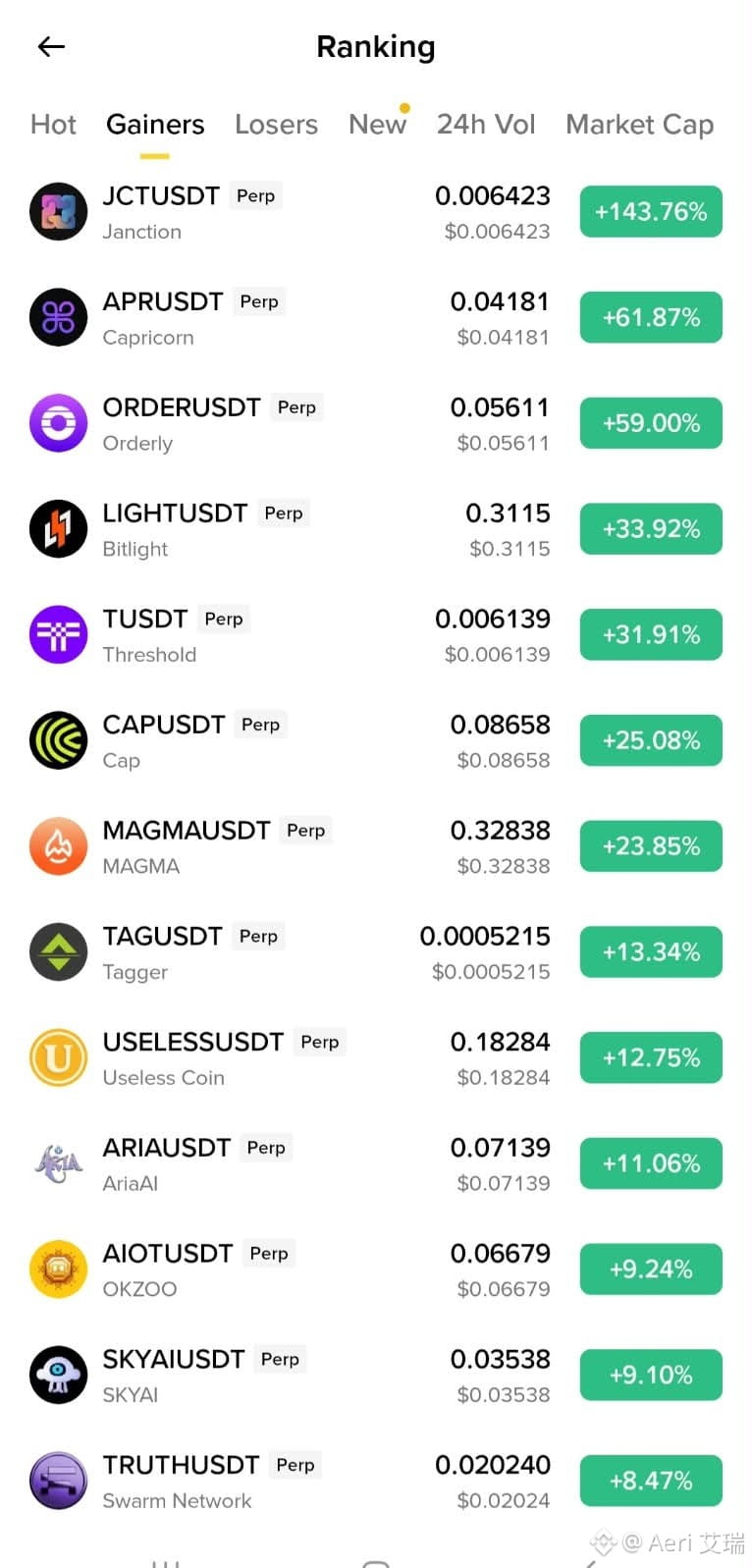
👀 What’s getting attention in the crypto market today?
Binance’s trending list is a useful place to start when exploring which coins are attracting interest. 📊
I’m keeping these names on my radar today—not rushing into trades, just watching the movement and looking for potential opportunities.
Remember, attention can change quickly in crypto. Check the volume, price action, and your risk before making a move.
Watch the market. Do your research. Trade with a plan. 🎯
Which coin caught your eye today? 👇
$JCT
{future}(JCTUSDT)
$T
{future}(TUSDT)
$APR
{future}(APRUSDT)
#Binance
#Aeri
#MooDCirCuiT
👀 What’s getting attention in the crypto market today?
Binance’s trending list is a useful place to start when exploring which coins are attracting interest. 📊
I’m keeping these names on my radar today—not rushing into trades, just watching the movement and looking for potential opportunities.
Remember, attention can change quickly in crypto. Check the volume, price action, and your risk before making a move.
Watch the market. Do your research. Trade with a plan. 🎯
Which coin caught your eye today? 👇
$JCT
$T
$APR
#Binance
#Aeri
#MooDCirCuiT
Binance’s trending list is a useful place to start when exploring which coins are attracting interest. 📊
I’m keeping these names on my radar today—not rushing into trades, just watching the movement and looking for potential opportunities.
Remember, attention can change quickly in crypto. Check the volume, price action, and your risk before making a move.
Watch the market. Do your research. Trade with a plan. 🎯
Which coin caught your eye today? 👇
$JCT
$T
$APR
#Binance
#Aeri
#MooDCirCuiT
1
5
1k
·
--
🌍 Crypto markets never stop moving, and neither do the opportunities to learn. Exploring Binance Pick Season 1! 📊 #BinancePick
$LIGHT
{future}(LIGHTUSDT)
$USELESS
{future}(USELESSUSDT)
$ORDER
{future}(ORDERUSDT)
🌍 Crypto markets never stop moving, and neither do the opportunities to learn. Exploring Binance Pick Season 1! 📊 #BinancePick
$LIGHT
$USELESS
$ORDER
$LIGHT
$USELESS
$ORDER

3
101
·
--
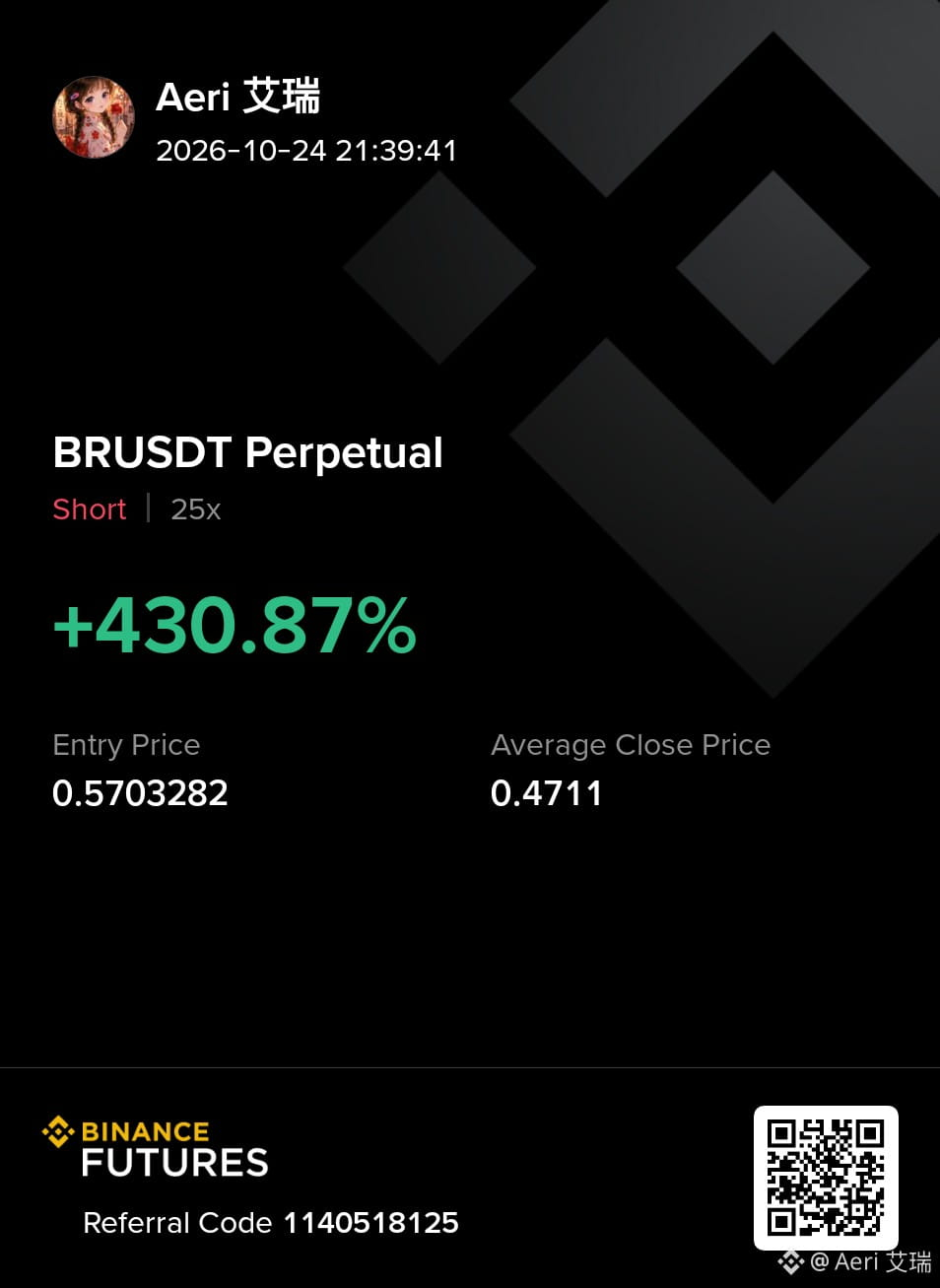
Finally closed my $BR trade after 38 long days! 😮💨 This market really tests my patience. Every time I go long, it goes short, and when I go short, it goes long. 😭📉📈
{future}(BRUSDT)
Finally closed my $BR trade after 38 long days! 😮💨 This market really tests my patience. Every time I go long, it goes short, and when I go short, it goes long. 😭📉📈
4
10
2.8k
·
--
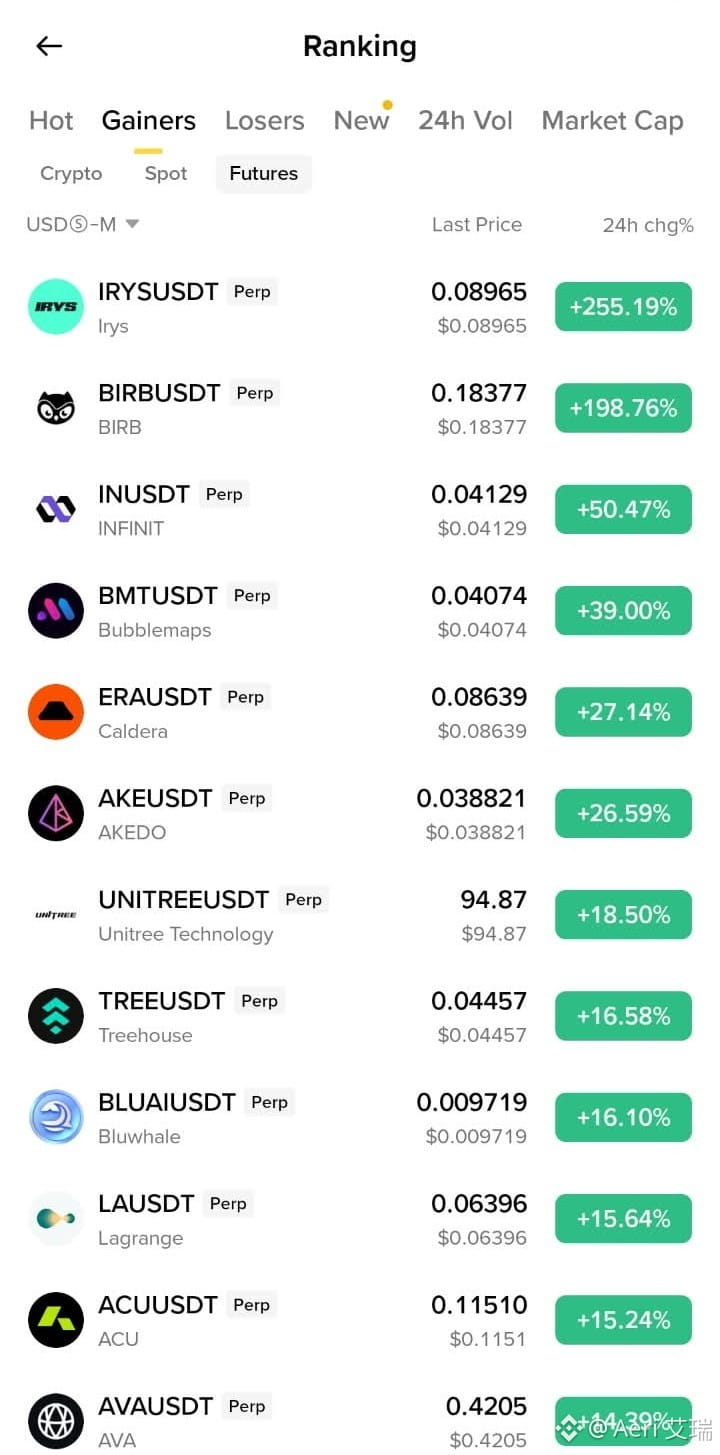
🔥 TODAY'S TRENDING COINS ON BINANCE 📊
Looking for coins that are catching the market's attention today? 👀
Here are today's trending coins on Binance! Keep an eye on them, do your own research, and watch how the market moves. 📈
⚡ Save this post to keep these coins on your radar.
💡 Remember: Trending doesn't automatically mean profitable.
Always check the volume, price action, and risk before entering a trade.
Which coin are you watching today? 👇
$BIRB
$IRYS
{future}(BIRBUSDT)
{future}(IRYSUSDT)
🔥 TODAY'S TRENDING COINS ON BINANCE 📊
Looking for coins that are catching the market's attention today? 👀
Here are today's trending coins on Binance! Keep an eye on them, do your own research, and watch how the market moves. 📈
⚡ Save this post to keep these coins on your radar.
💡 Remember: Trending doesn't automatically mean profitable.
Always check the volume, price action, and risk before entering a trade.
Which coin are you watching today? 👇
$BIRB
$IRYS
Looking for coins that are catching the market's attention today? 👀
Here are today's trending coins on Binance! Keep an eye on them, do your own research, and watch how the market moves. 📈
⚡ Save this post to keep these coins on your radar.
💡 Remember: Trending doesn't automatically mean profitable.
Always check the volume, price action, and risk before entering a trade.
Which coin are you watching today? 👇
$BIRB
$IRYS
1
2
1.4k
·
--
Жоғары (өспелі)
🏆 The competition is heating up! Making smarter picks and climbing toward rewards in Binance Pick Season 1. 💰 #BinancePick
$IN
{future}(INUSDT)
#Aeri
$BIRB
{future}(BIRBUSDT)
#MooDCirCuiT
$IRYS
{future}(IRYSUSDT)
🏆 The competition is heating up! Making smarter picks and climbing toward rewards in Binance Pick Season 1. 💰 #BinancePick
$IN
#Aeri
$BIRB
#MooDCirCuiT
$IRYS
$IN
#Aeri
$BIRB
#MooDCirCuiT
$IRYS

818
·
--
📊 Strategy meets predictions on Binance Pick! Earning scores, learning markets, and aiming higher every day. 🔥 #BinancePick
$MAGMA
{future}(MAGMAUSDT)
#Aeri
$BTR
{future}(BTRUSDT)
#MooDCirCuiT
$AGT
{future}(AGTUSDT)
📊 Strategy meets predictions on Binance Pick! Earning scores, learning markets, and aiming higher every day. 🔥 #BinancePick
$MAGMA
#Aeri
$BTR
#MooDCirCuiT
$AGT
$MAGMA
#Aeri
$BTR
#MooDCirCuiT
$AGT

1
1k
·
--
📈 Testing my market insights with Binance Pick! Every prediction counts. Let's climb the leaderboard! 🔥 #BinancePick
$ALT
{future}(ALTUSDT)
#Aeri
$BILL
{future}(BILLUSDT)
#MooDCirCuiT
$IRYS
{future}(IRYSUSDT)
📈 Testing my market insights with Binance Pick! Every prediction counts. Let's climb the leaderboard! 🔥 #BinancePick
$ALT
#Aeri
$BILL
#MooDCirCuiT
$IRYS
$ALT
#Aeri
$BILL
#MooDCirCuiT
$IRYS

184
·
--
Жоғары (өспелі)
🏆 Binance Pick Season 1 is live!
Make smart predictions, earn scores, and compete for 1M USDC! 🚀 #BinancePick
#MooDCirCuiT
#Aeri
$APT
{future}(APTUSDT)
$DOOD
{future}(DOODUSDT)
$AKE
{future}(AKEUSDT)
🏆 Binance Pick Season 1 is live!
Make smart predictions, earn scores, and compete for 1M USDC! 🚀 #BinancePick
#MooDCirCuiT
#Aeri
$APT
$DOOD
$AKE
Make smart predictions, earn scores, and compete for 1M USDC! 🚀 #BinancePick
#MooDCirCuiT
#Aeri
$APT
$DOOD
$AKE

254
·
--
Дәйексөз келтірілген мазмұн жойылды
1
388
·
--
$KITE Businesses Need a Way to Trust AI Agents Too
Most conversations about AI focus on what agents can do for users.
But there is another side to the story: what happens when an agent approaches a business, requests a paid service or tries to complete a transaction?
A business needs to understand which agent is acting, whether it has permission to act, and whether a payment is properly authorized.
@GoKiteAI 's approach to agent identity, delegated permissions and verifiable payment activity targets parts of this challenge. These mechanisms could help create clearer boundaries between a human user's authority and the actions performed by an AI agent.
The opportunity is interesting, but adoption will depend on practical integrations, security, and whether businesses find the system useful.
The agent economy needs trust on both sides of every transaction.
#KiteBBW $KITE
What will businesses need most to trust AI agents?
$KITE Businesses Need a Way to Trust AI Agents Too
Most conversations about AI focus on what agents can do for users.
But there is another side to the story: what happens when an agent approaches a business, requests a paid service or tries to complete a transaction?
A business needs to understand which agent is acting, whether it has permission to act, and whether a payment is properly authorized.
@KITE AI 中文 's approach to agent identity, delegated permissions and verifiable payment activity targets parts of this challenge. These mechanisms could help create clearer boundaries between a human user's authority and the actions performed by an AI agent.
The opportunity is interesting, but adoption will depend on practical integrations, security, and whether businesses find the system useful.
The agent economy needs trust on both sides of every transaction.
#KiteBBW $KITE
What will businesses need most to trust AI agents?
Most conversations about AI focus on what agents can do for users.
But there is another side to the story: what happens when an agent approaches a business, requests a paid service or tries to complete a transaction?
A business needs to understand which agent is acting, whether it has permission to act, and whether a payment is properly authorized.
@KITE AI 中文 's approach to agent identity, delegated permissions and verifiable payment activity targets parts of this challenge. These mechanisms could help create clearer boundaries between a human user's authority and the actions performed by an AI agent.
The opportunity is interesting, but adoption will depend on practical integrations, security, and whether businesses find the system useful.
The agent economy needs trust on both sides of every transaction.
#KiteBBW $KITE
What will businesses need most to trust AI agents?
🔐 Verifiable identity
75%
🛡️ Limited permissions
0%
💳 Secure payments
25%
📋 Transparent activity
0%
4 дауыс • Дауыс беру жабық
7
11
402
·
--
#nil $NIL @nillionnetwork
okay so I closed a 20x short on NIL...
tbh I was just scalping and held it for like 3 hours, but it made me dig into what @nillionnetwork is actually building. ngl the tech is kinda wild.
it's not just a token, it's basically a "blind computer" for private data. the part that really caught my attention though was Covenants. imagine placing an order on Ethereum but it stays totally encrypted until a specific condition is met. nobody can read it. no MEV bots front running you, no copying your moves.
with DUSK now live on ETH mainnet, this isn't just some roadmap promise anymore. it's the first release of their 7-era plan. And no single node holds the key to unlock it.
anyway, my trade card is below if you wanna see the 20x. what would you build first if your instructions could stay hidden until exactly the right moment?
#NIL [ ](https://www.binance.com/square/hashtag/NIL)
#nil $NIL @Nillion
okay so I closed a 20x short on NIL...
tbh I was just scalping and held it for like 3 hours, but it made me dig into what @Nillion is actually building. ngl the tech is kinda wild.
it's not just a token, it's basically a "blind computer" for private data. the part that really caught my attention though was Covenants. imagine placing an order on Ethereum but it stays totally encrypted until a specific condition is met. nobody can read it. no MEV bots front running you, no copying your moves.
with DUSK now live on ETH mainnet, this isn't just some roadmap promise anymore. it's the first release of their 7-era plan. And no single node holds the key to unlock it.
anyway, my trade card is below if you wanna see the 20x. what would you build first if your instructions could stay hidden until exactly the right moment?
#NIL
okay so I closed a 20x short on NIL...
tbh I was just scalping and held it for like 3 hours, but it made me dig into what @Nillion is actually building. ngl the tech is kinda wild.
it's not just a token, it's basically a "blind computer" for private data. the part that really caught my attention though was Covenants. imagine placing an order on Ethereum but it stays totally encrypted until a specific condition is met. nobody can read it. no MEV bots front running you, no copying your moves.
with DUSK now live on ETH mainnet, this isn't just some roadmap promise anymore. it's the first release of their 7-era plan. And no single node holds the key to unlock it.
anyway, my trade card is below if you wanna see the 20x. what would you build first if your instructions could stay hidden until exactly the right moment?
#NIL
2
12
493
·
--
Төмен (кемімелі)
$XRP Setup | SHORT
XRP has lost its footing after a clean breakdown below the $1.38 support zone. The 1-hour chart shows price getting rejected at the EMAs, and momentum is clearly bearish. I am watching for a retest of broken support before considering continuation.
Trade Plan
Direction: Short
Entry Zone: $1.3338 – $1.345
Stop Loss: $1.3780
TP1: $1.3237
TP2: $1.3000
TP3: $1.2800
Why This Makes Sense
• XRP closed below the critical $1.35–$1.38 support band, flipping this area into resistance. The 50-EMA at $1.40 and 100-EMA near $1.34 are now overhead caps, reinforcing the bearish structure.
• The daily RSI has dropped to around 40, showing weak momentum without yet signaling an oversold bounce. MACD remains below the zero line with no bullish crossover in sight.
• A long-to-short ratio of 2.32 means leveraged longs heavily outnumber shorts. If $1.32 fails, forced liquidations could accelerate the drop toward $1.28 and potentially $1.25.
• Despite institutional news like Standard Chartered's RLUSD custody deal, ETF inflows have slowed to roughly $12 million this month—about 75% lower than September.
Risk Note
This is a momentum short in a market that can squeeze hard on any headline. The upcoming XRPL protocol upgrade on October 23 and Ripple's Swell conference on October 27–29 are potential catalysts that could trigger a sharp reversal. Keep position size small, respect the stop loss, and do not chase entries far below $1.34.
What do you think?
Would you take this setup, or wait for a confirmed retest of $1.38 before entering?
$XRP
{future}(XRPUSDT)
$XRP Setup | SHORT
XRP has lost its footing after a clean breakdown below the $1.38 support zone. The 1-hour chart shows price getting rejected at the EMAs, and momentum is clearly bearish. I am watching for a retest of broken support before considering continuation.
Trade Plan
Direction: Short
Entry Zone: $1.3338 – $1.345
Stop Loss: $1.3780
TP1: $1.3237
TP2: $1.3000
TP3: $1.2800
Why This Makes Sense
• XRP closed below the critical $1.35–$1.38 support band, flipping this area into resistance. The 50-EMA at $1.40 and 100-EMA near $1.34 are now overhead caps, reinforcing the bearish structure.
• The daily RSI has dropped to around 40, showing weak momentum without yet signaling an oversold bounce. MACD remains below the zero line with no bullish crossover in sight.
• A long-to-short ratio of 2.32 means leveraged longs heavily outnumber shorts. If $1.32 fails, forced liquidations could accelerate the drop toward $1.28 and potentially $1.25.
• Despite institutional news like Standard Chartered's RLUSD custody deal, ETF inflows have slowed to roughly $12 million this month—about 75% lower than September.
Risk Note
This is a momentum short in a market that can squeeze hard on any headline. The upcoming XRPL protocol upgrade on October 23 and Ripple's Swell conference on October 27–29 are potential catalysts that could trigger a sharp reversal. Keep position size small, respect the stop loss, and do not chase entries far below $1.34.
What do you think?
Would you take this setup, or wait for a confirmed retest of $1.38 before entering?
$XRP
XRP has lost its footing after a clean breakdown below the $1.38 support zone. The 1-hour chart shows price getting rejected at the EMAs, and momentum is clearly bearish. I am watching for a retest of broken support before considering continuation.
Trade Plan
Direction: Short
Entry Zone: $1.3338 – $1.345
Stop Loss: $1.3780
TP1: $1.3237
TP2: $1.3000
TP3: $1.2800
Why This Makes Sense
• XRP closed below the critical $1.35–$1.38 support band, flipping this area into resistance. The 50-EMA at $1.40 and 100-EMA near $1.34 are now overhead caps, reinforcing the bearish structure.
• The daily RSI has dropped to around 40, showing weak momentum without yet signaling an oversold bounce. MACD remains below the zero line with no bullish crossover in sight.
• A long-to-short ratio of 2.32 means leveraged longs heavily outnumber shorts. If $1.32 fails, forced liquidations could accelerate the drop toward $1.28 and potentially $1.25.
• Despite institutional news like Standard Chartered's RLUSD custody deal, ETF inflows have slowed to roughly $12 million this month—about 75% lower than September.
Risk Note
This is a momentum short in a market that can squeeze hard on any headline. The upcoming XRPL protocol upgrade on October 23 and Ripple's Swell conference on October 27–29 are potential catalysts that could trigger a sharp reversal. Keep position size small, respect the stop loss, and do not chase entries far below $1.34.
What do you think?
Would you take this setup, or wait for a confirmed retest of $1.38 before entering?
$XRP
5
469
·
--
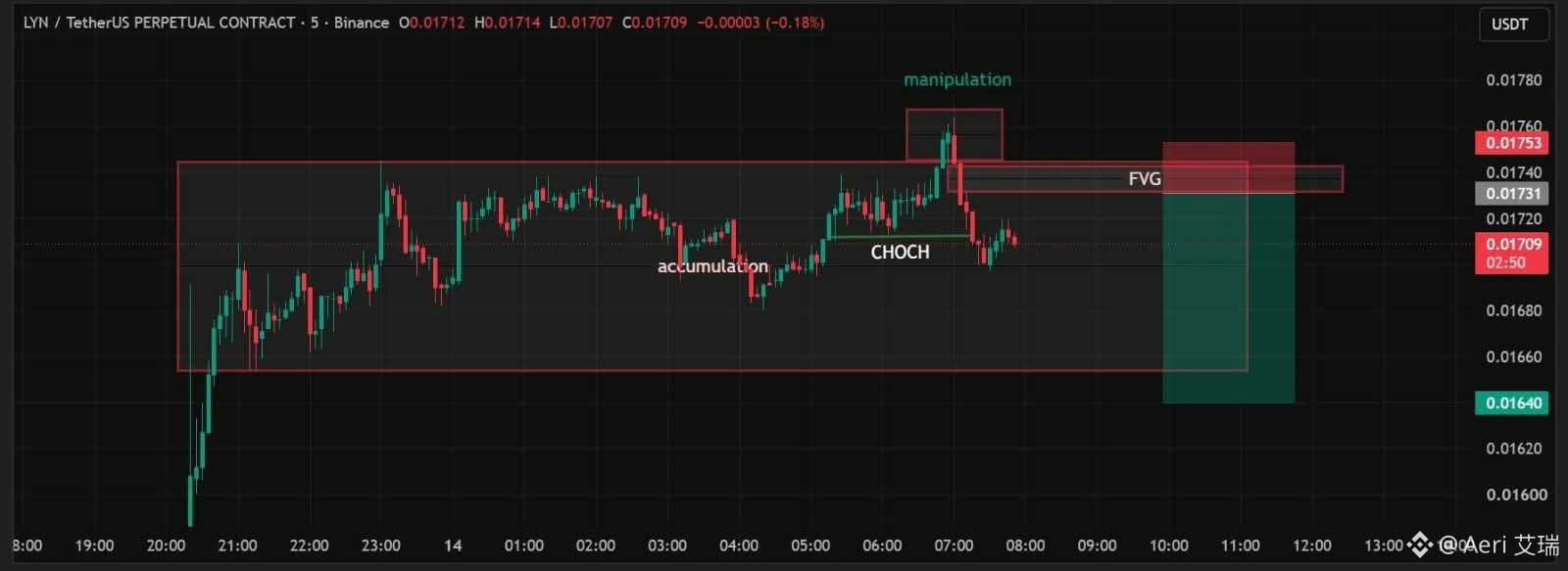
$LYN SHORT
Price is locked in a clear 1H downtrend, and the recent 5m spike into the FVG at 0.01753 looks like a classic manipulation before continuation. With Binance cutting leverage tiers on Oct 16 forcing high-leverage longs to unwind, the path of least resistance is down.
Trading Ideas Short $LYN
Entry: 0.01710 - 0.01730 (current range / FVG retest)
SL: 0.01765 (above the manipulation high and FVG)
TP1: 0.01640 (range low / initial target)
TP2: 0.01580 (manipulation wick low)
TP3: 0.01500 (next psychological support)
Risk: A 1H close above 0.01765 invalidates the bearish structure and signals a potential trend reversal. The leverage adjustment on Oct 16 could also cause a violent short squeeze if too many traders are positioned short. Size accordingly.
What do you think?
Would you take this setup, or wait for confirmation?
$LYN
{future}(LYNUSDT)
#MooDCirCuiT
#Aeri
$LYN SHORT
Price is locked in a clear 1H downtrend, and the recent 5m spike into the FVG at 0.01753 looks like a classic manipulation before continuation. With Binance cutting leverage tiers on Oct 16 forcing high-leverage longs to unwind, the path of least resistance is down.
Trading Ideas Short $LYN
Entry: 0.01710 - 0.01730 (current range / FVG retest)
SL: 0.01765 (above the manipulation high and FVG)
TP1: 0.01640 (range low / initial target)
TP2: 0.01580 (manipulation wick low)
TP3: 0.01500 (next psychological support)
Risk: A 1H close above 0.01765 invalidates the bearish structure and signals a potential trend reversal. The leverage adjustment on Oct 16 could also cause a violent short squeeze if too many traders are positioned short. Size accordingly.
What do you think?
Would you take this setup, or wait for confirmation?
$LYN
#MooDCirCuiT
#Aeri
Price is locked in a clear 1H downtrend, and the recent 5m spike into the FVG at 0.01753 looks like a classic manipulation before continuation. With Binance cutting leverage tiers on Oct 16 forcing high-leverage longs to unwind, the path of least resistance is down.
Trading Ideas Short $LYN
Entry: 0.01710 - 0.01730 (current range / FVG retest)
SL: 0.01765 (above the manipulation high and FVG)
TP1: 0.01640 (range low / initial target)
TP2: 0.01580 (manipulation wick low)
TP3: 0.01500 (next psychological support)
Risk: A 1H close above 0.01765 invalidates the bearish structure and signals a potential trend reversal. The leverage adjustment on Oct 16 could also cause a violent short squeeze if too many traders are positioned short. Size accordingly.
What do you think?
Would you take this setup, or wait for confirmation?
$LYN
#MooDCirCuiT
#Aeri
1
7
1k
Көбірек контент көру үшін кіріңіз
Binance Square платформасында әлемдік криптоқоғамдастыққа қосылыңыз
⚡️ Криптовалюта туралы ең соңғы және пайдалы ақпаратты алыңыз.
💬 Әлемдегі ең ірі криптобиржаның сеніміне ие.
👍 Расталған авторлардың нақты пікірлерін табыңыз.
Электрондық пошта/телефон нөмірі
Трендтегі тақырыптар
BinancePick
3.2M рет көрілді
158,104 адам талқылап жатыр
Join #EarningsSeason: Predict Earnings on Binance Pick, Share Your Take on Binance Square!
Binance Square Official
·413 лайк
·344.1k рет көрілді
EarningsSeason
5.4M рет көрілді
26,303 адам талқылап жатыр
BitmineAdds10452ETH
56 рет көрілді
22 адам талқылап жатыр