
#ondo
ondo
8.6M рет көрілді
23,402 адам талқылап жатыр
Қызу саудада
Ең соңғы

·
--
🌍 $ONDO : ONDO JOINS SINGAPORE'S MAJOR TOKENIZATION INITIATIVE!
Ondo Finance has announced a new institutional milestone:
- November 18: Ondo joined the Monetary Authority of Singapore's Project Guardian.
- Global collaboration: The initiative brings together regulators and major financial institutions.
- Main focus: Improving tokenized asset liquidity, investor protection, and cross-border connections.
- Another milestone: Ondo's Intelligent Portfolios surpassed $70M in TVL, according to its November 17 update.
Could institutional partnerships help shape the future of tokenized assets?
$ONDO
{future}(ONDOUSDT)
.
.
.
#ONDO #RWA #Tokenization
Not financial advice. DYOR.
🌍 $ONDO : ONDO JOINS SINGAPORE'S MAJOR TOKENIZATION INITIATIVE!
Ondo Finance has announced a new institutional milestone:
- November 18: Ondo joined the Monetary Authority of Singapore's Project Guardian.
- Global collaboration: The initiative brings together regulators and major financial institutions.
- Main focus: Improving tokenized asset liquidity, investor protection, and cross-border connections.
- Another milestone: Ondo's Intelligent Portfolios surpassed $70M in TVL, according to its November 17 update.
Could institutional partnerships help shape the future of tokenized assets?
$ONDO
.
.
.
#ONDO #RWA #Tokenization
Not financial advice. DYOR.
Abu Fahadأ:
💛
2
1
312

Расталды
Мақала
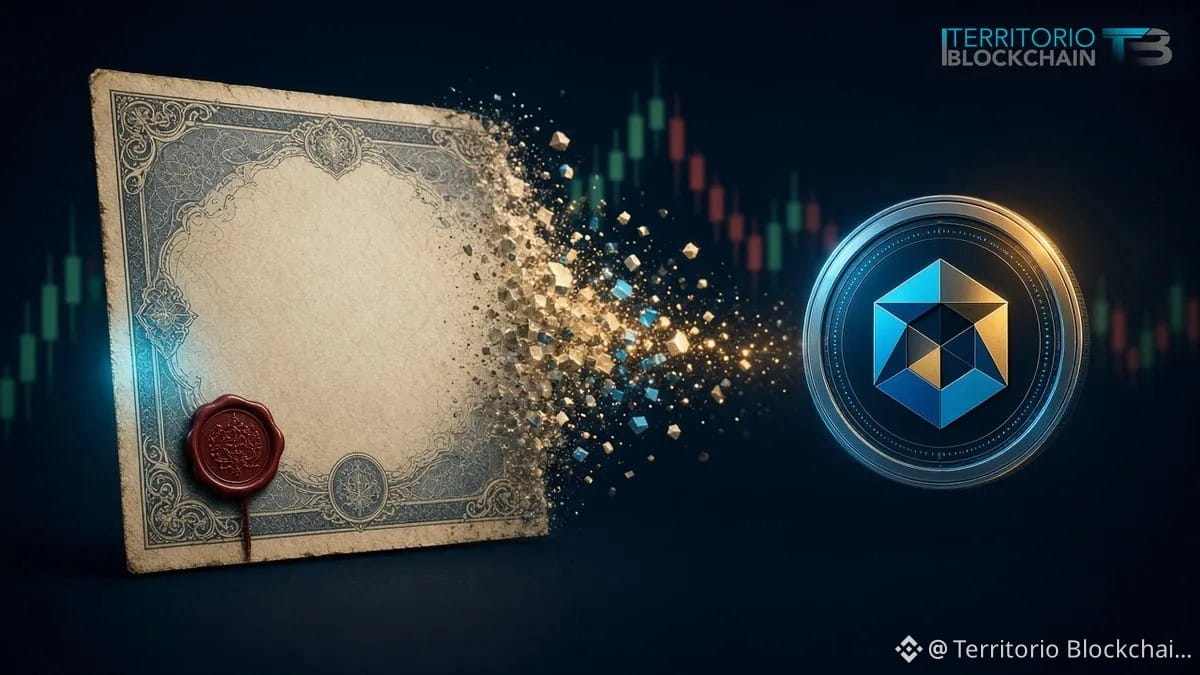
Anthropic tokenizada, ¿qué compras de verdad con ANTon?El mismo día en que Anthropic empezó a cotizar en el Nasdaq con el código ANT, Ondo Global Markets lanzó ANTon, un token ligado a esa acción. Promete exposición al precio desde 1 dólar, sin comisión de emisión y con creación y reembolso las 24 horas, fines de semana incluidos. La pregunta importante es otra: ¿qué tienes en la mano cuando lo compras?
🔹 No compras la acción. Según la documentación legal de Ondo, sus acciones tokenizadas son notas estructuradas, un instrumento de deuda emitido por Ondo Global Markets (BVI) Limited, en las Islas Vírgenes Británicas, con tus derechos regidos por la ley suiza.
🔹 Esa deuda promete un importe que sigue el precio de la acción, dividendos incluidos. Pero no da voto, ni derecho de información, ni ninguna relación con Anthropic, que no emite, patrocina ni respalda ANTon.
🔹 Como reinvierte los dividendos, con el tiempo un token puede equivaler a algo más de una acción y lo normal es que su precio se separe del de ANT.
🔹 Respaldo: cada token está cubierto por la acción correspondiente más el efectivo en tránsito, con un colchón extra de garantía. Las acciones están en brókeres custodios registrados en EE. UU. y Ankura Trust Company tiene una garantía de primer rango sobre ellas y verifica las posiciones a diario.
🔹 Tu reclamación es contra el emisor y sus garantías, no contra Anthropic. Las disputas se resuelven por arbitraje en Zúrich.
🔹 ¿Y en Europa? Los documentos de Ondo no van en la misma dirección: unos hablan de un folleto aprobado en Liechtenstein y notificado a ciertos países del EEE; otros incluyen todo el EEE entre las jurisdicciones con restricciones, solo para profesionales o inversores cualificados.
En mi opinión, está mejor montado que muchos inventos que hemos visto, pero conviene tener claro que compras una deuda, no un trozo de Anthropic. Antes de invertir, lee la ficha del propio token y comprueba siempre que quien te lo vende está autorizado.
Análisis completo en territorioblockchain.com
#Tokenizacion #RWA #Ondo #Anthropic
Anthropic tokenizada, ¿qué compras de verdad con ANTon?
El mismo día en que Anthropic empezó a cotizar en el Nasdaq con el código ANT, Ondo Global Markets lanzó ANTon, un token ligado a esa acción. Promete exposición al precio desde 1 dólar, sin comisión de emisión y con creación y reembolso las 24 horas, fines de semana incluidos. La pregunta importante es otra: ¿qué tienes en la mano cuando lo compras?
🔹 No compras la acción. Según la documentación legal de Ondo, sus acciones tokenizadas son notas estructuradas, un instrumento de deuda emitido por Ondo Global Markets (BVI) Limited, en las Islas Vírgenes Británicas, con tus derechos regidos por la ley suiza.
🔹 Esa deuda promete un importe que sigue el precio de la acción, dividendos incluidos. Pero no da voto, ni derecho de información, ni ninguna relación con Anthropic, que no emite, patrocina ni respalda ANTon.
🔹 Como reinvierte los dividendos, con el tiempo un token puede equivaler a algo más de una acción y lo normal es que su precio se separe del de ANT.
🔹 Respaldo: cada token está cubierto por la acción correspondiente más el efectivo en tránsito, con un colchón extra de garantía. Las acciones están en brókeres custodios registrados en EE. UU. y Ankura Trust Company tiene una garantía de primer rango sobre ellas y verifica las posiciones a diario.
🔹 Tu reclamación es contra el emisor y sus garantías, no contra Anthropic. Las disputas se resuelven por arbitraje en Zúrich.
🔹 ¿Y en Europa? Los documentos de Ondo no van en la misma dirección: unos hablan de un folleto aprobado en Liechtenstein y notificado a ciertos países del EEE; otros incluyen todo el EEE entre las jurisdicciones con restricciones, solo para profesionales o inversores cualificados.
En mi opinión, está mejor montado que muchos inventos que hemos visto, pero conviene tener claro que compras una deuda, no un trozo de Anthropic. Antes de invertir, lee la ficha del propio token y comprueba siempre que quien te lo vende está autorizado.
Análisis completo en territorioblockchain.com
#Tokenizacion #RWA #Ondo #Anthropic
2
1.7k

·
--
Жоғары (өспелі)
$ONDO
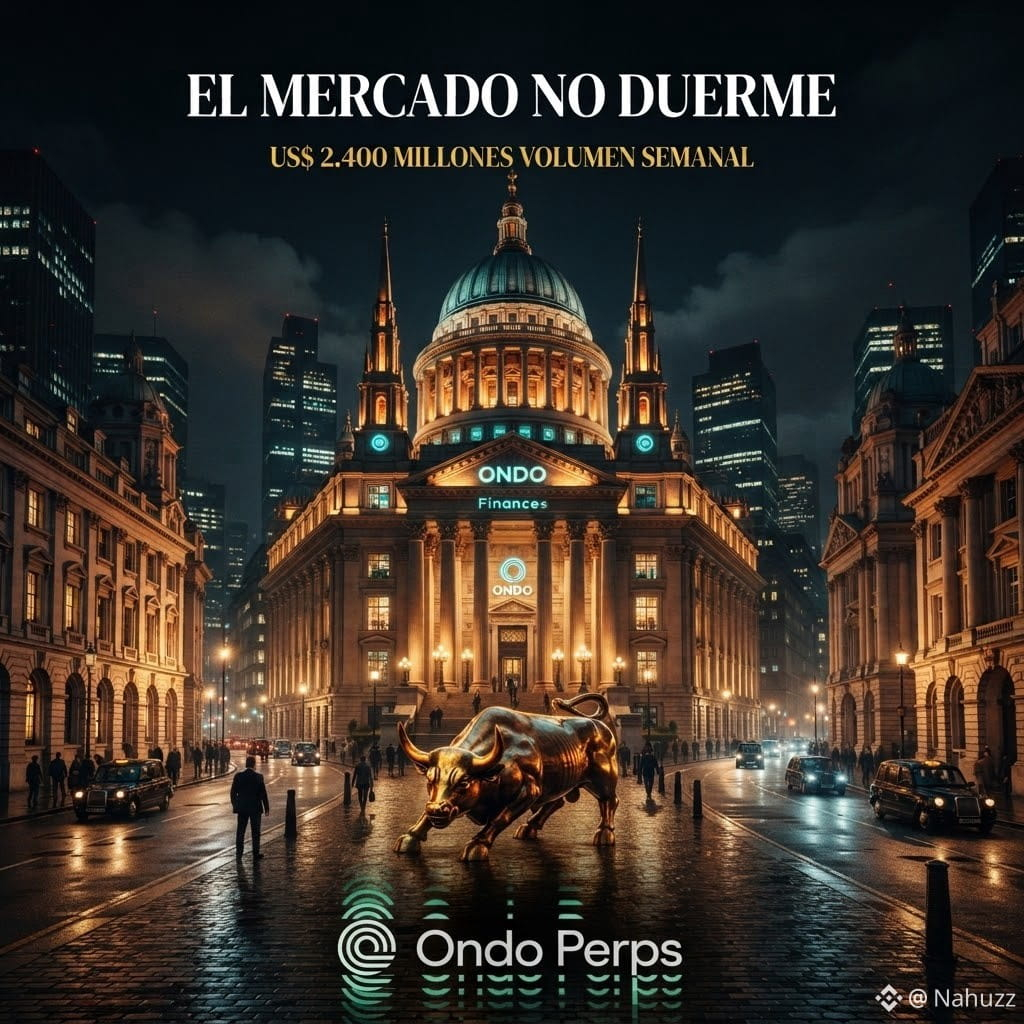
ONDO PERPS SUPERA LOS 2.400 MILLONES DE DÓLARES EN UNA SEMANA.
Ondo Perps registró más de 2.400 millones de dólares en volumen de operaciones durante la última semana. Se trata del segundo récord semanal consecutivo de la plataforma, que permite operar con contratos de futuros vinculados a acciones estadounidenses, ETF y materias primas.
Una de sus características es que permite operar las 24 horas del día, los siete días de la semana, utilizando activos financieros tokenizados como garantía.
Este crecimiento llega mientras ONDO atraviesa una etapa complicada en el mercado.
Su precio se encuentra cerca de los 0,29 dólares, un nivel que los compradores intentan defender después de varias jornadas de caídas.
En el análisis técnico de cuatro horas, el analista Crypto With Gopal identifica los 0,313 dólares como una zona que el precio necesita superar para confirmar una posible recuperación. Si consigue hacerlo, el siguiente objetivo estaría cerca de los 0,34 dólares.
Por ahora, el escenario sigue abierto. El volumen de Ondo Perps muestra una actividad importante dentro de su mercado de derivados.
OPERÁ ACÁ 👇
{spot}(ONDOUSDT)
#ONDO #crypto #TradingCommunity #TrendingTopic #news
$ONDO
ONDO PERPS SUPERA LOS 2.400 MILLONES DE DÓLARES EN UNA SEMANA.
Ondo Perps registró más de 2.400 millones de dólares en volumen de operaciones durante la última semana. Se trata del segundo récord semanal consecutivo de la plataforma, que permite operar con contratos de futuros vinculados a acciones estadounidenses, ETF y materias primas.
Una de sus características es que permite operar las 24 horas del día, los siete días de la semana, utilizando activos financieros tokenizados como garantía.
Este crecimiento llega mientras ONDO atraviesa una etapa complicada en el mercado.
Su precio se encuentra cerca de los 0,29 dólares, un nivel que los compradores intentan defender después de varias jornadas de caídas.
En el análisis técnico de cuatro horas, el analista Crypto With Gopal identifica los 0,313 dólares como una zona que el precio necesita superar para confirmar una posible recuperación. Si consigue hacerlo, el siguiente objetivo estaría cerca de los 0,34 dólares.
Por ahora, el escenario sigue abierto. El volumen de Ondo Perps muestra una actividad importante dentro de su mercado de derivados.
OPERÁ ACÁ 👇
#ONDO #crypto #TradingCommunity #TrendingTopic #news
418

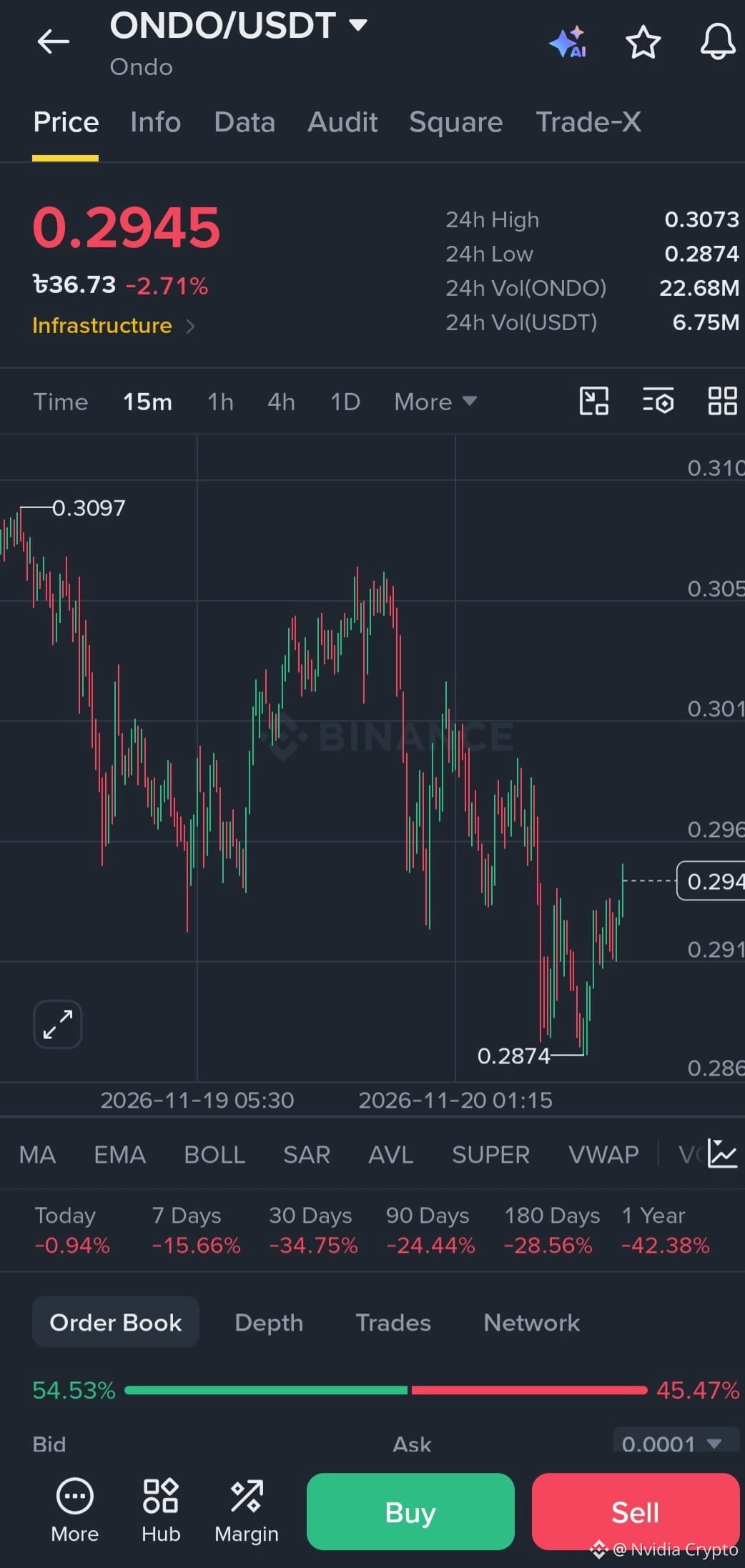
🚀 $ONDO BULLISH MOMENTUM — BREAKOUT WATCH!
$ONDO is reclaiming the 1H MA7. If bulls hold this level, the next target could be the MA25. 👀
📈 Trade Setup: LONG
🎯 Entry: $0.2912 – $0.2929
Take Profit:
TP1: $0.3061
TP2: $0.3173
🛑 Stop Loss: $0.2825
⚠️ Key Level: $0.2920 support.
If ONDO loses this level, bullish momentum could fade, with a possible retest of $0.2870.
No FOMO. No all-in. Trade smart, manage risk, and let price confirm! 🔥
#ONDO #CryptoTrading #Altcoins #BinanceSquare #TradingSetup #DYOR #NFA
Trade here
{future}(ONDOUSDT)
🚀 $ONDO BULLISH MOMENTUM — BREAKOUT WATCH!
$ONDO is reclaiming the 1H MA7. If bulls hold this level, the next target could be the MA25. 👀
📈 Trade Setup: LONG
🎯 Entry: $0.2912 – $0.2929
Take Profit:
TP1: $0.3061
TP2: $0.3173
🛑 Stop Loss: $0.2825
⚠️ Key Level: $0.2920 support.
If ONDO loses this level, bullish momentum could fade, with a possible retest of $0.2870.
No FOMO. No all-in. Trade smart, manage risk, and let price confirm! 🔥
#ONDO #CryptoTrading #Altcoins #BinanceSquare #TradingSetup #DYOR #NFA
Trade here
1
280
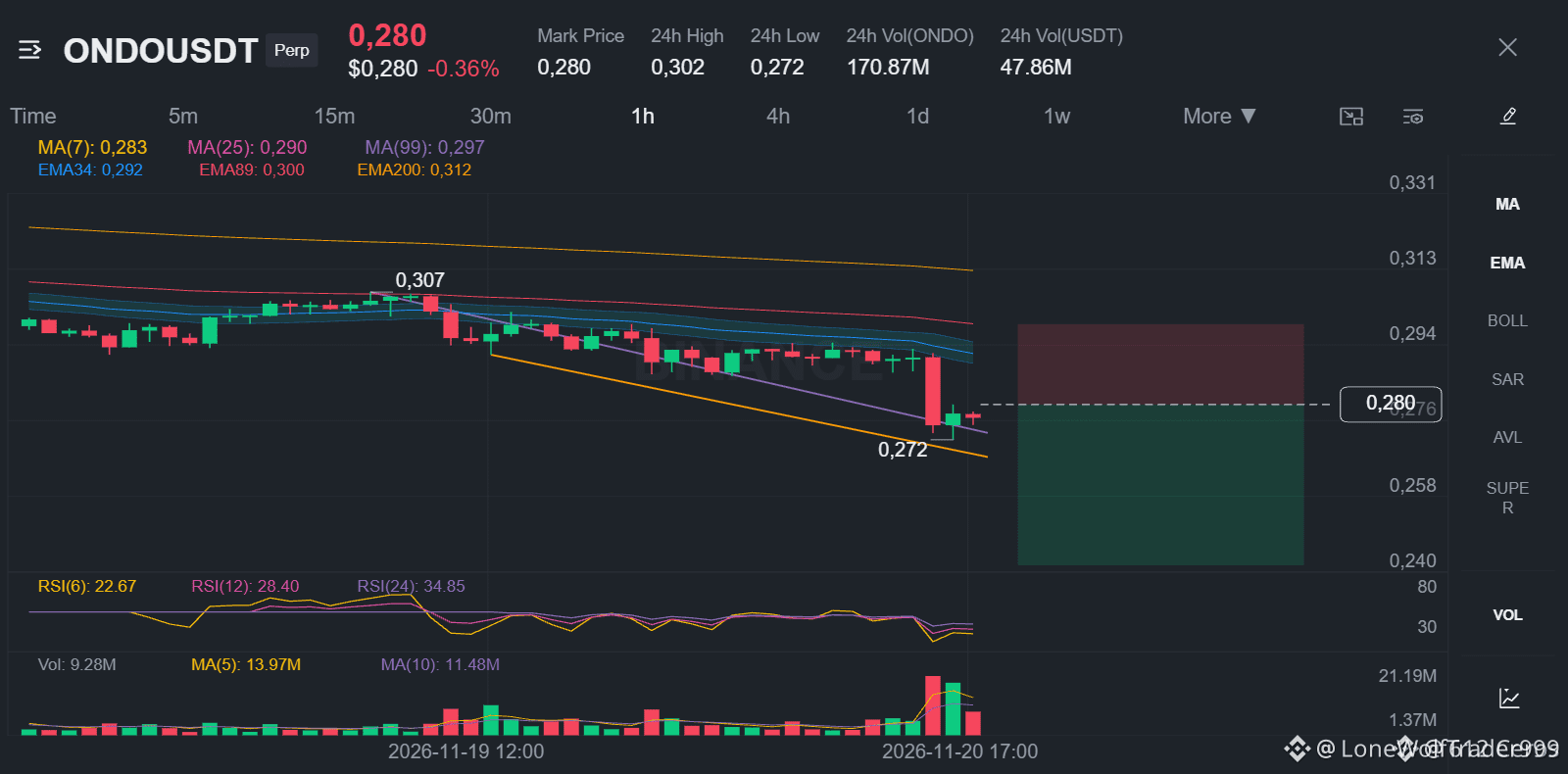
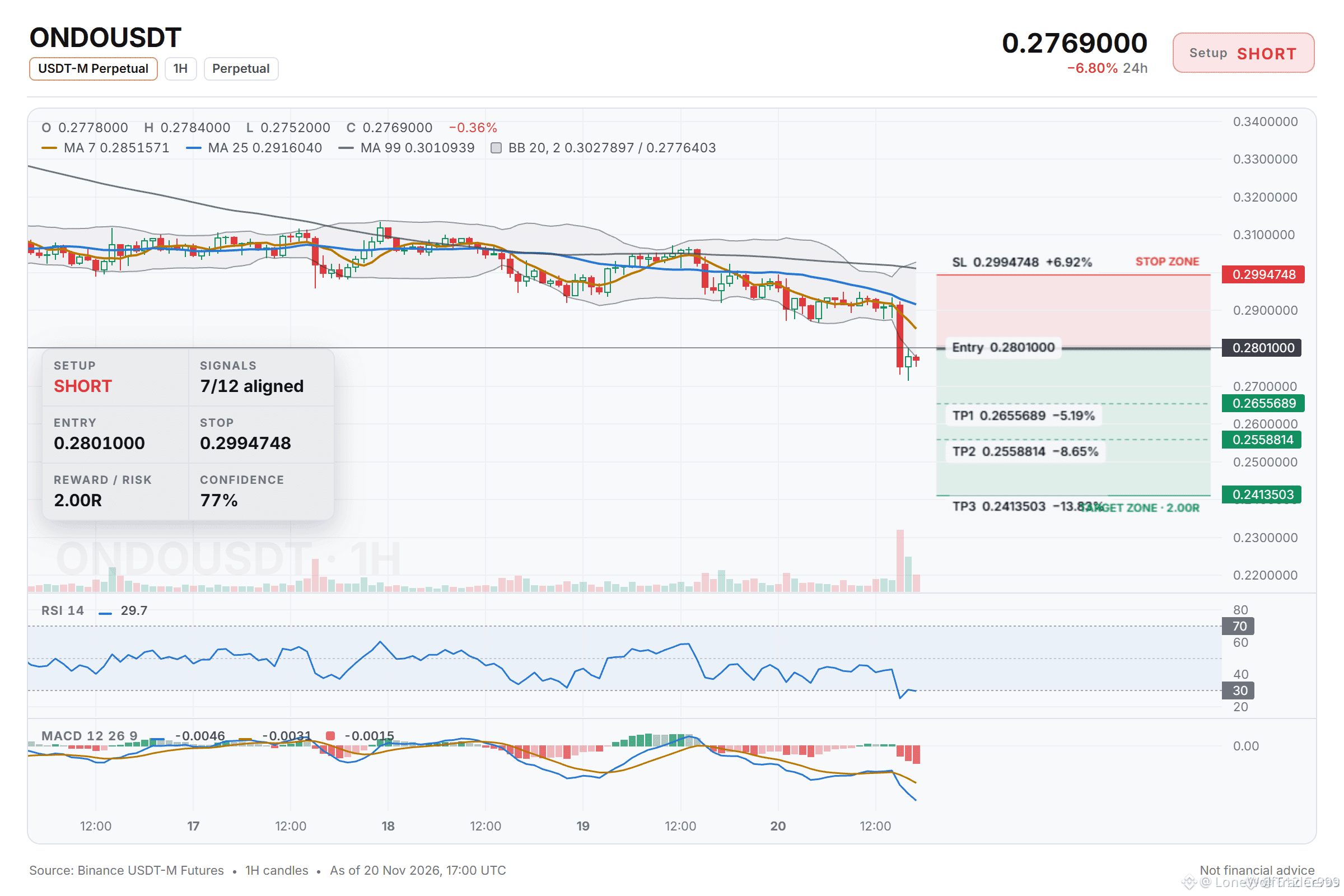
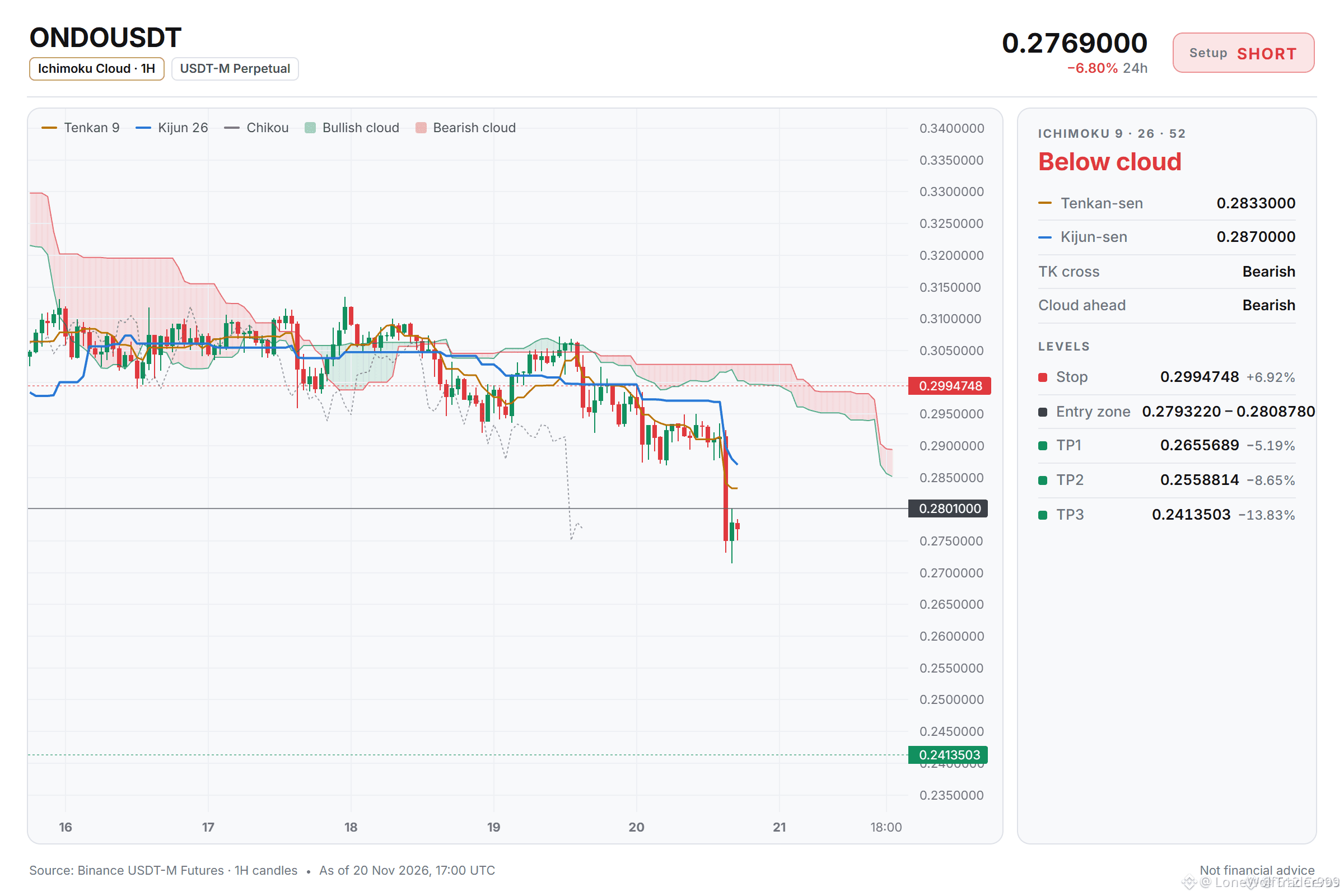
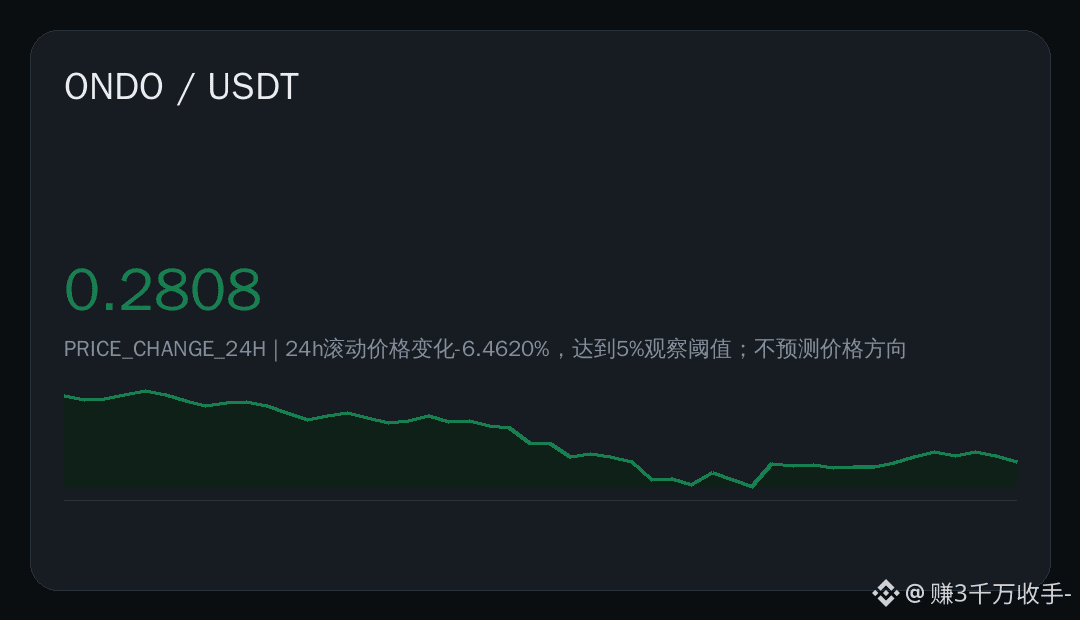
🚨 $ONDO SLIPPING THROUGH CRITICAL EMA SUPPORTS AS SELLERS SEIZE CONTROL! 📉
Entry: 0.2793220 - 0.2808780 ⚡
Target: 0.2655689 🚀
Stop Loss: 0.2994748 ⚠️
Bears are firmly driving the narrative here as price action breaks down beneath the stacked 4-hour and 1-hour moving average stack. 📊 Momentum is favoring downside continuation with sellers aggressively defending every minor bounce attempt. ⚡
Managing risk through structured scaling remains essential on this downward trajectory as liquidity thins out below current levels. 🌊 Where do you set your target if this bearish momentum accelerates further down? 👇
⚠️ Not financial advice. Always manage your risk. 🛡️
🏷️ #ONDO #ShortSetup #Bearish #Crypto
🐻 📉
5

ONDO is doing something genuinely cool this week and nobody seems to care.
Ondo just announced ANTon — a token that gives people outside the US day-one exposure to Anthropic's stock when it lists on Nasdaq. Tokenized stocks, real product, real launch.
The market's answer? ONDO down 6% to $0.27, parked right on its day low.
It's down 37% in a month and 87% off its $2.14 high. The RWA leader is shipping the future and getting sold anyway.
Levels I'm watching: $0.272 is today's low — lose that and there's not much underneath. $0.295 is the first level to take back.
Sometimes the story is right and the chart just doesn't care yet.
$ONDO $BTC
Not financial advice. DYOR.
#Ondo #RWA #Crypto

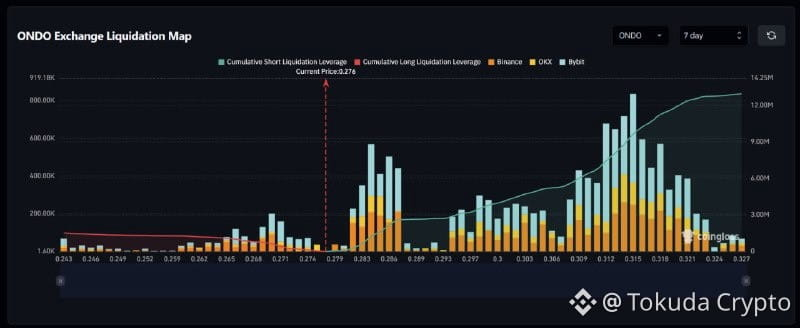
Bản đồ thanh lý 7 ngày của $ONDO (Index ~0.276) đang phát tín hiệu gì? Cửa sáng lúc này là quét short vùng 0.281–0.287, mạnh nhất quanh 0.284–0.286. Nếu vượt 0.287, mốc 0.294–0.304 sẽ trong tầm ngắm. Ngược lại, thủng 0.276 dễ kích hoạt quét long tại 0.270–0.274.
Theo anh em, bò $ONDO có đủ lực vượt kháng cự để hướng lên 0.315 không?
#ONDO #BinanceSquare #CryptoTrading #LiquidationMap
Theo anh em, bò $ONDO có đủ lực vượt kháng cự để hướng lên 0.315 không?
#ONDO #BinanceSquare #CryptoTrading #LiquidationMap
17


·
--
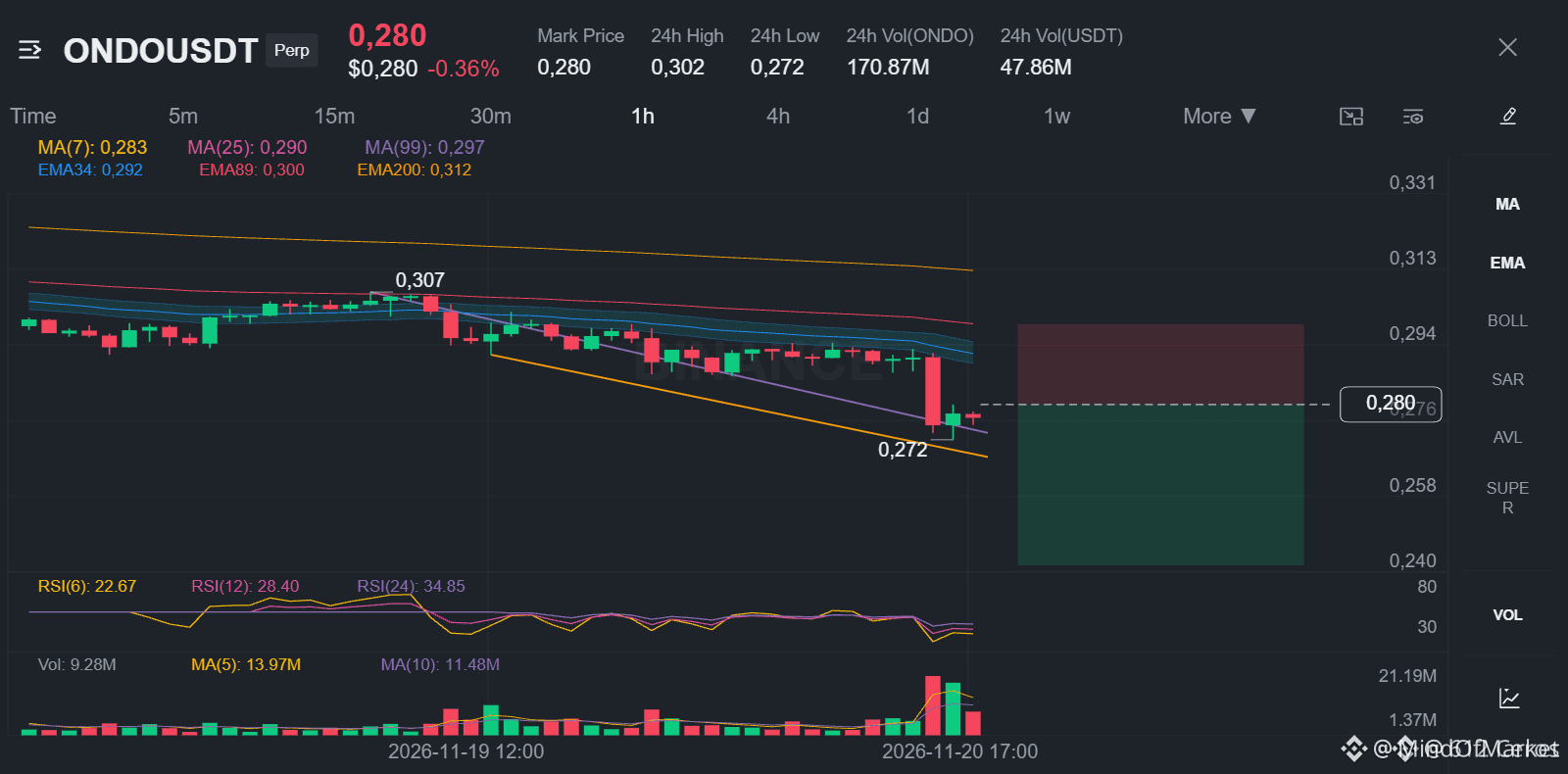
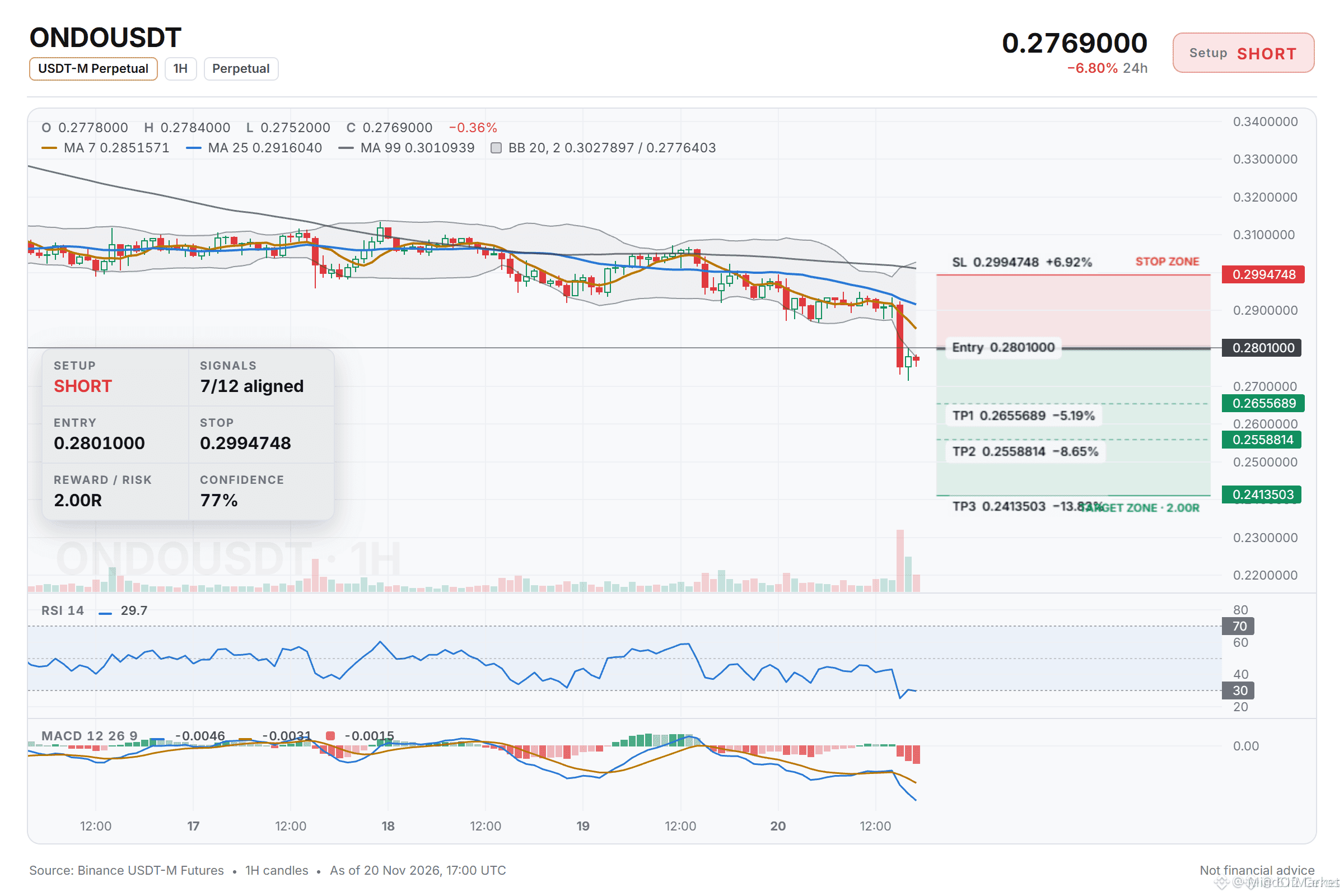
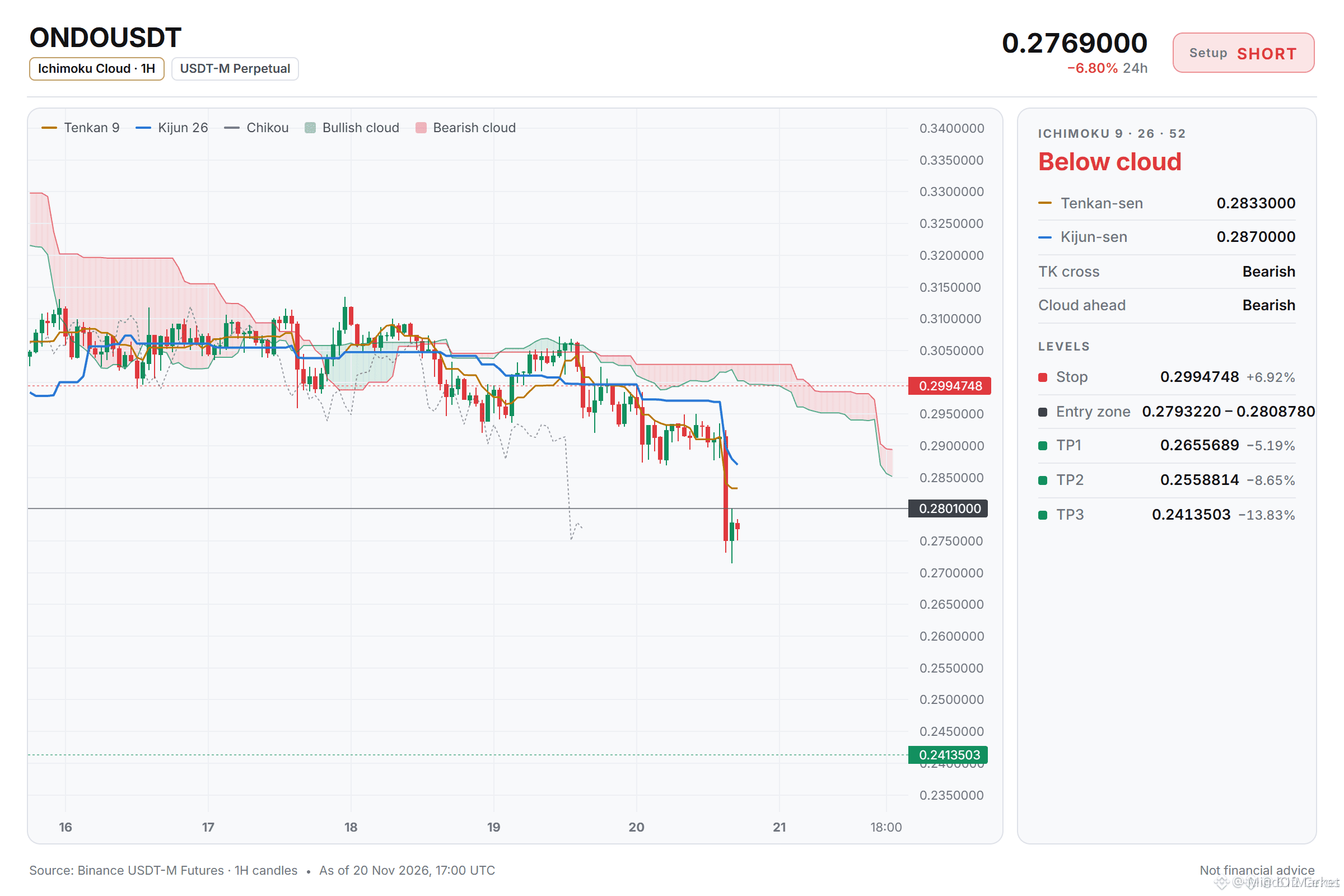
🔴 $ONDO LOSING KEY STRUCTURAL SUPPORT AS BEARISH MOMENTUM ACCELERATES 📉
Entry: 0.2793220 – 0.2808780 ⚡
Target: 0.2655689 🎯
Stop Loss: 0.2994748 ⚠️
Institutional distribution is evident as the four-hour chart confirms price rejection below stacked exponential moving averages. With the intermediate trend firmly inverted and supply overwhelming demand zones, smart money positioning favors continuation to the downside. 📊
Sellers continue to defend the primary resistance band with aggressive order flow. 📉 Managing exposure dynamically across distributed profit targets remains essential as liquidity sweeps lower nodes. 💡 Where do you set your target if this bearish continuation accelerates further? 👇
⚠️ Not financial advice. Always manage your risk. 🛡️
🏷️ #ONDO #ShortSetup #MarketStructure #Crypto
🐻 📉
4

3 عملات في Binance Alpha تشعل السوق بزخم قوي! 🔥 أيّها تتصدر محفظتك؟ 👀
يواصل قسم Binance Alpha خطف الأنظار بأقوى المشاريع الصاعدة، وهذه أبرز 3 عملات تتصدر المشهد حالياً من حيث السيولة وحجم التداول:
1️⃣ Venice Token ($VVV ) — عملاق الذكاء الاصطناعي 🧠
• نقطة القوة: تتصدر القائمة بقيمة سوقية تتجاوز المليار دولار وسيولة ضخمة تجعلها وجهة كبار المتداولين في قطاع الذكاء الاصطناعي اللامركزي.
2️⃣ Bless Network ($BLESS ) — ثورة الحوسبة (DePIN) ⚡
• نقطة القوة: شبكة تضم أكثر من 4 ملايين عقدة نشطة تحوّل الأجهزة العادية إلى طاقة حوسبية، مدعومة بآلية حرق مستمرة (90% من الإيرادات) تقلص المعروض يومياً.
3️⃣ Ondo ($ONDO ) — بوابة الأصول الحقيقية (RWA) 🏛️
• نقطة القوة: المشروع المؤسسي الأقوى لترميز الأصول الواقعية على البلوك تشين، ويحظى بثقة عالية وسيولة مستدامة بعيداً عن المضاربات العشوائية.
⚠️ تنويه: المحتوى للنقاش وتبادل المعلومات وليس نصيحة مالية، ابحث دائماً بنفسك (DYOR).
#BinanceAlpha #Write2Earn #VVV #BLESS #ONDO

2
1
226

·
--
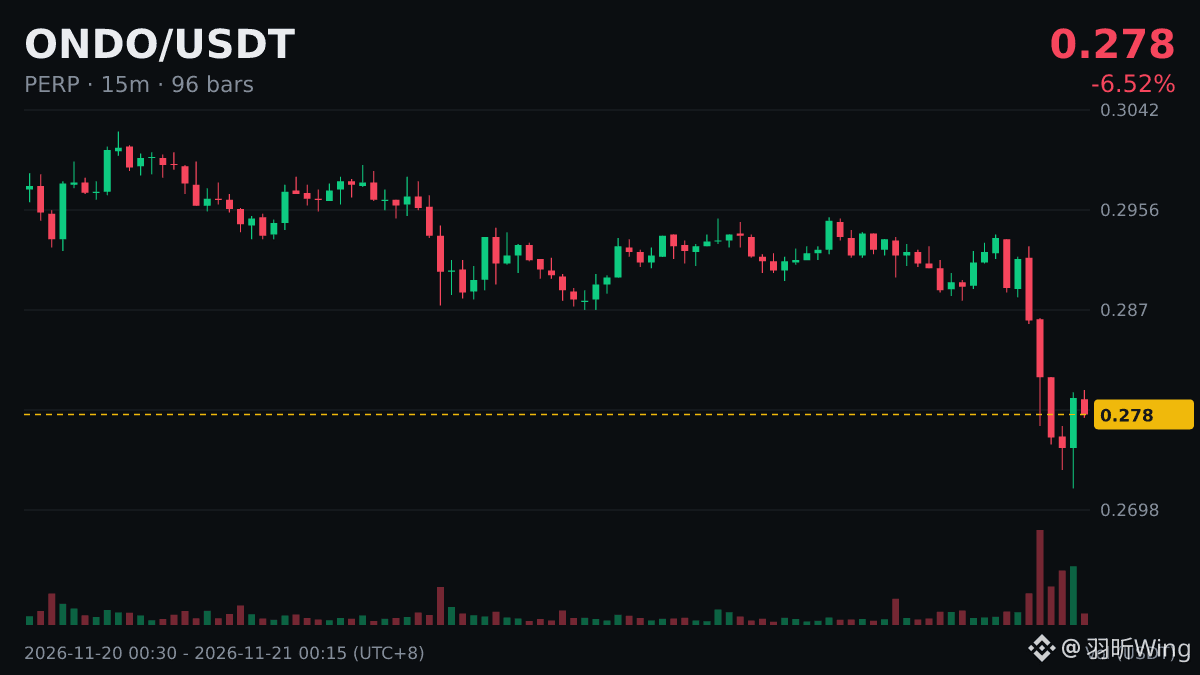
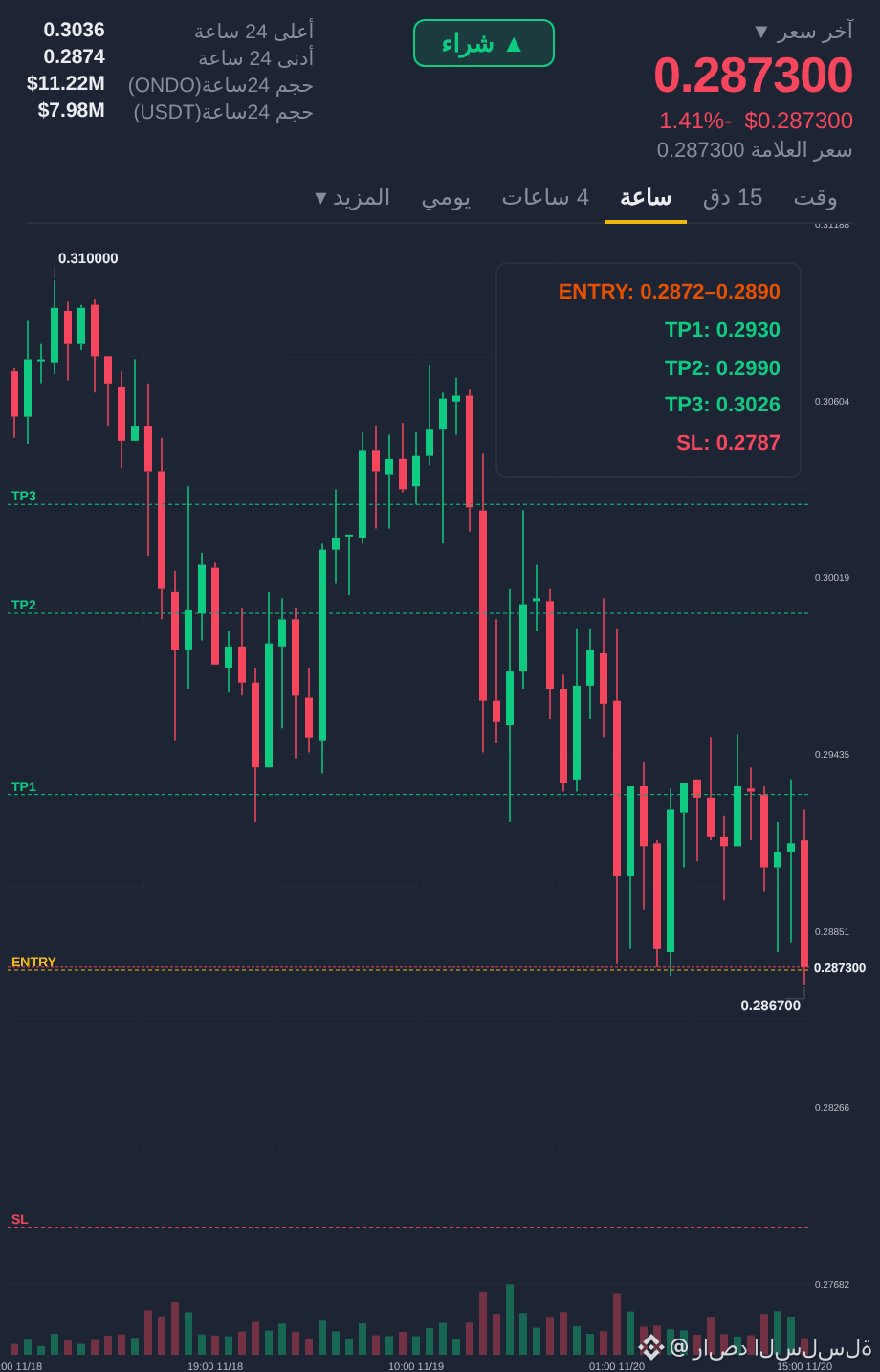
📉 ONDO IS UNDER PRESSURE — BUY THE DIP OR WAIT FOR CONFIRMATION?
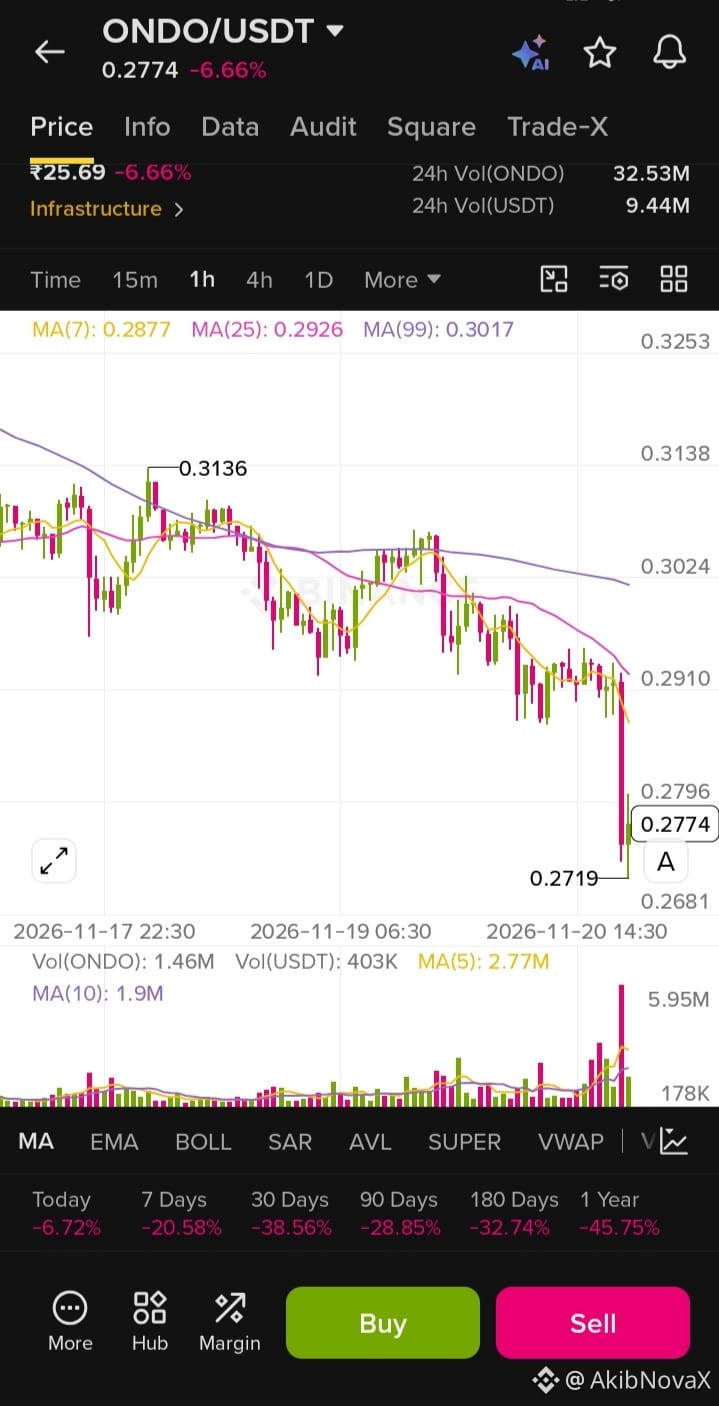
ONDO is facing strong selling pressure, down 6.66% on the chart.
But smart traders don't look at price alone. They study the bigger picture.
🔍 3 Important Things to Watch:
1️⃣ Trend: Price is below MA(7), MA(25), and MA(99), showing bearish short-term momentum.
2️⃣ Volume: A major volume spike appeared during the sharp sell-off. This suggests increased selling activity.
3️⃣ Key Levels: • Support: $0.2719 • Immediate resistance: $0.2796 • Stronger resistance: $0.2877–$0.2926
💡 Trading Lesson: A falling price doesn't automatically mean a buying opportunity. Wait for a clear recovery, stronger buying volume, and confirmation before making a decision.
What's your view on ONDO? BUY THE DIP or WAIT FOR RECOVERY? 👇
#ONDO #CryptoAnalysis #defi #tradingeducation #BinanceSquare
$ONDO $BTC $ETH
1
238



·
--
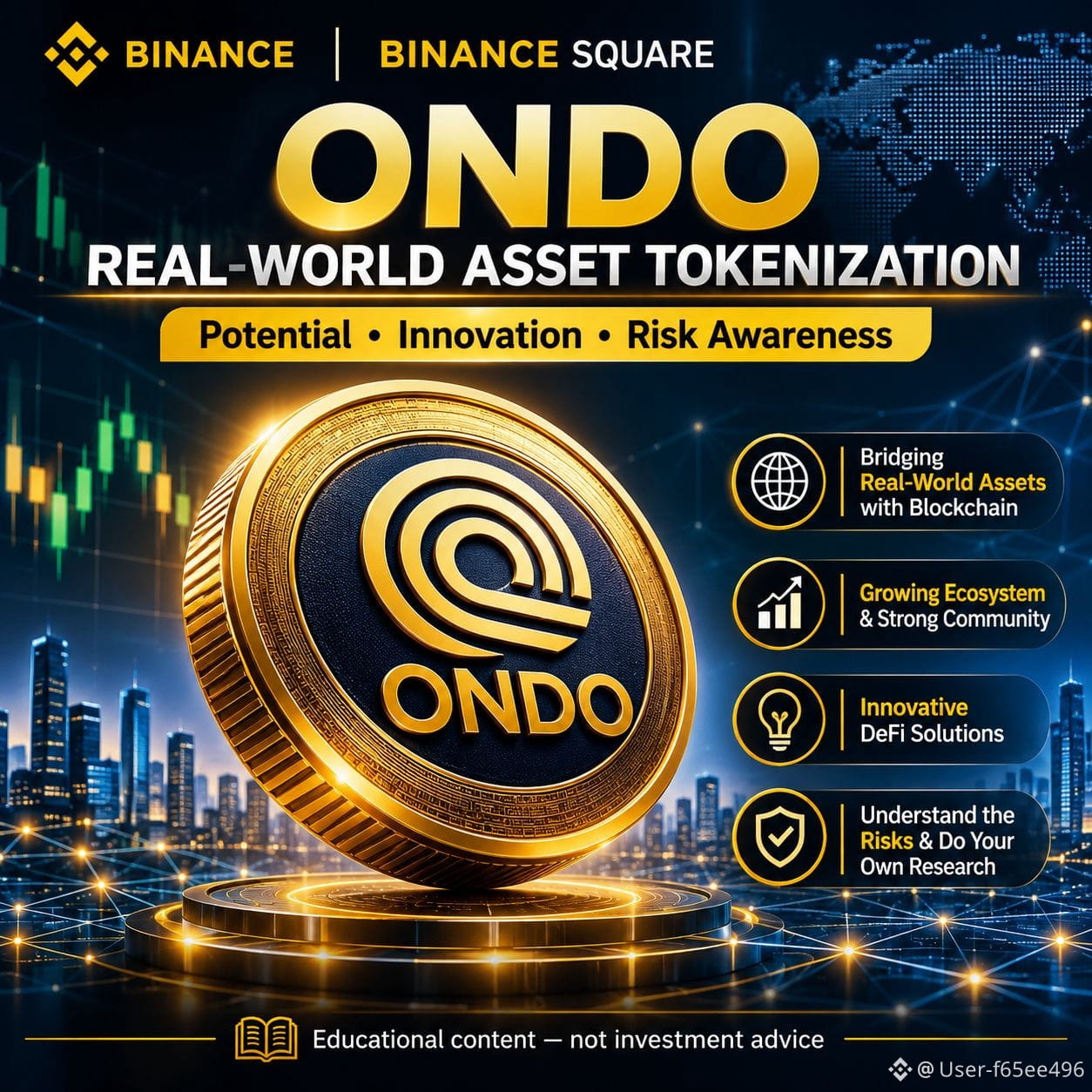
🌍 ONDO: Building the Future of Real-World Asset Tokenization!
The future of finance is evolving, and Ondo Finance is working to connect traditional financial markets with blockchain technology.
🔥 Why ONDO is worth watching:
Real-World Asset (RWA) tokenization.
Growing blockchain ecosystem.
Innovation in decentralized finance.
Expanding institutional partnerships.
📈 Growth Potential: The RWA sector is an interesting area to follow as traditional financial assets move on-chain. Ondo has an established presence in this space, but future growth is not guaranteed.
⚠️ Remember: ONDO is a governance token, not ownership of Ondo's underlying financial assets. Crypto prices are volatile.
Think long-term. Stay informed. Understand the risks. #ONDO #Top_Gainers $USDC
1
140

ONDO FINANCE ($ONDO )
Tokenized equities are moving beyond theoretical discussions.
One of the most interesting developments in the RWA sector is the expansion of tokenized exposure to traditional financial assets.
Ondo recently introduced ANTON, a tokenized product designed to provide eligible investors outside the United States with exposure linked to Anthropic.
The product offers 24/7 issuance and redemption.
It is an interesting development for three reasons:
1. Traditional financial exposure is becoming accessible through blockchain infrastructure.
2. Tokenized products can operate beyond conventional market hours.
3. High-profile technology companies are becoming part of the tokenization conversation.
However, an important distinction:
ANTON is not an Anthropic share. It does not provide shareholder rights, and Anthropic has not endorsed the product.
My analysis:
I see this as another important step for the RWA narrative.
But there is a question ONDO investors should never overlook:
Does the growth of Ondo’s ecosystem translate into economic value for ONDO holders?
More tokenized assets do not automatically mean higher token demand.
I want to see sustainable adoption, growing assets under management, liquidity and a clearer connection between platform activity and token economics.
That is where the real investment thesis becomes interesting.
#ONDO #RWA #Tokenization #realworldassets
Not financial advice. DYOR.
111

Мақала
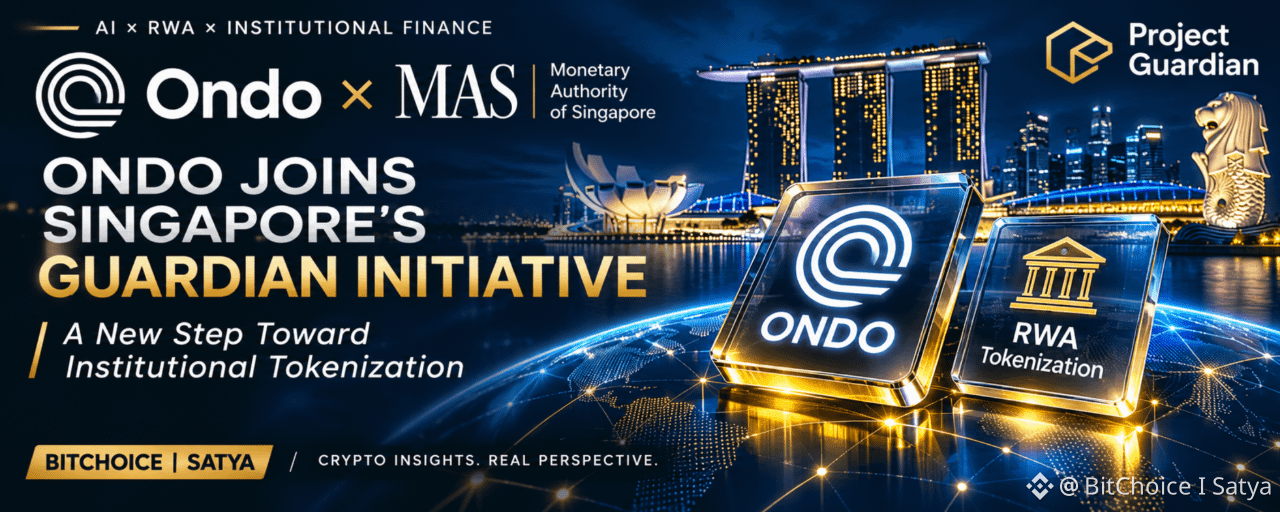
RWA × DEFI INTELLIGENCE 03ONDO JOINS SINGAPORE'S GUARDIAN INITIATIVE: THE REAL CHALLENGE OF INSTITUTIONAL TOKENIZATION
On November 18, 2026, Ondo Finance announced its participation in Guardian, the Monetary Authority of Singapore's initiative bringing together regulators, policymakers and major financial institutions to advance asset tokenization.
The announcement represents another step in the convergence between blockchain infrastructure and traditional capital markets.
But the real significance goes beyond a new institutional partnership.
The central question is whether tokenized financial assets can become interoperable, legally robust and genuinely liquid across jurisdictions.
WHAT GUARDIAN IS BUILDING
Launched by the Monetary Authority of Singapore in 2022, Project Guardian focuses on exploring the economic potential of asset tokenization.
Its work has included institutional use cases involving investment funds, fixed income, foreign exchange and digital financial infrastructure.
The initiative also supports common industry frameworks addressing interoperability, market structure and operational safeguards.
These are essential components of any financial system capable of supporting tokenized assets at institutional scale.
WHY ONDO MATTERS
Ondo Finance has developed infrastructure and products designed to bring traditional financial exposure onto blockchain networks.
Its participation adds practical experience in issuing and distributing tokenized financial instruments across platforms and markets.
For institutional adoption, however, issuing a token is only the beginning.
A tokenized asset must also have clearly established legal rights, compliant investor access, reliable custody arrangements and credible mechanisms for trading and settlement.
Without those foundations, blockchain transferability alone does not create a functioning capital market.
THE CROSS-BORDER CHALLENGE
One of the largest obstacles to institutional tokenization is market fragmentation.
Different jurisdictions operate under different securities regulations, investor eligibility requirements and settlement frameworks.
Meanwhile, separate blockchain networks can create additional technical and liquidity fragmentation.
A tokenized security that can move between wallets is not automatically transferable between regulated financial institutions.
Common standards and interoperable infrastructure may help reduce these barriers.
This is where participation in Guardian becomes strategically relevant.
REGULATORY PARTICIPATION IS NOT APPROVAL
An important distinction must be maintained.
Joining Guardian does not mean that MAS has licensed Ondo Finance, approved every Ondo product or authorized unrestricted public trading of tokenized securities.
It also does not establish that a specific new Ondo product has entered commercial operation in Singapore.
Participation provides an opportunity to contribute to industry collaboration. Regulatory permissions and commercial deployments require separate evidence.
WHAT THIS MEANS FOR ONDO
The development is relevant to the broader Ondo ecosystem, including its ONDO governance token.
However, institutional recognition does not automatically translate into token-holder revenue, increased token utility or higher market prices.
Investors should distinguish between growth in tokenized asset distribution and economic value accruing directly to the ONDO token.
BITCHOICE | SATYA PERSPECTIVE
The next stage of real-world asset tokenization will not be measured simply by the number of assets issued onchain.
It will be measured by the emergence of reliable infrastructure supporting custody, ownership rights, settlement, collateral mobility and secondary-market liquidity.
Ondo's participation in Guardian is a meaningful step into that institutional conversation.
The harder test is turning common standards and collaborative initiatives into scalable financial services.
Tokenization is advancing.
Institutional liquidity still has to be built.
CRYPTO INSIGHTS. REAL PERSPECTIVE.
#Ondo #ONDO #RWA #Tokenization #DeFi $ONDO
$ETH
{spot}(ETHUSDT)
RWA × DEFI INTELLIGENCE 03
ONDO JOINS SINGAPORE'S GUARDIAN INITIATIVE: THE REAL CHALLENGE OF INSTITUTIONAL TOKENIZATION
On November 18, 2026, Ondo Finance announced its participation in Guardian, the Monetary Authority of Singapore's initiative bringing together regulators, policymakers and major financial institutions to advance asset tokenization.
The announcement represents another step in the convergence between blockchain infrastructure and traditional capital markets.
But the real significance goes beyond a new institutional partnership.
The central question is whether tokenized financial assets can become interoperable, legally robust and genuinely liquid across jurisdictions.
WHAT GUARDIAN IS BUILDING
Launched by the Monetary Authority of Singapore in 2022, Project Guardian focuses on exploring the economic potential of asset tokenization.
Its work has included institutional use cases involving investment funds, fixed income, foreign exchange and digital financial infrastructure.
The initiative also supports common industry frameworks addressing interoperability, market structure and operational safeguards.
These are essential components of any financial system capable of supporting tokenized assets at institutional scale.
WHY ONDO MATTERS
Ondo Finance has developed infrastructure and products designed to bring traditional financial exposure onto blockchain networks.
Its participation adds practical experience in issuing and distributing tokenized financial instruments across platforms and markets.
For institutional adoption, however, issuing a token is only the beginning.
A tokenized asset must also have clearly established legal rights, compliant investor access, reliable custody arrangements and credible mechanisms for trading and settlement.
Without those foundations, blockchain transferability alone does not create a functioning capital market.
THE CROSS-BORDER CHALLENGE
One of the largest obstacles to institutional tokenization is market fragmentation.
Different jurisdictions operate under different securities regulations, investor eligibility requirements and settlement frameworks.
Meanwhile, separate blockchain networks can create additional technical and liquidity fragmentation.
A tokenized security that can move between wallets is not automatically transferable between regulated financial institutions.
Common standards and interoperable infrastructure may help reduce these barriers.
This is where participation in Guardian becomes strategically relevant.
REGULATORY PARTICIPATION IS NOT APPROVAL
An important distinction must be maintained.
Joining Guardian does not mean that MAS has licensed Ondo Finance, approved every Ondo product or authorized unrestricted public trading of tokenized securities.
It also does not establish that a specific new Ondo product has entered commercial operation in Singapore.
Participation provides an opportunity to contribute to industry collaboration. Regulatory permissions and commercial deployments require separate evidence.
WHAT THIS MEANS FOR ONDO
The development is relevant to the broader Ondo ecosystem, including its ONDO governance token.
However, institutional recognition does not automatically translate into token-holder revenue, increased token utility or higher market prices.
Investors should distinguish between growth in tokenized asset distribution and economic value accruing directly to the ONDO token.
BITCHOICE | SATYA PERSPECTIVE
The next stage of real-world asset tokenization will not be measured simply by the number of assets issued onchain.
It will be measured by the emergence of reliable infrastructure supporting custody, ownership rights, settlement, collateral mobility and secondary-market liquidity.
Ondo's participation in Guardian is a meaningful step into that institutional conversation.
The harder test is turning common standards and collaborative initiatives into scalable financial services.
Tokenization is advancing.
Institutional liquidity still has to be built.
CRYPTO INSIGHTS. REAL PERSPECTIVE.
#Ondo #ONDO #RWA #Tokenization #DeFi $ONDO
$ETH
129



·
--
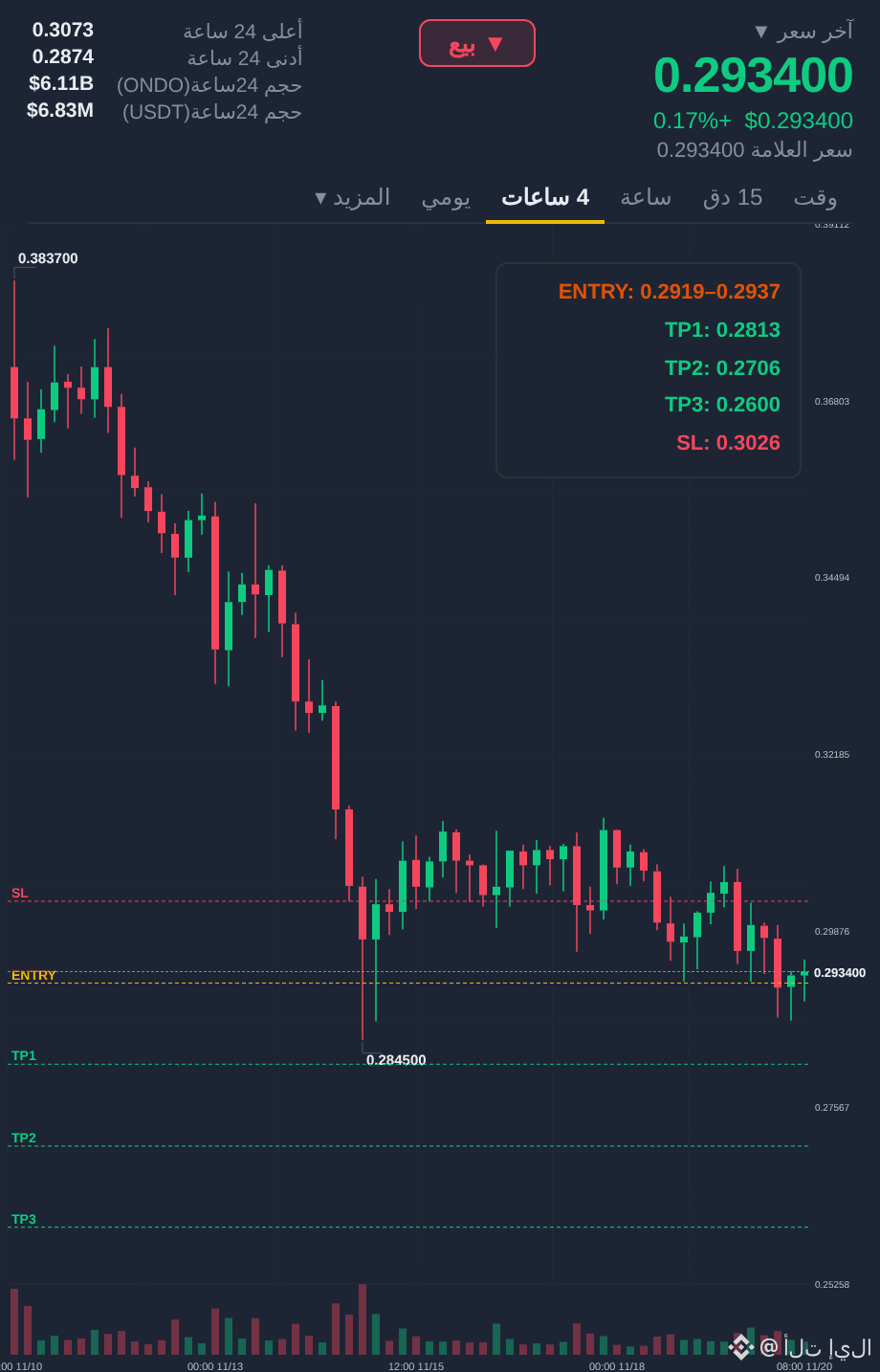
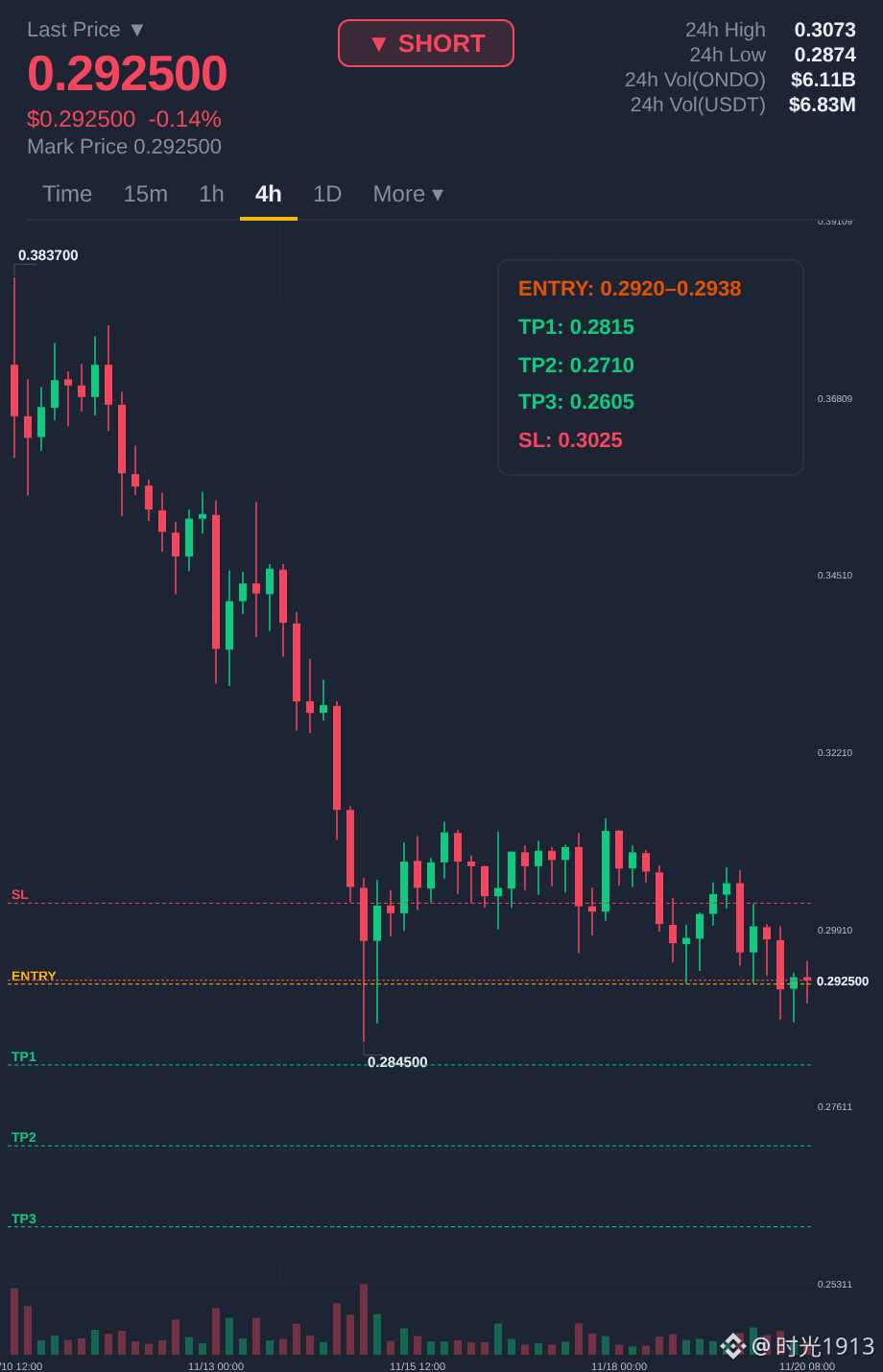
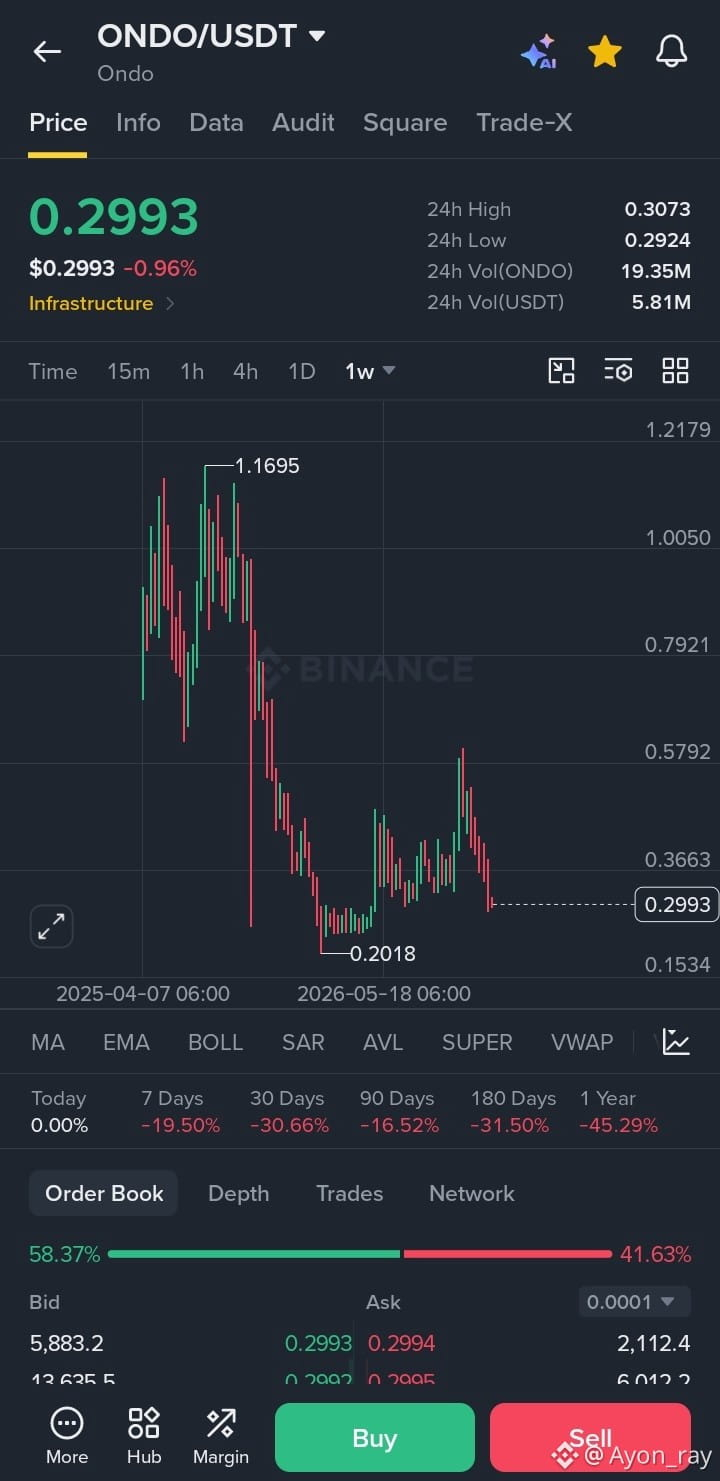
From $1.1695 down to $0.2018 and now hovering near $0.2993 — is $ONDO gearing up for its next big move?
On the weekly chart, $ONDO rebounded off the ~$0.2018 zone after a steep pullback and is trying to hold momentum around $0.2993. While bid pressure looks noticeable (around 58.37%), the broader downtrend still calls for caution.
Do you see $ONDO pushing higher toward upper resistance from here, or consolidating longer? Drop your take below! 👇🔥
⚠️ NFA / DYOR — High market volatility; manage your risk carefully.
#ONDO #ondousdt #BinanceSquare #crypto #altcoins
{spot}(ONDOUSDT)
From $1.1695 down to $0.2018 and now hovering near $0.2993 — is $ONDO gearing up for its next big move?
On the weekly chart, $ONDO rebounded off the ~$0.2018 zone after a steep pullback and is trying to hold momentum around $0.2993. While bid pressure looks noticeable (around 58.37%), the broader downtrend still calls for caution.
Do you see $ONDO pushing higher toward upper resistance from here, or consolidating longer? Drop your take below! 👇🔥
⚠️ NFA / DYOR — High market volatility; manage your risk carefully.
#ONDO #ondousdt #BinanceSquare #crypto #altcoins
1
563
·
--
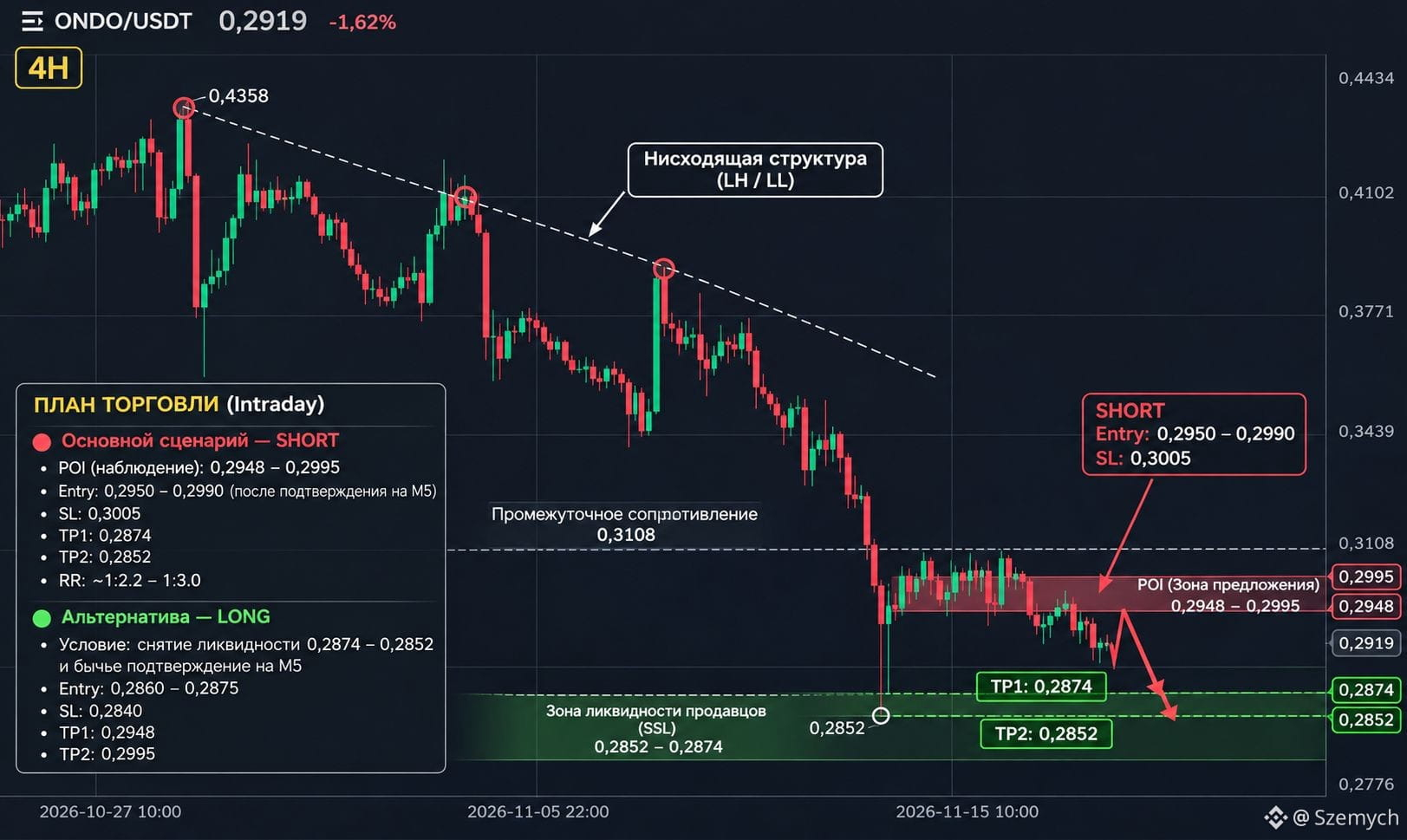
#ONDO 🔥 $ONDO — МЕДВЕДИ НЕ ОТПУСКАЮТ КОНТРОЛЬ! Следующая остановка может быть $0.2852?
ONDO продолжает формировать Lower Highs и Lower Lows. После пробоя $0.3402 продавцы доставили цену к $0.2852. Текущий отскок пока не подтверждает разворот.
🔴 BIAS: BEARISH
Основной сценарий — SHORT
📍 POI: $0.2948–0.2995
Предполагаемый план:
Entry: $0.2950–0.2990 (только после M5-подтверждения)
SL: $0.3005
TP1: $0.2874
TP2: $0.2852
Условие входа: BSL Sweep → MSS → Displacement → FVG/IFVG Retest на M5.
🟢 Plan B — LONG
Если рынок снимет SSL ниже $0.2874–0.2852 и сформирует бычье подтверждение на M5, возможна доставка к $0.2950 и $0.2995.
⚠️ Сейчас цена около $0.2919. Не chase движение — вход по рынку не рассматриваю.
POI ≠ Entry. Сначала ликвидность, затем подтверждение структуры!
Какой сценарий реализуется первым: продолжение падения или разворот после снятия SSL?
#ONDO #CryptoTrading #TradingPlan #USDT
$ONDO
{future}(ONDOUSDT)
#ONDO 🔥 $ONDO — МЕДВЕДИ НЕ ОТПУСКАЮТ КОНТРОЛЬ! Следующая остановка может быть $0.2852?
ONDO продолжает формировать Lower Highs и Lower Lows. После пробоя $0.3402 продавцы доставили цену к $0.2852. Текущий отскок пока не подтверждает разворот.
🔴 BIAS: BEARISH
Основной сценарий — SHORT
📍 POI: $0.2948–0.2995
Предполагаемый план:
Entry: $0.2950–0.2990 (только после M5-подтверждения)
SL: $0.3005
TP1: $0.2874
TP2: $0.2852
Условие входа: BSL Sweep → MSS → Displacement → FVG/IFVG Retest на M5.
🟢 Plan B — LONG
Если рынок снимет SSL ниже $0.2874–0.2852 и сформирует бычье подтверждение на M5, возможна доставка к $0.2950 и $0.2995.
⚠️ Сейчас цена около $0.2919. Не chase движение — вход по рынку не рассматриваю.
POI ≠ Entry. Сначала ликвидность, затем подтверждение структуры!
Какой сценарий реализуется первым: продолжение падения или разворот после снятия SSL?
#ONDO #CryptoTrading #TradingPlan #USDT
$ONDO
24
Көбірек контент көру үшін кіріңіз
Binance Square платформасында әлемдік криптоқоғамдастыққа қосылыңыз
⚡️ Криптовалюта туралы ең соңғы және пайдалы ақпаратты алыңыз.
💬 Әлемдегі ең ірі криптобиржаның сеніміне ие.
👍 Расталған авторлардың нақты пікірлерін табыңыз.
Электрондық пошта/телефон нөмірі
Трендтегі тақырыптар
1
#CanBTCReboundAfterFallingBelow60K?
166,152 рет көрілді
739 адам талқылап жатыр
2
#GlobalStocksFaceLongestLosingStreakSince2023
67,036 рет көрілді
637 адам талқылап жатыр
3
#AnthropicPlungesTowardIPOPriceonDay2
27,477 рет көрілді
285 адам талқылап жатыр
4
#BNBDropsBelow540USDTWith8.46%DailyDecline
2,903 рет көрілді
58 адам талқылап жатыр
5
#HKBillProposesHK$100KFineForUnauthorizedCryptoTitles
0 рет көрілді
1 адам талқылап жатыр
6
#BitMineFaces$10.1BUnrealizedETHLoss
107 рет көрілді
2 адам талқылап жатыр
7
#StrategyReports$35BNetReserves
34 рет көрілді
2 адам талқылап жатыр
8
#MorganStanleyEndsAnthropicStockSupportAfterOneDay
1,520 рет көрілді
46 адам талқылап жатыр
9
#CryptoBilisAttackerMoves25000ETHToTornadoCash
2,556 рет көрілді
42 адам талқылап жатыр
10
#POSCOAndLGCNSCompleteReceivablesTokenizationPilotOnInjective
0 рет көрілді
0 адам талқылап жатыр