
#npex
npex
7,725 рет көрілді
42 адам талқылап жатыр
Қызу саудада
Ең соңғы

·
--
Every Dusk thread mentions NPEX. The licensed Dutch venue, the €200M+ confirmed issuance, the 20,000+ investor base, the flagship market-infrastructure workflow.
Almost none of them mention how that relationship started.
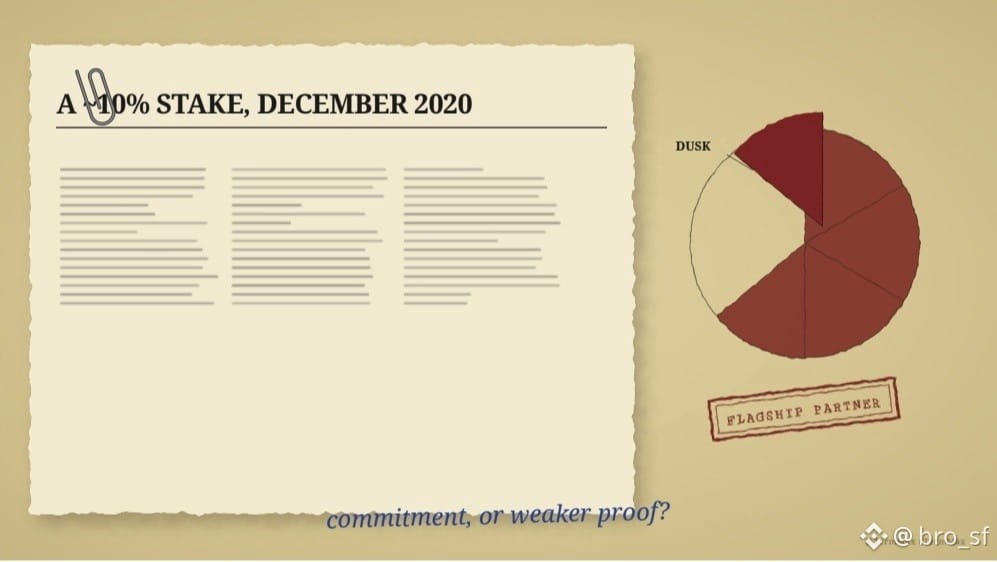
Follow the media links on Dusk's own homepage and one of them is a CoinDesk piece from December 2020 reporting that Dusk Network took a roughly 10% stake in the Dutch stock exchange it now partners with.
That changes how I read the partnership, in both directions.
The generous read: this is how infrastructure actually gets built in regulated markets. You cannot cold-call a licensed venue and ask it to rebuild its settlement stack on your unproven L1. Taking equity aligns incentives, gets you inside the compliance conversation, and buys years of institutional patience that no BD team can purchase. It also explains why Dusk's roadmap reads like a market-infrastructure plan rather than a DeFi plan — they've been sitting on that side of the table since 2020.
The cautious read: the flagship adoption proof point is not fully independent. When a chain's headline institutional validation comes from a venue it holds a stake in, "an institution chose us" and "we invested in an institution" start to blur.
Both readings can be true at once, and I'd rather hold both than pretend either is the whole story.
Fair caveat: that report is from 2020. I have not found a current figure, and stakes change. If someone has a more recent number, I'd genuinely like to see it.
When a protocol holds equity in its own biggest partner — does that read as commitment to you, or as a weaker form of adoption proof?
#dusk $DUSK @Dusk_Foundation #NPEX
Every Dusk thread mentions NPEX. The licensed Dutch venue, the €200M+ confirmed issuance, the 20,000+ investor base, the flagship market-infrastructure workflow.
Almost none of them mention how that relationship started.
Follow the media links on Dusk's own homepage and one of them is a CoinDesk piece from December 2020 reporting that Dusk Network took a roughly 10% stake in the Dutch stock exchange it now partners with.
That changes how I read the partnership, in both directions.
The generous read: this is how infrastructure actually gets built in regulated markets. You cannot cold-call a licensed venue and ask it to rebuild its settlement stack on your unproven L1. Taking equity aligns incentives, gets you inside the compliance conversation, and buys years of institutional patience that no BD team can purchase. It also explains why Dusk's roadmap reads like a market-infrastructure plan rather than a DeFi plan — they've been sitting on that side of the table since 2020.
The cautious read: the flagship adoption proof point is not fully independent. When a chain's headline institutional validation comes from a venue it holds a stake in, "an institution chose us" and "we invested in an institution" start to blur.
Both readings can be true at once, and I'd rather hold both than pretend either is the whole story.
Fair caveat: that report is from 2020. I have not found a current figure, and stakes change. If someone has a more recent number, I'd genuinely like to see it.
When a protocol holds equity in its own biggest partner — does that read as commitment to you, or as a weaker form of adoption proof?
#dusk $DUSK @Dusk #NPEX
88


·
--
Жоғары (өспелі)
Расталды
I've been sitting with @Dusk_Foundation for a few weeks now, and the more I dig, the more I think most people are missing what's actually different here.
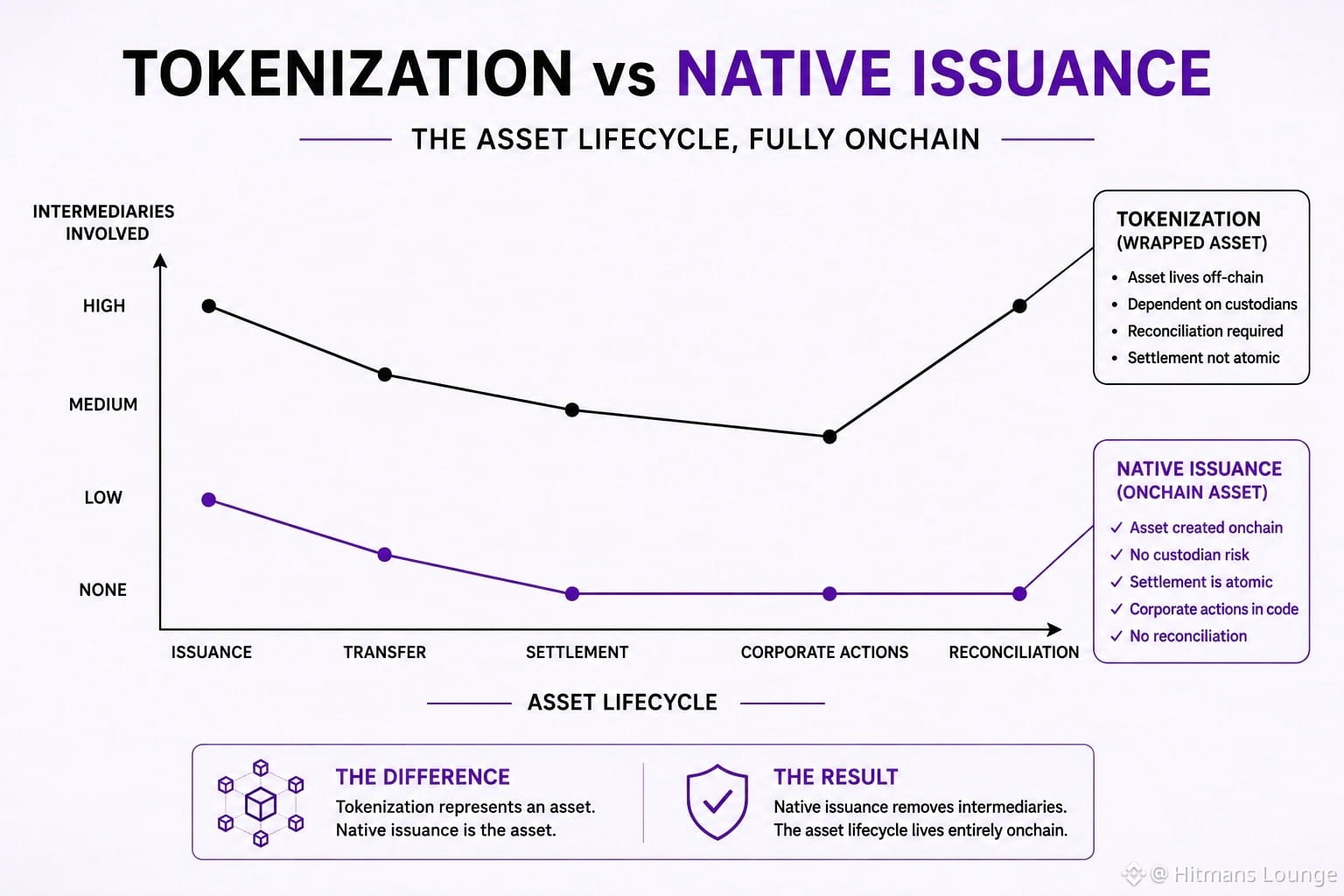
Everyone talks about RWAs like tokenization is the endgame. But there's a distinction I kept glossing over until recently — tokenization wraps an existing asset. The bond still lives with a custodian. The token is just a representation. If that custodian fails, your token is essentially a claim on a broken process. You still need reconciliation between what's onchain and what's actually held off-chain.
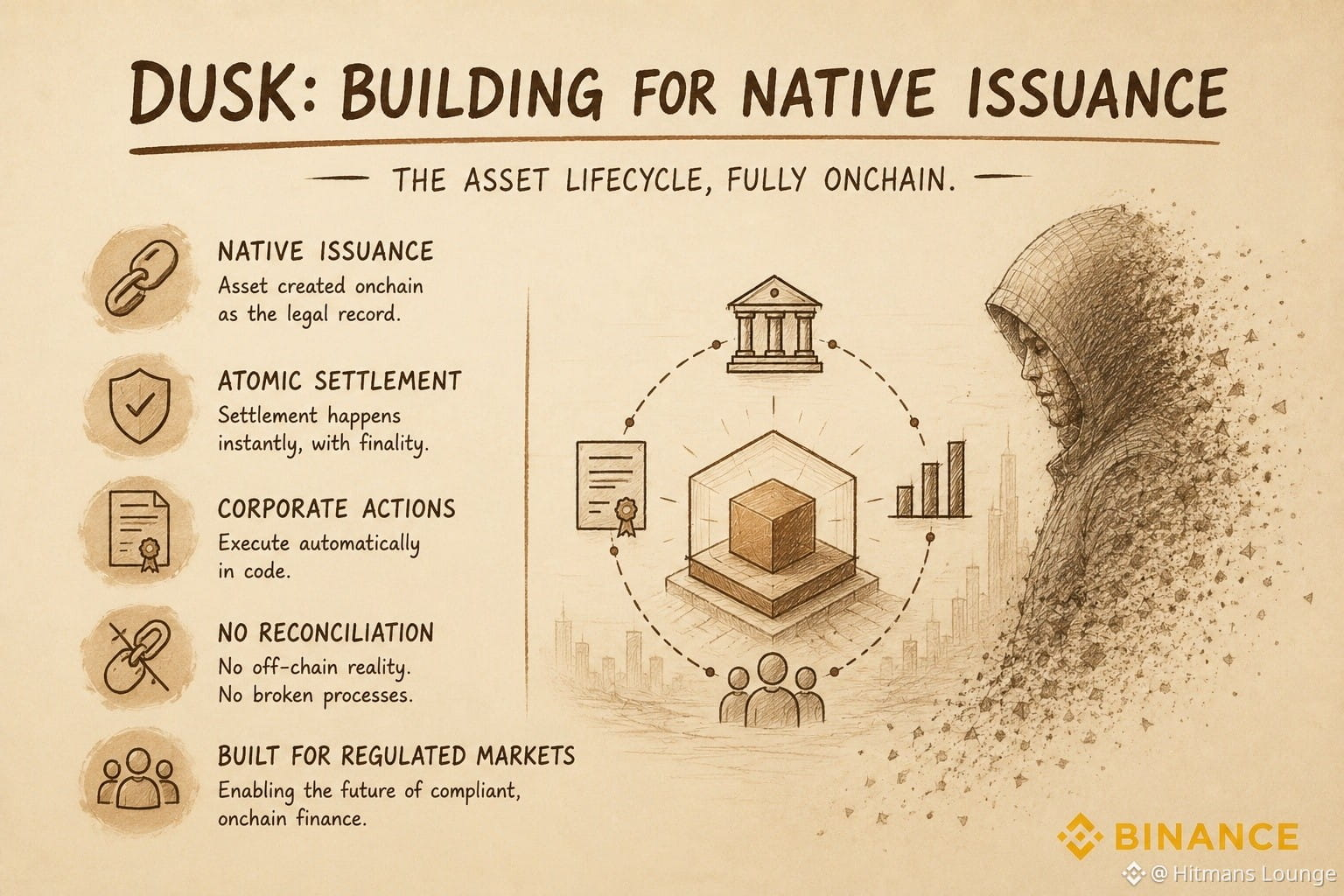
Native issuance is different. The asset is created onchain as the legal record. Settlement is atomic. Corporate actions execute in code. There's no off-chain reality to reconcile against — because there isn't one.
That's what $DUSK is actually building for.
What shifted my thinking was seeing NPEX — an AFM-regulated exchange in the Netherlands — pursuing the DLT-TSS license specifically to natively issue securities on Dusk. That's not a partnership announcement. That's a regulated venue building the legal scaffolding to make native issuance real.
I added a small position after that. Nothing aggressive.
My honest uncertainty? Regulatory timelines are unpredictable. A license pursuit doesn't guarantee approval, and institutional adoption moves slower than anyone expects.
But here's what I keep thinking about — if the asset lifecycle moves fully onchain, intermediaries don't get streamlined. They get removed entirely.
Is that actually something regulators will allow at scale? 🤔
#Dusk #RWA #Tokenization #NPEX
I've been sitting with @Dusk for a few weeks now, and the more I dig, the more I think most people are missing what's actually different here.
Everyone talks about RWAs like tokenization is the endgame. But there's a distinction I kept glossing over until recently — tokenization wraps an existing asset. The bond still lives with a custodian. The token is just a representation. If that custodian fails, your token is essentially a claim on a broken process. You still need reconciliation between what's onchain and what's actually held off-chain.
Native issuance is different. The asset is created onchain as the legal record. Settlement is atomic. Corporate actions execute in code. There's no off-chain reality to reconcile against — because there isn't one.
That's what $DUSK is actually building for.
What shifted my thinking was seeing NPEX — an AFM-regulated exchange in the Netherlands — pursuing the DLT-TSS license specifically to natively issue securities on Dusk. That's not a partnership announcement. That's a regulated venue building the legal scaffolding to make native issuance real.
I added a small position after that. Nothing aggressive.
My honest uncertainty? Regulatory timelines are unpredictable. A license pursuit doesn't guarantee approval, and institutional adoption moves slower than anyone expects.
But here's what I keep thinking about — if the asset lifecycle moves fully onchain, intermediaries don't get streamlined. They get removed entirely.
Is that actually something regulators will allow at scale? 🤔
#Dusk #RWA #Tokenization #NPEX
59
25
80

Расталды
Мақала
I Fact-Checked Dusk's Biggest Flex. €200M Story Is Real. It's Just Not the Story You ThinkThose numbers are genuinely NPEX's history — the question is how much of it has actually moved on-chain.
Let me tell you something that took me a while to actually notice.
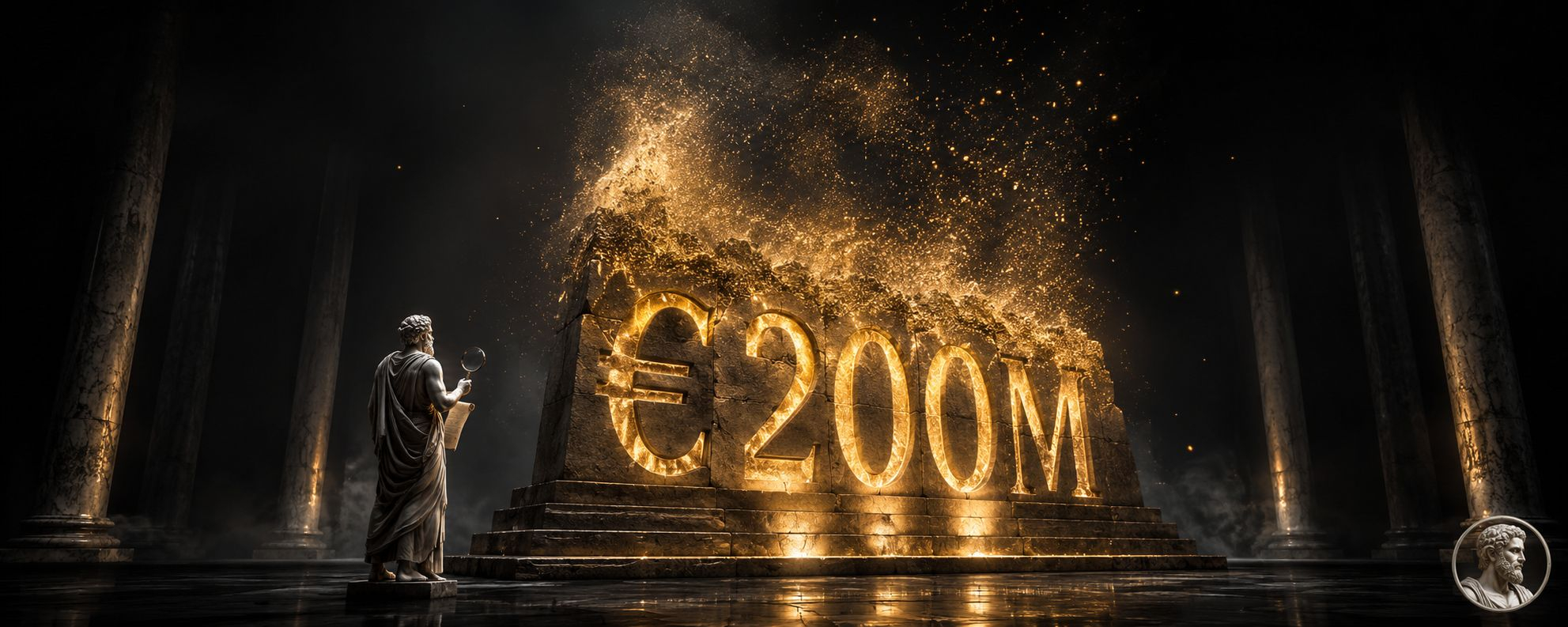
Every time NPEX comes up in a Dusk conversation, two numbers get repeated: over €200 million raised, 17,500+ active investors. They show up in almost every partnership announcement, every "why Dusk matters" thread. And they're real — NPEX, a licensed Dutch exchange regulated since 2008, has genuinely facilitated that much financing across 100+ SMEs, with that many people on its platform.
But here's what I almost missed the first three times I read those numbers: that €200M and those 17,500 investors are NPEX's traditional platform history. That's capital raised and people onboarded over roughly 17 years of NPEX operating as a normal regulated exchange — not €200M that has already moved onto Dusk, and not 17,500 people currently trading tokenized assets on-chain.
That distinction matters a lot more than it sounds like.
What Dusk and NPEX are actually building is a dApp — a fully licensed front-end and back-end for compliant asset issuance and trading, running on DuskEVM. Dusk's own announcement describes it in future tense: it "will provide" a regulated backend, a user interface, core infrastructure for developers. That's a product being built, using NPEX's existing €200M/17,500-investor base as the reason it's worth building — not a live product that base is currently using.
I went looking for a clear answer on whether it's actually live yet, and I'll be honest with you: the sourcing is mixed. Some coverage describes NPEX's tokenized platform as having "moved from pilot to active production." Dusk's own page frames the NPEX dApp as something still being launched. When official sources and secondary coverage disagree on whether something is live, I treat that as "not confirmed" rather than picking whichever version sounds better.
So here's how I'd actually frame this, cleanly:
The regulatory foundation is real. NPEX is a genuinely licensed exchange, not a marketing partner. The €200M and 17,500 investors are real numbers from a real, operating business.
What's not yet confirmed is how much of that capital, and how many of those investors, are actually interacting with tokenized assets on Dusk right now — versus still being NPEX's traditional off-chain business that the on-chain product is being built to eventually serve.
That's not a red flag. Most serious infrastructure takes time between "regulated partner confirmed" and "regulated partner's users are actually on-chain." But it is a gap worth naming clearly instead of letting a big historical number quietly stand in for live usage.
The number that would actually answer this question — dollars or investors actively using the NPEX dApp on Dusk today — isn't public yet. Until it is, I'm treating €200M and 17,500 as "the size of the opportunity," not "the size of what's already happened."
⚠️ Not financial advice. DYOR.
🔔 Follow for more on-chain research and RWA deep dives.
$DUSK #dusk #DuskNetwork @Dusk_Foundation #RWA #NPEX #ZeroKnowledge
I Fact-Checked Dusk's Biggest Flex. €200M Story Is Real. It's Just Not the Story You Think
Those numbers are genuinely NPEX's history — the question is how much of it has actually moved on-chain.
Let me tell you something that took me a while to actually notice.
Every time NPEX comes up in a Dusk conversation, two numbers get repeated: over €200 million raised, 17,500+ active investors. They show up in almost every partnership announcement, every "why Dusk matters" thread. And they're real — NPEX, a licensed Dutch exchange regulated since 2008, has genuinely facilitated that much financing across 100+ SMEs, with that many people on its platform.
But here's what I almost missed the first three times I read those numbers: that €200M and those 17,500 investors are NPEX's traditional platform history. That's capital raised and people onboarded over roughly 17 years of NPEX operating as a normal regulated exchange — not €200M that has already moved onto Dusk, and not 17,500 people currently trading tokenized assets on-chain.
That distinction matters a lot more than it sounds like.
What Dusk and NPEX are actually building is a dApp — a fully licensed front-end and back-end for compliant asset issuance and trading, running on DuskEVM. Dusk's own announcement describes it in future tense: it "will provide" a regulated backend, a user interface, core infrastructure for developers. That's a product being built, using NPEX's existing €200M/17,500-investor base as the reason it's worth building — not a live product that base is currently using.
I went looking for a clear answer on whether it's actually live yet, and I'll be honest with you: the sourcing is mixed. Some coverage describes NPEX's tokenized platform as having "moved from pilot to active production." Dusk's own page frames the NPEX dApp as something still being launched. When official sources and secondary coverage disagree on whether something is live, I treat that as "not confirmed" rather than picking whichever version sounds better.
So here's how I'd actually frame this, cleanly:
The regulatory foundation is real. NPEX is a genuinely licensed exchange, not a marketing partner. The €200M and 17,500 investors are real numbers from a real, operating business.
What's not yet confirmed is how much of that capital, and how many of those investors, are actually interacting with tokenized assets on Dusk right now — versus still being NPEX's traditional off-chain business that the on-chain product is being built to eventually serve.
That's not a red flag. Most serious infrastructure takes time between "regulated partner confirmed" and "regulated partner's users are actually on-chain." But it is a gap worth naming clearly instead of letting a big historical number quietly stand in for live usage.
The number that would actually answer this question — dollars or investors actively using the NPEX dApp on Dusk today — isn't public yet. Until it is, I'm treating €200M and 17,500 as "the size of the opportunity," not "the size of what's already happened."
⚠️ Not financial advice. DYOR.
🔔 Follow for more on-chain research and RWA deep dives.
$DUSK #dusk #DuskNetwork @Dusk #RWA #NPEX #ZeroKnowledge
3
109

·
--
Жоғары (өспелі)
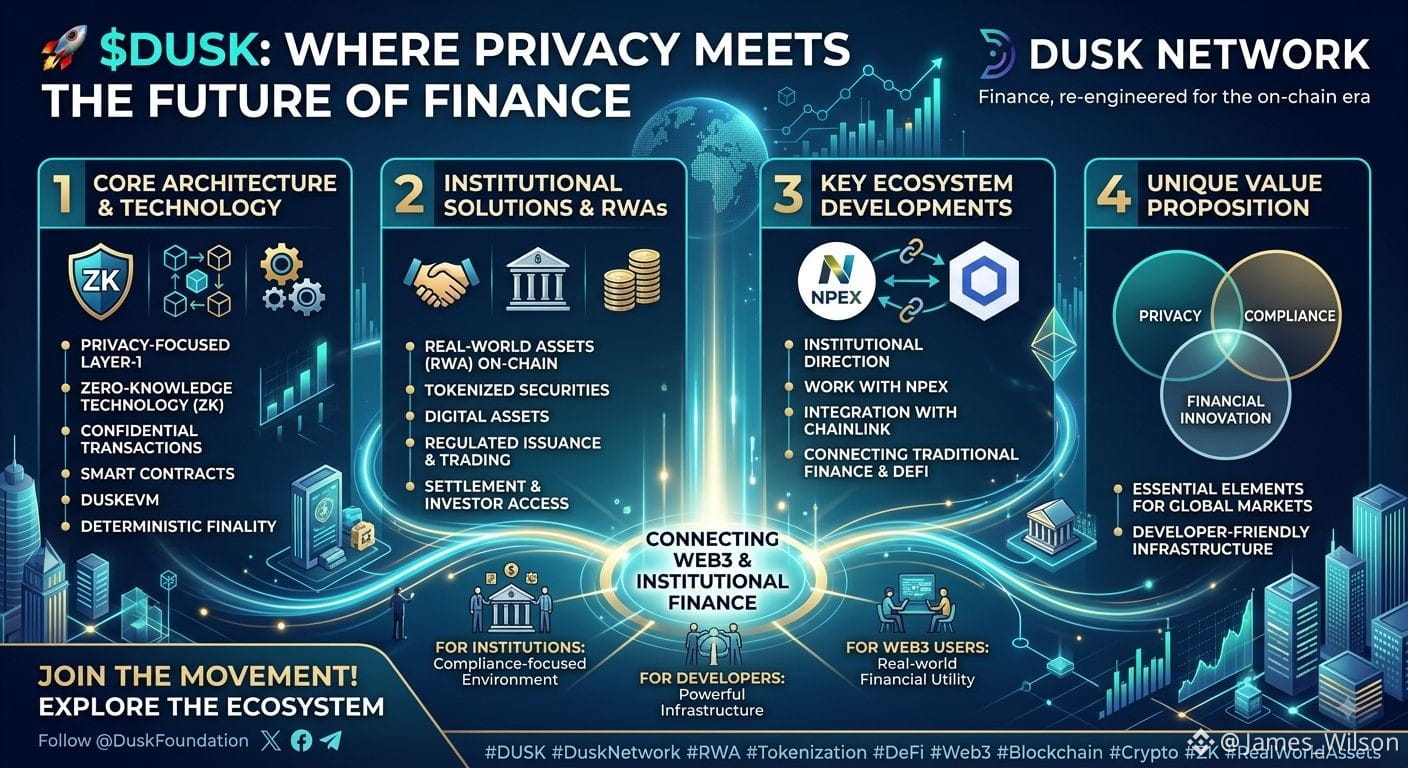
$DUSK : Where Privacy Meets the Future of Finance
Dusk Network is building more than another blockchain—it is creating next-generation infrastructure for regulated financial markets and real-world assets on-chain.
Powered by a privacy-focused Layer-1 architecture, Dusk combines zero-knowledge technology, confidential transactions, smart contracts, deterministic finality, and DuskEVM to address a critical challenge in Web3: bringing institutional finance on-chain without sacrificing privacy or regulatory compliance.
Its vision extends toward tokenized securities, digital assets, regulated issuance, trading, settlement, and investor access within a unified blockchain environment. Dusk’s institutional direction and ecosystem development, including its work with #NPEX and integration with Chainlink, strengthen its mission of connecting traditional finance with decentralized infrastructure.
What makes #duskfoundation stand out is the combination of privacy + compliance + financial innovation—three essential elements for the next evolution of global markets.
For developers, it offers powerful infrastructure. For institutions, a compliance-focused environment. For Web3 users, a vision centered on real-world financial utility.
🔥 The future of finance won’t just be decentralized—it will be private, compliant, programmable, and accessible.
Follow @DuskFoundation, explore the ecosystem, and become part of the movement.
Dusk Network — Finance, re-engineered for the on-chain era.
#DUSK.USDT #DuskNetwork
6
5
58
·
--
Жоғары (өспелі)
Расталды
@Dusk_Foundation felt differently for last few months . I originally saw it mainly as a privacy-focused blockchain, but the NPEX partnership made me rethink the bigger picture.
I took a small $DUSK position and then paused. What caught my attention wasn't another tokenized-asset announcement; it was who Dusk is building with and where the infrastructure sits.
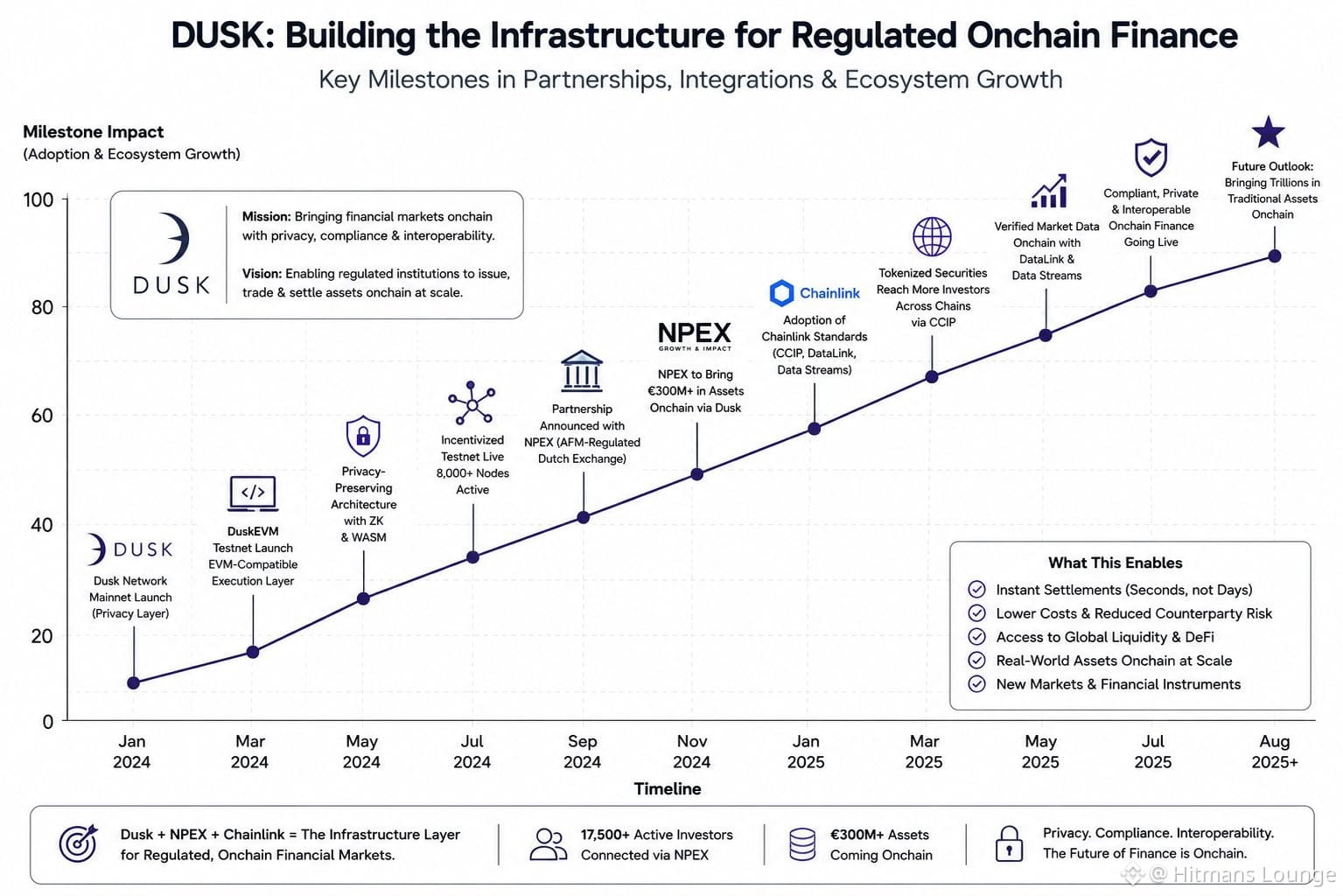
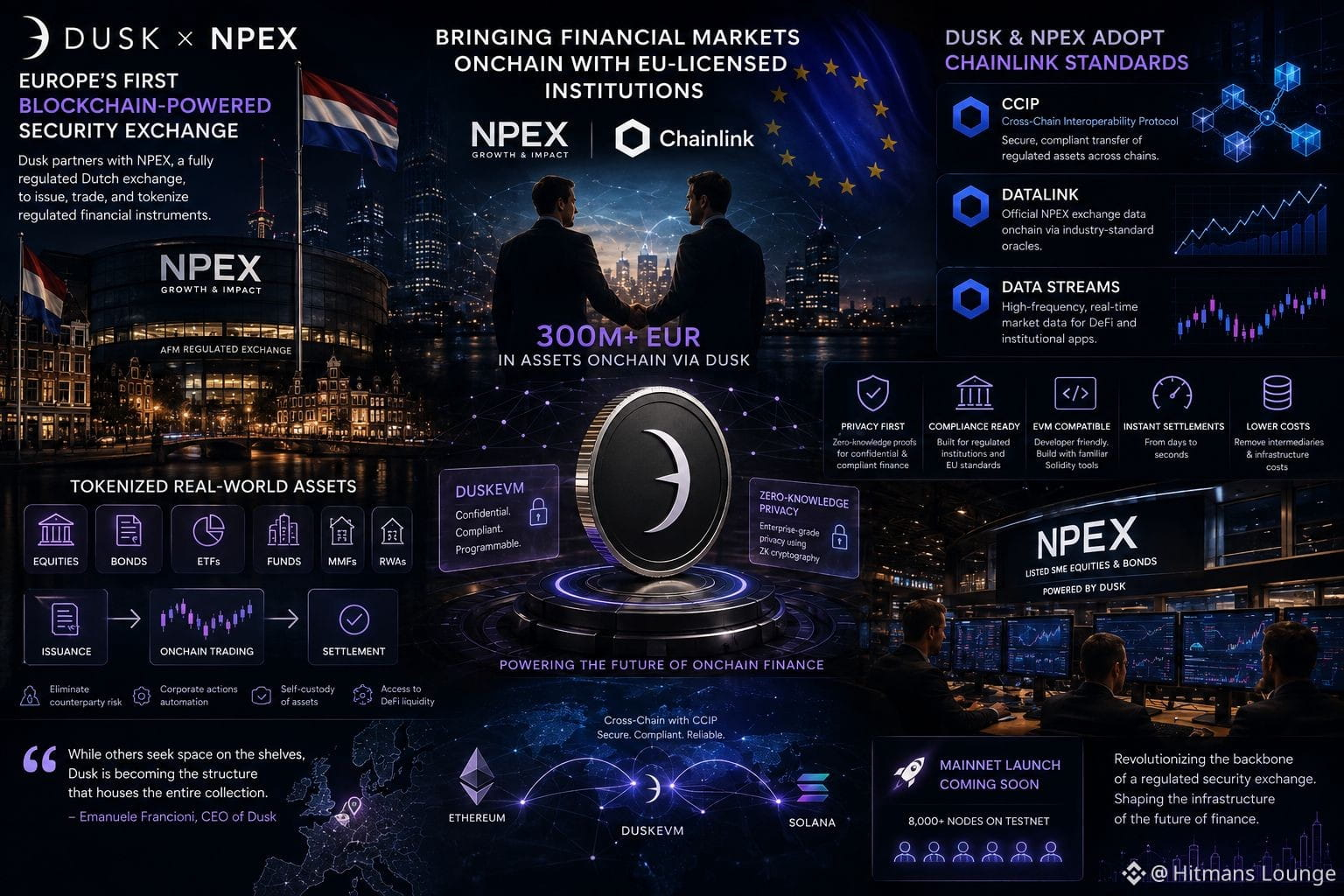
NPEX is an AFM-regulated Dutch exchange, and the partnership aims to bring €300M+ in assets on-chain.
Now Dusk and NPEX are also adopting Chainlink standards, including CCIP for cross-chain interoperability and DataLink/Data Streams for verified market data.
That detail matters to me.
I think the harder problem in RWA adoption isn't simply putting securities on a blockchain.
It's connecting issuance, official market data, compliance, trading and settlement without creating another fragmented system.
Dusk's EVM-compatible layer handles programmable financial applications, while its privacy design can keep sensitive activity confidential. CCIP then gives those assets a route across supported networks.
That's a different incentive structure than just launching another token.
I'm still cautious because partnerships don't automatically create liquidity or real investor demand. The technology can work and adoption can still be slow.
But I've changed my view: Dusk may be more interesting as financial-market infrastructure than as just another RWA chain. Is that where Dusk's real value eventually comes from?
$PORTAL $TUT #DUSK #Web3 #RWA #DuskEVM #NPEX
{spot}(TUTUSDT)
{spot}(PORTALUSDT)
{spot}(DUSKUSDT)
@Dusk felt differently for last few months . I originally saw it mainly as a privacy-focused blockchain, but the NPEX partnership made me rethink the bigger picture.
I took a small $DUSK position and then paused. What caught my attention wasn't another tokenized-asset announcement; it was who Dusk is building with and where the infrastructure sits.
NPEX is an AFM-regulated Dutch exchange, and the partnership aims to bring €300M+ in assets on-chain.
Now Dusk and NPEX are also adopting Chainlink standards, including CCIP for cross-chain interoperability and DataLink/Data Streams for verified market data.
That detail matters to me.
I think the harder problem in RWA adoption isn't simply putting securities on a blockchain.
It's connecting issuance, official market data, compliance, trading and settlement without creating another fragmented system.
Dusk's EVM-compatible layer handles programmable financial applications, while its privacy design can keep sensitive activity confidential. CCIP then gives those assets a route across supported networks.
That's a different incentive structure than just launching another token.
I'm still cautious because partnerships don't automatically create liquidity or real investor demand. The technology can work and adoption can still be slow.
But I've changed my view: Dusk may be more interesting as financial-market infrastructure than as just another RWA chain. Is that where Dusk's real value eventually comes from?
$PORTAL $TUT #DUSK #Web3 #RWA #DuskEVM #NPEX
84
39
3.2k
·
--
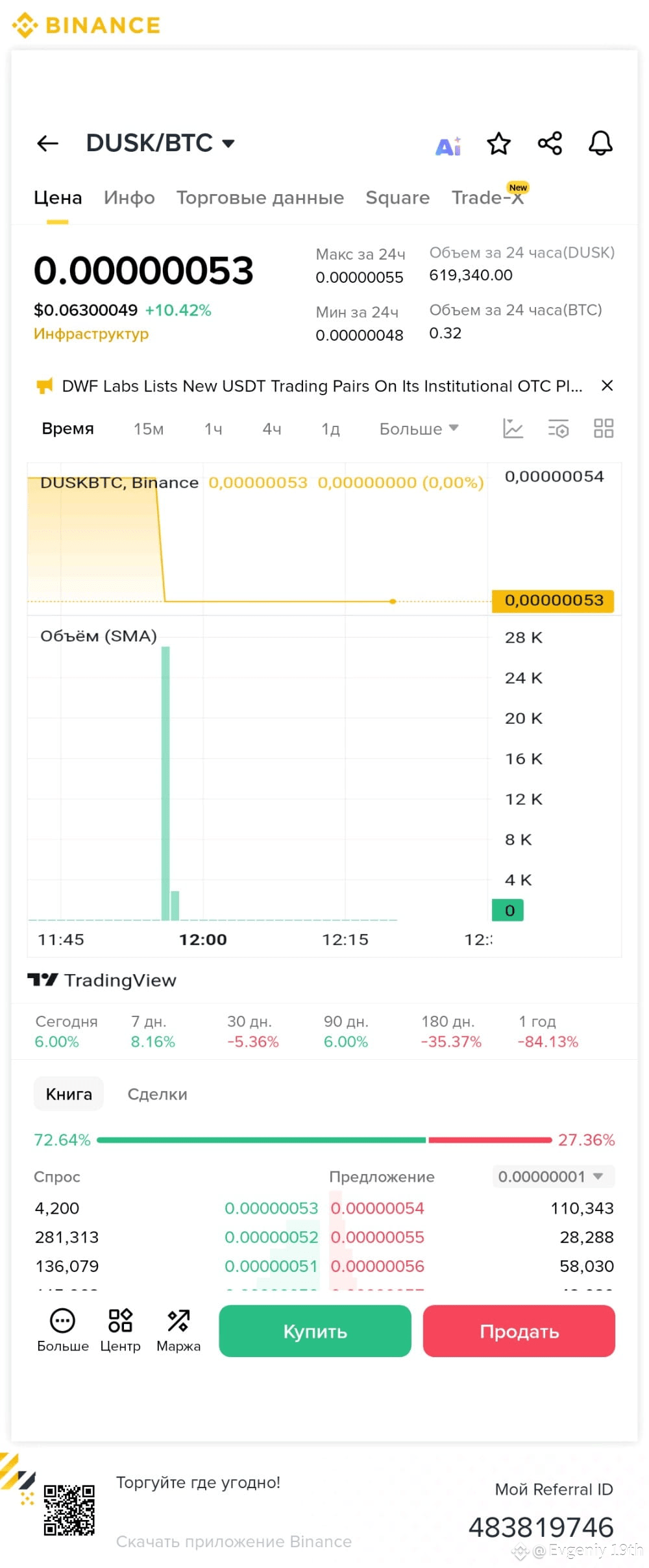
Dusk is a public, permissionless Layer 1 blockchain purpose-built for regulated financial markets. It enables the native issuance, trading, and settlement of real-world assets (RWAs) in full compliance with EU regulations such as #MiFID II, MiCA, and the DLT Pilot Regime. Through strategic partnerships - including with #NPEX , a Dutch MTF-regulated exchange, and Quantoz, a MiCA-compliant EMI issuing EURQ—Dusk facilitates the creation of secondary markets for digital securities. With privacy-preserving smart contracts, zero-knowledge compliance infrastructure, and institutional custody solutions like Dusk Vault, Dusk provides the complete stack for compliant on-chain finance in Europe.#BinanceHODLer2Z #StrategyBTCPurchase $SOL #BinanceHODLer2Z $BNB
{future}(BNBUSDT)
Dusk is a public, permissionless Layer 1 blockchain purpose-built for regulated financial markets. It enables the native issuance, trading, and settlement of real-world assets (RWAs) in full compliance with EU regulations such as #MiFID II, MiCA, and the DLT Pilot Regime. Through strategic partnerships - including with #NPEX , a Dutch MTF-regulated exchange, and Quantoz, a MiCA-compliant EMI issuing EURQ—Dusk facilitates the creation of secondary markets for digital securities. With privacy-preserving smart contracts, zero-knowledge compliance infrastructure, and institutional custody solutions like Dusk Vault, Dusk provides the complete stack for compliant on-chain finance in Europe.#BinanceHODLer2Z #StrategyBTCPurchase $SOL #BinanceHODLer2Z $BNB
4
4.3k
Расталды
30 күндегі $DUSK сауда көлемі: 90.8 USDT
Something in the $DUSK setup has been sitting with me for a few weeks, and it took digging past the usual RWA narrative before I understood what actually makes it structurally different.
Most tokenization projects stop at the asset layer — they issue a token representing something, then settle custody and compliance through off-chain intermediaries. Dusk's stated goal is to bring the entire system onto the blockchain, not just a few tokenized products that are managed and issued off-chain.
What caught my attention is how the custody arrangement with NPEX and Cordial Systems actually reflects that intention. NPEX selected Cordial Treasury specifically because of its on-premises, self-hosted architecture, requiring full control over its technology stack without exposure to external SaaS custody providers. For a regulated MTF operator, that distinction isn't cosmetic — it's a compliance requirement.
Through its partnership with NPEX, @Dusk_Foundation gains access to a full suite of financial licenses — MTF, Broker, ECSP, and the forthcoming DLT-TSS — embedding compliance at the protocol level rather than as an external wrapper.
Then in November 2025, the Chainlink layer was added. Chainlink CCIP will serve as the canonical interoperability layer for tokenized assets issued by NPEX on DuskEVM, allowing those assets to be accessed or settled in DeFi environments across chains — issued under European regulation but composable across ecosystems.
Regulatory licensing isn't sitting on top of the blockchain — it's woven into the issuance and settlement process itself.
My honest uncertainty is adoption velocity. Building this stack correctly takes time, and the gap between infrastructure readiness and actual institutional volume being processed on-chain remains real.
#Dusk #RWA #NPEX #Chainlink #DuskEVM
What single milestone would increase your conviction that Dusk can convert regulated infrastructure into institutional adoption?
Something in the $DUSK setup has been sitting with me for a few weeks, and it took digging past the usual RWA narrative before I understood what actually makes it structurally different.
Most tokenization projects stop at the asset layer — they issue a token representing something, then settle custody and compliance through off-chain intermediaries. Dusk's stated goal is to bring the entire system onto the blockchain, not just a few tokenized products that are managed and issued off-chain.
What caught my attention is how the custody arrangement with NPEX and Cordial Systems actually reflects that intention. NPEX selected Cordial Treasury specifically because of its on-premises, self-hosted architecture, requiring full control over its technology stack without exposure to external SaaS custody providers. For a regulated MTF operator, that distinction isn't cosmetic — it's a compliance requirement.
Through its partnership with NPEX, @Dusk gains access to a full suite of financial licenses — MTF, Broker, ECSP, and the forthcoming DLT-TSS — embedding compliance at the protocol level rather than as an external wrapper.
Then in November 2025, the Chainlink layer was added. Chainlink CCIP will serve as the canonical interoperability layer for tokenized assets issued by NPEX on DuskEVM, allowing those assets to be accessed or settled in DeFi environments across chains — issued under European regulation but composable across ecosystems.
Regulatory licensing isn't sitting on top of the blockchain — it's woven into the issuance and settlement process itself.
My honest uncertainty is adoption velocity. Building this stack correctly takes time, and the gap between infrastructure readiness and actual institutional volume being processed on-chain remains real.
#Dusk #RWA #NPEX #Chainlink #DuskEVM
What single milestone would increase your conviction that Dusk can convert regulated infrastructure into institutional adoption?
📈Meaningful volume for NPEX
66%
🇪🇺 DLT-TSS license granted
0%
🔗 Cross-chain RWA activity
17%
🏦 Institutional volume
17%
6 дауыс • Дауыс беру жабық
70
37
1.1k

·
--

Мақала
【大叔深度復盤】2026 RWA 終局戰:Dusk AMA 全程精華,誰才是真正的金融地基?各位晚安, 1/22 昨晚9點的 Dusk 官方 AMA 大家有跟到嗎?大叔我雖然沒搶到紅包,但全程錄影並解析了一遍。 CTO Hein Dauven 其實已經在直播中把 $DUSK 未來幾年的底牌全翻出來了。
這不是一場空談願景的法說會,而是一場針對傳統金融體系的「降維打擊」宣言。大叔今天幫大家把這些沒被簡化的深度細節理清楚。
一、 為什麼當前的 RWA 絕大多數都是「偽命題」?
Hein 在直播中拋出了一個相當辛辣且具備爭議性的觀點:目前幣圈絕大多數的 RWA 代幣化都是一場騙局(Farce)。
為什麼這麼說?因為現在很多項目只是把傳統股市裡的資產「包裝」一下,加個手續費賣給幣圈人,這本質上跟用 Robin Hood 買股票沒兩樣。真正的變革不在於「代幣化」,而在於原生發行(Native Issuance)。
Hein 提到,現在的金融體系還在用 1970 年代的舊技術。一筆股票交易背後要經過中央證券存管機構(CSD)、結算所(Clearing House)等五、六個中間人,導致傳統股市的轉讓錯誤率高達 5% 到 10%。而在 Dusk 的架構下,區塊鏈就是 CSD,結算即時完成,錯誤率趨近於零。這種「去中間化」能省下巨額成本,這才是金融機構真正看重的利潤空間。
二、 Dusk EVM 與 DSDS:技術雙軌制下的實戰佈局
很多晚輩在問, Dusk 為什麼要搞個 EVM 兼容層? Hein 解釋得很清楚:這是在尊重現實。
* DSDS (Mainnet): 這是 Dusk 的靈魂,專注於極致的隱私保護與原生金融邏輯。
* Dusk EVM: 這是為了讓外部開發者與現有的應用能無縫接入。
兩者本質上是同一個網絡,但提供了不同的切入點。大叔認為這招很高明:用 EVM 抓流量、抓生態,再用 DSDS 的底層技術鎖住那些對隱私與合規有「強迫症」的頂級金融機構。
三、 11.9 兆美金背後的「原生合規」邏輯
我們昨天聊到嘉信理財(Schwab)管理的 11 兆美金, Hein 在直播中也間接回應了這種機構需求。
他強調,機構需要的不是「完全匿名」,而是「選擇性披露」。透過 Dusk 研發的 Poseidon 哈希算法(連以太坊創辦人 Vitalik 都感興趣的那套),機構可以證明自己合規、證明資金來源,同時卻不洩露交易對手與持倉細節等商業機密。
更具象的進度是,荷蘭證券交易所 NPEX 已經準備透過 Dusk 進行 3 億歐元規模的股票與債券原生發行。這不是在做實驗,這是已經在法規軌道(如歐盟的 DLT Pilot Regime)上跑的實戰。
四、 關於代幣經濟:沒有「VC 驚喜」的底層資產
最後聊聊大家最關心的幣。 Hein 提到 $DUSK 走的是「老派經濟學」:
* 分配合理: 社群與團隊 50/50,且團隊部分的解鎖早在 2022 年就全部完成了,現在市場上沒有那種突然砸盤的「VC 驚喜」。
* 高額激勵: 目前原生質押 APR 約 23%,而合作夥伴 Soju 提供的流動性質押甚至有高達 30% 的推廣獎勵。
通縮引擎: 除了手續費燒毀, Dusk 還在規劃「協議擁有流動性」(Protocol Owned Liquidity),透過產品收益回購並注入流動性,這本質上比純粹的燒毀更能支撐幣價長期穩定。
大叔碎碎念:
這場 AMA 聽下來,大叔我最大的感觸是:Dusk 已經從一個「隱私技術項目」轉型成了一個完整的「金融垂直技術棧」。他們不跟 L2 捲擴容,他們是在重寫金融交易的規則。
2/28 的節點獎勵週期很近,但 RWA 原生發行的路還很長。看懂了這層從 1970 年代跳躍到 2026 年的技術跨度,你就不會因為短期的積分波動而感到殘念。
今晚 9 點直播沒領到紅包的朋友們別哭,看懂這篇分析,你領到的是未來的趨勢大紅包。
$DUSK #dusk #RWA #AMA #BinanceSquare #NPEX
【大叔深度復盤】2026 RWA 終局戰:Dusk AMA 全程精華,誰才是真正的金融地基?
各位晚安, 1/22 昨晚9點的 Dusk 官方 AMA 大家有跟到嗎?大叔我雖然沒搶到紅包,但全程錄影並解析了一遍。 CTO Hein Dauven 其實已經在直播中把 $DUSK 未來幾年的底牌全翻出來了。
這不是一場空談願景的法說會,而是一場針對傳統金融體系的「降維打擊」宣言。大叔今天幫大家把這些沒被簡化的深度細節理清楚。
一、 為什麼當前的 RWA 絕大多數都是「偽命題」?
Hein 在直播中拋出了一個相當辛辣且具備爭議性的觀點:目前幣圈絕大多數的 RWA 代幣化都是一場騙局(Farce)。
為什麼這麼說?因為現在很多項目只是把傳統股市裡的資產「包裝」一下,加個手續費賣給幣圈人,這本質上跟用 Robin Hood 買股票沒兩樣。真正的變革不在於「代幣化」,而在於原生發行(Native Issuance)。
Hein 提到,現在的金融體系還在用 1970 年代的舊技術。一筆股票交易背後要經過中央證券存管機構(CSD)、結算所(Clearing House)等五、六個中間人,導致傳統股市的轉讓錯誤率高達 5% 到 10%。而在 Dusk 的架構下,區塊鏈就是 CSD,結算即時完成,錯誤率趨近於零。這種「去中間化」能省下巨額成本,這才是金融機構真正看重的利潤空間。
二、 Dusk EVM 與 DSDS:技術雙軌制下的實戰佈局
很多晚輩在問, Dusk 為什麼要搞個 EVM 兼容層? Hein 解釋得很清楚:這是在尊重現實。
* DSDS (Mainnet): 這是 Dusk 的靈魂,專注於極致的隱私保護與原生金融邏輯。
* Dusk EVM: 這是為了讓外部開發者與現有的應用能無縫接入。
兩者本質上是同一個網絡,但提供了不同的切入點。大叔認為這招很高明:用 EVM 抓流量、抓生態,再用 DSDS 的底層技術鎖住那些對隱私與合規有「強迫症」的頂級金融機構。
三、 11.9 兆美金背後的「原生合規」邏輯
我們昨天聊到嘉信理財(Schwab)管理的 11 兆美金, Hein 在直播中也間接回應了這種機構需求。
他強調,機構需要的不是「完全匿名」,而是「選擇性披露」。透過 Dusk 研發的 Poseidon 哈希算法(連以太坊創辦人 Vitalik 都感興趣的那套),機構可以證明自己合規、證明資金來源,同時卻不洩露交易對手與持倉細節等商業機密。
更具象的進度是,荷蘭證券交易所 NPEX 已經準備透過 Dusk 進行 3 億歐元規模的股票與債券原生發行。這不是在做實驗,這是已經在法規軌道(如歐盟的 DLT Pilot Regime)上跑的實戰。
四、 關於代幣經濟:沒有「VC 驚喜」的底層資產
最後聊聊大家最關心的幣。 Hein 提到 $DUSK 走的是「老派經濟學」:
* 分配合理: 社群與團隊 50/50,且團隊部分的解鎖早在 2022 年就全部完成了,現在市場上沒有那種突然砸盤的「VC 驚喜」。
* 高額激勵: 目前原生質押 APR 約 23%,而合作夥伴 Soju 提供的流動性質押甚至有高達 30% 的推廣獎勵。
通縮引擎: 除了手續費燒毀, Dusk 還在規劃「協議擁有流動性」(Protocol Owned Liquidity),透過產品收益回購並注入流動性,這本質上比純粹的燒毀更能支撐幣價長期穩定。
大叔碎碎念:
這場 AMA 聽下來,大叔我最大的感觸是:Dusk 已經從一個「隱私技術項目」轉型成了一個完整的「金融垂直技術棧」。他們不跟 L2 捲擴容,他們是在重寫金融交易的規則。
2/28 的節點獎勵週期很近,但 RWA 原生發行的路還很長。看懂了這層從 1970 年代跳躍到 2026 年的技術跨度,你就不會因為短期的積分波動而感到殘念。
今晚 9 點直播沒領到紅包的朋友們別哭,看懂這篇分析,你領到的是未來的趨勢大紅包。
$DUSK #dusk #RWA #AMA #BinanceSquare #NPEX
1
1
6
1.2k
Көбірек контент көру үшін кіріңіз
Binance Square платформасында әлемдік криптоқоғамдастыққа қосылыңыз
⚡️ Криптовалюта туралы ең соңғы және пайдалы ақпаратты алыңыз.
💬 Әлемдегі ең ірі криптобиржаның сеніміне ие.
👍 Расталған авторлардың нақты пікірлерін табыңыз.
Электрондық пошта/телефон нөмірі
Трендтегі тақырыптар
1
#NvidiaInvestigatesAfterHuang’sAffairApology
16,066 рет көрілді
221 адам талқылап жатыр
2
#BitcoinFiveWeeklyLosses
30,505 рет көрілді
657 адам талқылап жатыр
3
#AIChipSlumpNasdaq
16,360 рет көрілді
366 адам талқылап жатыр
4
#EthereumSpotETFsPost$365MWeeklyOutflow
392 рет көрілді
21 адам талқылап жатыр
5
#TradFiForBeginners
254,649 рет көрілді
2,266 адам талқылап жатыр
6
#SouthKoreaDraftLawTargets15To20%ShareholderCap
182,143 рет көрілді
942 адам талқылап жатыр
7
#KeplrAdvisesSocialLoginUsersToTransferAssets
85,729 рет көрілді
644 адам талқылап жатыр
8
#TetherPlans€28.8MForJuventusCapitalIncrease
59,515 рет көрілді
474 адам талқылап жатыр
9
#JobsReportRaisesHikeOdds
1M рет көрілді
4,664 адам талқылап жатыр
10
#CPITestsDecemberRateOutlook
475,703 рет көрілді
2,045 адам талқылап жатыр